Home Blog Page 342

Safety Tips: When Kayak Hatches Flood

Photo: Doug Alderson
Safety Tips: When Hatches Flood

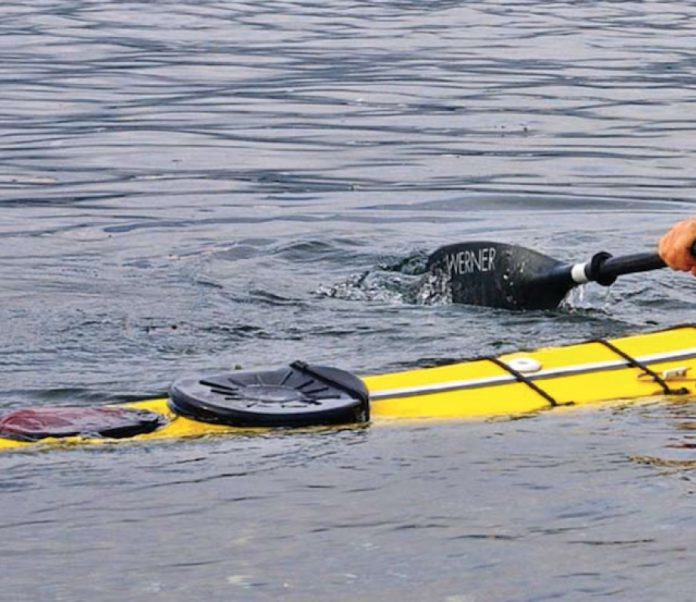
What would happen to a fully loaded kayak if the waterproof hatches catastrophically failed? We conducted this test to find out.

First, we loaded a kayak for a two-week trip (55 kilograms of gear and a 68-kilogram paddler). We used eight dry bags very carefully closed with most of the air squeezed out— some air retained for buoyancy—and the roll-top closures rolled at least two full rotations.

Then we flooded the day hatch, and progressively flooded all the other hatches and eventually the cockpit. With the day hatch flooded, the kayak was still stable and maneuverable.

With the rear hatch and day hatch flooded, stability became difficult and maneuvering became slow and awkward. With the cockpit flooded, the kayak became unmanageable, with the rear edge of the cockpit coaming below the surface.

With the front compartment flooded, the kayak was completely swamped.

The best results for recovery after a capsize occurred when the paddler entered the water and tilted the kayak onto its side. The front compartment retained only six liters. The day compartment 10 liters, and the rear compartment 15 liters. We could then put on the hatch covers, re-enter the kayak and pump most of the water out of the cockpit. This made the kayak unstable but marginally maneuverable. However, this rescue would be very hard to perform in rough seas. Also, pumping out the cockpit was very difficult, even with a foot pump.

Finally, the gear in all eight dry bags was soaking wet, including important items like warm clothes and sleeping bags. This is disappointing and hazardous in itself and also means that the floatation would have decreased with the continued intrusion of water into the dry bags.

Conclusion: Well-packed dry bags offer sufficient buoyancy to cope with one flooded compartment; however, the addition of a flooded cockpit or a second flooded compartment greatly decreases the chance of a successful recovery. The kayak becomes critically unseaworthy and recovering ample buoyancy in rough seas is unlikely. Quickly emptying a fully flooded cockpit in rough seas would require an electric pump.

Always check the water tightness of your hatches and make your gear bags as waterproof as possible to improve your chances in the case of a flooded hatch.
Screen_Shot_2015-07-24_at_1.21.54_PM.pngThis article first appeared in the Summer/Fall 2009 issue of Adventure Kayak Magazine. For more great content, subscribe to Adventure Kayak’s print and digital editions here.
Rock the Boat: Wish You Were Here

Illustration: Lorenzo Del Bianco
Rock the Boat: Wish You Were Here

My wife enjoys kayaking, but not as much as I do. She approaches the activity with moderation, whereas I’m consumed by it. She’s a fair weather paddler, disdaining bigger mileage days and lumpy conditions. And so, inevitably, I tend to do my longer, more ambitious trips without her.

This always results in the same dynamic. When I return from a trip, be it a weekend or a month, and tell her that I’ve missed her greatly, she never believes me. Despite my protestations, she remains certain that I had such a great time without her that I never thought of her once. Not once did I even pause to consider how incredibly lucky I was that she deigned to be with me at all. Never mind that I called or emailed at every opportunity. No amount of cajoling or assurance can shake her conviction that she ceased to exist for me the second I walked out the door. That is, of course, until I finally returned home to find some vaguely familiar woman in my house, who I then remembered was my wife.

In her version of events, I arrive home without a proper greeting, drape stinking paddling gear throughout the house, ask immediately what’s for dinner and expect sex on demand.

She knows only too well that I am a cad. I have committed the gravest sin of all. I have had fun without her. Worse still, I have done it for a sustained period of time. (The fact that she didn’t really want to come on the trip, and wouldn’t have enjoyed it anyway, is immaterial.) I am a selfish, thoughtless bastard. But she is far too classy to come right out and say so. Instead she will give me subtle hints to remind me of my transgression in the coming days, weeks, months and years.

But now I have hit upon a simple and highly effective strategy for promoting domestic bliss after returning from a paddling trip without my sweetie. A few simple steps can neutralize her you-never-even-thought-of-me-did-you-you-callous-slob-my-mother-was-right-I-never-should-have-married-you sentiments.

While the following strategies do require a small amount of effort and forethought, the payoff is so significant that they must be incorporated into any trip you do without your significant other. If applied correctly, these tips will not only mollify your partner; they will actually win you brownie points.

Here’s the secret: Document yourself missing your partner. 

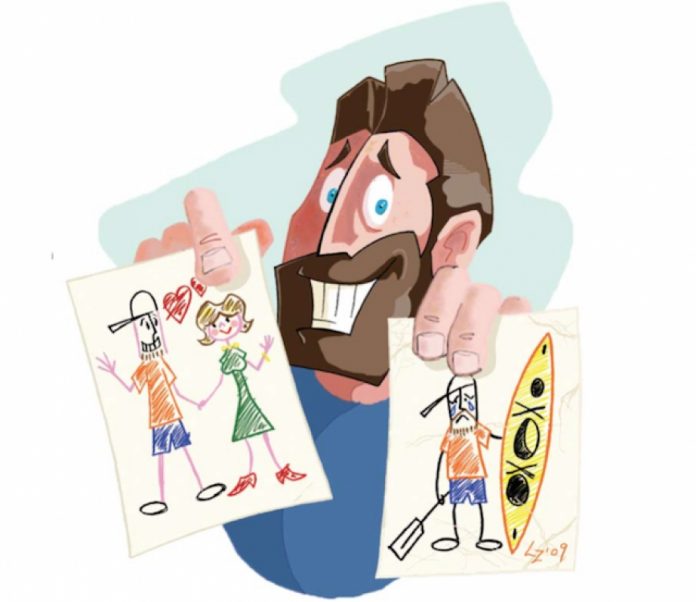
The best way to accomplish this is via photos. It’s easy. Build a little sign out of beach debris that says “X loves y” (inserting your names where applicable) and take a photo of it. Write your names in the sand (adding a heart with an arrow is always good) and snap a couple of photos of that. Take pictures of yourself miming a message of love to your spouse. Get your paddling buddies to each hold up a por- tion of a sign with a message just for him or her. find a heart-shaped stone, photograph it, and bring it back as a keepsake.

That’s all there is to it. Indisputable documentary evidence is the cornerstone to your assertion that you missed your sweetheart in the moment. you will be amazed how this photographic proof of your devotion and longing can offset even a lengthy absence. And the invest- ment of your time is negligible: 15 or 20 minutes every few days is all that it requires. Just don’t take all the photos in a row. Spouses are way too smart for that. Digital cameras record date and time. Spread the evidence out over days to prove that you were thinking of them early and often.

Just in case you’re thinking that this is just a cheap device to get off the hook for a long absence, think again. The coolest part of this strategy is that it works both ways. Once you get on board, you’ll find yourself trying to come up with more and better ideas of how to miss your partner and how to create memorable images that you can bring back and share. Pretty soon you’ll be thinking of them more often than ever. And you really will miss them if you didn’t already.

I may be cheeky now and again, but I’m no cad. And I’m definitely not insincere. I love my wife and I miss her when I’m away. So I make the effort to let her know just how much. And that’s always the right thing to do. even if she doesn’t believe me. 

Screen_Shot_2015-07-24_at_1.21.54_PM.pngThis article first appeared in the Summer/Fall 2009 issue of Adventure Kayak Magazine. For more great content, subscribe to Adventure Kayak’s print and digital editions here.
River Alchemy: Reading Between the Lines

Photo: Philth Quinn
River Alchemy: Reading Between the Lines

Whitewater rivers are one part water and one part rock, tilted downhill. No one understood this better, and explained it more clearly, than William Nealy. His book, Kayak, The Animated Manual of Intermediate and Advanced Whitewater Technique (1986, Menasha Ridge Press) is a classic. If you are unfamiliar with Nealy’s book, note the words classic and animated: classic as in still relevant and highly recommended, and animated – hand drawn and hand printed, unlike anything you would find today.

While kayaking has changed immensely since these early days, rivers have not.

It is Nealy’s understanding of “hydrotopography,” as he aptly calls it, which illustrates his brilliance and the staying power of his work. With his keen perceptions and black pen, he removes the water from the river and illustrates rapids as conveyer belts, geometric shapes and arrows. He explains better than anyone:

How well a boater can read the topography of this complex terrain and extrapolate what’s going on underneath the surface can make the difference between a good run and a bad run… Being able to look at a rapid and know what’s happening both on and below the surface…is the mark of the advanced kayaker.

Kayak is one of the earliest kayak manuals, and certainly the most read and longest lived. Nealy’s revealing illustrations informed generations of paddlers’ understanding of whitewater. This three dimensional understanding and appreciation of rivers is being lost.

New paddlers now access whitewater via DVD instruction and YouTube. Lost is the self-paced, engaging, imaginative, cerebral and committing study of written manuals such as Nealy’s.

Over the last five years or more, paddling has centred on a few familiar and well-travelled destination rivers. Boat designs have been feeding this narrowly focused park and play trend. Even institutional kayaking’s push to get newbies surfing amounts to minimizing a river to only its play spots.

In this new paddling world, scouting is optional and therefore becoming a lost skill.

The ability to analyze the current and understand the rocks and riverbed below is being overlooked for superficial, immediately self-gratifying, two-dimensional thrills.

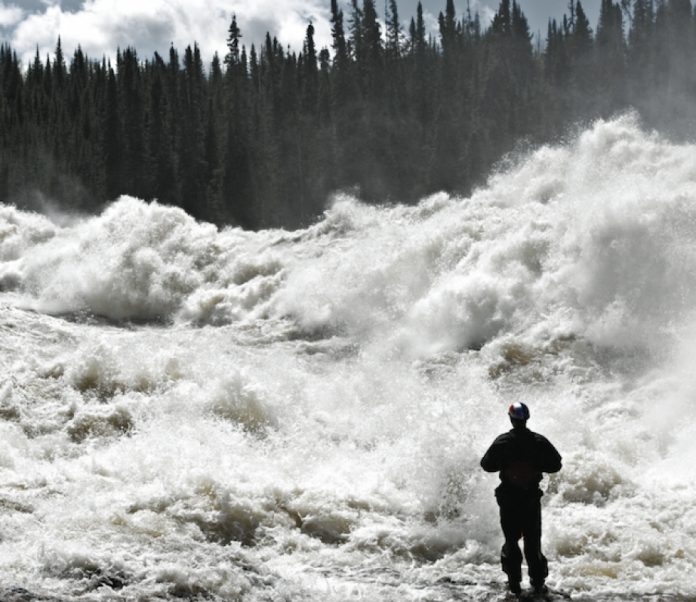
The last couple seasons have, for the good I believe, seen a resurgence and renewed interest in river running. With river running comes exposure to different rivers and different rapids; with that comes the need to scout and develop a sense for what the current is doing. This, as Nealy believed, is best done with an understanding of what is going on beneath the surface. This three dimensional view is integral to the whole river experience.

Guiding on Idaho’s Middle Fork of the Salmon, I remember one rock in particular. It was pyramid shaped and reaching to within arm’s length beneath the surface of the fast moving, crystal clear water. Tumbling in the submerged eddy current was the material of a living river: bits of bark, dirt and bugs. In that instant, for me, the river became a three-dimensional being much greater than just the surface features with which I formerly had been preoccupied.

Nealy wrote that to understand and appreciate what goes on “both on and below the surface” is the sign of a good kayaker. I believe that when someone understands (or at least tries to understand) the whole river, that person becomes not just a good kayaker but a true river person.

Jeff Jackson is a professor of Outdoor Adventure at Algonquin College in Pembroke, Ontario. William Nealy died July 19, 2001. Kayak has sold over 250,000 copies and been translated into five languages. 

This article on William Nealy was published in the Fall 2009 issue of Rapid magazine.This article first appeared in the Fall 2009 issue of Rapid Magazine.
 

Open Canoe Technique: Lateral Thinking

Photo: Scott MacGregor
Open Canoe Technique: Lateral Thinking

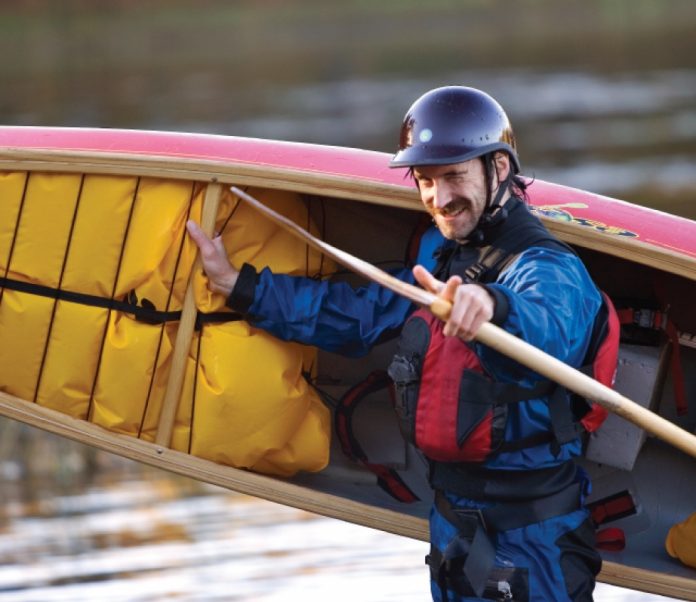
When you first start paddling it’s great fun and recklessly easy to blast straight downstream. That’s okay until you need to avoid obstacles or go somewhere other than directly to the bottom of the rapids. Three or four hundred pounds of paddlers and canoe barrelling downstream has a lot of momentum, making your straight-shot more Jon Voight in Runaway Train than Bill Mason in Waterwalker.

One of the Golden Rules of paddling is to point your boat where you want to go.

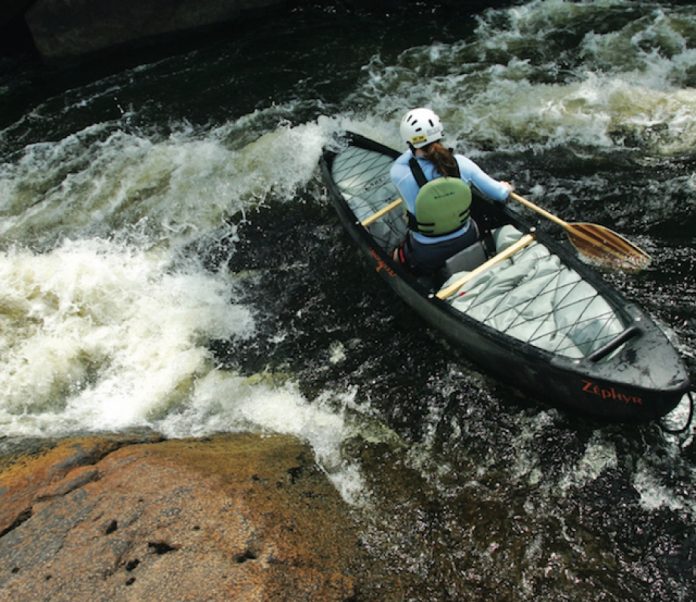
It seems obvious and you have no doubt heard it before, but learning to travel laterally across rapids is a mind-bender for the newly initiated and a concept that should be frequently revisited and practiced by paddlers of all levels. Pointing your boat where you want to go and travelling laterally allows you to move around the river for cleaner, drier lines and is the only way to access mid-rapid eddies.

Your first goal should be setting your angle across the current in one stroke.

However, radically changing your boat’s angle—for example, from pointing downstream to pointing across the current—does not alone change your direction of travel. Imagine standing on a moving sidewalk, looking straight ahead. You can turn your body to face left or right but you are still moving forward. To move laterally you need to step in that direction. Pointing your boat in one stroke allows you to immediately start building momentum in the new direction. This does not mean that you need to start paddling at warp speed, but you should at least be ready to start moving your boat in the new direction—across the river.

Timing is a key issue when developing lateral momentum.

Once your canoe is pointed at a destination like an eddy, green tongue or slalom gate, you need to ensure that your speed matches the angle and distance to your target.

Let’s look at a midstream eddy behind an exposed rock as an example. The water accelerates around the rock that forms the eddy, so you may need to increase your momentum as you approach. Conversely, if you build momentum too far upstream, have too open of an angle or you’re simply moving too fast across the current, you may come in too high. This could result in pinning against the rocks or ricocheting off and sliding down the eddy with zero directionalmomentum. In these cases, ease your lateral momentum by relaxing your stroke rate or pause and wait for the eddy to come to you. Keeping your eyes on the eddy and being aware of distance versus cross-current and downstream vectors will help you judge when to back off and when to pour on the power.

Advanced solo and tandem boaters may also use a trough or foam pile of a standing or crashing wave to funnel their boats into an adjacent eddy. To try this, develop some cross-current momentum and fall sideways into the wave. Make sure you drop into the trough flat rather than with the customary downstream tilt to prevent the wave from dumping in your boat. Ride the wave’s trough or tube like an on ramp into the eddy, or use the power of the wave to kill your downstream momentum, allowing you to move across into the eddy.

This article on turning your canoe was published in the Fall 2009 issue of Rapid magazine.

This article first appeared in the Fall 2009 issue of Rapid Magazine.
 

Editorial: A Complete Sentence

Photo: Scott MacGregor
Editorial: A Complete Sentence

Welcome to the women’s issue. Or is it the woman’s issue? One thing it is not is the womens’ issue. That’s because even though there is an exception to punctuation rules which says the apostrophe is supposed to come after the final s of a pluralized possessive noun, “women” is an exception to that exception, because it is a plural that doesn’t end in an s. There is no such thing as a group of womens, despite public places being filled with washrooms for them.

This is how an editor makes a living. Most people just pick up a magazine and leaf through, looking for a good place to begin reading—the tip on where to hang a food pack comes to mind. Editors have to think about not hanging modifiers. How low can a preposition dangle before a bear can reach it anyway?

Careful readers of this magazine might be skeptical about claims of grammatical vigilance. I encourage sticklers (and I use that term with respect) to write and point out all the errors of usage and style in this issue. It would be a great way to welcome the new editor and instill a sense of high standards. You see, for this issue I’ve been concerned not just with apostrophes, but also with periods, the things that come at the end of a sentence. Or fragment. Or job. 

With two new small but squirming items to carry over the portage now I’ve decided to shake up my life a little. After five years of editing Canoeroots I’ll be leaving it to a new editor to steer through the February issue and beyond. 

Five years doesn’t sound like much perhaps. After all, it’s only twice as long as one of the canoe trips featured in this issue. But it was long enough to change at least one paddler’s perspective on the sport. When I started at Canoeroots I considered canoeing and isolation to be a natural fit. A canoe was something to take you away from other people. Now I know canoes are even better at bringing people together. The canoeing community is strong when it is connected. As the article on the weakening of the Navigable Waters Protection Act shows, that is important if the values we share and the wild spaces we enjoy will have any supporters.

So by all means, write and tally up all the sentences in this issue that start with a But or an And. Whatever you write, it is a pleasure to know that there are people at the other end of the presses who love canoeing like we do. And now that no one remembers how small the print size was in the Spring 2006 issue, reader emails are our favourite kind. Until I become editor of Friendly and Interesting People Monthly, I won’t expect to be in regular contact with such a great group of readers and enthusiasts.

Finally, I should thank publisher Scott MacGregor and, of course, Bill Gates. To MacGregor for starting Canoeroots and making my job possible; and to Gates, for refusing to add a Canadian dictionary to Microsoft Word’s spell check and making my job necessary. 

This article was originally published in the 2009 Summer/Fall issue of CanoerootsThis article first appeared in the Summer/Fall 2009 issue of Canoeroots Magazine.
 

Paddle to the Amazon Again

Photo: Don Starkell
Paddle to the Amazon Again

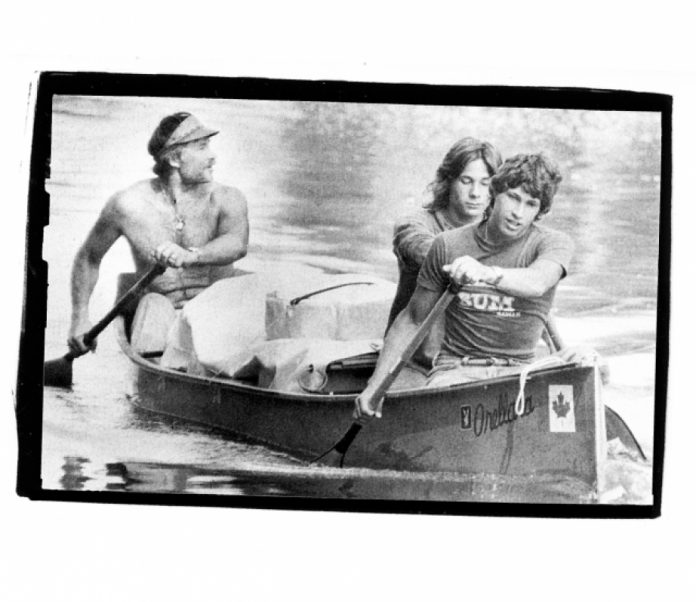
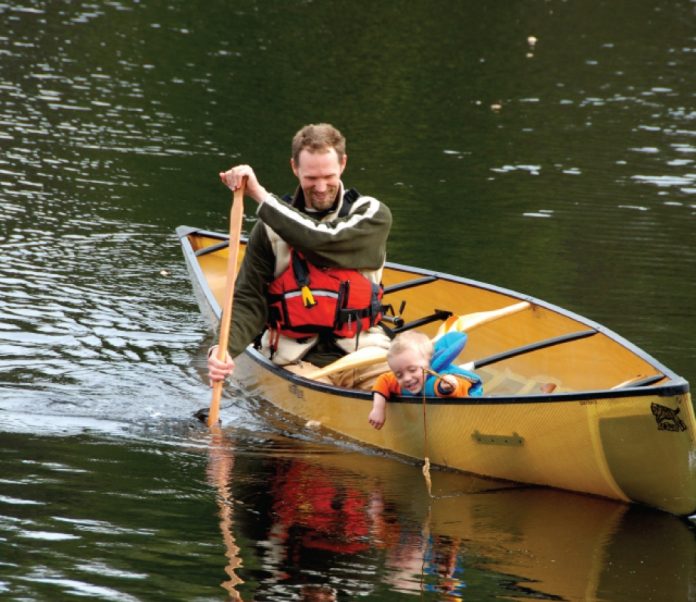
In 1980, Don Starkell and his son Dana embarked on what became the longest—and in another sense the largest—canoeing adventure ever. The two started from home in Winnipeg and finished in Belem, Brazil, a world-record-setting 19,603 kilometres later. 

Don’s book about the journey, Paddle to the Amazon, became an instant classic in paddling circles thanks to its tales of pirate attacks, near starvation, accusations of espionage and threats of execution.

Despite this, Starkell has remained largely out of the pantheon of better-known adventurers like Steve Fossett, Sir Edmund Hilary and Colin Angus.

Starkell might soon be getting more widespread credit, thanks to filmmaker Chris Forde and his soon-to-be-released documentary. Forde is hoping Starkell’s book publisher will let him borrow the same title for the film.

Forde interviewed the main cast of characters including Starkell’s other son Jeff, who abandoned the trip halfway through. The film, however, is more than a regurgitation of the book. 

As it turns out, when the project began the Starkells were re-tracing a section of the original trip. This excursion became the backbone of Forde’s documentary. 

“It gives the viewer the feeling that they’re going to go all the way down the Mississippi with them.” Forde explains.

In addition to this more recent footage, the film captures the dangers of the original route through some of the most politically unstable countries in the world. A particularly chilling moment occurs when Starkell talks about the dangers he expected to face on the trip.

“I had a list of things I thought would be hardest to endure,” says Starkell. “First off, I said weather, insects and water supplies. But as I got further in the trip—and it didn’t take very long—man went right to the top.” Starkell claims to have been shot at 14 times and at one point he and Dana were dragged into the jungle and almost killed.

Forde wanted to reveal the real motives behind this “family trip” that took 10 years to plan and two years to execute, but he had to question Starkell repeatedly.

“He offered all sorts of reasons why he did the trip: he got divorced, he wanted to do something with his kids and he wanted to inspire his kids,” Forde explains. “I sensed he would get close to the real reason and then veer off.”

“Finally, on the last day on the Mississippi, he told me. He wanted to test his limits. He wanted to know how far he could go before he actually died. This is what the trip was ultimately about to Don.”

Similarly, when Forde is asked about why he undertook the documentary he gives a reasonable answer about increasing awareness.

“This story should be a part of our culture, everybody should know about this. We have Terry Fox. Starkell should be right up there,” argues Forde.

When asked again however, he digs deeper. 

“I wanted to meet Don. I think more than anything I wanted to meet my hero.” 

This article was originally published in the 2009 Summer/Fall issue of CanoerootsThis article first appeared in the Summer/Fall 2009 issue of Canoeroots Magazine.
 

National Do-Something Day

Photo: Bev McMullen
National Do-Something Day

A year before our first child was born we broke ground building our dream home. I was hell bent and determined to have the house finished before we moved in. I swore I wouldn’t be that guy with Tyvek siding and plywood floors. I’d have doors on my cupboards. There’d be trim on my windows. Every nail driven was one nail closer to sitting in our screened-in porch enjoying late sunset dinners. 

Today, four years after moving in, we have open studded ceilings, closet doors without knobs and there is a gap between the ceramic tile in the kitchen and the red pine flooring in the dining room. Yes, Cheerios, marbles and dead flies collect there. 

It would take me only a few hours to finish this job. A trip to Home Depot to buy the trim and a couple hours measuring, cutting, gluing and nailing everything into place. But it’s not going to happen. Today is June 26 and it’s National Canoe Day. We’re going to join paddlers from coast to coast to coast in canoe-related activities in waters of our own choosing. We’re spending our National Canoe Day paddling to a place my son calls Bunny Island.

Last week, June 13 to 21 was Bike Week in the United Kingdom. My daughter Kate just turned three years old and with her chocolate cupcakes came her first two-wheeler. As a former colony with the Queen still on our money, it seems the only right thing to do is ride our bicycles. 

National Fishing Week kicks off July 4. As the publisher of Kayak Angler, one of Canoeroots’ sister publications, it would be irresponsible for a guy like me to not take my kids fishing, besides “recreational fishing is a heritage activity that provides an opportunity for people of all ages and from all walks of life and cultural backgrounds to get outdoors and enjoy both the excitement and serenity of fishing.” Sold. Who should argue with the Canadian National Sportfishing Foundation and deprive their kids of true cultural experiences and their heritage.

In the United States they have National Camping Month and to celebrate we’ve lined up two family canoe camping trips down the Petawawa and Dumoine Rivers. At this rate, I can’t see me getting at the Cheerio gutter until early fall or maybe even winter—but then there’s National Jump in the Leaves Month and the entire alpine ski season to look forward to. 

The Outdoor Industry Association’s 2008 Outdoor Recreation Participation Report suggests that from 2006 to 2007, there was a 12 per cent decrease of participation in outdoor activities among American children ages 6 to 17 years of age. The same is probably true in Canada. 

When it comes to home renovations Bob the Builder says, “Can we fix it? Yes we can!” But first let’s tackle the more important project of reversing a potentially deadly trend and get kids outside. “Can we fix it? Yes we can!” Sometimes all it takes to get a job done is writing it on the calendar.

This article was originally published in the 2009 Summer/Fall issue fo CanoerootsThis article first appeared in the Summer/Fall 2009 issue of Canoeroots Magazine.
 

Betcha Didn’t Know About Loons

Photo: istockphoto.com/Stephen Muskie
Betcha Didn't Know About Loons

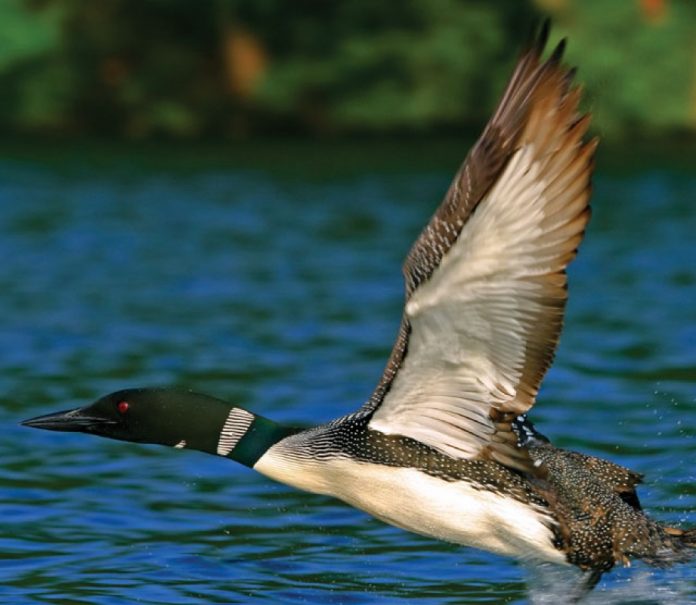
Unlike the hollow bones of most birds, much of a loon skeleton is solid. The added weight aids in diving but makes it difficult to get airborne. Loons must swim into the wind or run across the water to create enough lift for take-off.

The average airspeed velocity of a migrating loon is 120 kilometres per hour (much faster than an unladen swallow—African or European).

Loons can stay underwater for almost a minute and dive to depths of 80 metres.

Loons have four distinct calls: A laughing tremolo signals alarm or greeting; a haunting wail is used during night chorusing with a mate and social interactions. A one-note hoot aids in locating or checking on family members; and every male has a unique yodeling call that it uses to defend its territory. 

The loon has internal air sacs that help it float. When threatened, it can empty these sacs to sink its body like a submarine, leaving only the head visible as a periscope.

The loonie is rooted in classic Canadian scandal. In 1987, a voyageur canoe like that depicted on the old silver dollar was chosen to grace the new Canadian one-dollar coin. Somehow, the master dies were “lost” during transit from Ottawa to the Royal Canadian Mint in Winnipeg. To avoid possible counterfeiting, the familiar loon design was substituted at the last minute.

Although the loon’s maniacal laugh gave us the phrase “crazy as a loon,” the term “loony” has entirely separate origins. Since Roman times, a widely believed theory held that exposure to moonlight—especially that of a full moon—caused madness. Those unhinged by the moon’s influence were known as “lunatics” from luna, the Latin word for moon. Loony is simply a slang version. 

This article was originally published in the 2009 Summer/Fall issue of CanoerootsThis article first appeared in the Summer/Fall 2009 issue of Canoeroots Magazine.
 

Skills: One-Person Canoe Lift

Photo: Paul Villecourt/Helipress.com
Skills: Get a Leg Up / Photo: Paul Villecourt/Helipress.com

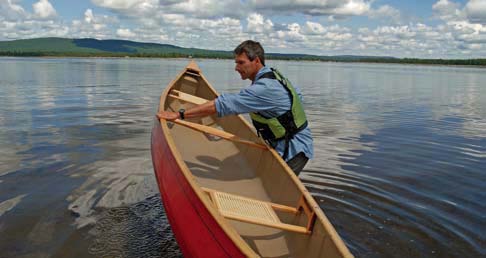
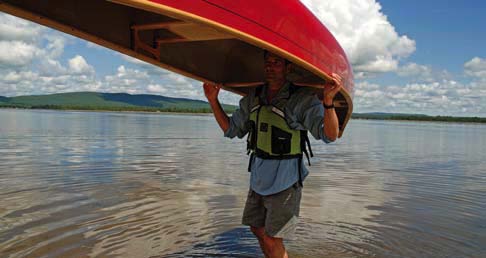
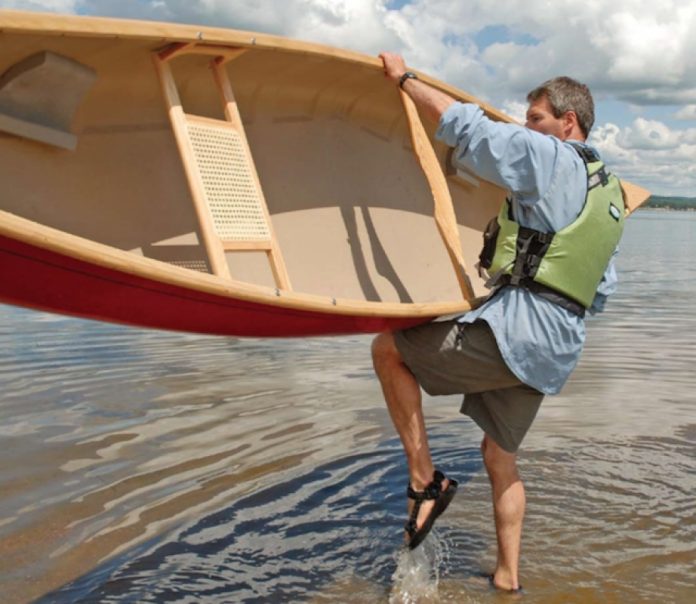
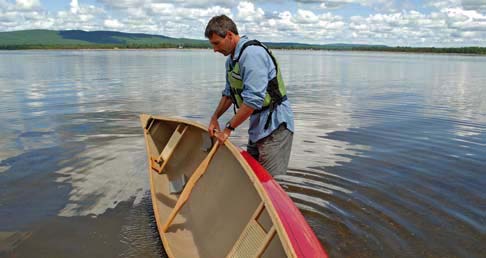
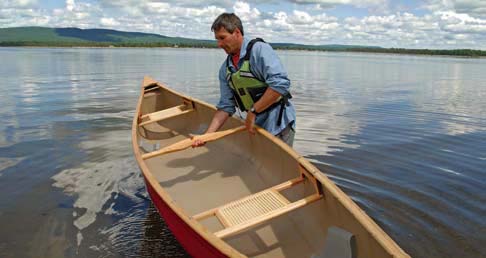
The thought of tossing a 16-foot canoe over your head and down onto the base of your neck can be intimidating—until you’ve been schooled in the finer technical points of the one-person canoe lift. As impressive as it looks, the weight of the canoe is easily managed by most canoeists. The secret is to position yourself properly, let your legs do the heavy lifting and be sure to keep good time when you rock and roll the canoe onto your shoulders.

Skills: Get a Leg Up / Photo: Paul Villecourt/Helipress.com
Photo: Paul Villecourt/Helipress.com

Step 1

Find an area with no obstructions, stand at the centre of the canoe and grasp the closest gunwale with your hands about shoulder-width apart.

Photo: Paul Villecourt/Helipress.com

Step2

Bend your knees and slide the canoe up your legs so it is resting on your thighs.

Photo: Paul Villecourt/Helipress.com

Step 3

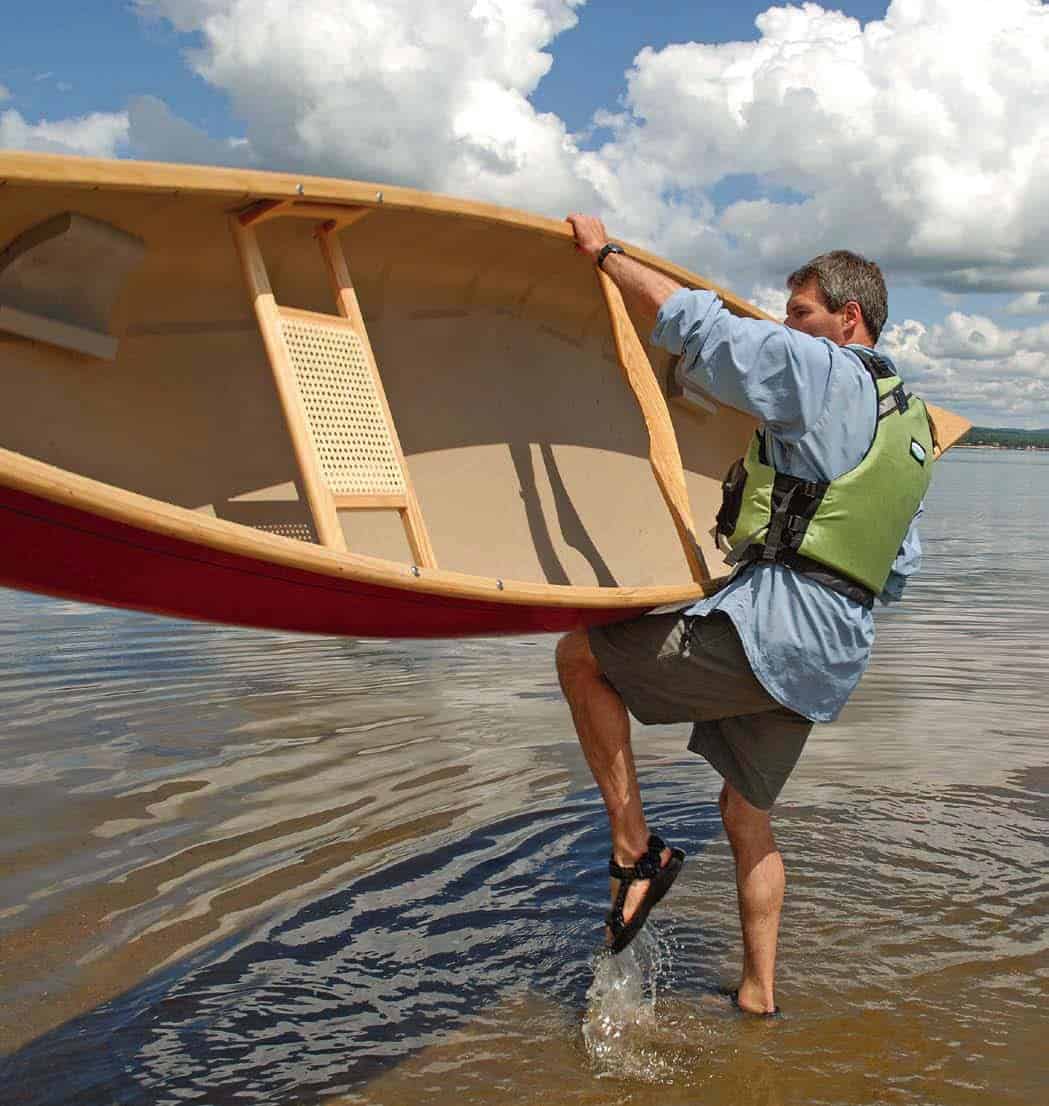
Begin a gentle rocking motion to build momentum and establish your timing. When ready, use the leg closest to the bow to heave the canoe up so you can grab the far gunwale with your hand closest to the bow. You are now holding the canoe with your bow-side hand on the far gunwale and the stern-side hand on the near gunwale. The canoe’s weight is supported by your bow-side leg.

Photo: Paul Villecourt/Helipress.com

Step 4

Initiate another rocking motion using the strong muscles of your bow-side leg. Pick your moment and with a lift from your leg flip the canoe above your head so it follows an arc guided by your bow-side arm.

Photo: Paul Villecourt/Helipress.com

Step 5

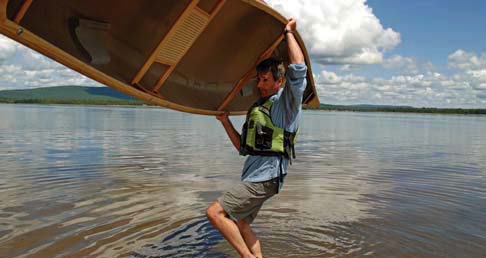
Duck your head forward slightly as the gunwale and yoke finish the roll. Settle the yoke down on your shoulders.

Photo: Paul Villecourt/Helipress.com

Step 6

As you are swinging the canoe over your head you should be rotating your stance so you finish with your body facing the bow.

With a quick hop to help lift the canoe off your head you can reverse these steps to unload the canoe. And though you will be tempted to let other paddlers continue in the belief that this is a strenuous manoeuvre, pass on the tip of using the bow-side leg to propel the canoe upward and you’ll find you soon have other people offering to share the portaging load.

Andrew Westwood is an open canoe instructor at the Madawaska Kanu Centre, a member of Team Esquif and the author of The Essential Guide to Canoeing, from which this article was excerpted. 


This article on canoe technique was published in the Early Summer 2009 issue of Canoeroots magazine.This article first appeared in the Early Summer 2009 issue of Canoeroots Magazine. 
Betcha Didn’t Know About Inukshuk

Photo: iStockphoto.com/Shaun lowe
Betcha Didn't Know About Inukshuk
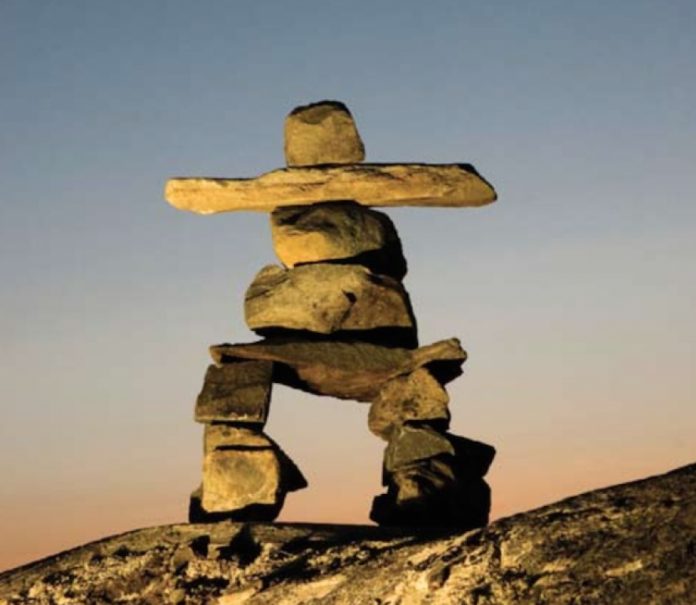
  • To pluralize the word inukshuk is a literary faux pas. Several of these stone figures are called inuksuit.
  • There are two forms of inuksuit. A figure with arms is called an inunnguaq and translates to “likeness of a person” in the Inuit language. A figure without arms is called an inukshuk, meaning “function of a person”.
  • An inunnguaq is pictured on the cover of Rush’s 1996 album Test for Echo. We’re not sure why.
  • Inuksuit are used across the Arctic from Alaska to Greenland for communication and navigation. In this featureless landscape, they are akin to tree blazes.
  • An inunnguaq’s arms may point in the direction of a navigable channel, a mountain pass or a migration route. An inukshuk can mark a food cache, a site with good fishing or a place where white children were bored.
  • Inuit tradition forbids the destruction of inuksuit in their homeland. This tradition does not hold true for the hundreds of imposters along the Trans-Canada Highway and wilderness park trails. Killarney Provincial Park issued a notice in 2007 urging visitors to “stop the invasion” of inuksuit.
  • In 1999, an inukshuk was chosen to grace the flag of Canada’s newest territory, Nunavut. The stone figure is also the 2010 Winter Olympics logo, in recognition of the inukshuk that watches over Vancouver’s English Bay.
  • The world’s largest inukshuk is located in Schomberg, ontario. Nicknamed Little Joe, it stands over 11 metres high and is formed of 11 granite slabs totalling 82,000 kilograms.
  • Inuksuit have come to symbolize cooperation and friendship. Each stone is chosen for how well it fits together with the other stones and the assembly is secured entirely through balance. 

This article on inukshuk was published in the Early Summer 2009 issue of Canoeroots magazine.This article first appeared in the Early Summer 2009 issue of Canoeroots Magazine. For more great content, subscribe to Canoeroots’ print and digital editions here.