Home Blog Page 51

16 Of The Best Places To Paddle In America

a kayaker paddles on a trip through beautiful Oregon scenery in America
Feature photo: Ryan Porter/Unsplash

The United States of America is a paddling hotbed for good reason. From the iconic wilderness of Alaska to the mysterious mangroves of the Florida Everglades, the country features an immense range of destinations to satisfy all types of paddling. In the United States you’ll discover canoe tripping routes on glassy North Woods lakes; float trips on historic waterways and hidden gems; exciting whitewater runs through canyons and over cascades; and world-class sea kayaking on ocean fjords and inland seas.

Working with an American paddling outfitter is a great choice if you’re new to an area, regardless of your experience level. These local experts will handle logistics, route planning, equipment rentals and more. Better yet, sign up for a guided trip for an all-inclusive experience, in which local knowledge joins you on the water and in camp.

We’ve curated a short list of some of the best paddling trips America has to offer. Bear in mind, however, this is just a small glimpse of all that’s here to discover by canoe, kayak or raft.

Alaska

With skyscraping peaks, coastal fjords and countless wild rivers, Alaska easily earns its distinction as the wildest state in the Union. Such rugged, extreme conditions make Alaska a destination for the most hardened adventurers. However, options also exist for mere mortals—including flatwater paddlers and families—to get a taste of this iconic place.

1 Tangle Lakes

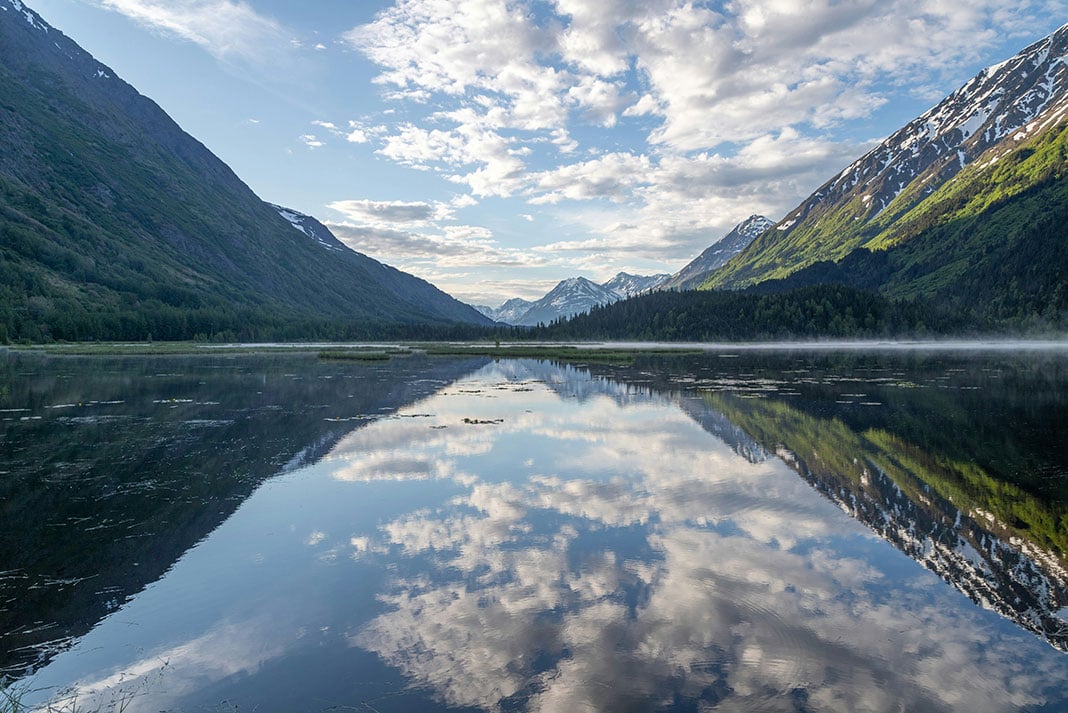
If your picture of Alaska includes lakes surrounded by snow-capped mountains, wild rivers and tumbling waterfalls, this three-day guided canoe or kayak tour with Alaska Dream Adventures is for you. The itinerary includes a mix of flatwater paddling on the Tangle Lakes, in the heart of the Alaska Range, a quarter-mile portage around amazing waterfalls, and a downriver run with class II to III rapids—all in a landscape abounding with wolves, bald eagles, beavers and other iconic northern wildlife. This all-inclusive adventure is ideal for intermediate paddlers looking for an easy-to-plan Alaskan experience.

2 Prince William Sound

Breakwater Expeditions’ seven-day journey on Puget Sound is customized for families, inviting you to experience wilderness sea kayaking at a classic Alaskan destination in a safe and fun environment. The main goal of this all-inclusive, guided sea kayak trip isn’t to cover immense distances, but rather to allow time for families to reconnect and experience the rugged Pacific coast up close, including glaciers and incredible wildlife like bears, salmon, bald eagles and more.

Washington

Washington state boasts an awe-inspiring landscape of exposed Pacific coastline, tide-washed islands and wild rivers tumbling off the Cascade Range. Washington is the birthplace of modern North American sea kayaking and it remains a life list destination for kayak touring.

3 San Juan Islands

Perched in a temperate, sun-splashed rain shadow at the edge of the continent, the San Juan Islands are a bucolic sea kayaking destination in the Pacific Northwest. Discovery Sea Kayaks’ three-day kayak and camping tour is a perfect introduction to Washington’s Pacific coast. This novice-friendly guided trip includes all gear and meals, as well as expert instruction along the way. You’ll travel with a small group of like-minded paddlers, getting an intimate glimpse of the marine environment. Keep your eyes peeled for orca whales throughout your journey.

Oregon

Oregon shares the Wild and Scenic Snake River with neighboring Idaho. The state features some of the wildest country in the Lower 48—a classic mix of mountain scenery, ancient forest and big, powerful rivers.

4 Snake River

According to the Indigenous Nez Perce, Hells Canyon on the Snake River was dug by a giant coyote to protect the people from the “Seven Devils” that resided across the gorge in present-day Idaho. A rafting trip through Hells Canyon with ROW Adventures is a bucket-list experience for wild river enthusiasts. The five-day trip includes meals and full outfitting, along with expert interpretation of the area’s dynamic geology and Native American history.

Idaho

Whitewater rivers and deep wilderness are hallmarks of Idaho. The state is home to dozens of waterways, including two Wild and Scenic Rivers, making it a great destination for adventurous rafters, whitewater kayakers and experienced canoeists. Go guided for an immersive and safe experience.

5 Middle Fork of the Salmon River

The Middle Fork of the Salmon is one of the original American rivers awarded Wild and Scenic status in 1968. There’s good reason: this free-flowing waterway bisects the Frank Church River of No Return Wilderness, dropping 3,000 feet in elevation across 106 miles.

Join ROW Adventures for a guided six-day raft trip on the Middle Fork of the Salmon River for the ultimate wilderness whitewater experience. You’ll enjoy exciting class III to IV rapids, hot springs, blue-ribbon fishing and great hiking while you explore some of the deepest wilderness in the Lower 48.

Utah

Utah’s Canyon Country abounds with opportunities for paddlers looking for trips of a lifetime on big western rivers. The state straddles the divide between the mountains and arid country, offering stunningly austere scenery, mind-blowing geology and rich Native American heritage.

6 Green River

Looking for a new perspective on an iconic western river? Join Breakwater Expeditions for a guided SUP tour on Utah’s Green River. Custom six- and seven-day guided trips are available, complete with all equipment, logistics support and gourmet meals. Besides outstanding hiking and opportunities for photography, Breakwater can customize packages for yoga enthusiasts, families and fitness paddlers.

Montana

Montana is home to more than just big skies. The state bridges the gap between the Rockies and the Great Plains, and it earns its recognition as a mecca for outdoor adventure with legendary waterways like the Missouri River and countless others, which served as travelways for Native Americans and explorers like Lewis and Clark.

7 Upper Missouri River

This weeklong float trip by canoe takes in the incredible scenery of one of America’s greatest waterways. The Upper Missouri River is enveloped by towering white cliffs and austere badlands as it cuts its way across the northern plains. Join Upper Missouri River Guides for an immersive wilderness canoeing experience on this great American river. Your small-group, fully guided adventure includes gourmet meals and all equipment.

Minnesota

It’s no surprise that the Land of 10,000 Lakes is a paddler’s paradise. Minnesota is famously home to the Boundary Waters Canoe Area Wilderness, one of the most popular canoe tripping destinations in the world, as well as the majestic Lake Superior coastline and the headwaters of the Mississippi River. Simply put, the state has something for every type of paddler.

8 Boundary Waters

With 1,200 miles of backcountry canoe routes and 2,000 wilderness campsites, you could spend a lifetime exploring the North Woods of Minnesota’s Boundary Waters. Stone Harbor Wilderness Supply will whet your appetite for more with a guided day trip, including all gear and transportation from their base in Grand Marais. The company also offers full outfitting, trip planning advice and rental canoes, kayaks and SUPs for do-it-yourself adventures.

9 Lake Superior

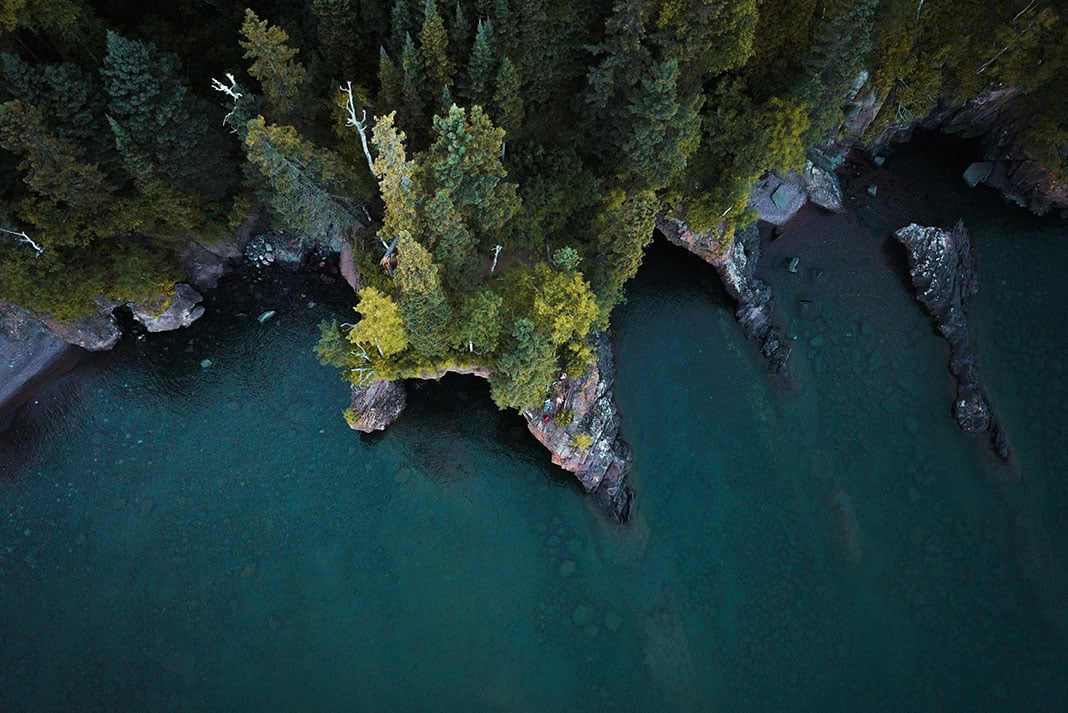
Discover why Duluth consistently ranks amongst America’s most outdoorsy communities when you take a guided sea kayak journey on Lake Superior’s scenic north shore with Day Tripper Duluth. You’ll paddle crystalline waters beneath towering cliffs, admiring a historic lighthouse and mysterious shipwreck. Day Tripper Duluth customizes its guided day trips to a wide variety of participants, including fun and easy family trips, more challenging adventures for intermediate and advanced sea kayakers, and everything in between.

10 Isle Royale National Park

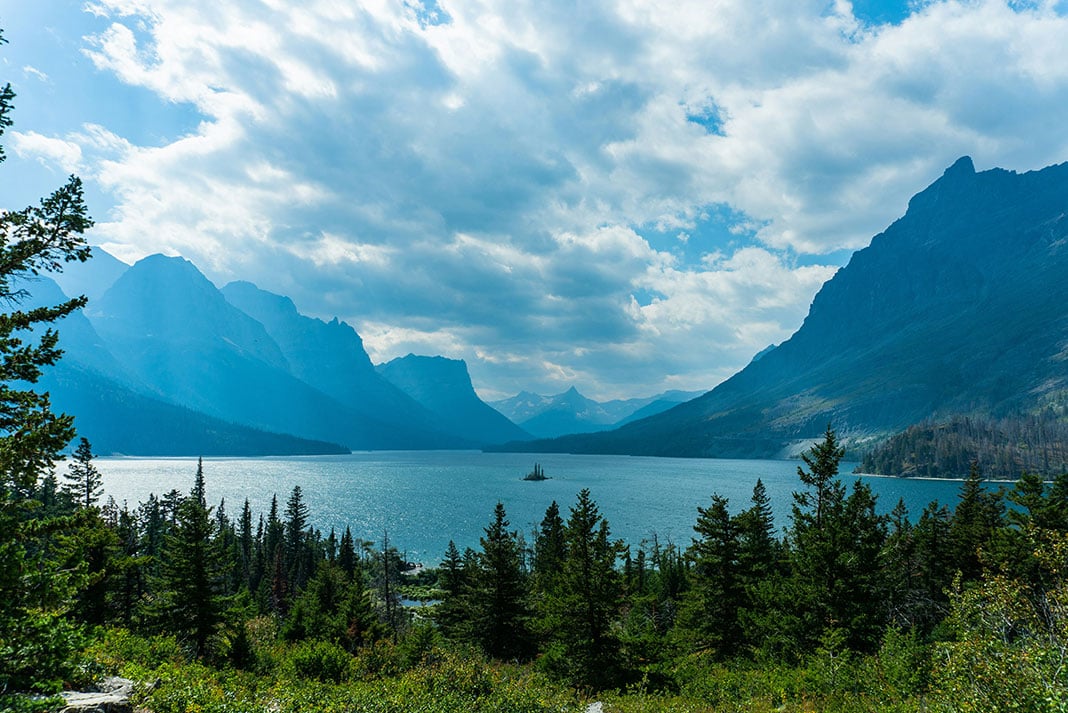
The Lower 48’s least-visited federally designated wilderness area features over 100 miles of rockbound coastline, perfect for sea kayaking. Join Stone Harbor Wilderness Supply for a six-day guided tour of Isle Royale’s secret coves, historic lighthouses and abandoned fishing villages. This all-inclusive sea kayak adventure includes ferry transportation to and from Isle Royale from Grand Marais, all meals and equipment provided.

Michigan

Michigan’s remote Upper Peninsula is far removed from the state’s urban south. The “UP” embraces its rugged Lake Superior shore, offering plenty of options for kayakers to explore the cliffs, beaches and wilderness islands of an inland sea.

11 Pictured Rocks

Minerals in the sandstone cliffs near Munising have turned the Lake Superior shoreline into a colorful canvas, complete with towering arches, caves and waterfalls. Pictured Rocks National Lakeshore is an incredible destination for nature lovers and sea kayaking is the best way to see this natural phenomenon. Sign up for a mothership-supported guided trip with Pictured Rocks Kayaking to experience 13 points of interest in a single day. Lunch is included.

12 Agate Harbor

Lake Superior is renowned for its diverse and spectacular geology. In particular, the Keweenaw Peninsula features native copper, unique volcanic formations and agates, making it a dreamy destination for rockhounds. You’ll discover untouched agate beaches on this four- to five-hour sea kayaking tour with Keweenaw Adventure Company. Each outing begins with basic strokes and rescue training before you take to the water, exploring the incredible shoreline where you’ll encounter a unique rock arch and the shipwreck of the City of St. Joseph barge just offshore.

New York

The contrast between metropolitan New York and the alpine hinterlands of the northern reaches of the state is decidedly stark. Paddling and portaging amidst the gem-like lakes of the Adirondacks is an ancient tradition, with plenty of options available for backcountry adventures for all levels of paddlers.

13 The Adirondacks

Based on Saranac Lake, Adirondack Lakes and Trails Outfitters will help you plan everything from basic day trips to multiday expeditions by SUP, kayak or canoe in the scenic wilds of upper New York state. The company offers full outfitting, including rental equipment and trip planning advice, as well as all-inclusive guided trips—all backed by over 20 years of Adirondacks experience.

Virginia

Set in the heart of Appalachia, Virginia abounds with hardwood forests and tumbling rivers. The state offers extreme paddlers some of the best whitewater in the Southeast. For others, it’s a great destination for recreational paddling in quintessential rural America.

14 Upper James River

The scenic Upper James River provides a family-friendly introduction to the wilds of Virginia. The 10.5-mile section from Buchanan to Alpine features stunning mountain scenery, great fishing and easy class I and II rapids. The experts at Twin River Outfitters provide all the equipment and logistics for self-guided overnight excursions.

Missouri

America’s heartlands are home to the continent’s greatest river, the Mississippi. Modern-day paddlers can still discover the scenes of early America on the Big Muddy, with remote shores and hidden backwaters cast throughout the Show Me state.

15 French Corridor

The historic French Corridor of the Mississippi River stretches from St. Louis to St. Genevieve. Paddle with Big Muddy Adventures in a 29-foot voyageur canoe to get an intimate glimpse of this historic waterway. The three-day, all-inclusive tour is suitable for all levels of paddlers, and includes backcountry camping and gourmet meals from Chef Josh Galliano.

Florida

There’s more than theme parks, condos and snowbirds in Florida. The state is an incredible destination for sea kayakers and canoeists, boasting countless spring-fed rivers, open coastlines and the remarkable Everglades. Florida’s vast network of parks and water trails offers great access to routes for all levels of paddlers, whether you’re looking for a scenic day trip or a multiday adventure.

16 The Everglades

The Florida Everglades are truly otherworldly, featuring unique mangrove scenery, sweeping beaches and diverse wildlife. Breakwater Expeditions’ three- to 12-day canoe or sea kayak tours take in the best of the 1.5-million-acre Everglades, with fully guided, all-inclusive tours departing November through March. Options are available for all levels of paddlers.


Feature photo: Ryan Porter/Unsplash

 

The Legend Of Frank Kuiack: Algonquin’s Last Traditional Fishing Guide

Algonquin fishing guide Frank Kuiack kneels and cleans fish at a campsite with canoe in background
Attention anglers: According to an interview Frank Kuiack did with the Blue Fish Radio podcast in 2018, his all-time favorite fishing spot in Algonquin Park was Pen Lake. | Feature photo: Wayne Simpson

Ontario’s Algonquin Park lost its last traditional guide last year, but the legacy of Frank Kuiack remains. For 76 years, Kuiack shared his passion for the nearly 8,000 square kilometers of Algonquin Park wilderness and extensive knowledge of its more than 1,500 lakes with thousands of visitors.

Paddling Film Festival People's Choice Winner 2023The Last Guide is winner of the 2023 Paddling Film Festival People’s Choice Award, sponsored by Aqua Bound. Stream it today as part of the Voices Program.

The legend of Frank Kuiack: Algonquin’s last traditional fishing guide

At one time, the Park had more than 140 guides. These experienced outdoorspeople were hired by some of the one million annual visitors to help navigate the Park’s abundant lakes, and angle for brook and lake trout, smallmouth bass, northern pike, and 50 other species of fish. Over the years, the number of guides declined until only Kuiack remained.

Filmmaker Cristian Gomes documented Kuiack’s last years on the water and his challenge to find an apprentice, so his passing—which happened on May 4, 2021, at the age of 84—wouldn’t mark the end of the tradition. The Last Guide was released in March.

Algonquin fishing guide Frank Kuiack kneels and cleans fish at a campsite with canoe in background
Attention anglers: According to an interview Frank Kuiack did with the Blue Fish Radio podcast in 2018, his all-time favorite fishing spot in Algonquin Park was Pen Lake. | Feature photo: Wayne Simpson

“I believe Frank’s story connects with so many people because of our innate desire to find a purpose, community and environment we deeply connect with,” says Gomes. “Some, like Frank, have found it in nature and cultivated an awe-inspiring life around it. Others are still in the process of searching. Wherever we are on our journey, Frank’s story provides valuable lessons that, if observed and questioned, bring us closer to our true selves.”

How Kuiack became an Algonquin Park icon

Guiding was second nature for Kuiack, who grew up just a few kilometers from the Park’s eastern gate. He fell into the profession in 1945, at the age of eight, when some American tourists saw him fishing and offered him cash to take them on the lake.

His business and reputation grew from there. “I was making more money than my dad was,” Kuiack says with a laugh in the documentary. “He was getting $3.61 a day, and I was getting $5.”

Kuiack became an unofficial ambassador to Algonquin Park. Visitors from around the world came to experience his version of the Park—from ordinary folks and wildlife photographers to celebrities and dignitaries.

Beyond his innate knowledge, he became known for rowing his canoes with oars, his bologna and pickle sandwiches, and the incredible shore lunches that were almost always part of an excursion.

Running rapids and blazing trails

Kuiack’s niece, Sharleen LaValley, who appears in the documentary, shared a special bond with Kuiack. “I listened to amazing stories and participated in making new ones,” she says, recalling the times Kuiack ran rapids with her, the canoe bumping over the rocks below, so he could avoid portaging. “There was never a concern because we always had duct tape in our packs,” she says with a laugh.

The last guide is gone, but Park Superintendent John Swick says, “Many people were, and continue to be introduced to and fall in love with Algonquin Provincial Park because of Frank.”

His spirit will live on through the paths he forged in the Park—many have become official trails—and the experiences he created for thousands of park visitors.

Watch the trailer:

The Last Guide is an official selection of the 2023 Paddling Film Festival, and available to stream today as part of the Voices Program.


Cover of Paddling Magazine issue 68This article was first published in the Fall 2022 issue of Paddling Magazine. Subscribe to Paddling Magazine’s print and digital editions, or browse the archives.


Attention anglers: According to an interview Frank Kuiack did with the Blue Fish Radio podcast in 2018, his all-time favorite fishing spot in Algonquin Park was Pen Lake. | Feature photo: Wayne Simpson


13 Northern River Trips Of A Lifetime

beautiful view of a northern BC mountain and river landscape, perfect for the canoe trip of a lifetime
Feature photo: Karen Emsley/Unsplash

With endless wilderness, incredible wildlife like wolves, caribou and muskoxen, jaw-dropping canyons and the mythic allure of the midnight sun, it’s no surprise northern river trips in destinations like the Canadian Arctic and Alaska top the bucket lists of most paddlers. Expeditions on rivers like the Nahanni, the Tatshenshini and the Coppermine are truly trips of a lifetime.

But northern adventures don’t come easy. First, there’s the challenge of choosing a river and route that matches your skill level, experience and expectations. Then, planning and coordinating an epic adventure is almost as difficult as navigating a powerful and wild river safely.

Thankfully, there’s an easier, safer way to explore the planet’s last frontiers by canoe, kayak or raft. There are plenty of professional outfitters offering expertly guided northern river trips for beginners to experts and all paddlers in between. They handle the tricky logistics, supply top-notch equipment, provide training on the river, keep you safe and point out all the neat features along the way, as well as serve guests gourmet meals and often act as great entertainers.

Of course, the options are far vaster than those listed here, but we’ve focused on covering all corners of the North and choosing options for all types of adventurers. Read on to find our picks of the top northern river adventures.

Yukon

The Yukon still lives up to the legends of Robert Service and Jack London for its incredible wilderness and wildlife. This northern Canadian territory is bisected by soaring barren mountains and carved by free-flowing waterways, making it an amazing destination for adventurous paddlers.

1 Big Salmon River

Join the experts at Up North Adventures for a 15-day canoe expedition on the Big Salmon River, a lesser-known Yukon river that’s surrounded by spectacular mountain scenery. The trip starts in Whitehorse, a vibrant northern community that will give you a sense of life in the Yukon. From there, the outfitter will transfer you and a group of like-minded paddlers to Quiet Lake, in the territory’s South Canol region, where you’ll access the pristine Big Salmon.

This 355-kilometer trip is perfect for intermediate canoeists, with class II rapids and standing waves. Up North Adventures supplies premium equipment and gourmet meals, and will keep you safe on the water and offer interpretation to enhance your experience.

2 Upper Pelly River

Wanapitei Canoe Expeditions’ Upper Pelly River canoe expedition ventures into the little-known headwaters of a spectacular Yukon river. Expect deep wilderness on this two-week trip, as the river flows through boreal forest amidst serrated peaks. The 280-kilometer route includes mostly class I and II whitewater, as well as a few portages around gorges and waterfalls. The outfitter handles all the logistics, equipment and meals—just bring your sense of adventure.

3 Snake River

The Snake River is a classic Yukon wilderness adventure offered by the experienced guides at MHO Adventures. You’ll join a group of like-minded intermediate paddlers and expert guides on one of the most scenic rivers in the Peel Watershed, featuring amazing gravel bar campsites, excellent hiking and views of lofty peaks including 9,060-foot Mount MacDonald.

This 15-day, all-inclusive adventure starts in Whitehorse and includes a floatplane flight to the headwaters of the Snake at Duo Lakes, as well as a floatplane pickup near the river’s confluence with the Peel River.

Northwest Territories

From towering mountains to big-sky Barrens, sprawling lakes and cascading rivers, there’s a huge range of adventures available in Canada’s Northwest Territories. The area is home to some of the most legendary canoe trips on the planet, with enough options to fill a paddler’s bucket list to the brim.

4 South Nahanni River

The South Nahanni River is perhaps Canada’s most famous northern river trip, and for good reason: it features deep canyons, exciting whitewater, awe-inspiring Virginia Falls, and so much more. Canoe North Adventures enhances the typical Nahanni experience with an 11-day trip combining easy river canoeing with great hiking, giving your group intimate encounters with the Ragged Range, the tallest mountains in the Northwest Territories.

The all-inclusive trip includes a floatplane flight to Honeymoon Lake and floatplane pickup at Virginia Falls. Gourmet meals and expert guidance complete this trip-of-a-lifetime experience.

5 Thomsen River

Black Feather Wilderness Adventures takes you on a unique 12-day expedition on the Thomsen River, the most northerly canoeable waterway in Nunavut’s Arctic archipelago. Bisecting Aulavik National Park on Banks Island, the smooth-flowing Thomsen transports you through an oasis for northern wildlife, including muskoxen and Peary caribou. All equipment, air transfers and gourmet meals are provided.

6 Thelon River

Jackpine Paddle’s signature wilderness canoe trips on the Thelon River provide perspective on the sheer vastness of the Northwest Territories. The largest river in Canada’s iconic Barrenlands, the Thelon is noted for its amazing wildlife, including grizzly bears, wolves, caribou and muskoxen. The 193-kilometer Upper Thelon River expedition is a 12-day trip with no portages and easy whitewater, making it suitable for novices and intermediate paddlers.

You’ll encounter deep wilderness and enjoy gourmet meals and professional-grade equipment on this fly-in, fly-out bucket-list trip, with all the logistics handled by one of the most experienced outfitters in the North.

7 Broken Skull River

Don’t let the name of this river scare you away. With the expert guides at Black Feather Wilderness Adventures, intermediate canoe trippers can experience the Broken Skull River, a less-traveled tributary of the iconic Nahanni River, in the heart of the Mackenzie Mountains. This 11-day trip features class I and II whitewater, secluded hot springs and amazing hiking into alpine areas from campsites along the way.

Nunavut

This immense territory in the central Canadian Arctic is home to some of the longest—and wildest—rivers on the continent. From historic routes across the Barrens to rarely paddled rivers on the treeless islands of Canada’s Arctic Ocean, there’s something for every paddler to discover in Nunavut.

8 Coppermine River

The majestic Coppermine River was a critical thoroughfare for local Indigenous and Inuit people long before it transported European explorers like Samuel Hearne and John Franklin to the Arctic Ocean. Jackpine Paddle’s two-week canoe expedition on the Coppermine River allows intermediate and advanced paddlers to journey safely on a Canadian Heritage waterway in the rocky, big-sky Barrenlands north of the Arctic Circle.

This is an all-inclusive adventure, including floatplane transfers to and from the river. Jackpine Paddle’s expert guides offer canoe instruction, prepare gourmet meals, give guests a better chance at seeing caribou, grizzly bears and gyrfalcons, and interpret numerous archeological sites along the river.

9 Hood River

If you’re an advanced whitewater canoe tripper looking to challenge your skills in deep wilderness, you won’t find a better trip than Black Feather Wilderness Adventures’ two-week expedition on the Hood River. This wild river cuts across Nunavut’s Barrenlands and across the Arctic Circle, before dumping into the Arctic Ocean at Bathurst Inlet. Besides plenty of exciting whitewater, you’ll enjoy great hiking in rugged, treeless terrain under the midnight sun and have the chance to see iconic northern wildlife like grizzly bears, caribou and muskoxen.

Black Feather is one of the most experienced outfitters in Canada’s North and handles all logistics, as well as supplies spraydeck-equipped canoes and camping gear. Black Feather guides not only keep you safe and offer coaching on the river, they also create gourmet riverside meals.

Alaska

With a remarkable blend of skyscraping peaks, coastal fjords and countless wild rivers, Alaska easily earns its distinction as the wildest state in the Union. Such rugged, extreme conditions make Alaska a destination for the most hardened adventurers. However, a few options exist for mere mortals to get a taste of this legendary place.

10 Birch Creek

Alaska Dream Adventures offers a guided five-day canoe or kayak expedition on Birch Creek, a National Wild and Scenic River nestled in the state’s remote interior. The all-inclusive trip includes gear and meals, as well as expert guides to help you navigate the river’s class I to III rapids. This adventure provides a glimpse of wild Alaska, with exceptional opportunities for photography and a chance to experience deep wilderness in the safety of a group while you paddle 100 miles of free-flowing river.

11 Gulkana River

Paddle with Alaska Dream Adventures and experience a classic Alaskan salmon river on the Gulkana, a class I to III waterway surrounded by stunning wilderness. This trip is best for intermediate whitewater kayakers with some experience. All gear and meals are provided, as well as expert guides to keep you safe. The four-day trip includes a half-mile portage around a gorge and waterfalls. It’s no surprise the fishing is world-class.

British Columbia

Northwestern British Columbia shares much of the same spectacular sea-to-sky scenery as Alaska. This is a mountainous landscape of grizzly bears, coastal peaks and expert-only whitewater rivers, including the notorious Stikine River. Still, less-experienced paddlers can also get a taste of this iconic landscape on guided trips.

12 Turnagain River

Elements Adventure Company’s two-week canoe expedition on the historic Turnagain River includes 300 kilometers of paddling in the traditional territories of the Kaska Dena and Tahltan people. The adventure begins with a floatplane flight to the river’s headwaters at Dease Lake in Northwestern British Columbia. The Turnagain is best for intermediate to advanced canoe trippers, with class II to III whitewater and a challenging portage around Turnagain Falls. You’ll feel tiny amidst the rugged Cassiar Mountains and have plenty of options for hiking to scenic vistas from campsites along the way.

Ontario

If you don’t associate Canada’s most populous province with northern rivers, you’re missing out on the massive expanse of northern Ontario. Surrounded by boreal forest, wild rivers traverse some of the last-remaining mid-latitude wilderness on the planet, spilling off the Canadian Shield and destined for the Arctic waters of James Bay.

13 Missinaibi River

Canoe nine days with MHO Adventures on the historic Missinaibi River, descending class I to III rapids to incredible Thunder House Falls. This fully guided expedition includes all gear, gourmet meals and expert guides to keep you safe on the river, ending with a scenic floatplane flight back to civilization. Many canoe trippers consider the Missinaibi to be the perfect gateway to longer, more remote expeditions elsewhere in Canada’s North, so get ready to whet your appetite for more.


Feature photo: Karen Emsley/Unsplash


New Faces Of PTC: Hint Of Another Industry Trade Show

Elected board of directors for the Paddlesports Trade Coalition.
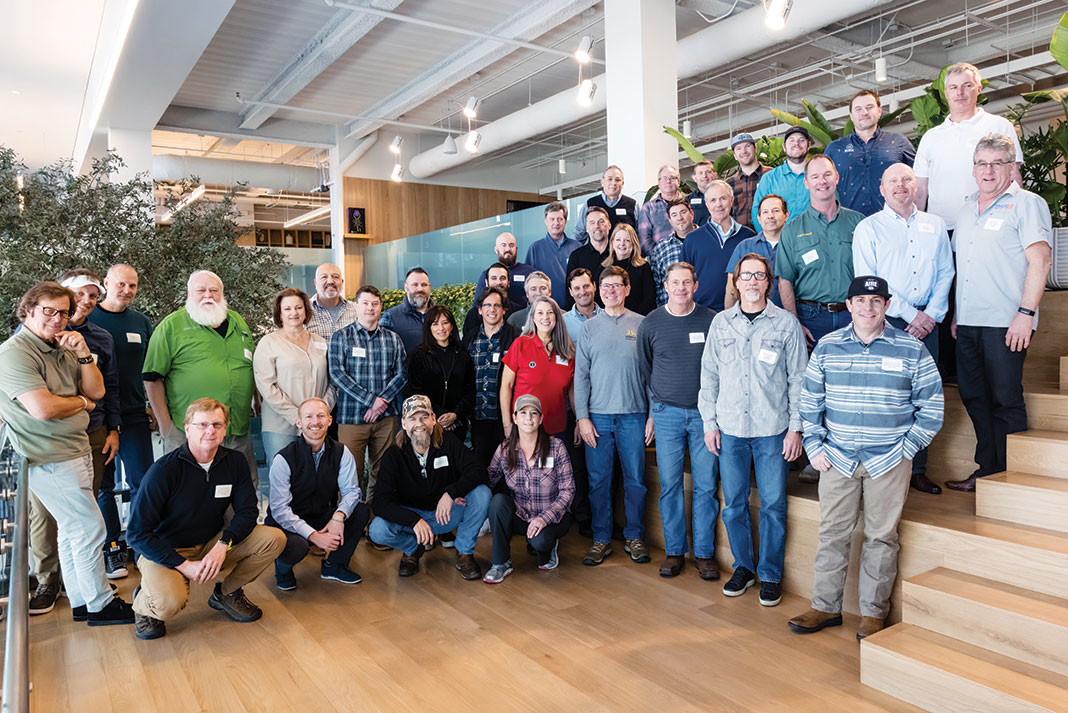
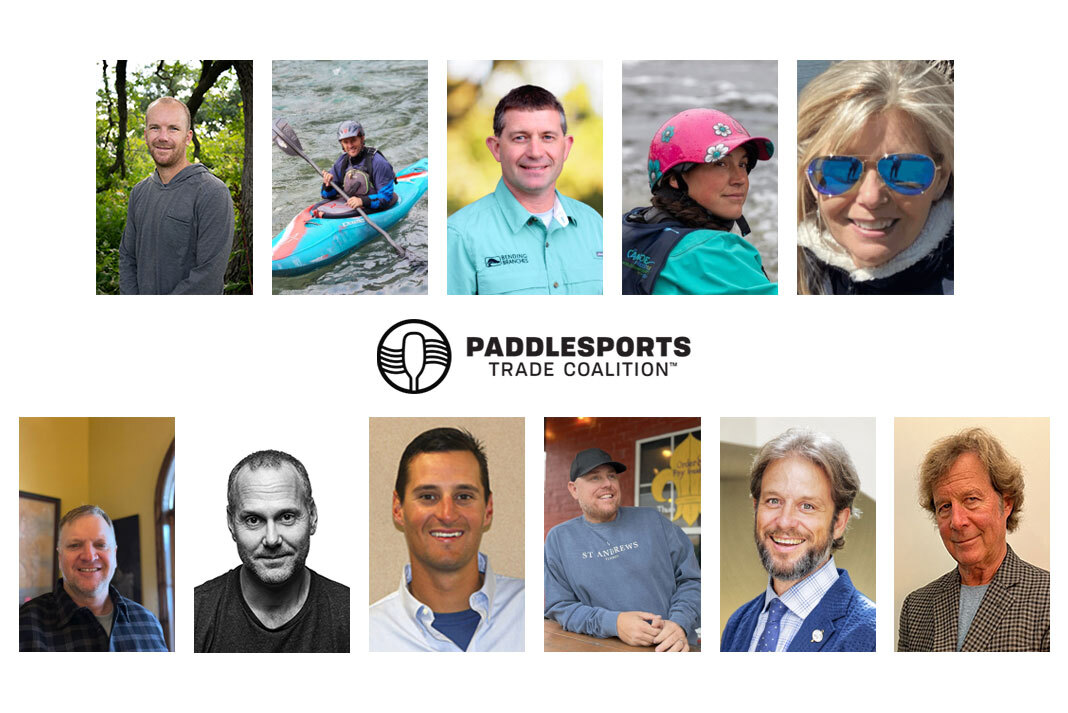
Elected board of directors for the Paddlesports Trade Coalition. Top left to bottom right: Rob Bossen, Simon Coward, Jason Eccles, Emily Jackson, Diane Jenkins, Ted Keyes, Stig Larsson, Jim MacAllister, Brad Stephens, Brian Vincent, Kelley Woolsey. Feature Image: Paddlesports Trade Coalition

A year after announcing the establishment of the Paddlesports Trade Coalition (PTC), the organization has completed a monumental task: electing its first board of directors. The election marks a major step for the PTC and the ability to move forward on initiatives, such as creating a gathering of the paddlesports industry.

According to the PTC, 11 seats were available on the board of directors, with four seats representing retailers and outfitters, four representing brands, two seats for sales representatives, and one seat for an associate member of the PTC. Associate memberships to the PTC are defined as those who have a strong interest or involvement in the industry but do not fit within the other categories.

The trade group has grown to 92 members since its inception a year ago. At the end of 2023, PTC members made nominations for the board using a third-party software, which allowed for a blind nomination process. The same software was used for the election.

“We had a good selection of people and we put up the ballot the week right after Christmas and required everyone to complete that by the end of the first week of January,” shares Jeff Turner, interim executive director of the PTC and sales director at Kokatat. “It wasn’t ideal, but we got great participation, good voting and we came out with our 11 board members.”

First Elected Board To The Paddlesports Trade Coalition

The 11 elected members to the board include:

Retailer and outfitter seats (4):
– Simon Coward, owner of AQ Outdoors
– Diane Jenkins, owner of Ozark Mountain Trading Company
– Brad Stephens, president of Sunjammers in Florida
– Brian Vincent, general manager of operations at Appomattox River Company

Brand seats (4):
– Jason Eccles, president of Branches LLC
– Emily Jackson, marketing director at Jackson Kayak
– Stig Larsson, owner of Level Six
– Jim MacAllister, director of U.S. sales at Northwest River Supplies

Sales representative seats (2):
– Rob Bossen of Bluewater Trading
– Ted Keyes, owner of Ted Keyes Industries

Associate seat (1):
– Kelley Woolsey of Lost Paddle Events

“It’s a marvelous team. It covers all aspects of North America,” Turner shared after his first meeting with the group following the election. “I was so impressed by the passion in that first meeting. I think they’re not going to drag anything at this point. I’m sure they’re going to pick up the mantle and keep pushing forward. We have to.”

Elected board of directors for the Paddlesports Trade Coalition.
Elected board of directors for the Paddlesports Trade Coalition. Top left to bottom right: Rob Bossen, Simon Coward, Jason Eccles, Emily Jackson, Diane Jenkins, Ted Keyes, Stig Larsson, Jim MacAllister, Brad Stephens, Brian Vincent, Kelley Woolsey. Feature Image: Paddlesports Trade Coalition

What’s Around The Bend For The PTC Board

When the PTC was established in the early days of 2023, volunteers like Turner stepped into leadership roles so the wheels could get in motion—forming an interim board as well as a steering committee to shape the vision of the PTC. Much of the first year was spent creating the organization’s framework, including its legal structure and bylaws as a 501(c)(6) business league. Now that a board has been elected, the organization has begun the transition from the interim team, starting with the first meeting Turner walked away so impressed with.

“It was a two-hour data dump,” Turner explains. “We had to give them a sense, from a governance perspective, what decisions and things they have to do.”

The board also has to hold an internal election to select a chair and vice-chair, among other positions. This is all part of a process Turner and the interim team have been vigilant to shepherd for the legitimacy of the organization.

Even Turner’s interim position as executive director will be up to the board to fill. When asked whether he would remain on if the board asked him to take the role, Turner explained why he joined the rally for the PTC in the first place.

“I’ve had the opportunity to work within industries that have strongly established associations, that have good legislative impact, or good programs that develop consumers and enthusiasm. So, I was always struck in this small industry by how important it would be for us to have that kind of organization.

“We’re a small enough industry that all the things that I’ve talked, debated and even argued with various constituents about in the industry, it’s all now on the table, and we just have to organize and make sure it’s generally supportive for what we want to accomplish. So yeah, I’ve got a passion for this, and that’s why I jumped into the interim role. What they choose to do going forward is entirely up to them. Were I offered the opportunity, I would absolutely consider it.”

Along with the laundry list of positions and formalities the new PTC board has to make headway on, are the strategic initiatives that are the driving force to build the coalition to begin with. According to Turner, the members of the interim group were adamant it should be the elected board and the leadership they put into place making the ultimate decisions as to how initiatives for the industry are tackled.

One of those initiatives is event-based and has already been in motion since it was announced to members at a PTC webinar in December—an annual gathering called the PTC Colab.

An Annual Industry Gathering Within Grasp

Turner believes an annual event is an imperative move for the organization’s momentum—from an industry gathering perspective, but also to generate proceeds to feed back into the organization, which ultimately needs funding sources.

“We did a survey back in July or August. We didn’t have members at that point, but basically about 700 to 800 names and emails we had collected. The survey was intended to touch on a few things. One was to get feedback on the PTC mission and initiatives.

“The other thing, the elephant in the room, was trade shows. There’s been uncertainty about what’s going forward in trade shows and what industries are going to do them, who’s going and who’s not, and so forth. As an interim team, we felt it was really important to have a gathering for the paddlesports industry. That was going to be one of the foundations of what we are. And we wanted to avoid what happened with the Paddlesports Retailer.”

The Paddlesports Retailer trade show ran for three years, from 2017 to 2019. A former iteration of the Paddlesports Trade Coalition, which Turner was also part of, endorsed the show and had a presence there. However, the trade association of the time did not own the show. The event was co-founded and owned by the event business of Sutton Bacon and Darren Bush. The show was meant to be a trade event better suited to the paddling industry than Outdoor Retailer. But after three years, the owners of Paddlesports Retailer changed course, absorbing Paddlesports Retailer within a new endeavor of theirs, The Big Gear Show.

In Turner’s view, it was as if the show was pulled out from under the industry—something the PTC is working to avoid with a new in-person event venture. In the webinar introducing the PTC Colab, the interim leadership shared how they would avoid the mistakes of the previous industry show. For this new event, the PTC would own the trademark of the Colab. All decisions regarding the event would be developed and managed by the PTC. And the PTC would license the event to a subcontractor while receiving a percentage of the revenue, which would go back into the organization’s operating costs.

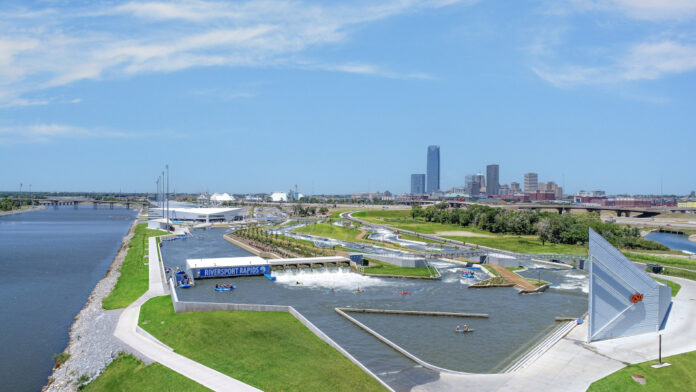
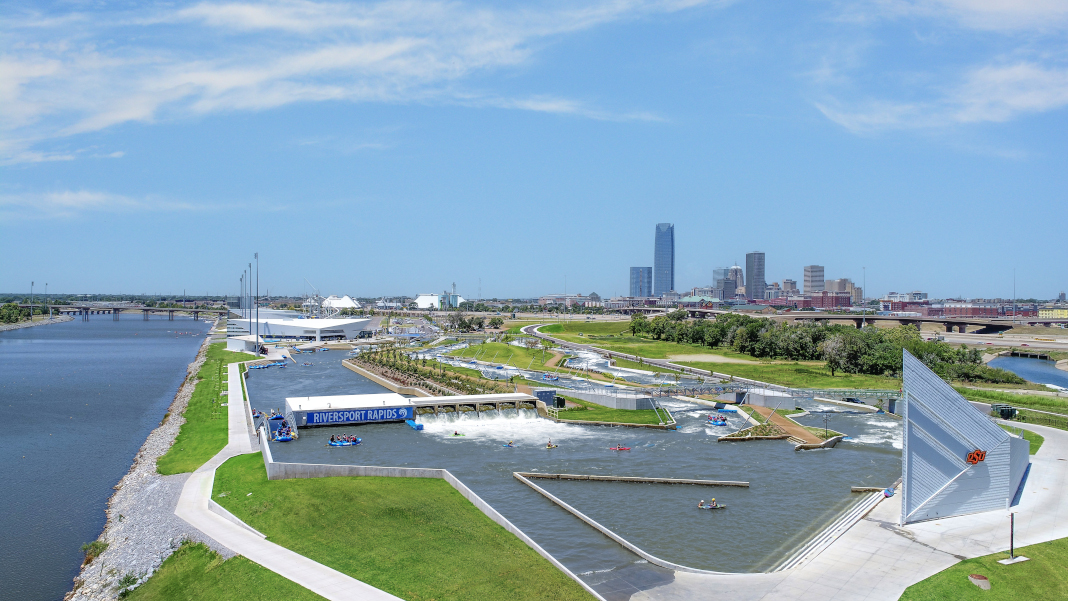
The PTC Colab is tentatively set to take place in Oklahoma City at Riversport OKC September 3-6, 2024. Whether that event is limited to an annual gathering of the PTC members or has a trade show component has yet to be decided. In fact, the newly elected board still has to decide to move forward with the event and sign contracts with vendors. However, Turner has a high degree of confidence members of the PTC will have an in-person event in Oklahoma City to look forward to and says there is fun potential for a trade component. Turner adds, though, that these decisions will need to be made soon to market and host an event in September.

Churchill River Canoe Outfitters Owner Sells After 35 Years

the previous and new owners of Churchill River Canoe Outfitters shake hands
Ric Driediger (left) hands the reins to CRCO over to Martin Bernardin (right). | Feature photo: Courtesy CRCO

After 35 years owning and running Churchill River Canoe Outfitters (CRCO), Ric Driediger has decided it’s time to step away and go paddling.

Located in the little town of Missinipe in Northern Saskatchewan, CRCO offers full canoe trip outfitting, guided trips, paddling courses, shuttle services and cabin rentals to those looking to explore the wild Churchill River and surrounding lakes and rivers. Although the company has seen many owners over its 60 years, Driediger has ferried it from modest beginnings—at first only serving a couple hundred clients each year to now close to 6,000.

Driediger says he loves running the business, but last summer he began to notice he wasn’t enjoying the administrative aspects of it as much as he used to. That realization combined with the fact that he’ll be turning 70 this year got him thinking it might be time to sell.

“If I wait longer, pretty soon I won’t be able to do the canoe trips I still want to do,” he explains. “It just felt like I have to move into this next chapter of my life while I still can, rather than have the next chapter be lay down and die.”

two men sign documents at Churchill River Canoe Outfitters
Driediger (left) and Bernardin (right) making the sale official. | Photo: Courtesy CRCO

Making the sale

Driediger figured it might take a while to find the right buyer. The ‘right buyer’ to him being somebody who wouldn’t break up the company and sell it off in pieces. And someone whom he could entrust his clients to.

“My guests have become really good friends in a lot of cases,” he says, “and I wanted to know they would be looked after.”

His process of looking for a buyer was simple: start talking to folks he knew who he thought might be a good fit, including some of his staff.

“The embarrassing thing was, the guy that was really interested, he didn’t cross my mind,” laughs Driediger. “And he’s absolutely the perfect person.”

That person would be Martin Bernardin, owner of Kisseynew Canoe Company and Montreal River Outpost. Both companies are located 80 kilometers south of Missinipe, in La Ronge, providing Bernardin and Driediger plenty of opportunities to work together over the last decade. They share many of the same clients through their outfitting businesses, and CRCO even rents out Kisseynew canoes.

Bernardin heard through the grapevine that Driediger was looking to sell and decided to give him a call.

“I didn’t really think he was serious about selling,” says Bernardin. “But when I called him and said ‘Hey, Ric, everybody that comes into the store here is telling me you’re trying to sell. Is this real?’ he’s like ‘Martin! This is perfect!’ And basically since that moment, in Ric’s mind, the business was sold. So then it was more on me, like holy smokes is this really what I want to do?”

After some more consideration, Bernardin decided it was the right choice and the deal was made.

“This will help us grow our business,” he explains. “We could either continue to grow Montreal River Outpost and grow organically, or we could take a huge step forward and take over CRCO and all that entails. This way we were able to have a step changing growth versus what would’ve taken us years to grow on our own.”

Driediger knew Bernardin was the perfect fit not only because he knows the industry and shares many of the same clients, but also because they “have the same kind of commitment to looking after people.”

“I have felt really good about this sale,” Driediger says. Not least because he says he doesn’t like to think about what the outcome would have been had he been unable to find a buyer.

At some point, he explains, he would have put the business on the market in a more official manner. But if that still didn’t yield a sale, he would have ended up breaking the business up and selling it off in pieces.

“But then the business would be gone,” Driediger says. “That is not what I wanted to do.”

Thankfully, it didn’t come to that.

view of lakeside buildings at Churchill River Canoe Outfitters
Bernardin has already implemented a new online reservation system for trips and cabin rentals. | Photo: Courtesy CRCO

Making the transition

Bernardin has already begun running operations at CRCO and has been keeping busy with summer bookings rolling in.

CRCO offers a few services Montreal River Outpost doesn’t, including guided trips and cabin rentals.

“It’s challenging and it’s exciting,” says Bernardin. “It’s a people thing, but it’s also a big logistics plan. It’s coordinating all these things that all have to work together in order to run the business effectively and efficiently.”

Despite the learning curve, he says the similarities between the businesses have made the transition easier. As have some early changes he’s made, including implementing an online booking platform. Due to the distance between the two outfitters, he’s also working on getting systems up and running that will make it easier for him to manage things from La Ronge.

He’s also asked Driediger to stick around CRCO and continue to do what he loved most about the job: telling stories and talking to groups. And while Driediger has agreed, he’s being cautious about the commitment.

“I don’t know what it’s going to be like to be there and not running it,” Driediger comments. “I think I can do it. But if I can’t, I’m just not going to be there because it’s just not fair to the new owner.”

a large canoe rack with canoes in winter at Churchill River Canoe Outfitters
There will now be a greater integration of gear and boats for purchase and rent between Montreal River Outpost, Kisseynew Canoe Company and Churchill River Canoe Outfitters. | Photo: Courtesy CRCO

Looking back and looking ahead

While Driediger helped grow the client base throughout his time running CRCO, business boomed during the pandemic. With travel out of province and internationally limited or not recommended, many Saskatchewan and Alberta residents chose to explore closer to home.

“Our business went way, way up during Covid,” says Driediger.

Once restrictions lifted, however, many of CRCO’s new clients began tripping elsewhere. This didn’t result in a downturn in business post-Pandemic, though.

“Now we’re starting to get the European people back again, and we’re starting to get the American people back again,” explains Driediger. “We’ve had some bookings from Ontario, Quebec, New Brunswick and B.C. And we weren’t getting those during Covid.”

“I thought Northern Saskatchewan would become a more popular canoe destination. Because it’s the best canoe country in the world.”

He wonders if CRCO will see another increase in business in a couple years, once the new clients they picked up during the Pandemic have had time to explore elsewhere.

“I expect we haven’t lost those customers,” he says.

Still, Driediger says he expected to see a lot more growth during his time at CRCO.

“I thought Northern Saskatchewan would become a more popular canoe destination. Because it’s the best canoe country in the world.”

He has some theories as to why this growth hasn’t happened—transportation woes being a leading cause. It’s difficult to get to Saskatchewan period because of a lack of flights, and then the 80 kilometers of road between La Ronge and Missinipe is a rough drive.

“Saskatchewan has a reputation of being just prairie,” Driediger adds. In fact, one-third of the province is Canadian Shield.

Bernardin is on board with the dream of increasing the popularity of canoe tripping in Northern Saskatchewan.

“Eventually we want to develop CRCO into a larger business,” says Bernardin. “Especially on the guided side of things, it’s pretty untapped up here. I think there’s a lot of potential to improve or grow the business. Getting people from Ontario to come to Saskatchewan.”

As a start, he’ll be traveling to the Outdoor Adventure Show in Toronto, Ontario and Canoecopia in Madison, Wisconsin in the spring. And while he isn’t sure tradeshows will be the answer, he feels confident they’re a good place to start to get the lay of the land.

“You get a good feel for people’s aspirations and goals and what they want to do,” Bernardin says. “You can talk to customers and see what they know about Saskatchewan.”

From there, he can start tailoring guided trips to what prospective clients are looking for. And figure out how to better reach paddlers with the message that Northern Saskatchewan is a canoe tripping paradise.

the previous and new owners of Churchill River Canoe Outfitters shake hands
Ric Driediger (left) hands the reins to CRCO over to Martin Bernardin (right). | Feature photo: Courtesy CRCO

Driediger says he thinks Bernardin will be successful in drawing more paddlers to the province. As he passes that mantle on, he reflects on what he was able to accomplish at CRCO.

“The reason I got into this business was because I love sharing wilderness with people,” he says. “I’m hoping that’s something I’ve instilled in my staff and in the people that come through here. That that kind of an attitude, that kind of a love of wilderness and a love of sharing wilderness with people continues.

Ric Driediger (left) hands the reins to CRCO over to Martin Bernardin (right). | Feature photo: Courtesy CRCO


Alpacka Launches Its Highest Performance Whitewater Packraft Ever

MANCOS, Colo. – Alpacka Raft today announced the release of the Valkyrie V3. Since its initial release in 2022, the Valkyrie has been widely recognized as the pinnacle of inflatable whitewater performance. Not content to sit on their laurels, the Alpacka Raft team made significant updates to the design of this latest edition, dramatically improving the boat’s capabilities.

After extensive testing, Alpacka Raft designed the Valkyrie V3 to be lower volume and more responsive than previous versions, making it easier to do everything from ferrying and eddying, to rolling and carving. The Valkyrie V3 is a true inflatable kayak, closer to a hardshell kayak than any other inflatable kayak has come to date. The patented Valkyrie Planing Hull and Valkyrie’s signature inflatable floor, paired with Alpacka’s patented whitewater features makes this packraft more rigid and better to paddle than previous versions for paddlers to push their limits.

“We’ve been working on high performance whitewater packraft designs for over 15 years,” said Thor Tingey, CEO and co-founder of Alpacka Raft. “We wouldn’t be where we are without Sheri’s design innovations, tester feedback and willingness to take untested shapes into harder whitewater runs, and the entire team’s relentless efforts to improve. We really like where we’ve made it with the V3.”

The Valkyrie V3 features the brand’s lowest profile tubes, modern creek boat shaping, generous bow and stern rocker, and a spacious and comfortable cockpit. The patented floor sits below the bottom of the tubes to create stability when the boat is put on edge, allowing paddlers to more easily cross eddylines and carve through features. The bow and stern rocker keep the boat high and dry, making it incredibly easy to boof over and skip out of holes and steep drops.

“During my first experience in the Valkyrie, I could hardly believe I was paddling an inflatable,” said Tyler Bradt, a professional kayaker and Red Bull athlete. “It rolled with ease, boofed like a dream, surfed waves, and edged so well. I’m so happy to see that every rendition of this boat is a leap above the last, and the boat that is now on the market is undoubtedly the gold standard of packrafts by which all others will be measured.”

The Valkyrie V3 comes in medium and large sizes, weighs 13.7lbs in the medium size, and retails for $2,350. The new boat is available for purchase at alpackaraft.com

About Alpacka Raft

Founded in 2000 by mother and son team Sheri and Thor Tingey, Alpacka Raft makes the world’s best packrafts. With packrafts designed and handmade by a talented group of makers in its Mancos, Colorado facility, Alpacka Raft packrafts have been used and trusted on expeditions by some of the most well-known adventurers on the planet. Alpacka Raft is committed to building a diverse community of boaters and is proud to provide high-quality, living-wage manufacturing jobs in a rural, mountain-town economy. For more information, visit alpackaraft.com

International Whitewater Hall of Fame Honored Six Legends

Takoma Park, MD – The World River Centre, on behalf of its hallmark program, the International Whitewater Hall of Fame (IWHoF) begins the year by highlighting members of its Class of 2023. Six honorees join an amazing group of paddlers bringing the total number of inductees to 61.

Honored attendees included 2023 Champion Manfred Vogt (Germany), and Advocate Peter Skinner (USA), accompanied by family members. 2023 Pioneer Bryce Whitmore (USA) and Advocate Isamu Tatsuno (Japan) provided acceptance videos and Mr. Tatsuno was represented on site by Patrick Fitzgerald.

Individuals inducted into the International Whitewater posthumously were Explorer Mike Jones (Great Britain) was represented by IWHoF Class of 2021 in the Explorer category, Dave Manby and 2023 Champion Jamie McEwan (USA) was represented by his sons, Keith Boynton and Devin McEwan. See the Class of 2023 International Whitewater Hall of Fame video reel here and at iwhof.org.

“I was surprised and delighted being inducted into the IWHoF in 2023 for my work helping AW survive extinction,” notes Pete Skinner, one of the two Class of 2023 Inductees in the Advocate category, “then spark whitewater conservation advocacy that now burns like a wild fire across the USA.  Rubbing shoulders in Strasbourg with other outstanding whitewater icons was a joy and privilege: there are many other leaders and pioneers in the whitewater community that deserve similar accolades!”

“Honorees or their representatives reminded us how important it is to understand our history, and that real people have built our sport with innovative solutions; ignored precedent to accomplish the unthinkable; dominated in their discipline; changed how and when rivers flow through regulatory change; or built a country-wide system to promote paddling,” says World River Centre President Risa Shimoda. “They deserved this special recognition, and the paddlesports trade had an opportunity to meet them at  The Paddle Sports Show in late September.”

About the International Whitewater Hall of Fame (IWHOF)

The International Whitewater Hall of Fame is a program of the World River Centre, designed to recognize and celebrate significant contributions to Paddlesports and led by an international Board of Directors. Nominations are submitted through IWHOF Affiliates around the world and screened by an international panel. The IWHoF electorate casts votes in each category to determine the honorees.  See past inductees and find more information at:  iwhof.org.

How A Former Canoe Guide Landed The Boundary Waters On The New York Times’ 52 Places To Go In 2024

The Boundary Waters Canoe Area Wilderness was recently featured in the New York Times' 52 Best Places to Go in 2024.
Featured Image: Lee Vue on Unsplash

“Over summers in college, I worked as a guide in the wilderness. We carried a canoe over Gichi Onigaming (known as the Grand Portage), an 8.5-mile-long path used for centuries by the Ojibwe, French voyageurs and other explorers to reach Lake Superior,” Stephanie Pearson shared of the Boundary Waters in a behind-the-scenes look at the New York Times’ “52 Places to Go in 2024.”

How the Boundary Waters landed on the New York Times’ 52 Places To Go

These days, the former canoe guide is a contributing travel writer for the New York Times, Outside and National Geographic. In the “52 Places to Go in 2024,” she shares with 10 million readers what paddlers have long known: few places in the world can compare with the wilderness of northern Minnesota.

Pearson regaled how her great-grandfather emigrated from Sweden to Minnesota in the 1800s. Her grandfather and father grew up paddling and fishing the waterways, and the travel writer herself began taking trips on the Boundary Waters Canoe Area Wilderness around the age of five.

The Boundary Waters Canoe Area Wilderness was recently featured in the New York Times' 52 Best Places to Go in 2024.
Featured Image: Lee Vue on Unsplash

“Today my sister and I escape to the Boundary Waters for canoe trips whenever our schedules allow,” Pearson shared of her enduring connection to the paddler paradise. “On a trip in 2018, our food pack was ripped to shreds by a black bear. I always naïvely thought this wilderness would remain pristine forever, but it is under constant threat from mining.”

The ongoing fight to save the Boundary Waters

This latter thought is a significant reason why the Minnesotan felt compelled to include her home waters on this year’s venerable travel list. The one million-acre wilderness area is home to some 1,200 miles of canoe routes connecting over 1,000 lakes. However, the prospect of copper mining activity has increased in the area over recent years, and many conservationists fear the impact extraction industries could have on this place of irreplaceable freshwater value.

The fight by conservationists and paddlers to save the Boundary Waters from the effects of copper mining has been ongoing. Famously, in 2014, Amy and Dave Freeman canoed from their home in Minnesota to Washington D.C.—collecting petition signatures on their Wenonah Itasca over the 2,000-mile journey. Conor Mihell’s 2015 article for Paddling Magazine’s former title, Canoeroots, looked at the efforts of the Freemans as well as heard from members of the communities surrounding the wilderness wetland.

“We have a unique moment in time when we the people can ask for public lands to be withheld from mining,” Becky Rom, an Ely, Minnesota-based environmental activist, said in Mihell’s article. “We have an opportunity to finish the job.”

For the time, efforts of conservationists such as the Freemans and Rom have prevailed. Pearson notes in the 52 Places article that in 2023, Interior Secretary Deb Haaland signed a 20-year moratorium on toxic mining on 225,000 acres within the Rainy River Watershed in the Boundary Waters Canoe Area Wilderness. The ban created two decades of protection for future generations of canoeists such as Pearson to immerse in the watery wilderness of the Upper Midwest and the opportunity for the writer to share the cherished value of the waters with readers worldwide.

New Leadership At Mustang Survival and Wing Group

Vancouver, BC – Outdoor industry professional Kenny Ballard has been appointed Mustang Survival’s new President. Ballard takes over responsibilities from Juanita Killen, who stepped into the role of Interim President in 2023, leading the company through a challenging year of growth and evolution. Additionally, Lance Richardson, an expert in domestic manufacturing and efficiency, takes on the newly created role of VP, Manufacturing and Innovation for the Wing Group, Mustang Survival’s parent company.

Ballard brings a wealth of experience from previous executive roles with renowned brands, including Osprey, SwissGear, Wenger Outdoor, Kelty, and, most recently, his own successful consulting firm. Having once worked at Mad River Canoe, Ballard returns to his roots by re-immersing himself in the water sports industry.

Andrew Branagh, CEO of the Wing Group, expresses: “Kenny’s history of exceptional leadership across a diverse spectrum of outdoor businesses uniquely qualifies him as the ideal candidate for this pivotal role at Mustang Survival. Kenny has consistently worked across the retail sector and knows how to navigate the complexities of commercial and military operations.”

Photo by Mustang Survival – Kenny Ballard

In response to his hiring, Kenny Ballard shared his excitement: “I’m ecstatic to be working with a brand that has a heritage of innovation, saving and protecting lives and enabling everyday marine adventures.”

Ballard continues: “It brings me back to my watersports roots—some of my fondest memories and grandest adventures have been on and in the water. Sailing, paddling, and fishing: the Mustang brand DNA, product portfolio, and most importantly the global team are built around these activities, and I am excited to align business with my passions.”

Ballard will lead from the Mustang Waterlife Headquarters Vancouver, BC, which includes the local manufacturing facility. He’ll be overseeing the newly moved and expanded Jacksonville, Florida, plant, operations in Spencer, Virginia, and the overseas office in Salisbury, UK.

Photo by Mustang Survival – Lance Richardson

Lance Richardson will have his desk next to Ballard’s at the Vancouver headquarters so as not to miss a beat of the manufacturing processes. As an Arc’teryx and Herschel alumni, Richardson’s supply chain and manufacturing expertise will fold seamlessly into the needs of the Wing Group. He says: “I am excited to join the Wing Group, which, across its brands, has an incredible history and future in making purpose-built safety products for people who need and use them. It’s an honour to join the team and work to enable, protect and save lives.”

Andrew Branagh adds: “I am thrilled to have Lance join the Wing Group on the corporate level to implement iterative efficiency process to manufacturing. We are starting the year strong by adding these two experienced professionals to the workforces of Mustang Survival and the Wing Group as we’re looking ahead to continue to serve our customers and consumers better with the best products available.”

About Mustang Survival

Pioneer in the design and manufacture of lifesaving solutions since 1967. Mustang Survival is committed to the protection and enhancement of those who push themselves to extremes, whether for work, duty, or to escape the daily grind.

About The Wing Group

The Wing Group and its companies (Wing Inflatables, Henshaw Inflatables, Patten Company, FabTek Industries, and Mustang Survival) deliver confidence to the world’s most demanding marine and aviation users through innovative and high-quality technical solutions – on, over and under the water. The Wing Group is the world leader in inflatable boats, life rafts, flotation, dry suits, and other tactical and survival solutions for recreational, commercial, and military customers.

You Don’t Have To Be An Expert Kayaker To Break A World Record

Dave Alley paddles the Murray River, setting a new speed record on Australia’s longest waterway
Dave Alley paddles the Murray River, setting a new speed record on Australia’s longest waterway. | Feature photo: Courtesy Dave Alley

Dave Alley had only 18 months of paddling experience when he climbed into his sleek and slender kayak on the Murray River last November and set out to challenge a 30-year-old speed record for paddling Australia’s longest waterway. Securing a new record would require Alley to paddle the 2,278-kilometer river that’s been compared to North America’s Mississippi in less than 16 days, six hours and 58 minutes. Thankfully, the 47-year-old paddler from Pottsville, New South Wales was no stranger to pushing his body to the limits.

You don’t have to be an expert kayaker to break a world record

map of Australia's Murray River
Australia’s Murray River. | Image: Historicair/Wikimedia Commons

“I’m drawn to leaving my comfort zone and challenging myself to try and achieve what otherwise seems impossible,” says Alley, who previously set and still holds speed records for cycling and running Australia’s full 13,383-kilometer perimeter in 2011 and 2015, respectively. “I thought I was happily retired from the ultra endurance game but was seeking a different form of training to mix things up with my general fitness program.”

Alley’s plans to paddle the Murray River originated with a suggestion from his wife.

“I had bought an expedition kayak and had hardly used it,” he says. “I live in a beautiful seaside village and my house is approximately 1.5 kilometers from the Pacific Ocean and a creek. I took the advice of my wife and took the kayak down to the creek with no set agenda other than to use the kayak as a form of training.”

Casual outings quickly turned into an obsession for Alley. “I quickly fell in love with kayaking, the feeling of being in the boat and the time on my own,” he says. “This turned into thoughts of another epic adventure and what I could do. I did some research and the idea of tackling Australia’s and one of the world’s longest rivers was born.”

Alley acknowledged his lack of paddling experience and sought to become “like a sponge” in fast-tracking his skills progression on the water, while also drawing from his previous endurance challenges.

Man paddles down Australia's Murray River as part of a speed record attempt
The record Dave needed to beat was 16 days, six hours and 58 minutes. | Photo: Courtesy Dave Alley

“At 47 years of age, no prior kayaking experience and having never been on the river was deemed by most as laughable,” he admits. “This record had been held for 30 years and all those who had previously attempted such a feat were seasoned, highly skilled and trained kayakers. I was effectively self-taught and it was a real process of trial and error.

“I used the same principles and process that were successful for me on the cycle and run. Essentially building distance over time while giving great thought preparation to the mountain of logistical work required. But it was a much shorter preparation for the kayak adventure. My thinking here was that I’m 47 years old and it’s now or never.”

The record attempt begins

On November 1, 2023, after driving three days to the Murray’s headwaters, Alley launched his custom-made, six-meter-long Fusion LR6 TK1 sea kayak and began his speed record attempt.

The epic started inauspiciously when Alley knocked his phone into the river. “I had downloaded audiobooks, podcasts, and music to keep me entertained and as a distraction only to have it gone,” he recalls. “It actually didn’t phase me. I just smiled and thought, this is what it is all about. Adapt and overcome.”

Greater concerns on day one of the trip included subzero temperatures, thick fog, low water and “a tough, technical section of river with multiple hazards,” Alley says. “In total, I capsized six or seven times throughout the record attempt due to fatigue, fallen trees and submerged objects.”

Low water levels throughout the trip meant he’d need to push extra hard to attain the record; especially considering when David Armytage made the fastest-known descent in 1993, he did so during a major flood. Add to this steady headwinds and temperatures ranging from minus three to 41 degrees Celcius, and it was clear Alley had his work cut out for him.

Alley’s six-man support team was integral to the expedition, allowing him to paddle up to 23 hours per day.

Dave Alley launches his kayak at night during a speed record attempt down the Murray River
A large part of expeditions like this is the mental aspect, in particular dealing with sleep deprivation. | Photo: Courtesy Dave Alley

“I had hallucinations and my expected pace was reduced significantly due to the low water and headwinds, which meant only one thing: if I wanted the record I had to forego sleep and keep paddling,” he says. “It was tough, but I knew it was possible. I only had to look at my crew members and what they were pushing themselves through to see me do the job to know quitting wasn’t an option. They motivated and inspired me.”

Through the hardships, a sense of satisfaction

Alley admits he missed the opportunity to take in the stark contrasts of plains and long stretches of sheer cliffs that make the Murray a world-class waterway. But when he finally reached the river mouth, just south of Adelaide, Alley succeeded in shaving nearly 20 hours off the previous record, with a final time of 15 days, 11 hours and 33 minutes.

Dave Alley and support team pose with his kayak after the record-setting trip
Dave with his support crew and custom kayak. | Photo: Courtesy Dave Alley

“The cycle, run and kayak were obviously different experiences due to being completely different sports,” says Alley. “However, dealing with the pain, sleep deprivation and having to get up day after day after day were similar experiences. Once you get through this and achieve your goal against all odds, you’re filled with a sense of deep satisfaction, pride and memories that I can’t put into words. I don’t do it for fame or fortune. I do it to prove an ordinary Aussie bloke can achieve big things through mental toughness.”

Dave Alley paddles the Murray River, setting a new speed record on Australia’s longest waterway. | Feature photo: Courtesy Dave Alley