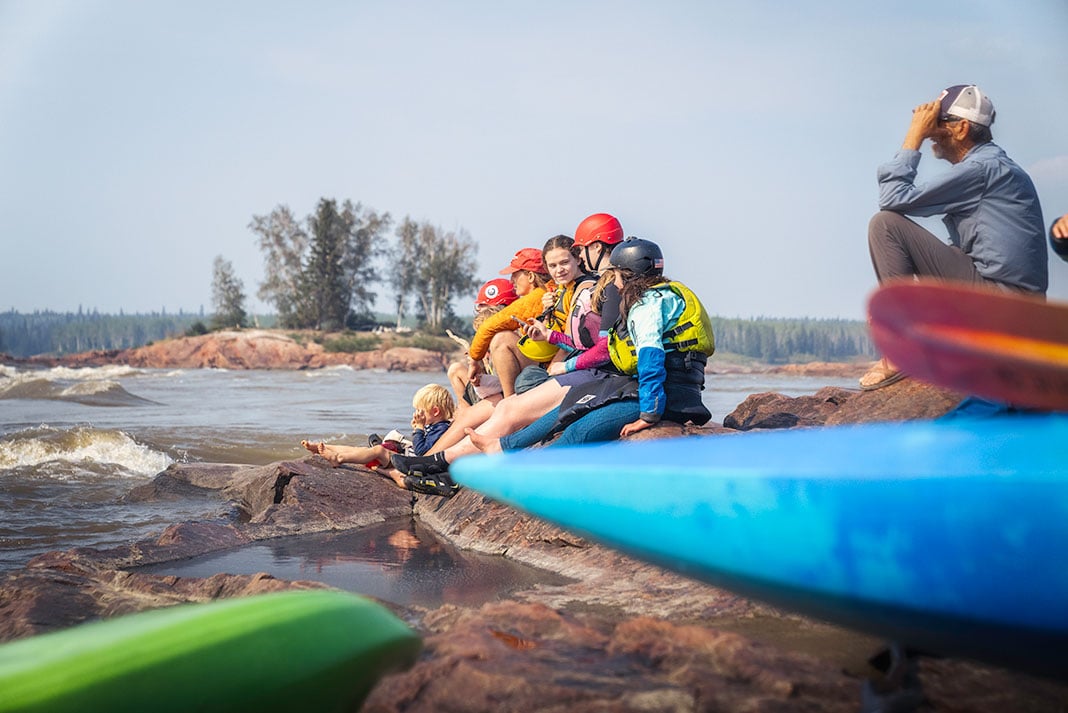
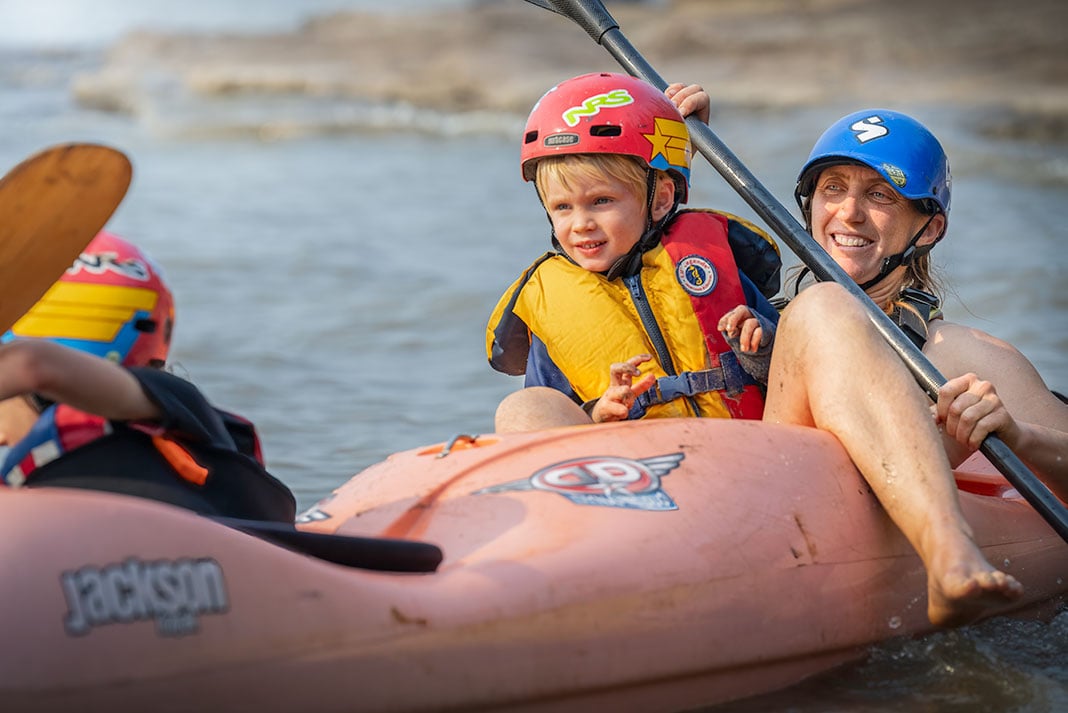
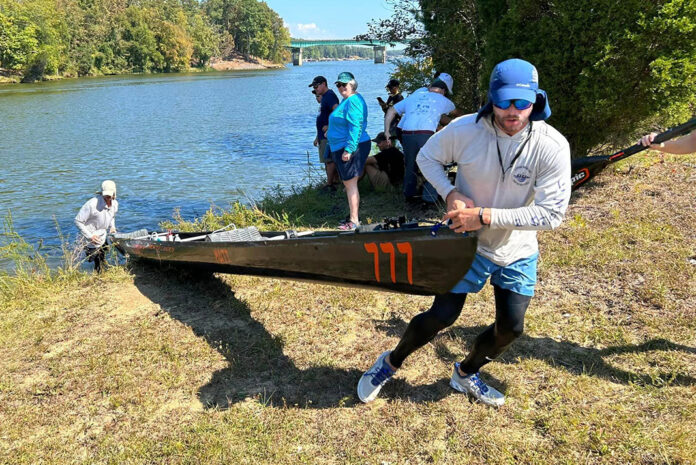
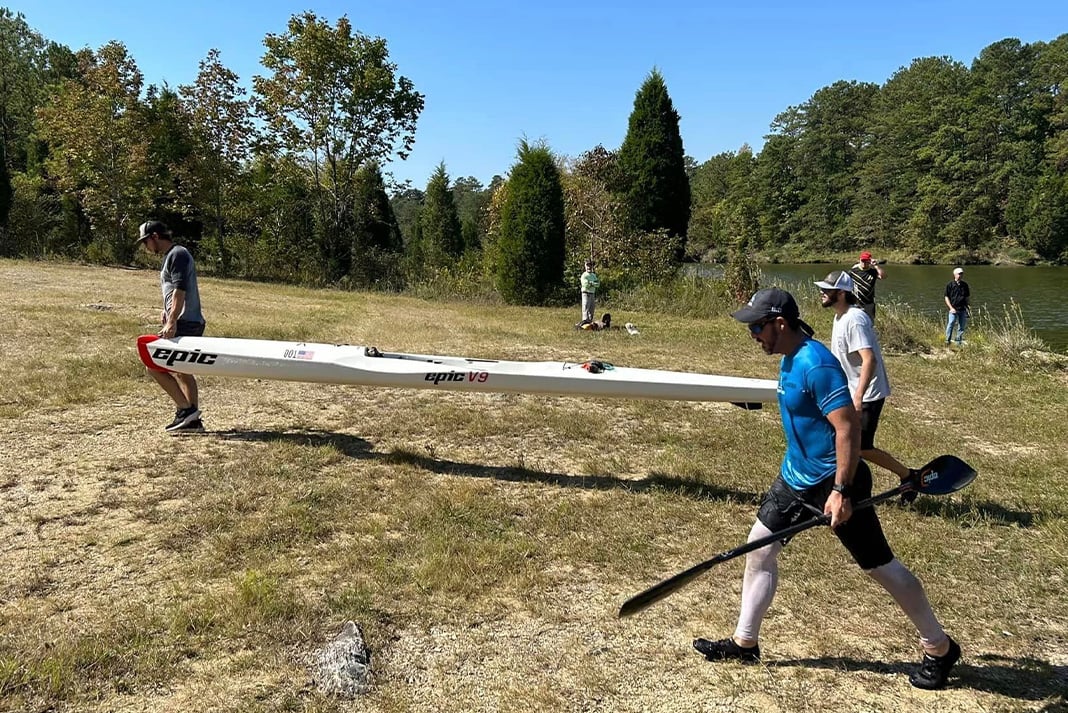
Highlands Ranch, Colo. (October 4, 2023) — Calibre Engineering, Inc. (Calibre) and S2O Design & Engineering (S2O) have united to expand service capabilities and resources. Together as a part of the Calibre family, Calibre and S2O will provide comprehensive water resources design and engineering for whitewater parks, in-river engineering, swiftwater rescue training facilities, and stream restoration throughout Colorado, across the United States, and globally.
“Calibre is passionate about building an elite small business with a focus on exploration and environmental stewardship,” said Gregory Murphy, president and owner of Calibre. “We have been longtime admirers of Scott and his work with S2O, particularly his focus on accessible water recreation and responsible waterway design and construction. Uniting with S2O gives us the ability to bring invigorating work to our staff and further our commitment to integrating rivers and waterways into communities.”
Feature Image: Calibre Engineering
Scott Shipley, founder and president of S2O, said: “S2O has built a reputation for exceptional design and customer service in the whitewater space. Our rapid growth and demand put us in the unique position of wanting to grow quickly in a sustainable way. Uniting with Calibre gives us additional resources and capacity to serve more clients and bring whitewater to even more communities across the globe.”
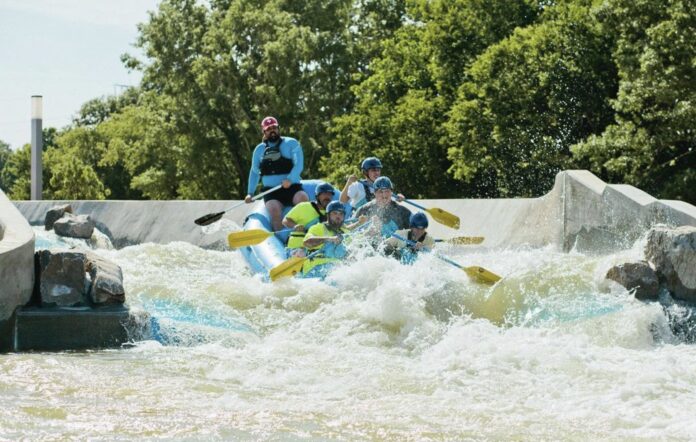
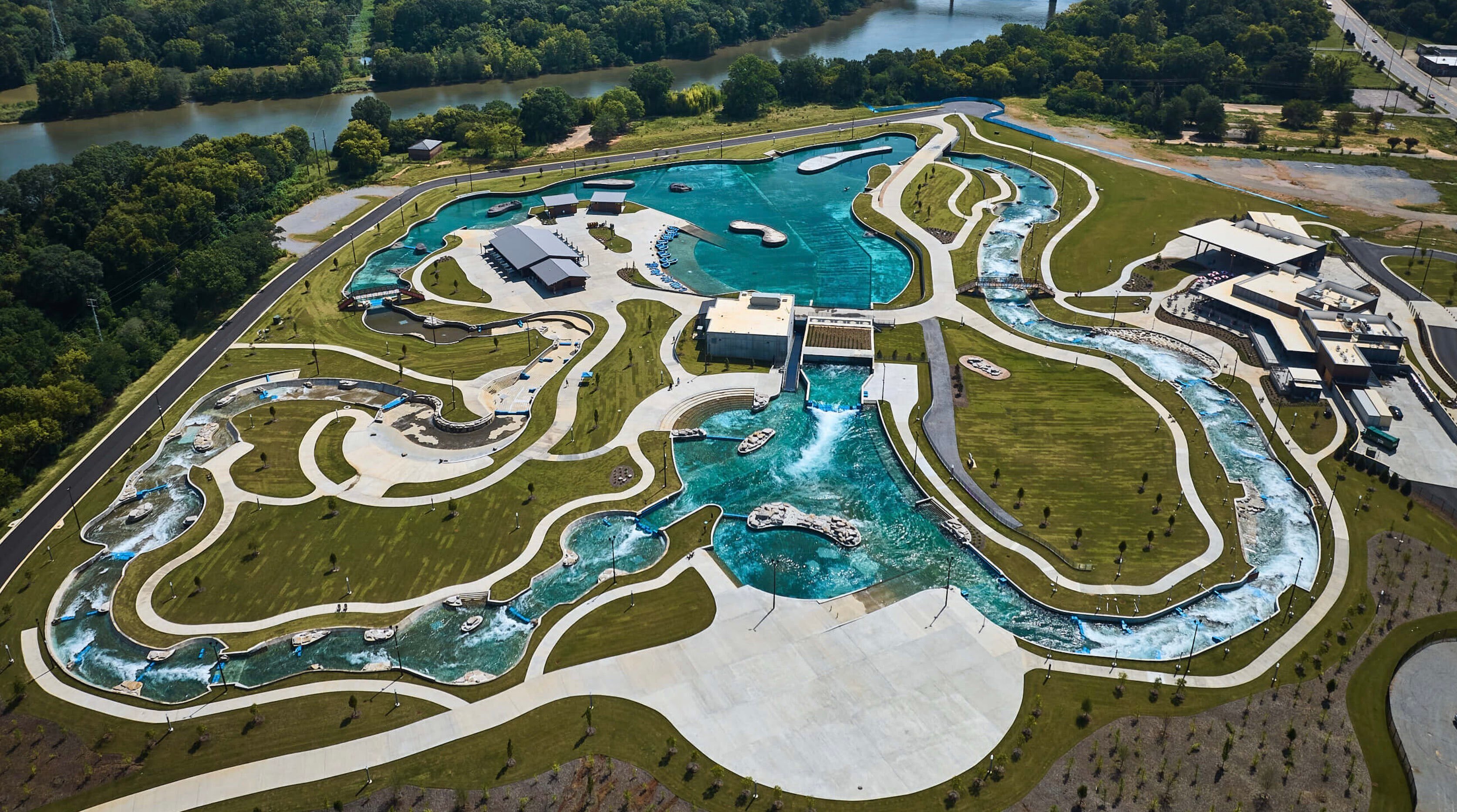
Whitewater parks are becoming event and activity hubs and the focal points of their communities. These destination venues turn often under-utilized urban areas into true recreational amenities.
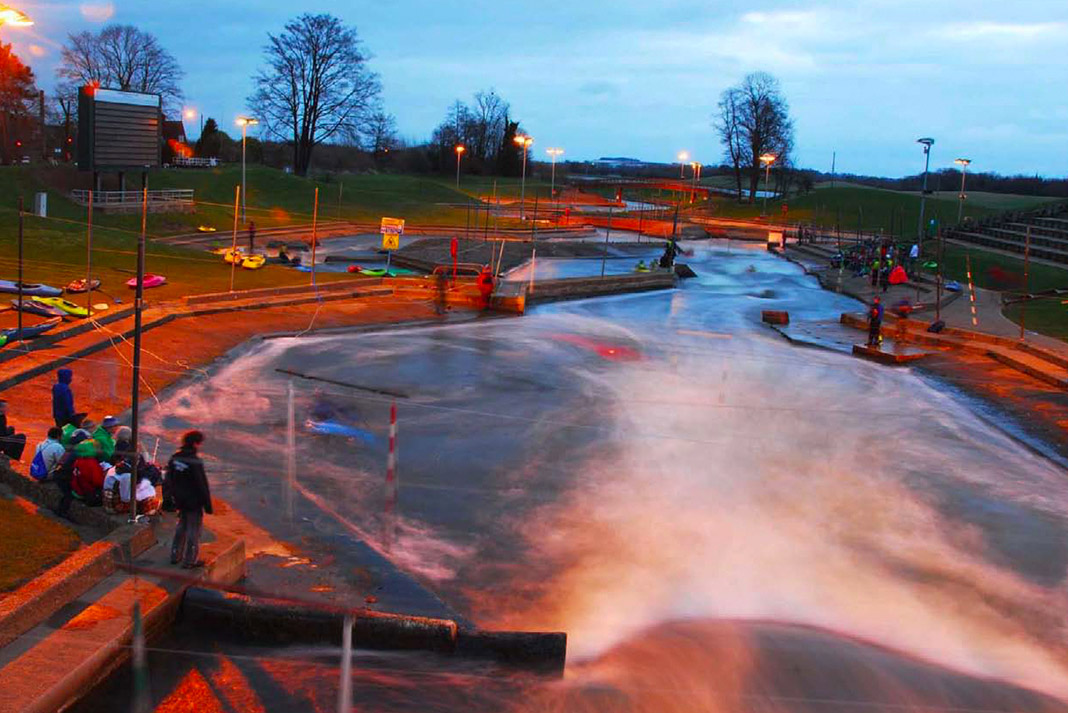
Shipley, a three-time slalom kayak Olympian, and S20 are responsible for designing the lion’s share of recirculating whitewater parks in the country and overseas, including the U.S. National Whitewater Center in Charlotte, NC; Montgomery Whitewater in Montgomery, AL; and the Lee Valley Whitewater Centre in London.
Image: Calibre Engineering
Calibre Engineering, Inc. is a Service Disabled Veteran Owned Small Business (SDVOSB) driven to provide support, service, and exploration in civil, water resources, and structural engineering. Founded in 2000, their team has collaborated on prominent projects across the country in the private, public, and federal sectors. They are passionate about integrating rivers and nature into communities in a tangible way. With offices in Colorado, California, and North Carolina, the firm has supported more than $1.5 billion in development and infrastructure design and construction. Learn more at www.calibre-engineering.com.
S2O Design & Engineering brings unique and innovative whitewater parks and swiftwater rescue facilities to life. Through engineering design and construction support, the S2O team enriches communities with adventure sports, outdoor activities, and endless opportunities for recreation. S2O is trusted around the globe as the leader in traditional in-stream whitewater parks, pumped whitewater parks, and river engineering.
“Go confidently in the direction of your dreams and live the life you have imagined.” —Henry David Thoreau | Feature photo: David Jackson
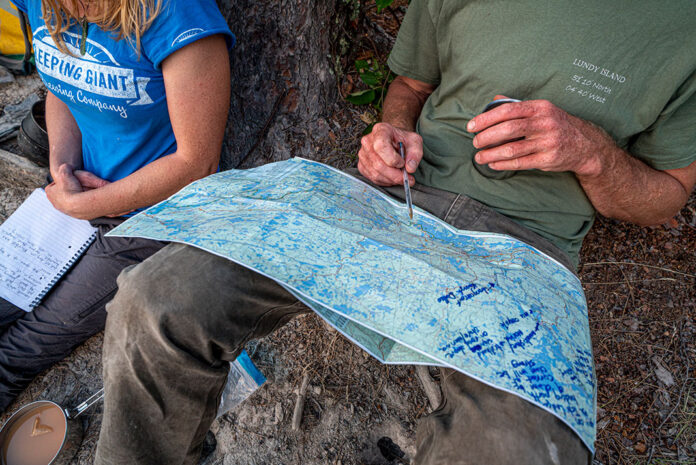
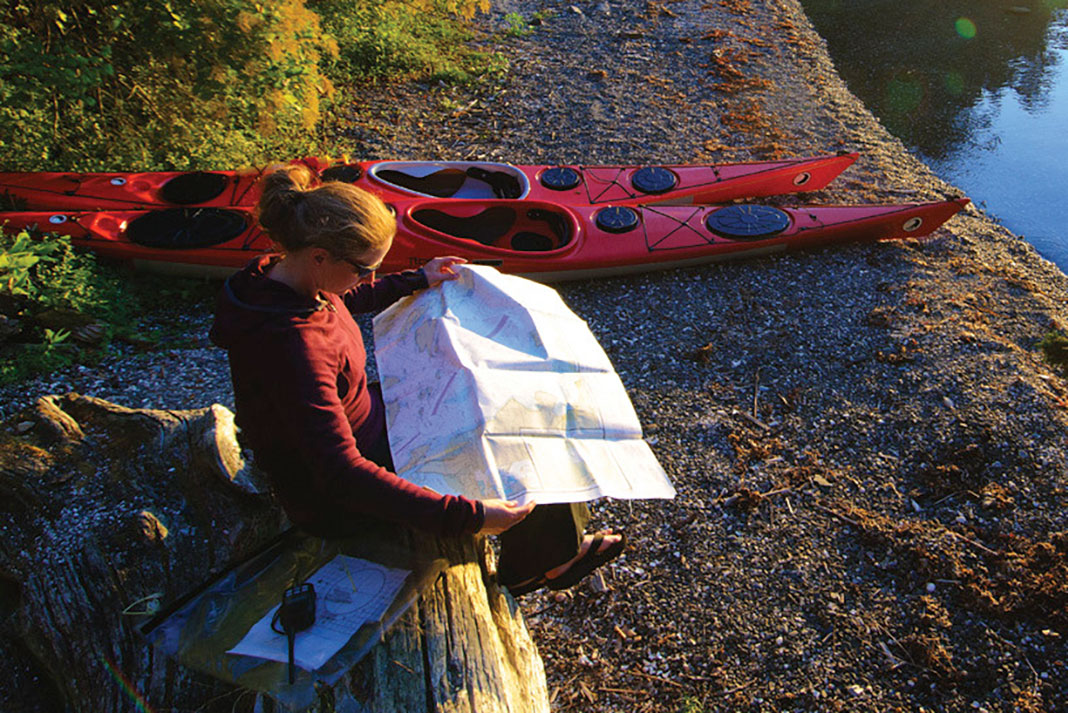
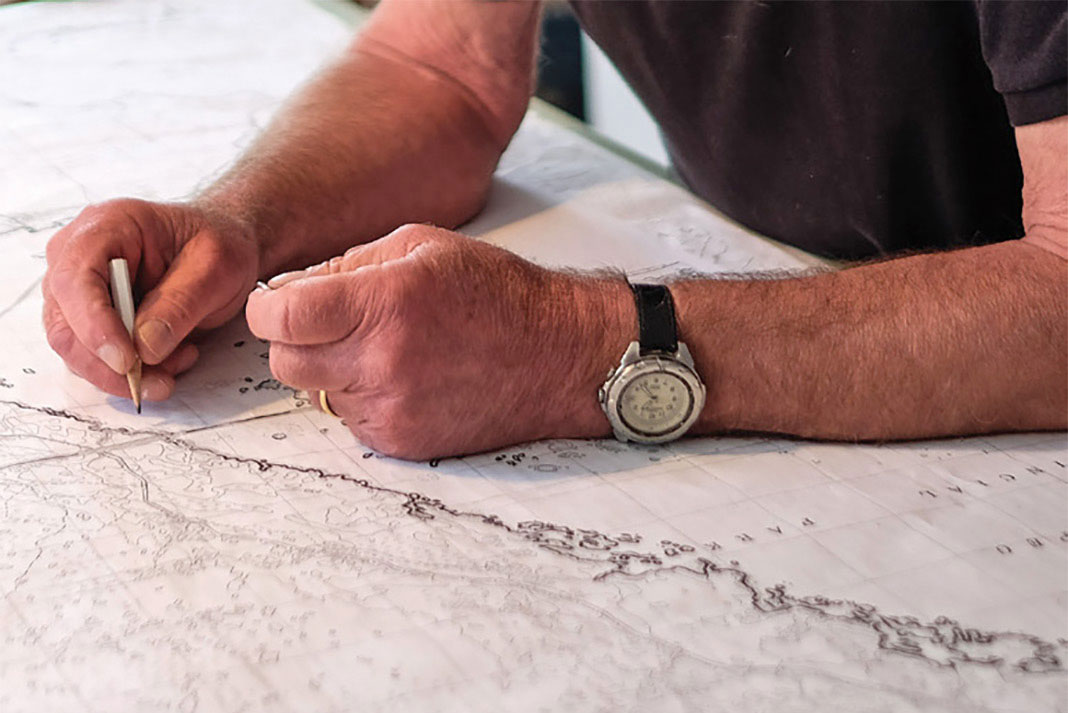
For every canoe trip I’ve been on, I’ve planned 10 more. Maybe that seems excessive, like I’m wasting time or not tripping enough. Okay, the latter is probably always true. But to me it’s not excessive when I get so much enjoyment out of just looking at maps.
I get laughed at every year when I’m asked what I want for Christmas. Maps of canoe trip areas are always onthe list. In the map drawer of my gear closet there are lots of maps of places I’ve yet to go. Some I have no intent of going anytime soon, maybe never. But that doesn’t stop me from taking the maps out once in a while and planning new routes; for future trips, I think, or maybe just to have something to dream about by the woodstove in February.
Losing our way: Map reading skills are on the decline
According to a recent poll conducted by Ordnance Survey, three-quarters of adults in the United Kingdom can’t read a map. The other quarter must be canoe trippers, like me.
It begs the question, what do maps look like to people who can’t read them?
I’m willing to bet what the poll actually meant was that people can’t use maps anymore, at least not independently. We still use maps in the sense that we have GPS devices showing us the map and telling us how to get there. But how many people can do the navigating themselves? I think wilderness trippers are probably the few remaining folks who can.
“Go confidently in the direction of your dreams and live the life you have imagined.” —Henry David Thoreau | Feature photo: David Jackson
The ultimate choose your own adventure
If map reading is a lost art, so must be map dreaming. If you can’t read a map, why would you look at a map? And if you aren’t looking at maps, how else do you dream up paddling adventures?
I know reading trip reports and guide books is a popular way to plan trips, but I much prefer to look at maps first.
[ Plan your next canoe trip with a map!—and the Paddling Trip Guide ]
I want to scan maps for myself and see potential routes jump out at me. I want to spend time wondering about that lake or that portage. I want to stitch together a route that makes sense to me. It feels more personal that way, a dream I cooked up and not one served to me. Thanks anyway, Google. It is more magical when I actually get out there and see the places I wondered about. Even if those places end up being quite different from how they appeared to be on the map. Or in my mind.
My last canoe trip, I spent a lot of time beforehand wondering about this 2.4-kilometer low-maintenance portage we’d be undertaking in the middle of the fourth day. Turns out, the portage was in fine condition. It was a little overgrown in places but was easy enough to follow. It was the 50 meters before the portage that was the problem.
A light snow year and hot, dry spring had left the edges of the pond a thick, sludgy, gooey mess. We could neither paddle through nor walk on top. To make matters worse, it was starting to rain and we could hear thunder rumbling in the distance.
The unfortunate person in the bow of the first canoe—me—quickly deduced through science—firsthand experience—that while standing or walking caused you to sink up to your waist, by running you could stay on top of the sludge. Mostly. There is video evidence of the whole ordeal, which is already being pulled out every time this story is retold. Which is often—it’s the part of the trip we talk about the most. But the map had said nothing about this tricky take-out.
As Jeff McMurtie, cofounder of the camping map company Jeff’s Maps and now Unlostify, put it in his TED Talk, “Your opportunities are limited by the knowledge you have. If you don’t know something, then you can’t do it.”
That’s a pretty good argument for why maps are important. Jeff and his maps provide us with the knowledge we need to make trips happen.
But the other good things about maps, Jeff, is that they don’t tell us everything. Because if we did know certain things about a route, we might not do it. Like, say, if we knew a certain unnamed pond was full of muck instead of water. I’m glad maps don’t tell us everything. Maps leave just enough to imagination, wonder and true adventure.
Digital editor Marissa Evans is filling in for Kaydi Pyette as editor of Paddling Magazine.
This article was first published in the 2023 Paddling Trip Guide. Subscribe to Paddling Magazine’s print and digital editions, or browse the archives.
“Go confidently in the direction of your dreams and live the life you have imagined.” —Henry David Thoreau | Feature photo: David Jackson
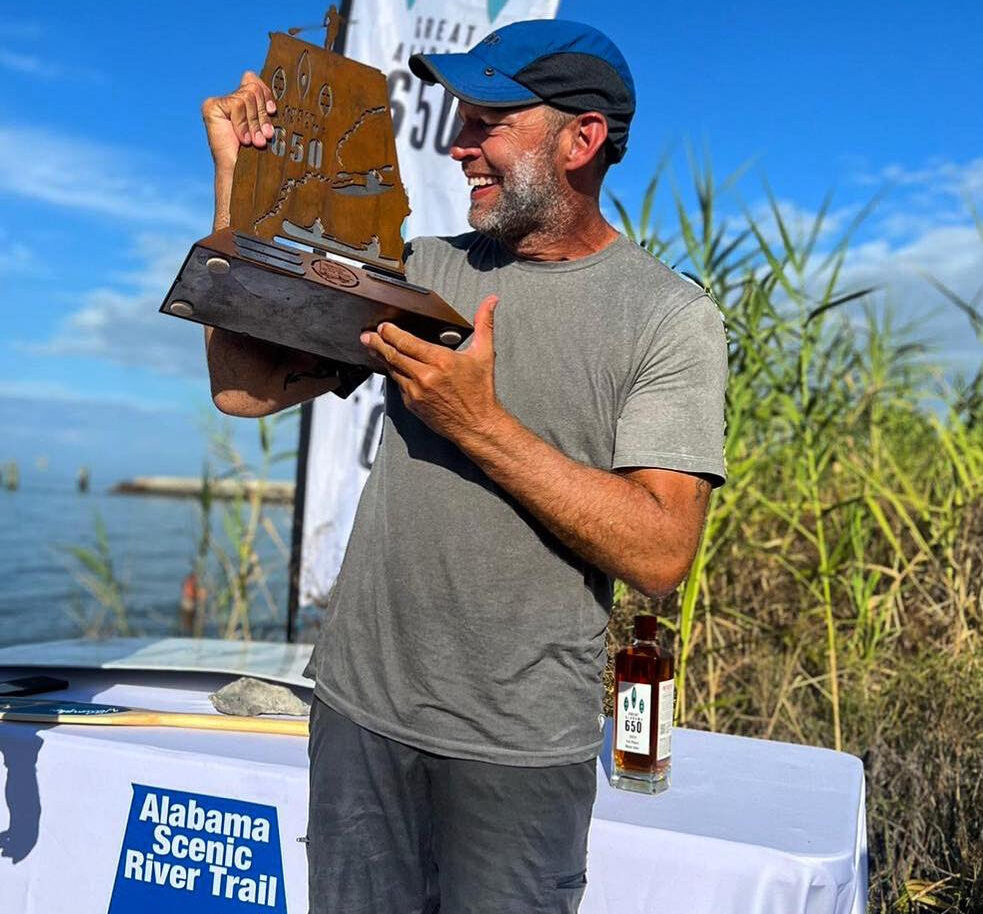
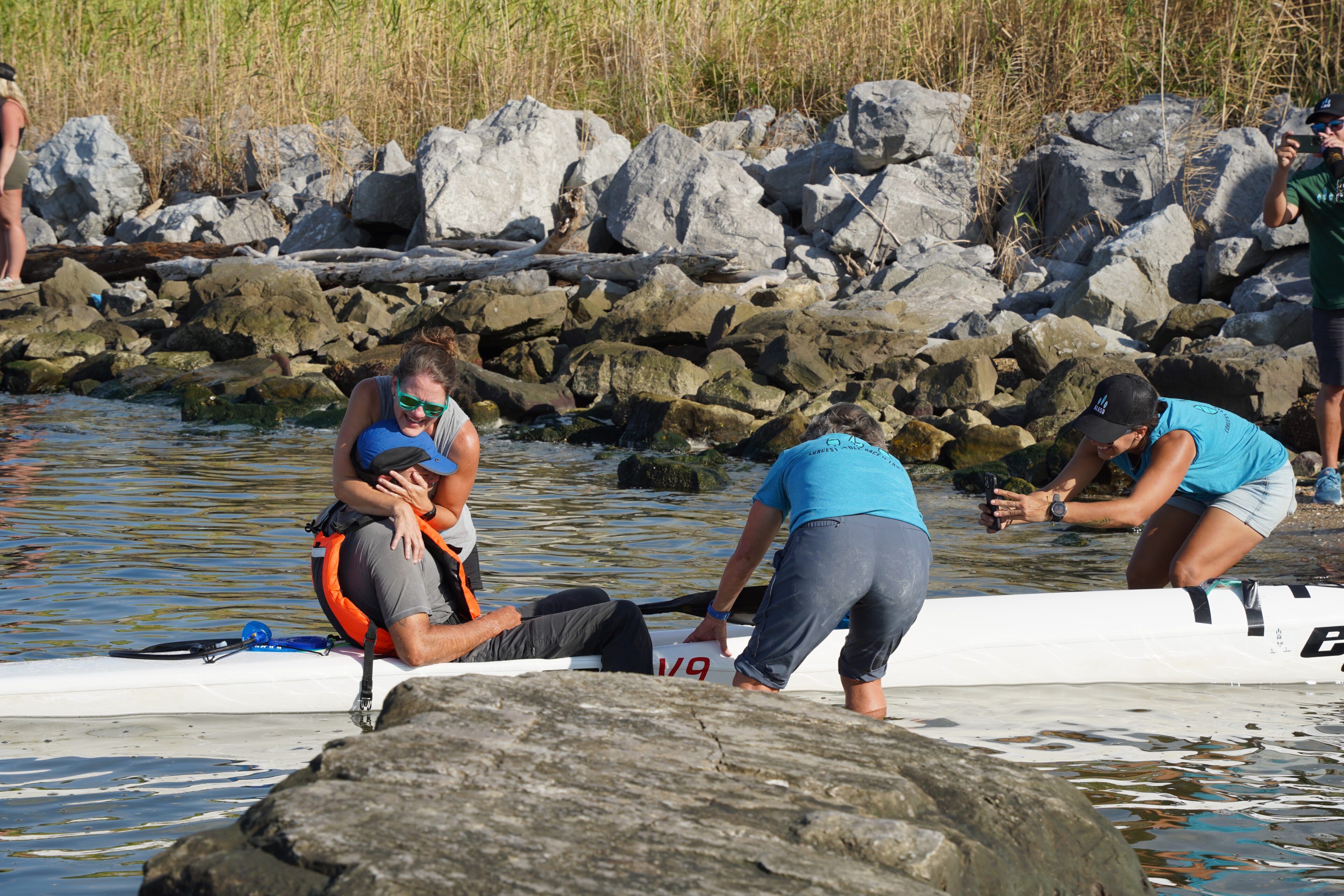
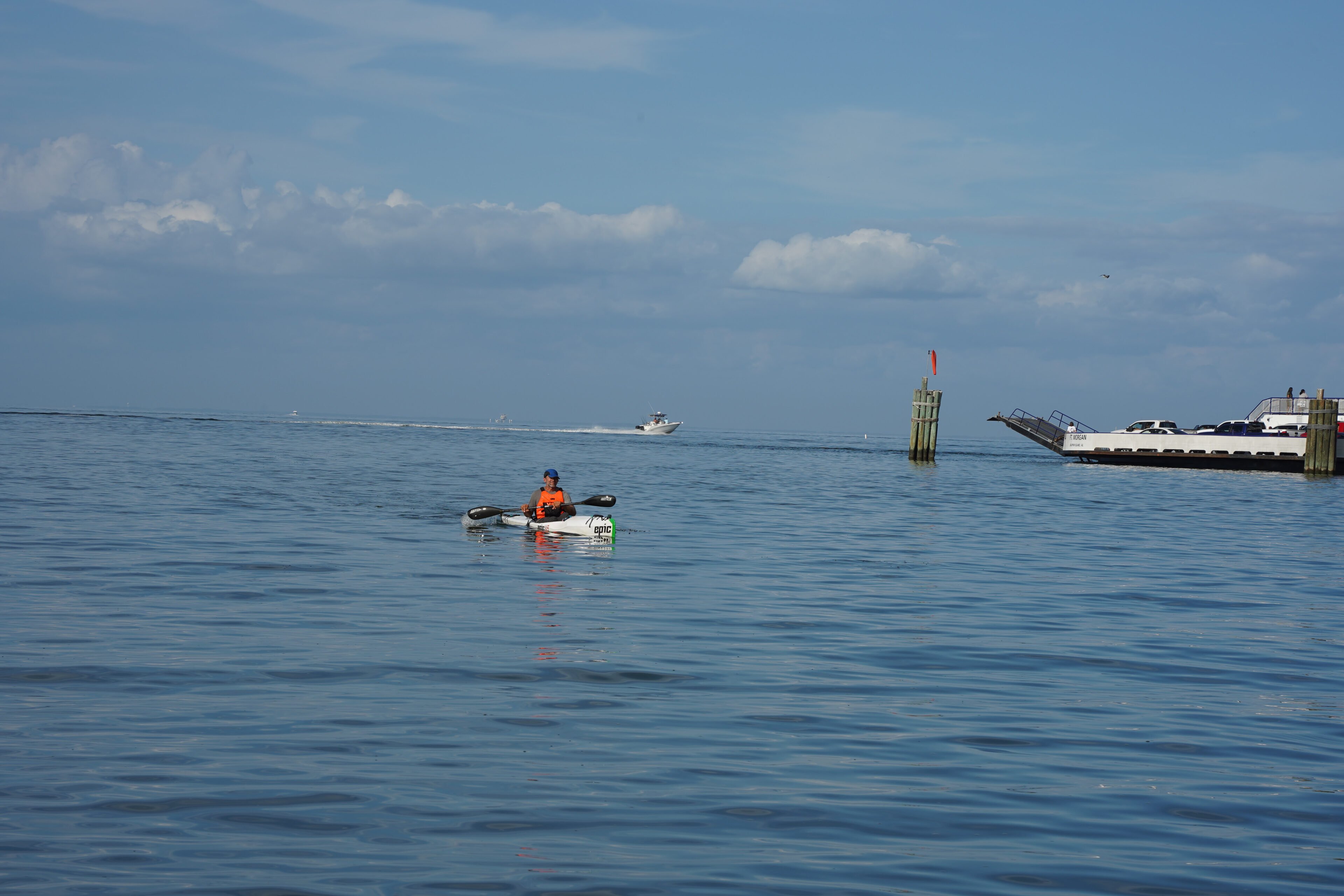
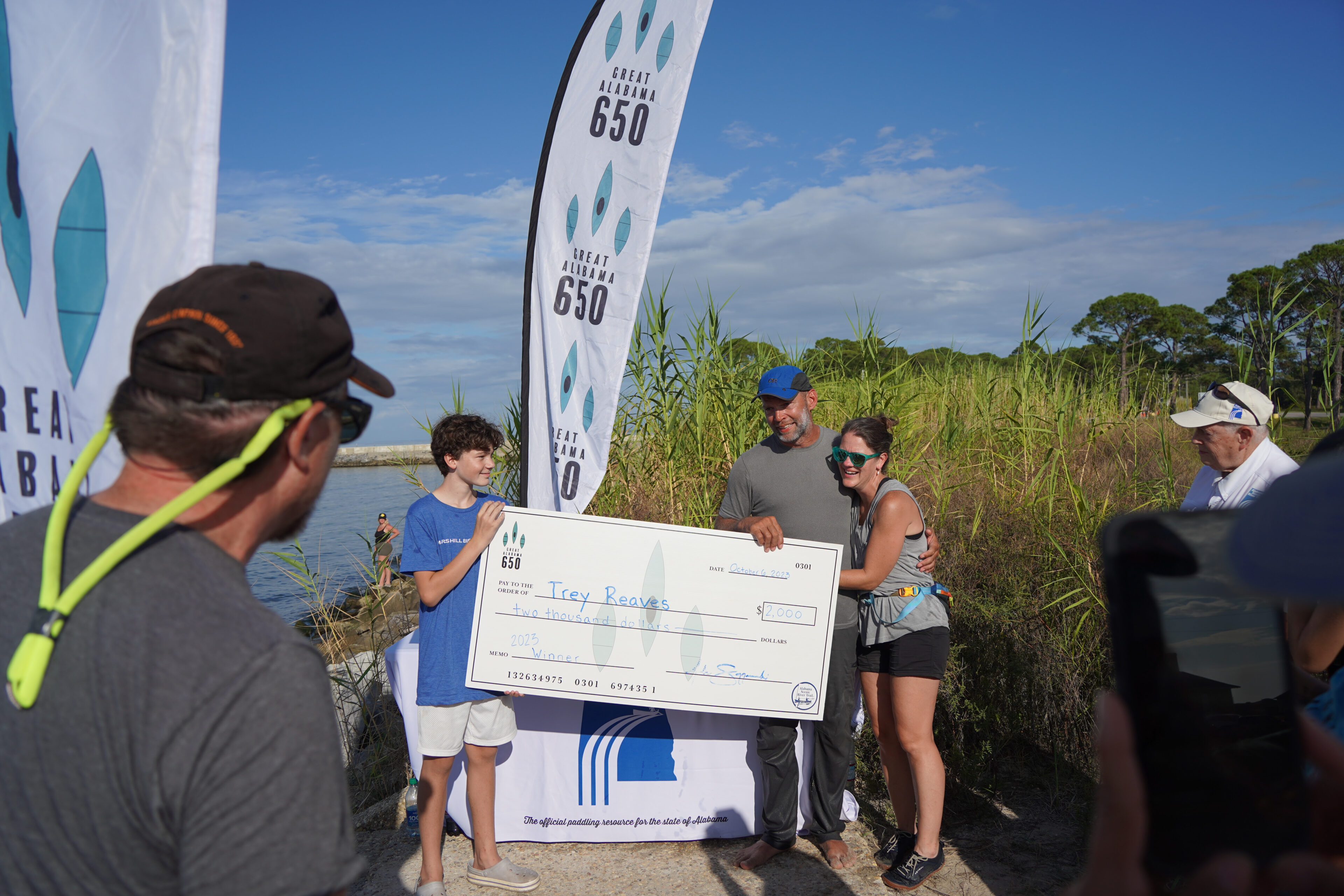
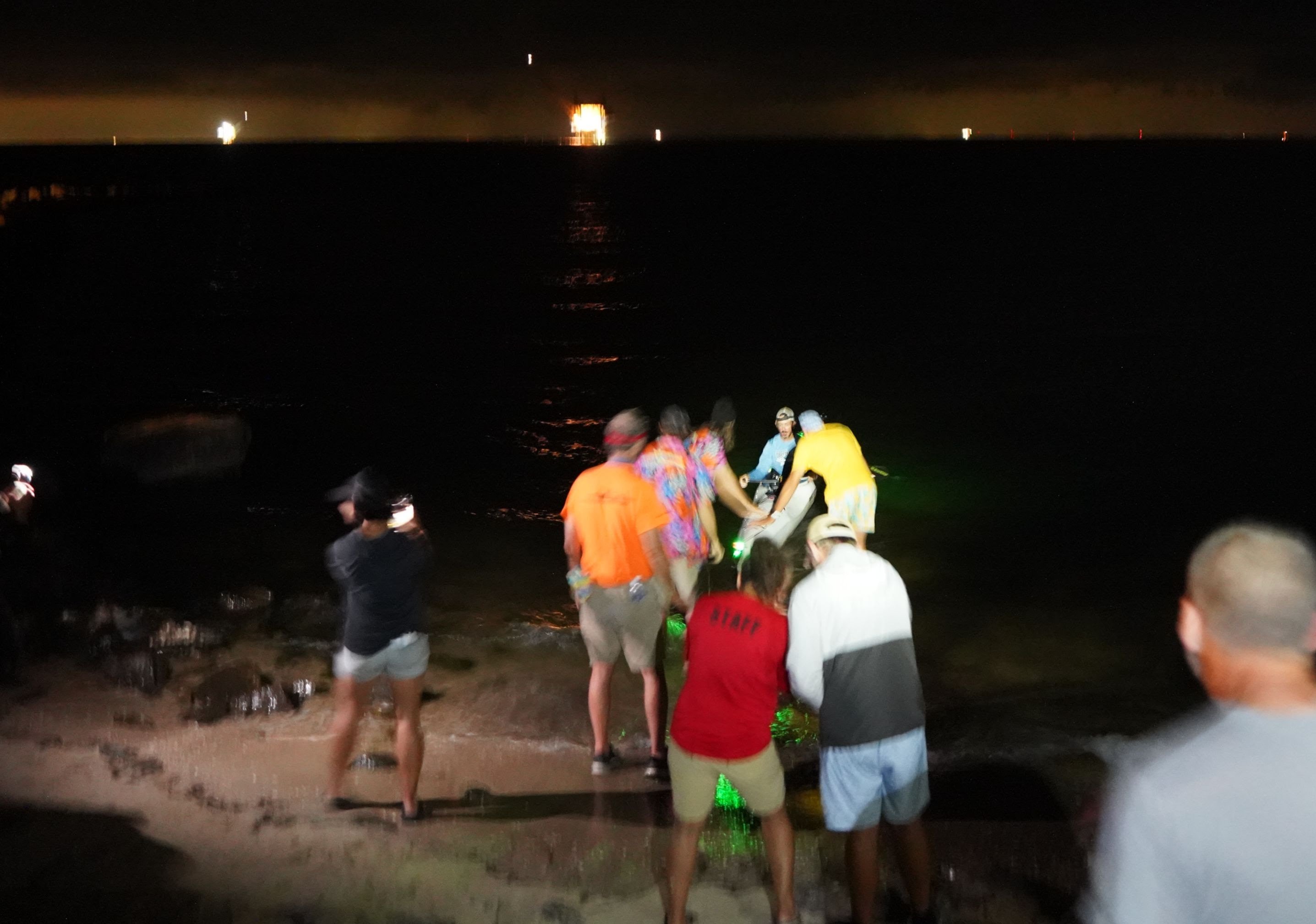
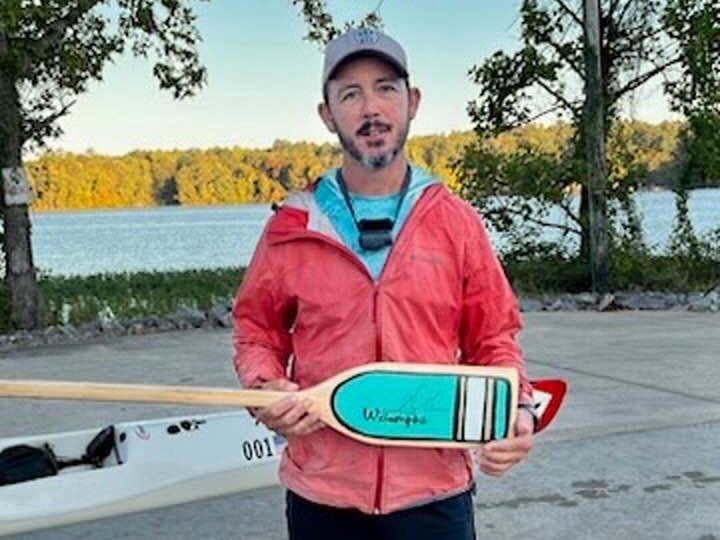
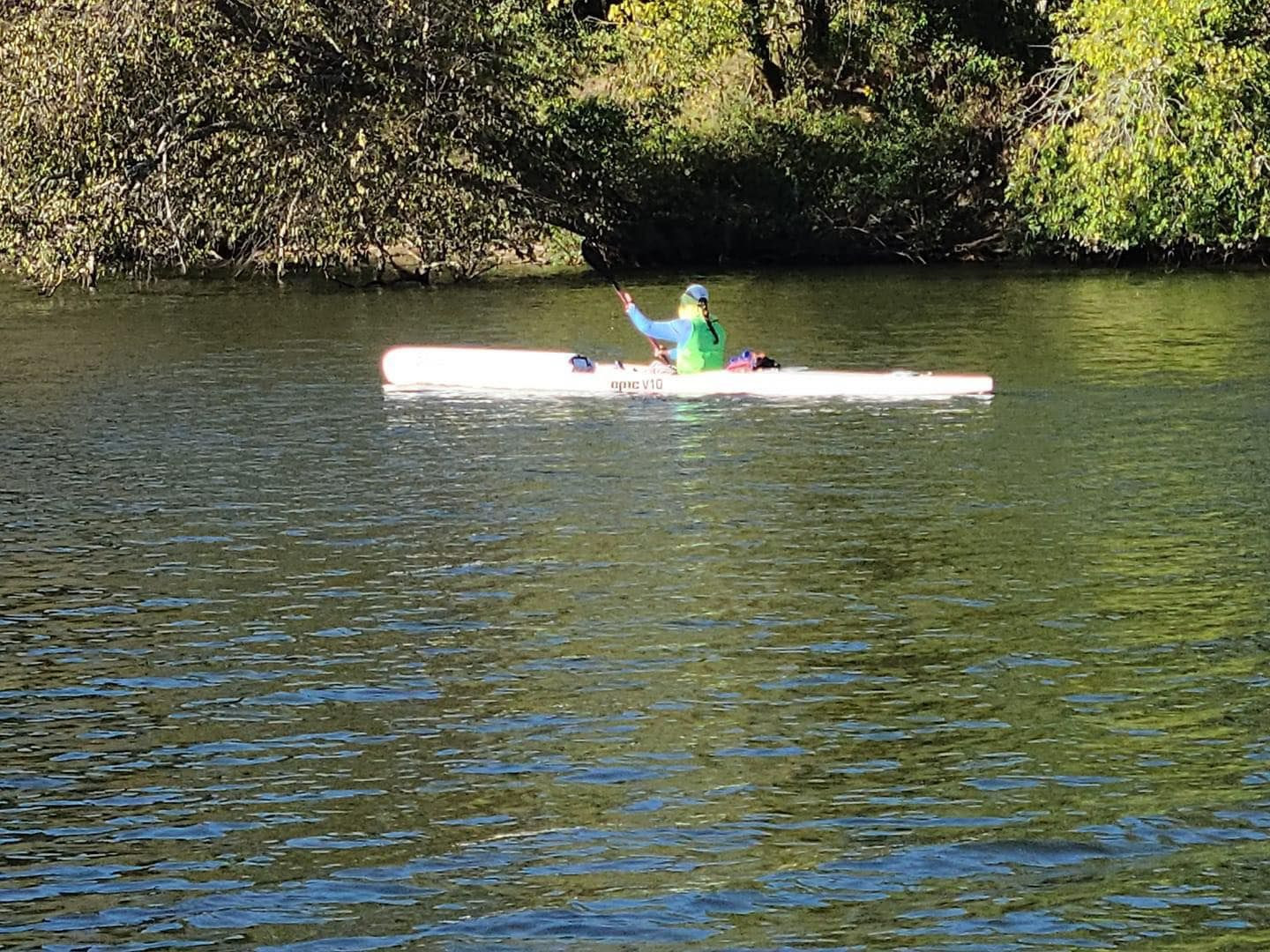
FORT MORGAN, ALABAMA — We have an overall winner of the Great Alabama 650! Trey Reaves (Time: 6 days, 1 hour, and 39 minutes) crossed the finish line at Ft. Morgan at 3:30 PM on Friday, October 6th, taking the Overall Winner title and the male solo first-place prize. Trey from Florence, Alabama, is the first Alabamian to win the title and was welcomed by family, crew, and racing staff yesterday at the finish line. He was closely followed by Bobby Johnson (Time: 6 days, 5 hours, and 50 minutes), last year’s winner, and Salli O’Donnell (Time: 6 days, 6 hours, and 40 minutes), who came less than an hour later to claim the female-solo first first-place title.
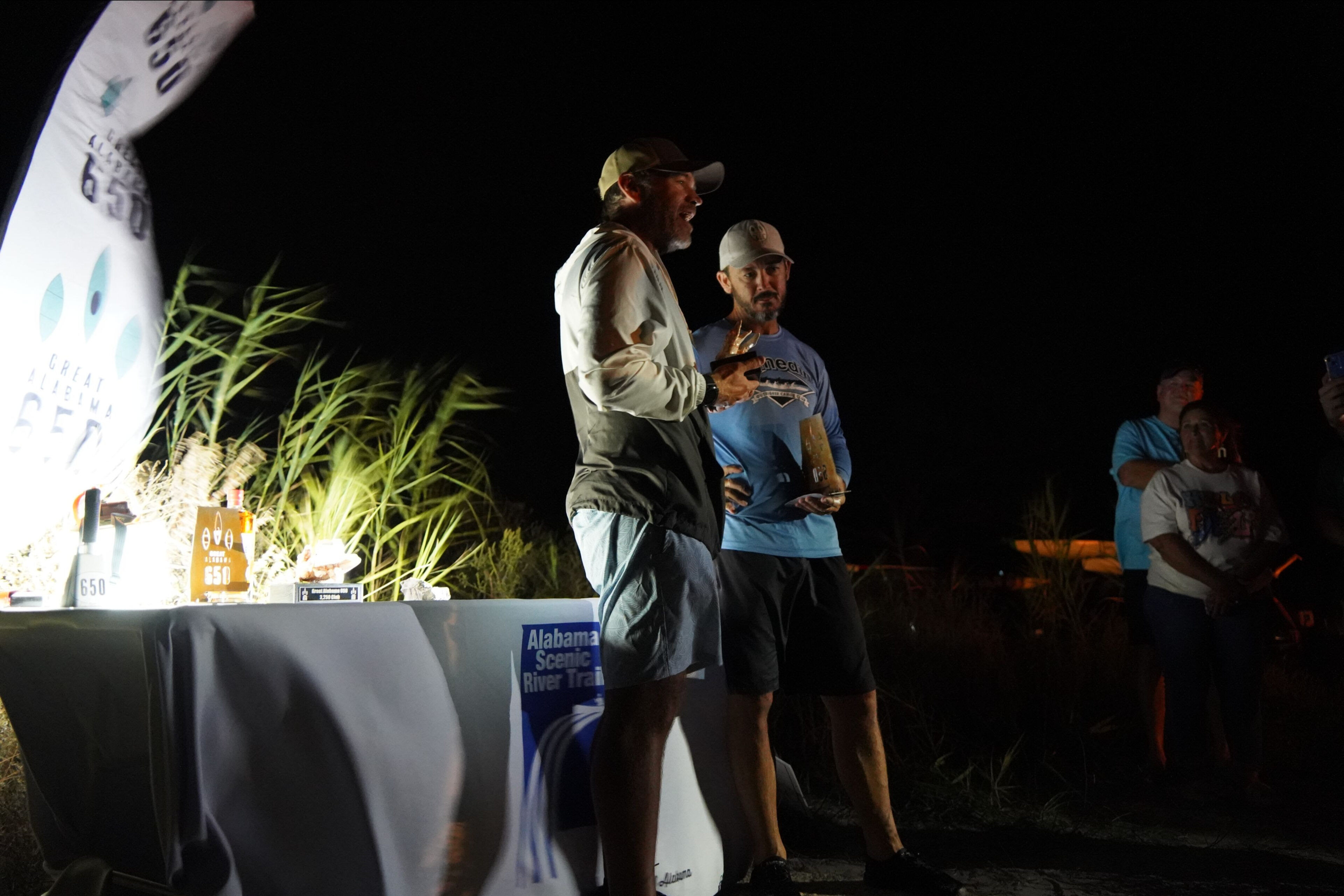
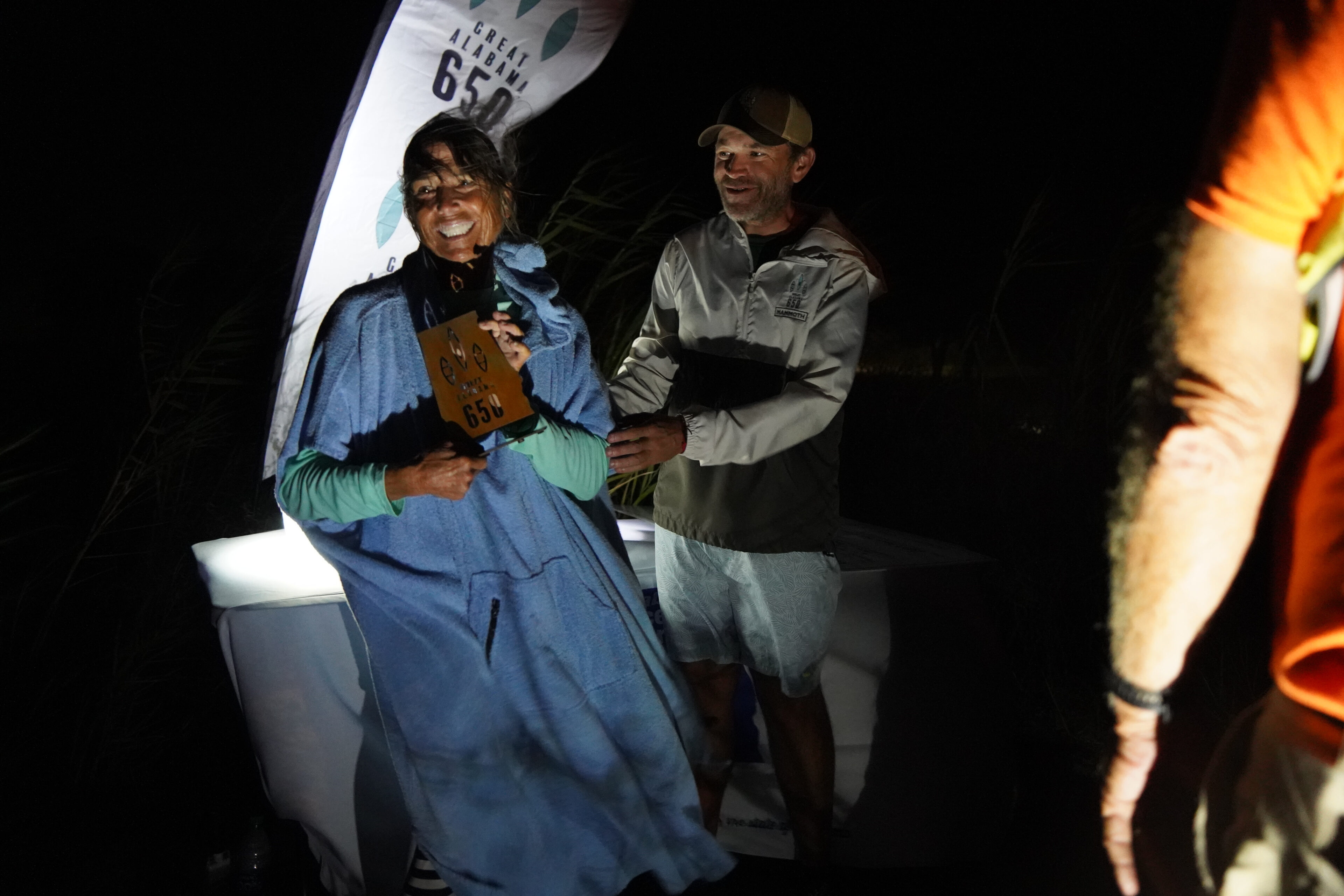
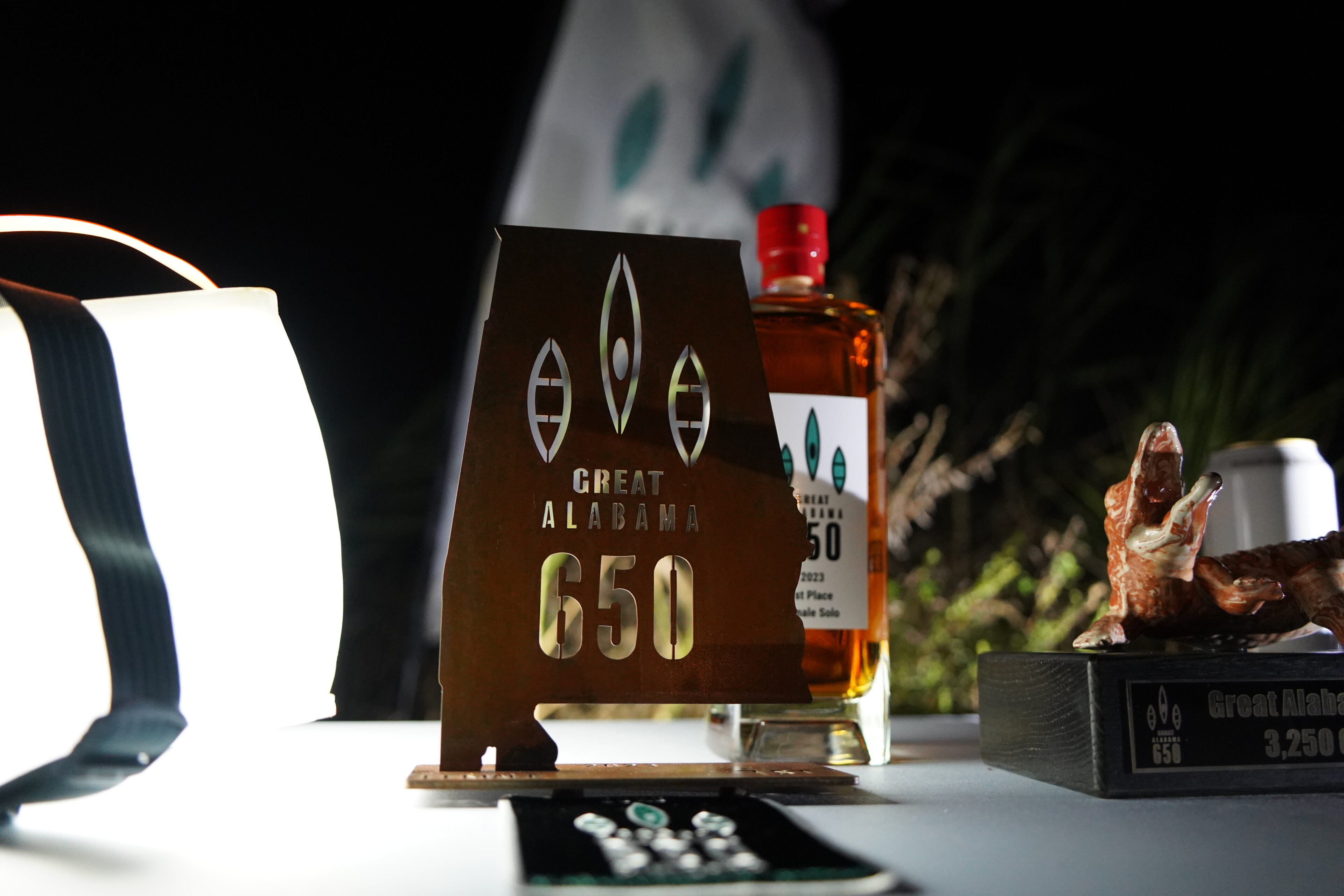
Bobby Johnson and Salli O’Donnell were the first five-time finishers of the Great Alabama 650 and received the 3250 Achievement Award. This award pays tribute to the 3250 miles each racer has paddled in the AL650 over the years and commemorates the achievement through an alligator sculpture made of Coosa River clay.
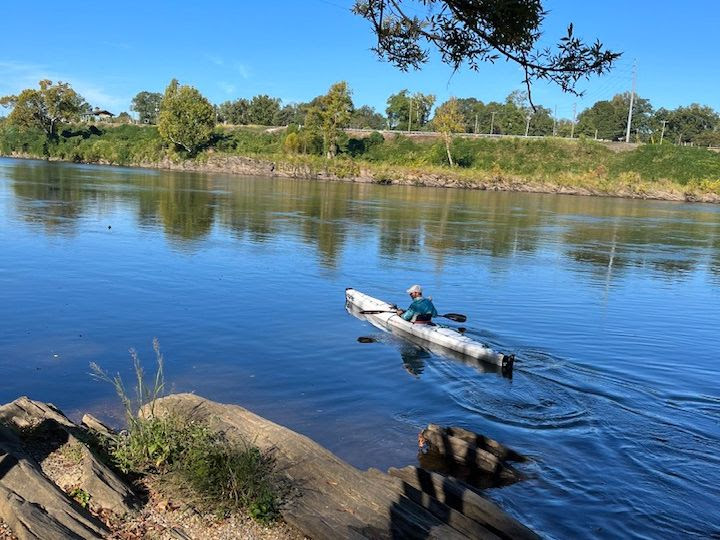
Race Update: All twelve racers passed through Check Point 2: Millers Ferry (Mile 417/650) just North of Camden, AL, well before the cutoff time. The final race section typically takes racers the longest from Spanish Fort down past Fairhope and on to Ft. Morgan, primarily due to the changing bay conditions and open water environment. Matt Taylor & Myles Sumerlin, the next team headed for the finish are at mile 642.0 mile. As of October 7, at noon, the next individual racer, Mirko Pruefer, was near mile 580.5. There are still nine boats left in the race, and they have until October 10th to make it to the finish line.
Racers compete in one of three divisions– male solo, female solo, and two-person team. Participants can use kayaks, canoes, or stand-up paddleboards interchangeably throughout the event. Race staff and volunteers closely monitor the racers’ progress to share the latest information. Fans can see live updates and photos on our Facebook and Instagram (@GreatAlabama650). Spectators who spot racers can post their pictures under the hashtag #AL650, and up-to-the-minute information is located online at AL650.com.
Trey Reaves, Overall Winner of the Great Alabama 650
Male Solo- 1st Place, Time: 6 days 1 hours 31 mins
Bobby Johnson, Male Solo- 2nd Place
5 Time Finisher- 3250 Achievement Award, Time: 6 days, 5 hours, and 50 minutes
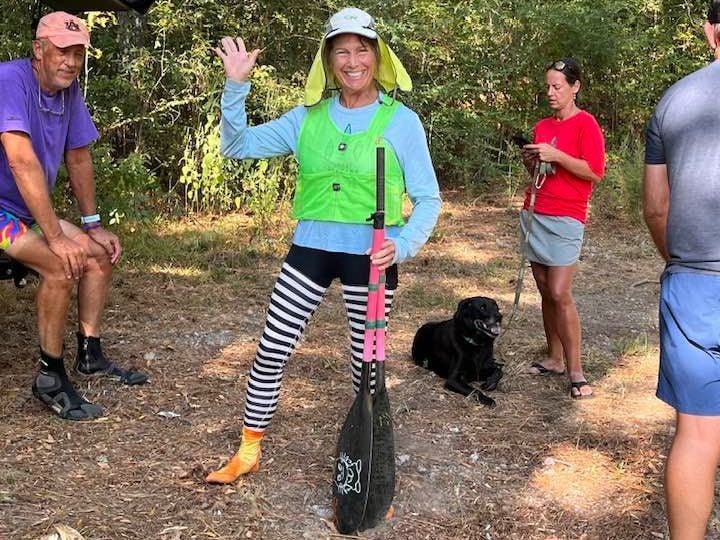
Salli O’Donnell, Female Solo- 1st Place
5 Time Finisher- 3250 Achievement Award, Time: 6 days, 6 hours, and 40 minutes
Photos Courtesy: Alabama Scenic River Trail (ASRT).
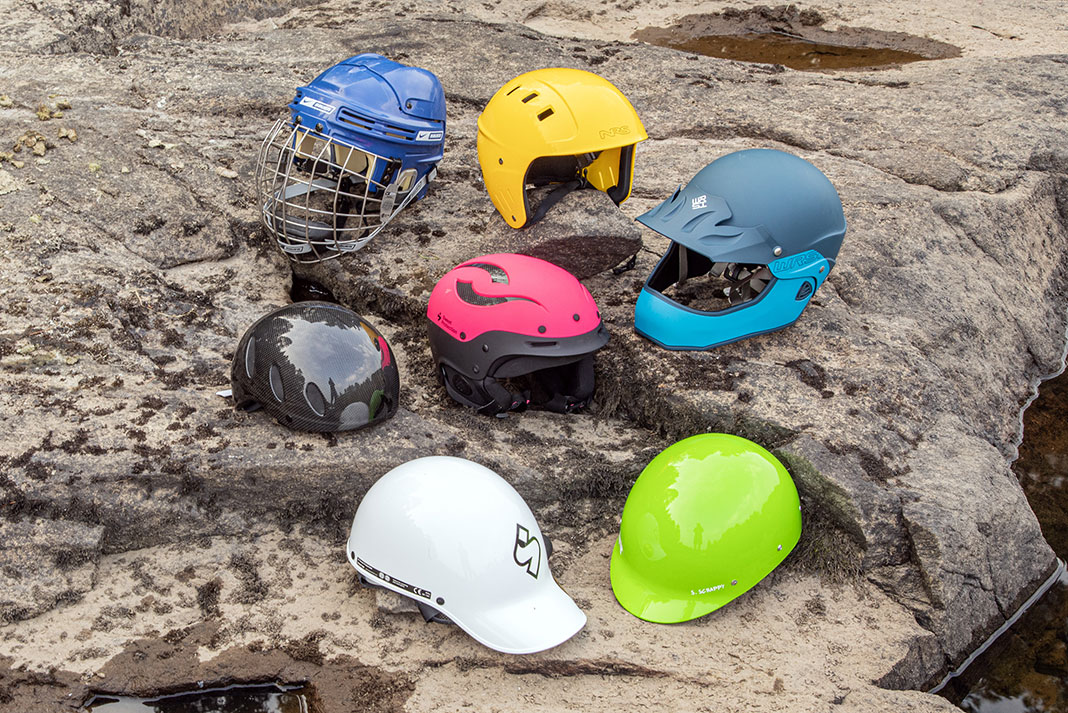
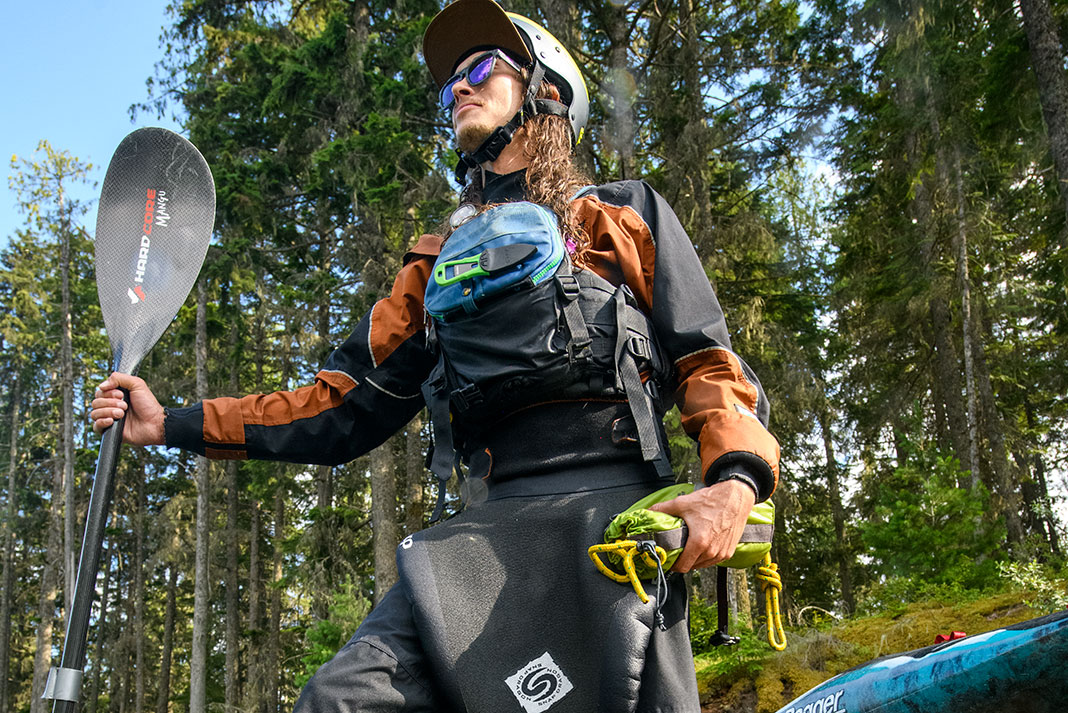
Seven really great ways to protect your head on the river. One really great way to get punched in the head at a Canadiens game. | Feature photo: Micheal Hewis
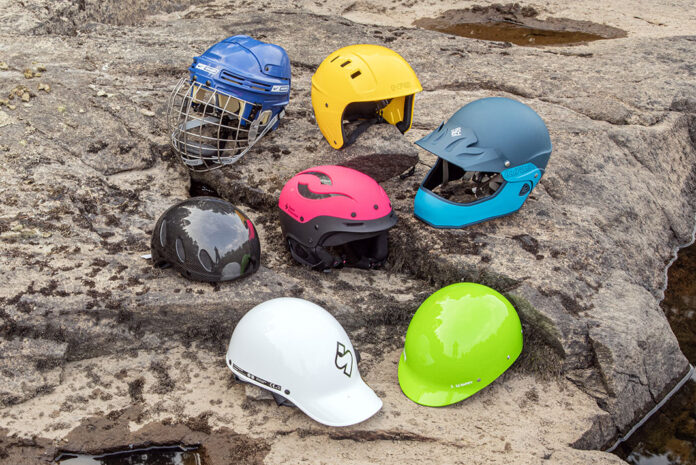
This summer, we hit the river for a roundup of the best whitewater helmets, seeking out the latest in lightweight design and protective power. Safe, stylish and comfortable paddling are top of mind for these modern models, so get your head on straight with our expert helmet picks for whitewater.
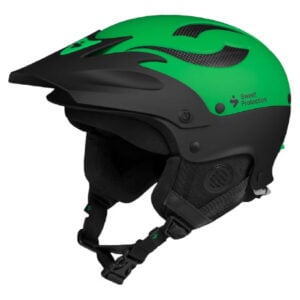
The full cut, carbon fiber reinforced Rocker from Sweet Protection is ready to take on your next creek. From a safety perspective, this helmet is EN 1385 class I–IV certified and provides the best out-of-the-box fit of all the helmets on this list for the heads we tested.
The Occigrip Turn-dial—which isn’t actually a dial at all, but instead two plastic nubs you pinch together—tightens the back of the helmet until it securely hugs your head. Extra Universal Fitpads are included in the box for an even more customized fit, but we didn’t need them.
Personalize your look, comfort and protection with the included optional visor and earpads. Available in two sizes and a range of colors.
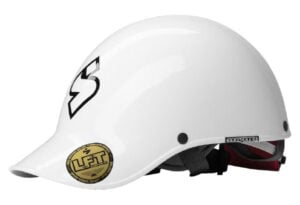
You’ll see the Sweet Protection Strutter atop the heads of many freestyle kayakers on any professional scene, such as Benny Marr and Hugo Anthony, but this half cut helmet is also used for river running everywhere.
The Strutter is lower volume than the Rocker and comes with less outfitting too. Still, with three sizes to choose from and the Occigrip Turn-dial, same as in the Rocker, you’ll be able to dial in the fit and achieve all-day comfort.
When the Strutter was originally released in 1997 the large rigid visor—which makes the Strutter instantly recognizable on the river—was thought to catch fast moving current when you flip, potentially tweaking your neck. Does it? No. Instead it offers as much sun protection as a Salamander visor and without the headache of a ball cap crammed under your helmet.
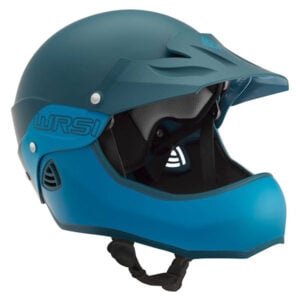
Those looking for full face coverage for class IV and V paddling will find the WRSI Moment fits the bill. The unique Interconnect Retention System consists of a single strap that weaves through the helmet in several places, feeds through the O-Brace harness at the back, and buckles under your chin. Any pressure applied upward on the helmet—like, say, the way water pushes on your head when you’re upside down in a river—will cause the strap to cinch tightly, pulling the harness tighter on the back of your head and holding the helmet securely in place.
The O-Brace harness takes a bit more time to adjust than other systems on this list, but is well worth it to get a snug fit. The Moment has minimal outfitting and doesn’t come with any extra pads; depending on your head shape, it may be necessary to crack a can of contact cement and pad out any hollow spots with thin minicell foam.
Our in-office tester reported that despite the visor and faceguard, the helmet didn’t obstruct his vision. And, yes, he heard the instructions about the rapid just fine thanks to the helmet’s ear vents—that wasn’t why he missed his line.
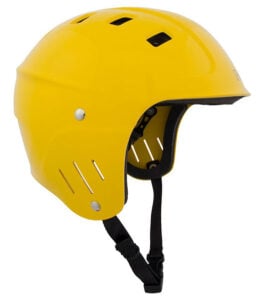
The NRS Chaos Full Cut is a great entry-level helmet, providing ample coverage and solid construction at a price that will leave gas money in your pocket. It offers the most ventilation or drainage out of all the helmets in this lineup.
The Chaos comes in five solid colors—blue, red, yellow, white and black—and the most sizes too, with four options ranging from small to extra large. We ordered the large Chaos and although according to the size chart it should fit similarly to the M/L Strutter, Rocker and Moment, our large-headed tester at the Paddling Magazine office reported it fit much tighter—we recommend you size up, especially if pulling over a ball hat.
Highly specialized, the Predator Uno Elite is meant for slalom and raft racing. Its carbon construction makes it the lightest helmet on this list—in fact, it’s 35 percent lighter than the second-lightest helmet and weighs a mere 327 grams.
Like the classic Wildwater Competition, the Uno Elite comes in only one size and offers no adjustment system, fitting heads with a circumference of up to 59 centimeters. It’s arts and crafts time with contact cement and the included extra foam for a perfect fit.
Competitive paddlers looking for a low profile, lightweight helmet will be pleased with the way the Uno Elite feels on their head—or doesn’t feel. Helmet? What helmet?
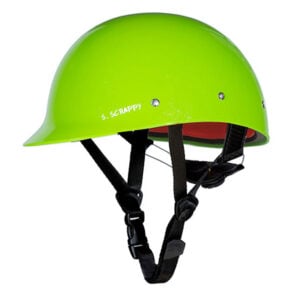
If your goal is to be the most visible paddler on the water, the Shred Ready Super Scrappy has you covered. It offers the most color options out of the helmets on this list, pictured here in flash green but also available in poppin’ shades like pomegranate, cornflower blue, orange, carbon, LE: Idaho, LE: North Carolina, LE: save the SF, matte black, pearl white, wood and red.
The Super Scrappy comes in one size but the HOG 3.0 Retention System utilizes the BOA dial system for a snug fit for almost all heads. If you’re that guy, the Super Scrappy can be worn backwards.
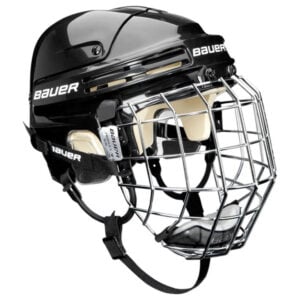
Nothing says, I started paddling in a Dancer or I cheer for a losing team like showing up at a river in a blue Bauer 4500 helmet and cage combo. While still offering the most protection, highest certification, most shell adjustability and most breathability, there are at least six really good reasons so few of us are still wearing a hockey helmet—see all six paddling helmets above.
About the time the Leafs won their last Stanley Cup, whitewater companies—wait, who am I kidding?—about 20 years after the Leafs’ last Stanley Cup win, multiple world slalom champion Richard Fox made popular the low profile Wildwater Competition. And the river has been a cooler place ever since.
Seven really great ways to protect your head on the river. One really great way to get punched in the head at a Canadiens game. | Feature photo: Micheal Hewis
This article was first published in the 2023 Paddling Trip Guide. Subscribe to Paddling Magazine’s print and digital editions, or browse the archives.
Seven really great ways to protect your head on the river. One really great way to get punched in the head at a Canadiens game. | Feature photo: Micheal Hewis
Paddling into paradise—and over millions of sea creatures at each other’s throats. | Feature photo: Brendan Kowtecky
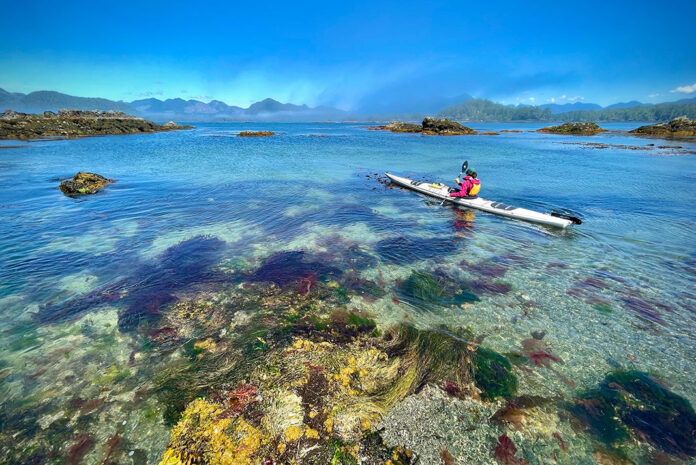
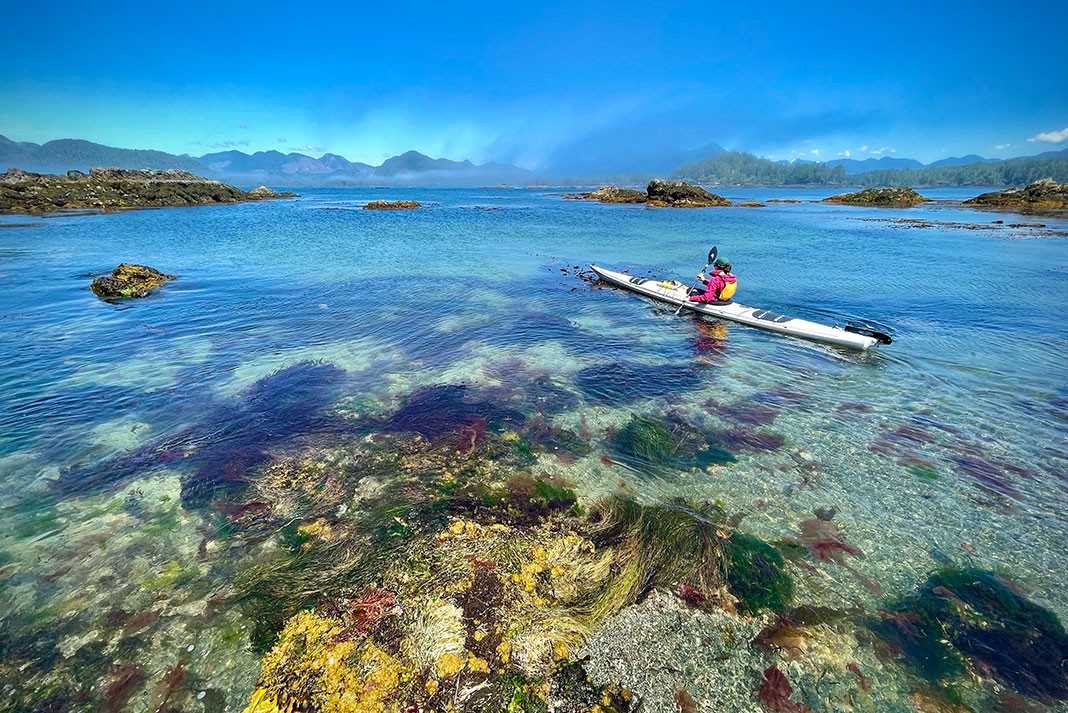
My kayak glides through Manhattan. I can see the hustle and bustle, hear the noise, watch guys pour out of the subway to make a killing on Wall Street. Except I’m nowhere near New York. I’m in Browning Passage, North Vancouver Island, about as far from the Hudson as I can get in North America.
If the Big Apple was an ecosystem, it would be the intertidal zone. The rocky wall I’m paddling past is covered with tightly packed marine critters climbing on each other for space and angling to make a living in an undersea metropolis filled with aggressive type A strange characters. Welcome to the ecosystem that never sleeps.
Paddling over Manhattan: Streetwise sea life in the intertidal zone
Five boroughs
Like New York, the intertidal is divided into zones. Each has its own character. In the outer boroughs, high in the tide zone, you’re less likely to get battered by waves or eaten by predators, but you’re farther from food and it’s harder to find a mate. Mid-zone, food, water and oxygen are available, but it’s more crowded and there are more predators. Even lower down, it’s like Wall Street. Wealth (food) abounds, but the competition is vicious. You’re swimming with the sharks, in more ways than one.
Paddling into paradise—and over millions of sea creatures at each other’s throats. | Feature photo: Brendan Kowtecky
Cost of living
Intertidal real estate is as insanely pricey as lofts on Central Park West. There’s not much space between the low and high tides, and everyone wants it. Places with protection from waves, access to feeding areas, or crevices to hide in are constantly fought over. In a tidepool version of rent control, barnacles glue themselves to rocks. Meanwhile, hermit crabs fight over shells and colonies of aggregating anemones fight over unclaimed rocks like gangland turf battles. Can’t afford the nice loft? You’re relegated to the big housing projects—be on your guard.
Meanwhile, hermit crabs fight over shells and colonies of aggregating anemones fight over unclaimed rocks like gangland turf battles.
Rough characters, hustlers, artists and weirdos
You learn not to tangle with the sunflower star, the intertidal’s voracious predator. Like the hustlers on Canal Street trying to sell you a fake Rolex, anemones wave enticing tentacles, only to snatch naïve passers-by with stinging cells. Sea slugs advertise their poisonous nature with colorful punk hairdos. Decorator crabs stick seaweed to their heads…where it grows. The weirdest character is the sea cucumber—which defends itself by vomiting up its own guts, tangling predators in sticky filaments while it sneaks off to grow new intestines. The weirdos in the East Village have nothing on these guys.
Nobody owns a car
The costs of being mobile in the tidepool are higher than the benefits. If you’re not attached, you’ll get knocked off the rocks and into the gaping mouth of a wolf eel. Mussels, barnacles, sea stars and urchins attach themselves with powerful glue, strong filaments, suction and hydraulic pressure. Staying attached is critical. Get knocked off the rocks and you’re as vulnerable as a tourist wandering into the wrong section of the Bronx. You’re likely to get mugged by a sea anemone, except after it takes your wallet, it eats you.
In-your-face attitude is the norm. Every tidepool denizen packs a tough shell, spines, claws, stinging cells or poisonous chemicals. Sometimes it’s just a bluff: porcelain crabs brandish massive claws, which are weak and paper-thin.
If you can make it here, you can make it anywhere
Crashing waves batter you all day. You’re crammed into a few rocks with millions of your best friends and worst enemies. You’re deprived of oxygen. And you’re expected to make a living and raise kids. Something’s always trying to eat your lunch, or you. But you’re gonna wake up in the city that never sleeps…if you wake up at all.
[ Paddling Buyer’s Guide: View all day touring, touring & sea kayaks ]
Neil Schulman’s first article for Rapid Media was published in the Spring 2008 issue of Adventure Kayak.
This article was first published in the 2023 Paddling Trip Guide. Subscribe to Paddling Magazine’s print and digital editions, or browse the archives.
Paddling into paradise—and over millions of sea creatures at each other’s throats. | Feature photo: Brendan Kowtecky
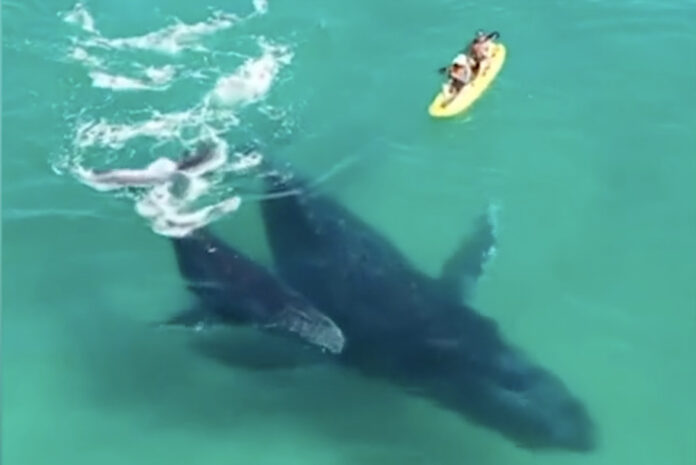
A duo in a tandem sit-on-top kayak were in for a breathtaking moment as a mother and calf humpback whale swam right up to their kayak on Byron Bay in Australia.
Curious Whales Swim Up To Curious Kayakers In Australia
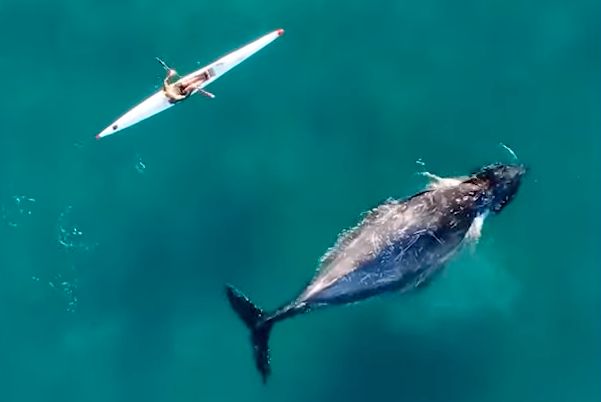
To say the pair of whales passed by the pair of kayakers would be an understatement. As you can see in this drone video published by Isabella Dobozy, the calf inquisitive swims toward the kayak, before turning away with a lunge of its tail right beneath the boat.
In a story published with the Miami Herald, Dobozy told McClatchy News (Which owns the Herald), “The kayakers were in one spot about (500 to 600 feet) from shore when these whales approached them,” She adds. “They swam past the kayakers but circled back to have another look at them.”
According to the Miami Herald, some comments on the video were concerned for the kayakers as well as whether their activity was legal. Dobozky shares that from her observation, the whales swam toward the paddlers and were not pursued. According to the Australian Department of Climate Change, Energy, the Environment and Water Regulations, vessels must not deliberately approach whales closer than 100 meters. And touching or feeding of whales or dolphins is prohibited.
If you’ve followed our continual whale meets paddler posts, you probably already know interactions between these magnificent cetaceans and floating humans are nothing out of the ordinary in Byron Bay. Still, for the people there in the moment, and internet viewers around the globe, a paddler and whale sharing the ocean never ceases to astonish.
Byron Bay: A Whale Watching Hotspot For Paddlers
Just why are there so many interactions between paddlers and whales on this beautiful blue stretch of the Pacific?
Byron Bay sits at the most eastern point of Australia. Being such, it’s located along an oceanic route known as the “Humpback Highway.” Each April, tens of thousands of humpback whales and other marine mammals migrate from Antarctica to warmer waters for calving season.
The whales will linger in warmer waters like Byron Bay until they head south again in November. This makes Byron Bay a prime destination for whale watching for half the year and a reason many paddlers head to the water for a chance encounter, like the pair in Dobozy’s video.
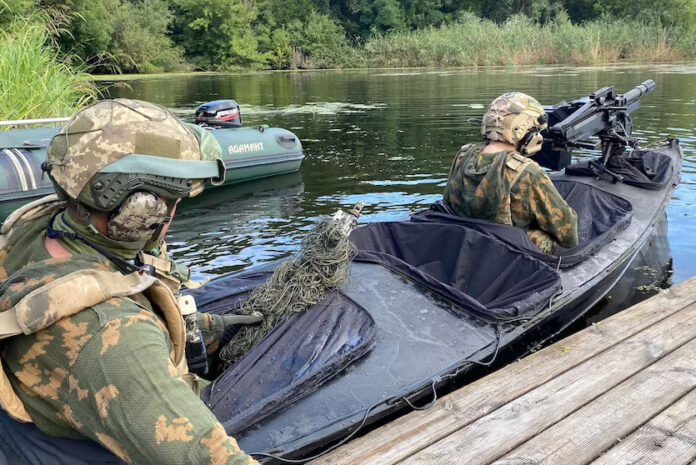
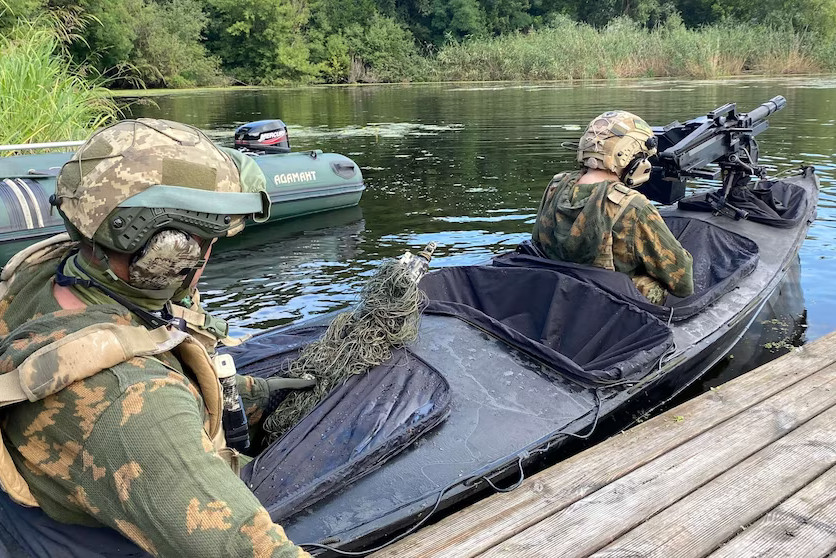
Ukraine is arming its special operations with some stealthy new water vessels—kayaks equipped with grenade launchers.
The Poloz-M16 combat kayak, produced by Adamant Verf, is a two-person military kayak that has been put to use by engineers and special forces in Ukraine. With two seas on its southern border and nearly 112,000 miles of streams, it’s easy to see why Ukraine has deployed the humble kayak to bear arms.
Ukraine’s Poloz-M16 Combat Kayak With Grenade Launcher
“Poloz-M16 is similar to what the American and British soldiers have been using, but it’s ten times cheaper, around 2,500 dollars per item,” Serhiy Ostashenko, CEO of the Adamant Verf company, told ABC News. Anyone who has been shopping for a kayak lately can attest the Ukrainian government is getting a fair deal on boats here.
According to ABC, the Poloz-M16 can carry up to three people and about 550 pounds of cargo (i.e., artillery). It’s made of polyethylene, which, as paddlers, we know, can handle plenty of abuse in the field.
What we are all really curious about, though, is that grenade launcher strapped to the bow. It’s a Ukrainian-produced NATO-type UAG-40 grenade launcher. The grenade launcher can fire a projectile over a mile and is equipped with a unique mechanism to absorb recoil—so as not to rock the boat. Don’t get excited to have one of these for your duck-hunting setup though. We checked, and they aren’t available in the outfitting aisle at your local retailer.
Feature Image: ABC News / Adamant Verf
Kayaks Proven Beneficial To War Efforts
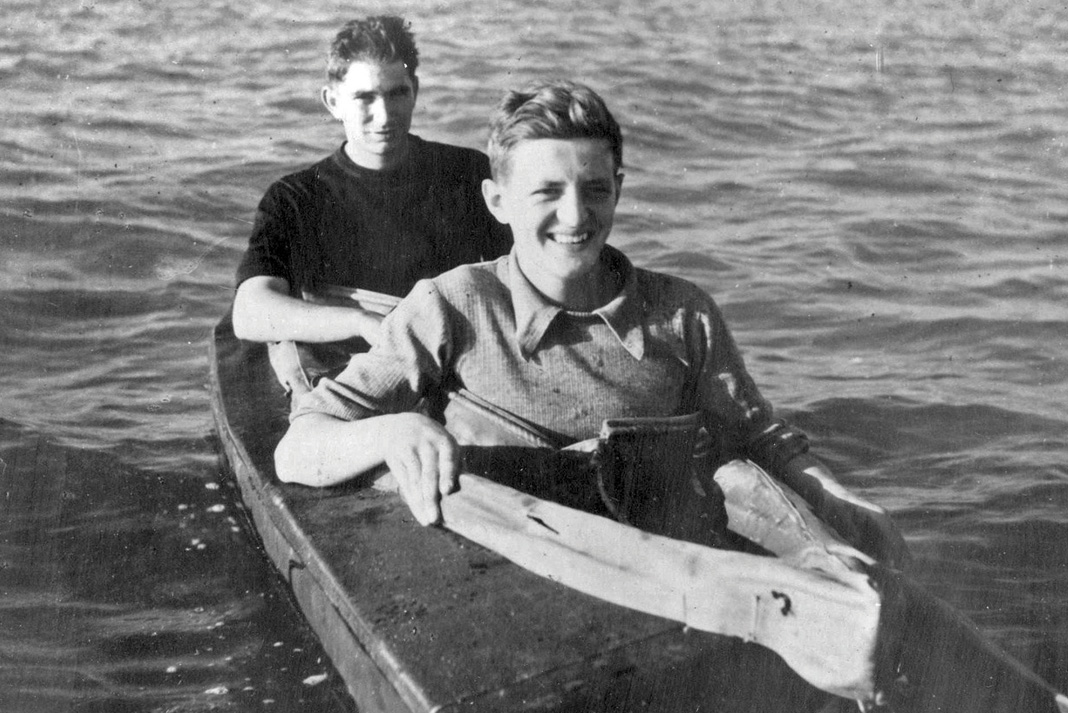
The use of kayaks for stealth missions in the theater of modern war is, of course, nothing new. In World War II, the British used tandem sea kayaks to strap explosives to German vessels. To this day, U.S. units such as the Navy Seals and Marines employ Klepper and Long Haul folding kayaks for specific missions.
According to the ABC News report, the kayaks with grenade launchers are already proving beneficial to Ukraine. For example, Ukrainian soldiers used the Poloz-M16 in an operation on the Oskil River last October. According to a soldier present, they conducted night reconnaissance near Russian positions on the riverbank, transporting explosives and securing passage for an assault group that forced Russian forces to retreat.
Mountain Portage Rapids on the Slave River. | Feature photo: Pierre-Emmanuel Chaillon
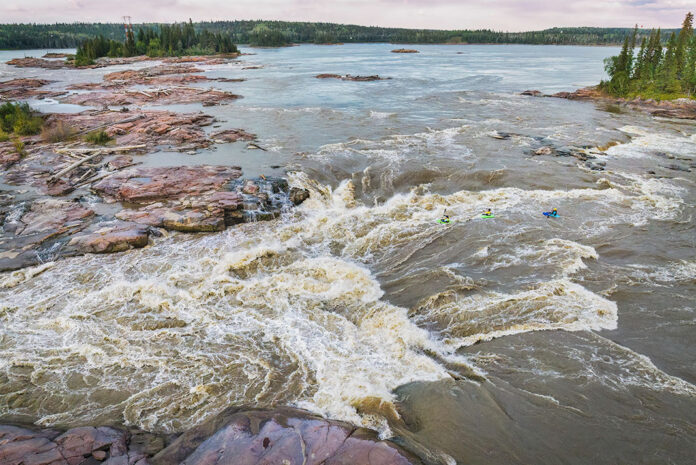
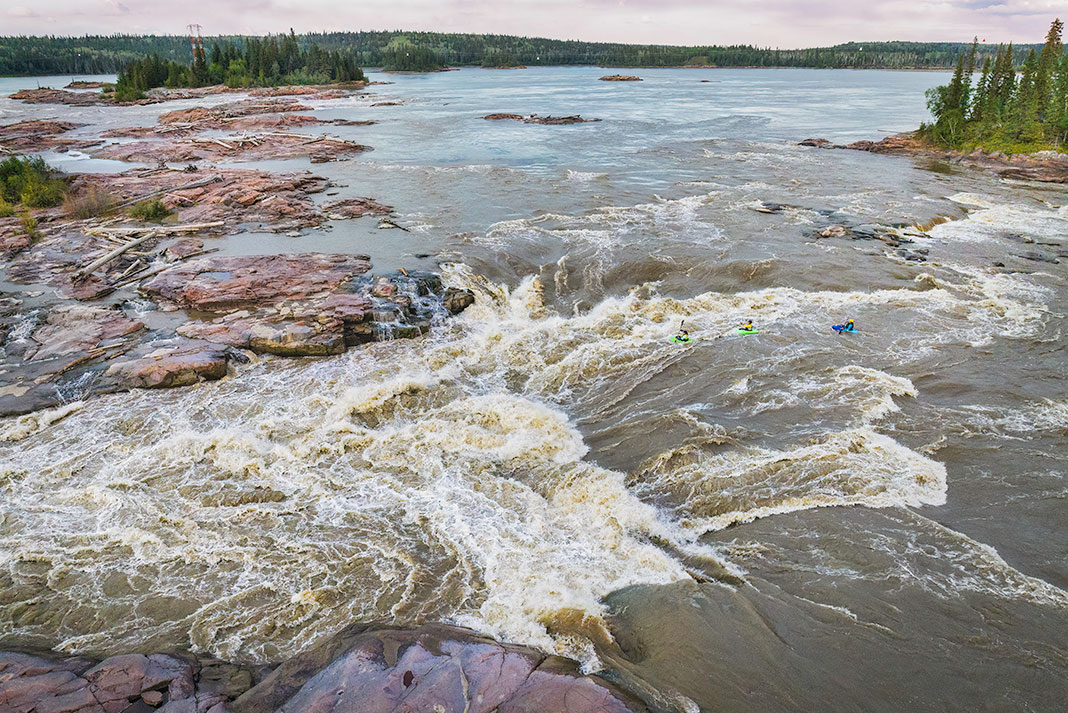
Desnedé is Chipewyan for the Slave River. Winding through the traditional lands of Smith’s Landing and Salt River First Nations, she is a loud and mighty girl—3,500 cubic meters of water per second rushes through her rocky channels. Her thundering voice intimidates even world-class paddlers.
Boats, babes and breaking branches on the Slave River
Saskia van Mourik first came north as a teenage national team member to compete at the 1994 Canadian Whitewater Slalom Championships. In 2009, she returned and made Fort Smith and the Slave River home.
“I’ve seen world-class paddlers come, and they’re intimidated because you’re a speck in this river,” she says. “We tell them to get their ‘Slave goggles’ on because this river is unlike any other.”
Mountain Portage Rapids on the Slave River. | Feature photo: Pierre-Emmanuel Chaillon
For centuries, only pelicans and a handful of paddlers dared explore the Slave’s surging channels. Following the ‘94 Canadian Championships, the Slave River became a destination for world-class kayakers. Most were men, and only a few local women took the plunge. Saskia changed that. Her high performance experience and coaching skill gave parents the confidence to let their daughters paddle in the foaming rapids.
“Young girls have saucer eyes staring at the Playground’s house-sized waves,” Saskia says. “I tell them to swim it. I’ll swim with you. We swim through a few times, and all of a sudden, it’s comfortable.”
Anais Aubrey-Smith, now an 18-year-old paddling instructor, began training with Saskia as a child.
“Saskia would say, ‘We’re going over there to scout this rapid. If you don’t want to go through, that’s okay.’ It made me willing to try,” explains Anais.
“There are girls we introduced to kayaking when they were small. Now they’re fearless and guide others.”
Saskia’s efforts in mentoring youth inarguably helped burgeon the female paddling community in Fort Smith. But another force has also been at play, further drawing youth to the shores of the Slave and providing young paddlers with role models.
Use the river—or lose it
Slave River Paddlefest began in 2009 as a protest. Alberta was considering the construction of a massive dam across the Slave River.
“Paddlefest was really about getting people down to the river. It was a use it or lose it action,” explains Kirsten Bradley, the former Fort Smith Paddling Club president who helped start Paddlefest. “At the same time, it provided an opportunity to show off our whitewater playground to an international group of kayakers. We hoped it would help us protect the Slave from a dam.”
In the beginning, Paddlefest was an exclusively high performance event. It was Geneviève Côté, a leader in Fort Smith’s paddling community, who brought the sparkle the festival is known for today. Gen and her team of club members and volunteers introduced fun with a pool toy race through a wave train, raft rides, standup paddleboards and inflatable kayaks. There was a voyageur canoe race, a flotilla.
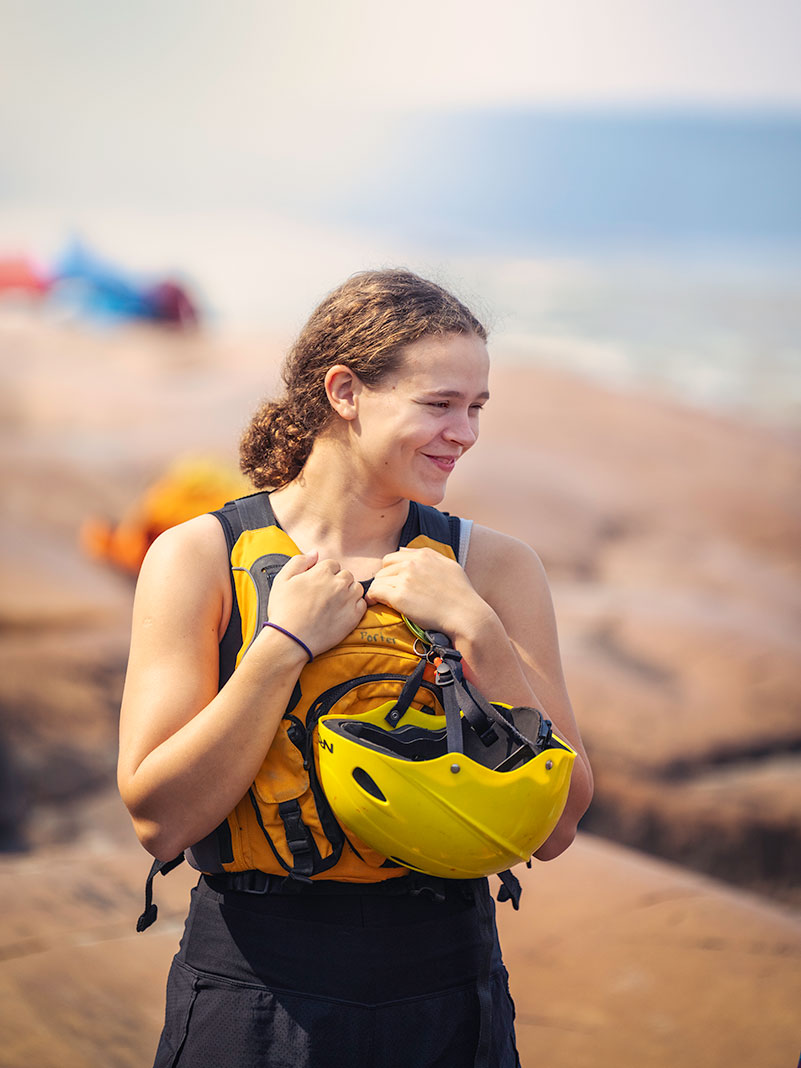
Sarah Porter, 17, has been encouraged to continue paddling thanks to the show of skill at Paddlefest. | Photo: Pierre-Emmanuel Chaillon
These additions drew in people who had never been down to the rocks and beach before. They helped novice paddlers find courage.
“There are girls we introduced to kayaking when they were small. Now they’re fearless and guide others,” says Gen. “As female coaches, we planted a seed. Some were at a sensitive time as teens and might have followed a different path, but they loved being on the river and discovered whitewater joy.”
Paddlefest opened 17-year-old Sarah Porter’s eyes. “They’d announce who was doing a run and it was Australia or Spain. That’s wild that our river is the draw,” says Sarah. “I love Paddlefest. It created a community of paddlers who encourage each other, which makes a difference, especially for girls.”
Conquering the Slave River Monster
Natalie Kramer-Anderson raised the bar even higher. She grew up on a river in California, strapped in a car seat on a raft as a baby. She first paddled the Slave River in 2008, returned yearly, and now makes Fort Smith her summer residence.
[ Plan your next Northwest Territories paddling trip with the Paddling Trip Guide ]
“This river is an amazing teacher. If you make mistakes, it’ll cuff you around, but generally, it’s forgiving,” says Natalie. “If you paddle here one week, you’re better than if you’d been paddling at home all season. The Slave is the river that shaped me as a paddler.”
Twenty-year-old river guide Amelie Aubrey-Smith used to exchange babysitting for paddling experience with Natalie. “She didn’t mess around with the small stuff. Took me right out into the river,” says Amelie. “You have features the pros compete on, fun waves beginners can enjoy, and beautiful spots you can only get to in a kayak. Because of Natalie and Saskia, I learned to respect the river, not fear it.”
Not afraid of the Slave River Monster. | Photo: Pierre-Emmanuel Chaillon
Natalie Kramer-Anderson and one of her kids enjoying the river. | Photo: Pierre-Emmanuel Chaillon
Natalie globalized the Slave River through her international connections. Now a key organizer of Paddlefest, she invites top freestylers to show off their tricks.
“I brought Ottilie Robinson-Shaw, the British champion, to the Slave River for Paddlefest in 2019,” says Natalie. “Now she calls the Slave her favorite for big volume paddling.”
Natalie and Ottilie impressed a young Sarah Porter. “I watched them do an air screw, a trick where you flip all the way around, and I’d think, ‘Damn, I didn’t know a girl could do that in a boat.’”
It isn’t just world-class and novice paddlers Paddlefest attracts to the Slave, though. Fort Smith locals also come out to watch—for many, it’s the first time they’ve ventured close to the roaring, thrashing river because of fear.
Anais Aubrey-Smith says her friends got smacked with a willow branch if their parents caught them close to the river.
“Remember the Slave River Monster?” asks Amelie. “On Water Days, the teacher told us a horror story about the Slave River Monster. If you dipped your toes into the water, the monster would drag you into the current. Never to be seen again.”
Fear may still be an obstacle for some, but Amelie, Anais and Sarah, born and raised on the shores of Desnedé, say her thundering voice and big waves don’t frighten them. They find it a reassuring welcome home if they’ve been away. They can’t imagine a future without paddling.
Patti-Kay Hamilton is an award-winning writer who makes her home in Fort Smith, Northwest Territories on the banks of the Slave River. At 19, PK went north to paddle wild water. Her writing is inspired by the connection of northern people to wilderness, wildlife and water.
This article was first published in the 2023 Paddling Trip Guide. Subscribe to Paddling Magazine’s print and digital editions, or browse the archives.
Mountain Portage Rapids on the Slave River. | Feature photo: Pierre-Emmanuel Chaillon
Matt Taylor & Myles Sumerlin Portaging Day 1 | Photo Courtesy of Alabama Scenic River Trail, Inc
WEISS LAKE, CENTRE, ALABAMA — Professional paddlers, Alabama Legislators, and AL650 volunteers gathered with the Alabama Scenic River Trail board and staff to kick off the 2023 5th edition of the Great Alabama 650 on the evening of September 29. Fifteen competitors successfully checked in to compete and paddle the 650 miles from Weiss Lake down to Ft. Morgan. Race volunteers, crew, staff, and competitors gathered to celebrate Alabama’s waterways and the race’s endurance challenge at a dinner hosted at Jakes on the Lake by the Cherokee County Chamber of Commerce. Senator Andrew Jones and Representative Ginny Shaver presented State of Alabama House of Representatives Resolution (HJR105), commending last year’s winners and recognizing the Alabama Scenic River Trail for promoting water recreation in Alabama. Representative Shaver and 46 other Alabama representatives were responsible for the resolution.
Bobby Johnson Portaging Day 1 | Photo Courtesy of Alabama Scenic River Trail, Inc
Race Start: The race started September 30 at 10 AM on Weiss Lake. All 15 competitors made a clean start, and crews successfully met the paddlers nine miles downriver to portage at Weiss Dam. Neely Henry Dam was the first mandatory downtime, and all racers successfully passed through this portage. As of October 2 at 2:30 PM, the current leader was Salli O’Donnell, passing mile marker 270 in Downtown Montgomery. The top four are close together, with the rest of the field stretching out as racers begin to feel the strain. The first cutoff for racers is at Check Point 1: Coosa River Adventures (Mile 232/650) in Downtown Wetumpka. Racers must reach the first checkpoint by Tuesday, October 3, at 8 PM to continue the race.
Racers will have 10 days to finish the race in one of three divisions– male solo, female solo, and two-person team. Participants can use kayaks, canoes, or stand-up paddleboards interchangeably throughout the event. Race staff closely monitor the racers’ progress to share the latest information. Spectators who spot racers can post their pictures under the hashtag #AL650, and up-to-the-minute information is located online at AL650.com. Fans can also see live updates and photos on Facebook and Instagram (@GreatAlabama650).
The Alabama Scenic River Trail (ASRT) uses a network of members and outfitters to create, improve, and promote more than 6,500 miles of river trails. ASRT connects adventurers with opportunities to explore and appreciate Alabama’s great waterways through unique experiences. Working primarily through community partnerships, ASRT promotes safe, fun, and welcoming paddling experiences across the state for people of all skill levels. Today, we continue to grow our network and share the state’s unparalleled water recreation opportunities. To learn more, please visit alabamascenicrivertrail.com.
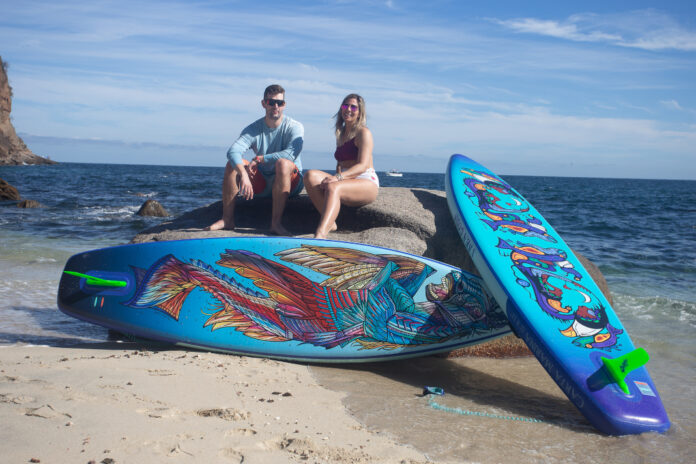
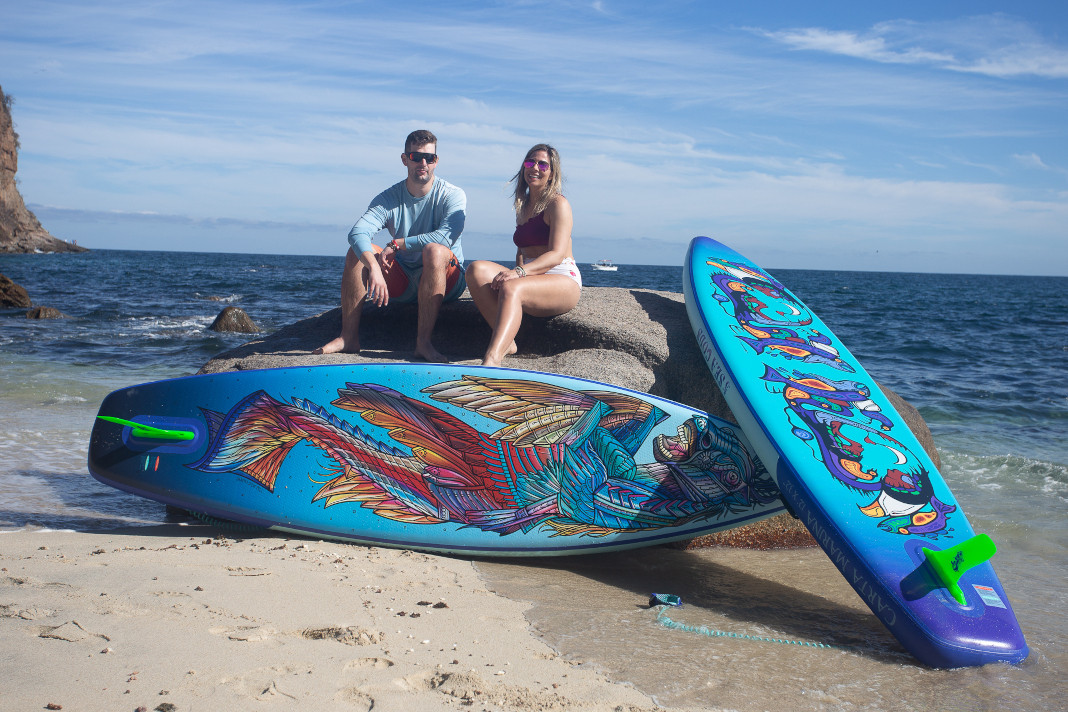
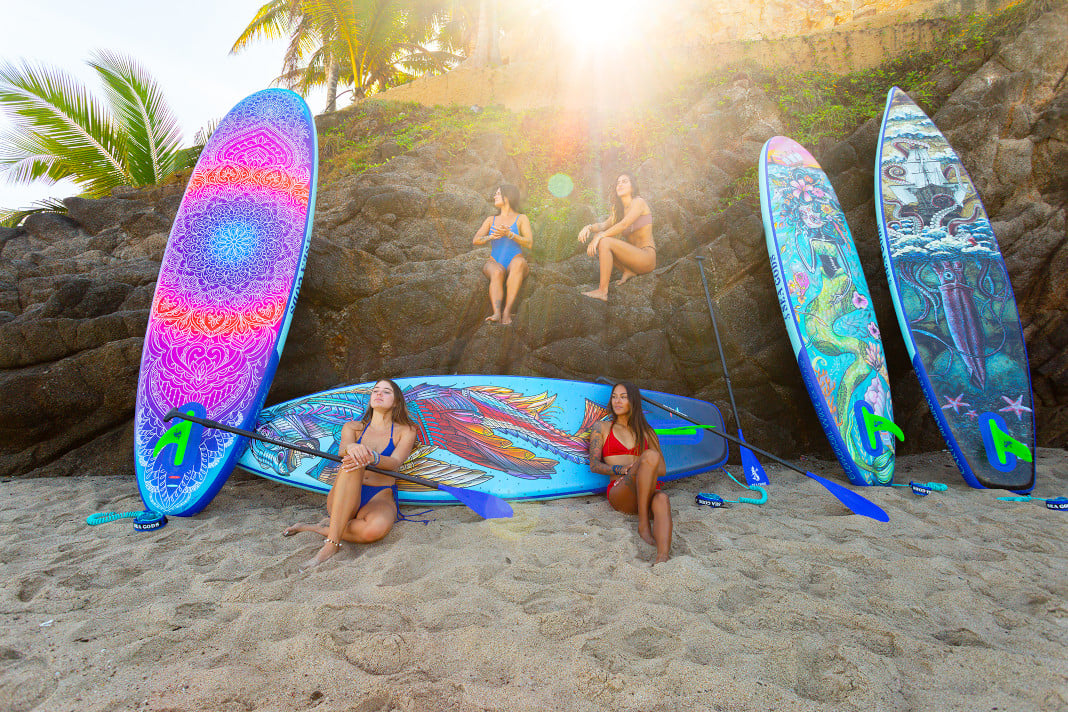
Mandy and Ryan Johnston, founders of Sea Gods. Feature Image: Sea Gods
If you were running a growing paddlesports brand and looking to expand to the next stage of your business where would you turn? For a unique standup paddleboard company, the next step is an equally unique approach—going on national TV. This is where you’ll find the founders of Sea Gods paddleboards, Mandy and Ryan Johnston, on October 12. They’ll be standing before a panel of intimidating venture capitalists on Dragons’ Den, the Canadian version of the popular investor reality show Americans know as Shark Tank.
“We’re doing a lot with what we have, and when Ryan and I started this, we didn’t start it to make a business really. We just wanted to make some great looking boards and we wanted them to perform amazing,” Mandy Johnston says of the growing paddleboard company the couple founded six years ago, and in which they have been two full-time employees. “As we’re growing, Ryan and I realized we’re not business people, and we forget about things like profit and accounting—you know, business stuff. So we went on Dragons’ Den looking for some mentorship and an invested partner.”
Ryan and Mandy Johnston, founders of Sea Gods. Feature Image: Sea Gods
Born At The Sea
In 2017, the Johnstons moved from Alberta to the British Columbia coast. Mandy held a background in research science and personal training, while Ryan commissioned wastewater treatment plants. The couple also had a four-month-old and two-year-old at home. Paddleboarding was an activity they could all enjoy together. But coming from snowboarding in the mountains, the Johnstons were disappointed in the lack of options in inflatable SUPs—both in performance and creativity—that they found on store shelves. Believing they could put something better under the feet of paddlers, Sea Gods was born.
Mandy Johnston says the Sea Gods boards they’ve developed are first and foremost built for performance. Their current boards feature best-in-class elements like cross-weave drop stitch construction. But beyond being another board on shelves touting performance and rigidity, Sea Gods brings creativity. Each of their boards features the work of artists they’ve collaborated with—a mesmerizing touch of personality missing from the inflatable market.
Within the first couple of years, Johnston says the growth was exponential. Even as the economy has cooled off, she says they’ve still had somewhere in the ballpark of 30 percent growth year-over-year. At times they’ve had to pump the brakes to ensure the quality of both the product and customer experience held to their standards. As Johnston says, it was never about profits but the paddleboards they put into the world. The business element is where Dragons’ Den comes in.
A working piece of art on display. Image: Sea Gods
Sea Gods Paddleboards Set To Appear On Dragons’ Den
“The idea was to get someone who knew how to scale,” Johnston explains of the unconventional and bold direction they’ve taken for Sea Gods to appear on TV.
If you aren’t familiar with the show, Dragons’ Den features six venture capitalist panelists who hear pitches from entrepreneurs. As the pitch goes on, the panelists decide whether they are in or out to become an investor in the business. The show originated in Japan as Tigers Of Money before finding its way to iterations in Canada and elsewhere. U.S. audiences will be familiar with the version of the show called Shark Tank.
Mandy and Ryan filmed the episode at CBC in Toronto back in May. And it is airing this fall as part of the newest season. The founders of Sea Gods obviously know how it worked out, but we’ll have to tune in to see whether they are hailed as brilliant or chased off the stage. Without giving any spoilers, we asked if appearing on the show has proven beneficial to their business.
“It definitely put air in our tires, let’s just say that,” Mandy Johnston shared. “It actually showed us how far we’ve come from being brand new entrepreneurs. And it made us realize that we’re doing things differently.”
The Sea Gods paddleboard fleet. Image: Sea Gods
New Waters Ahead
Johnston was also impressed with the level of production she witnessed behind the scenes and on stage. It’s something she and her husband have carried forward for Sea Gods’ new on-screen endeavor—live shopping broadcasts on their website and the Shop app. Live shopping is an online livestream where hosts can present products and the viewers can purchase them in real time. For Sea Gods, the goal of these live broadcasts isn’t just for sales but also an opportunity to connect with their audience and share product knowledge while at the same time hosting something akin to a podcast.
As for what comes after the upcoming national spotlight, Johnston says they are working on a new touring board as well as collaborations with new artists. Both of which they are excited to officially announce when the developments are further along.
[ Find every Sea Gods paddleboard in the Paddling Buyer’s Guide ]
When it comes to sales stemming directly from the appearance on Dragons’ Den, Johnston says they are hopeful but that you never know how it’s going to play out. “Saxx Underwear said they went from 300 orders a day to 3,000 orders a day after their episode aired. We’re going to be sitting there on the West Coast—the last ones to watch because the show airs at 8 p.m. in every time zone. So starting at 4 p.m., we’ll just be wondering what’s going to happen.”
Tune in to Dragons’ Den on CBC, October 12, 2023, at 8 p.m. (in respective time zones) and find out whether Sea Gods has what it takes to lure a fierce group of venture capitalists to the water.



 This article was first published in the 2023 Paddling Trip Guide.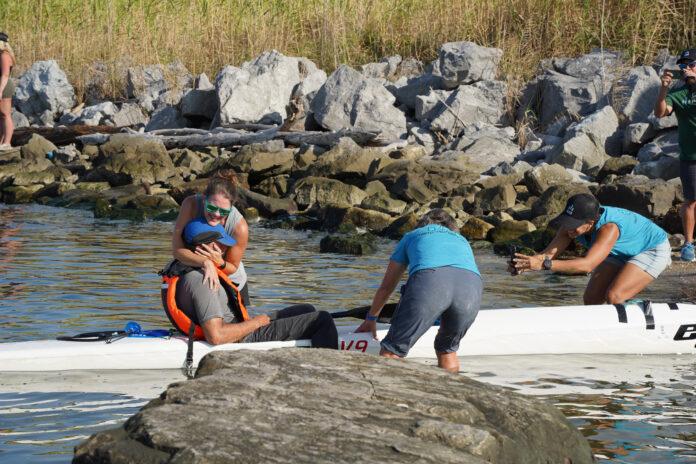
 NRS
NRS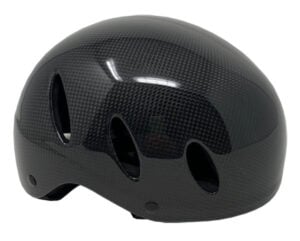 Predator
 Shred Ready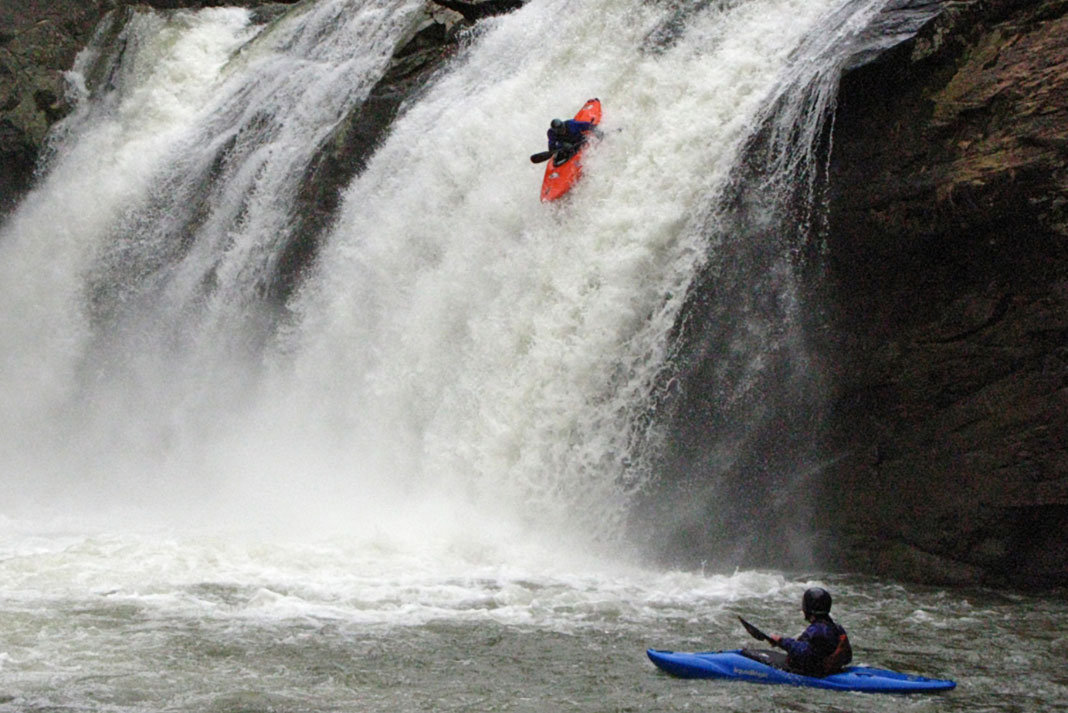
 Bauer
Bauer