Home Blog Page 62

Finding The Freezing Point: Paddleboarding The Cold Coast Of Iceland

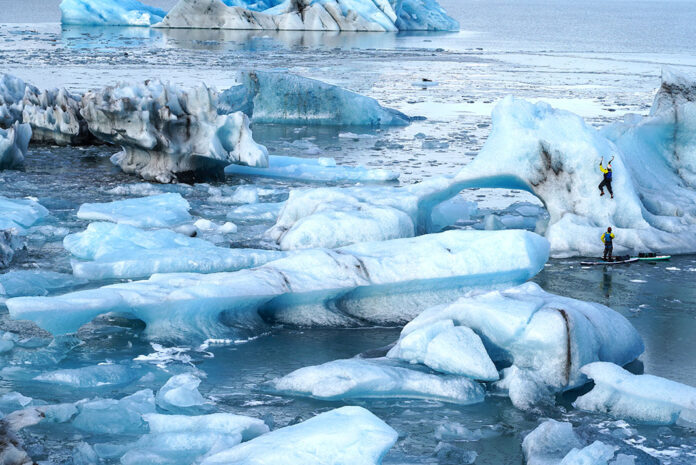
two people paddleboarding and climbing icebergs off the Iceland coast
Tim Emmett leading and Luca Malaguti below. | Feature photo: Jimmy Martinello

Growing up in Canada, the cold is something you become very familiar with. You know about the different kinds of cold—like the kind of damp cold of a rainy November day that gets into your bones and the biting cold of a mid-January day that makes your nostrils stick together—and better yet you know how to dress appropriately for all of them.

Personally, I’m not sure I’ve ever gotten used to the cold, but I do know it makes you feel alive. The cold gives you a heightened awareness that awakens and electrifies the soul. Wind, rain, snow, ice, cold water, brrr… But cold places—if you can get to them, if you can endure them—are often the most wild and the most beautiful.
Finding the freezing point: Paddleboarding the cold coast of Iceland

In November 2021, work and passion brought me to Iceland as part of a four-man crew to capture a theme, Water In Its Many Forms, on film. The idea was to find somewhere we could ice climb, free dive, surf and paddleboard, with a goal of showcasing the many transformations of water and the human connection to it.

Iceland was the perfect canvas for our quest. Still, winter in Iceland can be humbling and sometimes hostile. We embraced the cold temperatures, big storms and strong winds that encased us in ice as part of the adventure. I relished my role as both athlete and photographer as we chased the fine line between solid and liquid water.
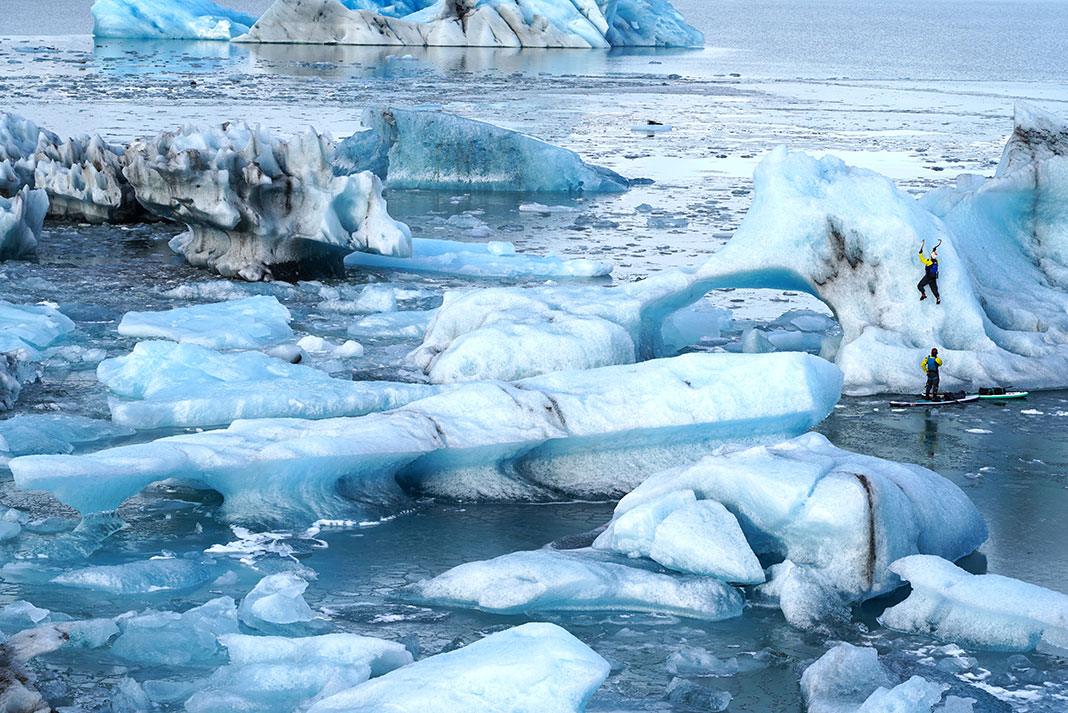
two people paddleboarding and climbing icebergs off the Iceland coast
Tim Emmett leading and Luca Malaguti below. | Feature photo: Jimmy Martinello

Adventures like this require an inspiring team. Tim Emmett is a longtime friend and adventure partner, as well as professional climber. Luca Malaguti is a free diver, fresh off breaking the Canadian national free diving record with a depth of 84 meters. Brian Hockenstein is a filmmaker who never shies from whatever the adventure requires to document the magic.

Captivated by the call of the cold

The days in Iceland flowed so naturally, blending together as we left one spectacular place for another. One moment I would be photographing Tim climbing out of a moulin, the next we would be surfing waves as a storm whipped up at sunset.

Exhausted at the end of each day, the four of us would squeeze into our rental SUV jam-packed with gear. Helmets, ice axes, boots, crampons, dive masks, flippers, wetsuits, drysuits, paddles—not to mention the multiple SUPs strapped to the roof. It was a lot, but we used it all almost every day. As has been common for me the past few years, inflatable SUPs were our main vessel of transport, breaking through ice, smashing through waves and cutting through wind as we navigated among icebergs.
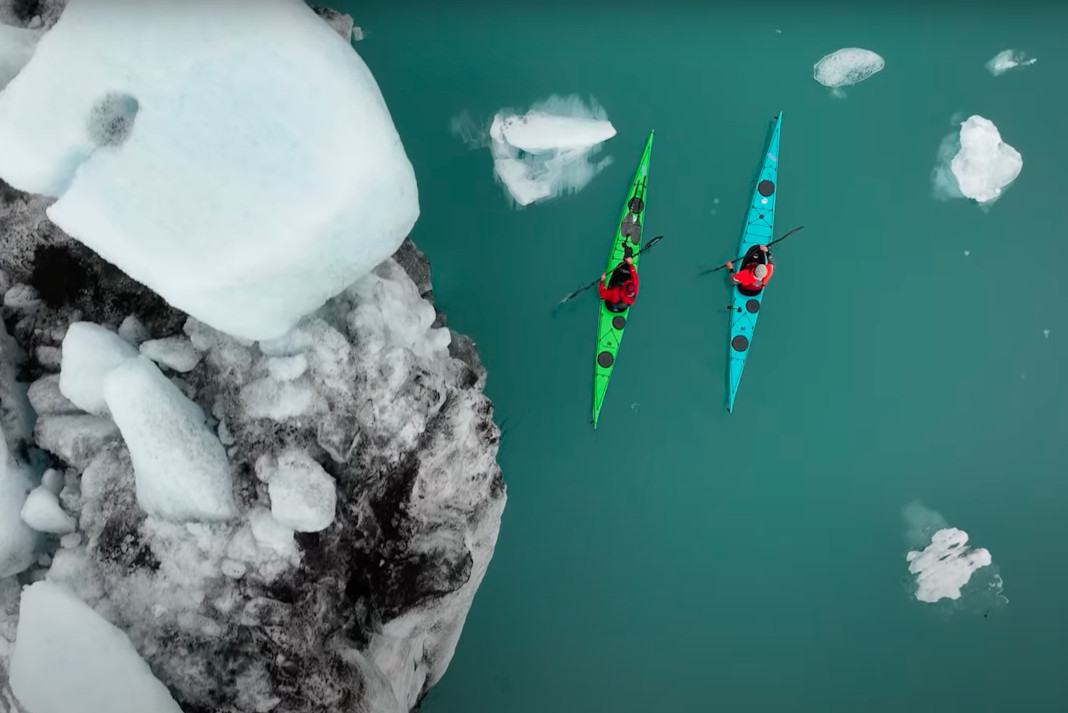
Climbing onto these frozen blocks of ice was a terrifying endeavor. If these massive, unstable chunks were to break or roll over, our drysuits would help stave off the cold. But that would only matter if we weren’t bludgeoned or crushed in the process.

Wind was the biggest issue we had to navigate if we wanted to paddle or surf. Flexibility was crucial, the ability to go with the flow, not unlike the water we came to document. The locals said, if you want to know the weather, check the forecast every 15 minutes and be prepared for anything. We took their advice.

We let the weather dictate our days, using our gear and familiarity with the cold to decide which form of water to engage with. Some people find the cold numbing; I find it enlivening.
Cover of the 2023 Paddling Buyer’s GuideThis article was first published in the 2023 Paddling Buyer’s Guide. Subscribe to Paddling Magazine’s print and digital editions, or browse the archives.


Tim Emmett leading and Luca Malaguti below. | Feature photo: Jimmy Martinello
 

Hardwired: Why True Kayakers Are Born, Not Made

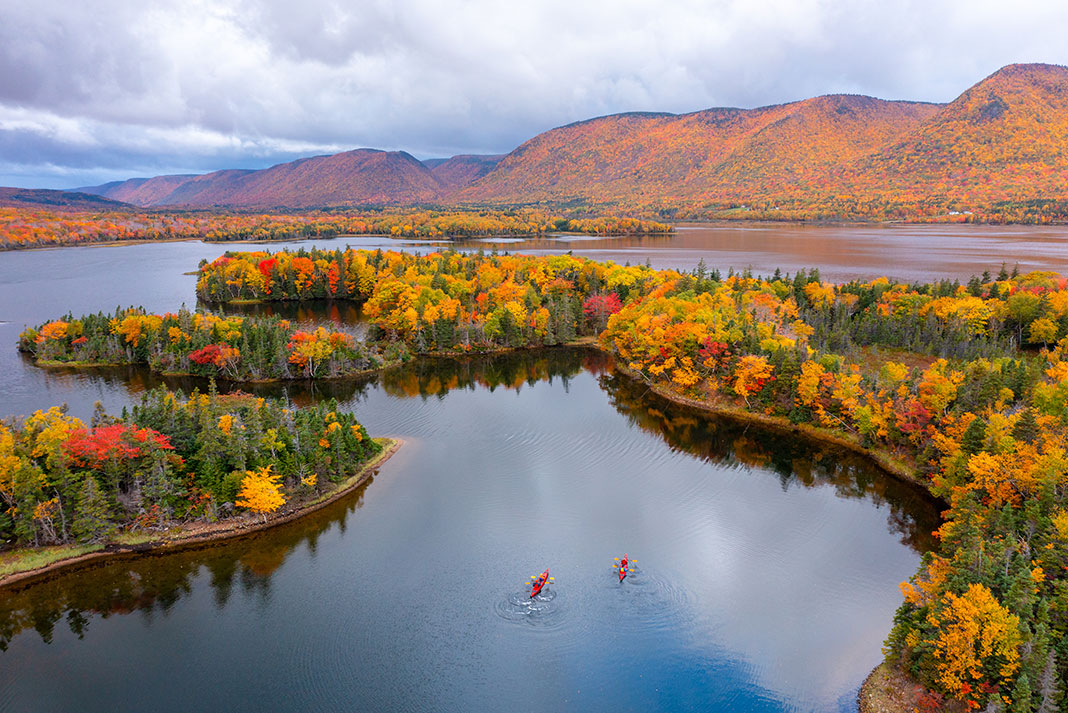
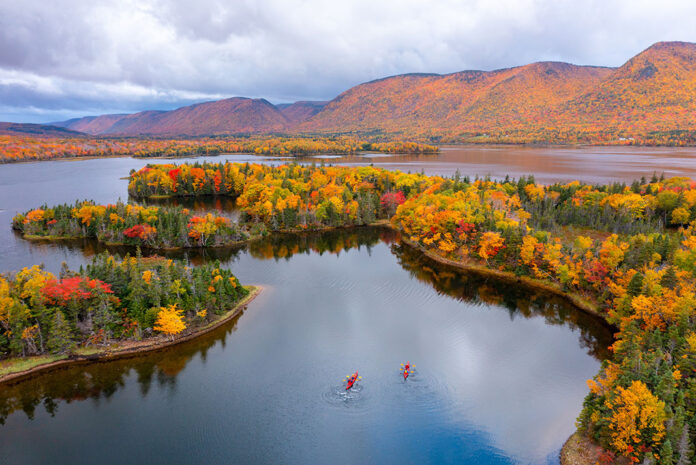
two touring kayakers paddle through a picturesque lake in fall
Either way, it’s your parents’ fault. | Feature photo: Adam Hill

No circumstances conspired to turn me into a kayaker. I grew up in the city, far from the water. Yet I knew I wanted to go sea kayaking long before I ever had the chance to try it. Sometime in the 1980s, on a family trip to Cape Cod, I caught my first glimpse of a sea kayak hanging from the ceiling of a tourist shop.

The juxtaposition of the unfamiliar vastness of the ocean we’d been visiting and the notion of launching into it in such a tiny and exposed watercraft was intoxicating. Kayaking seemed like the appropriate response to the infiniteness of the ocean, and to me symbolized the kind of relationship I wanted to have with the world—one composed of unfiltered, direct, adventurous experiences.

Hardwired: Why true kayakers are born, not made

Even though it would be more than a decade until I actually sat in the cockpit of a sea kayak, the idea of me as a sea kayaker gripped me. I started clipping pictures of kayaks out of magazines and taping them all over the walls of the house, as if to declare to myself and my family that this destiny would not be forgotten. As motivation, that’s as intrinsic as it comes.

Other people come to their outdoor passions similarly. The environment, or the activity, ignites something already deep inside. For some, it’s paddling, for others, it’s hiking or climbing in the mountains.

Falling in love with the landscape

I’m enjoying the new memoir by the California-based science fiction writer Kim Stanley Robinson, The High Sierra: A Love Story, about his lifelong affair with the Sierra Nevada. He didn’t start out as a backpacker. Like me, he grew up in the suburbs. But everything changed in 1973 when he and some university friends drove to a trailhead, dropped acid and went for a hike.

two touring kayakers paddle through a picturesque lake in fall
Either way, it’s your parents’ fault. | Feature photo: Adam Hill

“I didn’t know that my life had changed for the good,” he writes. “But I did know I had just lived one of the greatest days of my life. And I knew that this granite world, holding me in its cupped hands as I lay on it, glowing luminously in the moonlight, was a magic place. I loved it. I loved it. That feeling has never gone away. I trust now that it never will.” He went on to make hundreds of hiking trips into the mountains known as the Range of Light.

Robinson is talking about falling in love with a place, a specific mountain range, not backpacking per se. But outdoor sports are wrapped up in the experience of landscape in a way that’s difficult to disentangle.

Similarly, sea kayaking is about a relationship with the watery landscape. It’s a feeling.

“That feeling is one of the things I want to write about here. Crazy love. Some kind of joy,” Robinson gushes near the beginning of his 537 pages. “But what struck me most that day, and has lingered since in me, was a stupendous sensation of significance…what I was seeing was more than real.”

An innate propensity for paddling?

When I wrote a master’s thesis about wilderness adventure, that’s what people told me they were after: “ultimate reality.” Something too deep for the usual scientific research to grasp. The Outdoor Foundation’s 2015 Special Report on Paddlesports found 72 percent of kayakers are motivated “to get exercise.” And so on. Yadda yadda. Sponsored by The Coleman Company, Inc. that information might help you sell kayaks, but it doesn’t answer the question of what makes people paddlers in the first place.

No, I’m talking about paddling as a transformational act. People whose first glimpse changes them “for good.” As in for the better. As in forever.

In the 1978 classic of paddling literature, The Starship and the Canoe, writer Kenneth Brower compares the famous astrophysicist Freeman Dyson and his hippie son George, whose trajectories represent wildly divergent responses to a planet in crisis. Freeman looks to outer space: humans must colonize other planets. Dyson takes a back-to-the-land, low-tech approach: he retreats to the Pacific Northwest, lives in a treehouse and starts building kayaks fashioned after Aleut baidarkas.

Certainly the Princeton professor didn’t set out to turn his son into a kayaker. There must have been something innate in George that made him choose that watery path, like some genetic predisposition waiting to be expressed.

Like a duck to water

Sometimes people can see this propensity in you early, before you even discover it in yourself. There was an old man named Peter who went to my parents’ church and saw me grow up, though I hardly spoke to him. In high school I wrote an essay for the newspaper full of angst about living in the city disconnected from nature—the same stuff I write now. Peter read it and asked if he could take me out to lunch. He rambled about places he’d traveled and asked about my plans after school. He gently suggested I postpone settling down and take some itinerant jobs. A berth on a transoceanic freighter might be an interesting way to see the world. That was a weird conversation, I thought.

As the years went on, I studied outdoor recreation, moved to the West Coast, and worked as a tree planter, canoe trip guide and forest firefighter. The reports Peter got from my parents must have confirmed he’d read me correctly.

I don’t know if Peter ever kayaked, but I think he too was a kayaker in spirit—born, not made—and he recognized a kindred one when he saw it. Before he died he mailed me a poem out of the blue. It’s a popular one, called The Little Duck, by Donald Babcock:

“Now we’re ready to look at something pretty special

It is a duck

riding the ocean a hundred feet beyond the surf. […]

And what does he do, I ask you?

He sits down in it!

He reposes in the immediate as if it were infinity

—which it is.

He has made himself part of the boundless

by easing himself into just where it touches him. […]”

Whenever I think of that poem I think of Peter, how he saw some spark in me that he connected to a feeling in himself. It’s the spark that flared when I saw that kayak in Cape Cod.

Years later I collected the earnings from all those odd jobs, drove to Granville Island in Vancouver and walked into the Ecomarine store. I pointed at the sea kayak hanging from the ceiling and asked the staff to help load it onto my truck.

Cover of the 2023 Paddling Buyer’s GuideThis article was first published in the 2023 Paddling Buyer’s Guide. Subscribe to Paddling Magazine’s print and digital editions, or browse the archives.


Either way, it’s your parents’ fault. | Feature photo: Adam Hill


REO Rafting Destroyed By Kookipi Creek Wildfire

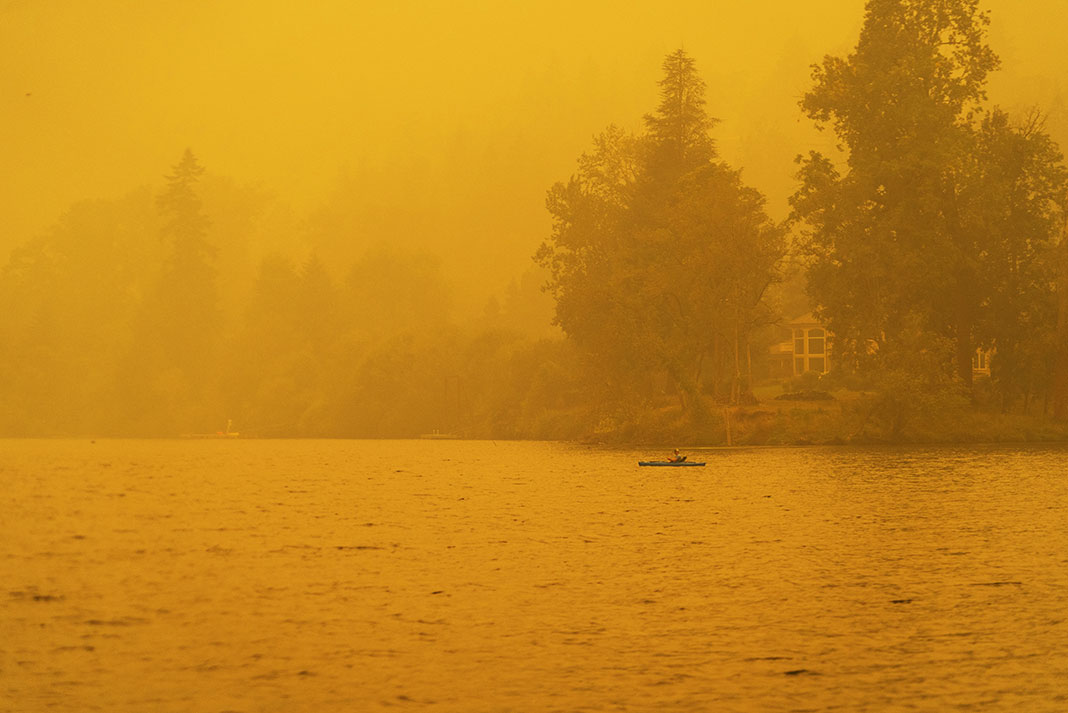
For 40 years, REO Rafting and Yoga Resort had called the magnificence of the Nahatlatch Valley home. On August 18, 2023, the monthlong burning Kookipi Creek Wildfire exploded in growth. High wind fueled it across the Fraser River and up the Nahatlatch Valley toward REO. Those in the valley, including everyone present at REO, were forced to evacuate quickly as wind pushed the flames through the forest. When the gray ash had settled, the rafting operation that had grown within the valley over decades had been consumed.

“By the time we realized the severity and the speed of the fire that was approaching, it was too late. Everyone at REO grabbed everything they could and evacuated before the fire was at our doorstep,” Bryan Fogelman, founder and president of REO Rafting, and the REO team shared in a statement through the B.C. River Outfitters Association.

REO Home For Decades Instantly Destroyed By Kookipi Creek Wildfire

REO is just one place lost in the widespread fires overwhelming the province of British Columbia this summer, with over 2,000 fires occurring so far in 2023, burning nearly five-million acres.

The business Fogelman founded in 1983 just over a two-hour drive from Vancouver was known as a gem of a retreat along the jade-green rapids of the Nahatlatch River. REO offered rafters river experiences on the Nahatlatch, Fraser and Thompson, as well as served as a yoga retreat and family camping destination. Fogelman operated REO with his wife Karen—whom he met while she was a rafting guest there in 1993—and their three children. The outfitter was truly family-operated with plans for their daughter Sierra and her husband Matt to one day take over.

According to Fogelman, 80 percent of REO Rafting was destroyed by the Kookipi Creek Fire. Following the flames passing through, he and a group of employees were able to travel back to the resort briefly. While there, they put out numerous fires still smoldering around the property and collected any gear that wasn’t destroyed. The fire is still burning in the area, limiting their ability to access the REO property.

“All we can do is watch the fire’s progression and hope we can save what’s left,” they went on to say in the statement.

Hopes To Rebuild On The Nahatlatch River

The Fogelmans aren’t quitting on REO or the Nahatlatch Valley with plans to rebuild as soon as possible. There is a hitch though. Due to their business location, REO has been unable to secure wildfire insurance for the property in recent years, and will have to shoulder the financial burden of rebuilding.

REO was the entire livelihood of Bryan and Karen. With the devastation of the resort, loss of bookings, and lack of insurance coverage for the fire, the family faces a difficult path ahead. The Fogelmans have set up a GoFundMe campaign for past guests and members of the paddling community who would like to support the family in restoring the outfitter in the river valley they’ve seen themselves as stewards of for decades.

“This valley is our home and it has always been our passion to preserve its natural beauty. Over the years, we have worked endlessly to protect the Nahatlatch; from our role in the creation of the Nahatlatch Provincial Park to the continued effort in preserving the natural wildlife, improving the facilities on our property, and bringing awareness to the land,” the Fogelman family expressed on the fundraising campaign site.

“For all of those who have been to REO, and even those who may have seen it from afar, you’ll agree when we say that there was something so special about it. We hope that one day in the near future it’ll return to this state, but there is a long road ahead.”

If you would like to contribute to REO’s rebuilding effort, visit: gofundme.com/f/help-save-reo-rafting-yoga-resort.


Highlights From The 2023 Canada Cup (Video)

As the days start to shorten, the annual Canada Cup marks the unofficial winding down of summer on the playspot-laden Ottawa River. The 2023 Canada Cup hosted by Wilderness Tours and Ottawa Kayak School took place the weekend of August 25. The venue—the river’s most powerful and dynamic “low water” summer feature, Garburator.

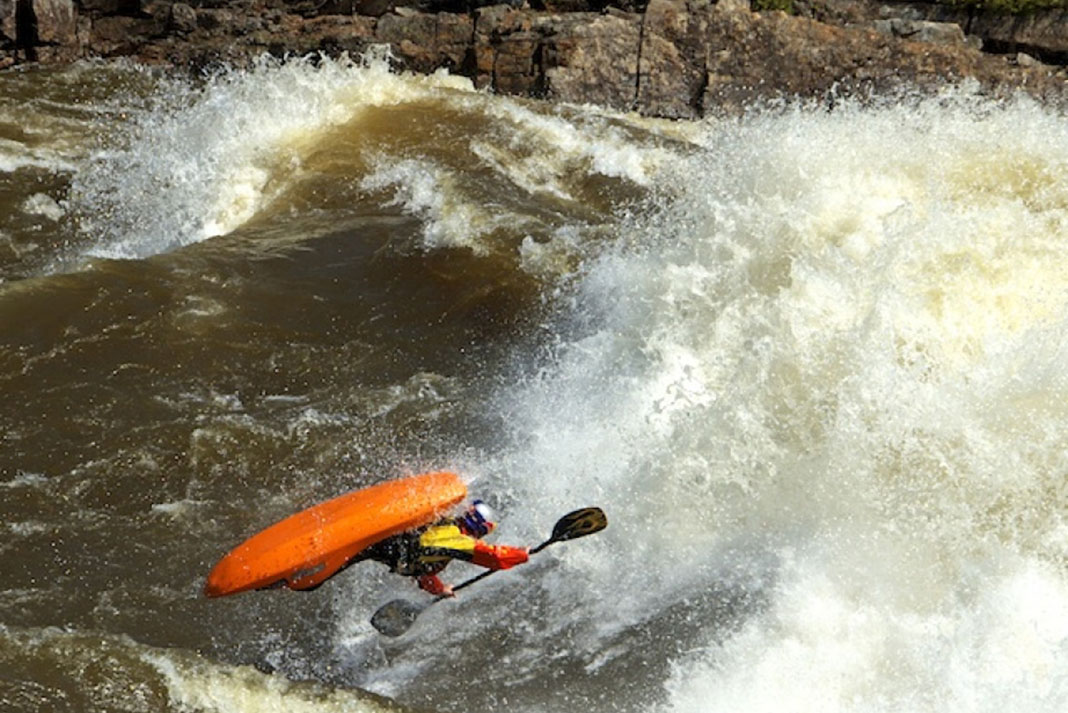
The Garburator wave is known for serving up violent rides and big air. A flume of green water at the entrance of The Lorne rapid ricochets off the rock walls. The reactionary waves make perfect shoulders feeding a churning foam pile to create Garburator. Freestyle paddlers fly down the face of the wave and launch into every aerial maneuver you can imagine. The proof on display in the highlight reel produced by Casey Bryant Jones.

The Canada Cup always brings out a showing of local and visiting paddlers to have fun and throwdown. This year’s competition also provided an extra dose of excitement. Some of the biggest names in freestyle were present in advance of the upcoming ICF Canoe Freestyle World Championship on the Chattahoochee River.

The world championship hosted in Columbus, Georgia is set for early October. It will be held on perhaps the most powerful wave for the event since 2015. Fittingly, that 2015 venue was Garburator, and the 2023 Canada Cup provided a preview of the freestyle displays we can expect to see at the start of fall.


Bad News Bears: 5 Tips To Avoid Problem Bear Encounters

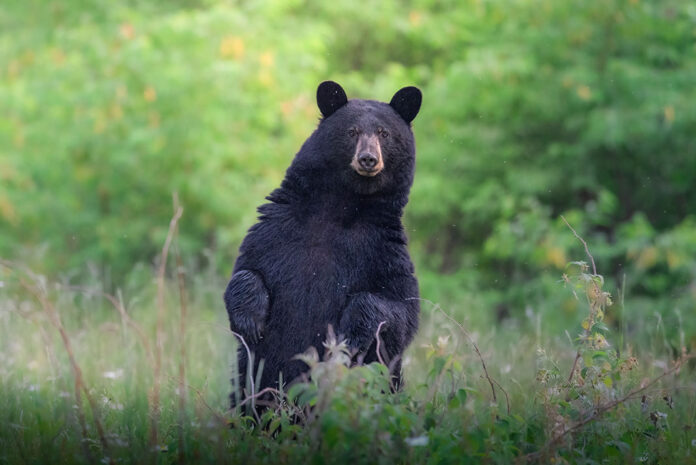
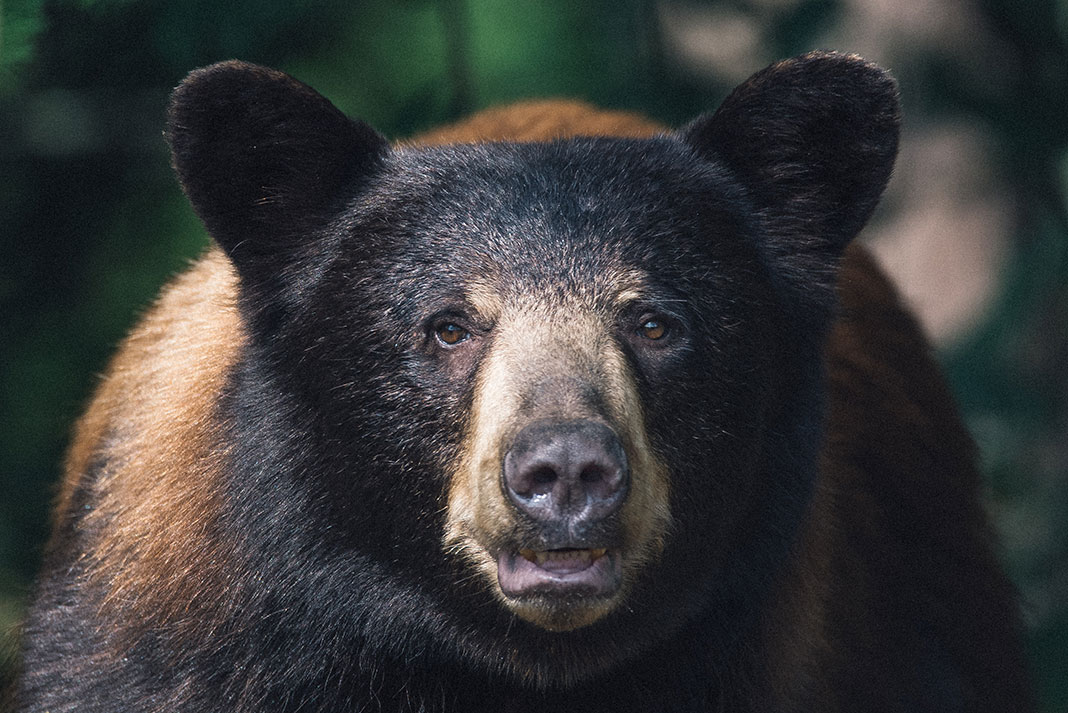
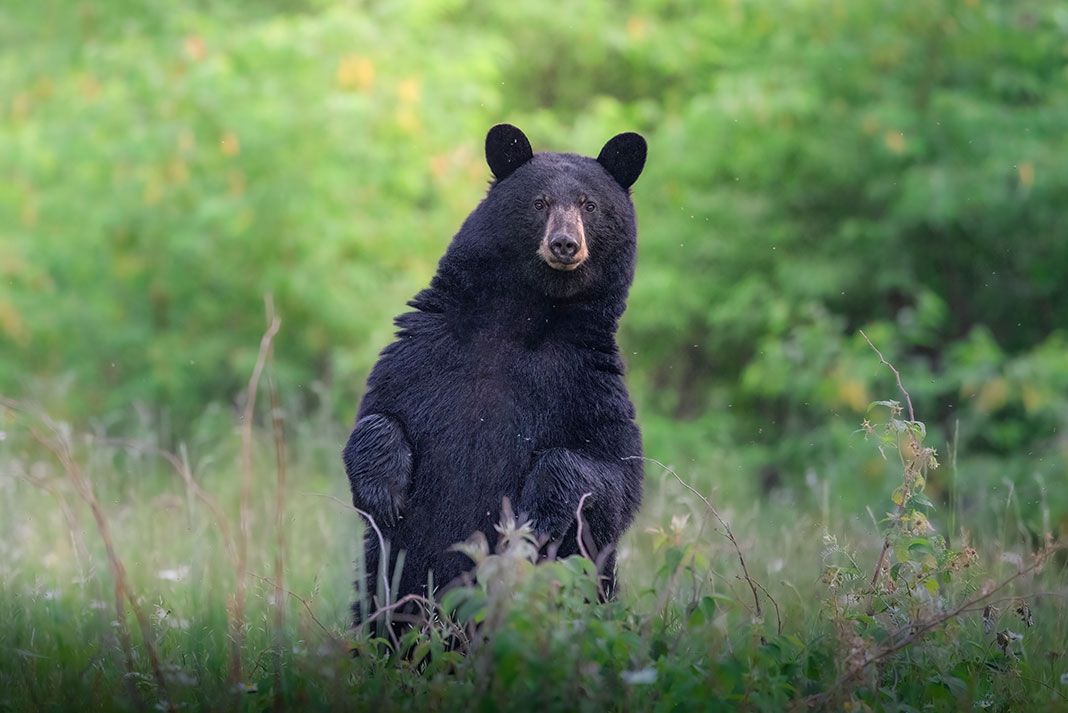
a black bear stands up and looks at the photographer, with potential for a problem encounter
“You look down, they know you’re lying and up, they know you don't know the truth. Don’t use seven words when four will do. Don’t shift your weight, look always at your mark but don’t stare, be specific but not memorable, be funny but don’t make him laugh. He’s got to like you then forget you the moment you’ve left his side. And for God’s sake, whatever you do, don’t, under any circumstances...” —Rusty to Linus, Ocean’s Eleven. | Feature photo: Follow Me North Photography

One of the greatest benefits of canoe camping is the way it brings us closer to nature. But when it comes to bears, keeping a safe and respectful distance away is better for all involved. Unfortunately, drawn by food or familiarity, the bears themselves may have a different plan. Read on for expert tips to help avoid a problem bear encounter, plus what to do if an ursine intruder does decide to show up for lunch.

Two tales of bad news bears in camp

French River bear encounter

Friends Louis Poulin and Dan Mailhot were on a canoe and kayak trip on the French River in Ontario, Canada. The pair arrived at an island campsite on their second day and found it strewn with food scraps and abandoned camping gear. Someone had written “BIG BEAR” in cinder on a rock. Bear scat found on the campsite seemed old, but the food appeared fresh. The scene was ominous enough to convince Louis and Dan to find another campsite.

On the new site, Dan used a bear-proof Ursack stuff sack and a small bear-resistant canister to store his food away from their sleeping area, while Louis left his in the airtight hatch of his kayak overnight. Around midnight, Dan heard rustling in camp and soon after a black bear ripped into his tent hammock near his head. Dan yelled and both he and Louis got up and realized the bear had also gone through Louis’ gear, none of which had been in contact with food. With the bear still in camp, the pair banged pots and pans but were unable to scare the bear away. They hastily paddled off in the dark to a distant rocky islet, where they huddled in sleeping bags for the rest of the night.

a black bear stands up and looks at the photographer, with potential for a problem encounter
“You look down, they know you’re lying and up, they know you don’t know the truth. Don’t use seven words when four will do. Don’t shift your weight, look always at your mark but don’t stare, be specific but not memorable, be funny but don’t make him laugh. He’s got to like you then forget you the moment you’ve left his side. And for God’s sake, whatever you do, don’t, under any circumstances…” —Rusty to Linus, Ocean’s Eleven. | Feature photo: Follow Me North Photography

They returned in the morning to assess the damage and collect their gear. The food canister was untouched, but the Ursack, which Dan had tied to a sapling, was gone. With a duct tape patch on Dan’s hammock and what food was left, they were able to salvage the remainder of their trip.

Algonquin bear encounter

Julia and Chris Prouse chose an easy route in Algonquin Provincial Park for their eight-month-old son Cedar’s first overnight canoe trip. They made the portage from Canoe Lake to Joe Lake, where they had reserved a campsite, on a drizzly afternoon.

Arriving at their site, they were disappointed to find food packaging in the firepit, left behind by previous campers. They tidied up the mess and made camp for the night. That evening while Julia was preparing dinner, a black bear came into camp and attempted to investigate their open food barrel. Julia yelled to scare the bear off and it responded by chomping and clacking its jaws, especially when Julia came between it and the barrel. The bear came within two meters of her and Julia gave it a “light tap” of bear spray, which caused it to disappear into the woods.

Julia and Chris faced a tough decision. Daylight was fading and they weren’t comfortable with night paddling. They considered paddling to a nearby site, but had heard air horns and yelling from across the lake, indicating their neighbors were also dealing with an unwanted visitor. They had plenty of bear spray, so they chose to spend the night. They hung their food barrel using the cable and pulley system provided by the Park and wondered if the bear would return. Sure enough, it did. The couple could do little but listen to the bear tearing into the barrel as they spent a sleepless night.

In the morning, they found the barrel still suspended overhead without its lid. The bear had opened the clasp and dumped the contents, consuming much of their food. The couple cleaned up the mess before breaking camp and paddling out to Canoe Lake.

[ Plan your next Algonquin paddling adventure with the Paddling Trip Guide ]

5 tips to avoid problem bear encounters

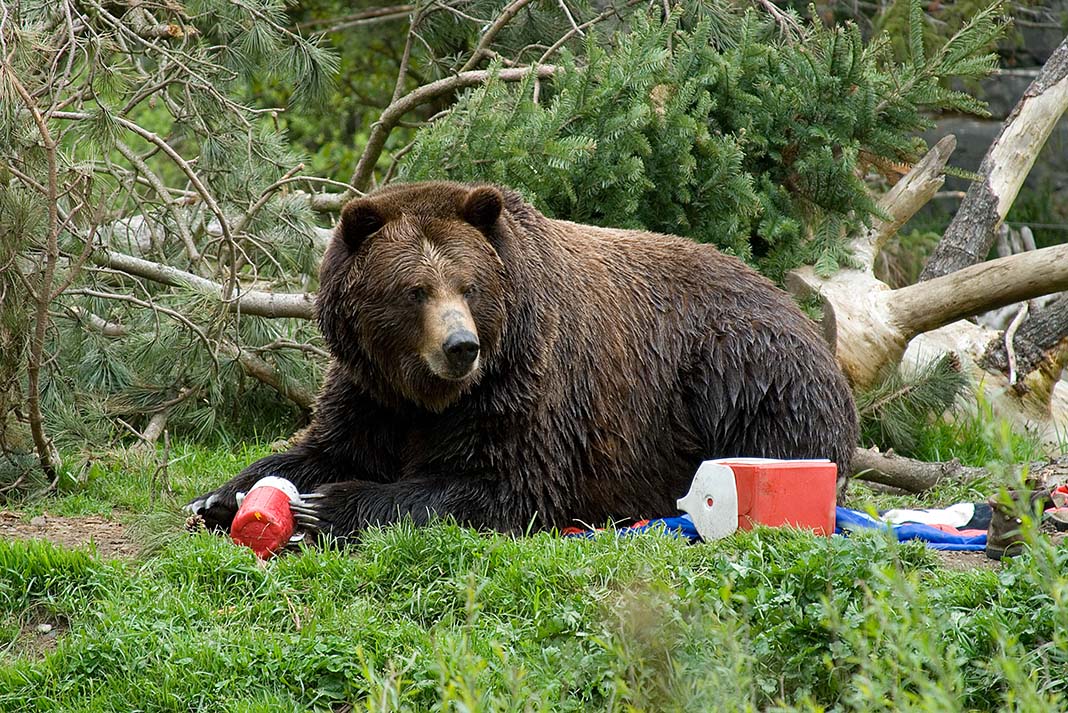
Both groups were clearly dealing with a “food conditioned bear,” says Kim Titchener, a wildlife professional in Banff, Alberta and creator of RecSafe With Wildlife, an online community she launched to minimize impacts to wildlife as interest in the outdoors surged during the Pandemic. When a black bear successfully raids campsites the behavior becomes habitual and there’s little campers can do to break the pattern, Titchener says. This is concerning because 40 percent of fatal bear attacks involve animals familiar with human food. Following are the lessons she says we can learn from both stories.

1 Avoid problem areas

Popular canoe routes are often plagued by repeat offender bears. Scan Facebook groups and talk to park staff before you go. If your research uncovers tales of problem bears, “do you really want to go camping there?” asks Titchener. “I would consider a different route.”

2 Camp survey

Look for bear attractants like food waste, evidence bears have been feeding in the area (such as scat), and signs of carrion (look for birds circling overhead) when selecting a campsite. If your survey reveals any of these red flags, Titchener suggests cleaning up the mess and moving to another campsite if other options exist.

3 Bear-proof your food

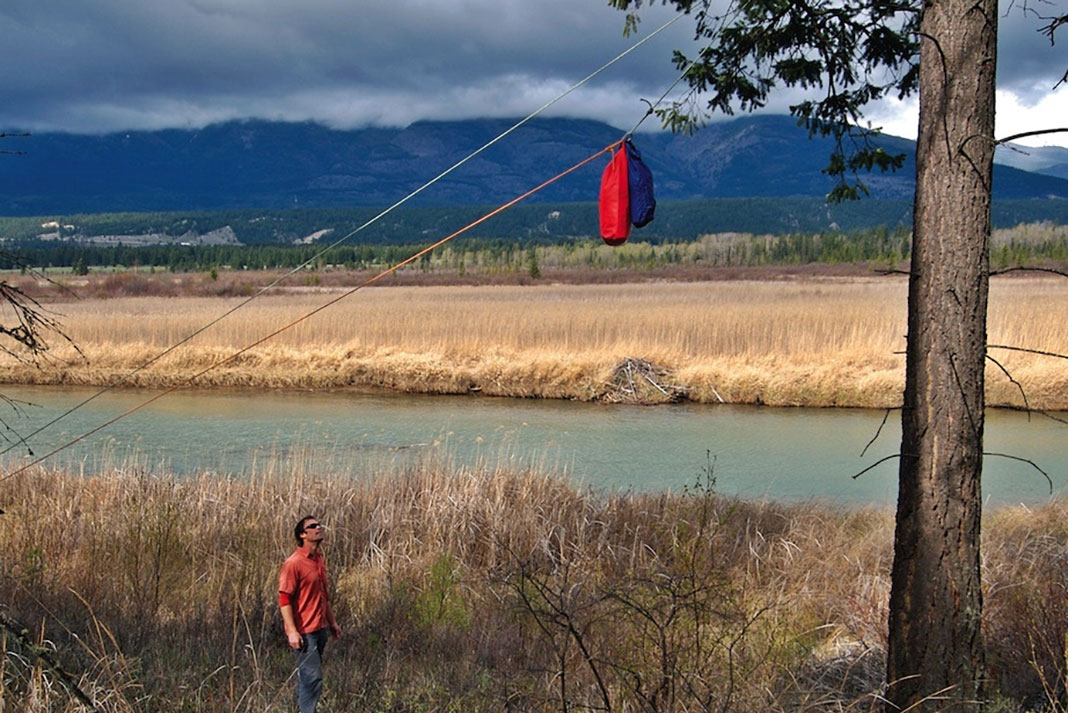
Food barrels and kayak hatches are not bear-proof. Titchener ranks metal lockers, Interagency Grizzly Bear Committee-certified containers like canisters and reinforced stuff sacks secured to a large tree as best for food storage in camp. But lockers are uncommon and approved canisters and stuff sacks are small. The next best option is hanging your food (in a pack or barrel) at least four meters from the ground, 1.3 meters from adjacent trees and 100 meters away from your tent. If suitable trees aren’t available, stash your food pack or barrel as far away from the campsite as possible. Storing your food in a canoe that’s anchored in deep water, far offshore is another option when the conditions are right.

4 What to do if…a bear comes into your campsite

With black bears, keep your group together, make yourself big and create a lot of noise. Titchener recommends a tactical high-powered flashlight for night encounters. Bear spray is highly effective—but only if you’re carrying it in an accessible location.

5 What to do if…the bear returns or won’t go away

Hanging your food far from camp should keep a marauding bear far from your sleeping area. But if a bear breaks into your tent, Titchener says it’s time to leave the campsite. Be sure to inform park or wildlife officials about your experience.

Cover of the 2023 Paddling Buyer’s GuideThis article was first published in the 2023 Paddling Buyer’s Guide. Subscribe to Paddling Magazine’s print and digital editions, or browse the archives.


“You look down, they know you’re lying and up, they know you don’t know the truth. Don’t use seven words when four will do. Don’t shift your weight, look always at your mark but don’t stare, be specific but not memorable, be funny but don’t make him laugh. He’s got to like you then forget you the moment you’ve left his side. And for God’s sake, whatever you do, don’t, under any circumstances…” —Rusty to Linus, Ocean’s Eleven. | Feature photo: Follow Me North Photography


Melker Of Sweden Continues To Expand In North America

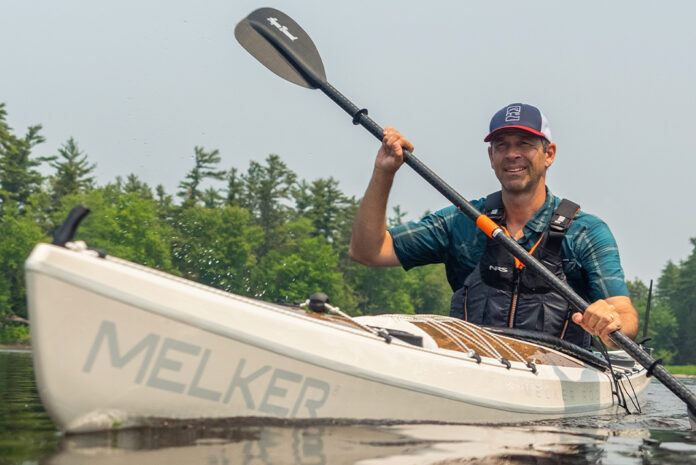
TORONTO/STOCKHOLM – After a successful launch in the U.S.A., Melker of Sweden has been focusing on establishing on the Canadian east coast during the summer. Four new strategic retailers are now up and running.

“A very positive start in Canada and we really look forward to what’s to come”, says Pelle Stafshede, CEO & creative director of Melker of Sweden.

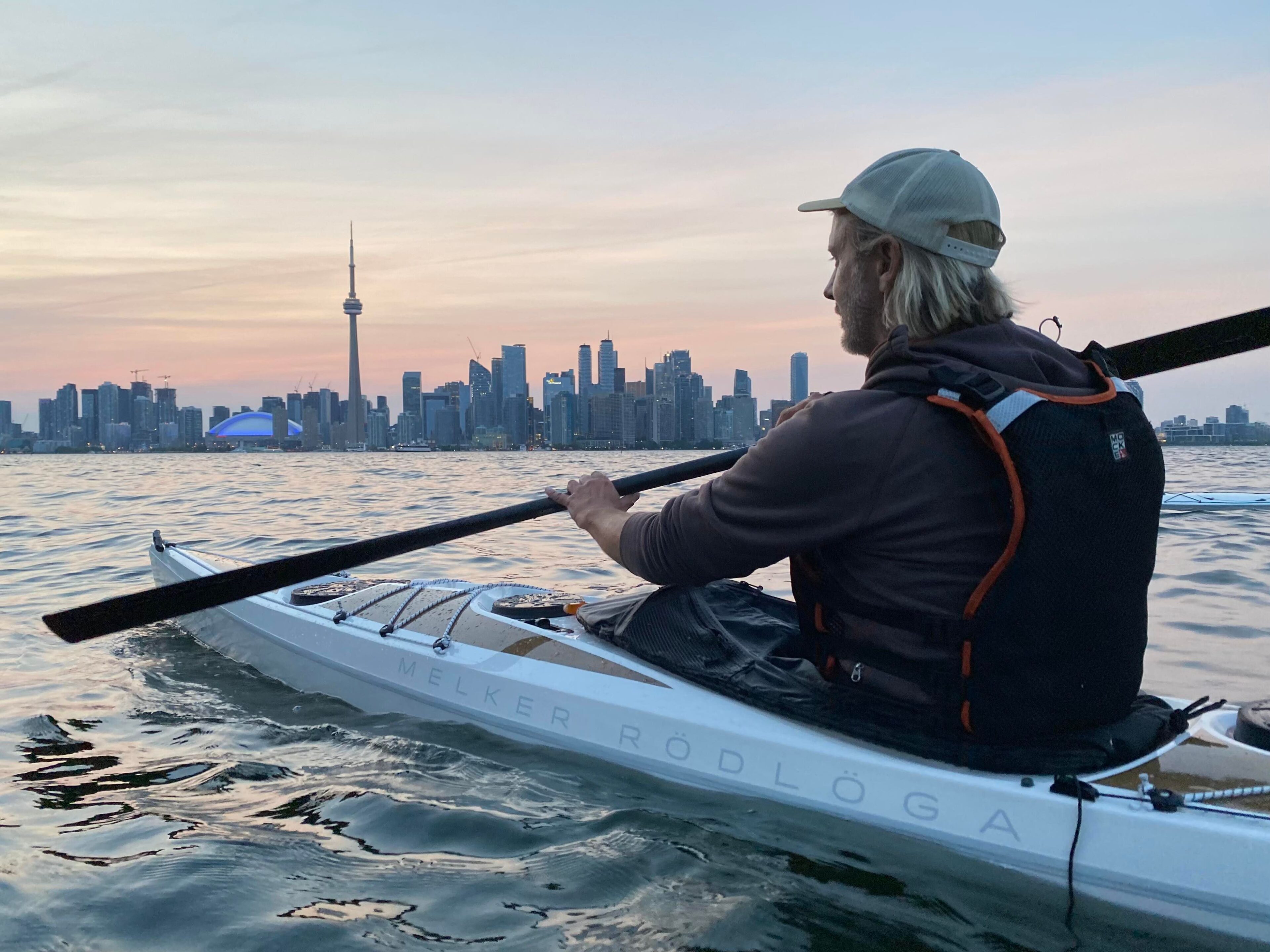
Person paddling Melker Rodloga sea kayak with Toronto skyline in background.
Photo: courtesy of Melker of Sweden

During the month of June, representatives from Melker of Sweden had a fruitful visit to Canada and the first kayaks have already been shipped to the newly signed retailers:

  • Boutique Pagaie Quebec, Quebec City
  • Boutique Kayak Junky, Montreal
  • Frontenac Outfitters, Kingston
  • The Complete Paddler, Toronto

“As soon as the Melker kayaks arrived in our store, all our staff fell in love with them,” says Kelly McDowell, president of The Complete Paddler. “We enjoy the way they paddle and of course the way they look, but finally having a more environmentally friendly sea kayak we can sell is something we can all get behind.”

“Frontenac Outfitters carries some of the best brands in the world. When Melker came to us with the story they represent, we thought they would be a great fit,” says Zack Fiddis, CEO and owner of Frontenac Outfitters. “Melker is pushing the boundaries on sustainability and using new materials that other manufacturers haven’t looked at.

“Innovation like this starts a new conversation about what we should expect from our manufacturers. The kayak industry has been pretty stagnant regarding new designs and materials, and we found their process very refreshing. Melker has some serious excitement behind the brand, and we want to be able to share that with our customers.”

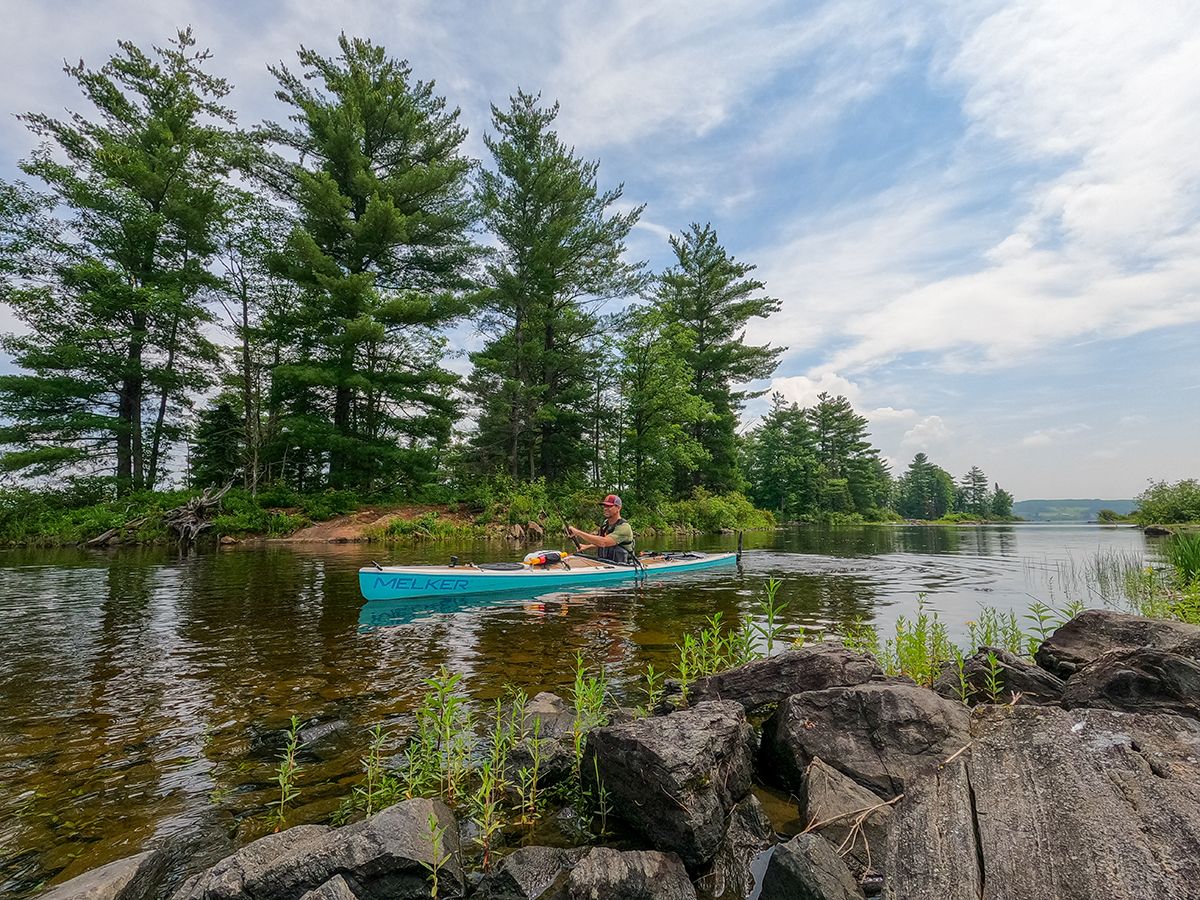
MAn paddling Melker sea ka yak through narrow channel between island and shore.
Photo: courtesy of Melker of Sweden

Melker of Sweden has already successfully started partnerships in North America  and several more are on its way. During the fall of 2023 the plan is to connect with partners and potential retailers on the west coasts of both the U.S.A. and Canada.

“Our goal is to develop long-term relationships with dealers who share similar values and who support our mission to get more people outdoors—and make those experiences as great as possible, in a beautiful yet sustainable way,” says Pelle Stafshede.

The North American launch of the kayaks from Melker of Sweden has drawn great attention and positive reviews. The influential Ken Whiting (PaddleTV) has tested both the Rödlöga and Ulvön. You can watch his video reviews here:


About Melker of Sweden

Melker of Sweden offers sustainable, high-performance, sleek and stylish kayaks for an active and conscious lifestyle. An interplay between the environment, ethics and economy is strategically important to us—making it possible to make a difference for real. Our core values also include having a great time—making sure that we always do what we love together with friends, family and partners sharing our philosophy. Staying true to our philosophy makes it possible for us to create a successful business we are proud to run and work for.

We are in business to make a difference—having a great time doing it. melkerofsweden.com

International Whitewater Hall Of Fame Announces 2023 Honorees

2023 International Whitewater Hall of Fame Honorees

Takoma Park, MD – The World River Centre, on behalf of its hallmark program, the International Whitewater Hall of Fame (IWHoF) has announced members of its Class of 2023. Six honorees join an amazing group of whitewater pioneers, explorers, champions, and advocates, joining 55 previously inducted leaders and legends.

“We are thrilled to honor individuals whose whitewater-related accomplishments outshine most others,” says World River Centre President Risa Shimoda. “They deserve this special recognition, and we are looking forward to celebrate them and their impressive accomplishments at The Paddle Sports Show in Strasbourg, France 28 September.”

Meet the International Whitewater Hall of Fame Class of 2023

Pioneer: Bryce Whitmore (USA)

Born in 1926, Bruce was a force in Western US kayaking and rafting in the Western Coast of the United States and an influence in the community and industry that influenced many beyond. He pioneered paddling practices and built the first fiberglass kayak in the Western US in 1956; completed first descents of many rivers in California from 1956 to 1965; claim a place as National Slalom Champion from 1960 to 1962; claimed to be the first commercial rafting outfitter on the West Coast of the US in 1960–1986, including offering weeklong trips on the Rogue River from 1973 to 1986. He created the first self-bailing rafts, called “Huck Finns” in 1968.

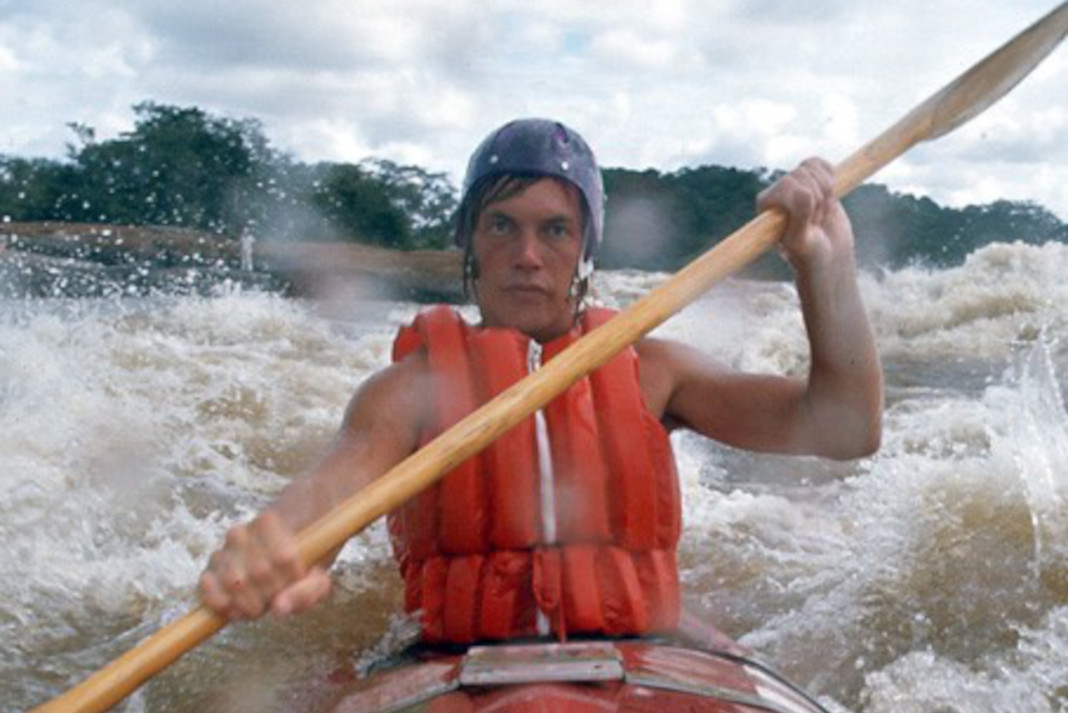
Kayaker Mike Jones
Mike Jones. | Photo: Courtesy Roger Huyton

Explorer: Mike Jones (Great Britain)

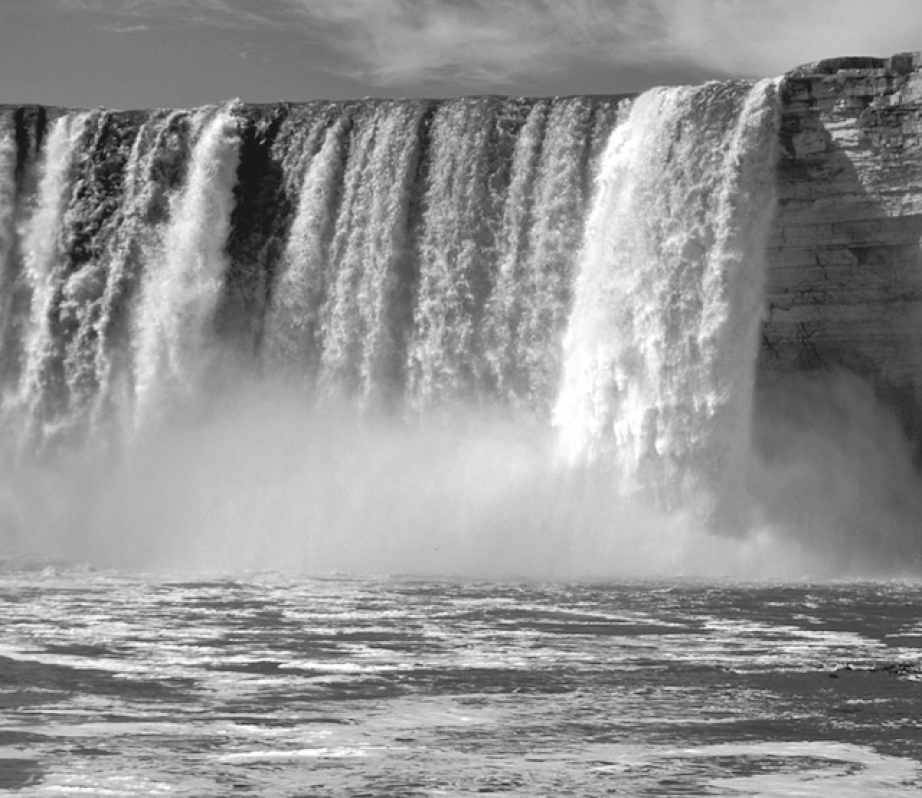
Mike was one of the world’s top expedition kayakers of his generation, most famous for his 1976 “Canoeing down Everest” descent of the Dudh Kosi. Mike’s expeditions introduced many people to the exciting world of whitewater paddling and inspired many to take up the sport. At age 17, after participating as the youngest member of a small British team making a “first attempt” descent of the Inn Gorges in the Alps, Jones decided to make the first descent of the Dudh Kosi, whose source is close to Mount Everest and which falls at approximately 280 feet per mile (53 m/km). Jones organized a team, despite financial challenges due to his “risky and crazy” project, drove to Nepal and trekked to the river for its first descent launching at a record 17,500 feet (5,300 m) above sea level. The film, “Dudh Kosi – Relentless River of Everest” produced by Leo Dickinson, recorded the expedition with some wildly exciting and memorable footage. Mike died, tragically, two years later trying to rescue a friend on the Braldu River in the Karakorum Mountains, at the age of 25. He was and remains truly inspirational today.

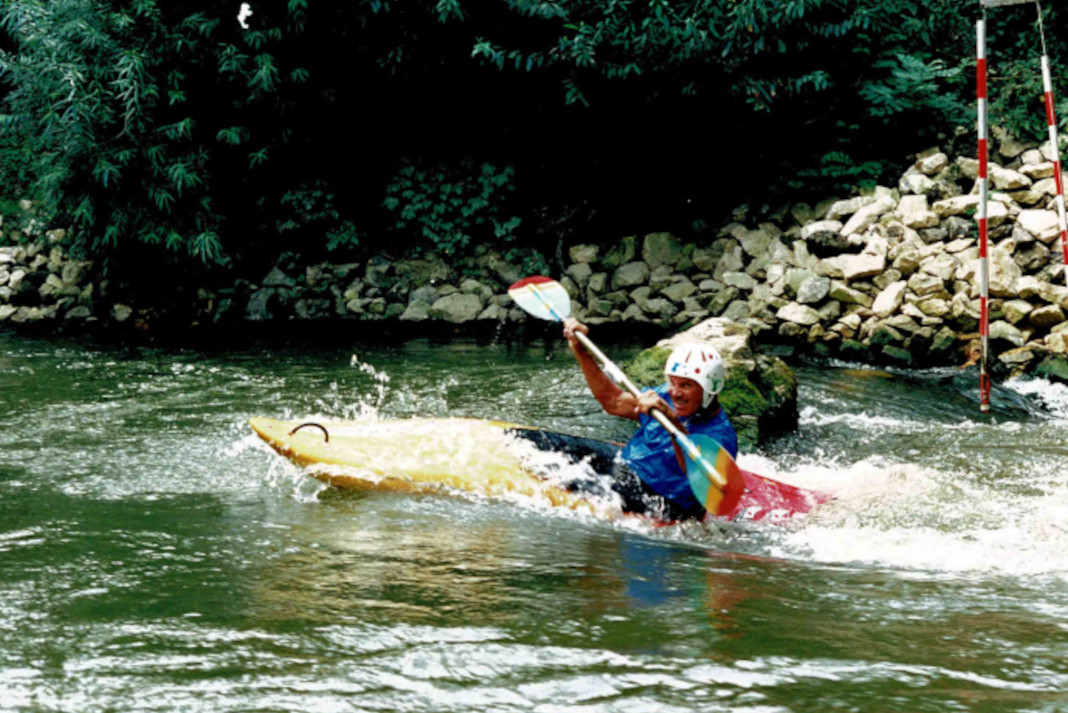
Manfred Vogt
Manfred Vogt.

Champion: Manfred Vogt (Germany)

In the opinion of slalom competitors who are aware of the skills of early competitors, Manfred is one of the best slalom and whitewater kayakers to ever exist. He was dominant as a canoe slalom racer in the 1950s and 1960s, when everyone paddled folding boats. In addition, Manfred developed slalom paddling techniques that helped advance the abilities of all racers at the time. He was the first who started undercutting the gates in Slalom and used special sweep and Duffek-like strokes for the kayak to be faster in the gates and to reduce distances between the gates. In the old times, the paddler always made wide turns around the gates: Manfred’s new technique made it possible for them to finish with much faster times. Slalom kayakers from all over the world have learned Manfred Vogt’s and Milo Duffek’s slalom technique. Without them this sport would certainly not be what it is today.

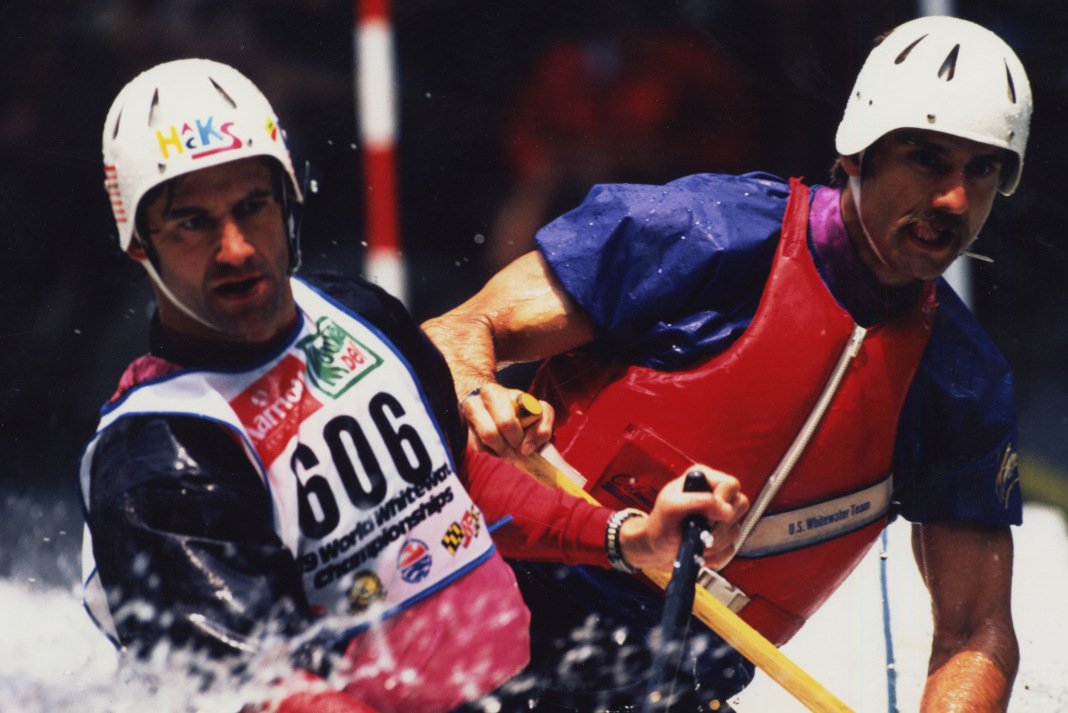
C1 Olympic medalist Jamie McEwan
Jamie McEwan (left) with canoe partner Lecky Haller. | Photo: Courtesy McEwan family

Champion: Jamie McEwan (USA)

As a member of the US Whitewater Slalom Team and National C1 Champion in 1972 and 1975, Jamie’s Olympic Bronze Medal in Augsburg at the 1972 Olympic Games inspired many US whitewater champions. From his success, they saw their own potential in his commitment and grit. He brought home overall C2 wins from the 1987 World Championships, 1988 and 1989 World Cups, and his comeback in 1992 at the Olympics in La Seu d’Urgell with C2 partner Lecky Haller was remarkable, finishing just out of the medals in 4th place. He continued to race on his own for many years as an inspiration to his local paddling club and with his son, Devin.

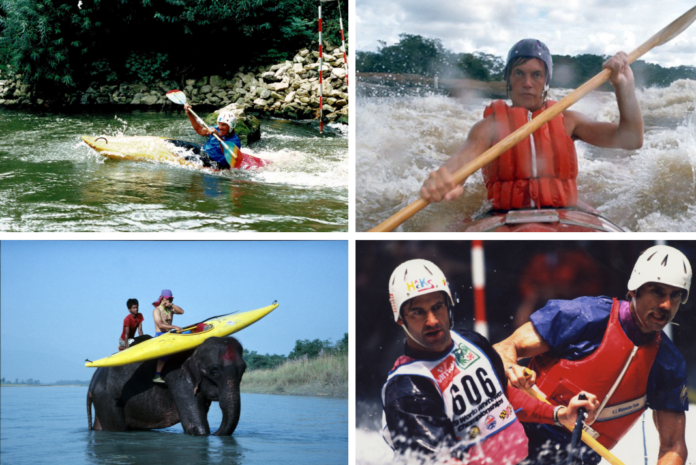
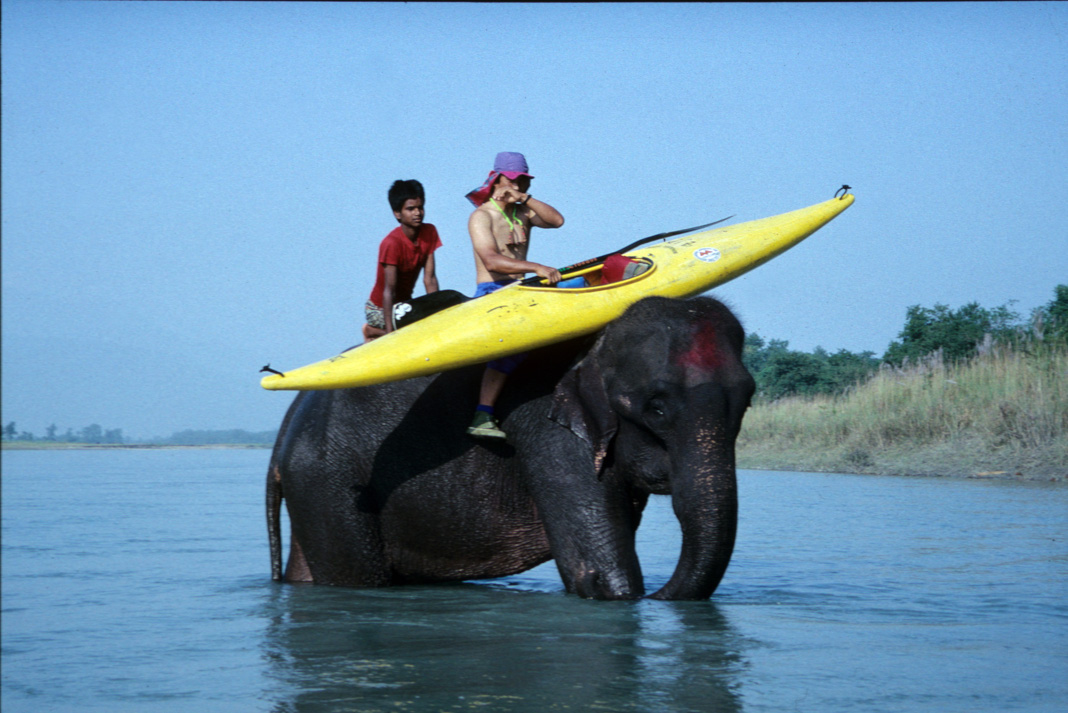
Isamu Tatsuno riding on an elephant with kayak, courtesy of Montbell.
Isamu Tatsuno. | Photo: Courtesy Montbell

Advocate: Isamu Tatsuno (Japan)

In 1975 at the age of 28 Isamu Tatsuno’s enthusiasm for canoeing and kayaking led him to be the first to bring polyethylene kayaks to Japan with the import of Perception kayaks in 1985 and his company, Montbell, became one of the largest retailers of whitewater kayaks in the world. Montbell currently has approximately 130 outdoor retail stores throughout Japan, 50 of which include kayaks for whitewater, touring and recreation as well as canoes, inflatable and folding kayaks and canoes. With some stores located in many of the busiest train stations in Japan initially, the exposure of the sport of kayaking to the public can be counted in the millions. Today, some of Montbell stores are now freestanding locations, like the Montbell Outdoor Village in Nara. The new flagship store is the largest mono brand outdoor retail store in Japan, where customers can test paddle kayaks in the store.

Advocate: Pete Skinner (USA)

Pete Skinner was primarily responsible for bringing American Whitewater (AW) back from near-collapse and converting it from the publisher of an obscure whitewater booklet to the most influential organization representing safe recreational use of rivers in the United States. Rivers once ran only during spring rains and as the snow was melting in regions beyond the largest watersheds. By driving systemic change in how rivers are regulated, Pete and an inspired cohort whose work continues today with confidence through his smarts, verve and relentless optimism, created year-round paddling opportunities for millions now and for generations to come. Paddlers enjoy both creeks and spectacular canyons across the United States year-round according to predictable posted schedules, thanks to Pete and the doors he opened.

About the International Whitewater Hall of Fame (IWHOF)

The International Whitewater Hall of Fame is a program of the World River Centre, designed to recognize and celebrate significant contributions to Paddlesports and led by an international Board of Directors. Nominations are submitted through IWHOF Affiliates around the world and screened by an international panel. The IWHoF electorate casts votes in each category to determine the honorees. See past inductees and find more information at: iwhof.org


The Rise, Fall And Rise Of Handheld GPS

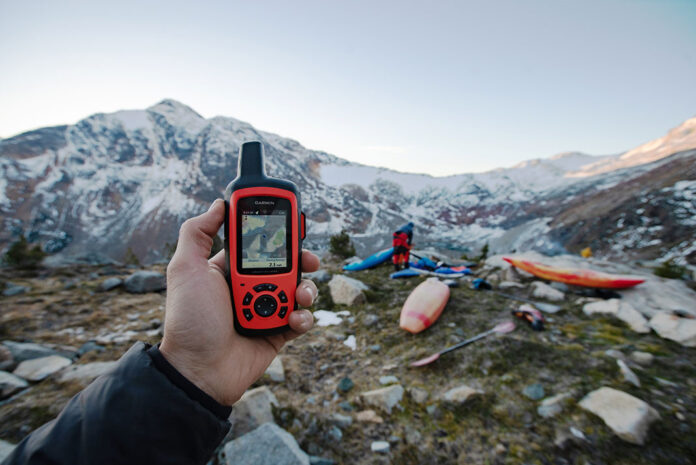
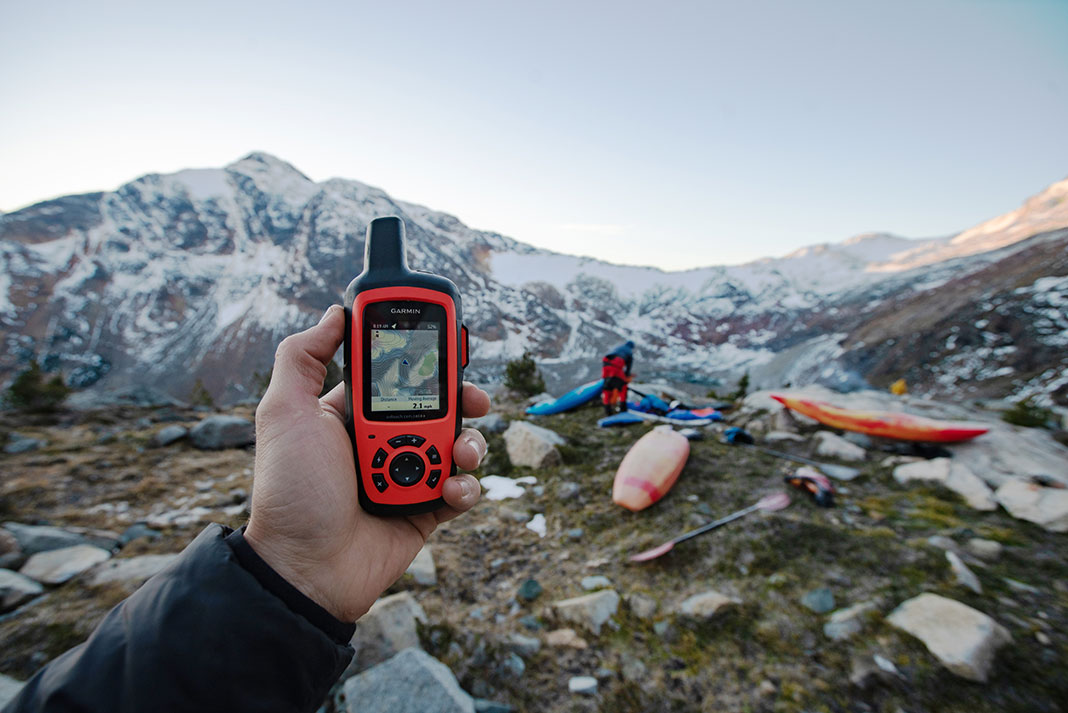
person holds up a Garmin handheld GPS at a mountainous kayak location
“The MAGELLAN NAV 1000 is a single channel receiver. Data is received from one satellite, then from another and so on. It is very interesting to watch a NAV 1000 initializing. First the satellite almanac has to be loaded. A satellite can be chosen or the receiver will search one. After an initial position has been entered the NAV 1000 searches for satellites, one after another. Then it will receive data, one after another. Then ‘computing’ is displayed for a while and with luck a position is calculated.”—retro-gps.info. And this is a Garmin inReach Explorer+, both a measure of how far we've come. Get it? | Feature photo: Chris Korbulic

“I think this is Bear Bite Creek,” I say with confidence, having followed our progress on the map since a hunting cabin 20 minutes ago. “I don’t think so,” says Emily, looking at the bends in the river. But the perpetually shifting braided channels of the Tatshenshini River are confusing. Simultaneously, our heads swivel to look at Adam. He pulls a gadget out of his bag and gives me a thumbs down. I’m wrong. It’s an unnamed tributary a mile upstream of Bear Bite Creek. So much for old school map skills.

The rise, fall and rise of handheld GPS

Thirty-five years ago, Magellan released the NAV 1000, the first handheld GPS. In an era of chart and compass, the promises of handheld electronic navigation were riveting for fog-bound sea kayakers.

But early GPS overpromised.

When I was leading outdoor trips, our gadget-freak boss splurged and bought one for us (we’d asked for a cell phone). We could never get a signal. My, how you’ve grown.

person holds up a Garmin handheld GPS at a mountainous kayak location
“The MAGELLAN NAV 1000 is a single channel receiver. Data is received from one satellite, then from another and so on. It is very interesting to watch a NAV 1000 initializing. First the satellite almanac has to be loaded. A satellite can be chosen or the receiver will search one. After an initial position has been entered the NAV 1000 searches for satellites, one after another. Then it will receive data, one after another. Then ‘computing’ is displayed for a while and with luck a position is calculated.”—retro-gps.info. And this is a Garmin inReach Explorer+, both a measure of how far we’ve come. Get it? | Feature photo: Chris Korbulic

Now we use satellite messengers that send campsite info to our friends. I carry an EPIRB in my PFD. On a recent trip, a friend whipped out a tiny Kindle, which held a 700-page pilot’s manual and several other books she was working through. Recharging devices is a camp chore like filtering water and hanging food. And the NAV 1000, with its 80s clunkiness and nonfunctionality, ushered it all in. Now it’s mostly a relic.

[ Browse the widest selection of boats and gear in the Paddling Buyer’s Guide ]

Do-it-all smartphones step into the gap

Like cameras, rolodexes and calendars, electronic navigation devices have been made practically obsolete by smartphones. The gadget Adam pulled out of his bag in the Yukon Territory wilderness wasn’t a GPS. It was his iPhone.

I can download the maps for a hike or paddling charts in the car en route. And I can print out custom nautical and topo hybrid maps on free sites like CalTopo. I can even dial in sun exposure to select a camp with maximum afternoon sun for beach basking. When I do use a GPS, the clunky early-2000s era interface makes it agonizingly slow to type in a waypoint. More often than not, the GPS ends up left behind in the drawer.

This may be changing. Last weekend, I swung by the kayak shop to pick up a chart of a remote island chain. “I’m surprised we have this one,” my friend Andrew joked as he handed it to me. “We don’t sell many charts, except the ones we sell to you.”

Nautical charts go paperless

In February 2022, the National Oceanic and Atmospheric Administration announced it was discontinuing paper nautical charts entirely, shifting to electronic formats meant for chartplotters on recreational boats or the sophisticated navigational systems of commercial craft.

What does that mean for sea kayakers?

You’ll either have to print out your own paper charts from their currently nonfunctional prototype interface, or use a device that can process nautical electronic data. And what does that mean for the NAV 1000’s progeny? They may be spending less time in the drawer.

Neil Schulman writes, photographs and paddles from somewhere around 45.34.12 N, 122.38.54 W, according to his GPS. His first article for Rapid Media was published in the Spring 2008 issue of Adventure Kayak.

Cover of the 2023 Paddling Buyer’s GuideThis article was first published in the 2023 Paddling Buyer’s Guide. Subscribe to Paddling Magazine’s print and digital editions, or browse the archives.


“The MAGELLAN NAV 1000 is a single channel receiver. Data is received from one satellite, then from another and so on. It is very interesting to watch a NAV 1000 initializing. First the satellite almanac has to be loaded. A satellite can be chosen or the receiver will search one. After an initial position has been entered the NAV 1000 searches for satellites, one after another. Then it will receive data, one after another. Then ‘computing’ is displayed for a while and with luck a position is calculated.”—retro-gps.info

And this is a Garmin inReach Explorer+, both a measure of how far we’ve come. Get it? | Feature photo: Chris Korbulic


Wave Theory: Is The Classic Kayaker Greeting Making A Comeback?

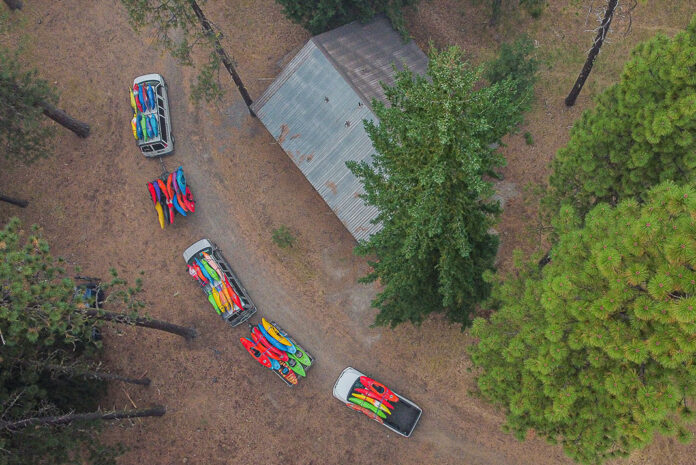
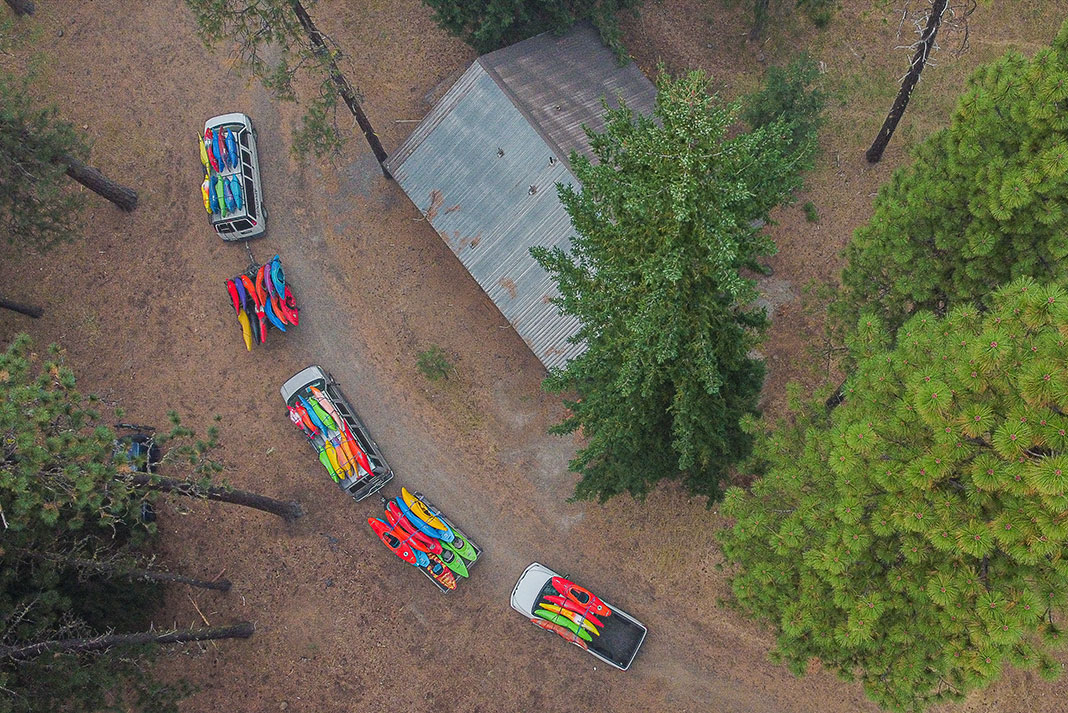
overhead photo of a pair of vans hauling many many river kayaks
Unofficial rule of thumb: one wave per boat strapped to the roof. | Feature photo: Kalob Grady

I used to drive a Volkswagen Westfalia van. Just out of college, kayak on the roof, Tevas on my feet—I thought I was pretty cool. For full-time guide life the Westfalia was pretty ideal, except that it broke down all the time and, with the motor in the back, could not blow enough warm air on the windshield to defrost it on cold mornings.

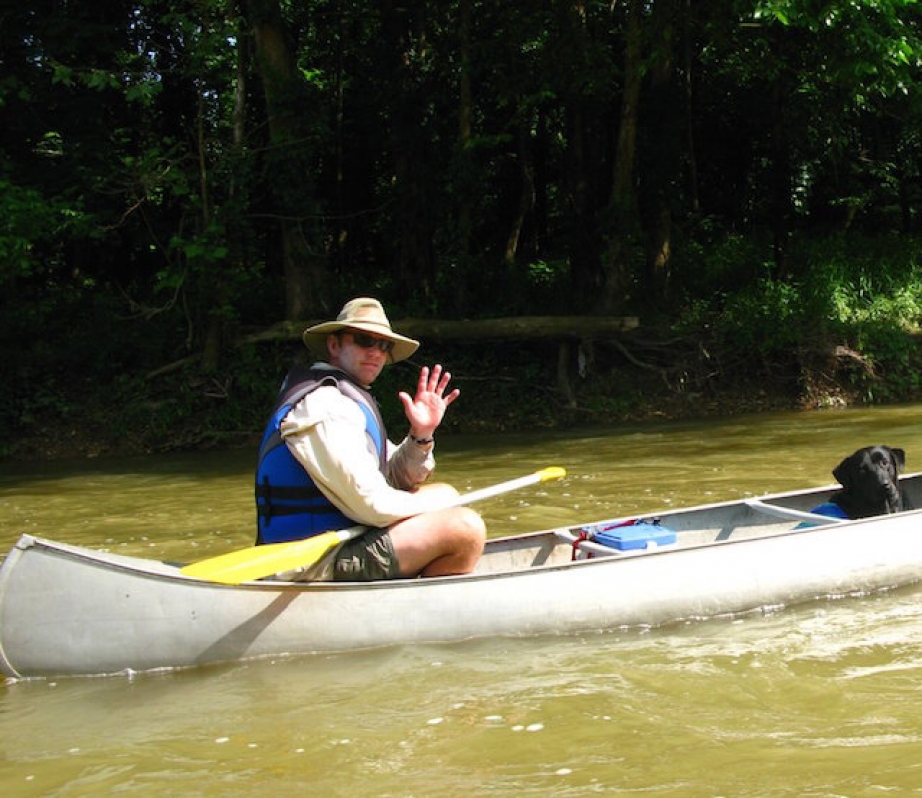
Little known fact: All Volkswagen van drivers wave when they pass each other on the highway. A recognition, I suppose, of a kindred spirit and another person possibly as cool as you. I could be wrong, but I don’t think Dodge Caravan drivers wave to each other, if they did it’d be perhaps a recognition of another person as uncool as you. A kayak on the roof can similarly warrant a wave from a passing fellow paddler on the highway—but this seems to vary over time and place.

My van died long ago and I now drive a pickup truck, but I don’t wave to other pickup truck drivers and they don’t wave to me. But when I bike to work or go for a road ride, I wave at other cyclists. They wave back. When I walk down the sidewalk, I don’t wave; neither do the other pedestrians. What is going on here?

Wave theory: Is the classic kayaker greeting making a comeback?

There is a surprising amount of research and zero confirmed theories as to the origin of the wave. This line of inquiry resides everywhere from archeology to psychology, sociology and even economics.

overhead photo of a pair of vans hauling many many river kayaks
Unofficial rule of thumb: one wave per boat strapped to the roof. | Feature photo: Kalob Grady

One school of thought is that the wave is derived from the salute, which itself is derived from removing one’s hat as a show of respect, which in turn may be derived from Knights of the Round Table tipping their helmet visors up in greeting. Sounds like wishful thinking, as the wave likely predates hats and helmets by a thousand years.

Another school of thought, with a bit more momentum behind it, is that showing one’s palm to someone is confirmation one means no harm and hides no weapon. I’m not sure if this view is optimistic or pessimistic about human nature.

The rise and fall of the wave

I recall a cartoon by the great kayaker/humorist William Nealy, from way back in the 80s, of two kayakers pulled over on opposite sides of the interstate, running across the grassy median with arms wide, lining up for a hug. The 80s were a time when meeting another kayaker on the road was a novelty, and honking, waving and general joyousness was typical. That mellowed in the 90s to a more restrained flash of fingers above the steering wheel, with an occasional keener going overboard.

Where I paddle on the Ottawa River, through the go-go boom days of the late 90s and early 2000s, the wave fell away. It was really busy with kayaks then—a boat on every vehicle on the road, put-in and take-out parking lots overflowing, and crowds and lines in the eddies. Other kayakers were competition rather than community. Drivers avoided eye contact when another kayaker was spotted on the road. Weird. And a bit sad.

It’s not that way anymore, at least where I live.

Hearty hellos are back in style

The wave has been slowly making a comeback, perhaps signaling the days of viewing other kayakers as rivalries are behind us. Things haven’t quite gone back to the early days, with joyous celebrations at the sight of a fellow boater—but the subtle wave is still a welcome sight, a recognition that we are part of the same awesome community.

Recently I drove to the city of Ottawa to drop off a boat, on the same day as the cult favorite Movember Whitewater Classic kayak race on the Ottawa River. Kayakers were coming from the city to the river; I was going the other way. I am pleased to report every single kayak-topped car waved. I happily waved back.

[ Browse the widest selection of boats and gear in the Paddling Buyer’s Guide ]

Jeff Jackson is a risk management consultant and professor of outdoor adventure at Algonquin College. Alchemy first appeared in the Summer 2000 issue of Rapid.

Cover of the 2023 Paddling Buyer’s GuideThis article was first published in the 2023 Paddling Buyer’s Guide. Subscribe to Paddling Magazine’s print and digital editions, or browse the archives.


Unofficial rule of thumb: one wave per boat strapped to the roof. | Feature photo: Kalob Grady


Inside The Mind Of Unstoppable Endurance SUP Athlete Tom Jones

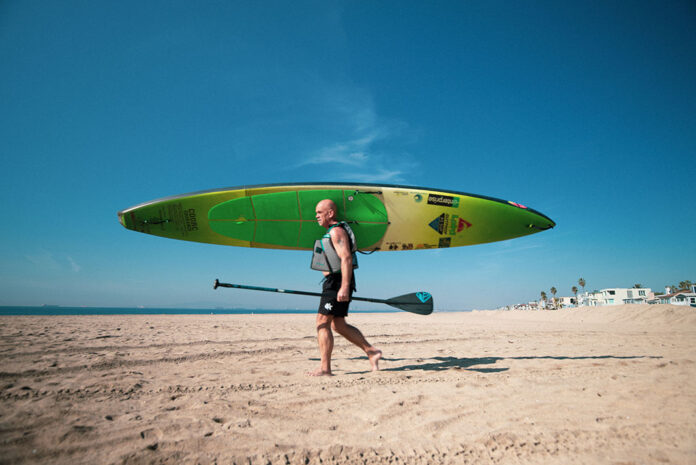
SUP athlete Tom Jones heading out for another day of training
SUP athlete Tom Jones heading out for another day of training in preparation for his next endurance feat. | Feature photo: Ryan Murtha

You never forget your first shark.

Tom Jones was about 50 miles south of Oregon paddling his standup paddleboard down the harsh Northern California coast when his safety, a burly man on a WaveRunner, pointed to the water and shrieked. Beneath the surface, Jones watched a 17-foot great white shark roll onto its back and glide three feet beneath the motorized watercraft.

“Our language doesn’t facilitate the words to say how frightened I was,” says Jones.

What to do but keep moving? The crew would go on to see sharks nearly every day on their way to Mexico. They persevered through wind, rain and treacherous coastline to establish a SUP endurance record: 1,250 miles in 93 days.

Inside the mind of unstoppable endurance SUP athlete Tom Jones

If Jones had the water experience he has today, he says he would never have gone in the first place. “Everything was a death sentence.”

When Jones set off on that first epic paddle, he’d only been standup paddleboarding for about six months. His water experience—despite living within a mile of the coast in Huntington Beach, California—was limited.

SUP athlete Tom Jones heading out for another day of training
SUP athlete Tom Jones heading out for another day of training in preparation for his next endurance feat. | Feature photo: Ryan Murtha

Jones was a fighter, picking up the sport in his late teens. He excelled in the ring, retiring with a 51-4 professional record. But after a career fighting for himself in the ring, he was ready to do something for others.

His endurance challenges began on land, running absurd distances for causes. “My why was in place and it was strong enough and it kept me going,” he says of a particularly wet run. It’s part of what he calls his “quitproof” mentality.

[ Paddling Buyer’s Guide: View all touring paddleboards ]

Making connections and finding the right reason why

In the past, his why has included fellow veterans and foster kids, the latter a cause particularly close to his heart as he grew up in care and had a difficult childhood. But the why for his first SUP endurance feat didn’t involve people.

Jones connected with Charles Moore, the man who discovered the Great Pacific Garbage Patch, and was horrified to learn about its effects on the environment. He’d found his new cause.

By the numbers

2: Number of SUP records Jones established – The first-ever long-distance SUP record, paddleboarding 1,250 miles in 93 days, and the first-ever flatwater record, paddling 500 miles in 16 days.

1: Number of SUP records broken – Long-distance SUP record, paddleboarding 1,507 miles in 93 days.

5 million – Number of paddle strokes Jones took on the journey from Key West to New York City.

60 – Low estimate for the number of great white sharks spotted on the paddle from Oregon to Mexico.

16 – Number of days it took Jones to paddle 500 miles.

The paddle from Oregon to Mexico in 2007 was originally supposed to be done prone. At least, that was the plan, until Jones saw a picture of SUP pioneer Laird Hamilton standing tall on a wave, extra-long paddle in hand. It seemed to be a more efficient way to travel long distances. Jones flew to Hawaii where he charmed Hamilton into teaching him the new sport.

About half a year later, he established the sport’s first endurance record.

In 2010, Jones set out on a new endurance paddle, this time on the east coast, traveling 1,507 miles in 95 days.

A year later, Jones established a new flatwater SUP distance record: 500 miles in 16 days on Smith Mountain Lake in Virginia.

He’s built perfectly for these types of challenges. “He will not give up,” Hamilton told Standup Paddling. “And his cardiovascular capacity is outstanding. Couple the two and you have your hands full with Tom.”

What’s next for the SUP athlete?

Motivated by a cause, Jones can’t bring himself to quit.

In 2024, Jones is set to tackle a new challenge: paddleboarding from the Texas/Mexico border to Key West, Florida. But this time, he’ll have company. Entrepreneur Heather Stone completes a yearly challenge and, like Jones prior to his 2007 paddle, has little experience on a SUP. It’s another endurance event designed to grab attention, this time for a still-to-be-determined veteran-related cause.

“It truly is better to give than to receive,” says Jones. “I love using my athletic abilities to champion worthwhile causes and I’m going to continue to do it until the day I die.”

Cover of the 2023 Paddling Buyer’s GuideThis article was first published in the 2023 Paddling Buyer’s Guide. Subscribe to Paddling Magazine’s print and digital editions, or browse the archives.


SUP athlete Tom Jones heading out for another day of training in preparation for his next endurance feat. | Feature photo: Ryan Murtha