Home Blog Page 9

Best Camping Gifts

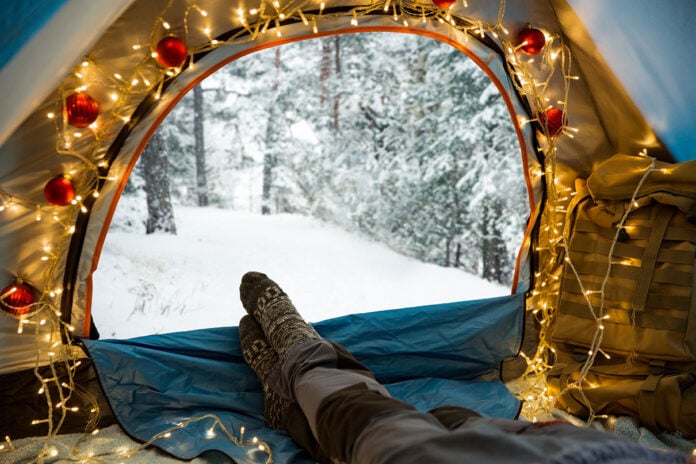
a person lays in a cozy tent decorated with Christmas lights in winter
Feature photo: iStock

Whether you’re shopping for a seasoned adventurer or someone just discovering the joys of the great outdoors, finding the best camping gifts can be tricky. That’s why we’ve done the hard part for you. Drawing on years of experience and real-world testing, we’ve rounded up our top picks, so you can skip the gimmicks and choose something truly useful.

We aimed to include a range of products, including essential camping gear like sleeping bags and mattresses to camping accessories we consider essential. Spanning from budget-friendly to splurge-worthy, this list has tried and true recommendations for every camper. So whether you’re searching for a holiday gift or an upcoming birthday, dive in below.


Best camping gifts: Our top picks
Crazy Creek AirLounger
Photo: Conor Mihell

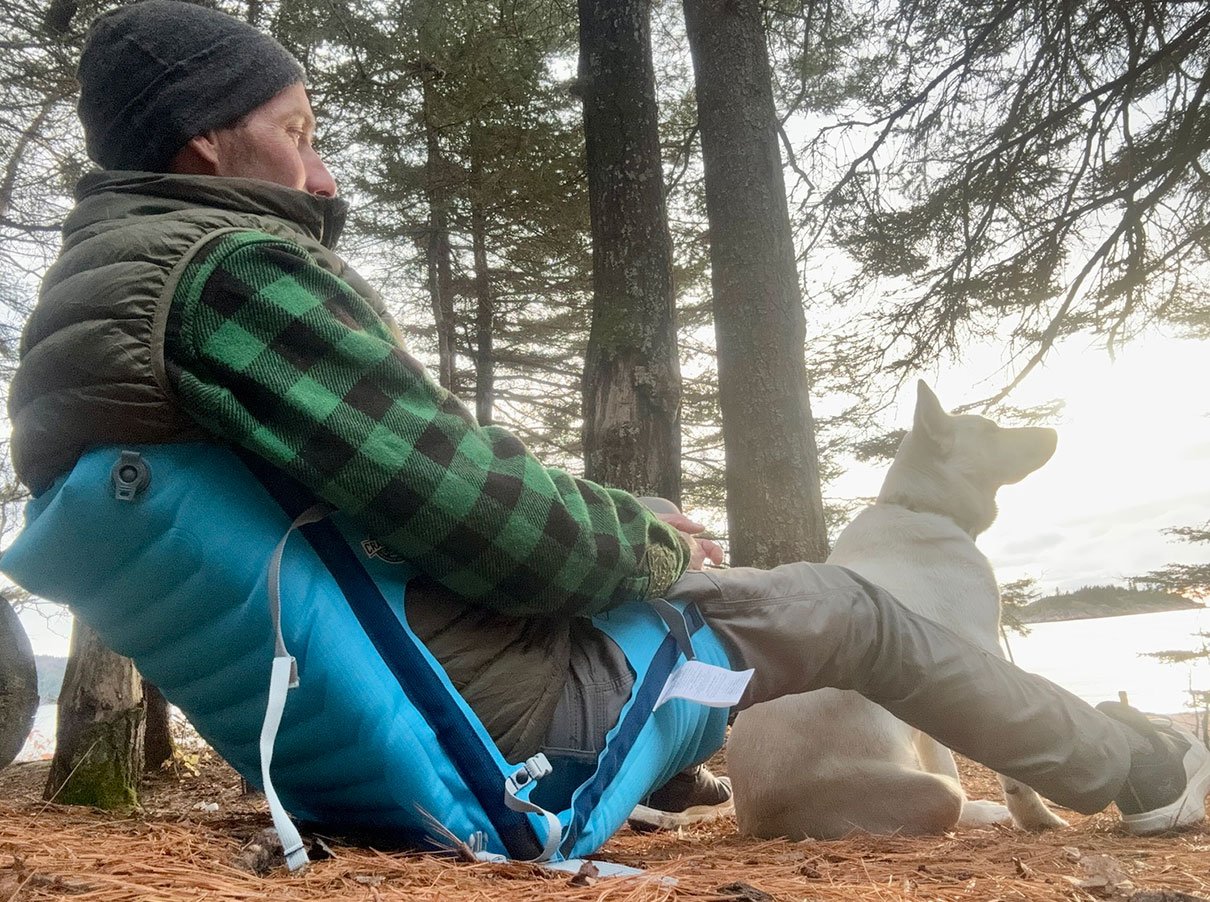
Crazy Creek AirLounger

$200 | crazycreek.com

Buy from:

CRAZY CREEK AMAZON REI SCHEELS

The Crazy Creek AirLounger is an ideal camping gift for those who prefer (and have the flexibility) to sit on the ground. As its name implies, the AirLounger is a new take on the classic Crazy Creek ground chair, which gets rigidity from an inflatable frame. Compared to the increasingly popular legged chairs, the AirLounger is more versatile: it’s a great choice for uneven ground and even using it inside a tent.

canoe in winter
Photo: Trustin Timber / Agawa Gear

Agawa Canyon Boreal 21

$82 | agawa.com

Buy from:

AGAWA

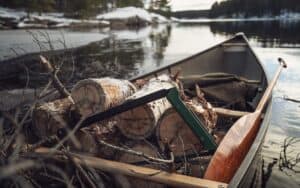
I’ve had my Agawa Boreal 21 saw for close to five years now, and it’s become my go-to saw. It chews through dead fall with ease, which is handy especially on winter hot-tenting trips when we process a lot of wood to stay warm. Sturdy and lightweight, the Boreal’s folding frame packs flat and slips easily into a bag. After years of use, I understand why this saw has earned such a loyal cult following among backcountry campers.

MPOWERD Luci Outdoor 2.0 lantern
Photo: Conor Mihell

Biolite Luci Original lantern

$40 | biolite.com

Buy from:

BIOLITE AMAZON BACKCOUNTRY REI

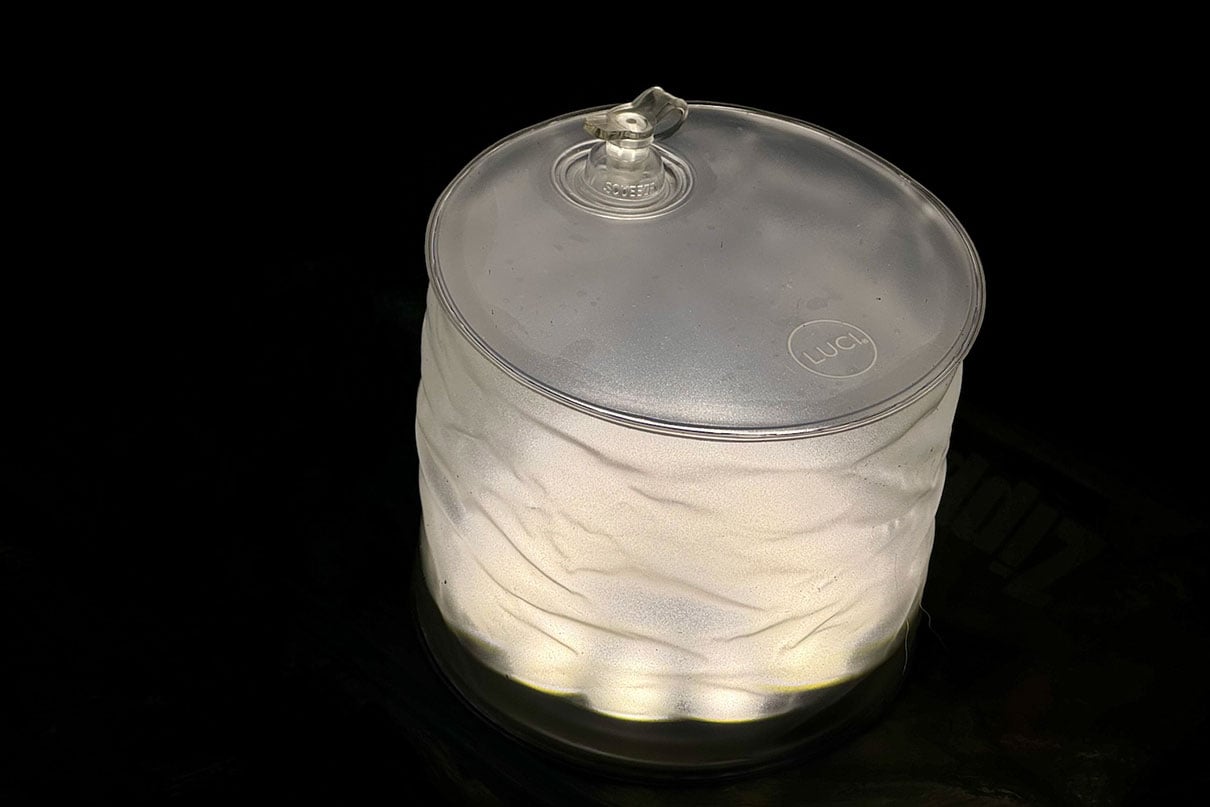
I received a solar-powered Luci lantern nearly 10 years ago, and it’s still going strong. It is a welcome companion to brighten the mood in my tent on late-season kayak trips. The updated Luci lantern still makes a great gift for kayakers. It lasts up to 24 hours on a charge and can be topped up with a USB cable, along with the original solar panel. The disk-shaped lantern inflates to create a pleasant glow for reading or playing cards in the tent, and takes up no space in the hatch when deflated.
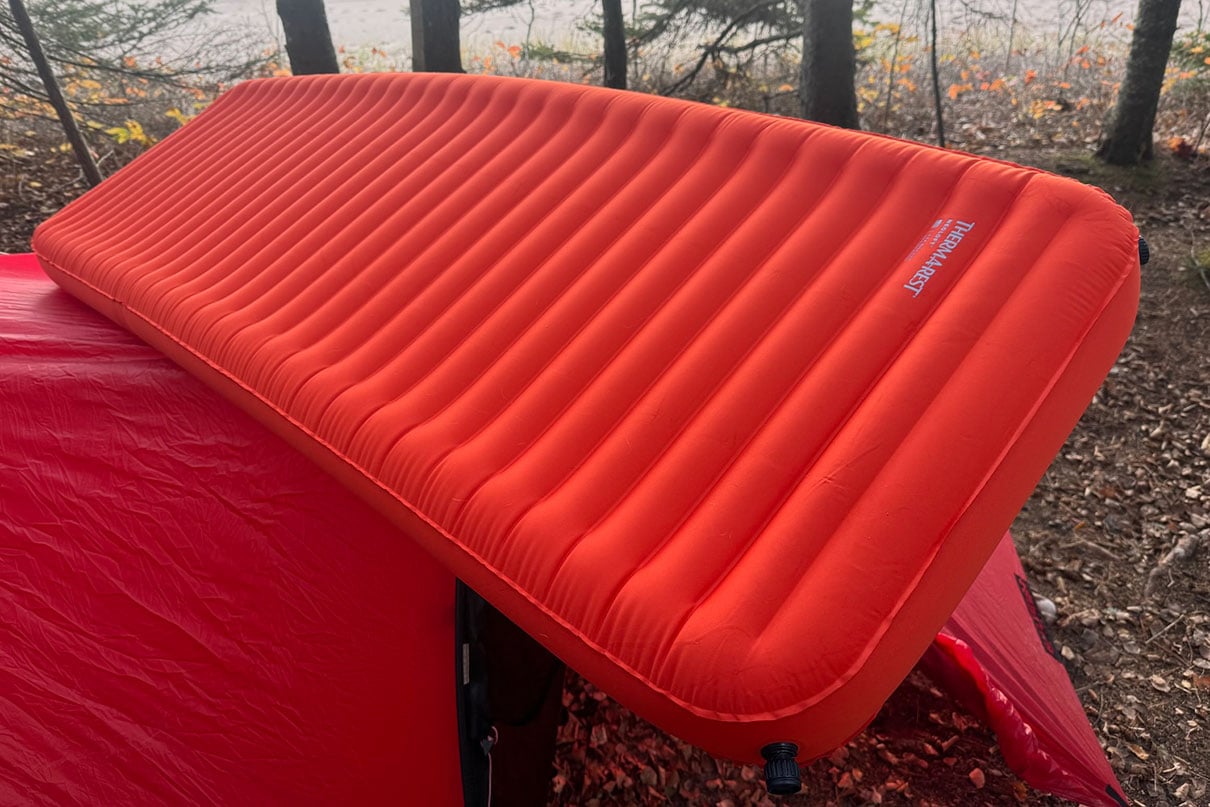

Thermarest NeoLoft
Photo: Conor Mihell

Thermarest NeoLoft

$239 | thermarest.com

Buy from:

THERMAREST REI

The original manufacturer of the self-inflating camping mattress keeps refining what it means to sleep comfortably outdoors. The Thermarest NeoLoft is a 4.6-inch-thick, all-season air mattress with unique features that rival your bed at home. The pad features a unique matrix of internal air chambers to cradle your body without the awkward rigidity of a typical air-filled mattress. I especially like the addition of side rails, which—combined with a new, grippier surface fabric—kept me from rolling off the pad. Several sizes are available, all tipping the scales at under two pounds.
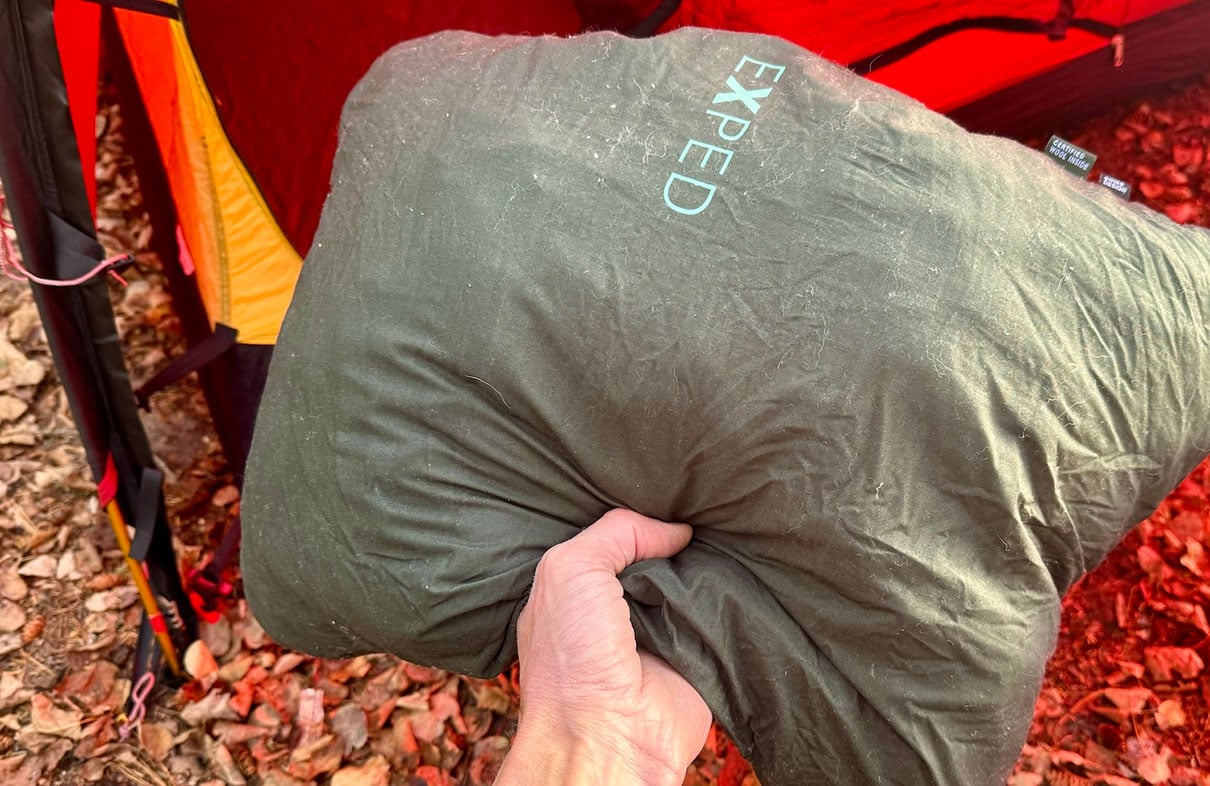

Exped Luxewool Pillow
Photo: Conor Mihell

Exped LuxeWool Pillow

$49.95 | exped.com

Buy from:

EXPED

Looking for a deluxe camping gift? Check out the wonderfully comfortable Exped LuxeWool pillow. It features a soft cotton fabric and cozy wool insulation, with foam chip filling that’s just the right firmness for a great night’s sleep. Meant for base campers, the full-size LuxeWool manages to compress to the size of a loaf of bread.


Best-value camping gifts
coffee brewing
Photo: Igor Kyryliuk

Areopress Go

$50 | aeropress.com

Buy from:

AREOPRESS AMAZON REI

I was skeptical of the Aeropress Go at first and didn’t expect to love it as much as I do. What’s wrong with cowboy coffee, I remember thinking. Then I bought the Go for a car camping trip as an upgrade from instant for our group. Now I bring it on backcountry paddling trips too. It’s compact, lightweight and brews a great cup in just about a minute. Everything fits inside the mug it comes with for easy packing. Filters included and cleanup is a quick rinse.
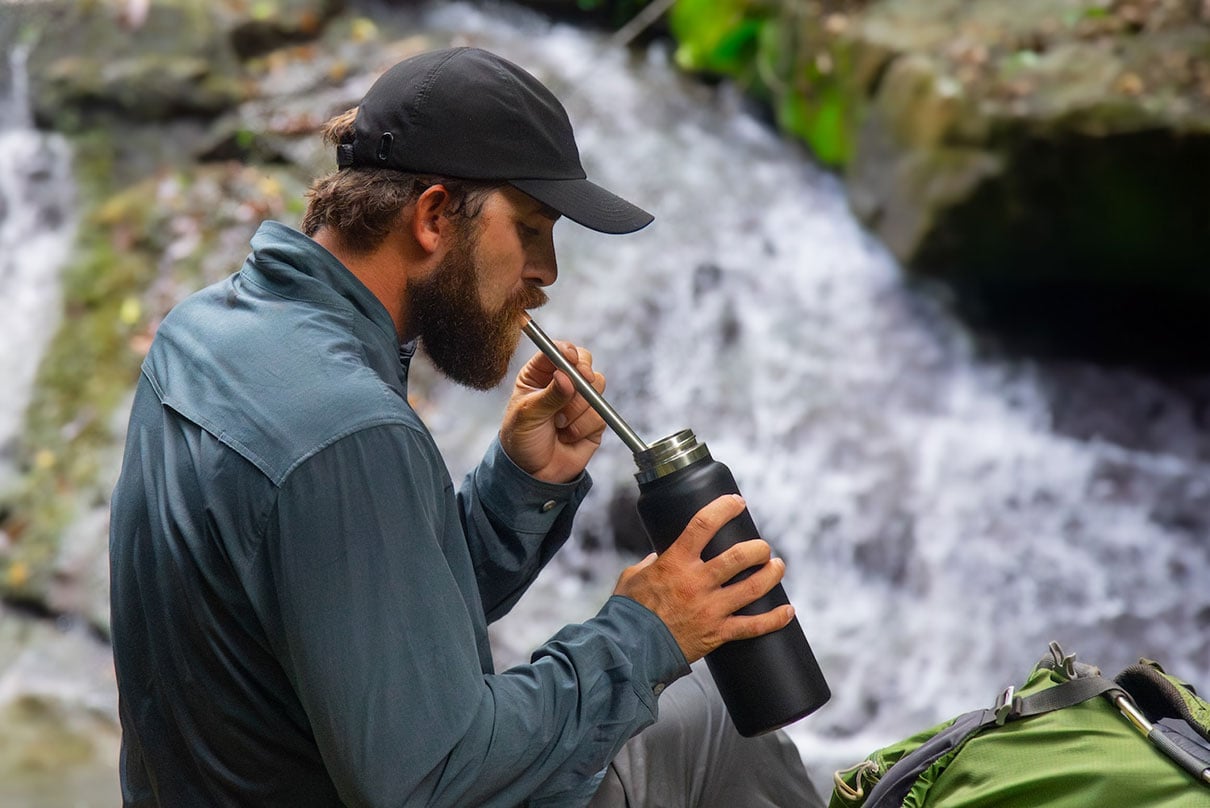

LifeStraw Sip
Photo: Conor Mihell

Lifestraw Sip

$50 | lifestraw.com

Buy from:

LIFESTRAW BASS PRO SHOP REI

The Lifestraw Sip is billed as a “reusable stainless steel filter straw” that removes microplastics, bacteria and parasites from water. About the size of a penny whistle and weighing less than 100 grams, this new product slips easily into a pack or into a stocking as a thoughtful holiday gift. The filter is rated to last at 1,000 liters. Using it is easy – no pumping, batteries or filling – it works just like a straw.
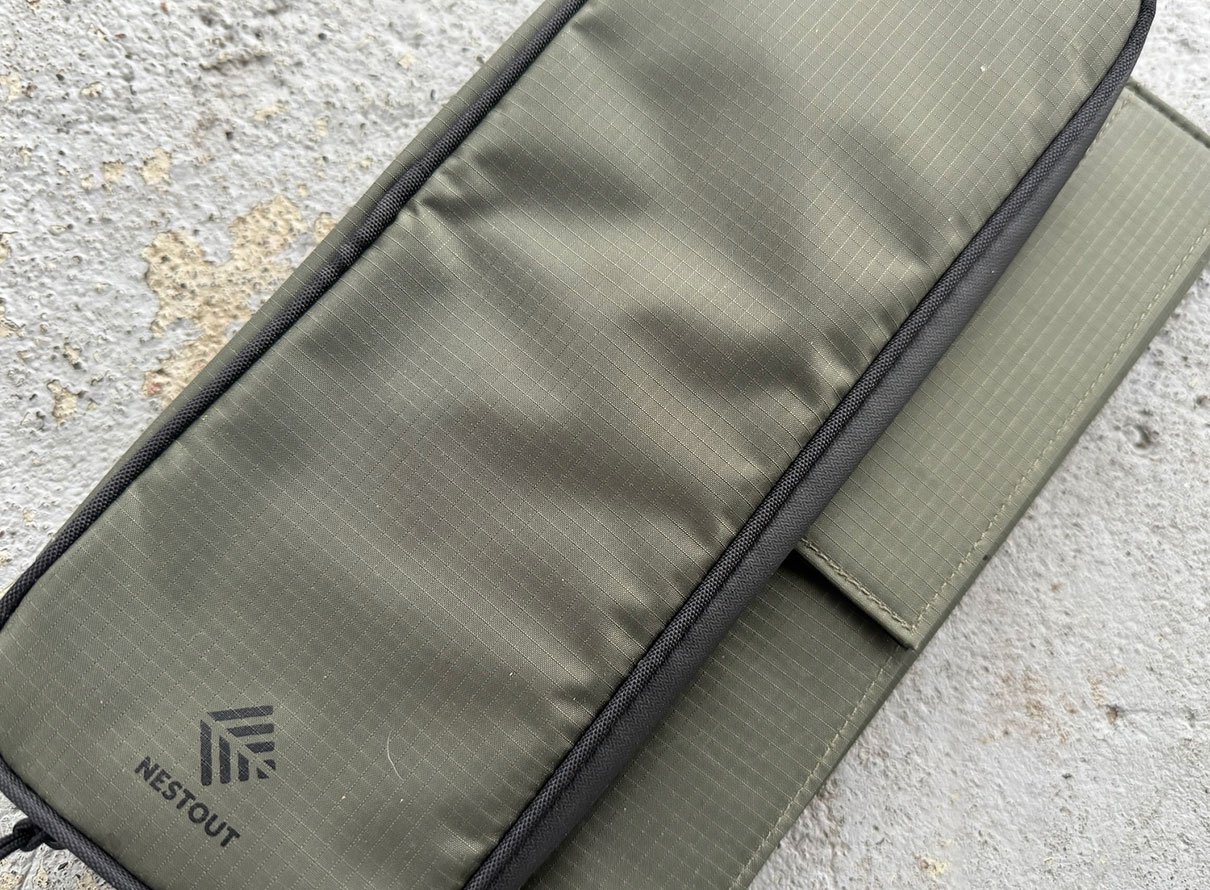

NestOut 2-Panel Solar Charger
Photo: Conor Mihell

NestOut two-panel solar charger

$79.99 | nestout.com

Buy from:

NESTOUT AMAZON

A great deal on portable power, the NestOut two-panel solar charger puts out 14 watts of power in full sun, which is plenty to quickly charge mobile phones, tablets and battery storage banks. Two USB outlets allow you to charge multiple devices at the same time, and a storage pocket allows you to carry a compact battery pack (or two) together with the panels. The panels fold into a durable, slim package that weighs barely a pound.


Camping gifts for her
woman in tent
Photo: Kaydi Pyette

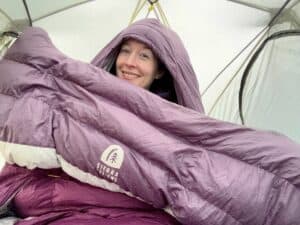
Sierra Designs Backcountry Bed sleeping bag

$299.95 | sierradesigns.com

Buy from:

SIERRA DESIGNS WARMING STORE

A sleeping bag so luxurious it feels like a real treat every time I pack it out. Especially ideal for those who find mummy bags confining, the roomy, three-season Backcountry Bed features a zipperless design and an integrated comforter that’s ultra warm and cozy. A sleeping pad sleeve keeps your bag in place all night, while a foot vent, insulated shoulder pockets, and a cinchable hood let you fine tune comfort, no matter the outdoor temps.
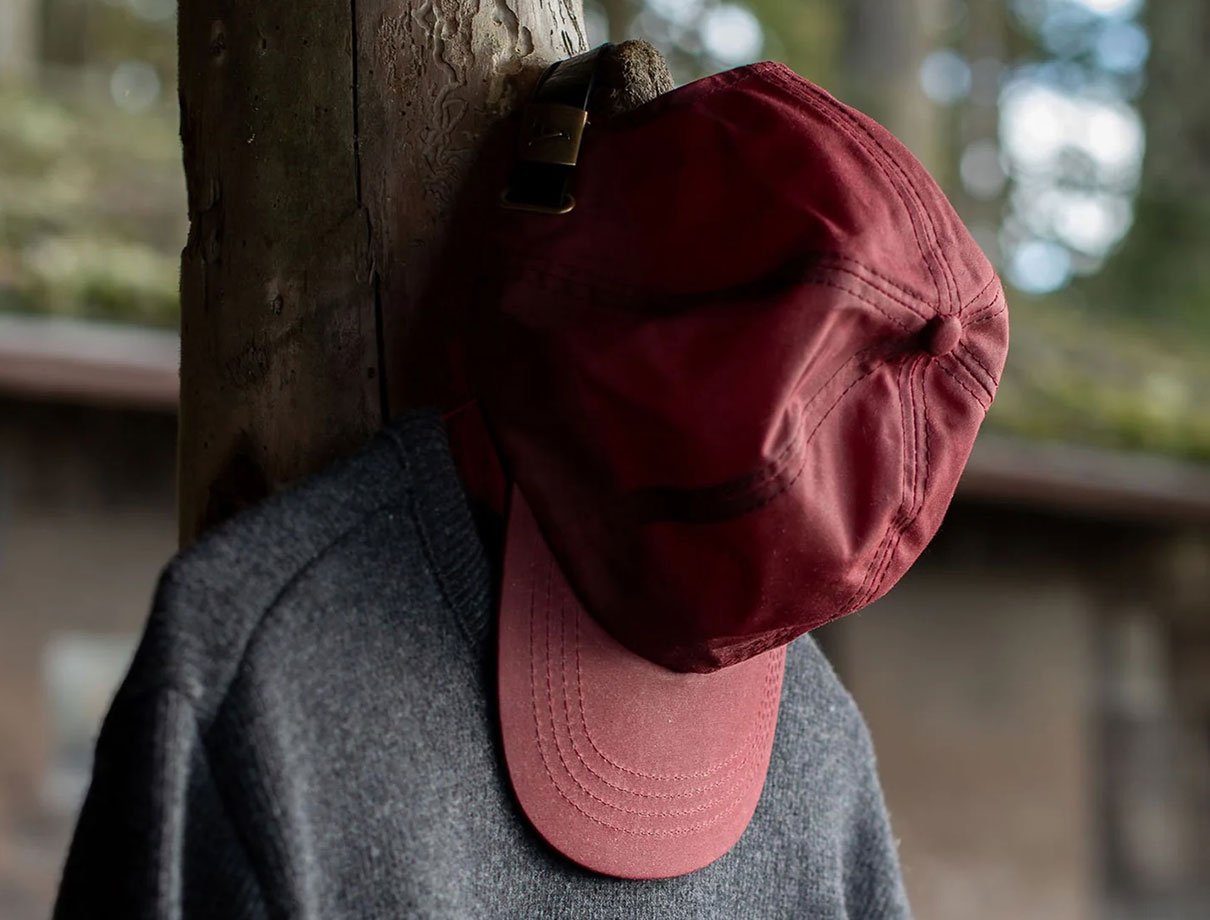
 

Anian Tin Cloth Cap
Photo: Conor Mihell

Anian Tin Cloth Cap

$30 | anianmfg.com

Buy from:

ANIAN

Made by a small Canadian manufacturer that promotes sustainable textiles, the Anian Tin Cloth Cap is stylish backcountry headwear that makes a great stocking stuffer for campers. As its name implies, the Tin Cloth Cap is tough as nails and sheds precipitation like a metal roof. The sizes run a little small; this slim fit, combined with vibrant colors, makes it an excellent camping gift for women.
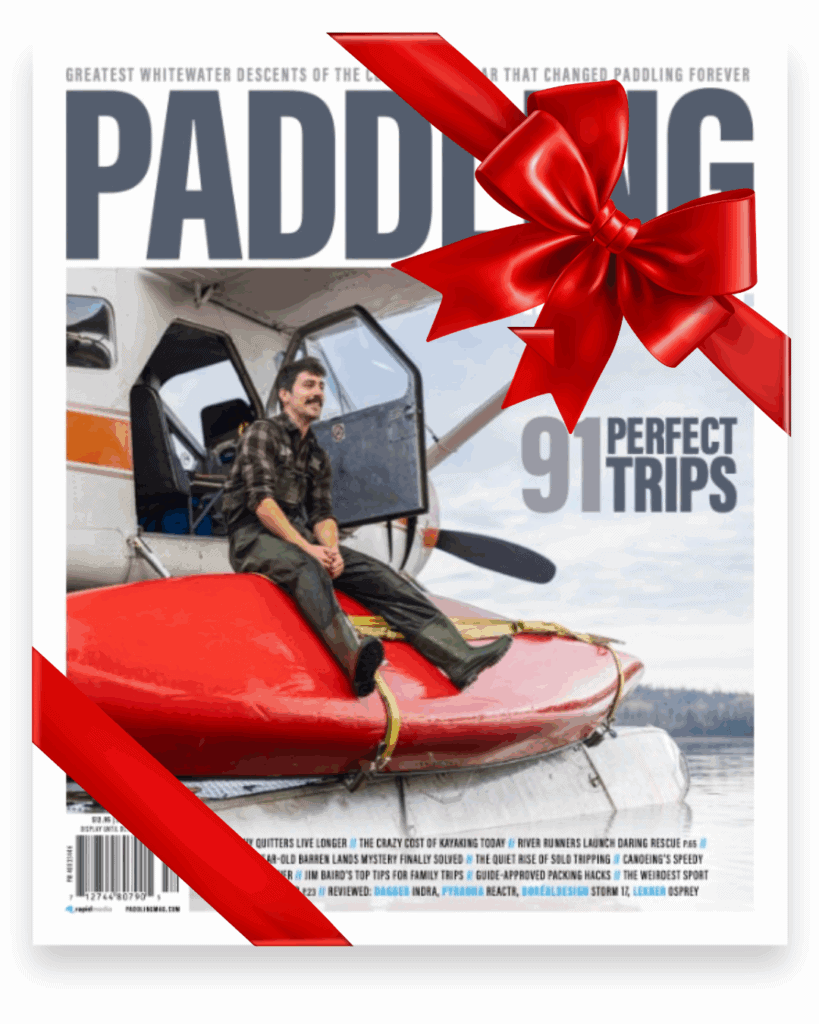

Paddling Magazine print subscription

SUBSCRIBE GIVE A GIFT SUBSCRIPTION

Each issue of Paddling Magazine is packed with essential skills, expert tips, unforgettable expeditions and trusted gear reviews. If your loved one is passionate about paddling adventures and values top-notch storytelling, it’s the perfect gift for the holidays! Get a subscription for yourself or give it as a gift.


Camping gifts for him
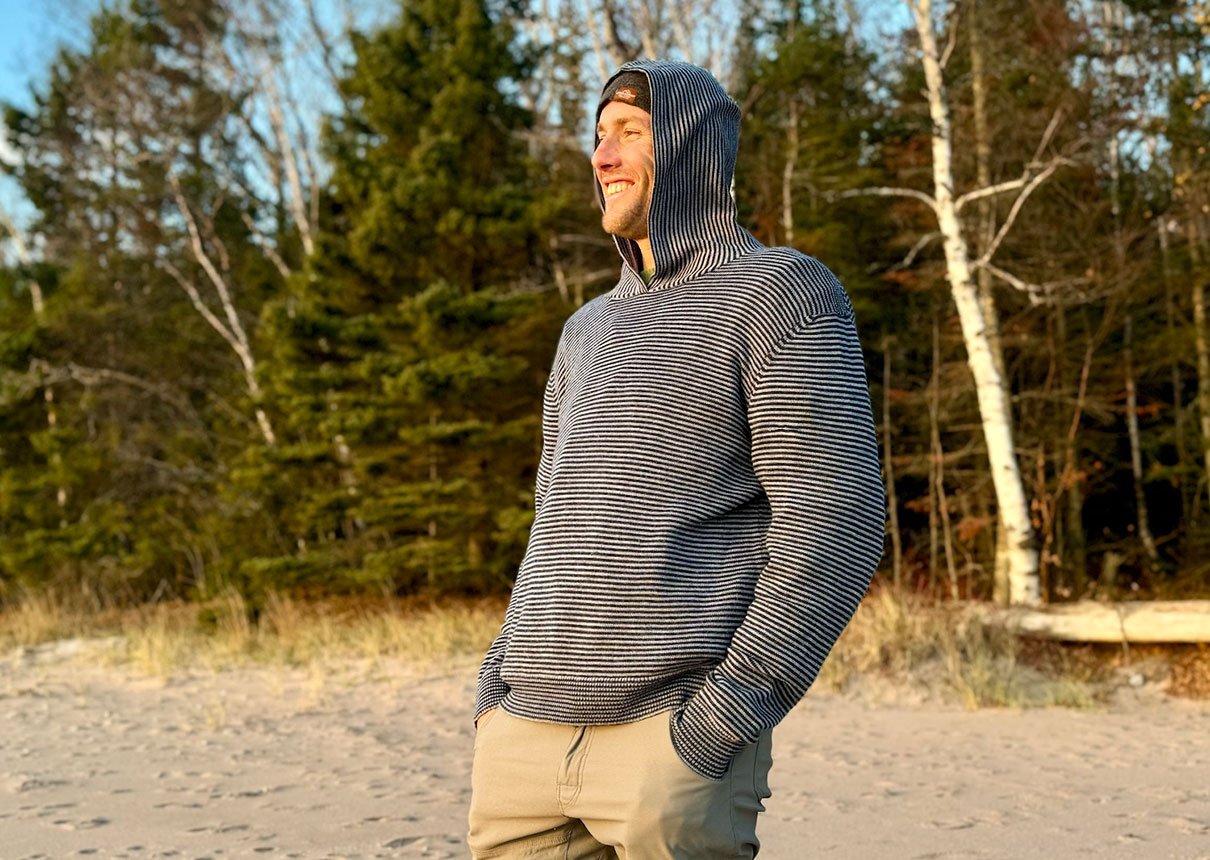
Alex Crane Campo Crewneck sweater
Photo: Conor Mihell

Alex Crane Campo sweater

$255 | alexcrane.co

Buy from:

ALEX CRANE

The Alex Crane Campo crewneck sweater is a long-term investment in coziness that makes an easy transition from shoulder-season use in the backcountry to casual Friday at work—or Christmas dinner, as the case may be. Made of impeccable Italian merino wool, it’s available in nine colors. The fit is athletic and trim.


12 South sunglasses

Bajio 12 South sunglasses

$259 | bajiosunglasses.com

Buy from:

BAJIO SUNGLASSES AMAZON

If you haven’t experienced the crispness and clarity of premium glass lenses on a sunny day on the water, the Bajio 12 South sunglasses are a good place to start. Larger, aviator-style frames fit most men’s faces nicely and offer great protection from the sun’s rays. With polarized lenses and a stylish, surf-inspired look, they’re a good all-around choice for road-tripping and travel, camping and doing anything around the water. The 12 South can also be customized with prescription lenses.


Camping gifts for kids
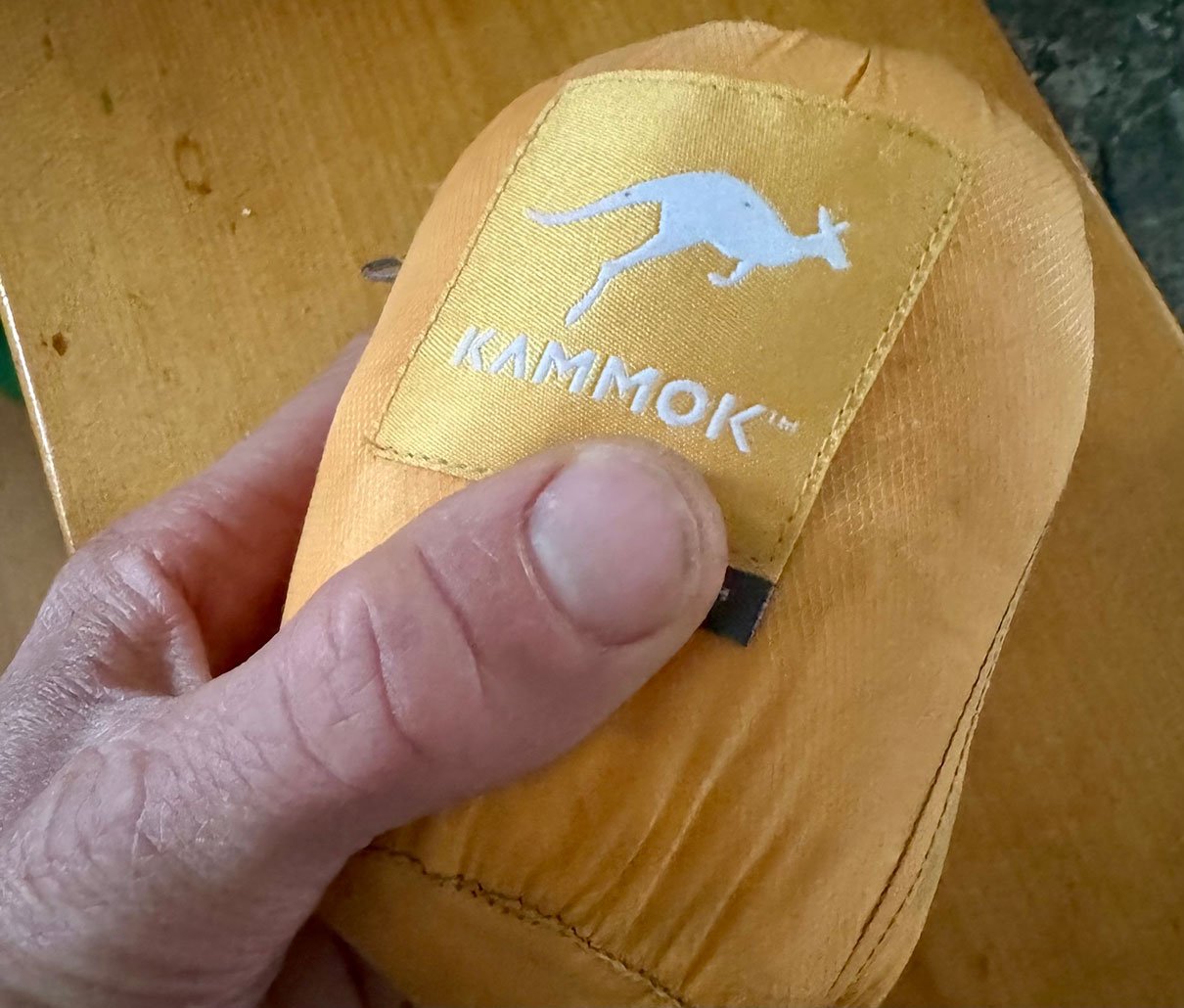
Kammok Roo double hammock
Photo: Conor Mihell

Kammok Roo double hammock

$84.95 | kammock.com

Buy from:

KAMMOK AMAZON REI

A hammock is great fun around the campsite for kids and adults alike, perfect for reading, relaxing and expending excess energy. The Kammok Roo double hammock packs down the size of a jar of peanut butter and weighs barely a pound, yet is spacious enough for two adults, with a weight capacity of 500 pounds. The soft fabric is cool and comfortable and sourced from recycled, pre-consumer waste.
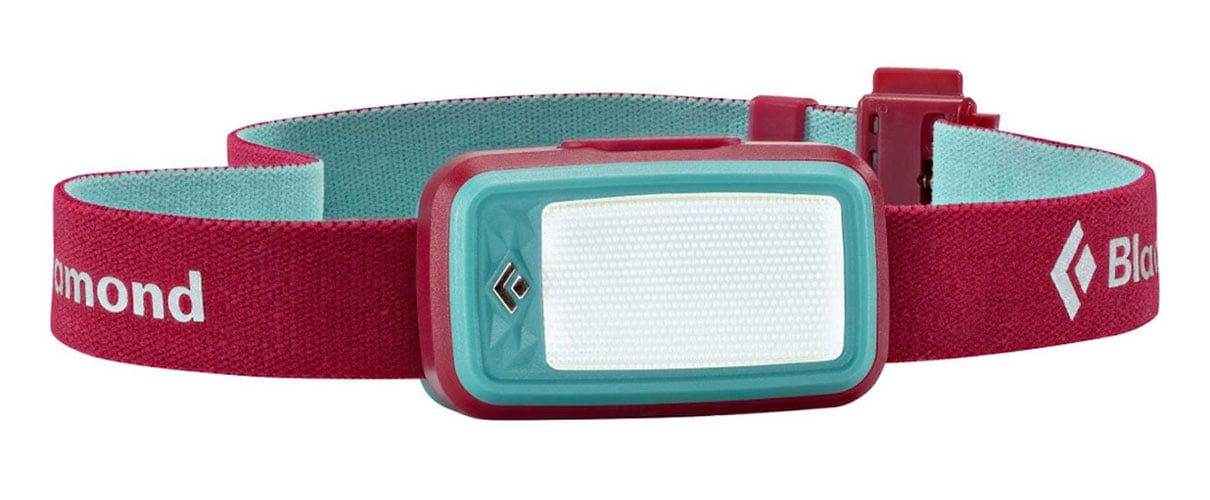

Black Diamond Wiz headlamp
Image: Courtesy Black Diamond

Black Diamond Wiz headlamp

$29.95 | blackdiamond.com

Buy from:

BLACK DIAMOND AMAZON REI

Here’s a great gift for the young camper on your list: the Black Diamond Wiz headlamp has all the features you would expect in a great headlamp, as well as a kid-proof design that works right-side up or upside down, an automatic shutoff that prevents the batteries from draining and a breakaway safety strap. The twin-LED design puts out 30 lumens of light, which is plenty for nocturnal missions around the campsite and reading in the tent.


Feature photo: iStock
Fastest Known Paddle Could Be The New Frontier In Paddlesports

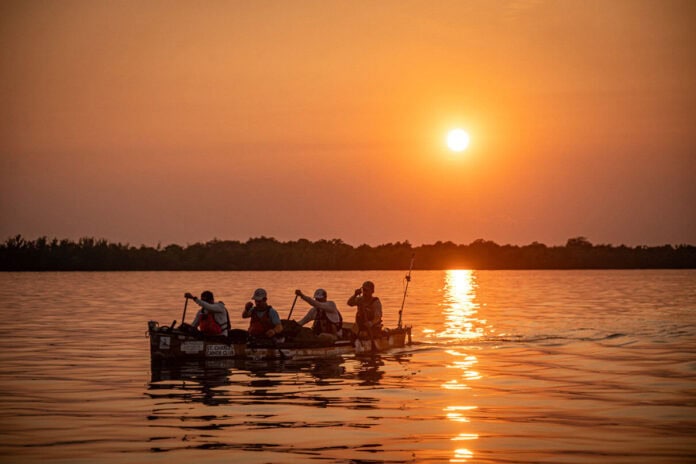
Scott Miller, creator of the Fastest Known Paddle website, is seen in the stern during 2023’s record-setting Mississippi speed run
Full tilt: Scott Miller, creator of the Fastest Known Paddle website, is seen in the stern during 2023’s record-setting Mississippi speed run. Watch a documentary about the journey at wildernessmindset.com. | Feature photo: Courtesy Wilderness Mindset

In March 2025, Emily Broderson started her Garmin watch and pushed out into the Withlacoochee River, west of Orlando, Florida. Over the next two days, she paddled the length of the waterway’s navigable 100 miles. When she finished, she submitted her GPX track and photos to claim her spot as the holder of the Fastest Known Paddle, or FKP, for the Withlacoochee.

Fastest Known Paddle could be the new frontier in paddlesports

At the time, the Fastest Known Paddle website (fastestknownpaddle.org) had only been up for a couple of months. It was launched in January of 2025 by Scott Miller, coholder of the Guinness World Record for paddling down the Mississippi River. Miller knew there was a need for a clearinghouse besides Guinness to record paddling records.

Scott Miller, creator of the Fastest Known Paddle website, is seen in the stern during 2023’s record-setting Mississippi speed run
Full tilt: Scott Miller, creator of the Fastest Known Paddle website, is seen in the stern during 2023’s record-setting Mississippi speed run. Watch a documentary about the journey at wildernessmindset.com. | Feature photo: Courtesy Wilderness Mindset

Taking a page from the a Known Time website launched in 2018 by ultrarunners Buzz Burrell and Peter Bakwin, he launched Fastest Known Paddle. Burrell and Bakwin’s site helped drive a massive trend, and it now has more than 6,000 FKT running routes logged across the world. Miller hopes FKP can do the same for paddling.

Famous Speed Records

Missouri River: In 1980, Verlen Kruger and Steve Landick paddled 2,341 miles in 33 days, 18 hours, 45 minutes.

Wisconsin River: In 1995, Mike Schnitzka and Bill Perdzock paddled 424 miles in 4 days, 2 hours, 22 minutes.

Red River, Manitoba: In 2023, Sean Stoesz paddled 128 miles in 1 day, 4 hours, 48 minutes.

Mississippi River: In 2023, Judson Steinback, Paul Cox, Wally Werderich and Scott Miller paddled 2,320 miles in 16 days, 20 hours, 16 minutes.

Before he set up the site, Miller contacted Burrell, who advised him to make things clear and impartial, and helped him distinguish between supported and unsupported FKP attempts. After he got the site up, Miller filled in some preexisting FKPs, like Sean Stoesz’s 2023 Red River 200 in Manitoba, Mike Schnitzka and Bill Perdzock’s 1995 Wisconsin River FKP, and Verlen Kruger and Steve Landick’s 1980 Missouri River record.

At the time of writing, there were a total of 23 FKPs on the site. But with a quarter million rivers in North America alone, there’s room for more.

“I think it’s fantastic,” says Broderson, who is also president of the Minnesota Canoe Association. “I’m super excited about it. The site is well done, and Scott brings a ton of organizing energy. I hope it inspires people to go out and do something a little competitive.”

Some paddlers will certainly do that. Others, like Wally Werderich and Mike Kies, who set an FKP on the 187-mile Fox River in Wisconsin and Illinois, used their 43-hour attempt to raise awareness and money along the way for the Illinois Park & Recreation Foundation.

There are three things you need to do to establish an FKP. First, unless the route has been established, you must complete a route proposal form. Next, you fill out a pre-FKP form. Lastly, after you’ve finished, you need to fill out a post-FKP form. To confirm an FKP, you’ll need photos, a GPX track and a trip report. The GPS data can be taken from a Garmin inReach or SPOT tracker, or from your phone using a navigation app like Strava, Footpath or Navionics. You can also use a GPS watch and download your GPX data from Strava. Miller said some paddlers use two devices, charging one while the other records data. You can submit multiple tracks, as long as they line up to account for the route. He urges people to practice data collection before starting an actual FKP attempt.

“I’ve been pleased to have people making submissions,” says Miller. “It’s growing organically. But really, I just wanted to do this as a community service. It’s like a choose-your-own-adventure thing. It’s a way to inject a little adventure into your life on your own timeline.”

In June 2026, Scott Miller will lead a team across seven states while attempting to break Verlen Kruger and Steve Landick’s 45-year-old speed record on the Missouri River. Learn more at missouririverspeedrecord.com.

Cover of Issue 74 of Paddling MagazineThis article was published in Issue 74 of Paddling Magazine. Subscribe to Paddling Magazine’s print and digital editions, or browse the archives.
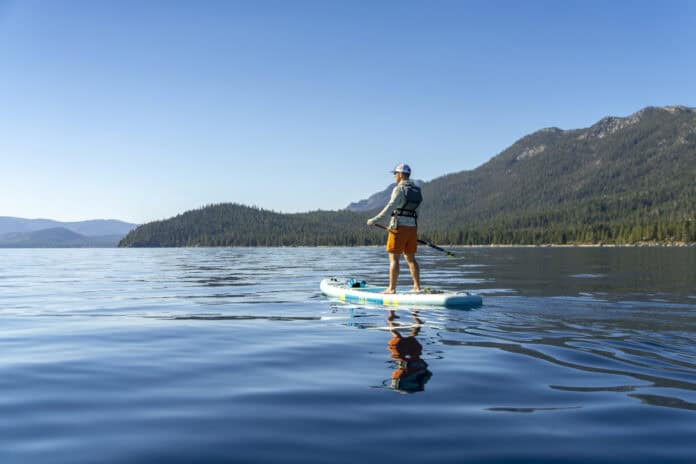
Full tilt: Scott Miller, creator of the Fastest Known Paddle website, is seen in the stern during 2023’s record-setting Mississippi speed run. Watch a documentary about the journey at wildernessmindset.com. | Feature photo: Courtesy Wilderness Mindset


The Best Places To Go Paddleboarding On Lake Tahoe

Man standing on SUP.
Image: Anthony Cupaiuolo

No matter from which direction you approach it, when you catch your first glimpse of dáɁaw (dah-ow), the deep blue is always stunning. Lake Tahoe sits at 6,225 feet in elevation. It’s a massive alpine bowl of freshwater straddling the California and Nevada state line that is more than 190 square miles in size and reaches depths of more than 1,500 feet. These geographic feats sum up to the fact Lake Tahoe offers vast opportunities for standup paddleboarding, but this can also be a bit intimidating for figuring out where to paddle upon arrival.

Fortunately, there is the Lake Tahoe Water Trail, a 72-mile route around the lake’s perimeter with access points, signage, and a comprehensive online resource. What follows here is streamlined insight into the water trail and some of the best places to SUP on Lake Tahoe.

Standup Paddleboarding Lake Tahoe

South Lake Tahoe

South Lake Tahoe is the more developed side of the lake, with no shortage of waterfront access or off-water amenities. This side of the lake also offers access to a popular sheltered bay and smaller neighboring lakes.

If you’re staying in South Lake Tahoe, however, you should expect to deal with traffic during the peak summer season. The later shoulder season, when air and water temperatures are still warm, begins in mid-August, when kids are back in school. Go during the week and you might find it to be less hectic throughout later summer into the fall season.

Man paddleboarding on Lake Tahoe with mountain in the background.
The author cruising along the coastline of South Lake Tahoe. | Image: Anthony Cupaiuolo

Lakeside and Eldorado Beach

There are beachfronts (Lakeside Beach and El Dorado Beach being popular) that have Paddleboard rentals available for quick, easy outings. Relaxing on the beach with a book or watching the kiddos enjoy a summer day is a nice après between SUP sessions.

Cave Rock

To get away from the bigger crowds and have a bit more of an adventurous outing, consider Cave Rock on the Nevada side of the lake, or paddling round trip from Baldwin Beach to Emerald Bay, or venturing up to Fallen Leaf Lake. For all 3 of them, the earlier you can get on the water, the less people there will be.

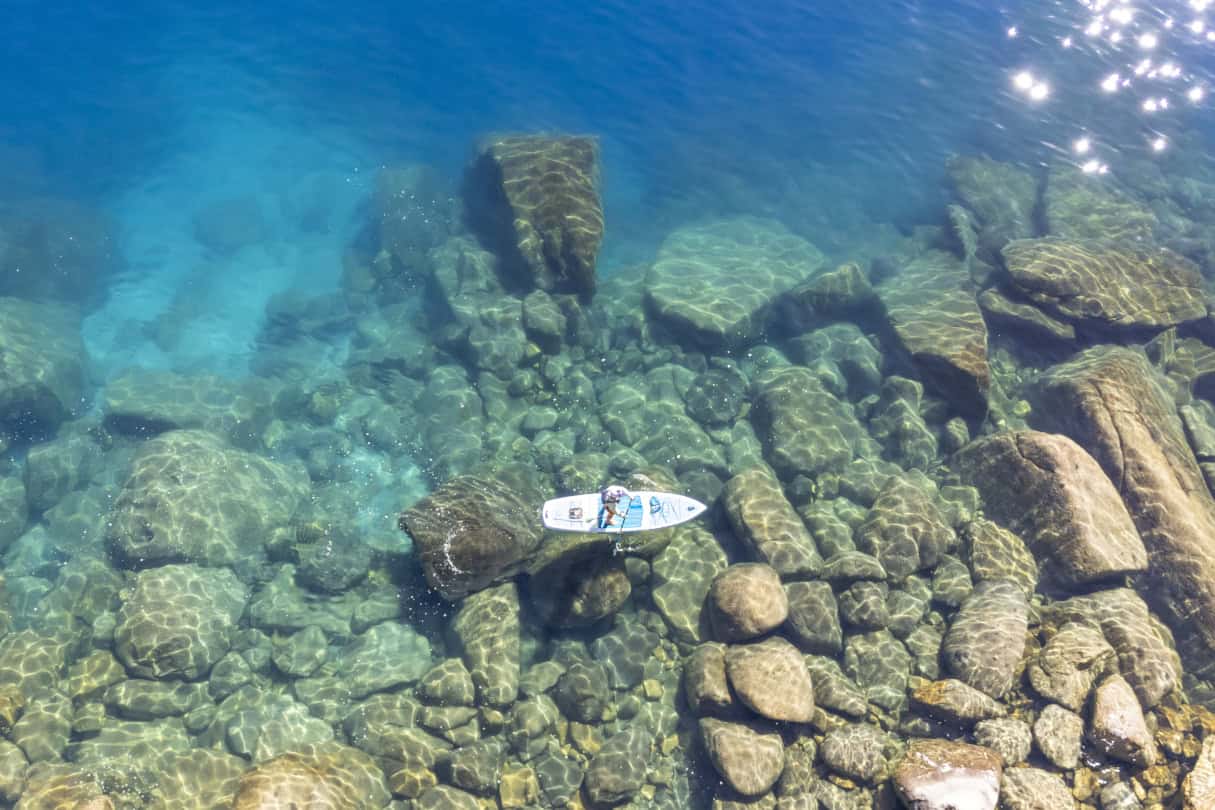
The Cave Rock unit in Lake Tahoe Nevada State Park incurs a $15 entrance fee for vehicles with out-of-state license plates and $10 for in-state. The parking area isn’t all that large, but at the far end of it, there is a beautiful little beach to put in. If you go north from this put-in, you’ll get great views of Cave Rock and the craggy outcroppings, along with glassy water filled with jumbled rocks and boulders visible below your SUP. Going south in the direction of Zephyr Cove offers more spectacular water, with visibility in the tens of feet to the lake bottom. Looking across the lake to the southwest shore and then scanning up to the ridgeline, you’ll see Mount Tallac, Phipps Peak and Dick’s Peak.

A bonus for paddleboarding at Cave Rock is that the spot offers arguably the best sunset view on the lake.

A group of mergansers sitting on a log.
Image: Anthony Cupaiuolo

Baldwin Beach to Emerald Bay

Emerald Bay is a gem. Everyone going to Lake Tahoe wants to get a picture of it. Yes, you do, too. One way to experience it and not be elbow-to-elbow while doing so is by paddling from Baldwin Beach over to Emerald Bay. To access the parking area at Baldwin, you’ll go through the entrance that is staffed by the National Forest Service. There is a $12 fee and you will be asked about proper cleaning, draining and drying of your paddleboard. If you don’t have your own board there are rentals at Baldwin Beach.

From the beach, head left in a northwesterly direction towards Emerald Bay. Be mindful of boat traffic as the morning hours pass towards noon. When coming up on the bay, at that point, look up and you’ll usually find ospreys and their nest perched around a treetop. Back at water level, you’ll probably also see mergansers swimming and fishing along the shoreline.

The water hues change as you enter the bay, the emerald green water living up to its name. There is little doubt that you will be in awe of the bay and the surrounding peaks. Natural beauty is defined there. Maybe go farther into the bay and check out the only island in Lake Tahoe and its tea house. Again, watch for boat traffic. Another option would be to paddle over to the other side of the bay, the north shore of it, and find a secluded beach for having a bite to eat or simply taking in the moment.

Fallen Leaf Lake

Fallen Leaf Lake is a smaller neighbor to Tahoe. Heading to the water, the drive to the boat launch area requires patience. The road is narrow and fellow drivers all have to be considerate of each other so that everyone can navigate it. Go slow. Once at the boat launch, which is also a cafe, store and rental area, you will have to pay a $5 fee to get on the lake. They will wash down your SUP for you, if you bring your own, which is included in the fee.

Fallen Leaf is a great place for families, with paddleboard and kayak rentals and a little beach area for having a nice time amidst a gorgeous lake setting. If you’re looking to get away from the larger lake scene of Tahoe that’s fifteen minutes away, check out Fallen Leaf for what might feel like a little bit of solitude.

North Lake Tahoe

North Lake Tahoe is not far from Interstate 80 and it is an easy drive from Reno-Tahoe International Airport. There will be the usual peak summer traffic to deal with, but with views of the surrounding mountain peaks and the cobalt blue water, think of it as a sightseeing car cruise to the various paddleboarding launch spots on Lake Tahoe.

Commons Beach and Sand Harbor

Commons Beach in Tahoe City and Kings Beach in the town with the same name offer easy access to paddling, with parking available at the beaches, as well as rental equipment. The green space/park at Commons Beach is the perfect place to hang and toss a Frisbee when the kiddos have decided they are done paddling.

If you are planning to go to Sand Harbor, there is a new reservation system facilitated by the state of Nevada. You can get in after 10:30 AM without a reservation, but it’s a bit confusing as to how it is opened up at that time, which seemingly has to do with the availability of parking spots. As a heads-up, cars still line up on the road to get in. The boat launch area seemed not to be part of the reservation system, but apparently paddleboards are not permitted there.

Blue water and rocks of Lake Tahoe
Image: Anthony Cupaiuolo

Meeks Bay

On the west shore, south of Tahoe City, sits Meeks Bay. You access it by going to Meeks Bay Resort and Campground and paying the $12 day-use fee. There is ample parking but like all of Lake Tahoe, it’s best to get there early. There’s a store with food and a rental center that is open to everyone. The beach, and the water just beyond it, will have you thinking you’re in the Caribbean if it weren’t for the pine trees and snowcapped mountains. The glistening green-turquoise-blue water, with varying shades in between, provides all the reminder one needs to keep Lake Tahoe clean.

From Meeks Bay, you can paddle south towards Rubicon Point or north towards Sugar Pine Point. Either way, you cannot go wrong. Rubicon Point is on the list of many when going to Tahoe, but the park there has been closed for construction and upgrades.

Being on the water affords the opportunity to see the rugged cliffs and crystal-clear water of Rubicon Point from the vantage point of a SUP. Paddle away from the shore, out towards the middle of the lake and you’ll be surrounded by deep blue water, offering a feeling of being in an abyss.

Paddling north towards Sugar Pine Point, as you come to the first point, you’ll begin to feel a sense of remoteness. Boulders plopped here and there, jutting partly out of the water and sitting below the water, as well as what looks like a lesser-traveled shoreline reminded me that I was in the ancestral home of the Washoe people. The lake, dáɁaw (dah-ow), is their beginning. Origin stories exist there. Fishing and hunting stories are passed on. It is a place of community. It is home. Paddle respectfully. As you near Sugar Pine Point, you are entering into a water-land place where trees rise to the sky, some of them being the tallest of their kind on the planet.

More to know before you go

Weather

Lake Tahoe is generally a sunny place to paddleboard in summer, but always check the forecast for the day before you launch. Storms do pop up, with the possibility of turning the lake into a frothy churning bowl. The winds typically pick up on the lake by late morning and into the afternoon. Check wind forecasts in addition to the weather forecasts.

Water Temperature

The water is cold. Lake Tahoe’s summer water temperature is impacted by the winter snowpack. If it was a heavy winter and snow is melting up in the mountains during the summer months, the water temperature will be colder. Generally speaking, the water temperatures don’t peak until around August, when the lake may reach from the mid-60s to the low-70s Fahrenheit. You should always wear a PFD, do not have it just attached to your board. With water this cold, if you fall in cold water shock is a serious factor.

Keep Tahoe Clean

Cleaning your SUP is essential before arriving at Lake Tahoe. This helps avoid invasive species from entering one of the most treasured lakes in North America. It is important to clean, drain and dry your board. There are also online resources to educate yourself about the importance of having a clean SUP and how to do it.

Lake Tahoe Paddleboard Outfitters And Rentals

Food, Drink and Lodging

On the south side

If you’re hankering for delicious Mexican food, head to Verde Mexican Rotisserie.

For a special beer find, go to Coldwater Brewery and Grill and order the Saison. The style is hard to come by in the USA and theirs is an excellent one.

Lodging options are endless. To stay beachside, The Landing has rooms with great views of the lake.

On the north side

Sylva in Tahoe City is quite unique on the dining scene. It’s not inexpensive. The food offerings are impeccably prepared, and the menu is ever-evolving based on what can be sourced locally, as much as is possible.

Grab a beer at Bear Belly Brewing in King’s Beach. It’s a vibe, for sure, and a true Tahoe community space set in a park-like setting where you can also buy Tahoe-artisan works and get a bite to eat at a food truck.

If you’re looking for an outdoorsy feel for lodging, complete with a coffee/full bar, plus a bike rental shop, and a cold plunge experience, evo Hotel Tahoe City is the place to stay. The artwork was curated by snowboarding legend Jeremy Jones. Sierra Surf Club at the hotel is their restaurant. The wild mushroom lettuce wraps are delicious.


Peter Frank Finishes Canoeing 4,847 Miles Dressed Like A Pirate

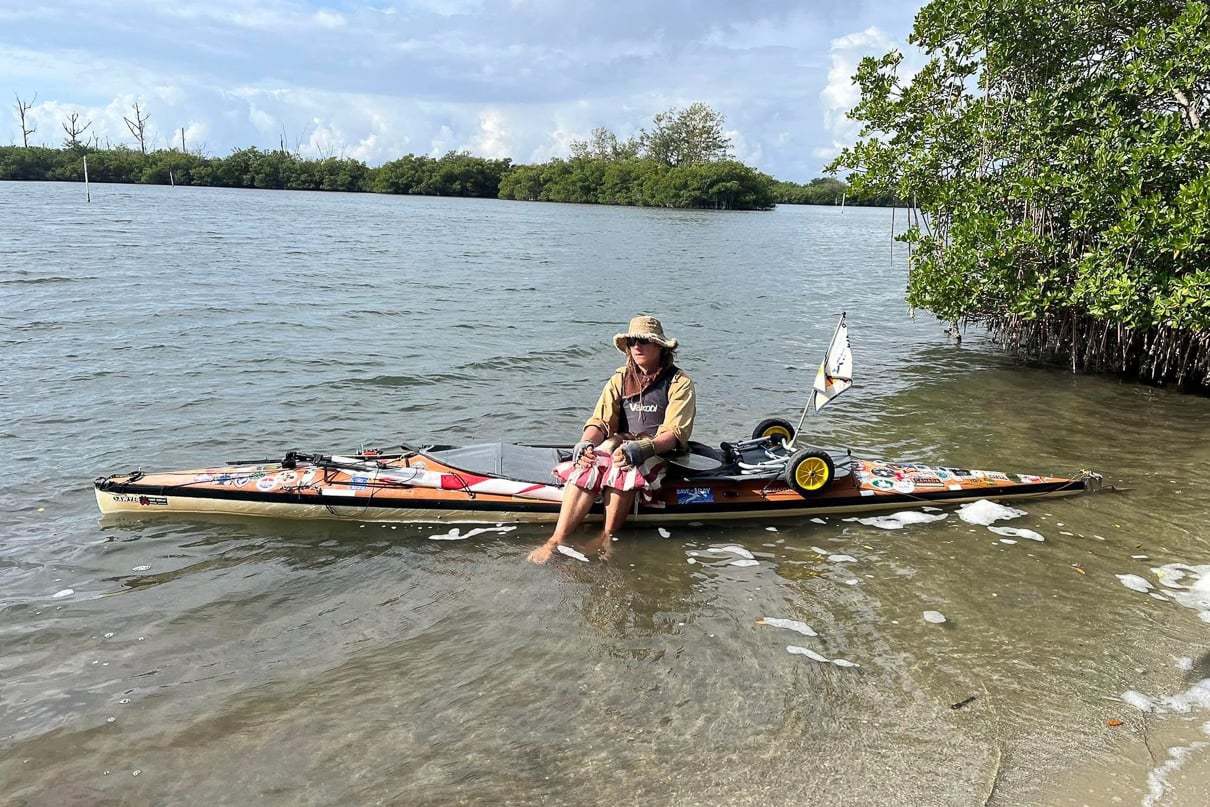
Peter Frank sits in a Canoe in Florida
Peter Frank sits on his canoe on a Lake in Florida. Featured Image: Peter Frank | Facebook

Peter Frank completed paddling 4,847 miles around the Eastern United States up river, with a prevailing headwind, all while dressed like a pirate on October 20, 2026.

The Great Loop is a route through waterways including the Mississippi, Atlantic and Gulf Intracoastal Waterways, the Erie Canal and the Great Lakes, ultimately circumnavigating the eastern United States. Typically, The Great Loop is generally done by motorized boats; Frank tackled it in a canoe.

Following in the paddlestrokes of Verlen Kruger and his son, Frank paddled Great Loop clockwise or the “wrong way”, which includes heading south along the Atlantic and up, rather than down the Mississippi or Tennessee–Tombigbee Waterway. Kruger, Frank’s inspiration and a legendary canoeist and canoe-builder, is also behind the design of Frank’s unique decked canoe, a 1982 Sawyer Loon.


View this post on Instagram


A post shared by Peter Frank (@captainpeterfrank)

Why Peter Frank’s pirate costume is more functional than meets the eye

While Frank’s route choice is enough to stand out on its own, it’s hard not see his choice of paddling clothing and pause. To the casual observer, Frank accomplished a nearly 5,000-mile canoe trip dressed like a pirate. According to Frank, what started out as a joke turned out to be more practical than he initially imagined.

“Clothes that you buy from the store feel like they were made for everybody, and that doesn’t really feel comfortable to wear,” explained Frank.

When researching how to make his own outdoor clothes, Frank found that he didn’t want to model his new wardrobe after clothes that he already found to be uncomfortable. Instead, he looked to the past – what exactly did people do before the modern era of trim spandex and Patagonia?

“I looked into literature about Blackbeard, for instance … What did they wear when they were sailing the oceans?” asked Frank. “What did they wear when they were out there in the elements, doing arduous labor day after day in environments that were very moist, full of water, and full of rain and weather out in the sun twenty-four seven?”

Frank landed on baggy and breathable designs with natural fibers.

“At first, it was just kind of like a joke. I just wanted to dress like a pirate and thought it’d be funny,” said Frank.

What began as a joke became serious as Frank discovered that the people undertaking long journeys 300 years ago dressed the way they did for a reason: every aspect of Frank’s pirate-inspired wardrobe is laced with practicality from his feet almost all the way to his head.

“I think the pirate hat is the only thing that doesn’t really have any practicality,” explained Frank.

Peter Frank sits in a Canoe in Florida
Peter Frank sits on his canoe on a Lake in Florida. Featured Image: Peter Frank | Facebook

Hurricanes, headwinds and alligators

Twenty-three-year-old Frank began his journey in July 2024 in Escanaba, Michigan, and has had anything but smooth sailing. Hardly a stranger to long trips, Frank spent summer of 2022 canoeing the Mississippi, bikepacked the Louisanna, Mississippi, Alabama and Florida, and circumnavigated Florida on the Florida water trail by canoe. In 2021, Frank rode a unicycle across the United States to raise funds for Beacon House, an organization who housed his family when Frank was recovering from a car accident at age 14 that shattered his spine.

Even with an impressive long-trip resume, Frank’s current endeavor is proving to be his most challenging trip yet.

“In 2024, we had 11 hurricanes and five of them were major, and four of those hurricanes I experienced,” explained Frank.

Unexpected delays ranged from inclement weather to detours, and even included a 19-mile portage of the entirety of Cumberland Island, Georgia, through the sand. Frank described paddling south along the Atlantic Intracoastal as essentially paddling against the river as the predominant flood tide flows north.

“It’s actually eight tenths of a mile per hour that I was dragging that canoe. I had blisters on my hand so deep that they were bleeding when I finished,” explained Frank about walking across Cumberland Island. “I quite literally walked and dragged my canoe 19 miles to the border of Florida just to get out of this predominant wind.”


View this post on Instagram


A post shared by Peter Frank (@captainpeterfrank)

Peter Frank is grateful to be alive

With freezing temperatures, hurricanes and headwinds one might wonder why exactly Frank kept paddling.

“I came out here because I’m really grateful to be alive,” said Frank. “The reason why I chose to do it in such a way to circumnavigate the Eastern United States in the wrong boat, in the wrong direction was because I’m very grateful to be alive. I think that a lot of young people don’t really realize that until they’re older.”

Buy Peter Frank a chicken here, and follow his adventure on Facebook or Instagram.

Editor’s Note: This article was originally published May 16, 2025 and has been edited to reflect the conclusion of Frank’s journey.

How To Build Your Own DIY Kayak Storage Rack (Video)

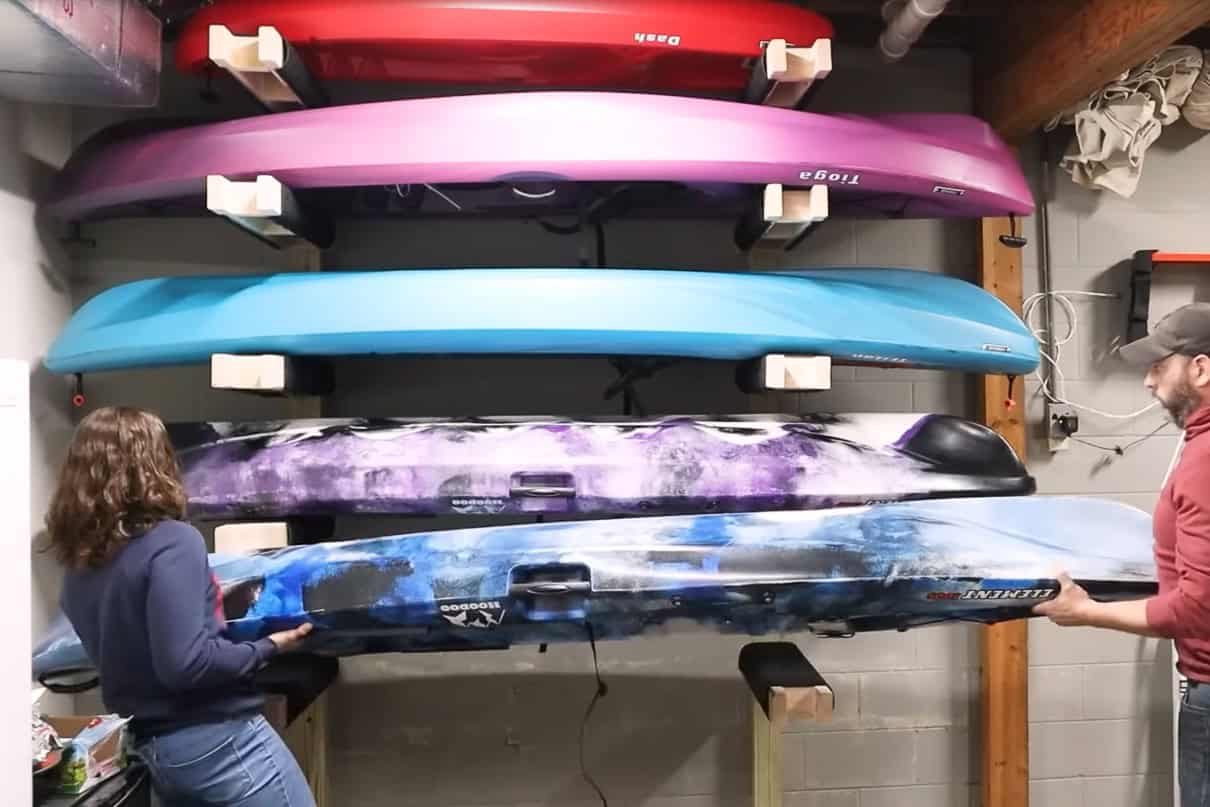
Are your kayak and canoes bundled on top of each other on one side of your garage? Perhaps they are stacked up against a fence in your backyard? Either way, if you’re looking to preserve the life of your boats, make space for more gear, or just make it easier to regularly access your boats—then this simple and budget-friendly DIY kayak rack tutorial is for you.

Materials for DIY Kayak Rack:

  • 3/4″ Forstner Bit
  • Bessey Quick Clamp
  • 1/4” Drill Bit
  • 48″ Level
  • Hammer Drill
  • Masonry Bits
  • Tapcon Masonry Anchors
  • Table saw/ Circle saw
  • Center Punch
  • Three 12-foot two by fours
  • Four 10-foot two by fours
  • Two 10- foot four by fours
  • Three-inch construction screws

Instructions for DIY Kayak Rack

The design of this rack is just one idea for storing your kayak. It can be adjusted for canoes and paddleboards too, just be cautious of how much distance you leave between each shelf. To make this rack yourself, you will need some power tools and knowledge of how to use them.

Image of a completed DIY kayak rack
Image of the completed kayak rack by MWA Woodworks.

Step One:

Cut all two by fours to length, making 12 of the two by fours 36 inches long and eight of them 32 inches long. In the video, MWA Woodworks is working to make a kayak rack to store five kayaks, so he needed 20 pieces of wood at this length in total. The shorter pieces correspond to the smaller kayaks MWA Woodworks needed to store.

Step Two:

Next, MWA Woodworks went on to make smaller pieces to use as cross braces in the kayak rack. Using a crosscut sled and table saw, cut 30 smaller pieces in a square to use as cross braces. This can also be done with a miter saw. See video above for more detail.

Step Three:

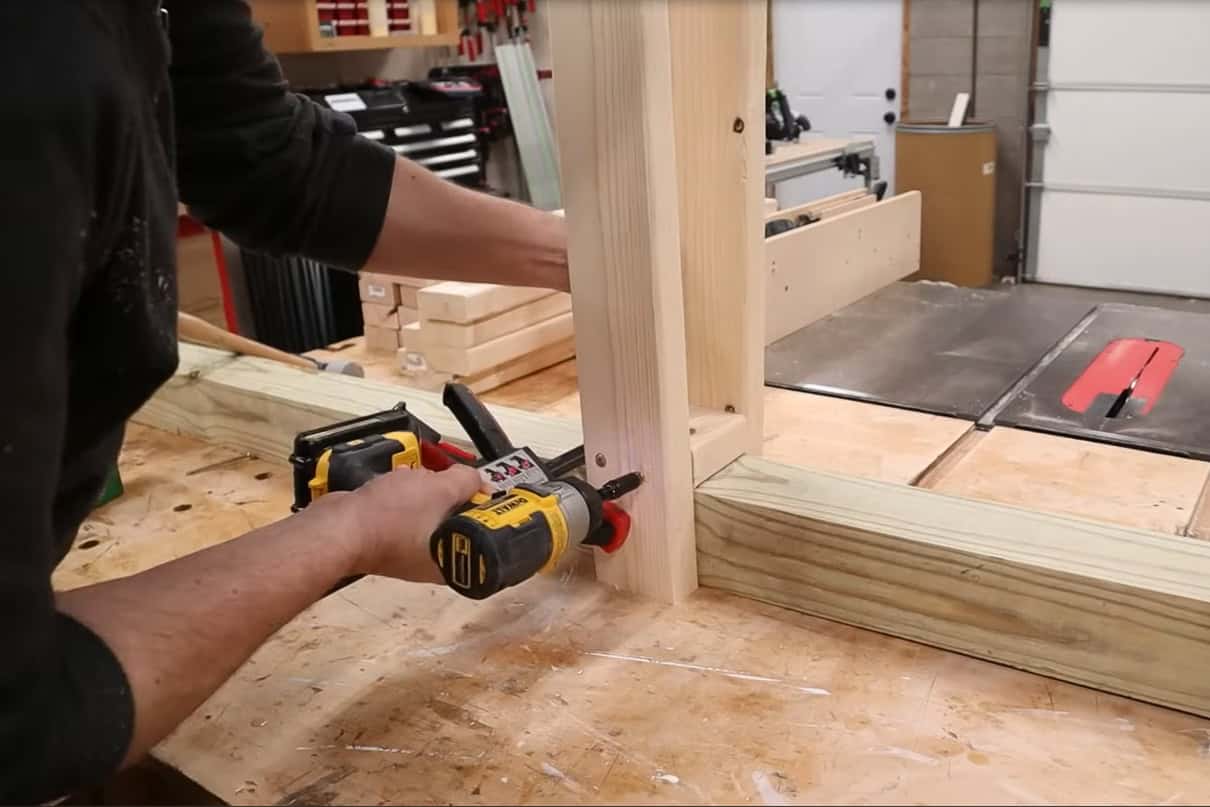
Assemble ten support arms by placing two boards against one of the four by fours. Place a cross brace piece in the middle and clamp these pieces to the four by four. Using three-inch construction screws, fasten the pieces together. Flip and repeat the process on the other side.

MWA Woodworks builds cross brace pieces for a DIY Kayak Rack

MWA Woodworks builds cross brace pieces for a DIY Kayak Rack.

Step Four:

Add and fasten an additional cross brace approximately in the middle.

Step Five:

Create ten total support arms.

Step Six:

On the four by fours, mark out screw locations at two-foot intervals. Mark the center with a center punch.

Step Seven:

Use a three-quarter inch forstner bit to countersink a hole halfway through the four by four. Then use a quarter-inch drill bit to drill the rest of the way through. Knock out all the shavings. Make a total of four of these holes, evenly and symmetrically spaced, on each four by four. These holes are where you will anchor your rack to the wall.

Step Eight:

Mark out where you want your four by fours, and thus kayak rack, to go and fasten to the wall using the appropriate method for your wall material. Space your four by fours at a length appropriate for the length of your kayak.

If your kayak has bulkheads, make your kayak racks so that the support beam lies underneath the bulkhead, or the strongest part of the boat, to minimize damage. If your kayak is shorter and does not have bulkheads, you’ll want to choose a distance that is neither too close together, which can cause the kayak to bow down at the bow and stern and oilcan the hull, or too far apart, which can cause the kayak to warp sagging in its center.

Step Nine:

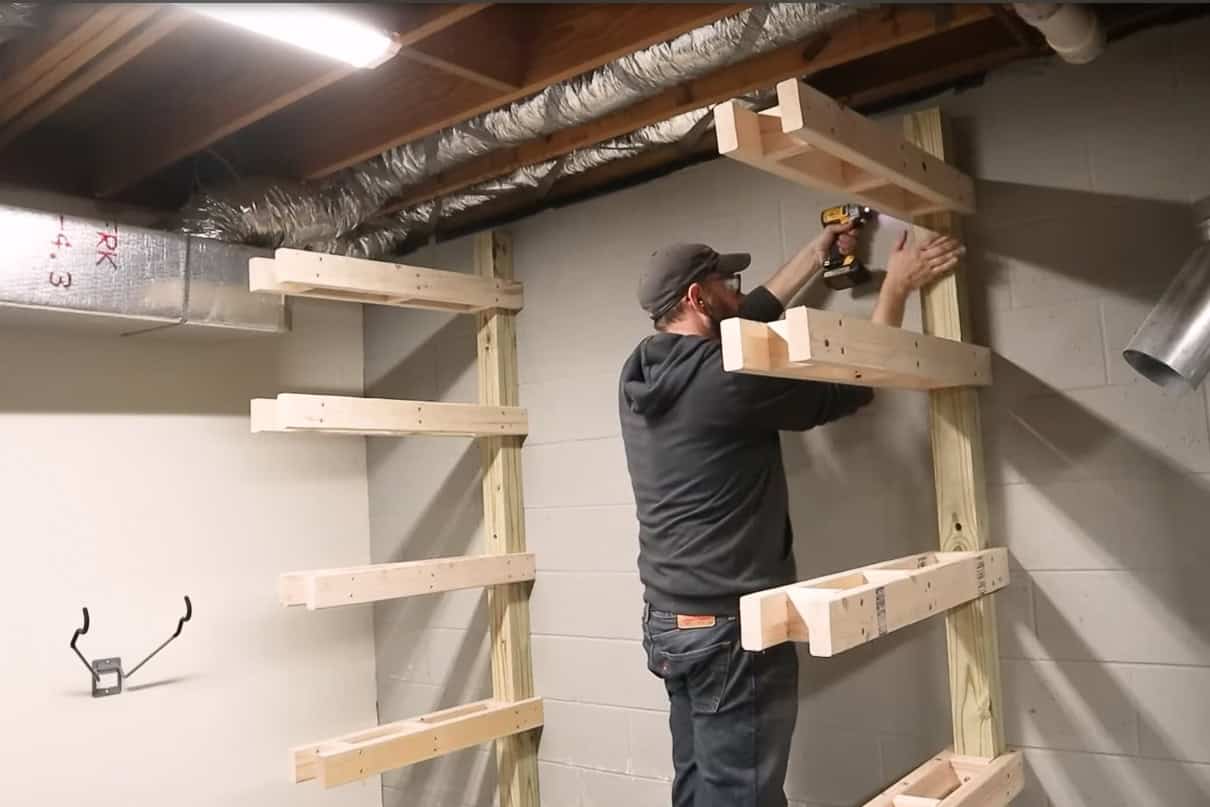
Mark the desired location of your first support arm. Consider how high off the ground you would like your closest support arm to be, or how high off the ground you would like your lowest kayak. Line up the support arms with your lines on support beams (four by fours) and attach. Use one screw in the middle and two on each side to start with. MWA Woodworks recommends doubling up later if needed.

MWA Woodworks adds support arms to the DIY Kayak Rack.
MWA Woodworks adds support arms to the DIY kayak rack.

Step Ten:

Repeat this process working your way up adding in support arms at the desired interval of space you would like between your kayaks.

Step Eleven:

For the finishing touch, consider adding something to the parts of your wood frame that will have a kayak sliding over it to protect your kayaks from getting scratched. MWA Woodworks used utility mats and fastened this to the rack using a staple gun.

Rather than utility mats, you could also use a yoga mat or cut up pool noodles.

Video courtesy of MWA Woodworks


Deb Volturno On The Future of Sea Kayaking

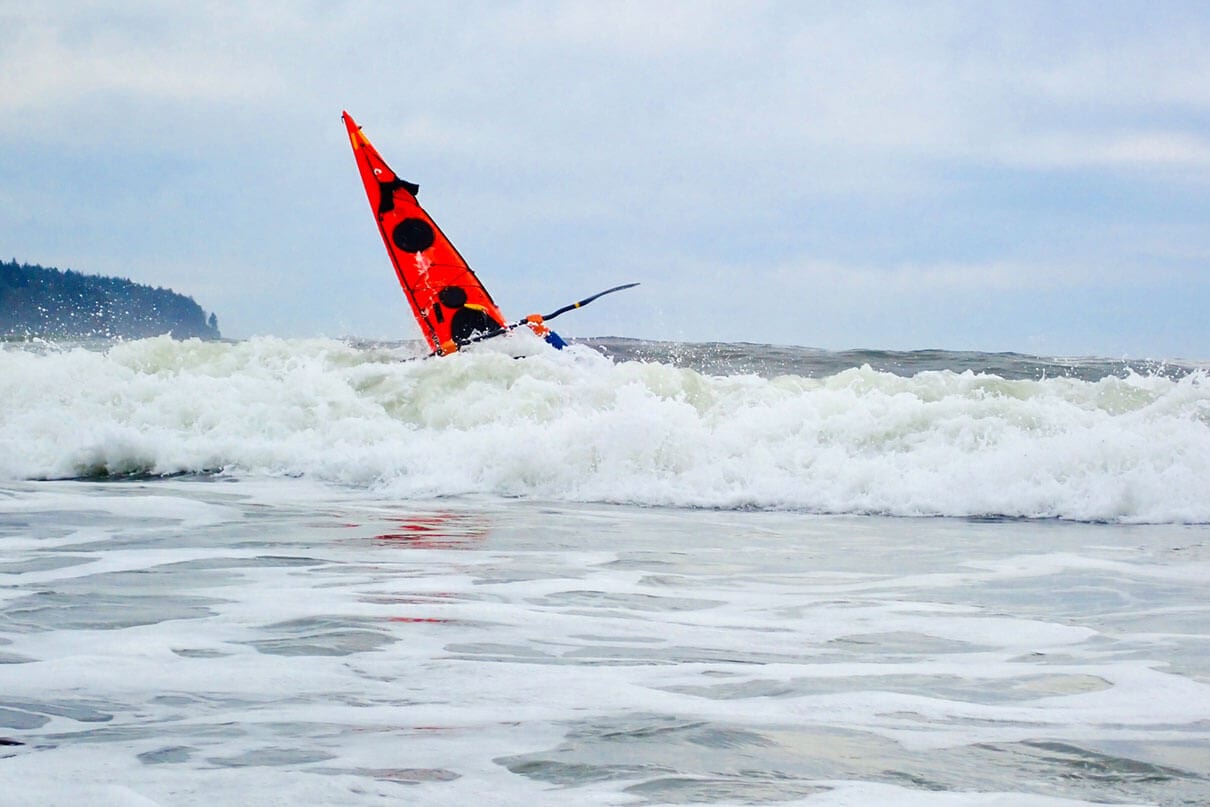
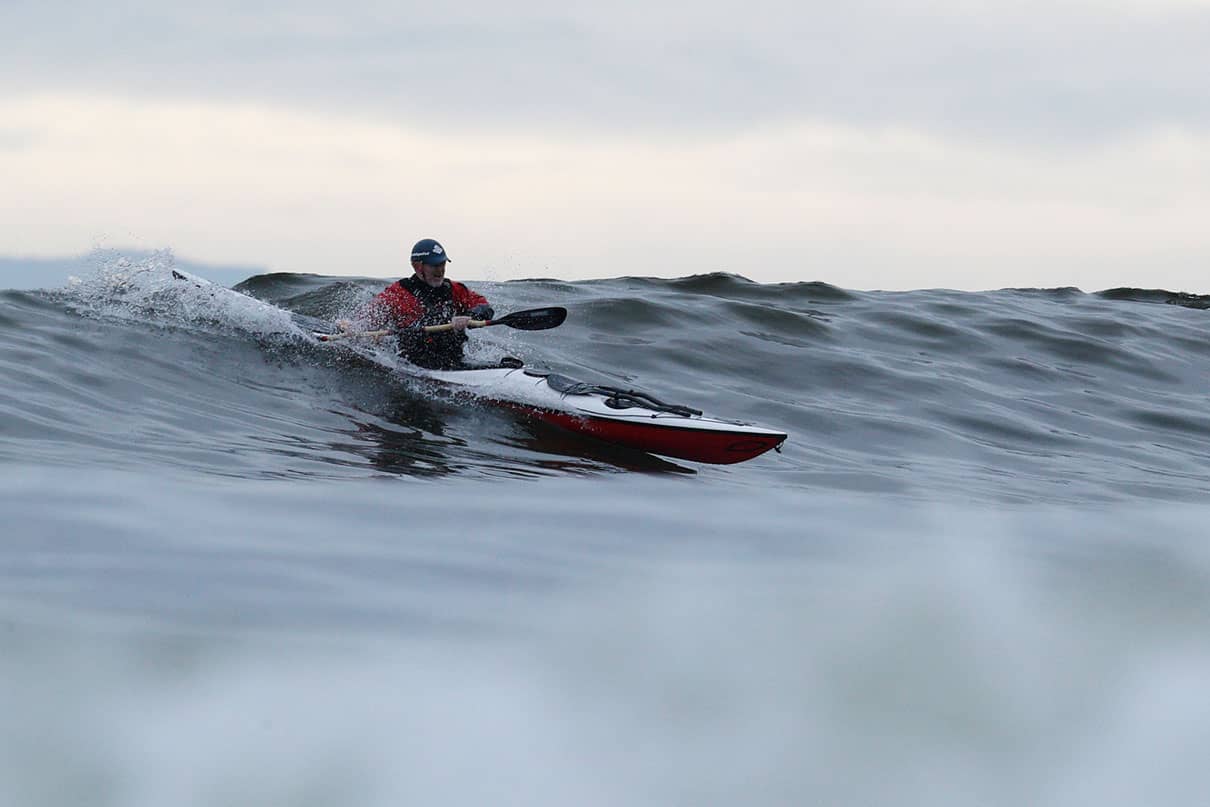
The bow of Deb Volturno's red kayak rising over the surf
Surf’s up, sister. Cofounded by Deb Volturno, Surf Sirens is an annual West Coast kayak surf and rough water camp for every level. | Feature photo: Kristy Dahlquist

Deb Volturno is a certified badass—literally. Inducted into the ACA Hall of Fame and recipient of the ACA Legends of Paddling Award in 2024, Volturno’s impact as an instructor, teacher and mentor can be felt throughout the West Coast and across oceans. She is an ACA Level 5: Advanced Open Water Coastal Kayaking Instructor Trainer Educator—the only woman to hold this certification—as well as a Level 4: Performance Surf Kayaking Instructor Trainer Educator. Volturno also holds the rank of captain of the ocean adventure kayaking team, the Tsunami Rangers.

A former member of the U.S. Surf Kayak Team and a founding member of Surf Sirens—an annual event designed to introduce more women to surf kayaking—Volturno remains committed to making the sport more inclusive and accessible for the next generation.

Deb Volturno on the future of sea kayaking

What’s changed most in 40 years of coaching?

There are more women instructors and more women seeking instruction. Skill levels have built tremendously to more dynamic conditions, coastal environments, surf and rock gardening. Not as many paddlers are doing expeditions; they’re just striving for a place to play, to surf and do rock gardening. Certifying instructors at higher levels is different, too, because they’re not doing expeditions and they’re not using navigation, so those skills aren’t as strong as they used to be. There’s a lot more reliance on electronic devices—when they break down or the battery goes dead, the paddlers are lost, literally.

The bow of Deb Volturno's red kayak rising over the surf
Surf’s up, sister. Cofounded by Deb Volturno, Surf Sirens is an annual West Coast kayak surf and rough water camp for every level. | Feature photo: Kristy Dahlquist

When did you find out you were declared a sea kayaking legend?

I was completely blindsided. I had just gotten off the water, and I was driving home and got a call from the friend who had put this together. I was speechless. It’s been an opportunity to reflect on my time as an instructor and the people who have made this journey fantastic for me. John Lull was my mentor, and I thank him with a great deal of gratitude for mentoring me. He was also a Tsunami Ranger, and he was a huge part of me stepping off into the rest of my kayak instructing career. John was like a big brother who supported me developing my skills.

Where do you find ideas to keep coaching fresh?

Students are just as dynamic as the sea, and that’s one of the most fascinating parts of teaching—trying to figure out the texture, to figure out what’s going on with each individual and what’s going on with the group. I was a high school science and math teacher, and a big part was trying to figure out the students and how they could best learn and how to hook them. Once you’ve got them hooked, you can start having a lot of fun.

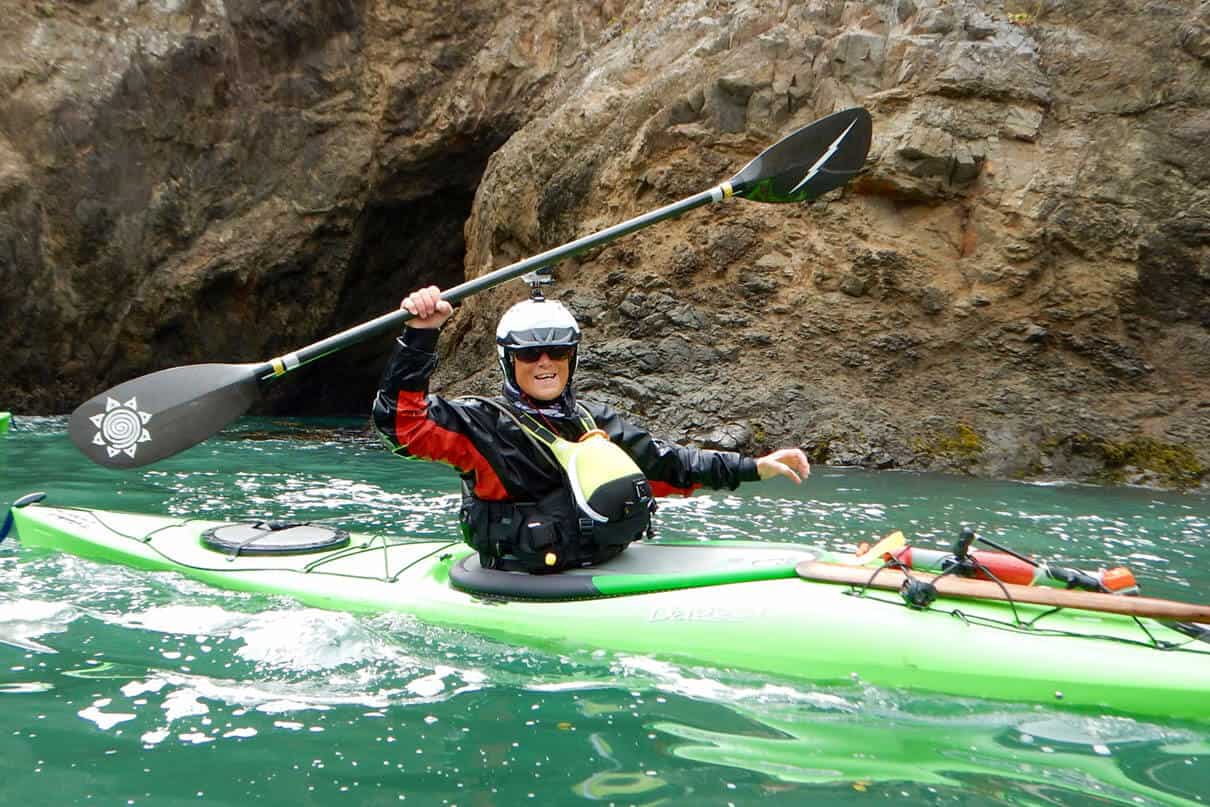
Deb Volturno on the water in green sea kayak, holding paddle aloft in front of rocky walls
Deb in her happy place. | Photo: Jim Kakuk

Who are the Surf Sirens?

Surf Sirens is an annual all-women’s kayak surfing and rough water play camp. It’s taken on a life of its own. It sells out in an hour. There’s so much confidence that gets built, and that can’t happen without trust and support in that community.

Women learn differently from the guys. Women can do all the same things; they can achieve the same greatness, but women attack risk differently. Getting groups of women together is truly amazing—there’s so much support. There’s trust, and there’s a willingness to take on leadership roles. Guys don’t need trust to attack a task.

Why are accessibility and inclusivity important in paddlesports?

It just makes the world a better place. Bringing people together and sharing experiences opens people’s minds to things that are different from our own personal world.

Cover of Issue 74 of Paddling MagazineThis article was published in Issue 74 of Paddling Magazine. Subscribe to Paddling Magazine’s print and digital editions, or browse the archives.
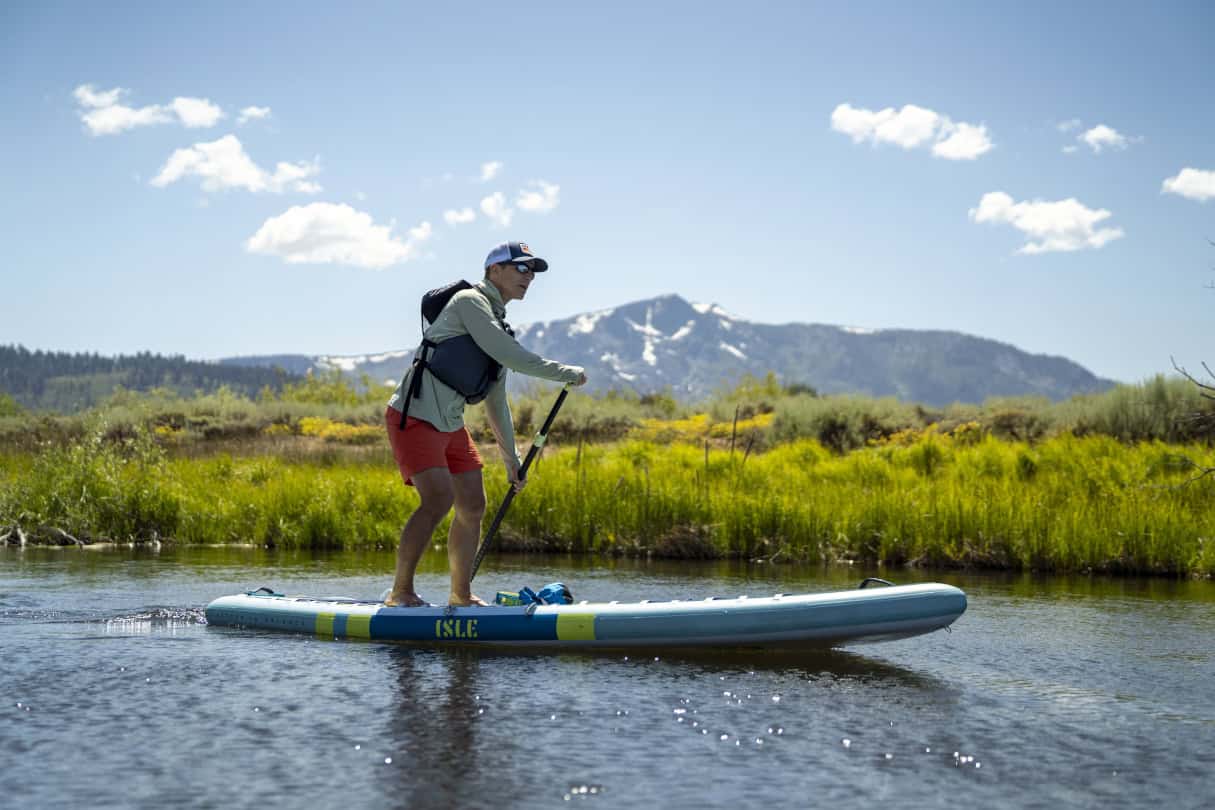
Surf’s up, sister. Cofounded by Deb Volturno, Surf Sirens is an annual West Coast kayak surf and rough water camp for every level. | Feature photo: Kristy Dahlquist


Kayaker Surrounded By Falling Monkeys (Video)

Monkeys swim across from an island in Silver Springs Florida
Monkeys swim across from an island in Silver Springs State Park, Marion County, Florida. Feature Image: @fireball_1969 | TIkTok

While kayaking Silver Springs, Florida, a woman found herself in the middle of an especially wild close encounter – surrounded by falling monkeys!

“They’re jumping in,” the kayaker said as she filmed. “Look at them all! These are all monkeys jumping in. Oh my God, it’s raining monkeys!”

Monkeys fall from sky in Silver Springs State Park, Florida

“One jumped in here right here by me!” The kayaker said as she laughed. “Go on, little one.”

Commenters on the initial video wondered what exactly was causing the monkeys to jump into the water, theorizing both that something big in the trees had frightened the monkeys and that the kayaker herself was the cause of the disturbance.

@fireball_1969 this was the best day to see Florida’s wild monkeys they sure put on a show for us.#foryoupage #outdoors #wildlife ♬ original sound – fireball_1969

Later, the kayaker took to TikTok in a followup video to share the whole story.

“We kayak this river quite a bit just in hope that we will get to see the monkeys because you don’t see them a lot,” the kayaker shared. “That day just happened to be a very extra special day.”

@fireball_1969 update on the monkey video i posted #wildlife #foryoupage #Outdoors ♬ original sound – fireball_1969

The kayaker also shared the cause of the monkeys jumping in the water and fleeing to the other side of the river. According to the paddler, one of the larger monkeys had been making a lot of noise and a smaller monkey then jumped into the water and was swept downstream toward that larger monkey. Shortly after, all of the monkeys started jumping into the water. The kayaker also explained that her group had been observing the monkeys for quite a while at a respectful distance, and that nothing was lurking in the woods chasing the monkeys.

After the encounter with monkeys, the kayaker then went on to paddle up the river and see manatees.

The monkeys of Silver Springs State Park, Florida

The monkeys leaping into the water in the video, of species Rhesus macaque, are invasive in Florida and indigenous to south and Southeast Asia. According to Springs in Florida, the monkeys carry Herpes B, which can spread to humans by way of bodily fluids and lead to complications including spinal cord and brain swelling and ultimately death.

The monkeys of Silver Springs were brought to a small island, now Silver Springs Park, around 80 years ago by a tour boat operator. The tour boat operator released six monkeys onto the island, hoping to create “a park closely resembling the Tarzan story” according to Springs in Florida. Unbeknownst to the tour boat operator, the monkeys were adept swimmers and the first six monkeys escaped the island nearly immediately and the tour boat operator brought in a replacement batch.

The second group of monkeys also escaped. By the 1980s, the monkeys had established themselves throughout the island.

An Ode To The Company We Keep On The Water

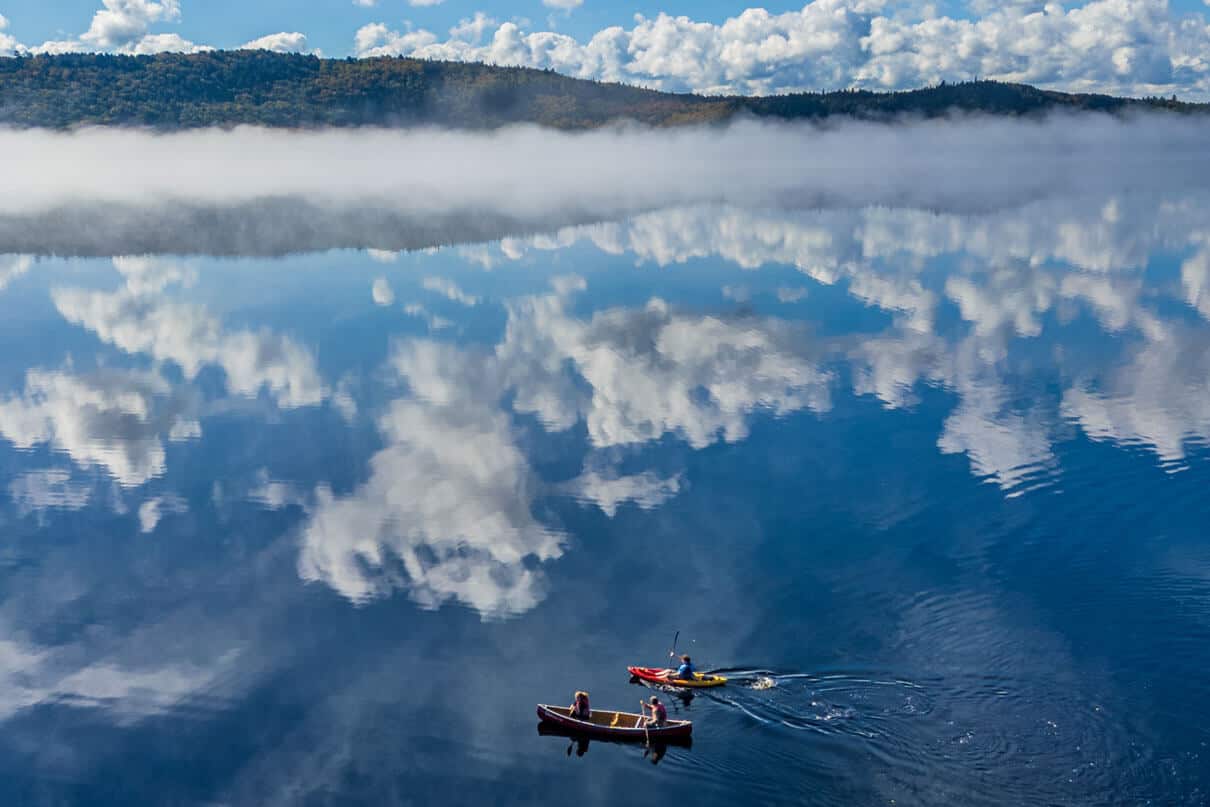
bird's eye view of a canoe and kayak paddling across still water with mountains and clouds reflected
Take a bird's eye view. | feature photo: Rob Faubert

It’s an expression used mostly by grandparents and politicians. If you fly with the crows, you die with the crows. The intended meaning, of course, is a warning. If you hang out with bad kids, you will become like them and suffer the same negative consequences. Makes sense, I guess, but only if you believe what you see in the movies about crows.

Ever since Alfred Hitchcock’s classic 1963 horror film, The Birds, crows have gotten a bad rap. Crows are used by Hollywood to represent bad omens, evil and the supernatural.

Crows don’t seem all that bad, honestly. They’re mischievous, sure. But crows are social birds, more often seen in groups than alone. Crows are one of the smartest animals in the world, right up there with chimpanzees. And they live twice as long as chickadees. If you’re going to be a bird, being a crow might be fun.

An ode to the company we keep on the water

This spring, I paddled the upper section of the Madawaska River, a stretch of spring flow between the Ontario logging towns of Whitney and Madawaska, located just east of Algonquin Park. The first time I paddled it was with James Campbell. We were still in school, working the summers teaching paddling and guiding groups down whitewater rivers. We were on a day off. It was the perfect kind of day when dudes promise each other they will do this forever. Thirty years later, here we are again. Doing the same thing. As promised. This time with my 20-year-old son, Doug.

bird's eye view of a canoe and kayak paddling across still water with mountains and clouds reflected
Take a bird’s eye view. | feature photo: Rob Faubert

In the award-winning adventure film Noatak: Return to the Arctic, two guys in their 70s, Jim Slinger and Andrew “Tip” Taylor, return to the Noatak River in the Brooks Range, Alaska. It could be their last northern canoe trip after 40 summers spent on rivers together.

“If somebody had told us that we were going to be coming back down this river 35 years later, we wouldn’t have believed it,” says Tip.

“We’d have been very delighted to hear that,” laughs Jim.

They bumped into one another on the Yukon River in 1975. One thing led to another and they decided to do a trip together. Since then, they’ve made 30 trips to the north, each lasting at least three weeks long.

In his journal, Jim wrote an old Inuit saying he remembers them reading in a small museum on a previous trip to Baffin Island, “There is just one thing, and that one great thing is just to live. To open our eyes to the great light of dawn moving across the land and the beginning of the day.”

Tip and Jim are old crows. Thoughtful. Smart. Gregarious. Mischievous in their lifelong sense of adventure together. My friend James is a crow.

I think there is another way to look at the old idiom, if you fly with the crows, you die with the crows.

Crows are just misunderstood birds, misunderstood like the types of humans who spend 21 days sleeping on the ground and carrying canoes through barren, bug-infested wastelands.

I believe if you keep flying with the crows, you may be lucky enough to keep flying with them for a very long time.

“How many more times am I coming up here?” says Tip to the camera atop a mountain overlooking the Noatak River. “As we get older, we realize it’s coming toward an end.”

“Maybe this is the last trip,” says Jim. “But, I’m not saying it’s the last trip.”

As James, Doug and I drift up to the take-out bridge in the warm evening sun, Doug says, “It’s crazy you guys have been paddling rivers together since you were my age.”

I ask Doug who he thinks he’ll be paddling with in 30 years. What crows will he still be flying with?

Who are yours?

Scott MacGregor is the founder of Paddling Magazine.

Cover of Issue 74 of Paddling MagazineThis article was published in Issue 74 of Paddling Magazine. Subscribe to Paddling Magazine’s print and digital editions, or browse the archives.
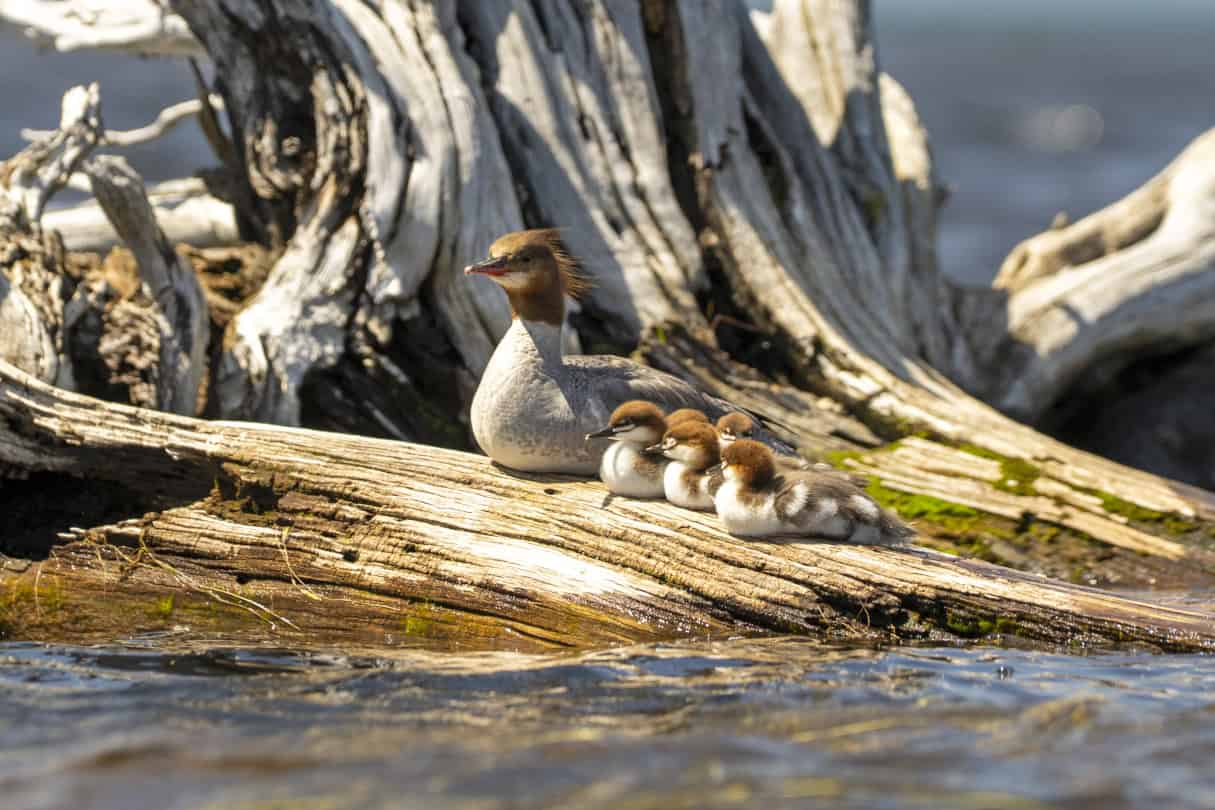
Take a bird’s eye view. | Feature photo: Rob Faubert


The Wild Corner Of Southwest Florida More Accessible Than The Everglades

The Calusa Blueway at Matlacha Pass near the Fort Myers international airport.
Image: The Lee County Visitor & Convention Bureau

You don’t have to travel deep into the Everglades to experience Florida’s untouched beauty. Within quick reach of downtown Fort Myers, Florida and its international airport, a remote stretch of the nearly 200-mile Great Calusa Blueway Paddling Trail gives paddlers an escape among miles of mangrove islands.

Inspired by the Indigenous Calusa, the Blueway is made up of three distinct regions along Florida’s Gulf Coast. The first meanders through Estero Bay, the second focuses on Matlacha Pass and Pine Island Sound, and the third follows the Caloosahatchee River and its tributaries inland.

Each stretch highlights different parts of Southwest Florida’s natural wonders, but the waters around Matlacha and Pine Island stand out for their mix of mangrove tunnels, shallow flats, and peaceful backwaters. It’s a stretch where paddlers can be surrounded by wildlife and enjoy visiting small coastal communities that still have an Old Florida feel that’s becoming increasingly difficult to find.

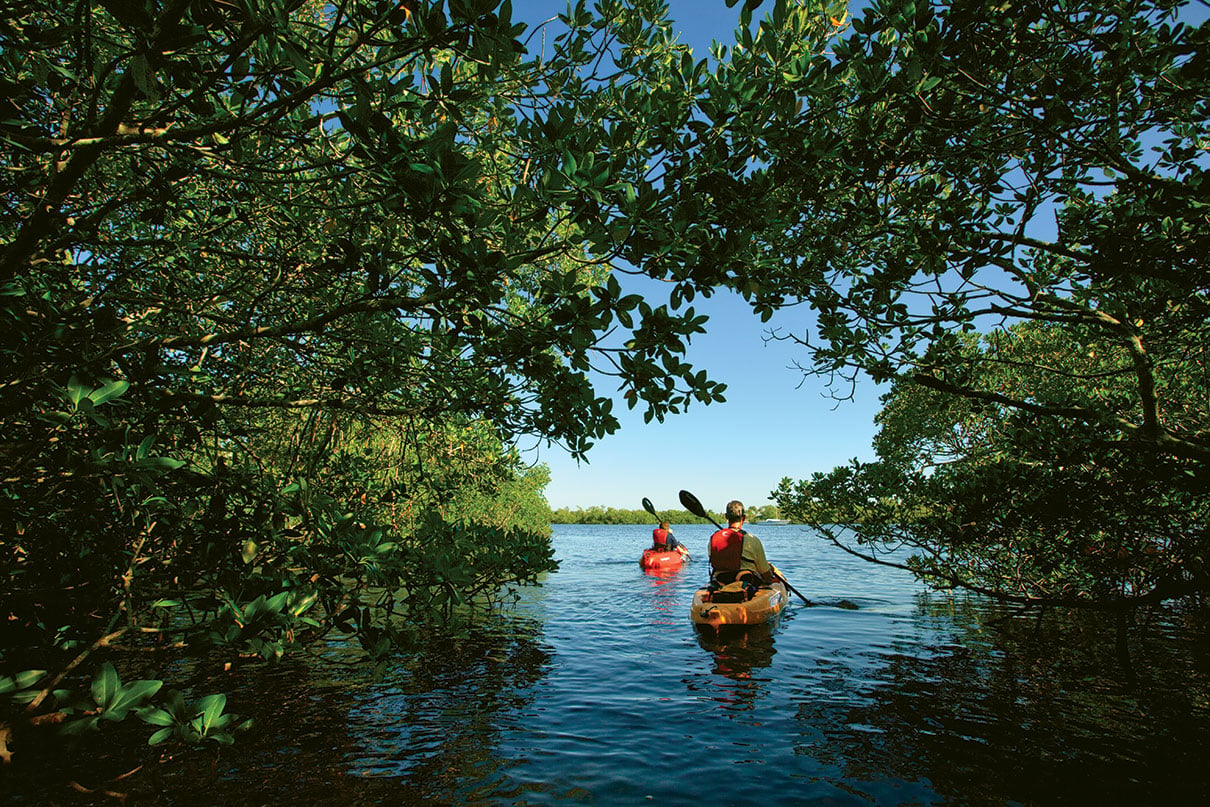
two people paddle out of a mangrove tunnel in Southwest Florida
Matlacha Pass is full of mangrove channels and wildlife for paddlers to enjoy. | Feature photo: Lee County Visitor & Convention Bureau

Matlacha And Pine Island: The Laid-Back Side Of The Calusa Blueway

Unlike the turquoise waters and white sands of nearby Sanibel and Captiva, Pine Island’s shoreline is shaped by tangled mangrove roots and tannin-colored waterways. The mangroves make these waters ideal for kayakers by absorbing wave energy and creating calm, protected routes to explore.

The colorful, artsy fishing village of Matlacha sits between Pine Island and mainland Florida, right where the coastal waters are pinched to a braided, tidal corridor—the Matlacha Pass Aquatic Preserve—connecting Charlotte Harbor on the north with San Carlos Bay to the south. This makes the village the perfect entry point for slipping into the water.

Paddlers can set out right from the Matlacha Community Park and Boat Ramp. If you need gear, you can rent kayaks and paddleboards from the newly opened Matlacha Outfitters or Gulf Coast Kayak at nearby Sirenia Vista Park. The preserve spans across 14,000 acres of coastal habitat, meaning there is no shortage of mangrove channels, small islands or tucked away coves to seek out.

For those planning to spend several days paddling here, Matlacha Cottages and The Angler’s Inn both have their own ramps, making it seamless to start or end your paddle right from where you’re staying.

An On-The-Water Safari

The mix of oyster bars, seagrass flats, and mangrove islands in Matlacha Pass creates a natural haven for species of all sizes. It feels like an on-the-water safari, from the sea to the sky.

You can spot ospreys circling overhead, brown pelicans roosting in the mangroves, and double-crested cormorants perched on branches drying their wings. Listen for the sharp, rattling call of a Belted Kingfisher or the flap of white ibis flying overhead.

In other areas of the pass, you could see manatees surfacing for air and bottlenose dolphins corralling fish in the shallows. And, if you’re lucky, you may spot a loggerhead popping its head up before disappearing below the surface.

The shallow waters support more than 200 species of fish, from mangrove snapper and snook to striped mullet, often seen leaping from the water in silvery flashes. While mullet are prized as bait fish, locals love them on the menu at a number of area restaurants, including the Mullet Sampler at Blue Dog Bar & Grill, a fantastic lunch or dinner stop before or after a day on the water.

The remote shoreline of Cayo Costa.
Remote shore of Cayo Costa. | Photo: Lee County Visitor & Convention Bureau

Exploring Pine Island Sound

Pine Island is made up of five small communities, each with its own personality: Matlacha, Pine Island Center, St. James City, Pineland, and Bokeelia. Bokeelia, at the northern tip, is one of the best points for paddlers to access the Pine Island Sound, where the Blueway opens from Matlacha Pass.

Start at the Bokeelia Boat Ramp, where there’s a small parking fee, and follow the sheltered coastline of Pine Island through Back Bay and Burgess Bay. The route stays mostly protected, weaving along mangrove islands and shallow flats.

If you need gear, Carmen’s Kayaks in Bokeelia offers seasonal rentals and guided trips, making it easy to get on the water even if you’re traveling light.

From the northwest side of Pine Island in Bokeelia, paddlers can cross more open water to reach Useppa Island and Cabbage Key. The Cabbage Key Inn is a great place to take a break and order one of their famous cheeseburgers before continuing toward the backside of Cayo Costa State Park. This remote barrier island remains one of Florida’s most unspoiled coastal parks, known for its white sand beaches and superb shelling.

When you return to Pine Island, Tarpon Lodge is a convenient and memorable place to stay for those tackling the paddling trail. Built in 1926, the historic fishing lodge is a favorite among because of its award-winning waterfront restaurant, dock access, and a direct connection to the Great Calusa Blueway.

Plan Your Paddle

For maps, route details, and recommended outfitters, visit the Great Calusa Blueway’s official website, which highlights local outfitters and businesses, launch points, and route suggestions throughout Lee County.


Feature photo: Lee County Visitor & Convention Bureau


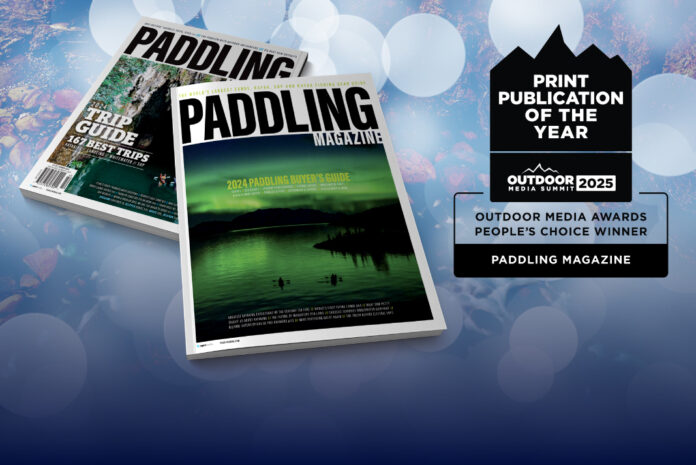
Paddling Mag Wins People’s Choice Award for Best Print Publication

Outdoor Media Awards Best Print Publication

Paddling Magazine has been named Print Publication of the Year in the People’s Choice category for the second year in a row at this year’s Outdoor Media Awards, hosted by the Outdoor Media Summit (OMS). The awards are decided by more than 20,000 public votes and recognize the best outdoor media across print, digital, podcast, video and social platforms.

Thank you to our readers for voting for us!

Paddling Magazine Outdoor Media Award
Big win for Paddling Mag! Editor-in-chief Kaydi Pyette represented the team at the Outdoor Media Awards in Durango, Colorado. | Photo: Paddling Mag

Editor-in-Chief Kaydi Pyette was onsite at the 2025 Outdoor Media Summit in Durango, Colorado, October 27-29, to accept the award in person. The three-day Outdoor Media Summit offered a packed schedule of events, combining one-on-one meetings, breakout sessions, industry discussions and packrafting with Alpacka Rafts.

Other People’s Choice winners include National Parks After Dark and Adventure Diaries (Best Podcast), Dumb Runner (Best Digital Publication), YouTuber Eva zu Beck (Best YouTube Channel), and @WomenWhoExplore (Best Social Media Handle).

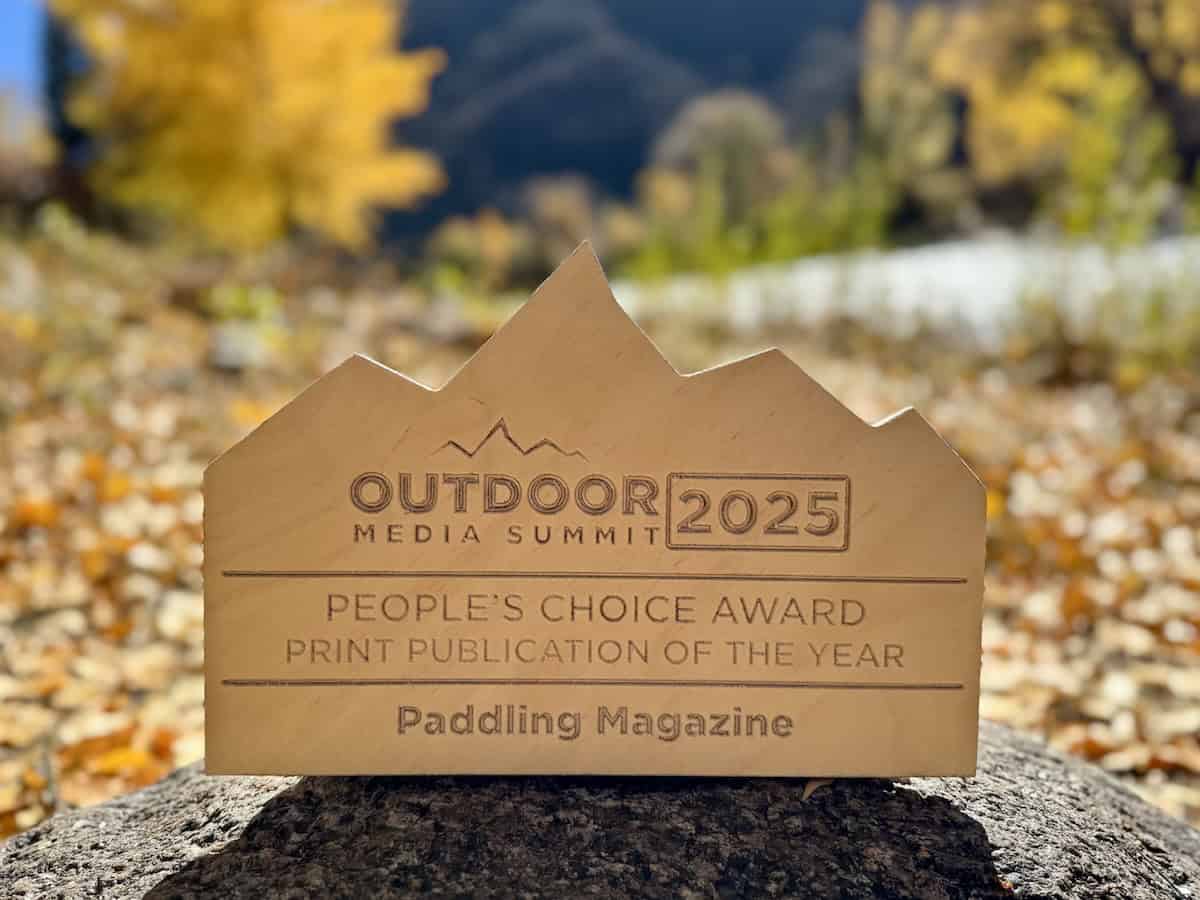
Outdoor Media Awards Paddling Magazine Print Publication of the Year
Outdoor Media Awards’ Print Publication of the Year. | Photo: Kaydi Pyette

In addition to the People’s Choice categories, OMS announced the winners of its Judge’s Choice awards, selected by a panel of industry professionals. Among this year’s honorees:

Best Outdoor Story: Alisa Hrusic for “Awe Can Do Wonders for Your Well-Being—If You Know Where to Look for It”  (SELF magazine)

Best Podcast Episode: Aaron Lutze and Dylan Bowman for “Building a Content Strategy Playbook for Events” (Second Nature)

Best Gear Story: Graham Averill for “This is the Gear my Family Used in the Wake of a Natural Disaster” (Outside magazine)

Best B2B Story: Berne Broudy for “Brave New Landscape”  (Grassroots Stories)

Best YouTube Video of 2024: Miranda Webster for “10 Rules of Hiking Etiquette I Wish I’d Known Sooner” (Miranda Goes Outside)

Get A Paddling Magazine Subscription

If you’re not already a print magazine subscriber, you can dive deeper into the world of paddling with a subscription to Paddling Magazine. If you’re passionate about paddling, you’ll love Paddling Magazine! From thrilling expedition stories to expert tips and the latest gear reviews, Paddling Magazine is crafted for enthusiasts by enthusiasts.
Subscribe now and let us bring the adventure to your doorstep.