Home Blog Page 93

6 Simple Techniques For Sea Kayaking In The Fog

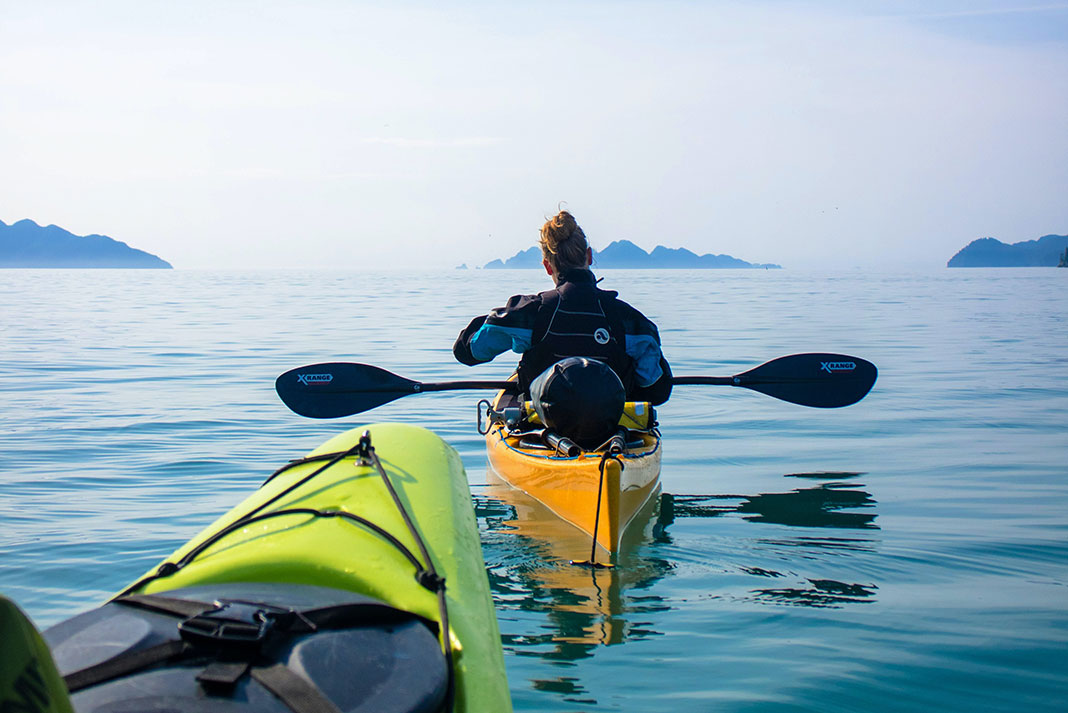
sea kayaker paddles in fog in front of small island
Feature photo: Frank Busch/Unsplash

Sea kayaking in the fog when out on big open water and navigating to an intended way-point can be intimidating even for the seasoned paddler. There are numerous variables such as wind, currents, bad weather and low visibility that can work to turn a great day on the water into a less-than ideal situation. Writer and avid kayaker Conor Mihell shares with us his tips for staying the course and reaching your intended destination.


6 techniques for sea kayaking in the fog

It’s only when we pull out a chart and compare it to reality that my friend Craig and I realize the magnitude of the endeavor we’re about to attempt. Our destination, tiny Caribou Island, a mop-topped sandbank in the heart of Lake Superior, lies 22 nautical miles from our gravel beach on the south shore of Michipicoten Island.

a sea kayaker stares into the fog that covers most of the shoreline
With careful preparation and the right skills you can keep on kayaking in the fog. | Photo: Virginia Marshall

Today, the yawning gulf of open water depicted on the chart is represented in real life by a swirling mass of gauzy fog. A quick compass bearing taken on the chart reveals the truth: To stray merely 2.5 degrees on either side of our intended bearing would see us paddling over 100 kilometers until we hit the nearest land. Even the best-made plans would have us playing a dangerous game of dice. We’re fogbound.

1 Dead reckon

Before setting off in the fog, measure the distance of your intended route using a map or chart. Then estimate your time of passage by dividing the distance by your average paddling speed. Keep tabs of your progress on the water with a wristwatch, and have a backup plan just in case your target doesn’t appear on time. This usually means a direct bearing to the nearest sizeable point of land.

2 Aim off

Always err on the side of caution when planning a low-visibility crossing. Intentionally follow a compass bearing toward a prominent landmass—or ‘backstop’—adjacent to your destination. Aiming off is especially important in currents and windy conditions, or on long crossings, where the risks of screwing up are considerably higher.

3 Trust your compass

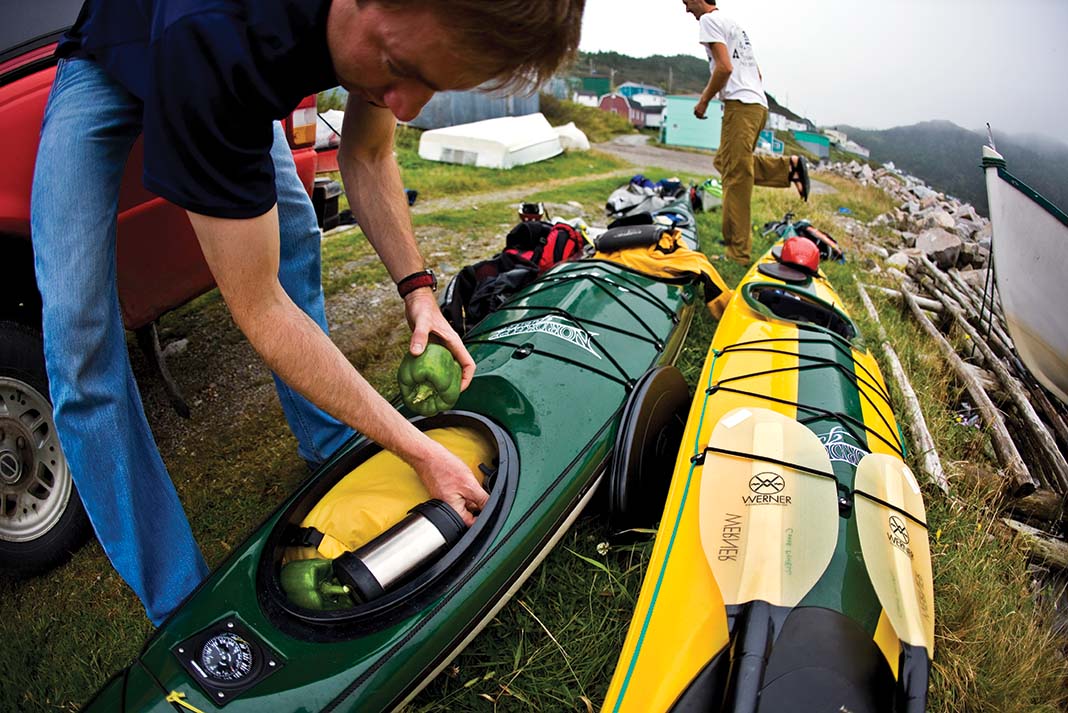
While GPS units are handy for gauging your speed, the distance from your destination, and adjusting to the vagaries of wind and current, a deck-mounted compass is your best ally in navigating low-vis conditions because of its simple, hands-free operation. So long as you’ve remembered to pack the cooking pots and canned beans in the back hatch, a compass is also extremely accurate. Deploy your rudder or skeg while following a compass course to keep on track.

4 Group dynamics

Clearly defined lead and sweep roles help while navigating in the fog. The leader follows a compass course while the paddler at the rear of the pack confirms the group’s progress on the bearing. In dense fog, visibility can be just a few feet so sticking close together to maintain visual contact is essential.

sea kayaker paddles in fog in front of small island
Visibility can be just a few feet when kayaking in dense fog, so it’s essential to stick close together to maintain visual contact. | Feature photo: Frank Busch/Unsplash

5 Rules of the road

If you must cross shipping lanes in foggy conditions, use your VHF radio to inform mariners of your intended route and time of passage. Rumor has it that placing a wad of tinfoil beneath your hat works as a radar deflector, but don’t count on its effectiveness.

6 Handrail

It’s always more interesting, safer and less stressful to paddle a few extra miles and follow the coastline rather than striking off in the fog across open water when the option exists.

This article was first published in the Spring 2012 issue of Adventure Kayak Magazine. Subscribe to Paddling Magazine’s print and digital editions, or browse the archives.


Visibility can be just a few feet when kayaking in dense fog, so it’s essential to stick close together to maintain visual contact. | Feature photo: Frank Busch/Unsplash


Want To Roll A Sea Kayak? Start Here (Video)

The two most common and effective ways to roll a sea kayak are the C-to-C method and the sweep method. Both techniques can be a little tricky to learn but are invaluable skills to have in your kayaking tool kit.

The C-to-C roll method—generally considered an easier option for beginners—is comprised of three main steps. It consists of the setup position (the kayaker leans forward, with the paddle parallel to the kayak and off to one side), the middle step (once capsized in a setup position, the paddle is moved perpendicular to the kayak, and pressure is applied to the furthest paddle blade), and the final lift (the kayaker pulls down on the blade and initiates a simultaneous hip flick to roll the kayak up).

[ View All Sea Kayaks in the Paddling Buyer’s Guide ]

The sweep method is a coming together of similar movements in one fluid motion, using paddle blade angle to generate lift. Get a step-by-step written breakdown of the sweep roll here.

Video courtesy of Online Sea Kayaking

Post-Vacation Blues: Why Returning From A Paddling Trip Sucks

woman and dog silhouetted in front of a pair of yellow packrafts
Feature photo: Patrick Hendry/Unsplash

Whenever my dog comes in from outside, he roams the house getting into trouble. He usually flips open the garbage can lids, rips apart plastic bags and old tissues, and pulls toilet paper off the roll and eats it. I suspect he’s pissed off because he’s just had a taste of what he’s missing, the canine equivalent of post-vacation blues. It’s hard to come back inside.

I have the same problem when I’ve been on a wilderness trip—I often just don’t want to come home. Sometimes it’s nice to have a flush toilet, running water and a roof to protect from the rain, but with creature comforts come the return of everyday worries.


Why returning from a paddling trip sucks

Last winter this problem became acute. I spent almost every weekend outside the city skiing, which was great except it amplified my desire never to return. Every Sunday it got harder. By springtime I’d hit a crisis, ready to quit my job and move to a ski town permanently.

Now, in the height of summer, I’m having the same problem with paddling trips. In my daily life, I have a pretty comfortable routine going. I paddle regularly, so the shifting patterns of weather, water, and solitude are part of the rhythm of my days. I read and sit at my desk and drink expensive coffee and carefully circumscribe my excursions to familiar paths, effectively reducing my metropolitan life to a small-town existence.

paddler kayaking in the a reflection of the blue sky
Every new wilderness trip brings with it the inevitable reckoning of a return to civilization.

For the most part, I avoid traffic congestion, lineups and unpleasant human interactions. It’s just five minutes to the lake, the grocery store, and the kids’ school, which I do human-powered as much as possible. And the backyard oasis is coming along, complete with a roofed boat shed and plantings to screen us from the neighbors.

It’s such a comfortable life I sometimes wonder if I should just never leave, because every new wilderness trip brings with it the inevitable reckoning, storming my mood as soon as we re-enter the city’s orbit. My personal version of eating toilet paper is to get cranky and start chewing over the same old questions.

A paddler contends with post-vacation blues

How do I remain true to my values of wanting to be in the wilderness, and yet live in the city without breaking down? At what point should you actually just follow your bliss, quit your job, hightail it for the woods, and when should you just talk yourself into a state of equanimous acceptance of the status quo?

I spent a good part of my youth resenting my parents’ complacency in the face of what I considered the intolerable blandness of their lives, a failure to make the obvious improvements that to my mind would have been easy. Now here I am, an adult like them, learning to cultivate the level of stoic acceptance they modeled.

[ Plan your next paddling adventure with the Paddling Trip Guide ]

After each paddling trip, fraught conversations with my wife about the practicalities of work and family life gradually bring me down to reality. Okay, the ideal life might not happen right away. Moving might have to wait for retirement. Or like the hordes we crawl the highway with, we could acquire real estate when our city jobs provide us with the means to become the absentee landlords of some rustic piece of earth upon which to tend our dreams of eventual escape. In the meantime, I buy gear for the next trip. That often helps. Like my dog who eventually gives up eating the toilet paper and dozes off on the living room carpet, I concede although the city life is not ideal, there is no life that is.

I can make do.

This is the truth lying between dream and reality. Often going outside puts us in touch with what we most value. But we have to be careful not to idealize the experience to the point it destroys our relationship with everything that follows. After all, the wilderness experience doesn’t always start out well. Often it’s uncomfortable—rain! bugs!—and it’s only in facing the imperfect situation we’re drawn out of ourselves and into the present and a mindset of forward-looking acceptance, gratitude and appreciation.

How to stay in your happy place

The challenge is to carry this mindset forward on the journey home and into our everyday lives. When I come home looking back on the experience as something I want to hang on to, resenting the conditions of my life, I effectively unwind all the positive effects of going into the wilderness in the first place.

To think the circumstances of my life need to be a certain way to sustain the happiness I find in the wilderness is a gross misinterpretation of the experience. This impulse mixes up the conditions of mystical enlightenment—in my case, the rivers, the mountains, the sport—with its central lesson. As soon as you try to codify what you’ve experienced into some permanent way of being, your hope of achieving it is gone. As Stephen Mitchell writes in The Second Book of the Tao, “Every ism is a wasm.”

It’s all about your mindset, stupid.

woman and dog silhouetted in front of a pair of yellow packrafts
To beat post-vacation blues, carry the tripping mindset forward into your everyday life. | Photo: Patrick Hendry/Unsplash

I’m not much brighter than my dog. His toilet paper eating is a canine version of my human angst, the chomping at the invisible chains of my daily existence I have to re-accept every time I return from the outdoors. For me to hold all this clearly in my own tumultuous consciousness when I hit the pestilent city traffic on the way home from a blissful outdoor experience is beyond the capabilities of my limited human mind.

I have to keep re-remembering this. Probably I’ve written it before and forgotten, and so now here I am writing it again. If you are like me, you’ll benefit from the repetition.

Breathe. Keep moving forward. Keep the faith.

As I would explain to my dog if he would listen, there will always be more adventures. Be grateful for the ones you’ve had, look forward to those to come.

Soon I will go paddling again. For now, I’m going out to buy more toilet paper.

This article was first published in Issue 55 of Paddling Magazine. Subscribe to Paddling Magazine’s print and digital editions, or browse the archives.


To beat post-vacation blues, carry the tripping mindset forward into your everyday life. | Photo: Patrick Hendry/Unsplash


Camping In Algonquin Park: 9 Breathtaking Campgrounds

two people pull a canoe toward their camper van in the sunlight
Explore Algonquin Park from the comfort of your campsite. | Feature photo: Courtesy Ontario Tourism

Looking to experience the magic of an overnight visit to Algonquin Provincial Park for yourself? Each of these nine Algonquin Park campgrounds is situated beside an unspoiled lake and nestled amid the park’s famous hardwood and pine forests. We’ve also included a private camping option that’s rich with amenities and just minutes from Algonquin Park’s West Gate. All nine campgrounds are centrally located along Algonquin’s popular Highway 60 corridor and easily accessed within a 3- to 4-hour drive of Toronto.

[This article is part of the Ultimate Algonquin Park Travel Guide. Find all the resources you need to plan an adventure-filled trip to Algonquin Park.]


Algonquin Park campgrounds

Rock Lake Campground

Rock Lake Campground lays farther off Highway 60 than any other developed Algonquin Provincial Park camping areas. Accessed via an 8-km gravel road, the campground occupies two pine-shaded points of land on the northeast shore of beautiful Rock Lake. What these campsites lack in seclusion from your camping neighbours (or day-trippers travelling along Rock Lake Road), they more than make up for with breathtaking views, a stunning sandy beach and sublime canoeing opportunities on island- and cliff-studded Rock Lake. The campground is also a short walk from the start of the wonderful Booth’s Rock Trail. Cyclists enjoy direct access to the eastern end of the 16-km Old Railway Bike Trail.

Rock Lake Campground is located 8 kilometres south of KM 40 on Highway 60. Amenities include 121 campsites, electrical sites and a comfort station with flush toilets, showers and laundry facilities. Those seeking a secluded camping experience should look elsewhere; however the open nature of this camping area means everyone gets to enjoy the spectacular views and sunsets. Open mid-May to mid-October.

Best campsites in Algonquin Park for: canoeing, hiking, cycling and sunsets.

View campground map

RESERVE / CHECK RATES


View this post on Instagram


A post shared by Trevor (@beard_o)

Coon Lake Campground

Tiny Coon Lake Campground is the most rustic of Algonquin Park’s Highway 60 camping areas. For those who enjoy an old-fashioned camping experience, Coon Lake offers an added bonus: a little-known side trail links campers to the Centennial Ridges Trail, a breathtaking 10-km loop that offers day-hikers what many consider the finest views in Algonquin Park. Trailheads for the equally lovely Booth’s Rock Trail and the Old Railway Bike Trail lay just down the road.

Accessed via gravel Rock Lake Road, 6 kilometres south of KM 40 on Highway 60, Coon Lake Campground offers 48 non-electrical sites and basic amenities. Campers hoping for more than a vault toilet must travel 2 kilometres south to Rock Lake Campground for shared shower and laundry facilities. Open mid-May to early September.

Best campsites in Algonquin Park for: rustic peace and quiet, tent or van camping, hiking Centennial Ridges Trail.

View campground map

RESERVE / CHECK RATES

Pog Lake Campground

Largest of the eight Algonquin Park vehicle camping areas found along Highway 60, Pog Lake Campground encompasses sprawling pine forest and generous lake and river shoreline. All of the 286 well-spaced campsites here are within a short stroll of the water, and many are perched right beside Pog Lake. This campground also boasts two beaches, direct access to the Old Railway Bike Trail and peaceful canoeing along the Madawaska River to Lake of Two Rivers or Whitefish and Rock Lakes.

Accessed from Highway 60 at KM 37, Pog Lake Campground accommodates everything from tents to large recreational vehicles. Over 100 sites offer electrical hook-ups, there is a dedicated loop for radio- and dog-free camping, and three large comfort stations have flush toilets, showers and laundry facilities. Those seeking an exceptionally secluded camping experience should reserve campsites in Pog Lake Campground’s Section C. Open May long weekend and mid-June to early September.

Best campsites in Algonquin Park for: greatest campsite selection, waterfront campsite views, canoeing and cycling.

View campground map

RESERVE / CHECK RATES


View this post on Instagram


A post shared by Daniel Laurie (@fortymoreyards)

Kearney Lake Campground

Tucked across the highway from Pog Lake, the much smaller Kearney Lake Campground offers two loops of campsites on either side of Kearney Creek at the head of clean, clear Kearney Lake. Two fine swimming beaches, easy access to the park’s family-friendly Old Railway Bike Trail and a more rustic camping experience are the highlights here.

Located just north of Highway 60 at KM 36.5, Kearney Lake Campground has 104 campsites, flush toilets and showers. This campground does not offer electrical hook-ups, but some sites can accommodate recreational vehicles. Open May long weekend and mid-June to early September.

Best campsites in Algonquin Park for: swimming, family cycling and rustic camping.

View campground map

RESERVE / CHECK RATES

Lake of Two Rivers Campground

The oldest and best known of Algonquin Park campgrounds, Lake of Two Rivers Campground features an excellent swimming beach and central location close to many park attractions. Lake of Two Rivers is an excellent starting point for canoeists—from the campground, you can paddle up the Madawaska River toward Cache Lake or across Lake of Two Rivers into Pog Lake and beyond. Meanwhile, cyclists enjoy direct access to the Old Railway Bike Trail, with bicycle rental and repair available right at the campground entrance.

[ Paddling Trip Guide: Hailstorm Creek Wildlife Viewing Guided Canoe Day Trip with Algonquin Outfitters ]

Located near KM 32 adjacent to Highway 60, Lake of Two Rivers Campground offers 241 campsites—many with electrical hook-ups suitable for larger RVs. Amenities include flush toilets, showers and laundry facilities, as well as the Two Rivers Store, which has groceries, camping and fishing supplies. The campground’s open white pine forest means campers should expect less seclusion than other Algonquin Park campsites. Highway traffic noise can also be heard at some sites. Open May to late October.

Best campsites in Algonquin Park for: bike and canoe rentals without leaving your campground plus easy-access routes for both. Watching the sunrise.

View campground map

RESERVE / CHECK RATES


View this post on Instagram


A post shared by Hailey (@wildcanoes)

Mew Lake Campground

Mew Lake Campground is Algonquin’s only campground open year-round, making it perfect for those who want to experience the park in all four seasons. For those who love snow, but aren’t ready to try camping in the cold, Mew Lake also has a handful of heated yurts available for rent. Don’t forget your ice skates and hockey sticks—when temperatures remain below freezing, the park maintains a lighted, outdoor ice rink for campers near the comfort station.

Two exceptional trails are accessible directly from the campground: bring bicycles (or rent bikes at the adjacent Two Rivers Store) to enjoy a leisurely ride along the 16-km Old Railway Bike Trail. Ride to the west end of the bike trail, then hike up the Track and Tower Trail to take in a premier vista of Algonquin Provincial Park. During snow season, the Railway Trail is groomed for cross-country skiing, snowshoeing and fat-biking.

Centrally located at KM 30 on the Highway 60 corridor, Mew Lake Campground offers all modern amenities as well as seven yurt rentals. Many of the campground’s 131 campsites are tucked beneath towering white pines, while some sites are more open with scattered trees. Features electrical hook-ups, radio- and dog-free camping, nice swimming beach and a winterized comfort station with flush toilets, showers and laundry facilities. Open January to December.

Best campsites in Algonquin Park for: experiencing winter camping and activities in the park. Combining biking and hiking (or snowshoeing).

View campground map

RESERVE / CHECK RATES

Canisbay Lake Campground

Nestled away from any road noise on the south shore of a lovely backcountry lake, Canisbay Lake Campground offers fully serviced vehicle camping with excellent access to Algonquin’s labyrinth of interior canoe routes. Paddle from the campground’s sandy swimming beach to one of Canisbay Lake’s 16 backcountry campsites for a scenic picnic or refreshing dip away from it all. Trail enthusiasts will find five day-hiking trailheads nearby and direct access from the campground to the Minnesing Mountain Bike Trail.

Located north of Highway 60 at KM 23, Canisbay Lake Campground offers 242 spacious and well-secluded campsites suitable for everything from tents to larger recreational vehicles. Roughly 60 sites offer electrical hook-ups, while campers looking for an exceptionally quiet experience can reserve sites on the campground’s radio- and dog-free loop. Situated in hardwood forest, the campground features comfort stations with flush toilets, showers and laundry facilities. Open May to October.

Best campsites in Algonquin Park for: avid mountain bikers who love fall colours, stargazing and seclusion.

View campground map

RESERVE / CHECK RATES

Tea Lake Campground

Tea Lake Campground is the nearest vehicle camping to Algonquin’s popular Canoe Lake and Smoke Lake access points, making this small campground a convenient choice for canoeists heading out into the interior of the park. Paddle from your campsite or the campground’s beach to either of these larger lakes in just a couple of kilometres.

[ Paddling Trip Guide: View all paddling trips in Algonquin ]

Located adjacent to Highway 60 near KM 12, Tea Lake Campground offers 42 campsites set in mixed hardwood and evergreen forest. This compact campground is one of the park’s least busy—it offers flush toilets, shower and laundry facilities, but no electrical hook-up sites. Reserve a lakeside site for the quietest camping; sites closer to the highway experience traffic noise. Open May to early September.

Best campsites in Algonquin Park for: paddle access to iconic Canoe Lake, Smoke Lake and the Oxtongue River.

View campground map

RESERVE / CHECK RATES

Algonquin Pines Campground

For travellers heading to Algonquin Park from Highway 11 and points south or west, the privately managed Algonquin Pines Campground in Dwight offers a convenient base that’s equidistant to the park’s West Gate (20 km) and the amenities of Huntsville (23 km). Along with 98 spacious, serviced sites for tents, trailers and RVs, Algonquin Pines has 10 cozy canvas “glamping” tents and a rustic cabin for rent.

Nestled amid shady pine trees at the intersection of Highway 60 and Highway 35, Algonquin Pines Campground is two minutes from Dwight Public Beach. On-site features include a renovated comfort station with showers and laundry, heated pool, volleyball court, playground, mini-putt, hiking trails and a camp store. Open May to October.

View campground map

RESERVE / CHECK RATES


Backcountry camping & canoe campsites

Experience Algonquin Park at its most rugged and wild: a vast landscape of maple hills, rocky ridges, spruce bogs and thousands of lakes, ponds and streams. Enter the backcountry by paddle and portage to sample more than 2,000 kilometres of canoe routes and over 1,900 canoe campsites. Additionally, Algonquin has three backpacking trails that await those seeking seclusion in the park on foot. Discover some of our favourite Algonquin backcountry sites here: Plan Your Dream Backcountry Camping Trip Now.


Glamping in Algonquin

In recent years, glamping—also known as luxury camping—has exploded in popularity. Glamping accommodations offer first-time campers a comfortable segue into more rustic traditional camping, and glamping is also a great way for experienced campers to enjoy a bit of pampering! Basically, luxury camping means camping with many of the same comforts you’d have at a high-end hotel—with birdsong and natural beauty just outside your tent door. Expect a spacious canvas-walled tent on a wooden platform, complete with a real bed, linens, duvet, lighting, deck chairs and more cozy touches conceived to make sleeping outdoors as cushy as possible.

Bartlett Lodge is the only resort offering glamping inside Algonquin Park. However campers can choose from a growing number of luxury camping retreats located on the edges of this vast park. Minutes from the Highway 60 East Gate park entrance, Four Corners Algonquin offers some very unique accommodations in a beautiful forest setting. For easy access to Algonquin Park’s western access points, check out Algonquin Pines Campground (see listing above), the Northridge Inn on Lake Bernard and Northern Edge Algonquin Nature Retreat on Kawawaymog Lake.


Winter camping

Algonquin Provincial Park is a terrific destination for first-time winter campers. On Highway 60, Mew Lake Campground offers the park’s only developed winter camping area—complete with firewood, winterized comfort station, an ice surface for skating and access to groomed trails for Nordic skiing, snowshoeing and fat biking.

If you’re not sure about winter camping, or don’t have the right equipment, Algonquin Outfitters can provide expert advice and gear rentals. Mew Lake Campground also has seven heated yurts available for rent year-round—a perfectly comfy solution for would-be winter campers who aren’t quite ready to sleep in the snow! Learn more about winter in the park here.


Fees

Ontario Parks charges fees for all developed and backcountry camping in Algonquin Park. Expect to pay around $42–$48 per night for a vehicle campsite, or $54 for an RV site with electric hook-up. This covers one vehicle and a maximum of six people per campsite. Backcountry camping fees are charged per person: around $12 for each adult, $6 each for those under 18.


Campsite bookings and reservations

Campgrounds in Algonquin Park fill up quickly—reservations are strongly recommended to avoid disappointment. Reservations can be made up to five months prior to your arrival date (for example, you can book February 1st if you plan to arrive July 1st), and can be site-specific for developed campgrounds.

Book campsites online at www.ontarioparks.com, or by calling 1-888-ONT-PARK (1-888-668-7275).


Campground maps

Viewing individual campground maps will aid you with campsite selection for your stay. Follow the links in each of the above campground descriptions to see maps of these camping areas. For even more maps of the park, visit Don’t Get Lost In The Woods: A Guide To Algonquin Park Maps.


Explore Algonquin Park from the comfort of your campsite. | Feature photo: Courtesy Ontario Tourism


Top 10 Tips For Paddling Safety

people kayaking on the coast
Feature photo: Thun Sothea/Pexels

1 Wear a life jacket

Everyone, even strong swimmers, needs to wear a life jacket at all times when on the water. It is extremely difficult to put a life jacket on once you fall into the water. Even a light wind can blow any paddlecraft away from you, faster than you can swim.

Always wear a USCG-approved Level 70 or Type III life jacket designed for paddling.

2 Wear the appropriate leash when stand up paddleboarding

A leash should be worn to keep your SUP with you when you fall off. An ankle leash is appropriate for surfing, but not on rivers, in swift currents or any conditions where being tied to the board could prove dangerous. For those activities, use a quick-release leash that attaches to your life jacket.

3 Paddle sober and smart

Never mix alcohol and paddling. Coast Guard and state BUI (boating under the influence) laws apply to all vessels. This includes canoes, kayaks, SUPs and rafts.

4 Stay clear of all other vessels

Know the “Rules of the Road” Navigation Rules that govern all boat traffic and stay out of the way of all other vessels.

Never assume that power boaters can see you. Avoid high-traffic areas whenever possible. Proceed with caution when you can’t avoid paddling near boats. Dress for visibility.

5 Dress for immersion, not air temperature

Your body loses heat much faster when immersed in cold water than it does when dry.

Avoid cotton clothing like t-shirts and jeans; they retain water and accelerate cooling when wet. Synthetic fabrics, or wool, are generally a better choice. If the water is very cold (60° fahrenheit or less), you should wear a wetsuit or drysuit.

6 Check the weather

Plan for changing weather conditions. Prepare for the worst case. Don’t forget to check tide, currents, or river levels.

7 Carry a whistle (and a light for night use)

Every paddler should have a whistle attached to his/her life jacket. Carry a light at night. Consider carrying a distress signal device.

8 Carry a waterproof VHF radio, use your phone only as a backup

A handheld VHF marine band radio allows you to communicate with the Coast Guard and other boat traffic. Use Channel 16 only for hailing and emergencies. The radio should be waterproof, because it is virtually certain to get wet.

A cell phone, even if in a waterproof case or sealable bag, might not work, so don’t rely on it as the primary means of emergency communication.

9 Know the local hazards

Check navigation charts before you launch. Check with those who have local knowledge of man-made and natural hazards, e.g. low-head dams; sweepers, strainers and undercuts; tides and currents; and rocks and shoals.

10 Education: Get some!

Take a paddling safety course from the American Canoe Association (ACA), your local paddling shop or outfitter, or other reputable source. Take a boating safety course from the U.S. Coast Guard Auxiliary, U.S. Power Squadrons® or your own state’s boating agency. Take on-the-water skills training.

Safer Paddling Campaign Logo


‘Brainwaves’ Explores The Connection Between Kayaking And Mental Health

Whitewater kayakers are no strangers to injury. Many of us have experienced a dislocated shoulder, a broken bone, a sprain, or a concussion on the water–or know someone who has.

Folks who’ve endured injury also know that the aftermath can often be more traumatic and burdensome than the injury itself. Elite freestyle kayaker Brooke Hess perhaps knows this better than anyone–after suffering not one, but two, life-altering injuries in the past 5 years.

The newest film from NRS and Western Pictures, Brainwaves, is a story about the highs of kayaking, the lows of injury, and the internalized mental struggle that occupies the space in between.

Where it started

In 2017, Hess was absolutely killing it; she was strong, confident, and performing better than ever. In January of that year, she spent a month training in Uganda for Unleashed competition and landed her best dry-head airscrew yet in the process. From Stakeout to Unleashed to Montréal Eau Vive, she stood on multiple podiums beside her friends and paddling idols.

But when she returned to Uganda to train for the next Unleashed competition, her competitive streak came to a sudden halt. She contracted an undiagnosed severe digestive illness. Unable to hold down almost all foods, she lost a whopping 20 lbs in mere weeks.

After returning to the US and adjusting to her new restricted diet and lifestyle, she struggled to grapple with the loss of kayaking. “I had an unhealthy amount of FOMO, it wasn’t helping my body heal,” Hess wrote in a Duct Tape Diaries blog post. “I eventually turned off all social media in an effort to ease the negative feelings. I didn’t want to see photos, videos, or anything relating to kayaking.”

In her third-year post stomach illness, Hess suffered a nasty concussion. She took a nasty hit to the head on the landing of 30-foot Huka Falls in New Zealand. Things took another turn for the worse.

The road to recovery

Hess hides an ongoing battle that few people know about. Behind her fun-loving spirit and ambitious character, she is plagued by depression. This Mental Health Awareness month, she’s ready to share her story with the world.

4 Best Places To Kayak With Whales

whale surfaces in front of a campsite with kayaks on the beach
Feature photo: Gary Luhm

Nature has a way of making us feel very small sometimes, and no creature makes that point more dramatically than the mighty whale. After all, what better way to put life’s problems in perspective than watching a huge marine mammal go about its daily business? Whale watching is even more impressive from the seat of a kayak, so visit these hotspots and get a viewing experience you won’t soon forget.


Best Places to Kayak with Whales

1 Saguenay, Quebec

SPECIES: Beluga, Minke, Finback, Blue, Humpback
SEASON: July to mid-September

The Saguenay St. Lawrence National Marine Park protects two distinct components: the Saguenay Fjord with steep walled cliffs, brackish water, strong currents, 15-foot tides and ghostly white beluga whales; and the St. Lawrence River estuary with ice cold saltwater, 13-foot tides and minke, blue, finback and humpback whales.

kayakers watch whales
The St. Lawrence River estuary is an excellent spot to kayak with minke, blue, finback and humpback whales. | Photo: LPerron/Pixabay

Camp at Marine Paradise near Les Escoumins and daytrip along the St. Lawrence coast toward Les Bergeronnes (22 km) and Tadoussac (40 km), or explore the fjord from Anse de Roche. Several companies provide guided trips. Due to tidal conditions and currents, only experienced paddlers should venture on their own.

—Mike Petzold


2 Three Capes, Oregon

SPECIES: Gray
SEASON: March to August

Every winter, 18,000 gray whales head from the Bering Sea to birthing lagoons in Mexico. In March and April they truck north again, hugging the shore to protect their young from hungry great white sharks and orca. The Three Capes—Cape Meares, Cape Lookout and Cape Kiwanda—protrude into their path. During peak migration, 30 whales go by every hour.

There are no guided trips: this is exposed coastal paddling. For Meares, launch at Oceanside and paddle north; for Lookout, launch at Cape Lookout State Park and head south; for Kiwanda, launch at Pacific City and head north. Kiwanda is the friendliest; Cape Lookout, with a challenging launch and tide rips, is the most advanced.

—Neil Schulman


3 Bay Of Fundy, New Brunswick

SPECIES: Finback, Humpback, Minke, Right
SEASON: Mid-August to October

Begin your day with a half-hour ferry ride to Deer Island at the mouth of the Bay of Fundy. En route to Campobello Island’s picturesque East Quoddy Head Lighthouse, paddle among small islands sheltering perfect lunch stops.

[ Plan your next wildlife viewing kayak adventure with the Paddling Trip Guide ]

Monstrous finback, playful humpback and diminutive minke whales feed in these waters and up close encounters aren’t uncommon. If you are really lucky, you may even see an endangered North Atlantic right whale—gentle giants whose global population numbers just 470 individuals.

After a break on Campobello, it’s back to Deer Island for the 5 p.m. ferry back to the mainland.

—Doug Scott


4 Johnstone Strait, British Columbia

SPECIES: Orca, Humpback, Minke
SEASON: July to early September

Johnstone Strait, along the northeast inside passage of Vancouver Island, is the preeminent location in North America for viewing orcas, or killer whales. During the summer salmon run, some 200 resident orcas pursue the spawning fish through the two-mile-wide strait. Launch at Telegraph Cove, where you can rent kayaks or join a guided trip from veteran outfitters like Sea Kayak Adventures and North Island Kayak.

whale surfaces in front of a campsite with kayaks on the beach
Johnstone Strait is the preeminent location in North America for kayaking with orcas, or killer whales. | Feature photo: Gary Luhm

To maximize sightings, paddle a half-day east to Kaikash Creek, keeping inside the kelp line to avoid disturbing the whales. Set up camp here for prime viewing near the Robson Bight Ecological Reserve, a no-paddle zone famous for its orca rubbing beach.

—Gary Luhm

This article was first published in the Spring 2015 issue of Adventure Kayak. Subscribe to Paddling Magazine’s print and digital editions, or browse the archives.


Johnstone Strait is the preeminent location in North America for kayaking with orcas, or killer whales. | Feature photo: Gary Luhm


Chev Dixon Set To Embark On 300-Mile Navigation Of Hudson River Estuary (Video)

On May 7-15, 2022, multi-disciplinary paddler Chev Dixon will embark on a two-part, 300-mile exploration of the Hudson Valley Estuary using only human-powered equipment–running, hiking, cycling, paddleboarding and kayaking.

Dixon’s journey will start on land in New York City (NYC) and, on foot, he will travel to Albany. Next, the challenge circles back to the NYC Battery by river (paddleboarding and kayaking).


View this post on Instagram


A post shared by Chev Dixon (@negus_chev)

Dixon will be the first person to accomplish this journey using these different forms of human-powered transportation.

[ View all Guided River Trips in the Paddling Trip Guide ]

The mission of the expedition is to encourage and inspire inner-city youth to be active, challenge themselves and explore the great outdoors. In addition, Dixon wishes to promote local adventures and challenges without traveling too far.

Find out more about the project and donate to the fundraiser here.

Results Are In For The 2022 Carolina Cup

2022 Carolina Cup Technical Sprint Champions Connor Baxter and April Zilg – Robert B Butler

WRIGHTSVILLE BEACH, NORTH CAROLINA, USA – Crossing the finish line just four seconds ahead of four-time champion Danny Ching of California, Australian Michael Booth seized his third title in the grueling 13.2-mile Carolina Cup Graveyard Race.

Meanwhile, North Carolina’s April Zilg powered to her second consecutive Graveyard Race victory with an almost one-minute margin over internationally ranked elite paddlers Kimberly Barnes of Florida and Candice Appleby of California.

Michael Booth, Australia, 2018, 2019, 2022 Carolina Cup Graveyard Race Champion – Robert B Butler

“It feels amazing and surreal to come back and repeat the Carolina Cup win on the actual Graveyard course,” said Zilg. “In 2021, the course was modified due to severe weather conditions. I am usually happy and prevail in very challenging conditions. This year was challenging for me because the conditions were better, and that’s not usually my strong suit. So, I knew that it was going to be a very tough race. But it went well.”

[ View all Canoes in the Paddling Buyer’s Guide ]

Attracting amateur and professional athletes from the South Pacific, Asia, Central America, South America, Hawaii, Europe, Canada, and the United States, Carolina Cup is one of the largest and most prominent paddle sporting events globally. Organized by the Wrightsville Beach Paddle Club and presented by Kona Brewing Company, five days of exhibitions, demos, clinics, and races were based at Blockade Runner Beach Resort, April 27-May 1, 2022.

April Zilg, NC/USA, 2021 and 2022 Carolina Cup Graveyard Race Champion – Robert B Butler

The Graveyard Race Top Ten

Men’s Elite Division

  1. Michael Booth, Australia
  2. Danny Ching, CA, USA
  3. Shuri Araki, Japan
  4. Ty Judson, Australia
  5. Connor Baxter, Hawaii, USA
  6. Itzel Delgado, Peru
  7. Eri Tenorio, Brazil
  8. Daniel Hasulyo, Hungary/Thailand
  9. Bodie Von Allmen, Oregon, US
  10. Tim Oliver, Ontario, Canada

Women’s Elite Division

  1. April Zilg, North Carolina, USA
  2. Kim Barnes, Florida, USA
  3. Candice Appleby, California, USA
  4. Stephanie Schideler, Long Island, NY
  5. Abby Baker, California, USA
  6. Juliette DuHaime, Argentina
  7. Emilie Fournel, Montreal, Canada
  8. Regan Littell, New Jersey, USA
  9. Jenna Blackburn, North Carolina, USA
  10. Madeline LeBlanc, Ontario, Canada

This year, the International Canoe Federation and Carolina Cup partnered to have the Technical Sprint and Graveyard Race serve as pre-qualifiers for the ICF World Series in Poland. Four ICF world champions competed in the 2022 Carolina Cup races – Connor Baxter, Michael Booth, Noic Garioud, and Ty Judson.

[ Plan your next adventure with the Paddling Trip Guide ]

Hawaii’s Connor Baxter and North Carolina’s April Zilg won their second consecutive Carolina Cup Technical Race this weekend. Technical races are on an oceanfront course entering and exiting the surf and testing all the paddler’s skills in one event, including surfing, speed, and steering capabilities.

“For spectators, the Technical Sprint is the most exciting event for SUP when it comes to ocean racing,” said Event Manager and announcer Dan Gavere. “Unlike 2021, we had both elite and recreational racers in the Technical Sprint this year, and I believe it will continue to grow.”


2022 Carolina Cup Technical Sprint Champions Connor Baxter and April Zilg – Robert B Butler

The Technical Sprint Top Finishers

Men’s Division:

  1. Connor Baxter, Hawaii, USA
  2. Noic Garioud, New Caledonia
  3. David Leao, Brazil
  4. Shuri Araki, Japan
  5. Ty Judson, Australia
  6. Michael Booth, Australia
  7. Daniel Hasulyo, Hungary/Thailand
  8. Eri Tenorio, Brazil
[ Browse the widest selection of boats and gear in the Paddling Buyer’s Guide ]

Women’s Division:

  1. April Zilg, North Carolina, USA
  2. Candice Appleby, California, USA
  3. Abby Baker, California, USA
  4. Juliette DuHaime, Argentina
  5. Susan Krupa McCune, California, USA

With environmental issues top-of-mind to most watersport athletes, Carolina Cup attendees were attracted to an exhibit by Mechanical Engineering students from North Carolina State University. “We are introducing our new sand removal technology,” said NCSU student Edward Byers, CEO of a senior project design team. “It’s an air-power shower that uses a light mist and air to remove sand. The AirWave uses less than 1-percent of the water; it’s cheaper to operate than a traditional beach shower; and it allows people to go inside or get in their car and not be soaking wet and uncomfortable.”

“The positive impact on the environment in water conservation and a reduction in wastewater could be significant,” said Mary Baggett, co-owner of Blockade Runner Beach Resort.

Complete lists of Carolina Cup race results with age groups and divisions are available at these links:

Click for Harbor/Money/Graveyard OC Surfski Results

Click here for Graveyard Elite Race Results

Click here for the Carolina Cup Media Archive

Contact:

Mark Schmidt
Race Director
Wrightsville Beach Paddle Club
P: 910-620-6914
E: Mark@WrightsvilleBeachPaddleClub.com

Robert B Butler
Communications & Public Relations
NCPressRelease.org/campaigns
RBButler.com

Learn How To Win At SUP Racing

SUP yoda says, fast if you don’t care about being fast you can only be. Hrmmm. | Photo: Michael Yoshida

When I discovered the SUP racing scene, I thought, “This is going to be a breeze.” I figured most racers wouldn’t be experienced paddlers, with decades of recreational canoeing and kayaking under their belts like me. Add to that my cardio fitness as a marathoner and Ironman and I assumed I’d pretty much own the podium.

I’m ashamed now to have approached the sport with such hubris. I got my ass whupped, and wounded pride had me wondering, “What is the secret to winning a SUP race?”


Learn How to Win at SUP Racing

Standup paddleboarding is widely considered relaxing, but it didn’t start out that way for me. Being naturally competitive, it wasn’t long after I started before I wanted to see how fast I could go.

At my last SUP race, I stormed off the finish line and threw my paddle on the ground.

“How’d it go?” my wife asked.

“Terrible,” I said. “I don’t know why I even bother. I’m never doing this again.”

SUP’s unique challenges befit a ninja warrior: Being stable enough to stand on due to relatively wide and flat hulls, SUPs are inherently slow and inefficient as racing craft. The hull speed limit of a paddleboard is governed by a law of rapidly diminishing returns that sees you enduring a long and painful race, expending 100-percent effort and rarely gaining or losing much ground against other racers once the starting sprint has shaken out. To be a good paddleboard racer, you need the musculature of an MMA fighter, the balance of a gymnast and the mental fortitude of a yogi.

Then there’s me.

SUP yoda says, fast if you don’t care about being fast you can only be. Hrmmm. | Photo: Michael Yoshida
SUP yoda says, fast if you don’t care about being fast you can only be. Hrmmm. | Feature photo: Michael Yoshida

“Come on in, the water’s fine!”

Many SUP racers are boardsports veterans who’ve spent more years balancing on a surfboard or windsurfer. When the water gets rough, or you need to nimbly walk to the back of your board to kick it around a buoy turn, these guys and gals dance on water while I straggle in like a wet rat after multiple dunkings.

I’ve had a race announcer introduce me as “the official water quality tester.” Truly.

The good paddleboard racers who didn’t grow up surfing generally come out of competitive paddlesports; sprint canoe and kayak jocks who spent decades hitting the gym and learning how to really paddle fast. Altogether different than my lollygagging around quiet bays on backcountry trips.

Most of the races I go to are dominated by honest-to-God Olympians. One Olympian in particular, Larry Cain, is the 1984 Olympic gold medalist in sprint canoeing. He lives in my neck of the woods and is today one of the world’s top SUP racers, despite being in his fifties. He’s instantly identifiable at local races as the speck ahead in the distance.

Seeking help from a SUP racing master

Sick of SUP racing driving me to tears, childlike temper tantrums and various phases of self-flagellation—blaming myself, blaming my equipment, blaming the wind, blaming everything—I decided to eat some humble pie, put my head down and train with a little help from the master himself.

I joined Larry’s online coaching service through which he dispenses not only challenging weekly training plans, but also valuable advice with insight into his phenomenal success and longevity as a competitive paddler. It boils down to a zen-like paradox: you can only be fast if you don’t care about being fast. Thanks, Buddha.

Larry has had his share of setbacks. Among his friends he was the slowest to master the racing canoe as a teenager. He would routinely push off the dock and endure the embarrassment of testing the water quality himself. He hasn’t won or placed in every race, yet something else has kept him competing for four decades. A pure love of paddling.

[ Paddling Buyer’s Guide: View all racing & training paddleboards ]

“There’s no place I’d rather be than out on the water,” he said. “I’ve had some amazing days out there this past year. I’ve paddled up the river until it was frozen and I was out on Lake Ontario all winter. I’ve been out there every day in the spring. I’ve seen the seasons change and ice form on my board and then my board gets so hot I could fry an egg. Every single day is different and every single day it’s a gift to be out there.”

What matters is attitude—on the board, and in life, something I have a lot to learn about. It’s no surprise Larry is a much more positive person than me in general. Nor does he have time for people who want to throw a hissy fit because things didn’t go their way on race day.

SUP racing is a privilege to participate in

In a post on his PaddleMonster coaching forum, he writes, “I am a firm believer that as adults we should all be mature enough to leave the medals and ribbons to kids’ races. We shouldn’t need something like that to tell us when we’ve done a good job or make us feel recognized for our accomplishments. It pains me to see grown adults behave like little kids when they don’t get a medal or a ribbon for placing. I have to turn away.”

“It pains me to see grown adults behave like little kids
when they don’t get a medal or a ribbon for placing.”

I felt a burning shame reading this, imagining that he was picturing my finish line antics. I’m embarrassed to admit to my expectations of podium glory, when guys like Larry have truly earned it by grinding out miles every day, in all seasons, for years, motivated more by the joys of being on the water than by the hope of some hardware bling at the finish line.

“Sport is such a wonderful thing and, especially as adults, a true privilege to participate in,” writes Larry. “We should be doing it for how it makes us feel, how it helps our health, because it’s fun and because it helps us meet and hang out with great, like-minded people. We should be able to set our own deeply personal goals and strive to accomplish them; goals that are based on performance and not placing, and derive personal satisfaction from the journey we take towards achieving those goals, without the need for outside recognition and a trophy we can put on our mantle.”

I have no better words to express the life lessons the frustrations of paddleboard racing have taught me. I’ve copied them into my journal and highlighted them, as something to remember when I wake up in the morning and head to the water.

Yes, paddleboard racing is tough, and I may never win a medal. But I’ll keep doing it at least until these lessons fully sink in, and probably much longer, just for the love of it.

Paddling Magazine Issue 65 | Fall 2021

This article originally appeared in Paddling Magazine Issue 65. Subscribe to Paddling Magazine’s print and digital editions here, or download the Paddling Magazine app and browse the digital archives here.


SUP yoda says, fast if you don’t care about being fast you can only be. Hrmmm. | Feature photo: Michael Yoshida