Home Blog Page 142

Meet The Appalachian Trail’s Only Ferryman

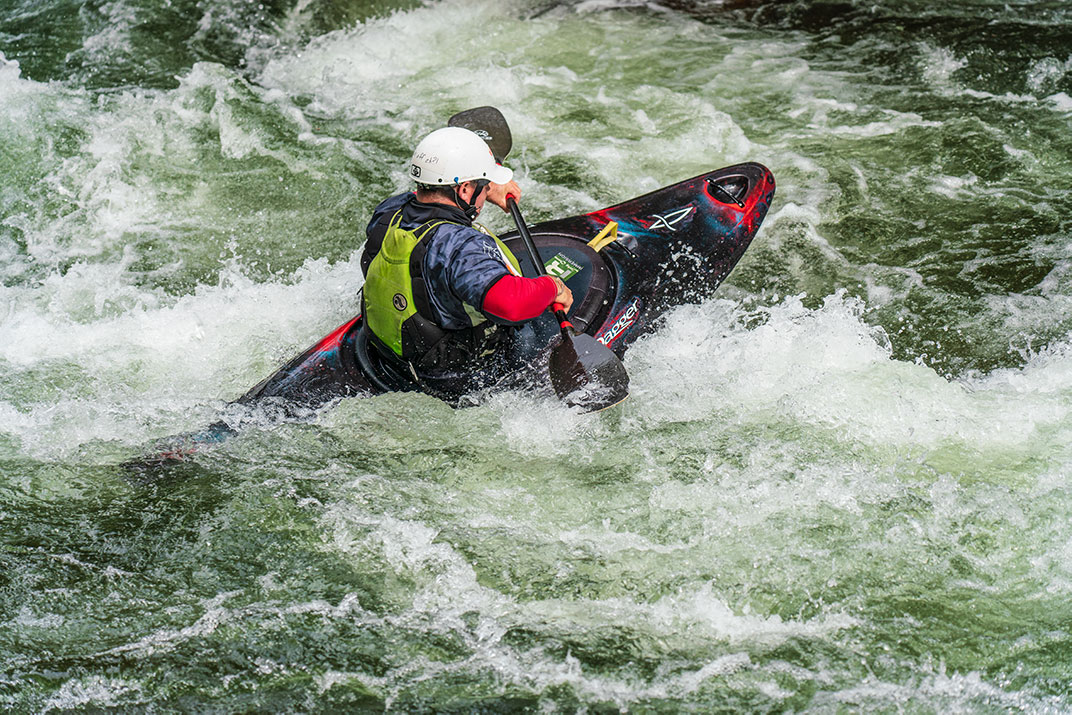
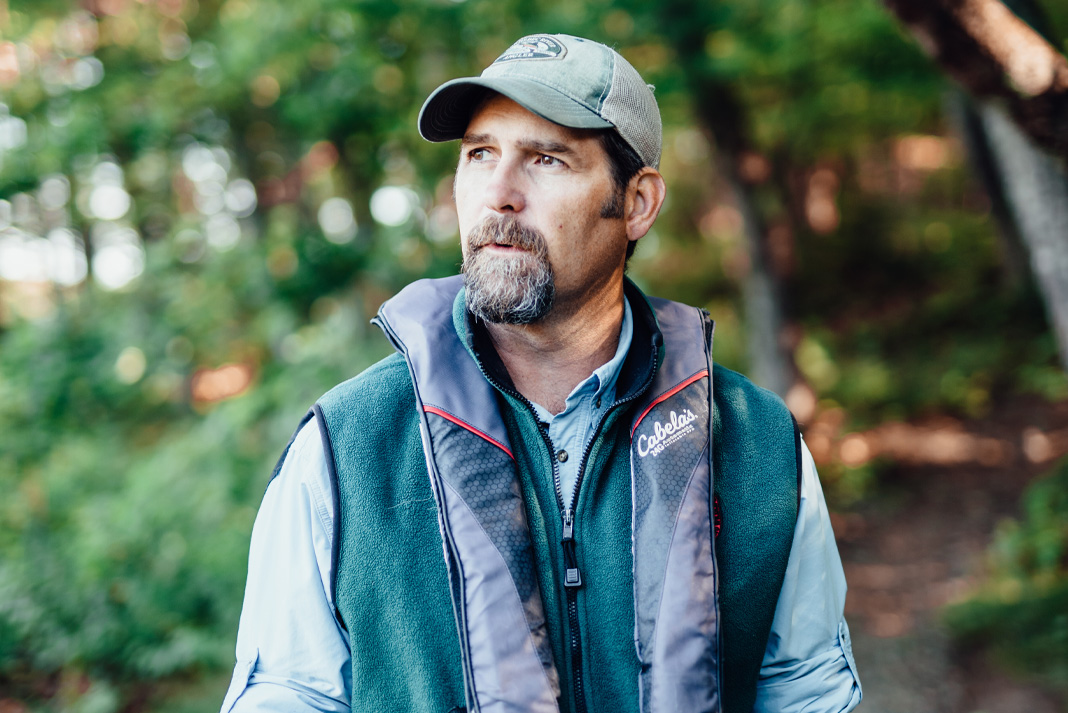
Just another day at the office. | Photo: Scott Martin

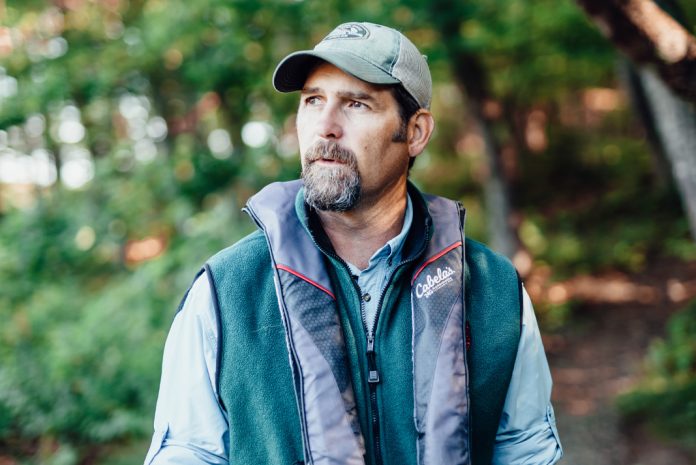
It’s doubtful a paddler could describe a piece of water in more intimate detail than registered Maine Guide Greg Caruso, speaking of the Kennebec River near his home in the small North Woods town of Caratunk. Caruso has ferried a canoe across the same 100-yard stretch of river dozens of times per day since 2016. As the only ferry service on the Appalachian Trail, the famous 2,190-mile footpath from Georgia to Maine, Caruso and his 17-foot Old Town Tripper serve as a lifeline for some 2,500 hikers per year, May through October.

Caruso’s service is paid for by the Appalachian Trail Conservancy, and free for backpackers. He’s the fourth ferryman to hold the position since 1987, when a drowning made the canoe crossing the only legal way for hikers to traverse the fluctuating, dam-controlled waters of the Kennebec. The 50-year-old Caruso started guiding rafts in 1992 and has since pieced together work as an outdoors professional—managing a rafting outfitter, guiding hunting and fishing trips, ski patrolling at Maine’s Sugarloaf Resort and maintaining snowmobile trails.
Appalachian trail ferryman
Just another day at the office. | Photo: Scott Martin

The Appalachian Trail opportunity came up in 2016. Caruso perked up when he realized the Kennebec crossing is only three miles from his house. Finally, he could spend more time with his family—and bring his golden retriever to work.

“I have to admit, my first thoughts were, ‘Do I really want to paddle a bunch of smelly hikers back and forth all day?’” he laughs. “After learning more about the job, and considering things with my wife, who knew I was ready for a change, we decided to give it a go. After all, they couldn’t smell much worse than a bunch of raft guides in August, could they?”

Caruso is busiest in the morning when hikers on either side of the river line up for the ferry service. He equips them with PFDs and requires they sign a waiver. Then, in twos, hikers, their packs and sometimes trail dogs pile into Caruso’s canoe, which has been modified with a center seat instead of the typical carrying thwart. A strip of white duct tape on the inside of the hull replicates the traditional blazes used to mark the footpath. “Many hikers like to see that blaze and take photos,” notes Caruso. “Some even touch it.”

The crossing takes barely a minute, with perhaps another 10 minutes for unloading and reloading on either end. “Usually, I paddle my rear end off back and forth for a good hour or so due to the rush hour traffic, then things mellow out a bit,” he says.

However brief his interaction with the hikers, it’s often enough time for the waterman to catch a glimpse of long-distance backpackers’ life on the trail.

“One of the first hikers I met had the trail name ‘Handmade,’” recalls Caruso. “The guy walks up with no shoes, some very worn and partially torn up clothes sort of like the Incredible Hulk would wear, carrying a huge exterior frame pack and a Bowie knife with a handmade handle tied to the pack. I asked him what happened to his shoes and he said he’d been hiking like that since his shoes wore out somewhere in Virginia. He was planning on hiking the rest of the way barefoot. It was a memorable first encounter.”

Another generous backpacker offered Caruso a curious snack, whipped up while he waited for a ride across the Kennebec: A breakfast sandwich consisting of bacon, cheese, bread, and fried Oreo cookies. “Food is a coveted item on the trail, and it was great he thought of me with his interesting concoction,” says Caruso.

As a lifelong Maine resident, Caruso places his role as Appalachian Trail ferryman in a historical context.

During idle moments on the riverbank, he recalls childhood memories exploring the North Woods with his grandfather. Often, he ponders the historical significance of the Kennebec—from the saga of Benedict Arnold, the American colonel who led a grueling military invasion of Quebec by way of the Maine wilderness in 1775, to the lyrical descriptions of Henry David Thoreau.

“I certainly never imagined I would be doing this line of work,” says Caruso. “I love the peace of paddling, watching the eagles, casting a line, and of course meeting the hikers from all over the world. Maine usually tops their list of favorite places, and I have to agree.”

This article was first published in Paddling Magazine Issue 62. Subscribe to Paddling Magazine’s print and digital editions here , or browse the archives here.


Just another day at the office. | Photo: Scott Martin
Why Your Kayak’s Specs Probably Don’t Matter All That Much, Really

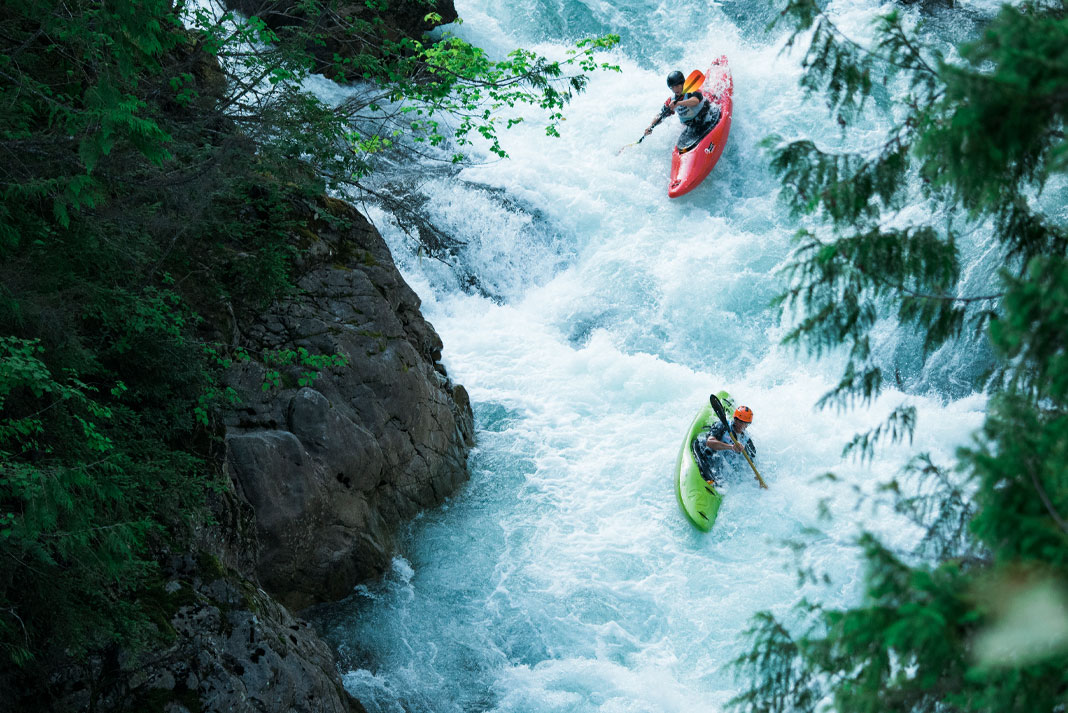
Choose your next kayak by running a river, not running to Google. | Photo: Daniel Stewart

A while back, I worked for a prominent international kayak company. I was fortunate to see the development process of a new whitewater kayak. Like others, our company was constantly innovating, improving existing designs and doing our best to compete in a challenging environment by bringing the best designs to market.

Over months of design and hundreds of hours of CAD work, tens of thousands of mouse clicks, hand-built plugs, prototype molds, field testing, plug revisions, more testing and more CAD, our design team inched closer and closer to the boat we hoped would breakthrough performance barriers and become a hit.

Once the boat launched, we went to the trade shows. We talked to paddlers and made the pitch. We answered questions. Questions like: “How many gallons is it?”

Really?

How big is this thing? Not, why is the bow shaped like that, or how is the rocker profile different from previous designs, or what does the edge do on a squirrely eddyline?

Nope.

It always seemed like a funny question to me. Why volume? In fact, why ask about specs at all?

We’re all looking for answers and trying to make good decisions. Deciding on a new whitewater kayak can be challenging. When it comes to plunking down our hard-earned cash on a new boat, we want to be confident we’re making the right choice.

There are many ways to create this sort of confidence. One of them is by comparing the specs of a new boat to one we already know. But does a simple list of specs give us a feel for how the boat will perform? I don’t think so.

For example, how much does length matter between two similar models? Length tends to vary more by boat category than model. River runners are longer. Playboats are shorter. Race boats are really long. Does an inch of difference between models tell you much about how the boats compare? All things being equal, a longer boat will be faster, but those other things rarely are equal.

It’s a similar story for width. We all know wider is more stable and narrower is less. But there are many other factors in stability—cross-section shape, volume and rocker, to name a few—so an inch of difference isn’t going to tell you much about how the boat will perform. This model is 24 inches wide and that one is 23—so what?

And how about weight? It counts when you’re putting a boat on the roof or hiking on the portage trail. As with length, boats of the same category are often similar weights. Creekers with beefy bulkheads and center pillars tend to weigh around the 45-pound mark, while playboats with foam foot blocks tend to come in around 30 pounds. Yes, bigger boats are heavier than smaller boats.

Within a category, do lighter boats outperform heavier ones? Not necessarily. If you put a 150-pound paddler in a 50-pound kayak, you’ve got 200 pounds on the water. Cut the boat weight down by five pounds and you’re down to a combined weight of 195. That’s less than a three percent difference. Likely, only a pro will notice a performance difference based on such a small variation.

Why kayak specs don't matter
Choose your next kayak by running a river, not running to Google. | Photo: Daniel Stewart

Which brings me back to volume. Can anyone make a good comparison between two boats based on volume? Say one creek boat is a couple of gallons bigger than another. How volume will affect performance depends on where the volume is added and how it changes the shape. There are just too many variables. A single number doesn’t tell you enough about the design of the boat to be useful.

On top of this, sometimes volume numbers from different manufacturers don’t line up. You can calculate volume off the CAD drawings, or you can measure volume by filling an empty hull with water and reading the volume off a flow meter. Depending on the method preferred by the manufacturer, you’ll likely end up with slightly different numbers.

Finally, take recommended paddler weight. Recommended paddler weight is almost entirely subjective. Some people like to paddle lower volume boats. Others want to have a little more boat around them. You can pad out a big boat to make it fit or cram your feet into a tiny boat for better squirts. This means recommended paddler weight has the potential to expand to an absurd range.

Often it seems like the recommended paddler weight range corresponds directly with how many sizes of a given design a company makes. For example, the Dagger Axiom is a popular river running playboat available in four sizes, with paddler weights for each Axiom size running in 60- to 80-pound increments. The Dagger Green Boat is arguably the bestselling model in the longboat category, available in one size, and its recommended paddler weight is 140 to 260 pounds—a range of 120 pounds encompassing much of the adult population.

I’m not singling out Dagger—most manufacturers, including Liquidlogic, Pyranha and Jackson, do the same. If you have four sizes, you can fine-tune the ranges. If you’ve only got one size, it has to be a one-size-fits-most model.

So, if specs don’t tell us the full story, how do you know if a kayak is right for you? You have to do the legwork.

Part of that legwork involves talking to people who’ve paddled the boat. When a design first comes out, those people are likely to work for the company. Later, once it’s been on the market for a while, it might be your paddling friends. You have to factor in that opinions are more subjective than recommended weight ranges. People are often loyal to a brand. Skill level varies wildly. No two people have the same combination of skill, size and preferences. On top of this, most folks will naturally want to say favorable things about a boat they already own. After all, none of us wants to think we’ve chosen unwisely.

Talking to people is a start, but it isn’t a solution. The only way to decide if a boat is right for you is to try it yourself.

Though purchasing boats online is increasingly popular, the best thing you can do is go to a shop and sit in the boat yourself. Don’t worry about the length, width or volume specs on the tag. Figure out if the outfitting is comfortable for your body shape. Is the cockpit deep enough for your thighs? Do you have enough foot room? Does it feel too big? Too small?

If it feels good, demo the boat. A flatwater demo is a good start. On flatwater you can tell how much effort it takes to hold the boat on edge, how well it tracks and turns and how easy it is to roll. It’s a start.

The proof is on the river. If you want to be confident about how a kayak is going to perform in whitewater, you need to paddle it in whitewater. Arrange a loaner, rental or demo on a stretch of the river well within your skill level. If you can, paddle the boat back-to-back on the same run with your current kayak. Try to hit the same lines. Get a feel for how the two designs are different.

And if you’re new to kayaking? Start by taking a class. The kayaks you’ll paddle in an introductory course are chosen to be forgiving to new paddlers. Once you’ve done a day or two of instruction, you’ll have a much better idea of which boat you want to surf on a wave than you would have received from surfing the web.

Specs can be a starting point for your kayak buying experience, but they’re not a shortcut. We can read the specs, check the charts and sift through the reviews, but that won’t tell us how a boat will feel to us. How you feel about a kayak is a unique combination of your size, skills, desires and destinations. We’re all different. No two people will connect with a boat or a stretch of river the same way.

To know what’s right for you, you have to experience it firsthand, for yourself, in all its messy, chaotic and glorious subjectivity. Take it to the river. And forget about the specs.

Contrarian Brian Day has been paddling kayaks and sharing unsolicited opinions about outdoor gear since the early ‘90s. Please direct your rebuttals to editor@paddlingmag.com.

This article was first published in Paddling Magazine Issue 62. Subscribe to Paddling Magazine’s print and digital editions here , or browse the archives here.


Choose your next kayak by running a river, not running to Google. | Photo: Daniel Stewart

3 Reasons You Should Bring Your SUP To Mysterious Myanmar

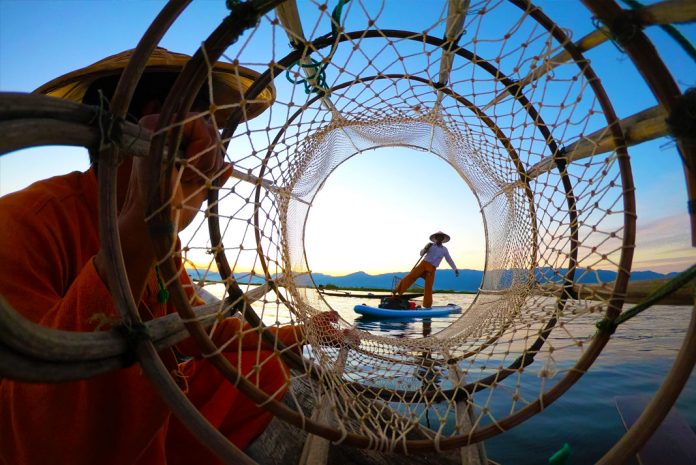
Worlds collide on Myanmar's Inle Lake where Traditional fishermen still travel in small, wooden, motorless boats. | Photo: Jim Martinello

Certain moments stay with you forever. This one at sunset with the local Intha fishermen of Inle Lake in Myanmar is one.

A visit to Myanmar offers a unique glimpse into rich Buddhist tradition, ancient culture and stunning natural beauty. I spent two and a half weeks exploring the country by motorbike with an inflatable paddleboard strapped on the back. First, I traveled to the Mergui Archipelago in the south, to paddle amongst its 800 beautiful islands, and then motored to Bagan to take in the iconic sight of its 3,000 stunning temples. I was delighted to enjoy some chill time at Inle Lake after. This region is known for this serene lake—13 miles long and seven miles wide—and a popular tourist attraction. I had read much about its fringed marshes and floating gardens, where stilt-house villages and Buddhist temples rise above the water, but books can never really compare to how it is in real life.

Arriving in the late afternoon, I pumped up my board just before sunset. Setting out into the evening light felt like a dream. The water was glass, serenely calm, and every paddle stroke a moment of peace and release.

Myanmar by SUP
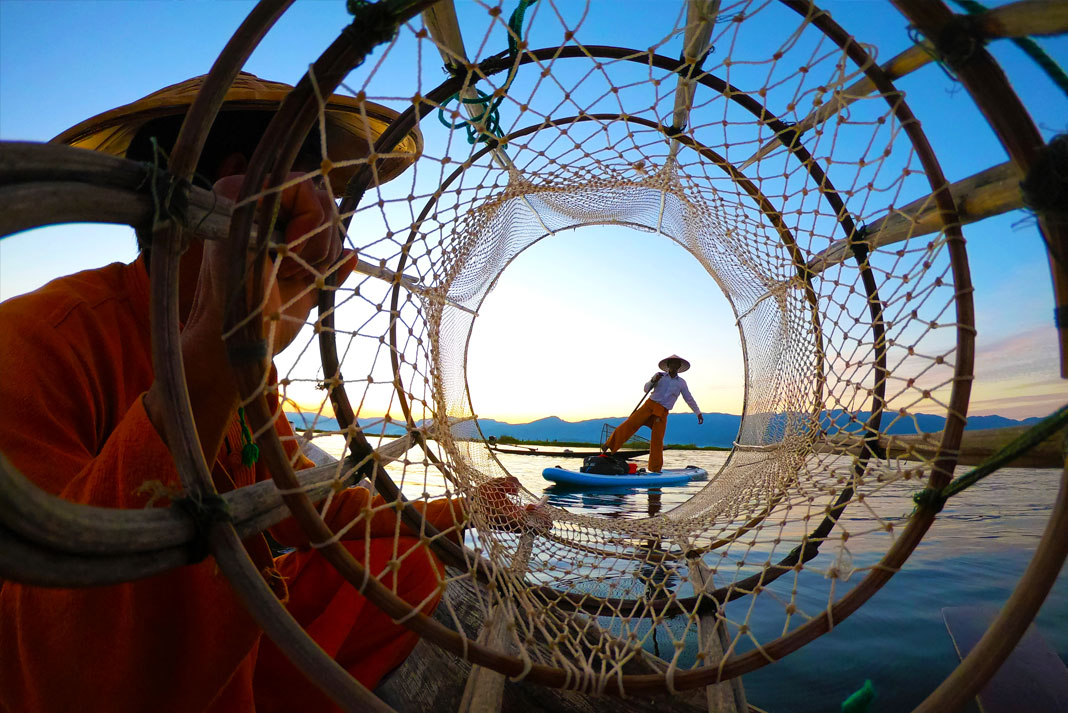
Worlds collide on Myanmar’s Inle Lake where Traditional fishermen still travel in small, wooden, motorless boats. | Photo: Jim Martinello

Soon after setting out, I came across some local fishermen and witnessed their unique technique of single-leg rowing and fishing. The Myanmar fishermen in this region are known for practicing a distinctive rowing style, which involves standing at the stern of their narrow, wooden fishing boats on one leg and wrapping the other leg around the oar for propulsion. This unique style evolved out of necessity. The lake is covered by reeds and floating plants, making it difficult to see above them while sitting. The one-legged technique provides the rower with a view beyond the plant life and reeds and allows them to keep one hand free to deploy their distinctive conical fishing nets.

It is a seriously delicate balancing act. I tried to mimic it a few times but ended up falling in the lake. The skills of the fishermen are taught starting in childhood and acquired over many years of practice. They make it look easy.

Though we shared little common language, the two men were keen to let me hop aboard and did their best to give me a lesson in using the nets to catch fish and in their unique rowing style. In exchange, I shared with them my inflatable paddleboard—a concept they couldn’t believe at first but loved it once they tried. In just a few short moments of instruction, they were paddling in such sweet style. Together we shared a laugh that will stay with me forever.

Jimmy Martinello is a photojournalist based in Squamish, British Columbia.

This article was first published inPaddling MagazineIssue 62. Subscribe toPaddling Magazine’s print and digital editions here , or browse the archives here.


Worlds collide on Myanmar’s Inle Lake where Traditional fishermen still travel in small, wooden, motorless boats. | Photo: Jim Martinello

Mexico Is The Ultimate Destination For Whitewater Kayaking

Dropping a waterfall while whitewater kayaking in Mexico
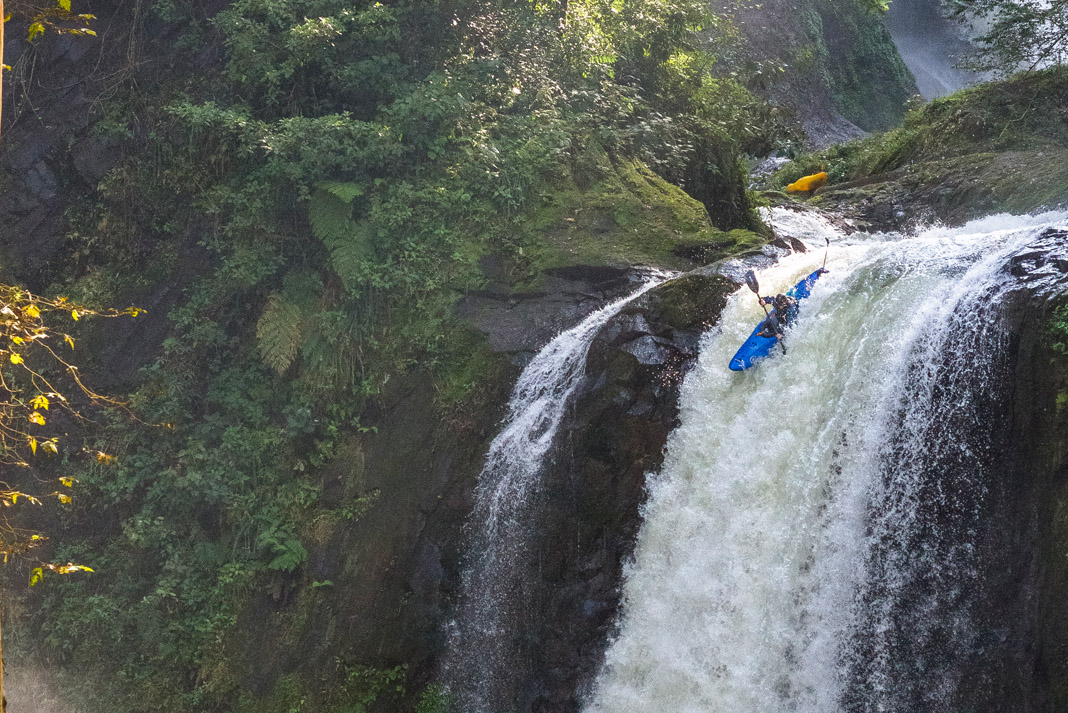
Petr Civrny drops Dirty Sanchez. | Feature Photo: John Webster

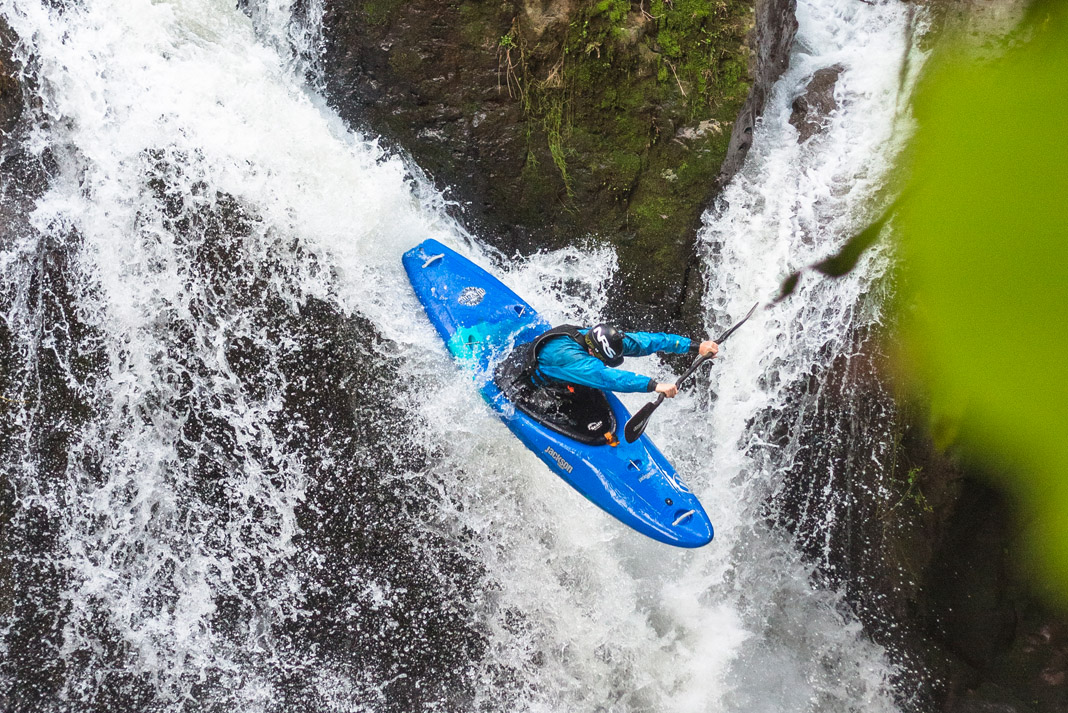
Mexico may be the best-kept secret on the continent. For broke paddlers, it offers up a cornucopia of epic sights and thrills, and easy logistics for a discount price. In particular, the city of Tlapacoyan near the Gulf of Mexico is quickly becoming a whitewater kayaking mecca. Boasting multiple 60-foot tall drops, deep canyons and jungle scenery, it is without a doubt one of the cheapest yet memorable whitewater trips you can take in North America.

If you live on America’s West Coast like me, you’ll know how grueling November can be. Yes, the Pacific Northwest can flush due to winter rain. But, if you’re looking for any other action there is little. November can feel like a delayed hangover from the summer season—I’m left wondering why all of my friends are sick, and why I’m feeling like I can’t move off the couch. Usually, I spend much of the month daydreaming about escaping. But if you’ve got little cash to fly overseas and no option to take extended time off work, is it possible? No problemo.

Visiting Mexico in search of great whitewater kayaking

I made last-minute plans to head to Mexico for 10 days last November. After flying into Mexico City, friends and paddlers Alec Voorhees, Evan Moore and I jumped onto a local bus to travel to Tlapacoyan, a five-hour drive from the country’s capital.

[ Plan your next Mexico kayaking adventure with the Paddling Trip Guide ]

Seeing the expansiveness of Mexico City was impressive, even from a bus window. With a population of 8.8 million, Mexico City is one of the world’s largest cities. Safety in Mexico off the tourist resorts has a pretty terrible reputation in the American media. However, we were soon to witness the friendliness of the locals—and their curiosity thanks to our large plastic boats—which put us at ease.

When in Tlapacoyan

We arrived in Tlapacoyan in the middle of the night, boats on our shoulders. We found a cab driver brave enough to strap two large kayaks onto his tiny vehicle and soon arrived at our home base for the next week and a half: hostel and rafting outfit, Aventurec.

The city of Tlapacoyan is located in the Eastern part of Mexico. It is a great home base for those wanting to experience the Alseseca, Filobobos and Jalacingo rivers. With a population of 100,000 it’s a sizable city, but has an unspoilt and friendly feel. Surrounded by forested hills and pre-Columbian ruins, it’s home to the massive but almost unknown sites of Filo Bobos, and also a center of citrus fruit production.

Aventurec lies on the outskirts of town, a friendly outpost to both newcomers and annual regulars. Nestled up against the jungle, this beautiful retreat makes for a relaxing place to come back to after a day on the river.

Waking up to foreign birds and insects heralding the morning, we filled up on plenty of carbs from the buffet. Alongside Alec and Evan, Czech friends Matej Holub and Petr Civrny joined in on the two weeks of fun. Our plan was to hit multiple sections of the Alseseca and Jalacingo, both classics in the area.

Our kayaking guide in Mexio

A couple weeks before we flew to Mexico we hired Israel Celis Mesura as a guide. Cousin to world-renowned boater Rafa Ortiz, Mesura was key in showing me to the lips of waterfalls and running shuttle for the rest of the crew. Mesura has shown plenty of crews around the Tlapacoyan area, including the film crew for Ortiz’s Chasing Niagara film project.

He’s the guy to know for local intel on all the best runs and how to get there in the Tlapacoyan area. From Aventurec to the put-in of the Big Banana section of the Alseseca it’s just 30 minutes via lush mountain roads. From here we saw the vast countryside around Tlapacoyan. Dense green banana tree foliage were punctuated by vividly colorful buildings—it felt like Mexico at its finest. At the portage path heading down into valley we came across a school yard.

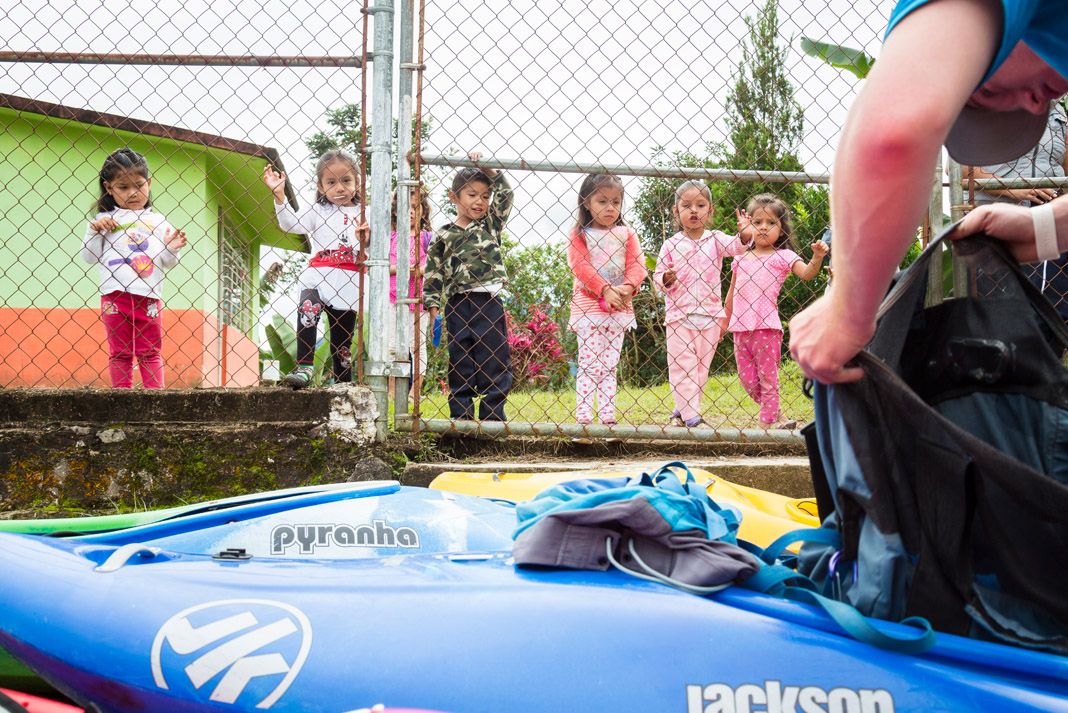
The kids observed our brightly colored kayaks and group of gringos in silence. It was apparent this wasn’t new to them, but probably more interesting than math class.

Mexico’s best whitewater kayaking

Legendary Big Banana

Down the slippery jungle path, I followed the crew to the base of the notorious Big Banana Falls, also the put-in to the Big Banana section. Local paddler Rafa Ortiz and Spaniard Aniol Serrasolses were the first to drop 130-foot Big Banana Falls in 2010. Back then it was the second-highest waterfall descent, outmatched only by 189-foot Palouse Falls in Washington. Big Banana’s pool below the falls has to be one of the most beautiful put-ins in the world and just downstream is some healthy gradient.

Mexico granted us good weather—ironically, not such a great thing due to the rivers being rain dependent. November is not the greatest month for whitewater kayaking in the northern hemisphere, but it is typically great for Mexico. November is the start of the rainy season around Tlapacoyan and beyond. It’s hot and humid, and the rain brings the most important part of the equation for anyone wanting to have a good time.

The photogenic Truchas drop

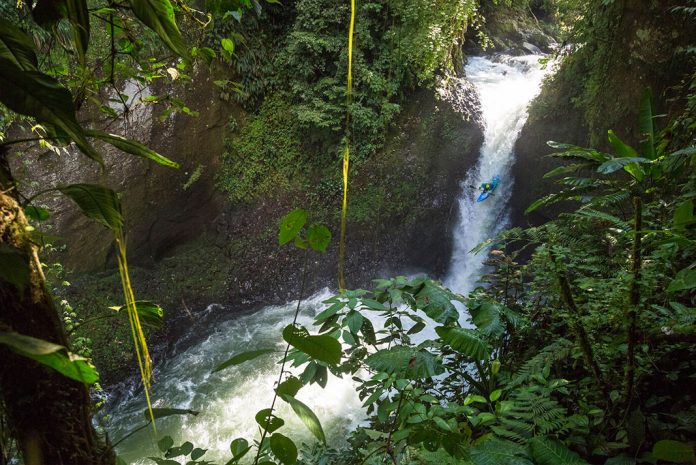
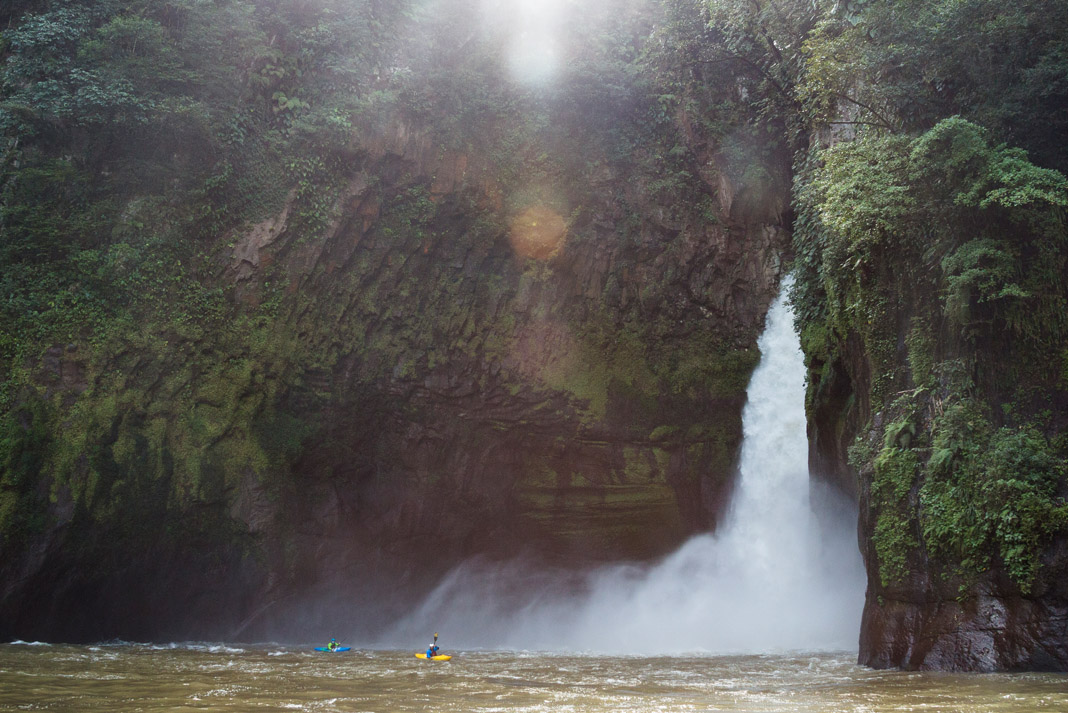
Flows were perfect, the crew ambitious and Mesura was happy to help set up ropes. Truchas lies deep in the Alseseca canyon and requires whoever is willing to descend its 60-foot drop to rappel down to the river just upstream of it. It was 97 percent logistics, rappelling and climbing, to three percent kayaking all day, but none of the guys regretted spending a day in this majestic canyon looking up at Mexico’s prettiest waterfall.

Two weeks on two rivers might sound like a lot, but my mind was blown with how much gradient and sections the Alseseca alone has. Don’t be intimidated by big drops you see on many YouTube Mexico video edits. If you like your boating less hairy, the roadside section of the Alseseca provides creeky class IV. It’s a short section most kayakers run laps on. Other class IV runs include the neighboring Jalacingo, which offers excellent gradient with clean waterfalls but some treacherous caves if lines are botched, and the Rio Oro and Filobobos.

Whitewater kayaking in Mexico is a trip to remember

Mexico is full of adventure. The locals are friendly. The tacos are delicious. And the whitewater kayaking in Mexico is otherworldly—there aren’t many places like Tlapacoyan where you can easily paddle several waterfalls in a day. Finally, November doesn’t look half bad after all.

This article was first published in Issue 55 of Paddling Magazine. Subscribe to Paddling Magazine’s print and digital editions, or browse the archives.


Petr Civrny drops Dirty Sanchez. | Feature Photo: John Webster


Explore Urban Kayaking On The Detroit River

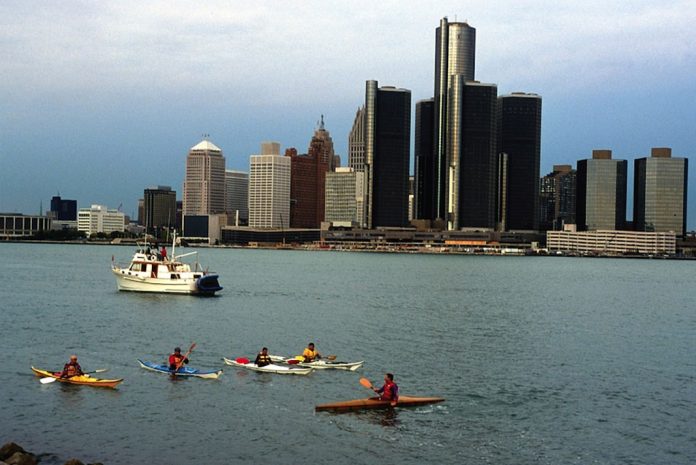
A group kayaking in front of the Detroit skyline on the Detroit River
Feature Photo: Steve Lutsch

Dividing Detroit, Michigan, and Windsor, Ontario, the Detroit River flows through the fifth largest urban area in North America. From Lake Huron down to Lake Erie, the water drops almost three metres, with an impressive flow of 120,000 cubic feet per second—more volume than the Niagara River at the other end of Lake Erie. For urban paddlers, kayaking the Detroit River is a classic big-city experience that ranks with New York City and Chicago.

Detroit River kayaking in three parts

Think of the Detroit River in three sections, each of which offers a different kayaking experience: the upper and most urban section from Lake St. Clair down to the Ambassador Bridge; the midsection of industrial Detroit; and the lower section chock full of islands and waterfowl habitat teeming with birds. Keeping to channels with the best flow, the entire 50-kilometre (30-mile) trip from Lake St. Clair to Lake Erie takes four to five hours.

[ Plan your next kayak day touring adventure with the Paddling Trip Guide ]

Upper Detroit River: Surf, zoo and parks galore

The upper river flows from east to west, and from the river’s edge standing in Windsor you look due north to Detroit. The prevailing westerly winds blow opposite the current and build impressively huge waves—surf kayakers can get their fix in comfortable water temperatures that reach 25 Celsius (80 Fahrenheit). There are some long sections of steel sea wall blocking the river exit, so it’s essential to plan exit points carefully.

Windsor, more so than Detroit, has embraced its river. The city motto—”The river and the land shall sustain us”—attests to its extensive public riverfront access and parklands. Kayak Cove, located just east of Lakeview Marina in Shanfield Shores Park, is the main put-in at the top of the Detroit River. The cove has been used as a free kayaking access point for well over 20 years and is the starting point for a number of great Detroit River day-paddling options.

For a short jaunt, explore the Peche Island nature park right across from Kayak Cove. This former provincial park is the hub for local paddlers, with beaches, canals and a Carolinian forest habitat hosting nesting great horned owls and a pair of bald eagles.

Downstream via the Peche Island channel is Belle Isle, a city park on the American side designed by Frederick Law Olmsted, who also designed New York’s Central Park. Among the attractions are the Dossin Great Lakes Maritime Museum, an aquarium, a zoo, the Detroit Yacht Club, a public beach and the old Detroit Boat Club—home to the oldest rowing club in North America. Many American paddlers access the river here.

Passing south of Belle Isle, keep near the channel markers in Fleming Channel and run with the three- to four-knot current downstream to the International Peace Fountain—a wonderful floating fountain off Coventry Gardens and Reaume Park that provides a refreshing shower on hot, humid days. There is a parking lot with washroom and refreshment facilities here and Goose Bay Park, less than 100 metres downstream, offers a break in the steel seawall for an easy pullout. You can take out here or paddle back to Kayak Cove—along the shore, out of the main flow—for a 10-kilometre round trip.

For the great urban downstream paddle between the cities, continue down to the Ambassador Bridge. If reflective waves and erratic conditions are not your forte, do this trip early in the day. At the foot of Lincoln Road just downstream from the Hiram Walker Distillery and the large white grain elevators, local paddlers have successfully lobbied for a safe river exit complete with a stone beach and washrooms. Beyond here on the Canadian side is five kilometers of premiere parkland all the way down to the University of Windsor campus and the Ambassador Bridge. You’ll paddle overtop of the Windsor–Detroit car tunnel and the 100-year-old twin railway tunnel and take out at Chewitt Beach parking lot at McKee Park, just past the Ambassador Bridge.

Middle Detroit River: Steel mills and Yankee troops

Kayakers normally only paddle the 10-kilometre middle section if they are kayaking the whole Detroit River. This is the old industrial and port section—Detroit’s steel mills and factories. The river here bends and flows south. Along the Canadian shore is the oldest permanent European settlement in Ontario. On the U.S. side sits old Fort Wayne where Yankee troops once gathered to fight the south during the Civil War. Much of this area was also the terminus of the Underground Railroad for slaves escaping to Canada.

Lower Detroit River: Land of floating pitas

The Lower River begins in the town of La Salle, a bedroom community below Windsor on the Canadian side. At the foot of Laurier Drive across from the top of Fighting Island is a put-in with parking. At Fighting Island, a one-time battleground between Canada and the U.S., you have a choice of several channels. The express run is the main seaway channel down the west side. There are also two eastern channels passing many private marinas, a sailing club and the Windsor Crew Rowing Club. Below Fighting Island and Turkey Island, the Detroit River opens to resemble a lake with natural wetlands. Waterfowl often flock so thick that they darken the sky, and thousands of tundra swans winter-over here. There’s a handy put-in just inside the Canard River at the public Walter K. Ranta Marina. On the American side is Grosse Ile, the river’s largest island and an affluent Detroit suburb, tethered to the American shore by two swing bridges.

[ See the widest selection of kayaks in the Paddling Buyer’s Guide ]

As you near the picturesque town of Amherstburg, Ontario, the seaway splits into the upstream-bound Amherstburg Channel and downstream-bound Livingstone Channel. This stretch has the fastest and most powerful current with the flow directed into the shipping lanes. From Livingstone Channel, swing through Hole-in-the-Wall and into the sheltered mooring pools at Hidden Lake and Crystal Bay. Here among the islands, between the channels, is one of a very few areas that the limestone bedrock rears to the surface in this part of Ontario. This is one of the most popular areas with recreational boaters, who come out by the thousands on hot summer days. It is so busy that food service boats float around offering everything from cheeseburgers to pita wraps.

Out of the main river flow at the tip of land on the east side of Hidden Lake, wait for a thousand-foot-long freighter to come upstream in Livingstone Channel. When these behemoths kick it up to overpower the current their displacement is incredible. The large whirlpools and boils will give you one wild ride. Fort Malden, on the Amherstburg shore, was a strategic post to control the mouth of this waterway for the British during the war of 1812. The Kings Navy Yard where much of the Lake Erie fleet was built is now a beautiful park. A Canadian Coast Guard station is just downstream.

There are many beaches along the road south of Amherstburg, but most are private. Your best bet for Amherstburg access is the town ramp at the foot of Gore Street at Duffy’s Motor Inn and Tavern. You must park on a side street. The island off Amherstburg is one of the most historic islands in all the Great Lakes. Bois Blanc, named by French explorers in 1670, is more commonly called Bob-lo Island. For almost 100 years, until the 1980s, the steamboats Columbia and St. Clair transported tourists from Detroit and Windsor to the island’s amusement park. Today, Bob-lo is being developed as an upscale community with multimillion-dollar homes.

[ Plan your next Great Lakes paddling adventure with the Paddling Trip Guide ]

A long finger of land protruding from Bob-lo Island toward Lake Erie forms the White Sands Beach Conservation Area. From here, you are almost out of the Detroit River and have begun kayaking into the western basin of Lake Erie. You have paddled the crossroads at the centre of a continent, an adventurous and historic destination that should be on every paddler’s list of urban hot spots.

This article was first published in the Spring 2004 issue of Adventure Kayak Magazine. Subscribe to Paddling Magazine’s print and digital editions, or browse the archives.


5 Steps To Plan An Epic Whitewater Kayak Expedition

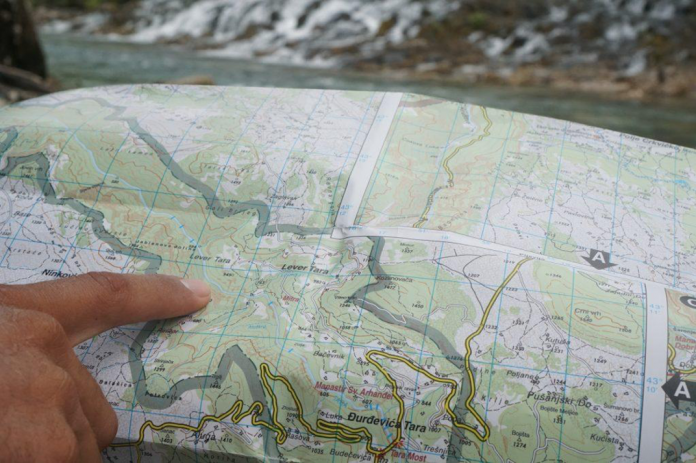
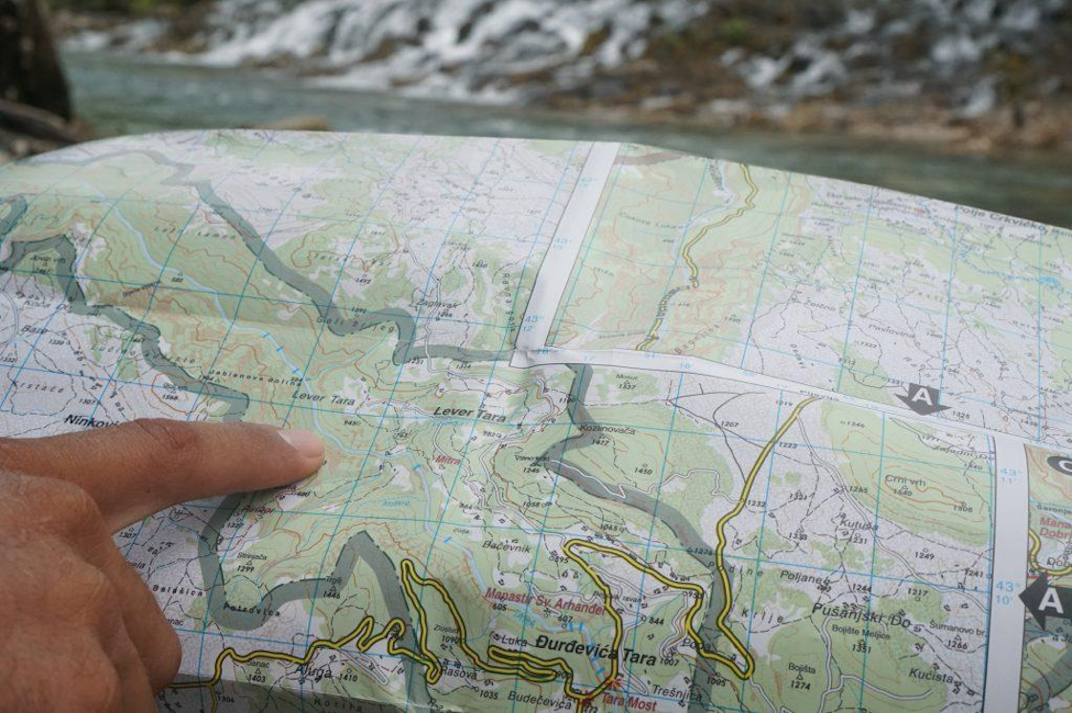
Pointing at a map while planning a kayak expedition
Feature Photo: Pyranha

Your kayak can take you places most people will never see. Going into unknown and less traveled locations and completing a trip you researched, planned and executed carries a great sense of accomplishment. It also gives you a deeper understanding of the unique waters and cultures you’re headed to enjoy, so follow our checklist and make your kayak expedition planning a breeze.

Every whitewater kayak expedition is different

There can be drawbacks to these endeavors, especially the exploratory type missions. Kayak expeditions can, and often do, require more suffering than enjoyment when water levels don’t work out, or the access trail you’re planning to use doesn’t exist. Know your group’s willingness to adapt, and plan your trip accordingly. If you are going somewhere remote, you might not want to push your limits as much as usual.

Here are the fundamentals to help budding explorers go out and plan their own adventure.

Pointing at a map while planning a kayak expedition
Step 1: Do your research. | Feature Photo: Mark Mulrain

Kayak expedition planning checklist

1. Do your expedition research

Hunt out guidebooks and search online for blogs, photos or videos. Don’t limit yourself to kayak specific searches; climbers, canyoneers, and hikers often travel to similar locations as kayakers. There is so much information out there and chances are your area has been explored and documented in some way. Google Earth can also be an amazing tool for scoping out the landscape you’re planning to visit on your kayak expedition.

Maybe you know someone who has already been where you want to go? Buy them a beer or give them a lift to a river and pick their brains.

You’ll want to know where exactly you want to go, what to expect of the rivers, when the rivers will be in good condition and have a rough idea of logistics. In some places like Nepal, you may need permits/permission to access certain areas.

Make an of estimate of how much this will all cost.

Finding the right group is Step 2 of our kayak expedition planning checklist
Step 2: Find your group. | Photo: Mark Mulrain

2. Find a good group

A group can make or break a trip. When you are going to spend an extended period of time in each other’s company, it’s important you get along well and trust one another.

Ideally, everyone will bring something different to the kayak expedition team. That might be leadership on the river, cooking skills, even a sense of humor can be an asset.

The group should ideally all be around the same ability level too, so you can all take care of each other.

The ideal team for a multi-day trip has:

  • Someone who has already paddled the river to lead the trip
  • Experienced kayak expedition members
  • Someone with emergency first aid training
  • Super keen and fit people willing to push the group to paddle/portage faster
  • Access to lots of camping/cooking/safety equipment
  • A good rapport between each and every group member
Everything you need and then some. | Photo: Mark Mulrain

3. Consider going with a guide

A few years ago, hiring a guide service would be something I would have never considered. Why pay more to do something I could do myself?

As I moved away from student life and got myself a real job, I found I had less free time and more money. I wanted to make the most of my free time, and a guide made this possible. You can spend less time gaffing and more time doing the fun stuff! It’s certainly something to consider if your time is valuable to you.

Even if you are managing the trip yourself, you may need to work with a travel agent to book private travel or organize permits. Your research will shed some light on this.

4. Get the right skills

When planning a kayak expedition you should first ask, does everyone in the group have paddling and safety skills suitable for the grades of water you will be undertaking? If you are going to be wild camping you will need to know how to build a fire, set up your shelter, and how to load all your gear into the kayak. Packing a kayak with overnight gear is a skill in of itself, one that grows with practice.

Packing the right equipment is Step 5 in our kayak expedition planning checklist
Step 5: Make an equipment list. | Photo: Mark Mulrain

5. Pack the right equipment

You will need all your standard safety gear and first aid items, but you may also want to add some items to your collection, like a set of split paddles in the group.

Anything you don’t know how to use, make sure you take the time to learn. There are no user manuals or 4G signals in remote areas.

Ask yourself:

  • Do you need any special medication for the area you are going to?
  • Will you need climbing equipment for access issues?
  • Will you need cooking equipment?
  • Will you need camping equipment?
  • Will you need to carry water purification tablets or a filter?
  • Will you need spare clothing? See also this article on proper kayak clothing.
  • How will you keep everything dry?
  • Will you need a satellite phone or GPS beacon for emergencies?

For longer trips where you need to carry a lot of stuff in your boat, you might end up overloading your regular kayak. I switched from a 9R to a 9R L for a multi-day in Nepal, and it was a brilliant decision, the extra weight from my multiday equipment made the bigger 9R paddle a lot like a regular 9R for me. On another trip, I picked a Machno for its extra volume and carrying capacity.

When not traveling the world kayaking, Mark Mulrain calls Edinburgh, U.K. his home. He is a Pyranha team paddler and manages Immersion Research’s European division. 


Boat Review: Pyranha Varun Kayak

Man paddles through rapids in a Pyranha Varun whitewater kayak
Feature Photo: Scott MacGregor

It looks like 2011 is shaping up to be Pyranha’s year of play. This season, two new designs are spawned into the family born with last year’s Molan. First up is the Pyranha Varun, a fun and friendly river play boat that’s already turning heads. Later this spring, the Loki will be a long, classically styled old school mover.

Pyranha Varun Specs
(S / M / L)
Length: 6’6” / 6’8” / 7’2”
Width: 24” / 24.8” / 26”
MSRP: $1,099 USD or $1,299 CAD
www.pyranha.com

Pyranha’s Varun pops into view

“There are two ways a kayak can take shape,” Pyranha designer Richard Taylor says. “We either know exactly where we want it to sit and what form it’s going to take, or it can be a very organic process with lots of conceptual work first. The Varun took the first route.”

Borrowing design features and ethos from the freestyle success of the Molan, the Pyranha Varun shares its center planing hull section and two-way rails concept, with numerous refinements and modifications to create a stable, easy carving, user-friendly ride.

“We’ve taken the concepts that worked really well for the Molan and applied them to a river running scenario,” continues Taylor. The Varun gains 11 inches but only 1.5 gallons of volume over its muse, resulting in slicey ends for squirts, stalls, cartwheels and other old school downriver moves.

The Varun has plenty of moves in store

Pyranha worked hard on the volume distribution, creating a boat that feels well balanced, with plenty of pop for more advanced playboating moves.

Man paddles through rapids in a Pyranha Varun whitewater kayak
Feature Photo: Scott MacGregor

Lower volume behind the cockpit makes for easy rolling. Taylor says volume allocation—along with paddling position and overall bow and stern height—take cues from another success, 2005’s much-loved Pyranha Seven-O.

One of the challenges with the Molan were its slippery carving edges. The Varun’s shallower stern hull and sidewall angles make it easier for beginner and intermediate paddlers to transition edge to edge, and carve around on features and in and out of eddies. It’s still fast and loose on a wave like the Molan, with enough rocker to prevent pearling when surfing. Blasting downriver, we noted that the bow ramps up and over holes and reactionaries rather than diving in—perfect and predictable for all but the steepest holes, where we back endered knowing better.

Reliable Connect 30 outfitting

Outfitting is Pyranha’s tried and tested Connect 30. Secure, adjustable and proven to withstand abuse, it even includes a roll of peel and-stick foam for the knee area. With all its engineered outfitting, the Varun still uses prescored foot foam. While it offers carve-it-once and-be-done simplicity, it cannot be adjusted for different users or even a different pair of water shoes.

Ramp up your play with the Pyranha Varun

The versatile Pyranha Varun is a solid choice for fun, comfortable and forgiving play-as-you-go downriver paddling and adventurous big water runs. Funny, we said much the same of the InaZone 12 years ago. Pyranha remains committed to those who enjoy the whole river and…well, we still like to stern squirt.


Boat Review: Point 65 Whisky 16 Kayak

Man paddles a Point 65 Whisky 16 kayak
Feature Photo: Alex Matthews

The Whisky is a new design from famed sea kayaker Nigel Foster. Designed for a Swedish company by an Englishman who now makes his home in America, built in China and named after a drink from Scotland—the Point 65 Whisky 16 kayak is truly an international undertaking.

Point 65 Whisky 16 Specs
Length: 16’
Width: 22”
Weight: 58 lbs (fiberglass)
Max Capacity: 341 lbs
MSRP: $2,799 USD (fiberglass)
$4,099 USD (Kevlar/carbon)
[ Paddling Buyer’s Guide: See all Point 65 kayaks ]

Point 65’s Whisky 16 is a neat ride

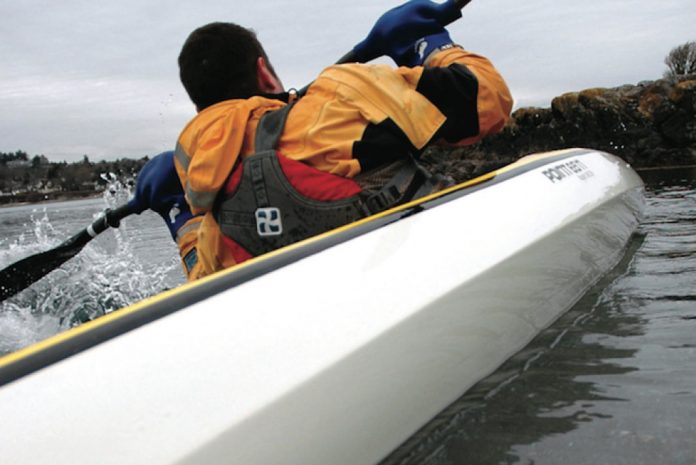
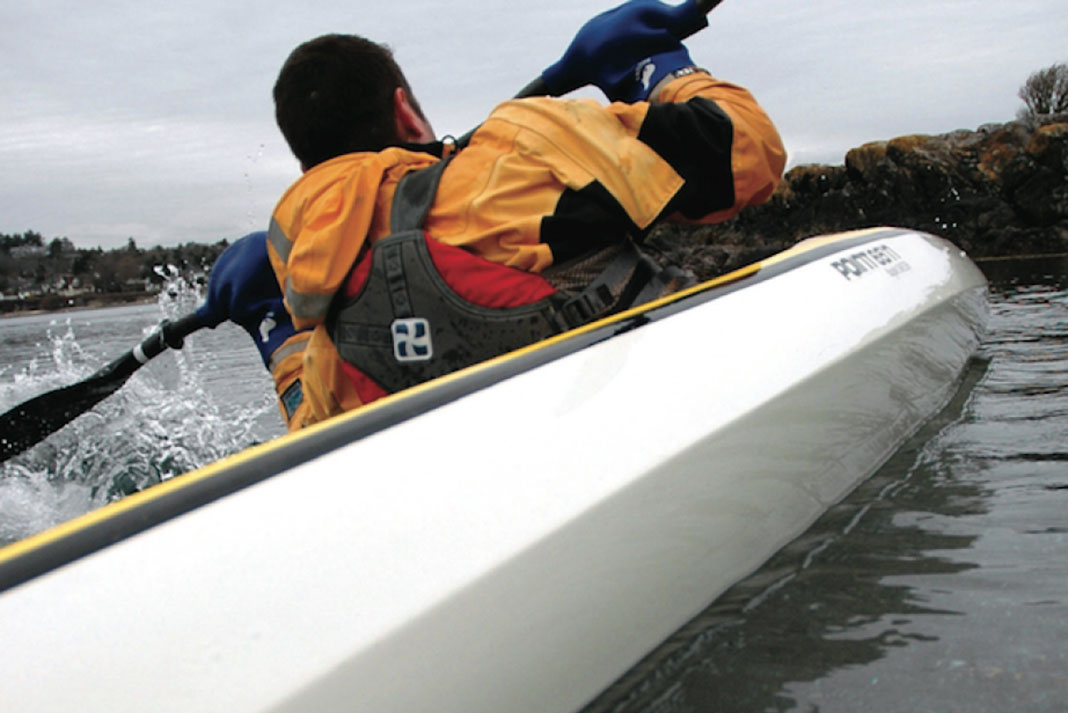
Rather than producing yet another generic “me too” sea kayak, Foster continues his record of distinctive designs, boldly pushing the Point 65 Whisky 16 deeper into the playboat niche than most would be willing to go.

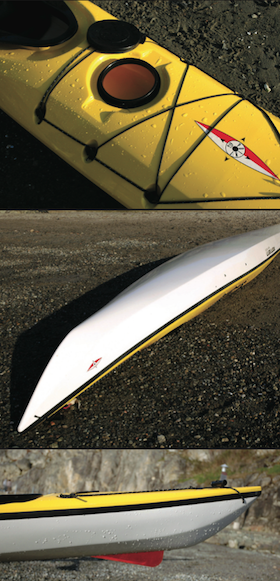
Clearly the hull was conceived with play and surfing in mind. It is highly rockered for manoeuvrability, with a very hard chine running the full length of its flat hull. Volume carries well into the ends and the bow in particular is very full, almost bulbous, and buoyant. The cockpit is quite far back.

There are large oval rubber hatches bow and stern, a smaller 20-centimetre round day hatch, and a 15-centimetre hatch on the fore deck within easy reach of the cockpit.

The Chinese build quality is reasonable but could use refinement. The boat felt solid, but multiple leaks into the cockpit were disappointing (one suspects the builder will have this resolved in short order). The Whisky 16 is also heavy for its size. And with the balance point of the kayak being forward of the cockpit, it’s an awkward solo carry.

[ Plan your next kayak adventure with the Paddling Trip Guide ]

Track and maneuver with sober precision

The fit is excellent and suits a wide range of paddlers. The backband offers good support and the thigh braces create a nice knee pocket that makes edging and rolling easy.

Man paddles a Point 65 Whisky 16 kayak
Feature Photo: Alex Matthews

Afloat, the boxy cross-sectional shape and 22-inch beam yield solid primary stability and tons of secondary. It’s fun tossing the Whisky on edge, although due to its extreme rocker, it doesn’t require edging for tight turns; the boat virtually spins 180 degrees with one sweep!

Given the extremely high manoeuvrability, tracking was a pleasant surprise. The Point 65 Whisky 16 is easy to paddle in a straight line. Even in high winds where I expected the high-riding bow to deflect, the Whisky was easy to control. When the bow did wander, it was easy to bring back on course.

Details of the Point 65 Whisky 16 kayak

The Whisky goes wave surfing

Is is a warning sign to design a hatch specifically to carry your booze? How about naming your new boat after your favorite alcoholic beverage? We don’t think so. The Whisky hatch is useful for all sorts of things.

The flat hull and hard chines combine with the stern-weighted position of the cockpit for very good surfing characteristics. The full bow does a great job of staying on the surface too; the downside is its tendency to slam down hard on the backside of oncoming waves.

Even fully deployed, the Whisky 16’s distinctive clear plastic skeg doesn’t present much surface area, yet it provides good tracking and effectively counters the boat’s slight tendency to weathercock in wind.

Paddle and play in the Point 65 Whisky 16

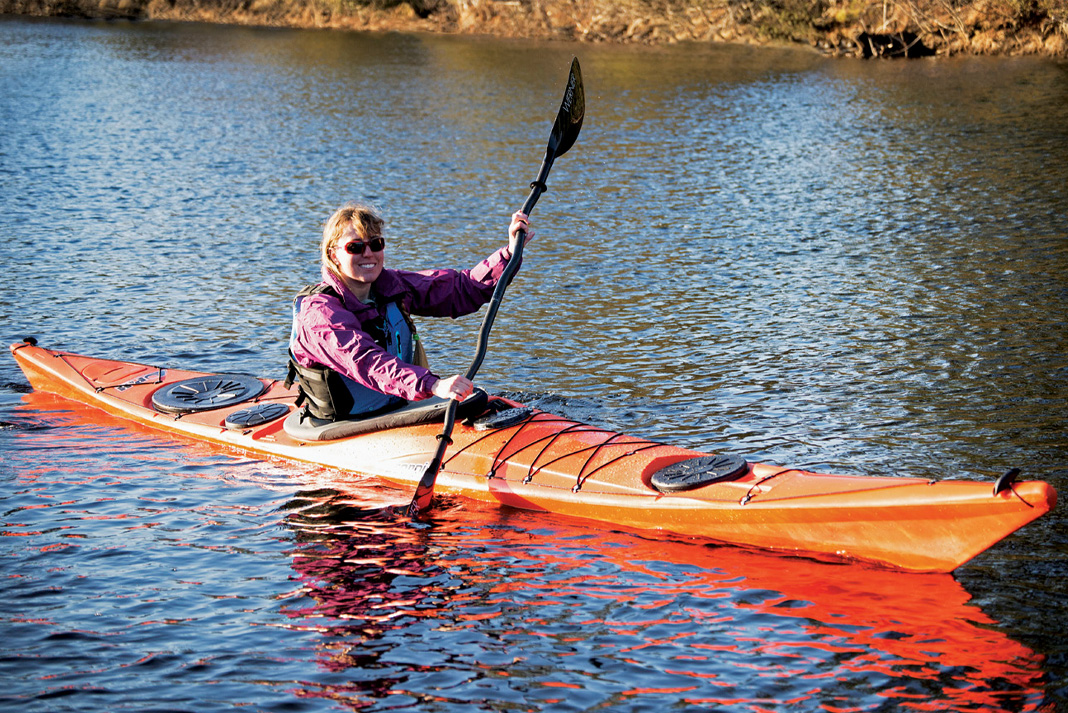
The Whisky 16 from Point 65 is primarily a day-paddler that excels in play spots like rock gardens, tidal features and surf breaks. But it also works surprisingly well as a do-everything kayak. It has decent speed and, other than its tendency to “slam” in chop, it’s enjoyable to paddle in a wide variety of conditions and can carry enough gear for a few days. The Whisky 16 is a different and a very fun kayak.

This article was first published in the Summer 2009 issue of Adventure Kayak Magazine. Subscribe to Paddling Magazine’s print and digital editions, or browse the archives.


Boat Review: P&H Scorpio MKII LV Kayak

SADDLE UP AND WATCH THE SPARKS FLY. | PHOTO: ADVENTURE KAYAK STAFF

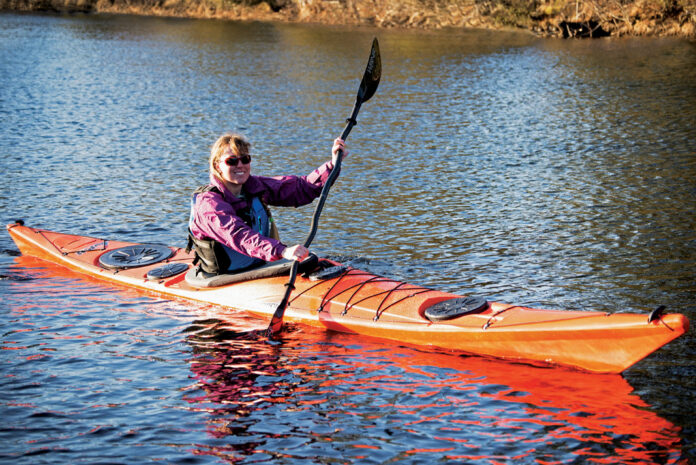
I had never paddled a P&H Scorpio before Bay of Fundy Sea Kayak Symposium founder Christopher Lockyer sat me in a loaner LV. It was a sublime September morning at the put-in for the Shubenacadie River, a rollicking freight train of crashing haystacks and swirling eddylines. It’s not every kayak that feels instantly intuitive, but the P&H Scorpio MKII LV was just such a boat.

P&H Scorpio MKII LV Specs
Length: 16’8”
Width: 21”
Weight: 63 lbs
MSRP:
$1,899 (skeg)
$1,999 (skudder)
www.phseakayak

The P&H Scorpio MKII LV is a worthy update

Six years after the original Scorpio launched in 2009, P&H is introducing a second generation—the Scorpio MKII. First to be released is the LV, the smallest of three sizes available this paddling season. Manufactured at P&H’s factory in Great Britain, our orange demo LV is among the first to arrive on North American shores.

From the moment we hit the water, it’s apparent the MKII and I enjoy the same chemistry as its predecessor.

Improved tracking and rock-solid durability

Given the popularity of the original, P&H has sensibly left the Scorpio LV’s best features untouched. Touring and ocean (or river) play paddlers will find the MKII uses the same CoreLite construction—a triple-layer polyethylene that adds a bit of weight but is more durable and rigid than standard PE plastics. Rounded chines and a shallow V hull make the MKII responsive and maneuverable, while tried-and-true dimensions—16 feet, eight inches long with a svelte 21-inch beam—deliver an optimum blend of speed and stability for more experienced paddlers.

Feedback from half a decade’s worth of expedition paddlers and weekend warriors has also led to some significant improvements. “The MKII has a slightly different volume distribution,” says U.S. head of operations, Brian Day.

On the water, added volume around the knees means a more comfortable, super dialed-in seating position. The updated stern has less rocker behind the rear hatch, which translates to improved tracking and handling in crosswinds and following seas.

The P&H Scorpio LV is specially sized for smaller paddlers

The most welcome change for many—especially rolling aficionados and paddlers with shorter torsos—is the lowered deck height behind the cockpit. The original P&H Scorpio LV was no barge, but the MKII is even easier to roll and re-enter.

Some tweaks are more subtle. The recessed slider control for the skeg or optional Skudder (more on that below) has moved in front of the cockpit, readily accessible yet out of the way of my knuckles.

SADDLE UP AND WATCH THE SPARKS FLY. | PHOTO: ADVENTURE KAYAK STAFF

Accessorize your boat with skudders and sails

Introduced last year to P&H and sister brand Venture Kayaks, the Skudder serves as a skeg when partially deployed, and an under-stern rudder—controlled by toe pedals on the foot braces—when fully deployed. While Skudder-like systems were pioneered by New Zealand designer Don Currie in the ‘90s, P&H is the first widely available manufacturer to embrace this clever concept—along with another accessory thriving down under: the kayak sail.

In 2014, P&H partnered with Australia’s Flat Earth Kayak Sails to offer a compact sail system that can be retrofitted—with a bit of engineering—to many touring kayaks. Outfitted with sail-ready hardware and a reinforced area for the mast foot, the MKII makes installation dead simple and the redesigned front deck accommodates the furled sail when not in use.

Reconnect with the P&H Scorpio MKII LV

The drizzly, early spring afternoon I first launch the P&H Scorpio MKII LV isn’t charged with the same breathless promise as that magnificent morning on the Shubie, yet I scarcely notice the sting of the March wind. P&H says they’ve made “many little changes,” adding up to a new-feeling boat, but discovering those differences feels more like rekindling an old flame.

This article was first published in the Early Summer 2015 issue of Adventure Kayak Magazine. Subscribe to Paddling Magazine’s print and digital editions, or browse the archives.


Paddle And Pint: Celebrating Canoe Beer

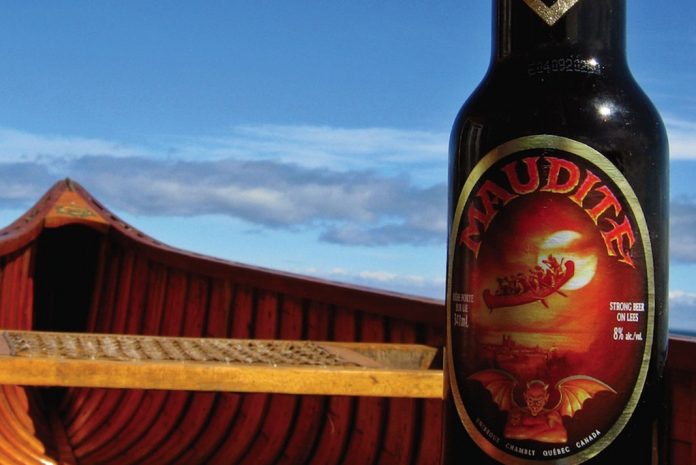
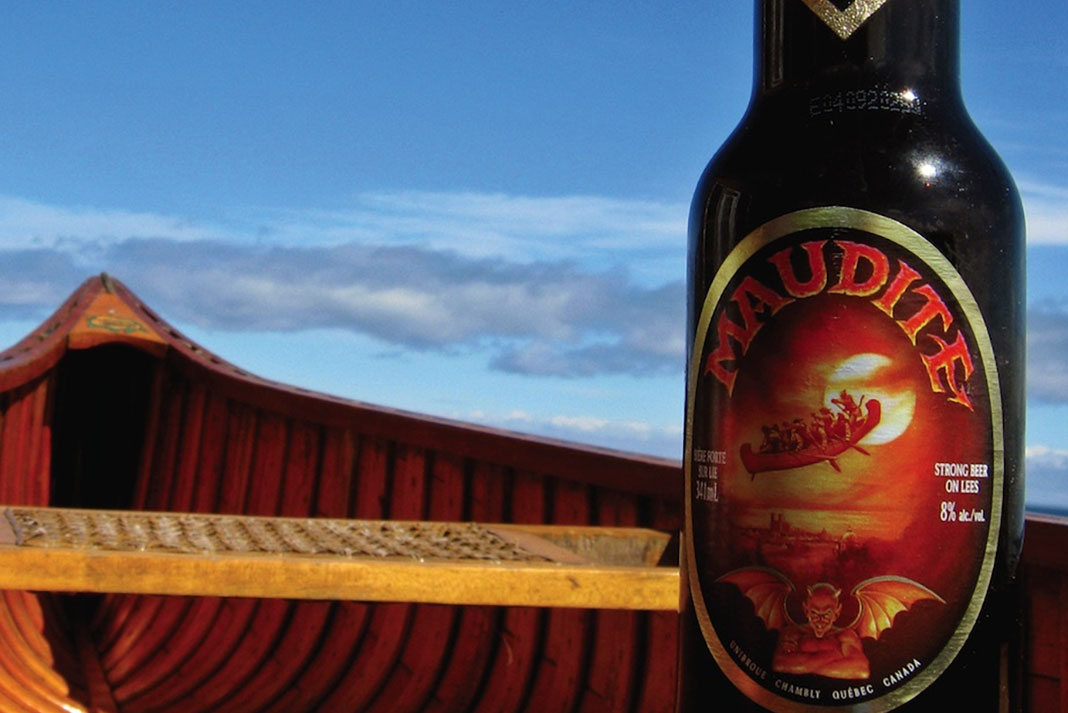
A bottle of Maudite beer resting on a canoe
Feature Photo: Rapid Staff

Suds and strokes have long been linked through time, much like coffee and donuts. Few things are more satisfying after paddling all day in the sun than cracking a cold bottle. And many a bottle of beer has been stamped or labelled with the timeless image of a canoe, designed to evoke just such a feeling and thirst from us when we’re away from the water. We survey the best (and very worst) of canoe beer to celebrate this time-honored connection.

[ See the widest selection of canoes in the Paddling Buyer’s Guide ]

Celebrating canoe beer

First, the worst canoe brew

The first canoeing brew however was God-awful trail-made bière d’epinette—a spruce beer blending natural boreal forest sugars, sweetened with molasses, fermented with yeasts from dried wild berries and aged for days in the sun. With a moose-piss pour, dirty whitewater head and lingering naphtha gas finish, this was not the finest beer. However, the hardworking voyageurs must have thought, “It’s better to have a bottle in front of me than a frontal lobotomy.”

Guinness Brewery in Ireland was one of the earliest commercial breweries to link canoeing and brewing. In the 1950s, they created an ad campaign featuring a stylized Indian in full headdress holding up over his head a canoe containing five happy voyageurs; the slogan read, “Guinness—Him Strong.” What this ad lacked in cultural sensitivity it made up for by propelling Guinness’ earthy, thick black stout to one of the best-selling beers and one of the best-known brands in the world.

Modern-day canoe beers

Closer to home, a succession of Canadian breweries have made the canoe connection. Who can forget the Labatt Blue television ads featuring William and Jacques paddling a bark canoe across the country in search of the perfect all-Canadian libation? These spots may well have been inspired by the Niagara Falls Brewing Company’s Trapper beer, which featured a black-bearded coureur des bois paddling out of the label.

And there’s the Algonquin Brewing Company in Formosa, Ontario, showing a bark canoe in profile with two shirtless First Nation paddlers on a low-alcohol brew bottle called Algonquin Canadian Light.

Great labels, but what about the beer? For a while many beer drinkers wondered if canoes on the label meant contents were, “near water.” That notion changed in 1984 when Toronto’s first micro-brewery, Upper Canada Brewing Company, created a family of unapologetic, all-natural beers and proudly plunked likenesses of Arthur Heming’s and Frances Anne Hopkins’ classic voyageur paintings on the labels. Upper Canada started a tradition of robust beers that harkened back to the days of biere de l’epinette, only with great body, memorable taste and a smooth finish. What these labels promised by way of a refreshing whitewater splash across the face, the beer delivered.

A bottle of Maudite beer resting on a canoe
Feature Photo: Rapid Staff

The same is true with Unibroue’s Maudite—English translation, the damned—a bottle-conditioned ale resplendent with a rendering of the Quebecoise folk tale la Chasse Galerie’s flying canoe on the label. At eight per cent alcohol, too many of The Damned could tip your boat. And the tradition goes on.

On the lighter side, Moosehead Breweries in St. John, New Brunswick, came out last year with a new slow-brewed lifestyle beer called Cracked Canoe. Nice label. But dodgy beer one reviewer called “vaguely beer-like.”

[ Plan your next B.C. canoeing adventure with the Paddling Trip Guide ]

You can have both great taste and a canoe on the bottle. In today’s beerscape, the best all-round canoe brew hails from the CANOE Brewpub, Marina and Restaurant on the harbor in Victoria, B.C. Their handcrafted Red Canoe Lager is a winner—superb label with even better beer inside—and as good a reason as any to set off across the continent by canoe.

This article was first published in the Early Summer 2010 issue of Canoeroots Magazine. Subscribe to Paddling Magazine’s print and digital editions, or browse the archives.