Remember when splats and squirts were paddling moves, not something that happens after a night of too many tacos and beer? If you miss those days of controlled verticality—or have no idea what we’re talking about—then try paddling the Pyranha Loki playboat.
[ Paddling Buyer’s Guide: See the Pyranha Loki kayak ]
Pyranha’s Loki is a smooth operator
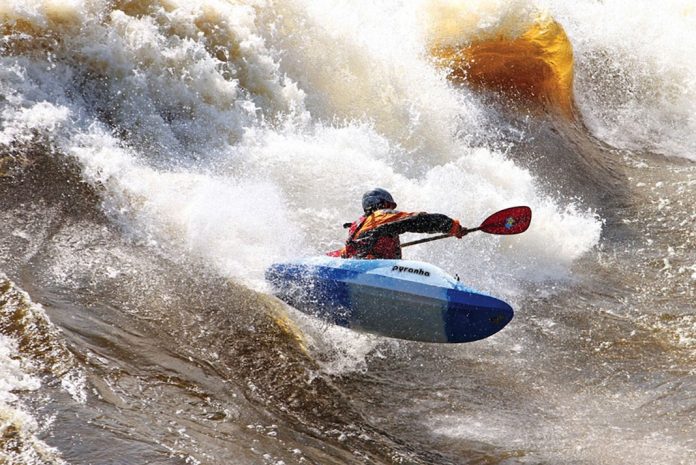
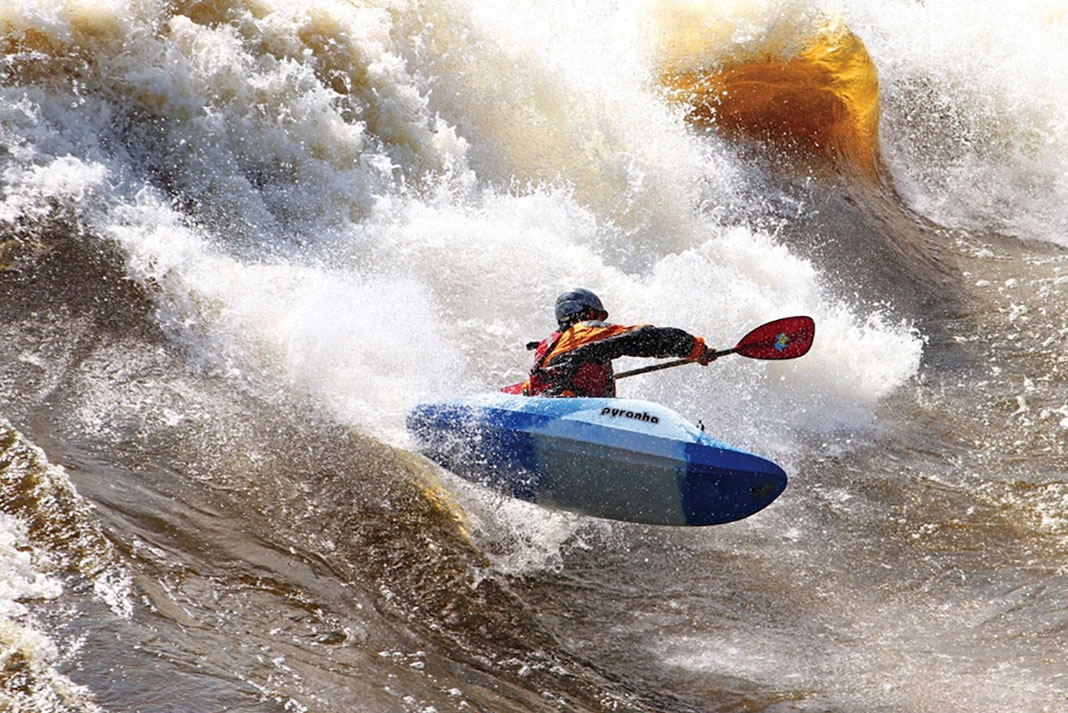
The profile of this slicey, rounded-hull playboat is what you’ll notice first—it’s two and a half inches narrower and a foot longer than its cousin JED, with less volume.
“Our goal was to create a boat where its connection to the river was more important than its ability to take off from it,” says Pyranha designer Graham Mackereth. Paddlers had been requesting a slicey, old-school design similar to Pyranha’s I series, he adds. “With the Loki we’ve taken advantage of a more modern hull shape and added length to slow down some moves. The satisfaction comes from how smoothly you can make the move, not how many you can pack into a minute.”
Loki has plenty of tricks in store
Where flat-bottomed aerial boats tend to bounce around on waves, the hull shape of the Loki makes for a smooth glide of a ride. It isn’t as picky as a full-on playboat when it comes to wave selection, happily nestling into green waves that its spuddier cousins can’t. Long and easy-to-engage edges allow predictable carving across the face of a wave and, with good technique, you can throw the long stern through the air for huge water-spraying blunts.
Hole riding in the Loki is a smooth and controlled experience. The hull stays settled on the water during side surfs and spins. The boat’s length allows for slow rotation cartwheels, giving you time to keep your torso in the lead. Keep the depth of the hole in mind as the Loki’s extra few inches of length and low-volume ends slice deeper than short, high-volume aerial designs.
Feature Photo: Jo-Anne Caldwell
Lock in tight and roll with ease
The Loki is also a capable downriver boat. Its rocker profile keeps its ends high out of the water allowing for effortless, mid-rapid direction changes. In bigger water, stay aggressively forward as large waves can lift the bow up, sink the low-volume stern and leave you in an unintentional stall or ender. Luckily, the narrow width and flat stern create a profile that makes rolling upright a breeze.
The Loki is equipped with Pyranha’s awesome Connect 30 outfitting system. Aggressive thigh braces and a wide, high-riding back band are linked with a silky-smooth, durable ratcheting system that keeps you locked in place. With size 10 feet tucked into the skinny bow there’s some wiggle room, but a low-profile booty is needed for comfort.
[ Paddling Buyer’s Guide: See all Pyranha kayaks ]
Get vertical with the Pyranha Loki
Paddling the Pyranha Loki is like adding play spots and mischief to your local river, opening up the possibility of controlled verticality with every eddyline, rock or small wave you find. Its design features make classic moves—like squirts, pirouettes, splats and cartwheels—easier as well as more stable and fun than in a creek boat or freestyle kayak. The Loki will spice up your local class II–IV run, just like adding hot sauce to your tacos, but without having to worry about fallout the morning after.
This article was first published in the Spring 2013 issue of Rapid Magazine. Subscribe to Paddling Magazine’s print and digital editions, or browse the archives.
When Liquidlogic launched a campaign during the winter of 2011 called “Automatic for the People” asking paddlers what they wanted to see added to the company’s 2012 line-up, the response was overwhelming: a flat hull creek boat. Several months later (after leaving the Jefe and Remix alone for a few nights together) the Liquidlogic Stomper was born.
Designer Shane Benedict says, “All these people had different passions and different concepts but the number one thing they wanted was a flat hull creek boat.” Will the Stomper be the true love paddlers have been looking for?
If you want a comfortable boat, you want the Stomper. Liquidlogic’s super plush Bad Ass Outfitting hugs your curves in all the right places. The upgraded backband system sits low on your back and flips up to allow unparalleled access to the stern for extra cargo.
While other boats we’ve tested relied on speed and edging to get you around the river, the Liquidlogic Stomper is all about spinning and riding over anything. This boat is by far the most rockered in the group, making it a boofing machine. It slides over rocks, skips over holes and flies off ledges without needing to be moving at Mach 1.
[ Plan your next whitewater kayak adventure with the Paddling Trip Guide ]
Softer edges require a sure touch
Add to the rocker profile a semi-planing hull and very soft, wide, chamfered edges and the Stomper is easy to maneuver mid-rapid. You can flirt all you want with boily crosscurrents and waves without much thought and still be forgiven—those edges just won’t catch.
The tradeoff to softer edges is that you can’t carve out of holes as easily as in a boat with harder rails. You also need to be very aggressive to avoid spinning out on eddylines. Keeping your weight forward and charging hard is the key to snapping the Stomper into those tiny eddies.
Feature Photo: Michael Mechan
A hard-driving creek boat
The Liquidlogic Stomper isn’t really built for play and leans hard toward the creeking side of things. Surfing waves, it tends to noodle around rather than carve. We found the Stomper had less primary stability than any of the other boats in the shootout—a result of the semi-planing hull’s narrower footprint. Lean the boat over to the side, however, and you’ll find bomber secondary stability.
[ Paddling Buyer’s Guide: See all Liquidlogic kayaks ]
Don’t tread lightly with the Liquidlogic Stomper
Our testers agreed, while some of the features of the Liquidlogic Stomper are a plus for beginners—like not having any edges to catch and the ease with which it maneuvers around—it is better suited for advanced paddlers looking to charge tight, technical rivers, slide down rocks and boof everything in sight. If you’re tired of playing around, take a Stomper for a romp.
This article was first published in the Summer/Fall 2012 issue of Rapid Magazine. Subscribe to Paddling Magazine’s print and digital editions, or browse the archives.
When Delta Kayaks launched in 2005, its lineup of exclusively thermoformed plastic kayaks was quickly recognized as being among the finest. The company’s latest offering, the Delta 16 kayak, continues to vault this lofty reputation.
[ Paddling Buyer’s Guide: See the Delta 16 kayak ]
The Delta 16 is a high-capacity kayak
Delta’s wizardry with the thermal forming process stems from over 30 years’ experience stretching plastic for other industries. Under the direction of kayak industry veteran Mark Hall, Delta boats leave the factory with smooth lines, impeccable detailing and a high gloss finish to rival any quadruple-clear-coated sports car. All this at considerably less cost, and less weight even, than comparable composite kayaks.
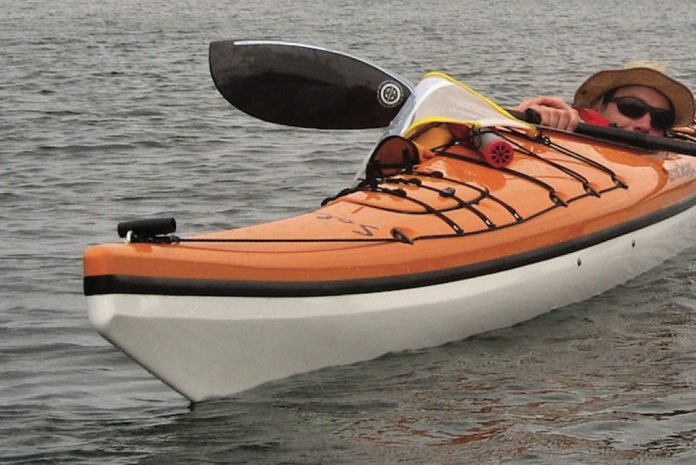
Delta says the 16 caters to paddlers “who have been waiting for a full-figured British style design with more dry storage typical of North American designs.” At 16 feet long and 22 inches wide, the Delta 16 feels sporty but packs an impressive 55 gallons dry storage into three voluminous hatches—50 percent more than many similarly proportioned Brit boats.
[ Plan your next sea kayaking & touring adventure with the Paddling Trip Guide ]
An elegant touring kayak for intermediates
While some aspects of the design are informed by the Atlantic approach—the shallow-V, soft chined hull and optional skeg, for example—the Delta 16 kayak shows a healthy dose of Delta’s West Coast roots, albeit in a trimmer package than the standard Pacific tourer. The front and rear decks are high to aid expedition capacity, a rudder comes standard and the seat is outfitted with an adjustable-height backrest.
Even with the front deck pod (more on that below), the cockpit is comfortable for paddlers up to six feet tall. Trimming on the fly is easy with the sliding seat. Hip padding is non-existent so smaller paddlers should invest in Delta’s optional hip pad fit kit, or an hour shaping custom inserts.
Feature Photo: Stephanie Park
The Delta 16 moves the day hatch from behind the cockpit to the front deck for easier, drier access. Even better, it’s watertight and roomy enough for more than just a PB&J sandwich, easily swallowing a paddling jacket, SLR camera or even 10-liter dry bag.
On-water acceleration is quick for a 16-foot boat, thanks to a sharp entry point low on the bow. Combined with moderate rocker, the hull tracks well even without deploying the skeg or rudder.
With a light paddler and empty hatches, the Delta 16 sits quite high in the water, but adding some payload increases primary stability. Edging feels confident and releases the 16’s sporty side. I threw it on edge for a low brace turn and was surprised to find myself quickly facing back the way I came.
Delta Kayaks’ attention to detail
Unique hatch covers use quarter-turn locking knobs, bungees and integrated rubber rim gaskets for a seal that’s dry and user-friendly, even with numb fingers.
Standard features reflect Delta’s commitment to detailing: self-rescue straps and easy-draining curved bulkhead behind the cockpit, full decklines and leashed hatches.
The optional skeg is deployed with a string to eliminate cable kink. Molded-in cable routings are rudder ready.
[ Paddling Buyer’s Guide: See all Delta kayaks ]
Go far with the Delta 16 kayak
The Delta 16 kayak combines some of the latest great ideas in sea kayak design with the tried-and-true characteristics of an elegant tourer. It’s best suited to intermediate paddlers who want a light, nimble kayak that still knows how to go the distance.
This article was first published in the Early Summer 2011 issue of Adventure Kayak Magazine. Subscribe to Paddling Magazine’s print and digital editions, or browse the archives.
Going big on Buseater. | Feature Photo: Mike Kobzik
It takes fuel, oxygen and a spark to make fire. While we don’t know if Robert Peerson provided one or all three of these elements when he made the move to Pyranha’s design team last year, we are sure that their latest freestyle creation, the Pyranha JED, is pure fire.
[ Paddling Buyer’s Guide: See the Pyranha JED kayak ]
The Pyranha JED takes shape
The first thing that stands out about this boat is the V hull in the rear two thirds of the stern. Skeptical that this would be a good thing (aren’t V hulls for sea kayaks and ocean liners?) we were very pleasantly surprised at the lightning quick edge-to-edge transitions on waves and the ability to land moves with no worry of the dreaded stern ender-to-flush combo.
Another feature that clearly sets the Pyranha JED apart from its predecessor, the Pyranha Molan, is the shape of the rails. When engaged, the edges bite hard and rip across a wave. Coupled with the V hull stern, however, they also release with ease allowing you to get airborne or clean spin yourself dizzy.
Peerson says the rise from the planing surface to the rails is gradual and places the rails higher on the JED to keep them from tripping up. He explains, “This transitions into the stern hull’s pronounced V shape, having the same forgiving effect while also helping the paddler to edge and rail the hull.”
The JED distances itself even further from the Molan by having a full progressive rocker, giving it plenty of speed on a wave. The key to maximizing your airtime in this boat is using an edge-release technique as opposed to the butt-bounce that favors kick-rockered boats like the Molan.
The slicey bow and stern make for easy initiation of vertical moves and feel well balanced when cartwheeling. Ample volume around the cockpit—along with an included, removable IR overthruster—provides gravity-breaking pop for loops and puts your knees high, helping keep your torso in an aggressive forward position.
Going big on Buseater. | Feature Photo: Mike Kobzik
Get playful on the flats
While the speed of the Pyranha JED is impressive on a wave, it’s less so when running the river. This is easy enough to overcome by making use of small waves and holes to move around the flats. Playing on a flooded Ottawa River, we were happy to find that we weren’t constantly stern squirting unintentionally.
When we did find ourselves hull to the sky, the JED was very easy to roll. Pyranha’s Connect 30 outfitting features aggressive thigh braces, a ratcheting backband and foam foot blocks. While we found the backband sat lower than we would have liked, given the overall comfort, this was quickly forgotten.
[ Paddling Buyer’s Guide: See all Pyranha kayaks ]
Get an edge with the Pyranha JED kayak
If you are thinking about stepping up to a new freestyle ride, the Pyranha JED should be on your list. With the medium size available now and small and large versions ready for summer, we expect it won’t be long before you see them blazing a wave near you.
This article was first published in the Early Summer 2012 issue of Adventure Kayak Magazine. Subscribe to Paddling Magazine’s print and digital editions, or browse the archives.
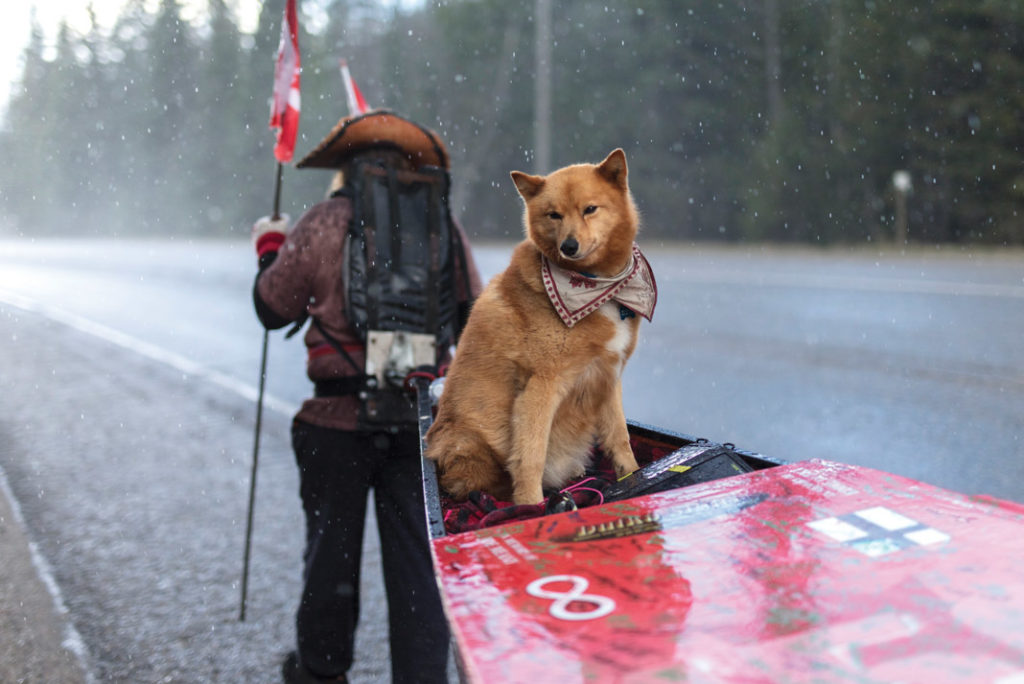
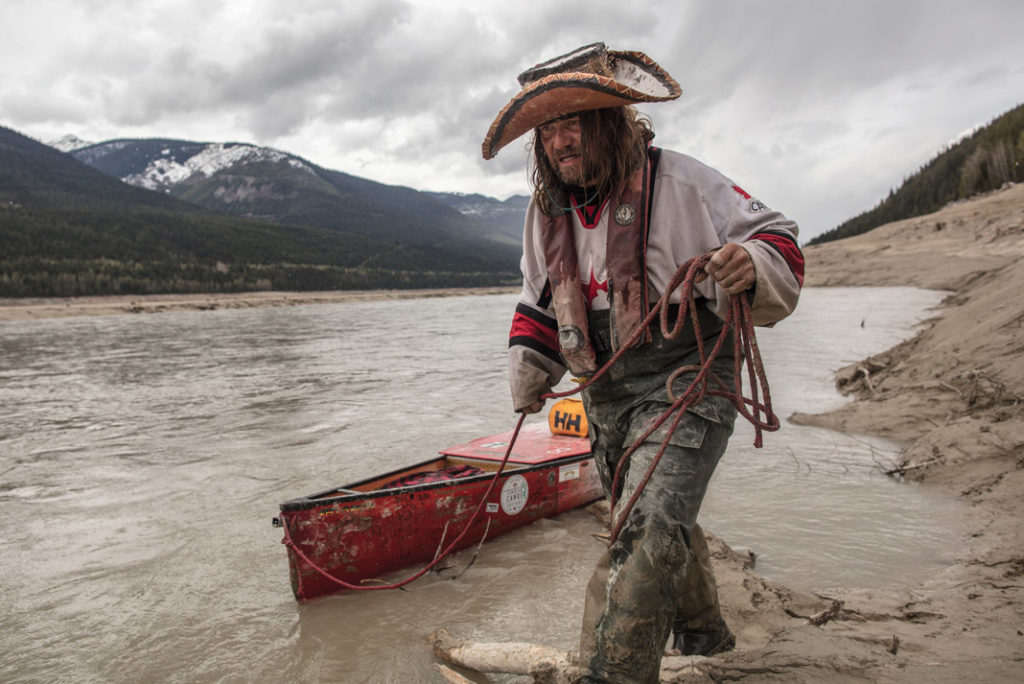
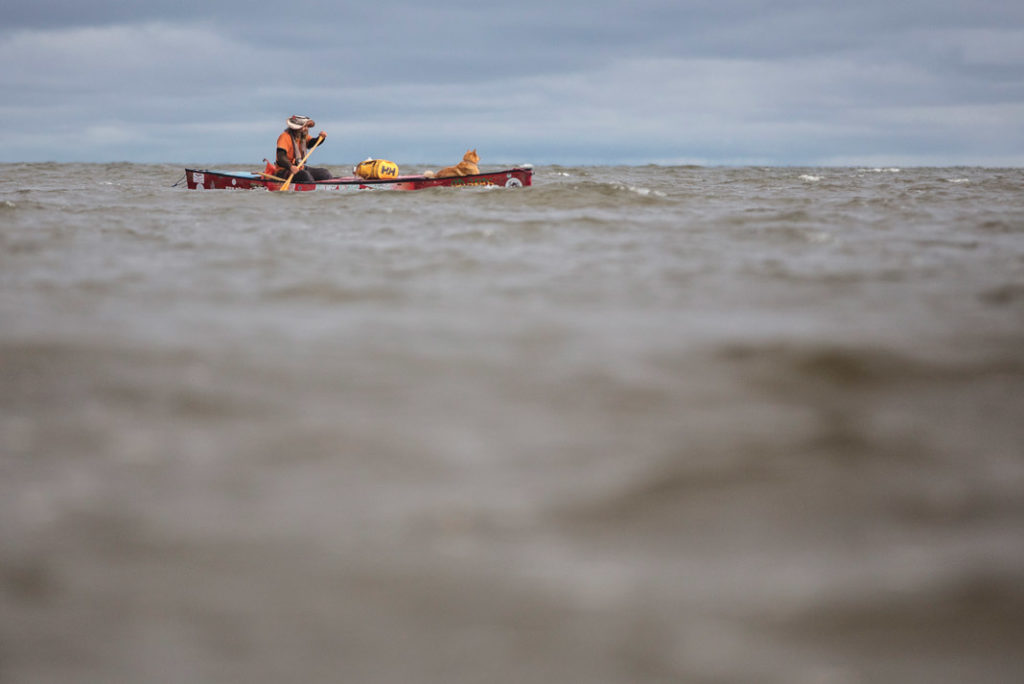
On April 1st, 2017, Mike Ranta and his trusted canine companion named Spitzii, began their third coast-to-coast solo canoe trip. Paddling from the Pacific Ocean at Bella Coola, British Columbia, Ranta and Spitzii plan to travel 214 days in hopes of reaching the Atlantic Ocean at Cape Breton, Nova Scotia. The audacious canoeing expedition, featuring 1,000 kilometers of portaging over the continental divide, seems ordinary to the 45-year-old Ranta.
Meet Mike Ranta, modern-day voyageur and canoe tripper extraordinaire
Mike Ranta was born of Finnish-Metis descent and raised in the small Northwestern Ontario town of Atikokan. Growing up in the “Canoeing Capital of Canada,” just north of Quetico Provincial Park and the adjoining Boundary Waters Canoe Area, Ranta began embarking on solo canoe trips at the the age of nine.
“I’ve been a paddler my whole life in Atikokan, and explored the area ever since I can remember,” says Ranta. “Though I can’t remember the first time I was in a canoe, ‘cause I was too young, I’ve always felt comfortable in one.”
[ Plan your next adventure in the Boundary Waters Canoe Area with the Paddling Trip Guide ]
Ranta embarks on his first cross-Canada canoe trip
In 2011, after quitting his job in the oil industry and selling everything he owned, Ranta paddled 130 days from Rocky Mountain House, Alberta, to Montreal, Quebec to raise money that would help keep the Atikokan Youth Centre from closing its doors.
Ranta drew his inspiration for his voyage from four men from Atikokan: Don Meany, Geoff and William Peruniak and Norm Jewett. They paddled from Rocky Mountain House, Alberta to Montreal in 1967 as part of the Centennial Canoe Race, the world’s longest canoe race. “They are legendary paddlers in my hometown,” Ranta says, “I’m also inspired by my old boxing coach, Bobby Davidson, and of course my father.”
Prior to his departure, Mike Ranta had never paddled a big river, like the North Saskatchewan, nor had he ever experienced the wild winds and enormous bodies of prairie waters across Manitoba. “I learned a hell of a lot in those 130 days,” Remembers Ranta of the particularly stormy year. “How I walked away with my life is beyond me, but I’ve been hooked on long-distance canoe trips ever since.”
Inspired by the accomplishments of other cross-continent paddling teams, Ranta was convinced he could travel solo from coast to coast in a single season. Determined to try and having spent a few years training, on April 1st, 2014 Ranta and Spitzii departed from Vancouver. He paddled for 214 days and made it as far as Tatamagouche, Nova Scotia just 150 kilometers short of Cape Breton.
With two big canoe trips under his belt and a false sense of accomplishment gnawing at his mind, Mike Ranta studied the map and found what he believed to be a faster voyageur route through the prairies via the Qu’Appelle River. Effectively bypassing all the Manitoba lakes and their heinous winds, the route was Ranta’s chance to shave time off his previous trips and reach his desired goal.
On April 1st, 2016, Ranta and Spitzii once again departed from Vancouver. Along the journey Ranta invited veterans to meet him and sign his Souris canoe. Ranta and Spitzii experienced the country’s geographic diversity as they travelled up the Fraser River, through the Kootenay Mountains, the prairies, past his hometown of Atikokan in northern Ontario, along Lake Superior and finally out to the east coast. After only 200 days they successfully made it to Dominion Beach, Cape Breton, completing what many considered impossible.
“I couldn’t think of a more Canadian way to say happy birthday than to paddle across the country one more time.”
Inspired by Alexander Mackenzie’s historic discovery of the overland route to the Pacific Ocean, Ranta decided he would this time embark from the isolated coastal community some 600 kilometers northwest of Vancouver.
Mike Ranta’s 18-foot Souris River Canoes Wilderness 18 is currently enjoying its second cross-country canoe trip. It’s made of Kevlar and carbon fiber and is outfitted with custom-built plywood decks. Having successfully traversed Canada in 2016, Ranta figured his canoe—patches and all—would easily survive the rigors of another 8,000-kilometer trip across this vast nation.
“I spend almost two-thirds of each year in my canoe,” explains Ranta. “I cook on the water. I drink my coffee on the water. Sometimes I’ll spend over twenty-four hours in my canoe without getting out.”
[ Paddling Buyer’s Guide: See all canoes ]
Spitzii keeps the local wildlife in check
When curious onlookers engage the boisterous Ranta about his nine-year-old pure-bred Finnish spitz, aptly named Spitzii, the modern voyageur always answers, “He’s my chief navigator, my head bear scarer, and he’s my best friend.”
Grizzly bears were not an uncommon sight on this canoe trip. | Photo: David Jackson
Mike and his trusty companion Spitzii. | Photo: David Jackson
Spitz carry a heavy reputation as a solace, loyal breed with exceptional abilities in the wilderness. If keeping bears at bay around camp isn’t enough, Spitzii adds the necessary companionship that keeps Ranta going through the darkest days. “He’s got a real sense of humor,” laughs Ranta of his his furry friend who has accompanied him on all his major trips.
In 2016, Ranta swamped his canoe in the swollen Kaministiquia River. Once on shore Ranta immediately noticed signs of a wolf pack. “He was gone for 24 hours. I swear all of Thunder Bay came to the bush and helped look,” recalls Ranta. “The thought of hurting Spitzii is what keeps me safe out here. I don’t know what I would do if I lost him.”
“The big thing on this trip is just getting lots of calories,” explains Ranta of his eating habits. “I try to eat right from the land, but these trips don’t allow time for that.”
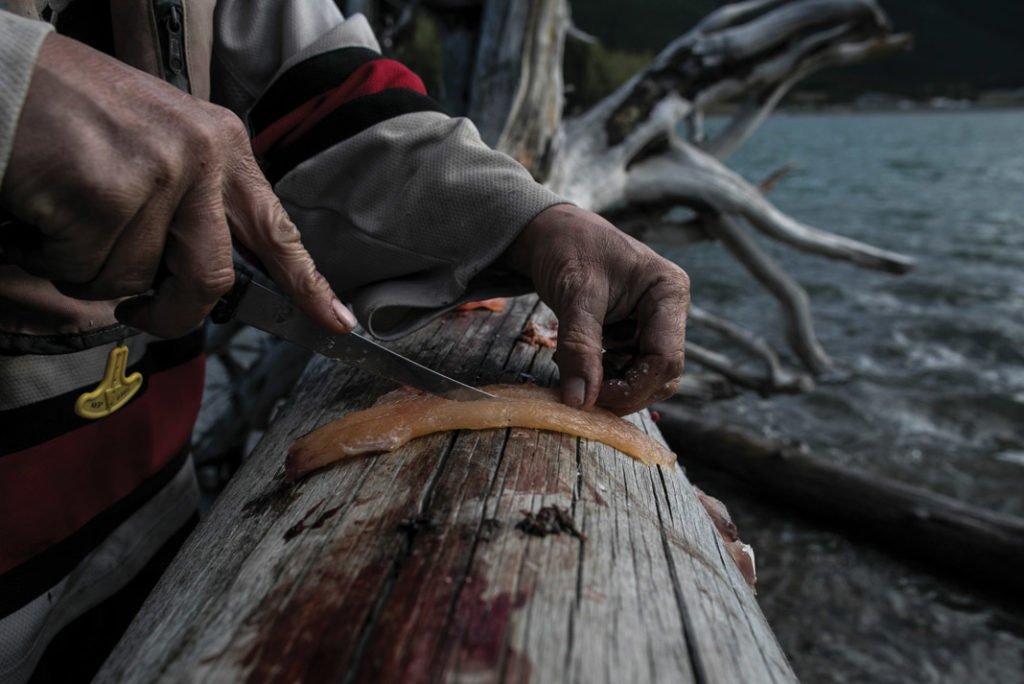
Mike Ranta using natures cutting board. | Photo: David Jackson
Living off the land. | Photo: David Jackson
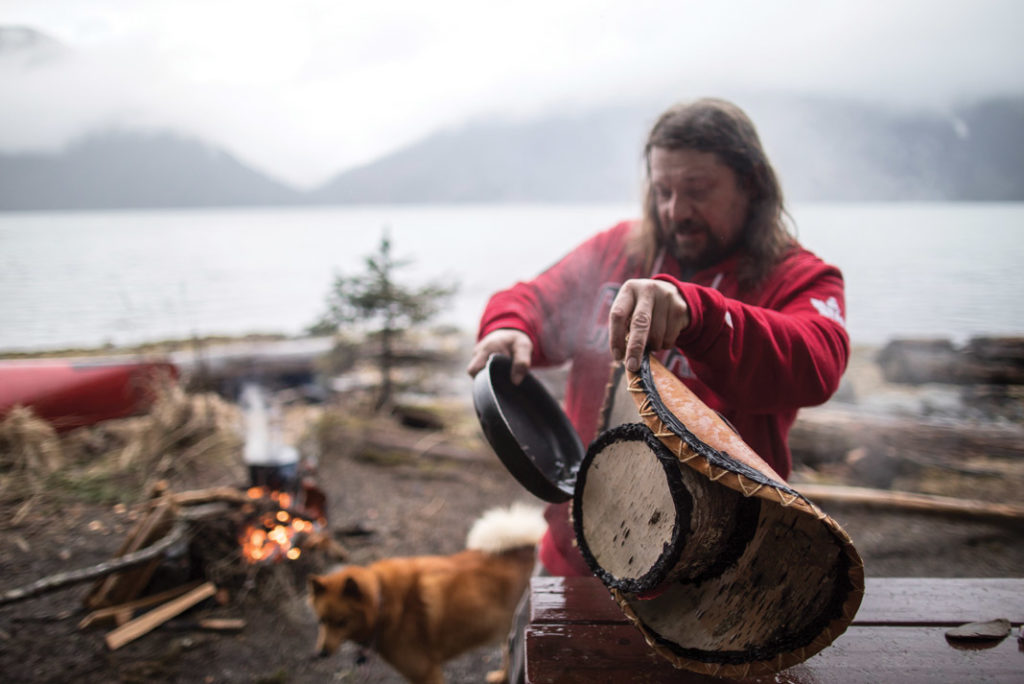
Despite his relentless forward progression, Ranta is a master of wild edibles. He’s a keen fisherman and a college-certified chef, which all combine for many interesting meals. A typical day will see a morning of three or four instant oatmeal pouches, Nature Valley bars coated in crunchy peanut butter through the day, a lunch of fried walleye with a can of beans, and then a dinner of Ranta’s trademark, Mukmuk.
To make Mukmuk, fry a half-pound of bacon, onions and mushrooms, add water and Kraft Deluxe Velveeta on Shells, boil, simmer, add cheese, fried fish and finally a can of mushroom soup. The dish is rich in calories, full of energy, relatively fast to construct and keeps Spitzii on his toes in case bears come looking for a plate.
Ranta’s nose is often turned up in search of a nearby Tim Hortons. While most of his time is spent in the wilderness, Ranta resupplies at grocery stores when he paddles through towns. Sometimes it might only be days between a store, other times it’s weeks.
“I like to live from the land, but I love a Tim Hortons,” says Ranta through a smile. “And if the voyageurs had known about McDoubles, I think they would have loved them too.”
Over the mountains with a canoe cart
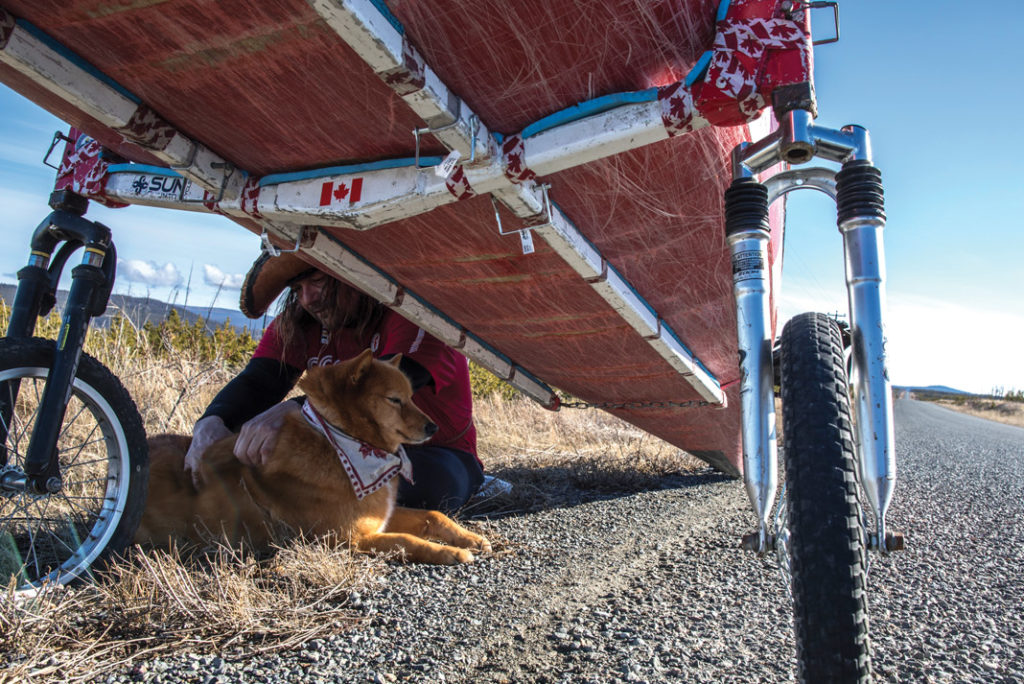
Knowing what he calls a “true” canoe trip would require him to travel with his canoe across the country by foot and paddle, Mike Ranta was inspired to design his first aluminum portage cart. He modelled his cart after the traditional Métis Red River carts used throughout most of the 19th century in the fur trade to bypass rapids and connect the prairies prior to the railway.
Dogs deserve massages too after a long portage. | Photo: David Jackson
Trudging through. | Photo: David Jackson
“My 2014 trip was a disaster. I had a horrible time pulling my canoe on the mountains that year,” recalls Ranta of his first coast-to-coast trip. By 2016, Ranta designed a high performing, rugged canoe cart that was light enough to be paddled across the country.
Last year he traded out rigid bike forks for a set of 16-inch tires and better sets of kids’ suspension forks. Ranta’s cart frame has now survived its second trip through the mountains of British Columbia, where the bulk of portaging is done.
Ranta came to realize however, there was a minor bend in his frame, thus creating a problem. Along the 1,000 kilometers of this portage, he figures he went through 16 inner tubes and at least eight tires. By the halfway point of their 2017 canoe trip, Mike Ranta and Spitzii had spent nearly one-third of their time, roughly 35 days, weather bound in heavy storms.
[ Paddling Buyer’s Guide: See all canoe carts ]
“It isn’t the storms or the good times that make people quit, it’s here in camp waiting where people get tired of big trips,” admits Ranta.
Hand crafted canoes made as thank you presents. | Photo: Dave Jackson
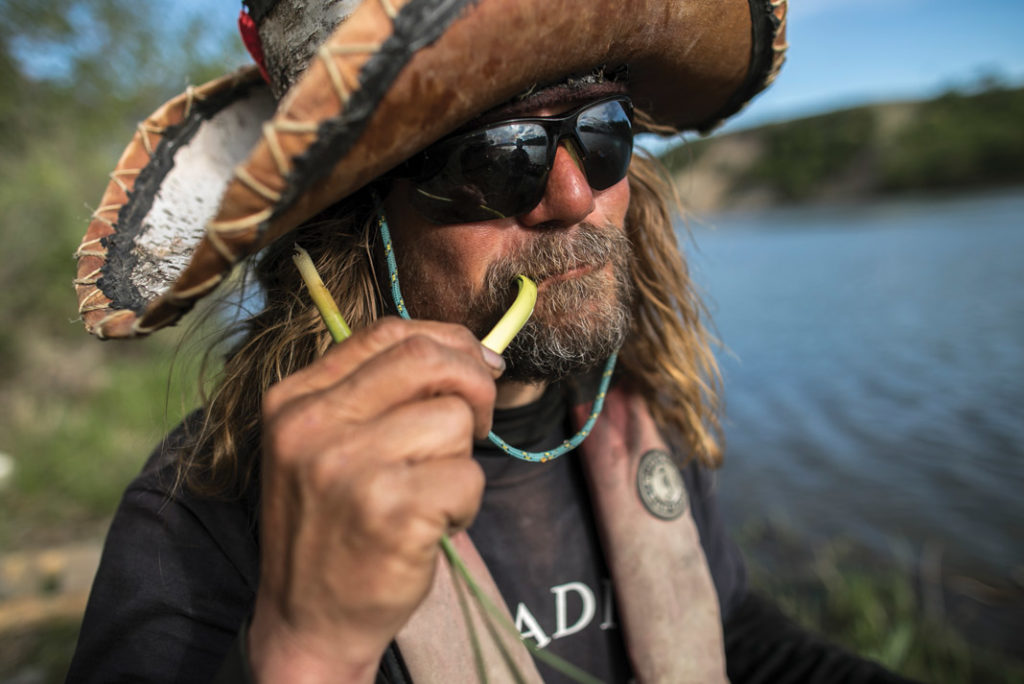
Mike’s infamous birch bark hat. | Photo: David Jackson
Craft work helps to pass the time
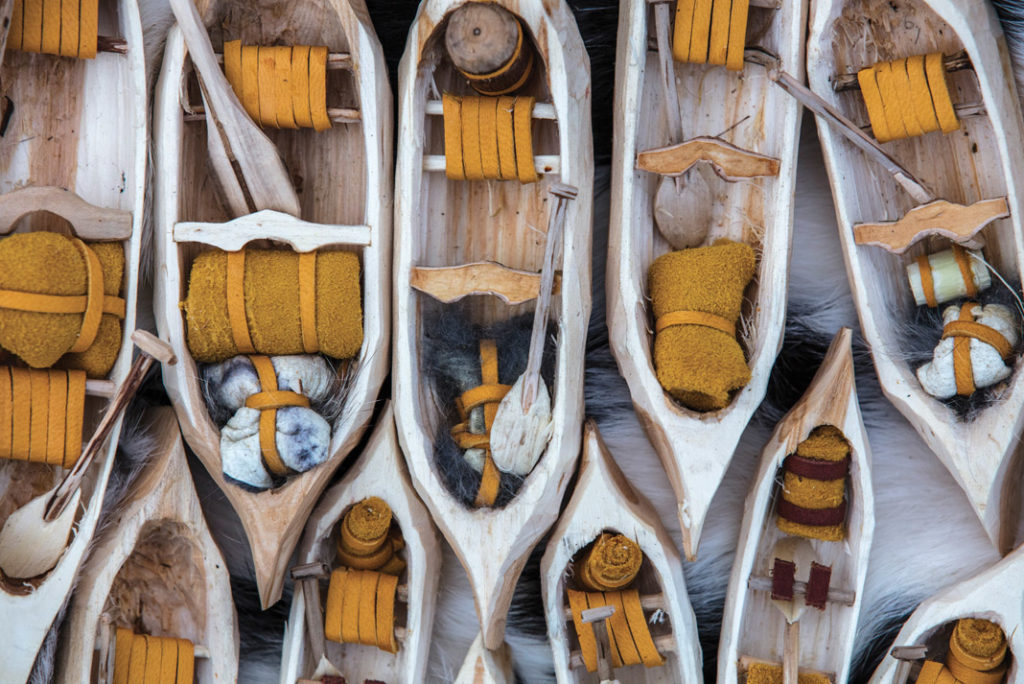
To combat the time spent patiently waiting for a change in weather, Ranta uses his small pocketknife to pass the time and whittle thank you gifts for those who have helped him along the way. During one particular six-day storm on Cedar Lake in Manitoba, Ranta whittled fourteen miniature canoes in the span of one tent-bound day.
Where most might stop at the whittling, Ranta emerges from his canoe with a small Tupperware container filled to the brim with fur, leathers, scissors, glue, carious and other miscellaneous crafting items to finish his tiny creations with seats, thwarts and little voyageur bundles.
If the red canoe complete with Spitzii barking from the bow isn’t a lasting enough image of Mike Ranta, his birchbark hat should do it. “I learned about building with trees, bark and the land when I was a young fella,” says Ranta as he inspects the seams of his gnarly hat. “I started making miniature birchbark canoes for friends and family. I loved the process until one day I had the idea to make a hat.”
While Ranta admits there was no real inspiration for his hat, he says it’s become an iconic part of his life. Each hat is not an easy undertaking and each one is unique. “I make a new hat for each trip. It takes me about three days to harvest and create it,” explains Ranta.
Just like a traditional birchbark canoe, Ranta uses spruce root to lash the seams and three pieces of birchbark to put the hat together. Rather than keep pine pitch and bear fat on hand, Ranta uses a mixture of ash and silicone to seal the seams.
Mike Ranta’s third canoe trip is all about saying thanks
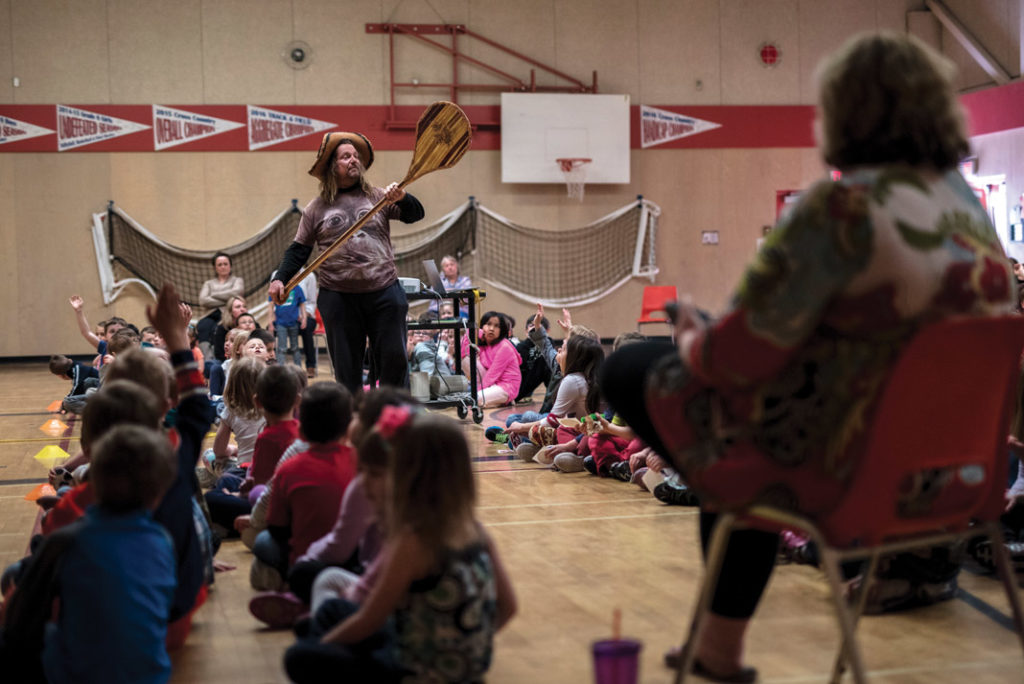
On previous trips, Mike Ranta worked tirelessly to accomplish his goal of reaching Cape Breton, often missing the opportunity to speak with various communities and schools along the way. Having grown up in Northwestern Ontario, Ranta understands the impact an inspirational speaker can have on the youth of a small town.
This time he wants the canoe trip to be about interacting with as many people as possible. “Some kids might blow right past my message, but they never make it past Spitzii. Kids love him and he’s great with them.”
Reading through the thousands of signatures cluttering his canoe, Mike Ranta declared: “My last trips were about making it from coast to coast as fast as possible. This trip is about thanking all the great people I meet along the way.”
Mike Ranta speaking at a school about his adventures. | Photo: David Jackson
Best friends in a boat. | Photo: David Jackson
The self-proclaimed “modern voyageur” has been shaking hands with every person he’s met since departing Bella Coola, just before getting them to sign his canoe. There are signatures from Sweden, Germany, Britain, Poland, Austria and Argentina, and of course the United States. Ranta even attempted to portage right across Parliament Hill in Ottawa, drawing quite a crowd before being turned away by security. He was later invited back to participate in the parliamentary Remembrance Day ceremonies.
“I get a great energy from these people. When times are tough, I look down and know that they’ve all got my back. That really helps keep a fella going out here. We have such a beautiful country and we should all be so grateful. My goal is to spread the love and compassion that we’re known for as Canadians.”
This article was first published in Issue 51 of Paddling Magazine. Subscribe to Paddling Magazine’s print and digital editions, or browse the archives.
David Jackson is an assignment photographer traveling with Mike Ranta and Spitzii documenting their journey. Jackson filed this story while held up by weather in the Fisher River Cree Nation, Fisher Bay, Lake Winnipeg. Follow along at davidjacksonphoto.com.
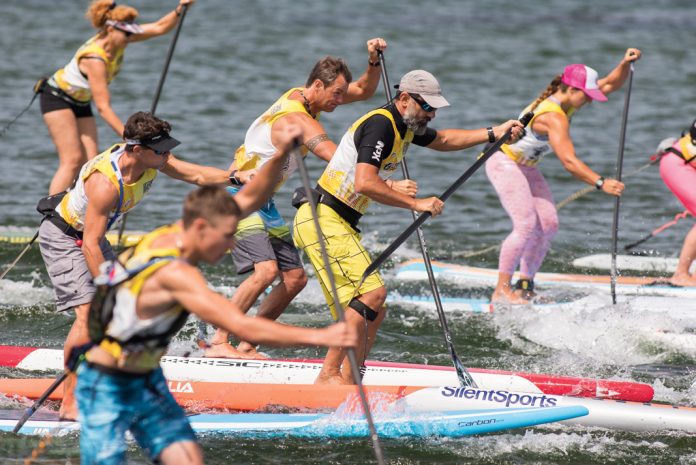
At last year’s Chattajack 31, one of the premier long-distance paddling races on the North American calendar, the top three paddleboarders blasted across the finish line minutes ahead of the field of hundreds. Two were predicted—pros and perennial champions Larry Cain and Bart de Zwart—but in third place was a complete unknown, a middle-aged MD from Hilton Head, South Carolina, named John Batson. And if that was not surprising enough, another newcomer had a hand in Batson’s third-place finish: the Paddle Monster website and app.
Turning into a Paddle Monster
Batson was a newcomer to racing and to Chattajack, yet found himself drafting the two elite racers right off the start and miraculously hanging on for all 31 miles. “It was one the best days of my life,” he recalls. He credits his success to online coaching from Cain through Paddle Monster, a new service quietly transforming the SUP racing scene by turning everyday paddlers like Batson into speed demons.
Part online community, part virtual paddling classroom, and part personal coaching service, Paddle Monster—you may have seen it spelled Pdl Mnstr on stickers or hats—is a phenomenon changing the way a significant segment of the competitive SUP community trains and paddles. If you’ve noticed the average speed at your local race series ratcheting up, or perhaps an increase in the collective breadth of the latissimus dorsi or a general glow of camaraderie and pride, then I point to Paddle Monster. This fast-growing app has taken the Internet long-tail phenomenon—using the global reach of the web to aggregate people with arcane interests into a community of critical mass—and applied it to the small world of SUP racing.
Building an online classroom
Paddle Monster was founded in May 2016, by Cain, an Olympic champion canoeist and former Team Canada paddling coach, and North Carolina SUP entrepreneur, John Beausang. The pair wanted to find a way to deliver Cain’s coaching expertise to a large number of SUP paddlers without the limitations of traditional online coaching.
“The inspiration came from taking online courses and seeing how much I enjoyed working with nationally recognized thought leaders,” says Beausang. “And we witnessed how difficult it was for coaches to manage and schedule meetings and Skype calls with clients. We thought there must be a better way to be able to serve more people in a group setting, but still maintain that personal contact.
[ View the largest selection of paddleboards in the Paddling Buyer’s Guide ]
Cain was inspired by the competitive canoe and kayak club he grew up in, where a coach posts one program for dozens of athletes, and then makes individual modifications. Sharing the program helps to keep costs down and limits the workload for the coach.
Cain and Beausang decided to set up an online forum, where every member who pays a $50 monthly fee gets access to a training plan and unlimited communication with the coach through the forum, which operates like a virtual classroom, where everyone can see and learn from everyone else’s questions and answers.
Paddle Monster becomes a community
Nearing its two-year anniversary, Paddle Monster has become a feature-rich app filled with instructional videos, blog posts, articles, discussions and a Facebook-style social media feed where members proudly share race results, training data, paddling selfies and sunrise photos from early morning workouts.
“We live five miles from each other, but we met through the Paddle Monster forum. Now we’re friends and training partners.”
The community grown from the social media features has been a big bonus, say Cain and Beausang, with Paddle Monsters everywhere getting together to train or meet up at races. The site helped Cleveland, Ohio, SUP paddlers Steven Barry and Tony Galang discover they were training around the corner from each other.
“We live five miles from each other, but we met through the Paddle Monster forum. Now we’re friends and training partners. We usually do our three hardest paddles a week together,” says Barry.
Others, like John Batson, use the app to overcome the isolation of training alone. “There are very few individuals in the area who paddle for fitness or racing,” he says. “In addition, my work schedule often limits my paddleboarding to solo sessions at odd hours. Paddle Monster allows me to be an individual paddler, but train in a group with similar goals,” says Batson.
Paddle Monster continues to grow, last year expanding to outrigger and surf ski coaching and adding four new coaches: Molokai OC-1 and SUP champion Travis Grant, six-time world surfski champion Teneale Hatton, top 10 world-ranked SUP racer Seychelle, and the Canadian Olympic team paddle strength coach Chris Chapman, who provides a paddling-specific strength program to complement the other coaches’ training plans.
Beausang is understandably proud: “Where else and in what sport can the average person be coached by an Olympic gold medalist, a 24-hour paddling world record holder, or a six-time world champion?” he asks.
Paddle Monster now has over 1,400 users at various subscription levels with up to 500 actively training.
“We have Paddle Monsters throughout Europe, Asia and North and Central America, Hawaii, New Zealand and Australia,” says Beausang.
[ Plan your next paddleboarding adventure with the Paddling Trip Guide ]
Orienting one’s life around elite-level paddle training is a huge commitment. “The one issue we have is for some people it’s too much,” admits Cain. “There are people who join and after a month or two they cancel and they say it’s not for them.” But he continues to be inspired by how many people embrace the challenge and get results—not necessarily at the level of Batson, but in every case exceeding personal limits as proof of the Paddle Monster motto #trainingworks.
Paddle Monsters excel in the race
Mona Barbera, 67, is a paddler from Newport, Rhode Island. After training from an instruction book for two years and continually getting sidelined by injury, she joined Paddle Monster and saw her injuries disappear and her race results improve within 14 months. Her successes include “smoking a couple of 20-year-olds” at a recent event and coming in second overall at another race where she “won a jar of local peanut butter and a bag of really good bread.”
More to the point, like many Paddle Monsters, Barbera is a regular person enjoying the satisfactions of a second life as a competitive athlete. “I am a psychologist, couples therapist and author. I have been known to show up in a session discreetly wearing neoprene under professional attire so I can hop on my board right after,” she says.
This article was first published in Issue 53 of Paddling Magazine. Subscribe to Paddling Magazine’s print and digital editions, or browse the archives.
Tim Shuff is a former editor of Adventure Kayak magazine. He is also enjoying a second life as a competitive athlete, and raced in last year’s Chattajack 31.
Rain or shine or snow, and occasionally with perfect flow, kayak festivals come in all shapes and sizes. From officially unofficial gatherings of good friends to well-funded, multi-sport mega-fests.
These unique assemblies of river enthusiasts, first-timers and nomadic paddlers produce intense challenges, excellent learning opportunities, and unforgettable memories. Add these seven kayak festivals to your bucket list.
Best Kayak Festival You’ve Never Heard Of
Neilson Race
This grassroots event is organized by the Quebec Connection boys and is the province’s sickest annual race. It’s also just up the road from the best poutine stand, ever. The Neilson Race is a pure time trial—keep your teammate close through three kilometers of intense whitewater. After the race, partake in the friendly mass start boatercross event, running all the way to the Tui-Oui Poutine stand for a meal well-earned.
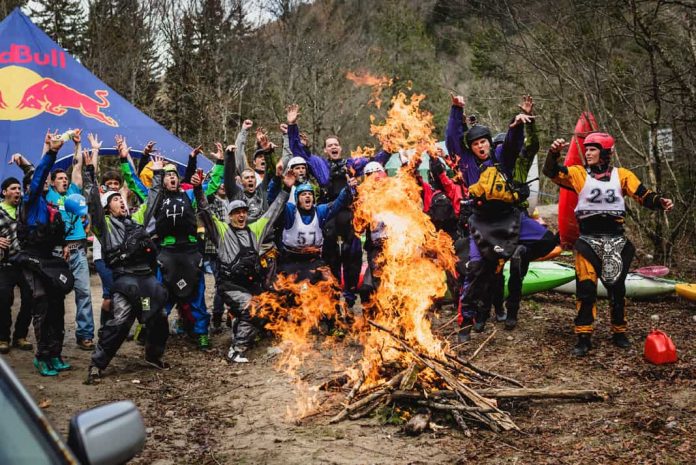
BEST KNOWN FOR: A gasoline-fuelled fire takes center stage for the group photo every year—keep your drysuit on as the beer starts flying with post-race stoke.
Since 2002, the Nile River Festival has brought the international paddling community together to celebrate the 6,863-kilometer river—the longest in the world—while highlighting the world-class whitewater of the White Nile. Chill time is the only thing you won’t find during this four-day festival.
Try your hand at the big air freestyle ramp, the gruelling 35-kilometer endurance race, the Nile Special Freestyle Throwdown or the Hendri Coetzee Itanda Falls Memorial Race. It’s a perfect excuse to ditch the winter blues and enjoy one of the best rivers on the planet.
BEST KNOWN FOR: The mandatory beer funnel at the end of the three-hour endurance race.
The small town of Voss, Norway explodes with extreme sports during the last week of June. This seven-day festival attracts hundreds of athletes and tens of thousands of spectators, hosting multiple kayaking races, as well as competitions in BMX, skateboarding, skydiving, paragliding, hang gliding, rafting, skiing, snowboarding, climbing, cliff diving, longboarding and base jumping.
Over the past 22 years, the festival has become as much about the music, culture and community of extreme sports as it is about the competitions themselves.
BEST KNOWN FOR: The myriad of world-class rivers within an hour of Voss to fill your spare time.
[ Paddling Buyer’s Guide: See all racing & training kayaks ]
Best Festival For Beginners
Machu Picchu Kayak Festival
Come for the festival, stay for one of the seven wonders of the modern world. The Machu Picchu Kayak Festival takes place on a friendly section of Urubamba River in the small Peruvian town of Santa Theresa.
Just upstream of the festival location, the ruins of ancient Incan city Machu Picchu overlook the river as it flows through the sacred valley. The festival boasts warm water, and multiple races encourage even the newest kayakers with beginner categories in the time trial, giant slalom and boatercross races.
BEST KNOWN FOR: Machu Picchu is just a 1.5-kilometer hike away.
[ Plan your next South American kayak adventure with the Paddling Trip Guide ]
Kayak Festival With Best Vibes
Gauley Festival
The community, river and history all help make Gauley Fest what it is. Thirty-five years ago friends gathered to celebrate the derailment of a hydroelectric project on West Virginia’s Gauley River. Year after year the gathering grew, with more than 5,000 people attending last year.
Non-kayaking friends will love the live music, vendors, silent auction and wild party. This is the single largest gathering of whitewater enthusiasts in the world, has guaranteed flows and proceeds go to support American Whitewater—what’s not to love?
BEST KNOWN FOR: Guaranteed good times, on and off the water.
The North Fork Championships (NFC) is considered by many to be the best weekend of the year. Located on the North Fork of the Payette River, the extreme racing championship is held each year on the third weekend of June. The three races on this class IV to V+ river draw some of the best boaters in the world.
The North Fork’s accessible roadside location makes it incredibly spectator friendly. The makeshift village of friends, athletes, and vendors in the field at Crouch delivers the best times, while the infamous party is guaranteed to turn into a rowdy ruckus.
BEST KNOWN FOR: Pushing the limits of extreme racing, and keeping it family friendly—at least until nightfall.
No festival does a better job of providing activities for the whole family than the GoPro Mountain Games in Vail, Colorado. Each year, more than 70,000 people descend on the small mountain town during the second weekend of June to take in the annual display of sport, art, and music.
The Mountain Games provide multiple kid events, including a kid’s mud run, kid’s yoga, and a youth climbing competition. Just want to spectate? Get inspired watching the Bouldering World Cup series, slacklining competition, and freestyle kayak event—all within the confines of downtown Vail.
BEST KNOWN FOR: Mountains of Music provides free concerts with big-name acts every night of the festival, so you can unwind or wind up.
This article was first published in Issue 54 of Paddling Magazine. Subscribe to Paddling Magazine’s print and digital editions, or browse the archives.
The Solstice GT Titan will fit big and tall paddlers. | Photo: Victoria Bowman
Surely the hardest part about crossing an ocean in a sea kayak is sleeping. When Ed Gillet paddled from California to Hawaii in 1987, he resorted to using a double kayak so he’d have room to snooze. Other voyages, like Peter Bray’s 2001 Atlantic crossing or the 2007 Crossing the Ditch expedition from Australia to New Zealand have spent big bucks on custom-made kayaks with sealed cabins. Pity that none of these adventurers had had the spacious luxury of a Solstice GT Titan kayak from Current Designs.
Current Designs Solstice GT Titan Specs
Length: 17’7”
Width: 24.25”
Depth: 15.87”
Cockpit: 35” × 17.5”
Rear Hatch: 22.5” × 12.5”
Forward Hatch: 14.5” × 9.5”
Weight:
55 lbs (fiberglass)
50 lbs (Kevlar)
Total Volume: 140 U.S. gal
MSRP:
$2,899 USD (fiberglass)
$3,349 USD (Kevlar)
[ Paddling Buyer’s Guide: See all sea kayaks for larger adults ]
Try the Solstice GT Titan on for size
Despite the Dagwood sandwich proportions (take a look at the extra depth along the seam) the Titan’s footprint on the water is that of a normal boat. The Titan is essentially just a “double high-volume” cut of a Solstice GT hull—same length and width with an extra inch and a half of depth to give it 30 percent more volume.
Gigantic is beautiful
The Titan retains the performance characteristics that have made the Solstice GT one of the best-selling boats of all time—stability, speed, reasonable manoeuvrability. The noticeable effect is high windage, but this is a small concern for the very large paddlers and loads this boat is meant for.
The shallow-V bottom is nearly flat at the cockpit and results in rock-solid initial stability worthy of a fishing or filming (or sleeping) platform.
[ Plan your next sea kayak adventure with the Paddling Trip Guide ]
Our Titan bobbed above the water like a cork when loaded with average-sized paddlers and their gear. We concluded that the larger the paddler, the heavier the load, the better. We imagine a multitude of uses for what is surely one of the world’s largest production singles: long expeditions, cross-border drug trafficking, eco-friendly international shipping, wilderness programs for Overeaters Anonymous, “mothership” services for friends with small boats, and of course, a brilliant new solution for slumbering at sea.
Photo: Rapid Staff
Stowage to spare, and then some
We loaded the Titan for a weekend by haphazardly dumping in the entire contents of our camping and kayaking storage crates, and we still had room for all the extra gear that our friends couldn’t fit in their Greenland boats. Then, at the campsite, this scary stowaway popped out of the rear hatch and said, “Wow, these Current Designs’ hatch covers are perfectly dry.”
The sleek and practical deck layout features colour-matched, flush-mount hatch covers, reflective deck lines and recessed deck fittings. The extra-large cockpit opening and standard wide-base seat meet the needs of a rapidly “growing” population.
Feature Photo: Victoria Bowman
Steady feet
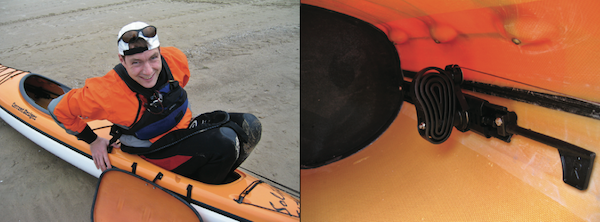
A glimpse inside reveals flawless Kevlar layup, glued plastic bulkheads and the Sea-Dog foot brace system whose pivoting pedal allows the rudder to be controlled without sliding the feet.
Whether you’re setting out on an ocean-spanning voyage or simply taking a local coastal jaunt, the Solstice GT Titan kayak from Current Designs will provide plenty of space to paddle in comfort—plus the extra room to catch a few Z’s.
This article was first published in the Spring 2007 issue of Adventure Kayak Magazine. Subscribe to Paddling Magazine’s print and digital editions, or browse the archives.
Creek boating offers a chance to get down and dirty with challenging terrain and water flows. | Feature photo: Wonita or Troy Janzen/Pixabay
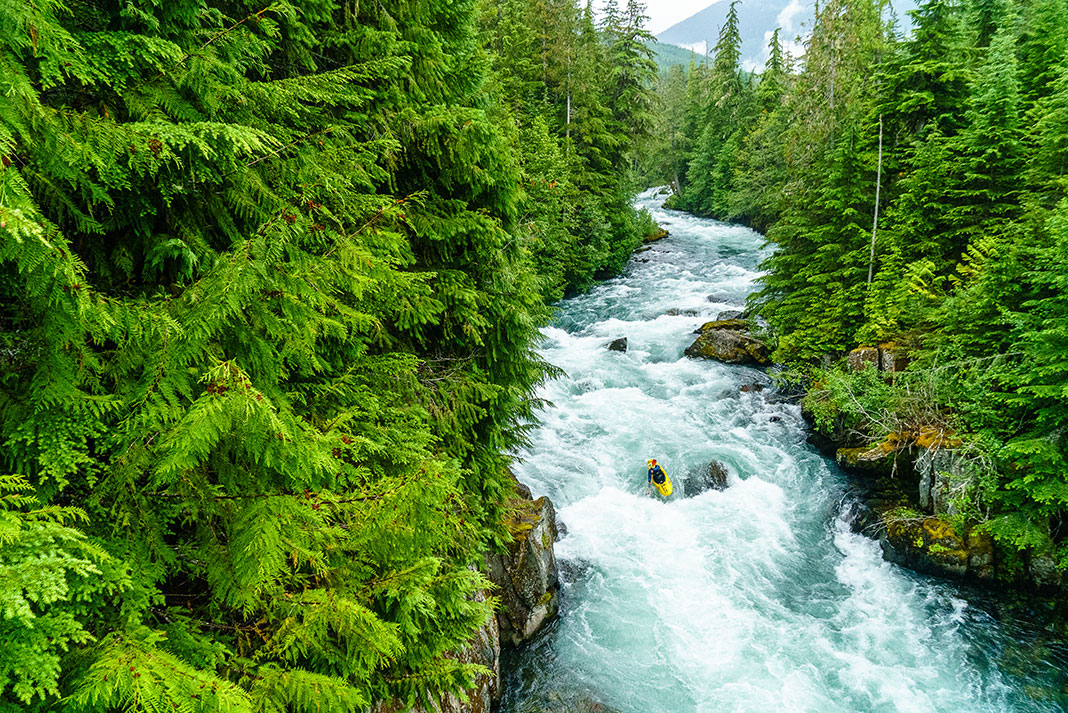
Creek boating offers experienced whitewater paddlers a chance to get down and dirty with steep, rocky terrain and lower water flows. The resulting ride can be an awesome adrenaline rush, but creekers must keep a cautious eye and a confident hand right from the put-in. If you’re an aspiring creeker, follow these 10 tips to help ensure a fun ride.
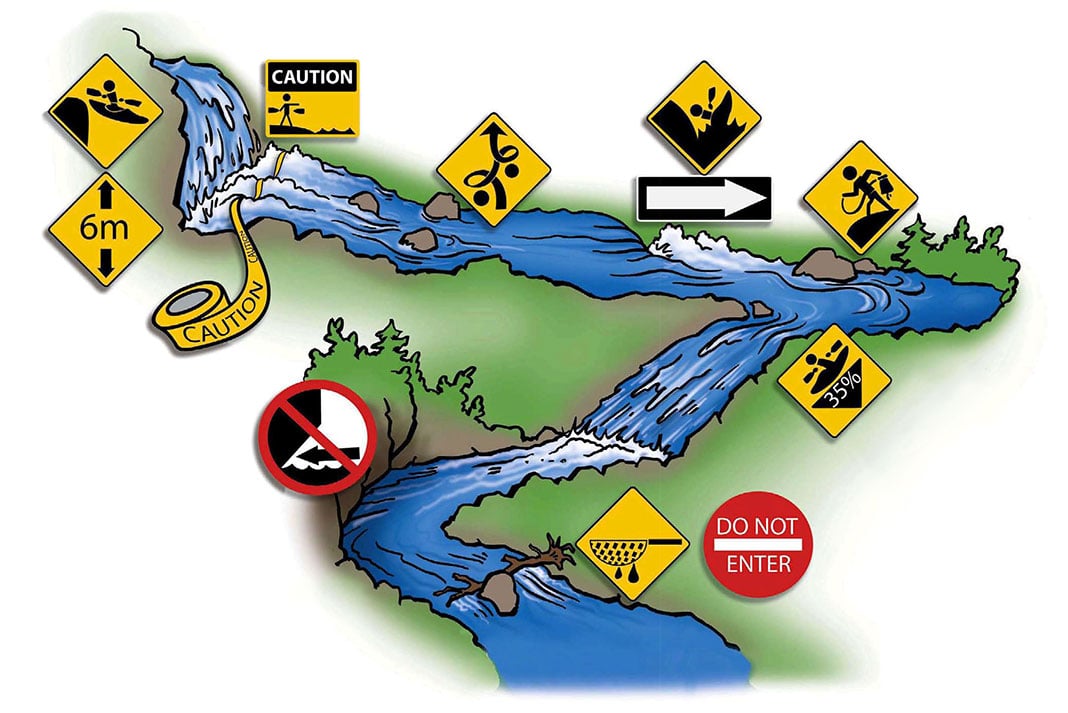
Boil lines form at the base of waterfalls, along eddylines and other places with the right combination of features and currents. Boil lines are constantly changing and, if you are in the wrong place at the wrong time, have the potential to work you hard. The water is aerated and unpredictable, making it difficult to roll and easy to catch an edge and flip. Use aggressive paddle strokes to cross boil lines, and stay relaxed and in the front seat if one takes you for a ride.
[ Paddling Buyer’s Guide: View all creekboats ]
2 Beware undercuts and caves
Water should pillow up against rocks. If it doesn’t, there might be an undercut, cave or boulder sieve. The danger with these features is that the water flows into, beneath or through the rock and takes you inside. Careful river reading, solid boat control and starting your moves early are essential to avoiding these.
Understand the rules of the river. | Illustration: Paul Mason
3 Watch for wood strainers and sieves
Wood strainers act like rock sieves or noodle colanders, letting water pass through but trapping larger objects like kayaks and their occupants. Clues that indicate wood might be present include brittle banks with overhanging topsoil and many fallen trees in the forest. Wood in the water is not always obvious, so be cautious even if all you see is a branch. The safest way to manage this risk is to run the creek as if there is wood around every blind corner.
4 Size it up for yourself
At the put-in, judge whether the levels are high or low. Ask yourself if there is reason to think something downstream might have changed. Understanding flows and visual gauges and treating each creek like a first descent are fundamental to creeking. The critical element to a successful run is the confidence of individuals at the put-in. Don’t be afraid to walk away if it doesn’t feel right. If you decide to put on, make sure the group has well established signals and a plan to communicate once you’re in the thick of it. Nothing is more unnerving than working down a steep creek with someone frantically waving at you in a game of indecipherable, high-stakes charades.
5 Use care when you go chasing waterfalls
Waterfalls lure many boaters to try creeking. Sticking the line on a burly waterfall is amazing, but there are lots of things to consider in this environment. First, figure out if there is a clean, achievable line. Break the drop down into the approach, the lip, the base of the falls and a safe eddy below. If you can see a line through these four zones, the next steps are organizing safety, determining hazards and, most importantly, figuring out methods for good communication. Before anyone runs a waterfall there should be a clear plan for how everyone will safely reach the eddy below.
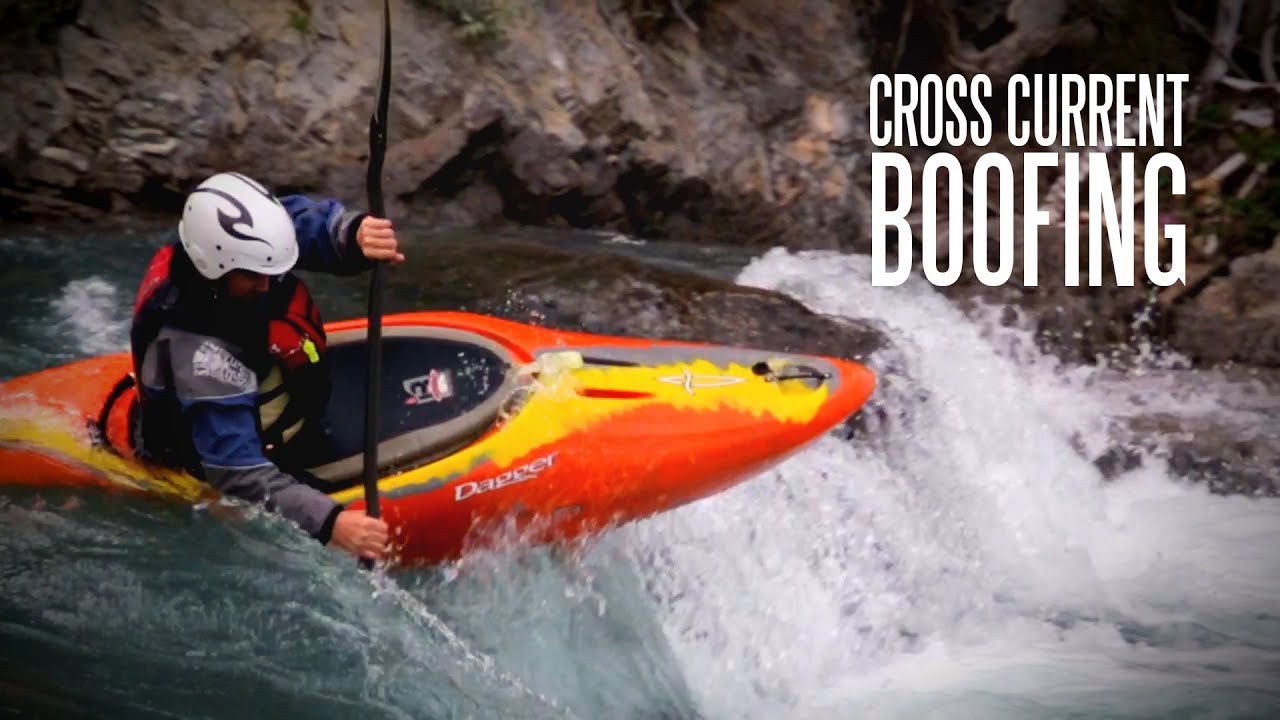
Boofing is as essential to creeking as ollying is to skateboarding. The goal of boofing is to get your boat over something you’d rather avoid, like a nasty hole. Practice on small pourovers with enough water for your boat but not so much that it forms a sticky hole. Square up to the feature, plant a vertical paddle in the water, wait until your bow has passed the edge of the feature and then, with an explosive pull on the blade in the water, lift your knees and shove your shoulders forward simultaneously to make the boat jump forward.
7 Hop from eddy to eddy
Eddies are the brakes of a creek boat and the best way to deal with line-of-sight issues on steep creeks. Creeking safely depends on your ability to break down rapids with lots of stops and to never go downstream of the last eddy. Precision and confidence are very important: Creeking often violates the kayaking rule of thumb that you should always have a back-up eddy below. Sometimes the micro eddy above the lip of a drop is the only out. The secret to becoming an eddy-hopping expert is to treat every eddy on a creek as do or die.
[ Plan your next whitewater kayak adventure with the Paddling Trip Guide ]
8 Hole escapes and avoidance
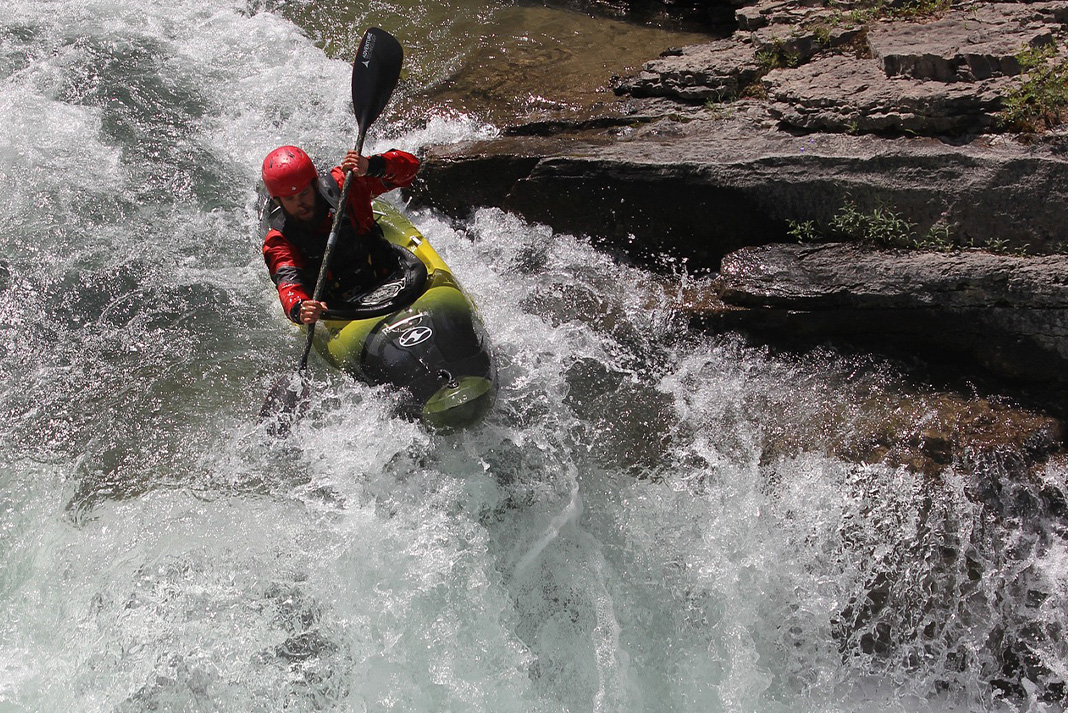
Playboating skills translate well to dealing with holes on creeks. The main difference is trying to cartwheel or loop an 80-gallon creek boat out of a hole. Creek boats have volume, which means they stick in holes. The other challenge is that holes on creeks may look benign at first glance but are often very retentive. Your best bet is to avoid holes altogether, or else punch them with the clear intention of driving right through. Look for water moving downstream when scouting a line through a hole and integrate the timing and power of your boof stroke to propel your boat through the sticky zone.
Never underestimate how important it is to move slowly into a rapid that needs scouting. This limits the risk of being swept downstream and gives you as many options as possible for scouting, portaging or ferrying into a line. Scouting from the outside of a bend offers the farthest view downstream but makes it harder to get to the opposite bank if needed. The first person down probes the run and sends any important feedback up to the group.
If the rapid is big enough to warrant a scout, then setting safety is usually a good idea as well. How to set safety is hugely situation dependent and should be learned by proper instruction. A couple key principles to keep in mind are that you must have a safe zone downstream that you plan to pendulum the swimmer into, and never commit yourself or the rest of the group to a worse situation in a panicked effort to save a swimmer.
Creek boating offers a chance to get down and dirty with challenging terrain and water flows. | Feature photo: Wonita or Troy Janzen/Pixabay
10 Take slides in stride
Slides are creek boating’s joy rides. The skill set is similar to that used in running waterfalls—finding a clean line from approach to exit is the recipe for success. Good forward posture and a readiness to brace at any moment will help keep you on line. Like waterfalls, when you can see your landing zone from start to finish, your ability to stay on line and upright greatly improves. Staying upright in this shallow, cheese-grater environment is your foremost goal.
This article was first published in the Early Summer 2010 issue of Rapid Magazine. Subscribe to Paddling Magazine’s print and digital editions, or browse the archives.
Creek boating offers a chance to get down and dirty with challenging terrain and water flows. | Feature photo: Wonita or Troy Janzen/Pixabay
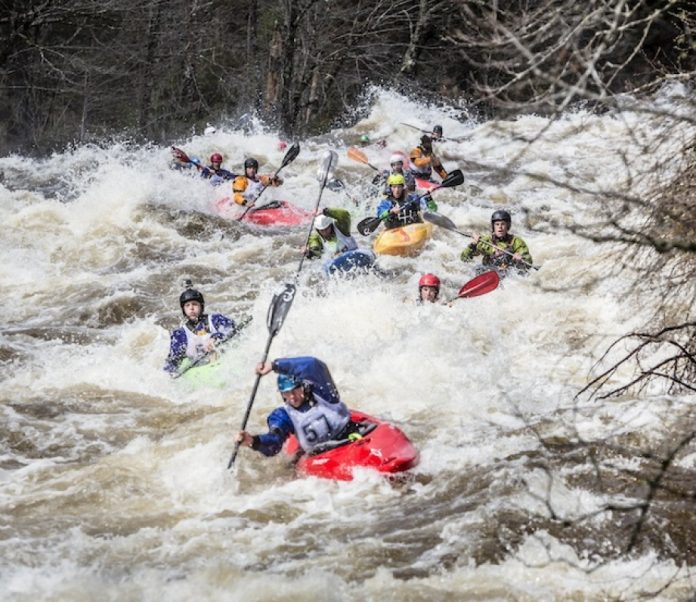
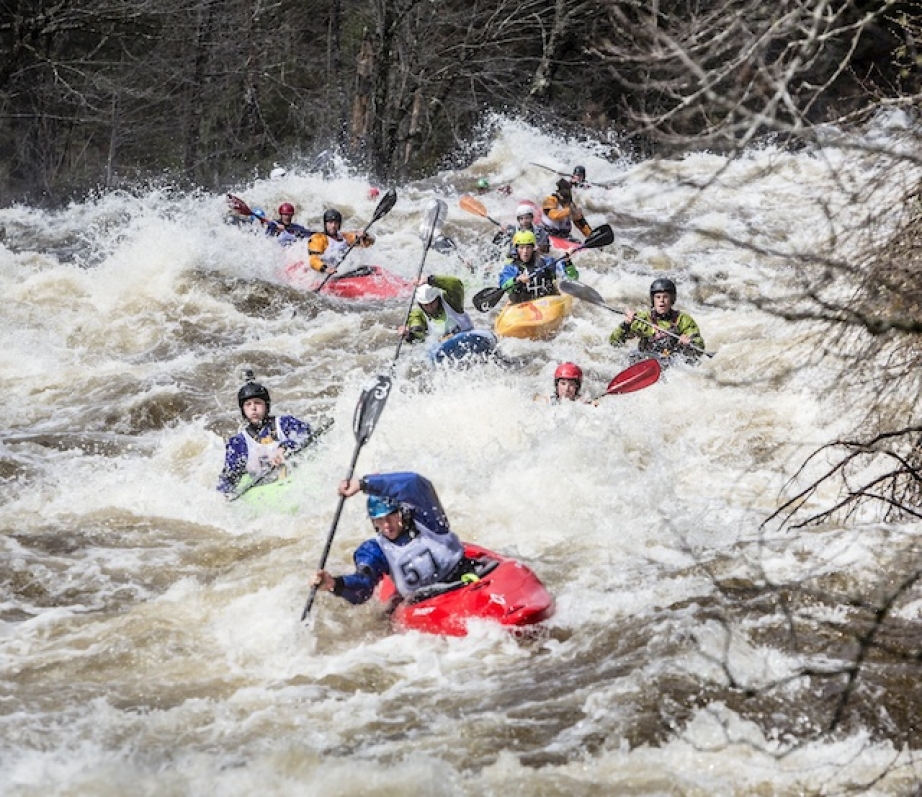
Twenty-four boats charging class IV and V rapids at the same time as quickly as possible is a recipe for disaster—the exact kind of pandemonium most people try to avoid on the river. Not at the Neilson Race. Chaos is the norm for the notorious boater cross events in whitewater’s blossoming race scene.
In the days before the second annual Neilson Race, organizers faced a predictable dilemma: would the water level cooperate? The makeshift gauge, a painted rock at the takeout, showed lower than ideal conditions.
On race day, the gauge was nowhere to be seen.
Unprecedented rainfall the night before had filled the river to the brim and then some. A nearby town was on flood alert. No one had seen the river so high.
[ Plan your next kayak racing & training adventure with the Paddling Trip Guide ]
The Neilson Race changes course
“There was no way they were going to race down the section that now had holes big enough to send 30-foot long logs into a cartwheel,” says paddling photographer Dylan Page.
A new location was scouted at the last minute and Page, who’d arrived to capture the event, was dealing with a challenge of his own: with the river spilling over its banks and raging through thick forest, where would he position himself to shoot?
“I walked up and down the course and managed to spot one tree that was overhanging the river,” he says. “I threw on my PFD, just in case, and climbed the tree.”
Knowing he’d have a tiny window of time to shoot, he readied his camera and waited for the racers.
Feature Photo: Dylan Page
“When the paddlers came around the corner, everything was in motion,” Page recalls. “Water going in every direction, the tree I was perched in swaying, kayakers going forward, backwards and maybe a couple upside down. Ten seconds later they were gone.”
The resulting photo captures exactly what Page had set out to do.
“I wanted to show the chaos that is 24 kayakers barreling down a swollen river,” says Page. “I chose to frame everyone in one shot and to exaggerate the proximity of the kayakers by compressing the perspective using a telephoto lens.”
This article was first published in the Early Summer 2015 issue of Rapid Magazine. Subscribe to Paddling Magazine’s print and digital editions, or browse the archives.



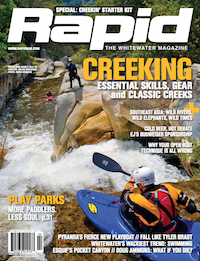 This article was first published in the Early Summer 2010 issue of Rapid Magazine.