Home Blog Page 166

Bear Safety Gear for Camping

Camping gear for bear safety on a yellow background.
Forget about your worries and your knife. | Photo: Kaydi Pyette

Your best defense in bear country is your brain—your knowledge and understanding of bears,” writes Steve Herrero in his 2003 pioneering book, Bear Attacks: Their Causes and Avoidance. By keeping a clean camp, watching for bear sign, making noise while in the woods, traveling in a group and carrying bear spray as a last resort, you can help ensure a bear sighting is the highlight of your wilderness trip, not the downfall. Here’s what you need to know about the most popular bear safety items.

Bear Spray

Bear spray is widely recognized as the most effective means of repelling an attacking grizzly or black bear in a close encounter. Biologists and professional guides don’t travel in bear country without it, and neither should you. A study of Alaskan bear encounters found 98 percent of those who used bear spray were uninjured, while the remaining two percent received only minor injuries. Frontiersman’s 325-gram canister fires for eight seconds and expels two-percent capsaicinoids, which cause temporary respiratory distress. On land, keep the spray accessible, not buried in a hatch or pack. Remember: Bear spray is only effective at close range, usually 30 feet or less, and don’t season yourself by being downwind. 

$19.99 |  sabrered.com

BUY ON AMAZON

Bangers

Flares and bangers are inexpensive, easy-to-use and effective deterrents before a bear gets too close for comfort, according to the Get Bear Smart Society. Shots fired into the air—not at the bear—explode after 90 to 120 feet, creating a loud boom. They can be fired from pen launchers or pistols. However, if not used correctly, these tools may escalate the situation—if a banger explodes behind the bear, it may cause the bear to advance in fear. It can also be a fire hazard in dry conditions. Tru Flare Pen Launcher Kit includes red signaling flares and orange noise-making bear bangers—it’s a lightweight, budget-friendly option easy to keep close at hand.

$30 |  mec.ca

Food Storage Canister

Bear canisters are up to the challenge of withstanding being batted around with catcher-mitt-sized paws and are just large enough to avoid the 1000 psi crushing strength of a bear’s jaws. BearVault’s BV500 is 8.5 inches in diameter and has 11.5 liters of capacity, enough to hold a week’s worth of dehydrated food and toiletries for a single person. It weighs just over two pounds. There’s no doubt it’s a bulky little unit—sort of like carrying around a small keg—but it comfortably nestles in a canoe pack with lots of room to spare. Plus, it doubles as a sweet camp seat. Kayakers will prefer the stubbier BV450 version for half the volume and easier packing, or another storage method. Both units are transparent, with wide, easy-access openings and tool-free operation. Canisters are mandatory in a dozen national parks, including Alaska’s Kenai Fjords National Park. Store on-ground, 100 yards downwind from camp.

$83.95 |  bearvault.com

BUY ON AMAZON

Food Storage Bag

Light as a feather but strong as a bear is the promise of Ursack’s tear-proof bags. The “bulletproof” polyethylene fabric of Ursack’s Major XL is the only alternative to bear-proof canisters certified by the Interagency Grizzly Bear Committee. Weighing a half-pound, the Ursack Major XL bear bag is a fraction of the weight of a traditional bear canister for a similar volume. Its 15-liter capacity can hold about a week of dehydrated food for one, or a long weekend of food for two. The Ursack is more packable than a canister and faster to secure than a bear hang. To use, take the bag 100 feet from camp and anchor on a tree with a figure-8 knot. What’s the catch? While the highly tear-resistant weave will prevent a bear from getting your food, Ursack warns it may not prevent puncturing or crushing. The sharp teeth of some small critters could puncture holes. Double-check local regulations as some national parks, including Yosemite, require storing food in a canister.

$99.95 |  ursack.com

BUY ON AMAZON

Bear Bell

While a 1982 study based in Glacier National Park suggested the jaunty jingle-jangle of a bear bell will warn bears away, a more recent study by American bear biologist Tom Smith implied the opposite. Either way, bells aren’t particularly noisy, and their tinny tinkle can get lost in the other wilderness sounds. The Get Bear Smart Society recommends alerting bears to your presence by talking loudly and singing. Renowned Canadian bear biologist Stephen Herrero prefers yodeling. You could also try Nickleback.

$5 |  rei.com

BUY ON AMAZON

Horns

A marine horn or wildlife deterrent horn can be heard up to a half-mile away with a 120-decibel berrrrp. Unfamiliar sounds—including whistles—may deter an approaching bear at a distance. However, their efficacy is inconclusive. The U.S. Fish and Wildlife Service’s deterrence guidelines state, “The use of commercially available air horns and other similar devices…may be effective in deterring bears while causing no lasting or permanent harm to individual animals.” It’s an inexpensive item already in the kit of many coastal explorers and poses none of the risks of bear bangers.

$9.99 |  emzone.ca

FIND MORE ON AMAZON

Bear Hang

Criticizing the efficacy of bear hangs has become a bit of a trend. Naysayers claim bear hangs don’t work, and they take too long to rig. But it’s not so much that bear hangs don’t work—just that when done poorly, they’re an invite for a local ursine to belly up to a buffet. A bear hang is an effective way to keep your food safe and keep bears from being habituated when done correctly. And it’ll just cost you the price of rope. An effective bear hang suspends the goodie bag 12 feet off the ground, eight feet from the tree trunk and five feet from the suspending tree limb. If paddling above the treeline or in an area dominated by stubby or short-limbed trees, choose another method. Proper food and garbage storage is essential to keeping bears wild and safe—a fed bear is a dead bear.

$7 |  homedepot.com

FIND MORE ON AMAZON

This article was first published in Paddling Magazine Issue 62. Subscribe to Paddling Magazine’s print and digital editions here, or browse the archives here.


Forget about your worries and your knife. | Photo: Kaydi Pyette
Mustang Survival and MTI Adventurewear Merger

MTI-Mustang merger

Last month, Mustang Survival announced MTI Adventurewear had been acquired by its California-based parent company, the Wing Group, and the two brands would merge to be a force in the paddlesports market.

After being a trusted leader in marine recreation for more than 50 years, the amalgamation is aimed at enhancing Mustang Survival’s PFD offerings to expand further in the recreational market. Combining Mustang’s technical engineering with the design and development of MTI will provide world-class products, according to Josh Horoshok, VP of Mustang’s recreational category.

“From the Mustang Survival side, we wanted to expand in the recreational paddling space,” he says. To do this, Mustang wants to expand its foam PFD assortment. “PFDs are complex because the approvals needed from the coast guards and Transport Canada take a long time. It’s a long to-market process to design and develop your own foam PFD line. Internally, we had many discussions about purchasing a company with this expertise,” says Horoshok.

[Discover the best PFDs of the year in the online Paddling Buyer’s Guide]

Based in Burnaby, British Columbia, Mustang got a contract with the Canadian government to make PPE hospital gowns during COVID-19, which allowed them to weather the pandemic better than many other companies. “We’d had high-level conversations for the past year, but got down to the brass tracks of looking for a PFD manufacturer to acquire in spring, a couple of months after COVID-19 hit. Once we started discussing with MTI, it was just weeks. It moved fast,” Horoshok adds.

MTI Adventurewear was founded in 1991 and has been owned by Gordon and Lili Colby since 2011. Both will stay on with Mustang Survival.

“Gordon will be doing product design for Mustang from now on,” says MTI’s Lili Colby. “He was running MTI and doing product design, but it was a big task to do both jobs. He had a lot of stuff on the design table he didn’t have enough time for, and now can dedicate himself to designs he’s been working on for years.”

Discussions about the Mustang Survival and MTI Adventurewear merger began in June 2020 and concluded on July 31. | Photo: Courtesy Mustang Survival

Once travel restrictions lift, Gordon and Lili, based in Massachusetts, will have access to Mustang’s testing labs and CAD machines to create prototypes in British Columbia.

“We’re able to support their dreams and vision, and merge resources,” adds Horoshok. “Mustang has wanted to do some high-end guide vests and rescues vests and move into the kayak space, and we haven’t had the expertise. Now with Gordon and Lili, we’re able to accelerate and expand.”

MTI is not distributed in Canada. Work will first begin on harmonizing MTI’s models to be sold north of the border. Those MTI models will sell under the Mustang name. “We’ll continue to sell the MTI brand through to the end of 2021, and there will be no change to their assortment in the U.S. Then we’ll re-evaluate branding and what that means for the future of MTI under Mustang,” says Horoshok.

Details Behind The Purchase of MTI

“Every business owner has an idea of what would be the perfect sell scenario,” says Colby.

The deal started in June with a phone call. “Things were starting to get better after the COVID shutdown. We had figured out how to stage employees in the factory and mask-wearing. Things were starting to open up and we got a call from Jason, the president of Mustang Survival, who is a good friend of Gordon’s.” Gordon and Jason Leggitt are also on the board of directors at the Life Jacket Association.

“On the call, Jason said, ‘I’m calling to see if MTI might be interested in selling.’ Gordon was upstairs in his office, and he called down to me, saying, ‘Honey, you might want to come up here,” says Colby.

“The way Jason laid it out to us made sense from the get-go. Mustang has some amazing premiere products, but they don’t have a lot of foam jackets. That’s the space where MTI is so good. MTI’s designs complete Mustang,” says Colby.

Gordon and Lili Colby purchased MTI Adventurewear in 2011. | Photo: Courtesy Mustang Survival

The first conversation took place at the beginning of June, and by July 31, the company was sold.

“Buying MTI in 2011 was one of my most joyful moments as a business person. Seeing it transition in Mustang Survival is another high for me,” says Colby.

What MTI Dealers and Customers Need To Know

The industry heard about the merger via press release in early August. Since then, Mustang Survival has worked with MTI’s customers and suppliers to develop a smooth transition.

“What I’m doing right now is helping transition 800 MTI dealers to work with Mustang,” says Colby, who will stay on with Mustang in a business development role. “One of the extraordinary things that blew me away is all the MTI dealers are now set up with Mustang. They said, if you’re okay with MTI, then you’re okay with us. They took away the red tape and rolled out the red carpet.”

[Discover the best PFDs of the year in the online Paddling Buyer’s Guide]

“The big shift for dealers is they’re no longer buying from MTI, they’re now buying from Mustang,” confirms Horoshok. “If you were a dealer, we’ve welcomed you into the Mustang family, no paperwork. It’s been very seamless. We’ve accepted all of MTI’s dealers and all will have access to the Mustang Survival brand. It also opened Mustang up to an entirely new segment almost overnight.”

Mustang Survival will handle all customer service from now on, but otherwise, there’s no change in the customer experience, says Horoshok. “You’ll be able to get MTI in your favorite shop, and the MTI site will live on for now.”

According to Colby, most people don’t know what the M in MTI stands for. “When you open up the jacket, it says Marine Technologies International inside. The M in MTI now stands for Mustang. And Mustang is going to take MTI to its next chapter,” she says.

Mission: Diversify The River

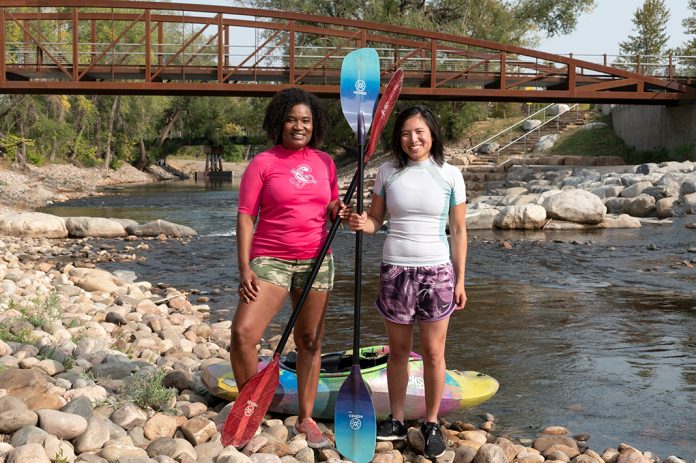
Diversify Whitewater co-founders Antoinette Lee Toscano and Lily Durkee. | Photo: Matthew J. Berrafato

Two American women are aiming to grow the love of paddling with an event series focused on getting Black, Indigenous and people of color (BIPOC) on the water.

Diversify Whitewater’s aim is to introduce more BIPOC to whitewater kayaking and rafting. The Fort Collins, Colorado-based organization’s founders are two women of color—Lily Durkee and Antoinette Lee Toscano. The duo has organized a series of summer events, including a community paddle and skills day, at no cost to participants to increase access to paddlesports and break down barriers.

“I was spurred by the post Immersion Research sent out in light of BLM [Black Lives Matter marches]. It said they were happy to support events and donate. I thought, that’s a nice message, but who is doing this work?” says Durkee, an Asian American Ph.D. student at Colorado State University. “I’ve been the only person of color on the water for most of my 15 years of boating. I thought, why can’t I do something myself?”

Durkee had just moved to Fort Collins, Colorado. She reached out to Toscano, a new friend who she met at a pool rolling session. “We formed Diversify Whitewater together. It’s been a short journey, but we’ve done a lot,” she adds.

[Discover the best gear of the year in the online Paddling Buyer’s Guide]

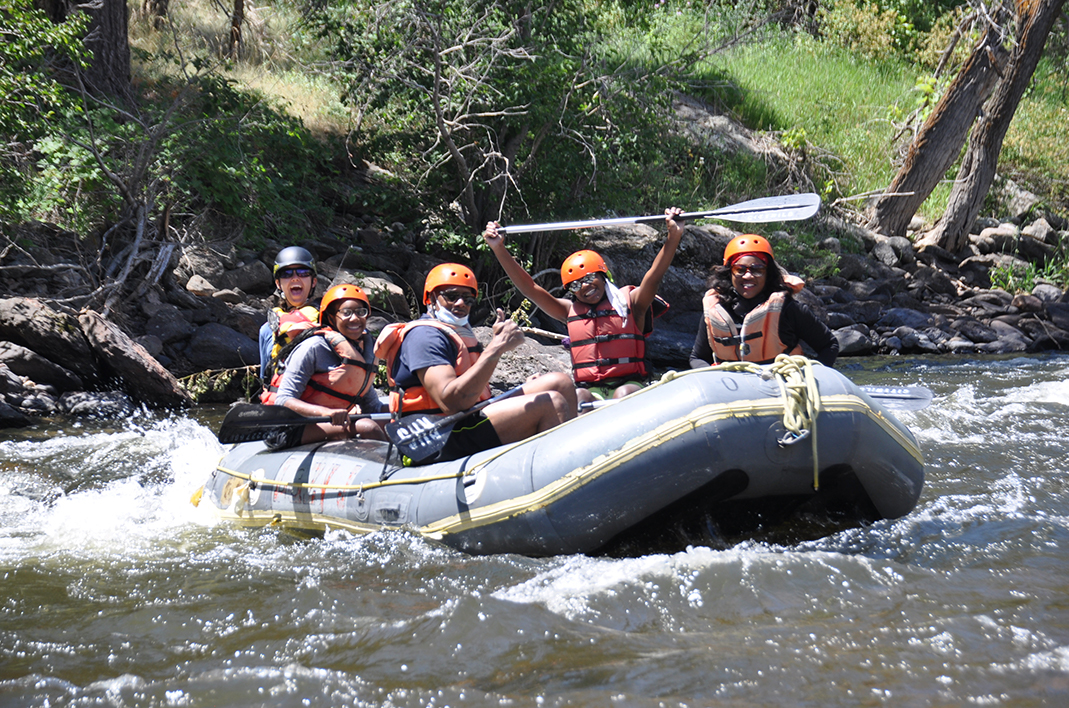
The first Diversify Whitewater event took place in July. The paddle on the class II Cache la Poudre River near Fort Collins, Colorado, welcomed 37 BIPOC to whitewater rafting for the first time. Another 30 volunteers and paddlers helped orchestrate the day.

“Neither of us have seen that many BIPOC on or around the river,” says co-founder Antoinette Lee Toscano, an 11-year veteran of the U.S. Army, and former IT CEO turned freelance writer. “I think in the seven years I’ve been kayaking before this event, I had paddled with five other BIPOC.” Durkee echoes a similar sentiment.

Diversify Whitewater’s next event is a skills day being held on September 26 at Boyd Lake in Loveland, Colorado. It’ll host four one-hour sessions teaching kayak, SUP and raft skills to participants.

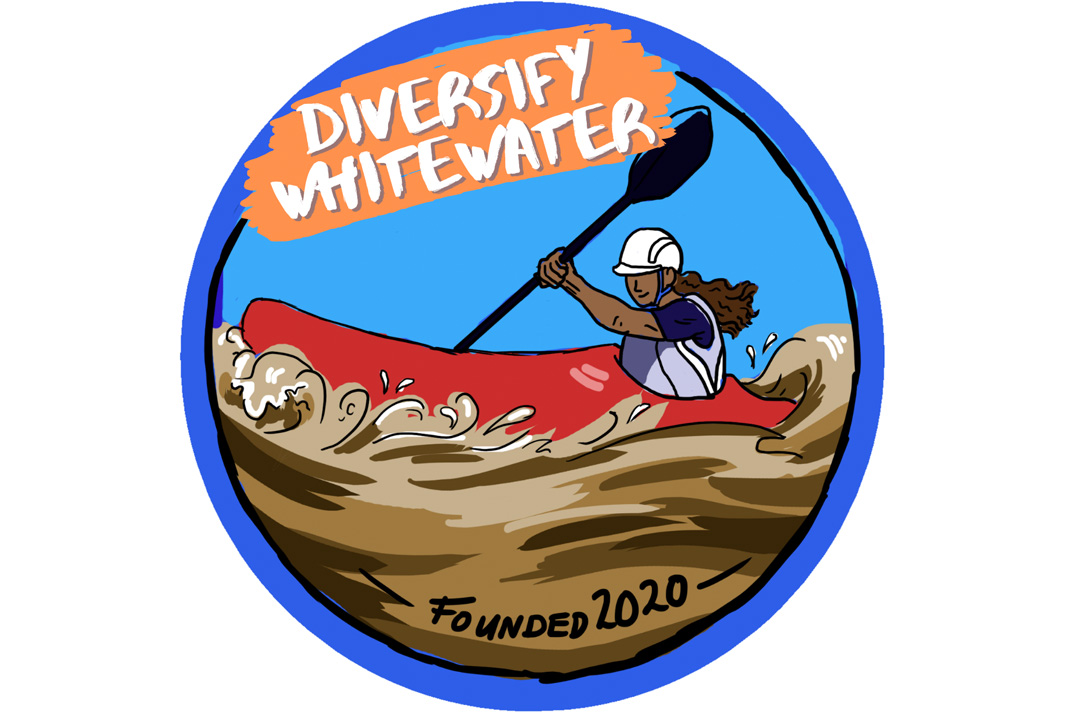
Logo design by Rebecca York is available as a sticker to event participants. | Photo Courtesy: Diversify Whitewater

“Events are for BIPOC and allies,” says Toscano. “If you are a person of color who has a partner or friend who is not, they’re welcome. Our instructors are white and BIPOC. It’s very important to me to be an inclusive group, even though we target the BIPOC community.”

Response from the paddling community has been almost entirely positive. “I think the paddling community has been looking for an outlet to help,” says Durkee.

The industry has been supportive as well—Immersion Research has donated gear and Liquidlogic is offering participants discounts on kayaks at the next event. Diversify Whitewater also has the support of cityWILD, Rocky Mountain Adventures, American Whitewater, JAX outdoor gear, and the Great Falls Foundation.

While local paddlers can directly support Diversify Whitewater by volunteering at an event, what can out-of-area paddlers do to support diversity on their local rivers? “The best thing the wider community can do is support people of color on the water. Ask if they’d like to come out and try the sport and be welcoming at every opportunity. This is stepping out of the comfort zone for a lot of people. You may have to ask more than once,” says Toscano. “I think it’s worth it. Really, what all of us want is more cool people to boat with.”

“As a Black woman who participates in several adventure sports, I’ve never personally experienced a problem with feeling unwelcome or unsupported. But I didn’t learn about whitewater kayaking in my middle-class community growing up. I learned about it by seeing a poster in my physical therapist’s office for Team River Runner, a national organization that teaches paddlesports to veterans and their families at no cost,” Toscano adds. “I used kayaking as recreational therapy while recovering from a broken back and a mild TBI as a result of my military service. Paddling whitewater and adopting a holistic adventure sports lifestyle helped me to regain my health. I want more people of color to experience these benefits. And I feel the best way to do this is by working to break down barriers for entering the sport.”

Durkee started paddling at the age of nine and competed nationally in slalom in high school, including in the U.S. Nationals. “Kayaking was seen as a white thing. Being Asian and liking whitewater kayaking, hiking and camping, I was seen as weird… A lot of the perceptions kids have about race and outdoor recreation are a barrier to getting kids outside. I don’t know the whole solution, but if more kids are shown faces of people of color in paddlesports, it makes it normal for anyone to participate. And it will grow the paddling community.”

“The same is also a barrier for adults,” confirms Toscano. “What will change this perception is normalizing seeing people of color in the outdoors participating in adventure sports.”

Durkee points out that while some organizations are dedicated to centering the outdoor experience of people of color, including Outdoor Afro and Melanin Basecamp, none are focused explicitly on kayaking. “We’re focused specifically on diversity in paddlesports, and I think that’s important,” she says.

And it’s not just that creating an inclusive community is the right thing to do—more diversity is good for business, Toscano points out.

The Pace family with raft guide, Heather Benton, at Diversify Whitewater’s first community paddle event. | Photo: Randy Mead

“Nearly half of all millennials in the U.S. are multicultural. They make up 47 percent of the U.S. GDP. And they wield a trillion dollars in buying power,” Toscano says. “If they are going to spend it on adventure sports products and services, the industry must do a better job of reaching this market segment.”

To do that, Toscano suggests the outdoor industry promote more people of color as brand ambassadors and sponsored athletes and advertise in magazines read by people of color, as well as learn more about the history around why outdoor adventuring is growing at a slower rate within BIPOC communities.

“Everyone can do something [to help],” says Durkee. “I understand the paddling industry is smaller, and when compared to mountain biking and skiing, we have less monetary power. But what Liquidlogic and Immersion Research have done is do what they can. Neither company said they had lots of money to give, but they could give what they do best.” At the event on September 26, 40 pieces of Immersion Research apparel will be given to participants.

“One barrier to paddling is all this expensive equipment, so if you can give equipment, or loan it out, or bring your demo fleet for exposure, that’s a huge step in the right direction,” Durkee adds.

Toscano and Durkee hope to bring Diversify Whitewater’s community paddle and skills day events around the country in 2021, introducing more BIPOC and allies to paddlesports. Stay up to date on their next events on their Facebook page here. Until September 20, donations to the non-profit can be made on the Team River Runner website, with whom they’ve partnered, by selecting the Ft. Collins chapter. After this date donations can be made by emailing diversifywhitewater@gmail.com.

Follow Diversify Whitewater on Instagram at @diversify_whitewater, and Lily Durkee at @chasing.bluebird, and Antoinette Lee Toscano at @antoinetteleetoscano.

Main Photo: Diversify Whitewater co-founders Antoinette Lee Toscano and Lily Durkee. Photo: Matthew James Berrafato

Boat Review: Ocean Kayak Malibu Pedal

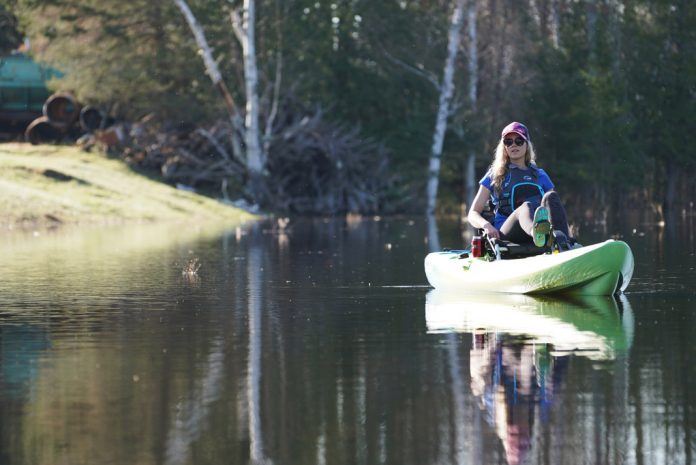
woman paddling a green ocean kayak

What do I know? I’d like to begin my review of the Ocean Kayak Malibu Pedal recreational boat with a short story of youthful ignorance.

Ocean Kayak Malibu Pedal Specs
Length: 12’
Width: 34.5”
Weight: 100 lbs
Capacity: 450 lbs
MSRP: $2,199 USD / $2,899 CAD
[ Paddling Buyer’s Guide: See the Ocean Kayak Malibu Pedal ]

Malibu Pedal and the arrogance of youth

Once upon a time I started kayaking and embarked on an expedition through the Great Lakes. I’d just received three degrees and was paddling from my university on the northern tip of Superior to my hometown, 2,500 nautical miles to the southeast. My father was a huge supporter of the trip. He was a truck driver, a non-swimmer and a fisherman. He was not a paddler. And my father didn’t go past grade 12 in school.

“You kayakers are crazy,” he told me on the drive to the city of Thunder Bay to begin my three-and-a-half month trip. “You’ll just be sitting there not using your legs. And you can’t even fish because you’re holding your paddle all the time. You should invent a kayak you can pedal.”

“Then it wouldn’t be a kayak,” I told him, surely rolling my eyes. No serious kayaker would use it. It wouldn’t be kayaking. What did he know?

The pedal drive has its place in kayaking

Fast-forward 23 years to being married and shopping with my wife for a new family vehicle. I thought she should get another sporty five-speed stick shift. They’re fun to drive and offer more control on our snowy winter roads. What I hadn’t considered is the needs of others—standard transmission does not offer an easy way to drink coffee and accelerate through the gears.

And so, with an open mind, I present my enlightened and humble review of the Ocean Kayak Malibu Pedal, a recreational kayak propelled with legs, leaving hands free to fish or drink morning coffee, or both. And if that’s not enough reason for you to believe Ocean Kayak is going to sell thousands of these suckers, read on.

The Malibu is a trusty pedal pusher

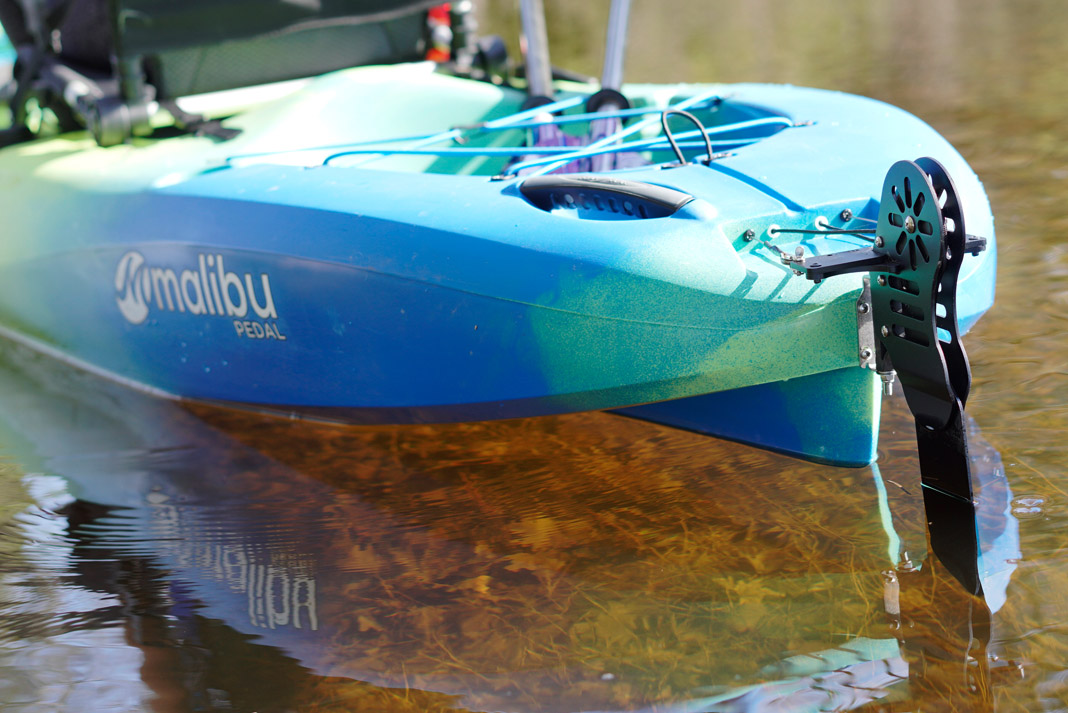
The Malibu Pedal is the first Ocean Kayak to offer a pedal drive, but they started with the proven design borrowed from Old Town’s trusty Predator PDL fishing kayak.

[ Paddling Buyer’s Guide: See all Ocean Kayaks ]

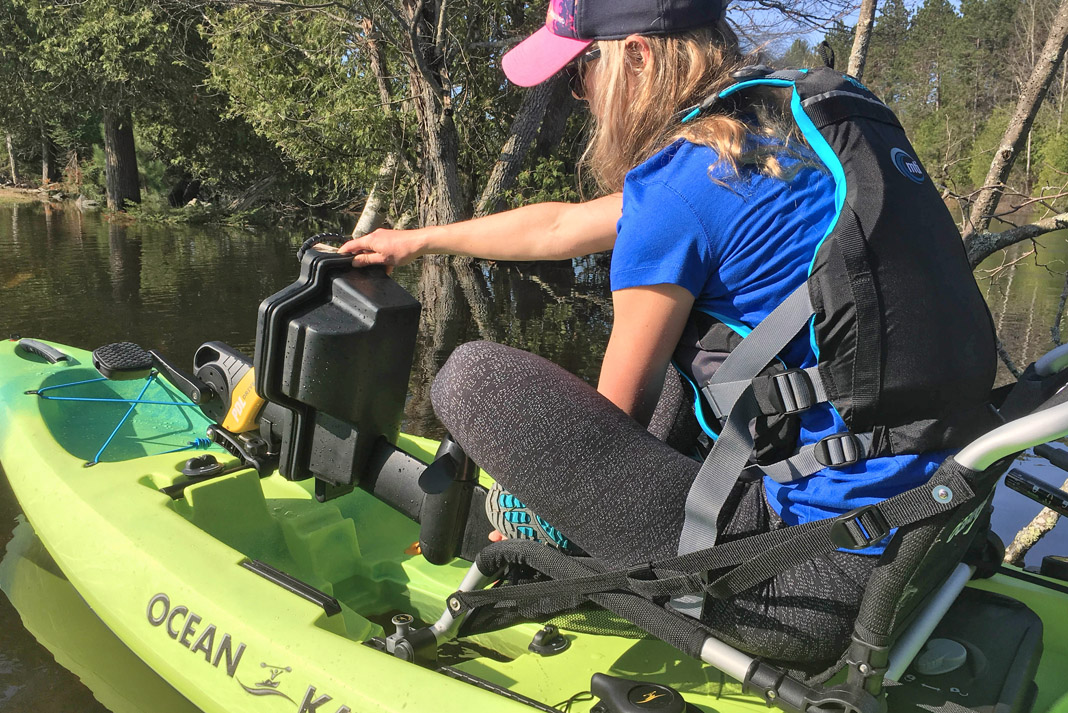
Ocean Kayak designers cut the overall size of the system to fit in the smaller, lighter Malibu Pedal. The 24-inch, one-piece shaft drops down through the hull where a 12-inch propeller pushes the boat either forward or reverse, depending on which way you spin the bicycle crank. The system is pretty much what my dad had scribbled on the inside flap of an empty cigarette pack he found on the dash of his pickup.

Outfitting that anticipates your needs

Ocean Kayak borrowed the same broad frame seat from their fishing kayaks and covered it with swimsuit-friendly, breathable mesh. They call it the Element Beach Seat. Picture a cut-down church picnic aluminum lawn chair, but with high-end deck furniture fabric. The seat has 13 clicks of fore and aft adjustment to get the leg length just right. My 35-inch inseam had the seat about half way, and moving it forward for shorter testers didn’t seem to affect the trim of the boat in any significant way. The seat itself is easily tipped forward to access a storage area or removed completely for transport.

On the right of the seat you’ll find a massive eight-inch lever connected below the deck to internal cords running to the stern so the rudder can be easily raised and lowered. Because your feet are busy spinning the pedals, pivoting of the rudder and steering of the kayak is done with a control knob on the left-hand side of the seat. So it’s not as hands-free as the brochure may indicate, but it does allow you to drink coffee or fish with your right hand. Guess which side the integrated drink holder is on? On the right side, of course. Ocean Kayak has thought of everything.

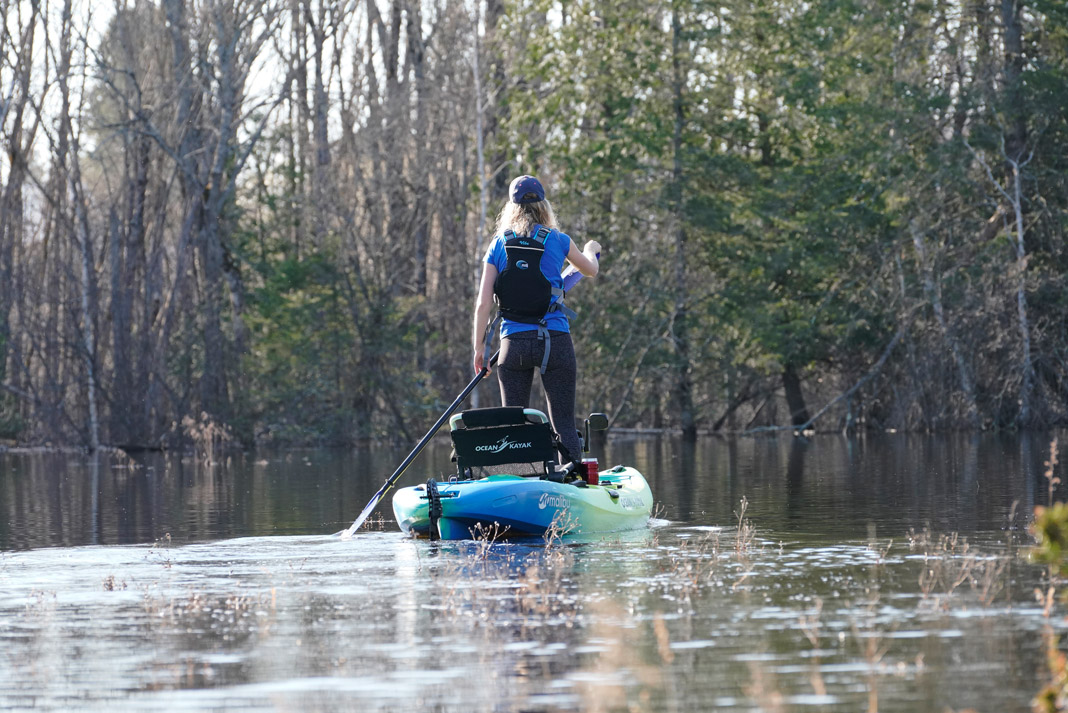
The Malibu Pedal’s flared bow is designed for pedaling through shore break and cutting across open water—what you’d expect from a brand with “Ocean” and “Kayak” in the name. It’s sort of a tri-hull design that looks like a rippled potato chip. All the angles make for a very rigid boat, and the volume on the outside ripples make the Malibu a wildly stable pontoon boat for standup sight fishing, or to pop up the drive and standup paddle through shallow sections of river.

At the back, Ocean Kayak integrated a replaceable keel piece, because like you, we dragged the Malibu down to the water. And like all good sit-on-top kayaks, the Malibu has six scupper holes to allow rainwater or water crashed over the deck to run back out where it belongs.

This rig makes wide turns

Growing up a truck driver’s son in the 70s, one might expect I’d know the words to The Willis Brothers’ country and western hit, Give Me Forty Acres To Turn This Rig Around. Get the Malibu out on the open road and you can put the hammer down to comfortably knock off the miles. But around the launch I’m humming the next line in the song, “…It’s the easiest way that I found.”

Short of 40 acres, or the Malibu’s 30-foot turning radius, it’s easiest to put the coffee cup down, grab the paddle from its clip, tilt as far as you can and throw in a few good sweep strokes. Or so says the kayaker in me. But compared to other pedal drive fishing kayaks, the 12-foot long Malibu turns tighter than most.

Ocean Kayak’s Malibu Pedal is a convenient ride

So what do I know? I know my dad was right about the potential popularity of a pedal drive kayaks. I know I was right too; it’s not expedition kayakers who are going to be buying thousands of Malibu Pedals. I know my wife has an automatic Toyota 4Runner parked in our driveway. And I also know our Malibu at the Paddling Magazine office is the boat most often skidded into the river for early morning trips.

Maybe it’s because the Malibu Pedal is novel. Maybe it’s because it allows you to drink a coffee. More likely it’s because at that time of day when the sun is casting a golden light across the water, it’s not about kayaking for kayaking’s sake. It’s about just being on the water either to wet a line or raise a coffee mug to celebrate the coming of a new day.

This article was first published in Issue 54 of Paddling Magazine. Subscribe to Paddling Magazine’s print and digital editions, or browse the archives.


The Canadian Canoe Museum launches three-part video tour of world-class collection

Photo: Virginia Marshall
History comes alive at the canadian canoe museum. Photo: Virginia Marshall

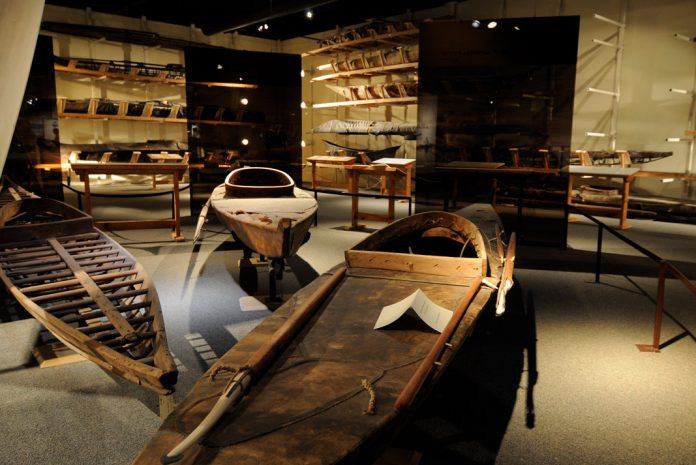
The Canadian Canoe Museum, which recently reopened, has launched a new three-part video series, allowing the public to get up close and personal with three iconic canoes in the museum’s collection.

Featured in the video tours are the stories of William and Mary Commanda’s birchbark canoes, whose work in revitalizing the cultural practice of canoe building in Indigenous communities has been nationally and internationally recognized; the titular “Canary Yellow Canoe” belonging to Gordon Lightfoot that he memorialized in a song; and, the artistic interplay between May Minto, a female canoe builder, which was uncommon at the time, and wildlife painter and environmentalist Robert Bateman.

[ View all canoes in the Paddling Buyer’s Guide ]

“We often are asked, “Why collect canoes?”, and the answer is that we don’t – or rather, that we believe the canoe to be more than the sum of its parts. The canoes in our collection carry rich, significant stories that collectively tell the history of Canada by canoe,” shares Jeremy Ward, the museum’s Curator. “Whether the stories they tell are of ancient connections to waterways, the latest high-tech innovations at the Olympics, or they are expressions of cultural reclamation, pride and endurance of Indigenous peoples today, canoes let us form new understandings of connections to our environment, other people and ourselves”.

Summer is typically the busiest season for visitors to the Canadian Canoe Museum, with regional and international tourists contributing significantly to the approximately 40,000 annual visitors to the museum. While the Canadian Canoe Museum reopened this past weekend, the museum recognizes that not everyone will be able or willing to return to indoor public spaces just yet, and in response, are continuing to find innovative ways to share this world-class collection virtually.

The virtual video tours were produced by Birchbark Media, with funding provided by Kawarthas Northumberland, and in collaboration with Peterborough & the Kawarthas Tourism, to showcase the vast opportunities there are to explore arts, culture, and heritage in the region – whether in-person or online.

The video tours can be viewed at canoemuseum.ca/CCM-from-Home

About The Canadian Canoe Museum

The Canadian Canoe Museum, located in Peterborough, Ontario is a unique national heritage centre that explores the canoe’s enduring significance to the peoples of Canada, through an exceptional collection of canoes, kayaks and paddled watercraft. Through inclusive, memorable and engaging exhibits and programs, we share the art, culture, heritage and spirit of paddled watercraft with our communities.

Kokatat releases 5 Decades limited edition collection

Photo courtesy of Kokatat

In 1971, Steve O’Meara founded Blue Puma as an outdoor gear company to help get people in Humboldt County California outdoors. Soon after he renamed the company Kokatat as the company shifted focus completely to Paddlesports. In celebration of its 50th Anniversary, Kokatat is introducing a limited-edition capsule collection featuring the original Blue Puma logo and a commemorative 5 decades wave graphic treatment.

“This collection captures so much of our legacy and future,” said O’Meara.

[ Paddling Buyer’s Guide: View all Kokatat’s products ]

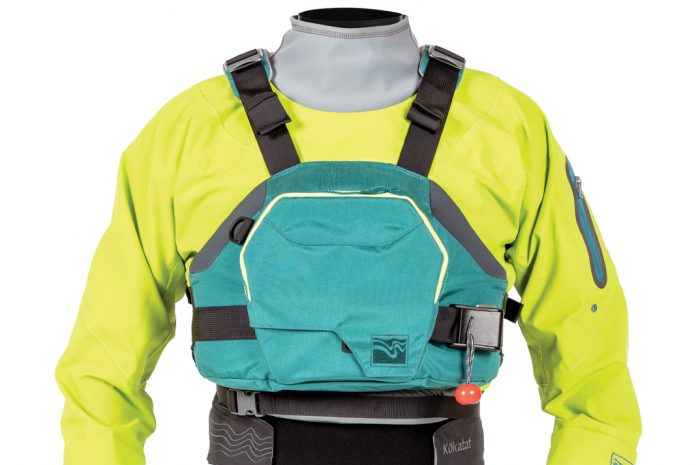
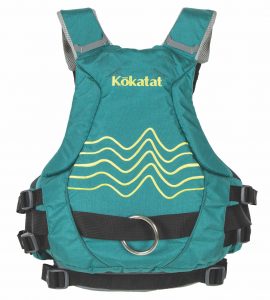
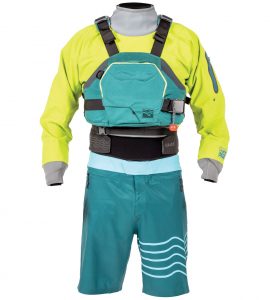
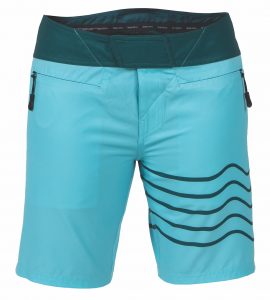
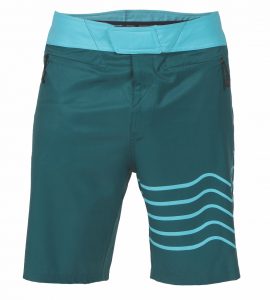
The 5 Decades Limited Edition Collection includes three pieces that feature special dew (teal) and mantis (yellow) colorways and a 5 decades wave graphic treatment, with each wave representing a decade. The collection includes a HustleR rescue vest, the new ŌM dry top, and a new paddling short that Kokatat developed in collaboration with dewerstone. The Kokatat X dewerstone Life Short and ŌM dry top are offered in men’s and women’s specific styles.

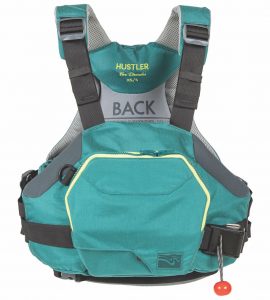
The limited-edition HustleR has all the features that has made the HustleR Kokatat’s most popular rescue life vest including its ability to fit a wide range of torso sizes, rugged 500 denier Cordura face fabric, quick release chest harness, and D-ring attachment for standard cow tail or river tow tether. Along with the special colorway and 5 decades wave graphic on the back, an original Blue Puma logo sits along the top edge of the internal organization pouches inside the large, extra-deep clamshell front pocket.

The LE ŌM dry top pays homage to Kokatat founder Steve O’Meara and Kokatat’s 50 years. The LE ŌM and the new regular version ŌM are made with the latest GORE-TEX PRO material that is lighter weight, more rugged and durable. The result is Kokatat’s most advanced dry top to date.

[ Paddling Buyer’s Guide: See all dry tops ]

They feature a new pattern for improved fit and mobility over past designs as well as Page ( ) – 5 decades Limited Edition Collection 2 neoprene over-cuffs on the neck and wrists and a self-draining pocket on the left shoulder. The adjustable double tunnel waist now features Ariaprene, a sustainable alternative to neoprene, and provides an infinitely adjustable perfect fit. LE ŌM features the 5 decades wave graphic on the waist closure and the Kokatat logo treatments and zipper accents are highlighted in the new dew colorway.

Photo courtesy of Kokatat

Rounding out the collection is the sustainable and comfortable Kokatat X dewerstone Life Short 2.0, designed in collaboration with dewerstone of Devon, England. The 4-way stretch short, made entirely from recycled plastic bottles and recycled polyester, moves easily with each paddle stroke and provides the perfect fit every time with its infinitely adjustable and secure surf leash inspired closure system. The Life Short is available in men’s and women’s, dewerstone’s first women’s short offering, and features the 5 decades wave graphic around the left thigh.

The Kokatat 5 decades Limited Edition Collection will be available at Kokatat dealers nationwide and on Kokatat.com in Spring 2021.

For more details on Kokatat, its products, and its 50th Anniversary visit kokatat.com.

About Kokatat Inc.

Kokatat has been manufacturing paddling gear in Arcata, California almost 50 years. At a time when many technical apparel brands were moving manufacturing offshore, Kokatat continued to invest in infrastructure in the United States. Kokatat founder Steve O’Meara was committed to the development of the finest and driest paddling apparel in the world and recognized the need to control and continually evolve the development of our dry wear. In the early days, Kokatat worked closely with W.L. Gore & Associates, makers of GORE-TEX®, to refine the sewing and sealing techniques required for full immersion suits and tops. Today, our hands-on approach to manufacturing continues to set standard in paddling apparel. Into the water with Kokatat! Learn more at kokatat.com.

New virtual tours by The Canadian Canoe Museum engage seniors, reduce isolation

Canadian Canoe Museum Hero

Seniors in Peterborough City and County will now be able to visit The Canadian Canoe Museum without leaving the comfort and safety of their residences, thanks to new funding.

Intended to reduce social isolation, and provide opportunities for community interaction, The Canadian Canoe Museum’s new virtual tours will engage seniors who are in longterm care, retirement residences, and living independently. The live virtual tours will connect seniors with a museum guide as they explore exhibits and artifacts, providing an opportunity to interact with museum staff and each other.

“We know that the need to self-isolate during COVID-19 has had a significant impact on the lives and mental health of seniors,” says Karen Taylor, Director of Programs. “The Canadian Canoe Museum is excited to develop new programming that will provide stimulating and enriching entertainment for local seniors who are unable to visit the museum at this time. While we have been offering virtual field trips for students for years now, this will be the first time we are able to offer virtual tours for adults! I am looking forward to sharing the collection’s stories with seniors in our community, and, above all, to fostering new ways of connecting with each other.”

[ View all canoes in the Paddling Buyer’s Guide ]

Funding for this new initiative has been provided by the Government of Canada’s COVID-19 Emergency Community Support Fund, which is being dispersed locally through the United Way of Peterborough.

More information is available at canoemuseum.ca/virtual-tours-for-seniors or by contacting Karen Taylor by email (karen.taylor@canoemuseum.ca) or phone (705) 7489153 ext. 203.

PETERBOROUGH, Tuesday, September 15, 2020

Boat Review: Dagger’s Mamba Kayak

Whitewater kayaking in the updated Dagger Mamba
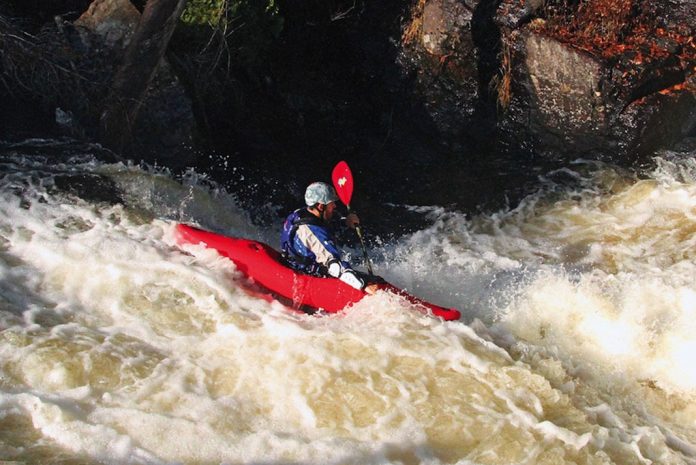
Tackle whitewater with confidence in the Dagger Mamba kayak. | Photo: Mike Kobzik

The old adage “if it ain’t broke, don’t fix it” is advice many adhere to, while others seem determined to prove it wrong. The new Da­gger Mamba falls into the latter category, showing paddlers that it is indeed possible to take something great and make it even better.

Dagger Mamba Specs
Length: 7’7” / 8’1” / 8’6”
Width: 25.5” / 26.75” / 27.5”
Volume: 64 / 77 / 89 US GAL
Weight: 41 / 44 / 46 LBS
Paddler: 120–170 / 150–220 / 175–260 LBS
Forward hatch: 10×8 in
MSRP:  $1,049 USD
www.dagger.com

Dagger first launched the Mamba in 2005 as a river runner that was designed to inspire confi­dence in paddlers whether they were learning the basics, figuring out how to spin, or already drift­ing over horizon lines.

With three sizes to choose from and a choice of creek or play outfitting, Dagger had a clear winner—so why the change?

We spoke with Dagger team manager Andrew Holcombe and he told us the new and improved Mamba is a little more aggressive for those who want it, has extra safety features, looks sleeker, fits better and is more comfortable for more paddlers—they’re just tweaking an already good boat.

Features of the Dagger Mamba

Greater size and volume

The most obvious change to the Mamba is bigger sizes across the range.

Increased length and vol­ume accommodate a greater paddler range and the extra volume around the knees makes for a very comfortable and aggressive seated posi­tion. Added volume in the stern keeps the boat floating higher so the ends stay clear of grabby eddylines and boils.

The planing hull is sandwiched between long carving rails that extend almost the full length of the boat, tapering off into the rounded bow and stern. This allows you to aggressively carve across eddylines, wave faces or out of holes and yet still spin, side surf and cross currents without worry of window shading.

Improved strength and handling

Other improvements push the capabilities of the redesigned Mamba toward more difficult whitewater.

These include repositioning the ex­isting front safety bar and adding a second bar for easier carrying, dragging and extractions. The creeking outfitting also now features a molded-in stern foam wall mount to boost structural integrity.

Charging down steeper class IV–V rapids, we loved how this Mamba handled holes. Although a bit slower than Dagger’s displacement hull creek boat, the Nomad, it carved out of holes that would’ve had Nomad paddlers looking for a rope. The Mamba’s narrow, sleek bow punches holes and deflects smaller, choppy waves so the river doesn’t high five you in the face every few seconds. Boofing is a breeze, although on some higher volume runs we had to aggressively lean forward to avoid surprise stern squirts.

Customizable outfitting

Comfortable and easy-to-adjust outfitting means you can paddle all day without needing to get out and stretch every 10 minutes.

Spend some time adjusting the seat placement, as slight changes in positioning dramatically affect how the rails work and the boat performs.

[ Paddling Buyer’s Guide: See all Dagger Kayaks ]

Summing up the Dagger Mamba

The tweaks to the Mamba allow paddlers to charge harder whitewater than the earlier version and we suspect some paddlers will make this their dedicated creek boat. Responsive han­dling should make it a go-to ride for the big water crowd and improved stability and predictability make it a solid choice for developing paddlers.

With this Mamba, Dagger could coin a new ad­age: It ain’t broke but we made it better anyway.

Follow us on Instagram @paddlingmagazine for all your whitewater updates.

Tackle whitewater with confidence in the updated Dagger Mamba kayak. | Feature Photo: Mike Kobzik

Boat Review: The Storm Sea Kayak By Current Designs

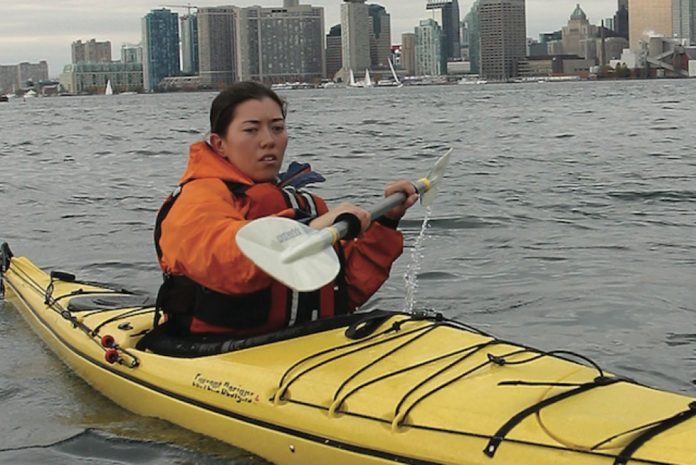
Kayaking in the redesigned 2004 Storm Sea Kayak by Current Designs

The Current Designs Storm has been completely redesigned for 2004. Brian Henry designed the original Storm, the first rotomolded polyethylene kayak from Current Designs, in 1994. It was based on the template of his flagship composite design, the do-it-all, beginner-friendly Solstice GT.

Current Designs Storm Specs
Length: 17’ 1”
Width: 24”
Depth: 14.75”
Weight polymer: 64 lbs
Cockpit: 32.5” x 17.5”
Rear hatch: 15” – oval
Forward hatch: 9” – round
Total volume: 394 litres
MSRP: $1,349 USD / $1,999 CAD

Plastic was difficult to shape in the same lines as fibreglass, so the original Storm was a compromise with a slightly more rounded cross section and more rocker than the Solstice. It had a little less tracking and stability, but was still a great all-around touring kayak. The public quickly fell in love with the Storm.

[ Paddling Buyer’s Guide: See All Sea Kayaks ]

Now, with over 5,000 well-loved Storm kayaks in use, there were bound to be a few complaints. Common nitpicks about the old Storm were “oil-canning” (concave denting of the hull, once common in plastic boats), weathercocking and the finicky nature of the neoprene inner hatch covers on plastic lips.

What’s new with the Storm

Current Designs has addressed the rigidity issue by introducing stiffer materials in recent years. Other wishes on the list have been ticked off by this year’s complete redesign. Newer rotomolding technology allow the new Storm to be shaped closer to Brian Henry’s original vision.

With a tad less rocker and a flatter hull, the new Storm paddles more like the Solstice, with steady tracking and a minimal tendency to weathercock into a crosswind. The old neoprene hatches have been replaced. Other tweaks include lower decks fore and aft of the cockpit for ease of entry and layback rolling, and a more streamlined feel. Designers retained the roomy cockpit by moving the volume outboard towards the chines.

While predictable and stable, the Storm is also a graceful kayak that’s as fast and manoeuvrable as any boat in her class. This durable, affordable plastic kayak offers room to carry gear on extended voyages. Little Goldilocks might want a smaller boat like the Current Designs Squamish, but for any mid- to large-sized paddler, the boat that was “juuust right” to begin with is now even better.

Notable features of the updated Storm sea kayak

Screen_Shot_2015-07-02_at_2.18.57_PM.png

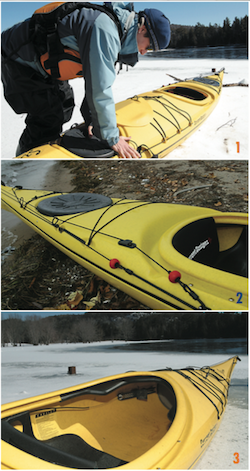
Klutz-resistant hatches: The old Storm’s finicky neoprene hatches have been replaced by the rubber Kajak-Sport hatches found on many high-end composite kayaks. Ours lived up to their watertight rep and were remarkably easy to peel off or thump back on. The front hatch is protected by a plastic cover that’s flush with the rest of the deck, adding to the clean lines and overall dry ride.

Groovy rudder: The rudder uphaul/downhaul system is a pair of lines on the rear deck threaded with large red baubles. The lightweight plastic rudder sits firmly into a molded groove in the deck that flares near the stern so that you don’t have to look behind you to centre the rudder when you pull it up. The foot pedals are mounted on a sturdy aluminum rail and are smooth and easy to adjust.

Roomy cockpit: The Storm’s cockpit is generous, with ample room to lift the knees out while sitting and lots of volume in the sides of the boat for long legs and big feet. Foam-padded plastic thigh braces are bolted under the coaming. They don’t provide the stiff, aggressive support of the latest whitewater-inspired outfitting, but they do give adequate, comfortable thigh contact and fit long legs well. Over the years Current Designs has made its seats longer and less deeply bucketed, eliminating pressure points and providing good support under the thighs.

Follow us on Instagram @paddlingmagazine.

How to decide between blue barrel and canoe pack

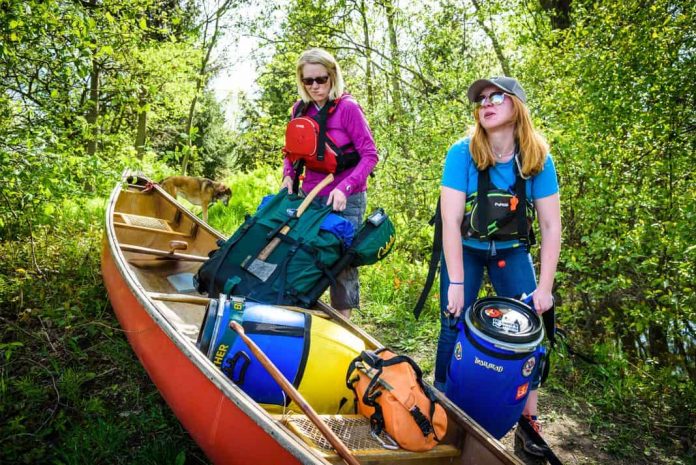
Unloading canoe packs and blue barrels from a canoe
It’s heavy either way. | Photo: Robert Faubert
The Official Scorecard
Comfort

No amount of money spent on barrel harnesses can overcome the physics that make a canoe pack more comfortable. Canoe packs are flatter, so the weight is closer to your back where it won’t swing around and send you off balance. True, you have to be sure not to pack your grill so it digs into your back, but that’s part of the fun.
WINNER: CANOE PACKS

Animals

Yes, barrels will keep your granola safe from rodents, and all but the most devious raccoons. No small victory there, but don’t be among those fooled into thinking they are impervious to bears. To a bear, a barrel is a blue taco shell.
WINNER: BLUE BARREL

Price

Prices are generally comparable. Understanding there is a huge range of canoe packs available, most fall in the same $150-$200 range you will pay for a 60-liter barrel and decent harness.
WINNER: TIE

Weight

No contest here. Not only are canoe packs lighter, they also shrink in size as you eat your way through a trip.
WINNER: CANOE PACKS

Waterproofness

The raison d’etre of barrels is their impermeability. Just be sure there is no debris in the gasket groove, and don’t store them with the lid securely on, lest the gasket get compressed.
WINNER: BLUE BARREL

Convenience

Getting into a barrel is a two-step process, release the clasp and pop the lid. Canoe packs often have multiple buckles and folded flaps, and a myriad of stuff sacks within.
WINNER: BLUE BARREL

Packability

A circle might be the perfect shape, but not when it comes to accepting cooksets, tents and tackle boxes. A properly packed canoe pack will have less wasted space than a rigid barrel. Soft items can be stuffed hard into barrels.
WINNER: TIE

Seating

For families accommodating paddling kids in the middle of a canoe, there is only one choice. Sitting on a soft, squared off canoe pack beats the bucking bronco that is a blue barrel every time.
WINNER: CANOE PACKS

A barrel’s ability to keep cargo safe and dry in whitewater has been evident since 1901, when Annie Taylor stuffed her ruffled dress into a wooden barrel and floated over the lip of Niagara Falls.

For the last 30 years, serious whitewater trippers have been using the seemingly bombproof blue barrel to keep their down sleeping bags and toilet paper dry as they crash down rivers in semi-swamped canoes. But what about flatwater trips? Do barrels’ attributes of security and convenience outweigh their uncomfortable, cumbersome and, some would say, ugly nature? Consider the ups and downs when deciding if you should roll out the barrel.


Blue barrels

Though exotic varieties exist, barrels commonly come in 30- and 60-liter sizes. Inside a groove on the black lid is a soft gasket, which is compressed to create a seal when the metal ring clasp is fitted and snapped closed.

Barrels are often given pantry duty, carrying food you don’t want to be crushed. The combined weight of 60 liters of food often crushes food from within, so packing food properly requires some care. Consider compartmentalizing the contents with supported internal tiers or dividers if you want to get fancy—and we know some of you “systems” types do. And definitely bag complete meals together for ease of retrieval.

Often overlooked is the barrel’s convenience around a campsite. If you use it for general camp gear like clothes, it can act like a Rubbermaid bin. Stand it upright in the campsite, and it will hold lots of stuff you need on an off-and-on basis, and it has a lid to rest on top keeping it all dry. Better than the half-dozen crammed stuff sacks living in your canoe pack.

The most important part is the gasket. If yours degrades it will let in water. You can order replacement lids online. The second-most important part of a barrel is a harness. Some are engineering marvels. Buy the right one, such as the Quick Haul Harness from North Water, and you might not hate carrying this chubby beast.


Canoe packs

On the other hand, no one ever smelled their canoe barrel when packing for a trip and got excited in a way that’s encouraged by the evocative aroma of a seasoned canvas and leather canoe pack. Supple packs don’t just look more at home in a canoe, they have undeniable advantages over barrels when it comes to their lighter weight, versatility, flexibility and packability. Despite not being aromatic like the traditional type, modern nylon packs don’t absorb water, and they have comfortable harness systems and plenty of compression straps for securing a load.

[ Paddling Buyer’s Guide: See all canoe packs ]

If you want to keep your gear totally waterproof from rain or floats down rapids, you’ll need to invest in a set of smaller, high-quality drybags or a liner, and do a little hoping for the best.

Making your choice: Canoe pack or blue barrel?

Rubberized canoe packs might seem like an appealing hybrid option between the two, but they suffer on scores of durability and waterproofness, and trying to pack items in nylon stuff sacks into that grabby rubber interior can be frustrating. Advice? Make room in your canoe for a barrel, even if just a 30-liter for select food items, and make it complement your other pack choices.

This article was first published in Issue 58 of Paddling Magazine. Subscribe to Paddling Magazine’s print and digital editions, or browse the archives.


It’s heavy either way. | Feature Photo: Robert Faubert