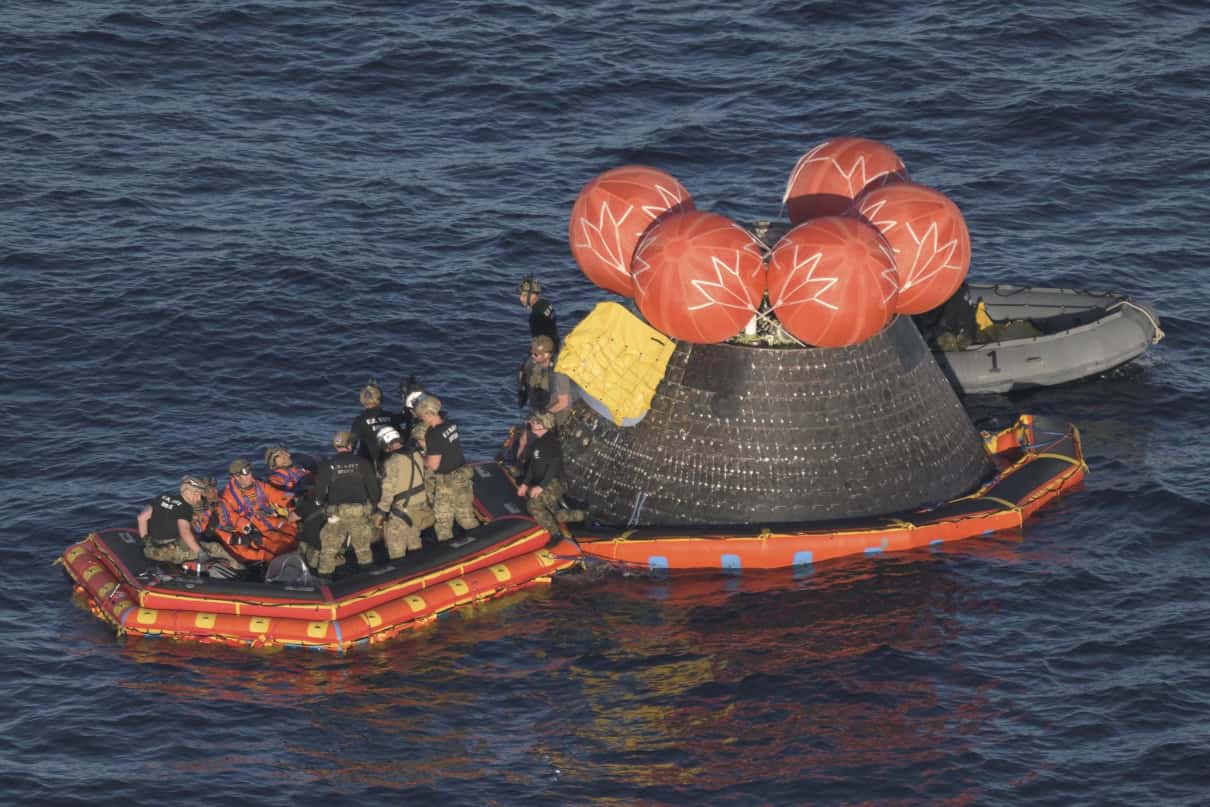
When NASA’s Artemis II mission splashed down on Friday, April 10 off the coast of San Diego, a set of striking bright orange rafts were used in the recovery process. These mission-ready rafts were built by none other than Jack’s Plastic Welding from Aztec, New Mexico.
Perhaps best known for the Paco Pad, many a raft guide’s sleeping pad of choice, Jack’s Plastic Welding also makes dry bags, inflatable rafts and now, recovery rafts for astronauts.
Behind the high-tech ‘front porch’ rafts used by NASA
The Orion capsule, transporting astronauts Reid Wiseman, Victor Glover, Christina Koch and Jeremy Hansen, re-entered the Earth’s atmosphere at over 24,000 miles per hour before splashing down in the Pacific Ocean off the coast of San Diego on Friday.
The recovery operation was dependent on weather conditions including waves, wind and visibility, all of which fell in line for a successful splash down and recovery on Friday evening. As the astronauts emerged, a raft can be seen supporting both the capsule itself and a second raft can be seen supporting the recovery crew and eventually, as the astronauts stepped out of the capsule and onto the raft, the team of astronauts freshly returned from a trip around the moon.
Image: NASA James Blair
“Everybody is surprised that we’re making stuff for NASA here,” TJ Garcia, the CEO of Jack’s Plastic Welding, told KOAT 7 Action News. “It’s honestly one of the things we brag about.”
KOAT also reported that the rafts took 528 hours to construct a piece and were designed in collaboration with NASA engineers. Garcia also shared that the rafts have been in the works for several years. The rafts, nicknamed “the front porch” by NASA, are double-walled and were put through extensive testing.
After splashdown on April 10, the capsule was assessed by divers before the astronauts were guided off the capsule and onto the rafts.
“The Artemis II crew is home. The entry, descent, and landing systems performed as designed and the final test was completed as intended. This moment belongs to the thousands of people across fourteen countries who built, tested, and trusted this vehicle,” said NASA Associate Administrator Amit Kshatriya in a news release.
Artemis II splashdown in the Pacific. Feature Image: NASA | CNN
During the Artemis II’s April 6 lunar flyby, the team of astronauts captured over 7,000 images of the moon’s surges and a solar eclipse. NASA has now begun preparations for 2027’s Artemis III mission.
Dreaming of capturing iconic Canadian wildlife through your lens? Join us for an inspiring and practical webinar focused on finding and photographing wildlife in Algonquin Provincial Park—one of the country’s most celebrated wilderness destinations.
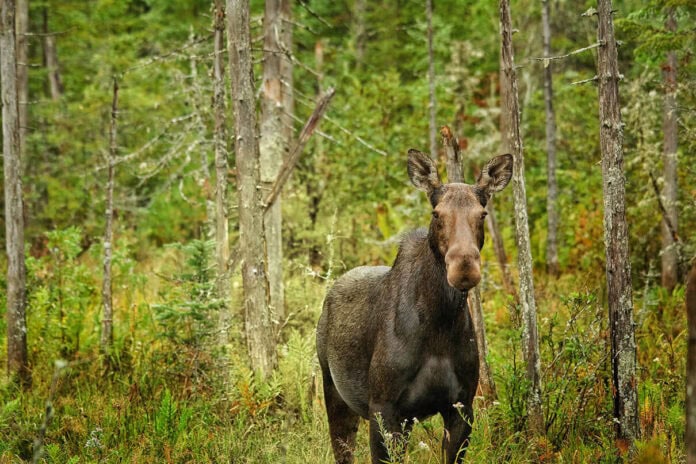
In this session, Colin Bruce of Algonquin Outfitters will share expert insights from years of experience exploring the park’s forests, lakes, and backcountry routes. Known for its rich biodiversity and incredible paddling routes, Algonquin offers unforgettable opportunities to encounter moose, wolves, birds and more in their natural habitat.
You’ll learn how to:
Identify the best locations and times of day to spot wildlife
Understand animal behavior to improve your chances of meaningful encounters
Position yourself (by canoe or on foot) for safe, ethical and effective photography
Use light, weather and landscape to elevate your images
Prepare for a successful wildlife photography trip in the backcountry
Whether you’re a beginner with a camera or an experienced photographer looking to refine your skills, this webinar will help you build confidence and come away with stronger, more compelling images.
Bring your questions—there will be time for a live Q&A at the end of the session.
Colin Bruce is a wildlife photographer and Fellow of the Royal Canadian Geographical Society who lives in Algonquin Highlands. He works with organizations such as Canadian Geographic, BBC Earth, and Ducks Unlimited, contributing images to stories, calendars, social media, and magazines. He is also the manager of Algonquin Outfitters on Oxtongue Lake. Colin has worked in the Outdoor Industry for over the last decade in various roles from Guide, Outdoor Education, Store Manager and much more.
Note: A recording of the webinar will be made available to registrants via email after the live session concludes, so sign up even if you can’t attend on April 24!
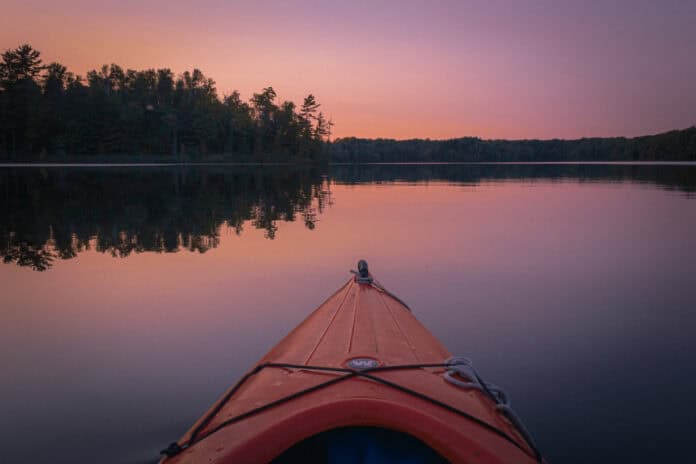
A Wilderness Systems Pungo on a calm lake at sunset. Feature Image: Maddy Marquardt.
Every year, innovative and new paddling products hit the market. We push for gear that weighs less, holds up longer and dries fastest but one of the best-kept secrets in the outdoors is that some of the best gear is the gear that just works, year after year with limited upgrades and bells and whistles.
Here at Paddling Magazine, we caught up with brand representatives and business owners at Canoecopia 2026 to get their thoughts on the best tried and true gear on the market.
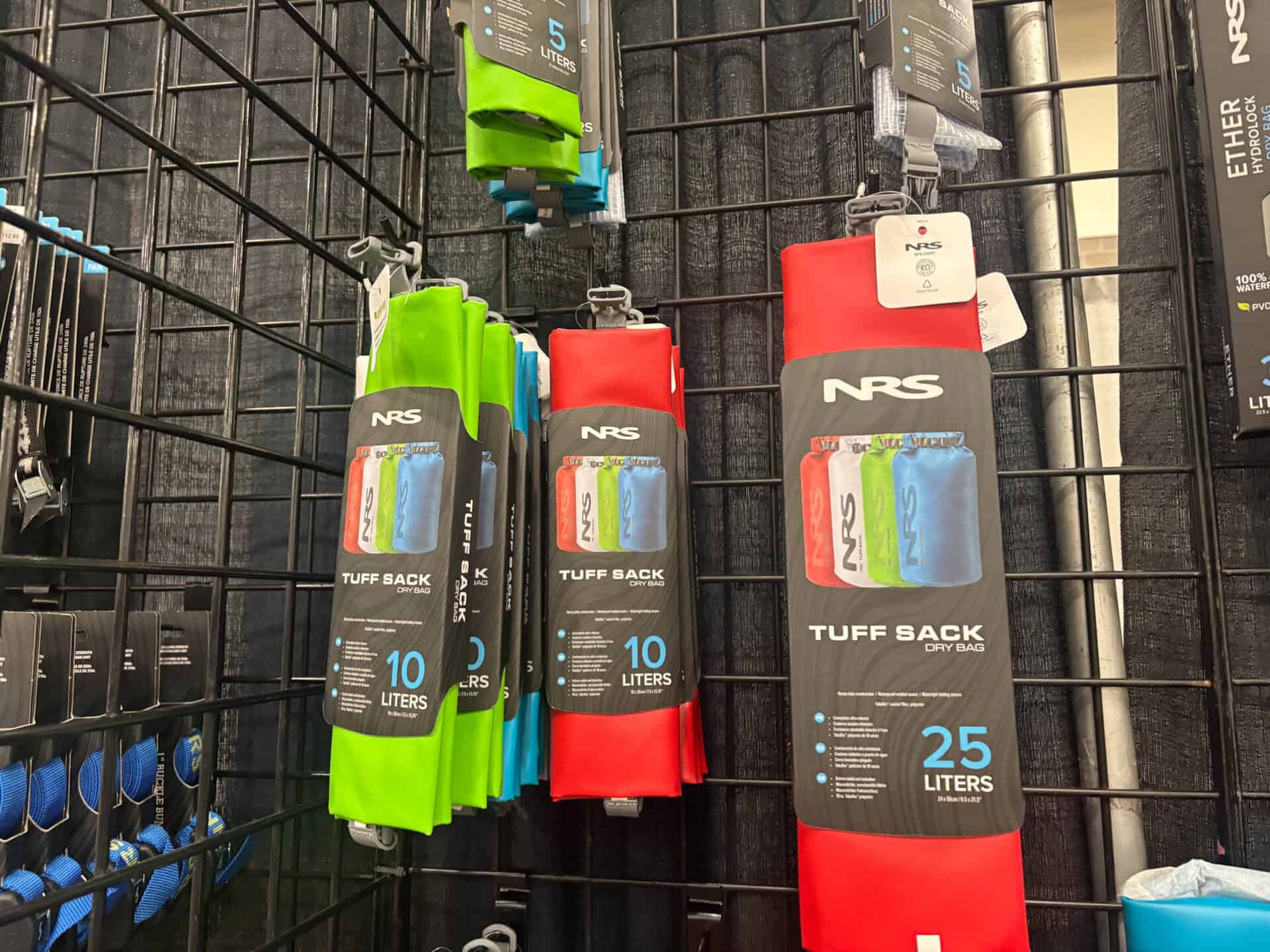
NRS Tuff Sack
If you’ve ever been on a guided trip or worked for an outfitter, you’re likely familiar with the study little number that is the NRS Tuff Sack.
Built for use and mild abuse, if the NRS Tuff Sack it could tell stories around the campfire. Image: Maddy Marquardt
If there was an award for most likely to be dragged over rocks, run over by a car and still keep your gear dry, these would win it. These beefy drybags are in it for the long haul.
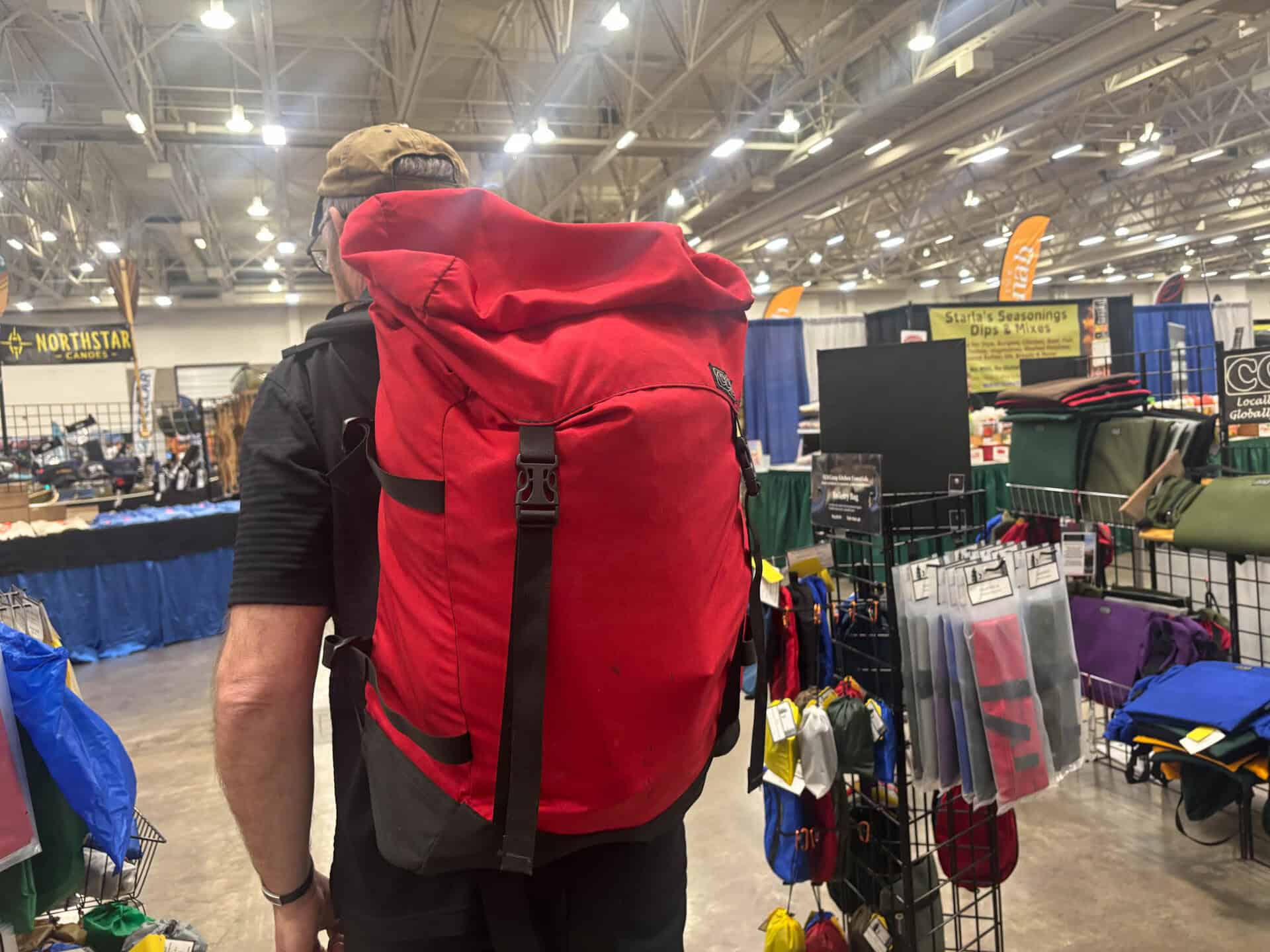
Cooke Custom Sewing Portage Packs
For classic packs from a small and local business, Cooke Custom Sewing has been making the same packs for years on years with few modifications.
This particular pack has been around the block, most recently as an airplane carry-on on the way to Canoecopia! Image: Maddy Marquardt
They’re simple, functional and durable. While the design itself has lasted decades, the packs themselves last just as long.
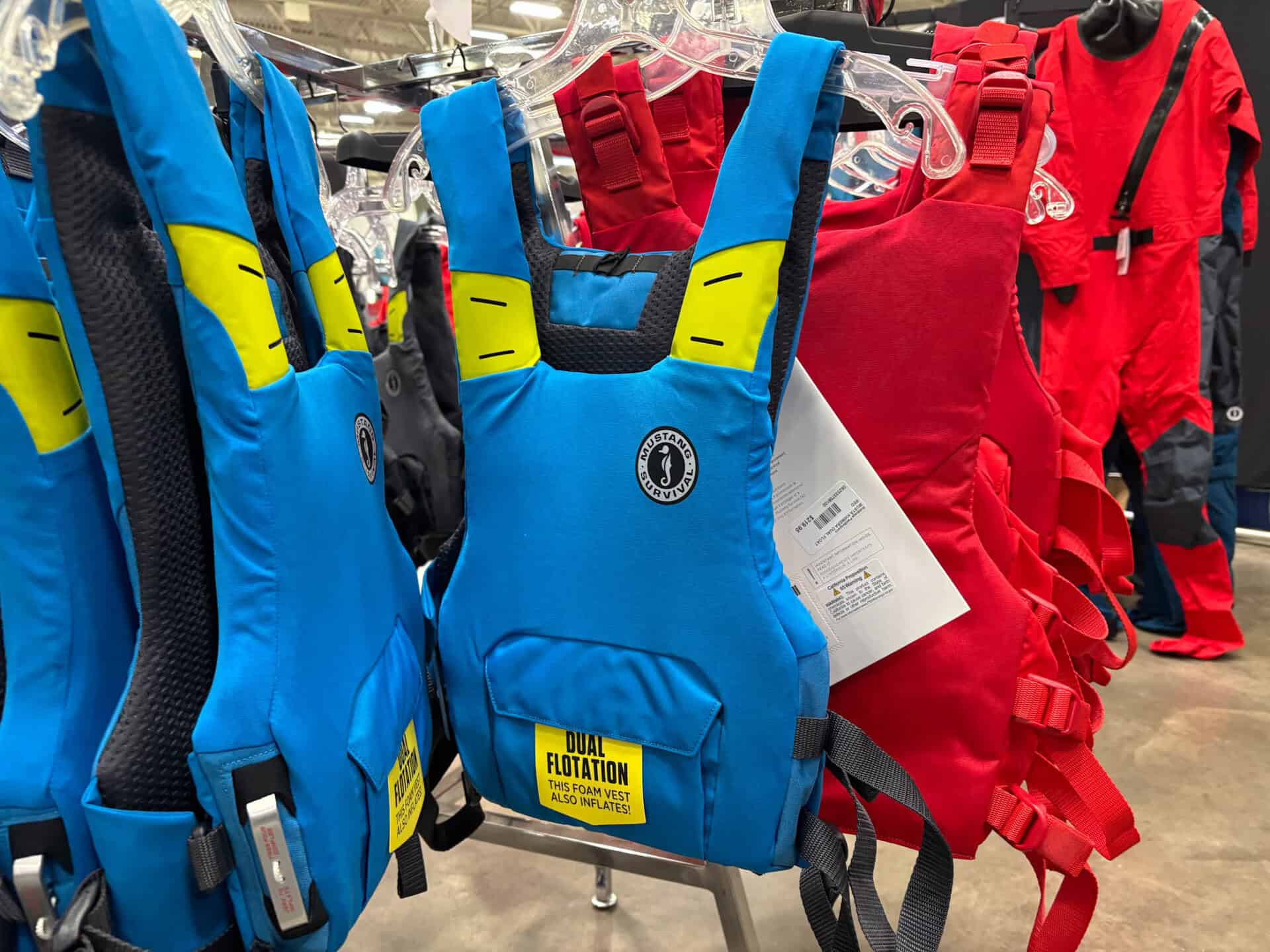
Mustang Survival Khimera PFD
Mustang Survival’s Khimera Dual Flotation PFD is one of the most unique, low-profile and popular PFDs on the market.
Mythologically speaking, the Khimera is a hybrid of a goat and lion, not so unlike how the Khimera PFD is both inflatable and foam. Image: Maddy Marquardt.
With thin foam floatation and a no-nonsense design, additional floatation via inflation allows for maintaining a sleek profile on the water with plenty of buoyancy should you find yourself in the drink.
Eddyline Sky 100
Eddyline’s Sky recreational kayak remains one of the most popular sit-inside kayaks for calm water paddlers. This little number in the Sky 100 model weighs just 34 pounds, making it manageable even for the average solo paddler and a popular pick year after year.
Wilderness Systems Pungo
The Wilderness Systems Pungo 120 is a workhorse of a recreational kayak, with comfortable outfitting, stability and ample storage.
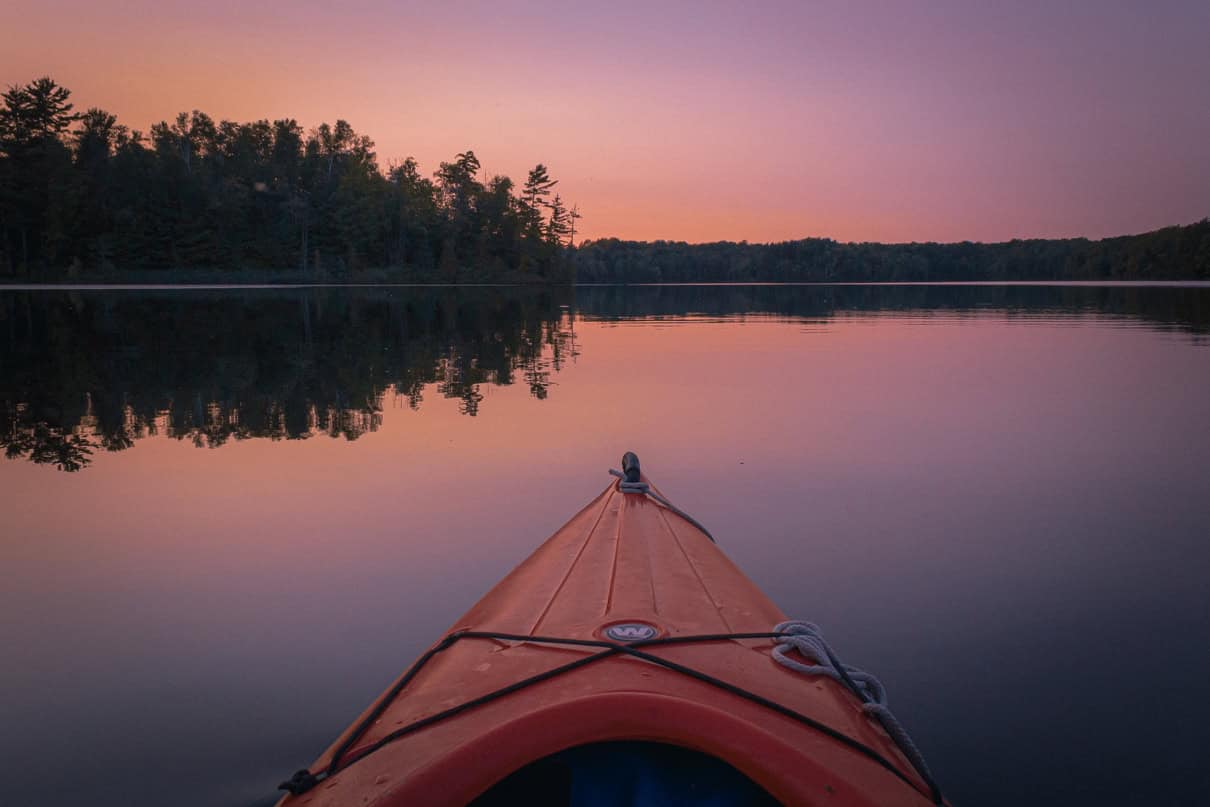
A Wilderness Systems Pungo on a calm lake at sunset. Feature Image: Maddy Marquardt.
The Pungo has been a popular choice for decades, with few modifications or major redesigns.
Kokatat Meridian Drysuit
The Kokatat Meridian is a popular drysuit with a dropseat that’s been in use for generations.
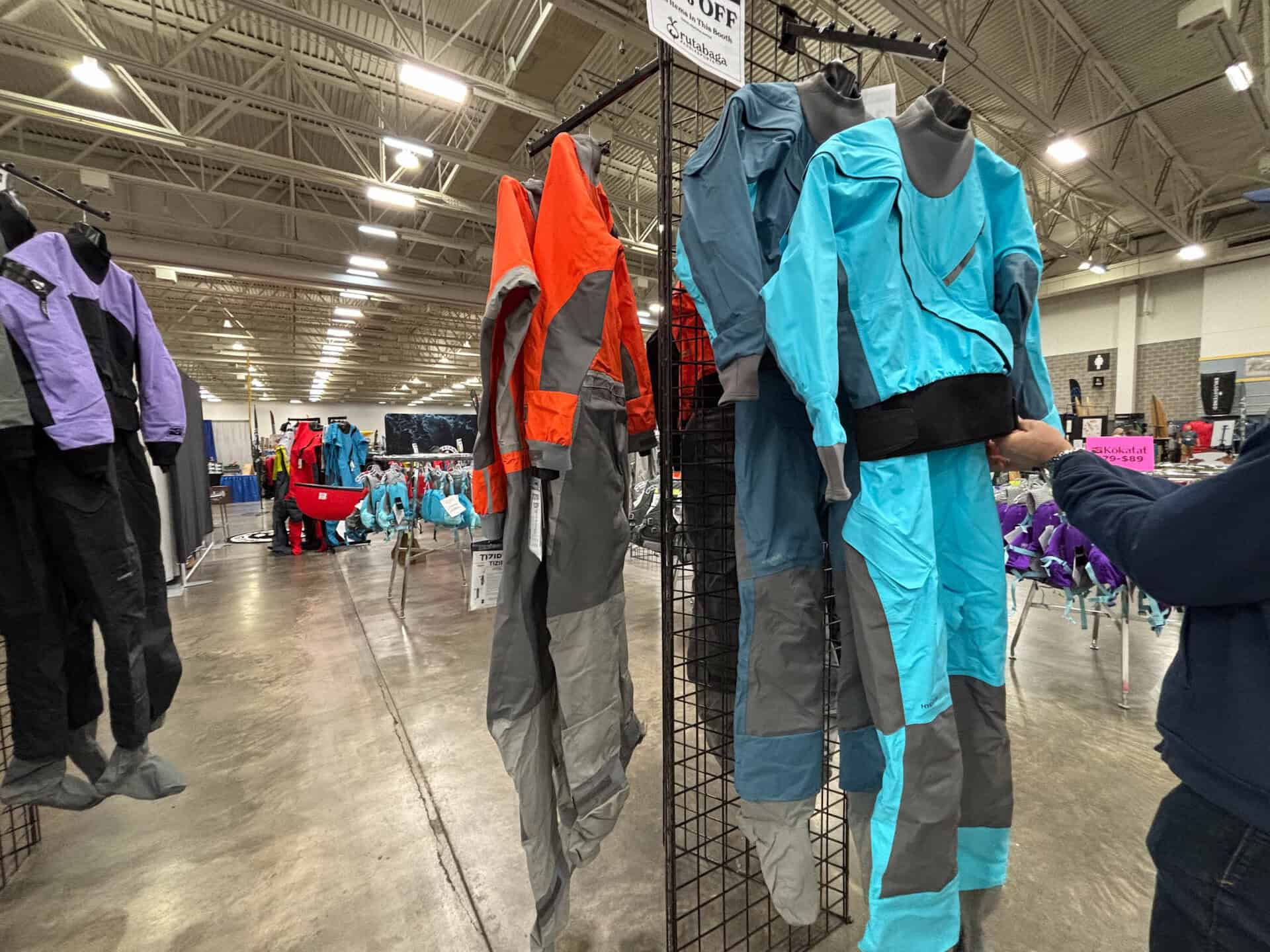
A line up of fresh, crisp drysuits that still smell like new car, not like foot. Image: Maddy Marquardt.
It features GORE-TEX PRO fabric, Latex gasket with neoprene punch through collar and cuffs and thoughtful dropseat design.
Wenonah Minnesota II
Nearly synonymous with the Boundary Waters, the Wenonah Minnesota II is designed for both efficiency and durability on the water and on the portage trail. The canoe of choice for many of the BWCAW outfitters, the Minnesota II is fast and long trip ready.
I spent the first half of my life believing a cotton tee and flannel workshirt with a denim jacket thrown over top constituted all-weather “layering.” I also recall the result: being damp and cold on a regular basis. Then, I discovered technical outdoor clothing and the sorcery of layers that wick moisture, regulate temperature and repel rain. Merino, polypropylene, Capilene and fleece entered my vocabulary—and my closet. Now, the plaid shirts only come out at camp.
In the pantheon of outdoor apparel, base layers are arguably the least glamorous pieces of paddling kit. Let’s face it, we’re talking about long underwear. There’s a reason snazzy shells and cozy, stylish mid-layers get more press. But it’s the unsung undergarments that most profoundly impact comfort by transporting moisture away from your skin, minimizing friction, blocking harmful UV rays and keeping unpleasant odors at bay.
In the decades since my layering revelation, I’ve put countless base layer materials and styles to the test. Whether I’m shoulder-season canoe tripping, gearing up for spring whitewater, or slipping my sea kayak into the frigid waters of Lake Superior, these are my top-performing base layers for paddling in all waters and weather.
Your body loses heat much faster when immersed in cold water than it does when dry.
Avoid cotton clothing like t-shirts and jeans; they retain water and accelerate cooling when wet. Synthetic fabrics, or wool, are generally a better choice. If the water is very cold (60° fahrenheit or less), you should wear a wetsuit or drysuit.
Best Base Layer Overall
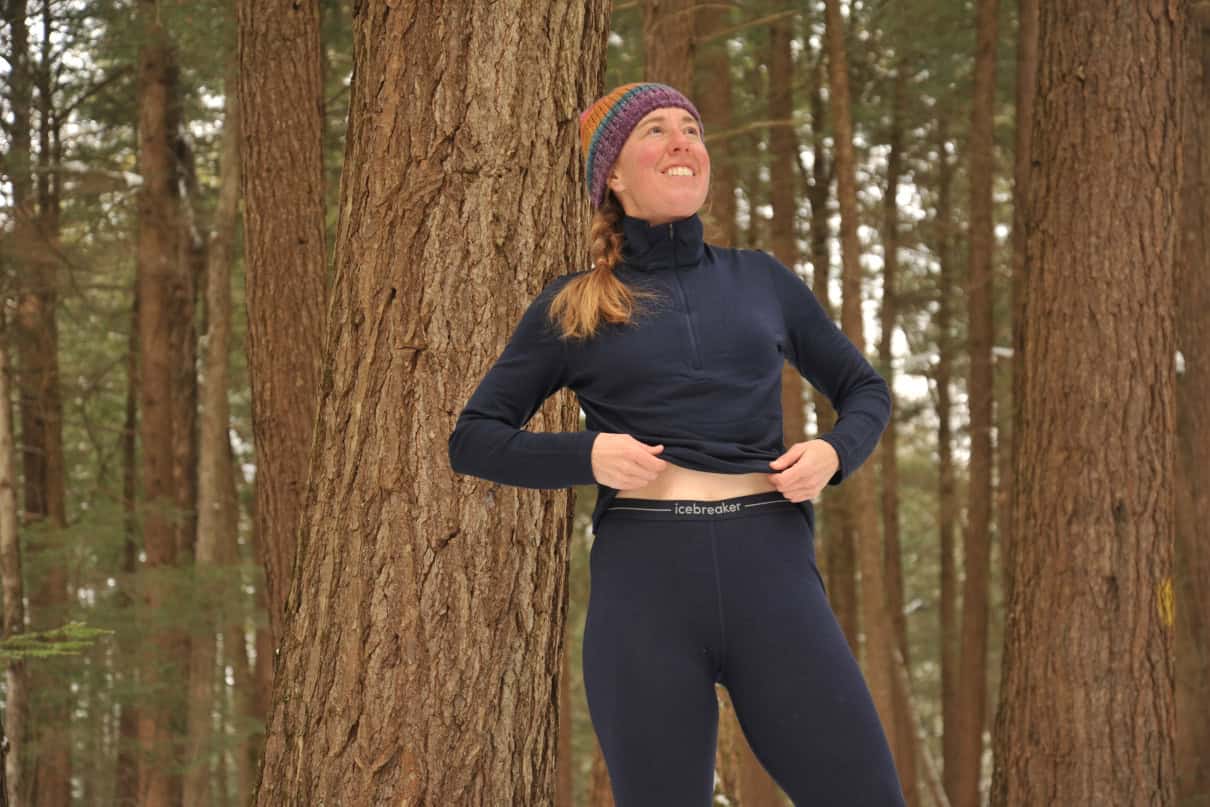
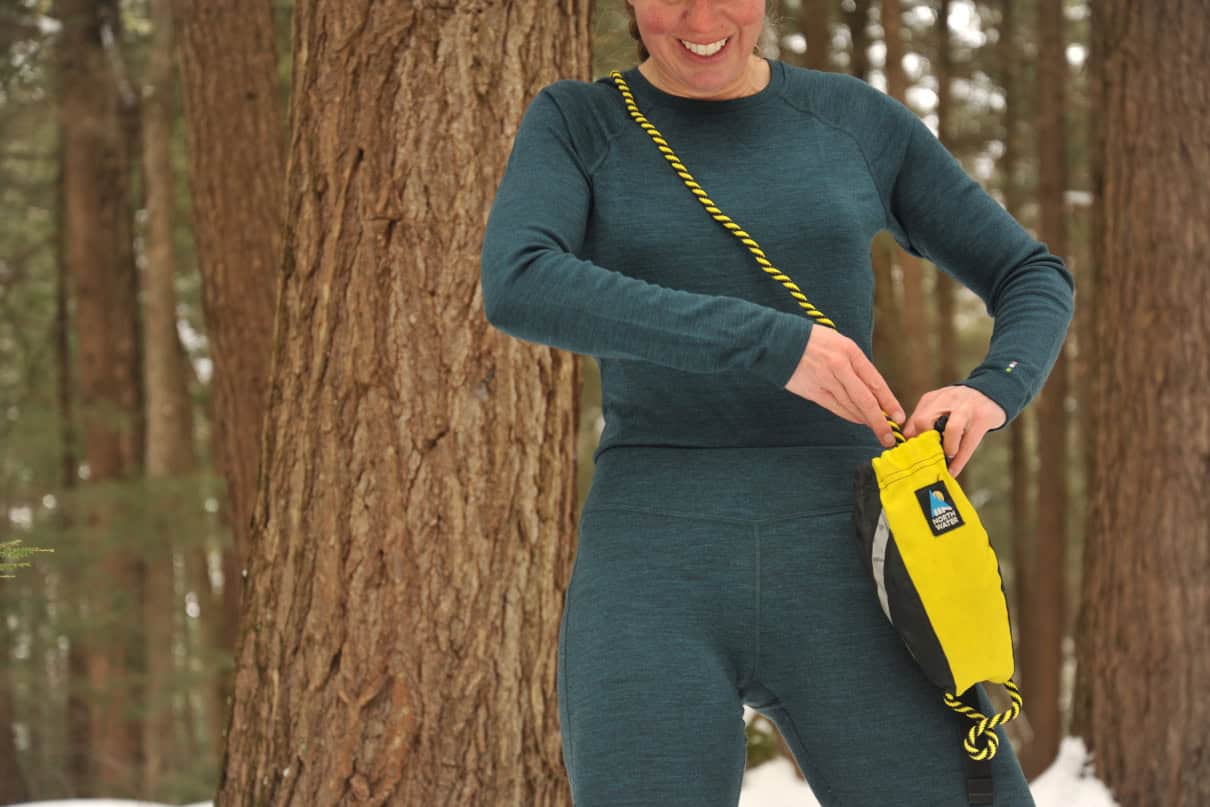
Icebreaker Merino 260 Half Zip Thermal Top & Merino 200 Oasis Leggings
When it comes to paddling and living out of my dry bags, I’m always looking to escape for as long as possible. Multi-day trips are great, multi-week journeys are even better. That’s why my favorite base layer material is merino wool. Spun from the irresistibly plush fleece of Merino sheep—a breed known for its hardiness in the world’s most inhospitable climates—it offers superb warmth-to-weight, packs down smaller than synthetic fleece, and continues insulating even when wet. Unlike traditional wool, ultra-fine merino fibers are soft and non-itchy to wear next to your skin.
But the best part? Merino wool contains a wax called lanolin that is naturally water repellent and antimicrobial, meaning my base layers stay odor-free even after living in them for a week.
Founded in New Zealand (where sheep outnumber people 4.5:1), Icebreaker is the original pioneer of premium merino apparel for outdoor pursuits. The company offers a range of base layer weights from 175 to 300 for varying degrees of warmth. My go-to is pairing the versatile merino 200 Oasis leggings with a lightweight-yet-cozy 260 Tech Half Zip Thermal top for a season-stretching base layer that keeps me warm when it’s cold and cool when it’s warm.
Reasons to buy
Excellent breathability and temperature regulation
Naturally odor-resistant
Warm when wet
Slim fit promotes mobility and doesn’t bunch
Offset and flatlock seams to reduce friction
Consider another if
You’re on a budget—synthetic base layers offer a good alternative at a fraction of the price
The words “wash cold, gentle cycle, line dry in shade” are not in your laundry vocabulary
Bottom Line
Top-notch performance, comfort and style in a material you’ll want to wear day and night.
Most Durable
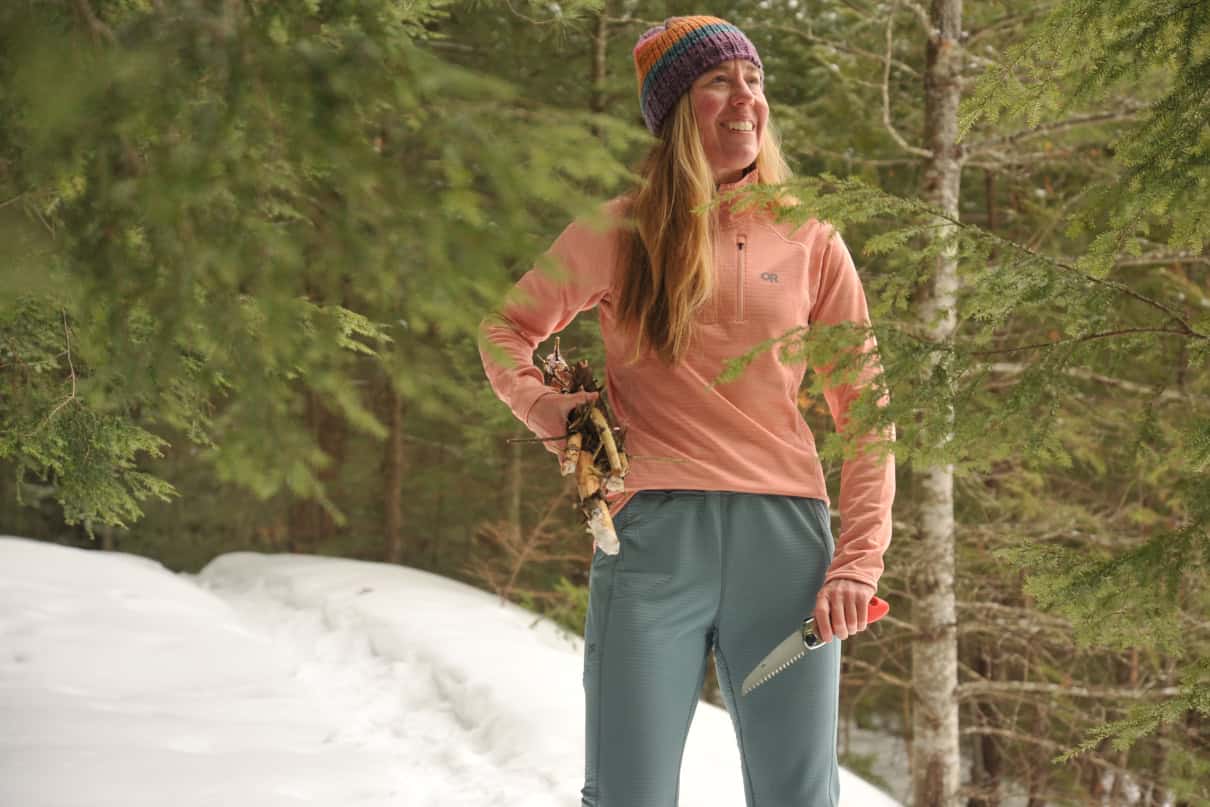
Outdoor Research Vigor Grid Fleece Quarter Zip Top & Bottom
Some of my most well-loved base layers are hard-wearing synthetic fleece staples from Outdoor Research. Even after countless expeditions and laundromat wash and dry cycles, they still look great and perform like new. OR’s Vigor Grid tops and bottoms are crafted from lightweight fleece with a durable smooth face and waffle back for superior breathability and moisture transport away from your skin. Backed by the company’s lifetime guarantee, these are base layers designed for round-the-clock outdoor use—whether I’m kneeling in a canoe, shouldering a pack, or hauling firewood.
The quarter zip top makes it easy to vent on warm days or zip up when the temperature drops. The bottoms feature an internal elastic waistband with a drawcord to customize fit. The relaxed fit means these also work great as a mid-layer on the coldest paddling days.
Base layers aren’t known for their storage, which makes sense when you’re layering under other clothing, but I appreciate the inclusion of chest and hip zip pockets on the Vigor Grid top and bottoms for stashing my phone or a snack when I’m wearing just this layer on dry days.
Reasons to buy
Lifetime guarantee
Easy care; machine wash and dry
Breathable and quick drying
Flat seam, chafe-free fit for maximum range of motion
Consider another if
You prefer natural fibers like wool for their natural odor- and fire-resistance
You want a one-piece for under your paddling gear
Bottom Line
Unbeatable durability and worry-free maintenance backed by a lifetime guarantee.
Best For Sun Protection
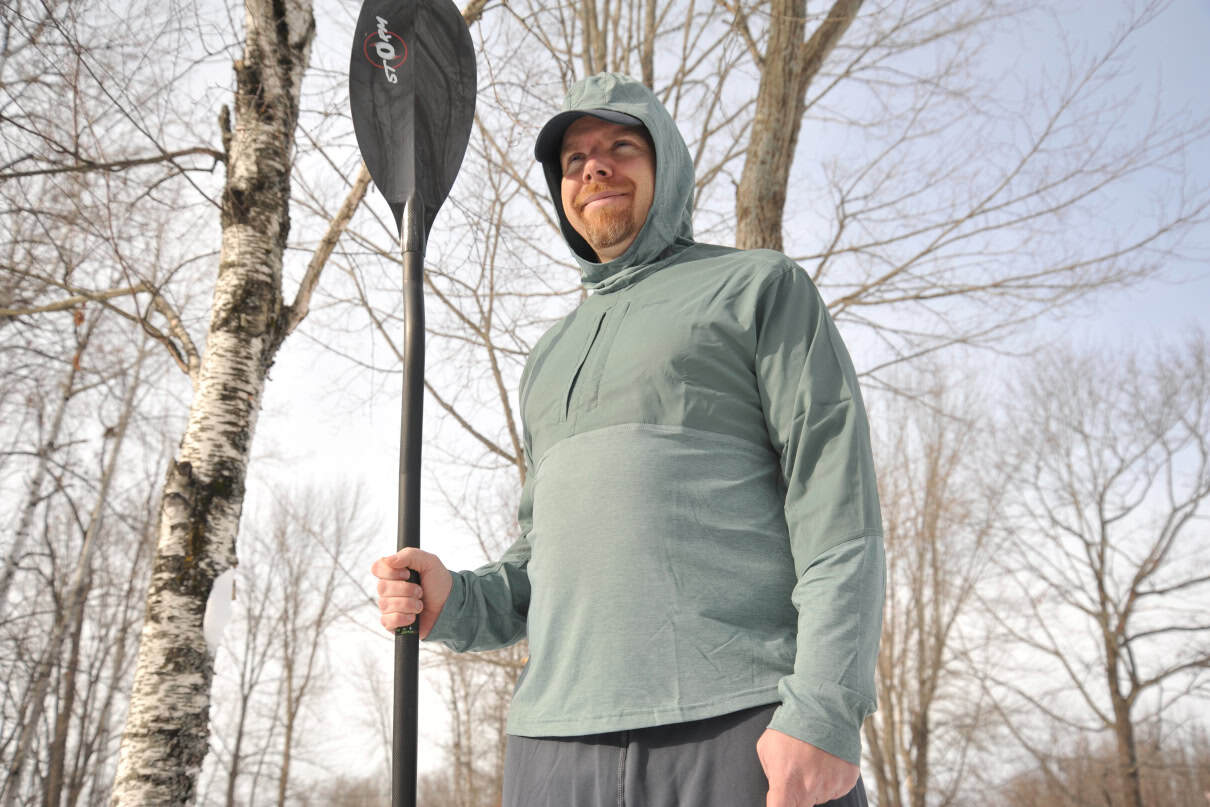
NRS Silkweight Hybrid Hoodie
Dreaming of warmer days and blocked UV rays. | Image: Virginia Marshall
Crafted from ultralight synthetics with advanced wicking technology for cooling comfort, the NRS Silkweight Hybrid Hoodie promotes responsible choices on hot, steamy days. Instead of reaching for that faded t-shirt and a bottle of sunscreen, I grab this long-sleeve sun shirt for UPF 50+ protection and a face-shading hood. The Silkweight Hoodie’s breezy fit and four-way stretch keep you chill on the sweatiest days, while the woven shoulder and chest panels add abrasion resistance for wearing under a PFD. The sturdier material up top also works well to shield my shoulders, upper back and arms from dive-bombing deerflies. Two mesh-lined chest pockets offer a secure place to stash small essentials.
Reasons to buy
Ultralight UPF 50+ sun protection
Dries almost instantly
Proprietary synthetic fabric keeps you cool on hot days
Consider another if
You need an insulating base layer for cooler climates
You don’t want a hooded shirt, in which case consider NRS’s similar Silkweight Baja or Long Sleeve shirts
Bottom Line
Less is more when it comes to sun shirts, and this airy top gets it right.
Check The Weather
Plan for changing weather conditions. Prepare for the worst case.
Don’t forget to check tide, currents, or river levels.
Few environments test a base layer’s capacity for managing moisture, chafing and thermo-regulation like the microclimate inside a drysuit. The Kazan liner impressed me right away with its body-mapped grid fleece and a clever, minimalist design that ticks all the boxes for under drysuit comfort.
One-piece thermals can be challenging to fit. After finally finding a drysuit that fits me well, the last thing I want is a bunchy base layer compromising my comfort. The Kazan’s slim tailoring, low collar, and 7/8-length sleeves maximize mobility while accommodating neck and wrist gaskets. Mustang finished the sleeve and leg cuffs with water-resistant stretch nylon, solving a common paddler complaint—soggy wrists and ankles from imperfect drysuit seals. The clincher for me, however, is the drysuit-compatible drop seat. It’s an elegant solution: a long shirt hem tucked into a high elastic waistband at the back of the liner. No zipper, no snaps, no added bulk.
Reasons to buy
One-and-done layering
Cozy waffle fleece is ideal for cooler conditions
Breathable and quick drying
Drop-seat compatible
Consider another if
You mostly wear your drysuit in warmer temperatures, where a lighter base layer may be more comfortable
You prefer the flexibility of layering separate tops and bottoms
Bottom Line
This smart, drysuit-specific design is the most comfortable union suit we tested.
Most Diverse Sizing
Smartwool Classic Merino Thermal Crew Top & Bottom
Comfortable, colorful and easy to care for, Smartwool’s merino base layers are available in standard and plus sizes to fit all paddlers.
I like the brand’s 150-weight Classic All-Season base layers for warmer weather, while the mid-weight 250 Classic Thermal options are perfect for chilly shoulder-season paddling and camping.
I have broad shoulders for my frame, so I appreciate the crew top’s raglan sleeves which allow a greater range of motion while ensuring a comfortable fit for those with athletic builds or larger busts. Responding to user feedback, Smartwool updated their classic merino leggings to improve fit across a range of body shapes. I love the wide waistband but find the mid-rise still rides down a bit at the back when I’m sitting or kneeling in my boat.
Crafted from 100-percent merino wool, Smartwool base layers excel at moisture control and regulating body temperature. Even better, the natural fibers are odor-resistant; just air out your layers after wearing and they’ll feel (and smell) fresh for another day. When it’s time for laundering, the robust knit can be machine-washed and dried.
Reasons to buy
Inclusive sizing
Excellent breathability and temperature regulation
Naturally odor-resistant
Easy care; machine wash and dry
Fun colors and prints
Consider another if
You’re on a budget—synthetic base layers offer a good alternative at a fraction of the price
You want the full coverage of high-rise bottoms
Bottom Line
Comfortable, stylish natural fiber base layers with standard and plus sizes to fit everyone.
Best For Cold Weather
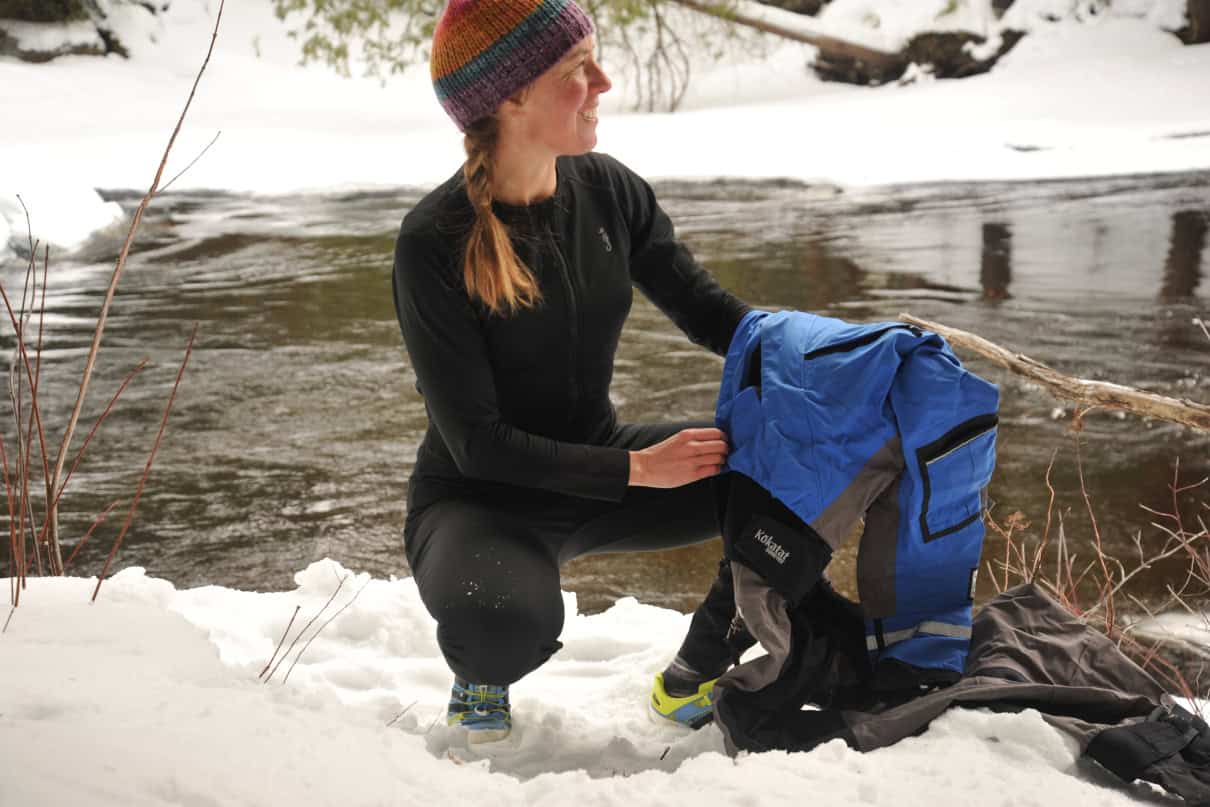
Kokatat Outercore Long Sleeve Shirt & Pant
Warming up for cold-weather paddling. | Image: Virginia Marshall
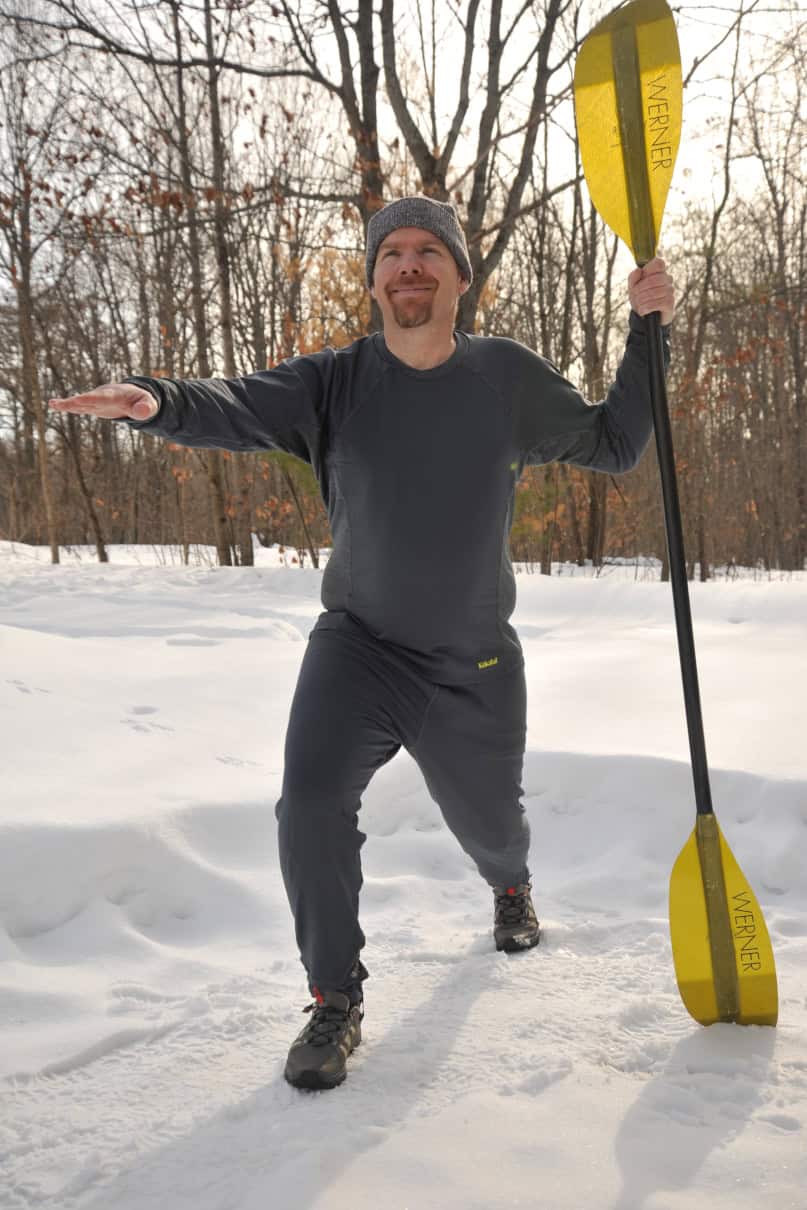
When I’m heading out for a November surf session or layering up to catch spring melt, Kokatat’s heavyweight Polartec Power Dry fabrics offer core cozying, confidence-inspiring insulation for cold-water environments. The plush velour inside is soft and warm against my skin, while the durable jersey face makes for worry-free layering under my dry wear.
Because Kokatat base layers are designed specifically for paddlers, they’re loaded with subtle-yet-welcome features like strategically placed flat-stitch seams to avoid irritation and hot spots. Another paddler-centric element is the Outercore shirt’s drop tail, eliminating cold spots when I’m sitting in my kayak. And, the lighter-weight Polartec grid fleece in the underarms, cuffs and neck prevents overheating and wicks perspiration when I’m sprinting for a wave.
Reasons to buy
Plush Polartec fleece for maximum insulation
Quick drying and breathable
Paddler-specific body mapping improves in-boat comfort
Consider another if
You want lighter layers for all-season paddling
You’re looking for Outercore warmth in a one-piece design—check out Kokatat’s Habanero drysuit liner
Bottom Line
Uncompromising cold-weather performance in paddler-specific designs for all-day comfort.
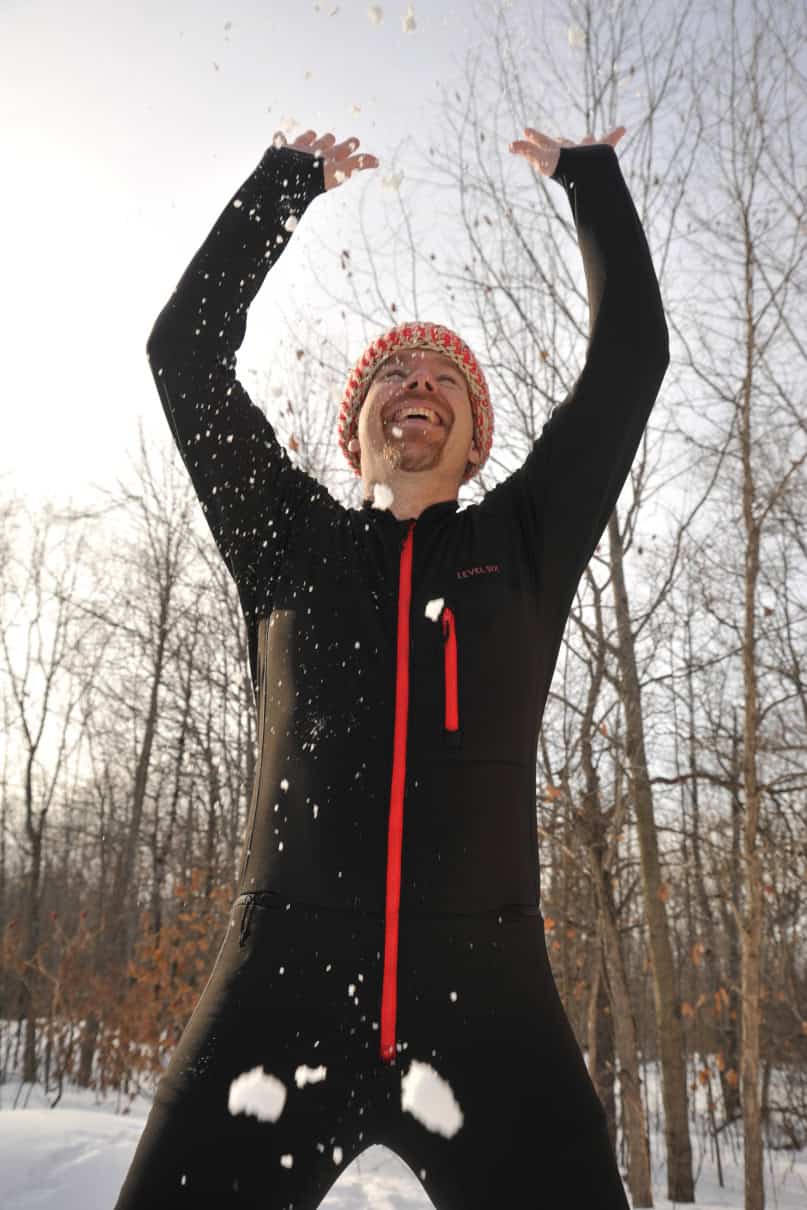
A quality base layer is a smart investment in your paddling future, but it can be hard to rationalize spending $300 on long underwear. I get it. For paddlers on a budget, Level Six makes river gear that looks great and performs well at a reasonable cost.
The Vulcan Uni-Suit is a midweight fleece base layer that kept our testers toasty warm in cold conditions. The suit is fully drysuit compatible with a long front zipper for venting and easy entry, flatlock seams to prevent chafing, and a rear zip drop seat. Level Six also offers a women’s version called the Vesta at the same price point.
Reasons to buy
Head-to-toe layering for half the price
Cozy fleece is best suited to cooler conditions
Breathable and quick drying
Drysuit compatible
Consider another if
You want more premium one-piece features like body-mapped fabrics or a women’s relief zipper
You prefer the flexibility of layering separate tops and bottoms
Bottom Line
A cozy onesie that offers great value for paddlers on a budget.
What to consider when buying base layers
Perhaps the biggest consideration when shopping for your next (or first) base layer is whether to choose a natural fiber like merino wool or go with a synthetic material. Both can offer versatile performance in a variety of paddling conditions, so the choice depends on personal preference, budget, and how you plan to use them.
Some important factors to consider include: what is the air and water temperature where you paddle? What is your anticipated level of exertion? For example, do you enjoy leisurely paddles in cooler weather, or high-output paddling in variable conditions? Both wool and synthetics are highly breathable, with different weights (measured in grams per square meter, or g/m) suited to different temperature ranges.
Which is warmer—wool or synthetic?
Both synthetic fleece and wool retain heat effectively in dry conditions, but wool insulates better when wet. Wool also contains lanolin, a natural water-repellent wax that makes it a good choice for wet environments. Fleece, on the other hand, becomes saturated more quickly than wool, but it dries out much faster once you’re off the water.
Moisture management—wool vs. synthetic
Base layers keep you feeling dry and warm by transporting moisture away from your skin. In warmer conditions, they can also help you feel cooler through evaporative cooling. The short fibers in synthetic fleece base layers create a capillary action that wicks sweat away from the skin. The crimped fibers of merino wool work in a similar way, with the added benefit of natural antimicrobial properties that keep your sweaty base layers from stinking. If your adventures take you off the grid for multiple days, you may prefer merino over synthetic fleece.
One piece or two?
Do you want separate tops and bottoms that you can switch up for greater versatility, or do you like the idea of a one-and-done layer to toss on underneath your dry wear? If you often paddle in a drysuit, one-piece liners produced by popular paddling brands are designed to work specifically with the features of your suit. Alternatively, individual pieces offer more options for wearing around camp, during other activities, or in your sleeping bag.
Pros and cons of wool vs. synthetic
Benefits of merino wool base layers: insulate when wet, naturally water repellent and flame retardant, breathable, compact, naturally antimicrobial and odor resistant. The downsides of wool are that it’s slow drying, more expensive, and can be damaged if washed and dried incorrectly.
Benefits of synthetic base layers: quick drying, easy maintenance, lightweight and soft. Some drawbacks include: low insulation value when wet, can melt near the fire, and even treated synthetics develop unpleasant odors over time.
We tested the base layers on this list on and off the water—paddling, portaging, camping and more. Each garment was selected for its fit, comfort, features and performance.
These picks reflect not only hands-on testing for this review, but also years of accumulated experience and the expertise of our seasoned editors through extensive paddling and product testing.
This article was published in Issue 75 of Paddling Magazine. Subscribe to Paddling Magazine’s print and digital editions, or browse the archives.
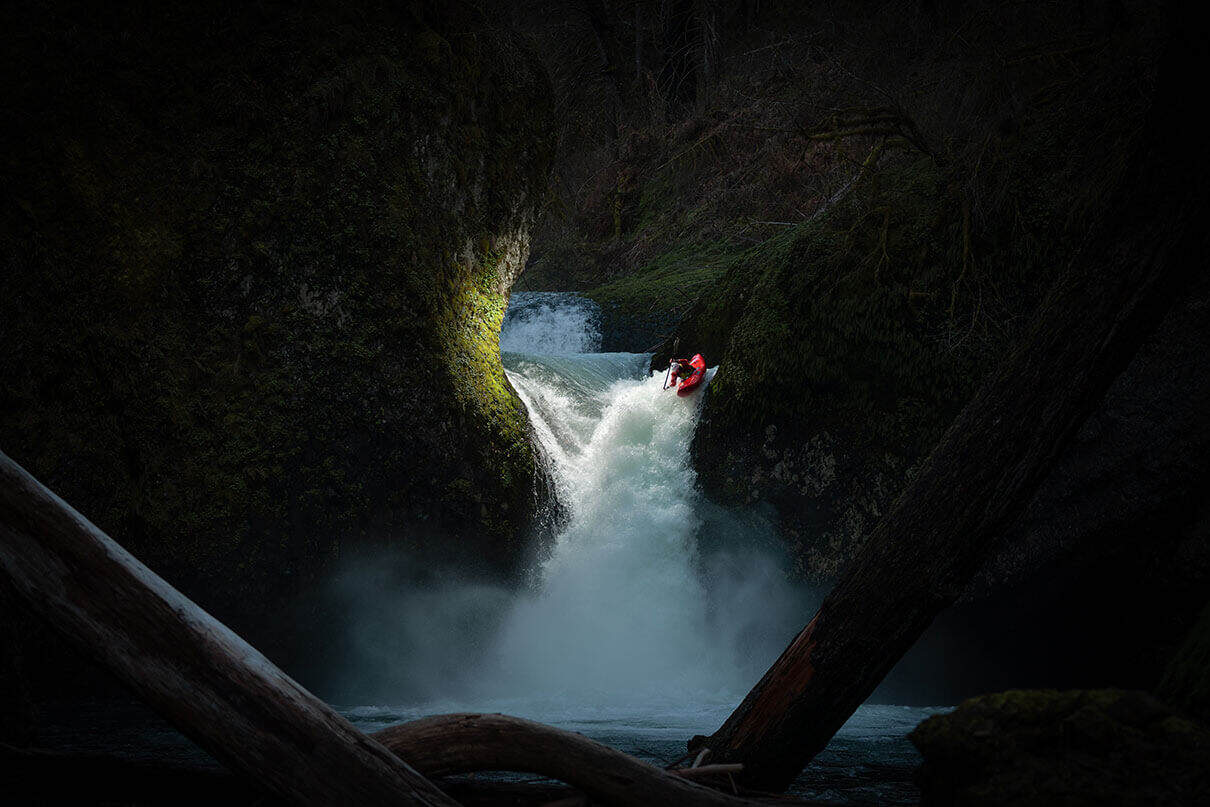
JT Hartman drops Punch Bowl Falls at dusk. | Feature photo: Riley Seebeck
“It was kind of a dream that all fell together,” says photographer Riley Seebeck. Getting this photo was a seven-person, six-hour mission that pushed the limits of technical and paddling skills and it all almost fell apart at the last minute.
Below, Seebeck describes in his own words how he captured this one-shot wonder.
Behind the scenes on the photo of a lifetime
“There’s a handful of photographers in the industry that are starting to play with attaching flashes and lighting to drones to get that type of studio light look you’d get with a hot box. That was always something I thought would look really cool off of a waterfall.
Originally, my idea was to zoom in really, really far to see the water droplets. But once we decided on Punch Bowl Falls, near Hood River, Oregon, I knew it had to be a landscape. It’s too pretty to zoom in. When this idea came up, I started bouncing it around with JT Hartman. He’s the paddler in the shot. He’s just one of those good dudes who’s always like, ‘Sure, man, let’s do it. I don’t know what you’re really talking about, but let’s do it.’
JT Hartman drops Punch Bowl Falls at dusk. | Feature photo: Riley Seebeck
I met JT during COVID. I was living right on the river and thought, ‘Okay, I have $1,500. I could save it or buy a boat.’ I started watching YouTube kayaking videos, and there was JT, making a bunch of videos. I messaged him and said, ‘I want to get into kayaking. Can you show me a couple of things?’ He took me under his wing, taught me to roll and brought me on my first milestone trips. We became really good friends.
We were all gathering for the Little White Salmon Race anyway. I reached out to a buddy who’s a drone pilot because I can’t operate the camera and the drone at the same time. I roped him in, got JT, and pulled together a support team. It turned into a group of good friends coming together.
Punch Bowl was about a two-hour hike in with all our gear. We started in the late afternoon to hit the blue hour light. At the falls, we were in a canyon. I climbed down and swam across a section of the river with my gear in a dry bag to line up the shot. The drone pilot was 10 minutes up a hill and the kayakers were out of sight. Communication was through radio.
I was in single-shot mode. It brought me right back to the art of photography.
We tested the flashes, they were syncing at first, then not. Technical difficulties. With a big flash, you only get one shot, then the flash has to recharge. Timing the flash and kayaker is key. So, we switched transmitters and kept troubleshooting. Each drone battery lasted only 15 minutes.
At this point, we were losing light. It was 6:30 p.m. I thought, I don’t know if we’re gonna get it, guys. Then I saw this little bird bouncing on a log near me. It felt like something saying, ‘You can have this now.’
When the drone flash started syncing again, we were good to go. JT threw the radio down and lined up the lip. He got slightly off-line at the top and my finger almost clicked too early. Then he rolled off the lip perfectly. The flash fired.
Nailed it!
When JT paddled up in the pool, he asked, ‘How’d it go?’ I was yelling back with every swear word in the book. Six hours in for one photo. And we got it. I’ll remember that feeling forever. Mastering this technique and timing was one of the highlights of my career. I was in single-shot mode. It brought me right back to the art of photography.”
In order to secure your next permit, you'll need to plead your case via video essay. Feature Image: Maddy Marquardt
The official reservation site for public federal lands in the United States, Recreation.gov announced on April 1, 2026 that video applications will now be required for the most competitive permit lotteries, beginning in 2027. According to Rec.gov spokesperson Seymour Butz, the coming change is inspired by the success of hit reality TV series Naked and Afraid and comes with the goal of making sure permits go to the most qualified applicants.
Recreation.gov representative shares story behind controversial move to integrate video auditions into permit application process
“Permits are so competitive these days and rescues are so costly that we’ve found we need a way to weed out the weak,” shared Butz.
Affected permit lotteries include high-demand recreation hotspots such as the Grand Canyon, Middle Fork of the Salmon River, or Selway River as well as backpacking destinations like Half Dome, the Enchantments and Mount Whitney. Rec.gov is partnering with the same casting company responsible for finding talent for popular outdoors reality television series Naked and Afraid to accept video submissions.
“We figured getting a permit for the Middle Fork of the Salmon is at least as competitive as getting on Naked and Afraid and thought we’d take a page from their book,” said Butz.
In order to secure your next permit, you’ll need to plead your case via video essay. Feature Image: Maddy Marquardt
Prospective paddlers will be required to submit a 90 second to 5 minute video application, covering previous outdoor experience, relevant certifications as well as a show of raw and rugged wilderness skills. Rec.gov notes that while personality and pizzazz aren’t expressly a factor on the permit competition rubric, a little razzle dazzle in the video certainly can’t hurt.
“Similar to Naked and Afraid, it doesn’t hurt to demonstrate your survival prowess and deep knowledge of fire, water, and shelter in your audition tape – er, permit application,” added Butz.
While the unprecedented move is designed to ensure competitive permits go to the most qualified candidates, Butz shared that having TV-ready personalities out in the wild is a plus.
“We’ve just seen the success of reality TV in America and think we’re really missing an opportunity to more effectively monetize American resources,” shared Butz. “It starts with the video applications, but it’s a long game. May the odds be ever in your favor.”
Citizens voice concerns about new video application
While representatives share enthusiasm for the coming change, paddlers and recreationalists are dismayed.
Paddler Eileen Offercliff expressed concerns about the coming change.
“Permits are already so hard to get,” said Offercliff. “Now you’re telling me we have to perform everything short of a song and dance to get on our favorite rivers? Access to rivers should be based on who has the most expensive and trendiest gear, not who makes for the best TV.”
Still other paddlers are unfazed.
“This might as well happen,” said a paddler and raft guide angling for a Grand Canyon permit who chose to be identified by trail name “Groover King”.
Groover King added that he believes his video application will perform well, as he is proficient in building massive bonfires, harmonica and groover duty.
To concerned permit applicants, Butz has a few words of encouragement.
“So many people want to visit these wilderness areas but they just don’t have the sheer backcountry survival skills, or on-screen personalities,” said Butz. “In a way, bringing a touch of reality TV to the everyday backcountry will make it more accessible for all. If you can’t get a permit, perhaps you can live vicariously through the screen.”
Five new inductees recognized in 2026 by Whitewater Hall of Fame
The International Whitewater Hall of Fame (IWHoF) will welcome its newest class of inductees on May 2, 2026, during a ceremony at the Canadian Canoe Museum in Peterborough, Ontario, bringing together paddlers and river advocates for an evening celebrating the whitewater’s most influential figures.
Hosted at the newly opened waterfront museum, the ticketed event will honor five individuals whose contributions have shaped whitewater paddling. This year’s inductees include advocates Hugh Canard and George Wendt, champions Danielle Woodward and Dana Chladek, and explorer Roger Parsons. Organized by the World River Center, the IWHoF has recognized more than 65 paddlers from 14 countries since its founding in 2005.
International Whitewater Hall of Fame honors paddling icons
Attendees will have access to the Canadian Canoe Museum’s exhibition hall, home to more than 600 canoes and kayaks, and a behind-the-scenes tour of the museum’s collection hall led by curator Jeremy Ward and executive director Carolyn Hyslop. The evening features a social, video tributes from past inductees and a silent auction of paddling gear, boats and artwork, before culminating in the induction ceremony. Get your tickets here.
A post-event tribute to inductee Roger Parsons is scheduled for May 3 on the Gull River in Minden, Ontario. Additional programming is hosted by Madawaska Kanu Centre, including three days of whitewater on the class II and III Madawaska River near Barry’s Bay.
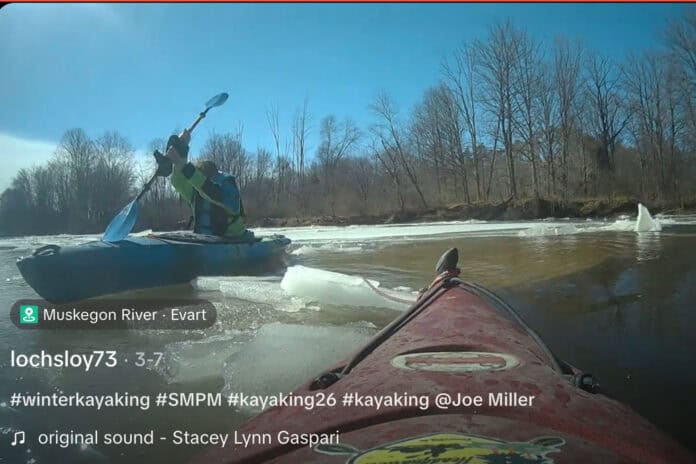
The ice-choked Muskegeon River. Joe and Kevin Miller | TikTok
Kayakers Kevin and Joe Miller were paddling on the icy Muskegon River in Michigan when the the day turned nearly deadly – as chunks of ice flowed down the river, the current caught Kevin’s kayak and a surge of ice hit, sending him into the water. Kevin was then sucked beneath a sheet of ice and swept down river.
Stuck under an ice sheet on Muskegon River
“It started with an incredible experience of floating on an iceberg for nearly 25 minutes,” wrote Kevin on Facebook. “As the ice began to break up, we slid back into the water exactly as planned.”
It was here, back in the moving current that things began to go awry. In attempting to maneuver to where Joe was positioned on another sheet of ice the current caught Kevin’s kayak and ice hit his kayak, causing Kevin to capsize into the icy water.
Data from US Geological Survey (USGS) shows that between March 3 and March 10, 2026, Muskegon River levels near Croton, Michigan rose from approximately 5.2 feet to nearly seven feet. Additional data shows that water temperatures were 35 degrees Fahrenheit (2 degrees Celsius) between March 4 and March 7, 2026.
A video posted by the pair illustrates the extremely dangerous river environment at play the day of the incident. River ice out conditions, or the breaking up and melting ice paired with moving water and strengthening currents, created a serious hazard for the paddlers as large chunks of ice mixed with strong currents and debris. Spring paddling on rivers as ice conditions change can be especially hazardous, as some sections of the river may look clear, while others are choked with ice. The ice itself can act as a surface-level strainer as current rushes beneath it.
“Before I could react, I was sucked under the ice,” wrote Kevin, adding that his inflatable PFD deployed, but he lost his glasses.
Kayaker grateful to be alive after nearly a minute trapped beneath the ice
Kevin estimated that he was trapped beneath the ice for 45 seconds and was swept 40 to 60 feet downstream.
“I tried to break through the 6-8”of ice wherever I saw light, but it was impossible,” shared Kevin. “Just as I reached the point where I could no longer hold my breath and had accepted the situation, I saw light above me.”
Kevin surfaced to the sound of Joe and bystanders on shore shouting to each other, altering everyone that Kevin had surfaced. Joe had positioned his kayak so Kevin could hang on to the bow and be transported and swim to shore.
“A bystander helped pull me onto the shore and up the hill to safety. EMS arrived shortly after to assess me,” wrote Kevin. “Miraculously, my only injuries were some abrasions to my face, bruised hands from fighting the ice, and a few bumps on my head that required three staples.”
According to a comment by Kevin following the incident, Kevin shared that he was wearing neither a drysuit nor wetsuit during the incident and his core temperature emerging from ten minutes in the river was 98.2 Fahrenheit.
Kevin shared that he now plans to purchase a drysuit, and that he and Joe were able to recover his kayak but his paddle, glasses and spray skirt were lost.
“All in all, it was an amazing day and I am incredibly grateful to be here,” wrote Kevin.
Lived experience of paddlers acts as a valuable community case study
“It took courage to post this. You could very well save a life by allowing others to learn from your close call,” wrote commenter Mick Hansen.
Other commenters noted clear lessons from Kevin’s experience.
“First, I am glad you survived,” wrote Rick Greenwald, before noting a few takeaways from the experience including avoiding paddling on moving current with thick ice sheets, the importance of a drysuit in winter paddling conditions and the importance of a foam PFD for paddling in cold conditions.
“You are also brave to put this out here in this group. Take what you’ve learned and share it with others so that you might prevent someone else from making the same mistakes,” concluded Greenwald.
Henry Davies, who shared that he regularly paddles with ice on Lake Superior, noted that floating and drifting ice can be one of the most dangerous aspects of winter kayaking.
“Even a gentle breeze can move the ice around and block you from your takeout,” wrote Davies. “The best plan if things are iffy is to leave the kayak on the car.”
Another commenter recommended Kevin buy a lottery ticket.
Feature Image: The ice-choked Muskegeon River. Joe and Kevin Miller | TikTok
Beginner-friendly stability. Check. Easy packability. Check. Expedition-worthy performance. Check. The whole package in one touring kayak. | Feature photo: Kaydi Pyette
When I first heard of the BoréalDesign Storm 17, I assumed it was a direct descendant of the venerable Current Designs Storm, a kayak first produced in 1994 by the then-Vancouver-Island-based company as its first rotomolded polyethylene kayak. That Storm was based on designer Brian Henry’s bestselling composite design, the Solstice GT. It was subsequently manufactured for decades, achieving wide popular appeal due to its combination of user-friendliness and expedition-ready seaworthiness.
The BoréalDesign Storm 17 is not directly related to that Storm. But one could be excused for confusing the two, and not just because of their similar lines and dimensions. Let me explain.
Many years ago, a different Vancouver Island-based sea kayak company, Seaward Kayaks, wanted to round out its line of ABS thermoformed kayaks with a full-sized touring model. Two industry veterans, Mark Hall and Steve Hovarth, designed a 16-footer and named it the Storm—an admitted nod to Current Designs’ old plastic stalwart. Fifteen- and 17-foot versions were later added. But the Storm series never went into full production under Seaward.
Kayak Distribution (KD), the Quebec company that owns Riot Kayaks and BoréalDesign, eventually acquired Seaward’s thermoform division. KD began producing the Storm 15, 16 and 17 Ultralight touring kayaks under BoréalDesign in 2017. Coincidentally, in 2023, KD acquired Current Designs’ rotomolding division from Wenonah Canoe (which had taken over Current Designs in 1999).
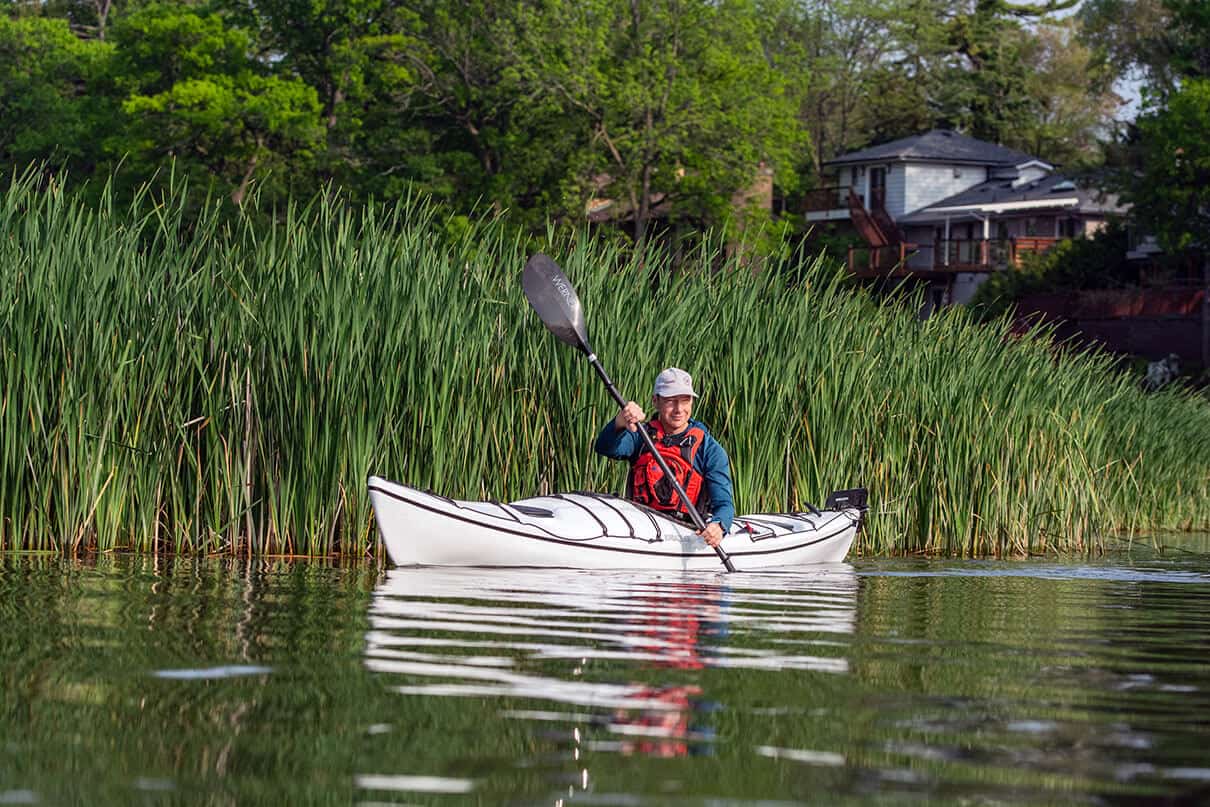
History aside, I can’t help feeling like the BoréalDesign Storm 17 Ultralight is perfectly named, because it has the same approachability as the old Storm, which I reviewed in this magazine in 2004, but with the lighter weight and glossier sheen of a more premium material—thermoformed ABS.
Beginner-friendly stability. Check. Easy packability. Check. Expedition-worthy performance. Check. The whole package in one touring kayak. | Feature photo: Kaydi Pyette
BoréalDesign intends their entire Storm series to be easy to paddle, load and tour. The three sizes all share a similar soft-chined, shallow-V hull, which produces stable and predictable performance. KD’s marketing manager, Graham Ketcheson, explains that people tend to choose the one that fits their body size the best, with the middle-of-the-road 16 being the bestseller and the 17 attracting the largest paddlers or those who simply need the expedition capacity.
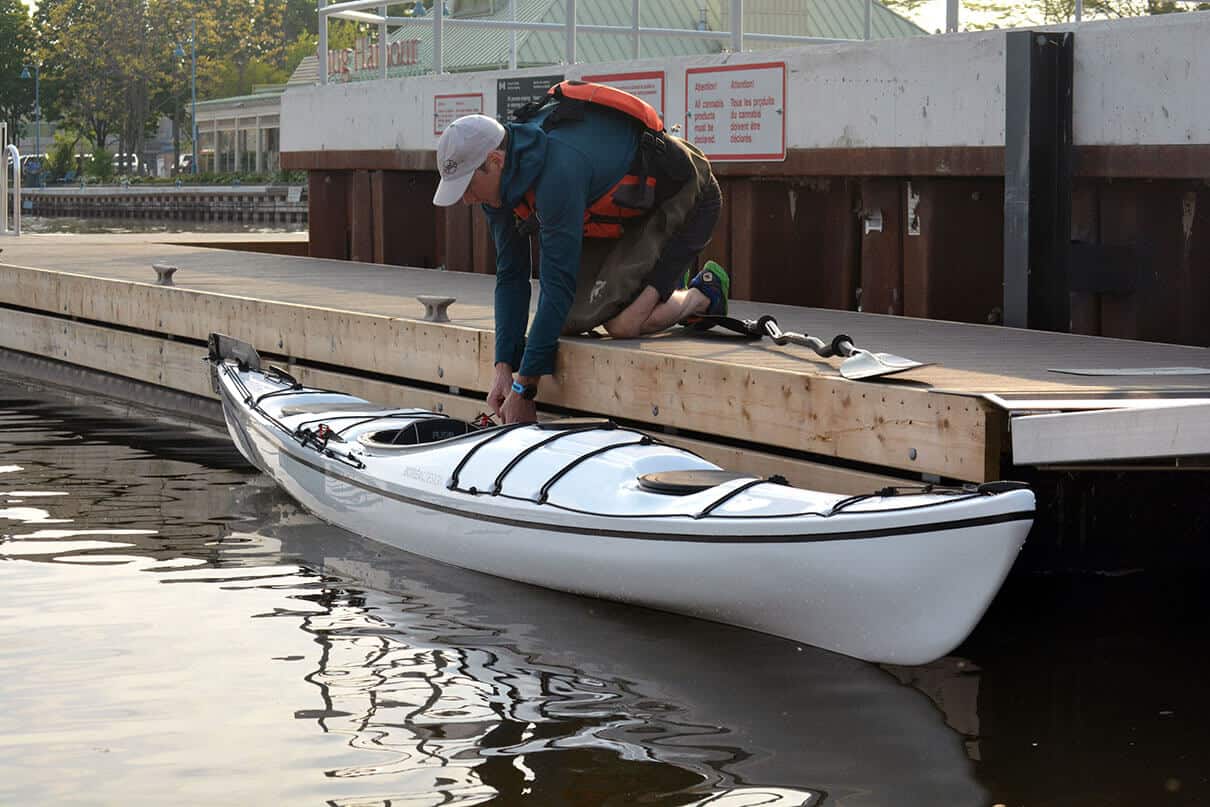
It’s safe to say the Storm 17 is among the roomiest touring kayaks on the market. There’s a day hatch above the cockpit for small items, a round bow hatch with an opening large enough for a small propane tank or 20-liter dry bag, and an oval rear hatch for large items. The Storm 17 is fully appointed for touring in every other way, too, from the reflective deck lines to the straps behind the seat for a paddle float self-rescue.
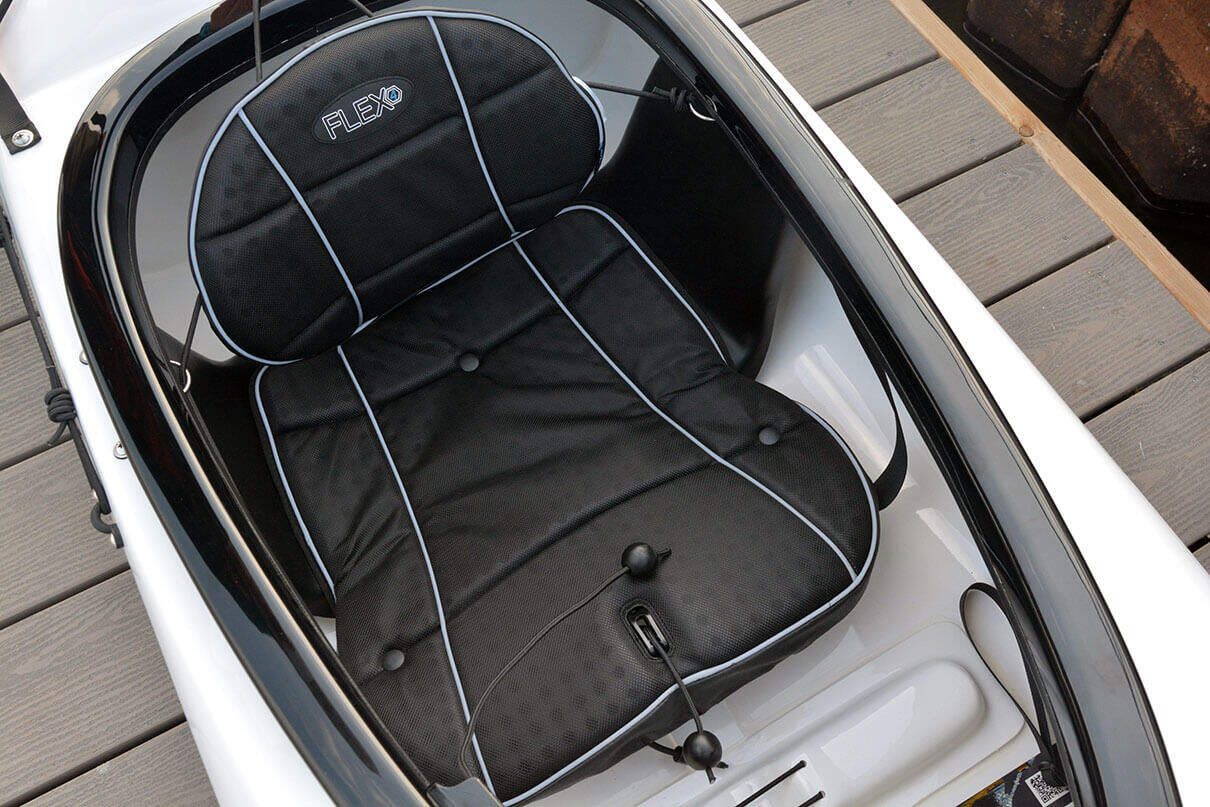
Inside the cockpit, BoréalDesign’s Flex 4 Seat with Drytech fabric provides a multi-way adjustable, crowd-pleasing padded throne that enhances efficiency and comfort by flexing slightly from side to side in synchronicity with the paddle stroke. I found it instantly comfortable and intuitive.
The Flex 4 Seat is designed for comfort and adjustability; a perforated base helps drain water. | Photo: Kaydi Pyette
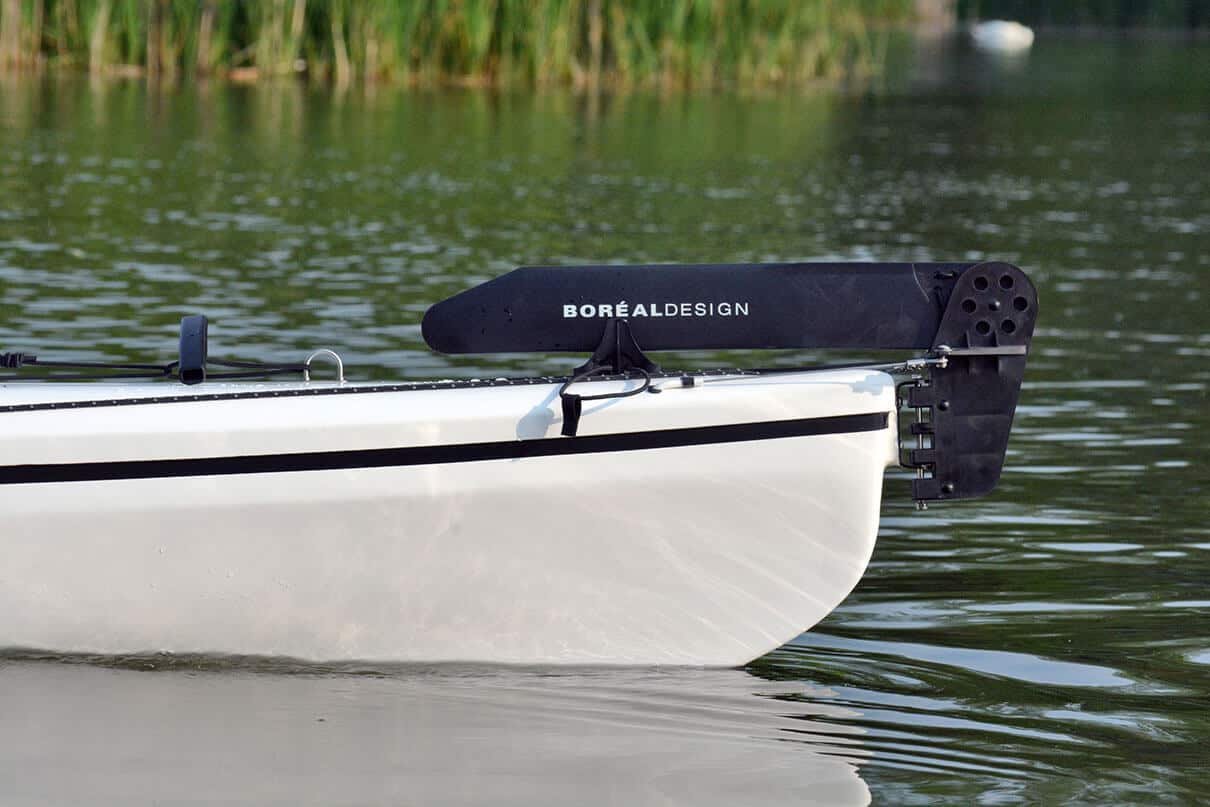
To the right of the cockpit is the pull cord to raise and lower the rudder. The cord is easily accessible, and the rudder steers with adjustable foot braces. | Photo: Kaydi Pyette
I can’t shake the old Current Designs comparison because paddling this Storm reminds me so much of how I remember that company’s Solstice series, which has always been my reference for an approachable, versatile West Coast-style ruddered touring kayak. A beginner could climb in and be immediately comfortable, but then load up and paddle from Seattle to Juneau.
However, this kayak reminds me more of the Solstice GT Titan, the highest-volume edition advertised for those who are “big and tall.” There’s a pic somewhere of my six-foot frame curled up inside the Titan cockpit with only my head poking out.
Ketcheson referenced 225 pounds as being a typical paddler size for the Storm 17 and recounts a strapping lumberjack of a fellow buying the floor model at an Outdoor Retailer show to ship home to Alaska, saying, “I’ve finally found a sea kayak that fits me!”
That said, at 14 inches, the depth of the Storm 17 is roomy but not extreme (the GT Titan is 15). It’s bigger than what I’d want in an ocean playboat, but would be comfortable for a long tour, which is this kayak’s main purpose. It tracks very straight, even without the rudder, and responds slightly to edging.
For a more rockered, maneuverable hull, you’d opt for BoréalDesign’s Epsilon or Baffin series kayaks. Those two kayaks each come in three sizes, too. Tellingly, they were once also available in thermoform but now only come in composite or polyethylene.
Thermoformed kayaks use a plastic laminate construction to combine the affordability and durability of plastic with the lighter weight, shiny aesthetics and sleek feel of composites. | Photo: Kaydi Pyette
This is indicative of both where the Storm series and ABS thermoform fit—straight up the middle. Kayakers buying those more specialized designs weren’t interested in compromise, opting for either the cheaper and worry-free roto that they could virtually drop out of a helicopter or drag fully loaded across rocky tidal flats, or the price-is-no-object composite. Thermoform is the ultimate compromise—in a good way. It’s lighter than rotomolded poly and less expensive but just as shiny-slick as composite, and somewhere between the two in terms of weight, durability and repairability.
“ABS can be repaired fairly easily with a special type of epoxy and a fiberglass or Kevlar patch on the inside,” says Ketcheson. And if you take it to an expert, “like composite you can get it looking pretty new again. You can plastic-weld polyethylene boats but they’re always going to look terrible.” He also points out that a scratched thermoformed hull can be restored with special acrylic spray paint, similar to a gelcoat repair on a fiberglass kayak.
So it makes sense that BoréalDesign has dedicated its thermoform production, in the touring realm, to this most all-encompassing and accessible design. One that would likely most appeal to outfitters or to dedicated intermediate kayakers who want a serious sea kayak that will take them anywhere they want to go, with many of the attributes of composite, at a more moderate price.
For that niche, the Storm series is perfectly dialled in. No need to overthink it. Pick your size, load ‘er up, and set off wherever your heart desires.




 This article was published in Issue 75 of Paddling Magazine.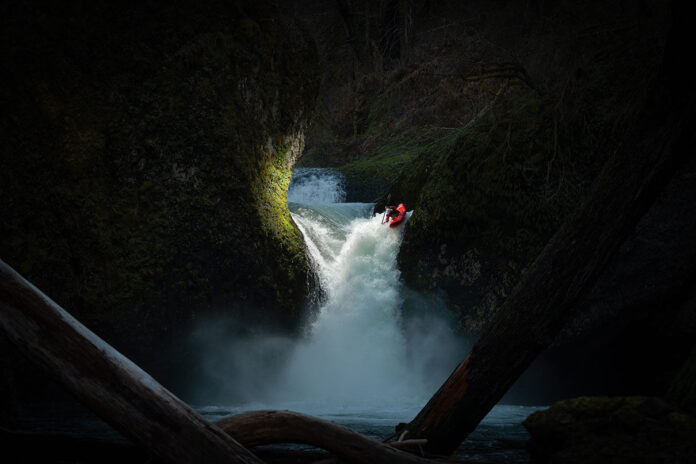

 This article was published in Issue 74 of Paddling Magazine.