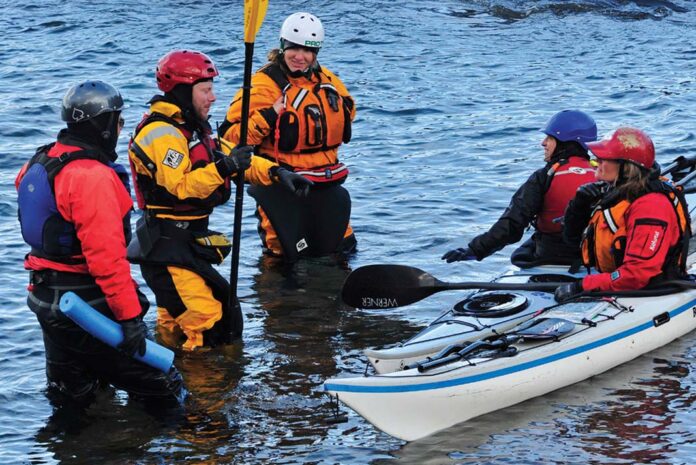
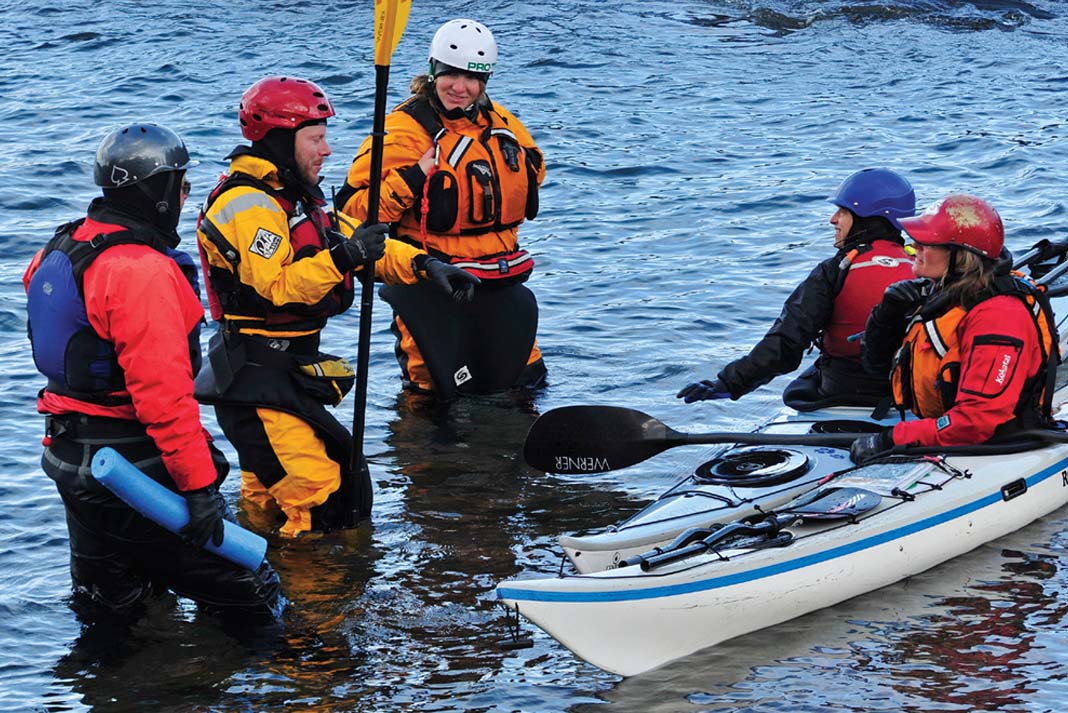
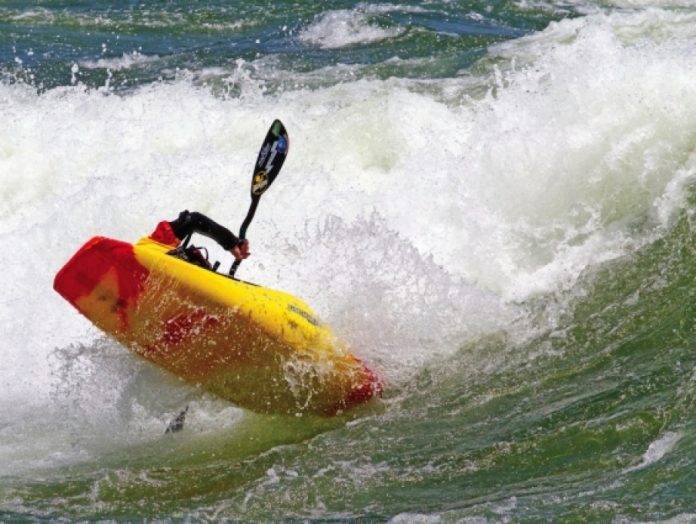
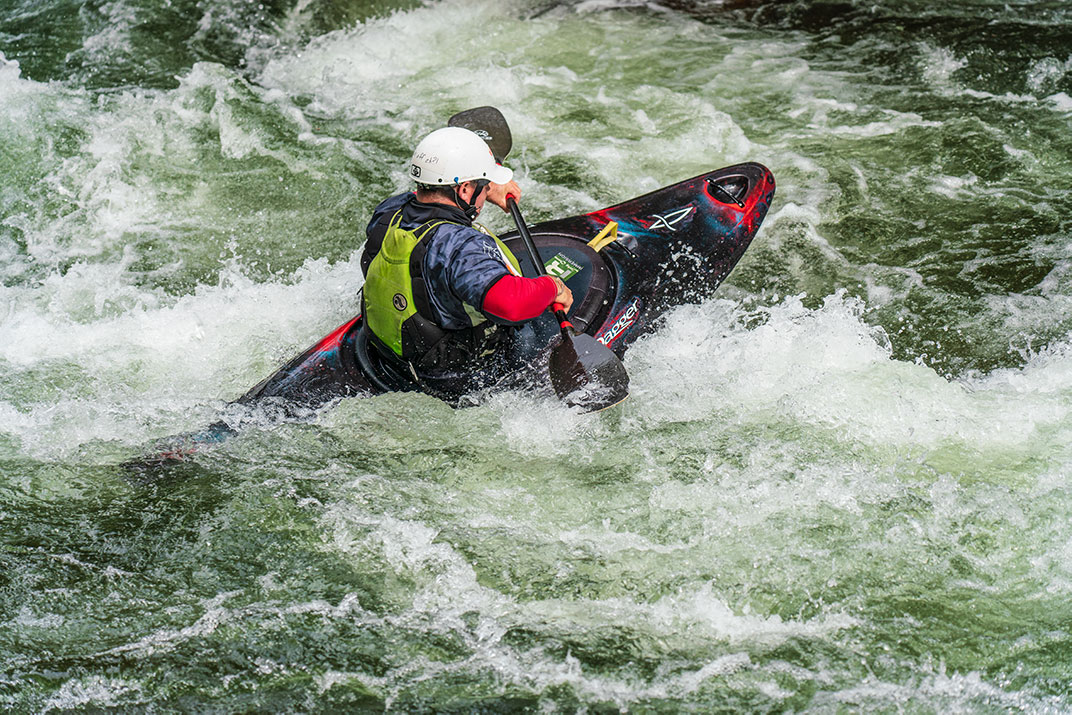
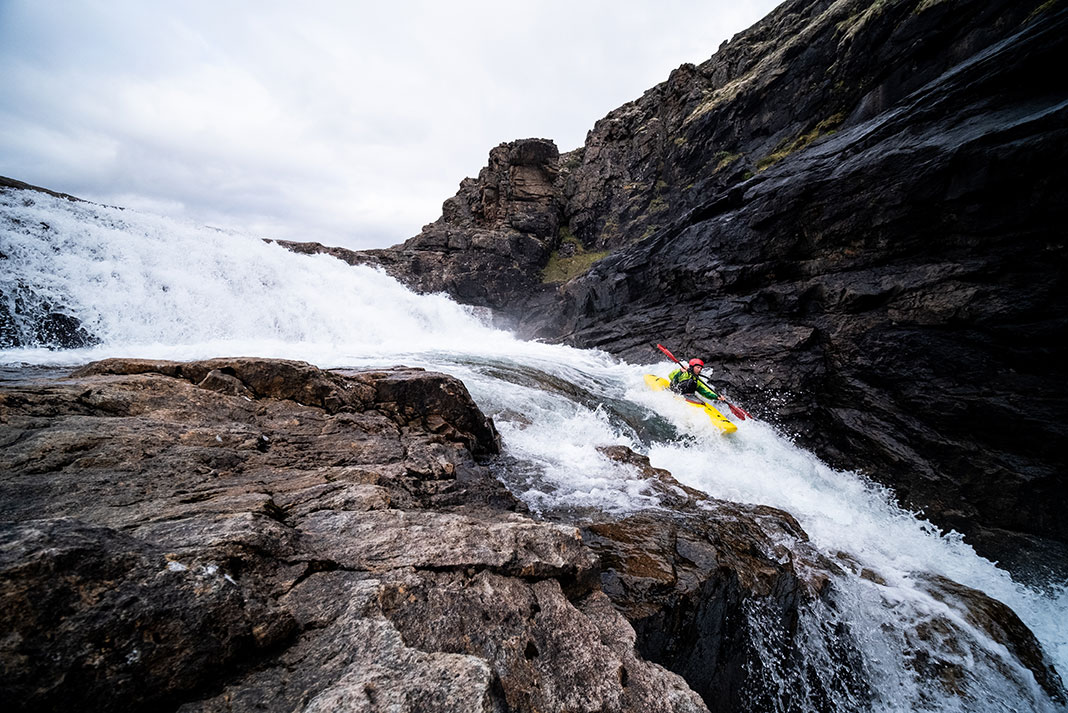
Heading to your favorite surf wave with your friends for a playboating session is a great way to enjoy a dynamic river feature. Park and play kayaking is different than river running in many ways but just as addictive. Read on to find out the seven essentials to bring to the river for your next sun-filled afternoon of carving, blunts and loops.
1. The perfect playboat
Always been a creeker? Running big rapids in a high-volume creek boat is a great way to explore new rivers, and the stability in these kayaks feels great. Playboats are a whole different animal, and once you catch your first wave in one you will be hooked. With their short length, small and square sterns and sharp edges, playboats are the ideal kayak for learning to surf. Kayaking in both a creek boat and a playboat will make you a more versatile and skilled paddler.
2. A quick and responsive paddle
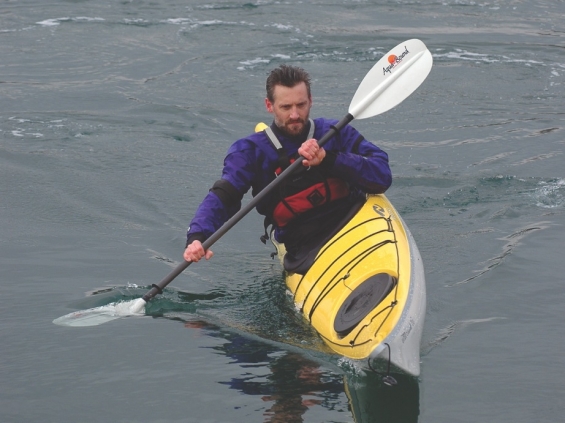
There are a lot of different elements at play when surfing in your kayak and pulling off awesome freestyle moves, and the way you maneuver your paddle is a key one. Playboating requires quick and agile paddle movements, and you will want a paddle designed to help you with these techniques.
3. A well-fitted PFD
Wearing a PFD on the water in any activity is an obvious necessity. In whitewater kayaking where you can be at the mercy of river features, it is crucial you are wearing a reliable and perfectly fitting PFD. If you are a river rat who has had the same PFD for years, check the buoyancy by hopping into the water and ensuring it still keeps your head floating above the water. Any rot or degradation of the material may warrant a replacement.
4. Dry wear
Some of the best days on the river are bluebird, sunny days surfing waves with your paddling friends. Even on these summer days it can be nice to have a lightweight dry top or paddling top to keep you a bit dryer and warmer, especially if your surf sessions stretch into the evenings when temperatures dip. If you like to catch burly spring waves, a dry suit is a great investment that can make your park and play days a year round activity.
5. River booties and shoes
Having great footwear for the river will make your park and play days much more comfortable. From long walks through the forest to find that elusive wave you’ve been dreaming about all winter to climbing over rocks after a big swim, solid footwear will keep your feet safe and healthy. Some paddlers prefer neoprene booties while others are partial to shoes with a more solid sole.
6. A dry bag
A dry bag is essential for bringing important items with you at your park and play. Even if your car is just steps away from the surf, it’s nice to have a bag packed with river snacks and a first aid kit, or even your favorite DSLR in a camera-specific bag to make sure you capture great shots of your friends nailing new tricks. Explore dry bags here.
7. Gloves and mitts
If dialing down the number of surf sessions in the colder months of the year is not an option for you, invest in a quality pair of gloves and mitts. Fingers are one of the first body parts to go numb in cold water, and when you are trying to articulate a new paddle movement on a wave, dexterity is important.
Far too many trippers have awoken on otherwise fine mornings to find a bear has stolen their food pack. | Feature photo: Dave Quinn
Thriving on backcountry canoe trips relies on having a solid skill set and a willingness to adapt to always changing conditions and circumstances. Many skills are acquired through trial and error and learning from mistakes, and others can be honed before heading into the wilderness. Here are the skills seven Canoeroots staff think are essential for your wilderness canoe trip success.
7 most important skills for wilderness paddlers
Building a tarp shelter. | Photo: Dave Quinn
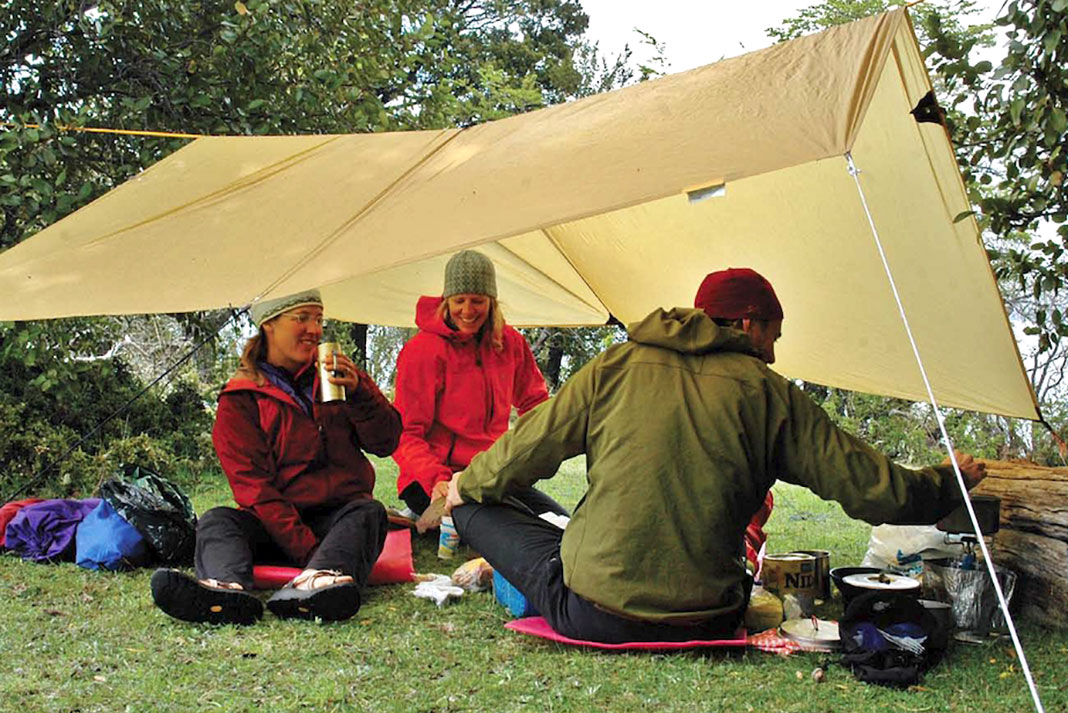
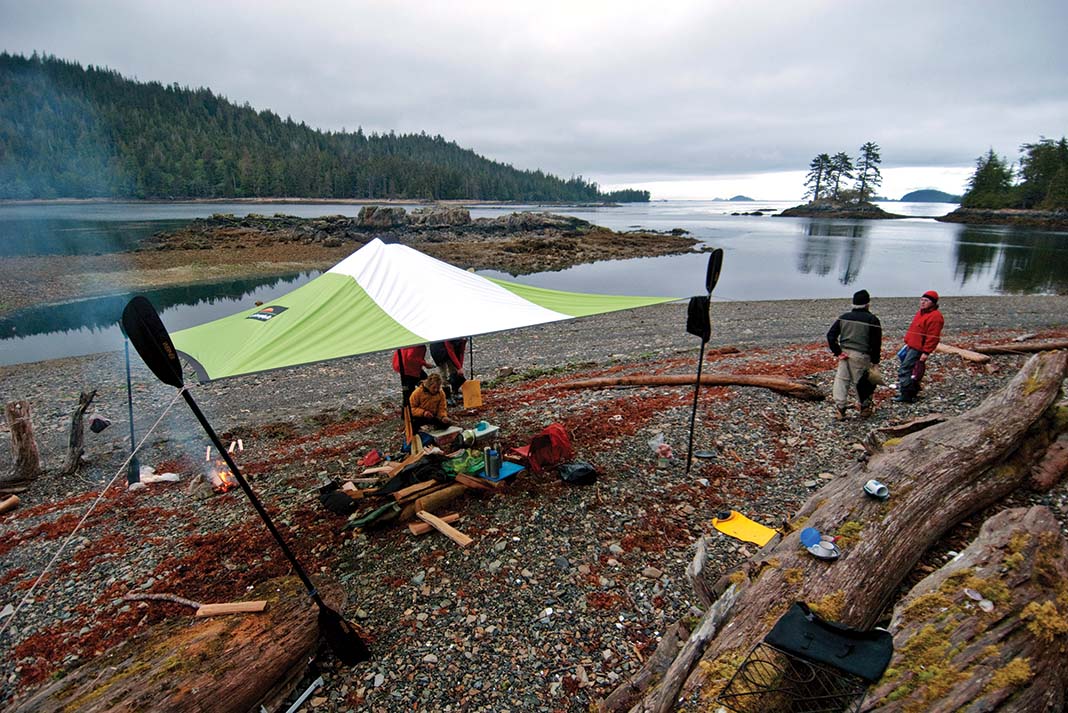
1 Build the perfect tarp shelter
Tarps are easy to pack and allow you to have a versatile shelter from the rain and wind. The most secure and stable tarp setups have a ridge forming the highest part of the tarp. The ideal way to support the ridge is to have a string or independent line between two trees or poles. Bungalow style roofs are awesome if the conditions of your campsite are appropriate, but often creativity is required in shelter construction.
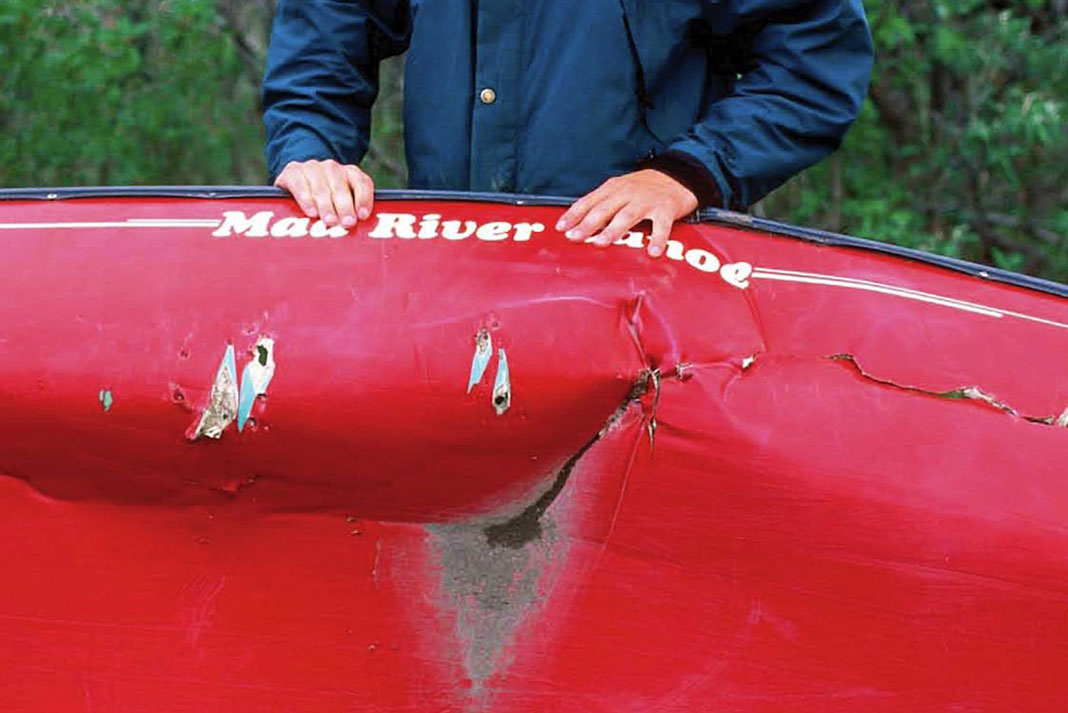
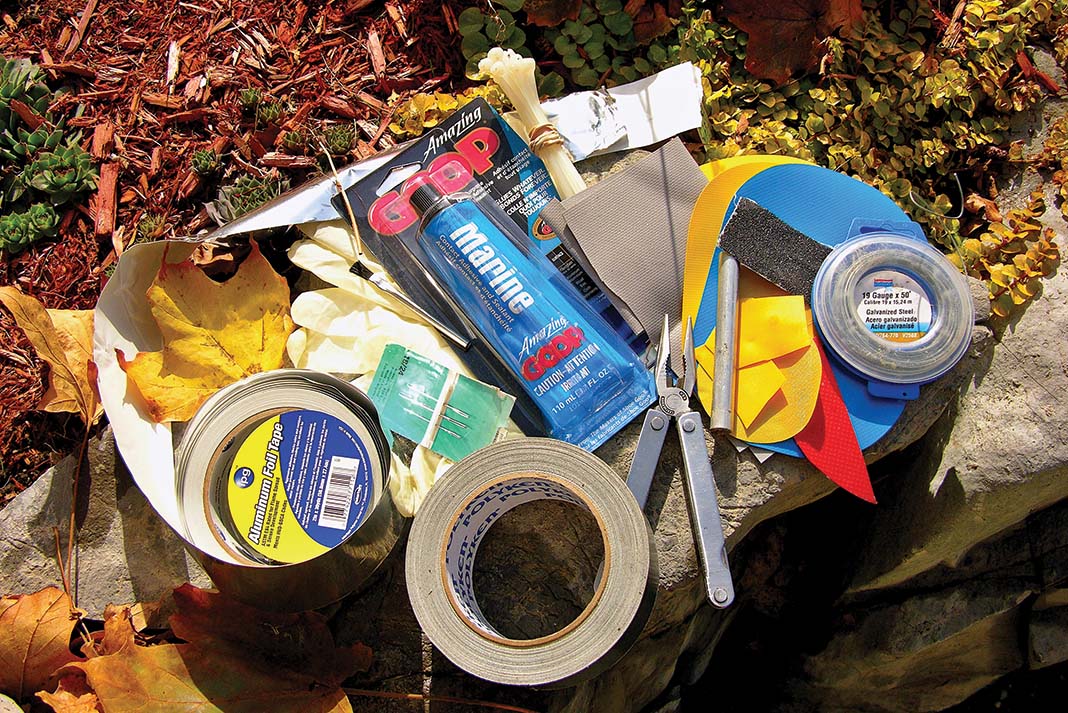
Encountering canoe damage can be a serious impediment to your trip livelihood whether you are in the backcountry for two days or two weeks. Keep panic at bay with a canoe repair kit and the know-how to use it. A good canoe repair kit will include heavy-duty duct tape, stainless steel wire, a nail kit, ABS plumbing pipe and more.
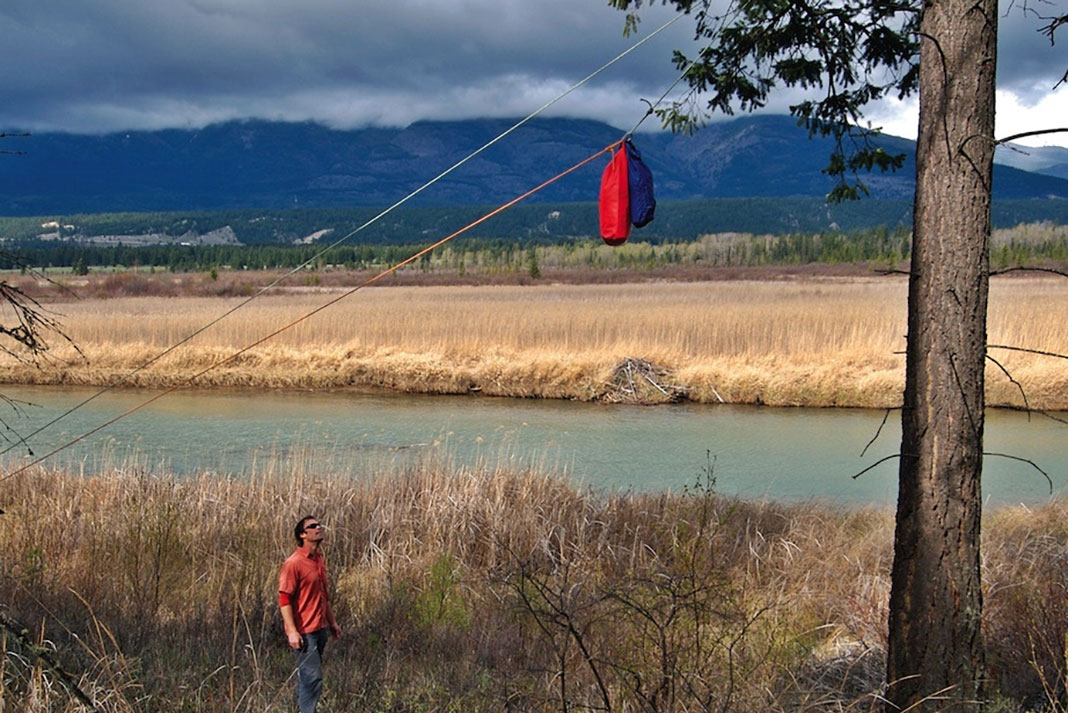
Far too many trippers have awoken on otherwise fine mornings to find a bear has stolen their food pack. | Feature photo: Dave Quinn
3
Execute a proper bear hang
Leaving food improperly stored at your campsite can have a swath of negative consequences. A bear at your site can eat your carefully packed food, damage your boats and gear and can even lead to the bear being destroyed. Knowing how to execute a proper bear hang will help decrease the chances of encountering one of these impressive animals too close to your site for comfort.
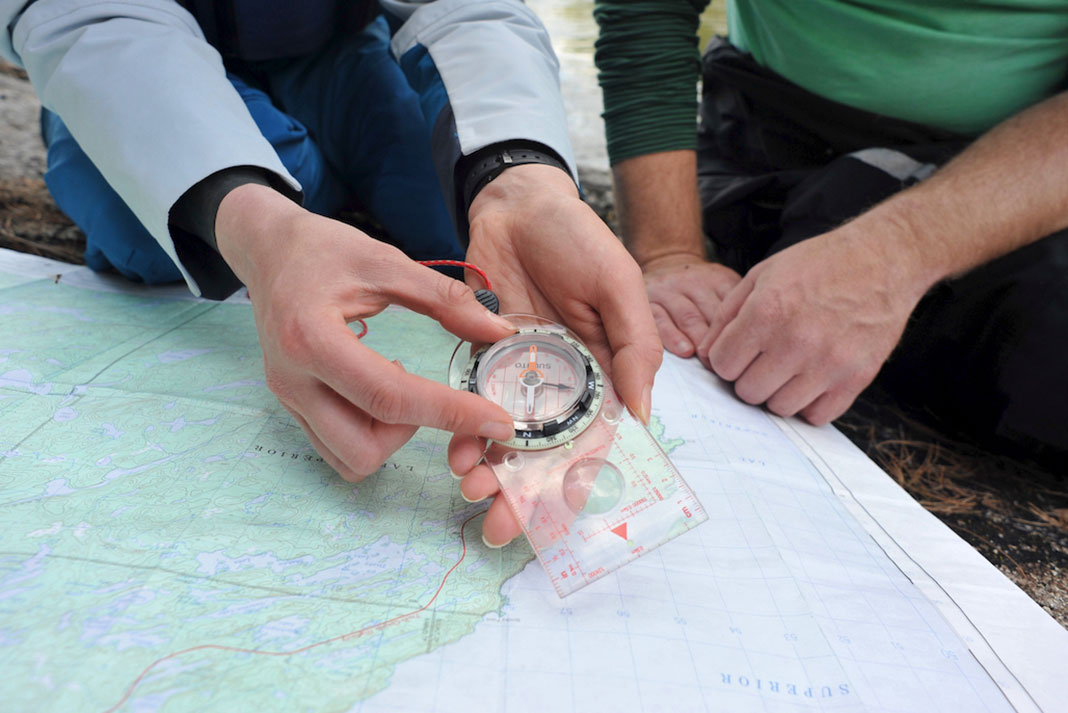
How to use a map and compass. | Photo: Colin Zhu/Flickr
4 Know how to use a map and compass
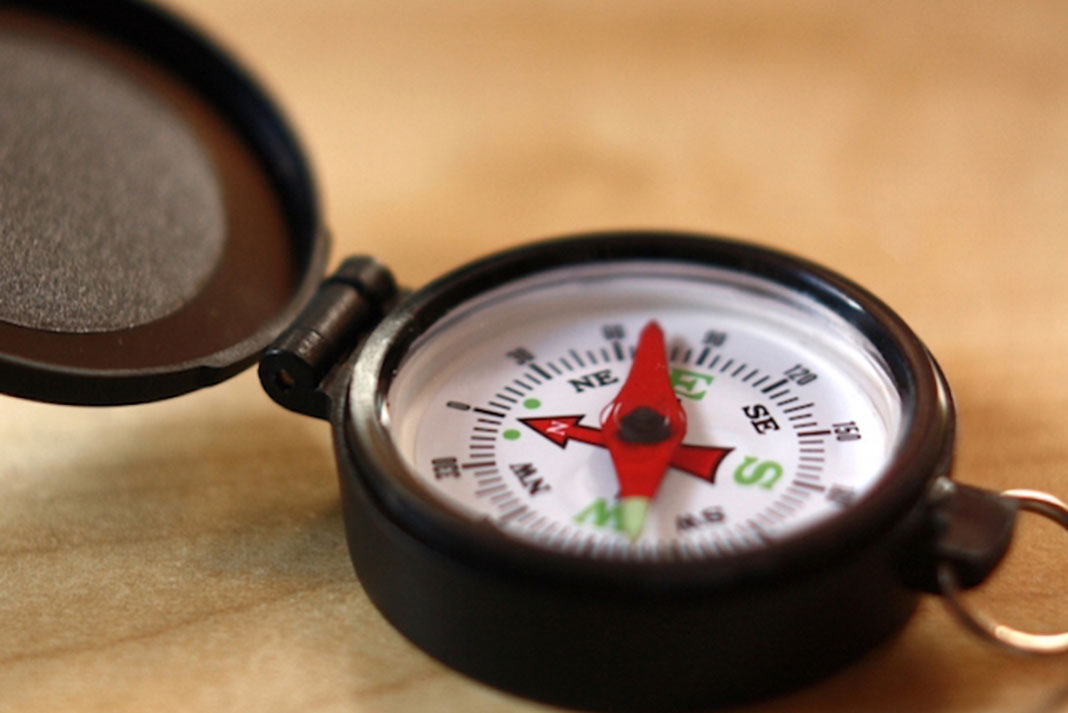
Being well-packed with the best gear for your backcountry canoe adventure is great, but having the practical navigation skills to know where you are and where you are headed is key. Excellent navigation skills and the know-how to take advantage of a map and compass means you won’t spend an hour searching for the portage take-out or miss out on that amazing lookout point you’ve read all about. Learn how to use your map and compass to get a bearing, how to follow a visual compass bearing and how to compensate for declination.
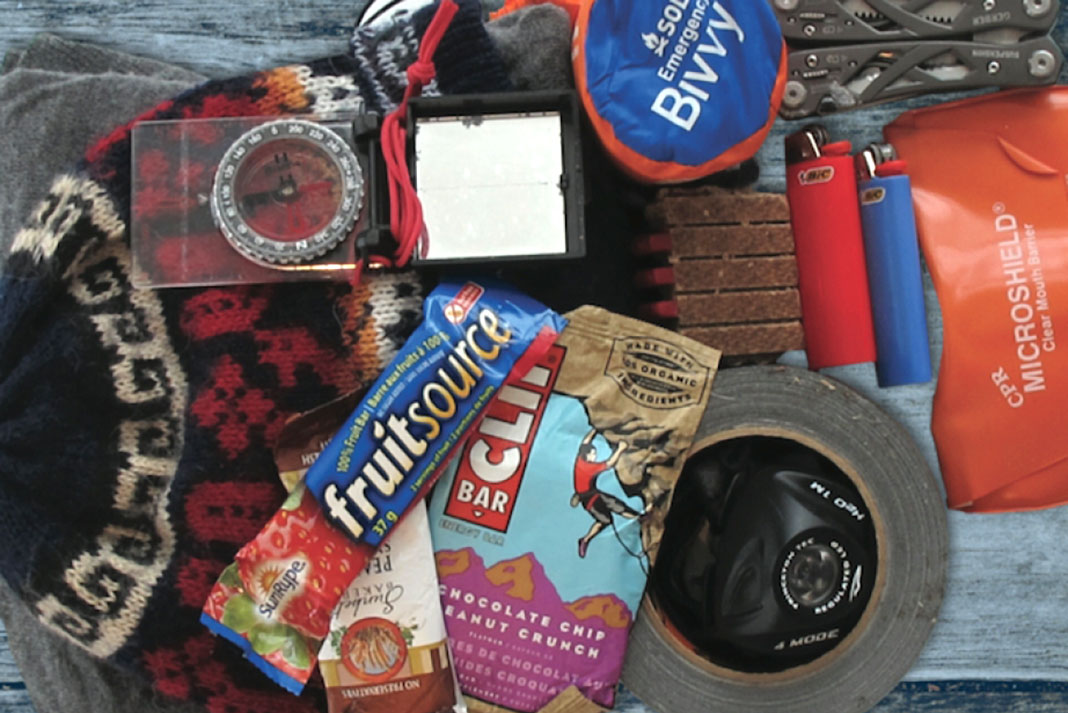
A ditch kit is the part of your equipment checklist you should put lots of effort into but hope you never have to use. This collection of important and useful items constitutes the essentials for survival in a small, compact and easy to transport package that can help decrease the consequences of any misadventures. A great ditch kit will include high-density food sources, a fire starter, extra layers, a first aid kit and more.
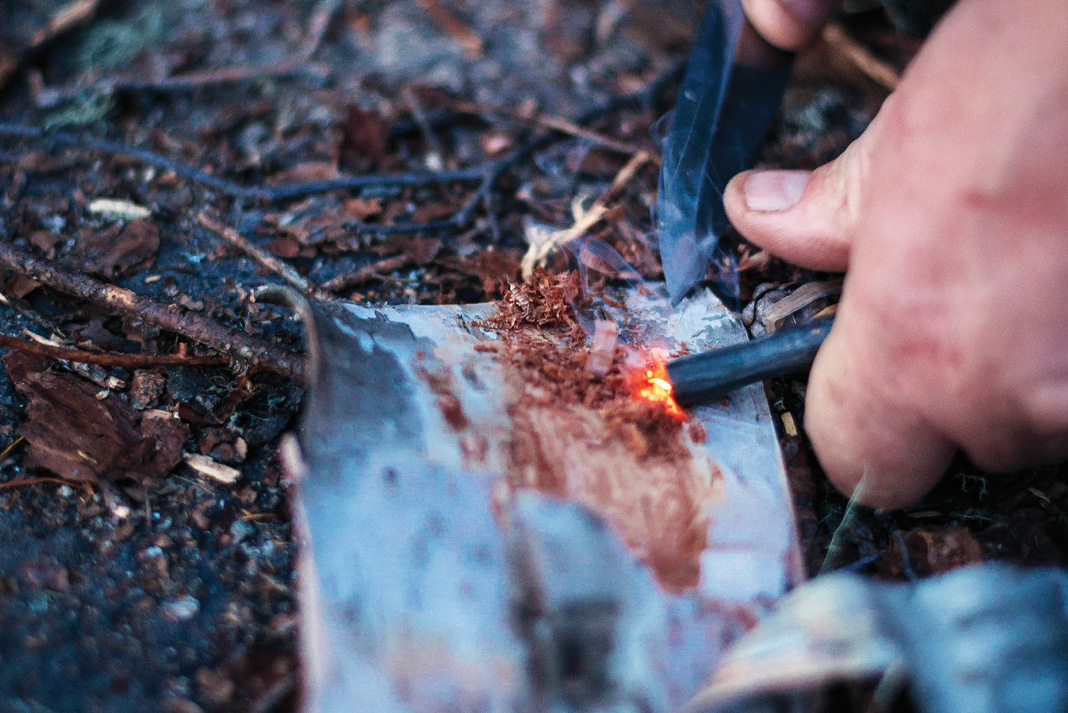
It is a great idea to pack multiple sets of lighters or matches in different places and compartments on your canoe trips just in case. In the off chance you find yourself without a fire source, having the ability to start a no-match fire is an invaluable skill that will keep you warm, cooking hot food and enjoying coffee and tea in the mornings. Modern fire strikers are usually made from carbon steel and metal ferrocerium and can be found at outdoor stores. The back of your camp knife can also be used as a striker, or any other metal if it is as hard or harder than the ferro rod.
Know what to do when lightning strikes. | Photo: Raychel Sanner/Unsplash
7 Survive a lightning storm
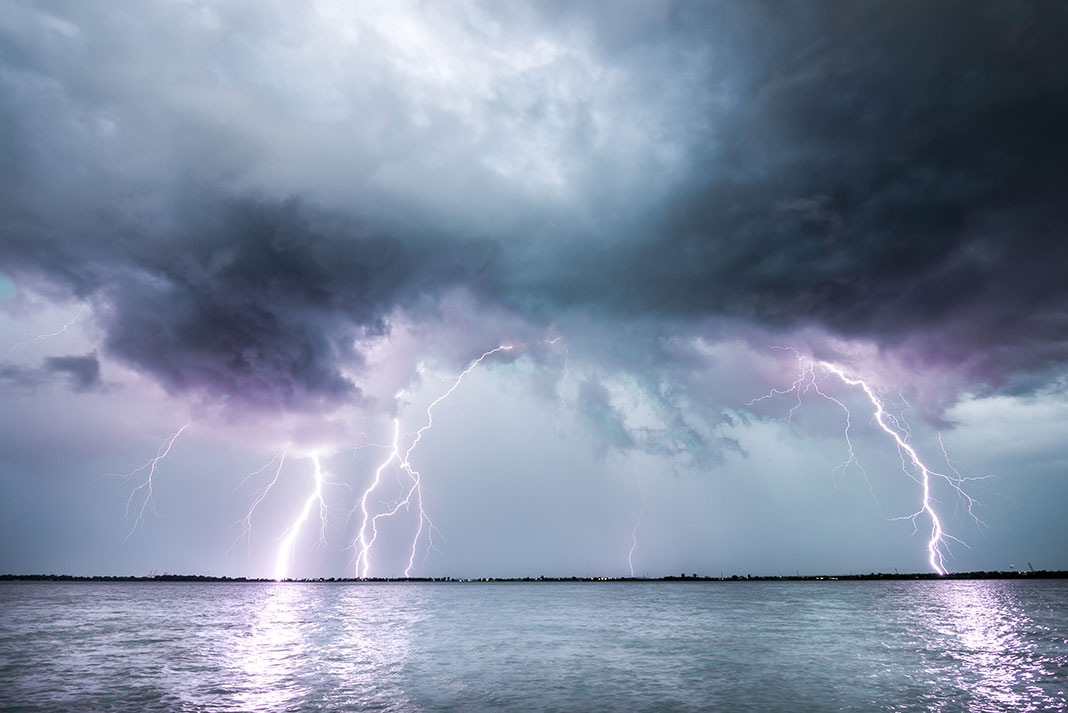
Lying cozily in your bed at home and watching lightning flicker and illuminate your walls can be beautiful. On the other hand, finding yourself at your campsite in saturated raingear watching a lightning storm swirl overhead is often a butterfly-in-the-stomach inducing experience. We give you tips to make yourself less vulnerable in these situations, including getting off the water immediately and adopting the lightning position.
Is a down puffy overkill for après paddling? Heck no, but many paddlers shy away from feathers since damp down quickly loses its insulating loft. That’s why Outdoor Research’s Floodlight Jacket was love at first zip. This is an 800+ fill goose down puffy with an important difference—it’s also waterproof. OR uses Pertex Shield, a fusion of tough face fabrics with a waterproof-breathable polyurethane laminate, as well as taped seams and bonded (rather than stitched) baffles to shield the Floodlight’s responsibly sourced down from showers, sodden forests and soggy kayakers. Super soft lining, fleece-lined pockets and a roomy, wire-brimmed hood complete the cocoon. No more shivering through shoulder season shore lunches—the minute we’re out of our boats, we cuddle into this incredibly cozy puffy to ward off chills from sweat, wet and wind. | www.outdoorresearch.com
When your core is warm, it increases blood flow to your extremities. Cold hands and feet? Zip into a fleece vest like Patagonia’s Classic Retro-X Vest. The Retro-X outclasses other vests with hip throwback styling, and outperforms the competition thanks to a windproof-breathable barrier between its fuzzy fleece exterior and moisture-wicking mesh lining. Zippered chest and hand pockets and a stand-up collar add utility as well as panache. The vest’s high-pile polyester fleece warms our hearts—not just because it’s a great insulator, but also because it’s made from recycled soda bottles, manufacturing scraps and worn-out outdoor wardrobes.
Long before I could afford a drysuit, I saved up for a quality paddling jacket. Today, descendants of this jacket continue to be staples in my touring kit. Why? Because a versatile touring jacket like Level Six’s updated Chilko is often the best fit for all but the coldest weather and water, or heaviest conditions. To find a jacket that can go the distance, I look for a few key features. The material needs to be breathable for summer showers yet robust enough to handle spring deluges; a hood is a must, a removable and stowable hood is even better; and a double-tunnel design mates with my skirt tunnel for a drier seal around the waist.
The Chilko offers all these features and more. Level Six’s eXhaust 2.5-ply nylon fabric is waterproof, breathable and lightweight for an athletic fit without a lot of bulk. Reflective details throughout increase visibility in low-light conditions. Our testers loved the vented, generously sized hood, which zips cleanly away for days when we just needed wind or light rain protection. Adjustable neoprene closures at the wrists and neck aren’t as dry as latex gaskets, but they’re more comfortable and add versatility for off-water wear. The deep neck zipper allows venting in warm weather, while zipping up the high, microfleece-lined collar feels like snuggling into a protective scarf. | www.levelsix.com
The yellow rain slicker reimagined and re-engineered, the shiny rubbery face of Columbia Sportswear’s new OutDry Extreme Platinum Tech Shell hints at the downpour-proof dryness we enjoyed as puddle-jumping tykes. But while those rubber raincoats of old grew clammy the minute you started sweating, the OutDry Extreme has the light, well-ventilated comfort we’ve come to expect from modern waterproof-breathable rainwear.
Founded in the Pacific Northwest in 1938, Columbia knows a thing or two about rain gear—the brand was the first to integrate Gore-Tex in their parkas in 1975. Since then, Gore-Tex and similar microporous membranes have remained the standard in waterproof-breathables, by keeping water out while allowing vapor to escape. The formula is simple: sandwich the fragile waterproof membrane between a comfortable next-to-skin layer and an outer fabric treated with DWR (Durable Water Repellent). But DWR coating doesn’t last forever, and a soaked-through Gore- Tex jacket is every bit as soggy feeling as sweaty rubber.
OutDry Extreme does away with that problematic outer layer, placing a tough-yet-breathable polyurethane waterproof membrane on the outside of the jacket. The result is a shell that never wet out, no matter what we threw at it. A single ply of wicking fabric on the inside kept us feeling cool even in sticky summer heat. Plus, we love the unique look of Columbia’s bright colors and contrasting exterior-taped seams. If you want the tailored fit, premium features and breathability of a performance shell, combined with the no-fuss, permanent waterproofness of a rubber slicker, this is the jacket you’ve been waiting for. The OutDry Extreme line includes jackets and pants for men, women and kids. | www.columbia.com
JUST ADD WATER | Photo: Virginia Marshall
When it comes to insurance policies, preparing for inclement weather is a lot like safeguarding our homes and cars—we want something that’s economical and hassle-free, out of sight but always there when we need it. Enter the NRS High Tide splash jacket. The jacket has all the features needed for a changeable weather day on the water, at a price entry-level paddlers can afford. A peaked hood, adjustable cuffs and gripper shock-cord hem prevent ride-up and kept us covered. The High Tide’s relaxed fit and simple, quarter-zip anorak design means it’s equally suited for use in camp or even drizzly dog walks around town. NRS’s breathable HyproTex fabric has a supple feel that’s great for humid summer adventures. This lightweight shell had our back in rain, spray and wind, yet it’s also super packable. Reaching into your hatch for the High Tide can make good fortune shine on your next paddling adventure, even if the sun does not. | www.nrs.com
Expanding on their groundbreaking SwitchZip drysuit technology released last year, Kokatat debuted three new pieces for spring 2016, including a lightweight paddling suit, anorak and the expedition-ready Radius Drysuit. SwitchZip is a fully separating watertight zipper around the waist, allowing top and bottoms to be worn together as a full suit, or on their own as a paddling jacket and pants. The zipper’s location also eliminates the need for a dedicated relief zipper, reducing the weight of Kokatat’s Gore-Tex expedition suits.
I’ll admit, when I first fumbled with the unfamiliar waist zipper on our demo Radius, I was skeptical. Years of training had limbered my shoulders and strengthened my fingers for the more familiar over-the-shoulder drysuit tug-of-war. In contrast, donning the Radius top and bottom was like slipping into pajamas, but the SwitchZip mechanism took a bit more practice. Aside from an awkward struggle pulling my slim-fitting neoprene skirt over the lump of the SwitchZip closure, the fit in my kayak was exactly as promised. The zipper disappeared into the gap between seat and backband, and my torso felt wonderfully unrestricted. Even better, bathroom breaks were a breeze.
Kokatat makes top-quality paddling gear with all the bells and whistles, and the Radius is no exception. I never felt sticky inside the breathable Gore-Tex Pro suit, which is reinforced with tough Cordura fabric in high wear areas like seat and knees. The Gore-Tex socks and latex neck and wrist gaskets kept me bone-dry during rolling and surfing sessions. One of my favorite features was Kokatat’s new fleece-lined outer collar and removable storm hood. Buttoned up snugly, the hood fit over my face like a Bedouin head scarf, blocking stinging wind and salt spray. | www.kokatat.com
This article originally appeared in the Adventure Kayak Early Summer 2016 issue.
Subscribe to Paddling Magazine and get 25 years of digital magazine archives including our legacy titles: Rapid, Adventure Kayak and Canoeroots.
The bow rudder is an extremely effective tool to use when you need to change direction while travelling at speed. It is a simple stationary stroke that allows you to make smooth and fast turns or subtle directional changes. It will make you more confident in your ability to make quick decisions to avoid collisions with rocks, other paddlers and obstacles. Learn more about the bow rudder here.
2. The Low Brace Turn
Mastering the low brace turn is beneficial to your overall kayaking skills because it gives you more versatility and support in choppy water, and also makes you faster and more graceful while edging in flat water. Learn more about the low brace turn here.
This stroke was used by the first sea kayakers as a technique for stretching their lower bodies while remaining in the boat. It is performed by maintaining the kayak at the capsize point without actually tipping by using upper body flotation and the Greenland paddle. This stroke will improve your kayaking because it is a great rough-water survival position and is also a foundation for certain Greenland-style rolls. Explore the balance brace here.
4. Forward Sweep Kayak Technique
The forward sweep is an essential stroke to have in your kayaking skill set because it allows you to turn while still moving forward. For beginner kayakers the instinct can sometimes be to brake with the paddle to turn, but this decreases any speed the boat previously had. Make sure the power for your sweep stroke comes from torso rotation instead of arm strength. This stroke will make you a better kayaker because you will have more control over your direction while being able to keep up with your paddling partners. Learn more about the forward sweep here.
5. The Sculling Brace
The sculling brace is a key skill to have out on the water because it enhances your stability, especially in choppy or windy conditions. The main function of the sculling brace is that it acts as a second point of stability for your kayak, and it can be useful when you feel unstable on the water, to salvage a sloppy roll or for getting your legs back into the kayak during rodeo re-entry. Learn pro tips for the sculling brace here.
STEVE SCHERRER RECENTLY DISCOVERED A NEW PASSION, QUIT HIS JOB AND IS TRAVELING THE COUNTRY IN A VAN AND TRAILER WITH HIS WIFE, CINDY. "SO MUCH NEW IN OUR LIVES TO KEEP US YOUNG AND ACTIVE!" HE SAYS.| PHOTO:SUE HUTCHINS
Through my thirties and early forties I was feeling and looking pretty damned good. People would say that I looked 10 years younger. Then this year people suddenly stopped being surprised that I was 43. I didn’t just slide a few years; I instantly started looking my actual age. I gained a decade all at once.
Some callous schlub on the beach after a particularly grueling surf session even ventured to say, “It’s great you can still do that.” That comment haunts me. I’ll always remember this year as the first time I heard those words. Also the first year I couldn’t do everything better-faster-stronger than the year before—or make any sense of a McDonalds menu.
The year I turned 30 I paddled for 80 days down the British Columbia coast. My friend and I didn’t have a cell phone or a sat phone or an emergency beacon. Our first aid kit contained little more than duct tape and Band-Aids. We were young and just assumed that we’d be fine. And we were.
Blithe gallivanting into the world’s remotest reaches was the ultimate expression of youthful invincibility, vitality and fearless flouting of mortality.
We slept on the ground without an ache in the world. On rest days we’d rise and greet the day after a blissful 10 or 11 hours flaked out on primitive foam pads the same thickness and consistency as the vintage, gold foil-wrapped, sawdusty PowerBars we happily munched as part of our inconsequentially horrible diet.
Nowadays when I crash in a tent, I call it “sleeping” in quotation marks. It’s more like a nightlong meditation on which position offers the most relief from competing discomforts. In the words of Leonard Cohen, “I ache in the places that I used to play.” In my case, most of those places are in the wilderness.
Okay, so I know “going on 44” isn’t actually old. But the aches and pains I have already make me fear for what’s to come. At this rate, what will my camping future hold?
So many people I know have completely given up sleeping on the ground, or sitting in kayaks, because of sore hips, backs and shoulders. Already, health issues are greatly complicating the carefree wilderness experience.
STEVE SCHERRER RECENTLY DISCOVERED A NEW PASSION, QUIT HIS JOB AND IS TRAVELING THE COUNTRY IN A VAN AND TRAILER WITH HIS WIFE, CINDY. “SO MUCH NEW IN OUR LIVES TO KEEP US YOUNG AND ACTIVE!” HE SAYS.| PHOTO:SUE HUTCHINS
That same friend I paddled the coast with turned 50 last year and had a small heart attack. For Christmas he got a brand new heart valve and a refurbished aorta. We used to talk about reuniting for another expedition, maybe on the coast of Chile. If we ever do, our emergency preparedness will look a lot different.
My great fear now that I have kids is that by the time I have the freedom to do long expeditions again, I’ll be too old. In the interim I have zealously instituted wilderness camping as a family tradition. My wife’s one condition was that I provision her with a collapsible chair and a portable camping mattress that packs to a size roughly equivalent to an additional child. I told her I was too embarrassed.
“Embarrassed in front of who?” she asked.
“In front of myself,” I said. I’m not the hirsute international expeditioneer I dreamed I’d become. But I sucked it up and bought the bleeping mattress. The saddest thing is that now I want one too.
Even at home we spend most days doing a complex regimen of physiotherapist-prescribed exercises, stretches and yoga routines to help us reclaim our lost limberness. By the time we get all warmed up, we’re feeling pretty good. Except every year the routines get longer, and I have to go to bed earlier.
Someday we’ll get to the point where the exercises aren’t over until bedtime. I’ll spend my whole life getting ready for activities I’ll never get around to doing. Come to think of it, that kind of describes my life now.
I’m more aware than ever that my days are numbered. It makes the call to adventure all the more urgent. As the British kayaker and journalist George Monbiot writes in Feral: Rewilding the Land, the Sea and Human Life, “Twice in one year I had heard the call—that high, wild note of exaltation—after a drought of sensation that had persisted since early adulthood; a drought I had come to accept as a condition of middle age, like the loss of the upper reaches of hearing.” I hear it now too.
Now going outdoors is less flouting mortality and more of a somber acceptance, an intensification of the psychological process of aging itself, coming to grips with that old process that I never thought would happen to me.
And yet there’s also the hope that wilderness has a kind of healing effect. On a family camping trip last summer, I woke up with back pain every morning, aggravated by all the unfamiliar paddling. Still, the sight of sunrise over the water and the brave act of throwing myself in for a plunge before breakfast was a tonic that made it easier to get going than a typical day at home, despite the added physical toil. Maybe this get-up-and-go is the secret; the answer is more camping, not less.
One close friend lent further hope when he recently reminded me that most of the ambitious wilderness travelers he knows are senior citizens. They’re the ones who have the time—even with all the physiotherapy exercises. When my own time comes, I’ll do whatever it takes to be out there with them.
Waterlines columnist Tim Shuff is a firefighter, freelance writer and former editor of Adventure Kayak who now packs plenty of Advil along with his Band-Aids.
This article originally appeared in Adventure Kayak Early Summer 2016 issue.
Subscribe to Paddling Magazine and get 25 years of digital magazine archives including our legacy titles: Rapid, Adventure Kayak and Canoeroots.
Robin Tapley is a wildlife researcher and photographer who grew up on the edge of Ontario’s Algonquin Park. He has traveled extensively through the park’s interior as a wilderness guide and biologist.
An internationally renowned canoeing destination, Algonquin Provincial Park is famed for its vast maple hills, rocky ridges and thousands of remote wind-swept lakes. About the size of Rhode Island, Ontario’s oldest provincial park has 29 access points located around its periphery, offering access to the remote and rugged Shield interior. Meanwhile, the 56-kilometer-long Highway 60 corridor cuts through the south, making for easy access to car campgrounds and 14 hiking trails, as well as naturalist guided interpretive programs, a visitor’s center and museum.
Algonquin’s expanse would take a lifetime to properly explore. From its modest peaks, a carpet of green teaming with wildlife stretches far into the horizon. I grew up on the edge of the park and have paddled, camped and hiked here for most of my life, yet I still find many surprises within its borders.
Algonquin offers something special during each season: Spring provides great birding and wildlife watching, while summer offers the opportunity for crystal clear, freshwater swims. Tag along with naturalists to listen to wolf packs howl in late August. Fall is incredibly popular as the colors reach their peak and explorers paddle and hike in an explosion of yellows, reds and oranges.
TWO TICKETS TO PARADISE.| PHOTO: ETHAN MEL
TRIPS
If you have a half-day select a couple of short hikes along the main corridor of the park. Don’t miss the Spruce Bog Trail, which meanders through a unique habitat—you’re likely to see spruce grouse, red-breasted nuthatches, gray jays and brown creepers.
If you have a day head to Lake Opeongo via access point #11. Pack a lunch and venture up the lake via water taxi to the headwaters of Hailstorm Creek. This wildlife zone is accessed only by canoe and is one of the best wilderness observing areas for moose, otters, beavers, great blue herons and other bird life.
If you have a weekend paddle to a remote site on quiet and sandy Booth Lake. There are two short portages on the way, and you can go from car to campsite in just a couple hours. Alternately, venture to the park’s quiet eastern side and explore the hallowed halls of the Barron Canyon. The park is busy on summer weekends so reserve a campsite in advance.
If you have a week venture into the park’s northern reaches from Kiosk access point. In this area you can paddle for days without seeing another soul, and there are endless loop possibilities. Or, challenge yourself on the gorgeous Lavielle and Dickson lakes circuit—it’s more centrally located, but a five-kilometer portage keeps all but the hardiest trippers away.
STATS
SUMMER HIGH
Warm days last from mid-May to mid-September with an average daily high above 19°C.
WILDLIFE
Moose, otter, beavers, wolves, black bear, red fox, common loon and many other bird species.
BEST EATS
Henrietta’s Pine Bakery in Dwight, on the western edge of the park. Great coffee and famous sticky buns.
DIVERSION
Near the southern edge of the park, Haliburton Forest’s Wolf Centre offers up-close viewing of the elusive canis lupus.
OUTFITTERS
Algonquin Outfitters (www. algonquinoutfitters.com) Algonquin Bound (www. algonquinbound.com) and Algonquin Basecamp (www. algonquinbasecamp.ca) are three of many boat and gear rentals.
MUST-HAVE
Camera, hiking boots and Jeff’s Algonquin Provincial Park Map.
This article originally appeared in the Canoeroots Early Summer 2016 issue.
Subscribe to Paddling Magazine and get 25 years of digital magazine archives including our legacy titles: Rapid, Adventure Kayak and Canoeroots.
It started with a few observations, then an offhand remark, and finally, a question: If wanderlust—or waterlust—often seems contagious, could it in fact be inherited? To learn the answer, we tracked down paddling explorers, entrepreneurs, photographers, historians and guides, from California to Baffin Island, who all share a common thread—families who adventure together.
Families who adventure together are thicker than water
“My parents have strong environmental convictions.. I watched my dad get arrested at the Clayoquot Sound logging blockades when I was five years old. Their business embodies environmental stewardship. Both lodgets operate on solar energy and a lot of food is homegrown.”—Albert Keller | Photo: Courtesy Keller family archive
1 Soul food
Lannie, Ralph, Emily & Albert Keller
“There was never any doubt in my mind that my parents were different,” laughs Albert Keller. “They chased an idea that most people thought was crazy, and they made it into something pretty great.”
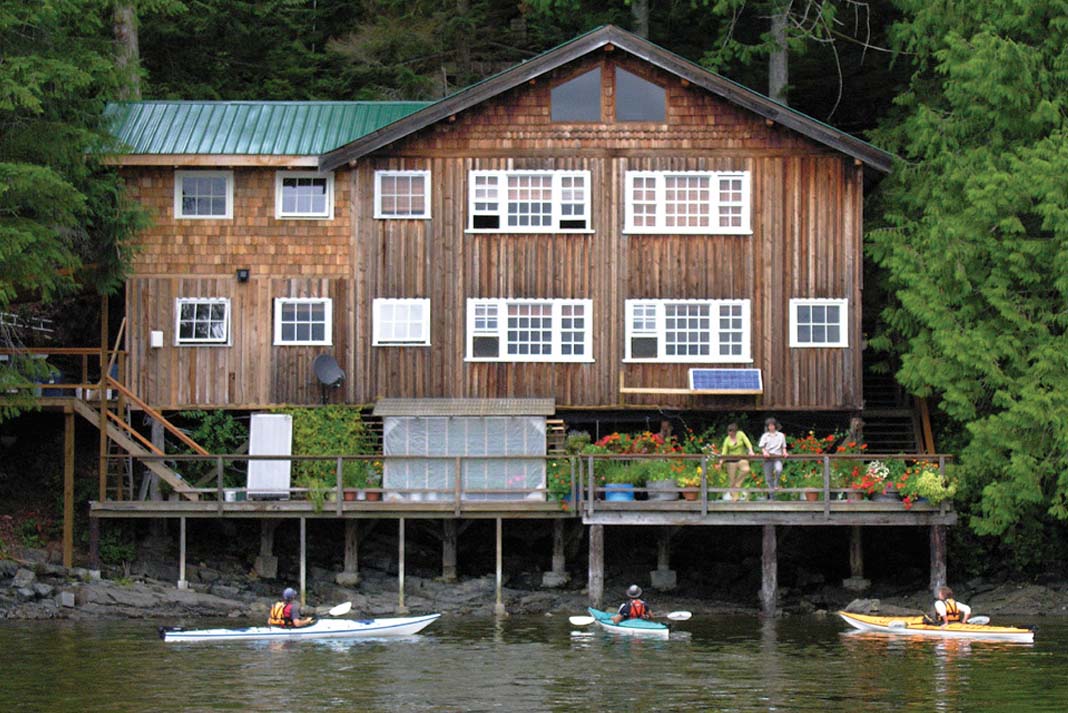
In 1979, Ralph and Lannie Keller sold their photography business and put everything they had into a 50-acre parcel of waterfront land on remote Read Island in British Columbia’s Discovery Islands. The young couple dreamed of building an off-grid wilderness adventure lodge, and they landed in a battered aluminum skiff packed with tent, chainsaw, lopping shears, spinning wheel, transistor radio and a handful of other simple tools, eager to start their coastal homestead.
The work was hard and never-ending: clearing building sites for a home and lodge, gardens and outbuildings; milling lumber from salvaged cedar logs; developing and maintaining systems for water, communications and electricity using solar and micro hydro power; and growing their own food. Then, in 1985, Emily was born, joined three years later by Albert. Determined to make a living where they lived, Lannie and Ralph welcomed their first guests to Coast Mountain Lodge nearly a decade after arriving on the island.
Juggling the demands of their fledgling business, young family and the endless chores of a “remote-island-off-grid-make-and-do-everything-yourself-lifestyle” was an ongoing challenge, says Lannie. “We worked way too much. We never had much money and we had secondhand everything. But we lived in an incredible place and every day was an adventure.”
In winter, the family three-wheeler ATV shuttled the children through dripping coastal forest to school—a one-room affair with just 10 students, where wolves were sometimes spotted on the playground. The steep patch of yard between the Kellers’ home and the ocean was a favorite sledding run, and on the coldest days, the family churned ice cream outside, “when we had the ice to make it.”
Summers were busy with Ralph guiding kayaking trips and Lannie minding the lodge and gardens. Albert and his sister developed a self-reliance that mirrored their parents.
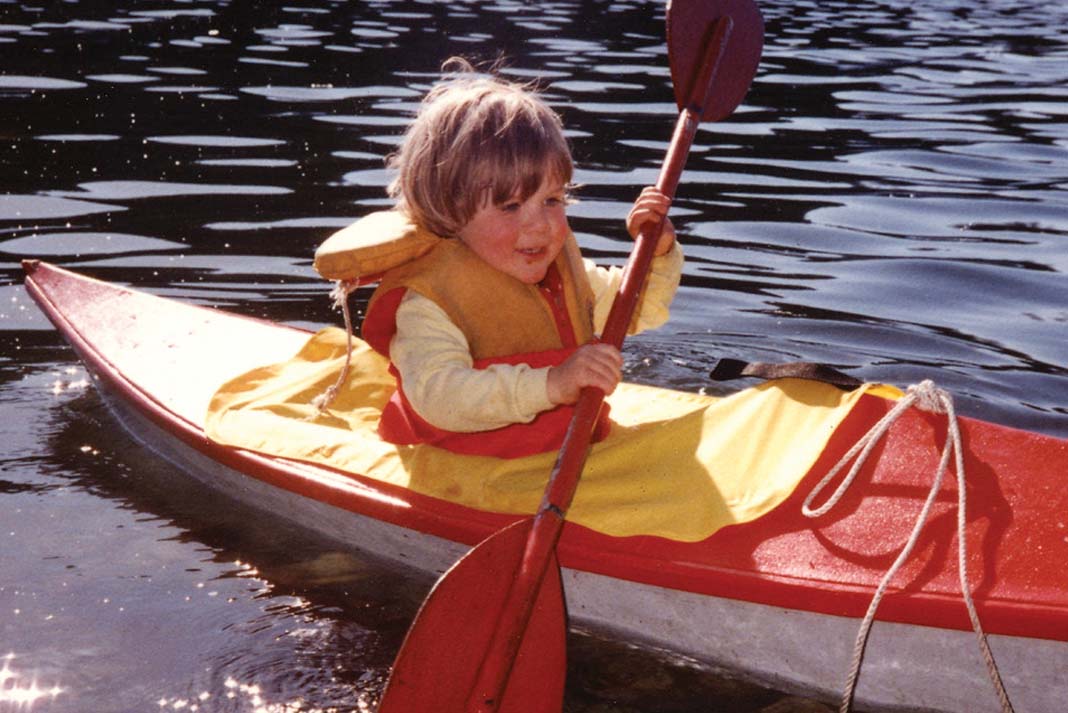
“Mastering whitewater helped Albert through adolescence—it was kayaking but different from what dad did so he could take ownership of it.” —Ralph Keller | Photo: Courtesy Keller family archive
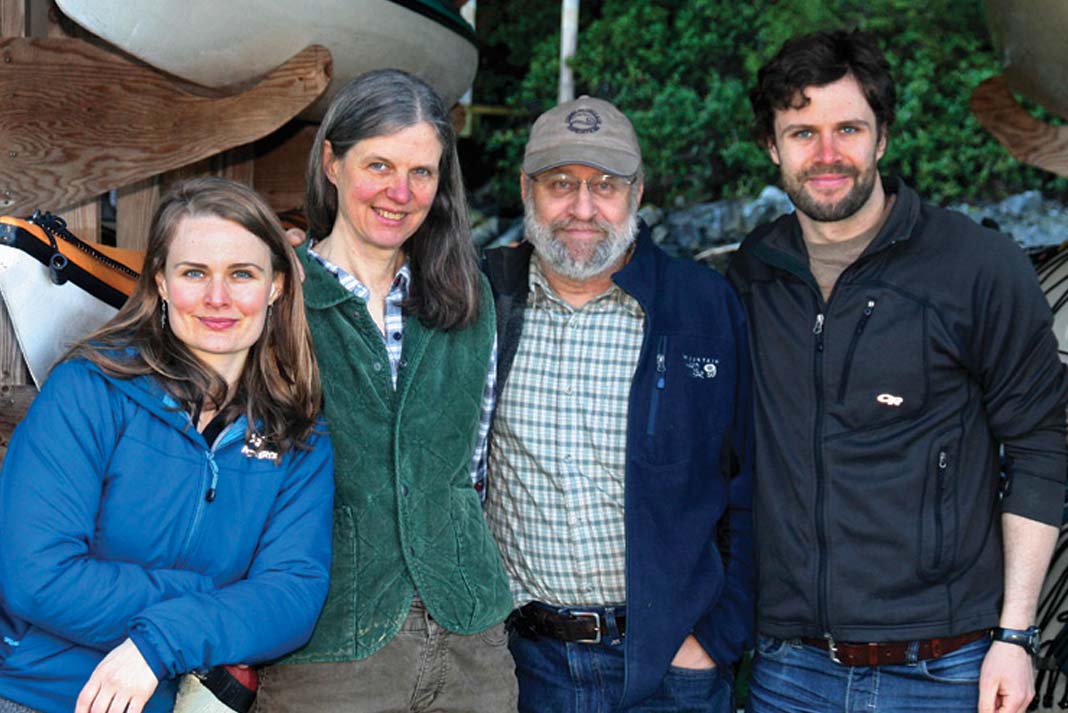
The Kellers at home on Read Island, Discovery Islands, 2016. | Photo: Courtesy Keller family archive
“People who are raised in a wilderness setting have a ‘buck stops here’ attitude,” Ralph says. “They tend to take control of events around them without waiting for someone else to give directions.”
The Keller children certainly seem to be proof of this theory. Emily, 31, pursued a Masters degree and now lives in Vancouver, working as an environmental and social activist with the David Suzuki Foundation. Albert, 28, took the paddling course set by his parents, and molded it into something unmistakably his own.
At age eight, Albert declared he was accompanying his dad on a four-day commercial kayak trip to the Octopus Islands—paddling his own single kayak. The determined third-grader never fell behind the adults, marvels Lannie. Then, when Albert was 12, a promotional copy of Rapid magazine arrived in the mail.
“Whitewater kayaking came into my life at an opportune time,” recalls Albert, “I was just starting to write off sea kayaking as a dorky ‘old person sport.’”
He buckled down, mowing the lawn, washing kayaks and doing any job around the lodge to earn enough money to buy his own whitewater kayak. Albert honed his skills every weekend on the rivers of Vancouver Island, aided by a fraternity of older paddlers who welcomed the youngster into their fold. In return, he brought his friends to the tidal rapids of Surge Narrows and Okisollo Channel, which doglegs among the islands northwest of Read.
The Kellers embraced their son’s whitewater fixation, enrolling Albert in courses and traveling to festivals when they could sneak away from their business, which expanded in 2001 to include a second guesthouse, Discovery Islands Lodge on neighboring Quadra Island. “My mom used to bake cookies for me to take to the river,” recalls Albert. “People still complain that I never show up to the put-in with cookies anymore!”
Later, teaching paddling skills and leading trips with the family business, Albert’s prowess in a kayak caught the attention of well-known visiting sea kayakers like former surf kayak world champion, Sean Morley, and The Hurricane Riders’ Rowan Gloag. “He changed the way I surf,” attests Gloag, who describes Albert as “an under-the-radar prodigy on a wave.”
As humble as he is comfortable in a kayak, Albert prefers to keep a low profile, brushing off competition opportunities and perfecting his paddling technique simply for fun and personal reward. “If I’m in a beautiful place with good people, I’m happy,” he says.
“I wouldn’t trade my upbringing for anything. Growing up on Read Island gave me a deep appreciation for the natural world that has guided my life choices. I’ve never felt a need to follow any sort of traditional life path. There’s a freedom in that.”
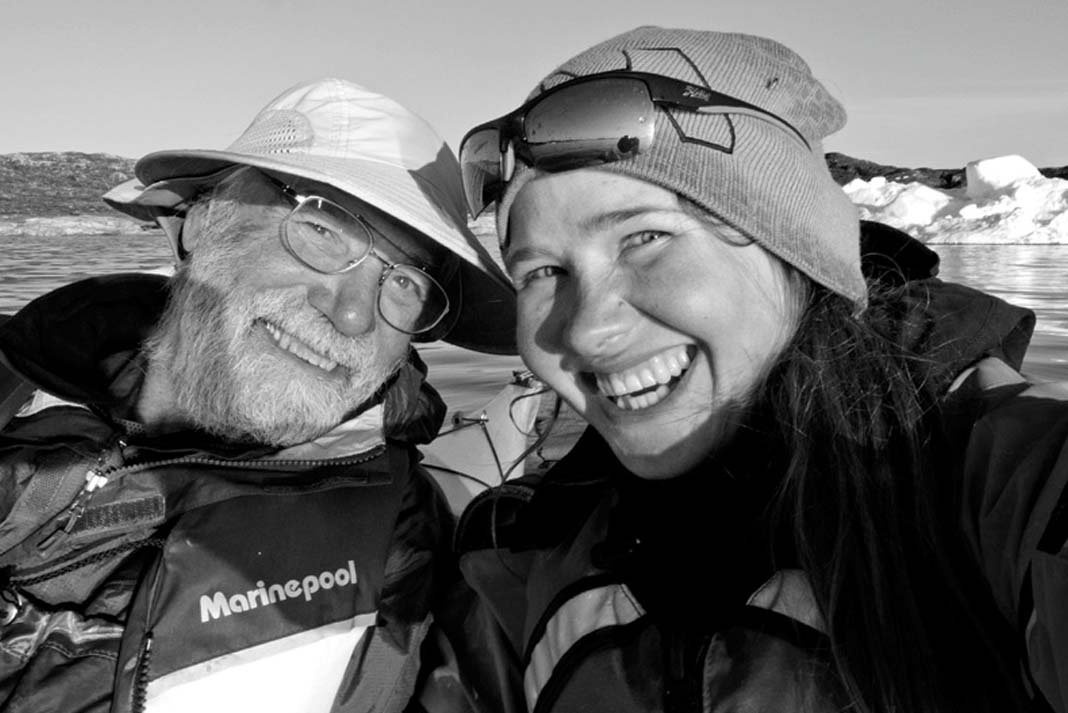
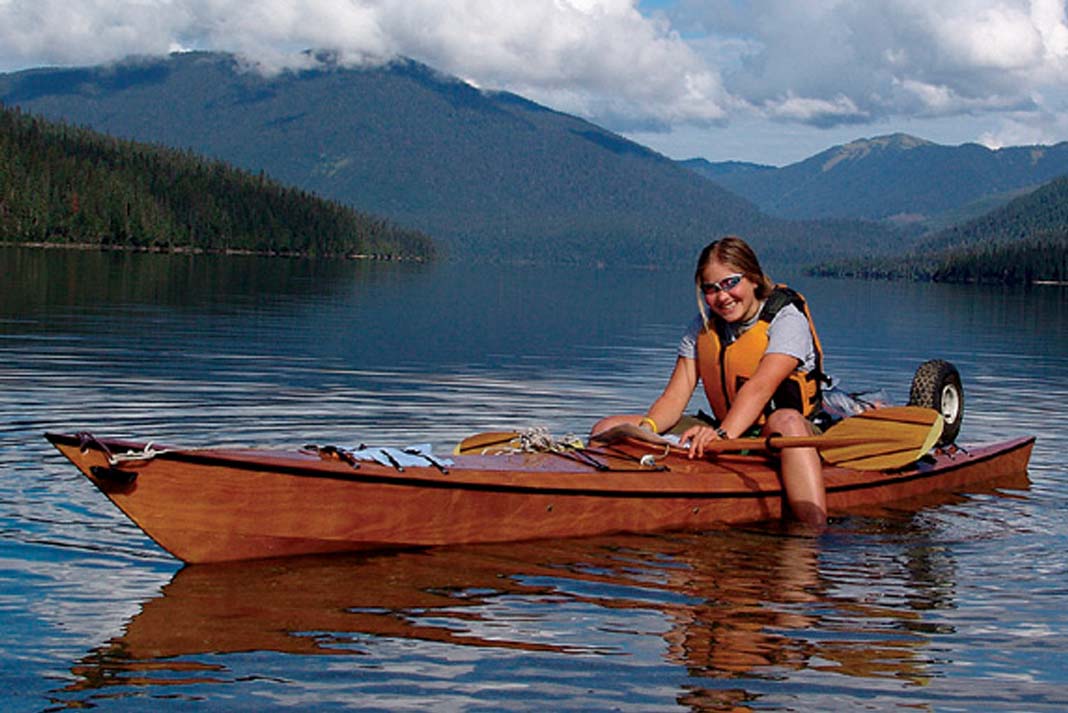
“Freya scored 259 points, the highest score in the 2015 rolling competition in Sisimiut, Greenland. She always comes up smiling when she is rolling.” —John Lockwood | Photo: Courtesy Pygmy Boats archive and Fennwood Photography
2 Born to be wild
John Lockwood & Freya Fennwood
“Leisure is the luxury of kayak touring. If a trip is advertised as taking six days, we take twelve. Every day, my dad exercises his extreme talent at power lounging, preferably in blazing sun with his Pygmy Boats cap perched over his eyes…”
So wrote Freya Fennwood in 2004 during a father-daughter kayaking trip through British Columbia’s Bowron Lakes, a chain of 11 lakes surrounded by snowcapped peaks and connected by moose-trodden portages and milky glacial rivers. At 16 years old, the diminutive teenager was already a seasoned tripper with a wilderness paddling résumé stretching as long as her untamed caramel mane.
At six, Freya and the family black Lab shared the bow cockpit of a triple kayak helmed by her father, Pygmy Boats founder John Lockwood, on Montana’s wild and scenic Missouri River. At seven, she joined her parents for a month-long journey by VW camper van and wherry, rowing the small boat back through the Bowron Lakes and down the badlands valley of the Red Deer River, hunting for dinosaur fossils. The following spring, the family kayaked the red rock canyons of Utah’s Green River; at nine, Freya flew to Canada’s Northwest Territories to meet her father for a two-week trip in the sub-Arctic, paddling her own 13-foot kayak designed by Lockwood especially for his daughter.
“Kayaking has been in my life a very long time,” says Freya, now 28. One of her earliest memories is that of a sensation: “Seated in my dad’s lap, the paddle moving back and forth in front of me, and the kayak rocking a little bit with each stroke.”
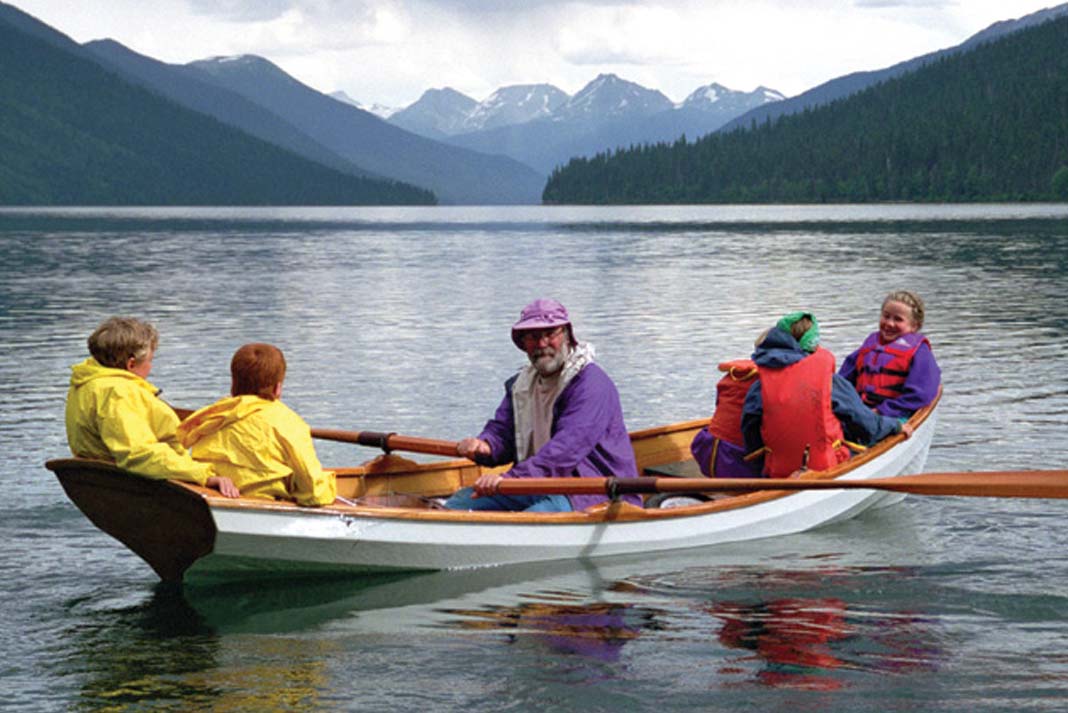
John Lockwood rowing with Freya (bow) and friends, Bowron Lakes, 1995. | Photo: Courtesy Pygmy Boats archive and Fennwood Photography
Freya, age 16, at Bowron Lakes, BC. | Photo: Courtesy Pygmy Boats archive and Fennwood Photography
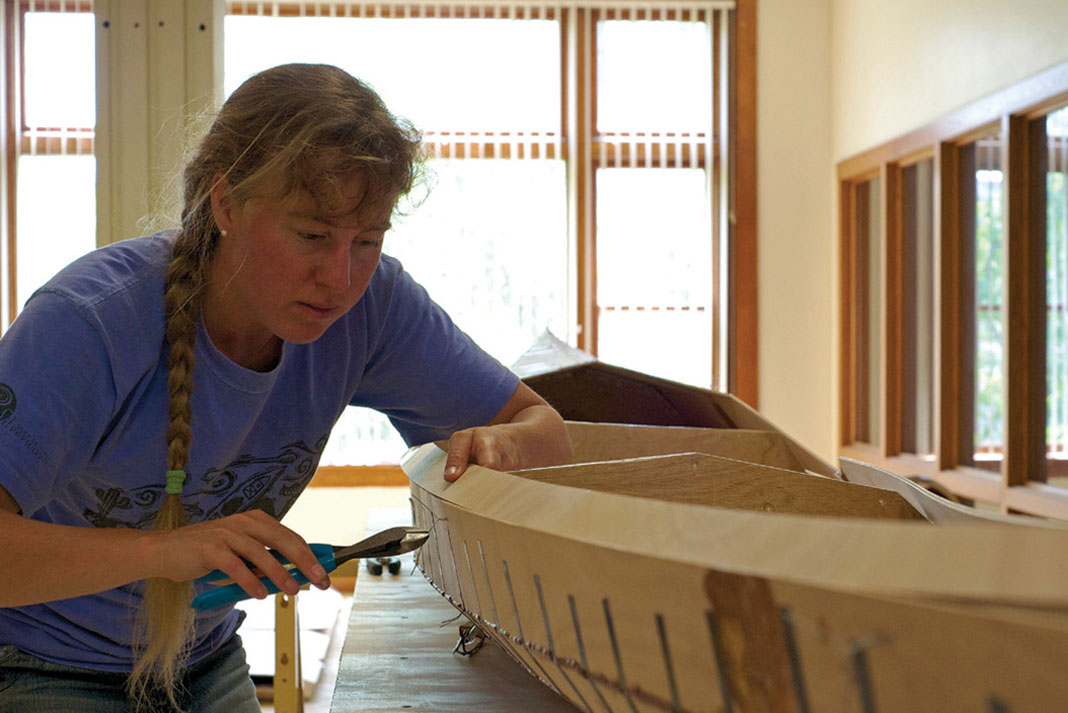
In fact, Freya’s connection to kayaking can be traced to six months before she was born. That’s when Lockwood and mom-to-be Freida Fenn moved to the small coastal community of Port Townsend, Washington, and set up a one-man wooden kayak manufacturing shop called Pygmy Boats. The name reflected Lockwood’s admiration for the peaceful hunter-gatherers he’d studied as an anthropology major at Harvard in the late 1960s.
“Freya was raised like a pygmy,” says Lockwood, 73. “She was a little Paleo baby and the most joyous infant, toddler and child I’ve ever seen. She continues to be the most joyous person I know, and of the many things I’m proud of her for, I’m most proud of that.”
What some parents might view as irresponsible, Freya’s saw as natural opportunities for discovery and self-driven learning. As an infant, she was in rapture of the pebble beach at Pygmy Boats, touching and tasting everything within reach. “Her mother and I had an agreement that we would not take anything away from her or out of her mouth unless it was actively poisonous,” says Lockwood. After all, what better nursery could there be than the endlessly fascinating, challenging and astonishing natural world?
“That power to just pick up and learn things is one of the greatest gifts my parents gave me.”
“That power to just pick up and learn things is one of the greatest gifts my parents gave me,” says Freya. “They dared to home school me, to let me be a wild child running barefoot through the boat yard, and to protect me from a lot of nasty, naysaying, shoe-demanding people who liked to say ‘no, you can’t climb that, can’t do that.’”
With its Paleo routine of sleeping together in a tiny shelter, cooking over a fire and spending entire days outdoors, wilderness camping quickly became a favorite family tradition. Lockwood chose wild yet safe waterways for these adventures, where the goals were to “wander, lie on the beach, fish, swim, explore, to see what happens, to be at ease.” Even the inevitable hardships—torrential rain, flooding rivers, throngs of mosquitoes—young Freya took in stride.
During an earth-shaking storm on the Green River, Freida Fenn recalls her eight-year-old daughter sleeping soundly through the night as 50-mile-per-hour winds collapsed tent poles and lightning sheeted across the sky. “I shall always see her joy in facing the wind, waves, whirlpools and bucking current,” Fenn says of that trip, “and her shout, ‘Let’s go there, Papa!’ pointing at nature’s next red rock wonder.”
Since those early trips, Lockwood has watched his daughter grow into an accomplished paddler, freelance adventure photographer and world traveler. “Sometimes I think he wishes I would just settle down and run his company,” muses Freya, “but the example he set was to explore and see the world.”
Four years ago, father and daughter’s passions for paddling and world-wandering dovetailed in a project that would bring them nearly full circle to the little girl who hopped a jet to Yellowknife to paddle with her dad beneath the northern lights. Freya had discovered a love, and remarkable talent, for kayak rolling. When renowned rolling coach Dubside suggested Freya compete in the Greenland National Kayaking Championships, Lockwood promised his daughter, “I’ll make you a kayak that is sized for you and designed specifically for rolling, and we’ll take it to Greenland together.”
Four prototypes and nearly three years of testing, brainstorming and redesigning later, the Freya was ready.
“Greenland was an amazing culmination of a really fun collaboration,” says Freya. “I couldn’t believe I was paddling in the birthplace of kayaking with my dad, the person who introduced me to kayaking when I was just a baby in his lap, rocking to the waves on the hull.”
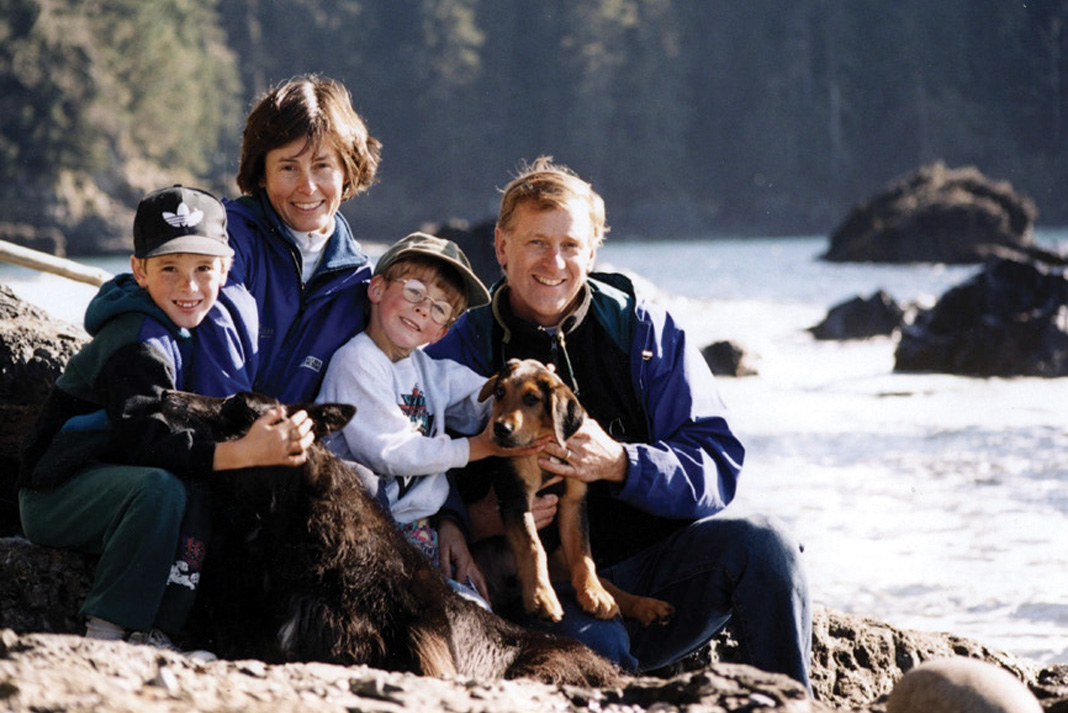
“Being outside is how Brian and I were raised; it’s in our make-up. I think it passes through the generations.” —Rosemary Henry | Photo: Courtesy Henry family archive
3 First, faster, further
Brian, Rosemary, Graham & Russell Henry
“The life we’ve made was my dream, and I’m just lucky those guys wanted to come along.”
The “guys” whom West Coast sea kayak pioneer Brian Henry is referring to are his family: wife Rosemary and sons Graham, 25, and Russell, 24.
It was 1981 when Henry founded Ocean River Sports, Vancouver Island’s first kayak shop. In those days, “If you saw boats on a car, you knew whose they were,” says the Victoria-based entrepreneur. Within a few short years, however, the sport exploded. Henry couldn’t get enough boats to keep pace with demand, so he launched Current Designs in 1984 and started building his own kayaks. He met his wife-to-be when she walked into Ocean River and bought a boat.
Running two growing businesses and raising a family was challenging, admits Henry, “but we never stopped doing what we wanted to do because of kids.”
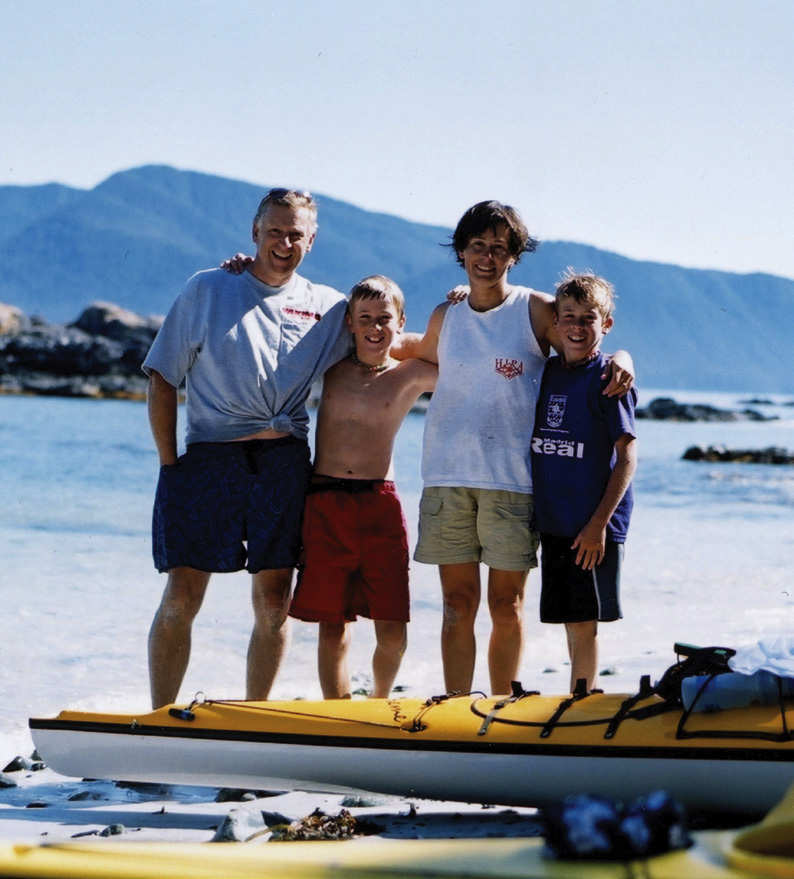
Inspired by his petite wife, Henry designed a smaller version of Current Designs’ popular Solstice kayak for Rosemary, becoming the first company to create different-sized boats for different-sized paddlers. To accommodate his young sons, Henry drafted the Libra XT, a roomy triple with a center cockpit seat that suspended above the rear paddler’s legs. In this outfit, the family of four comfortably paddled a single kayak: Rosemary wearing Russell in a snuggly in the bow, Graham in the middle and Henry in the stern.
“We were a bit of an anomaly. People would ask, ‘Wow, you’re teaching your kids kayaking?’” recalls Rosemary. “Some parents teach their kids to ski at two years old, we taught ours to paddle.”
Every year, the family set off for a weeklong trip exploring Vancouver Island’s wild coast—the Broken Group, Deer Group, Nuchatliz, Winter Cove. “We’d go to remote places other people weren’t necessarily comfortable with,” says Henry. Being pinned down for a couple of days by wind or waves might be off-putting for some families, but for the Henrys it was simply part of the paddling experience.
“I’m a big believer that you can coddle kids to the point that they don’t really experience anything,” continues Henry. “We encouraged them to stretch their limits, but they were never in danger…just a little discomfort maybe.”
Photo: Courtesy Henry family archive
Of course, there were occasional mishaps, like the time baby Graham tumbled out of a paddling friend’s lap, who then “scooped him up like a coho salmon,” soggy but none the worse for wear. Or when Rosemary noticed that Russell, just a few weeks old on his first kayaking trip, was unhappy when the wind was in his face. “Apparently very young babies hold their breath in the wind.”
Dad’s advice wasn’t always welcome, but it was usually sound, recall the brothers. Henry’s calm assurance, “You will be fine,” saw the boys over enough hurdles that the phrase became something of a family joke. When Henry took his 14- and 15-year-old sons to surf Skookumchuck tidal rapids, the brothers remember it being the most terrifying thing they’d ever done. But Dad said, “You will be fine,” and they were.
That faith has led the brothers on some remarkable journeys. In early 2014, they completed a seven-month, 4,000-mile kayaking expedition from Brazil to Florida, making them the first to paddle across the Caribbean since John Dowd’s 1979 crossing.
Hot on that expedition’s heels, Russell set out to attempt a new speed record for paddling 750 miles around Vancouver Island. Kayaking solo, he shattered the previous record by more than two-and-a-half days. It was Henry’s suggestion to take advantage of strong northwesterly winds by starting from the top of the island, rather than the south end as planned, that gave Russell a critical lead on the world record.
“Dad is just so darn stoked on our trips, he’ll come up with crazy solutions to problems and talk like he’s coming along,” Russell says of his father’s role in the brothers’ adventures.
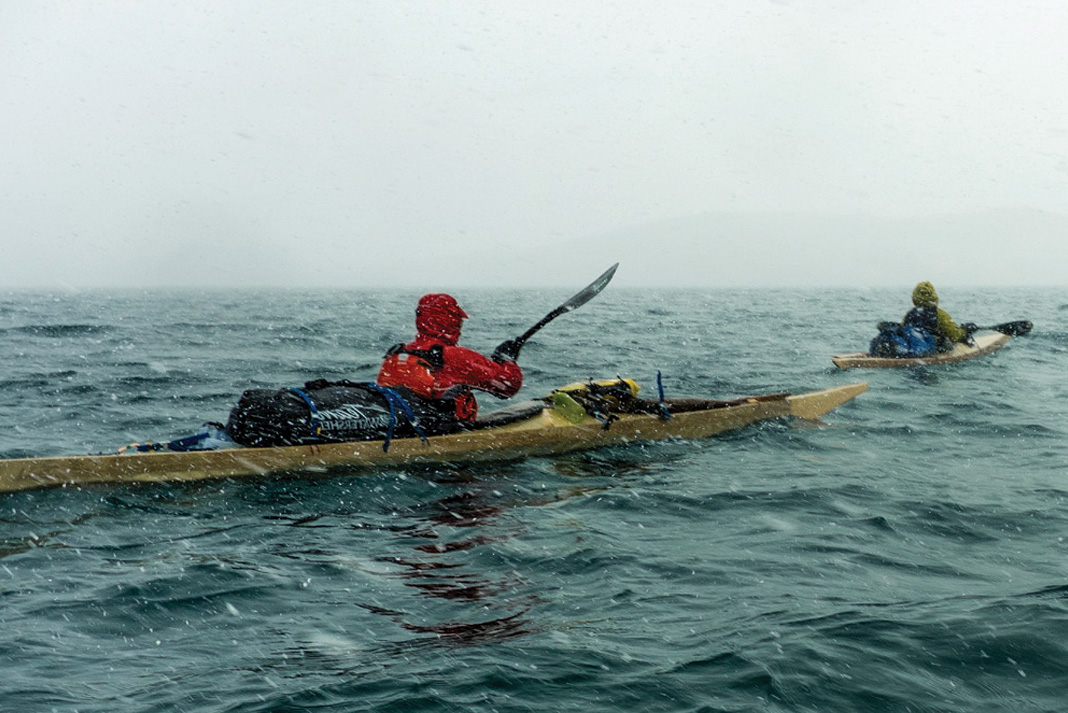
Last summer, Russell and Graham teamed up for another ambitious first: competing in the inaugural Race to Alaska, a grueling 700-mile transit of the entire British Columbia coast. Enlisting four friends and a six-person canoe, they braved 40-knot winds and steep seas to become the race’s first paddle craft to reach Ketchikan.
Both Russell and Graham agree the greatest gift they received from their parents was freedom. “Most parents would say ‘no, don’t do that,’” explains Graham. “Ours would ask, ‘are you sure you want to do that?’ then let us do it. When someone gives you trust like that, you are aware of that responsibility.”
There’s another responsibility he is well aware of—his father’s business. “Pretty much everyone in my life asks, ‘Are you going to take over the shop?’” says Graham, who worked three summers at Ocean River before starting an environmental law degree. “As much as it’s something I enjoy, that was kind of my dad’s career and his adventure.”
Russell is equally independent, happily steering his own course of “paddling, ski bumming and instructing kids in the outdoors.” Both boys admire their parents’ fearlessness to dive into new projects. Rosemary recently earned her ski instructor certification and Henry is busy with new kayak tours for Ocean River’s growing tourism business.
Where does this energy to pioneer industry, smash records, win races, complete daunting expeditions and continually reinvent come from? Henry’s best guess: “It’s in our genes.”
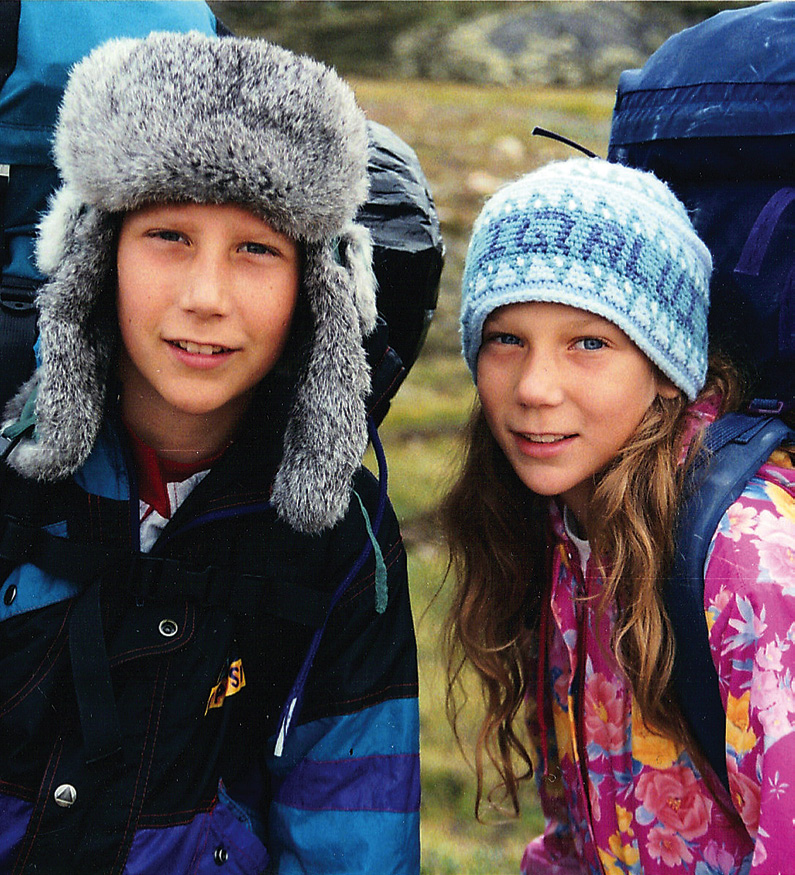
The siblings paddled across Baffin in 2013 using traditional skin-on-frame kayaks they crafted themselves. | Photo: Courtesy McNair-Landry family and Erik Boomer
4 Frozen footsteps
Matty McNair, Paul Landry, Eric & Sarah McNair-Landry
Sarah McNair-Landry and her older brother, Eric, grew up listening to stories from their parents’ expedition around Baffin Island. In 1990, traveling 4,000 kilometers by dogsled over land and sea ice, Matty McNair and Paul Landry became the first to circumnavigate this inhospitable island in the Canadian Arctic. The journey established the couple as professional polar explorers, and was equally pivotal on the home front. “They absolutely fell in love with Baffin,” Sarah says, “and decided to move here, to call it home.”
Living on the edge of Frobisher Bay in Iqaluit “where you step outside and it’s -30°C much of the year,” and growing up with renowned polar expedition guides for parents and all of Baffin Island as your playground, “is like everyday training,” says Sarah, now 30 and a respected Arctic adventurer in her own right. She and Eric, 31, quickly learned how to deal with the cold and be comfortable outside. “From as young as I can remember, we would get loaded up in so much outdoor gear that we could hardly move, and packed onto the dogsled for a day or overnight camping trip,” she says.
“We took Sarah and Eric out on the land as often as we could,” confirms Landry, who along with McNair logged countless backcountry days as a long-time wilderness survival and leadership instructor at Outward Bound before making the move north. “Day outings led to overnight trips and then to longer multi-day trips and two-week-long trips.”
When Sarah was 17, that progression led to the family’s first major expedition together—a four-week dogsled, ski and kite-ski across the Greenland ice cap. “Expeditions were part of our lifestyle and part of our work, so it was natural for Sarah and Eric to be part of that,” explains Landry, who was confident the teens were up to the challenge. “They had lots of experience in the cold, winter camping and working with dogs. Kite-skiing was new to all of us, so we were learning together.”
Photo: Courtesy McNair-Landry family
Skipping out of high school a month early to spend weeks alone with your parents in a remote deep-freeze isn’t your average teenager’s idea of a good time. But the McNair-Landrys reveled in the physicality and isolation.
“I was hooked,” says Sarah.
The following year, the siblings joined their mom on a three-month, self-supported expedition skiing to the South Pole and kite-skiing back across Antarctica’s barren snowfields. “That was a hard trip both physically and emotionally,” says McNair, whose relationship with Landry had just come to an end.
At 19, Sarah helped her father guide two clients on a 100-day expedition dogsledding from Russia to the North Pole and back to Canada, making her the youngest person to travel to both poles.
“After those trips, my brother and I started planning and heading out on our own adventures,” says Sarah.
In 2007, the siblings completed a kite-ski traverse of the Greenland ice cap from south to north. In 2009, they sailed three-wheeled buggies across the Gobi Desert; in 2010, they paddled canoes 2,000 kilometers through the rivers and lakes of Russia and Mongolia. Returning to Arctic travel in 2011, the pair kite-skied 3,300 kilometers across the Northwest Passage—an 85-day winter trip fraught with unstable sea ice and a harrowing polar bear encounter. Two years later, Eric and Sarah built their own traditional Inuit style kayaks and paddled and portaged 1,000 kilometers across Baffin Island. To these achievements, they’ve also added commercial guiding gigs throughout the polar regions.
As his children’s adventures have grown more ambitious, Landry admits it is difficult being a parent and a polar specialist. “I am familiar with the dangers and risks,” he explains, “I know what it’s like being out there.”
McNair echoes those concerns, “They have the knowledge and experience to make good decisions…but there are always the unpredictable polar bears and shifting ice conditions.”
So it is hard to imagine the pride and trepidation that Landry and McNair must have felt when Sarah announced her latest expedition plans: commemorating the 25th anniversary of her parents’ Baffin Island circumnavigation by retracing their dogsled route with her own team of 16 huskies. No one better understood the difficulties Sarah and her partner, Erik Boomer, would face on the monumental 120-day journey.
In fact, traveling with her parents’ trip journals, Sarah noticed frequent similarities between their hardships and her own 12-hour days on the trail. “I gained so much more respect for my parents’ expedition after retracing it,” she says.
A quarter-century after Baffin Island’s frigid grandeur stole McNair and Landry’s hearts, it continues to enthrall their children.
“What I’ve loved most about growing up and living on Baffin Island is the access to the backcountry,” Sarah enthuses. “The Arctic Ocean is out my back door, I have my team of dogs, and there are endless places to play and explore.”
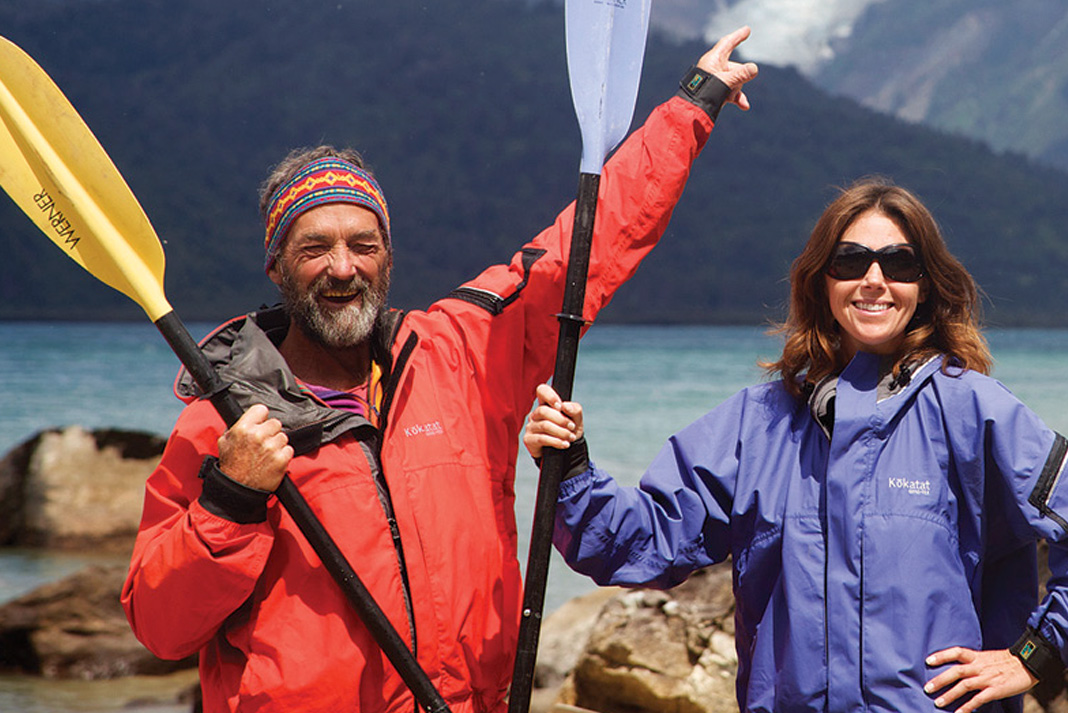
Patagonia, 2009. | Photo: Courtesy Michael & Marika Powers
5 Guiding powers
Michael & Marika Powers
“I don’t want to be cute anymore, I want to be tough and brave.”
Michael Powers still chuckles when he remembers his three-year-old daughter, Marika, uttering these words. Adventure Kayak caught up with the elder Powers, 76, from California’s Miramar Beach, where he’s lived in a Viking-style home of his own creation, facing the Pacific for the past 47 years.
Best known for his exploits with the Tsunami Rangers, a group of pioneering extreme conditions sea kayakers who hit their heyday in the ‘90s and early 2000s (“We’re kind of over the hill now,” he admits), Powers has also made some remarkable journeys with his equally adventurous daughter. When Marika isn’t busy guiding wilderness expeditions in Alaska, Baja, Costa Rica and Hawaii, she joins her father for ambitious trips all over the world. Together, they’ve made two multi-sport crossings of Patagonia, explored Cuba, paddled Mavericks and Alaska’s Tracy Arm Fiord, and much else.
“My parents filled my childhood with wonder and even a little magic,” Marika says. “They lived unconventional lives and gave me perspective and experiences outside the norm.”
Father and daughter share some of those insights and discoveries:
ON FAMILY LIFE
Marika: Growing up, I realized that my family life was different, but not that it was special until I was older. I remember being totally embarrassed at my father clad in animal skins, running around like a wild man.
Michael: I was immature myself when I had kids. I wasn’t the solid, patriarchal example. My own upbringing had very little stability; I went to 14 different schools in half-a-dozen states before high school. Marika is the same way as me—unconventional, adventurous—and probably for the same reasons. There’s always a trade-off. You can’t be an outdoor guide and a family patriarch.
ON PARENTING
Marika: My father was more relaxed in his parenting; my mother had to maintain a watchful eye to ensure no loss of limbs.
Michael: I’m not in Tsunami Rangers mode on trips with Marika. We’ve swum, we’ve been uncomfortable, but she’s never been hurt on our adventures.
ON KAYAKING
Marika: My father took me on my first kayaking trip, and I hated it. Totally traumatizing. We flipped multiple times. I remember him holding onto his camera bag with one hand and his freaked out seven-year-old with the other, floating down the middle of the river.
Michael: I had just gotten into kayaking and I read about the East Carson River, which flows out of the Sierras into the Carson Desert. The article said it would be easy class II, but it was actually pretty challenging. We were novices; I had these little inflatable boats, no helmets, no life vests. It was a two-day trip, with a camp out at a hot springs. I shudder now to think how ill-prepared we were. Marika didn’t hold it against me, though.
ON PUTTING DOWN ROOTS
Marika: I love being out in Alaska. I feel most content out there, and while I don’t ‘live’ anywhere, coming back to Alaska always feels like coming home.
Michael: I’ve expressed my concern to Marika that she’s 40 and hasn’t got a home, you know, ‘Where do old guides go?’ I’d like to see her have roots. She just tells me, ‘I like my life.’ There’s a Spanish saying—paso a paso—which means step-by-step. To stay in the moment—that’s been my philosophy and it’s hers as well.
Harvey and Steven, launch day, 1992. | Photo: Courtesy Harvey & Steven Golden
6 Creation stories
Harvey & Steven Golden
Kayak historian Harvey Golden happened upon his vocation through a serendipitous intersection of providence and paternal support.
Back in 1991, having spent three years at Oregon State University pursuing a literature degree, Golden realized he wasn’t where he wanted to be, dropped out of college, moved back in with his parents, and fell into a depression. Months passed. The melancholy deepened. Concerned, Golden’s father, Steven, a lifelong tinkerer and outdoorsman, wracked his brain hoping to devise some means of lifting his son out of the funk. But, try as he may, nothing worked.
Then something happened.
“I came home one evening and Harvey was rummaging around in the garage, which was unusual, as for the past few months he hadn’t been doing anything much at all,” remembers Steven. “When I approached him, he looked different—very determined. When I asked what was up, he told me he was building a kayak.”
Determined to assist in any way he could, and being a hobbyist woodworker himself, Steven offered to help.
“I’d stumbled upon a schematic drawing of a historic kayak from Greenland at a friend’s house,” says Golden, recalling the fortuitous impetus behind his first build. “At the time, I had this deep inkling about water, didn’t have any money and didn’t know what to do with myself. When I saw the plans, for whatever reason, something in me said, ‘You have to build that boat.’”
Over the course of the coming months, father and son salvaged materials and constructed their handmade wood-framed kayak. On the morning after the boat’s completion, Golden told his father that he’d like to take the maiden voyage alone.
“I was a little disappointed,” admits Steven. “But it was Harvey’s adventure, and my role was one of support.”
Confronted by the jarringly cold Pacific Ocean, struggling to remain upright in the tippy craft, Golden remembers feeling suddenly very alive, very free.
“It was like I’d subconsciously allowed the adage ‘steering your own ship’ to be taken completely literally,” he laughs. “The kayak was such an intimate craft—it was just me and the boat, alone on the water. I realized I’d created this experience for myself and it was wildly empowering.”
Later, as the sun disappeared beyond the ocean, Golden remembers thinking: These boats had to have come from somewhere…
“I was seized by this great need to know the kayak’s original purpose,” he says,”what the first versions looked like, how they were built, what they were used for, where they came from.”
In the 25 years following his coastal epiphany, Golden, now 45, devoted himself to not only investigating the historical development of kayaks and kayaking throughout the northern hemisphere, but to reconstructing precise replicas of the crafts he so diligently researches.
Golden’s quest has led him on numerous archaeological digs, anthropological expeditions and Arctic kayaking adventures throughout Greenland, Iceland, Norway, Canada and Alaska. He’s written two 500-plus-page tomes—titled, respectively, Kayaks of Greenland: The History and Development of the Greenlandic Hunting Kayak, 1600–2000 (published 1999) and Kayaks of Alaska (published January 2016)—with a third volume on the historic kayaks of northeastern Canada presently underway. He’s traveled to the storage rooms of museums all over the world, and ultimately founded his own replica museum in Portland, Oregon. And, of course, he’s built lots more kayaks—replicating over 200 ancient skin-on-frame designs.
“By the time Harvey got his boat out of the water that first day, he was already planning his next build,” chuckles Steven. “It was amazing to watch what I assumed would be a passing hobby transform into a passionate career.”
Indeed, within days of returning from his first outing, Golden says he’d scoured library stacks, borrowed books on ancient kayaks, selected a model, sought out schematic drawings and begun making plans for the next vessel. “Since then, I think I’ve constantly had a replica underway— and most of the time, two or three. It’s become something of an obsession.”
Looking back, this acclaimed historian identifies his outdoor-rich childhood as the substrate from which the fixation sprang.
Two years after Golden was born, Steven and his wife, Nancy, decided they didn’t want to raise their children in the city and made the drastic move from Los Angeles to the rural, river-rich coastal range of Oregon.
“If not for that decision, I wouldn’t be doing what I’m doing,” he says. “I wouldn’t have had the experiential vocabulary that’s made it possible.” —Eric J. Wallace
This article was first published in the Early Summer 2016 issue of Adventure Kayak Magazine. Subscribe to Paddling Magazine’s print and digital editions, or browse the archives.
THE BEST RIVER GUIDES ARE ALSO GUARDIANS OF LOCAL KNOWLEDGE. | PHOTO: RYAN CREARY
August 16, 1899, is the date most historians point to as the start of North America’s adventure tourism industry. It was the day that Christian Hasler and Eduard Feus stepped off Cana- da’s newly completed coast-to-coast Canadian Pacific railway; seasoned Swiss mountain guides imported to lead vacationing gentleman into the unexplored Canadian Rockies.
Archived images of the two dressed in woollen blazers and hobnailed boots make it an appealing and enduring creation myth. But it’s all wrong.
Guiding dates to the earliest days of European settlement on this continent including First Nations guides, French voyageurs, America’s overland wagon train guides, and the celebrated timber raftsmen. Our geographic and industrial history is forged by the anonymous guide. However this history is about exploration and commerce, not recreation or tourism. Hence the myth of the Swiss guide. While their role in establishing mountain culture is undeniable, a substantial body of river guides were working eastern rivers a generation before Hasler and Feus stepped off the train.
At the end of the eighteenth century, the only people with time and money for recreation were gentleman industrialists and professionals. This privileged class brought with them their English sensibilities and ideals of sportsmanship. They enjoyed horse- back riding, trekking in the moun- tains and hunting for fox. These were noble pursuits, character building and rejuvenating.
As sportsmen explored outwards from the eastern seaboard’s growing cities in the 1830s, they knocked on fur trading post doors to request lodging and guiding down the rivers to the best hunting and fishing. Homesteaders saw this opportunity and turned from subsistence farming to outfitting, creating the backcountry lodge as we know it today.
With this movement toward outfitting came more and more guides. Local woodsmen and trappers found they could supplement their income by bringing sportsmen along.
They shared their previously unappreciated river running skills, such as poling up rivers and running rapids. Unlike their industrial guiding cousins employed in the fur trade, these early sports guides showed little fear of whitewater and enjoyed running rapids in an era long before life jackets.
THE BEST RIVER GUIDES ARE ALSO GUARDIANS OF LOCAL KNOWLEDGE. | PHOTO: RYAN CREARY
Outdoor tourism remained more or less unchanged for nearly a century—affluent outdoorsmen hiring local experts to safely guide them to the best places. Guiding required real competency and intimate local knowledge. All of this was flipped on its head in the 1960s. Automobiles, highway systems and a burgeoning middle class saw the rise of the vacation.
Combined with an emerging environmental awareness, total novices were now heading for the wilderness for adventure. Outfitting became mobile, and traveling with it a new breed of guide anchored not to a place but to a particular set of skills. Guides became technical experts and activity supervisors, escorting tourists to places where they themselves where only visitors.
This paradigm is still prominent today. First hand local knowledge and our value of “place” has been shuffled aside and replaced by customer service standards and the importance of “experience.” Connection to place adds richness to experience. Guides as tourists just commodifies the wilderness, rather than making it the whole point of the adventure.
Of course this intimate knowledge of place—what makes guided wilderness trips so valuable—can be learned.
To do so, guides need to become students of the places in which they travel, rather than just showing up and imposing our skills upon them. River guiding has a long and honorable tradition, to which we can pay homage simply by immersing ourselves in the places in which we paddle. By striving to become the most recent iteration of intimate local knowledge, we create real value in the trips we run by attaching what our clients experience to a living, breathing river.
Jeff Jackson is a professor with Algonquin College’s Outdoor Adventure guide training diploma and the co-author of Managing Risk: Systems Planning for Outdoor Adventure Programs.
This article originally appeared in Rapid Early Summer 2016 issue.
Subscribe to Paddling Magazine and get 25 years of digital magazine archives including our legacy titles: Rapid, Adventure Kayak and Canoeroots.
TODAY’S LESSON:
UNDERSTANDING MILLENNIALS. | PHOTO: VIRGINIA MARSHALL
Full disclosure: I’m a millennial. I’m of the demographic this magazine once characterized as “pathologically anxious and dependent young adults.” I’m trying my hardest in a world where the generational divide can seem downright cavernous. And over the past year or so, I’ve become a kayaker. Still reading? Good on you for your willingness to listen to a Millennial.
Some veterans of the sport have suggested that many kayakers, especially those new to the community, get bogged down by all the training and certification hoops they’re asked to jump through. The wall of intimidating acronyms is large and seems to stand prominently in the newcomer’s path down to the water.
These longtime paddlers, most of them greying Boomers, understand that there’s another route to becoming a kayaker: the caveman route. The figure-it-out-as-you-go route. The option to quietly side-step officiality and simply trot down to the surf. So why don’t we Millennials take this simpler, nobler path?
The thicket of certifications and acronyms is so unavoidable that newcomers might not even see that other route. Or maybe they do, maybe they know the caveman route exists. But here’s the thing: that path isn’t free of barriers, either. It comprises a slew of obstacles that exist in the lives of us youngsters. There are emotional barriers. There are social barriers. There are financial barriers. We didn’t choose to put those hurdles there, but there they are.
“Certifications give me something I value above thrill: peace of mind.”
Yes, I am one of the earlier products of helicopter parenting. My parents were concerned for my safety, and wanted me to know that they were proud of me. And yes, I’m now rather insecure. I’m anxious, I’m timid, I’m nervous. I don’t blame my parents; I had a great childhood and I love the person I’m growing to be. Being helicoptered made me sensitive, thoughtful and honest. It also made me too terrified to buy a boat, drag it down to Lake Erie and hop in. What may sound like an adventure to some sounds like a cold and simply trot down to the surf. So why don’t we Millennials take this simpler, nobler path?
The thicket of certifications and acronyms is so unavoidable that newcomers might not even see that other route. Or maybe they do, maybe they know the caveman route exists. But here’s the thing: that path isn’t free of barriers, either. It comprises a slew of obstacles that exist in the lives of us youngsters. There are emotional barriers. There are social barriers. There are financial barriers. We didn’t choose to put those hurdles there, but there they are.
Yes, I am one of the earlier products of helicopter parenting. My parents were concerned for my safety, and wanted me to know that they were proud of me. And yes, I’m now rather insecure. I’m anxious, I’m timid, I’m nervous. I don’t blame my parents; I had a great childhood and I love the person I’m growing to be. Being helicoptered made me sensitive, thoughtful and honest. It also made me too terrified to buy a boat, drag it down to Lake Erie and hop in. What may sound like an adventure to some sounds like a cold and watery grave to me. Blame my upbringing, blame my generation, blamewhateveryouwant—still, I could never do it.
Certifications give me some- thing I value above thrill: peace of mind. They foster confidence in my ability to be safe, to live to paddle another day. This confidence allows me to actually relax and have fun while paddling, rather than worry with each stroke. At the end of the class, the instructor gives me the pat on the back that I need to feel secure. If it weren’t for a class, an instructor, a credential, I’d never have the gumption to get out on the water. Credentials empower the meek of heart to conquer the intimidating emotional barrier to paddling.
Classes help with the social barrier, too. You may be thinking that I don’t need an instructor for that—I should just go out and find some kayaking buddies. Well, maybe that’s feasible in mystical places where there’s a kayak shop on every corner and paddlers on every pond. The West Coast, perhaps, or maybe Minnesota? I live in Toledo, Ohio. There’s a paddling shop an hour’s drive away. There’s one small livery just outside of town, but they offer no instruction.
There is a relatively new kayaking club, but I wouldn’t have found it if it weren’t for the ACA class I joined. The class was a gateway to meeting the very few fellow kayakers in my area. And given what I’ve already told you about being helicoptered, you can probably guess that we Millennials prefer not to paddle alone. For those of us who live in places like Toledo, the social barrier is a real obstacle to paddling. It’s instructors and fellow students who welcome us into the sport with open arms.
TODAY’S LESSON: UNDERSTANDING MILLENNIALS. | PHOTO: VIRGINIA MARSHALL
Even if I could find paddling buds on my own, I’d still be up a creek without…well, you know. Like many of my generation, I was ushered directly off the high school graduation stage and into an expensive four-year program at a big, impressive university.
I graduated with a little over $33,000 of debt. I make about $23,000 per year. Although I live in one of the most affordable cities in the nation, if I want to make meaningful progress toward getting out of debt, there’s not much left over for buying kayaks.
So I’m left looking for a boat to borrow. The most economical option is to rent from the livery, but that one stretch of river will get old pretty quickly. Once again, credentials are my answer. I can go out with a certified instructor for a fraction of the cost of buying my own gear. I can take an ACA class, which is a bit more expensive but still within my means, and ultimately empowers me to explore other options. Of course I want to buy my own gear someday. But for now, these options are the only ones that make financial sense to this debt- saddled Millennial.
Yes, there are two routes to the water: taking the path through the certification jungle, or hurdling the emotional, social and financial barriers that exist in the lives of people my age. Sure, the certification route is time-consuming and bureaucratic and not right for everyone. But the other obstacles can be bigger, scarier and even more insurmountable. Certification isn’t the only way, but for some, it might be the best way.
Should we be admonished by certain elders of the sport for choosing the route that makes the most sense for us? I think not. After all, no matter what route we take, we’re getting ourselves down to the water. Whether it’s the fast and furious dash of the Boomer generation, or the slow, methodical crawl of mine—new people are paddling. Isn’t that what we all want?
When she’s not paddling or developing outdoor programs for Toledo parks, Lauren McCafferty blogs at www.loveandbirding.com.
This article originally appeared in Adventure Kayak Early Summer 2016 issue.
Subscribe to Paddling Magazine and get 25 years of digital magazine archives including our legacy titles: Rapid, Adventure Kayak and Canoeroots.
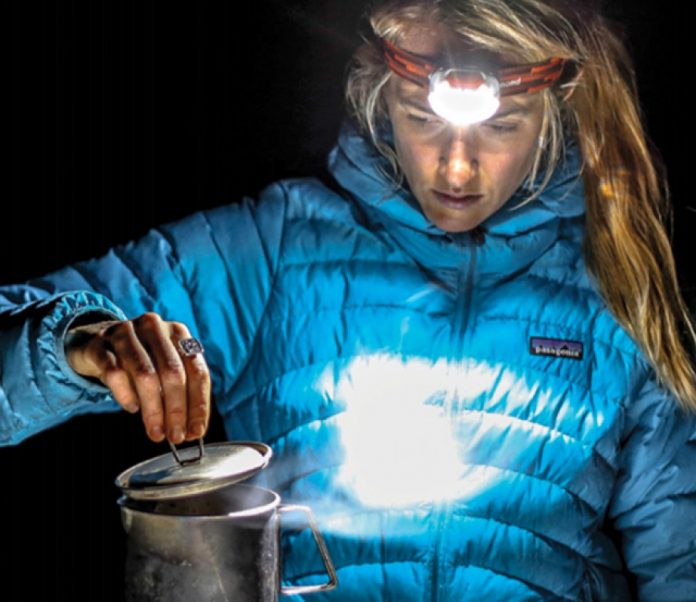
Well-fed campers are happy campers. When you’re cooking at a campsite, your best approach is to prevent mistakes in the first place—not even hot sauce and cheese can make a charred lump of carbon palatable. Take the same pleasure and care in planning your meals as you do with your gear and route. Then use these simple tips to guide your cooking so you can enjoy your trip even more.
5 tips for backcountry cooking
1 Familiar territory
First and foremost, don’t try to learn a new recipe or technique while camping. Haven’t mastered the art of perfectly puffed soufflé or slow-cooked brisket? Now is not the time. Try your recipes at home using your camping gear to see if it works, how it tastes and whether you’ll be comfortable cooking it. A stressed-out chef casts a pall over a campsite.
2 Plan ahead
The first night out always seems to have far more tasks than time. Nobody likes cooking in the dark, and an awful first meal can set the tone for the trip. Prepare a meal at home you can reheat over a fire or on the coals for your first evening while you set up camp. Freeze a hearty soup or stew, or prepare a foil packet dinner by combining meat loaf, cooked potatoes and carrots with some onions and spicy tomato sauce.
Leave the complex and gourmet meals for mid-trip when time is a luxury. Save the simplest items for the last day, when breaking camp and traveling home will preoccupy mind and hands.
3 Manage your time
Cooking takes longer when outdoors. Fires and camp stoves burn less reliably than household equipment and are susceptible to the surrounding environment. Temperature, wind, altitude and rain are all factors that will change cooking times. To speed up cook times and avoid a pack of hangry campers, leave the lid on pots to allow the water to heat quicker. Consider one-pot meals rather than ones that require several pots and pans. Remember that small bits of food—whether noodles or diced veggies—cook quicker than large and dense pieces. Cook, then dehydrate rice to rehydrate at camp rather than cooking from raw, or simply rely on instant.
4 Follow instructions
Dehydrated meals often seem like an easy way to get food on the table, but if you rush the process and don’t allow the food to fully rehydrate you have a recipe for gut ache. Pack a measuring cup or mark volumes on a water bottle so you can be sure to use the right amount of liquid. Over-seasoning can also make a meal unpalatable, so if in doubt, under-season to start, taste-test as you cook and pack some dried herb blends, hot pepper flakes and salt to enhance flavor.
5 Stay engaged
A watched pot never boils, but an unattended pot will boil over. Whether using a burner or a fire pit, monitor the heat, and stir or turn the food when necessary. It’s the cook, not the equipment, who burns the outside and leaves the inside raw. Give your meal your undivided attention and reap the rewards—a full belly and compliments to the chef.



 This article originally appeared in the Adventure Kayak Early Summer 2016 issue.
 This article originally appeared in the Canoeroots Early Summer 2016 issue.
 This article originally appeared in Rapid Early Summer 2016 issue.