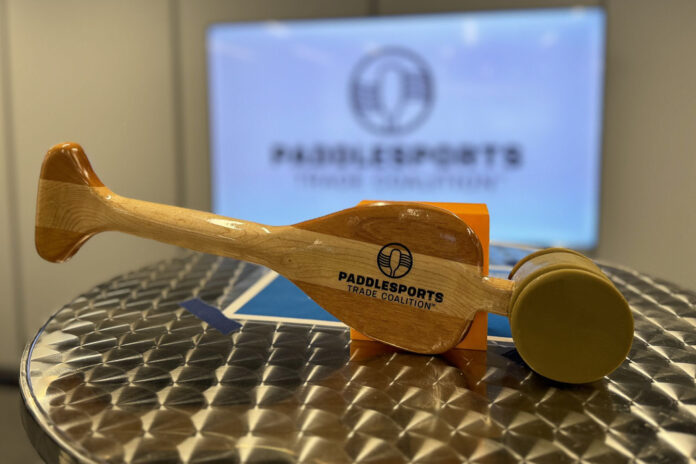
The Paddlesports Trade Coalition (PTC) announced the addition of five new board members to its board of directors in January 2025. Nominations for board members were overseen by the Board Development Committee and the Audit Committee. Voting members included PTC associate members, sales representative members, brand members, and retailer/outfitter members.
Since its start in 2023 the PTC has maintained eleven board members—welcoming the five newest members brings the total to fifteen board members.
“The PTC Board is fortunate to have the dedicated contribution of these paddlesports industry retailers and brand leaders. Entering our second year, the PTC needs the support and passionate drive from all our members, including our solid and committed fifteen-member board of directors,” shared Executive Director Jeff Turner.
New PTC Board Members for 2025
New PTC Board Member Lili Colby from Mustang Survival
Lili Colby — Industry and Non-Profits Relations Lead at Mustang Survival
The PTC welcomed new Board Member Lili Colby, the Industry and Non-Profits Relations Lead at Mustang Survival. Colby brings 30 years of experience in paddlesports to the PTC. Deeply involved in the industry throughout both its highs and lows, Colby’s previous experience also includes work at Mad River Canoe and co-owning MTA Adventurewear before joining the Mustang Survival team in 2020.
New PTC Board Member Bryan Owen from Astral Designs.
Bryan Owen — Astral Designs
New PTC Board Member Bryan Owen comes to the PTC with two decades of experience in the paddlesports industry. He was formerly a retailer at 3 Rivers and CKS and has worked with Astral Designs since 2007. Owen currently works as the Sales Manager at Astral Designs. Additionally, Owen comes with experience with Grassroots Outdoor Alliance and brings both business skills and industry connections to the PTC.
New PTC Board Member Matt Gerhardt from 4Corners Riversports.
Matt Gerhardt — 4Corners Riversports
With 20 years of experience in paddlesports retail, Matt Gehardt comes to the PTC Board as a key leader at 4Corners Riversports in Durango, CO. Gerhardt sees PTC as a tool to strengthen the paddlesports community and is excited to be involved. Gerhard’s previous experience includes sales, purchasing, marketing and web development.
New PTC Board Member Jon Kahn from Confluence Ski and Kayak.
Jon Kahn —Confluence Kayak & Ski
The PTC also welcomed new Board Member Jon Kahn, a current leader at Confluence Kayak & Ski and CKS Online. Kahn comes to the PTC with 30 years of experience in specialty paddlesports retail and is passionate about shaping the paddlesports industry’s future. Kahn states he believes it’s time to return the industry to those who live and breathe paddlesports.
New PTC Board Member Scott Holley from Eddyline Kayaks.
Scott Holley — President of Eddyline Kayaks
New PTC Board Member Scott Holley has played a pivotal role in the paddlesports industry both in his role as the President of Eddyline Kayaks since 2017 and in his commitment to innovation, quality, and community in paddlesports. Holley has already been instrumental in the PTC as a co-founder. Additionally, Holley served as an interim Vice Chair on the initial Board of Directors for the PTC.
The Future of the PTC
In 2025, the goals of the PTC are to create industry initiatives that promote the strength of the paddlesports industry and to continue to engage in initiatives that promote access to paddlesports.
“The industry is looking ahead for the stability and growth that is due, and PTC is dedicated to creating collaborative, industry-building initiatives that will have a positive influence for us all,” Turner added of the organization’s next moves.
Turner also shared that initiatives on the docket for the remainder of Winter 2025 and into the paddling season include paddling participant building and engagement, paddling safety initiatives, data development around North American paddling industry sales and participation, monthly webinars, and the return of the PTC Colab event for 2025.
The Paddling Mag team caught up with Steve Jordan from Liquidlogic to chat about the Liquidlogic Hot Whip.
A look inside the Liquidlogic Hot Whip
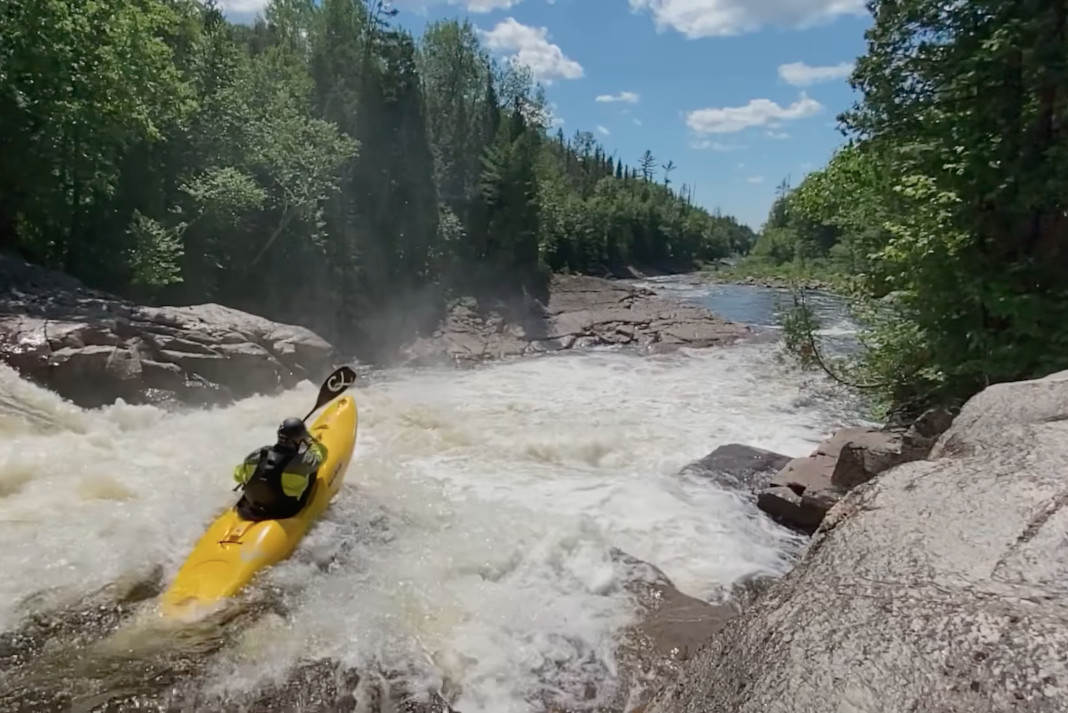
The Hot Whip is a half-slice whitewater boat designed as a compromise between playboating and long term comfort on the river. Relatively new to the whitewater market, versions of the Hot Whip debuted in 2023 and 2024. Recent designs include the Hot Whip 72, with more volume at 72 gallons, and most recently the Hot Whip 60 which launched in spring of 2024 to meet the needs of smaller paddlers.
On the whole, the Hot Whip is designed to be a playboat that not only is sporty and fun in rapids, but also performs down the river with an emphasis on comfort. As Liquidlogic writes on their website, the Hot Whip is meant to be more than just a “one trick pony”.
According to Jordan, hallmarks of the Hot Whip include slightly increased volume in the front of the boat, “bas ass outfitting” for a more comfortable experience in the boat, a velcro and foam kit to slide in pads, and adjustable foot braces. The stern of the Hot Whip is small and winged, and in total the boat comes in at eight feet long and 42 pounds in the Hot Whip 72, or seven feet ten inches and 39 pounds in the Hot Whip 60.
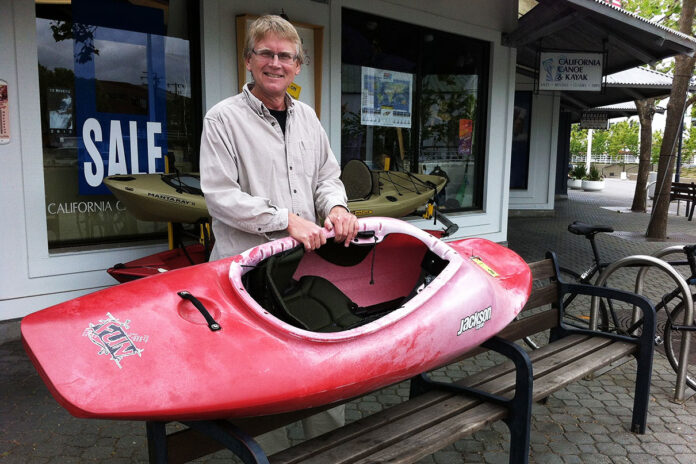
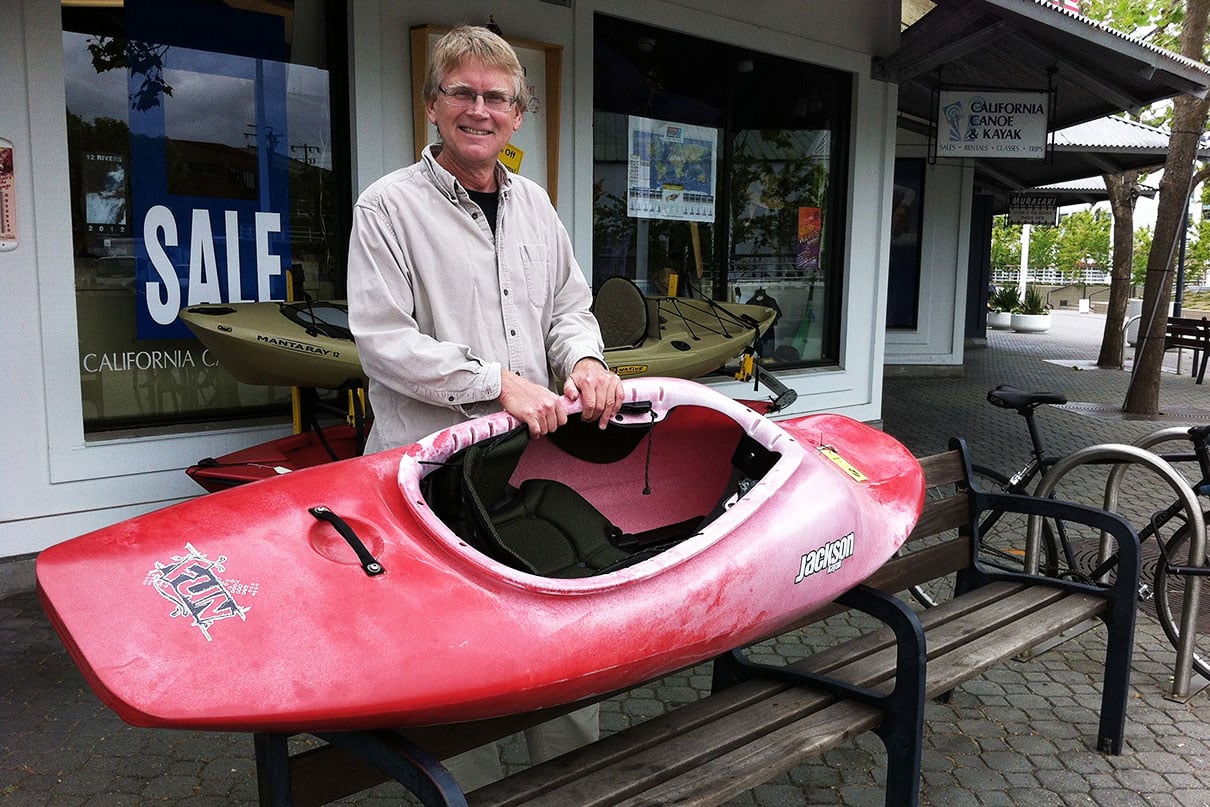
Keith Miller at his flagship store in Oakland. | Feature photo: Courtesy California Canoe & Kayak
You can look to any number of statistics to gauge the health and future of the paddlesports industry, but the biggest factor may be one nobody is tracking: The average age of specialty shop owners in North America.
The Great Succession: The future of paddlesports retail
“You meet with a lot of retailers across the country and when you start to look at their ages, you have to ask what’s next,” says Katie Vinohradsky, a veteran outdoor sales rep based in Wisconsin. Recently, she came across an article profiling the top 100 retailers in a decade-old issue of the outdoor trade magazine SNEWS. “I went through that entire list and only about 60 percent of them are still around,” she says. “The other ones fell off.”
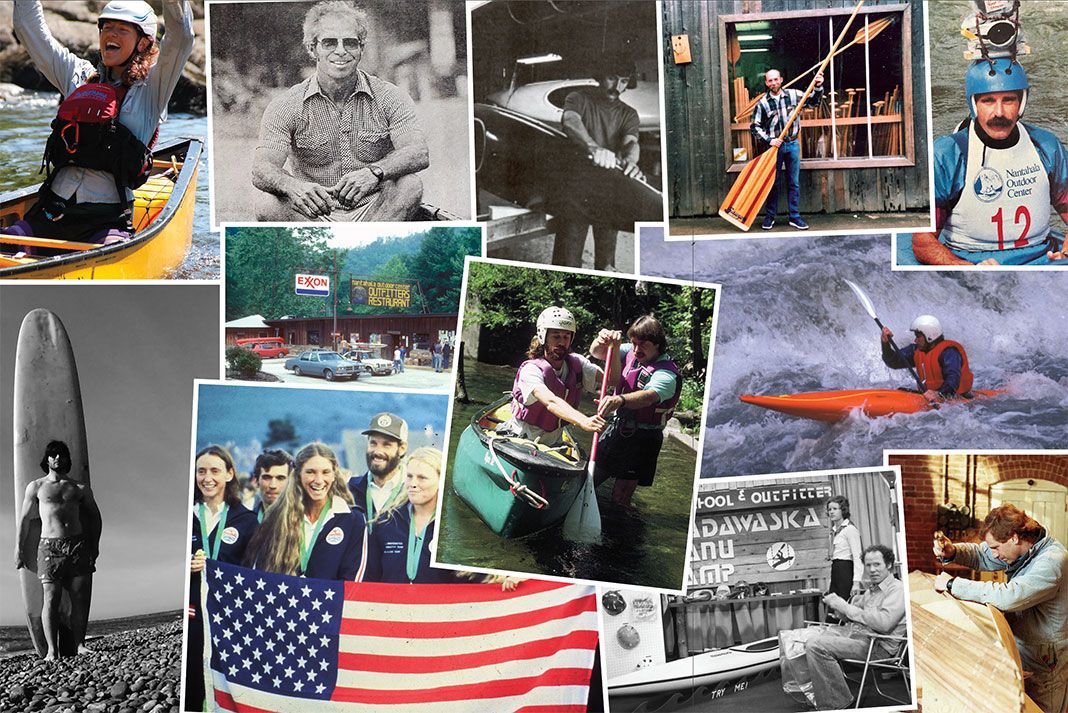
Many of those shops opened in the late 1970s through the 1980s, the golden age of specialty retail. In those days, a young paddling enthusiast could hang a shingle in a reasonably sized city and be the only place in that area where a person could buy a kayak or canoe. “Specialty was all there was,” says Rutabaga owner Darren Bush. “There were no box stores, no REI. You could make it work basically by opening a small store and being frugal.”
Keith Miller at his flagship store in Oakland. | Feature photo: Courtesy California Canoe & Kayak
That scenario appealed to entrepreneurs motivated as much by their love of the sport as any hard-nosed business forecast. Take California Canoe & Kayak owner Keith Miller, who was deeply involved in the fight to save the Stanislaus River from damming when he started as a kayak guide. “The volunteer work I did to try to save the Stan shifted my life trajectory from banking to being a river runner,” says Miller, now 72. He had no illusions about his new career path. “From the get-go, I realized this can be a great lifestyle business, but you’re not going to make any money.”
Brian Henry made a similar calculation in 1981 when he opened Ocean River a few hundred miles up the coast in Victoria, B.C. “We didn’t know what the heck we were doing,” says Henry, 72. “We just got into it and it seemed so fun. It was a very exciting time, and I’m so fortunate we were one of the first ones involved in it.”
Specialty paddling shops were springing up all over North America in those years, founded by resourceful entrepreneurs with deep connections to the sport. They were the catalyst in the cosmic petri dish that gave us today’s paddlesports and the culture it lives in. But 40 years on, retail’s greatest generation is in their 60s and 70s, and that raises the question: What will become of the sport when they’re gone?
That’s something NRS marketing director Mark Deming has been giving a lot of thought to lately. “Every year when we do our SWOT analysis—strengths, weaknesses, opportunities and threats—the future of our dealer network as owners retire goes in the threat column,” says Deming.
Shop owners who shared their succession planning with Paddling Business were unanimous on one point. All would like to see their businesses pass to someone with the energy and acumen to guide them through an increasingly competitive business landscape. How they propose to get there is where it gets interesting.
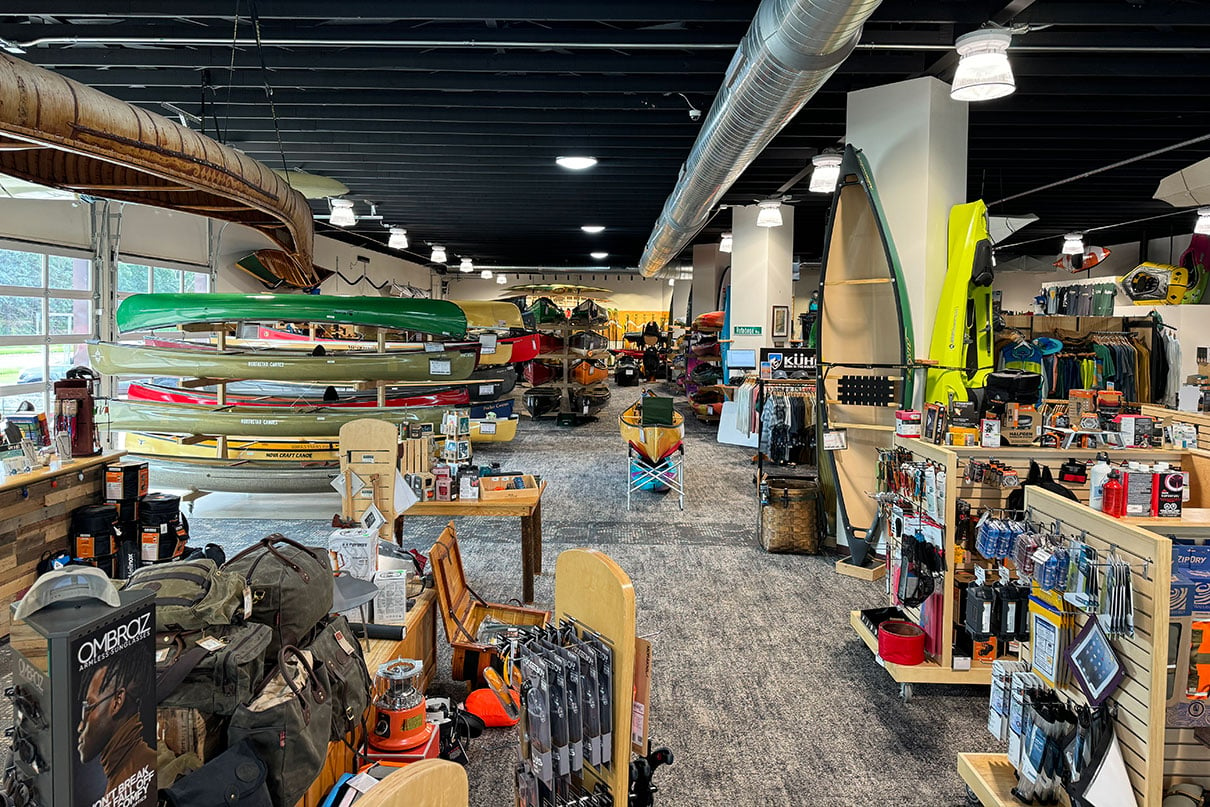
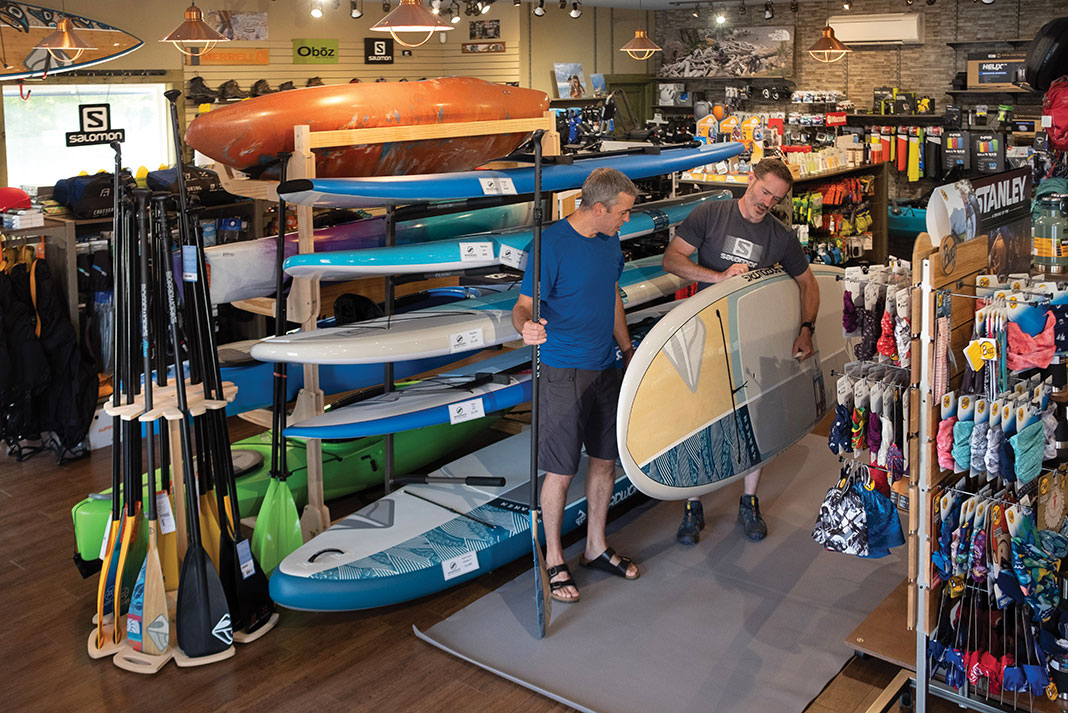
Rutabaga owner Darren Bush built a new store with 30 percent more retail space. | Photo: Courtesy Rutabaga
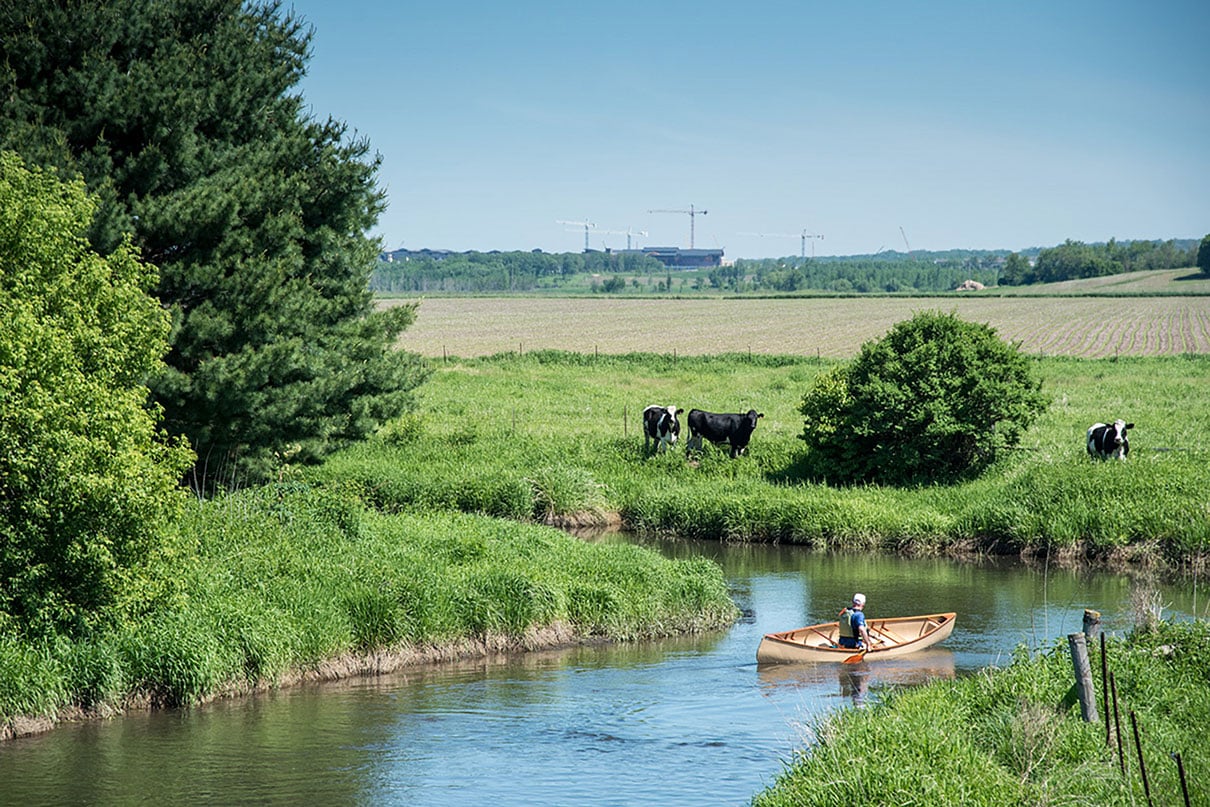
Darren Bush enjoys a quiet moment in America’s dairyland. Photo: Aaron Black-Schmidt
“I think about a lot because you don’t just put a sign up saying ‘for sale’ and three months later it’s gone,” says Bush, 62. “It takes a year or two to prep for a transition, if you want to find a buyer who will do right by your business.” So far, Bush’s transition planning has been mostly hypothetical. He could have sold after the pandemic and funded a comfortable retirement, but chose instead to build a new store with 30 percent more retail space.
“If someone approached me with a check tomorrow, I’d say, ‘Okay, fine, but who are you, really?’ I’ve seen enough business transitions to know that while it will never be like it was, you don’t want your brand to be trashed by inept people. Because once the check clears, I don’t have any say.”
Passing the torch
One of the biggest hurdles is that few of the best candidates have the savings to buy in. According to a recent study by New York Life Insurance, neither Millennials (ages 31 to 43) nor Gen Xers (ages 44 to 59) are saving enough for retirement, let alone to acquire a retail business. Even more vexing than the amount of money retail managers and paddling guides have socked away are the other things they need it for, such as buying a home, having kids and paying down student loan debt. With interest rates holding steady at a 20-year high, the pool of qualified buyers is at a low ebb, while the number of shop owners reaching retirement continues to rise.
Even with years of prior planning, there’s no guarantee a store owner will find a suitable successor. Such was the case with Midwest Mountaineering’s Rod Johnson, who struggled to find a suitable candidate to take over the venerable Minneapolis paddling and outdoor store. In 2022, he took the search public, offering an $85,000 salary for a general manager who could eventually purchase the store. No takers. Johnson closed the doors in October 2023 after 53 years in business. “Midwest’s style of retailing is under intense pressure,” Johnson said in a release announcing the closure. “Big box and online shopping, including direct selling from manufacturers, is on a steady rise and continues to outpace traditional specialty stores like Midwest.”
Brian Henry pivoted away from retail to focus on tours and instruction. | Photo: Gail Takahashi
Brian Henry’s Ocean River Sports followed a similar arc. Founded in 1981, the store nurtured a tight-knit community of paddlers on the southern end of Vancouver Island, eventually growing into an iconic 7,000-square-foot store in downtown Victoria. Even when Mountain Equipment Co-op (MEC) opened a franchise a few blocks away, Ocean River held its own.
“We survived for many, many years, but my vendors, who were all my friends in the beginning—Arc’teryx and all these guys—they got sold out to big international corporations who didn’t really care as much about the little guys,” Henry says. “I might have an Arc’teryx jacket that was a medium in blue, and a customer wanted a large. I could get it in five days, but the customer knew they could order it direct and have it in two.”
Henry says his store effectively became a warehouse and showcase for the big outdoor brands, and he saw it wasn’t sustainable. He closed the retail store in 2020 and doubled down on tours and instruction. He recently opened a smaller retail shop that fits comfortably in the gap chains like MEC can’t fill.
The store is doing well, Henry says, with new energy and strong leadership from retail and operations manager Jamie Dawson, who is back at Ocean River after a pandemic hiatus spent guiding in Haida Gwaii. Dawson is now a 25 percent shareholder in the company and one piece in an evolving succession plan. Henry is also exploring employee-ownership options, and his sons, Russell and Graham, have expressed interest. After establishing their own paddling bona fides, including a 4,000-mile trans-Caribbean epic from Brazil to Florida, the brothers have been campaigning in different realms, Russell as a whitewater and adventure guide and Graham as a lawyer.
Orchestrating a succession that involves Dawson, his sons and an employee ownership component is no easy task, but Henry is committed to making it work. “My wife thinks I just should walk away, but I can’t do that,” he says.
Keepers of the flame
Down the coast in California, Miller’s succession planning was multiplied by four—the number of California Canoe & Kayak locations he had at the end of 2020, including a whitewater school, land and retail outpost on the South Fork American, a store and lake rental concession in Rancho Cordova, and two rental and retail operations on San Francisco Bay. Rather than seek a single buyer, Miller’s succession involves a series of hand-picked heirs.
He sold his whitewater school on the South Fork American to Melissa DeMarie of California Watersports Collective in 2021, transferring the oldest kayak instruction permit on the river. In 2023 Miller sold the land to a local family that just opened Troublemakers Beer Garden on the property, named for one of the South Fork’s marquee rapids. The deal fulfilled a promise Miller made years ago to sell only to a South Fork local.
California Canoe & Kayak in the early days. | Photo: Courtesy CC&K
Miller passed his Redwood City location to David Wells, longtime co-owner of 101 Surf Sports in San Rafael, simply because he thinks Wells has what it takes to realize the location’s potential. Miller did everything in his power to ease the transition. “I sold David the containers, gave him some time to pay off the fixtures, and negotiated with our landlord to turn the lease over to him,” he says.
Miller orchestrated a similar transition for his store in Rancho Cordova, just outside Sacramento. An industry friend recommended Bryan Anondson, owner of Headwaters Adventure Company in Redding, as a potential successor. Miller then called another friend, Dan Arbuckle, to vet the choice.
“I said, ‘Dan, you know Bryan, is he a bright guy?’ And he said, ‘He’s the best,’” Miller recalls. “That’s all it took. I called Bryan and said, ‘Bryan, do you want my Rancho store?’ And within about a month, it was his.” Anondson assumed the lease and purchased the fixtures and some of the inventory in March 2023, Miller says. “The transition went seamlessly and leaves the local paddling community in great hands.”
In just over three years Miller divested three paddlesports operations and is actively exploring transition options for his flagship store at Jack London Square in Oakland. “We plan to exit this fall as best we can,” he says. “What that means is hard to tell.”
Miller’s experience shows that an expeditious transition is certainly possible—with the caveat, as Miller himself predicted all those years ago, that he didn’t make much money in the process. Whether that’s depressing or inspiring has a lot to do with one’s worldview and financial security. Miller has no regrets.
Bill Parks in his element. | Photo: Courtesy NRS
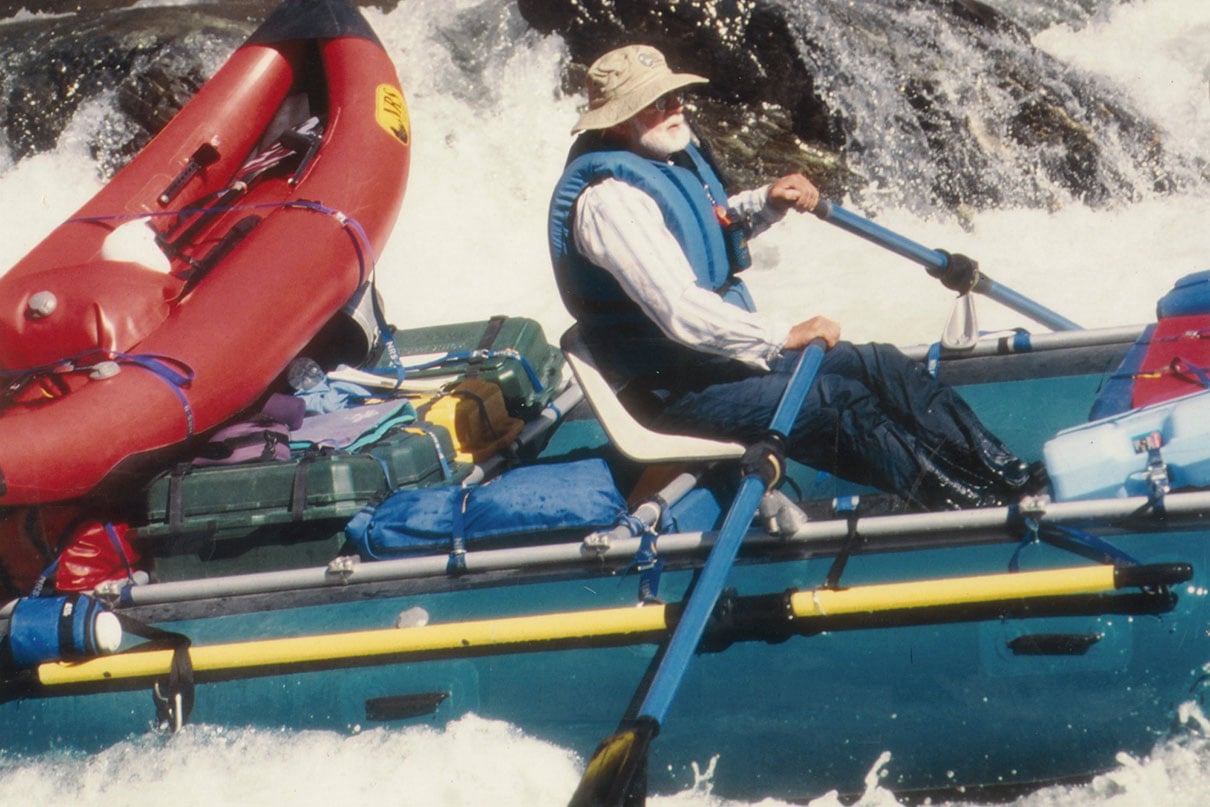
“I’ve done a lot of work over the years, but the people who’ve worked for me have done the work also,” says Miller, who credits the late NRS founder Bill Parks for sharpening his transition philosophy. A decade ago, at Outdoor Retailer, Miller asked for a few words of advice, and Parks spent an hour describing the employee stock option plan, or ESOP, he used to shift ownership of NRS to his employees in 2013.
Deming had been at NRS for about three years when Parks announced the plan. “He had been approached numerous times over the years by outside groups that wanted to invest or purchase the company, but Bill was never really about making money,” Deming recalls. “He drove a 10-year-old minivan, and if you saw him in the grocery store, he’d be wearing old blue jeans and sandals with socks.”
Though he may not have been motivated by money, Parks was good with it. He famously founded NRS as a side hustle to his tenured position as a business professor. After careful analysis, he settled on an ESOP as the best option to pass ownership to the people who helped him build NRS into a paddlesports powerhouse.
“This company was like his family, and he couldn’t bear the thought of having somebody else take it over and restructure it or run it into the ground,” Deming says. “At great personal risk, he helped finance a deal for the employees to take over all company stock.”
Mark Deming is one of many NRS employees who took advantage of an ESOP set up by founder Bill Parks. | Photo: Sarah Deming
Every year, NRS employees with a year of service and 1,000 hours of work time in the past calendar year are eligible for a distribution of company stock. People at every level of the company take advantage of the plan, Deming says. “It’s very much changed the mentality of people coming to work every day. We’ve always been a company where employees bought in and did all they could for the business, but you think differently when you know you are the owner.”
Other large outdoor retailers have used ESOPs to transition to employee ownership, including the 500-plus employee Colorado outdoor chain JAX in 2022. Miller considered an ESOP, but the plan was too complex for a business the size of California Canoe & Kayak. His calculus has been weighted toward continuing the legacy he spent more than 45 years building.
“My whole driving force was to create new paddlers and create advocates for the environment,” Miller says. “That came directly from my Stanislaus River days, and that goal has never faded.”
This article was first published in the 2024 issue of Paddling Business. Subscribe to Paddling Magazine’s print and digital editions, or browse the archives.
Keith Miller at his flagship store in Oakland. | Feature photo: Courtesy California Canoe & Kayak
While most paddlers dream of whale sightings, dolphins, and other romantic cetaceans, Rupert Kirkwood found himself surrounded by marine wildlife of a different kind. On a sunny morning paddling in Devon, England, Rupert had a close encounter with a school of leaping bluefin tuna; a moment caught on camera by Rupert’s son wildlife filmmaker Henry Kirkwood.
The Lone Kayaker: exploring southwest England’s wildlife by paddle
Rupert goes by The Lone Kayaker on social media, and has been around animals all his life. He worked as a farm vet in West Devon before taking an early retirement due to an injury, then dove headfirst into the world of paddling in southwest England– and the world of wildlife near his home.
“I have kayaked every inch of the coast of SW England, from Poole to Minehead, all 1156 miles of it,” Rupert wrote in his blog. “Yes, it really is that far if you paddle up every creek as far as you can get at high tide, and out to every island. Also 2,000 miles in Scotland, and short jaunts in Spain, USA, Mexico, Greenland, Chile, and Antarctica.”
By kayak, Rupert has shared the water with ocean sunfish, minke whales, and Risso’s dolphins, along with seals, dolphins, and even a humpback. Rupert estimates he’s logged 35,000 paddling throughout the UK with most of the paddling in Devon and Cornwall.
Henry, Rupert’s son and wildlife filmmaker, has been following his father’s adventures, with the two working together to tell stories about UK wildlife. Henry even made a short film about his father’s adventures, and aims to produce a series of films with his father as the subject in the future.
Rupert and Henry Kirkwood had seen bluefin tuna on the shores of southwest England in the past, but always just a passing glimpse as the tuna leaped in the distance. When they arrived at the beach the presence of garfish, a favorite meal of bluefin tuna, proved promising for tuna sightings.
“If we see them it’s really going to be off-the-scale entertainment, hopefully, and if we don’t we’re going to have a nice day anyway,” said Rupert before the event.
Wildlife filmmaker and father have the wildlife experience of a lifetime in Devon, England
In search of bluefin tuna Rupert paddled out to their destination while Henry hiked in, staging camera gear near shoreline rocks. Not long after arriving, garfish skimmed across the water and the first bluefin tuna made its appearance. Just as Rupert turned his kayak to move closer to shore, two massive bluefin tuna jumped behind him and the feeding frenzy began.
“I can’t believe he’s still on his kayak,” said Henry as a bluefin tuna leaped out of the water near Rupert. “How is he still in one piece?”
Bluefin tuna and gar filled the air while Rupert laughed, the massive tuna sometimes leaping precariously close to his boat.
“What a hoot,” said Rupert in the short film. “Surely there can’t be a better experience in the entire world at this moment!”
A massive bluefin tuna cuts through the water toward Rupert Kirwood, The Lone Kayaker. Feature Image: Henry Kirkwood Filmmaking | YouTube
“Looking back on it, maybe it wasn’t a good idea to be sitting around in that particular location, with the risk of being hit by a 300 kg projectile flying at 30 mph.” Rupert wrote in his blog after the experience. “It would have been painful enough to be slapped in the chops by that lucky Garfish!”
Touring kayaks are made to cover ground, especially on open waterways. They are constructed of every material from plastic to composites. Their elongated, narrower shapes are made to track in a straighter line and carry more speed than other types of kayaks. | Feature photo: Kaydi Pyette
If you’re looking for a new kayak, you may have encountered a common scenario: you head to the paddle shop to grab a boat, only to find there are a dozen different options. Why is one enclosed, while another has an open-concept seating area? Is the short or long one better to paddle across the lake?
There are so many different types of kayaks that it can feel like a journey to decide on one. Even experienced paddlers weigh options when seeking their next boat as we become more specialized in our activities. This is because the differences in materials, design, number of seats, intended use and means of propulsion all tailor your boating experience. Understanding these differences will help you buy the best kayak for your goals, budget and aspirations.
How to choose the right kayak for you
Think of picking a kayak like following a flow chart, or, better yet, a choose-your-own-adventure story. Start with your experience level and the type of kayaking you’d like to do. From here, factor in your budget and any specific circumstances related to your paddling.
For example, if you’re a new paddler learning how to kayak, and you’re looking to stick close to shore while covering a few miles or float slow stretches of river, a recreational kayak could be a good choice. You can weigh the pros and cons of a sit-inside kayak versus a sit-on-top. Your budget will help determine what materials will be accessible to you, as well as the craftsmanship and features the kayak incorporates. For a reasonable price these days, you can buy a plastic recreational kayak that gets you on the water, and, by budgeting a little more, you can find a design with a stronger plastic construction, more comfortable seat, and helpful safety features should you capsize.
Now, let’s say you have some kayaking experience, live in a small apartment with limited storage, and the boat ramp on the bay is just a short walk away. Going through these thoughts, a folding, touring kayak that can be tucked away almost anywhere may be the choice.
To guide you in the possibilities available, here’s a comprehensive resource on every kayak type to choose from.
Types of kayaks explained
Kayaks for different activities
The bodies of water and how you plan to paddle them play perhaps the largest part in what kind of kayak to choose.
Recreational kayaks
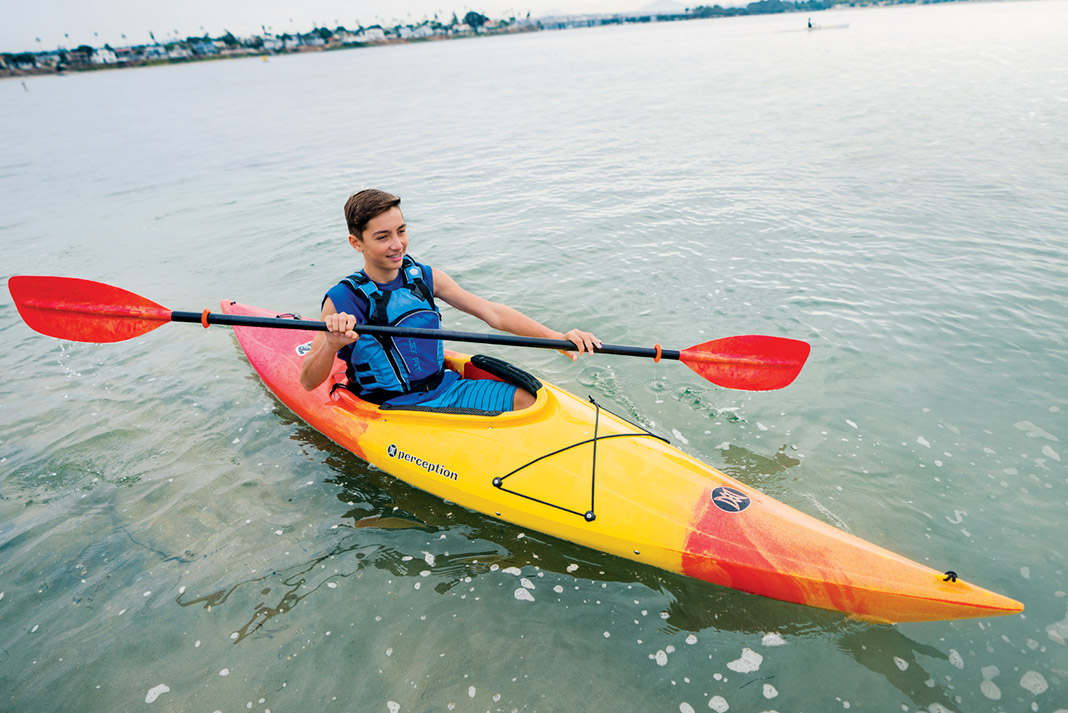
Recreational kayaks are about fun, stability and value. Whether they are sit-inside or sit-on-top, recreational designs put a premium on stability. They aren’t as fast as touring kayaks, but they are more stable. All of this is to say they make a good learning kayak.
Recreational kayaks often offer very basic features and come at an affordable price. In some cases they are just a simple kayak hull with a seat and little else. Nicer designs incorporate some touring kayak features, like hatches and bulkheads for storage and safety.
Like all kayaks, recreational kayaks come in a wide range of lengths and designs. Few are shorter than nine feet and most are no longer than 14 feet. All are wider than touring designs of similar length, which provides more stability but will not be as effective at covering ground or countering wind and current.
If you’re considering a recreational kayak, take a look at designs around 12 feet long first. Boats shorter than this are lighter and less expensive, but noticeably slower. Those longer are faster but heavier. Longer recreational boats are a good choice for covering lots of miles.
The best recreational kayaks for paddling far from shore are sit-on-top designs that will allow you to remount should you capsize. Sit-inside recreational kayaks are great for anyone who paddles close to shore and seeks to not have their lower half exposed to weather and splashing water.
Touring kayaks are made to cover ground, especially on open waterways. They are constructed of every material from plastic to composites. Their elongated, narrower shapes are made to track in a straighter line and carry more speed than other types of kayaks. | Feature photo: Kaydi Pyette
Touring and sea kayaks
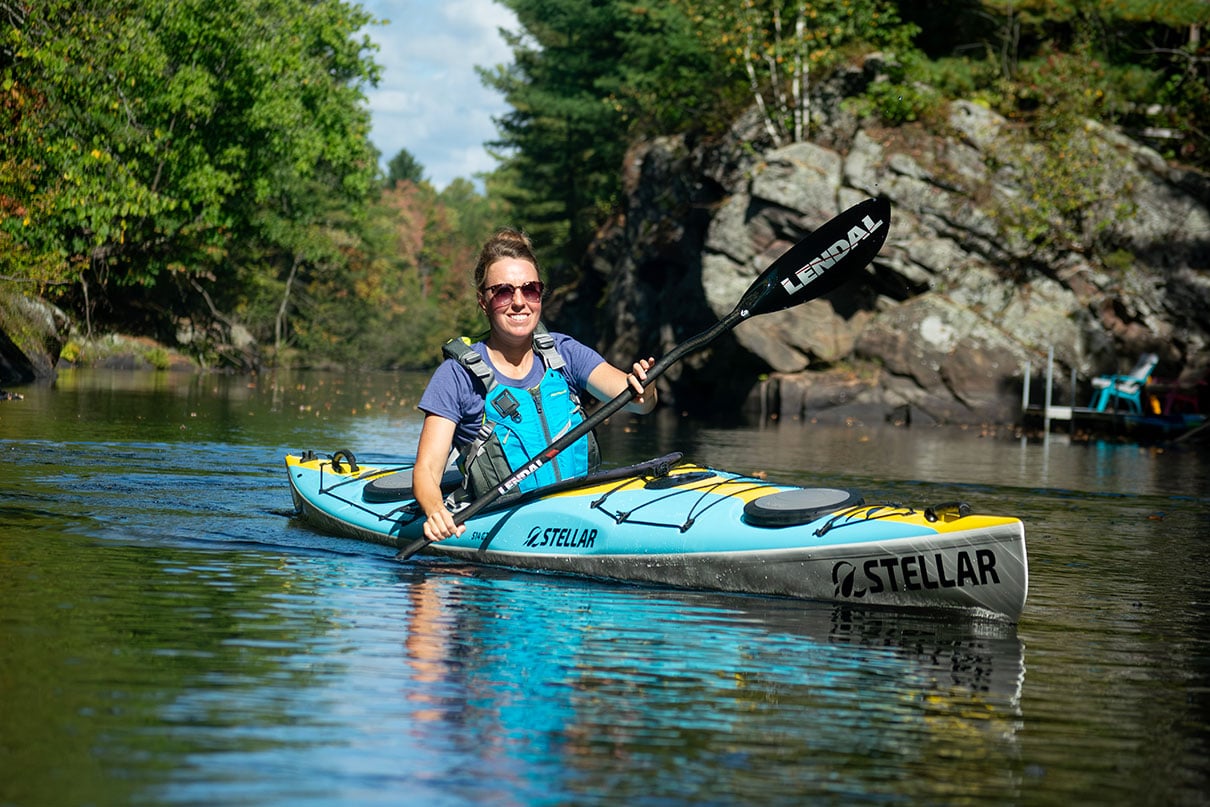
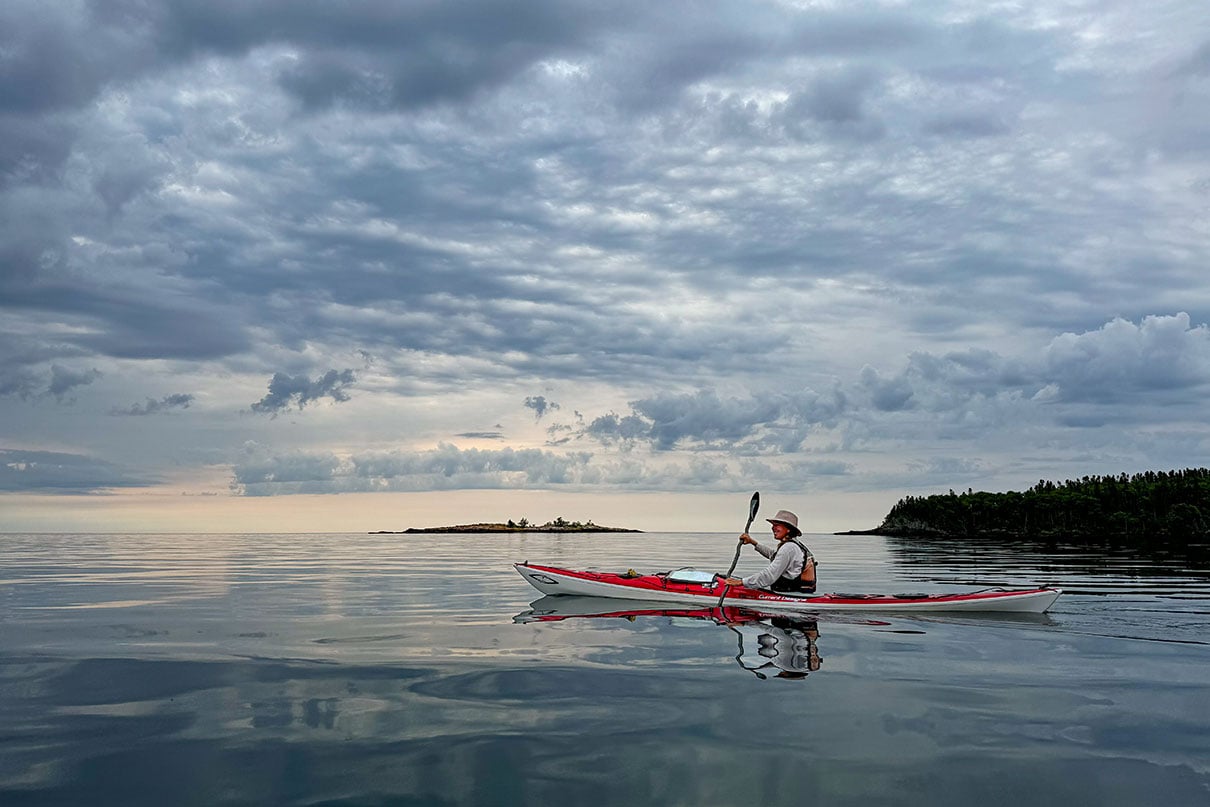
Touring kayaks are specialized sit-inside kayaks designed for long-distance travel, camping, and open waters. Sea kayaks are a more specialized set of touring kayaks that are typically longer and narrower than general-purpose touring boats.
Touring kayaks typically pick up where recreational kayaks leave off. They are usually longer than 14 feet and narrower than 24 inches. Most touring kayaks are fitted with bulkheads and hatches front and rear for dry storage and floatation. Many have rudders or retractable skegs to help control direction in wind. Safety features like decklines are common.
Sea kayaks are similar to general-purpose touring kayaks in many ways. They are usually 16 feet long or longer and commonly 22 inches wide or narrower. Sea kayaks are faster than other touring kayaks but usually not as stable. They almost always feature as skeg or rudder and often have extra compartments and hatches that allow easy access to equipment while on the water.
Most touring kayaks are made of rotomolded polyethylene. Many sea kayaks are made of lighter, stiffer composite materials like fiberglass or aramid fibers. Generally, these composite kayaks offer better performance than their PE cousins but cost substantially more.
If you’re interested in paddling larger bodies of water like the ocean or the Great Lakes, touring kayaks are a good choice. Especially if you plan to do multiple-day trips involving camping.
Whitewater kayaks come in a variety of design types to adapt to the types of river and style of paddling you plan to do. What are called “river runners” such as the Dagger Indra, are considered all-around designs that are a good fit for most who want to paddle whitewater. | Photo: Dagger Kayaks
Whitewater kayaks
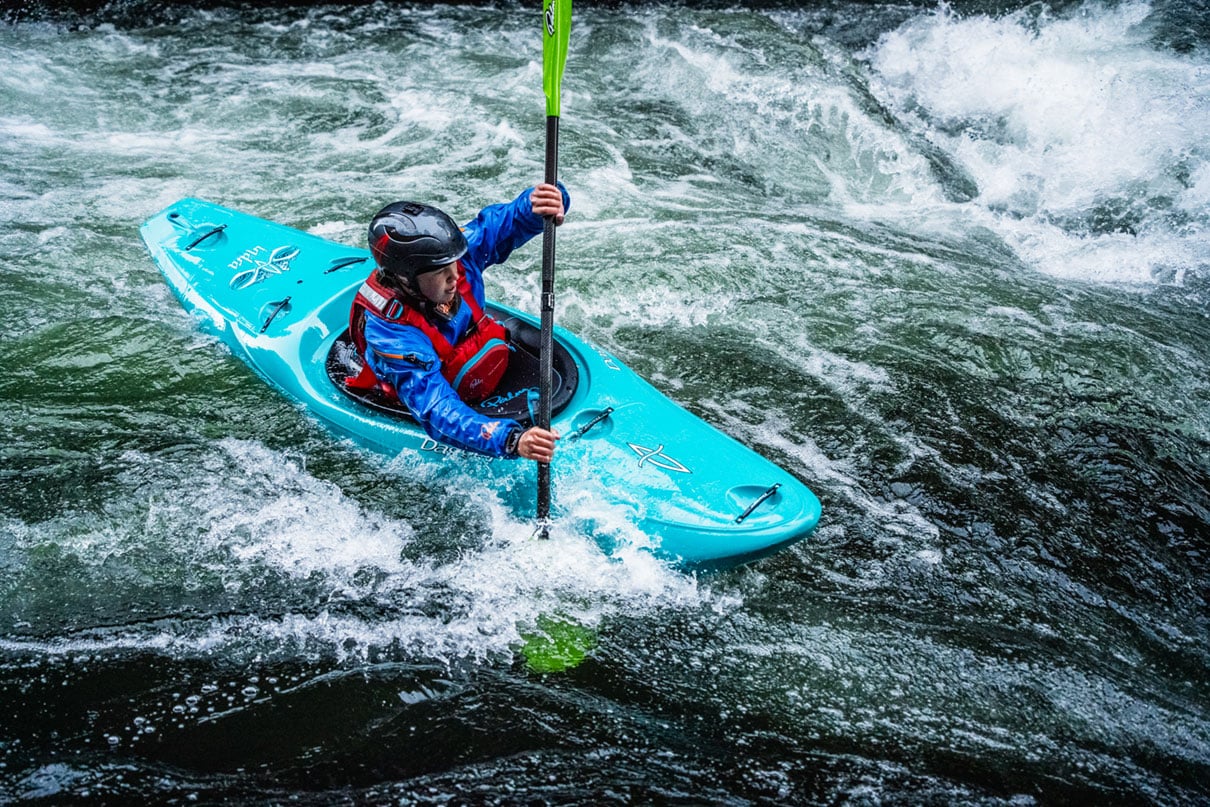
Whitewater kayaks are specialized designs for running river rapids. Most whitewater kayaks are sit-inside designs with smaller cockpits that can be sealed tightly with a neoprene sprayskirt. Some sit-on-top designs offer hard-shell kayak performance to those who prefer to sit on instead of inside their kayak.
Whitewater kayaks are typically shorter than touring or recreational kayaks. They are the most maneuverable kayaks and often have hull shapes that plane on a wave like a surfboard. Once you get into whitewater kayaking you’ll discover there is a whole new set of kayak types you can choose from, including river runners, freestyle kayaks, and even crossover kayaks that blend whitewater and touring.
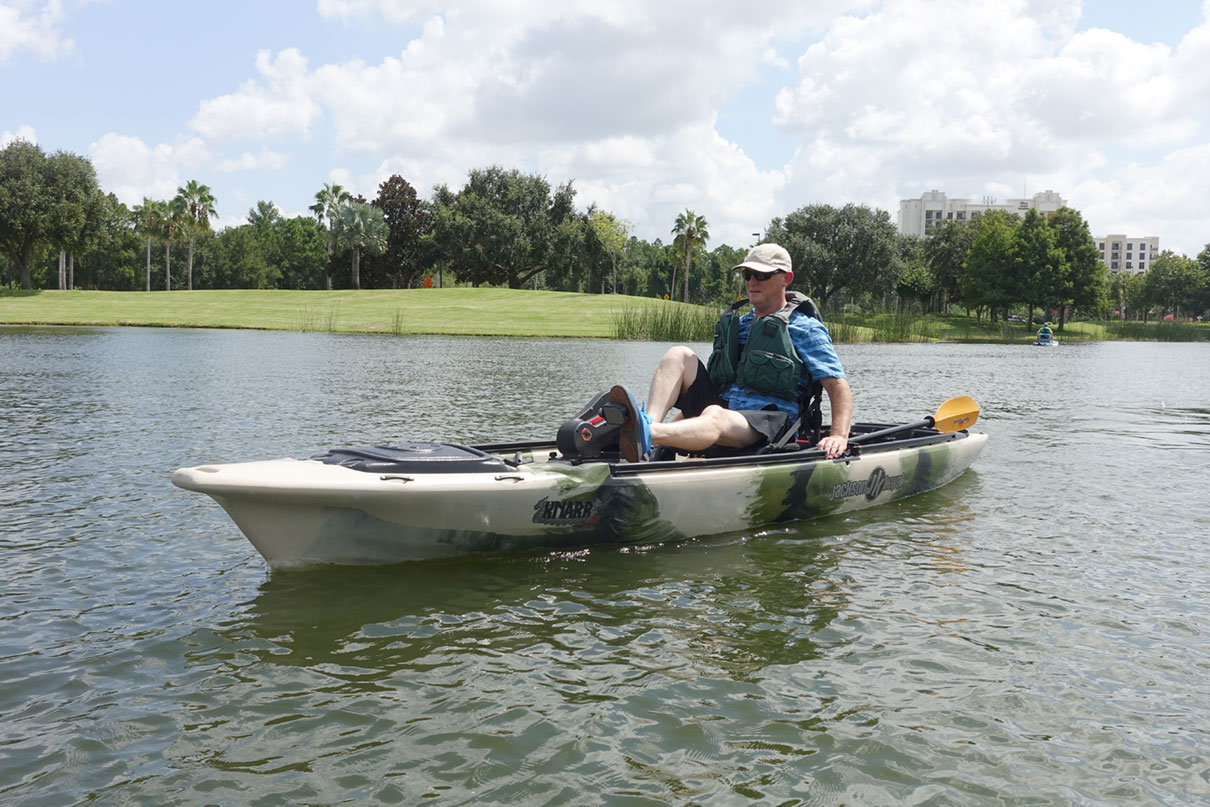
The popularity of pedal and motor-propelled kayaks is especially prevalent in the kayak fishing scene, where there are clear advantages to hands-free kayaking. Fishing kayaks are now largely produced as sit-on-tops with a large amount of deck space for tackle storage and the ability for an angler to move around and cast. | Photo: Joe Potoczak
Fishing kayaks
Fishing kayaks or angler kayaks are specialized recreational designs. Most fishing kayaks are sit-on-top designs. These allow for good mobility, ease of landing fish and safety when far from shore.
Some fishing kayaks are wide enough for standing. These designs are typically slower than narrower boats, but their wider beam provides ample stability. An added benefit of wider designs is that seats can be mounted higher for more effective vision and casting.
Pedal-drive fishing kayaks are popular, especially in tidal or river environments where strong currents can make paddling challenging. There are a variety of types of pedal kayaks, including those with fins and others with propellers. All allow a kayak angler to keep his or her hands free for casting and handling fish.
In colder climates, some kayak anglers prefer closed cockpit designs. These kayaks are a little more difficult to get into and out of, but offer more protection from cold water and air temperatures.
Surf kayaks are specialized kayaks for playing in ocean surf. They differ from whitewater kayaks because they have a specialized edge that grips a breaking wave and allows for a diagonal run like a surfboard would make.
Sit-inside surf kayaks come in two types. High-performance or HP boats are short and have a flat planing hull like a surfboard. Longer International Class (IC) boats have a rounder hull and are typically longer. Either may be fitted with surfboard fins, but it is more common to find fins on HP boats.
A specialized kind of sit-on-top surf kayak is called a wave ski. This is essentially a surfboard with a raised seat and a seatbelt to keep the paddler in place. Wave skis are similar to HP boats in their length and width. A few other sit-on-top surf kayaks are also available for beginners who are just getting into the sport.
Racing kayaks
There are lots of different kinds of racing kayaks. There are whitewater racing kayaks, whitewater slalom kayaks, downriver racing kayak, racing surf skis and flatwater sprint kayaks. There are also long, fast sea kayaks that are used for certain categories of kayak racing.
People buy racing kayaks either to compete in a particular discipline or because they like the speed and performance of a certain design. Many fitness paddlers choose racing kayaks as the right tool for training on the water.
If you’re considering competition, it’s probably best to explore the community around your chosen discipline before jumping in and buying a racing kayak. Other racers and coaches will have lots of recommendations for where to start and what to look for.
Types of kayaks by design
No matter which branch of paddling you want to pursue, you’ll choose between a sit-on-top or sit-inside kayak.
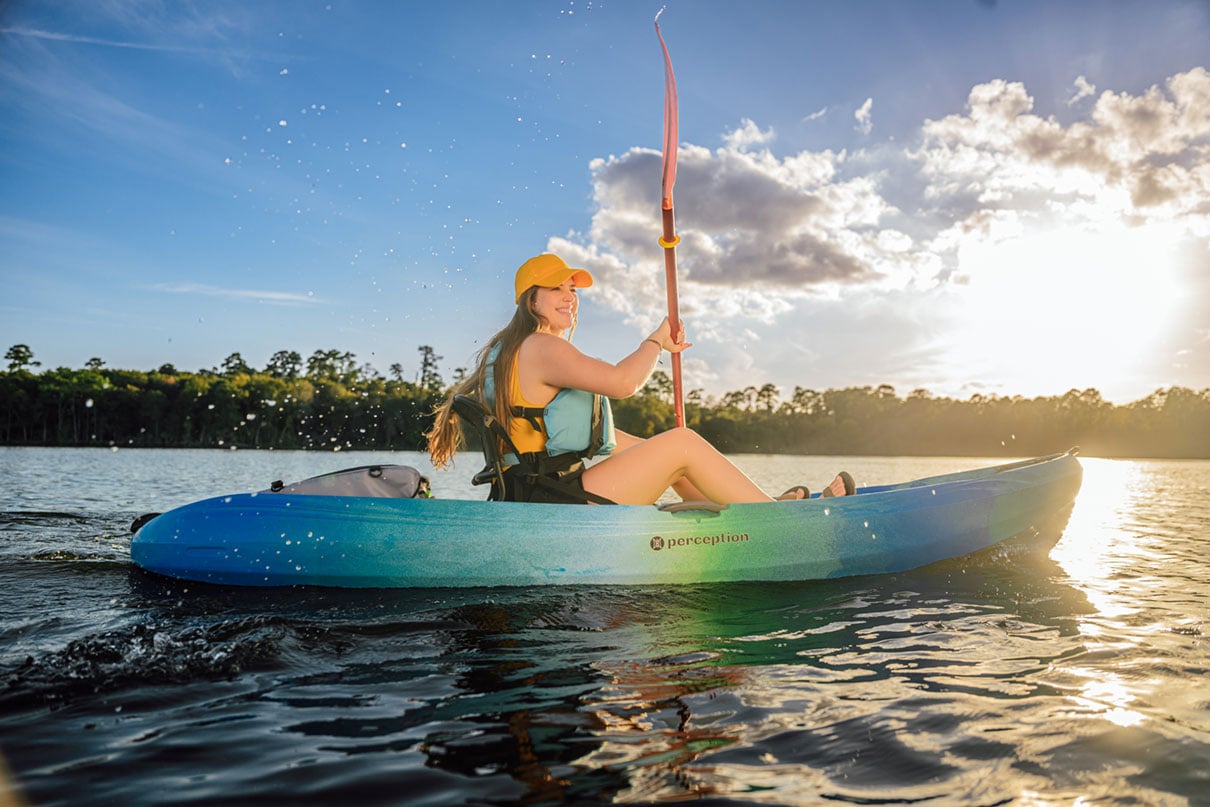
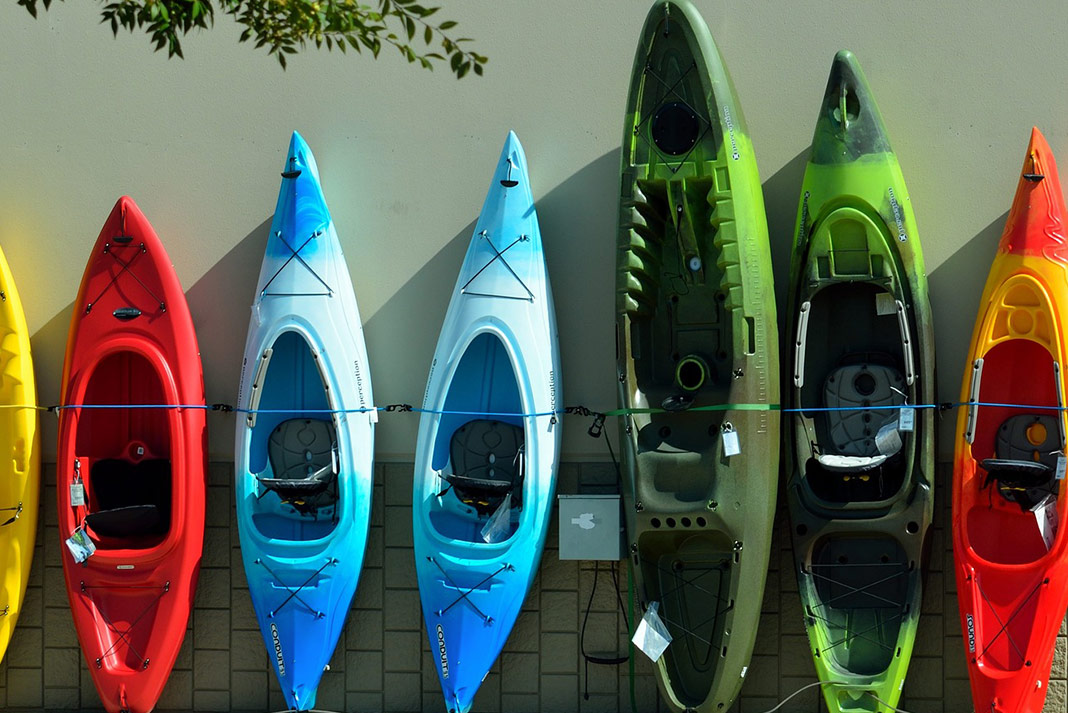
Sit-on-top kayaks provide one of the most accessible ways to start kayaking. A big benefit is that they are generally wide and very stable kayaks. And, should you capsize, they are the most straightforward to climb back on and get paddling again. | Photo: Perception Kayaks
Sit-on-top kayaks
There are sit-on-top kayak designs for every type of paddling activity, whether it be recreational, touring, whitewater, fishing and even racing.
There are two main advantages to sit-on-top kayaks. First, they won’t fill with water if flipped over. This makes them easier to get back onto in deep water and is one of the reasons sit-on-tops are a good choice for a recreational kayak that you plan to paddle far from shore.
Second, they are easy to move around within, whether you are turning around to grab a fishing rod or getting onto them at the beach. Almost all fishing kayaks today are sit-on-top designs for this reason.
If you’re paddling a sit-on-top in cold water you might get wet and cold. This is the biggest disadvantage of sit-on-top designs. Another is that sit-on-tops tend to be heavier than similar kayaks with a cockpit. Because you are not enclosed, with your thighs secured, there all also limits to the types of maneuvers you can do in a sit-on.
Sit-on-tops are an excellent choice for recreational paddlers who paddle farther from shore, anglers who want a versatile kayak for fishing, and for anyone who gets into high-performance surf ski racing.
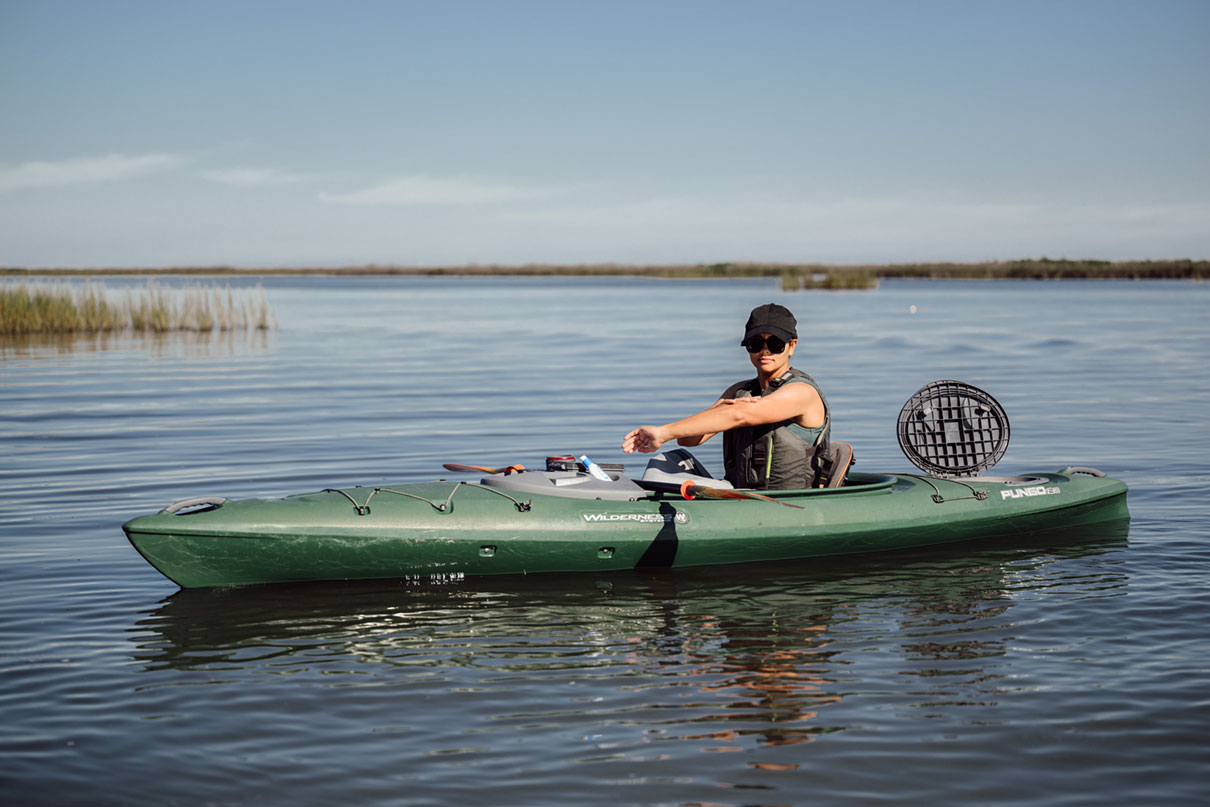
Sit-inside recreational kayaks are available at just about any outdoor store. They are affordable, lighter in weight, and very stable for paddlers new to the sport or not seeking to go far when they paddle. The Pungo 120 is a popular kayak that glides well at 12 feet and has bulkheads that both provide storage and create chambers that help keep the kayak afloat should you capsize. | Photo: Wilderness Systems
Sit-inside kayaks
The most common type of kayak, or type we often envision, is a sit-inside or sit-in kayak.
The biggest advantage to sit-inside kayaks is they can be sealed off from the elements with a sprayskirt. This means they are warmer and drier to paddle in cool weather or on cold water. A closed cockpit can do anything from seal out a light drizzle to protect a paddler from smashing surf or turbulent whitewater—it just depends on the design.
Sit-inside recreational designs are found everywhere and are a good option for paddling close to shore on calm water. Longer touring designs are faster and frequently have safety features that come into play for open-water touring or camping. Whitewater designs will run steep drops or surf a river wave. For advanced paddlers, sit-in kayaks in touring and whitewater have performance advantages beyond sealing water—by having your legs secured inside the kayak, you’re able to perform moves like a roll to right yourself. Sit-insides also tend to be lighter because of their hollow structure.
The biggest disadvantage of sit-inside designs is they can be tricky to get back into if you fall out in deep water. Sea kayakers need to learn special skills to get back in their kayaks. Whitewater kayakers learn to roll their kayaks to avoid swimming through rapids. The possibility of a capsize and how far you’ll be traveling from shore, is something recreational paddlers will want to take into consideration.
Kayaks by construction
Kayaks are produced in a variety of materials. There are pros and cons to each, and which you choose usually depends on budget and what attributes are most important to you.
Where to begin? Understanding what the characteristics of different types of kayaks are will help you select the right one for you. | Photo: Paddling Mag Staff
Rigid or hard-shell kayaks
The largest category of kayaks is rigid or hard-shell kayaks. There are hundreds of designs on the market in a wide range of materials, from rotomolded and blow-molded plastic kayaks to thermoformed ABS plastic kayaks to composite constructions. The one thing all these constructions have in common is that they are a “rigid” construction. They don’t fold up, they don’t roll into bags, and (for the most part) they don’t come apart into pieces.
Hard-shell kayaks are where you should start your exploration. Most people who purchase kayaks will find a hard-shell design that matches their needs, whether they’re looking for a fishing kayak, a lightweight recreational design or something for serious ocean exploration. Nearly every category of kayak design is dominated by some sort of rigid design, whether it be fishing kayaks, recreational boats, whitewater designs or touring kayaks.
Rigid kayaks differ in both design and materials. Here we’ll focus on the differences between rotomolded, blow-molded, ABS/thermoformed and composite constructions.
Rotomolded polyethylene
Rotomolded polyethylene (PE) is the most common material for rigid kayaks. It’s durable and particularly impact-resistant, which is why nearly all whitewater kayaks are rotomolded. Rotomolding can be used to create an almost infinite range of kayak designs. The toughness of the material makes it a good choice for many paddlers, as does its modest cost.
The biggest downside of rotomolded kayaks is they tend to be heavier than boats made from other materials. Rotomolded boats are also a little more flexible than composite designs, so the material isn’t quite as good for high-performance designs like racing kayaks and sea kayaks.
Blow-molded
Blow-molded plastic kayaks are often the least expensive and least durable designs. A handful of high-quality manufacturers make heavy-duty blow-molded kayaks, but most of the blow-molded designs you’ll find are economy models sold at department stores and mass merchant retailers. These blow-molded kayaks are lightweight and inexpensive, but are much less durable than rotomolded plastic designs.
Composite kayaks are made from layers of fiberglass, aramid, or carbon fiber laminated together with varying types of resin. Each composite material provides varying attributes and costs. In general, composite kayaks are lighter and stiffer than rotomolded designs. This makes composite a good choice for longer touring kayaks. Composites are also the best choice for a kayak that is ultra-lightweight or the most high-performance.
ABS
ABS plastic kayaks fill a middle ground between rotomolded PE designs and composites. They cost more than rotomolded boats but less than composites, and they’re roughly in between the two materials in terms of stiffness and impact resistance. Many light touring and touring designs are built in this material and offer excellent value.
The one category of kayaks you’ll rarely find in hard-shell designs are folding or collapsible models. There are some rigid kayaks that come apart into two or more pieces for transportation or storage, but the category of travel kayaks is dominated by inflatable and folding designs.
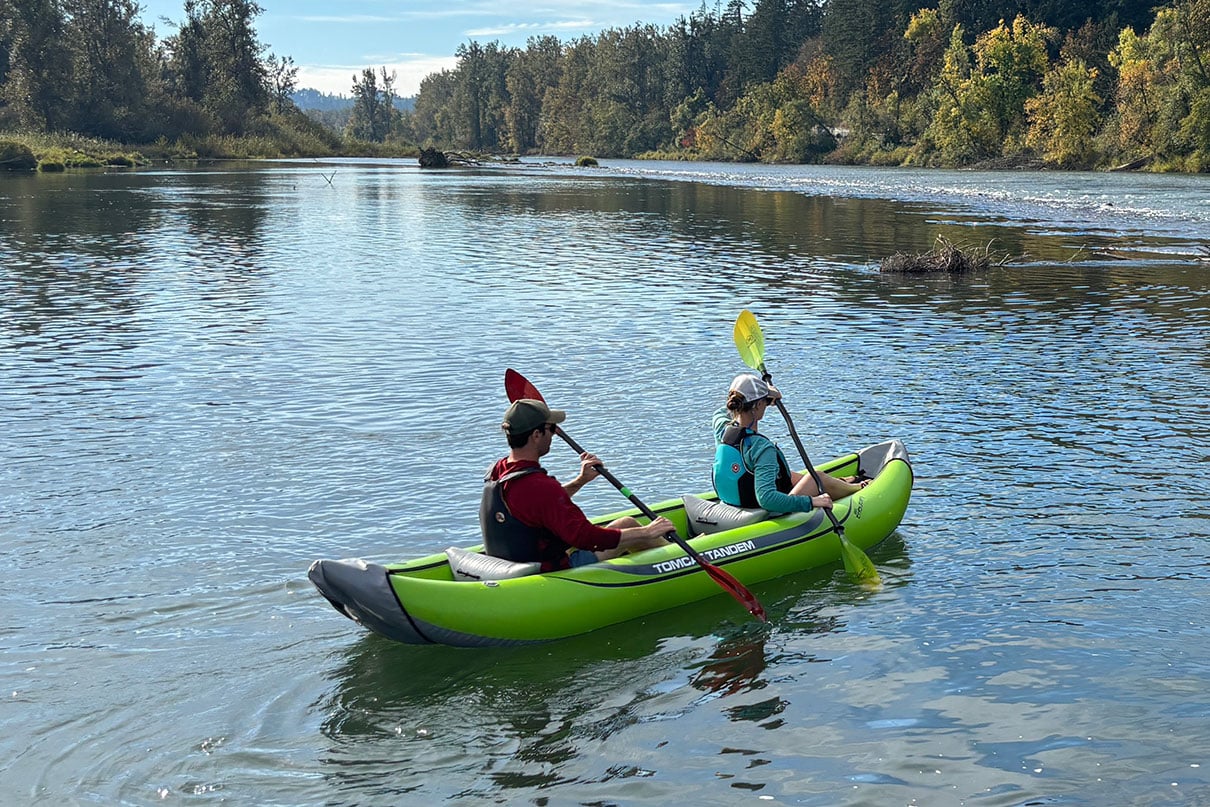
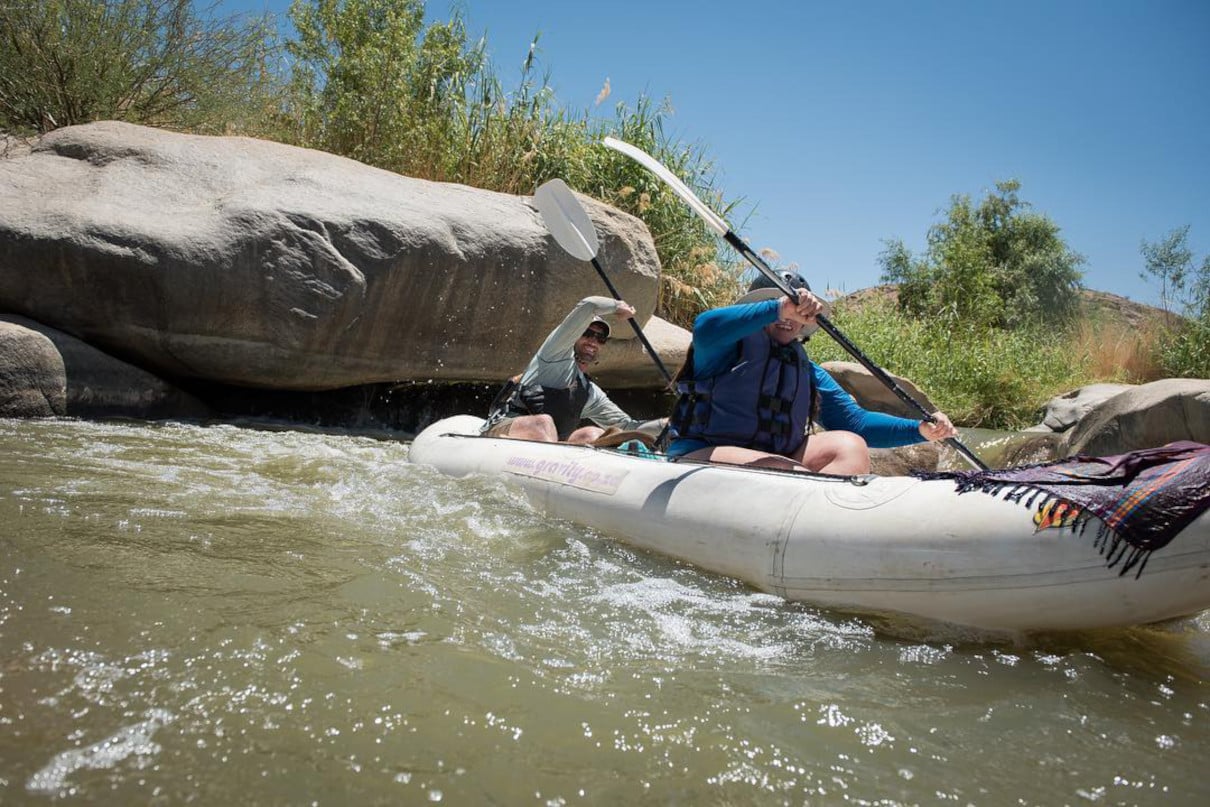
Inflatable kayaks are a popular choice for running rivers with novice to moderate whitewater. Tandem inflatables roll up to a reasonable size for transport and allow you to partner up or carry gear. | Photo: Joe Potoczak
Inflatable kayaks
Inflatable or blow-up kayaks are a good option for kayakers with limited space to store their boats, as well as those seeking stability and ease of floating along over performance. Inflatables are constructed of rubbery materials that hold air to provide their structure.
Inflatables typically come in whitewater, fishing and recreational designs, but there are some also geared toward touring. Whitewater and fishing inflatables are usually made from tough materials similar to those used in whitewater rafts. Recreational designs use lighter materials and are usually a little less durable but more affordable.
Whitewater inflatable kayaks offer an option between rafts and whitewater kayaks for paddlers looking to explore wild rivers. Recreational designs are suitable for quiet water adventures. Both are available in solo or tandem designs.
The chief advantage of inflatable designs is their compactness for storage and travel. They also offer some of the best stability of any kayak type because of the pontoon-like design of the tubes. This makes an inflatable something just about anyone can hop in and use, especially to float down a stretch of mild whitewater. Another advantage is that they can be among the most affordable options in collapsible kayaks.
A disadvantage to inflatable kayaks is that they are much less rigid than hard-shell designs, so they don’t perform quite as well. They also offer fewer design options and features than rigid kayaks, but if you’re looking for a kayak to store in your closet or a tough boat to bomb down the river, they’re a great option to consider.
It also shouldn’t be overlooked that even durable inflatables can be punctured. Many have multiple air chambers so you can make it to shore for a repair, nonetheless, this should be acknowledged.
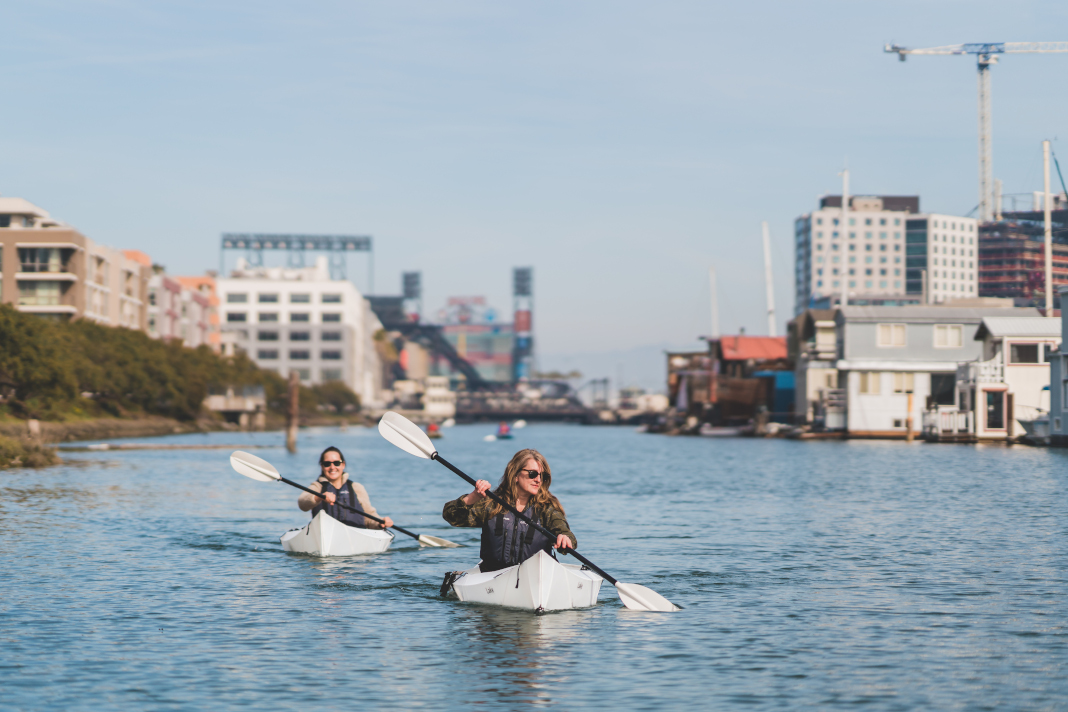
Folding kayaks were the first kayaks made commercially a century ago. They’ve regained popularity for touring and recreational kayaking with advances in materials and ease of setup. | Photo: Oru Kayak
Folding kayaks
Folding or foldable kayaks typically offer the most high-performance options in collapsible kayak designs. Traditional folding kayak designs use a rigid frame covered by a flexible waterproof skin. Some newer designs use folding plastic panels that form the hull of the kayak when snapped together. Either option creates a hull that is stiffer than an inflatable and in some cases approaches the performance of high-end hard-shell touring designs.
Folding kayaks come in recreational and touring designs. They are often wide and stable, particularly tandem folding designs.
The biggest advantage of folding kayaks is they offer a compact option for storage and travel. Folding kayaks are more expensive than inflatable options but typically offer superior performance on the water. Because of their rigid design, folding kayaks are a poor choice for whitewater paddling where impacts with rocks could bend or break their frames.
If you’re looking for a compact kayak for storage or travel, and an inflatable would not be suitable, folding designs should be at the top of your list.
Types of kayaks by number of seats
Another factor you’ll want to consider from the outset is whether you’d like a solo or tandem kayak. Solo kayaks are perhaps the most widely used, however depending on your circumstances, there can be benefits to either.
Solo kayaks
Solo kayaks or one-person kayaks are the most common type of kayaks sold. The advantage of a solo kayak is that only one person is needed to go out on the water. Many kayakers prefer solo kayaks because they can choose their own course and pace. Solo kayaks are lighter than similar tandem kayaks and less expensive.
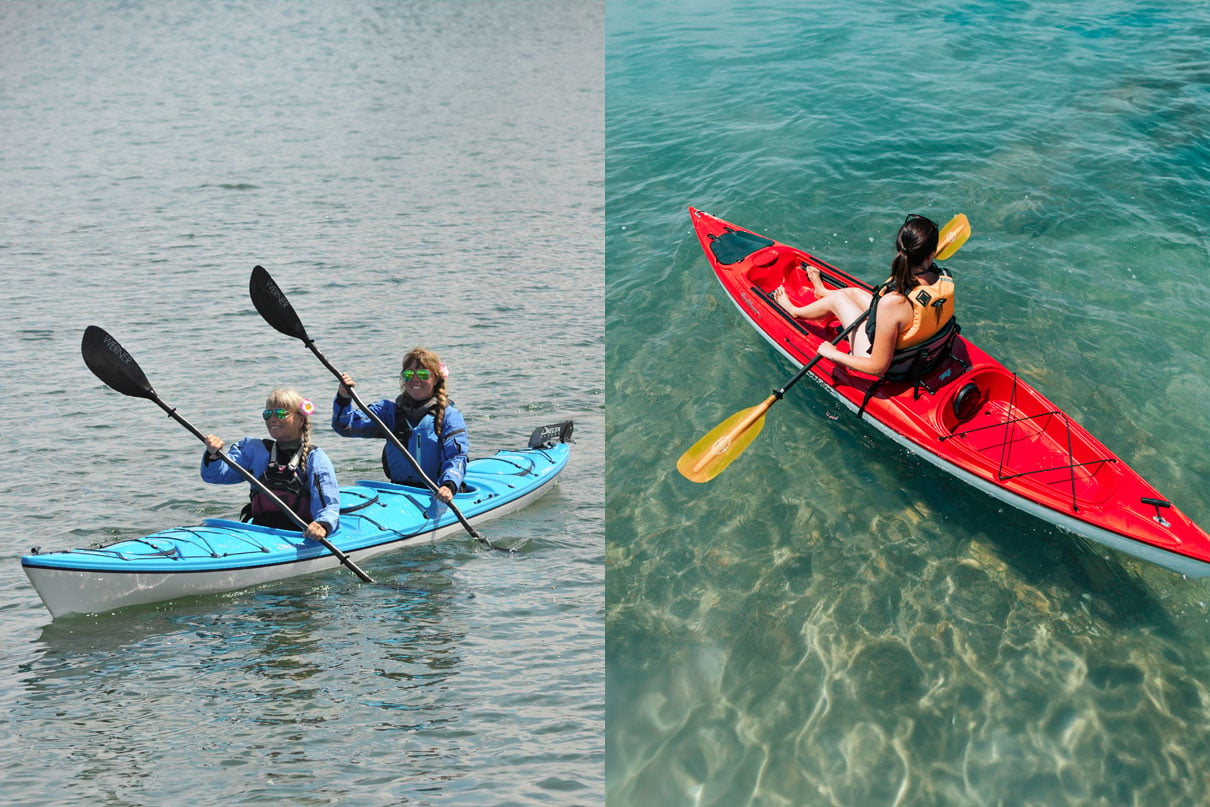
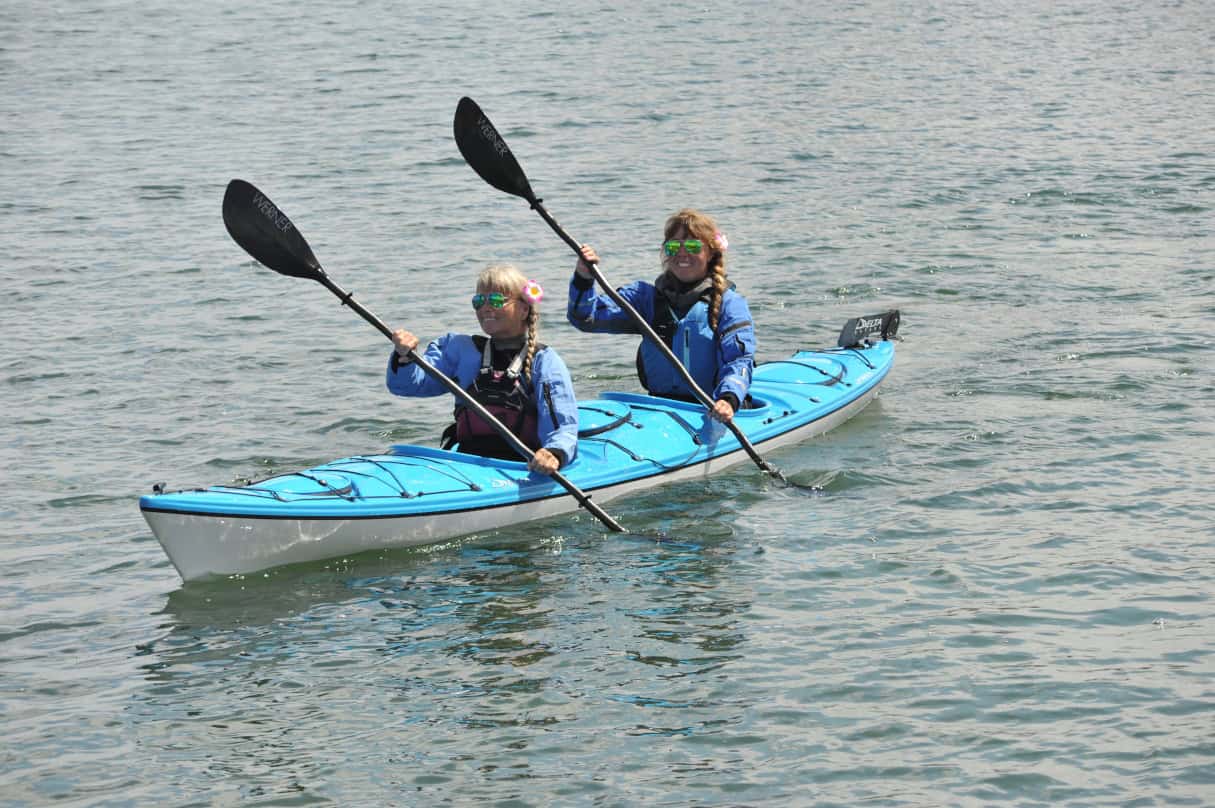
Tandem kayaks, two-seater kayaks, two-person kayaks—there are many ways to describe them, but the basic idea is the same. Two people in one boat. There are tandem versions of all the different types of kayaks, from recreational to touring and even racing. Some tandems can be paddled solo, while others have separate cockpits and are best used by two people. A single tandem kayak usually costs less than two solos, but is heavier to carry and can be more challenging to transport. One of the biggest advantages of tandem kayaks is they allow two paddlers of different skill levels or strength to stay together on the water.
Types of kayaks by propulsion
Believe it or not, there is more than one way to make a kayak go. While paddling is the traditional method of human-powered propulsion, there are a growing number of pedal and motorized kayaks. Different types of propulsion make kayaking accessible to more people, and also have significant benefits in sectors of the sport like fishing.
Paddle kayaks
The most common way to propel a kayak is with a two-bladed kayak paddle. Just about any kayak on the water can be paddled this way, as long as you use a paddle that is correctly sized to the boat. Wider kayaks require longer paddles, narrower kayaks use shorter paddles. Different styles of kayaks perform better with different types of paddles, but one thing is universally true—a lightweight paddle makes paddling your kayak much more enjoyable and is a worthwhile investment.
Pedal kayaks
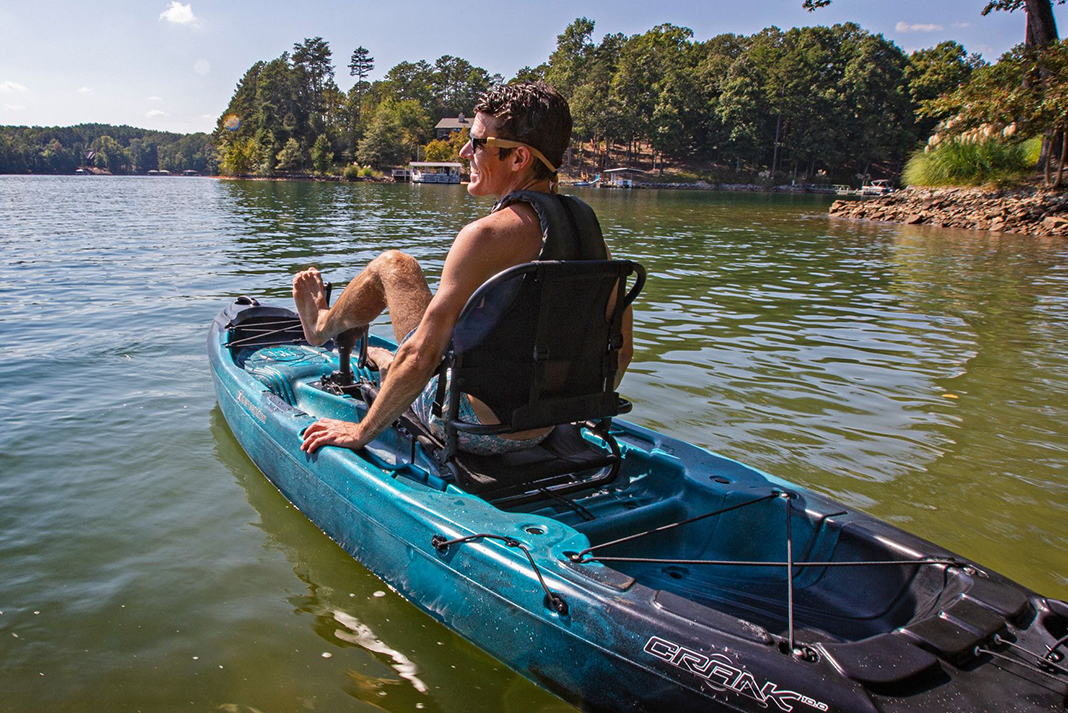
Some kayaks come with pedal-drive systems that allow them to be propelled using your legs rather than arms. Since the leg muscles are stronger than those in the upper body, pedal-drive kayaks can be less fatiguing to use. Pedal-drives are primarily found in recreational kayaks, particularly fishing kayaks. Pedal-drive kayaks allow you to keep your hands free for fishing, which is a big advantage when you’re trying to cast and hold position.
Pedal kayaks can develop a lot of power and many anglers prefer them when fishing water with currents, where they can be used to hold the kayak in position without setting an anchor. Pedal-drive kayaks have lots of advantages, but they do tend to be more expensive than similar sized recreational kayaks. The largest pedal kayaks can also be quite heavy.
Motorized kayaks are similar to pedal-drive kayaks but power is provided by a marine battery rather than the kayaker’s legs. Motor drives are frequently offered as an add-on option for pedal-drive kayaks, or as a kit to fit onto a conventional recreational or fishing kayak. A motor moves the kayak swiftly through the water and eliminates any need to paddle or pedal. Motors do add complexity and cost to a kayak and marine batteries require charging, but some anglers find the hands-free power of motors to be a worthwhile investment.
Kids’ kayaks, youth kayaks or child’s kayaks can be found in a range of styles and designs. There are fewer choices in youth kayaks than there are for adults, but if you look into the options you’ll find whitewater kayaks, touring kayaks, sit-on-tops and recreational kayaks sized smaller to fit children. Oftentimes children’s kayaks are simply smaller versions of similar adult boats. In this case, you should expect them to come at similar prices.
Other children’s kayaks are stripped down to the basic features in order to keep them affordable. Regardless of what type of kayaking you enjoy, you’ll likely find a child-sized option to help you get out on the water with the whole family.
Touring kayaks are made to cover ground, especially on open waterways. They are constructed of every material from plastic to composites. Their elongated, narrower shapes are made to track in a straighter line and carry more speed than other types of kayaks. | Feature photo: Kaydi Pyette
The Paddling Mag team caught up with Kelly Smith, founder of Kokopelli rafts, to chat about the new in 2025 self-bailing Rodeo.
Kokopelli launches Rodeo self-bailing packraft
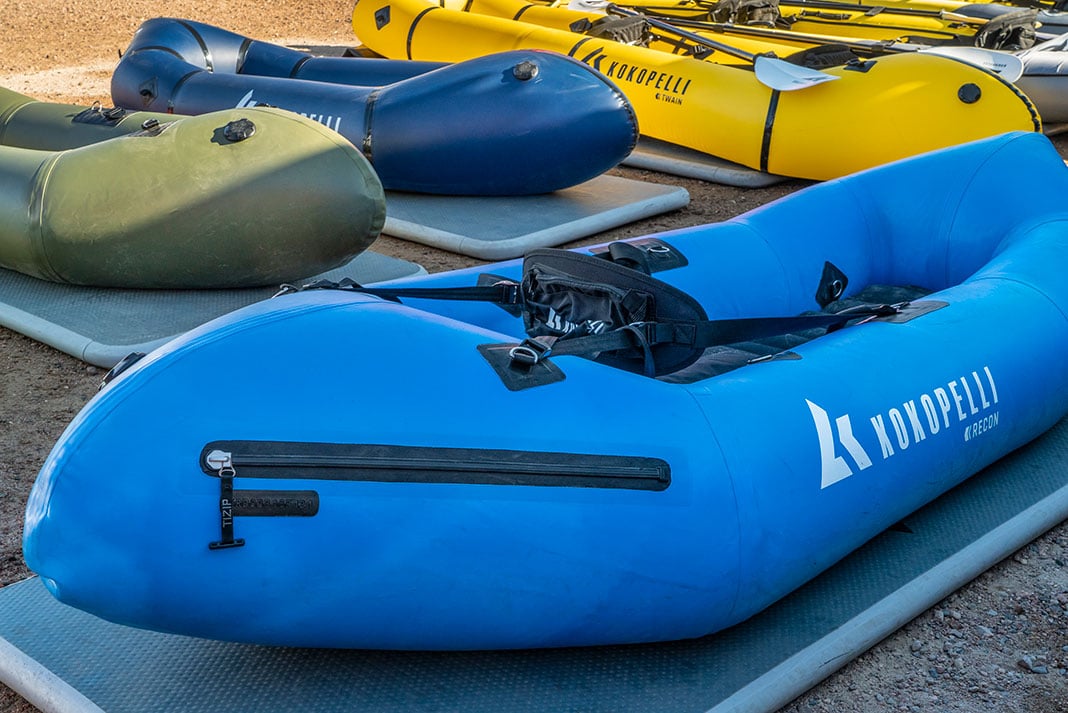
Kokopelli is a packraft manufacturer founded 12 years ago out of a garage in Denver. Now beyond the garage and on to major rapids all over the world, Kokopelli introduced the Rodeo self-bailing in March 2024.
In the past, Kokopelli has focused on ultralight and extremely carry-in friendly packrafts. The Kokopellie Rodeo is their first dive into creating an advanced whitewater boat. According to Smith, the new design was a collaboration between one of their top whitewater paddlers on staff and several whitewater paddlers throughout the world with the goal of creating a fun, whitewater-ready packraft.
The Rodeo has a hull shape with more aggressive rocker than Kokopelli’s recreational adventure packrafts. Drain holes at the bottom have one-way flaps that close as you move forward through the water, allowing water to drain one-way out the bottom. The entirety of the packraft, both the floors and sidewalls, is reinforced with kevlar making the packraft puncture and tear-resistant.
In the wake of the largest waterfall in North America is a set of rapids so dangerous to run that it’s illegal. Niagara Falls sees four of the Great Lakes tumble 70-180 ft (21-57 m) with a flow rate around 100,000 cubic feet per second (cfs) during the high season, making it the largest waterfall in North America by volume.
At the bottom of the falls lies Niagara Gorge with massive whirlpools, standing waves so large they earned the name “the Himalayas”— some of the biggest whitewater in the world. The Gorge includes the only eddy to appear on a world atlas, a quarter mile long.
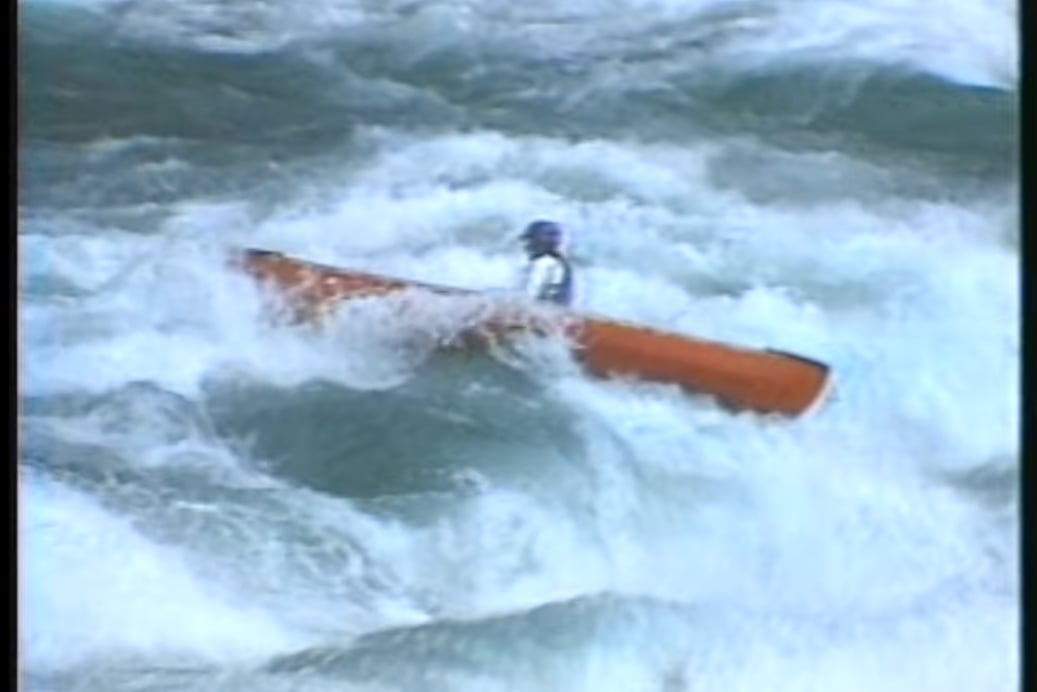
It took a two year legal battle with the New York Supreme Court for Risa Shimonda Callaway, Woody Callaway and Nolan Whitesell to get permission to run the gorge in 1987; Whitesell ran the Gorge in an open canoe, and remains the first and only recorded person to run Niagara Gorge in an open canoe.
Nolan Whitesell tackles Niagara Gorge in an open canoe. Feature Image: YouTube | Whitewater Video
Running Niagara Gorge in an open canoe
“It’s one really enticing, mighty tantalizing and tempting piece of whitewater,” Nolan Whitesell said in a video documenting the run of Niagara Gorge.
Whitesell in 1984 became the first known person to run every rapid in the Grand Canyon in an open canoe, as well as Idahos’ North Fork Payette. According to an article in Men’s Journal, in order to get the permit to run Niagara, Whitesell put up his home as collateral against the cost of potential rescue.
Scouting the rapid was easy for the team, with two different countries to view from as well as elevators and observation decks but below the river is continually changing, with massive standing waves shifting and whirlpools materializing and fading.
“The only thing that’s consistent is the overwhelming hope that there must be a better route on the other side of the river,” Whitesell explained.
History of running Niagara Gorge
On June 6, 1891 Captain Joel Robinson became the first known person to navigate Niagara Gorge when he navigated the Maid of the Mist steamer through the rapids in order to make a date to sell the boat on Lake Ontario.
Along with the boat’s mechanic James McIntyre and engineer James Jones, Robinson took the steamer through Great Gorge Rapids, the Whirlpool, and the Lower Rapids at an estimated 250,000 cfs. Reportedly, the boat ripped through Great Gorge Rapids at nearly 40 miles per hour (63 kilometers per hour) and it wasn’t until the Whirlpool that Captain Robinson regained control of the boat and ran the rest of the rapids by sticking to the middle of the river. The boat and everyone aboard made it through intact, minus the smoke stack which they lost along the way.
In 1975, a rafting company briefly operated in the Gorge, but closed after one of the 37-ft rafts flipped on their eleventh run, resulting in three passenger drownings.
In October 1982 Chris Spelius, Don Deedon, Carrie Ashton, and Kenneth Lagergren ran the rapids in the first recorded legal run. Before the first known legal run, the first known descent is credited to Chris Spelius and Ken Lagergren; after the first descent Lagergren was arrested, and Spelius escaped.
Since then, there have been a number of semi-legal runs of the gorge in whitewater kayaks; Whitesell remains the only run of Niagara Gorge in an open canoe.
Whether paddling your canoe tandem or solo, there is a universally necessary, yet elusive goal we all set out to accomplish: going in a straight line. The reason this seemingly simple task is so difficult is because as we paddle on one side, the strokes have a tendency to turn the canoe toward the other.
Spinning in circles is frustrating, not to mention a counterproductive way to cover water. When learning how to canoe, people often try to avoid the issue by falling back on switching the paddle from side to side in order to maintain control, but this is a tiring and inefficient method, requiring constant back and forth. Instead, the key to gaining control is learning how to do an essential canoe stroke, the J-stroke.
The J-stroke is so named because the paddle, as it moves through the water, traces the shape of the letter J. What makes the stroke invaluable to traveling straight is its combination of two parts into a fluid motion.
The first part is the forward propulsion, accomplished by your standard forward stroke. The second is corrective. During the corrective part, the paddle provides resistance to veer the bow back toward the side you’re paddling on without breaking the forward momentum gained during propulsion. It sounds simple, and, it is straightforward, however, the paddle angle and wrist movement needed to accomplish an effective J-stroke can feel awkward at first.
To get tips from an expert who spends his days making headway across breezy lakes and teaching others the ropes, we joined canoe instructor and owner of Smoothwater Outfitters Francis Boyes on the water. The details Boyes shares here will help with your J-stroke so you can take control and enjoy time spent in your canoe.
How to do the J-stroke
Canoe instructor Francis Boyes demonstrates the start to the J-stroke by initiating a forward stroke.
Begin with a forward stroke. To take a proper forward stroke, you want to rotate your torso to reach forward toward the bow, plant the paddle blade in the water, then, again using your core for power, pull yourself to the paddle blade. This is the part of the stroke that will propel you forward.
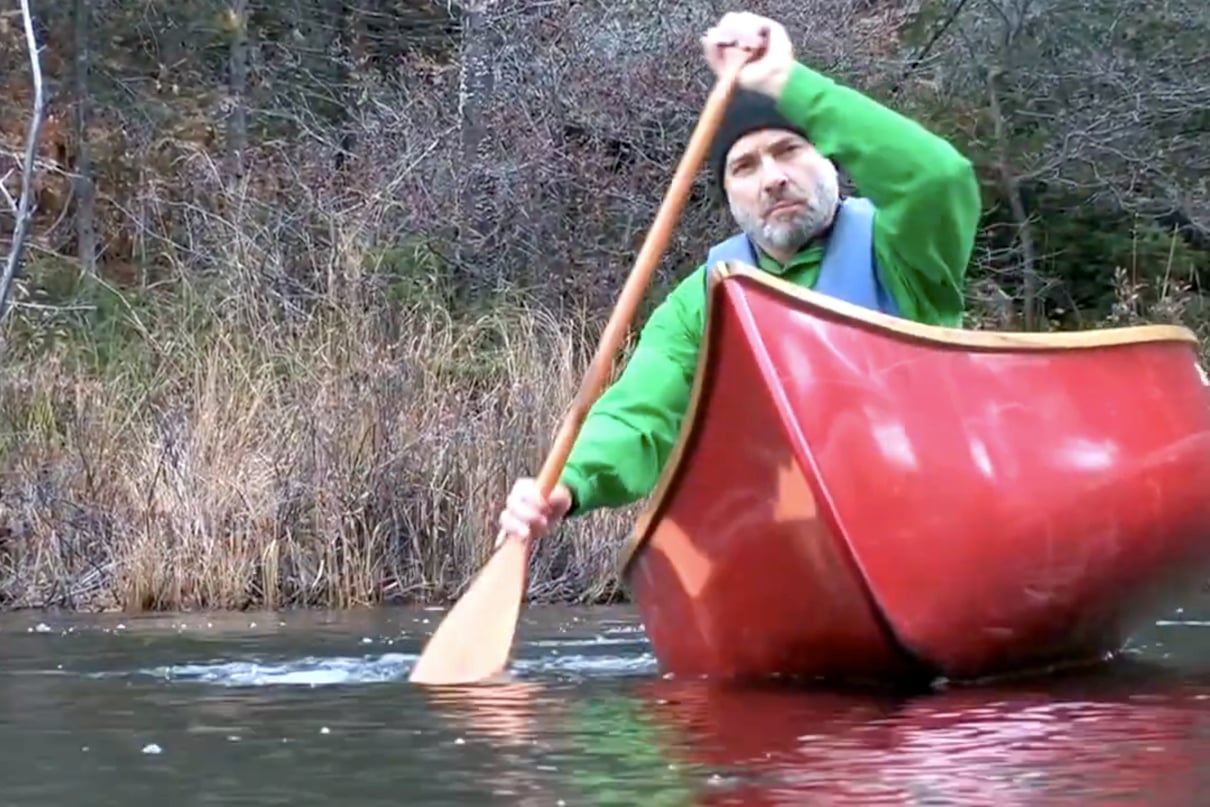
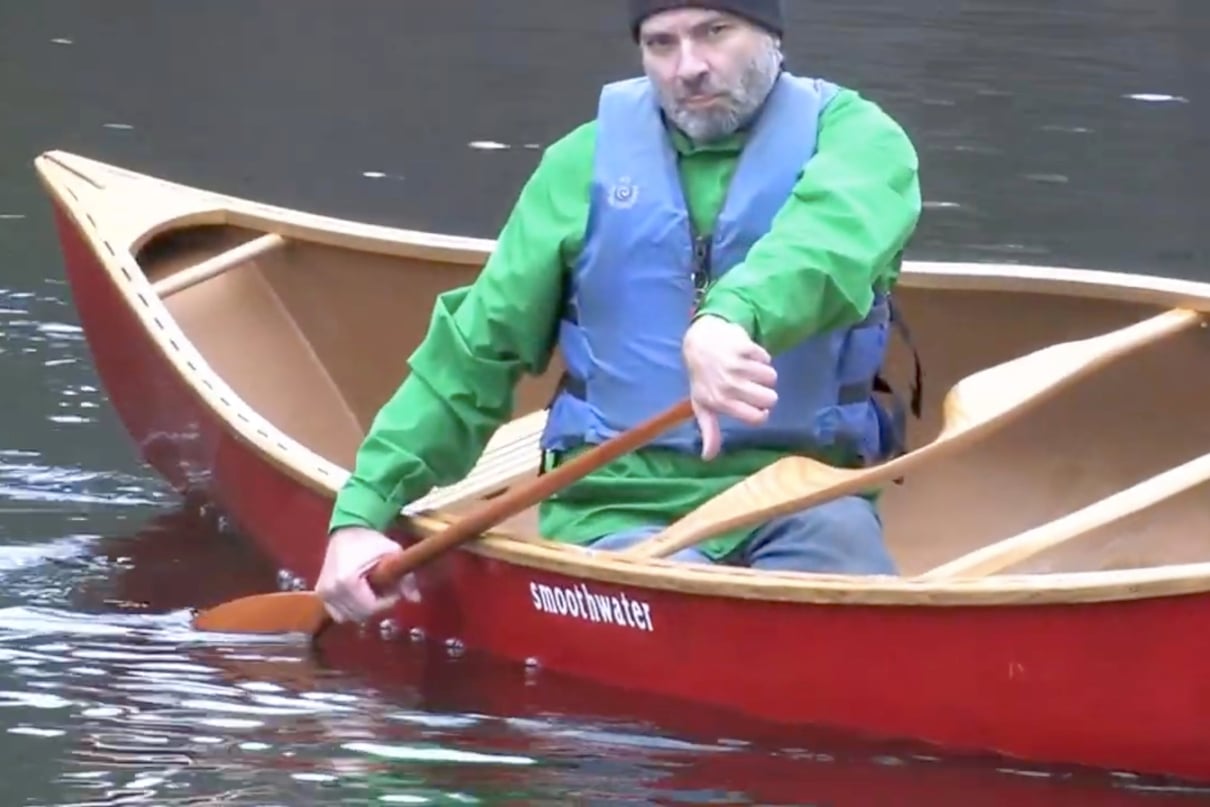
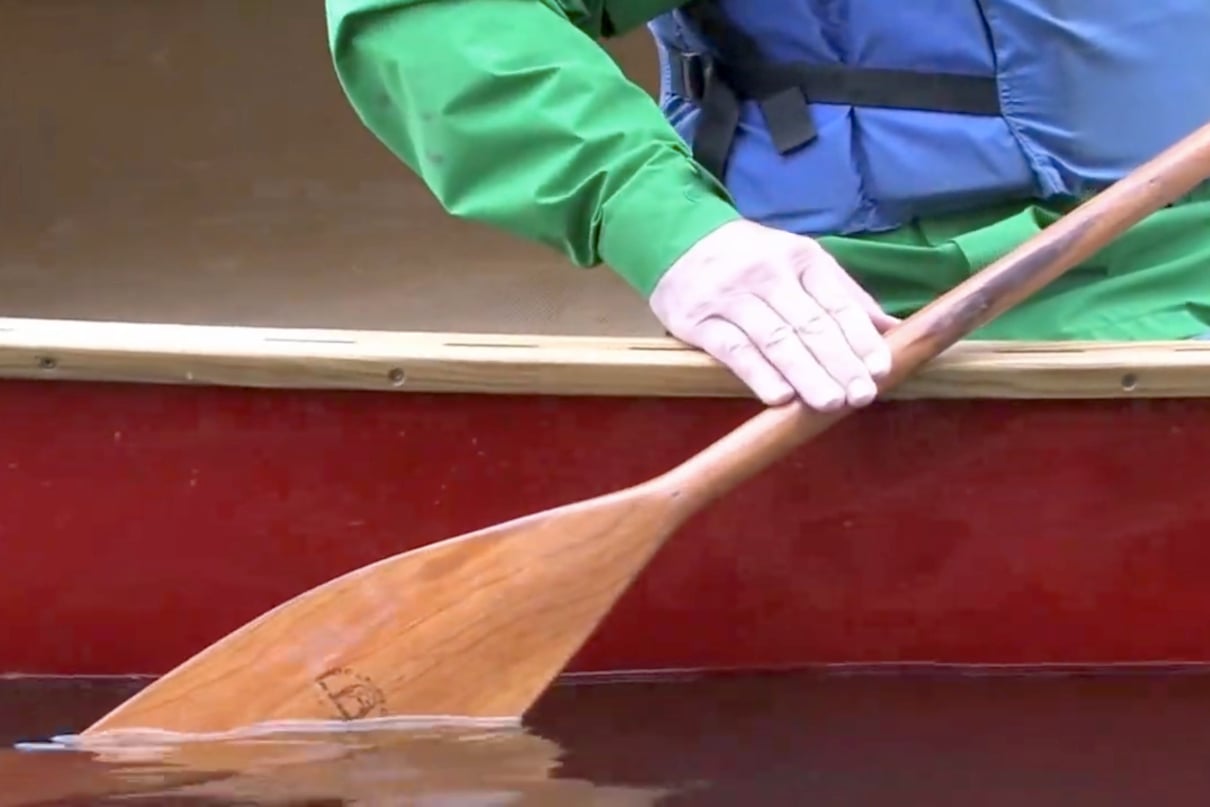
The defining movement of the J-stroke is transitioning from the forward stroke to the corrective phase by turning your top thumb downward.
As the blade approaches your hip, you transition into the defining motion of the J-stroke. Turn the powerface of the paddle away from the canoe by bending your wrist so that the thumb of your upper hand points downward.
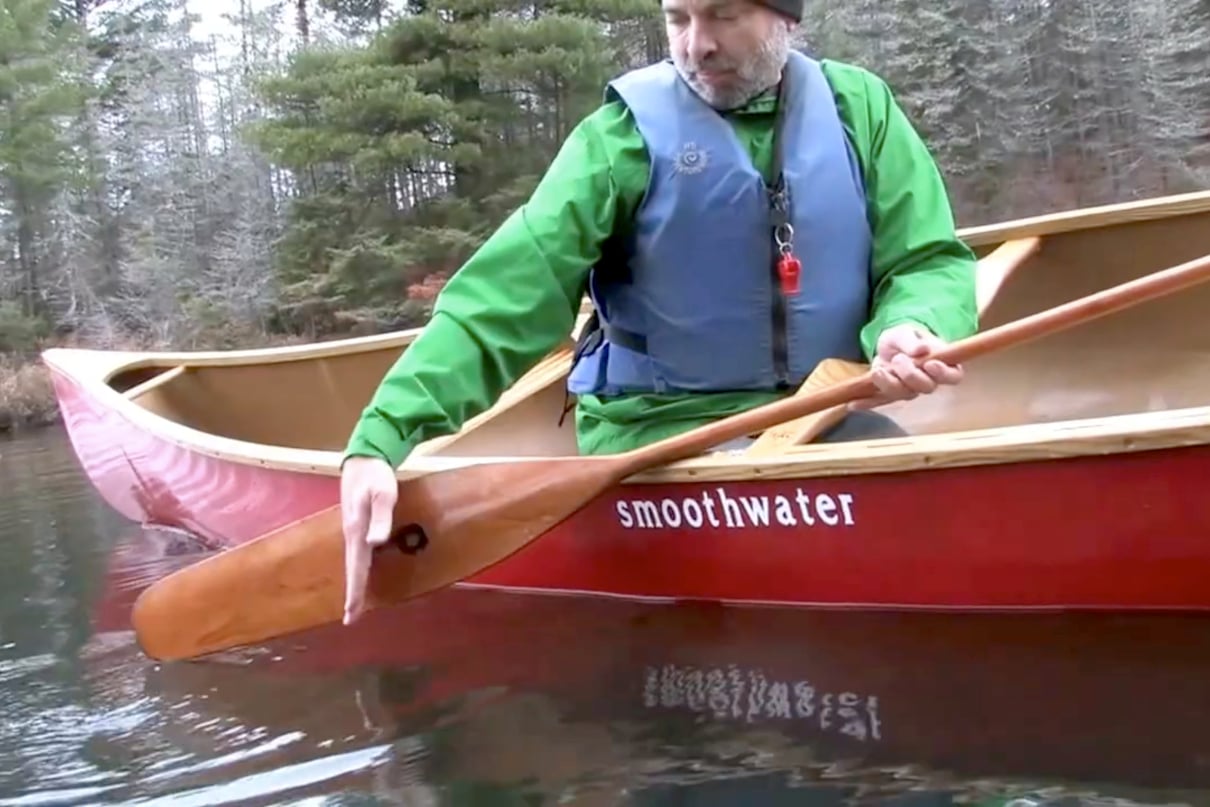
Blade angle is key to having the resistance needed to correct the direction of the canoe.
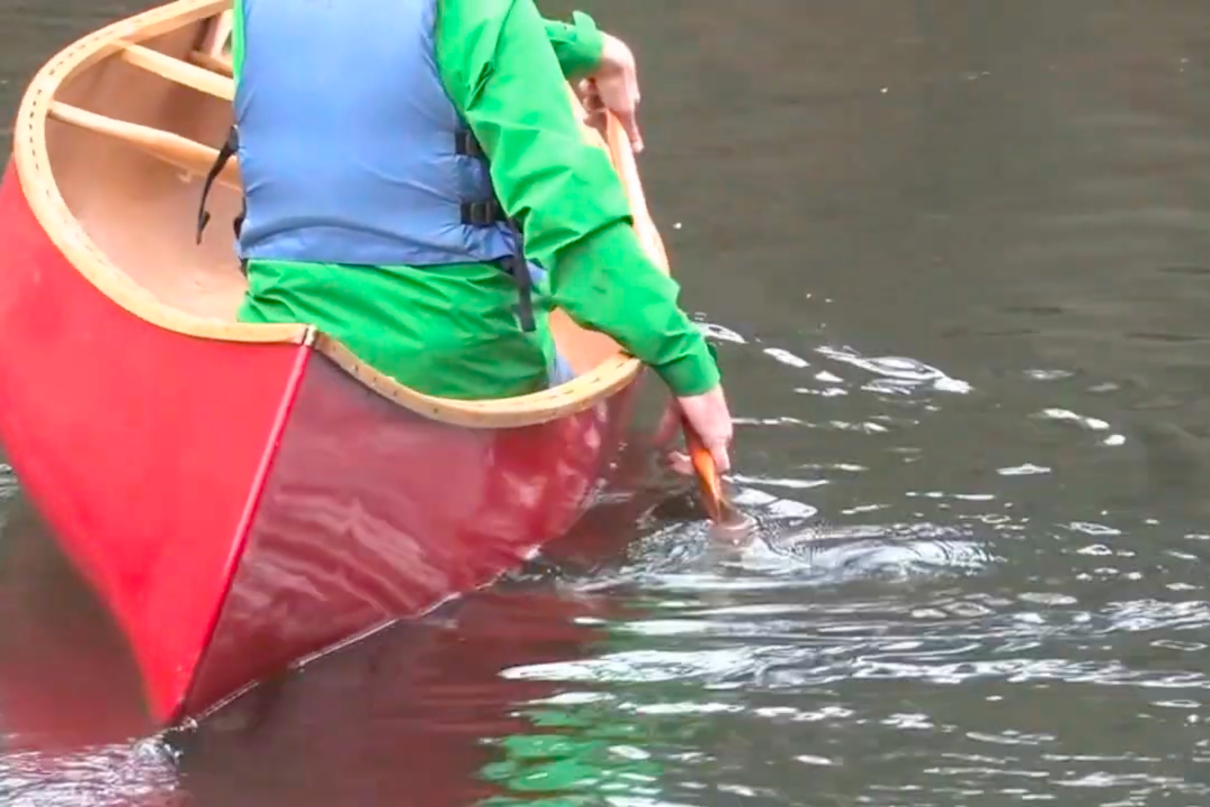
The paddle blade pauses in the water at an angle to the canoe. The water will push on the powerface and move the stern of the canoe away from the side that you are paddling on—correcting the direction of the canoe without breaking your forward momentum. The greater the angle you use (and resistance on your blade) the stronger the corrective force.
Slice the blade from the water to recover for your next stroke.
Common errors paddlers make on the J-stroke
According to Boyes, there are several common errors that novice paddlers make when learning the J-stroke.
The first error is extending the forward part of the stroke too far. If you do this, then by the time you turn the paddle into its rudder position, much of the blade may be out of the water.
Notice the thumb at the top hand is rotated downward so that the paddle blade is vertical.
The second common error is not turning the powerface of the paddle far enough. You need to bend or rotate your wrist over, so that the blade of the paddle moves into a vertical position in the water. You may need to exaggerate the bending of your wrist over further than feels necessary at first in order to reach the vertical position needed and building your muscle memory to do so.
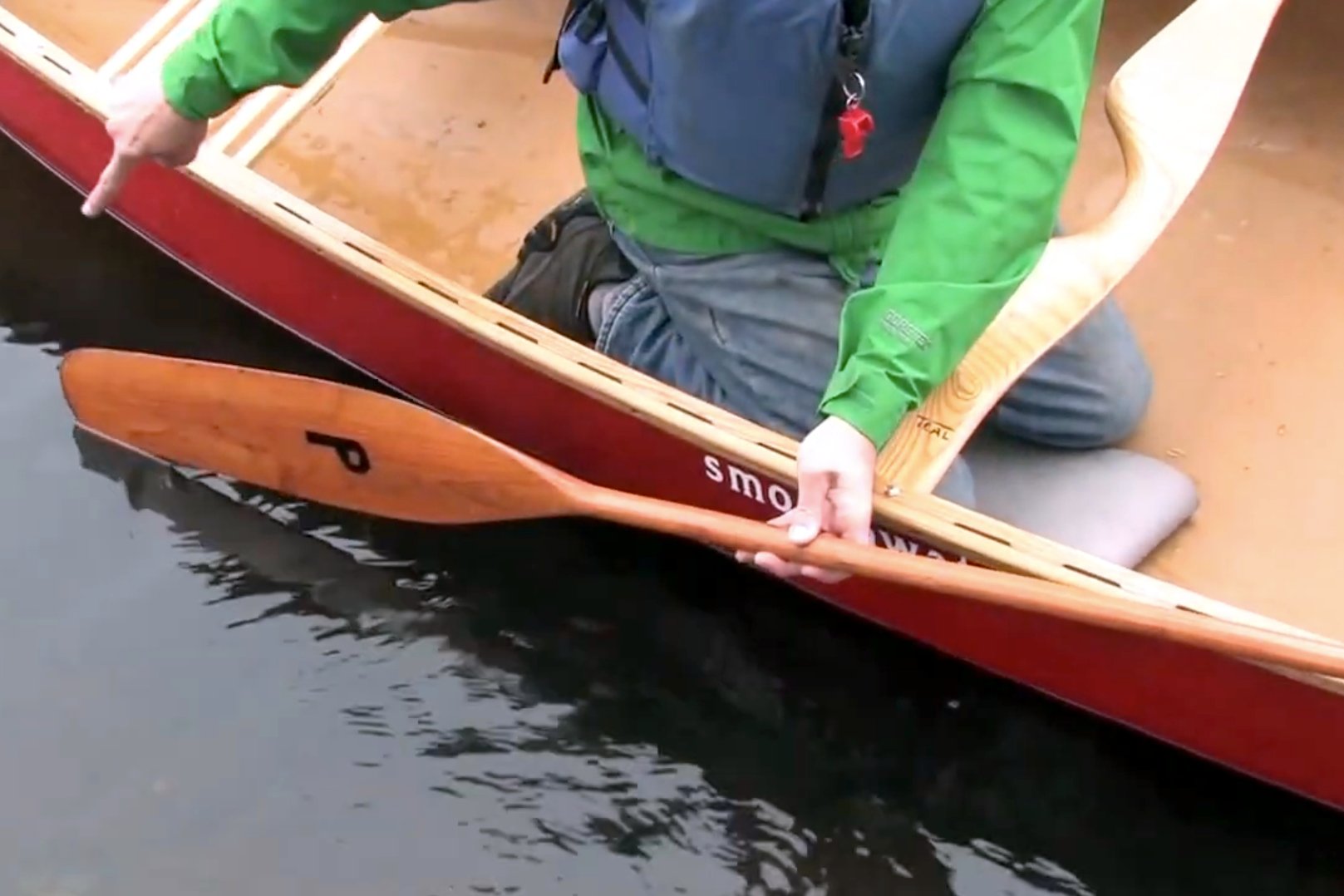
If the blade is left running parallel with the canoe, it will not create the resistance needed to correct the boat’s course.
The third error is not ending the stroke with your paddle at enough of an angle to the canoe. “If your paddle blade ends up parallel to your canoe, it does not offer enough resistance to the water,” Boyes explains. The resistance of the water on the paddle blade is what swings the canoe so your bow heads back in the right direction following the forward stroke. You want a paddle angle that provides enough resistance to accomplish this.
More tips for an effective J-stroke
If you are paddling tandem in a canoe, the stern paddler performs the J-stroke.
Canoe instructor Francis Boyes says go ahead and use that gunwale to make those strokes less work.
Some canoeing purists will tell you that you should never allow the shaft of the paddle to come into contact with the gunwale of the canoe. “This is an issue of style, not function,” says Boyes. According to Boyes, allowing the shaft of the paddle to contact the gunwale, increases efficiency. When you allow the paddle shaft to contact the gunwale, the force of the water on the paddle blade is transferred directly to the canoe. Your lower arm acts as a guide only and does not tire.
One final tip from Boyes, don’t grip the shaft of your paddle tightly with your lower hand. Hold it gently. This allows the paddle to rotate more freely as you transition into and out of the correctional phase of the J-stroke. This creates a more relaxing and fluid motion to your J-strokes.
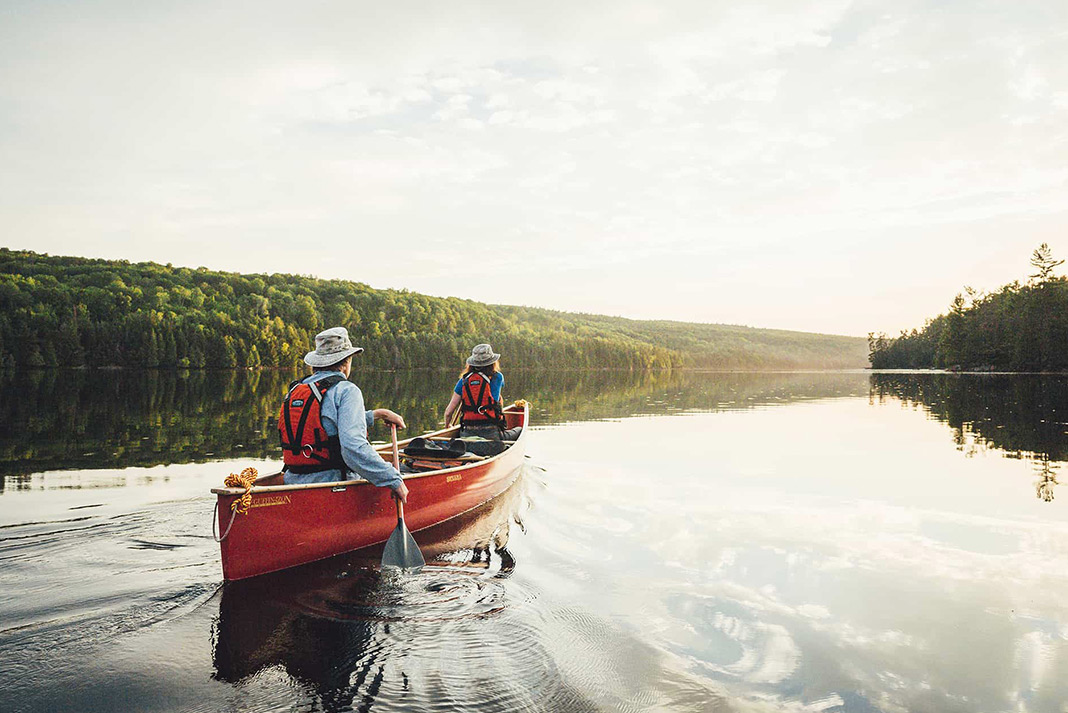
One of the easiest strokes you can learn, that will make the biggest difference. | Photo by: Destination Ontario
A few more advanced strokes
The J-stroke is a foundational canoe stroke, but it is really just splashing the surface depth of canoe skills. Once you’ve gotten the hang of it, give some of these stylish and helpful strokes a try.
Goon stroke
The goon stroke is similar to the J-stroke. A key difference is that instead of turning the thumb downward to transition into the correction phase, the thumb goes upward, and the forward stroke transitions to the stern for what is known as a pry. The goon stroke is usually easier on the wrist if the J presents issues for you. It is also popular in whitewater canoeing because it can be a quick, powerful stroke, and is easier to exit the blade from turbulent currents. Why then do most prefer the J over the goon on lakes and slow-moving water? The J requires less physical energy and better maintains the canoe’s momentum.
Cross-forward stroke
With a similar goal as the J-stroke, solo canoeists often use the cross-forward stroke to keep the canoe going straight as they build momentum.
C-stroke
Getting started from a dead stop is often one of the trickiest parts, especially when solo canoeing. This is a job for the C-stroke.
Silent stroke
For a J-stroke that has both an elegant look and allows you to paddle while hardly making a sound, learn the silent stroke. The big difference between the J and the silent stroke is the recovery. The silent stroke never leaves the water, and instead, the canoeist smoothly slices the paddle blade back to the bow for their next stroke.
One of the easiest strokes you can learn, that will make the biggest difference. | Feature photo: Destination Ontario
Don't forget to like, comment and subscribe at paddlingmag.com. | Feature photo: Geoff Whitlock
It used to be that to be an expert—what we now call an influencer—you had to do something extraordinary: paddle around a continent, complete the first descent of some faraway river, endure rigorous training, write a classic book or invent a timeless boat design.
But increasingly, the criteria for being an expert is to have an impressive social media following, which is really just a measure of cleverness with a camera, algorithms and personal branding. Sure, you could argue famous paddlers of the past were the influencers of their day, similar to their modern counterparts except in the medium through which they promoted their exploits. But there are some important differences.
How social media is redefining—and maybe undermining—wilderness adventure
Foremost, today’s outdoor influencers operate squarely in the attention economy, with advertising piggybacking on all their content, where eyeballs translate into sales of consumer products. There is something paradoxical about this commodification of the wilderness experience, which is, in its essence, anti-materialistic.
One of the biggest outdoor influencers is Luke Nichols, a former traffic attorney from Virginia who runs the Outdoor Boys YouTube channel. A typical post, “Can I Survive Alaskan Winter with No Sleeping Bag, No Tent & No Tarp?” has 12 million views. Forty-one million people watched his “5 Days Fishing & Camping in Swamp.” The internet estimates with his nearly nine million subscribers and 1.5 billion total views on YouTube, Nichols’ annual earnings are in the multimillions. Enough to afford a tent and a sleeping bag.
Don’t forget to like, comment and subscribe at paddlingmag.com. | Feature photo: Geoff Whitlock
His videos of roughing it with as little equipment as possible aren’t something you’d expect would sell a lot of products. But hitting play launches ads for Old Spice deodorant, Febreze air freshener and Airbnb. What more could you want after five days in a swamp? Google knows most people who watch this stuff are more likely to book a vacation rental where they can smell good on a comfy mattress than camp out themselves.
Don’t sell your soul
Even when the intentions start pure, content is coopted by the market. The old-time explorers sold all kinds of gear. The alpinist Reinhold Messner turned his high altitude exploits into such a fortune he now resides in a restored Italian medieval castle with his own museum. Bill Mason’s legacy is no doubt boosting the sales of Prospector canoes to this day. But for the most part, these old-schoolers’ books, films and in-person lectures were the product. The audience paid for them directly, and their value was intrinsic, not measured by how well they could churn other people’s widgets. Nowadays, the content you get for free is just the shiny thing Alphabet Inc. uses in its bait-and-switch gambit. You thought you were learning about the wilderness, but actually, you’re being pitched air freshener. And if you want to glow in your Instagram posts like those burly outdoorsfolk, better use this discount code for Athletic Greens.
The omnipresence of advertising brings the authenticity of expert content into question. What creator does not fall into the trap of using real-time analytics to determine what garners views and crafts their content accordingly?
Every action is an activation, all communication is content, and there is nothing that can’t be monetized.
When my favorite podcaster first ventured into advertising, I was all ears. “This guy needs to make a buck to produce this great content,” I thought. But as his channel blew up and I watched his personal favorite mattress, multivitamin and medication app rotate from one set of companies to their direct competitors over the seasons, I realized this was just capitalism in another form.
Another problem with outdoor influencers is the content is often just plain dull. Most YouTube canoe tripping footage is drier than your grandmother’s vacation slideshow. A video of a cheese sandwich grilling over a camp stove is less interesting than watching paint dry. And as much as the internet has the aforementioned obsession with people camping out without sleeping bags, I am too restless to get outdoors myself to sit through 30 minutes of a bearded guy in a stick shelter talking to himself about how he didn’t have the greatest sleep and he sure would have been a lot more comfortable if he’d had a few wool blankets. I hear enough of this sort of thing from my wife every morning. It’s a wonder millions watch this dreck; anyone handwringing about our decaying attention spans need look no further for solace.
Social media has only accelerated the exhausting trend by which marketing has become the water we all swim in. This transformation has turned being into branding. Every action is an activation, all communication is content, and there is nothing that can’t be monetized. Its influence has crept into the last frontier, my sanctuary, the wilderness.
The joy of being present
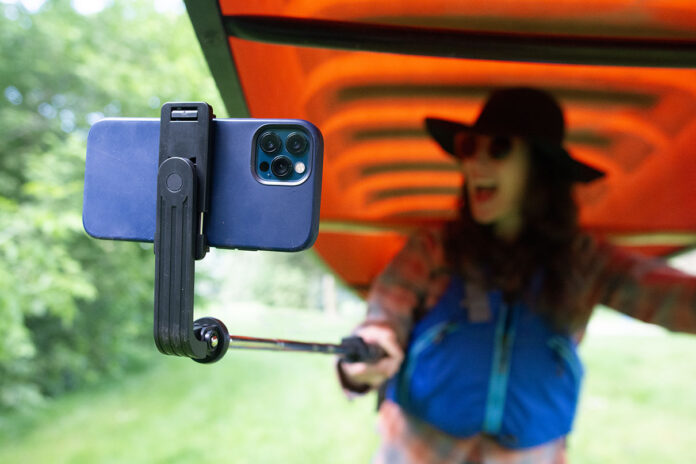
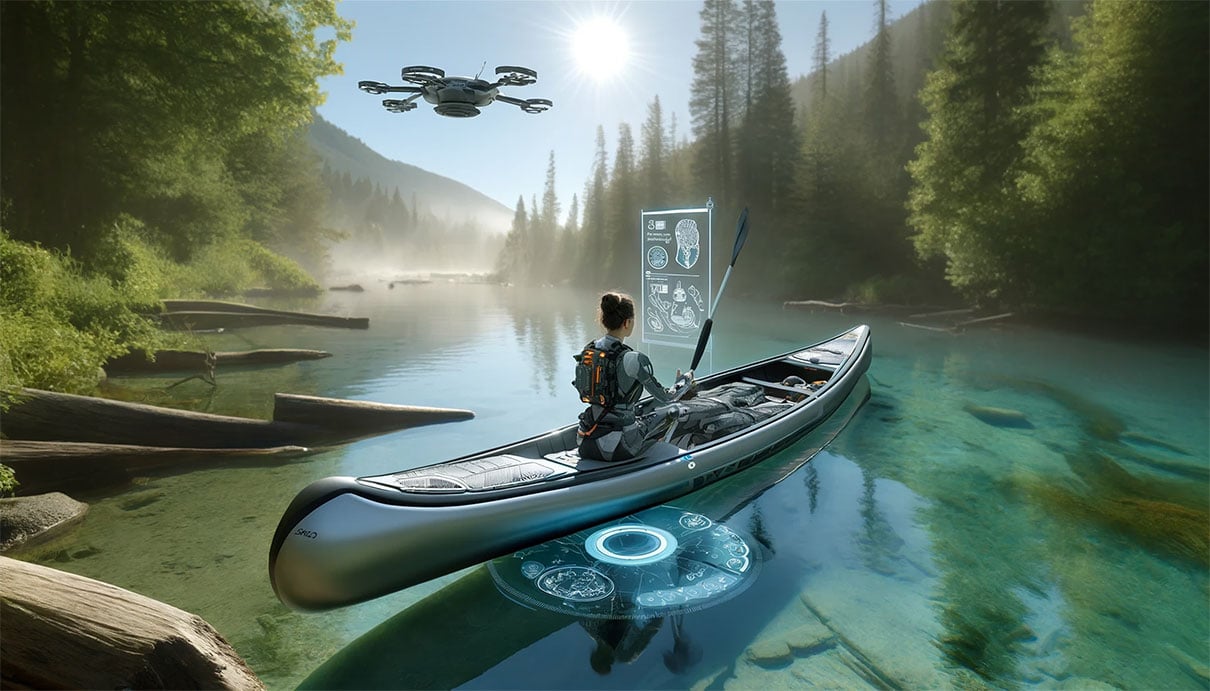
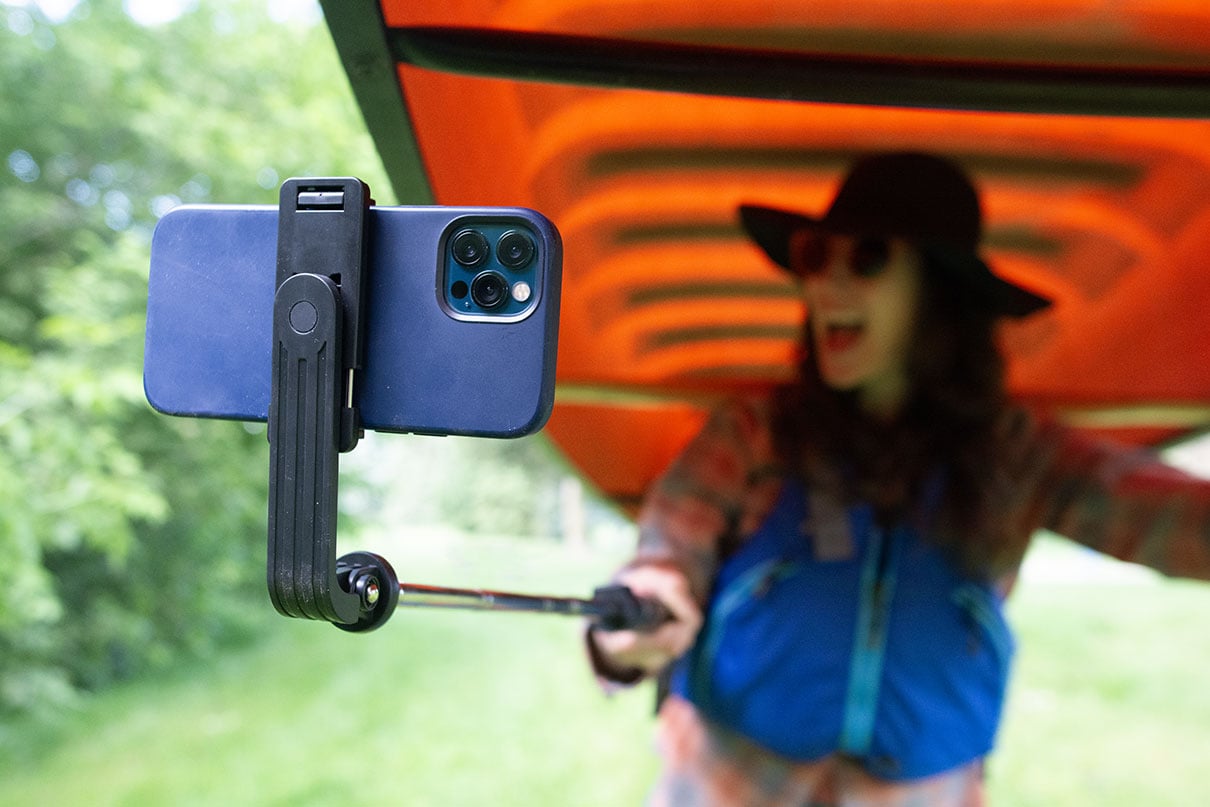
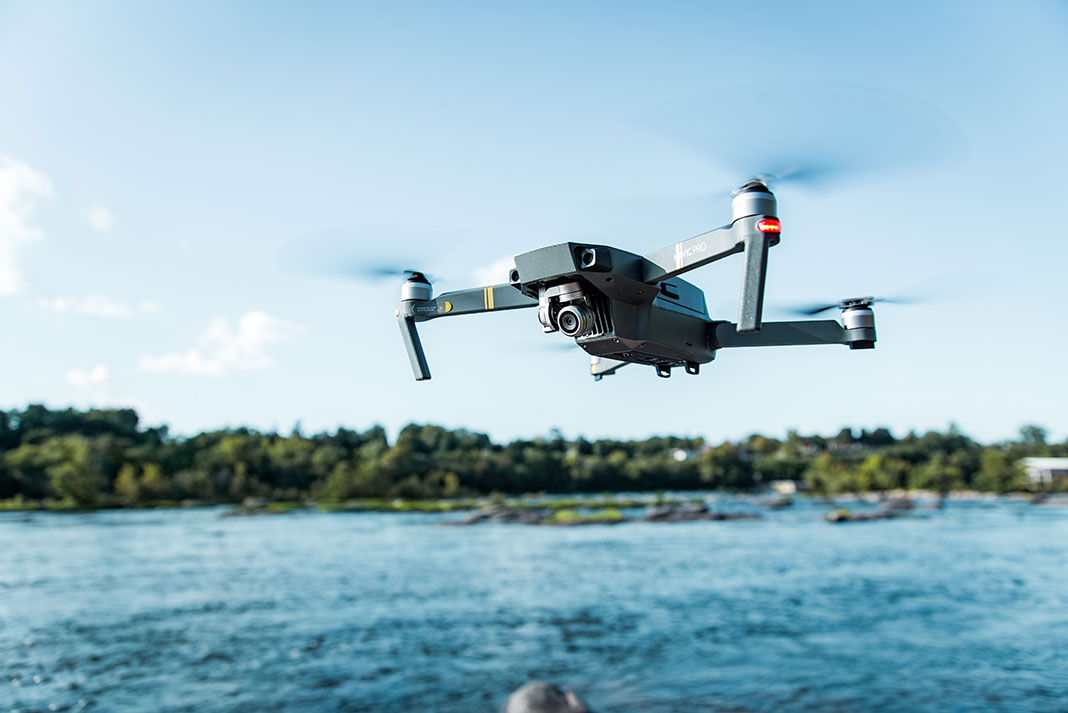
For all my complaints, I harbor no ill will toward influencers. Mostly, I feel sorry for those chained to the content sweatshop, who can’t experience a moment in the wilderness without a camera on a gimbal and a drone buzzing overhead, who must make multiple trips past every rapid—once to film it, once to retrieve the camera, and again and again for editing. For these folks who have, or aspire to have, large and monetized followings, creating content is always central, and the value of the experience is only fully realized once it’s been posted, liked and shared. The canoe trip becomes like one of those concerts people only see through their phones—so intent to prove to others they were there, for all practical purposes, they aren’t really there at all. The influencers aren’t the people I want to hear from. I’m curious about the non-self-promoters, those whose quiet voices are drowned out by the content firehose, and I don’t know where to find them anymore.
There was once a concept proposed, mostly as a thought experiment, called rescue-free wilderness. The idea was the only way to have a true wilderness experience was to go someplace where nobody would come to your aid. Our era calls for something different: content-creation-free wilderness, an embargoed place where the influencers would never want to go because you’re not allowed to document it electronically. Contrary to the adage take only pictures, the only way to record it would be through memory. The only way to see it, go there yourself.
Contrarian Tim Shuff is a writer, firefighter and former editor of Adventure Kayak magazine.
This article was first published in Issue 72 of Paddling Magazine. Subscribe to Paddling Magazine’s print and digital editions, or browse the archives.
Don’t forget to like, comment and subscribe at paddlingmag.com. | Feature photo: Geoff Whitlock
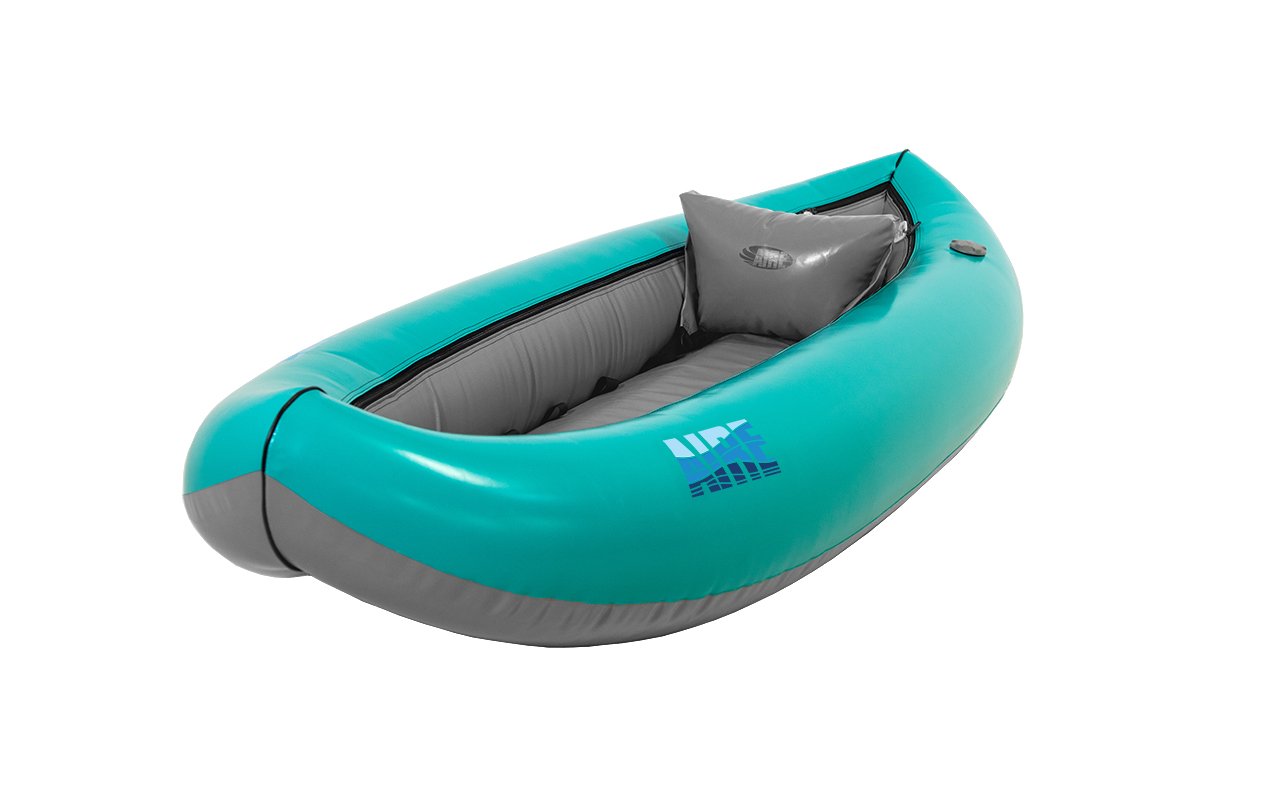
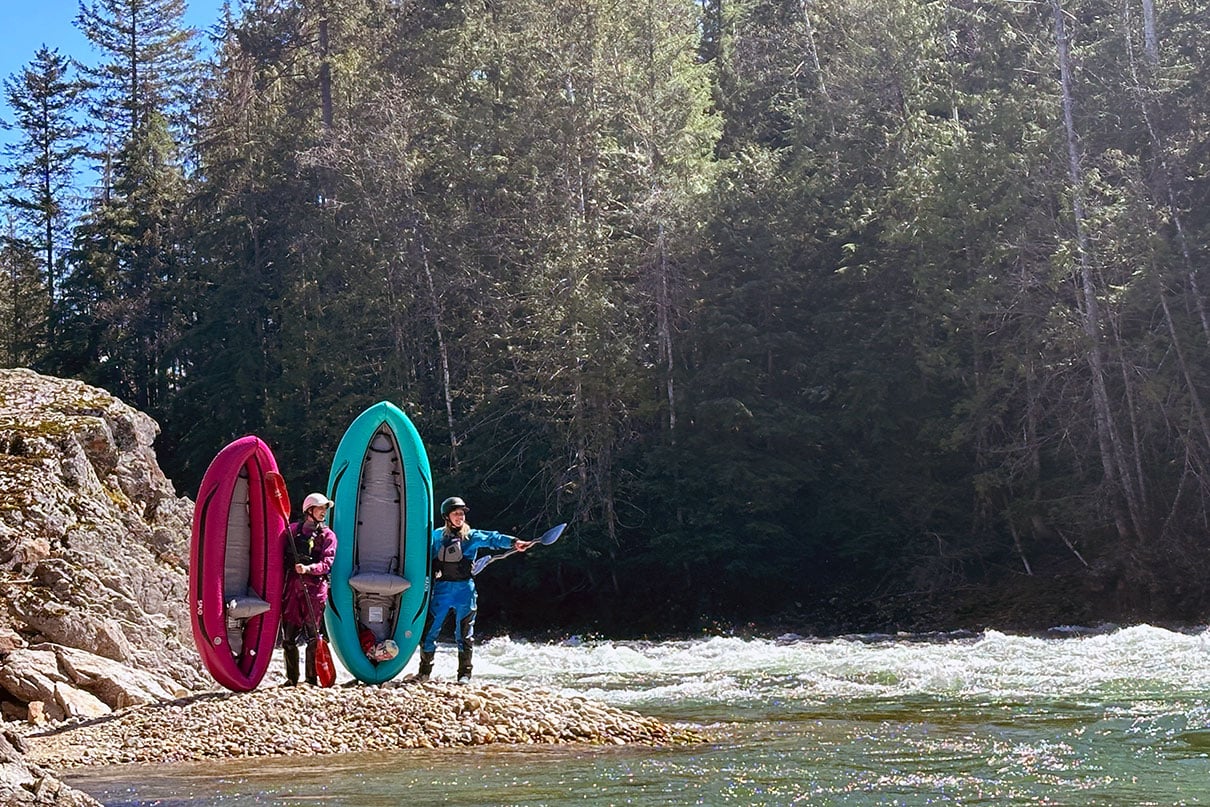
Based in Meridian, Idaho, AIRE rafts is launching a new, beefier inflatable whitewater playboat in 2025: the Hot Potato. The Hot Potato comes after the Tributary SPUD and Tater inflatable kayaks, with similar features to both but built tougher to cater to the folks using the kayaks for whitewater.
The AIRE SPUD was a youth inflatable turned whitewater playboat: enter the AIRE Hot Potato
“We wanted to stay within the potato family of names since this [the Hot Potato] is based on the SPUD specs,” shared Abigail Taylor from AIRE rafts. “It’s going to be like our other AIRE kayaks with a ten-year no-fault warranty, so you can put this thing through the trenches and we will fix it for you.”
The AIRE Hot Potato in Teal. Image: AIRE
The AIRE Tributary SPUD was originally made for children but caught on as an inflatable whitewater play boat. Paddlers can roll the SPUD and have tackled class IV drops. AIRE decided to make a tougher, beefier model in the Hot Potato to address the needs of the folks using the SPUD for whitewater.
Overall, the AIRE Hot Potato is a really compelling compromise for folks looking to tackle white water kayaking who aren’t necessarily comfortable in an enclosed whitewater kayak. Additionally, the Hot Potato comes with enhanced stability, increased durability and increased maneuverability according to AIRE.
The Hot Potato is available in red, orange, yellow, green, blue and teal. Thigh straps for rolling can be purchased as an add on.







 This article was first published in the 2024 issue of Paddling Business.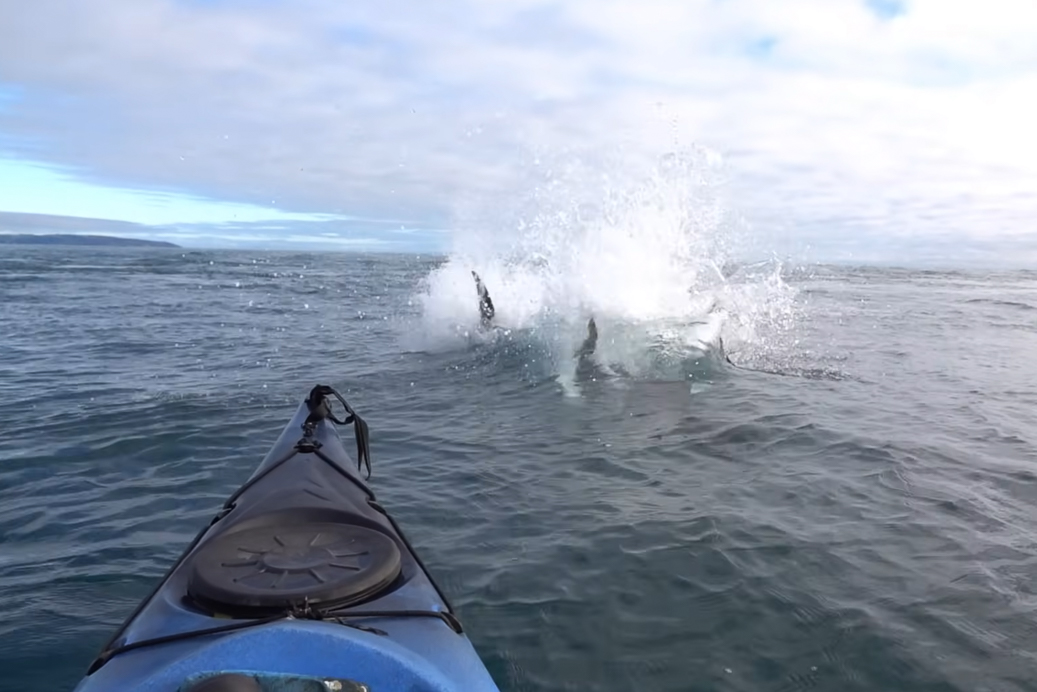


 This article was first published in Issue 72 of Paddling Magazine.