Home Blog Page 34

What The EXPLORE Act Could Mean For Paddlesports

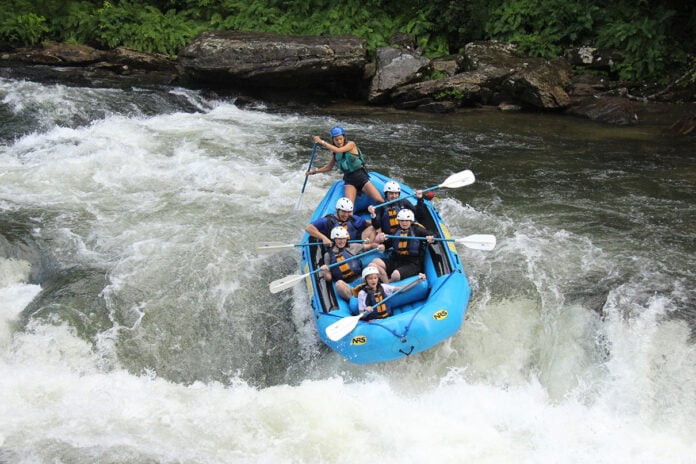
a group of rafters with guide paddle through a set of rapids
Feature photo: Courtesy Wildwater Rafting

The outdoor industry is flexing. At a time of historic gridlock in the U.S. Congress, the unanimous passage of the Expanding Public Lands Outdoor Recreation Experiences (EXPLORE) Act in April 2024 signaled the snowballing economic clout of outdoor businesses, which according to the U.S. Commerce Department’s Bureau of Economic Analysis pumped $1.2 trillion into the U.S. economy in 2023. On November 13, 2024, more than 300 outdoor recreation organizations and businesses signed a letter to members of Congress asking them to make sure EXPLORE is passed by the end of the year. 
What the EXPLORE Act could mean for paddlesports

The bill is loaded with high-profile provisions to study potential long-distance bike trails and paths, allow for new rock climbing routes on public land and support much-needed infrastructure improvements for federal lands and gateway communities. Of greatest interest to the paddlesports industry, however, is the section titled Simplifying Outdoor Access for Recreation (SOAR). The regulatory relief package isn’t new—it was first introduced in 2019—but didn’t receive a floor vote until it was folded into the EXPLORE Act this spring.

SOAR addresses one of the most frustrating issues outfitters operating on public lands face—paperwork. If enacted, the legislation would shorten the wait time in the permit application process and create a pilot program for multijurisdictional permits. SOAR would direct agencies to use existing environmental assessments in permit evaluations and issue special recreation permits in most areas without a separate needs assessment. It would allow outfitters to provide activities similar to those they already offer without requiring new permits. Finally, it would create a low-friction process for small groups and event permits. SOAR is the lifeline paddling outfitters have long been waiting for.
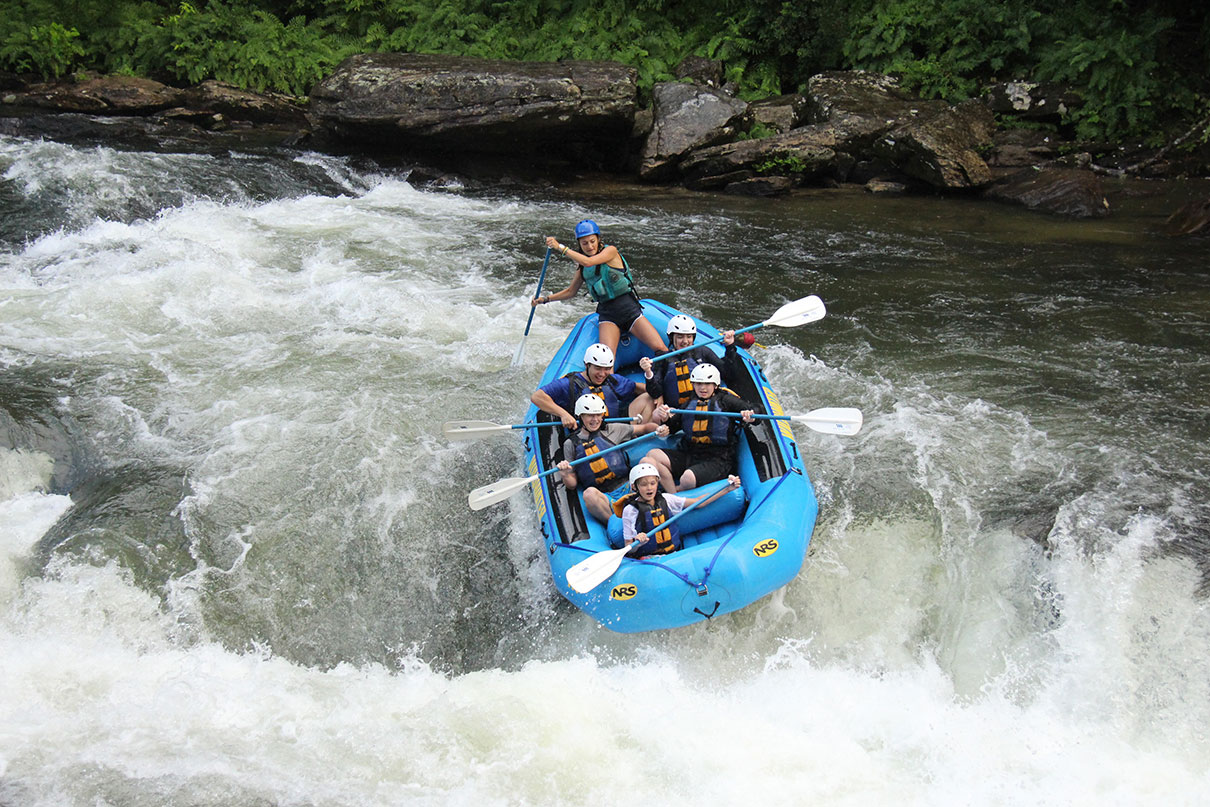
a group of rafters with guide paddle through a set of rapids
Feature photo: Courtesy Wildwater Rafting

As many see it, the glacial pace of special recreational use permit applications is not the result of cautious management of public spaces. Rather, it’s due to inefficient permitting processes at land-use agencies starved for resources.

“The biggest challenge is just trying to get a permitting process to happen,” says Aaron Bannon, executive director of the America Outdoors Association. “Budgets are constrained, and federal land managers have to focus on other processes that make money, such as timber and oil and gas. Recreation falls lower on the list.”

The long wait for approval

That may explain why South Carolina-based Wildwater Rafting has been waiting 15 years for a response—any response—to an application to add guided hiking excursions to the company’s raft trips. “It creates an inability for a business to be innovative and adapt to the economic environment and the interests of our customers,” says Wildwater CEO Jack Wise.

Wildwater’s bread-and-butter rafting trips on the Chattooga and Nantahala have also fallen into limbo at times, even though the company has been operating within national forests for more than 50 years. The Forest Service hasn’t always had the bandwidth to process the renewal paperwork, and in those cases issues temporary extensions. This creates a sense of instability that makes it hard for Wise to sleep at night, let alone plan for the future.

It’s the same story outside of Portland, Oregon, where Sam Drevo opened eNRG Kayaking and Rafting on the doorstep of the Mt. Hood and Willamette national forests nearly a quarter-century ago.

“We located ourselves around so many rivers that we are locked out of—locked into an old system,” Drevo says. His kayaking programs serve 5,000 youth students each summer, but once they graduate beyond the mild whitewater of the Lower Clackamas, Drevo says it’s easier to take the kids to Costa Rica than continue progressing in their own backyard. “It keeps our students from being able to experience the diversity of whitewater within two hours of where we live,” he says.

Drevo spent 19 years on a Forest Service waiting list for a permit to run rafting trips on the Upper Clackamas, a popular class III to IV river close to the city. When an opportunity finally opened in 2019, COVID sapped what resources the agency had. He is running his first Upper Clackamas river trips this year.

New tools and timeframes

As Wise and Drevo will attest, one of the most frustrating aspects of the permitting process is the radio silence from understaffed agencies. SOAR would address this by requiring officials to acknowledge receipt of an application within 60 days and provide a date by which they will issue a decision. The act also allows agencies to provide temporary permits for up to two years, giving land managers time to assess the impacts of an activity before issuing long-term permits.

Anyone who follows Congress will notice the EXPLORE Act looks a lot like the America Outdoors Recreation Act, which has been kicking around the Senate since 2022. The two bills are nearly identical, and while the Senate version has yet to see a floor vote, it enjoys strong bipartisan support in the upper chamber.
The next step is for House and Senate lawmakers to agree on a harmonized version of the bill that can pass both houses before Congress calls it quits for the year. If they miss this chance, Bannon says getting the landmark bill across the finish line will become incrementally harder. For his part, Wise is confident the outdoor industry wields more political leverage than in the past. Americans of all political stripes enjoy the outdoors, but the real difference-maker in the halls of Congress is the outdoor industry crossing the trillion-dollar threshold.

“We have had similar bills in the last 10 to 20 years,” Wise says. “But the recent surge of recreation and studies showing the outdoor industry is an economic driver to communities has mounted an undeniable pressure.”
cover of Paddling Business 2024This article was first published in the 2024 issue of Paddling Business. Subscribe to Paddling Magazine’s print and digital editions, or browse the archives.

Feature photo: Courtesy Wildwater Rafting
 

Google Celebrates Native American Heritage Month With Qajaq Doodle

Google celebrates Native American History Month with qajaq doodle by Natashia Allakariallak
Google celebrates Native American History Month with qajaq doodle by Natashia Allakariallak. Google | Natashia Allakariallak

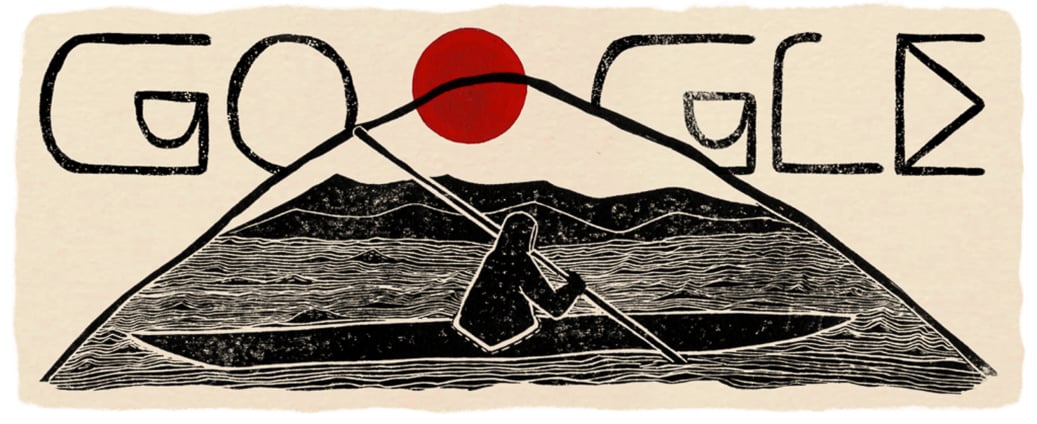
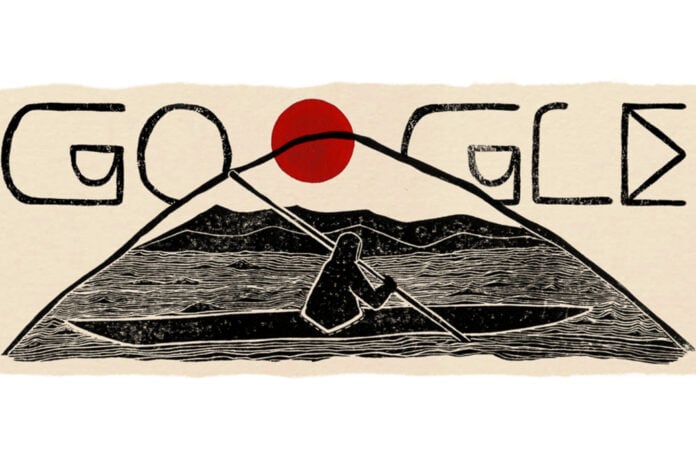
In celebration of Native American Heritage Month, Google released a doodle on November 15, 2025 celebrating the history of the kayak illustrated by Inuit Nunangat artist Natashia Allakariallak.

Celebrating Native American Heritage Month with the history of the qajaq

The doodle depicts a traditional Indigenous Arctic qajaq, used for thousands of years for hunting, fishing, and transportation. The qajaq serves as the early prototype for the modern kayaks we see widely available for recreational use today. The first developers of the predecessor to the kayak include Northern trines such as the Inuit, Aleut, Inupiat, and Yup’ik.

Rather than the fiberglass and gel coat of the modern sea kayak, the traditional qajaq was made using skin on frame— often dried seal skin stretched over a frame of whalebone or driftwood. Rather than for recreation, the traditional qajaq was designed for Indigenous Arctic hunters to harvest seals or whales from the water and each boat was customized to the individual paddler. The word qajaq comes from the phrases ‘man’s boat’ or ‘hunters boat’ in Inuktut dialects.

Google celebrates Native American Heritage Month with qajaq doodle by Natashia Allakariallak. Google | Natashia Allakariallak

“The qajaq, which has been created by Inuit, has now been adopted and used by the entire world,” shared qajaq doodle artist Natashia Allakariallak in a Q&A with Google. “It is an item from our culture that has allowed us to thrive for thousands of years and is still used today.”

What traditional qajaqs look like in Greenland today

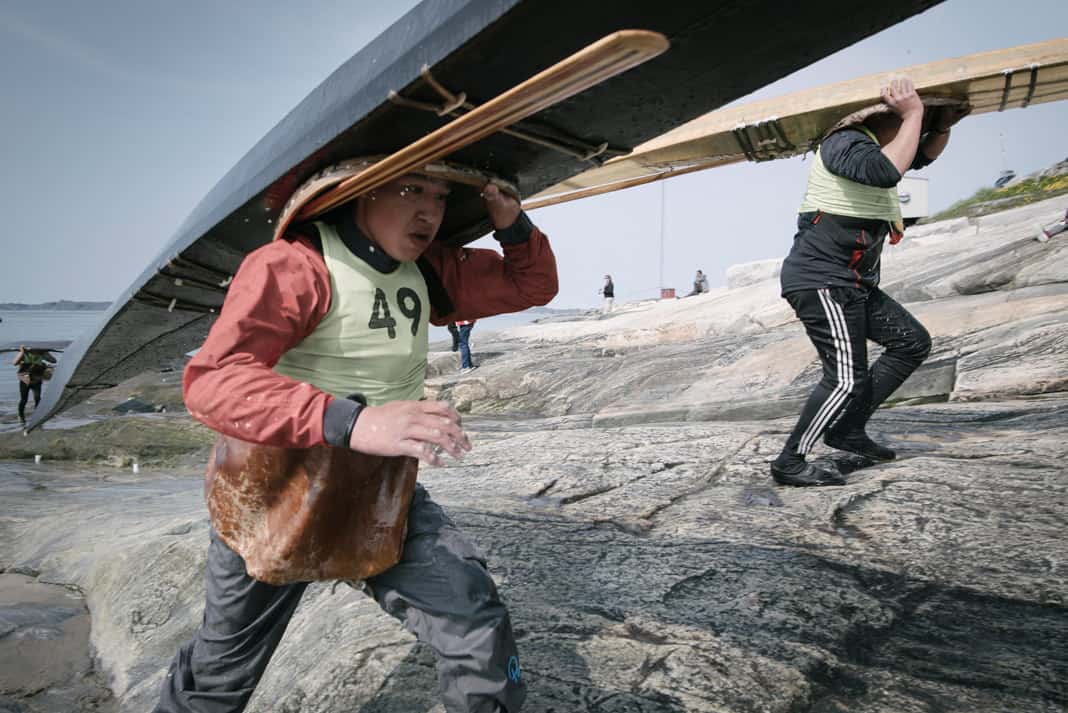
Today in Greenland, traditional qajaq paddlers still gather to practice traditional Greenland rolling, which includes 35 different rolls. Once a pivotal means of self-rescue for the traditional Arctic qajaq hunters, today paddlers from all over travel to compete in the National Qajaq Championships.

Rather than a neoprene spray skirt or PFD like paddlers wear today, traditional qajaq paddlers wore a tuilik; a fitted, waterproof jacket made of seal skins or large mammal intestines that sealed around the face, wrist and qajaq cockpit. The tuilik also served as additional buoyancy in the event of capsize; plenty of trapped air inside aided in rolling, or righting a capsized kayak without exiting. Today, a neoprene version of the tuilik for traditional Greenland rolling practice.

“It is important that people know where the qajaq originates from,” Allakariallak added. “I would like for people to honour the original design(s) and give credit where it is due. Inuit are an incredibly resourceful people and have adapted to many waves of colonial pressures, yet, we continue to strive for success and we celebrate the beauty of our culture.”


Bracing For The Coming PFAS Ban

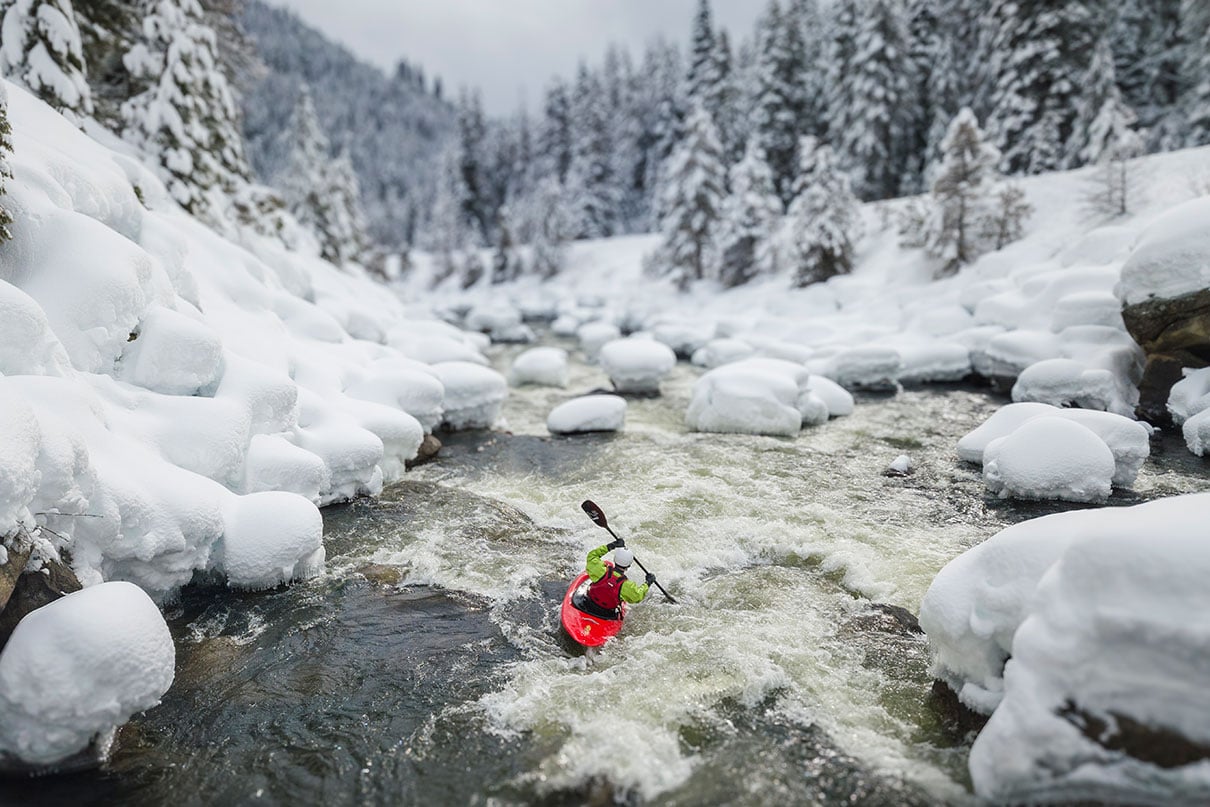
a person paddles down a river in a snowy winter landscape while wearing a drysuit that respects the upcoming PFAS ban
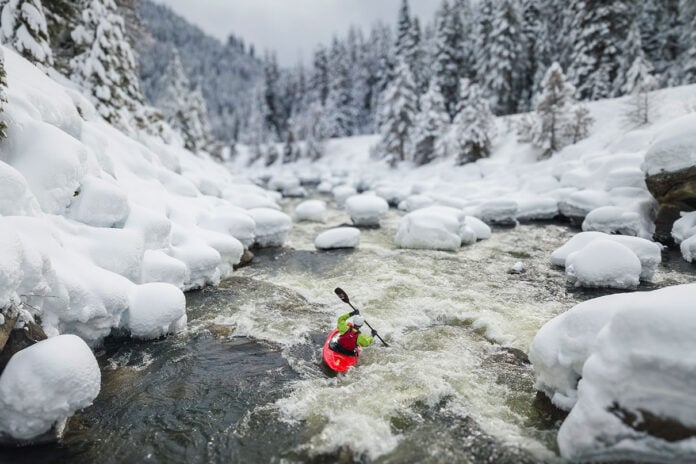
If this looks like fun, you own a waterproof-breathable drysuit. | Feature photo: John Webster

Few feats of industrial wizardry have had a greater impact on paddlesports than waterproof-breathable dry wear. These revolutionary garments made year-round paddling a pleasure for the masses rather than a test for the masochistic few, thanks in large part to the extraordinary properties of per- and polyfluoroalkyl substances, or PFAS, a class of synthetic chemicals found in thousands of consumer products and linked to a long list of negative health effects.

Soon this magic ingredient will be banned from outdoor apparel in California, Washington, New York and more than a dozen other states. As the bans approach—the California law takes effect in January 2025 for outerwear, while extreme use garments including drysuits and drytops will have until 2027—paddlesports brands and their suppliers are working diligently to find suitable replacements.

Bracing for the coming PFAS ban

First out of the gate was Level Six, which introduced its PFAS-free Loki drysuit last September. After years of testing and development, Level Six CEO Stig Larsson is proud of the result. “People couldn’t believe that we had done it,” he says. “We ended up getting certifications along the entire process to prove that we actually are PFAS-free.”

Producing PFAS-free versions of products made with Gore-Tex and its many clones has been more challenging, because the fabric’s original formulation includes a Teflon mid-layer that’s not easily substituted. Gore had planned to transition its entire portfolio away from what it calls “PFCs of environmental concern” by late 2023 but has since pushed the target to the end of 2025 citing product development and scaling challenges.

Changing a decades-long industry standard is no easy task, says Danny Mongno, NRS product and field marketing manager, especially for paddlers who have come to expect a lot from their drysuits and drytops. “It’s far easier to replace the technology in a rain jacket, for example, but it’s a completely different and more challenging process to develop technology capable of withstanding more rugged and extensive full immersion.”

a person paddles down a river in a snowy winter landscape while wearing a drysuit that respects the upcoming PFAS ban
If this looks like fun, you own a waterproof-breathable drysuit. | Feature photo: John Webster

That’s precisely the argument Kokatat’s then-CEO Jeff Turner and the California Outdoor Recreation Partnership brought to the legislative sponsor of the California ban last year. The coalition of outdoor companies made clear that they supported the bill’s overall goal but would need more time to bring out PFAS-free gear that was equal to the most demanding conditions. As a result of the lobbying effort, California’s ban on PFAS in extreme use garments including drywear was pushed back to January 2027.

A full list of current and pending PFAS legislation is beyond the scope of this article, but it’s likely that the patchwork of state prohibitions will effectively become a blanket ban everywhere in North America. Even if manufacturers had a perfect understanding of the regulatory environment, it simply wouldn’t make sense to maintain multiple supply chains. That effort is better spent creating viable alternatives.

“Paddling gear is probably some of the most abused equipment in the world.”

—Stig Larsson, Level Six

“To be able to seamlessly transition product lines away from using PFAS while also ensuring customers have the product available when they want it, at a competitive price will be a tricky rapid to navigate, but we’re more than up for the challenge,” says Jordan Jones, Kokatat director of plant operations.

Breaking the chain

PFAS are integral to two components of most waterproof-breathable outerwear. One is the membrane within the fabric itself. The other is in the durable water repellent (DWR) applied to the garment. These two elements plus the characteristics of the woven fabric work together to keep paddlers dry and comfortable on the water.

Until 2016 the gold-standard DWR was C8, so named for its eight-link fluorocarbon chain. The industry has since moved to less-harmful C6 and C4 treatments, as well as so-called C0 DWRs that contain no fluorocarbon chemistry.

Managing the transition to C0 is something of a balancing act. NRS says it is moving to a C0 PFAS-free treatment on appropriate products while sticking with C6 treatments where needed to meet performance requirements. Kokatat has taken a similar approach. Immersion Research President John Weld says his company has gone to a C0 DWR this year and its fabrics are also fluorocarbon-free according to the supplier. Weld hasn’t paid for testing. “What company in our realm has the ability to identify where PFAS exists?” he says. “None of us could ever guarantee.”

Certification adds one more layer of difficulty to the PFAS-free transition, but the biggest challenge remains the demands of the sport. “Paddling gear is probably some of the most abused equipment in the world,” Larsson says. “Think about paddling on a salty ocean or paddling the canyon with a lot of sediment. That sediment gets into the fabric and breaks down the protective layer that causes water to bead up and not saturate the outer fabric.”

Consumers must adapt, too

The solution to this problem is not another high-tech miracle fabric. It’s regular care and more frequent re-treatment with a PFAS-free DWR such as McNett ReviveX. For retailers and brands, the coming bans are an opportunity to educate customers on the nuances of technical paddling gear in a PFAS-free era, as well as the care and maintenance needed to keep it performing at its best.

In the meantime, manufacturers will do everything they can to deliver the performance customers have come to expect. “We know what our customers want. I have to sell a drysuit that meets our current standard,” Weld says. “For the amount of money we charge for these things, I can’t do anything less.”

cover of Paddling Business 2024This article was first published in the 2024 issue of Paddling Business. Subscribe to Paddling Magazine’s print and digital editions, or browse the archives.

If this looks like fun, you own a waterproof-breathable drysuit. | Feature photo: John Webster


The Beginner’s Guide To Kayaking

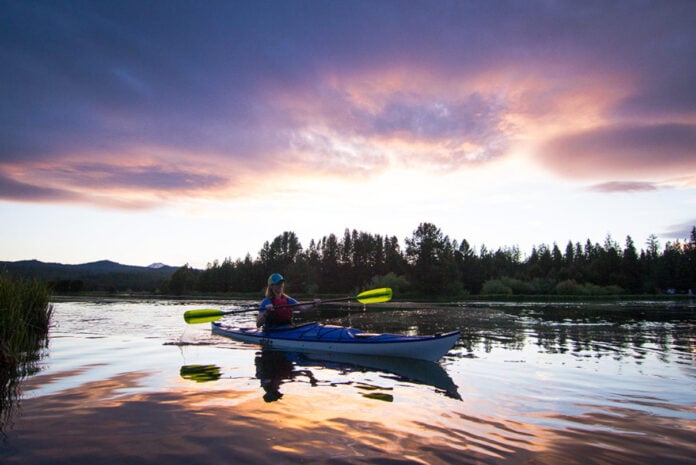
Woman paddling a kayak on a lake at sunset
From basic strokes to easy entry and exit, we go over everything you need to know. | Photo: Eddyline

It’s been more than 30 years since I learned how to kayak. The first boat I sat in was an Aquaterra Spectrum, on loan from friends at the local outdoor store. I remember watching them catch and ride small waves in their sleek fiberglass kayaks as I struggled to keep pace, yet I knew I was hooked. It wasn’t long before I had my own kayak and was working on developing the skills that would take me near and far. I traveled to the U.K. to paddle tide races in the Irish Sea and even spent a month living out of a kayak in the Aleutian Islands. It’s now been three decades of such adventures.

I still remember though what it was like starting out. Slowly learning how to keep the kayak tracking straight. Learning how to handle rougher and rougher conditions. In many ways, kayaking is easy. But it can also be challenging. The good news is that we all start somewhere and, no matter what your skill level is, there is fun and adventure to be had.

The following is a starting point for the basic skills that will help you enjoy your time on the water.

Essential Kayak Gear

There are a few pieces of gear you need to go kayaking:

How to sit in a kayak

Before you get started paddling, you’ll need to get comfortable sitting in your kayak.

Adjust the foot braces in your kayak so you can sit upright without leaning back. There are several ways foot rests adjust. Some have a trigger behind the foot brace pedal that you squeeze to move the pedal. Others have a long stick that is either lifted or twisted to free the pedal so it can be moved. And the most basic are molded-in incremental plastic steps.

You’ll want your foot braces set to have your knees comfortably bent. And your foot should be in a neutral position. Imagine your foot and ankle forming the letter “L” when you press on the foot brace. If you have to point your toes, the pedals are too far away.

You also want to adjust your backrest so that it provides support and helps you sit upright.

If your kayak has thigh braces, your thighs should be able to gently contact these when your feet are on the foot rests. If your kayak has a large, open cockpit, you can rest the outside of your thighs against the inside edge of the cockpit opening while being able to sit upright.

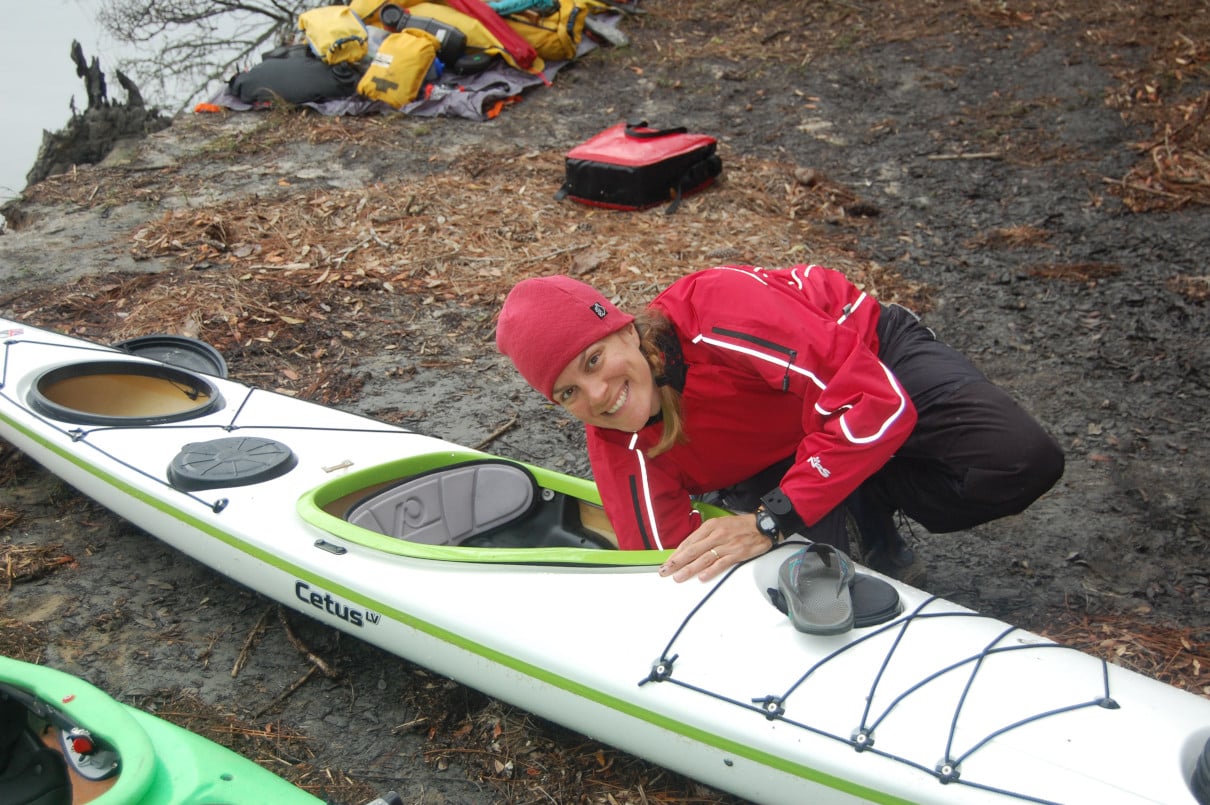
Kayaker checking their foot braces before launching.
Adjusting the fit of your footbraces and backrest before launching will make for a more enjoyable day. | Photo: Brian Day

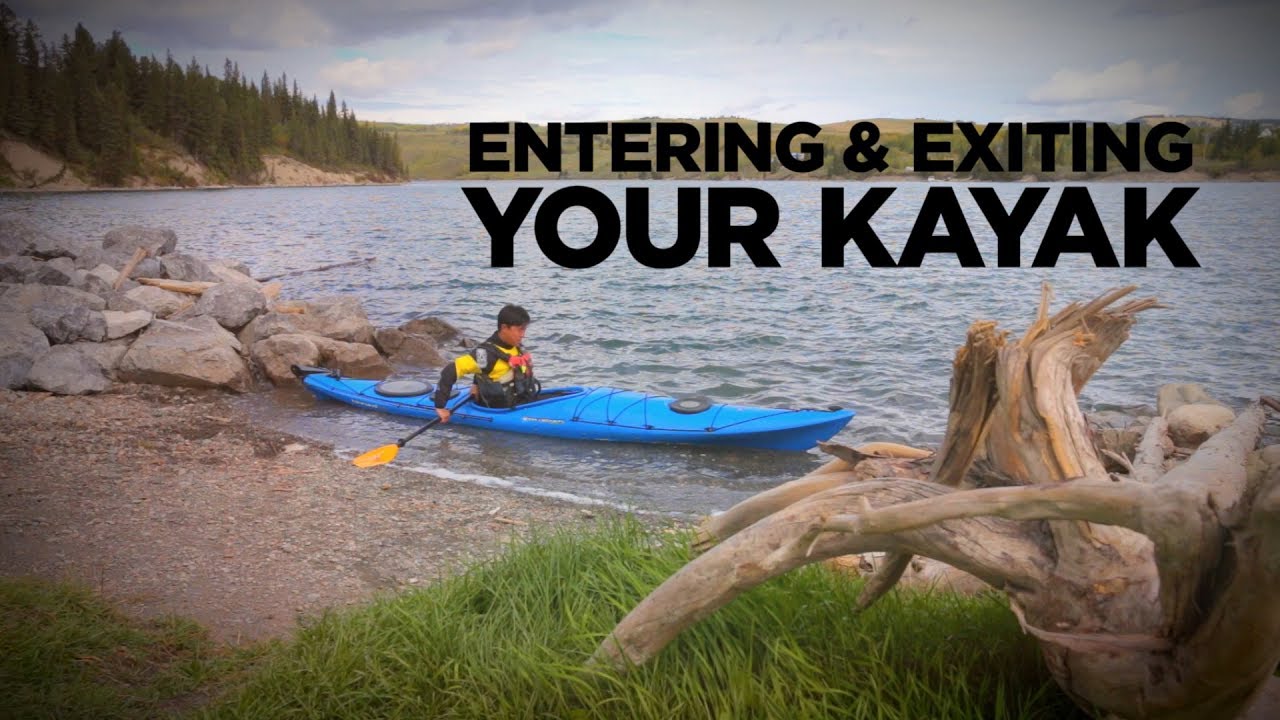
How to launch a kayak

There are three basic ways to get into a kayak: straddling, with support and sidesaddle. It’s usually best to get your kayak completely floating before you enter it using one of the techniques mentioned below.

Sidesaddle Method

The sidesaddle method is an one of the easiest ways to launch a sit-on-top kayak:

  • Walk the kayak out into knee-deep water.
  • Position yourself near the seat and sit down on the kayak, leaving your legs in the water.
  • Once you are seated on the kayak you can swing your legs onto the boat and get situated.

This technique doesn’t work well with decked kayaks because the kayak will tip too much and may start to fill with water.

Straddling Method

To use the straddling method:

  • Stand with your feet on either side of the cockpit and your body above the seat.
  • Lower yourself into a squat position and hold onto the cockpit coaming of the kayak for support and balance.
  • Next, lower yourself into the seat and allow your legs to hang over the sides of the kayak.
  • Once you are seated, pull your legs into the boat one at a time.

Straddling seems a bit awkward but has the advantage of putting your weight onto the seat of the kayak as quickly as possible. This helps balance, especially in a narrower kayak. Straddling isn’t the ideal approach for those with strength or balance issues. For these paddlers, some support might be helpful.

Support Method

The support method for launching your kayak can come from lots of places. It can be someone holding the boat as you settle into the seat, or it could be holding onto a solid object as you lower yourself into the cockpit. Some paddlers like to use their paddle as a brace by holding one end behind the cockpit and resting the other end on the shore or bottom. This is tough on your paddle but can be effective. Don’t try this with an expensive kayak paddle, you might break it!

While using support, many people prefer to sit first on the back deck of their kayak just behind the cockpit before swinging their feet into the boat. This motion is less strenuous than lowering yourself into the cockpit from a standing position. Avoid stepping into the boat with your feet first if you can. Better first to sit and then to move your feet into the kayak.

How to get out of a kayak

Getting out of a kayak is simpler than it may seem: just reverse the process you used to launch. If you used the straddle technique, swing your legs over the side and push yourself into a standing position using your arms and legs. If you used your paddle for support, position your kayak where you can deploy your paddle “kickstand” and stabilize yourself before lifting yourself off the seat and onto the back deck. To exit from a dock you’ll have to return to the position of support you used to get into the kayak before pushing yourself up and onto the dock with your legs. It goes without saying that this is one of the trickiest and most strenuous ways to get out of a kayak.

If you flip your kayak, it is very easy to get out. Put your hands near your hips at the cockpit coaming. Tuck forward and push with your hands. Your life jacket will float you towards the surface and you’ll be out of the kayak in an instant.

Basic Kayaking Strokes

How to hold a kayak paddle

Well, we’re on the water. Before you can start paddling though you’ll need to get a grip on your paddle.

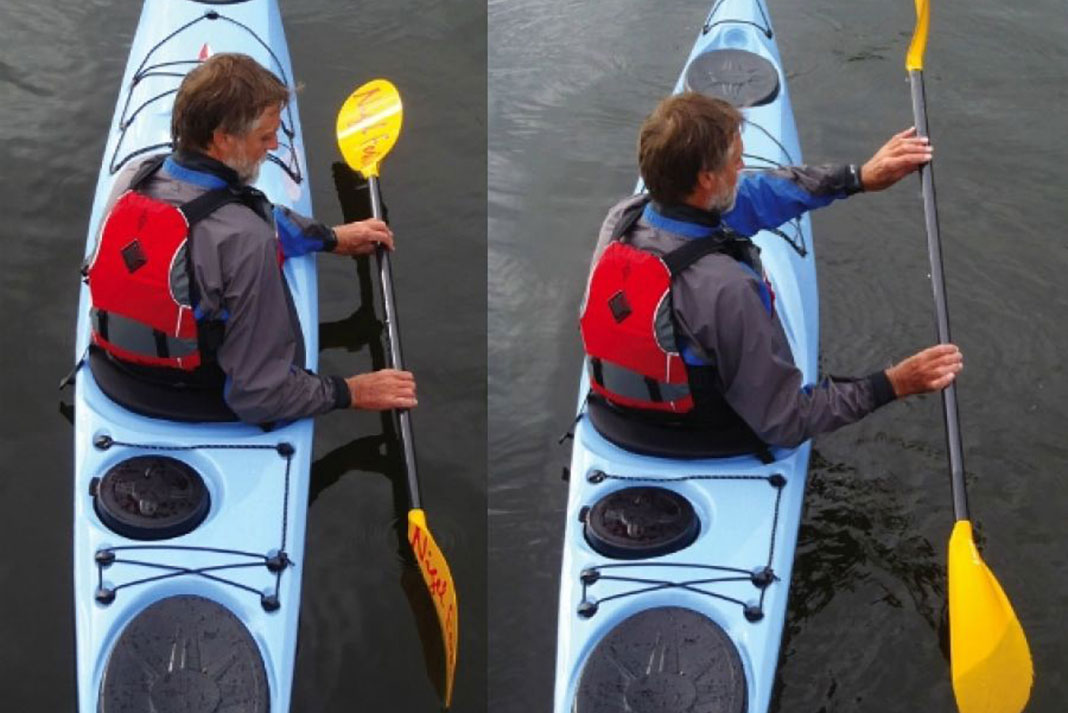
  • If you’re just getting started, try or adjust to an unfeathered, also called a 0-degree offset, paddle which will have both blades set at the same angle to the shaft.
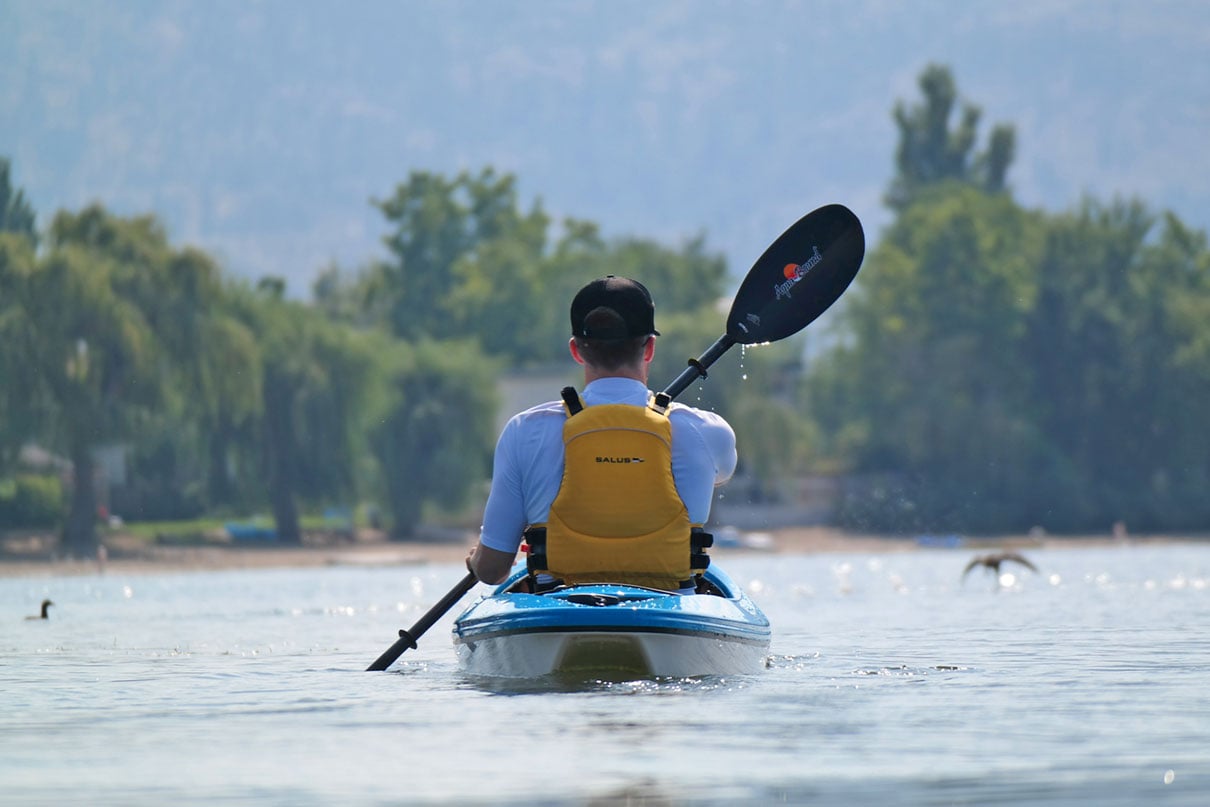
  • If your paddle blades have a curved spoon shape, the concave side that would “scoop the soup” faces toward the paddler (this is called the power face). If one edge of the paddle blade is longer than the other, the long edge goes on top.
  • Hold your paddle with your knuckles lined up with the top edge of the paddle.
  • Your hands should spaced on the paddle shaft a little bit wider than shoulder width so if you were to hold the paddle up on your head, your elbows would be bent at a right angle.

How to paddle a kayak forward

The forward stroke is how to propel your kayak forward. This will be the stroke you use most of the time and practicing a good forward stroke will lead to a more enjoyable day of kayaking.

  • On one side of your kayak, reach forward toward your toes and submerge the blade fully in the water.
  • Now, using a rotating motion with your torso, pull your kayak past the paddle. Push with your top hand at the same time.
  • When the blade reaches your hip, slice the blade out of the water.
    You should now be in a position to repeat on the other side.
  • Alternate forward strokes on the right and left side to move your kayak forward through the water. It’s okay if you need to say take two strokes on the same side once in awhile.

Forward stroke tips: Think “feet to seat.” Your blade goes in at your feet and comes out at your seat. Punch forward with your top hand as you pull on the paddle. Don’t lean forward. If you need a little more reach, twist at the waist. Pull straight alongside your kayak to go straight. Try pushing with your foot for more power. Push on the paddle side.

How to paddle a kayak backward

We paddle a kayak backward using a reverse stroke. The back side of the paddle is used for this stroke. You do not want to spin the blades around.

  • Twist at the waist so you can look back over your shoulder behind the boat.
  • Put the back side of the blade flat on the water.
  • Push down first and then toward the bow of the boat.
  • The blade of the paddle will come out of the water near your feet.

Reverse stroke tips: Make sure to look over your shoulder so you see where you are going. Pull a little with the top hand as you are pushing with the bottom hand. Alternate quick reverse strokes on either side of the kayak to stop moving forward.

How to steer a kayak

Kayakers use sweep strokes to steer their kayaks. Use a forward sweep when paddling forward and a reverse sweep when going backward. You can alternate a forward sweep on one side with a reverse sweep on the other to turn around in a circle while standing still.

The forward sweep stroke

A forward sweep stroke is one of the best methods to turn your kayak when you are moving forward. A forward sweep is a lot like the regular forward paddling stroke, just more exaggerated.

  • Put the paddle in the water close to the bow of the boat so the power face is pointed away from the hull.
  • Pull the blade through the water in a wide arc.
  • Follow the blade with your eyes and take it all the way to the stern of the boat.
  • When the blade nears the stern, lower your top hand to pull the blade free of the water.

Forward Sweep Tips: The paddle shaft is held low during the whole stroke. If you are moving forward, the last part of this stroke turns the kayak the most. If you are standing still, the middle part of this stroke has a big turning effect.

The reverse sweep stroke

A reverse sweep is the opposite of the forward sweep and turns your kayak by stopping the boat’s momentum on one side.

  • Twist at the waist so you can put the paddle in the water near the stern.
  • Using the back face of the paddle for the stroke, sweep the blade in a wide arc away from the boat using a pushing motion.
  • Follow the blade with your eyes until it is close to the bow of the boat.
  • Slice the blade out of the water before it touches the hull.

Reverse sweep tips: The paddle shaft is held low during the stroke. If you are moving forward, a reverse sweep with turn the boat sharply, but will slow your boat dramatically.

Kayaker paddling across open water.
Pick out a point in the distance and continue to keep your bow pointed toward it to go straight. | Photo: Brian Day

How to kayak in a straight line

Now that you know a few kayak strokes you’re probably trying to figure out how to go straight. Different types of kayak hull designs play a role in how easily they track straight. Especially shorter kayaks will start to veer if you stop paddling or your are paddling better on one side or the other. Regardless, by practicing good forward strokes that travel directly alongside the kayak and exit at your hip, and by using a couple of tips here, you’ll be able to cover ground without spinning in circles.

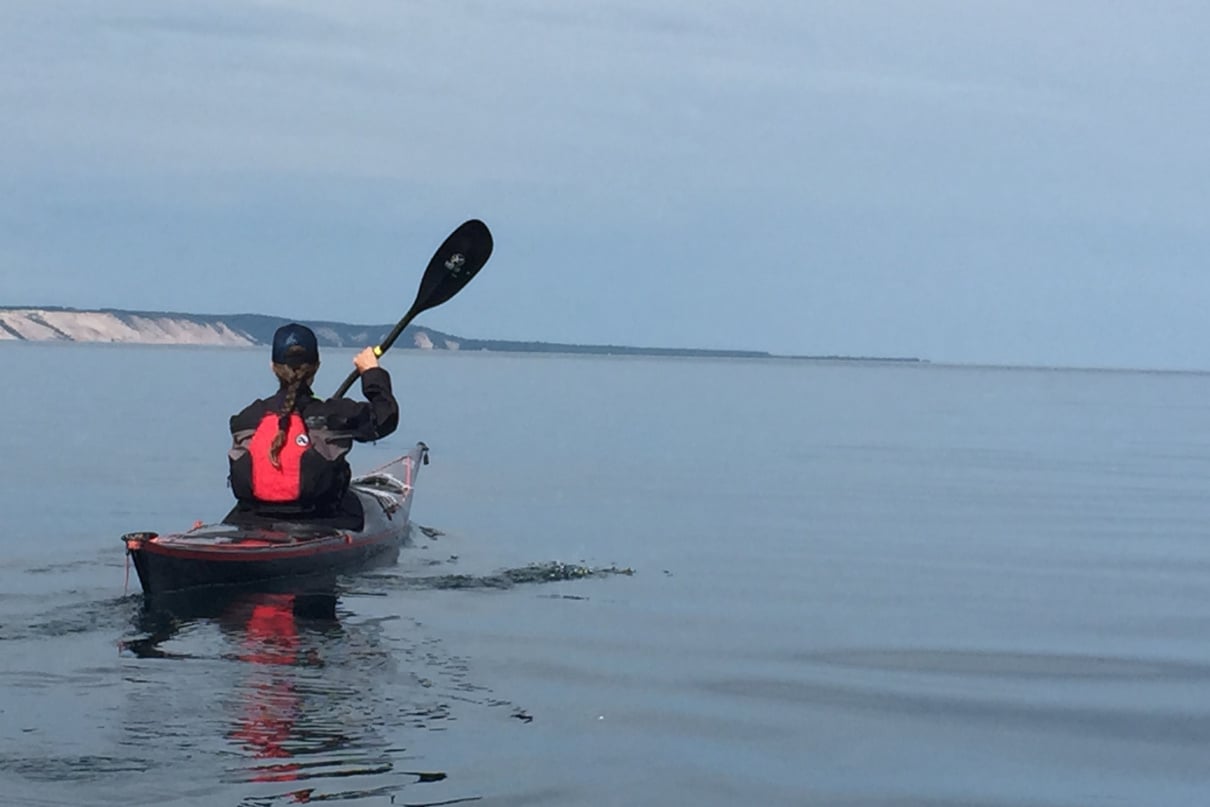
One trick to going straight is to pick a spot on the horizon that lines up with your direction of travel. Aim and maintain the bow of the kayak to that point.

It’s also better to make small corrections than large ones. If your bow starts to veer you can bring it back on course with just one sweep stroke if you notice it early. If it starts to veer off to the right, use a forward sweep on the right to bring it back on target.

How to move your kayak sideways

Sometimes you need to move your kayak sideways. Maybe you need to move closer to your friend’s kayak, or to a dock. Whatever the reason, to move sideways you’ll use a draw stroke as follows.

  • Twist at the waist so that you’re facing the direction you want the kayak to go.
  • Reach out with your bottom hand and put the paddle in the water roughly perpendicular to the cockpit.
  • Pull the kayak toward the paddle.
  • When the blade nears the hull, drop your top hand toward the bow of the boat to slice the paddle out of the water.
  • Repeat as necessary.

Draw Stroke Tips: Be careful as you practice the draw. If you keep pulling on the paddle you might pull your boat right over the top of it and flip. Make sure you slice the paddle out of the water when it gets close to the kayak.

Advanced kayaking strokes

There are all kinds of advanced strokes you can dive into as you improve your paddling skills. There are different techniques for draw strokes, dynamic turning strokes, braces and support strokes to help keep you upright in rough water and, of course, the kayak roll. You don’t need these advanced strokes to have fun on quiet water, but they become essential as you venture out into the rough stuff.

Two people paddling a sit-on-top tandem kayak
When paddling a tandem kayak, try to synchronize your strokes so your paddles don’t hit. | Photo: Old Town

How to paddle a tandem kayak

Paddling a tandem kayak is a lot like paddling a solo kayak. The biggest difference is that it works best for the bow paddler to focus on forward strokes and the stern paddler to take care of steering. Since the stern paddler is closer to the rear of the boat than he or she would be in a solo kayak, the sweep strokes change a little bit. Skip the part of the sweep near the bow and start or end the stroke at the centre of the kayak, near the stern paddler’s feet.

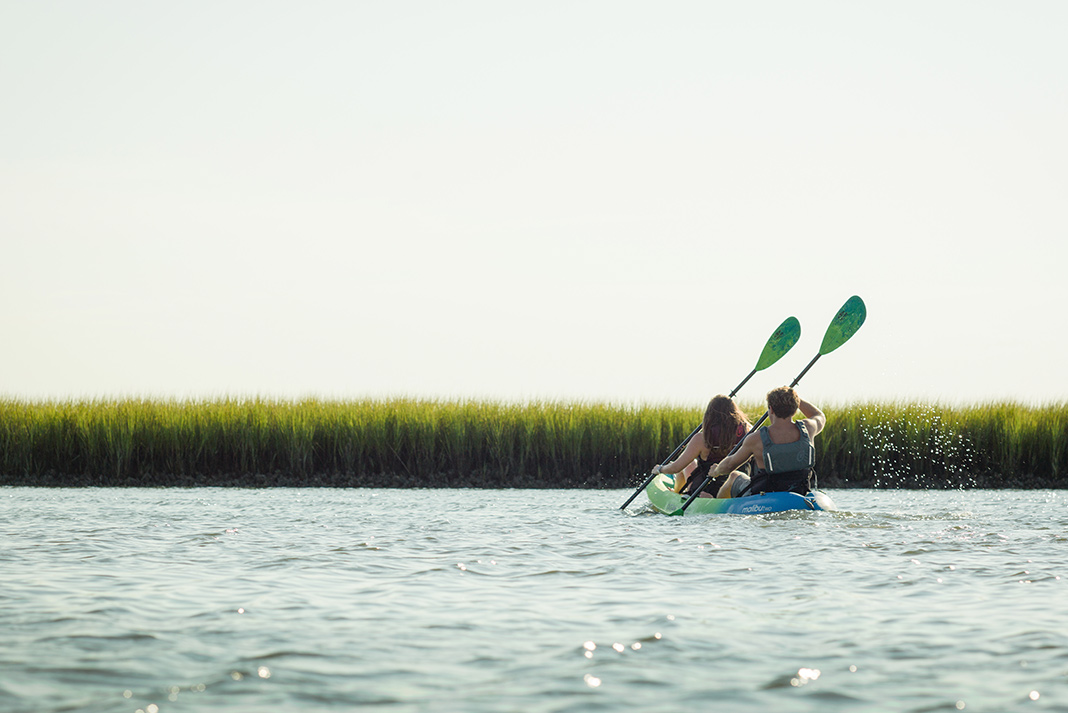
One more trick has to do with forward paddling. In a smaller tandem kayak, the seats may be close enough together that the paddles will bang into one another if they’re not in sync. Try putting the paddles in the water at the same time on the same side. To do this, it’s easiest if the stern paddler follows the bow paddler’s pace.

How to get back on a capsized kayak

What do you do if your kayak flips over? It depends on what kind of kayak it is and how much you’ve practiced your self-rescue skills.

Most recreational kayaks don’t have enough buoyancy to float high in the water if swamped. In the event of a flip, the kayaker should swim their kayak to shore and empty it while standing in shallow water or on land.

Sit-on-top kayaks can be flipped back upright in deep water without swamping. Then the paddler can simply climb back onto the boat on his stomach. Climbing back on your kayak is something many beginner kayakers want to learn to do and can be accomplished in a few steps.

  • If the kayak is upside down, you can reach across and pull it back over, or push the closest side straight up into the air to flip it upright.
  • Now, at the side of the kayak, reach across and pull your chest and hips onto the boat. Keep your paddle between or hold it in your far-reaching hand to not lose it. Stay as low as you pull yourself across.
  • Once you have your chest and hips in the kayak, swing your legs around to the foot braces and sit upright.

This simplicity of self-rescues makes sit-on-tops a good choice if you need a recreational kayak that can be paddled farther from shore.

Touring kayaks have bulkheads for more floatation. This means they can be re-entered in deep water and paddled to safety. There are several rescue techniques that will help a kayaker get back into her boat in the event of a flip. The rescues done with a partner are fastest and end up with the least amount of water left in the boat. Solo rescues are more time consuming and require the cockpit to be pumped out once the paddler is back in the kayak. In cold water this is a big disadvantage.

The most common group rescue is the T or X rescue, in which the swamped kayak is emptied over the deck of a companion’s boat. The most common solo rescue is the paddlefloat self-rescue. In this case a float is attached to one end of the paddle while the other end is secured to the deck of the kayak, creating an outrigger. With the kayak stabilized, it is possible for the paddler to re-enter the cockpit and pump out the water.

Rescues are serious safety skills and it makes sense to practice them until you can do them quickly and skillfully. If you’re new to kayaking, don’t venture far from shore until you’ve had a chance to develop these skills.

How to roll a kayak

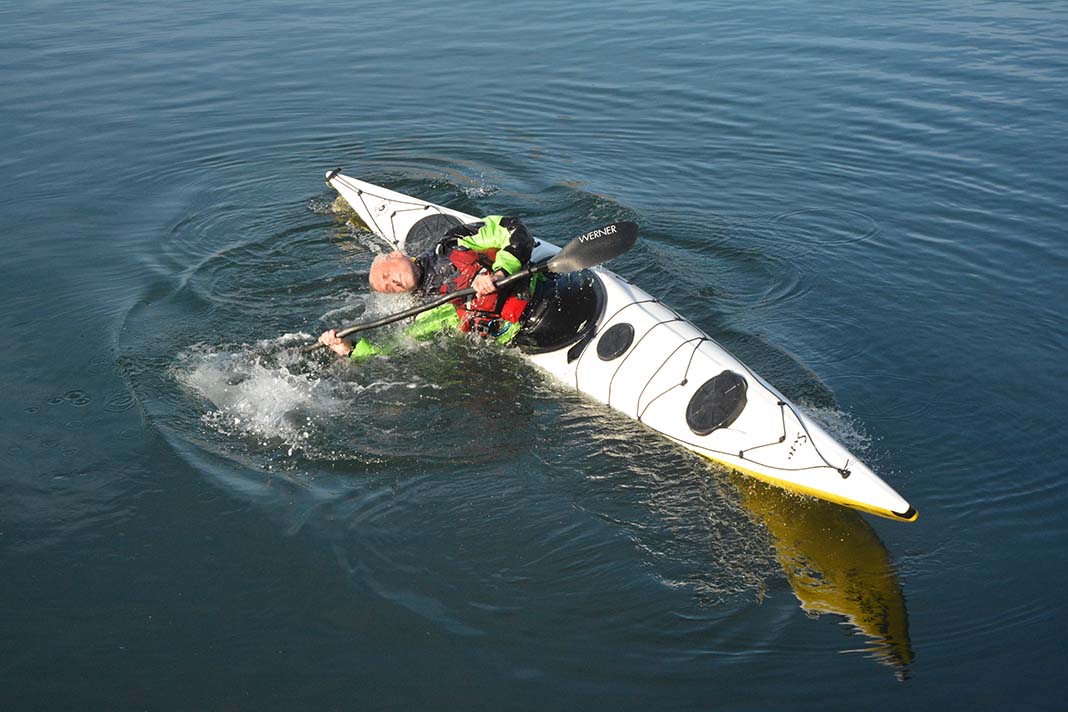
The kayak roll is the ultimate self-rescue technique. If you have a closed deck touring or whitewater kayak and have a reliable roll, the chances that you’ll need to swim out of your kayak if you flip are much lower. Whitewater kayakers, surf kayakers or sea kayakers who paddle in challenging conditions will all benefit from learning to roll. What’s more is that once you know how to roll, you’ll find it easier to develop the advanced skills that help keep you upright.

On the face of it, the roll is a simple maneuver. In the upside down position, the paddle is swept outward away from the kayak. This lifts the paddler’s body toward the surface of the water. The paddler then uses knee pressure to flip the kayak upright and brings her body back into balance over the hull. Presto!

Easy as it sounds, the roll can be very challenging to learn. It is a complex skill that requires muscle memory to execute. There are many motions that need to be done in quick succession without thinking about them. This means most people have to methodically drill the different segments of the roll before they can begin to tie them together into a complete technique.

The complex nature of the roll makes it a skill that is best learned with an experienced friend or instructor in a controlled environment like a swimming pool. Watch specific tips and trick on how to roll a kayak for a detailed walkthrough of the skill.

How to read moving water when kayaking

Reading water means looking at how the water is moving and making a guess about what’s under the surface. As water moves past rocks or other obstructions it makes an eddy of calm water behind the object. This can be a resting place for your kayak in swift moving water. In whitewater, waves, holes and other features are caused by water rushing over the top of rocks.

Reading moving water and whitewater takes practice. If you’re paddling rivers with whitewater, it makes sense to take a class or go out with an experience paddling partner who can teach you the ropes.

  • In moving water, eddys of quieter water will form behind rocks and other obstructions.
  • Look for V’s of water around submerged rocks. V’s that point upstream have a rock at their point. V’s that point downstream show a clear path.
  • Keep away from features that let water through but would trap your kayak. Logs, downed trees, bridge pilings and anchored boats can all be very dangerous. Give them a wide berth.
  • Stay away from dams of all kinds. They are extremely dangerous.
Two people kayaking on a lake
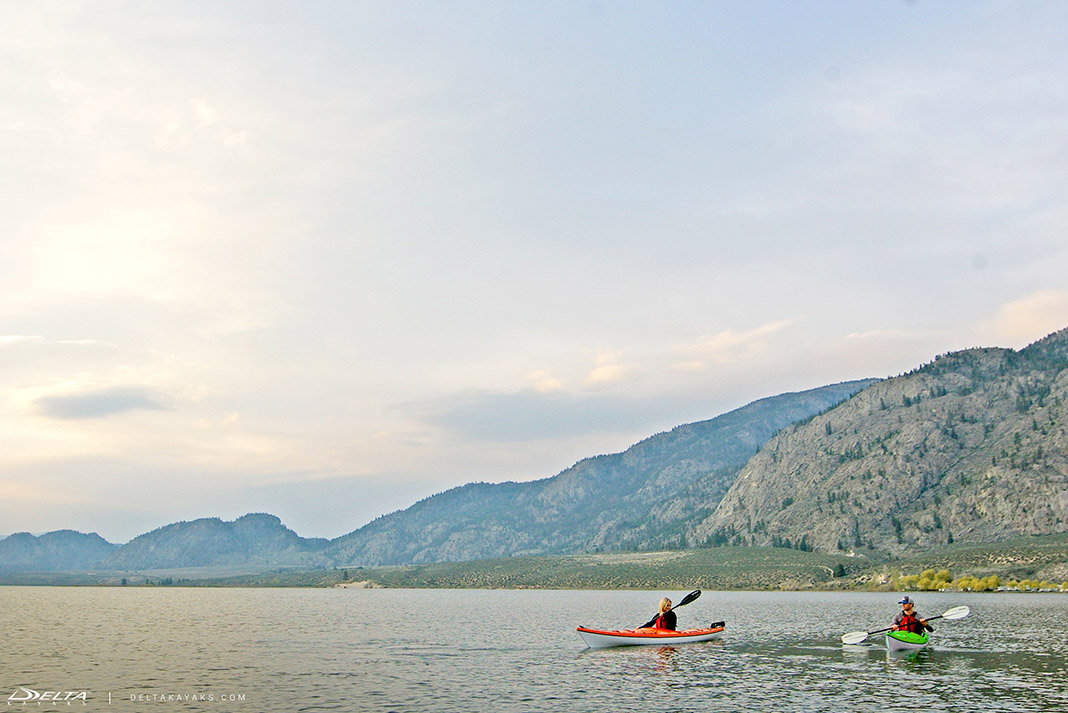
If paddling a sit-inside kayak, it’s best to stay close to shore until you learn proper rescue techniques. | Photo: Delta Kayaks

How to kayak a river

The easiest way to kayak a river is to go downstream. This means you’ll need to set a shuttle so there is a vehicle at the end of your river trip that you can use to get back to the put-in. If you don’t have a second car you may be able to run your shuttle with a bicycle, or, in many towns with rivers there are shuttle services.

Of course, on some rivers you can paddle upstream against the current. This is a great way to get a workout and eliminates the need for a shuttle.

What else to consider for your first kayak trip

  • Start with smaller, calmer bodies of water, like sheltered lakes and bays or slow-moving rivers.
  • Wait for weather and water conditions that match your ability level. Check weather and marine forecasts or river levels to have an idea what you’ll encounter.
  • Keep your first trips short and focus on having fun. People often underestimate how strenuous and committing kayaking can be.
  • Paddle with a buddy.
  • Share your plan with friends or family. Always let someone know where and when you are going kayaking.
  • Learn further safety tips so you’ll be well-prepared and have safe and enjoyable days kayaking.

    Feature Photo: Eddyline

ACA International Award Recipients Celebrated

During the ACA annual meeting on Sunday, November 24, the incredible and very deserving recipients of the 2024 ACA Annual Awards were announced. This series of prestigious international awards are presented to individuals and organizations who have illustrated exemplary leadership, service, and dedication to various aspects of paddlesports.

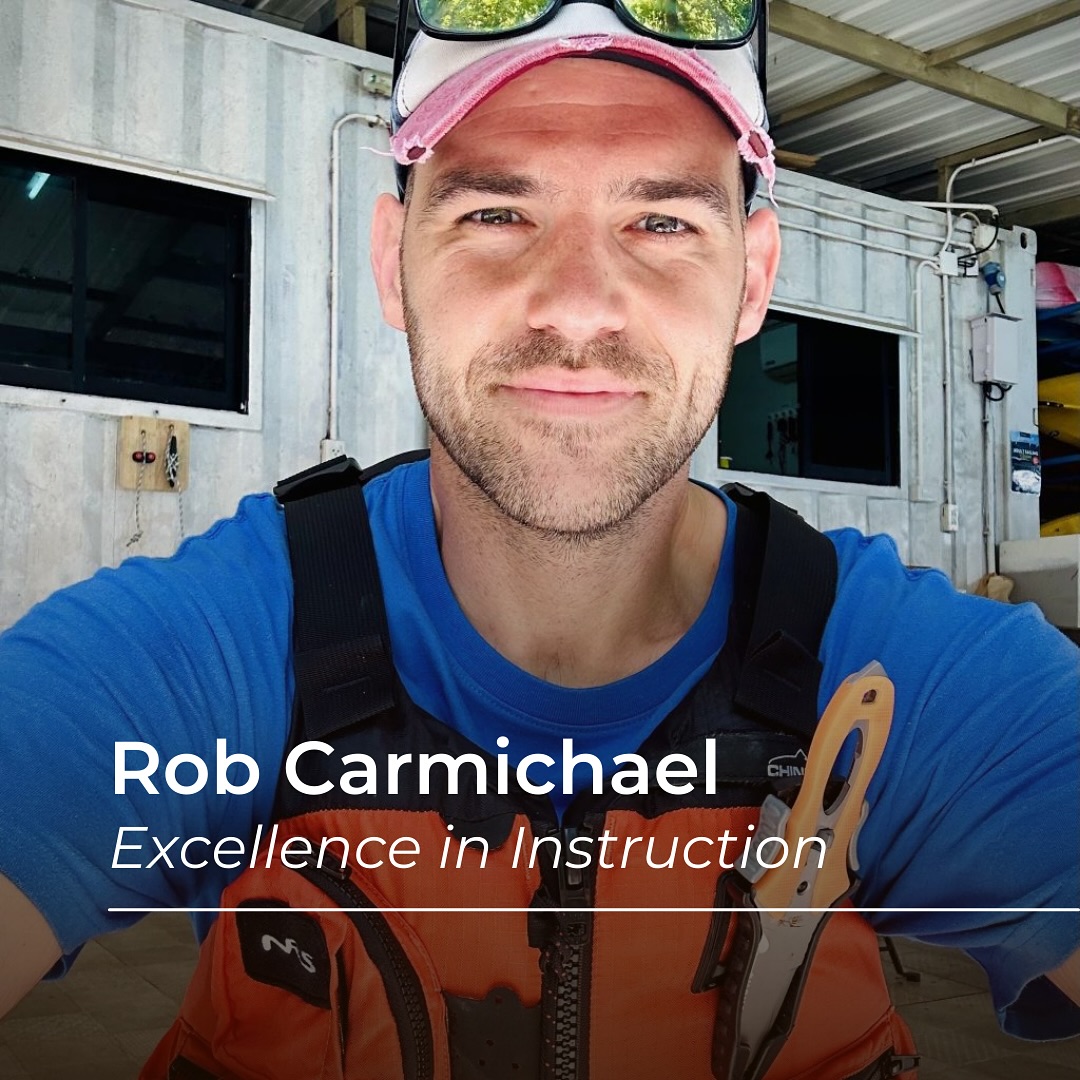
The prestigious Excellence in Instruction Award is presented to an ACA member for his or her outstanding contribution to paddlesports education and instruction. Oftentimes referred to as the “Instructor of the Year Award,” the recipients of this award have continuously set the example not only in teaching ability and technical skill, but in professionalism, connectivity, and service to students of every background. It is our honor to present the 2024 Excellence in Instructor Award to Rob Carmichael, the Director of Outdoor Experiential Education at UWC Thailand International School in Phuket, Thailand.

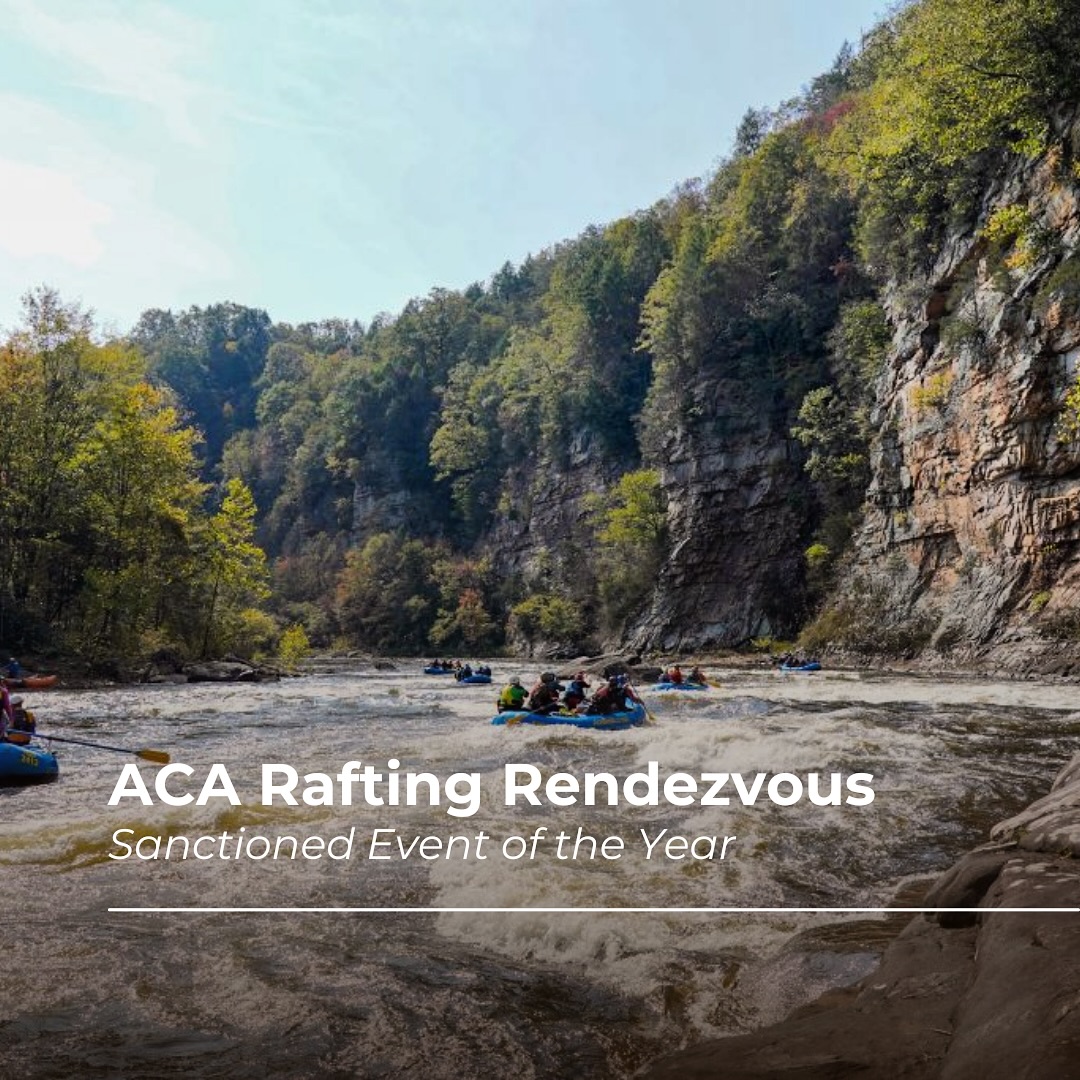
The Sanctioned Event of the Year Award is presented to the top ACA sanctioned event as nominated by the overarching ACA membership.We are pleased to announce the ACA Rafting Rendezvous as the 2024 Sanctioned Event of the Year! There are a multitude of reasons why this event was so impactful—and one of those was simply the leadership, professionalism, and organizational excellence that was illustrated by the SEIC Rafting Committee. Each member of this committee played a critical role in the development of the event program, the venue selection, forging relationships with event sponsors, and the roll out of a new ACA curriculum that promotes unity, safety, and fun across the rafting industry that plays a huge role in the outdoor recreation market in the United States and abroad.
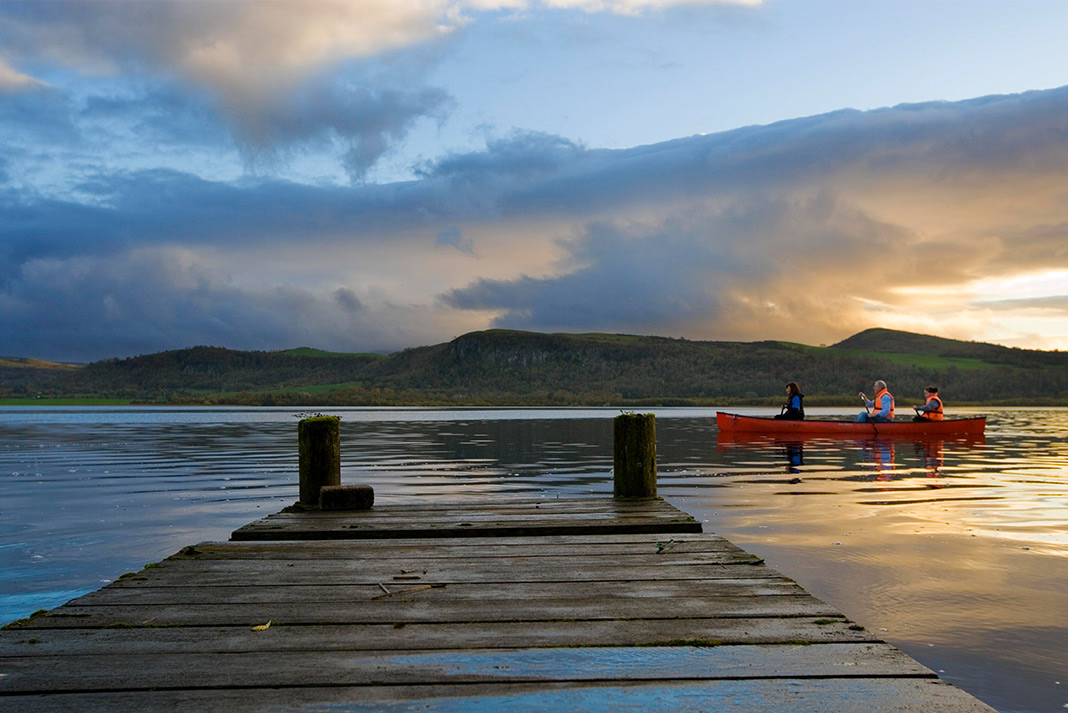
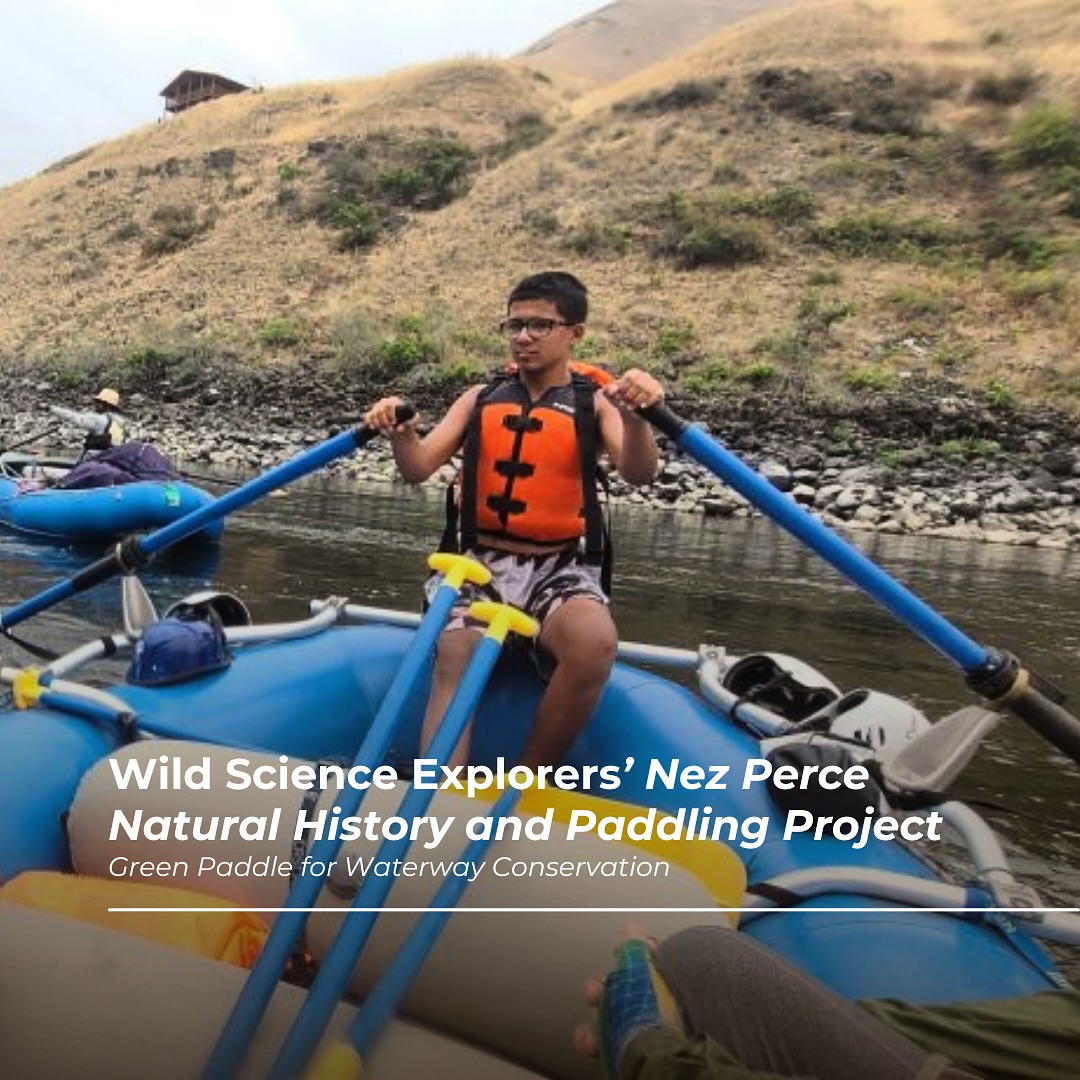
We are pleased to honor Wild Science Explorers’ Nez Perce Natural History and Paddling Project as the recipient of this year’s Green Paddle for Waterway Conservation award. Based in McCall, Idaho, this program engaged low-income Nez Perce Native American teenage tribal members in a 5-day science and stewardship rafting education trip down the Lower Salmon River. This trip was conducted in part to develop awareness of Nez Perce natural history and apply that to present day environmental issues in the Lower Salmon River corridor which has been traditionally used by the Nez Perce for hundreds of years.
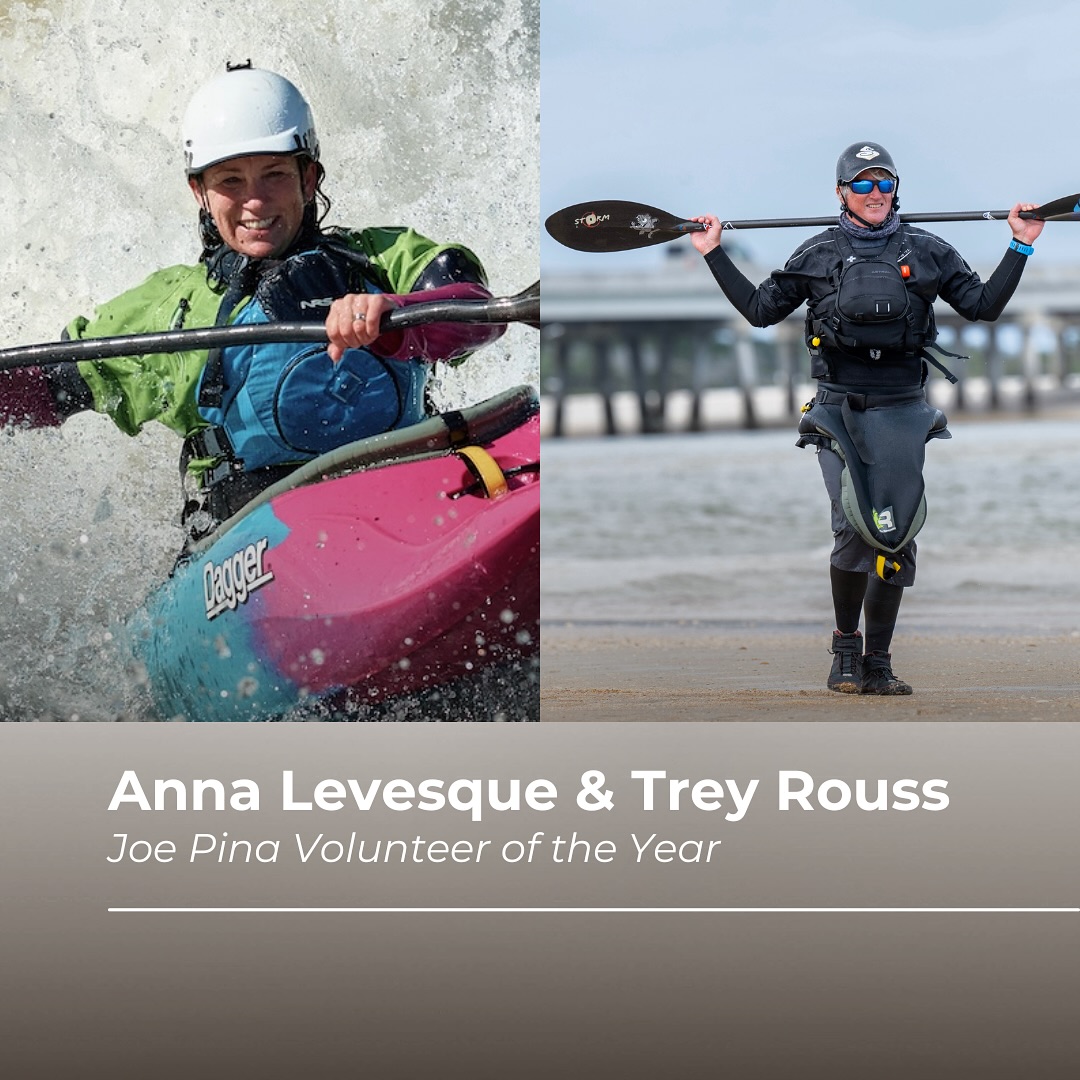
The Joe Pina Volunteer of the Year Award is presented to one or more volunteers each year for extraordinary service at the local, regional, or national level. We cannot even begin to detail or describe the depth of commitment of this year’s Volunteer of the Year Award recipients, Anna Levesque and Trey Rouss. As Chair and Vice Chair of the SEIC, they have paved the way and set the example for inclusive, student-centered, and holistic education and instructional programming that bridges the gap between paddling and learning through life’s many other dynamic environments. Anna and Trey were instrumental in the success of ACA’s LEAD programs this year, the Level 1-2 Regional Instructor Updates, the soon-to-be-launched leadership pathways program, the growth of the Instructor, Trainer, and Educator cadre, and overall connectivity that threads through students, instructors, committees, staff, and the ACA board of directors.

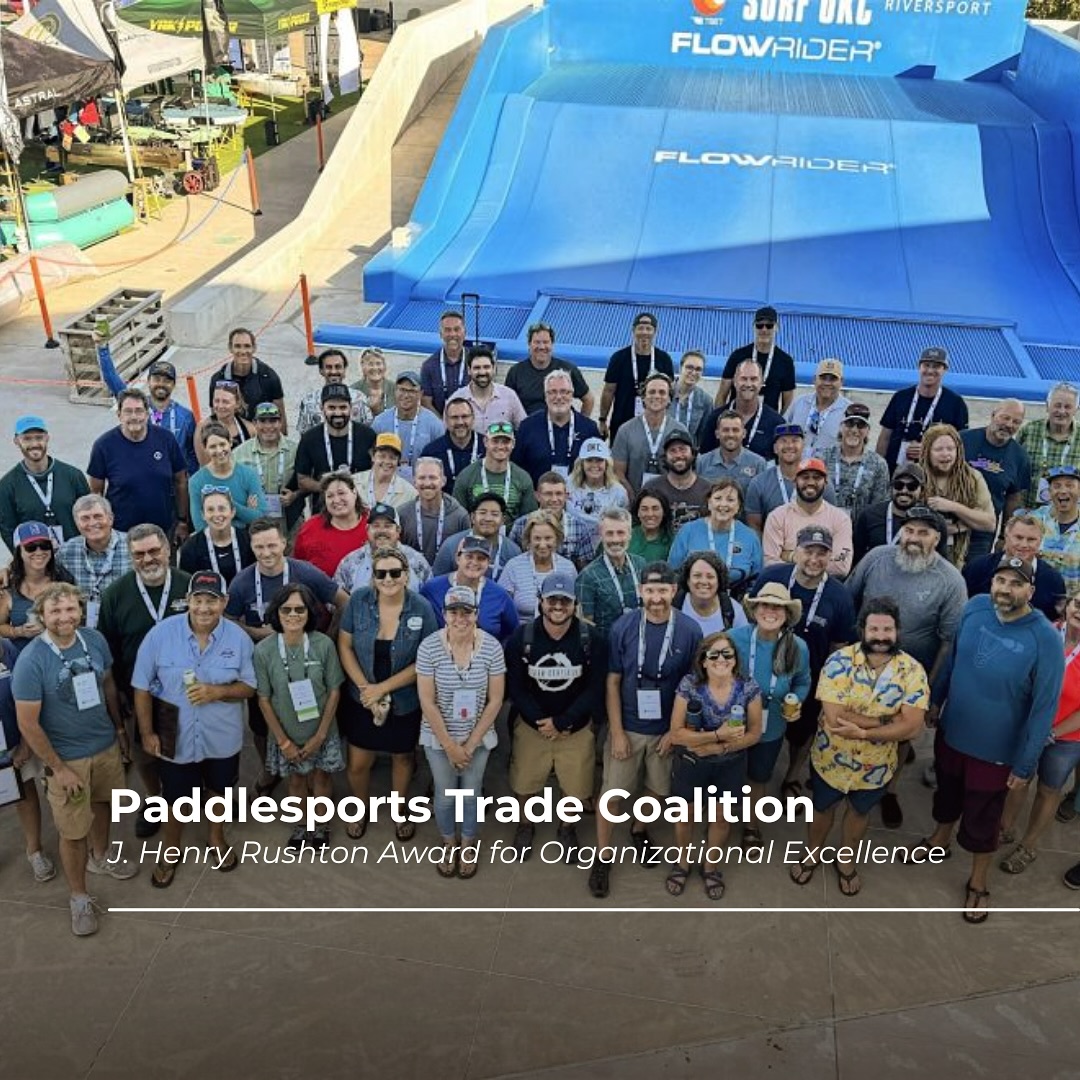
J. Henry Rushton Award for Organizational Excellence is presented annually to an organization or other group for outstanding achievements in advancing paddlesports and the mission of the ACA. With this award we would like to recognize the Paddlesports Trade Coalition—whose member organizations are dedicated to advocating for and promoting the strength of the paddlesports industry in North America and supporting commerce and inclusive access in coordinated efforts to expand a vibrant community of participants in all human and sustainably-powered boating activities. The leaders and members of the PTC are collaborative, authentic, and passionate teams of brands, retailers, outfitters, and sales representatives who influence, advocate, and foster growth and development within the paddlesports market segment.
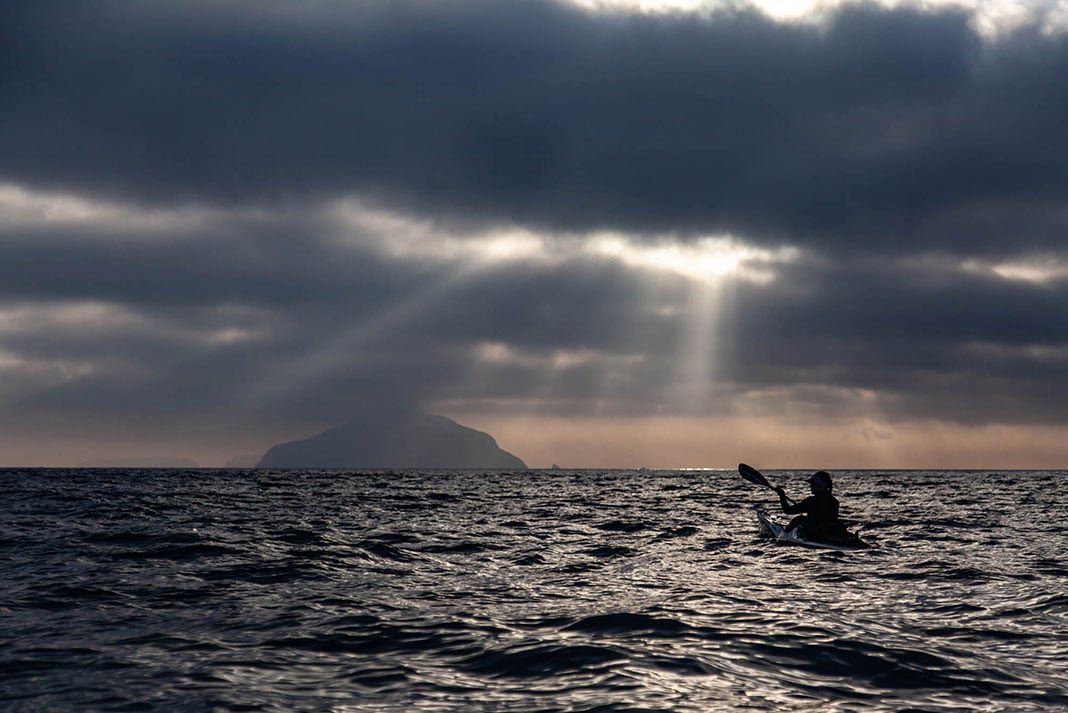
The Havens Leadership Award recognizes individuals whose practices and behaviors best serve the interests and success of USA paddlesports athletes. This year, we are pleased to honor Risa Shimoda; everywhere you look in the paddlesports world, you find Risa Shimoda connected to making things happen. This year, in the sphere of competitive paddling alone, Risa helped organize the 69th Annual CCA Downriver Race, attended the premier of the remastered classic film Fast and Clean, assisted in freestyle events around the country and still competes in Squirt boat. Risa is everywhere! Under Risa’s leadership this year, the Competition Council has been reactivated and reinvigorated as representatives from discipline committees have been meeting on a regular basis to communicate what each discipline is doing, share ideas about best practices, help committees organize and become more structured, develop a coaches education resource, and more. The bottom line is Risa is a paddler. She truly embodies a multidiscipline, collaborative approach to paddlesports promotion and thanks to Risa’s efforts, the future of paddlesports competition is bright.

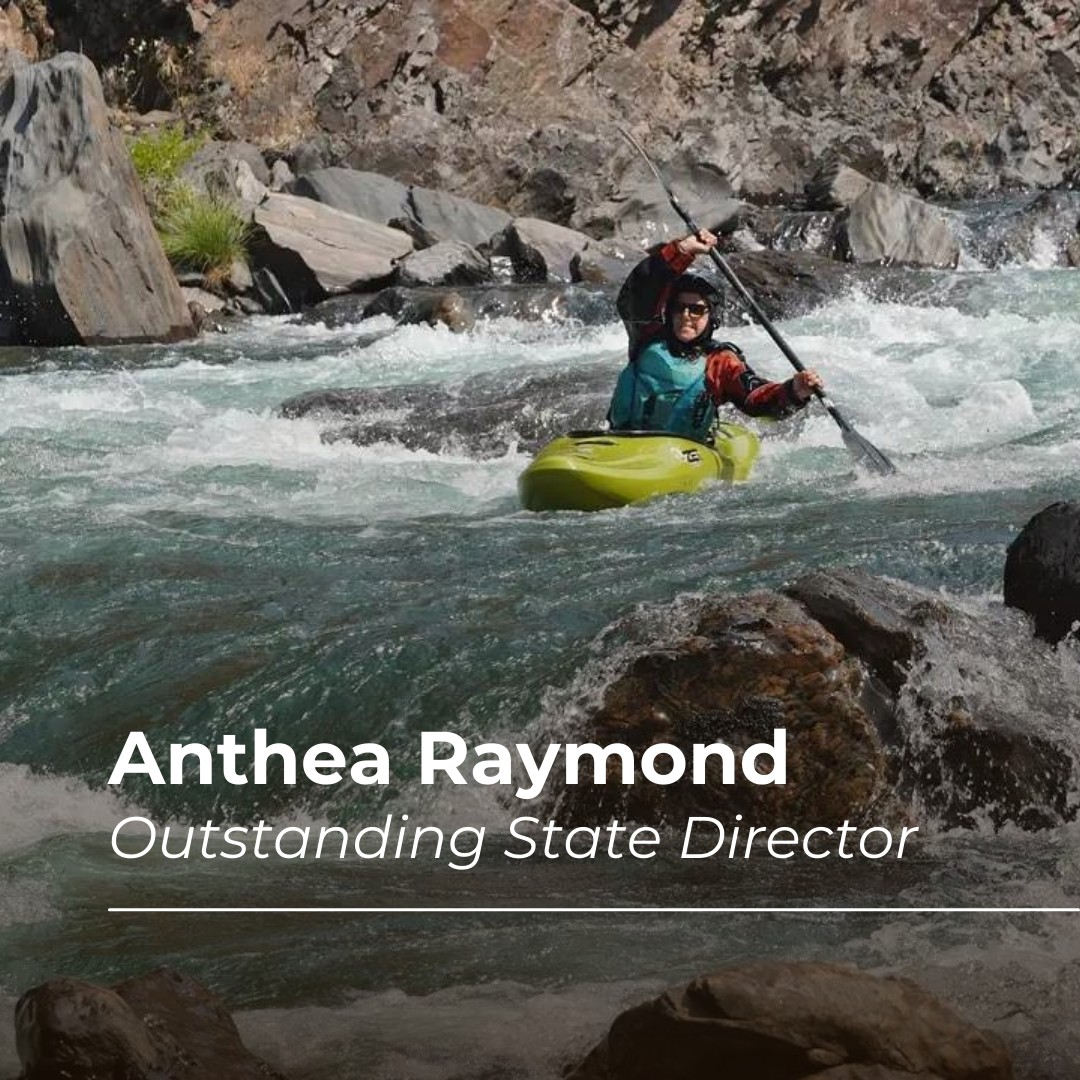
The Outstanding State Director Award is presented to one or more State Directors each year for their contributions to enhancing paddlesports in their state. It is our honor to announce the recipient of this year’s Outstanding State Director Award—Anthea Raymond! Anthea currently serves as ACA California State Director and has served in many other ACA leadership positions in the past. Her continuous support of the ACA and enthusiasm for promoting the safe, fun growth of the paddlesports community is evident in her dedication, passion, and volunteerism. She has spearheaded many projects, including the “California Paddle Hero” awards, she built a renewed excitement for kayak surfing via the Surf Kayak Revival Event, and helped bring the Level 1-2 Regional Instructor Update event to California. The state of California has a stronger paddling community, not just because she helps make these things happen, but also because she consistently promotes paddling opportunities to make sure the word gets out and the entire community is invited.

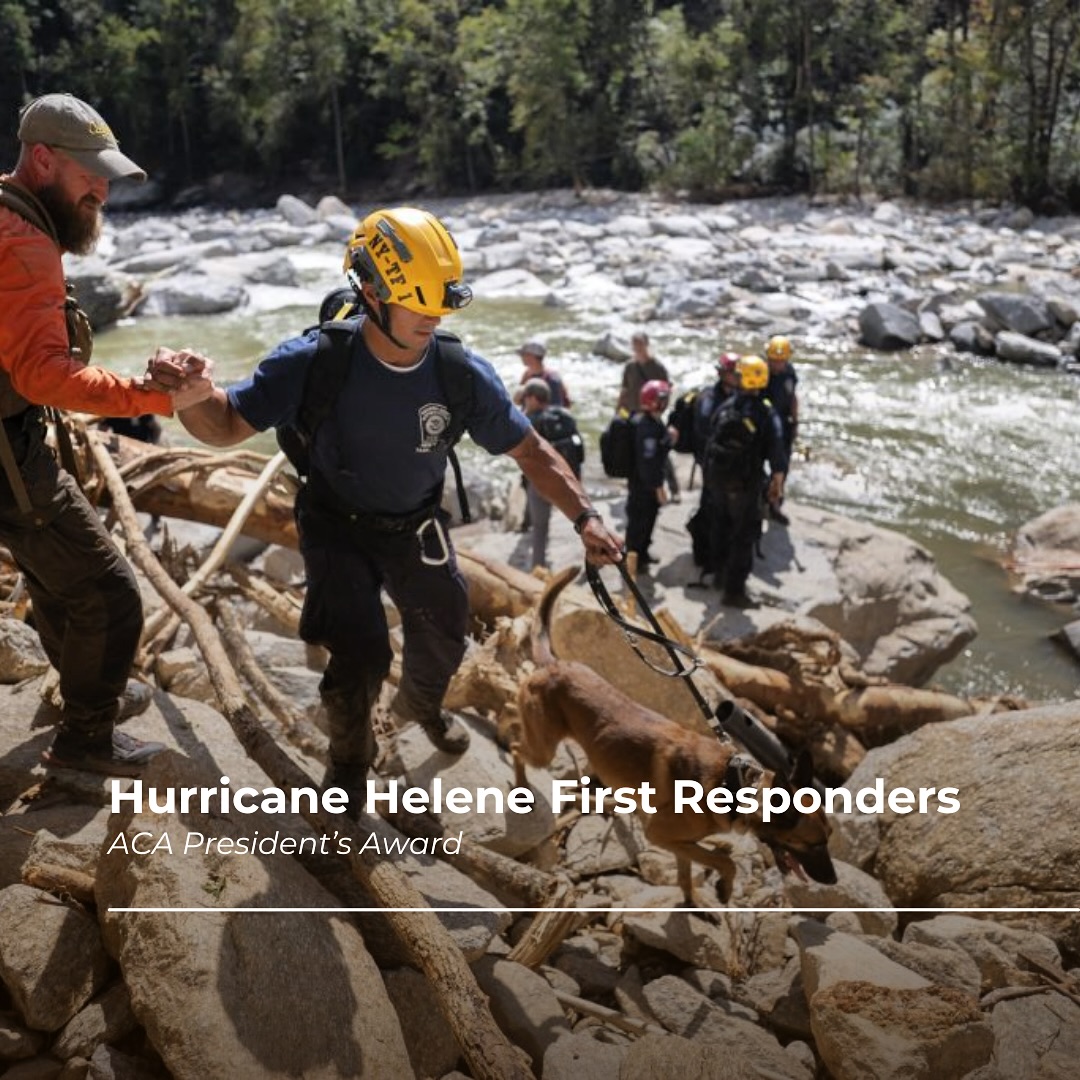
The ACA President’s Award is given by the President of the Board of Directors to individuals for outstanding service to the ACA on a national level. In September 2024, Hurricane Helene carved a 500-mile path of destruction throughout the Southeastern United States. In some communities, Helene served as a geological resurfacing event that swept award roads, bridges, and towns in its path. It will require months, if not years, to rebuild. In other areas, flood waters, winds and tornadoes contributed to significant loss of property, power, and water infrastructure and many lives were affected. In devastating moments like this, we acknowledge and recognize the people who step up to make a difference, and several ACA leaders stepped up to help their communities recover in the immediate aftermath of this disaster. The ACA President’s Award is intended to recognize all the members of the community who volunteered, donated, and served in any role to help those affected by the hurricane – whether in a capacity to clean up, rebuild, bring supplies, or through serving in a rescue and recovery role. We are heartened to say that the number of members of the ACA community who stepped into one of these roles to help their neighbors are too numerous to count. We would like to acknowledge the contributions of the following individuals as a representation of all the paddlers who responded to the call to help those in need.

  • Chris Wing, ACA Instructor Trainer
  • Trey Moore, ACA Instructor Trainer
  • John Grace, Green River Conservation Project
  • Erica Shanks, Green Riverkeeper
  • Cooper Leist, Lance Buskey, and Sam Iatarola, of Helene Rebuild Cooperative
  • French Broad River Academy’s Salamander Fund
  • Dane Jackson
  • Mason Hargrove
  • Sarah Beth Neal of Outdoor Adventure Rafting
  • Caleb Parchman of River Folk Rescue
  • Leaders from USA Raft, Nolichucky Outdoor Learning Institute, Appalachian Paddling Enthusiasts, Osprey Whitewater, Blue Ridge Paddling, and Mountain True

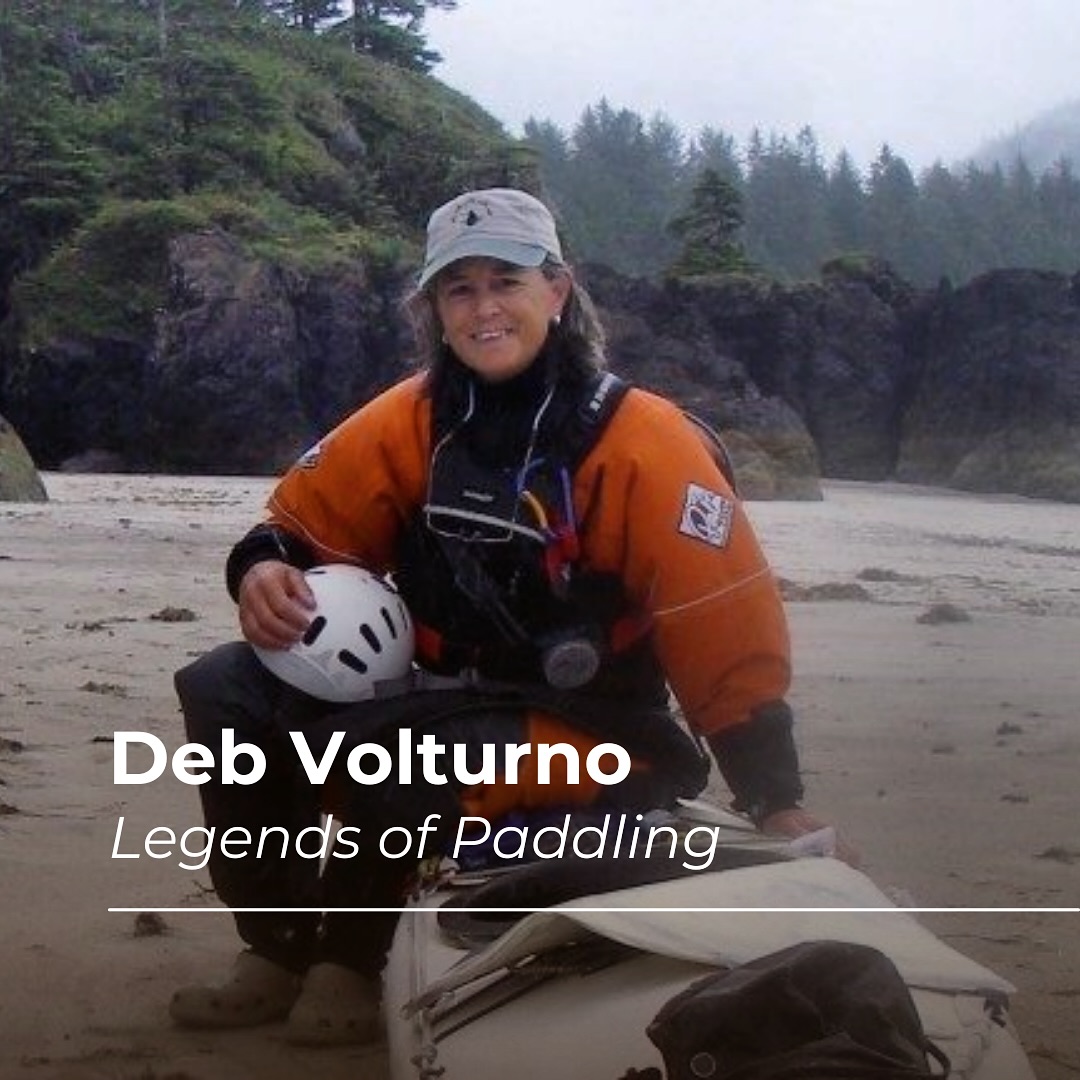
The Legends of Paddling Award is presented to one or more individuals each year for their legendary contributions to paddlesports. Recipients of this prestigious award are inducted into the ACA Hall of Fame. We are excited to welcome Deb Volturno into the ACA Hall of Fame and honor her with the Legends of Paddling Award. Deb’s status as a legend is not just made up of her significant accomplishments but is also formed by her impact on the sea kayaking community.  Deb is an American Canoe Association Level 5: Advanced Open Water Coastal Kayaking Instructor Trainer Educator and Level 4: Performance Surf Kayaking Instructor Trainer Educator. Many, or even most, of the instructors in the Pacific Northwest region have received training, assessment, and/or mentoring in their journeys from Deb. Deb is a key player in this critical time for the surf kayaking discipline and its current revival within the ACA. Deb has been a part of surf kayaking from the earliest days when there was just one class of surf kayaking, and she was a fixture in the Bay Area/Santa Cruz kayaking scene for a long time, participating in competitions and running the California Canoe & Kayak outpost in Half Moon Bay with future fellow Tsunami Ranger John Lull. Deb currently holds the rank of Captain of the Tsunami Rangers, an ocean adventure kayaking team that originated near San Francisco. A sea kayak surf champion, Deb was also a member of the US Surf Kayak Team, which she represented in numerous competitions put on by the World Surf Kayak Association across the world. Much like her impact across the Pacific Northwest, Deb is a common thread in the influence of technical and teaching skills in the region, but more than that, she has influenced a collective endeavor to make sea kayaking more accessible, inclusive, and representative.

About the ACA:

The American Canoe Association was founded in 1880 and is a national 501(c)(3) nonprofit organization that serves the broader paddling public by providing educational programs, supporting stewardship initiatives that affect paddlers, and offering competition opportunities to athletes of all abilities. The ACA has over 15,000 members and 300 paddling clubs and affiliated organizations. The ACA provides insurance for hundreds of events and races every year. The ACA education program has an estimated reach of over 800,000 people per year. ACA members reside in all 50 states and over 35 countries worldwide. Since 2017 the ACA has served as the National Governing Body for paddlesports (Sprint, Slalom and Paracanoe) for the United States Olympic & Paralympic Committee and as the U.S. National Federation to the International Canoe Federation.

The heart of the ACA is the people who paddle, cherish and protect the rivers, lakes, streams, bays and oceans of the United States and beyond. For more information, please visit https://americancanoe.org.


Photos courtesy of ACA Paddlesports


28-Year-Old Circumnavigates Ireland By Sea Kayak

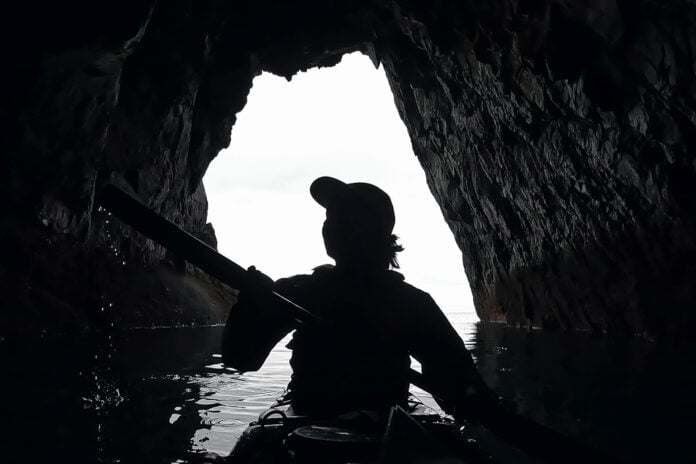
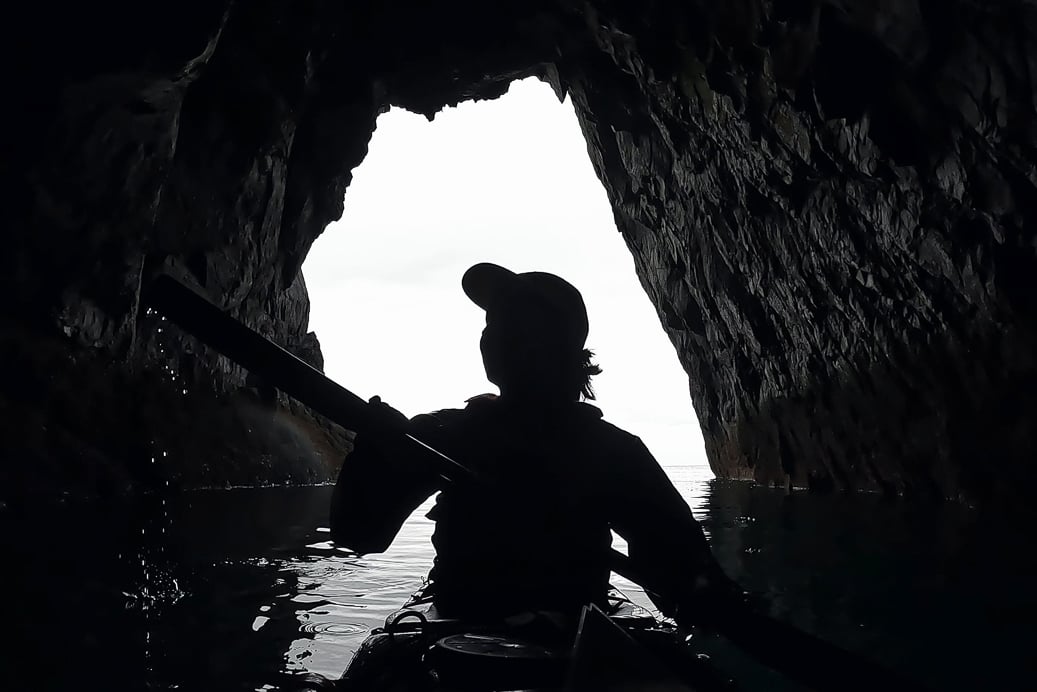
Ariel Gazarian paddles through sea caves on her solo circumnavigation of Ireland.
Gazarian paddles through sea caves on her circumnavigation of Ireland. | Image courtesy Ariel Gazarian.

On day 107 of her circumnavigation of Ireland by sea kayak, Ariel Gazarian capsized off the Irish Coast. Then, she stood back up, shook it off and finished her journey completing her circumnavigation on November 10, 2024.

“You are so vulnerable when the whole Atlantic Ocean is there next to you. You are this tiny little thing, and the whole sea is next to you, these massive cliffs, there’s nowhere to land… it’s both really humbling and really empowering,” Gazarian shared.

Circumnavigating the island of Ireland by sea kayak

A circumnavigation of Ireland can be anywhere from 900-1,300 miles depending on how many bays and coves a paddler tucks into, a marine distance phenomenon known as the coastline paradox.

Jon Hynes completed the circumnavigation 2015 and created a film about the journey that went on to win Reel Paddling Film Festival Best Sea Kayaking Film of 2017. The same film became the inspiration point for Gazarian’s own circumnavigation and Hynes himself became a mentor.

“I just didn’t stop thinking about it for so long,” shared Gazarian.

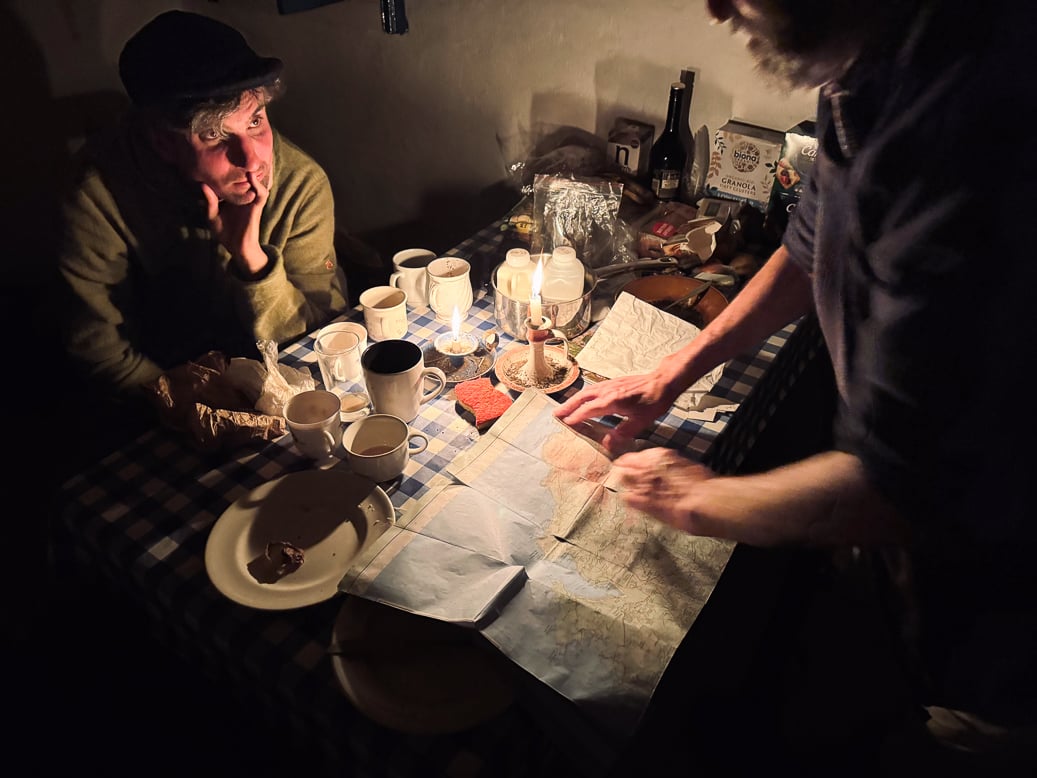
Planning around the table for circumnavigating Ireland by sea kayak.
Off water, Gazarian studies with and learns from local paddlers and mentors. | Image courtesy Ariel Gazarian

Gazarian came to the Irish coast armed with several years of experience as a sea kayaking guide in the San Juan Islands, Washington. Before heading out, she spent countless hours playing in tidal rips practicing a variety of self-rescues, or ways to get back into her kayak in rough conditions in the event of capsize.

She borrowed a Rockpool Taran 18 from Steve Smith in Ireland, another mentor pivotal to Gazarian’s trip.

“We say a circumnav here is a little like a game of chess sometimes, because you have to look at the forecast, look at what window you have,” explained Gazarian.

On June 17, Gazarian began her journey leaving from Bullock Harbour, Dublin.

Beach camping along the Irish Coast.
Camping on a beach along the Irish Coast. | Image courtesy Ariel Gazarian

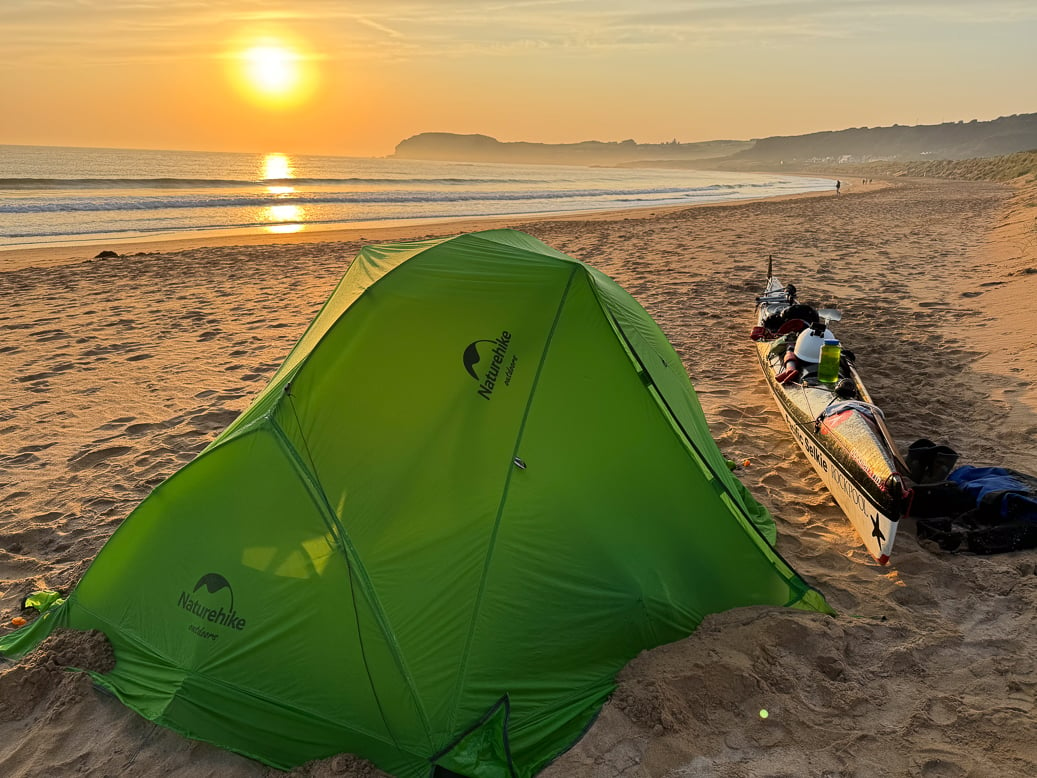
I had a wonderful rest this morning with the crashing waves and beautiful heat of the sun to wake me. I zipped open my tent and saw the most beautiful white sand and morning light glimmering within the blue crest of crashing waves. In this lighting of the sea, you can also see the silhouettes of seals swimming close to shore. Day 44, Ariel Gazarian’s expedition blog

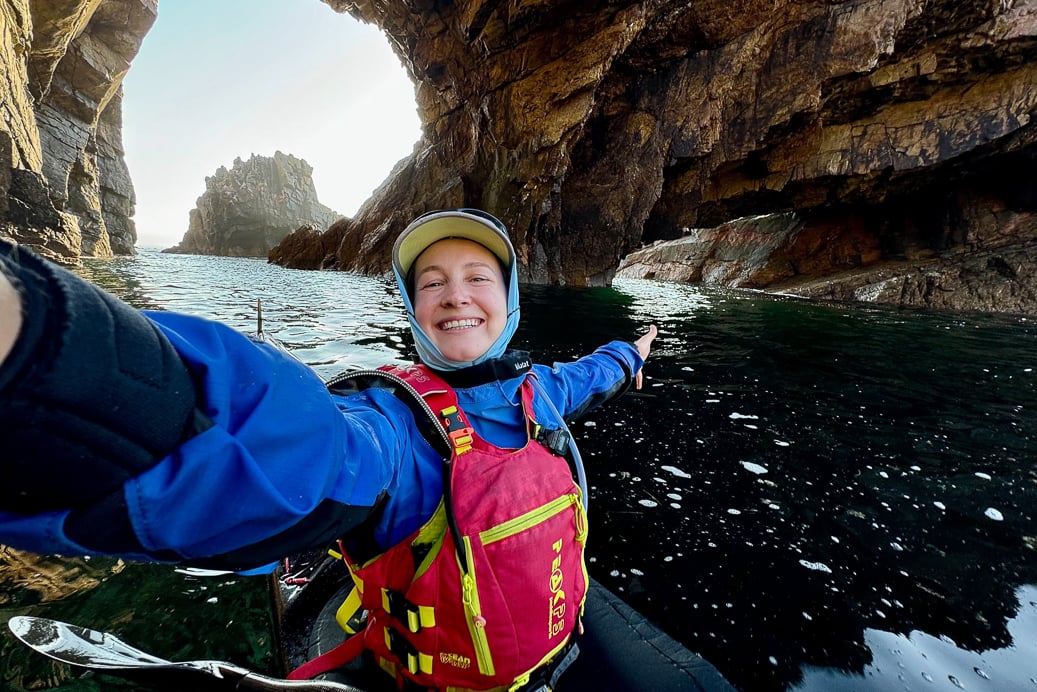
Gazarian went on to paddle remote Irish caves and camp on sandy beaches. On July 8, she met up with Jon Hynes to paddle Old Head of Kinsale. Gazarian paddled under the Cliffs of Moher on a sunny day with dynamic seas, joined by paddlers from County Clare. Crossing Donegal Bay, she was joined by a pod of nearly 30 dolphins.

Ariel Gazarian takes a selfie in the sea caves off the Irish Coast
Gazarian paddles through massive sea caves off the Irish Coast. | Image courtesy Ariel Gazarian

There were two big arches to go through and the sunset glow was shining bright through them, beaming towards me. What an incredible sight. The bigger one had a sea stack behind it, so it just made for a stunning view all together. Today was totally a day of – this is why I wanted to paddle around Ireland! Ah just amazing. Once I had floated and taken a happy selfie, I started my flat calm sunset crossing to Inishkeel Island. It was just wonderful. Day 99, Ariel Gazarian’s expedition blog.

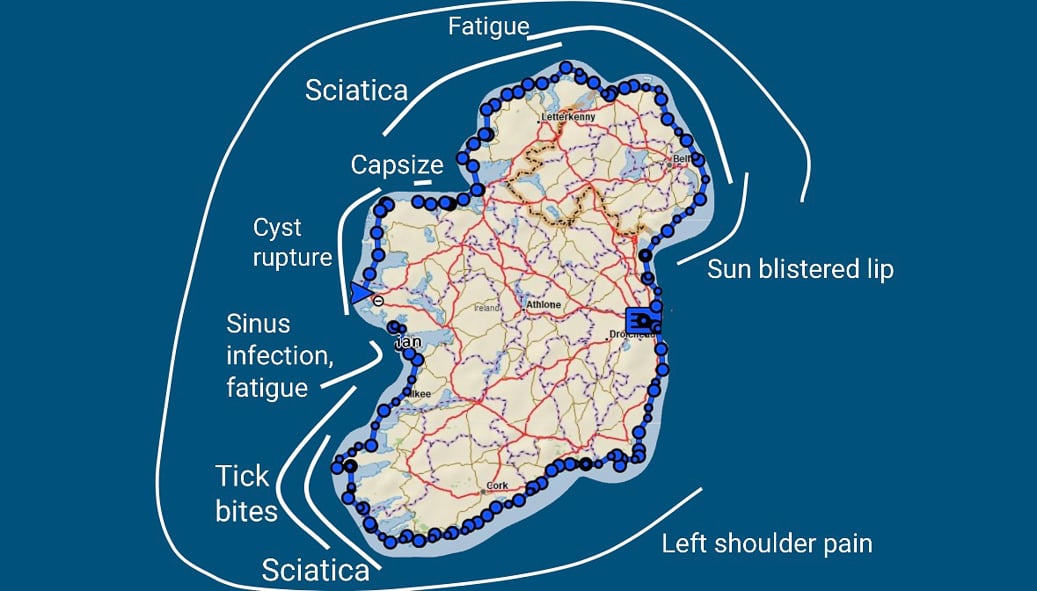
Sciatica, shoulder pain, tick bites, cyst rupture, capsize

As locals consistently joked with Gazarian, summer of 2024 turned out to be the windiest summer on record since 1982 on the Irish Coast. Still, Gazarian punched through surf and swell, through sea caves and around headlands with a smile on her face.

Beyond sunshine and sea caves, Gazarian worked through sciatica, shoulder pain, tick bites, and a cyst rupture. Her journey totaled 123 days with 68 days on the water due to weather, particularly near the end of the trip, and wear and tear on her body.

On day 107, September 26, after three full months of successful paddling, Gazarian began to round Dowpatrick Head.

Past Ballycastle and well offshore, Gazarian initially planned to paddle eight more miles that day, but something shifted.

“Sometimes I get this sixth sense when I’m out there, like I should not be out here, and I need to find an exit plan,” Gazarian said.

A map of Gazarian’s circumnavigation of Ireland as told by challenges along the way. | Ariel Gazarian
A map of Gazarian’s circumnavigation of Ireland as told by challenges along the way. | Image courtesy of Ariel Gazarian

So Gazarian turned back to head for the bay rather than continue on, sensing that the sea was going to build. She did her best to maintain a distance of about a quarter mile off shore, but where before the wind was at her back, it was now at her face and from offshore, pushing her towards the cliffs.

Gazarian noted that waves were breaking a little farther offshore than usual, but not necessarily alarmingly so. Everything seemed normal; that’s when she saw the first wave. Gazarian realized she was “caught in between the boomers on shore and a massive set of off shore ‘freak wave’ boomers on a different reef with nowhere to go,” she wrote in a blog post about the event.

“I see this image in my head of these waves sucking me down and coming up, that feeling of the height of this wave is impossible… this is not supposed to happen. I couldn’t do anything about it, it was too late.”

In all of her years of experience and practice, Gazarian had never truly capsized outside of a controlled practice environment before. She had spent months with local paddlers marking down the areas with boomer waves and trouble spots; this hadn’t been one of them.

On day 107 of her Ireland circumnavigation, Gazarian was pulled under and ripped out of her boat by the force of a wave.

“The whole barrel of the wave, trough to crest, rose to about 15 feet before hitting me,” Gazarian explained. “I was pushed fast in the circulation of the wave, tumbled under in the surf like a washing machine and was ripped out of my boat, no chance to roll.”

From here, Gazarian did her best to hold her boat while a set of large boomer waves tumbled her further in towards a reef and breaking surf—a reef that had only barely been noted on her chart.

Later, Gazarian would find from locals that the nearby reef has a name in reputation— the name in Irish translates to “the rising serpent.”

What happens after a bad capsize on the open coast

By the time Gazarian was out of the pounding boomers and in a position to try and reenter her boat between sets, she’d already been exhausted from holding on to her boat and being worked by the Rising Serpent for several minutes.

She was on her sixth or seventh self-rescue attempt when another large wave came and ripped her boat from her.

“I briefly thought I was going to drown because I had so much water in my system after the first couple. I was watching my boat get surfed toward the rocks,” Gazarian said.

Thankfully, soon after that Gazarian was out of the cliff section and had drifted toward somewhat friendlier rock features. Eventually, she made her way back to her boat and slowly made her way toward some flat rocks nearby.

“You know in the movies where there’s a plane crash, and they get washed up on a beach? And they’re like, flat on the sand? I know what that’s like,” Gazarian said.

Her spray deck had been turned completely backwards, but there was no serious damage to either her or the boat.

Despite fears and self-doubt, Gazarian continues and completes her circumnavigation.

And so Gazarian got up off the sand. She paced around on the rocks and collected herself. She texted her friend Donal for help, and Gazarian took the next day off to regroup.

Just one day though— Gazarian got back on the water the day following despite fears and doubts.

Ariel Gazarian paddles through sea caves on her solo circumnavigation of Ireland.
Gazarian paddles through sea caves on her circumnavigation of Ireland. | Image courtesy Ariel Gazarian

“The days after that were really hard. I just felt so different. I felt like I was just a different paddler,” Gazarian said.

Looking back, one thing Gazarian has considered extensively was whether or not she should’ve clipped on her short tow, tethering herself to the boat. She weighed whether being tethered to her boat was safer, or if adding an extra rope in conditions like that was just something for her to get tangled in, ultimately adding more risk.

“I think about it all over and over and it just feels like a miracle that I had no wrist injuries, no holes in the boat, coughed up all the water, made it to a flat place on shore near a road, got all my stuff back, and that Donal was there,” Gazarian wrote in a blog post about the event. “It turned out as the best-case scenario, really.”

After the incident, Gazarian went back to tackle the section of the capsize west of Downpatrick Head to close the loop.

“Finally, after weeks of high wind and swell storms, and waves of 20+ feet, a high pressure has come through, and I was able to finish that section of North Mayo that felt so important to do,” Gazarian wrote on Instagram on November 7. “I paddled out and around the reef that I capsized over and just felt so much relief and accomplishment to do it confidently and after the 25 miles of gorgeous cliffs, sea stacks, and the Stags of Broadhaven.”

“Going around it, I was on edge, but I think of risk management a little bit differently now,” Gazarian explained. “I separate things into ‘this is a normal amount of swell, this is not that surge that I saw coming towards me. This one freak thing that I saw… that was abnormal.’ I feel a lot better after doing it now.”

The wave was outside of her control: Gazarian decided to focus on what was within her control.

Overall, Gazarian paddled with dolphins and camped on beaches, made friends and experienced some of the wildest coast the Atlantic has to offer. She had sun blisters and shoulder pain, had a cyst rupture, and capsized and kept going anyway, even when she doubted herself, even when she was scared.

On November 10, Gazarian paddled into Bullock Harbor in Dublin, the same place she had left months before, greeted with a bouquet of flowers, a pint of Guinness, and a crowd of her friends and mentors who helped her along the way, all there to cheer her back home.

Read Ariel Gazarian’s blog posts from the trip here.

Review: Klepper Folding Kayaks’ Aerius 545

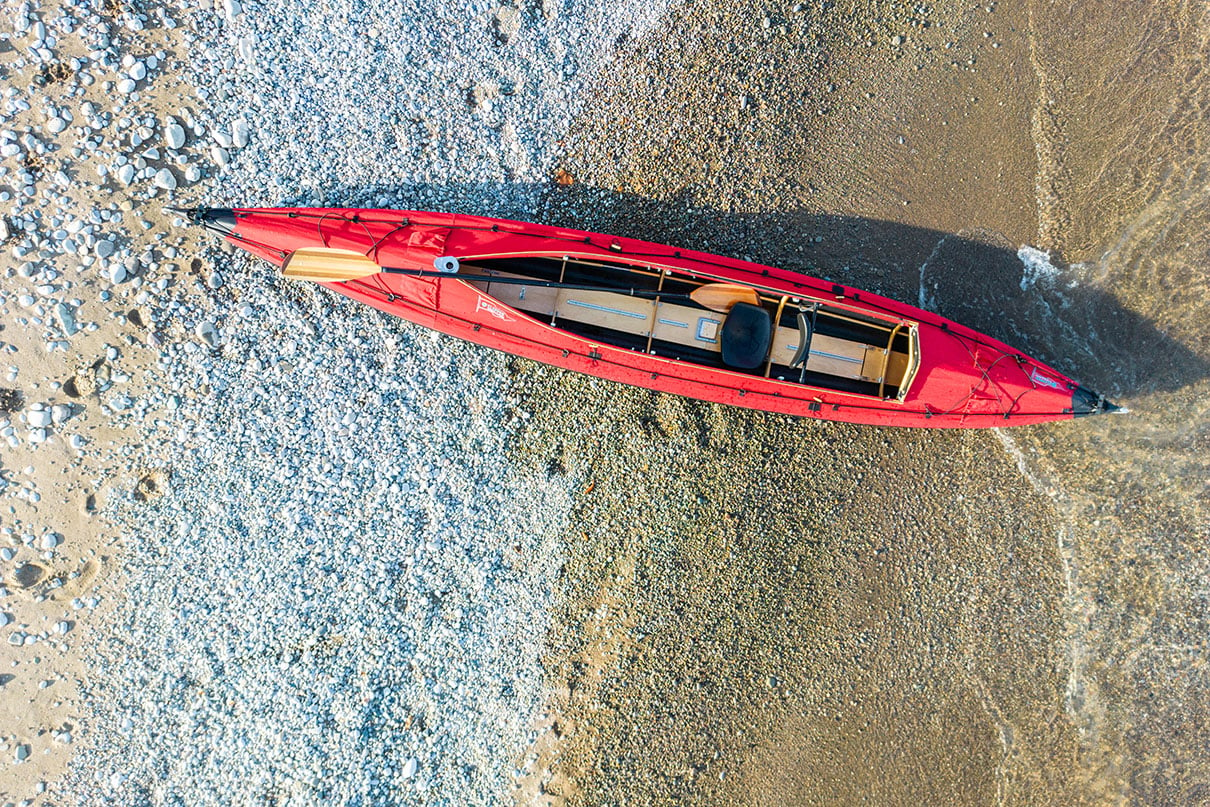
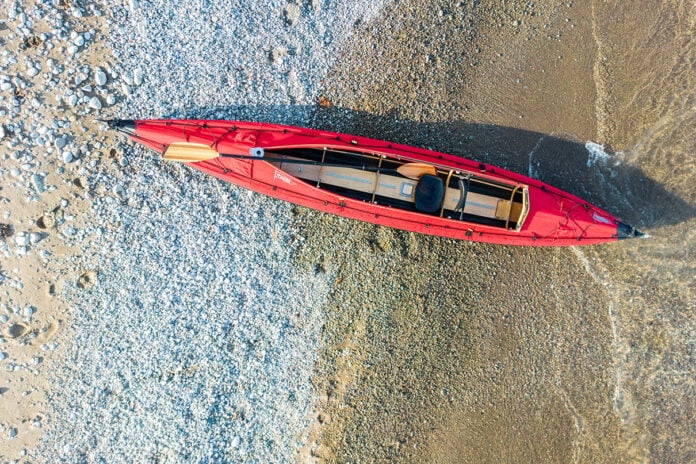
overhead shot of the Klepper Aerius 545 on a beach
The Klepper Aerius 545 is speedy and stable, and it won’t lose its composure in high seas. | Feature photo: Colin Field

With the possible exception of orchestral instruments, few products have changed as little as the Klepper kayak since the design was first produced by master tailor Johann Klepper in 1907. The Klepper Faltbootwerft GmbH company, established in 1919, was synonymous with kayaking until composite and plastic kayaks took over after the Second World War. Kleppers swept the folding kayak events at the 1936 Olympics, won every whitewater slalom world championship until 1961, and have floated a large share of the all-time great sea kayak expeditions, including the first two Atlantic crossings by kayak—Franz Romer’s in 1928 and Hannes Lindemann’s in 1956.

Klepper’s expedition capability is incontestable. But I wondered about its relevance to the modern kayaker, such as a suburban dad with a vastly expanded array of kayak models to choose from. The Klepper Aerius is still being produced essentially unchanged since its introduction in 1954—a cotton canvas hull and wooden frame constructed with American white ash and Finnish birch—at a cost that makes it one of the dearest kayaks on the market. How does it measure up?

Enthralled by Klepper’s venerable reputation and its comparisons to being the Mercedes-Benz of folding kayaks, I leapt at the chance to test the Aerius 545 and find out.

Klepper’s legendary expedition model still goes the distance

Klepper Aerius 545 Expedition Specs
Length: 17’11”
Width: 34”
Weight: 75 lbs
Capacity: 840 lbs
MSRP: $6,799 USD
klepper.de

The Aerius is the company’s longest model and can be rigged for either solo or tandem paddling. Mine arrived in three green canvas bags that maxed out the cargo space of my midsized SUV. The longest and heaviest bag contained the frame pieces and can also hold the optional two-piece paddles. A second bag held the folded skin of rubberized canvas. An assortment of seats and backrests loosely filled the third, smallest bag. In total, 29 separate components fill the bags.

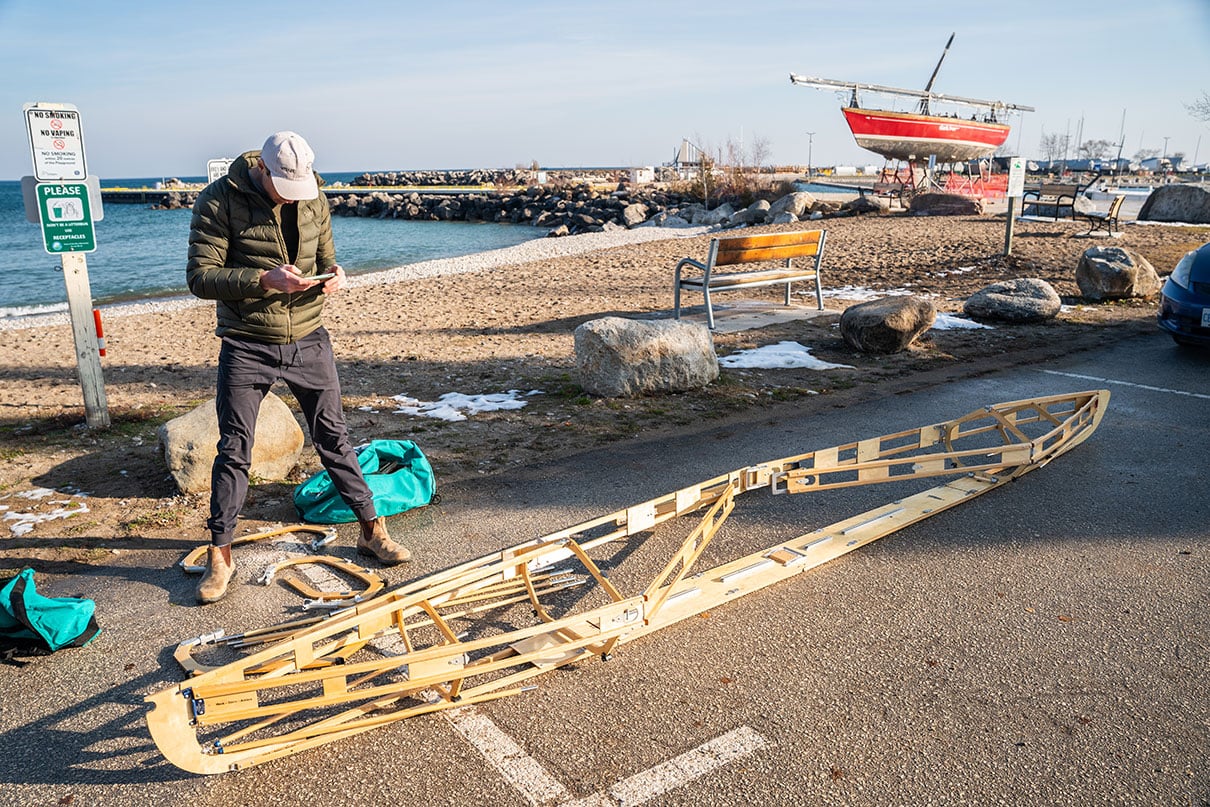
I arrived at a beachside parking lot at the appointed time to meet the photographer for this review and began by dumping the frame bag to unleash a clatter of clear-varnished plywood frame parts. I’d prepared by watching the video of a man named Geord Binder assembling a Klepper in under four minutes. To the chagrin of my photographer, my first attempt took about 20 times longer, punctuated with repeated consultations with the Klepper instructional video and several conversations with curious passersby. Klepper construction is one part craftsmanship and one part public relations exercise, as you will inevitably be pressed to acknowledge various obtuse statements such as, “So, you’re going to put that thing together and paddle it?” Or, if my wife happens to be in the vicinity, the more existential question, “What’s the point?”

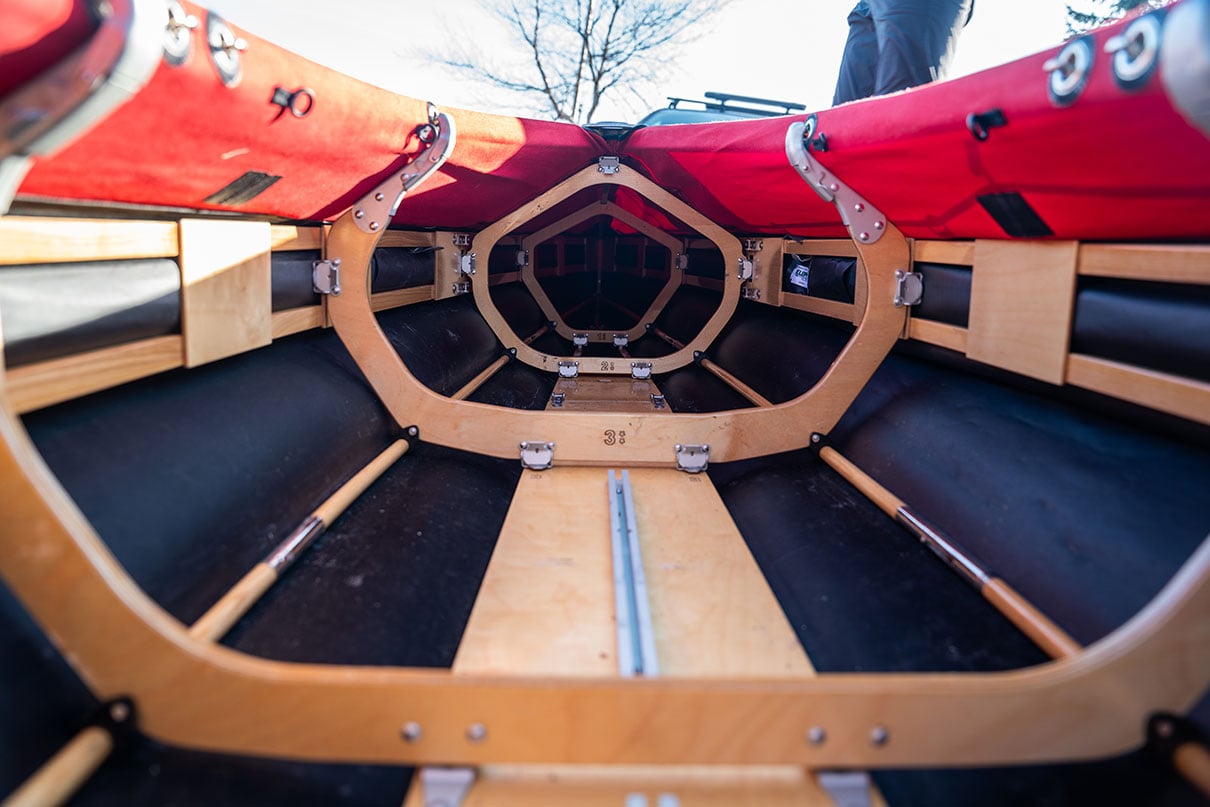
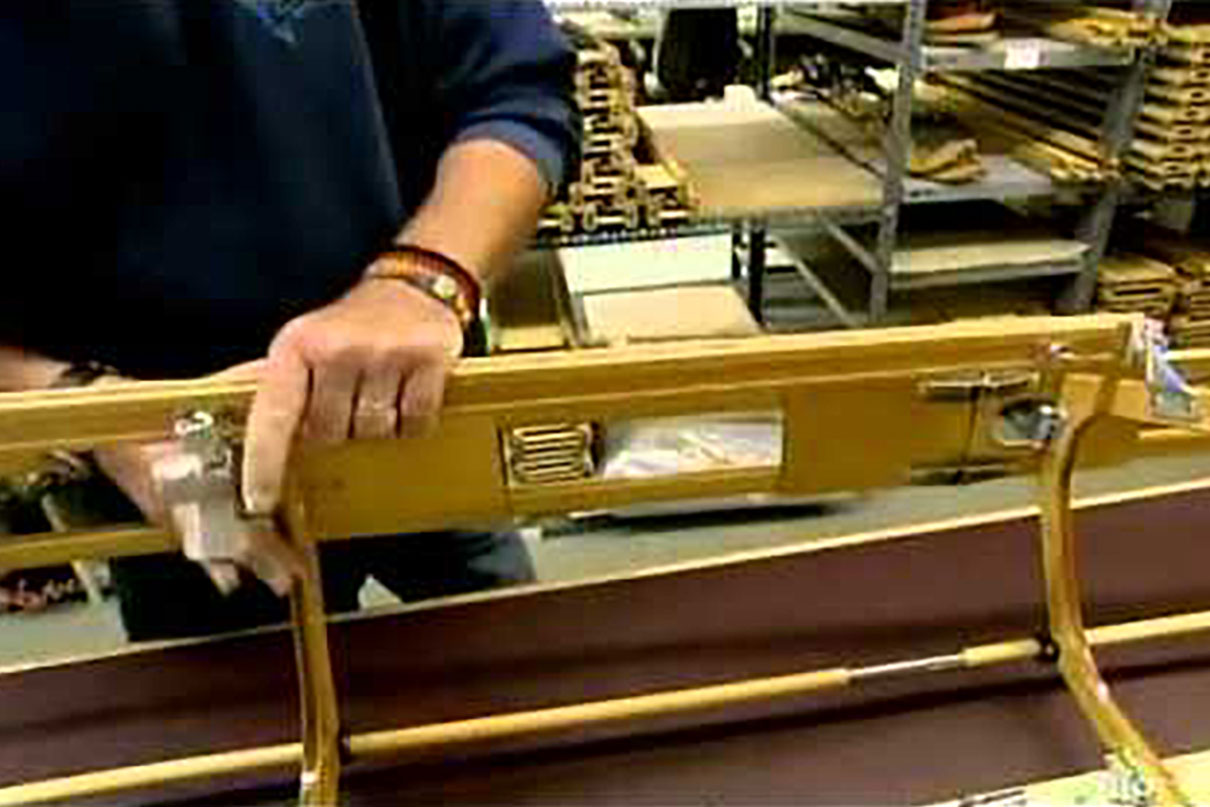
The Klepper frame consists of longitudinal pieces connected by hinges that open to form either the bow or stern sections, color-coded and labeled in German, English and French (heck – stern – arriere). Numbered cross-sectional pieces snap onto the long pieces, shaping them into something resembling two halves of a biplane or the museum skeleton of a prehistoric fish. You jam these into the boat skin unfurled from the second bag and lever them together in the center to tension the whole frame into the skin.

man stands beside the frame of a Klepper while reading instructions at the boat launch
And you may ask yourself, “How do I assemble this?” / And you may ask yourself, “Where is that instruction manual?” / And you may tell yourself, “This is not my relaxing vacation.” / And you may tell yourself, “This is not Tim’s wife’s idea of fun.” | Photo: Colin Field

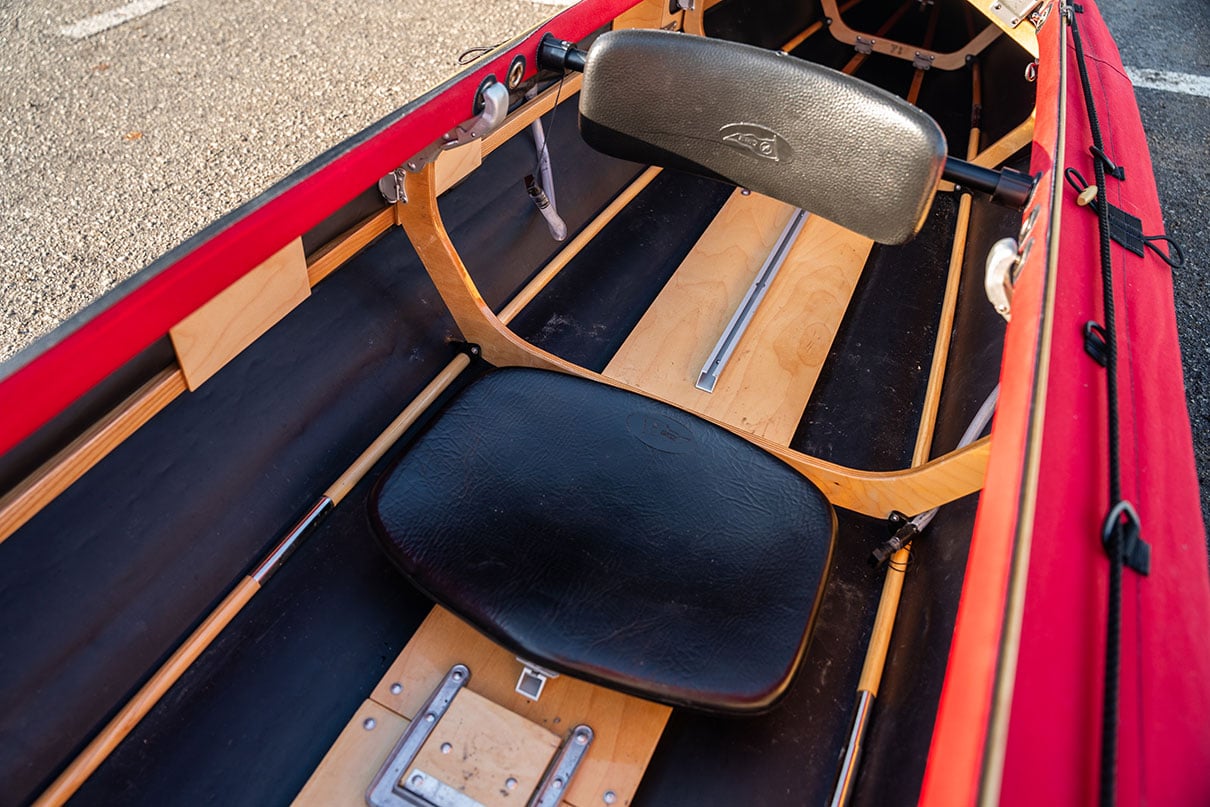
Finishing touches include crafting the cockpit coaming, a wishbone-shaped piece of wood connected by a hinge at the bow end; inflating the air sponsons in the sides of the hull; and diving into the third bag for backrests and seats, which clip into metal rails on the plywood floor to slide fore and aft, and can be repositioned for paddling either tandem or solo.

I was on the water in 90 minutes. After some practice, assembling the 545 can be done in 20 to 30 minutes—about half the time if you have help—or double if you’re adding a sailing rig.

With its open cockpit, the Aerius felt like a hybrid of a kayak and a canoe. The high coaming makes for a very secure, cocooned feel and a dry ride, even without the spraydeck, which like rudders, sails, carrying bags, paddles and all other accessories, is sold separately. Reaching over the coaming can be a bit awkward, but optional plastic risers can be added to raise the seats by up to three and a half inches.

Klepper Aerius 545 on the water

I have heard folding kayaks are superior in heavy seas because they flex to absorb the force of the waves. On this day, there was a low swell. The frame did flex a bit; it was hard to tell if this was a boon, but the craft seemed to say, “I have crossed the Atlantic; this is nothing.” Kleppers have descended the Colorado River and the Amazon, the Upper Nile and the Danube, tackled the North Pole and rounded Cape Horn no fewer than three times. I wouldn’t dare question their rough-water chops.

I can comment on agility, however. At just under 18 feet long and 34 inches wide, the 545 is a Westfalia Vanagon of the Seas, more tuned to compact, long-haul versatility than raw performance. There is more than ample space for gear in the hollow bow and stern, and along the hull’s sides. It’s incredibly stable and unresponsive to tilting. It felt stereotypically German: stolid and determined. I could see spending some weeks paddling in a straight line. Or sailing all day in an eight-knot breeze to an island where I would produce a picnic with whole place settings out of a wicker basket, while my heart’s true love read a novel in the bow and I languorously dragged my fingers in the warm water and time stood still.

overhead shot of the Klepper Aerius 545 on a beach
The Klepper Aerius 545 is speedy and stable, and it won’t lose its composure in high seas. | Feature photo: Colin Field

Back home, I spread the disassembled Klepper in my basement to vacuum the sand out of the skin and dry it out for long-term storage. It lay there like the broken pieces of some da Vinci flying contraption or a mythic free-ranging animal I would soon have to set free.

I decided Kleppering may be its own sport, existing in its own distinct dimension—not quite kayaking, not quite canoeing, not quite sailing, but some combination of all three, suited for people in unique possession of time and resources. There are certain inarguable advantages. Key among them are portability, longevity and versatility. The Klepper is, of course, ideal for any destination to which you need to fly, if you don’t mind checking three bags.

It’s also infinitely more repairable and long-lasting than almost any other type of watercraft. Klepper supplies replacement parts for every component, even for its discontinued models. Skins are said to last 30 years or more and can be fully replaced for about half the cost of a new kayak for just about every Klepper edition dating back to 1926.

Perhaps the greatest selling point of the Klepper is its ability to convert into a sailboat fully capable of upwind sailing in light to moderate winds. I was sad not to have been able to test the S2 sail kit, which includes a mainsail and a foresail totaling 54 square feet, for an extra $1,647.

Someday, I may take up Kleppering. For now, when most of my paddling trips are shorter than the time it would take to assemble one of these floating works of virtuosity and pack it up again, I’m sorry the Klepper and I must part ways. I take solace in the fact that, if the last 100 years are any indication, when I’m ready to mount an expedition to the South Seas or retire and take up kayak sailing, there will still be a Klepper waiting for me.

Cover of Issue 72 of Paddling MagazineThis article was first published in Issue 72 of Paddling Magazine. Subscribe to Paddling Magazine’s print and digital editions, or browse the archives.

The Klepper Aerius 545 is speedy and stable, and it won’t lose its composure in high seas. | Feature photo: Colin Field

Missing Kayaker Appears To Have Faked His Own Death (Video)

On August 12, 2024, 45-year old Ryan Borgwardt left home with his kayak to go fishing; he never returned home. Search teams found his capsized kayak and a life jacket floating in Green Lake, a large lake in Wisconsin with a maximum depth over 200 ft.

Borgwardt’s van and trailer were also found parked by a nearby boat launch. A few days later his fishing rod, tackle box, keys, and wallet were also recovered.

The search for a missing kayaker in Green Lake, Wisconsin

Search and recovery efforts began as the case of the missing Wisconsin kayaker was immediately considered a likely drowning. Meanwhile, Borgwardt’s wife and three children mourned the loss of their husband and father.

The search included the Wisconsin Department of Natural Resources, The Green Lake County Sheriffs Department, and Bruce’s Legacy, a nonprofit dedicated to the search and recovery of drowning victims able to lend valuable expertise and sonar equipment to help locate victims.

They soured the lake every day for several weeks until August 24, at which point they brought in three cadaver dogs and an experienced dive time according to a statement by Sheriff Mark Podoll.

The search continued through the summer but by the end of September there was still no trace of Borgwardt.

Keith Cormican, founder of Bruce’s Legacy, went to Green Lake County Sheriff Mark Podoll on October 4.

“Sir, I’ve done a lot of searches and I can’t find him,” Cormican explained. Cormican wasn’t ready to give up; he requested additional sonar technology to continue in his search of the lake for Borgwardt.

It was around this time that Sheriff Podoll began to suspect something was amiss. On October 7, he gathered his crew, suggesting it was time they considered other possibilities. Shortly thereafter, they found records showing his passport was checked by Canadian authorities the day after his disappearance.

From search to investigation

From here, investigators analyzed Borgwardt’s laptop and found questions about moving funds to foreign banks, a life insurance policy for $370,00 purchased in January 2024, and a history of messages with a woman from Uzbekistan.

Missing kayaker may have fled the country; image of Borgwardt with family in Wisconsin.
Ryan Borgwardt with his family. TODAY | YouTube

The mission to recover Borgwardt quickly turned into an investigation. The FBI is now involved and goals are to identify any crimes committed, pursue for expenses in searches funded by taxpayers.

In total, 54 days were put into the search for Borgwardt, with 28 days put in by Cormican alone.

“Twenty-eight of them days on that lake searching for Ryan. When he wasn’t searching, he was looking over data. Looking over data, trying to figure out if he missed something,” shared Sheriff Podoll of the Green Lake County Sheriff’s Office in a press conference.

Sheriff Podoll asks that anyone with information contact the Green Lake County Sheriff’s Office.

Olympian’s SUP Stability Secrets

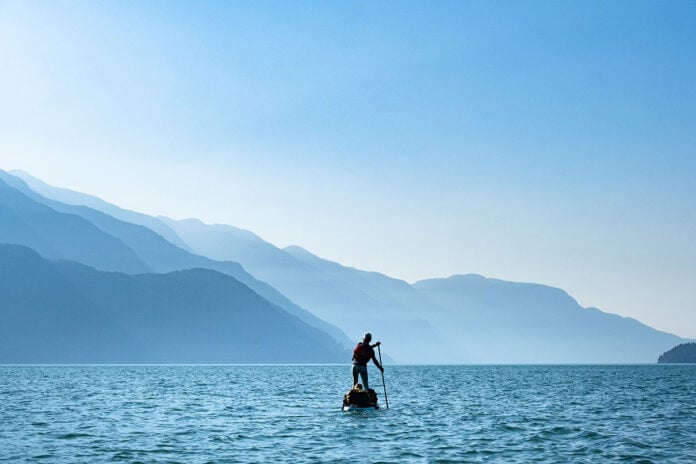
man stands and paddleboards on ocean waters with misty mountains in the background
“Balance is key. Balance good, everything good. Balance bad, better pack up, go home.” —Mr. Miyagi, The Karate Kid | Feature photo: Cory Leis

Whether you want to paddle fast, paddle far or just paddle with your dog on board, it all starts with good balance. Spending time on your board is the best way to enhance your stability. The more you paddle, the more comfortable you’ll get and the sooner you’ll be able to safely venture off mirror-flat water into gradually more challenging conditions. The five simple tips, skills and strategies below will make you feel more confident and stable on your board.

Olympian’s 5 SUP stability secrets

1 Trust your paddle

Your paddle is vital not only for propelling you forward but for balance as well. First off, you brace with your paddle blade to find support and stability whenever you feel like you’re losing your balance. Secondly, holding a long pole-like object in your hands helps enhance balance—think of the poles tightrope walkers use. However, the most important way a paddle enhances stability is by supporting some of your body weight during the pull phase of the stroke. If you’re reluctant to put any weight on your paddle blade, all your weight stays on the board. If you can learn to trust your paddle enough to take some of your body weight, you’ll paddle more efficiently, go faster and feel more stable.

man stands and paddleboards on ocean waters with misty mountains in the background
“Balance is key. Balance good, everything good. Balance bad, better pack up, go home.” —Mr. Miyagi, The Karate Kid | Feature photo: Cory Leis

2 Get a little lower

If you bend your legs, both at the ankles and the knees, you’ll get a little lower and lower your center of mass in the process. This enhances stability. It also helps you absorb some of the wobbles and twitches your board will inevitably make without losing your balance. Try to relax your legs as you bend them. If you’re standing up stiff-legged, you’re like the mast on a sailboat and every time the board leans, you’ll lean with it. When you lean too far, your center of mass will be outside your base of support, and then you’ll be swimming. Practice loose, relaxed and bent legs.

3 Move your body more when you’re feeling unbalanced

It’s human nature to get cautious and move less when encountering ripples and chop. However, if you’re overly cautious, reluctant to move and stiffen up, you’ll feel less balanced. Instead, the best thing you can do is engage more of your body in the forward stroke, get more weight on your blade and focus on the rhythm of your paddling. This rhythm and body motion will become the dominant movement rather than the side-to-side wobbling of your board. Again, it may seem counterintuitive, but the more you focus on your paddling rhythm and getting your body into your stroke, the more relaxed you’ll be and the less you’ll notice any feeling of instability.

4 Get to know your board

Every board has its stability characteristics. Primary stability is basically how twitchy the board feels underneath you. If your board has good primary stability, it will feel solid and be easier to learn to trust your paddle and focus on your paddling rhythm. If your board feels twitchy, you should experiment with its secondary stability. Every board will reach a point where it leans and then stops. If you can determine where your board will stop leaning and stabilize, it won’t bother you as much when it twitches. You can just let it wobble underneath you and absorb that wobble with your relaxed legs, comfortable in the knowledge that it will stop, stabilize and allow you to bring it back to level. Spend time near the dock or shore on a sunny day when the water is warm and play with your board’s stability. Try to make it lean to the point where it won’t lean any farther. Trusting in the board’s secondary stability will be an ace up your sleeve and give you confidence whenever you feel your board is starting to wobble underneath you.

5 Practice your footwork

Being able to comfortably move around on your board is important. If you’ve invested some time in learning the secondary stability of your board, you can then experiment with first lifting one foot, then the other, and eventually taking cross-steps backward and forward up and down the middle line of your board. This helps give you even more confidence on your board and learn to relax when paddling, and it allows you to move up and down your board to keep it trimmed correctly when paddling into or with waves. To get comfortable with the cross-step motion, a good drill you can do on land is cross-step up and down an eight-foot-long two-by-four you can get for $10 at any building supply store. This drill not only helps you develop the coordination the cross-stepping motion requires, but also helps heighten the proprioception in muscles in your feet and lower legs, which will help you better identify and react to the board wobbling and twitching underneath you on the water.

Larry Cain is an Olympic champion in canoe sprint, a SUP athlete, and a coach of both canoe and SUP athletes. He is cofounder of Paddle Monster, which provides online coaching and education for paddlesports athletes around the world.

Cover of Issue 72 of Paddling MagazineThis article was first published in Issue 72 of Paddling Magazine. Subscribe to Paddling Magazine’s print and digital editions, or browse the archives.
“Balance is key. Balance good, everything good. Balance bad, better pack up, go home.” —Mr. Miyagi, The Karate Kid | Feature photo: Cory Leis


First Look: Hornbeck Boats Pack Boat

Built for solo paddlers looking for something extremely lightweight, minimalist, and maneuverable, Josh Thrombley of Hornbeck Boats introduced the Paddling Mag team to the Ten Classic, a popular pack boat, at Canoecopia 2024.

Origins of the pack boat

Pack boats, sometimes called an Adirondack boat, function as a cross between a canoe and kayak in order to capitalize on the features of both best suited for solo, minimalist travel. In appearance a pack boat is most similar to a canoe, but it’s padded like a kayak with a long, double-bladed paddle and from a seat at the bottom of the boat.

“Pack boats have been around for hundreds of years but they really became popular in the late 1800s by a boat builder named John Henry Rushton,” Thrombley shared. “Rushton built boats for a gentleman named George Washington Sears, his pen name was Nessmuk.”

Nessmuk was an outdoor writer and conservationist who wanted to travel the Adirondacks, then known as the Northeast Wilderness, with just a small canvas pack and a small, maneuverable boat. Rushton, drawing from his experience building sailing canoes, designed a canoe specifically for Nessmuk and his goals.

“They were made out of Cedar strips and you sit on a little cedar plank, and you typically paddle with a double-bladed paddle,” said Thrombley. “He [Rushton] was about to do these boats at 13, 14,15 pounds.”

Hornbeck Boat’s modern pack boat

Fifty years ago Thrombley’s father-in-law, Peter Hornbeck, was in the Adirondack museum and saw one of Rushton’s designs. Hornbeck had been a kayaker and wondered how it would work to take one of Rushton’s designs and build something similar out of fiberglass.

He took inspiration from Rushton’s designs and arrived at the Long Pond Boat, or Hornbeck Boat’s Ten Classic. In the 1970s, Hornbeck boats swapped out fiberglass for kevlar and never looked back.

Today, the pack boat is a minimalist’s boat, lightweight and packable, designed for barebones solo wilderness travel. There are few features on the pack boat beyond the essentials.

“Anytime you’re adding features you’re adding weight,” explained Thrombley.

Ultimately in modern times the biggest pro of the pack boat might boil down to one, game-changing factor for solo paddlers: at 15 pounds, it’s easy to get on and off your car.