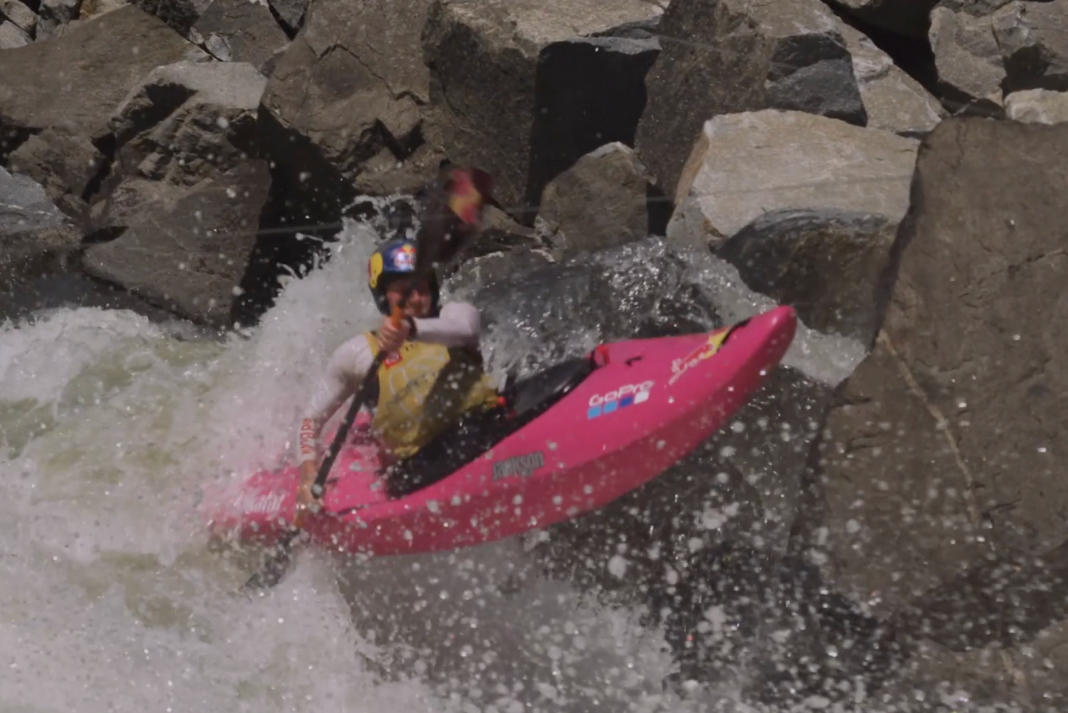
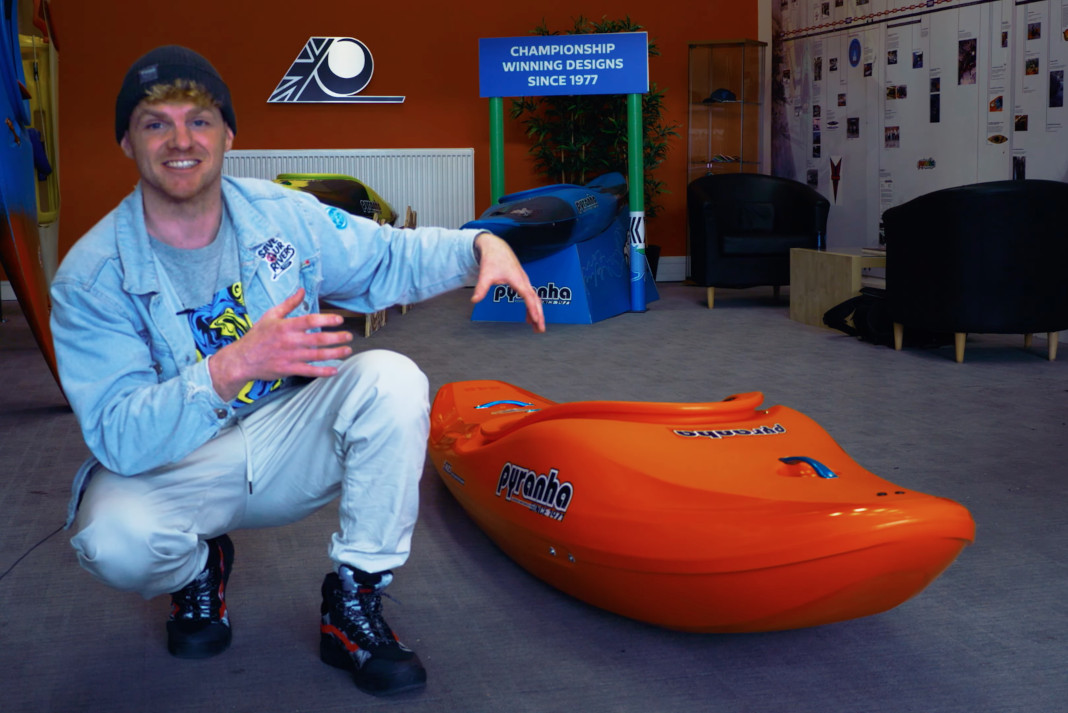
For high-flying whitewater athlete Bren Orton, walking into the Pyranha factory shop is more than just a trip to pick up the season’s latest boat designs. He has a personal history with the 40-year-old kayak manufacturer. He shares it with us in this tour of the Pyranha Kayak’s museum of boats while stopping in to pick up the newest in the fleet, the Firecracker.
The new Pyranha Firecracker. Image: Senders / YouTube
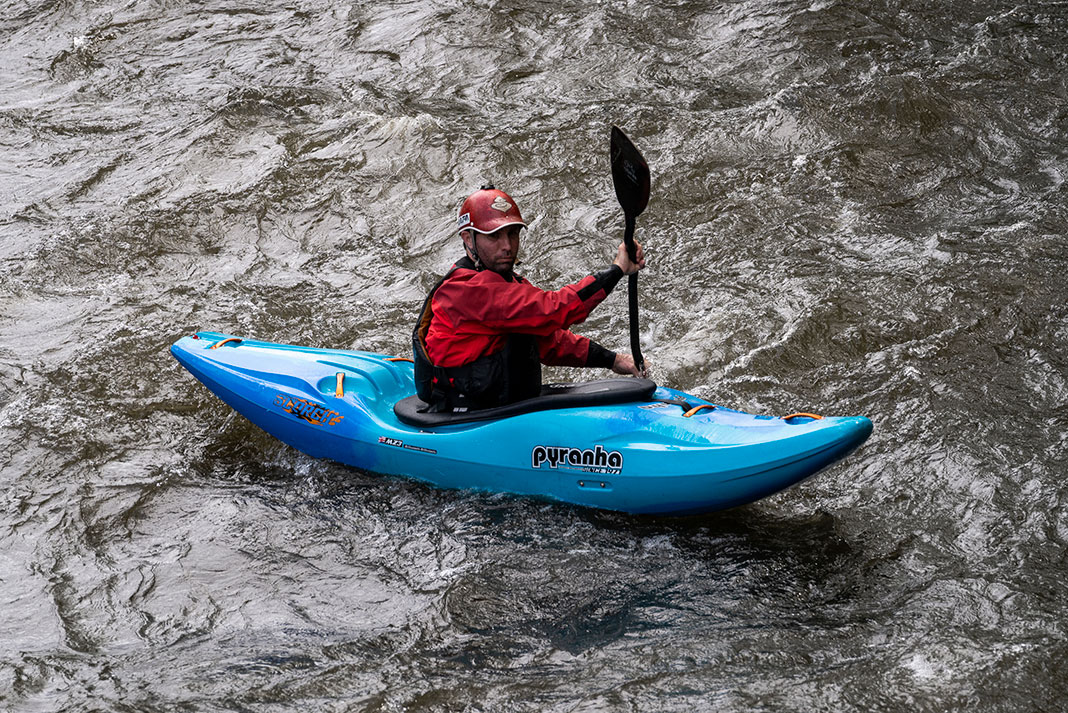
Pyranha began producing fiberglass river kayaks in a garage outside of Warrington, U.K. in 1971. Their earliest boats were taken to rivers in the Himalayas and paddled by world-champion slalom racers. By the early 80s they had begun experimenting with the production rotomolded plastic boats. Pyranha’s kayaks would evolve to the river-running designs used by Orton and many others to descend some of the most difficult whitewater paddled today.
For Orton, the fascination with Pyranha Kayaks started when he was a boy. Visiting the shop and running his hands along the lines of various designs. Later he would work at the shop and become a sponsored paddler. And today, Orton is one of the brand’s most acclaimed athletes. There is perhaps no paddler better suited to provide a tour of the Pyranha factory shop and get us stoked on the brand’s latest than Orton himself.
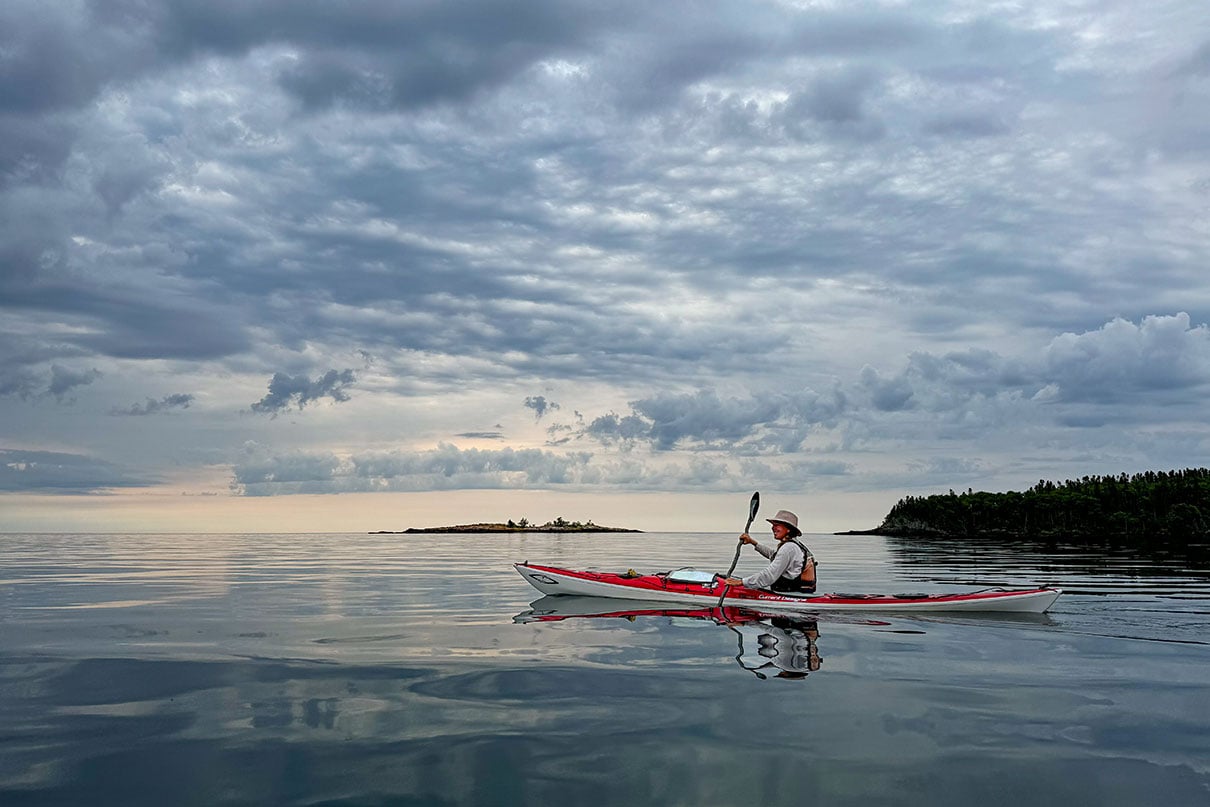
The reports of my death are greatly exaggerated. | Feature photo: Ron Watts
Sea kayak touring is supposed to be dying. Long journeys peaked in the 1990s when sleek, long fiberglass boats were plying the seas through island chains. Back in the age of Netscape Navigator, crusty baby boomers and spritely pre-parenting Gen Xers were untroubled by ubiquitous smartphones. Instead, they would rig tarps, cook bannock over open fires and commune with the sea.
Every year I hear the same story. Boats shrank to fit into smaller urban apartments and tighter schedules. Kids and careers yanked the Gen Xers out of their cockpits. Creaky backs and aching shoulders told baby boomers to stop sleeping on the ground and paddling six days in a row. Millennials were suctioned directly into their smartphones, and piles of student loan debt made shelling out for a touring kayak and all the gear to support two weeks in challenging waters impossible.
The reports of my death are greatly exaggerated. | Feature photo: Ron Watts
Manufacturers responded. They generated fleets of recreational kayaks, day tourers and paddleboards, great for quick jaunts but not ideal for camping. Sea kayaks became a tiny trickle of retailers’ inventory. Today, paddling is like going for a hike or a few hours at the gym, not a voyage where you pore over charts weeks ahead of time.
Well, so the story goes.
You’d never know it from the spit I’m standing on in Puget Sound, drybags in hand, trying to figure out where to camp. Tents dot the spit and most flat spots in the woods. I wander around, eventually finding an unclaimed spot. Unfortunately, I’m not the early bird; this is the only tent spot left. And it’s not even high season—it’s fall.
The demise of sea kayaking has been the subject of much angst for more than a decade now. Don’t believe the hype. The tents turning this gravelly beach into a small village aren’t an anomaly. Despite the reports of its demise, touring kayaking and sea kayaking were on a slow but steady rise from 2007 until 2018, according to the annual Outdoor Participation Report. It held steady in 2019 before Covid hit—and we all know what happened to the outdoors then.
Sea kayaking and kayak touring still have a fraction of the participants of more accessible sports like hiking, and about a quarter of recreational kayaking. According to the report, about 1.1 percent of Americans self-identified as sea kayakers. And, keep in mind, only four out of 10 Americans live near the sea or readily tourable water.
Most importantly for the future, participation rose faster among 18 to 24 year olds than the population as a whole. That means more young adults, in the process of defining themselves and their outdoor sports personalities, are into sea kayaking. It could be a long while before I find a tent spot.
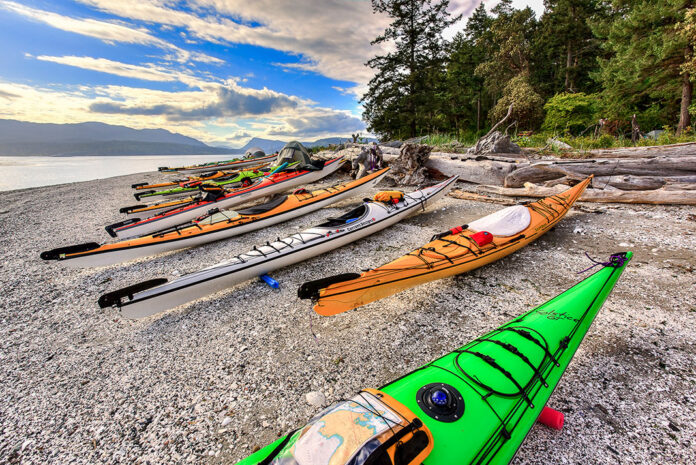
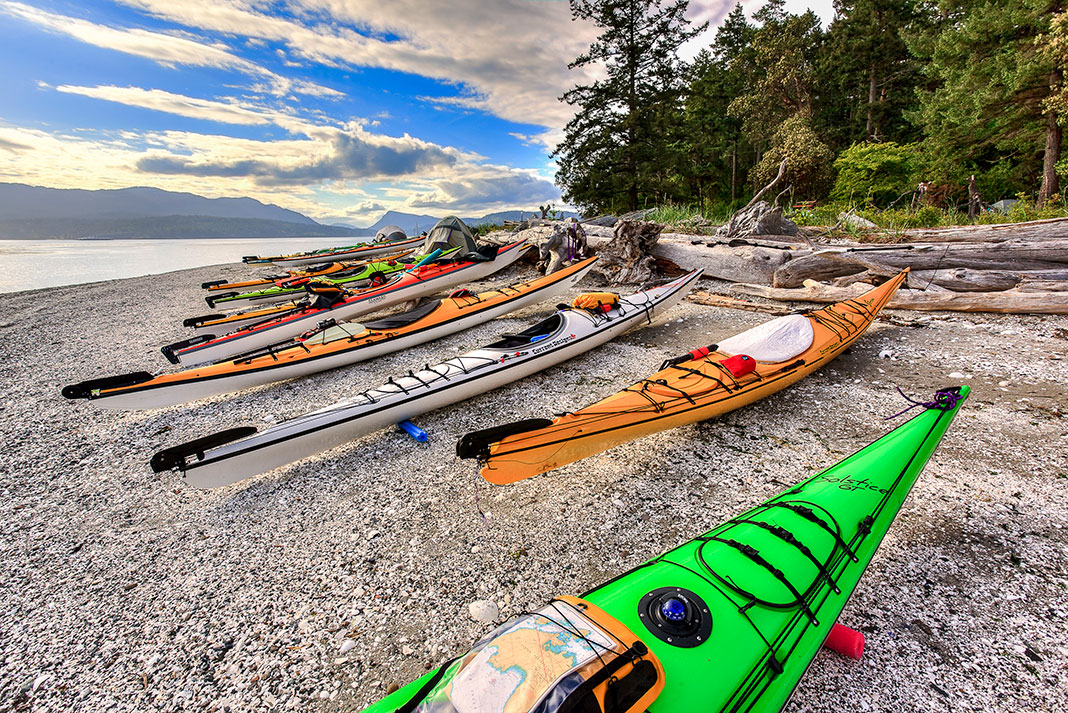
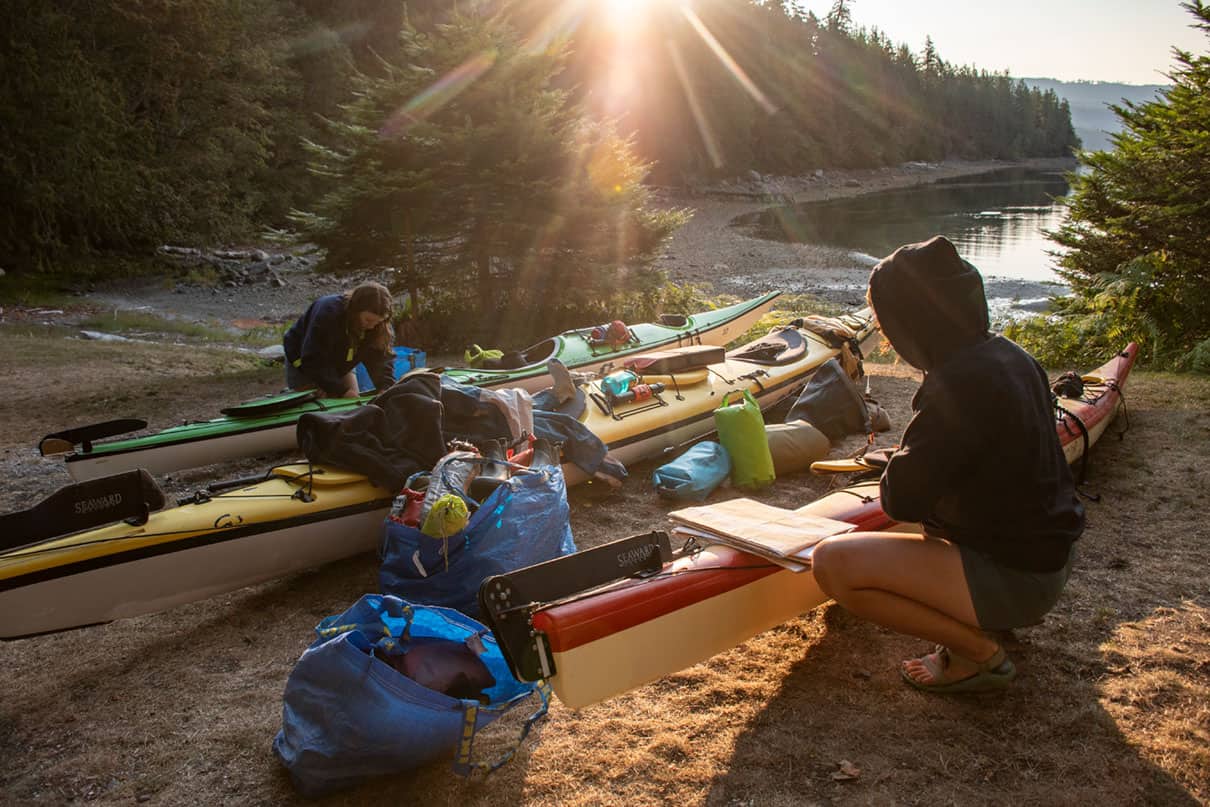
After I grab the last almost-flat spot, I realize something else is different, too. Lined up on the beach are a few classic sea kayaks, a couple of canoes, and some rec boats that were probably overloaded getting here. This isn’t your old-school sea kayak tour.
Instead, the random fleet matches the random assortment of agendas. There’s a trio of guides on their day off, who just paddled out for one night to chill without clients. Two other pairs in canoes and rec boats are on one-nighters, organized at the last minute when they realized they had an evening free for a quick getaway. Another group reeled a friend with a powerboat into hauling their stuff and their dog on a three-day paddle through the Sound with all the luxuries of a posh rafting trip—which ends with them offering me fresh food. And then there’s one couple, decked out with the classic 17-foot boats and carbon fiber paddles, huddled under an ultralight tarp, who is on the end of a weeklong island-hop the authors of a 90s guidebook would be proud of. All but the last couple live nearby.
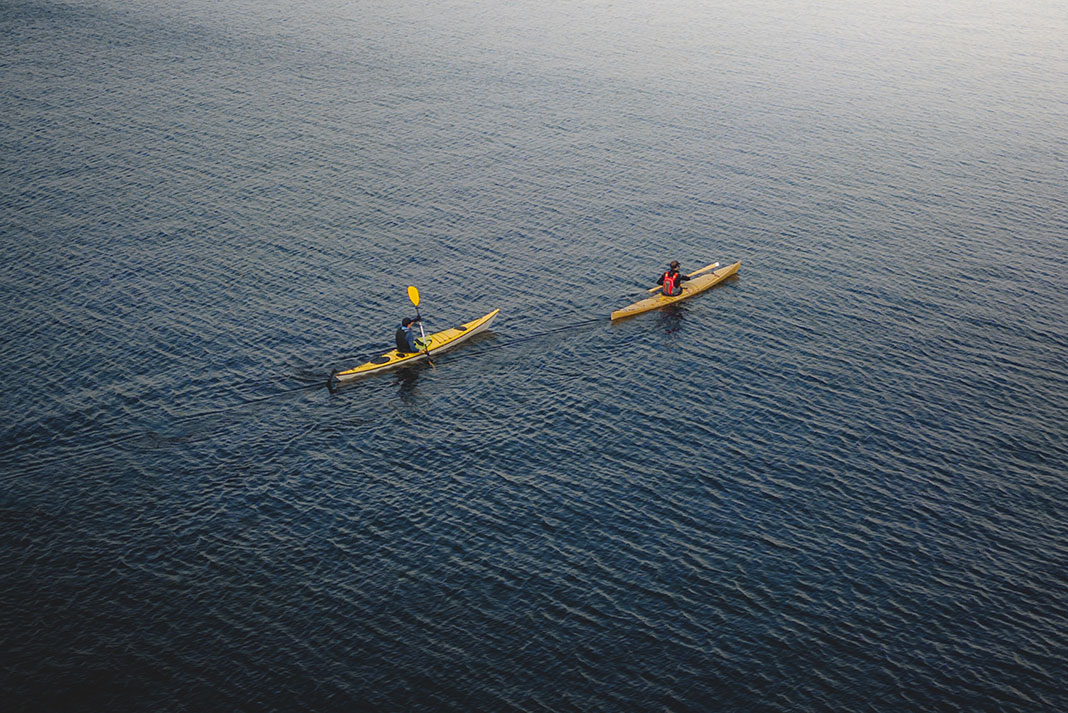
The new face of kayak touring may be neither day touring nor an expedition but the quick weekend camping jaunt. | Photo: Sasha Matic/Unsplash
For many paddlers, touring works for the weekend
Sea kayak camping isn’t dead, but it’s different from its imaginary heyday. The weeklong expedition is a rarity, but the quick overnight on the back 40 is doing just fine. The new face of kayak touring may be neither day touring nor an expedition but the quick weekend camping jaunt.
If this is the trend, other changes may be afoot. Camps close to town easily accessed without madly clicking for online permits, shelling out for water taxis, or waiting for a narrow range of sea conditions will be in high demand. This will strain often obscure agencies managing these places: county parks departments or outfits like the Oregon Division of State Lands, which aren’t usually in the recreation business.
Trips will be about spontaneity, weather windows and schedules, not carefully planned vacations to iconic spots. Classic BCU-style kayak education will give way to local knowledge, hopefully without mishaps. And camping in home waters is more likely to lead to an enduring ethic of stewardship than the once-a-year journey to Alaska.
Over time, we may not call it kayak touring. We may just call it, advanced kayak picnicking. Kayak touring is far from dead. It’s just different.
Neil Schulman lives and paddles in Portland, Oregon.
This article was first published in the Fall 2022 issue of Paddling Magazine. Subscribe to Paddling Magazine’s print and digital editions, or browse the archives.
The reports of my death are greatly exaggerated. | Feature photo: Ron Watts
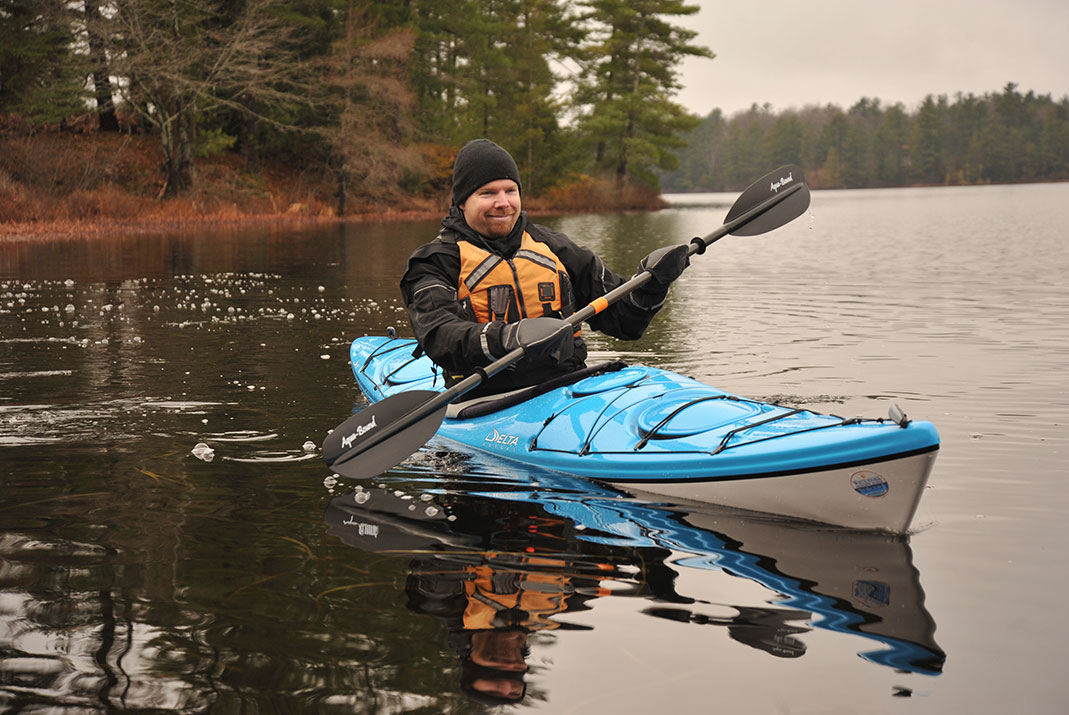
Mainer Larry Merrill, has kayaked at least once a month, every month, for the past 30 years. Merrill wasn’t going to let that streak come to an end just because of a little polar vortex.
In Larry Merrill’s words, he wasn’t the most gifted athlete growing up, but thanks to consistency, the 78-year-old is, frankly, outliving the competition. Merrill even crafts his own intriguing handmade paddles and has participated in numerous Kenduskeag Stream Canoe Races, as reported in this video from News Center Maine.
Paddling in cold weather provides its own set of unique challenges and safety concerns. Preparation is key for cold weather, including dressing in appropriate immersion gear. Read more tips on cold-weather paddling.
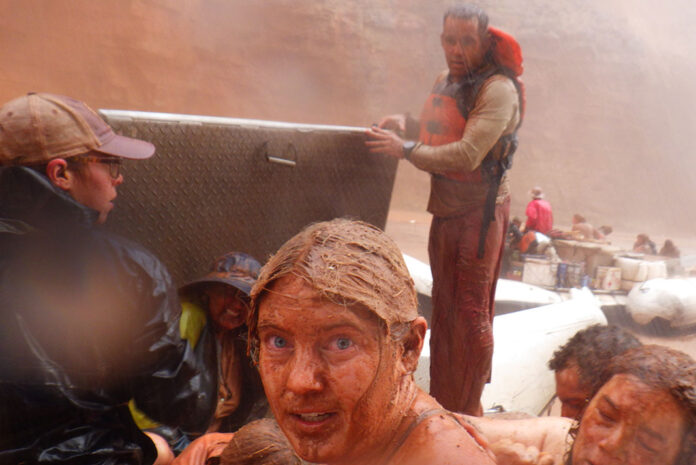
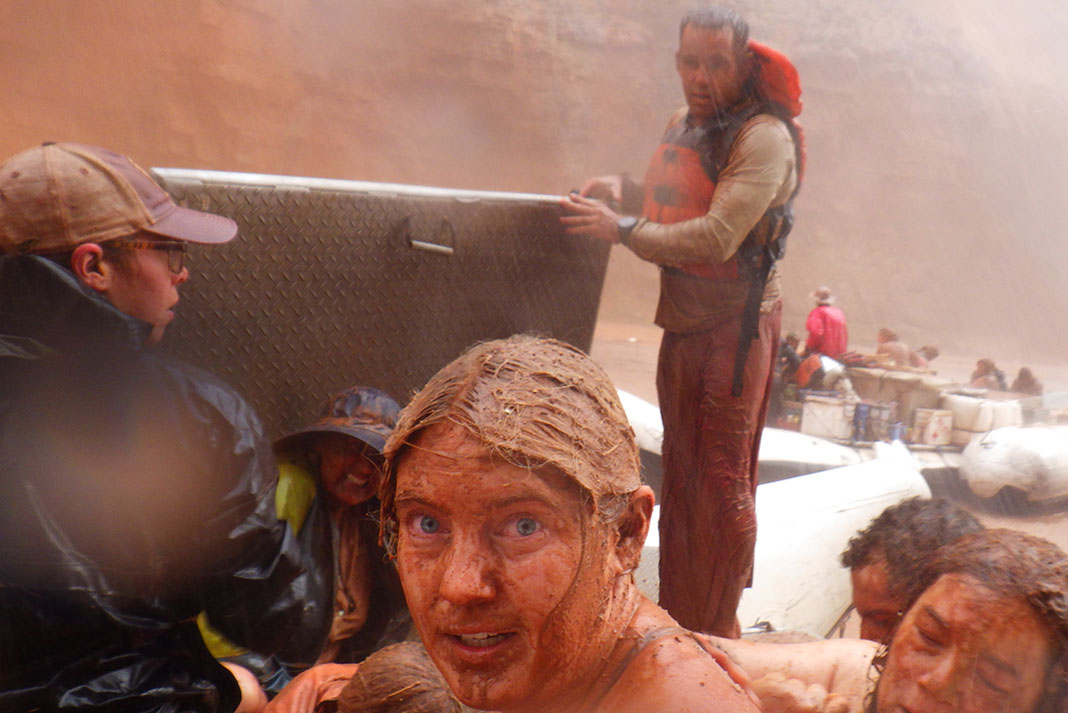
Rafter Tim holds the top of an aluminum dry box that he held over other rafters to protect them during the deluge of mud and rocks during the flash flood at Tatahatso Beach. | Feature photo: Randy Harris
The pair of boats pulled ashore at Tatahatso Beach just before dinnertime on July 14, 2021. Passengers unloaded from the motorized 37-foot-by-15-foot S-rig rubber rafts. Taking advantage of the nice weather, they set up their tents and dried their gear before heading to the river to socialize.
It was the second day of an eight-day commercial trip down the Colorado River’s Grand Canyon. The group had set off from Lees Ferry the day prior. On this afternoon, the Arizona Raft Adventures group camped on a crescent of sand, rock and scrub set at the base of towering red walls, on river left of a curve near mile 38 of the river. As of yet, there was no hint of the terrifying flash flood that would turn their Grand Canyon trip upside down.
The day it rained rocks on the Grand Canyon’s Tatahatso Beach
Rafting the Grand Canyon is the trip of a lifetime, and one Randy Harris had been planning for more than two years. Sensing the oncoming rain, he decided to wait to set up his tent. Instead, when the rain hit camp at about 5 p.m., he found shelter under a seven-foot overhanging rock and watched a thick stream develop on the path between the port-a-potty and camp.
“I’m no civil engineer,” he thought, “but that can’t be good.” Within minutes the downpour was accompanied by hail and the wind picked up. Then it rained even harder.
Nearby, trip leader Maggie Oliver, on her 65th journey down the Grand Canyon, and 25-year veteran guide Liam O’Neill paced between where most rafters pitched their tents and the wash near Harris’ rock. They instructed some clients to move their tents to higher ground as the rain started to pool.
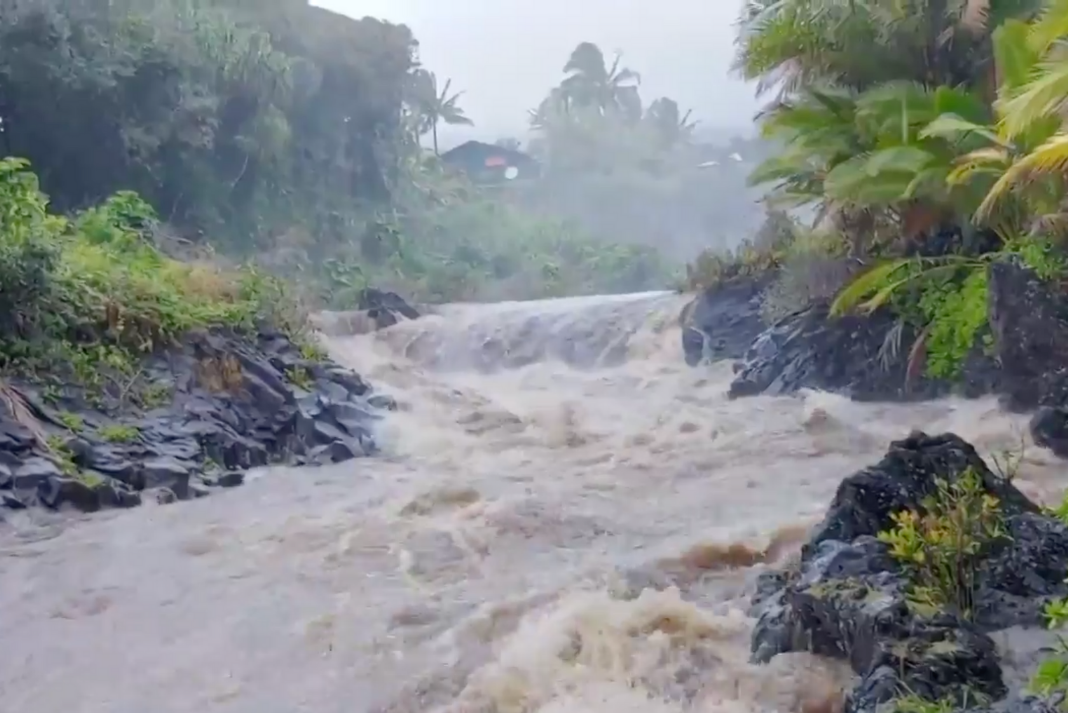
O’Neill kept looking up to the usually dry rim drainage. He and Harris watched as it started to flow, increasing in volume, then exploded in a cloud of rust.
“Run!” O’Neill yelled, himself running to rouse the other campers.
“When Liam yelled to run, I did not hesitate. I haven’t run that fast for 40 years,” says Harris. As he ran to the boats, collecting his daughter along the way, he saw a red-brown cloud descending on the beach. Like the wrath of a god, he thought.
“It seemed like the whole mountain was falling on us,” recalls Harris.
The falling mud turned the air red-brown. “Like opening your eyes in muddy water. It seemed like the end of the world,” says Harris. “When we got to the boat, I couldn’t see five feet away. I couldn’t see anybody, even though about 14 were on board.”
“It seemed like the whole mountain was falling on us.”
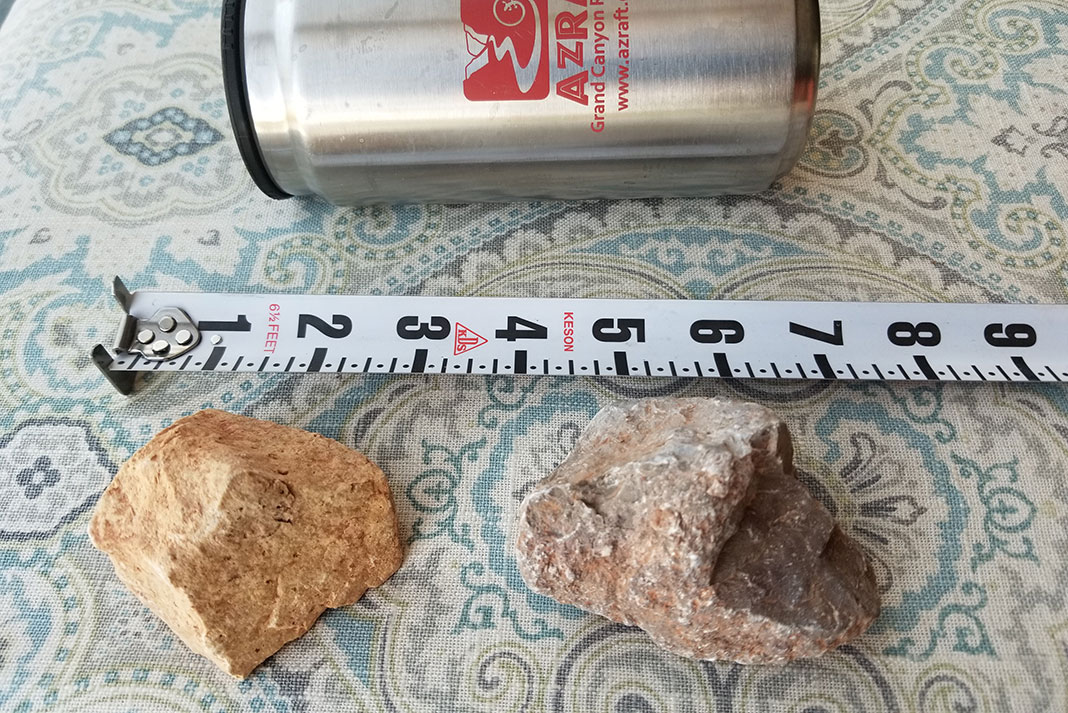
Protecting his daughter with one arm, Harris raised his insulated metal cup overhead for protection, surprised to find he’d been holding it the whole time. The rafters huddled for cover as rocks up to six inches in diameter pinged off the raft’s tubes and aluminum dry boxes.
Rafter Tim holds the top of an aluminum dry box that he held over other rafters to protect them during the deluge of mud and rocks during the flash flood at Tatahatso Beach. | Feature photo: Randy Harris
The guides steered for the middle of the river, away from the steep walls. O’Neill reversed into the current. His wife, Kristen, was hit by a large rock, fell into the river, and clung to a float. She couldn’t pull herself up. O’Neill and another rafter maneuvered her out of the water and recognized her injuries as life-threatening.
Once the rafts were in the middle of the channel, the guides could push the SOS buttons on their InReach devices.
Counting survivors as rescue efforts swing into action
In 2021, more than 27,000 people descended the Colorado River through Arizona’s Grand Canyon. Search and rescue operations were tasked about two dozen times. In the summer, daytime highs regularly spike above 100°F, while the river, fed by the Glen Canyon Dam, hovers at around 50°F. Common injuries include hypothermia.
The severe weather at Tatahatso Beach lasted maybe 90 minutes. Unbeknownst to the guides, the National Weather Service had issued a flash flood watch for Grand Canyon Country nearly two hours after the group had gotten on the water that day. The watch predicted afternoon and evening monsoonal thunderstorms.
Seventy-six-year-old Nancy Crabb and her son Joel were delayed getting to the boats. The thunderous red cloud over their camp had made it hard to see or hear. Crabb was knocked down and swept into the river. Joel, figuring it was too late to get to the boats, hunkered down at the highest ground he could find.
Mid-river, Oliver and O’Neill counted their passengers. They were missing five people: Crabb and Joel, Frank and Jennifer Robinson and Rebecca Copeland.
Oliver used the satellite phone to contact the National Park Service (NPS). She said a flash flood had obliterated their camp at Tatahatso Beach, and they lost almost everything. They didn’t have enough PFDs for everyone but had drinking water. She also said they had numerous injuries, and five people were missing. With rafters starting to get cold and at risk of hypothermia, the guides opened their drybags, still on board, and distributed clothes.
O’Neill traveled a couple miles downstream to Redbud Alcove, where he set up a makeshift first aid tent. As the visibility improved, Oliver’s spotters saw someone standing near their camp.
It was Joel. After his waving caught the boat’s attention, he returned to camp. Miraculously, one tent was still standing. Inside were Frank and Jennifer Robinson. They sheltered in their tent during the deluge, holding up their drybags and air mattress against the inside of their tent. There was still no sign of Copeland or Crabb as Oliver piloted the boat with the additional survivors downstream toward Redbud Alcove.
NPS knew the injured needed a helicopter evacuation but getting there proved difficult. Monsoon thunderstorm conditions continued into the evening. Their focus shifted to getting paramedics to Redbud. A pilot accepted the “high risk” flight, transporting paramedics to the makeshift camp. They landed just before 8:30 p.m.
Kristen was evacuated first around 3:17 a.m., landing about one hour later at the Flagstaff Medical Centre. There she underwent multiple surgeries for her shattered pelvis and broken ribs; her lungs were drained, but her left kidney was crushed beyond repair.
Rafter Randy Harris kept the insulated souvenir mug he held over his head as protection. He also kept some of the rocks that fell 400 feet and pelted him during the Grand Canyon flash flood. | Photo: Randy Harris
Another miracle, followed by tragedy
A few miles upstream, Western River Expeditions lead guide Stephen Wiley was notified of the flash flood at Tatahatso and realized his group would likely be the first to pass the beach that morning.
They heard a woman’s shouts before they saw her. Crabb was waving her arms onshore. Tatahatso Beach resembled a war zone. Everything was covered in mud, rocks, boulders and other debris. “I heard what happened,” Wiley said to Crabb, enveloping her in a hug.
Crabb spent the night cold and alone in what remained of Arizona Raft Adventures’ camp at Tatahatso Beach. She sheltered in the Robinsons’ empty tent, passing in and out of sleep until it began to rain overnight. Then, worried about another flash flood, she stayed up.
After being knocked into the frigid Colorado River the night before, she managed to grab onto a drybag floating past, and later, a cooler, which kept her afloat. She let the current take her in the turmoil. Eventually, she was pushed closer to shore and climbed out.
Crabb realized she was upstream of where she went into the river. Walking back toward camp, there were no people or rafts in sight. She thought everyone had died. Shivering badly, she unzipped the Robinsons’ tent and climbed in, cozying up on the wet floor with an air mattress and a sleeping bag she found outside.
She emerged at daybreak and settled on a rock with a good upstream view. Eventually, she spotted boats on the horizon.
Crabb was later transported to Redbud Alcove, reuniting with her family before their helicopter flight out of the canyon.
The Western River Expedition guides found a partially buried body downstream, directly in the wash’s path. Rebecca Copeland, 29, had camped away from the others and likely didn’t hear the calls to run as the wash breached the canyon rim and tumbled onto the beach carrying tons of debris.
Quick thinking and decisive action saved lives
Tatahatso Beach is considered a “safe” flash flood camp, says Wiley, a guide with 280 Grand Canyon trips under his belt. Nothing is “truly safe,” he concedes, but guides do their best to ensure both their own safety and that of the people they accompany down the river.
The Arizona Raft Adventures guides’ quick thinking saved many lives on Tatahatso Beach that day. It’s a sentiment echoed by many of the trip’s participants, who continue to keep in touch over a year later.
Tatahatso Beach is considered a “safe” flash flood camp, says Wiley, a guide with 280 Grand Canyon trips under his belt. Nothing is “truly safe,” he concedes.
“Those guides are heroes,” says Harris. “I can’t say enough good things about them. They saved my life twice. More importantly, they saved my daughter’s life. If delayed another minute, most of us would have been dead.”
O’Neill received the Higgins and Langley Award for his “quick decision making and immediate tactical swiftwater actions to save lives.” His wife, Kristen, is still recovering. Both Oliver and O’Neill are back on the water guiding trips with Arizona Raft Adventures.
Harris is planning a return to the river in 2023 but before monsoon season. “I don’t want this flash flood to be my last memory of the Grand Canyon,” he says.
When the trip comes, Harris hopes O’Neill will be his guide.
Donate to Kristen O’Neill’s accident recovery on her GoFundMe page.
This article was first published in the Fall 2022 issue of Paddling Magazine. Subscribe to Paddling Magazine’s print and digital editions, or browse the archives.
Rafter Tim holds the top of an aluminum dry box that he held over other rafters to protect them during the deluge of mud and rocks during the flash flood at Tatahatso Beach. | Feature photo: Randy Harris
In 1967, Irv Davies recognized the closed-cell foam in lifejackets also provides insulating qualities, and the first combined life preserver and jacket, the Mustang Floater coat, was born.
From their beginnings in a 2,000-square-foot manufacturing facility, Mustang Survival set out to make journeys out to sea safer. In this video, Mustang Survival shares their 55-year story of taking us beyond land. And how working mariners, paddlers, and anglers continue to rely on the innovations in their lines of floatation devices and drysuits today.
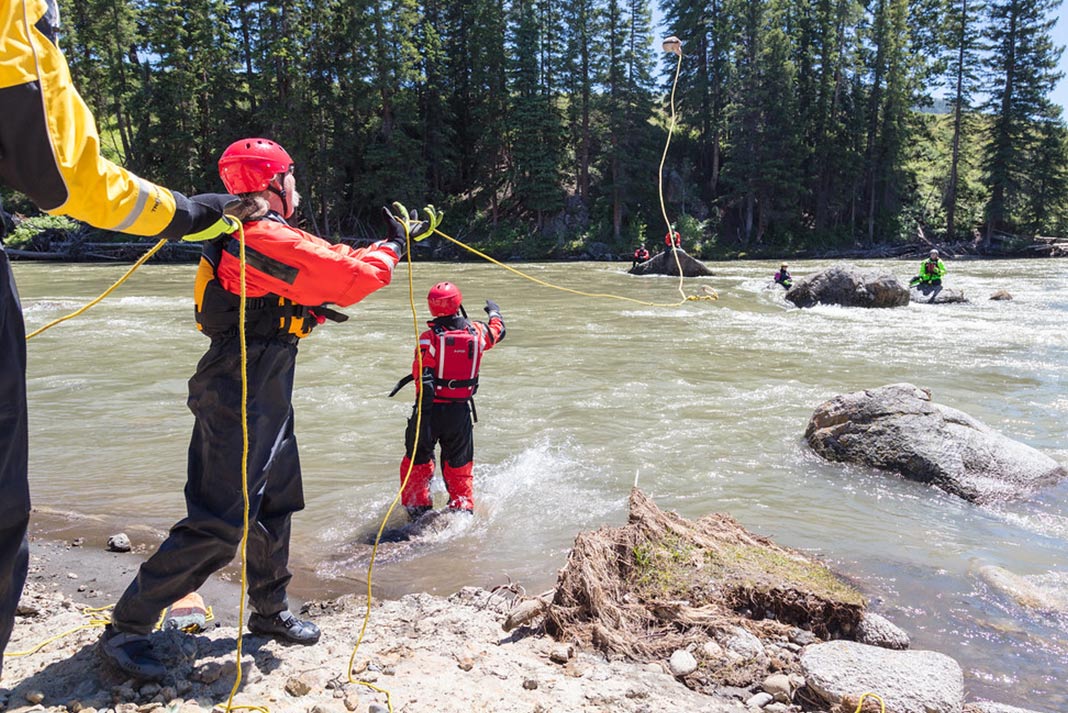
Students work at setting up a stabilization line for the victim during a foot entrapment drill. | Feature photo: Caleb Roberts
I was not much of a reader as a kid. In third grade, I won the Most Improved Reader award, which makes me think I was pretty bad at it. Yet, my parents regularly took me into town to the library as part of their attempts to make me less feral. I can’t imagine what I was thinking when I brought home an arcane book on knots.
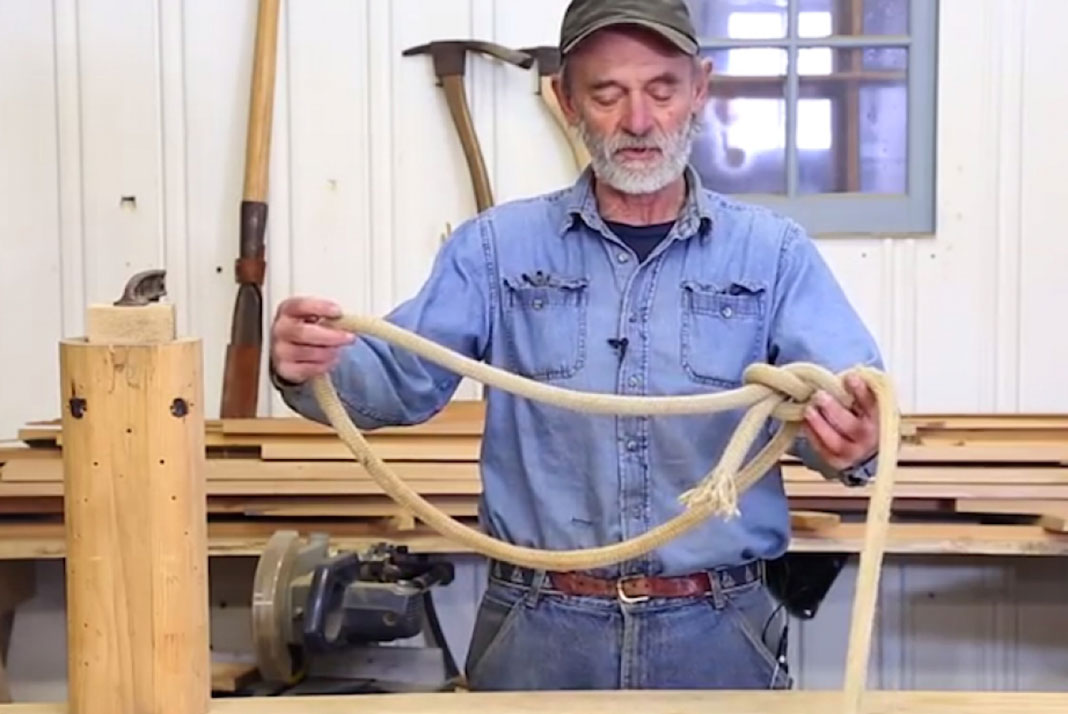
In 1944, sailor Clifford Ashley published his encyclopedic Ashley Book of Knots. A hand-illustrated source for more than 3,000 knots, bends and hitches, it is still considered an artistic masterpiece today, even with its hokey Captain Highliner cover illustration. The book is massive in scope, with detailed instructions for every variation of every known knot. It standardized the knot names we still use today.
Even though I’d never set foot on a sailboat, moored a ship to a dock, seized, spliced or hitched anything, I was fascinated by it as a kid and read the detailed instructions cover to cover. And, with miles of bailer twine to work with at the farm, I went at learning my knots.
Students work at setting up a stabilization line for the victim during a foot entrapment drill. | Feature photo: Caleb Roberts
With carabiners and cam straps, are knots still needed?
Ashley would be rolling over in his grave now. Knots have mostly disappeared from the paddler and outdoorsy person’s skill set. Cam straps have eliminated the need to use any hitch or knot to tie our kayaks on the roof. Today many paddlers would be hard-pressed to securely tie down a boat with just a single rope. Indoor climbing gyms have evolved to clip and climb, where the only needed skill is to ensure the carabiner gate is locked on the auto belay—no need to even touch a rope anymore.
Tents and tarps come pre-rigged with buckles, clips and pre-tied loops. Worse yet, modern river rescue education has convinced us the only knot we really need to know is the figure eight. The rationale has merit: novice paddlers or Joe Firefighter, who may take these courses yet rarely, if ever, use the skills, will forget anything other than the most basic material.
Yet, can we be as arrogant as to think the other 2,999 knots in Ashley’s book are unnecessary?
We have confused the laudable goal of simplifying the instruction of complex technical knowledge to beginners—what is done in beginner paddling courses, river rescue certification courses, and what I do as a college professor—with an assumption complex technical knowledge is unneeded. By teaching complex concepts simply, we have grown to believe everything worth teaching is simple.
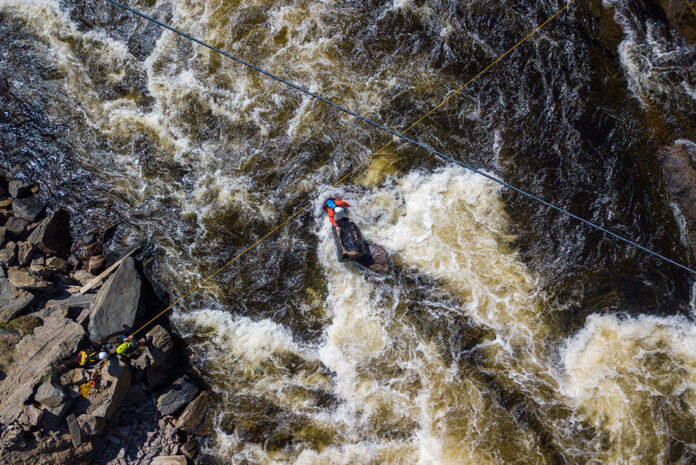
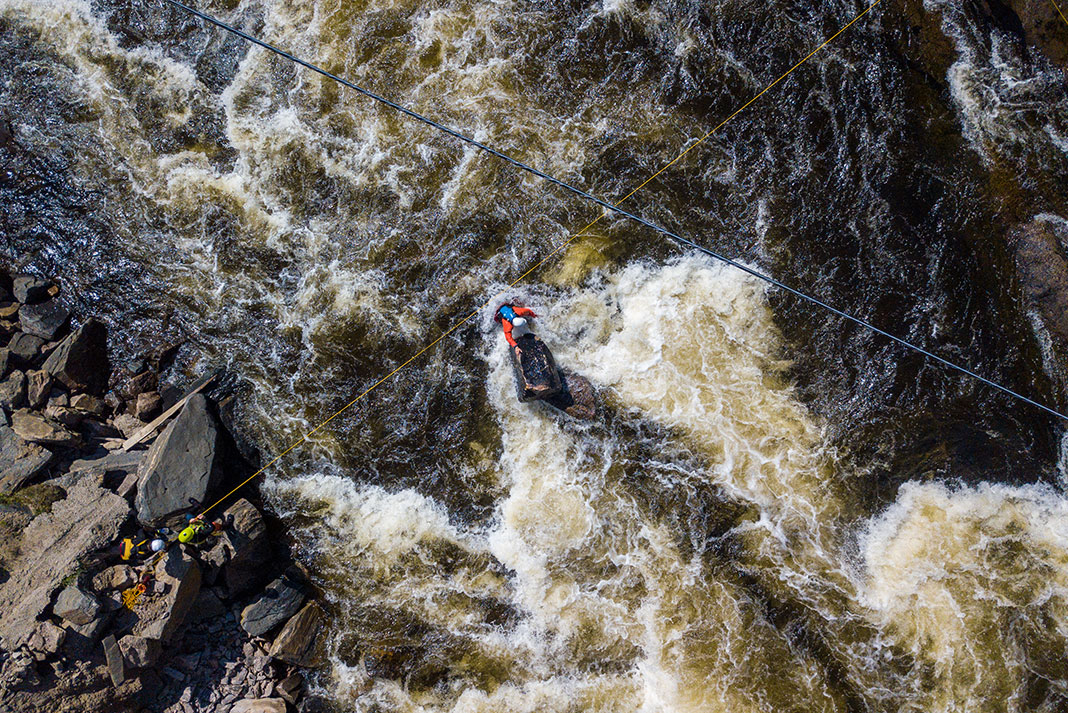
Setnicka’s 1981 Wilderness Search and Rescue book used all 640 pages to dig into the nitty gritty and blew the lid off technical rope rescue. He didn’t try to simplify the vast complexity, variation and adaptation required in technical rescue scenarios. It did not take long for this seminal work to be applied to the whitewater world, with Bechdel and Ray’s 1989 River Rescue bringing river rescue to the masses by adapting mountain climbers’ rope expertise to river applications. It was not simple and, to keep your options open, more knowledge than a figure eight knot was required. Think Tyrolean traverse and cross river zip lines, windless winches and multiple rope lowering systems.
Rarely used, but when needed, it’s needed.
Ropework is often not simple, requires practice and asks more of us as skilled and responsible paddlers.
Ashley made no apology for his 3,000 knots. For every single one, he explained its purpose and use. The majority of these knots had to be known to be a sailor.
Collectively, whitewater paddlers have convinced ourselves we don’t need to know knots. But that leaves us carrying our throw ropes around as vastly under-utilized tools. As a 10-year-old kid, I sensed there was an opportunity in knowing knots. And as a career river guide, I now know knots create options when they’re needed most.
Jeff Jackson is a risk management consultant and professor of outdoor adventure at Algonquin College.
This article was first published in the Fall 2022 issue of Paddling Magazine. Subscribe to Paddling Magazine’s print and digital editions, or browse the archives.
Students work at setting up a stabilization line for the victim during a foot entrapment drill. | Feature photo: Caleb Roberts
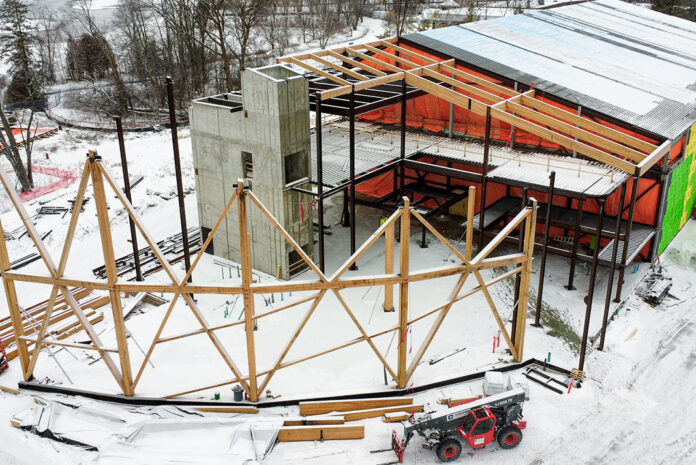
PETERBOROUGH, THURSDAY, JANUARY 26, 2023 – 2023 will begin a new chapter in the Canadian Canoe Museum’s (CCM) history as the organization prepares to move to its new waterfront location, currently under construction along Ashburnham Drive in Peterborough, Ontario.
“It is an exciting time for the Canadian Canoe Museum. A little more than a year ago, we had just begun construction. Since then, we’ve achieved many milestones. The building structure has come to life before our eyes, the mass timber-facade is taking shape and the building is nearly closed in. Exhibits have been developed and are being sent to fabrication, the fundraising campaign is in its final stretch and the collection is nearly ready for its move across town,” exclaims Carolyn Hyslop, executive director.
The Canadian Canoe Museum is creating a new cultural destination that will inspire visitors to learn about Canada’s collective history and reinforce our connection to land, water and one another—all through the unique lens of the canoe.
Photo: courtesy Canadian Canoe Museum
The new museum will be located on a five-acre site that will provide stunning west-facing views of Little Lake, a connection to the Trans Canada Trail, and will be surrounded by public parks. It will become a vibrant community space for outdoor activities and the Museum’s canoeing and outdoor programs and events.
A national fundraising campaign has inspired Canadians from coast to coast to coast and has raised 95 percent of the project’s $40-million cost to date.
The project is also made possible in part by the generous support of the Weston Family Foundation, the City and County of Peterborough, the Province of Ontario, the Government of Canada through both the Department of Canadian Heritage and the Federal Economic Development Agency for Southern Ontario (FedDev Ontario), and donors from across the country.
While steady progress has been made, the new museum’s opening will occur later than initially anticipated. The new museum project is experiencing delays due to the Pandemic and its ongoing impacts on the construction industry, affecting supply chains and material availability and resulting in material shortages. For example, a national shortage of cement powder recently created a three-week delay in completing the building’s superstructure.
Maria Williams, project director, Chandos Construction, explains: “The CCM project started at a difficult time in the industry. Due to the Pandemic and other influences outside our control, we have seen trade shortages, material supply issues and escalations beyond what we have historically seen. I am incredibly proud of the work of this team, which has come together to find unique solutions to minimize the impact on the project budget and schedule while maintaining the overall quality of the design and construction.”
The CCM hoped to welcome visitors in early summer 2023, but due to these delays, the anticipated opening of the new museum is now late summer or early fall.
“As designers, we have seen unprecedented upheaval in the construction sector over the last two years. While there have been similar delays and supply chain issues on the CCM, through our integrated approach to project delivery, these have been minimized compared to other projects. We are pleased with the progress made and look forward to seeing the Museum open to the public in 2023,” reflects Bill Lett, managing principal, Lett Architects Inc.
The CCM remains hopeful that the new museum will be able to celebrate its grand opening during paddling season.
“We are working very closely with the project team to recover the schedule delays, as we would be overjoyed to open earlier. With so much excitement and interest in the new museum, locally and nationally, we want to be transparent with our community about the timeline as we know many are planning trips to visit us this summer,” says Hyslop.
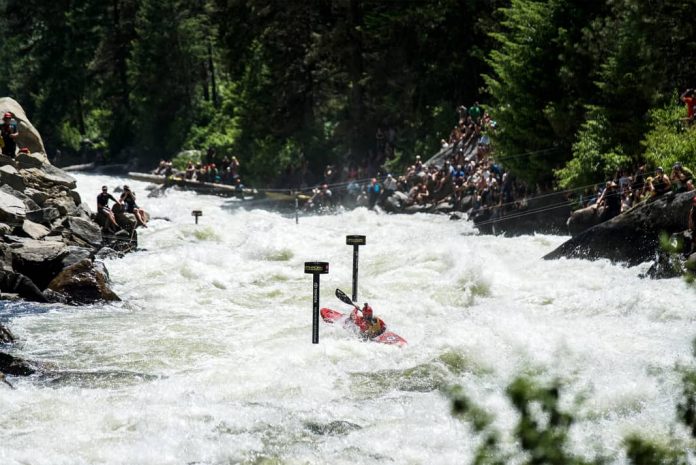
Mariann Sæther was crowned Queen of the North Fork Championship in 2019. It was the first year the NFC offered a women’s category, and with it the competition offered equal prize money. | Photo: North Fork Championship // Liam Kelly
Mariann Sæther was crowned Queen of the North Fork Championship in 2019. It was the first year the NFC offered a women’s category, and with it the competition offered equal prize money. | Photo: North Fork Championship // Liam Kelly
After 10 iterations, the North Fork Championship has been canceled. The organizers made the difficult announcement through social media on January 26, 2023.
Reign of the North Fork Championship
The North Fork Championship first took place in 2012 and from there skyrocketed as one of the most highly anticipated whitewater races each year. The prestige of the event was due in no small part to the fact that the course took place on Jacob’s Ladder, the most notorious rapid on the North Fork of the Payette River in Idaho.
The event pushed the progression of whitewater racing through multiple avenues, including equal prize money for women. The original organizers, James and Regan Byrd, stepped away from the event following NFC VIII. The Voorhees—a local Idaho paddling family, which includes two Jackson team paddlers, Alec and Hayden— took the reins in 2020. The family kept the NFC running through two iterations. The Voorhees built upon the event’s success by incorporating new elements including live streaming.
Now it appears the North Fork Championship’s reign has come to an end.
“Over the past decade, NFC has pushed the progression of whitewater kayaking and brought legends from all generations together on the river each year. The North Fork of the Payette has had a special place in our family for decades. It has been an amazing experience participating in each year’s evolution of NFC and an honor taking on the event as organizers in its final few years. That is why with heavy hearts we are announcing the cancelation of North Fork Championship,” the Voorhees family shared in a statement through the race’s social media accounts.
The statement goes on to share a number of factors that led to the decision.
“The event has grown exponentially, but with that growth came a new set of logistical challenges: from parking/spectating safely on the river banks, to the record numbers of both paddlers and spectators reuniting in the town of Crouch. At the same time local businesses and our sponsors are having to navigate a very different economic climate in these post-pandemic times.”
The uncertain state of the economy is a far reaching factor that could be foreseen. But the Voorhees mention another obstacle they smashed into—one which will likely ripple across whitewater races around the country.
“The final blow to NFC was the change in paddler insurance coverage previously provided by the ACA,” the statement reads. “The loss of which may shut down many other class V races in the USA this year as well.”
If other class V races are unable to find an alternative liability coverage they may ultimately be pushed to a similar fate of the North Fork Championship.
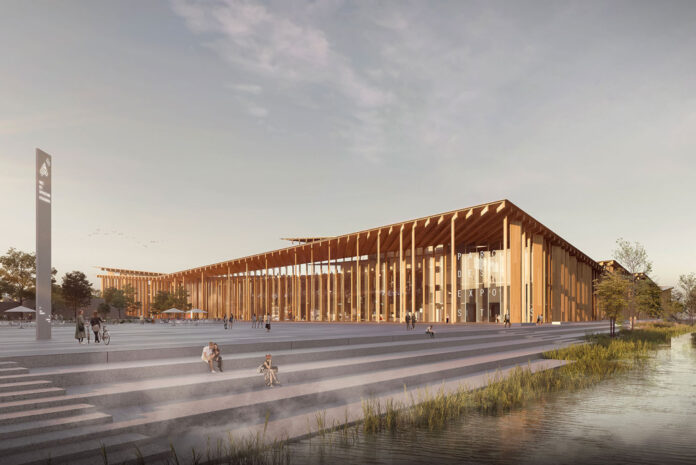
Le Parc des Expositions de Strasbourg. Image: Kengo Kuma & Associates.
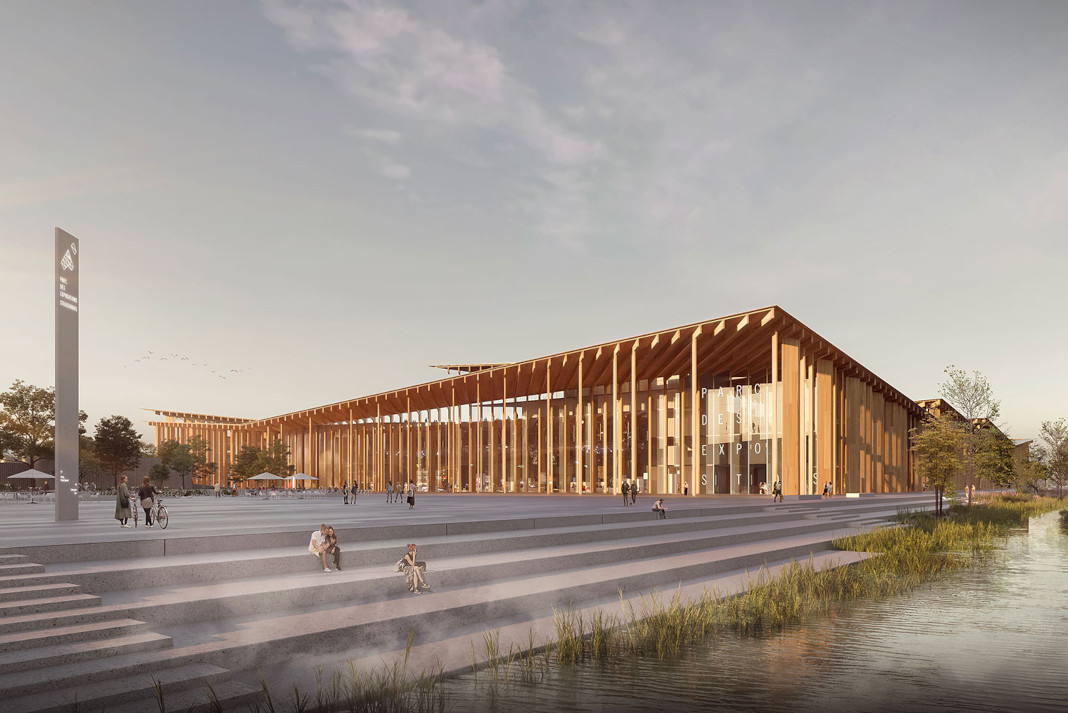
Le Parc des Expositions de Strasbourg. Photo: courtesy of Kengo Kuma & Associates.
After two years in Lyon, France, The Paddle Sports Show is moving to the city of Strasbourg for its 2023 event taking place September 27-29.
The international trade show is all-encompassing of the paddlesports industry. It includes everything from kayaks to standup paddleboards, and even foil sports manufacturers. The Paddle Sports Show also features an industry award ceremony and the “Testival” on-water demo day. The event draws retail buyers, outfitters and others within the industry from across the continent as well as internationally. In 2022 The Paddle Sports Show said it had over 90 exhibitors and more than 1,000 attendees. According to the event organizers, the move to Strasbourg is intended to be strategic.
“We are moving to Strasbourg to get a more centrally located exhibition center in Europe,” shares Philippe Doux, organizer of The Paddle Sports Show and publisher of Kayak Session. “Strasbourg being pretty much in the center of Europe, at the French and German border—two of the three biggest European markets along with the U.K. That means a really easy trip for exhibitors and visitors alike, wherever you come from.”
The tradeshow will move into the Le Parc des Expositions de Strasbourg, an exhibition center that opened in September 2022 and was designed by international architecture firm Kengo Kuma & Associates. The exhibition center is located in the heart of the city and sits adjacent to canals connecting to the Rhine River.
According to Doux, the announcement is already proving a positive move for The Paddle Sports Show.
“The response is beyond expectations, with projections looking at an even bigger event than the previous two years. Nine months before the event, over 100 exhibitors are already prebooked.”
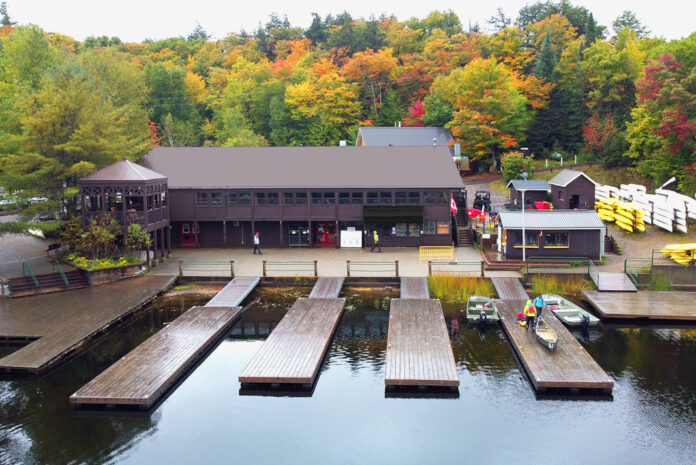
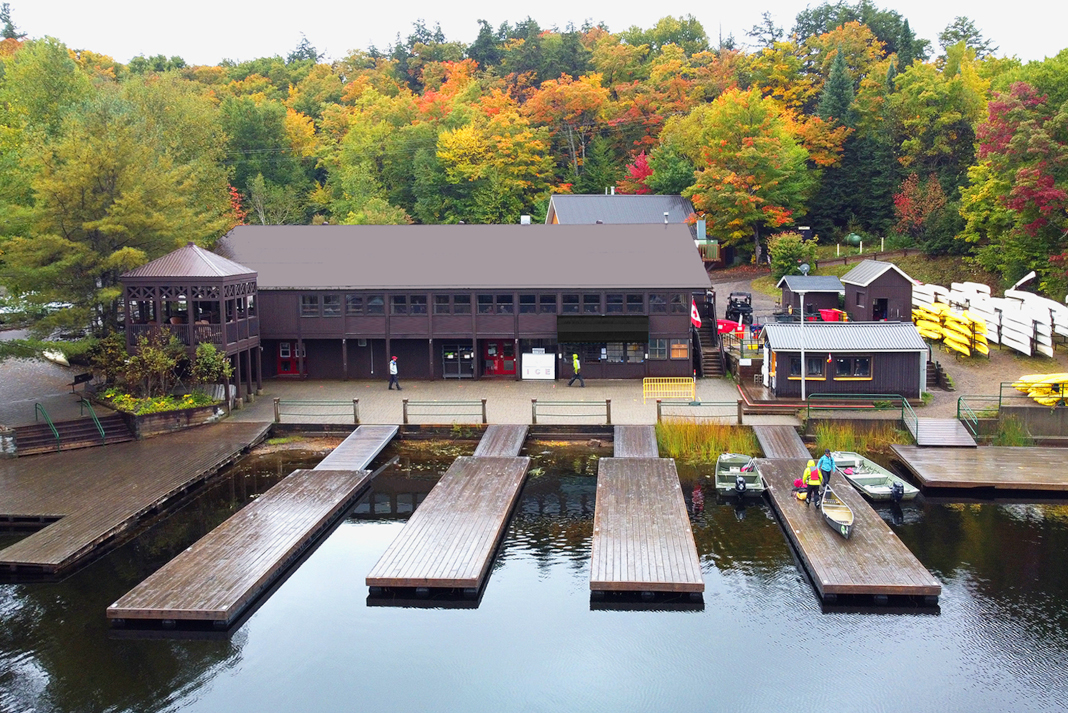
The team at Algonquin Outfitters is excited to announce that after an open tender process, Ontario Parks has selected us to be the operator of the Canoe Lake Store concession (known as The Portage Store) in Algonquin Park, starting this season. Algonquin Outfitters and the Swift family have been part of the Algonquin Park community for over 60 years and have welcomed Park visitors from all over the world during that time.
We would also like to take the opportunity to recognize the rich history of all the previous operators, who collectively have operated the concession since the 1930s. We are committed to honoring that legacy as we move forward at Canoe Lake by offering excellent service, great food, top-notch merchandise and high-quality rental equipment.
Feature Image: Algonquin Outfitters
The opportunity to improve and enhance the visitor experience in Algonquin Park has always been our focus. Some of our initiatives include education and raising awareness in important areas such as Indigenous culture, canoe and camping ethics, and respect for Algonquin’s wildlife and natural spaces. This will help us embrace, preserve, and share the unique history and experiences of Canoe Lake and The Portage Store.
We have a long history of providing quality canoe trip outfitting packages, equipment rentals and guided experiences for Park visitors. We are looking forward to bringing that experience to Canoe Lake. Stay tuned to algonquinoutfitters.com and our social media channels for more news and updates.
We look forward to meeting visitors at Canoe Lake this season and in the years ahead and thank Ontario Parks for this opportunity. We value the input of the Algonquin Park community and welcome any feedback or questions you may have about the Canoe Lake Store: canoelakestore@algonquinoutfitters.com


 This article was first published in the Fall 2022 issue of Paddling Magazine.