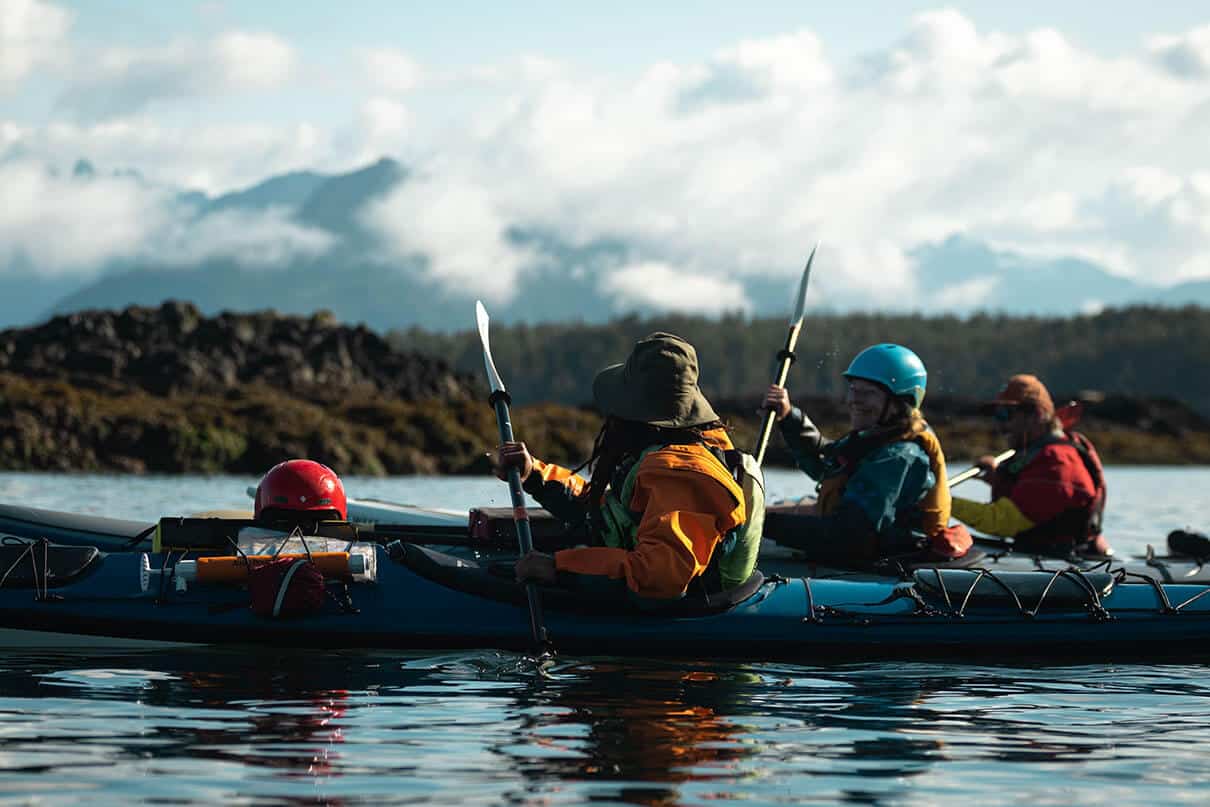
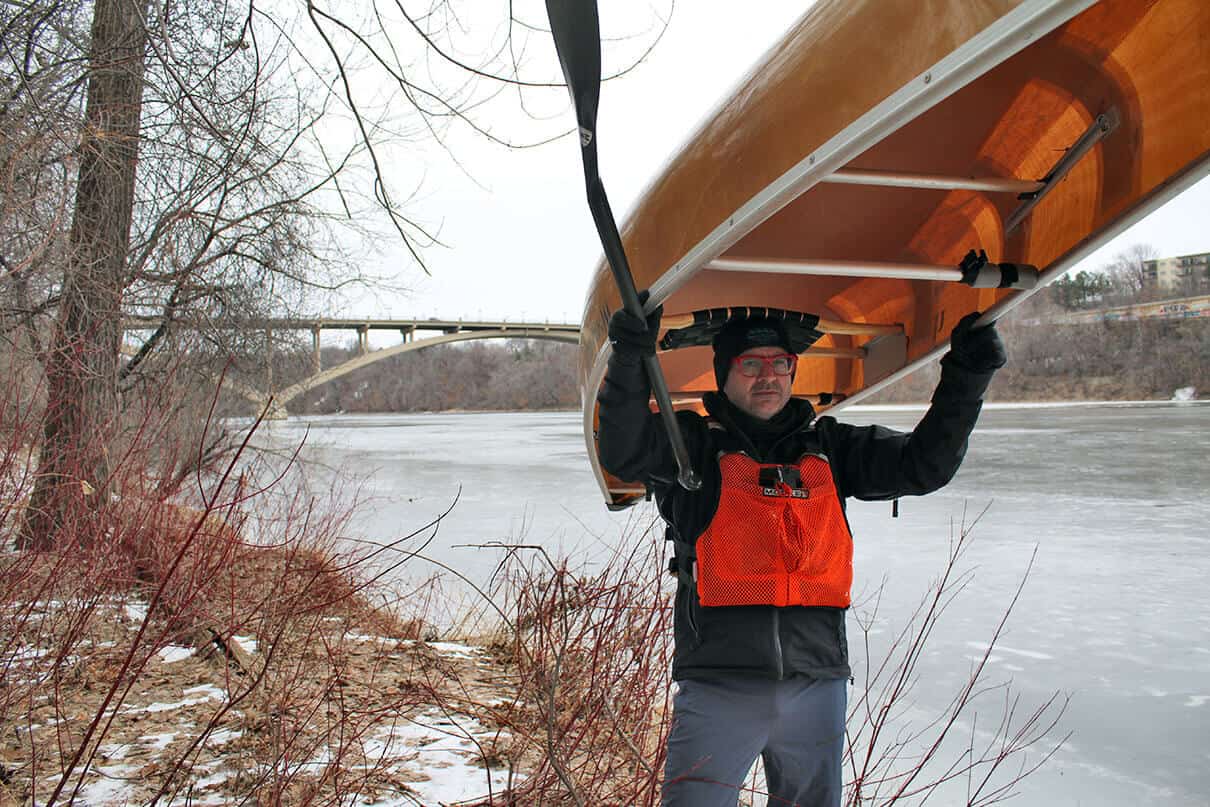
Bring the heat. | Feature photo: Virginia Marshall
There’s a window between fall color and ice-up, and another just after thaw, that are some of my favorite times to paddle. There’s no one else around, just the challenge of seeing how far I can push the season. Here’s what makes the cut when I’m heading out during the margins of the paddling season.
What’s in Editor Kaydi Pyette’s paddle-in shoulder season kit
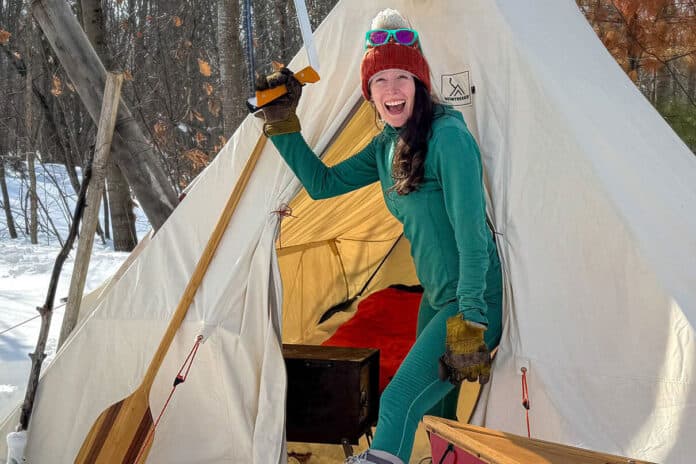
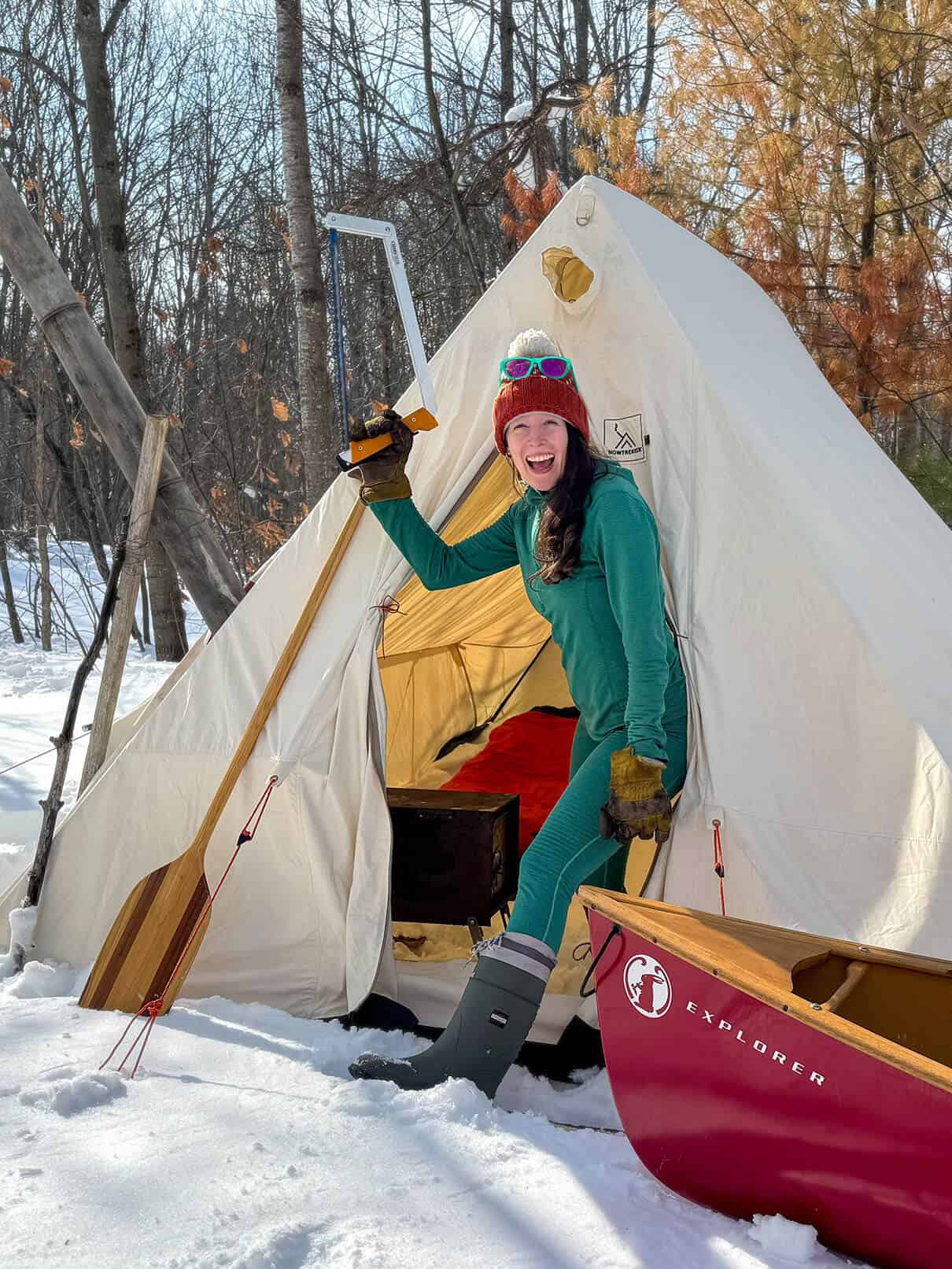
Bring the heat. | Feature photo: Virginia Marshall
Snowtrekker Hot Tent
MSRP: $2,358
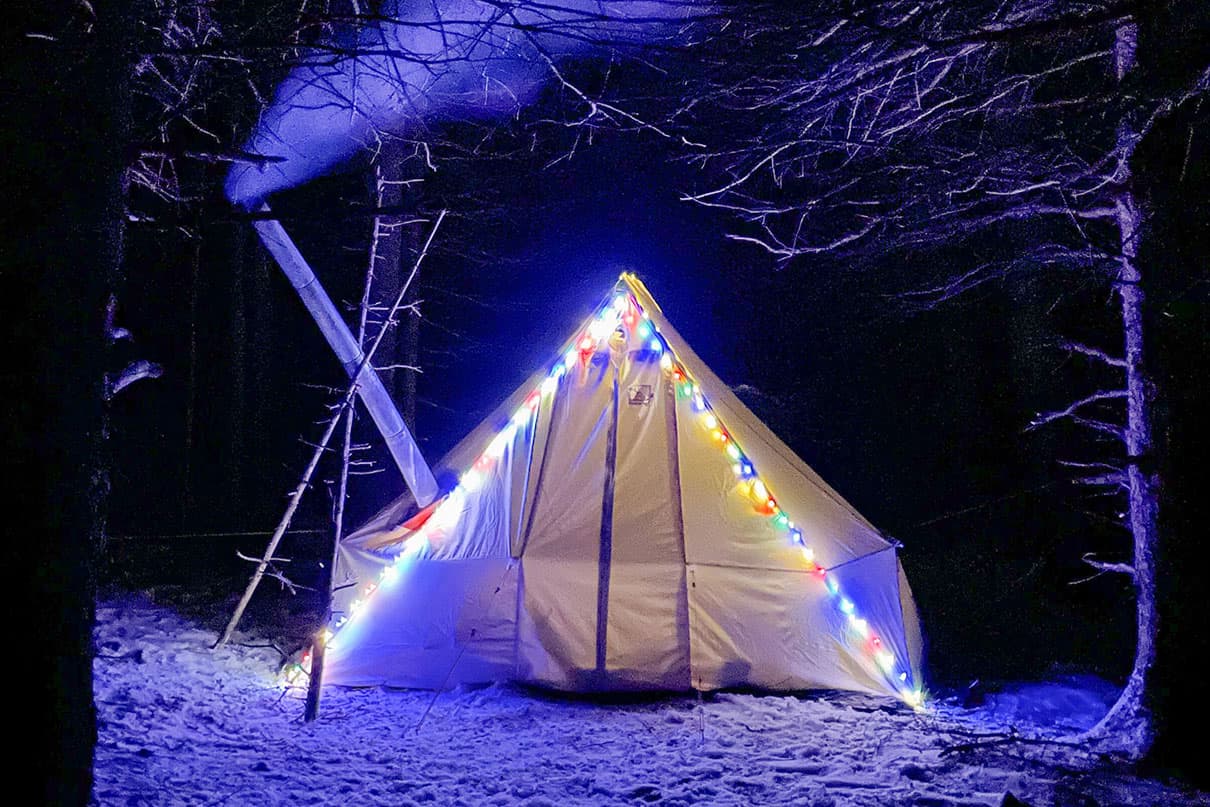
Snowtrekker’s canvas tent and wood stove system is perfect for off-season backcountry adventurers. My four-man 10×13 Crew tent plus stove packs into a 55-pound bundle. Hefty, yes, but manageable when your portages are few. And so worth the effort. The tent and stove go up in about 20 minutes. Then you light the stove, string a line for socks, and suddenly you’re down to your T-shirt while snowflakes fall outside. Off-season canoe camping has never been so cozy. For smaller groups or solo paddlers, the smallest hot-tent-and-stove combo weighs around 40 pounds.
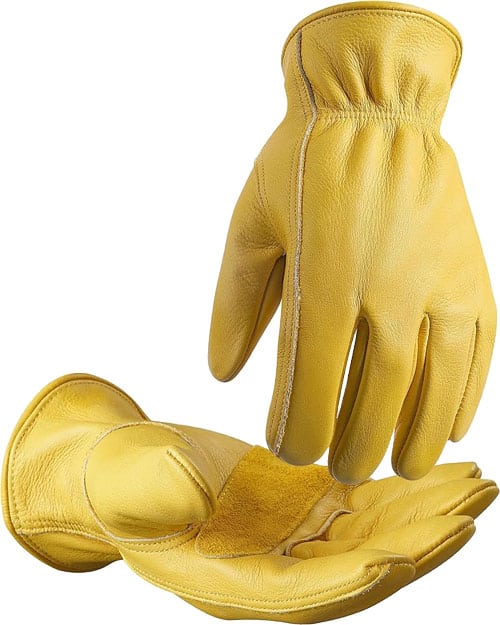
The least glamorous piece of kit, but the most unpleasant to overlook. You need a pair of work gloves to feed the stove and for the stove’s setup and teardown. Any will do, but pigskin or cowhide palms stand up to heat and sparks. Just don’t touch the white canvas with these gloves. Ask me how I know.
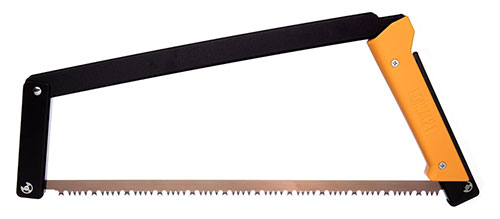
You’ll also need a camp saw to buck stove wood into manageable lengths. My favorite is the sturdy and lightweight Agawa Boreal 21. It chews through deadfall with ease, and its folding frame packs flat.
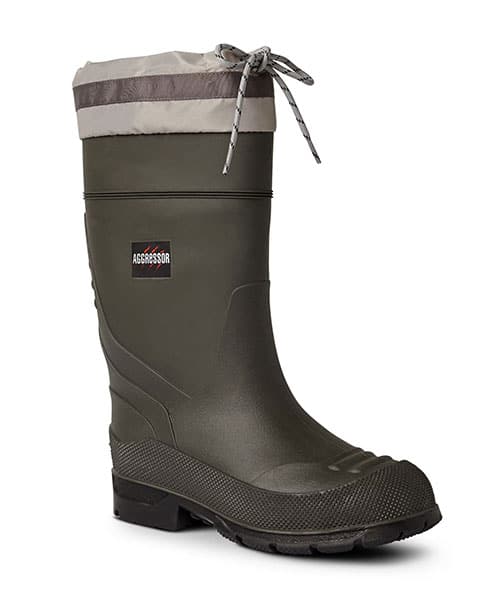
Think wellies but warmer. For the ultimate in shoulder season footwear, I go waterproof and insulated so I can step mid-shin at the put-in without worry. The Aggressors from Mark’s Work Wearhouse supply store replaced needing both water shoes and camp shoes on shoulder season trips (though I still bring a pair of hut booties for inside the tent). Removable liners dry by the stove overnight and spare you from damp boots at dawn.
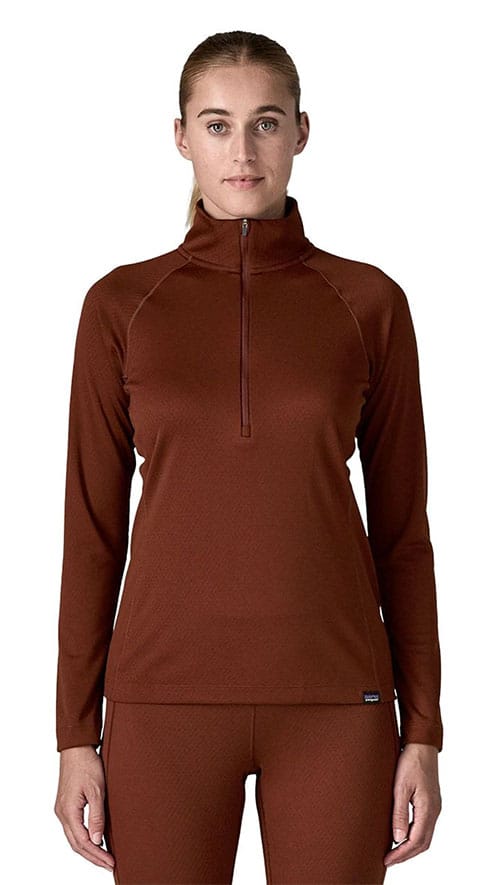
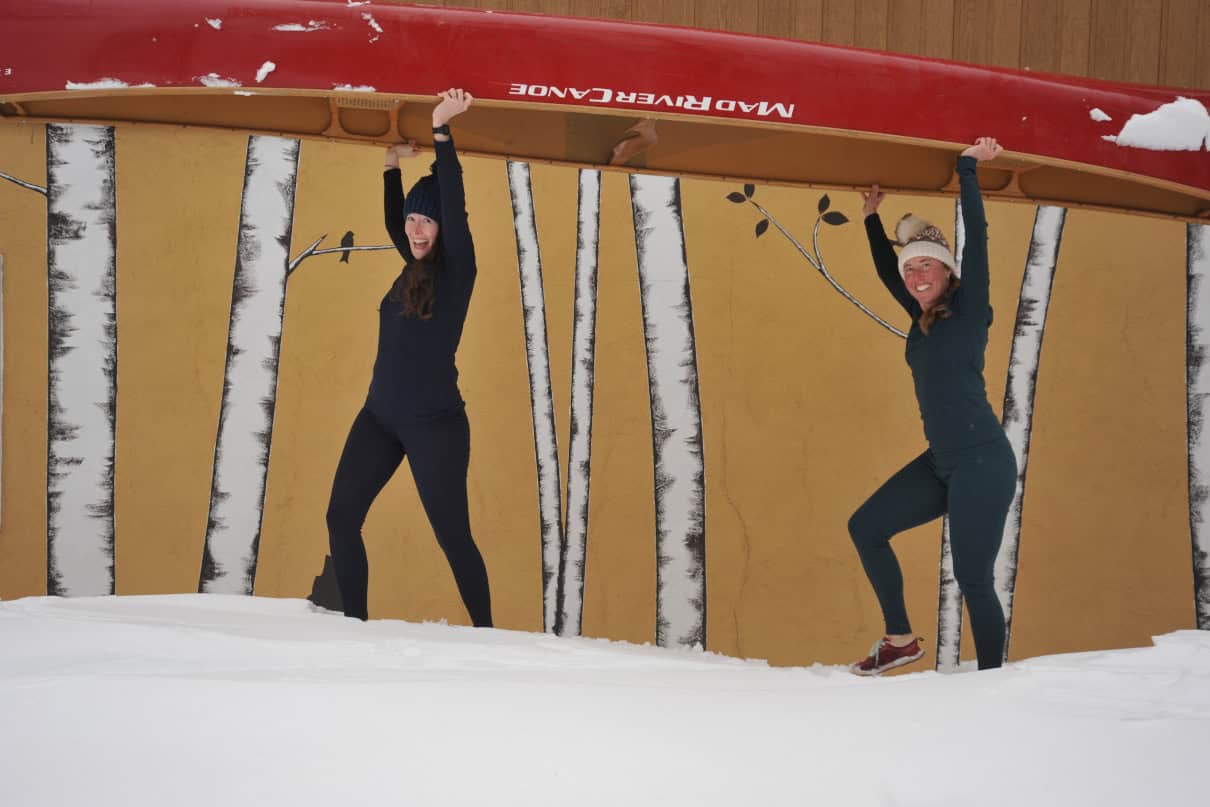
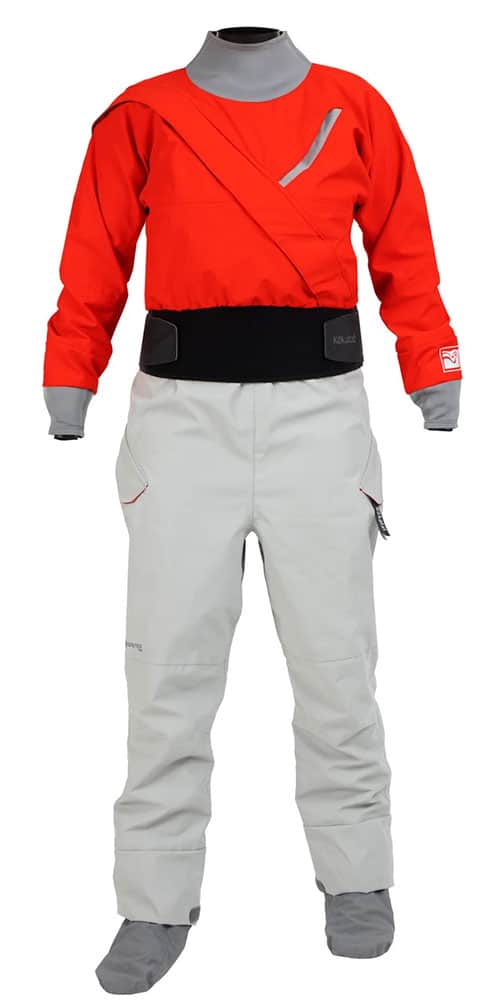
My favorite long johns ever. Over the last decade, they have accompanied me on almost every trip big and small, from paddling across Ontario to weekends in Algonquin. And this midweight merino wool base layer from Patagonia is still going strong. They don’t stink, they dry fast and they layer nicely under a drysuit—which you should absolutely be wearing when paddling on cold water.
Cold water kills. Turn to page 87 if you need convincing. My go-to drysuit is the Kokatat Meridian. The National Center for Cold Water Safety (coldwatersafety.org) recommends dressing for immersion and wearing thermal protection when water temperatures drop below 70°F (21°C).
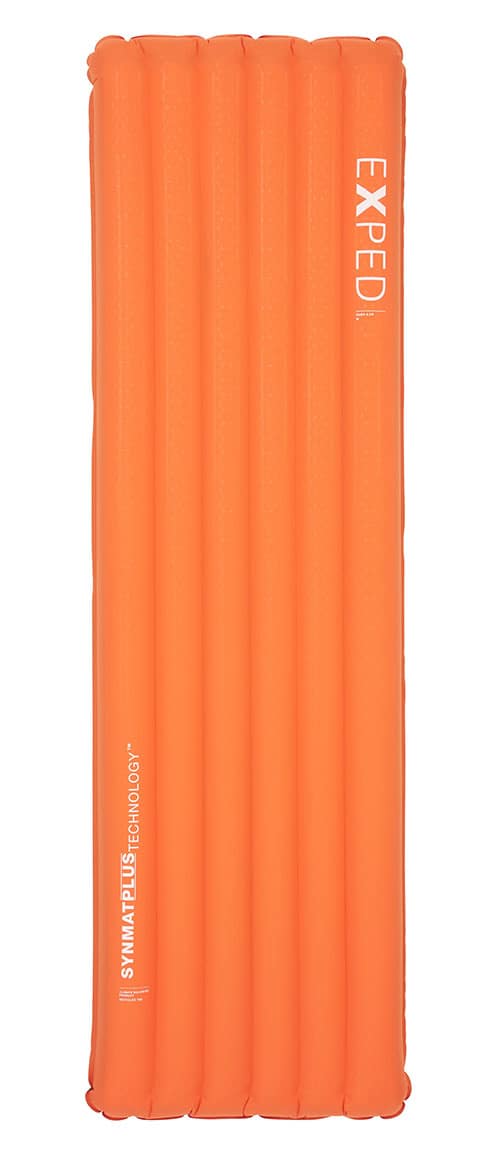
My favorite cold-weather pad is the compact and inflatable Exped Dura 6.5R, which delivers an R-value of 6.9 for 1.4 pounds. As for a sleeping bag, the long-discontinued synthetic MEC Habanero -12 (mec.ca) is the old warhorse that I’ve trusted to keep me warm from the Yukon to Patagonia. It’s not the lightest or most compact bag, but it lives up to its temperature rating, and I can guarantee the water will freeze up long before I do. Cold sleeper? Add a fleece liner to your bag to buy yourself another five degrees of warmth on shoulder season trips.
If you’re hot tenting but not stringing fairy lights along the inside of your A-frame structure, you are absolutely missing out. Fairy lights provide practical lighting and a cozy interior for long, dark evenings, and they light up your tent like a lantern for photos—all for around $10.
After their kayak overturned on the rain-swollen Milwaukee River, a father and son were rescued on April 19, 2026. A bystander spotted the pair in the water and made the call, triggering the rescue, and North Shore Fire and Rescue was alerted of the situation just after 3 p.m. The duo had made their way out of the current and onto a small, partially-submerged island where they held themselves while the rescue was planned.
Rescue on the Milwaukee River
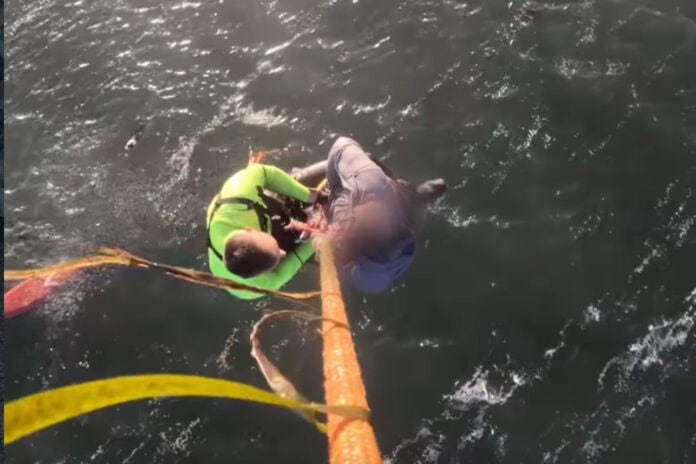
In the video, first responders can be seen on a raft crossing the swift current of the river to reach the trapped pair before pulling them into the raft and ferrying them back across the river.
Neither father nor son was reported to have sustained injuries, and both can be seen wearing a lifejacket in the video.
The incident occurred near Glendale, on the Milwaukee River. While the river is generally calm in the summer months, spring rainfall increased the volume and speed of the river significantly and led to hazardous conditions.
“As soon as I saw the rafts, I knew it was a kayaking incident,” Dale Gatford, a local who regularly kayaks the area, told TMJ4 News Milwaukee. Gatford also shared that he checks the river’s conditions via its U.S. Geological Survey (USGS) gauge before paddling.
In a daring rescue caught on camera, a father and son were rescued from the Milwaukee River after their kayak capsized. Feature Image: FOX6 News Milwaukee | YouTube
Higher flow rates, measured in cubic feet per second, indicate stronger currents and hazardous conditions on the river. Gatford told TMJ4 News Milwaukee that for him anything over 1,150 cubic feet per second is too much and the week of the accident flow rates were as high as 11,000 cubic feet per second.
Heavy rains lead to hazardous conditions
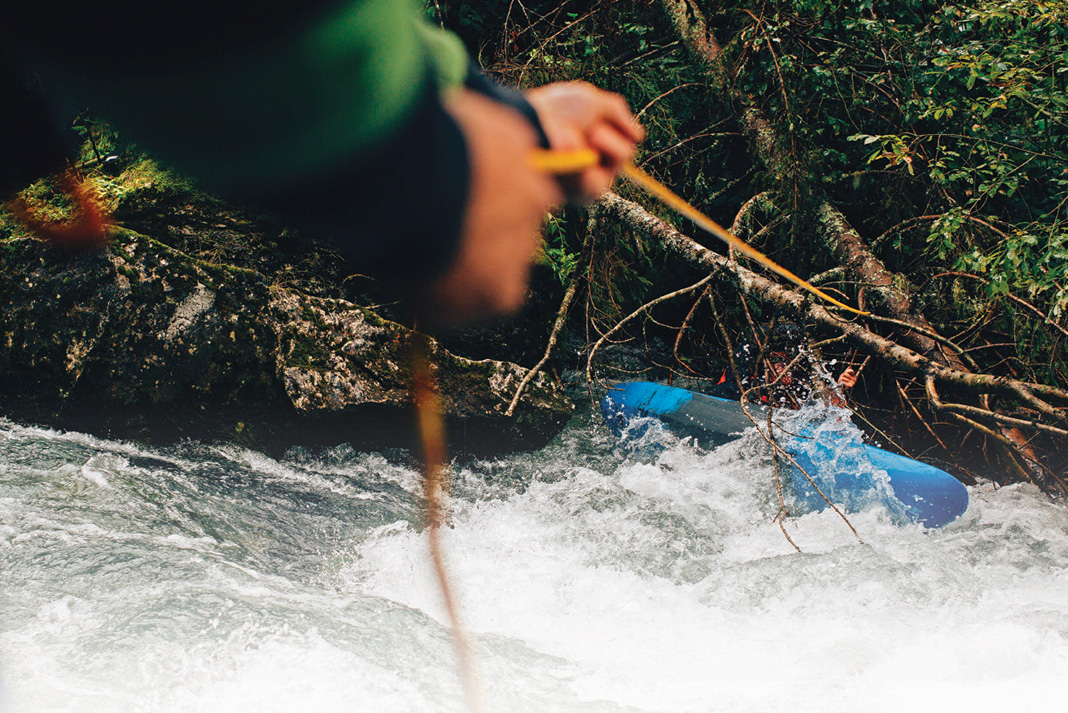
Even had the pair not capsized, exiting the river in these conditions in a kayak or as a swimmer would have seen additional hazards. With the river flooded, the water was now moving through the trees at the shoreline creating points at which the river rushes through brush and logs and a paddler could easily become pinned.
Following the incident North Shore Fire Rescue issued a warning urging people to use “extreme caution when entering the river due to unsafe, swift-moving water conditions.”
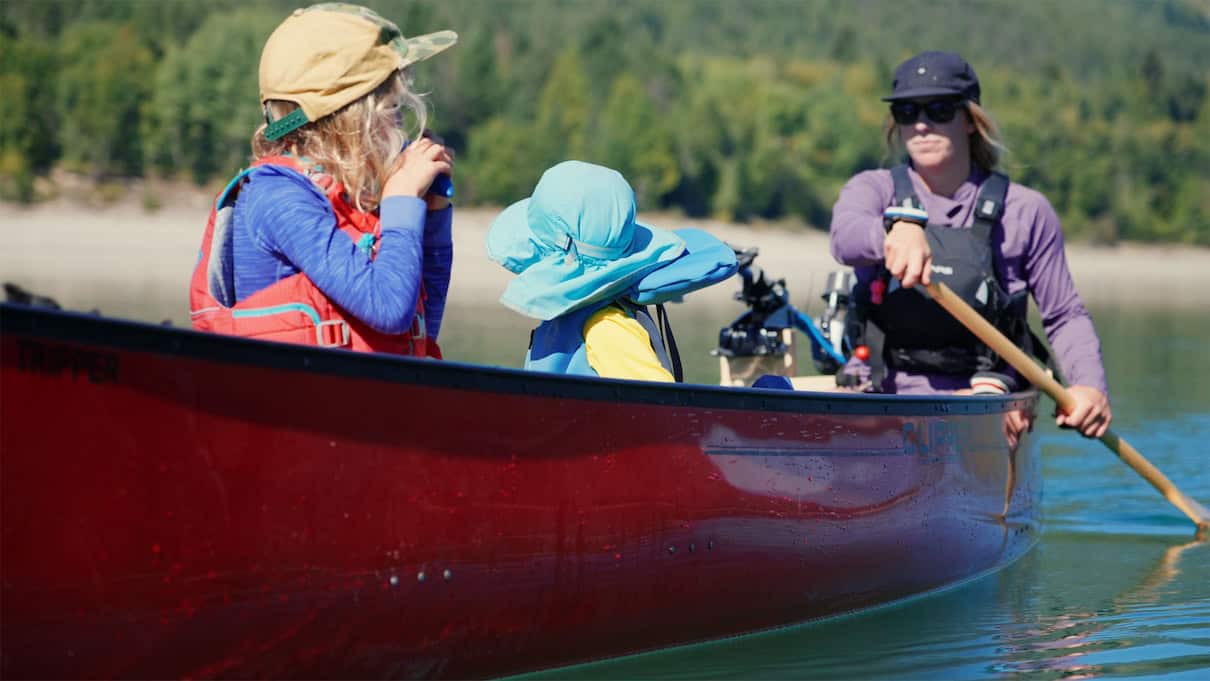
Brenna Kelly is an accomplished paddler. She was a semi-pro creek boater and freestyle competitor and qualified for the Canadian National Freestyle Team. While she doesn’t compete anymore, as a hobby, she teaches all paddlesports and swiftwater rescue. She’s dropped waterfalls, paddled remote rivers and swam in rapids more times than she can count. But the idea of taking her two kids, ages seven and five, on an overnight canoe trip was intimidating to her.
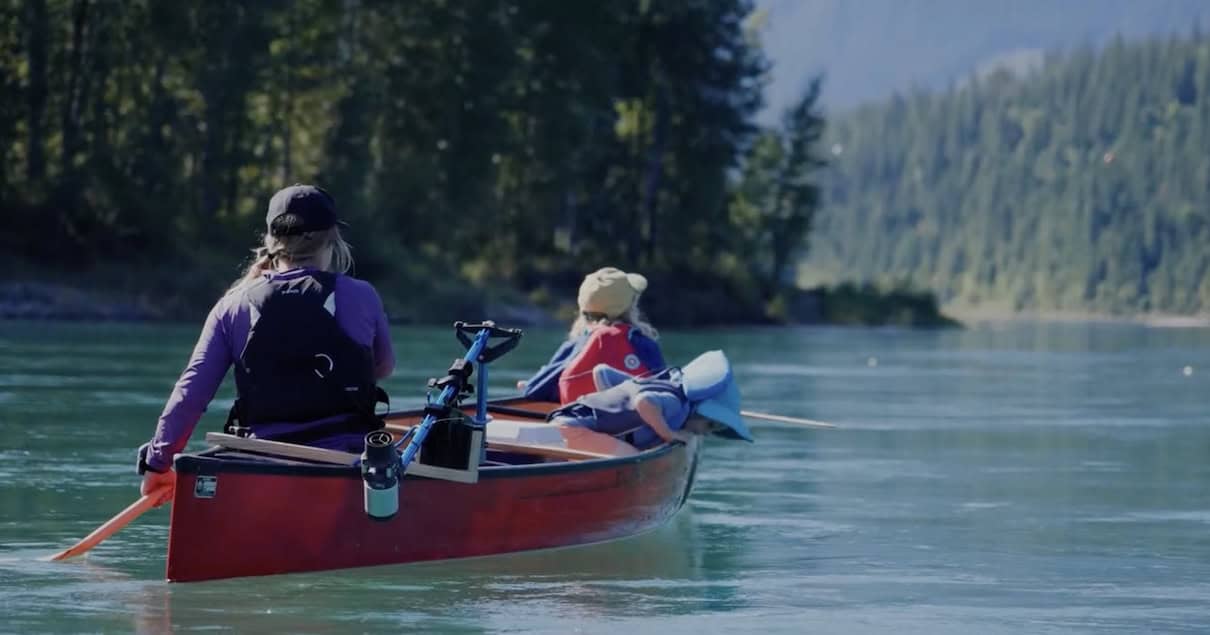
The plan was to canoe from the mountain town of Revelstoke, where they live, down the Columbia River and camp overnight at a local campground. The next day, they’d continue down the river where it widens into a lake, and take out at the ferry landing, covering 55 kilometers over two days.
You can see the trip they took in the film, The Next Adventure, touring in this year’s Paddling Film Festival.
This trip had been on Brenna’s mind for a long time, and although it wasn’t Piper and Hudson’s first time paddling or camping, it would be their first time putting the two together and spending potentially long days on the water. And it would be Brenna’s first time taking the kids on her own.
“There are so many things safety-wise that you need to consider,” she explains, expanding on why she was intimidated by the idea. “And then on top of the safety aspects, my secondary concern was making sure the kids were actually having fun. Because if they didn’t, it could have easily been the moment they decided to hate paddlesports forever.”
No pressure.
Already dreaming of the next adventure. | Feature photo: Tyler Correll
But Brenna didn’t want her reservations about the trip to hold her back from doing it. So she started making contingency plans for everything that might go wrong, covering her bases to ensure the trip was both safe and fun for the kids.
“I had considered, what if we tipped our canoe? That was a big concern.” Brenna explains that to counter this, she invited her friend Tyler along to film. She procured a sit-on-top, pedal-drive fishing kayak for him to paddle, so his hands would be free and he’d have a stable platform he could pull the kids onto if their canoe tipped.
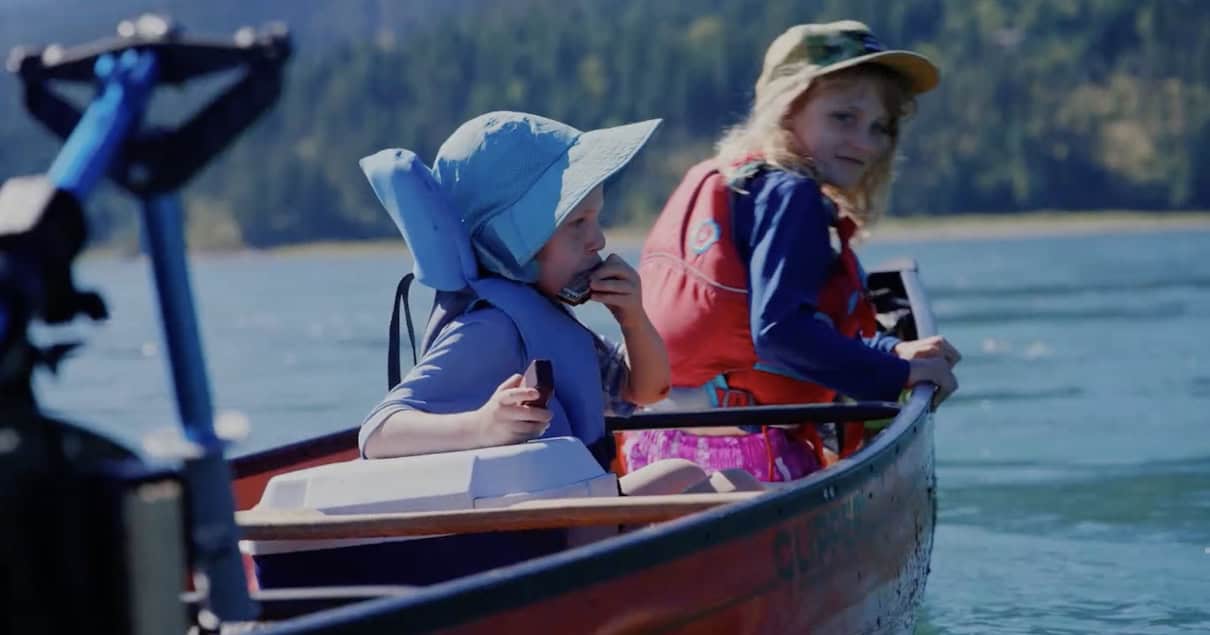
Her second concern was whether the kids would tolerate sitting in a canoe all day. To combat boredom, she brought a harmonica, an ocarina, and copious amounts of candy and snacks.
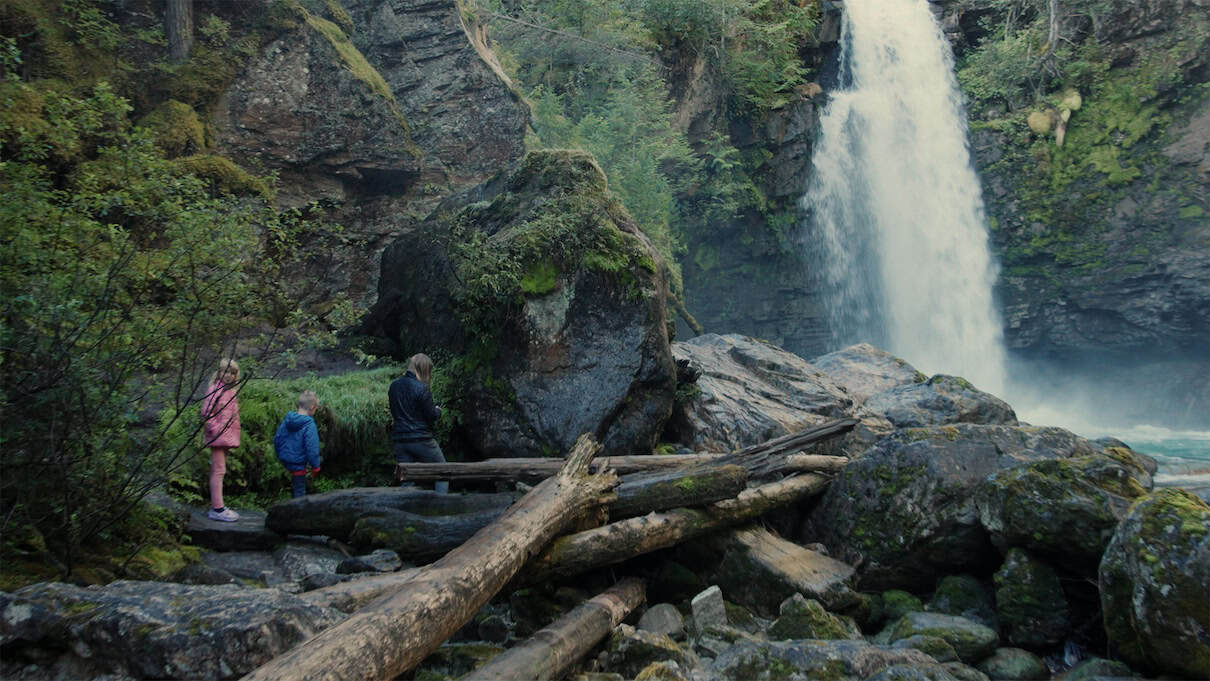
“I made sure to make stops every couple of hours at least, just to stretch our legs, run around and play, do little hikes, check out cool things,” she says. “Because it’s all about the journey, it’s not just about getting from point A to point B.”
The first day, they were only on the water for about four hours. They stopped at a campground where Brenna had already arranged for her trailer to be dropped off and where Tyler’s car was parked. All their camping gear was waiting for them, and they had an out if the weather turned on day two and they didn’t want to continue on.
“I planned it all like a diamond heist,” laughs Brenna.
Snacks on snacks on snacks made the dream trip possible. | Photo: Tyler Carrell
The Bixpy motor came in handy when Brenna’s hands were full handing out candy and helped them along when the current slowed. | Photo: Tyler Correll
Day two brought more good weather and the kids were keen to complete the trip, so they headed back out on the water. Despite the second day being similar in distance to the first, it took a lot longer than anticipated to reach their destination—around seven hours. They were paddling a stretch that was more lakelike and had no current.
Thankfully, she had another contingency plan in her back pocket: a motor.
Brenna says she has been familiar with Bixpy Motors for a long time, but thought they were initially created for fishing.
“But they weren’t,” she continues. “They were created first and foremost for people to feel confident going out on the water. So that if someone was like, ‘Oh my gosh, there’s a little bit of wind, never mind I won’t go.’ You want them to be like, ‘You know what, there’s a little bit of wind, but I’ll just put my motor in the fin box of my paddleboard and if I need to use it then I can and I’ll be able to get back to where I started.’ And same with canoes.”
The ability to drop a motor whenever she felt like she needed the extra power was the last piece of the puzzle to make her feel like this was a trip she could accomplish with the kids.
Brenna says they definitely used the motor more on the second day of the trip to help them get through the flatwater section.
She notes that there might be a bit of a stigma around using a motor to go on a canoe trip and that some hardcore paddlers might scoff at the idea.
“I don’t feel bad about using these tools at all,” she says. “If they’re the difference between me going and not going, then I’m going to use them.”
Brenna made sure to build lots of stops into their journey. Exploring beautiful spots like this one helped keep the kids engaged. | Photo: Tyler Correll
At the end of the day, she says, they accomplished their goals.
“The point is the kids got to go on a trip, I got to go on a trip, and we got to paddle the overnight section I’d always wanted to do. We had fun, we stayed safe, we made it to the end.”
And the kids are already asking to go again. Next time, they’re planning to bring more friends along and Piper and Hudson have requested that instead of staying at the campground, they find a place to backcountry camp along the river.
“Now that it’s summery here in Revelstoke, they’ve already asked three or four times if we’re going to do another canoe trip this summer,” says Brenna. “I think it’s safe to say, I’ve got them hooked.”
Half a century after the
iconic expedition, the
Nordkapp is still in its prime. | Feature photo: David Priddis
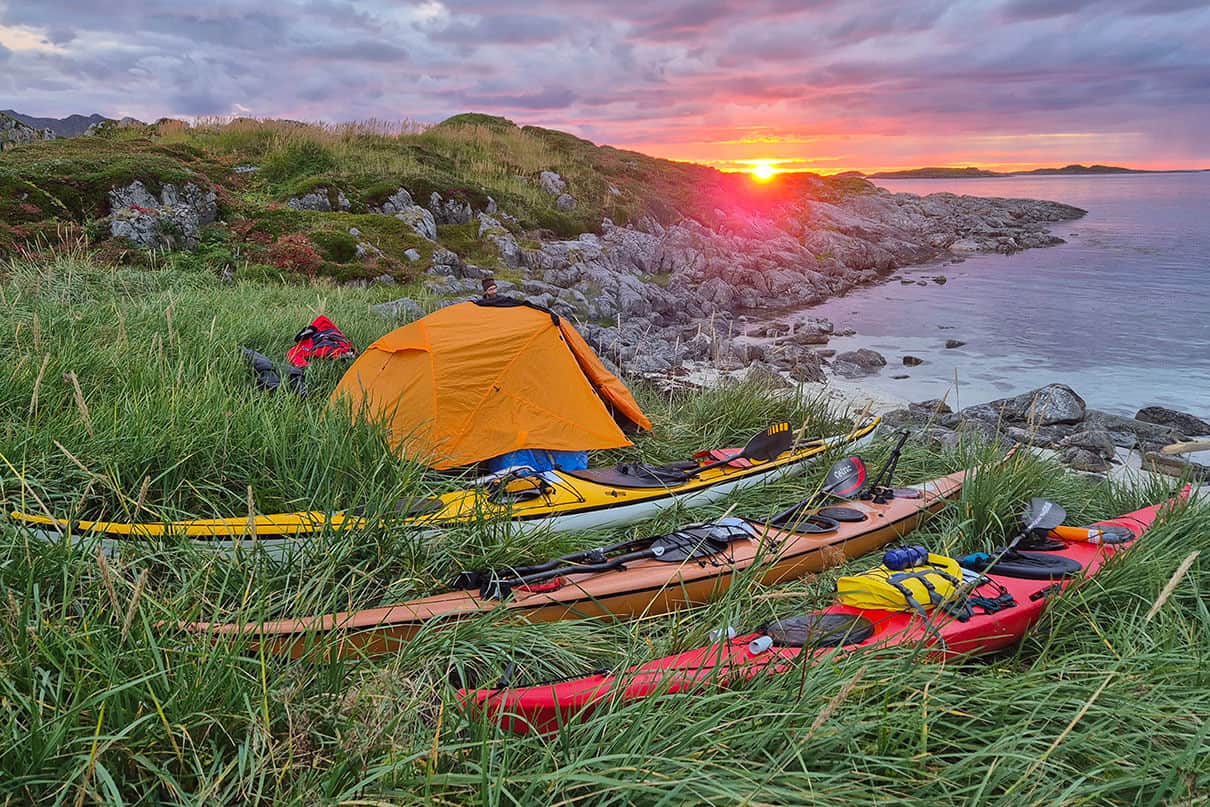
Fifty years after the original Nordkapp expedition helped define the modern sea kayak, U.K. kayak guide David Priddis and two friends traveled to Norway’s northern coast to retrace its legacy. Paddling vintage Valley Nordkapps, they journeyed 231 miles from Alta to Lakselv around the famed Nordkapp headland, camping along the way.
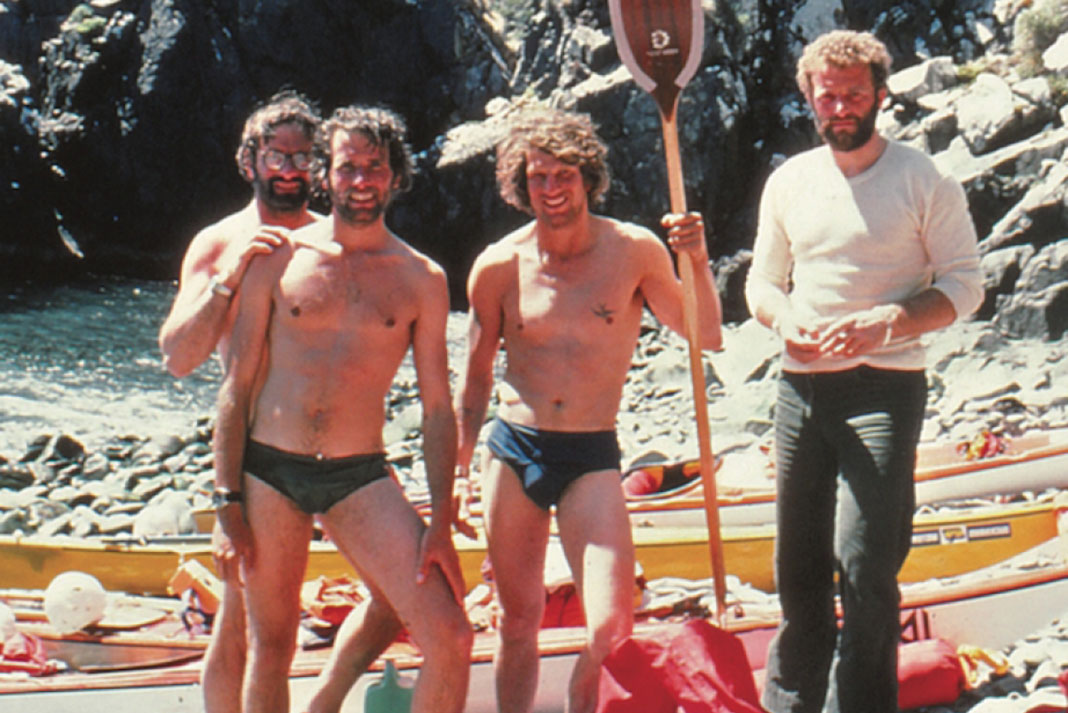
Their route traced part of the original 1975 Nordkapp expedition, when British paddlers covered 500 miles along Norway’s coast. With no suitable boats available at the time, Valley Canoe Products founder, Frank Goodman, designed a new kayak for the trip. With bulkheads, watertight hatches and a strap-on skeg added mid-expedition, the new Nordkapp became a template for modern sea kayaks.
“In their original trip report, you hear a lot of grumbles about soggy kits and bad weather,” says Priddis. “Even in drysuits, we were chilled and exhausted at times. They had it far worse.”
—As told to Kaydi Pyette
Back to Nordkapp: Retracing the expedition that launched the modern sea kayak
When did conditions get scary?
On day five, estimating Force 9 winds [47 to 54 miles per hour] is conservative. Conditions were flat-calm, then 20 minutes later, it was raging seas. Wind against tide jacked everything up, and we had a 300-foot cliff to get around. The wind was coming around the corner like small hurricanes, hitting us so hard we had to hang onto our paddles for dear life. It was like someone firing a high-pressure hose with spray belting us. It was survival paddling.
Half a century after the iconic expedition, the Nordkapp is still in its prime. | Feature photo: David Priddis
What did you learn?
It was humbling. We had 10 times more information than the original trip ever had—they could only stick their heads out of the tent in the morning and decide if they were going. Even with all the modern tech, it proves you can still get caught out by the weather. Luckily, we had the skills to put up with those conditions, and we can laugh about it now.
Where did your vintage Nordkapps differ?
We had three variants. My 1979 Nordkapp with an ocean cockpit, a Nordkapp Jubilee from 2000, and a rotomolded Nordkapp. The change in cockpit shape, from ocean cockpit to keyhole, was the biggest difference. The hulls had not changed much, except that mine had a fixed fin. In the extreme conditions, I did suffer with a lot of weathercocking. And I had tiny 18-centimeter round hatches on my kayak. My variant is slim and low-volume, so I could only carry about five days’ worth of food. The Jubilee took 16 days’ worth, even though we only needed 14.
Why does the Nordkapp still capture our imaginations?
A lot of the epic trips have been conducted in them. Obviously, the one we’re talking about. Another famous one is Paul Caffyn’s paddle around Australia. When I went to Ushuaia, Argentina, there was a Nordkapp in the rafters at the Maritime Museum from [circumnavigating] Cape Horn. It reached all four corners of the planet, but many people still have access to them because they’re so prolific.
Who do you hope this trip inspires—and how should they start planning?
Anyone. Once you’ve got that cool place in mind, look at the wider weather data and work out the best time of year to be there. We had two choices: either June or September. At the height of the summer, it’s a bug fest, and quality of sleep is a factor with the midnight sun. In September, it hadn’t gotten properly cold, it wasn’t bucketing rain yet either, and the bugs were gone. And we never would have seen the aurora borealis if we had gone in summer.
David Priddis is a photographer, kayak guide and coach, and the founder of Kayak Nomad (kayak-nomad.com). He’s based on the beautiful island of Jersey, Channel Islands, with the third highest tidal range in the world.
This article was published in Issue 75 of Paddling Magazine. Subscribe to Paddling Magazine‘s print and digital editions, or browse the archives.
Half a century after the iconic expedition, the Nordkapp is still in its prime. | Feature photo: David Priddis
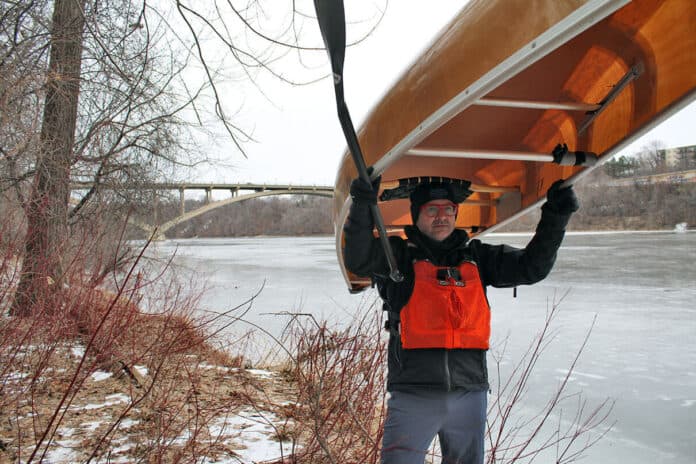
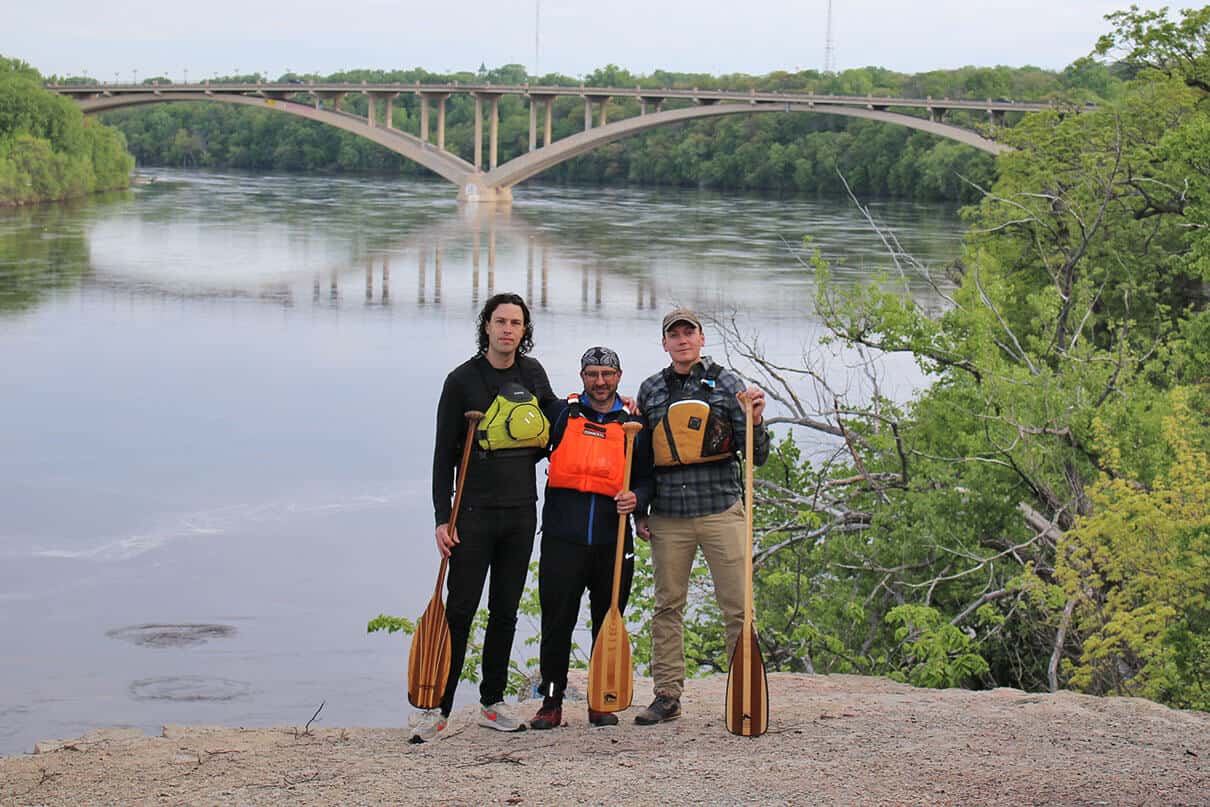
Frank Bures back at the scene of the capsize. When he fell into icy current, survival came down to luck. | Feature photo: Josie Bures
The sky was still darkon a Sunday morning in late March when I set my new solo canoe on the surface of the Mississippi River. I’d been thinking about this moment for years, dreaming of all the places I could paddle once I got this boat. Now, I was finally ready to launch on its maiden voyage.
I strapped my dry bag onto the crossbar, checked my pocket for my phone (which was also in a small dry bag), and waded into the river in my rubber boots, just north of the Ford Parkway Bridge between Minneapolis and St. Paul. I slid the boat out. When I stepped in, I noticed that it felt unsteadier than boats I was used to. Then I sat down, started paddling, and forgot about it.
Close call: How canoeist Frank Bures survived an early-season capsize
Spring had come early. The temperature the week before had been in the 70s, and the snow and cold felt like a distant memory, even though a week or so before ice floes had drifted past here. I knew the water was cold, but that seemed like more of an inconvenience than a threat.
The sun was rising. I paddled up the gorge section of the Mississippi, which runs between the high banks of the Twin Cities, with hills—cliffs, almost—on either side. To the east side, an owl called. From the west, another answered. I was in the middle of the city, but also very far from it.
Although I was a fairly experienced canoeist, I’d never owned, or even paddled, a solo canoe. I’d been to the Boundary Waters Canoe Area Wilderness many times, and I’d worked as the trips director for a YMCA camp in northern Minnesota. A few years earlier, my wife and two daughters had paddled down 125 miles of the Mississippi together on a five-day trip.
I was careful. I always stepped along the midline. In all that time, I’d never tipped a canoe, and I had no reason to expect today would be any different.
I grabbed my paddle and swam. I held my canoe and kicked for shore. My boots kept slipping off, and each time I tried to pull them back on. Because how—was the small question in my mind—could I walk down the rock shore without boots? Such are the mistakes we make in our final moments.
The air temperature was 31°F (-0.5°C), but it didn’t feel that cold. As I made my way upstream, the wind started gusting out of the northwest, though I was protected by the west bank. I moved along, making good time, staying close to shore. But when I came to the Lake Street Bridge, I decided to go around a footing in the middle of the river before heading downstream.
As I moved out into the main channel, the wind grew stronger. The canoe was light Kevlar, and as I tried to paddle left, it kept blowing me right. So I reached out for a big “C” stroke to correct my course. As I did this, the bow came up, and the wind seemed to catch it from underneath. Before I knew what was happening, the canoe was tipping slowly at first, then faster. I tried to shift my weight back to the middle but it was too late. I was past the point of no return. I looked up at the underside of the bridge as I sank sideways into the cold water.
Submerged to my neck, I was shaken but still calm. “Okay,” I said out loud, “just get to shore.”
I knew this was dangerous, but I didn’t know how dangerous. I’d never heard of cold shock. I didn’t know about the mammalian diving reflex, where cold water on your face causes blood to move out of your arms and legs to your core. I didn’t know that in waters this cold, I only had between five and 20 minutes before my body started shutting down.
In fact, most of what I knew came from an essay I’d read long ago by David Quammen called “The Big Chill.” It was about a troop of Boy Scouts who had tipped their canoes in a glacier-filled lake. They all died. Quammen thought hypothermia had killed them, but the autopsy concluded they’d drowned. Quammen tried, and failed, to answer the riddle of which one had really ended their lives—the cold or the water.
Now, years later, I was about to come face-to-face with the answer.
Frank Bures back at the scene of the capsize. When he fell into icy current, survival came down to luck. | Feature photo: Josie Bures
I grabbed my paddle and swam. I held my canoe and kicked for shore. A mile or so downstream was a dam, so I knew if I let go of the canoe it would be destroyed, which at that point was still my greatest fear. But it was already too hard to pull, so I pushed it ahead of me. My boots kept slipping off, and each time I tried to pull them back on. Because how—was the small question in my mind—could I walk down the rock shore without boots?
Such are the mistakes we make in our final moments.
My body temperature dropped. My right boot slipped off one last time. I let it go, and it was gone. “Get to shore,” I told myself, trying to focus on the one thing that mattered. “Just get to shore.”
I made some progress. The bank got closer, but it was still at least 50 feet away. It wasn’t enough. I kicked harder. I pushed the canoe. After about 10 minutes I started getting tired. My face dipped under the water. As a strong swimmer, this alarmed me. I had a life jacket on, but my armpits hung on the straps while I struggled to keep my head up.
My limbs felt heavy. Water came over my chin, into my mouth. Everything felt hard now. Then, in a moment of clarity, a thought came into my head. It was not a question. It was not a possibility. It was not panic. It was just a fact, solid as a stone: I am not going to make it to that shore.
Forty-two degrees
It was around 7 a.m. on a Sunday in March on the Mississippi River. I hadn’t seen another soul on the water. But suddenly there was a flash of red in the corner of my eye. It was another canoe, coming toward me. In it sat two young men. The one in the bow had a coiled rope with a float attached. They already knew I was in trouble.
“Can you guys help me?” I yelled.
He threw the rope. “How long have you been in here?” he asked. “Not long,” I said, without really knowing, except that it had been too long.
He handed the rope to his friend in the stern and started paddling toward shore. “Don’t worry about your canoe,” he said.
“We’ll get it.”
I let the boat go. The man in front paddled, while the one in back held the rope. I spied a small loop on the back of the boat and pulled myself closer. “I can hold this,” I said, and grabbed the loop.
Even with two paddlers, the current was hard to plow through. But eventually we got there. I felt my foot touch the muddy bottom, and I climbed out with one boot and one sock, then dragged myself onto shore. I turned back to them.
“Thanks, you guys. You’re a lifesaver,” I said, then added, “Literally.”
They turned downstream to retrieve my canoe, which was already far away. Onshore, I pulled my phone out of its dry bag and called my wife. She could tell something was wrong.
“Where are you?”
I told her what happened, and asked her to come. “Turn the heat on high,” I said.
I could see the men pulling my canoe onto a beach downriver. I knew I needed to get warm, so I started running down the rocky trail, over culverts, through the woods, until I came to the paddlers. I couldn’t feel anything on my bootless foot.
“We put your canoe up on the beach,” the man in front shouted. “Thanks, you guys,” I said. “I really don’t know what I would have done if you hadn’t shown up.” I didn’t know what else to say. How do you thank someone for saving your life?
“My name’s Jake,” he called.
“And I’m Hunter,” said the man in back.
I thanked them again. They asked if I needed a ride, but I told them someone was coming. They waved and paddled back upstream. I ran down the trail, found my canoe, hoisted it onto my shoulders, and ran up the stone stairs to the road, powered by fear and adrenaline.
When I got to the top, my wife and two daughters pulled up. They opened the back of our minivan. My limbs were stiff, but I climbed in the back and started peeling off wet clothes. The water temperature, I later learned, was around 42°F (5°C). Once in the van, my whole body started shaking. The heat was blasting, but I couldn’t feel it.
In a moment of clarity, a thought came into my head. It was not a question. It was not a possibility. It was not panic. It was just a fact, solid as a stone: I am not going to make it to that shore.
Back home, I drew a hot bath and stayed in it for an hour and stared at the ceiling. And as I lay there, a similar scenario was unfolding to the south. Just outside of Ames, Iowa, a college crew team made up of two young men and three women were rowing on a small lake when the wind—the same wind that tipped me—came up suddenly and flipped their boat.
The students tried to hold onto their boat, but the waves were too violent. They tried to swim too. Two girls were rescued by locals in kayaks. One girl made it most of the way to shore and was pulled out. Both young men died.
To answer Quammen’s question: when you die in cold water, it’s not either hypothermia or drowning. It’s both. Hypothermia paralyzes you. Then you drown.
The next day, my fingers ached from the cold. My head felt thick, but at the same time my thoughts raced. I pored over the details of what had happened: the way the canoe had tipped, slowly, then quickly; the shock of the freezing water; the struggle to get to shore. The sudden knowledge that I wouldn’t.
Then the red canoe. The two young men. The rope.
The second chance.
I ran this chain of events on a loop, cataloging my mistakes and miscalculations. I tried to stitch together a version of the story in which there was a good reason those two had arrived at that exact moment. But no matter how I moved the pieces of the puzzle, they refused to take that shape.
For weeks I felt in limbo between two timelines: the one where I’d lived, and the one where I hadn’t. My mind toggled back and forth. I kept thinking about those college kids, about how lucky I was, about Hunter and Jake. I woke up at night running through the events, examining the mistakes and miscalculations I hadn’t known I was making. I had nightmares. I was treading water, the shore in sight, knowing I would never make it.
It was nearly a month before I could accept the arbitrary terms of my survival. By then, the episode began to feel like something that had happened, rather than something that was still happening.
One thing I never forgot, though, was my rescuers. Who were they? What were they doing on the river at 7 a.m. in March? How did our paths converge at the last possible minute? Whenever I biked across the river, I looked down for a splash of red. But they were never there. At home, the internet just told me there were lots of hunters named Jake.
Saved by strangers
A year later, I published a story about the experience in the Minneapolis paper, the Star Tribune. It was embarrassing to put the whole affair—the foolishness, the hubris, the dumb luck—out in the world. But if it saved a life, I thought, a little embarrassment was worth it. Besides, there was a small chance someone who read it might know my rescuers.
The story went viral. It raced through the swollen streams of social media, racking up huge page views. Emails started to pour in, from friends, from strangers, from people who’d lost loved ones to cold water, and from those who’d nearly lost themselves.
Then, an email arrived:
Hi Frank, Hunter and I read the story you wrote in The Star Tribune today. We also think about this experience quite often, we’ve wondered if we would cross paths with you at some point. After all, south Minneapolis isn’t that big. Would you want to grab a drink sometime? Would be great to meet under better circumstances. Best, Jake and Hunter
Not long after, we met at a bar within a mile of the river. I arrived early. Sitting in a booth, I felt oddly nervous. A few minutes later, the two walked in. We embraced like old friends.
We sat down and ordered drinks while they told me their story. For a few years, the two had been paddling the Mississippi in sections. After a long winter, they were eager to be out on the river. They’d planned to go later in the day, but Jake had to get back for a meeting, so they decided to go at dawn. As they were getting ready, Hunter, a whitewater kayaker, grabbed his throwline for rescues.
“I figured we had it, and it’s cold water,” he said. “So I threw it in at the last minute.”
Hunter picked up Jake around 6:30 a.m. Once on the water, they had a tailwind and sped downstream.
Near the Lake Street Bridge, they saw something up ahead. They thought it might be a log, but as they got closer they could see it was a canoe. At first, they couldn’t see anyone in the water. Then they saw me, but couldn’t tell if I was alive. When they got closer, they could see I was trying to make it to shore.
“When I saw you,” Hunter said, “I thought, he’s not going to make it.”
They knew the risk that a drowning person will swamp a rescue boat. After discussing this, they agreed if I got too close, they’d drop the line to keep all three of us from dying.
From the bow, Jake threw the rope. When they turned toward shore, he handed the line back to Hunter. By then, I was close to the stern. I saw a loop of rope drilled through the end of the boat.
“I can just hold this,” I said. Hunter paused and looked at the loop like he was trying to make a decision. But when I grabbed the loop, the boat stayed steady, so he picked up his paddle and helped power the boat through the spring current toward shore.
When my feet finally touched the mud, I climbed out while they hurried downstream to get my canoe. After calling home, I ran after them. Down the shore, we met and exchanged names. They also asked if I was okay. I said I was, and that my wife was coming. Then I ran down to get my canoe, and they paddled on.
Bures meets with rescuers Jake (left) and Hunter (right). | Photo: Libby Bures
Later, they regretted not staying to make sure I was actually alright. But I was running down the shore, and it seemed like there was nothing left to do. So they left.
For them, the day felt different now. They talked over the incident as they paddled on, the magnitude of it sinking in. Then they went to shore, portaged up the steep bank, and jogged back to get their car. They talked about it for the rest of the day.
Back home, they also read about the two college kids in Iowa who died that morning in cold water. “We knew it was a close call,” Jake told me. “But reading about the crew team later that day, it was like, oh, wow, this truly can kill people.”
The experience affected them deeply, and they struggled to make sense of it. Hunter said some people heard the story like a lesson in heroism. But he didn’t see it that way. They didn’t feel like heroes. For him, it was more about strange timing, or maybe something like fate.
“For a couple weeks,” he said, “if not a couple months, I thought about it quite a bit. One thing I couldn’t get over is how we ended up being on the river at that time. It was just this random sequence of events that led to us getting up at 6:30 in the morning on Sunday to go paddle, which is not a normal thing for me to do.”
“What are the odds that we would have been there?” asked Jake. “It just didn’t make sense. I still have a hard time wrapping my head around it. It just seems like we were supposed to be there.”
None of us knew quite what to make of the convergence, but I felt a deep gratitude for it. We stayed at the bar and talked for a long time: about canoeing, about the river, about their jobs and their families. Hunter had a two-year-old and another on the way.
We talked about things you don’t get to do when you drown in a river.
Finally, it was time to leave. As we stood up, Hunter made a suggestion. “We should go paddling sometime.”
“When it warms up,” Jake added.
I thought about the river, about the water, about the way things come together.
“Yeah,” I said. “I would love that.”
Frank Bures lives and paddles in Minneapolis, Minnesota, with his wife and two daughters. You can find his stories and books at frankbures.com. This tale is adapted from his new book, Pushing the River: An Epic Battle, a Lost History, a Near Death, and Other True Canoeing Stories.
Kayaker is rescued from Tomales Bay. Feature Image: Sonoma Sheriff | Instagram
A man and his dog were rescued on March 21, 2026, after their kayak overturned on Tomales Bay, in Marin County, California. His girlfriend, now identified as Brigitte Manspeaker, 37, drowned after slipping out of her personal floatation device (PFD), the man reported to the Sonoma County Sheriff’s Office.
Rescue on Tomales Bay, Marin County
Rescue crews responded 12 minutes after the Marin County Fire Department relayed reports of two people in the water. The Sonoma County Sheriff’s Office reported that the rescue crew found the man and dog holding the overturned kayak, and conditions during the rescue were high winds and three-foot swells. The man was later treated for hypothermia. The dog was also recovered safely.
An aerial search ensued and the helicopters located Manspeaker face down and 200 yards from the kayak. She was then brought to shore and received CPR until paramedics arrived and later pronounced her dead.
“Brigitte loved being in nature and respecting the earth,” wrote friend Barbara Ngai in a GoFundMe organized for Manspeaker’s mother. “Whether she was hiking a new trail, swimming in open water, or traveling to a place she’d never been before, she would be sure to honor her surroundings and show gratitude wherever she was.”
The man reportedly told rescuers that his girlfriend slipped out of her PFD and sank into the water. The man, who was rescued, is not seen to be wearing a PFD in the video.
A commenter on the Sonoma County Sheriff’s rescue video shared that her 12-year-old daughter spotted the couple in the water, and she called the emergency in, triggering the rescue. The helicopter was on the scene within 12 minutes of the call. The commenter also wrote that the couple was southwest of Marshall Beach, and drifted quite a distance in the time after she called in the emergency, sharing that she watched the woman lose hold of the kayak and drift further.
Conditions on Tomales Bay
Average water temperature in Tomales Bay in March is around 52 degrees Fahrenheit, or cold enough to result in loss of dexterity which can lead to difficulties self-rescuing or swimming in just 10 minutes. For reference, surfers submerged in these water temperatures wear wetsuits from four to five millimeters thick. For paddling in these conditions, immersion gear including a drysuit with warm layers beneath it or a wetsuit is recommended.
The Sonoma County Sheriff’s Office reported that conditions during the rescue were three-foot swells, or just above head height for the average person sitting in a kayak.
Tomales Bay is also subject to tidal currents, with the entrance to the bay seeing spring tide currents run up to six knots; the average beginner/recreational kayaker can paddle at about two to three knots. When tidal currents and wind are at play simultaneously, further hazards arise; if wind blows against the current, waves steepen, causing an additional hazard for kayakers.
While Tomales Bay is generally protected from the open ocean, the bay is 15 miles (24 kilometers) long and just under a mile wide (2 kilometers) with highlands on either side. These conditions can cause wind to funnel down the bay, particularly when winds blow from the northwest, with winds often increasing in the afternoon.
While we don’t know exactly how Manspeaker slipped out of her PFD, the incident nonetheless emphasizes the importance of wearing a properly fitted and secured PFD.
Kayaks with bulkheads, or sealed pockets of air at the bow and stern (front and back), allow the kayak to float even when the cockpit becomes swamped, making it easier for a paddler to self-rescue back into the kayak and continue to paddle, or in the worst case scenario, cling to the floating kayak until help arrives without fear of the boat sinking out from under them.
Editor’s Note: Paddling Magazine reached out to the Sonoma County Sheriff’s Office for confirmation on the type of paddlecraft used and received the report that a longline rescue of two boaters was conducted in Tomales Bay with one boater pronounced deceased. No further details were provided.
From “hell no” to all-in. | Feature photo: John Webster
This summer I bought two kayaks and two paddleboards for a vacation rental property. I bought them from a box store. I’ll probably never paddle these boats and boards. You probably wouldn’t either. Nor would I now paddle the tri-keel fiberglass canoe that lived under the porch of the shabby cottage my parents rented each summer. However, if not for the confidence I gained from that junker canoe, I wouldn’t be writing this today.
Growing Paddlesports: The Truth Behind the “Butt In Boats” Theory
If I could go back, knowing what I know now, to the beginning of the recreational kayak boom, I’d tell brands and retailers to stop believing recreational kayak sales from box stores would lead to any significant short-term industry growth. I’d shut down the idea that simply putting butts in these boats would generate more paddling enthusiasts. I’d argue box store kayak buyers will not magically become paddling enthusiasts, and they will not soon wander into specialty retail shops to upgrade.
Because they didn’t.
Sure, every specialty shop owner tells their story of the one or two Pelican customers who upgraded to Pungos. But if you play the numbers game, of the millions of units sold at Costco, Walmart, Dick’s and Canadian Tire, one or two new consumers each year in the 200 paddling shops across North America is not a viable growth strategy. The few who did find their way to specialty stores probably would have done so anyway.
From “hell no” to all-in. | Feature photo: John Webster
I believe however we did miss an opportunity to educate years of box store kayak consumers. Why didn’t we include information, like a catalog or a magazine, in all those boats? Something, anything, that could have enlightened Walmart shoppers about the bigger, better paddlesports world.
Pelican, which owns the Confluence Outdoor banner along with Dagger, Wilderness Systems, Perception and Advanced Elements, is in a fantastic position to test this theory. They could be cross-marketing their specialty kayak brands to box store kayak buyers. If nothing else, wouldn’t it feel good? Message: “Hey, thanks for buying this kayak… please check out all the other kayaks we sell, available at these fine paddling shops.”
Good idea, right? What would this cost? Almost nothing.
If you had asked me when I was running Rapid Media to create a special issue of Paddling Magazine to include with every new box store kayak sold, I would have jumped at the chance. Would any of this drive immediate sales? Maybe, maybe not. Either way I’m sure this type of marketing would have been helpful for long-term brand equity and industry growth. Hard to argue it wouldn’t have.
What we do know is box-store sales haven’t led to immediate gains for specialty paddlesports. But like that old canoe at my summer cottage, putting butts in boats has done one very important thing for us. We just need to look at the bigger picture and longer term to see it.
Those millions of inexpensive box store kayaks, canoes, and, more recently, paddleboards, have become household items, almost like bicycles.
Whether or not a butt in a $299 boat drove anyone into a specialty store doesn’t matter now. What matters now is we have a cohort of 20- and 30-year-olds who grew up with their butts in boats and paddles in their hands. They messed around in them at camps, cottages, beaches and trailer parks.
When I launched Rapid magazine in the late 90s, people at outdoor adventure shows told me canoes and kayaks were tippy and they were scared of getting caught inside if they flipped. We’ve all heard the same thing, a thousand times.
Young adults today know better. Because they grew up playing in kayaks. Kids make it look easy. So easy their parents, grandparents, aunts, uncles and neighbors also give them a try.
Imagine for a minute we all worked in the cycling industry selling only specialty shop bikes and equipment. And, imagine a world where generations of children, basically every kid in North America, never learned to ride a bike.
Now imagine trying to sell any enthusiast segment of cycling. Try pitching the idea of screaming down hills over roots, rocks and jumps to adults who didn’t grow up knowing the basics of how to ride a bicycle. It would be the same for gravel, bikepacking and road cycling.
“Hell no. Those things are tippy and scary,” they’d say to you about your fancy bikes in the aisle of a consumer outdoor show. Not to mention getting them to open their wallets to pay thousands of dollars for the horrifying experience.
Luckily for the cycling industry, department store bikes are household items and, as such, almost everyone knows how to ride.
Consumers are aware the Kmart 10-speeds they grew up on are not what Tadej Pogačar is racing in the Tour de France. They know the Huffy mountain bikes at Walmart are not what Brandon Semenuk is riding on Red Bull TV. But at least they know they could pedal any of those bikes to the corner store for a jug of milk.
In the early years of paddlesports, before the box store boom—canoeing maybe being the exception in certain regions where popularity dates back to the 1950s—we were asking adults who didn’t grow up knowing the very basics of kayaking to jump into whitewater. We were asking them to sea kayak in ocean swells. It’s amazing anyone ever did.
The whole butts in boats idea of box store kayaks magically creating paddling enthusiasts didn’t pan out as we hoped it would. However, 25 years later it has created a world where millions of people are now more paddlesports positive. There’s a whole lot less, “Hell no, they’re tippy” in the world today.
We now have a base of consumers who are more likely than ever before to buy into what we are selling. We can stop pitching paddlesports, as a concept. It’s out there. Almost like riding a bike. We can now do what most of us would rather do—grow paddling segments. Create paddling enthusiasts. And then, sell them the good stuff they’ll need to enjoy it.
This article was first published in the 2025 issue of Paddling Business. Subscribe to Paddling Magazine’s print and digital editions, or browse the archives.
From “hell no” to all-in. | Feature photo: John Webster
Rapid Media is the world’s leading paddlesports media company. We produce Paddling Magazine as well as Kayak Angler, the world’s leading kayak fishing magazine, alongside a growing suite of digital platforms, including industry-leading websites, social channels and newsletters. In our spare time, Rapid Media produces the international Paddling Film Festival and World Tour, now touring to 100 cities.
We’ve worked hard over the last 27 years to become North America’s most trusted paddlesports authority.
Digital Content Creator Contractor
The Digital Content Creator for Paddling Magazine and Kayak Angler is perfect for someone who lives and breathes paddling or paddle fishing and knows how to turn a good story into something people want to read, watch and share.
You will play a key role in creating and delivering informative, inspiring and entertaining content across our digital channels. You’ll craft timely and engaging news articles and design and implement social media strategies. The work includes researching, planning, writing, editing and publishing content that resonates with our paddling and paddle fishing enthusiast audience, and then helping those stories and others travel across web and social. You’ll collaborate and coordinate with the editorial and marketing teams to maximize value and reach.
This part-time 20-hour per week contract position is remote and begins in May 2026.
What You Would Do
Social Media Strategy and Audience Engagement (50%)
Implement and manage effective social media strategies across our brands to increase engagement and reach, and grow our audience, with a strong focus on video.
Lead day-to-day execution, track and analyze engagement and performance.
Experiment with how content is presented across platforms, analyze results and respond to feedback.
Build out and nurture opportunities with influencers and ambassadors and collaborate with editorial and marketing teams to identify and grow new audiences.
Content Creation (50%)
Generate story ideas and write timely, engaging paddling and kayak fishing articles each week, covering a wide range of topics, including rescue stories, viral news, new boats and gear, destinations and expeditions.
Collaborate with the editorial team to create SEO-driven content to boost search engine rankings and organic traffic, including entertaining roundups, guides, reviews and stories.
Your Expertise and Skills
Must be authoritative on paddlesports and paddling industry, including some combination of whitewater, canoeing, kayak touring, standup paddleboarding, and kayak fishing.
Education in digital media, journalism, professional writing and/or marketing is an asset.
Ability to identify and write quick-hit stories, picking up on news, paddling-related trends in mainstream media, and write compelling headlines.
Experience as a digital content creator, with a track record across social and video.
Ability to identify trends, analyze performance and refine content based on what’s working.
Strong understanding of how content moves across platforms, with the ability to connect the dots to maximize impact.
Ability to write technical information in a conversational and engaging voice.
Familiarity with applications like WordPress, Sprout Social, Canva, Google Analytics, Google Search Console and Google Drive are an asset.
Strong attention to detail and ability to manage multiple priorities and deadlines.
Excited to work with a small team where you can make a big difference.
Ability to travel a couple times a year for trade shows and represent Rapid Media.
Excited about this role but don’t meet every single requirement? We encourage you to apply anyway.
Our Team
Rapid Media is headquartered in Revelstoke, British Columbia. Our team ranges from coast to coast in Canada and the U.S. You’ll join a talented group of professionals, including a publisher, sales team, an advertising and sponsorship coordinator, three editors, a creative director, an operations manager, a film festival tour coordinator, and a circulation manager. It’s a great group of people, and there’s no drama. You’ll fit right in if you are smart, hardworking, humble and love paddling.
Compensation and Perks
$20,000 to $30,000 CAD annually (20 hours/week), commensurate with experience.
Opportunities for professional development and growth.
Fully remote work environment.
Apply Now
Interested paddlers and paddle anglers across North America are encouraged to apply. Send your CV, a cover letter explaining why you’re a great fit, and three links to your content to editor@paddlingmag.com. Include any relevant previous work, social media profiles, or portfolios.
Candidates will be contacted starting the week of May 4 to schedule interviews.
Rapid Media is proud to be an equal-opportunity workplace. All qualified applicants will receive consideration without discrimination based on age, race, gender, color, religion, national origin, sexual orientation, gender identity, veteran status, disability, or the boats you paddle.
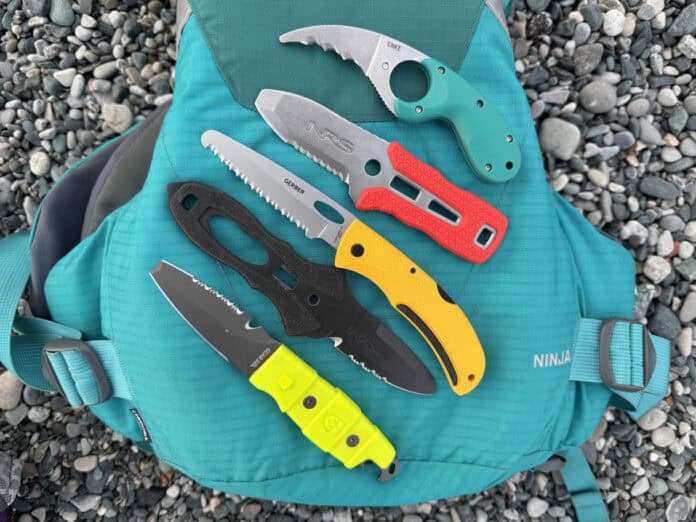
Nothing kicks off a post-paddle debate like river rescue knives. Most of us have a favorite, put up with others we didn’t really like, have lost more than one, and, hopefully, never find ourselves in a situation where we have to use it. As part of the river paddler’s Big Three—PFD, whistle, knife—they are a life-saving device. When something absolutely needs to be cut, nothing but a trusty blade will do.
The best rescue knife though is subjective. This is because every paddler has their own needs, considering the type of paddling they do, the components they expect a knife to have, and the attachment options available on their PFD. With this in mind, here is our rundown of the top river knives available to help you choose which is right for you.
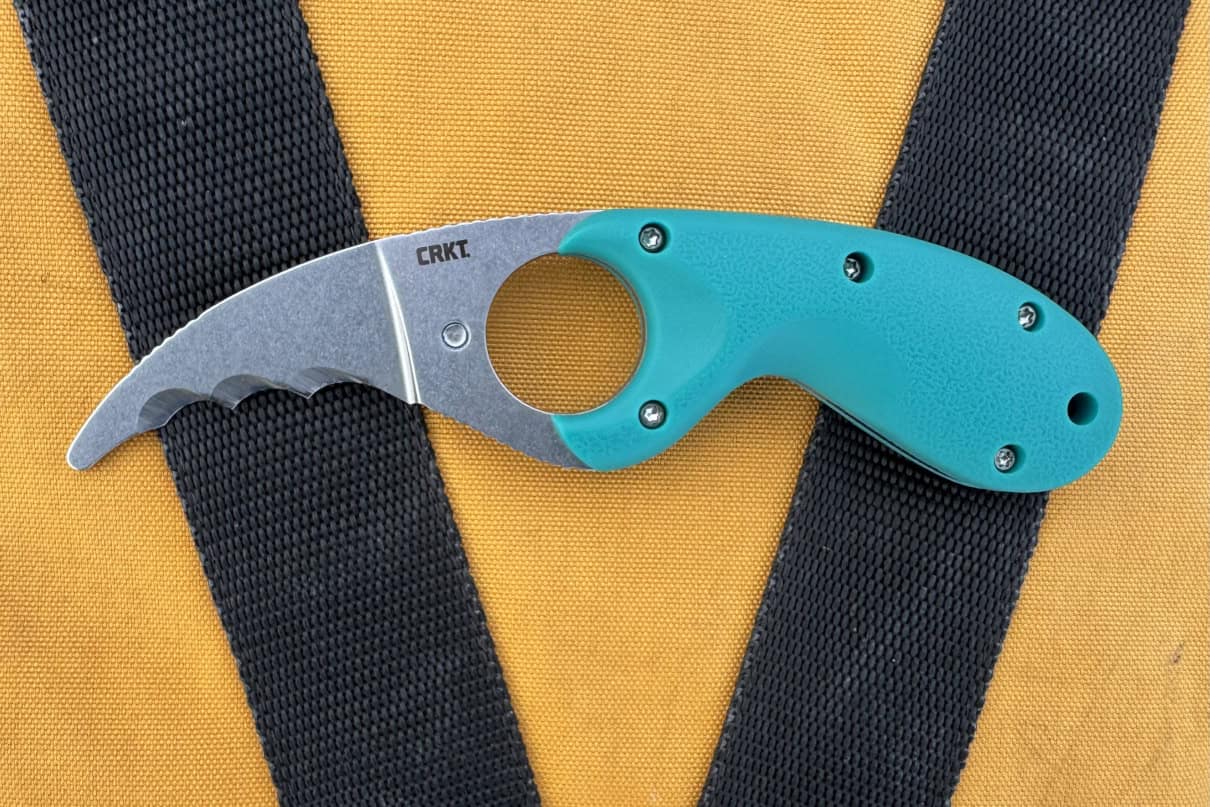
Imagine some worst-case scenarios: tangled in straps under a flipped raft, or a waist belt throw rope gets stuck. For those situations, this is the rescue knife you want on your PFD. The CRKT Bear Claw is all business, intended for only one thing: cutting rope.
The one-sided, curved and serrated blade of the Bear Claw is among the best rope cutters I tested, and it is uniquely shaped to slip under a rope and, with one rip, cut through it. The finger hole provides secure grip and is perfect for cold or slippery hands. It releases with a solid click and minimal force.
Reasons to buy
You spend time in high-risk rescue situations
Need a dedicated rescue cutting tool
Consider another if
Left-handed paddlers may find the curved handle and sheath awkward
You need more uses and wider utility from your knife
Bottom line
A serious rescue tool, though left-handed paddlers may find the curved handle and sheath awkward.
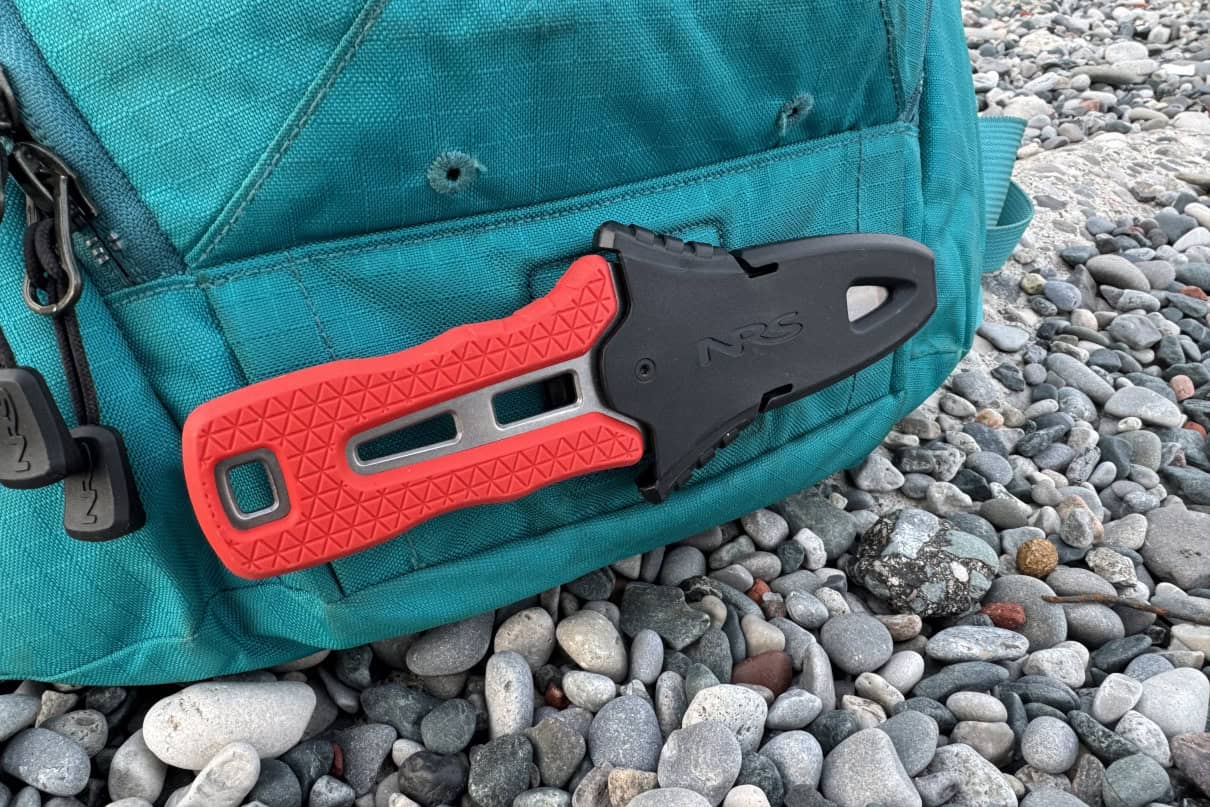
NRS river knives have been staples on guides’ and paddlers’ PFDs for decades. The only difference between the Pilot and Co-Pilot is the length of the grip and straight blade; both models have the same length serrated cutting edge, but the Pilot extends farther toward the tip with a straight blade.
I found the cutting power of the Pilot series is mid-range, taking a couple of saws to get through rope. Some post-purchase sharpening noticeably improved performance. The squared tip and dulled backside of the blade make this an all-purpose utility knife, suitable as a screwdriver, prying tool or peanut butter spreader.
NRS’s redesigned sheath has better release and less bulk than the original, but care is needed in sheathing the blade to ensure the sharp side is inserted away from the thumb release. For the Yank Test—a straight panic pull ignoring the release mechanism—the Pilot comes out with medium force, while the Co-Pilot will not release.
Reasons to buy
Solid retention in the sheath
Co-Pilot for those that want less weight and bulk protruding from their PFD
Consider another if
Cutting power is your main priority
Need an easier insert and release set up
Bottom line
These workhorse knives will take your river use in stride.
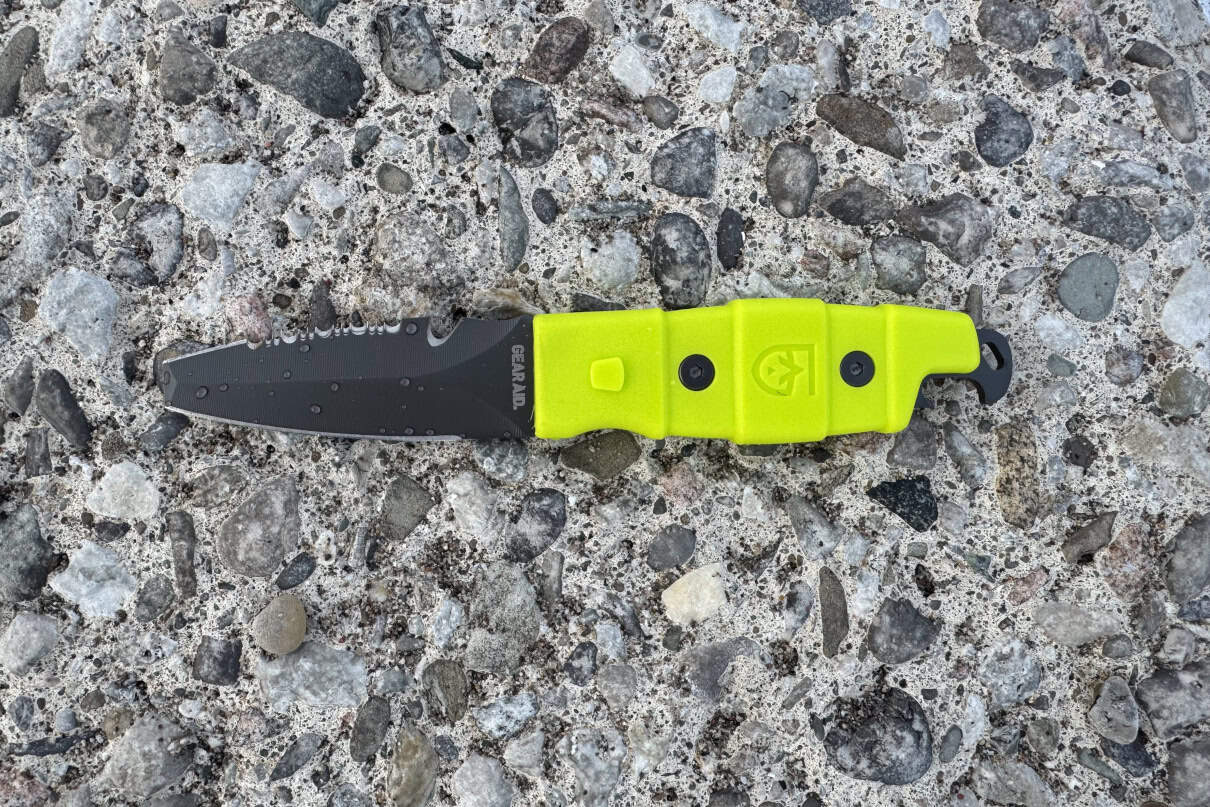
The AKUA from Gear Aid blends rescue and safety features with utility sensibilities. A serrated edge, straight section, line cutter and blunt tip provide every option you’re likely to need.
In my testing, the serrations on the AKUA shredded rope rather than sliced it. The plastic grip lacked the anti-slip features of a dedicated rescue knife but gained points for comfort and ease of use. The sheath felt intuitive and required little force to release, yet needed medium force under the Yank Test. Many mounting options work with this sheath, up or down, strap or knife tab.
Reasons to buy
Widely functional knife with rescue capabilities
Wide range of PFD attachment options
Consider another if
Your knife is only pulled out for rescue situations
Bottom line
If you only carried one knife for all purposes, rescue or otherwise, this would be it.
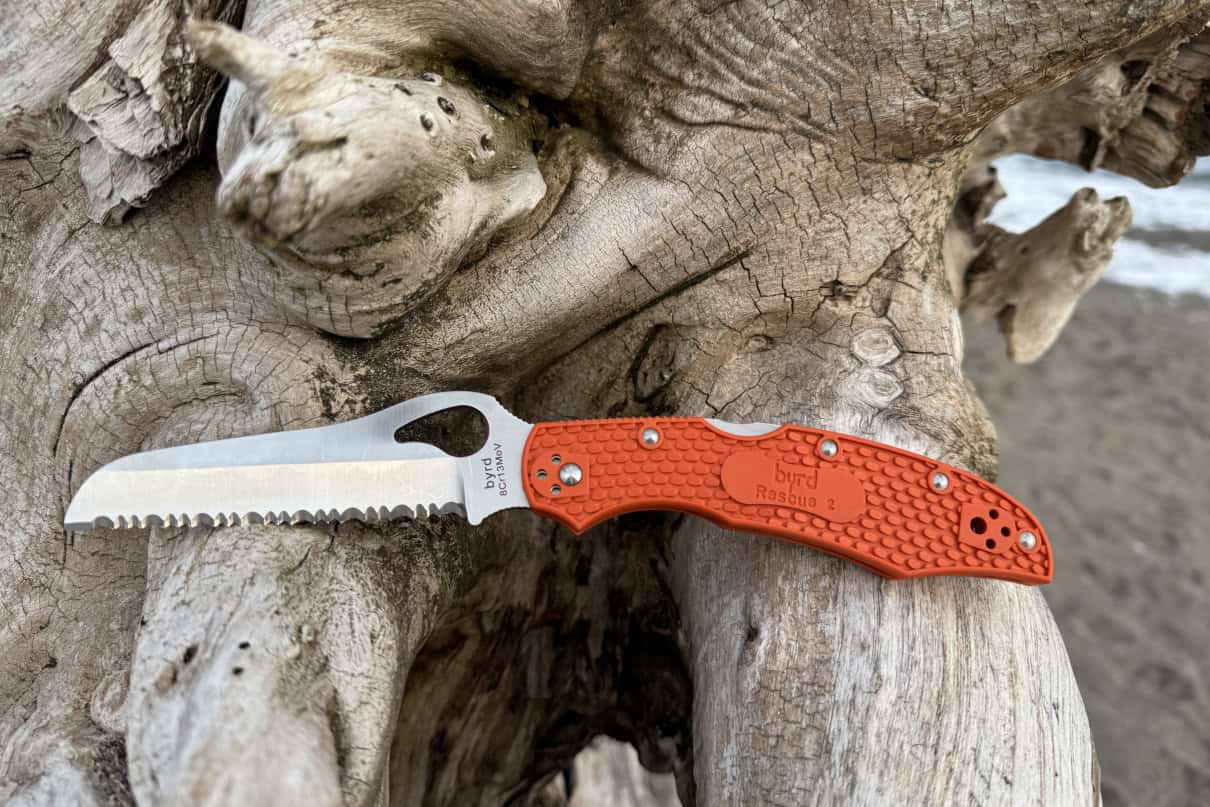
The Spyderco Byrd Cara Cara 2 Rescue knife slides through rope like butter. Its impressive cutting power comes from having the longest cutting edge among the knives reviewed here. One pull of the serrated edge cut 12-millimeter static rope—a big ask, and something most of the other knives needed steady sawing to achieve.
The Cara Cara 2 has the best feel in my hand, thanks to a longer grip for my bigger hands, and the right heft and balance. The flip action is smooth, and one thumb can easily activate the blade. As a folding knife, I found the attachment options limited, but the security clip can be installed for left- or right-hand carry.
Reasons to buy
You work with rope and demand cutting efficiency
Prefer pocket storage or need only basic attachment
Consider another if
You find yourself in high-risk or high-stress situations that demand quicker access to a knife
You need greater utility from your knife
Bottom line
Flip blades are not for everyone, but, wow, this thing can cut.
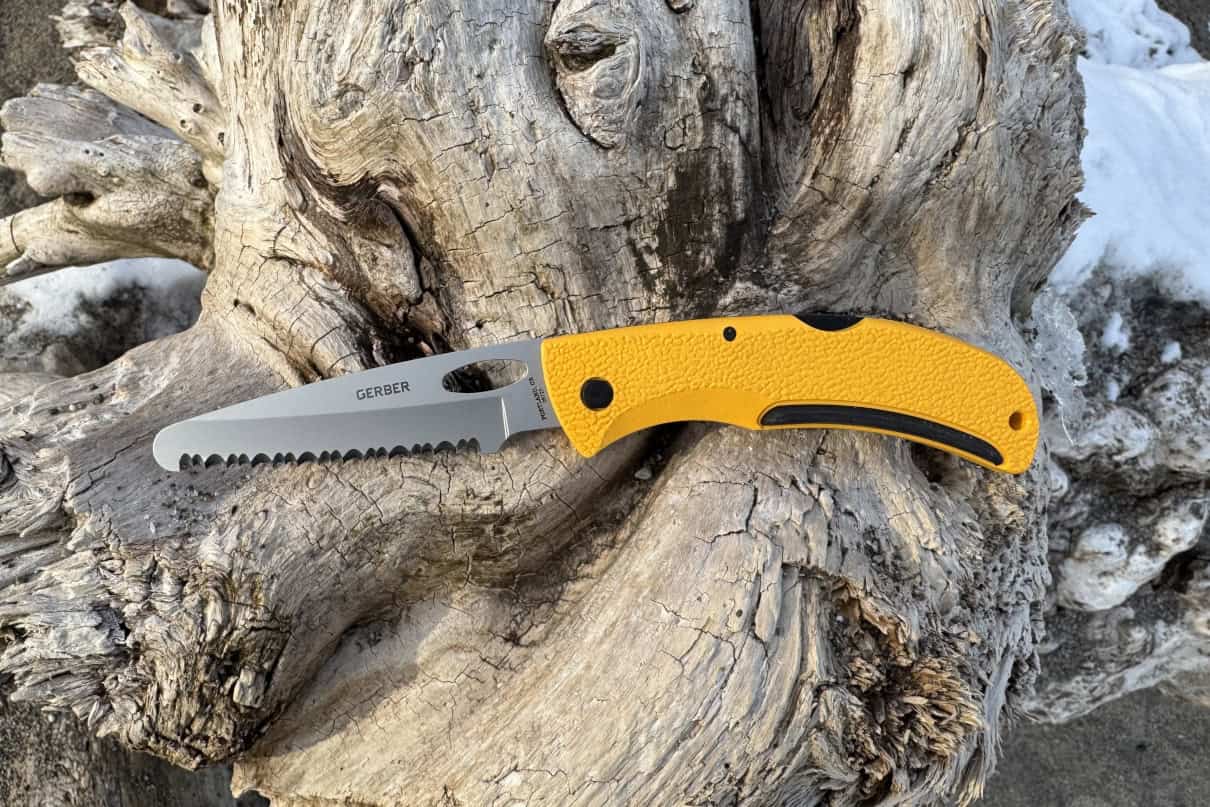
The Gerber E-Z Out comes in at just three ounces. It has the same serrations as the champion cutter Byrd Cara Cara, just an inch less of them.
I found the blunt tip and hook nose on the Gerber make this a versatile rescue blade, though the smaller blade area impacts the size of the thumb hole and ease of opening the blade one-handed. The non-adjustable clip made it best suited to easy-access pockets, simple attachment points and less demanding paddling situations that may dislodge it. Gerber knows how to make a knife, and the grip and hand feel are superb.
Reasons to buy
Lightweight rescue cutter
Prefer pocket storage or need only basic attachment
Consider another if
You find yourself in high-risk or high-stress situations that demand quick access
Have specific attachment points or needs
Bottom line
For those who want a lightweight knife that stores in a pocket, the E-Z Out delivers big cutting power.
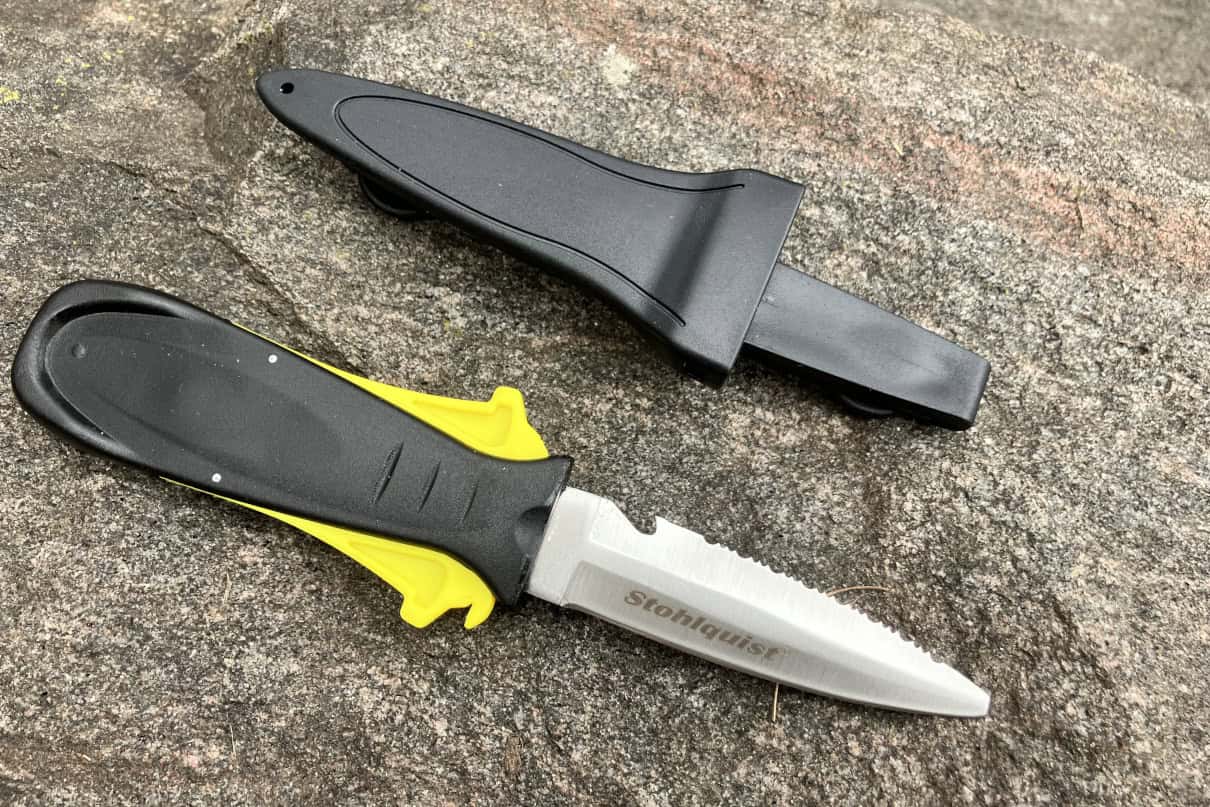
The Stohlquist Squeeze Lock looks somewhat dainty compared to the other bruisers in this review, but that means it is lightweight and low profile when mounted on a PFD.
The Squeeze’s straight edge, serrated section, line hook and blunt tip provide versatility. Out of the box, I found the cutting power underwhelming, but sharpening quickly fixed that. Those with smaller hands will appreciate the feel of this handle and smaller blade. This sheath offers the most flexible mounting options of any knife here, and comes with straps, clips and multiple mounting configurations and directions. The Squeeze’s lock can feel finicky, but the Yank Test frees it with modest force.
Reasons to buy
Small hands will appreciate everything about this knife
You have complicated attachment needs
Consider another if
Big hands or big cutting needs
Bottom line
Ideal for complicated attachment needs and low profile on the PFD.
What to consider when buying a rescue knife
Deciding between attached fixed-blade or tucked-away folding knives
Before you launch into buying a river or rescue knife, the real question to consider is the relative importance of fast and easy access versus the security of the knife.
Pros and cons of an attached fixed blade
If you guide high-grade whitewater, row oar rigs, or run rivers where the throw bags come out often, then fast and easy access to a blade is a priority, given all of that rope around you.
This, of course, comes with a trade-off. Having any blade prominently mounted onto your PFD means there is a risk of losing it or it getting tangled itself. And, climbing onto a flipped raft with a knife mounted to your chest sucks.
Pros and cons of a stored folding knife
Conversely, if this is a rescue or utility tool expected for somewhat mellower applications, a flip blade stowed in a pocket or a fixed blade more subtly attached might make more sense, and be less obtrusive and risk inadvertent release and loss. Retention straps are used by some in case the knife falls out, but that carries a whole new set of issues.
Compromises are a part of the gig, no matter what you decide to prioritize or where you mount the knife.
The PFD test
I suggest bringing your PFD with you when you shop for a knife, as its attachment points and their orientation will affect how secure and efficiently a given setup releases. Know that beyond the PFD knife tab, many sheaths have options for straps or zip ties or can be attached to belts or straps.
Practice. Regardless of where you attach or store your knife, clip and unclip it repeatedly, every time you put on your PFD, so that the motion becomes ingrained. When things get ugly, you want this knife to just appear in your hand without any thought.
Consider a blunt-tip knife
All of the blades reviewed here have blunt tips to reduce the chance of injury to you or your buddy or of damaging your gear, and are made of stainless steel.
Rescue knife care
Stainless steel does not mean rust proof, so drying and cleaning your knife is a good idea. If this knife will serve double duty near salt water, look for titanium or treatments specifically for ocean environments.
And this leads to the last thing: keep this thing sharp! After-market sharpening kits are readily available, so put them to use often. This gets a bit more complicated with the new families of custom serrations found on some of these knives (such as the CRKT) which require specialized hones. If your knife is truly reserved as a rescue tool, every time you cut a rope, I suggest going home and sharpening the blade again. Any blade can be brought to razor sharp; the best blades can hold that edge longer.
Each knife featured here was evaluated for real-world usability, grip, retention and durability. Our picks reflect not only hands-on testing and side-by-side cutting tests for this review, but also years of accumulated experience and ongoing tailgate conversations with seasoned paddlers and rescue professionals.
Why trust us
Jeff Jackson headed the outdoor adventure program at Algonquin College for 25 years. He has been teaching on rivers even longer and has become a recognized expert in outdoor adventure risk management. Jeff started contributing to Rapid magazine with the very first issue in 1999. He has worked on rivers from the Yukon to Utah, but these days you’re most likely to find him casting a line as the owner of Algonquin Fly Fishing. His everyday carry river knife is an NRS folding Pilot.
This article was published in Issue 75 of Paddling Magazine. Subscribe to Paddling Magazine‘s print and digital editions, or browse the archives.
Time and tide wait for no one. | Feature photo: Finn Steiner
It was the sound of two boats bumping together that made me sit bolt upright in my tent. Kayaks, as a rule, are supposed to be high and dry at night, and the only reason they make that sound is if they aren’t.
Headlamp on and Crocs hastily donned, I waded across the isthmus from my tent toward where the boats had been tied to a tree at the forest edge. I was deep in an inlet in eastern Clayoquot Sound, and losing a boat would qualify, by industry standards, as a capital “P” problem.
The kayaks themselves were fine, bobbing gently where they’d been secured. What wasn’t fine was the water, now up to my thighs. The fly of the closest tent was sitting in four inches of water, and the tide was still rising.
I woke Bill, who was still fast asleep, saying, “Your tent is underwater, and I need you to wake up without moving.” We managed to float him on his inflatable sleeping pad (now more of a pool toy), extract him from his sleeping bag, and relocate both him and the tent to higher ground. The rest of the group followed suit.
It wasn’t until much later I sat down and traced the chain of decisions that led us there. A handful of small errors—in math, lunar cycle awareness and ocean physics—had aligned perfectly. The lesson stuck, and I’ve since shared it with countless students.
Time and tide wait for no one. | Feature photo: Finn Steiner
What are tides?
The oceans are governed by powerful forces. Once or twice each day, water rises and falls in response to the gravitational pull of the moon and sun, combined with the rotation of the Earth. This interaction creates a slow, rotating tidal wave that moves through ocean basins. Thinking of tides as a wave helps clarify the basics: high tide is the crest, low tide the trough. This vertical movement of water is what we call tide.
The horizontal movement of that water, how fast and in what direction it flows, is what we call current. When movement is driven by tides, we call it tidal current. Currents affect how fast we travel, whether features feel fun or scary, and where rips and overfalls form.
Tides, on the other hand, tend to influence paddlers more subtly: long intertidal boat carries, nonexistent beaches, flooded camps and impossible landings. As I learned that night in Clayoquot Sound, tides don’t need speed or turbulence to cause problems.
Why tides matter
Landings
A cobble beach that’s friendly at 6.5 feet (2 meters) may vanish entirely at 16 feet (5 meters), replaced by steep rock and breaking waves.
Campsites
Many good campsites are low. Driftwood lines, salt-tolerant grasses and bleached kelp caught in vegetation are all cues. Match those signs to your predicted high tide, not the current one.
Rock gardens, surf and tide races
Mid-tide rising often feels smoother and more forgiving as features fill in. Mid-tide falling tends to sharpen edges and expose hazards. Same place, very different experience.
Trip timing
Distance matters, but tide windows matter more. Planning arrivals around favorable heights often turns stressful ends to days into calm ones and can save you an hour or more of carrying gear up and down the beach.
What is tidal range?
You’ll often hear people talk about tidal range. Simply put, range is the difference in height between high and low tide. That difference varies dramatically depending on the alignment of the sun and moon, their distance from Earth, and the Earth’s axial tilt. When forces align, tides are large; when they oppose each other, tides are small.
In Ucluelet, British Columbia, where I live, the largest theoretical tidal range is about 13.5 feet (4.1 meters), but most days are nothing close to that. Tides here can range from as little as one foot (30 centimeters) to the maximum. On the biggest days, saltwater pushes right up into the roots of dense coastal forest. This variability is why tide tables matter.
How to read a tide table
A tide table predicts the expected tide height at a specific location on a specific day and time. Each table is tied to a reference station, and conditions can vary significantly even over a short distance.
A typical entry might look like this:
Tofino, British Columbia – July 15, 2026
Time
Height
0800
6.6 ft / 2.0 m
1335
10 ft / 3.1 m
1821
1.6 ft / 0.5 m
The larger heights represent high tides; the smaller, low tides. The difference between them is the tidal range. Between 08:00 and 13:35, the tide rises 3.5 feet (1.1 meters). Between 13:35 and 18:21, it falls 8.5 feet (2.6 meters)—a much larger movement over a similar time span. More water moving faster generally means stronger currents. It’s also worth remembering tide tables are predictions. Low barometric pressure and strong winds can elevate water levels beyond what’s forecast.
Tide and seek. | Photo: Finn Steiner
Follow these steps
1
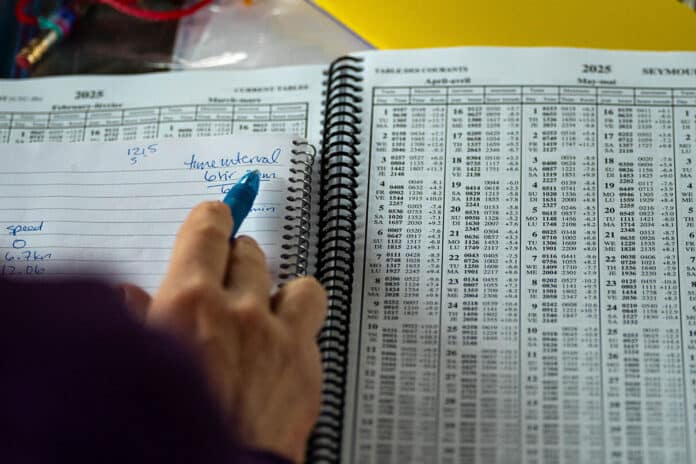
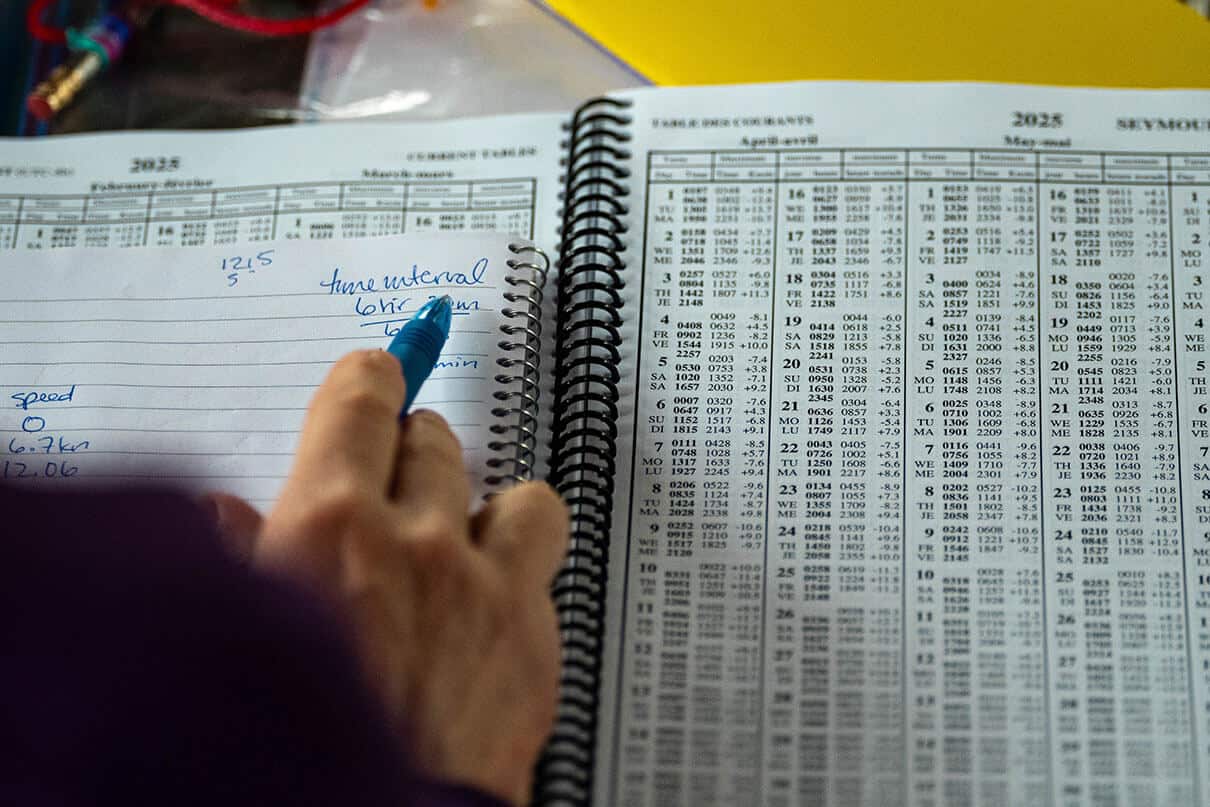
Find the tide information relevant to your location. Use NOAA’s Tide Predictions website, a tide app like Tide Guide, or printed tide booklets, like the Canadian Tide and Currents Tables. Choose the tide station closest to where you’ll be paddling.
2
Look up the tide table for the dates you plan to be on the water. Tides change daily, so using the correct dates is essential.
3
For each day, note the listed times and heights of high and low tides. Many coastal areas experience two high tides and two low tides within a 24-hour period. Remember: a seemingly small change in height can translate into a large change in horizontal distance, especially on gently sloping beaches.
4
Use tide information to plan your route, launch times, rest stops and campsites. Choose overnight sites above the highest predicted tide. Consider whether low tide will leave you stranded far from the water, or if high tide will eliminate landing options.
5
Before landing or camping, look for natural indicators such as driftwood lines, wet sand, and debris to identify previous high-water marks and confirm predictions from the water.
Reading tides well is less about memorizing numbers and more about pattern recognition. Strong paddlers cross-reference constantly, then look up from the page to see what the water is doing. Over time, prediction and observation will align.
Finn Steiner is a West Coast sea kayak guide, educator and co-owner of SKILS (skils.ca), focused on leadership, risk and coastal learning.
This article was published in Issue 75 of Paddling Magazine. Subscribe to Paddling Magazine’s print and digital editions, or browse the archives.
Time and tide wait for no one. | Feature photo: Finn Steiner


 This article was published in Issue 75 of Paddling Magazine.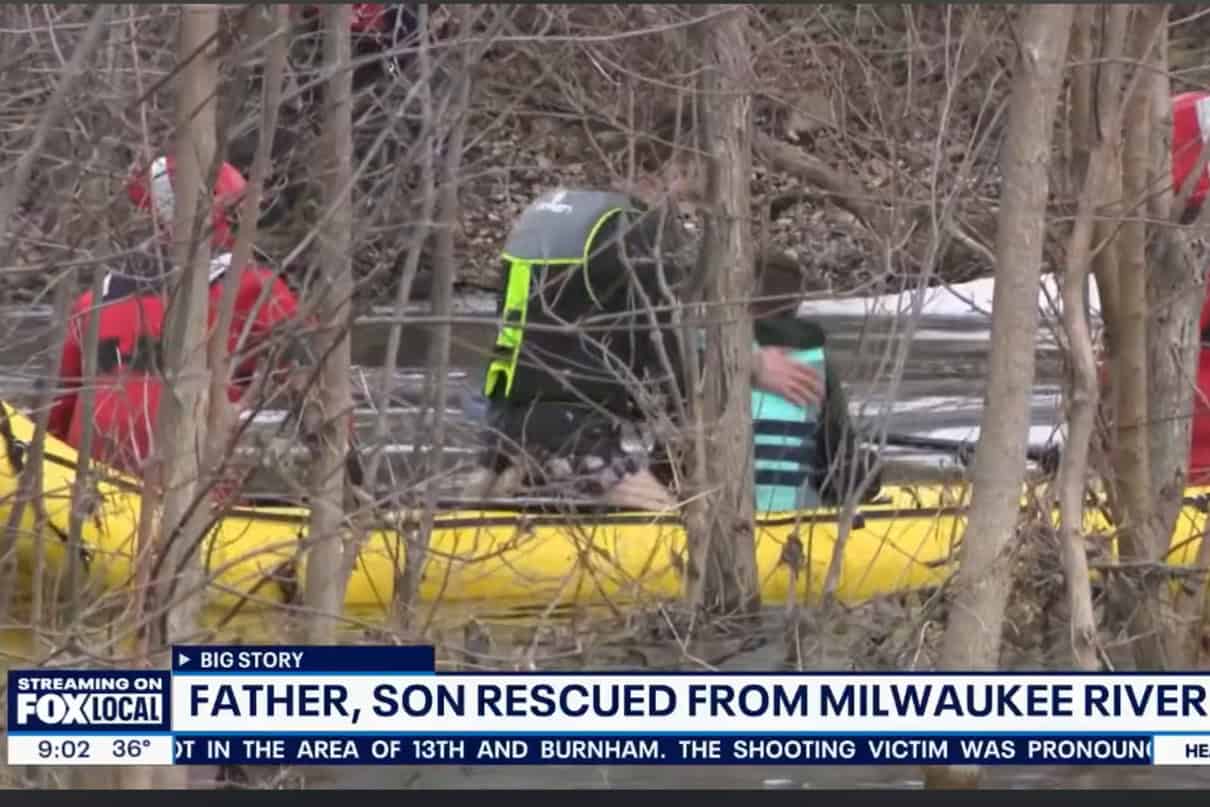


 This article was first published in the 2025 issue of Paddling Business.