Originating in the tidal waters of the Far North, the first kayaks were both works of creative ingenuity and tools of surgical precision. Fast forward a few thousand years and it seems not much has changed. Indigenous people used these sleek, enclosed boats for hunting and travel through icy seas. Today’s paddlers seek out a wide variety of waters on which to challenge themselves and their agile craft—from sheltered passages to rocky, wave-tossed coasts and everything in between.
Kayak design and materials have continued to evolve, with many different niches branching out of those early vessels. This means kayak touring has never been more diverse or accessible, but it also means we’ve never had more options to choose from. In North America, there are fine models available from both domestic and imported brands. Selecting a shortlist of the best kayaks for touring is no easy task. My goal with these top picks is to not only share what I believe are some of the finest options out there, but also provide you with some key considerations when making your choice.
Our top picks for best touring kayaks
- Best expedition kayak: NDK Explorer
- Best touring kayak for beginners: Wilderness Systems Tsunami
- Best value touring kayak: Delta 14
- Best light touring kayak: Stellar S14 G2
- Best packable touring kayak: TRAK 2.0
- Best ocean play kayak: Current Designs Karla
- Best plastic touring kayak: P&H Scorpio
- Best high-volume touring kayak: BoréalDesign Storm 17
- Sponsored: Pakayak Bluefin
Best expedition kayak
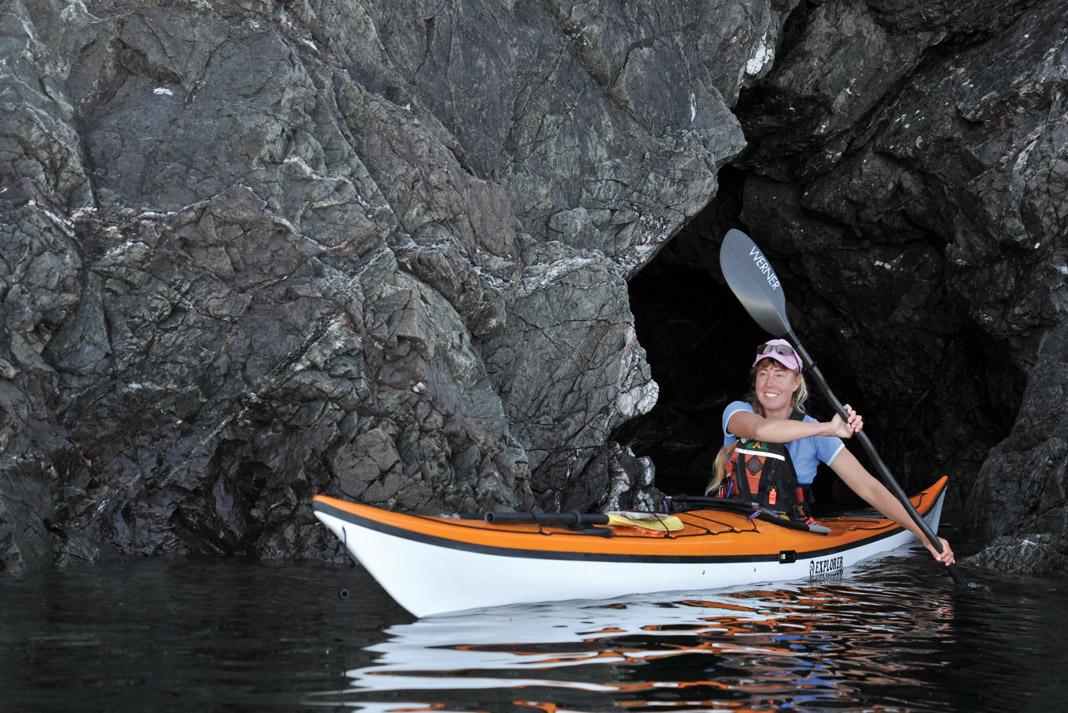
Nigel Dennis Explorer
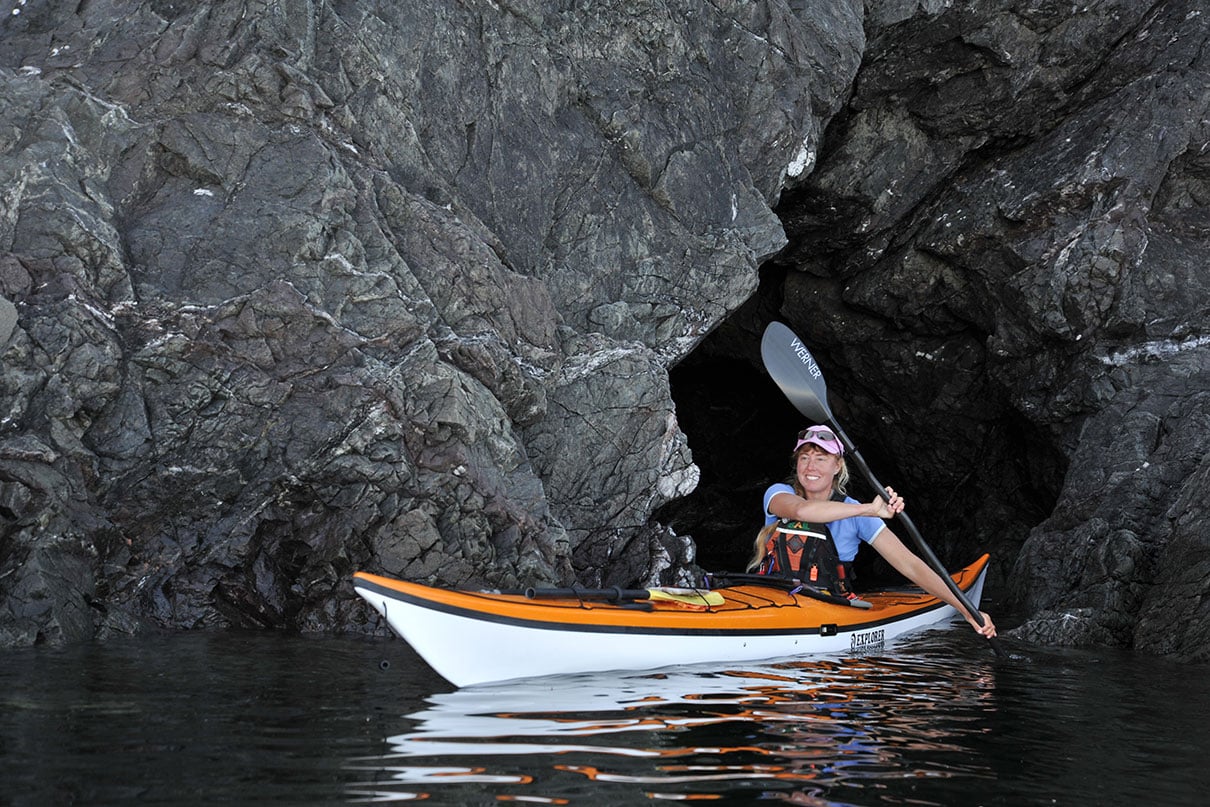
Nigel Dennis Kayaks Explorer Specs
Length: 17’6”
Width: 21”
Weight: 58 lbs
Recommended Paddler Weight: 150–220 lbs
Price: $4,585 USD
Why I love it
When it comes to elite expedition kayaking, few boats rival the Nigel Dennis Explorer for proven performance, endurance and pedigree. When the going gets tough, the tough get this NDK classic.
The Explorer’s upswept bow and stern, narrow beam and clean, functional deck layout are informed by the classic British interpretation of traditional Greenland hunting kayaks. From this base DNA, designer and renowned expedition paddler, Nigel Dennis, refined the shape and layup to address the unique challenges of extended journeys on remote, exposed coastlines. The Explorer has been the kayak of choice for circumnavigations in some of the roughest and least accessible waters in the world: Britain, Ireland, Iceland, New Zealand, Antarctica, South Georgia Island and the Aleutian Islands. The boats are handmade in North Wales, using a resin-rich, field-repairable composite construction that’s built to withstand the abuse of expedition paddling. But the real reason I love the Explorer is this isn’t a one-trick pony—I’ve spent weeks in the saddle on self-supported kayak camping journeys on open waters, surfed heavy currents and overhead waves, and danced lightly among rock gardens on countless day trips. Whether I was out for an hour or a week, the boat felt responsive to my inputs, carving graceful turns and remaining speedy and stable in sloppy conditions.
Twenty-five years after it was first introduced, the Explorer continues to embody the spirit of venturing into the wild unknown. Its intuitive handling and composure in any conditions ensure all paddlers feel like great explorers.
Reasons to buy
- You want a kayak that’s expedition-ready but still fun to paddle on shorter trips.
- A hull and rocker profile made to maximize touring efficiency in rough waters.
- Custom colors, hatches and layups, including weight-saving carbon/Kevlar.
Consider another if
- Your camping kit includes items like a suitcase stove, barrel bag and multiple Dutch oven options.
- You prefer a highly adjustable seat system to a minimalist cockpit.
Bottom line
Whether you are planning an expedition of your own, or just looking to cover some miles and play along the way, the Explorer is a dependable companion as you paddle into rougher waters. See the Explorer again on Paddling Mag’s list of the best kayaks.
Best light touring kayak
Stellar S14 G2
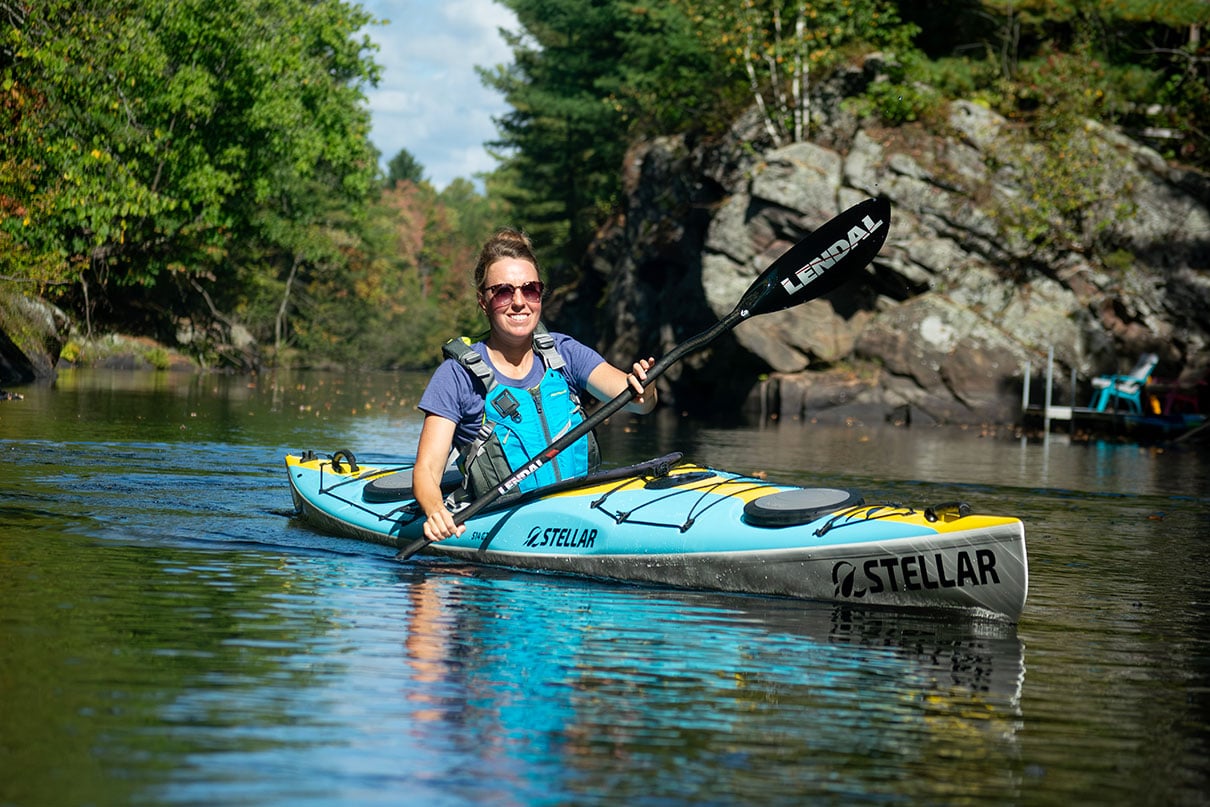
Stellar S14 G2 Specs
Length: 14’
Width: 24.4”
Depth: 13.6”
Weight: 38 lbs (Advantage)
Capacity: 342 lbs
MSRP: $3,195 USD (Advantage)
Why I love it
With all the performance and safety features of a full-size sea kayak finessed into a compact package, light touring kayaks excel at spontaneous day trips and weekend adventures on any waters. Awesome, right? The Stellar S14 G2 takes a great thing and makes it even better—a lightweight light touring kayak. Because anything “light” should be, well, light.
Stellar’s background in building Olympic rowing shells and fast surfskis is evident in the construction, design and speed of the S14. Available in three sizes and four sleek and stiff composite material options—ranging from 40 pounds to just 30 pounds—the S14 trims up to 30 percent off the weight of its lightest rivals. The shallow-V hull is optimized for speed and quick acceleration with a narrow, knife-like bow and minimal rocker to maximize waterline. Soft chines reduce drag and have a smooth, continuous feel, making it easy to initiate gentle edged turns. The S14 is unquestionably among the fastest 14-foot kayaks on the water, cruising at a steady four or five knots and easily keeping pace with longer touring kayaks. The cockpit is comfortably appointed for all-day tours and there’s ample space in the watertight hatches for packing camping essentials.
Fast and light doesn’t mean experts only. Stellar moved the widest part of the hull behind the cockpit for added volume and stability, making the S14 G2 a beginner-friendly light touring bullet.
Reasons to buy
- You want an ultralight compact touring kayak you can solo carry and transport with ease.
- Surf ski-inspired hull makes this 14-footer as fast as the average 16-foot touring kayak.
- Adjustable skeg and wider beam for user-friendly tracking and stability.
Consider another if
- Advanced composite construction is out of your budget.
- You want a boat you can drag, drop and generally abuse (check out rotomolded plastic options instead).
- Your idea of the perfect day tour involves heavy surf and rock gardens.
Bottom line
The Stellar S14 G2’s versatile combo of speed, light weight, premium materials and tour-ability is hard to rival in the 14-foot class.
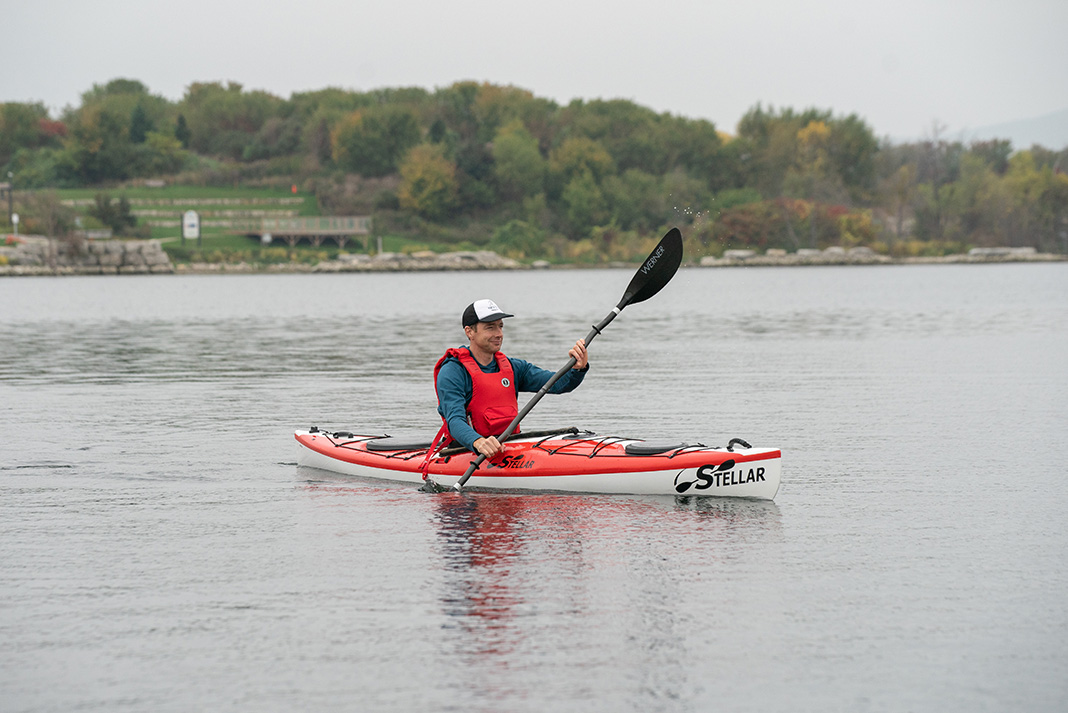
Sponsored
Pakayak Bluefin
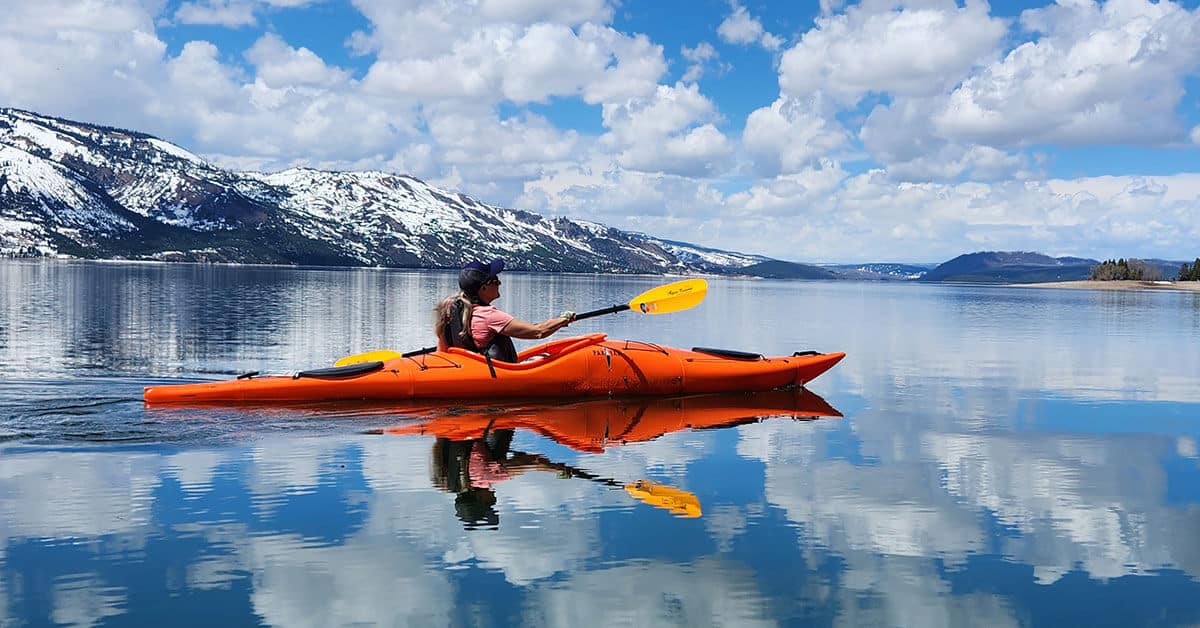
This 14′ packable hard-shell touring kayak is the ultimate kayak that packs down to just 42 inches in the included rolling bag and assembles in three minutes! The patented design has been trusted by paddlers in more than 25 countries for over a decade. Explore waterways others can’t reach, skip the roof rack, and get out on the water more often. MSRP: $2,195
Buy from:
Best touring kayak for beginners
Wilderness Systems Tsunami
Wilderness Systems Tsunami Specs
Length: 12.5’
Height: 15”
Width: 26”
Weight: 54 lbs
Max Weight Capacity: 300 lbs
MSRP: $1,349 USD
Buy from:
DICK’S AMAZON ECO FISHING WILDERNESS SYSTEMS
Why I love it
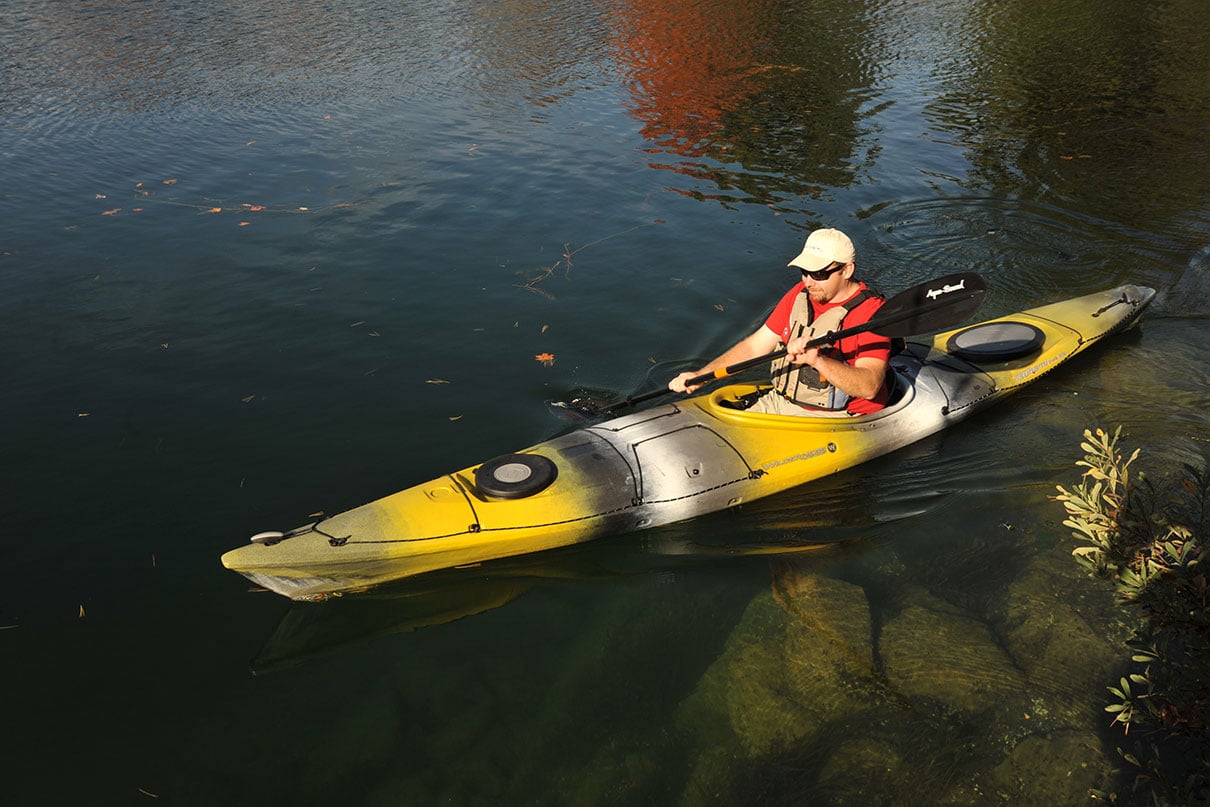
In 2004, Wilderness Systems released what has become one of the most well-traveled and best-selling touring kayak designs of all time, the Tsunami. Over 20 years—and numerous updates—later, the user-friendly Wilderness Systems Tsunami continues to be a top choice for those starting out in this sport.
This is a kayak that makes you feel capable and at ease from the moment you sit in it. Why is that special? Plenty of kayaks in the recreational touring market are designed to optimize stability, but many do so by simply offering wider and flatter hulls. The Tsunami pairs a shallow V hull with flared sidewalls for fearless stability without sabotaging touring efficiency. In other words, it feels very secure without feeling like a barge. The boat’s multi-chine hull profile has two defined edges in each chine that act like secondary and tertiary keels, lending the Tsunami its trademark tracking and predictable handling. New paddlers can point the kayak where they want to go, and it gets there.
That feeling is vital for first-timers, but just as valuable is the kayak’s capacity to grow with your skills. The Tsunami is a refreshing beginner kayak—one that inspires instant confidence while promoting more advanced skills like edging and bracing.
Reasons to buy
- Plenty of stability to inspire confidence without limiting skill development.
- Three sizes to choose from, with fully customizable outfitting.
- Burly rotomolded polyethylene construction holds up to heavy use.
Consider another if
- You are looking for a lightweight kayak that is easy to solo lift and carry.
- Hull speed outweighs stability and predictability.
- You feel more comfortable with the open deck of a sit-on-top kayak.
Bottom line
Beginner doesn’t mean basic; the Wilderness Systems Tsunami remains popular 20 years after its launch thanks to features that meet new paddlers where they are without limiting where they can go.
Best value touring kayak
Delta 14
Delta Kayaks 14 Specs
Length: 14’
Width: 23.5”
Depth: 13”
Weight: 45 lbs
Capacity: 340 lbs
MSRP: $1,995 USD
Buy from:
Why I love it
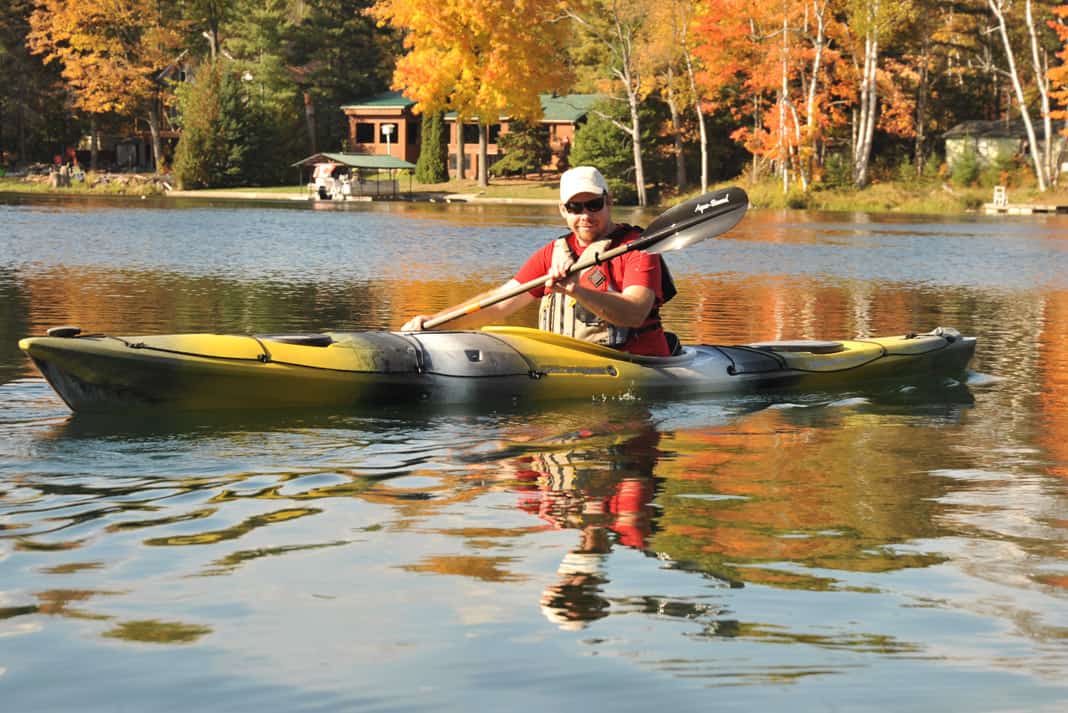
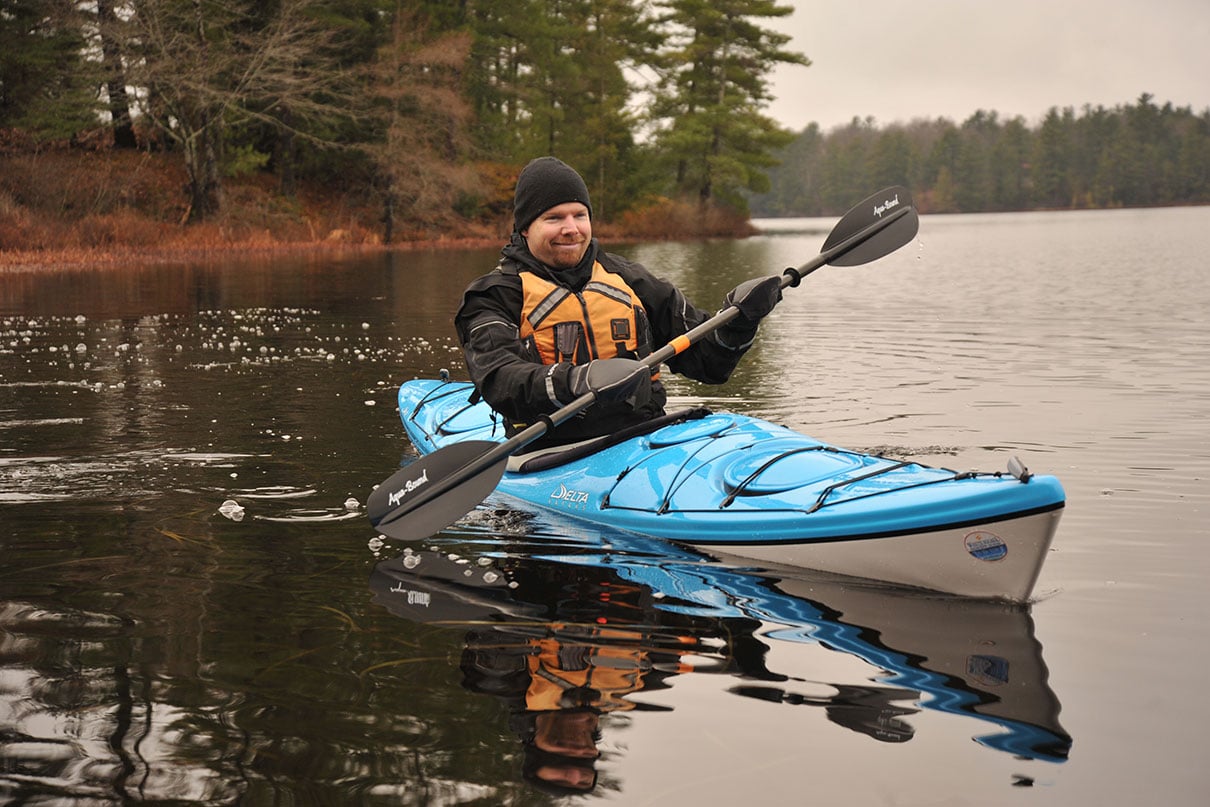
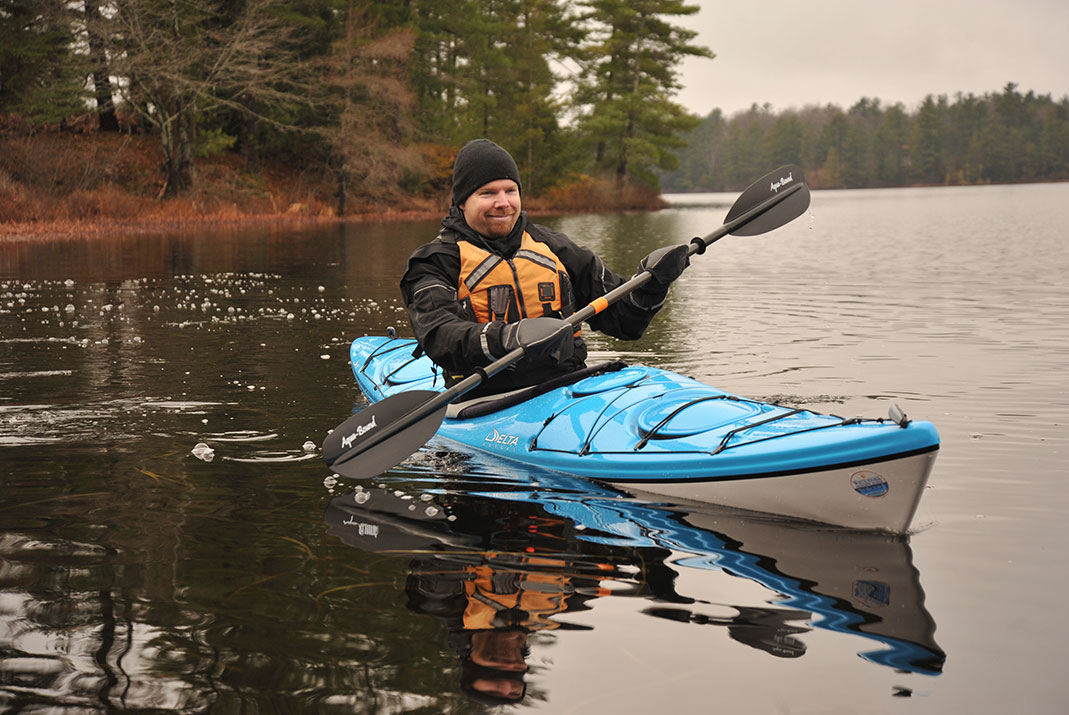
The shortest and lightest of Delta’s touring kayaks at 14 feet and just 45 pounds, it’s positioned as the easiest to own for paddlers balancing space, weight and cost. If you are looking for a compact touring kayak that can handle diverse waters and won’t break the bank, the Delta 14 is a superb solution at an exceptional value.
Available with a skeg or rudder, the 14 embraces Delta’s West Coast touring design ethos: user-friendly, efficient and more than capable of hauling all your gear. This diminutive kayak delivers crazy capacity—over 200 liters—and the large hatches make it dead easy to pack in the luxuries. The relatively long waterline assists with tracking and efficiency, making for satisfying cruising capabilities. Delta’s outfitting focuses on personalized comfort with a fore- and aft-adjustable seat. This ability to fine-tune the seating position means the 14 fits a wide range of paddlers well. While there’s inherent value in a kayak that’s versatile and easy to paddle (you’ll use it more), even more persuasive is Delta’s expertise in plastics thermoforming. Delta has been working with acrylic–ABS laminates for nearly 40 years—refining their designs and shaping process to optimize strength, weight and aesthetics.
Reasons to buy
- You want to fool your friends into thinking you splurged on a composite kayak.
- Moderate V-shaped hull and well-defined chines are beginner-friendly with good stability and predictable edging.
- Less than two-thirds the cost as compared to other touring kayaks of a similar size and weight.
Consider another if
- Rock-bottom pricing takes priority over comfort, performance and durability.
- You are looking for a packable folding or inflatable kayak.
Bottom line
The Delta 14 is a downsized touring design that offers the look and feel of a composite boat at a fraction of the cost. Simply put, you won’t find a lighter, better-looking kayak at this price point.
Best packable touring kayak
TRAK 2.0
TRAK 2.0 Specs
Length: 16’
Width: 22.5”
Weight: 44 lbs
Cockpit: 16.5” × 30.5”
Packed: 56 lbs
Size Packed: 41” × 19” × 9”
Payload Capacity: 350 lbs
MSRP: $4,250 USD
Why I love it
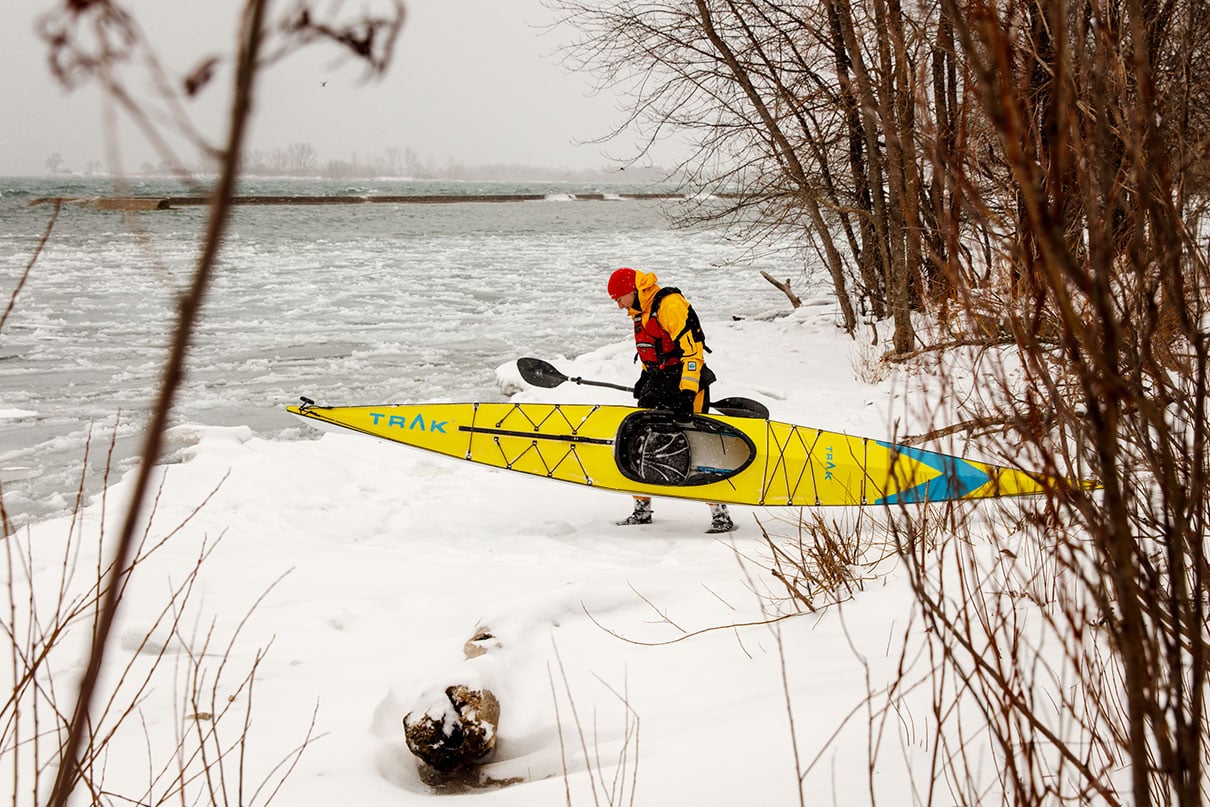
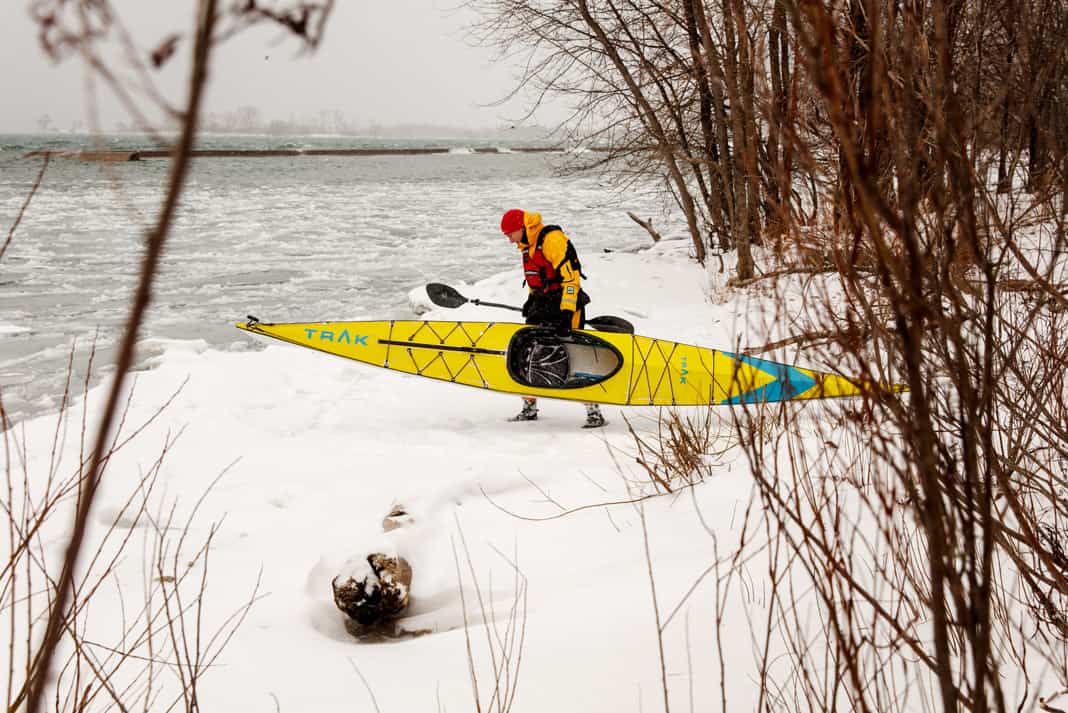
How can a folding boat that resembles an ultralight plane crash out of the bag and goes together in just 10 minutes look and paddle like a high-performance sea kayak? In a genre plagued by head-scratching assembly rituals and lacklustre paddling, the TRAK 2.0 is a slick and sporty standout.
The TRAK 2.0’s bow and stern frames use shock-corded aluminum poles and snap-in carbon fiber ribs for intuitive assembly. If you’ve ever pitched a tent, this step is simple. Next, the frames are fitted into the burly polyurethane skin. Every folding kayak requires some technique for tensioning the skin around the frame, and TRAK’s clever hydraulic jacks are the easiest system I’ve tested. The jacks also allow you to change on-water performance on the fly: pump the keel lever to adjust rocker for playful maneuverability or straight tracking; use the two side jacks to compensate for weathercocking by adding a slight side-to-side curve to the waterline. Once assembled, the TRAK 2.0’s drum-tight skin, full deck rigging and graceful lines mean it’s all but indistinguishable from a hard-shell kayak. The boat feels inspired by traditional skin-on-frame Greenland designs, with hard chines and a shallow-V hull that prioritizes carving and glide over initial stability.
TRAK 2.0’s rolling travel bag makes short work of international terminals and exotic ports, but it’s not a package you can simply throw over your shoulder when it suits. There are unquestionably lighter—and certainly cheaper—packable kayaks to choose from. But for go-anywhere capability that performs like a hard-shell kayak, there’s the TRAK 2.0.
Reasons to buy
- You want a packable kayak that is also a superb general-purpose touring and ocean play kayak.
- Expedition-ready bow and stern floats can be packed with tripping gear for multi-week adventures.
- Comfort and capability rivalling your favorite hard-shell kayak.
Consider another if
- Ultralight portability outweighs on-water performance.
- Simplicity and affordability are top priority—look to an inflatable kayak.
- You’ll be using your packable kayak for more recreational purposes.
Bottom line
Equally suited to world travelers and urban dwellers, the TRAK 2.0 epitomizes go-anywhere versatility.
Best plastic touring kayak
P&H Scorpio MK II
P&H Scorpio Specs
Models: LV | MV | HV
Length: 16’8” | 17’2” | 17’6”
Width: 20” | 23” | 24”
Weight: 60 | 64 | 68 lbs (CoreLite X)
MSRP: $2,599 USD
Why I love it
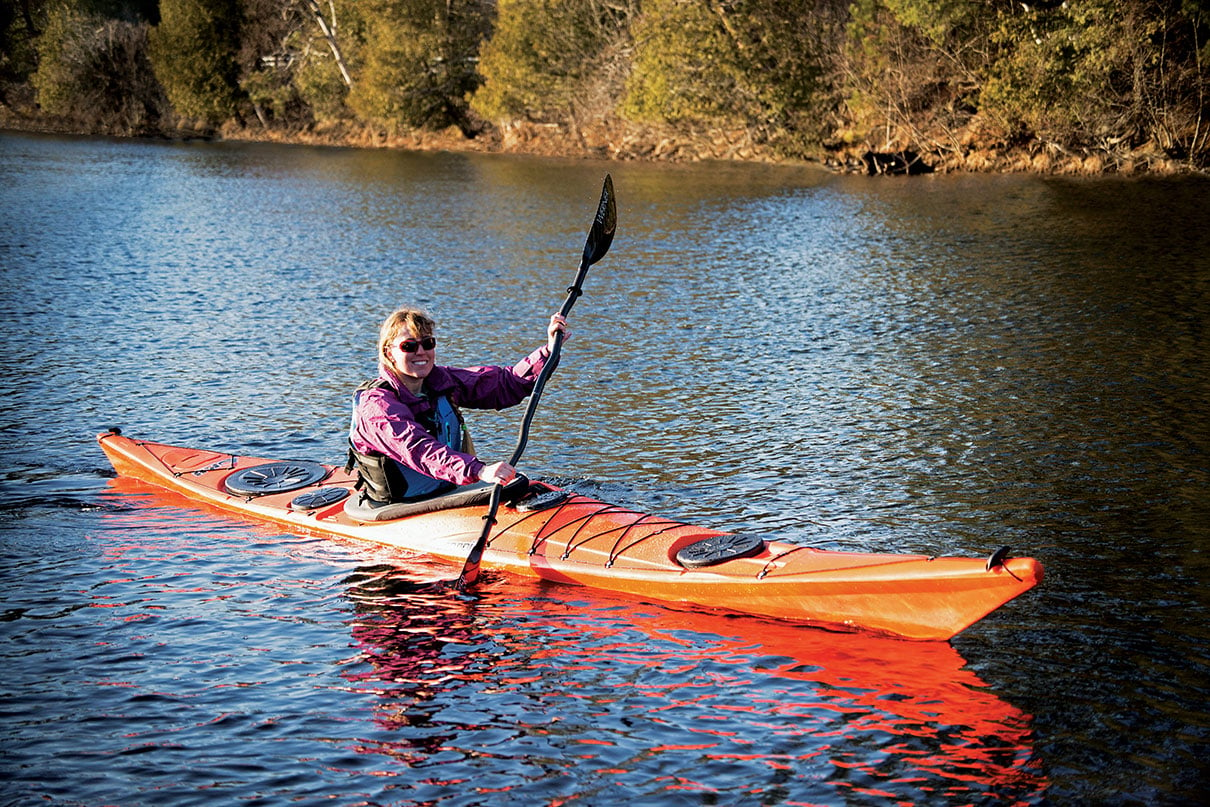
One of P&H Kayaks’ classic designs, the P&H Scorpio is a high-performance, full-size touring kayak with bombproof polyethylene construction and an affordable price tag. What’s not to love?
Manufactured at P&H’s factory in Great Britain, the Scorpio comes in two different types of construction: the brand’s proprietary CoreLite triple-layer polyethylene and a lighter and stiffer CoreLite X option. Both make for a heavy-duty kayak with much better rigidity and durability (i.e. it won’t dent on your roof rack or warp on a hot day) than standard PE plastics, with CoreLite X rivalling composites for overall stiffness. The Scorpio is also available in three sizes to fit a wide range of paddlers—a svelte LV option for smaller folks, standard MV and spacious HV that can accommodate paddlers up to 6’6”. The Scorpio combines a speedy, 17-foot shallow-V hull with rounded chines for responsive edging and superb secondary stability. Intermediate paddlers can expertly hold a deep edge for faster turns, while novice kayakers can feel confident easing the Scorpio into more challenging waters. P&H’s sturdy and adjustable outfitting makes it simple to dial in cockpit fit for even more dynamic handling and all-day comfort.
A quality plastic touring kayak is one that still looks and feels great 10 or even 20 years after you purchase it. That’s the difference between a well-made boat like the P&H Scorpio and other cheaper, lower spec plastic kayaks.
Reasons to buy
- Premium P&H CoreLite X construction for a top-of-its-class rotomolded plastic kayak.
- Expedition-ready with four watertight hatches and keyhole cockpit for a drier-sealing spray deck.
- You dream of harnessing the wind and sailing your kayak. The Scorpio deck features a reinforced footing for P&H’s Code Zero sail system. A nifty Skudder—or skeg-rudder hybrid that aids steering control and crosswind sailing—comes standard.
Consider another if
- A 17-foot sea kayak is too much boat for your needs—the P&H Virgo is a compact touring model for easy handling on short to medium journeys.
- You need a lighter kayak for solo lifting and loading on your vehicle (consider thermoform plastic construction).
- Low cost outweighs longevity and performance.
Bottom line
For a small premium, the P&H Scorpio is a do-it-all, plastic touring and expedition kayak that’s built to last.
Best ocean play kayak
Current Designs Karla
Current Designs Karla Specs
Length: 15’3”
Width: 21.5”
Depth: 11.5”
Weight: 52 lbs
MSRP: $3,995 USD
Buy from:
Why I love it
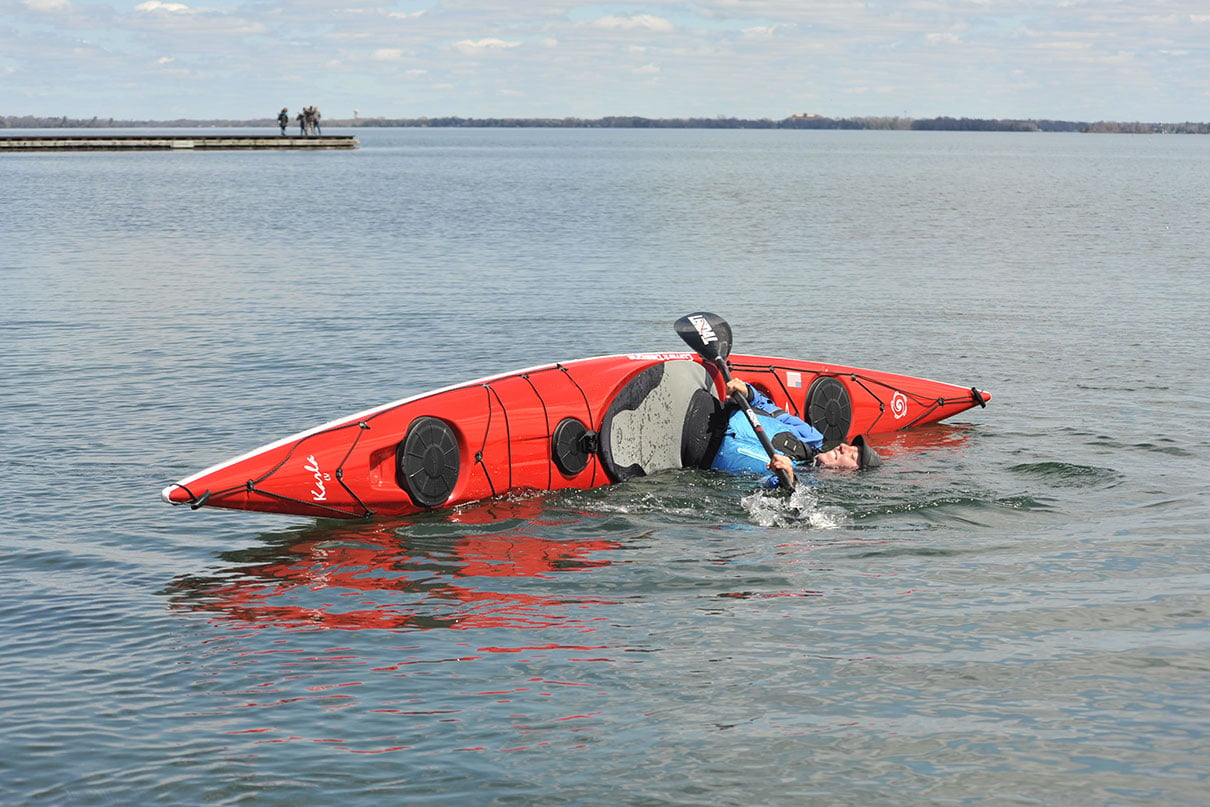
The Current Designs Karla is hands-down one of the most maneuverable and lively touring kayaks I’ve ever paddled. Her creator, Danish designer Jesper Kromann-Andersen, believes a kayak should respond as a natural extension of paddler input. I couldn’t agree more.
Intermediate and advanced paddlers would be hard-pressed to find a more intuitive kayak. Want to scribe turns and carve wave faces? Stay loose and avoid purling while surfing? Slalom through rock gardens and thread currents with graceful agility? Unlock more challenging rolls and balance braces? With her narrow beam, the most rocker of any Current Designs kayak and generous volume in the bow, Karla gives you the keys. And what’s more, she does so while remaining surprisingly efficient. Unlike some dedicated ocean play kayaks, Karla’s shallow-V hull is actually fun to paddle on day tours and quickly covers the distance between you and the waves. Current Designs enhances the boat’s wide-ranging appeal with a variety of composite lay-ups blending lightweight stiffness and strength. On bumpy waters, where a kayak’s secondary stability is what keeps it right side up, Karla feels rock-solid. Her hard chines are at home with any degree of edging.
Innovative design meets stylish personal expression in the Karla. Like Kromann-Andersen, I think kayak touring should always feel playful. That’s why I love this boat, and why it’s the kayak that spends the least time on my rack.
Reasons to buy
- Generous rocker and bow volume surfs like a dream.
- Three hatches, a deck pod, compass recess, skeg and surprising hull speed add versatility for touring.
- Robust, well-placed cockpit elements create a positive fit for edging, bracing and rolling.
Consider another if
- You want to slide over rocks and barnacles with a second thought (consider a plastic playboat instead).
- Your local waters don’t offer rough water exposure and a more touring-focused kayak would better serve your need for speed (check out Karla’s big sisters, the Current Designs Prana and Sisu).
Bottom line
Karla puts a smile on your face, whether gaining confidence in the surf or messing about on calm water.
Best high-volume touring kayak
BorealDesign Storm 17 Ultralight
BoréalDesign Storm 17 Specs
Length: 17’0″
Width: 24”
Depth: 14”
Weight: 59 lbs
MSRP: $2,499 USD
Buy from:
Why I love it
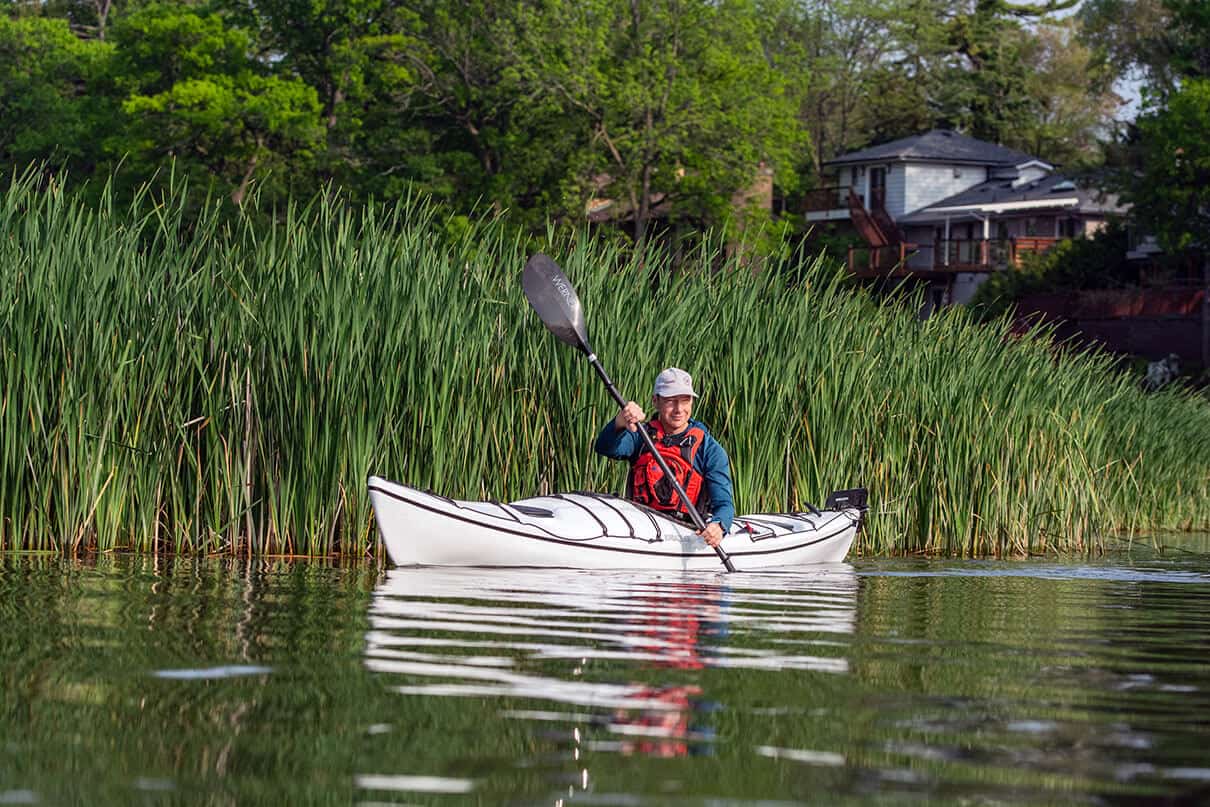
A boat that is approachable to paddle, lightweight, relatively affordable, and offers plenty of volume for storage sounds like a unicorn kayak for long-distance touring paddlers and outfitters, and yet this is exactly what the BoréalDesign Storm 17 offers.
Contributor Tim Shuff reviewed the Storm 17 for Paddling Magazine in 2025 and said the Storm 17 reminded him of paddling Current Designs’ long-running Solstice series of composite kayaks, especially the Solstice GT Titan, the highest volume of the bunch for “big and tall” paddlers. The reason being that the Storm 17 and Titan share a similar, approachable, versatile West Coast-style ruddered touring kayak design that a beginner or intermediate sea kayaker can jump into and head off on a multi-day voyage.
Composite kayaks, however, are expensive, and traditionally rotomolded polyethylene plastic kayaks are heavy and clumsy to repair. This is where the Storm 17 stands out. Thermoformed ABS plastic is incredibly lightweight, yet maintains a lower cost while providing premium performance. This gives paddlers and outfitters the opportunity to get a high-volume touring kayak at a reasonable cost and use the remaining funds to stock up on expedition gear or build a fleet.
Reasons to buy
- Space for gear or “big and tall” paddlers
- Ease of paddling for beginner and intermediate kayakers
- Comfortable for long tours
- Lightweight material and low cost
Consider another if
- High rocker and maneuverability or ocean play are a priority
Bottom line
The Storm 17 has the volume and approachability to paddle for days on end in a lightweight, lower-than-composite-cost thermoformed package.
What to consider when choosing a touring kayak
Kayak touring can look very different depending on where and how you paddle, but if you can only own one kayak, buy the boat that you will enjoy on the waters you paddle most of the time. For example, an expedition kayak probably isn’t the best choice if you mostly enjoy after-work jaunts on your local river. You also want a kayak design that you feel comfortable in, but doesn’t limit your ability to progress your skills.
If your local waters consist of sheltered bays, quiet rivers and inland lakes, look to a compact light touring kayak that is easy to store and transport and encourages you to get out more often. If you’re progressing into more exposed waters and currents, or dream of exploring wilderness coastlines, it may be time to invest in an ocean play design to develop your rough water skills or an expedition kayak capable of making those extended journeys. If you are new to the sport and staying upright and feeling stable are your priorities while you get the basics down, consider one of the many user-friendly kayaks geared more towards beginners. And if you want to travel with your kayak to exotic or hard-to-access locales—or simply need a boat that you can store in your closet—a packable or inflatable is going to be the best fit for your lifestyle and aspirations.
As you spend more time kayak touring, you are going to gain a better appreciation of where you want to go with the sport. What types of waters call to you? What parts of the experience of being in a kayak do you most enjoy? Just as your responses to these questions may change over time, your sense of the type of kayak you want to paddle may evolve as well.
Best touring kayak brands
- Boreal Design
- Current Designs
- Delta Kayaks
- Eddyline Kayaks
- Epic Kayaks
- Melker of Sweden
- Nigel Dennis Kayaks
- Norse Kayaks
- P&H
- Pakboats
- Stellar Kayaks
- Sterling Kayaks
- TRAK Kayaks
- Wilderness Systems
- Valley Kayaks
- Zegul Kayaks
How we tested
The kayaks in this article were chosen through years of accumulated experience with numerous touring designs, as well as the input of our contributors and longtime editors through our extensive boat reviews.

Why trust us
Longtime Paddling contributor and former Adventure Kayak editor Virginia Marshall has paddled touring kayaks for 20 years, exploring coastlines on the Great Lakes, Atlantic and Pacific oceans and Tasman Sea. When she’s not writing about kayaking, she works as a sea kayak instructor trainer and wilderness guide.
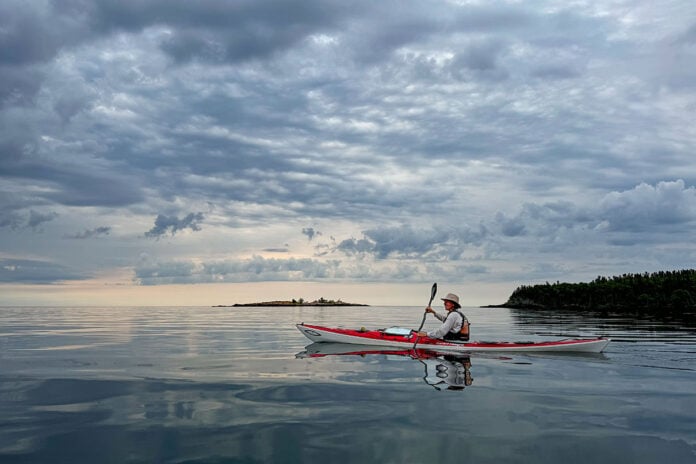
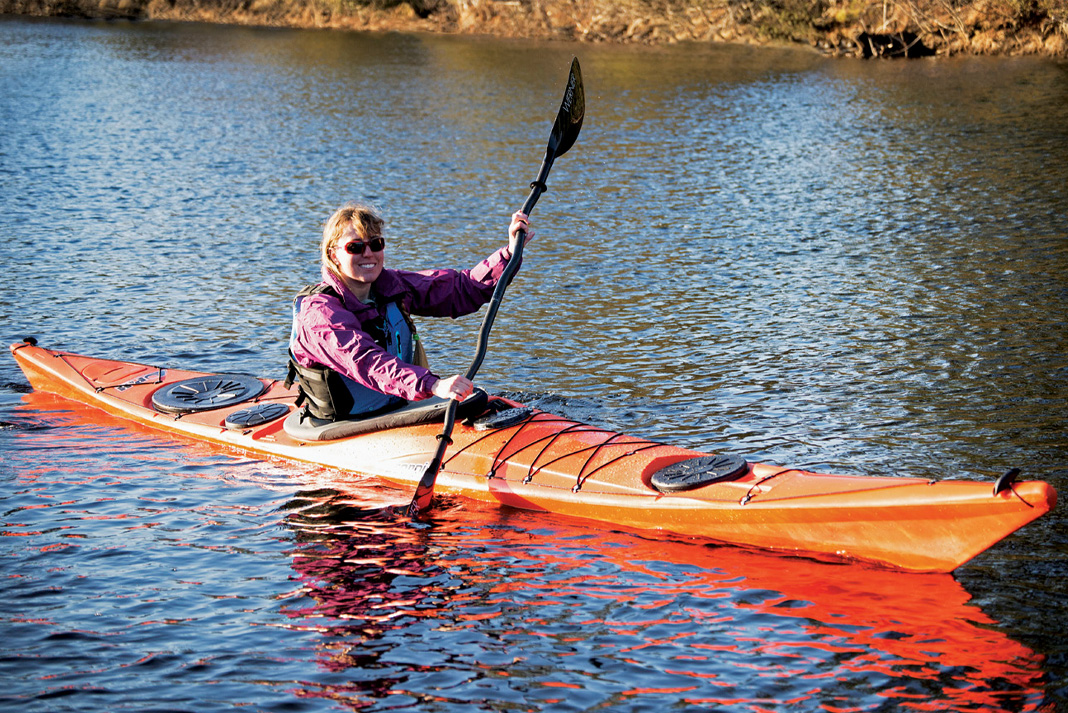
Writer Virginia Marshall paddles the Current Designs Karla during a 20-day personal trip on Lake Superior. | Feature photo: Kaydi Pyette


 This article was published in Issue 75 of Paddling Magazine.