Home Blog

Best Walkie-Talkies For 2026

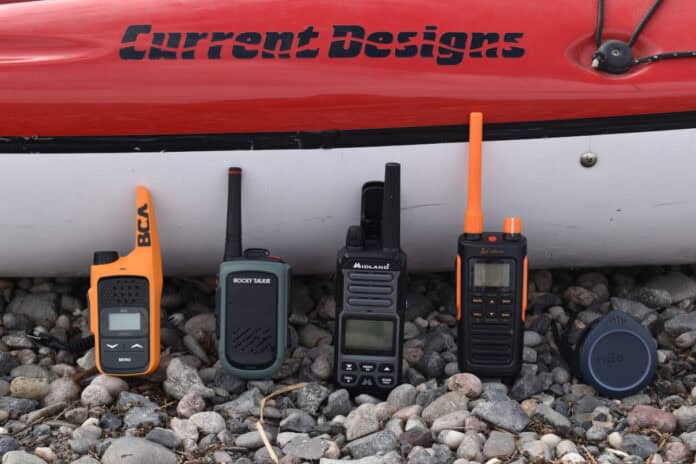
A collection of the best walkie-talkies tested.
Image: Jory Brass

My first “walkie-talkie” was a G.I. Joe toy back in the ’80s. Sure enough, that two-way plastic radio let little boys like me conspire with the neighbor kids while we played war, cops and robbers, and capture the flag. But it sure wouldn’t let me communicate on the water while scouting a rapid, scouring the shoreline for a campsite, portaging a canoe, or trying to put my kayak fishing buddies onto a school.

Over the past two months, I’ve tested several of these specific types of two-way radios that can tackle typical paddling situations—and more. These walkies are mostly waterproof with miles of range, weather alerts, and other extras for kayakers, canoeists, and kayak anglers.

Here are the best walkie-talkies that we tested and reviewed.

Best Walkie-Talkies: Our Top Picks

Carry A Waterproof VHF Radio, Use Your Phone Only As A Backup
  • A handheld VHF marine band radio allows you to communicate with the Coast Guard and other boat traffic. Use Channel 16 only for hailing and emergencies. The radio should be waterproof, because it is virtually certain to get wet.
  • A cell phone, even if in a waterproof case or sealable bag, might not work, so don’t rely on it as the primary means of emergency communication.

Best Overall Walkie-Talkie

Rocky Talkie Expedition Radio
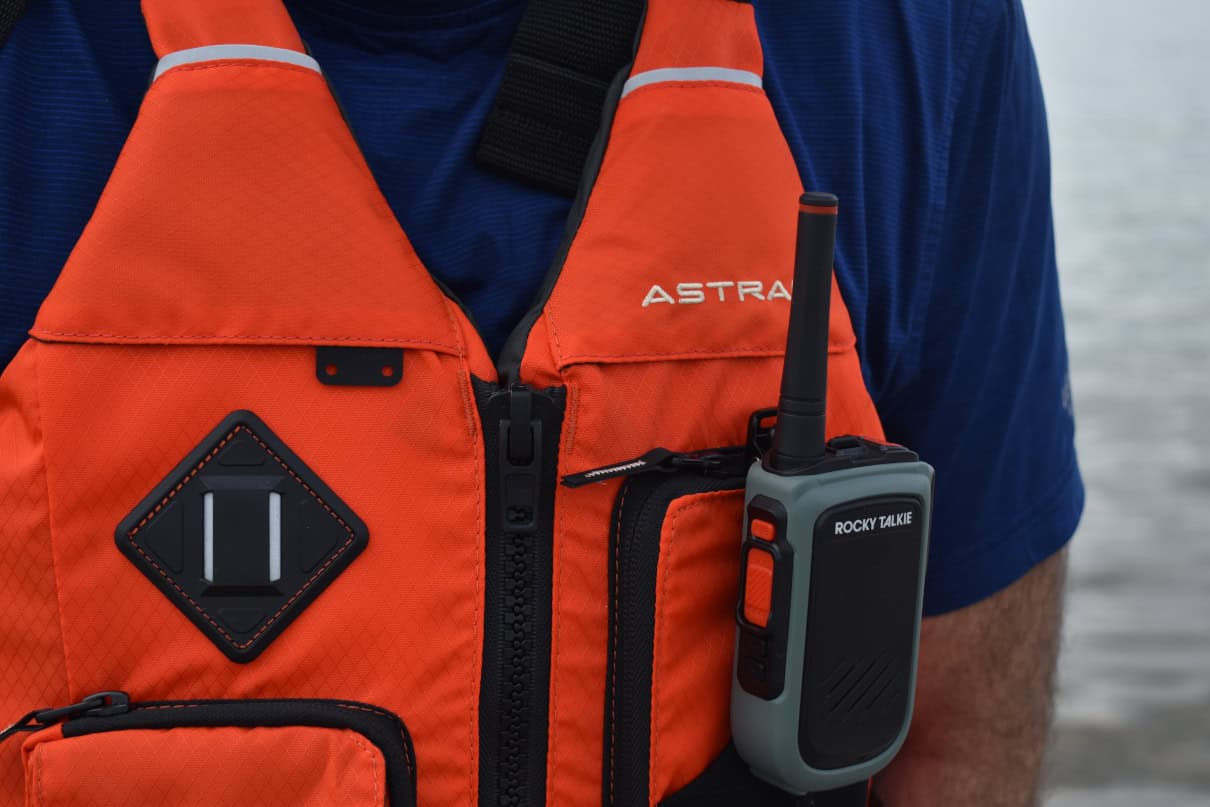
A Rocky Talkie Expedition Radio attached to a PFD.
Image: Jory Brass

$180 USD

Buy from:

ROCKY TALKIE AMAZON

Why I love it

Submersible. Durable. 4-6 days of battery life. The Rocky Talkie Expedition Radio has plenty of benefits for both expedition and whitewater paddlers. I’d pick this walkie-talkie for my paddle trips in the desert Southwest.

This waterproof walkie-talkie with a shatterproof LED screen is specifically designed for outdoor adventure sports. With 5 watts of power, the Expedition’s range stands out with .5 to 3-mile range in rivers and canyons, 2 to 8 miles in mountains, and a max range of 35 miles with perfect line of sight. Plus, 8 GMRS repeater channels, the included 17mm antenna, and an optional whip antenna can boost transmissions further. If you’re worried about squalls, wind, or lightning, the Expedition radio can also pull forecasts and storm alerts from NOAA weather channels.

The Rocky Talkie Expedition is a bit heavy, doesn’t float, and requires an FCC license (which is inexpensive and easy to get). Plus, it doesn’t have voice-activated transmission, so you’ll need to take your paws off your paddle to use it. But Rocky Talkie clearly designed the Expedition Radio for wilderness users—and hand-tested it to IP67 waterproof standards (submersible to 3 feet for 30 minutes).

Reasons to buy
  • IP67 waterproof (submersible)
  • Outstanding battery life
  • NOAA weather channels/alerts
  • 5-Watt GMRS maximizes range
  • Repeater capable
Consider another if
  • An FCC license is too much of a hassle
  • You prefer an ultralight or hands-free option

Bottom line

The Rocky Talkie Expedition Radio has the best balance of features for paddling more remote waters.


Most Compact Walkie-Talkie

Backcountry Access BC Link Mini
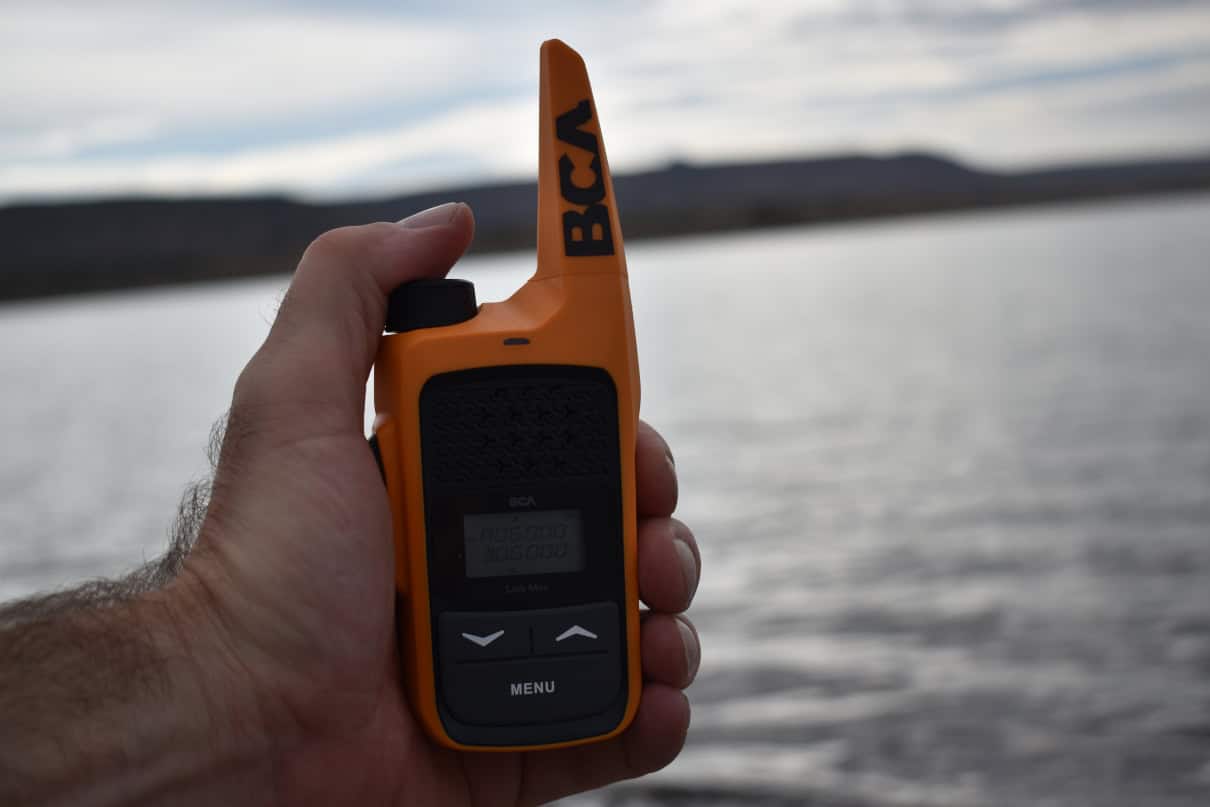
Backcountry Access BC Link Mini near the water.
Image: Jory Brass

$119.95 USD

Buy from:

BACKCOUNTRY REI BACKCOUNTRY ACCESS

Why I love it

When testing walkie-talkies, the BC Link Mini stood out as the lightest, most compact two-way radio in the kayak. It felt natural in hand and only tipped the scales at 6 ounces. BCA also includes three attachment options—plus a leash—to secure this walkie-talkie to our PFD.

The BC Link Mini is an FRS walkie-talkie—not a GMRS radio. This means you don’t need an FCC license, but also that its transmission power lags behind the rest of this list. That said, its range should be enough for most paddling communication. Our testers could communicate clearly without any dramas. We also found its simple interface intuitive, which made it easy to use the BC Link Mini straight out of the box.

Best for backcountry skiing, the BC Link Mini isn’t as waterproof as the other walkie-talkies on this list. With an IP55 rating, it can survive some spray, sprinkles, and the occasional splash on a canoe trip or lake paddle, but not regular waves or a swim. You’ll need to baby it in a dry bag if you’re running rapids or paddling big waves.

Reasons to buy
  • Lightweight
  • Ease of use
  • Multiple attachment options
  • No FCC license required
Consider another if
  • You need the range of a GMRS radio
  • You expect your walkie to get wet

Bottom line

The BC Link Mini is compact, easy to use, and specifically built for the backcountry.

Stay Clear Of All Other Vessels
  • Know the “Rules of the Road” Navigation Rules that govern all boat traffic and stay out of the way of all other vessels.
  • Never assume that power boaters can see you. Avoid high-traffic areas whenever possible. Proceed with caution when you can’t avoid paddling near boats. Dress for visibility.

Best Walkie-Talkie With Voice-Activated Transmission

Midland GXT67 PRO
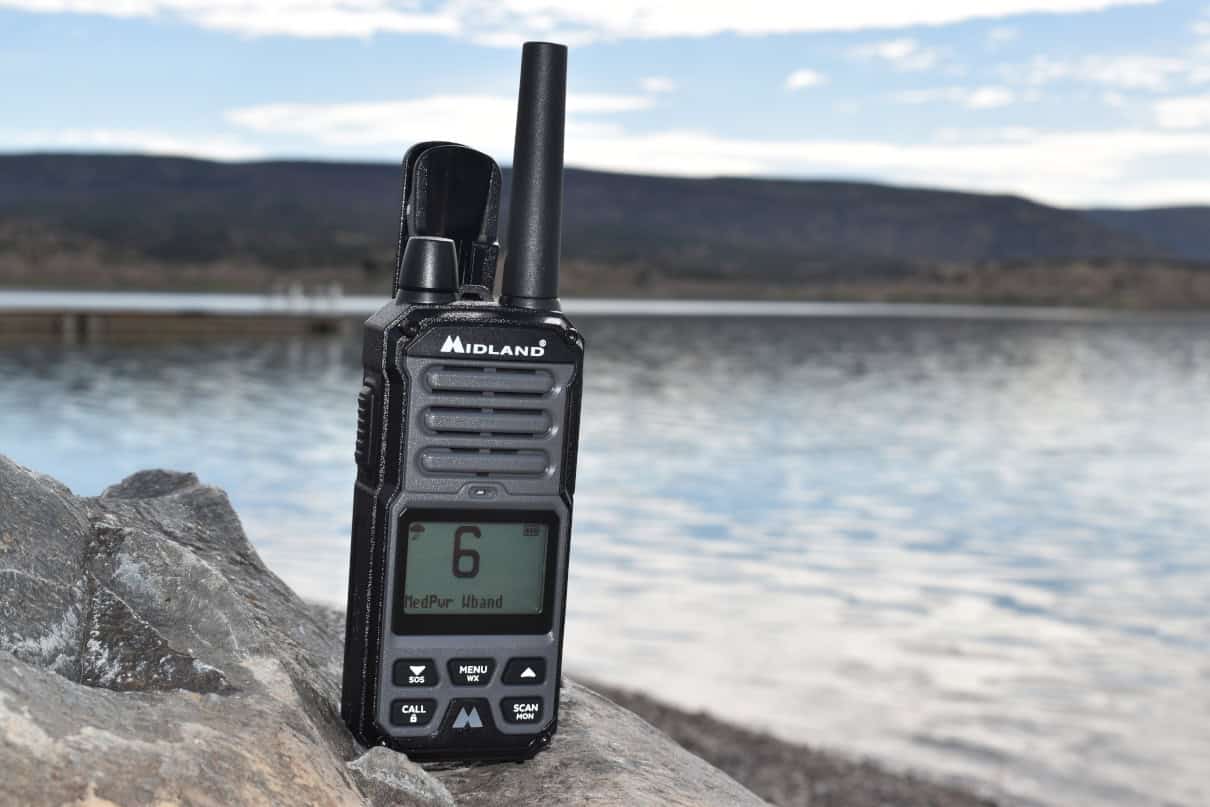
Midland GXT67 PRO two-way radio.
Image: Jory Brass

$219.99 USD

Buy from:

BASS PRO REI MIDLAND

Why I love it

The Midland GXT67 PRO mostly mirrors the premium features of the Rocky Talkie Expedition Radio with one positive addition—hands-free VOX transmission. This voice-activated feature freed up our hands for paddling, which isn’t possible with the standard push-to-talk walkie-talkie.

Beyond the VOX transmission, the Midland GXT67 PRO has several premium features that are paddler-friendly, including an IP67 (submersible) waterproof rating, NOAA Weather Alert Radio, and an automatic noise-cancelling microphone. With 5 watts of power, this GMRS radio can transmit 5 miles in most conditions and can tap into a repeater (where available) to amplify your range.

The Midland unit is heavier and bulkier than other two-way radios I tested. But that was the biggest downside—along with the need to purchase an FCC license (again, this is no big deal). This walkie-talkie has plenty of bells and whistles for paddlers.

Reasons to buy
  • 5-Watt GMRS maximizes range
  • NOAA weather channels/alerts
  • IP67 waterproof and dustproof
  • Voice-activated transmission
  • Repeater capable
Consider another if
  • You want a light walkie-talkie
  • You want a compact walkie-talkie
  • An FCC license is a hassle

Bottom line

If you want a walkie-talkie with both push-to-talk and hands-free transmission, the Midland GXT67 PRO is a premium pick.


Best Budget GMRS Walkie-Talkie

Cobra Trailblazer 450
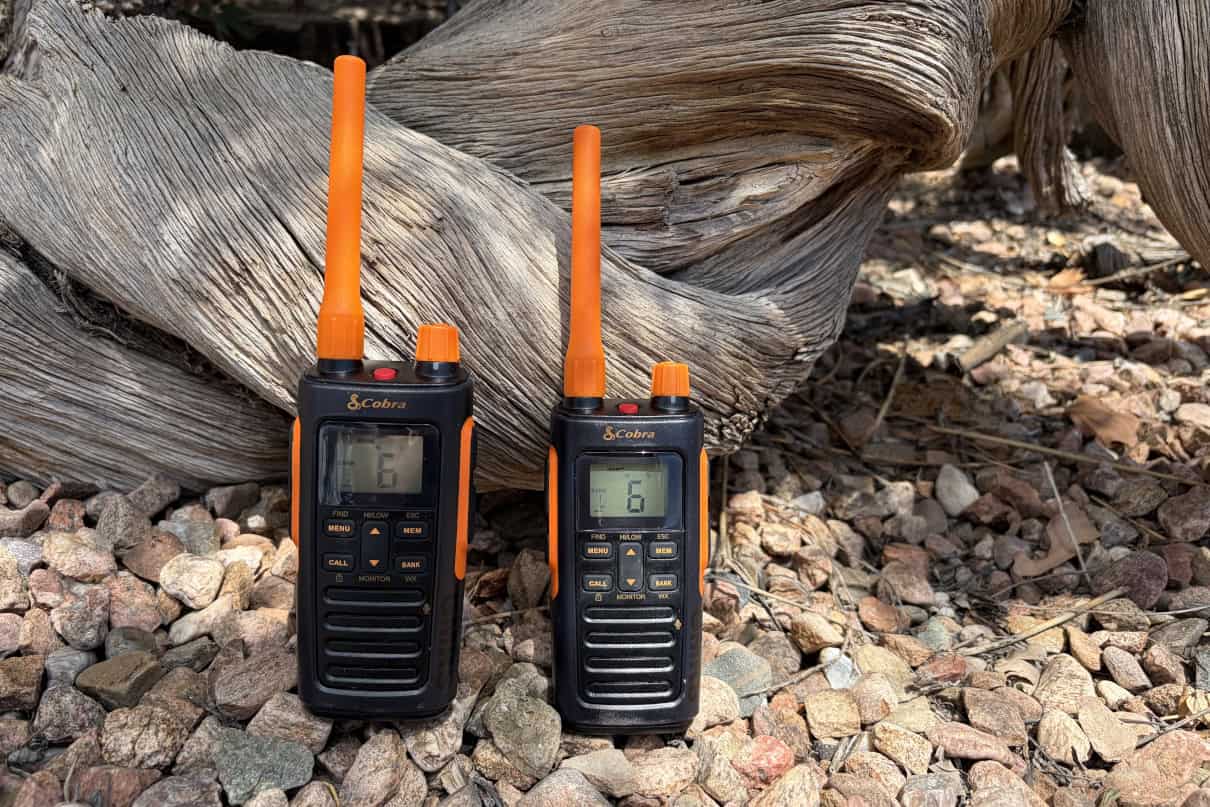
A pair of Cobra Trailblazer 450 radios.
Image: Jory Brass

$129.95 USD

Buy from:

BASS PRO AMAZON COBRA

Why I love it

The Cobra Trailblazer 450’s standout feature is its price. This GMRS walkie-talkie costs less than half of the other GMRS walkie-talkies we tested and reviewed.

As a GMRS radio, the Trailblazer has a removable antenna and can access repeater channels to boost your signal. It also offers VOX (voice-activated transmission) to talk hands-free—a plus for paddlers. And it can access weather alerts. Plus, the Cobra Trailblazer 450 is relatively lightweight, which I appreciated in our field tests.
As you might imagine, though, there are tradeoffs for this price. More popular for off-roading and hunting, the Trailblazer 450 has a lower IP54 rating (splash-resistant but not submersible).

Its 16-hour battery life is safe for a day trip but well below the 4- to 6-day charge of the premium GMRS walkies. Similarly, its transmission power (2.5 watts) is greater than the typical FRS walkie-talkie (2 watts) but half that of most GMRS walkie-talkies (5 watts). Still, it’s nice to get into a GMRS walkie-talkie at this price point.

Reasons to buy
  • GMRS walkie-talkie
  • Excellent value
  • Voice-activated transmission
  • Weather alerts
  • Dustproof and splash-resistant
Consider another if
  • You need a submersible model
  • You want a full 5 watts of power

Bottom line

If your budget is stretched, you can buy two Cobra Trailblazer 450 walkie-talkies for less than one of the other GMRS walkie-talkies on this list.


More Than A Walkie-Talkie

Milo Action Communicator
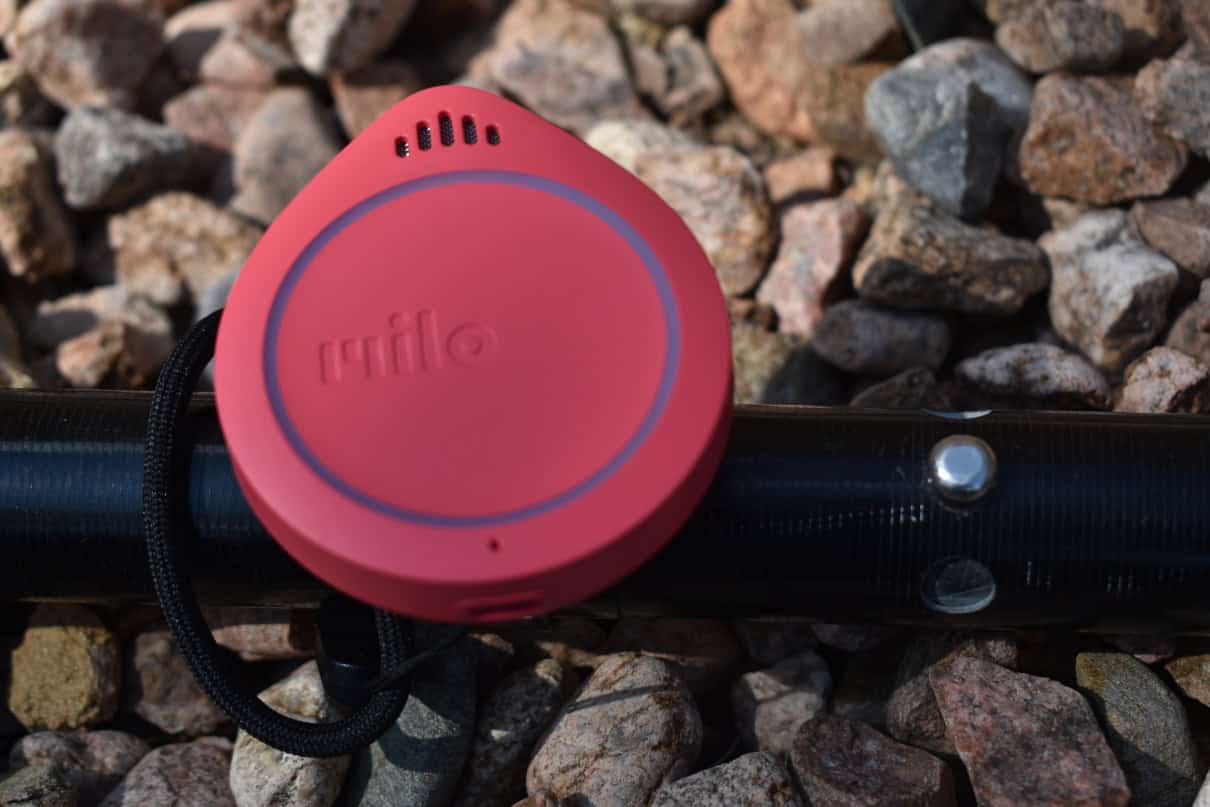
A Milo Action Communicator resting on rocks and a paddle.
Image: Jory Brass

$249 USD

Buy from:

AMAZON MILO

Why I love it

The Milo Action Communicator is more than a walkie-talkie. It allows everyone in your crew to talk at the same time. You simply sync your Milos, mount them to your upper body or paddle, and then talk with your paddle buddies—no need to push buttons or take turns. They’re easier to use than traditional walkie-talkies, even though they allow for simultaneous group chats, recordings, and more.

Two aspects of the Milo stand out for paddlers. First, Milos are IP67 waterproof, so they should survive rolls or swims on the surface as long as you plug the USB-C port with the included rubber cap. Second, you can mount them to your PFD, paddle, collar, or armband to talk hands-free. These two features make Milos more kayak- and canoe-friendly than traditional, two-way radios.

The biggest downside is range. The claimed range is 600 meters—well below the walkie-talkies above. Plus, sitting low to the water in a touring or whitewater kayak can reduce this range, especially in waves. When I’m kayaking, however, I’m rarely miles from my mates. The Milo Action Communicator can open up more social paddling and multi-way communications if your group keeps your boats clustered.

Reasons to buy
  • IP67 waterproof (submersible to 1 m)
  • Hands-free talking while paddling
  • Convenient action clips and attachments
  • Lightweight and easy to use
  • Multi-way (vs. 2-way) communication
Consider another if
  • Range is a priority
  • You want a traditional walkie-talkie

Bottom line

The best “walkie-talkie” for hands-free, group conversations when paddling.
What To Consider When Buying A Walkie-Talkie

If you’re new to walkie-talkies, you only need to focus on a few specs to figure out which walkies are better suited for paddle sports and on-water use cases.

Waterproof rating

Obviously, waterproof rating should be high on your list for on-the-water use. The walkie-talkies we recommend above demonstrate different degrees of dust and water protection. To predict how any electronic device will fare on water, focus on its IP rating:

  • IP67 Rating: Dust-tight and protected against temporary immersion (3ft water/30 minutes)
  • IP55 Rating: Dust-protected and protected against water jets
  • IP54 Rating: Dust-protected and protected against splashing water

None of the walkie-talkies above are rated for continuous immersion in water (IP68 rating).

FRS versus GMRS

Another key difference is FRS versus GMRS walkie-talkies:

  • FRS (Family Radio Service) are two-way radios that are low power (up to 2 watts) with fixed antennas. FRS radios do NOT require an FCC license to operate.
  • GMRS (General Mobile Radio Service) radios are higher power (up to 5 watts) with detachable antennas and repeater access to increase range. GMRS walkie-talkies require an FCC license.

Don’t let the phrase “FCC License” intimidate you. Yes, you do need to navigate the bureaucratic inefficiency of a federal website. But the FCC license application process only took me 20 minutes, and the license is inexpensive ($35 for 10 years) and covers your whole family. For more, see this helpful overview.

General consumer Walkie-Talkies versus a standard VHF handheld

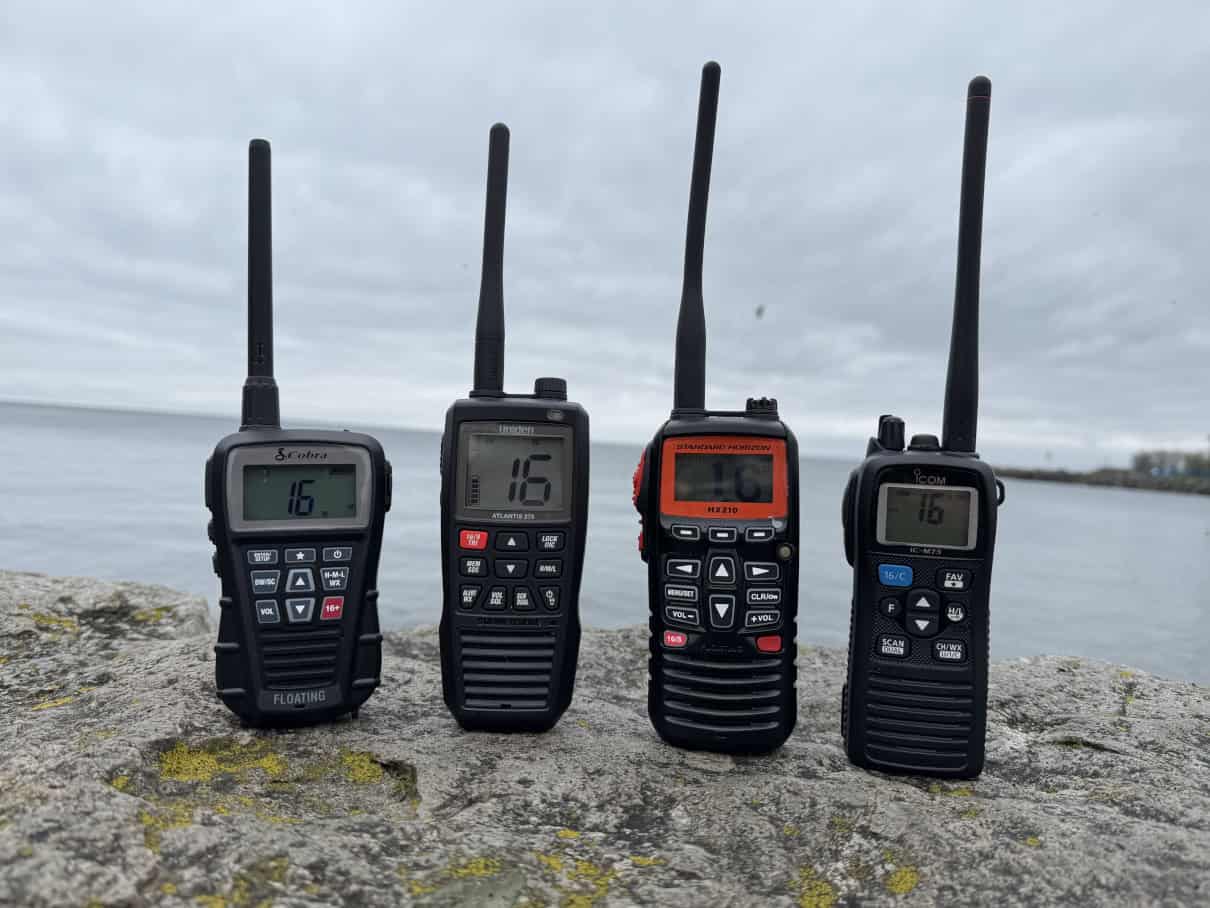
Something important to consider when purchasing a two-way radio is the capability of who you can reach with it. While the types of walkie-talkies in this review that operate on FRS or GMRS are a great way to stay in contact with your paddling party on a trip, they do not, however, reach the VHF (Very High Frequency) channels monitored by the Coast Guard and other vessels.

What this means is that these consumer two-way radios are no substitute for a handheld VHF radio. VHF channels are regularly monitored on coastal waterways, larger lakes, and major rivers.

VOX mode

Do you want to talk on a walkie-talkie while actively paddling? Look for a radio with VOX—Voice Operated eXchange—to communicate hands-free. In VOX mode, the radio microphone starts broadcasting when you speak without pressing the push-to-talk button. Wind and other loud sounds can trigger transmission in VOX mode (and clip your first word). But VOX and other types of these functions let you keep your hands on your paddle instead of your walkie-talkie.

Best Walkie-Talkie Brands

How We Tested

Each of the walkie-talkies on this list was tested on the water and in the foothills and mountains outside of Albuquerque, New Mexico. I weighed each unit, tested its range and sound quality in different environments, evaluated its water resistance, and considered how easily it handled while paddling.

Why trust Us

Jory Brass is a freelance writer who’s been paddling since 2005. Now based in Albuquerque, he enjoys kayaking canyon reservoirs and desert rivers across New Mexico, Arizona, and Southern Utah. He’s authored approximately 200 reviews of outdoor gear and apparel as the founding editor of Hiking Feet, freelance editor and gear analyst at CleverHiker, and copywriter at Backcountry.


 Feature photo: Jory Brass
 

Inside Yak Van Dam’s Radical Return To River

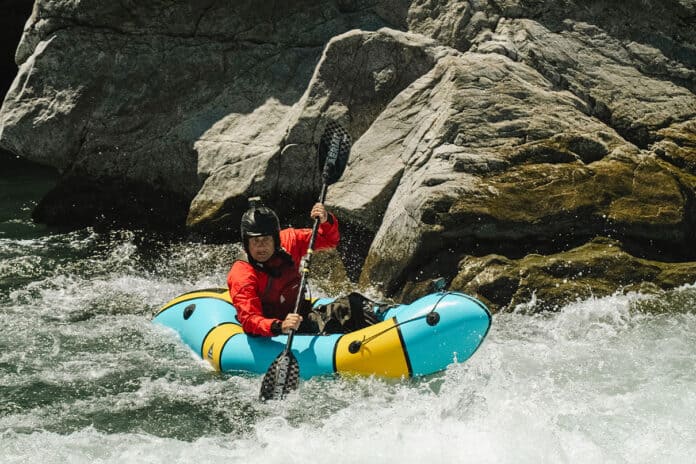
Yak Van Dam paddles whitewater in a packraft
Yak Van Dam back in action. | Feature photo: Dylan Gerschwitz

Before the accident, Yak Van Dam built his life around whitewater. Growing up in rural New Zealand, he discovered river running through an outdoor course. “I was never going to make an office job,” he says. Once he went rafting during his guide training, he knew immediately what he wanted to do with his life.

Inside Yak Van Dam’s radical return to river

Van Dam, 43, spent 16 years guiding and chasing rivers. He paddled in New Zealand’s North Island, with classics like the Kaituna and runs near Huka Falls close to home. Six years ago, while working on Switzerland’s Vorderrhein, he and three friends drove to Italy on a weekend off to go canyoning. On the second jump, he slipped while launching from a 42-foot ledge and hit the cliff on the way down. The fall left him paraplegic.

Van Dam spent six months in a hospital in Switzerland. Because his spinal injury was low and he retained some hip movement, he believed kayaking would still be possible. “I thought, kayaking is going to be easy because you just use your hips,” he says. The hospital had a swimming pool, but when he got back on the water and tried to roll, Van Dam fell out and realized it wasn’t going to be straightforward.

The realization was brutal, he says. “Kayaking, which I was going to do in my head while lying in bed, was just gone.” And for a time, whitewater disappeared from his thinking.

Yak Van Dam paddles whitewater in a packraft
Yak Van Dam back in action. | Feature photo: Dylan Gerschwitz

Five years later, Van Dam tried packrafting. At first, he saw it as a safer way to get on the water with friends. But in his Alpacka raft, Van Dam quickly crossed an eddyline, did some eddy turns and ferries, and discovered he could climb back in if he capsized.

“It got bigger and bigger until the finale was running a class III section [of the Upper Buller]. It blew my mind where we took it. It was game on. All because we were in packrafts, which cater to what I need to be on the whitewater,” Van Dam says.

“There have been a lot of tears being in a wheelchair and missing out on a lot of the stuff I used to do. I was worried that would be the case again. But it was the opposite. It was just celebrations, high fives, such great moments, and you just keep ticking goals off and achieving stuff.”

Packrafting didn’t just return Van Dam to the river, it also put him in touch with a new community. The calls started again. “We’re going packrafting. Do you want to come?”

portrait of Yak Van Dam in paddling gear
Yak Van Dam. | Photo: Dylan Gerschwitz

While Van Dam jokes he’s finally “got the shoulders I always wanted,” what’s changed most is his perspective. “Having that taken away—the freedom of just being on the river, looking at nature—and then going back to it, I’m appreciating it so much more.”

A film about Yak Van Dam’s packrafting journey, Riverbound: The Story Has Just Begun, won the Spirit Award at the New Zealand Mountain Festival and is touring in the 2026 Paddling Film Festival. Find a screening near you at paddlingfilmfestival.com.

Cover of Issue 75 of Paddling MagazineThis article was published in Issue 75 of Paddling Magazine. Subscribe to Paddling Magazine’s print and digital editions, or browse the archives.
Yak Van Dam back in action. | Feature photo: Dylan Gerschwitz


Oregon Paddleboard Accident Underscores Risk Of Leash Mismatch On Rivers

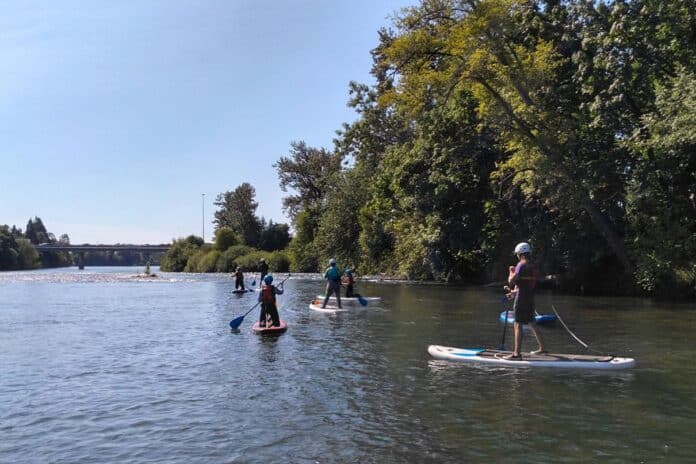
A group of Standup Paddleboarders on the Willamette River near Eugene, Oregon.
A group of Standup Paddleboarders on the Willamette River near Eugene, Oregon. | Image: Marcel Bieg

On a recent July day, a 26-year-old man drowned on Oregon’s Willamette River when a submerged tree knocked him off his standup paddleboard and into the cold current. He was connected to his board by an ankle leash, which snagged on debris, trapping him underwater.

The tragic event adds to a concerning rise in paddleboard deaths — specifically involving leash entrapments.

Paddleboard accidents on the rise

The U.S. Coast Guard reports that between 2023 and 2024, standup paddleboarding fatalities spiked by 164 percent.

In Oregon alone, 13 paddleboard deaths have occurred since 2020, with leash entanglements involved in five of those accidents, according to data compiled by the Oregon State Marine Board.

A SUP leash is a safety cord that connects a paddler to their board. It is an essential piece of equipment, says Ashley Massey, Oregon State Marine Board’s public information officer.

“Imagine,” she says, “you’re in the middle of a lake, you get a wind, you fall off the board and — whoosh. Your board’s blown out of reach.”

The Marine Board recommends paddleboarders wear a leash, Massey says, but knowing which type to use on which type of water is critical. While the type of leash included with many commonly purchased paddleboards works for certain bodies of water, it may not be the safest choice for others where entanglements tend to occur. It should also be noted that any line around water still presents the potential of an entrapment risk.

Government agencies such as the U.S. Coast Guard and Transport Canada set strict rules for how life jackets are made and who must wear them. However, SUP leashes are not regulated, Massey says.

“This is where skill becomes important,” she says. “Choosing a leash requires discernment.”

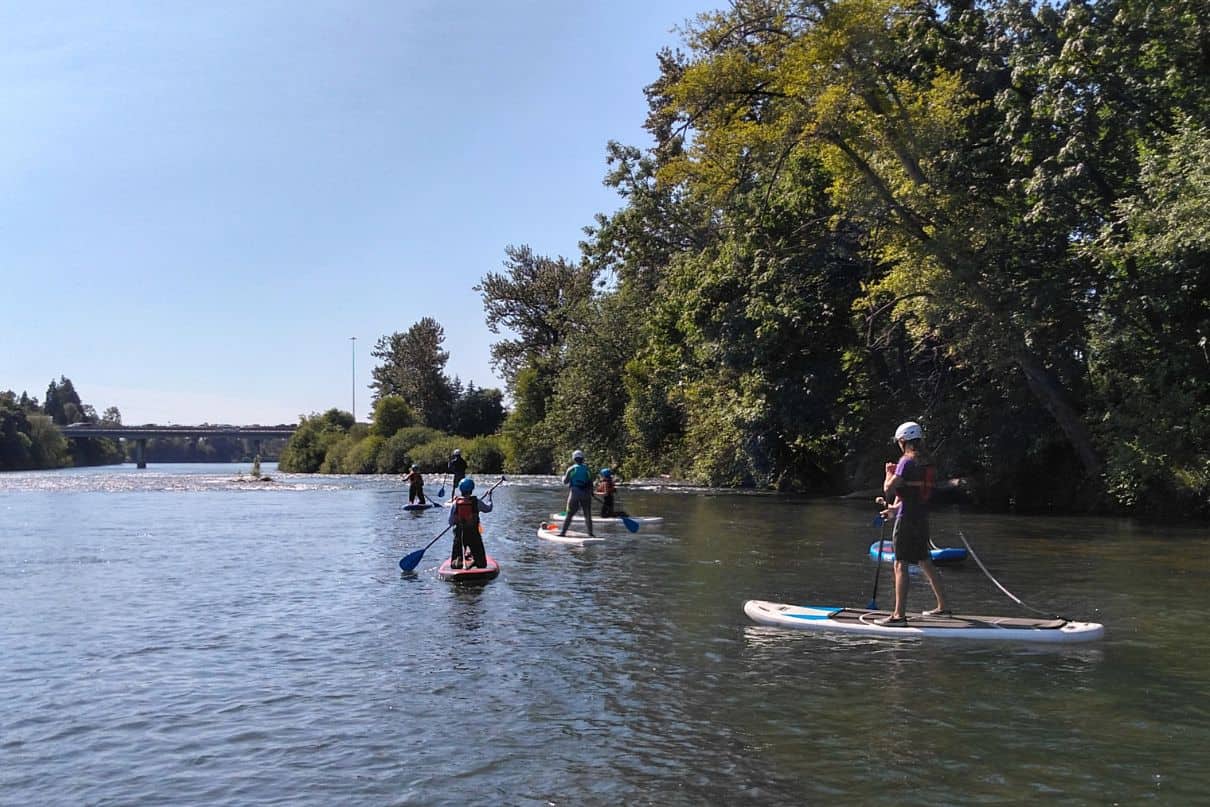
A group of standup paddleboarders on the Willamette River near Eugene, Oregon.
A group of standup paddleboarders on the Willamette River near Eugene, Oregon. | Image: Marcel Bieg

Types of paddleboard leashes available

There are three broad categories of standup paddleboard leashes.

Straight leashes attach to the ankle or calf via a Velcro cuff and are intended for ocean surfing. The single, uncoiled line helps keep the board at a distance, preventing it from springing back toward the paddler in the event of a wipeout.

Coiled leashes also attach to the ankle or calf, and are designed to reduce drag and avoid tangles at the feet. Coiled leashes are for flat water such as lakes or ponds, but only when there is no risk of underwater debris or obstructions, stresses Massey.

The problem with both of these types of leashes that attach to the ankle or calf is that if the leash gets snagged underwater, it can be extremely difficult to reach down and release the cuff, especially in the current. All five leash-related deaths that have occurred on Oregon waterways since 2020 involved ankle leashes, the data shows.

One option for paddleboarding on moving rivers is to instead wear no leash at all.

However, if you are using a leash, then what’s called a quick-release leash is vital for moving water, Massey says, which includes rivers and creeks, or even flatwater where there may be submerged hazards such as sunken trees, dense vegetation or old bridge pilings.

The quick-release leashes often used with standup paddleboards attach to a waist belt or life jacket and feature an easy-to-grab toggle or pin which, when pulled, instantly disconnects the paddler from the board. There are also aftermarket SUP waist belts that let paddlers convert a standard ankle leash into a quick-release system. And paddlers should consider that even a quick release can be hard to reach, or fail.

Among the three corded options, “You can’t go wrong with a quick-release leash,” Massey says.

The continuing campaign for PFD use and paddling education

Another aspect in avoiding paddleboarding fatalities remains wearing a personal flotation device. Approximately 83 percent of fatal boating accident victims were not wearing a life jacket, reports the U.S. Coast Guard — though all boaters, paddleboarders included, are required to carry them on board.

But, she adds, paddlers also need basic skills and an understanding of a waterway’s inherent risks. For example, how strong is the current? How high is the flow? Have there been any recent wildfires or high-water events that may have put debris into the river and created log jams?

Massey attributes the increase in fatal SUP accidents largely to the sport’s growing popularity coupled with lack of education. Over the past decade, paddleboarding has become the fastest-growing paddlesport in the world. SUPs have become more accessible than ever, available at big-box stores such as Walmart, Costco and The Home Depot.

“But picking up a paddleboard at Walmart isn’t going to help you learn necessary skills like reading the river,” says Massey.

Waterways are ever-changing, Massey shares, so gaining the ability to read water, avoid hazards and self-rescue are as essential as proper safety gear.

Editor’s note: The article as originally published implied standard ankle leashes as recommended for river surfing; however, just as with river SUPing, this is not recommended, and is a nuanced topic, with some parties arguing against the use of leashes at all and others using a variety of quick-release and auto-fail systems.


Best Water Shoes For 2026

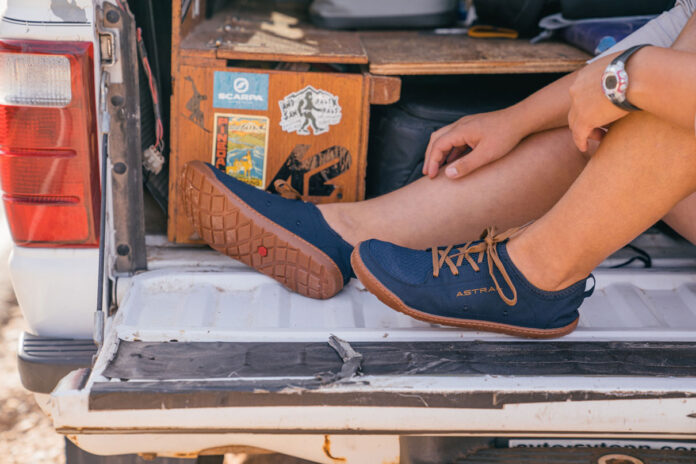
a perosn sits on a tailgate wearing Astral Loyak water shoes
The slick style and grippy tread of the Astral Loyak. | Photo: Astral Designs

When it comes to the question of what to wear kayaking, solid footwear cannot be overlooked. The right pair of water shoes will keep you on your feet while carrying a canoe or kayak down steep trails. They need to be comfortable against footbraces for a full day on the water, quick drying, grippy on slick rocks and be able to take a beating. And should you need to jump into action and rescue a fellow paddler, the right shoes provide confidence and sure-footing. As paddlers, our water shoes are often our footwear of choice on and off the water.

So, how do we find out which shoes meet the needs of paddlers? By wearing down the tread on as many as we can.

Best water shoes: Our top picks


Best water shoes overall

Astral Brewers

Astral Brewer water shoe at shoreline
A strong contender for a do-it-all river shoe. | Photo: Kaydi Pyette

$105 | astraldesigns.com

Buy from:

ASTRAL AMAZON BACKCOUNTRY REI

Why we love them

If I could only have one water shoe for all my paddling adventures, this might be it. The high-performance Brewer from Astral offers great drainage, excellent traction, feels comfortable, lasts for years, looks like a sneaker and is supportive enough for portaging but slim enough to fit in your cockpit too. The Brewers have great drainage, and no liner in the sole to hold water, so they’re quick to dry and don’t catch much odor.

The Paddling Mag team has tested Brewers on paddleboards in whitewater, raft guiding on the Ottawa River, on multiweek coastal kayaking trips, and on lengthy canoe trips. I’ve lived in my second generation Brewers for weeks at a time.

Now in its third gen, the newest Brewer 3.0 boasts more room in the toe box as well as a soft liner built in to reduce seam contact and increase barefoot comfort. The opinion on the Paddling Mag team is unanimous: the do-it-all Brewer takes abuse and keeps on going.

Reasons to buy
  •  You’re looking for a do-it-all river shoe
  •  Confidence-inspiring “stickiness” on slick surfaces
  •  Light, quick-drying Cordura upper construction
  •  Stylish look for paddling and travel
Consider another if
  •  You need more support and a higher cut for ankle protection, see Astral’s Rassler
  •  If a supportive sole isn’t paramount, consider the Loyak for similar performance in an ultra-slim package

Bottom line

This could be one water shoe to rule them all.

Wear A Life Jacket
  • Everyone, even strong swimmers, needs to wear a life jacket at all times when on the water. It is extremely difficult to put a life jacket on once you fall into the water. Even a light wind can blow any paddlecraft away from you, faster than you can swim.
  • Always wear a USCG-approved Level 70 or Type III life jacket designed for paddling.

Best sandals for all terrain

Chacos Z/1 Classic

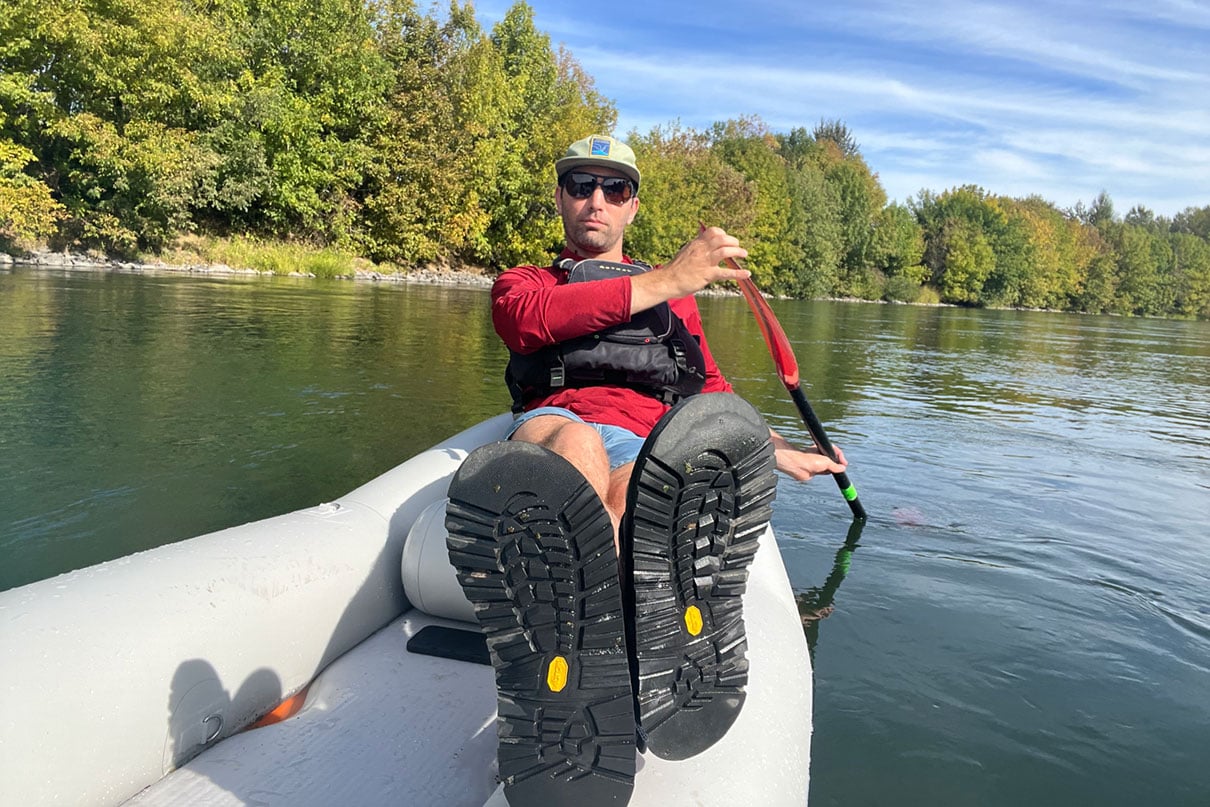
Paddling Magazine editor Joe Potoczak floats in an inflatable while wearing Chacos Z/1 Classic sandals for land and water activities.
Editor Joe Potoczak working hard in a pair of Chacos Z/1 Classics with custom Vibram outsole. | Photo: Raquel Bauer

$105 | chacos.com

Buy from:

CHACOS AMAZON BACKCOUNTRY REI

Why we love them

The Z/1 Classic from Chacos is a long-time favorite sandal for water or land in the outdoorsy crowd. First released in 1989, it’s not uncommon to hear folks boast of wearing their Classics for 20-plus years. With just a single buckle and one continuous piece of webbing, customizing fit is dead easy. But it’s the traction, durability and versatility that made this the standard for rugged hiking sandals. The stiff and heavy sole of the Z/1 Classic is boot-like in feel and takes some breaking in. No toe thong makes these sandals easy to pair with socks, if you must.

Reasons to buy
  •  Available in ChacoGrip or customized with Vibram outsole
  •  Open design lets the dogs breathe on summer days
  •  Beefy midsole for foot support
Consider another if
  •  You need the protection of closed-toe water shoes
  •  You prefer a low-profile sole
  •  You’re searching for a paddling-specific shoe over a multi-sport sandal

Bottom line

If you own a pair of Chaco Z/1s, you already have a classic paddling sandal on your feet. The Z/1 has been a go-to shoe choice for years and is just as at home on desert river trips as it is on afternoon paddleboard sessions.

Best water sandals with toe protection

Keen Newport H2

Keen Newport H2 water shoes on beach
What they may lack in style, Keen’s Newport H2 makes up for with traction and support. | Photo: Kaydi Pyette

$130 | keenfootwear.com

Buy from:

KEEN AMAZON BACKCOUNTRY REI

Why we love them

A perennial favorite at the put-in, it feels like every canoe tripper has owned a pair of Keen Newport H2s at some point. With the sole of a hiker and the topside of a sandal, the Newport H2 pairs the chunky support of a hiking shoe and protection of a toe cap with the breathability of a sandal and the quick-dry performance you want if you’re repeatedly stepping in and out of the water.

Celebrating more than two decades in production, the modern Newport H2s feature a secure feel thanks to Keen’s lace-capture system paired with nylon webbing. These are among my top picks for best water shoes because they are comfortable, can tackle most terrain while portaging, and they’re durable—my first pair lasted close to a decade and I’m onto my second.

Reasons to buy
  •  Sandal sensibility with protective rubber cap for toes
  •  Bungee adjustment combined with webbing upper
  •  Razor-siped lugs for added traction on wet surfaces
Consider another if
  •  You need a truly enclosed shoe
  •  You’re not a fan of bungee adjustment systems
  • The downside of all that protection and support is a bit of a bulky sole

Bottom line

When Keen introduced the Newport, they produced a sandal solution bloody- and bruised-toed paddlers had been waiting for. The Newport holds up to this day as one of the best hybrid sandals to tackle the outdoors on land and water.


Best for really cold water

Cressi Isla

Cressi Isla water shoes steam on cold morning
The Cressi Isla is toasty even on the coldest days thanks to seven millimeters of neoprene. | Photo: Kaydi Pyette

$43.50 | cressiamerica.com

Buy from:

CRESSI AMAZON DICK’S

Why we love them

These seven-millimeter neoprene booties from Cressi are ultra warm, cheap and have lasted me years. The Isla my go-to for year-round dips in the lake and surfing on the Great Lakes in winter. Paired with a drysuit, they’re great for cold weather paddling.

These water shoes have a thin but tough rubber sole that provides protection at rocky launches. Both the toe and the heel are reinforced with long-lasting rubber—mine have been in heavy rotation for six years and are still going strong. The Isla’s double-lined neoprene and zip from the sole to the ankle make them easy to slip on and off, and water seepage is at a minimum thanks to a thin flap under the zip, which acts as a barrier. Quality is no surprise given Cressi’s legacy as the world’s oldest manufacturer of scuba equipment.

Reasons to buy
  •  Ultra toasty
  •  Great price and value
  •  Ideal if you have to get your feet wet in cold water
Consider another if
  •  You need more support for portaging
  •  You want something breathable

Bottom line

If you have to get your feet wet in extra cold conditions, the Cressi Isla is a budget-friendly and durable option.


Best sandals for wet rock Spidey-grip

Astral Webber sandals

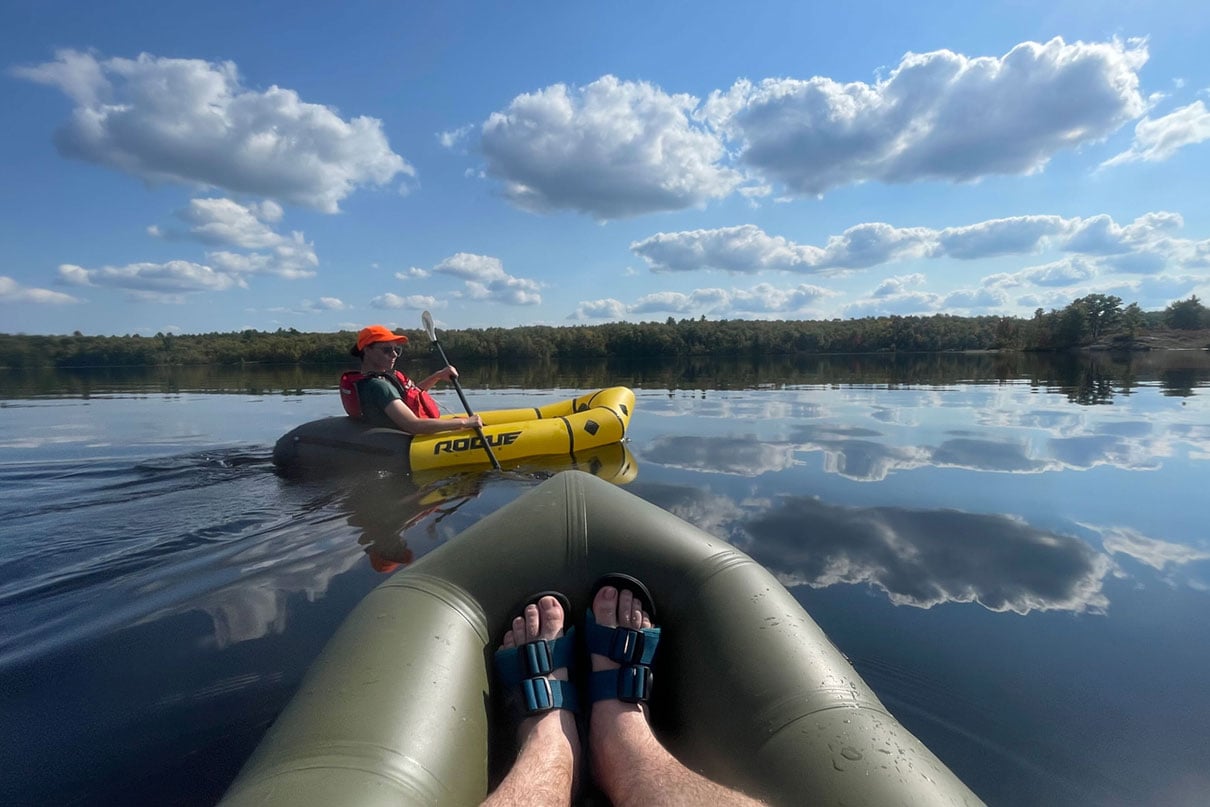
Bow shot of a packraft with person wearing Astral Webber water shoes.
Astral’s rethink of the sandal with PFD size buckle and their stickiest rubber compound. | Photo: Jeff Priest

$110 | astraldesigns.com

Buy from:

ASTRAL AMAZON BACKCOUNTRY REI

Why we love them

Astral first ventured into the sandal market in 2022 with the Webber water shoe. The Webber pairs the chunky webbing of Astral’s award-winning life jackets with their stickiest G Rubber sole compound for grip. Maintaining a stable shoe-like feel, the Webber sandal offers the adventure footwear triad of adjustability, durability and breathability.

Reasons to buy
  •  G.ss, Astral’s stickiest rubber compound
  •  Flat, razor-siped treads
  •  Canvas upper adjusted with PFD size buckles
Consider another if
  •  You’d prefer a closed-toe

Bottom line

Astral’s water shoe lineup have been praised for having some of the grippiest rubber compounds available. The Webber brings that confident grip to the sandal front.


Best for casual paddling

Crocs Classic Clog

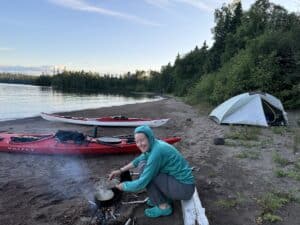
kayak trip camp
The easy-wearing Clog is a top pick for casual adventures. | Photo: Kaydi Pyette

$49.99 | crocs.com

Buy from:

CROCS AMAZON BACKCOUNTRY ALS

Why we love them

Love ‘em or hate ‘em, the unfashionable Classic Clog by Crocs is much maligned but perennially practical for paddlers. They’re durable, lightweight and dry faster than anything else, which is why they’re my go-to for warm-weather lake paddling. I love the airy breathability they provide, and they’re a boat shoe and camp shoe in one package.

Of course, the downsides of Crocs are numerous, including potential for injury due to the loose fit, mediocre traction, and a footbed that can get slippery when wet. Also, sometimes they squeak, and are liable to float off a paddler’s feet in a capsize.

Yet, despite all those downsides, for casual warm-weather paddling, you’ll find me slipping on a pair of Crocs more often than anything else because they’re so comfortable and easy to wear.

Reasons to buy
  • Airy, surprisingly rugged, lightweight, packable, fast to dry and easy to clean
  • Most appropriate when water access is just a short stroll away
Consider another if
  • The lack of stability is a deal breaker
  • Shoreline scrambling factors into your trip
  • You need footwear that will stay secure on your feet in a swim

Bottom line

Fuss-free footwear that cleans and dries easily, with performance best suited to ambling from car park to shoreline.

Wear The Appropriate Leash When Stand Up Paddleboarding
  • Always wear a leash on open bodies of water like lakes, bays, and oceans. Due to the risk of snags and entrapment, leashes should only be worn on rivers if they include a quick release attached to your life jacket.

Best low-profile bootie

NRS Freestyle Wetshoe

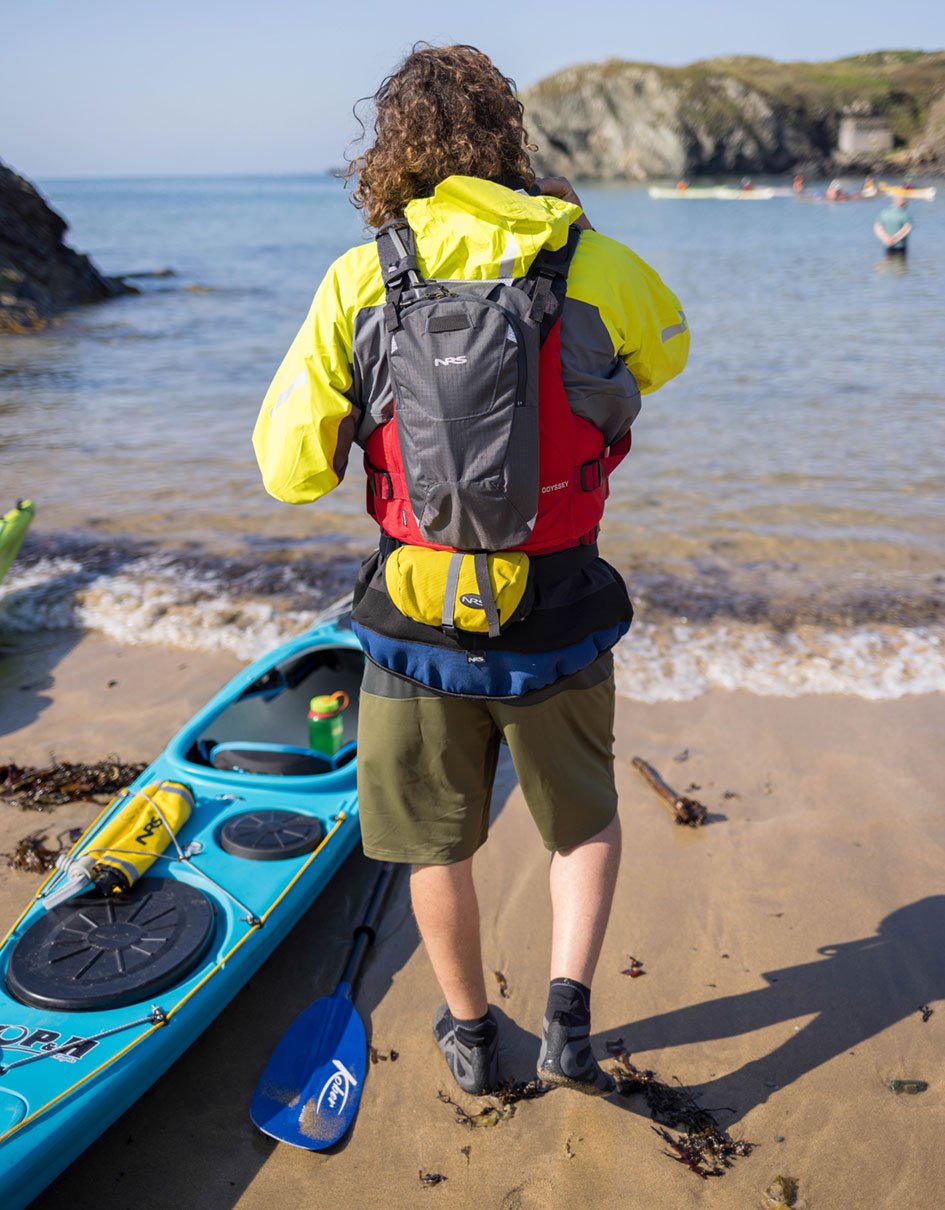
Person wearing NRS Wetshoe while standing on a sand beach beside a kayak.
The NRS Freestyle Wetshoe fits in any boat while still providing an outsole for grip. | Photo: NRS

$67.95 | nrs.com

Buy from:

NRS AMAZON REI

Why we love them

The lightweight NRS Freestyle Wetshoe is so crazy flexible that we can roll it up and fit it in a regular-sized coffee mug. Constructed with a three-millimeter neoprene upper for warmth and a three-millimetre neoprene insole for added comfort, the Freestyle offers a sock-like feel. Ideal for cramming big feet into small boats and long days kayaking; less suited for gnarly portages and rough, rocky environments.

Reasons to buy
  •  Low-profile design fits in low-volume bows
  •  Graphene-infused interior adds potential warmth to neoprene
  •  Thin rubber outsole provides better traction than barefoot or minimal neoprene sock
Consider another if
  •  You prefer a breathable upper fabric
  •  You’d like a shoe with substantial support
  • Your paddling involves long or rough portages

Bottom line

Nobody wants what used to be unaffectionately referred to as “rodeo foot” or to wipe out trying to carry your kayak over the rocks in bare feet. The Freestyle Wetshoe is the Goldilocks water shoe for those seeking barely-there foot protection.


Best minimalist

Astral Loyak shoes

Astral Loyak water shoe on paddle board
The stylish and low profile Loyak. | Photo: Kaydi Pyette

$99 | astraldesigns.com

Buy from:

ASTRAL AMAZON BACKCOUNTRY REI

Why we love them

A minimalist and high-performance water shoe providing first-class grip and comfort? Yes, please. The adaptable Astral Loyak manages to do all the above while looking like a classy, casual sneaker. A top contender for “best overall,” the Loyak is self-draining and dries quickly on the water or packs flat to slide on in camp. Its thin and super-grippy outsole promotes balance and ground feel—what the pros call proprioception. Compared to the Brewer, the Loyak gives up some foot support for a slimmer, more flexible feel.

Reasons to buy
  •  G.15 Rubber compound and Loyak tread provide confident “stickiness” on river bottoms
  •  Quick-dry canvas with 3D airmesh upper
  •  Removable EVA midsole
  •  Minimal profile shoe fits well in most kayaks
  •  Stylish look fit for paddling and travel
Consider another if
  •  You need more substantial midsole support
  •  An open sandal is preferred
  •  You are looking for Astral’s stickier G.ss rubber compound

Bottom line

The low-profile Loyak is a much-loved shoe.


Best water shoes for anglers

Columbia Tamiami PFG Shoe

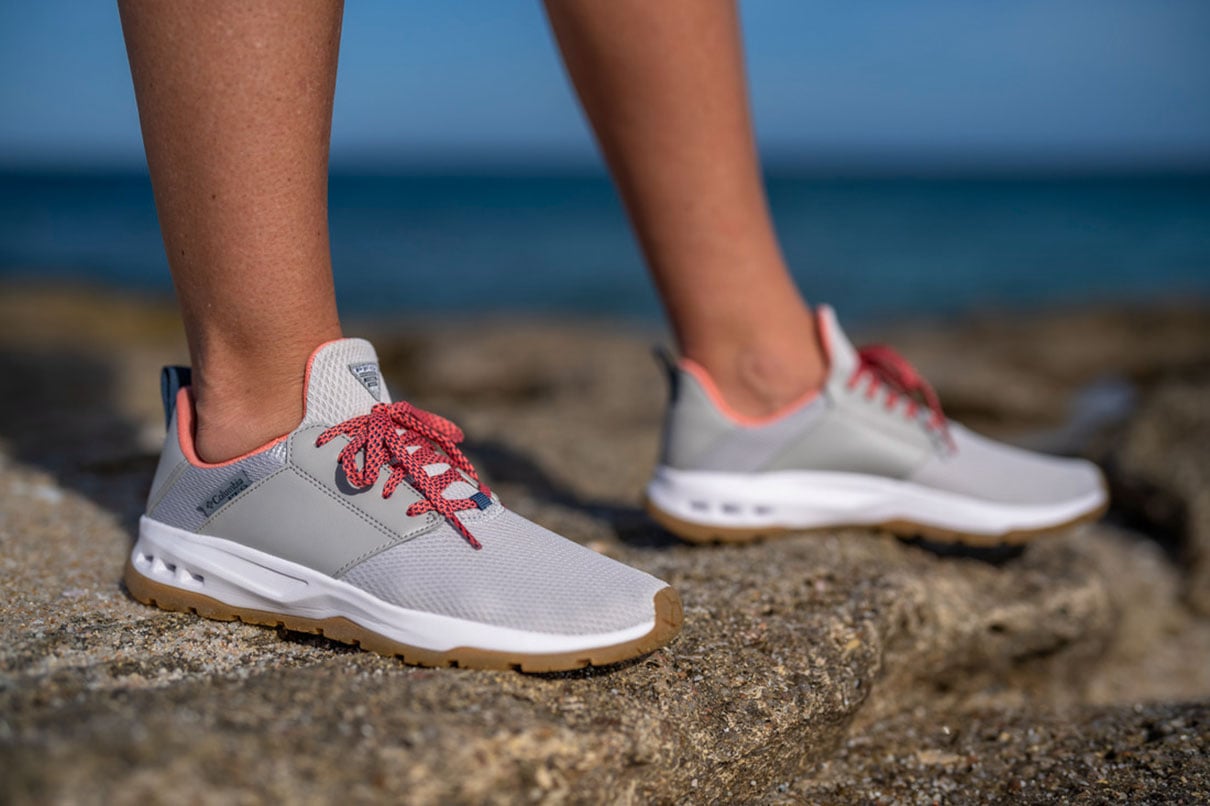
Feet shown of an angler wearing a pair of gray Columbia Tamiami water shoes, which are a great fit for fishing.
These stylish kicks have you covered from cast to cocktails. | Photo: Columbia Sportswear

$80 | columbia.com

Buy from:

COLUMBIA AMAZON BACKCOUNTRY

Why we love them

Comfortable and stylish, the Tamiami from Columbia is a worthy water companion. This budget-friendly sneaker is part of Columbia’s performance fishing line and features a water- and stain-resistant mesh upper designed to repel fish guts and grime. Now in its second generation, the Tamiami features a super grippy, non-marking outsole that keeps you rubber side down on slick surfaces, while midsole ports aid ventilation, cooling and dry time. Equally suited to shorelines and martinis at the club.

Reasons to buy
  • Omni-Shield stain resistance valued by anyone spending time outdoors
  •  Breathable mesh upper
  •  Micro-siped lugs for additional traction
  •  Style means no need to change out of them for an after-fishing meet up with your buddies
Consider another if
  •  Lace-ups aren’t the lines you want to re-tie
  •  Mesh isn’t a durable enough upper for your needs

Bottom line

The Tamiami PFG Shoe is a stylish and well-designed water shoe from a major outdoor apparel brand.


Best souped-up redesign on the classic bootie

Level Six Creek Boot 2.0

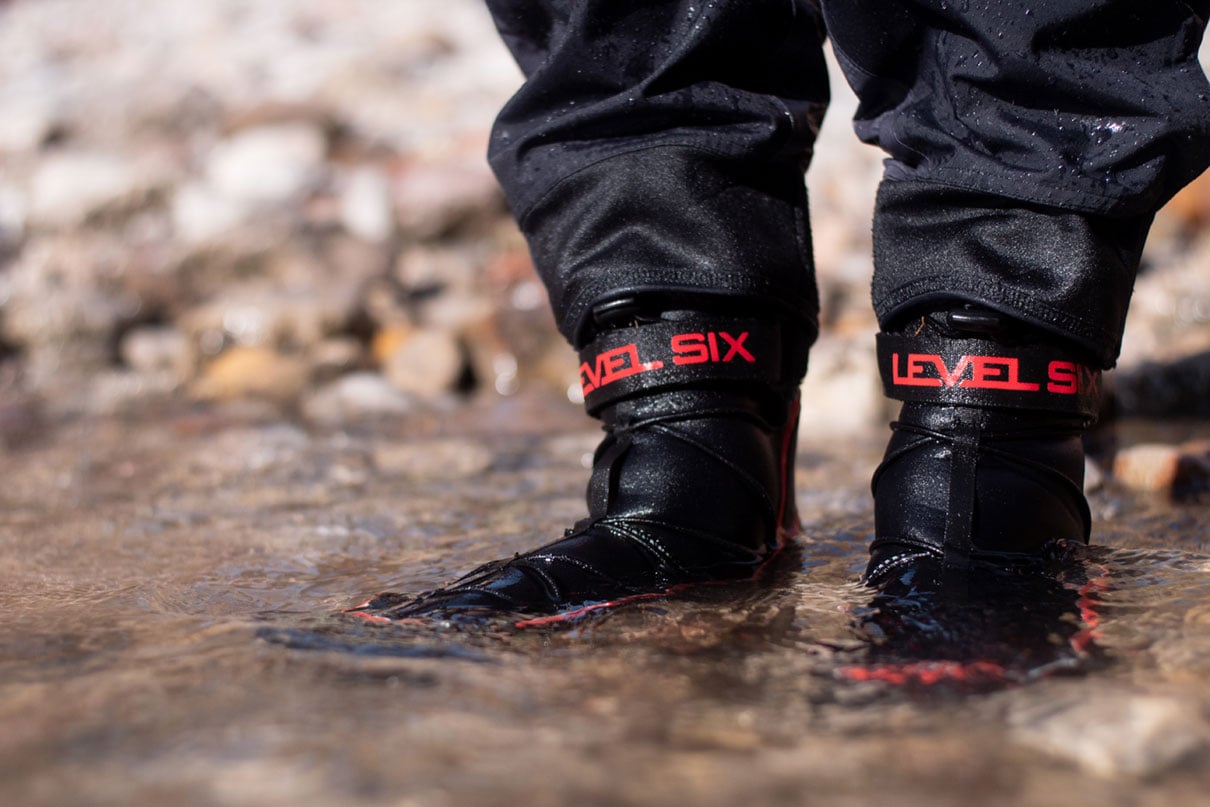
Close-up of a pair of Level Six Creek Boots 2.0 on a paddler standing in water.
Refreshing the classic neoprene bootie with the Creek Boot 2.0. | Photo: Level Six

$75 | levelsix.com

Buy from:

LEVEL SIX AMAZON BACKCOUNTRY OUTDOORPLAY

Why we love them

The redesigned Creek Boot 2.0 from Level Six is a souped-up version of the classic neoprene bootie. This second-generation, ultra-flexible bootie provides increased stability and durability thanks to a reinforced rubber sole and stiffening in the mid-shank for ankle support. Vulcanized rubber extends onto the boot’s three-millimeter neoprene upper, minimizing wear in high-use and vulnerable areas, like the toes and heel. Slide them on and secure with Level Six’s fast lace system.

Reasons to buy
  •  Three-millimeter neoprene upper
  •  Bungee lace system and hook-and-loop cuff strap
  •  Sole reinforced with stiffening mid-shank
Consider another if
  •  You prefer the design and breathability of a shoe
  •  You seek thicker underfoot support

Bottom line

The Creek Boot 2.0 manages to put a good deal of juice under the hood of the modest neoprene bootie.


Best for expeditions

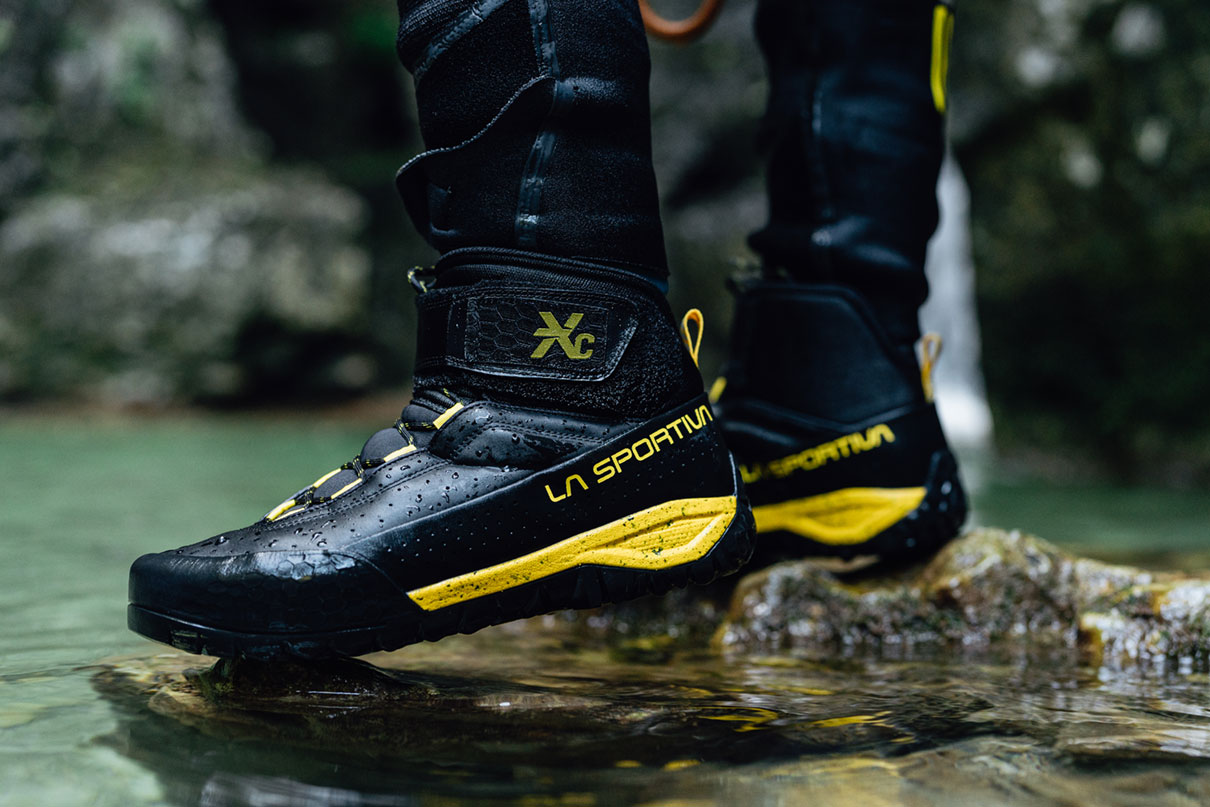
La Sportiva TX Canyon shoes

Close-up of a person wearing La Sportiva TX Canyon water shoes while standing on a rock in view of a waterfall.
Expedition approach shoe meets water shoe with the La Sportiva TX Canyon shoes. | Photo: La Sportiva/Matteo Pavana

$189 | sportiva.com

Buy from:

LA SPORTIVA BACKCOUNTRY

Why we love them

The TX Canyon from Italian brand La Sportiva is a burly water shoe for the most rugged terrain. Designed with canyoneering in mind, the TX Canyon has more support and protection than almost any water shoe. The upper boot uses Ariaprene with hundreds of tiny perforations and two drain valves on the arch to maximize water-shedding. Ideal for kayakers requiring sturdy footwear in demanding conditions.

Reasons to buy
  •  Vibram outsoles designed for every type of terrain
  •  Perforated Ariaprene upper is like a breathable neoprene material
  •  Encompassing foot support
Consider another if
  •  Your kayak is tight on space around the footbraces
  •  Something less full-on will work just fine for your needs

Bottom line

If you are rolling out topo maps to plan how you’re going to reach the river, pack yourself a pair of the TX Canyons.


What you should know about buying water shoes

Choosing a water shoe requires give and take, so it’s best to decide what’s most important to you.

A sandal might be ideal for warm days, especially if you’re a paddleboarder planning to slide them on and off—however, you lose the enclosed protection and insulation of a shoe. Meanwhile, the classic bootie is generally cheap, keeps feet warm, but the feel, and often thinner outsole, differs from the common comfort of a lace-up style shoe. Shoes also generally allow better airflow on your feet. The bigger outsole on shoes though may be an uncomfortable, even impossible, to fit inside some kayaks.

Tread and rubber compounds also play a role in choosing footwear. Deeper lugged treads provide good traction to dig into rugged earth. While shoe treads with a flatter, larger surface area tend to provide better grip on wet rocks in rivers, on docks and boat ramps. Rubber compound matters too. A firmer rubber will be more durable, and these shoes generally have a thicker midsole for foot support. A softer rubber compound will provide more gecko-like traction, similar to a climbing shoe, and tend to have thinner midsoles but less lifespan. Brands today balance these factors out to a point, but ultimately lean toward which factor the design serves best.

Do you really need specialized water shoes for kayaking? Not always. For casual paddling from easy launches, an old pair of sneakers can work. Decades ago, this was the only option for paddlers. But the advantages (and necessity) of purpose-built water shoes quickly become clear when you’re in and out of the water, walking on slippery surfaces, portaging, paddling whitewater or spending multiple days out on the water.

Finding an opportunity to test different shoes for the river or lake can be tough. Learning what shoes or sandals people like to use where you paddle can be a great conversation starter at the boat launch, and clue you into what factors are valued on your local waterways.

Best water shoe brands


Paddling Magazine editor-in-chief Kaydi Pyette

Why trust us

The team at Paddling Magazine has a century’s worth of combined paddling experience. We’ve tested these shoes on everything from afternoon paddles to multiweek trips, on lakes and in rivers, and from the height of summer through the shoulder seasons, paying particular attention to traction, drainage, comfort, support, cockpit fit and durability. We’ve worn through all the shoes that have made our list and have some funky foot tans to prove it.


Sensible shoes, it means practical and strong rather than fashionable and attractive. That’s about right. | Feature photo: Kaydi Pyette


Crowded Canoe Country Isn’t A Crisis

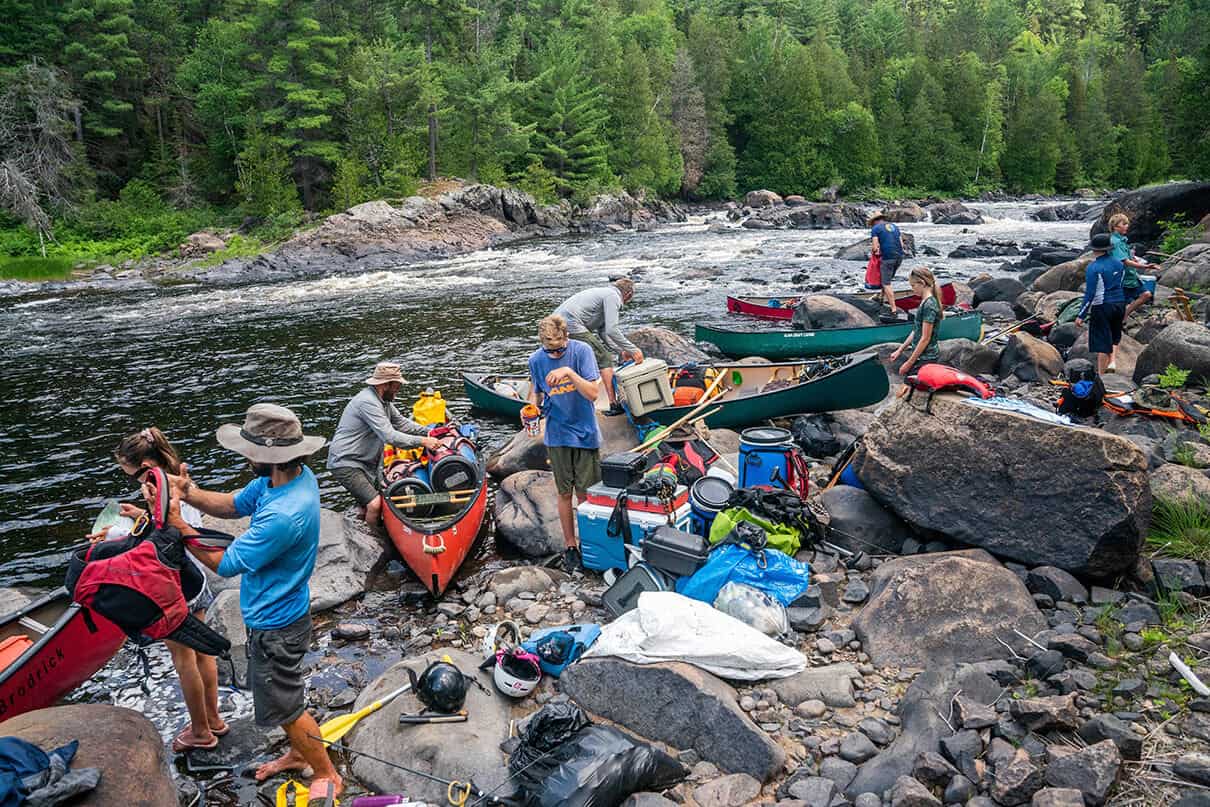
a group of people pack gear into canoes along a river
Write about it and they will come. | Feature photo: Colin Field

Should I have written all those canoe guidebooks? It’s a question that popped into my mind last summer, waiting for my turn to land at a busy portage, six canoes deep, on a route I used to have to myself.

Crowded canoe country isn’t a crisis

If you’ve been out in a popular park over the last few years, you’ve probably experienced something similar. Lately, many of my conversations with fellow campers start the same: Reserving months in advance. Busy put-ins. Lottery systems. Change. 

It’s not our imaginations. More people are getting outside than ever before. Since the pandemic, parks visitation has hit record highs. In 2024, the U.S. National Park Service reported a record 331.9 million visits. North of the border where I am, more than 23 million people visited Parks Canada sites in 2024-2025, up from 16 million in 2018-2019.

a group of people pack gear into canoes along a river
Write about it and they will come. | Feature photo: Colin Field

Am I partly to blame? Writing canoeing guidebooks seemed innocent enough at the time. I figured if you get more people out into wilderness areas, then they’ll fall in love with it and want to protect it when it comes into peril. Over the last few years, it sometimes feels like the rising number of park users and backcountry paddlers is disrupting the pure essence of getting outside.

Clearly, increased use brings growing pains. These days, if you’re lucky enough to get a campsite in your preferred park on your preferred weekend, you’re likely to find the tent pad is worn thin from overuse, firewood scarce, and a fire ring littered with tinfoil and half-baked potatoes.

But here’s the thing: I also think the increase in park users reflects decades of advocacy and access efforts paying off, even if the growing pains are real. Last year, 82.4 million Americans went camping—a quarter of the population—including 2.6 million for the first time. This didn’t happen by accident. For decades, paddlers, writers, outfitters and conservationists pushed for access, protection and education. We taught Leave No Trace. We told people these places mattered.

Today, most backcountry paddlers arrive with maps, permits, PFDs and a basic understanding of how to behave in the backcountry. And if they don’t, everyone from outfitters to parks and social media to magazines like this one is helping reinforce those norms. This wasn’t the case 30 years ago. Neither were bear hangs, fire bans, proper cathole practices and prohibitions on feeding wildlife. 

Whether old-timer or first-timer, most backcountry paddlers are trying to be good caretakers, even when they sometimes fall short. Most campers are kind, generous and ethical. I’ve met so many like-minded people out there and even praised them for packing out some other misguided camper’s garbage.

At the end of the day, would I have done anything different? Should I have kept all those awe-inspiring secret routes and wilderness escapes to myself rather than write them up for tens of thousands of paddlers to read about and explore for themselves? Definitely not. Busy parks don’t have to be broken parks. I look at crowded canoe country as an inconvenience that comes with the success of getting more people outside and in love with wild places. We asked more people to care about wild places. Hopefully, now they do. 

So, am I partly to blame? I like to think so.

Kevin Callan is the author of 20 books, including the bestselling The Happy Camper and Wilderness Pleasures: A Practical Guide to Camping Bliss. His Butt End column explores the lighter side of canoeing and appears in every issue of Paddling Magazine.

Cover of Issue 75 of Paddling MagazineThis article was published in Issue 75 of Paddling Magazine. Subscribe to Paddling Magazine’s print and digital editions, or browse the archives.
Write about it and they will come. | Feature photo: Colin Field


These 6 Montana Lakes Belong On Every Paddler’s Bucket List

kayaking at sunrise
McDonld Lake in Glacier National Park. | Photo: Galyna Andrushko

Framed by the Northern Rockies and skyscraping mountain peaks, Montana is home to countless lakes—and that’s not an exaggeration. There are more than 3,223 officially named lakes and reservoirs across the Treasure State, and hundreds, if not thousands, of uncharted subalpine lakes carved by glaciers and weather over time.

Although Montana is technically landlocked, as a local, I can tell you that our massive water footprint ensures you never feel lacking in water. Water is central to our lifestyle. On any given weekend, you will find me out on the water, whether that’s rowing through technical whitewater or paddleboarding the soothing, clear lake waters of our western valleys.

Living here means having a lifetime of water access right in your backyard. In fact, under the Montana constitution, all water belongs to the state for the use of its people, meaning that public access is a guaranteed right. No wonder we’re so keen on paddling here, eh?

Drawing from years of navigating these waters, here is a curated guide to a handful of my favorite Montana lakes for canoeing, SUPing, and flatwater kayaking.

couple paddling Montana
There is plenty of adventure to be found on Flathead Lake, Montana. | Photo: Visit Montana 

Flathead Lake

Best all-day adventure

You can’t talk about lakes in Montana without first discussing Flathead Lake. Tucked away in the northwestern corner of the state and measuring over 2,000 square miles of water, Flathead is the largest natural freshwater lake west of the Mississippi found in the Lower 48.

With 185 miles of shoreline, Flathead offers prime wildlife viewing, all-day kayak or canoe trips, and ample paddleboarding during the calm morning and evening hours. There are thousands of waterfront properties riddled along the coastline—my family cabin included—so expect motorized and sailboat activity, plus the occasional floatplane landing. The lake is generally split up into the east shore, which is framed by the Mission Mountains and cherry orchards. Here, the shade of the mountains keeps the water relatively cooler and offers more shade from the summer sun.

The west side offers panoramic views of the mountain range with rolling hills as your backyard. Found along the entire lake are various islands and coves, perfect for paddling through when the conditions are right. Weather in Montana can change within minutes, and Flathead is known for the occasional high wind and choppy waves.

My all-time favorite day trek is a paddle to Wild Horse Island, a unit of Flathead Lake State Park. This 2,164-acre nature preserve once served as a pasture for the Kootenai and Salish tribes who swam their horses across the lake to pasture and protect them. True to its name, the island today is a sanctuary for a handful of wild horses, bighorn sheep and other animals like mule deer, bald eagles, osprey and falcons.

Know before you go: Somers Beach State Park and Flathead Lake State Park, which comprises a mix of island and mainland units, are situated directly on the shoreline of Flathead Lake and, depending on location, offer day-use access, swimming and boat ramps for launching. The southern half of Flathead Lake is within the boundary of the Confederated Salish and Kootenai Tribes Flathead Reservation. Recreationists may be required to purchase a tribal recreation permit when visiting parts of the reservation.

lake mcdonald kayak
Kayaking on Lake McDonald, the largest lake in Glacier National Park. | Photo: Visit Montana

Lake McDonald

Best National Park Paddle

When I think of home, I think of the picturesque clear waters of Lake McDonald dotted with rainbow rocks. Because the icy cold waters are fed by glacial runoff and snowmelt, the lake is incredibly clear—visibility can reach up to 80 feet in some areas. Nestled below the surface are smooth argillite pebbles spanning various shades of green, blue, red and purple. Located within the boundaries of Glacier National Park, the mountains snuggle the lake and on a calm day are reflected in its mirror-like waters.

Lake McDonald plunges to a depth of over 470 feet and stretches across 10 miles of shoreline, making it the largest lake in the park. Over millennia, it was carved by the same glaciers that chiseled out the surrounding valley and waterfalls.

You can rent kayaks or paddleboards from the nearby Apgar Village or Lake McDonald Lodge, a 1913 hotel built along the eastern shore in the style of traditional Swiss chalets. You can also bring your own vessels, but be sure to have them inspected at one of the free Montana boat check stations along the way into the park.

Lake McDonald is an iconic experience in the park, and is best for paddling peaceful, pristine waters offering a once-in-a-lifetime view. Like Flathead and Whitefish lakes, early morning offers smoother water, and also more opportunities to see wildlife like bighorn sheep and the occasional bear.

Know before you go: Lake McDonald is located right next to the West Glacier entrance and is one of the busiest areas in the park. Weekday visits in the early morning or off-season visits in the fall mean you may avoid heavy crowds. Purchase a park pass before your visit, and pay attention to parking restrictions in the area.

kayaking at sunrise
Sunrise paddle in Glacier National Park. | Photo: Galyna Andrushko

Whitefish Lake

Best for beginners

A quick 40-minute drive north will bring you to Flathead’s little sister, Whitefish Lake. Tucked at the base of Whitefish Mountain Resort, the small, clear lake is one of hundreds of remote alpine lakes found across this corner of the state. Whitefish Lake is smaller than Flathead, but is surrounded by steep mountains that block the wind and keep the calm, cozy conditions more consistent. Although there is less shoreline than Flathead, the lake feeds into the Whitefish River, a lazy river that winds for 2.5 miles through the town of Whitefish.

I prefer to paddle across Whitefish Lake in the early morning before boat traffic picks up. Because the lake is generally smaller and more calm, it’s ideal for beginners and those seeking a relaxed outing.

Know before you go: Between October and April, the boat ramps are locked. If you want to fish and launch before regular staffed hours during the summer, you must apply for an Early Angler Permit to display on your dashboard. It is mandatory to have all motorized and non-motorized watercraft inspected prior to launching in Whitefish Lake. The lake is located about 30 miles from Glacier National Park, making it a perfect addition to a planned park outing.

man kayaking whitefish lake Montana
Glassy water on Whitefish Lake, Montana. | Photo: Visit Montana

Earthquake or Quake Lake

Best for history buffs

If you’re a history buff like me, don’t skip out on Earthquake Lake. Also known as Quake Lake, this naturally dammed lake is one of my all-time favorite places in southwestern Montana. Its location is a bit off the beaten path, so put on your adventure hat and make sure your vessels are primed for skirting through a ghost forest.

Located along the Madison River, Quake Lake was created after a 7.3-magnitude earthquake struck the area in 1959. The quake killed 28 people and triggered a massive landslide of 80 million tons of rock and debris that moved at over 100 miles per hour, blocking the river. This created a natural dam that filled the canyon within weeks, with newly formed lakewaters submerging part of the river valley.

The result? A “ghost forest” of dead trees that you can paddle through today. At 6 miles long and 125 feet deep in parts, paddlers here must keep their heads on a swivel—submerged timber and sharp skeletal tree remains can easily catch rudders and fins or snag on inflatable vessels. Like most lakes in Montana, Quake Lake is known for strong and unpredictable winds in the afternoon. Check the weather and consider an early morning paddle.

If you love history, the Earthquake Lake Visitor Center gives information about the lake and its formation. The center also serves as a natural laboratory to learn more about the impacts of seismic events.

Know before you go: Access the lake by driving along highway 287 and following the shoreline. Montana visitors will need a $10 permit for all non-motorized watercraft, including kayaks and SUPs. For photographers, the ghost trees are most striking on foggy days or in the late afternoon shadows.

group kayak montana
Big skies and wild shorelines make Montana a paddler’s paradise. | Photo: Visit Montana

Hyalite Reservoir

Best for surrounding trails

Located 10 miles up the beautiful Hyalite Canyon, the drive to Hyalite Reservoir is scenic in itself. This 206-acre lake near Bozeman was constructed in the 1940s and later enlarged in 1993. Today, the reservoir is surrounded by dramatic peaks and, with limited motorized boats, is perfect for paddleboards, canoes, kayaks and SUPing. The lake is also a no-wake zone, and the peaceful waters make it a great spot to fish for cutthroat trout and Arctic grayling.

While you’re here, tag on a hike. There are many scenic trails in the area, like the easy 1.1-mile out-and-back Palisade Falls trail, which takes you to a cascading waterfall nestled in the Gallatin Mountain Range.

Know before you go: There’s a day-use area with a large parking lot and picnic sites that you can launch from. Some fish species are catch-and-release only, so be sure to check local regulations before dropping a line.

couple kayak Montana
For canoeists, kayakers and paddleboarders, Montana’s Flathead Lake offers endless ways to explore. | Photo: Visit Montana

Hebgen Lake

Best for fly-fishing access

Located 10 miles northwest of West Yellowstone, Hebgen Lake is another great body of water for kayakers who love to cast a fly. This man-made lake measures 16 miles long and 4 miles wide—it’s also just 15 minutes from West Yellowstone, making it a great place to camp and regroup after visiting the national park.

Hebgen Lake is known for its large rainbow and brown trout. It’s best to visit between July and September when the temperatures are warm, but late May through mid-July brings the chironomid hatch, driving big trout to the surface of the lake.

There are campgrounds nearby and around the lake, like Rainbow Point or Bakers Hole, most of which can be accessed through the online government reservation website, Recreation.gov.

Know before you go: Motorboats are allowed on Hebgen Lake, so practice good manners on the water. As with many waterways in Montana, mosquitoes can be a real nuisance.

Always wear a properly fitted life jacket and dress both for the weather and water temperature. Nonresidents of Montana must have their watercraft inspected before entering or launching in the state. For more information visit cleandraindry.com.


Sunrise paddle in Glacier National Park. | Feature photo: Galyna Andrushko


Level Six Enters The Life Jacket Market

PFDs on paddle board
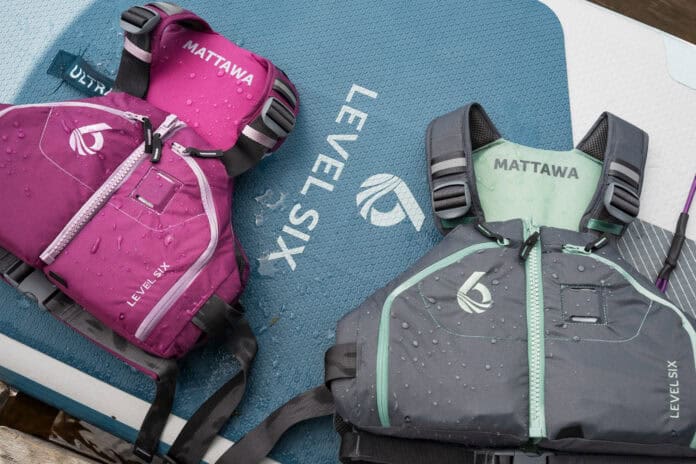
The New Mattawa PFD from Level Six. | Photo: Courtesy Level Six

Level Six is entering the life jacket market in a big way. The Ottawa-based brand has certified 24 new models, 10 of which will ship to retailers in March 2027. The collection will include the first low-profile 50 newton buoyancy aids approved for the North American market by the U.S. Coast Guard and Transport Canada.

The company will introduce the remaining 14 designs over the next few years, Level Six founder and CEO Stig Larsson said in a wide-ranging interview on the Paddling Business Talks podcast, with host Jeff Moag and Scott Szczepaniak, former owner of Sea Kayak Carolina turned recreational boating safety specialist with the U.S. Coast Guard.

“We knew we couldn’t enter this market with just one or two models,” Larsson said. “We had to enter as a real contender and offer a wide assortment.”

The launch brings an established paddlesports apparel brand into a highly regulated category. It also arrives as the new Level 50 standard opens the door to slimmer, lighter buoyancy aids for paddling and other types of boating.

Level 50 buoyancy aids provide at least 50 newtons, or approximately 11 pounds, of flotation—a step down from the 15-plus pounds in the Level 70 or Type III life jackets most paddlers are familiar with. The reduced volume allows manufacturers to build lower-profile products with greater mobility and less heat retention.
Szczepaniak said that comfort was a key element in the U.S. Coast Guard’s decision to certify the Level 50 standard.

“Fit and comfort are two of the top things a paddler looks for in a life jacket,” Szczepaniak said. “If you have an orange Type II horse-collar from a big box store, it’s going to float you. But you’re not going to wear it. It’s just not comfortable.”

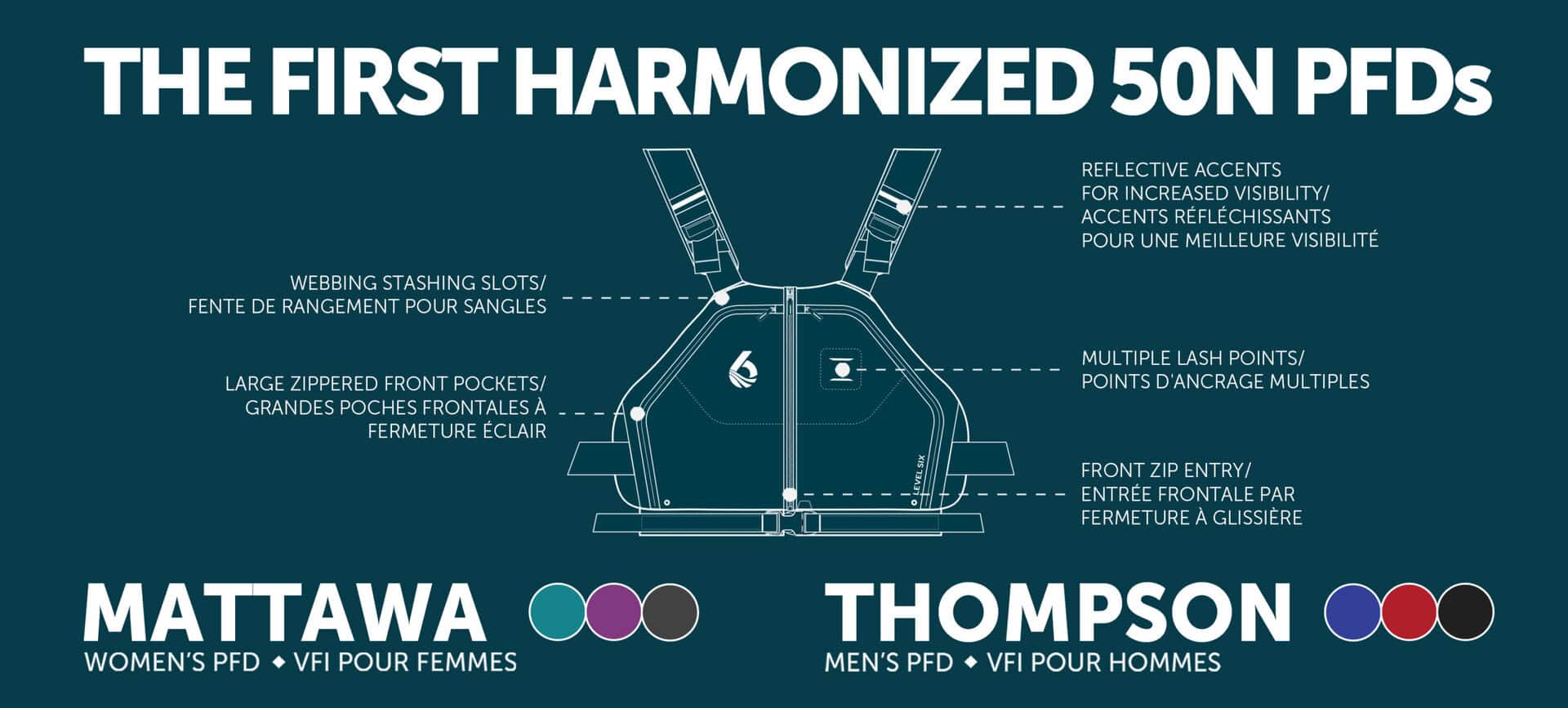
PFD graphic
Features of the first harmonized Level 50 PFDs. | Photo: Courtesy Level Six

That gets to the grand bargain behind the Level 50 harmonized standard agreed to by regulators in both the United States and Canada. The U.S. Coast Guard and Transport Canada accepted less buoyancy in exchange for designs people are more likely to wear. As Szczepaniak puts it, “Eleven pounds of buoyancy on your body is better than 16 pounds of buoyancy clipped to your seat.”

That’s where the new standard’s key stipulation comes in: Level 50 buoyancy aids must be worn to count toward U.S. carriage requirements. Slipping one under the deck bungy doesn’t count. Szczepaniak notes the new PFDs are intended for competent swimmers in relatively protected waters where help is nearby. They are not recommended for poor swimmers, non-swimmers or remote and extreme conditions.

For paddlesports dealers, the new class of buoyancy aids create both a sales opportunity and an educational responsibility. Retailers must help customers choose the right performance level while emphasizing that comfort only helps if they wear the jacket.

A founder’s bet

Larsson said that he has wanted to enter the life jacket category for more than a decade. Level Six nearly submitted designs for Coast Guard approval before the pandemic, but supply-chain challenges interrupted the effort.

The delay gave the company time to reconsider the scale and direction of the project. Female paddling participation was growing, and Larsson saw an opportunity to create a women-specific counterpart for every men’s model.

Then, in characteristic fashion, the former World Cup slalom racer charged straight into the meat.

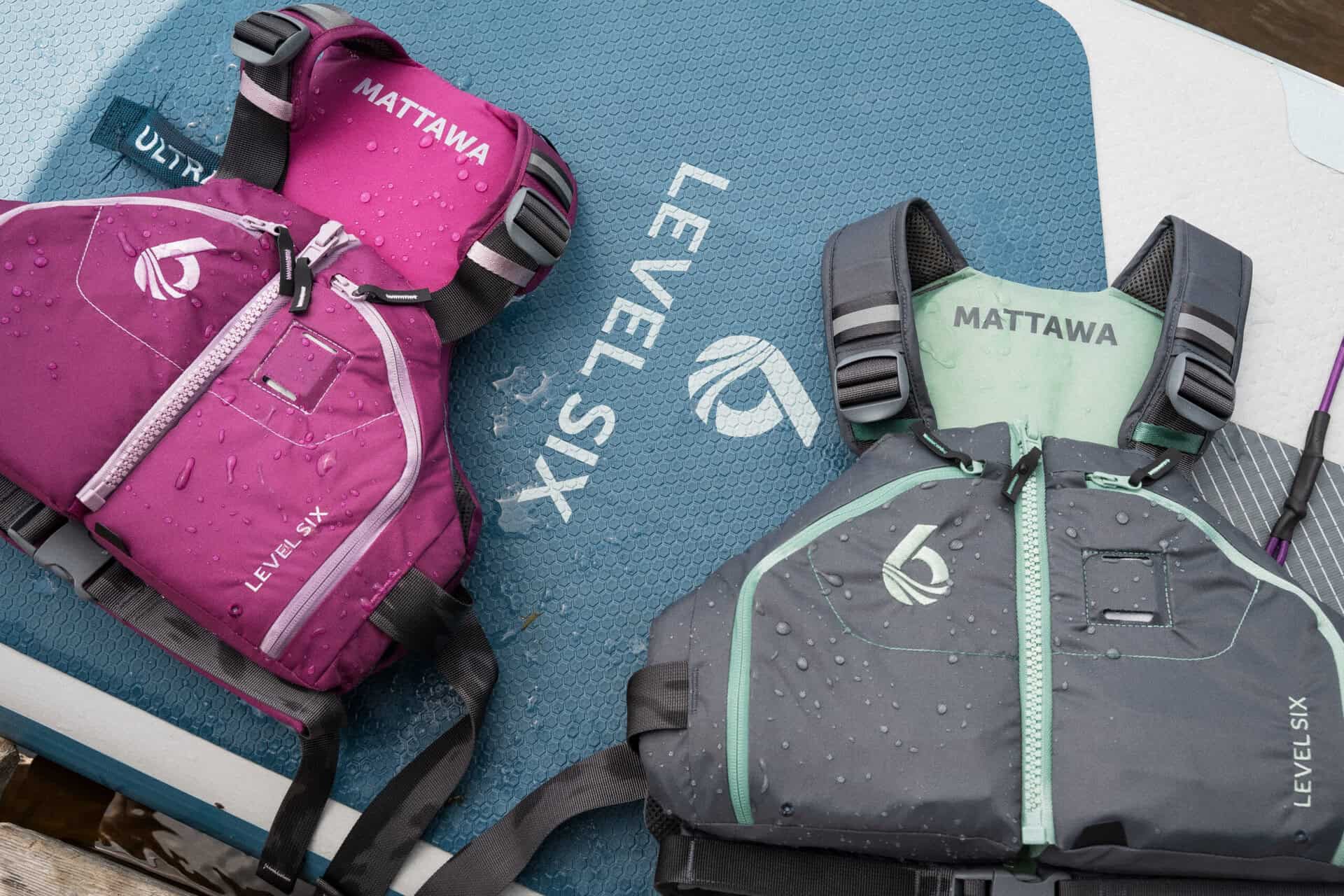
PFDs on paddle board
The ultra low-profile Level 50 Mattawa PFDs from Level Six. | Photo: Courtesy Level Six

“I think if Level Six were owned by a private equity firm, we would never have done it,” Larsson said. The expense and regulatory risk of certifying two dozen new PFDs doesn’t pencil out on a spreadsheet, especially before proving the market. But as a founder, Larsson had the freedom to trust his instincts.

“There is nobody I need to get approval from on some of these riskier or crazier ideas,” said Larsson, who founded Level Six 30 years ago while representing Canada on the World Cup circuit.

During a training trip to Costa Rica in the winter of 1997, he decided paddlesports apparel lacked the kind of style he saw when visiting local surf breaks. Back home in Ottawa that spring, he began designing rash guards, board shorts and lightweight paddling garments, then selling them from the back of his van at races. That grew into a few retail accounts in Ottawa. Today, Level Six products are carried in more than 450 stores worldwide. The company will mark its 30th anniversary in 2027.

Read and run

Slalom racing is a game of calculated risk. Getting down the river is easy, but if you want to win you have to commit to the fastest line – one that risks a costly gate touch or even a 50-second penalty for missing a gate altogether. Go big or go home.

That mindset explains Larsson’s leadership last year. The U.S. Coast Guard had approved the Level 50 standard, but Travel Canada had not. Corporate risk assessors would have tapped the brakes; Larsson stepped on the gas.

Level Six kept working, focusing design work on the tried-and-true Level 70 standard. Then, when those designs were completed, they dived into the Level 50 work, creating a suite of designs and samples based on the standard it expected Transport Canada to adopt. This approach is standard procedure in whitewater: You make your best assessment of what the crux will look like when you get there, and then you commit.

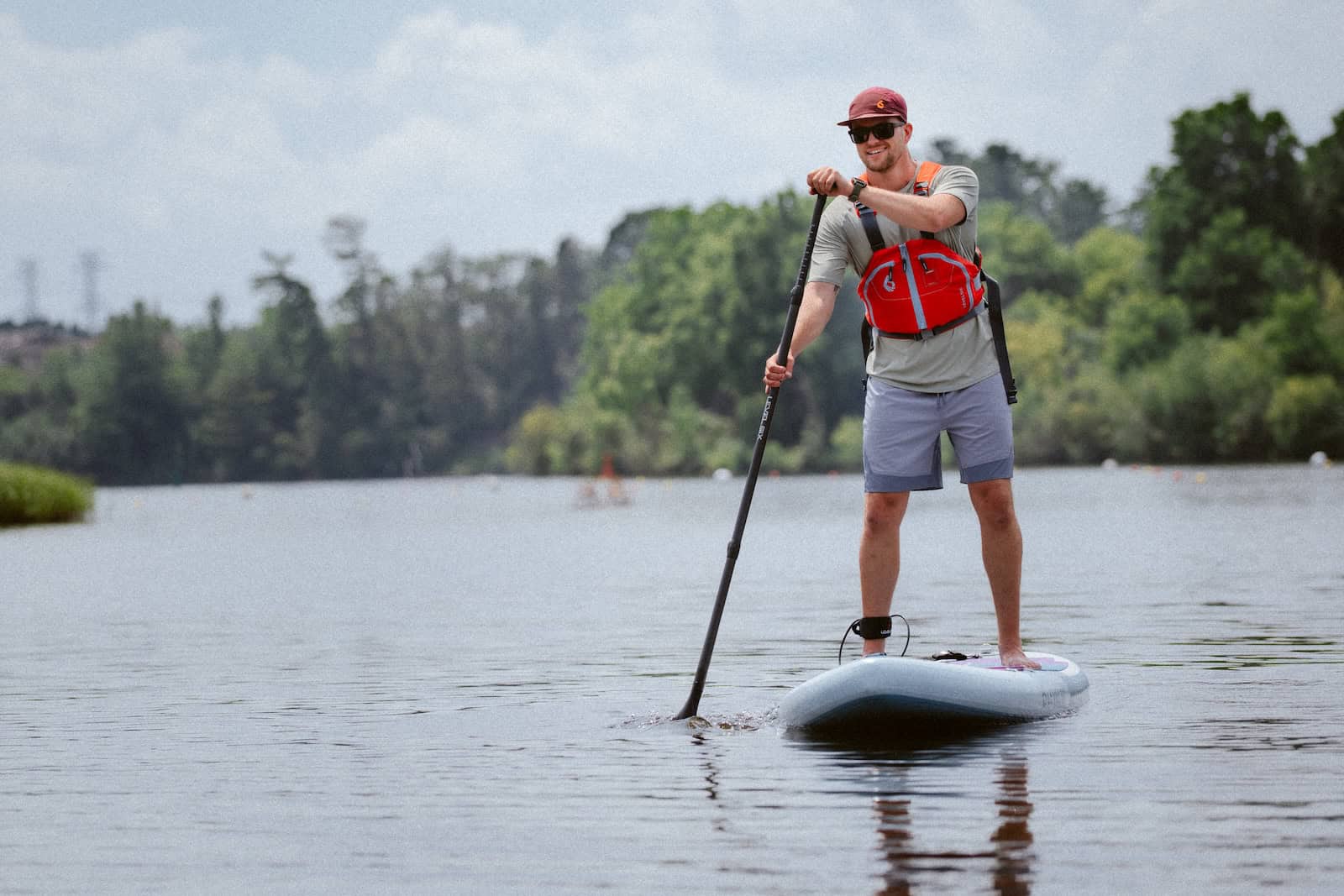
man on paddle board
Level Six debuts new lineup of PFDs in 2027. | Photo: Courtesy Level Six

When Canadian approval arrived in early March 2026, the company was about eight months ahead. That positions Level Six to be the first out of the gate in North America. It also illustrates the scale of Larsson’s wager. Certification is expensive, and once a foam package is approved, designers have little freedom to change it.

Two of Level Six’s three full-time industrial designers worked almost exclusively on the life jacket project. They shaped and tested foam at the company’s Ottawa headquarters, adding or removing a sliver at a time to improve the way a jacket wrapped around the ribs or over the shoulder.

“Across the whole range, we wanted to go for comfort and full range of movement first,” Larsson said. “You’ve got to want to wear it.”
Every model will come in men’s and women’s versions. Although the names are different, the jackets are made with comparable materials, features and quality. “We’re not shrinking and pinking it,” Larsson said.

The Level 50 designs take the low-profile concept furthest. Larsson compares their feel with the minimalist racing vests he wore on the slalom course.

“You can barely feel it when you’re paddling,” he said.

Level Six also plans to use recycled materials, PFC-free fabrics and PVC-free foam across the range. The company will pursue international certifications alongside its North American approvals.
The result is more than a category extension. It is a founder-led company betting that better fit, less bulk and paddlesports credibility can persuade more customers to wear their life jackets—and give specialty retailers a compelling reason to put Level Six on the PFD wall.

Best Satellite Communicators For 2026

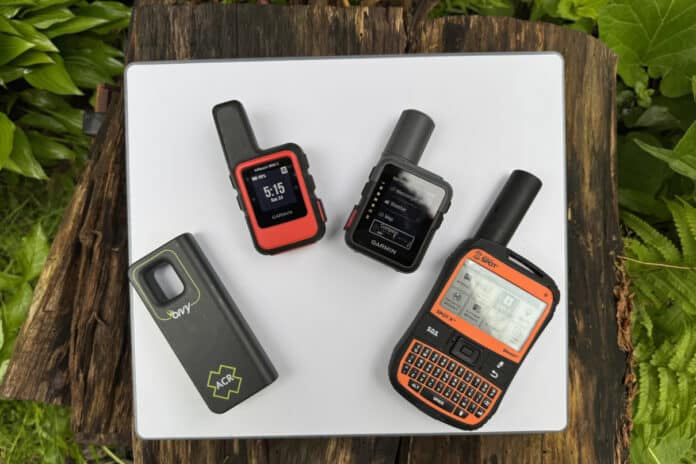
A collection of our best satellite communicators and messengers after extensive testing.
Image: Kaydi Pyette

Backcountry travel used to mean disappearing off-grid for days or weeks at a time. Not anymore. I’ve tested satellite communicators on long paddling trips, bikepacking journeys and remote international travel, and today’s devices are ultra-tough, small enough to fit in your PFD, can pair with your smartphone, and keep you in touch with home.

For adventures beyond cell service, a satellite communicator is the best way to gain peace of mind, both for yourself in case of emergency and for loved ones following your breadcrumb trail back home.

Best Satellite Communicators: Our Top Picks


Best Overall Satellite Communicator

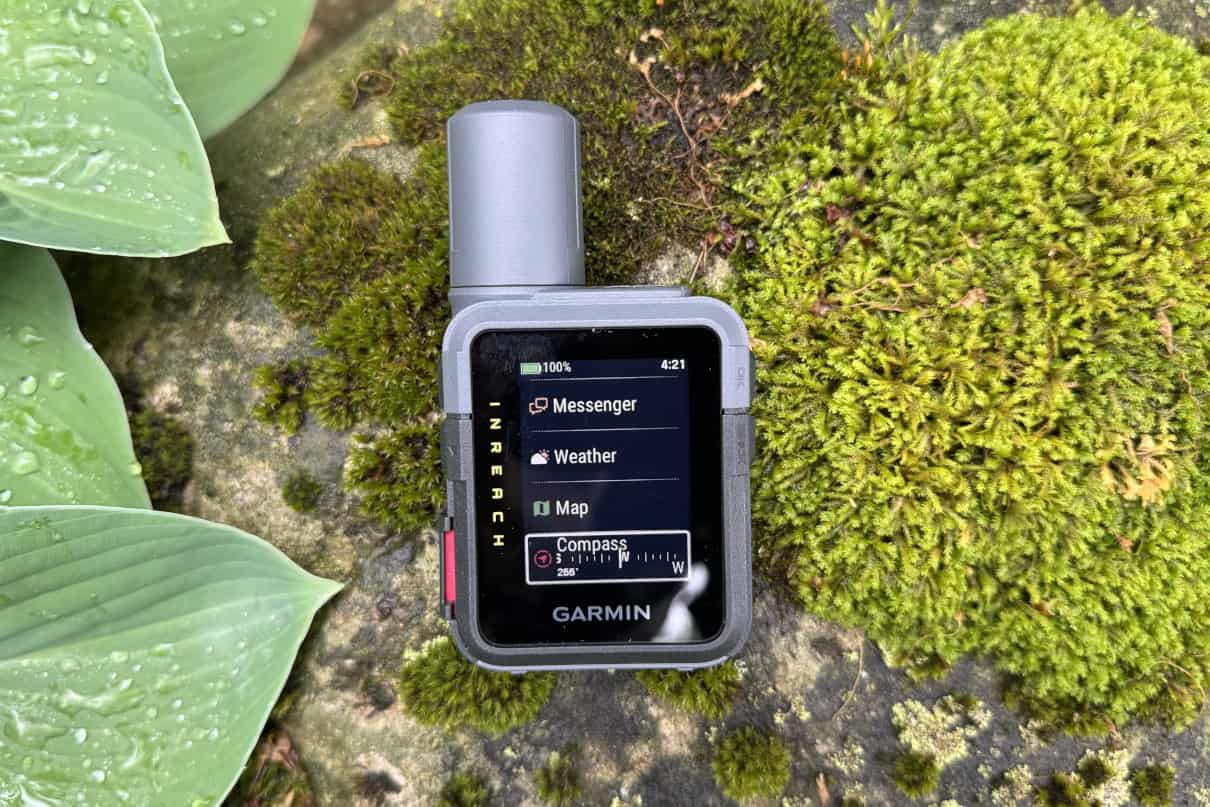
Garmin inReach Mini 3

Our overall best satellite communicator is the Garmin inReach Mini 3.
Image: Kaydi Pyette

$449 USD

Buy from:

BACKCOUNTRY REI AMAZON GARMIN

Why I love it

The Garmin inReach Mini 2 has been my most-used satellite communicator since 2022, so I was excited to test the Mini 3.

What I love about the Mini 2: its compact size, reliable connectivity and excellent battery life. On a multi-month cycling trip, I set the device to update my location every hour so family 5,000 miles away could follow my route. I needed to recharge it just once a week.

The next-generation Mini 3 improves on the above with a touchscreen, color display and better battery life, Garmin claims up to 350 hours at 10-minute tracking intervals. It keeps the same formula of two-way messaging, SOS capability and weather reports in a palm-sized package that weighs just a fifth of a pound (4.3 ounces).

All the core features of the Mini 3 work whether or not it’s paired to your phone—you can even peck out messages from the device directly, circa a 2005-era cell phone. For an additional $50, it makes sense to upgrade to the Mini 3 Plus for the ability to send images and voice messages via Bluetooth connection with your smartphone. That said, bargain hunters will be tempted to wait for a sale on the Mini 2, which drops down to $249 a couple times a year, for most of the same core functionality at close to half the price.

Garmin data plans start at $7.99 a month, and there is a one-time $39 activation fee. As of June 2026, most service plans can be suspended for up to 12 months at a time while maintaining the SOS function.

Reasons to buy
  • Reliable Iridium satellite coverage for SOS and two-way messaging
  • Excellent battery life
  • Compact, lightweight and ultra-tough
Consider another if
  • Your adventures rarely take you beyond cell service

Bottom line

With reliable SOS and two-way texting capability in a tough little package, the Garmin inReach Mini series is hard to beat.


Most Lightweight Satellite Messenger

ACR Bivy Stick

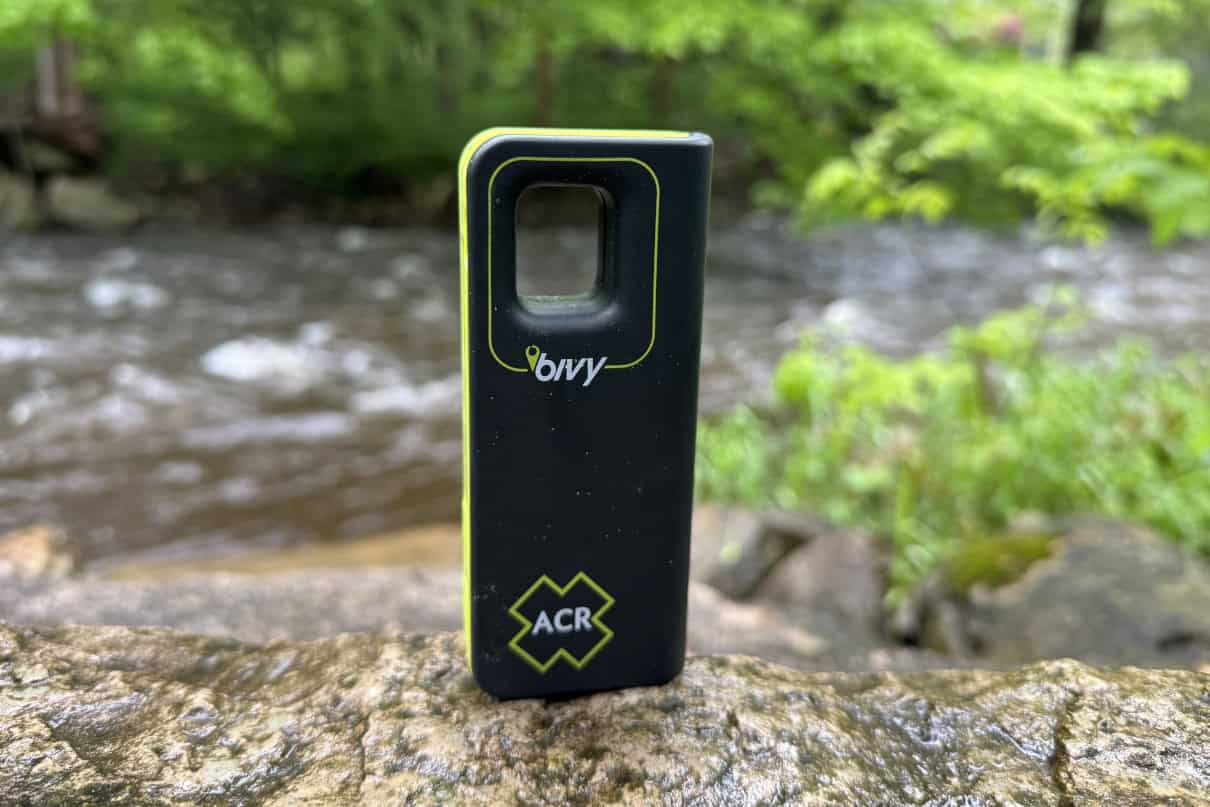
The lightweight and affordable ACR Bivy Stick satellite messenger.
Image: Kaydi Pyette

$199.95 USD

Buy from:

BASS PRO REI AMAZON ACR

Why I love it

A favorite around the Paddling Mag office, this is a fellow editor’s go-to because it’s reliable, easy to use and ultralight. It’s also the lightest device we tested at 3.3 ounces. The ACR Bivy Stick is best used when paired with your cell phone, though you can use it as a standalone device to signal SOS, send a preset check-in message and start/stop tracking. The app offers user-friendly functionality, though not everyone likes having to use a second device for full functionality.

Multisport adventurers who like analyzing their activity data will also appreciate that the Bivy Stick can label tracked adventures with activity type and access stats including time, distance, vertical, calories burned, average speed and top speed.

The Bivy Stick is also the most budget-friendly device featured here. Its data plans start at $14.99 per month for an annual plan or $19.99 for a month-to-month plan, and there is a one-time $29.99 activation fee. For those who only need a satellite communicator for part of the year, the Bivy Stick has no deactivation fees after the initial three-month commitment.

Reasons to buy
  • Lightweight
  • Intuitive smartphone app with detailed trip stats
Consider another if
  • You don’t want to rely on your smartphone for full functionality

Bottom line

The ACR Bivy Stick combines top-of-the-line features in one compact package.


Best For Day Trips

iPhone Satellite Messaging

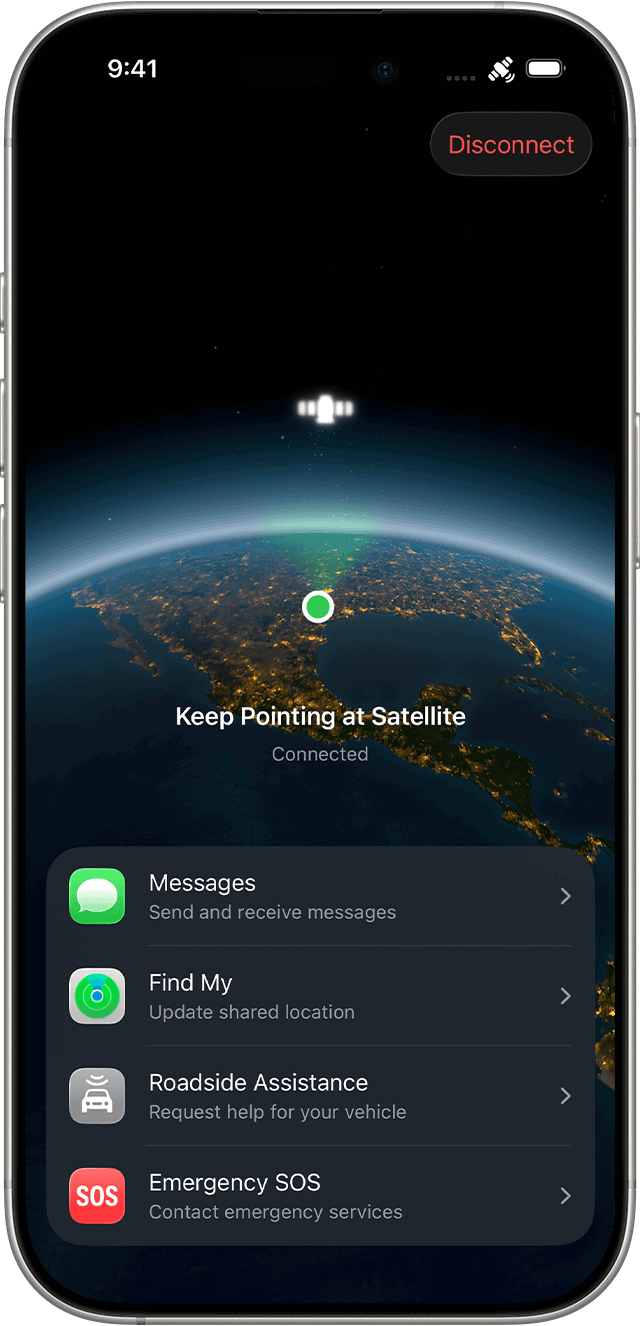
iPhone satellite messaging screen.
Image: Apple

Free

Buy from:

APPLE

Why I love it

If you’re running iOS 18 on an iPhone 14 or newer, great news: you already have a satellite communicator in your pocket. Lose cellular service and a small satellite icon will pop up in the top-right corner of your iPhone. Open the iMessages app and your phone will prompt you to turn left or right toward the nearest satellite and alert you once connected.

On an open lake, messages take about 30 seconds to a minute to send, and you can text individuals, but not groups. You do need an open sky to connect. The biggest advantage is that this service is currently free. There’s no subscription or additional device to buy or download, and most iPhone users are probably already carrying their phone into the wilderness as a camera. Messaging via satellite is a bit of a suck on the battery life of the phone, but that’s not unexpected—the messages are going to space, after all.

Some online chatter claims this feature will make dedicated satellite communicators obsolete, but I’m skeptical. Compared to these other devices, my iPhone is delicate. Sub-zero temps or being left out in the sun can render it a brick. Shattering the screen can make it unusable. And I’ve been locked out of my phone for an hour after it rattled around in a pocket and initiated too many passcode attempts.

That said, smartphone satellite messaging is a genuinely cool communication option. For wilderness travel, I’m still packing a dedicated satellite communicator in case SHTF.

Reasons to buy
  • It’s free! No additional device or subscription required
  • No extra weight or device to pack
Consider another if
  • You need a rugged device
  • Long battery life is essential for longer trips
  • You want dedicated SOS, tracking or communication without relying on your phone

Bottom line

Best for casual adventurers who don’t need a bombproof device.


Best For Single-Device Functionality

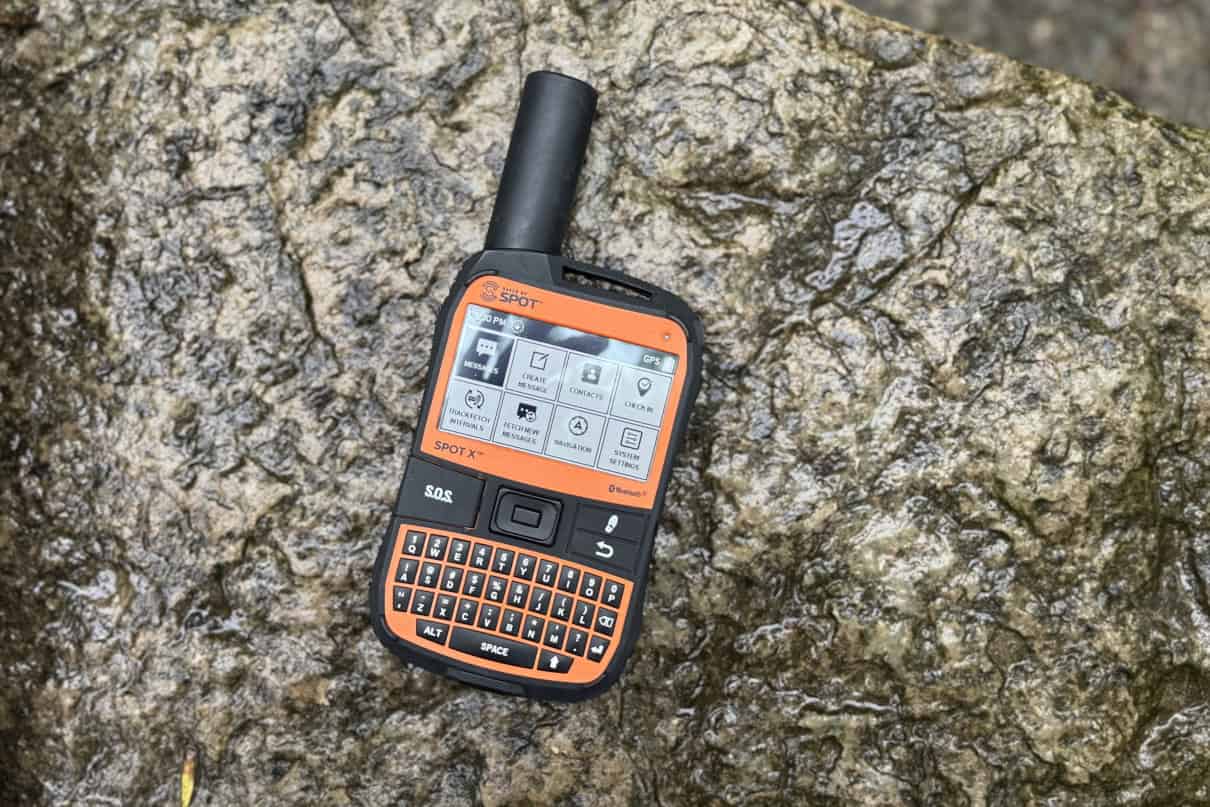
SPOT X

A SPOT X communicator sitting on a wet rock in the outdoors.
Image: Kaydi Pyette

$249 USD

Buy from:

BASS PRO AMAZON REI SPOT

Why I love it

As more and more satellite communicators require pairing with smartphones for optimal functionality, there is something refreshingly vintage about this standalone device. Die-hard Blackberry fans—hi, Dad!—are still thrilled with the SPOT X thanks to its handy QWERTY keyboard that makes writing custom messages easy. The trade-off is that this device weighs twice as much as most handheld devices featured here.

First released in 2018, the SPOT X features Bluetooth connectivity so you can pair it with your phone. SPOT offers contract plans (starting at $11.95 a month) and month-to-month plans (starting at $14.95 a month).

In April 2026, Amazon bought SPOT’s parent company, satellite operator Globalstar, for $11.6 billion. According to the press release, “The acquisition will fold Globalstar’s existing and forthcoming low Earth orbit satellites into Amazon Leo, enabling direct-to-device services that extend cellular voice, text and data coverage.” SPOT devices continue to operate as normal.

Reasons to buy
  • Full QWERTY keyboard makes composing messages easy
  • Works as a true standalone device, no smartphone required
Consider another if
  • You aren’t specifically looking for a physical keyboard. Newer satellite communicators are smaller, lighter
  • You want a more modern interface
  • You need broader satellite coverage offered by Iridium network

Bottom line

If typing messages on the device itself is your priority, the SPOT X still stands apart.


Best For Internet

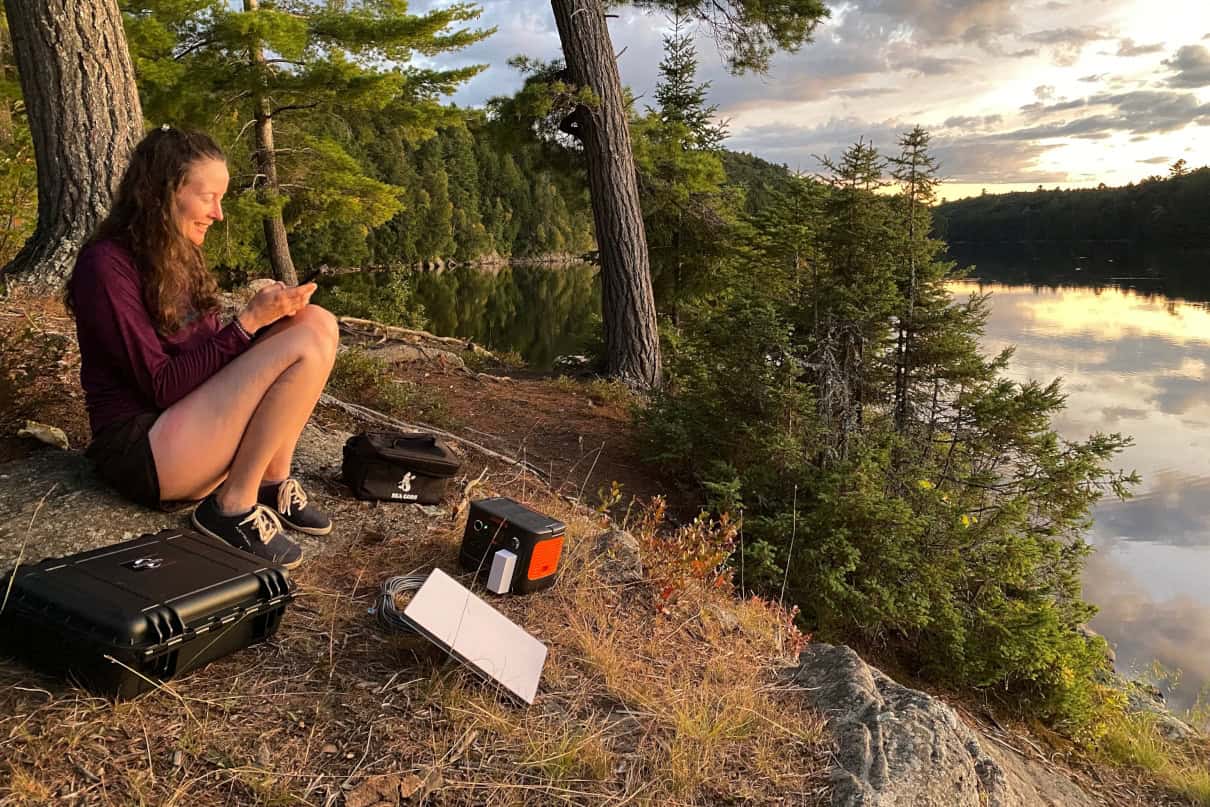
Starlink Mini

Editor Kaydi Pyette staying connected to the office with the Starlink Mini.
Image: Kaydi Pyette

$250 USD

Buy from:

BASS PRO AMAZON STARLINK

Why I love it

The first time I fired up the Starlink Mini from a wilderness campsite, it felt vaguely dystopian. One minute, I was listening to loons and watching the sun set with no cell service. Sixty seconds later, my phone exploded with notifications as the Mini ushered the entire internet into the backcountry.

Weighing two pounds, the Mini is roughly the size of a MacBook Air and fully weatherproof. Activation is simple: Sign up for a Roam data plan ($50 for 100 GB per month) and connect your iPhone to its Wi-Fi. Easy.

The Mini needs roughly 110 degrees of open sky to lock onto satellites, so large lakes offered quick connectivity, while river valleys sometimes prevented connection.

The catch is the Mini needs a battery to power it. I brought along the Jackery 300 Plus Explorer—a portable power station better suited to car camping or off-grid cabin weekends—which powered the Mini once a day for two weeks. The battery unit added eight pounds and is about the size of a four-slice toaster.

Since I was testing this setup on a river trip, both the Mini and its battery were housed in waterproof cases. All this tech and its protection required an extra backpack and weighed about 16 pounds. Yikes.

Reasons to buy
  • High-speed internet virtually anywhere with a clear view of the sky
  • Portable enough for road trips, van life, remote cabins and really stubborn canoe trippers
Consider another if
  • You only need SOS and satellite messaging
  • You’re traveling by human power

Bottom line

For road trippers and digital nomads needing reliable and portable connectivity beyond the grid, the Starlink Mini is in a league of its own. For everyone else, it’s overkill.


What To Consider When Buying A Satellite Communicator

A handful of factors are worth weighing before buying a satellite communicator.

Features

Some devices offer only SOS and two-way messaging, while others add weather forecasts, navigation and activity tracking. Communicators might also rely on a smartphone companion app for easier texting, location sharing, photo sharing and voice messages, while others offer a full keyboard and screen, or just the SOS and preset messages essentials. Decide what type of features are indispensable to you, and whether you want a standalone device or one that pairs with your smartphone.

Subscriptions

Subscription costs are another important consideration. In addition to the device itself, most satellite communicators require a subscription plan, so compare monthly fees, activation costs and whether you can suspend service during the off-season without having to pay a deactivation fee.

Battery life

Longer trips need longer battery life, as will paddlers who want to message more frequently, so consider whether you’ll be sending a single daily check-in or tracking your route every 10, 30 or 60 minutes. Tracking frequency will dramatically affect how much battery is used.

While weight is a consideration, aside from the Starlink Mini, the satellite communicators featured here are light enough that a couple extra ounces will not make or break the decision for all but the most ultralight adventurers.

Best Satellite Communicator Brands

How We Tested

We tested these satellite communicators on paddling trips and bikepacking adventures beyond cell service. To test these devices, our editors evaluated setup, user-friendliness, battery life, cost, portability and reliability.

Our testing included everything from double-carrying the Starlink Mini and its beefy battery along a canoe route with 20 kilometers of portaging to using the Garmin inReach Mini 2 for months of bicycle touring. These recommendations also draw on years of field experience and the collective expertise of Paddling Magazine’s longtime contributors who have relied on satellite communicators across thousands of kilometers of wilderness travel.

Cover of Issue 75 of Paddling MagazineThis article was published in Issue 75 of Paddling Magazine. Subscribe to Paddling Magazine’s print and digital editions, or browse the archives.
Feature Image: Kaydi Pyette


Eighteen-Year-Old Killed By Lightning Strike While Kayaking In Florida

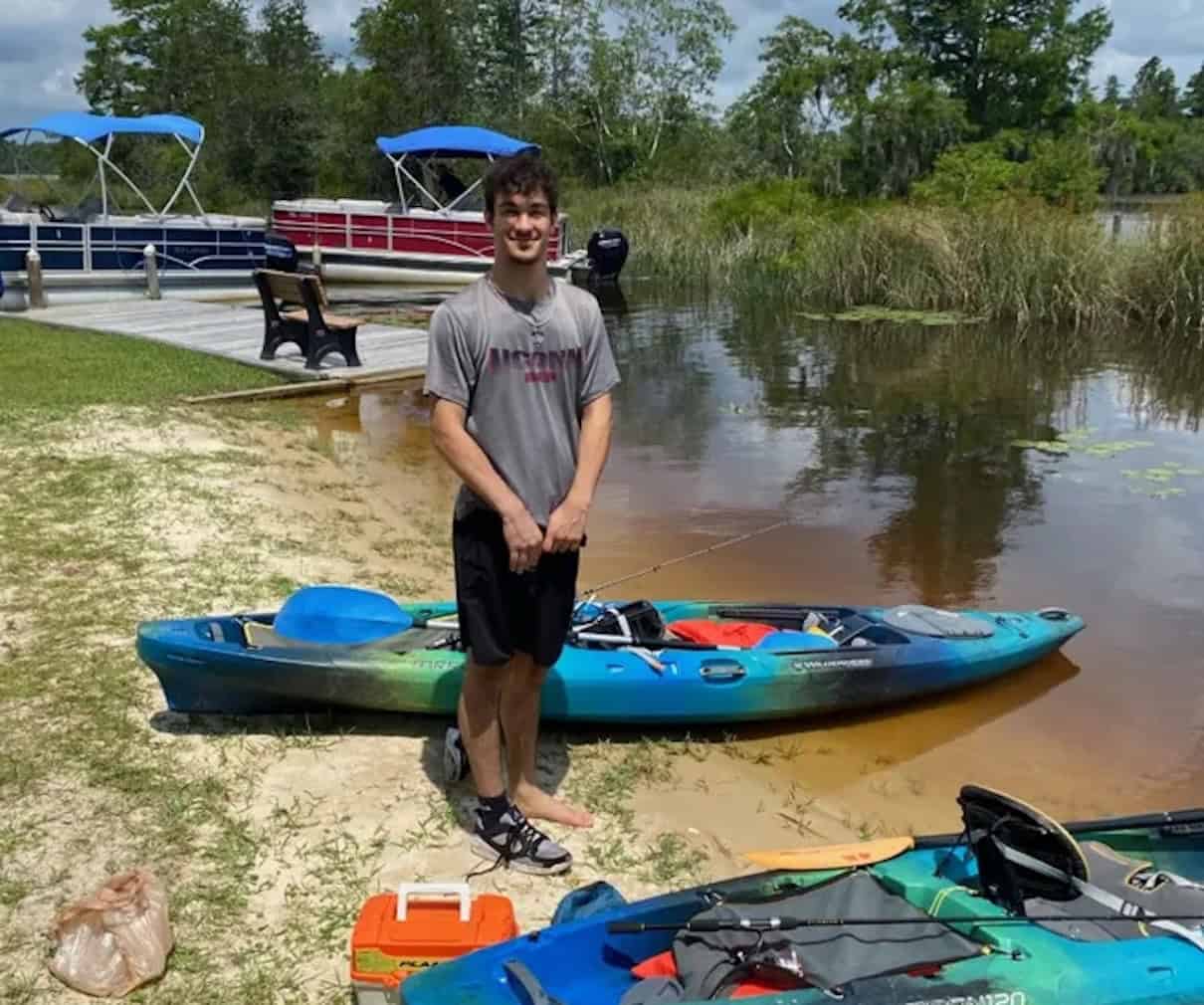
Loved ones of 18-year-old Michael Aiden Vargas share he died while doing what he loved–hanging with his dad on the water.

Vargas, who went by Aiden, was an avid angler and a high school senior. He was kayaking with his father on Blackwater River in Milton, Florida, on May 31 when he was struck by lightning. 

Lightning strikes

Aiden’s father Michael Vargas said that he and Aiden were trying to get back to the docks as storm clouds gathered above the river.

“The storm was coming in, and we could see the docks, you know. We were almost there,” Michael Vargas said in an interview.

Before he could reach the shore, Aiden was struck by lightning and fell into the water. Michael Vargas and other bystanders immediately began looking for Aiden, but his body didn’t resurface. Authorities were called, and a multi-agency search began. 

“I heard a very large lightning strike, so loud that it was ear piercing and scared me,” a man nearby where the strike occurred told Pensacola News Journal. “Like 20 minutes go by and I see 10 to 15 cops walking the shore and some went by on a boat. They let us know there was a lightning strike and didn’t say much else.”

man on beach with kayaks
Aiden Vargas loved fishing and being on the water. | Photo: Pensacola News Journal

Dive teams and sonar equipment were used to search the bottom of the river, and Aiden was eventually found deceased in the water. 

“I know he didn’t suffer. I know that it was something quick and instantaneous. And one day, we’ll see him again,” Michael Vargas told Fox News

Minimizing risk

As the sky darkened and the storm moved in, Michael Vargas says the water stayed calm, so the father and son duo weren’t feeling very concerned.

“The conditions weren’t something where we were so worried and so feared for our lives, where you know, it was so calm for what ended up happening,” he said.

Emily Powell with the Florida Climate Center says lightning is more random than other severe weather events. It gives very little advance warning, striking quickly and sometimes far from where the storm seems the worst.

“Once convection is triggered the thunderstorms can develop really rapidly,” told Pensacola News Journal. “Also, what catches people off guard is the lighting can happen at the periphery of the storm and strike 10 miles away.”

The National Oceanic and Atmospheric Administration (NOAA) reports lightning can strike as far as 25 miles out from a thunderstorm. Because of lightning’s unpredictability, NOLS recommends paddlers should watch the sky diligently for approaching or developing clouds that could indicate thunderstorms and get off the water before the storm arrives. If you wait to move until you hear thunder, you may run out of time to reach safety.

man stands in water fishing
Aiden Vargas standing in the water fishing. | Photo: Aiden Vargas | Instagram

Once on shore, paddlers should look for a safer spot to wait out the storm. That means staying away from tall trees, wide open areas, hilltops and open water. If you’re in the frontcountry, seek shelter in a car or a closed building. If you’re in the backcountry, look for flat ground and stands of trees of even heights. NOLS also considers both gently rolling terrain and deep canyons to be safer terrain. 

While waiting for the storm to pass, paddlers should try to reduce their overall footprint. Doing so somewhat reduces the risk of being hit by ground current if an object nearby is struck. NOLS refers to this as the “lightning position” and recommends you stand or squat with your feet close together or sit cross-legged. Avoid lying down as this maximizes your contact with the ground. The lightning position is not a substitute for seeking safer terrain and should only be done after you’ve reached a safer spot.

Aiden’s tragic death also emphasizes just how crucial it is for paddlers to always wear a personal flotation device (PFD) when on the water. Once he was struck, Aiden’s body sank, making it difficult for bystanders and rescue crews to find him. Even strong swimmers should always wear a PFD. 

8 Essentials In Editor Brenna Kelly’s River Guiding Kit

Brenna Kelly guides a whitewater river rafting trip with Wilderness Tours
River God (noun): Calm. Competent. The one you trust to fish you out of the river. | Feature photo: Wilderness Tours

Being a whitewater paddler may give outsiders the impression you are smelly, risky and low-budget. In other words, a river rat. A river god, on the other hand, is legendary. They’re calm under pressure, competent and inspiring to everyone, even the CEO in their raft that day. The difference isn’t ego, it’s preparation. Here’s what I rely on to project the raft god persona on and off the water, from running rapids to cooking dinner, teaching swiftwater rescue, rigging camp and everything in between.

8 Essentials In Editor Brenna Kelly’s River Guiding Kit

NRS Guide Shirt

NRS Guide Shirt

MSRP: $89.95

It’s hard to find a shirt that feels good when I reach my arms forward and not like I’m about to rip out of the back like the Hulk. The NRS Guide Shirt has a bit of stretch, which is perfect for paddlers who often have broad shoulders. Built-in sun protection and wrinkle resistance help, but it’s the collar that gives it river god status and makes you look like a professional.

Buy from:

BACKCOUNTRY AMAZON NRS

Sweet Protection Rocker helmet

Sweet Rocker

MSRP: $250

A helmet should fit like it was made for your head and feel good enough that you can keep it on all day. The Sweet Rocker is my pick because it fits my oblong head well. As a raft guide, wearing your helmet all day sets the tone for everyone else.

Buy from:

BACKCOUNTRY AMAZON SWEET PROTECTION

Astral Brewer

Astral Brewer

MSRP: $150

I’ve had three pairs of Astral Brewers over 15 years. They’re tough enough for abuse and comfortable enough to go from the river to the pub. There’s no extra liner in the sole, so they don’t stink. I size up so they fit over drysuit booties.

Buy from:

BACKCOUNTRY AMAZON SCHEELS ASTRAL

NRS Vector rescue PFD

NRS Vector

MSRP: $225

Your PFD is the most important piece of gear you own. Treat it that way. Don’t stand for rips, sun damage or missing pieces. I love the NRS Vector’s clamshell pocket because it keeps my pin kit and small essentials, like SPF, lip chap and a nose plug for someone learning to roll, all organized, and the tow system is tucked away. Other rescue PFDs, like the Astral Greenjacket and Kokatat Hustler, work too; what matters is feeling comfortable and practiced with all the features in case you need them.

Buy from:

BACKCOUNTRY REI AMAZON NRS

Force 6 Mini Dart Throw Bag

Force 6 Mini Dart Throw Bag

MSRP: $70

This little bullet bag fits in one hand, and you can throw it 30 feet. Having a throw bag you can throw accurately is key to looking like a river god. If you throw your throw bag and it lands nowhere near the person that needs it, it’s embarrassing at best. The side zip on the Mini Dart makes for speedy repacking.

Buy from:

FORCE 6

Waterproof dry bag from MEC

Waterproof Dry bag

Whichever dry bag you choose, it must be truly waterproof and clipped into a D-ring on the raft so it doesn’t disappear in a flip. My 20-liter dry bag has solutions for my guests’ most common complaints: cold, hungry, thirsty or that time of month. Just listen to your guests’ or friends’ complaints, add solutions, and you’ll get cooler as the years go on.

Buy from:

BACKCOUNTRY DICK’S SPORTING GOODS REI MEC

Travel brush from Amazon

Travel Brush

MSRP: $3.60

After a day of rubber, neoprene, helmet and Velcro all hanging around the base of my skull, I’m on the fast-track to dread town. I carry a pocket brush in my gear bag for when I get off the river, and a little bottle of conditioner for working out knots.

Buy from:

AMAZON

Smile

A smile goes a long way with new river friends. It shows confidence and approachability. If you have all the things on this list and leave your ego at the shore, you’re well on your way to river god status, which is something we can all aspire to.

Cover of Issue 75 of Paddling MagazineThis article was published in Issue 75 of Paddling Magazine. Subscribe to Paddling Magazine’s print and digital editions, or browse the archives.
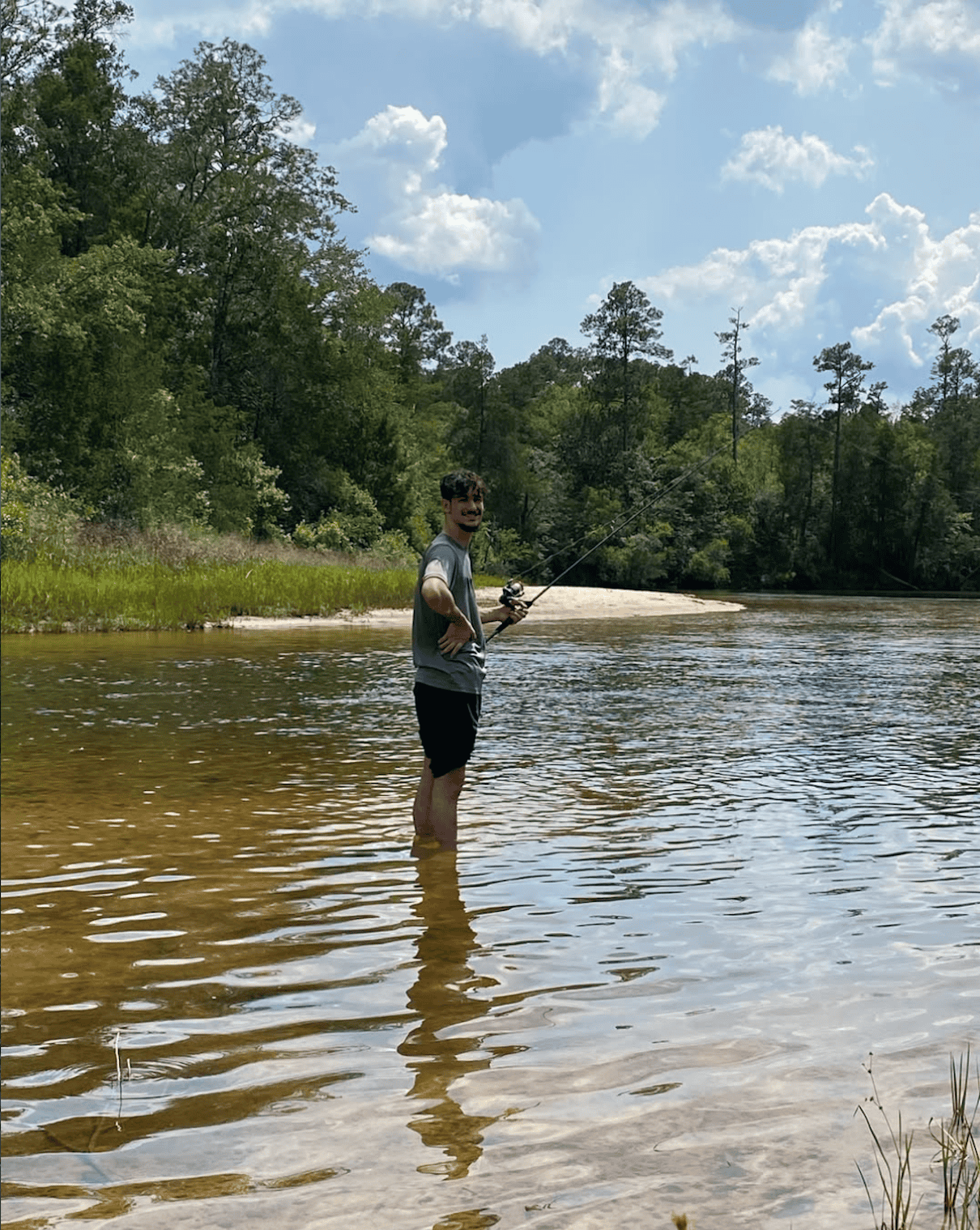
River God (noun): Calm. Competent. The one you trust to fish you out of the river. | Feature photo: Wilderness Tours