Home Blog Page 115

The Key To Build A Thriving Paddling Community

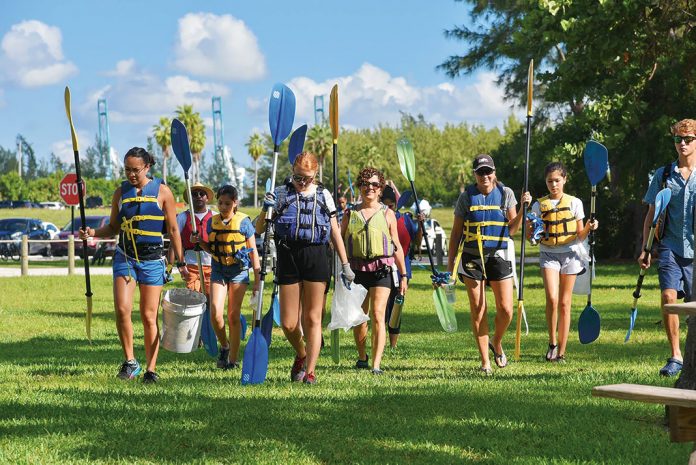
PHOTO: COURTESY VIRGINIA KEY OUTDOOR CENTER

“This island is like a gateway to the Everglades,” Esther Alonso-Luft says of Virginia Key, a strand of sand and mangrove on the watery edge of Miami, a metropolis of six million, glittering on the far side of the causeway.

“We open these opportunities for the community—for people who live in the city and have never experienced wilderness,” says Alonso-Luft, owner of Virginia Key Outdoor Center in Miami, Florida. That’s right—in Miami. The largely undeveloped island lies within the city limits, just north of Key Biscayne.

With nearly 900 acres of parklands and lagoons (plus a water-treatment plant), Virginia Key is an urban wildland hiding in plain sight. Visitors to the outdoor center regularly tell Alonso-Luft they didn’t even know Virginia Key existed, despite its rich history and proximity to city neighborhoods. The island is barely a mile from downtown, and serviced by a bus line—the 102 to be precise. It is also home to Historic Virginia Key Beach, which during the mid-1940s was established as the first beach for Black residents of Miami-Dade County during the Jim Crow era.

Alonso-Luft opened her first business, The Paddle House, at Historic Virginia Key Beach in 2010. Five years later, she opened the Virginia Key Outdoor Center on the island’s northeast end, building on the site of an infamous dive bar that would have made Hemingway blush, if the stories are true. The businesses serve an increasing number of winter visitors and nurture a growing core of outdoor enthusiasts in the local community.

Alonso-Luft says one of the most effective ways she’s been able to reach new audiences—including those who have traditionally been underserved in paddlesports and the outdoors—is by partnering with organizations in the city that have similar goals. She brings the missing pieces only a paddling outfitter can: boats, and a place to paddle.
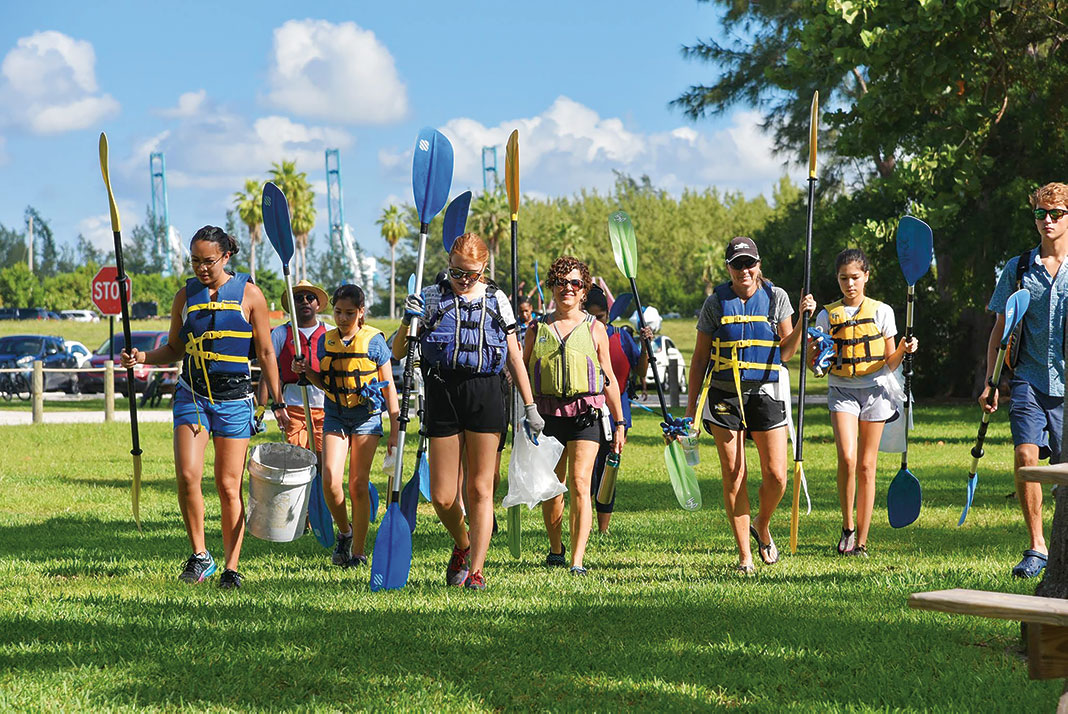
PHOTO: COURTESY VIRGINIA KEY OUTDOOR CENTER

“Our partners, they already have these relationships in the community,” Alonso-Luft says. “They reach out to us for support, and we’ll provide them with equipment at no cost. Now I’m putting my services in front of a whole new group of people.”

Virginia Key Outdoor Center also hosts weeklong summer programs providing local youth opportunities to participate in all the outfitters activities on the island including stand up paddleboarding, kayaking, and even mountain biking. The program charges tuition to those who can afford to pay, and offers scholarships to families who can’t. Virginia Key Outdoor Center advertises both the summer camps and the scholarships, but what largely brings youth to the program is word-of-mouth between friends from Miami and neighboring urban areas. “We have a bunch of kids who come out from Miami Beach for the summer program because they have nothing like it,” Alonso-Luft of the narrow island city to her north, which has a population density on par with Philadelpiha.

“The scholarship is an opportunity to offer kids in the city the program who couldn’t otherwise afford it,” she adds. “We found going through the kids has also been a really positive experience because it brings the parents out. So we may be taking a cut on the registration, but it comes back in other events.”

This is an important factor. As a business, the goal for a commercial outfitter like Virginia Key Outdoor Center is ultimately to profit, grow, and foster continued relationships with customers. In expanding her audience in Miami, Alonso-Luft says what she puts into the community is ultimately an investment in her business.

“If I am going to be paying money to Google and whoever else I’m doing my marketing through—hundreds of dollars a month just to get my name out there—it would be worth it for me to do it with my community, to get my community out there.”
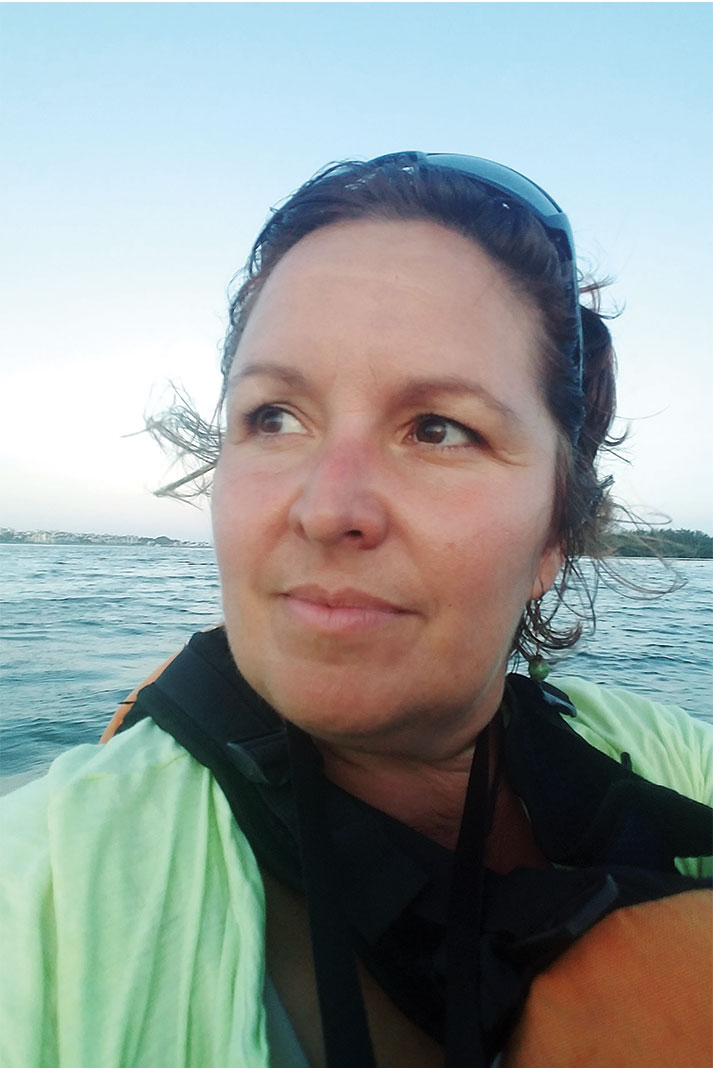
Virginia Key Outdoor Center founder Esther Alonso-Luft. | Photo courtesy VIRGINIA KEY OUTDOOR CENTERShe says the key to broadening participation is not offering free paddling, but providing an experienceengaging new participants and fosters a lasting connection to the sport. Alonso-Luft believes in order to make that connection, both her business and the participants have to be invested in the experience. Whether this means a volunteer exchange, a monetary commitment or something personally meaningful, both business and participants have to feel its value.

A key to engagement is to make Virginia Key Outdoor Center a welcoming place for all, which Alonso-Luft says starts with her staff, who reflect the diversity of a great American city. “We come in all shapes, colors, and orientations. We are what we are as people who love the outdoors, and enjoy what we do, and share it. I think that makes a difference. My staff makes a difference.”

Alonso-Luft sees Virginia Key as invaluable to the community, a driving force in her determination to grow her Outdoor Center and the eclectic gathering of paddlers and urban adventure-seekers who use it. The island serves as a gateway connecting Miami’s urban residents to the coastal wilderness just 15 minutes from downtown,” she says. “We’ve become the last vestiges of primitive existence in an urban area. Humans are a part of the wilderness equation, we just forgot our role.”

The Virginia Key Outdoor Center helps people re-discover—or discover for the first time—this connection. “We go out there and you see the financial and legal district of Brickell, downtown, the residential area of Coconut Grove. Then you see the old mangrove islands, and coral islands that are part of Virginia Key, then turn back to the lagoon where we are. You can see this all sitting in one spot. This is the epicenter. This is where everything comes together.”
Paddling Business 2021 Cover

This article was first published in the 2022 issue of Paddling Business. Inside you’ll find the year’s hottest gear for canoeing, kayaking, whitewater and paddleboarding. Plus: Industry leaders on surviving COVID, the dirty little secret of pro deals, brand consolidation and more. READ IT NOW »


PHOTO: COURTESY VIRGINIA KEY OUTDOOR CENTER
Step Aside, Laird. SUP Is Your Parents’ Sport Now.

Paddleboarding's explosive growth has been followed by a decade-long identify crisis, pundits say. | Photo: Alija Bos

If you’ve noticed an influx of rookie standup paddlers this past year, you’re not alone. A sport initially dominated by niche categories like racing, downwinding, surfing and whitewater, standup paddling has trended decidedly toward casual participants.

At the Confluence paddle shop in Denver, Colorado, owner Jon Kahn says his decision to increase his standup paddle inventory for 2020 felt like a gamble at first. But after Covid-19 accelerated the emerging trend of more recreational paddlers buying boards, Kahn sold out by early July and logged record SUP sales.

“Definitely the bulk of the market is more casual versus higher performance,” said Kahn. “The whitewater SUP niche is still growing, but it’s like how whitewater kayaking is to kayaking in general.”

Paddleboarding's explosive growth has been followed by a decade-long identify crisis, pundits say. | Photo: Alija Bos
Paddleboarding’s explosive growth has been followed by a decade-long identify crisis, pundits say. | Photo: Alija Bos

The explosive growth followed a decade-long identity crisis in SUP. While the niche categories got the attention and drove growth among core users, the bulk of the potential market has always been casual paddlers. Stuck between rentals and racers, the industry struggled to convince people that standup paddling was more than just a vacation activity—or a sport reserved for the Laird Hamiltons and Kai Lennys of the world.

According to the Outdoor Industry Association’s participation data, prior to the pandemic, America’s 3.5 million standup paddlers spent an average of just 6.3 days per year out on their boards, with 26 percent going out seven to 10 times annually. Almost half of standup paddlers own their boards, and of the 53 percent who do not own boards, 42 percent rent them and 26 percent borrow them from someone.

The pandemic only further tipped the scale in favor of casual paddlers. With millions of people looking for an excuse to get outdoors, recreational standup paddleboards became the hottest ticket in town.

[ Plan your next adventure with the Paddling Trip Guide ]

“It brought a lot of people into the paddling scene who used to only paddle on vacation, but realized they could paddle all year round,” said Eric Disque, owner of Disco’s Paddle Surf in San Diego. “The light just turned on for people that SUP is a great family activity.”

Disque tripled his sales revenue in 2020 and could have sold more were it not for a production backlog creating a crippling supply shortage. The tidal wave of recreational paddlers was not limited to California. Landlocked and coastal retailers alike reported similar spikes in casual paddlers.

“The vast majority of folks just want to paddle around the lake.” —Brian Vincent, Appomattox River Company

“River SUP surfing and coastal SUP surfing is fun and aspirational, but the vast majority of folks just want to paddle around the lake,” said Brian Vincent, General Manager of the Appomattox River Company in Virginia. “We’ve seen an uptick in that and have been doing really well with inflatable SUPs this year.”

The growing popularity of price point inflatable SUPs is no surprise. Vincent noted with younger generations increasingly living in smaller spaces and driving smaller cars, the ability to store an iSUP in a closet or transport one in the trunk of a car is appealing. Not to mention, most iSUPs come with everything needed to get on the water—board, paddle, fin, leash, backpack and pump—at a reasonable price.

Kahn said 90 percent of his SUP sales in Denver are inflatables, with many of those customers being newcomers to paddlesports.

“I definitely see it growing paddlesports overall by introducing new participants who maybe wouldn’t have thought about a kayak.”

“I definitely see it growing paddlesports overall by introducing new participants who maybe wouldn’t have thought about a kayak,” said Kahn.

With life slowly returning to normal in the second half of 2021, the pandemic-fueled buying frenzy figures will likely wane. Yet with so many new people being introduced to the sport, a cycle of long-term organic growth traditionally follows. As Disque explains it, “Boards on the water sell boards.”

[ Browse all paddleboards in the Paddling Buyer’s Guide ]

While the racing scene slowed down considerably during the pandemic and new sports like foil surfing have dulled SUP’s cutting edge appeal, retailers like Vincent are banking on the continued strength of recreational SUP. Whether it’s first-time paddlers or long-time kayakers or canoeists looking to add to their paddling quiver, the appeal of price-point inflatable SUPs is undeniable. Vincent plans to follow the tide.

“As a retailer, you can’t dictate where the market goes,” he says.

Paddling Business 2021 CoverThis article was first published in the 2022 issue of Paddling Business. Inside you’ll find the year’s hottest gear for canoeing, kayaking, whitewater and paddleboarding. Plus: Industry leaders on surviving COVID, the dirty little secret of pro deals, brand consolidation and more. READ IT NOW »


Paddleboarding’s explosive growth has been followed by a decade-long identify crisis, pundits say. | Photo: Alija Bos


Dane Jackson Lands A Triple-Rotation Tomahawk (Video)

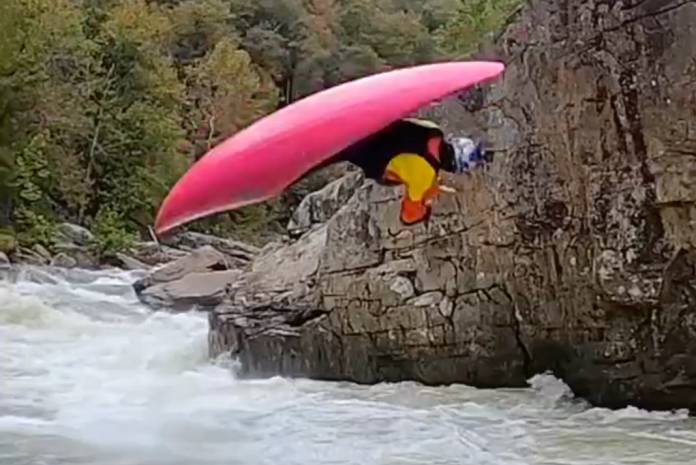
dane jackson throws a triple tomahawk off a river cliff

The past 24 months have been largely characterized by canceled events, restricted movements and chronic uncertainty. For many paddlers, this has resulted in more time spent mucking around on local runs, making the most of every single play feature the river has to offer.

It is out of this rejuvenated, playful energy that the tomahawk or the “Tennessee tomahawk” trend was born.

[ Also watch: Dane Jackson Kayaks The Oetz Trophy Course In Flood ]

But what is a tomahawk? First, visualize the motion of throwing a tomahawk hatchet. The paddler is the hatchet. A successful kayak tomahawk means throwing the bodyweight fully overhead in mid-air in order to complete a 360 roll before landing and hitting the water. The trick is performed on a sloping ledge that leads down into a body of water.

We’ve seen paddlers throw their weight with style and grace, landing in an active position and ready to take on the rapids ahead. We’ve also watched paddlers take the hit with their faces. Now, in true Dane Jackson fashion, we’ve even seen double tomahawk–with a bonus rotation at the lip. Enjoy this new trick below.

Note: This video is currently only available on Instagram. 


View this post on Instagram


A post shared by Dane Jackson (@danejacksonkayak)

Q&A With Expedition Canoeist Cliff Jacobson

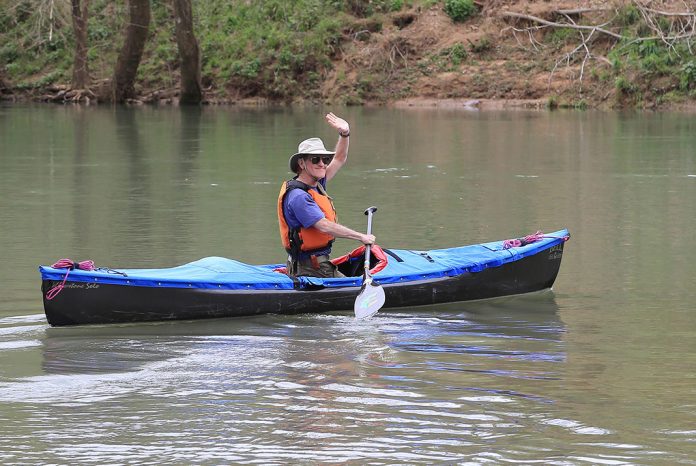
Man kneeling in solo canoe and waving at camera.
Cliff Jacobson on the Buffalo River in Arkansas. | Photo: Courtesy Cliff Jacobson
Read more profiles
Paul Caffyn
Nouria Newman
Frank Wolf
Jon Turk
Amy & Dave Freeman
Justine Curgenven
Mike Ranta
Ben Stookesberry

After decades of exploring, where do the boldest sea kayakers, whitewater boaters and canoe trippers fantasize about paddling? That’s the question that inspired Paddling Magazine to query some of our long-time contributors and favorite nomadic aquaphiles to ask after their dream destinations, most challenging expeditions and what a life of exploration really means anyways.

In this series of profiles, these exceptional water-wanderers share their top trips, best advice and biggest blunders. And whether their ambitious journeys were taken in the name of discovery, education, environment or glory, these legends affirm what we already know: There’s far more to explore by paddle than anyone could fit in a lifetime—but don’t let that stop you from trying.

[ Plan your next adventure with the Paddling Trip Guide ]

Cliff Jacobson is the most prolific paddling author of the last century, with book sales approaching one million copies. His Canoeing Wild Rivers, now in its fifth edition, is an authoritative resource for wilderness canoe expeditions. Jacobson guided extensively and is a popular speaker at paddling events.

Paddler: Cliff Jacobson
Location: River Falls, Wisconsin
Occupation: Retired science teacher, writer and author.
Latest Project: Jacobson’s newest book, Justin Cody’s Race to Survival, mixes a fictional wilderness survival tale for teens with practical outdoor tips.
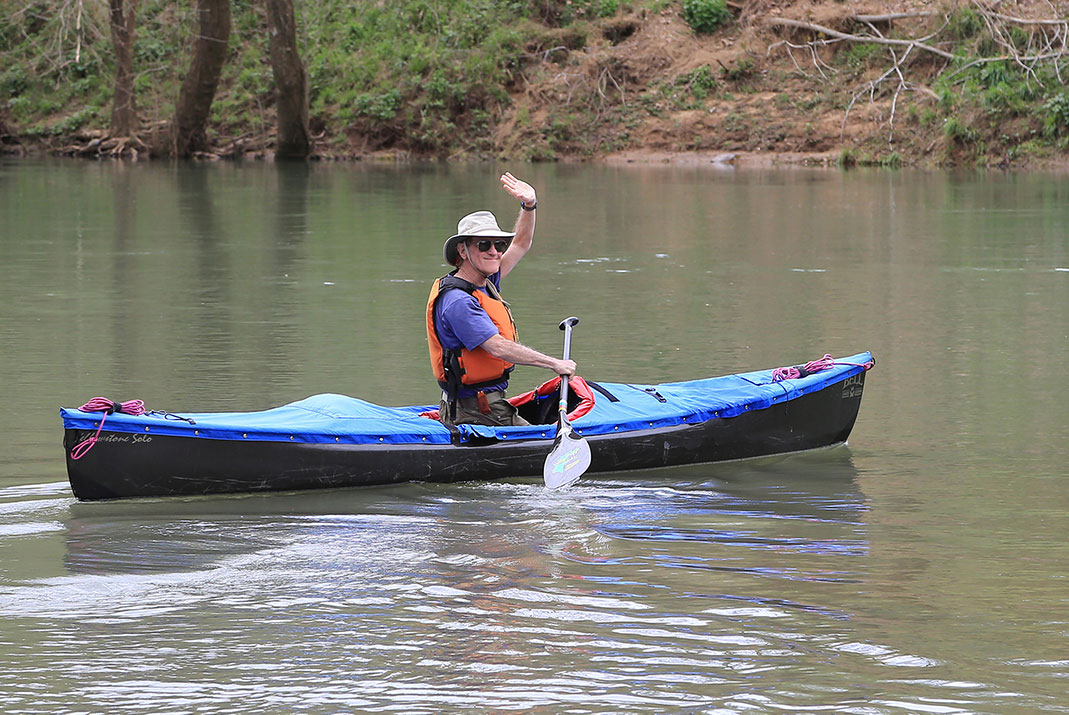
Man kneeling in solo canoe and waving at camera.
Cliff Jacobson on the Buffalo River in Arkansas. | Photo: Courtesy Cliff Jacobson

Q & A with Cliff Jacobson

1 One destination I dream of returning to…

is the Rio Grande River, on the Texas-Mexico border. This location still captivates me because the river is remote, spectacular canyons rise over 1,000 feet, challenging rapids, terrific camping and, oh yes, no bugs!

2My biggest pet peeve is…

those who don’t understand why ground cloths should go inside the tent.

3One thing I can’t live without on trip is…

my chair.

4The greatest advice I ever got was…

to minimize your skills. Best avoid problems by portaging, lining or choreographing dicey rapids.

5The canoe I’m paddling most right now is a…

Northstar Phoenix solo.

6The hardest part about making that dream trip happen is…

my age (80).  I can’t carry 75-pound, big-water tripping canoes anymore.

7My best advice for young paddlers is…

skills are more important than things—learn before you buy.

8Happiness is…

my wife, Susie, my two daughters, my three solo canoes and camping gear, driving my mint ‘96 BMW Z3 roadster with the top down, and my guns. I love to shoot high-end air rifles and powder cartridge precision rifles and pistols.

9My most challenging expedition was…

the 1982 descent of the Hood River in Nunavut.

Far above the treeline, the 200-mile Hood River offers spectacular Barrens scenery, abundant Arctic wildlife and challenging whitewater. Jacobson says it was a three-day polar gale with sustained winds of 62 miles per hour that made this his most challenging trip. “You literally couldn’t stand up and walk against it. Normal tents—ours were reinforced Cannondale Aroostooks—would have shredded. During that time, the river rose about 10 feet, nearly washing the canoes away. When the storm subsided, the river was flooded with floating debris, huge waves piled up on the outside bends and the temperature was 45 degrees.”

10What scares me most is…

the drive to the river.

11

My favorite camp meals is…

ramen with dried hamburger, shitake mushrooms and dried veggies.

12The true gift of big trips is…

you live every moment for today.

13One thing I will never do again is…

invite anyone on a trip who is not a nice person. You can teach a nice person how to camp and paddle, but you can’t teach a skilled jerk to be nice.

Paddling Magazine Issue 63 | 2021 Paddling Trip Guide Cover

This article was first published in Paddling Magazine Issue 64. Subscribe to Paddling Magazine’s print and digital editions here, or download the Paddling Magazine app and browse the digital archives here.


Cliff Jacobson on the Buffalo River in Arkansas. | Photo: Courtesy Cliff Jacobson

8 Best (And Worst) Seal Launch Videos

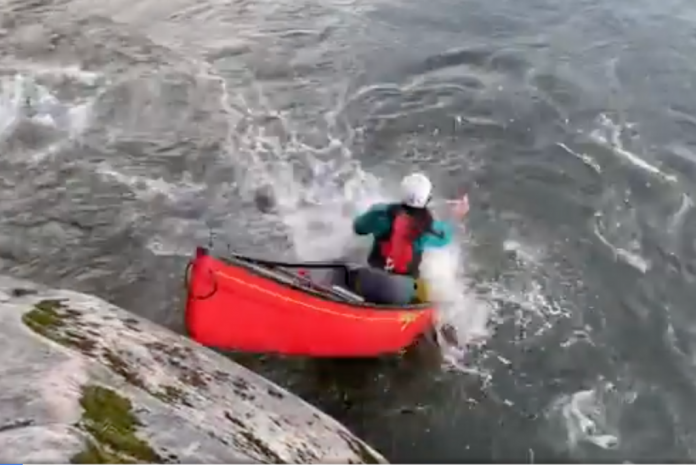
man attempting to seal launch his canoe, but hitting the water with his face

How to define a seal launch? Generally, it involves sliding or falling off the shoreline and dropping into the river. This non-exhaustive list of fail videos (with some rare successes) leaves us with the lasting takeaway that most boats—and paddlers—are not suitable for seal launching. Enjoy.

1. Someone get this paddler a helmet—please.

2. How to seal-launch a canoe. Step one: Don’t.

3. How to win the respect of friends, family, and most importantly, the internet.

4. “That was a horrible start”

5. When you should’ve just run the rapid.

6. This played out differently in his head.

7. When you don’t really think it through…

8. Don’t try this yourself unless you’re incredibly skilled.

Paddling Between Islands In The Sky In The Coastal Mountains

People setting up inflatable SUPs on snow at top of mountain.
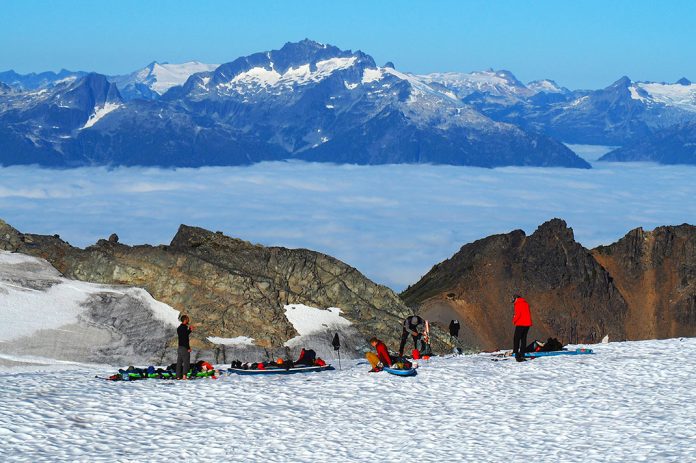
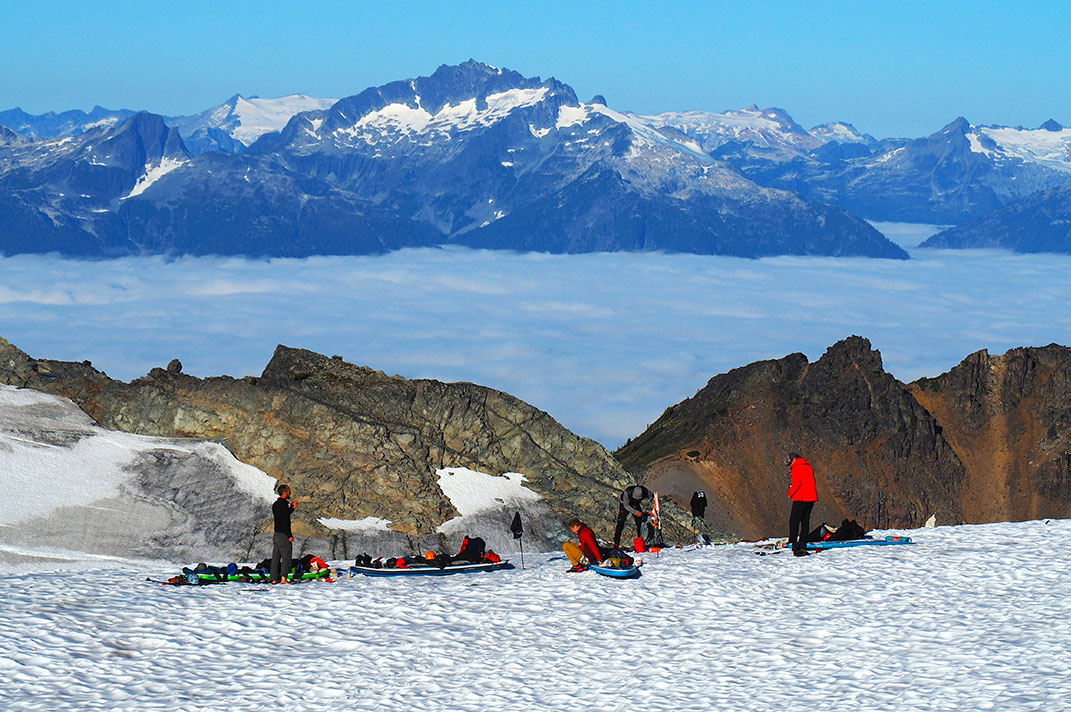
Caught in a sea of clouds on Mount Spinx (7,880 feet), peaks float off in the distance in the Coastal Mountain range of British Columbia. For lighter weight inflatable sleeping pads, see page 30. | Photo: Jimmy Martinello 

High above a sea of clouds, this was our first bivy spot on a four-day alpine adventure with inflatable standup paddleboards. We were here to explore the outer reaches of British Columbia’s Garibaldi Provincial Park on a route linking 30 miles of mountain peaks, glaciers, rivers and lakes. Nestled between the towns of Whistler and Squamish, this park is an area full of wildlife, covered in old-growth forest, and surrounded by beautiful lakes, jagged mountains and multiple glacier systems.

For decades I have been exploring these mountain peaks, but a route linking up the multiple summits I had dreamed about wasn’t feasible due to lengthy hiking distances. Inflatable paddleboards would allow us to directly cross the big lakes and grant easy access to more remote mountains. Of course, the tradeoff was a lot of extra weight.

The five of us each carried roughly 80 pounds each. Our packs contained all the regular backpacking essentials, plus paddling gear and ice ax, crampons and rope for glacier travel. I don’t think anyone has done a route quite like this here before.

Our first camp spot on Spinx col, captured in this photo, had a 360-view of mountain peaks and the ocean stretching out far into the distance. Our bodies ached from the 17-hour hike and paddle the day prior, but the hard work paid off with this view—we felt like we were on an island in the sky. A thousand meters below, we could still see Garibaldi Lake, where we started the day before, crossing its spectacular, turquoise-colored glassy waters at sunrise.

Our four-day route scaled the top of Mount Carr (8,500 feet), as well as stunning Mount Davidson (8,255 feet), and crossed the Sphinx and Chekamus glaciers. Hiking a total of 16,500 feet of elevation over the four days was tough.

Each time we reached a new alpine lake, we pulled out the boards we’d been hauling, blew them up and then dipped our paddles into the clear water.

People setting up inflatable SUPs on snow at top of mountain.
Caught in a sea of clouds on Mount Spinx (7,880 feet), peaks float off in the distance in the Coastal Mountain range of British Columbia. For lighter weight inflatable sleeping pads, read 5 Best Sleeping Pads For Kayak And Canoe Camping. | Photo: Jimmy Martinello

There are only three words that come to mind: Totally worth it. Each night we’d inflate our boards again to create makeshift sleeping pads. Every camp was a memorable one, perched out under the stars and catching the first and last light of illuminating sunsets and sunrises.

We finished our quest by paddling across Cheakamus Lake at sunset—not a ripple in the water other than our boards gliding across the smooth glass. The mountain peaks reflected all around us, reminding us of how lucky we are—and that nothing worth doing is easy. After a decade of dreaming about this route, the inflatable boards made this one-of-a-kind alpine adventure possible.

Paddling Magazine Issue 63 | 2021 Paddling Trip Guide Cover

This article was first published in Paddling Magazine Issue 64. Subscribe to Paddling Magazine’s print and digital editions here, or download the Paddling Magazine app and browse the digital archives here.


Jimmy Martinello is a freelance photographer based in British Columbia’s Sea To Sky corridor. His work has been published in National Geographic, Outside, and Rock And Ice.

Caught in a sea of clouds on Mount Spinx (7,880 feet), peaks float off in the distance in the Coastal Mountain range of British Columbia. For lighter weight inflatable sleeping pads, read 5 Best Sleeping Pads For Kayak And Canoe Camping. | Photo: Jimmy Martinello

The Problem With Explorers Today

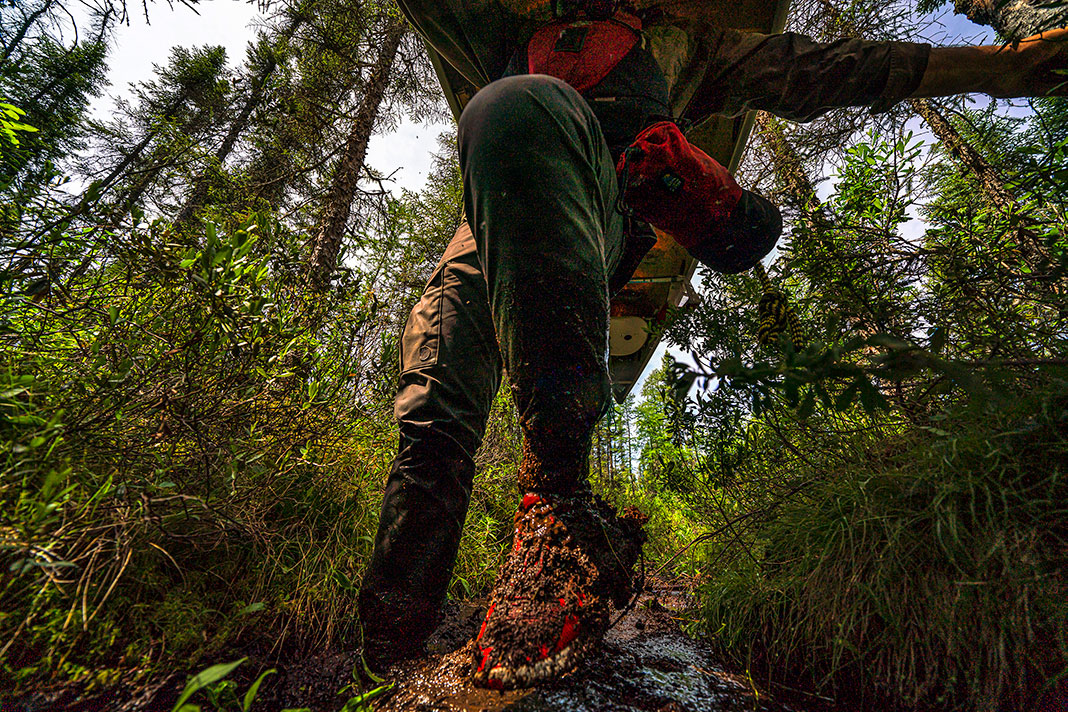
Person carrying canoe through the mud
The goal is to die with memories, not dreams. | Photo: David Jackson

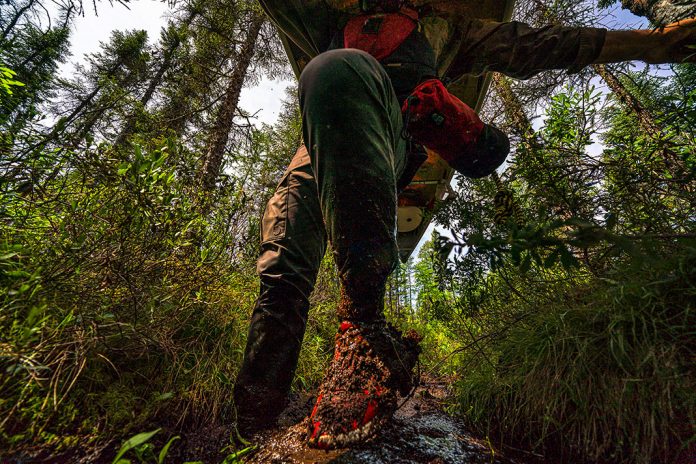
I’ve got a bone to pick and a paddle to break. Over the years, I have read well over 100 adventure narratives, contemporary and historical. In the genre of paddling books, it seems there is an increasing number of grunt trips topping the list of bestsellers, with all the associated radio interviews and eyeballs following online. These tales focus on vast distances covered at speed, with little room for the inclusion of place, history or culture. In this genre, every page reads the same: blood-sucking bugs, crotch-deep in mud, boils on the feet, blisters on the hands.

A couple of bestselling paddling authors may come to mind.

It isn’t the journey itself I take issue with—it’s the not-so-hidden, look-at-me you-can’t-do-this message in the retelling. Friend and veteran paddler Bert Horwood calls this genre of man-against-river writing paddling porn. I call it the bravado-grunt narrative.

These endurance-focused stories tend to focus around categories of first, fastest or longest. Being the first to do something, the fastest to do it, or traveling the farthest distance. One problem for canoeists today is there aren’t many objective firsts remaining.

“I am the first person to do X!” someone might proclaim. They might well be. However, firsts achieved nowadays tend to be obscure and artificial—like being the first to solo circumnavigate the Great Lakes paddling backward. They’re challenges that seem, well, a little pointless.

A recent canoe expedition sponsored by the Royal Canadian Geographic Society paddled south to north in Labrador. On their first day, the group traveled 51 kilometers. The trip was billed a first. And it might well have been, especially given the lay of the land and that water runs mostly west to east. Traveling against the flow of the rivers and landforms has no historical context or purpose, other than that it’s a first.

“I revel in the punishment,” one paddling author writes. Pardon me if I’ve missed some philosophical insight into self-imposed suffering. To each his or her own, of course, but there are implications. Is punishment some expedition benchmark to strive for?

Paddlers claiming new routes are often proclaimed explorers—by themselves or media—and sometimes even claim discoveries made along the way, like new rivers or waterfalls, for example. That raises cultural concerns. Such findings tend to overlook the much-traveled nature of our waterways. After all, people have lived on this continent for millennia. More than likely, rivers-without-chroniclers were common routes for Indigenous peoples in a planned trade rendezvous network, or part of food gathering, fur trade and trapping travel. A little humility, please.

Person carrying canoe through the mud
The goal is to die with memories, not dreams. | Photo: David Jackson

My friend, Phil Mullins, and many outdoor educators these days, will wisely tell us that we paddle in peopled and contested landscapes, not untouched wilderness. Show me a new route discovered, and with the right observational skills, someone else can show you tent rings, ax blaze marks on faint trails and the remnants of campfires.

Speed travel is another hallmark of the bravado-grunt narrative. When asked how long a particular trip should take, respected guide and co-owner of Saskatchewan’s Churchill River Canoe Outfitters, Ric Driediger, likes to reply, “It should take as long as possible.” Similarly, when Bill Mason was asked why he paddled those “slow wood-canvas Prospector canoes,” he liked to respond, “Why would I want to go fast?”

Many spend a great deal of time prepping for a trip and perhaps traveling a far distance to get there, only to arrive and do it as fast as possible. No time to fish, hike to a prominent viewpoint, stop for a great campsite, swim in a waterfall pool, jump off a cliff, chat with a passerby canoeist or visit a historical cabin or pictograph site. You know, the spice of paddling life.

Years ago, I paddled the Yukon’s Wind River. Many make this trip in about 10 to 12 days. With three full days of fog, our group stayed put and enjoyed our immediate surroundings until the fog lifted and we could see the famous river corridor of mountains we’d come to paddle amongst once more. We made the trip over 18 luxurious days and never missed the view.

I wonder what the fastest known time is for some of the rivers I have paddled with friends. I can imagine the conversation: “You were 26 days on the Horton? Man, I can do that river in 12 days.”

It’s much the same for distance. Paddling all day, every day, undoubtedly adds up to lots of miles. Are there not more meaningful things to count than miles? Over 36 days, my summer camp tripping group tried to visit as many pictograph sites as possible. Another group tried to sleep by as many waterfalls as they could.

On the page, mile counting and speed attempts read like ego-centered, man-against-nature travels. 

There’s no shortage of things to count. On the page, mile counting and speed attempts read like ego-centered, man-against-nature travels. And there’s never much of a story because the journey is fixated on the destination.

I’ll repeat myself: It isn’t the trip that’s the issue. Grunt away, I say. Go for the firsts if that’s what turns your crank. Instead, I take issue with the messaging in the story told on return. The bravado-grunt trip narrative is a story that too often fails to honor the land, Indigenous roots, the animals and the countless stories of all those who traveled before us in these places.

And there is another problem.

Authorship goes hand in hand with sponsorship and speaking gigs. And those who paddle for eyeballs may be inclined to embellish their circumstances.

This is why, in certain paddling bestsellers, every bear appears rearing up on hind legs and ready to charge—though, from my experience, this doesn’t happen often. It’s why the rapid always has waves that almost send the paddler packing for heaven—even though there is a wide inside bend all the other canoe travelers take uneventfully. And the headwind is mind-numbing, sure, but if someone had planned a more sensible timeline, they could be sipping coffee under a tarp waiting it out.

[ Plan your next adventure with the Paddling Trip Guide ]

Obviously, grunt narratives sell. But the outdoor educator in me can’t help but see the lost potential for storytelling about people and places. I want something more significant: Cultivating ecological consciousness or a sustainable, relational mindset through the canoe trip. Not role-playing a Star Trek fantasy, supposedly going where no man has gone before.

It is easy to grasp the bravado-grunt narrative. There is a long history of this type of storytelling in our colonial past and present. But what message is mentored when we guide a trip or write a book from this perspective? What sort of relationship with land, water and peoples is being normalized by nature as a sparring partner? These have been concerns for thoughtful travel writing and guides for decades. We need to widen our adventure narratives. We need change.

The opposite of the “look-at-me, you-can’t-do-this” narrative is a look-at-this-place-through me. Stories that deepen a connection. Authors like P.G. Downes, Herb Pohl and Max Finkelstein.

The trip isn’t the problem. My concern is that many who read these stories won’t go at all, because all bears are about to charge and all rapids are dangerous.

Grunt narratives pit the hero—and therefore the reader—against a hostile natural world in a manufactured quest. Man-versus-nature narratives don’t deepen our understanding of the natural world. How could they? The paddler just sped on through.

Paddling Magazine Issue 63 | 2021 Paddling Trip Guide Cover

This article was first published in Paddling Magazine Issue 64. Subscribe to Paddling Magazine’s print and digital editions here, or download the Paddling Magazine app and browse the digital archives here.


Bob Henderson is a guide, speaker and author. He was a professor of outdoor education at McMaster University for 29 years. Find him online at bobhenderson.ca. Send letters to editor@paddlingmag.com.

The goal is to die with memories, not dreams. | Photo: David Jackson

“A Scary Swim”: Sea Kayaker Caught In A Hydraulic (Video)

Editor’s note: this story was updated on October 20, 2021, at 7:20 am

I

n “one of the hairier situations” in his paddling career, this sea kayaker found himself at the mercy of an unpredictable ocean hydraulic that was extremely challenging to swim away from.

The kayaker was out for a paddle north of Rodeo Beach in Marin Country, California when things first went awry. Paddling through a channel that he and his group had paddled through previously that day (without issue), he was caught off-guard by a strange current beneath him.

After missing a brace and then failing to roll, the paddler made the decision to exit his kayak. Now out of his kayak, he quickly realized that he wasn’t free of the hydraulic.

While still maintaining contact with this paddle, his boat was quickly ripped away from him as he desperately reached for something to grab on to–but the water wasn’t through with him yet. He was pummeled around in the nasty-looking pocket hydraulic for over one minute, actively swimming where possible, before another experienced paddler in his group was able to get close enough to perform a rescue.

The rescue was a collaborative effort. “It certainly helps to be in the company of 10 very capable paddlers,” he mentioned in the video comments. “Including one of the most renowned instructors on the US West Coast.”

Melker of Sweden Is Coming To America

Photo Courtesy of Melker

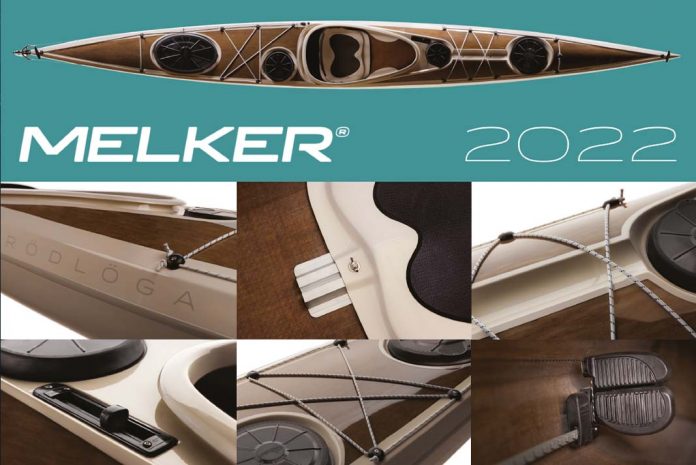
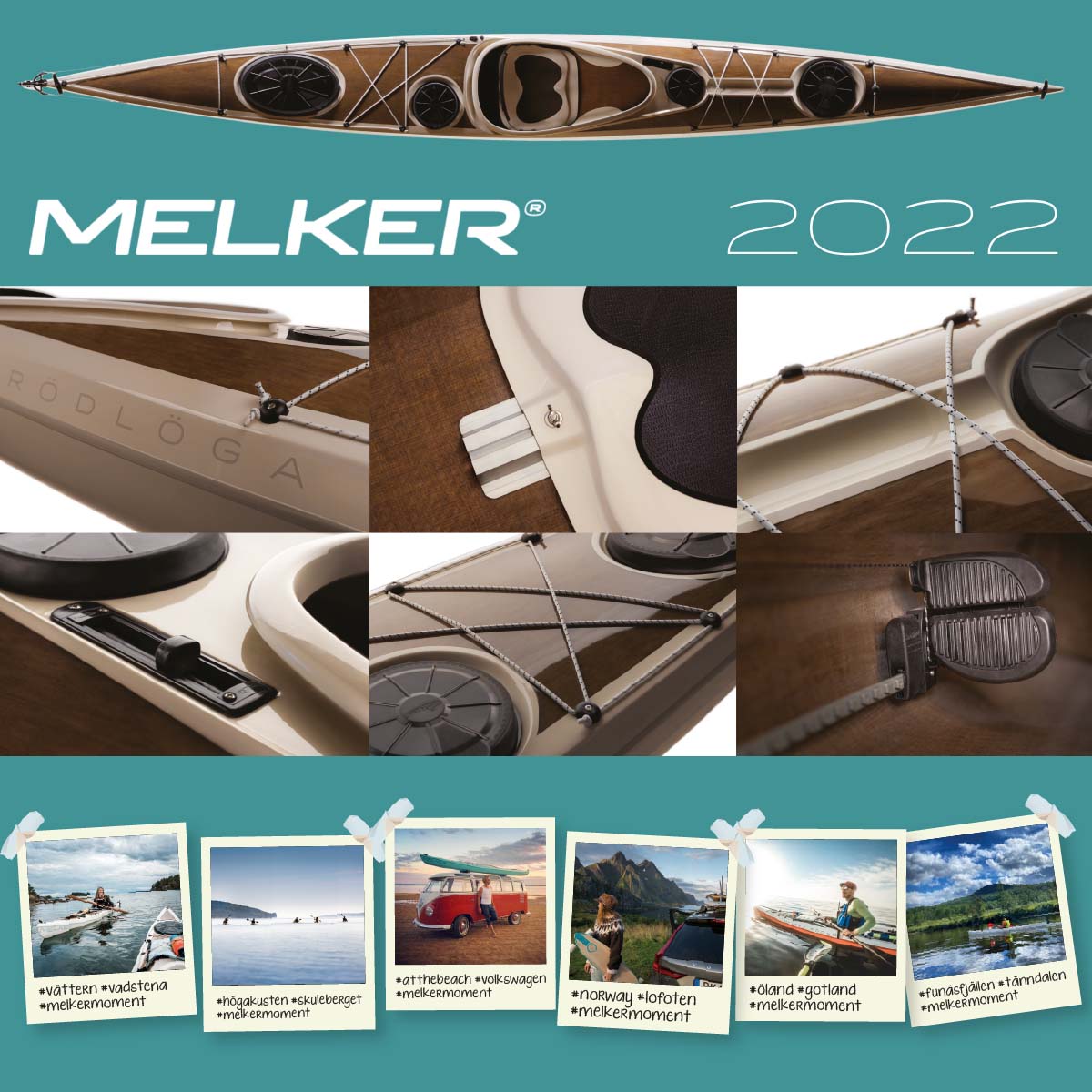
In early springtime 2022, paddlers of the Great Lakes region will get the opportunity to experience sleek and stylish kayaks from Melker of Sweden, as Offshore Marine / Paddling Warehouse in Chicago introduces the brand in the USA.

Swedish-based Melker of Sweden was founded in 2015, with the bold ambition to completely game change the outdoor hardware industry.

Melker of Sweden has constantly been pushing the boundaries of sustainability, craftsmanship, design and innovation – which has brought Melker of Sweden to be the most recognized watersports company, being honoured by the international paddlesports industry & community, including several awards for their sleek and stylish outdoor products for an active and conscious lifestyle.

Offshore Marine / Paddling Warehouse (www.offshore-chicago.com) is located in Lake Bluff, Illinois (35 miles north of downtown Chicago), and will carry the complete portfolio of kayaks from Melker of Sweden. Offshore’s ability to deliver boats throughout the eastern and central US guarantees that Melker’s products will be available to a huge number of potential American paddlers.

”We’re always looking for products that change the paradigms in the outdoors industry, and Melker’s approach to design and materials is the first really new thing we’ve seen in touring kayaks in a very long time” says Matt O’Brien, General Manager of Offshore Marine / Paddling Warehouse. “With the costs of traditional composites skyrocketing, and with consumers being more aware of the impact traditional boat-building processes have in health and safety, we think the market is primed for the unique values that Melker brings to the table, and we’re excited to be able to introduce the brand to American paddlers in 2022”.

”We are very pleased to start this cooperation with Matt O’Brien & co at Offshore Marine / Paddling Warehouse as they have both long experience and the needed know-how to offer our products and building the brand in the US market” says Pelle Stafshede, CEO and Creative Director at Melker of Sweden.

Photo Courtesy of Melker

Canadian Canoe Museum Commences Construction

Photo Courtesy of The Canadian Canoe Museum

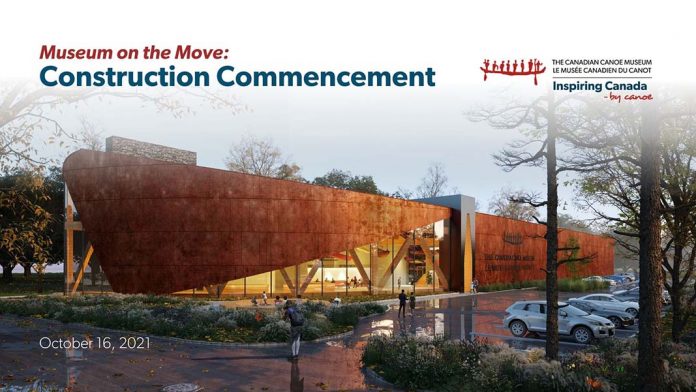
The Canadian Canoe Museum (CCM) hosted a formal event, on October 16, 2021, celebrating the beginning of the building of its new world-class museum at the Johnson Property located at 2077 Ashburnham Drive in Peterborough, ON. Project donors, funders, partners and members gathered together at the property’s western point. The ceremony was broadcast on the Museum’s website at canoemuseum.ca.

“We are excited to celebrate the beginning of construction of our new world-class canoe museum in the company of our project partners, donors and funders and with our community as a whole,” said Victoria Grant, Teme-Augama Anishnabai Qway, chair, board of directors, The Canadian Canoe Museum. “These watercraft, conceived and built over millennia by the Indigenous Peoples of what is now Canada, were central to building relations between the First Peoples and those who arrived four hundred years ago from Europe, beginning our shared history. These beautiful and functional craft offer us a vehicle through which we can better understand and appreciate that history. That understanding is essential in producing the Truth upon which Reconciliation between the First Peoples and those who came later must be founded.”

The new museum will enable CCM to house 100 per cent of its collection in a building that meets Class A conservation standards, directly on the water, which allows for increased on-water and in-person programming while being a key cultural tourism driver in what will become a vibrant community hub on the Peterborough waterfront.

“It has been a long journey, and we are very excited that construction is starting. The new Canadian Canoe Museum is a welcome addition to the Peterborough/Nogojiwanong waterfront and will continue to be an important community asset,” noted Peterborough Mayor, Diane Therrien. “The new location and state of the art build will be an attraction for locals and tourists alike. The City is proud to be a partner in this exciting venture.”

The project is made possible by the generous support of the Government of Canada, Province of Ontario, the City and County of Peterborough, the Weston Family Foundation, along with other very generous lead donors and many donors from the community-at-large.

“CCM is incredibly grateful and proud of our extraordinarily successful fundraising of the last few months,” said Carolyn Hyslop, executive director, The Canadian Canoe Museum. “I’m overjoyed to announce that we have received significant donations, totalling $2M, from family foundations from across the country, affirming that this project, and our fundraising campaign, continues to have incredible momentum.”

Johnson Property is situated on Little Lake, north of Beavermead Park and south of the Parks Canada-Trent Severn Waterway head offices. The new canoe museum will be built on a flat portion of the property, away from the floodplain, on the open land along Ashburnham Drive so as to preserve the existing trail, shoreline and natural waterfront. The new museum slated for completion in 2023.

About The Canadian Canoe Museum (www.canoemuseum.ca)
With a world-class collection as a catalyst, The Canadian Canoe Museum inspires connection, curiosity and new understanding. In partnership with individuals, groups and communities – locally, provincially and nationally – we work to experience and explore all that our collection can inspire. This sees students opening their minds in our galleries; community members connecting through artisanry; people of all ages getting on the water and learning to paddle; and exhibitions and events that spark conversation and collaboration.