Home Blog Page 138

The Last Frontier: Guide To Kayaking In Alaska

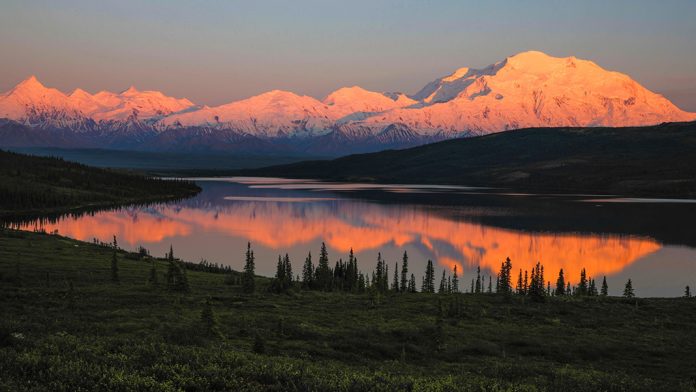
Sunset over the mountains and water of Denali National Park
Photo courtesy of: State of Alaska // Jocelyn Pride

Considered one of the world’s greatest paddling destinations, there’s no end to Alaska sea kayak adventures. It’s one of the few places in the world where you can paddle past towering icebergs, watch orcas and humpback whales at play and explore the glacial blue depths of ice caves—all in one day.

The northern state is perhaps best-known for its sea kayaking, although it offers whitewater of all classes for more experienced paddlers deep in its remote wilderness. Whatever route you choose to take—whether it’s the calm waters of a glacial lagoon or down fast-moving river rapids—you’ve come to the right place.

From afternoon excursions for beginners to multi-day expert adventures, here are the best places to kayak in Alaska.
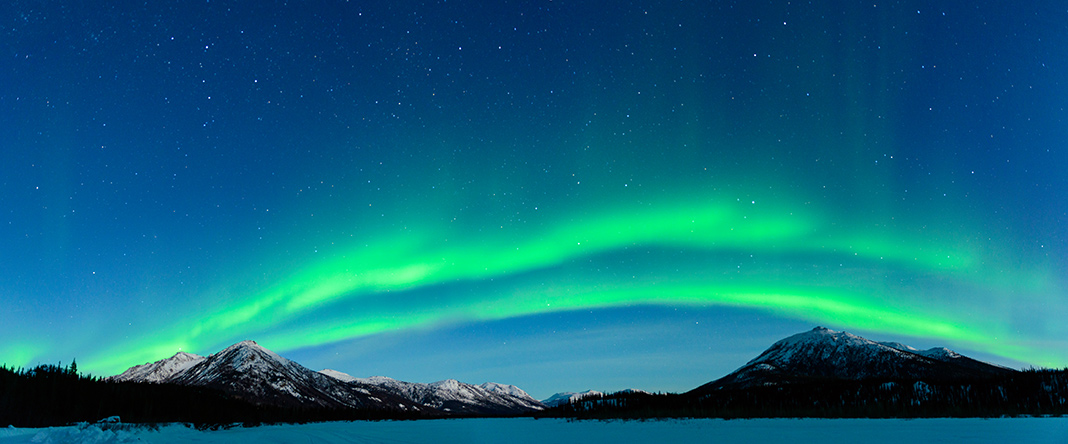
The Northern Lights over the mountains
Natural beauty is everywhere you look in Alaska. | Photo courtesy of: State of Alaska // Chris McLennan

Best places to kayak in Alaska

Alaska has a long and rich history of kayaking; qayats, made of animal skins sketched over wooden frames, have been used here by the Indigenous people to hunt marine animals for thousands of years.

It also has plenty of coastline to explore—54,563 km of it, to be precise. But if you’re trying to figure out exactly where to go kayaking in Alaska, it’s best to narrow your search to the southernmost part of the state in the Gulf of Alaska. This is where you’ll find some of the best places to kayak, including:

  • Seward’s Resurrection Bay and the nearby Kenai Fjords National Park
  • Prince William Sound, which can be accessed from Whittier or Valdez
  • Spencer Glacier near Anchorage
  • Kachemak Bay outside of Homer
  • The Inside Passage, with day trips departing from Sitka and Ketchikan

Kayaking in Seward, Alaska

Located about 2.5 hours south of Anchorage, the city of Seward is tiny (pop. 2,700) but its kayak tours and adventures are a massive operation, extending into nearby Kenai Fjords National Park.

From the edges of Resurrection Bay—considered one of the most reliable places in the world to see marine wildlife—you’ll be well-placed to explore the fjords and valleys of the park, nearly 51% of which is covered with ice. This is where you’ll find tidewater glaciers, icebergs floating on glacial lagoons, towering waterfalls, and plenty of tour operators to take you there.

[ Paddling Trip Guide: View all kayak trips in Alaska ]

Best Seward kayak rentals and tours

  • The only outdoor adventure company that’s open year-round in the region, Adventure Sixty North offers kayak, camping gear and fishing gear rentals, as well as guided tours to Bridal Veil Falls, Bear Glacier and Aialik Bay.
  • A one-stop shop, Miller’s Landing is a secluded fishing camp and adventure outfitter just outside Seward. From accommodations and rentals, to lessons and tours, they’ve got you covered.
  • A bit farther afield (one hour north of Seward) is Cooper Landing’s Kenai Kayak Company. A women-led and -owned outfitter, the company rents out kayaks for use on Kenai Lake as well as runs a three-hour tour of the lake, which is ideal for families or beginners.
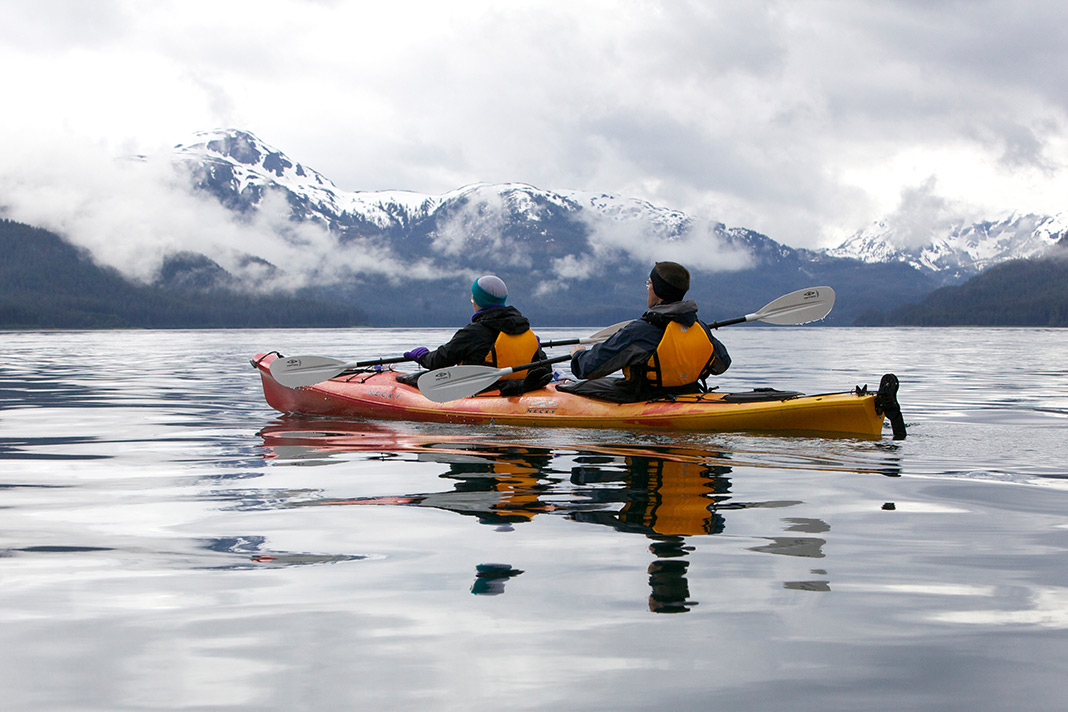
Tandem sea kayak on the water
Set out for the adventure of a lifetime in Alaska. | Photo courtesy of: State of Alaska // Jocelyn Pride

Kayaking in Homer, Alaska

Homer’s claim to fame may be that it’s the “halibut fishing capital of the world,” but we promise it’s worth the trip for more than the fresh fish. The small city is located near the Alaska Maritime National Wildlife Refuge (translation: the waters are plentiful with more than just halibut), Kachemak Bay State Park and multiple fjords.

Some of the most popular trips include paddling around Yukon Island’s Elephant Rock, and kayaking among the icebergs of Glacier Lake. Then again, if you’re really keen on the fish thing, there’s also nearby Halibut Cove.

Best Homer kayak rentals and tours

  • Whether you’re looking for remote lodging in Kachemak Bay, a Homer kayak rental or one of the best Homer kayak tours, you’ve come to the right place. Based on Yukon Island, True North Kayak Adventures are experts in the Kachemak Bay area, with itineraries that include Elephant Rock, Eagles Nest and Halibut Cove.
  • With Three Moose Kayak Adventures’ full-day Glacier Lake tour, you’ll get close to the face of the 19,000-acre Grewingk Glacier. You can extend your stay at the operator’s lodge, which is located right on the edge of the lake.

Kayaking in Anchorage, Alaska

Anchorage is Alaska’s largest city—but this is a situation where biggest doesn’t necessarily mean best. Unfortunately, there are only a handful of Anchorage kayak tours departing directly from the city’s shores.

Instead, this is the place to get your feet (literally) wet before heading out on an adventure north of 60. One place to do this is on Cook Inlet, with its city skyline views and small population of beluga whales. Then there’s Eklutna Lake, which is about an hour northeast of the city limits. Finally, it’s also the best point from which to access the Spencer Glacier, which we mention in more detail below.

Best Anchorage kayak rentals and tours

  • Alaska Outdoor Gear is an outfitter in the truest sense of the word. Regardless of whether you’re looking for an Alaska-grade parka to wear, a sleeping bag for subzero temperatures or an Anchorage kayak rental, this is the place.
  • At Eklutna Lake, you can rent a kayak from Lifetime Adventure. Paddle the length of the lake (13 km) and when you reach the other end, switch it up by riding a rental bike back.
  • Located outside Anchorage in Chugiak, the family-owned AK Paddlesports hires out kayaks and offers relaxed and family-friendly two-hour guided tours of Beach Lake.
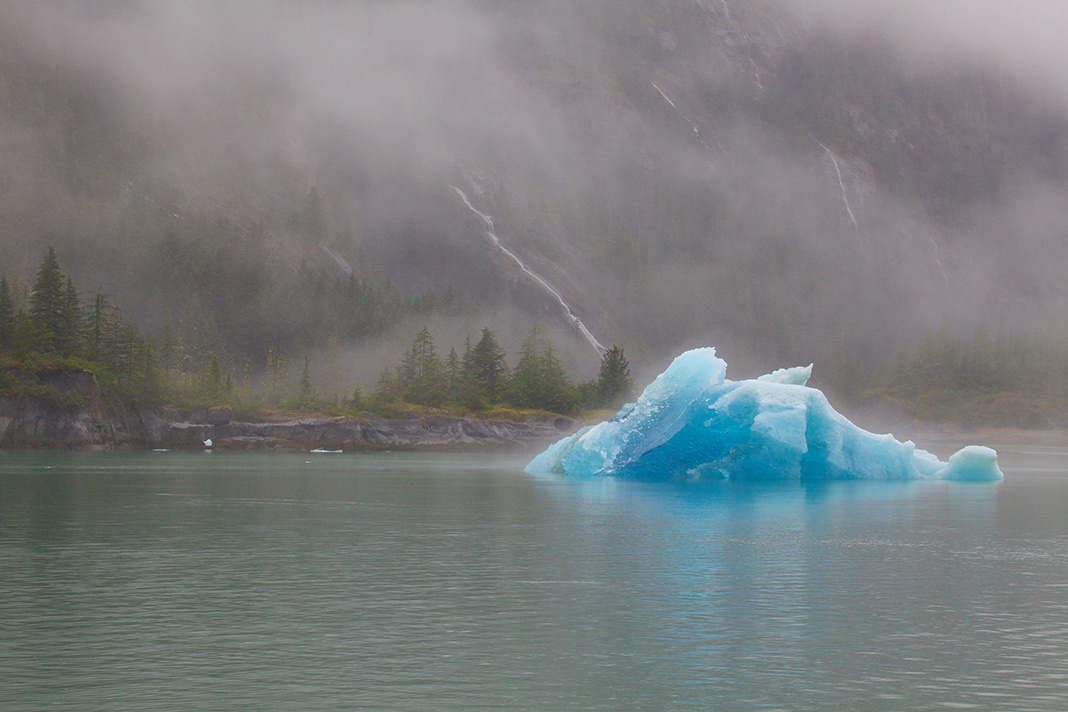
Vibrant iceberg in the lake with low-lying clouds
Paddle amid icebergs. | Photo courtesy of: State of Alaska // Jocelyn Pride

More can’t-miss kayaking tours in Alaska

Best glacier kayaking in Alaska

With an estimated 100,000 glaciers covering a mind-boggling 75,109 km sq, it’s not hard to cool down in America’s 49th state. But finding accessible and safe spots to launch and kayak around icebergs as they calf off glaciers is another matter altogether.

If you’re looking for the best glacier kayaking in Alaska, we recommend visiting Prince William Sound or Seward.

Prince William Sound

On the east side of the Kenai Peninsula is Prince William Sound, a body of water surrounded by the glaciated Chugach Mountains and the United States’ second-largest national forest. The area is renowned for having over 100 named glaciers and flatwater paddling conditions.

The two main departure points from which to explore the Sound and its glaciers are Whittier—about 1.5 hours southeast of Anchorage on the Sound’s western shores—and Valdez, in the Sound’s northeast.

Seward: Aialik Bay & Bear Glacier

Located on the Kenai Peninsula, the city of Seward is the main access point to Kenai Fjords National Park, where the ice-capped mountains rise 2,100 m above the sea. The area is home to the Sargent and Harding icefields; this is where you’ll find tidewater glaciers, which actively calf off icebergs that eventually make their way out to sea.

Two of the most popular spots to paddle are Aialik Bay and Bear Glacier, the latter of which is a remote lagoon that can only be accessed by helicopter or jetboat.

Choosing between the two is a tough decision, but we’ll try to break it down. Aialik has more wildlife viewing opportunities (you’ll spend more time on the water), including bears, orcas, humpbacks and eagles. Bear Glacier, however, has calmer conditions, larger-than-life icebergs and the largest glacier in the national park area. The only real solution? Do both.
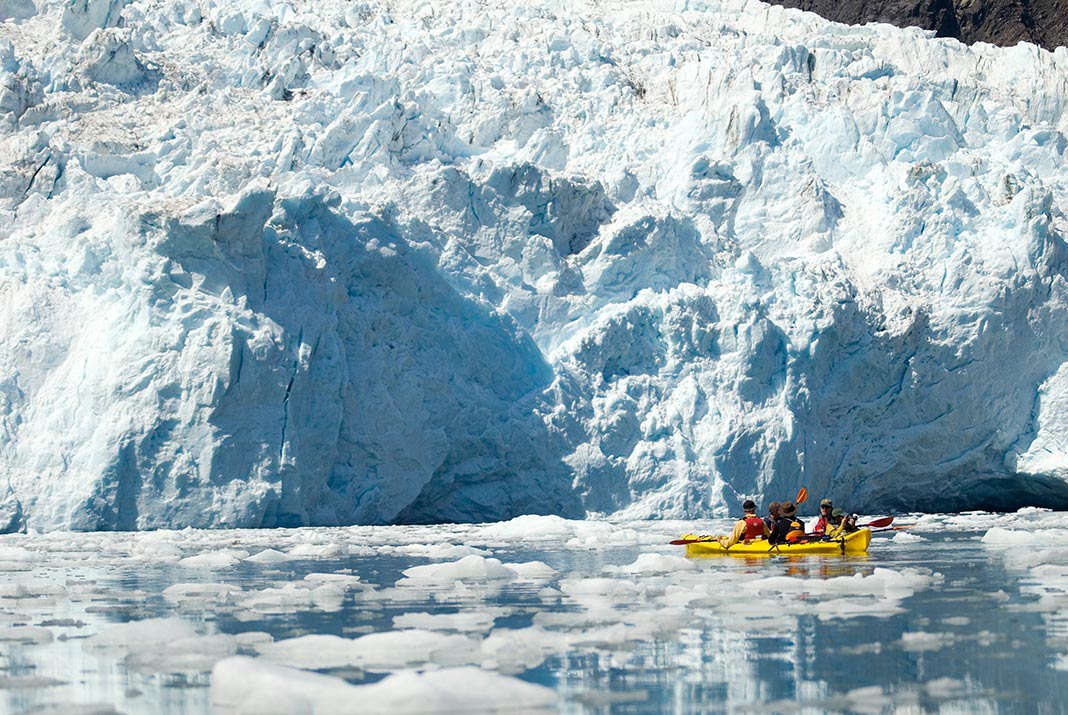
Kayakers in front of a glacier at Kenai Fjords National Park
Confront glaciers and icebergs at Kenai Fjords National Park. | Photo courtesy of: State of Alaska // Brian Adams

Kayak with glaciers tours

  • Based out of Whittier, the family-owned Lazy Otter Charters has year-round tours and kayak rentals. Their full-day guided kayaking expedition takes paddlers through the iceberg-strewn Blackstone Bay and around Blackstone Glacier.
  • Alaska Sea Kayakers is also based out of Whittier. Their best-selling backcountry destination is Blackstone Bay, where you paddle through ice floe surrounded by seals, otters and eagles.
  • If you’d prefer to paddle Prince William Sound from Valdez, contact Pangaea Adventures. They offer beginner-level day trips to both the Columbia Glacier—the largest tidewater glacier in Prince William Sound—and the beautiful Shoup Glacier.
  • Working on a limited budget and can’t afford the helicopter ride to Bear Glacier? Seward’s family-owned Liquid Adventures has the perfect solution—it delivers kayakers up the glacial river to the lagoon by a high-speed jetboat.

Where to kayak in ice caves in Alaska

There’s a reason people get so excited when they talk about the surreal blue interior of Alaska’s ice caves. It’s an ethereal experience that will leave you with chills, of both the literal and figurative variety.
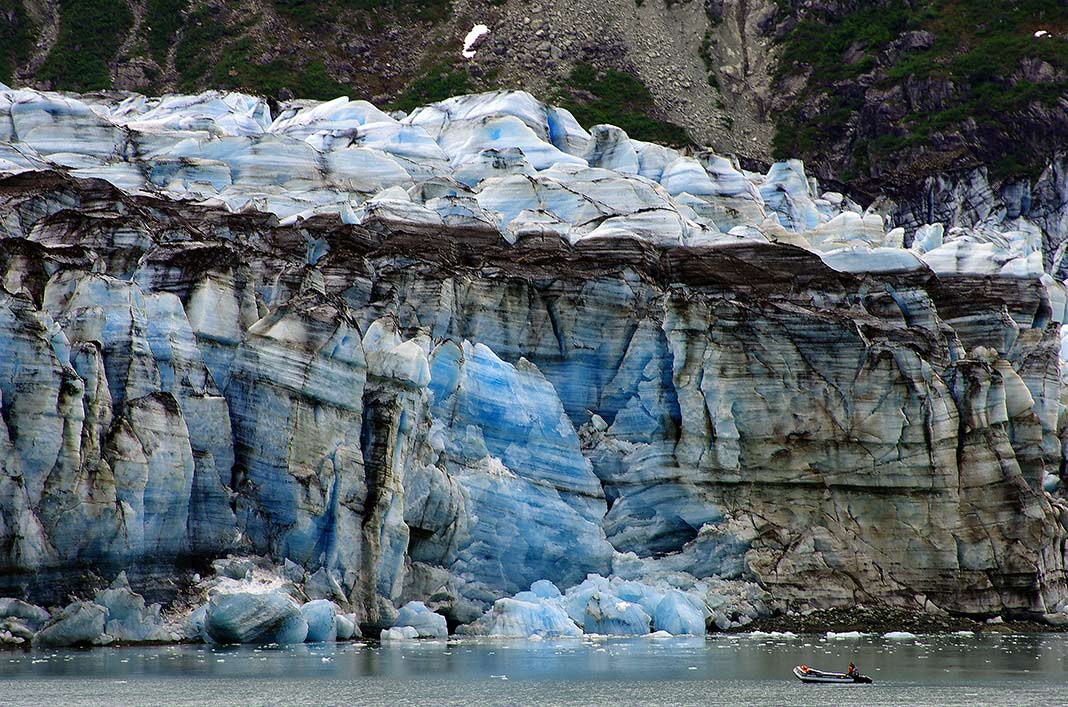
Kayaking by a glacier
Each experience in Alaska humbles you. | Photo courtesy of: State of Alaska // Reinhard Pantke

Found beneath or beside glaciers, these caverns are usually formed when flowing water creates a channel or pathway and then refreezes. That’s also why seeing them isn’t a guaranteed experience—glaciers are dynamic and continually moving. With that in mind, here are some of the best opportunities to see them:

Mendenhall Ice Caves

One of the most famed places to walk inside these cerulean blue caves is just outside Juneau, the state’s capital, at the Mendenhall Ice Caves. The kicker is that the best way to get to them is by kayaking—and we don’t say that by way of a complaint. (Just to be clear though, you’re not paddling into the caves; you’re kayaking to a point near the glacier and then continuing your journey on foot.)

Spencer Glacier

Located about 100 km from Anchorage in Chugach National Forest, the Spencer Glacier is only accessible by taking a train ride and then kayaking to the glacier’s crevasses and ice caves.

Kayak in ice cave tours

  • Whether Chugach Adventures uses kayaks or rafts to access Spencer Glacier depends on the seasonal access point—but either way, you’re in for an epic adventure with its small group glacier trek tours.
  • Ascending Path works in partnership with the Alaska railroad to operate a half-day kayak tour of Spencer Lake, where you’ll touch icebergs and hike to the face of Spencer Glacier.
  • Above and Beyond Alaska is perhaps best known for its canoe trips to the Mendenhall Ice Caves, where after paddling across the water you’re guided into the deep, blue wells of moulins and ice caves. However, if a kayak is your watercraft of choice, you can arrange an exclusive tour into the blue.

Kayak with whales in Alaska

During the summer, Alaskan waters and marine parks are a fertile feeding ground for a population of thousands of humpback whales that breed in Hawaii during the winter months—and there’s no better way to see them than from the water. And that’s not even making mention of the orcas, fin whales, grey whales, sea lions, puffins and otters that also make the Alaskan coastline their home.
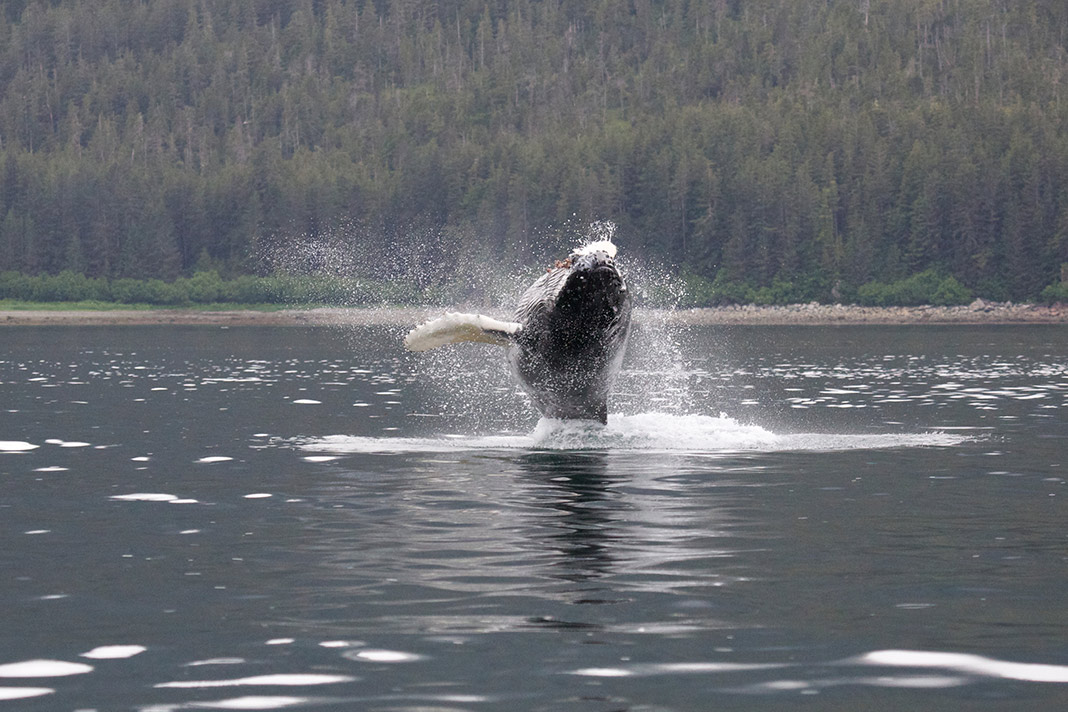
Whale breaching the water
Alaska is one of the top places to whale-watch. | Photo courtesy of: State of Alaska // Jocelyn Pride

Kodiak

According to Alaska.org, this commercial fishing town on an island south of Cook Inlet “may be the state’s best kept whale-watching secret.” Yes, it has the brown bears and salmon you’ve come to expect from Kodiak, but it also has grey, humpback and fin whales.

Resurrection Bay

Considered one of the most reliable spots for whale-watching, including for spotting orcas, Seward’s Resurrection Bay is protected, making for a rich marine ecosystem. If fins aren’t your thing, it’s also home to otters, sea lions and puffins.

Kayak with whales tours

  • Kodiaks Wild Side offers some of the Kodiak area’s best whale-watching. Long-time local and wildlife photographer Wendy Eskew is renowned for delivering marine mammals to her guests, including orcas, fin whales, humpback whales, bears, mountain goats, puffins, seals, otters and more.
  • Winner of the 2020 TripAdvisor Travelers’ Choice Awards, Kayak Adventures Worldwide is committed to sustainability and ethical wildlife interactions. It has several Seward kayak tours, but its most popular day trip combines a wildlife-watching tour by boat with seeing a glacier up close by kayak.
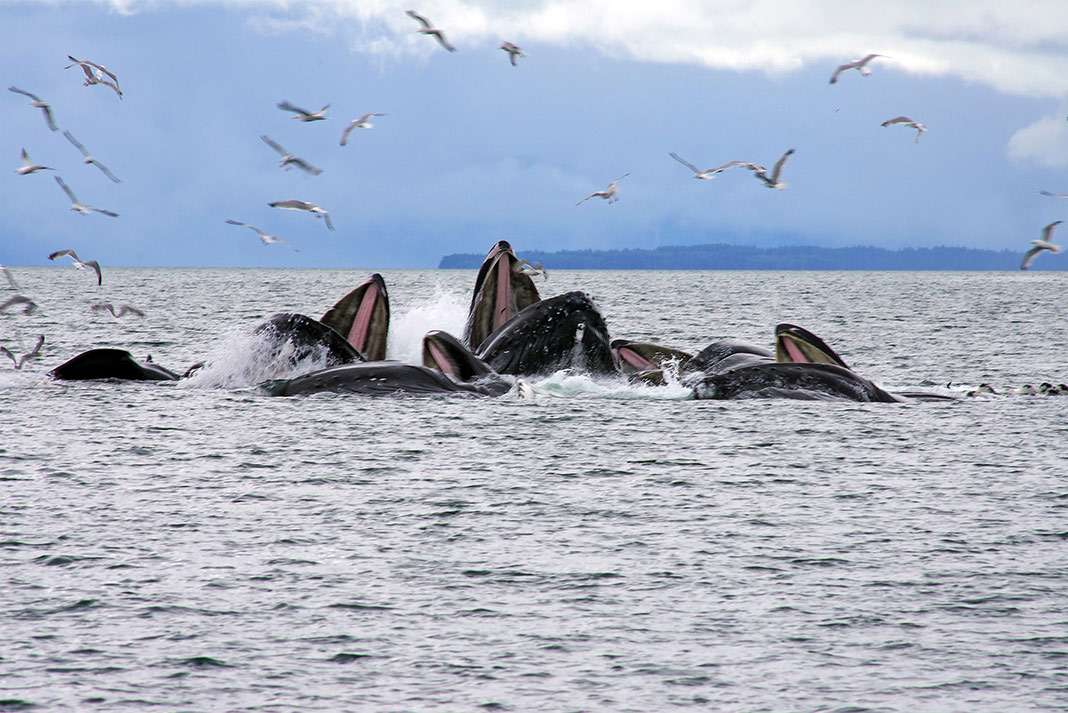
Whales breaching the surface with birds flying around them
Join a whale-watching tour for once-in-a-lifetime experiences. | Photo courtesy of: State of Alaska // Reinhard Pantke

Bucket list trips for sea kayakers in Alaska

Kayaking the Kenai Peninsula

If you have one takeaway after reading this article, it’s likely that the Kenai Peninsula—with its massive tidewater glaciers, 2,100-m mountain peaks and rushing rivers—is where you’ll get your fix of both wildlife and icebergs.

If you’re having difficulty narrowing it down to one tour, though, we don’t blame you. That’s where Expedition Engineering’s Kenai Peninsula Kayak Expedition comes in. This greatest hits tour packs paddling past feeding bears, touring ice caves and arches, and exploring remote wilderness locations all in 16 days.

Kayaking the Inside Passage

Kayaking the Inside Passage—the 1,600-km route between Skagway, Alaska and Puget Sound, Washington—is a bucket list trip for many paddlers. Couple its calm waters with thousands of islands, coves and bays to explore, and you have the trip of a lifetime. Unfortunately, it’s only for those with experience under their belt and time to spare—the whole journey typically takes somewhere between 60 and 80 days to complete.

If you don’t have months to spare but want a taste of what the Passage has to offer, Sitka Sound Ocean Adventures operates custom multi-day expeditions, half-day and full-day tours in the area.
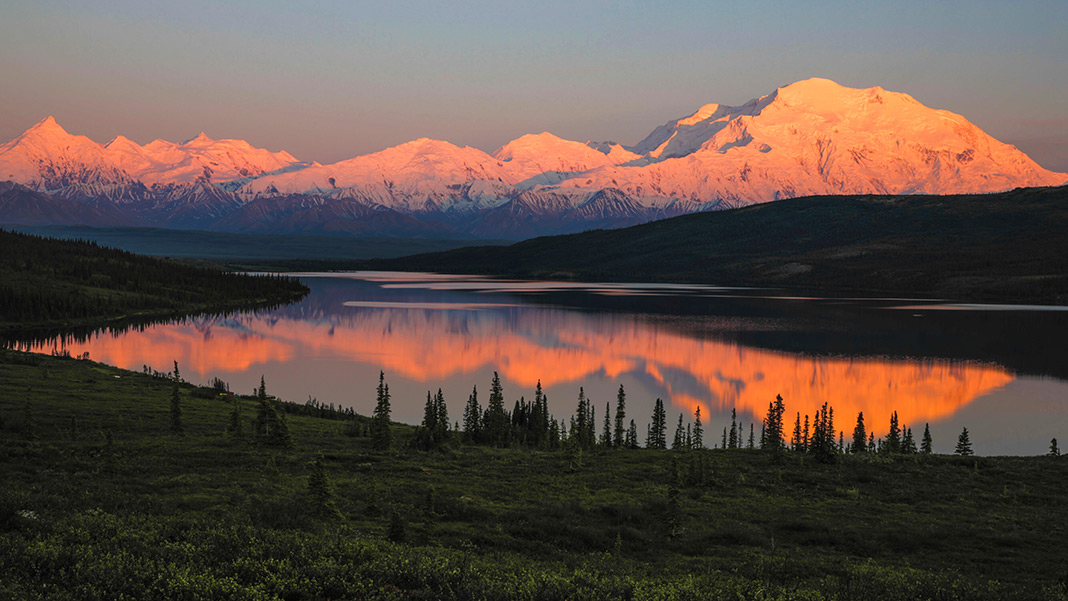
Sunset over the mountains and water of Denali National Park
Venture into the wilds. | Photo courtesy of: State of Alaska // Jocelyn Pride

When to kayak in Alaska

High season in Alaska—when campsites book out and it’s harder to experience true wilderness on the busy waterways—falls during the summer school holiday months of July and August.

Mid-May until mid-June is the best time to avoid the crowds—and the mosquitoes. Late August or September is another good option, but keep in mind that weather conditions grow more unpredictable as autumn approaches. Heading out later in the season requires keeping a close eye on the weather forecast.


What to wear kayaking in Alaska

Even in the summer months, the temperature can range from an average low of 3º Celsius (37º F) to an average high of 22º C (71º F). You’ll want to exercise all the basic principles of dressing for the elements (we outline these more fully in our article What To Wear Kayaking).

Layers—including a high-quality top waterproof layer—are key, and as you likely already know, “cotton kills.” Instead, choose fabrics with natural water-repelling qualities such as wool. Dress for the temperature of the water (about 10º C) not the air. Finally, don’t let the cool climate fool you—sun protection is a must even in the Arctic. After all, the sun stays up a lot longer in the northern latitudes.


Kayaking in Alaska provides experiences that few other places on Earth offer. | Photo: State of Alaska // Brian Adams
Way-Too-Close Encounter With Orca (Video)

Yikes! This clip was captured and submitted to the GoPro Awards by Lukas Reilly after his close encounter with an orca.

Reilly told ABC News: He was paddling off Kuaotunu Beach in New Zealand when a few orcas began diving for stingrays underneath his board. Reilly, a 27-year-old restaurant owner, told 3News he had a GoPro camera in his pocket and pulled it out to capture the moment that one of the orcas came over to check out his board.

“I was a bit nervous thinking, ‘What’s this guy going to do?,’” Reilly said. “Then he slowly crept up and grabbed the back of my board and I yelled, ‘What are you doing!'”

Reilly told another local news station, TVNZ, that the orca “had a chew” on his board but described the close-up with the orca as a “friendly encounter.”

“It was quite freaky but so amazing at the same time,” Reilly told TVNZ.

100-Day Northern Canoe Trip With Toddlers (Video)

If planning the next family vacation makes you sweat, settle in for a 3400km, three-month family canoe journey from Jasper, Alberta, to the Arctic Ocean at Tuktoyaktuk, NWT. The Clark family left their jobs, home and community behind for a 100-day northern adventure.

Have Kids, Will Paddle won the Best Canoeing Film award at the 2014 Paddling Film Festival. “We go on wilderness trips to escape our civilized world, to strengthen our family bonds, and to get grounded in nature,” explains a wild-blooded and gentle-mannered Clark.

“We appreciate the opportunity to live in the moment, enjoying a simple existence as a family.”

The film captures the essence of a family vacation, except the disappointments include the shock of a savaged landscape near the tar sands along the Athabasca River, and the discovery that 1500 river km of the trip had very little current. The lows are eclipsed by the highs of a 4 a.m. paddle on the mirror of Great Slave Lake, the kids asleep in their cockpit, and 100km river days on the Mackenzie.

Africa By Kayak (Video)

I don’t where the river mouth is, I don’t know what  f***ing town this is… I got a broken toe, a chafe to the left arm and right nipple, and these shorts are starting to stink.”

In 2007, Beau Miles attempted to paddle 4000km from one side of Africa to the other. Starting in Mozambique and continuing along the South African coast, Beau allowed five months to complete the voyage. With him for over half the journey was Jared Sharples of New Zealand.

Together the pair experienced the magnificent coast until Jared, who was very ill, left the expedition. Beau paddled alone for six weeks, experiencing for the first time in his life, a truly nomadic, solo existence. Battling huge surf, Beau completed 2000km of the original plan after realizing that his trip wasn’t about kilometers gained but rather the quality of the experience.

Africa By Kayak is one of Miles’ first kayaking films and a fan favorite. Miles is a jack of many trades—sea kayaker, educator, ultra-runner and craftsman. His frank and quirky humor have turned many of his films into award-winners. Bass By Kayak and Junk Paddle won awards at Paddling Magazine’s annual Paddling Film Festival. Watch them below.

Build Your Own Bushcraft Kayak For $1 (Video)

In this video, YouTuber Advoko Makes shows how to build a quick and easy bushcraft kayak. The idea is simple: you can build a fully functional survival kayak in the wilderness if you have a knife, fir tree branches, plastic wrap and scotch tape.

Even though we don’t typically carry yards of plastic wrap or scotch tape in our survival kit, this fully functional kayak is pretty cool. It weighs less than 10 pounds, is waterproof, and only takes a day to make. Because the vessel is transparent, you can see the bottom and fish swimming under you—fishing, in particular, is an exceptional experience, according to Advoko Makes.

Sure, we’re a little skeptical about its long-term durability—but for just a couple of dollars and a single day of work, what do you expect?

If building your own kayak thrills you, find out how to build your own transparent, fiberglass light-up kayak here.

Adorable Seal Catches A Ride On A Kayak (Video)

Let’s get one thing straight: seals are adorable.

In this video published by National Geographic, the seal follows a kayaker in Scotland’s Forth Estuary, an arm of the North Sea near Edinburgh. After tailing kayaker Alistair Forrest and his companion for about a mile, the seal took advantage of a break in the paddling to hop aboard Forrest’s kayak. There, the sleek marine mammal sprawled out as if ready to come along. Forrest and his companion voice their amazement at the unplanned wildlife encounter.

According to the accompanying National Geographic article, “Instances of seals hauling out onto kayaks aren’t common, but neither are they entirely unheard of. And sea lions, which are often mistaken for seals, are also known to hitch a ride. This particular seal—likely a juvenile, judging by its size and especially brazen interest—showed no signs of fear or aggression, instead seeming to enjoy a novel adventure.”

So what should you do in situations like the one in this video? According to the article, “Splashing a hand in the water or reaching out to touch the seal are definitely not the actions to take. In the United States, the Marine Mammal Protection Act prohibits people from approaching seals and other marine mammals. In the rare scenario a seal tries to hop onto your kayak, it’s best to paddle away calmly.”

Alligator Charges Kayak (Video)

A kayaker exploring a section of a North Carolina river found more than he expected when an alligator slammed into his boat.

According to CNN, Pete Joyce was paddling in a swampy section of the Waccamaw River on Sunday when the alligator charged at him. The impact tipped him over into the water. He was able to grab some tree branches to right himself. Joyce was wearing a video camera on his chest, which caught the whole encounter.
“When it was about three feet from the side of the boat is when I actually got a good look at the head,” he said. “Not enough time to really react, anyway.”
Joyce didn’t see the alligator after the collision but could feel it brush against the bottom of his boat as it swam by. Once he righted himself, he hit the side of his kayak three times, hoping that might scare the reptile away. He took some long deep breaths and then grabbed his paddle and paddled the heck out of there.

World’s Fastest Jet Canoe (Video)

If serenity isn’t your thing, power up your next adventure with two jet engines and a whole lot of speed.

YouTuber the Hacksmith demonstrates how to build the world’s fastest jet engine canoe. As it may be the only jet-powered canoe, there wasn’t a lot of competition for the title. The jet engines used for this canoe build, Hacksmith tells us, are the same ones he fitted onto a homemade jetpack. They had sat unused since, so the jetpack was disassembled and put to better use.

To make the jet canoe, the engines are tied together to propel the canoe in whichever direction the operator wants it to go, and they’re mounted high enough as to not blow exhaust onto the hull.

Thanks to movie magic, the build is completed in no time. The result can generate a total thrust of 143 lbs, and travel at 50km an hour. The engines are so powerful the stern is almost submerged under the pressure. That proved to be a problem for Hacksmith, who wanted to go faster but couldn’t, because the canoe would have completely dipped its engines into the water. However, any good voyageur would have just moved a barrel of whiskey forward in the boat.

Watch the video to find out how you can make the fastest canoe on the water.

The New Future Of Demo Days

covid 19 demo days paddling
Photo: pexels

Not every paddling retailer has a love-hate relationship with demo days. For some, it’s all hate.

So when the COVID-19 pandemic burst onto the scene last spring, closing stores and dropping a cloud of uncertainty over every aspect of the paddlesports business, there was a silver lining of sorts. Nobody had to run a demo all season.

Later, as an unexpected Covid boom improved bottom lines and retailers experimented with smaller-scale alternatives, some began to wonder whether full-blown demos will become a thing of the past. Others have no doubt.

[ Discover the best canoes and kayaks of the year in the Paddling Buyer’s Guide ] 

“We’re done with big demos,” said Dave Slover, owner of Alder Creek Kayak and Canoe in Portland, Ore. Even before the pandemic struck last spring, Alder Creek had decided to cancel its 2020 Spring Paddle Festival, which was still popular with paddlers but wasn’t generating the sales boost it had in years past. Such events come with plenty of overhead for retailers and participating manufacturers, all to sell boats at a discount. “A two-day demo costs $20,000 or $30,000,” Slover said. “Until you put a hundred thousand bucks in the bank, that event isn’t paying for itself.”

A demo is essentially a sale, used not only to show new paddlers the ropes but also to move product, usually at a discount. That doesn’t pencil out in the current environment, with retailers selling everything they can get their hands on at full price and full volume. Next year looks like more of the same, with retailers across North America desperate to restock and vendors limiting orders for 2021, even as their factories run full-tilt.

“Our inventory is about 70 percent of where it should be going into spring and we are pre-selling all sorts of items,” Slover said. A sale of any kind doesn’t make sense in such times, especially one that costs money to put on and leaves staff sweaty and grumbling.

“For every show we rent two 40-foot Penske trucks and load them with 50 or 60 kayaks every morning,” said Juan Carlos Andreu, general manager at Austin Canoe Kayak. “It’s just a lot of sweat and tears to put these shows together.”

In exchange for that investment in money and hard labor, retailers gain the chance to cultivate relationships that just don’t grow under fluorescent shop lights. Demos set specialty shops apart from the box stores, bring new blood into the sport and foster a kind of customer interaction you can’t get anywhere but on the water.

“There’s no comparison because when I’m on demos, I’m educating people on paddling.”

“There’s no comparison because when I’m on demos, I’m educating people on paddling,” said Steve Cheers, owner of Mountain Sports Ltd., in Bristol, Va. “It makes you look like the expert. You get a connection you don’t normally get in the store, and there are people I’ve met at demos who continue to this day to be friends.”

Mountain Sports is an outdoor-sports institution in southern Virginia, a family-owned operation celebrating 40 years in business. As recently as a decade ago, it hosted six demos per season at a city park in Bristol, but as the municipal red tape mounted Cheers transitioned to less-frequent demos at a lake 40 minutes out of town. Last season he scheduled two, both canceled due to COVID-19.

Cheers says that about 20 percent of his paddlesports sales come from demos in normal times, and he expects to resume them eventually. How soon depends on the pandemic and his suppliers. “As soon as we can get some boats, we’ll probably do something for ’21,” he said.

Austin Canoe and Kayak, a powerhouse retailer with five locations in central and east Texas, also has taken a wait-and-see approach to demos, Andreu said. In recent years, ACK has hosted four demo weekends, one each spring and fall in both the Austin-San Antonio and Houston areas. The events have been a key part of the retailer’s customer outreach efforts, and Andreu is eager to return to them. Just not quite yet.

With no excess inventory and almost everything he can get into the shop flying straight off the shelves, there’s no immediate need for full-scale demos. Instead, ACK has focused on more targeted outreach. Last summer, the retailer offered reservation-only on-water tests of its 10 most popular fishing kayaks, in what Andreu calls a boutique experience for customers considering boats that retail from $1,500 to more than $3,000. “It was one-on-one, and we were able to keep it safe,” he said, adding that a $100 refundable deposit ensured participating customers were serious.

The approach is a far cry from the festival vibe of ACK’s regular demos, which feature live music and draw hundreds of people, from kitted-out enthusiasts to folks who just happen by. Still, the scaled-down demo served one of the most important functions of a paddling demo—building community around the sport, and helping customers find the boat that’s right for them.

Slover believes smaller-scale demo opportunities may be the wave of the future. While Alder Creek may never throw another weekend-long Paddle Festival with SUP yoga classes, kayak fishing clinics and dozens of brands, Slover is pursuing opportunities for small demos keyed to individual brands.

Rather than putting on a big show at great cost to the retailer—and inviting brands to send reps at great cost to them—Slover envisions more personal events coinciding with brand reps’ regular rounds.

“If they can double up on their tour, it makes sense for them to promote their products to not only the retailer but also to the consumer,” he said. “Come spend an evening with the rep. I think that’s the target.”

13 Algonquin Hotels For People Who Don’t Want To Camp

Photo: Ontario Tourism

Algonquin Park is just a few hours’ drive from Ontario’s largest urban centres, yet this staycation destination feels worlds away from the hustle and bustle of Toronto and Ottawa. You don’t have to be a rugged outdoors person to experience the majestic lakes, serene forests and abundant wildlife of this iconic park—a selection of comfortable and affordable hotels is located within minutes of the park’s west, east and southern access points or within the park itself.

[ Paddling Trip Guide: View all paddling trips in Algonquin ]

Base yourself at an Algonquin inn or a hotel within or near Algonquin Provincial Park for easy access to the park’s diverse hiking trails, canoe routes, guided canoe day trips, visitor attractions and cycling opportunities. Plus, many hotels offer the convenience of a room or fully equipped suite that is steps from the shops and restaurants of the region’s welcoming communities.


View this post on Instagram


A post shared by Bartlett Lodge (@bartlett_lodge)

Bartlett Lodge

An Algonquin Park landmark since 1917, Bartlett Lodge is an oasis of luxury and fascinating history set amid the wild beauty of Algonquin’s Cache Lake. Whether your idea of the perfect vacation is a lakeside deck and a comfy reading chair or an ambitious paddle-and-portage adventure to a remote lake, Bartlett’s artist studio suites ensure you’ll end each day in total comfort. And the lodge’s gourmet, five-star meal plan guarantees you’ll be well fuelled for each new experience. Located near the mid-point of the Highway 60 corridor, this Algonquin inn-in-the-park is a short freighter canoe ride across Cache Lake from the guest parking area, making it a bit more difficult to slip away. But once you are here, we guarantee you won’t want to leave.

Learn more | Reserve your stay


View this post on Instagram


A post shared by nomicommunity (@thenomicommunity)

Nomi Resort

For upscale accommodation in south Algonquin, look no further than Nomi Resort on Benoir Lake. Just a 3 km walk or drive to Algonquin Park’s Kingscote Lake access point, and a short paddle or hike to High Falls, this boutique hotel also boasts over 30 kilometers of private trails with on-site fat bike rentals. Nomi’s main lodge houses spacious guest rooms; a wellness center with sauna, massage rooms and mindfulness room; and the top-rated Lands850 Restaurant, Bar and Lounge.

Learn more | Reserve your stay


View this post on Instagram


A post shared by Garth (@garthvhunt)

Spring Lake Resort Motel

Located in the village of Dwight and just 15 minutes from Algonquin’s West Gate, Spring Lake Resort offers a cheap and convenient home base with easy on-site amenities including a restaurant, complimentary canoes and kayaks for exploring tranquil Spring Lake and 52 wooded acres with hiking trails. The resort’s tidy, motel-style rooms feature lake views and are steps to a sandy beach and canoe dock. Head into Dwight for a tasty baked treat or a fresh bottle of red to enjoy by the lake.

Learn more | Reserve your stay


View this post on Instagram


A post shared by LakeOfBaysLodge (@lakeofbayslodge)

Lake of Bays Lodge

Nestled among tall pines with a private beach on the sandy shores of Dwight Bay, the Lake of Bays Lodge offers a variety of affordable accommodations, ranging from modern lakeview suites with en-suite Jacuzzi tubs to traditional rustic cottages. All suites feature a private balcony or deck overlooking Lake of Bays. Dine in at the lodge’s restaurant, or sample local take-out steps away in the village of Dwight. Centrally located within a 20-minute drive of Algonquin Park’s West Gate, downtown Huntsville and the picturesque, waterfront hamlet of Dorset.

Learn more | Reserve your stay

Photo: Ontario Tourism
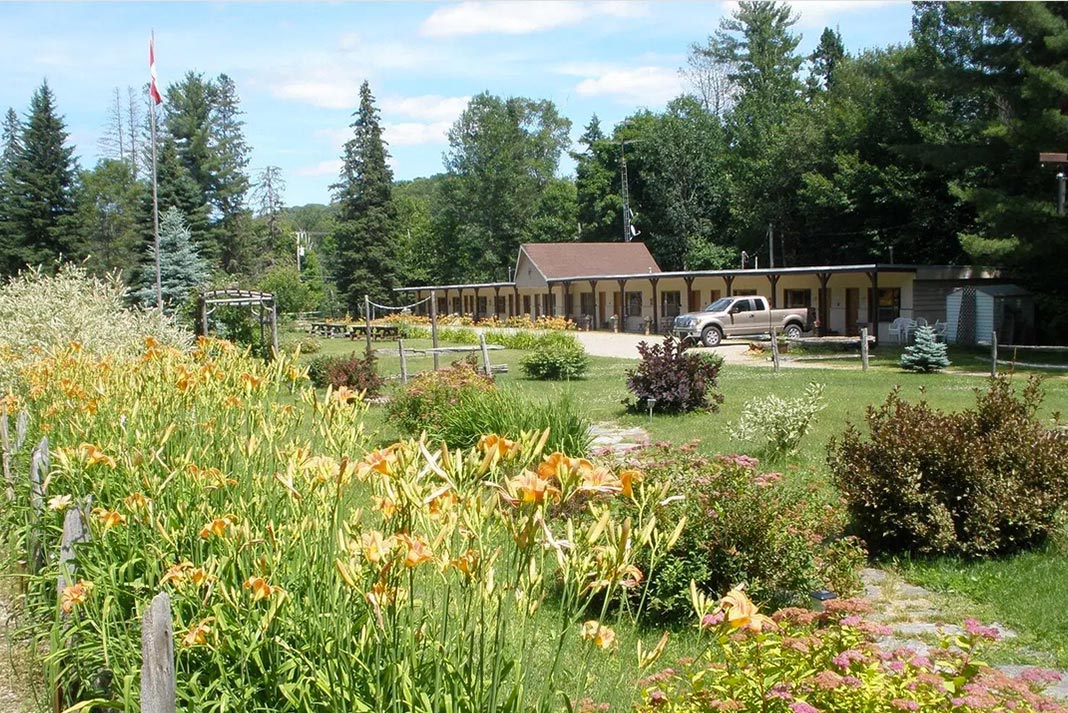
It’s a great alternative to camping. | Photo courtesy of: Destination Ontario

Dwight Riverside Inn

Families rave about the clean rooms, immaculate grounds and friendly service at this hidden gem midway between Algonquin Park’s West Gate and the amenities of Huntsville. Newly renovated family and luxury suites feature warm cedar accents and well-equipped kitchenettes for longer stays. If you’re on a budget and looking for affordable Algonquin Park hotel deals, the Dwight Riverside Inn’s cozy rooms and suites have everything you need—plus, the 10-acre motel property adds a ton of value with beautiful gardens, free BBQs and firewood, children’s playground and a gorgeous swimming hole on the Oxtongue River. Rent canoes and inner tubes on-site to experience a lazy river ride, Algonquin-style.

Learn more | Reserve your stay

Blue Spruce Resort

If you’re planning to paddle Canoe Lake or hike popular trails near Algonquin’s West Gate, this charming lakeside motel and cottage resort offers comfortable studios and suites with fireplaces and great views of Oxtongue Lake. Add to that the resort’s superb sandy beach and on-site trail network for hiking or cross-country skiing/snowshoeing and you have an idyllic home base for an Algonquin couple’s getaway or a family vacation. Blue Spruce Resort guests enjoy use of canoes, kayaks and paddleboards to tour the lake or make the half-day trip to spectacular Ragged Falls on the Oxtongue River. Algonquin Outfitters is just next-door if you need to rent equipment for a longer paddling adventure in the park.

Learn more | Reserve your stay


View this post on Instagram


A post shared by Nick Taylor (@taylornj73)

Algonquin Lakeside Inn

Choose from classic, comfortable rooms and suites at this modest lakeside hotel right on Highway 60, minutes from the park’s West Gate. Enjoy hot breakfast and dinner with Algonquin Lakeside Inn’s lodge-and-dine packages, and then head down to the resort’s sandy beach and borrow a canoe or kayak to paddle Oxtongue Lake or journey to Ragged Falls.

Learn more | Reserve your stay


View this post on Instagram


A post shared by Leanne Petroff (@lealeapet)

Oakview Lodge and Marina

Situated on the picturesque shore of Little Hawk Lake in the Haliburton area of the Algonquin Highlands, Oakview Lodge is a convenient option if you’re looking to explore both the park’s West Gate area and southern panhandle. This cozy Algonquin inn offers rooms, suites and cottage accommodation, lakeside dining and use of canoes, kayaks and SUP boards for exploring the lake. Oakview Lodge is also on the doorstep of the Haliburton Forest, a year-round destination for paddling, hiking, wildlife viewing and winter activities.

Learn more | Reserve your stay


View this post on Instagram


A post shared by Danielle Vann (@dvann)

Little Hawk Resort and Marina

Another fine option for stays in the Haliburton area is Little Hawk Resort and Marina. Set on five wooded acres on the shores of Halls Lake, kids and adults love the lodge’s family-oriented atmosphere and sandy swimming beach. Choose from pet-friendly suites or cottage accommodation, and enjoy the complimentary canoes, water trampoline, playground, hot tub and an on-site restaurant.

Learn more | Reserve your stay


View this post on Instagram


A post shared by John R. Walker (@onewordimages)

Couples Resort

This couples-only, five-star luxury resort is situated on the shores of Galeairy Lake and the Madawaska River with direct access to the east side of Algonquin Park and walking distance to the village of Whitney. Both the lake (most of which lies within the park) and river offer superb canoeing and kayaking, but it’s the Couples Resort’s opulent rooms—all of which feature an outdoor hot tub and in-room Jacuzzi next to a wood-burning fireplace—and gourmet dining experiences that make a stay here truly one-of-a-kind. This all-season resort is also home to an organic spa so you can pamper weary muscles after a day of paddling, hiking, biking, snowshoeing or cross-country skiing the nearby trails.

Learn more | Reserve your stay


View this post on Instagram


A post shared by Camp Bongopix (@bongopix)

Camp Bongopix

With a hip, sociable vibe and cheerful Algonquin Park-themed rooms in a classic log chalet, the hostel-style lodge at Camp Bongopix offers a fun (and sometimes rowdy) atmosphere for younger adults and lovers of folk music. The lodge and a handful of rustic rental cabins are pet-friendly so you can bring your pooch (or adventure cat) to Algonquin Park. Meet like-minded park visitors while chilling in the book- and guitar-filled common room, playing retro video games (there’s no wifi) or grilling dinner over the lodge’s BBQs. Grab a complimentary canoe to paddle across Galeairy Lake into Algonquin Park, and don’t miss the free campfire jam every Saturday night. Located on the Madawaska River in the village of Whitney, Camp Bongopix is a 5-minute drive from the East Gate of Algonquin Park and close to the park’s superb visitor center, logging museum and popular hiking trails.

Algonquin Eco-Lodge

More Old World mountain lodge than modern hotel, the Algonquin Eco-Lodge offers a truly unique, off-grid experience for wilderness enthusiasts. Located on the southern border of the park, this award-winning eco-lodge creates its own alternative energy from an onsite waterfall so guests can enjoy the finer comforts, including a carbon-neutral hot tub. This is one of the most secluded places you can stay in Algonquin—walk, cycle, horseback ride or ski a 2.3-km trail to reach the lodge (don’t worry, they’ll transfer your luggage). Guests stay in 17 private bedrooms, share dining and social areas, and enjoy an extensive trail network (over 40 km) right out the door. Canoe to secluded beaver lodges and meandering creeks, then relax in this unusual inn’s lakeside sauna.

Learn more | Reserve your stay


View this post on Instagram


A post shared by Algonquin Portage (@algonquinportage)

Algonquin Portage

Planning a canoe trip to the breathtaking Barron Canyon, mighty Petawawa River or Grand Lake area on the east side of Algonquin Park? Algonquin Portage is located right on your route into the park, just 15 minutes from Sand Lake Gate, making this comprehensive outfitting service and motel-style lodge a convenient one-stop shop. Book one of their simple, cozy rooms and get an early start on your Algonquin Park adventures. Additional services include: canoe, kayak and SUP rentals, equipment rental, trip planning, vehicle shuttles, canoe delivery/pick-up and a camper’s store.

Learn more | Reserve your stay


Explore Algonquin Park from the comfort of your nearby Algonquin hotel, inn or lodge. | Photo courtesy of: Destination Ontario