Would you have been prepared for an emergency situation like this? 17-year-old Alfie was paddleboarding off the coast of Gwynedd in Wales when he was separated from his board. Thankfully, he was wearing his life vest—doing so undoubtedly saved his life. But another safety measure Alfie rightly took when heading out aided in his rescue and survival: putting his phone in a waterproof phone pouch. As a result, he was able to call for help.
This video contains the real-life audio recording of the phone call Alfie had with the coastguard rescue operator, and footage of the rescue effort. A helicopter and lifeboat were dispatched from the nearby RNLI Abersoch Lifeboat Station to search for Alfie while the operator talked him through staying calm and floating on his back as much as possible in the rough waters.
As the video shows, Alfie was successfully rescued, the RNLI volunteers reaching him in a lifeboat and then transferring him to the helicopter which flew him to the hospital. Now the video is being used by the Royal National Lifeboat Institution (RNLI) to promote the use of waterproof phone pouches, in addition to other safety precautions that could save the life of someone in a similar situation to Alfie.
The RNLI is a registered charity in England, Wales, Scotland, the Republic of Ireland, the Bailiwick of Jersey, the Isle of Man, and the Bailiwick of Guernsey and Alderney, that is dedicated to saving lives at sea. They do so through providing education and rescue services. Since 1843, their lifeboat crews and lifeguards have saved more than 140,000 lives.
The RNLI website provides many helpful articles about safety precautions to take when undertaking different activities on or near bodies of water, as well as instructions on what to do in emergency situations, such as this article about How To Call For Help At Sea. They also sell safety items, such as waterproof phone pouches, on their website.
Alfie’s experience is an important reminder to brush up on your paddling safety knowledge and skills. The United States Coast Guard and the Water Sports Foundation recommend the following safety measures to paddlers:
Always wear your life jacket (and for paddleboarders, wear your leash)
From the Filmmaker: Back in fall 2019, we set out on a 17-day backcountry canoe trip through Algonquin Park, Canada. The beauty of Ontario is tenfold during Fall. Although we knew there would be the added challenge of colder weather, we wanted to avoid the crowds of summer and the mosquitoes, have our choice of campsites, and see the change of the colours. We were not disappointed. After weeks planning this Algonquin canoe trip, weeks living alone in the wild, and months editing this film, we’re finally proud to show you our baby. We hope you enjoy watching this Algonquin Park canoe trip video as much as Elena enjoyed complaining about the lack of cheese on this adventure.
Read our ultimate guide to planning your Algonquin Park canoe trip here.
You’ll find great waterfront campsites for paddlers near Vancouver. | Photo: Destination BC // Adam Wells
Looking for the best places to camp near Vancouver? You need not look very far. Many of the best places to camp in the Vancouver area are on the waterfront of inland lakes and the Pacific Ocean, surrounded by the stunning mountain vistas that make British Columbia famous.
With all that water, sea kayakers, canoeists and standup paddleboard enthusiasts are in for a real treat. You’ll find camping in the Vancouver area that satisfies all levels of paddlers, whether you’re looking for sheltered water, tide-washed islands or open coast.
Families, car campers and RV campers can look forward to great tent campsites near Vancouver and convenient, fully equipped RV sites. Of course, there’s more than just drive-in sites—you’ll also find free camping near Vancouver and secluded backcountry sites within a short drive of the city.
Here’s the ultimate rundown of where to go camping near Vancouver.
Life doesn’t get any better than this. | Photo: Destination BC/Grant Harder
Campgrounds near Vancouver
If you love the outdoors, staying at a Vancouver area campground gives you an affordable and adventurous way to experience British Columbia’s Lower Mainland. There are abundant options for camping near Vancouver. Whether you’re a paddler looking for waterfront access on an inland lake or the ocean, a family seeking a unique glamping experience, or road-trippers desiring a scenic place to park your van or RV, there’s a Vancouver campground that’s perfect for you.
Best all-around campgrounds
Golden Ears Provincial Park
This great Vancouver area campground on Alouette Lake is set in one of British Columbia’s largest provincial parks. It’s located just north of Maple Ridge, with transportation available from Vancouver aboard the Parkbus. Alouette Lake is especially attractive for canoeists, offering stunning vistas of the Coast Mountains and plenty of shoreline to explore. Canoe rentals are available at the park gatehouse throughout the summer.
There are three drive-in camping areas with over 400 campsites available. Drive-in campsites are $35 per night and can be reserved online in advance. Additionally, water-access rustic marine campsites for paddlers on Alouette Lake can be reserved online in advance, making for a great Vancouver backcountry camping adventure.
Located east of Vancouver, Chilliwack Lake Provincial Park offers great kayaking, canoeing and standup paddleboard opportunities on a stunning freshwater lake in a jaw-dropping mountains and old-growth forest environment. This great Vancouver campground is far enough away from the city to offer ample solitude. There are 146 drive-in campsites, with online reservations available ($22 per vehicle per night). Backcountry camping is also available along the park’s 40-km network of hiking trails ($5 per person, per night).
The big attraction at Stawamus Chief Provincial Park, located near Squamish, is a 700-m granite cliff that ranks among the world’s largest monoliths. The park is legendary in the rock climbing and hiking community—and features over 100 rustic frontcountry campsites (about half are drive-in, the others require an easy five-minute hike). The park offers some of the best tent camping in the Vancouver area; sites are inaccessible to large RVs (van campers are suitable). There are pit toilets and drinking water taps; campsites are first-come, first-served. Camping fees are $10 per person, per night and must be paid in cash at the campground entrance using an envelope self-registration system.
You’ll find great waterfront campsites for paddlers near Vancouver. | Photo: Destination BC // Adam Wells
Family camping near Vancouver
Alice Lake Provincial Park
Located near Squamish on the Sea to Sky Highway, Alice Lake Provincial Park is a favourite for family camping near Vancouver. The campground boasts 96 drive-in sites and is surrounded by mountains with views of the Tantalus Range. The park features four freshwater lakes—perfect for family canoeing or standup paddleboarding.
This popular camping area near Vancouver includes four areas for families to camp with a tent or RV. Located 100 km east of Vancouver, Cultus Lake affords classic mountain scenery, with a warm, freshwater lake that’s perfect for swimming and paddling. There are nearly 300 campsites, along with shower facilities and toilets. Camper trailer and cabin rentals are also available at the park.
It’s worth making the two-hour drive from Vancouver to Harrison Hot Springs to camp at Sasquatch Provincial Park. You’ll find excellent family-friendly canoeing on Hicks and Deer lakes, both of which boast waterfront drive-in camping. Trout Lake is motorboat free. All of the park’s lakes are surrounded by mountains and offer good fishing for trout and char. Online reservations are available at $23 per group, per night.
Located east of Vancouver in Chilliwack, the Vedder River Campground offers family-friendly camping in the Fraser Valley, with a variety of sites for tent camping, RVs and trailers. A unique riverfront camping experience stands out compared to the typical lake and ocean scenery of Canada’s west coast. There’s an adventure park and water park on site, and you’ll find plenty of options for kayaking and rafting nearby. Reservations for this great place to go camping near Vancouver are available online.
Located barely 30 minutes north of downtown Vancouver on the Sea to Sky Highway, Porteau Cove Provincial Park is Vancouver’s closest oceanfront campground. The park’s 60 campsites embrace the rugged shoreline of Howe Sound. Sea kayakers will love the easy access to world-class paddling, with many options for day trips in the area. Check out the park’s two Olympic Legacy Cabins if you’re looking for a more upscale glamping experience in the Vancouver area.
Escape to the Sunshine Coast for some of the best oceanfront camping near Vancouver. Porpoise Bay Provincial Park is located a short 45-minute ferry ride and easy half-hour drive from Horseshoe Bay. You’ll discover a fantastic beach with great opportunities to explore the sheltered waters of Sechelt Inlet by sea kayak or standup paddleboard. There are two options for camping: a full-service, drive-in campground ($29 per party, per night) or a more rustic walk-in area ($15 per party, per night) specifically for paddlers and cyclists.
Rolley Lake’s 64 campsites are located within a minute’s walk of the waterfront—and barely an hour’s drive from the city—making it one of the best Vancouver area campgrounds. There’s great kayaking, canoeing and standup paddleboarding on the lake, as well as fishing for rainbow and cutthroat trout. Vehicle access campsites are $35 per night and reservations are mandatory.
Sea kayakers in the Vancouver area are blessed with plenty of nearby options for overnight paddling trips. Great kayak camping near Vancouver can be had just north of the city at Deep Cove and Howe Sound. Here’s a sampler of some favourites. For more paddling options check out Best Kayak Trips Close To Vancouver.
Located in North Vancouver, a short half-hour drive on Highway 1 across the Second Narrows Bridge from downtown, Say Nuth Khaw Yum (Indian Arm) Provincial Park features five backcountry paddle-in campsites. Launch from the community of Deep Cove (kayak rentals are available) and trace the fjord-like inlet north. You’ll find stunning kayak camping sites at Granite Falls and Bishop Creek. Pack your own drinking water and plan to stop early—the first-come, first-served campsites are free and very popular. Go in the shoulder seasons of spring and fall for more solitude.
Experienced paddlers will find plenty of options for backcountry camping near Vancouver in the islands of Howe Sound. In particular, Gambier Island features campsites at Douglas, Brigade and Halkett bays—the latter is a provincial marine park with designated, non-reservable sites ($5 per person). But first you have to get there: launch from Porteau Cove Provincial Park (located 45 minutes north of Vancouver on the Sea to Sky Highway) and cross the Montagu Channel to Anvil Island, paying close attention to the weather. There’s an excellent hike on Anvil. One more crossing gets you to Gambier Island. Bring enough drinking water for the duration of your trip.
Take the Sunshine Coast ferry from Horseshoe Cove to Langdale and launch from either Hopkins Landings (close to the ferry dock) or Gibsons Marina. From Gibsons, it’s less than an hour’s paddle to Plumper Cove Provincial Marine Park on Keats Island, where you’ll find established campsites, pit toilets and a freshwater pump ($16 per group, per night; no reservations). Watch for boat and ferry traffic en route. There’s plenty of island shoreline for intermediate to advanced paddlers to explore at the northern outlet of Howe Sound.
Take the Sunshine Coast ferry from Horseshoe Cove and drive 30 minutes north on Highway 101 to Porpoise Bay Provincial Park—your launching point to explore Sechelt Inlet on an out-and-back overnight sea kayak trip. You’ll find six backcountry camping options headed northward, mostly on beaches and all part of Sechelt Inlets Marine Provincial Park. Camping is free.
You’ll find several options for luxury camping in Vancouver, including well-appointed cabins and glamping resorts. Glamping in Vancouver is a great way to experience Canada’s west coast in luxe style.
Secret Cove Resort
Check out Rockwater’s Secret Cove Resort, located on the Sunshine Coast, if you’re looking for a luxurious glamping experience in the Vancouver area. The resort is a 45-minute ferry ride north from West Vancouver’s Horseshoe Bay, and an easy drive up Highway 101, past the town of Sechelt to Halfmoon Bay. You’ll find cabins and unique treehouse accommodations, connected by forest boardwalks and perched on the rocky shores of the Salish Sea. The treehouses feature heated slate floors, hydro-therapy tubs, shoji screens and fireplaces—as well as king-sized beds.
Fort Langley’s Fort Camping provides a variety of camping accommodations just east of Vancouver. It’s a great destination for Vancouver glamping with five family tent cabins: luxurious canvas-covered shelters that each sleep five. Inside there are bunk beds, a meal prep area and mini fridge. Each cabin comes with a barbecue and fire pit. You’ll want to book your tent cabin early and plan on staying at least two nights. Enjoy all of Fort Camping’s amenities with your stay, including theme weekends, children’s activities and hiking trails.
We know you’ll appreciate the services of a developed campground (think: running water, toilets and showers) but if you’re in the mood for something more rustic (and free), you’ll find a few good options for wild camping near Vancouver. Remember, there are no caretakers at free campsites near Vancouver so camp responsibly and do your best to leave the place cleaner than you found it.
Jones Lake, Chilliwack
You’ll find 55 free campsites at BC Hydro’s Jones Lake recreation area, located east of Vancouver, about 42 km from Chilliwack. Campsites have picnic tables, fire rings and communal pit toilets, but you’ll have to bring your own drinking water. Jones Lake is popular for mountain biking and fishing, with rainbow trout, cutthroat trout and kokanee available. There’s also good swimming, hiking and paddling. There’s a 14-day limit on camping per season.
Bet you never expected to find free wild camping within minutes of downtown Vancouver, did you? Cypress Mountain Provincial Park is perfect for experienced backcountry campers. First-come, first-served wilderness camping is allowed beyond the Cypress alpine and nordic ski facilities, along the Howe Sound backpacking trail. No camping facilities are provided and campfires are not allowed. Be sure to brush up on your Leave No Trace camping skills to keep this rugged area pristine for other visitors.
Take Sylvester Road from Mission, B.C., to access this free camping area near Vancouver. Pack your tent and camping gear and hike in about 15 minutes to the primitive camping area, where there’s space for about a dozen groups on a small inland lake. You’ll find a hiking trail to a scenic waterfall, pure western hemlock forest with abundant birdlife, and paddling options on Davis Lake.
There’s no better place to live your vanlife dreams than Vancouver. Karma Campervans rents four-season Ford Transit high roof vans complete with bedding, cooking and kitchen gear, a cooler, folding chairs, a freshwater container and more. Pet-friendly rentals are available. Pick up your modern-rustic campervan at 2108-21320 Westminster Highway (877-312-3037) or book online.
Canadream is your go-to source for renting an all-inclusive RV in Vancouver (8223 92nd St, Delta, BC, 604-940-2171). You’ll find everything from compact truck campers to campervans to full-size RVs, with trip planning services available.
Escape Campervans provides RV rentals in Vancouver, with road-tripping itineraries for all of Canada’s west coast and the Pacific Northwest. A five-berth campervan is available at Escape’s Vancouver location, featuring customer exterior artwork—along with a two-burner propane stove, fridge, water tank, sink and more.
Honest Camper provides stylish and comfortable VW Westfalia and Mercedes campervan rentals in Vancouver, with route planning available for classic west coast road trips to the Sunshine Coast and Vancouver Island. Rentals come with everything you need for vanlife comfort for up to four campers.
There are plenty of options for purchasing new camping gear in Vancouver. Or, if you prefer, you’ll find a variety of outfitters providing rental camping gear in Vancouver.
Where to buy camping gear in Vancouver
Mountain Equipment Co-op
MEC is a classic Canadian retailer of quality outdoor gear, with roots in Vancouver. You’ll find locations in downtown Vancouver (111 2nd Ave E, 604-72-7858) and North Vancouver (604-990-4417). You’ll find a wide variety of equipment, paddling gear (including canoe, sea kayak and SUP rentals) and apparel, making MEC a great choice for camping gear in Vancouver.
Valhalla Pure Outfitters
A west coast original, Valhalla Pure is a great destination for camping equipment in Vancouver with locations downtown (88 W Broadway Ave, 604-872-8872), in Abbotsford (1707 Salton Rd, 604-850-5523) and Squamish (1200 Hunter Pl, 604-892-9092). Explore high-end apparel, camping gear (including tents, sleeping bags, cooking gear and backpacks) and the best in canoes, sea kayaks, SUPs and paddling accessories.
Located in Surrey (101-12355 Pattullo Pl, 604-580-3777) Skyview Outdoors is a Vancouver-area camping gear store offering some of the best names in tents, backpacks and camp kitchen supplies. Skyview also sells kayaks, including rec boats, sea kayaks, fishing kayaks and inflatables.
Alpine Start Outfitters
This outdoor gear store is located in downtown Vancouver (68 West Broadway Ave, 604-876-2555). Alpine Start specializes in camping and hiking gear, including tents, sleeping bags and backpacks. You’ll also find the best in outdoor apparel for men, women and children.
[ Paddling Trip Guide: View all paddling adventures in British Columbia ]
Where to rent camping gear in Vancouver
Rent-a-Tent Canada
Look no further than Rent-a-Tent if you’re looking to rent a tent in Vancouver. The company is located near the airport (8-8385 St. George St, 604-808-9297) and provides a variety of tent options such as Marmot and The North Face for backpackers and family campers. Delivery service is available for the metro Vancouver area.
Rent Outdoors is a full-service camping gear rental outlet in Vancouver (567-1755 Robson St, 604-357-4770). The company provides comprehensive rentals for campers and backpackers, including everything you need to spend time outdoors (high-end tents, sleeping bags with liners, sleeping pads, camp kitchen and much more). Packages are available for set periods of time, ranging from five days to a month. Camping food packages are also available.
Jens Outdoors
Jens Outdoors is a Vancouver-area camping gear rental outfitter offering tents, sleeping pads, kitchen gear and more. The outfitter operates out of the same location as Rent-a-Tent Canada, creating a full-service camping outlet near the Vancouver airport (8-8385 St. George St, 604-808-9297).
Kayaking at Sunset Beach in Downtown Vancouver. | Photo: Tourism Vancouver // Nelson Mouellic
Vancouver embraces its waterfront like no other Canadian city, with countless beaches making it the undisputed best West Coast beach city north of Los Angeles. But there’s more to just swimming and suntanning at Vancouver beaches—especially if you’re a paddler. You’ll find on-site kayak and standup paddleboard rentals at many Vancouver beaches, including several downtown options, so it’s easy to get out on the water on your next vacation or business trip.
There’s no better way to see the city skyline, trace the famous Stanley Park Seawall, ogle the stunning Coast Range mountains of North Vancouver, or experience the wild, tide-swept coastline of the University of British Columbia’s Point Grey than from the water.
Our list includes something for everyone, from the best beaches for dog-walkers to families to naturists (you have options in Vancouver beyond the infamous Wreck Beach). So what are you waiting for? Life’s a beach in Vancouver.
At nearly 8 km long, Vancouver’s Wreck Beach is the longest clothing-optional beach in North America. It’s located in Pacific Spirit Regional Park, at the edge of the University of British Columbia. Wreck Beach isn’t for everyone; typical beachgoers are laidback, friendly and naked. This Vancouver beach is busy in the summer and the atmosphere is social, so be prepared for crowds. Go in the off-season if you’re looking for a quieter experience.
There are no lifeguards or facilities, but you’ll find plenty of beach vendors selling all sorts of products and snacks—legal and otherwise. Park at UBC’s West Parkade and descend 480 stairs on Trail 6, located at the west end of University Boulevard. Wreck Beach is popular for skimboarding; sea kayakers can access Wreck Beach by launching from Jericho Beach and tracing the Point Grey shoreline westward.
Sunset Beach
Aptly named Sunset Beach is located less than a half-hour walk from most downtown Vancouver hotels, at the mouth of False Creek between Bute Street and Thurlow Street, making it a perfect place to end your day. The beach is located on the Stanley Park Seawall so getting there is easy on foot, rollerblade or bicycle. It makes for a great place to launch a kayak or standup paddleboard to explore the sheltered waters of False Creek. This is a designated quiet beach, meaning amplified sound is not allowed. There are concessions, washroom facilities and lifeguards during the summer months.
Jericho Beach is a great destination for paddlers, with sea kayak rentals from Jericho Beach Kayak Centre and long-term waterside kayak storage from the Jericho Sailing Centre. The beach is open to north and west winds so pick your day carefully for sea kayak and standup paddleboard day trips. If weather allows, head east to explore the shoreline of downtown Vancouver or west along Spanish Banks to Wreck Beach and the mouth of the Fraser River.
The east end of Jericho Beach is dedicated to swimmers; you’ll also find concessions, washroom facilities, picnic tables, playground equipment, tennis courts, and a water wheelchair for accessible swimming experiences. Lifeguards are on site from late May through early September. Paid parking is available at the west end of Point Grey Road.
[ Paddling Trip Guide: View all paddling adventures in British Columbia ]
Trout Lake Beach
Vancouver is known for its ocean beaches with stunning views of the Coast Range mountains and city skyline. However, East Vancouver’s Trout Lake Beach is a unique freshwater oasis. You’ll find washrooms, concessions, water wheelchairs for accessible swimming, an off-leash dog park and more. Boats and watercraft require special permission to access the lake. Free parking is available off of Victoria Drive.
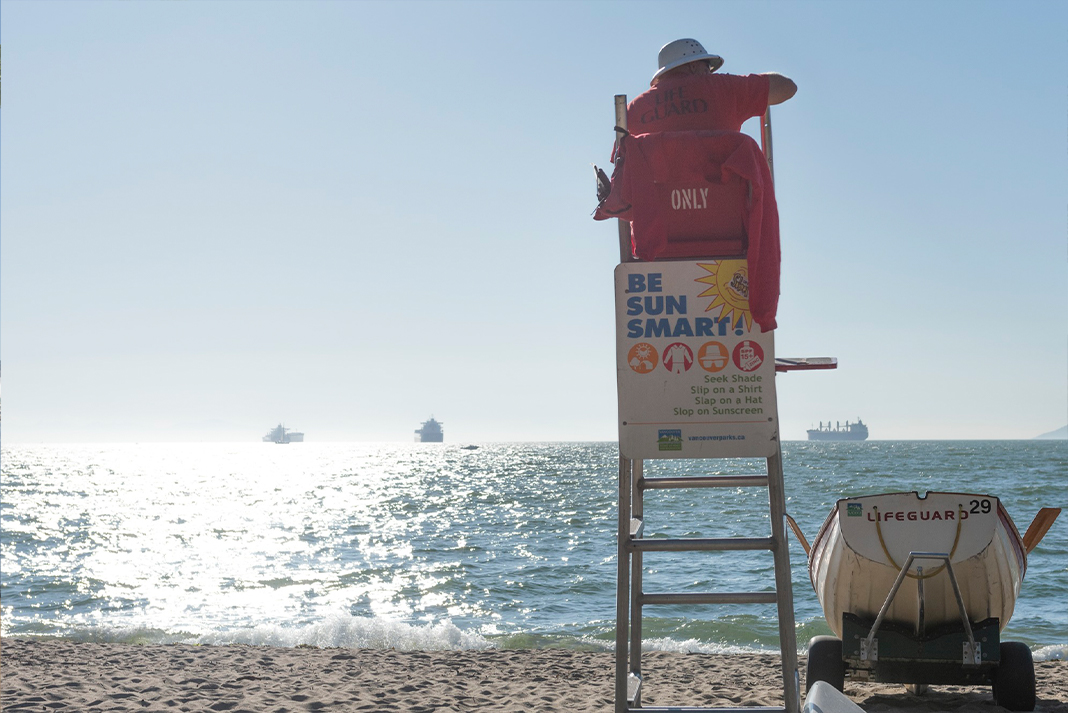
This wildly popular beach adjacent to downtown Vancouver is located in the city’s trendiest neighbourhood, hence the moniker “Venice Beach North.” Kitsilano Beach features white-sand access to the ocean, washroom and changeroom facilities, a water wheelchair for accessible swimming, concessions and lifeguards from late May through early September.
Take a dip in the massive heated saltwater swimming pool and admire the stark contrast between snow-capped North Shore mountains and the skyscrapers of downtown—a unique Vancouver experience. On-site kayak and standup paddleboard rentals, instruction and guided trips are available from Vancouver Water Adventures.
English Bay Beach
English Bay Beach (also known as First Beach, for its position along the Stanley Park Seawall), is located adjacent to downtown Vancouver in the bustling West End. On-site kayak and standup paddleboard rentals are available from Vancouver Water Adventures. Paddlers can trace the urban shoreline east past Sunset Beach to False Creek or west along the seawall to Stanley Point.
English Bay Beach features plenty of amenities, including water wheelchairs and a Mobi-Mat accessible beach pathway. Kids love the swim raft and waterslide; lifeguards are on duty from late May through early September. Pay parking is available.
Beaches on Vancouver’s North Shore are defined by a slower pace and quieter atmosphere. Check out Dunderave Beach in West Vancouver, with a 50-meter-wide swath of pristine sand, a wading pool and plenty of green space located on the Centennial Seawalk. It’s a great place to launch a kayak or standup paddleboard to explore the North Shore. Rentals are available at Mountain Equipment Co-op.
Ambleside Beach features stunning views of downtown Vancouver and Stanley Park, with beach volleyball, washroom and changeroom facilities, concessions, an outdoor shower, pier and one of the largest off-leash dog parks in Vancouver.
Linked by the famous Seawall, two beaches in Vancouver’s Stanley Park offer distinctive outdoor experiences. Second Beach features a massive heated outdoor pool that’s perfect for fitness swimming, washrooms and changeroom facilities, barbecues for picnics, beach volleyball courts, concessions, seasonal lifeguards, and much more.
Third Beach is more secluded, buffered from the noise and bustle of the city by a steep, densely forested hillside. You’ll feel like you’ve retreated to a wild West Coast beach, far from the city’s grasp—yet also enjoy facilities like concessions, washrooms and lifeguards during the summer months. Both Stanley Park beaches are great destinations for sea kayakers launching from English Bay, Kitsilano or Jericho beaches.
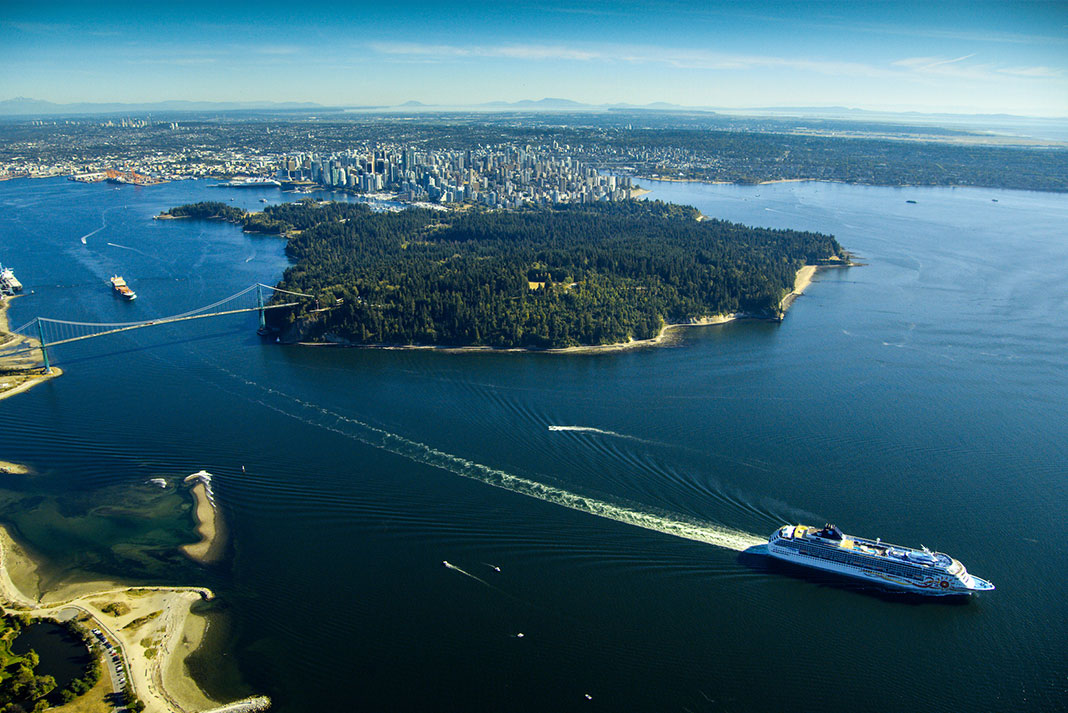
An aerial view of Vancouver’s famous Stanley Park beaches. | Photo: Tourism Vancouver // Nelson Mouellic
Other nude beaches in Vancouver
Wreck Beach may be Canada’s most famous nude beach, but there are a few others in Vancouver. On a busy day, naturists occupy most of Pacific Spirit Regional Park’s beaches adjacent to the University of British Columbia, including Tower Beach and Acadia Beach (see UBC beaches, below).
There’s also Crescent Rock Beach in Surrey, located on Boundary Bay. This clothing-optional beach is located at the south end of Crescent Beach (which features lifeguards, trails and washroom facilities). Swimming is especially good in the 200-meter nude section of gravel and sand beach, with easy access to deep, warm water. It’s a quieter alternative to the bustle of Wreck Beach.
Dog-friendly beaches in Vancouver
Located adjacent to downtown, south of False Creek, Hadden Beach is Vancouver’s most popular dog-friendly beach—known to some as the doggie version of Kitsilano Beach. There are nearly 3 hectares of off-leash dog park, with seasonal access to the waterfront.
Ambleside Beach in West Vancouver features nearly 8 hectares of off-leash dog park, making it a great destination to take your four-legged friend for a run. Finally, Spanish Banks Extension includes a dog park at Spanish Banks Beach, accessible via NW Marine Drive.
The University of British Columbia’s Vancouver campus is one of the most beautiful in the world, largely because of its access to nature. Clothing-optional Wreck Beach is UBC’s most popular sandy expanse, while Tower Beach is certainly the most adventurous. That’s because this wild Vancouver beach is accessed via the 6.4-kilometer Foreshore Trail, which stretches between UBC’s Trail 6 access to Wreck Beach and NW Marine Drive, west of Spanish Banks.
Tower Beach is named for the cement observation structures that date back to World War II and loom over the shoreline. There are no lifeguards or facilities available; be prepared to encounter naturists.
Spanish Banks beaches
Spanish Banks is marked by a massive, kilometer-wide sandflat at low tide. There are two distinct beaches at Spanish Banks located on the Seaside Seawall. Both feature washrooms, volleyball courts, water wheelchairs for accessible swimming, volleyball courts and seasonal lifeguard duty.
This Vancouver waterfront park is located off of NW Marine Drive; paid parking is available. Nearby Locarno Beach offers a quiet, low-key experience for families. No amplified sound is permitted. You’ll find free parking, volleyball courts, picnic facilities, summer-season lifeguards and more.
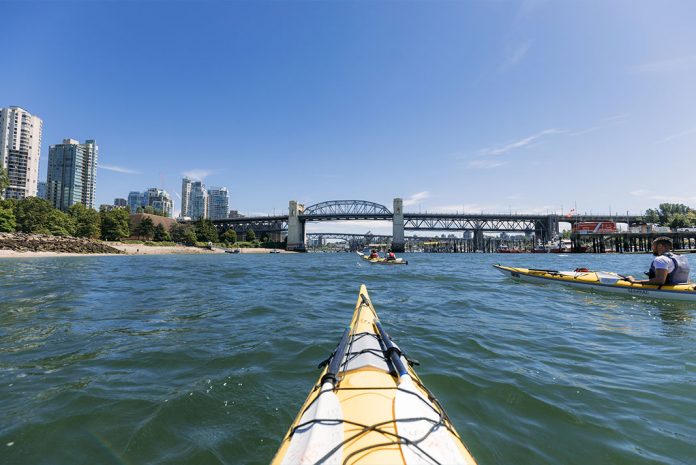
Paddling False Creek is a must-do Vancouver adventure.| Photo: Tourism Vancouver/Rishad Daroowala
It’s common knowledge that Vancouver is one of Canada’s greatest outdoor adventure hubs. Places to visit in Vancouver include great beaches, amazing paddling opportunities for kayakers and paddleboarders, stunning hikes and so much more—to go along with cultural attractions and a unique laid-back vibe. Let this be your jumping off point for discovering outdoor activities in Vancouver.
Things to do in Vancouver
Best beaches in Vancouver
What to do in Vancouver? Let’s start with the beaches. There’s literally a swath of oceanfront sand for everyone in Vancouver. Check out our list of the 15 Best Beaches In Vancouver for everything—family-friendly beaches, waterfront dog parks, Vancouver beaches with kayak rentals, nude beaches and so much more.
Life’s a beach in Vancouver. | Photo: Tourism Vancouver/Kate Milford
Kayak Vancouver
Easy access to the Pacific Ocean makes Vancouver one of Canada’s top places to paddle. We’ve assembled a Complete List Of Vancouver Paddling Destinations. Dream destinations include Say Nuth Khaw Yum Provincial Park in Indian Arm, which features free overnight wilderness camping within an hour’s drive of downtown Vancouver; Howe Sound’s Sea to Sky Marine Trail, a kayaking destination with stunning mountain views and rugged island campsites; and downtown Vancouver itself, where day paddlers can explore the watery margins of one of Canada’s most vibrant cities.
What’s more, it’s an easy drive and relaxing ferry ride from Vancouver to the Sunshine Coast, which features more superlative British Columbia kayak trips, warm ocean water and a comfortable Mediterranean climate. Find out more about the Best Places To Kayak On The Sunshine Coast.
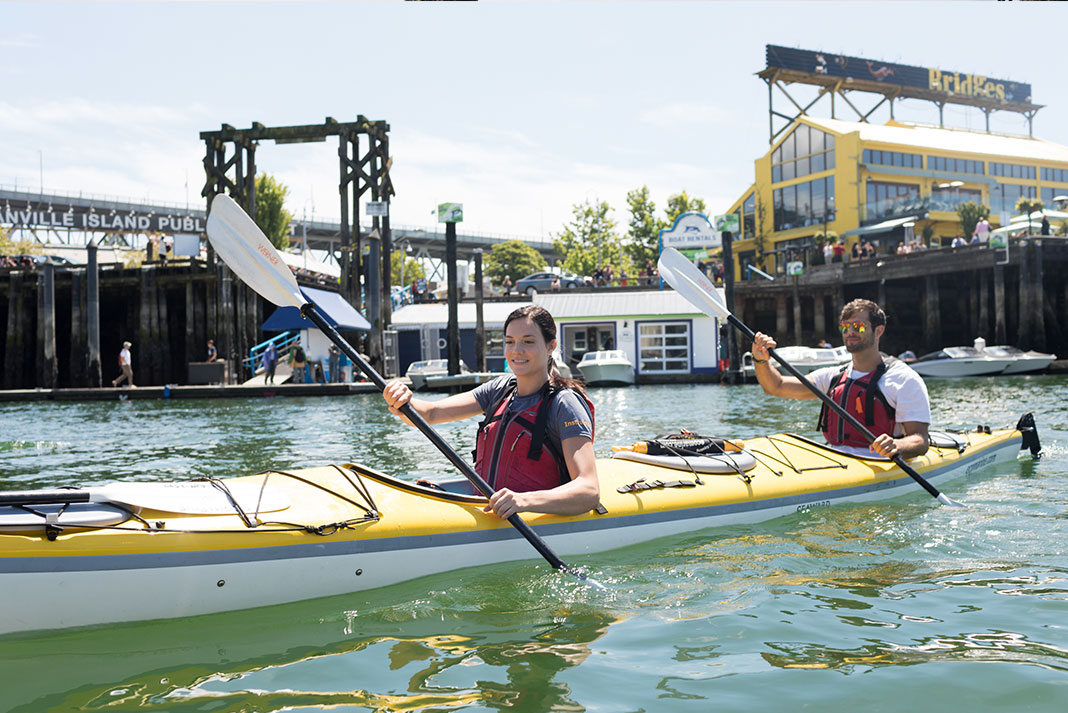
You’ll find plenty of options for kayak rentals in Vancouver to make your trip planning easy. Outfitters are located in the heart of downtown on False Creek and at popular beaches like Jericho and Kitsilano. Want to venture farther? Rental kayaks are available in the community of Deep Cove to explore the semi-wilderness of Indian Arm and Bowen Island, on the rugged fringe of Howe Sound. Read 15 Best Places To Rent Kayaks & Paddleboards In Vancouver to find out more.
[ Paddling Trip Guide: View all kayaking adventures in British Columbia ]
Paddleboard Vancouver
Looking for great paddleboarding near Vancouver? Best to start downtown. Rent a board and cruise the sheltered waters of False Creek. Or launch from Kitsilano Beach to get a unique glimpse of the city’s most exclusive neighborhood. North Vancouver provides its own list of paddleboarding options and several places for rentals, including Deep Cove.
These three best hikes near Vancouver feature great views and heart-pumping exercise in the mountains and oceanfront.
Grouse Grind
This popular 2.9-km hike on Vancouver’s North Shore is often referred to as “Mother Nature’s Stairmaster,” as it gains nearly 3,000 feet of elevation. The trailhead is located at Grouse Mountain, off of Capilano Road. Set aside two hours for this epic Vancouver hike, leaving some time at the summit for great Vancouver views and photography. Hikers must descend on the Skyride gondola.
Tower Trail
Starting at the Rose Garden in the northwest corner of the University of British Columbia campus, this 2.4-km hike goes up and down to Tower Beach, between Trails 3 and 4 (stairs leading to the oceanfront). Expect to climb and descend a total of over 800 stair steps.
Stawamus Chief
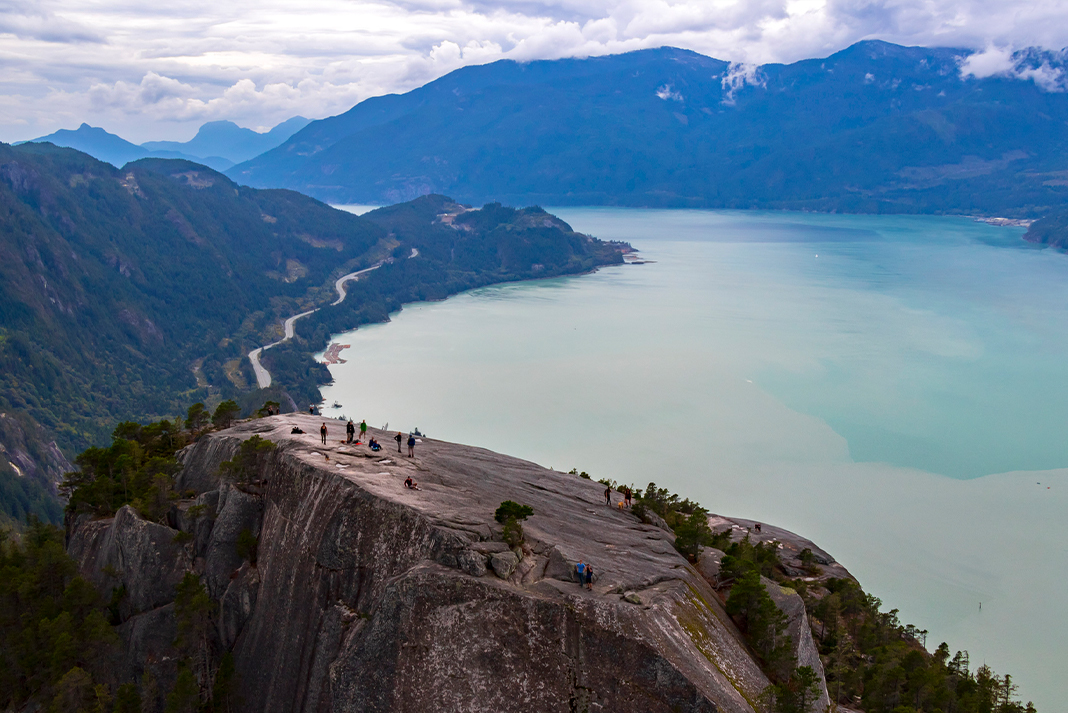
Set aside a day to complete this classic hike in Stawamus Chief Provincial Park, near Squamish on the Sea to Sky Highway. The 11-km trail climbs to the bare summit of Stawamus Chief to provide some of the best views in British Columbia.
The view from the granite monolith of Stawamus Chief is well worth the climb. | Photo: Tourism Vancouver/Heath Moffatt
Vancouver bike paths
Vancouver is a bike town. Whether you’re into mountain, road or just plain riding for the joy and exercise, you’ll find plenty of Vancouver bike paths to choose from.
Stanley Park Seawall
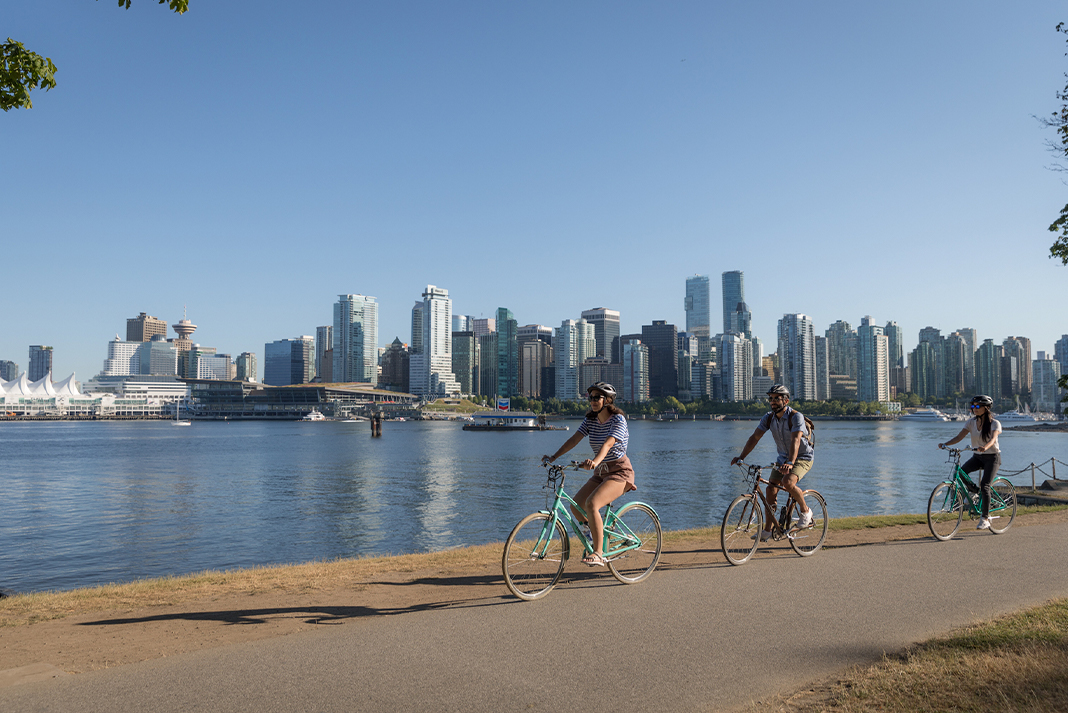
Cyclists can ride the entire 28-km length of the Vancouver Seaside Greenway, the world’s longest uninterrupted waterfront path. Riding the 9-km perimeter of Stanley Park is a classic Vancouver cycling experience, with great views of English Bay, Burrard Inlet and Coal Harbour.
Pacific Spirit Regional Park
For easy riding with a taste of primeval West Coast forest look to Pacific Spirit Regional Park, located in Vancouver near the University of British Columbia. You’ll find plenty of smooth cycling for mountain bikes and hybrids on wide, well-groomed trails. Access the park via Blanca Avenue.
A waterfront ride in Vancouver’s Stanley Park. | Photo: Tourism Vancouver/Rishad Daroowala
North Shore
Mountain biking has deep roots in North Vancouver, where diehard riders have carved some of the world’s best trails from the Coast Mountains. Check out the Stupid Grouse Trail at Cypress Mountain (access via 21st Street exit on Highway 1) for a mellow introduction to the North Shore. Mount Seymour also features trails suitable for novice and intermediate riders.
Where to stay in Vancouver
Camping Vancouver
As an outdoor hub, you’ll find no shortage of great camping near Vancouver. There are drive-in campgrounds catering to families and RVs, oceanfront campgrounds, backcountry campsites and free camping areas within close proximity of the city. Many campgrounds near Vancouver are great for kayakers, canoeists and standup paddleboarders, with waterfront on stunning alpine lakes or the rugged, tide-washed Pacific Ocean coast. Make the short drive and ferry trip to the Sunshine Coast to discover even more great camping near Vancouver.
Vancouver hotels & resorts for outdoor enthusiasts
Bowen Island Lodge
Located at the mouth of Howe Sound, only 30 minutes from downtown Vancouver, Bowen Island is a fantastic destination for paddlers, nature lovers and those seeking solitude on Vancouver’s doorstep. Bowen Island Lodge (604-947-2129) features ocean-view rooms and easy access to hiking and paddling.
Sunshine Coast Resort
Located only a scenic two-hour drive and ferry ride from Vancouver, Sunshine Coast Resort (604-883-9177) is a perfect base camp for adventure in Pender Harbour, in the heart of the Sunshine Coast. You’ll find suites and hotel-style accommodations with easy access to the Pacific Ocean.
Granville Island Hotel
Looking for boutique accommodations surrounded by water—in the heart of Vancouver’s vibrant downtown? Granville Island Hotel (604-683-7373) ticks all boxes. The hotel offers easy access to kayak and paddleboard rentals on the waterfront, and is an easy walk to dozens of artisanal shops and unique dining experiences.
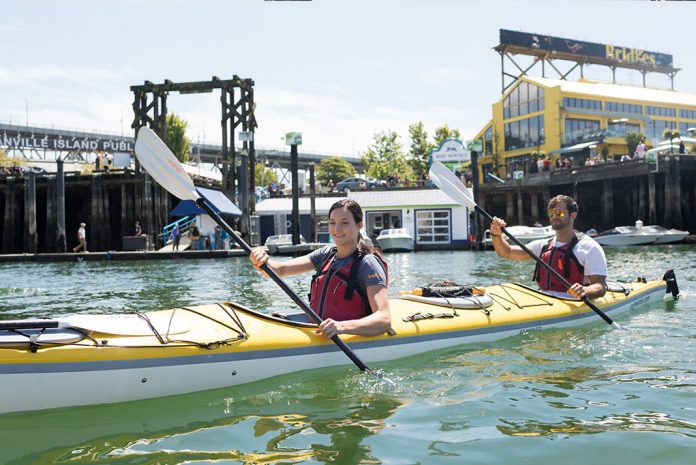
Paddling False Creek is a must-do Vancouver adventure. | Photo: Tourism Vancouver/Rishad Daroowala
Vancouver weather
Vancouver may be notorious for damp winters, but its summer weather ranks amongst Canada’s best. Expect ample sunshine from May through late September, with mild temperatures (daytime highs of 20 to 22 degrees Celsius in June, July and August) and little humidity. Don’t discount September, which features fewer tourists and pleasant 19-degree days (and on average only six days of rain).
If you're near a body of water in New Zealand, you can invariably find an outfitter offering kayak rentals or tours. | Photo courtesy of: The Coromandel
In New Zealand, paddling is more than just a common weekend pastime—it’s a sport deeply rooted in the country’s history and culture. It was around 800 years ago that the first Polynesian explorers arrived on Aotearoa’s shores by way of waka. Using only the stars, birds and other ancient navigation techniques at their disposal, they paddled across vast expanses of ocean in these double-hulled ocean-going canoes. In fact, the South Island is known as Te Waka a Māui; its name stemming from the canoe of the demigod who pulled up the North Island.
Today, the tradition of setting out on the water lives strong, with the most popular version being New Zealand sea kayak adventures. It only makes sense—New Zealand is an island country, where you’re never more than 130 kilometers from the ocean.
From half-day excursions exploring hidden island lagoons to multi-day adventures that hug coastlines of golden sand, here are the best places to kayak in New Zealand, regardless of your skill level.
[ Paddling Trip Guide: View all kayaking adventures ]
Best places to kayak in New Zealand
With braided rivers that flow out to the sea and more than 15,000 kilometers of coastline to discover, the question perhaps isn’t “where to go kayaking in New Zealand” but rather “where can’t you go kayaking in New Zealand.”
If you’re beside the ocean, a lake or a river—which accurately describes most of the country—you’ll have no trouble finding a kayaking outfitter or tour operator nearby. This is particularly true if you’re traveling to watersports meccas like Abel Tasman National Park, Kaikoura, Marlborough Sounds, Milford Sound, the Coromandel or the Bay of Islands.
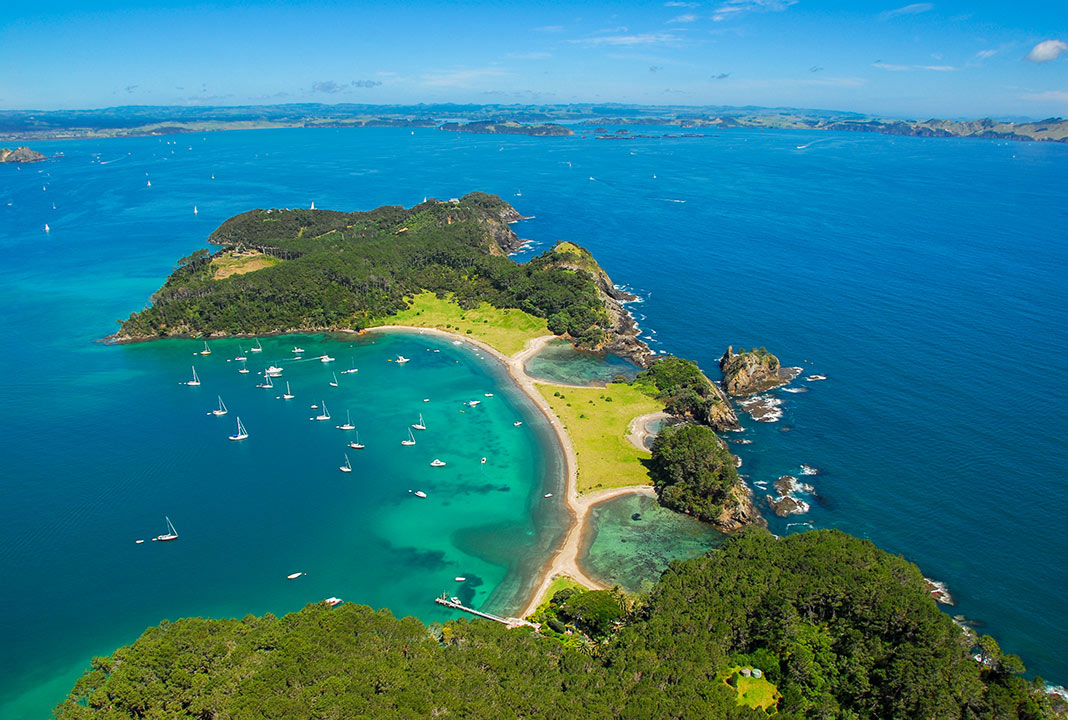
The Bay of Islands is a popular location for kayaking. | Photo courtesy of: Northland Inc.
Whitewater kayakers, on the other hand, will find that rafting outfitters are easier to come by—but there are some exceptions to the rule. Your best bet on the North Island is the Waikato River outside Taupo, or the Rangitikei, starting from Ohakune. Down south, you’ll find one of the country’s only whitewater kayaking schools beside the Buller River in Murchison, while the Clutha River, which flows from Lake Wanaka, offers up class I and II rapids.
Where to kayak with orcas in New Zealand
Every summer, a news article or three pops up with incredible footage of kayakers paddling directly alongside orcas off the coast of New Zealand.
But while humpbacks, blue whales, and countless species of dolphins can be found year-round, seeing orcas up close is far from par for the course. Few, if any, outdoor outfitters in the country will market or sell tours based on the opportunity to see orcas. Instead, you’re much more likely to find tours that increase your odds of getting up-close-and-personal with fur seals, penguins or dolphins. The following are the best regions to look:
Hauraki Gulf
You don’t have to travel far from the country’s biggest city to find whales—in fact, you don’t have to leave Auckland at all. With huge protected marine areas, the Hauraki Gulf is one of the best places to sea kayak in New Zealand. It’s home to over 20 species of marine mammals, including Bryde’s whales—this is one of the only spots in the world where you’ll find them in shallower water year-round.
Bay of Islands
Located about a three-hour drive north of Auckland, Bay of Islands is known for its secluded islands, turquoise waters, rich Māori culture and wildlife viewing opportunities. Owing to its sheltered waters and subtropical climate, it’s home to an estimated 500 dolphins, and frequented by orcas and long-finned pilot whales. There are also more than 144 islands to explore, with most boat and kayaking tours departing from the port side town of Paihia.
Marlborough Sounds
If you’ve traveled on the ferry from the North Island to the Sound Island, you’ve arrived in the Marlborough Sounds. Many international tourists will simply stop for a drink in this wine-producing region before moving on, but they’re missing out. Whales and even orcas enter the Sounds on their migratory routes, while dolphins and stingrays can be spotted at any time of year.
When kayaking in New Zealand, you won’t know where to look: out to sea and turquoise-colored waters or back to land where incredible vistas wait. | Photo courtesy of: The Coromandel
Kaikoura
Just 2.5 hours north of Christchurch is one of the country’s best whale watching and kayaking destinations. Remember that video of a kayaker getting slapped with an octopus by a seal a few years back? That was filmed here. While you’re unlikely to get a tentacle to the face, you have a high likelihood of being joined on your paddle by the area’s dusky dolphins, penguins or fur seals.
Kayak with orca tours
Auckland Sea Kayaks offers half-day, full-day and multi-day paddles in the Hauraki Gulf, with a sunset tour to the volcanic Rangitoto Island being a favorite.
Bay of Islands Kayaking is based on Urupukapuka Island, the bay’s biggest island, and is the only operator in the region to offer full-day tours. It also offers kayak rentals for experienced paddlers.
Wilderness Guides is locally owned and the staff here are experts in exploring the Marlborough Sounds. In addition to basic sea kayak rentals, it has multiple packages that allow you to explore the Sounds or the Queen Charlotte Track by kayak, bike or foot—or a combination of all three.
Kaikoura Kayaks specializes in wildlife encounters, including seals, humpback whales, dusky dolphins, albatrosses and blue penguins. It hires out sit-on-top and sea kayaks, but beginners might find the exposed conditions better suited to a fully guided tour.
Where to kayak in glowworm caves in New Zealand
Chances are you’ve heard of Waitomo, renowned for its glowworm caverns. The gnat larvae (arachnocampa luminosa) are endemic to New Zealand, meaning their blue-green bioluminescence can’t be found anywhere else in the world. Add in the fact that they congregate in Waitomo’s underground system of limestone caverns filled with stalactites and stalagmites and you have the recipe for a very popular tourist attraction.
But the reality is that glowworms can be found across the country—and there’s no experience more ethereal than kayaking through glowworm caves in New Zealand.
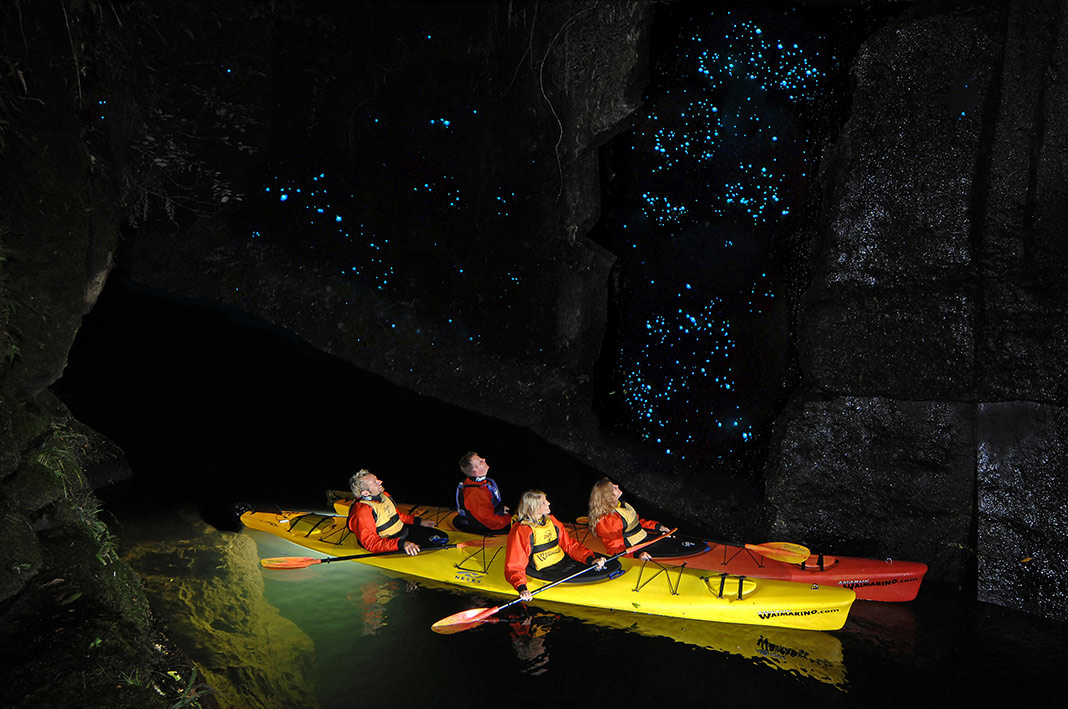
One of the best ways to experience the ethereal lights of glowworms is by kayak.
Lake District, Waikato
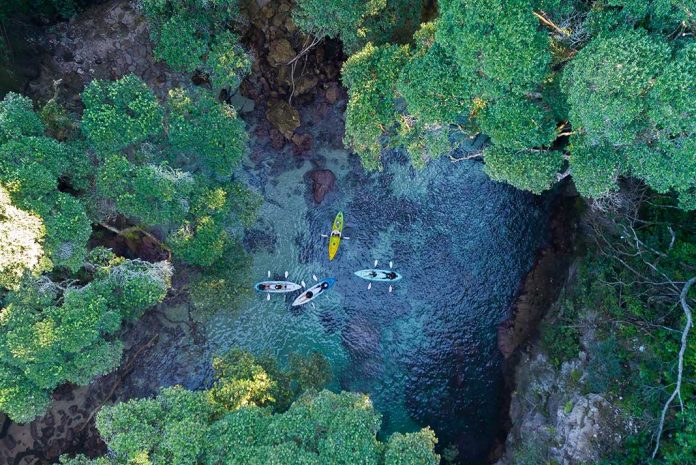
Waikato is located close by the famous Waitomo glowworm caverns, but it’s also where you’ll find off-the-beaten track glowworm adventures in the open-air, including off Lake Karapiro just outside Cambridge. The Māori name for glowworms is “titiwai,” which translates roughly to “lights over water”—which is exactly what you’ll see as you float in the dark and silence down the Pokaiwhenua Stream.
Waimarino, Bay of Plenty
The landing site of several migratory wakas that brought early Polynesians to New Zealand, the Bay of Plenty is a large bight along the North Island’s East Coast. The seaside surfing and golfing destination is also a haven for paddlers. Here, just outside regional center Tauranga, you’ll find Lake McLaren Falls Park. At the head of the lake, a narrow, high-sided canyon glows with the light of thousands of glowworms.
Glowworm cave tours by kayak
Waimarino Kayak Tours is the regional expert in guided evening glowworms tours of McLaren Falls Park.
Lake District Adventures: A short drive from both Cambridge and Hamilton, this family-owned guiding company offers evening excursions, where you float down Pokaiwhenua Stream lit only by the light of glowworms.
More can’t-miss places to kayak in New Zealand
Kayaking in Abel Tasman, New Zealand
Known for its golden-hued sands and aquamarine waters, Abel Tasman National Park on the north end of the South Island is one of New Zealand’s most preeminent kayaking destinations. It’s also home to the Abel Tasman Coast Track, one of the country’s designated “Great Walks.” Don’t let that description mislead you though—you can also opt to complete the entirety or a portion of the 60-kilometer journey by kayak, where you can expect to see fur seals sunning themselves on granite headlands and boulder beaches.
There are a number of outfitters in the area that offer Abel Tasman kayak rental and tours. But if you’re looking for one of the best half-day Abel Tasman Kayak tours, it’s actually not by kayak at all—it’s aboard a double-hulled canoe with Waka Abel Tasman.
Best Abel Tasman kayak rentals and tours
Waka Abel Tasman: Part paddling tour, part Māori cultural experience on water, Waka Abel Tasman runs half-day trips to the iconic Split Apple Rock that depart from Kaiteriteri.
Abel Tasman Kayak was the country’s first sea kayaking company. For over 35 years, it’s run half-day, full-day and overnight tours in the national park, including combo walk packages on the Coastal Track.
Kayak into a world all your own. | Photo courtesy of: The Coromandel
Kayaking in Milford Sound, New Zealand
Deep in New Zealand’s southwest corner lies Fiordland, one of the country’s most difficult to access, yet most-visited destinations. Milford Sound—which is technically a fjord, not a sound—is known for its excessive rainfall (on average, it receives nearly seven meters of rain per year), resulting in dozens of waterfalls cascading from misty green peaks directly into the ocean.
The vast majority of tourists come here to do the classic two-hour boat journey, which travels past the iconic Mitre Peak, Bridal Veil Falls and Lady Bowen Falls. But getting directly on the water is your best chance to see rare Fiordland crested penguins, seals, dusky dolphins and bottlenose dolphins.
Both Milford Sound and nearby Doubtful Sound are worth the time, effort and expense to visit. While you may have a more difficult time finding Milford Sound kayak rentals, there’s no shortage of Milford Sound kayak tours—but you’ll want to book well in advance and be aware that tours are heavily weather dependent.
Best Milford Sound kayak rentals and tours
Rosco’s Milford Kayaks: Known as the “Mayor of Milford,” owner-operator Rosco has been running tours on Milford Sound for nearly 30 years. He runs half- and full-day excursions, which can be combined with the Milford cruise or the Milford Track.
Go Orange: In 2020, Go Orange won Fiordland Operator of the Year, in part for its four-hour kayaking tours departing from Deepwater Basin.
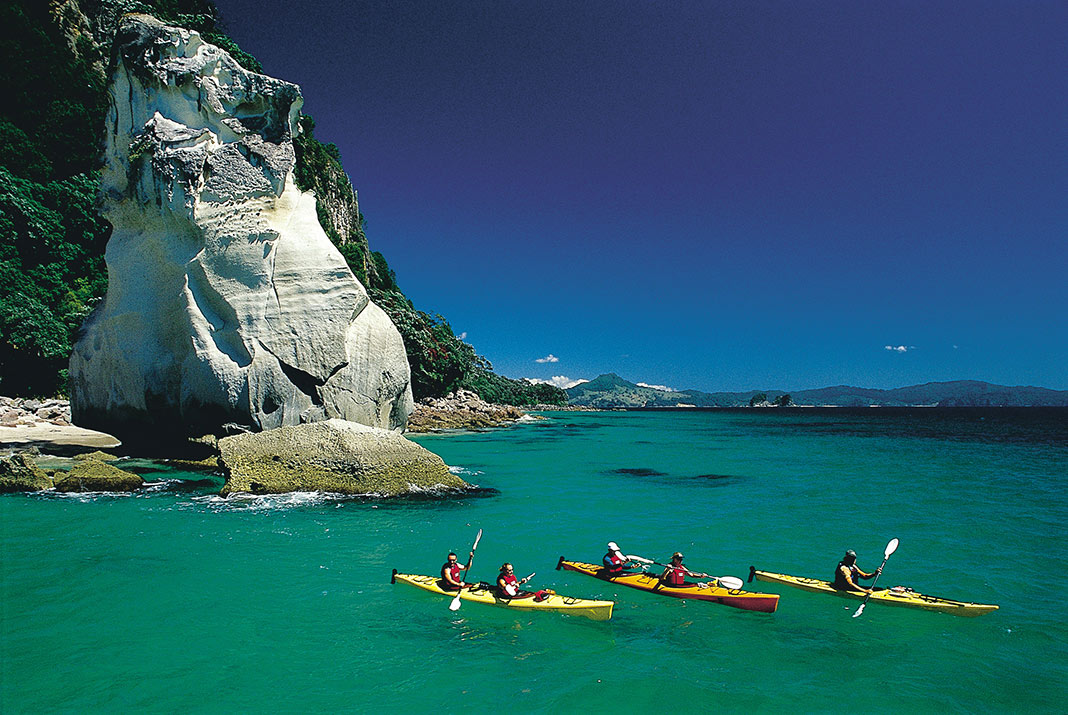
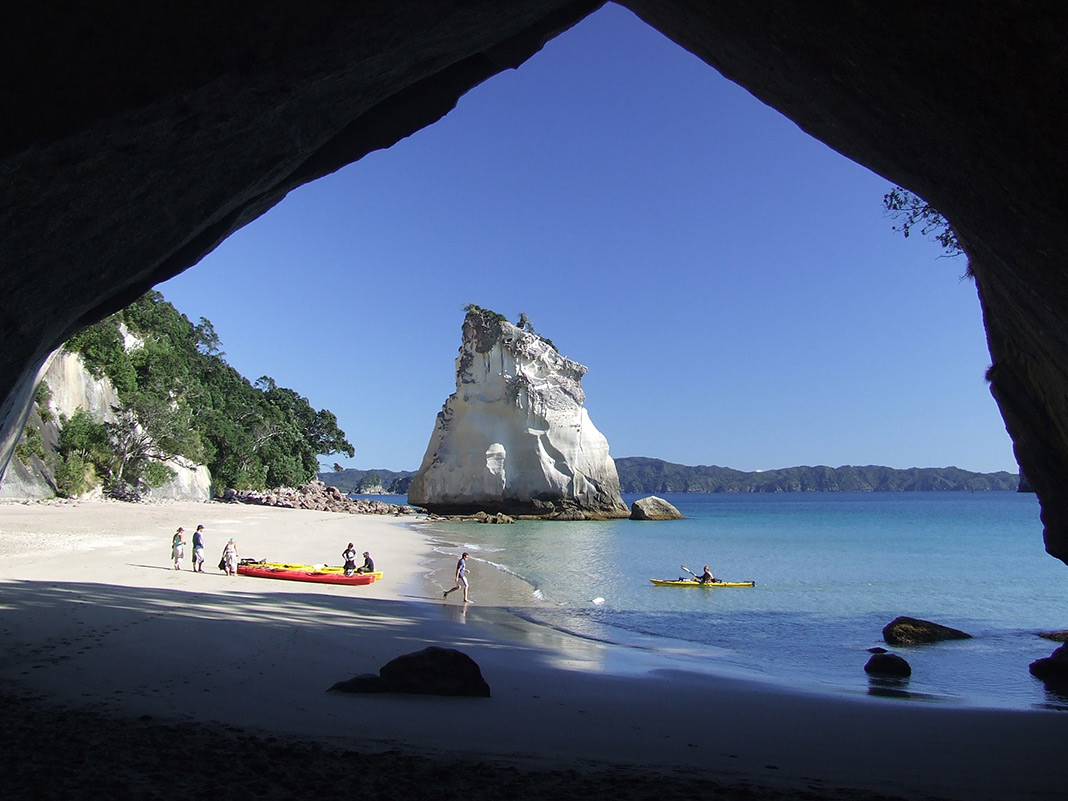
Kayaking in Cathedral Cove, New Zealand
With countless hidden coves and beaches, the North Island’s northeast peninsula is a summertime destination for locals and international visitors alike. Two of its most well-known attractions are Hot Water Beach, where you dig your own hot tub in the sand, and the sea caves of Cathedral Cove.
The latter is only accessible by foot or boat, but let us be the first to say that the one-hour walk to get there, while lovely, isn’t the most exciting hike in New Zealand. It’s also often packed. Kayaking is the perfect alternative—not only does it have the best views, it gets you away from the crowds.
Explore popular Cathedral Cove. | Photo courtesy of: The Coromandel
Looking for a Cathedral Cove kayak rental? Swing by the Hahei General Store, where you can rent a paddleboard, solo kayak or tandem kayak for a half-day. Otherwise, you’ll want to sign up for a guided experience with Cathedral Cove Kayak Tours.
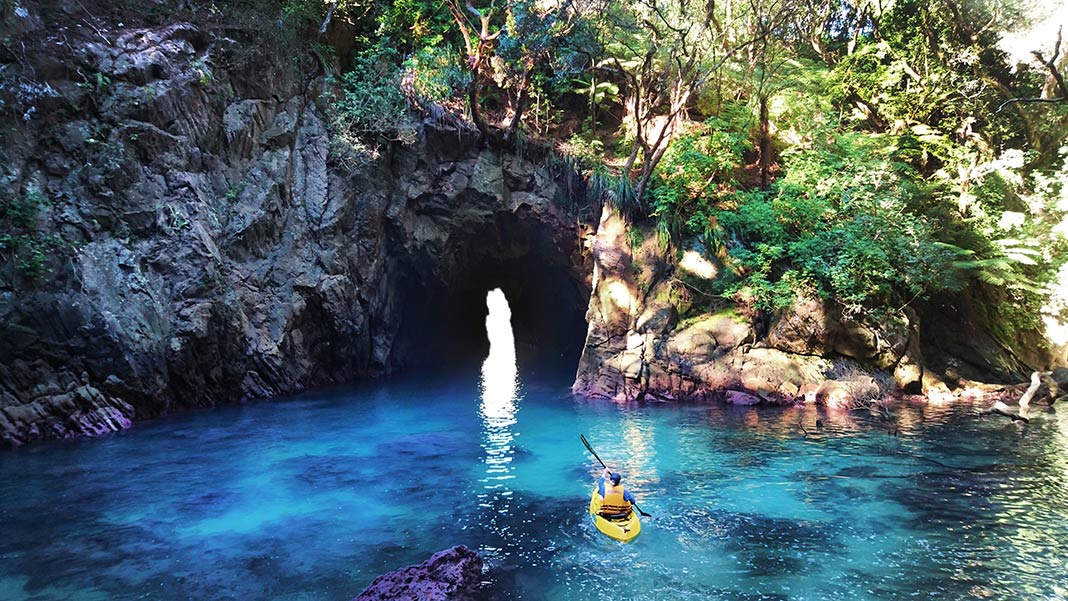
Then again, if you want to avoid the crowds altogether, skip Cathedral Cove and head south to Whangamata, where you can kayak into the Whenuakura Wildlife Sanctuary’s lagoon center. Also known as Donut Island, this destination can only be accessed by kayak or paddleboard. Perhaps that’s part of the reason why it was a local secret until recently.
Cathedral Cove Kayak Tours: The classic half-day excursion includes paddling through sea caves to Cathedral Cove—but full-day versions are also on offer.
Surfsup: For tours or affordable kayak rentals to access Whenuakura, turn to Surfsup in Whangamata, located an hour south of Cathedral Cove.
Owing to its mild winters, New Zealand is a year-round kayaking destination, with summer (from December until March) serving up some of the calmest conditions and hottest weather. However, it’s also the busiest time of year—particularly the school holiday months of December and January—and you’re most likely to encounter crowds and peak season pricing. Book far in advance or push back your visit to the shoulder season.
If you’re near a body of water in New Zealand, you can invariably find an outfitter offering kayak rentals or tours. | Photo courtesy of: The Coromandel
Explore Ireland's storied shores and inland lakes and rivers. | Photo courtesy of: Tourism Northern Ireland
Drinking Guinness in a pub. Eating potatoes. Wandering through rolling green fields. Seeing sheep. Maybe even dancing a jig. This is what’s top-of-mind when people envision a holiday in Ireland. “Kayak Ireland” likely doesn’t register or even make the list—but it should.
From its whitewater rivers and coastlines punctuated by sea caves, to lakes with islands and ancient castle ruins, Ireland offers paddling that would impress any level of kayaker. Heck, there’s even a bioluminescent saltwater lake, which lights up with glow-in-the-dark blue under the dark of the night’s sky.
On a kayaking trip to Ireland, you can do it all—and maybe even sample some whiskey in the process.
Explore Ireland’s storied shores and inland lakes and rivers. | Photo courtesy of: Tourism Northern Ireland
Best kayaking in Ireland
It may be a relatively small country, but that doesn’t mean it’s easy to figure out the spots with the best kayaking in Ireland on your own.
We’ve made it simple by rounding up a few of our favorite locations, along with the best tours from inland and around the coast.
Kayaking near Dublin, Ireland
As the largest city in Ireland and the country’s capital, Dublin isn’t exactly known for its kayaking. But water is integral to its history; the city’s name comes from the word “duibhlind” (or “black pool”) for the tidal pool that was once where Dublin Castle’s gardens are now. The River Liffey (“River of Life”), which flows through the city, has lived up to its name for centuries as a means of transporting goods.
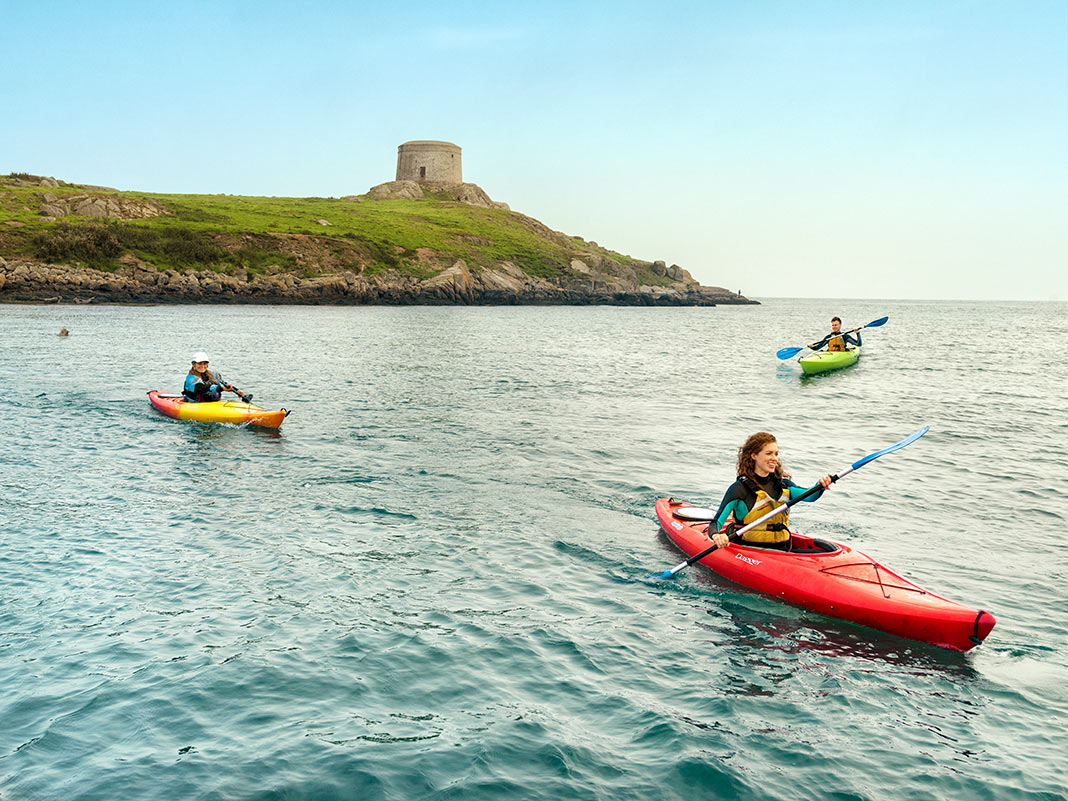
Today, visitors kayaking in Dublin, Ireland can paddle along the Liffey, including under the famed O’Connell and Ha’penny bridges. But for those wanting a bigger dose of adventure, Dalkey—a seaside suburb about 30 minutes southeast of the city center—is where you can paddle out to see Dalkey Island’s seal colony, as well as a defensive tower dating back to the Napoleonic wars.
Best Dublin kayak rentals and tours
City Kayaking specializes in kayaking tours of the Liffey, departing daily from the Dublin City Moorings.
If you’re headed toward Dalkey, look up Kayaking.ie; the award-winning tour operator runs guided excursions to the seal colony, as well as rents out tandem kayaks from its Leixlip Confey location.
Kayaking in Killarney, Ireland
Just over an hour northwest of Cork, the town of Killarney sits on the shores of Lough Leane, the largest of three lakes in the region. With the UNESCO Biosphere Reserve of Killarney National Park and its lakes just a short drive away, it’s no surprise that kayaking is a well-established pastime.
The most well-known excursion on the Lough Leane is to Ross Castle, a 15th-century tower house located within the national park boundaries. Although Killarney kayak rentals are possible to find, it’s worthwhile signing up for a tour to avoid bureaucracy, as you must apply for a permit to kayak or canoe within Killarney National Park.
Mór Active Tours and Irish Adventures’ highly-rated kayaking tours start at Ross Castle, with an option to visit a 6th-century monastic site on Innisfallen Island. A bit farther afield, Irish Adventures also offers sea kayaking tours of Dingle Harbour’s sea caves.
Kayaking in Cork, Ireland
The southernmost county in Ireland, Cork is one of the country’s most-visited tourist destinations, known for its rugged coastline and the prehistoric stone monuments scattered across the countryside, including tombs and stone circles.
Kayaking in Cork, Ireland means a chance to explore the city of Cork’s River Lee or the whitewater rapids of Bantry’s Owengar and Coomhola rivers. The highlight of this region, though, is the glowing waters of Lough Hyne.
Ireland’s first marine reserve isn’t just the only inland saltwater lake in Europe—it’s also bioluminescent, thanks to the plankton that reside there.
Best Cork kayak rentals and tours
Atlantic Sea Kayaking offers urban kayaking trips under the city of Cork’s bridges. But they’re best known as one of two operators to offer nighttime bioluminescent kayaking tours on Lough Hyne; the other operator being Bantry Bay Boat Hire. As the latter’s name implies, this is also where you can rent kayaks for tackling the class III, IV and V rapids of Bantry’s rivers.
Kayaking in County Clare
One of the most buzzed-about destinations in Ireland, County Clare—located between Galway and Limerick on the west coast—isn’t just home to the iconic Cliffs of Moher and countless sea caves. It’s also where you’ll find the newly developed Lough Derg Blueway.
A 160-kilometer water trail with sections that will appeal to any skill level of kayaker, this is where you’ll have the chance to spot wildcats, eagles and swans.
Lough Derg Watersports are specialists on the Blueway trail, with tours typically ranging in length between two and three hours.
North Clare Sea Kayaking runs a tour where you can explore the rugged sea caves of Liscannor Bay, but its most popular excursion is the Wild Burren tour, where you paddle to the ruins and ancient grounds of Gleninagh Castle.
For kayak, canoe or standup paddleboard rentals, Clare Kayak Hire will kit you out, in addition to running tours on nearly every lake in the region.
Meanwhile, NevSail Watersports offers a unique kayak combo package, where you can learn to “coasteer”—a sport that involves jumping off rock formations into the sea, while exploring seas and gullies.
Kayaking in Northern Ireland
On the northeastern corner of the island you’ll find Northern Ireland, which is a region all of its own—both culturally and politically.
This is where you’ll find the North Coast Sea Kayak Trail, countless ancient castles and the famed Giant’s Causeway.
Best Northern Ireland kayak rentals and tours
Strangford Lough Activity Centre operates tours and offers rentals primarily along Northern Ireland’s Strangford Lough, where you may encounter seals or otters. If you’re in Belfast, you can also contact Mobile Team Adventure—they’ll come to you regardless of whether you want to explore Strangford Lough or Lagan Valley Regional Park.
Derry’s Far and Wild is based on the edges of the River Foyle, where it rents out standup paddleboards. But if you want to kayak to the Giant’s Causeway, see animals foraging along shorelines under the full moon, or learn about the region’s wild Atlantic salmon, then book one of its tours.
Visit castle ruins and gain new perspective on popular attractions. | Photo courtesy of: Rob Durston
Kayaking in County Mayo
Northeast of Galway, Mayo has the longest coastline of any county in the country, which includes the stunning Clew Bay.
The bay has a rumored 365 islands—including “Hippie Island,” once owned by John Lennon—which are actually partly drowned drumlins formed by moving glaciers. The bay is also home to rich marine life, including seabirds, seal colonies and dolphins.
Best County Mayo kayak rentals and tours
On the north side of Clew Bay is where you’ll find Achill Island and tour operator Achill Surf. Its sea kayaking tours follow the extensive coastline, where you’ll find sea caves and hidden beaches.
Near Galway on Ashford Castle Estate, Ashford Outdoors runs tours of Lough Corrib’s islands, with views of the castle itself.
The Adventure Island‘s center on Collanmore Island in the heart of Clew Bay offers sit-on-top kayak rentals and guided sea kayak tours, as well as accommodation at a private island lodge.
Bioluminescent night kayaking in Ireland
Nighttime kayaking is an increasingly popular activity in Ireland, but two operators stand out above the rest, both at the same location: Lough Hyne. This is where plankton light up the water with their bioluminescent glow.
The first sea kayak circumnavigation of Ireland’s 1,500-kilometer perimeter was made in 1978. For the adventurous, the journey is comparatively short; the record for fastest time is 23 days, with the average being somewhere close to 60 days.
Sound doable to kayak around Ireland? This isn’t a trip to take lightly. Owing to the exposed conditions, including the force of the high Atlantic swell, it’s arguably more difficult than circumnavigating the U.K. In the last four decades, only 84 paddlers have managed to complete the feat, the majority of whom did so as part of a team.
It doesn’t matter whether you’re looking for something specific (like inflatable kayaks for sale in Ireland) or just a general kayak shop in Ireland, one of these outfitters will be able to set you up with everything you need for your journey:
Paddling Lough Oughter. | Photo courtesy of: Brian Morrison
When to kayak in Ireland
Like many other European destinations, Ireland’s peak season is during the summer school holidays between mid-June until the end of August.
This is also the best time to kayak on many of Ireland’s waterways, but the full season generally runs from March through to October. Some operators will also conduct tours in the off-season, weather conditions dependent.
[ Paddling Trip Guide: View all paddling adventures in Europe ]
What to wear kayaking in Ireland
The average temperature during the Irish summer sits between 16 and 20°C—but you’ll want to dress for the water, which will be less than 15 degrees. Layers, which are key at the best of times, will be vital when it comes to kayaking here. Other than that, don’t leave it to the luck of the Irish—it’s best to stick to all the basic rules of what to wear kayaking.
Wildlife watching on. | Photo: Destination Ontario
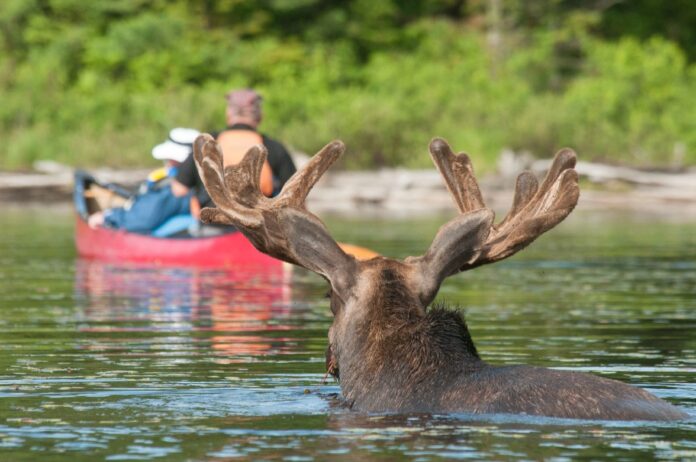
Get closer than you imagined possible to Algonquin Park moose, photograph the park’s most stunning autumn scenes, or discover cultural treasures hidden deep in the forest. These Algonquin tours highlight the very best of the park, whether you choose a guided Algonquin canoe trip or a park bus tour. You’ll be amazed by how much you can see and learn on an Algonquin Park day trip!
To experience the real magic of Algonquin Park, you need to get off the highway and onto the park’s lakes and streams. Enhance your Algonquin canoe tour by choosing a themed day trip based on your interests—wildlife watching, artists in the park, fishing and more. These Algonquin Park guided canoe day tours are a great introduction to paddling in the park and are perfect for first-timers! Canoes, paddles, safety equipment, park permits and shore lunch (full-day trips) are provided.
Enjoy a one-day backcountry experience in Algonquin Park with Algonquin Outfitters, starting at their Oxtongue Lake store. This full-day, guided experience is ideal for active people wanting an enjoyable day on the water or a taste of what canoe tripping in Algonquin Park is all about. You’ll see beautiful scenery and learn fundamental paddling, portaging and safety skills.
Take the mystery out of Algonquin Park canoe tripping with this personalized, full-day canoe tour. Algonquin Bound’s experienced guides will teach you essential canoe tripping skills and share their knowledge of Algonquin Park’s fascinating natural and cultural history. Algonquin Bound offers this canoe day trip from their three distinct locations: start at Canoe Lake or Smoke Lake near the park’s West Gate, tour the quieter lakes and rivers around Shall Lake near the East Gate, or visit the spectacular Barron Canyon on Algonquin Park’s east side.
Beginning at the Canoe Lake access point, Algonquin Adventure Tours’ six-hour guided canoe tour explores the cultural heart of Algonquin Park. After an orientation to Algonquin Park and essential canoeing skills, you’ll paddle across Canoe Lake and learn about historical points of interest along the way, from ruins of a century-old town site to possibly the most debated gravesite in Canada—that of celebrated landscape artist, Tom Thomson, who died here in 1917 under mysterious circumstances. This canoe day trip also includes a short hike to a scenic lookout, shore lunch and—depending on season—swimming, cliff jumping, wild berry picking or fall colors viewing.
Explore Algonquin Park’s Hailstorm Creek Nature Reserve and enjoy some of the best scenery and wildlife viewing in Algonquin Park with the assistance of an experienced Algonquin Outfitters canoe trip guide. This unique half-day experience allows day-trippers to explore Lake Opeongo’s wild and remote Hailstorm Creek without having to worry about paddling on the big lake. Algonquin Outfitters’ water taxi transports paddlers and canoes (or kayaks) from their Opeongo base to the heart of Algonquin Park in just 20 minutes and returns later to pick you up. Moose, beaver, heron and loon are abundant in this scenic wetland.
[ Paddling Trip Guide: View all canoe trips and tours in Algonquin ]
Intro to Algonquin Canoe Tour
Head to The Portage Store on Canoe Lake to meet your guide for this one-day introduction to Algonquin Park canoe culture. After instruction and orientation, explore Canoe Lake while watching for wildlife and learning about historical points of interest along the way. This guided Algonquin Park canoe day trip includes a tasty shoreline lunch.
Departing at sunrise with the morning mist (and the morning bite!), this three-hour canoe tour travels with Algonquin Adventure Tours’ founder to his preferred fishing spots, where you’ll learn expert tips for catching Algonquin Park’s world-famous lake and brook trout. Fishing success rate on this guided trip is 90 percent. Anglers travel in a custom fishing canoe outfitted with a silent, electric trolling motor, top-quality fishing gear and electronic fish finders. Every tour begins with a delicious breakfast of local bakery pastries and freshly brewed organic coffee.
Whether you’re an avid photographer looking to expand your knowledge of wildlife and landscape photography, or a novice shutterbug wanting to capture quintessential images from your time in the park, there is a perfect Algonquin Park photo tour for you. Bring your camera and prepare to be inspired!
Gain a deeper knowledge of your camera’s functions and capabilities while developing your own creative vision on a sunrise-to-sunset Algonquin photo tour. Led by a local duo who shoot professionally in Algonquin Park, Follow Me North Photography workshops are all about guiding fellow photographers into Algonquin and teaching the how-to’s of wildlife and landscape photography. Tailored to your specific photography goals, these coaching tours are offered one-on-one or in small groups and visit exclusive locations in the park not included on most tours.
Combine Follow Me North’s full-day Algonquin Park Photo Guided Tour with a post-shoot photo editing session in their Muskoka studio for the complete experience.
If you’re looking to photograph Algonquin Park moose and other wildlife in their natural habitat, this is the Algonquin photo tour for you! The full-day Cameras & Canoes Photography Adventure is lead by professional photographer, instructor and local “animal-whisperer” Helen Grose, in partnership with Algonquin Outfitters.
Your Algonquin photography adventure begins with a water taxi ride from Algonquin Outfitters’ Lake Opeongo store to one of the park’s best locations for viewing moose. Here, you’ll slip into canoes to explore a backcountry wetland filled with wildlife. Photograph moose, loons, beavers and the beautiful scenery from your canoe, while getting individualized photography instruction and back-of-camera critique.
Capture peak fall colors in Algonquin Park with the help of award-winning landscape and wildlife photographer, instructor and Algonquin specialist, Rob Stimpson. Participants on this full-day Fall Foliage Algonquin photo tour meet in the village of Dwight near the park’s West Gate and explore on foot to photograph the sensational fall colors of Algonquin Park. Shoot iconic waterfalls and whimsical river scenes, while learning the art of composition, color, lens selection and effective camera settings.
Muskoka wildlife and astrophotographer, Wesley Liikane, better known as Cowboy With A Camera, is an expert at shooting the dark, star-filled skies of Algonquin Park. Learn how to photograph the night sky, the Milky Way, northern lights and even meteor showers on this hands-on, after-dark Algonquin photo tour.
Follow Me North Photography loves Algonquin in every season, and they’re confident you’ll agree after journeying to Algonquin Park for their Winter Wonderland Photography Workshop. Imagine snowshoeing to vast, icy waterfalls, observing moose, beavers, pine martens and otters co-existing in a white powdered vista, and hiking to locations crystallized by the morning frost—all with a camera in hand and new skills to practice.
This landscape and wildlife photography workshop is tailor-made for adventurous photographers from all photography backgrounds. Book the full weekend photo workshop, or join for a single-day trip.
Short on time but keen on photographing Algonquin Park’s wilderness vistas and wild inhabitants? Join Algonquin Adventure Tours founder and avid photographer, Stuart Letovsky, for three hours of fascinating Algonquin Park history, spectacular vistas and connecting with nature on beautiful Canoe Lake. This top-rated Algonquin photo tour travels in a custom canoe outfitted with an eco-friendly, silent electric motor, so you can see more of the park and increase your chances of up-close wildlife encounters while leaving your hands free for photography.
An Algonquin Park bus tour or driving tour can be a great introduction to the park for first-time visitors. Highway 60 traverses Algonquin from east to west, a twisting two-lane road that winds through nearly 60 km of amazing scenery, past sparkling lakes and vibrant forest.
Departing from Toronto, most bus tours arrive at the park in three to four hours and make several stops throughout the day at some of Algonquin Park’s top attractions. Many tours include time for easy, optional hikes on scenic lookout trails. There are even adventurous Algonquin bus tours for active travelers that include canoeing excursions, swimming in a pristine lake and longer hikes.
Spend a full day exploring Canada’s oldest provincial park on this active bus tour with Toronto-based adventure company, Travelling Chicken Adventure Tours. Your first stop will be a short hike to the beautiful Ragged Falls, followed by lunch and two hours of canoeing and swimming at Canoe Lake. Finish the day with a steeper 2-km hike to a magnificent view overlooking several hundred square kilometers of Algonquin Park. This small group driving tour uses a 15-passenger van and is led by a knowledgeable tour guide with plenty of local experience.
ParkBus provides transportation for independent backcountry travelers and day-trippers in Algonquin Park. Travel from Toronto to Algonquin aboard a coach bus, with scheduled stops at popular park attractions such as Oxtongue Lake, Canoe Lake, Lake of Two Rivers, Pog Lake/Whitefish Campground and Lake Opeongo. The bus returns through the park picking up passengers at the same stops 2.5 to 5.5 hours after drop-off, during which time you can enjoy a day hike, rent a canoe at Algonquin Outfitters or The Portage Store and paddle from their docks, or rent bikes to ride the Old Railway Bicycle Trail at Mew Lake.
Looking for a fun, social Algonquin Park experience with fellow nature lovers? Check out ParkBus ActiveDays for upcoming guided group day tours in Algonquin.
Hike in the breathtaking scenery of Algonquin Park during the fall season as trees such as maples, birch and beech turn vibrant shades of crimson, orange and gold. Traveling round-trip from Toronto aboard a deluxe bus, this 12-hour day trip includes a visit to the world-class Algonquin Park Visitors Centre and two optional hikes on an easy wetland trail (1.2 km) and the moderate (2.2 km) Lookout Trail.
This convenient Algonquin Park day trip from Toronto is designed for active travelers who are looking for an action-packed day out in nature. This top-rated, small group tour travels by van and includes plenty of time at each stop for enjoying all that Algonquin Park has to offer. Hike to the cascading waters of Ragged Falls, learn to paddle your own canoe, swim in Canoe Lake and even go cliff jumping (if you dare!). This tour offers the most hiking, with a challenging 5-km loop on the gorgeous Booth’s Rock Trail, visiting secret swimming holes and a jaw-dropping lookout.
Experience the magic of winter in Algonquin Park on this small group day tour with Travelling Chicken Adventure Tours. Journey from Toronto in a 12-passenger van to Algonquin Park, where your guide will provide snowshoes so you can hike in the deep, fluffy snow without sinking. Explore Ragged Falls and a second Algonquin Park trail of your choice, while admiring the breathtaking beauty of the snow-covered park.
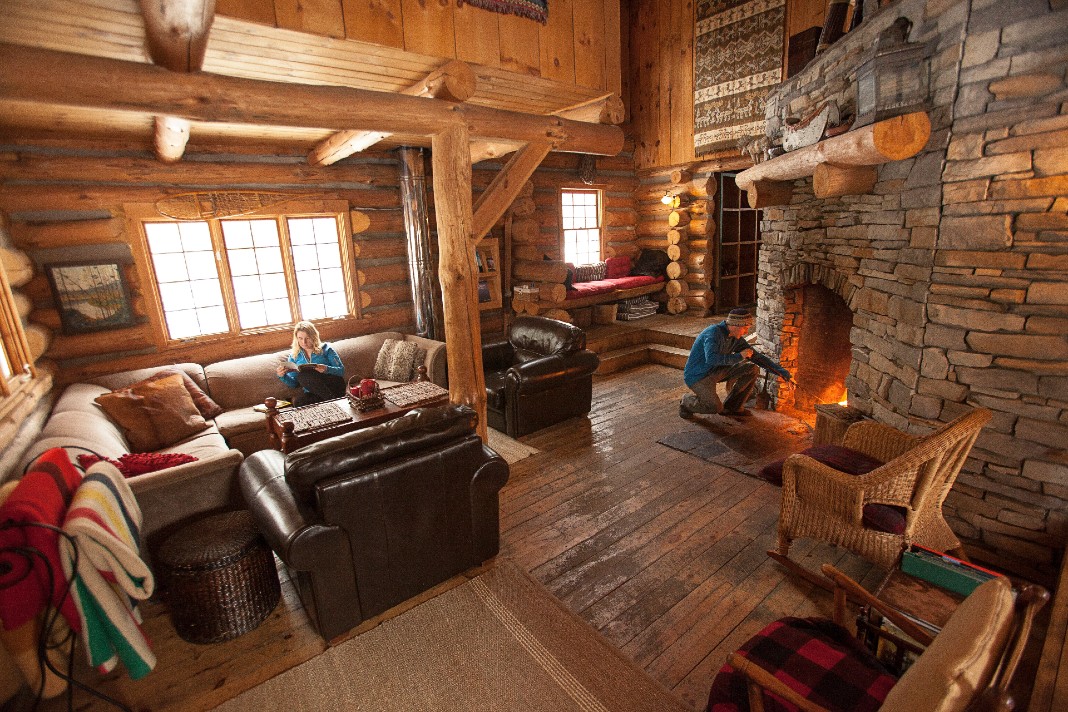
Algonquin Park is one of the most popular camping destinations in the world, but for those who prefer a few more comforts, a diverse selection of cozy Algonquin rental cabins and cottages await your stay. Rent a restored Algonquin log cabin for an authentic heritage experience in the park’s interior, or choose a modern Algonquin cottage rental for a family staycation everyone will love.
Read on to discover vacation rentals, classic cottage resorts and one-of-a-kind Algonquin cabin rentals—whether you’re after an off-grid getaway or something more deluxe, these stunning properties make inviting and convenient bases for exploring the park’s breathtaking natural beauty.
Situated inside Algonquin Park, Ranger Cabins are rustic wooden cabins with limited amenities—most have no electricity, indoor bathrooms or running water! These are authentic, ranger-built heritage cabins restored by the park for rental use. Many can only be reached by canoe, however five Ranger Cabins are also accessible by vehicle, giving casual visitors an Algonquin rental with a unique opportunity to soak up a bit of park history.
Located on a peninsula jutting out from the north shore of Cedar Lake, the Brent Ranger Cabin and smaller Deputy Ranger Cabin are nestled among red and white pine with a scenic view of the lake. The main log cabin has four bedrooms (sleeps 10), a living room with a wood-burning stone fireplace and a kitchen. Modern conveniences include propane stove and fridge, solar lights, bunks with mattresses and vault toilets a short walk away.
Constructed in 1932 from pine logs available on-site, the Brent Deputy Ranger Cabin is an intimate one-room cabin that sleeps two and offers an outdoor kitchen with propane stove and solar fridge, picnic table and gorgeous lakeside deck. Cedar Lake is found on the less-visited north side of Algonquin Park, accessible from Highway 17.
In the northwest corner of Algonquin park, Kioshkokwi Lake—also known as Kiosk—is an ideal base for exploring the beautiful large lakes and winding, trout-filled rivers located in this area of the park. The original Kiosk Ranger Cabin was constructed in 1927, and then relocated and rebuilt on its present site beside Kioshkokwi Lake in 1936, with electricity installed in 1956. Today, mature white pine trees shade this two-bedroom waterfront log cabin with five-star sunset views. The cabin is equipped with a sitting area, electric fridge, stove and heat, running cold water and toilets a short walk away.
Accessed from the village of Kearney, on the west side of the park, this waterfront Algonquin log cabin enjoys a long view down Rain Lake from its secluded forest site. The Rain Lake Ranger Cabin features two bedrooms, a screened porch and propane-powered fridge, stove, lights and heater. Composting toilets are located nearby, and are shared with a handful of jump-off campsites used by paddlers heading into the park’s interior. From the cabin, visitors can canoe and fish on Rain Lake, portage farther into the park or take a hike on the Western Uplands Backpacking Trail.
[ Paddling Trip Guide: View all canoe and kayak trips in Algonquin ]
Algonquin log cabins
Wolf Den Nature Retreat
The Wolf Den Nature Retreat offers beautiful log cabins situated on the Oxtongue River, just a few minutes’ paddle from Oxtongue Lake. Conveniently located 9 km from Algonquin’s West Gate, these self-contained, fully equipped eco-cabins are perfect for couples, families or friends, with one to three bedrooms and gorgeous square-log construction. Across Highway 60, family hostel-style cabins share kitchen and lounge facilities in the Wolf Den’s main lodge. These are ideal for solo travelers and shoestring vacations—as well as being a fun, unique way to meet other outdoor enthusiasts and share stories about your experiences in the park.
Voyageur Quest combines unique off-grid accommodations, exceptional outdoor guides and outstanding local cuisine to create award-winning Algonquin Park experiences from their location on Kawawaymog Lake at the park’s northwest corner. Book a stay at their Algonquin Log Cabin to enjoy rustic ambience, delicious gourmet meals and a peaceful wilderness setting with daily guided excursions on foot and by canoe. Hike to spectacular forest viewpoints, enjoy a misty morning paddle on Surprise Lake and bask in the cabin’s sauna. Or choose an adventure package that combines a log cabin stay with backcountry canoe camping.
Situated on the quiet east side of Algonquin Park, just a 15-minute drive from the village of Whitney and the park’s East Gate, Hay Lake is a peaceful place to disconnect from the city and reconnect with nature. Hay Lake Lodge offers five traditional Algonquin log cabins, well spaced along the shore of this lovely 16-kilometer-long lake. Each of the lakefront cabins features all the modern amenities of a fully equipped cottage, with one-, two- or four-bedroom layouts. Guests can paddle complimentary canoes and kayaks into adjoining lakes or up Hay Creek into the Algonquin Park interior.
Perfect for cabin lovers, aspiring off-gridders, eco-friendly travelers and Algonquin Park adventurers, this hand-built log tiny home is tucked among a private acre of trees just five minutes from the park’s East Gate and walking distance to the village of Whitney. The cabin is a labor of love for its owner/builder, Adam, who constructed it out of trees he felled on the property. High ceilings, ample natural light, and solar-powered electricity and hot water for showers make this cabin a comfortable as well as eco-conscious space. Amenities include a cozy loft (sleeps two), vintage Algonquin Park library, indoor composting toilet, propane stovetop and mini fridge/freezer. Adam is a former Algonquin Park backcountry ranger and hosts an outdoor campfire concert in the evening as part of your Airbnb experience.
Conveniently located a short drive to the West Gate of Algonquin Park and to downtown Huntsville, Limberlost Forest & Wildlife Reserve is also a stunning destination in its own right. Established in the early 1900s as a premier recreational resort, today Limberlost is a publicly accessible, private, year-round wilderness haven with 20 pristine lakes and more than 10,000 unspoiled acres of mixed forest. The reserve offers scenic canoe routes and an extensive four-season trail network, as well as 12 lakefront cabin and cottage rentals. Choose from rustic log camping cabins, traditional family cottages or luxurious private lodges—all steps from the water, canoes and kayaks included. And they’re pet-friendly!
Located on Kawawaymog Lake at the park’s northwest corner, Voyageur Quest’s private Algonquin Cottage Rentals offer all of the best outdoor activities combined with full 21st-century amenities. Well-equipped kitchens, running water, indoor washrooms, hot showers and electric lights make these off-grid, solar-powered cottages comfortable for everyone. The cottages include use of canoes, kayaks and SUPs to paddle right from the dock into Algonquin Park.
Perched on a tiny island in the middle of Kawawaymog Lake, the Algonquin Island Retreat is a cozy, paddle-in cabin perfect for couples looking for a private escape. Families enjoy the Manitou and Lost Dog Cottage, while the Nipissing Cottage Outpost is ideal for larger groups with ample docks, decks and an out-of-this-world floating sauna.
Nestled on a pine-clad peninsula just off Highway 60 in the heart of Algonquin Park, Killarney Lodge boasts both a fabulous lakeside location and an elegant, rustic ambience. Each of the lodge’s secluded log and pine cabins includes a personal canoe and a waterfront porch with intimate views of Lake of Two Rivers. Explore paddle-and-portage routes, cycle the Old Railway Bike Trail and enjoy casual or ambitious hikes—all right from your cabin door.
An Algonquin Park landmark since 1917, Bartlett Lodge is an oasis of luxury and fascinating history set amid the wild beauty of Algonquin’s Cache Lake. Whether your idea of the perfect vacation is a lakeside deck and a comfy reading chair, or an ambitious paddle-and-portage adventure to a remote lake, Bartlett’s cozy log cabins ensure you’ll end each day in comfort. Located near the mid-point of the Highway 60 corridor, guests park their vehicles at Cache Lake and board Bartlett’s freighter canoe for the short ride to their shoreside cabins. Private one-, two- and three-bedroom Algonquin cabin rentals are available.
Hidden in the heart of Algonquin Park’s backcountry, yet accessible by dirt road from the Highway 60 corridor, Arowhon Pines offers luxury without compromising on location. Experience Algonquin’s world-famous lakes, trails, wildlife and tranquility while “un-roughing” it with a king-size bed and fireside lounge chair. Private and shared lakefront log cabins feature one, two, three, four or more bedrooms. Paddle complimentary canoes, kayaks or SUPs through the portage-free chain of lakes north to Teepee, Littledoe and Tom Thomson lakes. Spend a morning hiking the lodge’s trail system, try your hand at sailing on Little Joe Lake or simply sit back in a Muskoka chair and take in the resplendent fall colors from your private deck.
This newly renovated retreat on the shore of small, motor-free Otter Lake is pretty much our vision of the perfect Algonquin cottage—900 square feet of cottage comfort with a just-right rustic flare and idyllic lake views from the spotless living areas and cozy sleeping loft. Otter Haven sleeps four to six across three bedrooms and features a fully equipped kitchen, propane fireplace, air conditioning and peaceful outdoor lounge area. Take the complimentary kayaks for a tour around the lake, and swim from the cottage’s sand beach, dock or floating platform. Otter Haven is located a short drive from Huntsville, close enough to Algonquin to spend your days adventuring in the park and your evenings enjoying a lakeside campfire at the cottage.
Tucked in a quiet location on Dwight Bay, this unpretentious lakeside cottage is just 15 minutes from the West Gate of Algonquin Park and five minutes from the village of Dwight—home to a locally famous bakery and other amenities. With two bedrooms (sleeps five), wireless Internet, fully equipped kitchen, 150 feet of private waterfront and spectacular sunsets from the dock, this Algonquin rental is perfect for a low-key family staycation on the park’s periphery.
For a seriously serene Algonquin cottage rental close to the park’s southern panhandle, this newly updated, three-bedroom (sleeps five to six) beauty boasts gorgeous lake views from every window. Nestled in hardwood forest, the Rose-Eh-Chalet may look like your average rustic A-frame chalet, but step inside and you’ll be treated to a well-appointed kitchen, delightfully bright and cozy living areas flooded with natural light, and spa-like bathroom with rain head shower and pebble floors. The cottage’s outdoor spaces are just as lovely—a spacious deck with wood-burning fireplace and cheerful string lights, and a to-die-for dock with canoe and kayaks at the ready. Algonquin Park’s scenic High Falls and York River are a short drive away, but the cottage’s crystal-clear, no-motor lake invites you to stay right where you are.
With a rustic, sociable vibe and five retro-themed cabins by the water, Camp Bongopix offers a fun (and sometimes rowdy) cottage atmosphere for younger adults. These quirky one- and two-bedroom cabins are pet-friendly so you can bring your pooch (or adventure cat) to Algonquin Park. If it’s raining, play retro video games (there’s no WiFi) or sample the inventory of board games, VHS tapes and vinyl records. Each cabin includes a retro kitchen, bathroom and outdoor fire-pit. Grab a complimentary canoe to paddle across Galeairy Lake into Algonquin Park, and don’t miss the free campfire jam every Saturday night. Located on the Madawaska River near the village of Whitney, Camp Bongopix cabins are a five-minute drive from the East Gate of Algonquin Park and close to the park’s superb visitor center, logging museum and popular hiking trails.
If the Rose-Eh-Chalet (see above) sounds like your perfect Algonquin cottage rental, you can add pet-friendly to this Insta-worthy Airbnb’s list of charms. Pups (and people) enjoy the chalet’s peaceful forest setting and spacious grassy yard, and Carfrae Lake’s impossibly blue, loon-filled waters.
An Algonquin cottage rental at Limberlost Forest & Wildlife Reserve is both pet-friendly and conveniently located a short drive to the West Gate of Algonquin Park or downtown Huntsville. Fido will love the easy canoe routes and more than 70 km of scenic hiking and biking trails. The reserve offers 12 lakefront cottages and log chalets to choose from—all steps from the water, canoes and kayaks included.
Located on the shores of Oxtongue Lake, just 10 km from the West Gate of Algonquin Park, Oxtongue Lake Cottages is a pet-friendly, family resort with one-, two- and three-bedroom beachfront cottage rentals. Each of the 12 lake-view cottages offers something special, from rustic log charm to tasteful modern décor, and all are situated steps from the resort’s lovely sand beach and grassy kids’ play area. Use of canoes and kayaks is included; explore the lake or make the half-day round-trip paddle up the Oxtongue River to Ragged Falls.
The nine cozy log cabins and cottages at Adventure Lodge Algonquin create a romantic setting for this couples-only, pet-friendly retreat on the eastern edge of the park. Guests enjoy a Jacuzzi and wood-burning fireplace in each cabin, with all-inclusive gourmet breakfasts and dinners served right to your door. The Adventure Lodge is just a 10-minute walk from the town of Whitney, and an even quicker drive to the East Gate of Algonquin Park. Use of canoes and kayaks to explore the adjacent Madawaska River and Galeairy Lake is included with your stay.
Adults and well-behaved pets are invited to relax and reconnect at this small cottage resort on undeveloped Purdy Lake, 30 minutes from south Algonquin Park. Blue Moon Retreat offers four comfortably appointed one- and two-bedroom cottages nestled in almost 12 acres of forested land with 800 feet of shoreline and unspoiled views of the lake from their private decks. Complimentary canoes and kayaks invite a tour of Purdy Lake’s clear waters, and a nature trail around the property is perfect for morning and evening dog walks.
Just minutes from Algonquin’s West Gate, this fully equipped housekeeping resort boasts comfortable lakeside cottage rentals and a superb, on-site trail network for hiking or cross-country skiing/snowshoeing. With cozy, wood-burning fireplaces and lake views, the Algonquin cottages here are perfect for a couples getaway or a family vacation. Situated on Oxtongue Lake, Blue Spruce Resort guests enjoy use of the resort’s canoes, kayaks and paddleboards to tour the lake or make the half-day trip to spectacular Ragged Falls on the Oxtongue River. Algonquin Outfitters is just next-door if you’re planning a longer paddling adventure in the park.
Also on Oxtongue Lake, Cloverleaf Cottages offers a traditional, family-oriented Algonquin resort experience with 13 beachfront and lake-view rental cottages to choose from. Enjoy a 450-foot sand beach, paddle to Ragged Falls or head into the park along Highway 60. Canoe and Smoke lakes access points, as well as the Whiskey Rapids and Hardwood Lookout trails, are nearby. All cottages include use of canoes and kayaks, and have wireless Internet and satellite television for those rainy days.
Yet another option on popular Oxtongue Lake, the 10 cozy cottages and sandy swimming beach at The Pines Cottage Resort are ideal for family staycations on the edge of Algonquin Park. Children’s play area, programming for kids, and free use of canoes and kayaks make these fully equipped housekeeping cottages an easy option for busy families.
Nestled right on the shores of Oxtongue Lake, the 11 beachfront cottages at White Birches enjoy cool lake breezes from the resort’s grassy lawns. Lakefront living doesn’t get much closer than this Algonquin cottage rental. Each of these simple white-clapboard cottages is equipped with a full kitchen, picnic table, campfire area, WiFi, and use of canoes and kayaks. Choose from one- or two-bedroom layouts.
Situated on the shores of Benoir Lake at the southern tip of Algonquin Park, Pine Grove Point cottage resort and campground is just five minutes from the park’s Kingscote Lake access, and a perfect departure point for day trips to the spectacular High Falls. Guests can launch canoes right from Pine Grove Point’s dock and paddle up the scenic York River to the falls. Pine Grove Point offers a family-oriented camping and cottage resort experience, including four self-catering rental cottages, a sandy swimming beach, children’s playground, canoe and kayak rentals, restaurant, ice cream bar and camper’s store.
With their ponderous bulk and graceful slow-motion swimming manatees are among the most captivating marine creatures to encounter in the wild. Tourists flock to kayak and canoe among these gentle giants in places like the Crystal River National Wildlife Refuge in Florida, where manatees migrate to spend the winter months in clear spring-fed waters.
[ Plan your next Florida paddling adventure with the Paddling Trip Guide ]
Manatee viewing in Florida
“It’s almost that time of year in Florida when the Manatees start grouping up & moving into warmer waters. Making it an ideal time to go kayaking in crystal clear spring waters,” declares the YouTube video caption from See Through Canoes.
Nobody gets a clearer or more unobstructed manatee viewing experience than in this completely transparent canoe-kayak hybrid, which takes the idea of a glass-bottom boat to a whole new level. Even the manatees seem to wonder if the boat is there at all as they nudge the clear hull before swimming away.
If this video makes you want to hop in a clear kayak and see a manatee for yourself, make sure to book with one of the reputable tour operators located throughout Florida. Most importantly, always follow the rules and regulations in place to protect these magnificent marine mammals.