Home Blog Page 153

How To Plan A Safe Kayak Trip

In partnership with the U.S. Coast Guard and the Water Sports Foundation, instructors Paul and Kate Kuthe of the American Canoeing Association explain how to plan a kayak trip in our Safer Paddling Series: Episode 5.

There are certain things you must always take into account when planning a kayaking trip. Read on for our tips on what to consider and which measures to take to ensure the safety and enjoyment of everyone in your group.

How to plan a safe kayak trip

Accurately estimate the length of your trip

First, consider how long your trip will be. Most beginner kayakers can cover about eight kilometres in half a day—assuming favourable conditions and protected water.

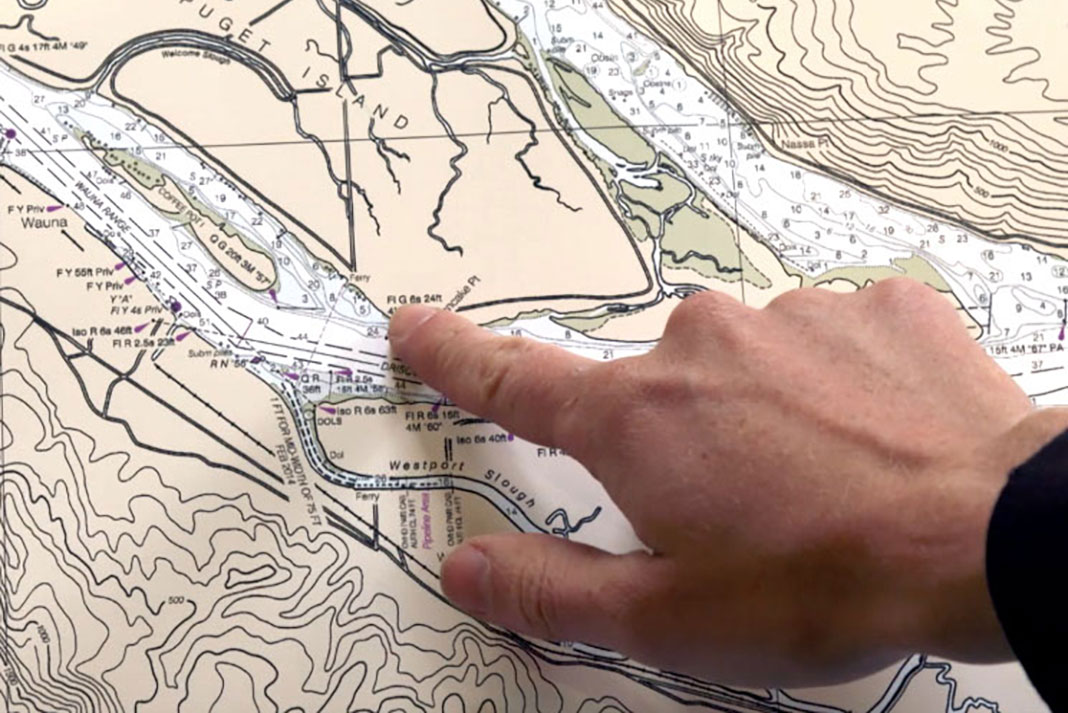
plan your kayak trip carefully ahead of time using maps and other resources
Be safe out there and plan your trip before heading out.

Research your options and listen to the experts

It’s important to do your research when planning your route. Use maps or a guidebook to plan your trajectory, and ask about good trips for beginner kayakers at your local paddling shop.

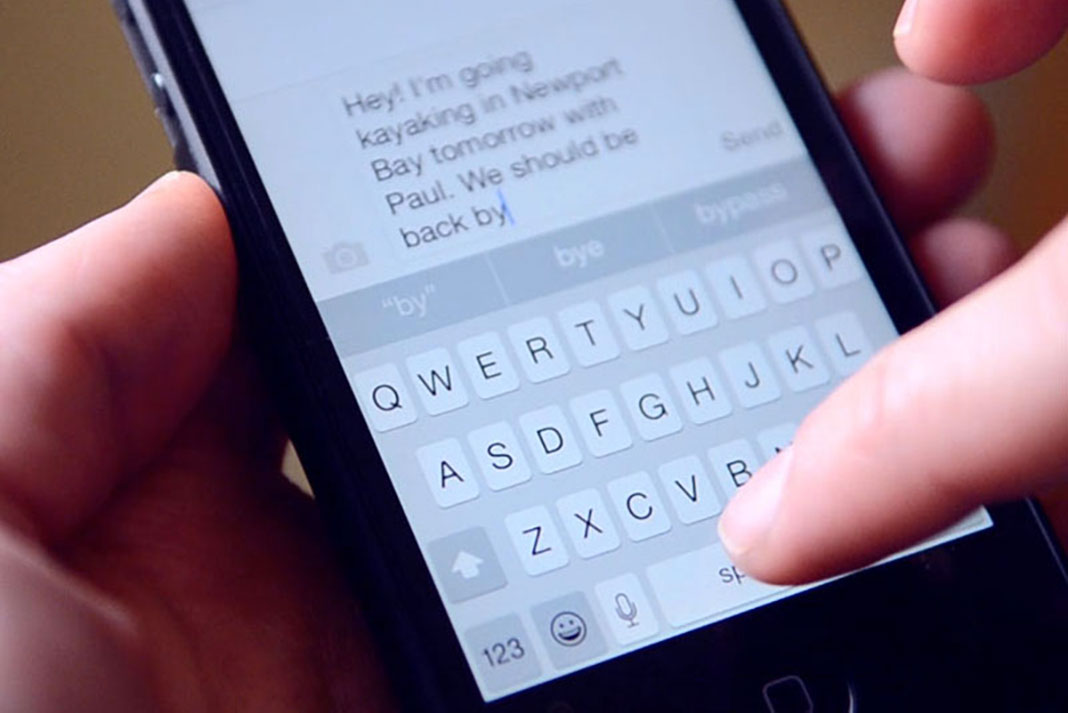
Texting a friend prior to embarking on a kayak trip
Give information about your trip to a trusted friend.

Tell the details to a friend

Before taking off, be sure to share your trip details with a trusted friend. Give them the four W’s:

  1. WHO you’re going with
  2. WHERE you’re going
  3. WHEN you’ll return
  4. WHAT to do if you don’t return
[ Plan your next kayaking adventure with the Paddling Trip Guide ]

Local conditions are key

Don’t forget about the wind—remember that conditions are often calmest in the morning. Remember to take into account when the sun will set, so you can assure you have enough daylight to make it home.

See the sights safely on your kayak trip

Kayak tripping is a great way to see the sights and stay active, but kayaking also has an inordinately high rate of accidents and deaths compared to other activities like power boating. Our goal in explaining how to plan a kayak trip is to raise your awareness of safer paddling practices.

Follow these guidelines to enjoy your trip and keep yourself and your paddling partners safe. With the proper planning we can reduce the chances that paddlers everywhere will come to harm.

Be smart. Be safe. Have fun.

[ Read more: 14 Ways To Plan Your Greatest Kayaking Adventure Ever ]

As a United Stated Coast Guard nonprofit grant recipient, the Water Sports Foundation produces paddling safety outreach materials and distributes them through boating and paddling media providers.


The Valley Nordkapp Førti Kayak Marks 40th Anniversary

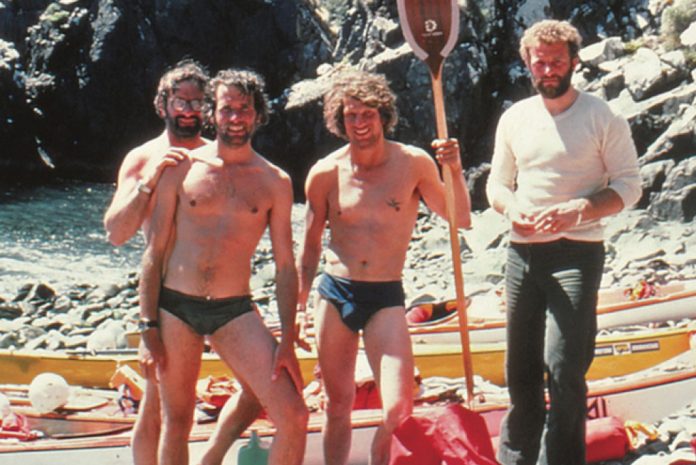
Four men stand in front of a group of Nordkapp kayaks, one holding a paddle
The Nordkapp: Lordy, Lordy, Look Who's Forty | Feature Photo: Courtesy of Nigel Matthews

In 1975 Margaret Thatcher became the first woman to lead a British political party. The Edmund Fitzgerald sank in Lake Superior. Peter Gabriel left Genesis. And the modern sea kayak—in the form of the Valley Nordkapp—was born. in 2015, the release of the Valley Nordkapp Førti marked the 40th anniversary of this very auspicious event.

[ Paddling Buyer’s Guide: See all sea kayaks ]

Paddling to the Nordkapp

British adventurers Colin Mortlock, Sam Cook, Colin Litton, John Anderson, Nigel Matthews and Peter Davis were planning to paddle 500 miles up the Norwegian coast to the Nordkapp, or North Cape, and they felt none of the few available kayaks were up to the job. Frank Goodman, founder of fledgling English kayak builder Valley Canoe Products, designed them a kayak for the trip, also called the Nordkapp.

The Nordkapp was built to carry heavy loads in rough seas and sustain the wear and tear of a long expedition. After a shakedown circumnavigation of Scotland’s Isle of Skye, Mortlock insisted that the Nordkapp include a new concept: bulkheads and hatches for storing gear. After 228 miles of fickle Scandanavian winds, the group stopped in Tromsø to fit strap-on skegs, adding the final element of sea kayaks as we know them today. The expedition’s 62-page trip report, hammered out on a typewriter, reads like the journal of a 19th-century explorer: Food is “rations”, and they seek “a worthwhile objective, difficulties and dangers.”

More expeditions followed, all done in Nordkapps. Goodman and Matthews, along with Jim Hargreaves and Barry Smith, rounded Cape Horn two years later. Paul Caffyn took a Nordkapp around New Zealand in 1978-9, Great Britain in 1980 and circumnavigated Australia in 1981-82.

What’s old is new in the Valley Nordkapp Førti

As sea kayaking became mainstream, the Nordkapp was often too much boat for weeklong trips, lighter loads and less advanced paddlers. It went through a dizzying series of redesigns—adjusting fit, tracking, stability and trim—and eventually ceded its place as the standard for rough-water expeditions to the Nigel Dennis Kayaks Explorer.

For the 40th anniversary of the Nordkapp, and of sea kayaking’s modern rebirth, Valley re-redesigned the Nordkapp yet again. With the original blueprints and mould lost, the new Nordkapp Førti is modelled from an old first-run specimen that Valley bought back from a private collector. What’s old is new again: Valley discovered that the original was more like contemporary expedition kayaks than later versions, which had been tweaked so many times that the design seemed a mere caricature of that elegant first cast.

The Valley Nordkapp Førti may be the original 17’10” hull, but sea kayaking itself has changed. In an era of tighter schedules, aging populations and hyper-connectedness, long expeditions are rare. Valley’s newest design, the Gemini, is aimed at playful weekend boating, its shortened waterline matching shorter vacations. Other manufacturers, like P&H Kayaks, Jackson and Dagger, blend sea kayaks with whitewater boats for park-and-play surfing and rock-gardening. A kayak designed to go 500 miles with multi-week loads seems nostalgic and even eccentric, as if it should come with rations of pemmican and hardtack.

One paddle planted in history

The Nordkapp’s 40th is an indication of how simultaneously young and old sea kayaking is. The sport is young enough that Valley can track down and reverse-engineer an original boat. People who were part of the early days are still on the scene now: Caffyn and Nigel Dennis remain regular faces—albeit with more grey hairs—at symposiums and events.

This ruby anniversary also highlights kayaking’s storied and still-relevant history. Few outdoor companies re-issue the skis, external frame backpacks or climbing gear used decades ago. The Valley Nordkapp Førti has one paddle blade planted in history and the other in modern sea kayaking. This places it—like every 40-year-old—firmly in middle age. Both the past and the future beckon.

Longtime contributor Neil Schulman celebrates kayaking’s diverse heritage in Reflections. In 1975, he was still a pint-sized passenger in a Grumman canoe. For a thorough Nordkapp chronology, check out Mike Buckley’s detailed research at ukseakayakguidebook.co.uk.


Screen_Shot_2015-06-15_at_3.44.39_PM.pngThis article first appeared in the Early Summer 2015 issue of Adventure Kayak magazine. 

Subscribe to Paddling Magazine and get 25 years of digital magazine archives including our legacy titles: Rapid, Adventure Kayak and Canoeroots.

Boat Review: Jackson Zen Kayak

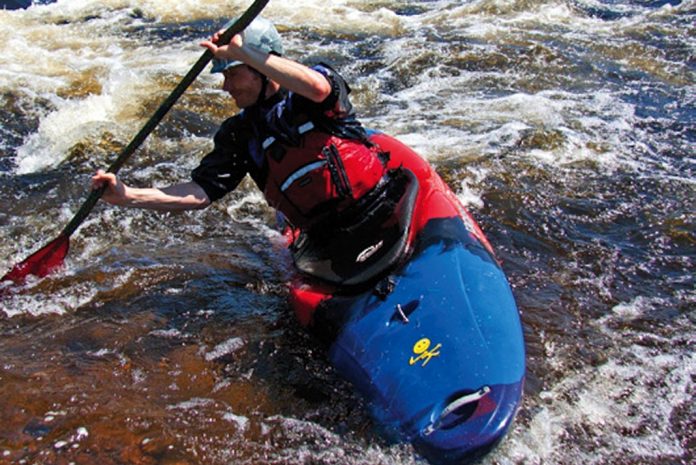
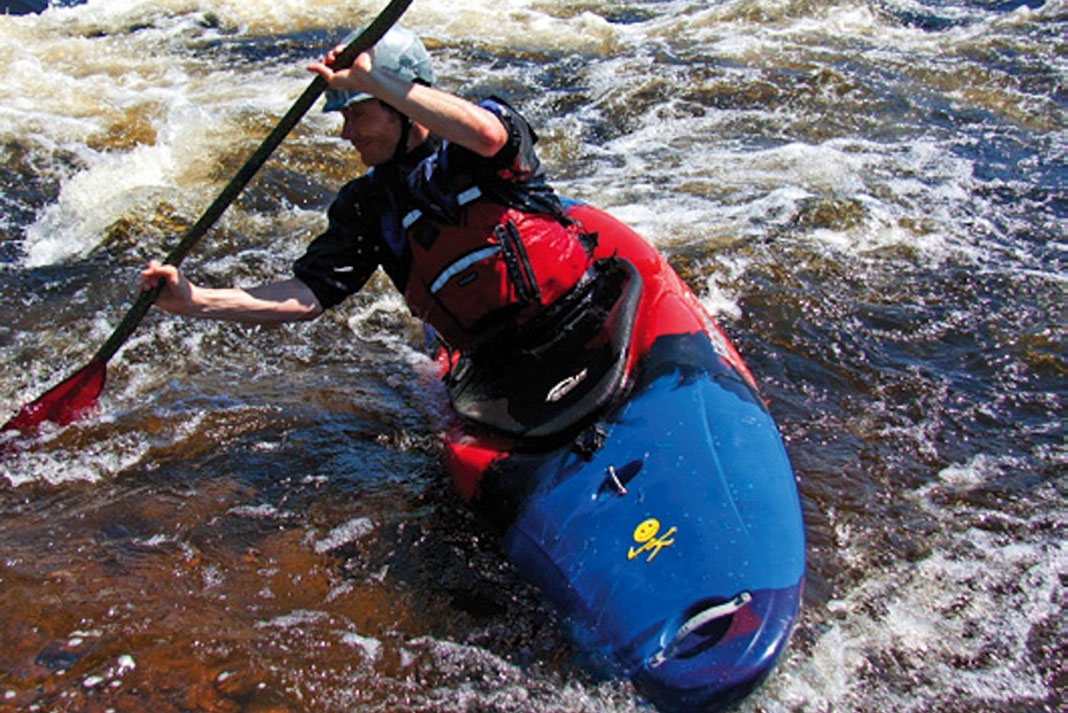
Man kayaking down a river in a Jackson Zen kayak
Don’t let the calm and relaxed name fool you, the Jackson Zen kayak is a racing machine. | Feature Photo: Michael Mechan

building on the successes of the past nine years, in 2012 Jackson Kayak released “a pure river runner,” the Zen. Jackson wanted a design that brought back the old school spirit of river running using modern ideas. The Jackson Zen kayak comes equipped with new features including updated grab handles, a newly designed welded hull support track and a snazzy water bottle holder. Are they just dressing it up or does its beauty come from within?

[ Paddling Buyer’s Guide: See the Jackson Zen 3.0 M kayak ]

Jackson’s Zen kayak is easy to like

This was an easy boat to hop in and get comfortable. The nice, high back­band and quick-to-adjust, piton absorbing bulkhead were instant turn-ons. One tester did have a slight mishap when a cord on the Jackson Sure-Lock backband system came untied on the water. Luckily the outfitting is simple and quick to fix.

The Zen has a moderate rocker, sits quite low in the water and feels nar­row. All this adds up to, as one tester put it, “a racing machine.” Setting a ferry angle, you zip speedily across the current and attainments take less effort. It gets up to speed within two strokes and holds a line with laser-like precision.

The Jackson Zen’s speed also makes it easy to catch even the smallest green waves. A huge bonus if there are lots of catch-on-the-fly waves on your favorite river.

Throwing the Zen on edge, the rails bite hard and won’t let go until you tell them to. Coupled with its impressive speed, it rips deep into eddies and flies across funky currents in a hurry.

Man kayaking down a river in a Jackson Zen kayak
Don’t let the calm and relaxed name fool you, the Jackson Zen kayak is a racing machine. | Feature Photo: Michael Mechan

Make sure you try the Zen on for size

Our lighter testers were able to spin and change direction mid-rapid with ease, while testers near the upper limit of the weight range found that, with the edges riding lower in the water, more muscle was required to change course. If you like a boat that is highly maneuver­able, choose the size that places your weight on the low end of the recom­mended range.

The moderate rocker doesn’t lend well to riding up and over waves and holes, especially steeper ones. That wasn’t much of a worry, though, since the Jackson Zen’s speed and the shape of the bow allow it to knife through features with authority. Just don’t expect a dry ride.

[ Plan your next river running kayak adventure with the Paddling Trip Guide ]

Go for thrills with the Jackson Zen kayak

Searching for a ride with easy-to-adjust outfitting, supersonic speed and hard carving, hole plugging, catch-waves-on-the-fly ability? Then be at one with the Jackson Zen kayak and live happily ever after.

This article was first published in the Summer/Fall 2012 issue of Rapid Magazine. Subscribe to Paddling Magazine’s print and digital editions, or browse the archives.


Why You Should Always Wear A PFD

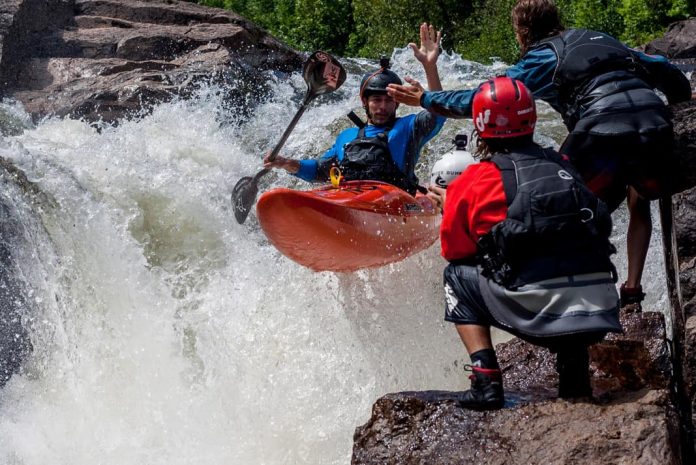
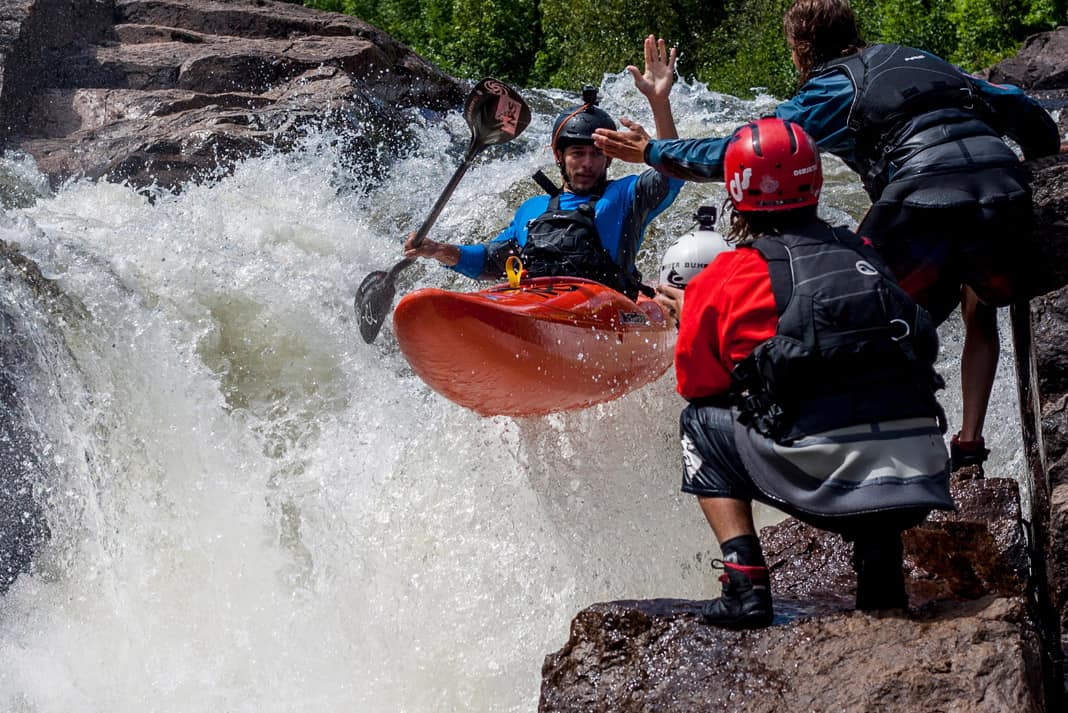
kayaker giving a high five to a friend on shore, all wearing PFDs

It’s what I’ve found myself thinking about these days: My PFD. Or, Personal Flotation Device. Which is strange to me. Typically, wearing a PFD is not something I think about at all.

PFD. Or, Personal Floatation Device

I spend the majority of the warmer seasons wearing one. I slip it on in the morning and do it up without conscious thought, like throwing a backpack over my shoulder or tying my shoes. It’s the same for all but the greenest whitewater people who’ve yet to burn the zipper and buckle combo into muscle memory.

[ Paddling Buyer’s Guide: See all PFDs ]

Wearing a PFD should not be controversial

So why have PFDs been floating around my subconscious? As regular readers know, I’m involved in outdoor tourism risk management and find myself involved in safety related policy issues. It turns out a few paddlers don’t wear PFDs, even when they know they should.

This is not your father’s PFD

PFDs and life jackets—the U.S. and Canadian coast guards would like us to switch back to calling them life jackets—have been around since the mid-1800s. Historically, ships were made of wood. If a ship went down, there was no shortage of floating bits of broken boat to cling to. After the adoption of iron-hulled ships, when a ship went down, it was going down to the bottom of the sea—nothing for sailors to cling to.

According to Christopher Brooks, the author of Designed for Life: Life Jackets Through the Ages, the two major drivers of life jacket innovation were dramatic catastrophes, such as the sinking of the Titanic in 1913—and the subsequent international convention requiring lifejackets available on all ships—and World War II.

Early life jacket models were chunky vests containing buoyant balsa wood. I can’t imagine them being very comfortable. Sometime later balsa wood was replaced by cork. By the 1940’s, hard cork was replaced by kapok, a naturally buoyant and water-resistant cotton fiber from a Central American tree.

[ Plan your next Central American adventure with the Paddling Trip Guide ]

Issued to soldiers and sailors, kapok vests were lighter and more pliant but nothing you’d consider supple. Kapok was fragile, and often life jackets unstuffed from storage bins were already damaged and ineffective. Modern PFDs are filled with synthetic closed-cell foam, and have passed rigid testing for durability, flotation and UV resistance.

kayaker giving a high five to a friend on shore, all wearing PFDs

Wearing a PFD is part of running whitewater

I love my own vest, with its body-hugging fit.

The feel of my PFD is part of the feel of running whitewater. It feels wrong without it, like driving without a seatbelt. Which brings us to the mini drama contrasted against significant tragedy. The PFD, or lack of, tying both stories together.

Mini drama first. You may have caught the Instagram buzz in March surrounding Pat Keller’s viral video post appropriately hashtagged #wearafuckinglifejacket. In the post, Keller—the unassuming reigning king of creaking and class V racing—gives a thorough tongue-lashing to a younger paddler putting onto his local run, the Cheoah, without a PFD. The younger paddler is actually wearing the fabric shell of the PFD, but he’d removed all the floaty parts inside. No matter, you probably get his point.

The paddler didn’t seem to be buying the wisdom Keller was selling. According to assorted commentary surrounding the post, he was highly skilled, knew the run well, and did not want to be inhibited by a PFD. Mini drama.

And then the tragic story. Last summer, 900-plus miles to the north, 15-year-old Jeremiah Perry drowned while on a high school canoe trip. He, like many of his classmates, could not swim, yet he was swimming at his campsite without a PFD. The loss of life was shocking but the ripple effects are still being felt in the outdoor education community. Scheduled canoe trips were cancelled. Hundreds, maybe even thousands, of kids denied their chance to explore the backcountry by canoe or kayak.

No one wears a PFD fly fishing

Every summer, a few fly fishermen wading in class II rivers get swept from their feet and drown.

Don’t doubt it can happen to whitewater people too. Rewind the clock to the 1999 World Freestyle Championships in New Zealand. Twenty-four-year-old Irish team member Niamh Tomkins jumped into the Waikato River’s Full James to swim across. She wasn’t wearing her PFD. She drowned in the boils in front of her peers and hundreds of spectators, just after the last of the semi-final heats.

Drowning is still a significant risk in society

There are 4,500 drownings every year in North America. Seventy-five percent of those deaths are in rivers, lakes and oceans, not swimming pools and bathtubs.

In 2016, in the United States, there were 167 deaths involving canoeing, kayaking and standup paddling, and of those, 130 were drownings. Of these paddling-related drownings, only 11 were whitewater paddlers. Why? Because we usually wear our life jackets, and most of us have the floaty bits still inside.

All of this is somewhat surprising and sad, given that for 30 summers I’ve just dropped my PFD over my head and climbed into my boat. We don’t need to overthink this. It’s just part of what I wear kayaking. Not thinking about this issue at all is the way to go. Wear a PFD. Just put it on.

#wearafuckinglifejacket

This article was first published in Issue 54 of Paddling Magazine. Subscribe to Paddling Magazine’s print and digital editions, or browse the archives.


Jeff Jackson is a professor at Algonquin College near the Ottawa River, and he consults on safety and risk management.

Why You Should Take Your Dog On A Canoe Trip

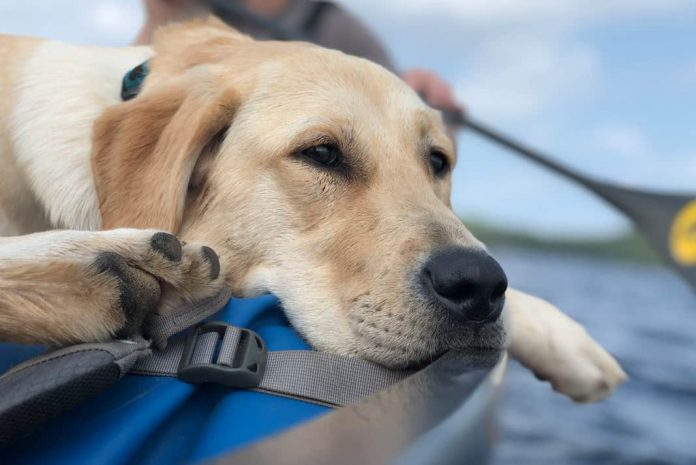
A dog on a canoe trip while a person paddles in the background
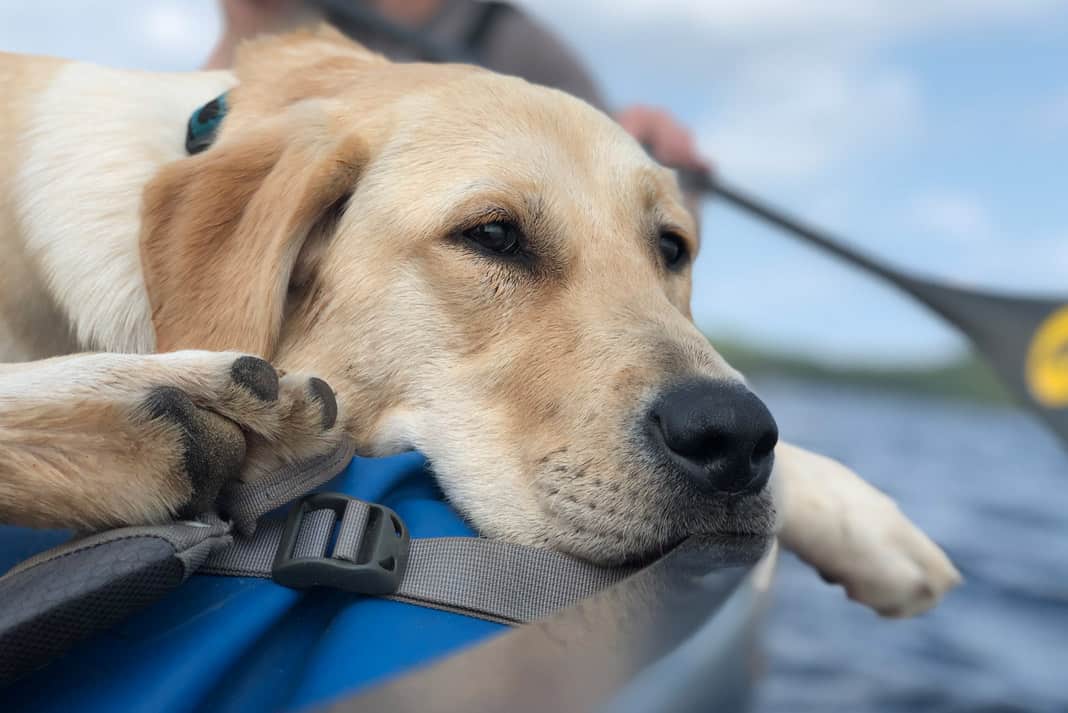
Love is a four-legged word. Aspen on Big Trout Lake during a weeklong trip in Algonquin Provincial Park. | Feature photo: Kaydi Pyette

Of the many embarrassing stories my grandma likes to tell, her favorite is of the years I sometimes liked to pretend I was a dog. Around the age of 4, there are multiple incidents of barking at strangers in grocery stores, eating sandwiches only if they were cut into the shape of Milk Bones, and biting the odd ankle or two. In this guise I would not have made a good canoe-tripping companion, but taking an actual dog on a canoe trip is a much more enjoyable experience.

The search for a paddling pooch

Fortunately, I grew out of my dog impersonation phase before I started marking my territory, but throughout childhood I retained an astoundingly single-minded fixation on my four-legged friends. At age 8, I was volunteering in shelters, handling the family’s neurotic shepherd rescue at obedience classes, and reading 400-page academic tomes on canine behavior. But as an adult I never had a dog of my own.

A change of heart

For many years as an adult, I dismissed dog ownership as too much responsibility. I was often on the road and I couldn’t fathom bringing a misbehaving mutt along on river trips and long-distance hikes. Last year, I found the perfect trial run. A long-term—but still temporary—gig as a puppy raiser for a future service dog.

Volunteers foster these puppies with a purpose for a year, beginning when they’re tiny seven-week-olds. Over the next 12 months, we help prepare them for professional training with basic obedience and socialization, ensuring the puppy is comfortable in environments it might encounter as a working dog. Think public transit, escalators, busy malls, classroom lectures and sporting events. And maybe, I thought, I should take this aspiring service dog on a canoe trip (or a dozen) for good measure.

A dog on a canoe trip while a person paddles in the background
Love is a four-legged word. Aspen on Big Trout Lake during a weeklong trip in Algonquin Provincial Park. | Feature Photo: Kaydi Pyette

The best canoe tripping partner

I needn’t have worried—Aspen was a perfect tripping companion. She was joyful regardless of the hour or weather, offered infectious enthusiasm for every portage, was agreeable on menu and mileage, and she never complained about the bugs. True, she didn’t help much with the paddling, but she was sunshine dozing in the bow of every trip.

For her, the wilderness must be intoxicating. With 300 million scent receptors, her sense of smell is 10,000 times better than mine. “If you make the analogy to vision, what you and I can see at a third of a mile, a dog could see more than 3,000 miles away and still see as well,” says the Institute for Sensory Research’s James Walker in a NOVA documentary. I can’t even imagine the complexity of the smells she smells. Away from the hum of city life, a dog can even hear an ant crawling out of its hill. I’ll never complain about the hungry drone of mosquitos outside my tent again.

These superhero senses were useful for detecting predators and prey. When dogs came to the fire 28,000 years ago, evolution researchers believe it was a transactional relationship—food and protection exchanged on both sides. What the average dog offers in modern society is much more intangible. Unconditional love, many say. Companionship. For some, a service dog is a lifeline.

Why these four-legged companions become family

Thirty-six percent of American households own a dog, each spending an average of $1,641 a year per dog, according to the American Pet Products Association. Increasingly, dogs are just part of the family—or surrogate children for 30-somethings with commitment issues. A survey by Poochperks.com found 38 percent of dog owners claim to love their dogs more than their spouses. A study from Northeastern University in Boston shows dogs in distress elicit the same level of sympathy as infants in distress.

Some might dismiss all this puppy love as anthropomorphizing, but research published in science journal Nature found feel-good hormone oxytocin spikes in both human and canine brains when a dog gazes at its owner. The same spike occurs when a human infant gazes at its parents.

It’s a dog’s life for canoe-tripping canines

Of the many benefits dogs offer their humans—reduced stress and loneliness, improved cardiovascular fitness and more time outside—perhaps their greatest gift is showing us how to live in the moment. I’m often guilty of immersing my thoughts in the future, focused on deadlines and always the next adventure.

[ Plan your next canoe tripping adventure with the Paddling Trip Guide ]

Stretched out in the sun in the canoe, I know all Aspen is doing is experiencing the sense of warmth spanning her body. This dog on a canoe trip could teach a lesson to many humans. If the art of life is to live in the present, she’s got it figured out.

Maybe my 4-year-old self was onto something after all.

This article was first published in Issue 57 of Paddling Magazine. Subscribe to Paddling Magazine’s print and digital editions, or browse the archives.


At 14 months old, Aspen was recalled into training for the Seizure Response program at Dog Guides Canada. At the time of printing, Paddling Magazine editor Kaydi Pyette had just picked up eight-week-old Wendy, her second puppy with a purpose.

Love is a four-legged word. Aspen on Big Trout Lake during a weeklong trip in Algonquin Provincial Park. | Feature photo: Kaydi Pyette

Paddleboarding Expedition at Isle Royale National Park

A single person paddleboards Lake Superior at Sunset
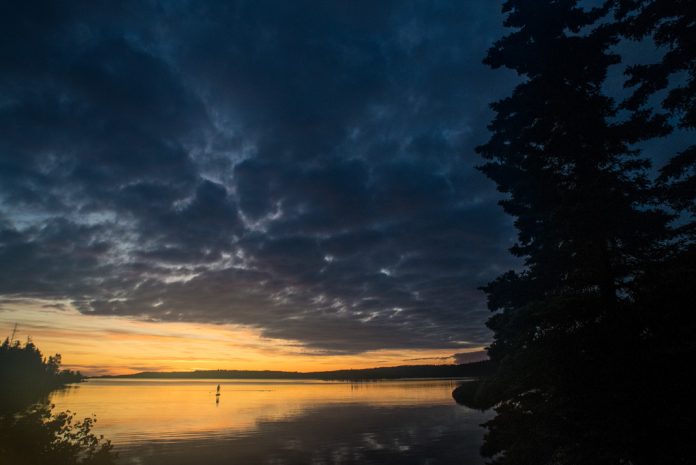
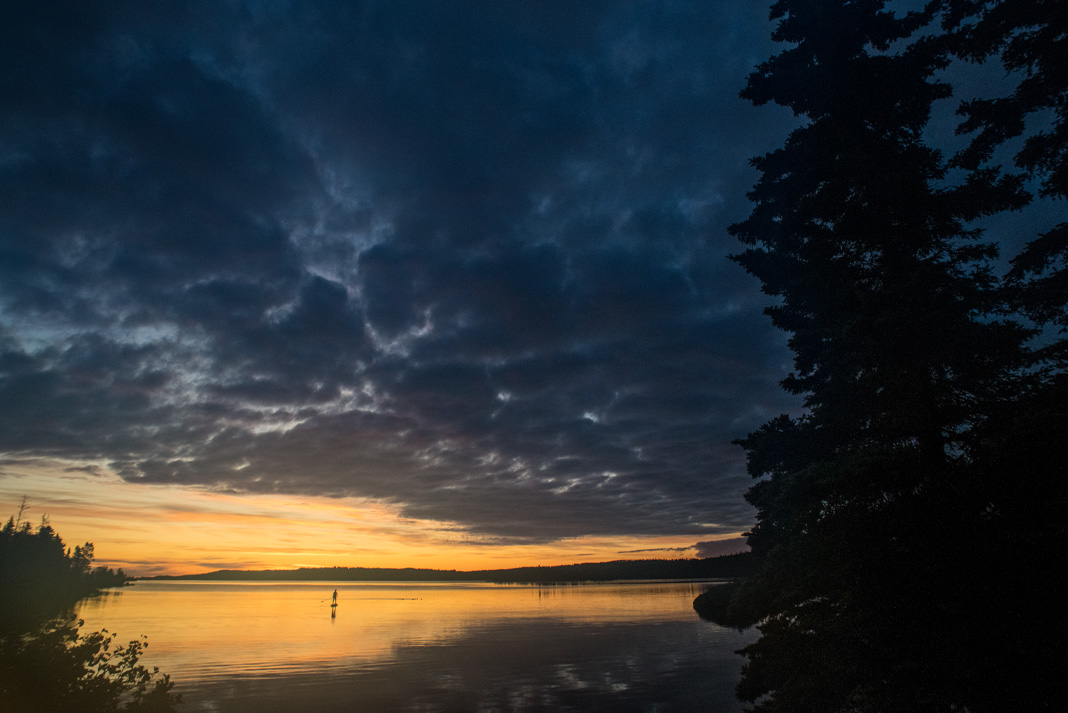
Andrew Koch paddles at sunrise near Belle Isle on Isle Royale in Lake Superior, Michigan. | Photo: Aaron Black-Schmidt

Isle Royale National Park is home to the longest-running study of any predator-prey system in the world––a dynamic between wolves and moose. Yet, as we finally reached Belle Isle––a serene campsite nestled in a picturesque cove––it wasn’t the wolves I worried about.

Onshore, a weathered fisherman held his faded blue and white VHF radio to the sky as our group huddled together, straining to hear a crackling voice deliver unwelcome news. Wind gusts were forecast to reach 30 knots the following afternoon, swells topping eight feet.

The old man could only shake his head.

“When that east wind comes whipping right into this bay, that’s not good.” He told us his name was Dave, and he would know—he had been coming on fishing trips to Isle Royale for three decades.

A single paddleboards crosses Lake Superior at sunset
Andrew Koch paddles at sunrise near Belle Isle on Isle Royale in Lake Superior, Michigan. | Photo: Aaron Black-Schmidt

I looked around at the concerned faces of our team. Photographer Aaron Black-Schmidt and I were joined by North Carolina-based paddlers Andrew Koch and Olivia Harrell. Our squad was on day five of a week-long SUP expedition, but eight-foot swells were not part of the itinerary.

When Aaron first proposed taking 14-foot inflatable standup paddleboards to Isle Royale, it seemed like a no-brainer. Exploring a remote island in the middle of the world’s largest lake would be the ultimate adventure.

“When I saw you guys come around the point, I almost fell over,” said Dave. “I never thought I’d see paddleboards out here. But I thought the same thing 20 years ago when I saw kayaks for the first time.”

Located in northern Lake Superior, Isle Royale features more than 200 square miles of lush forest, pristine lakes and majestic shoreline. Made up of more than 450 smaller islands, this freshwater archipelago holds the unique distinction of being the least visited but most revisited national park in the continental United States.

A group of paddleboarders paddle near the shoreline on Lake Superior
Andrew, Olivia and Jack paddle past one of the small islands dotting Tobin Harbor on their way to Rock Harbor. | Photo: Aaron Black-Schmidt

Dave first came to Isle Royale in 1989 for a fishing trip. He’s only missed one summer since that maiden voyage. Listening to him talk of the island, we got a sense of what this place meant to him. It was his escape.

“I put everything I do into this log right here,” said Dave. “You guys are in here.”

He wasn’t the only one to journal about his experience on the island. A dusty old notebook in the corner of a rain shelter at our Belle Isle campsite revealed hand-written stories from fellow paddlers. Thumbing through the tales, there was one line that I kept coming back to.

“I’ve forgotten how loud silence is, stress doesn’t exist out here.”

With cell service non-existent, the constant barrage of push notifications, emails and text messages was replaced by conversation, reflection and appreciation for Isle Royale’s confounding beauty. We could plan our lives based on the light in the sky, not a number on the clock.

Only 24 hours prior, our crew had been paddling deep into Duncan Bay––a secluded, paddle-in-only campsite with fellow humans nowhere in sight.

“You want the lake view or the enchanted forest?” Andrew asked Olivia after surveying the lodging situation at Duncan. Andrew’s question wasn’t hyperbole. I looked up at the wall of my wooden rain shelter––the lake view option––and noticed three words carved into the weathered wood: Too Much Happiness. Later that night, I drifted off to the psychedelic sound of loon calls echoing through Duncan Bay.

Today began with a magnificent paddle from Duncan Bay to Belle Isle. With the wind at our backs, we enjoyed a downwind run through a spectacular open channel. Craggy coastline with yellow and orange fissures loomed to our left, primitive and untouched forest towered to our right and a bald eagle soared overhead.

A single paddleboarder paddles on an open lake.
Jack paddles around Scoville Point in rough water, heading back towards Rock Harbor. | Photo: Aaron Black-Schmidt

After setting up camp in Belle Isle and making a plan for the following day, we tossed logs into an old stone fireplace once enjoyed by guests of the Belle Isle Resort. Before becoming a national park in 1931, Isle Royale had a long history of commercial fishing, mining and resorts dating back to the early 1800s. Belle Isle Resort opened in 1912 and featured a lodge, 28 cottages, a nine-hole golf course, a tennis court and shuffleboard courts.

Now the fireplace is all that remains; nature has reclaimed the entire island.

As conversation and golden embers began to dwindle, I looked out at the calm bay illuminated by brilliant moonlight. Would the next day bring howling winds and overhead swell like the weather forecast predicted? It was a perfectly still night, but the concern on Dave’s face from earlier that afternoon was unsettling.

The next morning, I opened my eyes to brilliant streaks of amber and red across a bay of glass. The sun was yet to crest above the tree line but Olivia and Andrew were already paddling, relishing the opportunity to witness nature’s masterpiece from the water. I grabbed my board and paddled out to a tiny island at the mouth of the cove, the silence broken only by the faint sound of my board gliding across the golden water.

A group of paddleboarders pose in their gear and the boat launch.
Andrew Koch, Olivia Harrell, Aaron Black-Schmidt and Jack Haworth assemble for a post-trip photo after seven days of paddling Isle Royale. | Photo: Aaron Black-Schmidt

Back on shore, Dave was unfazed by one of the most magnificent sunrises we had ever seen. No doubt, it was one of many he’s had the fortune of witnessing out here.

“Those east winds can come up quick,” he warned again, while haphazardly throwing piles of camping and fishing gear into his small motorboat. “I’ll be back in Rock Harbor in 40 minutes.”

Leaving Belle Isle wasn’t easy. Despite the pristine morning conditions, we chose to heed the warning of a man who’d been coming out here for 30 years. It was only a few strokes before we got one final taste of Belle Isle magic.

“There’s a beaver at your six o’clock,” said Aaron.

Bidding farewell to the beaver, Belle Isle and life on the edge, we began our journey back to Rock Harbor––the main hub of civilization on the east end of the Isle Royale and the beginning and end of most trips.

Despite running low on energy, this was a race against the weather we had to win. With winds picking up, we used a draft train to cross Duncan Bay and reach our final challenge, the Greenstone Ridge portage. The narrow trail features grueling climbs, treacherous downhills and hairpin turns, not the ideal combination when carrying a 14-foot paddleboard with nearly 100 pounds of drybags strapped to chests and backs.

We arrived back in Rock Harbor in mid-afternoon, with the storm still brewing out on Lake Superior. We all sat on our boards and took a few minutes to appreciate the moment.

Maps, photos and videos may entice people to visit Isle Royale, but it’s the sacred solitude and deafening silence bringing them back.

By dusk, I wondered whether we made the right call to leave the extraordinary beauty of Belle Isle. Spotting Dave’s small boat back in the harbor, I noticed the trees had begun to whistle. Within an hour, our three-walled shelter was assaulted by heavy rain and wind. And above the din of the storm, we could hear the swell crashing against the rocky shoreline.

Dave was right; those east winds do come up quickly.

This article was first published inPaddling MagazineIssue 62. Subscribe toPaddling Magazine’s print and digital editions here , or browse the archives here.


Jack Haworth is an avid paddleboarder and social media editor at Men’s Journal.

Sea Kayak Racing: The Need for Speed

Athletes paddling as they compete in sea kayak racing
Feature Photo: Paul German

The first appearance of kayak racing in the annals of organized sport was in the 1936 Olympics in Berlin in the form of 500- and 1000-metre flatwater sprint races. Single flatwater kayaks (K1s) are up to five metres long and weigh only 12 kilograms. It can take up to two years to become totally comfortable paddling one of these boats, which are so narrow that a novice would be hard pressed to take even a single stroke before tipping over.

Other kinds of kayak racing include marathons using lightweight kayaks that can be easily portaged, or ocean racing using sit-on-top surfskis, vessels of Polynesian origin that are the choice of Australian lifeguards. These high-performance kayaks are, like Olympic kayaks, designed more for speed than for recreational paddling. With boats that are so specialized and difficult to paddle, kayak racing didn’t stand much chance of becoming popular until about 15 years ago when sea kayaking took off in Canada.

[ Paddling Buyer’s Guide: See all racing & training sea kayaks ]

Slow but sure growth of kayak racing

In sea kayak racing, competitive boating merges with the world of the recreational paddler. Even so, typical early sea kayak races failed to attract a critical mass of paddlers. Bob Vlug, owner of the New Brunswick kayak store Eastern Outdoors, tried to run a sea kayak race in the early 1990s. “About ten years ago we introduced some coastal kayak racing but the interest was not there,” he said.

Sea kayak racing is now finding its legs in Canada partly due to the phenomenal growth since the mid-‘90s of adventure racing—multi-stage, multi-sport races like the famous Eco Challenge. Canadian adventure races like the Mind Over Mountain series on Vancouver Island or the cross-Canada Sea To Summit races all feature sea kayak sections, drawing out more sea kayakers for training paddles and competition. Kayak racing on the East Coast revived in the form of multi-sport, according to Vlug.

Multi-sport races pave the way for kayak-only races. Many adventure racers excel in the trail running or mountain biking events but have never kayaked. Sea kayak races give novice paddlers and aspiring adventure racers a field for training and competing over longer distances—typically eight or ten kilometres for shorter races and over 20 kilometres for longer ones.

Kayak racing flourishes in the Vancouver area

Last summer in B.C., a race series sponsored by Necky Kayaks helped launch sea kayak racing into the mainstream. The Necky Race Series included two weekly evening sea kayak races from April through August that regularly drew up to a hundred Vancouver-area paddlers.

The races were hosted by downtown Vancouver’s Ecomarine Ocean Kayak Centre and the Deep Cove Canoe and Kayak Centre, which organized its first race four years ago. Ecomarine also hosts the annual, 10-kilometre B.C. Marine Trails Ocean Kayak Marathon.

Deep Cove race organizer Paul German says the weekly races are becoming more popular every year as adventure racing raises the profile of competitive kayaking among recreational paddlers. “In the first year we had maybe 20 people out,” he said. “This past summer the Ecomarine races were drawing about 40 racers while the more competitive Deep Cove ones regularly saw a hundred or more.”

“The races are open to anyone and we are seeing people of all ages and abilities,” said German. “Anything you can paddle is allowed to be used in this race.” There are no restrictions on boat length or weight.

Mostly you’ll see single and double ocean kayaks but German says there are also outrigger canoes as well as some serious kayak racers using surfskis or one of the new longer racing kayaks.

On Vancouver Island, the Ocean River Sports Paddling Club hosts two races—the 17-kilometre Island Iron Race and the shorter Bridges Race, which takes most paddlers under half an hour to complete. The races traditionally attract outrigger paddlers, but race director Rosemary Henry is seeing an increase in participation by kayakers.

The trend in sea kayak racing is toward fun and fitness rather than elite competition. A big part of the draw at B.C.’s weekly Necky races is the social atmosphere, offering kayakers a chance to meet new paddling partners and enjoy a good work-out without the pressure of a serious race event. Clarke Hanna, race organizer for Ecomarine, says they are promoting their races as much for fun as for fitness. “Usually we meet at a local pub for dinner and a beer after the race,” says Hanna.

“There are draw prizes to give out and people have a great time.”

[ Plan your next B.C. kayaking adventure with the Paddling Trip Guide ]

Paul German of Deep Cove agrees: “Kayak racing out here is for young, old, pro, beginner alike. We have theme races, long races, short races and multi-sport ones. They are about friends, food, fun and a little sweat also.”

Most paddlers finish the weekly five- or six-kilometre races in under an hour and many use them as training for longer, 30- to 40-kilometre races. The ‘Round Bowen Island race in June and the BC Championships around Gabriola Island in September both circumnavigate Islands in the Strait of Georgia between Vancouver and Vancouver Island. These races take between two and five hours to complete.

“Kayak racing out here is for young,
old, pro, beginner alike.”

Safety is paramount in sea kayak racing

Weather conditions are a significant factor in longer races, requiring paddlers to have better preparation and more advanced skills. Bob Vlug, who plans to organize long-distance races on the Bay of Fundy and the St. John River next summer, advises paddlers to wear wetsuits, paddling jackets and fleece.

Accidental mid-race swims are not unusual when strong summer winds pick up. But Hanna of Ecomarine says most paddlers take it in stride. “We’ve had people dump, but with a practiced self-rescue they can get themselves back in the boat and finish with no problem.”

Races feature rescue motorboats and sweepers to ensure that no one is left behind. And paddlers are always willing to help a fellow kayaker in distress—it’s even a rule in international kayak competition. Kayak races offer safety in numbers and the bonus of a faster learning curve from training and racing with more experienced paddlers.

World-class equipment for world-class athletes

The ultimate training goal is the Sea Kayak World Cup. Held amidst over 180 islands in the province of Manus, Papua New Guinea, the rigorous 10-day event has been held each October since 1998. Last year’s race included 15 teams of four from countries including Costa Rica, Australia and Canada.

Now that sea kayak racing is taking off, the expanded pool of competitors is bringing the sport full circle, creating a new generation of elite paddlers interested in specialized racing kayaks and paddles.

Dave Norona of Vancouver, who spends much of his time competing in adventure races, has been training and racing a high-performance Current Designs Speedster for four years. The 20-foot boat was designed by Olympic double-gold medallist Greg Barton to “take the rough stuff” in the open ocean. At only 18 inches wide, it requires more refined balance than some other racing kayaks—like Necky’s Looksha. The Looksha II is 20 feet long and 20 inches at the beam and is made for racing in big swells on open ocean.

“Traditional sea kayaks are great for touring,” says Norona “but overkill when it comes to racing. More manufacturers are now designing racing boats that are stable enough to be used in open water but don’t have extra features like hatches and bulkheads that just add weight.”

Wing-blade paddles will get you moving

Now the wing-blade paddle—evolved in the mid-80s for sprint, marathon and downriver events—is the latest technology scooped from traditional racing by sea kayakers who have discovered a need for speed. A wing paddle looks like an elongated scoop and is hydrodynamically designed to perfect the efficiency of a racer’s sole obsession—forward paddling. At the expense of other techniques like bracing, wing blades increase forward-stroke efficiency by at least four or five percent over conventional paddles. That doesn’t sound like much until you talk about racing distances of 20 or 30 kilometres.

“I never used to see recreational paddlers using things like wing paddles, but more and more I do,” said Norona. “They make sense; they’re lighter and force the paddler into a more efficient stroke.”

More kayakers now have access to lightweight racing kayaks and wing paddles through rental facilities and clubs. Both Deep Cove and Ecomarine in Vancouver offer half-price rentals to racers, more than 80 percent of whom rent boats.

To accommodate the technological innovations in sea kayak racing, longer races include four boat categories. Kayakers in specialized race kayaks like the Speedster enter the High Performance (HP) category while a long, narrow sea kayak like the Looksha II competes in the Fast Sea Kayak (FSK) category. Most recreational sea kayaks fit into the Sea Kayak (SK) grouping and all double kayaks are in the Double Kayak (DK) category. These categories were borrowed from U.S. races like the San Juan Challenge in Washington State, a highly popular event that is the model for many Canadian races.

“I never used to see recreational paddlers using things like wing paddles, but more and more I do.”

Kayak racing pushes into the mainstream

Kayak racing was once very specialized, requiring fine balance and high-tech equipment. Now, enthusiasts like Norona see the accessibility of the sport leading people to new technologies that make racing, and simply staying fit, more fun. It’s as if kayak racing slowed down so the masses could catch up, and now the sport is picking up the pace again and bringing sea kayakers along for the ride.

This article was first published in the Spring 2003 issue of Adventure Kayak Magazine. Subscribe to Paddling Magazine’s print and digital editions, or browse the archives.

 

Celebrating Bill Mason’s Work As A Wilderness Artist

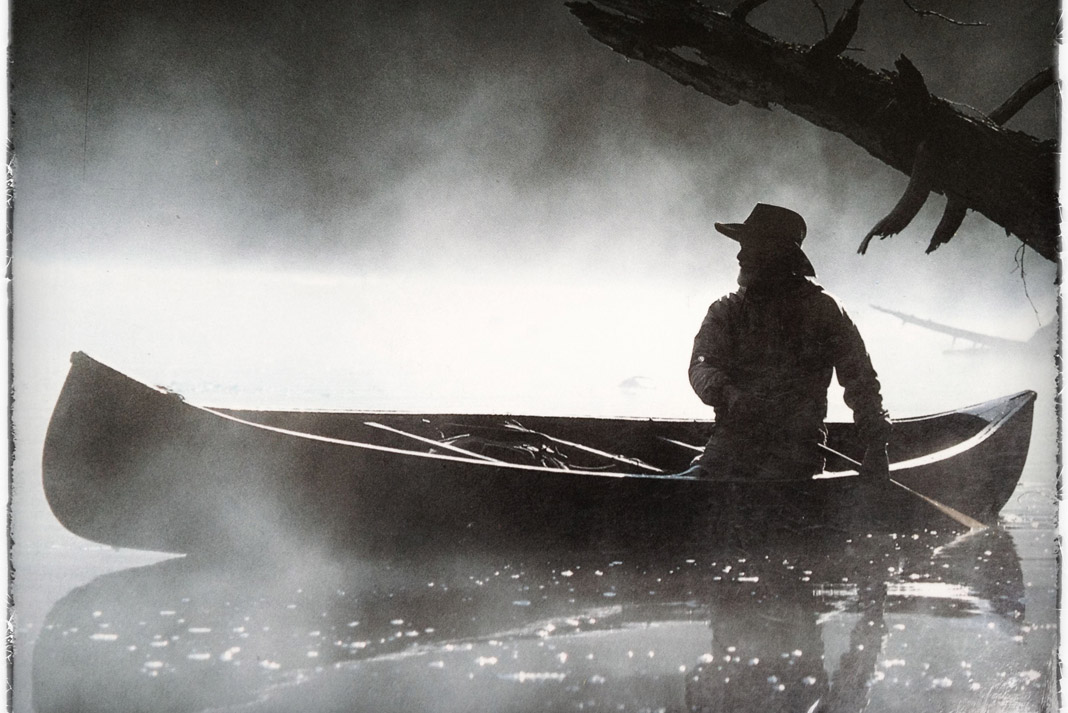
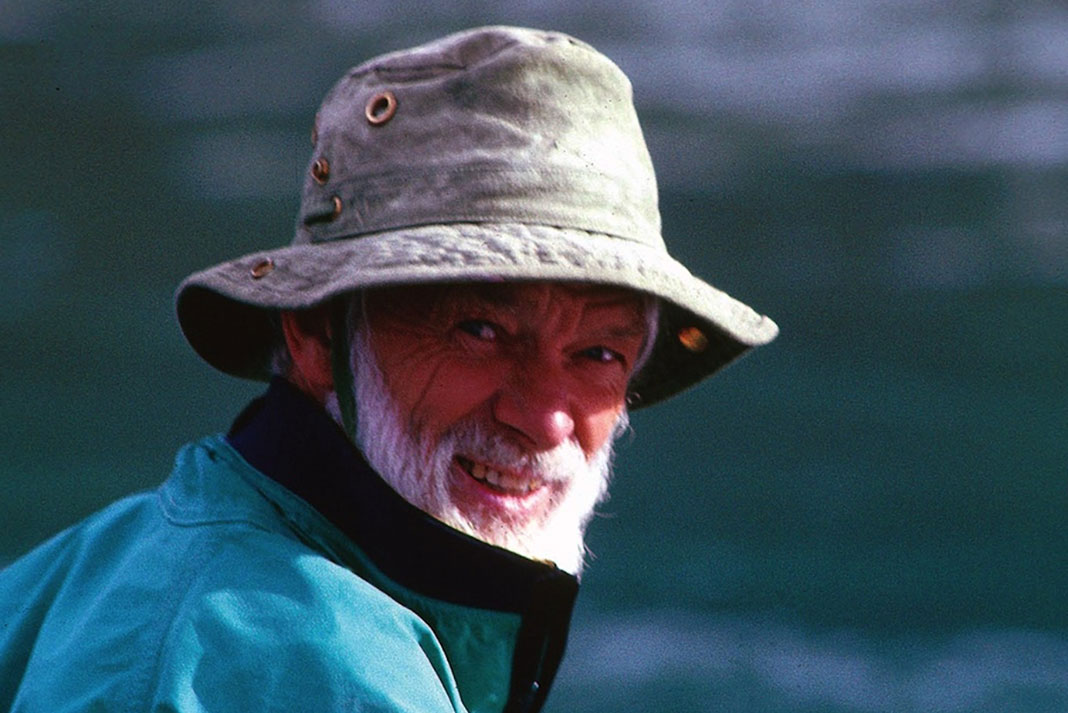
artist and filmmaker Bill Mason paddles a canoe
Feature Photo: Chris Chapman's Quetico

Few people can match the influence of artist and filmmaker Bill Mason in shaping the Canadian identity. His films, produced at the National Film Board of Canada, have introduced generations of students to Canada’s wilderness and the concept of environmental stewardship. In his work as an artist, Bill depicted the wilderness as benign, beautiful and precious, and he offered an alternative to the perception of nature as something to be feared, conquered and exploited.

Showing Canadian wilderness to Canadians

Few know the whole story behind the famous filmmaker and environmentalist. In his youth, as Bill became more and more attuned to environmental responsibility, he used his art to encourage environmental responsibility in his audience. He took every opportunity in his commercial art and photography to show Canadian wilderness to Canadians. He would have preferred to do beautiful high art oil paintings to celebrate God’s creation, but he knew that such a medium had a very small audience compared to photography and, especially film.

Bill Mason started working as a commercial artist in the early 1950s—designing newspaper ads to sell tires and billboard campaigns to sell bread. Bill always knew he was going to be an artist even when he was in grade one. As a student, Bill impressed his teachers with his ability to draw. Bill thrived in courses where he could draw his answers, like in science. He knew he could communicate by creating images and set out to become a commercial artist.

After graduating from the University of Manitoba and starting his commercial art career, Bill was also able to go on extended canoe trips. He’d slip away for six months at a time. He often canoed solo over the well-intentioned objections of just about everybody. It was these extended solo trips that gave Bill plenty of time to contemplate man’s place in nature.

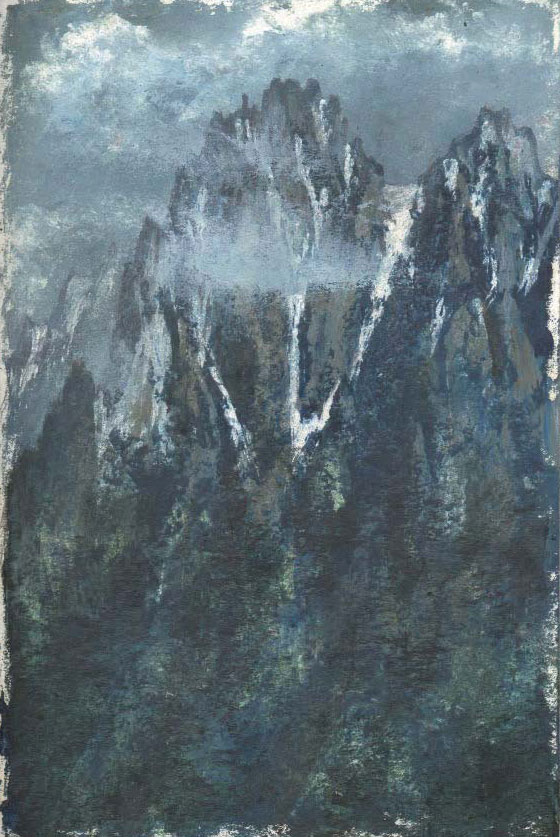
Bill Mason painting of grey, steep mountain slopes with some snow
Mountains Study, Oil on paper from the sketch books circa 1984, Bill Mason Productions.

His sense of environmental responsibility and cultural awareness of the history of the nation evolved over the years. For example, in his early years he idolized les coureur de bois, and in his own mind romanticized their exploits. Later, after he read more history and realized the exploits of the fur traders were more like exploitation, he saw the age of the fur trade and les coureur de bois through more realistic eyes.

Sharing a sense of responsibility

One incident during this time crystallized Bill’s understanding of man’s responsibility to the land, and set the underpinnings for his environmental ethics for the rest of his life. He heard a sermon one Sunday in Church. The minister’s point was simple. The word dominion as it is used in the King James version of the Bible, Genesis I Verse 26,“…and let them have dominion over the fish of the sea… over the fowl,… over the cattle,… over all the earth…”, was misinterpreted and misunderstood, and that the original Hebrew word, radah, was closer in meaning to responsibility for when translated in context. This simple revelation was an epiphany for Bill. All his musings about the environment and man’s role in consuming and preserving it became crystal clear. The point made in the sermon was equally valid as a point of religion, as a point of economics, and also as a point of common sense: we should take care of the land, not abuse it.

The willingness of a modern civilized Christian culture to interpret radah as a license to exploit natural resources for profit became painfully clear to Bill. Forever after that, Bill never took cultural assumptions for granted. He challenged conventional wisdom.

artist and filmmaker Bill Mason paddles a canoe
Artist and filmmaker Bill Mason paddles through the Canadian wilderness that inspired his life’s work. | Feature Photo: Chris Chapman’s Quetico

Bill Mason becomes a wilderness artist

Bill knew that the way he could best serve the cause of environmental responsibility was through his art. But, as a commercial artist he could make a living only if he advocated products and activities which he thought were detrimental to the environment and to human health. As a commercial artist, Bill Mason had to take contracts where ever they came from, or he would starve. He did work for tire companies, trucking companies, and logging companies. His very career was a contradiction of all the environmental ideals he stood for.

So Bill became subversive. If his clients only knew! When you go back and look at his commercial art from those days you can see he is probably the only commercial artist who could sell a product, and at the same time teach a lesson in Canadian history and environmental ethics. Many of his ads sold the product by associating it with facts from Canadian history, or with the value of pristine wilderness. His clients had provided Bill with a platform from which he could advocate his vision. Like the best teachers, the main point of his lesson was in the unspoken analysis and reflection. If you look at all his films, this multi-layered agenda of entertaining and teaching is used in every one. And often, the most important part of the lesson is the part remaining unexpressed yet perfectly clear.

At the same time, Bill’s clients loved the work he did for them. He became a respected and sought after artistic director for advertising firms. His advertising sold product as well as environmental ethics.

Before Bill went on his extended canoe trips, he would quit his job. To be more accurate, every year he asked for six months off without pay—which was always refused. Then he quit his job. When he came back at freeze-up, they always hired him back. During these trips, he shot photographs of his beloved wilderness. He used a simple Rolleiflex camera and he shot 2 1/4” × 2 1/4” slides. He became well known in his native Winnipeg because of his slide shows. He was invited all over the city to show them. As an artist, Bill Mason advocated environmental responsibility on the premise that, if you show people how beautiful the wilderness is, they will inevitably become responsible environmentalists.

A place to stand, a place to grow

The slide show, “The Timeless Wilderness,” was what connected Bill to his first film job. In 1956, Chris Chapman (A Place to Stand, Ontario pavilion, Expo 67, Academy Award winner for Best Short Film 1968) had a contract to make a film about Quetico Provincial Park. He needed an assistant who knew how to live in the wilderness and who could also play the part of the canoeist. He heard about Bill from someone who had seen “The Timeless Wilderness.” He hired Bill, and one great Canadian documentary filmmaker launched the career of another.

Bill’s rise to success as a filmmaker was meteoric. One success followed another. The very first film he made for the National Film Board of Canada, Paddle to the Sea, won eleven national and international awards and was nominated for an Oscar (Best Short Film) in 1968. One of life’s little ironies: he lost to his mentor, Chris Chapman, A Place to Stand. By the mid-seventies, he had become one of Canada’s most successful documentary filmmakers.

Love of the land, so well expressed in his films—Paddle to the Sea, Rise and Fall of the Great Lakes, Wolf Pack, Death of a Legend, Path of the Paddle, Face of the Earth, and many others—became a part of the Canadian psyche. Better his vision than that of Disney or Nintendo.

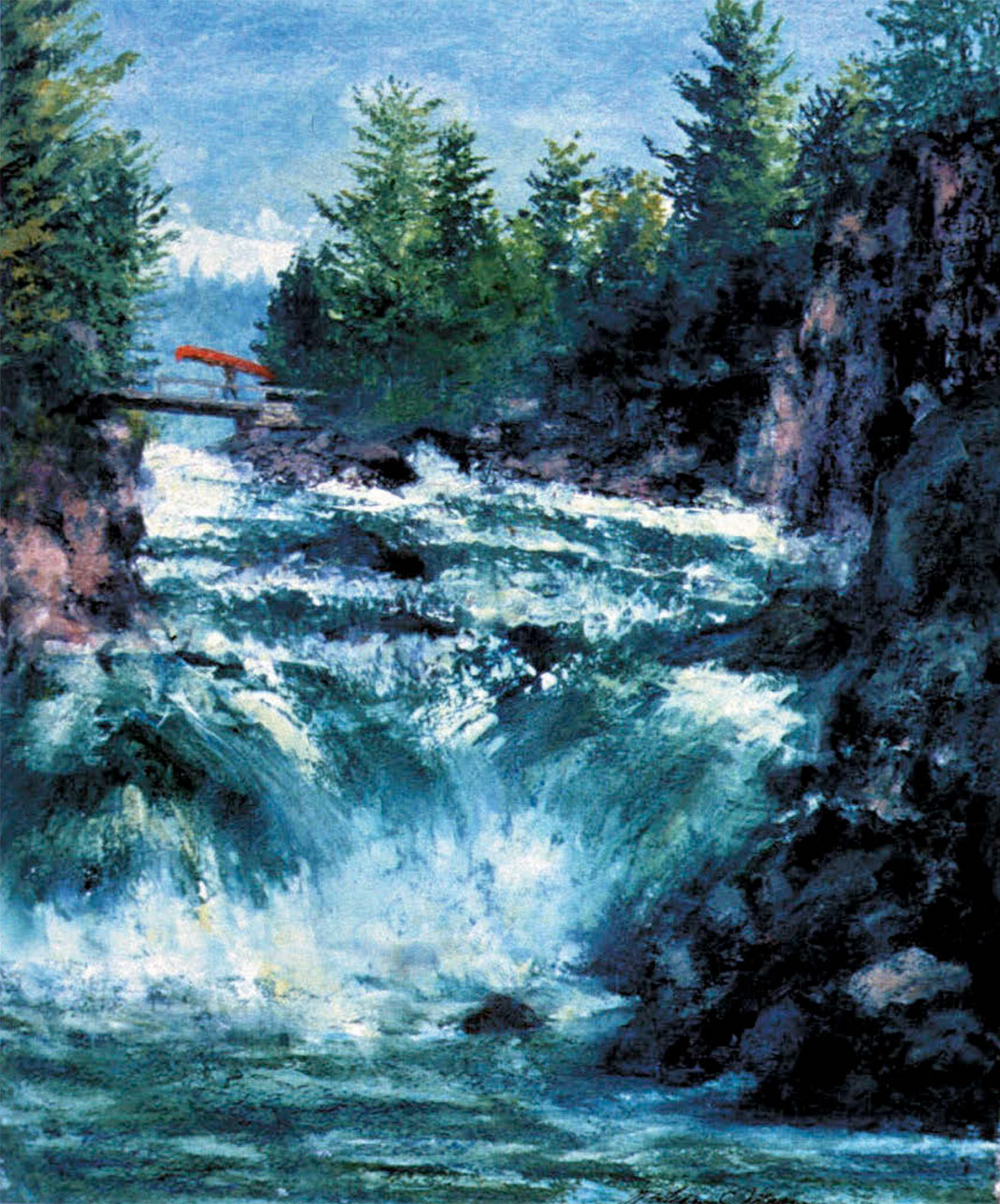
Bill Mason painting of a waterfall with portaging canoeist
Falls on Dumoine River, Oil on paper, circa 1982, Private Collection.

From filmmaking to painting

Bill’s influence as an artist and filmmaker was not confined to Canada. Several of his films have been translated into several languages. Queen Elizabeth showed Paddle to the Sea at one of Princess Anne’s birthday parties and wrote Bill to express her pleasure at how well the film was received by the children.

Every Canadian who is a canoeist or an environmentalist is familiar with his name. Bill’s favourite red Prospector canoe shares a display area in the Canadian Bill’s films were so well made, and were so appealing, they were used again and again from kindergarten to university for many courses.

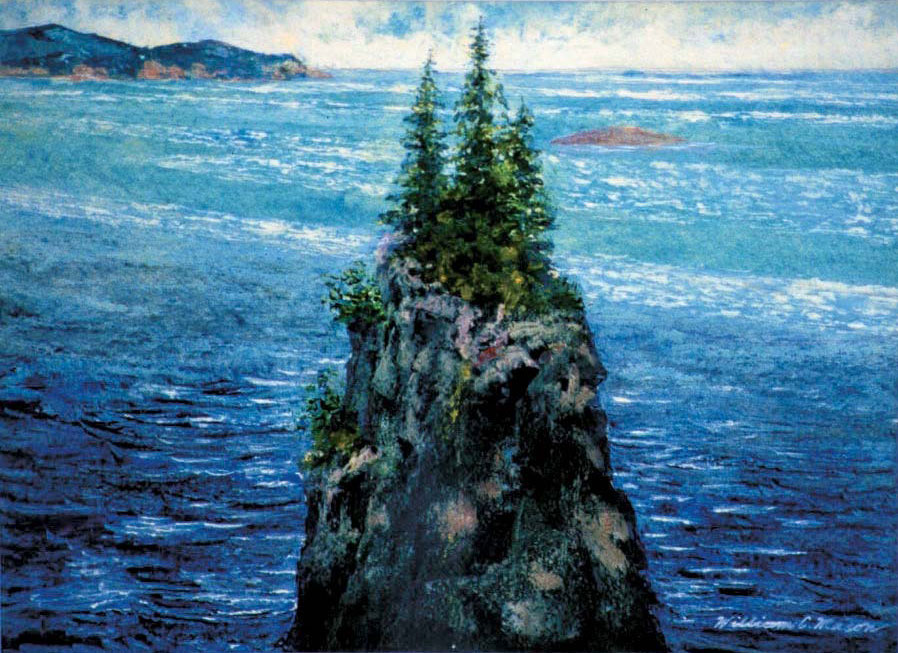
Bill retired from film making in 1986 to pursue his first love—painting. With his very high profile success as a filmmaker, it was easy for people to forget his first love was painting. He had been experimenting with a new technique—oil applied to paper with a palette knife—and he was ready to strike out on a new career as a full time professional painter. He divided his time between writing and painting for a few short years. But Bill’s career as a painter was cut short by his untimely death in 1988 at the age of fifty-nine.

Bill Mason is best remembered as an artist

Many words have been published about Bill’s life and art, but an artist’s story is not complete until it is told through his art. The legend of Bill Mason is best illustrated and understood through seeing all his work. His commercial art, his photography, his films, his books and his paintings have become cultural touchstones for all Canadians. His art explained to Canadians why they should be environmentalists.

Bill Mason’s canoe films invited a whole generation to get in touch with its national roots by travelling and living in the wilderness. Seldom has any single Canadian artist had the hearts and minds of so many admirers; and seldom has any single Canadian been so influential in creating a sense of responsibility for our environment.

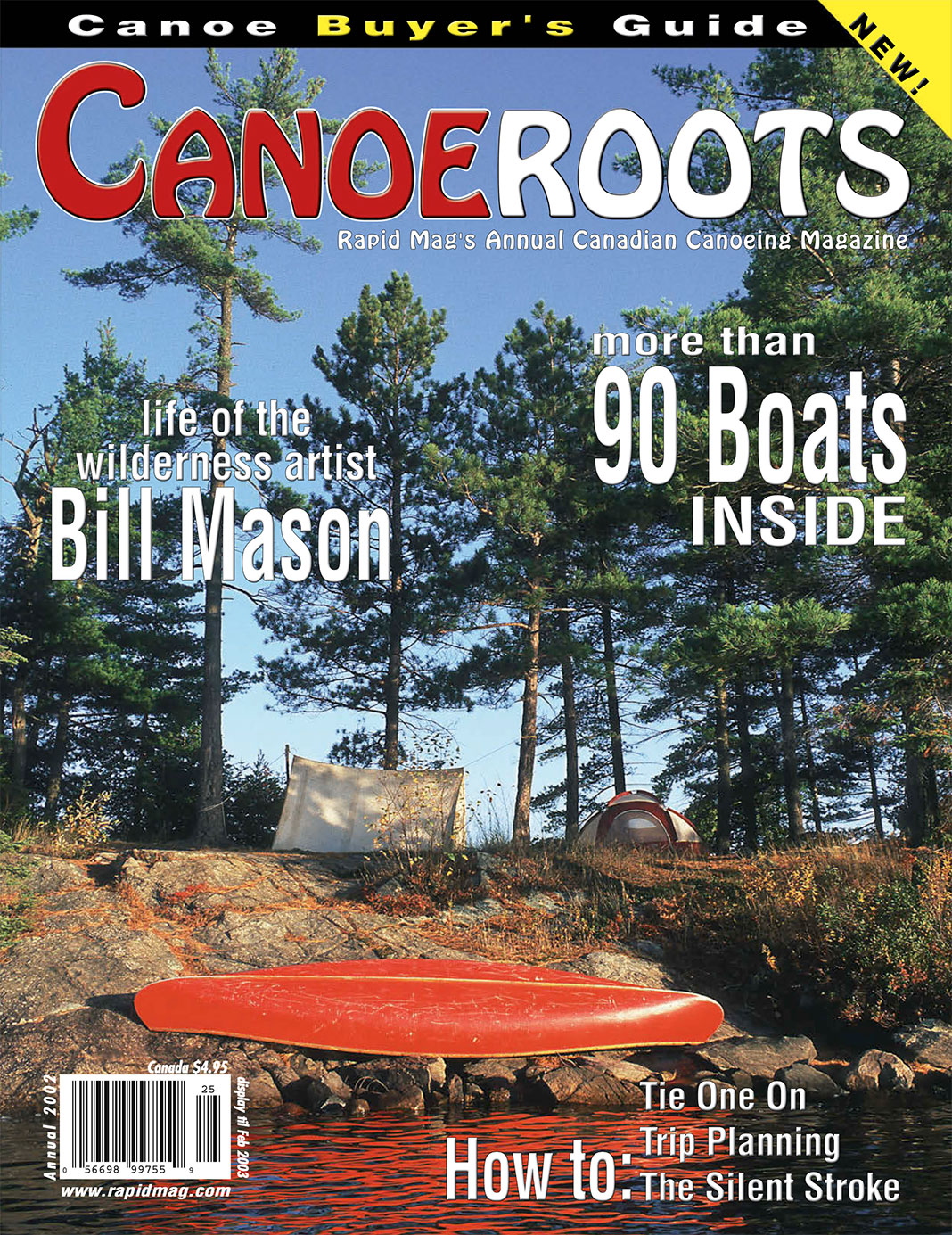
Canoeroots Annual 2002 coverThis article originally appeared in the Annual 2002 issue of Canoeroots. Subscribe to Paddling Magazine and get 25 years of digital magazine archives including our legacy titles: Rapid, Adventure Kayak and Canoeroots.


Artist and filmmaker Bill Mason paddles through the Canadian wilderness that inspired his life’s work. | Feature Photo: Chris Chapman’s Quetico


Boat Review: WaveSport ZG Kayak

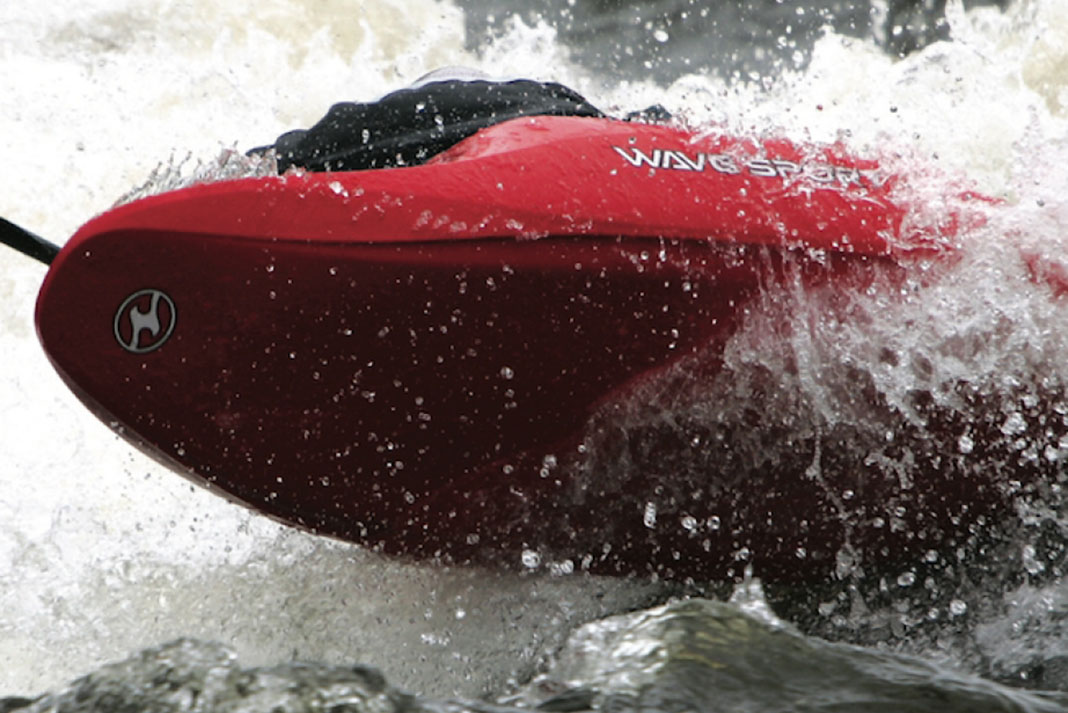
The WaveSport ZG kayak surfing through whitewater
Feature Photo: Rapid Staff

As a freestyle kayak, the WaveSport ZG compromises nothing in the quest for air. By reducing hull rocker and adding side-cut rocker and rails the ZG achieves maximum speed, carvability, and bounce—allowing for inverted aerials on the smaller features that most paddlers typically surf. If you have a hankering to catch big air, the ZG is your boat.

WaveSport ZG 48 / 54 Specs
Length: 6’4” / 6’6”
Width: 24.6” / 25”
Volume: 48 / 54 U.S. gal
Weight: 31 / 32 lbs
Weight Range: 100-180 / 140-220 lbs
MSRP: $999 USD or $1,399 CAD
[ Paddling Buyer’s Guide: See all freestyle kayaks ]

The WaveSport ZG plays to your tune

When you round up a group of testers everyone comes looking for something different, they all have different paddling styles and they always compare every test boat to their own. The ZG is the only boat that every tester hopped into and instantly ripped.

Sure, we got the usual variations of “It’s not as ______ as my boat,” but overall there was a general tip of the helmet to WaveSport for making a boat that does everything well for a large number of people.

A design so nice we reviewed it twice

The ZG first appeared in our 2004 freestyle boat test with much the same feedback we received a full year later. It is no wonder WaveSport let this design ride for two seasons.

The WaveSport ZG kayak surfing through whitewater
Feature Photo: Rapid Staff

The ZG has the traditional WaveSport lines and feel that intermediate paddlers enjoy all over the river—fast, predictable and smooth. It has decent ferry speed and doesn’t pearl, even though the bow rides suspiciously close to the surface.

Huge air and effortless fun

The WaveSport ZG jumps on a plane quickly and glides deep into eddies. The low-volume balanced ends make for effortless pivot turns and smooth flatwater fun. The ZG’s outfitting is simple and proven to work.

Pros and cons of the WaveSport ZG kayak

PRO: Jack-of-all-trades.

CON: Master of none.

This article was first published in the Summer 2005 issue of Rapid Magazine. Subscribe to Paddling Magazine’s print and digital editions, or browse the archives.

 

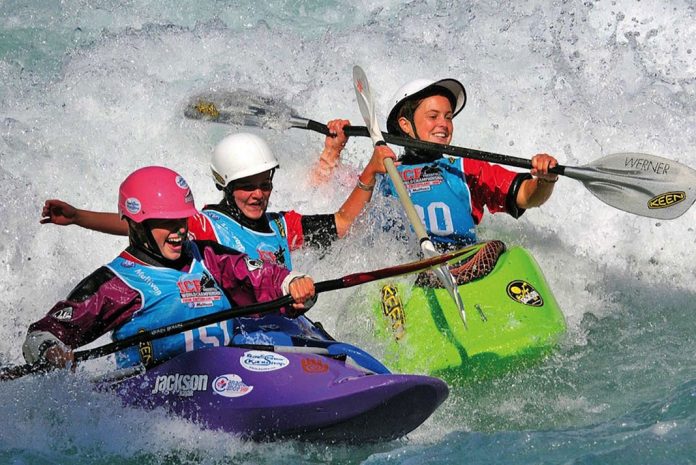
6 Tips To Kayak Freestyle From Eric Jackson

freestyle kayak race competitors paddle in whitewater
Feature Photo: Jens Klatt

When I first started training with Eric Jackson four years ago, I was just an eager, hard-working teen with a desire to learn how to kayak freestyle. EJ was quick to teach me that a few simple steps could transform my paddling into the stuff of freestyle gold. Now I share his wisdom to help other aspiring freestylers who want to gain the inside track.

Follow this six-step program and you’ll be well on your way to winning the next World Championships or just your local hometown throwdown.

Tips on how to kayak freestyle

1) Pick a Partner

Finding a solid training partner is probably the most important thing you can do to improve your kayaking. Your partner should be the same skill level as you, or better. This allows you to learn together, teaching each other what you know and climbing the skills ladder twice as fast. A paddling partner pushes you to go more often and try new things, and lets you know if your freestyle kayak technique is correct.

2) Practice, Practice, Practice

Practice your moves until they become muscle memory. The more you rehearse an air blunt the easier it becomes, until the sequence to the move is instinctive. Work not just on the moves you want to learn, but also on the moves you already know. Try your easiest moves with less of a setup. Work on continuously doing tricks and moving around the feature. To feel confident with a move for competition, I practice until I can complete it successfully four out of five times. Remember that this takes time—don’t get frustrated if your move isn’t dialled after one hour of practicing.

[ Paddling Buyer’s Guide: See all freestyle kayaks ]

3) Cross-train

The best way to get into shape for kayaking is simply to go kayaking…a lot! However, cross-training with other activities builds all-around fitness and is especially important when you aren’t able to paddle as often. Cross-training can take many different forms. For example, Billy Harris works out at the gym five or six times a week, and Ruth Gordon does Pilates and yoga. Regardless of the activity, the objectives are always the same: maintain or increase strength, stamina and flexibility, and reduce the risk of injury.

4) Plan a Winning Routine

A winning score is different for every freestyle kayak competition. You can figure out a rough target range by looking at each move’s value on the score sheet, then assessing the capabilities of your competitors and planning a ride that you think will beat theirs. To secure a medal at the Worlds, plan to score between 800 and 1,500 points in the men’s division, and 500 to 1,000 points in the women’s.

Start by writing down all of your moves. Your freestyle kayaking routine should begin with the easiest moves, progress to your medium level tricks and finish with your hardest maneuvers. Starting with the moves you are most confident with gives you a better shot at staying on the feature and getting some points on the board. Saving your hardest moves for the final 10 seconds means that if you run out of time or flush, you haven’t wasted your ride. Sticking a spin is worth more than flushing on a helix.

5) Pump Up Your Competitive Edge

Practicing your moves in the order of your routine helps you go faster while competing. Also, allowing yourself only 45 seconds for each ride teaches you to use less set-up time. The more you practice competing, the less nervous or stressed you’ll find yourself before a competition.

6) Program for Success

To succeed in freestyle kayaking, you need to first visualize yourself succeeding. Success doesn’t only mean winning; it means achieving the goals you have set for yourself. Your goal could be completing your routine, doing your first loop in competition or making it to finals. Never let first place be your goal. This puts your objective in the hands of your competitors, and you have no control over the moves or rides of your competitors. To kayak freestyle and compete well, you need to be able to brush off a bad ride. Think back to all your training and preparation for the event; the more you’ve trained the more confident you’ll be. Most importantly, relax and remember that you are competing because it’s fun!

This article was first published in the Spring 2010 issue of Rapid Magazine. Subscribe to Paddling Magazine’s print and digital editions, or browse the archives.

Nick Troutman won the 2009 World Freestyle Championships with a 1,510-point ride.