Home Blog Page 154

Sea Kayak Racing: The Need for Speed

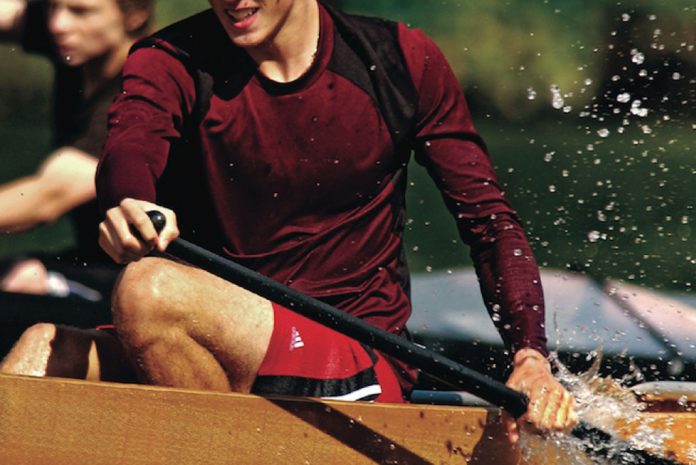
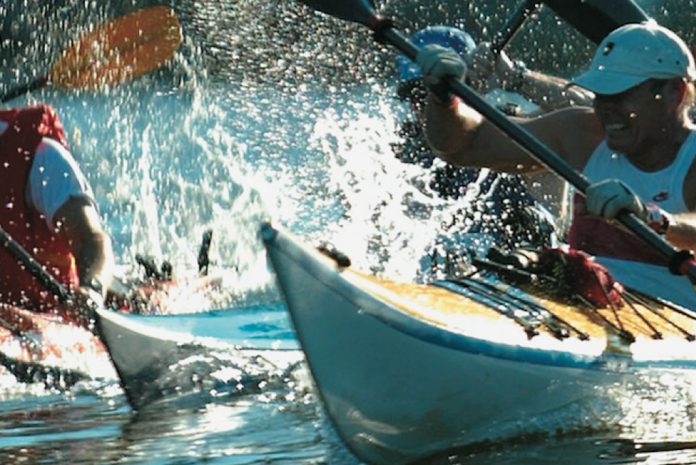
Athletes paddling as they compete in sea kayak racing
Feature Photo: Paul German

The first appearance of kayak racing in the annals of organized sport was in the 1936 Olympics in Berlin in the form of 500- and 1000-metre flatwater sprint races. Single flatwater kayaks (K1s) are up to five metres long and weigh only 12 kilograms. It can take up to two years to become totally comfortable paddling one of these boats, which are so narrow that a novice would be hard pressed to take even a single stroke before tipping over.

Other kinds of kayak racing include marathons using lightweight kayaks that can be easily portaged, or ocean racing using sit-on-top surfskis, vessels of Polynesian origin that are the choice of Australian lifeguards. These high-performance kayaks are, like Olympic kayaks, designed more for speed than for recreational paddling. With boats that are so specialized and difficult to paddle, kayak racing didn’t stand much chance of becoming popular until about 15 years ago when sea kayaking took off in Canada.

[ Paddling Buyer’s Guide: See all racing & training sea kayaks ]

Slow but sure growth of kayak racing

In sea kayak racing, competitive boating merges with the world of the recreational paddler. Even so, typical early sea kayak races failed to attract a critical mass of paddlers. Bob Vlug, owner of the New Brunswick kayak store Eastern Outdoors, tried to run a sea kayak race in the early 1990s. “About ten years ago we introduced some coastal kayak racing but the interest was not there,” he said.

Sea kayak racing is now finding its legs in Canada partly due to the phenomenal growth since the mid-‘90s of adventure racing—multi-stage, multi-sport races like the famous Eco Challenge. Canadian adventure races like the Mind Over Mountain series on Vancouver Island or the cross-Canada Sea To Summit races all feature sea kayak sections, drawing out more sea kayakers for training paddles and competition. Kayak racing on the East Coast revived in the form of multi-sport, according to Vlug.

Multi-sport races pave the way for kayak-only races. Many adventure racers excel in the trail running or mountain biking events but have never kayaked. Sea kayak races give novice paddlers and aspiring adventure racers a field for training and competing over longer distances—typically eight or ten kilometres for shorter races and over 20 kilometres for longer ones.

Kayak racing flourishes in the Vancouver area

Last summer in B.C., a race series sponsored by Necky Kayaks helped launch sea kayak racing into the mainstream. The Necky Race Series included two weekly evening sea kayak races from April through August that regularly drew up to a hundred Vancouver-area paddlers.

The races were hosted by downtown Vancouver’s Ecomarine Ocean Kayak Centre and the Deep Cove Canoe and Kayak Centre, which organized its first race four years ago. Ecomarine also hosts the annual, 10-kilometre B.C. Marine Trails Ocean Kayak Marathon.

Deep Cove race organizer Paul German says the weekly races are becoming more popular every year as adventure racing raises the profile of competitive kayaking among recreational paddlers. “In the first year we had maybe 20 people out,” he said. “This past summer the Ecomarine races were drawing about 40 racers while the more competitive Deep Cove ones regularly saw a hundred or more.”

“The races are open to anyone and we are seeing people of all ages and abilities,” said German. “Anything you can paddle is allowed to be used in this race.” There are no restrictions on boat length or weight.

Mostly you’ll see single and double ocean kayaks but German says there are also outrigger canoes as well as some serious kayak racers using surfskis or one of the new longer racing kayaks.

On Vancouver Island, the Ocean River Sports Paddling Club hosts two races—the 17-kilometre Island Iron Race and the shorter Bridges Race, which takes most paddlers under half an hour to complete. The races traditionally attract outrigger paddlers, but race director Rosemary Henry is seeing an increase in participation by kayakers.

The trend in sea kayak racing is toward fun and fitness rather than elite competition. A big part of the draw at B.C.’s weekly Necky races is the social atmosphere, offering kayakers a chance to meet new paddling partners and enjoy a good work-out without the pressure of a serious race event. Clarke Hanna, race organizer for Ecomarine, says they are promoting their races as much for fun as for fitness. “Usually we meet at a local pub for dinner and a beer after the race,” says Hanna.

“There are draw prizes to give out and people have a great time.”

[ Plan your next B.C. kayaking adventure with the Paddling Trip Guide ]

Paul German of Deep Cove agrees: “Kayak racing out here is for young, old, pro, beginner alike. We have theme races, long races, short races and multi-sport ones. They are about friends, food, fun and a little sweat also.”

Most paddlers finish the weekly five- or six-kilometre races in under an hour and many use them as training for longer, 30- to 40-kilometre races. The ‘Round Bowen Island race in June and the BC Championships around Gabriola Island in September both circumnavigate Islands in the Strait of Georgia between Vancouver and Vancouver Island. These races take between two and five hours to complete.

“Kayak racing out here is for young,
old, pro, beginner alike.”

Safety is paramount in sea kayak racing

Weather conditions are a significant factor in longer races, requiring paddlers to have better preparation and more advanced skills. Bob Vlug, who plans to organize long-distance races on the Bay of Fundy and the St. John River next summer, advises paddlers to wear wetsuits, paddling jackets and fleece.

Accidental mid-race swims are not unusual when strong summer winds pick up. But Hanna of Ecomarine says most paddlers take it in stride. “We’ve had people dump, but with a practiced self-rescue they can get themselves back in the boat and finish with no problem.”

Races feature rescue motorboats and sweepers to ensure that no one is left behind. And paddlers are always willing to help a fellow kayaker in distress—it’s even a rule in international kayak competition. Kayak races offer safety in numbers and the bonus of a faster learning curve from training and racing with more experienced paddlers.

World-class equipment for world-class athletes

The ultimate training goal is the Sea Kayak World Cup. Held amidst over 180 islands in the province of Manus, Papua New Guinea, the rigorous 10-day event has been held each October since 1998. Last year’s race included 15 teams of four from countries including Costa Rica, Australia and Canada.

Now that sea kayak racing is taking off, the expanded pool of competitors is bringing the sport full circle, creating a new generation of elite paddlers interested in specialized racing kayaks and paddles.

Dave Norona of Vancouver, who spends much of his time competing in adventure races, has been training and racing a high-performance Current Designs Speedster for four years. The 20-foot boat was designed by Olympic double-gold medallist Greg Barton to “take the rough stuff” in the open ocean. At only 18 inches wide, it requires more refined balance than some other racing kayaks—like Necky’s Looksha. The Looksha II is 20 feet long and 20 inches at the beam and is made for racing in big swells on open ocean.

“Traditional sea kayaks are great for touring,” says Norona “but overkill when it comes to racing. More manufacturers are now designing racing boats that are stable enough to be used in open water but don’t have extra features like hatches and bulkheads that just add weight.”

Wing-blade paddles will get you moving

Now the wing-blade paddle—evolved in the mid-80s for sprint, marathon and downriver events—is the latest technology scooped from traditional racing by sea kayakers who have discovered a need for speed. A wing paddle looks like an elongated scoop and is hydrodynamically designed to perfect the efficiency of a racer’s sole obsession—forward paddling. At the expense of other techniques like bracing, wing blades increase forward-stroke efficiency by at least four or five percent over conventional paddles. That doesn’t sound like much until you talk about racing distances of 20 or 30 kilometres.

“I never used to see recreational paddlers using things like wing paddles, but more and more I do,” said Norona. “They make sense; they’re lighter and force the paddler into a more efficient stroke.”

More kayakers now have access to lightweight racing kayaks and wing paddles through rental facilities and clubs. Both Deep Cove and Ecomarine in Vancouver offer half-price rentals to racers, more than 80 percent of whom rent boats.

To accommodate the technological innovations in sea kayak racing, longer races include four boat categories. Kayakers in specialized race kayaks like the Speedster enter the High Performance (HP) category while a long, narrow sea kayak like the Looksha II competes in the Fast Sea Kayak (FSK) category. Most recreational sea kayaks fit into the Sea Kayak (SK) grouping and all double kayaks are in the Double Kayak (DK) category. These categories were borrowed from U.S. races like the San Juan Challenge in Washington State, a highly popular event that is the model for many Canadian races.

“I never used to see recreational paddlers using things like wing paddles, but more and more I do.”

Kayak racing pushes into the mainstream

Kayak racing was once very specialized, requiring fine balance and high-tech equipment. Now, enthusiasts like Norona see the accessibility of the sport leading people to new technologies that make racing, and simply staying fit, more fun. It’s as if kayak racing slowed down so the masses could catch up, and now the sport is picking up the pace again and bringing sea kayakers along for the ride.
This article was first published in the Spring 2003 issue of Adventure Kayak Magazine. Subscribe to Paddling Magazine’s print and digital editions, or browse the archives.


Celebrating Bill Mason’s Work As A Wilderness Artist

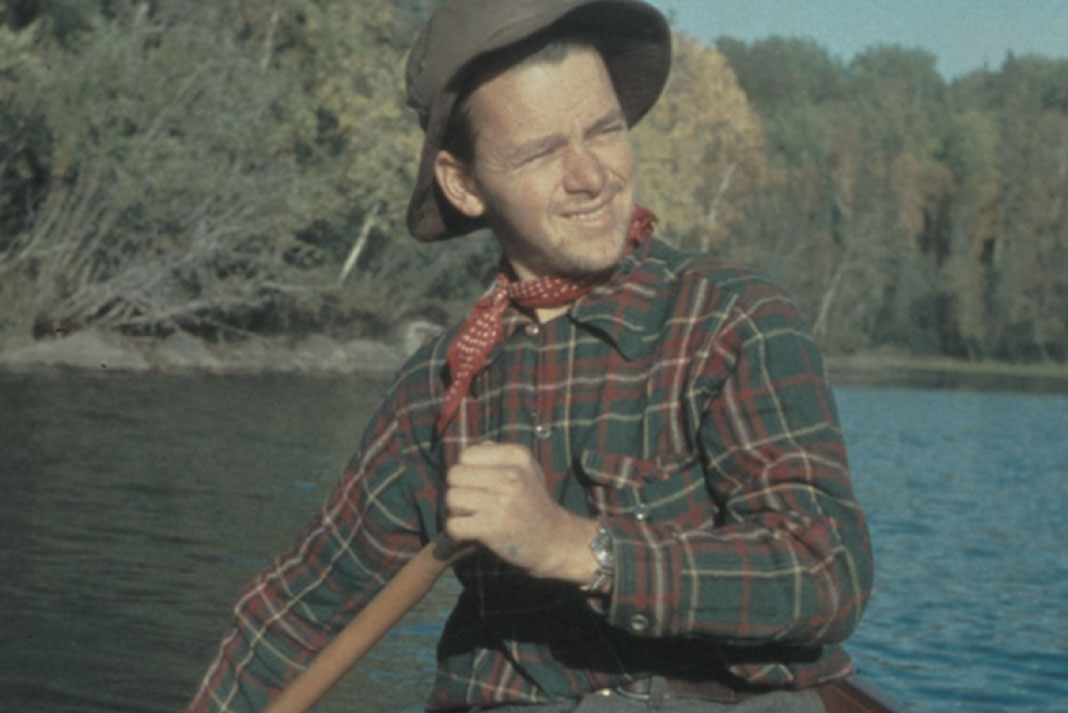
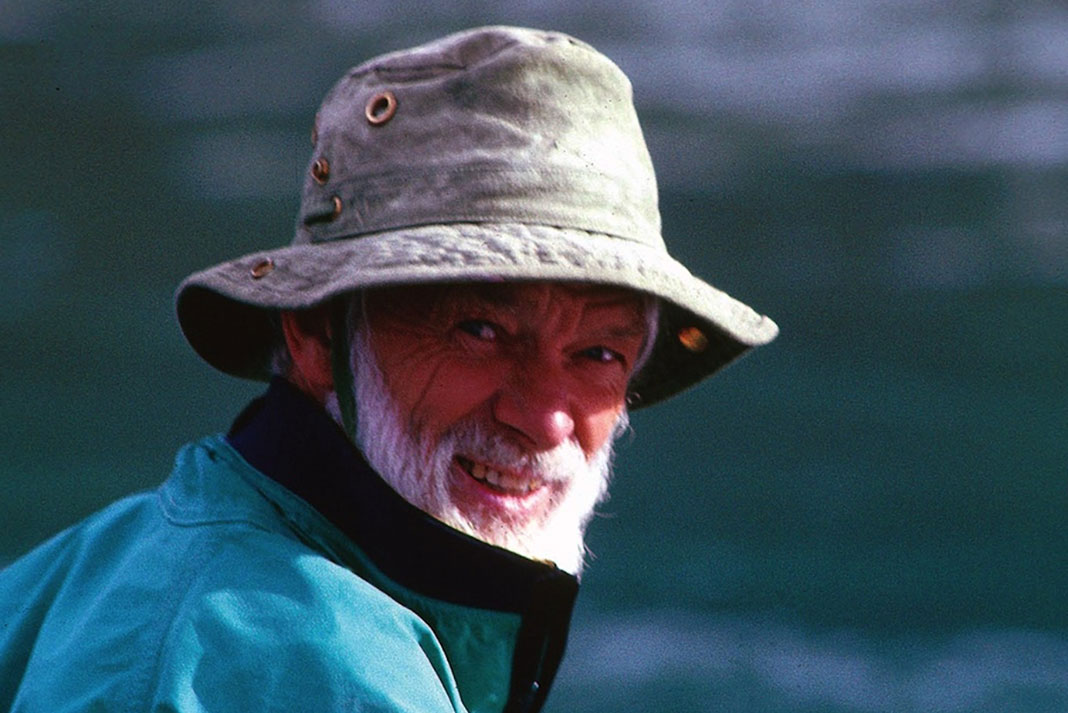
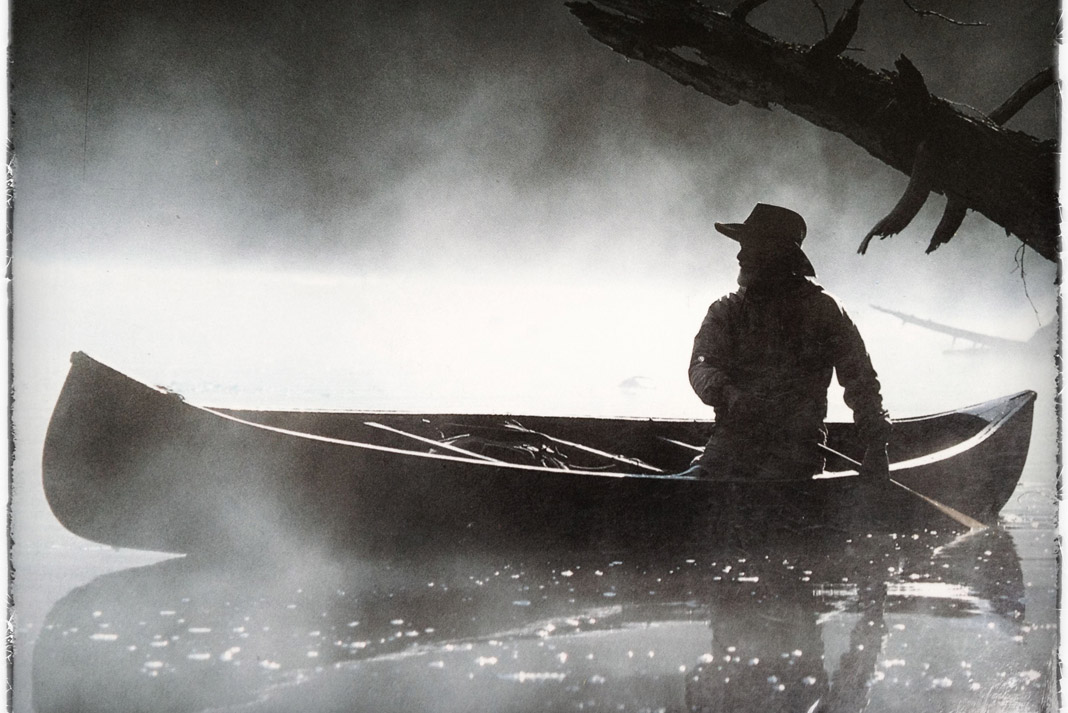
artist and filmmaker Bill Mason paddles a canoe
Feature Photo: Chris Chapman's Quetico

Few people can match the influence of artist and filmmaker Bill Mason in shaping the Canadian identity. His films, produced at the National Film Board of Canada, have introduced generations of students to Canada’s wilderness and the concept of environmental stewardship. In his work as an artist, Bill depicted the wilderness as benign, beautiful and precious, and he offered an alternative to the perception of nature as something to be feared, conquered and exploited.

Showing Canadian wilderness to Canadians

Few know the whole story behind the famous filmmaker and environmentalist. In his youth, as Bill became more and more attuned to environmental responsibility, he used his art to encourage environmental responsibility in his audience. He took every opportunity in his commercial art and photography to show Canadian wilderness to Canadians. He would have preferred to do beautiful high art oil paintings to celebrate God’s creation, but he knew that such a medium had a very small audience compared to photography and, especially film.

Bill Mason started working as a commercial artist in the early 1950s—designing newspaper ads to sell tires and billboard campaigns to sell bread. Bill always knew he was going to be an artist even when he was in grade one. As a student, Bill impressed his teachers with his ability to draw. Bill thrived in courses where he could draw his answers, like in science. He knew he could communicate by creating images and set out to become a commercial artist.

After graduating from the University of Manitoba and starting his commercial art career, Bill was also able to go on extended canoe trips. He’d slip away for six months at a time. He often canoed solo over the well-intentioned objections of just about everybody. It was these extended solo trips that gave Bill plenty of time to contemplate man’s place in nature.

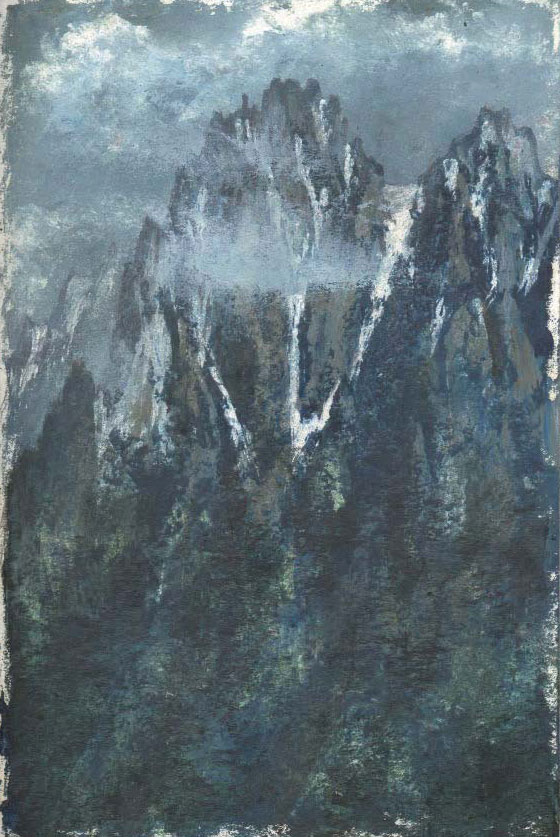
Bill Mason painting of grey, steep mountain slopes with some snow
Mountains Study, Oil on paper from the sketch books circa 1984, Bill Mason Productions.

His sense of environmental responsibility and cultural awareness of the history of the nation evolved over the years. For example, in his early years he idolized les coureur de bois, and in his own mind romanticized their exploits. Later, after he read more history and realized the exploits of the fur traders were more like exploitation, he saw the age of the fur trade and les coureur de bois through more realistic eyes.

Sharing a sense of responsibility

One incident during this time crystallized Bill’s understanding of man’s responsibility to the land, and set the underpinnings for his environmental ethics for the rest of his life. He heard a sermon one Sunday in Church. The minister’s point was simple. The word dominion as it is used in the King James version of the Bible, Genesis I Verse 26,“…and let them have dominion over the fish of the sea… over the fowl,… over the cattle,… over all the earth…”, was misinterpreted and misunderstood, and that the original Hebrew word, radah, was closer in meaning to responsibility for when translated in context. This simple revelation was an epiphany for Bill. All his musings about the environment and man’s role in consuming and preserving it became crystal clear. The point made in the sermon was equally valid as a point of religion, as a point of economics, and also as a point of common sense: we should take care of the land, not abuse it.

The willingness of a modern civilized Christian culture to interpret radah as a license to exploit natural resources for profit became painfully clear to Bill. Forever after that, Bill never took cultural assumptions for granted. He challenged conventional wisdom.

artist and filmmaker Bill Mason paddles a canoe
Artist and filmmaker Bill Mason paddles through the Canadian wilderness that inspired his life’s work. | Feature Photo: Chris Chapman’s Quetico

Bill Mason becomes a wilderness artist

Bill knew that the way he could best serve the cause of environmental responsibility was through his art. But, as a commercial artist he could make a living only if he advocated products and activities which he thought were detrimental to the environment and to human health. As a commercial artist, Bill Mason had to take contracts where ever they came from, or he would starve. He did work for tire companies, trucking companies, and logging companies. His very career was a contradiction of all the environmental ideals he stood for.

So Bill became subversive. If his clients only knew! When you go back and look at his commercial art from those days you can see he is probably the only commercial artist who could sell a product, and at the same time teach a lesson in Canadian history and environmental ethics. Many of his ads sold the product by associating it with facts from Canadian history, or with the value of pristine wilderness. His clients had provided Bill with a platform from which he could advocate his vision. Like the best teachers, the main point of his lesson was in the unspoken analysis and reflection. If you look at all his films, this multi-layered agenda of entertaining and teaching is used in every one. And often, the most important part of the lesson is the part remaining unexpressed yet perfectly clear.

At the same time, Bill’s clients loved the work he did for them. He became a respected and sought after artistic director for advertising firms. His advertising sold product as well as environmental ethics.

Before Bill went on his extended canoe trips, he would quit his job. To be more accurate, every year he asked for six months off without pay—which was always refused. Then he quit his job. When he came back at freeze-up, they always hired him back. During these trips, he shot photographs of his beloved wilderness. He used a simple Rolleiflex camera and he shot 2 1/4” × 2 1/4” slides. He became well known in his native Winnipeg because of his slide shows. He was invited all over the city to show them. As an artist, Bill Mason advocated environmental responsibility on the premise that, if you show people how beautiful the wilderness is, they will inevitably become responsible environmentalists.

A place to stand, a place to grow

The slide show, “The Timeless Wilderness,” was what connected Bill to his first film job. In 1956, Chris Chapman (A Place to Stand, Ontario pavilion, Expo 67, Academy Award winner for Best Short Film 1968) had a contract to make a film about Quetico Provincial Park. He needed an assistant who knew how to live in the wilderness and who could also play the part of the canoeist. He heard about Bill from someone who had seen “The Timeless Wilderness.” He hired Bill, and one great Canadian documentary filmmaker launched the career of another.

Bill’s rise to success as a filmmaker was meteoric. One success followed another. The very first film he made for the National Film Board of Canada, Paddle to the Sea, won eleven national and international awards and was nominated for an Oscar (Best Short Film) in 1968. One of life’s little ironies: he lost to his mentor, Chris Chapman, A Place to Stand. By the mid-seventies, he had become one of Canada’s most successful documentary filmmakers.

Love of the land, so well expressed in his films—Paddle to the Sea, Rise and Fall of the Great Lakes, Wolf Pack, Death of a Legend, Path of the Paddle, Face of the Earth, and many others—became a part of the Canadian psyche. Better his vision than that of Disney or Nintendo.

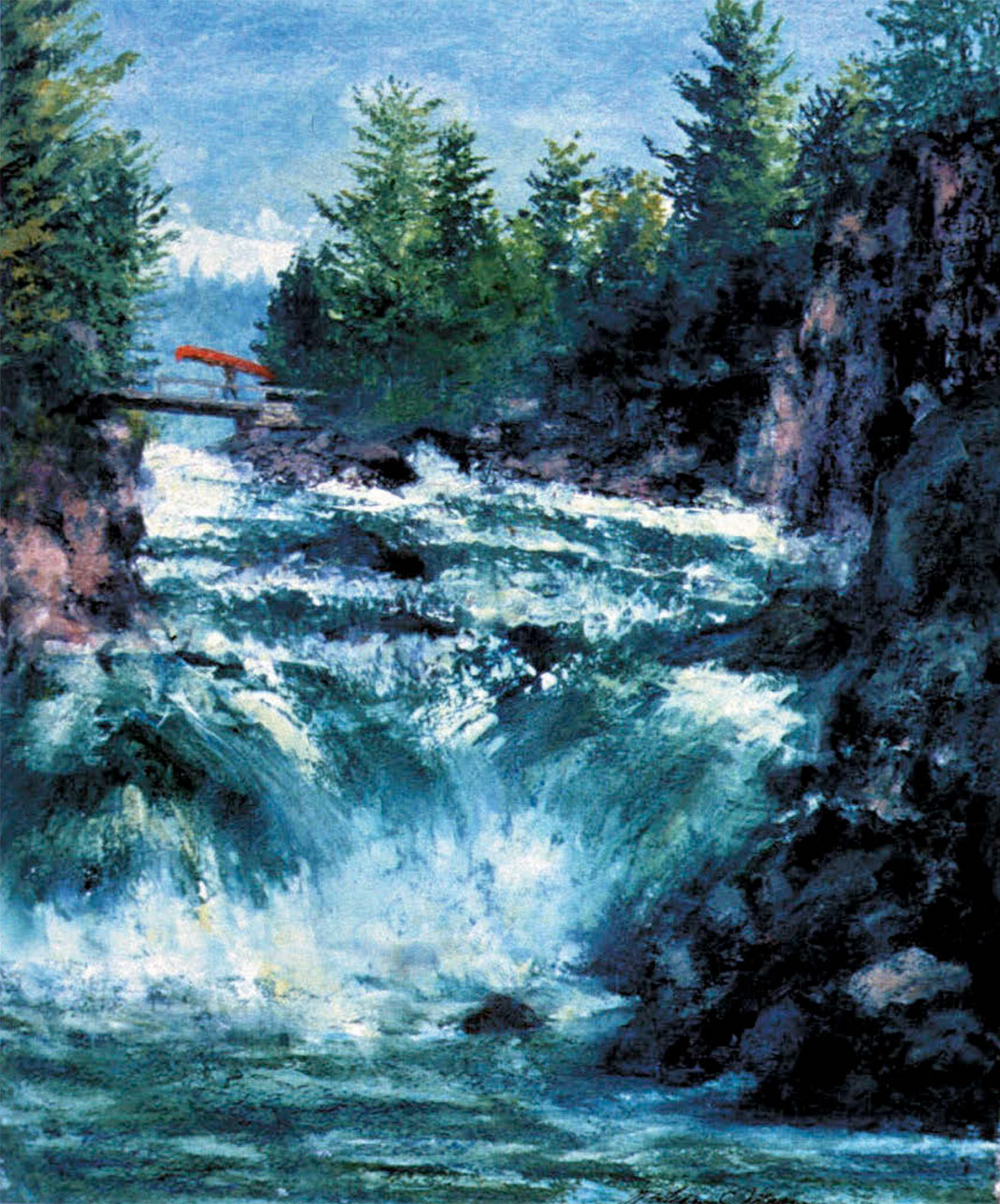
Bill Mason painting of a waterfall with portaging canoeist
Falls on Dumoine River, Oil on paper, circa 1982, Private Collection.

From filmmaking to painting

Bill’s influence as an artist and filmmaker was not confined to Canada. Several of his films have been translated into several languages. Queen Elizabeth showed Paddle to the Sea at one of Princess Anne’s birthday parties and wrote Bill to express her pleasure at how well the film was received by the children.

Every Canadian who is a canoeist or an environmentalist is familiar with his name. Bill’s favourite red Prospector canoe shares a display area in the Canadian Bill’s films were so well made, and were so appealing, they were used again and again from kindergarten to university for many courses.

Bill retired from film making in 1986 to pursue his first love—painting. With his very high profile success as a filmmaker, it was easy for people to forget his first love was painting. He had been experimenting with a new technique—oil applied to paper with a palette knife—and he was ready to strike out on a new career as a full time professional painter. He divided his time between writing and painting for a few short years. But Bill’s career as a painter was cut short by his untimely death in 1988 at the age of fifty-nine.

Bill Mason is best remembered as an artist

Many words have been published about Bill’s life and art, but an artist’s story is not complete until it is told through his art. The legend of Bill Mason is best illustrated and understood through seeing all his work. His commercial art, his photography, his films, his books and his paintings have become cultural touchstones for all Canadians. His art explained to Canadians why they should be environmentalists.

Bill Mason’s canoe films invited a whole generation to get in touch with its national roots by travelling and living in the wilderness. Seldom has any single Canadian artist had the hearts and minds of so many admirers; and seldom has any single Canadian been so influential in creating a sense of responsibility for our environment.

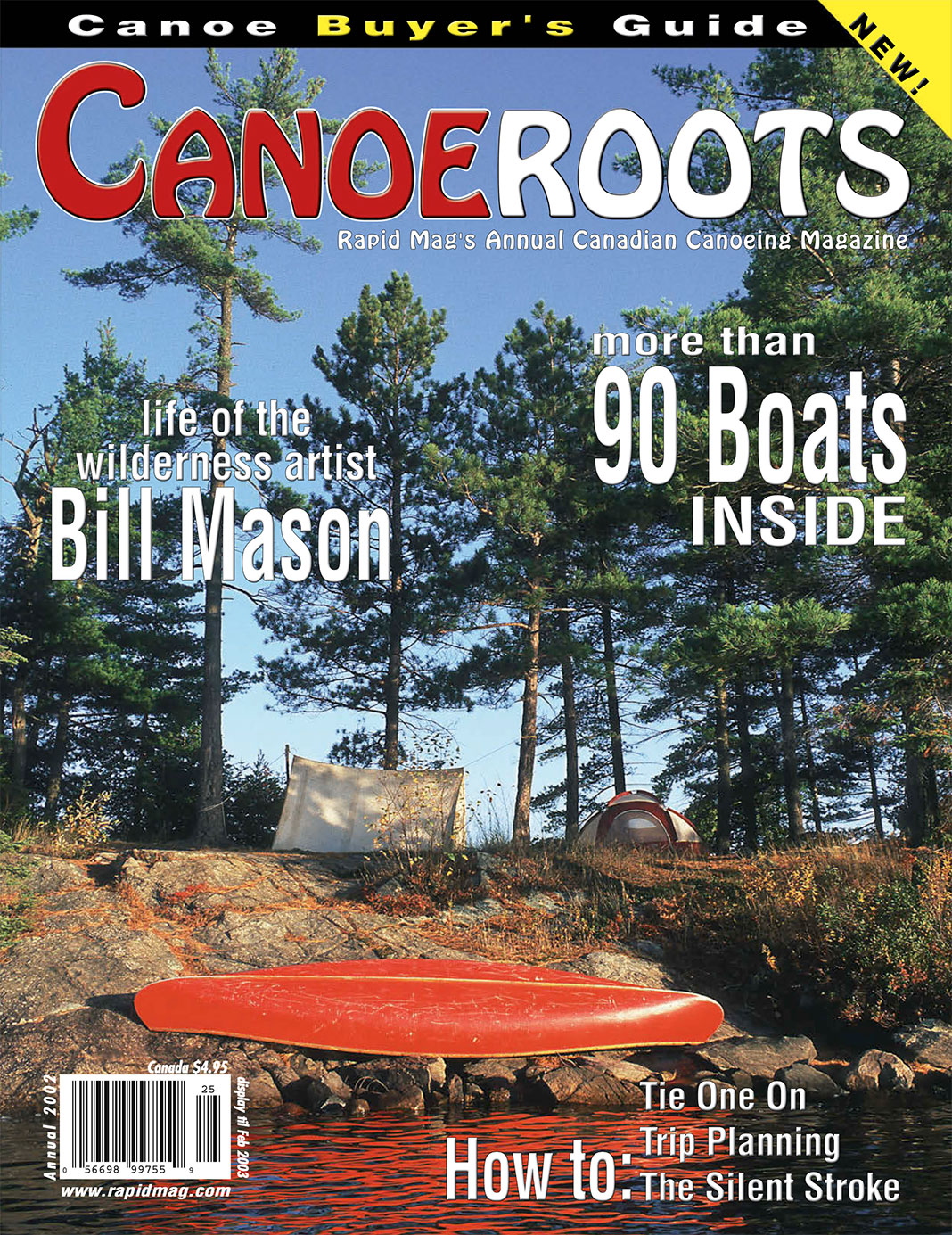
Canoeroots Annual 2002 coverThis article originally appeared in the Annual 2002 issue of Canoeroots. Subscribe to Paddling Magazine and get 25 years of digital magazine archives including our legacy titles: Rapid, Adventure Kayak and Canoeroots.


Artist and filmmaker Bill Mason paddles through the Canadian wilderness that inspired his life’s work. | Feature Photo: Chris Chapman’s Quetico


Boat Review: WaveSport ZG Kayak

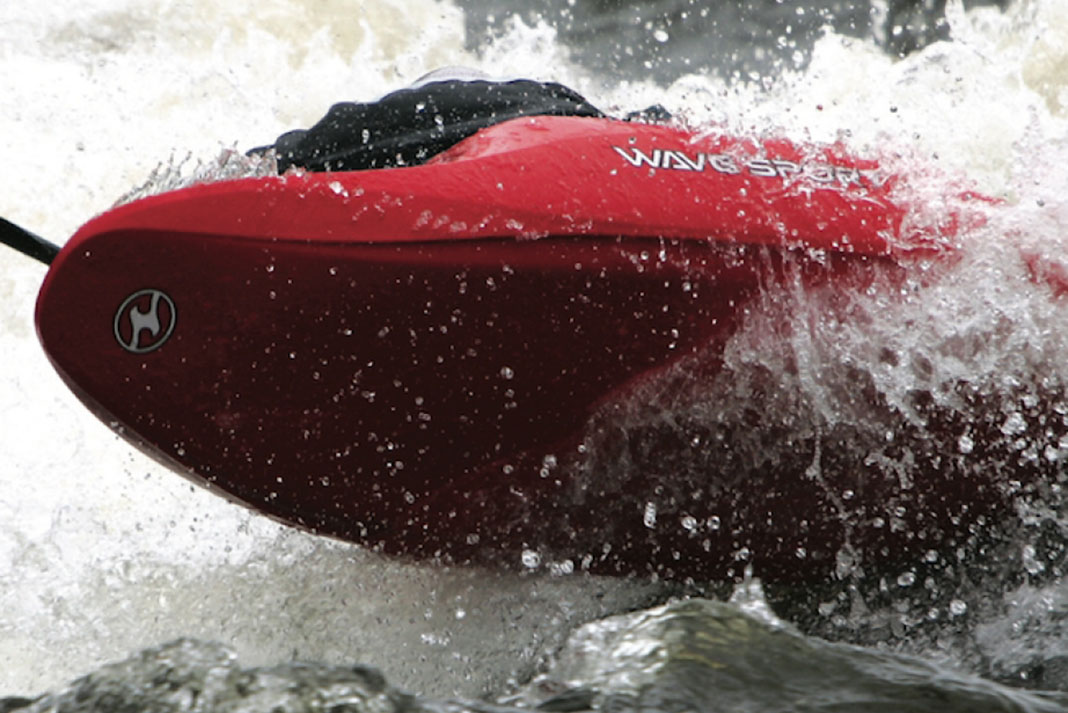
The WaveSport ZG kayak surfing through whitewater
Feature Photo: Rapid Staff

As a freestyle kayak, the WaveSport ZG compromises nothing in the quest for air. By reducing hull rocker and adding side-cut rocker and rails the ZG achieves maximum speed, carvability, and bounce—allowing for inverted aerials on the smaller features that most paddlers typically surf. If you have a hankering to catch big air, the ZG is your boat.

WaveSport ZG 48 / 54 Specs
Length: 6’4” / 6’6”
Width: 24.6” / 25”
Volume: 48 / 54 U.S. gal
Weight: 31 / 32 lbs
Weight Range: 100-180 / 140-220 lbs
MSRP: $999 USD or $1,399 CAD
[ Paddling Buyer’s Guide: See all freestyle kayaks ]

The WaveSport ZG plays to your tune

When you round up a group of testers everyone comes looking for something different, they all have different paddling styles and they always compare every test boat to their own. The ZG is the only boat that every tester hopped into and instantly ripped.

Sure, we got the usual variations of “It’s not as ______ as my boat,” but overall there was a general tip of the helmet to WaveSport for making a boat that does everything well for a large number of people.

A design so nice we reviewed it twice

The ZG first appeared in our 2004 freestyle boat test with much the same feedback we received a full year later. It is no wonder WaveSport let this design ride for two seasons.

The WaveSport ZG kayak surfing through whitewater
Feature Photo: Rapid Staff

The ZG has the traditional WaveSport lines and feel that intermediate paddlers enjoy all over the river—fast, predictable and smooth. It has decent ferry speed and doesn’t pearl, even though the bow rides suspiciously close to the surface.

Huge air and effortless fun

The WaveSport ZG jumps on a plane quickly and glides deep into eddies. The low-volume balanced ends make for effortless pivot turns and smooth flatwater fun. The ZG’s outfitting is simple and proven to work.

Pros and cons of the WaveSport ZG kayak

PRO: Jack-of-all-trades.

CON: Master of none.

This article was first published in the Summer 2005 issue of Rapid Magazine. Subscribe to Paddling Magazine’s print and digital editions, or browse the archives.


6 Tips To Kayak Freestyle From Eric Jackson

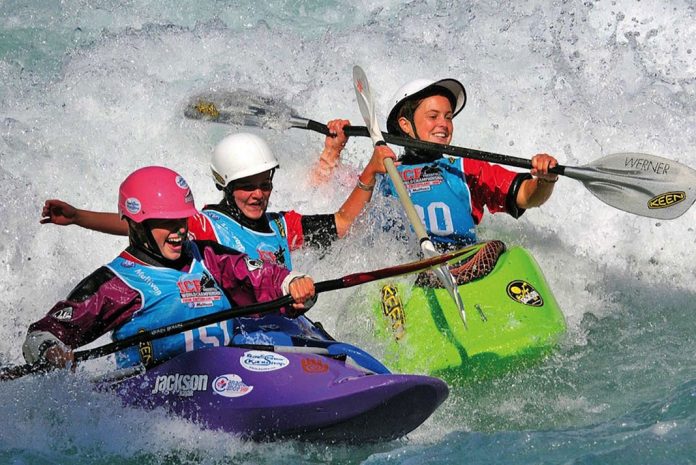
freestyle kayak race competitors paddle in whitewater
Feature Photo: Jens Klatt

When I first started training with Eric Jackson four years ago, I was just an eager, hard-working teen with a desire to learn how to kayak freestyle. EJ was quick to teach me that a few simple steps could transform my paddling into the stuff of freestyle gold. Now I share his wisdom to help other aspiring freestylers who want to gain the inside track.

Follow this six-step program and you’ll be well on your way to winning the next World Championships or just your local hometown throwdown.

Tips on how to kayak freestyle

1) Pick a Partner

Finding a solid training partner is probably the most important thing you can do to improve your kayaking. Your partner should be the same skill level as you, or better. This allows you to learn together, teaching each other what you know and climbing the skills ladder twice as fast. A paddling partner pushes you to go more often and try new things, and lets you know if your freestyle kayak technique is correct.

2) Practice, Practice, Practice

Practice your moves until they become muscle memory. The more you rehearse an air blunt the easier it becomes, until the sequence to the move is instinctive. Work not just on the moves you want to learn, but also on the moves you already know. Try your easiest moves with less of a setup. Work on continuously doing tricks and moving around the feature. To feel confident with a move for competition, I practice until I can complete it successfully four out of five times. Remember that this takes time—don’t get frustrated if your move isn’t dialled after one hour of practicing.

[ Paddling Buyer’s Guide: See all freestyle kayaks ]

3) Cross-train

The best way to get into shape for kayaking is simply to go kayaking…a lot! However, cross-training with other activities builds all-around fitness and is especially important when you aren’t able to paddle as often. Cross-training can take many different forms. For example, Billy Harris works out at the gym five or six times a week, and Ruth Gordon does Pilates and yoga. Regardless of the activity, the objectives are always the same: maintain or increase strength, stamina and flexibility, and reduce the risk of injury.

4) Plan a Winning Routine

A winning score is different for every freestyle kayak competition. You can figure out a rough target range by looking at each move’s value on the score sheet, then assessing the capabilities of your competitors and planning a ride that you think will beat theirs. To secure a medal at the Worlds, plan to score between 800 and 1,500 points in the men’s division, and 500 to 1,000 points in the women’s.

Start by writing down all of your moves. Your freestyle kayaking routine should begin with the easiest moves, progress to your medium level tricks and finish with your hardest maneuvers. Starting with the moves you are most confident with gives you a better shot at staying on the feature and getting some points on the board. Saving your hardest moves for the final 10 seconds means that if you run out of time or flush, you haven’t wasted your ride. Sticking a spin is worth more than flushing on a helix.

5) Pump Up Your Competitive Edge

Practicing your moves in the order of your routine helps you go faster while competing. Also, allowing yourself only 45 seconds for each ride teaches you to use less set-up time. The more you practice competing, the less nervous or stressed you’ll find yourself before a competition.

6) Program for Success

To succeed in freestyle kayaking, you need to first visualize yourself succeeding. Success doesn’t only mean winning; it means achieving the goals you have set for yourself. Your goal could be completing your routine, doing your first loop in competition or making it to finals. Never let first place be your goal. This puts your objective in the hands of your competitors, and you have no control over the moves or rides of your competitors. To kayak freestyle and compete well, you need to be able to brush off a bad ride. Think back to all your training and preparation for the event; the more you’ve trained the more confident you’ll be. Most importantly, relax and remember that you are competing because it’s fun!

This article was first published in the Spring 2010 issue of Rapid Magazine. Subscribe to Paddling Magazine’s print and digital editions, or browse the archives.


Nick Troutman won the 2009 World Freestyle Championships with a 1,510-point ride.


5 DIY Canoe Upgrades You Can Do This Weekend

Getting crafty. | PHOTO: HANNAH GRIFFIN

Canoes don’t stay the same forever. Wear, different paddling conditions and changing needs can all call for modifications. Many paddlers believe modifications are the domain of professional canoe builders, but there are many DIY canoe upgrades that anyone can do. Try these to add value to your canoe in terms of comfort, performance and aesthetics.

DIY canoe upgrades

1) Replace the yoke

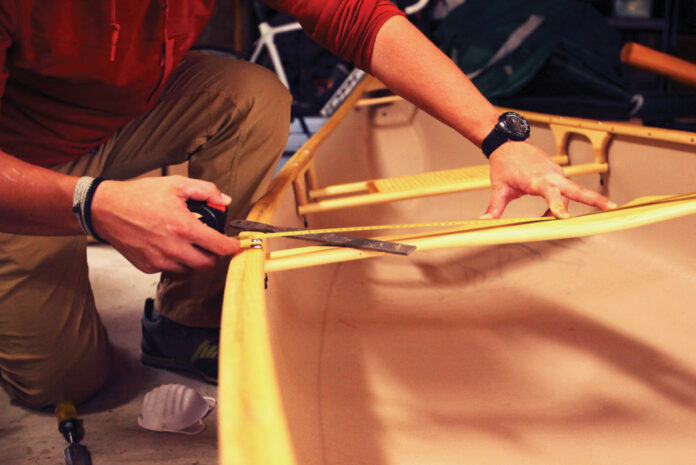
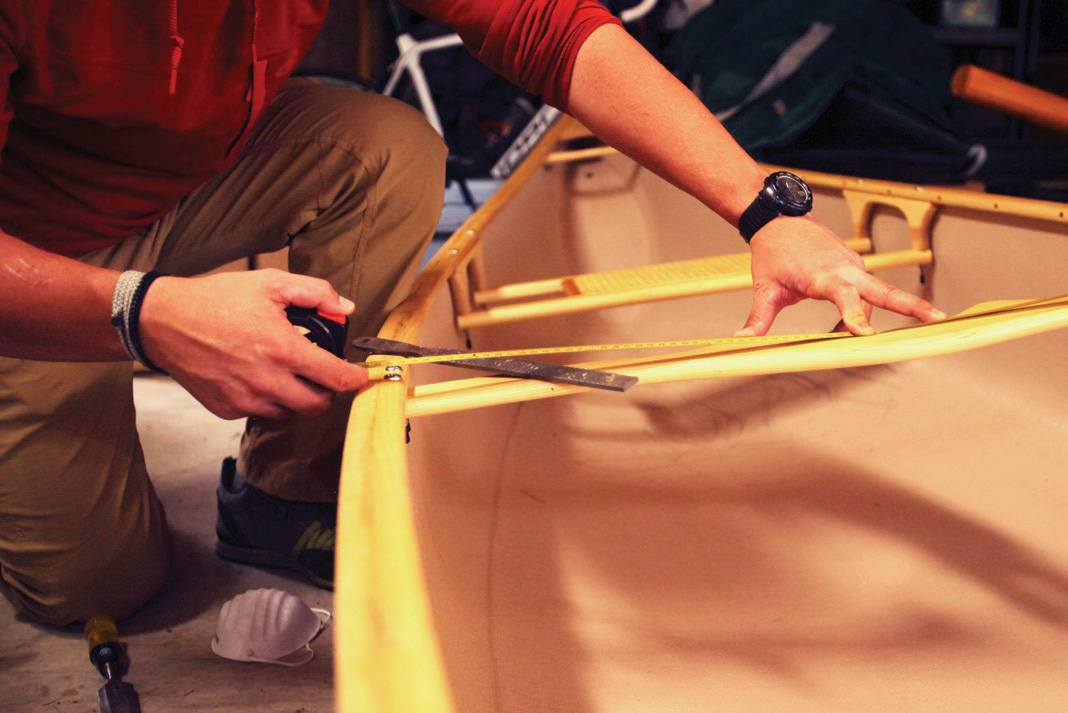
If you go on portaging trips, having a comfortable, properly installed yoke is essential. A new one takes less than one hour to install.

Begin by finding a yoke that fits comfortably on your shoulders and around your neck. If you have bony shoulders, you can make the yoke dish deeper with hollowing, sanding and varnishing. Undo the existing yoke’s fasteners and remove. Your new yoke will come longer than needed. Line it up with the center point of the old one and trim the ends slightly long, fine-tuning as necessary.

2) Upgrade the seats

Installing new canoe seats is a 30- to 40-minute modification. Paddlers may opt to replace seats because of wear or rot, or simply for something more comfortable for long days on the water. Unscrew the old seat and lay over your new one to mark where to drill holes and cut seat bars. Cut a bit long and fine-tune, cutting equally from either side. If your old seat was off center or poorly fitted, factor that in as you cut the seat bars. Measure twice, cut once. Bolt into place. This is a great opportunity to replace hardware.

If you want to make your existing seat more comfortable with no tools involved, paddling shops offer strap-on seat covers—some cushioned and with extra back support—that attach onto your existing seat.

3) Add a shoe keel to your wooden canoe

A shoe keel is a great way to help protect the bottom of your wooden boat from damage. In shallow water or during rocky landings, the shoe keel will absorb the impact instead of your precious canoe. This DIY canoe upgrade will require a weekend and an enthusiastic partner.

Adding a shoe keel to your wooden canoe involves cutting and shaping the keel, sanding and preparing the hull where the keel will sit, drilling and screwing it in place and applying epoxy. Have your partner assist to ensure the keel is attached in a straight line.

[ Paddling Buyer’s Guide: See all wood composite canoes ]

4) Add lining holes

Lining holes are a great modification because they allow for secure attachment points for painter lines used for lining tracking rapids.

Begin with a six-inch piece of webbing with the ends cut at 45-degree angles. Fold in half and mark the center. Wrap the webbing around the bow. The center mark you made should line up with the middle of the bow, no more than two inches below the gunwale. Mark the ends of the webbing on the hull, and drill a hole through the mark on either side, 1/4 inch in diameter. Then drill the hole slightly larger to 5/8 of an inch.

Repeat the above process with the stern. A drill bit will make a nice clean hole in any kind of canoe. Add and tie painter lines.

Getting crafty. | PHOTO: HANNAH GRIFFIN

5) Add a spray deck

Having a spray deck on your canoe means you are better equipped to run whitewater, explore coastal areas, cross open water and keep out rain. Some canoeists also find it provides a bit of shelter and makes paddling in cold, wet and unpredictable weather more comfortable.

Morgan Goldie, general manager at North Water, explains that installing one of their spray decks requires drilling holes below the gunwales on each side, gluing loop patches to the inside of the hull, pulling cord through and lashing on the deck. It can be intimidating to drill holes through your precious hull but this two- to four-hour project will actually make your boat more seaworthy.

Try these DIY canoe upgrades yourself

If you’re sitting around the house this weekend looking for something to do, we encourage you to roll up your sleeves and try some of these DIY canoe upgrades for yourself. With a little bit of work you can add comfort, value, and performance to your craft.


Ontario Canadian Canoe Culture official partner badge

Watch The Canoe, an award-winning film from Canadian Canoe Culture that tells the story of Canada’s connection to water and how paddling in Ontario is enriching the lives of those who paddle there. #PaddleON.


AIRE Cub Inflatable Raft Review

“Wait… Wait… Wait… Okay, hard forward right MEOW!” | Photo: Robert Faubert

Sometimes getting on the water is a head game and we just need a kick in the ass to rethink priorities. Other times, there comes along a new boat design, like the award-winning AIRE Cub, crashing down skinny lines knocking down the barriers keeping us off the river.

AIRE Cub
Length: 10 ft 7 in
Width: 5 ft 2 in
Weight: 61 lbs
Tube diameter: 18 in
Bbow/stern rise: 7 in
Price: $2,999 USD
aire.com

New for 2020, AIRE bills the Cub as the ultimate river playboat, but I’d say it’s the ultimate get-you-on-the-river boat. Please allow me the next 1,000 words to explain. Either way, I’m pretty sure you’re going to want one.

In our fleet of soft boats here at the Paddling Magazine office, we have a 16-footer, a 16-foot cat, and one of Aire’s 14-foot D series rafts with diminished diameter bow and stern tubes to put you close to the action. We’re set up for the Canyon. We’re set up for a crew at our local Hell or High Water annual raft race. But most of the time, all this is just too much rubber rolled in the back corner of the garage.

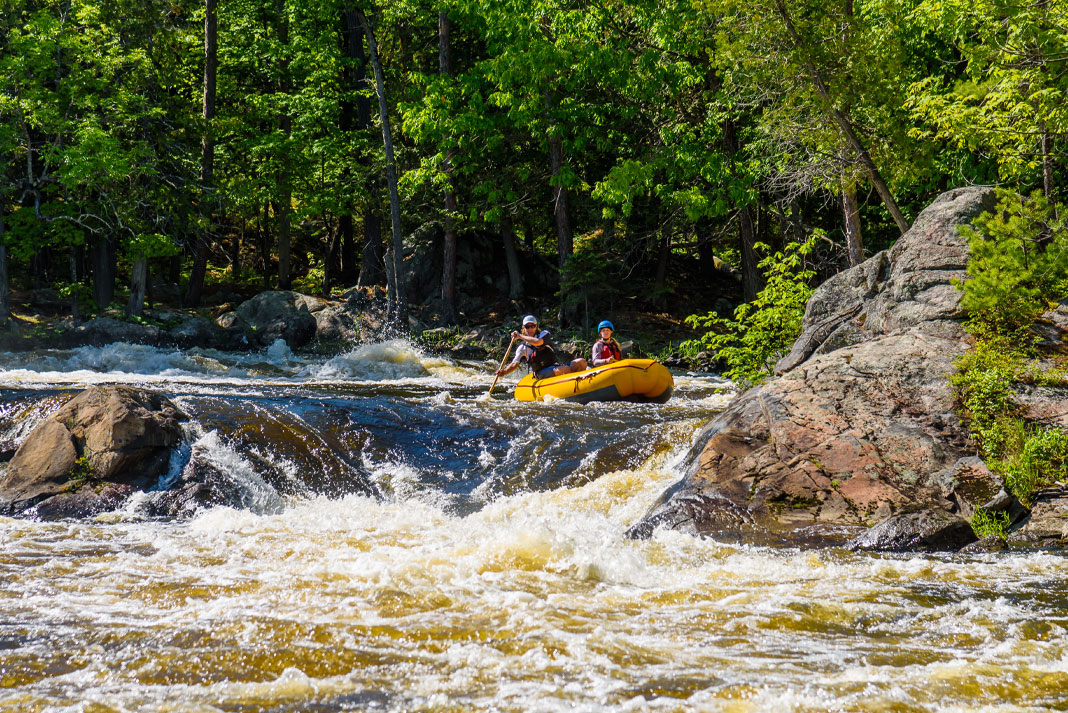
If you’re looking at the above picture of my daughter, Kate, and me running Little Trickle on the Middle Channel of the Ottawa River and thinking, “Honey, I shrunk the raft,” you nailed it. More like, AIRE did. Rafting, now with no crew required. Solo or just one friend, or daughter, is enough. Three is almost a crowd.

AIRE Cub review
“Wait… Wait… Wait… Okay, hard forward right MEOW!” | Photo: Robert Faubert

The Cub is AIRE’s answer to the R1/R2 craze. Okay, maybe not a craze but we see more boats in this category of grab-and-go inflatables. And why not? The Cub is just over 10 and a half feet long and five feet, two inches across with 18-inch tubes like their popular Puma.

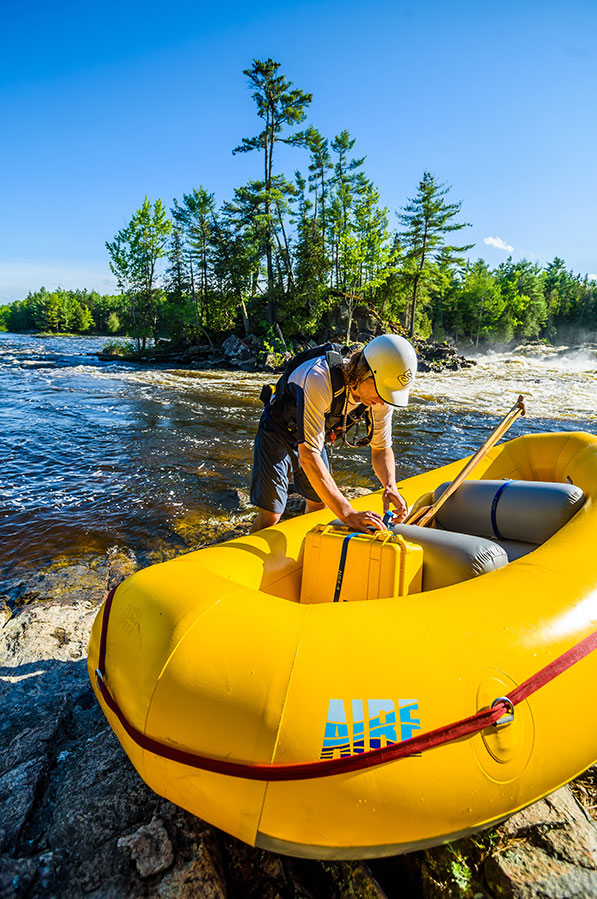
Our Cub shipped from AIRE with two thwarts added, sold separately. You could get away with one, but two felt perfect for seating, stuffing in feet and lashing in drybags with camera gear, extra warm duds and lunch.

The Cub is 61 pounds without thwarts and is easily rolled and tossed in the back of a pickup truck or hatchback.

Like all AIRE rafts, it has a laced-in, self-bailing floor. AIRE uses a urethane bladder system they call AIREcell with an outer 1670 base fabric Denier and a 37-ounce double lacquer gray PVC raft bottom for extra resistance to abrasion. And of course, it comes with AIRE’s 10-year, no-fault warranty. What this means is, the Cub is the same quality just in a shrunken one-to-three-person version of the other 18 rafts in AIRE’s extensive lineup.

Why not call the Cub, the Puma Kitten, I asked AIRE Marketing Director, Alexandra Aldecoa.

“We wanted a name that could relate to our popular Puma Series but hopefully, eventually, stand on its own,” Aldecoa said. “Similar to the Puma series, the Cub is ideal for a paddle team but it does have a different overall shape. The Cub design has a smaller width than the Puma and is about a foot shorter. The lower kick—bow/stern rise of seven inches—creates a longer waterline comparable to a Puma, if a similar length.”

The Cub has three chambers and a reinforced self-bailing floor. It’s shown here with two optional thwarts, which can be laced in wherever for trim or gear. | Photo: Robert Faubert

Comparing the numbers, the Cub is a shorter boat but not necessarily slower. It crashes through waves more than riding over them. And the squared-off stern is better for R1 or stern guiding a cozy crew of two.

So how fun is it? Kate and I had our best river days in the Cub so far this season. Think old river guide and teenager crew nailing all the lines he thinks he remembers.

The Cub is so responsive and snappy fast to accelerate with just a couple of strokes. There is something about tandem teamwork and communication that makes nailing technical lines so sweetly satisfying. It is surprisingly quick. I kept getter there too early and had to learn to wait on it. And bonus fun, there’s always someone there, or almost always there, for high-fives in the eddies.

When Kate and I got to Angel’s Kiss on the Middle Channel of the Ottawa, it was running at a primo 11.5 on the gauge. We couldn’t have picked a better day for front surfing a sporty, nimble two-seater raft. Everyone in our flotilla, including the kayakers, took turns in the Cub.

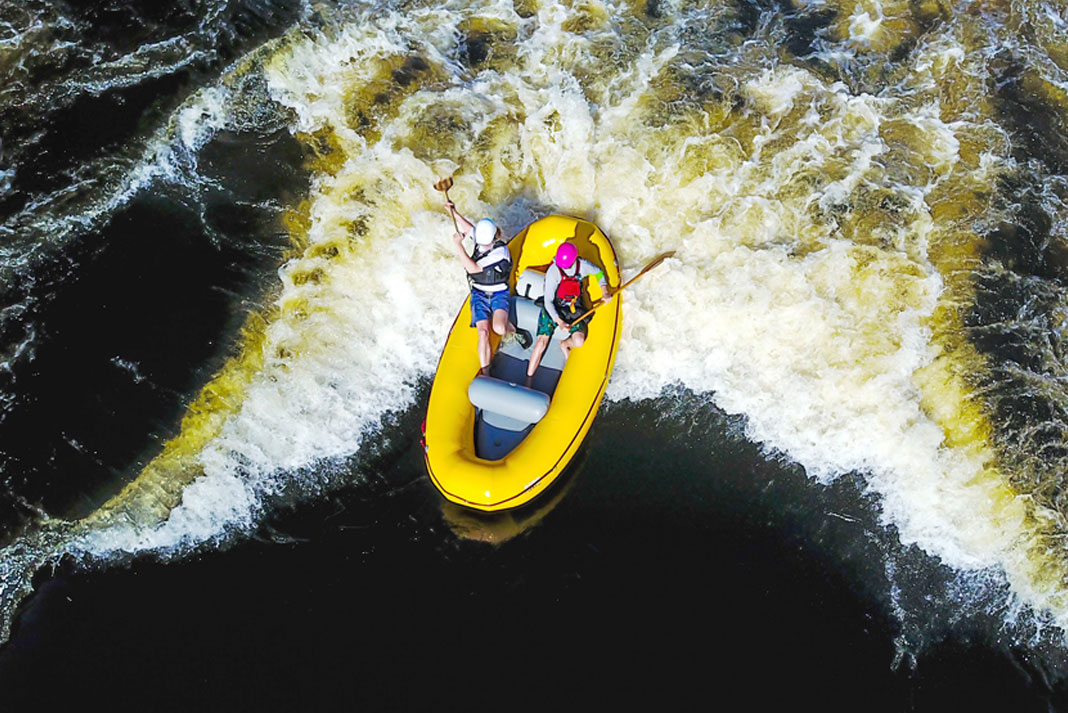
We were there long enough to burn through a few drone batteries while my son, Doug, and I teamed up to carve it up. With a crew of two, we could drop in from the foam pile down then down the face. Both of us guiding and working to maintain the angle, the Cub will lock in for the sweetest front surf, ever. Sitting back of center, the bow was blasting the green water. Eventually, we got cocky and roofed it. With a few more tries, we told ourselves we could spin in there.

When I first saw the Cub at Paddlesports Retailer last summer in Oklahoma City, I thought about silky surf waves with soft piles like Angel’s Kiss. Turns out, I wasn’t the only one dreaming about the Cub.

The attending paddlesports retailers and media voted it the Best New Whitewater Boat in the 2020 Paddling Magazine New Product Showcase. It was also a favorite at the open water demo on the OKC Riversports Rapids whitewater park with industry insiders doing laps of the artificial course with giggly smiles on their sunburnt faces.

AIRE Cub going down the river

Even Carole Baskin would surf this Cub at Angel’s Kiss on the Middle of the Ottawa at a perfect 11.5 on the gauge. | Photo: Robert Faubert

“We started seeing a trend in the R1/ R2 segment of paddlers. These paddlers wanted to run more remote rivers. We wanted to make a relatively lightweight playboat so you can get it to more remote put-ins as easily as possible,” says Aldecoa. “We also realized there was a need for a smaller AIRE boat that could be more high-performance and could help people run bigger water.”

AIRE ambassador Tony Glassman took a Cub to Ecuador to run creekier rivers and larger drops when filming his recently released film, YAW

“We see higher sales in areas like the Pacific Northwest and Four Corners region where sometimes they don’t have the volume of water to run rivers year-round,” explains Aldecoa. “The Cub, made for creakier rivers, has allowed them to extend their seasons a little longer.” AIRE also sees sales in the Southeast, she figures for similar reasons.

Kate doesn’t care about industry awards. Or boney, 20-footers hidden in jungle rivers. For now, there is a whole other market for the Cub that AIRE may not have thought about.

What Kate loves is the two of us can load the AIRE Cub, carry it, and run it down anything near home. We can run stuff she’s not comfortable running yet in her kayak. We join groups of paddlers we couldn’t otherwise join. And this gets us on the river more often.

Sold.

This article was first published inPaddling Magazine Issue 62. Subscribe toPaddling Magazine’s print and digital editions here , or browse the archives here.


“Wait… Wait… Wait… Okay, hard forward right MEOW!” | Photo: Robert Faubert

Fact And Fiction Behind COVID-19’s Supposed Benefits For Climate, Creatures And Canoeists

With so many humans staying at home to avoid coronavirus in March and April, the air was cleaner, water clearer and animals bolder. | Photo: Follow Me North Photography

April 22, 2020, was an Earth Day like no other. Usually congested highways were empty. At least half the airplanes in the world were grounded and passenger traffic was down by 95 percent. Greenhouse gas emissions plunged by 17 percent worldwide. And all around the globe, wildlife was being spotted where there was no wildlife before. Just a couple of months prior, no one could have predicted this new reality for Earth Day’s 50th anniversary.

While close to half of the planet’s human population was locked down due to COVID-19, the Earth was getting a breather. Social media showed nature flourishing on urban doorsteps: A coyote running down an empty main street in Chicago. A fresh-faced Los Angeles devoid of its haze of smog. The canals of Venice clear and fish visible. And residents in Punjab, India, were able to see the Himalayas, 120 miles distant, for the first time in decades. While the human tragedy of COVID-19 unfolded in our homes and hospitals, many remarked non-human animals were the beneficiaries of stay-at-home orders.

Enter the #natureishealing meme. It started in earnest, accompanying photos of blue-sky cities and unlikely animal crossings. It quickly turned to satire. The hashtag was soon accompanying images of animals “returning” to urban habitats, as though they were natural ones—raccoons wandering in a library, house cats riding city buses, a horse on an 8×10-foot city balcony, and a flock of sheep congregating outside an abandoned McDonalds.

The #natureishealing hashtag was an utterly absurd bit of humor breaking up my doomscrolling. Yet, in my urban backyard, I saw a family of foxes for the first time. The neighborhood was thick with wild bunnies. The stars seemed brighter. The city skyline clearer. Was there truth to the hashtag?

COVID-19 nature benefits
With so many humans staying at home to avoid coronavirus in March and April, the air was cleaner, water clearer and animals bolder. | Photo: Follow Me North Photography

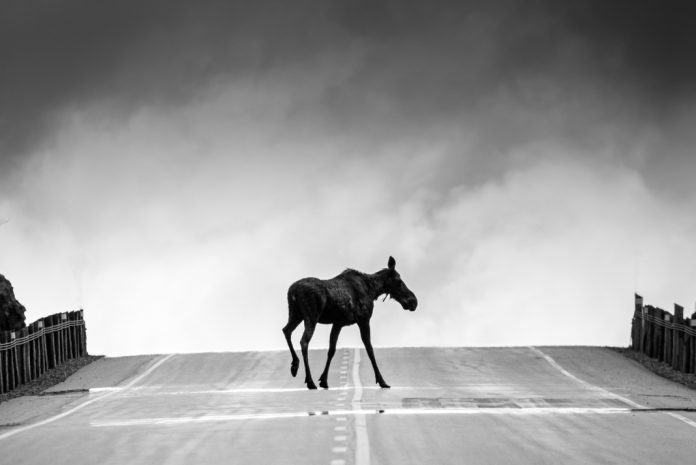
The Nature Conservatory of Canada (NCC) contends the COVID-19 lockdown had a positive impact on non-human species. “Life has been quieter for us. We haven’t been on the move as much and suddenly these species—they woke up,” said the NCC’s media director Andrew Holland in a recent radio interview. He cited reports of everything from moose to bears making appearances in populated areas.

“The major inhibitor of the movement of animals across the city is traffic—busy roads. And now we’ve seen major roads, major arteries in the city, almost devoid of cars,” says Marc Cadotte, a biology professor at the University of Toronto.

Pinned down, many turned to their local landscapes with fresh and hungry eyes. With travel and group activities restricted, and cooped up homeschooling and working from home, people have explored local green and blue spaces like never before.

As lockdowns lifted, paddlesports retailers and manufacturers reported banner sales years. Canoes, kayaks and SUPs are flying off the shelves at double or triple the usual volume. There’s rumor of a North American shortage as retailers sell out. And maybe this shouldn’t surprise us—paddling is the ideal social distancing activity. Even in a 16-foot Prospector, two paddlers sit more than the recommended six feet apart.

Of course, as we creep back to a new normal, unlikely sights have decreased. Wildlife shrinks back into the shadows, and pollution returns. According to the International Energy Agency, reduced activity due to the pandemic will likely cause an overall seven percent decrease in global emissions in 2020. Huge, but temporary. “Gains are short-lived,” says climate journalist and best-selling author David Wallace-Wells in a recent interview with Penguin Books. Meanwhile, the pandemic’s terrible consequences remain.

For environmentalists, the pandemic might provide lessons on how to adapt to another urgent, existential issue: climate change. As I write this in late June, there is a heatwave in Siberia with temperatures more than 100°F—the highest on record above the Arctic Circle. There’s nothing partisan about saying this event is deeply concerning. Our planet needs its wild places. Biodiversity equals stability.

The quick adaption to dramatically different habits and ways of living by some of the global community during COVID-19 offers hope, however.

“There’s been a radical change in the way we’ve been living, more than most of us thought possible months ago. The opportunity to transform has been revealed to us. The question is now what we do with that opportunity,” says Wallace-Wells.

Nature is not “healing”—it takes more than two months to clean the air and clear the water. But the pandemic highlights that change once unthinkable is possible—for climate, creatures and canoeists.

Kaydi Pyette is the editor of Paddling Mag. Send climate change denials to editor@paddlingmag.com.

This article was first published inPaddling MagazineIssue 62. Subscribe toPaddling Magazine’s print and digital editions here , or browse the archives here.


With so many humans staying at home to avoid coronavirus in March and April, the air was cleaner, water clearer and animals bolder. | Photo: Follow Me North Photography

Trips: Kayaking Georgian Bay And The North Channel

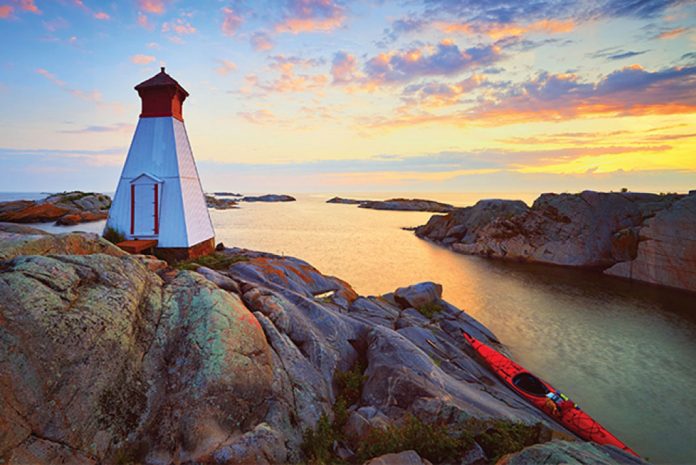
Taking a break at a lighthouse from kayaking Georgian Bay
Feature Photo: Henry Liu

For Toronto-based professional photographer Henry Liu, kayaking Georgian Bay offers a refreshing escape from his hectic schedule of teaching landscape photography workshops in the city. The sculpted islands and quiet passages of the North Channel offer a diversity that few stretches of water can rival.

The North Channel is a geological marvel

At the top of Lake Huron, nestled behind Manitoulin Island, the 150-kilometer-long Channel showcases geology from three distinct landforms: the glacier-smoothed whalesback of the Canadian Shield, the startling white quartzite of the La Cloche Mountains, and the fossil-filled terraces of an ancient limestone seabed.

Combined with the northern edge of Georgian Bay, this is some of the best kayak touring the Great Lakes has to offer. “The coastal area from Killarney to French River, with its thousands of small islands, is like a playground for me as a photographer and paddler,” says Liu.

[ Plan your next Georgian Bay adventure with the Paddling Trip Guide ]
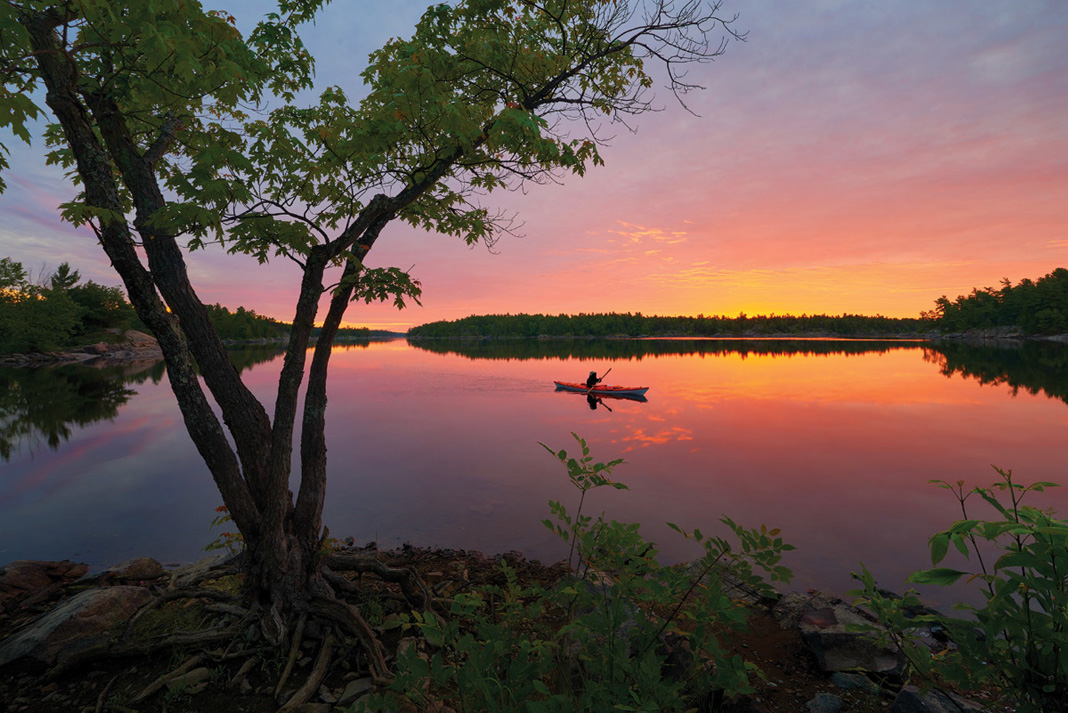
Sunrise on the French River. | Photo: Henry Liu
Wildlife

Black bear, fox, beaver, otter, bald eagle, sandhill crane, snapping turtle.

Exposure

Prevailing fair-weather westerlies aid eastbound paddlers; expect crossings of up to five kilometers to reach more remote islands.

Diversion

Hike up The Crack in Killarney Provincial Park; learn voyageur history at the French River Visitor Centre; or experience the Sagamok Traditional Pow Wow, held every July near Massey.

Outfitters

Caribou Expeditions‘ six-day North Channel kayak tour; Black Feather‘s five-day kayak camping in the North Channel; Ontario Sea Kayak Centre‘s multi-day skills courses and kayak yoga trips out of Killarney.

Must-have

Kayaking Georgian Bay requires jedi tarpology skills (for shade, and rain); star charts.

Take a trip back through time

Just before Huron’s shoreline turns abruptly south, the braided passages at the mouth of the French River mark the historic highways of the intrepid voyageurs. More recently, the polished pink granite campsites and windswept pine points of Killarney Provincial Park welcome kayakers in greater numbers every year. Still, many coves and islands remain unfrequented, their quiet shores offering adventurous paddlers the chance to savor a sublime sunset or discover a 445-million-year-old cephalopod fossil just above the waves.

Dark skies overhead

“My most memorable nights kayaking Georgian Bay have been spent on the tiny islets near West Fox Island,” says Liu, “where I could stargaze the Milky Way hanging over my head without worrying about light pollution. The midnight aurora shows were a totally unexpected bonus.”

Kayaking Georgian Bay and the North Channel

If you have a half day

Launch from the end of Weegwas Road near the community of Cutler and explore the pretty islands of Whalesback Channel.

If you have a day

Paddle out Killarney’s Chikanishing Creek and aim for lunch on West Fox Island, where the lofty views south over the bay and north to the La Cloche will take your breath away.

If you have a weekend

Put-in at McBean Harbour near Massey and tour out to the popular Fox and Benjamin islands. Head east to Matheson Island to score solitude and spectacular stargazing.

If you have a week

Tour east from Chikanishing along the south shore of Philip Edward Island and onwards to the mouth of the French. Take time to explore the lonely range lights and sheltered channels of the Bustard Islands, and the tigertail rocks of the Outer Fox Islands. Paddle up the Key River to take out.


Ontario Canadian Canoe Culture official partner badgeWatch The Canoe, an award-winning film from Canadian Canoe Culture that tells the story of Canada’s connection to water and how paddling in Ontario is enriching the lives of those who paddle there. #PaddleON.


This article originally appeared in the Adventure Kayak
Summer/Fall 2016 issue.
Subscribe to Paddling Magazine and get 25 years of digital magazine archives including our legacy titles: Rapid, Adventure Kayak and Canoeroots.

Best Kayaking In New Zealand: 12 Rivers, 2 Months

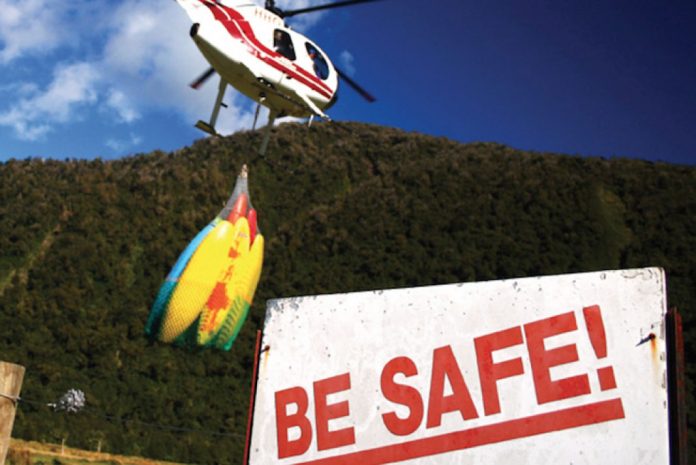
helicopter takes off towing kayaks in search of the best kayaking in new zealand
Feature Photo: Tyler Fox

Locals know New Zealand as Aotearoa, which translates to Land of the Long White Cloud. It is also the Land of the Long White-Knuckle Drive. Don’t be fooled by its small size—vertigo-inducing switchbacks and swift-flowing fords plague many worthwhile shuttle roads. The secret to unlocking the best kayaking in New Zealand is to either move here for an endless summer, or allow at least two months of travel time.

[ Plan your next whitewater adventure with the Paddling Trip Guide ]

Tips for kayaking New Zealand on the cheap

Fortunately, spending a few weeks or months in New Zealand doesn’t mean spending a fortune. Because the country is such a huge backpacker—read: dirtbag traveler—destination, it is easy to find a quality vehicle for cheap. Buy a functional beater from the Backpackers’ Car Markets of Auckland or Christchurch—the main metropolitan hubs of the North and South islands, respectively.

Freedom camping

Spend a bit more for a roomy camper van, share the expense with three or four mates, and enjoy decadent comfort while taking advantage of NZ’s best benefit for kayakers on a budget: freedom camping. Nearly every roadside pull-off, parking lot, trailhead, put-in and take-out is fair game for free camping.

Your next purchase should be a copy of New Zealand Whitewater by Graham Charles. This guidebook has invaluable information on over 250 runs but local knowledge of water levels still makes the difference between showing up at a dry river or one that is prime. Luckily, Kiwis—native New Zealanders, not the fuzzy fruit or rare flightless bird also indigenous to the islands—are passionate about their rivers and always keen to help a fellow paddler.

New Zealand’s rivers are as varied as its geography. Many have wonderfully warm waters while others bubble out of frigid underground springs, tumble off 10,000-foot peaks and course through deep, shadowy gorges.

Best Kayaking in the North Island

The best plan is no plan at all

With so many rivers, it can be difficult to know where to start. Having spent the last five summers touring from river to river, I’ve learned that the best plan is no plan at all. If you are motivated, tirelessly opportunistic and willing to chase the rains, it is possible to paddle every day of your trip.

Just head three hours south of Auckland, sandwiched between the crater lakes of Rotorua and Rotoiti, the hamlet of Okere Falls is a great starting place with year-round kayaking on the Kaituna River. Boasting a large community of boaters, it has been dubbed the epicenter of NZ paddling. Shake off jet lag with a few laps on the river and stock up on local beta before heading further afield.

Whitewater spots vary by season

Most of the smaller rivers on the North Island are rain dependent and dry up during the height of summer, from January to March. During wetter months, however, creeks like the Tuakopi and Waihi are the place to be, with drop after vertical drop.

A handful of the North Island’s larger rivers maintain flows throughout the summer. The Wairoa, Tongariro, Waikato, Rangitaiki and Rangitikei cluster within three hours of Rotorua and offer up a variety of whitewater ranging from fun to full on. On the volcanic Central Plateau, beneath the shadows of NZ’s still-active triple threat—mounts Tongariro, Ruapehu and Ngauruhoe—deep underground aquifers feed the Waihohonu and Ohineponga rivers with continual, icy flows.

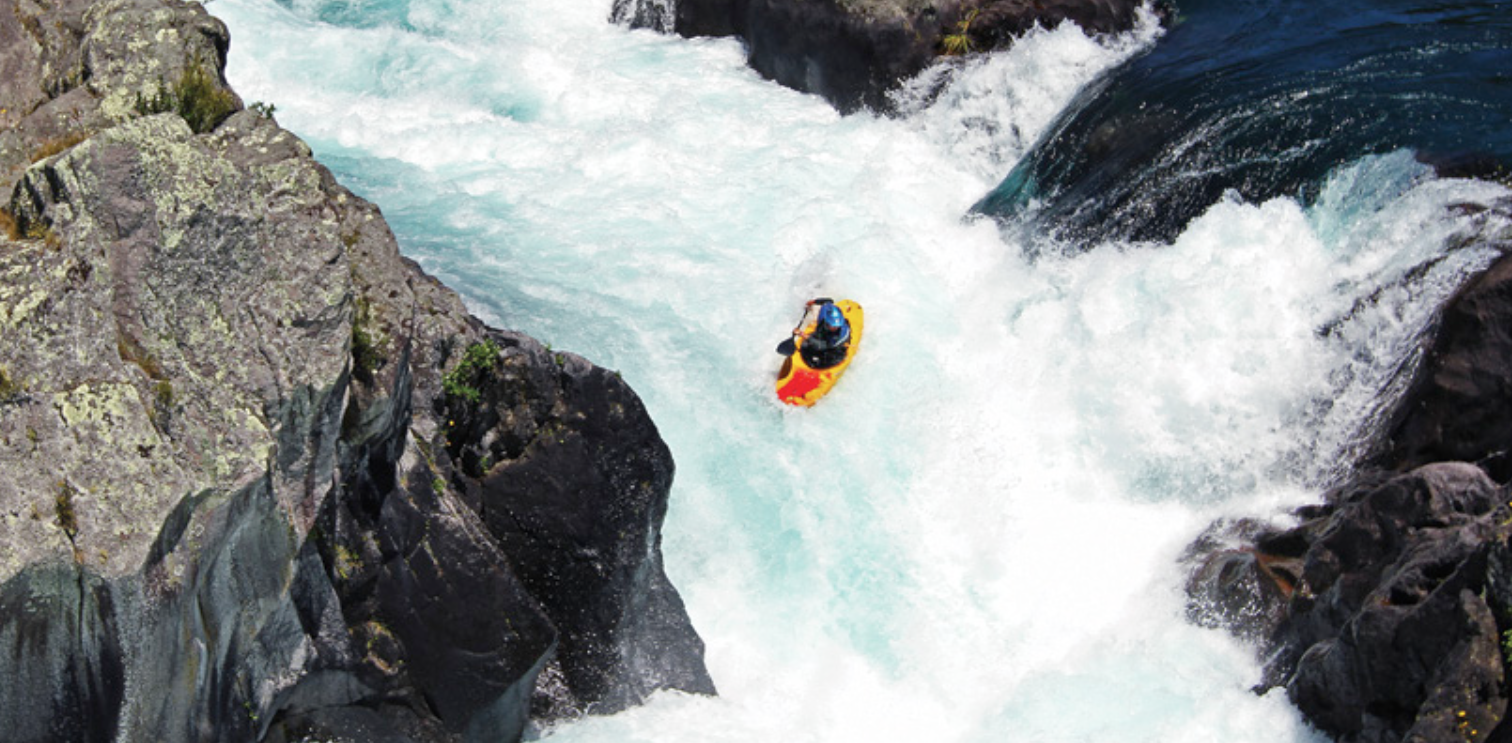
whitewater kayaking in New Zealand
Photo: Tyler Fox

Best kayaking in the South Island

To Murchison and beyond

Eventually, the alpine wilderness and incessant rains of the South Island lure all thirsty paddlers. The confluence town of Murchison is nearly everyone’s first pit stop upon departing the Willing Picton ferry. Centrally located near several small creeks, the Matakitaki River and the high volume Buller River, Murchison is home to legendary NZ paddling pioneer Mick Hopkinson’s New Zealand Kayak School and the country’s largest whitewater festival, Bullerfest.

Up in the air

From Murchison, the west coast is just three hours away. Here, the Southern Alps shoot up out of the Tasman Sea, creating a stunning backdrop for a slew of steep, crystalline creeks. The Mecca of steep creeking is the seaside town of Hokitika. Because the rugged landscape limits road access, a helicopter is often the only feasible shuttle rig. Flights with Hokitika’s local pilot, Bruce Dando, usually range from $80–120 NZD per passenger, depending on group size.

Traveling further south towards NZ’s self-appointed adventure capital, Queenstown, and on into the immense, sheer landscape of Fiordland National Park offers countless more paddling opportunities.

Find world-class kayaking in New Zealand

NZ is truly a paradise for whitewater kayakers, offering huge variety and jaw-dropping runs. When you make the trip, take your time and spare no effort to search out the best kayaking in New Zealand. After a couple months in Aotearoa, if you haven’t hit at least a dozen world-class rivers, you’re not driving hard enough.

This article was first published in the Spring 2011 issue of Rapid Magazine. Subscribe to Paddling Magazine’s print and digital editions, or browse the archives.


Canoe Marathon Races: In Praise Of Going Fast

Young men paddle in a canoe marathon race
Feature Photo: Rick Matthews

Whoever said canoes are all about slowing down? North America’s first recorded regattas date back to the 1850s when participants enjoyed leisure paddling, donning their Sunday best, parasols and all. In the decades since, canoe marathon racers have pushed the limits of human performance, establishing canoeing’s roots in restless speed.

Notable canoe marathons

1) The Atitokan-to-Ely canoe marathon

Take the Atikokan-to-Ely for example, a 190-mile canoe marathon race connecting Quetico Park and the Boundary Waters. Running for three years in the 1960s, the race’s influence on the canoeing community can still be felt today. A true Cannonball Run, the Atikokan-to-Ely required only that paddlers cross the start and finish lines—in between, anything was fair game.

Gene Jensen, developer of the modern bent-shaft canoe paddle, and canoe designer Irvin “Buzz” Peterson took top spot the first year. Legendary outfitter Don Beland and Ralph Sawyer of Sawyer Canoe Company fame finished first the following year. The allure of speed and efficiency doubtlessly influenced the work of these modern canoe builders. In its memorable third and final year, miners and forestry service workers Eugene “Bonhomme” Tretreault and Joe “Sauvage” Meany beat the competition by cutting false portages and covering their tracks, hoodwinking trailing competitors into taking longer routes.

[ Plan your next Boundary Waters canoe adventure with the Paddling Trip Guide ]

2) The General Clinton Canoe Regatta

Fast-forward nearly 50 years and 1,100 miles east. The Susquehanna River in New York hosts the General Clinton Canoe Regatta, the longest running single-day flatwater regatta in the world. Looking at the names on the race’s podium, you could well be at a World Championship. The winners of the grueling 70-mile course include Olympians and top canoe marathoners from all over the world.

These modern athletes are legends in their own right, if not for being at the cusp of design, then for displaying feats of stamina and endurance. Look no further than the race record of 20-time General Clinton winner and Olympic Gold Medalist, Greg Barton.

[ Paddling Buyer’s Guide: See all racing canoes ]

Both the Atikokan-to-Ely and General Clinton were started by local chambers of commerce as elaborate publicity stunts intended to draw outdoor enthusiasts to the natural splendor of their regions. The marathon races introduced people to canoeing, invited outsiders in and brought locals together.

3) The AuSable Canoe Marathon

Another classic on the circuit, the AuSable Canoe Marathon, is dubbed as the longest non-stop canoe race in North America and the world’s toughest spectator race. The AuSable runs 120 miles from Grayling to Oscade, Michigan, through the night and into the following day. The manual for spectators is as thorough as the instructions for race participants as supporters undertake the punishing, 15-hour mission of following marathoners along the shores of the Au Sable River.

4) La Classique Internationale de Canots de la Mauricie

La Classique Internationale de Canots de la Mauricie is a three-day, three-stage epic that takes place in the heart of Quebec along a 190-kilometer stretch of the St. Maurice River. It rounds out the Triple Crown of canoe marathon racing in conjunction with the AuSable and General Clinton. And you can’t mention the Triple Crown without speaking of Serge Corbin. He has won La Classique 25 times, the AuSable 18 times and the General Clinton 28 times, truly dominating the race junket.

Meanwhile, the effects of these marathons can be felt in leisure playgrounds across North America. Many recreational paddlers are taking advantage of modern boat materials and designs pioneered by the likes of old-school marathoners Jensen, Beland and Sawyer. Still others are inspired to show up on race day by the herculean feats of long distance canoeists, like Barton and Corbin.

There’s a canoe marathon for everyone

Regattas are about making connections—with communities, the environment and with other paddlers. Across the continent, today’s events have something for everyone’s tastes, fast or slow, so grab your carbon paddle and your parasol and get training for the next canoe marathon season.

This article was first published in the Spring 2011 issue of Canoeroots Magazine. Subscribe to Paddling Magazine’s print and digital editions, or browse the archives.