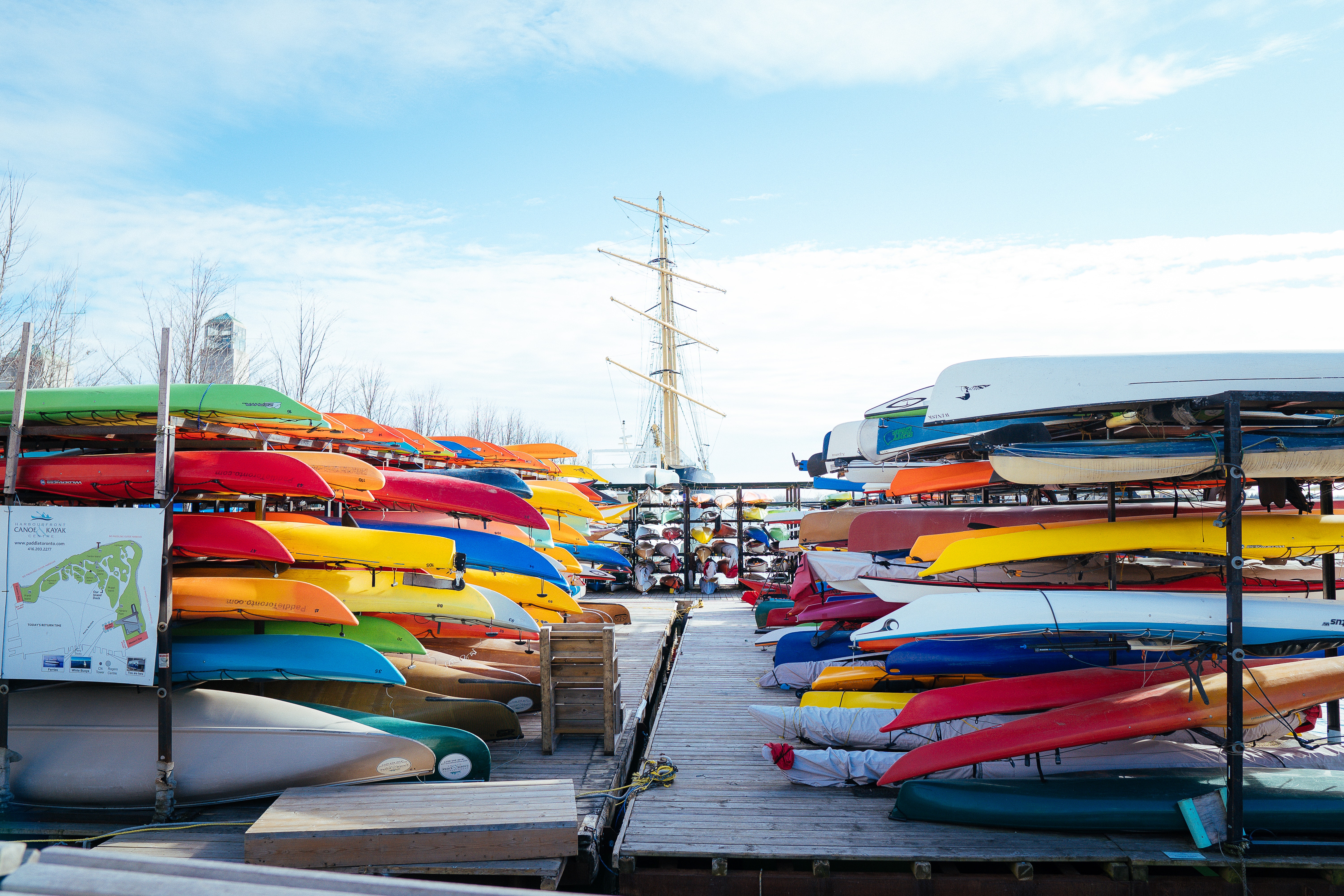
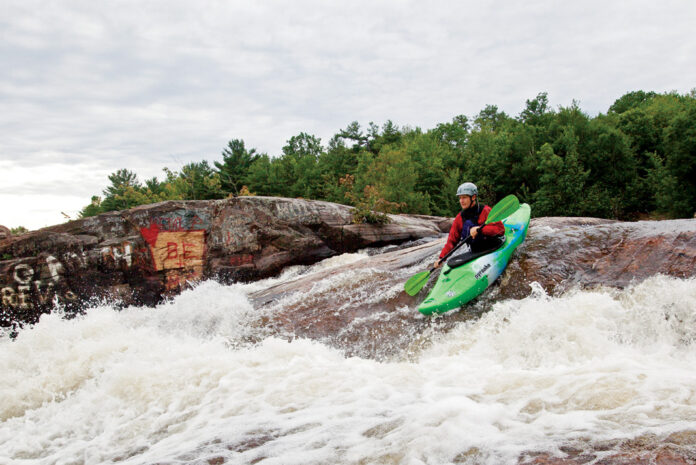
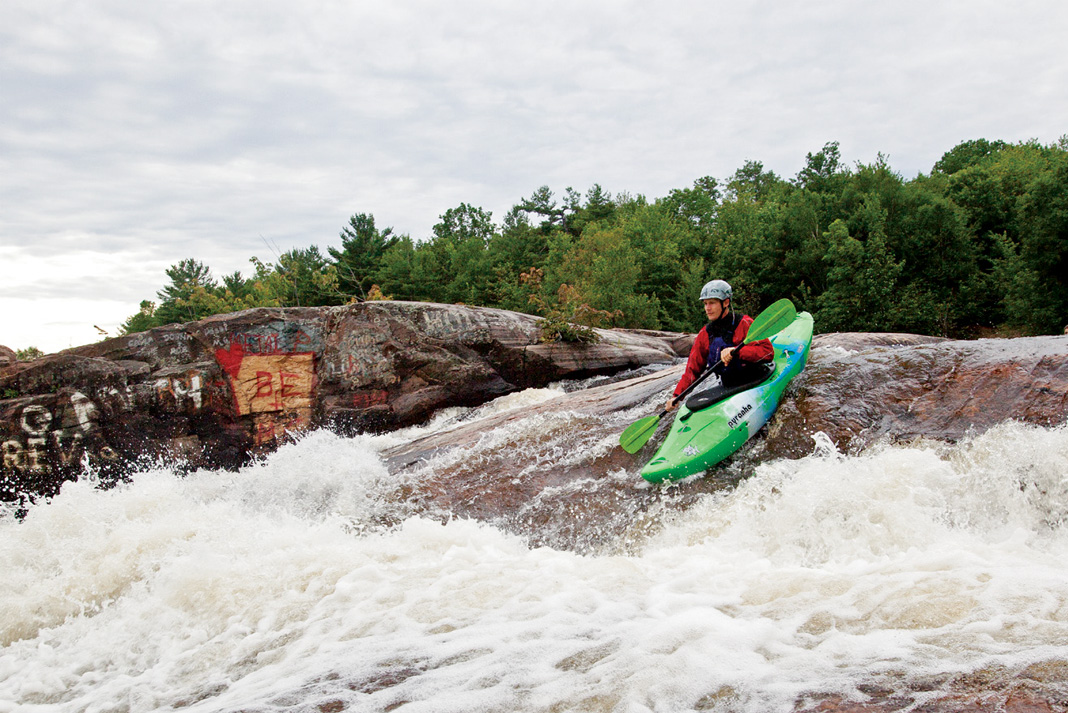
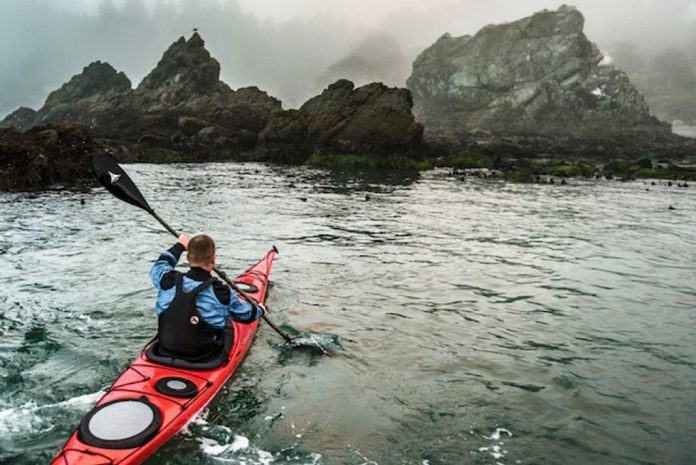
A couple of years ago, I spent an entire day at a well-known kayak shop helping a friend (okay, fine, my mom) demo boats. She wanted her first kayak to feel lively without being a lot of work, and to inspire confidence now without restricting her down the road. We paddled every available style on the racks, but I wasn’t surprised by her final choice: the Wilderness Systems Tempest 165.
[ Paddling Buyer’s Guide: Wilderness Systems Tempest 165 ]
Go far and wide with the Tempest
The Tempest 165 is the smallest member in Wilderness Systems’ venerable trio of skeg touring kayaks. Adventure Kayak reviewed the Tempest 170 Pro when it was brand new almost a decade ago (Early Summer 2003), and since then the series has earned a reputation as some of the most capable expedition kayaks on the market. Kip Keen and Zac Crouse paddled Tempests 2,400 kilometers around Newfoundland in 2006, and Crouse chose the same boat for his 2011 Paddle to the Ocean expedition beginning on the Ottawa River’s class IV rapids.
In 10 years the design has remained unchanged save a few minor outfitting updates like Wilderness Systems’ domed, water-shedding hatch covers. Proof that there’s no sense in changing something that works (and damning evidence that Wildy’s R&D team spends more time paddling boats than shaping them).
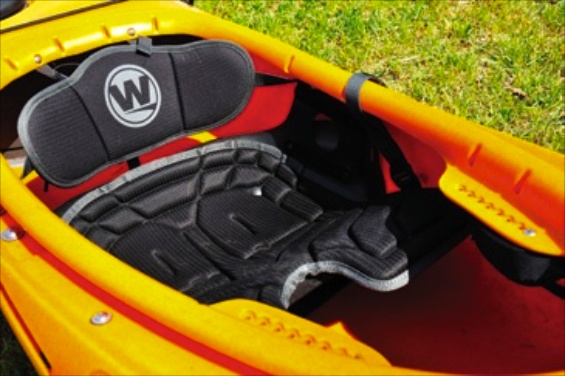
Cruising speed, tracking and storage capacity are all exactly what you’d expect from a dependable expedition kayak. But even more impressive is the plush, armchair-comfortable cockpit outfitting. I’m typically a minimalist when it comes to outfitting—just give me a piece of foam to shape and I’m set—but my mom was smitten with the Tempest’s cushy seat, tilting leg support, adjustable hip pads and contoured thigh brace pads that install right where you need them. After a long day in the saddle, it’s hard to argue with this level of off-the-rack comfort.
Deep pockets and hard chines
Tripping for two weeks on Lake Superior’s remote Pukaskwa coast alongside Mom in my low volume Brit boat, we both appreciated the generous storage capacity of her deep hatches (well, perhaps I appreciated it more than she).
Wilderness Systems was the first manufacturer to install whitewater-style outfitting in the cockpit of a sea kayak, and it works. Hard chines and a shallow V hull provide superb stability whether floating in a marsh with your SLR camera and birding lens, or carving an edge on a wave.
The past is a prologue for the Tempest 165
With a decade on the water and no signs of showing its age, the Wilderness Systems Tempest 165 has earned a berth among the classics of kayak design. If you’re not convinced by staying power, consider this: we wouldn’t recommend a boat to our moms that we wouldn’t recommend to everyone.
[ Paddling Buyer’s Guide: See all Wilderness Systems Kayaks ]
This article was first published in the Summer/Fall 2012 issue of Adventure Kayak Magazine. Subscribe to Paddling Magazine’s print and digital editions, or browse the archives.
On October 29, 2018, it will be 30 years since paddler, filmmaker and artist Bill Mason’s death of duodenal cancer at his home on Meech Lake, north of Ottawa, Ontario.
He was just 59 years old. No doubt, the world has changed since then—for one, any limit on what’s possible in an open canoe has effectively been vaporized by new generations of adventurous paddlers.
[ Plan your next adventure with the Paddling Trip Guide ]
Bill Mason is still present in today’s paddling world
In spite of all the changes, Bill Mason is still very much present and relevant in today’s paddling world. There’s Paddle Canada’s ongoing Waterwalker Film Festival created in Mason’s honor, the Bill Mason Outdoor Education Centre in Ottawa, and smaller celebrations and remembrances, like the Bill Mason Film Festival in Kenora, Ontario.
There are the people you meet on the water with a copy of Mason’s book Path of the Paddle in hand. And then, of course, there’s Kevin Callan, whose infectious, corny humor, plaid shirt and Tilley hat channels his charming inner Bill Mason on camera from time to time as he goes about his wilderness storytelling.
Bill’s daughter, Becky, and son, Paul, both offer paddling skill instruction and workshops and continue in the family tradition. And let’s not forget the special Bill Mason exhibit at the Canadian Canoe Museum in Peterborough, Ontario, which continues to draw people from around the world, drawn to the man through his books and films. The entire Mason canon of films, from Paddle to the Sea to Waterwalker and just about everything in between, is on offer on YouTube.
Bill’s message was never just about canoeing
Since the publication of Bill’s how-to films and books, there have been countless others who have produced similarly effective and engaging instructional products and progressions using updated technology.
I suspect I’m not alone when I say more important than technical prowess or pedagogical brilliance, when it comes to learning how to canoe I cherish my memory of Bill Mason’s reverence for the natural world. I love his simple joy of building a relationship to the world with a canoe. Bill didn’t really care whether you did this stroke or that stroke in this or that circumstance. Going into nature was the most important thing. How you got there in your canoe was incidental.
Deep respect for nature and for Indigenous Canadians
There is something else too. It’s less of a legacy, and more a realization of an aspiration core to his environmental ethic. Listen to the opening lines of Waterwalker:
The first white man arrives in North America. And he looks out over the land and he calls it a pristine, untouched wilderness. That’s got to be the greatest compliment anyone could pay to the Native peoples who had lived here for thousands of years. And it’s still possible to get a glimpse of what wilderness used to be. And I think the best way to do that is in a canoe—the most beautiful and functional craft ever created.
Bill didn’t know any Indigenous Canadians well enough to invite them to collaborate on his films, but he knew from reading about First Nations, Métis and Inuit sensibilities those who came later had much to learn from Canada’s First Peoples. And in inviting First Nations voice actor Wilf Pelletier to read these passages for the soundtrack of Waterwalker, Mason was initiating a change only realized since his death.
In helping bring Indigenous wisdom into mainstream discourse, Bill was ahead of his time, and ahead of the rest of us. Much more recently the voices and faces of the original canoes and routes in this nation have begun rising into public consciousness in meaningful ways. And 30 years after Bill Mason’s death it is perhaps this which will keep him living in our collective memory while another three decades tick by.
This article was first published in Issue 55 of Paddling Magazine. Subscribe to Paddling Magazine’s print and digital editions, or browse the archives.
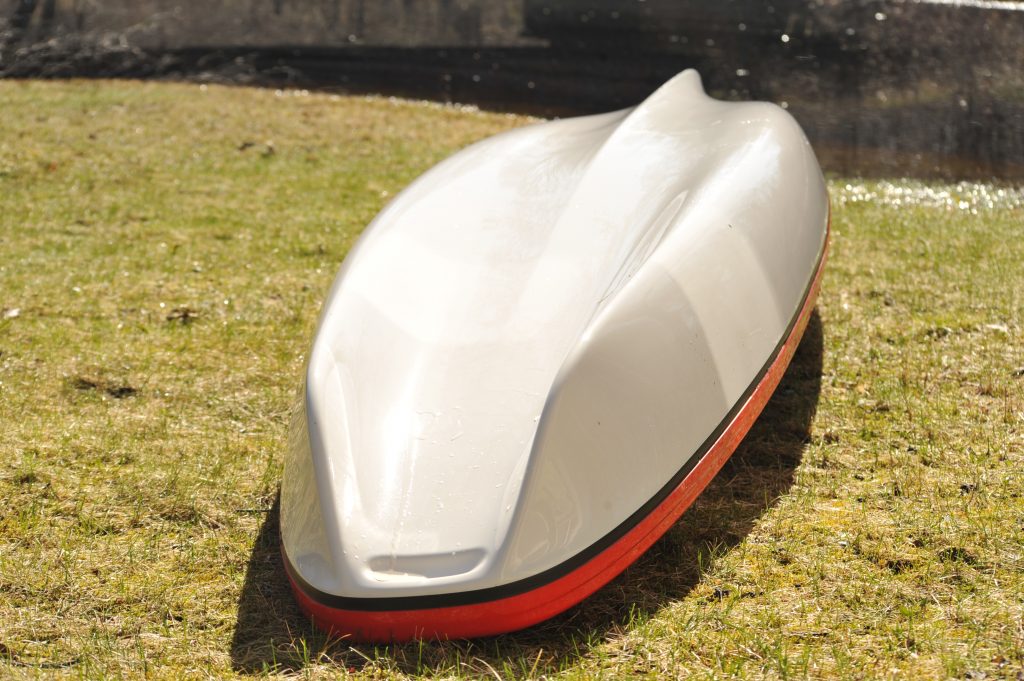
Business in the front, party in the back. The Delta 12 AR kayak, featuring Fusion Hull, could be the most unusual hybridization since the mullet. But where the hairstyle was contentious and never quite captivated the mainstream, Delta’s kayak–catamaran hull graft promises undeniable appeal for the recreational paddling masses.
The Fusion Hull underpins Delta’s Kayaks’ Adventure Rec series, which includes the 12 AR and smaller 10 AR as well as a 10.5-foot sit-on-top. The design brief for these boats must have read something like: “Let’s build a compact kayak that’s lightweight, looks great and welcomes novice paddlers with superb stability, tracking, easy entry and all day comfort.”
[ Paddling Buyer’s Guide: See all Delta Kayaks boats ]
The Delta 12 AR kayak is attractive and lightweight
The 12 AR weights just 42 pounds, making it one of the lightest open-cockpit recreational kayaks on the market. It’s also amongst the best looking, thanks to Delta’s thermoforming expertise. At the company’s British Columbia manufacturing facility, sheets of acrylic–ABS plastic are heated and vacuum-formed into graceful and hard-wearing kayaks.
The acrylic outer layer gives the 12 AR its glossy finish, vibrant color, excellent abrasion resistance and protection against UV fading or weathering. The secondary layer of high-impact ABS offers excellent strength and durability. The only time I’ve seen a Delta with any significant hull damage was a cracked hatch lid after being stored outside, uncovered at 20 below—not what most recreational enthusiasts would consider paddling weather.
Twin hulls at the stern maximize tracking. | Photo: Vince Paquot
Unique hull offers stability and control
One look at the 12 AR’s catamaran-inspired stern, and it’s clear this is a very stable boat. New paddlers will often lean back when nervous or tired—a subtle weight transfer that makes most kayaks less stable and harder to control.
Think of the 12 AR’s twin hulls like training wheels. You can lean back, or even heavily to one side, and the Fusion Hull remains perfectly poised and even-keeled. That incredible stability means it’s also well suited for paddling photographers, anglers and those who like to bring along a canine friend (there’s plenty of room for Fido in the extra-long cockpit).
The hard chines and double-arch hull deliver rock-solid stability. | Photo: Vince Paquot
Okay, you may be thinking, but isn’t a catamaran rather cumbersome to paddle? Well, yes, but not so the 12 AR. Remember, the Fusion Hull is a twin-arch stern fused to a V-shaped displacement bow through an alchemy of CAD software and creative design. Acceleration and glide feel comparable to Delta’s more conventional, narrower 12- to 14-footers.
[ Paddling Buyer’s Guide: See all Recreational Kayaks ]
Aside from rock-solid initial stability, the 12 AR’s most notable handling characteristic is exceptional tracking. If you want to dig as hard as you like with no course deflection or correction strokes, this is your boat. Look elsewhere if you’re seeking turn-on-a-whim maneuverability or intermediate-and-beyond edging.
The 50-inch-long cockpit opening offers easy in and out for less flexible or claustrophobic paddlers. | Photo: Vince Paquot
Extra-large cockpit is spacious and accessible
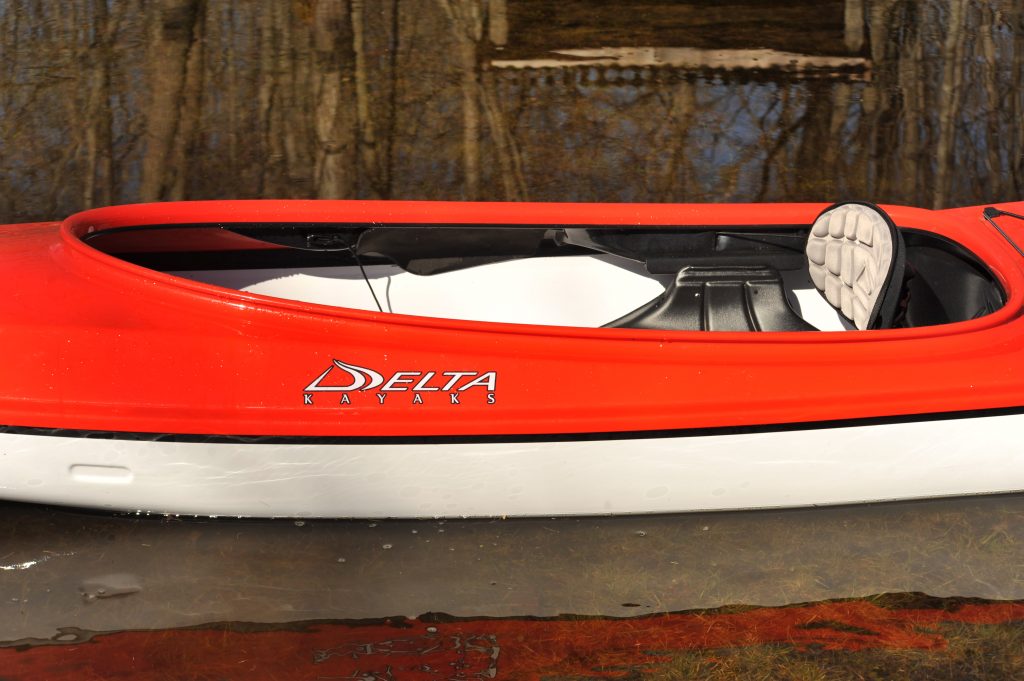
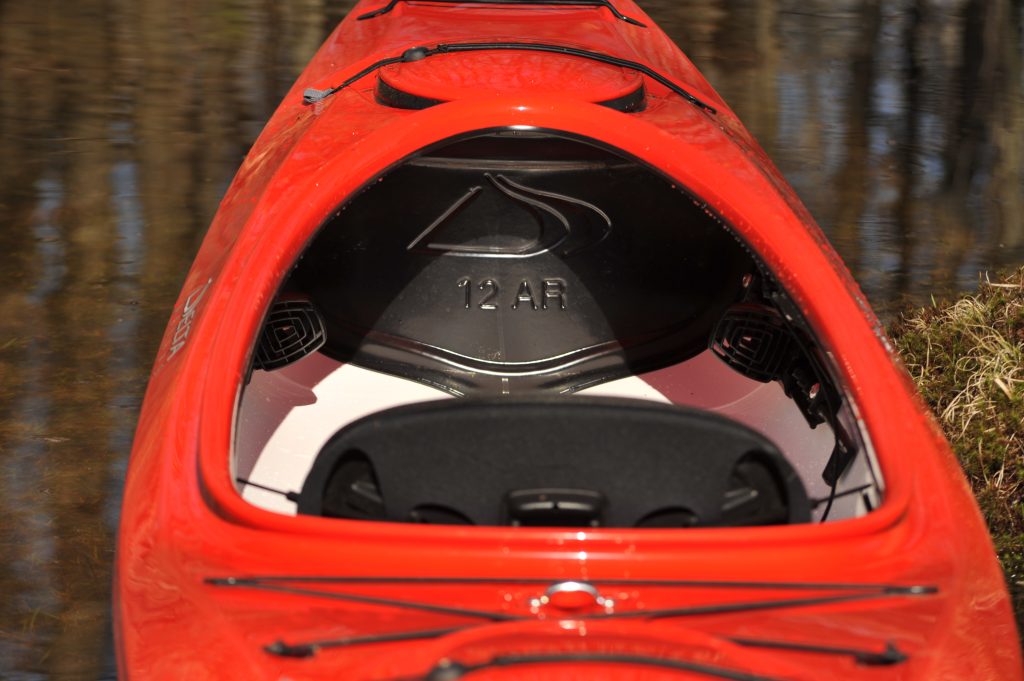
Delta Kayaks designed a new, elongated recreational cockpit for the 12 AR to facilitate super-easy entry and exit. At 50 inches long by 20 inches wide, the cockpit opening feels open and airy with an unrestricted, knees-up paddling position. Because the cockpit is too large to fit with a sprayskirt, the 12 AR is best suited to paddling smaller lakes, flatwater rivers, secluded estuaries and other sheltered waters.
Delta’s outfitting focuses on personalized comfort with their adjustable and intuitive Contour II seat system. The supportive, multi-position backrest is paired with a padded seat that can be moved four inches fore or aft to optimize fit and trim. All that adjustability means the Delta 12 AR kayak has a greater fit range than many others, accommodating paddlers short and tall. Even better, everything can be fine-tuned on the move, making the 12 AR a great choice if you’ll be sharing your kayak with family and friends.
All of the cockpit outfitting is on-water adjustable, including the multi-position backrest and Sea Dog foot braces. | Photo: Vince Paquot
The Delta 12 AR has a big appetite for adventure
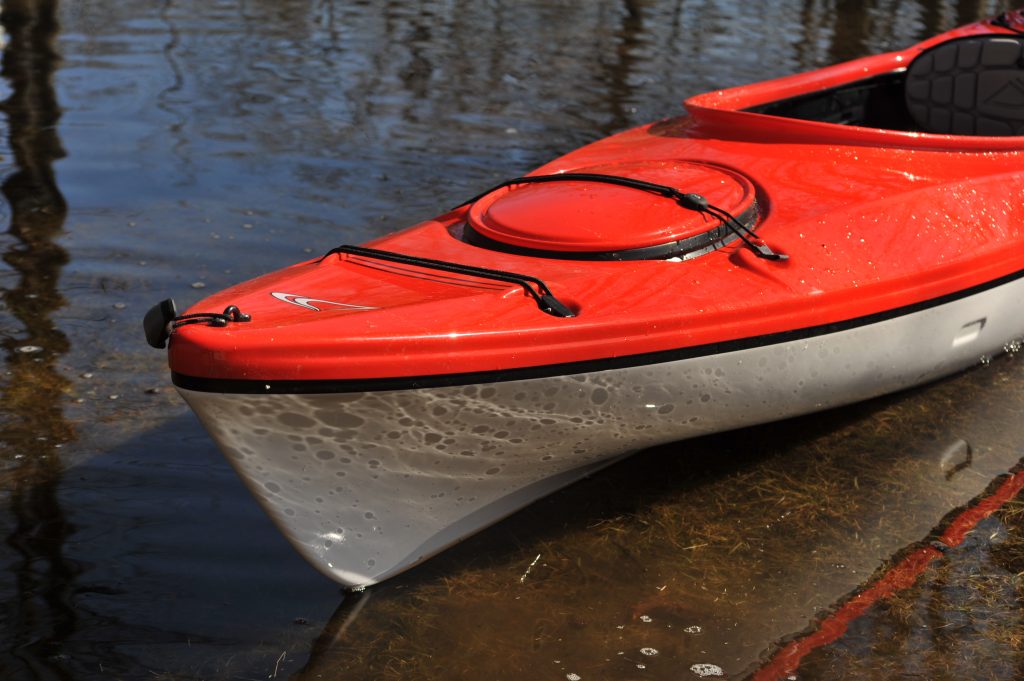
I applaud Delta for making safety a priority with all of their kayaks, and the 12 AR is no exception. While many rec kayaks—especially those from big box stores—have only a single sealed hatch, the 12 AR features bow and stern bulkheads with large, accessible hatches for plenty of floatation and dry storage. I also love the easy on and off convenience of Delta’s Press-Lock hatch covers, and the color-matched lids look pretty slick, too.
Two large, watertight hatches provide ample storage for a weekend’s worth of gear. | Photo: Vince Paquot
Packed with premium features, the Delta 12 AR kayak is an exciting new option for discerning recreational paddlers. Add the light weight, innovative hull design and oversized cockpit, and you have a virtually barrier-free craft for flatwater adventures.
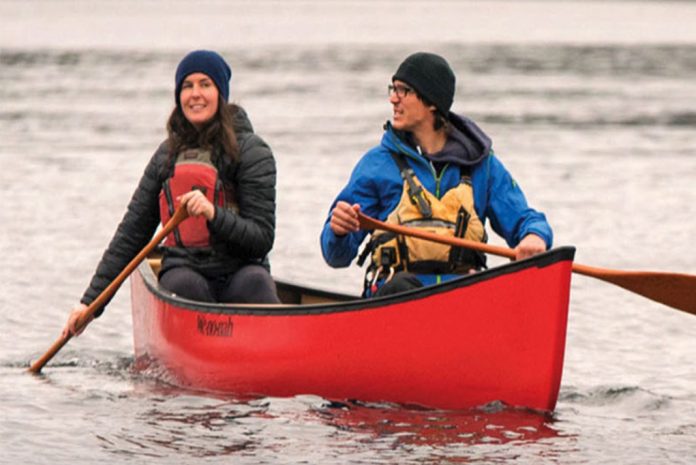
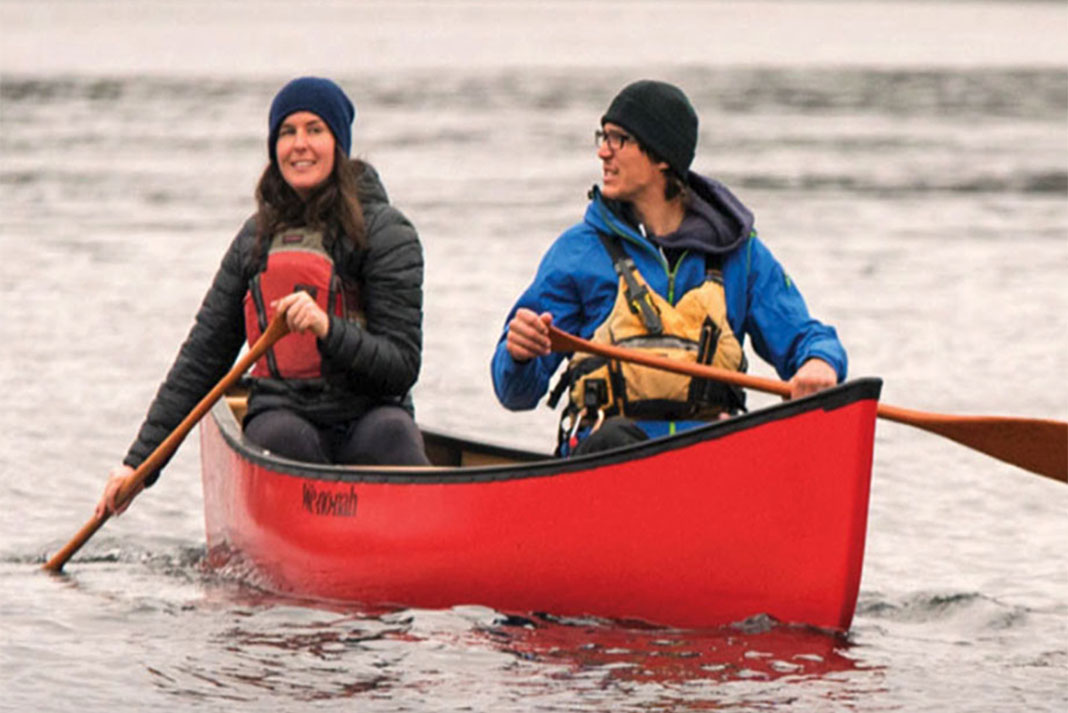
On the water with the Wenonah Spirit II canoe. | Photo: Alyssa Lloyd
When the Wenonah Spirit II showed up at the Canoeroots office last fall in all its cherry-red glory, its mere existence marked the beginning of a new chapter in canoeing history. Wenonah Canoes’ Spirit II in T-Formex is the culmination of a classic and widely loved canoe with a long-awaited material that underwent a tumultuous journey to production.
[ Paddling Buyer’s Guide: See all Lakewater & Touring Canoes ]
Getting into the Spirit II
From the back of a napkin
The origins of the Spirit begins in 1981 when Wenonah sales and distribution representative Kurt Renner was sitting with a Wenonah dealer from Missoula, Montana. The dealer told Renner he needed a canoe he could sell to anyone. The pair pulled up their bar stools and sketched the ideal model on a wrinkled napkin.
The canoe they dreamed up was 17-feet-long, had a 34-inch waterline, a 36-inch maximum beam, one-and-a-half to two inches of rocker and clean entry and exit lines. Wenonah took the sketches to high-end racing canoe designer Everett Crozier and soon after the Spirit was born.
After two years of building the Spirit in fiberglass and Kevlar, Wenonah found the process of removing it from the mould was too cumbersome and made a modification to the nose.
Wenonah finds the right formula
In 1983 the Spirit II was born. It went on to become the most successful canoe model in Wenonah’s line. The Spirit II bridged the gap between whitewater tripping boats and the abundance of 32 to 33-inch waterline canoes deemed too tippy by too many consumers. It also became the center of a family of touring boats.
“It gave us a boat with a much broader appeal that can be used anywhere,” says Renner, 36 years after that bar napkin sketch.
Initially introduced in fiberglass and Kevlar, by the 1990s the Spirit II was being produced in Royalex. Then in 2013 the plastics company PolyOne announced they would cease production of Royalex sheets. It was a major blow to the canoeing community and kicked off a canoe material soap opera.
The future of Wehonah’s top-seller was now in the hands of Esquif Canoes, who announced in 2014 they were concocting T-Formex as a replacement material in their southern Quebec factory. Esquif went through bankruptcy and reinvestment, then eventually manufactured and shipped Wenonah a few T-Formex sheets.
Wenonah baked a sheet, formed a Spirit II and shipped it here to Canoeroots. Meanwhile, canoe builders are lining up to use T-Formex, but Wenonah Canoe was the first, outside of Esquif themselves, to produce canoes in the new material.
Feature Photo: Alyssa Lloyd
Out on the water
After all this drama it turns out that our T-Formex Spirit II looks and performs just like a Royalex one.
Wenonah advertises the Spirit II as ideal for sportsmen, whitewater paddlers, families, kids and pretty much anyone else who wants a do-it-all canoe. To see if it’s truly the kind of canoe a dealer in Missoula could sell to anyone we paddled it in a variety of conditions.
The Spirit II tracks beautifully, and manages to be steady and stable without being sluggish. We especially appreciated the size of the Spirit II— it’s small enough for quick paddling outings but large enough to pack all the gear for a week of canoe tripping, plus the dog.
Our T-Formex tester has ash and webbing seats which adds even more to the Spirit II’s do-it-all sensibility. Why? Because when you spin it around it’s a pretty decent solo canoe.
I don’t live or work in Missoula where the rivers run long and free of portages. Solo carrying the Spirit II on even a short 200-meter portage, I definitely felt every one of its 64 pounds. I know yokes are a personal thing but I found this one flat and uncomfortable; changing it out would be my first, and maybe only, DIY project.
After the short walk I decided that if durability and price were not the most important factors I’d remind you that the Spirit II is available in Wenonah’s Tuff-weave Flex-Core, Flex-Core with Kevlar and Ultra-light with Kevlar layups. Spend more to carry less.
[ Paddling Buyer’s Guide: See all Kevlar Canoes ]
Not stopping with the Spirit II
While we felt pretty special paddling our pre-production model of the Spirit II in T-Formex, we know we’ll be seeing many more of them shortly. At the time of printing Wenonah’s production team is waiting for shipments of more T-Formex sheets, but Renner says many have been already pre-sold.
Renner sees the Spirit II as providing a much-needed respite in the canoe market for something versatile, tough and durable. “It’s refilling a hole that over the last couple years was somewhat of a void,” he says.
The 50-year-old canoe company has plans to produce seven of its models in T-Formex in 2017. In addition to the Spirit II they will build the Aurora, Adirondack, Prospector 16, Prospector 15, Wilderness and Blackwater. Wenonah Canoe Vice-President Bill Kueper is enthusiastic about the growing inclusion of Esquif’s T-Formex.
This article originally appeared in Canoeroots Early Summer 2017 issue.
Subscribe to Paddling Magazine and get 25 years of digital magazine archives including our legacy titles: Rapid, Adventure Kayak and Canoeroots.
Are these sea kayakers better off using a skeg or a rudder? | Feature Photo: Francis Lepine
Which is better, skeg or rudder—or nothing at all? It’s a popular shore-side debate within the kayaking community, and these hardware options are often a source of confusion for first-time buyers.
Both skegs and rudders are mechanical aids that allow a kayak’s performance to be altered on the fly, as a paddler reacts and adjusts to conditions. Without a skeg or rudder, the performance of a kayak is solely dependent on its hull shape. The paddler can only modify the hull’s tendency to wander or hold a line by edging and taking strokes to control the boat’s course. While this is a highly active way to paddle, there’s no mechanical steering aid that could go wrong, and there’s a definite purist appeal in doing it all with just your body and paddle.
The con is that paddling without a skeg or rudder can be a lot more demanding, especially over long distances and in wind and waves. Endlessly sweeping on one side or trying to hold a kayak on edge for extended distances can be punishing to the body and inefficient overall.
So what’s the difference between rudder and skeg?
A skeg is a retractable blade that drops out of a slot in the kayak’s stern. The skeg blade cannot pivot from side to side, but is adjustable up and down. It’s typically controlled by a cable and slider. Skegs work by allowing the paddler to fine tune the amount of surface area that the dropped blade presents in the water. By lowering or raising the blade, a kayaker can balance out the forces of wind or current on his boat, allowing the kayak to more easily hold course.
[ Paddling Buyer’s Guide: See all Sea Kayaks with Skegs ]
By contrast, a rudder has a blade that pivots side to side, controlled by foot pedals connected to the rudder by cables or line. Most sea kayak rudders can be flipped up out of the water via uphaul and downhaul lines.
A rudder’s advantage is that it allows a paddler to effectively steer the boat by foot, without the need to interrupt or modify the forward stroke. This means that all energy can be poured into driving the kayak forward. The result is a system that maximizes a kayaker’s potential for speed and distance. For this reason, the vast majority of competitive racing designs incorporate rudders.
[ Paddling Buyer’s Guide: See all Sea Kayaks with Rudders ]
Which is more reliable?
Many kayakers will argue that skegs are more dependable than rudders, but I haven’t found this to be true. Skegs or rudders can both can suffer mechanical issues and both benefit from routine maintenance and care.
Skegs can be prone to jamming because it’s easy to get a pebble stuck between the skeg blade and box when launching from a beach. However, a little education and restraint with the slider makes this issue a minor one. Be aware that the skeg box does takes up some premium packing space in the stern hatch.
Note that some kayaks are designed to be paddled with the rudder down at all times. While this approach can yield great results, it does mean that if the rudder fails, the hull may not be very neutral or easy to control without the rudder.
For most of us, paddling is not a competitive pursuit. So try rudders. Try skegs. Try nothing at all. Make the decision based on personal experience, rather than by listening to heated debates you overhear at the launch.
Pyranha Kayaks Fusion L | Feature Photo: Rapid Staff
Some children look like an equal mix of both parents, while others resemble one parent more than the other. While the Pyranha Fusion does show some family resemblance with sister touring line P&H Kayaks and recreational line Venture Kayaks, the Fusion most clearly resembles—and paddles—like its whitewater siblings.
Pyranha Fusion L Specs
Length: 10’2”
Width: 27”
Cockpit Length: 35.5”
Cockpit Width: 19.25”
Volume: 96 gal
Weight: 48.5 lbs
MSRP: C4S outfitting $1,099
River Tour rec outfitting $999
[ Paddling Buyer’s Guide: See all Pyranha Kayaks ]
The Fusion crosses over
Fit for the flats
At first glance you quickly notice most of the characteristics that you don’t find on typical whitewater boats. Like the removable deck pod and the large 20-gallon multi-day hatch that dominates the stern and deck lines crisscrossing the front deck. The hatch was nice and watertight but isn’t as easy on as some of the other boats, especially on cool mornings when the rubber is stiff.
The Fusion is equipped with Pyranha’s skeg system that goes up or down with a simple rope and cleat. Doing most of our paddling in kayaks without a skeg we were surprised how often, and useful, we found them to be on the flats. Since the skeg helps keep you going straight you have to do fewer corrections strokes and don’t waste your energy cruising through the calm stuff.
Pyranha Kayaks Fusion L | Feature Photo: Rapid Staff
Catch a wave
While those touring features definitely help you cross the flats it’s when the river picks up and starts foaming the Fusion really shines.
Of the boats we tested, I found the Fusion was the one that paddled most like a whitewater boat. It didn’t feel as wide as the other boats making it seem easier to engage the edges. It was controllable on waves and felt a bit like a stretched out, slightly relaxed version of the Pyranha 9R, a really fast whitewater racing boat.
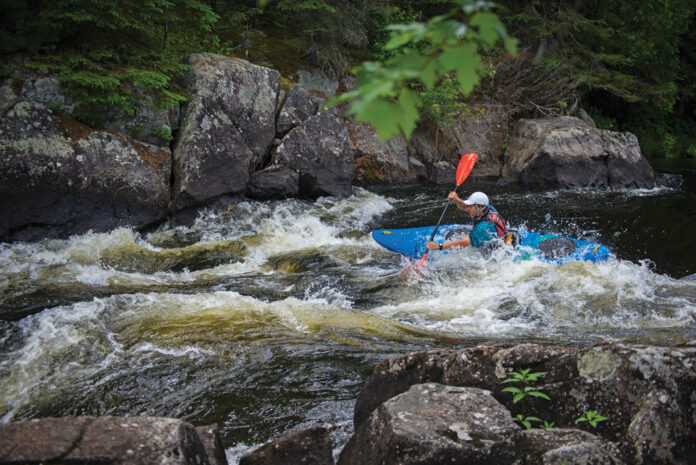
At just over 10 feet long the Fusion moves like a rocket compared to most other whitewater kayaks. As one of the narrower feeling boats in the shootout it gives up some primary stability compared to the wider, rounder designs, but the upside is you get way better handling in whitewater. You can surf small waves, change course quickly mid-rapid, catch smaller eddies with confidence and zip around the river with authority. We enjoyed long soul surfs on glassy green waves and even managed a few spins.
The Fusion comes equipped with either Pyranha’s River Tour recreational outfitting or their superior Connect C4S whitewater outfitting. Return your empties and spend the extra $100, it’s worth it. I’m not sure how Pyranha manages to maintain the hull rigidity without a front pillar, but we like it. There is nothing in front of the seat. Hmmm, it was very temping to stuff our waterproof camera bag between our knees.
Pyranha puts their Fusion in the river running category and it definitely inherited more traits from their whitewater lineup of kayaks. If you need a boat to handle multi-day whitewater trips and something to get you from one rapid to the next with a bit of speed then run to your local dealer now. And then run anything you want.
This article first appeared in the Fall 2015 issue of Rapid Magazine.
Subscribe to Paddling Magazine and get 25 years of digital magazine archives including our legacy titles: Rapid, Adventure Kayak and Canoeroots.
Feeling cheeky. | Feature Photo: Virginia Marshall
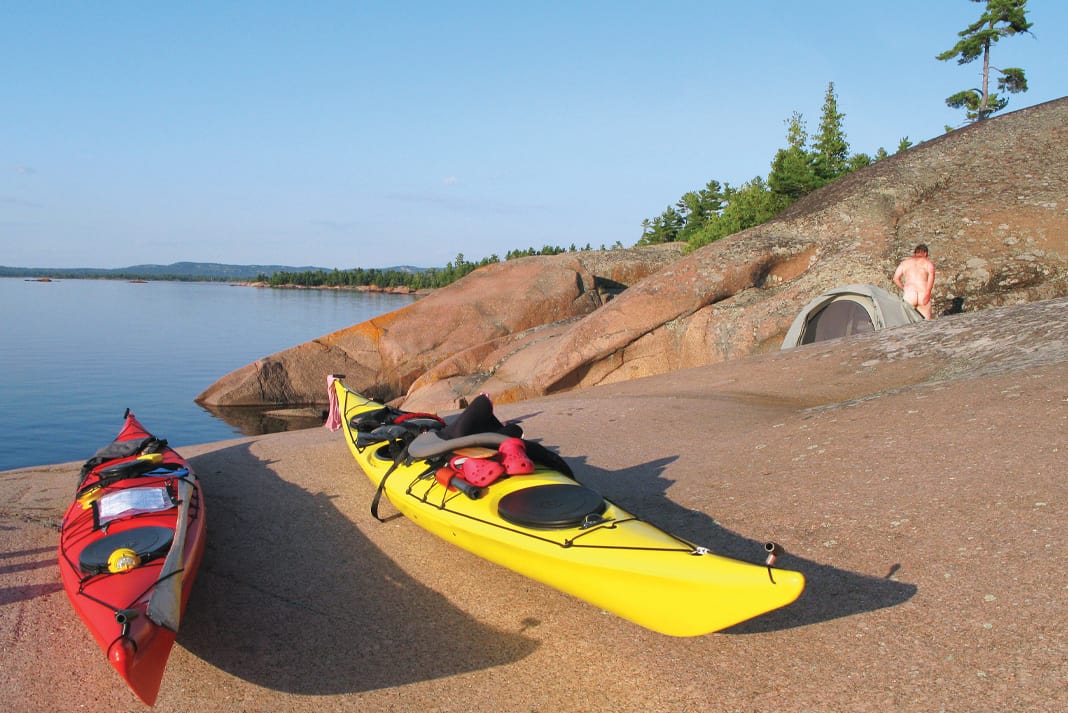
No wilderness experience is complete without casting off that final thread of civilization: the swimsuit. Reminiscing on the times I’ve gone skinny dipping takes me back to the core of my wilderness trips, to the very reasons I went in the first place.
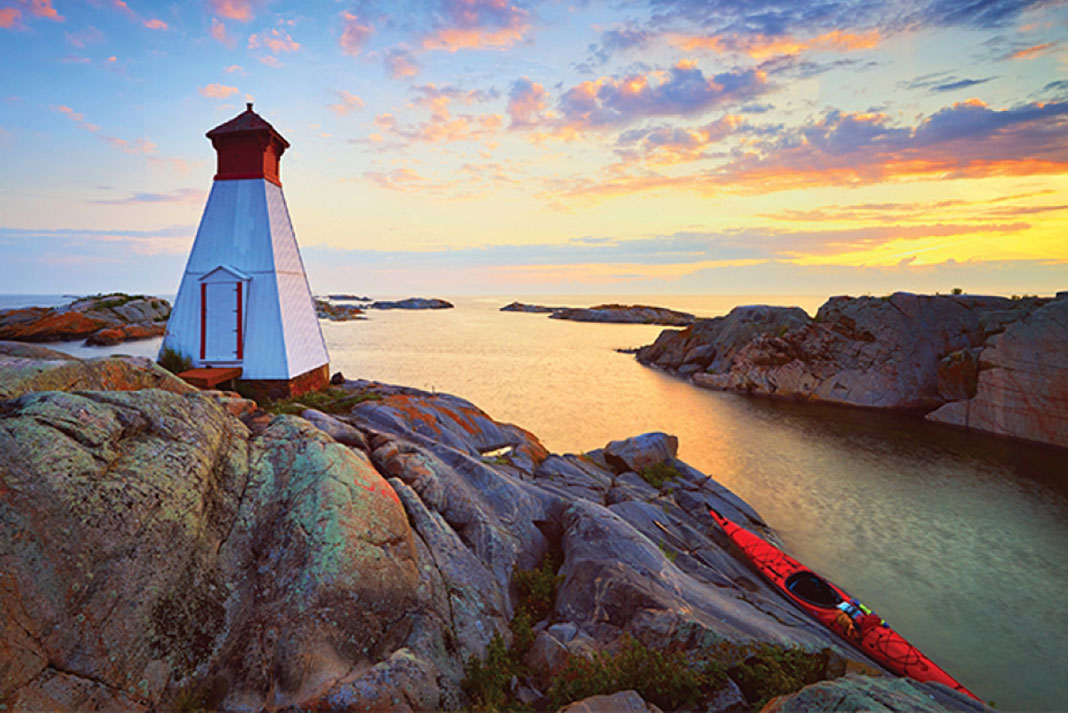
Floating naked in Indian Arm on a perfect summer night, surrounded by green phosphorescence, watching seals’ shimmering tracks like underwater comets. Or wind drying on Georgian Bay granite at sunrise, getting goose bumps on body parts rarely feeling the open air.
Why not go skinny dipping on your next paddling trip?
Blame modern civilization for the swimsuit—Victorian England outlawed naked swimming in 1860. In pre-industrial times everyone skinny dipped. Who would bother getting clothes wet? Especially before the days of fast-drying Lycra.
Early swimsuits favored prudishness over practicality. Made from hideous stiff canvas or flannel, they were cut for maximum concealment. Women’s bathing gowns had lead weights sewn into the hem to keep them from floating (the gowns, not the women, though one wonders how many drownings resulted). A wet swimsuit weighed 30 pounds.
[ Paddling Buyer’s Guide: See all paddling apparel ]
Thankfully, by the 1930s, North America had begun turfing its beach censors, whose job it had been to enforce “neck to knees” coverage.
Feeling cheeky. | Feature Photo: Virginia Marshall
Skinny dipping flirts with the mainstream
Receding tan lines have since closely followed the flourishing of liberal democracy. Under Franco, Spain’s fascists shut down nude beaches. At the height of the fight against Hitler, people went bananas for the bikini in America. Scandinavia, that paragon of liberalism, is the world capital of nudism.
Naked swimming even transcends the culture wars: Democrat president Lyndon Johnson once skinny dipped with evangelist Billy Graham.
[ Plan your next paddling adventure with the Paddling Trip Guide ]
Swimming in the buff continues to gain popularity. In 1981 Pope John Paul II (who was a kayaker first) issued a statement about morality and nakedness that effectively gave it the okay. The 2009 television series The Skinny Dip featured young, hot Newfoundlander Eve Kelly getting naked at a remote swimming hole in every episode. And at the end of 2012, a herd of New Zealanders stripped and dipped to break the group skinny dipping record of 413.
Yet fully freeing ourselves from the convention to cover up still requires escape. That’s why every nude beach is a mini wilderness: Vancouver’s legendary Wreck Beach, 473 steps down to the sea at the outer edge of an urban forest. Toronto’s Hanlan’s Point, which only became legal in 1999, separated from downtown by an island. Or San Diego’s Black’s Beach, a hike below 300-foot cliffs.
Myself, I prefer to kayak to more private skinny dipping spots. I hadn’t considered myself a nudist—that political “ism” associated with the brazenly unclothed—until I learned how much the term’s definition sounds like why I paddle: “becoming one with the natural world” and “a feeling of liberation as you shed your status, pretensions and fears.”
For me, the freedom to skinny dip is not just a sign I’ve gotten away. It’s the final ritual of getting there, a baptism.
This article was first published in the Spring 2013 issue of Adventure Kayak Magazine and was republished in Issue 58 of Paddling Magazine. Subscribe to Paddling Magazine’s print and digital editions, or browse the archives.
Feeling cheeky. | Feature Photo: Virginia Marshall
Few places in the United States inspire visions of subtropical paradise like the Florida Keys do. With practically perfect weather year-round, clear blue water, and plenty of beautiful beaches to explore, kayaking Key West is a dream. It’s no wonder more than 2 million tourists visit the Keys each year.
With the ocean as your playground, the Keys offer an abundance of water recreation opportunities, including kayaking and canoeing. If exploring the local scenery and wildlife by paddle is your thing, you’ll want to plan your next getaway for Key West.
The southernmost point of the contiguous United States offers everything an ocean lover could want: Guided kayak and canoe tours, boat rentals, saltwater fishing, and snorkeling, just to name a few. In this guide to kayaking Key West, we’ll explore the best of the above and much more to take the guesswork out of your next kayaking trip to the Keys.
[ Get all the gear essentials for your kayaking trip in the Paddling Buyer’s Guide ]
Must-sees / top places to kayak
With so many interesting places to explore around Key West, it’s hard to decide where to begin. Check out our list of must-see places to get you started on your own personal tour of the island.
If exploring mangrove forests at your leisure is what you seek, Saddlebunch Keys is a great place to start. These keys are a chain of mangrove islands located 7 miles east of Key West. There are tons of places to pull off the highway and launch your kayak or canoe, as well as a boat ramp at mile marker 11 on US 1. This is said to be one of the most scenic areas in the Lower Keys, Saddlebunch Keys will not disappoint!
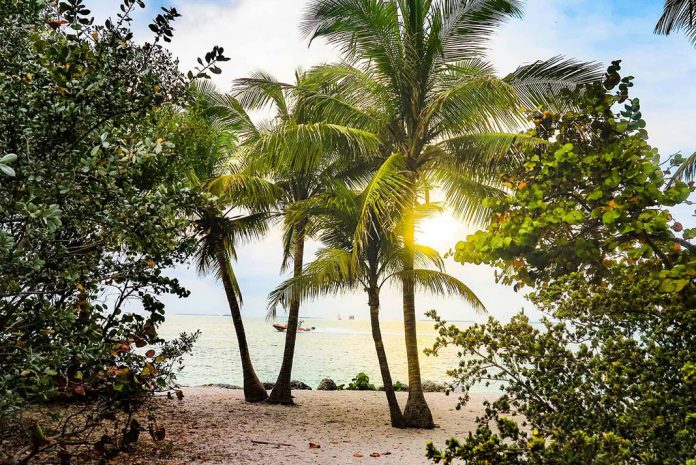
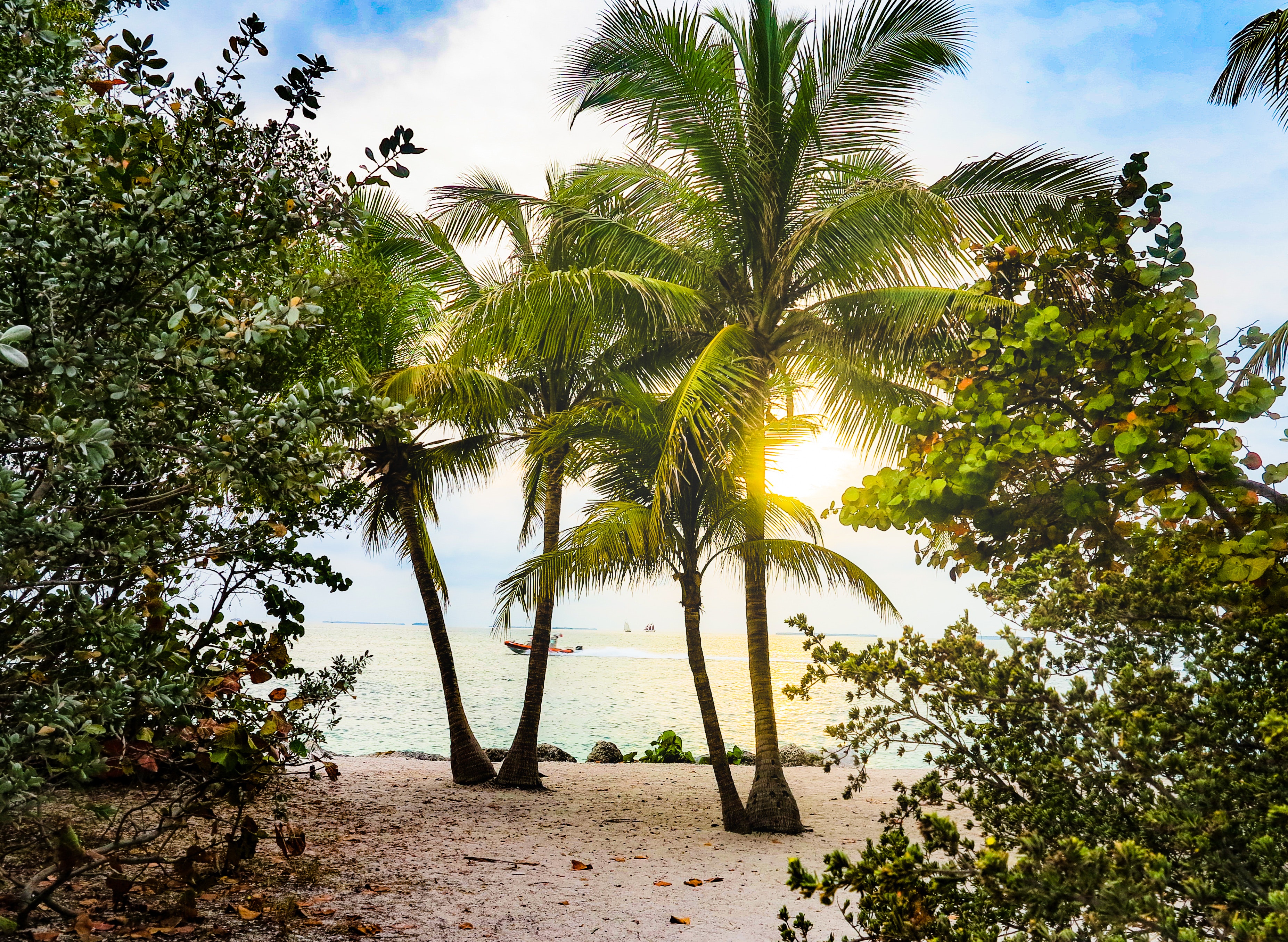
Although only half a mile in length, Smathers Beach is the largest public beach on the island. 150,000 visitors come to swim, kayak, paddleboard, and relax here annually. Located on the south side of Key West, you’ll find beautiful views of the Atlantic Ocean as well as endless palm trees and white sands.
Geiger Key is most notable for its large, combined marina, restaurant and RV park. If you’re not into the hustle and bustle of marinas, there is also a public launching area nearby. If you’re looking to do some fishing on your trip, be sure to give Geiger Key a go. Even if you’re not, there are plenty of small islands to explore and the Naval Air Station is nearby as well, so there is a good chance you’ll get to view some military planes and helicopters on your paddle.
Launch your boat from the southernmost state park in the lower 48 states. Fort Zachary Taylor Historic State Park boasts one of the most popular beaches in the area. While you’re out paddling here, take a break to bird watch or snorkel too. And, of course, it’s not a bad idea to visit the fort itself while you’re already there.
PHOTO: Pexels
Top-rated kayak rentals
If you don’t have your own kayak or simply don’t feel like hauling it with you on your trip to Key West, never fear. There is no shortage of boat rental businesses here. Most offer guided tours as well.
Lazy Dog Adventures
Lazy Dog Adventures is one of the most highly rated kayak rental and tour businesses in Key West. They have earned a 5-star rating on TripAdvisor with over 1,000 reviews. Single and double kayaks are available. You can rent your boat by half a day at $25, or a full day at $45.
If you are heading out by yourself, Lazy Dog will offer you a map of the local waterways and points of interest. As you might imagine from their name, they also offer tours, which we’ll talk about more below in our Key West kayak guide.
Kayak Kings of Key West
Kayak Kings of Key West has the best rental rate around, offers several different types of kayaks to borrow, and is very accommodating with special requests. Standard singles and doubles are available at a flat-rate fee of $25/day. It doesn’t matter if you’re only out there an hour, half a day, or all day; it’s $25.
Kayak Kings also have explorer and fishing kayaks available for a bit more as well as ocean kayaks for experienced kayakers only.
Aside from the plethora of kayaks they offer, Kayak Kings also have dry bags, coolers, kayak anchors, and snorkeling gear available for rent. They also provide drop off services for locations up to 15 miles away and will allow you to take their boats on the ferry if you’re planning to visit the Dry Tortugas while you’re there.
[ Get all the gear essentials for your kayaking trip in the Paddling Buyer’s Guide ]
Night kayak Key West
For an extra unique experience while kayaking Key West, check out the clear bottom single and double kayaks available at Night Kayak. A single boat will run you $20 for 1 hour or $30 for half a day. Double kayaks are $30 for 1 hour or $40 for half a day.
Night Kayak Key West is fully licensed and insured. They also offer night paddling tours and rent out snorkeling and fishing gear
PHOTO: Old Town & Ocean Kayak
Where to go kayak fishing
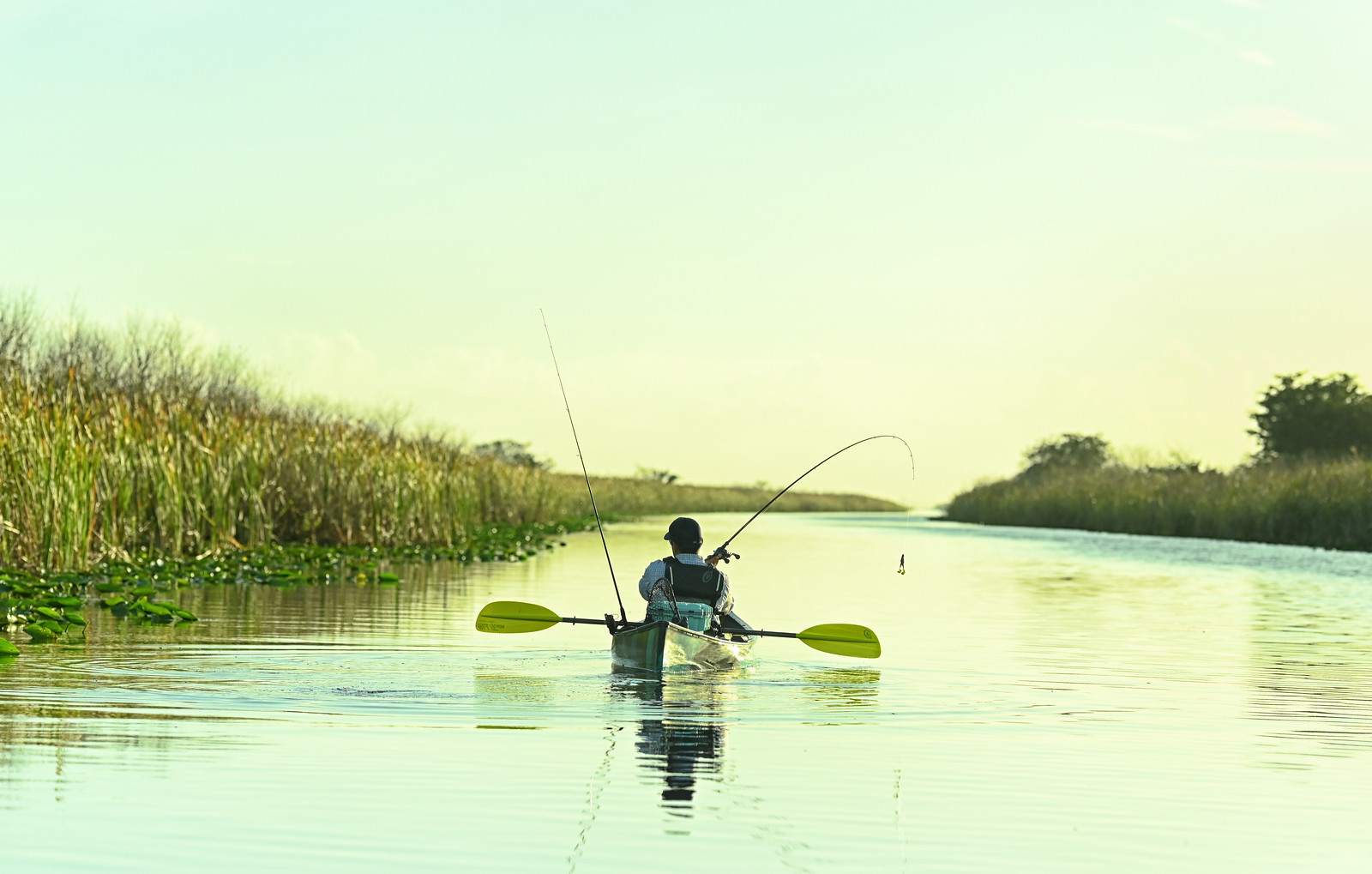
Whether you’re an experienced saltwater angler or first-time fisher, you’ll have no trouble finding the perfect kayak fishing spot for you around Key West. It’s a great place to try out saltwater fishing since most of the waters surrounding the key are calm and shallow.
Fishermen are notoriously secretive about giving away information on their best spots. With that said, here’s some general areas around Key West to get you started. And, if all else fails and you really want to catch some fish, you can always find a guided kayak fishing tour or private guide to take you out.
Don’t forget your Florida saltwater fishing license!
Fleming Key
Located just north of Key West, Fleming Key is close enough that you won’t have to do much driving to find a launch spot. You can find red grouper, jack crevalle, and snapper here, to name a few.
PHOTO: pexels.com
PHOTO: pexels.com
PHOTO: pexels.com
Key West National Wildlife Refuge
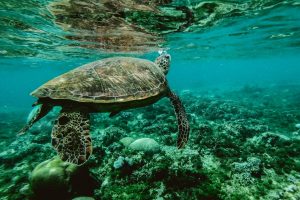
According to the Key West National Wildlife Refuge, this backcountry area offers one of the best saltwater fishing areas in North America with over 200,000 acres to fish! (It is worth noting some areas are off-limits to protect nesting bird and sea turtle habitats.) You can find lobster, bonefish, tarpon, grouper, and snapper, amongst others, here.
As mentioned earlier, Geiger Key is a great place to try your hand at saltwater fishing too. Head back up the highway about 20 minutes for a chance to catch mahi mahi, blue runners, snapper, bar jack, cobia, and more.
If you’re already in the Geiger Key area, head northeast a little further to the Saddlebunch Keys. With plenty of mangrove areas and bridge connections to explore under, cast out for a chance to catch mangrove snapper, yellowtail, jack crevalle and tarpon.
6 best Key West kayak tours
Whether you’re looking for the best eco tour, mangrove sight-seeing, or combining two of the best warm water activities by kayaking and snorkeling, Key West, Florida has you covered! No matter which tour below interests you, always make sure to check for departure times on their respective websites as these can change depending on weather and tidal conditions.
PHOTO: pexels.com
Eco tours
Key West Eco Tours
If you’re ready to get away from the hustle and bustle of shore and explore the vast natural area the backcountry has to offer, Key West Eco Tours is your ticket. They offer a couple of tour options of varying lengths that wind through mangrove islands, sunny sandbars, and the Key West National Wildlife Refuge.
Backcountry Tour: 2 hours starting at $65 for adults.
Sail, Kayak, and Snorkel Tour: All-inclusive, half a day (4 hours) tour starting at $115 for all ages.
Honest Eco Tours
For some extra authentic eco-friendliness, Honest Eco Tours is true to their name. Other than their rave-reviewed tours exploring the mangrove islands of the Key West National Wildlife Refuge, dolphin watching, and snorkeling amongst coral, sponges, and sea life galore, Honest Eco also offers organic fruits and veggies from a local retailer, use an electric boat for chartering out to the refuge, and take pride in their informational tours about the local ecosystem and wildlife, actively promoting conservation in a fun way.
Kayak & Snorkel Tour: 4 ½ hours at $124/person
“All of the Above” Tour (Kayak, Snorkel, and Watch Dolphins): 5 hours at $145/person
With two tour options, Lazy Dog Adventures promises up-close exploration of the mangrove creeks of the backcountry. “Lazy Dog” is not just a name, either. Your four-legged friends are welcome to come too.
Join the Kayak Kings on their signature tour: The Mangrove Maze! You’ll wind your way through the narrow water channels of the mangrove forest, where your boat is about the only thing that can fit! Other than the wide variety of creatures living in the waters here, this tour is a great opportunity for bird watching as well.
Mangrove Maze: 2 hours at $45/person; 3 hours at $65/person
Another highly rated tour company with 5 stars and almost 5,000 reviews on TripAdvisor, you’re sure to have a top-notch experience on Danger Charters’ Sail, Snorkel, and Kayak trip. It doesn’t get much better than sailing the ocean blue in a schooner, discovering underwater wildlife, and kayaking through mangrove tunnels.
Clearly Unique is just that and offers the only guided tours in clear bottom kayaks in the area! Once you get to your destination in the Great White Heron National Wildlife Refuge by powerboat, spend some time exploring the calm waters in your kayak before taking the plunge with your snorkel gear. Other than coral reefs, sponge gardens, and wildlife viewing, you’ll also get to check out some shipwrecks.
Kayak and Snorkeling Tour: 3 hours at $109/person
PHOTO: pexels.com
PHOTO: pexels.com | Dariusz Grosa
What wildlife might you see?
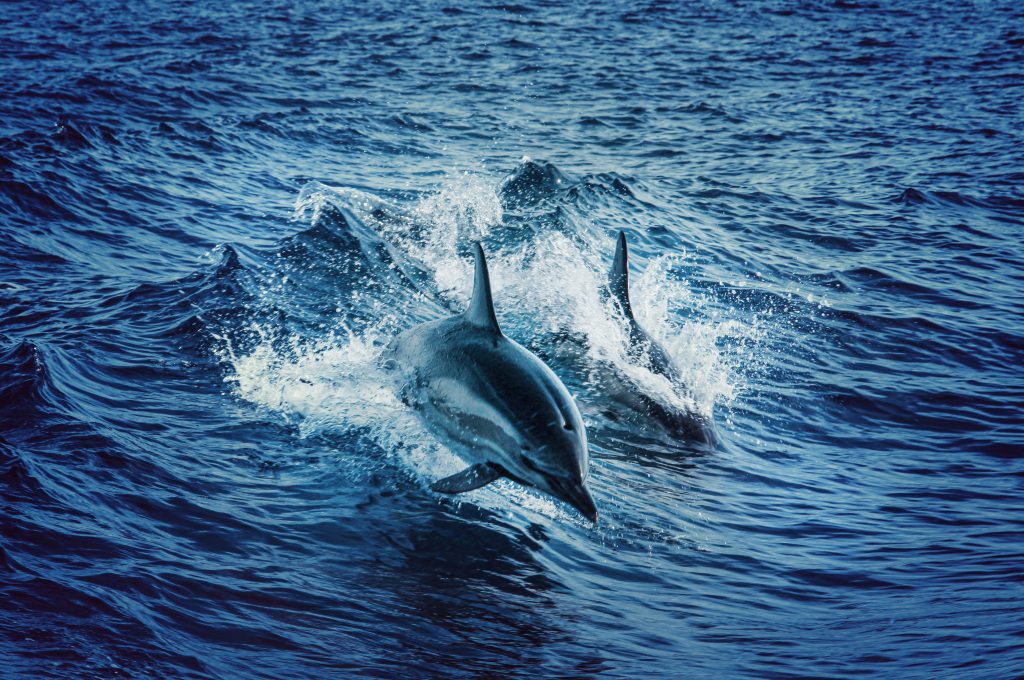
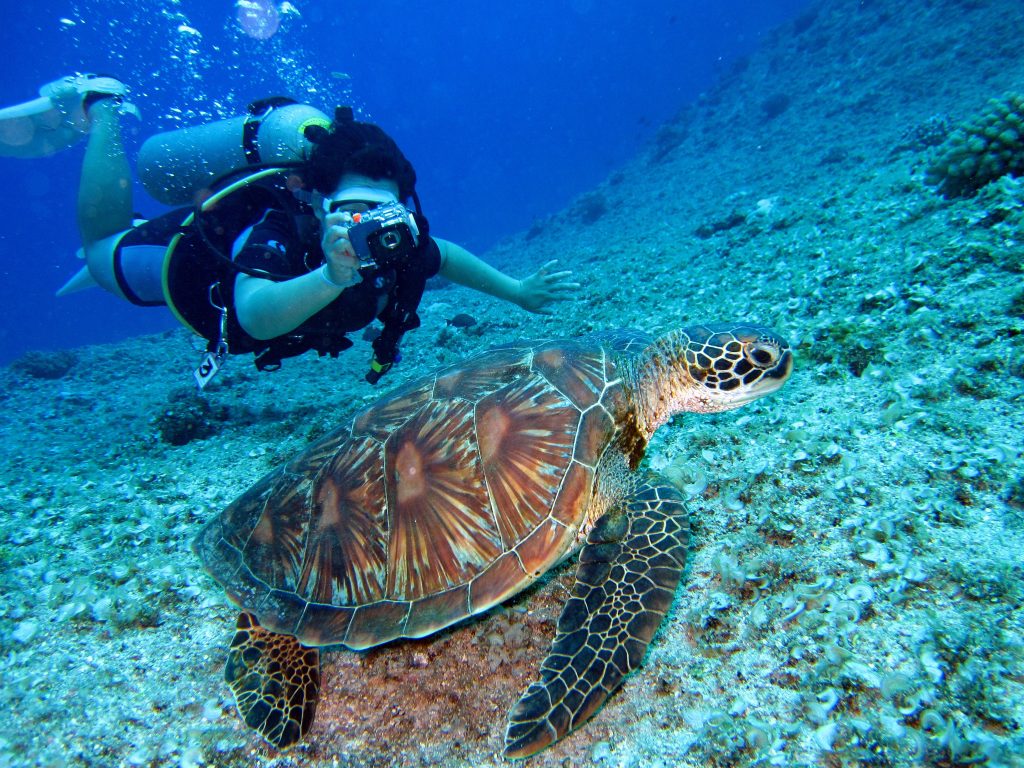
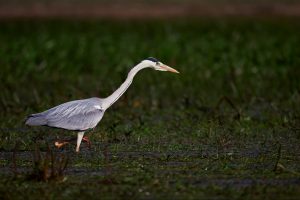
Needless to say, you can find a wide assortment of creatures, on land, in the sea, or the air, around Key West. Here are just a few of the interesting birds, mammals, and more to look for on your excursion.
[ Get all the gear essentials for your kayaking trip in the Paddling Buyer’s Guide ]
What you’ll need to go kayaking
PHOTO: pexels.com | Wendy Wei
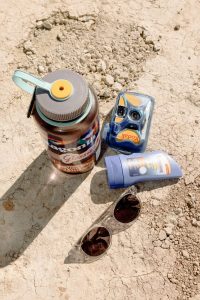
One of the draws of kayaking and canoeing is that you don’t need to take a whole lot of gear with you. If it’s your first time kayaking Key West, or if you just need a refresher, here is a list of recommended items to take to ensure you have the most pleasant experience possible:
Polarized sunglasses
Sunscreen
Drinking water
Snacks
Bathing suit or light clothing (light both in style—such as shorts and a t-shirt—and color)
Waterproof bags are a good idea for valuables (wallet, phone, keys, etc.)
Camera
A wide-brimmed hat
Valid Florida saltwater fishing license and other fishing gear such as poles, line, bait, hooks, etc.
[ Get all the gear essentials for your kayaking trip in the Paddling Buyer’s Guide ]
PHOTO: pexels.com | Nextvoyage
What’s the weather like in Key West?
Other than, perhaps, hurricane season, there’s never really a bad time of year to visit Key West. The average highs and lows remain reasonable year-round with highs around 85°F and lows at 65°F.
If you’re wanting to avoid summer crowds while still enjoying the terrific weather, winter and spring are both great times to visit. December through March is the driest time of year. The average low during winter is 65° with an average high at about 73°.
There is also a surprisingly low number of tourists during spring as well. Key West receives average lows around 73° and average highs of 83° during this time.
If you happen to get a rain shower on your visit, don’t stress too much. They are usually short-lived and pass quickly.
Although it may be disappointing to know that hurricane season lasts for half of the year, from the beginning of June through the end of November, it might be reassuring to know that the most active time for hurricanes in the Keys is only from August through October.
No matter what kind of adventure you’re looking for in Key West, Florida, you’re sure to find the perfect trip in our kayak guide. With so many options, from a relaxing, sight-seeing trip aboard a clear bottom kayak, an exciting fishing trip at sea, or exploring the twists and turns of a mangrove forest, kayaking Key West will keep you busy for hours… or your entire trip!
[ Get all the gear essentials for your kayaking trip in the Paddling Buyer’s Guide ]
When Hollywood has a hit movie it’s almost expected that a trilogy will follow. It’s a risky strategy that doesn’t always work—remember Pirates of the Caribbean: On Stranger Tides and Transformers: Age of Extinction? But sometimes the results are fantastic, like with the Pyranha Burn III, the latest incarnation of Pyranha’s popular river runner.
[ Paddling Buyer’s Guide: See all Pyranha boats ]
Try the Burn III on for size
The first, and maybe most important, change is that the Burn III comes in four sizes. “After the medium, large and extra large were in production, we realized the medium was too large for smaller paddlers. We needed to add a fourth size so that the Burn would fit a wider range of paddlers,” explains designer Robert Peerson.
If you were in the medium Burn II but found you were on the high end of the paddler weight range, you will now likely fit perfectly in a large Burn III.
A boat that follows your cues
In the nine years since this river runner was first released, its hull and waterline have been lengthened for greater speed and tracking. This, coupled with its flat bottom, allowed me to surf small waves and move around the river quickly, easily maintaining my line.
The edges of the Burn III have also been given a facelift. There’s a sharp and pronounced edge from just behind the cockpit all the way to my feet and less prominent lines in the stern. This means I can lean forward to ensure a hard aggressive carve or keep my weight back for longer arcing turns.
Interestingly, if you lean really far forward you can actually spin into tiny eddies as the rails in the front dig in and the stern, clear of the water, is free to spin. The Pyranha Burn III is a boat that reacts very differently depending on driver input (shifting your weight fore and aft), which is fun once you figure it out and forgiving in the meantime.
[ Plan your next river running adventure with the Paddling Trip Guide ]
BETTER TO BURN OUT THAN FADE AWAY. | PHOTO: SCOTT MACGREGOR
Run the river in style and comfort
When running boney creeks, hard edges aren’t usually a good thing as they can easily catch rocks. Pyranha has solved this problem by placing the edges quite high above the waterline. In order to engage them, I needed to tilt the Burn III quite aggressively. While beginners might feel a bit uneasy at first tilting so far over, confidence-inspiring secondary stability makes this a non-issue. Some beginners may never even know the rails are there.
The rocker profile has also been adjusted from previous Burns—there’s now more in the bow, and less in the stern as compared to the Burn II—which translates into riding up and over waves, skipping over holes and nice, satisfying boofs off of rocky ledges or from the peak of a wave.
The new Burn is equipped with Pyranha’s upgraded C4S outfitting, which means a larger, more comfortable seat. It’s fully adjustable to ensure I can trim the boat so it handles how I want it to. Keep in mind it does take some time to get all the adjustments just right, so don’t show up late to the put-in and expect to be able to just get in and go.
Pyranha has taken the ideas and concepts from the Burn and Burn II and improved on the design, producing a boat that can perform well in all conditions, from big water to steep creeks. It’s also a boat that can take beginner and intermediate paddlers to the next level with confidence. Unlike Alien 3, the Pyranha Burn III is certainly worth the price of admission.
This article first appeared in the Fall 2015 issue of Rapid Magazine.
Subscribe to Paddling Magazine and get 25 years of digital magazine archives including our legacy titles: Rapid, Adventure Kayak and Canoeroots.
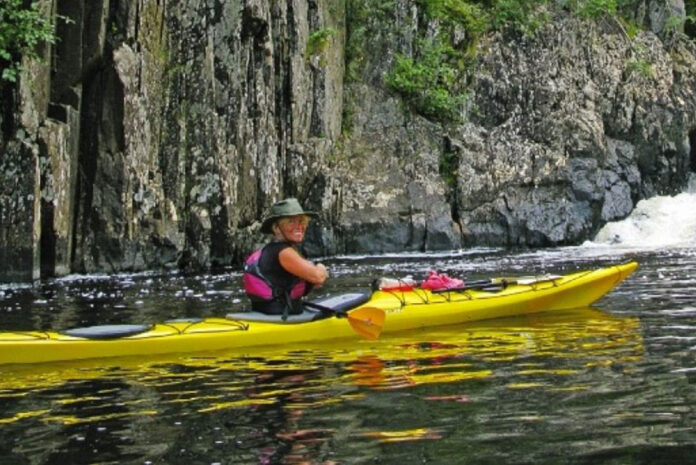
The new Tempest 170 from Wilderness Systems is the brainchild of Steve Sherre of Alder Creek Canoe and Kayak in Oregon, shaper/designer Bob McDonough and the Wilderness Systems design team. What they’ve created is an appealing combination of “Brit boat” design with the high volume and plush outfitting of the North American tradition. You could call it a “Romany for the West Coast.”
[ Paddling Buyer’s Guide: See all Wilderness Systems boats ]
The Tempest 170 has the best of both worlds
British performance
The NDK Romany series, designed by U.K. expedition paddler Nigel Dennis, is a line of classic Brit boats with a distinctive Greenland-inspired hard-chine hull and fairly low volume. The result—a sporty and very seaworthy kayak with a good blend of tracking and manoeuvrability—is very popular in the U.K. and on the East Coast of North America.
The classic Brit traits include: no rudder (although a skeg is optional), three fibreglass bulkheads sealed with rubber hatches, low windage, a snug fit and good performance. The Brit boats have been designed for the U.K.’s typically rough seas and the skilled paddlers who venture out in them. The downside is often poor comfort, sometimes less than stellar workmanship and heavy weight.
North American comfort
The kayaks that have evolved in the Pacific Northwest tend to sport novice-friendly rudders and have much higher volume. They are Cadillacs of the sea—great for comfort and long-distance tripping in the sheltered Inside Passage—but not necessarily good for performance. These kayaks have two hatches with a variety of often leaky closure systems and luxurious seats that aspire to being little aquatic armchairs.
[ Plan your next adventure with the Paddling Trip Guide ]
The Wilderness Systems Tempest 170 combines the best of both worlds. It has the look of a Brit boat, but pumped up and pimped out. The hard-chine hull shape is extremely reminiscent of the Romany. In true Brit style, the hatch covers are tight-sealing rubber and the three bulkheads are moulded fibreglass.
The Tempest 170 has room to spare
Where the Tempest radically departs from its Old World roots is the realm of comfort. The hull is considerably deeper than a Brit boat. At the expense of increased windage, there is a lot of volume, ample cargo space for multi-day trips and no lack of legroom.
The most notable feature is the Phase3 Outfitting, a high-performance seat and thigh-brace system derived from the “FAT 3.0” outfitting that Wilderness Systems’ sister company, WaveSport, puts in its whitewater boats. The foam-padded seat is adjustable with a tilting leg support, backband and very comfortable, adjustable hip pads. Wilderness Systems is to be congratulated for creating the most Mac Daddy piece of furniture ever to grace a sea kayak. Our only complaint is that when you tilt the boat, there is some lateral flex and creaking in the seat’s plastic shell that you don’t get in other boats whose seats are made of more rigid materials or glued directly to the hull. Glued foam inserts can easily solve this.
Rounding out the fit are contoured, padded thigh braces that can be easily unscrewed and moved to match different body types. Overall, the Phase3 system provides a snug, performance fit that was previously only available with custom outfitting.
Mix play and performance with the Tempest
The Tempest 170 is a nimble cruiser capable of holding its own at a touring pace. With a 22” beam, it’s a half inch wider than its British cousins. Intermediate and advanced paddlers will find it has plenty of initial stability and tracks will on an even keel. The Tempest tends to be a bit unsteady in transition from edge to edge, but once on edge its stable and cranks nice tight turns.
The Wilderness Systems Tempest 170 has a performance hull with outfitting to match and a volume that’s hard to find in a boat of its type. It’s a great choice for intermediate to advanced paddlers looking for a playful British design that performs well in surf and rough water but also has a comfortable cockpit and expedition-capacity volume. Available in polyethylene, fibreglass or Kevlar, as well as a smaller 16’6” version.


 This article originally appeared in Canoeroots Early Summer 2017 issue.
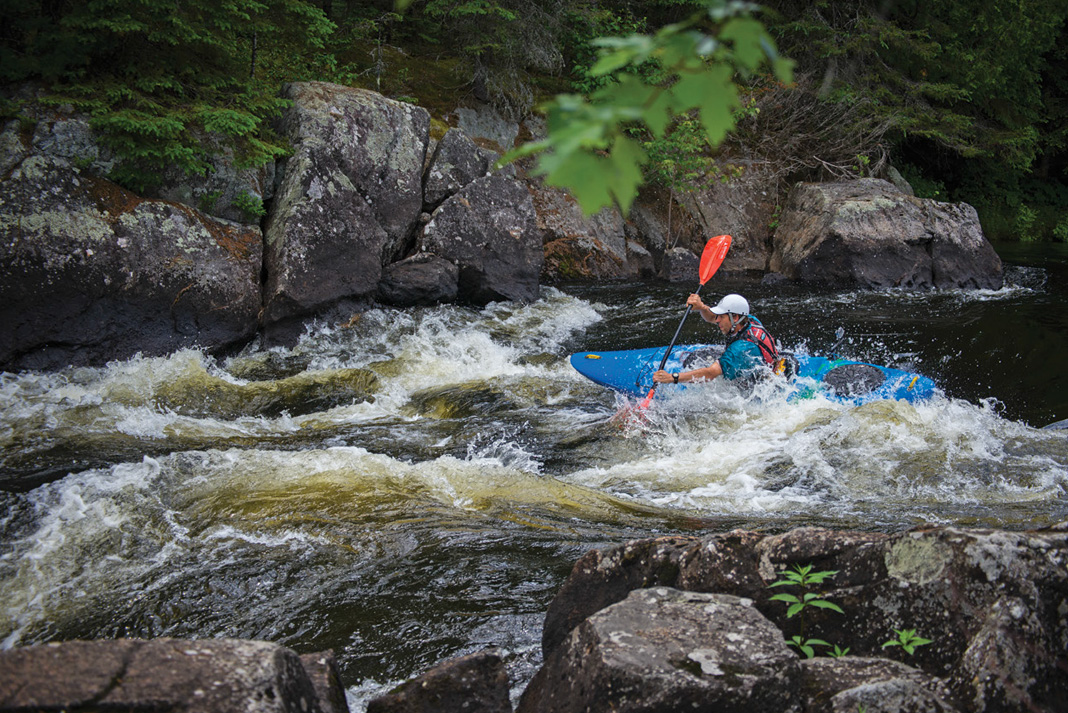
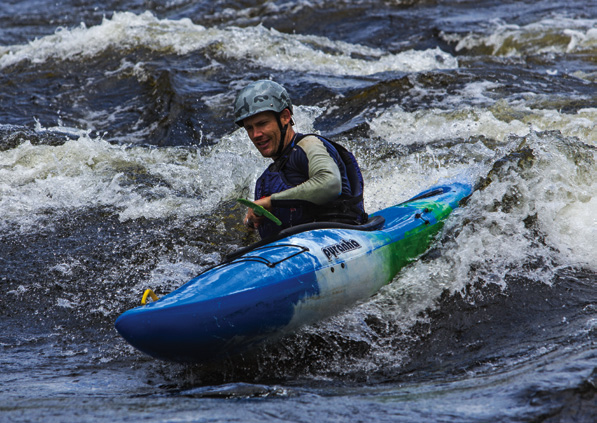 At just over 10 feet long the Fusion moves like a rocket compared to most other whitewater kayaks. As one of the narrower feeling boats in the shootout it gives up some primary stability compared to the wider, rounder designs, but the upside is you get way better handling in whitewater. You can surf small waves, change course quickly mid-rapid, catch smaller eddies with confidence and zip around the river with authority. We enjoyed long soul surfs on glassy green waves and even managed a few spins.
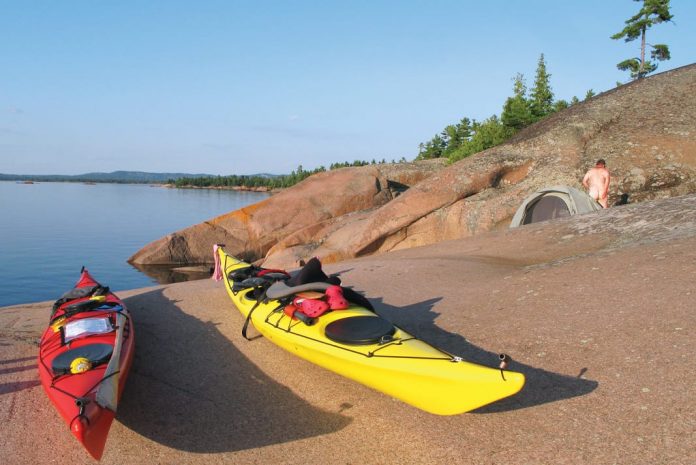
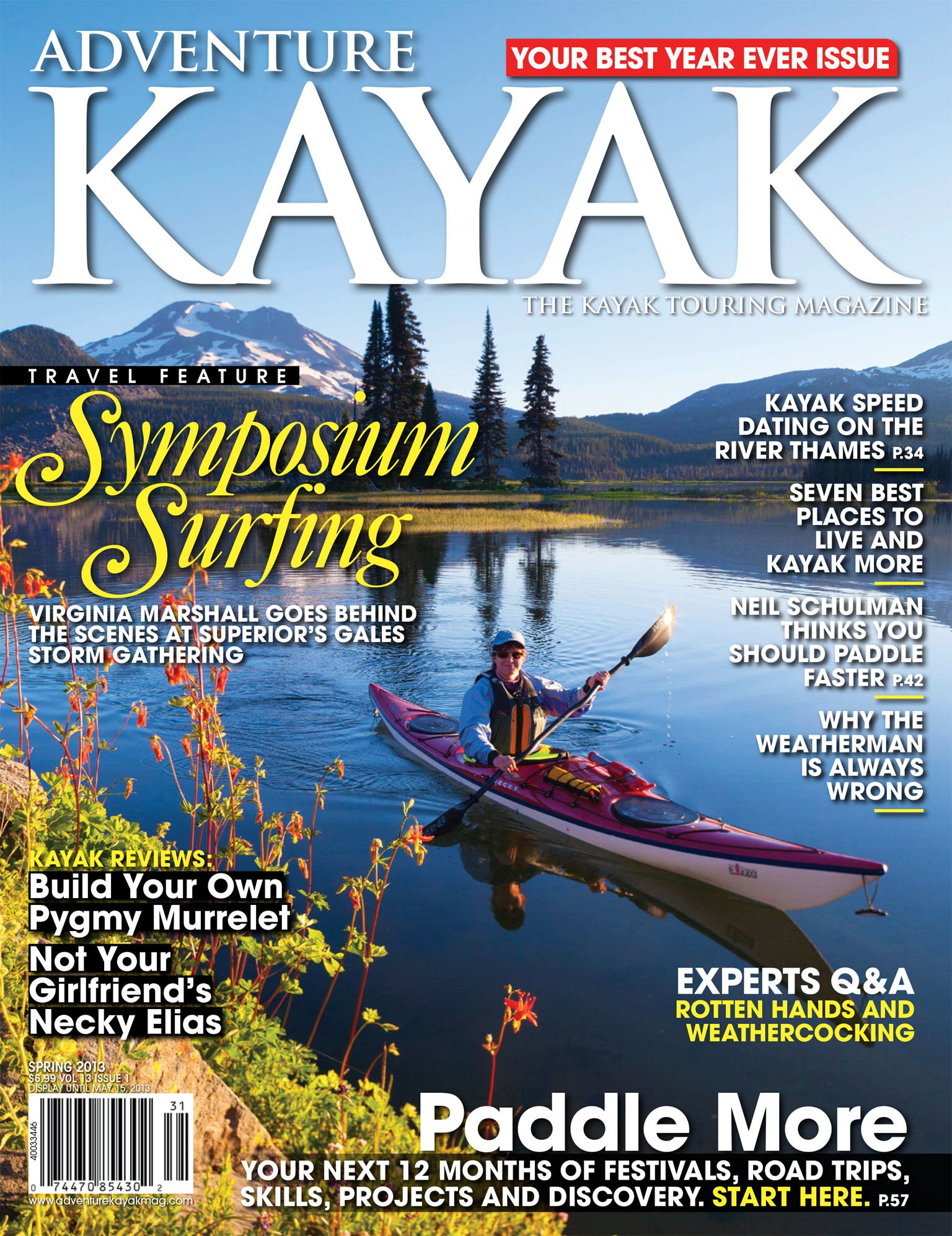 This article was first published in the Spring 2013 issue of Adventure Kayak Magazine and was republished in Issue 58 of Paddling Magazine.