Home Blog Page 161

Is The High Price Of Gore-Tex Really Worth It?

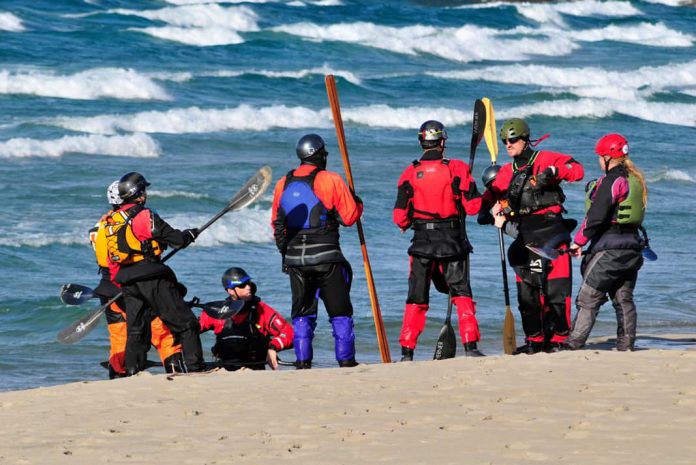
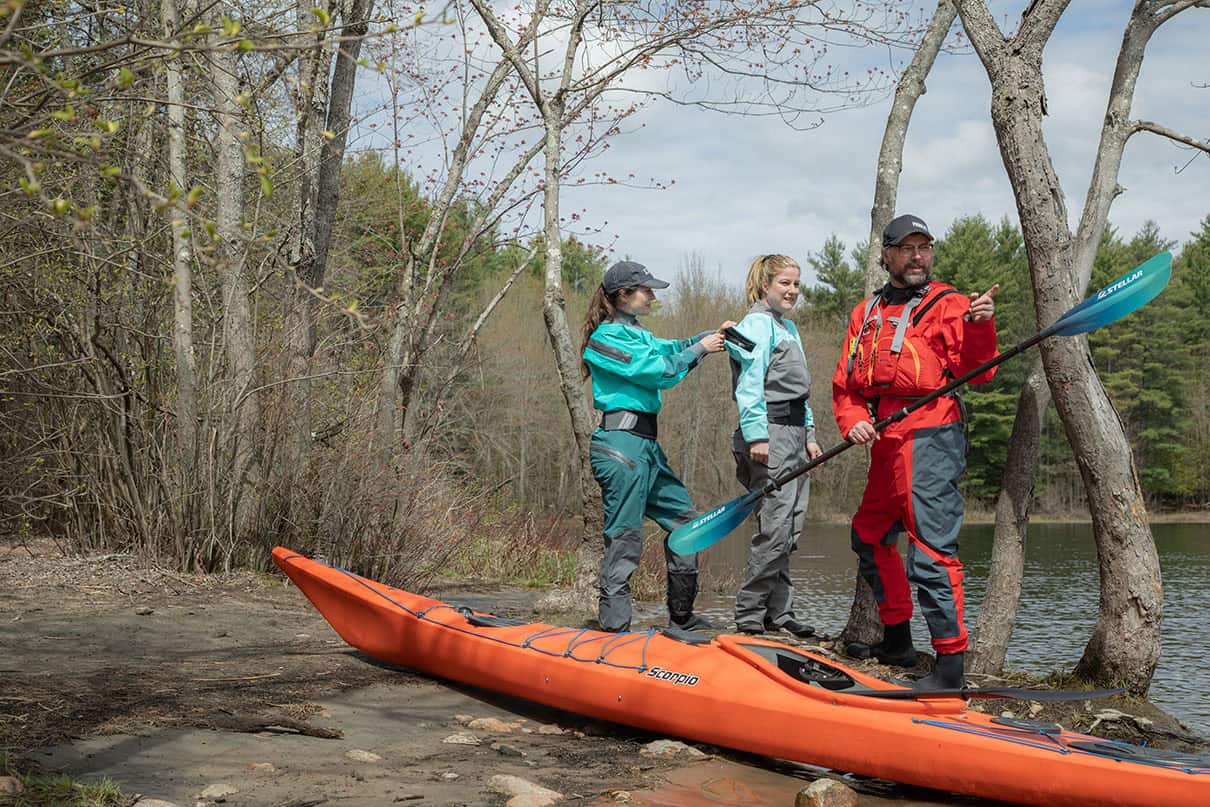
A group of expedition kayakers stand on a beach wearing Gore Tex outdoor gear
Guaranteed to keep you dry and looking like a Power Ranger. | Feature Photo: Virginia Marshall

We’re standing at a trail junction in the October rain, stuffing our faces with trail mix. It’s a damp, cold, off-season backpacking trip sometime in my young adulthood. Four hikers are climbing the switchbacks below us, clad in red rain gear with black patches on the shoulders and elbows. “Uh-oh,” my friend says. “Here comes the Gore-Tex mafia.” Three decades later, Gore-Tex and its distinctive look is still with us, but in light of the material’s high price, is Gore-Tex worth it?

In praise of waterproofing progress

First of all, I know of no link between Gore-Tex and Vito Corleone. Second, I love Gore-Tex. I live in one of the wetter and windier places in North America. Gore-Tex keeps me dry. In the days before waterproof-breathable shells, rain gear made me wetter on the inside than the outside.

My Gore-Tex drysuit extends my paddling season from five months to 12. It improves my overall paddling experience more than skegs or carbon fiber paddles. But like all revolutionary inventions, Gore-Tex came with complications and unintended consequences—it accentuated class divides in the outdoors.

Roughing it in the rain

When Gore-Tex first came out in 1976, I was in high school, just venturing out on my first backpacking trips on my own. Outdoor gear consisted of olive-drab itchy wool pants, rubber rain slickers and giant fluffy wool socks. Gore-Tex was, of course, both better and more expensive.

It was the first serious “outdoor technical clothing” and it helped bring outdoor gear from army surplus stores to specialized retailers. It also had a distinctive look. That’s why my pal and I could stand atop a damp ridge and estimate the tax brackets of hikers far below, and know it was higher than ours.
Waterproof fabric and the social divide

As the saying goes, timing is everything. Gore-Tex arrived as class divides were coming into sharp relief elsewhere. The first Gore-Tex jacket entered the hearts and minds of the outdoors world in earnest in the ‘80s. That’s when America also plunged into the world of supply-side Reaganomics, Gordon Gekko, Ivan Boesky, and the S&L Crisis.

Class divides in the outdoors is particularly irksome, since it’s supposed to be equal ground. Stephen Mather, the first head of the U.S. National Park Service, saw campgrounds and trails as places where visitors of all backgrounds could rub elbows. There were enough things to divide us. Fabric didn’t need to be one of them.

Fast-forward three decades. Virtually every outdoor apparel company has come out with their own proprietary waterproof-breathable fabric. But Gore-Tex, a closely guarded trade secret that has gone through many iterations, remains at the top of the heap in price and prestige. Like all our gear, it has evolved—my first drysuit had no waterproof socks or relief zipper. You can imagine how well that worked after three cups of coffee. Things are much better now.

Gore-Tex is still a big investment

However, the economic divide Gore-Tex put on display is still with us. The Gini Coefficient, a measure of income inequality, has climbed like an ever-flooding tide in the U.S. and Canada since 1980. Yes, people spend a lot more money on golf, downhill skiing and sailing, but sea kayaking gear is still expensive for the average American household earning $56,000 a year. The average Gore-Tex drysuit costs close to two percent of that. This has a chilling effect on gear designed to keep adventurers warm and dry. According to the annual Outdoor Participation Report, the cost of gear is the second highest reason people don’t participate in outdoor recreation. More than 40 percent of the people who do are making $75,000-plus salaries, according to the same report.

Faced with the expense, most new paddlers try to save a few bucks with a more budget-friendly option. They may buy a wetsuit or a drysuit made from other materials, which, in my experience, doesn’t compare. Sooner or later, many admit defeat and plop down the big bucks. I did the same for many years until I sucked it up and paid more than twice as much for my first modern drysuit as I did for my first used kayak.

[ Plan your next paddling adventure with the Paddling Trip Guide ]

So, is Gore-Tex Worth It?

More analysis may give the lie to the expense myth. I started paddling in earnest about 30 years ago, and I’m only on my second drysuit. After getting a bit soaked on a hike recently, I finally admitted my Gore-Tex mountaineering jacket was wearing out and grimaced at the cost of replacing it. That bugged me until I looked at my refrigerator. On the fridge is a photo of me standing on the summit of a glaciated peak, wearing that same jacket. I’m waving my ice ax and smiling at the camera with a face with less grey hair and fewer wrinkles than I have now. That photo was taken 18 years ago.

This article was first published in Issue 58 of Paddling Magazine. Subscribe to Paddling Magazine’s print and digital editions, or browse the archives.


Guaranteed to keep you dry and looking like a Power Ranger. | Feature Photo: Virginia Marshall

 

The Ultimate Guide To Kayaking At Night

A paddler kayaks towards a mountain under a starry sky at night.
Welcome to the dark side. | Photo: Paul Zizka

Paddling in the dark is like entering a new world. On a moonlit lake, a familiar route becomes exotic. The sounds of the bow cutting through the water and droplets off a paddle are accentuated. And when there’s no moon and clear skies, stargazing from the water can be out of this world. Plus, natural phenomena like the aurora borealis or kayaking among bioluminescence are only visible at night. There are plenty of reasons to get on the water between dusk and dawn, so here’s what you need to know to kayak at night safely and legally.

Know The Risks

Let’s be real. Paddling at night has all the inherent dangers of daytime paddling and then some. Not the least of which is it can take longer to mount a response and locate a distressed paddler in an emergency. Adopt a common-sense risk management strategy based on the conditions. All the regular dos and do nots of paddling apply—wear your PFD, leave a float plan with a trusted friend, and check the weather before you paddle. Consider modifying your usual on-water behavior by sticking closer to shore and paddling at night only with a buddy.

Don’t paddle at night or in limited visibility in water navigated by powerboats or sailboats, unless experienced in night navigation lights and signals.

Light It Up

The specific legalities of paddling at night differ based on region, so it’s best to double-check with local guidelines. Both Transport Canada and the United States Coast Guard consider kayaks and canoes to be “vessels under oars.This means paddlers are required to carry “an electric torch or lighted lantern showing a white light which shall be exhibited in sufficient time to prevent collision” on the water between sunset and sunrise.

This torch could be the same dinky waterproof flashlight included in many commercially sold bailer bucket kits. But if you’re regularly on the water between sunset and sunrise, you’ll want something suited to seeing and being seen. If paddling in an area without motorized vessels, opt for a handheld, waterproof, 360-degree light tethered within reach. Some paddlers prefer a waterproof headlamp; however, these tend to “blind” companions and are cumbersome if you should need to signal behind you.

Whatever light source you choose, remember that a light placed in your line of sight or reflected into your eyes—from a headlamp reflecting off the shiny deck of your kayak, for example—will impair your night vision.

Some states, like Texas, require a kayak light be visible at all times after dark, but most don’t, allowing you the option to paddle by the moon and starlight. Double-check your local regulations.

A kayaker paddles under a starry sky towards a mountain on a calm lake.
Welcome to the dark side. | Feature photo: Paul Zizka

If sharing the water with motorboats, you need to get lit up. Kayaks are so low to the water motorboats may overlook them, and a kayak’s small light can easily be mistaken for a light onshore or far away. The best way to ensure visibility to boaters is to mount an elevated white light on the aft deck. Ideally, the light should shine continuously in 360 degrees and be unobstructed by the kayaker or seat. If you don’t do much paddling at night, use a suction cup mount instead of affixing the mount to the deck. In addition to this mounted light, a kayaker should still have a secondary handheld, waterproof light in case forward visibility is needed and for signaling. Paddlers sharing the water with motorboats must paddle defensively.

Red and green lights—called sidelights—on the bow can provide some visibility upfront without affecting a paddler’s vision but are not required on kayaks by either the Canadian or American coast guards. There are a series of specific coast guard regulations for installing sidelights a paddler needs to follow if she chooses to use them. Other lighting configurations might look cool but are not officially coast guard approved.

Sending Out An SOS

For added safety, night paddlers should also wear an emergency light, typically a small 360-degree, battery-powered LED light that can be seen more than one nautical mile away and can strobe to signal rescue crews in case of an emergency. This 360-degree light can be attached to your PFD’s shoulder strap so it’s always with you. Some newer models are automatically triggered when submerged in water. Of course, you could be floating for a while unless able to alert someone to your predicament with a phone or satellite communications device. An emergency light is just one part of a safety system.

Dress The Part

As with any kayaking mission, what you wear depends on the air and water temperatures where you’re paddling. If you wear a wetsuit or drysuit during the day, the night isn’t any different. Layering is always essential, and it’s a good idea to take one more layer with you at night than you would in the day. Stuff it in a drybag, and if you need it, you’ll be glad to have it.

Where To Go

The best place to kayak at night is a small lake or lazy river you’re familiar with. Choose a route you’ve paddled a handful of times during the day, so you know the landmarks, duration of the paddle and any hazards or alternate routes that could turn you around. Consider big trees, marinas, cliffs, large buildings or lighthouses as landmarks on your journey, but keep in mind some familiar sights may be unrecognizable by night.

On larger lakes, be especially aware of incoming weather and wind and the possibility of getting lost. If paddling a loop, it’s best to launch from a marina or other brightly lit location. On a wilderness lake, rather than leaving an unattended campfire, place a bright lantern on shore to guide you home.

You can use a phone or GPS device for nighttime navigation, but having an analog form of navigation as your primary navigation source is preferable. And knowing the area like the back of your hand is best.

This article was first published in Paddling Magazine Issue 62. Subscribe to Paddling Magazine’s print and digital editions here, or browse the archives here.


Welcome to the dark side. | Feature photo: Paul Zizka


Boat Review: Dagger Roam 9.5 Sit-On-Top Kayak

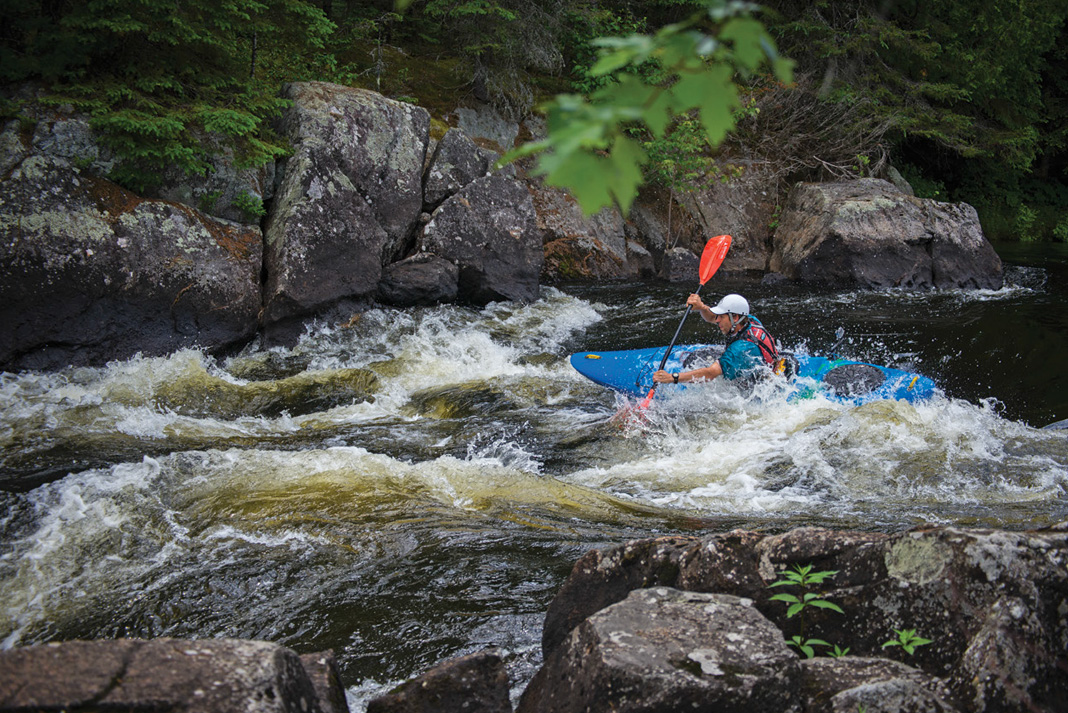
Man paddles the Dagger Roam 9.5 sit-on-top kayak in rapids
Feature Photo: Rapid Staff

If you peer in through the window of my garage you’d notice I’m a guy with a lot of hobbies. A stunning array of kayaks, canoes, bikes, and other gear ensure that I’ll never actually be able to put a car inside. For those who are more space conscious, the Dagger Roam 9.5 is a sit-on-top kayak that does it all—while only taking up one spot in the garage.

Dagger Roam 9.5 Specs
Length: 9’9”
Width: 31.5”
Weight: 56 lbs
Max Capacity: 250 lbs
[ Paddling Buyer’s Guide: See all Dagger Kayaks ]

A license to Roam

While I still like having specialized gear—a freestyle kayak for park and play, my creeker for class IV-V—lately I’ve been mixing things together. Wanting to fish but run a bit of whitewater too. Going on an overnight camp trip with my dogs on some offshore islands. And it’s this kind of paddling that Dagger’s Roam is truly designed for.

Storage to spare

The Roam comes in two sizes, 9.5 and 11.5, and both are kitted out with some pretty nifty features. A large waterproof hatch in the bow can handle enough gear for a few nights out in the woods or pretty much any of the luxury items you might want on a day trip—food, beverages, waterproof radio and selfie stick. It also opens up into the hull so longer items like your fishing rod can slide in there easily too.

In the stern is a smaller hatch that, while not as big as the bow hatch, still has enough volume for gear and allows you to shift things around to trim the boat out how you want it.

Cargo net positive

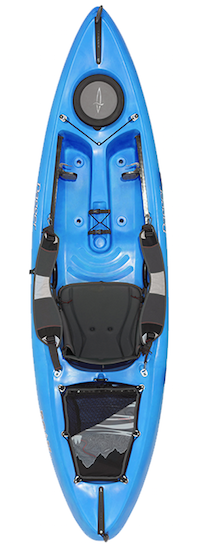
Above the stern hatch is a clever dual-purpose cargo net. It’s great for storing snacks and loose things you want easy access to while paddling but the coolest part is that it quickly releases and, with the thigh braces, turns into a backpack for day hikes.

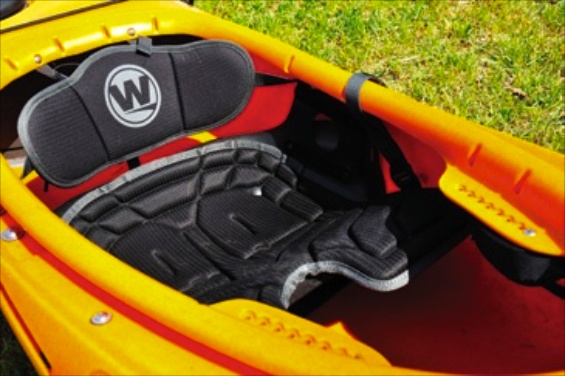
Screen_Shot_2015-07-23_at_11.29.00_AM.pngAside from transforming the cargo net into a backpack, the thigh braces are a very key component in what Dagger calls its Contour Surround Seating System. They can be easily clipped in or out using small carabineers and are clearly labeled so that even a confused raft guide like me was able to figure it out and adjust them quickly.
Roam into the rapids

If you are going to be getting into rougher water, they are key to keeping you locked in and allowing you some edge control. The rest of the outfitting includes easy-to-adjust foot pegs, a high, wide and plush back band, comfortable hip hugging pads and a leg lifter to lock you in as good as any whitewater boat.

We interviewed the Roam designer Mark “Snowy” Robertson at Outdoor Retailer and while he said the Roam could be rolled I personally didn’t have much luck—I did get it halfway several times.

However, after a swim it was super easy it was to get back on the boat. With large, easy to grip handles centered on both sides of the boat I was able to grab on, do a few wounded dolphin kicks and flop back into the driver’s seat. Maybe not as quick as rolling but way quicker than swimming to shore, emptying out, hopping back in and trying to get a sprayskirt on.

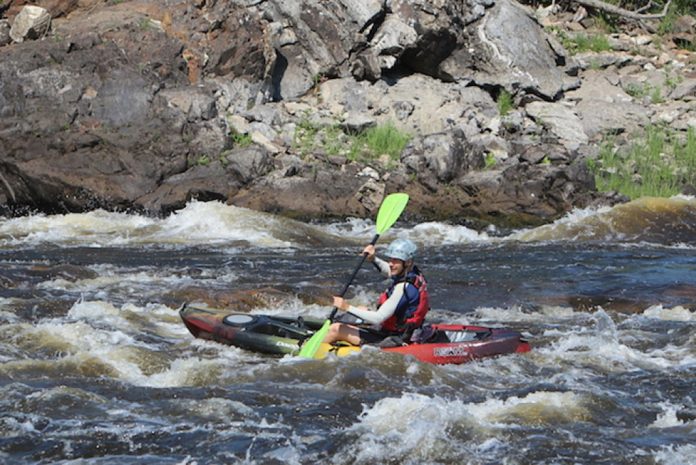
The Dagger Roam 9.5 isn’t designed as a full-on whitewater boat (recommended for class I to III) but I made it one anyway. If you have long choppy rivers without too many moves required it’s great fun. It isn’t exactly a dry ride in bigger waves, as the bow likes to ride over the first wave and then plow into the trough of the second, but because of the scuppers (which you can plug if you don’t need them) it drained very quickly.

You don’t need to worry too much about technique in boils or on all but the biggest eddy lines either as it sits high enough above the water. I even managed to catch a few surfs on some flatter green waves. There certainly wasn’t any aggressive carving moves, or much of anything other than front surfing, but damn it was fun.

[ Plan your next adventure with the Paddling Trip Guide ]

Glide across the flats

On the flats the Dagger Roam 9.5 isn’t in a huge hurry but why are you racing through nature anyway? What it gives up in speed it makes up for in stability. You can fish, take photos or transport two shifty beagles and not ever feel like you are going to flip.

The Roam also comes with an easy to deploy drop skeg that makes paddling straight a sure thing. Call me lazy for using it, but I say I’m just efficient.

One thing that needs to be mentioned: getting this type of boat to the water isn’t so fun. I am used to throwing a kayak over my shoulder or canoe over my head and easily bouncing down the trail. With sit-on-tops, I still haven’t found the technique. I tried over the head, thigh strap on the shoulder and eventually gave in to dragging it. Not ideal, but the plastic didn’t seem to mind.

The Dagger Roam 9.5 gives you the best of both worlds

The Dagger Roam sit-on-top kayak isn’t a flatwater or whitewater boat—it’s both. It would be a great go-to ride for the multi-sport enthusiast.


Boat Review: Epic V10 Sport

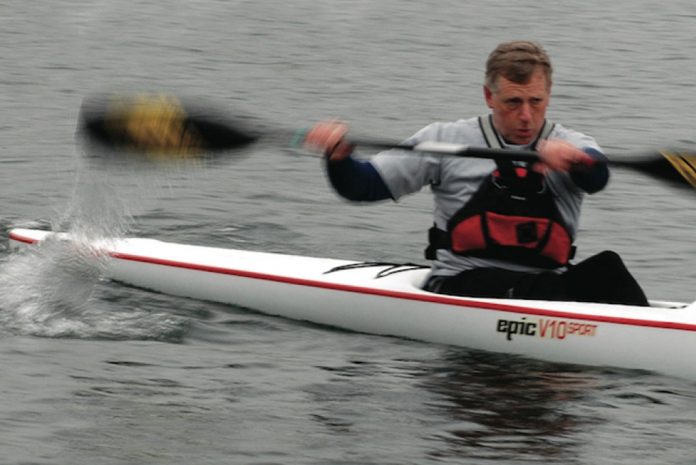
Man paddling in an Epic V10 Sport surfski
Feature Photo: Alex Matthews

Like many sea kayakers, I haven’t had much experience with surfskis. I’ve been to Hawaii and occasionally jumped on a ski or outrigger, but while I’m not quite a surfski virgin, I’m hardly experienced when it comes to these fast but often tippy sit-on-tops. Enter the Epic V10 Sport.

Epic V10 Sport Specs
Value / Performance / Ultra
Length: 20’
Width: 19”
Weight: 37 / 33 / 25 lbs
MSRP: $1,895 / $2,395 / $3,395 USD
[ Paddling Buyer’s Guide: See all surf ski kayaks ]

The V10 series was an Epic undertaking

Epic surfskis are the brainchild of two-time Olympic gold medalist Greg Barton and the South African paddling phenomenon Oscar Chalupsky—the 11-time world surfski champion. The pair have harnessed computer design to the task of making a surfski that is fast yet comfortably stable. The name of their V10 series is reputedly a nod to the nine prototypes they rejected before arriving at the ultimate design.

While Epic produces two full-on racing skis for experts seeking championship titles—the V10 and the V10L (a lower volume version of the V10 designed for smaller paddlers)—the V10 Sport is a slightly backed-off version that is almost as speedy and more stable. It’s the perfect training and recreational racing ski for paddlers like me who are making the leap from stable touring kayaks.

Of the three layups available, “Ultra” is the lightest, using a kevlar and a Nomex honeycomb core; “Performance” is heavier but more durable; and “Value” uses a more economical fibreglass construction. Our Ultra test boat was very light and stiff, and I must admit that a 25-pound boat is addictive, especially when it comes to carrying it any distance.

An exhilarating ride

Afloat, the Epic V10 Sport is fun. Before climbing aboard I was concerned about stability, but once in the seat, I found that the sport has decent primary and solid secondary stability should you dip an edge. The seat is surprisingly large for a 19-inch-wide boat, and my skinny butt slid around more than I would have liked.

The deep footwell was comfortable and its high sidewalls provided good bracing for the sides of my calves. Despite the venturi drain in the footwell, on sprint starts water from the well will flow up into the seat and straight into your crotch—very exhilarating in cold water. The subtle front deck cutaway allows for a closer, more vertical stroke. Deck rigging is minimal but efficient, with spots to stash a few essentials like a hydration pack and a couple of energy bars.

Low Bow Wow

While many traditional sea kayaks have long upswept bows that overhang the water, the V10 Sport’s plumb bow drops almost straight down into the water. This approach provides maximum waterline length for best efficiency and speed through the water.

Float It Before You Boat It

Like most performance skis, the Epic V10 Sport is fitted with an under-stern rudder that precludes beaching the boat. The rudder’s placement forward of the stern is optimal for control, and keeps it submerged even in big seas when the stern itself may be lifted clear of the water by waves.

Feet Fit Swell

The single large footwell allows paddlers to comfortably place their heels together, and the clever fully adjustable footbrace is very quick to set up for different leg lengths. A high-capacity venturi drain draws water out of the bottom of the footwell.

[ Plan your next adventure with the Paddling Trip Guide ]

Get slick with the Epic V10 Sport

If you’ve never tried a surfski, or if you have and were intimidated by another ski’s low stability, then jump on the user-friendly Epic V10 Sport. It’s one slick ride and it’s a great feeling to have so much glide and speed on the water.


Boat Review: Wilderness Systems Tempest 165 Kayak

Woman paddling the Wilderness Systems Tempest 165 expedition kayak
Feature Photo: Virginia Marshall

A couple of years ago, I spent an entire day at a well-known kayak shop helping a friend (okay, fine, my mom) demo boats. She wanted her first kayak to feel lively without being a lot of work, and to inspire confidence now without restricting her down the road. We paddled every available style on the racks, but I wasn’t surprised by her final choice: the Wilderness Systems Tempest 165.

Wilderness Systems
Tempest 165 Specs
Length: 16’6”
Width: 21.5”
Weight: 55 lbs
MSRP: $1,599
www.wildernesssystems.com
[ Paddling Buyer’s Guide: Wilderness Systems Tempest 165 ]

Go far and wide with the Tempest

The Tempest 165 is the smallest member in Wilderness Systems’ venerable trio of skeg touring kayaks. Adventure Kayak reviewed the Tempest 170 Pro when it was brand new almost a decade ago (Early Summer 2003), and since then the series has earned a reputation as some of the most capable expedition kayaks on the market. Kip Keen and Zac Crouse paddled Tempests 2,400 kilometers around Newfoundland in 2006, and Crouse chose the same boat for his 2011 Paddle to the Ocean expedition beginning on the Ottawa River’s class IV rapids.

Classic design, modern comfort

In 10 years the design has remained unchanged save a few minor outfitting updates like Wilderness Systems’ domed, water-shedding hatch covers. Proof that there’s no sense in changing something that works (and damning evidence that Wildy’s R&D team spends more time paddling boats than shaping them).

Cruising speed, tracking and storage capacity are all exactly what you’d expect from a dependable expedition kayak. But even more impressive is the plush, armchair-comfortable cockpit outfitting. I’m typically a minimalist when it comes to outfitting—just give me a piece of foam to shape and I’m set—but my mom was smitten with the Tempest’s cushy seat, tilting leg support, adjustable hip pads and contoured thigh brace pads that install right where you need them. After a long day in the saddle, it’s hard to argue with this level of off-the-rack comfort.

Wilderness Systems Tempest 165 Cockpit

Deep pockets and hard chines

Tripping for two weeks on Lake Superior’s remote Pukaskwa coast alongside Mom in my low volume Brit boat, we both appreciated the generous storage capacity of her deep hatches (well, perhaps I appreciated it more than she).

Wilderness Systems was the first manufacturer to install whitewater-style outfitting in the cockpit of a sea kayak, and it works. Hard chines and a shallow V hull provide superb stability whether floating in a marsh with your SLR camera and birding lens, or carving an edge on a wave.

The past is a prologue for the Tempest 165

With a decade on the water and no signs of showing its age, the Wilderness Systems Tempest 165 has earned a berth among the classics of kayak design. If you’re not convinced by staying power, consider this: we wouldn’t recommend a boat to our moms that we wouldn’t recommend to everyone.

[ Paddling Buyer’s Guide: See all Wilderness Systems Kayaks ]
This article was first published in the Summer/Fall 2012 issue of Adventure Kayak Magazine. Subscribe to Paddling Magazine’s print and digital editions, or browse the archives. 

Why Paddler Bill Mason’s Legacy Will Never Die

Bill Mason paddles in a canoe in black and white
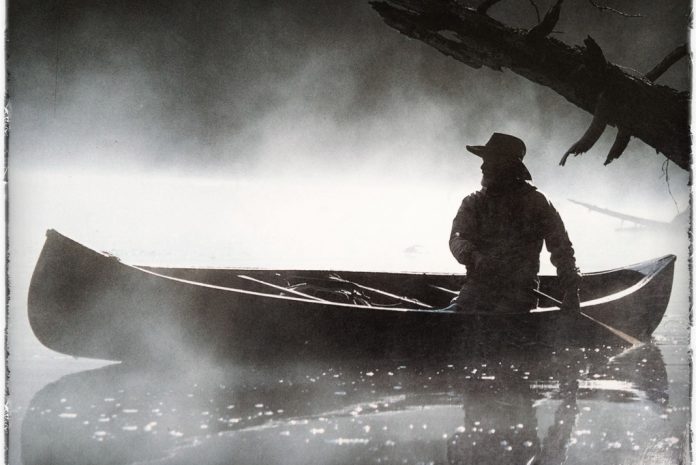
Bill Mason paddles in a canoe in black and white.

On October 29, 2018, it will be 30 years since paddler, filmmaker and artist Bill Mason’s death of duodenal cancer at his home on Meech Lake, north of Ottawa, Ontario.

He was just 59 years old. No doubt, the world has changed since then—for one, any limit on what’s possible in an open canoe has effectively been vaporized by new generations of adventurous paddlers.

[ Plan your next adventure with the Paddling Trip Guide ]

Bill Mason is still present in today’s paddling world

In spite of all the changes, Bill Mason is still very much present and relevant in today’s paddling world. There’s Paddle Canada’s ongoing Waterwalker Film Festival created in Mason’s honor, the Bill Mason Outdoor Education Centre in Ottawa, and smaller celebrations and remembrances, like the Bill Mason Film Festival in Kenora, Ontario.

There are the people you meet on the water with a copy of Mason’s book Path of the Paddle in hand. And then, of course, there’s Kevin Callan, whose infectious, corny humor, plaid shirt and Tilley hat channels his charming inner Bill Mason on camera from time to time as he goes about his wilderness storytelling.

Bill’s daughter, Becky, and son, Paul, both offer paddling skill instruction and workshops and continue in the family tradition. And let’s not forget the special Bill Mason exhibit at the Canadian Canoe Museum in Peterborough, Ontario, which continues to draw people from around the world, drawn to the man through his books and films. The entire Mason canon of films, from Paddle to the Sea to Waterwalker and just about everything in between, is on offer on YouTube.

Bill’s message was never just about canoeing

Since the publication of Bill’s how-to films and books, there have been countless others who have produced similarly effective and engaging instructional products and progressions using updated technology.

I suspect I’m not alone when I say more important than technical prowess or pedagogical brilliance, when it comes to learning how to canoe I cherish my memory of Bill Mason’s reverence for the natural world. I love his simple joy of building a relationship to the world with a canoe. Bill didn’t really care whether you did this stroke or that stroke in this or that circumstance. Going into nature was the most important thing. How you got there in your canoe was incidental.

Deep respect for nature and for Indigenous Canadians

There is something else too. It’s less of a legacy, and more a realization of an aspiration core to his environmental ethic. Listen to the opening lines of Waterwalker:

The first white man arrives in North America. And he looks out over the land and he calls it a pristine, untouched wilderness. That’s got to be the greatest compliment anyone could pay to the Native peoples who had lived here for thousands of years. And it’s still possible to get a glimpse of what wilderness used to be. And I think the best way to do that is in a canoe—the most beautiful and functional craft ever created.

Bill didn’t know any Indigenous Canadians well enough to invite them to collaborate on his films, but he knew from reading about First Nations, Métis and Inuit sensibilities those who came later had much to learn from Canada’s First Peoples. And in inviting First Nations voice actor Wilf Pelletier to read these passages for the soundtrack of Waterwalker, Mason was initiating a change only realized since his death.

In helping bring Indigenous wisdom into mainstream discourse, Bill was ahead of his time, and ahead of the rest of us. Much more recently the voices and faces of the original canoes and routes in this nation have begun rising into public consciousness in meaningful ways. And 30 years after Bill Mason’s death it is perhaps this which will keep him living in our collective memory while another three decades tick by.

This article was first published in Issue 55 of Paddling Magazine. Subscribe to Paddling Magazine’s print and digital editions, or browse the archives. 

Boat Review: Delta 12 AR Kayak

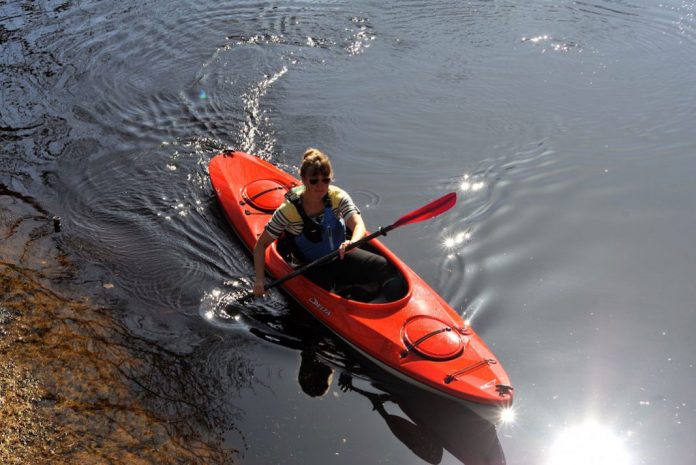
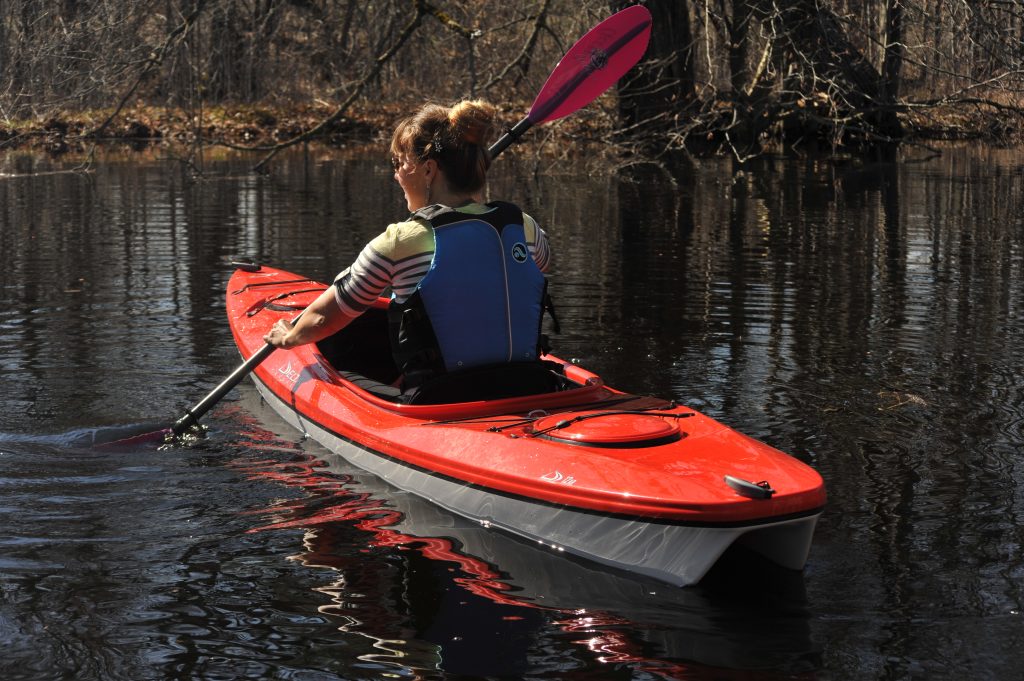
Woman paddling a Delta 12 AR recreational kayak

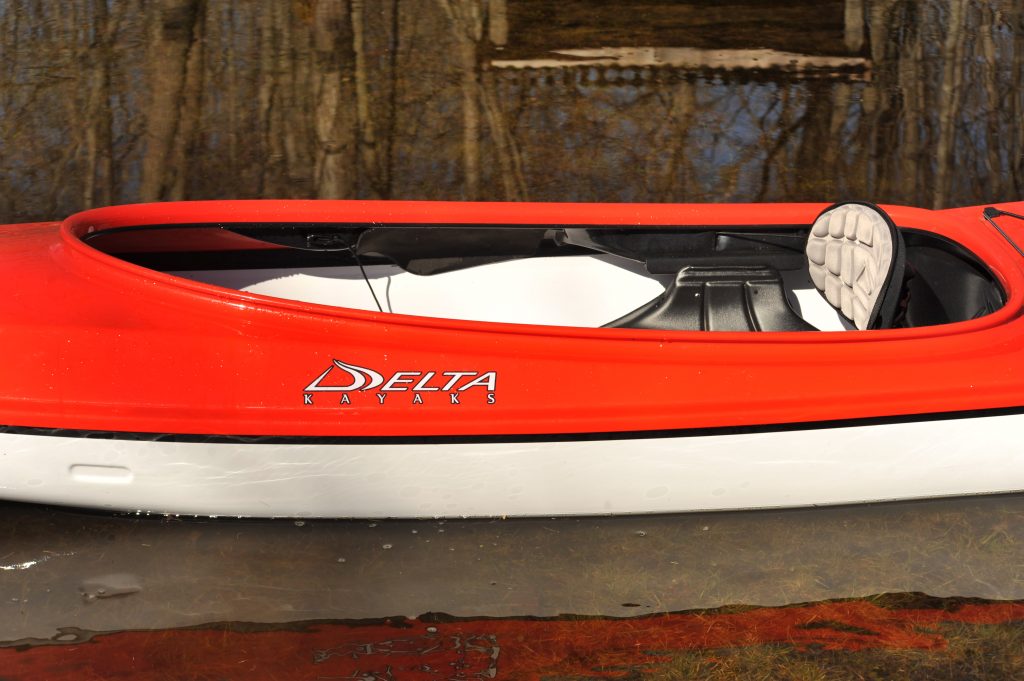
Business in the front, party in the back. The Delta 12 AR kayak, featuring Fusion Hull, could be the most unusual hybridization since the mullet. But where the hairstyle was contentious and never quite captivated the mainstream, Delta’s kayak–catamaran hull graft promises undeniable appeal for the recreational paddling masses.

Delta 12 AR Specs
Length: 12’
Width: 26.5”
Weight: 42 lbs
Paddler Weight: 120-255 lbs
Max Capacity: 320 lbs
MSRP: $1,295 USD / $1,450 CAD
www.deltakayaks.com

The Fusion Hull underpins Delta’s Kayaks’ Adventure Rec series, which includes the 12 AR and smaller 10 AR as well as a 10.5-foot sit-on-top. The design brief for these boats must have read something like: “Let’s build a compact kayak that’s lightweight, looks great and welcomes novice paddlers with superb stability, tracking, easy entry and all day comfort.”

[ Paddling Buyer’s Guide: See all Delta Kayaks boats ]

The Delta 12 AR kayak is attractive and lightweight

The 12 AR weights just 42 pounds, making it one of the lightest open-cockpit recreational kayaks on the market. It’s also amongst the best looking, thanks to Delta’s thermoforming expertise. At the company’s British Columbia manufacturing facility, sheets of acrylic–ABS plastic are heated and vacuum-formed into graceful and hard-wearing kayaks.

The acrylic outer layer gives the 12 AR its glossy finish, vibrant color, excellent abrasion resistance and protection against UV fading or weathering. The secondary layer of high-impact ABS offers excellent strength and durability. The only time I’ve seen a Delta with any significant hull damage was a cracked hatch lid after being stored outside, uncovered at 20 below—not what most recreational enthusiasts would consider paddling weather.

Woman paddling a Delta 12 AR recreational kayak
Twin hulls at the stern maximize tracking. | Photo: Vince Paquot

Unique hull offers stability and control

One look at the 12 AR’s catamaran-inspired stern, and it’s clear this is a very stable boat. New paddlers will often lean back when nervous or tired—a subtle weight transfer that makes most kayaks less stable and harder to control.

Think of the 12 AR’s twin hulls like training wheels. You can lean back, or even heavily to one side, and the Fusion Hull remains perfectly poised and even-keeled. That incredible stability means it’s also well suited for paddling photographers, anglers and those who like to bring along a canine friend (there’s plenty of room for Fido in the extra-long cockpit).

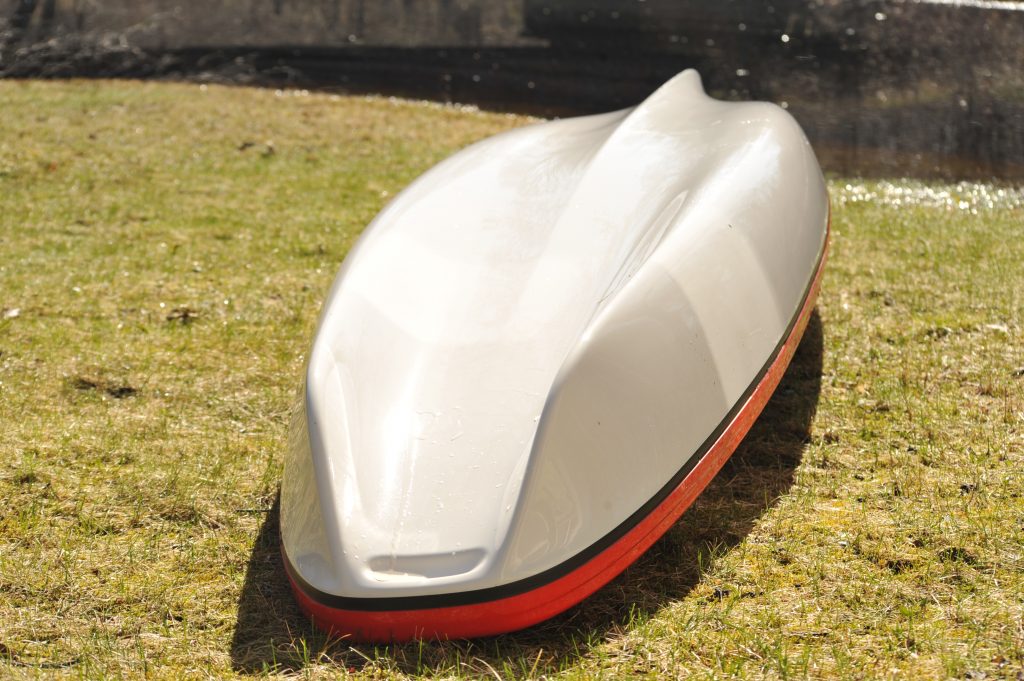
Underside of the Delta 12 AR
The hard chines and double-arch hull deliver rock-solid stability. | Photo: Vince Paquot

Okay, you may be thinking, but isn’t a catamaran rather cumbersome to paddle? Well, yes, but not so the 12 AR. Remember, the Fusion Hull is a twin-arch stern fused to a V-shaped displacement bow through an alchemy of CAD software and creative design. Acceleration and glide feel comparable to Delta’s more conventional, narrower 12- to 14-footers.

[ Paddling Buyer’s Guide: See all Recreational Kayaks ]

Aside from rock-solid initial stability, the 12 AR’s most notable handling characteristic is exceptional tracking. If you want to dig as hard as you like with no course deflection or correction strokes, this is your boat. Look elsewhere if you’re seeking turn-on-a-whim maneuverability or intermediate-and-beyond edging.

Extended cockpit of the 12AR
The 50-inch-long cockpit opening offers easy in and out for less flexible or claustrophobic paddlers. | Photo: Vince Paquot

Extra-large cockpit is spacious and accessible

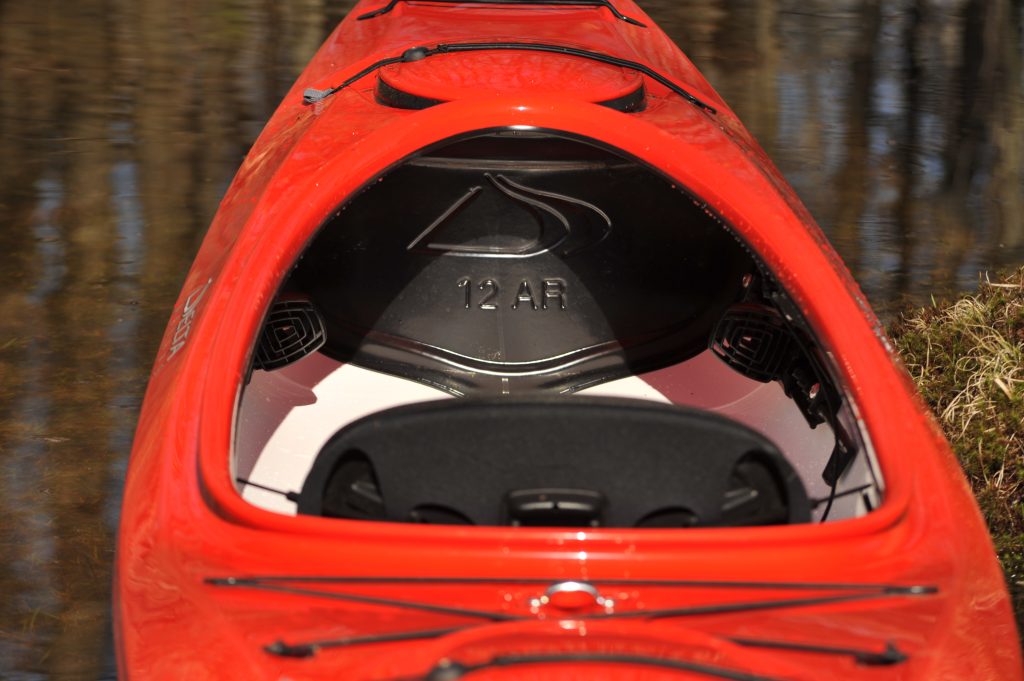
Delta Kayaks designed a new, elongated recreational cockpit for the 12 AR to facilitate super-easy entry and exit. At 50 inches long by 20 inches wide, the cockpit opening feels open and airy with an unrestricted, knees-up paddling position. Because the cockpit is too large to fit with a sprayskirt, the 12 AR is best suited to paddling smaller lakes, flatwater rivers, secluded estuaries and other sheltered waters.

Delta’s outfitting focuses on personalized comfort with their adjustable and intuitive Contour II seat system. The supportive, multi-position backrest is paired with a padded seat that can be moved four inches fore or aft to optimize fit and trim. All that adjustability means the Delta 12 AR kayak has a greater fit range than many others, accommodating paddlers short and tall. Even better, everything can be fine-tuned on the move, making the 12 AR a great choice if you’ll be sharing your kayak with family and friends.

Cockpit outfitting of the 12AR
All of the cockpit outfitting is on-water adjustable, including the multi-position backrest and Sea Dog foot braces. | Photo: Vince Paquot

The Delta 12 AR has a big appetite for adventure

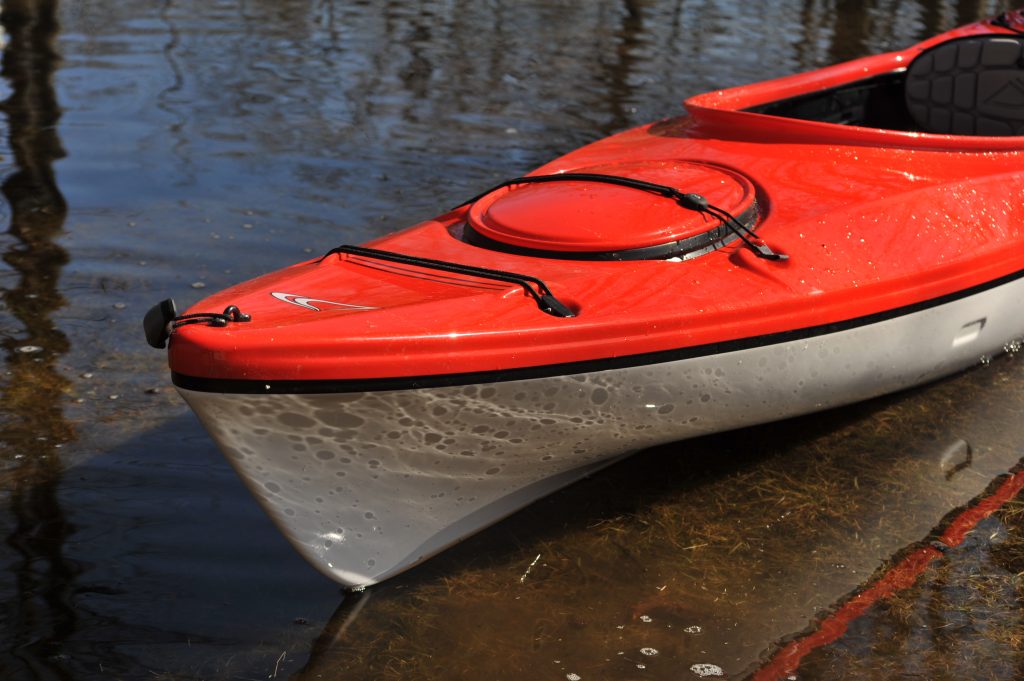
I applaud Delta for making safety a priority with all of their kayaks, and the 12 AR is no exception. While many rec kayaks—especially those from big box stores—have only a single sealed hatch, the 12 AR features bow and stern bulkheads with large, accessible hatches for plenty of floatation and dry storage. I also love the easy on and off convenience of Delta’s Press-Lock hatch covers, and the color-matched lids look pretty slick, too.

Storage hatch of the 12AR
Two large, watertight hatches provide ample storage for a weekend’s worth of gear. | Photo: Vince Paquot

Packed with premium features, the Delta 12 AR kayak is an exciting new option for discerning recreational paddlers. Add the light weight, innovative hull design and oversized cockpit, and you have a virtually barrier-free craft for flatwater adventures.


Boat Review: Wenonah Spirit II Canoe

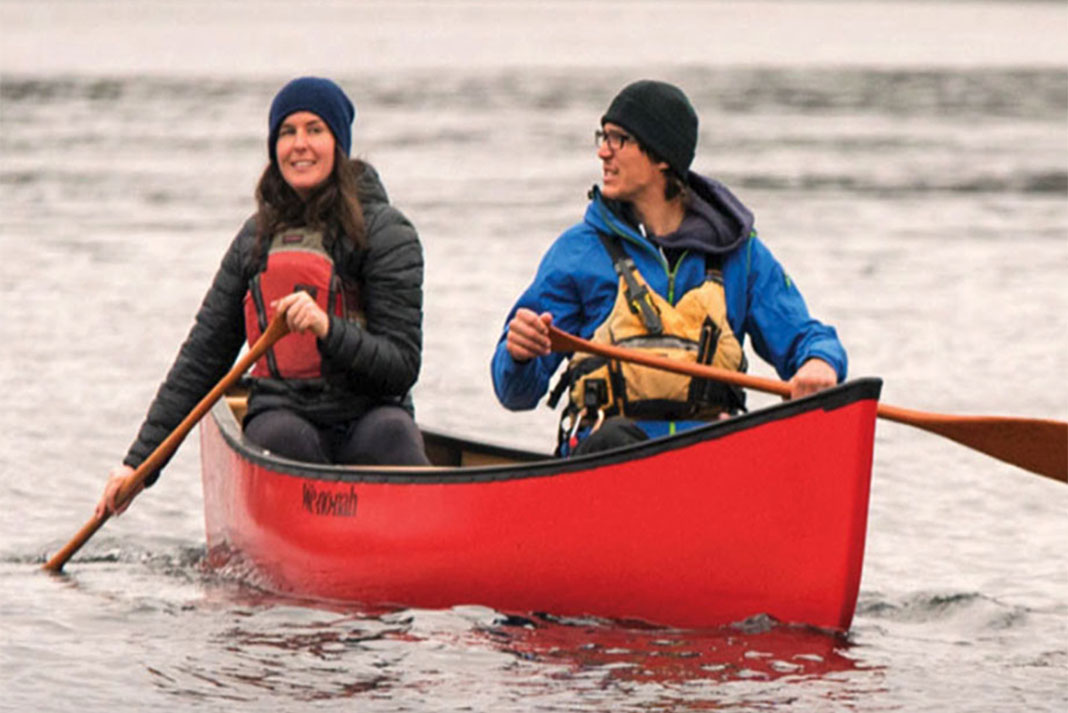
On the water with the Wenonah Spirit II canoe.
On the water with the Wenonah Spirit II canoe. | Photo: Alyssa Lloyd

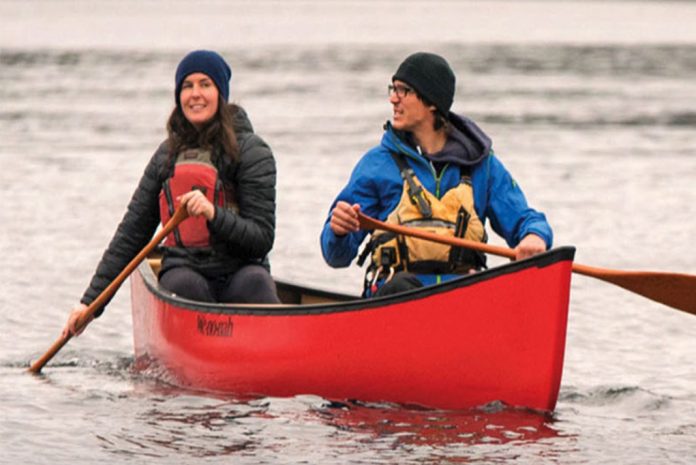
When the Wenonah Spirit II showed up at the Canoeroots office last fall in all its cherry-red glory, its mere existence marked the beginning of a new chapter in canoeing history. Wenonah Canoes’ Spirit II in T-Formex is the culmination of a classic and widely loved canoe with a long-awaited material that underwent a tumultuous journey to production.

Wenonah Spirit II Specs
(in T-Formex)
Length: 17’
Width: 35”
Depth: 14”
Rocker: 1’ 6”
Weight: 64 lbs
MSRP: $1,899
www.wenonah.com
[ Paddling Buyer’s Guide: See all Lakewater & Touring Canoes ]

Getting into the Spirit II

From the back of a napkin

The origins of the Spirit begins in 1981 when Wenonah sales and distribution representative Kurt Renner was sitting with a Wenonah dealer from Missoula, Montana. The dealer told Renner he needed a canoe he could sell to anyone. The pair pulled up their bar stools and sketched the ideal model on a wrinkled napkin.

The canoe they dreamed up was 17-feet-long, had a 34-inch waterline, a 36-inch maximum beam, one-and-a-half to two inches of rocker and clean entry and exit lines. Wenonah took the sketches to high-end racing canoe designer Everett Crozier and soon after the Spirit was born.

After two years of building the Spirit in fiberglass and Kevlar, Wenonah found the process of removing it from the mould was too cumbersome and made a modification to the nose.

Wenonah finds the right formula

In 1983 the Spirit II was born. It went on to become the most successful canoe model in Wenonah’s line. The Spirit II bridged the gap between whitewater tripping boats and the abundance of 32 to 33-inch waterline canoes deemed too tippy by too many consumers. It also became the center of a family of touring boats.

“It gave us a boat with a much broader appeal that can be used anywhere,” says Renner, 36 years after that bar napkin sketch.

Initially introduced in fiberglass and Kevlar, by the 1990s the Spirit II was being produced in Royalex. Then in 2013 the plastics company PolyOne announced they would cease production of Royalex sheets. It was a major blow to the canoeing community and kicked off a canoe material soap opera.

The future of Wehonah’s top-seller was now in the hands of Esquif Canoes, who announced in 2014 they were concocting T-Formex as a replacement material in their southern Quebec factory. Esquif went through bankruptcy and reinvestment, then eventually manufactured and shipped Wenonah a few T-Formex sheets.

Wenonah baked a sheet, formed a Spirit II and shipped it here to Canoeroots. Meanwhile, canoe builders are lining up to use T-Formex, but Wenonah Canoe was the first, outside of Esquif themselves, to produce canoes in the new material.

Two people paddling the Wenonah Spirit II canoe
Feature Photo: Alyssa Lloyd

Out on the water

After all this drama it turns out that our T-Formex Spirit II looks and performs just like a Royalex one.

Wenonah advertises the Spirit II as ideal for sportsmen, whitewater paddlers, families, kids and pretty much anyone else who wants a do-it-all canoe. To see if it’s truly the kind of canoe a dealer in Missoula could sell to anyone we paddled it in a variety of conditions.

The Spirit II tracks beautifully, and manages to be steady and stable without being sluggish. We especially appreciated the size of the Spirit II— it’s small enough for quick paddling outings but large enough to pack all the gear for a week of canoe tripping, plus the dog.

Our T-Formex tester has ash and webbing seats which adds even more to the Spirit II’s do-it-all sensibility. Why? Because when you spin it around it’s a pretty decent solo canoe.

I don’t live or work in Missoula where the rivers run long and free of portages. Solo carrying the Spirit II on even a short 200-meter portage, I definitely felt every one of its 64 pounds. I know yokes are a personal thing but I found this one flat and uncomfortable; changing it out would be my first, and maybe only, DIY project.

After the short walk I decided that if durability and price were not the most important factors I’d remind you that the Spirit II is available in Wenonah’s Tuff-weave Flex-Core, Flex-Core with Kevlar and Ultra-light with Kevlar layups. Spend more to carry less.

[ Paddling Buyer’s Guide: See all Kevlar Canoes ]

Not stopping with the Spirit II

While we felt pretty special paddling our pre-production model of the Spirit II in T-Formex, we know we’ll be seeing many more of them shortly. At the time of printing Wenonah’s production team is waiting for shipments of more T-Formex sheets, but Renner says many have been already pre-sold.

Renner sees the Spirit II as providing a much-needed respite in the canoe market for something versatile, tough and durable. “It’s refilling a hole that over the last couple years was somewhat of a void,” he says.

The 50-year-old canoe company has plans to produce seven of its models in T-Formex in 2017. In addition to the Spirit II they will build the Aurora, Adirondack, Prospector 16, Prospector 15, Wilderness and Blackwater. Wenonah Canoe Vice-President Bill Kueper is enthusiastic about the growing inclusion of Esquif’s T-Formex.


This article originally appeared in Canoeroots
Early Summer 2017 issue.
Subscribe to Paddling Magazine and get 25 years of digital magazine archives including our legacy titles: Rapid, Adventure Kayak and Canoeroots.

Skeg Or Rudder For Your Sea Kayak?

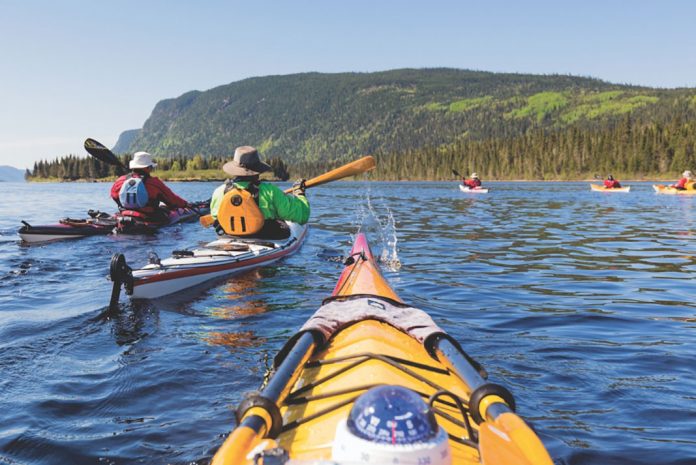
A group of sea kayakers paddle on a large body of water
Are these sea kayakers better off using a skeg or a rudder? | Feature Photo: Francis Lepine

Which is better, skeg or rudder—or nothing at all? It’s a popular shore-side debate within the kayaking community, and these hardware options are often a source of confusion for first-time buyers.

Doing it the old-fashioned way

Both skegs and rudders are mechanical aids that allow a kayak’s performance to be altered on the fly, as a paddler reacts and adjusts to conditions. Without a skeg or rudder, the performance of a kayak is solely dependent on its hull shape. The paddler can only modify the hull’s tendency to wander or hold a line by edging and taking strokes to control the boat’s course. While this is a highly active way to paddle, there’s no mechanical steering aid that could go wrong, and there’s a definite purist appeal in doing it all with just your body and paddle.

The con is that paddling without a skeg or rudder can be a lot more demanding, especially over long distances and in wind and waves. Endlessly sweeping on one side or trying to hold a kayak on edge for extended distances can be punishing to the body and inefficient overall.

So what’s the difference between rudder and skeg?

A skeg is a retractable blade that drops out of a slot in the kayak’s stern. The skeg blade cannot pivot from side to side, but is adjustable up and down. It’s typically controlled by a cable and slider. Skegs work by allowing the paddler to fine tune the amount of surface area that the dropped blade presents in the water. By lowering or raising the blade, a kayaker can balance out the forces of wind or current on his boat, allowing the kayak to more easily hold course.

[ Paddling Buyer’s Guide: See all Sea Kayaks with Skegs ]

By contrast, a rudder has a blade that pivots side to side, controlled by foot pedals connected to the rudder by cables or line. Most sea kayak rudders can be flipped up out of the water via uphaul and downhaul lines.

A rudder’s advantage is that it allows a paddler to effectively steer the boat by foot, without the need to interrupt or modify the forward stroke. This means that all energy can be poured into driving the kayak forward. The result is a system that maximizes a kayaker’s potential for speed and distance. For this reason, the vast majority of competitive racing designs incorporate rudders.

[ Paddling Buyer’s Guide: See all Sea Kayaks with Rudders ]

Which is more reliable?

Many kayakers will argue that skegs are more dependable than rudders, but I haven’t found this to be true. Skegs or rudders can both can suffer mechanical issues and both benefit from routine maintenance and care.

Skegs can be prone to jamming because it’s easy to get a pebble stuck between the skeg blade and box when launching from a beach. However, a little education and restraint with the slider makes this issue a minor one. Be aware that the skeg box does takes up some premium packing space in the stern hatch.

Note that some kayaks are designed to be paddled with the rudder down at all times. While this approach can yield great results, it does mean that if the rudder fails, the hull may not be very neutral or easy to control without the rudder.

Skeg or rudder: the final word

For most of us, paddling is not a competitive pursuit. So try rudders. Try skegs. Try nothing at all. Make the decision based on personal experience, rather than by listening to heated debates you overhear at the launch.


Boat Review: Pyranha Fusion L

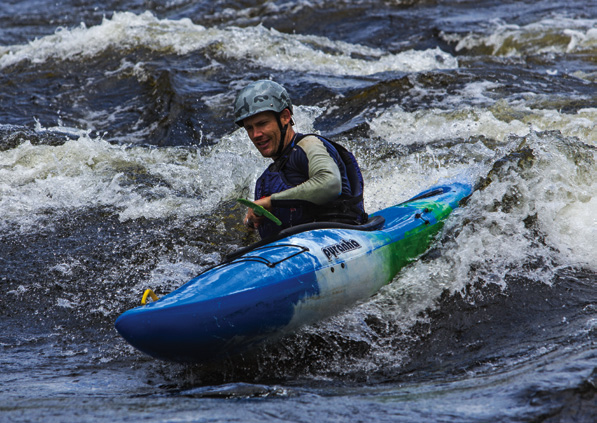
Pyranha Kayaks Fusion L | Feature Photo: Rapid Staff

Some children look like an equal mix of both parents, while others resemble one parent more than the other. While the Pyranha Fusion does show some family resemblance with sister touring line P&H Kayaks and recreational line Venture Kayaks, the Fusion most clearly resembles—and paddles—like its whitewater siblings.

Pyranha Fusion L Specs
Length: 10’2”
Width: 27”
Cockpit Length: 35.5”
Cockpit Width: 19.25”
Volume: 96 gal
Weight: 48.5 lbs
MSRP: C4S outfitting $1,099
River Tour rec outfitting $999
[ Paddling Buyer’s Guide: See all Pyranha Kayaks ]

The Fusion crosses over

Fit for the flats

At first glance you quickly notice most of the characteristics that you don’t find on typical whitewater boats. Like the removable deck pod and the large 20-gallon multi-day hatch that dominates the stern and deck lines crisscrossing the front deck. The hatch was nice and watertight but isn’t as easy on as some of the other boats, especially on cool mornings when the rubber is stiff.

The Fusion is equipped with Pyranha’s skeg system that goes up or down with a simple rope and cleat. Doing most of our paddling in kayaks without a skeg we were surprised how often, and useful, we found them to be on the flats. Since the skeg helps keep you going straight you have to do fewer corrections strokes and don’t waste your energy cruising through the calm stuff.

Pyranha Kayaks Fusion L | Feature Photo: Rapid Staff

Catch a wave

While those touring features definitely help you cross the flats it’s when the river picks up and starts foaming the Fusion really shines.

Of the boats we tested, I found the Fusion was the one that paddled most like a whitewater boat. It didn’t feel as wide as the other boats making it seem easier to engage the edges. It was controllable on waves and felt a bit like a stretched out, slightly relaxed version of the Pyranha 9R, a really fast whitewater racing boat.

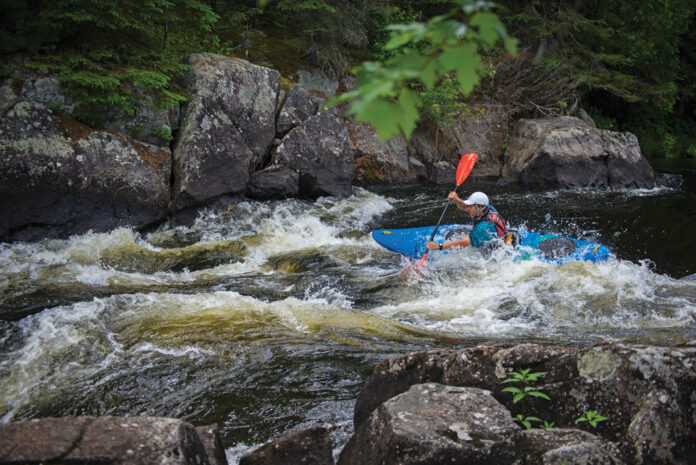
At just over 10 feet long the Fusion moves like a rocket compared to most other whitewater kayaks. As one of the narrower feeling boats in the shootout it gives up some primary stability compared to the wider, rounder designs, but the upside is you get way better handling in whitewater. You can surf small waves, change course quickly mid-rapid, catch smaller eddies with confidence and zip around the river with authority. We enjoyed long soul surfs on glassy green waves and even managed a few spins.



The Fusion comes equipped with either Pyranha’s River Tour recreational outfitting or their superior Connect C4S whitewater outfitting. Return your empties and spend the extra $100, it’s worth it. I’m not sure how Pyranha manages to maintain the hull rigidity without a front pillar, but we like it. There is nothing in front of the seat. Hmmm, it was very temping to stuff our waterproof camera bag between our knees.

Pyranha’s Fusion moves with authority

Pyranha puts their Fusion in the river running category and it definitely inherited more traits from their whitewater lineup of kayaks. If you need a boat to handle multi-day whitewater trips and something to get you from one rapid to the next with a bit of speed then run to your local dealer now. And then run anything you want.


Screen_Shot_2015-07-07_at_3.09.09_PM.png

This article first appeared in the Fall 2015 issue of Rapid Magazine.

Subscribe to Paddling Magazine and get 25 years of digital magazine archives including our legacy titles: Rapid, Adventure Kayak and Canoeroots.