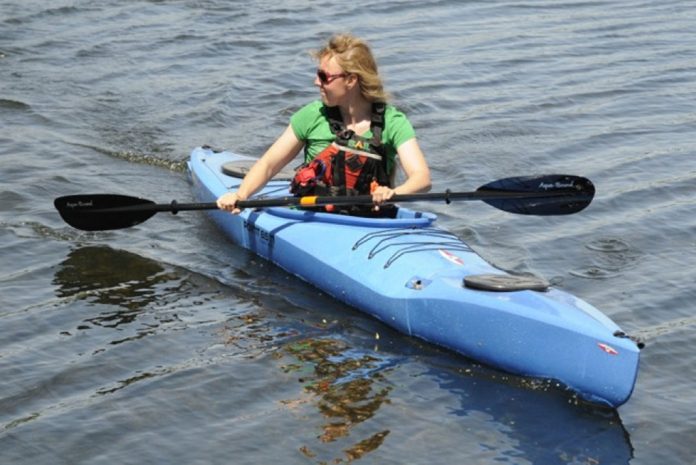
Sneak in a paddle anytime you please with this modular plastic kayak from Point 65 | Photo: Vince Paquot
If you’ve ever shopped at Ikea, you have probably marveled at the Swedish engineering that packs wardrobes and desks into flat boxes that fit in a Prius. Similarly, Point 65 Kayaks, based in Sweden, builds innovative, modular plastic kayaks like the Mercury GTX that stash in a closet or compact car.
[ Paddling Buyer’s Guide: See all kayaks from Point 65 ]
Sizing up the Point 65 Mercury GTX
The Mercury offers multiple configurations
The Mercury GTX solo breaks apart into three manageably sized sections, with the bow section fitting into the midsection’s cockpit for storage. The pieces assemble in seconds using Point 65’s patented Snap-Tap technology: interlocking bulkheads paired with deck-mounted ratchet straps.
Each section is entirely self-contained, the spacious bow and stern hatches on our demo boat were bone dry even with waves washing over the deck. The modular design is also versatile—you can snap in a second cockpit section to transform the Mercury into a tandem kayak.
While a slight hull flex at the section joints is detectable when carrying the Mercury on land, it isn’t noticeable on the water. Hull speed matches that of comparable light touring kayaks. Generous initial stability and a large cockpit cater to novice and recreational paddlers, but the Mercury is no slouch in rough water. Edge turns feel sporty and responsive, although the cockpit opening is too wide to really lock in your legs.
The Mercury’s AIR seat has inflatable lumbar and bottom support for all-day comfort. Gas pedal-style foot braces control Point 65’s pivoting stern keel, which has a cleaner deck profile and less windage than an external rudder. An integrated skeg works more as a steering enhancement than a set-it-and-forget-it tracking aid—since there’s no way to lock out the stern pivot, you’ll always have to be mindful of steering with your feet.
While it’s true that a sectional kayak like the Mercury GTX doesn’t fit into a backpack, it is by far the fastest option for those who want the ease of launching a hard-shell and the storage smarts of a portable kayak.
Ideal for: Sneaking in a paddle at lunch, weekend tours on all types of water.
Assembly Time: 2 minutes
This article was first published in the Summer 2014 issue of Adventure Kayak Magazine. Subscribe to Paddling Magazine’s print and digital editions, or browse the archives.
Video review of the Point 65 Mercury GTX Modular Kayak:
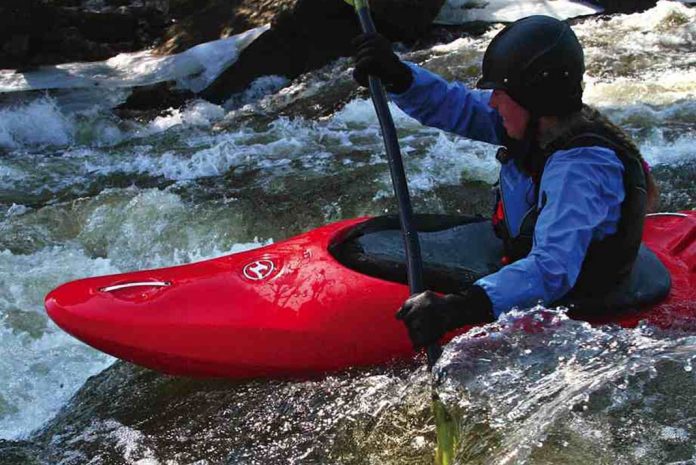
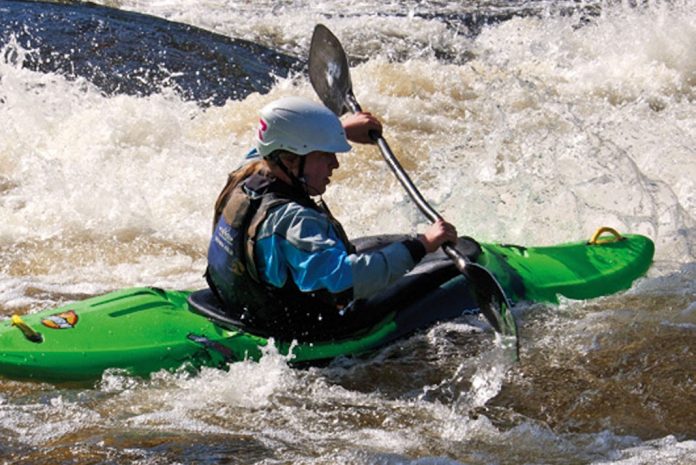
Lately it seems like whitewater kayak companies take their marketing cues from the auto industry. The copycat trend had already begun in 2004 when WaveSport hailed its new Diesel 70 river runner as the “SUV of kayaks.” Fortunately, WaveSport left out the stumbling blocks of most SUVs—poor mileage and an unrefined ride—and incorporated only desirable qualities like rugged versatility and voluminous cargo space.
[ Paddling Buyer’s Guide: See all river running kayaks ]
Debuting the WaveSport Diesel 70 (and siblings)
Seeking the perfect fit
The Diesels were a huge success and continued to be a top-selling boat for WaveSport into last year. So when WaveSport announced it was overhauling the design for 2009, many fans of the original were apprehensive. Given the popularity and superb handling, outfitting and versatility of the original, “What the hell are they thinking?” seemed a fair question.
What lead designer Robert Peerson was thinking was that by offering more sizing options, he could make the Diesel series the river runners of choice for even more paddlers. By replacing the old 65 and 75 gallon sizes with a 60, 70 and 80 gallon series and coupling these with updated, fully adjustable thigh braces, Peerson has enabled a wider range of paddlers to dial in the perfect fit.
The two original Diesels had huge weight ranges that seemed to work fine for smaller and larger paddlers but left those 160- to 175-pounds in something of a sizing no-man’s-land. These paddlers were well within the weight ranges of both boats, but the 75 had better buoyancy, agility and stability, while the 65 felt more proportionate. The new Diesel 70 is—as Goldilocks would say—just right.
The design team didn’t stop at sizing, however. “After paddling the Diesel and compiling feedback for four years we came up with a few tweaks to improve the design,” Peerson explains. These tweaks included adding a few inches of overall length and increasing the flare on the sidewalls.
Peerson also revamped the rocker profile, softening the transition between the hull and the ends to improve speed and turning. WaveSport team paddler Bryan Kirk tested the Diesel on some West Virginia 20-footers and says the new gradual rocker break also makes for softer landings and easier boofs than the old boat.
If you park the new Diesel next to its predecessor, the 2009 model’s peaked bow and stern deck are among the most striking changes. The original design struggled with resurfacing and water shedding issues in meaty holes and wave trains. This new deck profile allows the Diesel to resurface more predictably and smoothly as well as shed water better when punching holes.
When we reviewed the original Diesel in 2004, we raved about its wicked stability, ease of rolling, impressive cruising speed and uncanny ability to rip long waves. Tearing up swollen creeks this spring, we found the new Diesel is still a pleasure to paddle and a blast to surf. Like a Porsche Cayenne, the Diesel is a chimera with comfortable accessibility that hides a tune-it-out core and makes advancing boaters paddle a class better.
[ Plan your next adventure with the Paddling Trip Guide ]
The WaveSport Diesel 70 runs with economy
WaveSport’s claim that the Diesel 70 is the ideal go anywhere, do anything kayak is backed by this river runner’s proven performance on large-volume rivers, creeks and waves. Cash-strapped kayakers (is there any other kind?) will appreciate the Diesel’s versatility and quiver-of-one economy.
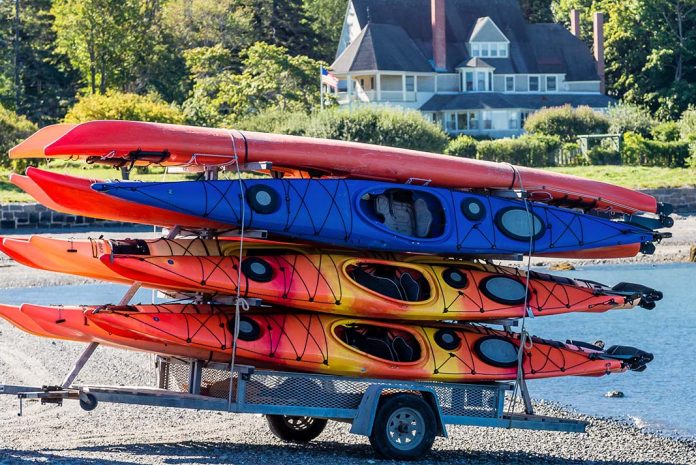
A trailer can be a more convenient option for transporting your kayak in many scenarios.
You don’t need a trailer to transport your kayak, but sometimes kayak trailers are the right tool for the job. Heavy fishing kayaks can be next to impossible to lift onto a roof rack solo. Smaller paddlers might be challenged to get their kayak onto a tall SUV. Friends heading to the river together might prefer to carpool and load all their boats onto a trailer for simplicity.
Whatever the reason, there are times when a trailer is the best solution to kayak transport. Here are some details to keep in mind if you’re thinking of adding a trailer to your fleet.
[ Paddling Buyer’s Guide: View all kayak transportation products ]
Types of kayak trailers
We’re used to choices when we go looking for outdoor gear, and kayak trailers don’t disappoint. There are dozens of different designs and configurations of trailers to choose from, from DIY specials to sophisticated ultralight folding trailers. You’ll find kayak trailers made of aluminum and galvanized steel, kayak and bike trailers, hybrid kayak trailers with storage, and massive trailers for commercial deliveries. The choices can be bewildering, but if you keep your eye on what you really need it’s easy to cut through the confusion.
A note on tongue length
One thing that almost all kayak trailers have in common is a long tongue. Tongue refers to the part of the trailer that sticks out the front and connects to your vehicle. Kayak trailers need to have longer tongues than conventional utility trailers so your kayaks won’t hit the rear of your vehicle when you turn. The shortest kayaks can be transported on a trailer with a conventional length tongue. Anything longer than about 10 feet requires the extended tongue that comes on a dedicated kayak or canoe trailer.
Traditional kayak trailers
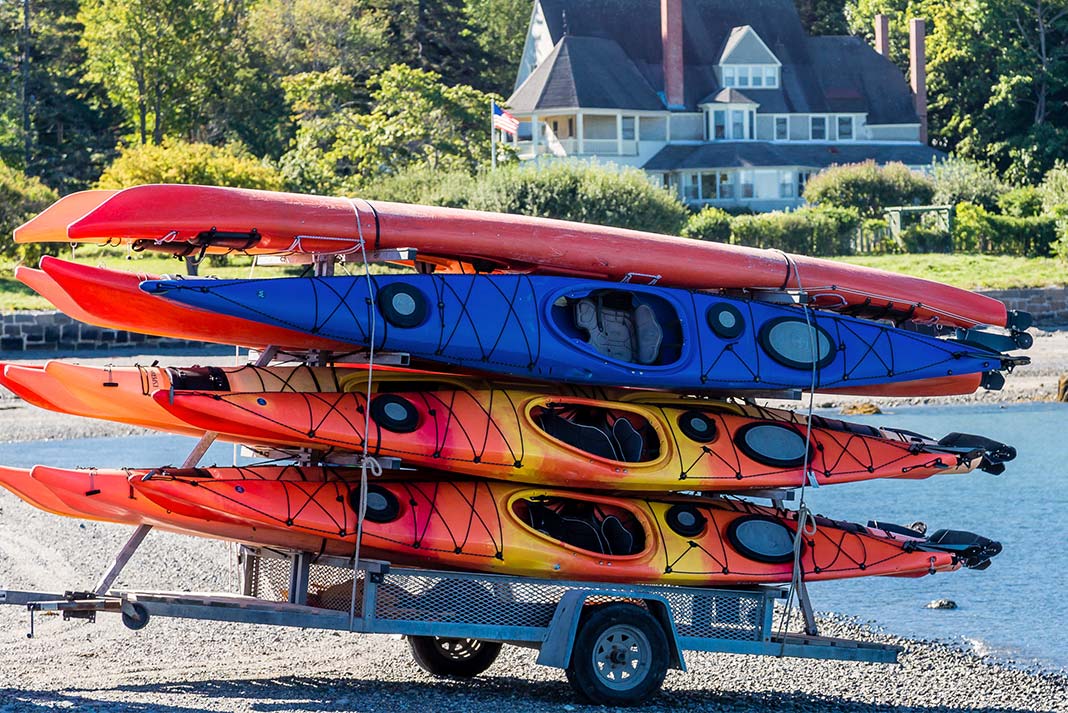
Traditional kayak trailers are the ones we’re used to seeing at canoe rental shops. They typically have two upright posts with horizontal crossbars. Depending on the number of crossbars, trailers like this can carry from two to eight canoes. The largest of these trailers can transport as many as 16 canoes! Since kayaks are shallower than canoes, it’s possible to stack kayaks together on their edge and double the capacity of the trailer.
Traditional kayak trailers may be made from galvanized steel or aluminum. Aluminum trailers are lighter but are more expensive. Crossbars are often rudimentary and should be padded to protect your kayaks.
Traditional kayak trailers are favored by livery operations, kayak manufacturers and clubs that need to transport a lot of kayaks at a time.
Ultralight kayak trailers
Ultralight kayak trailers are smaller and lighter than traditional kayak trailers. Their light weight makes them appropriate to tow behind lighter vehicles and passenger cars.
Like traditional trailers, ultralight trailers can be made from both aluminum or galvanized steel. Ultralight trailers typically feature lighter springs and smaller tires. Some are equipped with lightweight wheels that are similar to bicycle tires. Some ultralight trailers feature the ability to fold for compact storage.
Many ultralight trailers feature conventional roof rack crossbars. These crossbars make it possible to mount a wide range of kayak saddles and cradles for secure kayak transport. They also make it possible to create a hybrid trailer that will transport kayaks, luggage boxes and bicycles at the same time.
Ultralight kayak trailers are the most popular option for most kayakers.
Hybrid kayak trailers
Hybrid kayak trailers carry boats and gear. The simplest type of hybrid trailer might be a traditional kayak trailer with a mesh basket welded underneath the boat racks. This configuration makes it possible to stash wet gear and bags under the boats.
More sophisticated hybrid trailers use roof rack crossbars to create a platform that can be customized to transport kayaks, canoes, luggage boxes and bicycles. Some hybrid trailers offer the option to fit a fold-out tent or camper to the top of the trailer.
Most hybrid trailers are of the ultralight design. The versatility of this type of trailer makes it a top choice for paddling enthusiasts.
[ Paddling Buyer’s Guide: View all kayak trailers ]
How do you transport a kayak on a trailer?
If you’ve never towed a trailer behind your vehicle, the whole process might seem a little intimidating. Once you have the hang of things, it’s a snap.
Vehicle requirements
Before you select your trailer, you should make sure your vehicle is set up for towing. For many vehicles, this means adding a receiver hitch and a trailer wiring harness.
Receiver hitches bolt to the vehicle frame and take a hitch ball insert. Different vehicles are rated for different sizes of receivers. Smaller vehicles can be fitted with a 1.25-inch receiver. Trucks and SUVs typically take a 2-inch receiver. Bigger means stronger, but either receiver size is appropriate to tow a lightweight kayak trailer.
Kayak trailers use a four-pin trailer wiring harness. This harness connects your vehicle’s electrical system to the trailer and synchronizes the trailer lights with your vehicle lights.
Depending on your vehicle and your skills, installing a receiver hitch and wiring harness could be a DIY project. If not, you’ll have no problem finding a local business that can complete the install for you.
Once you have the appropriate receiver and wiring harness mounted to your vehicle, you’ll want to purchase a ball that is matched to your trailer. Most conventional trailers use a 2-inch ball. Many ultralight trailers use a smaller, 1-⅞ size. Make sure to purchase the right size ball for your trailer.
Hooking up
Hooking up a trailer is simple. Here are the basic steps:
1. Attach the tongue coupler to the ball
The tongue coupler is at the front of the tongue. This coupler fits over the ball on your trailer hitch. There is a lever on top of the coupler that locks and releases the coupler clamp.
To attach the coupler to the hitch, first squeeze the release on the coupler latch lever and lift the lever. Next, drop the coupler over the top of the ball. Finally, press the coupler latch lever downward to clamp the coupler to the hitch ball. There is a hole through the coupler latch lever that should be fitted with a pin or lock to prevent the latch from accidentally opening.
2. Attach the safety chains
Your trailer will have one or more safety chains. These are a backup in the event your hitch coupler should disconnect from your hitch. Attach the chains to the chain loops on your hitch receiver. If you have two chains they should be crossed under the tongue. This way the chains will catch the tongue and prevent it from dragging on the ground if the coupler disconnects. If the chains drag on the ground, twist them once or twice to shorten them.
3. Connect the wiring harness
Connect the four-pin connector on the trailer to the wiring harness on your vehicle.
4. Check your lights
Once you are all hooked up, it’s a good idea to make sure all your trailer lights are working correctly. Check the function of your running lights, turn signals and brake lights by turning on your vehicle headlights, placing your foot on the brake and switching on your turn signals. You can check running lights and turn signals by yourself, but it’s nice to have a helper to check your brake lights. If you’re on your own, you can check your trailer brake lights by placing something close behind the trailer light and looking in your mirrors.
5. Check the load
Make a final walk-around of the trailer to ensure your kayaks are secure and there are no loose straps that could catch on the axel or tires. If your trailer has a jack or kickstand, make sure it is fully retracted before driving off.
On the road
Now that you’re hooked up, it’s time to roll. Be careful at first when learning to drive a trailer. Take turns wider than you normally would. Check your side mirrors frequently. Watch what the trailer does as you change lanes. Make sure to leave LOTS of extra room if you pass. Drive a little slower and leave extra room for braking. When you’re towing a trailer, it’s best to be a cautious, defensive driver.
Backing up
Most folks get the hang of driving a trailer after a few trips. One thing that can be tricky is skillfully backing a trailer into a parking place or down a boat ramp. Here are a few tips that will help you step up your backing game.
1. Put your hand on the bottom of the steering wheel
This is an old trick that makes backing a trailer more intuitive. Put your hand on the bottom center of the steering wheel before you begin to back the trailer. The direction your hand moves is the direction the trailer will move. Move your hand right and the trailer moves right. Move your hand left and the trailer moves left.
2. Use your side mirrors
Sometimes it’s hard to keep a trailer moving straight while you’re backing up. If you use your side mirrors you’ll be able to make small adjustments without veering the trailer from left to right. Here’s how the trick works. As soon as the trailer appears in one side mirror, make a slight correction in the other direction. If the trailer appears in the other mirror, adjust accordingly. Using your mirrors will help you make small corrections to keep your trailer on the straight and narrow.
3. Back to the sight side
It’s much easier to control a trailer when you turn it toward the driver’s side of the vehicle. In fact, it can be so hard to tell what’s happening on the passenger side that truckers call it the “blind side.” Experienced trailer drivers avoid the blind side and back toward the sight side whenever possible.
If you need to maneuver your trailer into a tight spot, set yourself up for success before you back up. Approach the turn so you can look over your shoulder out the driver’s side window and see exactly how far the trailer is turning. This will allow you to make small corrections to the trailer’s path and help you to avoid the dreaded jackknife—which happens when you turn too far and the tongue of your trailer hits the rear of your vehicle. Ouch.
A trailer can be a more convenient option for transporting your kayak in many scenarios.
How to choose a kayak trailer
When choosing a kayak trailer, first decide how many kayaks you’ll need to carry at one time. Next, consider whether you’ll want to carry bikes or a luggage box as well as boats. Do you need a trailer that folds for compact storage against the wall of your garage? Are you towing with a small vehicle that requires an ultralight trailer? These are some of the questions you should have in mind when you talk through trailer options at your local shop or explore things on the web.
If you’re looking for the most economical option, a traditional kayak trailer made from galvanized steel is likely the best bet. If you place a premium on light weight and versatility, lean toward toward ultralight hybrid options.
Most kayak trailers start at about $1,000. Aluminum trailers aimed at livery use can top $3,000. Commercial grade trailers for heavy loads are more expensive still.
Most hybrid and ultralight trailers start at $2,000 for the basic trailer, plus the cost of any accessories you might choose to mount.
DIY kayak trailers
Quality kayak trailers can be pricey, so it might seem like a good idea to build your own using an affordable utility trailer as the foundation. Advanced DIY enthusiasts will certainly be able to put a workable solution together, but most folks will be better served with a specialized trailer designed specifically for hauling kayaks. The two main reasons are tongue length and suspension.
As we mentioned at the beginning of this article, kayak trailers require a longer tongue than conventional utility trailers. The longer tongue prevents the kayaks from hitting the back of your vehicle during turns. Some DIY projects get around the problem of a longer tongue by using a small boat trailer as a foundation. Others might extend the tongue on a utility trailer. Either way, such a modification likely requires welding and fabrication skills. Not a simple fix.
Suspension is another concern when adapting a boat or utility trailer for hauling kayaks. Kayak trailers are designed for lighter loads. Stouter trailers with heavier springs won’t ride as smoothly down the road as kayak trailers. In the worst situations they may bounce down the road with enough force to damage lightweight kayaks. If you’re working on a DIY trailer project, make sure you consider how your trailer’s suspension will impact your kayaks.
Is a trailer right for you?
Trailers aren’t right for everyone, but they are the perfect solution to some difficult kayak transport challenges. Maybe your kayak is too heavy to be lifted on top of the vehicle by yourself. Maybe your car doesn’t have a good roof rack fit. You could be taking the whole family out for a paddle and have more boats than you could fit on your car.
In any of these situations, a kayak trailer is the right tool for the job. Trailers make it easier to paddle alone or with friends, eliminate the need to lift a kayak over your head and offer a good option for additional cargo storage on long road trips. If you’re looking for a better way to move your kayaks, be sure to give kayak trailers a look.
A debate as old as whether pineapple belongs on pizza. Stick with a skeg and avoid the real problem with rudders, according to author Brian Day. | Photo: Matt Baldelli
Okay, I’ll be honest. I came up in the world of sea kayaking in the Great Lakes, indoctrinated in the cult of British sea kayaking. Every single one of the paddlers I wanted to be when I grew up were firmly set against kayak rudders. As a younger man, I was steeped in the ways of rudder hatred, but what is really the problem with using a kayak rudder?
I’ve heard all the arguments, including: rudders are dangerous in rescues, they break when you need them most, moving foot pedals makes it impossible to brace, rudders inhibit proper skills development, rudders contribute to loose moral virtue and the increase of gout. Rudders are bad. They will give you smelly feet.
In the intervening years, I’ve paddled some fine ruddered kayaks and most of those criticisms have fallen by the wayside. I no longer fear capsize from an abruptly shifting foot brace, I’ve learned to inspect rudder cables to make sure they won’t part at an inopportune moment, and I no longer see ruddered kayaks as a source of moral decay. In fact, I’ve warmed to rudders considerably. I’m happy to admit ruddered kayaks are faster when racing, more efficient on long expeditions and helpful to beginners who are just getting the hang of paddling.
Despite this change of heart, I still think rudders are a poor choice in a versatile sea kayak paddled in a full range of ocean conditions, from surf to tide races. You see, rudders have one big problem you just can’t get around. The real problem with rudders is trim.
Let me explain.
Imagine yourself kayaking off the shore of a beautiful tropical island. Palm trees sway in the breeze and a steady wind pushes your boat toward the beach. You start paddling forward, steering a course toward a headland of volcanic rock. And your kayak begins turning into the wind.
What the heck is going on? It’s simple. If the wind blows you sideways, you’re going to drift sideways. If you start paddling forward, the bow of your kayak gets stuck in the water and the stern keeps on drifting sideways. Presto! Weathercocking.
Now, if you are in a kayak with a skeg, you’ll want to slide that skeg down a little bit at a time until you can point at the headland again. That skeg mechanically changes the bow-to-stern trim of your kayak. In essence, it makes the stern sit deeper in the water and locks it in place, so it can’t skid out. You could do the same thing by strapping a cinder block to the back deck of your kayak, the skeg just makes it a little easier.
Here you are now, happily paddling along, pointed just where you want to go, skeg in perfect position. Great. What happens if you decide to push the skeg all the way down? Trouble. Why? Because if you put that skeg all the way down, your kayak will start to turn away from the wind. The trim will be too far toward the stern. You’ll start heading for certain destruction on the black rocks of the headland, complete with wailing and gnashing of teeth.
With the skeg fully down you thrash away on the downwind side of the boat, desperately trying to claw off the fatal lee shore. To no avail. Slowly, inexorably, your bow points toward the pointy rocks. Your mind is filled with visions of smashed fiberglass and sodden sleeping bags. Yikes. Better pull up the skeg a little bit.
[ Paddling Buyer’s Guide: View all kayaks with skegs ]
The real problem with rudders on kayaks
Here’s where we get to the real problem with rudders. A rudder, on the stern of the boat, fully deployed into the water, acts like a skeg all the way down.
Think about it. If a fully deployed skeg makes your boat turn uncontrollably downwind in breezy conditions, won’t a rudder do the same? Of course, it will. If the wind is mild you can counteract this by kicking a little upwind rudder. But if the wind is really howling this won’t work. You’ll find yourself blowing downwind no matter how hard you fight it.
Surely there is a way to fix this problem. Of course, there is. If you want your ruddered kayak to paddle properly in all wind conditions, you need to adjust the trim of the boat so that it is balanced in the wind when the rudder is down.
Finding the sweet spot
To do this, you’ll have to move the seat forward until you find the sweet spot allowing the rudder to turn the boat upwind or downwind regardless of the conditions. You’ll probably need to play around with it for a little while. Maybe move the seat forward an inch and then take the boat out in a real howler to see what happens. Then maybe move it forward another inch. Eventually, you’ll get to the point where you can turn upwind or downwind with the rudder regardless of the wind speed.
When you get to this point, you’ll have achieved perfect balance—and a kayak that is completely uncontrollable in the wind if the rudder isn’t in the water.
Now you’ve done it. You’ve shifted the trim of the boat so far forward the rudder must be in the water at all times. If it isn’t, your boat will weathercock so fast it’ll give you whiplash. If you are out in any kind of wind at all you had better have the rudder down, because if you don’t you’re in a pickle, clawing away as hard to fight weathercocking as you were before trying to keep off the rocks.
To be sure, aiming uncontrollably away from the pointy rocks is way better than aiming uncontrollably toward them, but neither option is quite as nice as a boat going where you want it, when you want it to. A kayak with a skeg can be trimmed to be neutral in the wind. A kayak with a rudder must be trimmed to paddle either horrendously in the worst conditions, or horrendously when the rudder is up. Not much middle ground.
[ Paddling Buyer’s Guide: View all kayaks with rudders ]
When does a kayak rudder work? When does it not?
Rudders work great on specialized kayaks intended to be paddled with the rudder in the water at all times, like surfskis and racing kayaks. They don’t do a good job at balancing a versatile kayak in the wind in a broad range of conditions. If you want to race, by all means, paddle a kayak with a rudder. If you want to explore the sea in all its manifold dimensions, stick with a skeg, and avoid the real problem with rudders.
This article was first published in Issue 57 of Paddling Magazine. Subscribe to Paddling Magazine’s print and digital editions, or browse the archives.
A debate as old as whether pineapple belongs on pizza. Stick with a skeg and avoid the real problem with rudders, according to author Brian Day. | Feature Photo:Matt Baldelli
Pyranha first introduced the Burn in 2006, quickly capturing the hearts of river runners and creekers alike. After wooing paddlers for several years, Pyranha sought to make the relationship even stronger with the Burn II, featuring softer raised edges, a tweak in the rocker profile and peaked decks.
Team Pyranha UK paddler Chris Easterbrook says, “It’s the Burn we’ve known and loved made better.” Are these changes enough to keep the flames of passion burning bright?
[ Paddling Buyer’s Guide: See All Creeking And River Running Kayaks ]
Pyranha Burn II Specs
(S / M / L)
Length: 7’9” / 8’ / 8’3”
Width: 25” / 25.6” / 27”
Volume: 63 / 74 / 80.3 U.S. gal
Weight: 37.4 / 41.8 / 44.1 lbs
Paddler: 77-209 / 121-232 / 165‑275 lbs
MSRP: $1,199 USD
Shedding some light on the Pyranha Burn II
Getting the right fit
The first things of note when hopping into the Burn II are the quality ratchets on a backband that seems to move perfectly with your body. A bit daunting is the number of pieces of outfitting. While we eventually got a great fit, expect to spend more time getting there.
Speed and handling
Our testers found the Burn II to be in the middle of the pack in terms of speed but liked that it only took three strokes to get there—a great feature for tight technical runs where you don’t have much space to build momentum.
[ Plan your next adventure with the Paddling Trip Guide ]
The Burn II likes to be dominated, and our aggressive testers were rewarded with a very responsive and quick-turning boat. The key to get it to perform is in understanding those redesigned rails.
Finding the sweet spot
Slightly raised and shorter than the original Burn, the updated edges are less prone to accidentally catching the water or hanging up on rocks. The tradeoff to these higher edges is that you need to lean farther over when you want to use them. Advanced boaters won’t have any issues with this because the Burn II has terrific secondary stability. Beginners, however, may find this “sweet spot” far beyond their comfort zones. The advantage of these no-trip rails on a technical run is a disadvantage on a wave, where it’s a long way from edge to edge.
The Burn II easily skips up and over holes. The rocker profile and the peaked, water-shedding bow deck help keep the boat on the surface and moving quickly downstream, while the extra volume in the stern prevents unintentional back enders.
Will the Pyranha Burn II light your fire?
The Burn II is a boat that beginners could grow old with but is probably better suited for the class IV and up crowd. Take charge and be on your game and it will handle small volume technical rivers that require quick maneuvering, and still feel at home among the holes and confusing crosscurrents of larger volume runs.
Otters are part of the Mustelidae family, which includes skunks, weasels, wolverines and badgers. The sea otter is the largest member of the weasel family, but the smallest marine mammal in North America. | Photo: istockphoto.com
I’m drinking coffee on a seaside rock on Knight Island, Prince William Sound, Alaska. From the velvety fog comes a surprisingly loud crunch. It continues for twenty seconds. Then it stops. Ten seconds later the crunching noise resumes for another half-minute. The pattern continues.
I know the sound, although it’s been missing from my home state of Oregon for more than a century. It’s a fuzzy, adorable and hungry sea otter. The crunching noise is it cracking urchin, crab, clam or mussel shells, and munching on shellfish. The brief silences are when it dives for more grub. Sea otters eat a lot. Their appetite makes them an ecological keystone. And a movement is gathering steam to return them to the Oregon coast.
Otters’ undeniable cuteness, appetite, ecological importance and near-extinction are all linked together. They once ranged from Baja to Japan. Their thick, plush fur led them to be hunted relentlessly, disappearing from much of their range by the early 1900s. Their fur is so thick because they lack the blubber other marine mammals use to keep warm. It also means they need to eat a lot to keep pumping out the BTUs.
“Otters eat about 25 percent of their weight in shellfish every day,” says Bob Bailey of the Elakah Alliance, the organization spearheading the otters’ return to Oregon. “For an 80-pound otter, that’s three and a half tons of shellfish a year.”
Otters are part of the Mustelidae family, which includes skunks, weasels, wolverines and badgers. The sea otter is the largest member of the weasel family, but the smallest marine mammal in North America. | Photo: istockphoto.com
A relentless appetite means sea otters have an outsized influence on marine ecosystems. In the absence of hungry otters, urchins munch through kelp, seagrass and eelgrass beds, creating vast urchin barrens where there were once productive nurseries for fish. Where otters survived or were successfully reintroduced, the kelp forests have come back. Otters survived in areas of Northern California and Alaska, and were reintroduced to the west coast of Oregon, Washington and British Columbia (B.C.). The Washington and B.C. populations survived. The Oregon population did not.
[Paddling Trip Guide: View All Wildlife Viewing Trips]
There are plenty of reasons to bring back otters. They’re cute, and as any kayak guide in Monterey, California, can tell you, cute otters equal tourism business. Healthy kelp forests and seagrass and eelgrass mean more fish for commercial fishermen, Orca and local residents alike. Kelp, freed from urchin munching, grows fast and sucks up carbon dioxide. By one estimate, otter-restored kelp forests store 8.6 billion kilograms of carbon, worth $408 million on the European Carbon Exchange.
“Come for the cute, stay for the carbon,” says Jules Bailey, a former Oregon legislator.
I’ve paddled with otters on the B.C. and California coasts. They make the coast come alive, popping up in kelp beds and sleeping together in giant rafts. When I came across one snoozing group, most dove, but one pup decided to head-butt my kayak bow first. I desperately want them back on the Oregon coast.
But there’s more to do than just scooping up a few cute fuzzy Alaskan otters and letting them loose in Oregon. The Elakah Alliance is launching a two-phase process. Phase one is a feasibility study. Where are the best spots, with enough shellfish, offshore rocks for kelp to adhere to, or estuaries with seagrass beds? Since Oregon was the transition zone between northern and southern sea otter subspecies, how many animals of which type? How many otters are needed to survive and spark a new population? What gender mix? The ripple effects of new changes, like warming oceans and the stress on shellfish of ocean acidification from greenhouse gasses—are hard to predict but make otters even more critical.
“The nearshore ecosystem is already under stress, and we’ve been living on borrowed time,” says Bailey. “Returning otters and kelp forests is something we can do and will build the ocean’s resilience to coming changes.”
The second part of the plan is the human element. Bailey, a retired coastal planner, is planning an economic analysis, looking at the ripple effects otters could have on fisheries, tourism and coastal communities, many of which have been smarting from a long-running decline in timber jobs and declining fish populations.
“The approach is consensus-based,” says Avalyn Taylor, an Elakah board member. “It’s an opportunity to right a past wrong in a very tangible way,” she says. “Otters could be back within my kids’ or grandkids’ lifetime.”
Sitting on my rock in Alaska, listening to otters munching away as the Chugach Range slowly emerges from the fog, I’m hopeful it won’t take so long.
Neil Schulman writes and paddles in Portland, Oregon.
This article was first published in Paddling Magazine Issue 62. Subscribe to Paddling Magazine’s print and digital editions here, or browse the archives here.
Otters are part of the Mustelidae family, which includes skunks, weasels, wolverines and badgers. The sea otter is the largest member of the weasel family, but the smallest marine mammal in North America. | Photo: istockphoto.com
Eric Jackson steps down as President of Jackson Kayak
On December 4, 2019, Eric Jackson announced he is stepping down from his role as president of Jackson Kayak. He founded the company in 2003 as a whitewater kayak brand, but soon expanded the business to recreational and fishing kayaks.
Eric Jackson is a three-time world-champion kayaker and spent 26 years on the USA Kayak team. He is also the captain of the USA Kayak Fishing team and competes in the professional bass-fishing tour.
[ Plan your next adventure with the Paddling Trip Guide ]
Yearning for the simple life
While he is stepping back from his role at Jackson Kayak, he said he will still be a brand ambassador and simply wants to make more time in his life for his kayaking and fishing pursuits.
“I have put my heart and soul into this brand, and so has my family, and many of my friends,” Eric wrote in a Facebook post announcing the news. “I hope our customers (kayakers and dealers) consider themselves as part of the Jackson family. As the company grew in size and complexity, I have been looking at turning my attention to something simple again, as well as focusing more time on my kayaking and fishing.”
New adventures for Jackson Kayak
Jackson Kayak had just recently announced the launching of a bigger brand known as Jackson Adventures. This move created a consolidated brand to include Jackson Kayak, Orion Coolers, Orion Kennels and Blue Sky Boatworks.
The Jackson family is very active in the paddling community. Both Emily Jackson and husband Nick Troutman still race in as many whitewater events that they can. Dane Jackson recently finished first place in the Green Race and also set a new course record while he was at it.
Look for more information to come in the next Paddling Business newsletter.
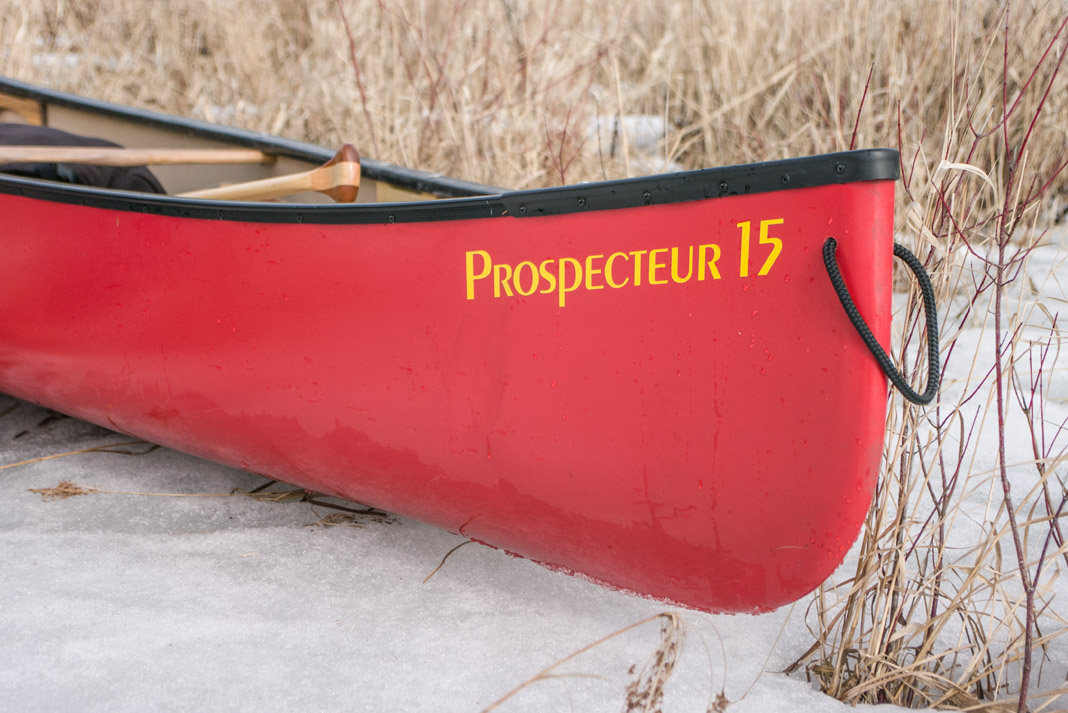
This past summer Esquif Canoes added the 15-foot Prospecteur 15 to its lineup alongside its popular Prospecteur 16 and Prospecteur 17 siblings.
Side-by-side, the new 15 looks a bit more like a chubby trick pony than the classic workhorses of the North, yet the whole Prospecteur fleet shares the same classic lines. As they should—each was originally inspired by the original Chestnut Canoe Company Prospector.
Our little 15-foot tester is a full 12 inches shorter than Esquif’s 16-footer, but it still boasts the same 35-inch width, 2.75-inch rocker, and 14.5-inch depth. There’s an optical illusion at play here, because it’s shorter it looks wider, but it’s not, we double-checked.
The family ties don’t end here. In fact, Esquif’s new Huron 15 canoe is pulled from the same mould as the Prospecteur 15. The Huron is then trimmed down two extra inches to a depth of 12.5 inches.
Being able to get two boats from the same mould was always part of the plan, says Esquif Canoes owner Jacques Chassé.
He says the Huron’s lower profile trims off eight to 10 pounds and makes it easier to paddle in breezy conditions.
A small canoe with high-performance and easy maneuverability
Given the choice, however, you already know what we’ll probably take. For backcountry lake and river travel, we’ll take the Prospecteur every time. Even when we try and go light for a weekend, by the time we load up cameras, Dutch ovens, dogs and coffee presses we need all the freeboard we can get through rapids and chop.
[ Paddling Buyer’s Guide: See all whitewater canoes ]
So you’re probably wondering why the world needs another Prospector. We asked Chassé the same thing. “Our Prospecteur 15 is for people who are not going on long expeditions but want performance on a smaller platform. It’s easier to maneuver, and easier to load and unload,” he said.
Shorter boats have been gaining popularity in North America over the last decade as vacations and paddling trips are chunked up into shorter blocks of freedom.
Smaller crafts are also particularly popular with Esquif’s European customers, according to Chassé. But, he says, the final decision to add a 15-footer to the Prospecteur line was largely based on the success and popularity of Esquif’s playful 14.5-foot Pocket Canyon.
As much as we love the highly rockered Pocket Canyon, it’s not everyone’s cup of chai. It’s more a charge-toward-eddies, play-the-river kind of tripper. When we loan the Pocket Canyon to friends we watch from the dock as they zigzag off into the distance. We warned them.
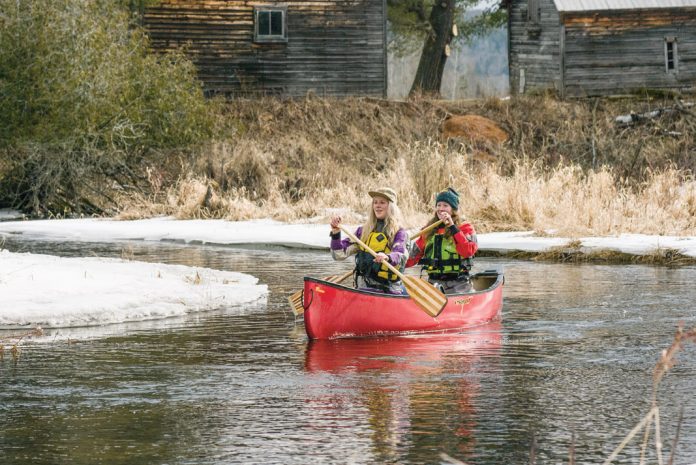
Esquif gives a nod to the river-tripping heritage of the original Prospecteur design, creating a design as idea for lakewater touring as river tripping in Class I to III conditions. Like the 16 and 17 footers, the Prospecteur 15 is available in red or green T-Formex. | Photo: Michael Hewis
The Prospecteur 15 features ample carrying capacity and handles well when loaded. With a little DIY handiwork you can fit four blue barrels. Empty, the boat’s playful and responsive but not as much as the Pocket Canyon. Which is a good thing, for most trippers. | Photo: Michael Hewis
The 15-ft canoe that is perfect for any canoe trip
The Prospecteur 15 is a much better all-arounder. If you’ve paddled a Chestnut-inspired Prospector before—who hasn’t?—you’ll be familiar with what to expect in terms of reliable performance. Performance, but not too much performance. It’s a boat more willing to back ferry than the Pocket Canyon. Lakewater paddlers can keep it straight. Goldilocks says, it’s just right.
[ Paddling Buyer’s Guide: View all lakewater and touring canoes ]
This chubby-at-the-yoke little Prospecteur boasts ample room for tandem weekend excursions. When we began lining up our gear we realized keeping the width of the larger models keeps blue barrel users happy.
We can drop two in side-by-side. Except for the way the seats and yoke spacing comes installed it isn’t a super efficient use of space—the barrels only fit behind the yoke but are too close the stern paddler’s knees.
Esquif Canoes’ Prospecteur 15 can be a tandem or solo canoe
The bow and stern seats are set too far in from the ends of the boat, at least more than seems necessary from a gear management perspective.
Chassé says he wants to offer bow paddlers a comfortably wide area for kneeling. Consequently, to trim the boat properly the stern seat also needs to be closer to the center point. Which is why there isn’t room for our blue barrels.
This is an easy DIY fix. Moving both seats out eight inches would still provide the bow paddler more width than most Prospectors and still offer lots of forward legroom. This bit of cutting and drilling could actually open up room for four barrels. Four barrels in a 15-footer, we’ll take it.
[ Paddling Buyer’s Guide: View all solo canoes ]
Before you go moving seats around willy-nilly first consider if the Prospecteur 15 is your ideal canoe for solo trips. Or paddling solo with a young child in the stern seat facing forward. For which the seats are fantastically located for paddlers and gear.
Esquif Canoes’ classic T-Formex canoe
The Prospecteur 15 is made of Esquif’s proprietary T-Formex, a material that looks, acts and feels a lot like Royalex. We’ve written a great deal about T-Formex over the last few years but here’s the Coles Notes version.
T-Formex is glossier, slipperier and seems more abrasion resistant than Royalex. You can buy T-Formex. Just like old Royalex, T-Formex is manufactured into sheets sandwiching a foam core between ABS plastic and another outer top-secret layer Chassé won’t disclose.
T-Formex can be used in the same manufacturing stations Royalex canoes were made in. So workshops formerly producing Royalex canoes can now produce T-Formex canoes. To date, Wenonah Canoe is the only other brand using T-Formex, according to Chassé.
The Prospecteur 15 comes with Esquif’s standard outfitting and canoe seats
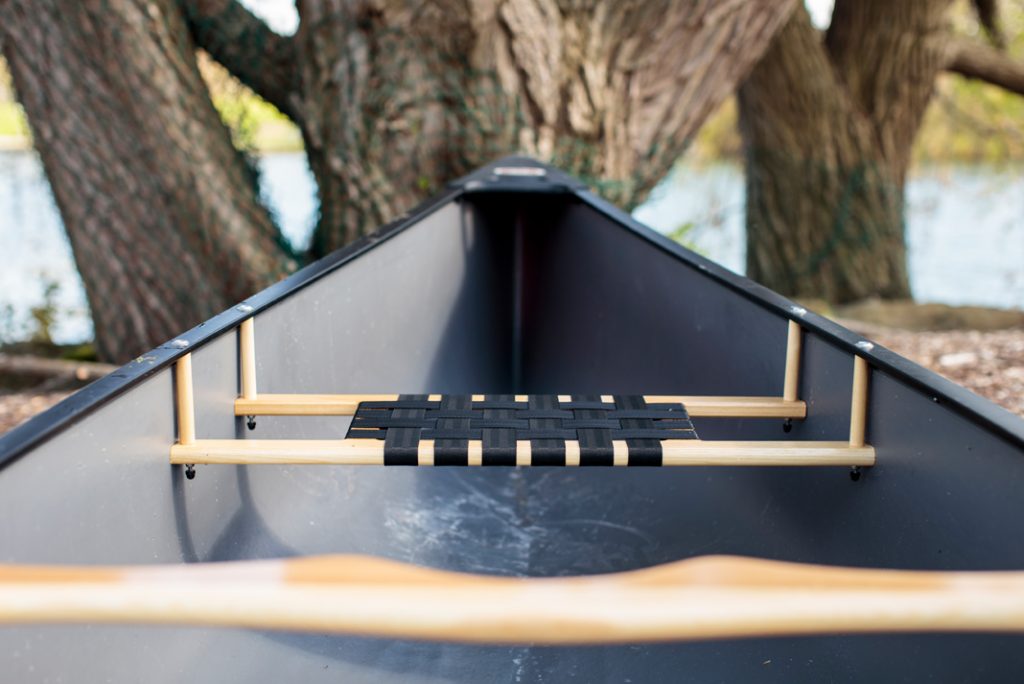
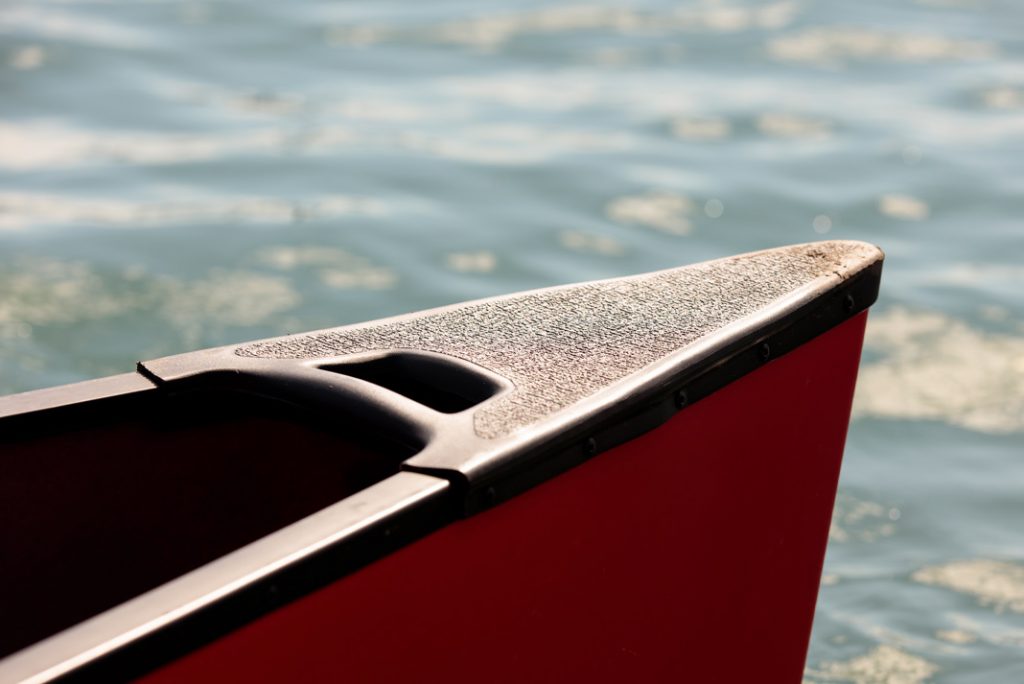
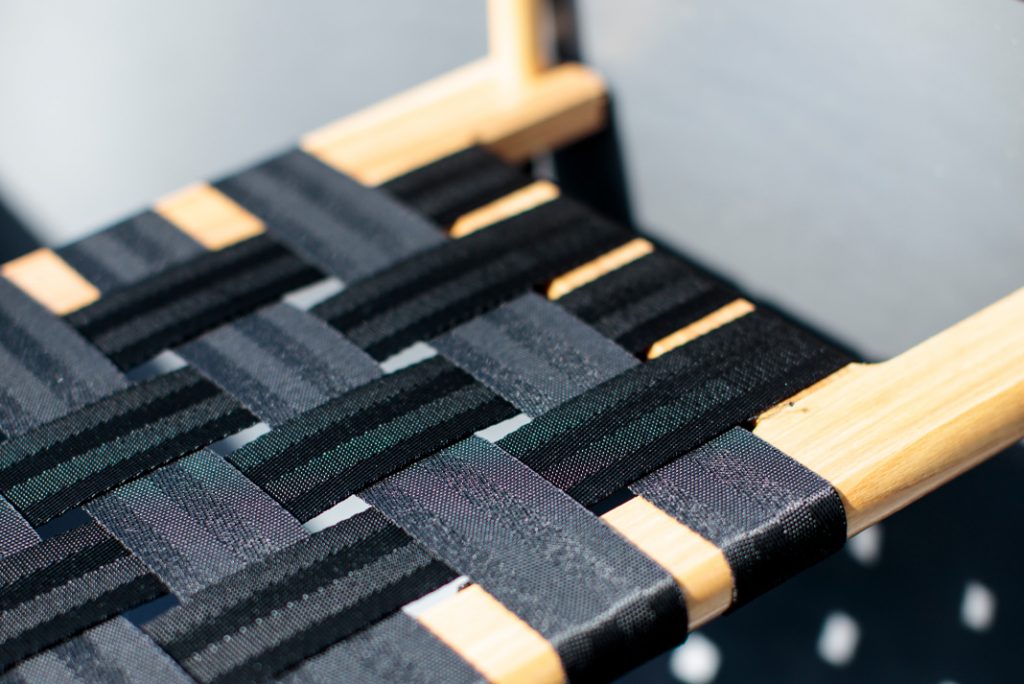
Even if you don’t geek out on material composition, still there’s no denying the shiny red T-Formex hull of the Prospecteur 15 looks and feels good on the water. It’s typically trimmed with Esquif’s standard outfitting including vinyl gunwales, webbed seats, and a comfortable standard-issue yoke.
One thing we didn’t like is the way the vinyl deck plates only sort of cover the little carry thwarts. The vinyl edges underneath dig into our hands when bombing the canoe to the water’s edge. We’d upgrade to the optional ash trim because it looks and feels better.
On the first spring-like days of the year, Paddling Magazine staff are already embracing early season paddles in the Prospecteur 15. We’re exploring all the open creeks and playing the pre-runoff rapids.
Our dreams for what the paddling season has in store for our littler loaner Prospecteur 15 are big—long weekend camping trips, river runs and afternoon play dates, either solo or tandem. It’s small, but this pony is mighty. Not too big. Not too small. Just right to go right now.
This article was first published in Issue 53 of Paddling Magazine. Subscribe to Paddling Magazine’s print and digital editions, or browse the archives.
From flatwater tripping to running class III rivers, the versatile Penobscot can do it all. | Photo: Joel Clifton
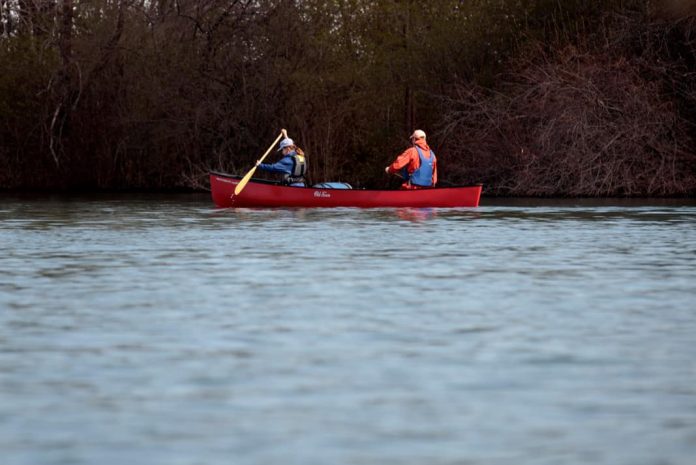
My day trip paddling Old Town’s Penobscot 164 across the city’s outer harbor to a nearby park was a typical outing for this design. Billed as Old Town’s “sleek, nimble tripping canoe for solo or tandem paddlers,” this all-around touring canoe is large enough for most overnight trips yet short enough to serve as a solo tripper for skilled paddlers. It’s also perfect for spontaneous day trips like mine.
A digital camera and a daypack of snacks were about all my friend and I carried, making the Penob’s roomy, shallow-arch hull seem conspicuously empty. Loading up with packs for a weekend or a week would surely be better, if only because it would have given our feet something to brace against.
The early season waters of the lake were frigid, so I occasionally dropped to my knees for security, although there was really no need since the rounded cross-section gives the hull loads of secondary stability. Then I would find myself gradually sliding forward until my butt fell off the seat, and I’d have to sit up and splay my legs out against the gunwales to hold my position.
“This boat is, um…slick,” I remarked to my friend.
“You know I was just going to say the same thing!” he laughed. “My feet keep sliding around.”
Old Town continues its line of tough and affordable poly canoes
The Penobscot 164 has been around for nearly as long as I have. First manufactured in 1980 as a Royalex canoe, the Penobscot 16, was then released in a polyethylene version, which we all know as the Discovery 164.
A shallow-arch hull gives high secondary stability, a smooth and dry ride through waves and whitewater-capable performance, while straight rocker and plumb ends contribute to speed and tracking. Photos: Joel Clifton
For decades, Old Town would establish a design in Royalex and then remake it in a much more budget-friendly—albeit heavier—polyethylene version. Now Royalex is no more and polyethylene is the only material Old Town uses.
The poly version has been renamed the Penobscot 164 and the Discovery moniker has been passed along to the company’s line of flatter-bottomed recreational canoes. The company has said it won’t be building with any other materials for now, such as the T-Formex Esquif Canoes has marketed to replace Royalex.
Polyethylene has heft, to be sure. The Penobscot 164 is advertised at 75 pounds; our loaner tipped the bathroom scale at 79. Some similar designs manufactured in T-Formex are lighter, but not all. Esquif’s Prospecteur 16 is a svelte 65 pounds, but Mad River’s Explorer 16 logs in at 77. Both canoes are four inches shorter. And a glance at the $1,200 price tag makes Old Town’s appeal crystal clear and affirms the company’s choice to stick with its proven polyethylene.
Sales rep Scott Phillips notes that Old Town has been making three-layer polyethylene canoes for about a quarter century. The middle layer is a foam core, very similar to Royalex.
“There’s a lot of polyethylene canoes that are a single layer or two-layer without the foam core, so it’s not as stiff. Most companies aren’t building them in three layers.” The outer layer is also thicker and more abrasion-resistant than Royalex was, says Phillips, making the material very popular with outfitters. Old Town guarantees its hulls and decks for life.
Plastic wrapped aluminum gunwales add to the structure and durability. The decks have comfortable molded carry handles and, along with the hull, are guaranteed for life. | Photos: Joel Clifton
Comfortable webbed seats and ash thwart and yoke add utilitarian and aesthetically pleasing touches to the smooth, easy-to-load hull. | Photos: Joel Clifton
The three-layer, foam core construction adds rigidity, allowing the Penobscot 164 to hold its graceful, curved form without the support of ribs or any other internal stiffeners one might see in cheaper or thinner plastic canoes. The Penobscot’s smooth hull makes it super easy to load—there’s nothing for a pack or barrel to get hung up on. Additional rigidity comes from the plastic-covered aluminum gunwales, which are offset aesthetically by the more traditional ash wood seats and thwarts.
The Penobscot 164 is at home on glassy lakes and in rougher waters
Out on the open lake, it occurred to my friend and me that we had never before canoed together. But it didn’t matter. We fell into a comfortable rhythm and the stiff cross-breeze and choppy waves didn’t bother us a bit. Even without its one-ton-rated load, the 164 plied a true course for our destination beach.
Our journey was briefly interrupted by a harbor patrol boat cutting across our right-of-way with a friendly wave and a two-foot wake. Again, I took to my knees. The Penobscot is an interesting combination of a relatively flat rocker and plumb ends, to maximize waterline length for speed and tracking without the need for a keel, according to Old Town. Its rounded cross section makes it capable in whitewater and amenable to being put on edge for quick turning for catching eddies, or trying to avoid being swamped by motor boats. A couple of quick draws spun the canoe head-on to the coming wave train, and we bobbed through without shipping a drop.
I use the Penobscot in most of my paddling because it’s just such a great all-around design, whether it’s out for a day cruise or going on a short trip
Scott Phillips confirmed in conversation what I felt in those waves and read in many five-star online reviews: while the Penobscot 164 is easy to paddle and tracks straight for long distance paddling, it’s also versatile and capable in whitewater up to Class III.
“I use the Penobscot in most of my paddling because it’s just such a great all-around design, whether it’s out for a day cruise or going on a short trip,” said Phillips. “Heck, I’ve even used them on moose hunts before!” For a multi-day expedition, I might have selected its larger sibling, the Penobscot 174, which is the longest canoe Old Town makes nowadays.
My friend and I ended our paddle with a rapid acceleration and the traditional call of “Ramming speed!” that heralds the boisterous arrival of any plastic or metal canoe upon an untracked beach. The Penobscot 164 skidded to a stop across the sand and gravel without a scratch.
With a time-tested, all-around design, a durable and proven material, and an accessible price point, the Penobscot 164 is indeed a slick offering.
From flatwater tripping to running class III rivers, the versatile Penobscot can do it all. | Feature Photo: Joel Clifton
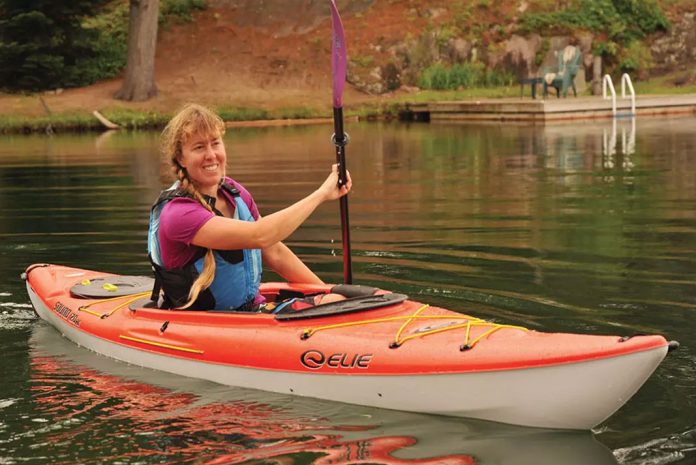
Where do you paddle? If you answer, “Smaller lakes, ponds and gentle rivers,” or any other sheltered waters, the Elie Sound 120 XE kayak is made for you.
There’s a reason that 10-to-12-foot recreational boats like the Sound 120 take the lion’s share of kayak sales. Not all of us have the opportunity—or the desire—to embark on multi-day kayak trips or paddle exposed ocean and Great Lakes shorelines. Many paddlers prefer to spend their time exploring quieter waters closer to home.
In the hyper-competitive field of beginner-friendly, sit-inside rec kayaks, the Sound 120 XE offers an attractive balance of comfort, performance and price. The Sound is easy to paddle, easy to store and transport, and easy on the wallet.
Getting the measure of Elie’s Sound 120 XE
Comfort and fit
Let’s look at comfort first. Elie’s design team gave the Sound 120 a super-spacious, open cockpit for maximum versatility and peace of mind for new paddlers.
At over 50 inches long and 23 inches wide, the cockpit opening has an airy feel that makes getting in and out of the kayak a breeze, even for larger and longer-legged paddlers.
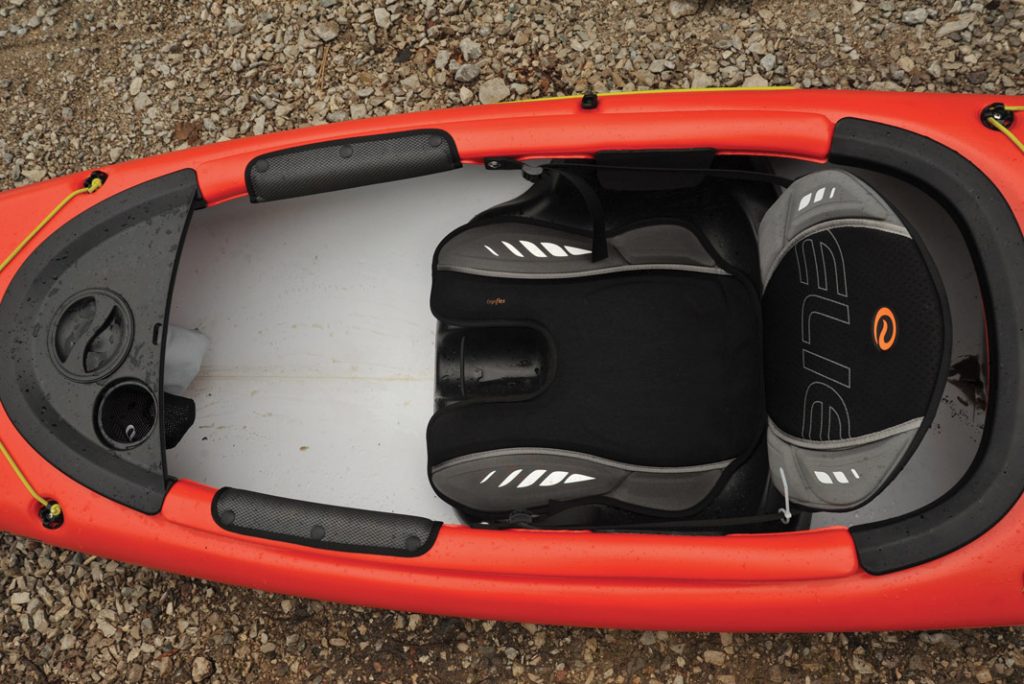
On the other end of the scale, the Sound 120 accommodates smaller paddlers equally well, thanks to Elie’s deluxe Ergoflex seating system. The padded seat features thigh risers for all-day comfort, and an adjustable backrest that’s supportive without promoting lazy posture or getting in the way during reentries. I also appreciated the knee pads, which wrap the coaming where the paddler’s inner knees contact the boat. This is a critical point of contact for edging and stabilizing the kayak, and one that’s all too often overlooked in recreational designs.
Below the deck
We think the Sound 120’s extra-large cockpit with integrated cup holder and doggy bag is perfect for paddling pooches and their humans. |Photo: Virginia Marshall
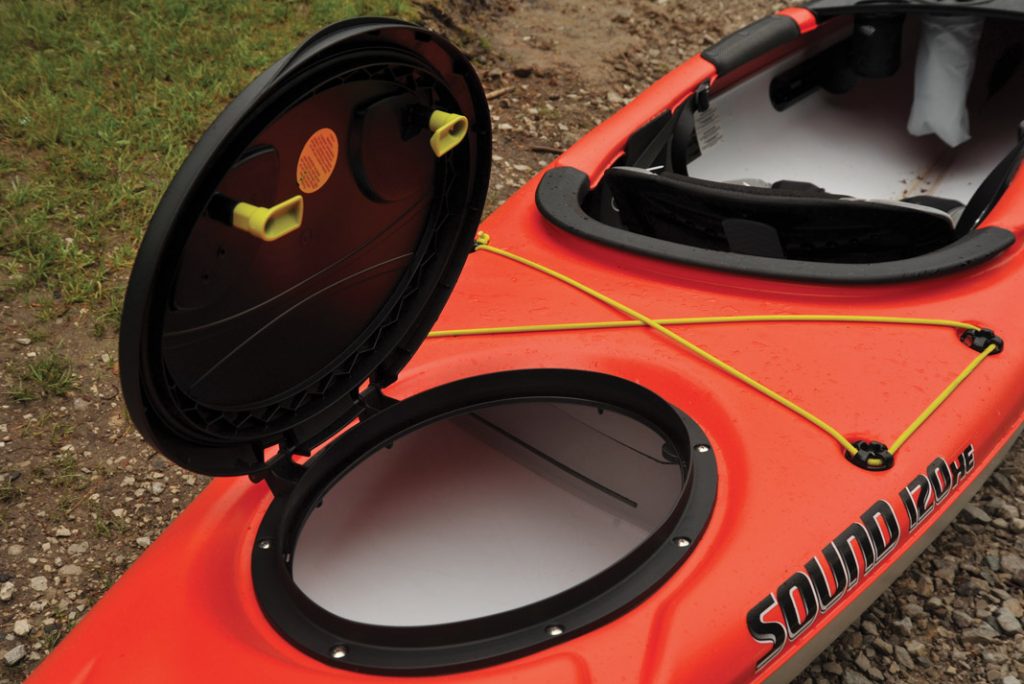
Remember when kayak hatches opened and closed like a lockable cookie jar were the stuff of bruised-finger fantasies? We do. |Photo: Virginia Marshall
The generously-sized footrests adjust with a simple pull-push movement that I found easier to use than conventional pinch-and-slide pedals. No mention of the Sound’s outfitting is complete without a nod to the cockpit table, which resembles a dashboard integrated into the forward coaming.
Within the dashboard, paddlers will find a four-inch, screwtop lid. Elie euphemistically calls this a “day hatch”—in reality, it gives access to a small dry bag that’s just big enough for snacks and sunscreen.
Also incorporated into the table is a cup holder, which is perfectly sized for my travel mug of morning coffee. As an ardently minimalist sea kayaker, I’m a little embarrassed to admit how much I enjoyed this last feature.
The Sound 120 combines a 28-inch beam with medium-hard chines and a shallow-V hull to give novice paddlers an impregnable sense of initial stability.
This hull shape means that as skills develop, paddlers are rewarded with surprisingly nimble on-edge performance. Instead of the added complexity, weight and cost of a skeg or rudder, the Sound 120 features a durable, plastic keel extension to enhance tracking.
Acceleration and glide benefit from Elie’s proprietary Poly-XR material, a three-layer plastic that uses resin in the top sheet for a thermoformed hull that is lighter and stiffer than standard rotomolded polyethylene.
Storage and safety
For those aspiring to kayak camping the Sound 120 has adequate capacity for an overnight adventure.
My ginormous Pelican SLR camera case slips behind the seat with room left over for water bottles and throw rope. The large Quick-Lock stern hatch accesses ample dry storage for tent, clothes and a compact sleeping kit.
I would like to see Elie add a front bulkhead to the Sound and its sister, the Strait 120. It’s not about storage, although a hatch up front can be handy for smaller items. While this feature has traditionally been omitted from the 12-foot-and-under rec market, a handful of progressive manufacturers like Delta, Eddyline, Current Designs and Feelfree—to name a few—recognize that these boats could very well get taken out of their protected waters and into rougher seas. A bulkhead provides an important safety benefit by integrating bow flotation in these compact kayaks.
Summing up the Sound 120 XE
Whether you’re an early morning coffee cruiser, cottage puppy paddler or weekend birder-boater, the Elie Sound 120 XE is a spacious, stable and versatile vehicle on the waters where most of us spend most of our time paddling.
This article was first published in Issue 51 of Paddling Magazine. Subscribe to Paddling Magazine’s print and digital editions, or browse the archives.