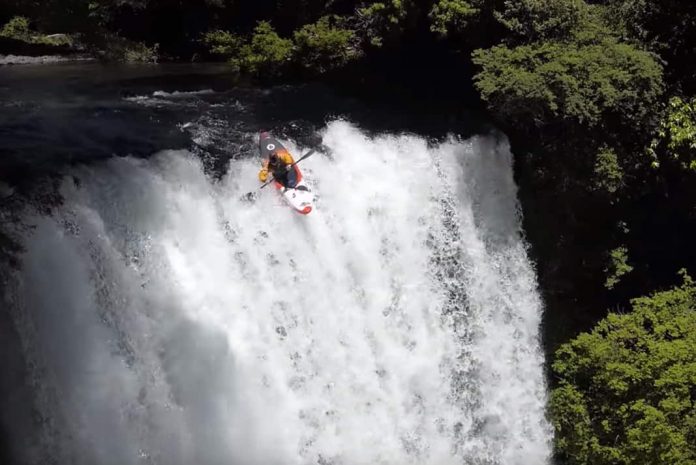
SEND crew visits Chile for some big waterfalls | Photo: Courtesy of SEND
Pro kayakers Dane Jackson, Bren Orton, Adrian Mattern and Kalob Grady head to Chile as they chase the biggest waterfalls and hardest rapids the country has to offer.
Challenged by low water at the start of their trip, but their prayers to the rain gods were answered and eventually, the rivers flowed.
Sigurd F. Olson said it best about the significance of good campsites.
“Campsites are punctuation marks for the voyageur, signifying the end of the day. I may forget portages, rapids, and lakes, which merge into a nebulous montage of the country traveled over, but there are some campsites that stand out vividly in my mind as special places remembered.”
Campsites are the centerpiece to every canoe trip
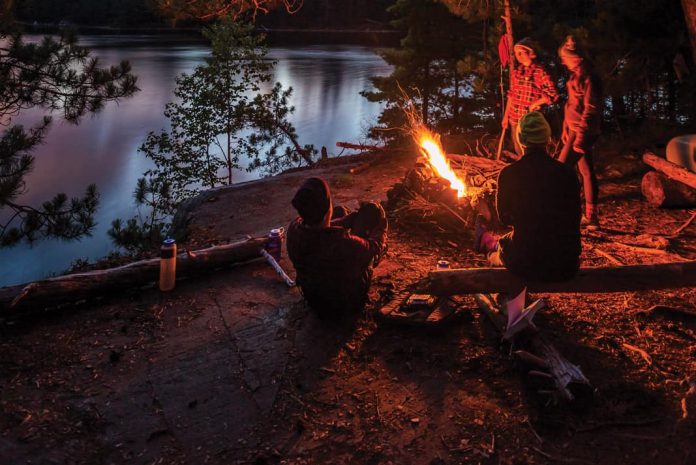
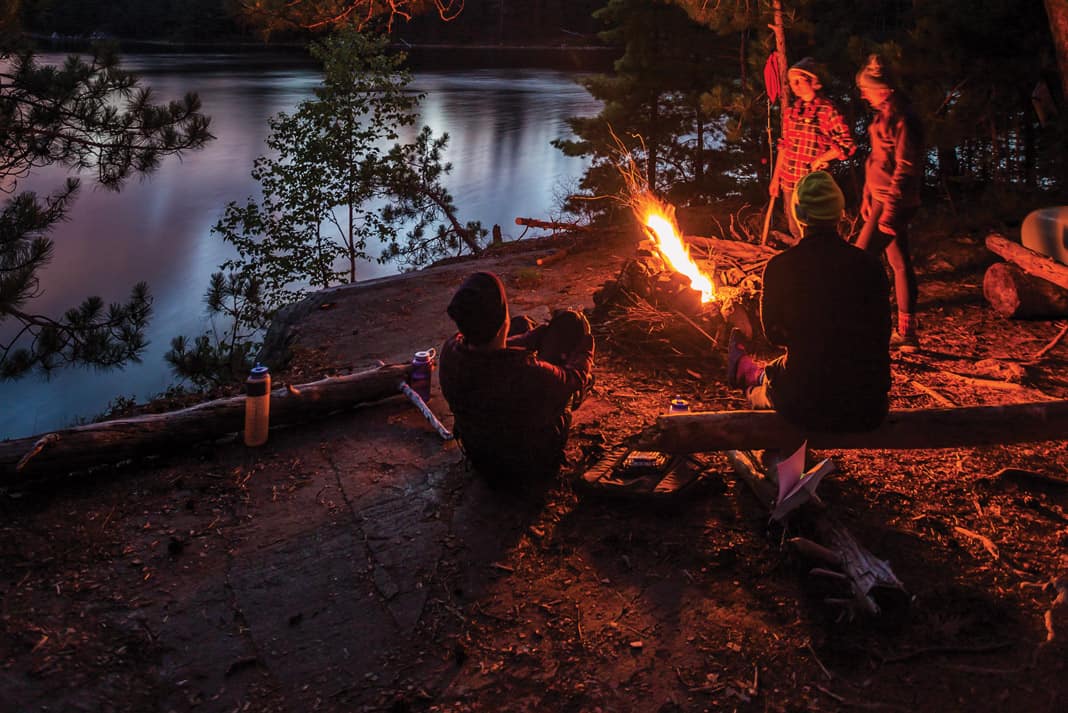
Many wilderness canoeists will agree with Olson’s sentiments. Campsites are the bookends to our days outside, the centerpiece to every canoe trip. They are where the day’s stories are shared, laughs are had and breakfast and dinner are eaten.
It’s where we view the stars from, and where we’re at our most vulnerable while asleep. Campsites are more than a patch of ground to lay our heads.
I’ve loved my fair share of wilderness sites. From the beautiful remote beach on Woodland Caribou’s Burg Lake to the skinny-dipping paradise of Killarney Provincial Park’s aquamarine Nellie Lake.
Then there’s that giant pine site on Quebec’s Dumoine River. Yes, there are lots of giant white pine campsites, I just love the gnarled branches on this one the best.
History plays a part in some of my favorite sites. Aldo Leopold used a survey marker as a tent spike along the boundary of Quetico and the Boundary Waters Canoe Area, at Lower Basswood Falls. You can use the same spike as a peg today.
I have camped among the hoodoos along the Milk River, all decorated with First Nation petroglyphs and the French River’s Blue Chute where Canada’s great explorers and voyageurs made camp. There’s also Best Island in Wabakimi Provincial Park where Wendell Beckwith built a series of cabins to study mathematical theories, including the existence of pi.
Exclamation point. | Photo: Rob Nelson
Canoe trip campsites are where memories are made
Campsites are where many of my wilderness memories take place. A sheltered nook on Crab Lake in the Kawartha Highlands where my daughter camped for the first time at six weeks old.
A spot amongst the pines on Noganosh Lake where I took my dad on a fishing trip a few months before his death. My favorite solo island site on Old Woman Lake where I get away to think.
There are countless reasons why a campsite gets five stars from me, and a bed of soft pine to pitch a tent on and a sandy beach to swim at are just two.
According to researchers, once campers have their basic needs met—a spot for a tent, access to water—we prioritize experience attributes. That could be a high rock for cliff jumping, a west-facing shore for beautiful sunsets or a big flat rock for stargazing.
The attributes prioritized are based on personal preference, but I’ve never met anyone who’s complained about a scenic vista unfolding in full view of the fire ring. Low down on the third rung are backcountry amenities—a comfy log by the campfire, trees for hanging a tarp or a scenic thunderbox.
Campsites can feel like home
What’s much harder to study and quantify scientifically is the instinctive home-and-hearth feeling a campsite with shelter creates. Even 10,000 years after the dawn of the agricultural revolution and permanent dwellings, the nomadic campsite is instantly recognizable as a refuge. One small square of the earth to call our own and rest our weary heads upon, dreaming about what the next day’s adventure holds.
Olson was right: Campsites are the punctuation marks in any journey. Whether an exclamation point or simple period, they make our journeys complete.
When we spend our days paddling through lakes and rivers we are visitors on the land. But at night—at camp—for just a little while, we’re home.
Kevin Callan’s Butt End is a regular column in Canoeroots magazine. Kevin is the author of 15 camping and canoeing guidebooks.
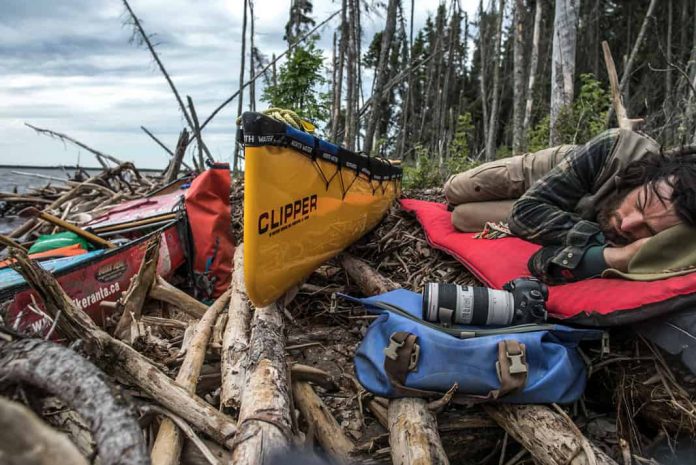
Roses are red, mud is brown. Sleeping in the forest is better than any night on the town. |Photos: David Jackson
The first question for a photographer about to embark on a journey is what you need to tell the story. It’s a question of lenses, camera bodies, memory and storage.
If your niche is crispy fog and distant moose, you might only need your favorite zoom lens. If the Milky Way and dancing aurora keep you up late, you’ll need your tripod and wide lens.
But what if you’re into it all—camp photos of steaming coffee, candid portraits under a downpour, quiet reflection in a windbound tent, and the quick catch when a wolf trots out from the willows.
8 Essentials For A Paddling Expedition Photographer
It’s easy for a photography kit to get weighty, and for the price tag to add up. Here are the bare bones.
1. Lenses
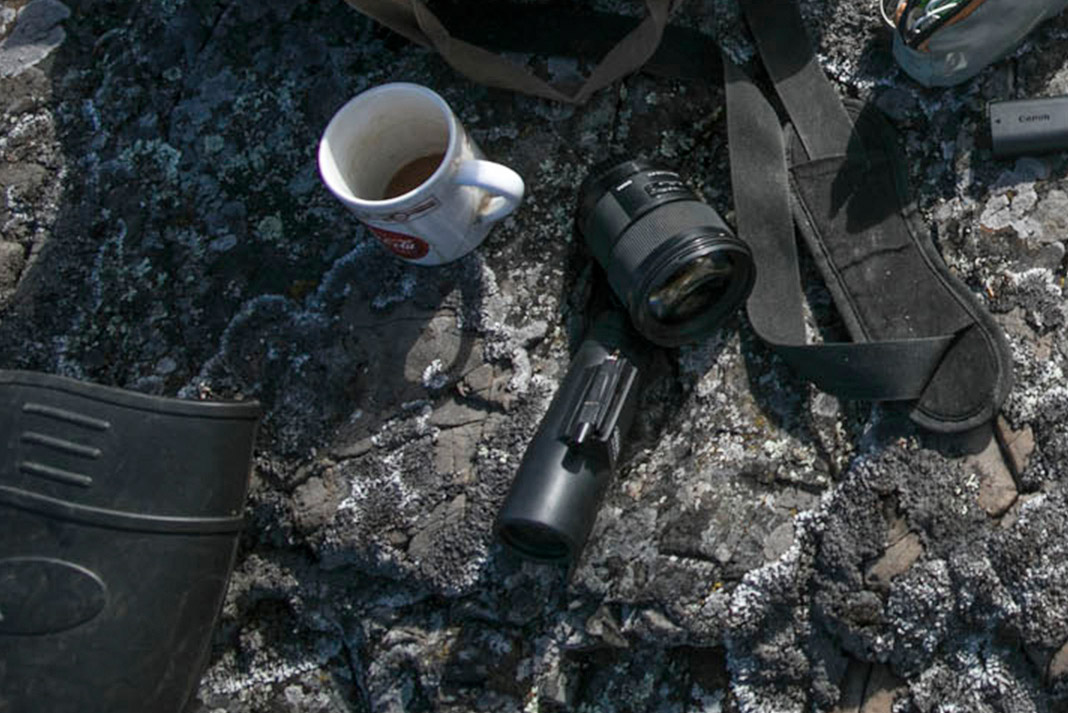
Capturing every angle and moment; Lenses. |Photo: David Jackson
Bringing a full kit not only gets weighty, but it can also burden my creativity with too many options. I find two lenses, the Canon 24mm f1.4 and Canon 70-200mm f2.8, cover all my needs and can stand up against any canoe trip weather.
Without getting too technical, the 24mm lets me focus close and leaves a lot of room to tell a story with composition. The 24mm is the only lens I use in camp because it’s great in low light and is easy to keep slung over my shoulder.
The 70-200mm, while not super far-reaching, is essential. Its versatility lets me shoot portraits to action, wildlife to distant landscapes.
$2,089 and $2,499 | www.canon.com
2. Camera body
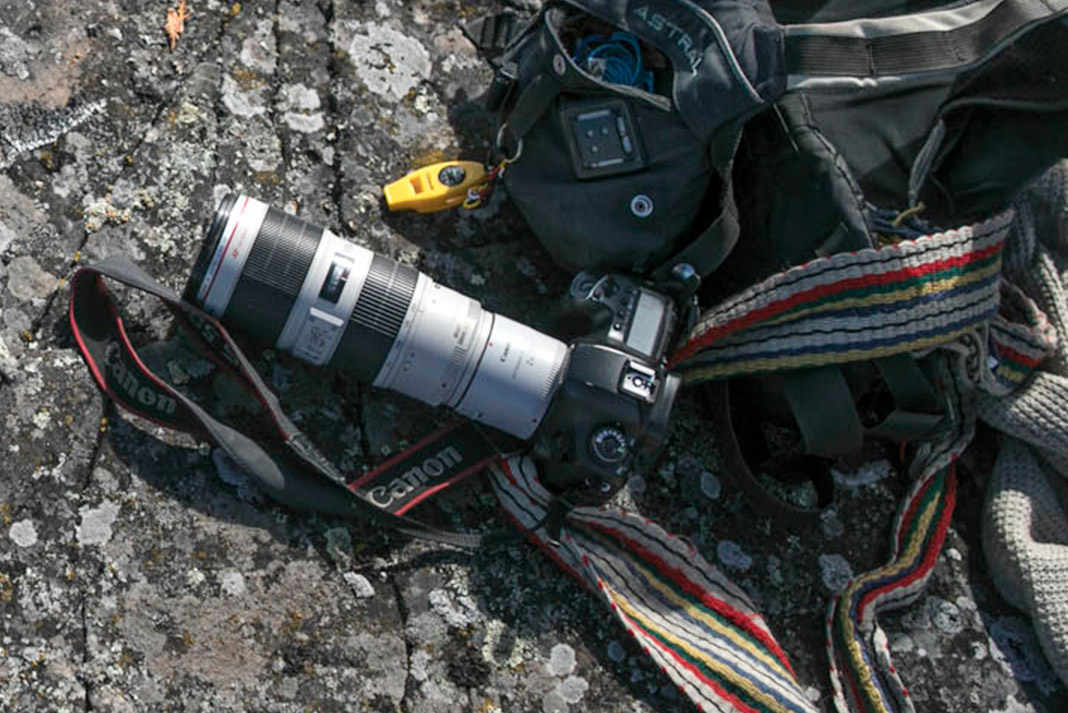
Baby got body. |Photo: David Jackson
Brands and price tags might add to your ability to tell a story, but the most undeniable truth is the most important camera is the one with you. I bring two camera bodies, one for each lens, which means I never have to remove a lens, reducing the possibility of dust, debris, rain or snow entering the camera.
The Canon 5dMKIV has been my go-to camera body for a few reasons. It’s full-frame, has a decent shooting speed for action, is excellent in low light, and its weight and size are perfect for being on the go. Most importantly, it’s rugged enough to handle a wilderness trip.
$2,999 | www.canon.com
3. Aerial view
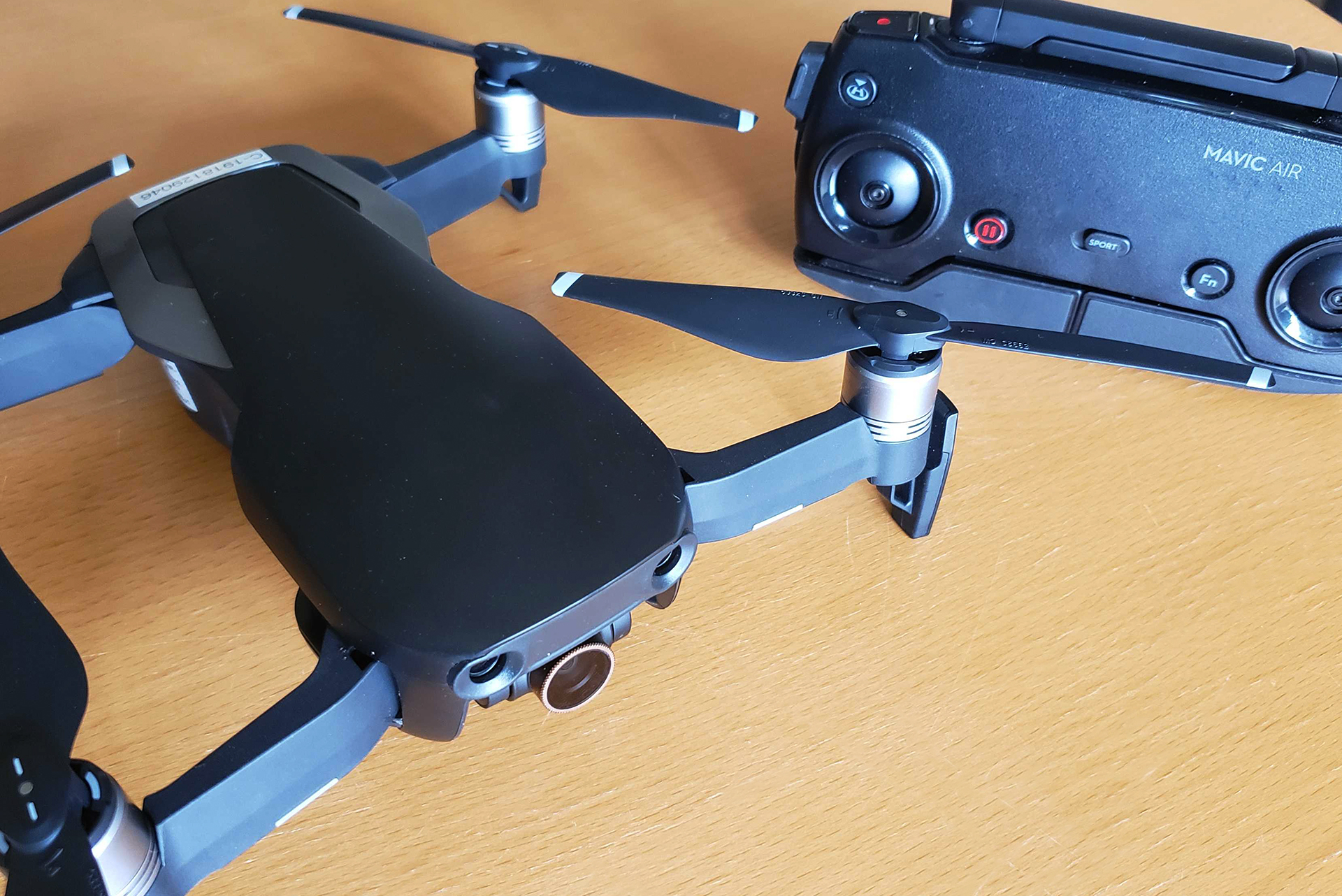
DJI Mavic Air Drone | Photo: Paddling Magazine Staff
Drones have changed the world of wilderness travel. Carrying a Mavic Air adds less than a pound, and the added benefit of an aerial view is undeniable. Not to mention, the software has made the technology so user-friendly, virtually anyone can operate it.
$799+ | www.dji.com
4. Drybags
Keep it cozy, keep it safe. | Photo: David Jackson
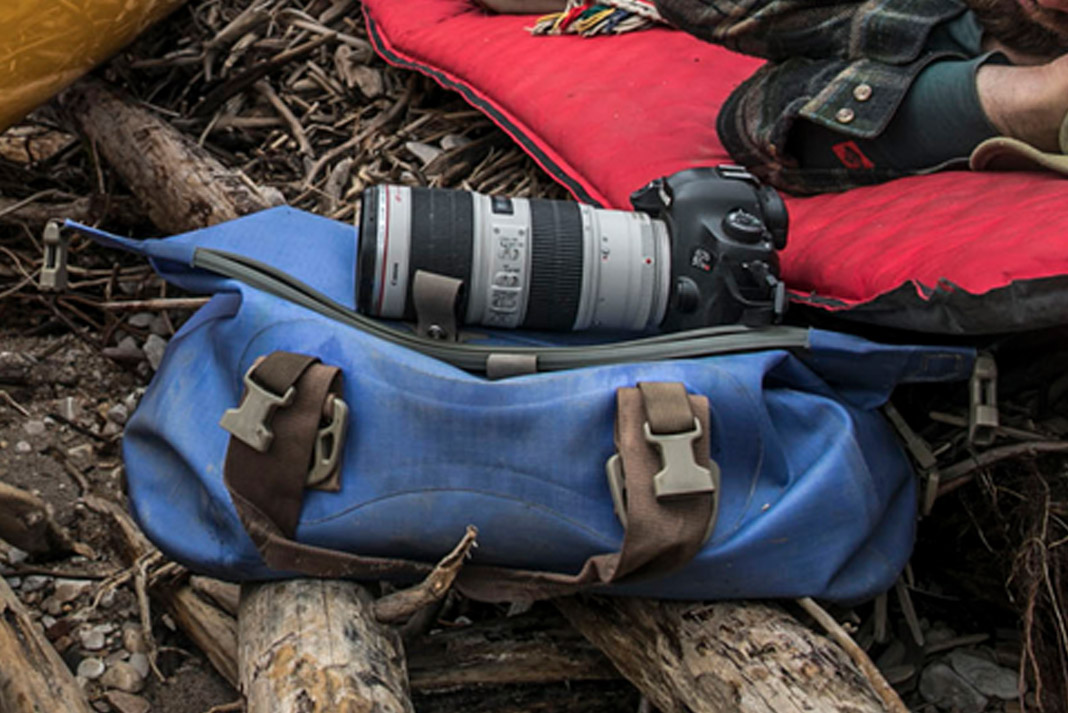
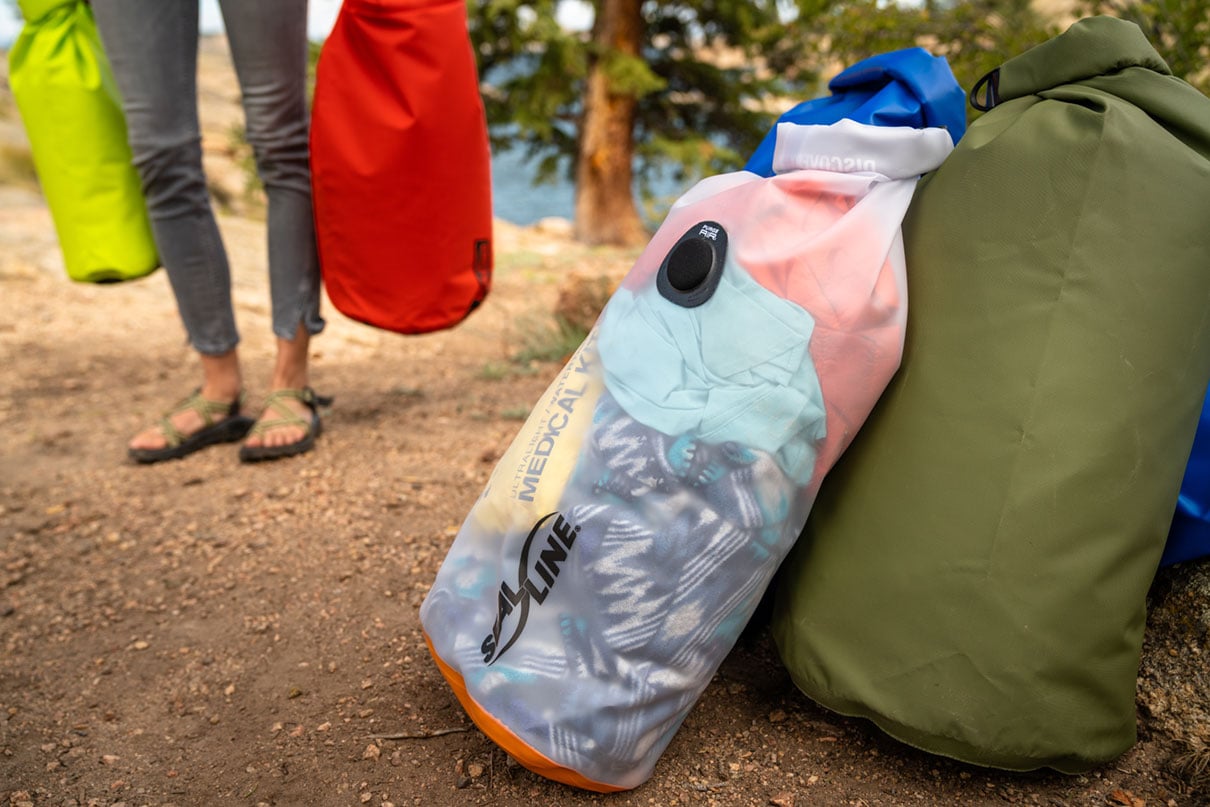
I prefer to ditch hard cases and their bulky awkwardness. Instead, I throw a 15-liter Watershed Ocoee on my shoulder. I treat it like a go-bag—a camera comes out, a camera goes in.
I keep the dry bag between my legs while I paddle, beside me in the tent and carry it across every portage. Through rain or dust storm, I know my gear will be safe and dry. I keep a Shamwow towel in the bottom of the bag to catch any moisture.
Considering electronic needs when storytelling is important. When paddling across Canada (www.paddlingmag.com/0022), I brought a laptop and a hard drive, tucked into a 55-liter Watershed Yukon Duffle, and did occasional backups to rugged LaCie portable drives.
Along the way, I mailed hard drives home, emailed dispatches to my editors, and posted to social media. If you’re documenting for fun and space is limited, just bring extra memory cards.
The worst thing is to miss the photo because you’ve run out of space. Memory is cheap, so bringing multiple SanDisk cards is an option.
$159-$223 | www.drybags.com
$60 for 32GB | www.sandisk.com
6. Electronics
Bring your toys. |Photo: David Jackson
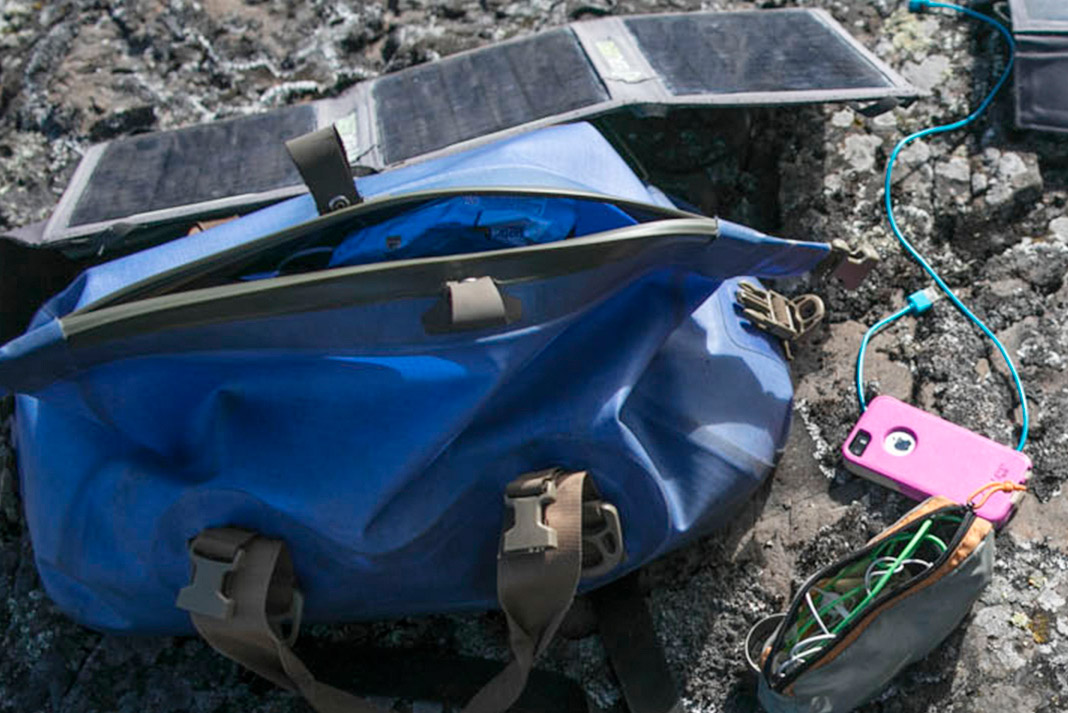
Power is simple thanks to Goal Zero solar panels and a Sherpa 100 Portable Power Bank. The Sherpa is a two-pound power bank offering juice collected from the solar panels, or wall plugs when it’s convenient.
With larger panels, a full sunny summer day can charge the bank, keeping a smartphone charged for one week, or charging three or four camera batteries. I plug smaller devices, like a Delorme InReach or phone, directly into my panels via USB port, and save the panels for my camera gear.
If what I’m doing is serious, I might carry two Sherpas. The bulk of redundancy is preferred to not getting the shots at all. Besides, I’m canoeing, not hiking. I pack it in, carry it over, and rest easy knowing I won’t miss a moment.
$299 | www.goalzero.com
In 2017, photo-journalist David Jackson spent six months paddling and portaging from Canada’s West Coast back to his home in the Ottawa Valley.
Roses are red, mud is brown. Sleeping in the forest is better than any night on the town. Feature Photo: David Jackson
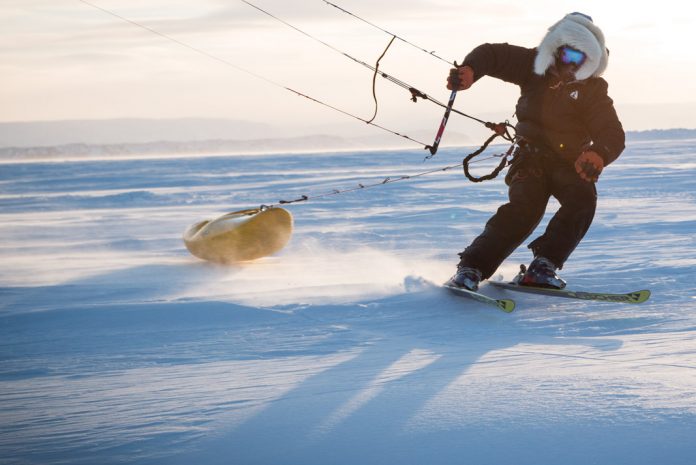
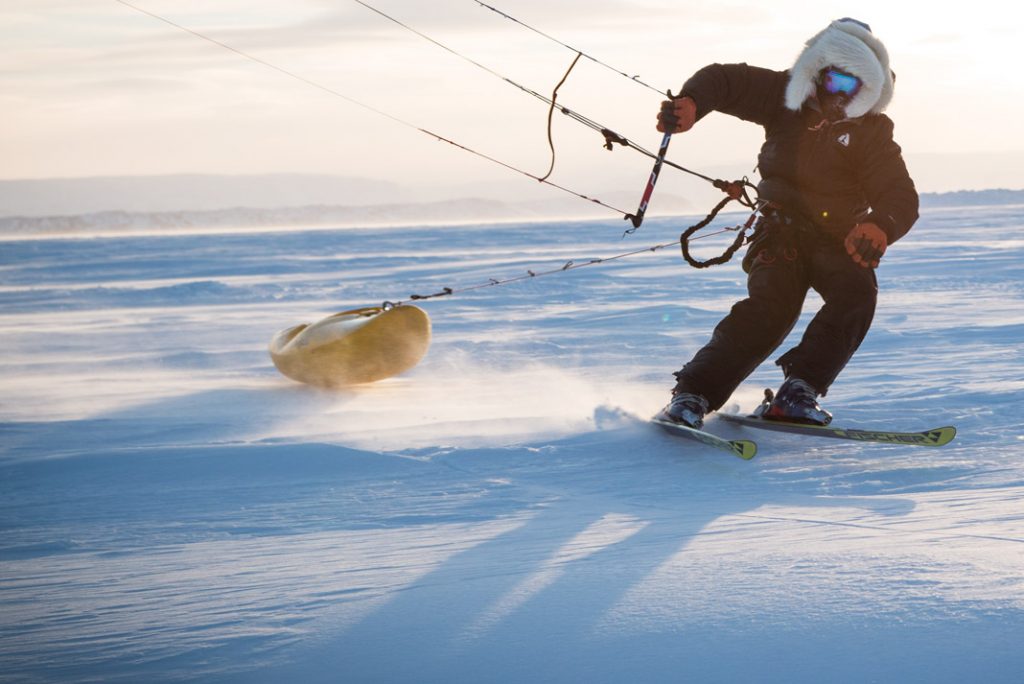
A super group with a super goal to cross a super Ice cap for a very super whitewater ride. | Photo: Erik Boomer
Last August, Erik Boomer, Sarah McNair-Landry and Ben Stookesberry set off on a 600-mile adventure by kite-ski across the Greenland ice cap, towing kayaking gear behind them to paddle a first descent of an Arctic river. The intrepid trio, all previous Adventurers of the Year, won National Geographic’s first-ever Hall of Fame award for the ambitious and never-before-attempted route. Here’s how they did it.
A super group with a super goal to cross a super Ice cap for a very super whitewater ride. | Photo: Erik Boomer
Step 1: Come up with an impossible expedition
Drag kayaks and whitewater gear 600 miles across the Greenland ice cap, all to access a river that has only ever been scouted from Google Earth? Sounds perfect. What could possibly go wrong?
Our goal to cross the ice cap and then notch a first descent required creative route finding and more than a little faith. The meltwater river that we chose to paddle meant that we also needed to find a way off the ice cap to access the river in a place with very little information.
Step 2: Find crazy teammates
It was important to find two unique teammates for this adventure. First I had to find a whitewater kayaker that was willing to travel a thousand kilometers through freezing temperatures just to get to the river.
Ben Stookesberry was the perfect candidate and all it took was catching him on the phone at the perfect time—after a few drinks at the bar. He was enthusiastic and confident in his “really good skiing skills.”
We also needed someone with firsthand experience crossing the Greenland ice cap to lead us to the intended river. Polar explorer Sarah McNair-Landry had crisscrossed the Greenland ice cap four times. Without her, we wouldn’t have stood a chance.
Step 3: Fund the expedition
Long and remote expeditions are not cheap. You have two options: Spend months working a hard seasonal job, such as fighting fires, working the oil rigs, or raft guiding while living in a tent and surviving off of ramen noodles and saving every penny.
Or, after several years of successfully using option one, work even harder filling out endless grant forms, writing proposals and delivering pitches to convince sponsors to support the expedition. We often looked back and wondered if it would have been easier to stick with the first option.
Step 4: Train and prepare
The last thing we wanted was to show up in Greenland and realize that we couldn’t fit all of our gear in our kayaks or that our system wouldn’t work. First, Ben needed to learn how to kite-ski. Then we spent hours with our sleds and kayaks, figuring out how to attach them together and pull them behind our kite harness.
[ View the largest selection of boats and gear in the Paddling Buyer’s Guide ]
Being the first expedition of its kind, there was no road map to follow. If the sleds weren’t tied properly they could flip, then rip and leave a trail of food and warm clothes behind us.
Step 5: The fun part
Some call these the best of times, others the worst of times. It’s both. Emails and phone calls slip away and all that is left is you and your expedition goal.
For us, it was 46 days of traveling across an Arctic ice cap and then man-hauling loads of gear to the ocean while paddling a river with Class V+ waterfalls. It was a mix of beauty, peace, and suffering.
A super-group with a super goal to cross a super ice-cap for a very super whitewater ride. FeaturePhoto: Erik Boomer
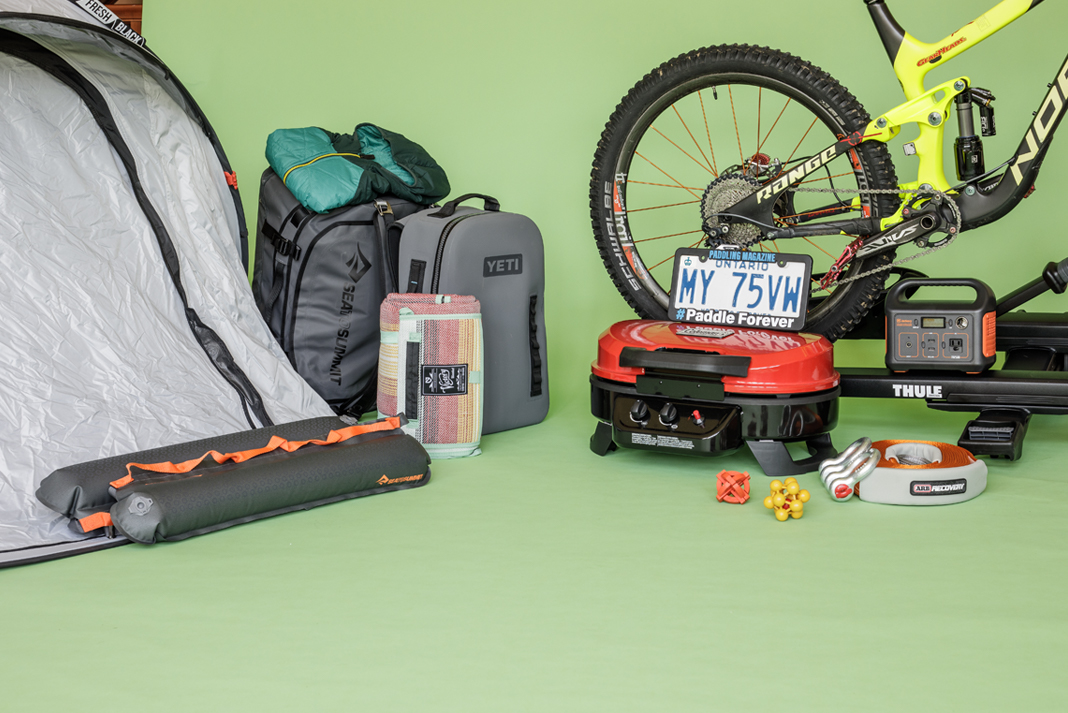
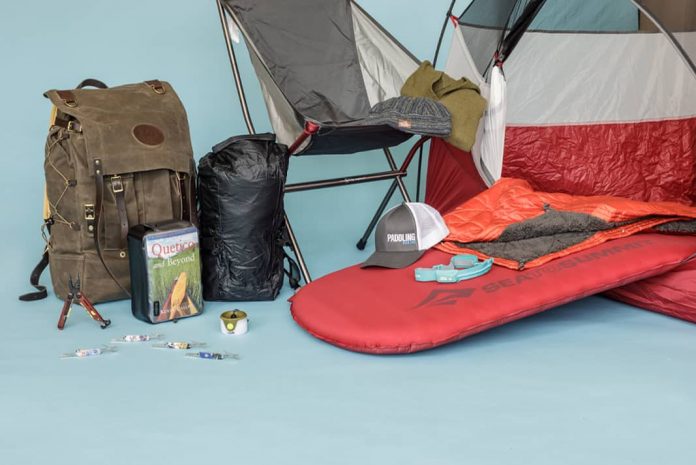
The bestselling MSR Mutha Hubba NX is a four-pound, freestanding, three-person tent. We love the roomy 39 square feet of living space, and that it packs up exceptionally small—just like an extra-large roll of paper towels. During testing it weathered an unexpected 60 mile-an-hour windstorm better than a full-sized BBQ and the 100-year old maple tree.
Designed with campers in mind, the stylish Leatherman Signal packs 19 tools into a compact 4.5-inch pouch. Features include a fire-starting ferro rod, one-handed blade, emergency whistle and tiny hammer for driving in tent stakes.
These beautiful, limited edition Classic SD knives from Victorinox feature the artwork of Doug Leen, a former Grand Teton National Park Ranger. The Classic SD features seven tools, and at just 2.25 inches long, it’s a welcome addition to keychains around the Paddling Magazine office.
Boasting car camping comfort in a backpacking-friendly size, the new Comfort Plus Self-Inflating Sleeping Mat from Sea To Summit offers a luxurious three inches of comfort and shoulder season warmth with a 4.1 R-value. Sea To Summit’s innovative one-way valve allows the mat to deflate without re-inflating while being rolled up—though we did find it tricky to get the mat back in its stuff sack.
The BioLite HeadLamp 330’s slim construction makes it totally unique. The 330’s nine-millimeter front profile sits almost flush on the forehead, and the lamp’s rechargeable battery rests at the back of the head so the lamp doesn’t slip or bob around. Provides 40 hours of runtime.
Uco’s new Sprout Mini Lantern is an ultra-compact. A push-button control dims the light or boosts it to 100 lumens, and its magnetic lanyard hanging system allows for quick attachment anywhere—perfect for hanging from the tent ceiling. Three AAA batteries provide 60 hours of light on the lowest setting and five hours on the highest.
Arguably the lightest and most compact waterproof backpack there is, Matador’s Freerain 2.0 can carry 24 liters and also pack up to the size of a nectarine. It’s a perfect bag to stash away and pull out for a day trip. Features a rolltop closure, breathable shoulder straps and a tall side pocket for a water bottle.
The waterproof RunOff Packing Cube from NiteIze is versatile and practical. The medium size is perfect for protecting and organizing toiletries or journaling supplies. The larger cubes can protect a small library of books, electronics and accessories, like laptop, cables or camera batteries. Features a Tru Zip zipper, which keeps water out.
This ultra-cozy blanket is made to get outside in the shoulder seasons. Kammok’s four-pound Mountain Blanket is incredibly soft, with an ultra-plush fleece interior, but able to withstand adventures outside with a water repellant exterior. Snaps along its edge transform it from camp blanket to a minimalist sleeping. A center opening in the blanket turns it into a poncho.
If comfort is king, you can’t do much better than Big Agnes’ Big Six Camp Chair. Designed with deluxe chillin’ in mind, the Big Six has a tall back, wide seat and sits 20 inches off the ground. Set up is quick and easy with a shock-cord pole set. The Big Six is packable for stashing in your truck, trunk or drybag.
Made with the modern bushcrafter in mind, traditional style and function meet in this heavy-duty waxed canvas Frost River pack. The Isle Royale Bushcraft Pack is an all-purpose paddling, hiking and travel bag, with the ample pockets, leather closures and lace compression system to customize to any load. Personalize it with a monogrammed patch.
12. Appalachian Gear Company | All-Paca Fleece Hoodie
Made from 100-percent alpaca fiber, this hoodie from the Appalachian Gear Company is super warm for its weight. The knit structure and fiber properties allow perspiration to escape while retaining its insulating properties, perfect for wearing while active.
It turns out, the unfortunate thing about powdered peanut butter is the manufacturing process removes most of the delicious fats from the peanut oil by pressing and dehydrating. This makes peanut butter powder a great addition to healthy low-cal breakfast smoothies. It’s arguably less awesome for rehydrating into a paste on the trail or, you know, eating it by the spoonful. PB&Me’s Organic Powdered Peanut Butter has 45 calories, five grams of protein and just 1.5 grams of fat per serving. Too bad. Good thing this one is chocolate flavored.
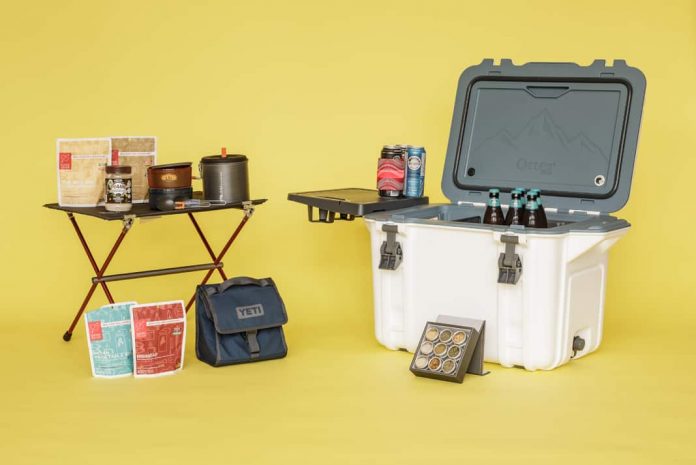
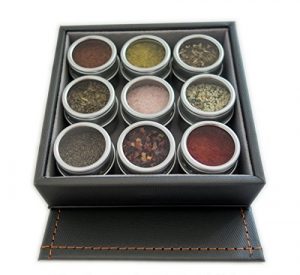
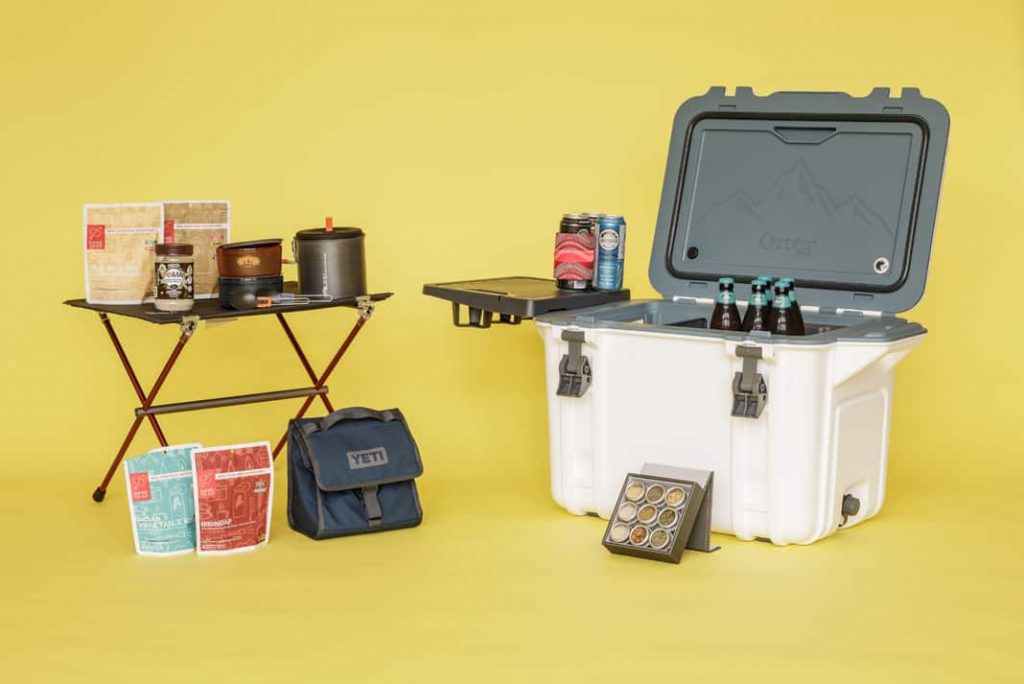
Perfect for the base camping foodie, Cpise’s organic herb and spice kit promises to turn bland backcountry bites into more flavorful fare. This nine-spice blend includes all the basics and then some: pepper, garlic, salt, parsley, onion, cayenne pepper and more. The magnetic spice canisters are a nice touch.
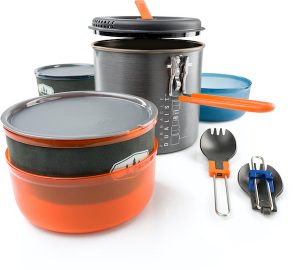
This ultralight camp cookware set from GSI integrates all a minimalist duo needs into a compact and nesting package. The Pinnacle Dualist set includes a non-stick 1.8-liter pot, heat-resistant strainer lid, two folding foons (isn’t that fun to say), two insulated mugs with sippy tops doubling as nesting bowls. We love the handy waterproof storage bag is also a sink.
Stir in healthy ingredients, a passion for the outdoors and an award-winning chef, and Good To-Go is the result. Good To-Go’s dehydrated breakfasts and entrees are made gluten-free, low in sodium and without preservatives—and each one we’ve tried is absolutely delicious. We love that campers can now take bibimbap into the backcountry.
Never accidentally kick over your buddy’s brewskie around the fire again with NiteIze’s SlapLit. This cold-one coozy features an LED strip glowing or flashing at the push of a button. The durable non-slip wrap creates a sure grip on the ol’ oat soda. Perfect for backyard BBQs, tailgates and campsites.
Keeping a horde of campers well fed and hydrated on weekends is no easy task, but Otterbox’s Venture 45 is up to the challenge. This cavernous 45-quart cooler has two-inch refrigeration grade insulation foam to keep ice for up to 14 days and an apocalypse-proof construction. Weekend menu: Fit 25 cans in the Venture 45; fill to 2:1 ratio of ice-to-beverages.
Many have said the ultimate upgrade to a camp kitchen is a table. Backcountry meals are so much more effortless with a solid surface for prep and serving. Big Agnes’ Woodchuck Camp table weighs just two pounds, and its shock-corded architecture is simple to set up and break down.
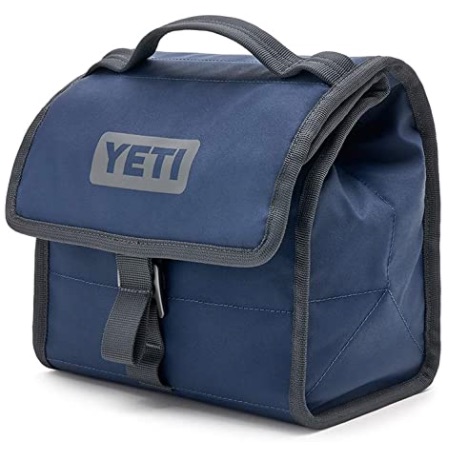
Yeti took a tired and ubiquitous design and gave it a major upgrade with the Daytrip Lunch Bag. This dapper little bag packs enough closed-cell foam insulation to keep sammies and drink boxes cool for hours. Plus, the fold-and-go style and easy-to-clean design makes it as perfect for Sunday’s shore lunch as for work on Monday.
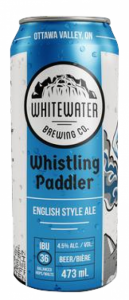
Come for the whitewater, stay for the beer. Whitewater Brewing Co. was founded by three raft guiding buddies on the banks of the Ottawa River. Their riverside brewpub has become a community fixture. The (c)raft brewers make six original staples and many more seasonal offerings, with some explicitly paddling themed, including Class V IPA and Whistling Paddler ale.
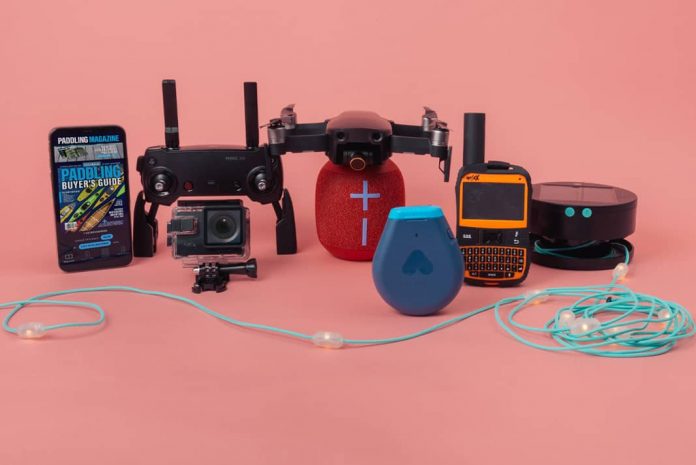
The Spot X is a two-way satellite messenger featuring an onboard keyboard. It’s like an older generation Blackberry but you’re communicating through outer space. Using the Globalstar satellite network, this standalone device can send and receive text messages, track and transmit GPS data, post to social media networks, and send out an SOS signal to emergency services—all while out of cell signal range. The large screen and keyboard offer intuitive setup and functionality. Monthly subscription packages and annual plans available.
We never get tired of seeing big landscapes with tiny paddlers, and you’ll never tire of capturing the most spectacular selfies. The foldable, compact Mavic Air from DJI won us over with its balance between high performance and affordability. It takes 12-megapixel photos, boasts a three-axis mechanical gimbal—that’s nerd talk for being ultra-steady—and it can fly up to 21 minutes on a single battery charge. After a month of annoyingly laborious research and outloud weighing of the pros and cons, this is the model our sometimes-too-keen digital content manager has taken on a five-week canoe trip in Labrador, Canada. We almost miss him.
Turn any campsite into a hipster paradise with MPowerd’s Luci Solar String Lights. On its lowest setting, the soft ambient glow of these solar lights is perfect for the backyard or the backcountry, and adds a bougie touch to tents, patios, #vanlife or glamping. Turn up the brightness for functional lighting or use its flashlight function. Features a USB port for charging a mobile device. The light string is 18 feet long, and the nylon-braided cord includes two clips for easy hanging.
This palm-sized hotspot from Somewear Labs turns your smartphone into a satellite communications device for off-grid connectivity. Leveraging the Iridium satellite network, the Global Hotspot offers 100-percent global coverage in a four-ounce, compact package, easily stowed in a pocket, or lashed to a pack. Download the Somewear Labs app, then get text messaging, location sharing, updates on weather and even an SOS feature. Subscription plans range from a $15 for a month to $100/year.
Get your favorite magazine on your smartphone or table with the Paddling Magazine app, plus 20 years of archived content from Paddling Magazine, Adventure Kayak, Rapid and Canoeroots. Print subscribers automatically get a digital subscription.
Want an action camera but don’t want to pony up $500 for the latest GoPro? You’re not alone. Apeman’s 4K Action Camera looks a lot like the real deal, but costs less than a fifth of the price. It’s got all the bell and whistles paddlers want—WiFi, anti-shake technology, self-timer, time lapse, and 40 meters of waterproof performance. Considering the low price, we know there’s a catch—and we’re betting it’s likely in long term durability—but for shooting fun videos on trips with friends and family, it’s doing just fine.
An IP67 rating means Ultimate Ears’ grapefruit-sized Wonderboom 2 is pretty much drop-proof and waterproof—you can toss it in the river and float alongside it for proof. Wonderfully portable, the new Outdoor Boost feature is tuned for more powerful listening outside, so you can crank your tunes extra loud, if that’s your thing. This second-generation speaker rocks a surprisingly big and bassy 360-degree sound. With 13 hours of classic rock on a single charge, like say, The Kings… Sure, we’ll be rockin’ ‘till our strength is gone, yeah, this beat goes on. And on, and on, and on. Connects via Bluetooth.
Say goodbye to fussing with poles and guy lines with Quecha’s 2 Second Pop Up Tent. Unzip its saucer-shaped pouch, undo four buckles and this tent springs into shape—complete with rain fly attached. With a 6.4-pound weight, this polyester tent is most ideal for car campers and spur-of-the-moment roadside siestas. We recommend the alternate white and blue model, as the black interior of the model pictured here was a little too Batcave.
The submersible Panga 28 from Yeti is a 100-percent waterproof fortress thanks to its Hydrolok zipper. Yeti’s proven durability combined with an ergonomic design make it as suited for wet and rough adventures as for travel carry-on. Removable waist belt and chest straps offer more security and stability. This is not a cooler, but the Panga makes our list of the year’s best dry bags.
The user-friendly T2 Pro XT is a platform-style hitch rack from Thule. It can accommodate almost any bicycle, from skinny road bike tires to chunky fat bike wheels. We love the easy-to-reach tilt release handle and tool-free vehicle mounting system, which attaches to either 1.5-inch or two-inch receiver hitches. Integrated cable lock secures the bikes in transit. Add-on easily turns the T2Pro XT into a four-bike carrier. The only drawback… its 52-pound weight.
Subscribe for two ($36.95) or three ($51.95) years to get this license plate holder, plus Paddling Magazine mailed to your doorstep, instant access to 20 years of online archive issues, and a free Paddling Magazine app subscription. Already have a subscription? No problem—it’s a perfect gift for Valentines Day, Mother’s Day, Father’s Day and Christmas, bar mitzvahs, retirements, weddings, birthdays, baby showers, graduations… you get the idea.
Made to go anywhere and survive everything, this new 45-liter duffle from Sea To Summit features the heavy-duty construction needed for tough adventures. Its semi-rigid carry straps can easily be changed from handgrip mode to backpack mode to single shoulder strap mode just by unclipping the gated hooks. The fabric on this duffle is waterproof, but its seams and zipper are not.
Sea To Summit’s innovative and inflatable Pack Racks cradle paddleboards, boats and skis during transport, then pack down into a four-liter sack. The innovative design is perfect for traveling—say, renting a vehicle without having to pay a roof rack surcharge. Attached webbing straps with cam buckles secure the Pack Racks inside the vehicle. The supplied orange stuff sack with Airstream valve doubles as a pump sack, but it takes just a few breathes to fill each rack so we say it’s not necessary.
Get peace of mind when venturing down rough and flooded shuttle roads. ARB’s Weekender Recovery Kit brings together all the essentials for basic recovery, including a snatch strap, two 4.75T bow shackles, and a pair of gloves. Not that you’ll need to be pulled out. But nice to the think of the other guys. Google: Truck Got Stuck by Corb Lund.
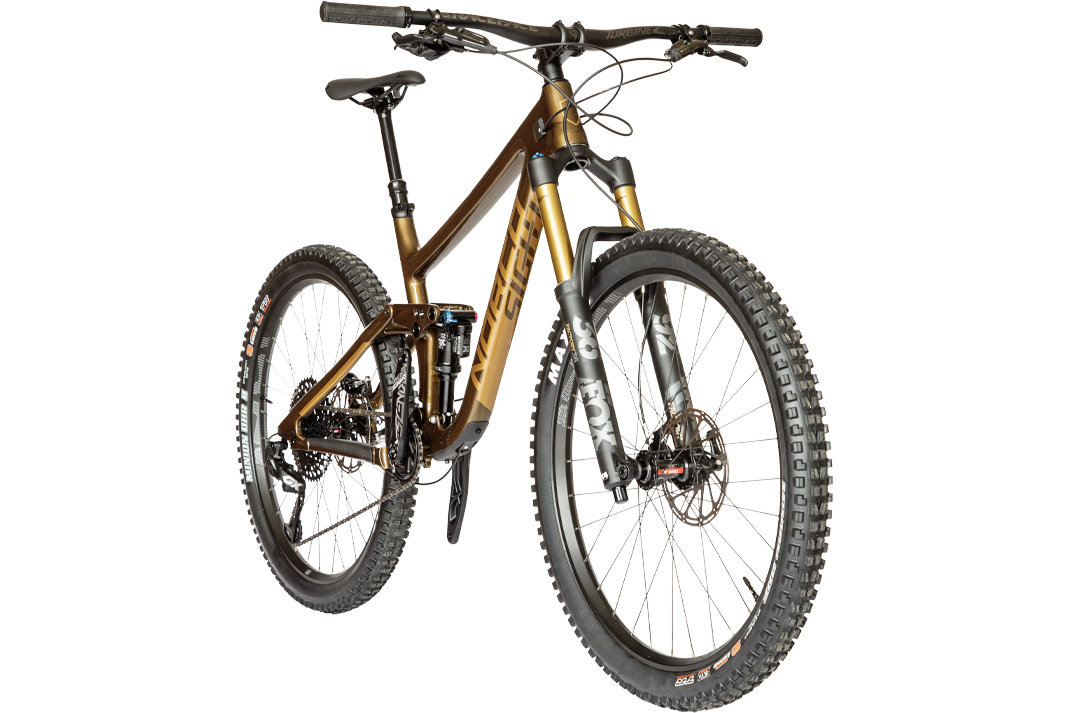
There are more Norco Sights ripping the singletrack bordering the rapids of the Ottawa River than any other. Why? First of all, Norco Bicycles and GearHeads, the local Valley bike shop, have been instrumental is supporting local events and trail initiatives. Second, since its introduction back in 2012, the Sight has hit the all-mountain sweet spot somewhere between trail and enduro. The third generation Sight pedals better than ever and crushes rocks, roots and drops like never before. Norco lets you custom build your carbon Sight in 10 color pallets, five frame sizes, either 27.5-inch or 29-inch wheel size, five suspension packages and four parts kits. We loaded up this copper and metallic brown beauty with Fox Factory boingers and saved some beer money by opting for a lesser expensive parts kit. Join the rides at the Whitewater Brewing Company’s Riverside Pub the last Wednesday of every month.
Jackery’s Explorer 240 is a compact and portable power station, so you can stay charged while road tripping and living outdoors. Charge smartphones, tablets, laptops and even power small appliances, like blenders. Takes eight hours to fully charge from a wall outlet and provides slushy Margaritas for days.
The go-anywhere Victory Blanket from Nemo is a perfect companion for a beach day or campsite picnic—just keep it rolled up and stashed in your trunk. The Victory’s waterproof bottom resists dirt, sand and water, however, the soft flannel top collects crumbs and dirt and isn’t machine washable. We really like it, but it’s not that functional. Corner loops can be staked down for blustery days.
Take your grilling to the tailgate and the campsite. We love Coleman’s RoadTrip 225 Grill’s precise temperature control and adjustable burners, with a range of grilling power from simmering to searing. With this setup, you can wow friends and family with gourmet meals. Uses a one-pound propane cylinder or adapt to BBQ tank, sold separately.
The Smartloft X full-zip hoodie from Smartwool is a lightweight, windproof, breathable, packable and fashionable layer. Perfect for lounging or for high-intensity shoulder-season adventures. A DWR coating helps shed rain and snow, while merino lining provides sweat and odor management.
Perfect for surf play and rock gardening, or paddling from Seattle to Juneau. | Feature photo: Wyatt Michalek
My experience with Melker’s Ulvön began with rushing to pack for the weekend. I jammed random camping gear into plastic totes, those plastic totes into the back of my minivan, then edged into crawling rush-hour traffic. I arrived at the launch at dinnertime. Quick, load the kayak!
Melker’s Ulvön: Perfect for tripping, surf play and rock gardening
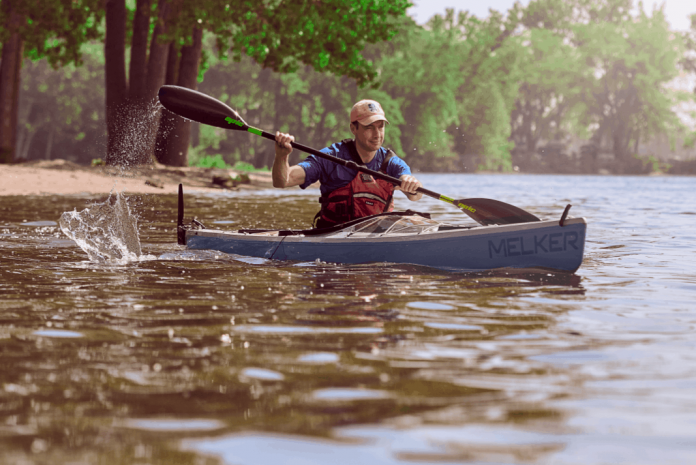
The Ulvön’s hatches easily swallowed my van-load of gear. On the water, I expected the loaded kayak to feel slow after highway driving. Not so! The Ulvön cruises at five knots. This is running speed, I thought. And just like that, I was in love.
I came to think of the Ulvön as the get-yer-move-on kayak. And I developed a theory as I paddled: short kayaks are not better for short trips—long and fast kayaks are. Ever drive into the city and notice how everyone picks up speed closer to their destinations? We’re less patient on short trips. When else but Friday on a weekend getaway do you want to be truly quick? Or have massive, 18-inch oval hatches and 230 liters of totally dry storage to cram everything in with nary a plan or a thought?
In Scandinavia, they must get this. That’s what Jason Yarrington observed. The co-owner of Trailhead Paddle Shack in Ottawa, Yarrington’s shop is the first to import Melker kayaks into North America. He discovered the Melker brand on a trip to northern Europe where he found the traditional sea kayaking scene alive and well. The paddle shops there sell full-size touring kayaks, suitable for the cold northern coasts where the plastic recreational kayak trend never took off.
Long, sleek and straight-tracking with a voluminous bow, but the semi-hard chines and V-bottom show it’s more than just a surf ski hull. | Photo: Wyatt Michalek
“Europeans love their sea kayaks,” said Yarrington. “Their market is still evolving because that’s where people are using them.”
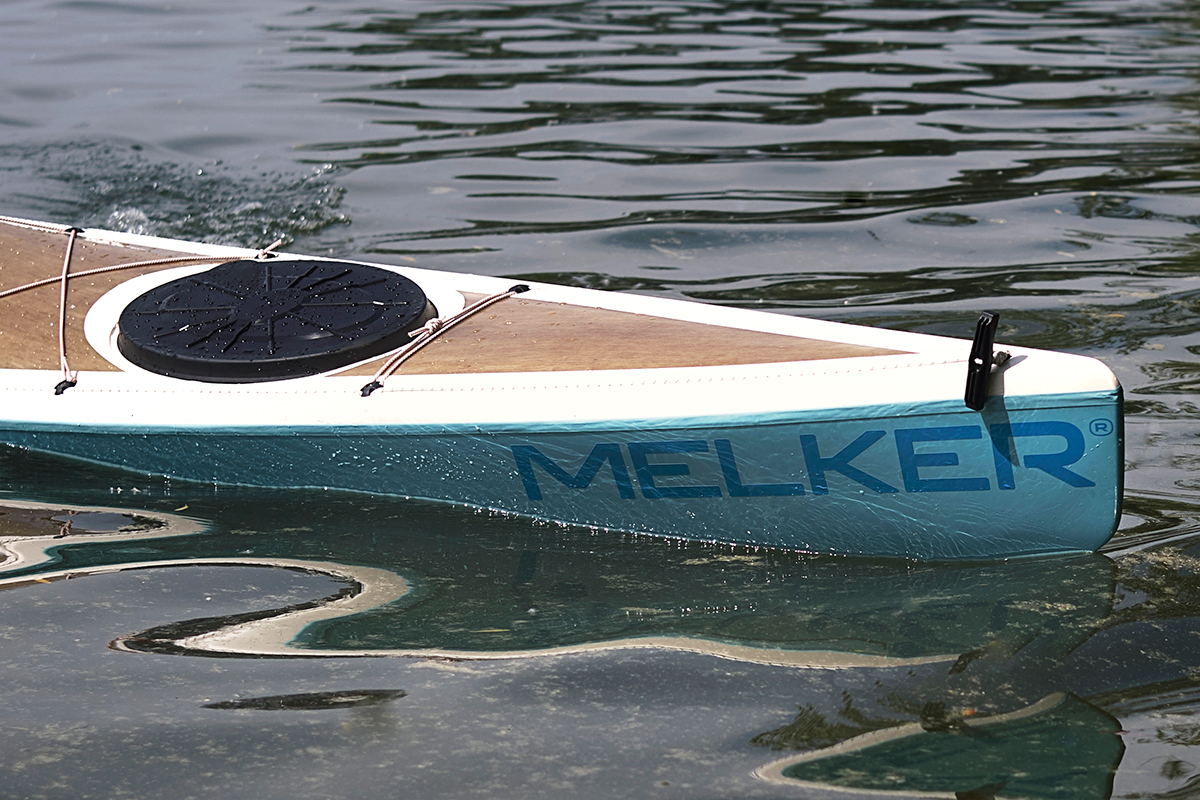
Melker is a Swedish company on the cutting edge of kayak design and environmental sustainability, playing with bio-based materials, like the Ulvön’s beautiful flax-fiber deck that looks like teak. The flax deck—the same plant we eat—is from Swiss producer BComp and used in skis and race cars. It’s strong and light and produces just a third the carbon emissions of fiberglass and boasts a zero-waste lifecycle.
Melker’s ultimate goal is to build a zero-impact kayak and it’s prototyping 3-D printed kayaks extruded by massive robots out of sawdust and cornstarch. That’s for tomorrow though; for today we have the Ulvön model, built in Estonia for a competitive price. Yarrington was impressed enough to import a container-load, likely the first of many.
Although capable of cruising fully loaded at four to five knots, the Ulvön is not categorically what’s known as an FSK—Fast Sea Kayak. It’s several inches shy of 18 feet. It doesn’t look exactly like a surf ski with a deck glued on, although it does have a voluminous bow for catching waves on downwind runs.
There’s no plumb bow or racing kayak’s torpedo-shaped hull. Acclaimed Swedish industrial designer Magnus de Brito has gone to that edge and beyond with kayaks (he’s also crafted Porsches), creating the Point 65 XP18 and Freya (both true FSKs) as well as a speedy surf ski, the Bourbon Orca, with an idiosyncratic backward-sloping bow styled and named after a Norwegian offshore supply ship.
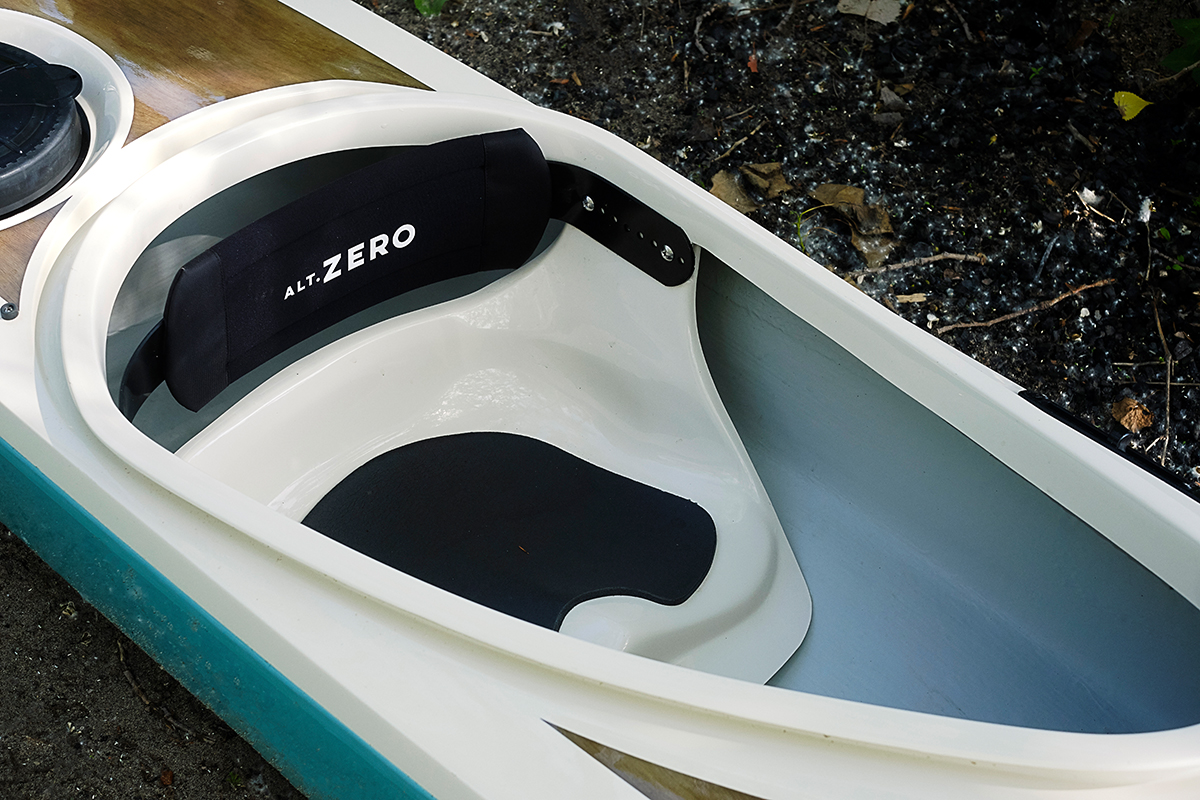
Interior gelcoat protects the fiberglass and makes for smooth, easy loading. Cockpit features Fixed, pivoting foot pedals for powerful connection and rudder control. | Photo: Wyatt Michalek
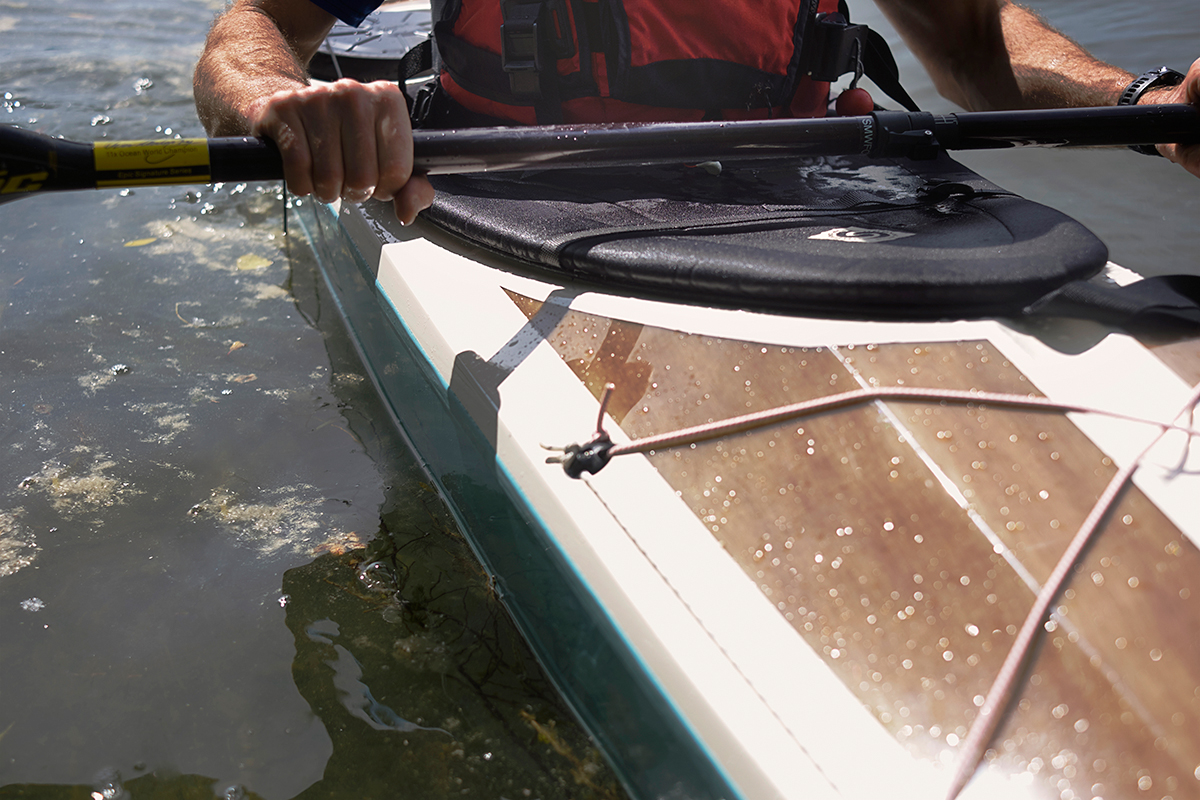
Nature meets high-tech in the flax fiber deck. this bio-based material is eye-catching, strong and environmentally friendly. | Photo: Wyatt Michalek
Penduluming in the other direction, de Brito has designed modular rec kayaks that break down to fit in the trunks of cars. The prolific designer’s collaboration on the Melker Ulvön marks his homage to sea kayak tradition and a reversion to the mean, and a golden one at that: a true do-everything kayak with majestic, atavistic appeal.
The Ulvön HV deftly blends the long waterline, minimal rocker and sleek dimensions of a speed-centric kayak with a more play-oriented shallow-V hull and semi-hard chines. Loaded, it behaves as an expedition kayak should, very stable, comfortable and predictable.
a serious expedition kayak with a playful character
On our first night together, it was pleasingly unremarkable—aside from the speed. Nothing niggled, nothing jabbed. The hatches were completely dry and easy to click on and off. The rudder deployed effortlessly—oh, and there’s a skeg
too. That’s a Scandinavian thing, apparently, to have both. “I won’t have any arguments from anybody,” joked Yarrington.
Using it on an overnight trip, I was amazed by the Ulvön’s stability and capacity. The HV stands for High Volume. There’s also an Ulvön LV (low volume) which is a fully scaled-down design, not just chopped off from the same mold. It looks a bit like a yacht or an aircraft carrier from the cockpit because the deck doesn’t taper as quickly as most sea kayaks and the widest point of the cross-section is at the deck’s edge—so the paddler doesn’t see where the hull meets the water. That shape makes it capacious, but nimbler in the water than its stately appearance suggests. Paddling it is a continual surprise—at every moment you’re traveling faster than you feel you should be.
Despite the get-yer-move-on’s load-carrying capacity, paddling it empty revealed a completely different soul: light, playful and maneuverable. It’s easy to tilt onto the chine to shorten the waterline and carve a quick turn. Yarrington reports his pals enjoy surfing the Ulvön and the Greenland set likes how it rolls too, although the LV might be more suitable. The HV rolled easily both empty and loaded, but I found the rear deck too high for any fancy layback rolls.
The fact Yarrington recommends the Ulvön for surf play and rock-gardening while it got me dreaming of a Seattle-to-Juneau trek reveals its true versatility. Melker’s website describes it spot-on: a “serious expedition kayak with a playful character.” The Ulvön can be interpreted however you like, depending on your mood.
Is it just us, or should boats always be facing forward? Discuss. | Photo: Nicholas Spooner
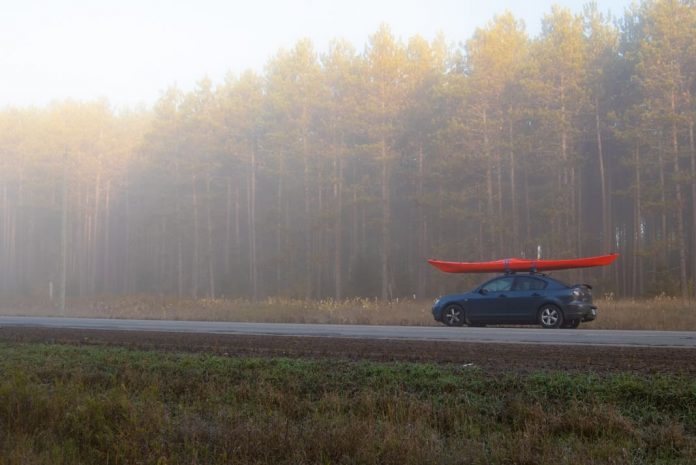
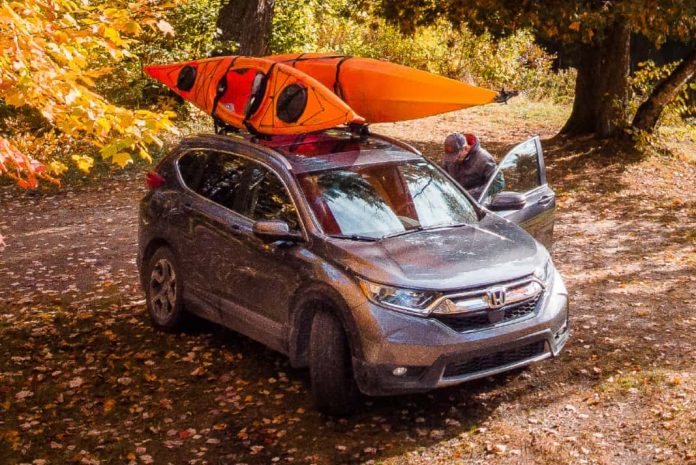
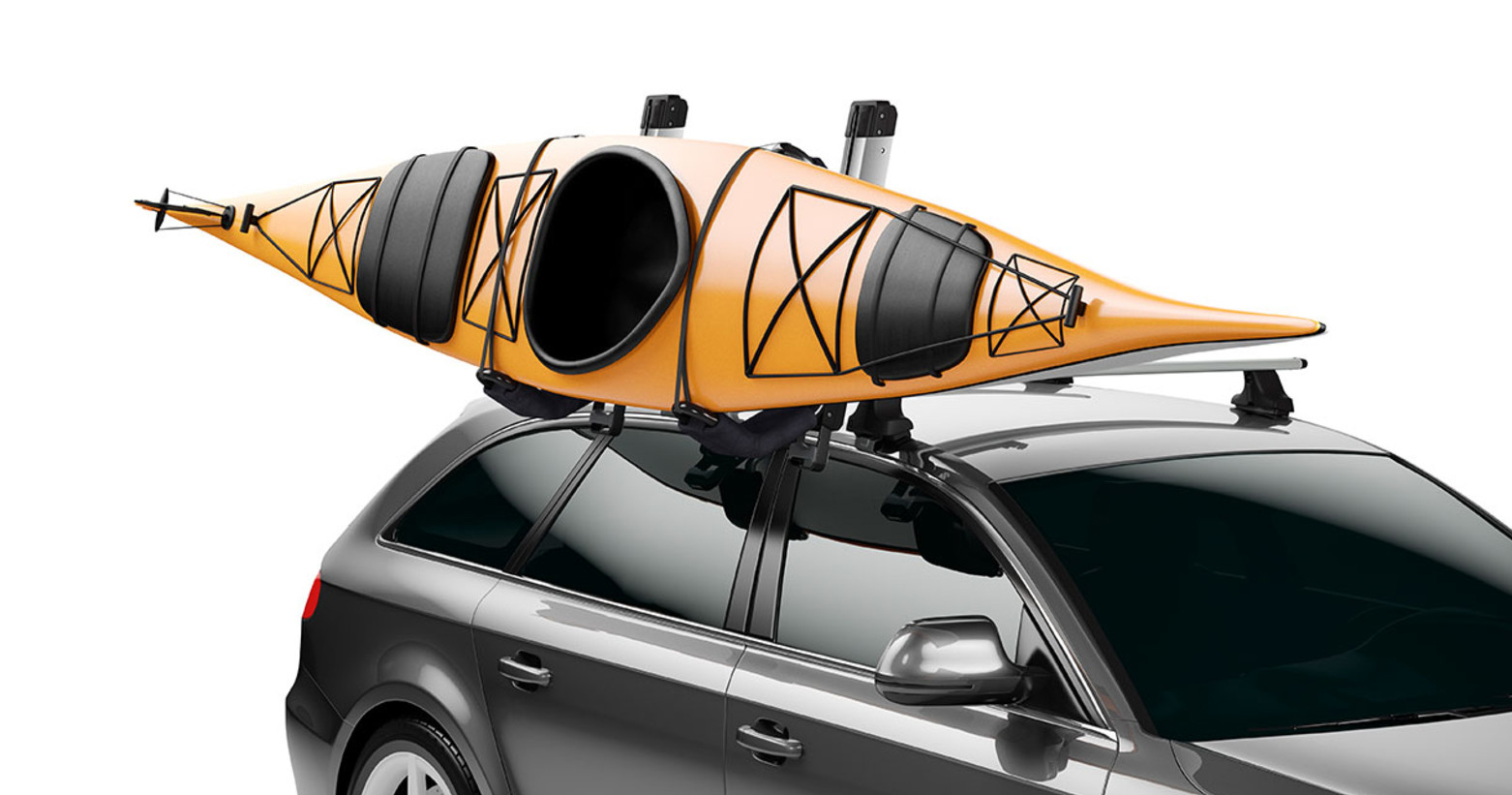
Unless you’re lucky enough to live on the water’s edge, loading and transporting your kayak will bookend every paddling adventure. We’ve all heard the stories. Kayaks are not meant to pinwheel into highway medians. While you can transport a kayak without a rack if needed, investing in a bomber base roof rack and simple specially-designed kayak accessories will help you load your boats more quickly and more securely. Get a little spendier and you can buy kayak loading love in the form of rollers and mechanical advantage. Ultimately, a quality rack setup helps protect your car, your boat and your back. Start here.
Base Racks
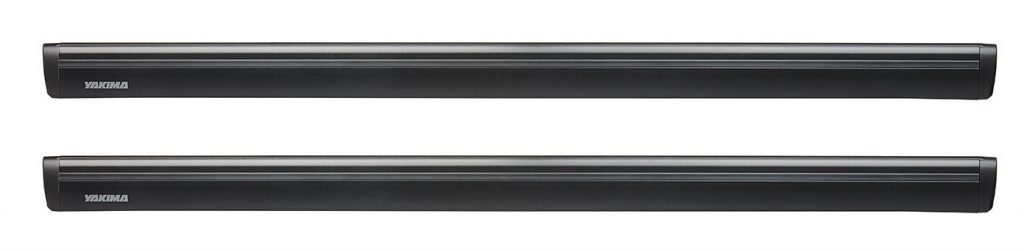
Many SUVs, wagons and crossovers come equipped with factory-installed side rails running front-to-back on the roof. These are often engineered to support a base roof rack system. If your vehicle doesn’t have this factory feature, don’t despair—almost any naked roof can be outfitted with four easy-to-install feet, but they have to be specific to the make and model of the vehicle. What fits a Mazda 3 won’t fit a Honda Civic. Either way, the end goal for the paddler is to be able to mount two parallel crossbars on the factory rails or feet. which a boat can rest on.
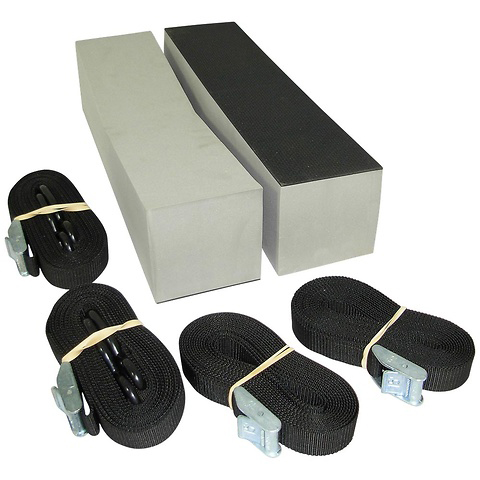
A base rack system is the bare-bones rack option for transporting kayaks, and it’s what any subsequent accessories will attach to. While an overturned canoe will rest stable and flat on crossbars on its gunwales, kayaks—particularly sea kayaks—could use the extra support of a pair of foam blocks. Foamies support the kayak in a cockpit-up or on-side position and will protect the hull from getting scratched on the rack and cradle the kayak from the pressure of cinching the tie-downs. A base rack is the foundation of a reliable system and the most crucial part.
Best For: Everyone. Don’t be a newb with pool noodles across your roof. Invest in a basic rack to properly secure your boats and protect your vehicle.
Stackers
These vertical bars clamp to your crossbars to provide stability when stacking kayaks on their sides and side by side. Stackers allow paddlers to max out the available real estate up top. Stackers usually feature a fold-down frame for a clean look and improved clearance and gas mileage when not in use.
Best For: Elevating your status from shuttle rat to shuttle hero.
[Paddling Buyer’s Guide: View All Roof Racks and Accessories]
Saddles and J-Cradles
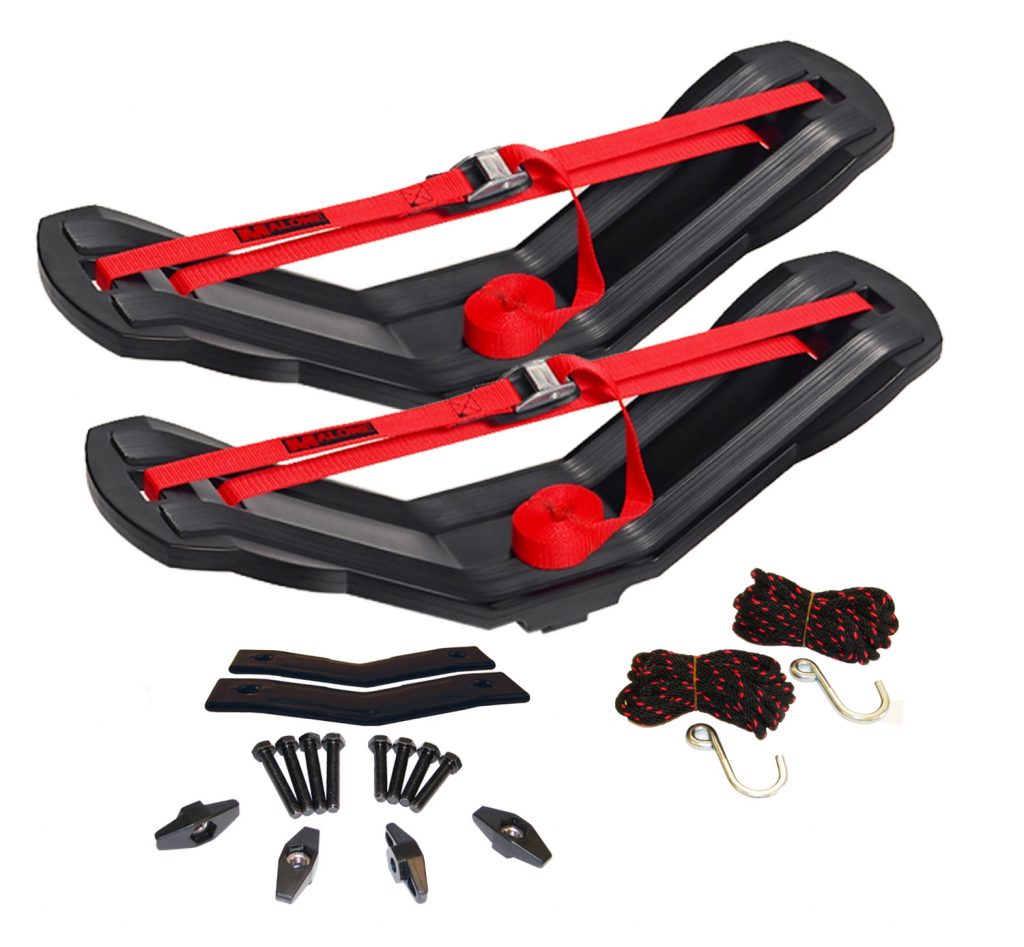
While foam padding might get you home from the shop and for short jaunts to the local put-in, you’ll want something cooler and more secure to transport your kayak on more frequent, longer and high-speed journeys. Saddles provide extra stability and support for your kayak resting on its hull. A J-Cradle transports a kayak on its side; strapping a kayak on its side is stronger and reduces stress on the hull. Similar to stackers, a J-Cradle (Malone J-Pro | $109.95 | www.maloneautoracks.com) helps maximize rooftop space, almost halving the amount of space required on the roof. Some will argue this position isn’t as aerodynamic as the kayak resting on its hull. Opinions vary and so may your fuel mileage.
Best For: Folks journeying farther than their local put-ins.
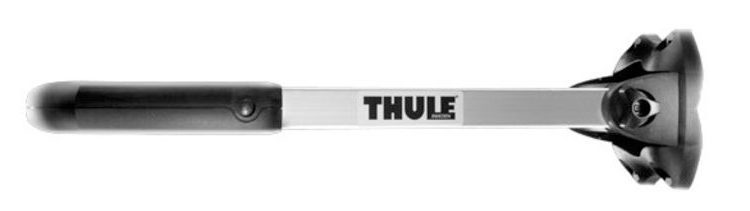
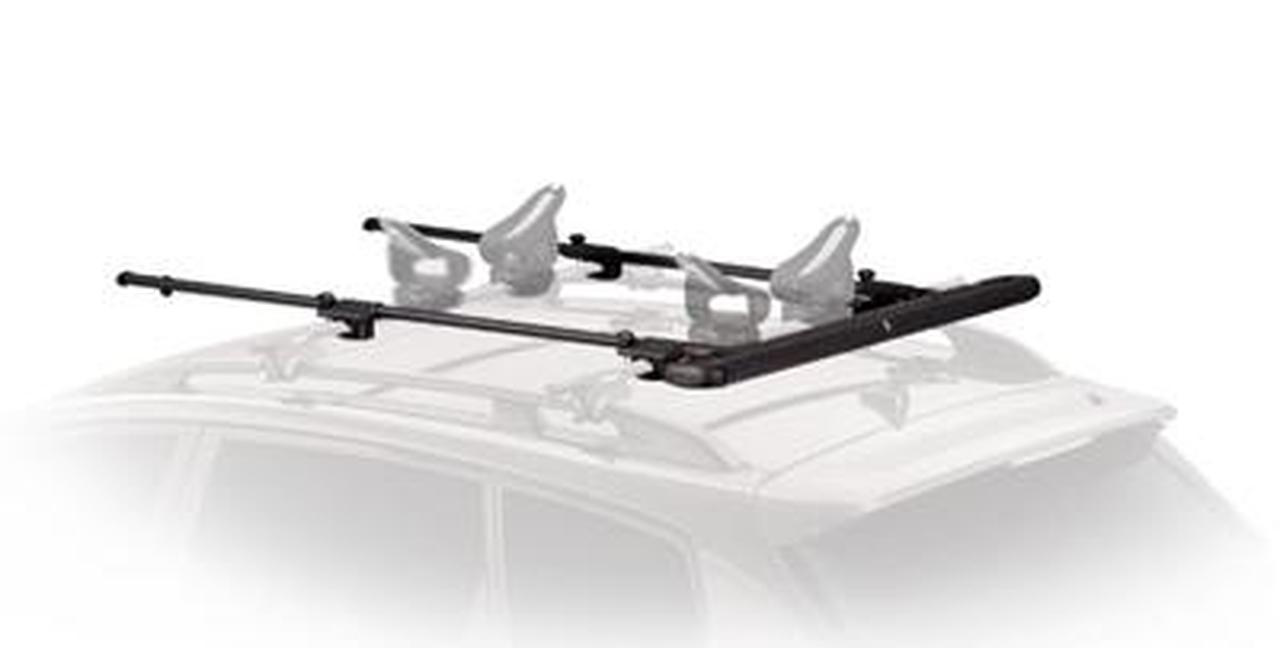
One of the most important aspects of any roof rack system you choose is ensuring you can load your kayak safely, quickly and solo if needed—otherwise, the struggle to load and unload will keep you from the water. Rollers work just as they sound. And it avoids having to powerlift your whole kayak. With a roller or saddle with roll assist, simply place the kayak down behind the vehicle with the bow pointing towards the bumper. Lift the bow and rest it on the roller. Once you have the bow up, lift the stern and walk forward pushing the kayak along—the roller will allow the boat to roll forward. This essentially halves the amount of weight the paddler has to lift. Rollers work great when close to the back of the vehicle. However, more than a foot from the back of the roof you may need a slide-out load assist bar to keep your kayak from rubbing against the vehicle.
Best For: Anyone who solo paddles or can’t power lift their kayaks into place.
A lift assist kayak rack accessory offers the easiest way for a solo paddler to load a kayak from alongside the car. How? Gas-assist struts, baby. This feature adds on to an existing base rack system and doubles the price. But lift assists can handle up to 40 pounds, so on a 60-pound kayak, the paddler only has to lift 20 pounds. A total game changer. Best For: Solo paddlers, gadget nerds and those with accessibility issues.



 Price: $299.99