Home Blog Page 196

Explorer Will Steger On His Next Arctic Paddling Challenge

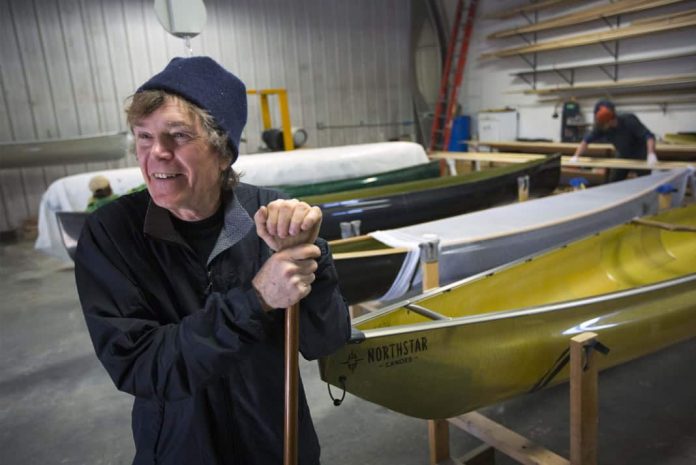
Explorer Will Steger smiling in front of his custom made canoes holding a canoe paddle
Will Steger visits North Star Canoes to see his modified expedition model made by Ted Bell. | Photo: Brian Peterson

Leave it to one of the greatest polar explorers of all time to dream up an audacious 70-day shoulder-season traverse of the Canadian barren lands involving a canoe, skis and—as it turned out—very little open water.

Over the past 20 years, in between record-setting dogsled expeditions to the North and South poles and establishing a Minnesota-based non-profit to document the effects of climate change, Will Steger has embarked on several early spring ski and paddle trips in the Boundary Waters Canoe Area Wilderness, adjacent to his hometown of Ely, Minnesota.

Will Steger will be traveling solo with a custom-designed canoe

Traveling solo, Steger employed his vast experience to devise ways of dealing with extremely hazardous conditions, hauling a custom-designed canoe sled over ice and paddling open leads of flowing water when necessary.

Steger, 74, felt prepared to tackle a more ambitious spring breakup trip in the Canadian barren lands in March, 2018 He departed Black Lake in northern Saskatchewan on the equinox, bound for Baker Lake on Hudson Bay, 1,000 miles distant.

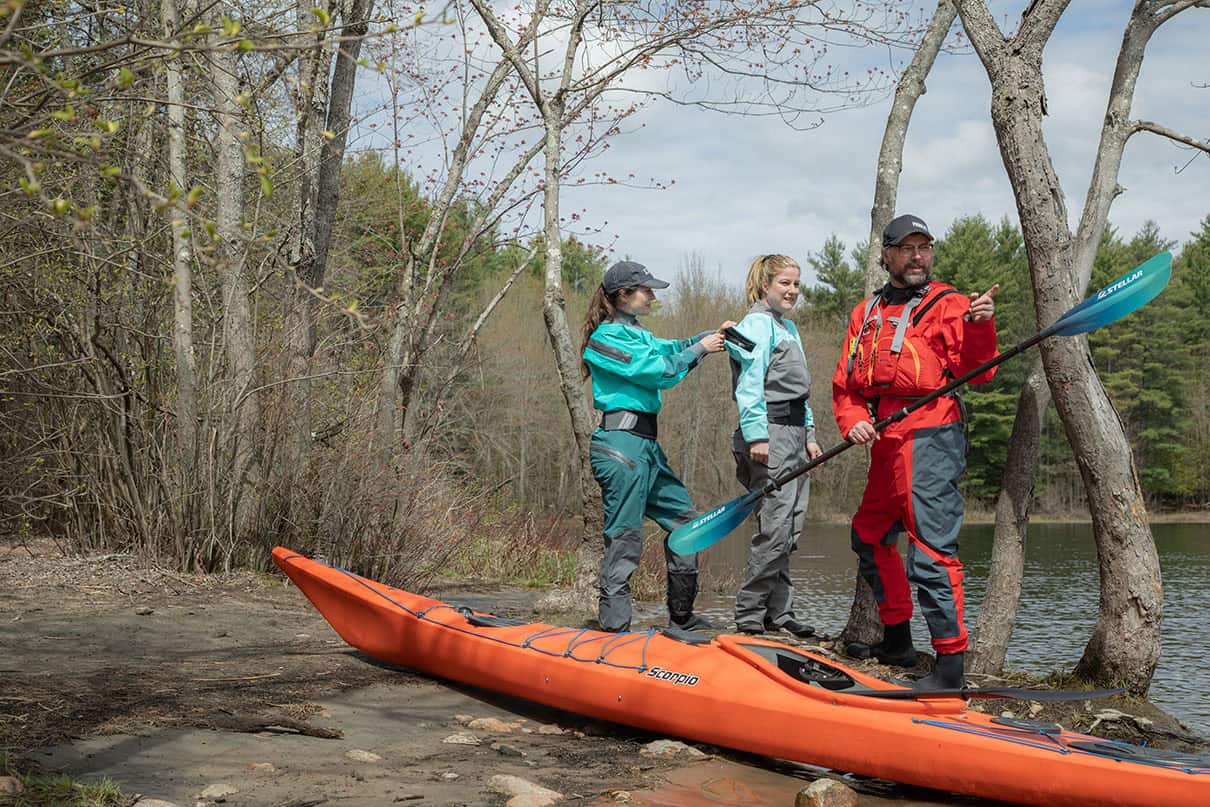
“It’s impossible without a drysuit,” he says. “The native people wouldn’t have risked it. If you go through the ice [without a drysuit] the odds are really against you.
He planned to finish his journey about the time most wilderness canoeists start packing for northern trips. According to Steger’s research, such a journey straddling the transition season between winter and spring had never been attempted before.

“It’s impossible without a drysuit,” he says. “The native people wouldn’t have risked it. If you go through the ice [without a drysuit] the odds are really against you.

Besides his waterproof-breathable “miracle suit,” Steger’s other secret weapon is a canoe design he has been tweaking for more than 20 years with Ted Bell of Minnesota’s North Star Canoes.

The pair rounded off the bow and stern of North Star’s 14.5-foot Phoenix solo tripper to better slide on irregular terrain and fortified Bell’s proprietary carbon-aramid construction. The canoe is rigged with a dogsled-inspired runner system, which can be removed if necessary for paddling longer sections of open water.

For its part, North Star’s Bear Paulsen says the partnership with Steger has helped the manufacturer develop a “flexible resin system for maximum durability in some of the harshest conditions on earth.”

His one close call came on April 20, at the headwaters of the Thelon River. Steger hauled overland to avoid flowing water, before veering back onto an ice-covered lake.

Steger’s 2018 expedition began in a deep freeze, with more snow than he anticipated south of the treeline. Winter conditions and frigid winds persisted as he entered the barrens in April.

“I was prepared to travel in conditions from 40 below to 40 above [Fahrenheit],” says Steger, who used a Stephenson Warmlite mountaineering tent for shelter and thawed drinking water and prepared meals on an MSR white gas stove. “This year was so cold I was at the margins of what my equipment could handle. I was fine, but I had to pay attention.”

His one close call came on April 20, at the headwaters of the Thelon River. Steger hauled overland to avoid flowing water, before veering back onto an ice-covered lake. “It was snowing and blowing,” he recalls. “It looked like I was on black ice, but my ski went through. There was hardly any ice at all.”

Steger salvaged the situation and retreated to safe ice, where he paused to reflect on the experience. “I made a mistake,” he admits. The experience reinforced Steger’s mantra to “be in the moment all the time.”

In the end, winter conditions made the entire expedition reminiscent of Steger’s previous Arctic journeys—“but without the dogs and the [polar bear] gun,” he says. The severe weather reaffirmed his efforts to educate the public on the less predictable effects of climate change.“It’s the opposite of what you’d think global warming will be like,” he says. “It’s all driven by changes in the upper atmosphere. A real obvious impact is how the caribou are disappearing up there.” Steger had a deadline to finish on day 70 of his trip.

[ View all new boats and gear in the Paddling Buyer’s Guide ]

After pushing hard for two months, Steger decided to enact a Plan B, ending his trip and leaving his canoe at the headwaters of the Back River, where he’s planning to continue this spring on a 90-day route to the Arctic Ocean.

It’s a new, beautiful territory for me,” says Steger. “It’s all so alluring. I love studying the maps and figuring it out. So many different types of routes are possible up there.

Will Steger visits North Star Canoes to see his modified expedition model made by Ted Bell. Feature Photo: Brian Peterson

Why You Need To Paddle Lake Revelstoke

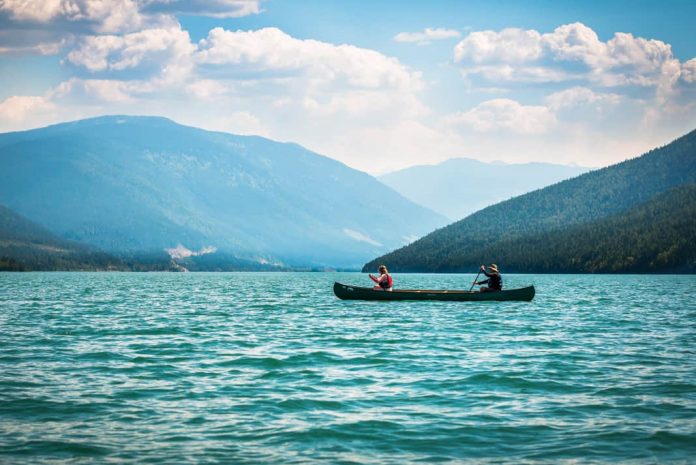
two people paddling a canoe on Lake Revelstoke surrounded by mountains
A famed explorer and cartographer, David Thompson was the first European to visit the Revelstoke area 206 years ago. He arrived, of course, by canoe. | Photo: Laura Szanto Photography

If explorer and cartographer David Thompson were to map the Columbia River today, he might find it substantially easier than the journey he took more than 200 years ago. For starters, the aptly named Dalles des Morts (Death Rapids) met their own untimely death in the mid-’80s when the waterway was dammed.

Today, in the place of rapids, sits a calm reservoir known as Lake Revelstoke.

While Lake Revelstoke may be manmade, it appears anything but unnatural. Many of the landscape’s features still appear much as they would have in Thompson’s day. The 125-kilometer stretch of water is surrounded by the world’s only inland temperate rainforest, with glacier-capped peaks filling in views on every side.

Lush and green in the summertime, the mountainsides are even more breathtaking in autumn when golden larches prepare to lose their needles. Shores lined with huckleberries are visited by bears, elk and wolves, and waterfalls trickle around every corner.

It’s a lake made for paddling—

Much of the western shore’s secret beaches and hidden coves can only be accessed by water, while Highway 23 provides ample access along the length of the east side.

[View the latest boats and gear in the Paddling Buyer’s Guide]

On a calm mid-summer Saturday morning, we don’t see another boat out on the glassy water. According to tour guide Amy Flexman, it’s just a typical day on Lake Revelstoke. “It’s easily accessible, but it’s never busy,” says Flexman, owner of outfitter Flexpeditions. “You have a feeling like you might be the only one who has ever set foot on the piece of wilderness you are exploring. The vastness is the beauty of it.”

Plan your trip to Lake Revelstoke

If you have a half day:

Put in at the public boat launch above Revel- stoke Dam and head north towards Martha Creek. A few hours is all you need to discover hidden rocky beaches. On windy days, the Columbia River just south of the town of Revelstoke might be a better bet. There, paddle marshy edges at Arrowhead, a former steamboat port that flooded when the dam was built.

If you have a day:

Plentiful snow melt from the surrounding mountains means epic waterfalls. The best way to chase them? From on the water. A circuit starting from Blanket Creek Provincial Park will take you to three waterfalls flowing into the Columbia River, including one with a drop of over 300 feet.

If you have a weekend:

Spend your time exploring all the nooks and crannies near Carnes Creek. Only a 30-minute drive north of the town of Revelstoke, it’s also the site of a camping area with incredible vistas. For a more adventurous weekend, launch on the faster-moving Columbia River. Beginning at the town of Revelstoke, head south to Shelter Bay, stopping to overnight on the wild shore along the way.

If you have a week:

Follow the path David Thompson made in 1811 as he charted the area. Launching at Mica Creek, head south until you can’t paddle south anymore. While the trip can be rushed in three days, stretching it out over a week provides plenty of time to explore the lake’s fjords, inlets and waterfalls.

Things you should know about Lake Revelstoke

Weather:

Multiple outfitters offer canoe and kayak rentals, shuttle service and guided tours, including Flexpeditions (www.flexpeditions.com) and Natural Escapes (www.naturalescapes.ca). For standup paddleboard rentals and tours, contact Fine Line SUP (www.finelinesup.com).

Don’t miss:

Launched in 2017, the Revelstoke Paddle Challenge follows the route David Thompson took over 200 years ago and the route the Secwépemc people used before that. Over three days in July, paddlers travel up to the full 125 kilometers (www.paddlerevelstoke.ca). In August is the nearby Jordan River Festival and Race.

Digital detox:

North of Revelstoke Dam, there’s no cell phone reception. For longer excursions, consider packing a satellite phone or communications device, which can be rented locally from Outdoor Logistics (www.outdoorlogistics.ca).

Diversions:

Year-round, you might spot moose, bighorn sheep and even caribou. However, autumn is the time to visit if you want to see the salmon run, and when salmon and trout flood the creeks and rivers.

Did You Know?

The Columbia River was once home to sturgeon-nosed canoes. Distinctive watercraft built by the area’s First Nations people, the canoe is immediately recognizable from the unusual reverse slope of its bow and stern.

8 Things You Didn’t Know About Yokes

photo: paddling magazine staff
it's not a yoke

1. On a canoe, the yoke is the cross beam in the boat’s center, connecting the starboard and port sides. Hopefully, yours has a curved indentation in the center for better ergonomics while portaging.

2. Non-paddlers might be more familiar with the kind of wooden yoke traditionally used to secure a pair of oxen together, enabling them to pull a load when working in pairs.

3. An ox can pull its own weight, usually between 1,500 and 3,000 pounds. A well-trained team of two can pull up to 12,000 pounds for short distances, according to Lancaster Farming. The word acre was once defined as the area one pair of oxen yoked to a single- beam walking plow could till on the longest day of the year. The measurement of an acre has since been refined to 43,560 square feet.

4. The first yoke used for agriculture dates back to 4000 BC. With such a lengthy history, it’s not surprising the word yoke has connotations of servitude. Common idioms like under the yoke or a yoke around someone’s neck refer to oppressive forces—not portaging a 70-pound canoe.

5. In aeronautics, a yoke, also known as a control wheel, is used for piloting fixed-wing aircraft. The pilot uses the yoke to control the altitude of the plane, and pitch and roll. In November 2018, an Australian pilot of a small, twin-propeller plane fell asleep at the yoke and overshot his landing on the island of Tasmania by 30 miles.

6. Egg yolk is a major source of vitamins and minerals. It contains all of an egg’s fat and cholesterol, and nearly half of its protein. The yolk of the egg is just one cell and provides nutrients to a developing embryo if the egg is fertilized.

7. Replacing or upgrading your yoke is a straightforward, seven-step process any paddler with a drill can manage.

8. To truly make portages comfortable and avoid the pain of the yoke digging into shoulders, some paddlers suggest padding your yoke with tiny, clamp-on shoulder cushions. Meanwhile, traditionalists just shake their heads and tump on by.

6 Expert Tips On Tent Repair And Maintenance

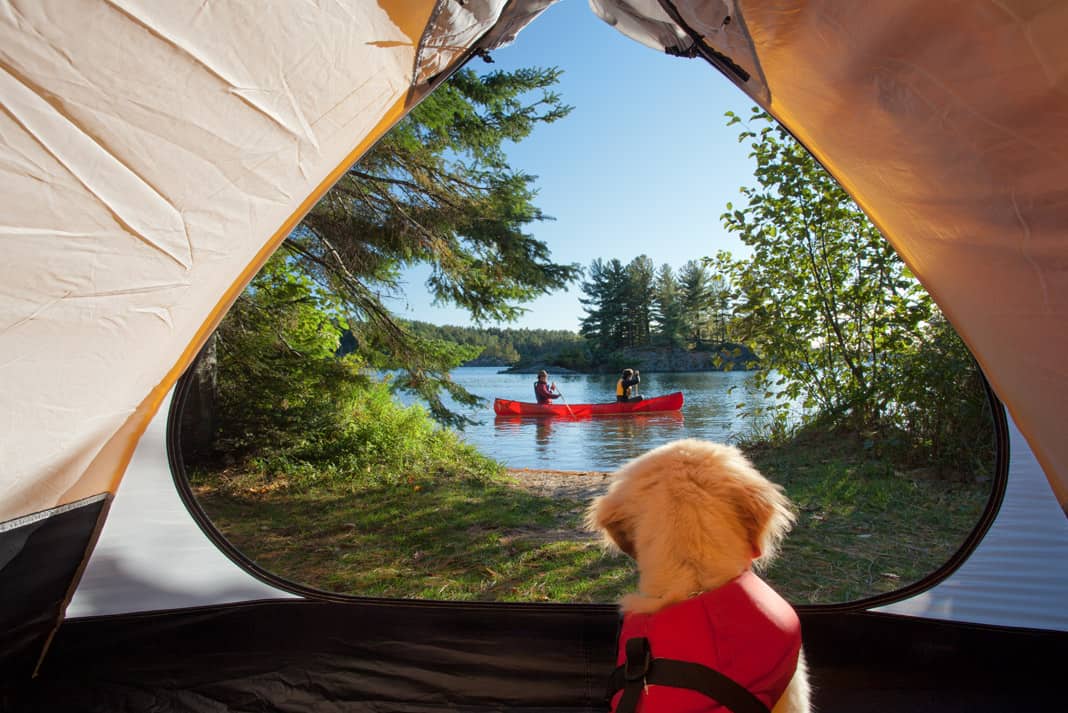
a puppy looking through a tent at two people paddling a canoe on a lake.
Thou shalt always leave a guard dog on duty. | Photo: Ethan Meleg

A tent is one of the most expensive pieces of outdoor gear a camper will ever buy. Knowing how to repair a tent isn’t just an essential skill, it can also save hundreds of dollars. Tackle the six most common maintenance problems with this expert advice and keep your backcountry castle a fortress.


How to Maintain and Repair Your Tent

1 Hand Wash Mold and Mildew

Bacteria prefer damp and moist environments, and a less-than-bone-dry tent stored in a stuff sack is prime territory for offensive organisms to fester. Tents are not designed for the abuse of a washing machine’s agitator, so hand washing is the only sensible option.

Mild molding can often be removed with gentle spot cleaning using a paste of salt and lemon juice added to an equal amount of water. Need something tougher? A cleaner specifically designed for outdoor gear and clothing, like products from Nikwax, can be used. Set up the tent, and then gently spot clean with the solution of your choosing using a non-abrasive sponge. When finished, rinse the tent, and allow it to dry completely before putting it away. Though washing will kill mold and mildew, the discoloration of the fabric will often remain.

For a truly filthy tent in need of a deep clean, unzip all of its zippers and soak it in a bucket of warm water containing five drops of non-detergent liquid soap. Soak for three hours, rinse it, set it up, spot clean and allow it to dry completely.

a puppy looking through a tent at two people paddling a canoe on a lake.
Thou shalt always leave a guard dog on duty. | Feature photo: Ethan Meleg

2 Remove Peeling

If your tent is peeling or flaking on the top side of its floor or on the underside of its fly, it needs a new polyurethane coating. First, soak the tent in a bucket of warm water then scrub off the remaining polyurethane coating with a non-abrasive sponge and a mixture of isopropyl alcohol, water and two drops of liquid soap. This will remove the old coating. Then, set up the tent and let it dry completely. Paint a thin layer of tent fabric sealant onto the top side of the tent floor or the bottom side of the tent fly as needed, and along all seams.

Be sure to get the correct product for your tent’s fabric, as sealant is specifically designed for the fabric it will be applied to. Allow the sealant to dry completely before packing, preferably for at least 24 hours. Once dry, any remaining tackiness can be removed by sprinkling a little talcum powder on top.

3 Patch Tears

Even well cared for tents can tear. Fortunately, this is an easy fix, even in the backcountry. Bring a tent repair kit on every trip packed with rubbing alcohol, scissors, a cloth and repair tape.

To fix a tear, clean the area around it with rubbing alcohol and a cloth. Then, cut an oval-shaped piece of repair tape large enough to encompass a one-inch area surrounding the tear. Place the tent on a solid surface, such as a flat boulder, large log or overturned canoe and line up the edges of the rip. Remove the backing from the repair tape and press it firmly into place. Patch both sides of the tent and allow it to cure after the repair for as long as possible—24 hours is ideal.

4 Repair a Zipper

If your zipper isn’t running smoothly along its tracks, run a graphite pencil along the zipper’s teeth to deposit the pencil’s graphite. The graphite acts as a lubricant, smoothing out rough spots.

If the zipper’s puller is missing, slide a thin piece of parachute cord through the eye of the bridge and tie it off to create an easy pull. In cases where a piece of fabric is stuck in a zipper or in the slider, apply liquid soap to the fabric and pull gently on the fabric to release it.

5 Seal Seams

If you see peeling seal tape, you’ll need to reseal those seams. Set up the tent and gently remove the peeling tape. Only seal on the underside of the fly and interior of the tent body.

First clean the area to be sealed with rubbing alcohol and a cloth, then apply a thin layer of liquid seam sealer. Allow it to dry completely before packing the tent away. Very small holes in the tent body, often caused by sparks or thorns, can often be fixed with liquid seam sealer.

6 Re-Waterproof

A tent’s waterproof qualities can be refreshed with durable water repellent (DWR). Set up the tent and spray DWR on the outside of the rainfly. After about five minutes, gently wipe the tent with a damp cloth to disperse the DWR evenly. Allow the tent to dry completely.

When to Say Goodbye to Your Tent

Broken zippers and missing teeth, as well as large tears, usually require professional help or replacement. When the rainfly becomes sticky, it’s best to get a new one. If the floor or the rainfly are failing, and a new rainfly isn’t available, repair may be more time and money than the tent is worth.

This article was first published in Issue 63 of Paddling Magazine. Subscribe to Paddling Magazine’s print and digital editions, or browse the archives.


Thou shalt always leave a guard dog on duty. | Feature Photo: Ethan Meleg


How Paddling Became Greenland’s Cultural Renewal

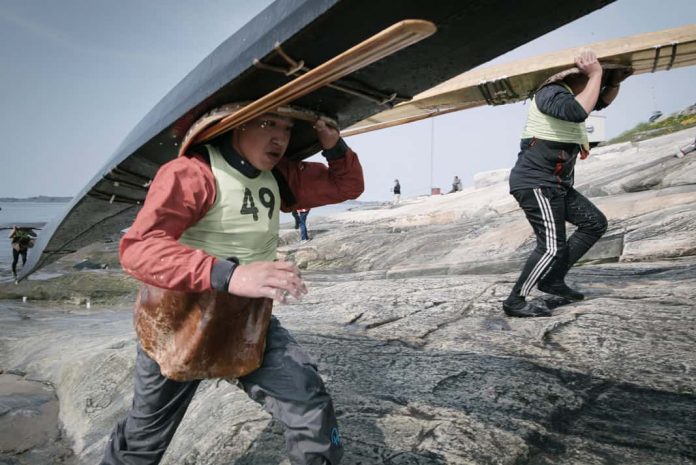
Karl Bjorn Hansen runs with his qajaq up the shoreline in the youth portage race.
Karl Bjorn Hansen runs with his qajaq up the shoreline in the youth portage race. The Greenland National Championships include heavy participation by youth under 15, a sign of Greenlandic culture's emphasis on family ties. | Photo: Kiliii Yuyan

It’s a beautiful summer day on the waterfront in Nuuk, Greenland. I’m watching a preschooler barely out of diapers roll a kid-sized, skin-on-frame kayak like a pro. It’s not something I see every day. The young lad is coached by a man old enough to be my grandfather and crowds of people spanning the age spectrum watch from the shore, urging them on.

A hundred years ago, here on the west coast of Greenland, or anywhere else in the circumpolar world where qajaq is a cultural tradition, you would be hard-pressed to find evidence of these elegant, handmade vessels.

Canoeing and kayaking will never be forgotten in Greenland

Like canoes that fell out of use with the rise of motorboats, offshore fishers and hunters in Greenland turned to engines. Qajaqs and the associated skills faded away.

Canoeing and kayaking are never forgotten by indigenous cultures, which once relied on these craft for sustenance, transportation, and communication—qajaqs are part of stories spanning the generations. But the technical skills of manufacturing and maneuvering are lost from lack of use.

A change came to Greenland in the early 1980s, when three ancient qajaqs were returned to the National Museum of Greenland. The trio had been collected by a Dutch anthropologist and kept for study in a museum in the Netherlands.

According to dearly departed kayak historian, John Heath, some young Greenlanders, including the incomparable Kaleraq Bech and Manasse Mathaeussen, saw these craft on display in Nuuk. Writes Heath, “[they] were impressed their ancestors of 1600-1700 had such sleek craft and the skill to use them. These young men decided to form a club in order to preserve their heritage.”

With paddling programs formed and construction underway, young folk roared around Nuuk with T-shirts reading, “Qajaq-Atoqqilerparput,” meaning, “Kayak, we are starting to use it again.”

The Greenland National Kayaking Championships aided in cultural renewal

Flash forward to 2018 and the Greenland National Kayaking Championships, hosted by the Nuuk chapter of Qaannat Kattuffiat, the Greenland Kayaking Association.

There were 105 competitors representing more than 25 affiliates based in communities around Greenland, as well as enthusiastic outlier chapters from Denmark, Japan and the United States. Competitors are organized by age and gender with categories for children, teens and adults, with a healthy competitive spirit in each.

The cultural impact and significance of the qajaq revival to the Greenlandic Inuit community cannot be underplayed

Where skills and endurance once meant safety and survival while hunting sea mammals along the unforgiving Greenland coast, now the events mimic these necessary skills for points and bragging rights. The winner is crowned Greenlandic Kayak Man or Woman of the Year.

There are short-distance races, long-distance races, races with portages, relay races, individual rolling competitions, team rolling, harpoon throwing and a crazy series of slackline rope events, which don’t involve a boat or water but timing and balance.

[ View all boats and gear in the Paddling Buyer’s Guide ]

The cultural impact and significance of the qajaq revival to the Greenlandic Inuit community cannot be underplayed. Traditions of health, habit, language, food sharing, connection to the land and sea, building routines and generational exchanges of knowledge are all nourished by a return to paddling, skin-on-frame building and integrating kayaks into aspects of everyday life. To say nothing, of course, of the sheer fun of getting onto the water and building skills through practice and competition.

Today the kayak is a proud symbol of Greenland’s national identity.

Karl Bjorn Hansen runs with his qajaq up the shoreline in the youth portage race. The Greenland National Championships include heavy participation by youth under 15, a sign of Greenlandic culture’s emphasis on family ties. Feature Photo: Kiliii Yuyan

Behind 40 Years Of The Wooden Canoe Heritage Association

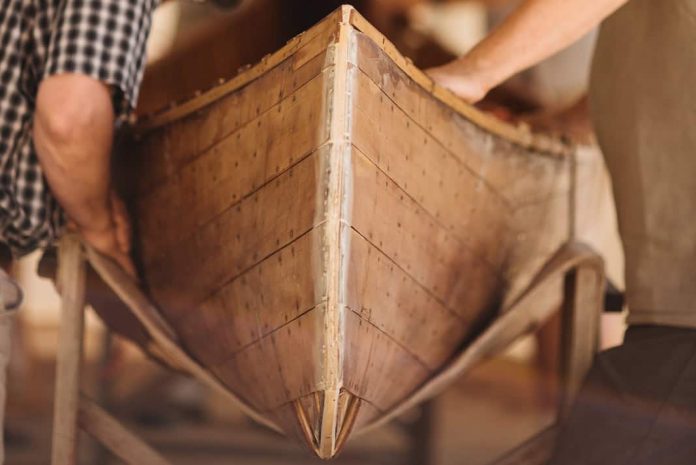
Bow view of a wooden canoe
It’s about the satisfaction when it all comes together. | Photo: Heather Coughlin

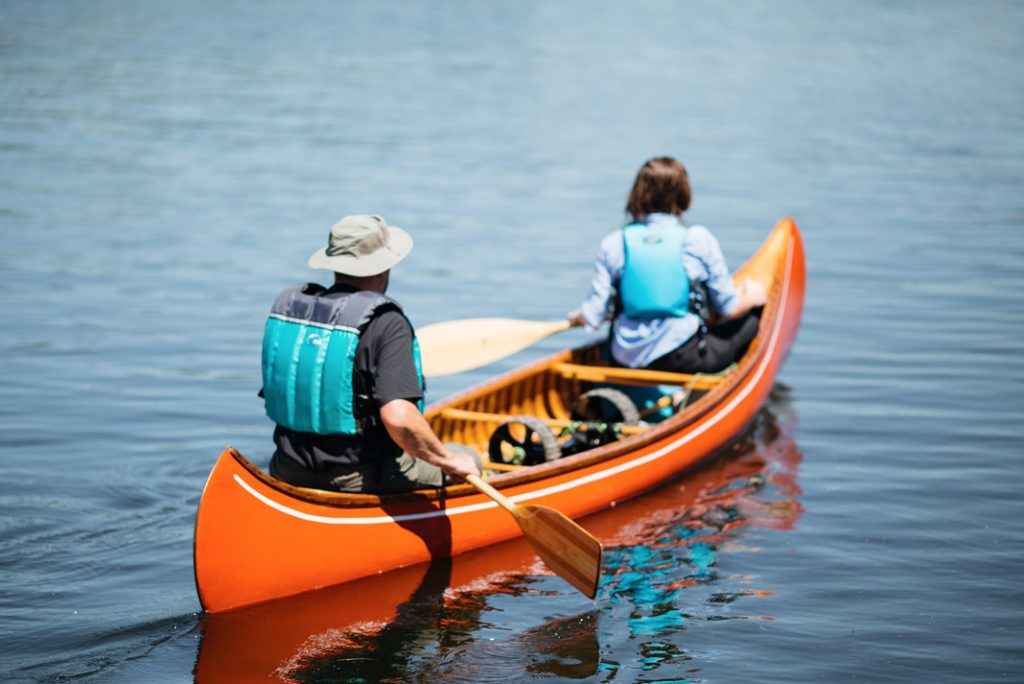
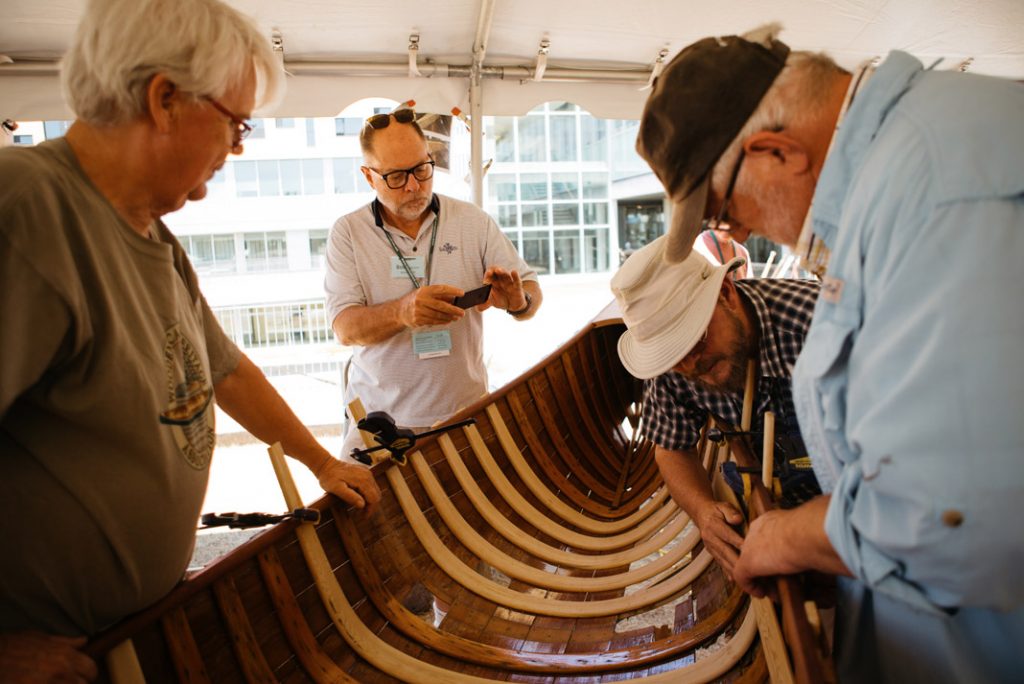
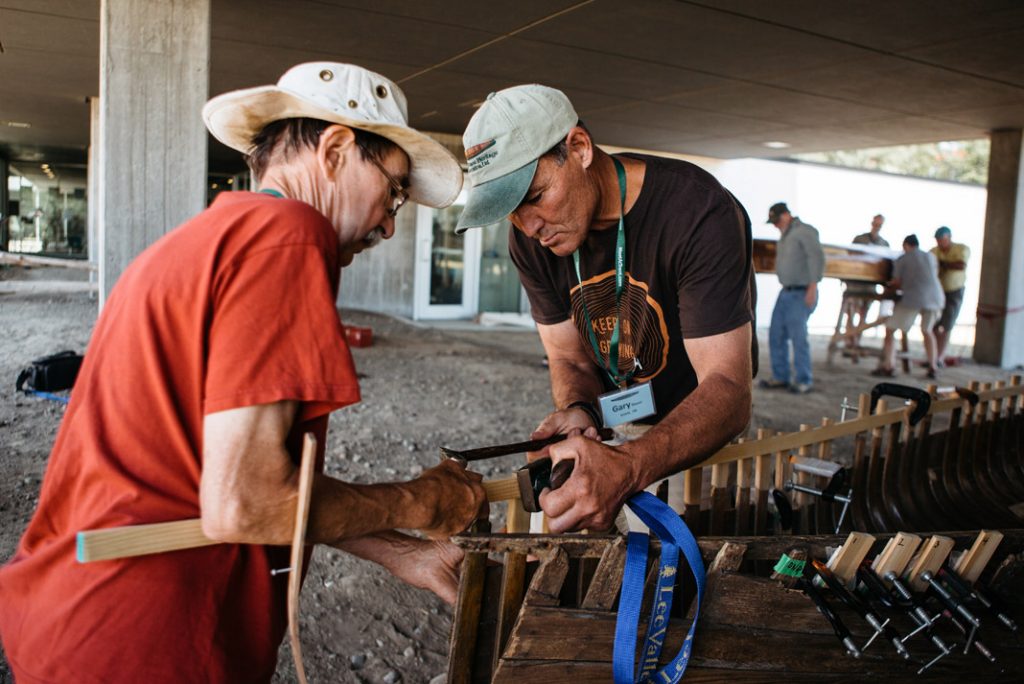
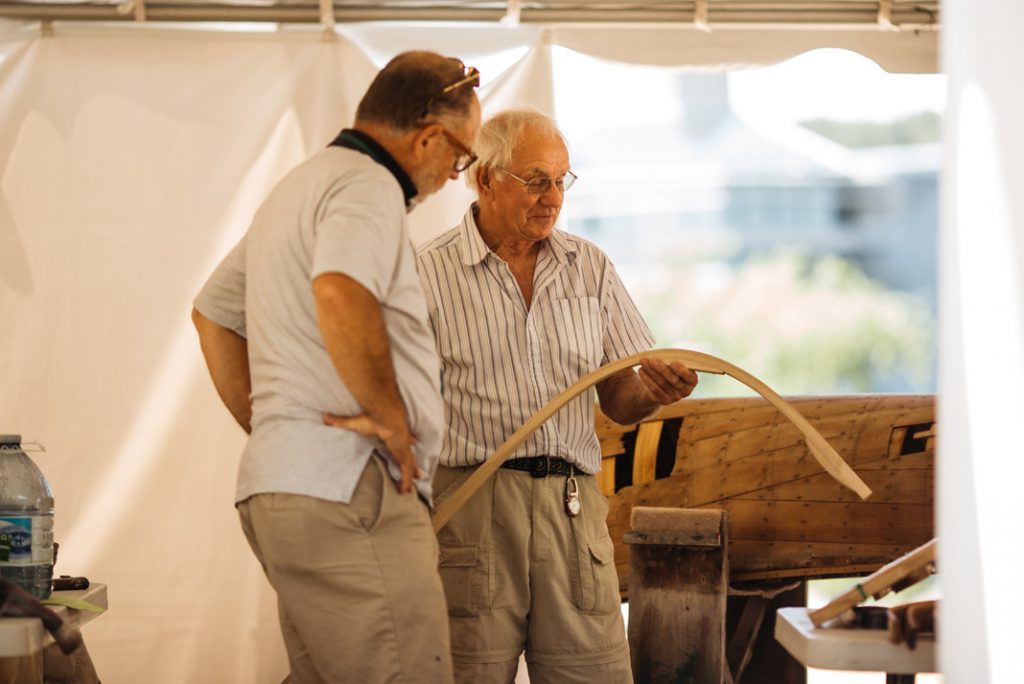
Under the shade of a white tent a man sits on a stool and threads rattan cane material through the holes of the wooden canoe seat frame he holds on his lap.

Beside him another man leans in toward a shavehorse. The rustic workbench clamps in place a length of wood. It looks more like a paddle with each pass of his spokeshave. At his feet, the peels of hardwood are piling up, evidence his tool is sharp and in expert hands. All around the dusty yard, wooden canoe hulls sit in cradles, ready to have planking tacked on, gunwales attached or canvas stretched overtop.

The Wooden Canoe Heritage Association

The scene could be from 1895, except for the garish, 21st century backdrop of the six-storey Peter Gzowski College building on the grounds of Peterborough’s Trent University.

The Peterborough Canoe Company started making cedar canvas canoes in this south-central Ontario town in 1892. And though the iconic manufacturer went out of business nearly 60 years ago, it’s here the Wooden Canoe Heritage Association (WCHA) held its annual assembly last July to honor the venerable brand.

The WCHA is an American organization dedicated to the preservation, restoration and use of wooden canoes. More than 200 of its 1,435 members made the trip to the annual event—held in Canada for the first time since sometime in the ‘90s—and most of the attendees hail from the United States, many from as far away as Florida, Colorado and Texas.

This year, the WCHA turns 40. Despite a slowly dwindling membership, its affiliates are passionate. These are people who love everything about wood canoes—they love paddling them, building them, restoring them and, yes, talking about them.

I’ve long held an appropriate reverence for the classic cedar canvas style. However, I’m guilty of thinking of it only as a charming step in the evolution of canoes.

If the popular view of cedar canvas canoes is their day has mostly passed, the WCHA is here to correct the notion. In every workshop, demonstration, display and discussion, one theme runs as clear as western red cedar grain—the utter resiliency of these designs and this material marks a high point of evolution. And despite the rich history of each design, they never have to become mere museum pieces.

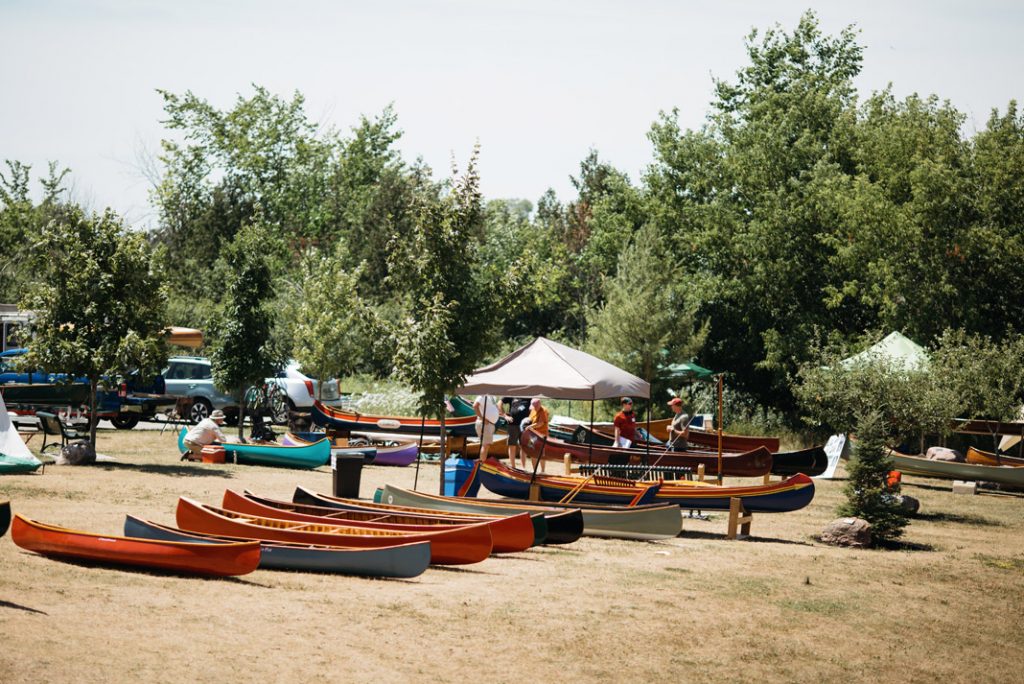
When I arrive on Friday, day three of the five-day event, the Annual Assembly is well underway. Under a hot July sun, a row of a dozen canoes sit upright on the drought-stricken grass landing area at the Peterborough Rowing Club. Their owners have left them here to be admired following the morning’s paddle down the Otonabee River and through Peterborough’s famous lift locks.

The rich amber hue of aged but gleaming varnish marks most of the hulls as old but well-tended. One has the name Tiger Ray emblazoned on its side and another has a small flagpole and flag on the stern deck. Most, though, seem to flaunt a look of unadorned dignity, suggesting the simple aesthetic of the canoe needs no improvement.

One hull stands out from the rest. The wood is blond, fresh and its exterior is shiny and smooth to the point of looking like pristine gelcoat. Which would, of course, be a grave insult to Alex Combs, the man who sanded, painted and varnished the cloth-covered hull five times in his workshop to create the gleaming finish.

Combs identifies himself as belonging to the mind-your-own-business camp of wooden canoe builders and restorers

It takes only a little encouragement to prod Combs into talking about his boat. He allows the hull doesn’t actually use canvas as its shell material. Instead of stretching a sheet of canvas over the planked hull, he used Dacron, a polyester fabric sometimes used as sailcloth.

As for the filler, the concoction of resins and compounds impregnating the Dacron makes the canoe watertight. “I’d say that’s a secret,” answers Combs coyly.

And with that Combs identifies himself as belonging to the mind-your-own-business camp of wooden canoe builders and restorers who have developed what they consider to be secret recipes of the best-performing filler ingredients.

Those in the other camp are not so concerned about the hours and brain cells devoted to perfecting ratios and cure times and are all too eager to talk all about it, at length, to anyone who will listen. In essence, connecting these people, through the WCHA’s busy web forums, bimonthly newsletter and events is what the association is all about.

Building professionally since 1979, Combs is one of the association’s earliest members. As such, he has a good sense of the sweep of the 40-year history of the WCHA.

“When aluminum and fiberglass canoes hit the market they almost obliterated the wood canvas canoes,” says Combs, pointing to the line of canoes on the grass, many of them older than my four decades. “These became relics.”

“The organization and the people in it dug out these old ones. Like me, they felt a passion for revitalizing them, for bringing them back to life. Together, we created some energy.” Combs says it takes about 130 hours to make a new canoe out of his shop, Stewart River Boatworks, in Minnesota. But he concedes, most of the work is not in new construction but in restoration of mid-20th-century hulls.

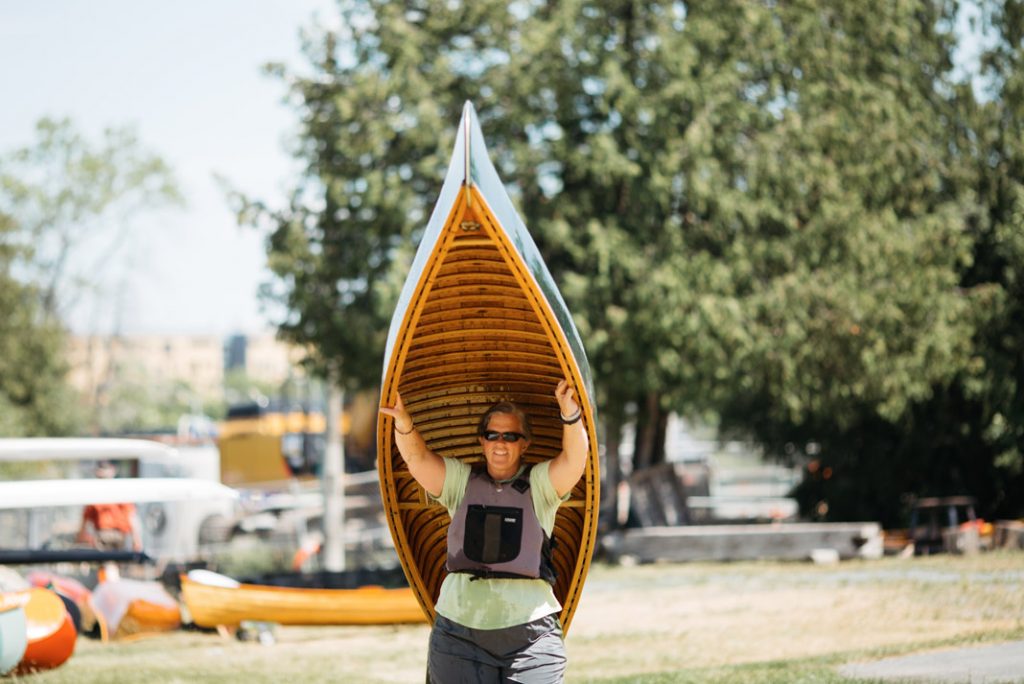
To Combs, wood construction does not entail a sacrifice in performance. The Dacron-shell hull he now swings over his head to put on his car’s roof racks weighs only 52 pounds.

There is a difference in how it sounds. When you put your paddle down in a wooden boat, it just sounds, and feels, right

A lot of people think they are delicate,” he says as he firmly cinches down a strap. “That’s just not the case. I’ve never broken a rib, and I’ve hit a lot of rocks.

“The aesthetics propel most of the interest,” explains Combs, but then hints at a blurring of the line between aesthetics and performance. “Most people who have been in a wooden canoe know there is a different feel. There is a difference in how it sounds. When you put your paddle down in a wooden boat, it just sounds, and feels, right.”

When it comes down to it, it seems self-evident wood should be the preferred material for making a canoe, Combs adds. “Wood encapsulates air. It floats. Metal and fiberglass don’t do that.”

While Comb’s unblemished, 52-pound Dacron hull exemplifies the current state of wooden canoe building, much of the grunt work in the WCHA is devoted to what’s happening in an open air breezeway under the student residences back on the Trent University campus.

Pam Wedd, a builder from near Parry Sound, Ontario, has an overturned hull up on workhorses and about 20 onlookers shuffling, politely but intently, for space around it. The session is advertised as a demonstration of how to stretch canvas over a hull, probably the single most momentous step in any new build or restoration.

However, there is some discussion as to whether the hull is smooth enough for this next step. A few eagle eyes in the group see a protruding tack head here; a plank with a raised corner there.

“It’s ever changing,” says Wedd. “The humidity today is different from a week ago when I faired it. Let’s not fuss. Every builder has different fussiness levels,” Wedd explains to me, in a voice loud enough for most to hear. “Though, this crowd as a whole tends to be on the fussy side,” she says, only slightly lower.

Visions of Phil Hartman’s 1990s Saturday Night Live character, the Anal Retentive Carpenter, come into mind. “We sometimes have interventions before sessions to establish fussiness levels,” jokes Tim Sampsel. He’s a woodworker from Colorado, crossing over from whitewater paddling, and here to learn some particulars of boat building in order to maintain a few wooden canoes his wife owns. He’s sure to leave with a boatload of tips and tricks about how to coax flat pieces of wood into particular canoe shapes.

As the flat sheet of canvas is unfolded and laid over the almost perfectly smooth hull questions arise about materials, techniques and tools. Wedd rarely gets a chance to answer before someone in the group offers advice from their own hours spent in home workshops.

Now that I’m retired, I’m trying to relive the 1950. Time was slower then. When I drive, I take the back roads. It’s the same thing with canoes

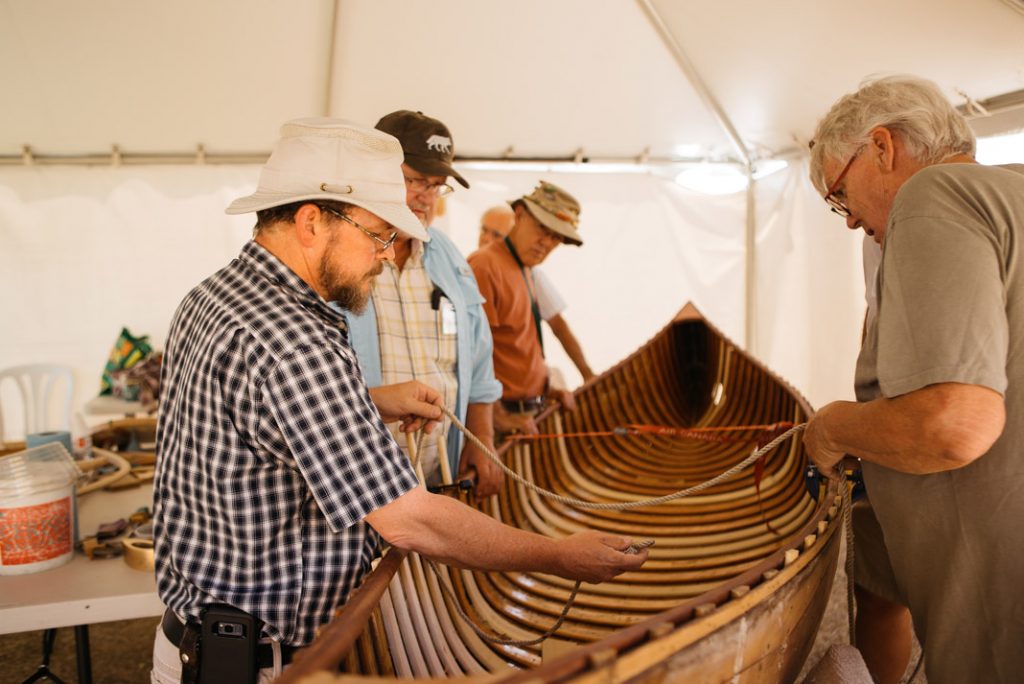
The canvas is stretched and pulled down over the canoe by a come-along pulley winch beyond the bow and stern. Volunteer pairs with vice clamps and staple guns begin securing the canvas to the hull where the gunwales will eventually attach.

“I would have used tacks,” says bystander Roy Nunelly under his breath to no one in particular and anyone who can hear.

I ask if his preference for brass tacks could be attributed to them securing the canvas better than staples, or just to them being the traditional fastener.

A bit of both, he says, though the Texan admits he can be a stickler for the traditional ways. “I once drove to Maine so I could get inwales that matched my outwales.”

When I ask him why such an attention to detail he takes the long view. “My first canoe was wood canvas. Now that I’m retired, I’m trying to relive the 1950s. Time was slower then. When I drive, I take the back roads. It’s the same thing with canoes.”

I’ve restored six already, have three more to go. It’s so relaxing for me to say, ‘I don’t care about the yard work, I’m going to work on my canoe.’ Then I go to my shop and pick up my hand tools.

I ask if Nunelly thought the hull was smooth enough to canvas and he explains how a layer of canvas hides a lot of imperfections, and admits he’s been guilty of using an iron to steam and swell the wood around a tack where a misplaced hammer strike had dented the wood during construction.

Craig Johnson, standing nearby, leans in to politely one-up Nunelly’s iron story. “I once had to use a blowtorch,” he says.

As much as these canoes are now obsessed over and coddled, most of them came into being as mass-produced, factory-made utilitarian craft. They’ve come to be seen as works of art, but their origin story is somewhat plainer. In a factory, sanding might not have been done by hand but instead by two men rolling a canoe back and forth over a huge sanding belt running the length of a canoe.

That sort of aggressive sanding left the tack heads on Johnson’s 1960s-era Peterborough Mermaid canoe a little proud, he says. To a woodworker, proud is problematic, referring to anything protruding above a flat surface.

“I couldn’t have proud tacks for the sake of the paint job,” explains Johnson. “But re-clinching [pounding in] the tacks would leave dents from the hammer.”

It’s the restorer’s burden to remove these hammer tracks, and they do it by steaming the compressed wood until it swells back to flat. But Johnson couldn’t steam the wood because it had been slathered in linseed oil, closing its pores.That’s where the blowtorch came in.

I ran into the shore, because I was looking down at how beautiful the canoe was

With some trepidation, Johnson started singeing the 50-year old cedar planking. It’s a process he wrote about in an article entitled “When Will I Learn to Leave Well Enough Alone,” in the February, 2018 issue of Wooden Canoe, the association’s bi- monthly magazine.

Despite the ominous title, he managed to burn off the oil and not much more. Though it was a messy job, he was then able to set all the tack heads, steam the dents and sand the whole hull, only losing 1/32 of an inch of hull thickness.

Johnson is a former cabinetmaker and housepainter from Ohio. He inherited his first wood canoe from his outdoorsman father. After restoring it he took the canoe out for a paddle on a small pond.

“I ran into the shore, because I was looking down at how beautiful the canoe was,” he laughs. Then he started collecting.The blowtorch canoe brought his collection up to 17.

When asked if he prefers working on them or paddling them, he provides a thoughtful answer. “That’s why we have winter and summer. I love the work, but I’m getting to the point where I just want to get out more and more.”

He was planning a late summer trip to Ontario’s Quetico Provincial Park with a 14-foot Peterborough for a solo eight-day. He’s been there before, once in his father’s old canoe and once in a 17-foot Kevlar model, a craft, he says, diminished the experience. “So I’m going back, and this time it’s about me and the boat,” he says.

On a plastic boat, nothing sticks to it. But on a wooden boat like this, there are no parts you can’t replace

The two-pronged appeal of the craftsmanship and the crafts themselves has to be seen as a strength of the WCHA, two strong draws the association can rely on to keep members interested, but even so the group is facing serious challenges from the formidable foes of demographics and technology.

Annie Burke is the association’s executive director and treasurer. She’s waiting outside a university lecture room before the board of directors convene for a meeting. Comfortably in middle age, she represents the younger wing of the organization.

“We have more than 1,400 members, but we once had 2,100,” she says. The organization has no doubt benefitted from the pull of nostalgia, but nostalgia can be time sensitive.

“A generation grew up with these canoes being commonplace,” she says. When the association was founded in 1979, the heyday of the cedar canvas canoe was still in recent memory for many.

But that generation is moving through time to a hard deadline.

Additionally, the Internet has eroded the necessity of someone needing to belong to a group like the WCHA in order to be connected to like-minded people and learn the tricks of the trade.

“Young people don’t join clubs like they used to. They can find people online without joining and spending $40 per year,” says Burke. But she hopes to counter technology’s disruptive effect with technology itself.

“Our next foray is to be more active on Facebook and Instagram,” she says. “As my daughters tell me, our boats are very Instagrammable.”

If I’m going to put in the effort, it’s going in the water

Not all of the crafts are so worthy of Insta-fame, however. On the lawn in front of the silent auction table is a canoe that has seen better days. Probably many decades of them.

It’s not the classic rib and plank design but something closer to a dugout in appearance, with low shear lines and not a hint of tumblehome or any of the other sexy curves flaunted by the other canoes on display.

A quick scan shows seven holes in the hull and a broken gunwale.

Floyd Reid is interested. He says he has one at home in North Carolina that’s worse. He starts to refer to this hull-like thing as a project.

I ask if he has a well-equipped shop. He replies that he restores railroad trains. I consider him and his shop—the North Carolina Transportation Museum—qualified.

I ask if the canoe will be a museum piece or something he actually paddles. “If I’m going to put in the effort, it’s going in the water,” he reassures.

All of a sudden the canoe doesn’t look quite so decrepit. Something about the way Reid keeps running his eyes over it tells me, because of these people, the spirit of this gathering, a boat like this doesn’t just have a lengthy past—an unknown past of sunset paddles, regatta races, fish caught, headwaters fought—but also a future.

The guiding vision might have been summed up best by Dave Alguire, a member of the Wooden Canoe Builder’s Guild who was working on a canoe on which the top of every rib was rotted away, going about replacing the rib ends one at a time: On a plastic boat, nothing sticks to it. But on a wooden boat like this, there are no parts you can’t replace.

This article originally appeared in Issue 56 of Paddling MagazineSubscribe to Paddling Magazine’s print and digital editions here, or browse the archives here.


It’s about the satisfaction when it all comes together. | Feature photo: Heather Coughlin

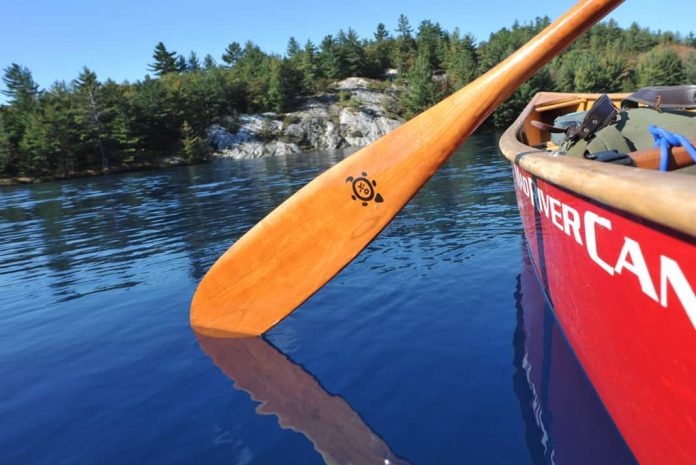
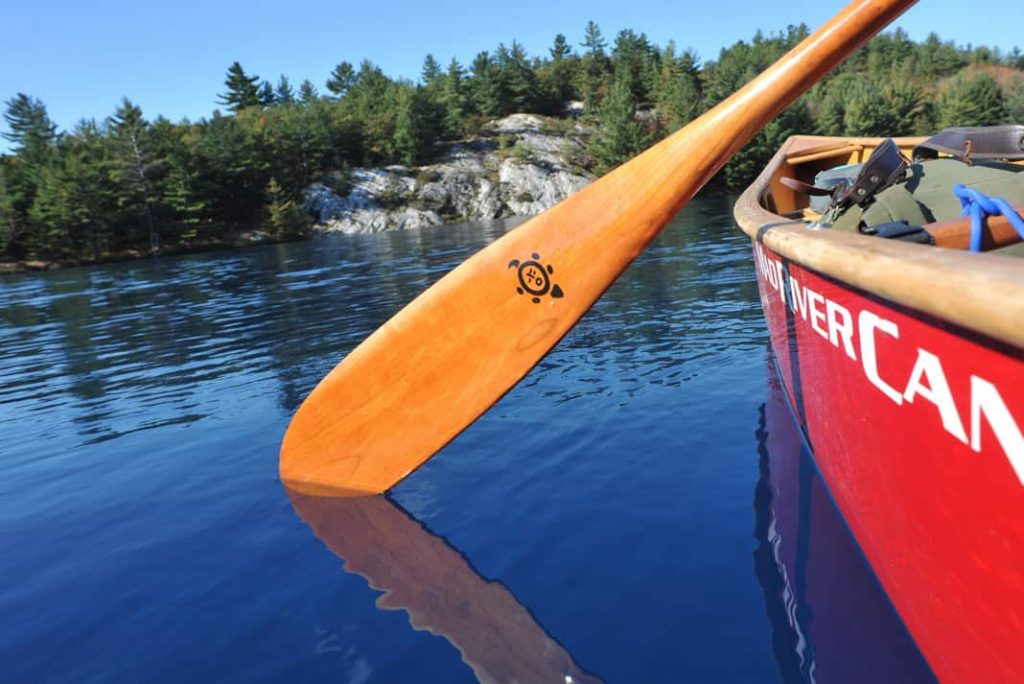
Why Your Canoe Paddle Choice Is So Important

A canoeist paddling with a wooden canoe paddle on a lake
“There’s magic in the feel of a paddle and the movement of a canoe, a magic compounded of distance, adventure, and solitude, and peace.” —Sigurd Olson Photo: Virginia Marshall

Canoeists put a lot of time, consideration and money into deciding which boat will best carry them on their next adventures. Few put even a fraction of that energy into choosing a perfect paddle.

Your canoe paddle choice is important

Consider this. At 30 strokes a minute, I will paddle more than 1,800 strokes an hour, which can add up to around 14,400 strokes per day and more than 100,000 strokes per week. On an epic 21-day trip, I’ll paddle 302,400 strokes, give or take. I’ll never understand the people who agonize over the specs of a high-end canoe only to pair it with a Costco blade.

[ Paddling Buyer’s Guide: See all canoe paddles ]

Your canoe paddle choice shouldn’t be an afterthought. Your canoe paddle choice will determine what kind of canoeing you pursue. The paddle is both a propeller and rudder—it’s our connection to the water and therefore one of the most important purchase decisions a paddler can make. But it’s not a simple one.

The chosen route—whether it’s simple lake paddling, navigating down bony rapids, or a combination of both—is a huge factor when choosing between the many blade styles.

Popular beaver and ottertail shapes are versatile and perfect for general use, like flatwater tripping and solo style paddling. Whitewater blades typically feature a much shallower and wider, square-tipped blade to enable a paddler to pull more water and deploy a stronger brace.

When routes feature both whitewater and flatwater, paddlers have to weigh the amount of time spent crossing flatwater and navigating boiling rapids to choose their primary blade.

A canoeist paddling with a wooden canoe paddle on a lake
“There’s magic in the feel of a paddle and the movement of a canoe, a magic compounded of distance, adventure, and solitude, and peace.” —Sigurd Olson Photo: Virginia Marshall

Canoeists love bent shaft canoe paddles

A nine-to 14-degree bend in the shaft can improve stroke efficiency by about 10 percent by keeping the blade vertical in the water for longer. While bent shaft designs are more efficient, the design is not as effective for steering strokes. Most bent shaft paddlers switch sides at the call of “hutt” to keep the canoe straight instead of using J-strokes.

A canoe instructor I once paddled with is a faithful user of bent shaft paddles and, interested to see what all the fuss was about, I agreed to use one while on a trip together. Even though the instructor was right about our increased efficiency, I just couldn’t stand the style. It wasn’t for me. I’ve never cared much about going fast in the wilderness anyways. Every time he called out the command “hutt” I felt my eye twitch and, needless to say, we never paddled together again.

Modern canoeists don’t have to limit themselves to just the single blade

A double blade works perfectly to propel a kayak, and can also be used in a canoe, though some old-timers may snub their noses at you. And don’t forget the myriad of materials to consider—various woods, composites like aramid and carbon, plastics and more.

Natural materials typically have more flex, which is easier on joints for going long distances, but some space-age composite materials are so unbelievably featherlight they’re favored by marathon paddlers—confused yet?

There’s a lot to consider when selecting a canoe paddle

Don’t even get me started on palm grips and T-grips, or oval versus round shafts. Whichever type of paddling you prefer, the perfect tool is out there. A wood carver has a favored knife, a stone mason uses his chosen chisel, and a painter has a preferred brush.

The same goes for a canoeist’s paddle. When you find the right one, the act of moving across water feels like a painter creating a perfect watercolor on the surface of the lake.

“There’s magic in the feel of a paddle and the movement of a canoe, a magic compounded of distance, adventure, and solitude, and peace.” —Sigurd Olson. Feature Photo: Virginia Marshall

5 Underrated Kayak Safety Skills

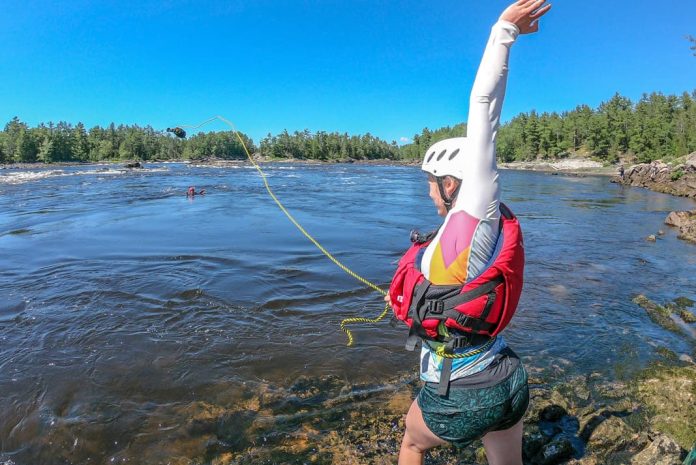
kayaker throwing a throw bag to a fellow paddler swimming in the water
Rope! Throwbag technique is another skill every boater should practice. Photo: Kalob Grady

Safety first. It’s the golden rule of kayaking. There are hundreds of articles written about the importance of risk management on the river and safety basics are well known and respected by most kayakers. Make yourself so invaluable, everyone will want to paddle with you.

Here are 5 safety kayaking skills to take you to the next level

1 Talk it out

Good communication is so straightforward to play it safe in whitewater it often gets overlooked. This is your key to success on the river. Take just a minute to get your team together and get on the same page at the put-in. If you’re above a big rapid or challenging line, make sure the group has the correct beta.

Set safety for a rapid with high swim potential, establish beforehand who is going to get a swimmer, paddle and kayak, or who is going to throw the first rope. Don’t only do this for gnarly runs, make a habit of communicating on your backyard runs too. The quick conversation to create an action plan for when SHTF will save your ass one day.

2 Overreact every time

Waiting until your fellow paddler is pinned or swimming to react increases the risk of making bad decisions under stress and making a bad situation worse. Be dramatic—make plans for a worst-than-best-case-scenario before it occurs.

My favorite example of overreaction comes from my background teaching children. As soon as a student flips over, I dash towards them, bridging the distance between us. Every single time. Practice the skill even when your friend with a bombproof roll flips over on your warm, deep water backyard run to dial in the habit for those cold, shallow rivers with increased consequences.

Best case scenario, you get a quick sprint and your friend rolls up. If not, you’re there in time to hand of god the kayaker and save a swim. In the worst case, you are much closer to helping with rescue and eliminating unnecessary moments in the water.

3 Hand of God

The ability to roll up a friend, without the kayaker playing a role in his or her own rescue, will earn you endless rounds at the bar aprés paddle and keep your paddling partner dry, warm and in high spirits. The effectiveness of the hand of god in comparison to a T-rescue is like comparing small batch Canadian maple syrup to the maple-flavored high-fructose corn syrup sold on the same shelf. It’s not even in the same league.

A hand of god allows you to come in fast and ensures capsized kayakers go from upside down to right-side-up in moments, without even knowing what is going on. In the unlikely scenario, your paddling bud can’t pull their skirt or aid in a T-rescue, a hand of god will reunite them with a breath of fresh air.

4 Boat-over-boat rescue

Pushing and pulling an 80-gallon kayak full of water is low on the list of things I look forward to doing. However, the skill to be able to empty a friend’s kayak mid-river is as invaluable as it gets. Even dumping just half or three-quarters of the water out of the cockpit makes a huge difference in the effort it takes to get the kayak to shore.

This skill can evolve into getting your friends back into their kayaks right then and there in the middle of the river if they possess the balance. On rivers like the Ottawa or the White Nile, you can save your friends a long swim to shore and carry on your merry way downstream.

5 Go quadruple blade

We’ve all been stranded on shore after a swim, way downstream of where a helpful mate tossed our paddle onto the river bank. Save your friend the walk by practising paddling with two paddles at the same time. Being able to paddle with four blades means you don’t have to fiddle with a tether to pull a paddle behind and you’re less likely to lose such a valuable piece of gear to the river gods.

Rope! Throwbag technique is another skill every boater should practice. Feature Photo: Kalob Grady

Remembering The Paddling Pioneer Harold Jessup

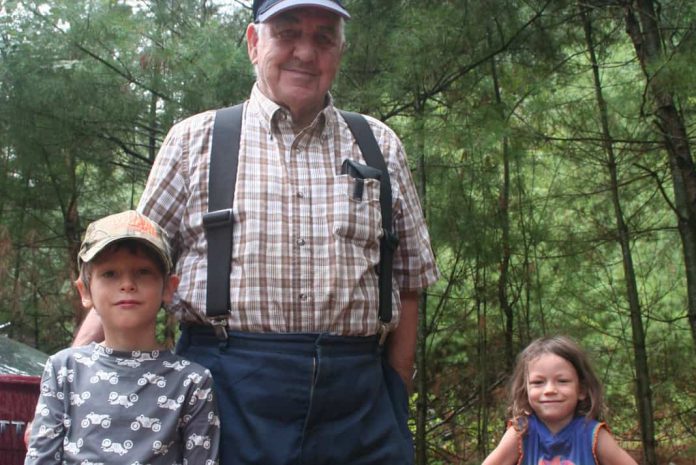
Harold Jessup standing with two children near the Madawasja River
Harold Jessup, at age 91, with TWO of the thousands of whitewater paddlers who got their start at his campground beside the Madawaska River. | Photo: Ian Merringer

Every weekend during the last 40-odd paddling seasons, vehicles topped with canoes and kayaks have turned right at a non-descript sign and rolled down a gravel lane and into a campground beside the Madawaska River.

Soon after, Harold Jessup would coast up in his red Jetta sedan and lift himself out to gently extract the modest $10 nightly camping fee, no reservations necessary.

He never kept you talking too long himself. Like many men of his generation and geography, Jessup said more with his eyes than his words. But he had a way of maintaining easy eye contact, which tended to make his guests offer up more than his fair share of small talk.

Harold Jessup’s Paddling Legacy

Harold Jessup died this past fall after 93 years living in Palmer Rapids, a small town split by the Madawaska River east of Ontario’s Algonquin Park.

Since the mid-1970s he ran Jessup’s Campground, a decidedly undeveloped but comfortable stretch of forested riverbank located, to many people’s great fortune, beside a compact collection of challenging but welcoming whitewater.

Thousands of people came every spring and summer. For many it was their introduction to the sport, so much so that longtime Whitewater Ontario mainstay Gary George credits it with having profound importance for the growth of whitewater paddling in Canada’s most populous province.

“His influence was somewhat inadvertent, I suppose, but when he opened his campground it exponentially affected the sport,” says George. “Half the Ontario-based community learned to roll there.”

“You have the ripple effect, the butterfly wing thing. It absolutely affected the trajectory of the sport in the province in a way that will never be fully understood.”

Beyond the easy manner of the proprietor, the campground offered a rare combination of easy access, reliable water levels, diverse rapids and the beauty of a riverside left mostly in its natural state.

Because Jessup kept it unaffiliated with any commercial enterprise, it’s been the go-to stop for instructional groups of all kinds.

Black Feather Wilderness Adventure Company owner Wendy Grater says since the mid-1970s they’ve taught close to 2,000 paddlers at Jessup’s. She credits geography with how influential it’s been as a launching pad.

She notes the main drop has a lively class-III chute, but also big eddies and two lower-volume alternate channels. The washout is into a large, calm pool, so the consequences of a capsize are low. Just beyond the pool is a long, class two rapid hooking around a point of land, effectively making the portage half as long as the rapid.

“Within 500 meters there was so much opportunity,” says Grater. “Where else would you go?”

Grater says over the years Jessup would visit their campsite and from time to time would look out over the water and say, “Someday I’m going to try that.”

There’s no indication he ever did run the rapid that took his name, but he became part of the paddling community all the same. Of the dozens of remembrances posted to the obituary tribute wall of the funeral home website, all but one was from those who described themselves as paddlers.

His daughter, Verna Jessup-Mantifel, says Jessup looked forward to the campsite opening every year. “Come May 24th weekend, his step quickened.”

Jessup-Mantifel confirms the campsite will be open as usual for the 2019 season.

“After reading all the tributes to my dad, I’m well aware that we have big shoes to fill.”

And so, the gate beside the nondescript sign will continue to swing open, leading to a rapid with reliable flow and rocks in just the right spots.

“Even at low levels, it’s still useful and functional in some way,” says George. “It’s always there. It’s never not there.”

For decades, the same could be said for the welcoming farmer with the kind eyes. A paddling champion, whether he knew it or not.

Harold Jessup, at age 91, with TWO of the thousands of whitewater paddlers who got their start at his campground beside the Madawaska River. Text and Feature Photo: Ian Merringer

Kayakers Defend The Free-Flowing Balkan Rivers

Kayakers defend Balkans Rivers
Carmen Kuntz has been a part of Balkan Rivers Tour since 2017. Photo by Katja Jemecs

A paddle can be a powerful tool. It can get me into remote canyons and out of sticky spots on the river. And it can get me heard. Banging my paddle against my boat, I’m part of a mass of people flowing through the main streets of Podgorica, Montenegro.

We are just a few hundred meters from the Moraca River, which flows unobstructed from the grey, karst mountains of Montenegro through the capital city and into Lake Skadar.

How Kayakers Defend The Free-Flowing Balkan Rivers

We kayakers look like fish out of water, but it’s not the first or last time we will hit the pavement during the month-long Balkan Rivers Tour.

The BRD hopes to shift the perception of dams, directing the conversation towards suitable energy alternatives.

Locals mix with kayakers from eight countries as we simultaneously celebrate the local rivers and draw awareness to the threats they face. Our bright boats draw attention and banners in the four local Balkan languages—Albanian, Macedonian, Serbo-Croatian and Slovenian— convey our message.

The Balkans are home to some of the last free-flowing rivers in Europe, and more than 2,700 hydroelectric projects are planned for the coming years.

Everyone here wants the rivers treasured, enjoyed, respected and protected. Disheartened by the talk but lack of action from large river conservation NGOs, Slovenian kayaker and biologist Rok Rozman dreamed up the Balkan Rivers Tour three years ago, imaging a way to showcase what was at stake (see www.paddlingmag.com/0011).

With a crew of friends, he toured the Balkans by paddle for a month, kayaking as many rivers as possible, meeting locals fighting to keep their local rivers dam-free and photographing the beauty threatened. In the years since the annual Balkan River Tour has evolved into the largest direct-action river conservation movement in Europe.

The Balkan River Defence was created by like-minded paddlers

The Balkan River Defence (BRD) grew from the tour, consisting of a few like-minded paddlers who now work year-round to connect a network of people, from local villagers to national conservation organizations.

“BRD is effective because of its ability to gather large groups of people, travel light and get to where action is needed on the ground,” says Ben Webb, a kayaker and river conservationist from Australia who manages the Maranon Waterkeeper in Peru. As the founder of a grassroots organization working in collaboration with locals in another part of the world, Webb brought a new perspective to the tour. “Grassroots activism works because it gives people a voice and the platform to express what they need.”

The BRD hopes to shift the perception of dams, directing the conversation towards suitable energy alternatives.

They also hope to inspire more engagement with the outdoor sports industry and the people who live and play closest to wild rivers to get involved. The people who spend time in its remote gorges and deep canyons should be the rivers’ staunchest defenders.

Carrying boats through town, portaging around dams and paddling the resulting flatwater is the norm on each Balkan Rivers Tour. Social media shows keyboard warriors the best side of the Balkans, but the tour isn’t all whitewater and sunshine. Long days in the car traveling on dirt roads to get to rural villages and remote rivers are followed by late nights preparing press releases and editing content. When I crawl into bed after spending a day with villagers in Albania or Bosnia who are putting everything they have into fighting to preserve their local river, I imagine what it would be like if every person living beside a river stood up for it.

Paddle. Veslo. Vosis. Лопатка. Весло.

Depending on where you are in the Balkans, the word changes—it’s meaning doesn’t. Lately, my paddle has seen far fewer days on the river, but the Defend Wilderness sticker on the blade is a reminder why. Anyone can start a movement like Balkan Rivers Tour. Whether with a paddle, fishing rod, paintbrush or pen—it’s just a matter of finding your medium and making some noise.

Carmen Kuntz has been a part of Balkan Rivers Tour since 2017.
Feature Photo: Katja Jemecs