Home Blog Page 205

The Most Influential Canoes Of All Time

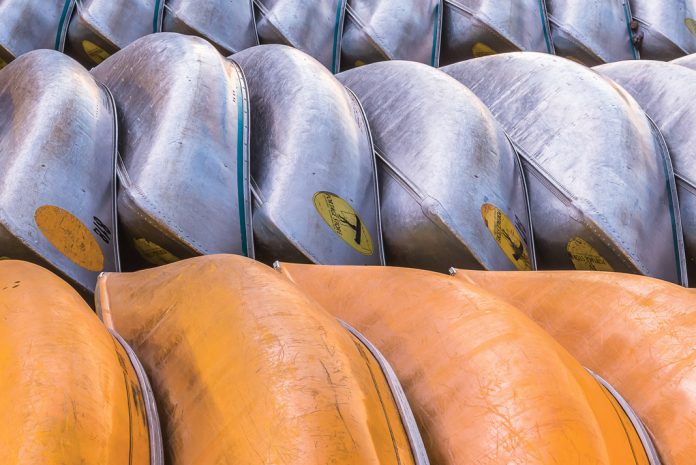
canoes lined up in a two rows

Anybody Who Tarries Long Enough On A Portage Trail Will Sooner Or Later Come To Wonder About The Growth And Evolution Of This Craft We Love So Dearly. I certainly have.

The last time I slowed to a nasty stop on a portage and took advantage of the time for contemplation of canoes of influence, I found myself wandering back to the very beginning. It seems clear naval history began with a floating log.

Somebody at some point, somewhere—on the steppes of Africa, if my biogeography prof has things lined up correctly—employed a floating log to assist with a passage and avoid drowning. It was the beginning of boating as we know it, in its many forms and permutations, but it was not necessarily the beginning of canoeing.

At some point later, someone got the bright idea to employ a stick of some kind to control the movement of the log in the water. This is not the genesis moment either.

The First Canoe—And, As Such, The Most Influential Canoe Of All Time—

It would have to be the log one creative Palaeolithic paddler decided to sharpen at both ends and perhaps flatten on top or hollow out so it might more easily be propelled and maneuvered to get to the proverbial another side.

This is just the beginning. There has been a slew of technological moments defining our evolving craft, and after the first, it’s difficult to order a hierarchy of the most influential and significant. However, I have some nominations—for example, going from dugout to planked and skinned craft.

A Second Revolutionary Innovation Was The Shift From Natural Materials To Human-Made Composites—Think Of The First Tin, Aluminum And Fiberglass Canoes. There were also design breakthroughs, such as ocean keels rockered for river maneuvering and air-bagged ABS scows eclipsed by ensuing generations of playboats. And, of course, the innovations of particular builders getting into the minds of the users of their boats, so as to change the canoeing experience—the shift from bare thwart or lashed paddles to custom shoulder-contoured yoke carrying comes to mind.

Continuums of design, materials and construction techniques may well define particularly significant and influential models in the ongoing evolution of the canoe. Similarly, canoes built for one purpose and reassigned to other ends, such as Campbell Mellis Douglas’s Harmony or John McGregor’s Rob Roy, both of which emerged from racing traditions, are considered by many as significant in the early stages of recreational paddling.

Of Course, There Are Also The People Who Paddled Them, And The Places Accessed, That Make Other Canoes Notable

The 16-footer Peterborough, Ontario, resident John Smith attempted to paddle to Peterborough, England. Frank Amyot’s gold-medal canoe from the very first Olympic C-1 1,000-meter competition in Berlin in 1936. Don Starkell’s Orellana, in which he paddled his way into the Guinness Book of World Records on a canoe trip with his sons from Winnipeg to the Amazon.

How about Steve Landick and Verlen Kruger’s hybrid boats in which they paddled 28,000 miles in and around North America. Or, perhaps, Glooscap, a character from the Mi’qmaq creation story, who turned up on this earth in a white stone canoe, as did Dekanawideh who, in some versions of the story, is credited with bringing the great law of peace to tribes of the Iroquois Confederacy. And what about la Chasse Galerie, the magical flying canoe piloted by the Devil himself, who flew lonely lumberjacks in the Canadian north woods back to their loved ones on New Year’s eve? Not to mention the first seafaring canoe to cross the Pacific Ocean or the first reed craft to cross Lake Titicaca.

The list goes on. What about the canoe in which Farley Mowat was conceived? Or the variety of double enders that conveyed Lewis and Clark into the American collective imagination. What about the aluminum canoe lightning accidentally welded onto comedian Paul Chatto’s head, turning him into a superhero? Or the bark canoes that conveyed the Maid of the Mist over Niagara Falls? What about the canoe Robert Service paddled on the Seine in France. Or Lootaas, the vessel that bore Haida artist Bill Reid to his final resting place on Haida Gwaii?

Like Children, It’s Tough To Pick A Favorite

However, I do have one. I nominate Holling Clancy Hollings’ Paddle to the Sea. If Paddle is not the most influential canoe of all time, then he’s certainly close to the honor, having inspired generation after generation of North American paddlers to get on the water to see what there is to see and feel what there is to feel, including the dull ache of dead double-ended weight on a portage trail.

James Raffan is an explorer, academic and former director of the Canadian Canoe Museum. On page 60, he shares his vision of the canoe as a perfect tool for creating unity in a nation.
Why You Must Explore And Paddle Scotland

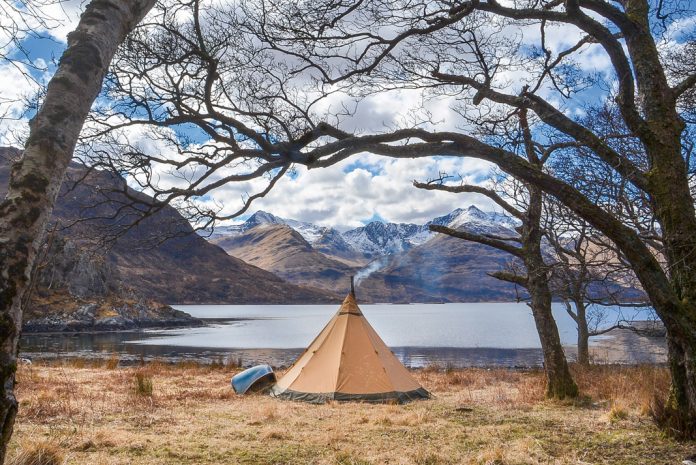
tent and canoe set up side of lake in Scotland

If the single-track road from Invergarry to Kinloch Hourn was a river, it would be described as long, narrow, twisty and challenging. Guidebooks would refer to bumpy, steep and committing sections, and warn of the absence of escape routes. This is a class III to IV road.

Yet, For A True Taste Of The Scotland Highlands, You Could Hardly Do Better

More importantly, this postman’s nightmare offers access to some varied and beautiful water.

It’s only this 22-mile road linking Glen Garry with Loch Hourn. Bristling with munros—Scottish hills over 3,000 feet—the land looms over both road and loch and is home to a range of classic Scottish wildlife. As you drive, paddle or walk in this rugged land, you will have entered someone else’s kingdom, your journey monitored by red deer stags and overlooked by golden eagles. You might even be watched by one of the Highland’s few remaining wild cats. Ravens and sea eagles also patrol the skies. Otters hunt the rivers and streams, joined in Loch Hourn by seals and dolphins.

Parts of Glen Garry still feel pretty wild. The land fringing Loch Hourn is wilder still, and represents one of the least populated areas in all of Britain.

If You Have A Half Day:

Lying only a few hundred yards from the A87, the road to Skye, Loch Garry offers the perfect opportunity for a morning or afternoon canoe exploration. Just turn off onto the Kinloch Hourn road, find one of the tiny roadside lay-bys and launch from amongst the silver birch.

If You Have A Day:

If you enjoy a wild river, run the Garry to Loch Garry. The river holds a quite a few class II to III rapids, only some of which can be portaged. Launch from below the dam just downstream of Kingie Pool. Land at the far end of Loch Garry, either before the Kinloch Hourn road meets the A87, or close to the dam.

If You Have A Weekend:

Spend a night on the shore of Loch Hourn. After paying a small fee to park near at Kinloch Hourn, launch into Loch Beag—the higher the tide the better—then paddle west to camp where you will. You may need to wait for slack water to negotiate the narrows of Caolas Mòr, perhaps following a pod of dolphins through the gap as the tide stills.

If You Have A Week:

Loch Hourn isn’t huge, but the shore is varied, with many stunning spots to wild camp. Just paddle a little, pitch your tent again and explore. The Knoydart to the south is Scotland at its wild and rugged best. The mountains are superb, and within the scope of most fit and experienced hill walkers, weather permitting.

Weather

Sublime on a good day. Otherwise, you’ll need the best weatherproof clothing money can buy and a sturdy tent.

Shuttle

There are many kit hire and shuttle options for paddlers, with information available from www.visitscotland.com.

Don’t Miss

If you’re happy on the hills, and the weather looks reasonable, climb Ladhar Bheinn (pronounced Larvan) for almost unsurpassed views.

Diversions

Leave your canoe at Barisdale Bay and walk the eight miles to Inverie Bay. Accommodation and camping is available at The Old Forge, Britain’s most remote pub.

Learn More

Scottish Canoe Classics by Eddie Butler is published by Pesda Press. Buy a Harvey Mountain Map—the Knoydart, Kintail and Glen Affric sheet is good for both hill and loch.

Try This Effortless River Running Trick For Tandem Canoes

several canoes doing a tandem trip down a river
It's always better with a friend.

I’m always looking for ways to run rapids with less effort. There is a myriad of forces at work in moving water, which means there are many ways to use river features to move downstream with style, finesse and ease.

Keep an open mind when it comes to tampering with established canoeing techniques. A bow paddler with a sore wrist paddling a long day of Class II and III rapids was the inspiration needed for me to explore to what extent I could glide effortlessly down a rapid, rather than back paddling to slow our descent.

Read my tips for canoeing down rapids below.

[ Paddling Trip Guide: View all canoeing instructional and skills clinics ]

Whitewater canoe trippers should know the back ferry

This has long been a staple technique of every accomplished whitewater canoe tripper. It is the most controlled way to descend rock-studded rapids. However, it’s not the easiest maneuver to master.

Each time a paddler engages a back ferry near an eddy, the countercurrent of the eddy tries to straighten the canoe, requiring correction strokes to maintain the back ferry angle.

This sometimes leads to blame being cast between paddling partners, often in the form of shouting, “What are you doing? We had the right angle!”

There may be another way.

Use the canoe’s momentum and river currents to glide through a rapid

What would happen if, instead of back ferrying, paddlers used the canoe’s momentum, gravity and various river currents to glide through a rapid?

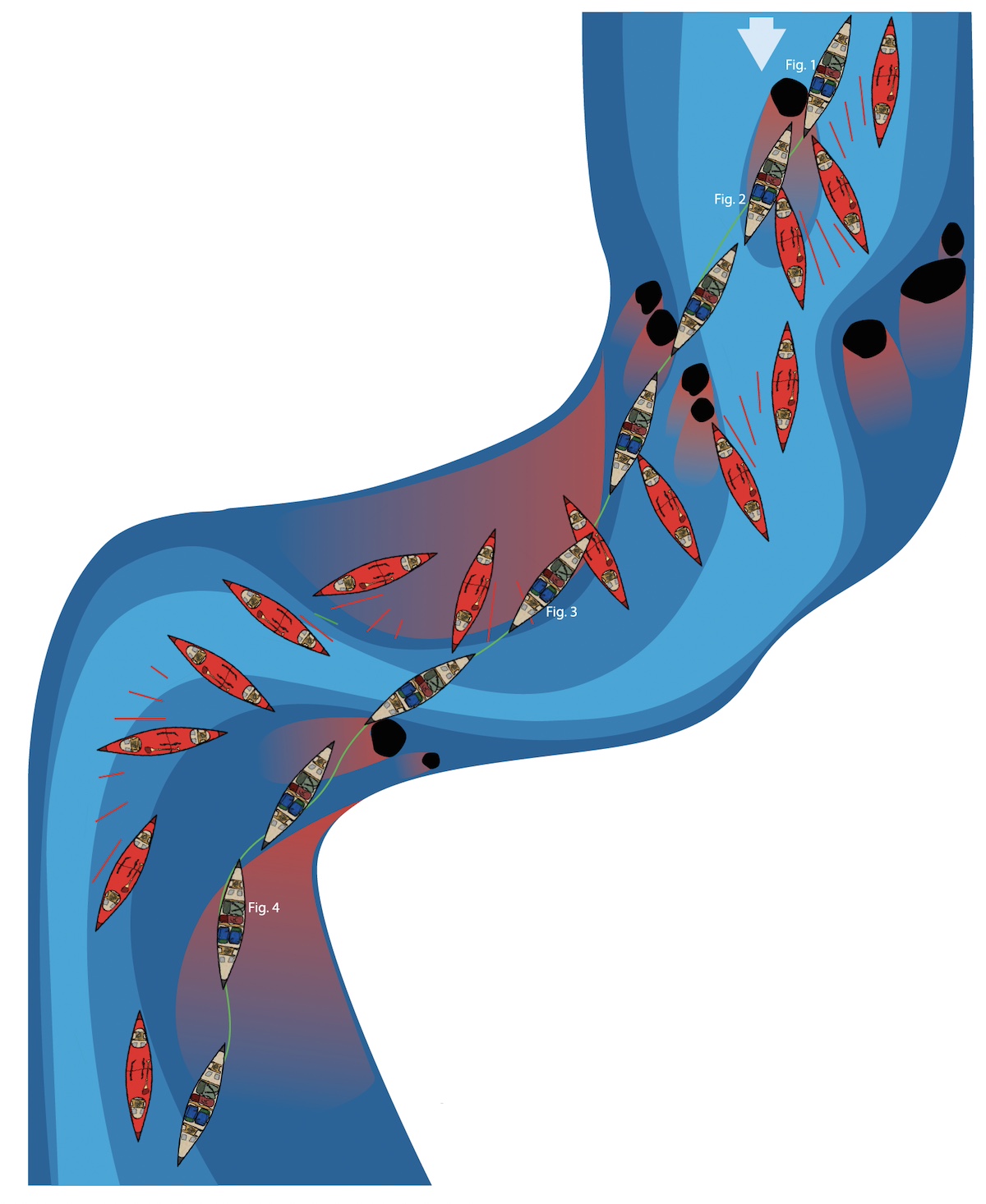
Gliding carves a sinuous path through a rapid, placing the canoe in
various currents propelling it in the direction you want to go. It requires planning a route several moves ahead and reading the minute details of the currents.

Begin by entering the rapid with slightly more speed than the current. Pass really close by a rock, slightly angled so the actual stem of the canoe is on the eddyline (figure 1).

The canoe should be so close to the rock if you were pointed straight downriver as you passed, the wide midship area of the canoe would hit the rock. Yes, this close. Bow paddlers will find this very disconcerting, and indeed gliding works better if bow paddlers keep their paddles out of the water most of the time.

Bite off just enough eddy current causing your canoe to carve in the direction you want to go.

When the canoe re-enters the current on the other side of the eddy it will regain momentum as it turns downstream (figure 2). Continue to slingshot in the general direction you want to go. The placement of the canoe in figure 3, just nipping the edge of the eddy, will allow you to carry more momentum than the line at figure 4.


Compare the overall route of the gliding canoe versus the back ferrying canoe—the one with the red spray cover. Both work, but one route is straighter and requires less effort than the other.

The true zen moment is when you glide down the rapid using no forward strokes at all. It’s not always possible, but the challenge alone makes it worth trying.

This article was first published in Issue 53 of Paddling Magazine. Subscribe to Paddling Magazine’s print and digital editions here , or browse the archives here.


Paul Mason is a cartoonist, Paddle Canada patron and moving water canoe instructor. He enjoys sharing his latest canoeing revelations through online tutorials, written articles and teaching his own courses.

7 Things You Didn’t Know About Bigfoot

bigfoot hiding behind a tree

1. Known regionally by many names, including Sasquatch, Yeti, Yowie and Almas, Bigfoot is reportedly a six- to 10-foot tall, 500- to 1,000-pound, hairy, humanoid creature said to live in the wilderness areas of the United States and Canada

2. Finding Bigfoot is one of Animal Planet’s most popular TV shows. On air for nine seasons and with nearly 100 45-minute episodes to its credit, none of its cameramen have yet captured any footage of the elusive creature. This makes Bigfoot a contender for the title of hide and seek world champion. 

3. In 1965, Bigfoot was added to the endangered species list in Russia

Germany and France followed suit in 1967. Skamania County, Washington, passed a law regarding Bigfoot in 1969, declaring “any willful, wanton slaying of such creatures shall be deemed a felony” and subject to fine or imprisonment. Though this legislation was passed on April 1, county commissioner Conrad Lundy said at the time, “This is not an April’s Fools Day joke… there is reason to believe such an animal exists.”

4. According to the Bigfoot Field Researcher’s Association, the “squatchiest” states—those with the most sightings—are Washington, California, Florida and Illinois. The organization’s online database of field reports dates back to 1995, and includes several encounters from harried canoeists. 

5. In 2008, legitimately fake news source Weekly World News claimed Hillary Clinton had named Bigfoot as her running mate

In November, 2012, Bigfoot made the news again, with the tabloid declaring: “Bigfoot is not only real and living among us, but he is married to three lovely women.” The women were reportedly very pleased with their love lives.

6. Bigfoot’s shaggy silhouette has been used to sell everything from pizza and beef jerky, to skateboards and skis, to paddle-boards and monster trucks. It’s also the namesake for a half-dozen canoe and kayak outfitters and rental operations in the Lower 48.  

7. The most famous image of a Bigfoot is from a short film shot in 1967 by Roger Patterson and Bob Gimlin during a horse packing trip

Shot in Bluff Creek, California, it shows a dark, man-sized and man-shaped figure striding through a clearing. Considered by many to be a hoax, it remains the most convincing evidence to date for the existence of Bigfoot.

Paddlers’ Rules About Portage Trail Etiquette

paddlers carrying gear on a portage trail
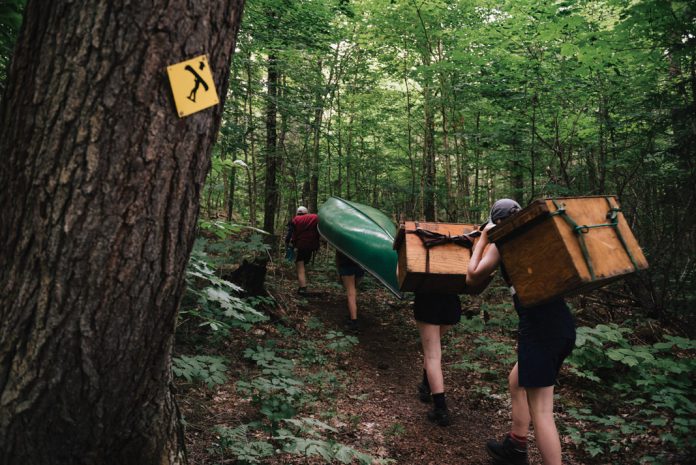
The recipe for happy portaging and happy living isn't so different | Feature Photo: Mike Last

Some paddlers just don’t know the meaning of portage etiquette. I’ve witnessed a camper poop right in the middle of a portage trail. I’ve seen someone pee on a patch of blueberries at the take-out. Then there was the youth group who first blocked the put-in with their packs and boats, then left food wrappers, dirty socks and broken lawn chairs strewn in their wake.

An outdoorsy Miss Manners would be aghast.

I like to think of a busy portage as a Microcosm for the rest of life. Among all the nature lovers who want to leave the place a little better than they found it, there’s all the other people. You know the ones. They’re the litterers, the ones who wander past complaining, and those who come up fast from behind and tailgate. There are others still who are too hurried or self-important to even return a courteous hello.

My biggest peeve is when oncoming foot traffic doesn’t give a canoe-head the right of way. It feels like being cut-off on the highway or when someone cuts in line at the grocery store. “Excuse me,” is the politest thing I can think to say.

On the portage trail, just as in life, you’ll meet jackasses.

It was the guys with the flip-flops who really did me in. My canoe mate, Andy, and I were on a challenging 20-day route. The bugs were bad, water levels were low, and we had to complete a total of 93 portages. I had many opportunities and plenty of time to contemplate trail etiquette on this trip.

We were trudging up a portage near the highway corridor when a group of young guys approached on the single track trail. I was carrying a colossal pack and Andy shouldered our 70-pound canoe. This group was walking back for their second load, carrying nothing but flip-flops. They decided they had the right of way and literally sent Andy and I crashing off trail to get around them.

[ View all the boats and gear you can portage in the Paddling Buyer’s Guide ]

I lost it. When I sternly informed them of their wrong-doings, the group just stood dumbfounded. One guy even threw back a few nasty curse words, flipped me the bird, and brashly asked where the sign was with a list of all this portage etiquette stuff I was ranting on about.

I left the quarrel muttering about rude people, and how society is doomed if people take self-interested city attitudes into the wilderness. Andy had to listen to me all afternoon.

paddlers carrying gear on a portage trail
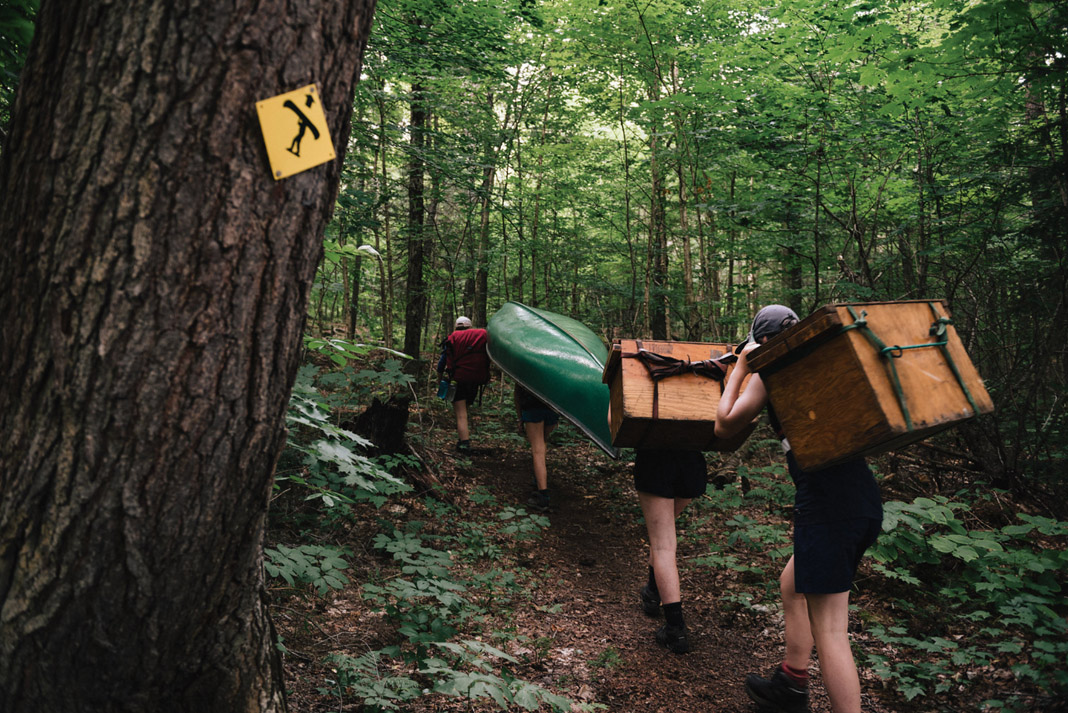
The recipe for happy portaging and happy living isn’t so different | Feature Photo: Mike Last

While many paddlers learn portage etiquette from summer camp, family members or courses, newbies are sometimes oblivious to the unwritten rules. The usual excuse for ignoring protocol? “No one told me,” they plead.

[ Plan your next paddling adventure with the Paddling Trip Guide ]

It reminds me of the old Steve Martin routine, where he says to the judge, “I didn’t know armed robbery was illegal. If you told me it was, I wouldn’t have done it.”

If you don’t know, fortunately, the rules are straight forward.

Make way for whomever is carefully carrying an awkward and heavy 17-foot-long burden. Don’t poop on the trail—ever. Bathrooms breaks should take place 100 meters from the trail and water sources. Finally, leave all your gear neatly off to the side of an the access point, and don’t leave anything behind when you paddle away.

The golden rule of kindergartners everywhere—to treat others as you want to be treated—also goes a long way. Some might call these rules common sense.

On the portage trail, just as in life, you may have to do your best to avoid or reeducate the complainers, the tailgaters, and the poopers. Accept some paddlers will rush past, others will carry too much, and others won’t even look up, let alone return your friendly hellos.

What I do know is those who tend to enjoy the portage the most are the ones who savor the scenery, don’t carry too many burdens, and know when to get the hell out of the way.

Butt End celebrates the lighter side of canoe culture. Kevin Callan is the author of 16 paddling related books, including The Happy Camper, and best-selling series of guidebooks.


The recipe for happy portaging and happy living isn’t so different | Feature Photo: Mike Last


Secrets To Staying Off The Paddlers Black List

two kayakers crashing in whitewater
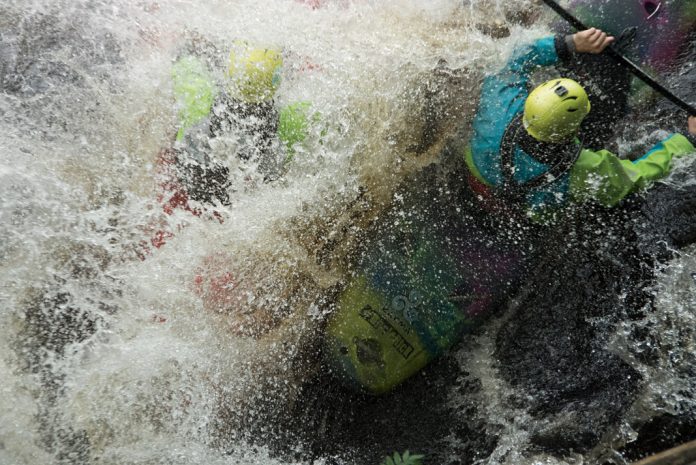
Feature Photo: Rob Litherland

There is a short list of paddlers with whom I will never run another river. Nice enough individuals, I just don’t want to be anywhere near them on the water.

Take Larry. He runs in my social circle, has more skill as a paddler than I do and I’ve spent quite a few river days with him.

But his antics just added up. Poking around upstream of log jams, probing big holes, which sometimes ended in broken paddles or smacks to his head. Finally, a stupid rock spin on the lip of a drop resulted in a stern pin I bailed him out of. Never again, I promised myself.

we trust paddlers who have skills to deliver on whatever they bite off, do so reliably and predictably, and appear to be in it for reasons aligning with our own

Take Curly. He’s not really a friend of mine, but he is in the local paddle gang. One day with Curly— during a spring flood run in which he was totally spooked, choked, and got himself into trouble with four swims—I said never again. It was carnage.

Then there is Moe. Moe just never shows up at the put-in. He always leaves the group hanging, unsure if we should wait a couple minutes longer or go without him. Something always comes up with him. I just don’t call Moe anymore.

As you might have guessed, names have been changed to protect the guilty. My short list is really just the list of paddlers I don’t trust.

In my professional life, I study safety. Specifically, I study how social influences such as peer pressure affect safety. My research is focused on different industrial sectors; however, I often include our small whitewater world. The environment in which we play turns out to be a good testing ground for safety behavior. I conducted one study looking at how raft guides influence each other’s safety beliefs and it was no surprise to me trust is a key variable.

Paddling with untrustworthy people is stressful

In the academic community, there is consensus a person’s trustworthiness is based upon one’s competency, predictability and intentions. In other words, we trust paddlers who have skills to deliver on whatever they bite off, do so reliably and predictably, and appear to be in it for reasons aligning with our own.

The relative importance of these three factors depends upon the context. For whitewater guides, my study found, predictability is paramount. Some guides have more skill than others, and individuals’ motivation may vary, but the most trusted guides are the ones who predictably do what is expected.

Interestingly, what guides want from their peers more than anything is to be trusted. Trust is currency in the guiding world. When guides say one of their own is good, what they really mean is this person can be trusted. More specifically, it means the individual’s behavior is predictable in safety and performance.

Guides also have their own short lists—their own Larry, Curly and Moe—of guides worked with but not trusted. My research found covering for bad guides is a significantly stressful aspect of river life.

Paddling at any time with untrustworthy people is stressful. Even if you’re not a raft guide, trust is still the dynamic holding your paddling gang together, and it’s certainly a prerequisite for allowing someone new into your gang.

In most cases, a paddler’s moral compass won’t allow him to just walk away from a sketchy or spooked paddler, so we end up taking responsibility for them.

At best, the experience is no fun and at worst it’s terrifying. Later we add this person to our short list. Don’t feel guilty for having your own blacklist of names—it’s self-preservation, sometimes literally.

Jeff Jackson is a risk management consultant and outdoor education professor at Algonquin College. Feature Photo: Rob Litherland

Sabrina Barm Designs Esquif’s Extasy Canoe

Sabrina barm paddling esquif C1 canoe

Like most whitewater paddlers, Sabrina Barm struggles to find words to describe her passion for wild rivers.

“It’s something I need, like breathing,” says the 30-year-old canoeist and extreme creek racer from Germany. “If I can’t paddle, something is going to go wrong sooner or later. It’s a sensation.”

Barm also focuses on a feeling when describing the nine-foot creeking and river running OC1 she designed for Quebec’s Esquif Canoes, which hit the market late 2017. With the new Esquif Extasy, Barm says she achieved her goal of creating “the most intense form of joy.” In doing so, she also became the world’s first female whitewater open boat designer.

Barm took her first strokes in a canoe with her father on bucolic European waterways. Soon she was paddling whitewater, a rare breed in Europe for her propensity for single blades and open-decked boats. She found inspiration in European paddlers Eric Deguil and James Weir, along with pioneering American open boaters Dooley Tombras and Eli Helbert.

Barm began a meteoric rise as a whitewater athlete, training with Deguil on the technical rivers of France, competing in International Canoe Federation downriver races, and ultimately visiting North America. Barm connected with Esquif in 2014, when she turned heads as the first female canoeist to compete in North Carolina’s infamous Green River Race, running the intimating class V rapid known as Gorilla. She’s also competed in two Adidas Sickline Extreme Kayak World Championships at Austria’s Wellerbrucke Rapids, paddling C1 against a field of kayakers.

An engineer by training, Barm balances elite-level paddling with a professional career in the automotive sector. However, it didn’t take an engineering degree for her to identify a critical fault in open canoeing. The market was exclusively comprised of boats designed by men.

They were great for a standard size guy but for smaller people there was nothing,” Barm says. “Basically it’s like wearing shoes a few sizes too big. You won’t have an optimal experience.

She made her case to Esquif. “In university I worked on a boat design method and I wanted to try my theory on a new canoe,” she says. Esquif owner Jacques Chassé was an easy sell. Barm tackled the project with vigor, establishing performance parameters—“acceleration, precision, hull speed and ergonomics”—crunching numbers in mathematical models and manually shaping foam prototypes on weekends.

“The budget was as low as it can be,” she admits, “I was pretty happy when the second prototype worked.”

Like Esquif’s game-changing L’Edge, a do-everything OC1 debuting in 2011, the Extasy is compact enough to be adequately light and stiff in bombproof rotomolded polyethylene. With pronounced asymmetry and hard edges, it lacks the aesthetic curves of traditional canoes, reflecting Barm’s commitment to “100 percent fluid dynamics and functionality” in her design process.

She Says The Extasy Displays Exquisite “Driving Dynamics”—Engineer Language For Effortless Motion Through Water—And Is Optimized For Sub-150-Pound Paddlers.

“I’m so in love with the design, it’s hard to contain myself,” Barm enthuses. “Acceleration is so on point, it boofs like launching a space rocket and it’s faster than many longer boats.”

Chassé says the Extasy captures Esquif’s focus on innovation. Initially, Barm’s design was “a bit surprising to us,” Chassé admits. But he was sold on the performance. “It brings the open canoe to another level with a focus on speed, quick turns and precise paddling.”

Chassé alludes to Barm’s bright future, noting, “The Extasy will inspire more designs.”

Barm isn’t too concerned with being the first female open boat designer.

Being female doesn’t make me special. My parents taught me to be strong, and raised me to do what I want regardless of my gender,” she says. “If I can inspire other women, who may not have been given the confidence, then of course it’ll make me happy.

Barm says her next step is developing confidence in pushier water. The Extasy is a big part of her development. “I don’t have to worry about the boat any more,” she says, “I just paddle.”

Just as her own performance reaches new heights, Barm hopes the Extasy will inspire others to reach their own objectives.

“It’s more than just a boat,” she says. “To me, it’s empowerment to reach your potential, to paddle without limits. It’s an encouragement to go as big as you want to go. Most of all, it is my declaration of love for the river.”

8 Steps To Building The Ultimate River Drone Kit

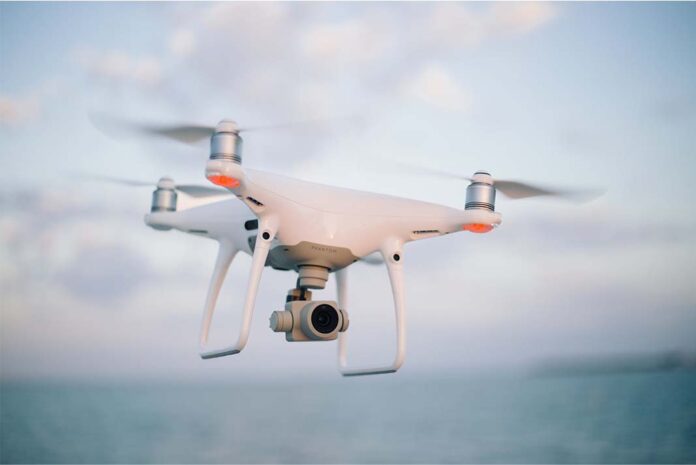
Photo by Josh Sorenson: https://www.pexels.com/photo/quadcopter-flying-on-the-skey-1034812/

With equal passion for finding lines on the river and in the sky, Raphael Boudreault-Simard transformed hobby into a living more than two years ago when he opened photography business, Flow Motion Aerials.

Based in Whistler, British Columbia, the 26-year has flown his drones above kayakers in exotic destinations like Greenland, West Papua and Pakistan in the last year alone.

Raphael started kayaking and taking photos 10 years ago with the Quebec Connection crew, a loose group of Quebecois paddlers who made a name for themselves exploring little-documented wild river runs. His passion for aerial photography was hatched following a shoulder injury while guiding in New Zealand. He learned to fly on small, cheap units, crashing often.

“Whitewater rivers are one of the most challenging environments to fly a drone because of all the branches,” he says.

After a decade of river life, it’s no surprise Raphael talks about flight lines the same way he talks about river lines. “You are rewarded for being a bit bold,” he says. “Even if a line is risky and hard, when there is good experience, preparation and judgement, you can execute with style.”

For those looking to get serious about aerial photography, Raphael offers a peek into the professional kit helping him make a living 300 feet above the river.


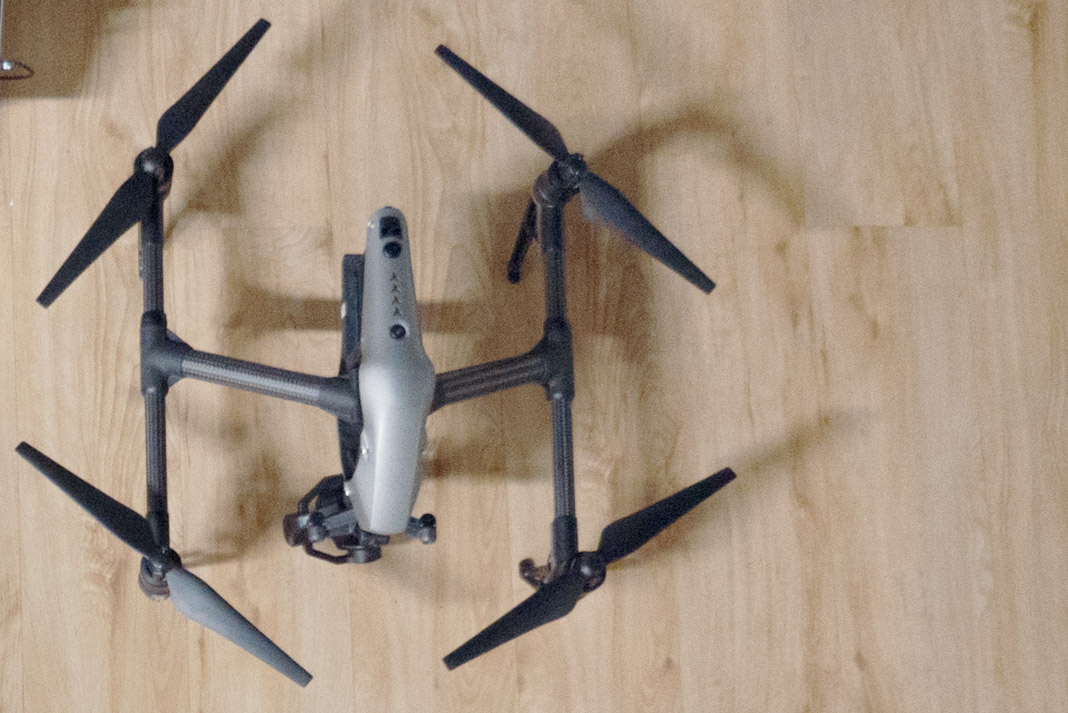
drone
Drone. | Photo: Kaydi Pyette

1. Dual-Operated DJI Inspire 2 + X5S Camera (x2)

“These drones are the best bang for your buck,” says Raphael. “You can get better quality with a bigger drone, but then you have to dismantle it for travel. That’s a mess.”

The X5S camera offers DSLR quality in a small, light package, and is specifically designed for use with the Inspire 2 drone. The camera comes with gimbal and stabilization motor, which is why it’s so pricey.

“I have two aircraft units just in case something goes wrong on a commercial project—it could be a crash or a technical difficulty,” says Raphael. “Insurance is also a must.”

BUY DJI INSPIRE 2 BUY X5S CAMERA


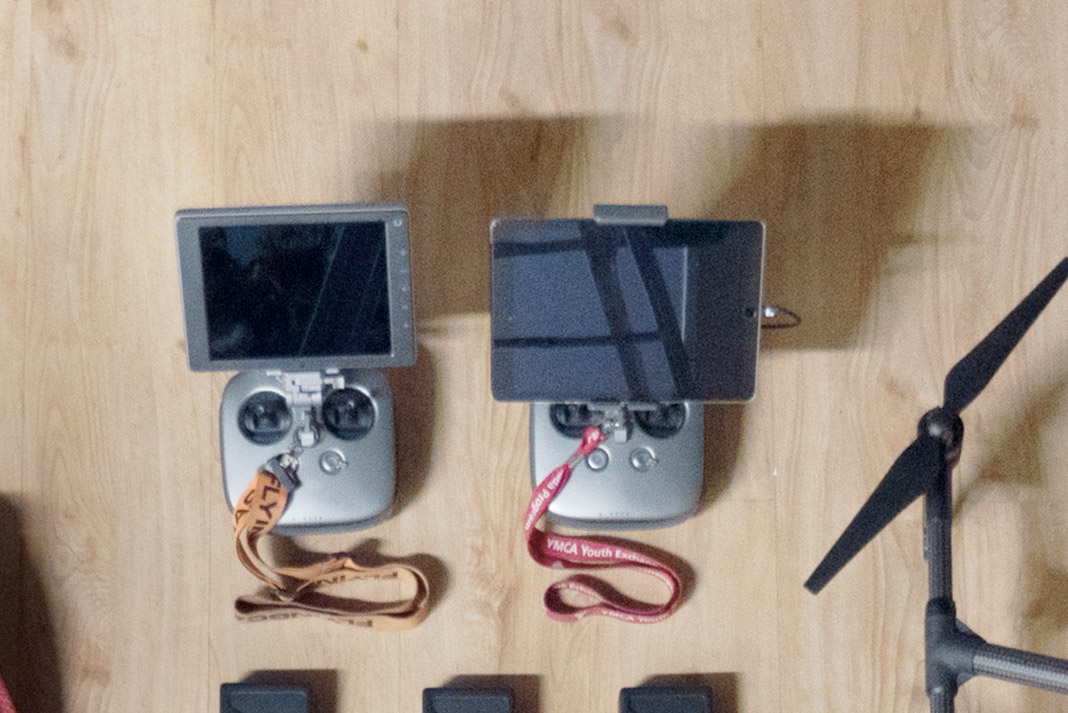
camera monitors
Large monitor. | Photo: Kaydi Pyette

2. Large monitor (x2)

Drone operators need big, bright monitors to see as much detail as possible. Bigger monitors also typically have faster processors, which is especially important in river environments where lag time can result in a crash. At Flow Motion, Raphael uses an iPad Pro and the DJI CrystalSky, which is four times brighter.

BUY DJI CRYSTALSKY BUY IPAD PRO

[ Paddling Buyer’s Guide: View all electronics ]

camera batteries
Batteries. | Photo: Kaydi Pyette

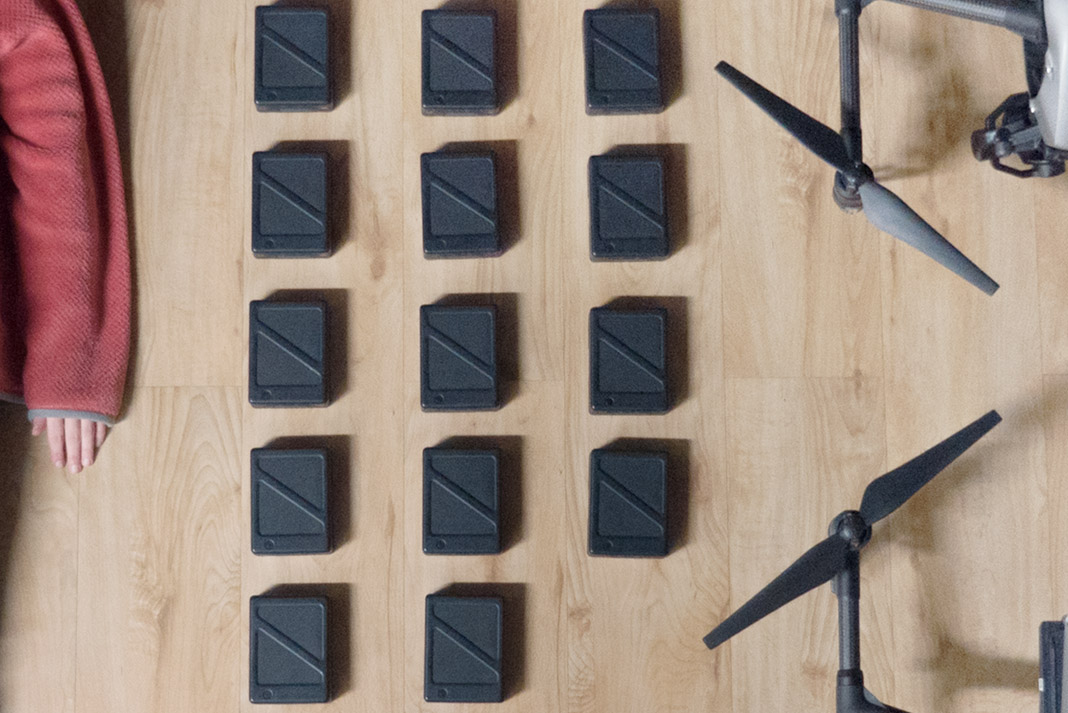
3. Batteries (x14)

The Inspires require two batteries to operate. A pair offers 18 to 22 minutes of flight time. “It doesn’t sound like a lot but for drones, it’s a good amount of airtime,” says Raphael. Each battery uses 97 watts per hour, which is just below the threshold for which most airlines have regulations. Raphael has 14 batteries to avoid the hassle of charging in the field.

BUY DJI BATTERIES


camera lens'
Lens kit. | Photo: Kaydi Pyette

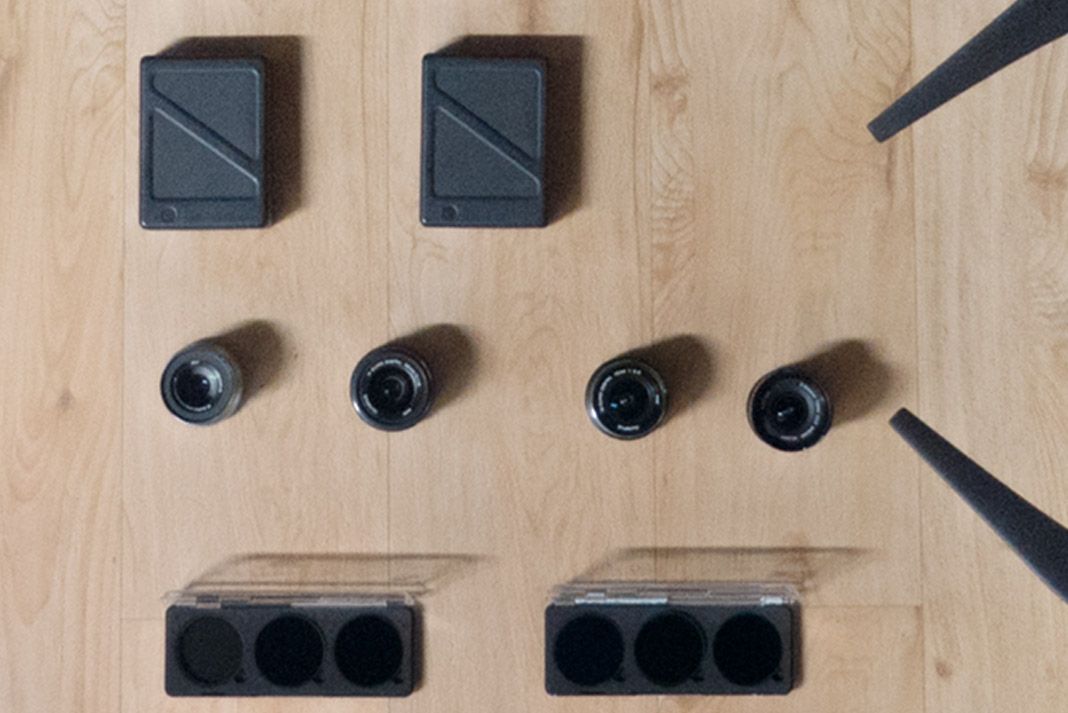
4. Lens kit

The four lenses in this kit—7.5mm, 12mm, 25mm and 45mm—are made for a Micro Four Third camera system, which means each lens’ aperture width is equivalent to double the size in standard cameras. Wide-angle lenses create a sense of speedy flight because the viewer sees a lot of movement on the edges of the frame, while narrower lenses can create parallaxing—when different layers of depth are sliding against each other.

“The most classic example of parallaxing is when climbers are at the top of a peak, and a helicopter is rotating around them making the background shift very fast behind the subject. It has a very cinematic feel,” says Raphael.

BUY OLYMPUS LENSES


camera filters
Filters. | Photo: Kaydi Pyette

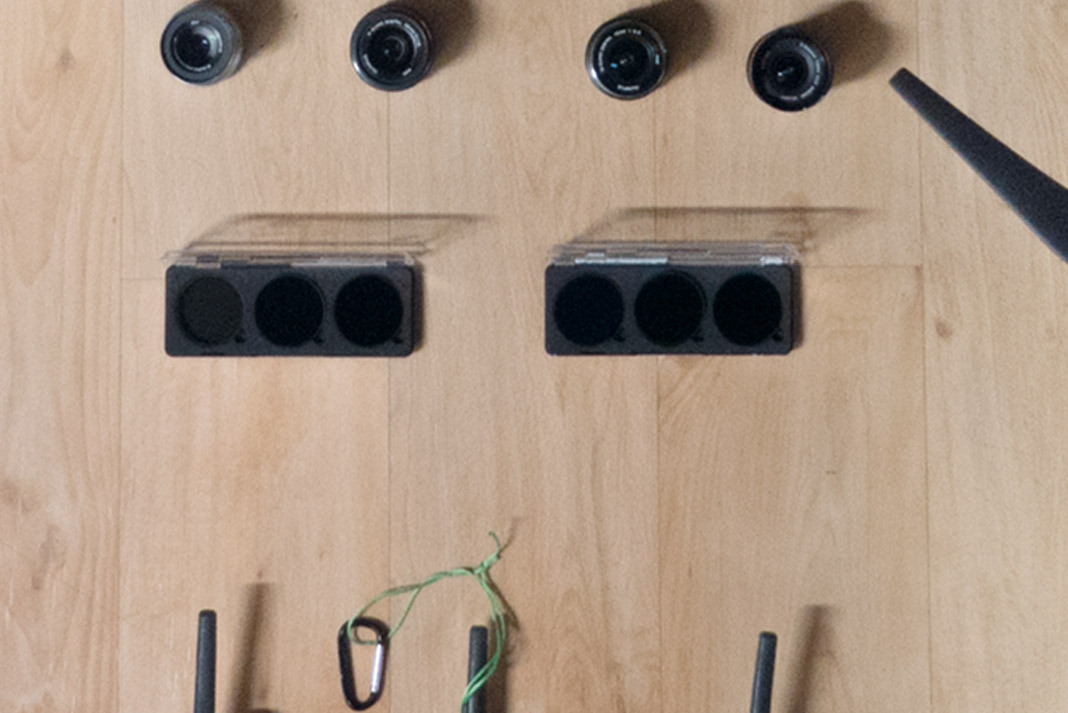
5. Neutral density and polarized filters (x6)

“Filters are very important because we don’t want too much light coming into the camera. Slowing down the shutter speed creates motion blur in the image which is how our eyes see, and so it’s more natural. Polarized filters are good to keep handy to mute the sun’s reflection and get more details on the water’s surface.”

BUY POLARPRO FILTERS


radio's
VHF Radios. | Photo: Kaydi Pyette

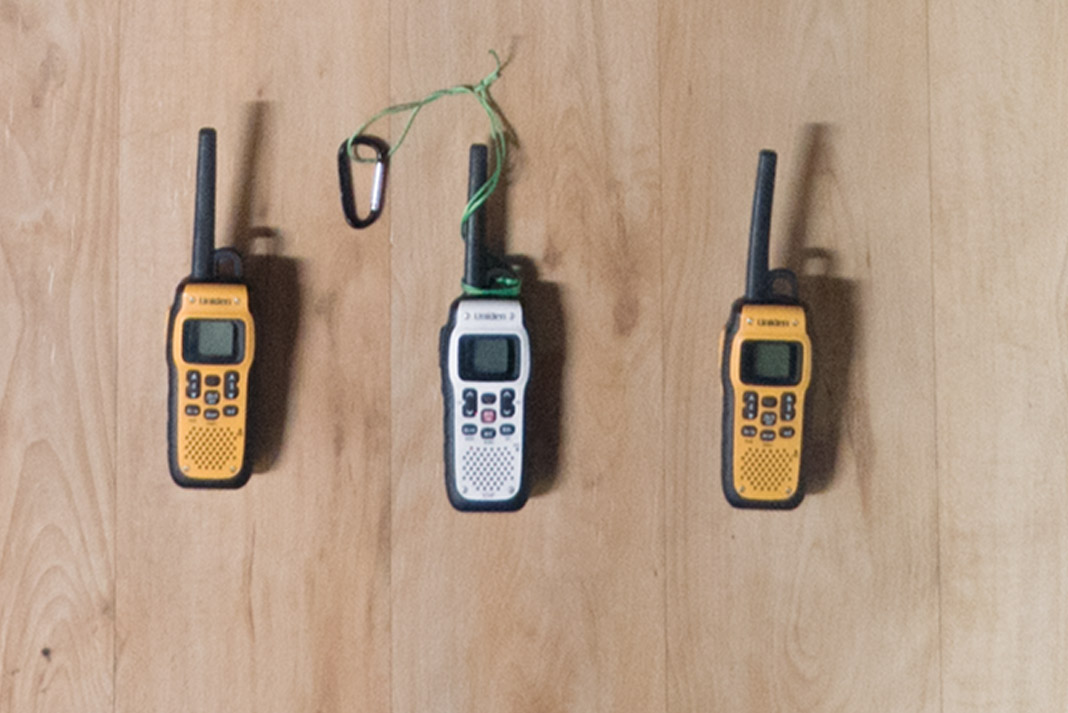
6. Waterproof VHF radios (x3)

During river shoots, Raphael gives a radio to the trip leader or river guide for communication, “We might need to catch the kayaks on a certain corner, and usually we lose visual on boats in the river environment,” says Raphael.

BUY UNIDEN VHF RADIO


small drone
Drone. | Photo: Kaydi Pyette

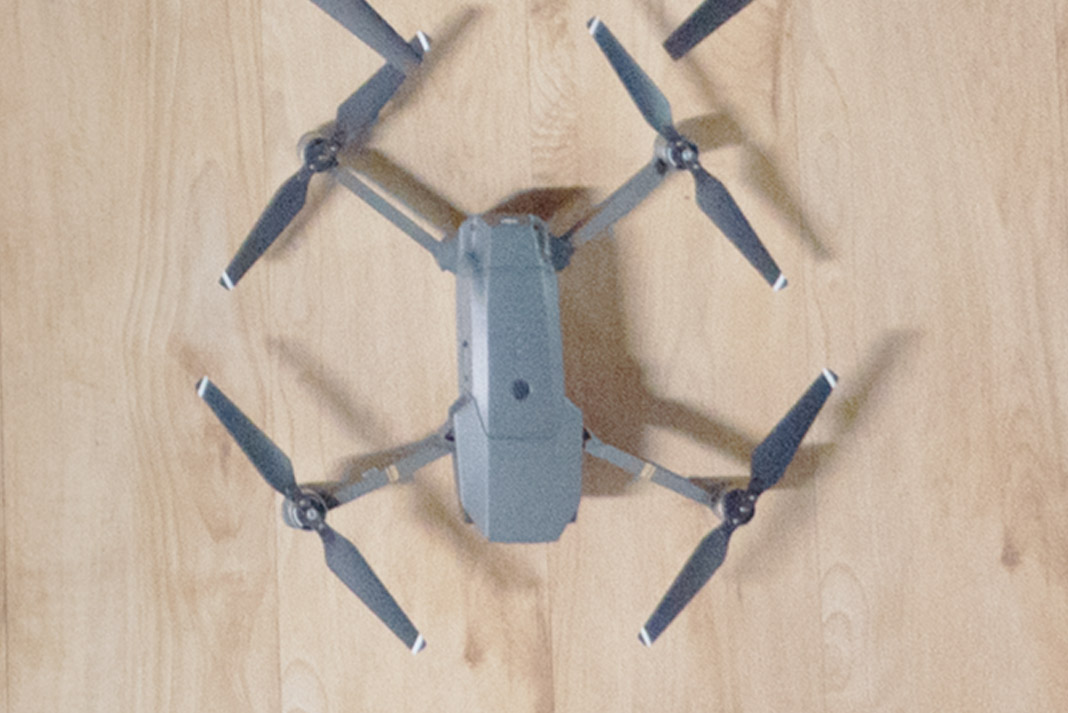
7. DJI Mavic Pro

While it doesn’t compare in image quality to the Inspires, portability makes the Mavic Pro a great tool. There’s no interchangeable lens option, but its 20mm-equivalent lens offers a mid-wide view. “It packs up to the size of a Nalgene—it’s lightweight and I can stuff it in my kayak, or use it as a backup on commercial shoots,” says Raphael.

BUY DJI MAVIC PRO


woman lying down
Helper. | Photo: Kaydi Pyette

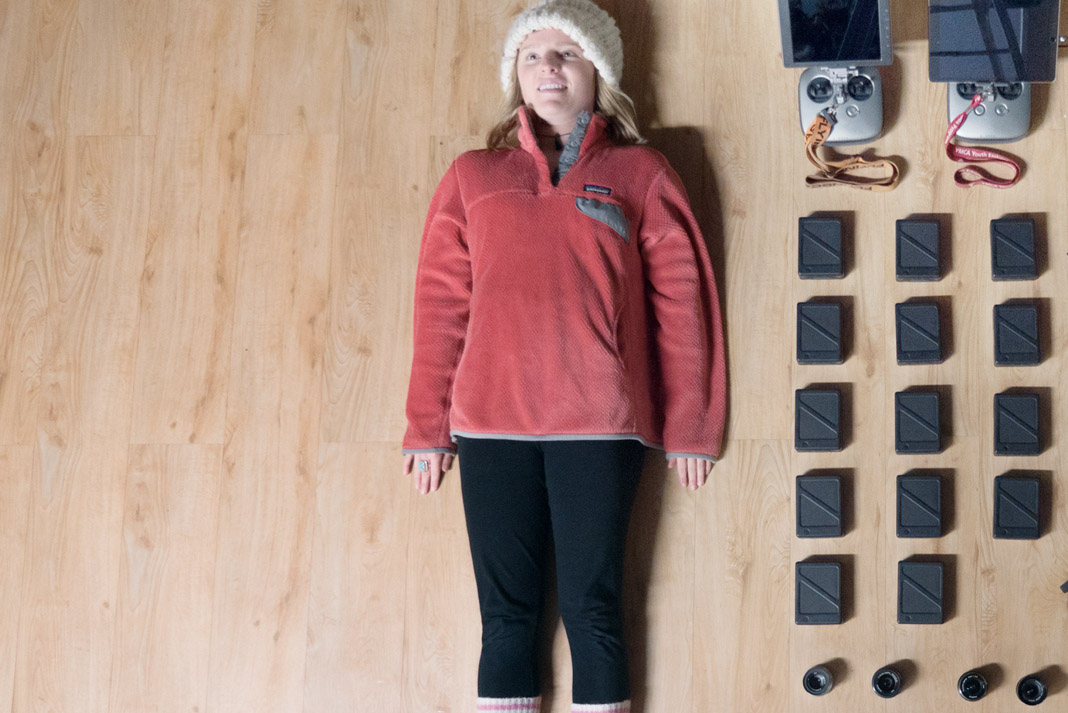
8. Camera operator/mule

“It’s difficult to be a single operator and consistently land hard shots. Having a second solid operator makes all the difference,” says Raphael. Single operators are tasked with set-up, timing, flying and safety of the drone, while framing and nailing an excellent shot.

Using the dual hand-controller system of the Inspire, Raphael can split duties—while he controls flight, a partner frames the shot and communicates where they want the drone next. “It’s synergistic, more dynamic and the possibilities are significantly increased for the client,” he adds. Not to mention, it’s someone with whom to share the burden of schlepping 60 pounds of camera gear.

This article was originally published in Issue 53 of Paddling MagazineSubscribe to Paddling Magazine’s print and digital editions here, or browse the archives here.


 Photo: Josh Sorenson via pexels.com

Top 16 Podcasts For Paddlers And Explorers

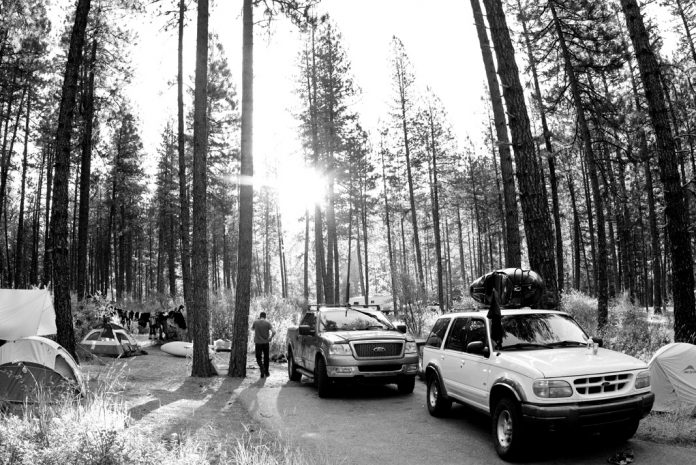
several trucks with kayaks on top surrounded by paddlers
Enough content to keep your ears busy for years. | Photo by: Ryan Creary

Sure, you’d rather be outside actually having the adventure yourself, but downtime is unavoidable—even for the full-time explorer. Whether you’re a paddler staring wistfully at the river waiting for the ice to melt (or a skier scouring the sky for snow clouds on a July afternoon), a mountain biker nursing an injury, a runner making the daily commute to work, or that full-time explorer just on your way to your next adventure, there’s a podcast out there that’ll make the time in-between worthwhile.

We’ve rounded up the best outdoor podcasts that will shake up your training regimen, keep you updated on the latest gear, inspire your next adventure, or, at the very least, keep you thoroughly entertained.

1. The Pursuit Zone

In an era of podcasts making the host the star (we’re looking at you, Tim Ferris), The Pursuit Zone’s Paul Schmid’s hands-off Q&A style is a breath of fresh air. Schmid’s less-is-more interview technique lets adventurers and athletes take centre stage.

The 150-plus episodes are focused on dreamers pushing outside of comfort zones into the so-called pursuit zone. With a multi-sport focus, there are Atlantic Ocean rowers, round-the-world cyclists and record-breaking hikers featured, plus many episodes specific to paddlers, including rafting the Amazon River and packrafting Alaska’s Brooks Range.

2. The Dirtbag Diaries

With 12 years and over 10 million downloads, The Dirtbag Diaries probably needs no introduction. Likely the most well-known podcast on adventure, it’s a staple in outdoor circles and on road trips.

No other podcast has captured the adventurous lifestyle so poignantly, spinning campfire tales into often humorous lessons on life and human nature.

3. Hammer Factor

Each week on the Hammer Factor, Immersion Research’s John Weld, North Fork champ Louis Geltman and Green Race director John Grace discuss the biggest news of the week in the whitewater world. Industry buffs will love the immersion in gear, expeditions, athletes and gossip.

We love the banter and feeling like we’re right there in the room.

4. Outside Podcast

Top-notch research and compelling storytelling is brought to us by the editors of Outside magazine. Each episode is inspired by the archives or a theme Outside has explored.

Whether mental mastery in sport, the science of survival, or the story of how one celebrated journalist ended up at the bottom of the Grand Canyon captaining a boat full of poop called Jackass, the Outside Podcast has something for everyone.

5. Zero To Travel

Whether you’re dreaming of quitting your job and chasing flow full-time or saving for the next big river trip, Zero to Travel offers top-notch tips and hacks to make travel dreams a reality.

Host Jason Moore interviews a slew of seasoned adventurers and travellers to talk budget tips, airline hacks, aspirational travel and digital nomadism. By far, Zero To Travel offers the most actionable advice to take listeners from daydreamers to doers.

6. Wild Ideas Worth Living

Wild Ideas Worth Living’s host and journalist Shelby Stanger interviews world-class explorers, scientists, authors, athletes and entrepreneurs about how they’ve taken a wild idea and made it a reality.

Stranger’s goal is to empower others to take a break from the mundane and live their dream. Perfectly suited for the river runners with an entrepreneurial bent and those looking to shake things up, don’t miss the episode with photographer Chris Burkhard’s advice on getting your work noticed.

7. Outside/In

A Radiolab-esque podcast for the outdoors. Host Sam Evans-Brown weaves stories about nature with solid reporting and long-form narrative storytelling on topics as varied as the complexities of rescues, why humans will never outwit beavers, and the lasting effects of French-Canada’s hydro revolution.

You don’t have to be a science buff or hardcore river ecologist to love Outside/In—its intelligence and humour will win over even your non-outdoorsy family members.

8. Horizon Line

A podcast about history’s most intrepid explorers pushing the limits of what was believed to be possible at the time. Created by editors of strange-travel-destination-compendium Atlas Obscura, the bold innovators featured in Horizon Line will have you questioning whether anything is truly impossible.

There’s only a handful of episodes in Season 1, bookended by a story about smokejumpers in peril and an ill-fated hot air balloon expedition across the Arctic.

9. Paddling Adventures Radio

This podcast hosted by Sean Rowley and Derek Specht features news, events, stories, and reviews from the world of paddlesports.  Whether you are into canoes, kayaks, standup paddleboards or rafts, Paddling Adventures Radio brings you information from the paddling community.

10. Under The Yoke

Under the Yoke showcases the paddlers and organizations helping to inspire and enable adventure. With a focus on all things backcountry, Under the Yoke is a go-to podcast for trip planning, advice, and entertainment. Join the weekly campfire, where industry experts discuss new trends, gear, and share their favourite wilderness stories. 

11. In Between Swims

We can’t forget the daddy of whitewater and river conservation podcasts. So what if In Between Swims hasn’t had a new episode since December 2016? Go way back with some playback from 2007. The lessons imparted by paddling greats such as Doug Ammons, Steve Fisher and Tao Berman are as relevant today as they ever were. The gotta-have gear news is arguably less so.

12. Adventure Sports Podcast

From guides and long-time instructors to misfits and average enthusiasts, Jolandie Rust brings you stories from all over the world, from all different outdoor adventure activities. Whether you dream of micro-adventures or news-making expeditions, you will find like-minded stories from the Adventure Sports Podcast.

13. The Paul Kirtley Podcast

As an extension of his survival blog, The Paul Kirtley Podcast takes you on a journey through the popularized world of bushcraft and wilderness travel skills. The topics covered through casual conversations and expert interviews include urban foraging, source to sea river descents and adventuring by canoe.

14. The Stay Adventurous Podcast

Are you planning for a last-minute getaway or looking a year in advance to book your next adventure? Podcaster and travel blogger Craig Zabransky produces a monthly audio recap of destinations he has visited and provides his thoughts on where to travel in the future. The Stay Adventurous Podcast brings you stories, tips and hidden gems from tourism operators and local residents to get you off the actual beaten track and not just as a marketing ploy.

15. The Wild With Chris Morgan

The Wild podcast host Chris Morgan knows his stuff when it comes to animals, having spent time tagging black bears in New Hampshire, studying bears and wolves in Spain, researching grizzly bears, wolves and muskox in the Northwest Territories, collaring and tracking grizzlies in the Canadian Rockies and more. He takes listeners around the world to learn first-hand about different animals and the complex ecosystems they inhabit.

16. CanoeRaceWorld

Take a deep dive into the world of marathon canoe racing with the CanoeRaceWorld podcast. Whether you want to stay up to date on the professional side of the sport—from race results to recaps to interviews with athletes—or value discussions about improving training and techniques, this podcast is for you.

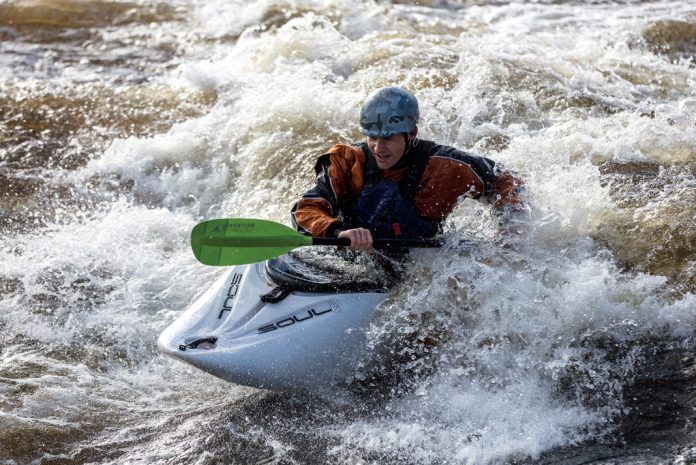
Boat Review: Soul Waterman’s Main Squeeze Kayak

kayaker surfing wave in the main squeeze boat
Main Squeeze (Noun): The person with whom you have your primary romantic/sexual relationship with, although you also see others casually. Source: Urban Dictionary | Photo: David Jackson

Chances are if you didn’t know the term main squeeze refers to your number one guy or gal, you may have missed out on this slicey little number. A model inspired by the what’s-old-school-is-cool-again design trend, Soul Waterman’s Main Squeeze is a great option for those looking for a nostalgic ride down the river in a modern package.

Main Squeeze Specifications
Length: 6’10″| 208cm
Width: 25”| 63.5cm
Weight (Orange): 37lbs | 15kg
Weight (Yellow): 33 lbs | 13kg
Plastic Type (Orange): Hilex 14 HDPE
Plastic Type (Yellow): Hilex 16 SHDPE
Volume: 56 Gal | 212ltr
soulwaterman.com

Soul Waterman is legendary paddler and designer Corran Addison’s newest venture. Credited with designing some of the most innovative playboat designs, including Riot’s Glide and Disco, Addison has continued to look for ways to improve the paddling experience in whitewater since starting another brand.

Soul Waterman boasts a varied line up; everything from river runners, playboats, whitewater paddleboards, slalom designs, sit-on-tops and tandems, and offers plastic and composite layups.

There’s something for almost everyone to enjoy. The Main Squeeze straddles the line between river runner and playboat, performing both equally well.

Testing the Main Squeeze

The test boat I paddled is a prototype but features the main components of the final main squeeze design, including what Soul calls the Skeletor Extreme 2 outfitting system.

This includes a rigid bar running along the center line of the hull to increase stiffness, an easy-to-adjust back band with cam straps, and quick-adjust foot pegs. I found the foot pegs too small—it keeps the weight down but I found my feet slipping off them. If this was my boat, I would replace them with foam blocks.

Knowing every paddler is different, customization is actually the intention, according to Addison.

“Anything [in any kayak] can be removed, but most of the time once it’s removed the surfaces remaining are not conducive to you doing your own thing,” the Soul website reads. “Our goal was to bring to market boats and boards with all the adjustment you could possibly need, so off-the-shelf you can take the boat paddling and love it as is, but if you have your own ideas of how a boat should feel, or want to reduce our already lightweight boats even more, we make it possible for you to glue in foam and carve this out to your personal liking.”

Different Main Squeeze layups

The Main Squeeze is offered in two plastic layups. If you are looking at spending most of your time on deeper, more play-oriented runs you can choose the 33-pound version. If you bash your way down the river using rocks to help get around, opt for the slightly more rugged layup which uses an additional four pounds of plastic pellets.

Getting on the river, the first thing I noticed is the Main Squeeze is fast. Waves I wouldn’t be able to catch in my medium-sized Jackson Rockstar were no problem in the Main Squeeze. Zipping around the river is the name of the game. Using even the smallest of waves I was able to ferry back and forth without losing very much ground against a fast-flowing Ottawa River.

The pointy, narrow bow cruises through holes with ease but don’t expect to come out the other side dry. Anticipate the same when cruising down waves trains. The Main Squeeze doesn’t ride up and over waves, instead cutting through them. I found I could ease up on the face shots by edging on my way up the wave. This actually works quite nicely, as it sets you up to throw a huge wave wheel or kickflip from the top. Which I did on pretty much every wave.

The Main Squeeze feels most stable on edge, which is important because I found the boils and eddylines of the Ottawa River to by very grabby when I kept the boat flat.

More than a few times I was doing unintentional mystery moves. The Main Squeeze made me pay attention. I couldn’t just sit back and let the river take me—if I did, I would probably be upside down.

After a few minutes of figuring it out, I started using those edges to tap into fun and forgotten river moves. Stern squirts, splats and bow stalls were the name of the game. I started looking for every eddyline or rock to get vertical, spin and turn into fun. All of a sudden the options on the river had increased, again.

Moving downstream I grabbed a few green waves and was instantly caught up in some nice, long Soul surfs. Carving back and forth while speeding down the face of a green wave is one of my favorite things and the Main Squeeze excels at it. Deftly switching edges and planting a back sweep will send a pleasing arc of water into the sky as the slicey stern flies through the air before landing in a controlled back surf. If you’ve ever thrown a blunt in a longer and slicer boat you know the feeling. It’s back.

Cartwheels are also more controlled when compared to the six-foot and shorter playboats, giving me more time to stay ahead of the boat and spot a sweet spot to throw down. While I didn’t go as big as I could in my shorter and stubbier playboat, similar moves feel somehow smoother in a longer design.

If you are used to a dedicated creek boat or playboat, it might take a bit of time to get used to the intricacies of the Main Squeeze.

It wouldn’t be my first choice if I was a beginner, but if you remember the slicey playboat days or are looking to open up new possibilities on your local river runs, this is a boat you should try.

I don’t think I’ll ever be just a one boat kind of guy, but after a few more dates I could see this design becoming my main squeeze. For more top picks and expert reviews, check out Paddling Magazine’s guide to the best whitewater kayaks here.

Main Squeeze (Noun): The person with whom you have your primary romantic/sexual relationship with, although you also see others casually. Source: Urban Dictionary | Featured Photo: David Jackson