Home Blog Page 236

Ben Marr On The Beriman’s Waterfall Of No Return

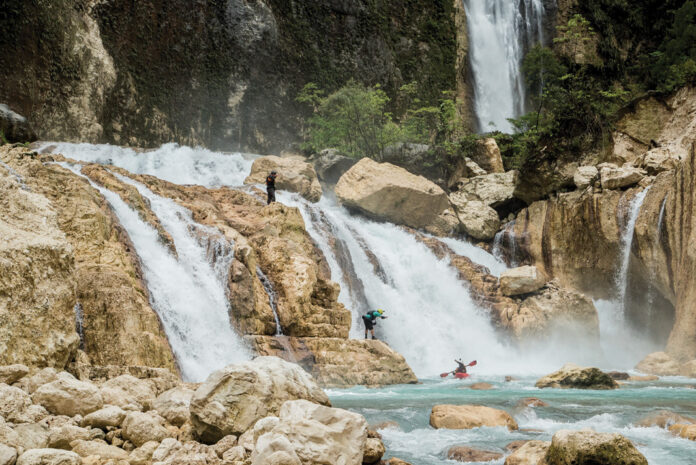
WATERFALL OF NO RETURN | PHOTO BY BEN MARR

When Ben Marr, Pedro Oliva, Ben Stookesberry and Chris Korbulic dropped this waterfall on eastern Papua New Guinea’s Beriman River in 2015, it was one of the last points that they could call off their incredibly risky first descent.

Since the team’s ambitious trip, they’ve been nominated for the 2016 National Geographic Adventurers of the Year award and released the Red Bull-sponsored film Locked In: First Descent of the Beriman Gorge, but as they ran this 60-foot falls on their first day of kayaking, they had little idea what awaited downstream. They had been flown in just above the waterfall the day before, camped and paddled down that morning to drop it, aware that it was one of the last places the helicopter could land in what is known as the Grand Canyon of the Pacific.

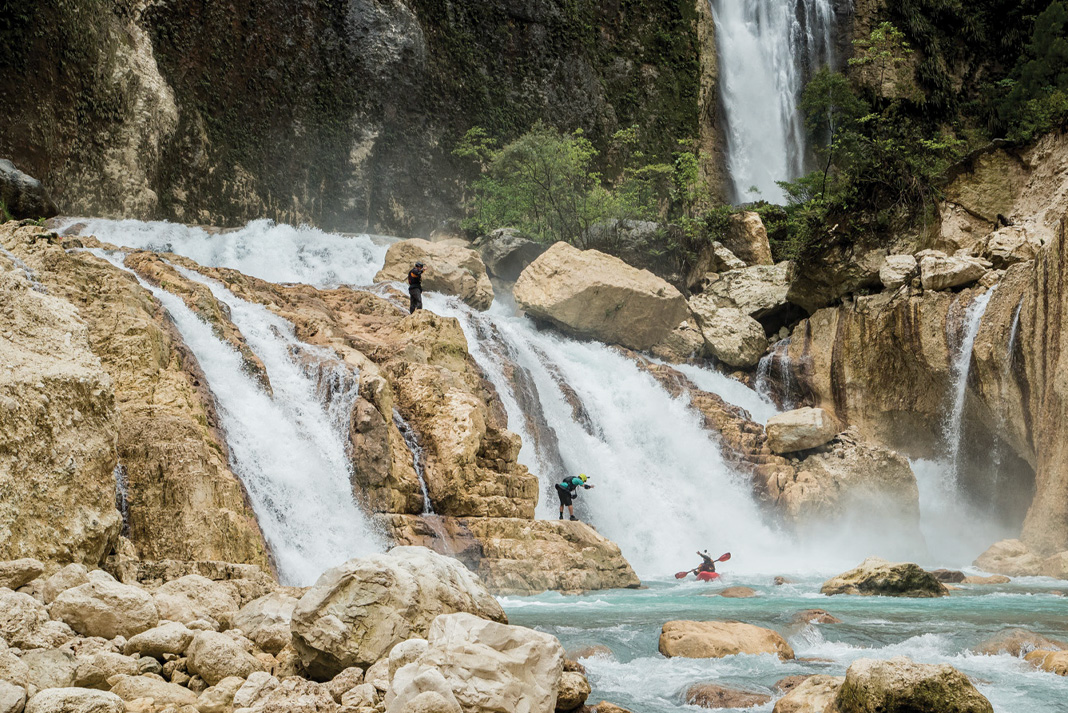
Marr ran the river left of the middle section before setting up to capture his teammates take different lines, including this image of Stookesberry throwing a thumbs-up to Oliva and Korbulic. Shooting photos in the jungle meant “a constant battle” for Marr to keep his camera dry and deal with condensation building up inside his lens.

WATERFALL OF NO RETURN | PHOTO BY BEN MARR

After descending the waterfall, the group headed downstream and the helicopter departed, making starkly real their plan to kayak 30 miles through 13 gorges with vertical walls and no paddling precedent or chance of rescue. “Once we paddled away from the drop and the helicopter took off, that was a good feeling but it was also heavy because we had just committed to the canyons downstream, not knowing how long it would take us,” Marr says.

Facing unrelenting humidity, thick jungle portages and class VI river conditions—not to mention some truly gnarly foot rot—the foursome took just shy of two weeks to travel the 30 miles. It wasn’t until the team smelled the salt in the air from the Soloman Sea that they reveled in the reality of their groundbreaking first descent. “We knew then there were no obstacles between us and the ocean,” says Marr.


This article originally appeared in the Rapid
Summer/Fall 2016 issue.

Subscribe to Paddling Magazine and get 25 years of digital magazine archives including our legacy titles: Rapid, Adventure Kayak and Canoeroots.

Why Your Next Canoe Trip Should Be Solo

It is 4 a.m. and I lie awake, mesmerized by a spectacular display of the aurora borealis dancing just above the horizon to the north of my fly-less tent.

A billion twinkling stars slowly fade as the eastern sky erupts in the subtle colours of a wilderness sunrise. The haunting cry of a loon breaks the morning silence, amplified by the stillness of the placid lake.

I climb out of my sleeping bag and wander down to the water’s edge, perching on the smooth granite bedrock to splash cold water on my face. The lake’s surface is a plate of glass, now reflecting the sun as it clears the top of the ancient white pines, bathing the entire landscape in a soft golden light while a light mist slowly drifts across the scene. I breathe deeply, the cool morning air filled with the scent of sunbaked pine needles and smoke from a smouldering campfire.

This is serenity. While I love sharing this kind of experience with friends and family, there is something extra special about being out here alone.
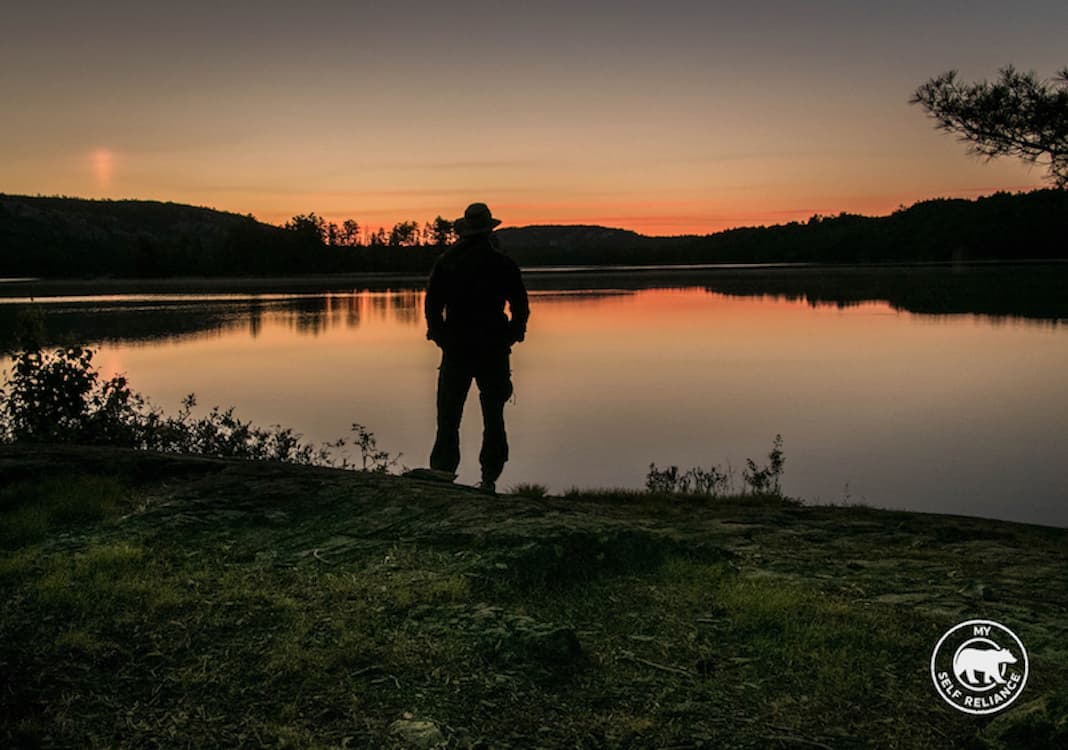
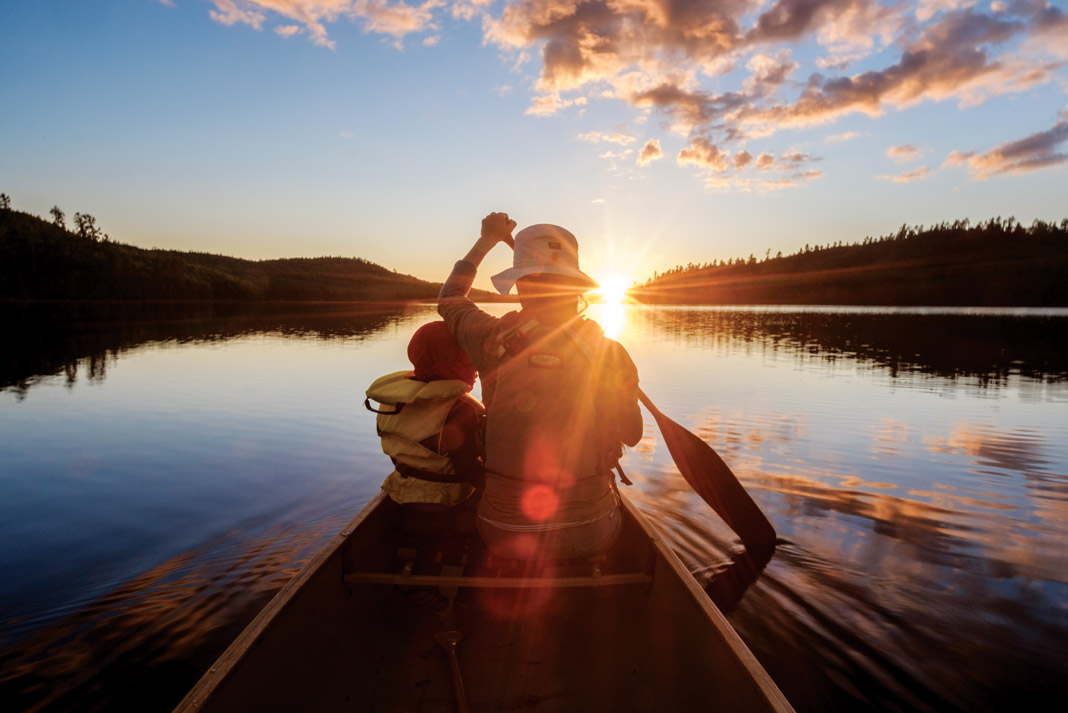
Shawn James stands in front of a sunset on a solo canoe trip

Why go on a solo canoe canoe trip?

There is more to solo canoe tripping than spending time alone in nature, fully immersed and in tune with your surroundings. From a practical standpoint, solo canoe tripping has several advantages over travelling with a group or another individual.

Scheduling conflicts

When I want to go, I just go. I don’t have to work around someone else’s schedule or them dropping out of the trip at the last minute. Modern life is busy, and it is inevitable that it is going to impact availability.

Flexibility

I often adjust my agenda mid-trip, and not everyone would support my revised itinerary. I may want to paddle right until dark in order to reach a new destination or I may discover particularly good fishing that I want to enjoy for another day. I can linger longer and I don’t need consensus from a group to do so.

Group dynamics

Someone you get along with perfectly well at work or at home often turns out to be a completely different person on a canoe trip. Physical stress, interrupted sleep, diet changes, dehydration and other discomforts can cause even the most amiable person to become unpleasant and hostile. Maybe that person is you, but at least nobody else will be around to notice.

Physical fitness

When I canoe trip on my own, I seek solitude and unique experiences, which often means travelling long distances. It is physically demanding, and I would never expect my wife and daughters, my usual companions, to embark on such a trip. If I was not willing to travel solo, there are just too many places I would never get to see.

Skill

Group travellers should always plan their itinerary to accommodate the weakest and least-skilled member of the party. That can mean avoiding the large lakes and whitewater rivers that I may be proficient enough to tackle on my own.

Self-reliance

Travelling solo is inherently riskier than travelling with a group, and those risks should never be underestimated. Breaking a bone or capsizing a canoe deep in the interior is inconvenient for a group —it can be deadly for a soloist. When you canoe trip on your own, it is imperative to hope for the best but plan for the worst. That means continuously honing your outdoors skills and using the highest quality gear you can afford, from your canoe right to your fire starter.

When you achieve the level of proficiency necessary to canoe trip solo, your self-confidence will soar. This is comforting, but it goes deeper than that. Self-reliance benefits you and everyone around you. If you are self-sufficient and capable of surviving in the wilderness on your own, you will rarely be a burden to your partners on a group trip. If they get into trouble and need assistance, you are the person to help them.
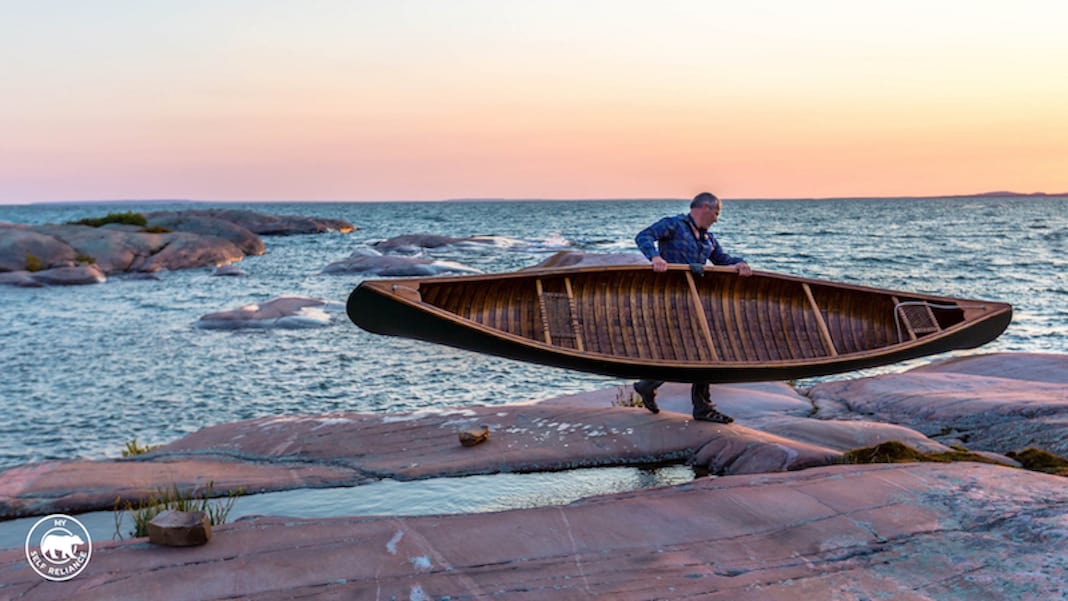
Man lifts canoe on rocks with water in background

Solo canoe trip tips: how to get started

Solo tripping is not for everyone. But if you have the ambition, skill, physical fitness and mental acuity to spend time alone in the outdoors, it is time to start planning your first trip. There are several things to consider that are unique to solo trips, so a little bit of research and planning is necessary.

Read articles

There is a wealth of information on canoe tripping to be found in online and print magazines, like Paddling Magazine and our Paddling Trip Guide. Don’t be afraid to reach out to the authors of those articles with your questions and comments.

Mentors

Visit online forums, such as those found on Canadian Canoe Routes, and browse through the solo threads. Ask questions—members are more than happy to help you out.

Watch YouTube videos

Observe such things as the person’s gear choices, their canoe routes and meal plans. Pay particular attention to time spent in camp. Solo tripping is mentally challenging, and some people find it unnerving to be alone in a quiet, dark campsite at night.

Select the right gear

Most of the gear you use for group trips is also suitable for solo tripping, but there are some items that are designed specifically for soloists and will make your adventure safer and more enjoyable, like a lightweight solo canoe and one-person tent. I suggest waiting until after one or two solo trips before buying something you may not use again.

[ View all canoeing gear in the Paddling Buyer’s Guide ]

Use an outfitter

Good outfitters have the experience and knowledge to put you on the right track. They can help you plan your canoe route and your meal plan, suggest the appropriate gear, and of course, rent or sell you everything you need for your trip.
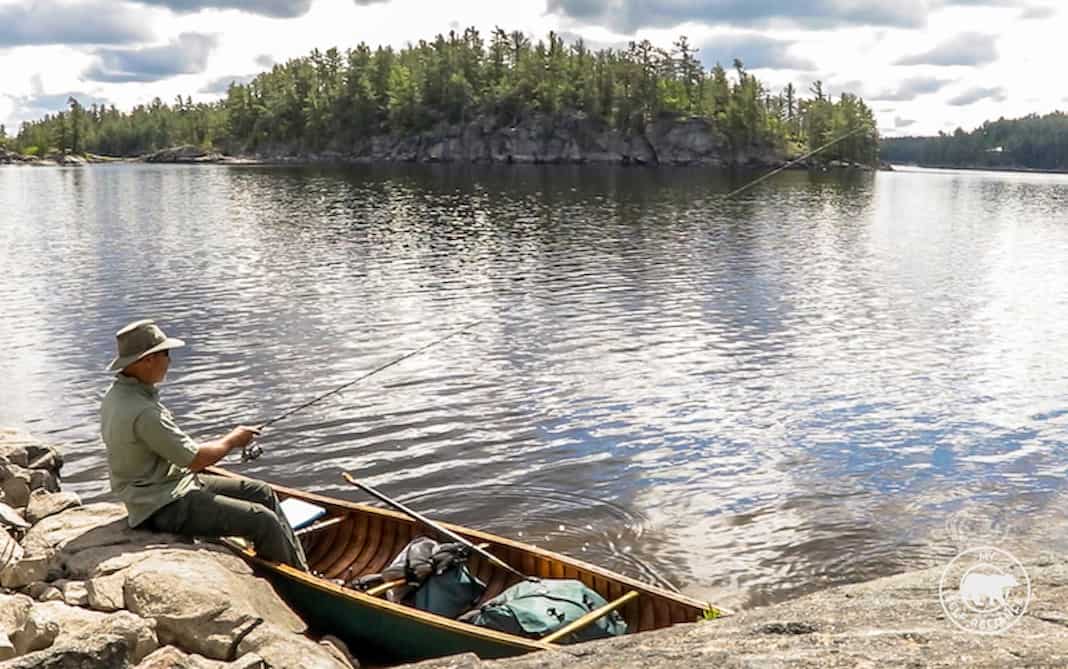
Shawn James fishes on the French River during a solo canoe trip.

Relax and have a great time on your solo canoe trip

A little bit of anxiety before a solo trip is natural, but if you are well prepared, you have nothing to worry about. Take it easy on your first trip. Start with one or two nights, and don’t travel too far. Stay close to an access point so help is nearby if you need it, or if you decide to cut your trip short.

Leave plenty of time at the end of each day to set up camp, collect firewood and just relax. Build a small fire, make a hot drink and sit down by the lake as the day comes to an end. That first sunset on your own will be special. The sunrise the following morning will hook you on solo tripping forever.

Shawn James is an entrepreneur specializing in online business education. When not spending time with his wife and two daughters, he can usually be found plying the waters and hiking the forests of Ontario solo.


Video: Stellar Kayaks S16s Surf Ski Kayak

Screen Capture: Adventure Kayak
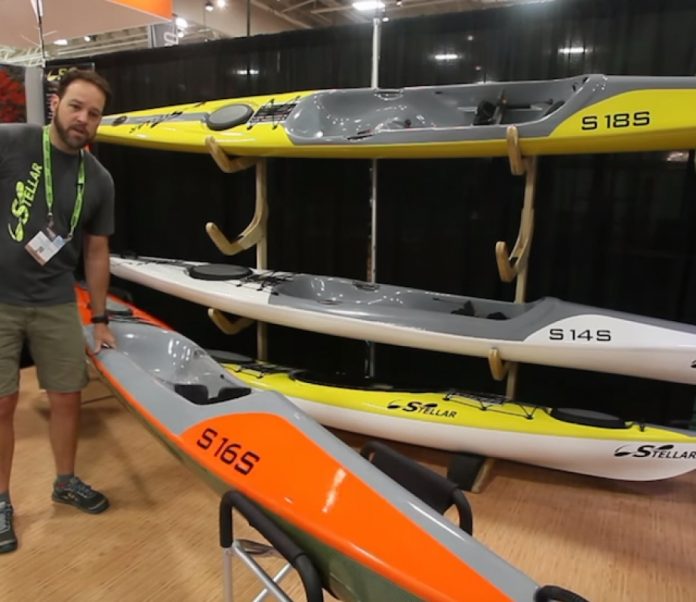
A Stellar Kayaks representative stands in front of the camera speaking about their S16s surfski kayak.
Screen Capture: Adventure Kayak

The S16s Surf Ski kayak from Stellar Kayaks is a serious competitor for a variety of water sport activities. A unique morphing of a sit-on-top and sit-in style cockpit allows for use as a racing machine or for a classic touring set up. As a high-performance kayak it not only can handle high speeds but is light and manageable for any level of experience with bucket seats and a variety of accessories. The new Kevlar laminate is designed to take a beating and yet retain its strength and hull integrity.

Video: Sea Eagle Needle Nose SUP Board

Screen Capture: Adventure Kayak
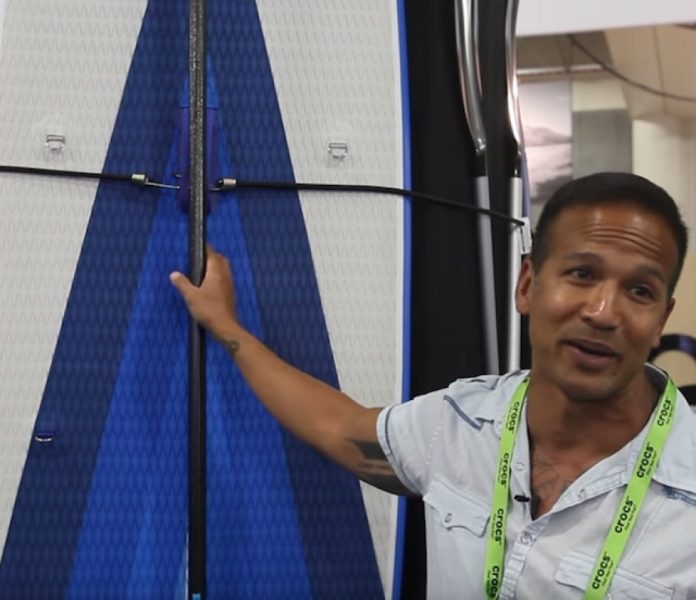
A Sea Eagle representative stands in front of the camera speaking about their Needle Nose SUP board.
Screen Capture: Adventure Kayak

The Needle Nose SUP board has received some serious upgrades. Located in the middle of the board is a paddle holder atop of a vibrant patterned standing platform. A skeg located at the stern and a new fin integrated into the bow nose allow for true tracking and reduces the need for switching sides while paddling.

Imb1xKT3McY

Top 5 Ways To Stay Visible And Safe On The Water

Photo: Virginia Marshall

A group of kayakers in Manhattan had a collision with a ferry on August 30.

Nine clients of the Manhattan Kayak Company and one guide were paddling on the Hudson River when the collision occurred, leaving five of them injured. The New York Times reports that the owner of the Manhattan Kayak Company, Eric Stiller, says the guide saw the ferry and waved his paddle at the captain to try and alert him to their presence. The guide is reported to have suffered the most serious injuries.

When sharing waterways with larger vessels, being highly visible can reduce the chance of collision. It also makes it easier for rescuers to locate you, especially in low-visibility conditions kayakers know well, like foggy mornings or glaring sun. Follow these five expert tips for staying visible on the water and reduce your chances of dangerous encounters with other boats and vessels.

Photo: Virginia Marshall

1Determine the best colors for visibility on the water

One of the most frequently asked questions sea kayak professionals hear is what color is best to wear for visibility on the water. The answer is that the conditions you are kayaking in will determine the best colors to wear. For example, on bright and sunny days, red is the best bet, while overcast conditions call for bright yellow and red-yellow.

2 Learn how to build a lit compass

If you are paddling at night or early in the morning, having a lit compass is a great way to maintain your ability to navigate while enhancing visibility. Knowing where you are going at all times will help you avoid ending up in dangerous waters or in the path of large boats. There are not a lot of options on the market for lit compasses, but Leon Sommé of Body Boat Blade International shows you how to construct your own DIY deck-mounted compass here.

3Understand the basics of marine VHF radio use

If you are kayaking on open water, you should carry and know how to use a marine VHF radio. They are essential for routine and emergency communication on the water, including contacting the Coast Guard or other vessels. Learn the basics of communication with your marine VHF radio here.

4 Boost your VHF range

VHF marine radios work on a line of sight principle with the range of the radio depending on the unit’s wattage. The radio waves are deflected and obstructed by landforms, which means that going offshore or hiking to an elevated point can help boost your range. Learn more tips to boost your VHF range here.

[ Paddling Buyer’s Guide: See All SUP Leashes & Safety and Rescue Gear ]

5Master kayaking in foggy weather

Paddling when the fog rolls in can make navigation difficult even for an extremely experienced sea kayaker. Combined with rough water and wind, fog has the ability to throw you off course and compromise your safety. One technique to keep you on course is to aim off—intentionally following your compass bearing towards an obvious landmass adjacent to your destination. Find four more tips for foggy weather paddling here.

The $40-Million Quest To Build The World’s First Artificial Waterfall

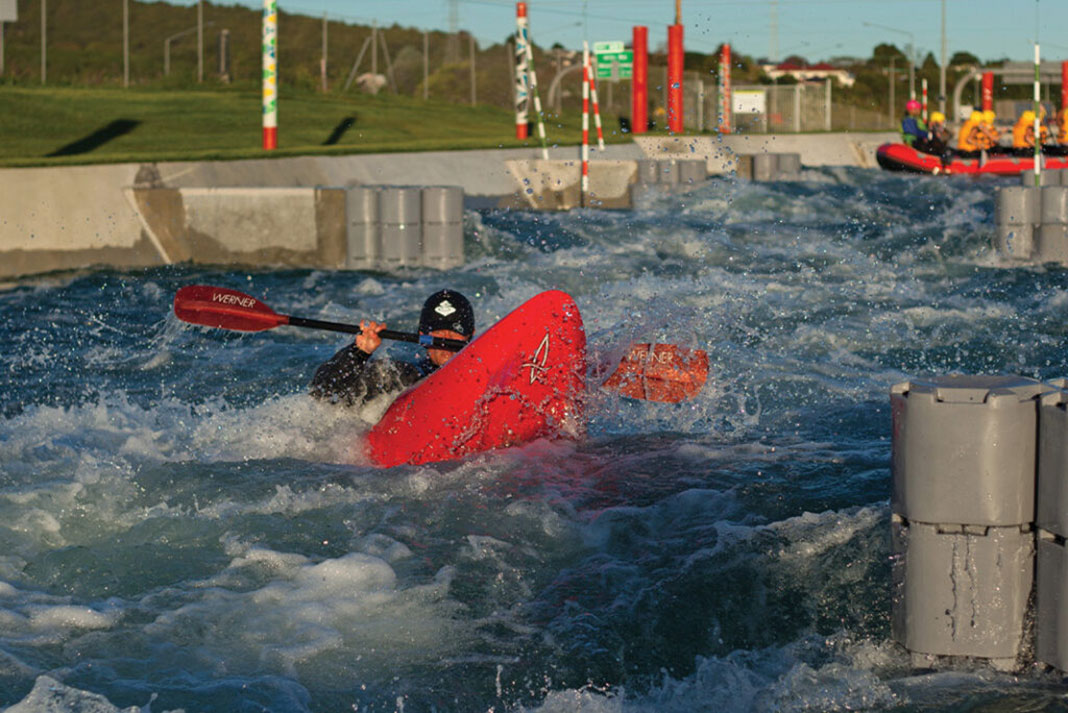
a kayaker plays in whitewater at Vector Wero Whitewater Park in Auckland, home to to the world's first raftable artificial waterfall
Vector Wero Whitewater Park in Auckland is home to the world’s first raftable artificial waterfall. | Feature photo: Lawrance Simpson

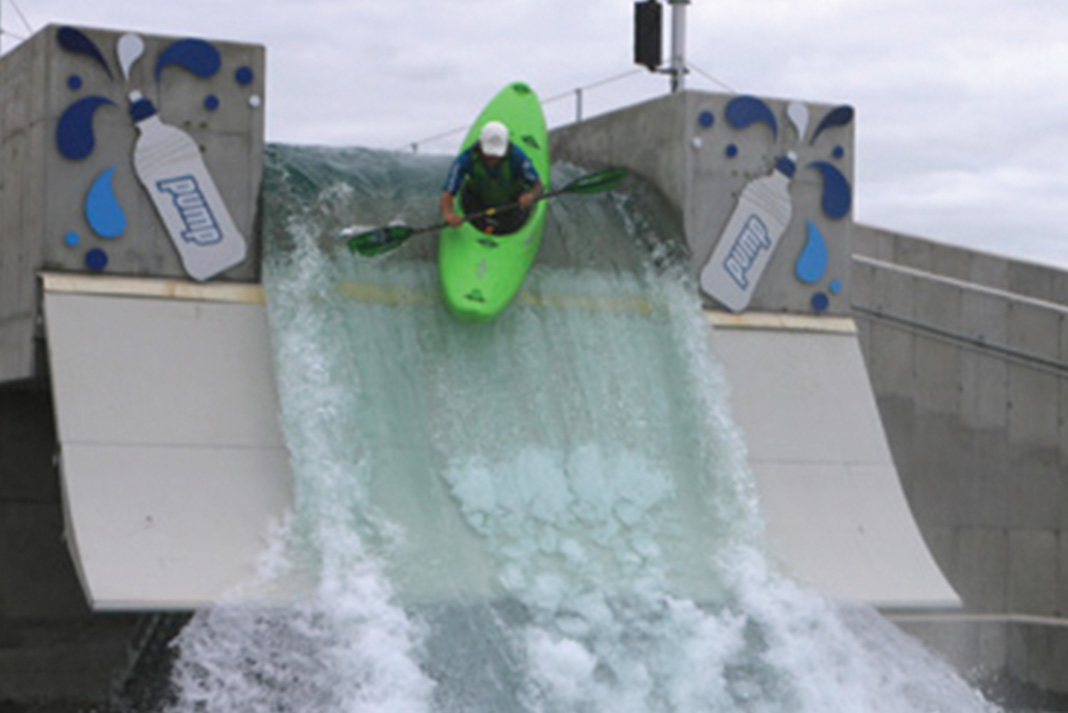
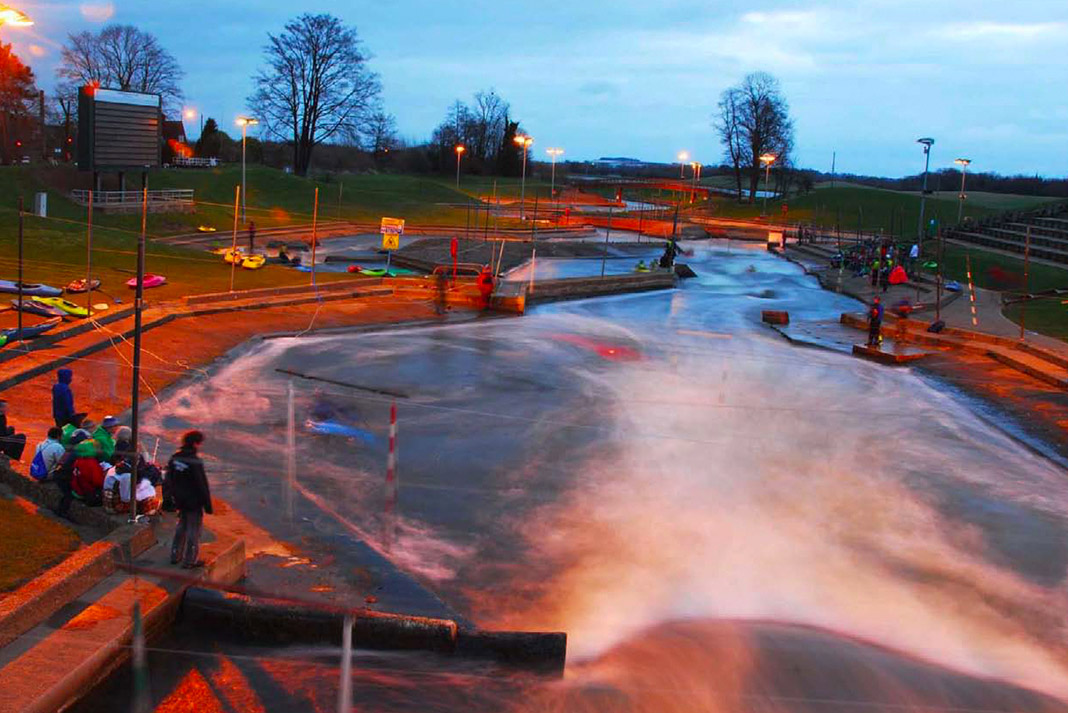
Leave it to the Kiwis to build the world’s first raftable waterfall at a play park facility. Vector Wero Whitewater Park in Auckland, New Zealand, opened in March 2016 complete with a 15-foot waterfall gushing at 140 cfs.

The $40-million quest to build the world’s first artificial waterfall

Inspired by the iconic Okere Falls, an all-natural point of pride for whitewater enthused New Zealanders, the Vector Wero park is the only self-contained course in the country and one of only two play park facilities across Oceania.

With a class II and a class IV run, the park rivals the Rio Olympic Slalom Course—and it should. It was built by the same team at Whitewater Parks International.

When tasked with the prospect of building a waterfall, WPI’s managing director Bob Campbell said he was first concerned that they’d be pushing the safety limits too far. But he says the response to that was, “Hey, we’re Kiwis, this is kind of what we do!”

a kayaker plays in whitewater at Vector Wero Whitewater Park in Auckland, home to to the world's first raftable artificial waterfall
Vector Wero Whitewater Park in Auckland is home to the world’s first raftable artificial waterfall. | Feature photo: Lawrance Simpson

It took 15 years to raise the $40 million necessary to build Vector Wero. During that time the park’s general manager, Ian Ferguson, says he grew restless as he noticed a very similar course crop up for the London Olympics, modeled on their two-course design, minus a waterfall.

Designing the perfect hydraulic

The team knew their one-of-a-kind waterfall had to be thrilling but safe. They built a to-scale prototype at a glass testing facility at the University of Prague, which allowed an underwater side view of the hydraulic. It proved to be a challenging build that required rounds of tweaking.

“Our goal was to make a hydraulic that could assist on the landing, giving paddlers the best chance to stay upright and have a smooth ride,” says Campbell.

From the start pool, paddlers can choose to go down one of the two courses or run the drop. Many of New Zealand’s top paddlers, including Luuka Jones and Mike Dawson, have already taken a turn at Vector Wero.

“It’s an evolution of all the courses that have been built around the world,” says Dawson, an Olympic slalom canoeist, who has been on the Vector Wero course six times and counting.

“The whitewater feels almost the same as a natural river.”

Vector Wero raises Auckland’s whitewater profile

From the outset, the course was built in the hope that it would host international paddling events, the first of which will be the multi-sport World Master’s Games in 2017. Campbell says both this course and the Rio Olympic course have an important characteristic in common: great care was taken to centralize the current and keep water moving from top to bottom. This avoids the bathtub-surging effect that occurs when too much water doesn’t have anywhere to go.

Photo: Jackie Russell

“Some of the athletes that have paddled it already have dared say it might be better than Rio,” says Campbell. With over a million people in Auckland and surrounding area, and no natural whitewater runs nearby, Ferguson estimates a low-ball number of 15,000 per year will paddle through Vector Wero. The class II course should also attract legions of school kids. At Vector Wero, anyone who is at least 14 years of age is permitted to run a course or take the drop. Ferguson says he hopes more young New Zealanders will catch the paddling bug through the school programs the park is offering for both rafting and kayaking.

“When the kids come off the waterfall they’re bubbling,” Ferguson says. “You can hear them squealing as they go over it and laughing like hell at the bottom.”

Cover of Summer/Fall 2016 issue of Rapid MagazineThis article was first published in the Summer/Fall 2016 issue of Rapid Magazine. Subscribe to Paddling Magazine’s print and digital editions, or browse the archives.


Vector Wero Whitewater Park in Auckland is home to the world’s first raftable artificial waterfall. | Feature photo: Lawrance Simpson


5 Storage Secrets To Extend The Life Of Your Canoe

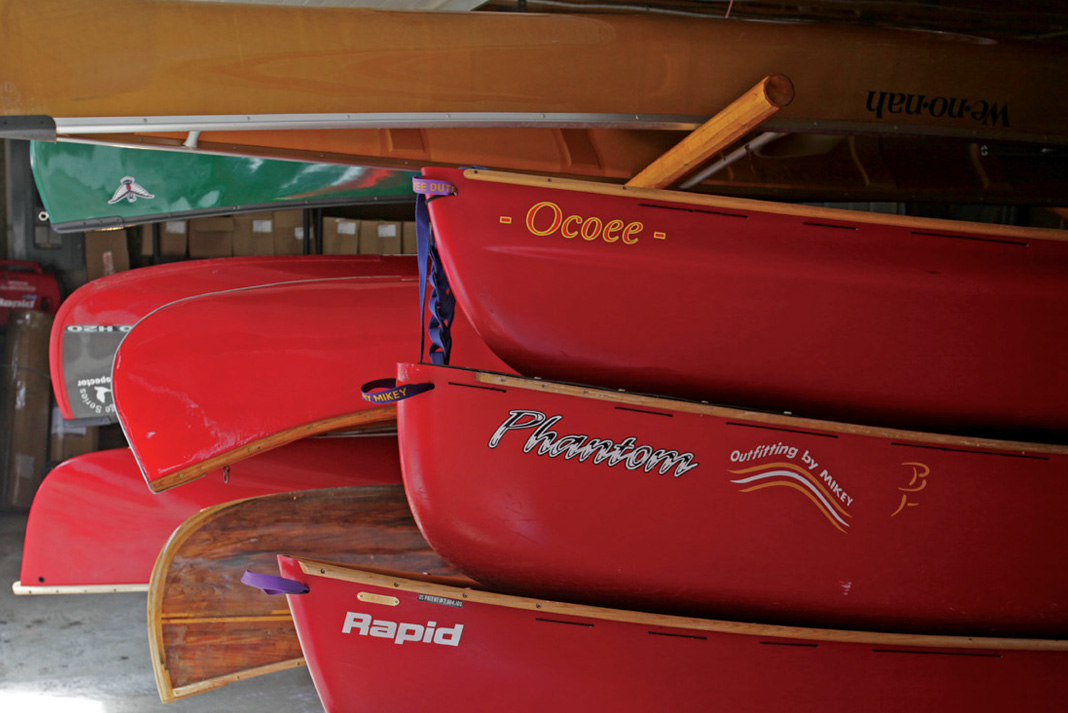
a group of canoes in storage in a garage
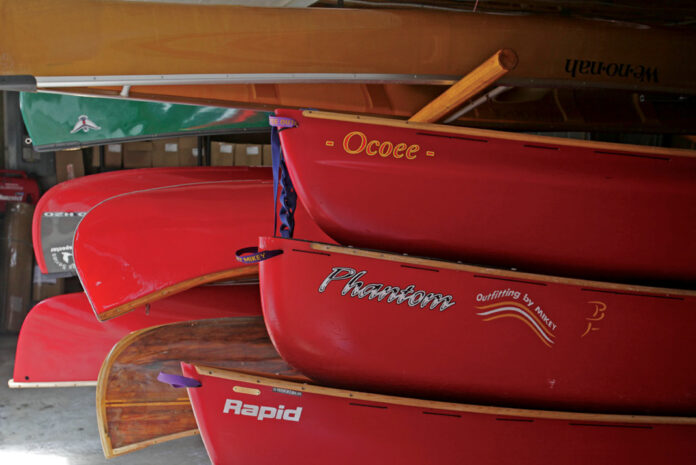
Canoe storage mayhem in the Canoeroots garage.| Feature photo: Kaydi Pyette

When you bring home a new boat, where do you put it? Leaving it on the soggy lawn to collect mold and earwigs isn’t any way to treat your pride and joy. Proper storage of your canoe not only makes better use of your yard or garage’s real estate—so you can bring home even more boats—it seriously prolongs the life of your canoe.

5 storage secrets to extend the life of your canoe

1 Keep your canoe off the ground

Most importantly, keep your canoe off the ground. In a pinch you can use rafters, sawhorses or a pair of wood blocks. If opting for ceiling storage, look for a cradle that uses wide webbing for support. Resist the temptation to hang your canoe by its front and rear decks, thwarts or carrying handles, which weren’t manufactured to endure this stress long-term.

MAYHEM IN THE CANOEROOTS GARAGE.| PHOTO: KAYDI PYETTE
Canoe storage mayhem in the Canoeroots garage.| Feature photo: Kaydi Pyette

2 Store it upside down in a dry place

The best way to store your canoe is upside down in a dry place. Distribute the weight of your boat over racks or a cradle evenly to prevent the hull from deforming over time. Plastic hulls are the most susceptible to this, but fiberglass and wooden boats can fall victim over the years.

3 Keep the material in mind

When storing in an unheated area, be aware Royalex has a faster rate of contraction in cold temperatures than wood, making wood-trimmed Royalex canoes susceptible to cracks where the trim is fastened to the hull. Extreme heat, from being stored next to a water heater or furnace, can also warp plastic and composite canoes.

4 Use outdoor racks the right way

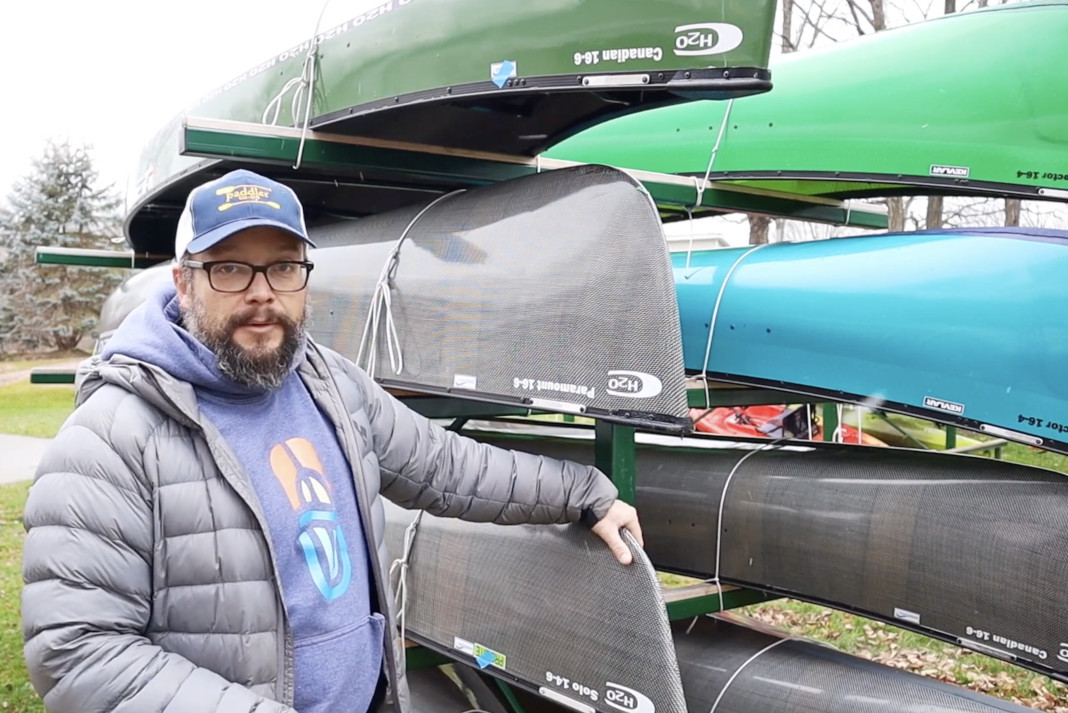
If storing your canoe on an outdoor rack, tie the canoe to the rack and anchor the rack securely. While a quality rack is sure to be sturdy enough to weather a storm, a lightweight aramid canoe can easily become airborne on blustery days.

Be aware that sunlight is your enemy, degrading plastic hulls, browning Kevlar and fading paint colors. Use a cover or durable tarp for outdoor storage. If using a tarp, suspend it above the canoe to maintain airflow, so that moisture doesn’t rot wooden parts. Keep heavy snow off your canoe, which could crush the hull.

5 Keep it indoors if possible

The best way to protect your canoe against theft is to keep it indoors. However, if storing your boats outside, use a security strap with a locking buckle and reinforced with cut-proof stainless steel to secure it.

Cover of Canoeroots Magazine Early Summer 2016 issueThis article was first published in the Early Summer 2016 issue of Rapid Magazine. Subscribe to Paddling Magazine’s print and digital editions, or browse the archives.

Canoe storage mayhem in the Canoeroots garage.| Feature photo: Kaydi Pyette


Kevin Callan’s Special Recipe For Natural Healing

Mental Benefits Of Canoeing
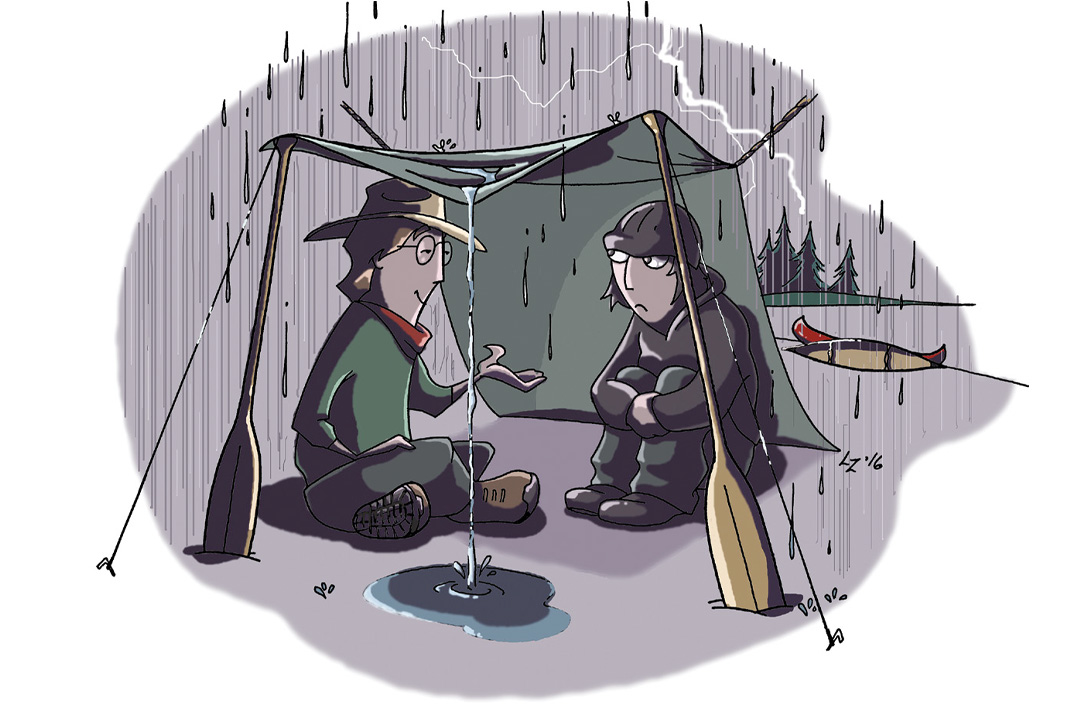
Mental Benefits Of Canoeing | ILLUSTRATION: LORENZO DEL BIANCO

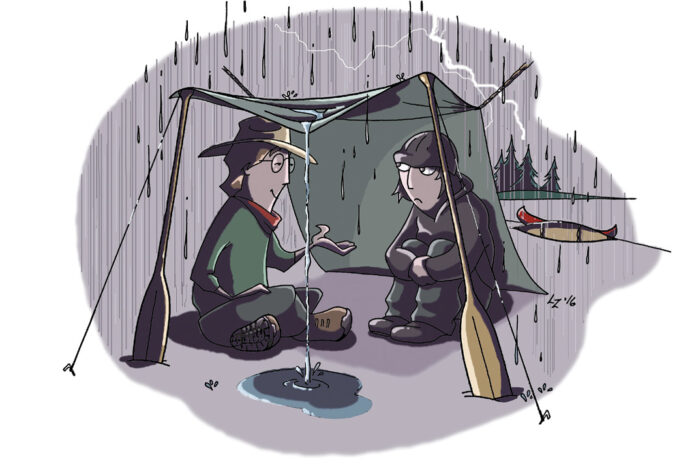
The black flies and lengthy portages weren’t Jason’s biggest enemy. It was his drug addiction that plagued him. I found him halfway along the portage trail, sitting on his pack, whimpering.

The other students in this at-risk youth program passed him by without saying much. Each one was battling their own demons on the tough trail, and it didn’t help that Jason had made little attempt at forming friendships in the group. He was a loner prone to angry outbursts, and he’d spent the last year self-medicating with pharmaceuticals. Now, at the side of the trail, he was breaking down and there was little I could do to help him.

Kevin Callan’s special recipe for natural healing

I’m a wilderness guide and outdoor skills instructor—not a counselor. I feel compassion for each and every one of the students in the at-risk programs I often lead, but my main focus is to teach them the skills needed to keep themselves safe. I’m not trained to help anyone with personal issues. That said, I’ve been doing the job so long I’ve gotten to know a thing or two. Keep your fancy leather couches and high-priced psychobabble, I’ve witnessed time spent in the wilderness to be an astonishing healer.

Jason just needed more time.

Three days into our five-day trip Jason was as resentful and lost as he’d been when we met. He desperately wanted to go home, likely due to his addiction issues and being ignored by the other students. I had also made a major error in planning the route. I chose a linear trip, not a loop. As we began to make our way back, the students recognized the landscape we were traveling through. Suddenly the trip didn’t feel so remote.

Mental Benefits Of Canoeing
Mental benefits of canoeing. | Feature illustration: Lorenzo Del Bianco

It was midnight when Jason escaped. He slipped a canoe into the water and quietly paddled off into the darkness. Luckily, one of the students was sneaking a smoke by the smoldering campfire and came to warn me that Jason was making a run for it.

I went after him. What Jason lacked in paddling skill he made up for in desperation, channeling his anger and loneliness into fast and forceful strokes. I couldn’t catch him. He paddled and portaged across two lakes before the storm hit. The pounding rain and strong wind drove him to shore.

When I caught up to him, he was hunkered under a tree, desolate. I put up a tarp up, lit a fire and just sat beside him, not saying a word. It was now 2 a.m. We passed the night together, sitting just like that.

At first light we got back in our boats and paddled to meet our group. Jason admitted he’d taken Ecstasy, a drug usually associated with wild parties and frenetic dancing, and that he’d been high when he paddled away from camp.

[ Paddling Trip Guide: View all canoe trips and adventures ]

No wonder I’d had trouble keeping pace with him. I didn’t question, chastise or judge him, but I did suddenly find myself laughing. The juxtaposition. Here we were paddling on a crystal-clear lake, white-throated sparrows welcoming the day and the brightening sky streaked with mare’s tail. This was my ecstasy.

Reunited with our group, we spent our remaining two days traveling towards home. Jason didn’t try to escape again. It might have been my imagination, but I think I even glimpsed a solitary smile. Soon after the trip, my colleague told me he’d heard through the grapevine that Jason had enrolled into a post-secondary outdoor education program. Cool, I thought. It’s been a few years since, and recently Jason sent me an email. Now he’s got a job taking at-risk students into the woods.

Undoubtedly, there are many people for whom medication and therapy are the best options—but give someone a paddle, canoe and some real time in the wilderness, and I’ll show you some natural healing.

Kevin Callan has been diagnosed with Obsessive Camping Disorder, for which time in the wilderness has not proven to be a cure.

Cover of the Early Summer 2016 issue of Canoeroots MagazineThis article was first published in the Early Summer 2016 issue of Canoeroots Magazine. Subscribe to Paddling Magazine’s print and digital editions, or browse the archives.


Mental benefits of canoeing. | Feature illustration: Lorenzo Del Bianco


The Dusi Canoe Marathon: It’s A Real Doozy

It’s a Real Dusi | PHOTO BY KELVIN TRAUTMAN/RED BULL CONTENT POOL

Doozy is an old term used to describe anything remarkable, unusual or outstanding of its kind—and the Dusi Canoe Marathon is certainly these things.

Why the Dusi Canoe Marathon is a real doozy

The venerable South African event is one of the toughest kayak marathons on the planet: three days of racing covering 75 miles, including ruinous rapids, headwind-plagued flatwater and up to 12 miles of brutal portaging through steep bush. The race has claimed four lives. Composite kayaks snapped in half like brittle twigs are not an uncommon sight.

It’s a real Dusi. | Feature photo: Kelvin Trautman/Red Bull Content Pool

Founded in 1951, the first Dusi down the Umsindusi and Umgeni rivers was raced by just eight paddlers. Nearly six-and-a-half days later, only one bedraggled and exhausted kayaker arrived at the finish in Durban, having survived two days of low water, a flash flood and a venomous viper bite. Over the next three decades, the annual event swelled to more than 1,000 paddlers—larger even than the narrow views of apartheid: the first black competitor raced the Dusi in 1981.

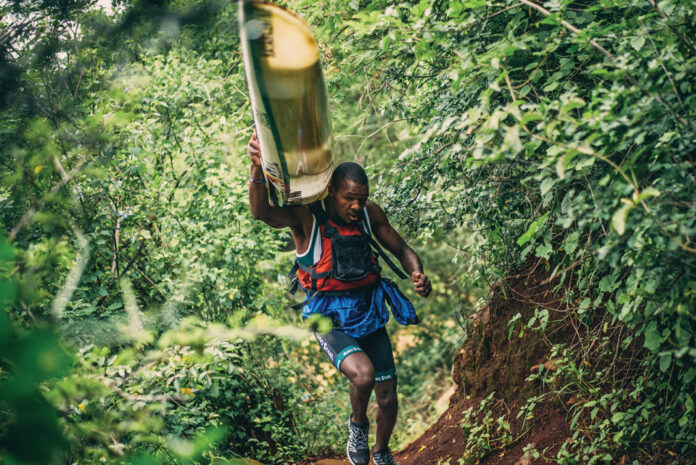
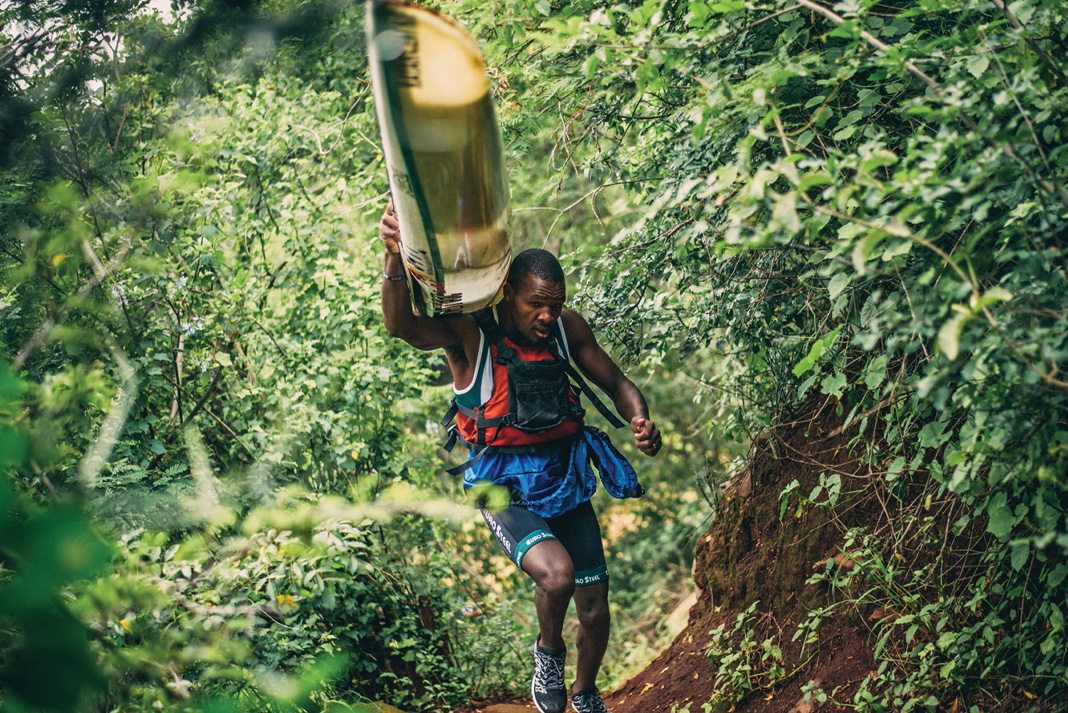
Today, the Dusi is raced K1 and K2 in alternating years, attracting between 1,600 and 2,000 competitors. For this image of three-time podium finisher and 2014 champion Sbonelo Khwela, photographer Kelvin Trautman sought out a vantage point that captured the effort of sprinting up the marathon’s infamous portages in sweltering 104°F heat.

[ Plan your next African paddling adventure with the Paddling Trip Guide ]

Khwela’s prowess on the treacherous hills and lung-busting flats is legendary. “Running is my strength,” he says, “I rely on the run to close big gaps, or if I’m pulling away, that’s where I can make the other guys suffer.”

Cover of Summer/Fall 2016 issue of Adventure Kayak MagazineThis article was first published in the Summer/Fall 2016 issue of Adventure Kayak Magazine. Subscribe to Paddling Magazine’s print and digital editions, or browse the archives.

It’s a real Dusi. | Feature photo: Kelvin Trautman/Red Bull Content Pool


Montreal’s Biggest Whitewater Event On The St. Lawrence Recap

Screen Capture: Montreal Eau Vive
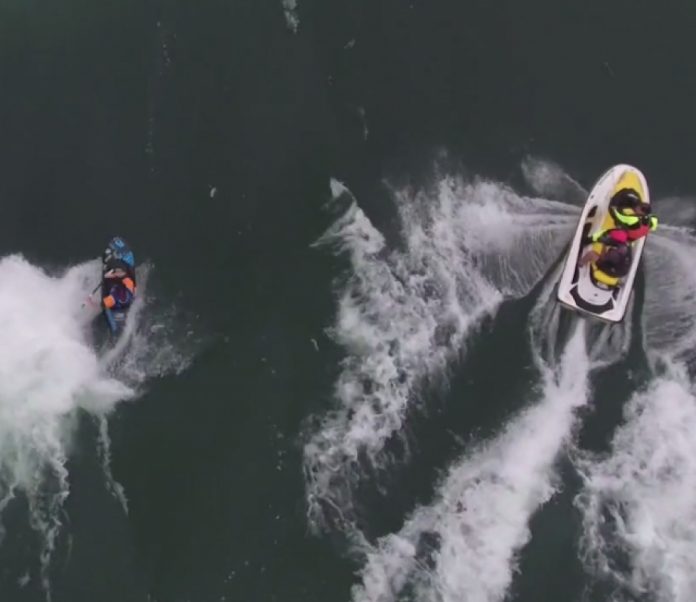
A kayaker surfs on the st. Lawrence River with a jetski beside it.
Kayakers race in the boater cross event during the 2016 Montreal Eau Vive whitewater event.

{Vimeo}180962066{/Vimeo}

Screen Capture: Montreal Eau Vive

Claire O’Hara and Bren Orton topped the leaderboards at the 2016 Montreal Eau Vive whitewater event held in downtown Montreal on the St. Lawrence River. With jetboat starting lines for the boater-cross and jetski tows for any of the three waves to throw down tricks, this event is growing in popularity and bringing awareness to the unique and constant water features so close to but yet so far away from the city core. Hosted by the Montreal Kayak School, watch for this event to grow in popularity in the coming years. 

For more videos from past Montreal Eau Vive events watch here.