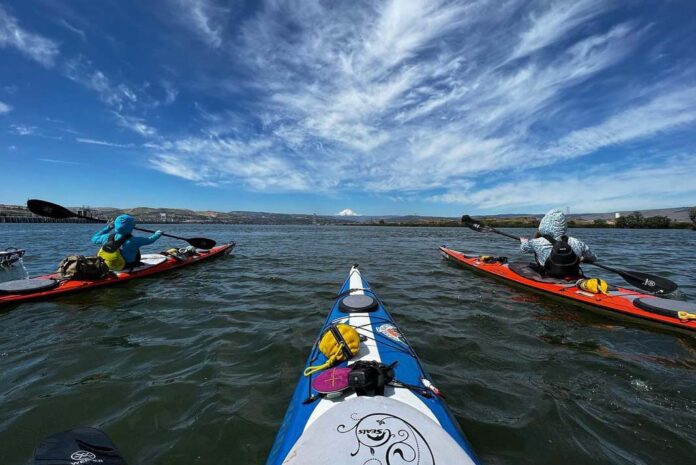
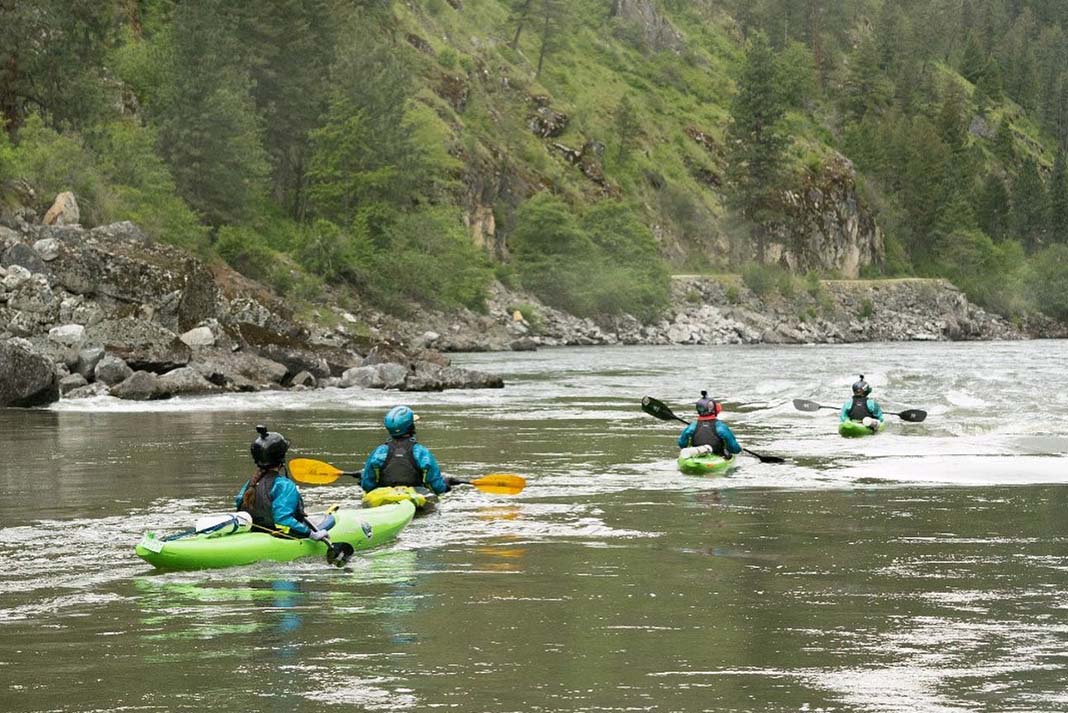
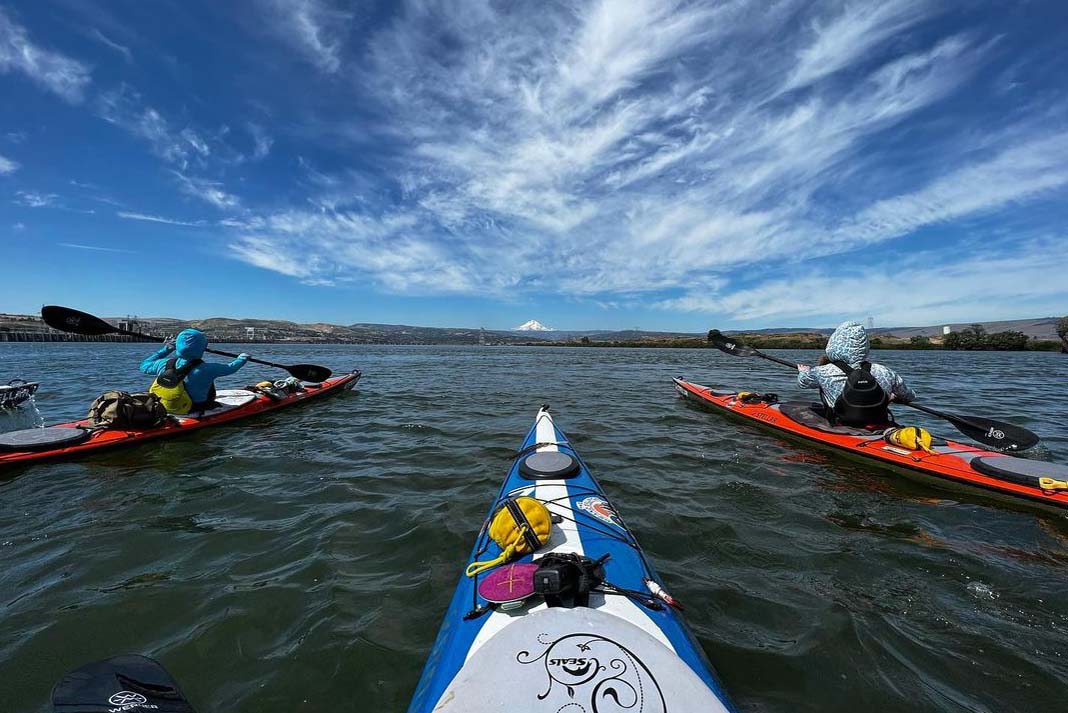
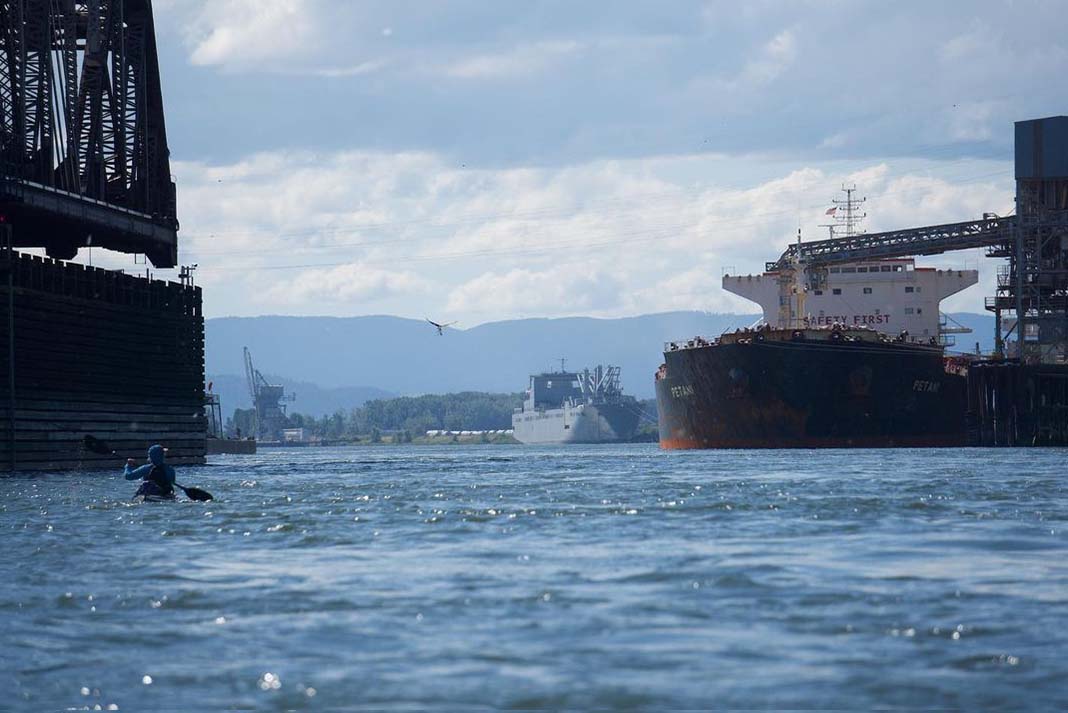
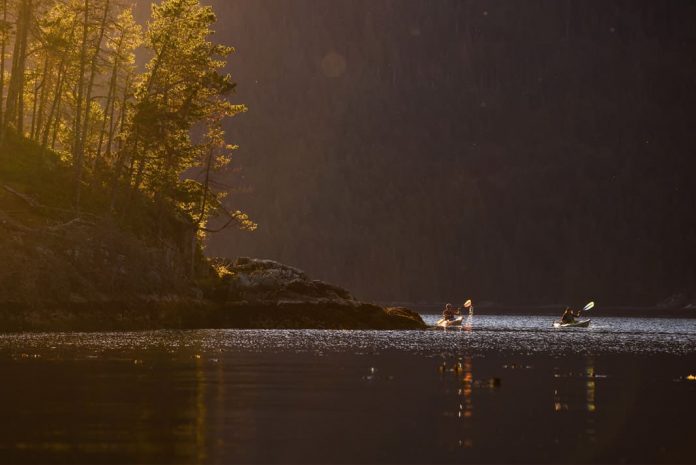
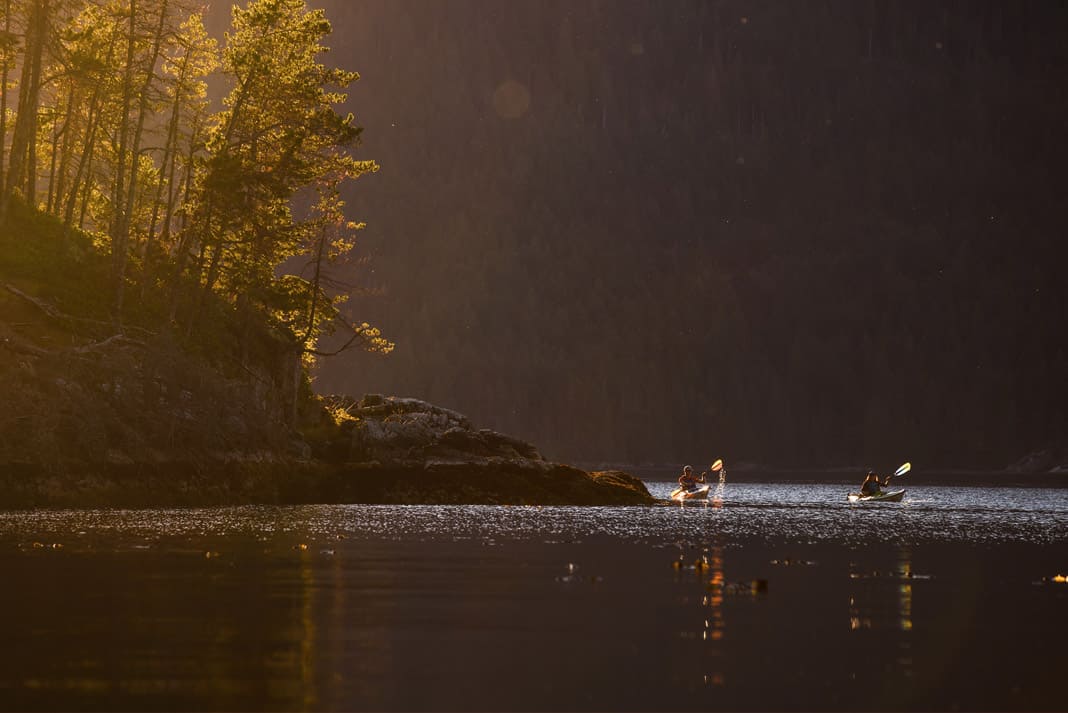
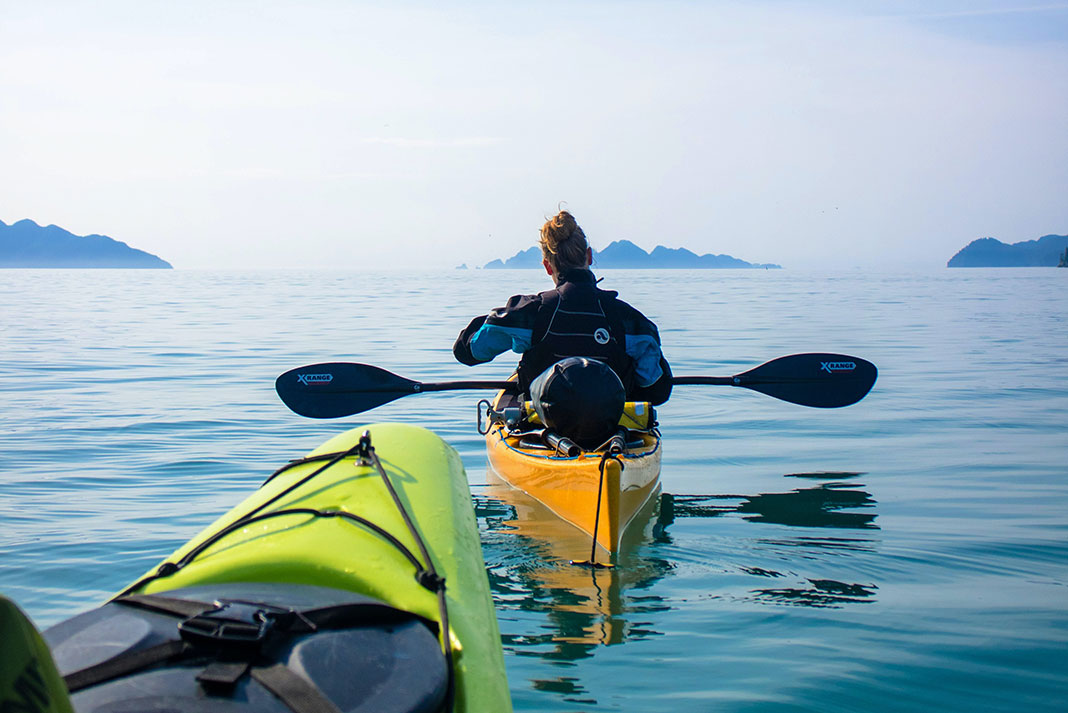
I recently had the rare experience of getting away for a solo weekend kayaking trip. Rare because responsible and gainfully employed fathers of young children do not just go away on solo trips in the wilderness—it’s not like the wilderness gives you anything concrete to justify your reasons for going there.
It just so happened that I got two nights off work, conveniently planned way in advance to coincide with the kids’ camp. I had not quite three days, from the camp drop off to pick up two days later—exactly 55 hours, 12 of which were to be spent driving to a suitable sea kayaking destination.
[ Plan your next sea kayaking adventure with the Paddling Trip Guide ]
Tallying the benefits of a solo weekend kayaking trip
Day one was a hot stinker in the city. I did the final sunscreen application on the kids and said goodbye to their bewildered faces (“You’re going kayaking without us?” they asked). Then I had to grocery shop to leave the family provisioned, walk the dog to leave him fully worn out, and clean the house to leave things well organized and not exacerbate the selfishness of my absence. Then I used another chunk of my precious time to actually pack, because I’d been too busy to do it earlier.
My vacation was already 10 percent over when I finally embarked, drenched in sweat in our battered minivan with the broken AC, heading into the city’s rush hour crawl. I was angry at the traffic and how many hours had already passed, but I arrived at my drive-in campsite well before sunset, and immediately washed away my frustrations by jumping off a cliff into the lake and eating my prepared-salad-in-a-box dinner overlooking the rolling hills.
True relaxation starts on day two. | Photo: Clayton Malquist/Unsplash
First came an onslaught of things I wanted to do to maximize my limited time. Swim! Eat! Drink beer! Light a fire! Roast a sweet potato! Paint a picture! Take a selfie! Read the newspaper! Call my wife! Charge the iPhone! Look at the maps! Get to bed early! Such is the frenzy of a trip’s beginning, before the mind settles down.
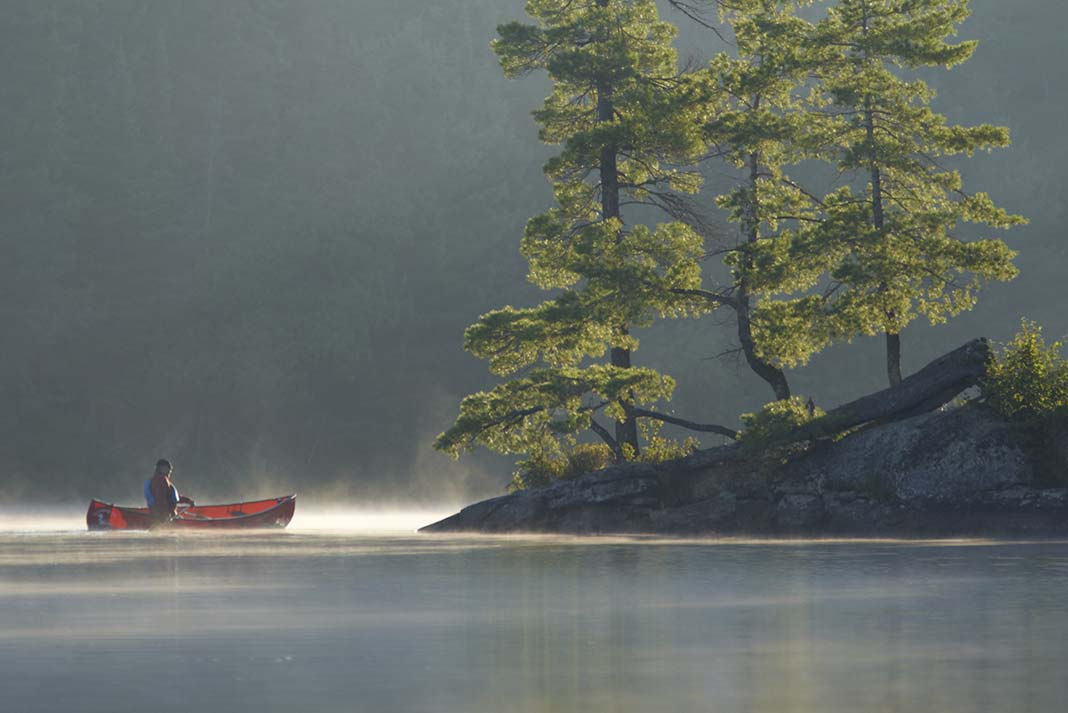
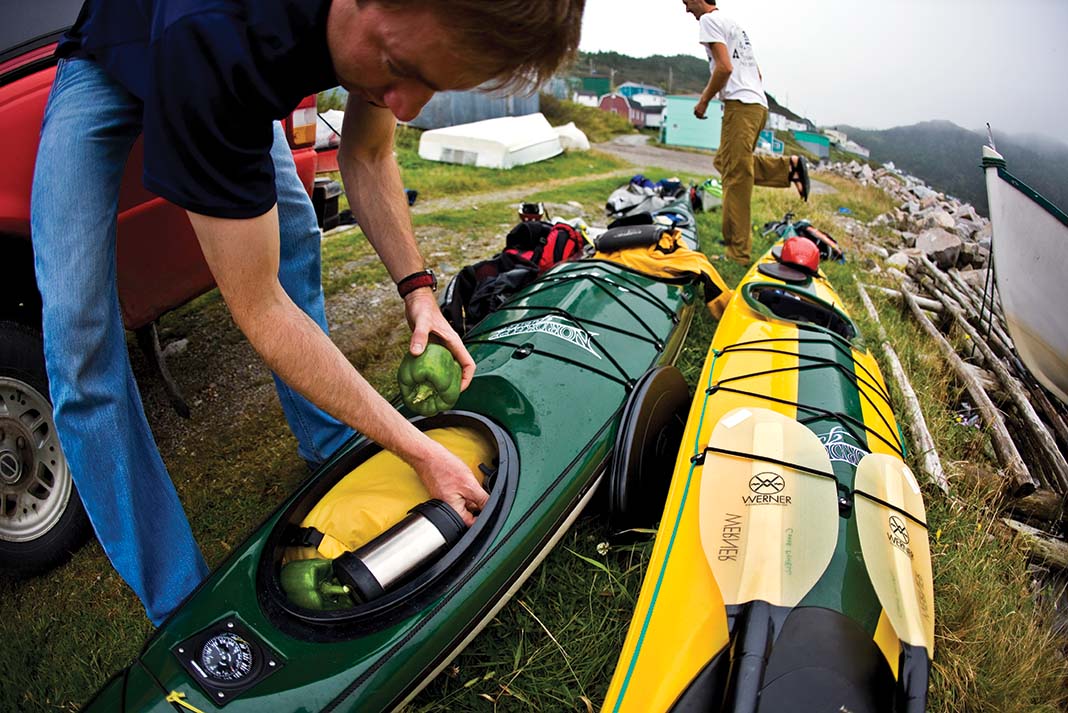
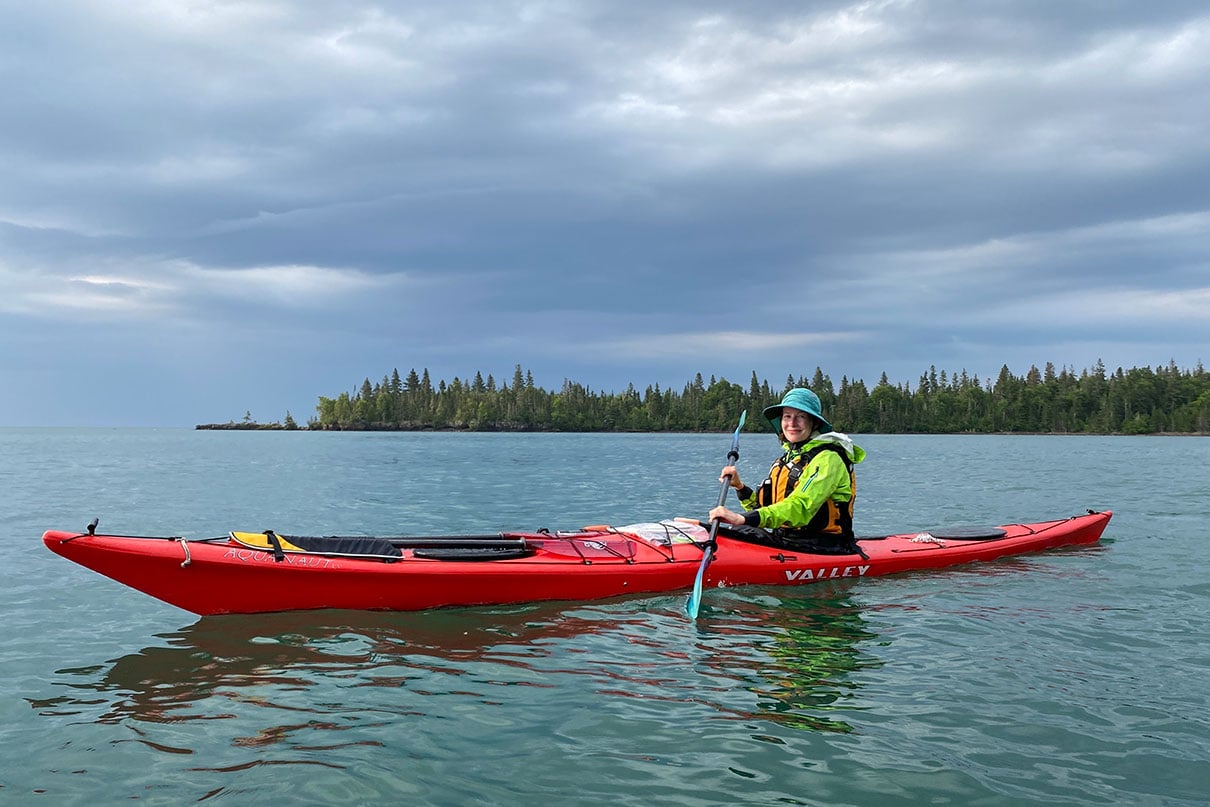
True relaxation started on day two when I packed up early and paddled into Georgian Bay, so pleased, as always, by how neatly everything fits inside the kayak. I swear I could love kayaking without paddling a stroke, just through the joy of packing and unpacking and sitting back to admire my boat in all its compact utility.
I quickly learned I was not alone. As it turns out many magazines, like this one, have named Philip Edward Island one of the best places on the planet to paddle, which de facto makes it less true. However, the beauty of this ice-, water- and wind-shaped landscape was undeniable, and traveling alone makes it easy to slip between the crowds.
I camped on an expanse of granite with my tent and kayak nestled beneath a pine tree, nearly invisible. Then a tour group pulled in next door, making as if to stay. I made a big show of myself, like one would to scare away a bear. I paced up and down the rock on made-up errands, clattering pots and shaking out large flapping objects as if to dry them. Then I hunkered back down and watched the group paddle away.
My last solo trip was more than a decade ago. At the time I took aloneness for granted. I lived by myself, and my life was awash in privacy and freedom. Today I migrate between family and work—a cramped fire station populated by eight to 10 people. Both families and firefighters move everywhere in packs, and this doesn’t suit my personality.
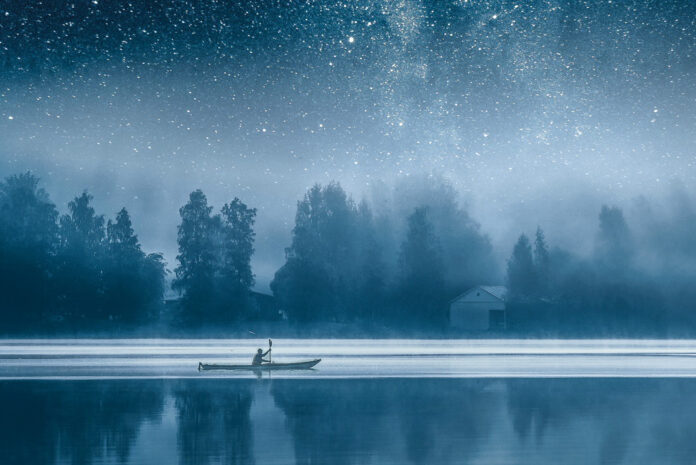
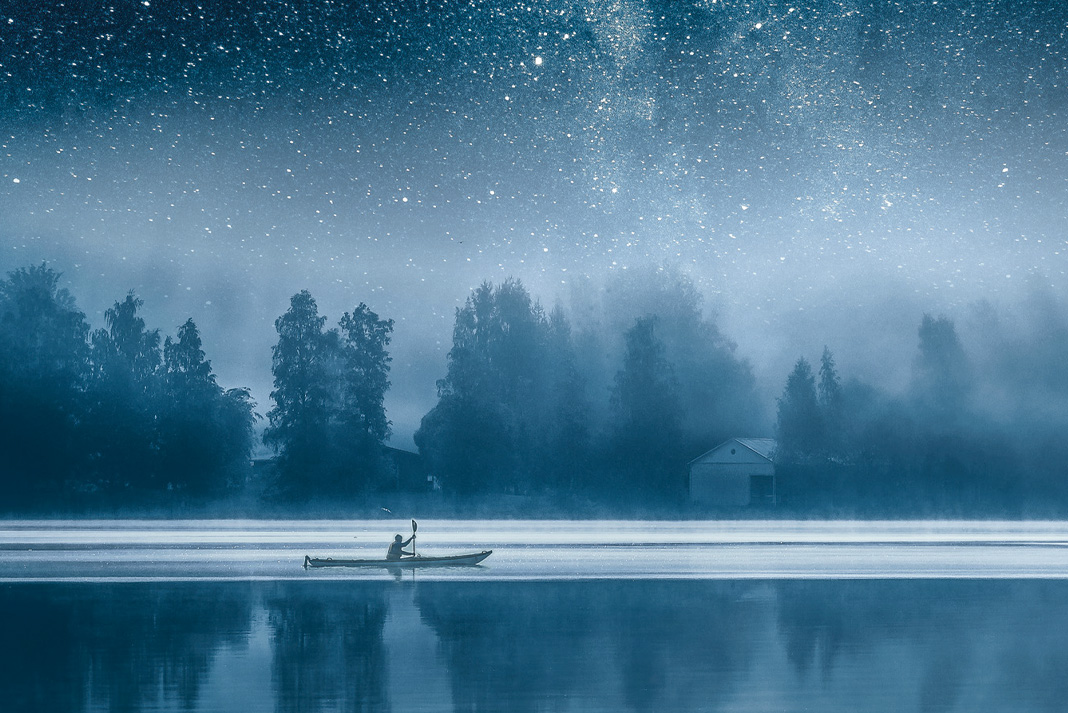
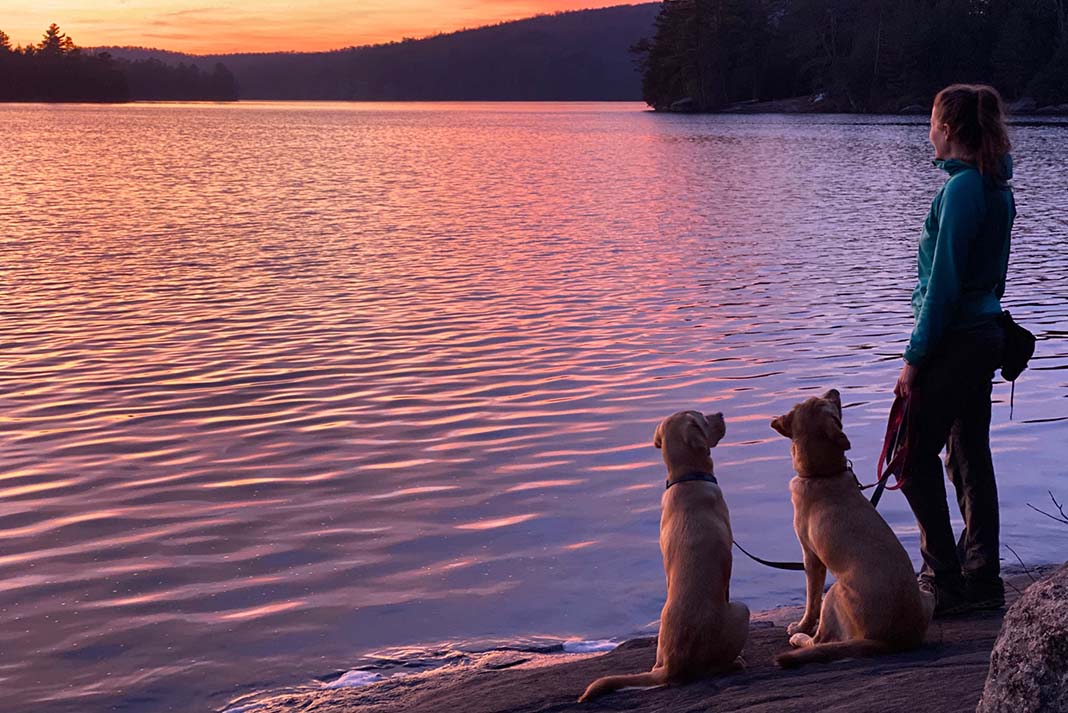
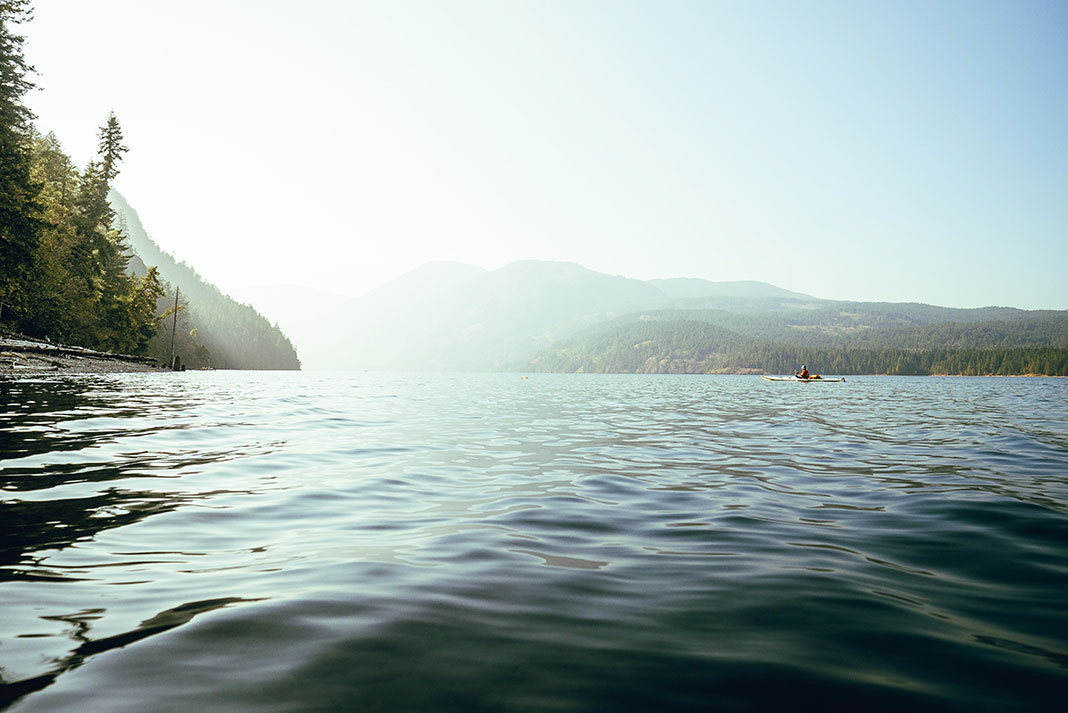
The Georgian Bay solitude struck me like water in the desert, a deep peace of no pressing interruptions or finding new emergencies. I swam in solitude, taking great thirsty gulps as I went. That day I had spent several hours paddling, exploring small islands—I saw a bear grazing berry bushes on the outside of one—and climbing lookouts to take in great distances, surfing wind waves into my campsite. Come evening, I was sitting on the smooth Georgian Bay granite, thinking and doing practically nothing, watching the stars come out one by one. The experience felt infinite, like I would always have enough.
Sand through the hourglass.| PHOTO: LAURI LOHI
In the morning, I was already scheduled down to the minute to pick up the kids. I contended not with rush hour traffic, but with picking my way through rocky shoals while trying to read a map. And when in my distraction I abruptly ran aground, leaving a white cloud of gel coat in the water, nobody flipped me the bird and I didn’t have to get out to exchange drivers licenses and insurance. I just laughed at myself and jumped out for a swim before pushing my boat free.
Back home I acted noticeably slower, like I’d been away traveling for months in rural Tibet. “Wow, are you ever relaxed!” my wife commented, both impressed and exasperated at my sudden inability to process the glut of information and requests she was dumping on me over dinner. The subtext: “Okay, you had your vacation, now get with the program!”
“It’s like you’re on a different planet!” For just those few hours, I was. I felt like I was indeed on a planet, not wrapped up in a city or a house, but under the blue sky on the round earth, listening to the breath of wind in the boughs of the white pine and the sound of water lapping on rocks and checking out far off things and having far off thoughts.
Though the wilderness portion of my trip boiled down to literally just 24 hours sandwiched between long bouts of bustling around, that solitude contained an intimation of infinity that more than made up for the short duration. I didn’t need to be out for long. I just needed to be reminded that there was more than enough time and solitude out there somewhere, just abiding, no matter how harried my home days might be. It’s a place I can access in meditation, or just a moment of deep breathing while sitting in traffic.
I’m reminded of a friend who once told me wilderness is his touchstone. I talked to a canoe builder recently who got a distant look in his eyes when discussing properly long wilderness trips. “It takes me at least three weeks to really settle in,” he told me. “Then everything just clicks. You sleep better, you breathe better, your eyesight is sharper, your mind is sharper.” But I swear I got there in just a couple of days.
On a solo weekend kayaking trip, the possibilities—and the stars—seem endless. | Feature photo: Lauri Lohi
Making a shortlist of Algonquin Park’s finest lakes is no easy task. With more than 1,500 lakes to choose from, there are hundreds of breathtaking destinations that offer something for everyone. To create this list of 21 lakes, we factored in each lake’s exceptional scenic value, as well as its ease of access for paddlers and hikers, and what else you can see in the surrounding area. We also selected lakes with above-average campsites, so you can spend as much time soaking up those lakefront views as you like.
[This article is part of our Ultimate Algonquin Park Travel Guide. Find all the resources you need to plan an adventure-filled trip to Algonquin Park.]
Best lakes in Algonquin
Unicorn sky at Rock Lake. | Photo: Virginia Marshall
Rock Lake
Rock Lake has all of the ingredients for a perfect paddle-hike-camp destination. You could paddle around it in a single day, but there’s so much to see that you’ll want to linger longer. Stay at Rock Lake Campground or one of the 18 backcountry campsites scattered around the lake’s southeastern shore and central islands. Choose your view: dramatic cliffs, spectacular sunset or serene bay—there’s a site to suit every taste. Return to the water to search for ancient Indigenous pictographs, try your best yodel in Echo Bay or park your canoe at the trailhead for Booth’s Rock—an easy 5-km hike with a jaw-dropping view of Rock Lake.
The panorama that unfolds as Highway 60 twists and turns around Lake of Two Rivers is a highlight of any fall-colours drive in Algonquin Park. Fortunately it’s easy to see more of this lovely lake than the fleeting glimpses from the highway. Book a campsite at Lake of Two Rivers Campground, and bring (or rent) all the toys: paddle at dawn to witness superlative sunrise views, then hike or pedal along the lake’s south side on the Old Railway Bike Trail.
The beauty of Pog Lake lies in this small lake’s quiet bays and superb accessibility. Pog Lake Campground encompasses much of the shoreline, with plenty of well-spaced lakeside campsites nestled in majestic pine forest. For such a petite lake, there’s lots to do once you’re here: two swimming beaches, easy access to the Old Railway Bike Trail and peaceful canoeing along the Madawaska River to Lake of Two Rivers or Whitefish and Rock lakes.
Morning solo on Mew Lake. | Photo: Courtesy Destination Ontario
Mew Lake
For an intimate lake experience with the convenience of being steps from your comfy vehicle campsite, Mew Lake is a great option. Cradled by the white pines of Mew Lake Campground, this small lake sees little traffic aside from the occasional forays of your fellow campers.
Look at a map of Algonquin Park and it’s impossible to miss Lake Opeongo. Sprawling across the heart of the park, Opeongo is the largest of Algonquin’s more than 1,500 lakes and undeniably one of its most beautiful.
[ Paddling Trip Guide: View all paddling trips in Algonquin ]
These are vast waters—there’s plenty of diverse shoreline here for a week or more of canoe or kayak tripping. With over 130 backcountry campsites to choose from, finding privacy and solitude is as simple as paddling around the next point. Historical remnants, hidden islands and wildlife-filled wetlands invite exploration.
Accessed by a 40-km gravel road from the north side of Algonquin Park, Cedar Lake receives far fewer visitors than the lakes found along the Highway 60 corridor. This is a large lake with lots to see, so base yourself at Brent Campground or one the widely scattered backcountry sites. Paddle into one of the lake’s two provincially significant marshes to spot moose and other wildlife, then search the shoreline for artefacts from the park’s pioneer era.
It’s no surprise that at times canoeing on Grand Lake feels more like paddling in a wide river valley than on a lake. This long, narrow lake occupies a natural fracture in Algonquin’s bedrock landscape and forms part of the headwaters of the Barron River, which enters its own spectacular canyon just a few kilometres downstream of the lake. Look for unique glacial remnants, Indigenous pictographs and secluded campsites along the lakeshore. South of the developed sites at Achray Campground, the undulating hills of Carcajou Bay form the backdrop to the iconic Tom Thomson painting, “The Jack Pine.”
Galeairy Lake is an access point to the interior of Algonquin Park’s southern panhandle, but this sizeable lake is also a beautiful destination in its own right. Many of the interior campsites here perch on high rocky points, giving lovely lake and sunset views. History buffs can explore Farm Bay for the remains of an amphibious boat called an “alligator”—used for hauling logs across both land and water.
The heart of central Algonquin Park is an area of mid- to large-sized wilderness lakes interconnected by centuries-old portage trails and meandering waterways. Big Trout Lake anchors the west side of a terrific weeklong canoe tripping circuit from Lake Opeongo. The only other visitors you’ll see on this remote, island-studded lake are adventurous trippers like yourself. If you like island campsites, you’ll love Big Trout Lake.
On the west side of Algonquin Park, Little Trout Lake makes an enticing stopover for canoe trips starting out at the Magnetawan Lake access point. At just two kilometres long, this pine-rimmed lake has an intimate feel and 11 fine backcountry campsites to choose from.
For seclusion-seekers, it’s hard to beat Little Eagle Lake. This small, isolated lake on the west side of Algonquin Park has a solitary campsite situated on a west-facing point—perfect for private sunsets (and skinny-dipping). Even better, you won’t have any unexpected visitors—the only way into and out of the lake is via a 340-metre portage.
In the northwest corner of Algonquin Park, North Tea Lake boasts a rare combination of breathtaking sandy beaches, loads of portage-free paddling and picturesque islands, and tons of gorgeous backcountry campsites. With two distinct arms and nearly 70 campsites to choose from, it’s possible to find privacy and seclusion even on busy summer weekends. Enjoy stunning sunsets and swimming, and watch for wildlife at the Amable du Fond River—this winding waterway is a moose hotspot.
Lying in the heart of the Algonquin backcountry, Burntroot Lake takes several days’ travel by paddle and portage to reach. But its isolation is what makes this large, island-studded lake so special. All 25 campsites on Burntroot remind paddlers why Algonquin Park backcountry camping is world-renowned. And, if you’re a fan of pitching your tent offshore, this lake has no fewer than 11 island campsites. Explore the varied shoreline for artefacts of Algonquin’s early homesteading, farming and logging eras.
Lovely Canisbay Lake offers some of Algonquin Park’s most secluded developed camping at Canisbay Lake Campground, as well as easy access to 16 backcountry campsites for novice paddlers and campers. In the fall, the surrounding hardwood forest explodes into a riot of colour and canoeists can forage for wild cranberries at the lake’s southern outlet.
Travelling north by canoe from Lake Opeongo, you could paddle right through Big Crow Lake on your way to the area’s larger lakes, but you would be missing out. Instead, pitch your tent at one of Big Crow Lake’s 10 backcountry campsites or, for a truly unique Algonquin experience, rent the restored fire ranger cabin on the lake’s south arm. Hike up the short trail behind the cabin to the old fire tower and enjoy a spectacular lake view from atop these cliffs. Nearby, another trail leads into a remnant of majestic, old growth white pine forest.
The beauty of Harness Lake lies not only in its quiet seclusion and rock point campsites, but also in the variety of ways you can visit the lake. Paddle and portage south from Cache Lake access point, or trek the long loop (35 kilometres) of Algonquin’s Highland Backpacking Trail. Either way, you’ll love the tranquility of this small highland lake.
Even if you don’t subscribe to the notion that a bit of sweat makes your backcountry campsite all the sweeter, Lake Louisa’s stunning natural beauty and isolation makes it worth the effort to get here. Before you can settle into one of the 23 campsites perched amid the lake’s windswept pines and panoramic rock points, you’ll need to carry canoes and packs 3,000 metres across the portage from Rock Lake. In spring, Lake Louisa rarely disappoints anglers—lunker lake trout in these clean, clear waters grow to 55 cm (22 inches).
Shall Lake is one of the less visited Algonquin Park access points on the south side of the park, making this small lake ideal for a quiet yet accessible day trip or overnight. From Shall Lake, paddlers can visit the equally peaceful Farm and Crotch lakes without needing to portage. All three lakes offer inviting interior campsites, as well as rewarding fishing for northern pike, smallmouth bass and, in spring, lake trout.
Regarded as one of the most picturesque Algonquin Park interior lakes, Booth Lake boasts 18 beautiful campsites strategically scattered around the lake on beaches, islands and rock points. Diverse fish species await anglers, while paddling photographers enjoy a visual feast that includes spectacular fall colours and abundant moose in the extensive wetland complex around McCarthy Creek.
In late September and early October, the hardwood forest hillsides cradling Rosebary Lake are ablaze with breathtaking fall colour. Situated on the west side of Algonquin Park, the lake has fewer visitors than routes accessible from Highway 60—late-season campers may find they have Rosebary’s six backcountry campsites all to themselves. Choose a site with southeast exposure for early morning sunshine to warm up after a chilly night, or pick one of the lake’s west-facing points for stunning sunsets.
Nadine Lake is one of the more remote Algonquin Park lakes. | Photo: Virginia Marshall
Nadine Lake
Perched in a copse of hardwoods, far off the beaten track in Algonquin Park’s central highlands, Nadine Lake is known as a green headwater lake. Unlike the familiar “root beer” tint of most of the park’s rivers and lakes, which results from staining by tree tannins, Nadine Lake’s crystal clear, chilly waters are spring-fed. Accessed via a 1,400-metre portage from the Nipissing River, there are four backcountry campsites on this remote Algonquin Park lake.
Photo: Stephen Smith, Whitney & Smith Legendary Expeditions
We all need a break from the everyday sometimes, and fortunately the world is full of paddling destinations that are anything but. Fancy an epic paddle down Norway’s longest fjord? How about searching out your own slice of paradise among the Fijian islands? Those are just two jaw-dropping destinations perfectly suited for your next paddling trip of a lifetime, so read on for the full list and start packing your bags.
Morueldr—pronounced moor-eld—is old Norwegian for “ocean fire.” The fire in Norway’s dark waters is actually natural bioluminescence, the defense response of tiny sea organisms when stirred by the dip of a paddle. In the Fiordlands, the Atlantic Ocean creates a filigree of land and water, stretching its grasp far inland along narrow, deep inlets flanked by steep cliffs and plunging waterfalls. Trounce the discomforts of wet-weather camping with a luxury five-day inn-to-inn tour of the world’s longest fiord, the Sognefjord.
[ Plan your next Norway paddling adventure with the Paddling Trip Guide ]
Photo: Simon Hermans/Unsplash
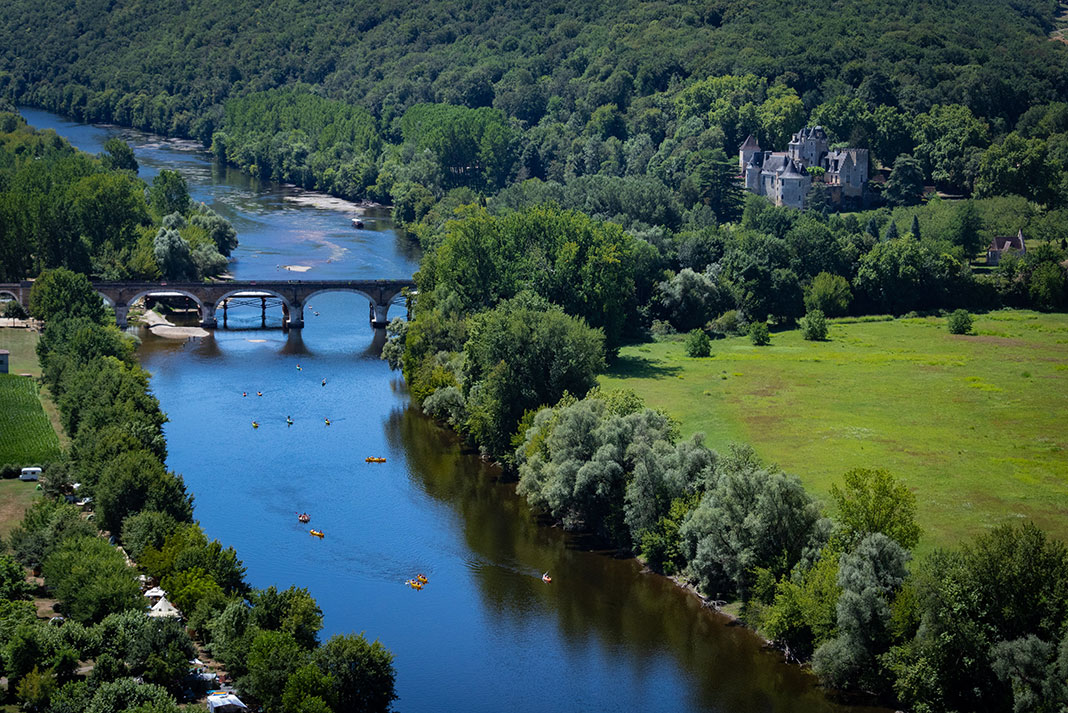
2 Float through France on the Dordogne River
In southwest France, the Dordogne River traces a path through 37,000 years of human history. Leave the tour buses and crowded train stations behind and explore the “land of a 1,001 castles” along this breathtaking waterway. A scenic four-day trip travels from Saint Julien de Lampon downriver to Limeuil, passing two of Dordogne’s most spectacularly situated chateaux. Many small rapids make for lively paddling past medieval villages on the way to Limeuil. Accommodation choices include riverside campsites.
Photo: Jonathan Kalifat/Unsplash
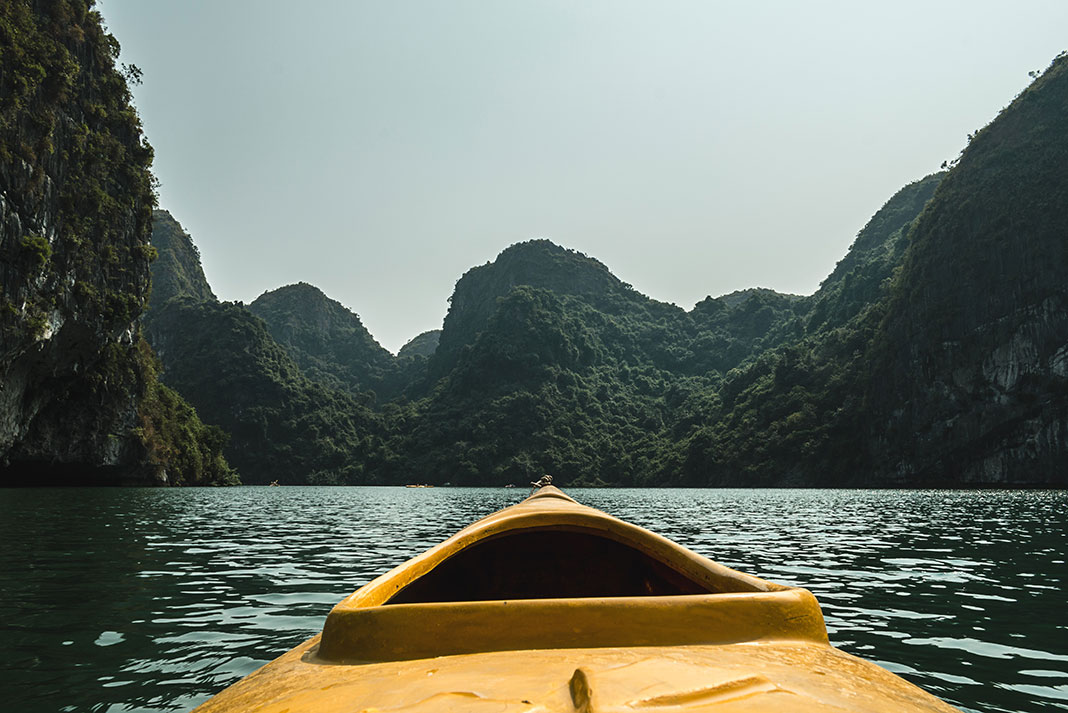
3 Kiss the dragon in Halong Bay, Vietnam
Junk n. 1 worthless articles. 2 flat-bottomed sailing boat used in the East Indies. Fortunately, Tofino Expeditions incorporates the latter into their October seven-day tour of Vietnam’s fancifully named Halong Bay (“Bay of the Descending Dragon”). Paddle the smoky green waters into a hidden sea cave and you too will wonder if this landscape might, after all, be the progeny of mythical creatures. With evenings spent savouring gourmet cuisine and sailing serenely to new paddling locales, kayakers enjoy more time soaking up the scenery and culture and less time worrying about mercurial feng shui—literally: wind and water.
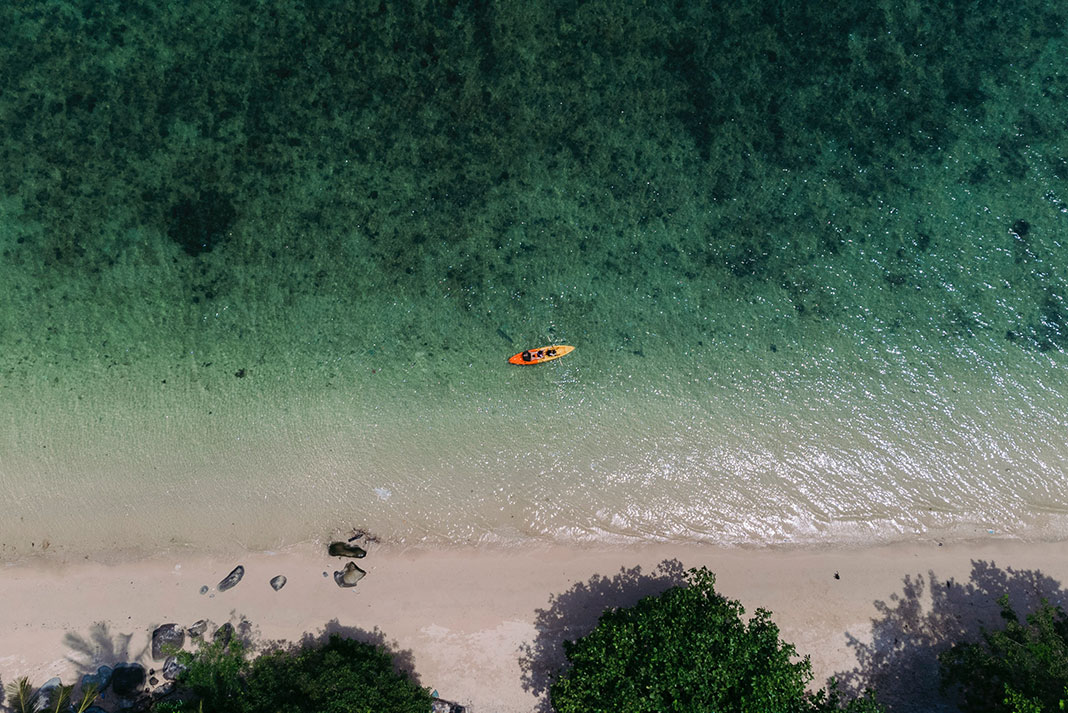
Few places promote the relaxing and recreational facets of kayaking better than the tranquil blue waters and warm beaches of Fiji. The Kadavu island group is one of the least developed and most culturally intact, offering paddlers a chance to interact with the natives while plying the coral reef–sheltered waters. Keep sand and sleep separate with New Zealand-based Tamarillo Expeditions, which hosts a seven-day tour of Kadavu with stays at intimate local resorts.
Photo: Tyler Lastovich/Unsplash
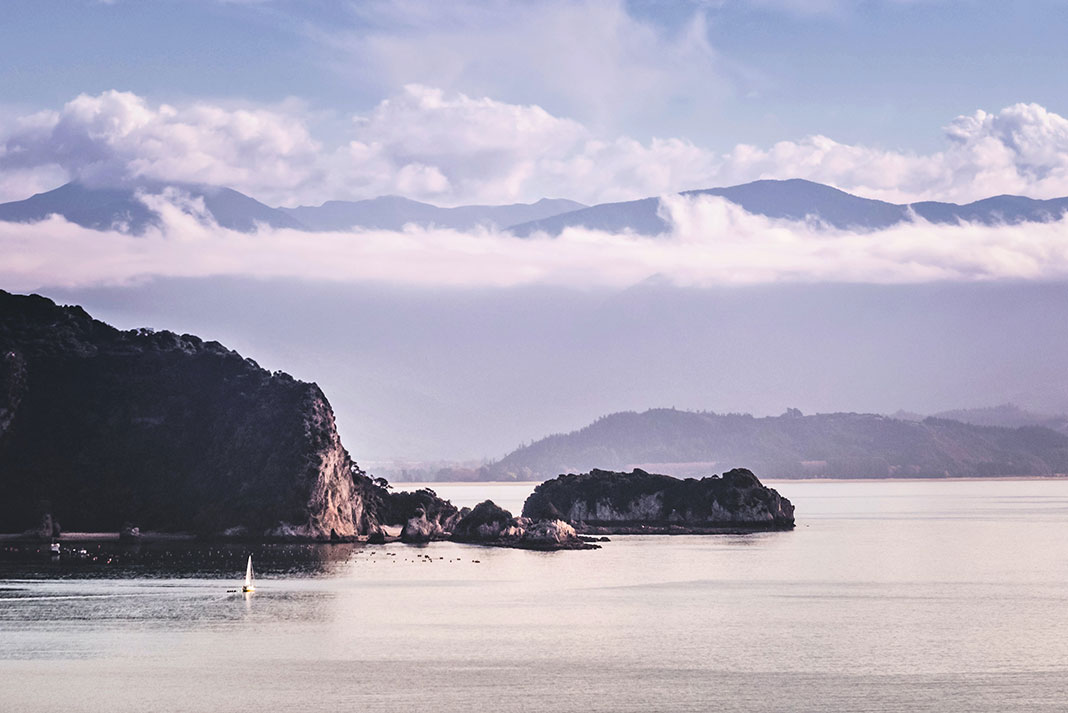
5 Camp without tramping in Abel Tasman, New Zealand
Abel Tasman National Park on the South Island is renowned for its spectacular “tramping” (hiking), but a tour of this unspoiled wilderness by kayak is just as scenic and a lot less work. Kaiteriteri Kayaks combines paddling with a water taxi and kayak sailing for an exclusive three-day tour of the entire park coast. Says Kaiteriteri’s Maria Bernstone, “Our trips are about good times, not hard work.” With azure lagoons, dozens of beaches and plentiful wildlife, including two colonies of friendly fur seals, the Abel Tasman’s 44-kilometre coastline brings your daydreams to life.
Photo: Lydia Mailloux/Unsplash
6 Master the Mingan Islands of Quebec
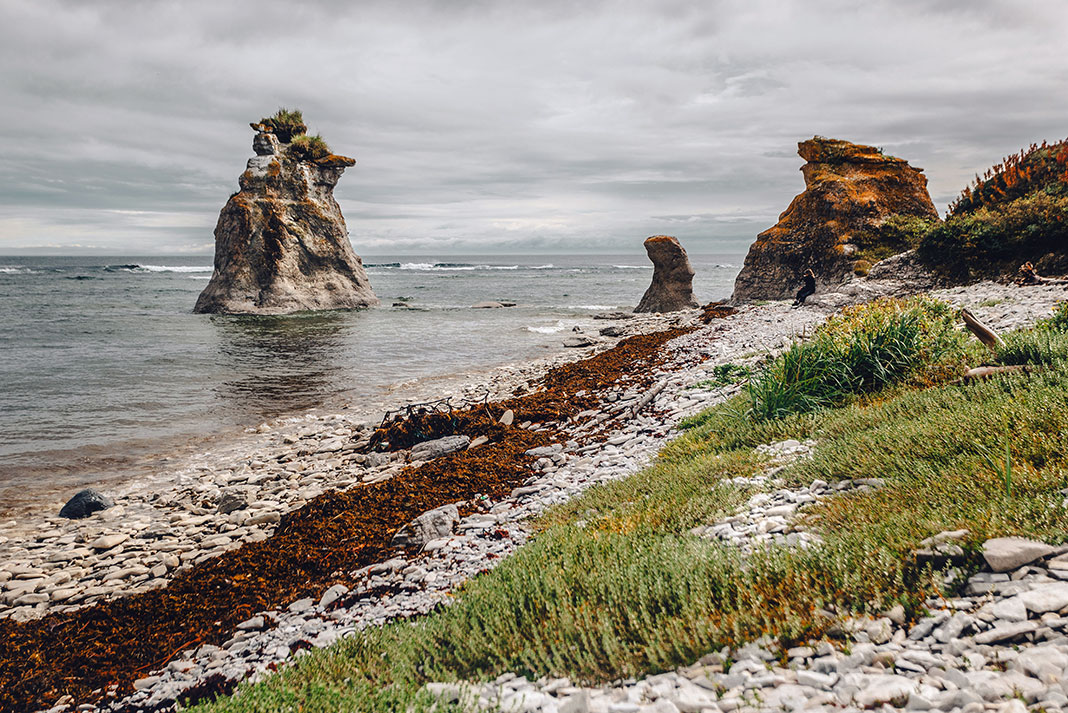
Stretching like a necklace of stone jewels from the north shore of the Gulf of St. Lawrence, the islands of Minganie are a sea kayaker’s Valhalla. Relentless wind and waves have eroded this limestone tableland into a fantastic array of sculpted rock, grottoes and turrets—a watery maze to which the kayak is perfectly suited. Odyssée Minganie leads one- to five-day interpretive voyages around the national park’s western islands, home to puffins, penguins, porpoises and lots of other things that start with the letter ‘p.’
Photo: Stephen Smith, Whitney & Smith Legendary Expeditions
7 Go north to Ellesmere Island, Nunavut
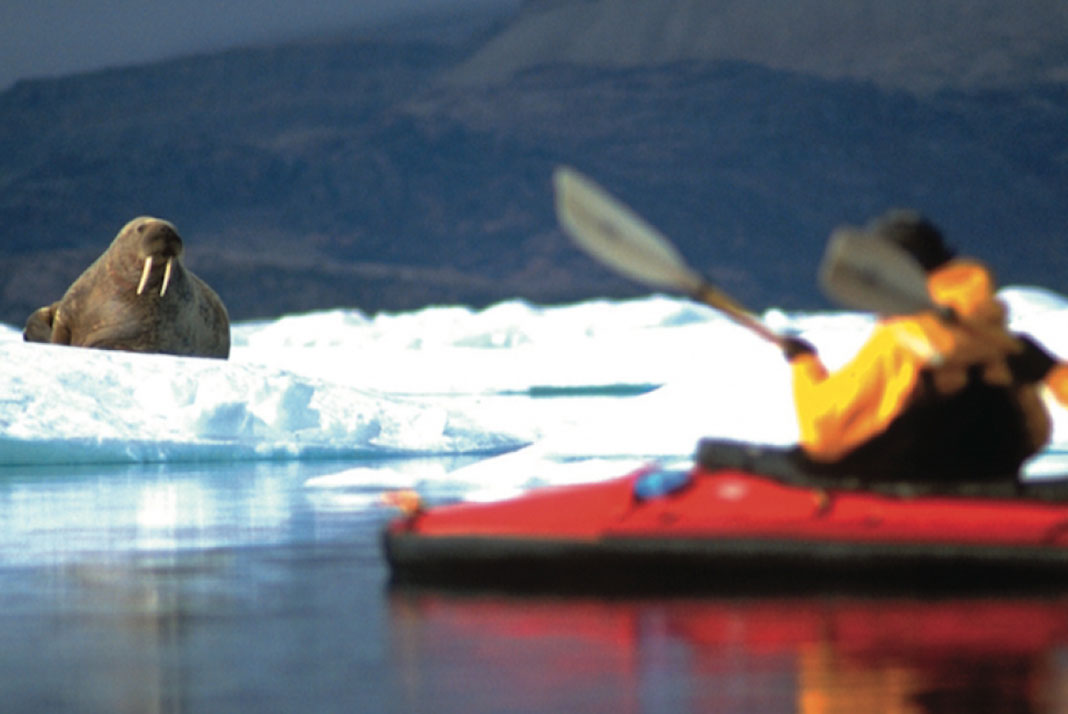
The Far North is one of the few remaining landscapes of pristine wilderness, raw and untamed by the mollifying hand of civilization. Arctic aficionados and those simply tired of pedestrian peregrinations head to Ellesmere Island at the 79th parallel in the Canadian territory of Nunavut. A 12-day backcountry odyssey amidst icebergs, walruses, and 24-hour sunlight is just a Twin Otter flight and a paddle stroke away. Let Whitney & Smith Legendary Expeditions take care of the travel arrangements (in July/August for passable sea ice) and transform your arctic fantasy into reality.
[ Plan your next paddling adventure in Canada’s North with the Paddling Trip Guide ]
Photo: Devon Hawkins/Unsplash
8 See a great bear on British Columbia’s central coast
Which came first, the kayak or the mothership? Dunno, but any paddler who’s hunkered in a campsite soaked by the B.C. rainforest’s eponymous drizzle has surely dreamed they’d booked the mothership first. Captain Ross Campbell and family assure you’re well cared for aboard former hospital ship the Columbia III. The days on Mothership Adventures’ 9-day Great Bear Rainforest cruise (in September for prime grizzly viewing) are packed with paddling to earn you the organic delights of a shipboard chef and the comforts of a warm, dry berth.
Photo: Winniccxx/Wikimedia Commons
9 Get into hot water at Pumalin National Park, Chile
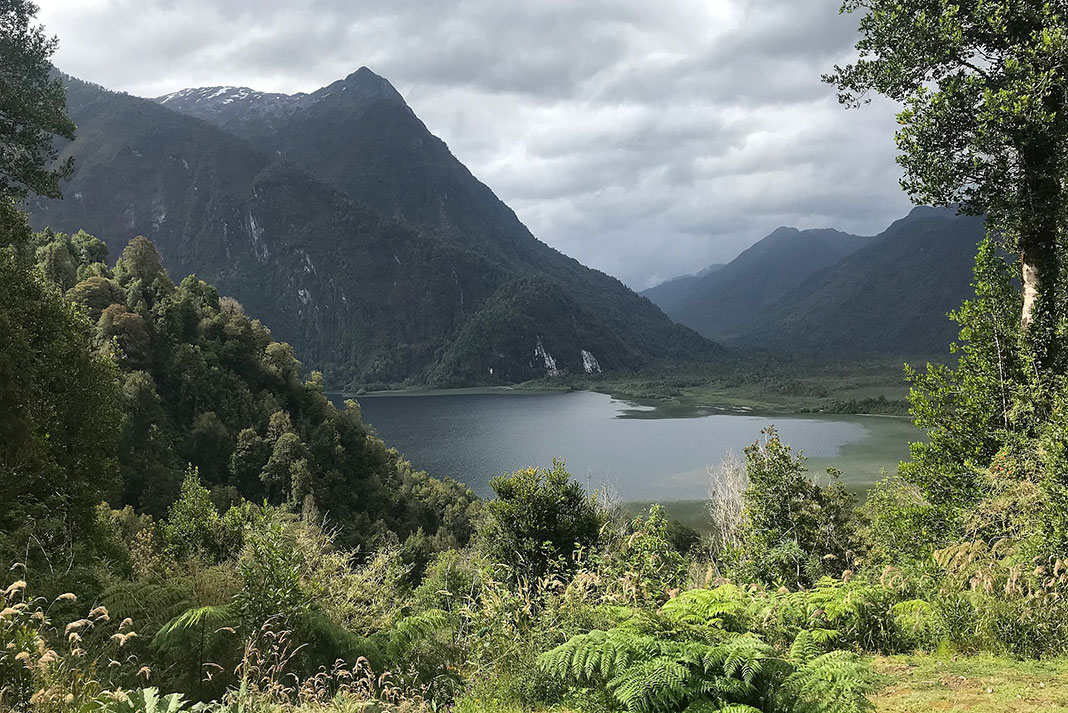
What could be better than spectacular fiord and mountain scenery, towering waterfalls and adorable marine life on a kayaking expedition? One word (OK, actually two): hot springs. Replenish your spirits and rejuvenate your body in natural baths at the edge of the Pacific. Do as local people have done for centuries and add seawater to the springs to attain the perfect temperature. Chilean outfitter Yak Expediciones leads four-, six- and 11-day self-supported trips in the northern fiords of Pumalin National Park, sharing their intimate knowledge of local culture, history, language, and of course, hot springs.
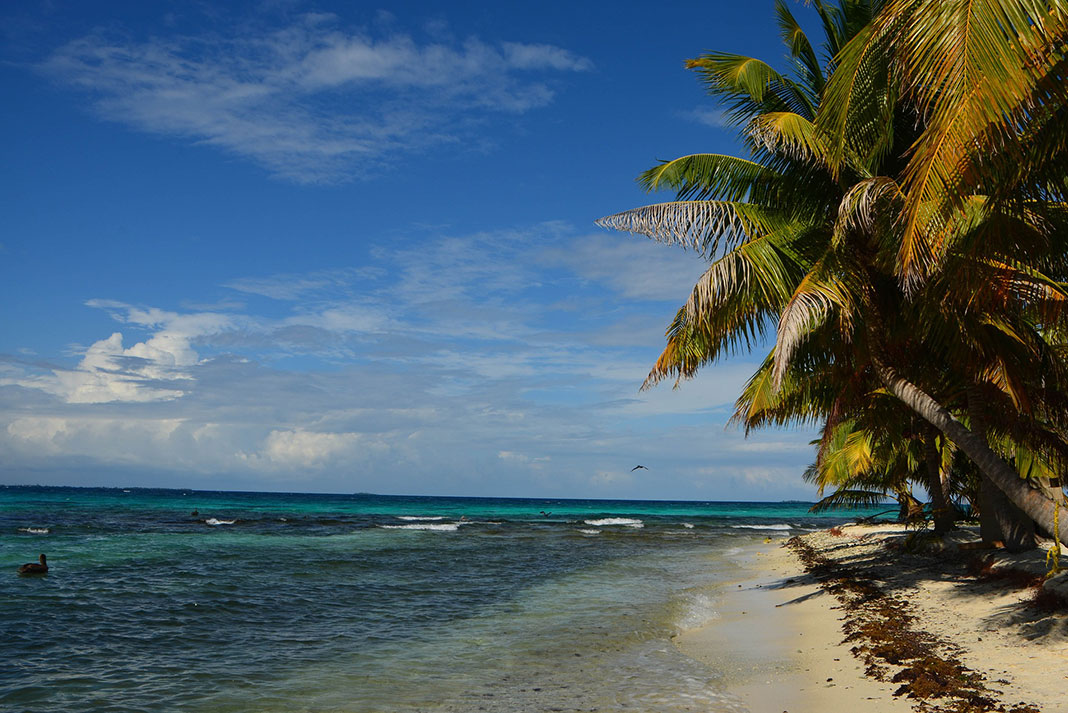
Running the length of the Belizean coast, the Barrier Reef forms one of the richest marine ecosystems on earth. Kayak to world-class snorkelling and diving sites or simply hang a hammock and drink cocktails beneath the swaying palms. Island Expeditions offers a unique five- day experience of the Paradise Islands. The trip is lodge-based but still fully guided—which means no camp chores and lots of free time to take advantage of your guide’s expertise in kayaking, snorkelling, and local nature and culture.
[ Plan your next Belize paddling adventure with the Paddling Trip Guide ]
This article was first published in the Spring 2007 issue of Adventure Kayak Magazine. Subscribe to Paddling Magazine’s print and digital editions, or browse the archives.
Taking the time to improve your overall fitness and strength will not only lower your chances of getting injured, but it will make you a better, stronger paddler too. These 11 easy-to-follow exercises and movements will improve flexibility and strength in all the right areas and will prevent fatigue and muscle soreness.
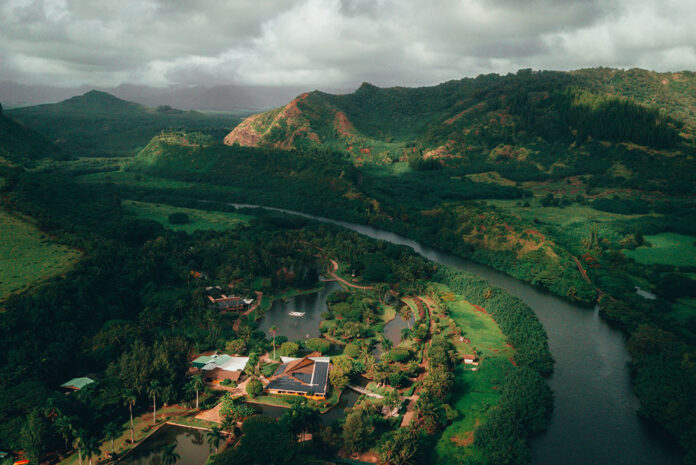
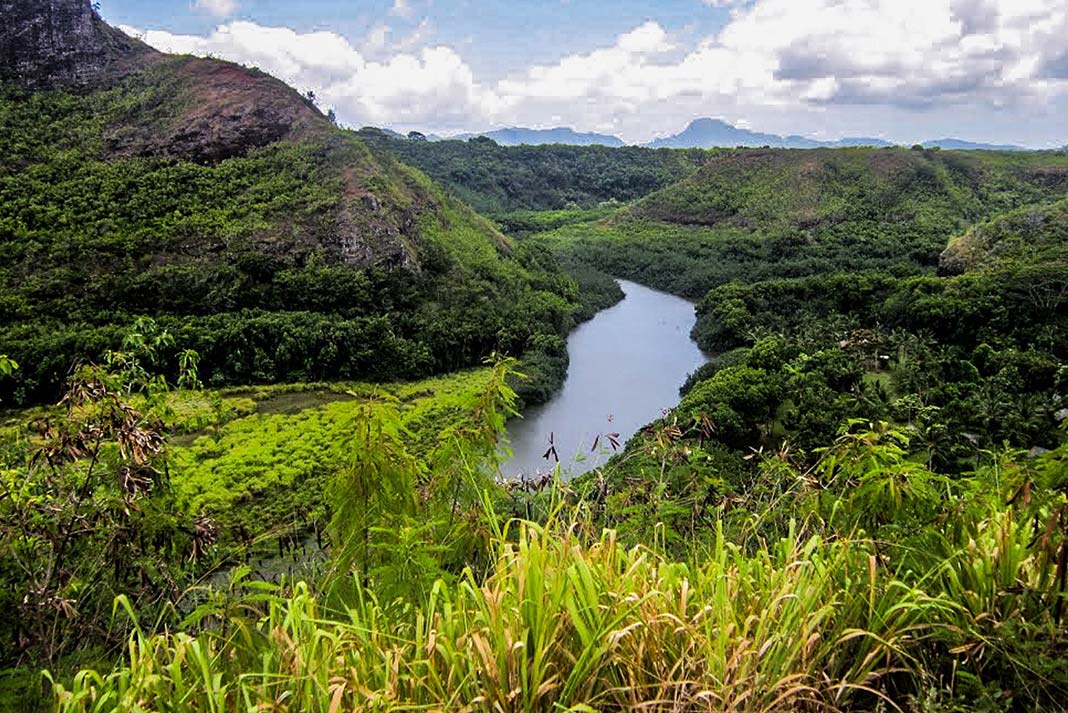
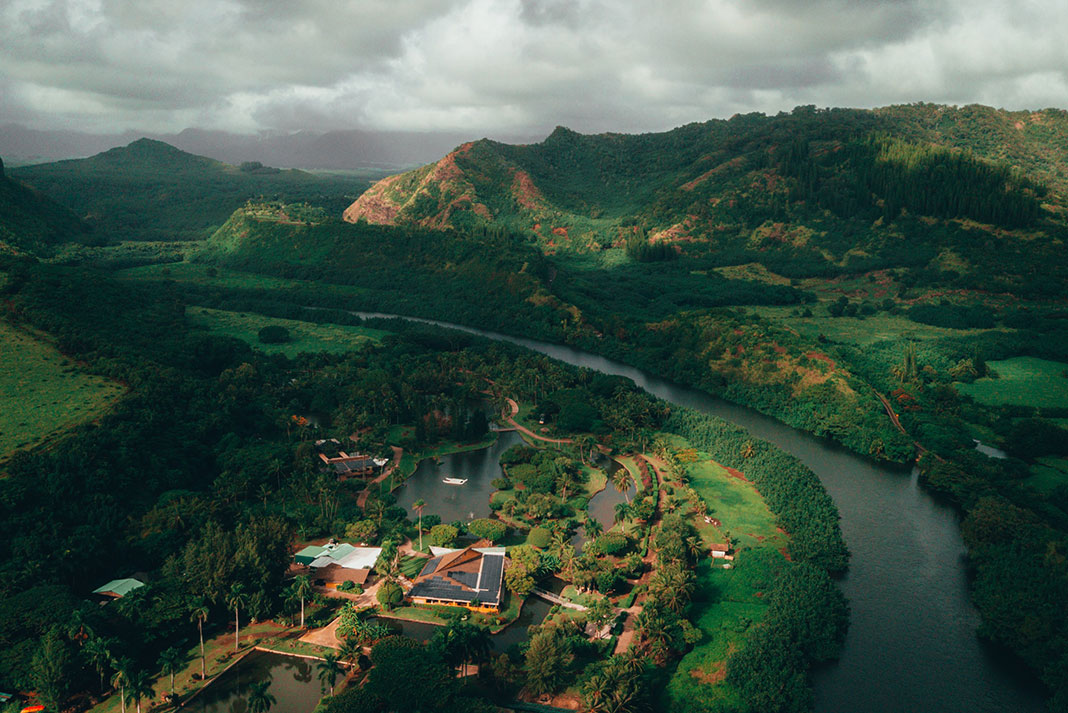
On the Hawaiian island of Kauai, you will find this distant state’s only navigable river. At 20 miles long, the Wailua River is Kauai’s largest and longest, beginning on Mount Waialeale and emptying into the Pacific Ocean on the island’s east side. With the lush tropical rainforests and beautiful waterfalls of the “Garden Island” waiting to be explored, it is not hard to see the draw of a Wailua River kayak trip.
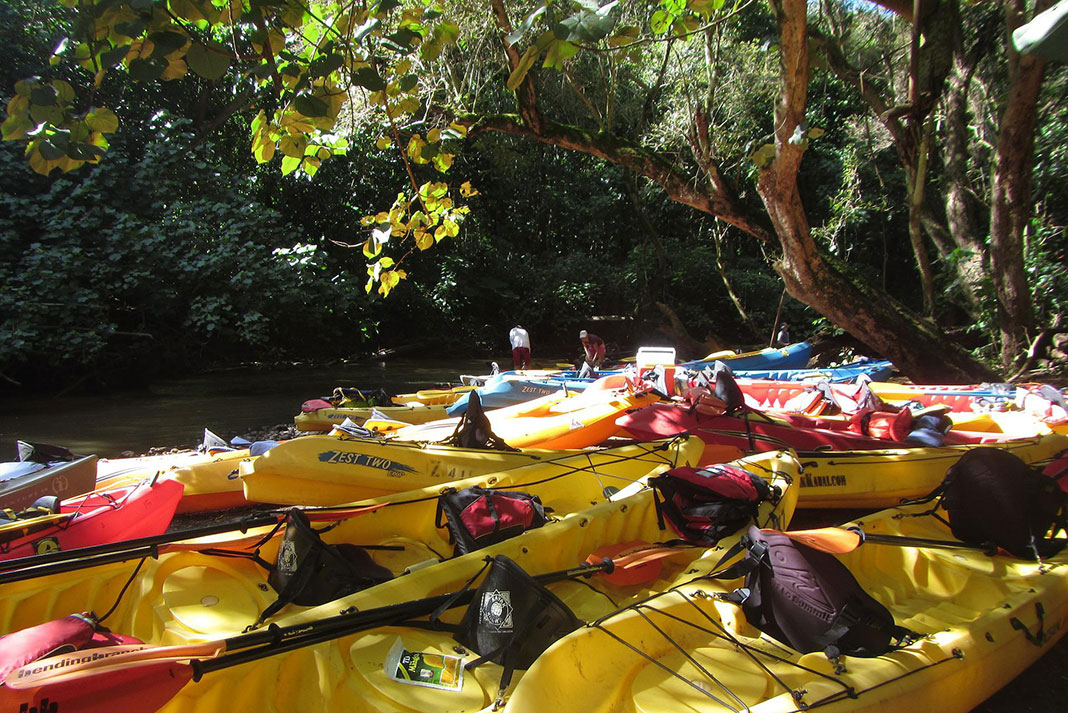
As you can imagine, being the only navigable river out of all the Hawaiian islands means there are plenty of businesses that operate kayak tours along the Wailua. Here are some top-rated ones to check out.
Plenty of local businesses operate kayak tours along the Wailua River. | Photo: Lois Neate/Pixabay
Kayak Wailua
Kayak Wailua offers numerous launch times Monday through Saturday, so you can depart almost any time you like, so long as it’s 1:00pm or earlier. You will be provided with a dry bag and cooler, and will depart with your guide across the street at the Wailua River Marina. From there, you will head up the river to Secret Falls, where you can enjoy a packed lunch (not provided) and swim in the pool at the bottom of the falls. This tour is perfect for beginners, including children, and prices start at $50 per person.
Ali’i Kayak
Ali’i Kayak’s Secret Falls Kayak/Hike tour is also perfect for families. Before heading out, your CPR and First Aid certified guide will provide a crash course on paddling techniques and water safety. Once you feel comfortable in your kayak, you’ll head a short two miles upriver and trek about 1.5 moderate-to-strenuous-miles to and from the falls. Tours start at $65 per person.
Wailua Kayak Adventures
Choose between a morning and early afternoon launch time and soak up the history of this sacred area of Kauai on your paddle to Secret Falls. Once you reach your destination, Wailua Kayak Adventures provides organic snacks at the falls to replenish your energy before taking a dip in the waterfall pool. Prices are $40 per child and $60 per adult and include dry bags and even hiking sticks to use on the walk to Secret Falls.
Kayak rentals
If time constraints aren’t your thing, check out some of these highly recommended kayak rentals in the area.
Kayak Kaua’i
For $95 for a double kayak, you can paddle all day on the Wailua River. Kayak Kaua’i is the exclusive outfitter for Wailua River State Park. While you rent your kayak from the Wailua River Marina, it should be noted that you will be required to car mount your kayak and drive a short distance over the Wailua Bridge to launch at the state park on the other side.
Wailua River Guides
Though their main office is located in Kapa’a, you will launch your rental kayak from the Wailua River Marina. Single and tandem kayak rentals are available Monday through Sunday.
Wailua Kayak & Canoe
Located right on the Wailua River in Kapa’a, you won’t have to worry about hauling your rental kayak with this company. Wailua Kayak & Canoe offers single, tandem and even tri-kayaks for rent. Prices begin at $50 per adult and $30 per child (5 to 7 years) and includes five hours of self-guided paddle time.
Journey to Secret Falls and Fern Grotto on this incredible river. | Photo: Michelle Raponi/Pexels
Kayaking the Wailua River without a guide
With its calm waters and fairly straightforward route, the Wailua River is a great place for beginner and novice kayakers to explore on their own. Most outfitters are more than happy to provide you with a waterproof map of the river to keep you on course.
Several put-in and take-out locations are available. These include the Wailua River State Park boat ramp, the Wailua River Marina and Kamokila Hawaiian Village. The easy-going nature of the river makes it possible to depart from and return to the same location, though it should be noted that you may be paddling into the trade winds on your route back. Most paddlers only venture a few miles out to the main attractions of Secret Falls and Fern Grotto.
There are several unique safety precautions to note on the Wailua. The southern edge and middle of the river are reserved for powerboats and barges, so paddlers are strongly cautioned to paddle no farther than 25 feet away from the north bank, both coming and going. Please be aware of the wakes these boats can produce.
As mentioned, you will likely be paddling into the wind on your return trip. The trade winds can become especially strong in the afternoons, which is one reason the majority of the local kayak tours launch in the morning.
Even if it’s not raining where you are on the river, flash flooding can occur from storms on the mountains where the river originates. If the river starts becoming muddy and murky, seek higher ground immediately.
Many people launch from the Wailua River Marina or Kamokila Hawaiian Village. Again, many outfitters will be happy to provide you with a map if you’re renting one of their kayaks. If you’re short on time, the Village is closer to the falls than the marina. The falls are about a 15-minute paddle upriver from the Village, while they’re a two-mile paddle from the marina.
When you reach the fork in the river, choose the right tributary and continue paddling for a short five to 10 minutes. Even if you don’t arrive during a time of day that’s busy for guided tours, when you will see plenty of kayaks and know where to “park,” the clearing is very obvious on your right-hand side.
The trail to Secret Falls from the bank where you leave your kayak is very well-marked as well. You will cross a fairly deep stream, which may or may not have a rope to assist you at the time, along with another small cascade along the way. The hiking portion to Secret Falls is about 1.5 miles round-trip.
Although the main attraction along the Wailua River is Secret Falls, there is another natural wonder nearby that is worth checking out while you’re in the area. Instead of taking the right fork in the river from the Wailua River Marina or Kamokila Hawaiian Village, veer left up the south fork and you will find the enchanting Fern Grotto a short ways upstream.
A former lava cave, this grotto is covered in—you guessed it—ferns, giving it a secretive feel. Nestled back in a cove surrounded by lush jungle, this attraction is easy to spot on your left-hand side.
From the Wailua River Marina, the paddle to Fern Grotto takes about four hours round-trip. You can also disembark from Wailua River State Park for a shorter trip as Fern Grotto is located within the park boundaries.
With its calm waters and fairly straightforward route, the Wailua River is a great place for beginner and novice kayakers to explore on their own. | Feature photo: Zane Persaud/Unsplash
How long does it take to kayak the Wailua River?
Although you can’t technically kayak the entire river since it begins on Mount Waialeale and there is a restricted zone near Wailua Bridge (a designated swimming area past the marina where the river meets the Pacific), you can still kayak much of the river. Also, while you can technically kayak to Kaholalele Falls on the north fork of the river, it is very much rain-dependent. If the water is not high enough, you will not be able to reach it by boat as it becomes too rocky to navigate. In a nutshell, you can easily spend a half or full day on the river exploring the spectacular sights mentioned above in the accessible areas.
With its calm waters and fairly straightforward route, the Wailua River is a great place for beginner and novice kayakers to explore on their own. | Feature photo: Zane Persaud/Unsplash
Want get more thrills out of your next whitewater run with less worry and hassle along the way? We’ve collected 30 essential river running skills to help you amp up the ride and make certain your path remains long and winding.
7 essential river paddling skills
1 Paddling never gets old and neither do the young at heart
Professional motorcycle racer Bill McKenna told Cycle magazine in 1982, “Life is not a journey to the grave with the intention to arrive safely in a pretty and well-preserved body, but rather to skid in broadside, thoroughly used up, totally worn out and loudly proclaiming: ‘Wow—what a ride!’” His words have since been quoted and used for inspiration many times by everyone from backcountry snowboarders to cancer patients, from marathon runners to piss-and-vinegar octogenarians. It’s good advice. Advice that most river runners would understand and rejoice with an “Amen.” It suggests that we should never be too fearful to try, or too old to continue.
River running never gets old. | Photo: Tom Spross/Unsplash
2 Punch holes
Like sussing out a hottie at the bar before your mates do, punching a hole takes speed, an aggressive attitude and timing. Approach with plenty of momentum, grit your teeth and lean forward, and take your last stroke just as you hit the wall (of water). You’ll need to dig deep to get a good grasp of the undercurrents and be carried through (in other words, put your blade in the green water beneath the foam pile). She, er…the hole, is all yours.
Leave that caveman’s club of a paddle behind (yes, we mean your carbon crankshaft) and strap a pair of these floppy dinner plates to your mitts. Hand paddling is the gnarly, minimalist wave of the future. Originally embraced by squirt boaters—that loony breed of underwater kayakers—as an easy and uncluttered way to get downtime, hand paddles are catching on in river running circles as well. Why? It’s a great way to learn how to feel the water. It’s also wicked training for when, and we mean when, your paddle breaks. Not convinced? Well, consider that the infamously difficult and treacherous Green River Race even has a separate category for hand paddlers.
4 Seal launch
It looks cool and it’s the most air you can get with absolutely zero paddling skills. A seal launch is sometimes the only way to drop into a run and it’s definitely the most fun.
Step 1: Pick a clear launch zone with deep water below. Hold your paddle in your control hand and push off with your other hand. Resist offers of assistance from overzealous friends and onlookers.
Step 2: Aim to pencil in at a 70- to 80-degree angle so your kayak’s rocker and buoyancy bring you smoothly to the surface. Your launch speed is the main factor in your angle of entry. Too little umph, you’ll go ass-over-teakettle. Too much and you’ll land flat and hard.
Step 3: Hold your paddle slightly over your head or alongside your boat so it doesn’t biff you in the face when you hit the water.
5 Catch waves on the fly
Save traffic jams for the drive home; this cool move will keep you out of the eddy and on the wave. As you float downstream, approach the wave facing upstream and glancing over your shoulder to line yourself up with the steepest part. Paddle hard forward against the current to slow yourself as you slip toward the wave. Lean onto your back deck to prevent nose-diving when you drop into the trough. When your bow is clear, immediately throw your weight forward and take a few strong forward strokes to stay on the wave face. Surf.
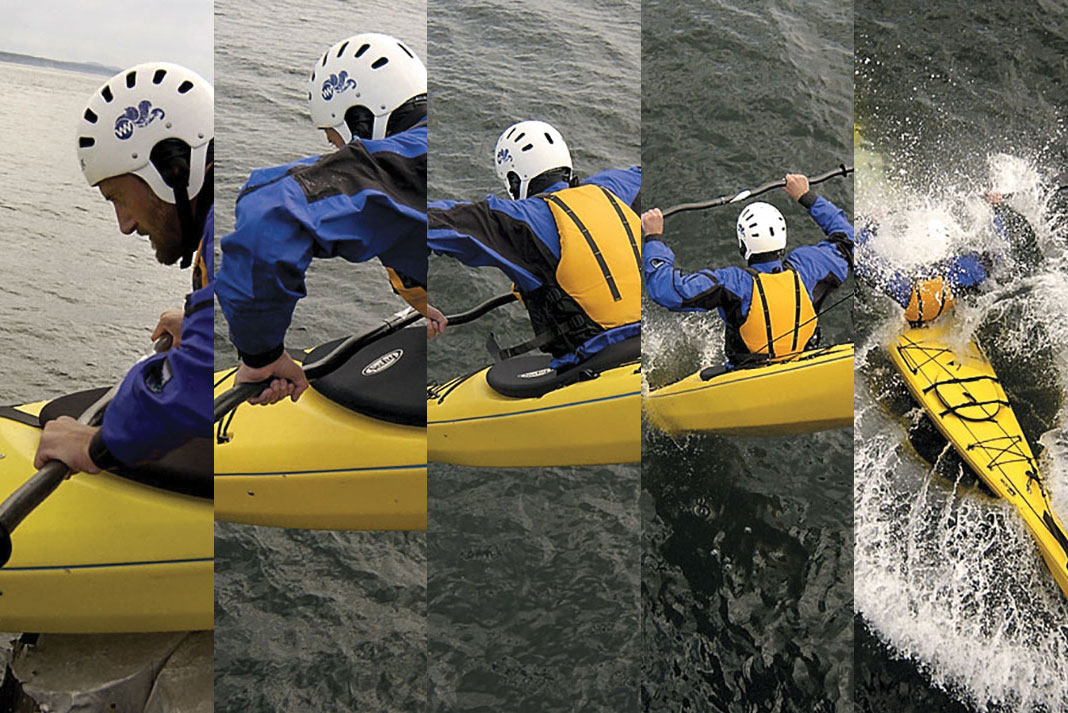
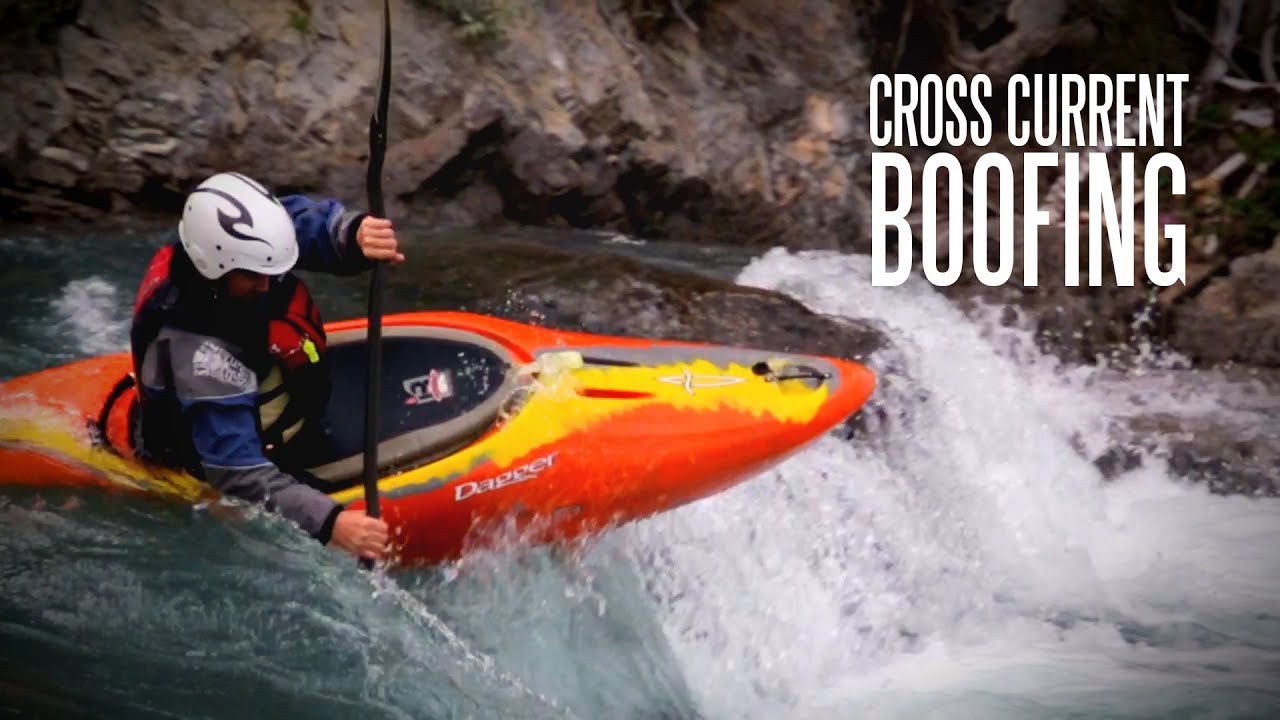
6 Boof
Every paddler’s favourite onomatopoeia is also the crux of her creeking success. Boofing allows you to clear small waterfalls, pour-overs and holes and avoid vertical pins. The boof is a two-part animal—learn it well.
Approach: You need plenty of speed to launch clear of the hole at the bottom of the drop. Head for the steepest part of the drop and aim off-centre to avoid the stickiest part of the hole. Remember that a rock at the lip of a drop can serve as a launch ramp if you hit it with just your bow.
Boof stroke: Plant this power stroke just over the lip. Picture yourself pulling against the face of the falling water. Thrust your hips forward as you pull on the paddle to lift your bow. The further you pull and thrust, the flatter your boat will land. Once clear of the lip, bring your weight forward for the landing. Have your paddle ready for a support stroke or to pull you away from the hole.
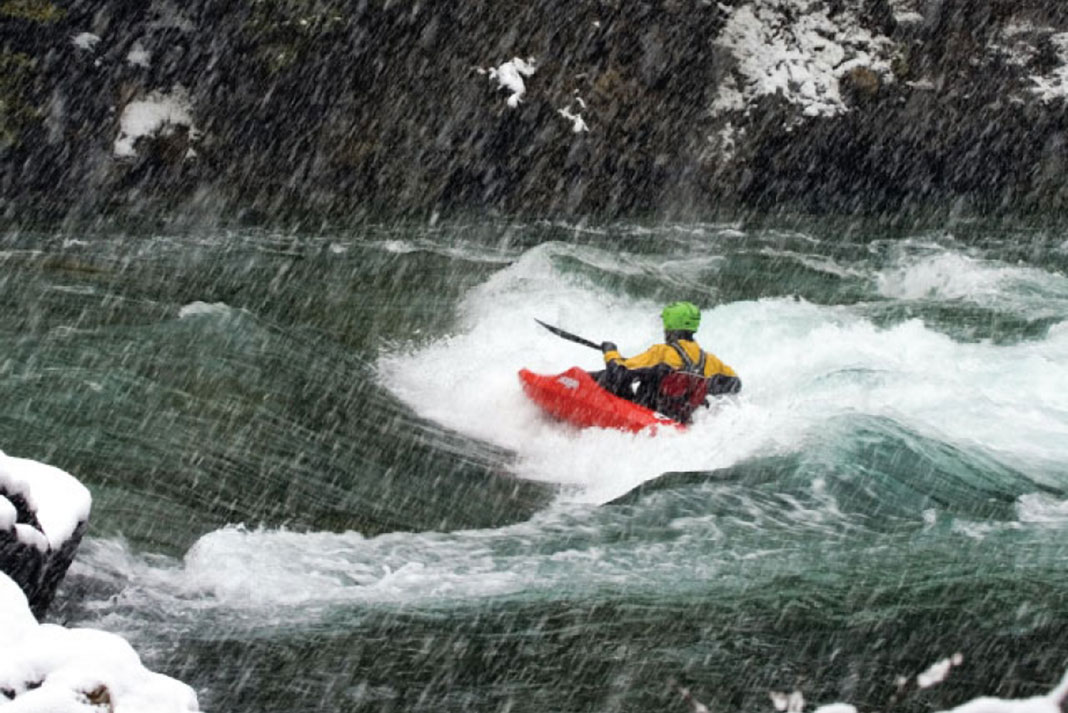
7 “It’s snowing” is not a valid reason to stop paddling
‘Nuff said.
“It’s snowing” is not a valid reason to stop paddling. | Photo: Ryan Creary
6 essential river planning skills
1 Find friends
Paddling with a mate is more fun, safer and easier on the budget than paddling alone. Like partners in mountaineering or even marriage, the best river running partner is one with whom you share trust and similar goals. For example, if one climbing partner is determined to reach the summit and the other is simply content to be on the mountain, the safety of both is threatened by the resulting frustration and hostility.
Kayaking, mountaineering and swiftwater rescue instructor Franco Ferrero emphasizes the importance of a team-focused environment, “To avoid trashings and shattered confidence, paddle with people who will support you.” It is beneficial to spend time around paddlers of different skill levels and experience, as long as expectations are discussed and understood by every member of the group. “Chances are you will put a lot of thought into the gear you take with you—why not the folks you paddle with as well?” says veteran expedition paddler Phil DeRiemer.
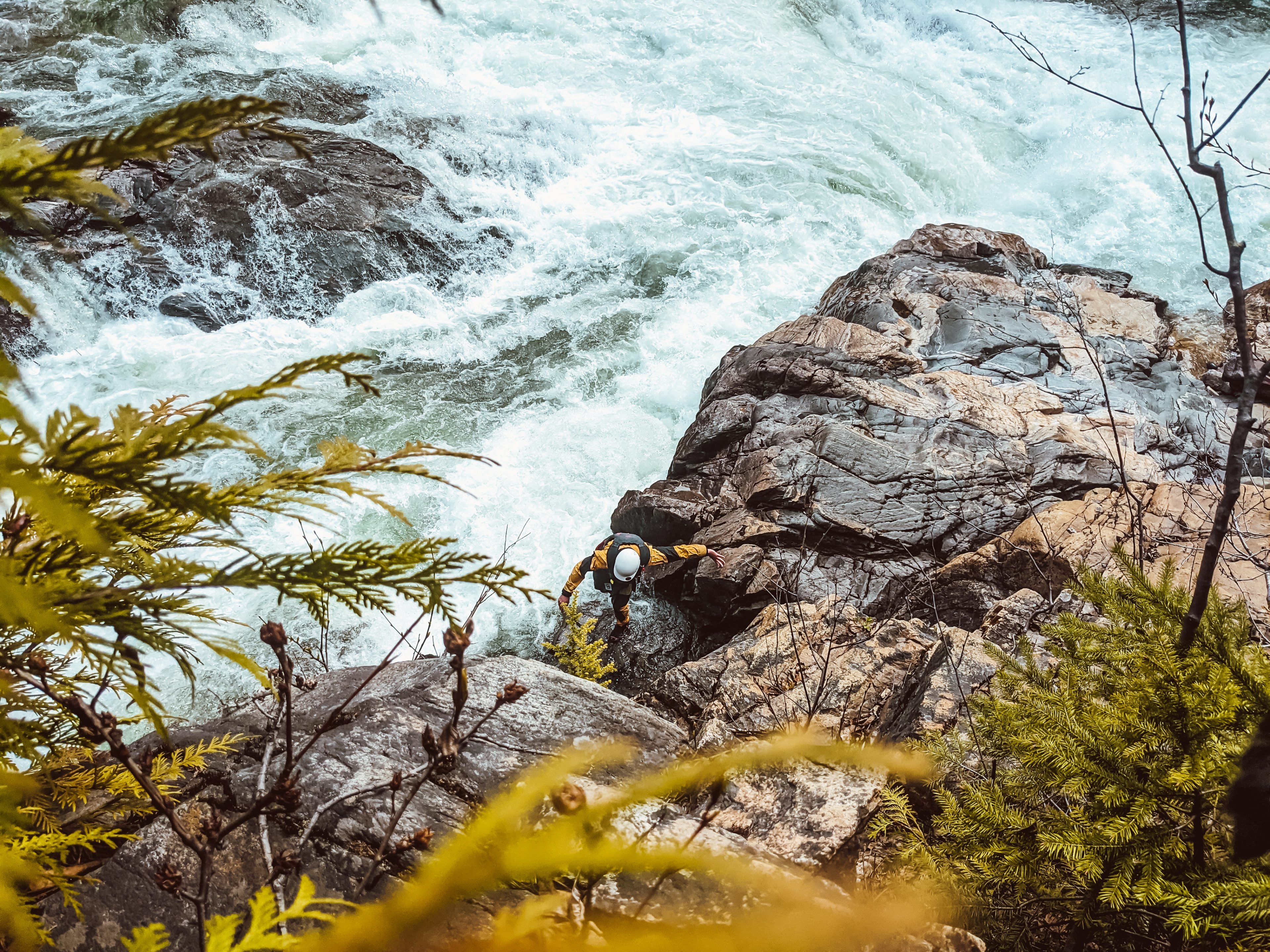
2 Take the shortest walk out
Whether you’re out for an afternoon on a local river or planning an unsupported multi-day, knowing where you can pull out if the shit hits the fan is an integral part of river running safety. Along with analyzing maps and reading guidebooks, the three-dimensional satellite imagery on Google Earth allows you to scout topography, drainages and escape routes before you leave home. But remember, says first aid professional and Rescue 3 instructor Franco Ferrero, “If something goes wrong, it is your problem, not the guidebook writer’s.” The most accurate information about a river is often gathered by chatting with locals and paddlers who have first-hand knowledge.
3 Know the flow to go
Release schedules: Don’t get swamped or stranded; many dam-controlled rivers have a regular schedule of water flows. Miss the window and you’ll find yourself hiking out.
Water levels: River hazards change dramatically as water levels change. Seasonal and daily fluctuations are created by melting snow or glaciers and rainfall. Expect higher levels on snowmelt rivers in late spring to early summer and during late afternoon when the midday sun has heated things up. River gauges and landmarks help compare current water levels to those cited in the guidebook.
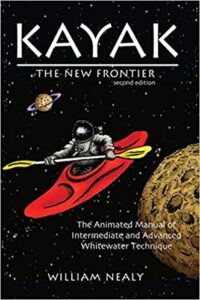
Flood hazards: In his classic book Kayak, the late William Nealy stated that there are three reasons for running a river in flood: Accident (flash flood), misadventure (ignorance of water level), or choice (defective genetic programming). Let’s address the accidental flash flood. This phenomenon is most common and hazardous in narrow gorges where rainstorms can create a massive wall of water that rushes down the canyon with little or no warning. Rivers that run through broad dry washes are also dangerous, as these plains can flood unexpectedly. When considering these rivers, keep an eye on the weather in the days leading up to your trip and don’t put in if rain is forecast or the clouds look threatening. Of course, some rivers can only be run in flood, to which we’d reply, “It’s in my genes, man.”
4 Pack a boat
A few concepts to remember: If it’s not clipped in, it will eject when you do. Practice with a loaded boat. Heavy-duty garbage bags are your friends, even inside drybags. Pack heavy things like food up front, within carved-out storage compartments in the pillar or bulkhead, or right behind your seat and balanced on both sides—this keeps the ends of your boat feeling light for more control on the water. Expedition paddler and Whistler Search and Rescue volunteer Steve Whittall says, “Be creative. Customize your boat and pick versatile gear—a tarp provides shelter for your kitchen and sleeping and means you don’t need rain gear.” Keep the things you will need soonest—lunch, water purifier, cozy jumper—the most accessible. And finally, have your throw bag handy.
Planning transportation can be as simple as driving on well-surfaced roads and dropping one of your vehicles at the take-out. Alternatively, gaining access to a backcountry or international river may be a complicated web of flights, four-wheel-driving and foot-packing. In some places, your transportation can range from trains or helicopters to rattletrap chicken-filled buses or even mules. “Just driving around can be the most hair-raising part of the trip,” cautions seasoned international expedition leader Dunbar Hardy. Hardy recommends asking lots of questions—if you’re renting a shuttle vehicle for example, you may need to bring your own roof racks—and making the most of local knowledge for directions, road conditions and best put-in and take-out sites. We’d add to the list learning how to drive off-road and packing extra tow straps.
6 Hours of daylight
Know how many you have and respect this fact.
Make sure you don’t run out of light while running the river. | Photo: Jonatan Pie/Unsplash
6 essential on-river skills
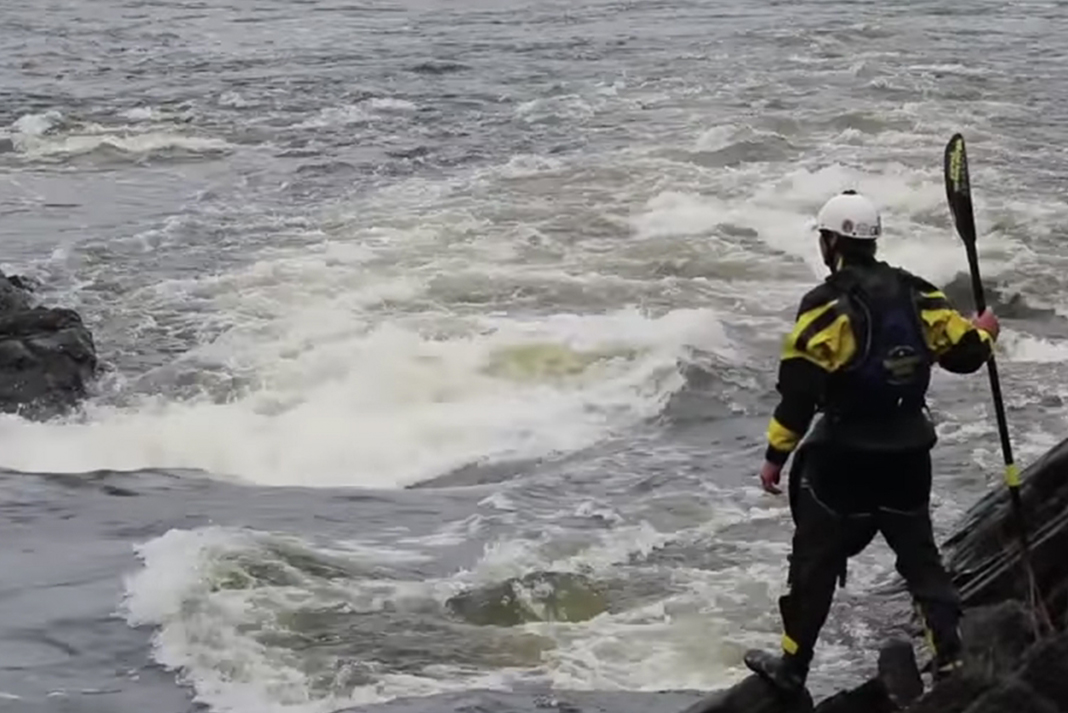
1 Scout a rapid
Reading the river and choosing a good line are the essentials of keeping your run and your shorts clean. Three pieces of wisdom from the scouting sage:
Get the whole picture: Try scouting from various positions—above, below and on the other side of the rapid. Look for prominent features and landmarks so you can stay on line once you’re in the meat.
Recognize friendly features: Note nasty features, but don’t dwell on them. You’re searching for a good line down a run, not a bad one. Look for downstream Vs, eddies, troughs and any pillow rocks you can use to your advantage. Look also for the most fun or—on easier rivers—challenging line.
Master the art of visualization: Draw a mental path of where you want to go and picture yourself making the moves to hit that line. Run through the body positions and strokes you will use on land to burn them into your memory. Finally, if you can’t visualize a successful outcome, don’t run the rapid.
2 Know your limits
The dry land sneak is a perfectly acceptable alternative to running rapids. “No matter how good you get, portaging will always be a big part of paddling,” says veteran guide and paddling coach Kevin Varette. The decision to walk should be based on an objective analysis of the hazards and consequences combined with an honest self-assessment of your own capabilities. Everyone has his or her own level of acceptable risk and even skilled paddlers experience off days—trust your instincts. Professional kayaker and all-round tough cookie Anna Levesque urges anyone who feels shamed or pressured into running a rapid to reconsider. “Ultimately, you are the one who has to deal with the consequences of your actions.”
3 Be a hot lunch hero
Firing up some warm grub and a hot drink is good for your body and soul—and it’s also a great way to make friends.
Nutrition: Eating right helps you stay warm and avoid plummeting energy levels during a long day of river running. Rule number one: Don’t forgo the pasta and potato salad at lunch. Complex carbohydrates such as rice, pasta, bread and cereals provide energy that is made available to your body at a steady rate over several hours, unlike the sudden energy spike and trough produced by the simple sugars in your favourite candy bar. Rule number two: If you can’t seem to warm up, chug a hot cocoa and eat some more muffins. Early symptoms of hypothermia include shivering and exhaustion, followed by the “umbles”—stumbling, fumbling and mumbling—as you lose feeling, coordination and mental acuity.
Hydration: Humans are big bags of water. Keeping this bag topped up is a constant battle since you lose this precious resource whenever you sweat and every time you take a breath. Failing to replenish your fluids can profoundly affect your judgment, stamina and performance. Consider that a drop of just two per cent in your body fluid results in decreased group cooperation, mental deterioration and a 25 per cent loss in efficiency. To ensure that you are in top mental and physical form, you should drink at least three to four litres a day.
4 Practice good manners
Don’t be a dirtbag: Pick up your trash. If you really want to be a hero, pick up someone else’s.
Right of way: Even if you grew up in Palmer Rapids and have never seen a controlled intersection, you should learn right of way on the river: always yield to the boater heading downstream. As a downstream boater, be courteous and avoid paddlers playing below you.
Local laws: We’ve packed out our own waste in the canyons of the desert Southwest—and not because we like to spend six days with a doggie bag full of shit. Respect these laws; they protect our rivers.
Respect the river and don’t be a dirtbag—you’re just visiting. | Feature photo: Scott Stephens/Unsplash
5 It’s okay to cry on the river
Anna Levesque says so and she can kick your ass. Kayaking delivers intense experiences to which crying is a normal emotional response. Whether it’s the excitement of completing a new move, the relief of emerging unscathed from a challenging rapid, or frustration at failing to attain a goal, crying is a healthy outlet for a flood of different emotions. Don’t assume that someone is afraid or unable to “keep it together” just because she shows emotion, warns Levesque. “You don’t have to be a daredevil to enjoy the river,” says the Girls at Play guru and World Freestyle Championship medalist.
6 Respect the locals
The river is their home, you’re just visiting.
6 essential river gear skills
1 Build the ultimate river running kit
In addition to your boat, helmet, paddle, PFD, skirt if kayaking and the clothes on your back, here is our list of items to take on the river.
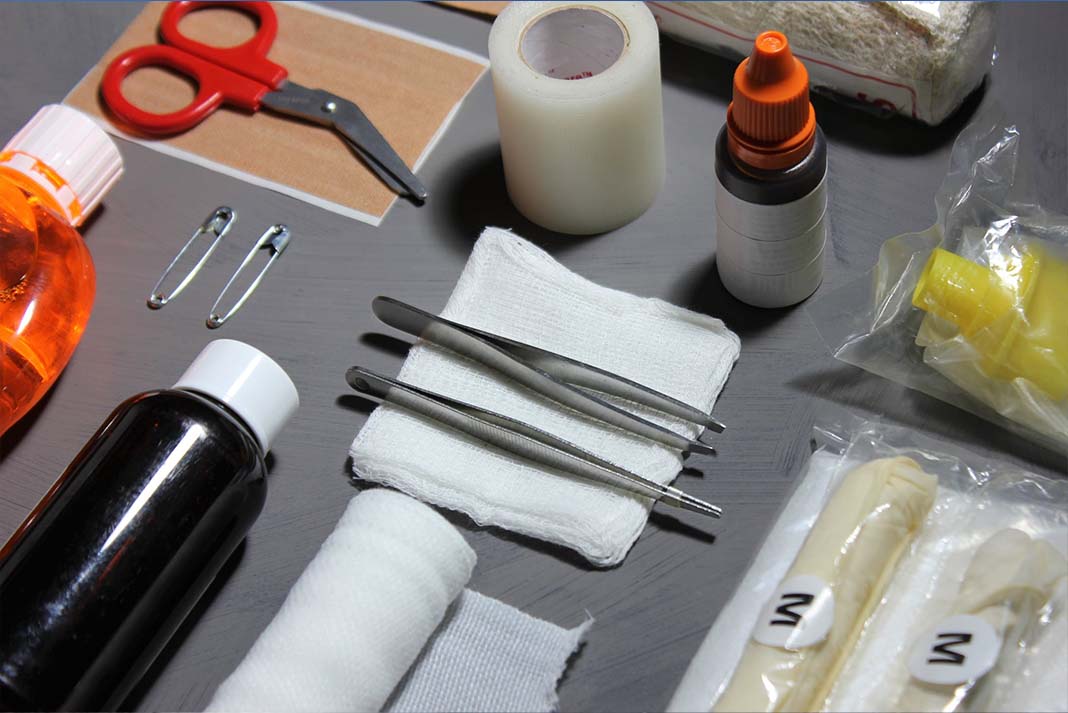
First aid kit: How many times do we have to say it? Carry one and know how to use it.
Rescue kit: Throw rope (50–75 feet); tow line—stretchy cow tail attached to quick-release belt; pin kit (see essential rescue skill #3, below); plastic pea-less whistle; knife or shears; breakdown spare paddle and, of course, duct tape.
Personal gear: Nose plugs; small drybag with extra insulating layer, headlamp and lighter in case you are stuck out longer than expected; water bottle; lunch and extra energy bars.
Additional items for overnights: Sleeping bag and pad; tent, tarp or bivy sack; repair kit—multi-tool and Seam Grip or similar flexible, waterproof glue; water purification and more food; cook pot, stove and fuel; bowl and cutlery; camp clothes, compass and topo map.
2 Choose the perfect boat
If your interests lie in throwing blunts and flat spins on your river runs, then you should shack up with a playful boat. Your coquettish play partner will be shorter, with more aggressive edges to maximize manoeuvrability. On the other hand, if luscious tumbling drops get your heart thumping, then you’re more of a serious river running man or woman. The right accomplice for those longer journeys and steep descents will be more voluminous and curvaceous to give you a fast but forgiving ride. Finally, in case you had doubts, size does matter. Consider length, diameter and surplus… of your legs, hips and budget.
3 Get protected from the sun
Our bodies produce and lose heat constantly. If we were unable to dissipate heat, our body temperatures would rise steadily until we literally cooked ourselves. According to wilderness medical professionals at the National Outdoor Leadership School, radiation from a person’s skin to the environment accounts for 65 per cent of heat loss when the air temperature is lower than the body temperature. Under a hot sun however, our bodies actually gain heat through radiation. Evaporation from sweating and gradual acclimatization—typically taking 10 days to two weeks—to the hot climate become our only methods of staying cool.
Protecting yourself from direct exposure to the sun goes a long way in preventing dangerous overheating and other sun-related ailments. Go for a swim or roll often to cool your core body temperature. Canoe trippers should wear a light-coloured, long-sleeved paddling shirt. Frequently reapply waterproof sunscreen on exposed skin. Don those cool polarized shades to prevent damage to your eyes. Finally, Velcro a geeky visor on your helmet or splurge for a stylin’ design with a built-in peak.
Dress for the coldest temperature, whether it’s water or air. | Photo: Haitham/Unsplash
4 Dress for conditions
There are two truths that we paddlers must learn. The first is to dress for the coldest temperature, whether it’s water or air. The second is that it’s better to be dry. Cold drizzly days, long swims on icy mountain runs and insisting that skin to wind makes you a river hero are all equally effective ways of becoming cold, miserable or worse.
Avoid bargain paddling tops that are not breathable and only half as waterproof as your yellow grade school slicker. Shelling out for a comfortable and rugged drysuit or top made of quality fabric is an investment you’ll never regret. It will extend your paddling season and make every day enjoyable.
Closed-toed shoes rock, open-toed sandals suck. The reason: Subungual hematoma (crush injury) or toenail delamination—need we say more? Water shoes need to provide protection, good traction on wet rocks and be slim and flexible enough that your feet fit comfortably into your kayak. Mesh and sandal-style shoes are quick-drying and sporty, but neoprene booties offer superior insulation and are your best defense against leaches. Above all, whatever your footwear—remember to wear them. Renowned whitewater guide Phil DeRiemer tells his clients the story of a kayaker who hiked barefoot eight miles out of the Grand Canyon of the Stikine after a bad swim washed his boat away with his shoes stowed safely behind the seat—he says it wasn’t him.
6 Four ways to lose body heat
Conduction, convection, radiation and evaporation. It’s not a contest to see who can do all four at once.
5 essential river rescue skills
1 Get your signals straight
Save the elaborate gesticulations for the ballpark. Hand and paddle signals should be simple and unequivocal. Five you definitely need to know:
Stop: Arms outstretched, horizontal to the ground or paddle held horizontally above your head.
Go (safe to proceed): One arm straight up or paddle held vertically from shoulder height. Also used as a question: Is it safe to proceed?
O.K.: Fist tapping or held to the top of your head. Can also be used as a question: Are you okay?
Help: Both arms waving overhead to form an alternating V and X or paddle waved overhead from side to side.
Go here: Pointing with arm or paddle to the spot on the river your buddy should go. Never point to danger!
2 Learn the Hand of God
There are two good options for saving your friend’s butt while allowing him to stay in his boat and avoid the dreaded swim and compulsory round of complimentary beers. The T-rescue—in which the rescue boat approaches the midsection of the upset boat, allowing the capsized paddler to grab the offered bow or stern and hip-flick up—is quick and simple but won’t work if you can’t make a “T” or your friend doesn’t have the awareness to do the rescue. In these cases, a Hand of God (HOG) is your best bet.
Step 1: Pull up parallel to the hapless boat. Reach across the overturned hull with your near hand and grab the edge. Place your other hand on the hull beside you.
Step 2: Simultaneously push down hard on the near side and pull up on the far side to right the boat with the paddler still inside. It’s a miracle.
3 Build a rescue kit
For pinning, entrapment and nearly anything else that can go wrong. Minimum equipment should include: two prusiks, two pulleys, throw rope—minimum 50 feet, two carabiners and two slings or eight-foot lengths of webbing. Use a small stuff sack or wide-mouth bottle to store everything except the rope in a convenient, easy-to-access package. A versatile hauling system that you should learn to construct quickly is a Z-drag, which triples your pulling force by creating a 3:1 mechanical advantage. Here’s how to rig a Z-drag:
Step 1: Construct an anchor by wrapping a piece of webbing or sling around a sturdy tree or rock. Clip a carabiner and pulley through the webbing.
Step 2: Attach a rope to the boat and run the rope through the anchor pulley. Now attach a prusik cord as far back down the rope toward the boat as possible.
Step 3: Clip a second carabiner and pulley through the prusik and run the rope through it and back toward the anchor. Look at your system: the rope should make a Z shape with you pulling on the rope in the same direction as the main line is pulling on the load.
4 Do the live bait rescue
Use this method if the swimmer is injured, panicked or otherwise unlikely to catch a throw bag—like if he is getting worked in a hole. A soon-to-be-wet rescuer is attached via a quick-release belt to a line that is waist-belayed by a happy-to-stay-dry second rescuer. For an effective belay, the dry rescuer should try to sit into the bank or otherwise firmly brace herself in anticipation of the sudden pull of two swimmers. When the swimmer is in range, the tethered rescuer belly flops into the water and grabs the victim from behind by his PFD shoulder straps. By holding the swimmer to his chest in this way, the rescuer protects himself against the potential danger of a panicked victim. The rescue site should be carefully selected so both swimmer and rescuer pendulum safely into a waiting eddy.
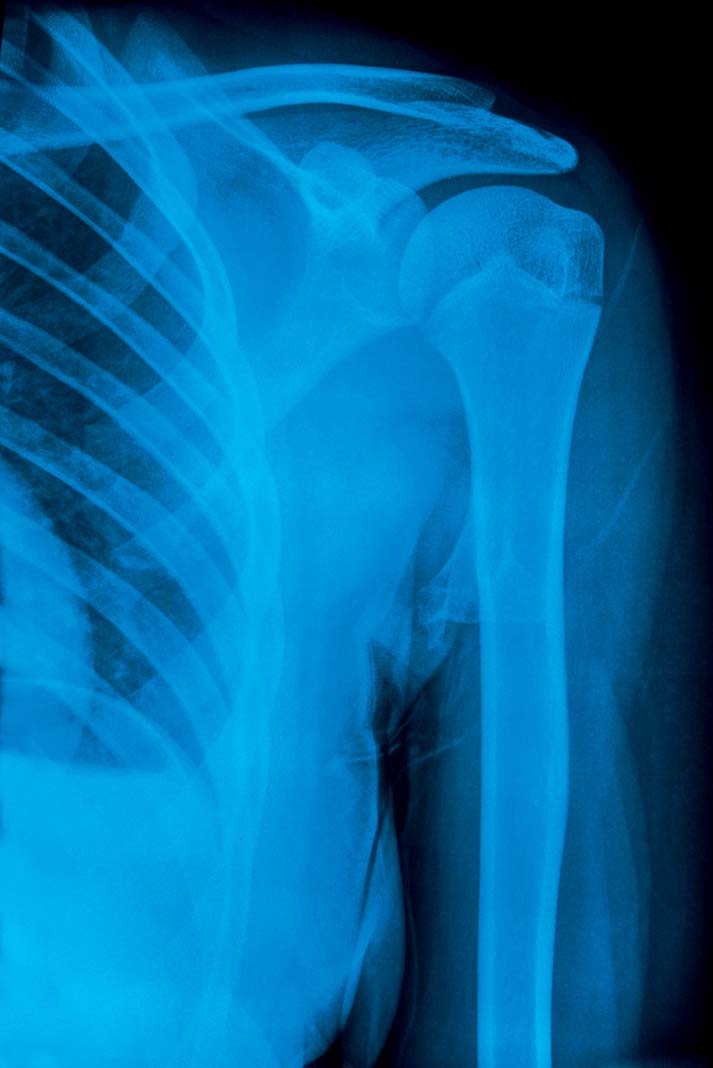
Dislocated shoulder (anterior)
5 Set a dislocated shoulder
Our best advice is to avoid a dislocated shoulder altogether. Mind the paddler’s box—a rectangle formed by your arms, paddle and chest when your hands are kept in front of and parallel to your shoulders. Paddling outside the box is an invitation to shoulder injury. If the worst happens, here’s what to do.
Step 1: Reset the dislocation as soon after the injury as possible, before the muscle spasm becomes too severe. Have the injured person sit in front of a tree. Tie a loop of webbing tautly around his chest and the tree.
Step 2: Kneel on one knee facing the victim and hold the injured arm level in the direction of the dislocation, with the elbow bent at 90 degrees.
Step 3: Slip a second loop of webbing around your hips and the injured arm.
Step 4: Lean backwards while slowly bending the elbow towards the shoulder to increase traction, allowing the muscles to relax and the shoulder to pop into place. This can take less than a minute or upwards of 30.
After a decade of columns in this space dedicated to the history, heritage, esoterica and minutiae of canoeing, written for paddlers and would-be paddlers, it occurred to me that there might be people out there who are non-paddlers. Maybe the spouses or children of readers, who might pick up Canoeroots out of curiosity or from self-preservation having to share living space with a person who goes on and on about all things canoe. For the benefit of these folk, here’s a debunker’s guide to canoeing myths.
Let’s get this one right up front. When it comes to gear—and I’m talking good gear, not office technical wear, and stuff that is sold with main street in mind—canoeists will spare no expense. It’s not so much the availability of funds as it is about deployment of funds that fuels this myth.
Canoeists look at ‘60s blue porcelain bathroom fixtures, shag carpets or comely avocado-colored kitchen appliances and ask, “Why would you want a new one of those when the ones we have are perfectly serviceable?” Same goes for decisions about saving for college tuition and weddings versus setting cash aside for a new canoe or a longer or more exotic canoe trip.
These canoeing myths are categorically untrue—most of the time. | Feature photo: Portij/Unsplash
2 Canoeists all drink as much as Kevin Callan
I know Kevin Callan is prone to claiming that alcohol taken orally is an excellent bug deterrent. He also claims it makes his skin more water repellent. Whatever other merits he and his sidekick, Andy Baxter, award the perfect bush martini, most canoeists don’t drink as much as Kevin. No, no, no. For as far back as when the Hudson Bay Company and North West Company sent voyageurs west with casks of whiskey to trade, we’ve tended to drink more.
3 Canoeists will all, eventually, look like Bill Mason
A former student came up to me one day and said that he’d just had a strange and portentious dream. In his dream he was at a talk I was giving, sitting in the front row. He turned around and everybody in the audience—both men and women—looked just like Bill Mason. The lecture hall was filled with short, white-bearded canoeists wearing red flannel shirts and neck scarves. Scary thought.
This one has some truth. However, the Masonesque characteristic that is echoed by all dyed-in-the-wool paddlers is not so much the soggy sneakers, white beard and plaid shirt. It’s a look in their eyes that says, “I may be bodily indoors but I’m actually running a river in my head.”
4 Canadian canoeists constantly assert their “Canadianness”
That this myth endures is due largely to Pierre Berton or Pierre Elliott Trudeau—neither of whom admitted they said, or did, anything of the kind. For the record, canoeists are not forever asserting their Canadianness in a canoe. We only do so in private, often in the dark under pincushion skies, when the water is calm, rarely at put-ins or on portages, and only when overtaken by the wilderness muse. And—safety paramount if on the water—we always take the precaution of removing the center thwart.
5 Canoeists are always right
Well…anyone who has hung around a canoeist for more than a few minutes will know that no matter what the issue, we all think our solution is the best. This includes such diverse topics as paddling, portaging, how to build a fire, how to make camp kitchen, how to raise a child, how to foster a relationship, how to achieve world peace and nuclear disarmament, and how to simultaneously eat, drive and find the access-point coordinates on a GPS.
[ Browse the widest selection of boats and gear in the Paddling Buyer’s Guide ]
Our answers to these questions are not only objectively right but also, having considered all other options (or the other options we could imagine), simply the best. For better or worse, sadly, this is not a myth. It’s true. Just ask our paddling Prime Minister.
These canoeing myths are categorically untrue—most of the time. | Feature photo: Portij/Unsplash
In a recent expedition, a world-renowned German kayaker, Adrian Mattern, and an expert-level crew headed deep into Kyrgyzstan’s Tian Shan mountains to paddle a little-known (and extremely remote) river called the Sary-Jaz.
The technical, class V river begins at the Engilcheck glacier at the foot of Khan Tengri in far eastern Kyrgyzstan and flows through the Tian Shan mountain range into China. Once inside the deep gorge, there are limited opportunities to hike out.
[ View all Whitewater Creekboats in the Paddling Buyer’s Guide ]
Mattern and his team were able to make it down most of their planned route before they ran into serious trouble; their exit point—a low-volume creek that should have been easy to cross—was in flood.
Check out the short documentary to discover the measures they took to finish the expedition.
O n Friday, July 15th, The Grand Salmon Source to Sea team completed their 1,000-mile paddle journey from the multiple headwaters of the Salmon River to the Pacific Ocean, in solidarity around a call to action about dwindling salmon populations in the Snake River Basin and placing a moratorium on the Stibnite mine proposed in central Idaho.
The team of women paddlers have engaged thousands of people through grassroots advocacy in river communities along the way, in addition to reaching hundreds of thousands via social media channels. The team has encountered obstacles over their two and a half month journey including facing unusually high water this spring and portaging the four Lower Snake River dams in four days. Yet despite these challenges, what they have faced is minimal compared to what these resilient fish endure.
Photo Courtesy of The Grand Salmon
Their story is rooted in adventure and a love of rivers that gives way to shining light on the bigger picture – now is the time to act to prevent the extinction of Pacific salmon species.
“We have been planning this trip for over two years, and I am still a bit shocked that it actually came to fruition, and also can’t believe we are almost done,” said Brooke Hess, a professional kayaker and science journalist on the team. “This has been the coolest, most challenging, and most fulfilling several months of my life so far.”
Libby Tobey, the environmental policy and climate change expert on the paddling team added, “It feels absolutely impossible to be staring at the finish line of this project. Looking back on how many people we’ve been able to engage with about this cause makes me feel unbelievably proud of our team. To speak up and do hard work to protect the rivers we love is every kayaker’s dream, and I’m so excited we’ve been able to do that.”
[ Browse the widest selection of boats and gear in the Paddling Buyer’s Guide ]
The project comes at a timely moment as the summer of 2022 is perhaps the most pivotal window of opportunity in more than a 30-year endeavor to restore salmon populations in what would be the largest river restoration project in American history – the removal of the four Lower Snake River dams.
Photo Courtesy of The Grand Salmon
“It feels totally surreal to be at this point in the journey knowing that we’re going to cross into the Pacific Ocean soon, right about the time that the smolts that we left Idaho with will be reaching the ocean. Honestly, this is the best team I could have imagined doing this trip with, and to have the White House release their statement feels serendipitous and powerful as well. I’m so grateful to everyone who has been with us on this wild journey,” said Hailey Thompson, an artist and fisheries expert on the paddling team.
Idaho Rivers United stands by the best available scientific and other relevant evidence, when fully and objectively evaluated, which shows that breaching the four lower Snake River dams, with adequate spill at the remaining lower Columbia River dams, is the only viable option to both protect and restore salmon and steelhead.
All of this urgency has been said by Northwest tribes from the beginning of time – the four Lower Snake River dams must be removed. As recent resolutions by the Affiliated Tribes of Northwest Indians and National Congress of American Indians make clear: the decimation of salmon runs is a violation of treaties and other commitments made with tribes by the federal government. Preventing extinction is a matter of justice.
[ Plan your next sea kayaking adventure with the Paddling Trip Guide ]
Idaho Rivers United, the lead advocacy organization for the Grand Salmon campaign, strongly urges the report to more prominently highlight necessity and the cost of inaction related to LSRD dam breaching, specifically that impending extinction of wild salmonids leads to the perpetuation of injustice related to tribal sovereignty, economic and cultural hardships for rural towns and Indigenous communities that depend on abundant salmon runs. The continuation of a broken Columbia-Snake hydrosystem exacerbates inequality in the region and will continue to provide diminishing returns to stakeholders.
Photo Courtesy of The Grand Salmon
“Our organization is incredibly proud of the Grand Salmon team and is relentlessly committed to the cause and mission of this remarkable endeavor,” said Tess McEnroe, Communications Associate at Idaho Rivers United. “Salmon restoration and the Snake River restoration campaign has been a priority in our work for three decades. Along with our elected officials, we as citizens have an incredible opportunity to act now. Our nation can lead the largest river restoration and salmon recovery effort in history, while making smart investments in clean energy, infrastructure, and communities.”
[ Plan your next whitewater paddling adventure with the Paddling Trip Guide ]
“The success of the Grand Salmon campaign has shown how effective a source to sea adventure can be as a catalyst for conservation. Connecting people throughout a watershed, bringing communities together to protect and restore an ecosystem, and providing a voice for these rivers has been a profound and inspiring journey for all.” says Danielle Katz co-founder and director of Rivers for Change and lead project coordinator for the campaign. Rivers for Change mission is to connect people to rivers through source to sea adventures, conservation, and education.
“The question of what you want to own is actually the question of how you want to live your life.” ―Marie Kondō.
| Photo: Andrew Strain
My attempts at traveling light, paring everything down to the bare minimum, started and ended with my clothes. My daily uniform amounted to a wetsuit, a quick-dry T-shirt and a Gore-Tex paddling jacket, with a single, lightweight set of dry clothes to wear in camp.
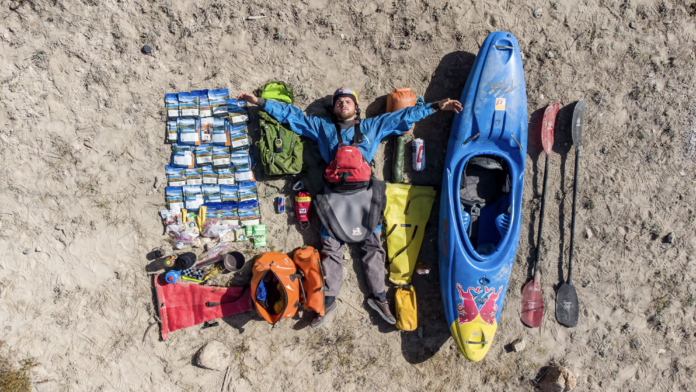
It all fit in a small drybag behind the seat in my cockpit, leaving the spacious waterproof bow and stern hatches free for camping supplies, books and three weeks’ worth of food. Thus began my preparations for an 80-day kayak trip down the West Coast.
Why traveling light holds the key to true happiness
Packing for the first time took three hours. Usually, when packing a kayak, I put everything in various stuff sacks and then stow those in suitable spaces in the boat. But the narrowness of our kayaks on this particular trip and the vast quantity of our larder required an entirely different method.
A big part of why I like paddling so much is the hard limit on what you can carry, which is both physical and mental.
We had virtually every individual item of food unpacked and strewn on the dock. After pushing the narrow items, like bags of tent poles and rolled up sleeping pads into the far reaches of the bow and stern, and then jamming in the larger items like tents and sleeping bags, we resorted to squeezing single cans and bags of food into all the remaining irregular spaces in-between. I had sardines wedged beside my hips.
It reminded me of the long-ago advice of some productivity guru about how fitting important things into your life is like putting rocks in a jar. You have to put the biggest ones in first, then you can put in the pebbles and finally the sand, but if you start with the sand first, you run out of space for the big stuff. Which means you first need to figure out what is most important.
“The question of what you want to own is actually the question of how you want to live your life.” ―Marie Kondo | Feature photo: Andrew Strain
After launching off the dock in Prince Rupert, I remember the joyful realization that everything I needed for the foreseeable future was trimly packed and organized into the slim confines of my kayak’s hull. Inside the shell of my kayak were my legs, followed by my toes, then a bulkhead, some clothes and sleeping gear and a thin boundary of Kevlar between me and the rest of the known and unknown world. The self-contained feeling at the start of a trip always puts a smile on my face.
A big part of why I like paddling so much is the hard limit on what you can carry, which is both physical and mental. At home, the more space we have, the more we hang onto things representing aspirations, like a kind of material to-do list. The photographs we may someday put into albums, the guitar we’ll learn to play when we have time, the books purchased but unread. These things surround and nag us about everything we don’t have time to accomplish.
Everyone I know is engaged on some level with managing either their personal storehouse or downsizing the possessions of older relatives. It looks the same—clearing out cluttered basements and rented storage lockers, sorting China sets, silverware and antique furniture for the thrift store or Craigslist. Our lives are funnels, taking in more than we need, and more than we can care for or properly care about.
Less is more—in life and in your kayak
I think of managing this inventory of goods as a kind of background radiation constantly bombarding and degrading us. It’s no wonder minimalism has caught on. Japanese decluttering guru Marie Kondo recently turned her ruthless war on stuff, made famous in her bestselling book The Life-Changing Magic of Tidying Up, into a Netflix series.
In Free Solo, the recent documentary on free climber Alex Honnold, he turns minimalism into an art form, living in a van to pursue the ultimate in simple pastimes—the climbing of natural rock with little more than a chalk bag, a pair of shoes and fraying pants. The appeal is not so much in living without, but the clarity of mind and purpose suggested by such simplicity.
Surely, it’s no accident sea kayaking flourished in the counterculture 1960s Pacific Northwest as part of a wholesale rejection of western materialism.
Wilderness travel is boot camp for downsizing, a lesson in just how little we truly need. Streamlining also can be a metaphor for the other transformations occurring in the wilderness—casting off of old ideas and routines, coming out the other side with an emptier pack and a brimming spirit. Surely, it’s no accident sea kayaking flourished in the counterculture 1960s Pacific Northwest as part of a wholesale rejection of western materialism.
I turn to the water when I need a respite from the flood of stuff in my life. I’ve bought books about hiking and paddling purely for their packing lists and tidy color-coded diagrams showing where everything should be stowed. Unfortunately, there’s no equivalent list or diagram for everyday life to help me manage the malaise upon arriving home to a cluttered house begging for my divided attention.
[ View all touring kayaks in the Paddling Buyer’s Guide ]
“We all live in a machine designed to get us to neglect what is important in life,” says journalist and author Johann Hari, who writes about society’s epidemics of addiction and depression. “Nobody thinks they’re going to lie on their death bed and think about all the things they bought; they’re going to think about moments of love and connection and meaning in their lives, and yet we’ve created a culture designed to get us to neglect those things.”
Learning to let go of clutter
Wrapped up in our attachment to stuff can be found profound sadness. I just attended a memorial service for my wonderful uncle, whose passing marks the end of a family era. My cousins now have to sell the house he and my aunt lived in for 40 years.
The thought of disposing of most of their possessions magnifies the heartache that he’s not coming back. It’s tempting to hold on. But it helps to remember our lives are not the sum of our things. Even the kayak and the paddle I used on that 80-day trip are long gone. I don’t need them anymore, but the memories are strong.
Wilderness travel is boot camp for downsizing, a lesson in just how little we truly need. | Photo: Joshua Sukoff/Unsplash
In the modern world, I think of the kayak as a kind of prop for the brain the same way those blocks and pillows in yoga class help people who aren’t flexible enough to bend into the pretzel poses. It’s a crucible for simplification, a metaphor for clarity of purpose and forward motion.
[ Plan your next epic kayaking adventure with the Paddling Trip Guide ]
Life keeps renewing and moving. Once afloat in a kayak, you’ve belted yourself in for a ride, during which you will not think about anything else but what’s right here in front of you. I find solace in the thought of getting my kayak finally loaded and setting off, with only the view of the upturned bow and then everything else ahead.
This article was first published in the Spring 2019 issue of Paddling Magazine. Subscribe to Paddling Magazine’s print and digital editions, or browse the archives.
“The question of what you want to own is actually the question of how you want to live your life.” ―Marie Kondo | Feature Photo: Andrew Strain