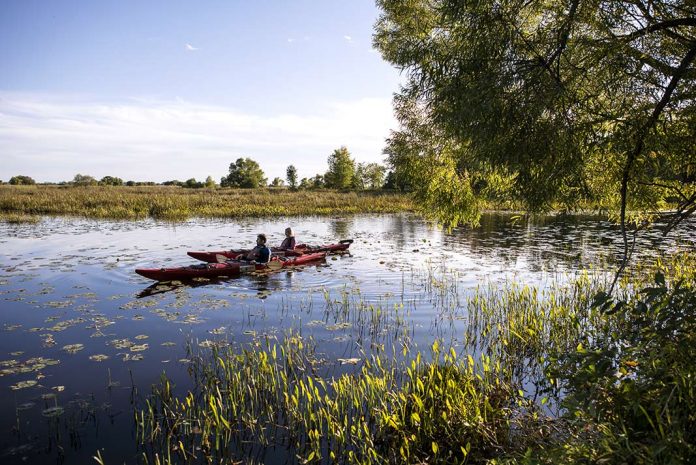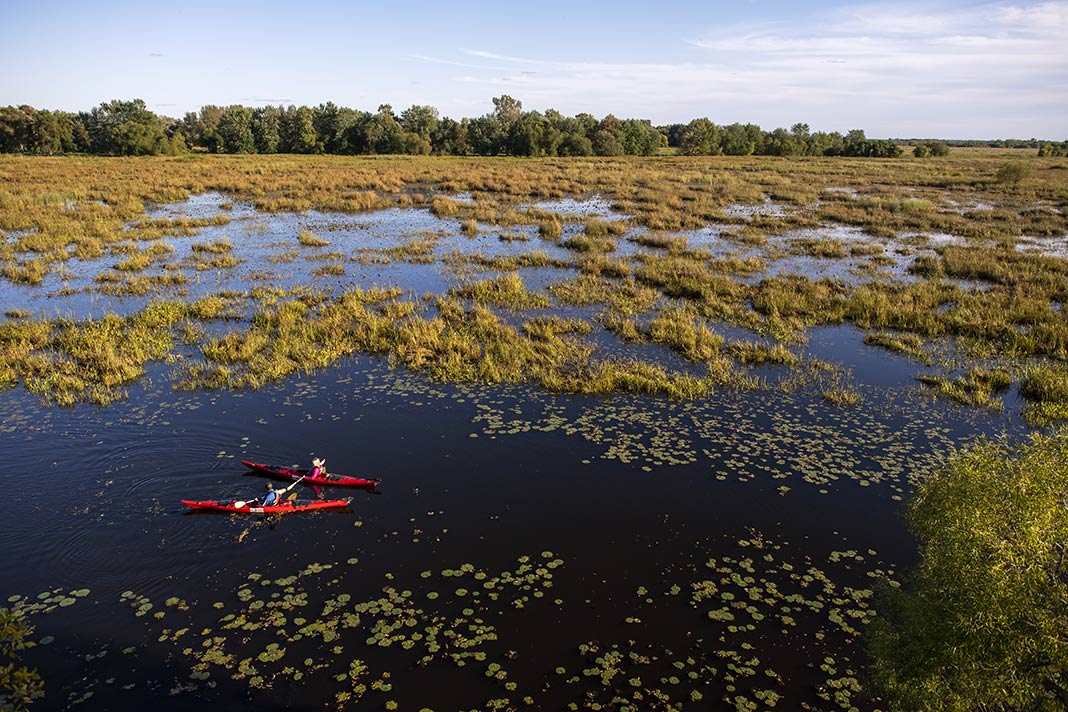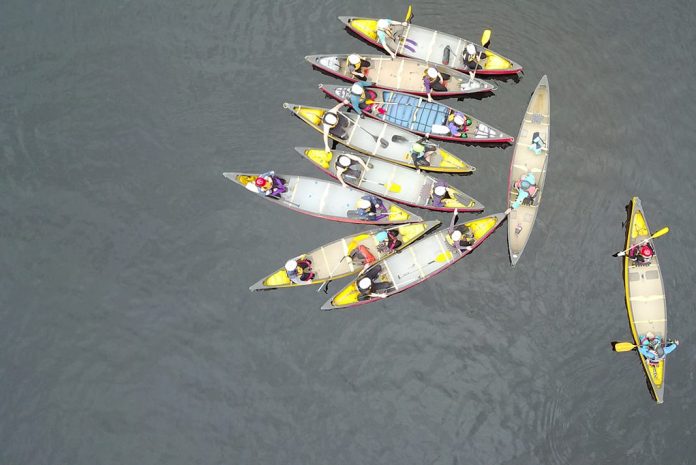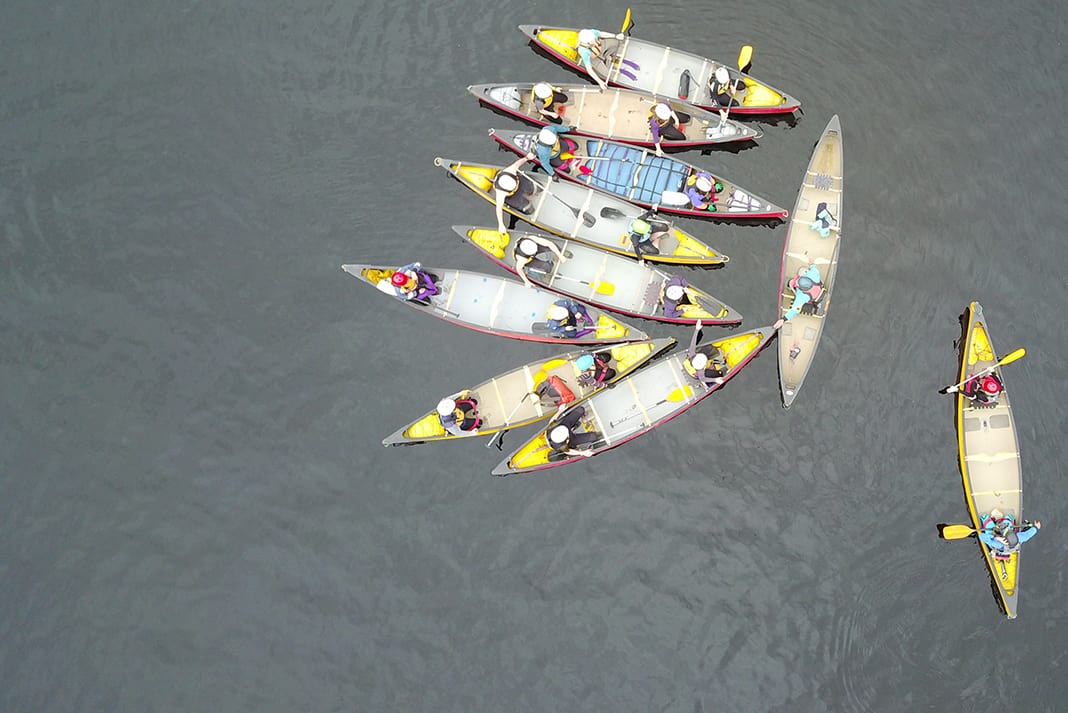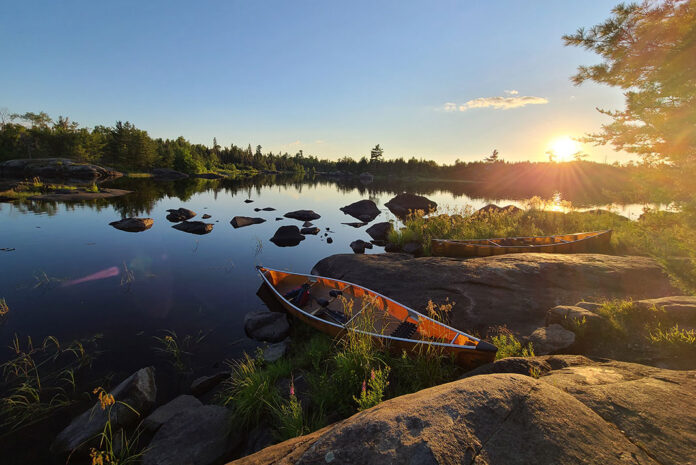
It’s no surprise that Minnesota’s Boundary Waters Canoe Area Wilderness is one the world’s preeminent canoe destinations. The Boundary Waters features hundreds of lakes arranged in a manner that makes this vast, 1.1-million-acre wilderness seem like it was purpose-built for canoeing. Tripping choices are endless, with 1,200 miles of canoe routes to travel and 2,000 campsites to pitch your tent on.
Paddling the Boundary Waters provides a glimpse of the quintessential North Woods, with loons calling on crystal-clear freshwater, fish surfacing and mirror-like reflections leaving you in awe. This article covers the Boundary Waters for beginners and seasoned backcountry pros alike.
Boundary Waters quick facts
The Boundary Waters, Minnesota’s premier canoe destination, is a place of superlatives. This section outlines some quick facts to know before you visit the Boundary Waters for yourself.
What are the Boundary Waters?
The Boundary Waters Canoe Area is named for its location along the U.S.-Canada border. In fact, with proper planning and documentation, you can paddle across the border on a wilderness canoe trip. The international border extends nearly 150 miles along the north end of the wilderness area.
The Boundary Waters is equally well-named given its abundance of freshwater, including countless lakes and rivers, large and small. The area is a designated wilderness; there is no Boundary Waters park, however the region is managed by the U.S. Forest Service as part of Superior National Forest.
Where are the Boundary Waters?
The Boundary Waters Canoe Area is located in northern Minnesota, west of Lake Superior and adjacent to the Canadian province of Ontario. Common access points include the town of Ely, Minnesota and the Gunflint Trail via Grand Marais, Minnesota.
Is the Boundary Waters a national park?
The Boundary Waters is not a national park, but it is a federally designated wilderness. The area is overseen by the U.S. Forest Service as part of the Superior National Forest. Voyageurs National Park is located just west of the Boundary Waters Canoe Area. Experienced paddlers can plan extended Boundary Waters Canoe Area Wilderness canoe trips that connect with Voyageurs National Park.
How big is the Boundary Waters?
The Boundary Waters officially spans 1.1 million acres, making it the largest U.S. wilderness area east of the Rockies. However, the area is effectively much larger since it blends into neighboring Voyageurs National Park to the west and Canada’s vast Quetico Provincial Park to the north.
How many lakes are in the Boundary Waters?
The Boundary Waters contains a good chunk of Minnesota’s 10,000 lakes. The area has 1,175 lakes, many of which are connected by 1,200 miles of established canoe routes. The overall number of lakes balloons to nearly 2,000 if you include surrounding areas.
When was the Boundary Waters established?
The Boundary Waters was initially protected in 1926. The area was incorporated into the National Wilderness Preservation System in 1964, reflecting its primitive nature and great potential for backcountry adventure.
Is there cell service in the Boundary Waters?
Like any wilderness area, cell service in the Boundary Waters is limited. You have your best chance of getting service in areas adjacent to access points, such as Snowbank Lake, east of Ely. For safety, it’s best to purchase or rent a satellite communication device, such as an inReach, SPOT or satellite telephone for backcountry trips in the Boundary Waters. Be sure you’re familiar with the technology before setting out, and check that your batteries are fully charged.
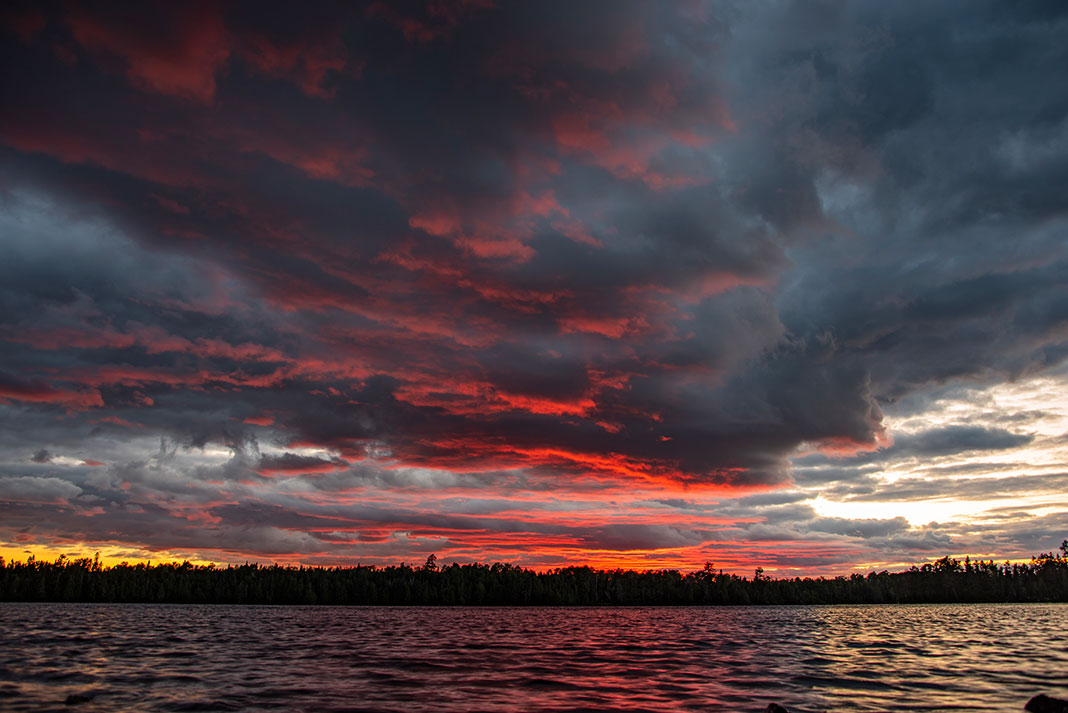
Can you kayak in the Boundary Waters?
Though it’s known as the Boundary Waters Canoe Area Wilderness, kayakers will find plenty of options to paddle in Minnesota’s North Woods. Kayakers are best to seek out areas with larger lakes, and may prefer to paddle in Voyageurs National Park. With a few short portages, kayakers can also access the larger bodies of water of Saganaga, Knife and Crooked lakes along the U.S.-Canada border.
Boundary Waters: canoe vs kayak
Because portaging—that is, carrying your boat and gear overland between bodies of water—is inherent to most Boundary Waters trips, canoes are preferred by most visitors. Canoeing the Boundary Waters is best done with lightweight gear, and that starts with choosing a vessel that won’t slow you down on the many portages. Canoes are also easier to load and better for tandem paddling. Lastly, they’re the traditional way of getting around on ancient Indigenous waterways that have been paddled since time immemorial.
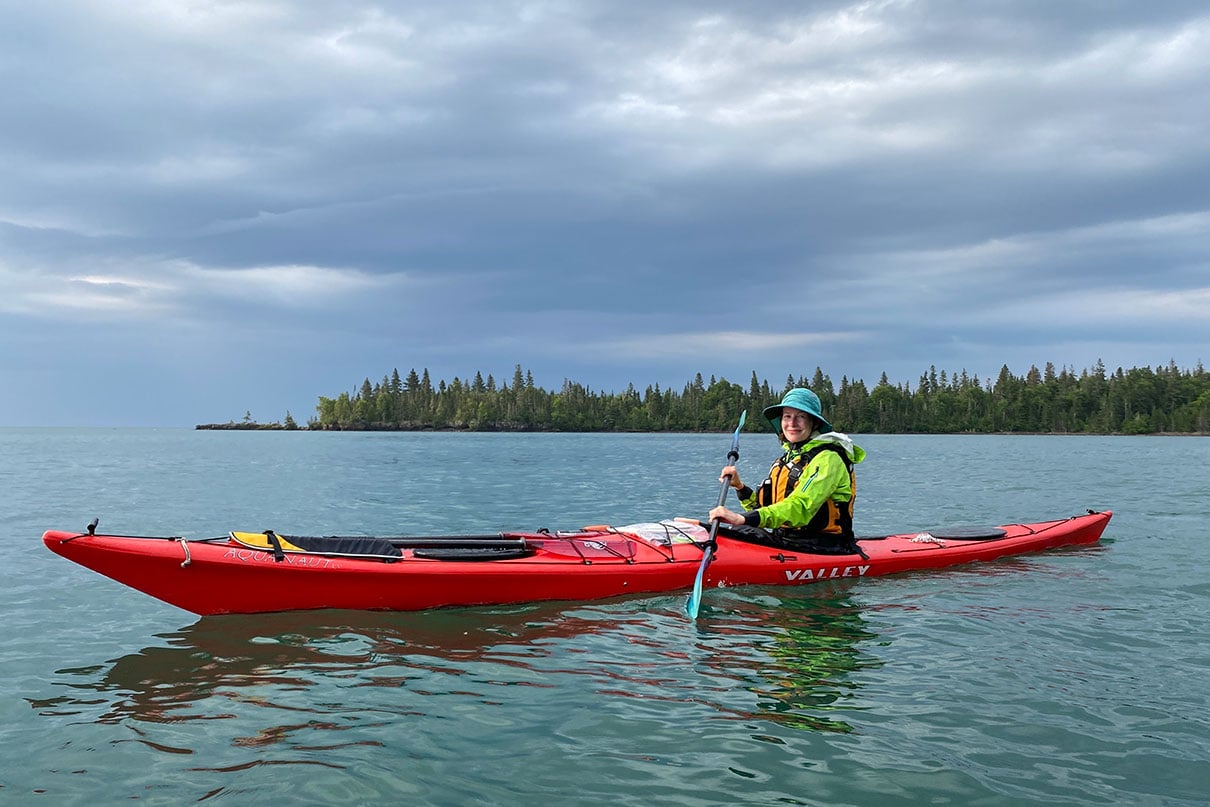
Kayaks, however, are sleeker and more seaworthy—perfect for larger Boundary Waters lakes, especially those along the U.S.-Canada border, where wind and waves can be an issue. If you wish to embark on a Boundary Waters kayak trip, be sure to pack light and plan a trip involving minimal portages and as many large bodies of water as possible. Kayaks are often favored by solo paddlers since they’re easier to handle than canoes and generally more seaworthy on the water. Portage wheels may seem like a great idea for a kayak trip, but this type of “mechanical assistance” is outlawed across much of the Boundary Waters Canoe Area Wilderness.
Boundary Waters Canoe Area history
When you visit the Boundary Waters, you are traveling within the traditional home of the Indigenous Ojibwe. In fact, archeologists date some Boundary Waters artifacts to 6,000 BC. In more recent history, the Boundary Waters was central to the travels of European explorers and early colonial settlers, including the French Canadian voyageurs.
The first push to protect the Boundary Waters was a logging ban in 1902, followed by more formal, sweeping protection in 1926. The area was incorporated into the National Wilderness Preservation System in 1964, reflecting its primitive nature and great potential for backcountry adventure. Important milestones include a ban on low-flying aircraft in 1949, and extensive limitations on motorboats and snowmobiles in 1978. The area remains a key battleground in the conservation movement, an important model of a wilderness area in North America, and serves as one of the world’s most popular outdoor destinations.
As a wilderness area, the Boundary Waters is shaped by natural forces. Wildfires have always been a part of this region, but recently Boundary Waters fires have become more common due to climate change. In fact, wildfires closed portions of the Boundary Waters in 2021. The major Pagami Lake fire burned 93,000 acres in 2012.
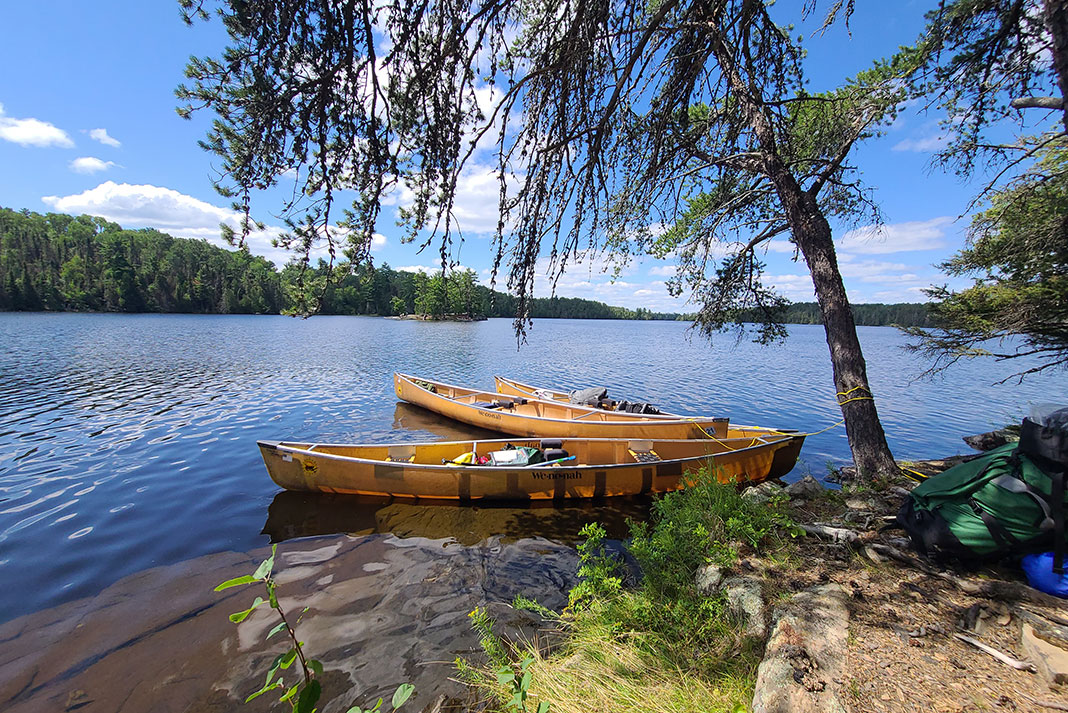
Boundary Waters canoe trips
An abundance of route options and easy access for residents across the Midwest makes the Boundary Waters beloved among canoeists. The area’s greatest highlight is its unique geography of lakes, some which are interconnected and others which are separated by short overland portages. This is picture-perfect canoe country, with options for trips ranging from a weekend to summer-long. Don’t feel like you need to be an expert to visit. There are many canoe routes in the Boundary Waters for beginners.
With so many possible routes you’ll likely want to know how to plan a trip in the Boundary Waters. Start by identifying the amount of time you have for a trip, level of difficulty and expectations. From there, narrow down starting points; research potential routes and talk to local outfitters; look into making backcountry reservations and purchasing permits; get the maps; and acquire the necessary canoes and backcountry camping gear. We’ll go through all these steps in detail.
Boundary Waters entry points
The Boundary Waters has more than 50 numbered entry points for paddlers, scattered around the perimeter of the wilderness area. Each entry point has a set number of permits issued per day, so you may need to adjust your route plan to accommodate the availability of permits.
Here are some popular Boundary Waters canoe entry points, with alternative options (where applicable):
- Trout Lake (#1): This entry point provides access to the Boundary Waters from Vermilion Lake, located north of Highway 1. Twelve daily permits are issued for this location.
- Crab Lake and Cummings Lake from Burntside Lake (#4): Three permits are issued daily for this paddle-in entry point located northwest of the town of Ely.
- Moose Lake (#26) and Snowbank Lake (#27) are located close to one another, with road access east of Ely. Both offer good, immediate access to large lakes, some with portage routes to the expansive bodies of water along the U.S.-Canada border. Moose Lake provides 27 daily permits while eight are available at Snowbank.
- Fall Lake (#24) is another entry point close to Ely that provides 14 paddle-in permits per day. If you’re willing to paddle a bit more on Basswood Lake, the Farm Lake entry point (#31) provides similar access, with three daily permits available.
- Sawbill Lake (#38) is located off the Sawbill Trail, accessible via Highway 61 on the southeast side of the Boundary Waters. There’s an outfitter located right at the entry point. Eleven daily canoe camping permits are available.
- Seagull Lake (#54) entry point is located off the Gunflint Trail, near the Canadian border on the east side of the Boundary Waters, and offers eight daily permits. There’s an outfitter located nearby.
Boundary Waters reservations
Permits are required for Minnesota Boundary Waters camping, which includes canoeing, kayaking and hiking, between May 1 and September 30. A self-serve registration system is used at entry points for the rest of the year. Permits are based on entry points; individual campsites and lakes cannot be reserved. Each entry point has its own quotas, so be sure to make your reservations as soon as possible. Boundary Waters permits are easy to book online.
Group sizes are limited to nine people per permit. Permits for day paddling are issued on a self-serve basis at entry points and are not subject to quotas. It’s important to note that quotas were reduced in 2022, making it essential to book your peak season Boundary Waters trip in advance.
The fees for 2022 are as follows:
- Overnight fees are $16 per person for adults and $8 per person for children and youth under the age of 17.
- Reservations are subject to a $32 deposit plus a non-refundable reservation fee of $6.
- The full $32 deposit and all other fees are fully refundable if you cancel more than two days before your booked departure. A $32 penalty applies if you cancel the day before or the day of your registration, and overnight fees are refunded.
- May to September permits are available for purchase online starting the last Saturday in January.
- Permits are non-transferable.
How much does a Boundary Waters trip cost?
The cost of a Boundary Waters canoe trip depends on your canoeing experience, the length of time you’ll be out for and, most importantly, your access to canoes and camping gear. Self-sufficient paddlers and families planning their own route and using their own canoes and equipment can enjoy a Boundary Waters canoe trip for less than $20 per person, per day, covering the cost of permits and vehicle parking.
Anticipate spending $40 to $60 per day for a canoe or kayak rental. If you need full outfitting, which includes camping equipment, camp kitchen gear and meals, expect around $115 per person, per day. Finally, a typical five-day fully guided Boundary Waters canoe trip costs $1,100 per person for a group of four.
Boundary Waters map
When it comes to hard-copy maps for the Minnesota Boundary Waters, paddlers face a Pepsi vs Coke type of dilemma. You have two options: McKenzie Maps or Fisher Maps, both of which cover the entire Boundary Waters Canoe Area and adjacent Voyageurs National Park and Quetico Provincial Park. The difference, as with favorite cola beverages, comes down to personal preference. Fisher Maps provide a bit less detail, but allow you to carry fewer maps than the more focused McKenzie series.
For another, unique option, consider True North Maps. These field-ready maps are screened on fully functional bandanas, providing an additional layer of versatility—and a neat conversation starter around the campfire.
Best Boundary Waters routes
Your canoe trip planning begins with picking the right route. Whether you want to spend a day, weekend, week or month in the wilderness, there’s a route to suit. Get started with our Guide To The Best Boundary Waters Canoe Routes.
Boundary Waters guided canoe trips
First-time canoe trippers and experienced pros alike can benefit from taking a guided canoe trip. All gear and meals will be provided, the route planning will be taken care of, permits will be acquired, and perhaps best of all you’ll gain the valuable insight of your experienced guide. Find out which companies to use in our Best Boundary Waters Guided Canoe Trips article.
Other info
Longest portage in the Boundary Waters
What’s the longest portage in the Boundary Waters? The distinction of the longest portage usually goes to the tough two-mile carry from entry point 20 to Angleworm Lake.
Dogs in the Boundary Waters
Wondering if you can bring your canine pal along on your canoe trip? Good news—dogs are allowed in the Boundary Waters. Leashes are mandatory to keep your dog under control. It’s critical to take responsibility for your pet in the wilderness, to keep them from disturbing the experience of other visitors and harassing wildlife.
For overnight trips, pack dog food in waterproof packaging and be sure to secure it well away from bears, just as you would human food. Be sure your dog’s vaccinations are up to date and travel with the appropriate paperwork, especially if you’re planning a remote border crossing to Canada’s Quetico Provincial Park. Include a few dog first aid items; talk to your veterinarian for suggestions before setting off on a trip.
Accommodations
Beyond backcountry campsites, the Boundary Waters has plenty of other accommodation options on offer. These are great places to stay before or after a trip, or serve as a base camp for day trips on nearby lakes. Choose from cabins, resorts, frontcountry campgrounds and glamping. Find out more in Best Boundary Waters Accommodations.
Things to do in the Boundary Waters
The list of activities doesn’t end at “canoeing” nor do the sights end at “lakes and trees.” There are so many unique experiences to be had in the Boundary Waters. Find all the best activities to partake in and places to go when visiting Minnesota’s North Woods in Things To Do In The Boundary Waters.
Outfitters in the Boundary Waters
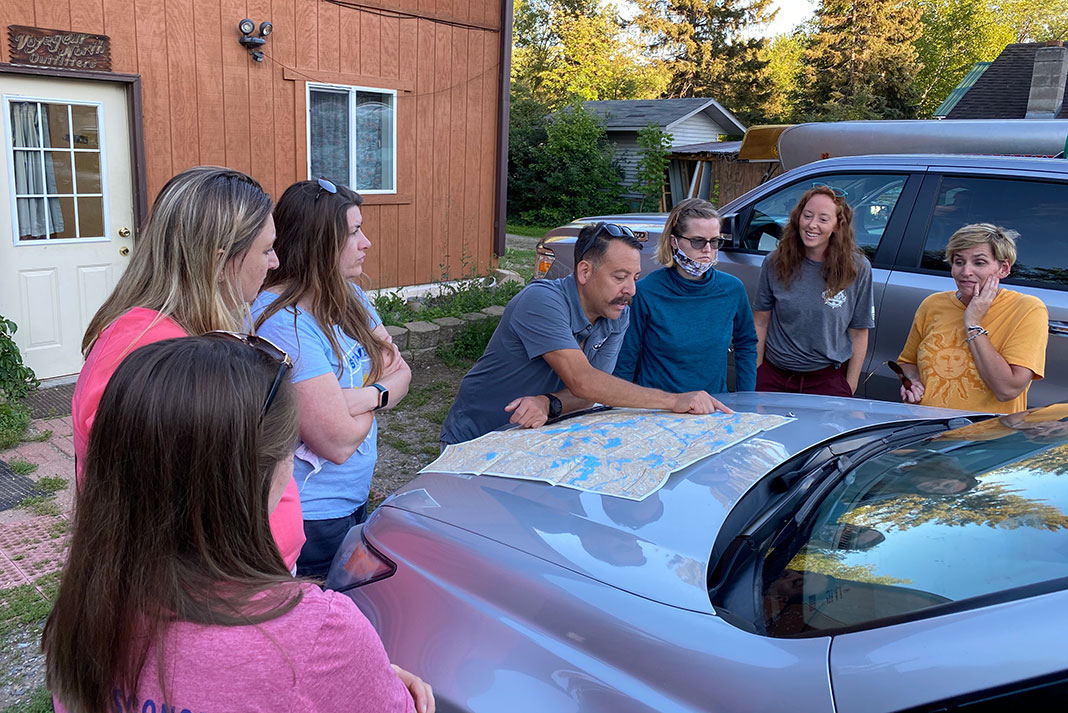
You’ll find experienced canoe trip outfitters servicing pretty much every entry point in the Boundary Waters. Outfitters provide canoe rentals, camping and kitchen gear, food, and all-inclusive, complete outfitting packages that include everything you’ll need for a wilderness adventure. Boundary Waters outfitters also provide vehicle shuttles and canoe delivery to entry points to start and finish your trip. They also have the expertise to assist with navigating the quota and permit system, as well as securing remote border crossing permits to explore north of the border in Canada’s Quetico Provincial Park.
Equally important, outfitters in the Boundary Waters can provide you with local knowledge and encouragement to make your trip memorable. Several outfitters offer kayak rentals for Boundary Waters paddling, too.
Read our guide to The Best Canoe & Kayak Outfitters in Minnesota—there’s a section specifically about outfitters that service the Boundary Waters.
Boundary Waters canoe rental
There are a plethora of options when it comes to renting a canoe for the Boundary Waters. So how do you choose which outfitter to go with? Consider your needs. Are you planning a challenging trip? Make sure you get a lightweight Kevlar or carbon fiber canoe. Wishing to introduce your children to backcountry canoe camping? Look for companies offering larger, three- and four-person canoe rentals for additional space. Just want something to float around for a few hours? You’ll get along fine with a cheaper, general purpose aluminum canoe.
Regardless of your rental, make sure it comes with necessary accessories, including:
- Paddles, for each paddler and a spare if you’re going on a longer trip
- PFDs, also known as life jackets
- A bailer
- A throw bag or 50 feet of floating rope
You may need special equipment to tie a canoe to your vehicle, so be sure to ask in advance what’s required and provided. Some Boundary Waters canoe rentals include the option of delivery to popular entry points.
Kayak rental Boundary Waters
Your choices are somewhat limited if you’re looking for a kayak rental in the Boundary Waters. Look to our Canoe & Kayak Outfitters article linked above to find out which Boundary Waters companies rent kayaks.
Boundary Waters packing list
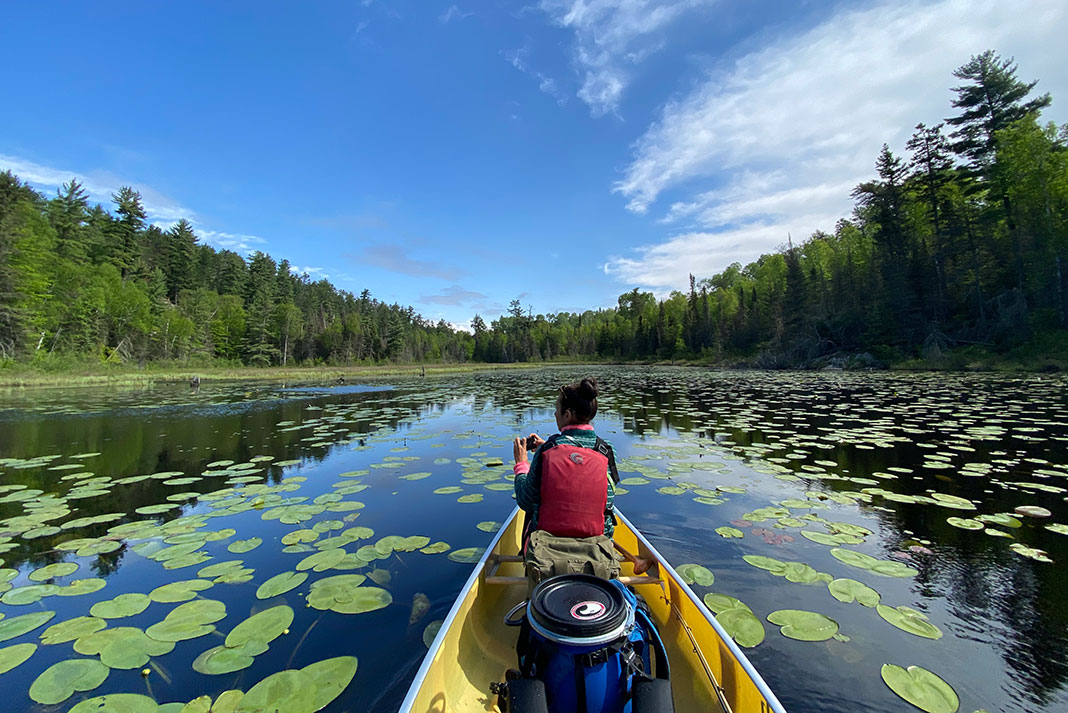
Packing for a Boundary Waters canoe trip is like assembling gear for any other wilderness adventure: you want reliable equipment to keep you safe and comfortable that’s also lightweight and easy to use. It will likely take you a few trips to master your packing list; serious trippers will tell you this is an ongoing challenge.
At the end of an adventure, consider the gear you brought: which items did you use and which stayed buried in your pack? Make notes along the way on things to improve for your next trip so you won’t forget them when you get home.
Here are some gear tips specifically for canoeing the Boundary Waters.
Canoes
Most routes in the Boundary Waters include large lakes and many portages—often both. So choose a canoe that’s seaworthy and light, typically in the 17- to 19-foot range for tandem canoes and 15- to 17-foot range for solo canoes, and constructed of lightweight composites such as Kevlar/Aramid or carbon fiber. Make sure the canoe is equipped with a yoke and pads for easier, more comfortable carrying.
Paddles
Efficient, bent-shaft paddles originated in the Boundary Waters and are great for covering maximum distance with the least amount of effort. However, some traditional paddlers still prefer straight shafts with narrower, slicy blades for style and versatility. Either way, look for paddles that are light and tough—made from wood or composite—and be sure to pack a spare. Remember, if you’re going to invest in a high-end canoe you should do the same with a paddle.
Backpacks
Want to start a backcountry debate? Ask experienced canoe campers their preference for backpacks! You have many options. Since most Boundary Waters canoe trips include plenty of portages, make sure your packs are comfortable to carry. Modern Duluth-style portage packs constructed of nylon have curved shoulder straps and hip belts for greater ergonomics, while remaining soft-sided to ride well inside a canoe.
Make sure everything in your canoe pack is waterproof—either in small- to medium-sized drybags or in a large plastic or nylon waterproof liner. It’s best to double-bag sensitive items like sleeping bags and electronics in their own smaller waterproof sacks.
Tents and chairs
The Boundary Waters Canoe Area is popular, so expect well-developed backcountry sites. You can get away with a larger tent—say, a three-person model to camp in with your partner—and will often benefit from comfort accessories like lightweight folding camp chairs.
Sleeping bags
Nights can be cool in the North Woods, especially in the spring and fall. Invest in a good sleeping bag. Down-filled bags are lightest and most comfortable but make sure you pack them carefully in waterproof drybags.
Gas stove
Don’t plan to cook on campfires in the Boundary Waters. Finding firewood is a chore at the best of times, so go with a gas stove. Liquid fuels like white gas are best for long trips and also eliminate the waste of single-use canisters.
Best shoes for Boundary Waters
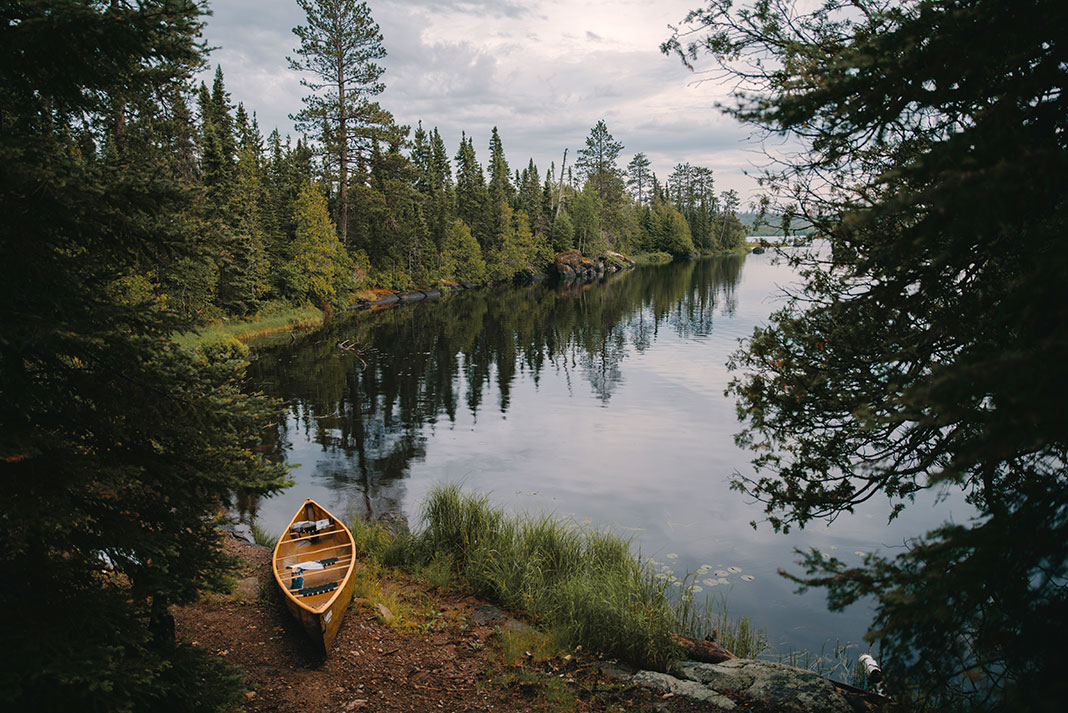
You’ll be portaging—think hiking with a canoe over your head and pack on your back—and spending a lot of time around water, so the best shoes for Boundary Waters canoe trips are supportive, fast-drying and grippy on rocks. Brands such as Astral and Chota make water-specific shoes, but any midweight hiking boot made in synthetic materials should fit the bill. Regardless of your footwear choice, be sure to break them in before your trip to avoid painful blisters.
Read The Ultimate Guide To Choosing The Best Shoes For Canoeing for more helpful advice.
Best GPS for Boundary Waters
Once upon a time, wilderness enthusiasts got along fine with a map and compass for backcountry navigation. Nowadays, GPS units simplify navigation and afford a great deal of peace of mind. Look for a unit that’s waterproof, good on batteries and intuitive to use. Touchscreens make your GPS unit feel as familiar as a smartphone, but may not work as effectively in cold and wet conditions.
There are plenty of options out there, some with advanced mapping features that virtually eliminate the need for paper maps. The choice ultimately boils down to your affection for technology. Be sure to always bring paper maps and a compass as backup, as well as the know-how to use them.
Read 6 Reasons To Go GPS to learn more.
Boundary Waters first aid kit
When it comes to first aid kits, keep it simple with items you know how to use. Think about common backcountry injuries—such as sunburns, blisters, sore muscles and small cuts—and pack accordingly. Make sure it’s all contained in a waterproof stuff sack that’s easy to locate in your pack. Sign up for a wilderness first aid course before your trip to learn how to perform first aid in the backcountry.
Read The Perfect DIY First Aid Kit For Paddlers to get started.
Best pants for Boundary Waters
Long pants are best for canoe tripping. They offer protection not only from sun and bugs, but also from scrubby brush and ticks while portaging. Pants are a matter of personal preference, but in general look for trousers that are made of durable, quick-drying material such as nylon. Belt loops are handy, as are numerous pockets. Pants with reinforced knees and seat areas last far longer on multiple canoe trips.
Boundary Waters camping meals
Keep it light and simple for backcountry camping meals. You can spend a fortune on pre-packaged freeze-dried meals, which are often salty and disappointing. Or you can comb the aisles of supermarkets and health food stores for rice, pasta and instant potato meals that are far cheaper and more appetizing—though require a bit more prep time in camp. Lentils are a high-protein meat alternative that cook up fast, and you’ll find a variety of oatmeal options for your morning meal.
Think about ways you can mix and match ingredients to create homemade meals, and cruise the internet for menu ideas. If you’re really serious about wilderness camping, consider investing in a dehydrator to prepare your own meals at home. For lunch, consider various store-bought flatbreads, which keep well and are durable in the pack, as well as classic toppings like summer sausage, peanut butter (or nut-free alternatives) and jam. Be sure to pack plenty of snacks.
Find everything you need to know about cooking in the backcountry and meal planning here.
Our Ultimate Canoe Trip Packing List will help you assemble the rest of the gear you’ll need to head into the Boundary Waters.
Bugs & wildlife
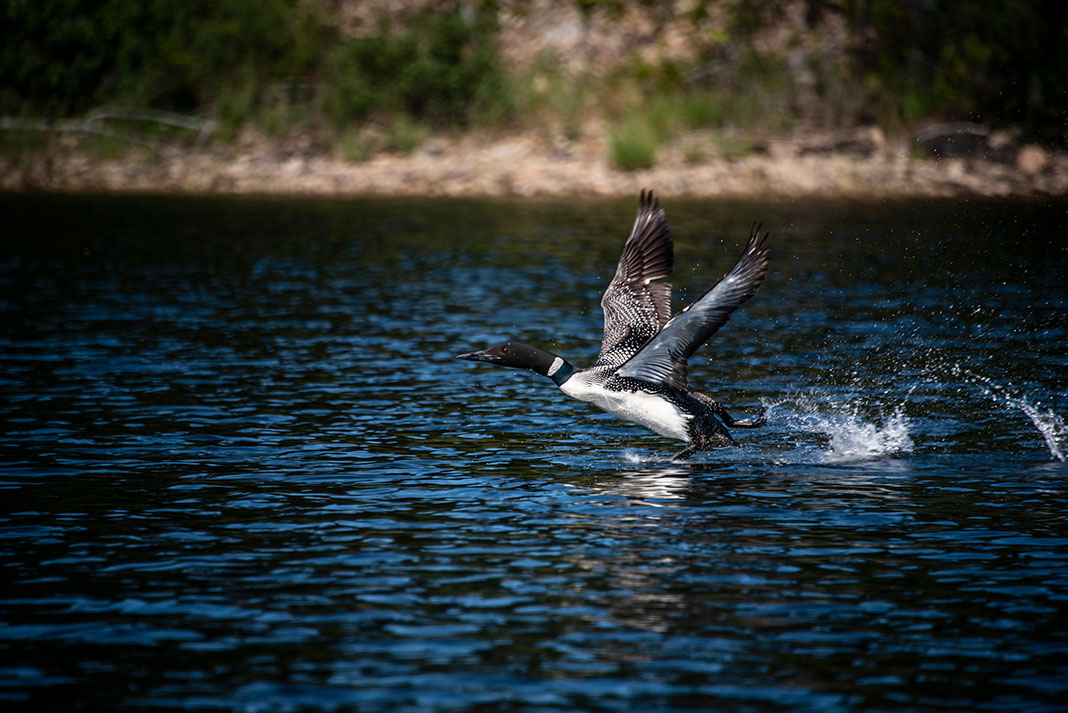
When you’re heading to the North Woods, you’re entering the domain of bugs and wildlife. But you need not be afraid of mosquitoes and bears—just be aware, pack the right gear, take a few simple precautions and feel fortunate to be part of the wilderness.
Black fly season Boundary Waters
Ever met a black fly? These small, persistent bloodsuckers are most prominent around moving water. Black fly season in the Boundary Waters goes from late-May through mid- to late-June, starting about the same time leaves begin to emerge on the trees. Black flies are worst in calm conditions and during the daytime hours.
Head nets and full-coverage clothing are your best defense, with DEET-based insect repellent applied around your ankles, waist, wrists, neck and ears. Planning routes on larger lakes and selecting island campsites will minimize your exposure to black flies.
Boundary Waters mosquitoes
Mosquito season in the Boundary Waters begins in early-June and extends into early- to mid-July. Mosquitoes are most plentiful at dawn and dusk—as well as on portages. Head nets and mesh shelters are wonderful places of respite. DEET-based repellents work well on mosquitoes and battery-powered chemical repellent units are effective around camp in calm conditions.
Boundary Waters ticks
Ticks are increasingly common in the Boundary Waters. These eight-legged, non-flying bloodsuckers are typically encountered in tall grasses and brush, anytime during the canoe season; that said, ticks are most plentiful in spring and early summer. Some varieties of ticks in the Boundary Waters may transmit Lyme disease and other pathogens.
Defend yourself by wearing long pants and tucking in your socks and shirt. Permethrin-based clothing treatments are very effective at repelling ticks. It’s good practice to perform a daily tick-check, inspecting the ankles, waist, and warm areas like the back of your knees, crotch and armpits.
Bears in Boundary Waters
The Boundary Waters wilderness boasts a healthy population of black bears, which serve as a good indication of a pristine natural environment. Note that there are no grizzly bears in the Boundary Waters. Black bears do their best to avoid humans, so encounters are unlikely.
Aggressive behavior and attacks are extremely rare. However, a few precautions will keep you and your food safe.
Read How To Survive A Bear Encounter to learn how to prevent an encounter and what to do in the event of one. Read Bear Safety Gear For Camping to learn about food storage options, repellants, and preventative gear. Read Bear Safe Hanging Tactics to learn how to safely hang your food.
To learn more about the fascinating biology of bears visit the North American Bear Center in Ely, Minnesota on the edge of the Boundary Waters Canoe Area.
Wolves in Boundary Waters
Count yourself lucky if you see a wolf in the Boundary Waters! While wolves do roam this immense wilderness area, encounters with humans are exceedingly rare. That’s because wolves want nothing to do with humans. They are especially secretive in the summer months when packs are raising young. For more information about wolves and their presence in the Boundary Waters check out Ely’s International Wolf Center. Read How To Keep Wolves From Your Campsite if you want to be extra cautious.
Boundary Waters moose
The Boundary Waters moose population is decreasing due to climate change. However, this immense wilderness area still acts as a refuge for moose. Wetlands, sheltered bays and quiet rivers are the best places to see a moose—especially at dawn and dusk. Moose are most commonly observed during black fly and mosquito season, typically June, when insect pests drive them to seek respite in open areas.
Moose can be dangerous during the rutting season in late-September, when hormone-crazed males seek out mates and may mistake humans for competitors. With warmer summers and less snow, moose face big challenges due to climate change; give them a wide berth and observe them from afar to minimize your impacts on their routine.
Trip planning
Directions to Boundary Waters
The Boundary Waters gateway town of Ely, Minnesota is located about 250 miles north of Minneapolis-St. Paul on I-35. From Duluth, take Highway 61 and then head north on County Highway 2, Service Highway 15 and State Highway 1 for a backroads driving experience.
Gunflint Trail access points, on the east side of the Boundary Waters, are accessed via Highway 61 and Grand Marais, Minnesota.
Best time to visit Boundary Waters
Here’s an item to debate: when is the best time to visit the Boundary Waters? There are arguments to be made for all seasons.
May and June afford “early bird” visitors with fewer crowds and greater isolation, with the best fishing opportunities, especially for cold-water species like trout, and the greatest likelihood of encountering iconic wildlife like moose. However, spring trips are most challenging with the potential for cold, adverse weather, chilly water, and, come June, plenty of bugs.
July and August are peak canoe season, so expect to be sharing the wilderness with other trippers. Count yourself lucky to score a Boundary Waters permit at this time of year, and bask in stable weather, fewer bugs and warm-water lakes for swimming.
September and October, especially later in autumn, offer more variable weather conditions, with extended periods of rain and stronger winds. However, many veteran canoe campers argue that early- to mid-September is the absolute best time for a Boundary Waters canoe trip. You’ll enjoy pleasant temperatures, warm water, minimal bugs and fewer people at this time of year.
Boundary Waters rules
Rules in the Boundary Waters are meant to protect this area’s wilderness character. The following regulations are relevant to canoe and kayak users in the backcountry, and are enforceable under United States Forest Service Regulations.
Permits are required: Permits are subject to a quota by entry point from May 1 to September 30.
Group size: Group sizes are limited to nine anywhere in the Boundary Waters. Four canoes is the maximum group size per permit.
Cans and bottle ban: Cans and bottles are not allowed in the Boundary Waters.
Trash: It is illegal to burn trash in the Boundary Waters. Garbage must be packed out.
Length of stay: The maximum time you can stay at one campsite in the Boundary Waters is 14 days.
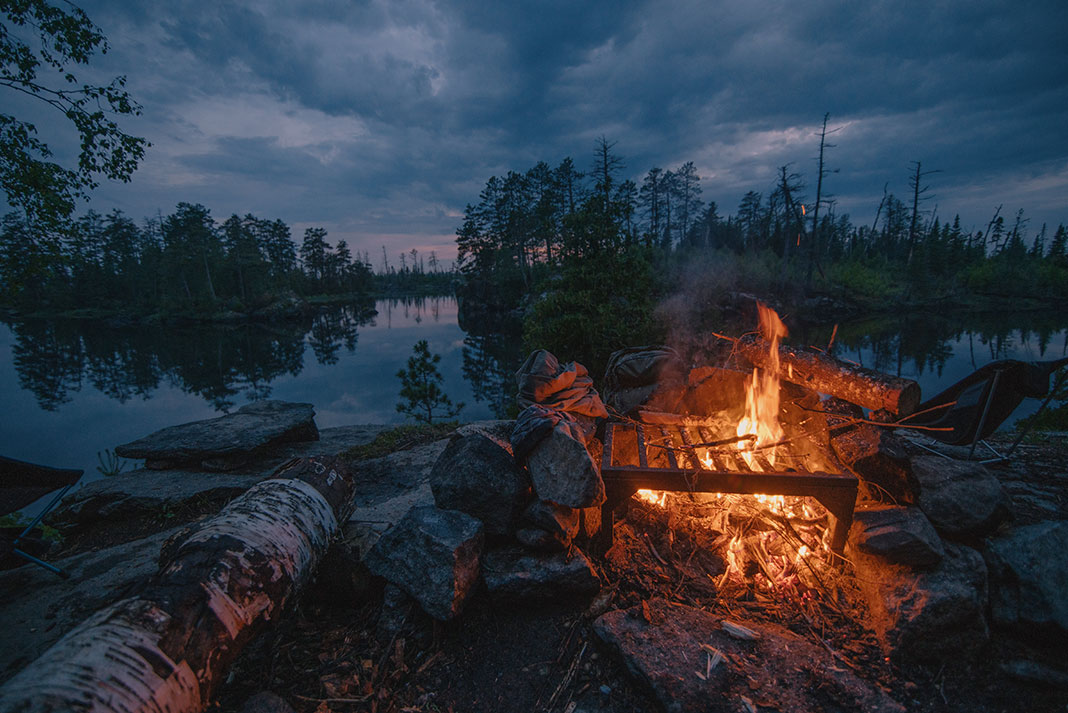
Fires: Fires are allowed only within steel grates at designated Boundary Waters campsites.
No motors: With few exceptions, gas and electric motors are not allowed in the Boundary Waters.
No portage wheels: With few exceptions, portage wheels are not allowed in the Boundary Waters.
Firearms: It is illegal to discharge a firearm within 150 yards of a campsite in the Boundary Waters.
No fireworks: All fireworks are illegal in the Boundary Waters.

 This article was first published in the Fall 2015 issue of Rapid Magazine.