The U.S. Coast Guard has released its 2021 boating accident data.
“The good news is that after the explosive growth and record number of accidents and fatalities that occurred during the pandemic year of 2020, the number of recreational boating incidents and fatalities declined in 2021,” says Water Sports Foundation Executive Director Jim Emmons.
Total deaths fell from 767 in 2020 to 658 in 2021, a 14.2 percent decline. However, “Paddlecraft deaths still remain high, and kayaks are listed as the vessel type with the second highest fatalities behind open motorboats,” Emmons adds. There were 160 fatalities while kayaking, canoeing and paddleboarding in 2021, versus 164 in 2020.
The U.S. Coast Guard reports:
Kayaks are listed as the vessel type with the second highest fatalities (15 percent), behind open motorboats (44 percent)
In 2021, there were 96 fatalities while kayaking, compared to 112 in 2020
In 2021, there were 46 fatalities while canoeing, compared to 42 in 2020
In 2021, there were 18 fatalities while standup paddleboarding, compared to 10 in 2020
Where cause of death was known, 81 percent of fatal boating accident victims drowned. Of those victims with reported life jacket usage, 83 percent were not wearing a life jacket
Alcohol use is the leading known contributing factor in fatal recreational boating accidents; where the primary cause was known, it was listed as the leading factor in 16 percent of deaths
Take a paddling safety course from the American Canoe Association (ACA), your local paddling shop or outfitter, or other reputable source.
Take a boating safety course from the U.S. Coast Guard Auxiliary, U.S. Power Squadrons® or your own state’s boating agency.
Take on-the-water skills training.
Wear A Life Jacket
Everyone, even strong swimmers, needs to wear a life jacket at all times when on the water. It is extremely difficult to put a life jacket on once you fall into the water. Even a light wind can blow any paddlecraft away from you, faster than you can swim.
Always wear a USCG-approved Level 70 or Type III life jacket designed for paddling.
Dress For Immersion, Not Air Temperature
Your body loses heat much faster when immersed in cold water than it does when dry.
Avoid cotton clothing like t-shirts and jeans; they retain water and accelerate cooling when wet. Synthetic fabrics, or wool, are generally a better choice. If the water is very cold (60° fahrenheit or less), you should wear a wetsuit or drysuit.
Check The Weather
Plan for changing weather conditions. Prepare for the worst case.
Don’t forget to check tide, currents, or river levels.
Know The Local Hazards
Check navigation charts before you launch.
Check with those who have local knowledge of man-made and natural hazards, e.g. low-head dams; sweepers, strainers and undercuts; tides and currents; and rocks and shoals.
Paddle Sober And Smart
Never mix alcohol and paddling. Coast Guard and state BUI (boating under the influence) laws apply to all vessels. This includes canoes, kayaks, SUPs and rafts.
The U.S. Coast Guard compiles statistics on reported recreational boating accidents. These statistics are from accident reports filed by the owners and operators of recreational vessels involved in accidents. The 50 states, five U.S. territories and the District of Columbia submit accident report data to the Coast Guard for inclusion. Access the full 2021 Boating Accident Report Data here.
SERENITY NOW, INSANITY LATER. | PHOTO: FRANCIS LÉPINE/ BIOSPHEREPHOTOGRAPHIE.CA
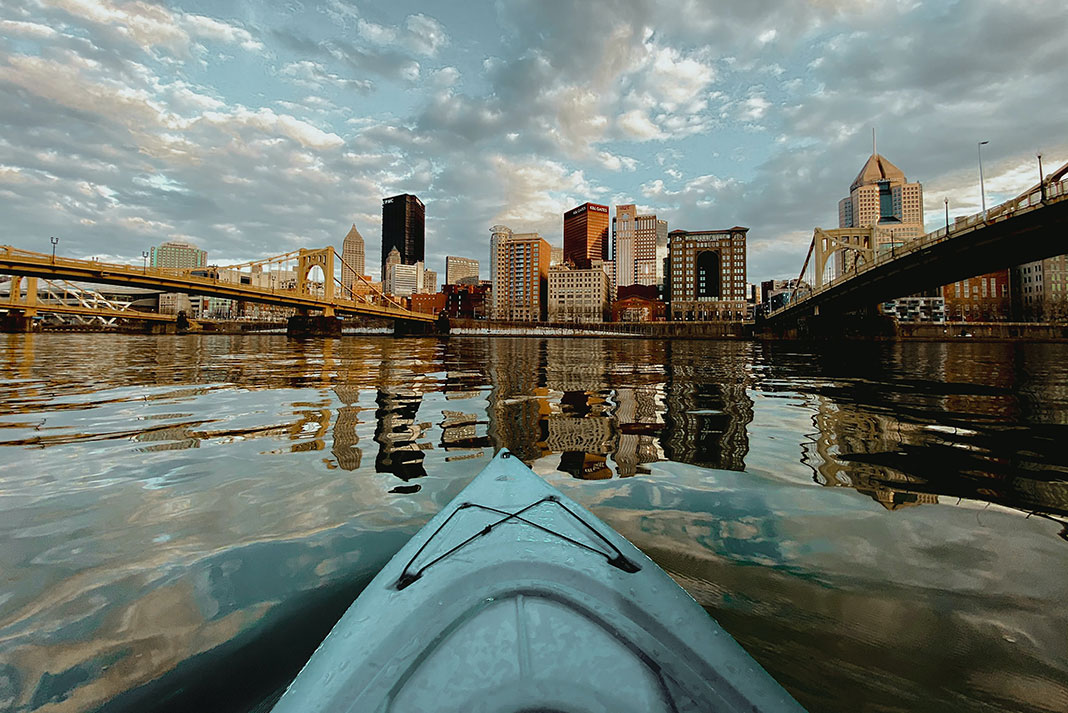
It’s not easy being a paddler in the city. Expensive real estate, limited boat storage, premium parking, traffic congestion and polluted waters conspire to make metropolitan kayakers feel like they’re paddling against the current. Here are eight secrets to city survival, gained from years of experience paddling and battling through the worst urban woes.
Easier said, right? But waterfront city living gives you the best of both worlds—urban convenience out the back door, watery wildness out the front. Walk your kayak down to the dock for a sunrise paddle, or size up surf conditions from the kitchen window.
To accomplish this it helps to lower your standards. I managed waterfront living as a student by renting rooms in dilapidated houses, subletting, housesitting and moving indiscriminately between basements, garrets and laundry closets. My bed was a Therm-a-Rest air mattress on shipping pallets, but I lived in some of the Pacific Rim’s priciest oceanfront ‘hoods for less than $400 a month.
The next best thing to living on the water is to park your boat there. | Photo: Jocelyn Allen/Unsplash
2 Get your boat a waterfront pad
The next best thing to living on the water is to park your boat there. The 50-odd cubic feet required to store a kayak is a slice of waterfront that almost anyone can afford.
Just be prepared to get in line. My local paddling club has been full for years. Every spring I get an email from someone who’s de-cluttering the waitlist, asking what skills I might have to volunteer if I were chosen to join, which hints at a suspiciously biased selection process. I promised to wash and wax everyone’s kayaks, and attached a swimsuit photo, but I haven’t heard back.
3 Ditch your car
Like all booming cities, my town is in a state of perpetual gridlock, construction and repair. The road to my local put-in has been closed for more than a year. Driving to the water means running a gauntlet of street closures, flag-persons, single-lane bridges and traffic jams that crop up around various special events and seasonal attractions. I pass a Cirque du Soleil show, a bustling Chinese grocer and a waterfront pool bar, capacity 3,000, where Justin Bieber likes to go when he’s in town.
At the beach, I have to fight the other three million city residents for parking. One time, the only available space was along a strip of vacant and overgrown waterfront. Forced to portage through a network of shrubby singletrack, I encountered an unusual number of deeply tanned and extraordinarily friendly middle-aged men before reaching the water.
Had I sorted out waterfront storage as per section two, I could have biked to the water in 10 minutes. Until I get into that paddling club, I’m shopping for a kayak trailer for my bicycle.
People are sharing everything these days: cars, tools, houses. Like these items, good kayaks are expensive, but durable and long lasting. Why own three boats that only get used for hours a week? I’ll bet one kayak could serve five or 10 people. We could store it by the water, share the lock combo, and set up online reservations. I’m thinking of starting a community library for outdoor gear of all kinds, so I don’t have to own a nest egg’s worth of kayaks, canoes, surf skis and paddleboards for every conceivable mode of watery play. Want to join?
5 Cover your cockpit
Pricey real estate and high populations make homelessness a problem in our cities, notably among wildlife. Spiders and slugs are my customary cockpit stowaways. But twice, raccoons have turned one of my kayaks into a fetid winter den or part-time port-a-potty. And readers may remember an earlier reference in this column to a kayak bulkhead that was devoured—in the spring I found a gaping hatch full of pungent foam crumbs. These poor vermin are, like us paddlers, just wild creatures trying to eke out a living in a hostile urban jungle, but that does not make us allies. Shell out for a good cockpit cover.
6 Check the water quality
In the city, weather conditions are generally tamer, but along with the forecast I also check online water quality reports. After heavy rains, the E. coli count skyrockets. It’s okay to paddle, but wait a couple days before attempting rolls or rescues.
SERENITY NOW, INSANITY LATER. | PHOTO: FRANCIS LÉPINE/ BIOSPHEREPHOTOGRAPHIE.CA
7 Embrace the offseason
Come fall, the circus leaves town, the beachgoers are replaced by migrating birds, parking lots empty, the bacterial counts drop and the algae blooms die off. Frigid temps wrap the busiest beaches in a cloak of peace, wildness and free parking. To love off-season paddling, all you need is a drysuit.
8 Adopt a watery state of mind
The key to overcoming the travails of urban paddling is to let your time on the water be a gateway to a new pattern of thought. For me, being surrounded by millions of other humans threatens to turn every petty annoyance into a personal battle: the guy who cut me off at the stoplight, the gentrifying hordes driving up house prices, the construction workers blocking the roads. It’s all somebody’s fault. Nature inverts this mentality; out there, it’s not about you or anybody else. All you can control is your attitude. And that’s calming.
One of my favorite places to paddle is a large peninsula that’s younger than I am—it’s constructed entirely of construction waste. As new glass condos overtake the ephemeral downtown, truckloads of rubble are dumped here for infinite repose, raising the lakebed to become parkland, a refuge for coyotes and waterfowl.
The bulldozed remains of so many expressways and buildings have a timeless, wild quality that belies their manmade origins. It used to make me angry that all I had to look at were the crumbled corpses of factories and warehouses. That the weathered driftwood and fragrant kelp beds of my student days in the Pacific Northwest had been cruelly replaced by broken concrete telephone poles and mangled knots of rebar twisting out of the shallows like jagged reefs.
But paddling is paddling. It tires your muscles and opens your mind in the same way, no matter how urban. Whatever the headaches of getting on the water and home again, you’re a better person for it.
This article first appeared in the Spring 2015 issue of Adventure Kayak magazine. Subscribe to Paddling Magazine and get 25 years of digital magazine archives including our legacy titles: Rapid, Adventure Kayak and Canoeroots.
Every June 26th, The Canadian Canoe Museums celebrates its favourite holiday of the year – National Canoe Day.
June 26th was coined National Canoe Day by The Canadian Canoe Museum following a CBC campaign that, in 2007, declared the canoe one of the Seven Wonders of Canada. Ever since, and in many ways – from proclamations to paddling parties – Canadians have connected and shared their affinity for canoes. Since the COVID-19 pandemic, National Canoe Day has also been celebrated virtually.
This will be The Canadian Canoe Museum’s final National Canoe Day celebration at its current location before the museum embarks on its final “portage” to the water’s edge, where it will make its new home. For the past two years, the CCM has enjoyed expanding its celebrations online during the pandemic, allowing more paddlers to join in and connect over their passion for canoes (and the occasional kayak here and there). This year, The Canadian Canoe Museum will be celebrating virtually and in person at the Museum so that those near and far can participate.
[ View the largest selection of canoes in the Paddling Buyer’s Guide ]
Join the online National Canoe Day celebrations from anywhere in the world
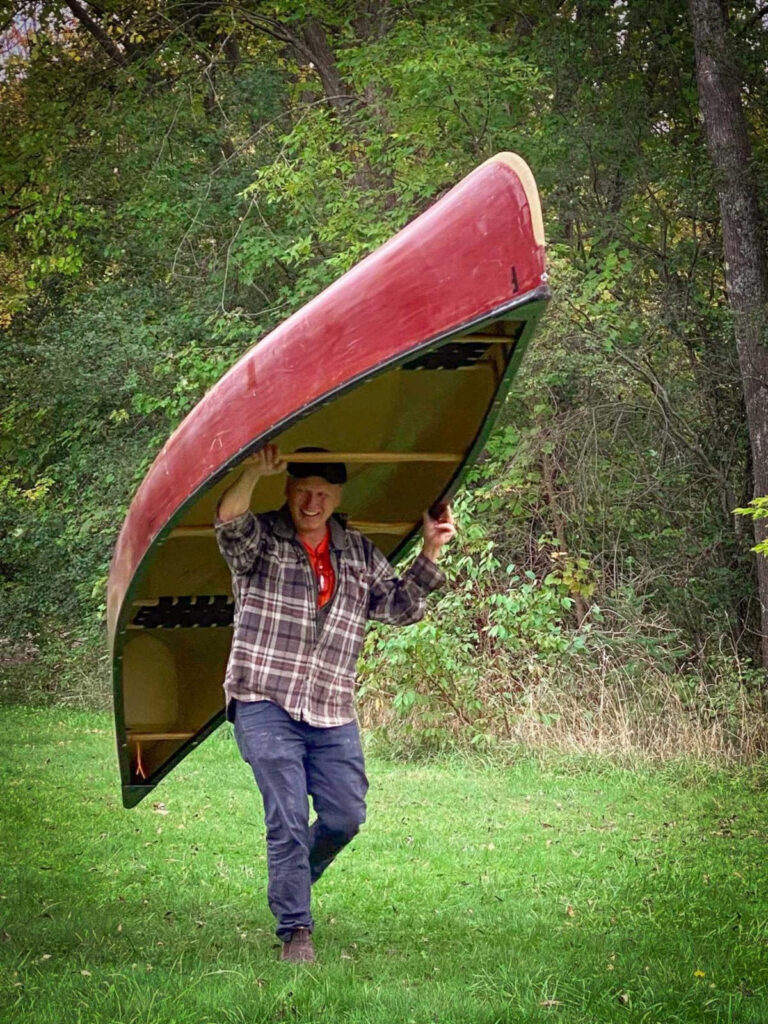
Portaging can be one of the most challenging parts of a canoe trip – and the CCM is about to embark on a long, final “portage” as staff prepare to move more than 600+ canoes and kayaks (and even more small artifacts) to the new museum. To help with this “big lift,” you are invited to join the CCM on a virtual portage.
Share a picture (new or old) of you portaging your canoe with the hashtag #PortagePic on June 26th and tag The Canadian Canoe Museum on Facebook, Twitter, or Instagram (@cndncanoemuseum). The museum wants to hear your best (and worst!) portaging stories. CCM staff will be liking, commenting, and sharing on social media throughout the day, along with a few special guests.
Free Admission To The Canadian Canoe Museum
On June 26th, admission to The Canadian Canoe Museum will be free. The Museum will be open from 10 a.m. to 4 p.m.
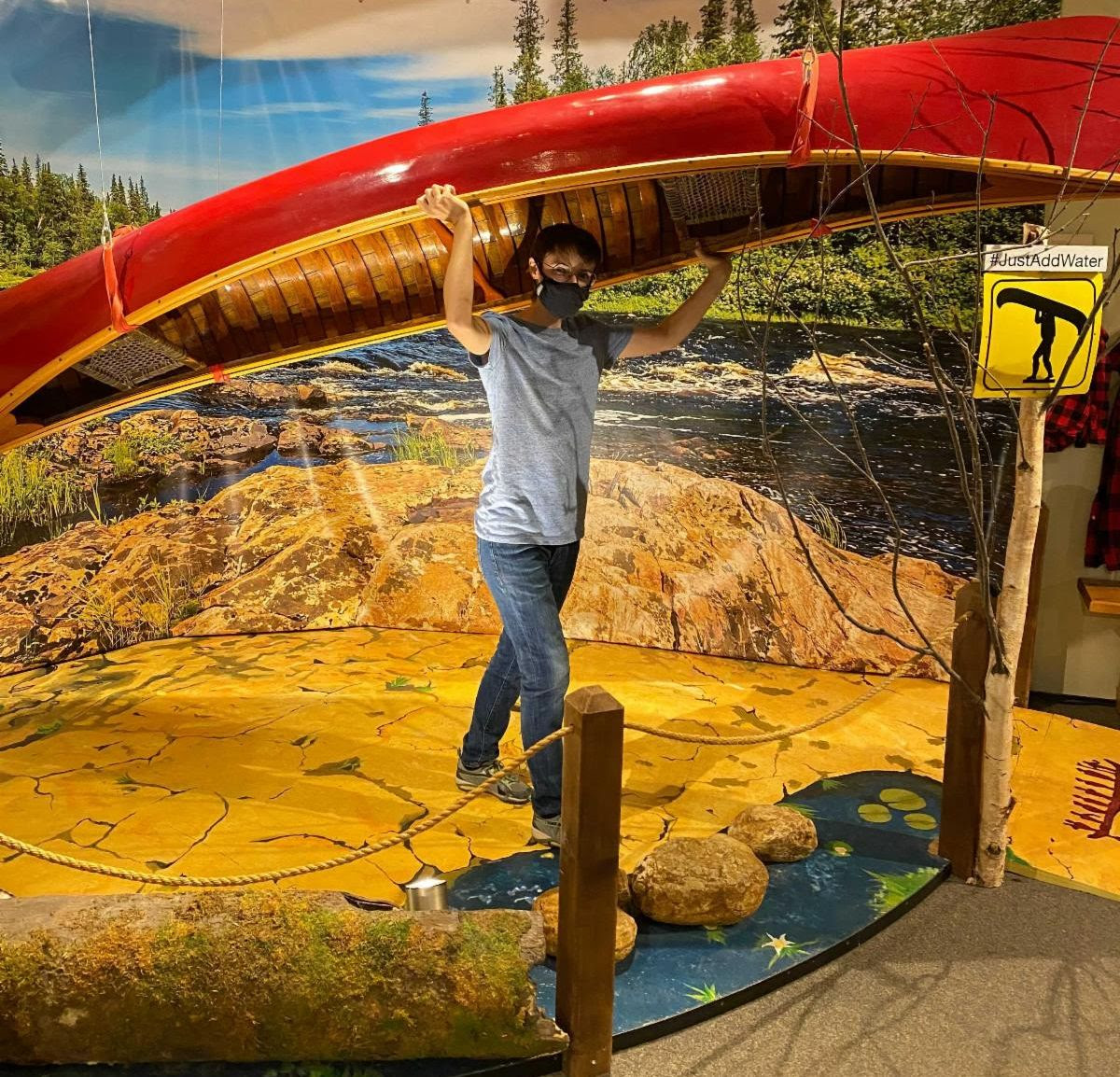
This is a perfect opportunity to visit for the first time or once more before the museum closes on Labour Day in preparation for its move. Visitors can also participate in sharing their own #PortagePic by taking a photo at the portage photo booth in the front lobby.
What to avoid, and how to escape if you do get caught in a hydraulic. | Feature photo: Courtesy Pyranha
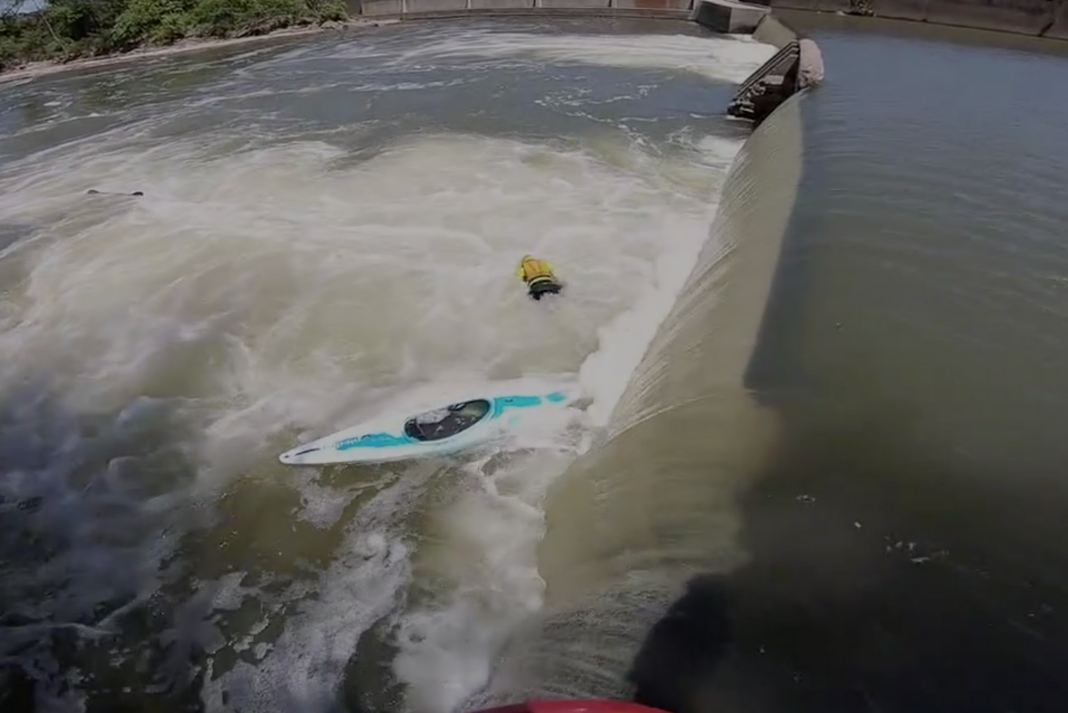
Russ Schroeder realized this wasn’t your typical spin cycle after the one-minute mark. Slipping off-line and into the don’t-go-there left side of the Petawawa River’s Suicide Rapid, Schroeder hit a retentive pour-over and flipped. The whitewater kayaker’s training on how to escape a hydraulic kicked in—but would it be enough?
“I knew the boat wasn’t going to flush, says Schroeder, “so I pulled my sprayskirt.”
What to avoid, and how to escape if you do get caught in a hydraulic. | Feature photo: Courtesy Pyranha
Pinched in a narrow trough, he swam hard across the hole, grabbing for any water moving downriver; curled into a ball to try to reach the downstream current along the river bottom; and kicked off the rock whenever his body came into contact with something solid. After an estimated two minutes—an eternity in the disorienting, hypoxic realm of a powerful recirculation—Schroeder had exhausted every textbook hole-escape technique.
“I finally just went limp,” he remembers, “then I flushed.”
Two techniques to handle hydraulics
1 Deal with it
Swiftwater Rescue professionals like Rescue Canada’s Matt Cuccaro teach two proven self-rescue strategies for hole-escapes: swim for the side or swim for the bottom. Schroeder’s full-body surrender, which he admits was more the result of beginning to lose consciousness than a considered tactic, is a last resort.
[ Paddling Trip Guide: View all whitewater rescue courses ]
“Stay active—it’s all about reaching for that water that’s moving downstream,” says Cuccaro. If you can’t get to a side, swim hard into the current and curl into a ball. With any luck, you’ll be driven deep into the flushing current below the recirculation.
Paddling in pairs opens up more rescue options if you end up in a tough spot. | Photo: Pixabay
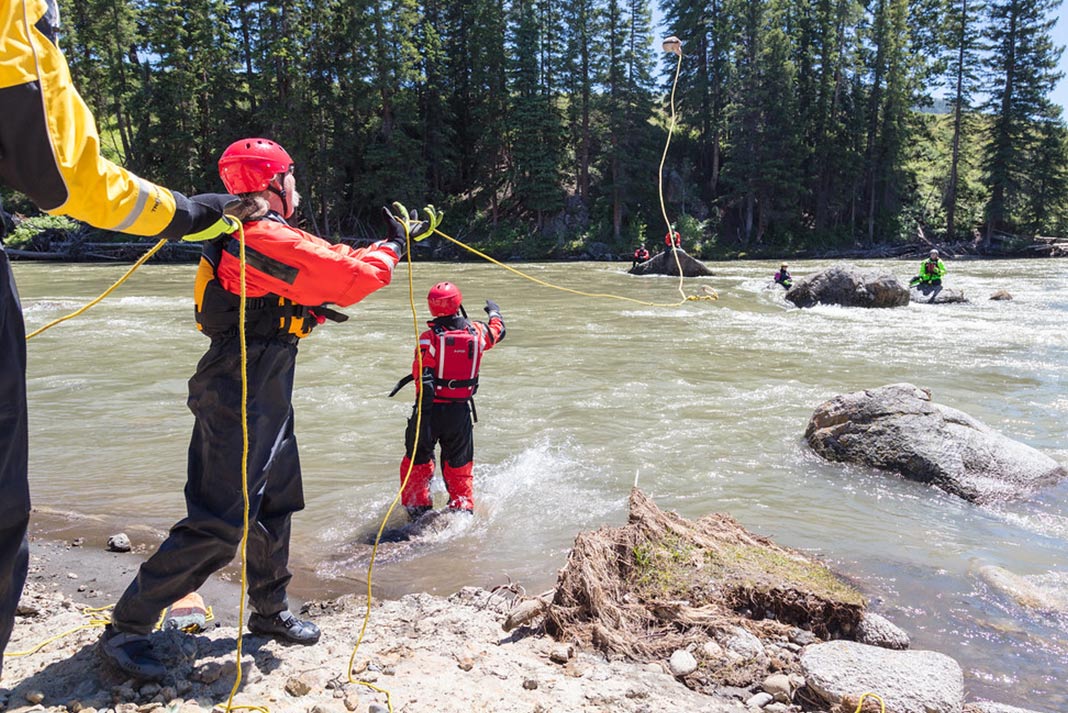
Paddling in a group increases safety and rescue options. During his swim, Schroeder was unable to grab his sole paddling partner’s throw bag. Tag line and live bait rescues were potential lifesavers not possible with just one rescuer.
Thorough scouting is the best way to steer clear of a sticky situation. Be especially wary of frowning holes—those with edges that curve upstream, feeding back into the center—and quiet, or relatively unaerated, hydraulics. The latter recirculate well below the surface so are particularly hazardous for swimmers.
The critical factor is the distance between the pour-over slot and the boil line, which delineates where current begins moving downstream. In general, walk around anything with a boil line over half a boat length.
This article was first published in the Summer/Fall 2010 issue of Rapid Magazine. Subscribe to Paddling Magazine’s print and digital editions, or browse the archives.
What to avoid, and how to escape if you do get caught in a hydraulic. | Feature photo: Courtesy Pyranha
The unfortunate reality of river kayaking is that there are often deadly hazards. Getting pinned is one of the worst of them.
Things can take a turn in an instant when a member of your group finds themself pinned—especially if the pin is holding the boat or the paddler in a position where breathing is impaired. Having a knowledgeable, fast-acting safety team can mean the difference between life and death in these scenarios.
A group of experienced kayakers ran into trouble on Richland Creek, Arizona when one member of the group got stuck in a vertical pin. Watch the video and read the first-hand account below to discover what happened next.
Words By Derek Hankins:
“’Apple Pie Rapid’ has a notorious sieve on the left side, only in play at high water. A member of our crew was pushed off line and happened to find the sieve, and pinned bow first, upside down. Fortunately, he was able to hold himself up on a log that was stuffed under the rock already. The log was also preventing him from being able to pull his sprayskirt, so he was essentially stuck.
I realized he was in a bad situation and tried to get to him as quickly as possible, leaving behind my throw rope in my boat as I was focused on getting to him and stabilizing him. When I got to him I tried to grab him but the water was too deep and turbulent to safely reach him in the sieve.
Thankfully, another member of our crew was right behind me with a rope that we were able to get to him and pull him out of his shoes and through his sprayskirt.
In hindsight, I should have taken the extra couple of seconds and grabbed my rope, something I will make sure I do from now on. We were able to extract the kayak with a z-drag. Swift Water Rescue is an integral part of running whitewater, you never know when you will find yourself in a life or death situation. It is always good to be prepared for whatever may happen, and just hope you don’t need it. Stay safe out there folks.”
The view from Allen’s boat as he rushed to rescue two men from a capsized motorboat. | Photo courtesy Allen Hutto
Allen Hutto was having one of those days.
He’d loaded his sea kayak for an early morning paddle, but on the way to the lake his car picked up a nail. Repairing the flat took a couple of hours.
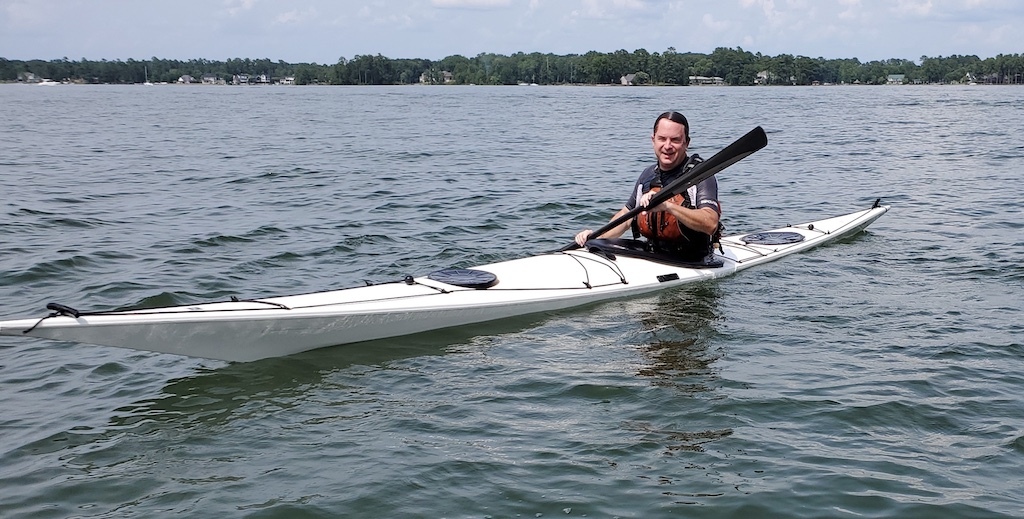
The wind was whipping when he finally got to the boat launch at Lake Murray near Columbia, South Carolina, and most of the boat traffic had already called it a day. Not Allen. He’s been sea kayaking for 35 years and worked hard to improve his skills, training with the likes of Derek Hutchinson and Nigel Foster and earning his Level 4 Open Water certification from the American Canoe Association.
Allen enjoys paddling in lively water, and the wind ripping across Lake Murray was just what he needed to get his mind off the flat tire and the workweek ahead.
Kevin Outlaw and Will Dobose were having a day too. The longtime friends had gone out fishing that morning in Will’s 16-foot skiff and were well offshore when the wind began to rise. As they motored toward the ramp, the waves grew steadily larger.
[ Paddling Buyer’s Guide: See all rescue kits ]
Lake Murray is formed by the Saluda Dam, which stretches a mile and a half across the eastern end of the reservoir. It was the world’s largest earthen dam when it was built in the 1930s, and when the wind blows out of the west as it was that day, the waves pile up against the dam and double back on themselves. Kevin and Will would have to pass through this gauntlet of rough water to reach the boat ramp at the north end of the dam.
Kevin had his life jacket on and buckled before leaving the boat ramp. Though an avid fisherman, he’s not at all comfortable around water. In fact, in his 33 years Kevin had never ventured more than knee-deep in a lake or ocean. “If I go on the lake, I’m going to fish,” he explains. “I’m not going for any water sports or nothing like that.”
Kevin says urged Will to wear a life jacket too, but Will refused. The life jacket was too tight, he said. Later, as Kevin struggled to guide the little skiff though the building waves, there was no way he could put it on.
“The wind was so heavy, it was pushing more water into the boat than the bilge pump could put out,” Kevin recalls. “It just happened so quick.”
Allen had honed his kayaking skills for years, earning his ACA Level 4 Open Water certification. | Photo courtesy Allen Hutto
Allen estimates he was about 100 yards from Kevin and Will when their boat rolled over, near a set of massive concrete and brick towers that draw water into the dam’s hydroelectric turbines.
“They were about 90 degrees off my course and I just happened to look over and I saw the boat capsize,” he says.
In all the safety scenarios Allen had practiced at kayak symposiums, during his guide training and with paddling friends, this one had never come up: One kayaker, single-handed, aiding two big men in open water.
Allen didn’t hesitate. “I started yelling, ‘I’m coming! I’m coming!’ And I just spun around and hauled ass over there,” says Allen, who estimates it took him about a minute to reach the capsized skiff.
As he approached he could see Kevin floating in his life jacket, and Will holding tight to him with a look of panic in his eyes.
“I don’t think that other guy could swim,” Allen says, referring to Will.
In fact, neither Kevin nor Will is much of a swimmer. In the 60-odd seconds it took Allen to arrive, Kevin’s life jacket was the only thing keeping both of them afloat. “Will was holding on to me and I was staying afloat for the most part,” Kevin says. “So my thing was to make sure that Will didn’t let go. I kept telling him, ‘He’s just about here. He’s just about here.’”
When Allen reached the men he told them to grab the bow of his kayak, and once they’d latched on he took a moment to reassure them, saying, “We’re going to get you out of this. You’re going to be fine.”
Allen knew he was taking a chance assisting the two men, but the idea of not helping them never crossed his mind. “The only thing that went through my head was ‘Get your ass over there and help them,’” Allen says. He was in a Nigel Dennis Latitude sea kayak with a bomber spray skirt, dressed for the conditions with a full compliment of self-rescue gear. Most of all, he had years of rough-water paddling experience and rescue practice.
[ Plan your next rescue training with the Paddling Trip Guide ]
“I focused on getting them to hold onto the boat properly and just being ready to brace if I had to,” said Allen, who was using a Greenland-style paddle. Then, with Kevin and Will stabilized, Allen took a moment to assess the situation. The wind was pushing the trio toward the intake towers. Allen back-paddled between two of the stacks and took a hard look at the boulder-clad edge of the dam. It was about 400 feet downwind, across a jumble of rebounding waves. It wouldn’t be easy, but with 15 to 20 knots of wind at their backs Allen was confidant he could tow both Kevin and Will to shore. But then what?
“That dam is rip-rap, and the waves were coming down the length of the lake,” he says. “It would have been hard to get them up on those rocks without them getting banged up pretty good.”
Fortunately it didn’t come to that. Allen spotted a pontoon boat a short distance away and was able to get its attention. A few minutes later it chugged into position, and Allen helped Kevin and Will climb aboard. Soon they were safe ashore.
Allen is careful not to claim he saved anyone’s life that day. After all, Kevin was wearing a life jacket, and with the water temperature in the high 50s they had time—though not a lot of it—before hypothermia would set in. “Maybe they could have got to shore,” Allen muses. Then, after a moment, he adds, “The guy who didn’t have a life jacket on, I genuinely think he was in trouble.”
We’ll never know for certain what would have happened to Kevin and Will if Allen had not been there. Ultimately, the question is less important than the fact he was prepared to help. All those years paddling—the courses he took to improve his stroke, to master his roll, learn rescue techniques and incident management—they paid off that day on Lake Murray.
The rest came down to chance. “If I hadn’t had that nail on the tire, I wouldn’t have been there,” he says. “It was just one of those right place, right time things.”
This article was produced under a grant from the Sport Fish Restoration and Boating Trust Fund, administered by the U.S. Coast Guard.
Turquoise waters are great, but canoeists everywhere can experience the health benefits associated with Blue Zones. | Feature photo: Jacques Tiberi/Pixabay
I recently became a great aunt at the age of 33. Perhaps it’s because all my own great aunts are either gone or very elderly, but it got me to thinking about my own future. From lifestyle factors to geographical clusters called Blue Zones, theories abound about how to live longer. But canoeists don’t need to go blue in the face trying to turn back the clock—we experience health benefits wherever we paddle. Here’s how to make your own personal Blue Zone.
If I’m lucky enough to make it into my 80s, I hope to be like some of my heroes. Octogenarian adventurers like Dale Sanders (oldest person to thru-hike the 2,200-mile Appalachian Trail at the age of 82), Audrey Sutherland (Hawaiian paddler who continued paddling in Alaska into her early 80s) and Helen Thayer (hiked the length of Death Valley solo and unsupported at the age of 80). These adventurers didn’t let age stop them, even if it slowed them.
Getting younger by the mile on the Spanish River in northern Ontario. | Photo: Kaydi Pyette
Not only did these aged adventurers keep tripping long past the time many throw in the towel, they even did so past the average life expectancy of Canadians (82.3 years) and Americans (78.9 years).
Want to prolong your life expectancy by more than a decade? Who wouldn’t?
Lifestyle factors are no surprise
A study published last year in the medical journal Circulation suggests following five not-so-secret guidelines: don’t smoke, maintain a healthy weight, do moderate to vigorous exercise, don’t drink too much alcohol and eat a healthy diet.
Adhering to those five lifestyle factors was associated with 14 additional years of life expectancy among women and 12.2 additional years among men. While it sounds simple, the study’s co-author, Harvard Medical School professor Dr. Meir Stampfer, noted just eight percent of North Americans abide by the guidelines.
[ See the largest selection of canoes in the Paddling Buyer’s Guide ]
In addition to the lifestyle stuff everyone knows, even if not everyone follows, there’s additional scientific evidence offering advice on how you can live long into your golden years. And it’s good news for canoeists.
Finding the Blue Zone within you
Dan Buettner, a National Geographic researcher, coined the term Blue Zone more than a decade ago to describe geographical pockets with a high rate of centenarians and residents enjoying more years of good health. These seven pockets around the world include Italy’s Sardina, Icaria in Greece and Japan’s Okinawa, and share many lifestyle factors in common. Fortunately, you needn’t move overseas to reap the rewards—you can make your own Blue Zone on your next canoe trip.
Turquoise waters are great, but canoeists everywhere can experience the health benefits associated with Blue Zones. | Feature photo: Jacques Tiberi/Pixabay
In addition to the usual eat right and stay active habits, Blue Zones feature strong social ties, spiritual connections, and stress reduction as fixtures in the community. These factors are natural to nurture on a canoe trip.
What better place to reconnect with an old friendship or cement a new one than the shared experience of adventure? And regardless of faith or denomination, time in the wilderness and gazing at the stars leaves many feeling like they’re part of something bigger than themselves.
Not only has time outside and on the water been shown to reduce stress hormones, but the relaxation and extra sleep bestowed just by vacationing has its own life-extending benefits.
Even better for trippers with bucket list northern trips in mind, there’s evidence to suggest the longer the vacation, the richer the rewards. Participants in a 40-year study by the University of Helsinki had a 37 percent higher risk of dying if they took three weeks or less annual vacation compared to those who took more than three weeks annually.
“Don’t think having an otherwise healthy lifestyle will compensate for working too hard and not taking holidays,” study author and professor Timo Strandberg told Travel + Leisure magazine. “Vacations can be a good way to relieve stress.”
Have you submitted your vacation request for a big summer canoe trip yet? Go on—it’s good for you.
This article was first published in Issue 60 of Paddling Magazine. Subscribe to Paddling Magazine’s print and digital editions, or browse the archives.
Turquoise waters are great, but canoeists everywhere can experience the health benefits associated with Blue Zones. | Feature photo: Jacques Tiberi/Pixabay
With over 1,200 miles of canoeable lakes and rivers, you could spend a lifetime exploring the pristine waters and rugged portage trails of the Boundary Waters Canoe Area Wilderness. Regardless of whether that’s your plan or if you just want a taste of what the North Woods has to offer, you’ll need some ideas for where to start. Here you’ll find the best Boundary Waters routes, across a variety of trip lengths.
Use your imagination and be honest about your paddling skills and fitness when studying maps to plan a Boundary Waters canoe trip. Remember to think about your expectations; for example, do you want the focus of the trip to be fishing, relaxing, having fun as a family, or pushing yourself to cover distance? Then develop an itinerary to match.
Local outfitters are your best source of route information. They know the lay of the land and can recommend the perfect route for your experience level and expectations. The trips below make for great starting points, but don’t be afraid to make adjustments to create what is truly the “best” Boundary Waters canoe trip for you.
Once you’ve selected your route, it’s time to secure your permit. Permits for the Boundary Waters are based on entry points and can be reserved online in advance for trips taking place between May 1 and September 30. A self-serve registration system is used at entry points during the rest of the year.
Venture into the Boundary Waters, if only for a day. | Photo: Paul Vincent
Best Boundary Waters day trips
Sawbill Lake and surrounding lakes
If you only have a half-day, explore the Sawbill Lake area. It’s a great entry point for all experience levels, including beginners. Start at Sawbill and then take the short, easy portages over to Alton, Kelso or Smoke lakes. You might see moose, loons, eagles and beavers. Look for gnarled, weathered trees growing out of rock, tamaracks, bog flora, various mosses and intriguing glacial erratic boulders.
[ View all Minnesota paddling adventures in the Paddling Trip Guide ]
Clearwater and Mountain lakes
If you have the whole day to explore, paddle Clearwater Lake on the eastern side of the wilderness area. A quick portage to Mountain Lake will add to your adventure. You will find towering cliffs, inspiring scenery, crystal-clear water and abundant wildlife along this historic voyageur trail.
If I portage today am I less a whitewater paddler than I was before? | Feature photo: Ben Kitching/Unsplash
One of the loneliest places in the world is in the slow drift leading into a stiff rapid. The quiet and calm, the river’s current compressing and picking up speed, and a roaring horizon line falling away in the near distance. It’s not a spot for second thoughts, but in that instant I often wonder—is this what defines a whitewater paddler? And what about the rapids we choose not to run?
Portaging doesn’t make you less of a whitewater paddler
The lip of a rapid is a favorite place for me, although it feels exposed—the commitment having already been made but still waiting for the show to begin. This is especially the case today, on a solo wilderness raft trip. The Petawawa is a personal favorite. It’s a drop-and-pool river with slow, smooth entries leading into short and steep ledges or long and technical boulder gardens. I’ve run it every year for the last 15 years, but today feels different.
We river runners are a peculiar lot, we are dedicated to our skill-intensive craft that takes us to inaccessible but beautiful places. That we use the word “we”—as in we see ourselves as a unique group—is predicted by what sociologists refer to as social identity theory.
Social identity refers to how we grow to define ourselves as individuals by choosing to be a part of a certain group. When we buy into a group, in this case calling ourselves whitewater paddlers, social identity goes on to predict that we also adopt that group’s values and behaviors. It’s why paddlers wear Gore-Tex, chug booty beers and talk about going to church. Group values and sentiments become our own. As the academic S. Alexander Haslam writes, “We are motivated to live up to norms and to achieve goals that are relevant to our self-definition.”
Under pressure. | Photo: Rob Faubert
Proving yourself on the Petawawa
The Petawawa through Algonquin Park is a classic canoe trip with a couple portages. In an oar rig, it becomes stellar class III, with one notable exception. It is this exception that dogs my thoughts. Crooked Chute is a real rapid. Its long technical entry compresses and tips downward, into a steep and fast full 90-degree turn that needs to set up threading big holes, finishing with a long run out full of demanding moves between pinning rocks. At high water it’s a full class V, at medium flows a beefy IV with mandatory hole hits, and at low water a technical class IV. At a high water class V it’s a portage every time, no question, given the remote setting. The low water IV I’m perfectly comfortable with, as rowing rapids of technical difficulty is my thing. It’s the in-between I’m worried about.
For the first day and a half on the river I find myself worrying over what the water level will be at Crooked. I scan for clues in the early rapids as to what it will be like farther downstream. In camp the first night I fall asleep rehearsing the different lines in my mind, nervous for the beefy hole punching.
Weird. I rarely worry about what’s downstream. I ask myself what it is I’m fretting over, visiting the usual suspects: getting old, becoming risk averse, losing my skills. It’s none of these. What I am worried about is making the call between a beefy IV and a too-beefy IV. Why has this routine scouting decision become a conflict? This is where social identity comes in.
If I portage today am I less a whitewater paddler than I was before? | Feature photo: Ben Kitching/Unsplash
Whitewater is who we are
I’m a river person. Rivers have shaped what I do, where I live and what I believe. I identify myself as a river guide and a whitewater paddler, even though what used to be 200 days a year on the oars is now more like 20, half of which are on class II fly fishing rivers.
My conflict? If I decide that a rapid is over my head, does that mean I can still claim membership in the whitewater guild? That I’ve run the rapid every trip before this only makes me more self-conscious. If I portage today am I less a whitewater paddler than I was before? This is ridiculous, of course, and the pressure is entirely self-imposed. It is a solo trip, after all.
[ Plan your next whitewater paddling adventure with the Paddling Trip Guide ]
On the portage around Crooked Rapid I have a lot of time to think. Whitewater is not just what we do but who we are. Deciding a rapid is too tough today has little to do with my identity. As a river runner I believe the worth of any one rapid is only as good as the whole river trip it contributes to.
A whitewater paddler from start to end
The entry float into a big rapid may be a lonely place, but I take solace in knowing I’m part of a bigger group. It’s a group of people who run rivers from put-in to take-out. Sometimes we run every drop along the way; often we don’t. Either way, it’s okay. Membership in this tribe isn’t based on a single stunt, but a lifestyle, moving us from shore to shore, seeking flow.
If I portage today am I less a whitewater paddler than I was before? | Feature photo: Ben Kitching/Unsplash
On June 7-12, 2022 we saw a return of one of the paddling community’s favorite summer events: the GoPro Mountain Games in Vail, Colorado. The annual event hosts over 30 competitions spanning 11 disciplines–everything from climbing and slacklining to photography and dog aquatics (yes, you read that right).
It’s no surprise that for us water enthusiasts, the most entertaining parts were the 9 paddlesports events. Here’s a recap of the best action from the past week, in case you missed it.
The Homestake Creek race attracts expert kayakers from all over the world. Photo by Rick Lohre.
June 8 | TINCUP Steep Creek Championships
The first paddling event of the competition–the TINCUP Steep Creek Championships–kicked off on Wednesday morning at Homestake Creek (located just outside the town of Red Cliff, Colorado).
Due to the race course’s steep, creeky character—it’s approximately ¼ mile long and drops a whopping 480′ per mile—this event presents the most hazards of all the kayaking competitions.
13 expert kayak competitors stepped up to the challenge, hoping to take home a piece of the impressive $7,000 prize purse.
Dane Jackson, a welcome and familiar face at the Mountain Games, managed to snag first place with a combined run time of 03:53:70.
Thursday’s GoPro Gore IV Challenge & GMC Kayak Freestyle Qualifiers had the crowds oohing and ahhing all day long. Photo by Rick Lohre.
June 9 | GoPro Gore IV Kayak Challenge & GMC Kayak Freestyle Qualifiers
The Gore IV Kayak Challenge offers a nice alternative for those looking for mellower whitewater than Homestake Creek. This race’s difficulty doesn’t lie in its gnarly features, but in its sheer length. It’s a 4.5-mile race down a class III-IV continuous creek that flows through the village.
The Jackson siblings took first place in both Men’s and Women’s categories. Dane Jackson crossed the finish line with a time of 23:23:37, while Emily came in at 24:55:03. See the full results for the Men’s and Women’s Gore IV Challenge.
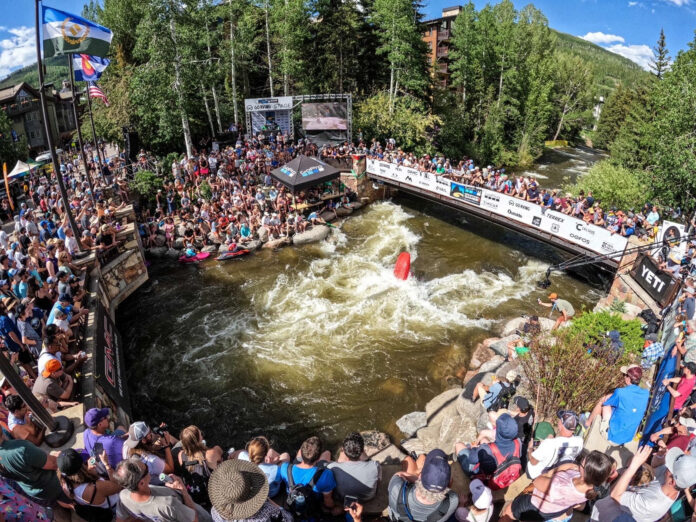
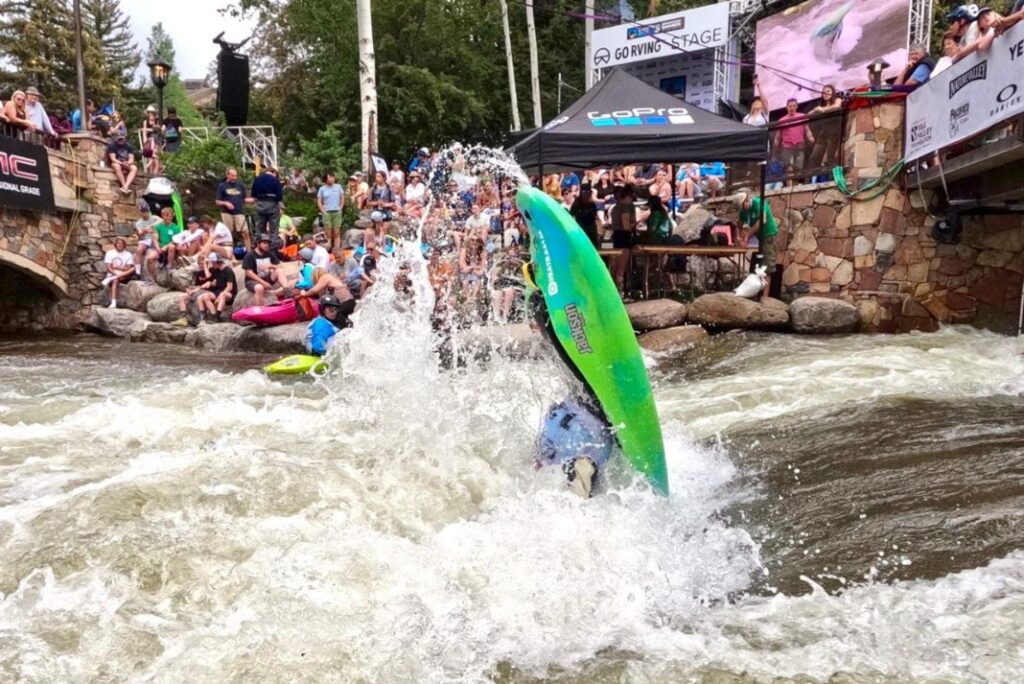
Arguably the main–and most visually spectacular–event of the games, is the Kayak Freestyle competition. The world’s best playboaters come together in an old-fashioned throw-down at the Vail Whitewater Park.
Each kayaker has a timed run to throw his best cartwheels, loops, tricky-wu’s, phonics monkeys, space godzilla’s and more in an attempt to impress the judges for the highest combined score.
This year’s competition had a great turnout with 21 men and 5 women competing in the qualifiers. The top 5 women and the top 10 men advanced to the finals. Keep reading to see how they got on.
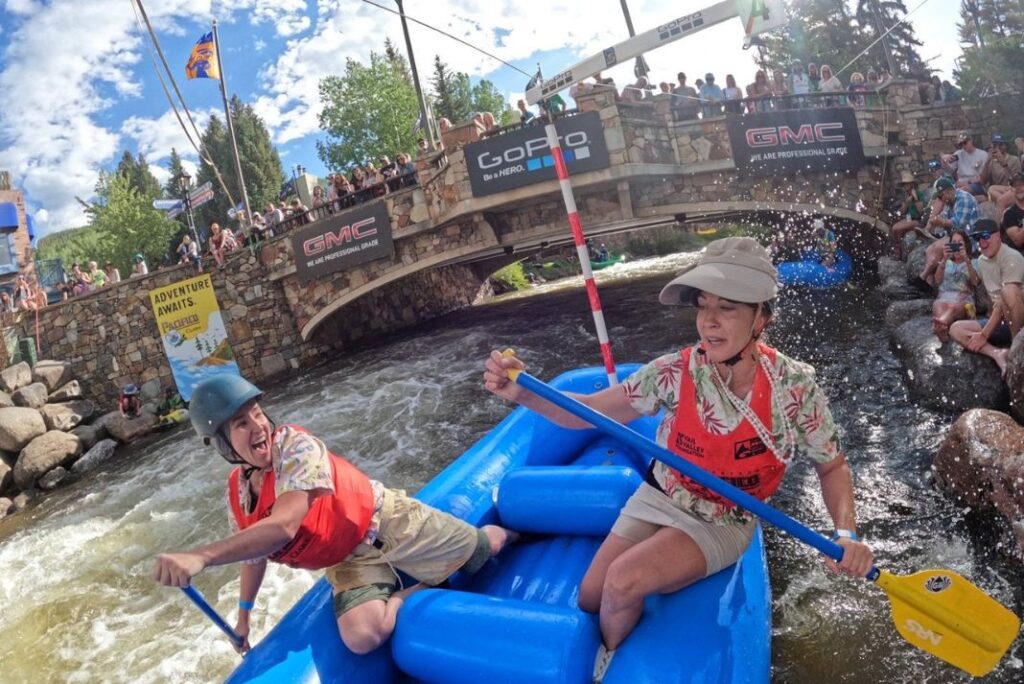
Two-person teams had the chance to showcase their speed, agility and aggression in a timed qualifying run through the heart of Vail Village on Gore Creek. Photo by Zach Mahone.
June 10 | Pacifico Raft Cross
Fun for rafters and spectators, the Pacifico Raft Cross combines the speed of downriver sprints with the water slaughter of 8-Ball. Two-person teams showcased their speed and agility in a times race through Vail Village on Gore Creek.
“Team Gorbie” (comprised of Dane Jackson and Nick Troutman) took the win with “Team Bush” (comprised of Riley Frank Jacob McConne) close behind in second place. Get the full results from this event here.
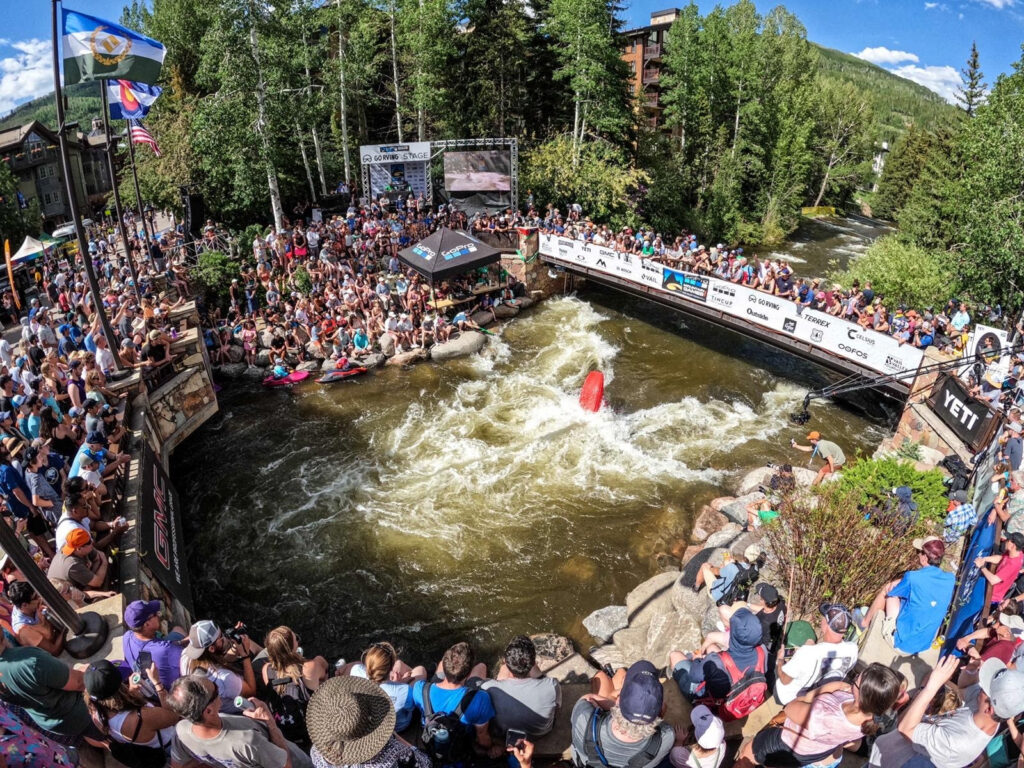
Crowds huddle on the International Bridge for the “main event”. Photo by John Ryan Lockman.
June 11 | GMC Kayak Freestyle
Large crowds gathered around the International Bridge in the heart of Vail on Saturday for what many consider the main act: the GMC Kayak Freestyle finals.
Emily Jackson and brother Dane Jackson have dominated the games in the past few years and 2022 brought no surprises in that regard. Both siblings won their respective competitions with impressive final runs.
Dane finished with a combined score of 1415.00–an over 400-point lead on the second-place competitor, Stephen Wright. Emily finished with a combined score of 630 points. Olivia McGinnes came in at second with a score of 600. Get the full results for the men’s category here and the women’s category here.
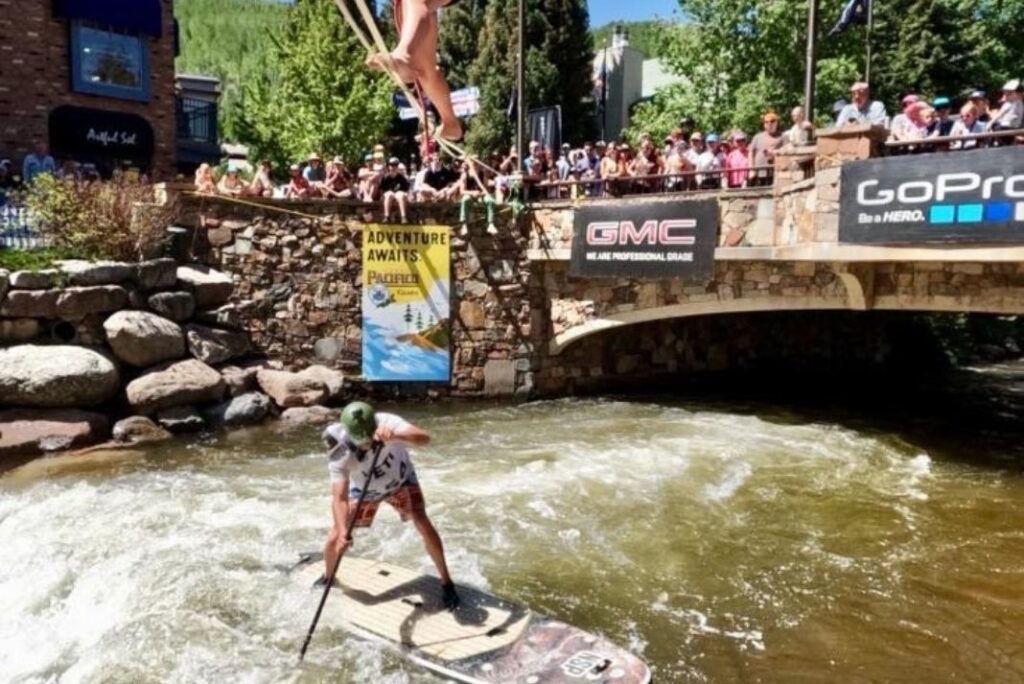
Paddleboarders put their speed and skills to the test in the Gore Creek downriver race against the clock. Photo by Julie Lohre.
June 12 | YETI Down River SUP Sprint
As we can see from the attendance and crowd support this year, the YETI Down River SUP is gaining traction and is quickly becoming a fan favorite.
Starting in East Vail, the 3-mile head-to-head race brought standup paddlers into the heart of Vail, where they put their speed and skills to the test on the class II-III rapids of Gore Creek.
Spencer Lacy took home first place in the men’s category with a winning time of 00:20:13.43, closely followed by Miles Harvey in second place with a time of 0:20:19.70.
In the women’s division, Chloe Harvey won her spot at the top of the podium with a finish time of 21:55.87, followed by Reta Boychuck in second place with a time of 22:06.14.
Get the full men’s and women’s here. Catch the Junior SUP results here.
The 8-ball kayak race is the definition of full-contact kayaking. Competitors consider themselves lucky if they get through this one carnage-free.
After floating to the start at the Covered Bridge, a handful of competitors shoved and sprinted their way down a 200-meter sprint course on narrow Gore Creek. Boaters had to avoid being knocked off course by the “8 Ballers”— described by event organizers as, “loathsome kayakers in full body armor waiting patiently to attack the sprinters”.
Emily Jackson nudged, jostled and charged her way into first place in the women’s final—achieving a triple crown title in all her events. For the men’s division, London Aguon won first place, with Nick Troutman coming in second and Dane Jackson securing third.


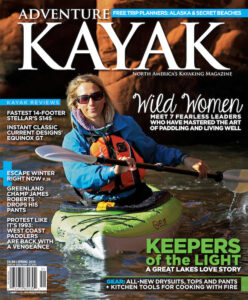 This article first appeared in the Spring 2015 issue of Adventure Kayak magazine.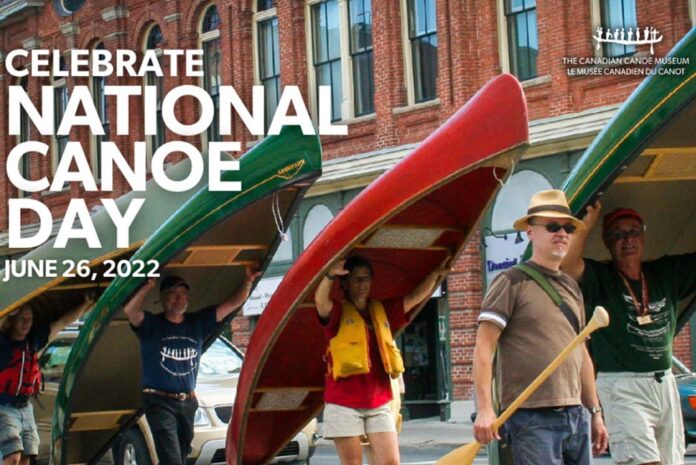
 Join the online National Canoe Day celebrations from anywhere in the world
 Free Admission To The Canadian Canoe Museum
 This article was first published in the Summer/Fall 2010 issue of Rapid Magazine.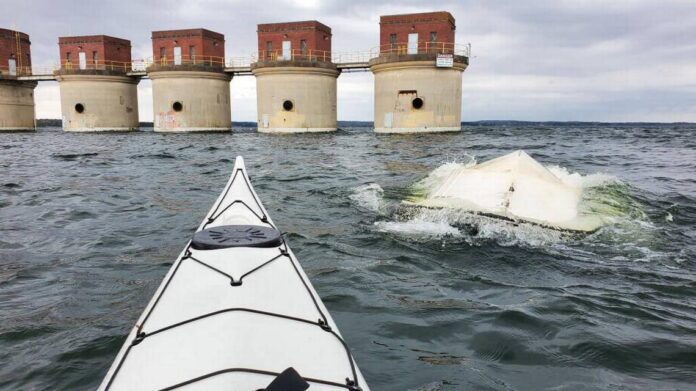
 This article was produced under a grant from the Sport Fish Restoration and Boating Trust Fund, administered by the U.S. Coast Guard.