Registration is open for the 36th annual Wilderness & Canoe Symposium, taking place February 17, 2021, from 6 pm to 9 pm via Zoom.
“We remain committed to nurture our passion and love for paddling and to keep our symposium community safe. For this reason, we will be delivering the 2021 event live and online only,” says organizer Aleks Gusev. Traditionally held in a high school auditorium in Toronto, for the first time the WCS is easily accessible to paddlers around the world.
“You will be able to join from the ease, comfort and safety of your pajamas, sitting on your couch, with your various pets. Bonuses include access to the bathroom with no line-ups, your favorite snacks at your disposal, and no restrictions to bringing a glass of wine to the event this year,” Gusev adds. Click here to register.
The evening will feature five presenters. Continuing with the tradition George Luste started many years ago, there will be a short wilderness music interlude halfway thru the evening. Presenters include:
The Enduring Ice Project
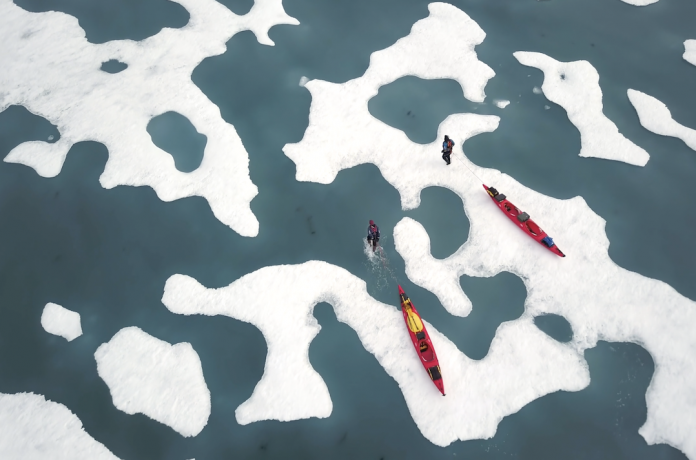
Diana Kushner and Stephen Smith on their kayaking expedition to Nares Strait and forthcoming film, Albedo: in search of a frozen ocean. Their journey to assess climate change in the North had to switch gears when their scientific team became trapped by the sea ice it had come to study. With the Arctic Ocean collapsing all around them, they escaped the chaos by traversing the North’s most remote and formidable passage.
Wally Schaber
In 1969, Wally Schaber was part of a team of guides who tried to reestablish the Ottawa YMCA Boys Camp On-Da-Da Waks at the headwaters of the Dumoine River. Working in conjunction with the Canadian Parks and Wilderness Society Ottawa Valley Chapter, CPAWS-OV, and Friends of Rivière du Moine, this is the story of how the larger Three Rivers Project came to establish the Dumoine, Coulonge and Noire as an interconnected and protected wild river preserve.
Paul Burbidge
In 2017, Paul spent three weeks exploring rivers in the Mackenzie Mountains of NWT. The team started on the Little Nahanni River near the NWT/Yukon border and finished in the town of Tulita on the Mackenzie River. Paul’s group paddled 10 rivers with three significant portages—the longest portage 100km in length. Find out how to plan for remote unrun river trips, as well as gear selection for long whitewater packraft trips.
James Raffan
Loves canoes and canoeing and is a longtime friend of the Canadian Canoe Museum in Peterborough. But it is storytelling that is JR’s real passion, and he’s one of the best. Over the years he has written and edited 24 books on topics ranging from canoes to biography, with the common thread running through them the connections between people and place. He is a frequent public presenter, speaking about risk, adventure, environment, reconciliation, education and the simple joys of self-imposed suffering.
Wilderness Concert by Jerry Vandiver
With over 40 years paddling whitewater and flatwater in the US, Mexico and Canada, and more canoes and kayaks than his wife thinks he should have, Jerry is an established singer/songwriter from Nashville, TN and has had his songs recorded on over 15 million records, two of which are hanging on the walls of the Country Music Hall of Fame. Be ready to laugh, dance and sing in your pyjamas from your own home in this fun virtual WCS presentation.
Breakout Sessions
Five simultaneous breakout sessions, following the Wilderness Concert by Jerry Vandiver, will take place half-way through the evening.
Look-at-me-Wilderness-Super-Hero – Hosted by Bob Henderson
Paddle or not to paddle in the territories in summer of 2021?Hosted by Iva Kinclova
Fitting your Canoe Pack to carry heavy loads lightly – Hosted by Bill Ostrom
A sharing session of how we connected with nature during COVID-19 – Hosted by Brian Johnston
General Breakout session for any other topics and/or socializing.
The WCS is looking for a dozen or so volunteers familiar with Zoom meetings platform to help facilitate breakout sessions. Virtual pizza included. Use Subject Line “2021 WCS Volunteer” in your email to sign up with Aleks at aleks.gusev@gmail.com
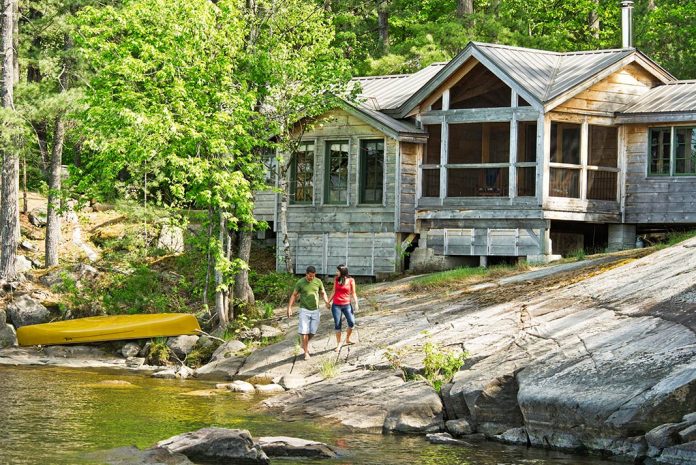
The Ottawa Valley is an outdoor adventurer's dream destination. | Photo courtesy of: Destination Ontario
The adventurous heart of the Ottawa Valley is just an hour’s drive from Parliament Hill, yet this exciting outdoor recreation destination feels worlds away from the hustle and bustle of Ottawa.
Stretching from the forest-cloaked highlands of Algonquin Park to the roaring rapids of the Ottawa River, this diverse and beautiful region encompasses some 900 lakes and four major river systems. Can you say paddling adventures? The Ottawa Valley is home to not only Canada’s finest whitewater rafting and paddling centers, but also serene canoe routes, paddleboarding and calm-water kayaking on crystal-clear lakes.
Whenever you choose to visit, each season offers something special in the Ottawa Valley. In spring, the Valley’s patchwork of fields and forests turns emerald green and hikers, mountain bikers and road cyclists will find a wealth of outstanding trails and quiet backroads. Summer is peak paddling, rafting and cottage season in the Ottawa Valley, while fall colors provide a spectacular backdrop to all your favorite outdoor activities. Winter brings a whole new host of outdoor adventures, from downhill and cross-country skiing in the highlands, to ice fishing and snowshoeing on frozen lakes.
The Ottawa Valley is an outdoor adventurer’s dream destination. | Photo courtesy of: Destination Ontario
With a wonderful range of accommodations—including four-season cottage rentals, family resorts and rustic campgrounds—the Ottawa Valley is a perfect staycation destination for outdoor enthusiasts.
Things to do in Ottawa
Camping in Ottawa
Campgrounds near Ottawa provide a budget-friendly, back-to-nature way to extend your stay in the Ottawa Valley. Many campgrounds are family-focused, with fun kid-friendly amenities like swimming beaches, playgrounds and outdoor games areas.
Fitzroy Provincial Park Campgrounds
Situated along the Ottawa River, Fitzroy Provincial Park is just under an hour away from the Capital, but it’s quiet and secluded enough to make you feel like you’re in a whole new world. The park is a popular family camping destination, with large campsites, two beaches, picnic areas and canoe/kayak rentals. Fitzroy has over 200 campsites in two campgrounds—Pine Grove and Two Rivers. Waterfront campsites are available on the Carp and Ottawa rivers, which bisect the park.
Bonnechere Provincial Park Campground
Bonnechere Provincial Park is best known for its spectacular sand beach on clear and clean Round Lake. The park offers three campgrounds, all located within a five- to 10-minute walk from the swimming beach. Choose from campsites set among the splendour of towering white pines or private sites situated right on the Bonnechere River, providing direct access to paddling, fishing and wildlife viewing. The park is located near the charming village of Killaloe and the southern edge of Algonquin Park.
Golden Lake Park Campground
Golden Lake Park Campground is situated in the heart of Ottawa Valley cottage country, two hours west of Ottawa and halfway between Algonquin Park and the Ottawa River. This fun family campground boasts 4,200 feet of scenic beachfront on Golden Lake with picturesque swimming, paddling, hiking, fishing and more. Canoes, kayaks and paddleboards are available for rent. A wide variety of camping options include tent and RV sites, RV rentals and cozy housekeeping cottages. Choose from shady wooded sites or camp right next to the beach.
If you’ve never heard of Bon Echo Provincial Park, it is well worth the two-hour drive from Ottawa. The park is best known for Mazinaw Rock, a 1.5-km-long sheer rock face that rises 100 meters out of Mazinaw Lake and features over 260 Indigenous pictographs—the largest visible collection in Canada. Campers can join an interpretive boat tour to the cliffs and climb to a lookout atop the Rock, or rent canoes and kayaks for self-propelled explorations of Upper and Lower Mazinaw lakes. Families love the park’s three sandy beaches and two scenic campgrounds—Mazinaw Lake and Hardwood Hill.
White Lake Campgrounds
Nestled south of the Madawaska River near the historic hamlet of Burnstown, White Lake boasts clean, clear waters and an intricate labyrinth of inlets, arms, islands and narrows—perfect for paddling adventures. Even better, if you’re looking for camping in the Ottawa area, the lake is just a 45-minute drive from the west side of the city. The north end of White Lake is more developed, with a selection of campgrounds, RV parks and cottage rentals for overnight visitors. For a laidback family resort experience with loads of amenities, check out Cedar Cove Resort at the south end of White Lake.
Driftwood Provincial Park Campgrounds
If you don’t mind a bit of traveling, this provincial park 220 km northwest of Ottawa boasts road trip-worthy beaches, riverfront campsites, spectacular sunsets, gorgeous Canadian Shield shoreline and outstanding paddling on the Ottawa River. Enjoy the refreshingly cool, clear waters of the river from the sandy camper’s beach—which stretches the entire length of the park’s Ottawa Campground, adjacent to the many waterfront campsites. Canoe/kayak rentals are available for exploring Driftwood Provincial Park’s secluded shoreline.
Best hikes near Ottawa
When it comes to accessible outdoor activities in Ottawa, it doesn’t get any simpler than going for a hike. Hikes in the Ottawa Valley run the gamut from easy rambles for first-time hikers to challenging treks to remote summits. Whatever trail you choose, hiking is a great way to escape the rush and reconnect with nature. Don’t miss these top trails.
Barron Canyon Trail
Breathtaking doesn’t begin to describe the view from the top of the Barron Canyon. Located amid pine forests on the east side of Algonquin Park, this moderate, 1.5-km trail runs along the north rim of the spectacular 100-meter-deep Barron Canyon. Find the trailhead on Barron Canyon Road, one hour west of Pembroke.
Almost too easy for such a beautiful view, this popular 3-km (return) trail near Calabogie Peaks Resort climbs gradually along an old logging road to a lookout atop a 120-m-high cliff. The trailhead is located about 2 km past Calabogie Lake on Highway 508. If you’re looking for a longer hike, continue along the more challenging Manitou Mountain Trail (9 km) for more lofty lookouts.
Shaw Woods Trails
For a relaxing and educational ramble, the scenic walking trails at Shaw Woods Outdoor Education Centre explore old growth forest, bird-filled wetlands, interpretive exhibits and riverside ecology along the meandering Snake River. The centre is located 10 minutes north of Eganville on Bulger Road.
Egan Chutes Trail
This under-the-radar gem is found 15 km east of Bancroft off Highway 28. Egan Chutes is a non-operating provincial park, which means there are no visitor facilities. There’s a small parking area at the end of the unmaintained, narrow road that leads to the trailhead, but you may need to park on the highway if the lot is full or you drive a low-clearance vehicle. This short walk on the western side of the York River rewards with views of the first chute, and leads down to a picturesque pool of water. For a longer hike, take the trail on the east side of the river and keep an eye out for side trails to lookouts at all three of the chutes, for which the park is named.
Canoeing and kayaking in the Ottawa Valley
The Ottawa Valley is home to some of the most exciting whitewater rivers in the country—but did you know that the area also boasts more than 900 beautiful lakes? From the pristine, clear lakes of the Algonquin and Madawaska highlands to the gentle reaches and roaring rapids of the mighty Ottawa River, the Valley offers something for every paddler to enjoy.
World-renowned as a whitewater playground, the Ottawa River is famous for huge waves, thrilling rapids, pristine scenery and warm water—the perfect combination for exhilarating Ottawa River rafting.
The action centers on a 10-km-long stretch of river known as Rocher Fendu (Split Rock), located in the Ottawa Valley just 90 minutes west of Ottawa. Plunge down the rollercoaster rapids of the Middle Channel, or dig deep in the challenging Main Channel—home to some of the largest commercially run, white-knuckle whitewater in North America!
The acclaimed whitewater resorts of the Ottawa Valley make it easy for first-time river rafters to experience everything this outstanding river has to offer. In addition to Ottawa River rafting day trips, most companies offer riverside accommodations, meal plans, multi-day packages and other adventure activities.
Visit the Ottawa Valley for some of the region’s best adventures on two wheels. Recreational cyclists will enjoy relaxing rides on lightly traveled country roads or rail trails, while avid road riders can challenge themselves on some of Ontario’s toughest climbs (and thrilling descents!) in the hilly highlands. Many routes include interesting stops at heritage sites, charming communities or local swimming areas.
Prefer fat-tire adventures? Ottawa’s enthusiastic grassroots mountain bike community has created a wealth of fantastic trail networks, with something for every off-road rider.
Beginning at Burnstown Park on the Madawaska River, this 21-km route loops down to Stewartville, taking in both sides of the river between these two towns. This moderate ride travels on paved and gravel roads and offers everything from the quaint cafés and artists’ studios of Burnstown to the farmland of McNab Township. Top off your tour with a dip at Burnstown Park’s popular swimming beach.
K&P Rail Trail
This 23-km section of multi-use trail between Renfrew and Calabogie is mostly flat and follows a scenic abandoned railway bed built in the mid-1800s. Combine it with the 4-km Millennium Trail through the heart of historic Renfrew for a great day trip that includes lunch and a swim at Calabogie Lake.
Bonnechere Valley Road Ride
For an easy and scenic ride on paved roads that is suitable for all types of cyclists, try this pretty 32-km (return) tour from Eganville through the Bonnechere Valley. The route provides many views of the Bonnechere River, visits the staircase falls and gorge at Fourth Chute and passes by the Bonnechere Caves before reaching the village of Douglas. This ride departs from Eganville’s visitor information booth on Highway 60.
Experienced road riders love this supremely hilly tour in the Madawaska Highlands. The 47-km loop follows quiet, paved roads between the communities of Quadeville, Letterkenny and Brudenell, taking in some truly spectacular views. Not for the faint of heart (or weak of legs), this route may have you pushing your bike up some of the steepest climbs.
Beachburg Off Road Cycling Association Trails
BORCA creates purpose-built single-track for all levels of mountain bikers, with detailed maps available to members ($25/year). Trails are located adjacent to the Ottawa River on a mix of crown land, county forest and private land in the vicinity of Beachburg and Foresters Falls. Find more info on these awesome trails here.
Forest Lea Trails
Embedded in 600 acres of crown land west of Pembroke, the Forest Lea Trails offer 30 km of volunteer-built, rocky and root-strewn single-track in a stacked loop system. Visit their blog for trail map and updates.
Discover more Ottawa Valley cycling routes at Ontario By Bike.
Swimming in the Ottawa Valley
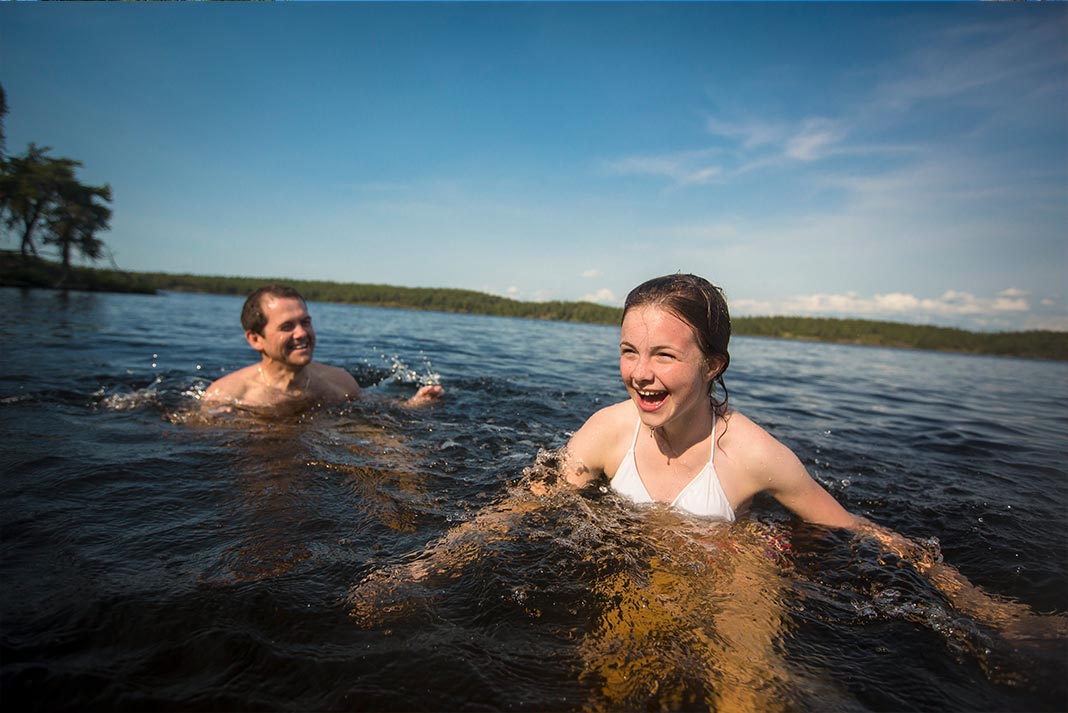
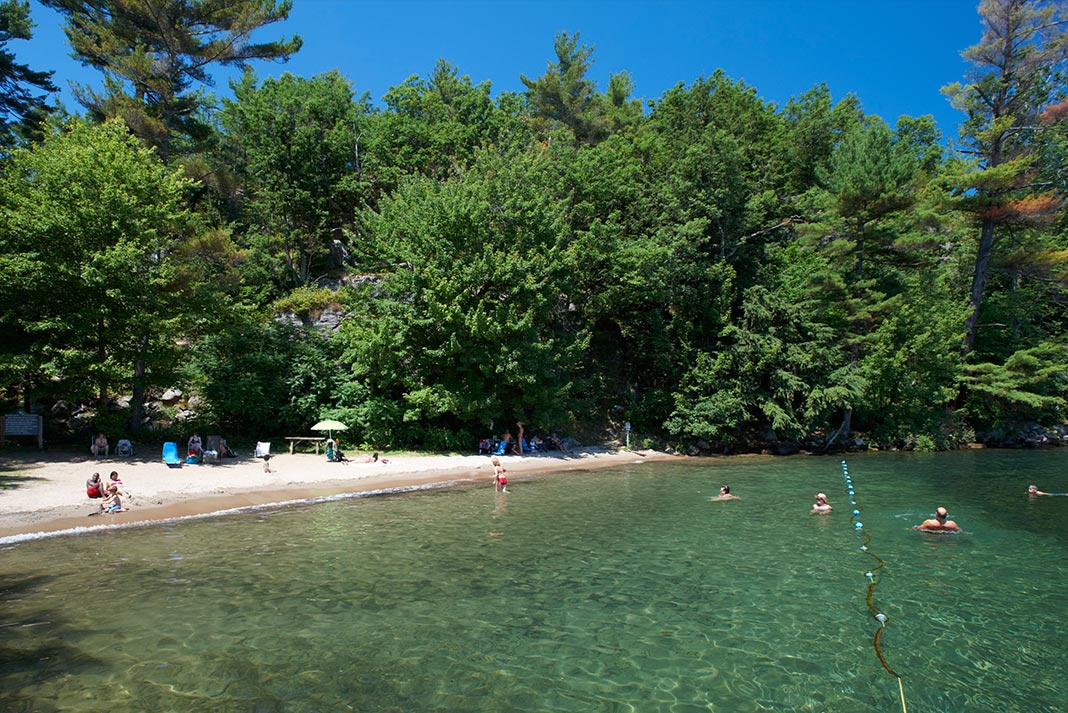
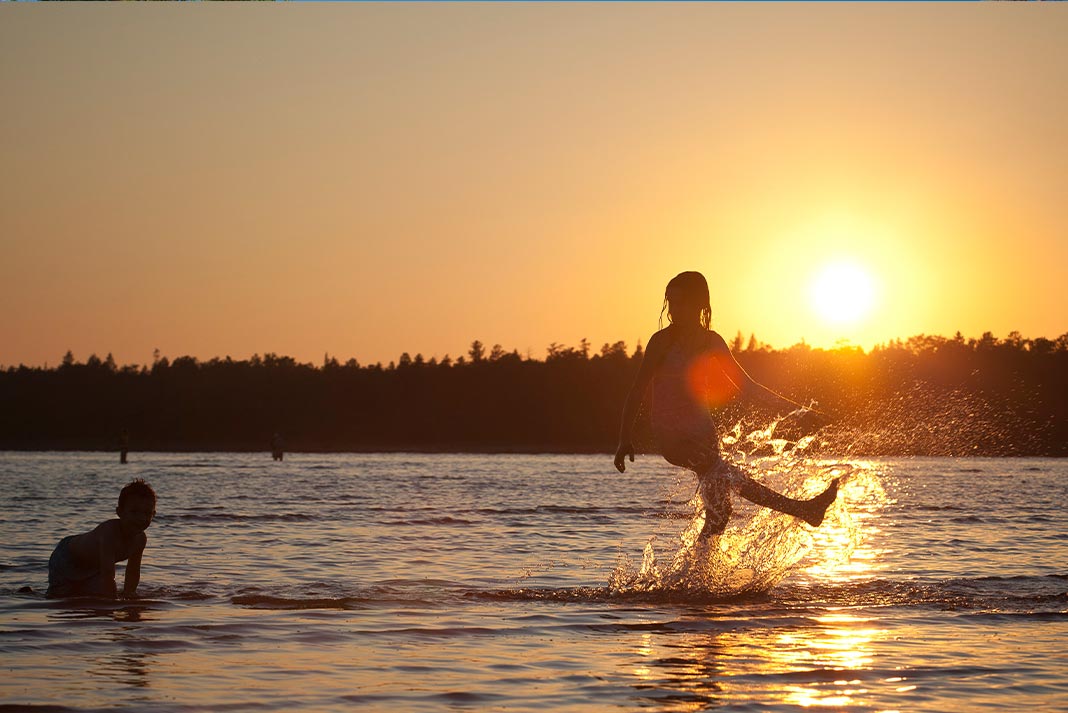
Summer days are made for the beach. Fortunately, it’s easy for Ottawa beachgoers to escape the city and find a tranquil stretch of sand for sunbathing, swimming and launching canoes, kayaks or SUPs. Ottawa Valley beaches are also perfect for sandcastle building or simply relaxing with a good book. Even better, these beaches are just an hour or two drive from the Capital.
Four major river systems—the Ottawa, Madawaska, Bonnechere and Petawawa—provide outstanding fishing opportunities, with countless smaller streams and lakes offering plenty of under-the-radar rewards for anglers. Prime big lake fishing is found on Kamaniskeg and Bark lakes near the town of Barry’s Bay, Round and Golden lakes near Killaloe, and Calabogie and White lakes near Renfrew.
Common catches include: lake trout, whitefish, pickerel/walleye, large- and smallmouth bass, rock bass, northern pike, catfish and perch. Lucky Ottawa River anglers may even haul up an armor-plated sturgeon—a living dinosaur that makes its home in the river’s depths.
Winter is a special time of year for Ottawa travel, when frosty temperatures and sparkling snows create spectacular winter vistas. This is the perfect time to visit Ottawa if you enjoy classic winter activities like ice skating, cross-country skiing, downhill skiing/snowboarding and snowshoeing—or if you want to try something new and exciting like winter fat biking. Four-season resorts and cottage rentals make it easy to plan a winter vacation in the Ottawa Valley.
Ice skating
Skating on frozen lakes is an Ottawa Valley specialty—when the conditions are just right, you can enjoy a game of pond hockey with friends, or a longer skating tour along the lakeshore. The town of Pembroke creates its own outdoor ice skating trail—the Laurentian Valley Skating Trail winds over 1.5 km through a scenic wooded area. After dark, the ice trail is lit with thousands of twinkling lights for an absolutely magical experience.
Cross-country skiing
Nordic skiers are spoiled for choice in Ottawa. Some of our favorite cross-country ski destinations include the 20 km of classic and skate-set trails at Opeongo Hills Nordic Ski Club in Brudenell (bonus: warm up après ski in their cozy yurt); Pembroke’s excellent Forest Lea Trails; and the Madawaska Nordic ski trails, located across from Calabogie Peaks Resort.
Snowshoeing enthusiasts can explore virtually any hiking or multi-use trail. Try one of the Ottawa Valley’s many short and scenic lookout trails, like Calabogie’s Eagle’s Nest or Combermere’s Gun Mountain.
Fat biking
Don’t stop riding just because it’s winter—join the Ottawa Valley’s passionate fat biking community for some serious snow-season, fat-tire fun. Mountain biking hotspots like Petawawa and the BORCA Trails at Beachburg offer groomed winter single-track for fat ‘n’ frosty riding!
Downhill skiing & snowboarding
If you’re looking for the best ski resort in Ottawa, then look no further than Calabogie Peaks, located just one hour from the city. Calabogie boasts a 780-ft vertical drop, making it the tallest ski area in Eastern Ontario. Enjoy breathtaking views of Calabogie Lake and the surrounding hills from the Peaks’ 24 trails and two quad chairlifts. With the longest beginner run in the province, diverse intermediate terrain and slopes for expert skiers and riders, Calabogie has something for everyone.
Looking for an unusual and exciting Ottawa travel experience? The Bonnechere Caves are not to be missed. This natural underground wonder is located in Eganville beside the impressive Fourth Chute of the Bonnechere River. Join a one-hour guided tour through the caves’ limestone passages to explore subterranean chambers filled with fossils, stalactites and—in late September and October—bats. Don’t say we didn’t warn you! Boardwalks and electric lighting make these caverns accessible to first-time spelunkers.
Pakenham Five Span Stone Bridge
There’s no shortage of Pinterest-worthy places to visit in Ottawa, but this historic landmark is deserving of the drive. Located in the cute little village of Pakenham, 45 minutes from Ottawa, the bridge crosses a scenic set of cascades on the Mississippi River. Built in 1903 by Scottish stone masons and restored in 1984, the breathtaking five-arch stone bridge is unique in North America and is believed to be the only one of its kind in the world outside Russia. Pick up picnic supplies in Pakenham and enjoy the view from Five Span Bridge Park.
North Frontenac Dark Sky Preserve
Located two hours away from the bright lights of Ottawa, the Dark Sky Preserve in North Frontenac is one of the best places for stargazing in Southern Ontario. Astronomers and amateur stargazers alike marvel at the countless stars, constellations and Milky Way visible to the naked eye on a cloudless and moonless night. Bring along binoculars to reveal even more wonders of the universe. The viewing area is found on County Road 506, south of Plevna.
Larger towns in the Ottawa Valley offer a selection of comfortable and affordable hotels with convenient access to amenities and outdoor activities. The towns of Pembroke, Petawawa, Renfrew and Arnprior are your best bets if you are looking for a familiar hotel chain like Best Western, Holiday Inn or Quality Inn & Suites.
Boutique inns offer a more upscale stay, often with some fascinating history or unique luxury to enhance your stay. In Pembroke, the opulent Grey Gables Inn and Spa offers seven refined rooms in a stunning 1911 mansion, plus a genteel tearoom and massages.
Located in a heritage building perched on the edge of the Bonnechere River in downtown Eganville, the Fifth Chute Inn offers four unique rooms above a coffee shop and bakery. Awake to the murmur of the river and the tantalizing aromas of freshly brewed espresso and fresh-baked sourdough.
Ottawa cottage & cabin rentals
Rent a cozy lakeside cabin or waterfront beach house for a family staycation in Ottawa that everyone will love. Whether you’re after an off-grid escape, deluxe lakefront retreat or pet-friendly cottage rental, these amazing properties make inviting and convenient bases for exploring the Ottawa Valley’s breathtaking natural beauty.
Staying at a lodge or resort in the Ottawa Valley offers flexibility for couples, friends, families and solo travellers. Book an all-inclusive package where every detail of your experience is carefully crafted. Or go independent—exploring the scores of trails, lakes and attractions just a short drive from your doorstep, and then returning to your peaceful refuge to recharge for the next adventure.
If you want to participate in the thrilling outdoor activities that have made the Ottawa Valley a world-renowned adventure destination, base yourself in the Whitewater Region at Wilderness Tours Raft & Kayak Resort or OWL Rafting Resort.
Just 50 minutes from Ottawa, the Calabogie Highlands are a hotspot for four-season fun. Calabogie Peaks Resort offers a blend of country warmth and luxury with limitless mountain or lake adventures right out your door.
Just about everywhere you travel in the Ottawa Valley, you’ll find cozy cottage resorts that are perfect for an affordable, laidback family vacation. Most offer lakeside accommodation and beautiful beaches with onsite games and activities for kids and adults. Find out which cottage resorts made our Top 20 Cottage Rentals Near Ottawa.
Ottawa weather
Weather in the Ottawa Valley varies greatly depending on which season you are planning to visit. During peak summer season (late June through early September), Ottawa enjoys warm days, pleasant nights and plenty of sunshine. The average daily high is 20–30°C along the Ottawa River corridor, with temperatures often a few degrees cooler in the Highlands.
Spring (May through June) is generally cooler and wetter, while fall (mid-September through October) offers a mix of bright sunshine, chilly rains and crisp nights. These shoulder seasons can be a great time to visit the Valley as attractions will be less crowded and many places offer discounted rates during these months.
If you are planning to swim, paddle or whitewater raft during your visit, water temperature is just as important a consideration as air temperature. In summer, the Ottawa River and area lakes warm up to 20°C or more, making for a comfortable swimming temperature. In spring, water temperature hovers around a bone-chilling 5°C—enticing only the bravest (and most warmly dressed) whitewater rafters and paddlers.
Winter (December through March) can be a magical time to visit the Ottawa Valley—for those equipped for frigid weather. In January, the coldest month in the region, the average daily high is just -10°C and overnight temperatures can drop to -20°C. Snowfall in the Ottawa Valley often arrives in the form of major winter storms, with Highland locations like Calabogie accumulating over 200 cm (80 in) of annual snowfall.
Ottawa 14-day, 7-day and hourly weather forecast
Get hourly, weekend, seven-day and 14-day weather forecasts for locations throughout the Ottawa Valley at The Weather Network.
Abundant natural areas, intact forests and wetlands and light population density mean the Ottawa Valley is home to a wonderful diversity of wildlife. Deer, beaver, fox and porcupine are a common sight while hiking, paddling or driving on country roads. If you’re really fortunate, you may even catch sight of the Valley’s more elusive residents, including moose, wolf and bear.
Although black bears are reasonably common in the Ottawa Valley, bears are normally shy of humans and you will have to be very lucky to see one. However, careless food storage or improper disposal of garbage may attract bears looking for an easy meal, leading to “problem” bears that can become persistent and destructive nuisances. As a visitor to bear country, you have a responsibility to follow black bear safety rules and to know what to do if you encounter a bear.
Birding in the Ottawa Valley
The diverse habitats of the Ottawa Valley—from hardwood and mixed coniferous forest to open fields, lakes, rivers and wetlands—make this region a haven for birding near Ottawa. Over 300 bird species have been recorded in the Ottawa Valley, with some 160 species breeding here. For those wishing to learn more, the Ottawa Field-Naturalists’ Club is a great starting point. Field-naturalist and birding enthusiast John Sankey maintains a fabulously detailed web resource for Ottawa Valley birders complete with popular locations and species checklists.
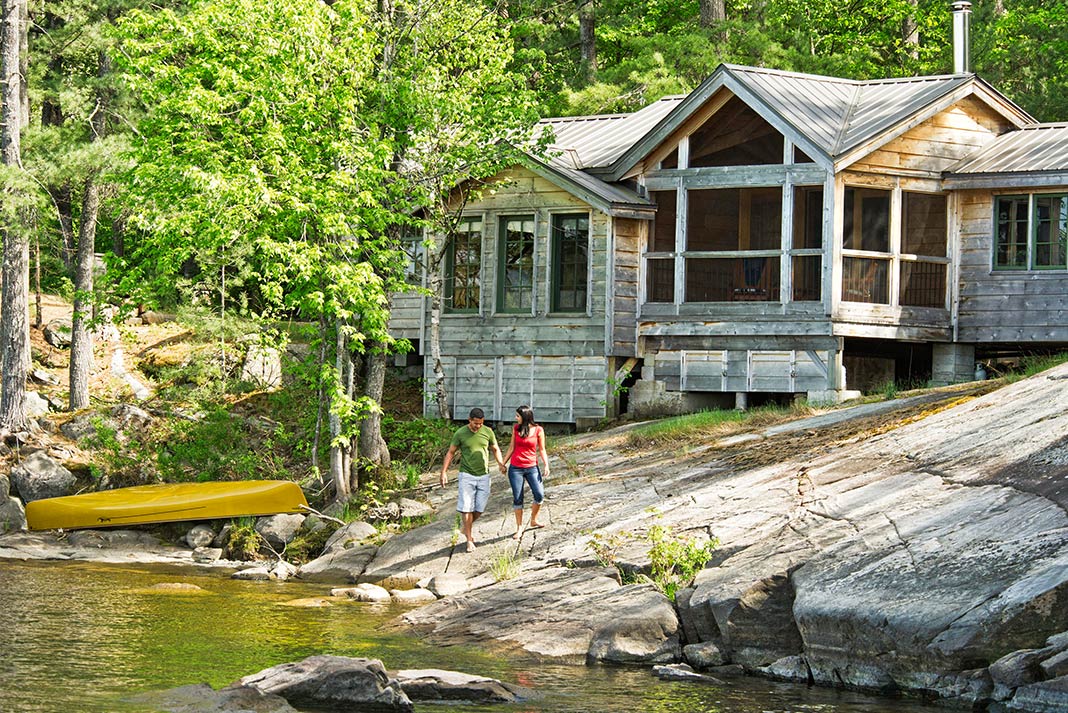
The Ottawa Valley is an outdoor adventurer’s dream destination. | Photo courtesy of: Destination Ontario
Stay lakeside in places that are both close to amenities and abounding in outdoor adventure. | Photo: Destination Ontario
Nestled between the Ottawa River and Algonquin Park, the Ottawa Valley is home to over 900 lakes and four major river systems—making it Eastern Ontario’s perfect cottage vacation or staycation destination. Enjoy off-the-beaten-track beaches, Instagram-worthy lake views and warm, clean water—without the crowds. Even better, “the Valley” is within a two-hour drive from Canada’s capital city.
Whether you’re after an off-grid escape, deluxe waterfront retreat or pet-friendly cottage, these stunning properties make inviting and convenient bases for exploring the Valley’s breathtaking natural beauty. Discover the 20 best cottage rentals and cottage resorts close to Ottawa, and start planning your summer getaway today.
[This article is part of the Ultimate Ottawa Valley Adventure Guide. Find all the resources you need to plan an adventure-filled trip to the Ottawa Valley.]
Stay lakeside in places that are both close to amenities and abounding in outdoor adventure. | Photo: Destination Ontario
Ottawa River Cottage Rentals
World-renowned as a natural whitewater playground, the Ottawa River is famous for thrilling whitewater rafting and wild and striking shoreline scenery. But the Whitewater Region offers something for every outdoor enthusiast—from outstanding hiking, mountain biking and horseback riding to wonderful calm-water kayaking, paddleboarding, canoeing and swimming. In short, a cottager’s paradise!
Westmeath Beach House
If you’re looking for a luxurious home-away-from-home, check out this amazing vacation property located on the Ottawa River’s Allumette Lake at the village of Westmeath. A wraparound deck, massive lake-view windows, 240-foot private beach and two outdoor fire-pits make for a cushy cottage experience. Dip your toes, cast a line or slip into the complimentary canoe or kayaks and explore the wetlands of neighbouring Westmeath Provincial Park. In the evening, watch the sunset, enjoy a bonfire on the beach and gaze at the star-filled skies above the lake. For adrenaline-seekers, the world-famous whitewater rafting resorts are just a 20-minute drive away.
Located right on a beautiful sand beach overlooking a secluded bay off the Ottawa River near Westmeath, these budget-friendly, three- and four-bedroom cottage bungalows are perfect for a family getaway or weekend with friends. Each waterfront cottage features a fully equipped kitchen, three-piece bathroom and private fire-pit on the beach. Bring your own canoe, SUP or kayaks to paddle right from the beach to explore an impressive sand spit and adjacent cluster of wild islands. Cyclists will find the quiet backroads of the Westmeath Peninsula are perfect for a laidback tour.
Just a 10-minute drive from Ontario’s whitewater rafting resorts, Whitewater Cottage Resort offers a wide range of cottage accommodation for all types of budgets and groups. The rustic waterfront chalets feature a kitchenette, three-piece bath and sleeping for up to six people, all while being easy on your pocketbook. Or treat yourself to the luxurious log Lake House with Jacuzzi. Large groups or multi-family gatherings will find plenty of space in the resort’s cozy Log Cabin or comfortable Beach House with its outstanding view of the Ottawa River. Whitewater Cottage Resort guests can take advantage of the wide range of adventure activities available through Wilderness Tours—including whitewater rafting, laidback SUP and kayak touring, hiking and mountain biking.
Crystal-clear water and stunning views of some of the Ottawa Valley’s tallest highlands make Calabogie Lake one of the region’s best lakes for adventure vacations. The Madawaska River tumbles into the south end of the lake near the four-season Calabogie Peaks Resort and flows out the north side at the village of Calabogie. Those planning a cottage escape will find a variety of waterfront rentals and resorts around the shores of this large lake. Best yet, it’s just an hour’s drive from Ottawa.
Minutes from the amenities of Calabogie village, the cozy lakeside chalets and waterfront beach house at this budget-friendly, family resort are just steps from a spacious sand beach with amazing views across the lake and southern exposure for all-day sun. Paddle from your cottage to peaceful Grassy Bay with the resort’s complimentary canoes, kayaks and SUPs. Listen to the lap of waves or build a sandcastle on the beach while enjoying all the comforts of home.
This waterfront cottage rental is the last on the cape adjacent to the causeway separating Calabogie Lake and Grassy Bay, making for wonderful seclusion and panoramic lake views. The cozy three-bedroom cottage is pet-friendly and boasts 500 feet of lakefront with a waterfront gazebo and private sandy beach with volleyball net, fire-pit and barbecue area. A canoe and kayak are included with your cottage rental—perfect for a tranquil half-day exploration of Grassy Bay.
Perfect for busy families and outdoor enthusiasts, this two-bedroom beachfront cottage is located steps from Calabogie Peaks Resort, where you’ll find hiking trails, scenic lookouts, mountain bike rentals, a lakefront golf course and the popular Boathouse Bar & Grill. Catch gorgeous lake views and refreshing summer breezes from the cottage’s sun-filled rooms, lakefront deck and screened porch. Other highlights include a sandy beach with excellent swimming, complimentary canoe and well-stocked kitchen. This cute little cottage is also pet-friendly.
The town of Barry’s Bay serves an eastern gateway to the world-famous lakes and wilderness canoe routes of Algonquin Park, but it also boasts a beautiful lake of its own. The town perches at the north end of Kamaniskeg Lake, one of the largest lakes found along the Madawaska River system and renowned for terrific fishing. For paddlers, Barry’s Bay is also just 15 minutes from the friendly rapids of the Middle Madawaska River, where you’ll find an acclaimed whitewater paddling school, the Madawaska Kanu Centre.
[ Paddling Trip Guide: View all Madawaska Kanu Centre trips and clinics ]
Lakeview Lodge
Don’t let the name fool you; you’ll have this luxury cottage on Kamaniskeg Lake all to yourself. A private beach, chef’s kitchen, fieldstone fireplace, floor-to-ceiling windows with stunning views of the lake and four bedrooms that sleep 10, all located just a few strokes from the lake’s best paddling locations—it sounds too good to be true. But it gets better; there’s also a hot tub, gorgeous lakefront deck, and kayaks and canoe for you to use. Paddle to the pair of islands just offshore for rock point swimming and jumping, and see if you can find the sunken shipwreck! This spot is perfect for two families or one large clan.
Situated on the Madawaska River where it flows gently out the south end of Kamaniskeg Lake, this family-oriented and pet-friendly cottage resort offers two-, three- and four-bedroom waterfront cottage rentals. These housekeeping cottages feature fully equipped kitchens, covered decks and water views. Even better, guests have access to the resort’s stunning sand beach, swim dock, water trampoline, hot tub and indoor saltwater pool for those cool or rainy days. There’s even an onsite spa for Mom and Dad.
If you’re looking for a more traditional cottage experience, check out this waterfront cottage in the Polish hamlet of Kaszuby, just a 15-minute drive from Barry’s Bay. This is the last cottage on a dead-end lane, and is situated on an acre of forested land beside peaceful Serran Lake. In a word: secluded. This tidy rental is pet-friendly and offers two bedrooms, sunroom, lakeside deck and a modern kitchen so you don’t have to rough it. There are also bicycles and a kayak for your use. Nature enthusiasts can walk to Wadsworth Lake Beach, hike to the summit of Gun Mountain for spectacular views or pedal timeless backroads to scenic Crooked Slide Park.
The charming village of Killaloe is home to a fascinating fusion of artists, hippies and homesteaders, making for a colourful cottage experience—and an array of funky rental options. Two beautiful lakes—Golden Lake and Round Lake—as well as the meandering Bonnechere River mean there’s no shortage of prime waterfront.
The Beach Cabin on Round Lake
Picture the perfect little cedar log cabin, perch it on a pristine beach so close to the lake you can feel the lap of the waves, and then add a panoramic glass wall and spacious deck to enjoy those lake views. Voila! The Beach Cabin is an utterly unique renovated 1930s log cabin, making for a cottage rental unlike any other. Add an incredible location on Round Lake just a short paddle, walk or cycle from the gorgeous golden-sand beach and mature forests at Foy Provincial Park. An arc of small islands invites mellow paddling journeys in the complimentary kayaks or canoe. The Beach Cabin is perfect for couples or young families (there’s just one bedroom) and is pet-friendly.
Vacationing for just a few days, or a few weeks? Looking for a cottage rental with plenty to keep the kids busy, or seeking a romantic couple’s retreat? This acclaimed resort on Golden Lake boasts an incredible selection of immaculate, classy cottages, each one uniquely decorated with Instagram-worthy touches (can you say girls’ weekend?) and claiming a stunning lake view. Flawless country rustic, storybook retro or cheerful cozy, there’s a cottage to suit every taste. Choose from one, two or three bedrooms; all guests enjoy use of the resort’s private beach, outdoor swimming pool, canoes, kayaks, paddleboards and bicycles.
Located on a scenic peninsula on the secluded south shore of Golden Lake, this family-owned, four-season cottage resort has a relaxed atmosphere and boasts beautiful sunsets. Each of the six lake view cottages is privately situated and just steps from a sandy beach, where you can enjoy paddling the lakeshore in the resort’s kayaks and canoes. Cottages are pet-friendly and include a kitchenette and cozy woodstove with one- or two-bedroom options.
Nestled in a deep, limestone valley at the Fifth Chute of the Bonnechere River, the town of Eganville is central to three beautiful, large lakes and a host of amazing outdoor attractions. Hike scenic trails, explore cool underground caverns at the Bonnechere Caves, cycle along the tumbling cataracts of the Bonnechere River and marvel at the astounding clarity of Lake Clear as you paddle to wild islands and breathtaking lookouts.
Sandy Beach Cottages
Just like its name suggests, this idyllic gathering of four cozy cottages enjoys a sublime sand beach on stunning Lake Clear. The cottages are well-spaced on the leafy grounds, with grassy lawns for field games when you need a break from the beach—although with lake views this breathtaking, you may never want to leave. Housekeeping cottages feature modern kitchens and two or three bedrooms. Kayaks and paddleboards are available for rent—don’t miss paddling over to nearby Big Rock (you’ll know it when you see it, trust us!) and hiking to the top for sunset.
Need more luxury in your life? Treat your family to this opulent escape with panoramic views of Mink Lake. This newly built waterfront cottage offers four spacious bedrooms, huge living areas and sun decks, a fabulous kitchen and much more—plus it’s just minutes away from the amenities of Eganville. Use the canoe and kayaks to explore Mink Lake, swim from the shallow beach or simply lounge dockside in the sun.
Deep River may not be as close to Ottawa as other cottage country hotspots, but its isolation is what makes this riverside town such a hidden gem. Located two hours northwest of the Capital, Deep River overlooks the wide waters of the mighty Ottawa River and the ancient rounded forms of Quebec’s Laurentian Mountains just beyond.
Cozy, affordable and tidy, these pet-friendly cottages nestled among towering pines 10 minutes west of Deep River make for a comfortably rustic vacation right on the shores of the Ottawa River. Families love the shallow, sandy beach, floating waterslide and clean water, while anglers can catch their fill of pickerel, smallmouth bass, whitefish, perch and even sturgeon—a living dinosaur that makes its home in the river’s depths! Splash about in the lodge’s kayak, or bring your own seaworthy boats to venture across the river to pristine sands on the undeveloped Quebec shore.
Calling all adventurers! If you are looking to truly get away from it all, Oiseau Bay Cottages are definitely off-the-beaten path—and we mean way off. This off-grid cottage oasis lies at the end of an epic backroad drive, hidden in a secluded bay on the Quebec side of the Ottawa River. With no neighbors for miles, abundant wildlife and views of the Ottawa River and Laurentian Mountains from your front porch, these cottages are ideal for reconnecting with nature. Each of the three historic cottages and the spacious farmhouse are turn-of-the-century buildings that have been restored to their original rustic charm. You’ll find canoes and kayaks to use, dozens of kilometers of hiking and biking trails to explore, three private beaches and swimmable waterfalls onsite. Don’t miss the half-day hike to the top of Oiseau Rock, a sacred Indigenous site with a secret swimming hole and spectacular view of the Ottawa River.
Cottage life in the sister towns of Petawawa and Pembroke (see below) centers on peaceful and pastoral Allumette Island. At 30 km long and nearly 10 km across, the island fills nearly the entire breadth of the Ottawa River, splitting the river into two channels. Although it lies inside the Quebec border, Allumette Island is readily accessible by bridge from Ontario and most island locations are within a 30-minute drive from downtown Pembroke.
[ Paddling Trip Guide: See all paddling trips and clinics in the Ottawa Valley ]
Crow’s Nest Cottage
Situated at the head of Allumette Island directly across from Petawawa, this traditional family cottage enjoys a choice waterfront location with a huge sand beach, shallow water and terrific lake view. Enjoy sunsets over the myriad islands of Allumette Lake (as this placid section of the Ottawa River is known). Bring kayaks, canoes or paddleboards from home—the dozens of small islands just offshore make for beautiful and sheltered paddling.
Just down the road, this spacious cedar, A-frame cottage is literally right on the beach—watch sunsets from the comfort of your living room. No need to rough it; this well-appointed waterfront cottage features three bedrooms, two bathrooms, Jacuzzi, well-equipped kitchen and dramatic floor-to-ceiling fireplace. There’s also a canoe and kayak for your use, and inviting islands just offshore.
Try a slice of island life with a waterfront cottage rental on Allumette Island, just 15 minutes from the historic town of Pembroke and only 1.5 hours west of Ottawa. Pembroke itself is a regional hub and has everything you’ll need for your vacation in the Ottawa Valley.
Ottawa River Loft Cottage
Located on the east end of Allumette Island, this tidy, tiny home-style cottage is perched on a huge sandy beach point with river views from every window. The sand point offers shallow swimming and sunsets on one side, and deep water and sunrises on the other. Compact design features like a spiral staircase and composting toilet mean six people can comfortably share this converted houseboat. Bring your own boats and bicycles to explore the nearby wetlands of Westmeath Provincial Park and the bike path that runs past this property.
Directly across the river from Pembroke on Allumette Island, this awesome four-bedroom cottage is perfect for large family get-togethers or gatherings with friends. Imagine spotless, spacious and tastefully decorated living spaces with Pinterest-worthy lake views from nearly every room. Now add two lakefront decks, a tire swing, kayaks, paddleboards, a canoe and a to-die-for sandy beach and you have all the makings of a super chill vacation getaway. Did we mention the beach? At 3 km long, it’s perfect for sandcastle-building competitions, long walks (the sunsets are out of this world), swimming and water volleyball in the warm, shallow water.
Two whale-watchers off Avila Beach in California had a terrifying experience when a humpback overturned their kayak and appeared to nearly swallow them. The women surfaced and shortly after, other kayakers and paddleboarders came to help them and check they had not been hurt.
According to The Washington Post: Liz Cottriel and a friend, Julie McSorley, were paddling in California’s San Luis Obispo Bay, where humpback whales have reportedly been moving into shallower waters in search of food. Those seeking an up-close view are warned by local authorities to, among other precautions, stay away from large schools of fish, because they attract the whales.
[ Discover the trip of a lifetime in the Paddling Buyer’s Guide ]
McSorley told KMPH: “I saw the big pool of fish, the big bait ball come up out of the water. I saw the whale come up. I thought, ‘Oh, no! It’s too close.’
“The whale was right here in my face, literally,” she said.
“All of a sudden, I lifted up, and I was in the water,” McSorley continued. She was using her phone to take video of the scene at the time, as were others nearby who saw activity by fish and birds and hoped they might soon capture a whale breach, which occurs when most or all of the whale’s body leaves the water.
Some of the other kayakers and paddleboarders came up to Cottriel and McSorley to check on their well-being.
“They thought the whale had the kayak in its mouth,” McSorley said. Fortunately, that was not the case, and the two women were able to paddle back to shore at nearby Avila Beach.
Dream of a virtual space where paddlesports professionals, enthusiasts, competitors and those curious about the sport can share stories, products, and training tips? That’s the aim of WhitewaterTV, a new online paddlesports lifestyle video channel.
WhitewaterTV was dreamed up by kayaker Antoinette Lee Toscano, who is a former IT executive turned freelance writer, blogger and public speaker. Launched in late November, WhitewaterTV is a new feed on the new video sharing platform XOTV. Whether you’re a competitive class V boater or just getting into the sport, Toscano aims to create a virtual space with something for paddlers and outdoor enthusiasts of all abilities, with content shared from around the world.
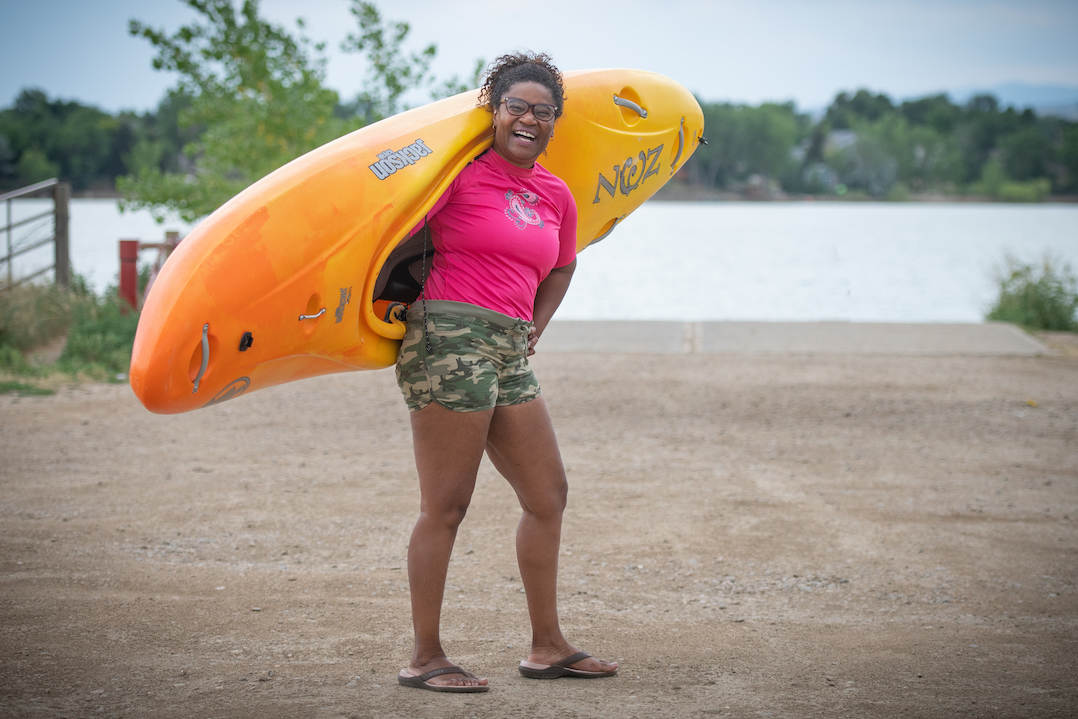
WhitewaterTV creator Antoinette Lee Toscano is also the Team River Runner Fort Collins Colorado Assistant Chapter Coordinator, a Badfish SUP Paddling Team Member, and contributor at Paddling Magazine, and the Hammer Factor podcast. | Photo: Dejan Smaic
In WhitewaterTV’s debut episode, Antoinette says she’s acutely aware of the stereotypes about who can be a paddler—myths like “paddlesports are not for people of differing physical abilities or people without a lot of financial resources or even people of color.”
“These are often limiting beliefs that came from the larger society,” she continues. “However, throughout my whitewater career, I’ve found the community to be warm and welcoming folks, who want to teach and mentor me—a U.S. Army veteran and multi-cultural women of color in this sport. I hope that through this channel and bringing people together, everyone will feel welcome and visible.”
New episodes are released Friday mornings. The Eddy Out podcast is released in video on Mondays and instructional standup paddling and river surfing videos will join the weekly queue next month.
Most of WhitewaterTV’s content is free, but you need an account to view it.
Below, Toscano, a contributor to Paddling Magazine with an article in our next issue, tells us about WhitewaterTV and the special episode available today.
Why create WhitewaterTV?
I wanted to create a home for people like me, who don’t aspire to be a professional kayaker, but enjoy those stories and photos. I was looking to create a space where people around the world in the adventure sports and paddlesports community can come together to view the people, places and products important to them.
How can paddlers access content?
The majority of the content is available for free, but you need to create an account to view it. I want people in developing countries who don’t have a lot of disposable income to have access to this content, and people in my home country of the United States to have access to this content, even if they can’t take a subscription fee out of their budget.
The other goal I intended with this channel is it would be a way to raise funds for the non-profit organization that I co-founded with my friend, Lily Durkee, which is Diversify Whitewater. One percent of all subscription fees are donated to Diversify Whitewater to help support our mission.
Screencap of WhitewaterTV episode
Tell us about today’s new episode release?
We’re releasing an episode featuring an expert panel where we’re unpacking cultural baggage and limiting beliefs. It’s geared toward the BIPOC (Black, Indigenous and People of Color) community, however, the intention is everyone who is in the adventure sports space can benefit from this information. I’ll give you an example.
Sometimes I have been hurt when told by other people of color that, “You’re acting like a white girl,” or “You’re not Black enough. Why are you always doing white people stuff?” because I’m an adventure sports enthusiast. So, not only do people of color face microaggressions from some white people who think we don’t belong in outdoor spaces, but also from other people of color, who view us as doing things that are outside of the BIPOC community’s general area of interest. So, we’re unpacking where that cultural baggage came from and how it shows up as a limiting belief.
The episode isn’t just for people of color—it’s also for gear manufacturers, apparel providers, instructors and everyone else. Because if you are creating amazing instructional content or gear for everyone who wants to participate in paddlesports, you also want people of color to know that your product or service exists. And you can have the most amazing marketing message, but if you’re not aware of cultural baggage and limiting beliefs that are hidden barriers, then you might feel frustrated that you’ve put so much work and effort into promoting diversity and perhaps it’s not getting you the results you wanted.
The episode will be available for free on Friday, February 12, 2021, for 24 hours only. Click here to watch it. Most content is free on WhitewaterTV with signing up, however some of the channel’s content is part of a subscription program. 1% of your subscription is donated to Diversify Whitewater to promote diversity, equity, and inclusion BIPOC and allies to enter and excel in whitewater paddlesports.
What sorts of submissions are you looking for?
The kinds of content we’re looking for people to submit to us is anything they geek out on, get stoked by, or are excited about is probably going to be relatable to our audience. Professionals and enthusiasts can submit their content to us. Some of it is interviews where I’m interviewing other people, others are from interviews created by other paddlers. We also have instructional videos and fitness videos for adventure sports enthusiasts. Everything is geared to the paddling and adventure sports lifestyle.
The beaches of the Ottawa Valley are the perfect places to spend a summer day. | Photo: Destination Ontario
Summer days are made for the beach. Fortunately, it’s easy for Ottawa beachgoers to escape the city and find a tranquil stretch of sand for sunbathing, swimming and launching canoes, kayaks or SUPs. These beaches are also perfect for sandcastle building or simply relaxing with a good book. Cradled between the Ottawa River and Algonquin Park, the Ottawa Valley is home to over 900 lakes and four major river systems—that means scores of off-the-beaten-track beaches where you can enjoy clean sand and welcoming water, without the crowds. Even better, these beaches are just an hour or two drive from the Capital. Here are 15 of the best beaches near Ottawa.
[This article is part of the Ultimate Ottawa Valley Adventure Guide. Find all the resources you need to plan an adventure-filled trip to the Ottawa Valley.]
The beaches of the Ottawa Valley are the perfect places to spend a summer day. | Photo: Destination Ontario
Burnstown Beach, McNab/Braeside Township
Just a 45-minute drive from Ottawa, Burnstown Beach is a beautiful beach that feels worlds away from the Capital. Situated along the Madawaska River in the picturesque community of McNab/Braeside, the unsupervised beach offers visitors a large sandy swim area, boat launch and rowing area. The river is also a scenic destination for kayaking, canoeing and paddleboarding. On shore, there is a play structure, picnic tables, a seasonal snack bar, change rooms, washrooms and a shaded grassy area. Don’t miss Burnstown’s renowned artist galleries, shops and eateries—all housed in heritage buildings and within walking distance from the beach.
Lake Clear is well known for its crystal-clear water and scenic setting in the pastoral Bonnechere Valley. Lake Clear Beach features fine, white sand that’s perfect for sandcastles and a smooth, gradual drop-off that’s ideal for younger swimmers. Wade out 200 meters to reach deep, refreshing water for swimming and snorkelling. There are no picnic areas or lifeguards on duty, but compost toilets are available. Launch from the beach for a peaceful paddle to nearby Hurds Creek, where you may spot snapping turtles or even peregrine falcons performing their aerial acrobatics above the cliffs.
[ Paddling Trip Guide: View all paddling trips and clinics in the Ottawa Valley ]
Fitzroy Provincial Park Beach, Fitzroy Harbour
Situated along the Ottawa River in the heart of the Ottawa Valley, Fitzroy Provincial Park is just under an hour away from the Capital, but it’s quiet and secluded enough to make you feel like you’re in a whole new world. There are two beaches in the park. The main beach is located in the day-use area and has washrooms, drinking water, picnic tables, stand-up barbecues, a volleyball court and canoe/kayak rentals. The camper’s beach is located in Two Rivers Campground and is ideal for families with small children. Both beaches are unsupervised and dogs are not permitted.
While you’re visiting, don’t miss taking a short hike through the park’s century-old white pine forest and stand of majestic, 200-year-old bur oak. Paddlers will find relaxing opportunities for exploration among the smattering of islands just off the main beach, as well as along the meandering Carp River.
Petawawa Point, located at the junction of the Petawawa and Ottawa rivers, is the town of Petawawa’s premiere waterfront park. A lovely sandy beach, stunning vistas, a boat launch, a snack bar and canoe/kayak/SUP rentals are available at “the Point” during the summer season. Petawawa Point extends as a series of islands across the Ottawa River to Quebec, making for excellent paddling opportunities among the islands. This beach is unsupervised, but it is cleaned and monitored daily by municipal staff. The large size of the beach and the broad expanse of the river mean this location has plenty of space to find your own piece of paradise.
Barnet Park Beach, Calabogie Lake, Calabogie
Found just up the lake from Calabogie Peaks Resort and walking distance to the village of Calabogie, Barnet Park Beach enjoys stunning views south across Calabogie Lake to some of the highest hills in the Ottawa Valley. This unsupervised beach is dog-friendly and has both sand and grass areas for sunbathing and a covered area to relax out of the sun. The shore slopes gradually into the crystal-clear water, so it’s perfect for young children to enjoy safely. This quiet park offers washrooms, picnic tables, a play structure, a snack bar and a boat launch.
Beyond the beach, explore this beautiful lake from the water or view it from high above. Kayak, canoe and paddleboard rentals, hiking/biking trails and mountain bike rentals are available nearby at Calabogie Peaks Resort. If you’re considering a stay in the area, the resort also offers accommodation, lakeside dining and its own pet-friendly sand beach.
If you’ve never heard of Bon Echo Provincial Park, it is well worth the two-hour drive from Ottawa. The park is best known for Mazinaw Rock, a 1.5-km-long sheer rock face that rises 100 meters out of Mazinaw Lake and features over 260 indigenous pictographs—the largest visible collection in Canada. Visitors can take interpretive boat tours over to the cliffs and climb to a lookout atop the Rock. Canoe and kayak rentals are also available near the park’s Main Beach for self-propelled explorations of Upper and Lower Mazinaw Lakes.
Bon Echo’s Main Beach on Lower Mazinaw Lake is the park’s most popular, featuring a spacious sandy beach with buoyed swimming area (but no lifeguards) and shady areas with picnic tables, water taps and barbecue grills. North and South beaches are nearby and offer a quieter experience for campers and day-use visitors, respectively.
Pine Point Beach, Deep River
Situated along the Ottawa River at the town of Deep River, Pine Point Beach is a true gem of the Ottawa Valley. This unsupervised beach boasts over 200 meters of golden, sandy shoreline with a gradual drop-off for 100 meters followed by an abrupt plunge into deep water. Washrooms and parking are available onsite. While visiting Pine Point, keep your eyes peeled for bald eagles soaring in the air currents above the river. The beach is surrounded by majestic mixed forest with walking trails perfect for an afternoon stroll. Paddlers can explore north along the Ottawa River to a trio of sandy points ending at secluded Burkes Beach.
If you don’t mind a bit of traveling, Driftwood Provincial Park is located 220 km northwest of Ottawa and boasts road trip-worthy beaches, riverfront campsites, spectacular sunsets, gorgeous Canadian Shield shoreline and outstanding paddling on the Ottawa River.
Enjoy the refreshingly cool, clear waters of the river from the sandy camper’s beach—which stretches the entire length of the park’s Ottawa Campground, adjacent to many of the campsites—or at the smaller, more private day-use beach. Both beaches are unsupervised. Facilities include washrooms, showers, a boat launch and a park store. Canoe/kayak rentals are available for exploring the park’s secluded shoreline, while experienced paddlers can venture across the Ottawa River to the mouth of the Dumoine River.
Foy Provincial Park is a hidden gem on the east side of Round Lake, just a few kilometers away from the better-known beach and campground at Bonnechere Provincial Park. Foy is a non-operating provincial park, which means you’ll have to leave your vehicle at the road gate and walk through a stately forest of mature white pine, oak, aspen and birch to the gorgeous sand beach. Round Lake owes its fine sand to the glacial meltwater of the last ice age, when this area was the delta of a great spillway that drained the Algonquin Highlands. Along with swimming and picnicking, paddling on the lake and Bonnechere River are popular activities at this park. There are no visitor facilities, but dogs are welcome on the unsupervised beach.
Located in Arnprior just 45 minutes from Ottawa, Robert Simpson Park overlooks the meeting of the Madawaska and Ottawa rivers and offers one of the best beaches near Ottawa. The clean, sandy beach here is well-maintained by the town and offers daily lifeguard supervision during the summer. This lovely park is dog-friendly and features a playground, splash pad, spacious picnic area, lookout pavilion, washrooms and food stand. Walking trails extend upriver to a dam and falls on the Madawaska River.
If you are looking for a more rustic beach experience, this beach on the Ottawa River just north of Arnprior fits the bill. Braeside Beach is unsupervised with coarse sand and a steep, rocky drop-off into deep water. There are a few picnic tables and a composting toilet onsite. Another beach area with more picnic grounds, flush toilets and a boat launch is located a few hundred meters south of here. Paddlers can launch from either beach for a pleasant tour upstream along the lightly developed shoreline to pretty, petite Sand Point Lighthouse (4 km each way).
Located on the Mississippi River in the historic hamlet of Pakenham, this small, quiet beach offers washrooms and lifeguard-supervised swimming on designated days throughout the summer. The warm, shallow water is ideal for families with young children. Picnic tables have recently been added to enjoy a picnic by the Mississippi River. Pakenham Beach is a great spot for launching a laidback canoe, kayak or paddleboard exploration of the river’s peaceful meanders. Pakenham’s historic downtown shops, eateries, ice cream parlour and beautiful, stone five-span bridge are within easy walking distance from the beach.
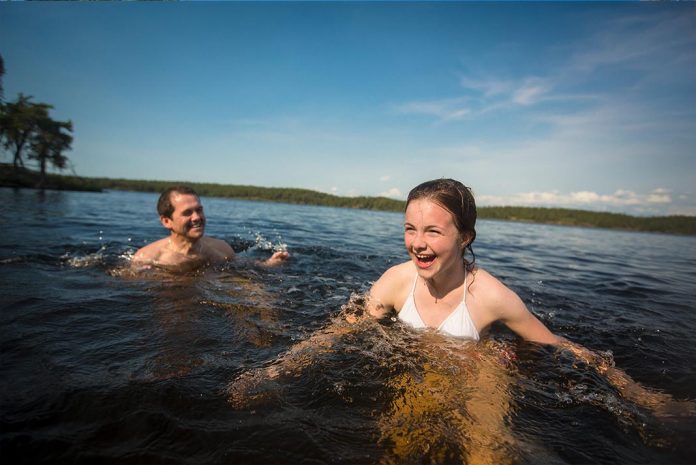
The warm lakes in the Ottawa Valley are the perfect temperature for swimming. | Photo: Destination Ontario
Charleston Lake Provincial Park Beaches, Landsdowne
Nestled in the Frontenac Arch—an extension of the Canadian Shield notable for its rocky lake and forest landscape—Charleston Lake Provincial Park is found 150 km south of Ottawa, but feels like it belongs much farther north. Pristine Charleston Lake is the focal point of this large park, which boasts excellent swimming, canoeing, kayaking, fishing, hiking and wildlife viewing, and is a favorite family camping destination. Paddlers can explore the lake’s 75 km of shoreline and numerous islands, bays and coves. Canoes and kayaks are available for rent in the park.
Charleston Lake has two beautiful swimming beaches, one in the day-use area and one in Shady Ridge Campground. Both beaches are unsupervised but marked with buoys and excellent for all ages, as the shoreline and lakebed are gently sloping. Picnic areas with barbecue grills, water taps and washrooms are located adjacent to the beaches. There is also a designated pet beach beside the Shady Ridge Beach.
Rideau Ferry Yacht Club Beach, Lower Rideau Lake
Located at Rideau Ferry Yacht Club Conservation Area on Lower Rideau Lake between Perth and Smith’s Falls, this 10-acre conservation area is a popular local park with a sandy swimming beach, picnic area, changing cabins, outhouses and boat launch. Families love the warm, shallow water off the beach and the peaceful setting. Lower Rideau Lake forms part of the historic Rideau Canal Waterway, extending from Ottawa to Kingston. The canal’s Beveridge Locks and the bird-filled wetlands of the River Tay are within easy paddling distance from the conservation area.
Beaches so beautiful you’ll be there from sunup to sundown. | Photo: Destination Ontario
Silver Lake Provincial Park Beach, Maberly
Just an hour’s drive from Ottawa near the town of Maberly, Silver Lake Provincial Park is situated on a clean, clear and picturesque lake that offers great swimming, paddling and fishing—not to mention one of the best beaches near Ottawa. This wide crescent of sandy beach is Silver Lake’s main attraction, with a smaller sand beach found near the picnic shelter. Barbecue facilities, buoyed swim area and a playground make this beach ideal for family gatherings. There are no lifeguards on duty.
While you’re here, explore the marsh boardwalk at the eastern end of the lake that crosses through a noisy, colorful habitat of painted turtles, bullfrogs, red-winged blackbirds and mallards. Canoe rentals are available in the park and paddling is a relaxing way to enjoy the Silver Lake shoreline. Plan a longer stay and take advantage of the park’s waterfront campsites.
The beaches of the Ottawa Valley are the perfect places to spend a summer day. | Photo courtesy of: Destination Ontario
Alexandria, VA – January 27, 2021 – This year marks the 64th consecutive recreational fishing trade show produced by the American Sportfishing Association (ASA) for its members and the recreational fishing industry. ICAST 2021 is scheduled for July 20 – 23, in the North/South building at the Orange County Convention Center (OCCC) in Orlando, Fla.
“While the health, safety and security of exhibitors and attendees continues to be our top priority,” emphasized ASA President Glenn Hughes, “we are all looking forward to getting back to business. Come July, we are confident that an in-person show where we can reconnect with one another will happen. Orlando and the OCCC has been home to ICAST for many years and we are excited to return.”
Over the past 12 months, the Orange County Convention Center (OCCC) has been hosting a wide variety of meetings, events and trade shows, revising and improving their protocols to stay consistent with national and state health and safety guidelines. In fact, the OCCC was one of the first convention centers in the U.S. to achieve the Global Biorisk Advisory Council’s (GBAC) Star Accreditation in outbreak prevention, response and recovery.
“In early January, I traveled to Orlando to attend Surf Expo to experience first-hand what our exhibitors and attendees should expect in a trade show environment,” said Trade Show and Membership Vice President Blake Swango. “I was very impressed with everything the OCCC team and our hotel partners were doing to implement health and safety protocols. Having this first-hand experience gave me great confidence that ICAST 2021 will move forward as planned.”
The OCCC team produced a video that explains how they worked together with Surf Expo to create a safe and productive environment for a 2021 in-person trade show.
All the elements that make ICAST the most anticipated annual event for the global sportfishing industry will be back this year: On the Water, the New Product Showcase, the Industry Breakfast, the Casting Pond and Lure Tank, business seminars and the excitement and energy of the show floor.
More than 300 exhibitors have been assigned booths, with more in the pipeline.
“Our member exhibitors told me they want to be there,” noted Swango. “From conversations with their reps and buyers, they know that the desire is there to do in-person business and to see all the new products available. In 2021, ICAST is the only venue that fills that need.”
Attendee registration opens on March 15. All the information about ICAST 2021 is available on our website including detailed FAQs about health and safety protocols, the expo hall and food and beverage options.
###
About the American Sportfishing Association (ASA)
The American Sportfishing Association (ASA) is the sportfishing industry’s trade association committed to representing the interests of the sportfishing and boating industries as well as the entire sportfishing community. We give the industry and anglers a unified voice when emerging laws and policies could significantly affect sportfishing business or sportfishing itself. ASA invests in long-term ventures to ensure the industry will remain strong and prosperous, as well as safeguard and promote the enduring economic, conservation and social values of sportfishing in America. ASA also gives America’s 49 million anglers a voice in policy decisions that affect their ability to sustainably fish on our nation’s waterways through Keep America Fishing, our national angler advocacy campaign. America’s anglers generate nearly $50 billion in retail sales with a $125 billion impact on the nation’s economy creating employment for 800,000 people.
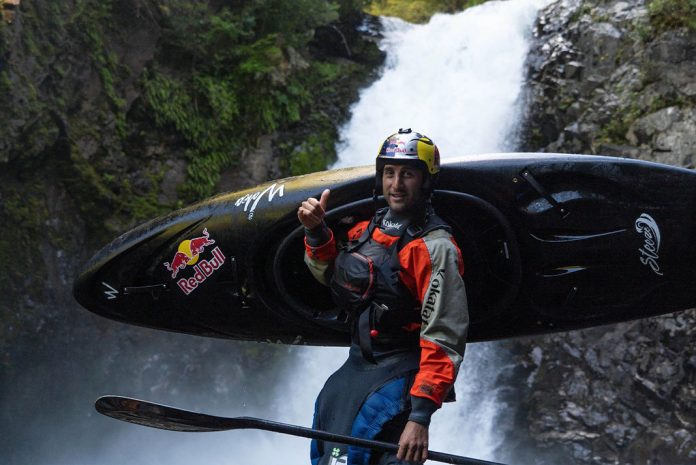
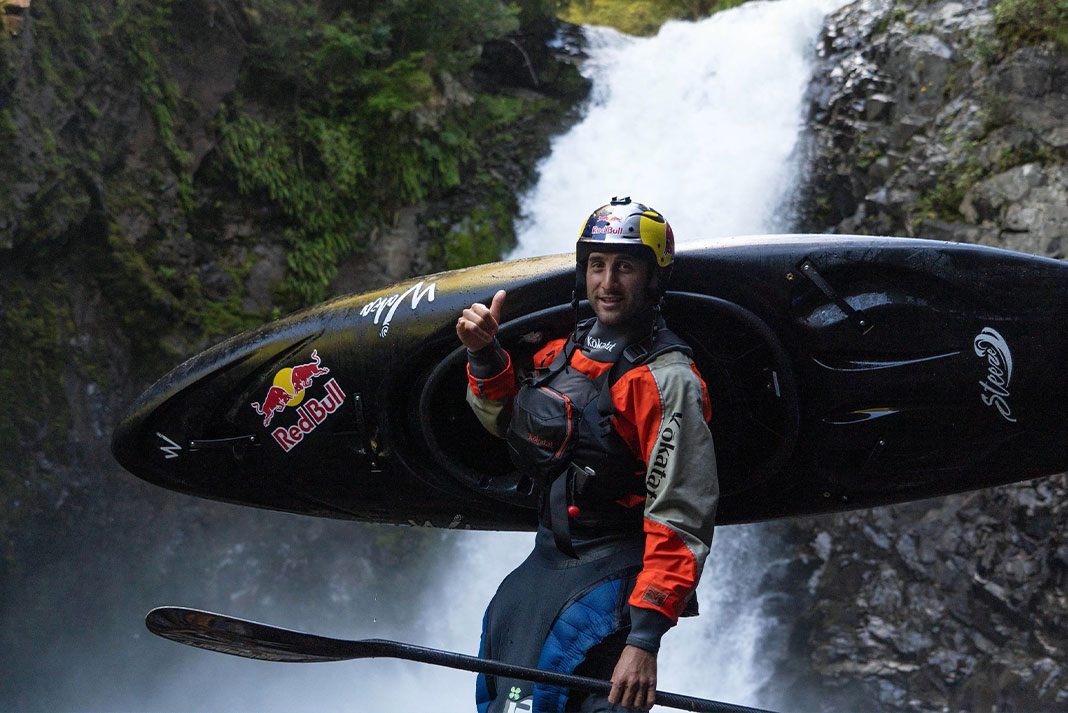
One of the most accomplished paddlers of our time, Aniol Serrasolses of Spain, has joined Team Kokatat. Serrasolses, of Catalonia, Spain, has been named Rider of the Year multiple times, was the 2016 Sick Line World Champion, 2018 North Fork Champion, has won multiple Waterfall Line of Year crowns, and holds the 24-hour distance world record of 287 miles among other accolades.
“Aniol continues to push the limits in our sport and is one of its great ambassadors,” said Lisa Kincaid, Kokatat’s Promotional Marketing Manager.
Serrasolses fell in love with the sport at a young age and has been drawn to the challenge of paddling rivers all over the world ever since. In 2018, he founded SBP, a program that promotes river conservation and kayaking among youth.
Aniol Serrasolses joins Kokatat
“I’m extremely happy to join the Kokatat team alongside some of the most talented kayakers in the industry,” said Serrasolses. “Gear is crucial to performance and Kokatat is the best in the game.”
Serrasolses joins Kokatat’s team that includes some of the sport’s best paddlers from around the world including his brother Gerd Serrasolses.
For more details on Kokatat and its team of paddlers visit www.kokatat.com.
About Kokatat Inc.
Kokatat has been manufacturing paddling gear in Arcata, California almost 50 years. At a time when many technical apparel brands were moving manufacturing offshore, Kokatat continued to invest in infrastructure in the United States. Kokatat founder Steve O’Meara was committed to the development of the finest and driest paddling apparel in the world and recognized the need to control and continually evolve the development of our dry wear. In the early days, Kokatat worked closely with W.L. Gore & Associates, makers of GORE-TEX®, to refine the sewing and sealing techniques required for full immersion suits and tops. Today, our hands-on approach to manufacturing continues to set the standard in paddling apparel. Into the water with Kokatat! Learn more at kokatat.com
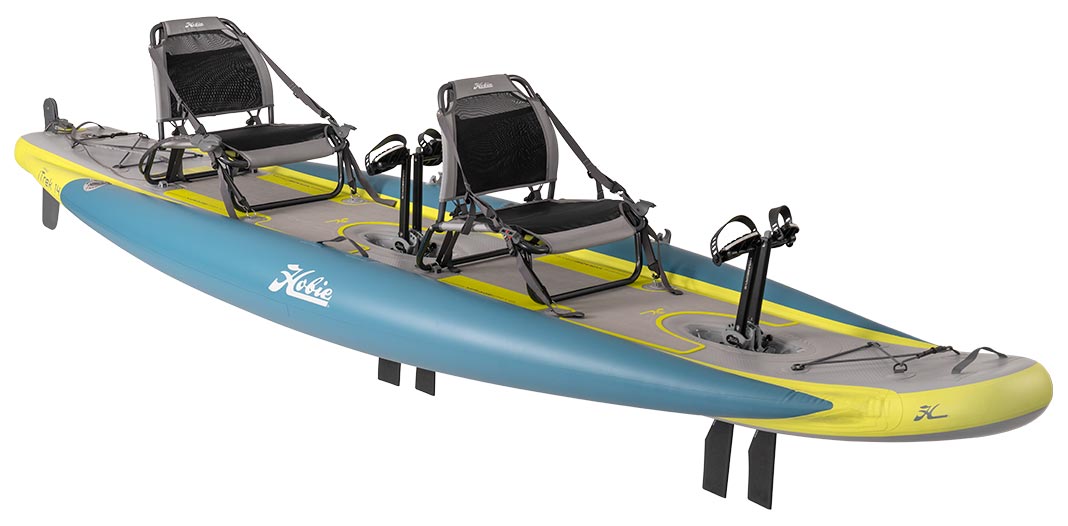
OCEANSIDE, Calif. (Jan. 12, 2021) – Hobie, the leading manufacturer of premium kayaks and watersport products, today announces the launch of its groundbreaking Mirage iTrek Series, a collection of extraordinary inflatable pedal kayaks that redefines the horizons of water recreation, alongside the all-new Mirage iEclipse, the world’s first inflatable stand up pedalboard.
“The new Mirage iTrek series is once again a result of Hobie’s DNA of innovation,” says Doug Skidmore, CEO of Hobie. “Our laser focus on ensuring that we are delivering top-notch, highly functional products that are reliable, maneuverable and comfortable – all while dramatically reducing weight – will prove to be a quantum breakthrough. We’re also thrilled to add an inflatable to our unrivaled Mirage® Eclipse pedalboard line, allowing water lovers to explore in all new ways with Hobie.”
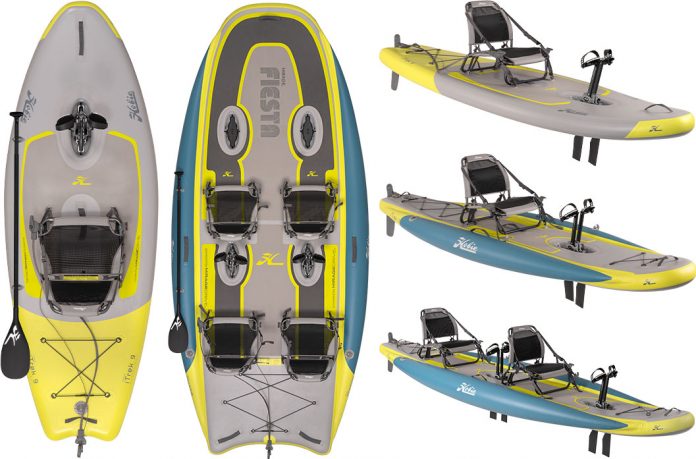
With four new inflatable pedal-driven kayaks, each featuring Hobie’s signature MirageDrive GT with Glide Technology and Kick-Up Fins, the iTrek series maximizes agility, speed and responsiveness on the water, while also enabling supreme transportability.
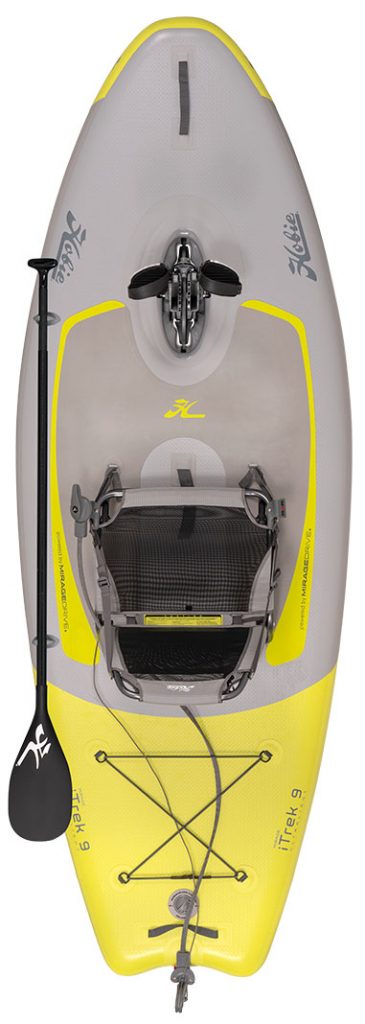
First in the lineup is the Mirage iTrek 9 Ultralight, Hobie’s lightest, most transportable and most maneuverable pedal kayak, with a fitted hull weight of just 20 pounds. It also doubles as a standup paddle platform, by simply removing the mesh seat and Mirage pedal drive and utilizing the included SUP paddle. The Mirage iTrek 11, the workhorse of the series, features an ultra-durable inflatable drop stitch hull with triple chamber construction, boasting outstanding performance, agility, stability and rigidity, all while weighing in under 30 pounds fully fitted. The Mirage iTrek 14 Duo delivers double the power, equipped with two seats, two MirageDrives and limitless opportunity for tandem adventures. Both the Mirage® iTrek 11 and Mirage® iTrek 14 Duo include a 4-piece kayak paddle for enhanced versatility and safety.
In addition to these new performance-centric kayak models, Hobie is announcing an entirely unique inflatable that epitomizes the world-renowned “Hobie way of life,” the Mirage Fiesta. With four seats that can be positioned to face one another for social hour, a SUP paddle, two MirageDrives – with the ability to add two more – and ample room for coolers, pups and kids to tag along, the Fiesta was built with fun in mind.
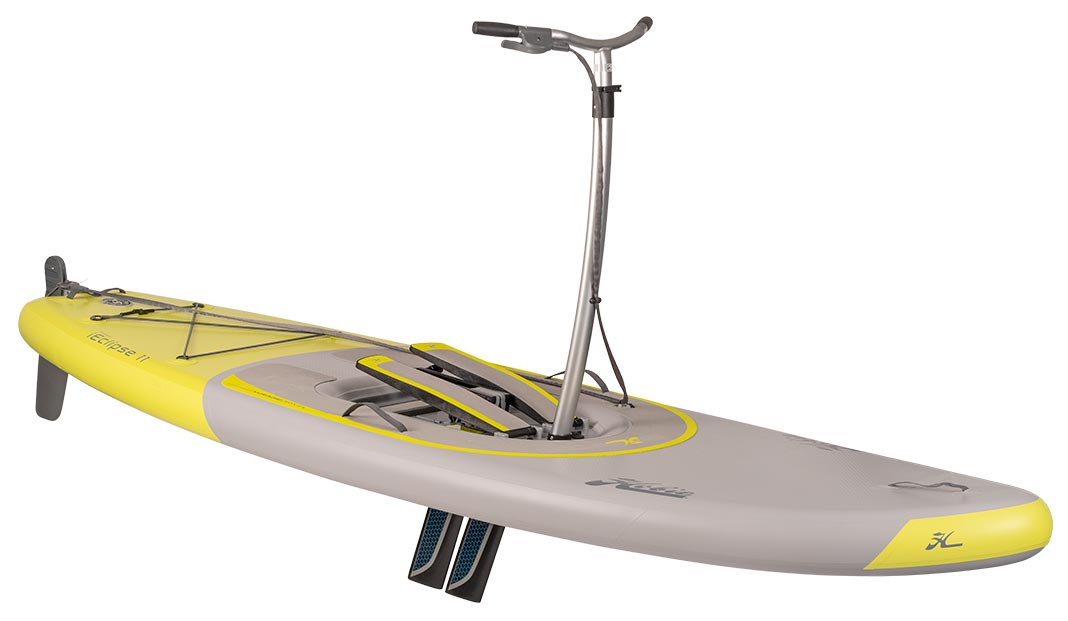
Finally, the unprecedented Mirage iEclipse is the inflatable iteration of Hobie’s exclusive stand up pedalboard, bringing all the advantages of the MirageDrive pedal system to a versatile stand up platform. Complete with a two-piece handlebar that makes skimming across the water a breeze and an intuitive steering system that turns on a dime with a simple push or pull of the lever, the iEclipse is as user-friendly as it is innovative.
Mirage® iTrek products include a high-pressure hand pump, high-volume electric pump, rugged bag suitable for travel or storage, a repair kit, adjustable nano-mesh aluminum seats with removable cup holders and premium MirageDrives with Glide Technology and Kick-Up Fins.
The iTrek series kayaks and iEclipse are expected to begin arriving at authorized Hobie dealers in March 2021. To purchase, consumers can use the dealer locator feature at hobie.com to find the authorized Hobie dealer closest to their location.
###
About Hobie
Since 1950, Hobie has been in the business of shaping a unique lifestyle based around fun, water and quality products. From their headquarters in Oceanside, California, Hobie Cat Company manufactures, distributes and markets an impressive collection of watercraft worldwide. These include an ever-expanding line of recreation and racing sailboats, pedal-driven recreation and fishing kayaks, inflatable kayaks and fishing boats, standup pedal and paddleboards, plus a complementary array of parts and accessories. To learn more, visit hobie.com.
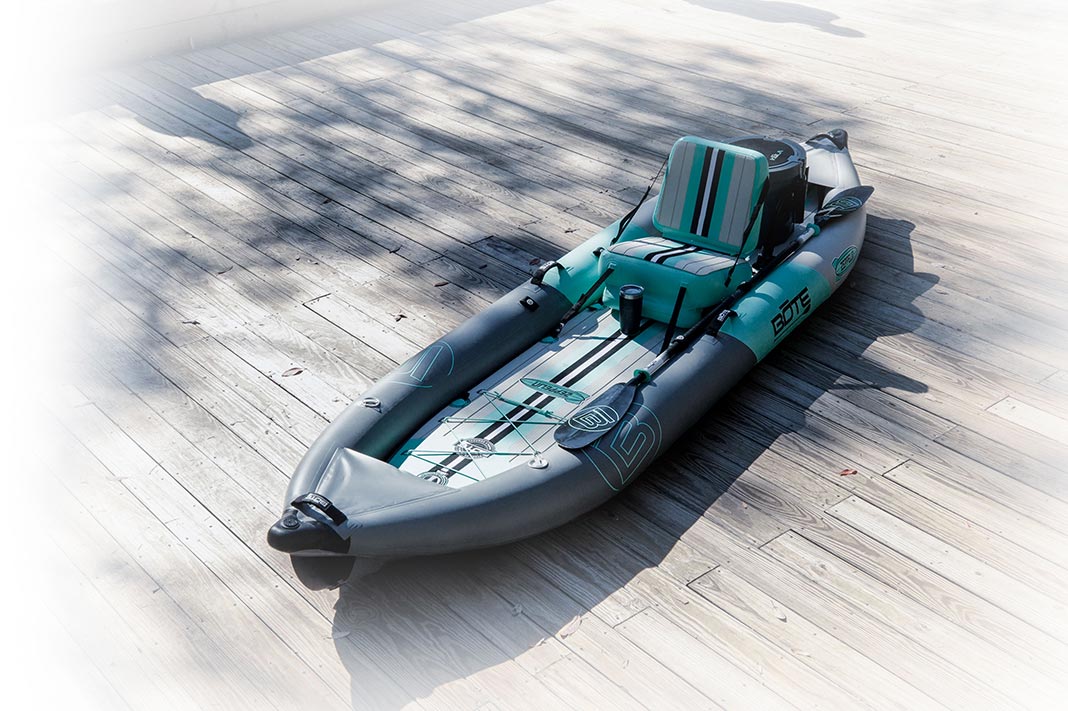
BOTE Announces the Launch of the Zeppelin, the Market’s Most Versatile Inflatable Kayak on the Water Today
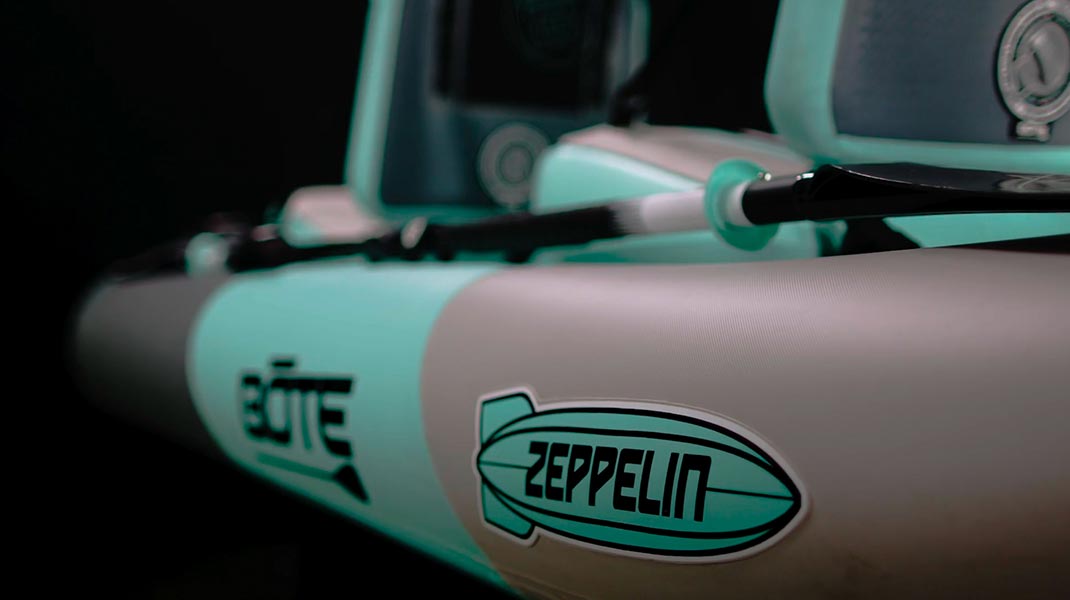
MIRAMAR BEACH, Fla. (January 13, 2021) — BOTE, the market leader in paddle boards, kayaks, docks and more, today announces the launch of the Zeppelin Aero Inflatable Kayak, its latest and most versatile inflatable kayak addition to the BOTE lineup. The Zeppelin is available for purchase for $1,099 USD today at www.boteboard.com/zeppelin-aero.
The Zeppelin differentiates itself on the water among other BOTE and industry inflatable kayaks with the introduction of a removable floor chamber, to allow for single and tandem seats alike, as well as a self-draining hull, to make for an easy ending to any adventure.
Photo: BOTE Announces the Launch of the Zeppelin, the Market’s Most Versatile Inflatable Kayak on the Water Today | Photo: Bote
BOTE is also excited to introduce MAGNEPOD the result of its latest innovation, with the Zeppelin being the first product to showcase the new feature. MAGNEPOD is an attachment point for magnetic items, including new BOTE accessories like a koozie and tumbler, coming in Q1 2021. MAGNEPOD will attach to other magnetic items for an additional secure storage place onboard.
“As we celebrate ten years in business and a record year of building our community and introducing people to watersports through our products , we knew it was time to unveil something new that allows for a little more room, both on the water and in expanding the BOTE community,” said Corey Cooper, CEO and Co-Founder, BOTE. “The Zeppelin features all of BOTE’s beloved aesthetics and innovation from stem to stern, yet also makes way for new features with the introduction of the MagnePod as well as our all-new tandem seats so that people can have a shared experience.”
Photo: Bote
Additional features on the Zeppelin include accessory mounting points for more than 20 compatible accessories, bungee straps to secure extra gear, Rac receivers, paddle straps, splash guards and tie-down points. A full list of features and recommended accessories are available at boteboard.com/zeppelin-aero.
BOTE, having just celebrated the incredible milestone of serving US customers for more than a decade, was founded on hard work, passion, creativity and authenticity and its products reflect what its founders and team are passionate about: quality, simplicity and innovation. BOTE has one of the best user experiences in the water-sports market, and while its roots run deep in SUP, BOTE isn’t just about boards, kayaks and paddles – to BOTE, it’s about the adventure.
BOTE paddle boards, kayaks, docks, micro skiffs, and more help you Stand Apart through industry-shaping innovation, fresh ideas and simplicity to create a product that defines a lifestyle. BOTE has one of the best user experiences in the water-sports market. Our roots run deep in SUP but we aren’t just about boards and paddles. To us it’s not whether you enjoy the adrenaline rush of running a river, the tug of a big fish, or time on the water with family–it’s about the adventure. Whether it’s our leisure products like the dock or our gear like the highwater packs, the products we develop are to help customers enrich and expand upon those adventures. BOTE offers Everything But The Water.





 “The new Mirage iTrek series is once again a result of Hobie’s DNA of innovation,” says Doug Skidmore, CEO of Hobie. “Our laser focus on ensuring that we are delivering top-notch, highly functional products that are reliable, maneuverable and comfortable – all while dramatically reducing weight – will prove to be a quantum breakthrough. We’re also thrilled to add an inflatable to our unrivaled Mirage® Eclipse pedalboard line, allowing water lovers to explore in all new ways with Hobie.”
 In addition to these new performance-centric kayak models, Hobie is announcing an entirely unique inflatable that epitomizes the world-renowned “Hobie way of life,” the Mirage Fiesta. With four seats that can be positioned to face one another for social hour, a SUP paddle, two MirageDrives – with the ability to add two more – and ample room for coolers, pups and kids to tag along, the Fiesta was built with fun in mind.