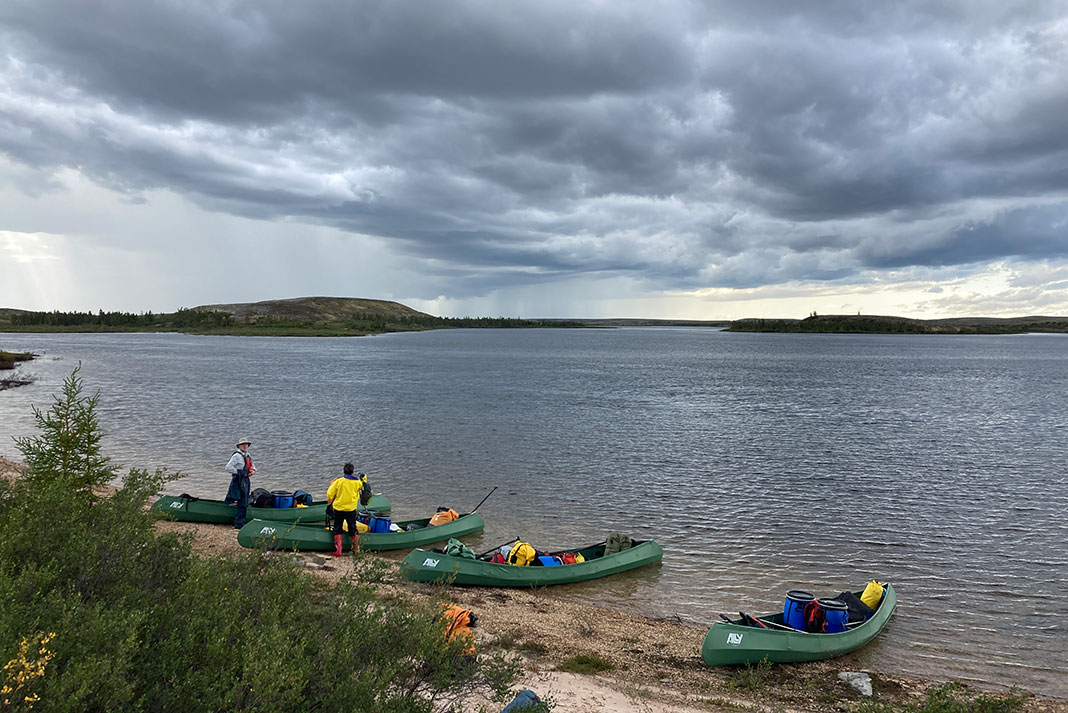
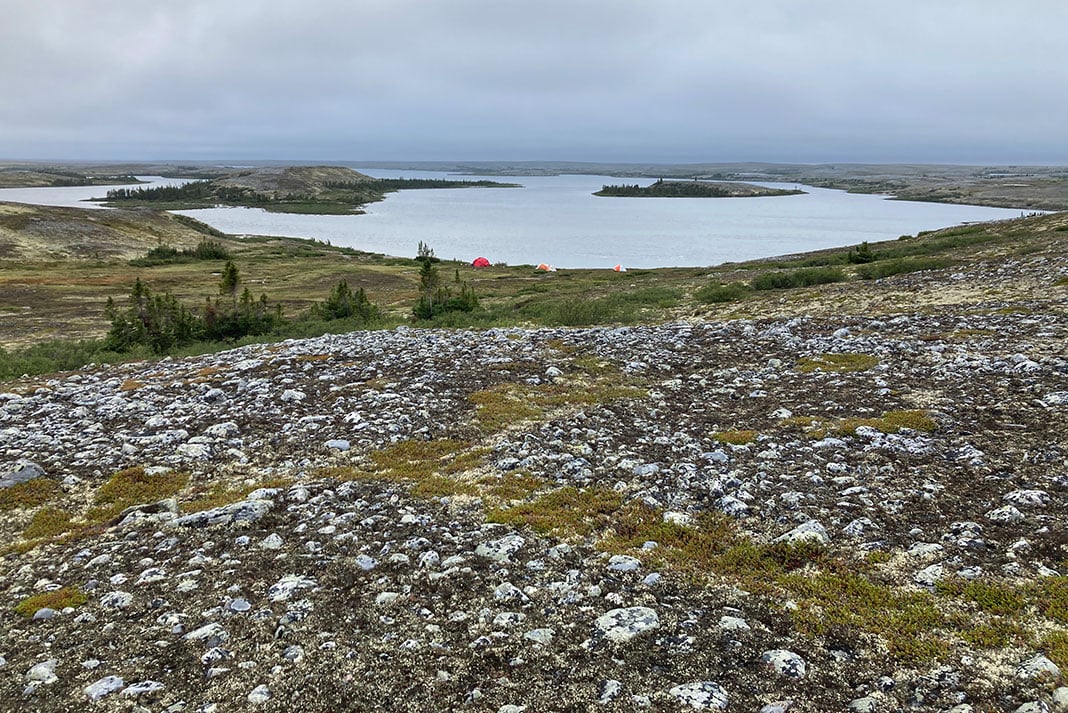
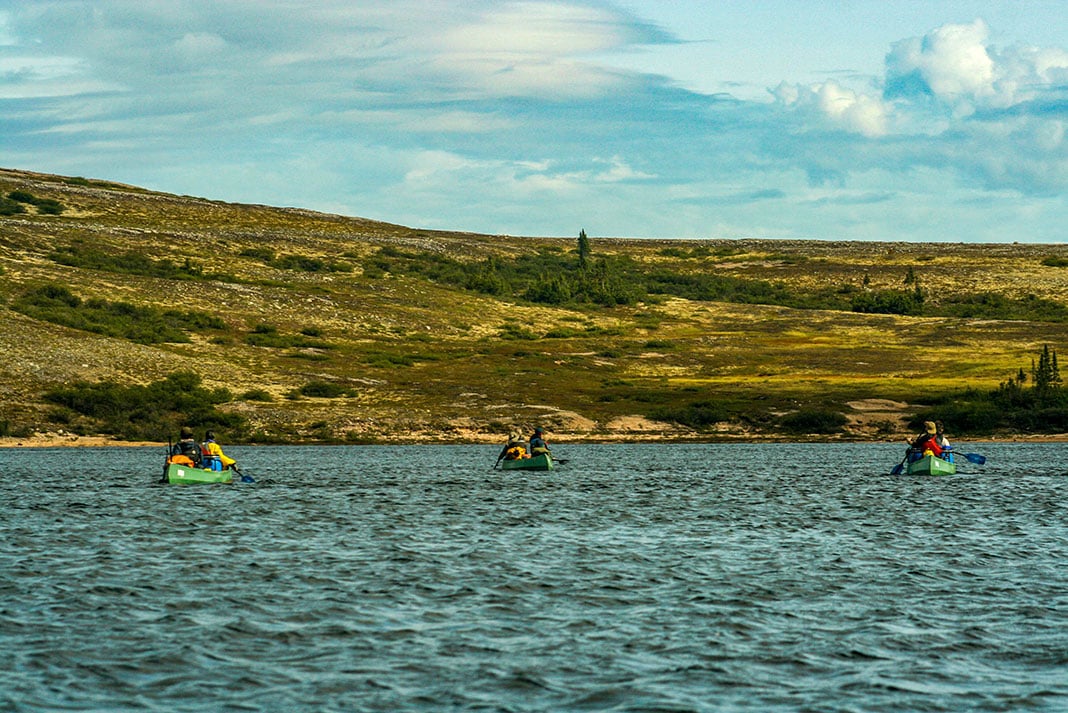
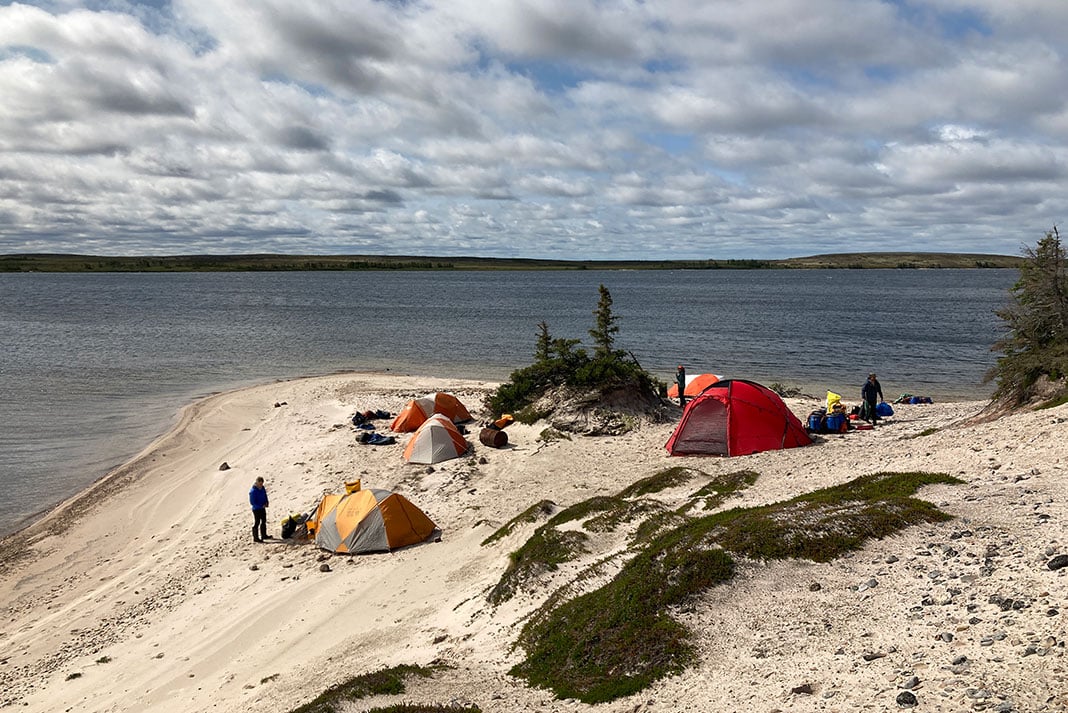
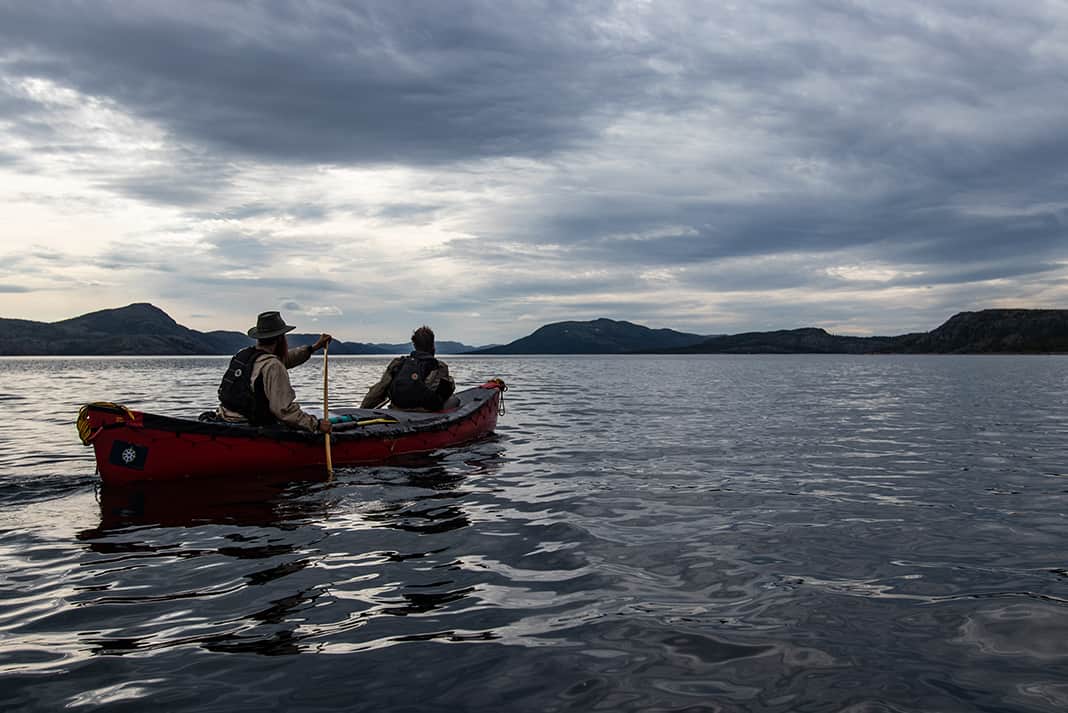
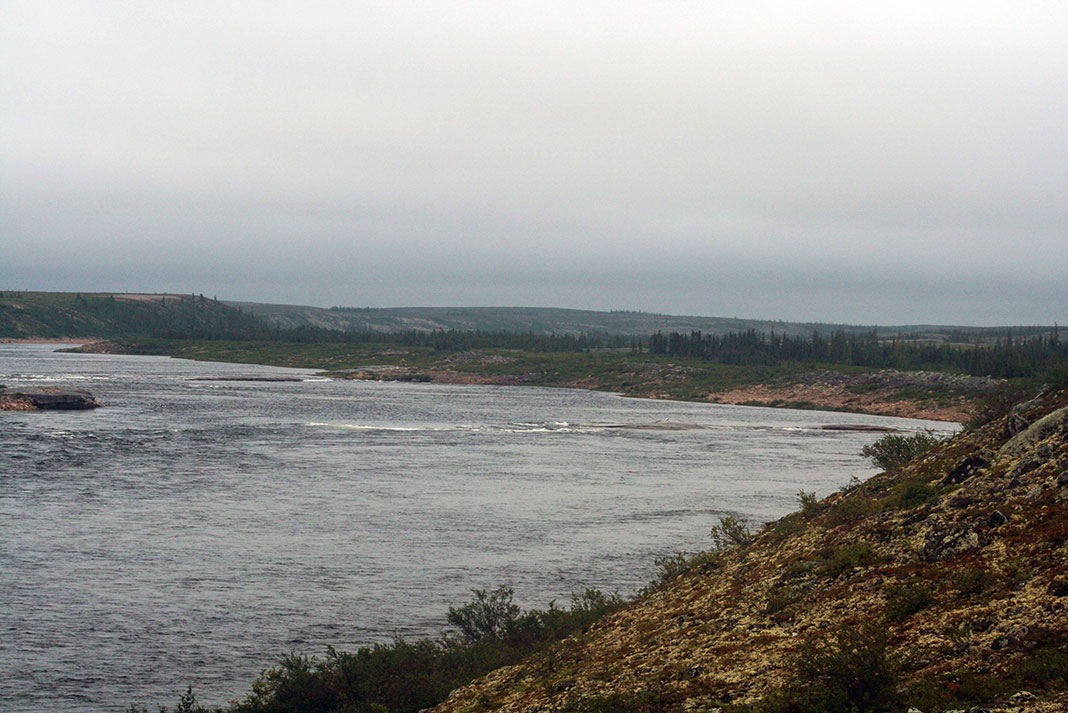
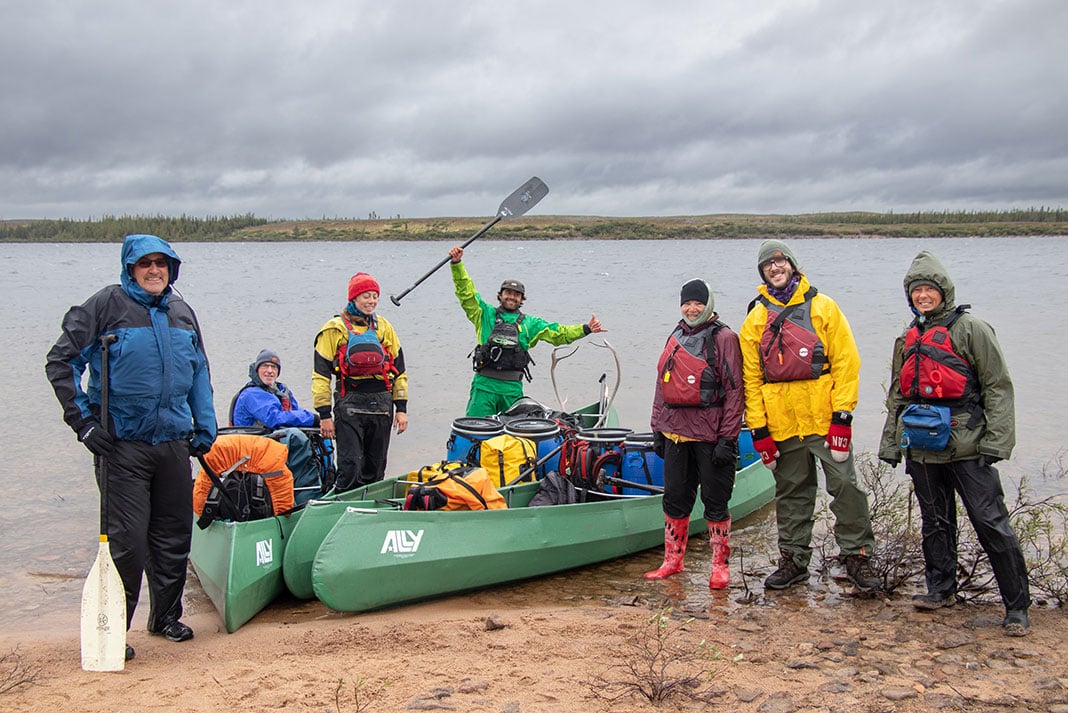
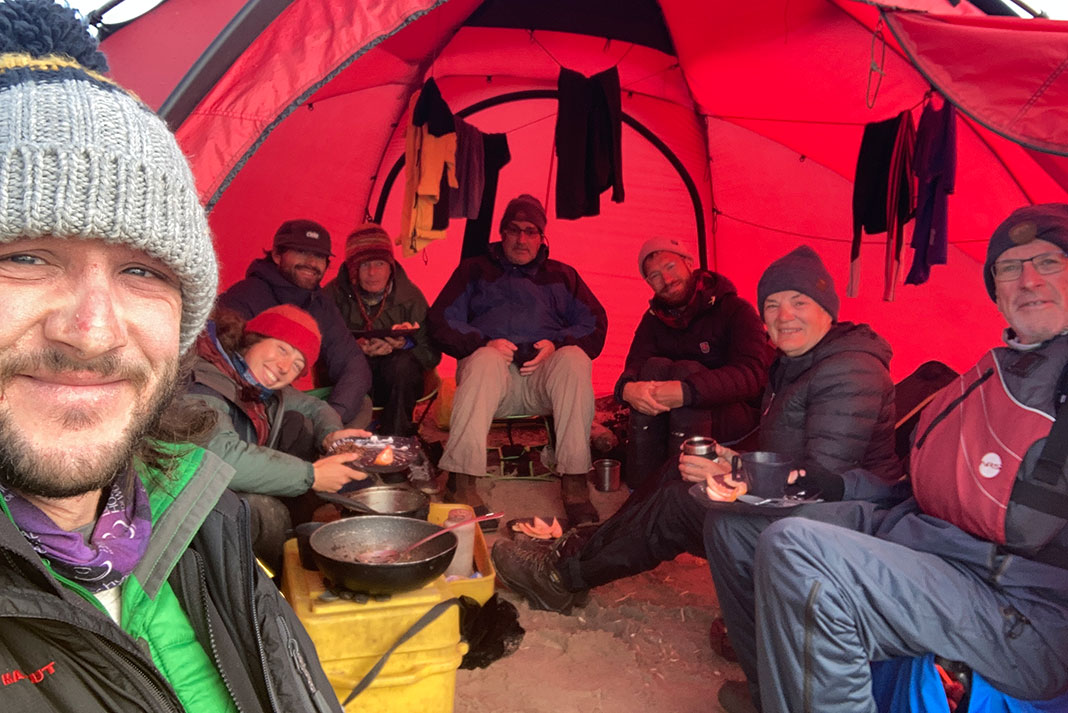
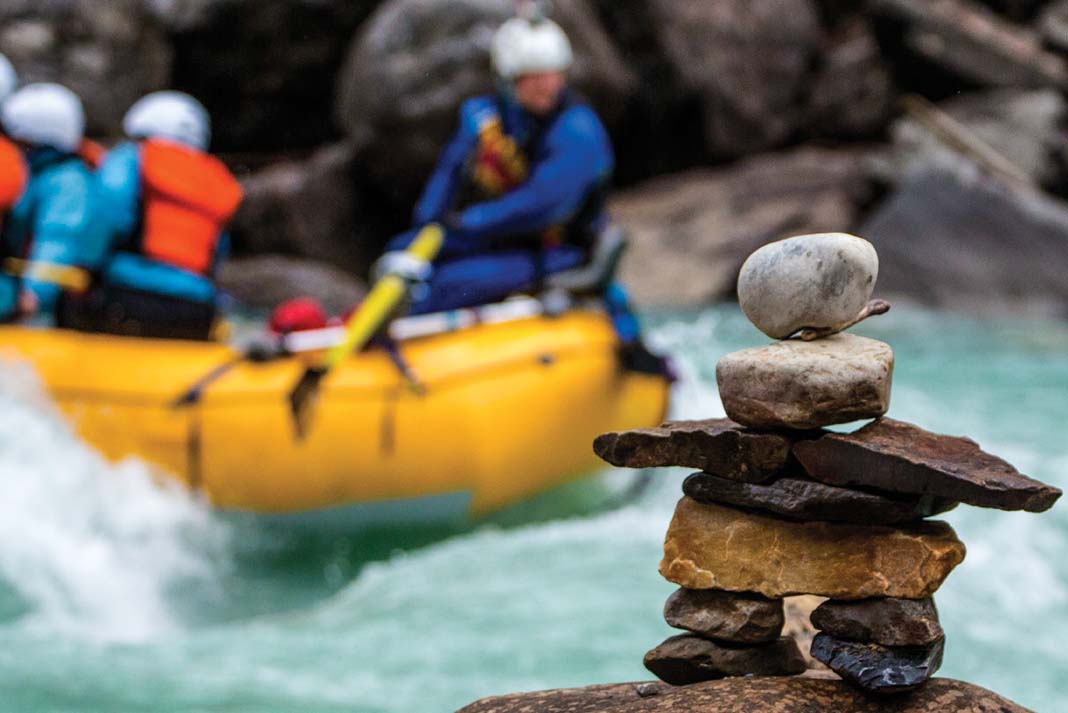
People you’ve got the power over what we do; You can sit there and wait; Or you can pull us through; Come along, sing the song; You know you can’t go wrong; ‘Cause when that morning sun comes beating down; You’re going to wake up in your town; But we’ll be scheduled to appear; A thousand miles away from here. —Jackson Browne | Feature photo: Michael Hewis
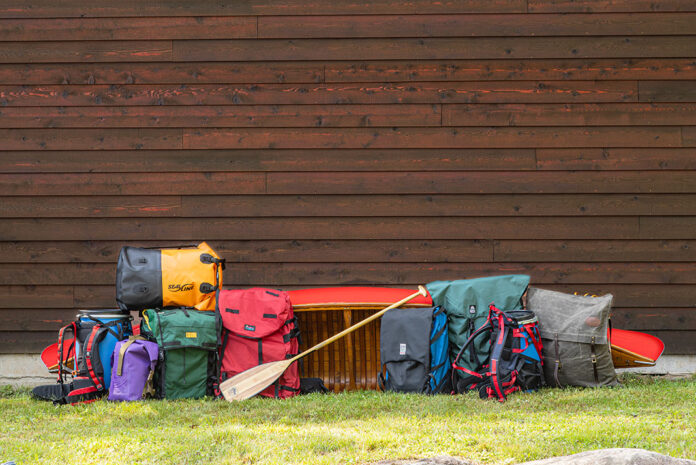
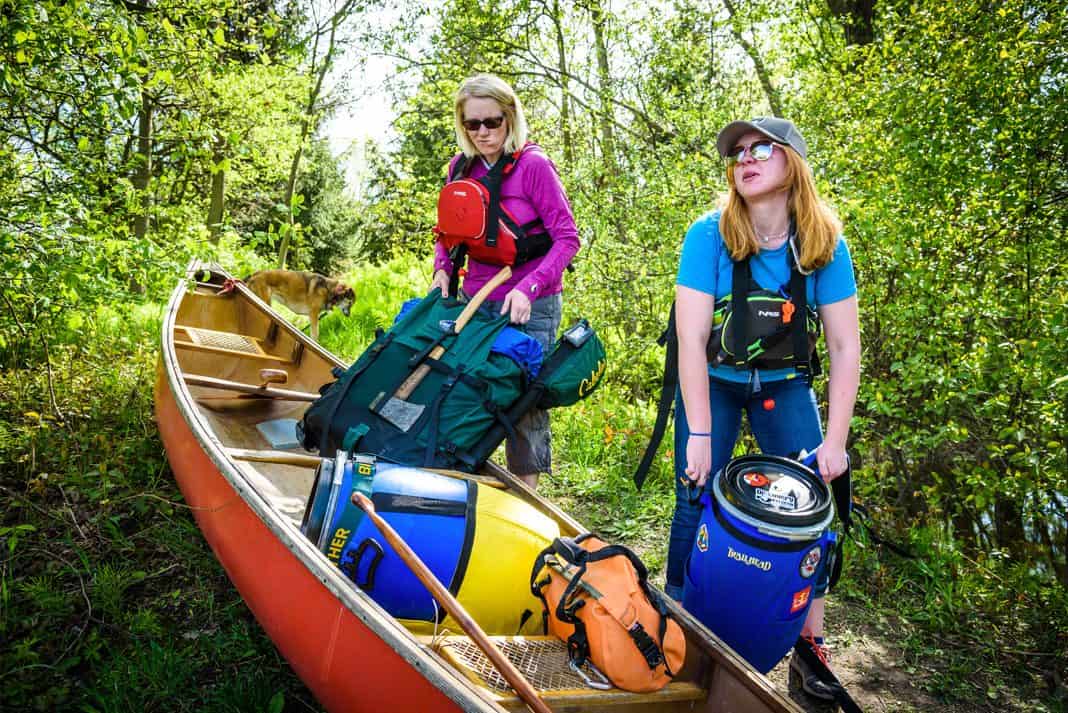
If Jackson Browne was a bourgeois for the North West Company, here are nine bags and barrel harnesses his roadies would have loved.
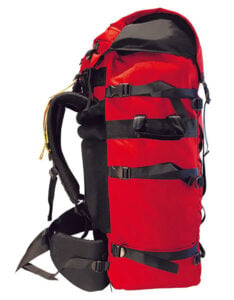
If you’re packing for a trip more than a week long—or, if you’re like me and decide you need to bring too much stuff on a spring overnighter—the beastly Ostrom Wabakimi supplies all the space you need. In fact, when fully loaded, the pack is so large it makes it impossible to portage a canoe because the floating lid extends so high above your head it touches the hull of the canoe when on your shoulders. This design isn’t without purpose, though—the lid extends straight up to keep the weight directly over top of the pack.
The Wabakimi is Ostrom’s internal frame pack, a feature that’s of great benefit on a pack this size, providing structure and shape and transferring the weight off your shoulders and onto your hips. To step up the comfort even further, when you order your pack, Ostrom custom fits the frame, shoulder straps and hip belt to your measurements. Need the pack to fit more than one person? The frame can be adjusted to three torso sizes by moving the shoulder straps up or down and Ostrom can also supply you with different sized hip belts and shoulder straps that you can switch in and out. This level of custom fitting is an offering not found with traditional one-size-sorta-fits-all canoe packs.
Rounding out the Wabakimi are all the expected features like grab handles and compression straps, as well as handy extras like shallow side pockets.
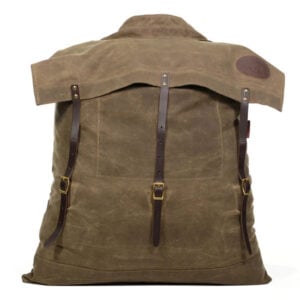
Traditional to its core, tossing Frost River’s Old No. 3 pack in your canoe—cedar canvas only, please—will make you feel like you’re headed into territories unknown in a time gone by. Whatever personal illusions you’re trying to uphold, the quality of this bag is no artifice.
Why is it called the No. 3? No idea. Frost River makes 20 canoe packs in all manner of shapes and sizes, but all are made of double layer wax canvas, making them tougher and more water-resistant than any voyageur could have ever dreamed.
The shoulder straps made of harness leather, foam padding and buckskin make for a comfortable carry and the whole pack is finished with solid brass hardware. Frost River keeps things simple with three leather strap buckle closures, a leather hip belt and an interior map pocket—because you surely still carry a map, right?
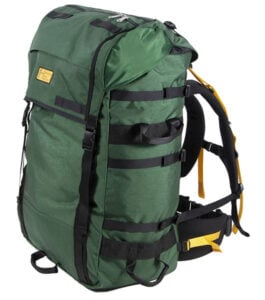
“That’s a big pack,” one of my colleagues said when I humped the Expedition Canoe Pack into the office. The largest of Recreational Barrel Works’ packs, the Expedition is also the highest volume pack on this list. The pack’s many thoughtful features make its bulk more manageable. Features like seven grab handles, side and top compression straps, and optional tumpline and internal frame.
Despite the pack’s volume, portaging a canoe is still possible because the lid extends down over the back of the pack, leaving enough room between the top of the pack and the hull of the canoe to allow the canoe to sit on your shoulders. However, this design means the weight of the items stored in the lid pocket hangs off the back of the pack, pulling the pack away from your body. Included load adjustment straps help with this, pulling the weight of the top of the pack closer to your body and allowing the hip belt to do its job of transferring weight onto your hips.
Without the option to move the hip belt up or down on the pack, the Expedition Canoe Pack fits medium to long torsos best. Useful features include daisy chains on the lid, two shallow side pockets and Easy-Snug hip belt adjustment buckles for one-handed adjustment. Recreational Barrel Works also sells a waterproof liner.
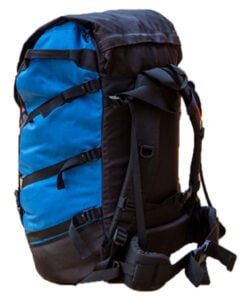
Algonquin Outfitters’ Ballistic Canoe Packs have been trialed by fire—these are the packs the outfitter rents out on hundreds of backcountry trips every year. And so, this utilitarian pack has a no-frills padded back, simple hip belt and six side compression straps.
The Medium Ballistic is unpretentious and still comfortable to carry. Somehow with only simple adjustability on the hip belt, chest strap and shoulder straps, it fits everyone in the Paddling Magazine office well enough. Also available in small and large, this medium is the perfect size for weeklong trips.
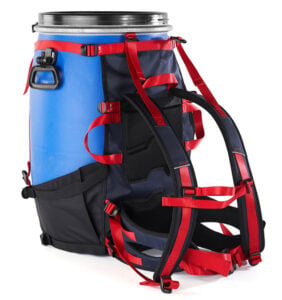
Durable, waterproof and small critter resistant, barrels are a popular choice for storage on canoe trips. Level Six’s Adjustable Barrel Pack hugs 30- and 60-liter barrels snuggly like a beer can in a koozie.
Somehow the length of the back pad and shape of the shoulder straps allow this harness to quickly fit different torso lengths. The hip belt is split, allowing it to fold and shape to your waist and sit on your hips. And we loved the double forward pull waist belt straps we’ve become accustomed to finding on contemporary hiking packs.
To reduce stress on the shoulder straps lugging the barrel in and out of canoes, Level Six sewed in extra grab handles either side of the back pad.
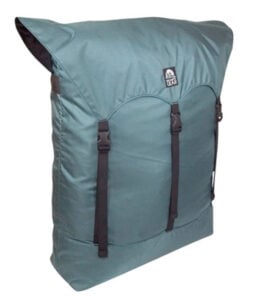
Developed for Boundary Waters tripping, Granite Gear’s portage packs are lightweight and no-frills. This pack has just one large compartment, no lid pocket or side pockets. Without an internal frame or even back padding, we had to pack smart so it kept its shape and weight was properly distributed.
The perfect size for a weekend outing, the Traditional #3.5 can easily be nestled anywhere in your canoe. Super size me to the #4 for 98 liters of storage and side compression straps.
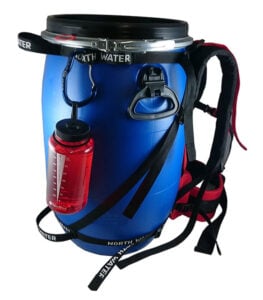
Fit your North Water Quick Haul Harness to 30- or 60-liter barrels for easy portaging—well, easier, it’s still a portage. North Water’s harness has many of the essential features you’d expect on a modern barrel harness—grab handles, a padded hip belt, an adjustable chest strap and load adjustment straps—and a couple special additions.
The daisy chain encircling the lid of the barrel provides five places to clip Nalgenes, dry boxes, map cases and PFDs to make those single carries achievable. The harness can also be used on other cases and objects, like wanigans; purchase the Quick Haul Extenders for particularly large goods.
Our favorite feature, which is either a happy accident or the brainchild of a designer in the know, is that the load adjustment straps suspend the yoke of the canoe just enough off your back to provide a more comfortable carry.
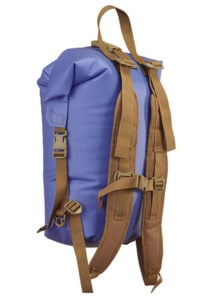
Day-trippers and ditch kit enthusiasts will be pleased with the size, waterproofness and comfort of Watershed’s Big Creek roll-top drybag. Watershed’s patented Ziploc-style seal combined with roll top closure provides worry-free tripping in rain and rapids.
New this year, the Big Creek is made with Watershed’s upgraded material, Kryptothane Plus, which is thicker and more UV-resistant. If you’re using the Big Creek on a day trip, the comfortable and adjustable harness system will make you forget the pack is even there on portages. If being used as a ditch kit on a multiday trip, we found the Big Creek stacks nicely atop a barrel for seamless single carrying. It’s just the right size to pile atop two barrels in the canoe or stuff behind the stern seat, if you’re not running with float bags. Just want a drybag? The shoulder straps can be removed.
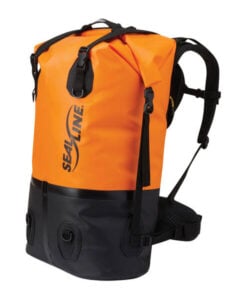
Skip the trouble of having to use waterproof liners or drybags within your pack; here’s a massive dry pack with a roll closure seal that makes it easy to keep your camping gear dryish.
SealLine’s 70-liter Pro Dry Pack is a perfect size and shape for tents, sleeping pads, chairs and tarps. It’s portage-ready thanks to its sophisticated harness system. The breathable back panel and supportive full-length framesheet in addition to a hip belt and chest strap are really quite good. The harness can also be adjusted to three different lengths to accommodate a variety of torsos—possible, but it takes a fair bit of finagling for larger hands to get behind the panel to thread a buckle through a loop and reaffix the Velcro.
This article was first published in the 2023 Paddling Trip Guide. Subscribe to Paddling Magazine’s print and digital editions, or browse the archives.
People you’ve got the power over what we do; You can sit there and wait; Or you can pull us through; Come along, sing the song; You know you can’t go wrong; ‘Cause when that morning sun comes beating down; You’re going to wake up in your town; But we’ll be scheduled to appear; A thousand miles away from here. —Jackson Browne | Feature photo: Michael Hewis
Sage Donnelly at the last North Fork Championship in 2022. | Feature photo: Dan Stewart
When this year’s North Fork Championship was canceled, the whitewater community was shocked. We dig into the main factor that brought about its downfall—insurance—and whether other class V whitewater races will face the same demise.
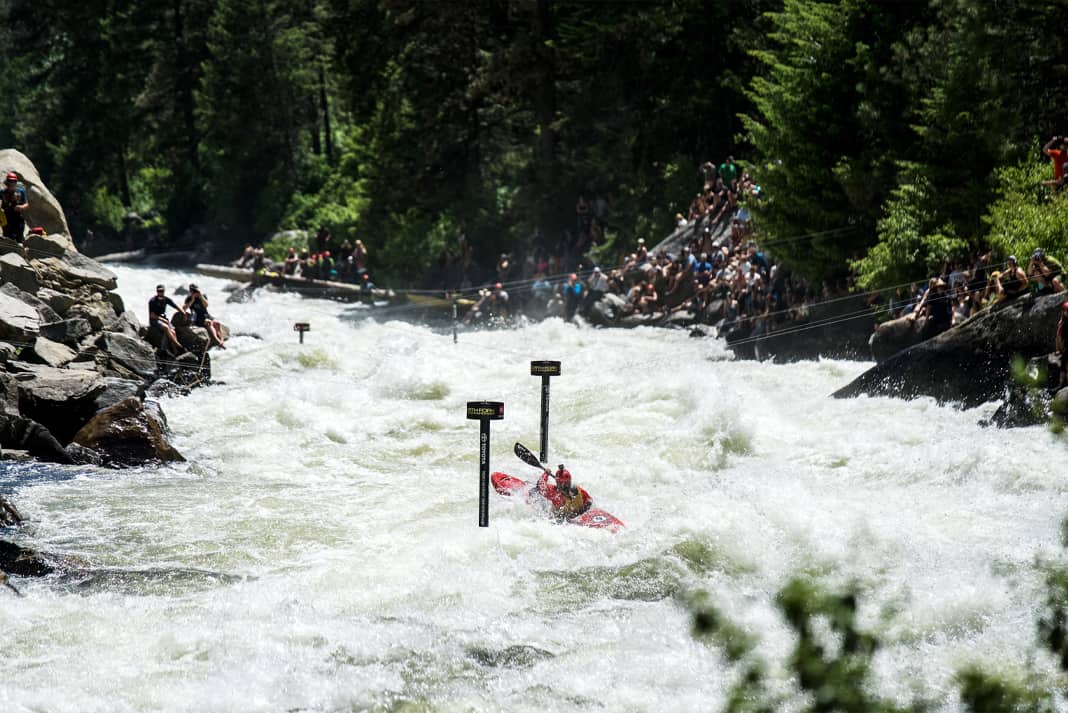
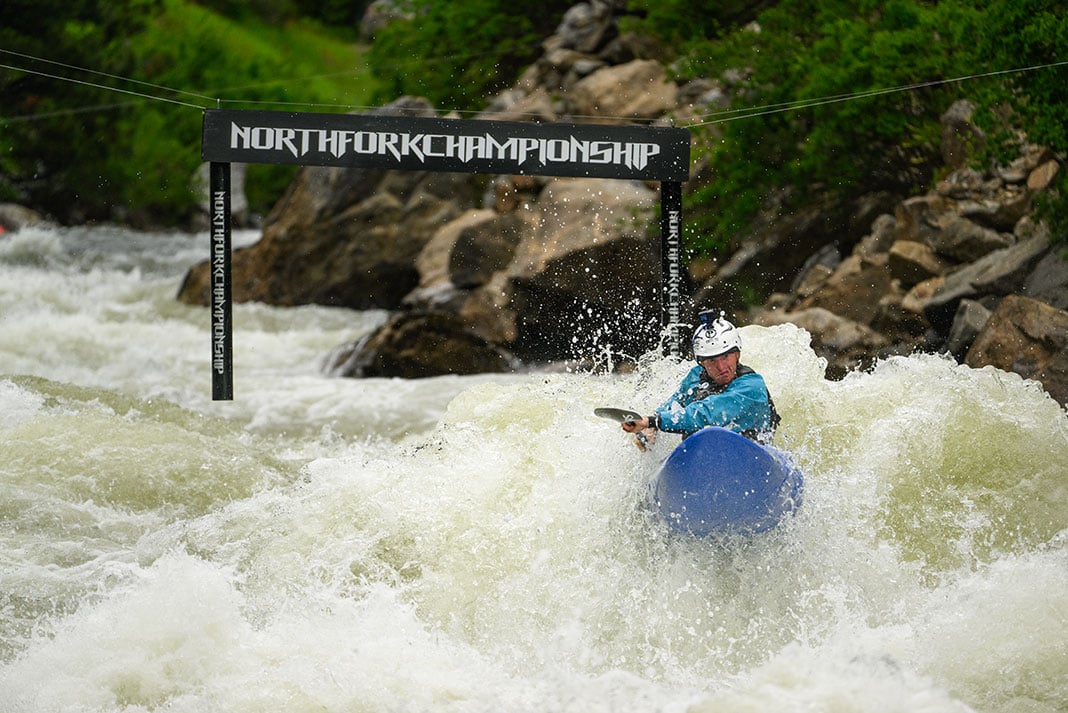
Last summer, when paddlers approached Jacob’s Ladder, a class V rapid on the iconic North Fork of the Payette River in Idaho, the roar of the crowd drowned out the thunder of the whitewater. People sat shoulder to shoulder on boulders lining the course while world-class paddlers raced in the renowned North Fork Championship (NFC), its tenth year running and arguably garnering its best turnout yet.
While those competing in the marquee class V event are a fraction of those who paddle whitewater, the festival, and others like it, has been an integral part of the kayaking community. Whitewater events more broadly celebrate amazing rivers and the outdoor spaces paddlers are privileged to enjoy. They bring attention to environmental causes such as resistance to mining and damming projects.
Nick Broedner (left) and Rhett “Rabbit” Ernst (right) running Applesauce Rapid at Gore Fest 2021. | Photo: Rapid Image Photography
According to John Grace, one of the organizers of the Green Race—an annual class V event running on the Green River near Asheville, North Carolina—whitewater festivals are important because everyone can bring a boat, post a time and celebrate the river. Class V races fit into the festival ecosystem by showing off the more elite aspect of the sport. Plus, compared to other sports like the Olympic discipline of slalom, at class V events, athletes are super accessible to spectators.
Grace has seen kids around 10 years old do the rugged hike to watch The Green. “They get to sit, talk to the champions, take pictures with them, and inevitably in five or six years, those guys are on the start line.”
In addition to being responsible for bringing new paddlers into the fold, class V events like the NFC also help push the skill of athletes to new levels.
“The North Fork Championship was the backbone to a lot of the progression we’ve seen over the years of kayaking,” says Jody Voorhees, matriarch of the Voorhees family, who took over organizing the NFC in February 2020. “When you put the gates in there and you put the moves in there, there was only a handful of paddlers who could even do it, let alone do it at the speeds they started doing it at.”
The progression of skill year to year has been remarkable. Keep in mind conditions change, but in 2012, the winning time of two minutes, 17 seconds was set by Ryan Casey. Ten years later, the winning time was sub one minute, 30 seconds, set by Hayden Voorhees. In 2014, Canadian Katrina Van Wijk became the first female to compete. The following year, French kayaker Nouria Newman finished eighth. A women’s category was added in 2019.
The North Fork goes out on top
The June 2022 edition of the NFC was anecdotally the biggest turnout the festival had ever seen—erring on the side of too big. A local pub’s new dance floor crumpled under the weight of dancers and the line of cars parked down the highway extended farther than ever.
Yet in January 2023 the Voorhees family announced the cancellation of the NFC. The news broke amid a series of other class V race cancellations that had occurred back in the fall and were yet to come in the spring.
What gives?
A lot of work goes into planning your favorite whitewater festivals. Organizers have to be on top of logistics, including everything from safety and permits to portable toilets, sleeping arrangements and sponsors. Then, there’s insurance.
Until last year, 40 percent of class V events in the U.S. were using the American Canoe Association (ACA) to obtain insurance. The ACA is a national sport organization for paddling disciplines like slalom, wildwater, canoe polo, flatwater sprint, rafting and ocean racing. They mostly run instructional programs, offer insurance to clubs and outfitters across the country and, until late 2022, they insured class V whitewater events.
In August 2022, mere days before Gore Fest, an American Whitewater festival in Colorado, organizers were notified the ACA had changed insurance providers and its new policy wouldn’t cover class V events. Gore Fest organizers were forced to cancel the class V portion of the festival.
Mercedes Furr paddling in the 2019 Green River Takeover. | Photo: Rob Giersch
Danny Siger at Whitewater King of New York. | Photo: Sonia Szczesna
The ACA’s announcement sent subsequent fall races scrambling, with various outcomes.
Another American Whitewater event, Feather River Fest in California, had to cancel its class V race, though the rest of the festival went on. Similarly, in North Carolina, the Women’s Green River Takeover had to alter its program: the non-class V portion went ahead as planned, but if people decided to paddle the class V Narrows section, it would be unsanctioned.
In January, it was the NFC’s turn. The Voorhees family announced over the race’s social media platforms that it would not be making a return.
“It was probably one of the hardest decisions we’ve ever made because we love that event. We know how important it was to the kayak industry as a whole,” says Jody. “I think we would have been okay—it was a lot of work and we were up for the task—but the three years of the world being tipped on its head [during the Pandemic], and it still isn’t right, those three years really are what took the toll of just not being able to continue it at the level that it was.”
Sponsors had pulled back and the event’s size was beginning to work against it—it was becoming clear it was outgrowing its host town of Crouch (pop: 163). The ACA’s insurance pullout was just the final nail in the coffin.
The fallout continued into April, with the cancellation of Maine’s Smalls to the Wall.
Using the ACA’s insurance “made events easy,” race organizer, Jake Riesch, wrote on Facebook. “Starting from scratch, evaluating options, and figuring out how to fund it ended up being a bigger project than I could find time for. I ran out of time.”
Another insurer steps into the breach
According to Beth Spilman, the ACA’s executive director, the ACA is “working diligently to identify other opportunities to provide liability insurance for these events.”
In the meantime, the Great Falls Foundation (GFF) has stepped up to the plate.
About 10 years ago, Chuck Thornton and his friends decided to get involved with their local event, the Great Falls Race on the Potomac River, which sees competitors paddle a class V rapid of the same name. The race had been going on for about 30 years, but had struggled largely due to being run by an ad hoc group. Thornton and his friends thought there must be a better way to run it that could be neutral in the sense that it wasn’t attached to a private outfitter. The Great Falls Foundation was created in 2015 and received charitable status in 2016.
The Foundation gave them a way to talk to bigger permitting agencies that may have been hesitant to speak with individuals. Last fall, the GFF helped secure individual insurance policies for the Whitewater King of New York and Lord of the Fork races, saving them from cancellation.
Alec Voorhees paddling hard at the North Fork Championship. | Photo: Dan Stewart
This year, the GFF is in the midst of hosting seven class V events and nine class I to IV events across the U.S.
Although the GFF has been able to secure individual insurance policies for a handful of races, it’s an expensive and temporary solution. Thornton is still searching for an annual policy and some race organizers are waiting to see what he or the ACA come up with.
Part of the struggle in finding insurance is that every race director will have different insurance requirements and comfort levels regarding policies, so what’s suitable for someone in Idaho might not work for an event in California.
The insurance policy the GFF has been able to secure, for example, offers a $2 million aggregate, but for races taking place on land that is managed by federal entities such as the Bureau of Land Management and National Park Service, a minimum of $3 million is required, says Thornton. “Everybody has to do their risk management and risk assessment,” he says.
For the races he oversees, Thornton isn’t too worried about the racers. “They know what they’re getting themselves into,” he says. If they aren’t feeling it the day of a race, some paddlers will opt to stay dry. “I worry more about spectators who damage land or a spectator who falls on a rock and twists their ankle.”
Another obstacle for events in obtaining new insurance coverage is an inability to access the loss run data from their time insuring through the ACA.
The Green Race had worked with the ACA for more than 10 years and even helped develop the safety plan for class V events. In Grace’s opinion, the ACA really “dropped the ball,” but thankfully they were able to secure their own insurance policy—which they shared with other event organizers—and run the race in November 2022 as usual.
Unfortunately, they weren’t able to access any of the loss run data from their previous policy through the ACA. This data is important if you want to secure a good rate. Grace says the Green has a clean record. But without the loss run data, they can’t prove it.
Cole Moore competing in the 2002 North Fork Championship. | Photo: Dan Stewart
Holt McWhirt, the Whitewater King of New York in 2022. | Photo: Sonia Szczesna
“That was the biggest gut punch for us,” says Grace. “We’ve done all this work to make this stuff as clean, efficient and professional as it could be and we really didn’t have anything to show for it.”
Based on conversations Thornton has had with insurance providers, the insurance industry is operating on a misconception about class V paddling: that it’s dangerous. However, Thornton says in the eight years the GFF has been running events, they’ve never had a claim—a sentiment echoed by Voorhees and Grace.
At the ACA, Spilman confirmed there hasn’t been an insurance claim for a class V event for “way longer than five years.”
Class V events get back on track
Despite having to start from scratch on insurance, the 2023 calendar of class V races has returned to business as usual—other than the hole in June left by the NFC.
Jody Voorhees is happy her family was able to give the NFC two more years and she isn’t counting it out yet. But if it does make a comeback, it wouldn’t be under the same name or with the Voorhees family organizing. Jody sees potential for what happened with Adidas Sickline in Europe. After that event folded, a new one—the Oetz Trophy—rose on the same rapid.
While the NFC is off the racing calendar, race directors across the country are optimistic about what’s to come, predicting continued growth.
The Green Race and the NFC had both embraced new technology and were livestreaming their events—the NFC’s Starlink address was the Hwy 55 pullout above Jacob’s Ladder. While in the past you had to be riverside to be part of the action, now there are watch parties all over the world.
Grace thinks the sport is ready to be taken to a larger audience, possibly a network. “It’s super exciting watching every single minute for three hours as people take on these courses.”
Sage Donnelly at the last North Fork Championship in 2022. | Feature photo: Dan Stewart
There have also been hints at greater collaboration among the different events and festivals.
After the initial sting of the ACA’s decision, just over half a dozen class V race organizers met for an online summit in mid-January.
The purpose of the summit was twofold: address the acute insurance situation by sharing information and contacts and share best practices with other race organizers around hosting in regards to permits, safety, registration, race timing, course design, spectator management, marketing, and making money through sponsorship and fundraising.
Now there are whispers about the rise of a new class V initiative: the Whitewater Racing League. It’s from the same team behind the Green Race and would feature a racing circuit connecting race organizers across the country, offering information on how to put on a solid event while also providing a common leaderboard.
While there will likely always be obstacles to these races that create uncertainty for a time, the spirit of the whitewater community has proven to be strong—and if there’s one thing we know for certain, it’s that these events aren’t going anywhere.
Marissa Tiel is an award-winning B.C.-based photojournalist and journalist. Connect with her @marissatiel.
This article was first published in the 2023 Paddling Trip Guide. Subscribe to Paddling Magazine’s print and digital editions, or browse the archives.
Sage Donnelly at the last North Fork Championship in 2022. | Feature photo: Dan Stewart
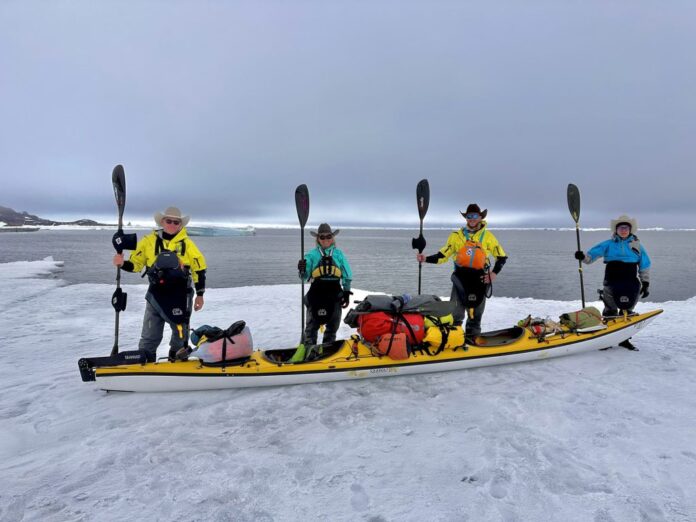
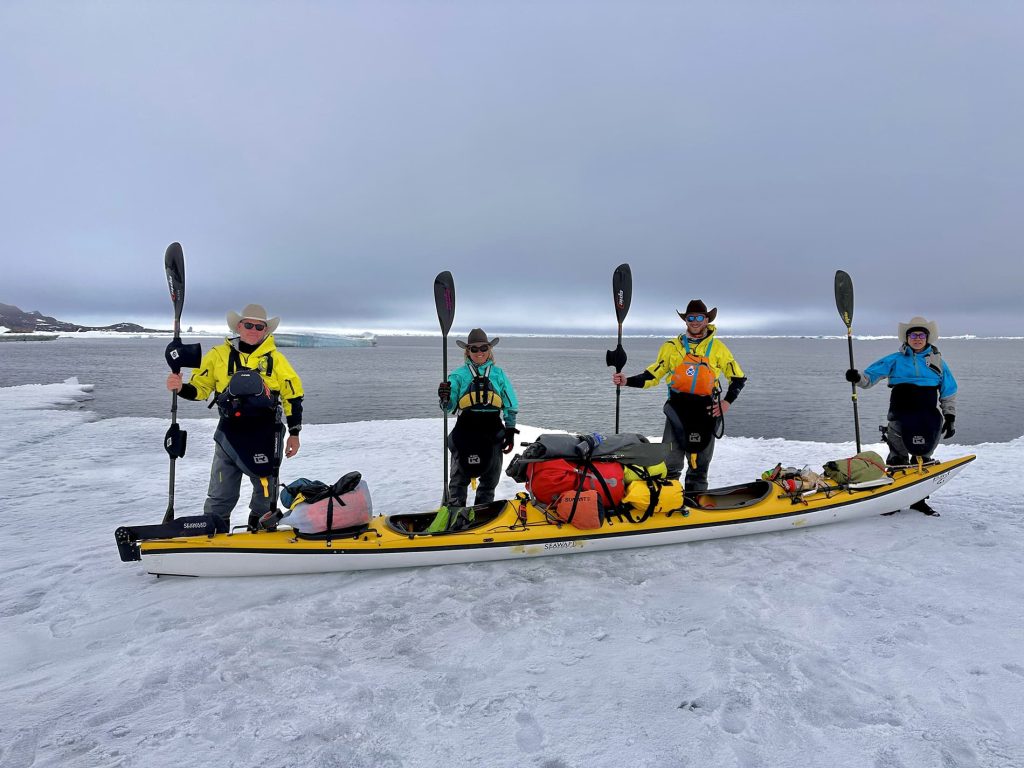
The Arctic Cowboys at the beginning of their expedition. Feature Image: Arctic Cowboys
On October 8, 2023, the expedition party known as The Arctic Cowboys reached Cape Bathurst, the western terminus of the Northwest Passage. In doing so, West Hansen, Jeff Wueste, Eileen Visser and Mark Agnew became the first known people to kayak the entire Northwest Passage under human power only in a single season.
The Arctic Cowboys, West Hansen, Eileen Visser, Mark Agnew and Jeff Wueste. Feature Image: The Arctic Cowboys
The Arctic Cowboys Dramatic Finish To Complete The Northwest Passage
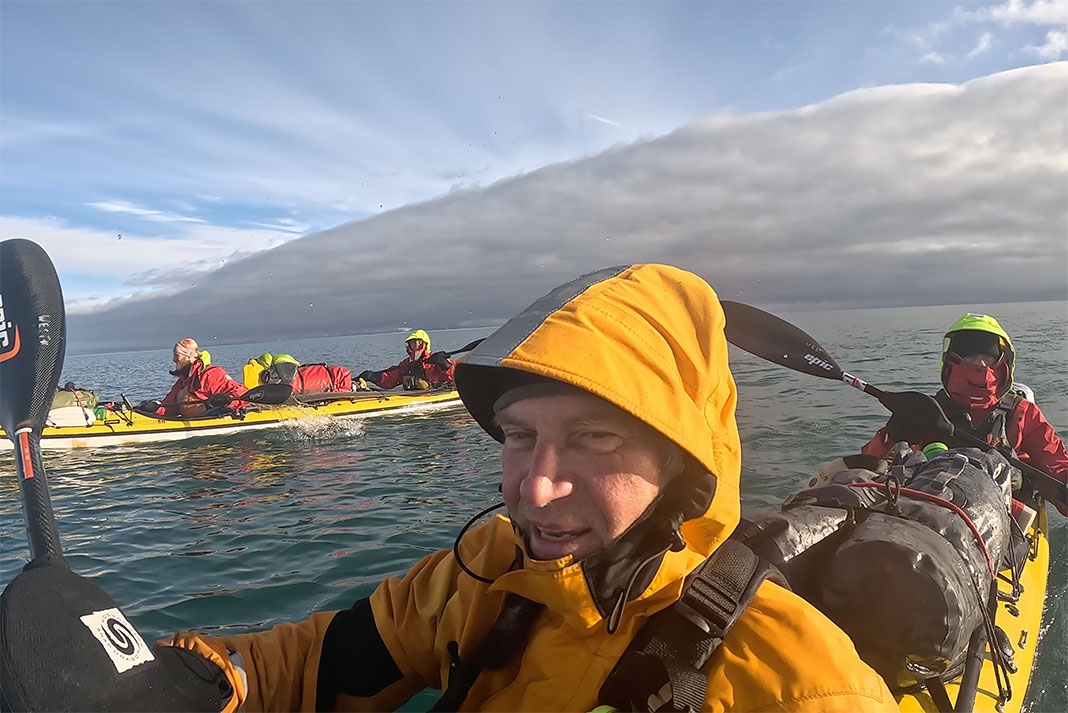
The Arctic Cowboys spent 100 days with their kayaks in the campaign to complete the Passage. With temperatures already subfreezing, the last leg of the journey has proved formidable with slow progress and days windbound in camp. To reach the western terminus and the Beaufort Sea within a closing season window, the team had to paddle a 16-mile day in the most harrowing seas seen on their trip.
“The team experienced the roughest waves of the entire expedition throughout the 16 miles to the official finish of the Northwest Passage,” the team reported in a blog post following the ordeal. “They seal-launched from Whale Cliffs in 15-foot waves, some going over West’s head with 20-foot breakers at the turn.”
Once they rounded Cape Bathurst, the team technically completed their record-setting expedition, yet the trip is far from over. The team has since had to make their way another 140 miles southwest to the town of Tuktoyaktuk in the adverse weather conditions. As of Tuesday, The Arctic Cowboys are still en route according to Expedition Manager Barbara Edington. They are currently expected to arrive late Wednesday or early Thursday.
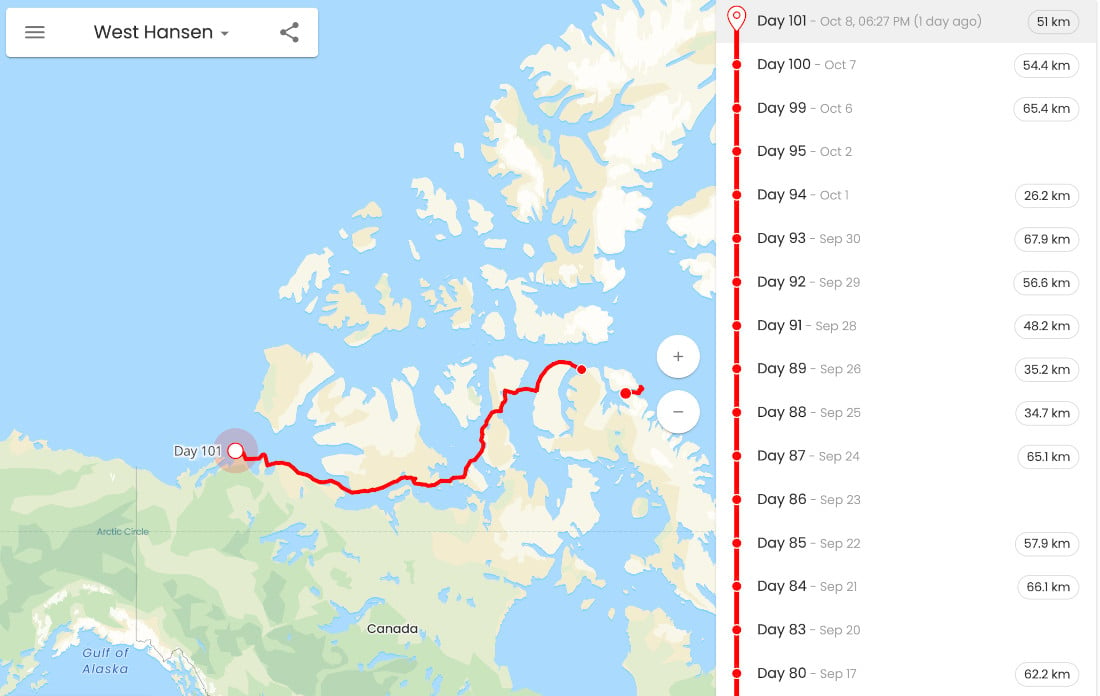
Tracking map of West Hansen. Image: The Arctic Cowboys
The Arctic Cowboys embarked on the 1500-mile journey from Button Point on the northern side of Baffin Island on July 2, with the intent to travel the Northwest Passage east to west. However, the expedition began officially on July 18 when they crossed from Baffin Bay into Lancaster Strait, the internationally recognized eastern boundary of the Northwest Passage. Multiple parties, including a team of rowers and a solo rower, also set out on attempts of a human-powered completion of the Passage this season, but all other campaigns conceded.
Over 83 days in the official Passage, The Arctic Cowboys kayaked without assistance from sails or any propulsion other than their own paddles, and now hold the first claim of completing the journey in a single season.
Stay tuned for an upcoming interview with Expedition Leader West Hansen. Learn more about The Arctic Cowboys 2023 expedition to kayak the Northwest Passage at www.thearcticcowboys.com.
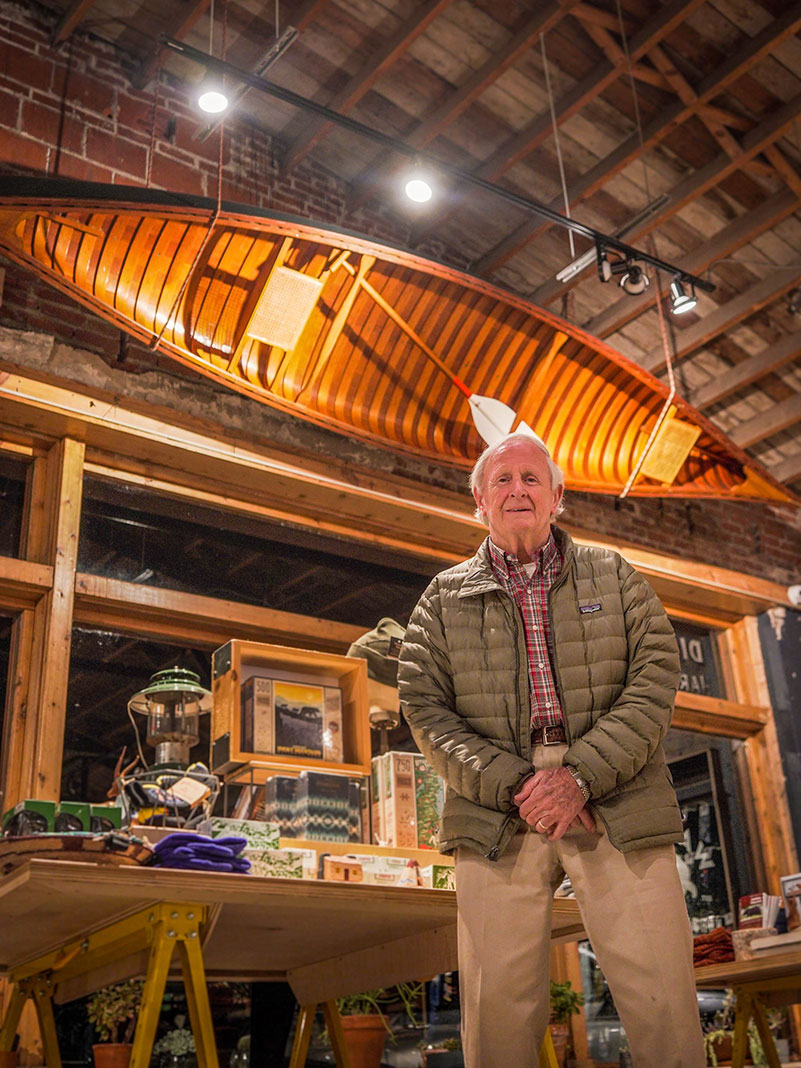
Bill Dunlap, who originally acquired the canoe from the production, stands under the Deliverance canoe in Wander North Georgia’s store. | Feature photo: Courtesy Wander North Georgia
Cue the song “Dueling Banjos” and get ready to paddle harder because a canoe from the film Deliverance has been found.
The last surviving wood-canvas canoe from Deliverance is discovered
Bill Dunlap, who originally acquired the canoe from the production, stands under the Deliverance canoe in Wander North Georgia’s store. | Feature photo: Courtesy Wander North Georgia
In the Oscar-nominated 1972 film Deliverance, four friends—two of which are played by Jon Voight and Burt Reynolds—canoe down a fictional Georgia river before it’s dammed. The group faces a number of challenges, including some fierce whitewater that ends up splintering Voight’s wood-canvas canoe after he takes it backward down a rapid and gets hung up on a rock. Fun fact: the special effects crew sawed the canoe almost in half from gunwale to gunwale to make the damage more dramatic.
[ Paddling Buyer’s Guide: View all Old Town canoes ]
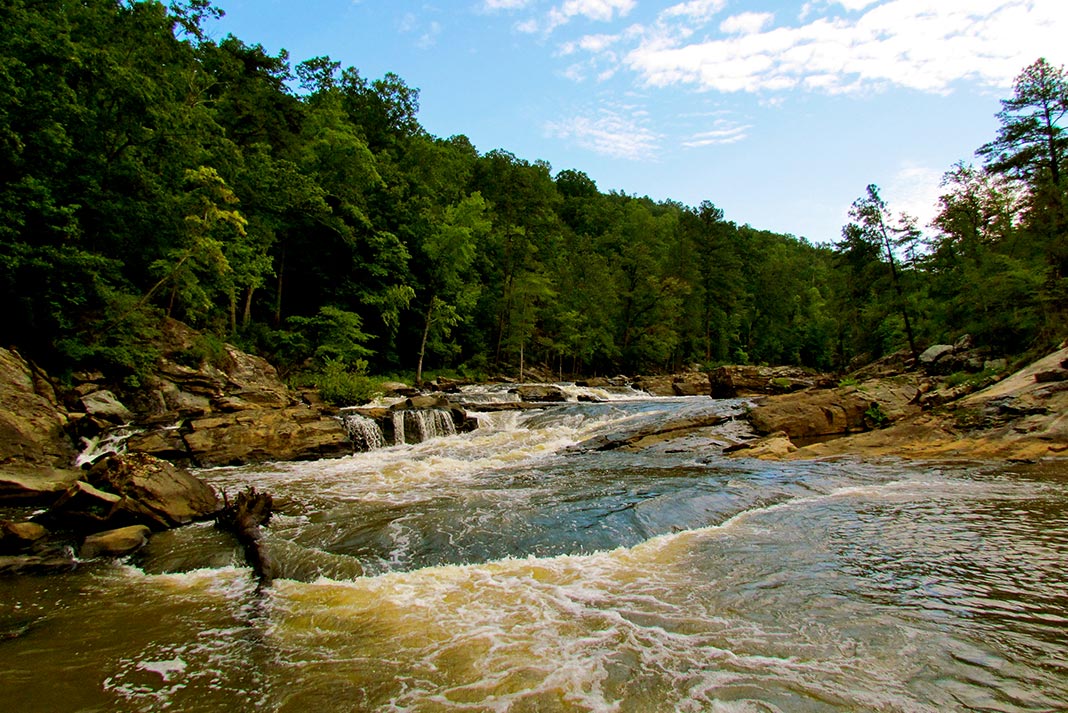
Warner Bros. had approximately a dozen identical Old Town 16’ Guides shipped to the filming location in Georgia, knowing they’d be destroying several in the iconic rapids sequence filmed in the Tallulah Gorge. The rest of the canoe scenes were filmed on the Chattooga River.
Two of the canoes wrecked in filming were cobbled together for inclusion in Burt Reynolds’ museum collection. The reconstructed canoe was missing both seats and a few feet in the middle and was later sold at auction. It was speculated that all the other canoes were either destroyed during filming or lost over time… until now.
Bill Dunlap, who was one of the founding members of the Georgia Canoeing Association in the mid-1960s, was loaned to the movie crew from his job at Georgia Power to coordinate water flow through the Tallulah Gorge. He also helped with location scouting. When production wrapped, Dunlap was offered the aluminum canoe Reynolds had paddled or an Old Town Guide that was never used in filming. He picked the Guide.
Dunlap had the canoe hanging from his living room rafters when Mark Holloway, who looked after the Dunlaps’ houses, took note of it. Dunlap gifted the canoe to Holloway, who is also an avid paddler, in August 2020. Old Town confirmed the serial number on Holloway’s canoe and sent him a copy of the build order showing delivery to Warner Bros. in Georgia in 1971.
While paddling, hiking or climbing in the area, you can see the distinctive geological formation now known as Deliverance Rock on the Chattooga River, or visit Wander North Georgia’s Clayton, Georgia store to see Holloway’s legendary 51-year-old piece of cinematic memorabilia in person. Just be careful not to catch Deliverance Syndrome—a term coined by locals to describe poorly prepared paddlers seeking to conquer the famous river. Nineteen people drowned on the Chattooga within three years of the film’s release.
This article was first published in the 2023 Paddling Trip Guide. Subscribe to Paddling Magazine’s print and digital editions, or browse the archives.
Bill Dunlap, who originally acquired the canoe from the production, stands under the Deliverance canoe in Wander North Georgia’s store. | Feature photo: Courtesy Wander North Georgia
What’s next you ask, two blades? Probably. | Feature photo: Courtesy Level Six // Five2Nine
Last time I went paddleboarding I saw a curious thing. I walked past the usual waterside coterie of folks diligently pumping up their paddleboards. That was not unusual. I’m used to envious looks from people when they see a board that comes with the air already inside it.
Next, I encountered someone paddling their board while seated. That was also not unusual. I have seen so many people not standing on standup paddleboards that I already thought these watercrafts should have been named differently.
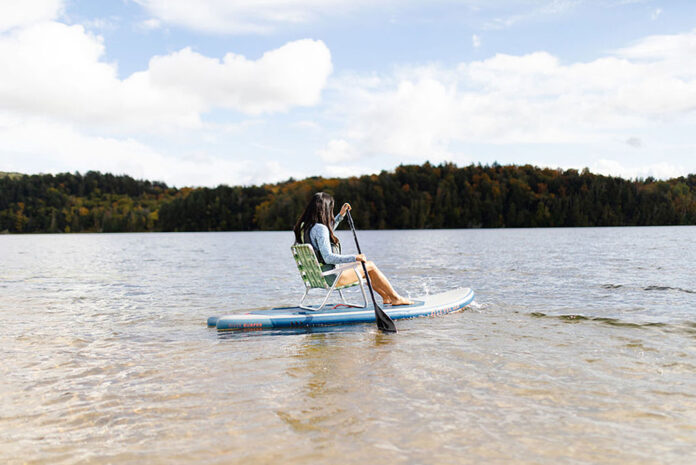
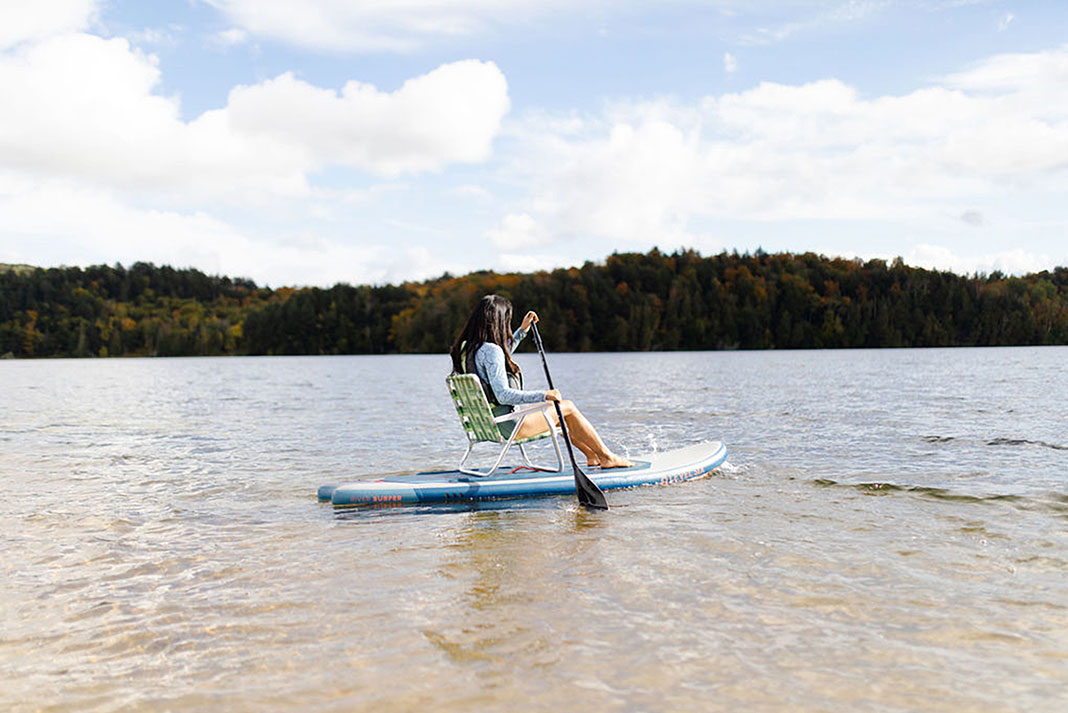
No, what was unusual was this person was seated on a lawn chair. On a lawn chair on their paddleboard. And propelling himself with a kayak paddle.
Trendsetters: Why the future of standup paddleboarding is sitting down
At first, I was horrified. “That is no longer a SUP,” I thought. But then I reconsidered and realized what I was witnessing was evolution putting the lie to our cognitive bias that assumed standup paddleboarding was a good idea in the first place.
From the standards of SUP paddling, this guy looked patently ridiculous. He was breaking every rule. But from a practical perspective, his choice was hard to argue. We modern Western Darwinists can be forgiven for buying into the notion that standing up to paddle might somehow be superior—more advanced, as it were, on paddling’s evolutionary continuum. But we now know that evolution is not a continuum. It’s a tree with branches, many of which are dead-ends—like the one soon to be occupied by SUPs.
What’s next you ask, two blades? Probably. | Feature photo: Courtesy Level Six // Five2Nine
He just might be onto something…
The sit-on-top-paddleboard (SOTP) could become paddling’s next evolutionary leap forward. Think about it. Lawn Chair Man had ingeniously found a way around all the inherent shortcomings of SUP paddling, of which I can tell you there are many.
Sitting on a lawn chair would normally make paddling a SUP rather difficult. But he had solved the problem by replacing his SUP paddle with a double-bladed one, which allowed him to paddle quite powerfully and in a perfectly straight line, despite the crosswind he faced that day, without the awkwardness of changing sides—or trying to do a J-stroke, which is ineffective on a SUP and a faux pas besides. The kayak paddle was obviously a sensible adaptation to the seated position, which itself was a sensible adaptation to the inherent instability of standing up on a SUP in the chop created by said crosswind. Pure genius.
Plus, he was saving himself the peccadillo of holding a SUP paddle backward, the likelihood of which, based on my field observations, would have been about 80 percent. The bent shaft paddle—if I were a SUP manufacturer I would print a graphic on every board with a picture of the correct way to hold one of these things. On second thought, I would never have made bent shafts in the first place. The consequences of unleashing such a complex device onto the paddling public are just too great. Yes, I know the long lever of the SUP shaft magnifies the inefficiency of a straight blade and makes the SUP stroke particularly needful of the bent shaft’s advantages. But not if you hold it backward, my friend. And not if you are already on your knees.
The human mind has certain cognitive or perceptual errors baked-in, one of which is the tendency to pick up a bent shaft paddle and assume it works like a scoop, and to hold it backward. Spread out over the course of SUP history—factoring in the sum total of all those wrong strokes—the bent shaft likely works out to be a net disadvantage. And when you consider all the first-timers who ended up scooping water behind them and concluding, “This sport is too difficult,” I argue the sport would have grown even more popular had there been no wrong way to hold the paddle, whatever the efficiency cost.
My brilliant friend in the lawn chair may have been one of those people. He probably got his new board, took a few strokes on one side with his paddle held backward, spun in a circle and then fell headfirst into the water. “Enough of this nonsense,” he then thought, and started down the road of practical adaptations. And you could tell he was a practical guy, because he didn’t go for an inflatable paddleboard either. “How is this supposed to be relaxing if I have to blow it up first, and then deflate it to take it home, and then blow it up again to dry it out, and then deflate it again to store it?” he probably concluded. And I’m inclined to agree. Inflatables: a surefire way to spend more time pumping than paddling. Brought to you by the makers of the bent shaft paddle.
You can’t fight gravity
As I said before, the whole “stand up” moniker was probably a mistake to begin with. Because on a SUP, even if you are on your feet, you are not in fact supposed to be standing. Athletic Crouch Paddleboard probably didn’t have the same ring to it. But look how any expert SUP surfer holds a sort of half-squat. If their body could talk it would be saying, “If I had a lawn chair mounted on this thing, I’d park my butt right here.”
And that’s how you see them on a Sunday afternoon, drifting about lazily with their heads held high and their paddles facing the wrong way and their PFDs strapped to the deck.
Beginners don’t get this. They hear the words “stand up” and they take it verbatim. They go out and presume they’re supposed to be completely upright. And that’s how you see them on a Sunday afternoon, drifting about lazily with their heads held high and their paddles facing the wrong way and their PFDs strapped to the deck—because isn’t that what those bungies are for? [Public Service Announcement: The bungies are not for holding your PFD, you are. May we recommend a waist belt or highback PFD for greater comfort while seated.] They’re going exactly nowhere, but looking damned stylish in their swimsuits while doing it… until an offshore breeze picks up.
As all things in the universe tend toward entropy and collapse, so too the days of the SUP are limited. Greater forces are propelling it to return to its sit-down paddling roots. You can’t fight gravity and, like Lawn Chair Man, eventually everyone figures out the lower you go, the more stable you are. And there is nothing more stable than sitting down. Kayakers knew this all along of course, but they have to deal with their own shortcomings—a proclivity to fill with water and an uncomfortable sitting position.
SUP paddlers, the time has come to buy yourselves a lawn chair and kayak paddle. Then you can set off—in a perfectly straight line!—into the future of paddlesport.
This article was first published in the 2023 Paddling Trip Guide. Subscribe to Paddling Magazine’s print and digital editions, or browse the archives.
What’s next you ask, two blades? Probably. | Feature photo: Courtesy Level Six // Five2Nine
Despite its remoteness, the Thelon is one of the easiest rivers of the north to paddle. And the views are some of the best. | Feature photo: Maria Stern
Eight of us stood on the beach at the banks of the Thelon River and watched the floatplane buzz over us. I smiled, knowing our pilots were choosing to give us a dramatic flyover for one more rush of excitement.
Gradually, the roar of the engines got farther away and the plane got smaller until it disappeared below the horizon. Then there we were, all spaced apart and silent, standing in that moment as a group of more-or-less strangers on a white, sandy outcrop at the edge of stilling waters.
I’d agreed to go on this trip without ever setting foot in a canoe. I had some experience kayaking on lakes in the Okanagan, but I knew that was hardly going to be a good comparison for a two-week trip down a tundra river.
Before now, I’d never seen the Northwest Territories’ famously beautiful Barrenlands. I knew nothing about this northern river. But when Jackpine Paddle asked me to join a canoe trip on the Upper Thelon River and document my experience, I knew I couldn’t say no to the once in a lifetime opportunity.
Through the Barrenlands: 14 days on the Upper Thelon River
Before the trip, I hadn’t read Alex Hall’s Discovering Eden: A Lifetime of Paddling Arctic Rivers. Our trip would follow one of the many routes he paddled during his three decades guiding, and his invaluable notes were passed down to Jackpine to build the foundation of our trip.
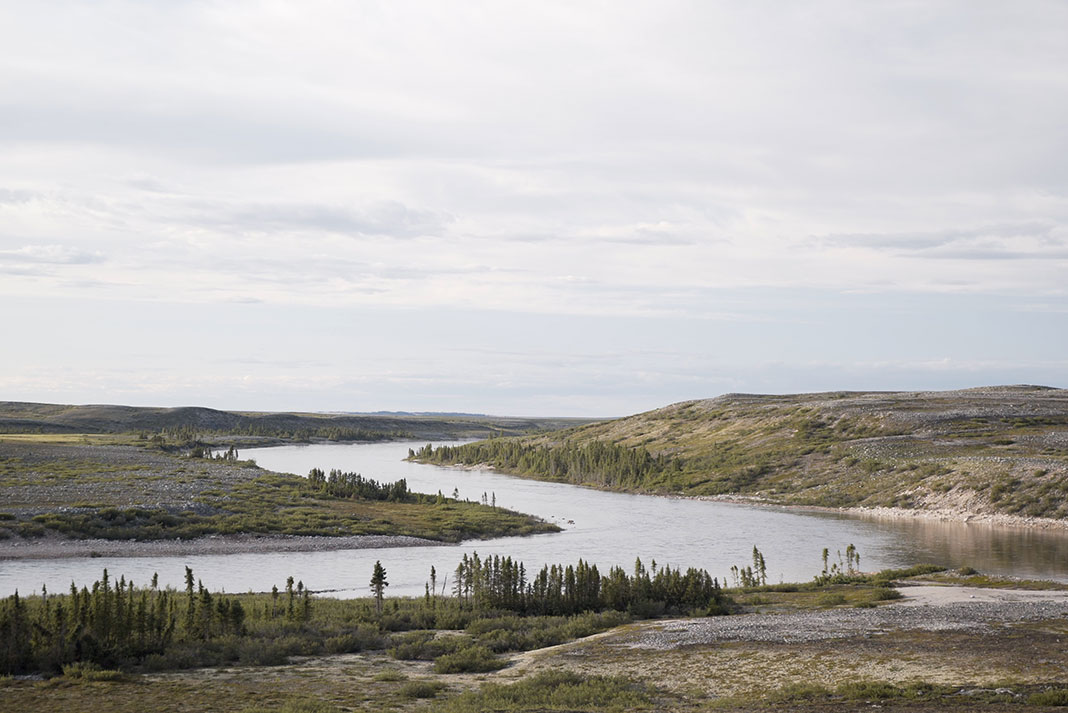
The Thelon River flows through a soft sandstone belt on the Canadian Shield. Fed by large tundra lakes, it forms a smooth and evenly graded course through the soft rock. Despite its remoteness, the Thelon is one of the easiest tundra rivers to paddle, with a steady current, few rapids and no portages.
Despite its remoteness, the Thelon is one of the easiest rivers of the north to paddle. And the views are some of the best. | Feature photo: Maria Stern
On travel days, we aimed to be on the water by 10:30 a.m., paddle until we took a break for lunch, and be off of the water around 3 p.m. We had 14 days to travel roughly 200 kilometers. It was a time frame with a wide margin of wiggle room for layover days in case we came across places we wanted to stay longer, needed rest or experienced bad weather.
The cast of characters comes together
Coming as a pair on this trip were Stuart and Ken, old canoeing buddies from Saskatchewan. Stuart said a trip on the Thelon had been something he’d dreamed of for a long time. Ken could contribute to any conversation or crossword prompt on topics from Broadway to geology.
Kim lived in Yellowknife, but had lived all around the world before the Northwest Territories. She enjoyed trips like these because sometimes Yellowknife was too noisy for her. Kim hit the ground running on day one, and was the first person to attempt a swim in the water.
Louise had come from Vancouver Island but her family previously lived in Aklavik. This was her first paddling trip as well, but she was far from fearful and had no shortage of stories to tell, from swimming after a runaway boat to motorcycling across the country with her newborn.
Sharing my canoe was Keith, a videographer who lived in Yellowknife. We worked together to race ahead of the other canoes and then drift while he got footage of the other canoes passing by. Together we made up what we referred to as The Media Boat. Last summer, Keith spent three months canoeing across the Northwest Territories with his family.
Weighing up to 700 pounds, you wouldn’t want a herd of musk ox to get between you and camp. | Photo: Keith Robertson
Our guides were Wendy and Colin. Each day, they started work the earliest and ended the latest. What really came across was their unadulterated anticipation for paddling such a renowned river. Even as professionals, the Upper Thelon was a crown jewel and just as alluring to them as it was to the rest of us.
Building our canoes was our first group exercise. There were some initially skeptical remarks about sturdiness, but the effort that went into constructing them was proof they would be solid structures. Expertise and personalities were coming through and we thankfully bonded over the hard work and collective purpose—a good sign for things to come.
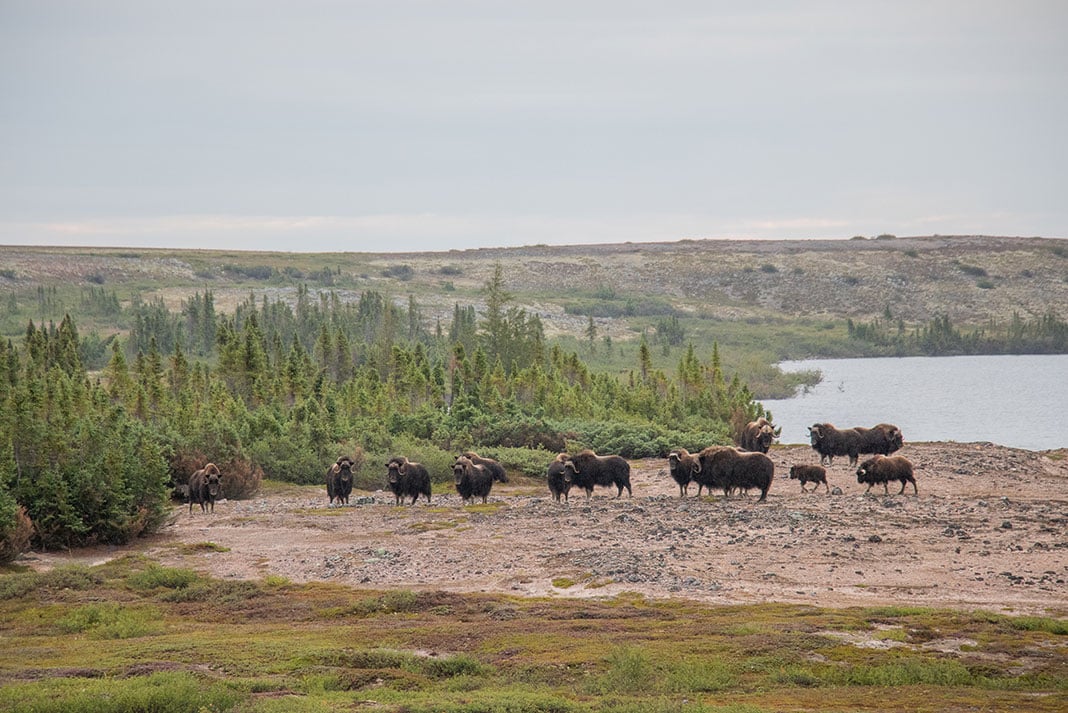
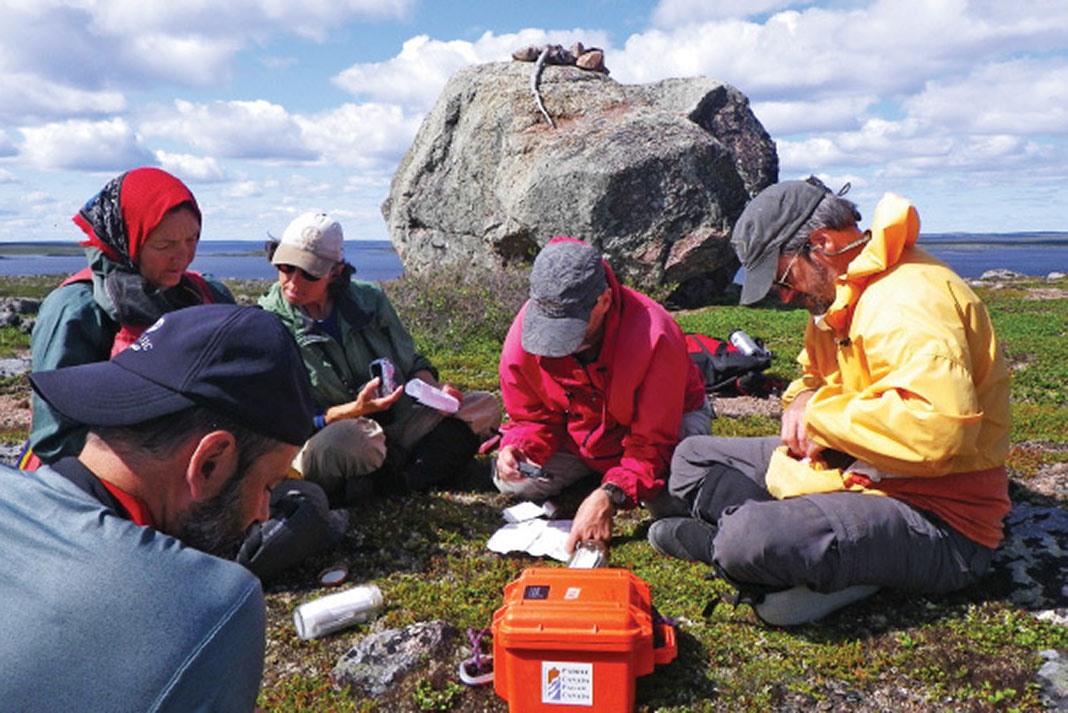
On an after dinner hike, I found Kim standing at the edge of the water. She had spotted small dark shapes on the ridge of a distant hill. From so far away, any features were impossible to discern, and the only indication they were more than rocks or shadows was when the distances between them changed. The rocks and shadows were a herd of musk oxen.
Each time they disappeared behind one hill, they returned closer on the next. Smaller musk ox calves moved quickly between the meandering adults. Most of them moved along the middle of the slopes, while one or two walked the ridge keeping an eye out over the flat Barrens around them.
Life in the Barrenlands is slow, and reminding me to slow down was the first gift it gave me. Eventually, the musk oxen were close enough I thought my presence might disturb them or they might block my path back to camp. I walked back, slower now, like them.
The author awakening to another morning on the Thelon. | Photo: Keith Robertson
Adapting to life in the Barrenlands
Our first morning, getting everything packed and ready took some consideration. We let our guides play Tetris with our barrels and packs to fit them into the four canoes—our entire lives for the 200-kilometer journey.
The group paddled close together, and the most experienced canoeists were quick to provide tips and techniques, mainly to my benefit with my cumulative four hours of practice the day before.
Canoeing, I quickly learned, is a meditative form of travel—the soft rhythm of the strokes feels like a deep and slow breath gliding you forward into clear northern air. The feeling of physical exertion melted away as my body found strength in places I didn’t realize I had—all across my shoulders, back and core.
We stopped before lunch to hike along an ancient caribou fence. Along the top ridge of a long, thin peninsula, small piles of rocks had been stacked at various intervals. A caribou fence would have been used to corral and redirect caribou into an advantageous spot for them to be hunted.
Along the remains of the fence, we found plenty of quartz shards—not tools themselves, just the chipped remnants of the tool-making process. On the Thelon there were many times I felt immersed in an unchanging world of the past, preserved as if everything had happened just a few days before I traveled through it. Close enough to feel the weight and significance, but distant enough I could only observe and reflect.
Stuart and Louise minding the canoes as the rest of the group finds a spot to wait out the coming rain. | Photo: Marcus Miller
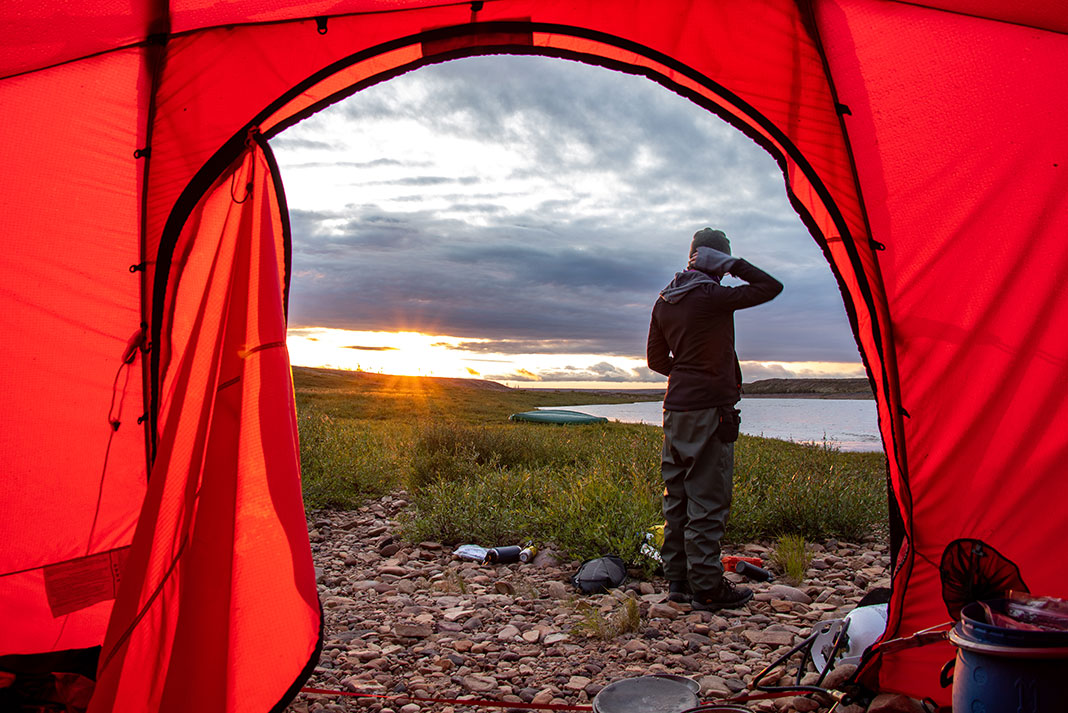
In the encroaching distance, following where we had been just hours before, we could see dark clouds and a wall of rain rolling in. Everyone hurried to build the communal Hilleberg tent, a canopy large enough to shelter us all as the storm system passed. While this was our first time setting up the Hilleberg in a hurry, it wasn’t the last.
That evening, we started what would become a tradition on the trip, gathering together in the Hilleberg to work on a daily crossword puzzle. With people from so many walks of life, it was intriguing to see where our expertises lay and rewarding to test our minds after a long day for our bodies.
For the rest of the day, I hiked the hill we were camped against, although the word hill does a disservice to how prominently it stood on the landscape.
Based on topographical map data, it rose to only a mere 50 meters tall. The top was a wide, flat surface. From the top, you could see an uninterrupted 360-degree view of the horizon of the Barrenlands stretching for kilometers in all directions.
The wind that had carried the storm quickly onto us and beyond was powerful at the peak. With few trees to slow it or indicate the intensity, the deafening sound was in stark contrast to the still and unaffected landscape, peaceful and glorious while sun and shade moved across it.
This hill was only 50 meters tall, but provided incredible views of the surrounding Barrenlands and camp down below. | Photo: Marcus Miller
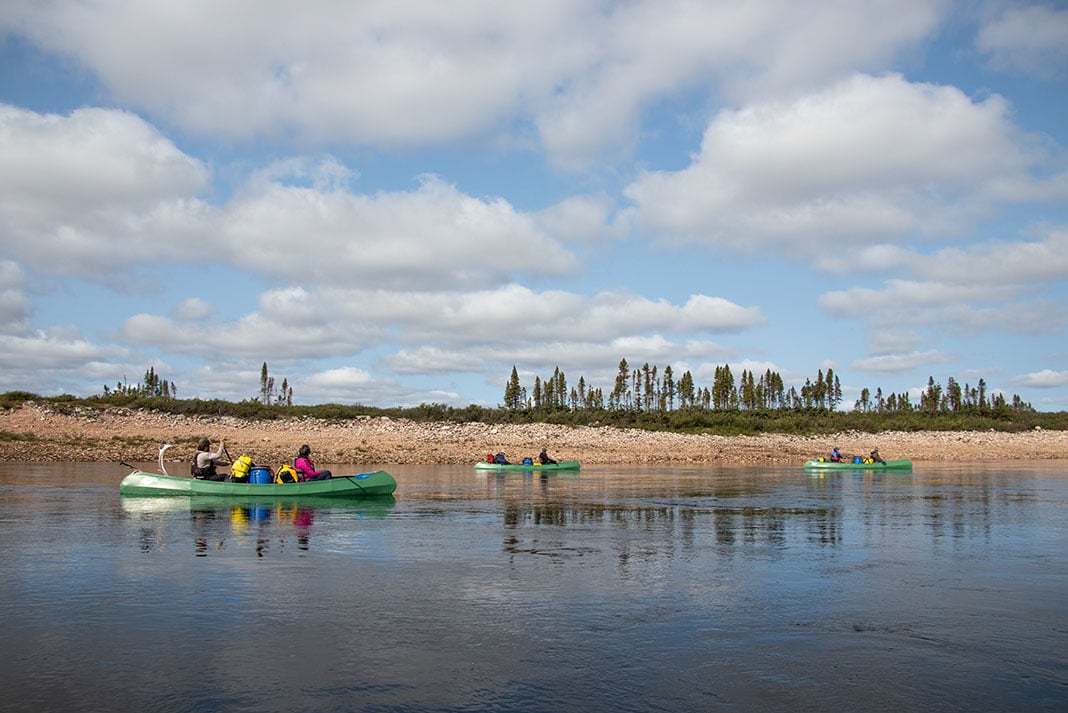
Canoes from left to right: Louise and Colin, Wendy and Kim, Marcus and Keith. | Photo: Stuart McDonald
Really, truly, away from it all
The next day,we traveled 22 kilometers on a strong current under sunny skies. Here, the Thelon narrowed and turned north to where Alex Hall had noted the “largest esker in the Barrenlands.”
The water’s edge gradually transitioned into 200 meters of low sandy dunes and shallow pools, with the colossal esker’s side rising above and reedy space in between. We stopped there for lunch and hiked our way toward the esker. It was about to be our first experience with how vast the scale of things is in the Barrenlands.
Created by the flow of rivers under ancient glaciers, eskers are remarkable in a grand sense, but also in their smallest elements. Embedded in the stark white sand are millions of rocks, most barely the size of a fist.
“The upper and middle parts of the Thelon River are more distant from human settlements and roads than any other location on our continent,” wrote Alex Hall.
On river trips, a routine is quickly established. Packing up camp each morning became a well-oiled machine. | Photo: Marcus Miller
By the halfway point on the trip, the outside world had completely faded from concern. Our daily routine had become second nature. Each day we tackled waking up, taking down camp, paddling out, snacking when we were hungry, and setting up camp again in the afternoon to rest or read or take hikes and see the beauty of wherever we had landed. I felt comfortable hiking out much farther from camp than I had in earlier days.
Our eighth day started cloudy and a little cold. Late August is autumn in the Barrenlands and while that provides relative darkness through the night and keeps some of the bug population in check, the land and weather are beginning their transition into winter. The next three days were forecasted to be the coldest on the trip, with one night dipping to zero degrees Celsius.
The water levels on the river were higher than normal. This meant features on the river were different than those in Jackpine’s notes. But this far, the Thelon had been manageable even for a complete novice like me.
With little ambient noise in the Barrenlands, even the smallest sounds can be heard from quite far. Many times I heard the sound of water churning over rocks and anticipated seeing a small waterfall spilling over the banks, only to find barely a creek tumbling forward to join the river. The approaching rapids were notably louder. The sound grew as we watched the Thelon in front of us wind between rising cliffs.
The second set of rapids had clearly changed since they had been recorded on the map. We pulled to the side, but didn’t bother scouting them the same way we did the previous set. The path through the middle was wide and clear. While the cliff sides had made the first set appear daunting, these rapids were flanked by familiar rising banks. My success with the first and second sets left me confident as we moved on to the third.
The rapids that were the source of so much trouble and misery. | Photo: Stuart McDonald
Into the river, out of the rain
We rafted the canoes together and discussed the map data we had on the final set of rapids. Colin and Louise would go first, followed by Stu and Ken, then Kim and Wendy, with Keith and I going last.
I watched Colin and Louise head through on the center-left, before dramatically indicating we needed to go right. From behind me, I heard Keith say, “Oh no, they’re going in…” Sure enough, the back of the lead canoe rose, pivoted and capsized along the right side.
There were three sections of this rapid, covering roughly 500 meters on the river with a large span between the second and third ledge. If we could navigate the first two sections successfully ourselves, that gap would be the first place we could attempt to get to Colin and Louise. The two canoes ahead of us moved to provide support.
“Stuart and Ken just went in too,” shouted Keith.
We eventually got all four of them to the side. We were off the water, but the nature of the rapids and rescue meant people were in the chilly tundra water for much too long. They needed to change and get warm.
Everyone who was able to immediately started setting up the Hilleberg and getting a fire going. We got the four shocked paddlers up the hill, sheltered and drinking warm soup to recover. The adrenaline was wearing off and the cold and wet was setting in. This was camp for the night.
I knew all my clothes and sleeping bag were completely soaked. I’d gotten complacent sealing my drybag and water had easily made its way inside. I knew I was lucky to not be fighting a chill to the core, but at that moment I counted it as the only blessing. My books were ruined and I’d lost the nightly sanctuary that was a warm sleep at the end of the day.
Hauling gear up to camp, I gave Colin a forced smile. It was as much to check in with him as it was a plea for some perspective. He looked at me and said, “The Thelon won today.”
Left to right: Ken, Stuart, Wendy, Colin, Louise, Marcus and Kim—cold but not dissuaded. | Photo: Keith Robertson
From left to right: Marcus, Wendy, Colin, Kim, Ken, Keith, Louise and Stuart hunkered down for breakfast in the Hilleberg. | Photo: Marcus Miller
We woke on day nine to find nothing any drier than the day before. The piddling rain through the night had kept the air humid and the cold wind did little to evaporate anything beyond what dripped out of our hanging effects.
Aside from the companionship, the food was the only thing fighting off despair during this darkest part of the trip.
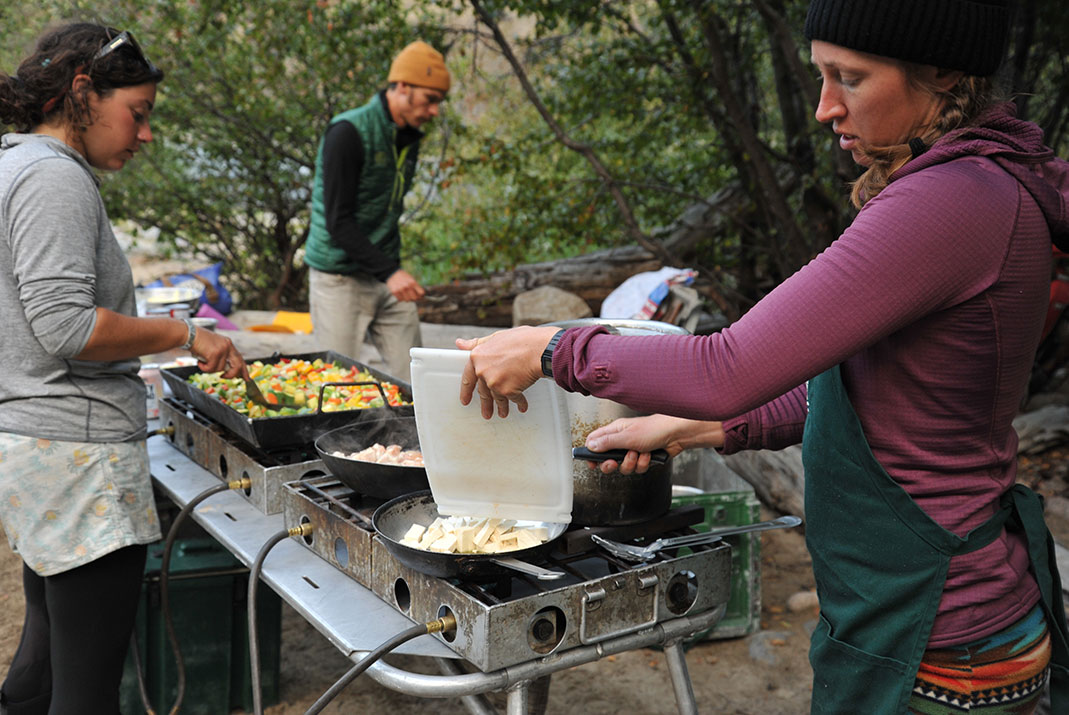
Food somehow always tastes better when camping. Imagine salmon with pesto and portobello mushrooms, arugula and goat cheese salad, focaccia paninis, coffee cake and oatmeal, scalloped potatoes, and Moroccan stew. We agreed we ate more luxuriously on the Thelon than any of us did with full access to a kitchen and grocery store. We finished our meals with espresso cheesecake, peach crumble, vanilla mousse with dried raspberries and Baileys, and a collection of hot drinks to keep us warm through the days and evenings.
Back in our canoes after the rain, the Barrenlands were just as beautiful as when we had last seen them under the glow of the sun and the expansive blue skies. The pools were full, the ground was lush, and the autumn colors of the mosses in their reds and greens sparkled and breathed against the white sands and blue water. We stopped for lunch on the delta where the Thelon feeds into Eyeberry Lake from the southwest before continuing again to the north. Here we found Stuart’s lost bag from three days earlier, now almost 20 kilometers downriver from where he’d swam in the rapids.
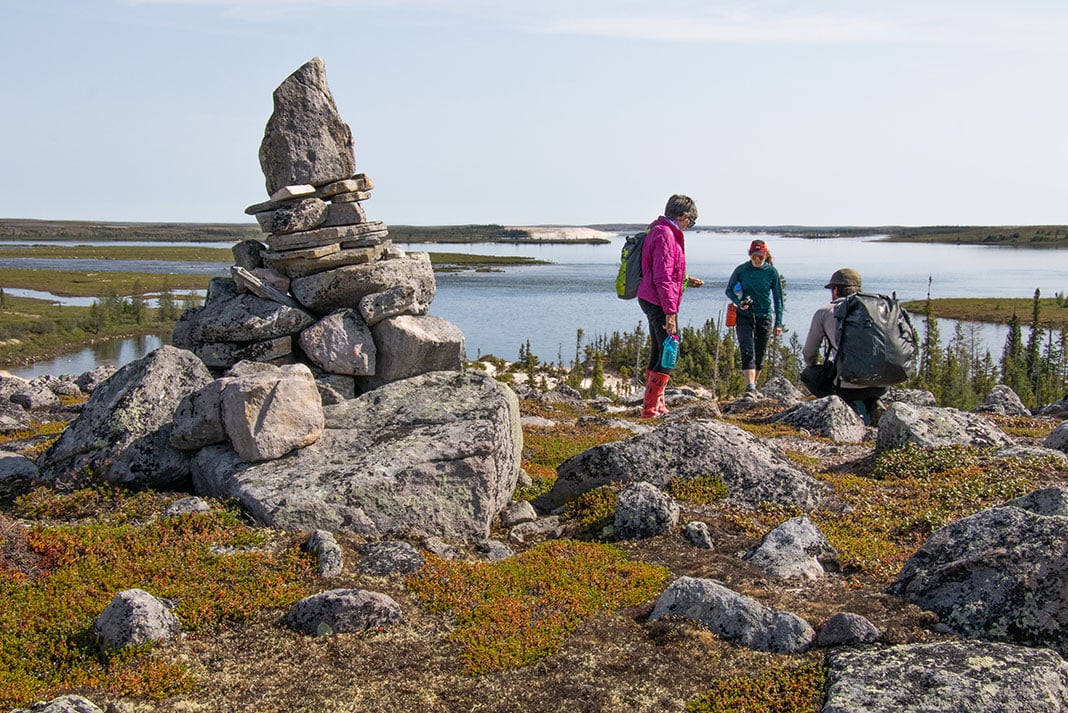
From left to right: Louise, Wendy and Colin on the hike to a cairn built by Canadian geologist JW Tyrrell. | Photo: Keith Robertson
We found a beautiful spot on the east side of Eyeberry Lake to camp and take advantage of the now miraculous weather. All our clothes were immediately strewn across rocks, beaches, and makeshift clotheslines made from tent rope and tripods of balanced canoe paddles.
There were many times during the previous few days when I had felt defeated. Times I had thought I wasn’t cut out for the trip. I was too soft, too wet, too cold, too sad, too alone. It was too far, too much. There were times when I had felt afraid and times I would have quit if I could have.
Where else could I have been tested to such limits? In the face of what had been required of me, I finally understood why a trip like this was so important to everyone who had sought it out. This is what makes these trips life-changing.
I stopped taking notes. I knew I would have no difficulty remembering the sights and events and feelings that filled the last days of the trip.
Enjoying a clearer day on the river. | Photo: Marcus Miller
Riding high across the finish line
Our last travel day was only 25 kilometers to our take-out spot. We cleared Eyeberry Lake, which was slower progress without the river’s current to carry us, and then stopped for lunch where the Thelon began again.
From a distance, we could hear the sound of rushing and churning water grow louder. Wendy and Colin made it clear we would approach every section of rapids with caution and scout well ahead.
Before the first set of rapids, we pulled into an eddy on the right side of the river. Here, the Thelon threaded between two cliffsides, snaking west and then north again, hidden from our view by the rock walls.
The path forward looked exceptionally simple. The same high water levels that had complicated the rapids earlier had now washed out these ones nearly completely. The rocks on the right were far beneath the surface and the river ahead was undisturbed.
The canoes rocked, waves rose as we rode their tops, and I called out shallow points and navigation to Keith from the bow. My body had worked for nearly two weeks to be ready for these rapids. I gave a long celebratory whoop, loud and carefree as the current carried us to join the other paddlers. Our last hurdle.
I met the party for dinner at Bullock’s, the best fish restaurant in the middle of Yellowknife’s Old Town community.
We were loud and enjoyed cold beers and hot meals none of us had to cook. We found a place on the wall to sign, as is a custom at Bullock’s.
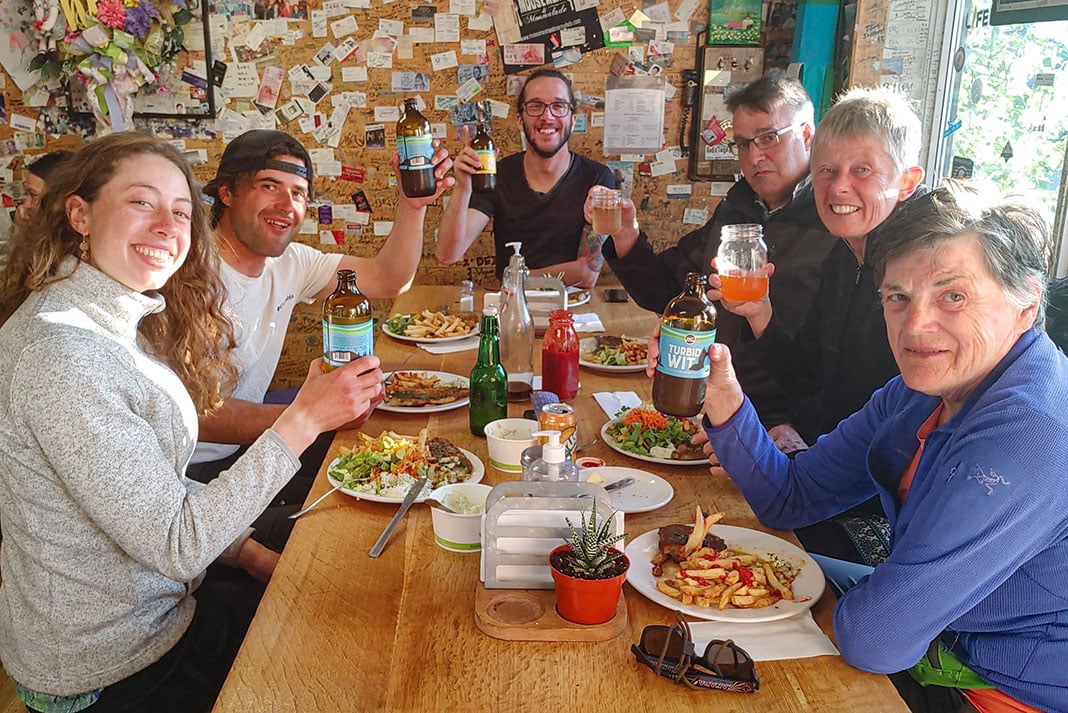
Left to right: Wendy, Colin, Marcus, Ken, Kim and Louise enjoying their “new selves” at Bullock’s Bistro in Yellowknife. | Photo: Stuart McDonald
Dinner felt like a reunion. Like familiar people meeting each other again in an unfamiliar way. We all looked mostly the same, albeit cleaned up and in fresh clothes.
In the silences between mouthfuls and memories, I realized I felt differently. I’d gotten myself ready for dinner the way I would have before, but the person looking back at me in the mirror was not the same. Only a few hours off the Thelon River, returning to the simplest of activities of normal life, I could already feel the ways the old me was not the same as who I was now.
Marcus Miller moved to the Northwest Territories in early 2020, enjoying the beautiful northern landscapes just outside Yellowknife. After falling in love with the serenity of the Barrenlands and the satisfaction of a full day of paddling, he’s confident this won’t be his last trip on the waters of the NWT.
This article was first published in the 2023 Paddling Trip Guide. Subscribe to Paddling Magazine’s print and digital editions, or browse the archives.
Despite its remoteness, the Thelon is one of the easiest rivers of the north to paddle. And the views are some of the best. | Feature photo: Maria Stern
Start middle, head river-right and then keep paddling forever. | Feature photo: Rob Faubert
Looking back on 25 years of Rapid, I can’t help but feel nostalgic. A lot nostalgic. Now published as Paddling Magazine, I somehow have contributed to every single issue but one. I honestly don’t know how many articles this amounts to. As I attempt to look back over that span of time and memory, it becomes most of a lifetime; one spent around moving water and with the good people who find solace, joy and connection there.
I’ve made some modest predictions in this column over the years. Some have played out and some have not. I predicted freestyle kayaking would become its own thing, only loosely related to what the rest of us call kayaking. True. I asked why proven, popular boat designs are retired for better ones, and predicted boats like the RPM would be back. Hello half slice. I also predicted river rescue training would become a mandatory entry requirement to our sport. Wrong. I called for a recreation competition model of some sort, other than the Olympic slalom/class V/freestyle paradigms. Wrong on that too, at least so far.
Start middle, head river-right and then keep paddling forever. | Feature photo: Rob Faubert
I did not see the kid revolution coming, even though I was immersed in it the whole time. Somewhere along the way in my kayak school days we went from teaching the odd kid to paddle among the adults, to it being the other way around. The typical weekend now, on my rivers, is a parade of kids; some with parents, some with clubs or paddling programs. All having fun. Kids, combined with freestyle paddling, slowly unloaded the seriousness that pervaded whitewater in the preceding generations.
…the more they stay the same
Some things are a whole lot different, and some things are a whole lot the same.
The rivers are more or less unchanged; the same waves are still there and still give me the giggles when I spin to wathunk. This would be a good place to insert the often cited—in this magazine and elsewhere—Heraclitus quote: “No man ever steps in the same river twice, for it is not the same river and he is not the same man.” The fact these words are still recited today is the perfect case study for their meaning—namely the impermanence and duality of opposites—because although none of Heraclitus’ writing survived, his words still live on, having been carried on by others for the last 2,500 years.
[ Browse the widest selection of boats and gear in the Paddling Buyer’s Guide ]
For us paddlers, any one place on a river appears to look the same, even over all these years, yet moments pass and can never be relived. A favorite wave breaks consistently and continuously, yet is made up of new water every single moment. Where I paddle and call home, amid ancient granite river ledges and rocks, that wave has been there since the last ice age, and hopefully will continue to break for many generations after I am gone. Time goes by, yet some things stay the same.
So many rivers and so many beautiful places. I used to keep a logbook of all the rivers I had paddled. I foolishly let it lapse, but even so it left off at something like over 200 different sections paddled. That seems fascinating to me, being permanently planted with a home and a family now, but every one of those rivers are a part of my life and who I am today. Heraclitus again.
Where I paddle and call home, amid ancient granite river ledges and rocks, that wave has been there since the last ice age, and hopefully will continue to break for many generations after I am long gone. Time goes by, yet some things stay the same.
This retrospect is not without sadness. Rapid publisher and now longtime good friend, Scott MacGregor, had asked me to contribute to issue one with an obituary for my best friend and whitewater video pioneer, Lynn Clark. This is a club to which you don’t want to belong—those with friends who lost their lives paddling. It was a life altering event for me, rivers of beauty and the joy of whitewater showing for the first time their black void that is always present, but rarely realized. In those intervening years I have lost more friends, not only to whitewater, but also to mental illness or addiction, proof that life and its problems find their way even to our graced little subculture of river people.
Bring on the next 25 years
I’m at a loss for any crystal ball predictions for the next quarter-century. That Rapid is still thriving after 25 years is unlikely and against the odds. That Scott still asks me to say something in it is even more implausible. Rapid is one of the few voices proving whitewater media is more than YouTube clips. Note: YouTube didn’t exist until six years after Rapid started.
I still guide and spend my summers on rivers—the one thread tying together the 25 years of stories that has stayed the same. But my paddling partners are now my teenage kids, who happen to be rapidly outstripping my ability and risk tolerance. I also have some real moral concerns about climate change and our paddling carbon footprint; I’ve no conclusions on that yet, though I am heartened when paddlers rally to defend our rivers when they come under threat.
In trying to capture this long view of 25 years, I feel immense gratitude. Along with the rivers and places, I am thankful for the things paddling has brought to my life. I met my wife while paddling. My best friends, I guide and teach with. As we float downstream on this current of life, I await seeing what is around the next bend.
Jeff Jackson is a risk management consultant and professor of outdoor adventure at Algonquin College. Alchemy first appeared in the Summer 2000 issue of Rapid.
This article was first published in the 2023 Paddling Trip Guide. Subscribe to Paddling Magazine’s print and digital editions, or browse the archives.
Start middle, head river-right and then keep paddling forever. | Feature photo: Rob Faubert
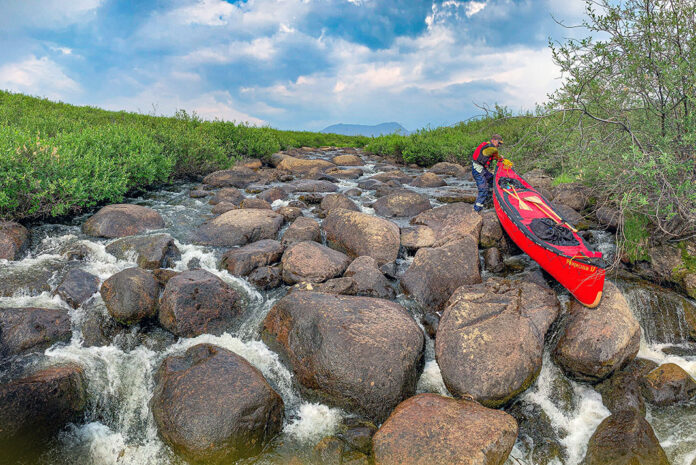
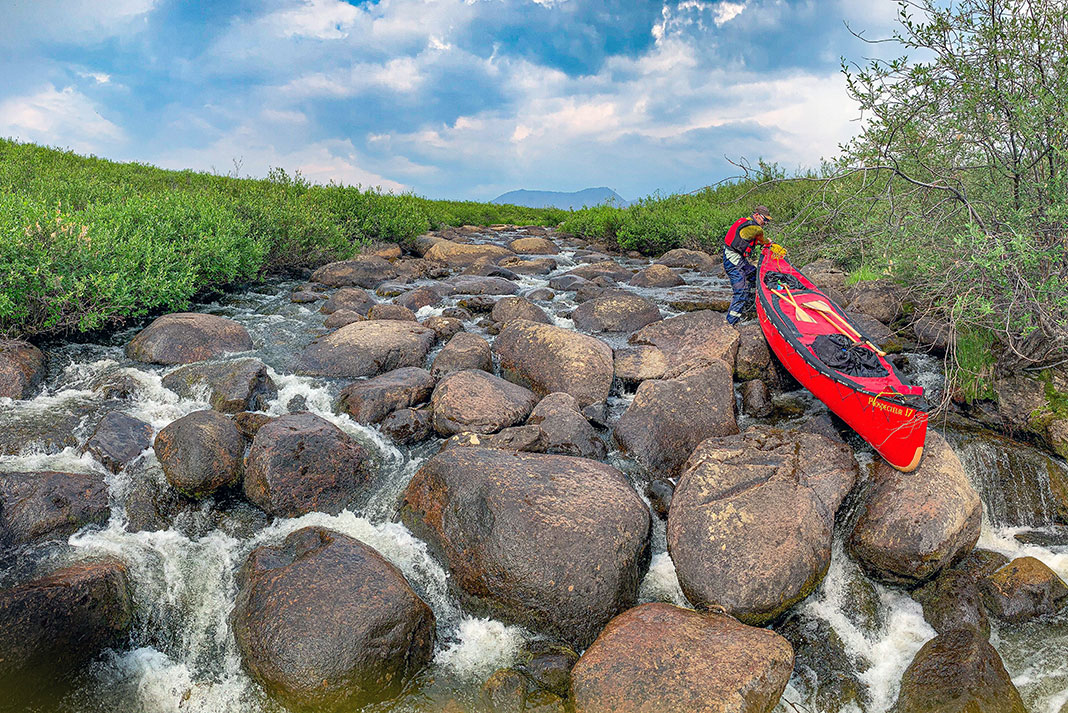
Finding lines on Little Sauli Creek. | Feature photo: Frank Wolf
Alex and I hadn’t planned on starting our trip here a week ago. I’d originally arranged an 18-hour shuttle drive from Whitehorse to the Tsichu River high in the Mackenzie Mountains, but the washed out Canol Road forced us into this last-minute bush plane drop to an obscure little lake the charter company didn’t know anything about. Scanning the maps, this lake looked like our best shot.
It took a bit of convincing to get them to fly us here, wanting instead to deposit us at a lake that was eight kilometers away from the Tsichu. The prospect of beginning our 1,300-kilometer trip from here to Kugluktuk with a long, bludgeoning bushwhack portage was unpalatable, to say the least. Thankfully, they relented.
The opening gauntlet: Arctic expedition gets off to rocky start
Our pilot, Sauli, a Finnish expat who’d only been flying professionally for about a year, was keen on the adventure. After a two-hour flight over the misty mountains, the sliver of water came into view. At under a kilometer long the lake was barely big enough to land on, but looked clean enough for Sauli to be willing to give it a shot. As we banked in, we spotted the remains of an old cabin crumpled among the low willows, indicating this had been a landing zone in the past.
Finding lines on Little Sauli Creek. | Feature photo: Frank Wolf
The plane skimmed smoothly on the surface without a hitch, after which Sauli taxied us to the edge of the lake and dropped off our canoe and kit. He scooted back to Whitehorse, leaving us to work our way from the lake down a 1.5-kilometer-long mystery creek that would bring us finally to the Tsichu. For our own reference, we decided to name the lake Little Sauli Lake—though I would later find out it was called Lost Guide Lake—and the exit flume Little Sauli Creek.
We first pushed through the brush to inspect the flattened cabin—a dream of wilderness living now reduced to weathered gray boards scattered over the rusty old springs of a bed frame. “E.H. 1979” was carved into a footstool, hinting at the vintage of the structure and perhaps its builder.
“A remote writing retreat for Ernest Hemingway?” I mused. Perhaps not.
[ Plan your next northern canoeing expedition with the Paddling Trip Guide ]
Turning our attention to the creek, we followed it from the lake through the willows for about 50 meters before it turned a corner and dropped away—disappearing completely beneath a matrix of boulders and leaving us high and dry.
Thankfully, our loaded canoe had a T-Formex hull and slid fairly easily over the rocks, aided by gravity and the fresh energy of two people on day one of a canoe expedition. After grinding and grunting our way into a deepening valley over the course of an hour, Little Sauli Creek eventually reappeared over a flat gravel braid melding into its confluence with the Tsichu, where the fresh tracks of a grizzly and her cub wound along the bank. Flowing fast and narrow, a two-day paddle along the Tsichu’s course would bring us to the broad waters of the Keele River.
Glancing back at where we had come from, it looked like there was no creek at all, just a wall of green we somehow descended on a magic carpet of boulders. Our journey had just begun, but we’d overcome the opening gauntlet and were already immersed in a new world.
This article was first published in the 2023 Paddling Trip Guide. Subscribe to Paddling Magazine’s print and digital editions, or browse the archives.
Finding lines on Little Sauli Creek. | Feature photo: Frank Wolf
From wild waters to wild flowers. | Feature photo: Aimee Hodgins
A few years ago my wife and I were walking in Ely, Minnesota when we came upon an unusual flower bed. Propped up against the wall of a repurposed bank building was an old wood-canvas canoe, overflowing with zinnias.
I’ve seen plenty of boats turned into flowerpots through the years, but this one struck me. Maybe it was the fact that it was a wood-canvas canoe, quietly living out its final years against a brick wall, slowly decaying back into the earth. I like wood-canvas canoes, and I couldn’t help wondering if this one might have been saved. Brought back to life to travel the North Woods once again, rather than filled with dirt.
Pushing daisies: Where good boats go to die
Where had it traveled? Who had paddled it? Certainly, it had spent some time in the Boundary Waters. Maybe it had made it all the way to Hudson Bay, riding home in a freight car after a months long adventure. Or maybe it was a cottage canoe, dragged out from under the porch for summer weekends with laughing children. We’ll never know. Dead boats tell no tales.
Thinking back on that old canoe I wonder: where do old boats go to die?
From wild waters to wild flowers. | Feature photo: Aimee Hodgins
Obviously, some of them end their lives as flowerpots. Or signs. More than one kayak has made its way up onto the wall of a shop to announce to all the world, “Get your kayaks here!”
A range of resting places
When a tornado ripped through Northern Wisconsin years ago and hit the Bear Paw Resort, it flung their whitewater rental fleet up into the trees, ending the lives of dozens of boats. Today, many of these old kayaks still hang in the air, bolted to a “kayak tree” that serves at once as an advertisement and, perhaps, as a talisman to ward off future storms.
Luckier kayaks might end their days as museum pieces. Twenty years ago, while visiting Nigel Dennis’ kayak school in Wales, a friend and I came across a sea kayak that had been used in the first kayak circumnavigation of Norway. A deal was struck and the old Nordkapp was boxed up and shipped across the Atlantic. Today it hangs in the rafters of Madison, Wisconsin’s Rutabaga Paddlesports, along with a handful of other historic canoes and kayaks.
Down the end of a long gravel road in rural Pennsylvania you’ll find another informal kayak museum. This one at Starrk Moon Kayaks, where Brad Nelson has been collecting prototype Pyranha whitewater kayaks for decades. If you’re ever interested in a trip down whitewater memory lane, Cold Cabin Road is the place to go.
Waiting to part the waters again
Then there are roads closer to home. How many of us grew up with an old aluminum canoe in our garage? Purchased during the height of canoe mania in the 1970s. Rarely paddled. Never growing old. Discarded perhaps, but not dead. Just dormant. Quietly resting until adventure calls once more.
Even battered old boats are willing to answer the call, if we care to ask. The COVID years saw resurrection upon resurrection of ancient discarded canoes and kayaks. Along with calls to manufacturers asking after the parts needed to return them to service. Countless good boats were saved from an early death by our need to get outside, away from the restrictions and fears brought on by the Pandemic.
In the end, though, even the best boats will meet their end. The cracked creek boat that’s been welded one too many times sits mildew and moss covered behind a cinder block garage in the Southeast. A sleek composite kayak is snapped in two by an unsecured bow line. An unlucky canoe ends its life in an instant, wrapped around a rock in a rapid that its owner never intended to run. Or, maybe as a flowerpot. Quietly returning to the dust from whence it came. Fading into the mists of paddling history.
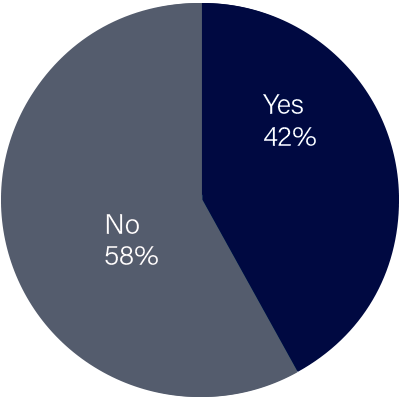
Q: Have you ever thrown out one of your boats?
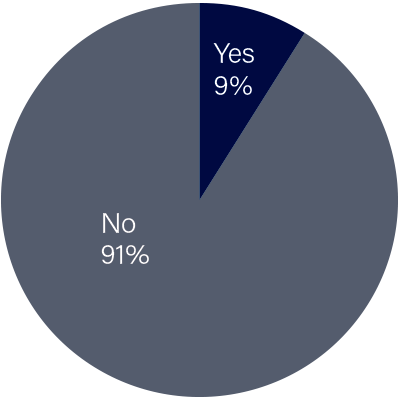
Q: Have you ever given a boat away as a gift or donation?
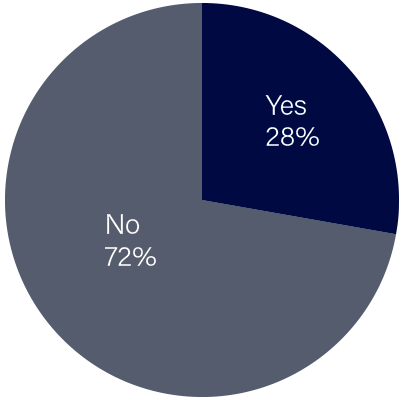
Q: Have you ever repurposed one of your boats?
Reader feedback on old boats
We asked readers about their retired boats. Here’s what they had to say.
Q: If you’ve ever repurposed one of your boats, tell us how!
Shelves in our storefront, drilled to our entry signs, raised bed gardens. —@missouririveroutfitters
Gave to sister for flower bed. Aluminum canoe leaked bad. —@5863.chris
Canoe shelf. —@daytodaytrey
Q: For what reasons have you gotten rid of boats?
I broke up with them and traded them in for ones that better fit my needs. —@melissaannestudio
Crack down the center, won’t survive more rental customer abuse, too pretty to use. —@missourriveroutfitters
Didn’t paddle it and found the right buyer. —@tracelessintiveden
Wanted something better. —@matthewrandall004
Not enough room for all of them! —@lintondoug
Got new boats as an upgrade, usually sold or gave away the old boat. —@mattylerp.outdoors
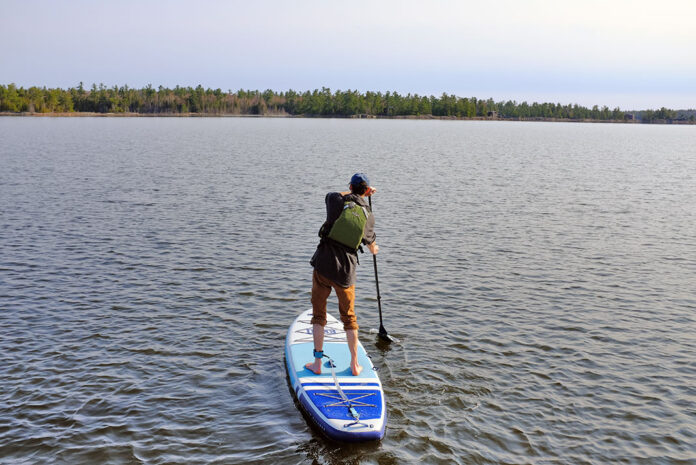
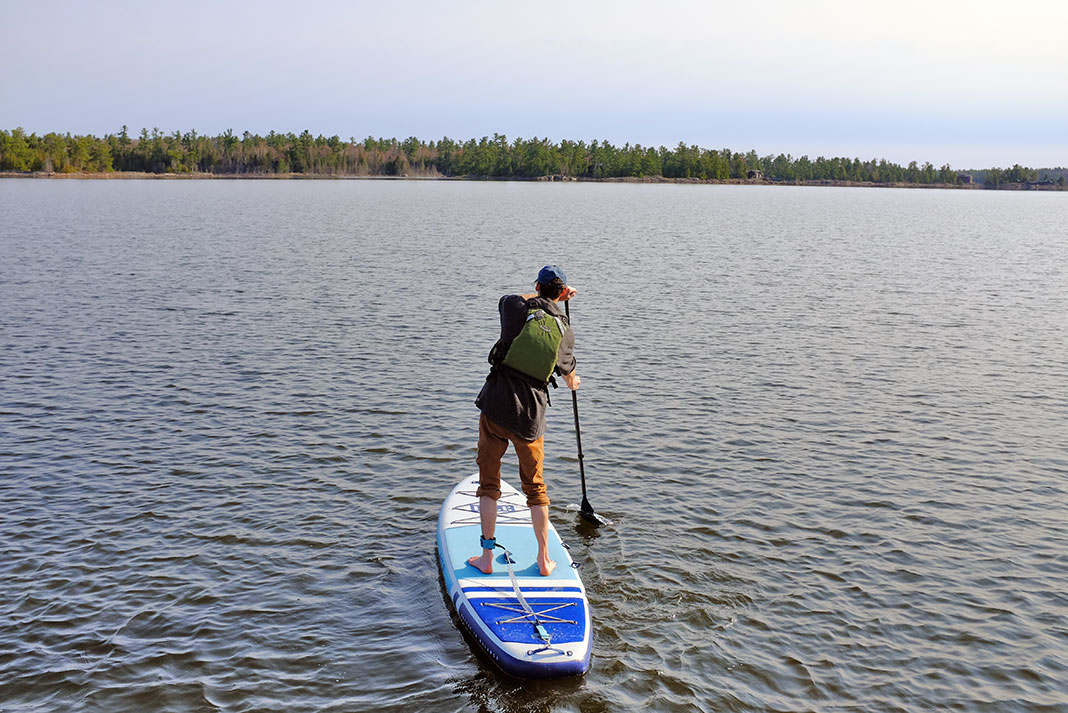
Morning lake tours just got better. | Feature photo: Dorothy O’Connor
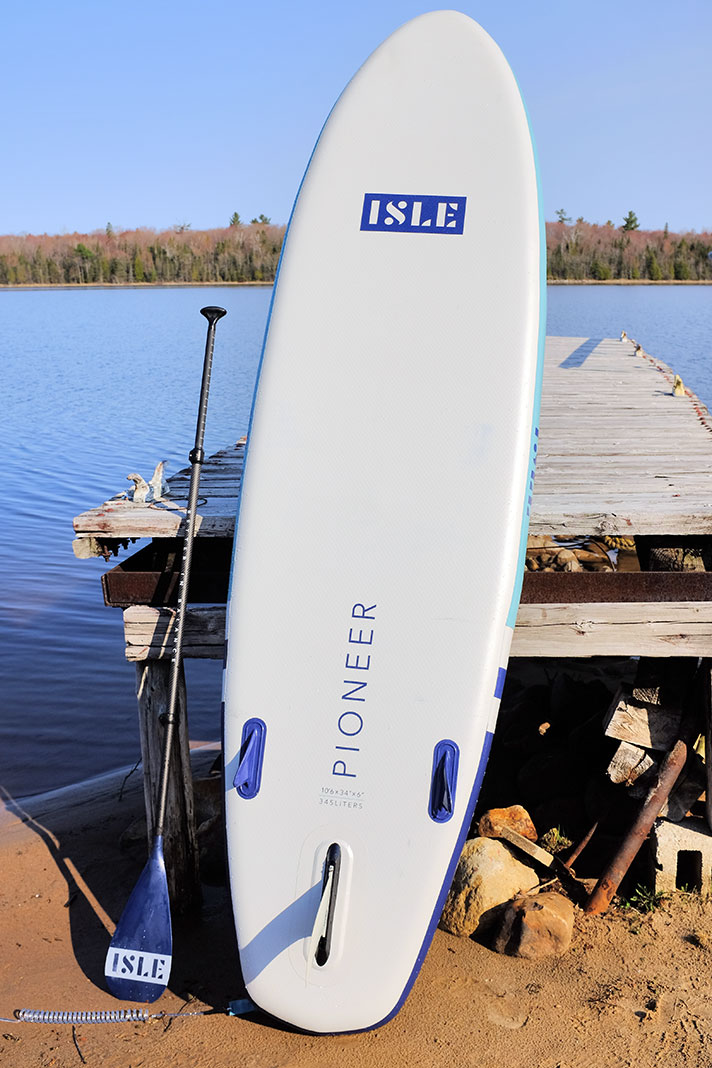
It’s easy to see why the Pioneer 2.0 is ISLE’s most popular SUP. This beginner-friendly inflatable board is suited to a variety of applications ranging from day touring to fishing, easy surfing and yoga, and has excellent stability making it a great platform to learn from. From that short description alone, I figured it would be an ideal paddleboard for my mom to add to her ever-growing collection of kayaks, canoes and sailboats at her waterfront home.
I chose a frosty morning in early May to introduce her to the Pioneer. It only took me a few moments to unpackage the board from its surprisingly-comfortable-to-carry, expedition-size backpack. The paddleboard, pump, three-piece paddle and accessory drybag containing a removable fin, leash, valve-tightening tool and spare parts all pack up tidily inside a pack that wouldn’t seem out of place alongside a commuter on a subway or city bus, let alone inside the trunk of a compact car.
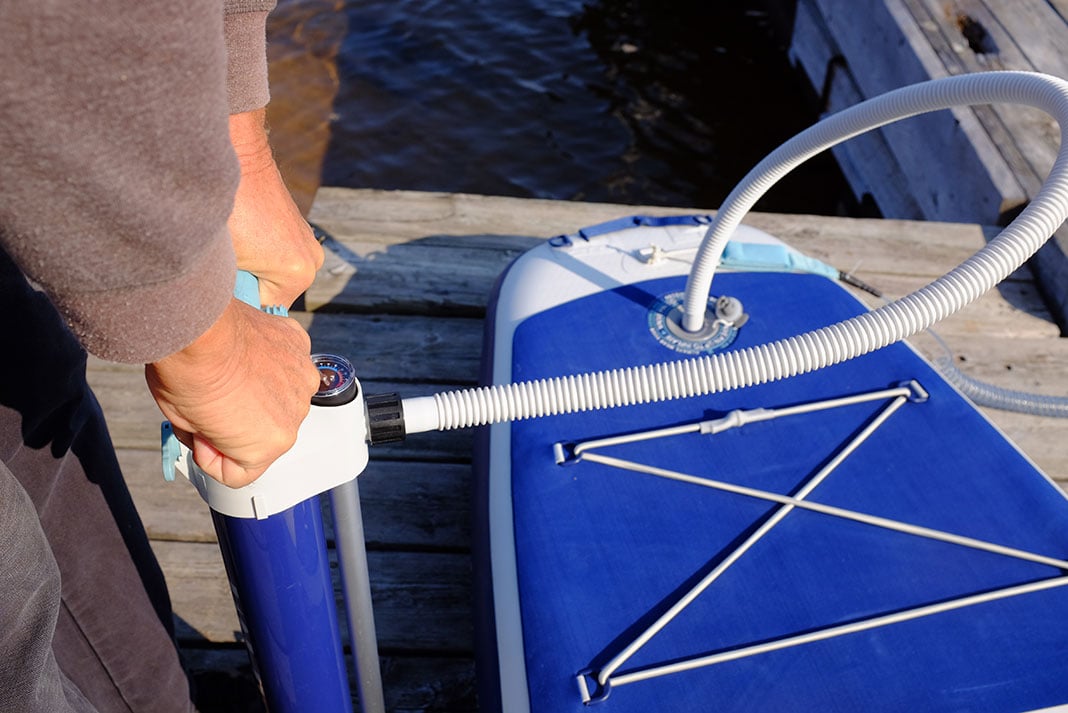
I warmed up by using the double action hand pump to inflate the Pioneer to the recommended 15 PSI in about five minutes of effort. Tip: Unless you’re musclebound, start on the double action setting and move to single action when you reach about seven PSI to reduce the resistance and make it easier to finish inflating the board. As usual, I approached the board building task through trial and error. Meanwhile, Mom carefully read the instructions and helped me figure out how to tighten the high-pressure valve with the provided tool. This crucial step would’ve saved me the effort of inflating the board a second time after most of the air escaped during my first attempt at sealing the valve.
On the water performance
As expected, my first impression was the reassuring stability of the 34-inch-wide board when I launched onto the recently ice-free waters of Lake Huron’s North Channel. Drop stitch construction increases the stiffness and improves the efficiency of the all-around, 10-foot, six-inch board. The modest length of the ISLE means it can’t match the efficiency of a longer touring board—and the cruising speed of this general purpose inflatable SUP will never match that of a hard-shell. However, the Pioneer toured easily enough on a quick lap of the white pine clad, smoothrock islands adjacent to my mom’s place.
Morning lake tours just got better. | Feature photo: Dorothy O’Connor
Always listen to mom when she tells you to read the instructions first. | Photo: Conor Mihell & Dorothy O’Connor
Two smaller built-in fins and a longer removal central fin contribute to excellent tracking; you can also choose to go without the central fin for greater maneuverability and control in waves. The broad width and beefy six-inch thickness allows you to transfer your weight to engage the edge to carve turns. There’s plenty of volume to accommodate an additional human or canine passenger on board.
Rigging and outfitting
The Pioneer is surprisingly well-equipped for a thrifty $795 kit. Fore and aft tie-down points provide convenient places to attach drybags full of day and fishing gear. The supplied paddle is reasonably light and stiff with a carbon shaft, and adjusts to fit a wide range of adult sizes, including enough length to accommodate my six-foot, three-inch height.
While I was paddling, I thought about how the Pioneer’s convenient take-down and highly mobile package would be perfect for riding glassy waves in the warm water on a vacation in some faraway place.
Two permanent side bite fins and one removable center fin make adjusting the board for varying conditions easy. | Photo: Conor Mihell & Dorothy O’Connor
On this day, my mom was happy to stay cozy in her puffy jacket and take photos from the dock while I cruised the shoreline and pushed my luck with silly yoga poses while floating offshore. The cold water provided a good incentive to keep my core tight and senses finely tuned. I tend to gravitate to paddling canoes and sea kayaks; however, the Pioneer made me reconsider the simplicity of paddleboarding and the full body workout it provides, along with reminding me of the great vantage point standing affords. After years of sit-down paddling, I felt myself being drawn back to standing up.
The final verdict
A late May heatwave extending into June gave my mom ample opportunity to enjoy the Pioneer. “This board works for me for several reasons,” she told me. “First, it is very stable and since I’m not yet comfortable with my balance on the board, having a stable platform helps with my confidence and performance. The leash is comfortable and doesn’t get in the way of my movements.”
Mom also highlighted the Pioneer’s easy to manage 24-pound weight. “It is surprisingly light and easy to grip,” she said. “It’s far easier than moving my kayak to the water.”
Finally, she offered a simple plain-language summary capturing the Pioneer exactly: “If you’re just starting out, this board will work well for you.”


 Ostrom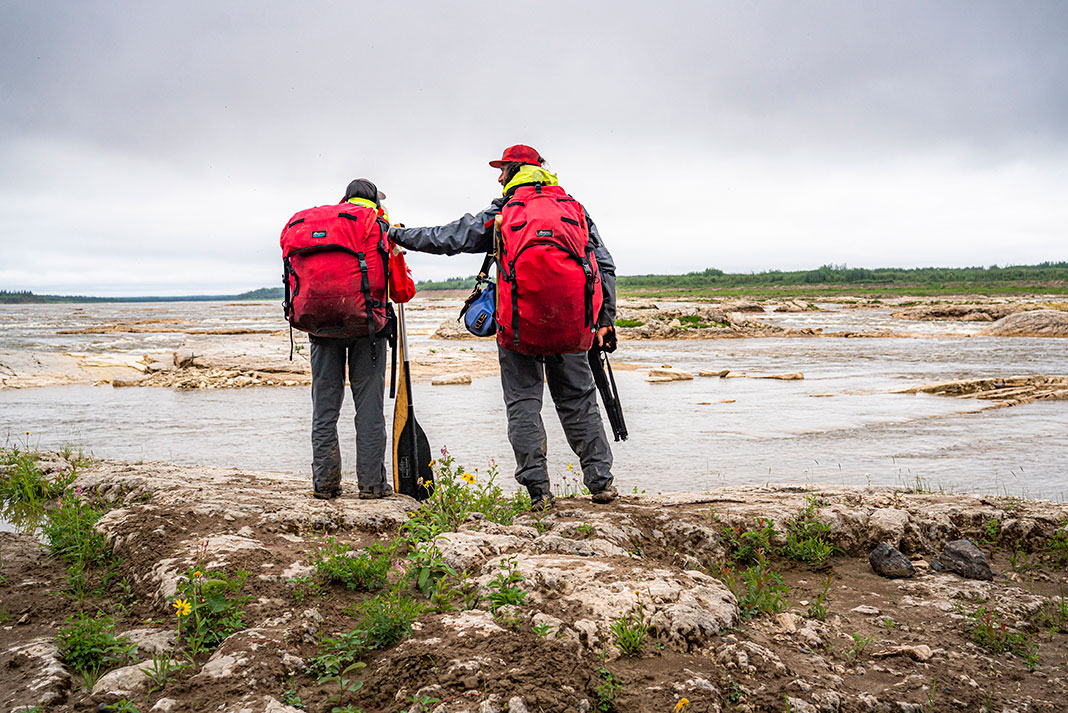
 Frost River
 Recreational Barrel Works
 Algonquin Outfitters
 Level Six
 Granite Gear
 North Water
 Watershed
 SealLine
 This article was first published in the 2023 Paddling Trip Guide.