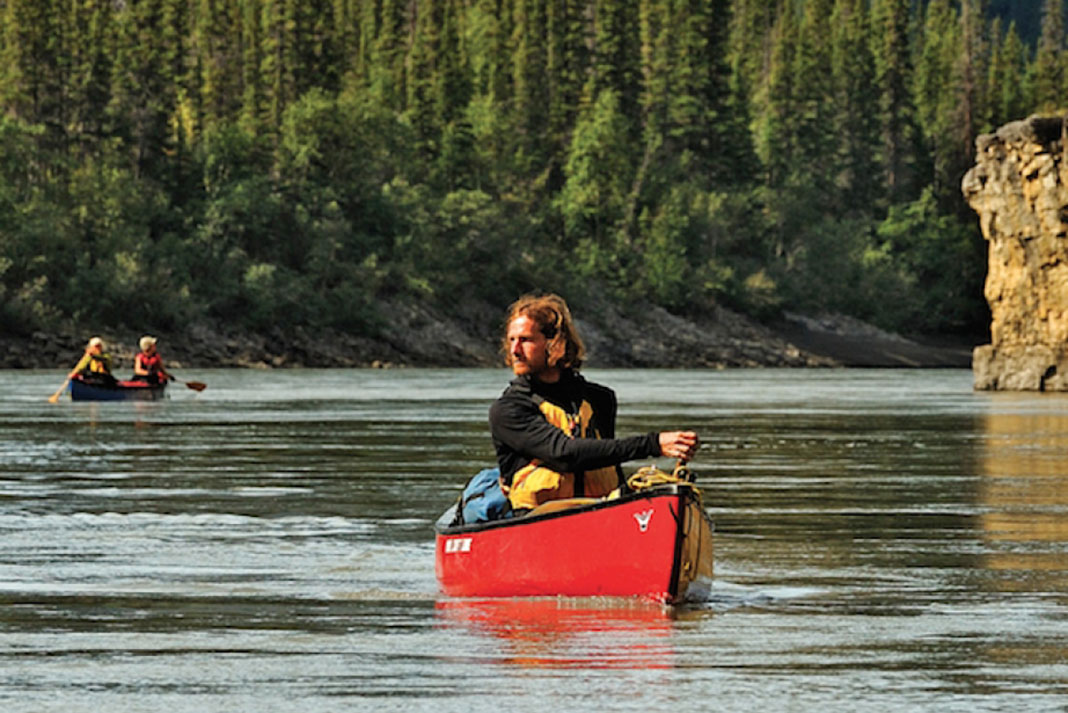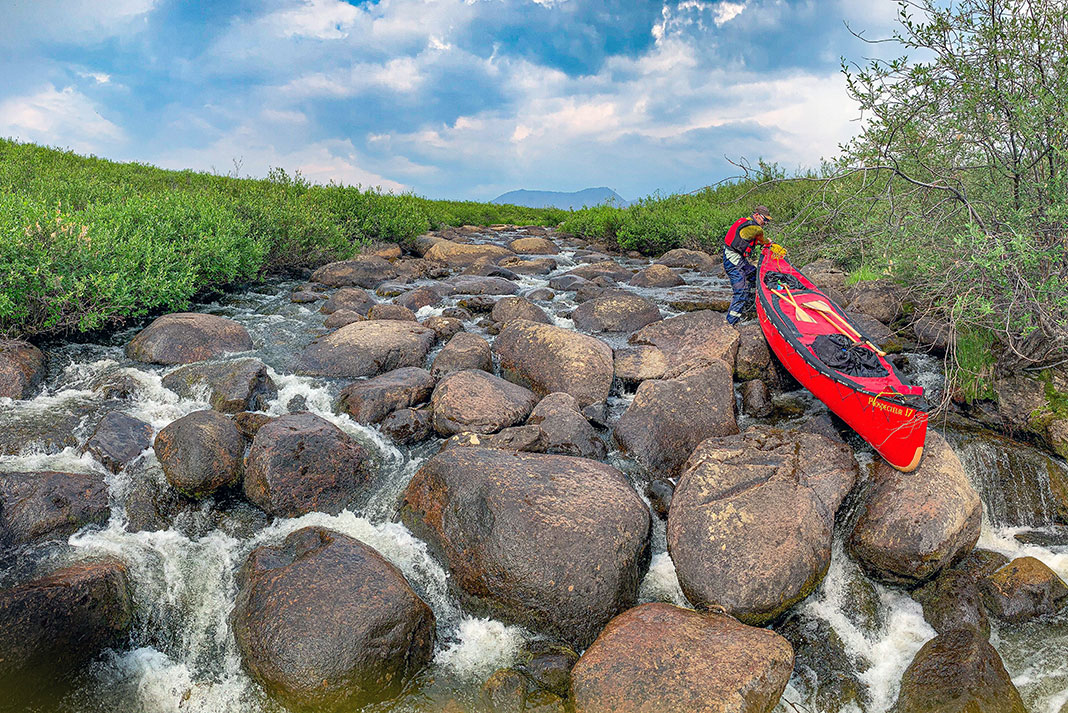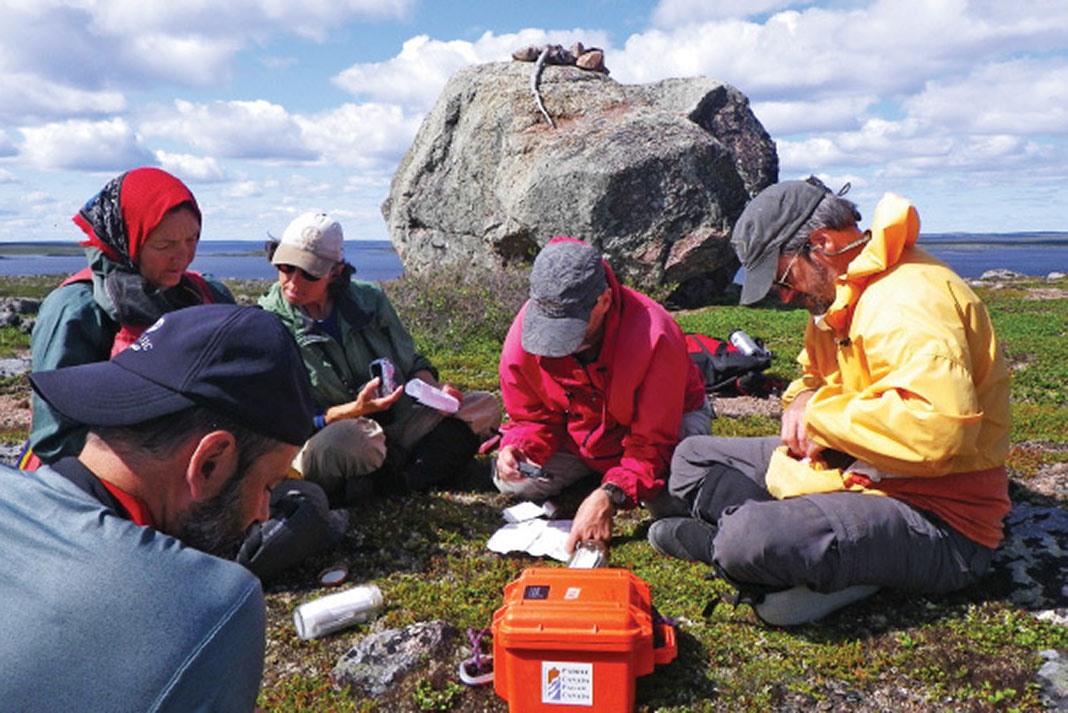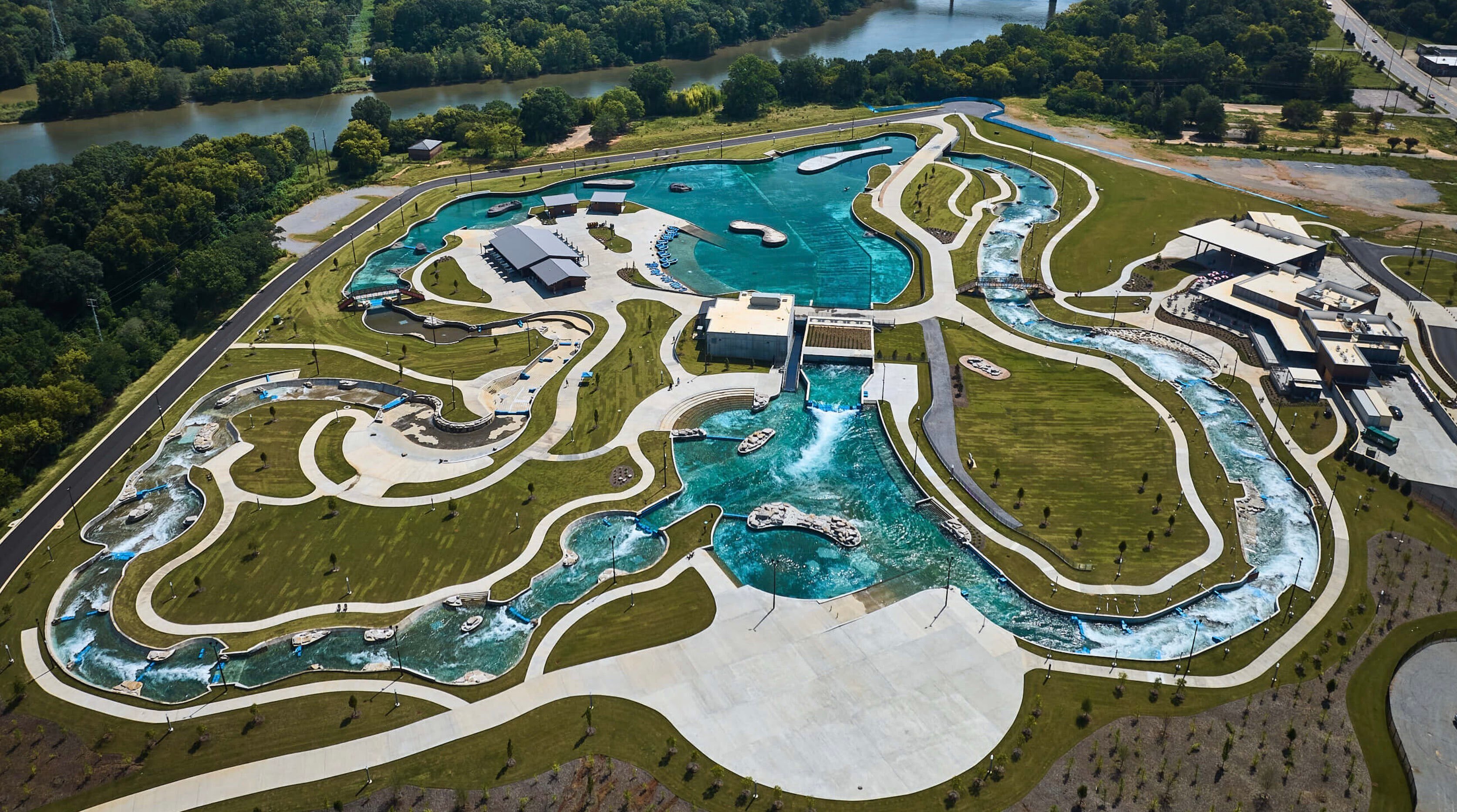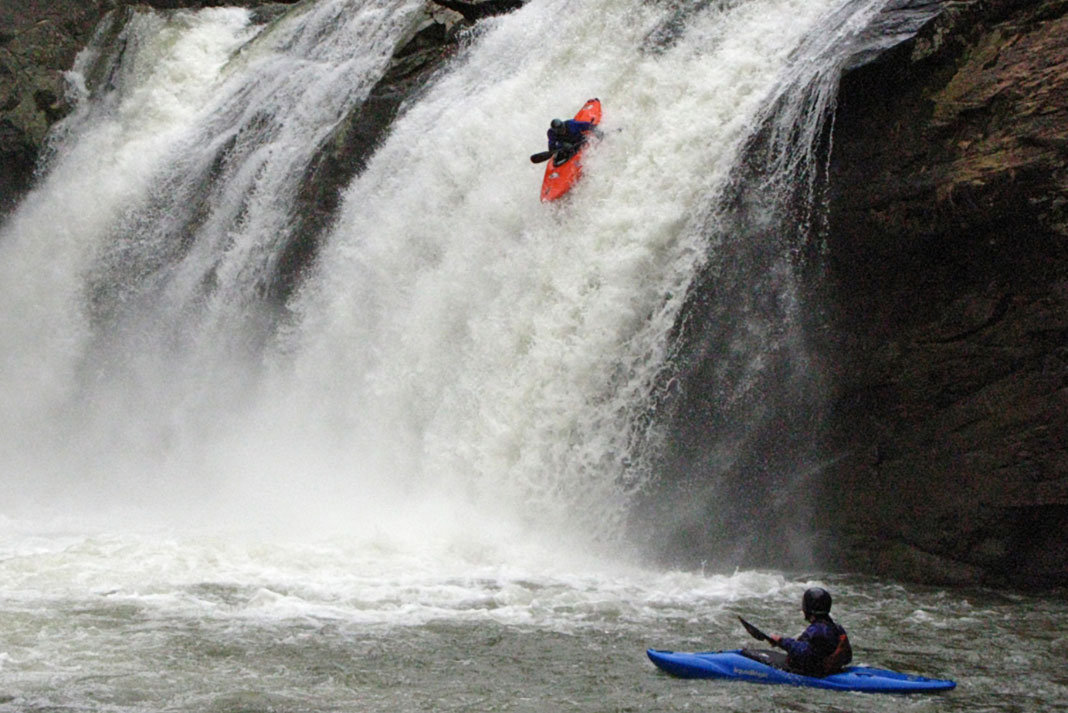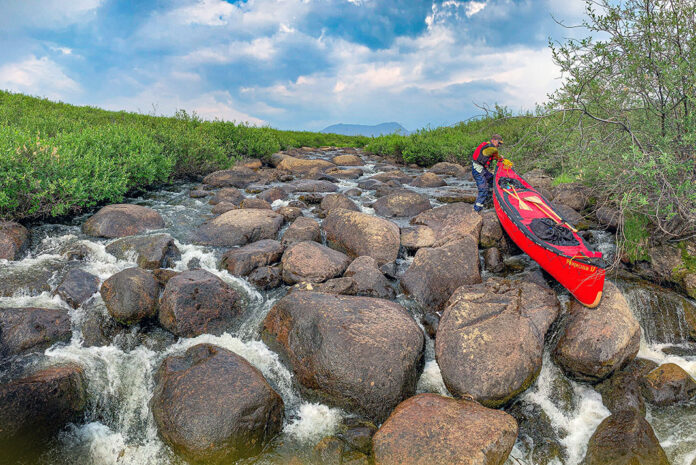
All cowboys get bucked off from time to time, but what matters is that you get back on the horse. | Feature photo: David Jackson
“I feel like my insides have been rewired.”
This is just one of the strange and bewildering things my wife, Tory, has said to me in the months after I convinced her to sign up for an introductory whitewater canoeing course. I keep replaying the experience, trying to figure out what happened and where this new person came from.
Blazing paddles: How my wife overcame her fear of whitewater
Both Tory and I were campers and guides at canoeing camps growing up. When we first met, the fact that we both understood the subtle ins and outs of canoe trip culture was one of the early revelations of our compatibility—I remember how she scrutinized me washing the dishes, being careful not to get food or soap in the lake, and smiled her approval.
When we got married, I automatically assumed we would go on to be one of those adventurous families who did whitewater river trips. I used to be a whitewater canoeing instructor, so surely I could bring the family onside. There was just the small matter of Tory being deathly afraid of moving water.
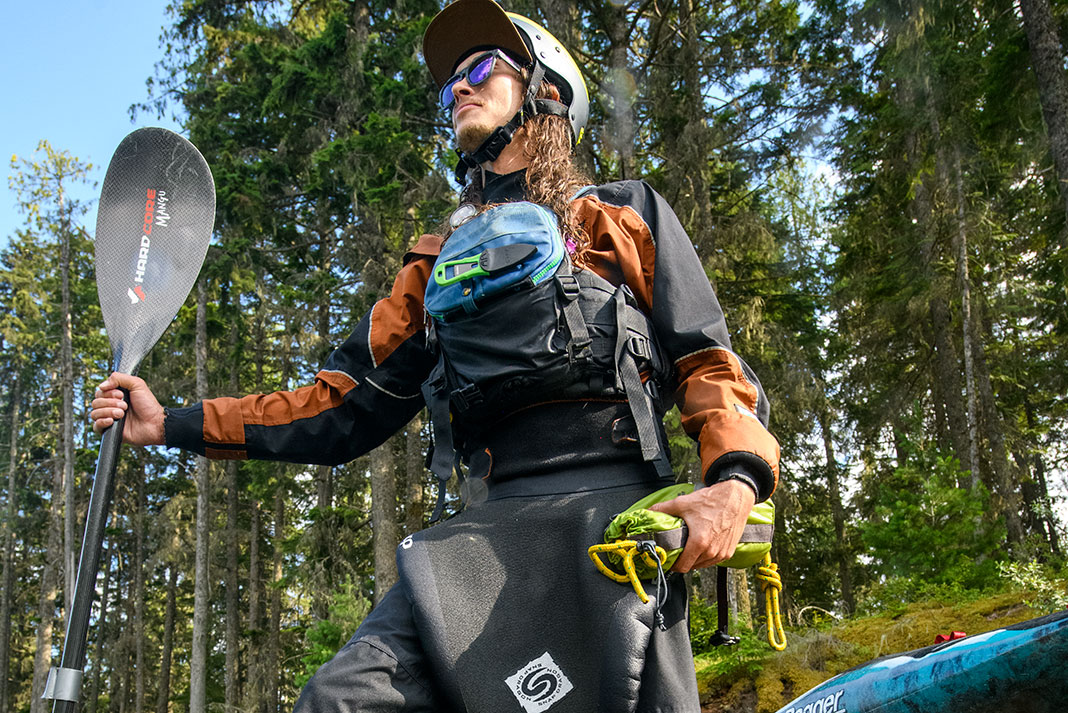
All cowboys get bucked off from time to time, but what matters is that you get back on the horse. | Feature photo: David Jackson
Eventually I learned the source of her trauma was decades old. Tory attended an all-girls camp that only ran flatwater trips. One of the male guides decided to break the rules and take the girls, with zero skills, down a river in their Grumman aluminum canoes. She was terrified. The guides insisted it was all “no big deal.” Tory came away convinced whitewater paddling was an inherently out-of-control activity pursued by rule-breaking cowboys.
When we had kids, Tory was not impressed with my intention to embark on rivers with our young family. She imagined launching our innocent children down the lip of a raging torrent, fingers crossed, while I yelled, “Everything will be fine!” She steeled herself to be the bulwark between me, the cowboy, and a tragic outcome.
“This is the greatest!”
Fast-forward several years and I had all but given up on changing Tory’s mind about whitewater. But last summer, as we were looking for a cushy adult vacation to do while our kids were away at overnight camp, I timidly suggested we could sign up for one of the five-day whitewater “learning vacations” offered by Eastern Ontario’s renowned Madawaska Kanu Centre (MKC). I reminded Tory that, yes, there would be whitewater involved, but the course checked many of our must-haves: outdoor activity during the day, relaxation at night and somebody else to cook our meals. Plus, there was a sauna.
Somewhere between the words relax, meals and sauna, Tory was in. I vowed to take a back seat and let her have her own experience.
[ Paddling Trip Guide: View all paddling courses from the Madawaska Kanu Centre ]
As the course date approached, Tory grew increasingly anxious. She said things like “I hope this wasn’t a mistake” and “My goal is just to stay out of trouble.” It felt like after 15 years of talking about paddling whitewater together, something significant was about to happen, but I had no idea what. We both tried to keep an open mind and shrug off any attachment to the outcome.
What did happen was this: Every time I saw Tory on the river or at the end of a day of paddling, she looked a little more comfortable and relaxed. Tory said her instructor, Naomi, listened to all her concerns, gently encouraged her without pushing her, and let her choose whom she paddled with.
We laughed when we discovered the backgrounds of our two instructors. One was studying to be a social worker. The other was in the final years of a residency in psychiatry. You couldn’t have asked for better qualified teachers to help work through the whitewater traumas of one’s youth.
On top of that, it seemed like the whole culture of whitewater was the opposite of what Tory remembered and expected. There’s a well-known tradition at MKC where you get your name on the wall if you can surf a notorious local hole while spinning your paddle over your head and yelling, “Ich bin der beste.”
“That means ‘I am the greatest’ in German,” one of the instructors, Ralph, explained. He was proposing changing the phrase to something more in line with MKC’s inclusive philosophy and the spirit of modern whitewater culture, which Ralph said has evolved away from men competing and showing off—today the culture is about being welcoming and fun, and involves cheering everyone on the river.
“How about changing it to ‘This is the greatest’?” suggested Tory.
Ralph lit up. “I like that,” he said. “That might be just the thing.”
Next thing we knew, we’d glided across the eddyline and plunked straight into the trough of the wave. The stern of the canoe kicked up like a bucking bronco.
Earlier that day we’d had a “this is the greatest” surf experience of our own. For the last day of the course, Tory and I decided it was time to paddle together.
“You want me to do what?” Tory asked. We were coasting up an eddy beside a massive breaking wave our instructor had suggested we try to catch to jet ferry across the river.
“I’m not sure I’m ready for this,” Tory said warily, as I prepared to sprint upriver onto the wave. So I changed tack.
“Let’s just ease up toward it, don’t paddle hard. We’ll just slip into the current and see what happens,” I suggested.
Next thing we knew, we’d glided across the eddyline and plunked straight into the trough of the wave. The stern of the canoe kicked up like a bucking bronco. Tory belted out the kind of out-of-control scream she usually reserves for careening downhill on cross-country skis.
A moment later, the wave spat us out on the far shore—we were dry but exhilarated.
“Can we do that again?” Tory asked. Her eyes were on fire with an excitement I hadn’t seen in ages. It was one the most beautiful whitewater maneuvers I’d ever done. I’m sure if I’d charged at the wave as planned, it wouldn’t have gone nearly so well. How smoothly things can go if you don’t push too hard.
A whitewater cowboy earns her spurs
Within a week after the course, we were back at MKC, cash in hand to purchase the very canoe we’d paddled on that wave. And we brought our two kids, ages 11 and 13, for a one-day whitewater course to prepare us for the French River trip Tory had planned instead of our usual family flatwater vacation. We’ve already signed up for another week at MKC this summer.
[ Plan your next whitewater canoeing trip with the Paddling Trip Guide ]
I joke that my master plan succeeded—I finally converted Tory to whitewater paddling. But there’s an irony. Although I had a selfish motive, Tory got so much more out of the experience than I did—came away, in her words, “transformed.” Hardly a week goes by that she doesn’t talk about how excited she is to go paddling again.
“It’s amazing. How often do you gain ground as an adult? So much of getting older is about things you can’t do anymore,” she told me recently. “The beautiful thing about canoeing is, it’s actually something that ages well.”
But, I wanted to know, what changed for her, after so many years of resisting whitewater?
“I was running out of excuses, because the kids are not babies anymore,” she admitted. “You can’t close yourself off to things just because of ignorance, you know. It’s not a good way to go through life.”
I wondered, what could I do at age 50 that would stretch me as much as whitewater stretched her?
“How about a course on public speaking,” Tory joked. “Or learning to be empathetic.”
“Ha ha,” I said with a wince. “Maybe someday.”
But not yet. First there are more rivers to paddle.
Tim Shuff joined the team as assistant editor of Canoeroots for the second-ever issue of the magazine in 2003. From 2006 to 2010 he was the editor of Adventure Kayak.
This article was first published in the 2023 Paddling Buyer’s Guide. Subscribe to Paddling Magazine’s print and digital editions, or browse the archives.
All cowboys get bucked off from time to time, but what matters is that you get back on the horse. | Feature photo: David Jackson
One fin, two fin, red fin, blue fin; Black fin, blue fin, old fin, new fin; This one will provide stability; This one will improve turn-ability; Say! What a lot of fins there are. | Feature photo: Tony Felgueiras Photography
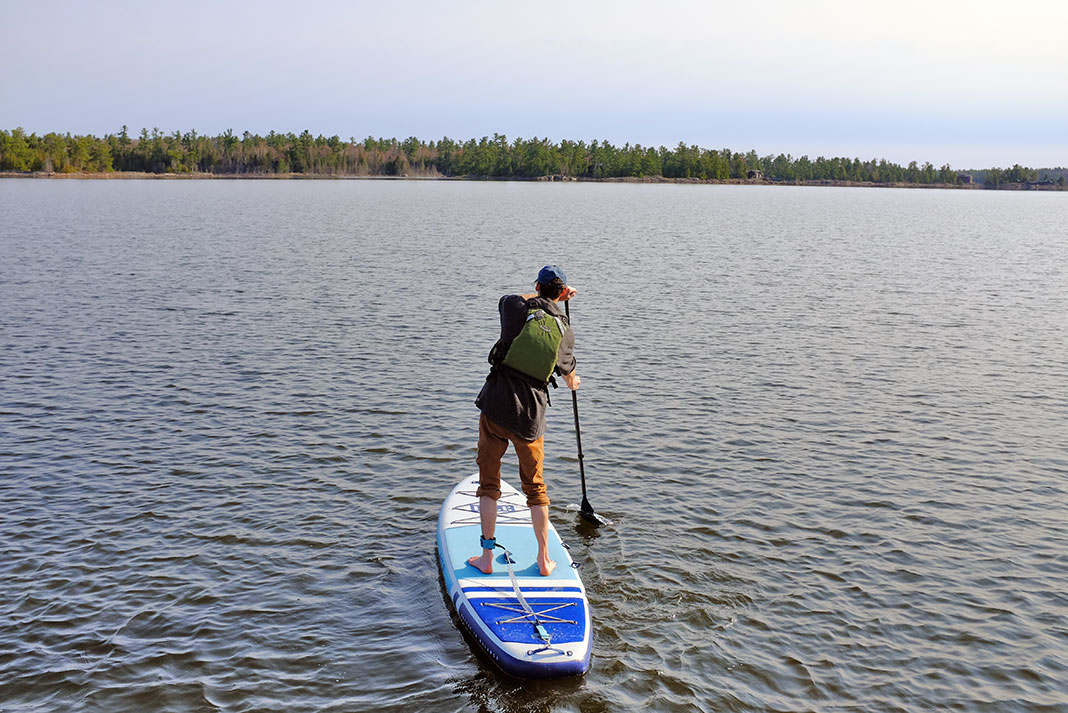
Most boards come with them, but when most of us learn to paddleboard, we don’t give a second thought to what exactly those fins are doing beneath the surface. Those who do might correctly assume fins help keep the board going in a straight line. But there’s a lot more to them than that.
Casual paddlers who aren’t interested in diving too deep into the ways fins influence a board’s performance should know that a fin is better than no fin at all. Graham Ketcheson, marketing director at Riot SUP, advises against using a paddleboard without a fin.
“You just paddle in circles,” he says. “You are always doing correction strokes and are all over the place. Especially in wind and waves, there is no directional control.”
Just how does a fin provide greater control over a paddleboard? Mike Harvey, cofounder of Badfish SUP, explains the fin acts like a keel does on a boat.
“The idea is that it counteracts the lateral force a paddle stroke puts on the board,” he continues. “If you’re paddling on the left, the board wants to turn right, and the keel or fin helps counteract that motion.”
This helps the board travel in more or less a straight line, causing less frustration for recreational paddlers and greater efficiency for touring and racing paddlers. But, fins are useful in a variety of environments and for a range of activities, including surfing and whitewater where tracking is less of a priority.
The size, shape, placement and number of fins, among other factors we won’t delve into here, all influence the board’s tracking, maneuverability, stability, speed and suitability for different environments.
Read on to shop SUP fins, understand more about the mechanics of how fins work, get buying advice on different types of fins, and see the answers to the most commonly asked questions about SUP fins.
Paddleboard fin buying advice
Setups and fins for different types of boards
When it comes to touring and race boards, tracking and speed are a priority. These boards usually have a single-fin setup—the more fins in the water, the more effort it will take to paddle. The fin on a touring or race board is typically long and curved at varying degrees, the large surface area of the fin providing better tracking and stability, the latter of which is important on narrow race boards. Racers and long-distance paddlers will often position the fin toward the tail of the SUP’s fin box, which helps the tail hold and also results in straighter tracking. The trade-off for better tracking? The board will also be more difficult to turn.
Whitewater paddlers and SUP surfers need their boards to be able to turn quickly. These boards typically have shorter fins, enabling quicker turns but providing less stability. To compensate, these boards have a three-fin setup with a center fin and two smaller fins called side bites or thrusters. The side bites add traction to avoid slippage—preventing the tail end of the board from spinning or sliding side to side.
Harvey explains the side bites also help shorten the turning radius of the board and generate speed. Water is channeled between the fins, creating pressure and allowing paddlers to push against the water in the same way a snowboarder would apply pressure to the heel or toe edge of their board to turn or adjust speed.
One fin, two fin, red fin, blue fin; Black fin, blue fin, old fin, new fin; This one will provide stability; This one will improve turn-ability; Say! What a lot of fins there are. | Feature photo: Tony Felgueiras Photography
Unlike touring boards, whitewater and surf SUPs will often position the center fin toward the front of the fin box, releasing the tail to maneuver the paddleboard more easily.
Recreational paddlers will see a mix of single- and three-fin configurations on all-around paddleboards. Many inflatable SUPs have a three-fin setup, which works well for beginners as the side bites provide extra stability and assist in turning.
Fin shapes
One of the most versatile center fin shapes you’ll see across a variety of board types, especially all-purpose boards, is a dolphin fin. If you imagine the quintessential surfboard fin you are likely picturing a dolphin fin. These fins are curved, taper toward the tip, and have a concave backside—as opposed to touring fins which, although curved, have less taper and a straighter backside. The curved shape of the dolphin fin provides good stability and tracking, while the carved out area at the back decreases the surface area and resistance to provide greater carving and turning ability—particularly helpful when surfing.
Environment is a consideration, too. If you think you’ll spend time on both lakes and rivers, Harvey says a three-fin setup with removable fins is best as it provides “more flexibility for different configurations.” This way you can use a single-fin setup on lakes and three smaller fins on rivers, providing “more square inches of fin in the water, but no fin protruding very far,” striking a balance between avoiding catching rocks and maintaining good traction.
That said, rivers are the one environment where paddlers sometimes opt to go finless, especially in low water levels.
“In a river, people are concerned with catching a fin on rocks. In rivers, you can paddle finless, although I never do,” says Harvey. “If you paddle in a river finless you are going to have trouble generating speed in a line.”
Retractable fins, which require a special fin box, are also an option for paddling in rivers and can reduce potential damage to the board in low water. Ketcheson adds that a retractable fin is also appropriate “if you are going down a shallow creek or a coastal estuary at low tide.”
Fin questions & answers
Do paddleboards have fins?
The fins of a paddleboard might be hard to notice as they are often underwater, but paddleboards do in fact have fins. Paddleboards generally have between one and three fins, with surfing or whitewater paddleboards sometimes having up to five fins.
Why do paddleboards have fins?
Paddleboards have fins for a few reasons, the main one being to help you paddle in a straight line, also known as tracking. Without a fin, the back end of the paddleboard would have much more side to side movement across the water, each paddle stroke causing the paddleboard to move in a zigzag pattern. Fins can also generate speed and power on waves. And the fin position on the paddleboard can be altered to affect maneuverability. Lastly, fins add to the stability of a paddleboard.
What is the fin on a paddleboard called?
The fin on a paddleboard is called just that, a fin. The small fins used in surfing and whitewater are often referred to as thruster fins, side fins or side bites. Some of the paddleboard fin shapes have different names, such as dolphin fins, which are curved, taper toward the tip, and have a concave backside.
Can you paddleboard without a fin?
Paddleboarding without a fin is not recommended as it is the key component for control over steering. It is sometimes advantageous to paddle without a fin in whitewater when a paddler is concerned with hitting the fin on rocks in shallow waters; however your steering capabilities take a big hit.
Are paddleboard fins universal?
Paddleboard fins come in many shapes and sizes, optimized for different intended uses, and therefore are not universal. There can be differences in paddleboard fin boxes which do not allow for all types of fins to be compatible. Some fins will however be compatible across multiple paddleboards.
How many fins should a paddleboard have?
A paddleboard should have at least one fin. Sometimes paddleboards can have between two and five fins, with one fin or three fins being the most common configurations.
Paddleboard fin size
Center fins on a paddleboard are typically around eight or nine inches in length. The side fins are smaller, generally around 4.5 inches, but can vary from three to seven inches.
More fins on a paddleboard could be better, but it really depends how the paddleboard is being used. If your aim is to go fairly straight on the water, less fins is more. If you need good directional control, the more fins the merrier.
Can you replace a fin on a paddleboard?
Yes, if a paddleboard fin is removable, it can be replaced. If a paddleboard fin is permanently affixed to the board, either molded on or manufactured as part of the paddleboard, it cannot be replaced. This is often the case with thruster fins on inflatable paddleboards.
Removable fins are often secured with plastic tabs, metal screws or a click-in keyless fin configuration. For removable fins, the paddleboard distributor should sell replacement fins and parts if you damage one or lose a screw or screw plate. You can also choose to upgrade your fin for better performance or to select a different size, shape or material.
How to put a fin on inflatable paddleboard
Prior to the installation of a fin on an inflatable paddleboard, ensure the paddleboard is inflated to the correct pressure for use. Inflatable paddleboards typically use a screw-in fin system. First, align the screw plate within the grooved slot in the fin box and push the plate as far forward as possible. Ensure the fin is in the correct orientation, with the sweep or taper of the fin pointing toward the back of the paddleboard. Place the metal pins of the fin into the groove of the fin box and slide the fin into place and to its desired positioning within the fin box. Move the screw plate as needed to ensure it lines up with the front hole in the fin and secure the fin in place with a screw. Tighten the screw with a fin key.
Paddleboard fin direction
Here’s an easy way to remember the correct paddleboard fin direction. Picture a shark’s dorsal fin, which tapers or curves from the nose back toward the tail—a paddleboard fin does the same and is essentially an upside down shark fin. The taper or curvature of the SUP fin should point toward the back of the paddleboard.
In screw-in fin systems, generally the back of the fin contains a metal pin to slide within the grooves of the fin box and the front of the fin contains a screw hole. In tool-less fin systems, the front of the fin will contain the metal pin.
How to remove fin from paddleboard
The first step in removing a fin from a paddleboard is to place the paddleboard on a sturdy surface with the bottom of the paddleboard facing upward. First, confirm the fins are in fact removable and not molded or manufactured into the paddleboard. Removable fins are identified by locating a fin box which either has a removable screw or plastic tab, or an obvious slot where a fin can slide.
To remove a fin that is screwed in, first unscrew and remove the screw from the fin. Pry the top of the fin down toward the tail end of the board so the front of the fin is released from the fin box. Slide the pin at the back of the fin along the groove of the fin box, to the opening and out of the fin box. Carefully remove the screw plate and ensure the screw plate and screw are kept with the fin.
To remove small thruster fins, unscrew and remove the set screws that hold the fin in place, and then pull the fins directly up and out of the paddleboard fin box.
For tool-less fin systems that don’t use a screw or screw plate, apply pressure to the end of the fin on the underside to push the fin up and forward. This will release the back of the fin from the fin box, allowing you to then slide the pin at the front of the fin toward the opening to be removed.
For additional configurations, look to remove the securing mechanism, such as a plastic tab, and then to release the fin from the fin box by sliding it out of the channel holding it in place.
How do I know what fin box I have?
The majority of paddleboarders won’t ever need to know what fin box they have as manufacturers and retailers have replacement parts and compatible options based on what paddleboard brand and model you have. If you do need to determine what fin box you have, it may require some investigating. Begin by checking the fin box on your paddleboard to see if it contains a label such as FCS, which is fairly common. Contact the paddleboard manufacturer or a fin manufacturer such as FCS or Black Project SUP to determine which of their SUP fins are compatible with your paddleboard.
Related articles
Get more expert paddleboard buying advice to help narrow your search for the perfect SUP.
This article was first published in the 2023 Paddling Buyer’s Guide. Subscribe to Paddling Magazine’s print and digital editions, or browse the archives.
One fin, two fin, red fin, blue fin; Black fin, blue fin, old fin, new fin; This one will provide stability; This one will improve turn-ability; Say! What a lot of fins there are. | Feature photo: Tony Felgueiras Photography
The cutting-edge smartBird Safety Lighting Systems from Basin Boat Lighting that keep boaters and kayakers safer on the water has just received a highly prized Utility Patent from the United States Patent and Trade Office. The Broussard based, veteran-owned and operated company received it’s Design Patent for the Safety Lighting Systems earlier this year.
Each unit incorporates several U.S. Coast Guard required onboard safety features in one easy-to-use piece of equipment, making safety on the water as easy as can be. Utility Patents protect what an invention does, how it is used and most importantly, how the product works.
Used by both the average everyday boater or kayaker, and marine law enforcement officials of multiple counties, the smartBird line of products features the earlyBird and brightBird models to choose from.
Both the brightBird and earlyBird models for boats and kayaks provide visual (super-bright LED lights) and audible (105-decibel horn) signaling and distress tools that are critical for boaters and kayakers to stay safe—particularly before dawn or when out later than expected after sunset. The “plug and play” design makes them incredibly easy and convenient to use.
“We were especially thrilled to be awarded a Utility Patent for our lighting systems,” said Brian Signorelli, owner of Basin Boat Lighting. “A Utility Patent is only awarded if a newly created or invented product is unlike anything else out there.”
“When a near-miss boating accident in the Atchafalaya Basin nearly took me out while fishing, I immediately told myself there’s got to be a better way to make it home safely after a day on the water besides holding a Q-Beam spotlight in one hand and steering the boat with the other,” Signorelli continued.
After creating and revising a prototype, Signorelli began production of the Safety Lighting Systems. With a nod to the many types of waterfowl found in one of America’s favorite swamps, the smartBird line of Safety Lighting Systems was hatched.
Each unit features a USB port to keep mobile phones charged and ready to use in an emergency and a convenient Bluetooth key fob, or remote control, to operate the entire system from the captain’s chair. An optional app is available for both Apple and Android users that will operate the system using a mobile phone and, if subscribed to, alert first responders and emergency contacts that help is needed.
Locally owned Basin Boat Lighting is owned by U.S. Navy Veteran and avid Louisiana fisherman Brian Signorelli. For more information, go to basinboatlighting.com.
The Canadian Canoe Museum will embark on new adventures at its lakefront location along Little Lake in Peterborough, ON when it opens in winter 2024 with exciting new visitor experiences and programming. The Museum will host its grand opening celebrations the weekend of May 11, 2024, on the Lang Lakefront Campus with on-water activities. (Photo: The Canadian Canoe Museum)
The Canadian Canoe Museum (CCM) is excited to announce the official grand opening date of its highly anticipated new museum. The new museum will open in winter 2024, followed by a grand opening celebration in May, marking the culmination of years of planning and ushering in a new era for the CCM and the paddling community.
The new museum’s unveiling, which was to take place this fall, has been delayed due to nationwide construction industry issues. Material and labour availability, supply chain disruptions, and scheduling and sequencing complexities have caused unavoidable delays in completing the impressive two-story, 65,000-square-foot museum and its five-acre lakefront campus.
The CCM and its project team remain committed to ensuring the new museum meets the highest quality standards, including a Class “A” controlled museum environment, and delivers an exceptional visitor experience. The new world-class facility will open in winter 2024 once it is complete and will officially celebrate after the ice melts by launching canoes into the water.
The Canadian Canoe Museum will embark on new adventures at its lakefront location along Little Lake in Peterborough, ON when it opens in winter 2024 with exciting new visitor experiences and programming. The Museum will host its grand opening celebrations the weekend of May 11, 2024, on the Lang Lakefront Campus with on-water activities. (Photo: The Canadian Canoe Museum)
Executive Director Carolyn Hyslop looks forward to celebrating this momentous occasion with the CCM’s community of supporters from coast to coast to coast. “I am thrilled to announce that we will welcome our supporters to the new museum and campus the weekend of May 11th for our grand opening celebrations! While the pandemic and its impacts on the construction industry have affected our timeline, it has not affected the spirit and enthusiasm for this project. It will be worth the wait when visitors can explore this beautiful facility and our many new offerings and then continue to the lakefront for a memorable paddling experience!”
Carolyn Hyslop, Executive Director of The Canadian Canoe Museum, smiles while moving a large birch bark canoe into the new Exhibition Hall. The Canadian Canoe Museum stewards the world’s largest collection of canoes, kayaks, and paddled watercraft. (Photo: The Canadian Canoe Museum)
The weekend of May 11th will see donors, partners, members, volunteers, and esteemed dignitaries gather to celebrate the grand opening of the new museum and Lang Lakefront Campus, which coincides with the start of the paddling season. It will also mark the launch of the CCM’s full visitor experience with on-water activities to honour Canada’s enduring paddling legacy. A schedule of events will be released closer to the date.
Construction delays have shifted the new Canadian Canoe Museum’s opening timeline from fall to winter 2024. Once open, the impressive two-story, 65,000-square-foot museum and its five-acre lakefront campus is projected to welcome 87,000 visitors annually. (Photo: The Canadian Canoe Museum)
When the new museum opens, it will feature exciting opportunities for new and returning visitors to immerse themselves in the rich histories and diverse cultures of the canoe and kayak. All programming will offer hands-on indoor and outdoor experiences connecting visitors and locals to the land, water, and canoe.
Visitors can explore 20,000 square feet of new exhibits featuring stories from around the world at their own pace or on a guided tour, peek into the integrated Collection Hall to witness the incredible depth and diversity of the collection, learn new skills in an artisan workshop, and enjoy food and drinks from the Silver Bean Café.
The new facility and its multipurpose room with stunning lake views will be available to rent for community and corporate meetings, conferences, events and weddings.
The new museum’s atrium will welcome visitors and the public to refresh and refuel before their next adventure. It features a reception area, store, café, fireplace, and an artisan workshop to witness the art of canoe-making and restoration first-hand, and a view into the Collection Hall. (Render: Lett Architects)
The CCM is also excited to welcome back teachers, students, and community members with a host of customizable and curriculum-linked programs that build on inspiration found in the exhibits and utilize the outdoor campus year-round. Participants will learn fire building, outdoor cooking, camping, plein air painting, and paddling skills.
In the spring, the Lang Lakefront Campus will blossom into a vibrant space with the inclusion of on-water programming. Daily 90-minute Voyageur canoe tours will offer a group paddling experience, while canoe and kayak rentals will be available for self-guided adventures. Children’s day camps, adult paddling courses, and backcountry canoe trips will also run throughout the summer months.
Despite the construction delays, the CCM recently reached a significant project milestone, moving over 100 canoes and kayaks into the new Exhibition Hall.
Curator Jeremy Ward reflects on this milestone: “Moving this first portion of the collection into its new home was an incredible moment in this organization’s history. This collection is unlike any other worldwide and has been recognized for its national significance to this country. Now, it finally has a home befitting it. It was certainly an emotional moment for myself and our team.”
Jeremy Ward, Curator of The Canadian Canoe Museum, grins as he inspects the 100 canoes and kayaks recently moved into the new museum’s Exhibition Hall. (Photo: The Canadian Canoe Museum)
Her Excellency the Right Honourable Mary Simon, Governor General of Canada, granted patronage to the CCM last year. In 2013, the Senate declared the CCM and its collection a cultural asset of national significance.
The CCM and its partners will relocate the remaining 500 watercraft to the new museum over the next two to three months. Peterborough-based McWilliams Moving & Storage is the Lead Sponsor of the Move the Collection: Final Portage campaign and is the Official Mover of the CCM.
Meanwhile, momentum continues on the Museum’s Inspiring Canada – by Canoe fundraising campaign, which has raised 97 per cent of its $40-million goal. This summer, fundraising events were held in Yellowknife, Northwest Territories, and Peterborough, Ontario, reflecting the nationwide support and excitement for the new museum.
The new museum is also made possible, in part, by the CCM’s lead donor and government partners, including the Government of Canada through the Department of Canadian Heritage and the Federal Economic Development Agency for Southern Ontario (FedDev Ontario), the Weston Family Foundation, the City of Peterborough, Peterborough County, and the Province of Ontario.
For more information on the new museum, to sign up for updates on its opening, or to donate to the fundraising campaign, visit canoemuseum.ca/new-museum.
Quotes
“We must learn from our past and shape our future. To do that, we must, among other things, support cultural spaces and infrastructure that help ensure Canadians have access to arts and heritage experiences. Our government investing in this new home for the Canadian Canoe Museum will encourage visitors to discover and appreciate the unique role that canoe, and watercraft have in our culture and history.”
—The Honourable Pascale St-Onge, Minister of Canadian Heritage
« Nous nous devons de tirer des leçons de notre passé et de façonner notre avenir. Pour y parvenir, nous devons entre autres soutenir les infrastructures et espaces culturels qui permettent aux Canadiens et Canadiennes de vivre des expériences artistiques et patrimoniales. Notre gouvernement investit dans le nouveau foyer du Musée canadien du canot, invitant le public à découvrir et à apprécier la place unique qu’occupent le canot et d’autres embarcations dans notre histoire et notre culture. »
—L’honorable Pascale St-Onge, ministre du Patrimoine canadien
“The grand opening of the Canadian Canoe Museum’s new Exhibition Hall will be an exciting day for the Peterborough community. Our government invested in this significant historical, cultural, and educational landmark to help preserve the richness of Canada’s past and ensure a deeper understanding of our collective stories for generations to come.”
—The Honourable Filomena Tassi, Minister responsible for the Federal Economic Development Agency for Southern Ontario.
“We are immensely proud to be a lead donor for the new and improved Canadian Canoe Museum. The Canadian Canoe Museum will give visitors a one-of-a-kind experience and access to the world’s largest collection of canoes, kayaks and paddled watercraft. This uniquely Canadian museum and its collection is a cultural asset of national significance and will educate and provide continued learning about our country’s heritage for generations to come.”
—Garfield Mitchell, Chair of the Weston Family Foundation
“It’s great to see the progress that has been made on the Canadian Canoe Museum to date. This museum of national significance situated on the shores of Little Lake will be an exceptional addition to our community. We look forward to the grand opening of this beautiful building.”
—Jeff Leal, Mayor, City of Peterborough
“All of Peterborough County has been awaiting this moment. The beautiful, state-of-the-art, new Canadian Canoe Museum building is just months away from opening to the public. We are very fortunate to have this important cultural site representative of our local and national heritage right in our backyard. I am excited to attend the Grand Opening in May 2024 and I am looking forward to inviting all residents and visitors of Peterborough County to stop by the new Museum.”
—Bonnie Clark, Warden, Peterborough County
“It is very exciting to have an official date for the grand opening of the Canadian Canoe Museum. I am able to recognize the fantastic impact the newly improved museum will have in both my role as the local Member of Provincial Parliament, and Parliamentary Assistant to the Ministry of Tourism, Culture and Sport. The new facility will continue to expand connections, communities, knowledge, culture, arts, and so much more for all that have the pleasure of attending.”
—Dave Smith, MPP for Peterborough-Kawartha
About The Canadian Canoe Museum
Located on the Traditional Territory of the Williams Treaties First Nations in Peterborough, Ontario, The Canadian Canoe Museum stewards the world’s largest collection of canoes, kayaks and paddled watercraft. More than 600 in number, the watercraft and their stories have a pivotal role to play in understanding our past – and our collective future.
As part of the Museum’s responsibility for this cultural asset of national significance (Senate of Canada, 2013), it is building a new 65,000-square-foot home that aspires to be as innovative as the canoe itself. A purpose-built facility on the water, with an array of indoor and outdoor spaces, will allow the Museum to deliver on its mission in ways that, right now, it can only imagine. It will inspire visitors to learn about Canada’s collective history and reinforce our connections to land, water and one another – all through the unique lens of the iconic canoe. Learn more at www.canoemuseum.ca/new-museum.
A glorified, albeit patriotic, trash bag with a hood. | Feature photo: Adobe Stock
Ever ridden out a rainstorm in a cheap plastic poncho? The best we can say is that it’s sometimes slightly better than no rain gear at all. Yet this hooded garment endures, in part because ponchos have played a role in everything from baseball to Hollywood to the U.S. Civil War. So, don’t pull the wool over your eyes—try these unusual poncho facts on for size.
Dating back to 500 BC, ponchos have long been used for function and fashion. The first ponchos were made of wool and were meant to keep the wearer warm and dry. Their design also signified the importance of the wearer, a stepped-diamond motif indicating authority and leadership.
Willie Nelson and Merle Haggard took songwriter Townes Van Zandt’s “Pancho and Lefty” to number one on the country charts in July 1983. The ballad offers this timeless advice for all van-lifers: Living on the road my friend; Was gonna keep you free and clean; And now you wear your skin like iron; And your breath as hard as kerosene.
[ Paddling Buyer’s Guide: View all apparel ]
Because ponchos were typical clothing items of many South American and Mexican cultures, their exact origin is still up for debate. However, because the Mapuche people from the Andes Mountains spread the poncho throughout Spain and Latin America, they are usually credited with the invention of the poncho we’re familiar with today.
Ponchos were first used by the U.S. military in the 1850s and were officially adopted during the Civil War. They’ve seen plenty of upgrades over the years making them lighter weight and more waterproof, as well as more functional thanks to the addition of a drawcord hood that could be closed to better form a rain fly or ground sheet. Today, ponchos remain a standard piece of U.S. military field equipment.
Clint Eastwood famously wore a poncho in Sergio Leone’s Dollars trilogy, in which Eastwood played The Man With No Name. According to Jeremy Bulloch, who played Boba Fett in the Star Wars films, Boba Fett was based on The Man With No Name, including the color scheme of his armor, which was the same green and white design as Eastwood’s poncho.
While a quick Google search of “how to make a garbage bag poncho” will churn up plenty of tutorials, we’re pretty sure you can figure it out for yourself. Many a camper will start out with a simple trash bag poncho in lieu of a raincoat or even a store-bought poncho, eventually graduating to more expensive rain gear. Longtime canoe campers will know everything comes full circle, though—nothing gets more lightweight or waterproof than a good old trash bag.
No history of the poncho would be complete without mentioning the equally maligned and adored rain poncho of modern times. These glorified trash bags with a hood, can be seen in the stands of outdoor sporting events, on the decks of Maid of the Mist cruises, and on the lawns of music festivals. A word to the wise: pick a clear or colorful poncho. Basically anything but white. The White Sox made the mistake of handing white ponchos out to fans at a 2014 game and haven’t lived down the sight of stands full of fans in pointed white hoods.
A glorified, albeit patriotic, trash bag with a hood. | Feature photo: Adobe Stock
This article was first published in the 2023 Paddling Buyer’s Guide. Subscribe to Paddling Magazine’s print and digital editions, or browse the archives.
A glorified, albeit patriotic, trash bag with a hood. | Feature photo: Adobe Stock
For 365 days, Nick Ray is kayaking and camping self-sufficiently along the rugged isles, inlets, caves and cliffs of Scotland. | Feature photo: Nick Ray
Planning to venture far from home on a sea kayak expedition this year? Maybe not, but rest assured there are plenty of paddlers pushing boundaries and promoting great causes in 2023. From the coast of Scotland to Fort Snelling, Minnesota, here are four recently completed, ongoing and upcoming trips to inspire you.
Expedition hub: 4 kayak journeys of epic proportions
Photo: Courtesy West Hansen
1 Arctic Cowboys saddling up for a second attempt
On August 3 last year, West Hansen, Jeff Wueste and Rebekah Feaster—the Arctic Cowboys—set out from Pond Inlet in an attempt to cross the Northwest Passage by kayak in one season. Two days later, Feaster dropped out of the expedition due to intense nausea. Her teammates carried on, dealing with high winds and waves forcing multiple rest days. Seventeen days into the journey found them far behind schedule, with more bad weather forecasted. They’d made it 400 kilometers into the 3,000-kilometer journey when the rest decided to abort.
“I read every journal and book I could find about the Passage; however, the kayak accounts were pretty scarce,” says Hansen, when asked what he wished he’d known before their Northwest Passage attempt. “It would have been good to know how long the wind storms last, that isobutane fuel wasn’t available at the stores in the Arctic, the delay in obtaining flights and the cost of shipping our gear.”
He says deciding to terminate the expedition wasn’t horrible, but it was disappointing. “By the time we made the call, several factors contributed to multiple delays, from which we were able to learn a great deal,” he continues. “So, it wasn’t as if one big thing happened that caused the postponement, rather a buildup of smaller things.”
For the Arctic Cowboys, safety is far more important than any expedition.
“Many people think explorers are adrenaline junkies; however, the most successful explorers are the most conservative and safest people out there,” says Hansen. “Sure, making a 40-mile open ocean crossing in the Passage is high-consequence, but with patience and careful planning the risk factors can be minimized.”
The Arctic Cowboys will be launching a second attempt at the Passage in early July with a bigger team of six, paddling tandem kayaks. Having more people will add safety, and the additional kayaks will provide more storage for fuel and food, enabling the expedition to manage, without external support, downtime due to wind and weather.
“We’ll approach the Passage like the initial Everest expedition, where the team plans on taking what time is necessary, even if the pace is often slow or nonexistent,” Hansen says. “The wind and waves aren’t going anywhere, and we’ll be ready to take them on, even if it takes an extended period of time.” —by Charlotte Jacklein
For 365 days, Nick Ray is kayaking and camping self-sufficiently along the rugged isles, inlets, caves and cliffs of Scotland. | Feature photo: Nick Ray
2 Paddling the Scottish coast to celebrate life
Nick Ray was determined not to reach age 60. In 2019, he attempted suicide by leaping from a ferry into the sea. Thankfully he survived the icy Atlantic waters, and now is journeying these same waters along the coast of Scotland for 12 months.
“This adventure is about celebration. Celebrating the fact I am alive. It could easily be so different,” says Ray. “I’m open about my travails with treatment resistant depression and happy to share my experiences, knowing in doing so I offer insight and help to others.”
Ray departed Tobermory, Scotland on August 28, 2022—his 59th birthday. For the following 365 days, Ray is kayaking and camping self-sufficiently along the rugged isles, inlets, caves and cliffs of Scotland. At the time of publication, Ray was camped at Hilton of Cadboll on the Tarbat Ness peninsula and has journeyed more than 3,000 kilometers so far.
In addition to raising awareness about mental health, Ray’s journey has an environmental angle. In his reflections on his journey, Ray observes: “I struggle with great emotional pain with the environmental havoc the human race wreaks on our planet. It’s my hope that through this journey, I discover how I can be human and live in closer harmony with the world I inhabit.” —by Charlotte Jacklein
Oslo, Norway-based kayaker Mark Ervin (also known as Mark Fuhrmann) set off on a 10,500-kilometer journey in June 2022 on the Greater Loop, a massive circumnavigation of Eastern North America. Ervin started in Halifax, Nova Scotia and headed counterclockwise on the loop, taking the St. Lawrence River into the Great Lakes, and then navigating onto the Mississippi River and down to the Gulf of Mexico. From there he paddled east along the Intracoastal Waterway before beginning his journey north along the east coast of the U.S. As of June, he had reached Boston and will from there continue north to Canadian waters and his final destination of Halifax.
Ervin’s objective is to share inspirational stories about how people have “reversed the bad” in their lives. Ervin, who turned 65 on his journey, has been posting regular updates on his Facebook page, keeping a video journal on YouTube, and fundraising for Doctors Without Borders and Captains Without Borders along the way. —by Charlotte Jacklein
Eklund on her journey, in New Ulm, Minnesota. | Photo: Tom Conroy
4 Solo from Minnesota to Hudson Bay completed
The 2,400-kilometer journey from Minneapolis to Hudson Bay via the Minnesota and Red rivers has emerged as a sort of rite of passage since it was first documented in Eric Sevareid’s 1935 travelogue, Canoeing with the Cree. Madison Eklund set out on a solo kayak journey along the route, departing Fort Snelling, Minnesota in May 2022 and arriving at York Factory, Manitoba in late September.
Eklund, 26, says her trip was equally inspired by Natalie Warren and Ann Raiho’s 2011 Hudson Bay Bound canoe expedition. Unlike her predecessors, Eklund made the trip in a sea kayak, which made navigating the Hayes River’s 45 rapids more challenging. She didn’t hesitate to make the 4.5-month expedition solo—the first to do so—though she admitted after the trip that the people she met along the way were the highlight.
“I did genuinely look for a partner for this trip, but ultimately could not find one,” she says. “I’m very comfortable on my own in the backcountry, so it’s not that big of a deal for me.”
As part of the trip, Eklund also participated in a citizen science project supported by the North Dakota Department of Environmental Quality’s Watershed Management Program. The project had Eklund collecting water quality samples from the Bois de Sioux and Red rivers in Eastern North Dakota, which were analyzed for Per- and Polyfluoroalkyl Substances (PFAS).
PFAS are man-made chemicals that are used widespread in consumer products because of their ability to repel oil and water and because they are temperature and friction resistant.
Along the way, Eklund collected water quality samples as part of a citizen science project. | Photo: Mason Eklund
“What makes PFAS so scary is the new knowledge of their harm to human/animal health and their vast prevalence in almost every facet of life,” explains Eklund. “These chemicals bioaccumulate, meaning they never break down, and are now showing up in our food chain and human biological samples.”
According to a report by the North Dakota Environmental Quality team, “Sample results showed measurable levels of four of the 36 PFAS compounds that were included in the analysis.”
Although it was a tedious process to take these samples, including taking blanks and duplicates twice each, Eklund was glad to have been able to support this project while on her journey to Hudson Bay. —by Conor Mihell
This article was first published in the 2023 Paddling Buyer’s Guide. Subscribe to Paddling Magazine’s print and digital editions, or browse the archives.
For 365 days, Nick Ray is kayaking and camping self-sufficiently along the rugged isles, inlets, caves and cliffs of Scotland. | Feature photo: Nick Ray
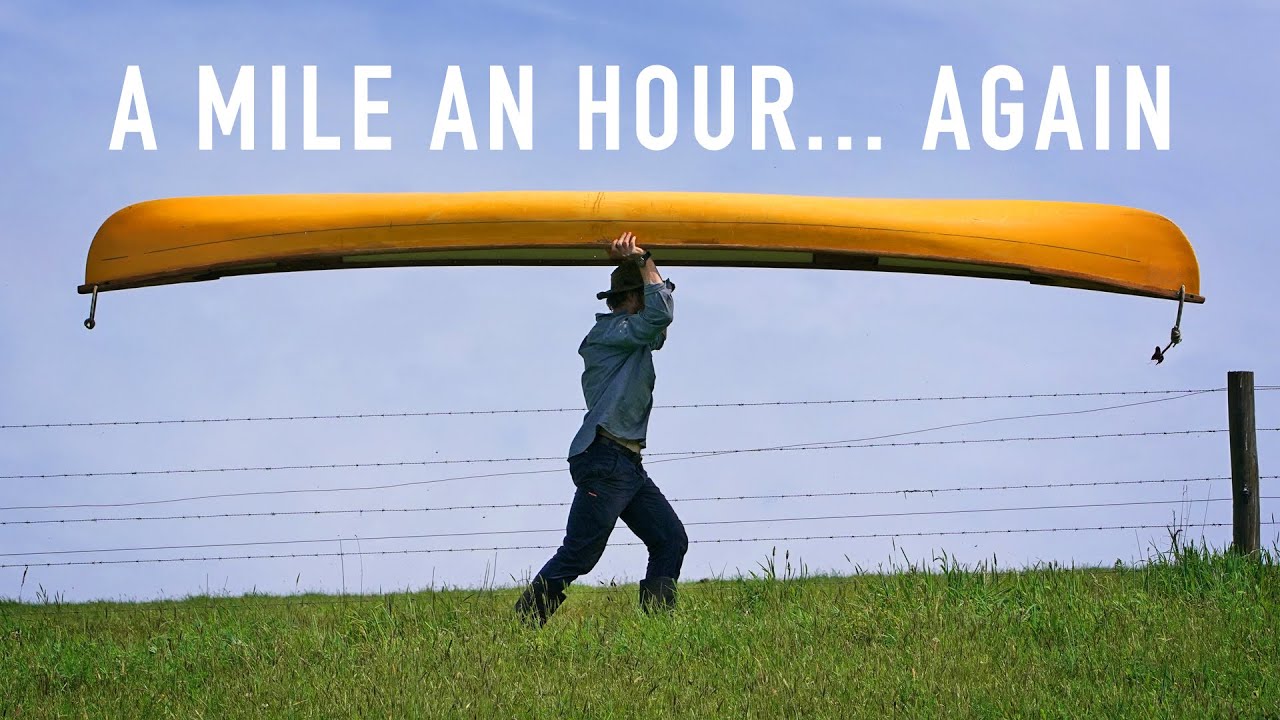
Productivity experts out there likely know the Pomodoro Technique well. The time management method invented by Italian Francesco Cirillo in the 1980s. While attending university, Cirillo used a tomato-shaped kitchen timer set for 25-minute uninterrupted work intervals. Each interval then followed by a five-minute break. The Pomodoro Technique has proven its efficacy in the decades since. Paddler Beau Miles may have taken productivity hacks to a new level though, as he used a Pomodoro-type Technique of his own to tackle two daunting endeavors: renovating an old canoe while running a marathon.
This isn’t the first time Miles has teamed tedious tasks with long-distance running to appear to be the most productive human being on earth. In 2018, Miles completed another version of the endeavor. Miles would run one lap around his mile-long block. Then work at one household task on his to-do list until the next hour. Fans seemed to be enthralled with Miles’ accomplishment. The video Miles published following his last 24-hour marathon has received more than 4.5 million views. Not to mention, less than two years later, we’d all be at home, online, looking for ways to keep ourselves busy and sane.
With the success of the previous productivity marathon, Miles has returned with a new mission, melding two accomplishments many of us in the outdoors romanticize—running a marathon and restoring an old canoe. Miles sets off to prove both items on your bucket list can be accomplished in little more than a day.
This time, the paddler sets out to complete his marathon with laps around his property. The most entertaining aspect for you canoe aficionados is the worn-out, yellow livery boat in his possession. Over the course of the day, Miles ticks off miles while renovating the canoe. Each hour, he goes from stripping the boat down to the bones, sanding it, and rebuilding yokes and seats. Miles ends up with a seaworthy canoe, all while making the rest of our days look flat-out lazy.
The best way to cure end-of-trip blues. | Feature photo: Colin Field
After 46 years running Wabakimi Outfitters & EcoLodge, owner Bruce Hyer is looking to retire. But with no one to pass the torch onto, the future of the business is uncertain. Photojournalist Colin Field and his son venture into the Wabakimi wilds on a guided whitewater adventure to find out what the outfitting operation is all about and to discover the magic of the Park for themselves.
Dreams for sale: Passing the torch at Wabakimi Outfitters
Paddling through the waves of a nameless rapids, we desperately try heading to river right—away from the massive three-foot-high wave downstream. But the river has other plans; it’s pushing us directly into the meat of the intimidating liquid wall.
The Allan Water River provides rock dodging, wave crashing, boat swamping fun on its class II rapids. | Photo: Colin Field
Our bow rises then falls into the trough before plunging through the powerful curling mass of water. For a millisecond the front end of the boat is completely submerged. And it’s in that fraction of time the boat fills with water. It’s my son’s first time swamping a canoe. The rapids end and I’m up to my belly button in water. With each tilt of the boat more water pours in and causes us to sink lower. It’s a feedback loop of submersion. We keep our paddles in the water to stabilize while wobbling precariously.
Our drybags and barrels are all tied in. My camera gear is sitting safely on shore. I laugh as the boat sloshes about like a floating bathtub and I realize my son is also thrilled. He thinks it’s fun. The relief of paddling rapids he was nervous about literally washed over him.
Bruce Hyer, 77, founder of Wabakimi Outfitters & EcoLodge, trip planner and storyteller extraordinaire. | Photo: Colin Field
Paddlers and anglers using Wabakimi Outfitters’ services begin and end their trips at the EcoLodge. | Photo: Colin Field
Sons and fathers set their course
Usually a trip like thisis created to promote a business. An outfitter invites a journalist along to hype up the brand and voila! They get international exposure to a perfectly targeted audience. It’s a cost-effective form of marketing with a somewhat trackable return on investment. But that’s not what’s going on here.
Wabakimi Canoe Outfitters & EcoLodge is having an existential crisis. The business’ founder, Bruce Hyer, is getting old. He’s spry, quick on his feet and one tough old man. But, as he says, “I’m 77, let’s get real here. I don’t know what’s going to happen to the business.”
Bruce’s business is the culmination of over 40 years of passion for the outdoors, canoes and sharing that love with others.
“I think Michael’s one of the top human beings on the whole planet. He only has one flaw: he doesn’t want this business.”
In an ideal world, his son would take over. Twenty-eight-year-old Michael Hyer went to law school, recently passed the bar, and has a job starting in the fall working in human rights law and Indigenous self-governance.
“I’m totally biased, of course,” says Bruce, “but I think Michael’s one of the top human beings on the whole planet. He only has one flaw: he doesn’t want this business.”
I’ve brought my own 13-year-old son along. We’re headed out on a four-day trip down the Allan Water River in Northern Ontario’s famed wilderness canoe tripping destination, Wabakimi Provincial Park.
The fashionably late train service provided by Via Rail is part of the charm of a train-in adventure. | Photo: Colin Field
Whither Wabakimi
The trip begins at the EcoLodge itself near Armstrong, Ontario, about three hours north of Thunder Bay. It’s a beautiful eight-bedroom lodge with a spacious common room and an all-inclusive vibe. Bruce and his wife, Margaret, are hosting us along with 20 other people who are spending the night. It’s from the lodge that groups of canoeists, anglers and outdoor enthusiasts begin their trips. They’ll either take the train, a floatplane or a truck shuttle to their put-in or one of Wabakimi Outfitters’ seven outpost camps. While Bruce’s first love is canoe tripping, he also helps anglers get to some of the best fishing in the province.
During the course of the evening, Bruce is careful to spend time with every guest, going over their itineraries.
Thirteen years ago Bruce beat cancer, but lost half his tongue; his speech is slurred and sometimes difficult to understand, but that doesn’t stop him from speaking. He shares his years of knowledge about the Park readily. Bruce knows Wabakimi intimately and claims to have created 90 percent of its recreational routes. In fact, he spearheaded the creation of the Park itself.
We begin the canoe portion of our trip at the “train station” in Armstrong, about 15 minutes from Wabakimi EcoLodge. The station itself is little more than a gravel parking lot littered with detritus. There’s no washroom, ticket kiosk, cafe, bathroom or attendants. We arrive for the 9 a.m. departure, fully aware the passenger train is often late. It’s a surprising, but not uncommon occurrence on the Via Rail lines; problems arise when the train arrives uncharacteristically early and departs before the scheduled arrival. On this day, the train is 3.5 hours late. We load our canoes into the cargo car, then board the passenger car and spend the majority of the 90-kilometer ride enjoying the scenery from the bubble car, which has a second floor where the walls and ceiling are all window.
We hop off the train at Allanwater Bridge where the Hyers have one of their outpost camps. It’s finally time for our boats to touch water, and we begin our paddle downstream.
This is the same river Bruce Hyer paddled back in the early 2000s with husband and wife Jack Layton—then leader of the New Democratic Party—and Olivia Chow—former NDP Member of Parliament and current mayor of Toronto. Layton convinced Bruce to run for Member of Parliament for the riding of Thunder Bay-Superior North on this trip—a position Bruce would then hold for two terms, championing work on climate change legislation and the Superior Passenger Rail Motion mandating the return of Via Rail service to the north shore of Lake Superior and Thunder Bay.
It’s also the same river Bruce paddled with famous wildlife artist Robert Bateman, the canned joke being he taught Bateman how to draw.
Michael (stern) and Eden (bow) running one of the Allan Water’s many splashy rapids. | Photo: Colin Field
Blueberries—and therefore black bears—abound in Wabakimi in early August. | Photo: Colin Field
Expect pensive paddling like this between sets on the Allan Water. | Photo: Colin Field
How Hyer helped launch new park
Bruce’s story with Wabakimi Provincial Park goes back to 1976 when he first arrived in the area. Bruce is an American from Connecticut, but he’d dreamed of living in a cabin in the woods since he was five years old. Before he relocated to Canada, he’d had a varied career, including a stint as a saxophonist in an otherwise all-black jazz band in the 60s and as a cop.
“In 1970 I got myself put in charge, at age 24, of the pesticide department for the state of Connecticut,” he recalls. “I banned DDT. I was the guy who banned DDT in the U.S.A.”
In 1976, Bruce decided he didn’t want to wait for retirement to move to the wilderness, so he quit.
“I quit my job and brought my first wife up here and lived in a tipi for a year and a log cabin for a year,” he recalls. “My first wife went away after a few months. We had this very polite conversation: ‘Bruce you’re very persuasive, you made this sound very romantic, but I’m sick of eating blueberries and beaver tails, and I’d like to see a few other human beings.’ So I stayed and she left.”
Bruce continued to live in the bush for the next three years, living mostly off the land. Then he heard rumors the Ministry of Natural Resources and Forestry was going to log the area. He moved to Thunder Bay and began working to prevent it. In 1983, after much lobbying, letter writing and Toronto visiting, Wabakimi Provincial Park was formed. In 1997, the Park was significantly expanded to its current size.
Today, Wabakimi Provincial Park is nearly 10,000 square kilometers, is one of the world’s largest boreal forest reserves and is the second-largest provincial park in Ontario. Wabakimi Outfitters & EcoLodge is the only canoe-focused company operating in the Park.
Michael takes after his father: hiking boots, long pants, and an expansive knowledge of Wabakimi. | Photo: Colin Field
Growing up a guide
Bruce’s son Michael is our guide. The trip consists of me, my son Taj, Michael and his friend Eden. My son is 13 while Michael and Eden are in their late 20s. They’re full of big ideals and dreams for the future. Both are recovering tree planters whose social circles run deep in the planting end of the forestry business. They’ve got serious outdoor skills and Michael obviously inherited some of his father’s old-school habits; he says portage like an American (pronounced portidge), always wears pants with a long sleeve shirt in the bush and instead of river shoes he wears Scarpa hiking boots that he tromps through the water in. He’s always got a compass around his neck, a knife on his belt and a multi-tool clipped to a belt loop with a carabiner. He guided his first trip when he was 12 and I have absolutely no doubt in his ability to take care of us.
The Allan Water River is a beauty. The short section we paddle has lots of fairly low consequence whitewater, especially with the lower water levels we find in early August. We don’t encounter anything more difficult than class II and for the most part, it’s just good old fashioned fun—rock dodging, wave crashing fun. Even when we need to portage, the trails are short and easy, downright dreamy with two 28-year-olds who are happy to carry the boats.
While our last day on the four-day trip entails two short upstream portages, the other three days consist of scouting and paddling rapids with brief lake paddling stints between sets. The Allan Water is a perfect river for the whitewater enthusiast; undoubtedly among my top three favorite Ontario rivers I’ve paddled.
We’re surrounded by wilderness with no sign of humankind other than the occasional floatplane passing overhead. The black spruce and jack pine forest is peaceful, rugged and beautiful. We see a couple black bears on the side of the river. We see loons and bald eagles. There are also moose and caribou in the Park, but we don’t see any. And there are blueberries absolutely everywhere.
When Michael asks if we want fish for dinner, Taj and I instantly respond with a synchronized “Heck yes!” Michael delivers; after half an hour of fishing from a canoe, he returns triumphantly with two dinner-sized walleye.
I ask him if he’s really good at fishing or if the fishing is actually that good.
“It’s just knowing where to be,” he says humbly. “Right on the eddyline, where they wait for food without expending any energy.”
I suspect he’s actually a great fisherman even though he claims he isn’t that into it.
Michael and Eden lay out a typical shore lunch. | Photo: Colin Field
“Wabakimi’s been discovered”
Wabakimi Outfitters isn’t really a guiding company. Although they’ll do it, they specialize in setting up self-guided groups.
“I try to match the right people to the right budget, route and skills,” says Bruce.
He carefully questions people about their skill levels and trip requirements before recommending a corresponding experience. Then he coordinates shuttles in and out of the Park. He says canoeists balk at floatplane prices—although they rave about the experience afterward—while anglers never question expenses as long as the fishing is good. But it’s the knowledge that is truly valuable.
“During COVID, when everything was closed, we were it. COVID didn’t hurt us, it helpedus. That and social media.”
“You saw my maps,” he says to me. “That’s the most valuable thing. There are hundreds of hours in those maps and thousands of hours developing the routes. And they’re pretty accurate. I always say they’re 99 percent accurate because a) we’re human, b) things change and c) to cover my ass. Maybe that’s a).”
It’s that knowledge, along with the properties, buildings, equipment, clients and relationships, that make Wabakimi Outfitters & EcoLodge a successful business. That and decades of sheer willpower.
“I’ve been at this for 46 years,” says Bruce. “And I didn’t make any money off of it for most of that time. Margaret and I kept pouring money into it. It’s our retirement fund. Will we get what we put into it? Probably not. Will we get enough to retire? Hopefully.”
Like many outdoor companies, Wabakimi Outfitters saw better business during COVID. And they’re still enjoying more success than ever.
“All of a sudden Wabakimi’s been discovered,” says Bruce. “During COVID, when everything was closed, we were it. COVID didn’t hurt us, it helpedus. That and social media. Wabakimi’s been discovered, we’ve been discovered, I’ve been discovered. It’s kind of embarrassing; I’m kind of a cult hero now.”
The best way to cure end-of-trip blues. | Feature photo: Colin Field
That cult hero status is well-deserved. Mention the name Bruce Hyer to anyone in Thunder Bay and they’ll have a story. Like the time he crashed his floatplane.
“I turned a $150,000 plane into a $5,000 pile of scrap,” he recounts.
This was five years ago, when he was 72. He flipped the plane while landing on a lake and escaped through one of the doors as the cockpit filled with water. He sat on the upturned float while awaiting rescue and laughed uncontrollably for an entire 10 minutes.
“I borrowed a phone and called Margaret,” he recalls. “I told her I had some good news and some bad news. The good news was that I was alive.”
Searching for a successor
He’s still holding out hope Michael will change his mind and take over the business.
“We’re very interested to see what he does,” says Bruce. “Am I disappointed he doesn’t want to take over? Yes. On the other hand, I can see how effective he’ll be as a lawyer. That’s probably a more important job.”
In the meantime, Wabakimi Outfitters & EcoLodge is tentatively for sale.
“I can sell the whole thing outright. It wouldn’t be my first choice, but I would do it,” he says. “Or I could share it, find a good partner and I’ll do some planning, sorting, shuttles. I think someone should buy half of it, maybe 49 or 51 percent, and run it alongside us.”
“Rivers know this: there is no hurry. We shall get there some day.” —A.A. Milne | Photo: Colin Field
Wrap up on Windfall Lake
On our final day on the river, we paddle to one of the company’s outpost camps on Windfall Lake. The rustic cabin is complete with solar panels, electric lights, a fridge and a 20-foot-high water tower. We soon hear the sound of the floatplane and marvel as the de Havilland Otter flies in, lands noisily, then reverses onto the beach to pick us up. Strapping the boats to the landing gear struts, the pilot swears and jokes while we load up the rear of the plane with our gear. My son gets to ride shotgun and after we take off, the plane dips and careens in what I assume is turbulence (after landing my son assures me every time we dipped the pilot was lighting a cigarette), an experience I’m eternally grateful he was part of.
The floatplane takes us over the scrubby, barren landscape littered with rivers and lakes and I’m transfixed by the terrain and the tripping potentials. It’s a flight that leaves me smiling for the rest of the day and the landing back at the Wabakimi EcoLodge dock is as smooth as they come.
Wabakimi Provincial Park is one of the world’s largest boreal forest reserves and is the second-largest provincial park in Ontario. | Photo: Colin Field
A chip off the old block?
In essence,Bruce’s dilemma is that the Lodge was his dream. He believes he has the best job in the world. While he brought his son up to love the outdoors and created another capable and great outdoorsman, the Lodge is not Michael’s dream. Nor does it have to be.
It makes me think about my own son. For the past few years, he’s claimed he’d like to be a videographer when he grows up, which is remarkably similar to what I do as a photojournalist. I suppose I could count that as following in my footsteps. When I’m on assignment, paddling rapids, skiing powder or watching belugas, I honestly feel like I too have the best job in the world.
Over the course of the trip, my son assisted while we created imagery of paddling. When I was flying the drone, he’d take pictures. When I was taking pictures, he’d film the action. He’s good at it. With some minor guidance, it came to him naturally.
On the cramped, stuffy Air Canada flight home, I ask him the big question. I don’t expect a 13-year-old to know the answer to the question. But after watching me work and getting to experience what my job entails, I suspect he finally realizes my job is pretty cool. We just did a train-in, fly-out four-day whitewater trip with some of the coolest folks in Northern Ontario and it’s my job. So I do it, I pop the question.
“What do you think you want to do when you grow up?” I ask cautiously.
“I don’t really know,” he says thoughtfully. “But I’m really interested in history. Maybe a historian?”
Colin Field is an outdoor photographer and writer based near Collingwood, Ontario. An avid skier, cyclist and paddler, he prefers the gravity powered spectrum of each sport: alpine skiing, lift-accessed mountain biking and whitewater paddling (he’ll paddle lakes if he has to). If you need someone to drop everything and go on the trip of a lifetime three days from now, he’s your man.
This article was first published in the 2023 Paddling Trip Guide. Subscribe to Paddling Magazine’s print and digital editions, or browse the archives.
The best way to cure end-of-trip blues. | Feature photo: Colin Field
Torrents As Yet Unknown and author Wickliffe (Wick) Walker. Feature Image: Courtesy Steerforth Press / Penguin Books
The river expeditions of the second half of the 20th century were the founding of whitewater paddling as we know it today. Stocked with surplus military gear and emerging technologies, paddlers descended into treacherous and concealed river gorges. The only information known on the whitewater within their depths sourced from the accounts of local communities and what limited geographic knowledge existed. It was a time before Google Maps and stockpiles of GoPro footage flooded YouTube. When paddlers returned with tales of mysterious cataracts they proved runnable.
At 77, it is a volume of whitewater history Wickliffe (Wick) Walker has lived through and has himself largely contributed to. In his new book, Torrents As Yet Unknown, Walker guides us in narrative form through a collection of the most compelling ventures into river gorges around the globe over the course of this significant half-century. The reported stories are not of his own feats, but of fellow peers and icons of the day.
“The idea came to me that a lot of these stories from the 1950s through 2000 were very little known or were all distorted with campfire rumors,” says Walker. “I thought it would be an interesting project while there were still most of these people alive to track down and tell some of these stories.”
A Lifetime of Whitewater Tales
Walker found his path to whitewater the same way many have, through open canoeing in his youth. Through his adolescence and early adulthood, he forged his paddling prowess on the Potomac River alongside childhood friend Tom McEwan—another whitewater legend in his own regard. Walker went on to race canoe slalom at the highest level and represented the U.S. in C1 at the 1972 Munich Olympic Games, the first to include whitewater.
Not long after competing in the Olympics, Walker’s taste for expedition paddling took shape close to home. Walker accompanied a party including McEwan to make the first known descent of the Great Falls of the Potomac River in 1975—a feat he and McEwan had dreamed of for years. Walker went on to take part in expeditions on rivers as far off as Bhutan and Pakistan. He also served a career as an officer in the Army, retiring as a lieutenant colonel after his work that included intelligence and special forces.
In 1998, Walker was a trip leader and served as ground support for the first American expedition into the Yarlung Tsangpo Gorge, accompanying paddlers Tom McEwan, Jamie McEwan, Roger Zbel and Doug Gordon—a superb class of their day. Tragically, Gordon lost his life during the attempted descent, bringing the team to exit the gorge, which Walker chronicled in depth in his 2000 book, Courting the Diamond Sow: A Whitewater Expedition on Tibet’s Forbidden River.
Torrents As Yet Unknown and author Wickliffe (Wick) Walker. Feature Image: Courtesy of Steerforth Press
Torrents As Yet Unknown
To write his new book, Torrents As Yet Unknown, Walker spent nearly a decade reporting on archived materials and traveling to interview many of the characters in the book. What Walker has compiled is an indispensable history of modern river running and the rivers that are now benchmarks in the sport—some even run commercially.
The 200 pages of Torrents feature 10 of these histories framed around specific expeditions. It begins with the film production that brought about the 1950s raft descent of the Indus River by Grand Canyon guide Don Hatch and company. The book also includes a decade of fantastical ventures by British kayaker Mike Jones, including the time he paddled down the flank of Mount Everest from the base of the Khumbu Glacier, as well as other tales like the endless Soviet-era road trip of the Polish team called the Canoandes, which culminated at what was once believed to be the world’s deepest canyon on Peru’s Colca River, and Doug Ammons’ solo first known descent of the Stikine River.
In the book’s final act, Walker revisits his team’s 1998 expedition to the Yarlung Tsangpo River, often called the Everest of rivers. The author shares the experience of his friends within the gorge, which would turn to a devastating conclusion.
With Torrents As Yet Uknown, Walker brings us to river level and captures the sensation of anticipation as we drift toward the rumbling around the next bend. Paddling Magazine caught up to discuss the book with the author and the wisdom of whitewater he has amassed in his lifetime.
Mike Jones and a meteoric decade. Illustration: Kim Abney / Courtesy of Steerforth Press
An Interview With Wick Walker, Author of Torrents As Yet Unknown
Paddling Magazine: You’ve lived through the entire era written about. It’s something you grew up with as a kid coming up in paddling and paralleled your entire life. How did it feel for you, personally, to catch up with some of these paddlers—some your heroes, some your peers—and to have these conversations about these historic expeditions?
Wick Walker: That wound up being the most rewarding part of doing this whole project—traveling around and meeting some of these people and talking with them in depth. Some I had met in passing over the last 50 years. Some I knew only by reputation. But during that period most of us had been focused in our own silos, on our own expeditions. Sometimes keeping them deliberately secret from people. So the chance to travel around now and meet them and experience it through their eyes was the most remarkable and rewarding part of the project. I also like to think that although this certainly isn’t a memoir, that seeing it through my eyes and through my own experience provides kind of a unique viewpoint on all this.
PM: Which of the paddlers included in the book stood out as especially interesting characters?
Walker: There were such a variety of people as protagonists in these different stories. I think the individuals and their motives were so various. I never actually got a chance to interview the Chinese team members on Tiger Leaping Gorge. Happily, I got ahold of one of their diaries, but I wasn’t able to get out to China and track down anybody because the geopolitics just made that impossible before I could get to it. There were the motivations, almost suicidal motivations, of the Poles and the world’s longest road trip. And Doug Ammons is a case all by himself. I love his writing. I like Doug and there’s just nobody like him.
So I’d have to say each chapter I kind of selected because they were these interesting people.
Oh, and Mike Jones. If there was one that I had to pick off the top of the whole list, it’s probably Mike Jones, the Brit. He was a total adrenaline junkie, and he had this vision, kind of the British 19th-century exploration calling. He was out there doing things before anybody else and taking some huge risks—which eventually killed him. Jones was the only one where I couldn’t write a chapter about this one canyon, or this one group on these dates. I had to do the whole 10 years of Mike’s career to tell that story.
He deserves a book. Not by me. I wouldn’t be the perfect person to do it. But as far as I know, the two chapters about him in Torrents are the only beginning-to-end story of his paddling that’s ever been done. Everything else I found were magazine articles of verbal accounts and that sort of thing of one adventure or the other. As far as I know, I’m the only person who started with him as a beginner paddler on the Ian River and wound up in the Karakoram.
PM: There aren’t many photos in the book, but instead illustrations and maps for each chapter. It felt complementary to the narrative. Was it your intent to not use photography?
Walker: Aside from the economics of publishing a book with photos, which is much more expensive than publishing a book without, I also just feel like the sport, especially these days, is inundated with good-quality photography and video. All over YouTube and everywhere else. I didn’t know that I could contribute much to that. I’ve always liked pen and ink illustrations in expedition accounts. In 18th- and 19th-century expeditions artists went out as the recorders of the expedition and brought back wonderful illustrations that were expressive and gave you a sense of place. I liked that old-fashioned look and thought I did not want to be producing a coffee table book. I found Kim Abney, and I’m really happy with what we came out with as the overall visual appearance of the thing.
Map of the Yarlung Tsangpo River. Illustration: Kim Abney / courtesy of Steerforth Press
PM: You end the book with the Tsangpo expedition of the late 90s—a serious and tragic expedition that you were a part of. This felt like a moment closing the era you’ve captured in the book and the transition to the period of whitewater paddling where we are today. Would you agree with that?
Walker: I think the period of time I knew and was involved in was very much the early development days of the sport. And we were in some ways so lucky to be able to be inventing some of this stuff. That progress was in radical leaps and bounds from rubber World War II bridge pontoons to more specialized rafts. And from aluminum canoes to covered fiberglass and then rotomolded plastic. So we really were able to experiment with and make changes. Today it changes in inches.
The extreme boaters today are all doing these really wonderful things, but they’re maybe adding layers slowly to the sport. So it’s a different thing. I also think that in terms of expeditions, I cut off the book right at the point where a lot of things like satellite photography and satellite telephones really changed the expedition world and how you could prepare and scout.
PM: What’s held you to whitewater over the course of your lifetime?
Walker: Oh, I’m probably the last person to be able to describe that. But certainly, there were so many facets to it. I got into it through open canoeing in the Quebec wilderness and migrated to slalom racing at the upper levels. Then migrated to river running and expeditions, and then to writing about it. Each time I wore out my knees, broke something or got too old, there was some new aspect of paddling that emerged to me. And I think rivers are that way. I think there’s just so much dimension to moving water and how we relate to it.
PM: Is there an ultimate lesson river running has taught you?
Walker: Probably a sense of humility in relation to nature as a whole. You know touching the living planet and the humility that brings to you, but also the appreciation.
PM: What do you hope readers walk away with from Torrents As Yet Unknown?
Walker: I expect it’s going be different things for different people. I felt all along that I was writing for a couple of different audiences. I think the paddling community is going to take some interesting history, and appreciation of their sport, and maybe learn some lessons to use on the rivers. I’m also hoping it’s going to touch a broader audience of the outdoors and maybe the general reading public. To be honest, I have no idea what some of those people are going make of this. [Laughs.] I’ve gotten some very blank stares at times. So I’m looking forward to seeing what happens.
PM: What’s next? Do you have another book in the works?
Walker: Well, my wife has pointed out that my books have each been almost exactly 10 years apart, all four books. Going by that, my next would be in my late 80s. So she suggested I take up short stories.
Truthfully I want to continue writing. I don’t have another book like Torrents. Like everybody, I’ve got the half-finished novel in a drawer. But realistically, I’m looking forward to two things. One is some shorter work. The other is going back to something I’ve done a number of times in my continuing education and doing writers’ workshops here and there. I kind of gave up doing those when I got deeply involved in the book and had a deadline. But I want to get back to those. I find those fascinating.
“Intention is everything. Nothing happens on this planet without it.” —Jim Carrey | Feature photo: Rick Matthews
The local shop showed upat our annual spring whitewater paddling festival with these white capital letters screened across the chest of their red T-shirts: YOUR BOAT SUCKS.
Bold. But it was the early 2000s and the heyday of whitewater kayaking. Designers were chopping, squishing and sharpening boats at an alarming rate, racing to get pivotal improvements to market.
Most of the whitewater kayak brands were still independently owned and operated. Nobody was concerned about maximizing profits for shareholders. It was all about who could shape the best performing boat for the newest trick just invented. And if your boat couldn’t do it? Well, your boat sucked. Or so said the T-shirts.
Your boat sucks
Malcolm Gladwell is a staff writer for The New Yorker and five-time New York Times bestselling author. He wrote The Tipping Point, Blink, David and Goliath and Outliers. He’s the thoughtful guy we can thank for making the 10,000-hour rule the reason we’re not all on cereal boxes.
What drives Gladwell crazy is bad book reviewers.
Bad book reviewers, he believes, are ones who try to answer the question, if I had written this book how would I have done it? And if how the author wrote it deviates from the way the reviewer would have written it him- or herself, the reviewer gives the book a bad review. YOUR NOVEL SUCKS.
“That’s being a bad reader,” believes Gladwell. “The good reader is the one who says, ‘What did the author intend when he or she was writing this book?’”
“Intention is everything. Nothing happens on this planet without it.” —Jim Carrey | Feature photo: Rick Matthews
Criticism can come cheap
When we receive new floaty things here at Paddling Magazine, whether it’s a canoe, kayak or paddleboard, the initial feedback we get from reviewers is… You guessed it. “Man, this boat kinda sucks!”
Does it really? Some of the bestselling boats in the last 25 years have sucked, or so read the first impressions from our boat testers.
“Being critical is the easiest thing in the world,” says Gladwell. “If you asked me to do a hit job on War and Peace, I could do it. If you’ve never read War and Peace, and the only thing you’ve read is Malcolm’s book review of the greatest novel ever told, I could make it sound like the worst piece of trash.”
What’s hard, says Gladwell, is telling the interesting things; telling why the novel is great. Or in our case, why the boat or board is great. And, for whom it will be great.
“The problem with writing criticism is that it’s called criticism,” says Gladwell. “The implicit assumption driven by that word is that the job of the critic is to criticize.”
We don’t call boat reviewers critics, but hang out long enough in any paddling shop or Facebook group and you’ll get your fill of subjective preferences and personal biases. Seldom do you hear, “Well mate, it holds up to the designer’s intention. That’s a bloody success of a boat, if you ask me.”
To understand the intended purpose of any piece of paddling gear you only need to turn the pages in this year’s Paddling Buyer’s Guide. Still not sure what the designer was thinking? Visit the online Paddling Buyer’s Guide or Google it.
“The job of a critic is to appreciate,” says Gladwell. “Sometimes in appreciation we point out things that are not worthy of our appreciation. But the real job is to point out all the things that are worthy.”
[ Paddling Buyer’s Guide: View all boats & boards ]
Digging into the designer’s intent
No designer anywhere ever sets out to develop a product that sucks. Why would they?
This paddleboard doesn’t suck because it’s slow. It’s wide and fantastically stable.
This canoe isn’t too heavy. No, it’s indestructible and inexpensive.
Sure, the Wave Sport XXX doesn’t loop. But it won the Freestyle World Championships and is one of the best cartwheeling boats of all time.
If someone can show you things to appreciate and produce in you a sense of wonder, that’s what will make you investigate it more on your own. “Interesting… I’d like to try that boat,” you think to yourself.
And that, my friends, is how we end up with more boats than T-shirts.
Scott MacGregor is the founder and publisher of Paddling Magazine. If you have his 20-year-old C1 XXX pictured above, he’ll buy it back from you.
This article was first published in the 2023 Paddling Buyer’s Guide. Subscribe to Paddling Magazine’s print and digital editions, or browse the archives.
“Intention is everything. Nothing happens on this planet without it.” —Jim Carrey | Feature photo: Rick Matthews