Home Blog Page 75

5 Most Impressive SUP Feats Of The Year

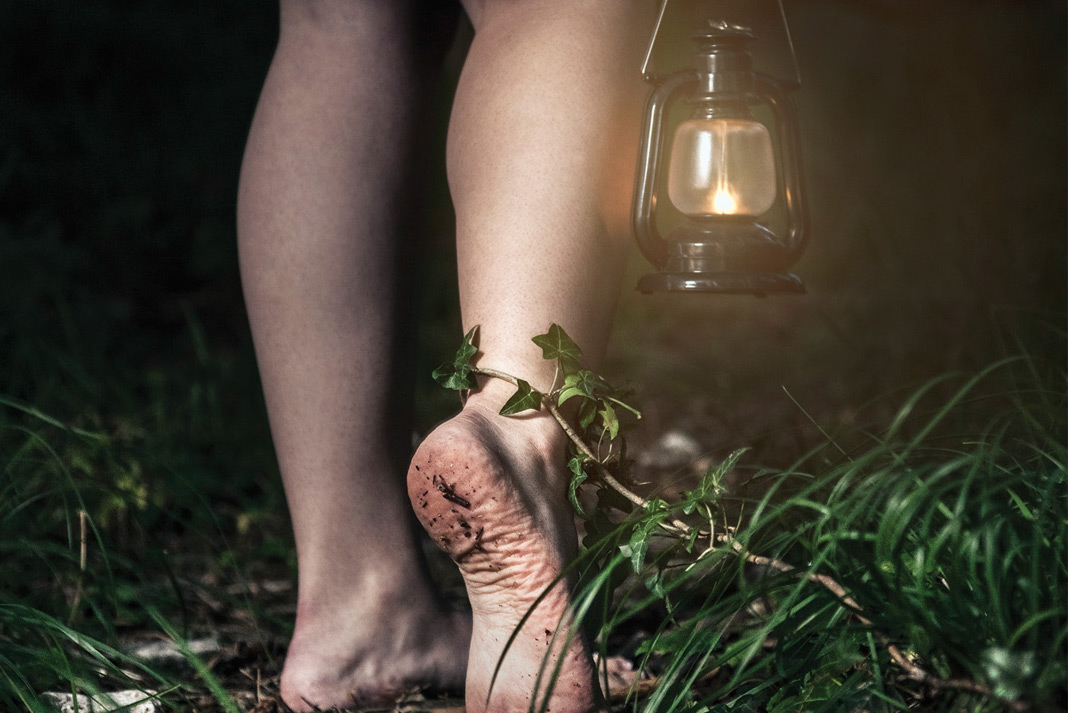
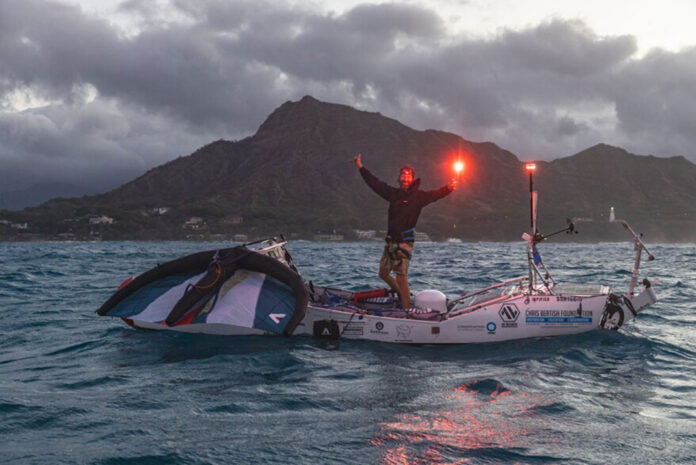
Man stands with flare on top of custom-built expedition paddleboard ready for major feats of paddling
Feature photo: Quin O’Hara

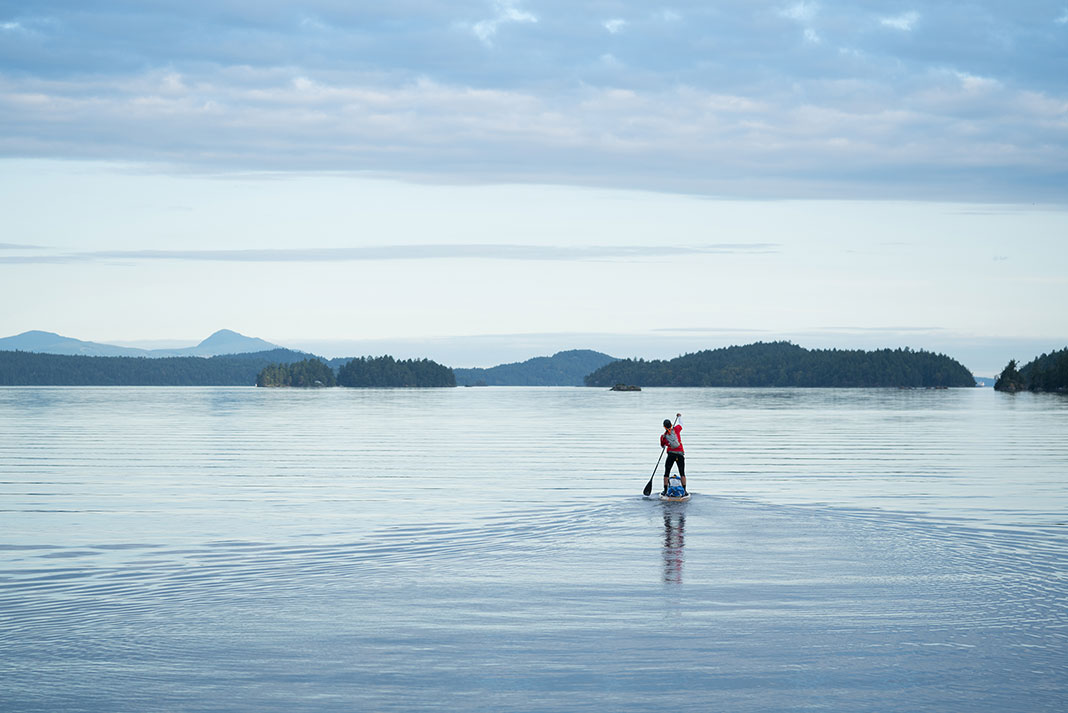
From awe-inspiring journeys and feats of endurance to record-breaking performances, these SUP achievements made 2022 a thrilling year.
5 most impressive SUP feats of the year

1 The Great Danish Paddle

Casper Steinfath | Denmark

Leave it to the viking of SUP to dream up this challenge. In May, professional paddleboarder Casper Steinfath completed The Great Danish Paddle, a circumnavigation of Denmark.

“The whole idea came about as a continuation of my Viking saga, where I crossed the oceans of Skagerrak and Kattegat,” said Steinfath in an interview with Red Bull, referring to his crossing of the sea between Denmark and Sweden, and the crossing between Denmark and Norway.

Steinfath’s circumnavigation saga wasn’t without challenges fit for lore: he battled rain, high winds, open seas and even snowstorms. He completed his quest on May 25, landing in his hometown of Klitmøller on his 14-foot Naish board. The 54-day expedition saw Stenfaith paddling for 277 hours to cover the 900 miles and camping along the way.
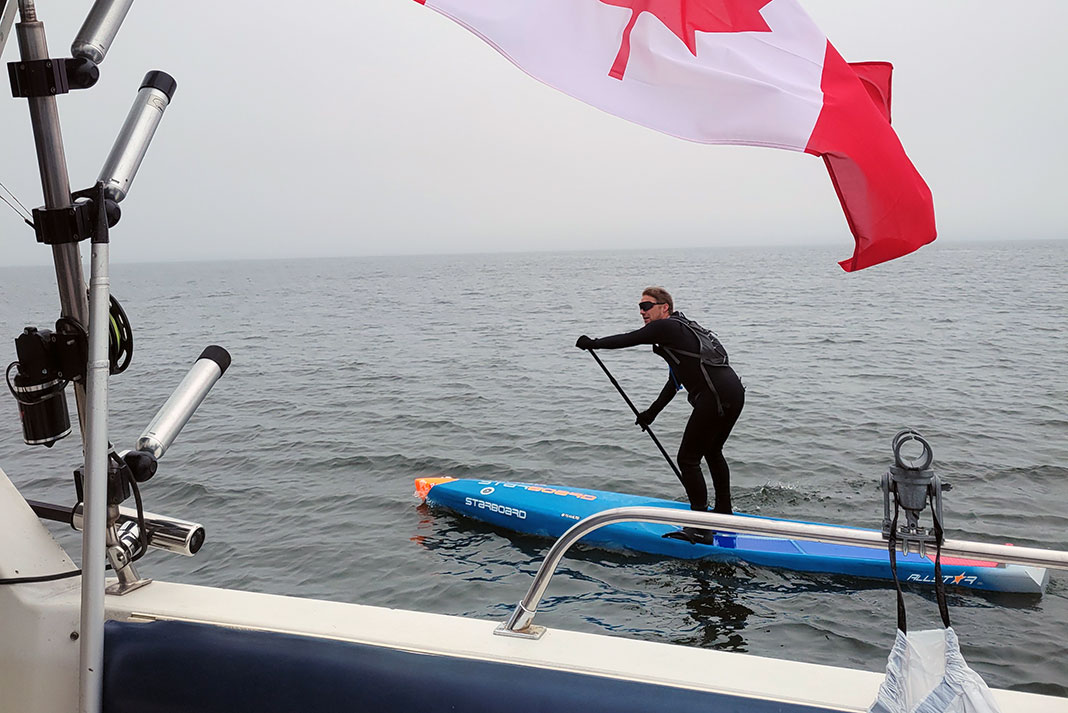
Mike Shoreman paddles beside a boat with Canadian flag during his paddleboarding feat
Photo: Courtesy Mike Shoreman

2 Canada’s Great Lakes Crossing

Mike Shoreman | Great Lakes, Canada and USA

It takes a remarkable person to rise up from a challenging situation and take on an incredible feat. Mike Shoreman had a thriving SUP business until he contracted Ramsay Hunt syndrome in 2018, which impacted his vision, mobility and balance. Doctors said he would never paddle again. Not surprisingly, the diagnosis and life-altering change deeply affected Shoreman’s mental health.

Fortunately, Shoreman found the support he needed and has since become a mental health advocate himself. He has relearned how to paddleboard—an impressive accomplishment in itself. But he didn’t stop there.

This summer, Shoreman launched Canada’s Great Lakes Crossing with the aim to become the first person with disabilities to cross all five Great Lakes on a paddleboard.

At the time of publication, Shoreman had raised more than $60,000 benefitting jack.org, which supports youth mental health in Canada, and had crossed lakes Superior, Erie, Huron and Michigan, with only Lake Ontario remaining.
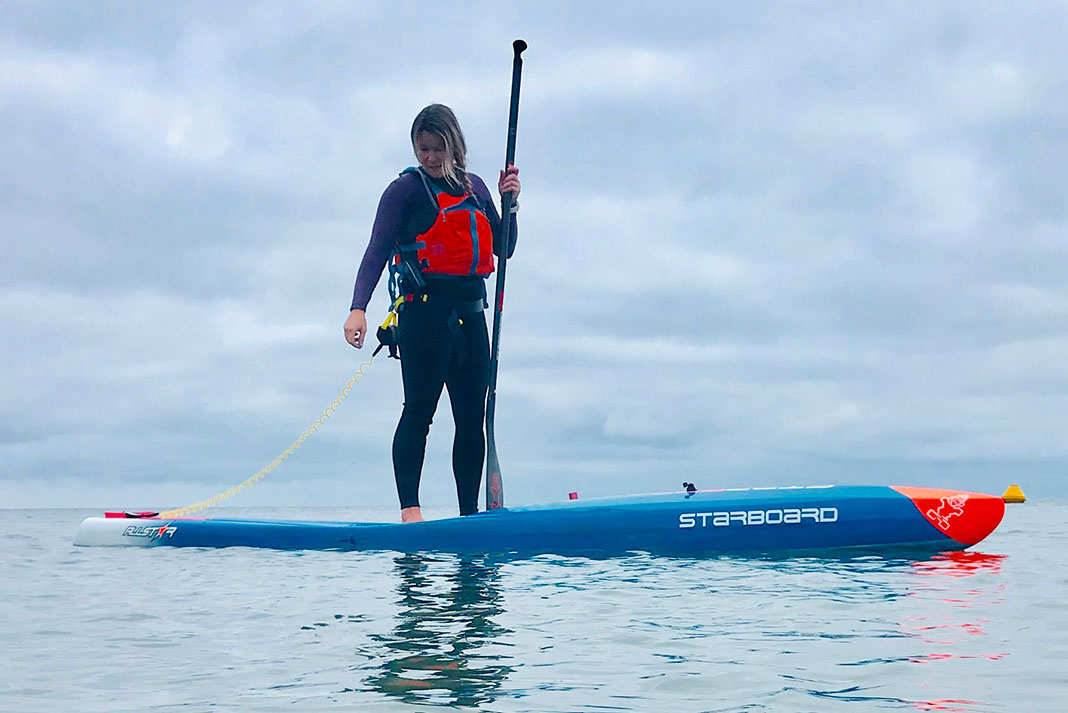
Samantha Rutt standing on her expedition paddleboard holding her paddle
Photo: Courtesy Samantha Rutt

3 North Channel crossing

Samantha Rutt | The North Channel, United Kingdom
On July 1, Samantha Rutt set a new world record when she crossed the 21-mile North Channel in five hours and three minutes. The notorious stretch of tricky water runs between Ireland and Scotland, where the Atlantic Ocean meets the Irish Sea. Rutt is not only the first woman to complete the route, but she beat the time of previous record holder Iain McCarthy by more than 90 minutes. Rutt is a vocal advocate for mental health and post-traumatic stress disorder awareness. She’d initially planned to paddleboard across the English Channel, between England and France, but couldn’t due to Covid regulations.
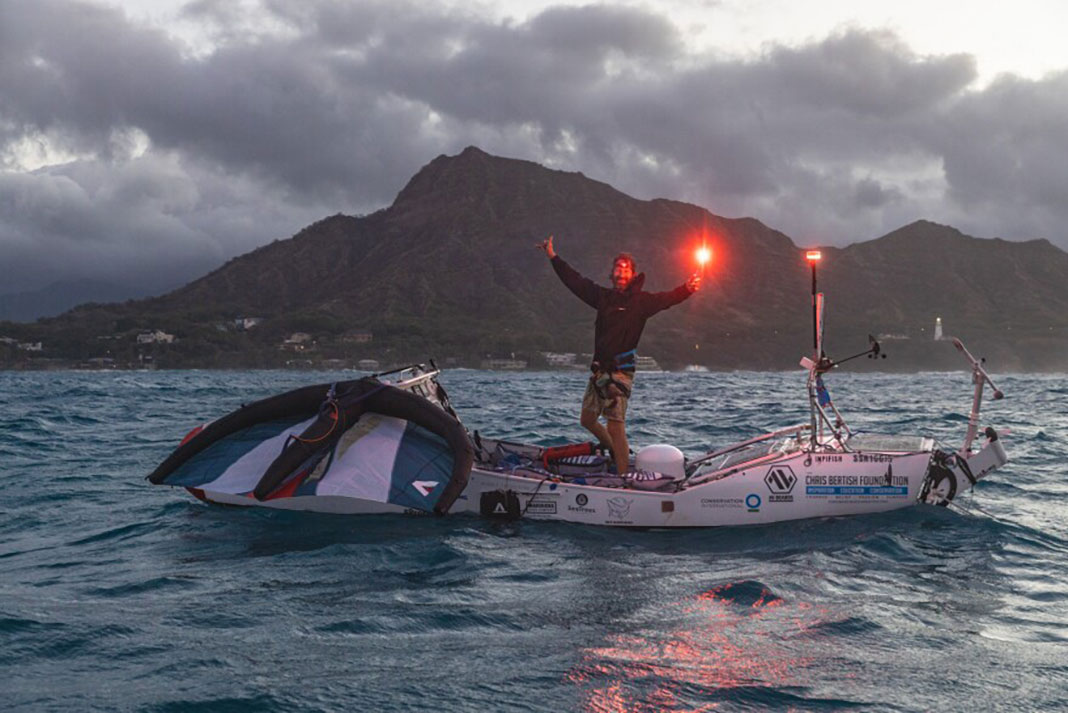
Man stands with flare on top of custom-built expedition paddleboard ready for major feats of paddling
Feature photo: Quin O’Hara

4 TransPacific Wing Project

Chris Bertish | North Pacific Ocean

South African adventurer Chris Bertish is no stranger to impressive expeditions. In 2017, he crossed the Atlantic Ocean on a custom-made paddleboard, making the arduous 4,050-mile journey alone. This year, he refurbished his 16-foot-long craft—named ImpiFish—with a wing foil.

On July 17, Bertish became the first to wing foil 2,550 miles from California to Hawaii. For 48 days, he traveled solo and unsupported, using only wind and solar power, and traveling up to 12 hours a day.

His motivation for taking on the superhuman challenge? To bring attention to climate change issues and ocean conservation while raising funds for charities, including Conservation International and Sea Shepherd Conservation Society.

“The first part of the trip was super intense due to extreme weather and coming into the Hawaiian islands with tropical storm Darby on my heels, making for some of the most extreme and scary ocean conditions I have ever experienced. But I don’t think it was as frightening as the amount of ocean pollution I saw out in the Pacific along the journey,” Bertish wrote on his blog after landing.
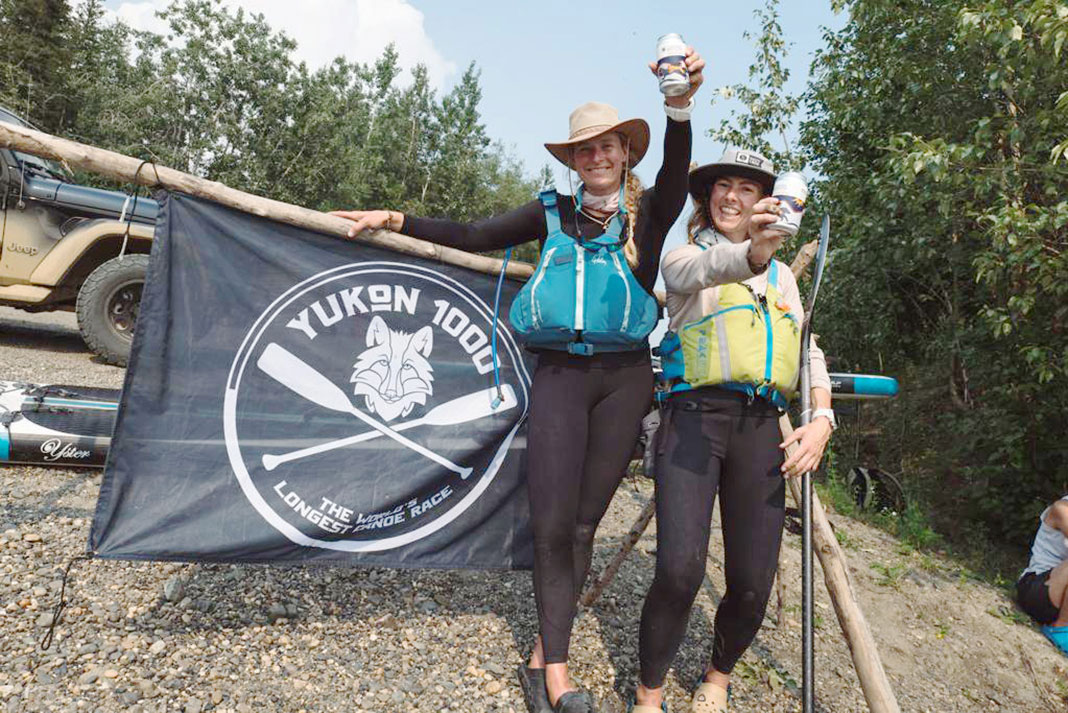
two woman paddleboarders stand in front of a Yukon 1000 banner
Photo: Courtesy Craig Sawyer

5 Double Dutch at the Yukon 1000

Ella Oesterholt and Janneke Smits | Yukon and Alaska

Ella Oesterholt and Janneke Smits, water women from the Netherlands, like to take on challenges to push their limits. At 1,000 miles long, the Yukon 1000 is the world’s longest paddling race and is open to canoes, kayaks and paddleboards.

It was the perfect match.

Smits and Oesterholt, former competitive whitewater rafters, opted to paddleboard and became the first female paddleboarding team to complete the route. The Dutch pair averaged about 18 hours a day on their 17-foot, three-inch inflatable SUPs from Swedish brand Yster, following the historic route of the Klondike Gold Rush from Whitehorse, Yukon, all the way past Dawson City to the Dalton Highway bridge in Alaska.

“Hopefully, it will inspire other women to go out, try new things and not be scared of judgment in their pursuit of goals they would love to accomplish,” says Oesterholt.
Cover of Paddling Magazine issue 68This article was first published in the Fall 2022 issue of Paddling Magazine. Subscribe to Paddling Magazine’s print and digital editions, or browse the archives.
Kayakers Rescue Pilot From Ice Covered Creek (Video)

When residents along Beards Creek in Maryland witnessed a single-engine plane crash into the icy waters, a father-son duo quickly jumped into action. John Gelinne and John Gelinne Jr., grabbed a pair of kayaks and made their way across the ice to rescue the pilot, as reported in these videos from the Associated Press and NBC News.

Beards Creek had frozen over with solid ice, and in order to reach the pilot the Gelinne’s used shovels to push their way out. The father and son were soon joined by a local law enforcement officer in a third kayak. The law enforcement officer can be seen in the Associated Press video using screwdrivers to claw their way out to the plane.

The kayakers were able to pull the pilot out of the small aircraft before it sank into Beards Creek. Soon after, a rescue boat was able to assist and get the pilot and paddlers safely to shore.


Brooke Hess On Descending The Salmon River At Never-Before-Paddled Flows

woman in whitewater paddling gear scouts a rapid on the Salmon River
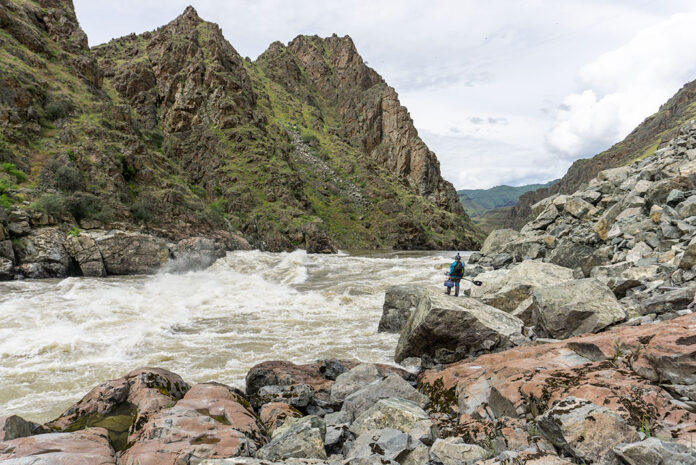
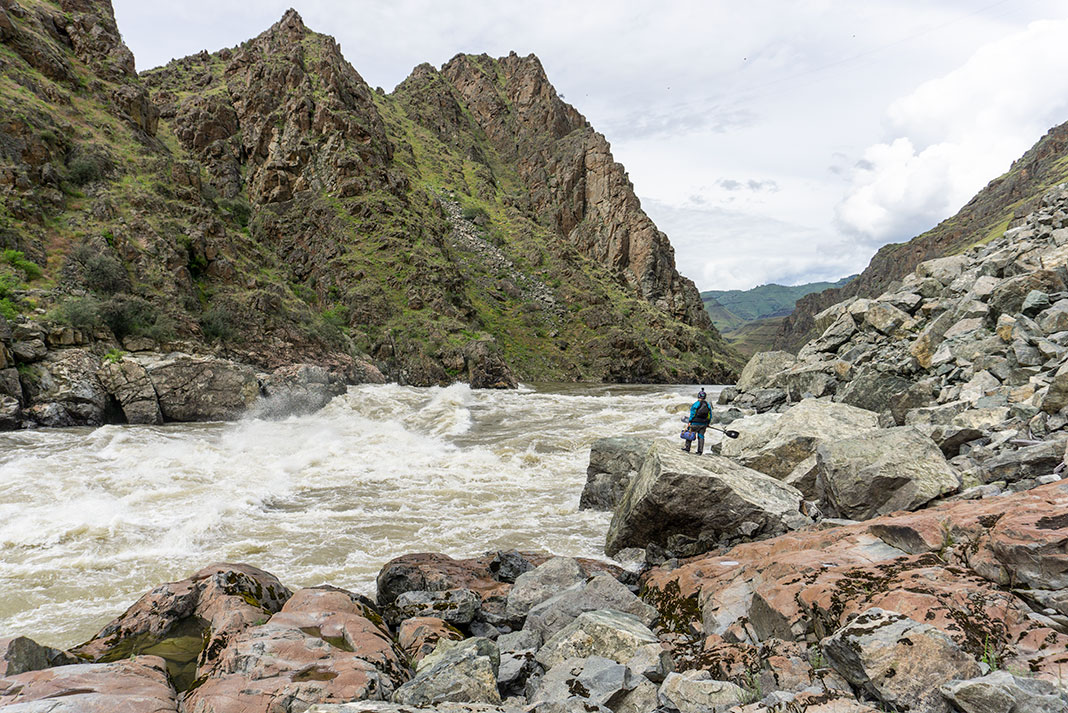
Hailey Thompson scouting Slide Rapid on the Lower Salmon at around 43,000cfs. | Feature photo: Libby Tobey

There have been few occasions where a rapid’s horizon line was so pronounced it made my stomach drop. Itunda Rapid on the White Nile always caused that feeling. I often found myself running into the bush to relieve myself while scouting, and it wasn’t because I had eaten something funky. Catching the eddy just upstream of Slide on the Salmon River, I had the same feeling.

Descending the Salmon River at never-before-paddled flows

It was day 34 of a 78-day Salmon River source to sea expedition. Our crew was paddling more than 1,000 miles, from the headwaters of the Middle and Main Forks of the Salmon in Central Idaho, all the way to the Pacific Ocean. We were doing this three-month sufferfest as a conservation project to promote the removal of the four lower Snake River dams and a moratorium on the Stibnite Gold Project and save Idaho’s rapidly dwindling salmon populations from extinction. We had just arrived at the crux of the whitewater portion of the expedition.

The Lower Salmon isn’t normally run above 20,000cfs because one rapid—Slide—is unrunnable at high water. When we reached the put-in for the Lower Salmon, the river was flowing at 60,000cfs.

woman in whitewater paddling gear scouts a rapid on the Salmon River
Hailey Thompson scouting Slide Rapid on the Lower Salmon at around 43,000cfs. | Feature photo: Libby Tobey

We called other paddlers and asked for beta. One source told us Slide is portageable, but dangerous. Another source told us not to put on at all.

We assessed our skills, fitness and experience. Our team of three—Hailey Thompson, Elizabeth Tobey and me—put on the Lower Salmon the follow day.

Sizing up the Slide Rapid

I was anxious paddling the rapids upstream of Slide. I couldn’t help imagining a worst-case scenario where we missed the portage and were forced to run this unrunnable rapid.

Paddling into the eddy just above Slide, I realized how irrational my fear was. We could hear the rumble of the whitewater from over a mile away. The horizon line looked like the water was falling off the edge of the Earth. You couldn’t miss it.

Scouting the rapid was a new experience. Usually, when deciding whether to run a rapid or portage, you choose between a scary option and a not-scary option. Unfortunately, we only had scary options. It was clear we were going to portage, but that didn’t make the ordeal any less consequential.

We spent four hours shuttling multiple loads of drybags and kayaks over a 200-meter-long unstable talus field. We utilized technical climbing movements to get up and over boulders taller than we could reach, vertically hauling our boats with ropes and carabiners. Multiple times I placed my foot on a boulder, felt it shift under my weight, and barely caught myself from tumbling down onto the jagged rocks—or worse, into the class V+ rapid below.

Grand Salmon crew surprise even themselves

Downstream of the portage, there was no feeling of relief. The only option for reentry into the river was a 10-foot seal launch into an eddy surging up and down 10 feet, pushing straight into an undercut cliff, with wood blocking the preferred path to safety.

We didn’t see a single soul in the three days we spent on the Lower Salmon. At the confluence with the Snake River, we encountered a rafting crew who had come through Hells Canyon on the Snake.

“We couldn’t believe it when we saw you all paddling out of the Lower Salmon at these flows!” exclaimed one of the rafters. Honestly, neither could we.

The Grand Salmon Source to Sea crew is making a film about their 1,000-mile journey that followed the migration of the salmon from the rivers of Central Idaho to the Pacific Ocean.

Cover of Paddling Magazine issue 68This article was first published in the Fall 2022 issue of Paddling Magazine. Subscribe to Paddling Magazine’s print and digital editions, or browse the archives.

Hailey Thompson scouting Slide Rapid on the Lower Salmon at around 43,000cfs. | Feature photo: Libby Tobey


The Worst Camping Invention Of The 21st Century

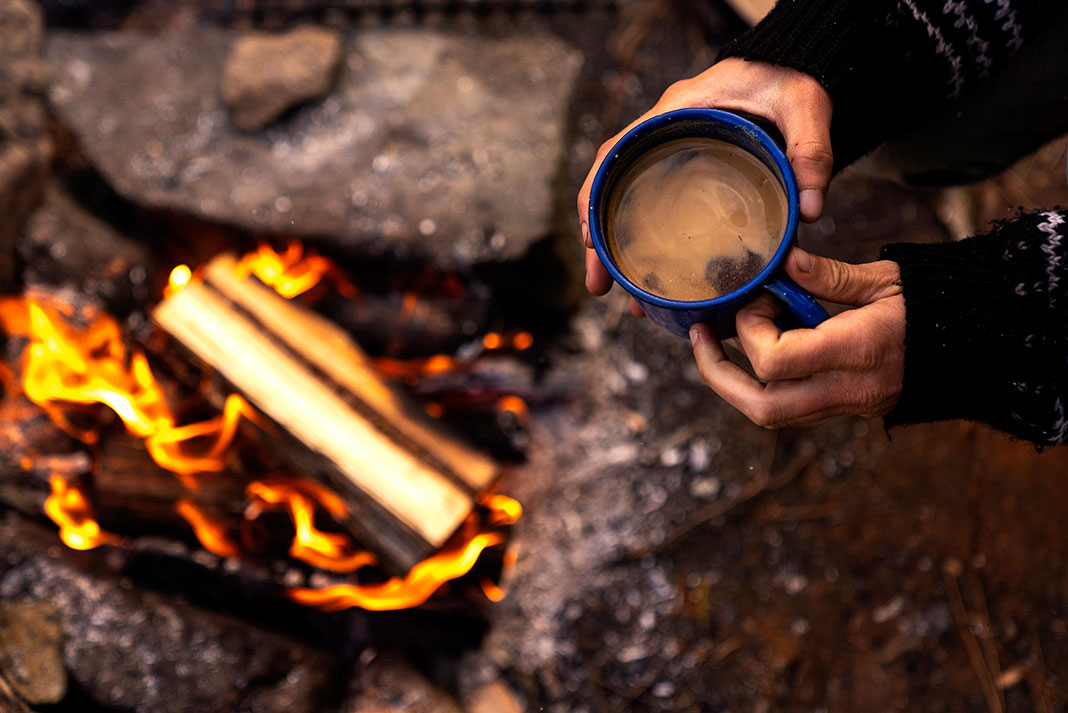
overhead photo of a person holding a mug of coffee over a campfire
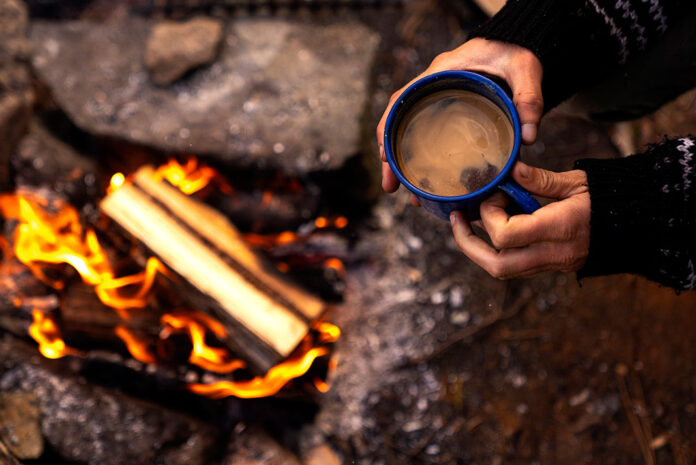
If it ain’t broke, don’t fix it. | Feature photo: David Jackson

It’s confession time. Deep down, I’m a closet gadget junkie—a bit of a techno-weenie, if you will. When it comes to seductively cool camping gear innovations, I’m all in.

Back in the 70s, for example, at the suggestion of a pilot friend, I was part of the first wave of paddlers using small aircraft emergency locator transmitters on remote Arctic river trips. Those were part of the long nose of innovation leading to the development of today’s indispensable inReach and SPOT technologies.

Few gadgets are so useful.

Crowning the worst camping invention of the 21st century

In fact, some of the shiny wheely-whatsits, aimed at folk like me, should never have been invented in the first place. My shortlist of dubious outdoor gadgets and innovations includes some sovereignly impractical items. For example: the squat strap for tying yourself to a tree to ensure you don’t dump into your pants around your ankles; the butane-powered hair curling iron; freeze-dried beer and ice cream; the Hydro Hammock—you’ll have to look that one up to believe it; the Leatherman Tread bracelet designed to turn utilitarian function into inglorious fashion; the hand-crank campsite blender; the umbrella hat; and don’t even get me started on office technical wear.

However, the mother of all useless outdoor gadgets, in my humble opinion, is the hand espresso pump, billed as “the world’s first eco-friendly, nonelectrical portable espresso machine.” And therein lies a bit of a fable.

overhead photo of a person holding a mug of coffee over a campfire
If it ain’t broke, don’t fix it. | Feature photo: David Jackson

Espresso quid pro quo

Every now and again, I make my midwinter way to the headquarters of Nova Craft Canoe to give a presentation. And, instead of a fee for these evenings of photos and blather, I trade talks for store credits. It was a proverbial win-win, particularly when adding up several years of credits and dodging relevant taxes on this exchange of goods for services.

On one occasion, I bartered for a tricked-out Aquafusion sea kayak for my wife, Gail. Then, with a couple hundred bucks left on my side of the ledger, I quizzed my buddy John, who ran the retail store, about what was new and cool.

“Have I got the thing for you,” he said with a big grin. And so, the hand espresso pump entered my life.

“What does it do?” I asked.

“It makes espresso coffee on the trail, one hot and delicious cup at a time,” he said.

To be sure, I love coffee, particularly when twirled with the smell of woodsmoke on the side of a river somewhere far away. But nearly $200 for a one-cup gadget seemed like a lot.

“It’ll impress your traveling companions,” he added.

Well, that sealed the deal. I went home with something that looked like a conjugation between a mini bicycle pump and a tennis ball made of machined aluminum that might have set Frederico Fellini’s heart aflutter.

Trouble a-brewing

The instruction manual stated: “Make premium quality espresso anywhere: whether on holiday or a business trip, in the countryside or on the sea, in your kitchen or the garden.” It sounded like just the thing we needed, with one word of warning: “Don’t be surprised by the small capacity of the reservoir (1.76 fluid ounces).”

“For maximum flavor and quality control,” the manual suggested sending away for a supply of Keurig-esque espresso pods and a pod adapter for another semi-exorbitant fee. But for DIY enthusiasts, the marketing material suggested you get your own coffee, boil your own water, and insert both of those into the appropriate orifices of the device, which could then be pumped to the green range on the pressure gauge.

And then, with a hiss and a sputter, you have a shot of black goo.

Only two cups of coffee were attempted with the hand espresso pump—making them about $100 each—and the device never did make it on a trip. Boiled camp coffee, windmilled at the end of the maker’s arm to get the grounds to sink, still can’t be improved upon.

I keep the hand espresso pump in our gear cupboard to remind me if somebody’s offering a fancy solution to a simple problem—or worse, a fancy solution to something that wasn’t a problem in the first place—it might be best to give it a pass. Or, at least, a second thought. Perhaps over a steaming cuppa with a friend. Unless, of course, novelty value earns pack space. Luminous toilet paper, anyone?

When he’s not lounging in his Hydro Hammock, James Raffan is an author, explorer, canoodler, and director of external relations for the Canadian Canoe Museum.

Cover of Paddling Magazine issue 68This article was first published in the Fall 2022 issue of Paddling Magazine. Subscribe to Paddling Magazine’s print and digital editions, or browse the archives.

If it ain’t broke, don’t fix it. | Feature photo: David Jackson


Virgin Territory? Why Wilderness Kayaking Is Nonsense

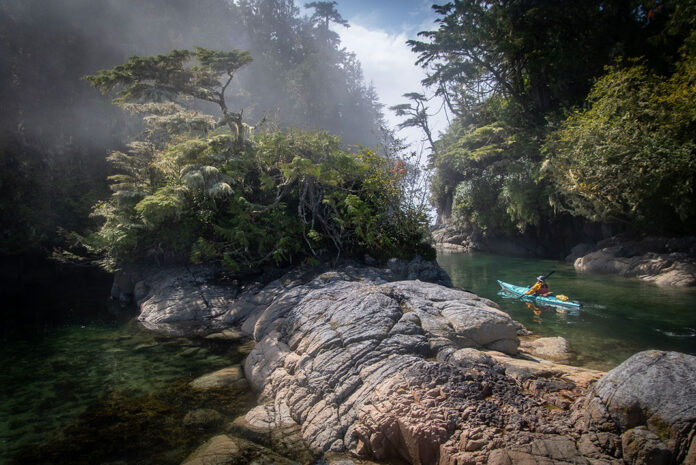
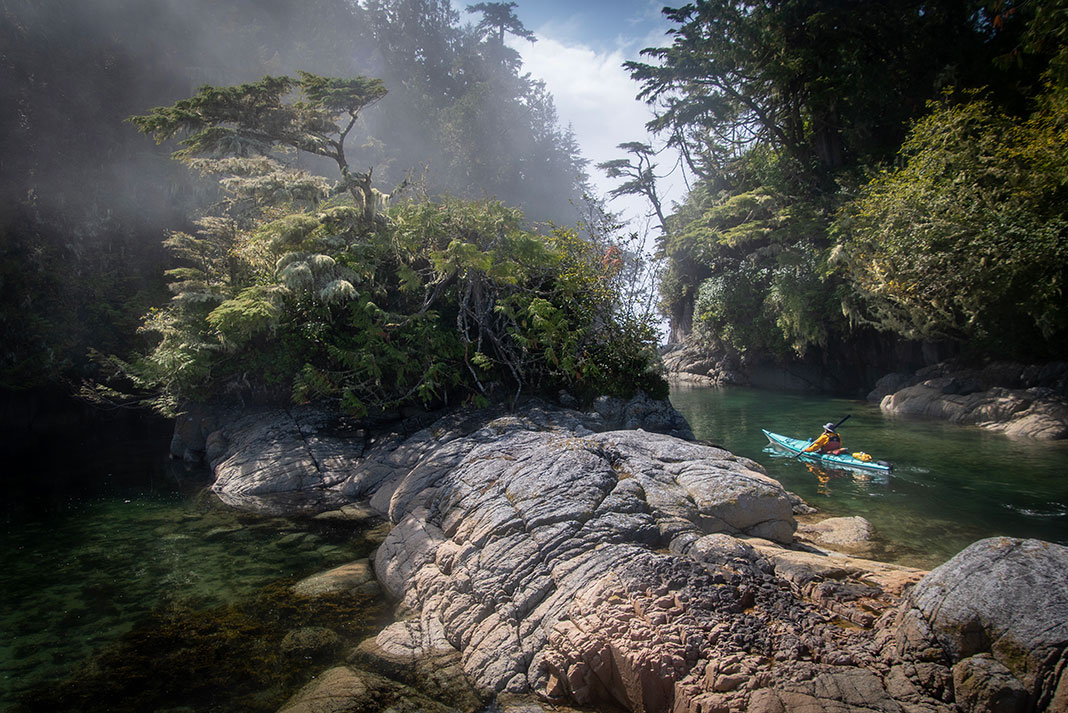
a person kayaking through a rocky, lush wilderness scene
It might feel like you’re the first person to ever paddle this way, but you’re not. | Feature photo: Brendan Kowtecky

Forget wilderness. It doesn’t exist, and it never did.

That phrase popped into my head while on the phone with Tyson Atleo, hereditary chief-in-line of the Ahousaht Nation, talking about the Ahousaht Stewardship Guardian Program in what most sea kayakers call Clayoquot Sound, but has been called Ahousaht Hahoulthee for millennia. It’s one of the most popular sea kayaking destinations in North America, and one of my favorite places in the world. And it’s part of a sea of change coming to west coast sea kayaking.

Why wilderness kayaking is nonsense

I was chatting with Tyson about the Guardian Program, which collects voluntary stewardship fees from paddlers, outfitters and other users of their traditional territories. The funds are put to work in salmon restoration, trail clearing, studying kelp beds, restoring campsites and running youth programs for tribal members.

My conversation with Tyson came while I was planning a sea kayak trip to the west coast of Vancouver Island. With Flores Island closed to protect the Ahousaht from Covid-19, my friends and I started looking at other parts of Vancouver Island. We found some places we’d camped in past years had shifted to no camping, or the information was unclear. Delving into it, I found changes in land management had come to much of Vancouver Island’s coast as many First Nations have negotiated treaties and other measures with the Canadian and British Columbian governments providing for self-governance and a greater role in managing their traditional territories, including the Ahousaht Hahoulthee. In the U.S., the Land Back movement to return land to Indigenous people to own or manage has also been gathering steam.

“One of the challenges during the transition period is each Nation is approaching it differently, based on their treaty situation and the use pattern, and that can make it hard for those looking for universal information. “It’s essential there are diverse approaches,” says David Pinel, former co-owner of West Coast Expeditions, who recently sold the well-known tour company to the Ka:’yu:’k’t’h’-Che:k:tles7et’h’ First Nations (anglicized as Kyuquot—Checleset, pronounced “kie-you-kit”-“check-le-set”). There’s a new Guardian Stewardship team in their territory too, called Witwaak.

As treaties and land management evolve, kayakers can expect more stewardship efforts and more cultural awareness. And yes, some culturally significant spots will probably be closed to recreational visitors. Word to the wise: Call the First Nations whose territory you plan to visit, if you can’t find current information. Change is in real time, and what’s open to paddlers this season may be different next year.

The changes in camping, fees and a boat coming around are small potatoes. A good friend who loves the solitude of long paddling trips and doesn’t like to run into other groups mentioned the boat coming around would “break the wilderness vibe.” Time for a reality check: wilderness is nonsense. It’s time to ditch the concept entirely.

After writing that sentence, I can see the torches and pitchforks already. So, let’s be clear: I love nature. My day job is running a river conservation group. As it happened, I ended up canceling that kayak trip to work on removing a dam so a river can flow free. But wilderness, with a capital W, is bunk.

a person kayaking through a rocky, lush wilderness scene
It might feel like you’re the first person to ever paddle this way, but you’re not. | Feature photo: Brendan Kowtecky

Far from a wilderness untrammeled

The Wilderness Act, a linchpin of protecting nature in the U.S., defines Wilderness as “an area where the Earth and its community of life are untrammeled by man, where man himself is a visitor who does not remain.”

In addition to forgetting 50 percent of humans are women, the Wilderness Act chose to overlook that humans had been living in the places we set aside as wilderness areas. If they weren’t, it was because they’d been killed by disease or removed by conquest or genocide. No fewer than 26 tribes were actively living in Yellowstone National Park when it was created.

“It’s the doctrine of discovery,” Atleo told me, “that white people discovered an uninhabited landscape.” Doctrine is too kind a word. A better word starts with the name for a male cow. The only one to see a “wilderness untrammeled” was the first one across the Bering Land Bridge.

If I paddled my yellow NDK Explorer into a wormhole and came out on the west coast a millennia ago, I wouldn’t see what most think of as wilderness: empty beaches with only tracks of wolves and bears. “If you saw a beach that was inviting to land on, chances are it was a seasonal or year-round location for a significant family group or more through several millennia and still of cultural significance,” Pinel told me. Far from paddling off to escape civilization, I’d be paddling into a complex, thriving one. There would have been much negotiation about whether and where I could land and pitch my tent.

Paddlers can benefit from new perspective

As First Nations and Native Americans play a larger role in land management, the rest of us have a shot at a richer and smarter way of experiencing the places we visit than the “Wilderness” nonsense.

Instead of thinking of land in black-and-white simplicity—wilderness versus civilization, outdoor recreation versus extractive industries, paddling vacation versus work—let’s see our landscapes for what they truly are: complex natural systems in which humans are a part, and where we will either repair the landscape or keep damaging it. The sale of West Coast Expeditions is one step in that direction. In addition to seeing a thriving coastal ecology, it’s a natural way for visitors to learn about the Ka:’yu:’k’t’h’-Che:k:tles7et’h’ people.

“There is an increasingly strong appetite for visitors to feel like they’re connecting with local people and culture and doing the right things—their own version of reconciliation,” Pinel says.

Another part of reconciliation is making sure money from tourism goes to improve the lives of First Nations people. Stewardship fees funding things like bear boxes, toilets, habitat restoration and beach cleanups are a common sense investment in sustainable paddling. More importantly, they’re a way to finally redirect the economic benefits of what has been euphemistically called “unceded” (read: stolen) lands. It only takes one visit to the end of Highway 4 to spot the contrast between the weathered buildings of Opitstat and Marktosis and Tofino’s upscale restaurants and luxury “wilderness resorts.” There’s that word again.

So, if it’s not wilderness we’re seeking when we paddle off the beach, what is it? Wildness? Reconnecting?

I don’t have the perfect word for a thriving ecology that includes human civilizations, offers respite from the mayhem of everyday life, acknowledges past wrongs, welcomes everyone and builds a future that sustains both humans and the natural world.

Tyson Atleo had started our conversation by explaining the first guiding principle of the Ahousaht—Hishook-ish Tsawalk: Everything is one.

That’ll work.

Neil Schulman lives in Portland, Oregon, the traditional land of the Multnomah, Kathlamet, Clackamas, Chinook, Tualatin Kalapuya and Molalla people. He still loves places with fresh air, scenery and lots of critters.

Cover of Paddling Magazine issue 68This article was first published in the Fall 2022 issue of Paddling Magazine. Subscribe to Paddling Magazine’s print and digital editions, or browse the archives.

It might feel like you’re the first person to ever paddle this way, but you’re not. | Feature photo: Brendan Kowtecky


Artisanal Crafts: Building An Aluminum Kayak (Video)

In 1944, Grumman Aircraft Engineering Corporation brought canoeing to the masses with the invention of the lightweight, low-maintenance aluminum canoe. Many paddlers today have a Grumman to thank for their earliest paddling memories (good or bad). Surprisingly, the aluminum kayak never took off in the same capacity as canoes. However, the lack of a market didn’t stop Brennen Kunka from getting crafty and building one of his own.

Kunka chronicles his metalwork projects through his YouTube channel, The Facility. Kunka acquired a set of wooden kayak kit plans and set to welding up the kayak, building his instead using aluminum alloy. You can watch the entire process through his part-one and part-two videos.

Ultimately, you may have the same question we do. Does this aluminum recreational-touring kayak float? Kunka’s answer is a three-day trip on the James River in Virginia, which proves the boat works. While the kayak could use a few blocks of interior foam, hatch covers, and increased outfitting, the design looks quick on the water.

Will welding up aluminum kayaks take over rotomolded plastic kayaks? Not likely, but if the opportunity to take Kunna’s build for a test paddle presented itself, we would take the chance to relive our Grumman days with a double blade.


Surf Everywhere: Meet The Entrepreneur Building Dream Waves Around The World

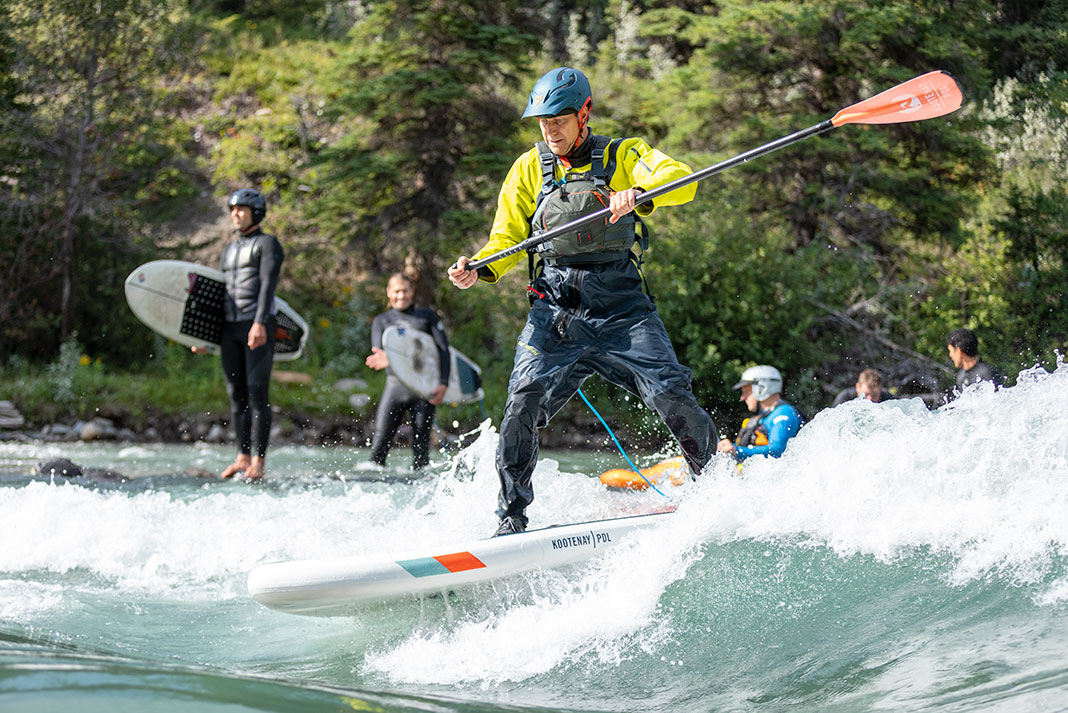
man rides surf paddleboard anywhere on the Kananaskis River
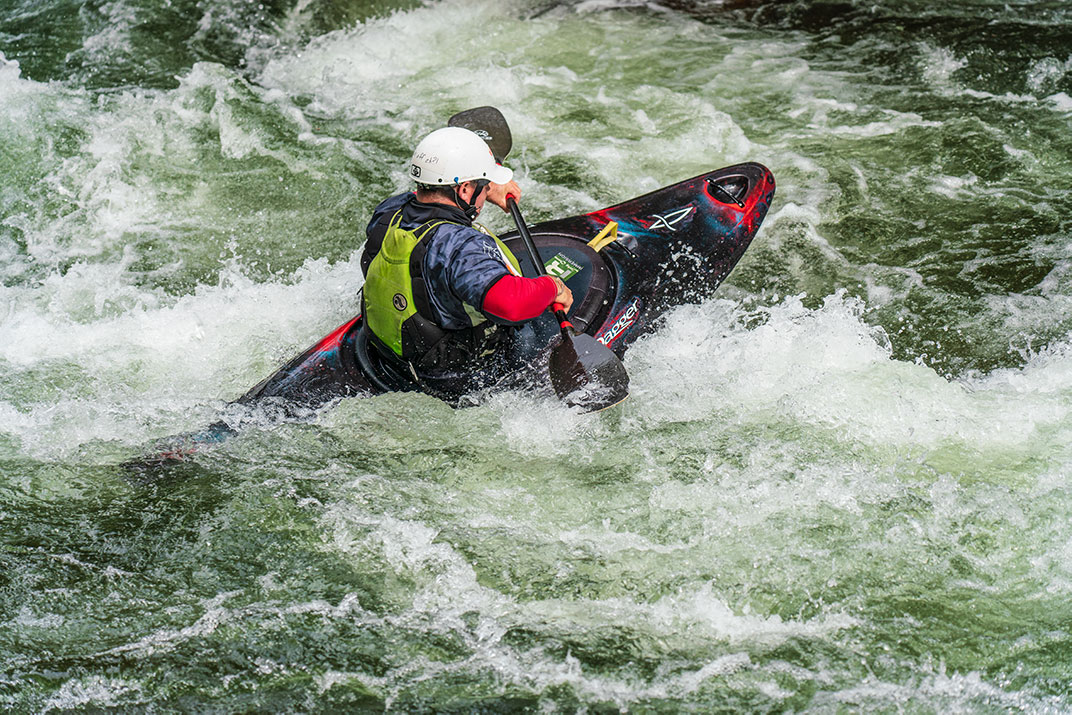
A river SUP enthusiast on Mountain Wave on the Kananaskis River. | Feature photo: Tyler Toohey

Dreaming of bringing a surfable wave to your local river? Neil Egsgard and Surf Anywhere have the expertise to help make it happen.

Surf Anywhere is building dream waves around the world

In 2007, Egsgard started Surf Anywhere, a Calgary-based company that builds river waves worldwide. At the time, he’d only been river surfing for two years, since seeing somebody riding the 10th Street Wave on the Bow River in downtown Calgary and borrowing a board. Upon mastering the balance required to stand and carve, Egsgard gravitated west to the Kananaskis River in the Rocky Mountains.

That’s where Surf Anywhere took on its first project, attempting to reengineer a flat stretch of the waterway to produce a wave. Although the dam controlled Kananaskis is relatively easy to work on because heavy machinery can drive onto the riverbed at low flow, things didn’t work out as planned. The rocks used to make a wave weren’t placed in the right positions.

man rides surf paddleboard anywhere on the Kananaskis River
A river SUP enthusiast on Mountain Wave on the Kananaskis River. | Feature photo: Tyler Toohey

That experience taught Egsgard a crucial lesson: you must control design and construction. Surf Anywhere returned to the Kananaskis in 2013 and, during a springtime blizzard, built a new wave modeled after one on Munich’s Eisbach in Germany, the birthplace of river surfing. Attempt two was successful. Since then, the company has completed about a dozen significant projects in Canada, the U.S. and Europe, providing a range of services, from wave R&D to managing the permitting process, and safety advocacy to community development. Making waves is the most visible part of the business but other efforts produce important grassroots swell.

Working hand-in-paddle with local communities

Surf Anywhere consults with local surfing and paddling groups, helping them organize and understand the steps required to create manufactured water features in their own communities. It also maintains a river surfing accident and incident database, so people understand risks like leash entrapment and the need for proper gear.

On the R&D side, the company knows how to direct the heavy lifting and partners with hydrologists to create a public body of knowledge.

“Our research is open source,” says Egsgard, referencing a recent collaboration with the University of Ottawa leading to months of lab work, testing various adjustable kicker systems to see how to make desirable waves. “It can be freely used anywhere. We’ve shown that with a simple structure, with very few moving parts, you can create excellent surf and kayak waves.”

Manufactured waves bring multiple benefits

Most wave builds are tacked onto existing projects, such as the removal of low head dams or waterpark improvements. These projects must adhere to strict environmental regulations and can lead to shoreline or habitat enhancement, which is expensive to fund on its own. And, once finished, waves are almost always free to ride and bring economic benefits to an area; surfers and paddlers buy food and gas and maybe spend a few nights at a hotel.

Whereas mechanical wave parks require power to run and put money into the pockets of owners and investors, says Egsgard, river waves rely on natural flow and bring people to aquatic environments.

“It connects you to the water you care about,” Egsgard says.

Cover of Paddling Magazine issue 68This article was first published in the Fall 2022 issue of Paddling Magazine. Subscribe to Paddling Magazine’s print and digital editions, or browse the archives.

A river SUP enthusiast on Mountain Wave on the Kananaskis River. | Feature photo: Tyler Toohey


The Secrets Of Paddling Big Water (Video)

Paddling big rivers, whether the Ottawa, Zambezi or other classics can be a rather intimidating experience. The wave holes frothing overhead and whirlpools swirling in eddylines can make a paddler feel small. But once you unlock a few secrets to paddling big water, you’ll quickly see what playgrounds these rivers can truly be.

In this detailed tutorial, Jackson Kayak team member Boyd Ruppelt walks through the most significant keys to big water success.


3 Backcountry Blunders That Will Get You In Real Trouble

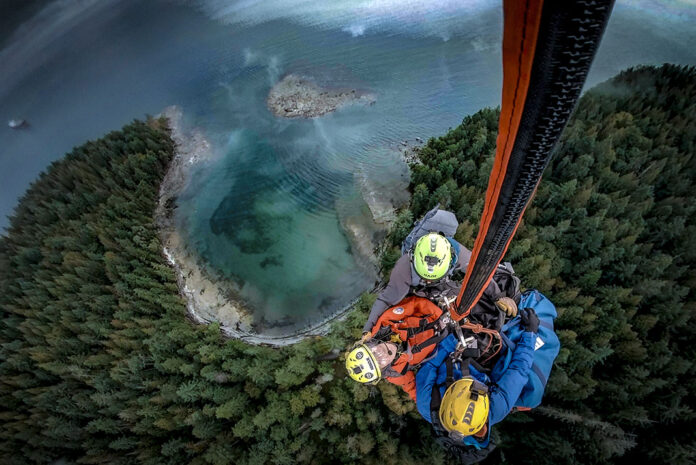
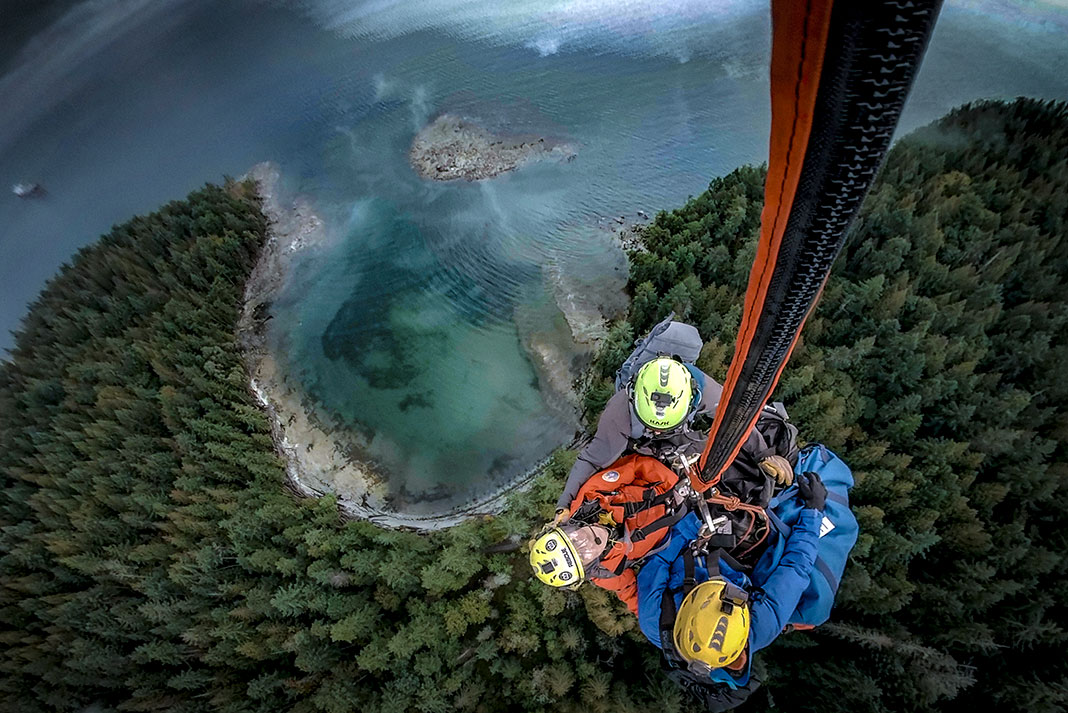
backcountry paddlers are pulled up to a helicopter after a mistake leads to rescue
Frame grab from a medical extraction on the West Coast. | Feature photo: Peg Leg Films

Nobody heads out on their local lake or dream paddling trip expecting a rescue. Yet anyone who has spent enough time on the water knows how quickly a sunny day can turn stormy, an old injury can flare up, or fatigue can negatively influence decisions. Disaster can strike whether you know you’ve made a mistake or not, so here are some major backcountry blunders to avoid, according to the pros.

3 backcountry mistakes that will get you in real trouble

Depending on where you get into trouble in North America, emergency response may come from the coast guard, national park staff, military or one of hundreds of volunteer search and rescue teams. According to a study of more than 65,000 search and rescue events in U.S. national parks, the most common causes for requesting assistance were errors in judgment (22.3 percent); fatigue and physical conditioning (16.8 percent); insufficient equipment, clothing or experience (15.6 percent); falls (8.9 percent); and weather (7.4 percent).

backcountry paddlers are pulled up to a helicopter after a mistake leads to rescue
Frame grab from a medical extraction on the West Coast. | Feature photo: Peg Leg Films

Sandra Riches, executive director of B.C. AdventureSmart recommends following the three Ts: trip planning, training and taking essentials to all outdoor activities. Those suggestions will help mitigate the three most common mistakes search and rescue professionals see in the backcountry.

1 Being unprepared

Know what to expect regarding the route’s conditions and weather, and pack accordingly. Then, “My advice to people is to expect the unexpected,” says Pete Schimek, president of British Columbia’s Pemberton Search and Rescue. Items that aren’t strictly necessary for a half-day trip, like a first aid kit, food and shelter, can have an exponential impact on whether an accident turns into an inconvenience or emergency.

Simply wearing a life jacket greatly increases the chances of survival in an on-water mishap. According to 2021 U.S. Coast Guard statistics, kayaks were the vessel type with the second-highest fatalities (15 percent), behind open motorboats (44 percent). Where cause of death was known, 81 percent of fatal boating accident victims drowned. Of those victims with reported life jacket usage, 83 percent were not wearing a life jacket.

2 Inexperience and complacency

People new to paddling may not realize what risks they are taking by paddling in an offshore wind or not wearing a PFD. According to the same U.S. Coast Guard data, nearly three-quarters (74.6 percent) of people who died in paddling accidents had less than 100 hours of experience in the activity. And over one-third (38.8 percent) had less than 10 hours’ experience.

Yet, even experienced paddlers can be sloppy in their safety habits. Sometimes a familiar place lulls us into thinking we don’t need to bring an extra warm layer or share our float plan with a friend. Having well established systems, habits and checklists can reduce the chances of preventable emergencies.

3 Lack of training

It’s one thing to carry a paddle float, map and compass, or first aid kit; it’s another to know how to use them. Many emergencies can be prevented by training that empowers paddlers to make good choices with basic skills. Learn how to self-rescue and conduct assisted rescues, as well as how to do basic navigation and make decisions related to weather, currents and identifying hazards. Don’t just take a course—practicing skills regularly is paramount. And practice in unfavorable conditions like rough waves, cold temperatures and after a long paddle when tired.

As Laurence Gonzales writes in Deep Survival: Who Lives, Who Dies, and Why, “A panicked mind is a useless mind.” By training regularly and in diverse environments, we can make sound judgments and respond effectively when it counts.

Charlotte Jacklein is an outdoor educator, Paddle Canada instructor, sea kayak guide and search and rescue volunteer.

Cover of Paddling Magazine issue 68This article was first published in the Fall 2022 issue of Paddling Magazine. Subscribe to Paddling Magazine’s print and digital editions, or browse the archives.

Frame grab from a medical extraction on the West Coast. | Feature photo: Peg Leg Films


Winter Storage Tips For Your Canoe, Kayak or Standup Paddleboard (Video)

When the lake starts to freeze over and snow blankets the access road, many paddlers call it a season and move on to winter activities. When you gaze out your frosty windows with a steaming mug of coffee, it may be discomforting to see your boat lying outside in neglect. The elements can be harsh on your craft, take care of it through the winter months and it will serve for many paddling seasons to come. The easiest way to take care of your canoe, kayak or standup paddleboard is proper winter storage.

[ Find storage options in the Paddling Buyer’s Guide ]

Frontenac Outfitters knows a thing or two about caring for boats through Canadian winters. In this video, owner Zack Fiddis walks through options for storing your paddle craft over the cold months ahead.