A run down Mexico’s cascades on the Agua Azul turned into a life-saving rescue when kayaker Curtis May became trapped behind the curtain of a 35-foot waterfall. May’s attempts to escape and the successful rescue that ensued would elapse over one hour and fifteen minutes.
Below is Curtis May’s detailed account of the ordeal per the description in the video published to YouTube. Please be advised this video includes strong language:
On December 18th, 2022 six friends make a descent of the Agua Azul in Chiapas, Mexico. The climax of this section consists of 5 waterfalls called the Five Kings. At the third ‘King’ my approach was too far right and I dried out at the lip in about 3 inches of water. I lost my speed and dropped behind the curtain of the waterfall.
For the next 75 minutes I made multiple attempts to escape and repeatedly blew my whistle in an attempt to let my friends know that I was still alive. My friends acted swiftly to begin rescue operations. I was the last of us to run the drop so the other 5 boats were all downstream of this waterfall AND the 60-footer below it. There is no access to the river between the 35′ drop and the 60′ drop, so Issac & Wesley hiked their boats back upstream and ran the 35-footer again to get into position.
I could not see or hear anything beyond the curtain of the waterfall and they could not see or hear me, even whistles. The curtain looked thinner to my right but the wall was much closer and severely undercut. I considered making an attempt there but knew that a failed attempt could result in a much worse situation. I decided to save this as a last resort if it started to get dark. Issac and Wesley made many attempts to gain access behind the curtain, both with ropes and their bodies. After about 60 minutes with no success, no signs of life, and sunset fast approaching Wesley decided to try to paddle behind the curtain through a small gap on river right. Both Wesley and Issac were able to get behind the curtain and stash their boats to launch a heroic live bait rescue attempt. It wasn’t until Wesley was about 30 feet from me that we were finally able to hear each other. This was their first indication that I was still alive.
After over an hour of failed attempts to escape and zero contact with anyone I was beginning to lose hope. When I first heard another voice and knew my friends were still working to get me out, I felt a wave of relief and a renewed enthusiasm. We couldn’t see each other, there was a rock wall between us. I could hear Wesley shouting but couldn’t understand what he was saying. I thought he was on the other side of the curtain. I had no idea that he was just around the corner from me until I saw him while making another attempt to paddle through the curtain. When I saw Wesley floating there, I realized that I actually wasn’t going to die that day. I felt a level of relief and joy that I had never experienced in my life. At this point it had been well over an hour and I was exhausted. Every attempt to paddle through the curtain zapped my energy and it took a few minutes to recharge between attempts. I retreated back to my point of safety and gathered my strength for a moment to make the ferry around the corner to where Wesley was waiting. When I reached Wesley he gave three blasts on his whistle and Issac started pulling us both along the undercut wall back to safety. They saved my life on this day and I will forever be grateful.
Our ordeal wasn’t over yet though. We then had to scale a 35 foot vertical mud cliff to get back to the trail, put back on, paddle 45 mins to the takeout, and hike uphill for 1.5 miles in the dark while being pursued by armed Zapatista rebels. We were in their territory and they had spotted us at the takeout. Yes, seriously. We finally made it back to our village and all enjoyed a few cold beers.
This rescue situation highlights the importance of taking a swiftwater rescue course and keeping those rescue skills sharp. Always paddle with rescue gear, always discuss safety with your crew before you put on, and always be prepared to act when the time comes.
Thank you to @WesleyShelmire for putting together the majority of this video.
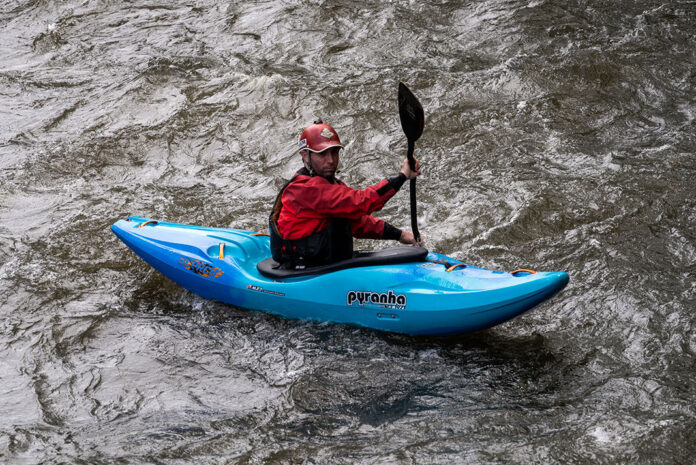
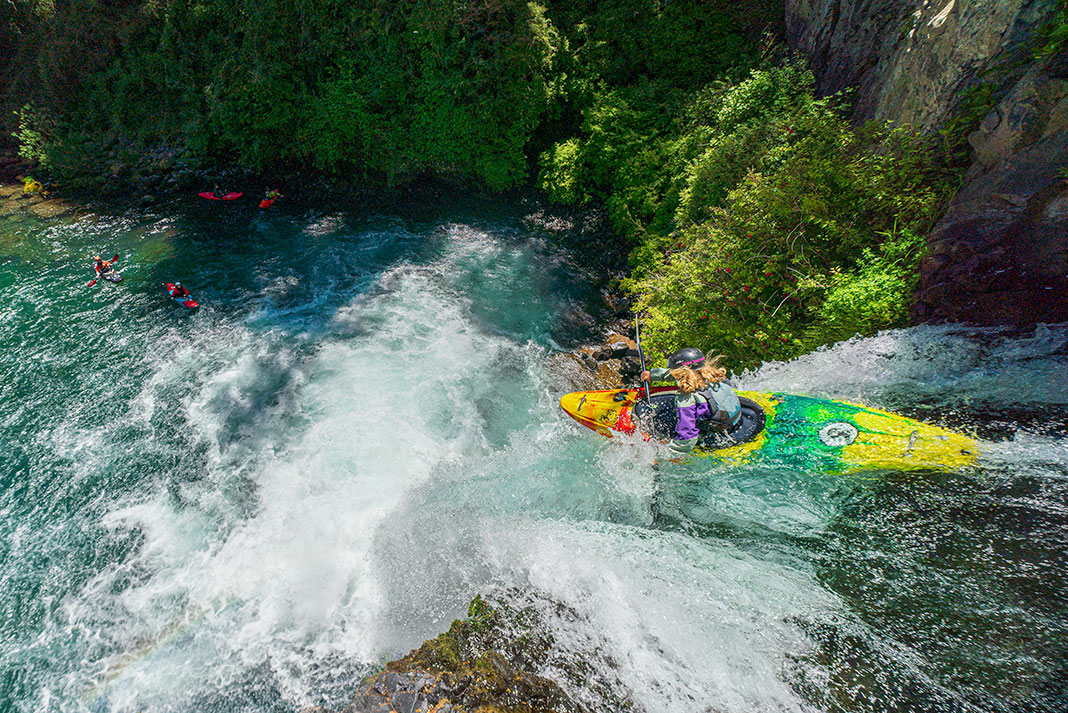
The Pyranha Scorch offers easy handling in tricky conditions. | Feature photo: Paul Robert Wolf Wilson
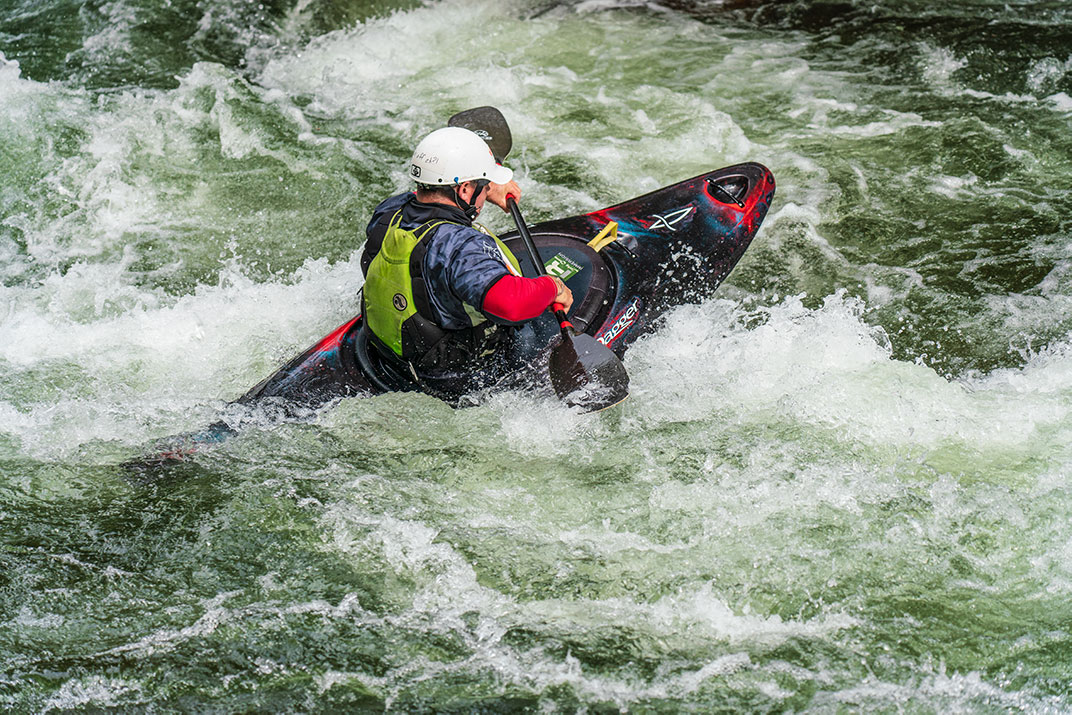
The Pyranha Scorch hit the market in 2021 as a successor to the classic Burn. Billed as a boundary-smashing river runner and creek boat hybrid, the Scorch combines and refines characteristics from three of Pyranha’s latest and greatest hits. After getting it on the river, I can attest, it’s one of the best whitewater kayaks out there today.
The Scorch starts with a bow and elongated hull influenced by the 9R, beloved for its speed and squared-off stern. The wide planing hull and sharp edges of the Scorch are pulled from the speedy Ripper, known for its nimble playfulness and carving ability. And the Scorch’s kick rocker at the stern is similar to the Machno, which allows the stern to release from features quickly.
For this review, we paddled the Scorch in size medium, which comes in just under nine feet long and holds 82 gallons.
You’ll first notice the bow’s high rocker when doing a walk-around of the Scorch. This gives the Scorch the ability to boof just about anything, drop and ride high over holes and shed water to stay on the surface. The bow rocker helps prevent pearling when surfing waves, which tends to occur in many river runner designs. This feature is great for some fun surfing, but it also helps you glide across a feature on a must-make move.
The Scorch has a flat, planing hull. Pyranha and other paddlers have compared the hull of the Scorch to the Ripper—Pyranha’s play-the-river, half-slice design. I agree. A wide, flat area gives the almost-nine-foot-long creek boat a nimbleness to spin. Much like the design of the Ripper, the Scorch has biting edges. At the bow, these edges are softer and less pronounced, allowing the front of the boat to pass over rocks and current without resistance. Closer to the stern, the Scorch transitions to a hard, aggressive edge, seeking to dig in. When you want to put this edge to good use, you can load your weight toward the stern and lay out a carve. This drives the kayak in and out of eddies and across the river.
What’s most interesting is the tapering width of the Scorch’s stern and the flattened—rather than protruding—deck profile. Imagine taking a dedicated creek and river running design and giving it the ability to sink the stern. It’s like having an extra boost button to power the bow over features the way you can with a half-slice. This is the premise behind the stern design of the Scorch.
Sure, you could boof with the hull flat. Or you could put the Scorch on edge and then, approaching a feature, sweep the bow up and load water from upstream on the stern. The technique gets the already highly rockered bow up and over anything and looks slick when dialed in.
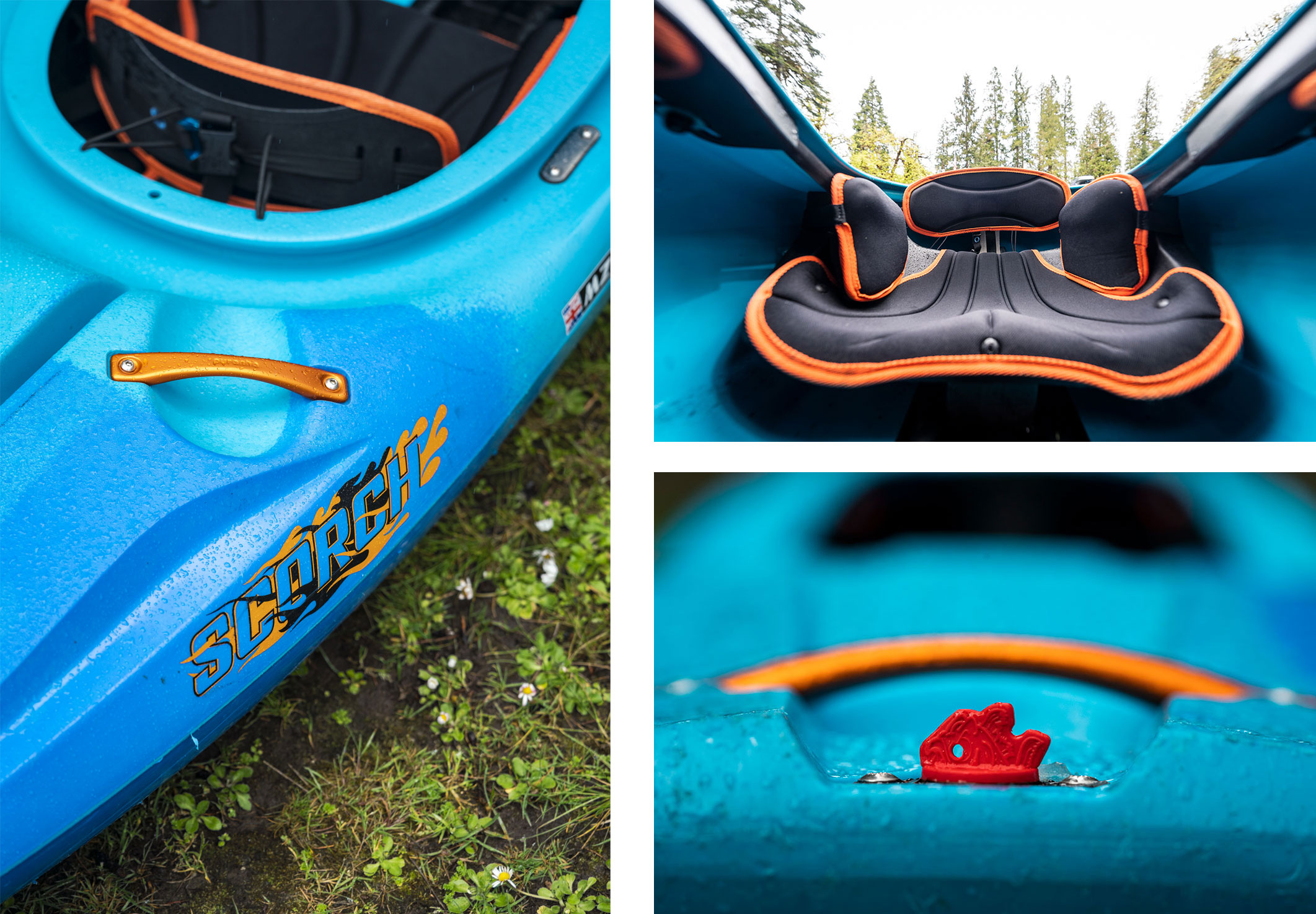
Full size grab handles all the way around make the Scorch easier to handle on big portages or when loaded for a multiday trip. The Stout 2 Outfitting features a simple, solid and ergonomic padded seat, oversized hip pads, padded and contoured thigh grips and a ratchet backband with height adjustment. | Photos: Paul Robert Wolf Wilson
Pyranha Scorch outfitting
Pyranha’s Stout 2 outfitting included doesn’t look much different than what they have been putting in their kayaks for years with the Connect and Stout systems. That’s great because the previous generations worked just fine. The ratchet system for the backband is intuitive. The seat, hip pads and thigh hooks are comfortable. For the Stout 2, Pyranha has upgraded the hip pads to a deep fill that molds to your shape, but I would say nothing in the outfitting of the Scorch seemed noticeably different than past Pyranha kayaks I’ve paddled. And not noticing outfitting is generally a very good thing.
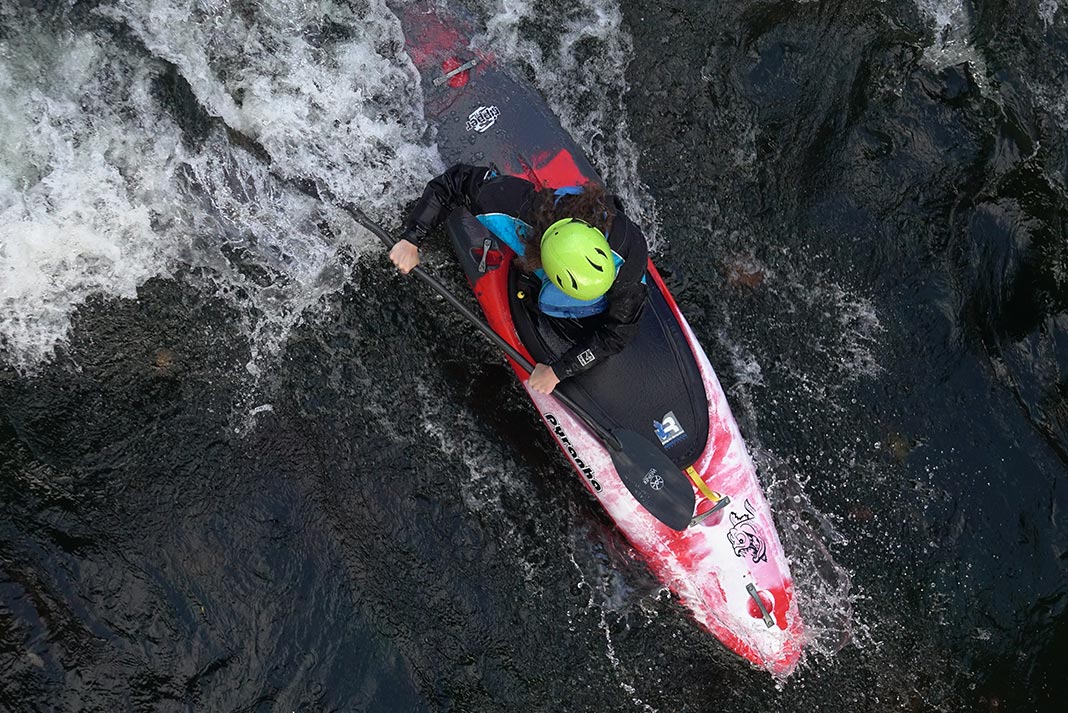
New school creek boat meets aggressive river runner. | Photo: Paul Robert Wolf Wilson
The Scorch is built for steep rivers with a good amount of volume. Paddling during spring high-water in the Cascades, I came through a section where the creek pinched between a rock wall and large boulder, creating a squirrely V with reactionary waves surrounded by swirling eddylines. The speed of the juicy creek made me skeptical about whether I could catch the first eddy on the opposite side of the river following this chute. I planned to go for it, knowing I’d probably have to windmill a bit and just make the eddy. My backup plan was to move back to the center until the runout above a log-choked drop. But the Scorch charged through the slot and slid over the chaotic water as though it didn’t exist. I looked for my eddy, leaned slightly back, engaging the stern edge, and the boat kicked right across to the opposite side of the creek. I cruised with barely more than a few correction strokes to make the eddy.
This is indicative of the Scorch from bow to stern. It crushes features. The hull accelerates, the bow rides over and the edges drive on. River features I most anticipated would pass and, a moment later, I would say to myself, “That was it?”
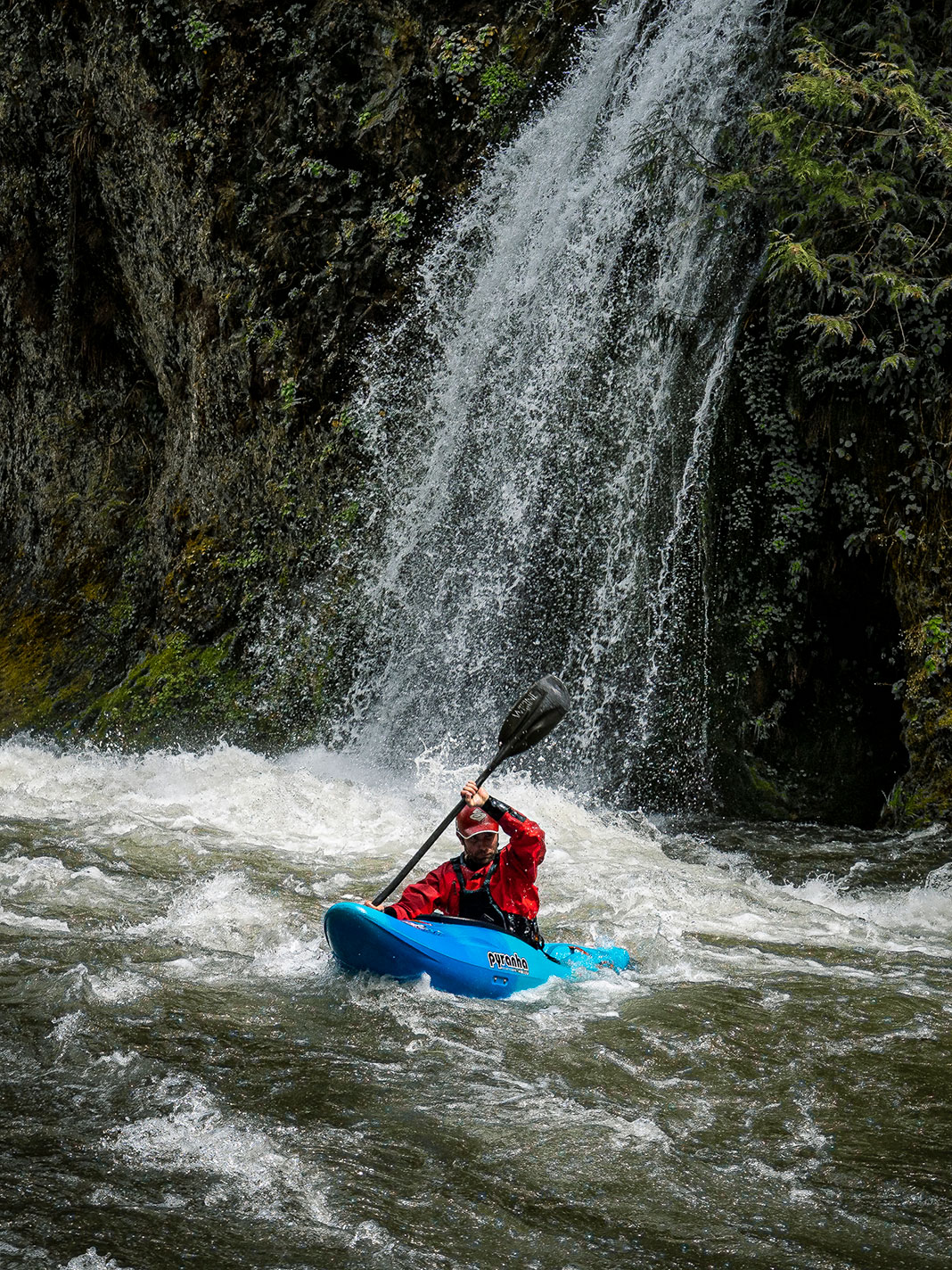
The Scorch makes running steep, pushy water feel almost effortless.
The high bow of the Scorch does create the sensation you are riding a wheelie and takes some getting used to at first. And the chines of the Scorch can get tripped up on a rocky stretch. Paddlers will want to ensure the Scorch’s seat is forward enough to stay over the bow.
For those on low-volume creek runs, the Scorch may feel edgy. But for rivers and creeks with volume, the Scorch can not only charge down the river with confidence, but it can also elevate how you paddle them.
This article was first published in the Fall 2022 issue of Paddling Magazine. Subscribe to Paddling Magazine’s print and digital editions, or browse the archives.
The Pyranha Scorch offers easy handling in tricky conditions. | Feature photo: Paul Robert Wolf Wilson
Feature photo: Courtesy Momentum River Expeditions
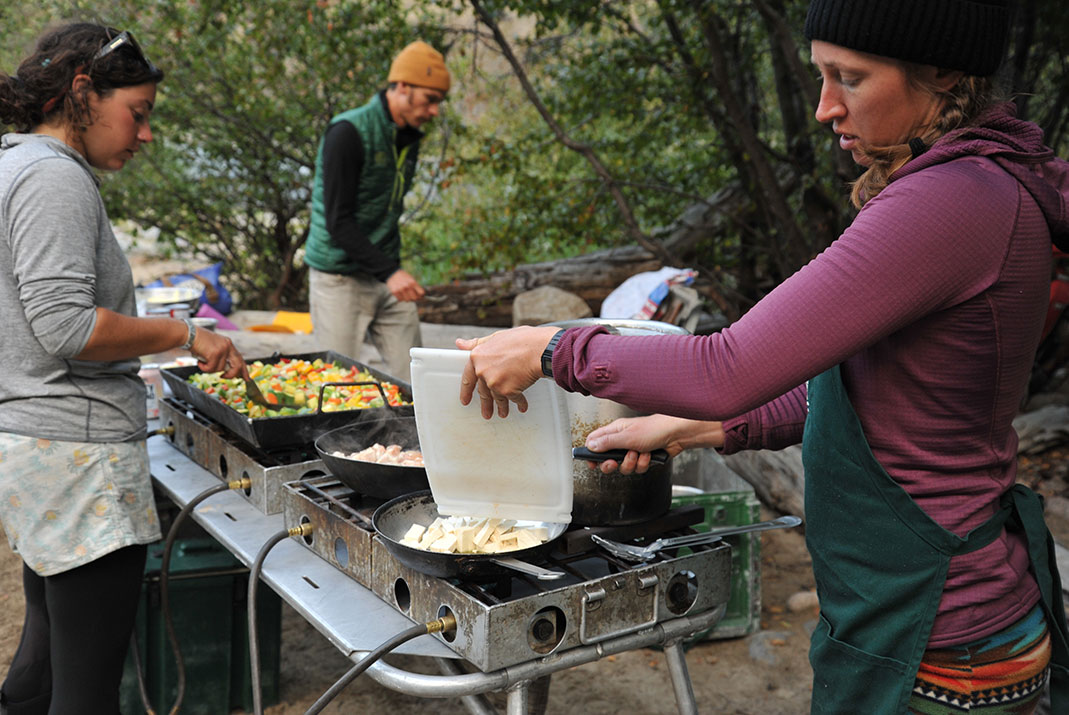
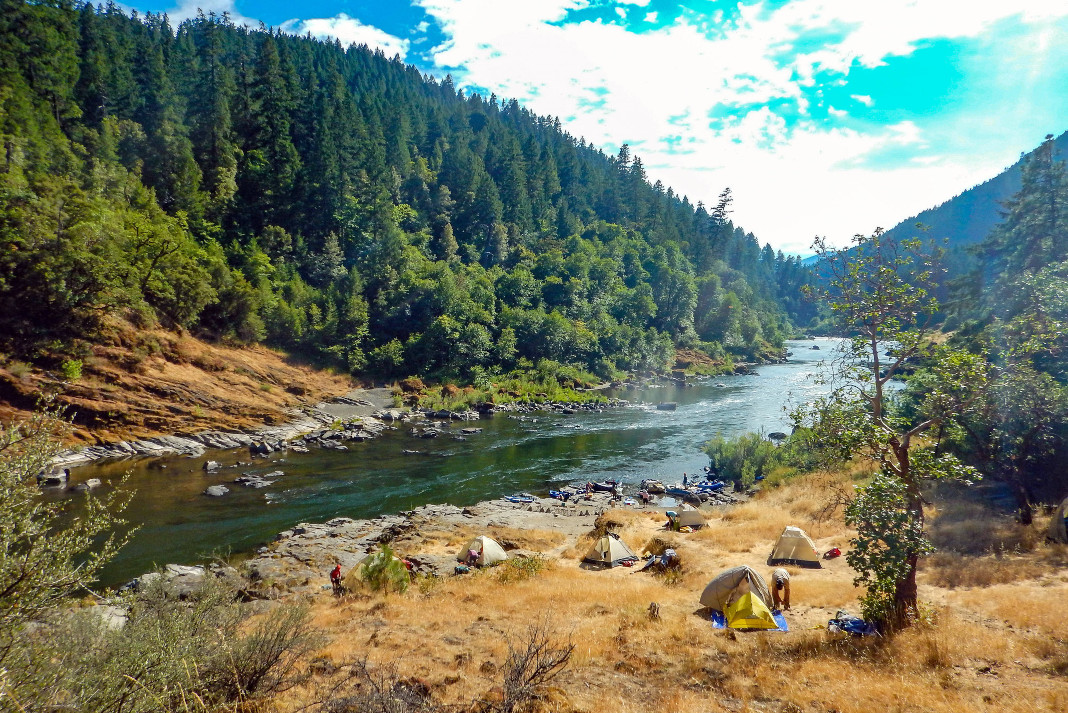
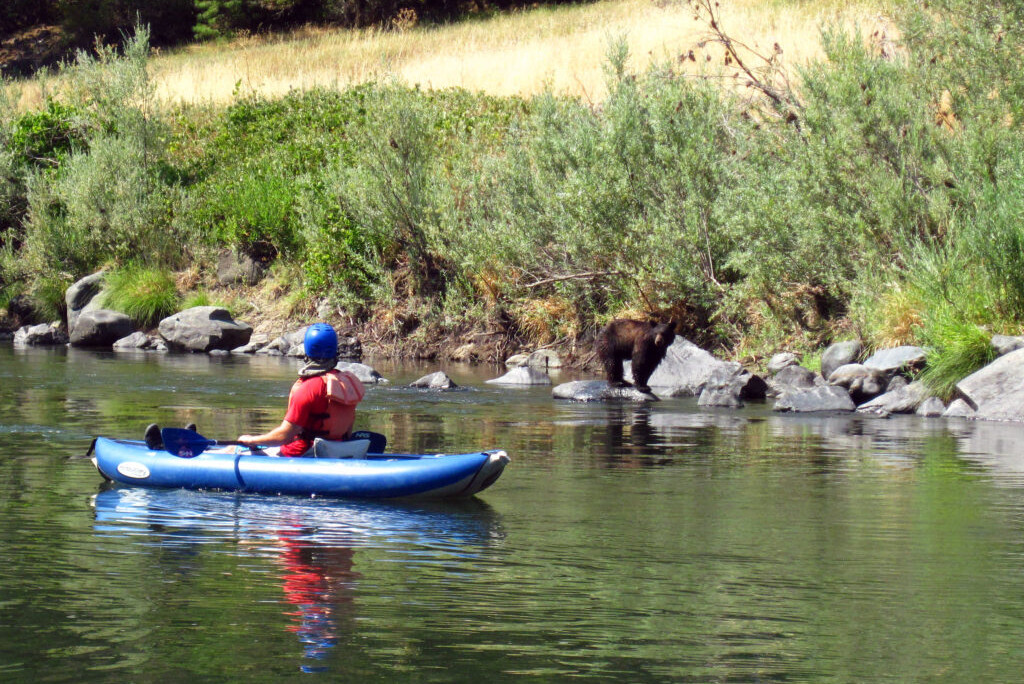
Staring down a black bear on the opposing shore at Solitude Camp, I dropped eggs in a cast iron vat for a gourmet riverside eggs Benny commercial breakfast. I watched as guests lost their minds over the impromptu Yogi Bear encounter. The fuzzy life-sized teddy lumbered along the bank in brambles, cherry-picked the plumpest berries, meandered up cliffs, paused to sniff the air, and occasionally made coy eye contact with the audience. It was my rookie season of guiding, which happened to be on the Wild and Scenic Rogue River. I was grateful for the moment of peace in the kitchen while the guests were distracted.
At this point, I have rafted the Rogue River in Oregon 16 times and seen a bear on at least half of those trips. Sometimes twice on the same trip. Wildlife encounters are a significant part of the allure. Salmon are often jumping. There are cuddling pairs of otters, great blue herons, bald eagles, and newts. And keep an eye out for the elusive madrone monkey.
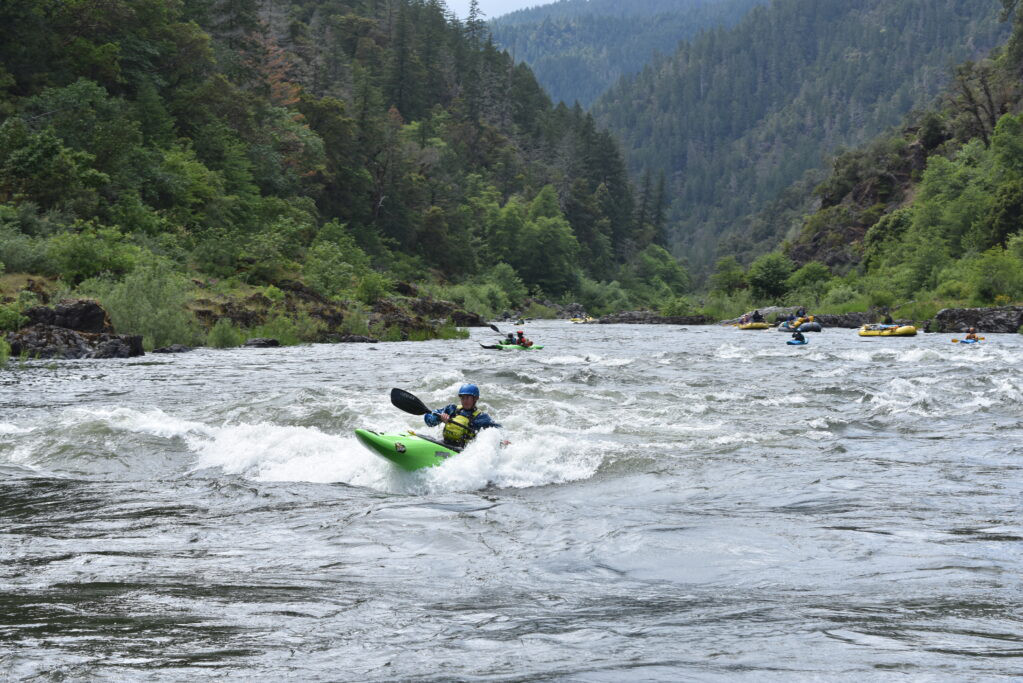
The mystique of the Rogue goes beyond wildlife encounters. There is world-class fishing, amazing side hikes, a history of murder and mayhem, and of course, outstanding whitewater. All of the above is what lures rafters, kayakers and anglers to try their luck for a permit on the Rogue, and experience this pinnacle river trip.
Secure a Rogue River permit and plan your trip
The Lower Rogue River was one of the first eight water courses designated under the original legislation of the Wild and Scenic Rivers Act in 1968. To support this designation, in 1978 upward of 35,000 surrounding acres were named Wild Rogue Wilderness. The 84 miles of river designated Wild and Scenic are managed by the Bureau of Land Management and the Rogue-Siskiyou National Forest. This section of the Rogue utilizes a river permit system, which paddlers need to be familiar with in order to plan a trip.
Most parties float the Wild and Scenic Rogue on the 35 miles from Grave Creek to Foster Bar. These trips range from three to four nights. Occasionally folks blast through in two nights. From May 15 to October 15, the BLM allows 120 people per day to launch on this section. The group sizes are limited to 20 people per permit. You must win a competitively allocated Rogue River permit in one of three ways during this period.
The first is to apply in the noncommercial lottery. For most rivers, the lottery opens on December 1 and closes on January 31. Results and winners are announced via email on February 15. If a permit is won, each person on the permit will need to pay a $10 fee.
The second is to call in for a cancellation permit via the Grants Pass Bureau of Land Management office at 541-471-6535.
Finally, it is common practice to show up at the Smullin Visitor Center at Rand ready to run a trip by picking up a last-minute cancellation permit to launch the day of.
From October 16 to May 14, launches are unregulated outside of submitting a self-issued non-lottery permit via the Rand office.
The more you know about the Lower Rogue
People have inhabited the Rogue River corridor for at least 15,000 years. The Rogue River is the traditional homeland and waterway of the Tututni, Upper Coquille and Shasta Costa Native Americans. These people were violently removed from the land through colonialism in 1856 and placed in the Siletz Indian Reservation with the Confederated Tribe of Siletz Indians and Grand Ronde Indian Reservation with the Confederated Tribes of the Grand Ronde Community of Oregon.
As of this writing, the USFS states that it maintains a government-to-government relationship with each of the eight federally-recognized and sovereign tribes having traditional lands within the Rogue River-Siskiyou National Forest.
Carving out valleys in the remote and ecologically diverse Siskiyou Range, the Rogue’s casual erosive efforts reveal rare rocks. Many hundreds of thousands of years ago island arc chains, not unlike Hawaii, were dragged across the Pacific Plate to the Juan De Fuca subduction zone. Too buoyant to be subducted, the landmasses coalesced along the ever-growing Oregon shoreline. These puzzle pieces made a mosaic of exotic terrains. Metamorphosed, shifted and penetrated by intruding molten rock, these terrains have experienced many overprints.
Many fortune seekers have ventured into the depths of the Rogue to hunt for gold, one of the many minerals produced in the wake of these geologic processes. Whiskey Creek Cabin, Mule Creek Canyon, China Bar, Merial, and many more nooks hold keys to pieces of the legend and lore of gold. Like gold on the Rogue, history and tall tales are plentiful. If you keep panning or digging, you’ll find more and more.
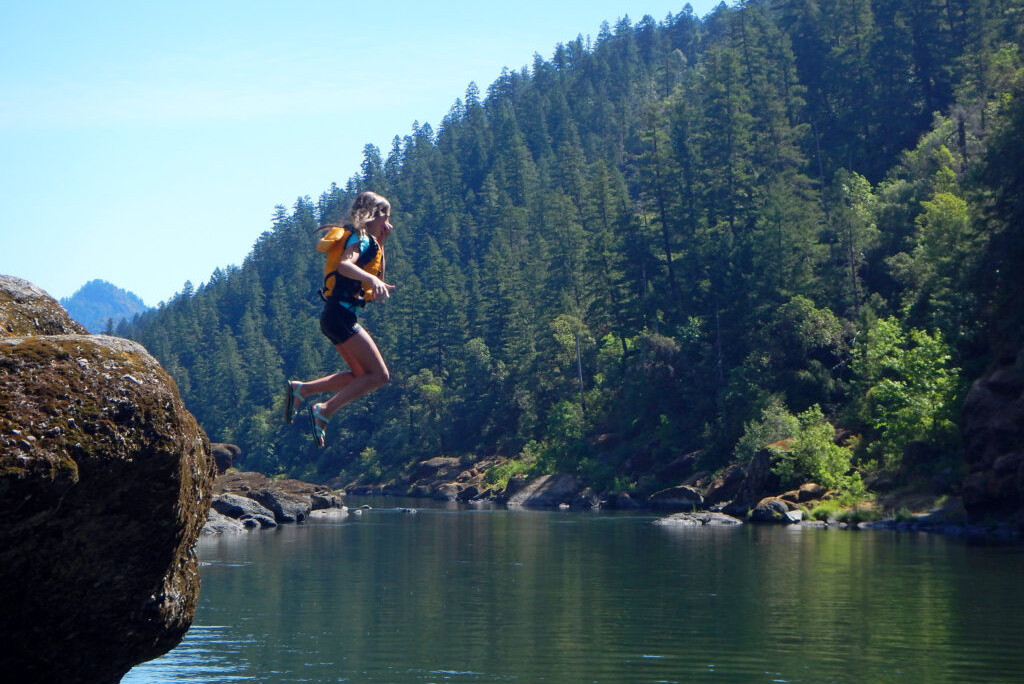
Today, river recreationists experience Rogue River rocks mostly as recreation-inducing outcrops. Ask around about Sports Illustrated, Otter, Big Windy and other named jump rocks as well as Glen Wooldridge’s history of shaping the river through the use of dynamite.
The best camping on the Rogue is on gravel bars and sandy inlets which emerge from the landscape as water levels fluctuate. These campsites are unmarked and undeveloped. The BLM’s free downloadable and printable Rogue River Boater’s Guide excels at indicating camp sizes and helps private boaters avoid camping at the largest sites, which etiquette dictates are for commercial (or at least sizable) groups.
If you do end up in a sizable camp with a small party and didn’t realize it, if another group approaches and asks to share, it’s excellent river karma to oblige.
Pro tip: Schedule at least one layover day to fully saturate in the Rogue atmosphere. But not at a favorite or oversized site. Sharing is caring.
Notable rapids
Blossom Bar (IV), named for the gorgeous and fragrant pink wild azaleas that bloom in the spring, is perhaps the most famous of rapids on the Rogue.
Located about 20 miles into the trip, Blossom Bar was made runnable year-round by Glen Wooldridge’s blasting. Blossom Bar is a technical rock garden requiring multiple maneuvers. The crux is near the top, where paddlers must make a 90-degree right turn and thread the needle between two clusters of pinning rocks.
The Fish Ladder (III), just a handful of miles into the trip on river-right was also blasted by dynamite as an alternative passage to Rainie Falls (V) and the Mid-Chute (IV).
And let’s not forget to be vigilant at Wild Cat (III). Many have underestimated the difficulty and ultimately wrapped on Alligator Rock in the center channel.
Hiking the Rogue River Trail
Unique to the Rogue River experience is the Rogue River National Recreation Trail, a track that parallels the entire Wild and Scenic section from Grave Creek to Big Bend.
The Rogue River-Siskiyou National Forest offers an excellent downloadable map outlining hiking highlights from the 40-mile trail. This trail is accessible from many campsites and points of interest along the Rogue. Some of the benefits of exploring the trail from camp are viewing the intricacies of wildflowers up close and stopping on a whim at creekside pools to cool off. Not to mention, the ability to explore any side trail or point of interest that catches your fancy.
Best seasons to paddle the Rogue River
Folks often decide when to raft the Wild and Scenic Rogue based on their ancillary recreation plans.
Anglers prefer to chase the river in early March and April for “Springers,” the salmon with the most fight and tailspin. Or, autumn, when the Chinook heavyweights reign the river.
Professional rafters are always aching for the wildcard factor of high water, which typically happens in the winter or spring.
Commercial river guests and cold-blooded boaters prefer July and August for the greatest chance of warm weather.
Meanwhile, lazy private boaters, like me, only want to raft the Rogue outside of permit season so they don’t have to go through the hassle of applying for a permit.
Rogue River flows
Compare USGS Grants Pass flows (above the Wild and Scenic stretch) to USGS Agness flows (below) and split the difference; be sure to click the CFS tab. The Wild and Scenic Rogue American Whitewater listing also includes flow information, among other insightful river details.
Catch a shuttle for the Rogue River
Setting shuttle on the Rogue River is an endeavor at a minimum of four hours long. This is why many private paddlers choose to use a shuttle service to set their rigs at take-out. Two popular outfits are Whitewater Cowboys and Morrisons.
Get yourself a Rogue River map
Because flows can vary greatly from spring to fall, grab the Sawyer Paddles and OARS-sponsored, The Rogue River – A Comprehensive Guide, 3rd Edition. This map of the Rogue River provides the most detailed beta on rapids at multiple flows.
The Rogue River Boater’s Guide, from the BLM and National Forest Service, is another great resource available to paddlers.
If you need gear or just want to talk shop, check out the retail spaces at SOTAR and Sawyer Station. The two Oregon-grown local rafting suppliers are headquartered in Southern Oregon, near the put-in.
If you are not an experienced paddler or do not own your own equipment, there are still a number of options to experience a trip on the Lower Rogue. Two well-known commercial outfitters on the Rogue worth checking out are OARS and Northwest Rafting Company. No experience is necessary and trips run from $1,050–2,000 depending on number of days and extras.
Additional resources to know before you go
We’ve already introduced you to the bears of the Rogue. But there are a number of other natural encounters to be aware of. Poison oak is common along the river as is the potential to meet up with rattlesnakes. Wildfires are also a factor, especially in the summer and fall. Visitors to the river should stay up to date on current situations and fire restrictions from the Forest Service.
[ Find more Pacific Northwest adventures in the Paddling Trip Guide ]
Respect the Rogue River through the use of Leave No Trace principles. Speaking of which, part of the requirements for a Rogue River permit is following the Forest Services’ detailed guidelines for portable toilets. Regulations vary some between river systems, so be sure your groover is up to code.
Oregon requires non-motorized watercrafts 10 feet or longer to carry the state’s Waterway Access Permit. This permits costs $19 for the year or $7 for a seven-day permit.
Feature photo: Courtesy Momentum River Expeditions
Raft guide and researcher Maria Blevins has spent half a decade investigating sexual misconduct with the aim of making the river industry and community a safer place for everyone. Here’s what she learned about sexism, sexual harassment and sexual assault in the rafting community—and what we can do about it.
I arrived at the New River Gorge in West Virginia over 20 years ago to begin training as a whitewater guide. It was one of the most exhilarating times of my life. The New River in springtime had huge waves, a budding landscape and giant house-size rocks I learned to navigate a boat through. The nights were spent around a campfire with other trainees, playing bluegrass music or regaling each other with stories of an upset at Greyhound or Double Z. I fell in love with the river and the community of people I was joining.
As I was learning to navigate whitewater, I was also learning to navigate a social scene I had never encountered before. The social landscape was a little more unruly than any I had experienced. There were some wild parties, a lot of sexual energy, crass jokes and a very flexible code of conduct. That was just life on the river, it seemed.
Fast forward to 2015, when a group of 13 National Park Service (NPS) employees came forward with reports of years of sexual harassment and abuse from the river rangers at Grand Canyon National Park. The report from the Department of the Interior’s inspector general detailed accounts from female park service employees. According to the complaints, the boatmen had stuck cameras up the women’s skirts, groped them, exposed themselves and used profane language. The news stories and subsequent congressional hearing started a public conversation about sexual harassment and assault in the river community.
When I read the reports from the NPS, I was appalled by the behaviors described. But I was also struck by how many of the complaints were just considered part of guide life or river culture. Crass jokes, sexist language and wild conduct were so common I had not recognized the inappropriate behavior for what it was during my 12 years working as a river guide.
The NPS incident inspired my own research over the last five years into how raft guides navigate their working environments. Beginning in 2017, I interviewed 56 river guides who identified as male, female and non-binary. These guides worked on multiple rivers across the United States, including river communities in Idaho, West Virginia, the rivers of the Colorado Plateau and the Pacific Northwest. I included guides who worked day trips and multiday floats.
All but one participant acknowledged there was an expectation of inappropriate joking and questionable behavior in the river industry. Most had witnessed sexual harassment and discrimination, and a few had experienced sexual assault. The majority reported sexism was often prevalent on the river and created an environment where harassment and assault were more likely to occur.
Of course, sexism and sexual harassment are not unique to the river industry. After #MeToo, we know sexual harassment is present in every industry, even the outdoor industry. A survey of 4,176 readers by Outside magazine in 2017 found that 70 percent of respondents had been harassed in the outdoors or while working outdoors. In 2018, the organization #safeoutside conducted a survey of 5,311 climbers and found half of women and one-sixth of men had experienced harassment or assault in the climbing community.
The river community is not alone in needing change.
However, some aspects of the job of a river guide make sexual harassment both more prevalent and harder to navigate.
The U.S. Equal Opportunity Employment Commission outlines work environments with younger workforces, larger power differentials between employees, customer service-based work, and the prevalence of drugs and alcohol as more likely to be workplaces where harassment occurs. Additionally, the blurry line between work and home, the physical isolation of river trips, and the fact that human resources is difficult to contact from the bottom of a canyon make identifying and reporting harassment more complicated. Many small river companies don’t have HR departments and historically many have not spent a lot of time training staff in anti-harassment protocols. The line between friend and manager can get hazy on the river, and employees do not want to be perceived to be “difficult” or “hard to work with” by reporting inappropriate behavior. Additionally, raft guiding is still a male dominated profession. Many participants reported the supervisors whom they would report to were men, or even men they perceived as harassers.
The women expressed they valued being part of the river community so much they were hesitant to report the assault because they worried about being ostracized.
The study I conducted is qualitative, which means I interviewed people about their experiences. When one person comes forward to talk about how tough it is to fit in as a female rafting guide or kayaker, it can be dismissed. But when every respondent has similar stories, themes emerge. Through my research, I’ve found these are the four common ways sexism and sexual harassment show up in the river community today.
Who’s laughing now?
Most participants highlighted the fun work environment as one of the reasons they loved working in the rafting industry. However, participants also observed humor used as a veiled way to gatekeep who belongs in the river community through jokes about gender, race and body type. Inappropriate jokes were used as a way to talk about sexual acts or women’s bodies. Then there’s the genre of jokes about female raft guides.
Female raft jokes ranged from the benign: “What is the difference between a catfish and a female raft guide? One has whiskers and wallows in the river and the other is a fish.” To the toxic: “What’s the difference between a female raft guide and a laundry machine? A laundry machine doesn’t follow you around all summer after you drop a load in it.”
To be clear, I have told my share of female raft guide jokes. But I think it’s worth examining why we think they’re funny. I gathered all the jokes I could find about female raft guides—18 in total—and coded them into four themes. The jokes portray women as unfeminine, unclean, undesirable sexual partners or sexually promiscuous. It highlights the difficulty of being both a raft guide and exhibiting the traditional values of femininity, which include chastity, beauty and cleanliness.
I found eight jokes that refer simply to raft guides and could serve for any gender. For example, “What do a raft guide and a medium pizza have in common? Neither can feed a family of four.” None of the non-gendered jokes demeaned their subject in the way some of the female-specific jokes did. Participants reported that when they called out inappropriate jokes, they were most often told, “It’s just a joke, don’t be so sensitive.”
Party culture
The culture of whitewater is often associated with drinking, raucous behavior and drugs. Participants pointed out this environment allowed for actions that would be unacceptable anywhere else because it was part of the so-called fun, like grabbing people’s butts, naked noodle wrestling at work and getting colleagues’ attention by tapping a genital piercing against a beer bottle.
“I mean, we’re river guides, we’re allowed to be gross and crass and say f***ed up things,” said John, who has guided for more than 20 years on daily and multiday trips all over the Western United States. “Boatmen are foul-mouthed f***ing s***bags, and so you’re allowed to just let that fly.”
Assault
Multiple women I talked to had stories of being inappropriately watched or sexually assaulted in the river community. Many women had caught men watching them pee in the river or using the groover. Almost every female participant had a story of a man entering her sleeping space at night—men crawled into tents, into the back of trucks or lay down next to them while they slept without consent. Some of these men took it further and kissed the sleeping women or touched their breasts or genitals. Five of the 36 women interviewed were sexually assaulted by a man in their river community. The women expressed they valued being part of the river community so much they were hesitant to report the assault because they worried about being ostracized.
Dawson, who guided on a class V river for eight years and now works training outdoor guides, recalled a woman who reported her harassment, “And that person was never the same in the industry. They were retaliated against.”
Feature illustration: Hailey Thompson
Undermining
Through the interviews, the theme that stuck out most was how women felt they had to constantly prove themselves to be worthy of being on the river. Women felt they had to convince customers they were as qualified as male guides and prove themselves to coworkers more than their male counterparts did.
5 Ds of bystander intervention
Bystander intervention offers five techniques you can use when you see someone who might need support to get away from someone harassing them.
D1: DISTRACT Jump in with a comment or joke to stop the harassing behavior.
D2: DELEGATE Find more people or someone in a more senior position who can help interrupt the behavior.
D3: DIRECTLY ADDRESS Address the person harassing and point out the behavior is inappropriate.
D4: DELAY If you can’t do anything at the moment, check in afterward to see if the person who was targeted needs any support.
D5: DOCUMENT Write down what you see; it might be useful later to have a record of the incident.
Olivia has raft guided all over the world for more than 20 years. “Especially if you were working on a challenging river, there was oftentimes a sense of disappointment from men if they got a female guide,” she said. “They felt they were perhaps going to have less of a trip. Because obviously a woman couldn’t get them down the river in the same way as a man. Some men would refuse to go down the river with a female guide.”
Research participants did not feel they had opportunity to make the same mistakes as male colleagues. “I basically just felt the need to always be really good at what I did. To never be last because I didn’t want any assumptions to be made on my ability to do the job based on my gender,” said Nancy, who has guided multiday river trips in the intermountain west for six years. “There wasn’t really any sort of fading into the crowd.”
Another common way sexism showed up in my interviews was through beta spraying. The term comes from the climbing community and describes when someone gives advice about a climb or techniques without being asked. Multiple participants had stories of men interrupting women while giving information scouting.
Looking downriver
Despite the sometimes grim stories I heard during my research, I am optimistic. Boaters are the perfect outdoor group of people to lead the change and make the river community more welcoming and safe for everyone. Most paddlers are eager to welcome people to the sport and already look out for each other on the river. Strangers set safety for each other in rapids, help get strangers’ boats unstuck, and I have seen everybody available jump on a Z-drag to get someone out of danger. Whitewater paddlers know how to watch out for each other’s physical safety. I believe we can watch out for each other in a new way, making sure no one is being harassed or assaulted.
Whenever I explain my research, people enthusiastically proclaim, “It is about time, the river scene is ready for a change.” And I have seen evidence change is happening. Rafting companies are hiring river specific sexual harassment trainers like Emily Ambrose from Engage Coaching and Consulting, Jim Miller and Gina McClard from Respect Outside and Myra Strand from Strand Squared. These individuals offer training that recognizes the special needs of the outdoor community.
“Stopping unwelcome behavior is everyone’s responsibility and starts from the top down, with commitment by the organization’s leaders to create real culture change,” said Jim Miller, who’s also a co-founder of The Anti-Discrimination and Sexual Harassment Collaborative (A-DASH). This is a group of trainers, outfitters, guides, governmental agencies and academics who have created tools to help decrease sexual harassment in the river community. This group uses my research to help inform the training and information they provide.
Since the idea for its formation took root at the 2019 American Outdoors Association conference, A-DASH has conducted training for raft companies all over the U.S. and the National Park Service. The group has also presented at the American Outdoor Association Conference, The National Wilderness Skills Institute, and the Association of Outdoor Recreation and Education Diversity Summit. “Learning to interrupt unwelcome behaviors is the cornerstone of our training. You can learn to read the situation like you’d read a rapid. This will help you contribute to diminishing sexual misconduct and discrimination in your river community,” added Miller.
Maria Blevins’ love affair with the river continues to this day. After guiding for 12 seasons, she still boats with the same group she trained with. She is now an associate professor of communication with a PhD. in organizational communication and a whitewater hobbyist. Names have been changed to protect the identity of research participants.
This article was first published in the Fall 2022 issue of Paddling Magazine. Subscribe to Paddling Magazine’s print and digital editions, or browse the archives.
Thousands have lived without love, not one without water. —W.H. Auden | Feature Photo: Patrycja Hyrsz
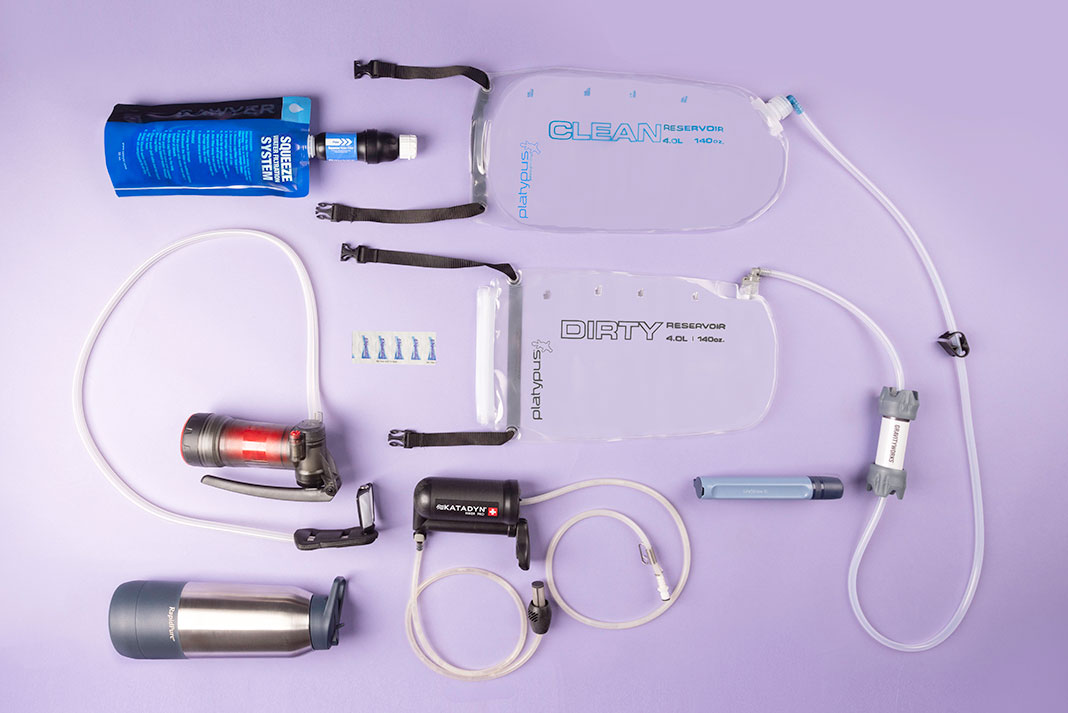
No matter how much you like to rough it, clean and safe drinking water is one thing no camper can do without. Untreated water may look and taste perfectly fine, but various contaminants can lurk within, with the potential to put your health at serious risk. Fortunately a wide range of water treatment options is available, but which one is right for you? From gravity filters to pumps, water treatment tablets and more, here are our picks for the best filters and purifiers for your next backcountry camping trip.
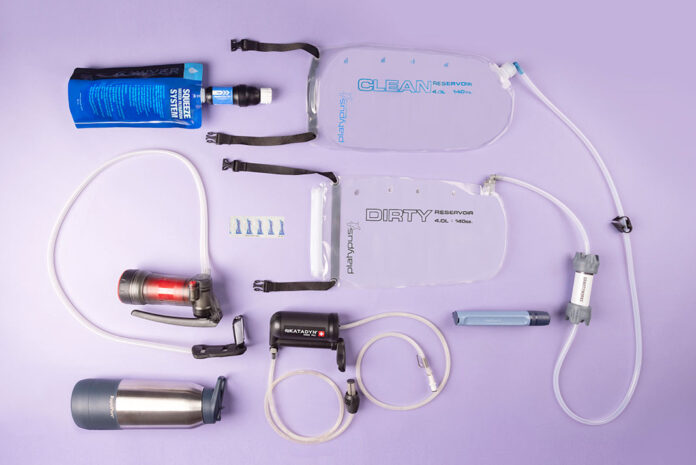
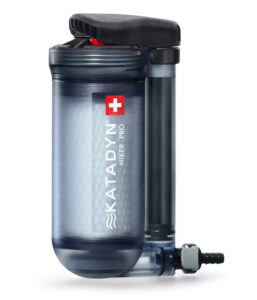
According to Katadyn, the Hiker Pro is the best-selling microfilter in the U.S. outdoor market. This isn’t surprising. The Hiker Pro is lightweight, relatively inexpensive and reliable. This filter removes all the usual suspects: particles, protozoa and bacteria down to 0.2 microns in size, including giardia, salmonella, cryptosporidia and others.
It takes about a minute to pump a liter, and the activated carbon does a good job removing the boggy taste from standing water. Clean the Hiker Pro regularly so it can last you the rated 1,100 liters. If the filter takes some muscle to pump, it’s clogged. Unscrew the bottom, remove the filter, scrub it clean, then put it back together.
The five-year-old Hiker Pro pictured in the article header is still going strong. Newer versions of the Hiker Pro feature transparent housing, so you can see if your filter needs cleaning and identify potential blockages.
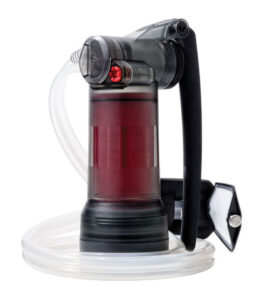
Up to the challenge of purifying the filthiest water, the MSR Guardian is probably the world’s most advanced portable purifier for campers. This unit removes bacteria, protozoa, and viruses like Hepatitis A and Norwalk.
In 2015, when the Guardian was first released, it was accompanied by a promotional video featuring a bunch of outdoor adventure tourists drinking from an inner city stream with possible sewage runoff. The thirsty travelers maintained their health, even though locals—and viewers at home—were horrified.
Is the Guardian overkill for the relatively clean, could-almost-drink-right-from-the-lake waters of canoe country? Absolutely. Yet, after purchasing one for an international trip in 2017, I’ve often brought mine with me on paddling trips closer to home. Why? It efficiently pumps 2.5 liters a minute. And, with each stroke, the unit self-cleans, so no backflushing or filter scrubbing is ever required. The downside? Its price. But given that the Guardian can treat up to 10,000 liters over its lifetime, it may be the only pump you ever need.
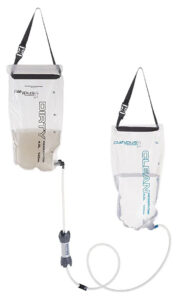
Sit back and let your water filter itself. The pump-free GravityWorks system from Platypus offers a high-flow capacity without the labor. Just fill the four-liter reservoir labeled “dirty” and hang it high. In under three minutes, four liters of clean water—free of particles, protozoa and bacteria—will be filtered into the second reservoir. The four-liter capacity is perfect for groups at a basecamp; just remember to backflow regularly for optimal performance and to reach the unit’s lifetime of 1,500 liters filtered.
The convenience of gravity filters tends to make them a hit with almost everyone—bring this baby on a trip once, and your friends will never want to go back to pumping. We recommend pairing a gravity filter with a backup chemical treatment method for treating water on the go. Platypus’ GravityWorks is also available in a six-liter option.
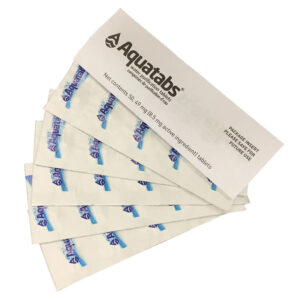
For easy on-the-go treatment and as a backup method in case of primary filtration method malfunction, almost weightless Aquatabs are the go-to choice. Dissolve one tab in one liter of water, wait 30 minutes and chug to your heart’s content. Yes, there is a minor taste present in any chemical treatment. For folks sensitive to this, add some juice crystals after the treatment time has elapsed.
Aquatabs are iodine free. I’ve treated my water with Aquatabs for months at a time with no ill effects. While effective against giardia, bacteria and viruses, they have not been proven effective against cryptosporidium. Particulate will make Aquatabs less effective, so if filling up from a murky source, consider a cotton t-shirt prefilter and/or double the dose, according to instructions.
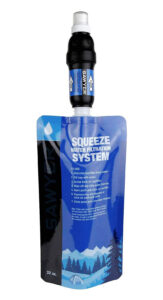
How do you stand out in the crowded water treatment market? With the Squeeze Filter, Sawyer has created a three-in-one design. You can drink directly from the source via the filter, connect the filter to your hydration bladder, or squeeze water into another bottle. The filter itself is palm-sized and weighs just three ounces. The kit has two one-liter pouches and additional accessories for inline use.
Sawyer has several other smaller squeeze-controlled filters, including the Mini and Micro. Still, this Squeeze kit stands out for its ability to provide for groups, filter out particles, protozoa and bacteria, and provide a liter of water in about 30 seconds flat.
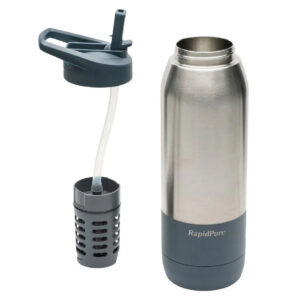
It’s as easy as fill and drink. This insulated bottle is a one-liter superhero, ready to protect the thirsty drinker against viruses, bacteria and even heavy metals.
The RapidPure Insulated Bottle offers fast and effective purifying—no pressing, squeezing, priming or backflushing required. This is a good option for a solo paddle-in camper who’s never far from the water. However, we think this bottle will really shine during international traveling—you never have to worry about filling up from the tap again.
Each replaceable filter pod is rated to filter up to 340 liters. An uninsulated plastic bottle model is also available for half the price.
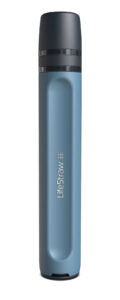
The LifeStraw has been a favorite among trail runners and preppers since 2005, providing an ultralight solution to sip safely from the source without pumping, squeezing or filling. As a primary water filtration method for campers, bellying up to the shoreline every time you want to take a drink is not particularly efficient.
The LifeStraw Go (not pictured) is the much-improved straw-in-a-bottle version, increasing the portability of your water. This two-in-one unit is ideal for day trips to refill and hydrate without the hassle of bringing a second filtration system along. According to Google, the most asked question about LifeStraw is, “Can you drink urine through a LifeStraw?” The correct answer is that it’s possible, yes, but why?
Thousands have lived without love, not one without water. —W.H. Auden | Feature Photo: Patrycja Hyrsz
This article was first published in the Fall 2022 issue of Paddling Magazine. Subscribe to Paddling Magazine’s print and digital editions, or browse the archives.
Thousands have lived without love, not one without water. —W.H. Auden | Feature Photo: Patrycja Hyrsz
The paddlers have spoken, and today we are excited to announce the winners of the fourth annual Paddling Magazine Industry Awards presented by the Safer Paddling Campaign. These awards recognize significant and innovative achievements in the development of products introduced to the paddlesports market this year.
This year, more than 25,000 votes from retail buyers, consumers and media were cast across nine categories* at paddlingawards.com.
The categories of the Paddling Magazine Industry Awards are representative of every aspect of the sport from recreational touring and fishing to whitewater and standup paddleboarding. The awards present brands with the outstanding opportunity to introduce new products to the largest audience of both paddling enthusiasts and the industry.
Here are the winners of the fourth annual Paddling Magazine Industry Awards:
1 Best Touring/Recreational Kayak
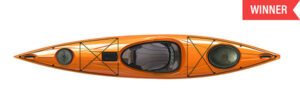
Tampico 130 by Hurricane Kayaks
The Hurricane Tampico 130 is an all-new performance rec kayak with a retro name. Like the Tampico of yore, this 13-foot version paddles fast and straight, but this modern take also boasts a 26-inch beam for stability and superior cockpit comfort. At 36 inches long and 19 inches wide, the cockpit coaming works great with or without a sprayskirt. Hurricane’s newly designed Airstream Strongside Seat offers solid deck reinforcement you are sure to swoon over. The Tampico weighs in at 45 pounds.
2 Best Whitewater Boat
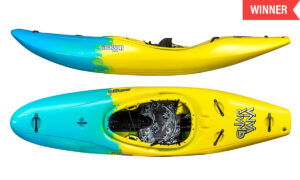
Gnarvana by Jackson Kayak
Jackson Kayak’s Gnarvana takes the favorite features of the top-selling Nirvana and adds a whole new level of performance. The high-rockered bow, significant stern rocker and wider center point ensure that you feel high, dry and stable. The float and rocker profile make this creek boat incredibly easy to maneuver. Whether you are looking to run the hardest whitewater or make it down your backyard run with ease, the Gnarvana is going to rock your run. Now available in three sizes.
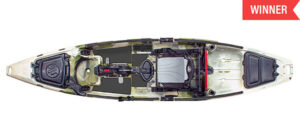
Jackson Kayak will help you conquer the water with a new fishing platform, the Knarr FD. This kayak is 100 percent dialed in on the challenges presented by oceans and large lakes. Bring on the surf, current, wind, tide and the elements—these are the focus of the boat’s design. The Knarr is crafted for speed and stability and can handle surf and tracking in any weather or water conditions. This incredible kayak, combined with the new Mark IV Flex Drive, is Jackson’s most efficient pedal kayak.
4 Best SUP
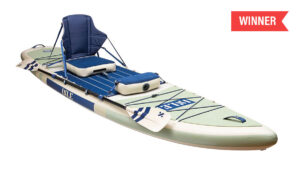
11’6 SWITCH by ISLE
The award-winning 11’6 Switch is an ultralight, super stable and incredibly versatile hybrid inflatable paddleboard and kayak complete package. With a hull weighing 19 pounds, ISLE says it’s the lightest weight hybrid kayak and paddleboard on the market. A full coverage deck pad opens the entire deck for yoga, pets, kids and lounging. The patent pending ISLE-LINK connect system runs the length of both rails for installing the included kayak seat, foot rest and accessories right where you need them.
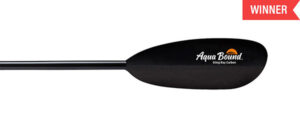
Weighing 28.75 ounces, Aqua Bound says the Sting Ray Carbon is the lightest flatwater injected molded kayak paddle available at its price point. The lightweight 100 percent carbon shaft provides low swing weight and slight shaft flex, promoting a comfortable experience in the cockpit. The carbon-reinforced nylon blades are smooth in the water and offer enhanced stiffness and strength. The wide, asymmetric dihedral blade face is optimized for low-angle paddling and produces a smooth stroke with minimal flutter.
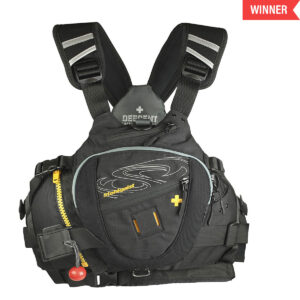
One of Stohlquist’s most popular vests among whitewater boaters, the Descent is built to keep you moving, no matter how long the adventure. This rescue life jacket provides top-quality security without impeding your freedom of movement. Featuring a QR Rescue Belt, updated pockets and a knife holder, this PFD can help you face anything on the water. You’ll find a comfortable, snug fit in the Descent life jacket. Revere the power of the water with a jacket suit to fit any journey.
7 Best Clothing/Apparel
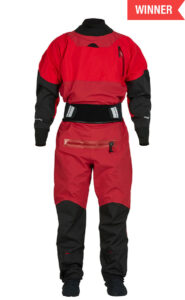
Jakl GORE-TEX PRO Dry Suit by NRS
The NRS Jakl Dry Suit is a beefed-up drysuit for extreme whitewater expedition kayakers. Combining GORE-TEX PRO construction with Cordura reinforcements throughout, the Jakl provides superior warmth and waterproofness while handling the most committed hike-ins, sketchy portages and dodgy scrambles. Thoughtfully designed details keep paddlers drier in high-volume waters, from the volcano-style overcuffs to the five-inch neoprene waist overskirt, GORE-TEX PRO socks and reinforced ankle design.
8 Best Transport/Storage/Launching
Catch-All Universal Airless Cart by Suspenz
The Catch-All Universal Airless Cart by Suspenz is bi-directional and allows for boats to be loaded lengthwise or crosswise for wide loads with a kick-stand for easy loading. The Mag-Lite Airless Wheels provide easy maneuvering. Four-point cam buckle straps are woven into the Bunker Bars to secure boats and prevent load shifting. The Padded Bunker Bars are covered with replaceable canvas sleeves to protect your watercraft and cart for the long haul. Patent Pending
9 Best Paddling Accessory
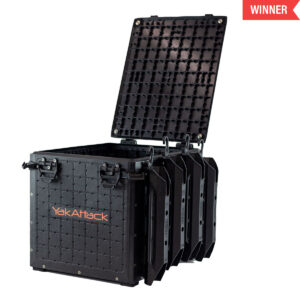
BlackPak Pro by YakAttack
The original hard-sided kayak crate just got better. A lot better. Introducing the BlackPak Pro. The result of more than a year of research and design, the BlackPak Pro is fully riggable and boasts a hinged lid, 25 percent weight reduction and best-in-class functionality. Enhancements include many things you might have expected, as well as some true-to-the-brand features that no one saw coming. Available in three sizes, YakAttack’s new BlackPak Pro will fit in a wide variety of fishing and recreational kayaks.
Congratulations to all the 2023 Paddling Magazine Industry Award Winners!
About Paddling Magazine
Paddling Magazine is the flagship title of Rapid Media, the world’s largest paddlesports media company. Rapid Media’s mission is to inspire and empower paddlers by leading as the sport’s definitive advocate and resource. Rapid Media celebrates its 25th anniversary in 2023. Alongside Paddling Magazine, the brand produces Kayak Angler, Paddling Business, the Paddling Industry Awards and the Paddling Film Festival.
* Note: No entries were received for two categories in this year’s awards: Best Canoe, and Best Rigging & Outfitting.
One of the greatest rewards of spending time on the water is the chance to watch bald eagles and other birds of prey. When one of these impressive birds finds itself in distress, often due to human-created circumstances, it’s time to return the favor and jump to action. A decorated kayaker in Chicago did exactly this when he recently rescued an eagle stranded on the ice as reported here by ABC 7 Chicago.
Kayaker Rescues Eagle In Distress
Jim Tibensky is a veteran volunteer bird rescuer, not to mention a decades-long competitive kayaker. Tibensky has won age group national championships in sprint and slalom kayaking. He has also served as a course designer for slalom world cup races, and scribed at the 1996 Atlanta Games, according to the Illinois Paddling Council. Today, Tibensky is an ACA level 5 coastal kayak instructor, and also makes water rescues for the Chicago Bird Collision Monitors.
When Tibensky got the call to rescue the bald eagle in distress on a chunk of ice in Waukegan Harbor on Lake Michigan, he hopped in his slalom kayak and performed what we recognize as a beautifully executed paddler assisted rescue. the kayak instructor used his bow to plow the ice toward fellow rescuers with net in hand.
“I got my bow up on the ice a little bit and then just very slowly, hoping not to dislodge the bird, paddled,” Tibensky told ABC 7. “It was on the opposite side of the harbor from where the people were, so I had to paddle it all the way across.”
A Tragic Ending To This Rescue
Thanks to Tibensky’s efforts with his kayak the rescued eagle was taken to nearby Willowbrook Wildlife Center. Unfortunately the bird did not recover and passed away days later. There is not currently a definitive answer as to what caused the bird’s death, but it is suspected the bird was poisoned by a rodenticide. This can occur by eating prey that has ingested rodent bait.
The ending to Tibensky’s rescue is not the one anyone would have hoped for, but the Willowbrook Wildlife Center had this to say on their Facebook page. “We want people to remember that this outcome does not take away from the amazing efforts of the public and [Chicago Bird Collision Monitors] in their rescue.”
The eagle wouldn’t have stood a chance if not for the work of volunteers such as Tibensky, who employed his decades of paddling skills to help the birds we share a tie to the water with.
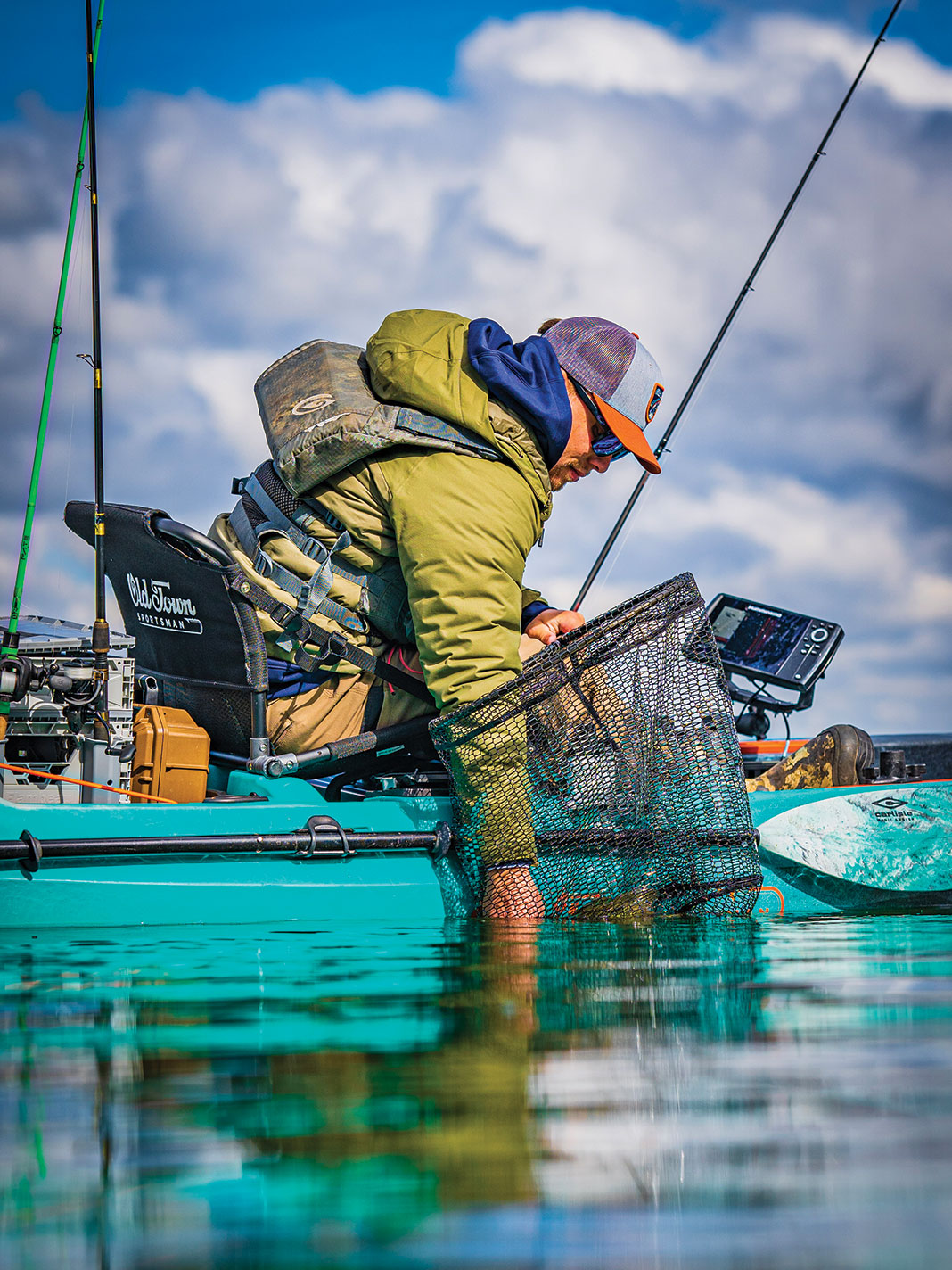
Kayak anglers charge inland, charge batteries, and charge boatloads of accessories to their credit cards. | Feature photo: Courtesy Perception Kayaks
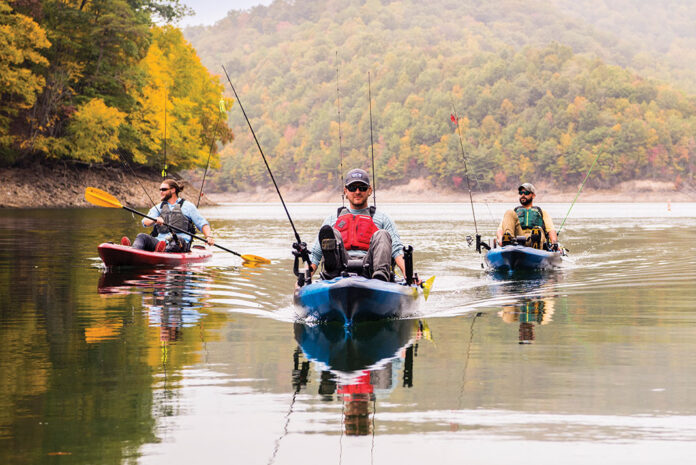
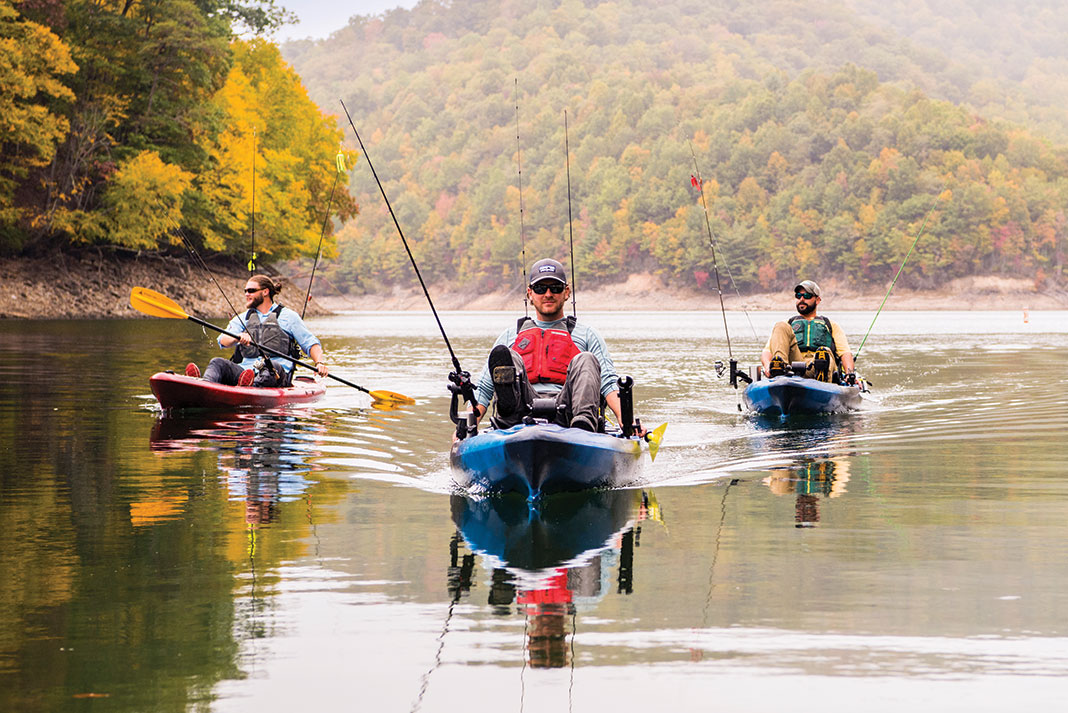
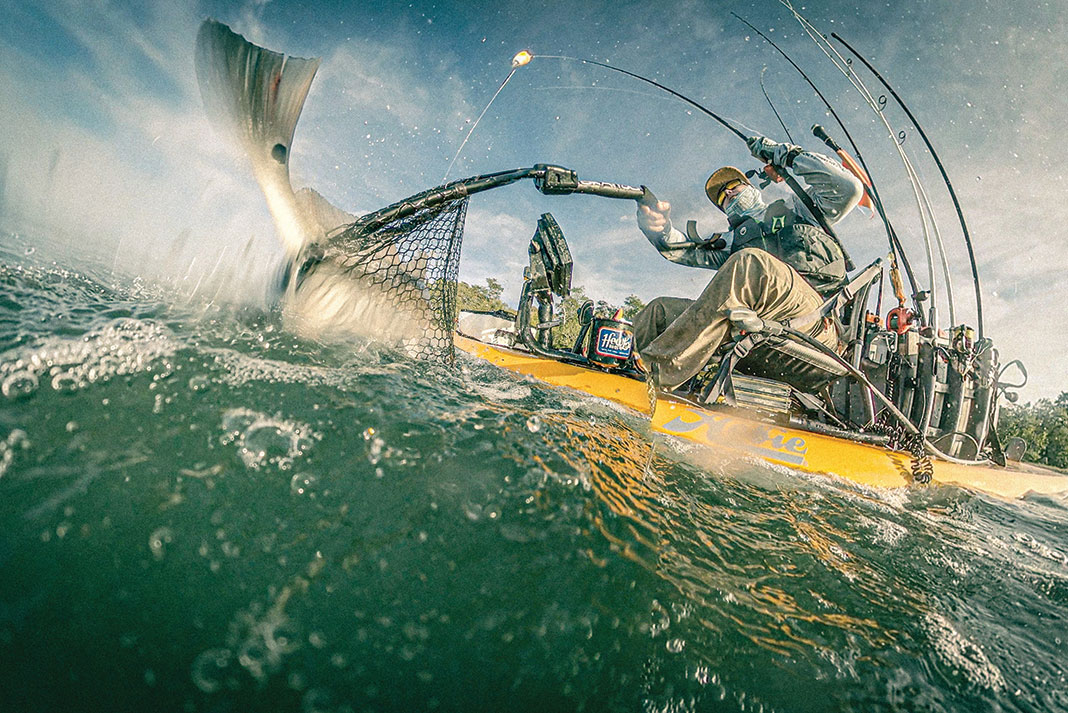
Kayak fishing sure has changed. Back in the Plastic Navy glory days of the 1990s, the ranks were full of penny-pinching saltwater MacGyvers, who would scarcely recognize the blinged bass battlewagons filling the dreams of today’s inland kayak anglers. These new custom fishing sleds are packed with cutting-edge technology, gee-whiz Spot-Lock electric trolling motors, omni-view photo realistic fish finders, remotely controlled stakeout poles, and more. But have we lost touch with the grassroots spirit that got early kayak fishing off the ground?
Before we go too far, a few words of explanation. Recreational kayaks still dominate kayak sales, and relatively inexpensive kayaks remain the entry point for most anglers. What we’re considering here is mindshare. These top-shelf rides fire the imagination of fish-obsessed kayakers, and will help determine how paddlesports manufacturers and retailers invest their development and marketing budgets for years to come.
In that light, this truly is a battle for the soul of the sport of kayak fishing. Spoiler alert: The no-expense-spared kayaks born of the freshwater bass tournament scene seem to be winning. This evolution is already clear in the market where girthy pedal drive kayaks dominate and the stretched-out paddle ‘yaks of yore are lost at sea. Finding an offshore-worthy craft has become a needle in a haystack proposition, which is why my latest ride came to me after gathering dust in a warehouse for years.
Kayak anglers charge inland, charge batteries, and charge boatloads of accessories to their credit cards. | Feature photo: Courtesy Perception Kayaks
Kayak fishing through the years
Perhaps no shop illustrates the changing complexion of kayak fishing better than Kayak Fishing Supplies. Founded in San Diego at the cusp of Southern California’s kayak fishing boom, Kayak Fishing Supplies later expanded to Sunset Beach. Principal Owner Brent Torgeson began selling kayaks around 1998, after an encounter with one of those salty pioneers opened his eyes to the potential of the humble craft.
“Here comes this guy who went by the handle Madscientist with a 50-pound sea bass,” he recalls. “And I can’t catch one from my nice powerboat.”
The early kayak fishing MacGyvers brought inspiration and innovation, but an industry was growing from the fertile ground they tilled.
Torgeson, his shop, and the once-vibrant online community Big Waters Edge were soon at the forefront of kayak fishing innovation. He and his pro staff, one of the first in the sport, worked closely with manufacturers to develop fishing-forward ‘yak designs. They were chiefly intended for saltwater, where the growth was at the time. These boats were 14 or even 16 feet long, relatively narrow and feature-free by today’s standards.
Every kayak hull was a blank canvas. Anglers wasted no time expressing themselves. The forums became hothouses of ideas. Kayak fishermen transformed zip ties and milk crates into effective fishing tools and shared their successes online.
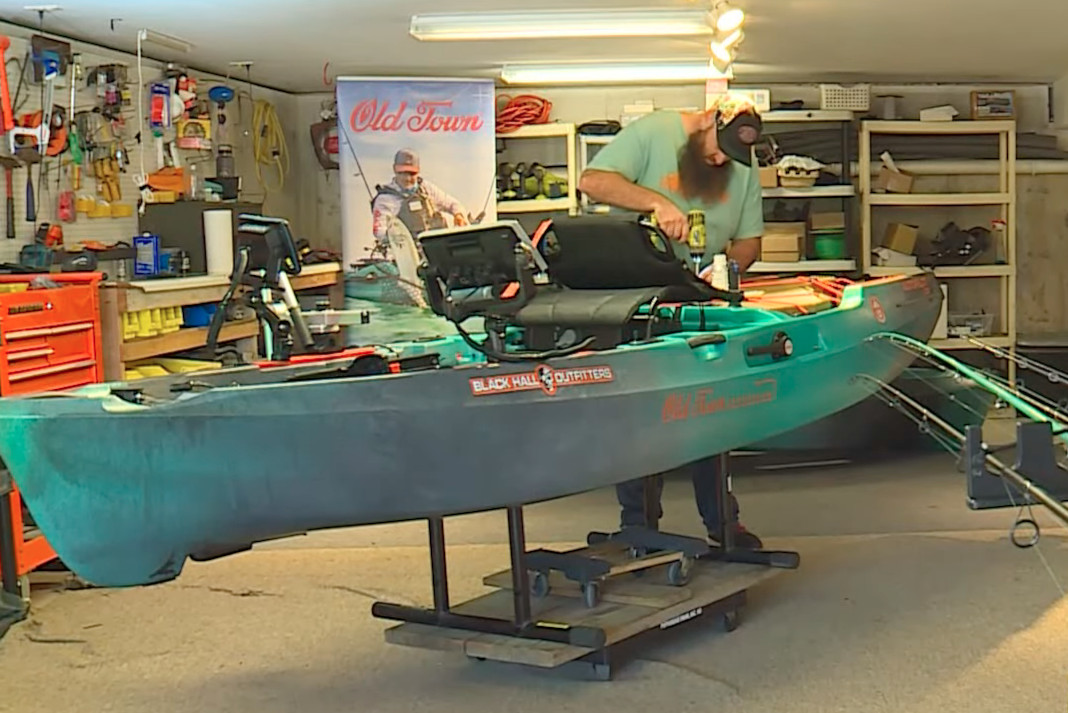
Naturally, the self-directed tinkering evolved into professional installations, with shops like Torgeson’s leading the way. The MacGyvers brought inspiration and innovation, but an industry was growing from the fertile ground they tilled.
Early on, Kayak Fishing Supplies developed a reputation for industry-leading custom fishing kayak rigging. Back in the day, that meant plumbed bait livewells, turnkey electronics installations and battery power solutions.
Simple stuff by modern standards.
Go ahead and pimp that ride, because no matter what you do it’s still cheaper than a bass boat. | Photo: Courtesy Scott Niska / Old Town
Custom kayak rigging, Torgeson says, is something a retailer must care about to do well. It isn’t for everyone, but especially in these post-Pandemic days when the calculus of shipping kayaks has changed business plans, it can pay off. There’s no telling where industry trends will take kayak fishing in the future, but we know where we are now: North of $15,000 for the ultimate bleeding-edge bass rigs.
Inland anglers eye a new prize
Kayak fishing has caught fire inland. In parallel with nationwide recreational fishing demographics, freshwater anglers vastly outnumber those who fish the salt. The paddlesports industry worked hard and long to develop this vast and once-untapped market, and there’s still room to grow.
In a trend mirroring the horsepower-fueled professional bass fishing circuits designed to jolt the sales of high-dollar bass boats, freshwater kayak bass fishing tournaments offering increasingly high-dollar cash prizes have proliferated. Take the 2023 Kayak Bass Fishing (KBF) Pro Series, which dangles a $50,000 first place prize. That’s a lot of incentive, and its influence on fishing kayak development and rigging should not be underestimated.
“Tournament fishing is powerful,” says Jeff Little, a prolific YouTuber who traces his own roots to the earliest days of contemporary kayak fishing. These days, Little represents electric motor category leader Torqeedo, so he’s well-versed in the growing popularity of electrically juiced fishing kayaks.
“No one can afford a bass boat anymore,” he says of the slick powerboats that, for many, are now just the stuff of dreams.
When Little was fishing as a backseater in local tournaments in the 90s, the guys who owned those boats typically worked in the trades or other blue-collar jobs. Today, a top-notch Bass Cat or Triton can go for more than six figures. For many, they are simply out of reach. Ergo, a new kayak fishing customer base.
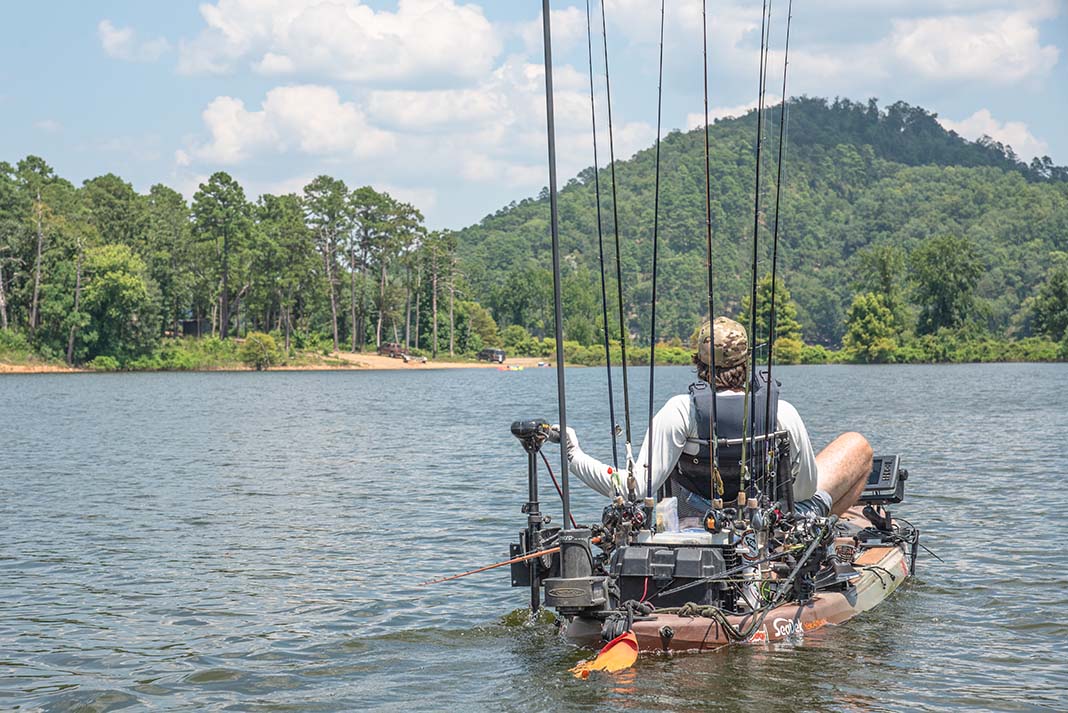
“Those same guys can afford a $5,000 Hobie Pro Angler and have enough money left over to put whatever depth finder they want on there, and Power-Pole and Torqeedo. They want to go faster than everyone else. These are one-man bass boats,” Little adds. “That’s what’s fueling the top-end price tags—a vacuum of affordability between a kayak and a bass boat.”
Say what? Back to Brent Torgeson of Kayak Fishing Supplies, whose expert riggers are increasingly building flashy $15,000 beasts for serious bass fishing enthusiasts.
We’re just as likely to chase the shiny new thing as they are. | Photo: Courtesy Hobie
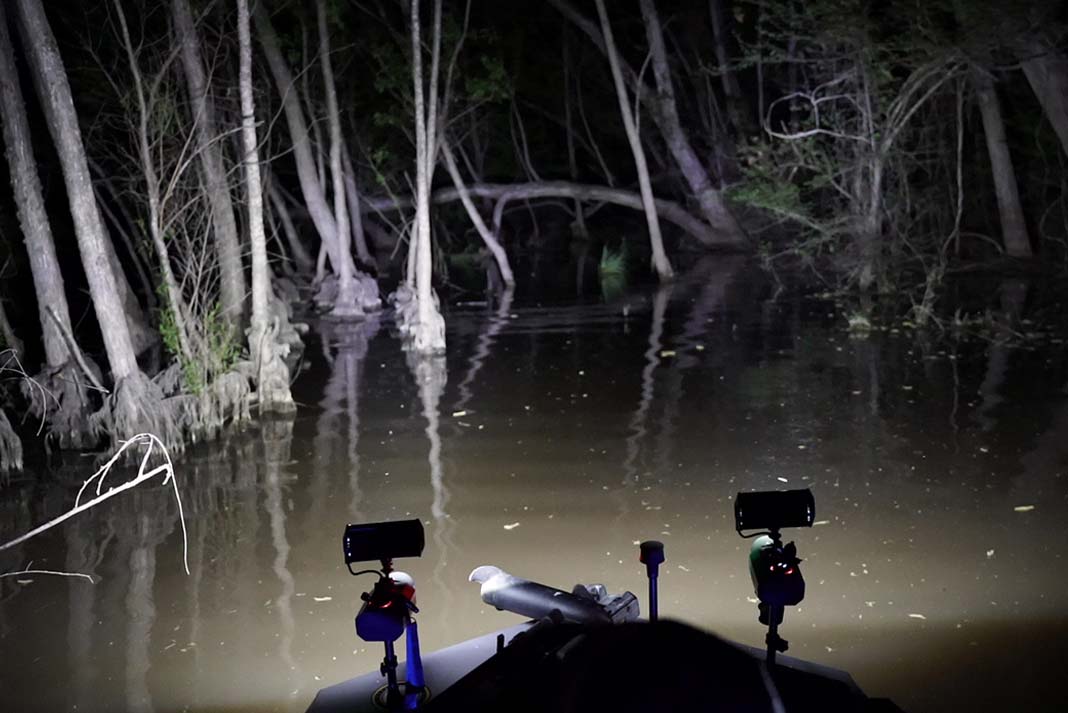
One such build, as documented on the Kayak Fishing Supplies YouTube page, featured a top-end MotorGuide Xi3 Kayak model trolling motor with Pinpoint GPS and remote control steering system, the latest sidescan and downscan fish finders, Garmin Panoptix LiveScope imaging, and high-test all-day lightweight batteries. Add a trailer, a lighting system, and a few other gadgets and it’s not too hard to hit the $15K threshold.
“Guys using this equipment in the tournaments say they have better results, especially on slow fishing days,” Torgeson says. “They can stay on spots even when it’s windy. Winning a series or tournament means a lot to them, and not just for the financial rewards. Bragging rights are pretty important to a lot of them.”
And the bling. Let’s not discount the cool factor of owning the hottest new ride on the lake.
Kayaks offer bargain bells and whistles
Mindshare doesn’t translate directly to market share, but there is a correlation. While some anglers will jump straight to the five-figure investment, the point of entry remains an $800 paddle kayak for many.
Before we go selling your soul, there’s still a place in the sport for scrappy innovators. Just ask 2021 KBF champion Guillermo Gonzalez, who estimates his Diablo Amigo, bolt-on Newport Vessels NV Series trolling motor, Power-Pole Micro and Garmin ECHOMAP Ultra only set him back about $4,000, all-in. Talent can win out, at least for a while.
This article was first published in the 2023 issue of Paddling Business. Inside you’ll find the year’s hottest gear for canoeing, kayaking, whitewater and paddleboarding. Plus: Industry leaders on the post-pandemic landscape, 50 years of paddlesports, the rise and fall of ACK and more. READ IT NOW »
Kayak anglers charge inland, charge batteries, and charge boatloads of accessories to their credit cards. | Feature photo: Courtesy Perception Kayaks
Broussard, LA – Basin Boat Lighting Safety Lighting Systems announces the addition of its smartphone emergency app, dubbed appBird, to the currently available lineup of hi-tech SmartBird safety lighting products.
Available for both iOS and android smartphones, the deployment of Basin’s innovative appBird gives the recreational boater and kayaker a way to request emergency help and notify a designated emergency contact–right after dialing 911.
When activated, the SOS function on the app will allow Basin Boat Lighting to assist in summoning local emergency personnel to the user’s last known GPS location and notify a designated emergency contact that an emergency has occurred.
Working in connection with the app, the SmartBird safety lighting system on board the boat or kayak responds to an SOS activation by immediately activating its spotlight and horn. The light and horn will flash and beep to assist first responders in locating the vessel needing help.
Additionally, the user’s name, call back number and GPS location are sent to Basin Boat Lighting, who backs up the emergency notification with GPS coordinates.
The United States Coast Guard 2021 Report on Recreational Boating Statistics sheds light on the many potential dangers related to recreational boating and kayaking. Collisions and running aground or into underwater objects pose grave dangers to boating enthusiasts each day. Created after a near catastrophic boating accident involving a submerged log, Basin Boat Lighting’s original line of safety lighting systems incorporates USCG required safety features into one self-contained, easy-to-use system.
Basin Boat Lighting is owned by local U.S. Navy veteran Brian Signorelli who, like many in Acadiana, spends much of his free time fishing and hunting in the Atchafalaya Basin. The full line of available SmartBird safety lighting systems can be found at basinboatlighting.com.
Forty-five seconds of fame. | Feature photo: Matt Corke
On a cold, foggy day, Thom Lambert plays his six-foot freestyle kayak down the Ottawa River in the low water levels of November. Except for his party of four boaters, the river is empty. He catches a trashy ride on the pulsing foam pile of Garburator, bypasses the ledged bedrock undercarriage of Bus Eater, and stops to spend more than an hour surfing at Pushbutton, a mellow cresting wave at the top of a narrow chute. Lambert plays competently, linking cartwheels with blunts and flat spins in the fluid, freeform dance of freestyle kayaking. This is the type of paddling 48-year-old Lambert lives for—the rejuvenating, non-competitive river running playboating that keeps him busy 60 to 70 days each year.
Lambert can understand why some boaters will sit in line for hours in the height of summer waiting for the sheer joy of butt-bouncing on the glassy face of fast-moving water. What he finds bewildering, however, is why some paddlers don numbered bibs, partake in judged 45-second wave rides and spend the rest of their day under a tree, waiting for results to be posted. “A very small group of very skilled, very committed athletes participate in competitive freestyle and no one else really notices,” says Lambert, who lives in Haliburton, Ontario. “I lost interest in it a long time ago. As much as I love playboating, watching someone else do it is a bit like watching paint dry.”
Lambert’s not alone in thinking that competitive freestyle kayaking may be washed up. More and more paddlers are choosing events like Palmer Fest, NantyFest and the Gauley River Festival over competitions—in effect subscribing to the Rapid-coined notion of “freeboating,” says Lambert. Freestyle kayaks once ruled the whitewater market, but for the 2009 season only one new design, the Liquidlogic Biscuit, was released onto North American rivers. At the dawn of the 2009 World Freestyle Championships—the latest installment of a flailing push to get the sport into the Olympics—paddlers everywhere are asking: What is the future of freestyle?
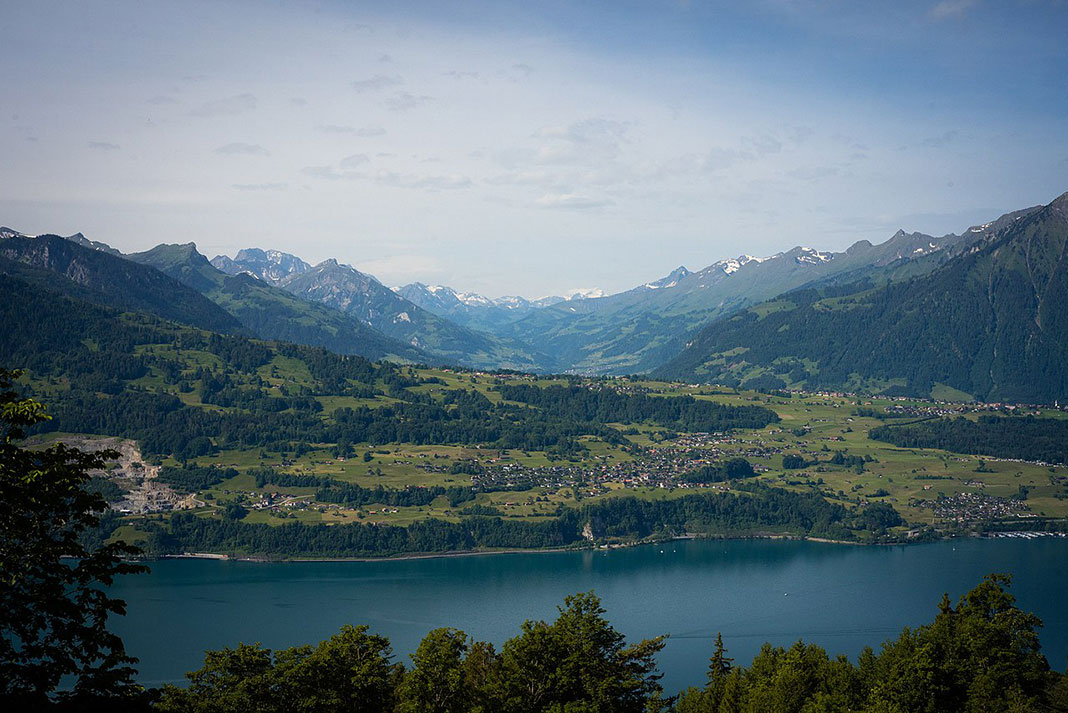
Tourists often ignore Thun, Switzerland, population 42,000, in favour of the popular Interlaken region—at least so say the pages of world travel companion Rough Guide. But its highlights are classic Swiss: medieval castles, views of the snow-capped Eiger and Heidi-esque girls with braided blond hair and plaid skirts. Thun (pronounced “Toon”) has been inhabited for the past 2,300 years.
The average paddler could be forgiven for mistaking Thun for Thunder Bay, as was the case on an online forum this spring, or being ignorant of the fact that the city will be the site of a small invasion of whitewater boaters for the World Freestyle Championships this August–September. After all, North American hype for the 2009 event has been virtually non-existent—nothing like the excitement for the 2007 championships on the Ottawa River’s gargantuan Bus Eater wave. At press time, the International Canoe Federation (ICF) event website was only accessible to English readers through the garble of Google translation. Most Joe-kayakers have no idea the championships are even taking place.
Matt McGuire, the chief organizer of the 2007 World Championships, says North America’s ambivalence towards the 2009 Worlds has much to do with the fact that it’s being hosted in an overseas backwater on a non-descript wave. “The feature isn’t as good as the Ottawa can provide,” says McGuire. “It’s flushy and small and it’s going to be a little trickier to land and stick tricks.” Still, McGuire is anticipating big crowds and a competitive event. “When the championships are held in an urban setting the atmosphere is livelier,” he adds. “Europeans are big into freestyle. All of the competitors are excited for that.”
Now serving number 42. | Photo: Brad Steels
In an effort to make freestyle paddling an Olympic sport, international events have been administered each year since 2006 by the ICF, a worldwide body of competitive paddlesports that’s recognized by the International Olympic Committee and also handles flatwater racing and whitewater slalom. It was decided that a series of at least two World Cup events would be held in even years, says McGuire, and a single winner-takes-all World Championships would take place in odd years. At the 2007 World Championships, U.S. freestyle ironman Eric Jackson and Canadian Ruth Gordon took senior men’s and women’s titles, respectively. At last year’s World Cup, also held in Europe and climaxing at Thun, the winners were Slovakian boater Peter Csonka and 18-year-old U.S. phenom Emily Jackson.
For Stephen Wright, a three-time U.S. National Freestyle Champion and coach of the Ottawa Kayak School Keeners crop of teenage boaters, the Thun World Championships are a big deal. If Wright is correct, the Swiss event could be the coming out party for the future of freestyle, the next step in bringing air screws, McNastys and loops to the Olympics and the passing of the torch to a younger generation of playboaters. There may be good reason why the Thun World Championships are falling beneath the radar of middle-aged forum boaters: With the notable exception of forty-something Eric Jackson, freestyle kayaking is becoming increasingly dominated by kids.
Case in point, says Wright, is the fact that 20-year-old Canadian Nick Troutman, the runner-up at last year’s World Cup, has “come pretty close to doing a double air screw,” an aerial double barrel-roll trick that has never been successfully landed. “Kids come with no preconceived notions of what is possible in a kayak,” says Wright. “They’re going to be able to do things that we’ve never dreamed of.”
According to McGuire, Eric Jackson’s willingness to share his competitive drive and sponsor up-and-comers under his Jackson Kayak brand has had much to do with the sport’s changing demographics. “With E.J. training with Nick [Troutman] and Joel [Kowalski], he’s really taught them how to compete,” says McGuire. “It’s crazy how much planning goes into these competitions. They keep track of points on Excel spreadsheets and know exactly which moves they need to get into the finals. They’re absolute machines on a wave.”
Stuck in a logjam, athletes and brands seek new directions
Longtime freestyle competitor Jay Kincaid was once a hole-riding machine, logging over 300 days on the river per year. The Reno, Nevada-native participated in his first rodeo event in 1993. He made a living as a professional freestyle kayaker for over a decade, claiming the 2003 World Championships and a respectable wad of sponsorship dollars from Dagger, Werner, Kokatat, Teva and other paddlesports heavyweights along the way. For freestyle insiders, it was a shock last spring when Kincaid resigned from the U.S. National Freestyle Team and competitive kayaking altogether.
“The 2006 World Cup [at Rock Island, Tennessee] and the 2007 World Championships on the Ottawa were the first kayaking competitions that I didn’t enjoy,” says Kincaid. “I love competition, but I realized I was spending 95 per cent of my day floating in a lineup in an eddy, rather than actually paddling. I thought, ‘there’s nothing I like about this.’”
WHITEWATER PARKS MIGHT BE FREESTYLE’S SAVING GRACE “There’s no better place for parents to take their kids. If I were 15 or 20 years old I’d be all over that shit.” —WOODY CALLAWAY
Over his career, Kincaid says he’s watched the scope of professional kayaking shift from whitewater slalom to instruction to freestyle, and finally to making videos of hairy first-descents in creekboats and big wave surfing.
“When I started, freestyle was the easiest way to get noticed,” says Kincaid. “You were either a freestyle kayaker, a slalom kayaker or an instructor. Now, without video, no one would have the ability to get the kind of recognition necessary to maintain sponsors.”
Dagger-sponsored boater Rush Sturges is at the leading edge of the filmmaking revolution. Sturges and Young Guns Productions have re-shaped freestyle from choreographed 45-second rides to big wave surfing in exotic locales. Since winning the 2003 World Junior Championships, Sturges says he’s become more interested in “progressing the sport” by globetrotting in search of huge, high-consequence freestyle features. “I still totally enjoy competition but for me that’s not where the progression is right now,” says Sturges, who’s been a member of the U.S. National Freestyle Team since 2003. “Freestyle just doesn’t get me as fired up as surfing big waves. Going out and finding new waves and inventing new tricks—that’s what really fuels the sport.”
Sturges says that part of the challenge in making freestyle appealing to the masses is “finding a venue for competitions that’s cool.” The element of risk that is inherent to most extreme sports is absent from competitive kayaking, he says. Even on a feature as big and dynamic as Bus Eater at the 2007 World Championships, Sturges says freestyle competitions are mundane to the average spectator. “It’s not like the X-Games,” he says. “Creating a risk always makes things more exciting to watch. Freestyle has become so predictable.”
Kincaid has no problem with the fact that he now works a research and development desk job for Glacier Glove, a Reno-based watersports glove manufacturer, and that his paddling career has morphed into weekend warrior. “I think a lot of people would rather take the cost of these events and put it into paddling for fun,” he says. “In terms of professional competitive freestyle kayaking, Rush [Sturges] and the Young Guns type of guys don’t need these events. Sure, a win is nice to put on your résumé but his talent for doing other things like filmmaking stands alone, and that’s the direction the sport is clearly going.”
A decade ago, new whitewater playboats hit the market as fast as pro boaters like Steve Fisher, Corran Addison and Ken Whiting could link ends. This was the “heyday of playboating,” says Woody Callaway, the brand manager of Liquidlogic Kayaks, when “playboats were sold to people wanting to do tricks, compete and run rivers.” Declining sales in freestyle kayaks isn’t a sign of lack of interest in paddling, maintains Callaway, but an indicator that the whitewater kayaking industry is changing shape according to demand.
You can’t really compare then and now because freestyle has become its own animal,” says Callaway, who insists the division between freestyle kayaks—six-foot-long spuds designed for wave and hole tricks—and longer, more versatile river running playboats has created the perception that freestyle is falling out of favour. “If you combine river-running playboat sales with freestyle sales, it’s still the biggest segment.”
Callaway believes the surge in popularity of whitewater parks might be freestyle’s saving grace. His theory that playparks will lower the average age of competitive freestyle kayakers could be already playing out at this year’s World Championships, with baby face youngsters like Canada’s Keegan Grady and American Dane Jackson poised to steal the show. Callaway sees the changing demographics of whitewater kayaking as a natural progression of the sport, similar to what has taken place with all-mountain and downhill mountain biking.
“Right now, most of the people who are into freestyle are in their late teens and 20s,” says Callaway. “It could get even younger. With the advancement of playparks, there’s no better place for parents to take their kids. If I were 15 or 20 years old I’d be all over that shit.”
Even the staunchest supporters of competitive freestyle kayaking—people like McGuire and Wright—admit that freestyle is a long way off from achieving Olympic glory. “It’s going to be a long battle,” says McGuire. “I don’t foresee it happening for another eight to 10 years.” Kincaid is less optimistic: “If you look at established Olympic paddlesports like slalom, it seems like they’re constantly fighting to make sure they’re still in,” he says. “I certainly hope [freestyle] gets in someday, but realistically I don’t know that it ever will.”
Ironically, despite its lack of recognition in North America, Kincaid thinks the Thun World Championships will be a good thing for freestyle kayaking. He says European events typically get twice the number of participants of those held in North America, noting that turnout for the Ottawa Worlds was among the lowest ever. “If the goal is to progress the sport, the big events have got to be held in locations where participant numbers are up,” he says.
Forty-five seconds of fame.| Feature photo: Matt Corke
For Lambert, it makes little difference whether or not freestyle becomes an Olympic sport—let alone what happens at this year’s World Championships. “It’s of virtually no interest to the average paddler,” he concludes.
Whatever the future holds, Callaway says freestyle will never die as long as surfing—the root of the sport—remains the biggest appeal of whitewater kayaking. “Competition isn’t the soul of kayaking,” says Callaway. “The soul of kayaking is seeing the world from the middle of the river. In that regard, freestyle in and of itself is awesome.”
This article originally appeared in Rapid’s Summer/Fall 2009 issue. Subscribe to Paddling Magazine and get 25 years of digital magazine archives including our legacy titles: Rapid, Adventure Kayak and Canoeroots.
Forty-five seconds of fame. | Feature photo: Matt Corke


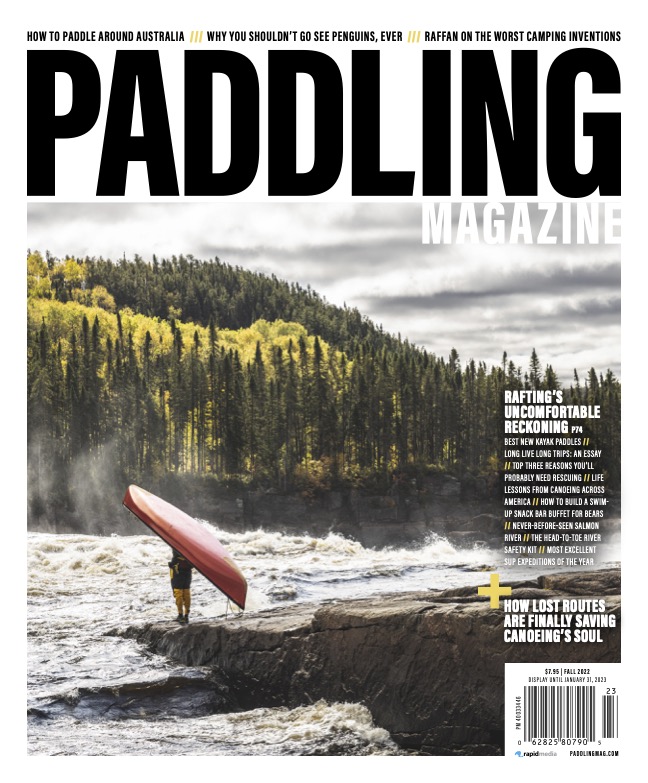 This article was first published in the Fall 2022 issue of Paddling Magazine.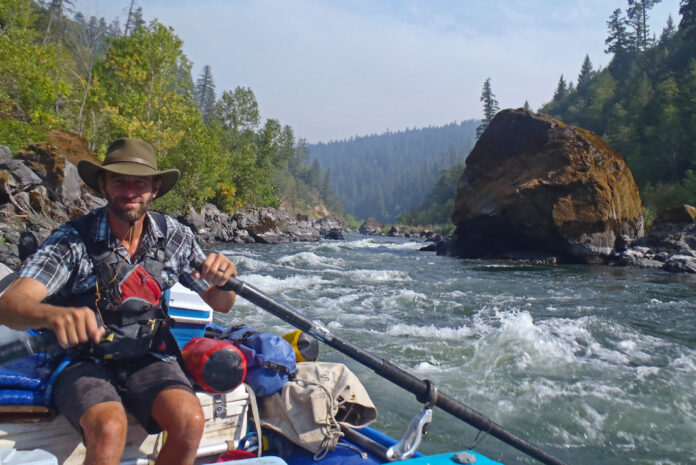




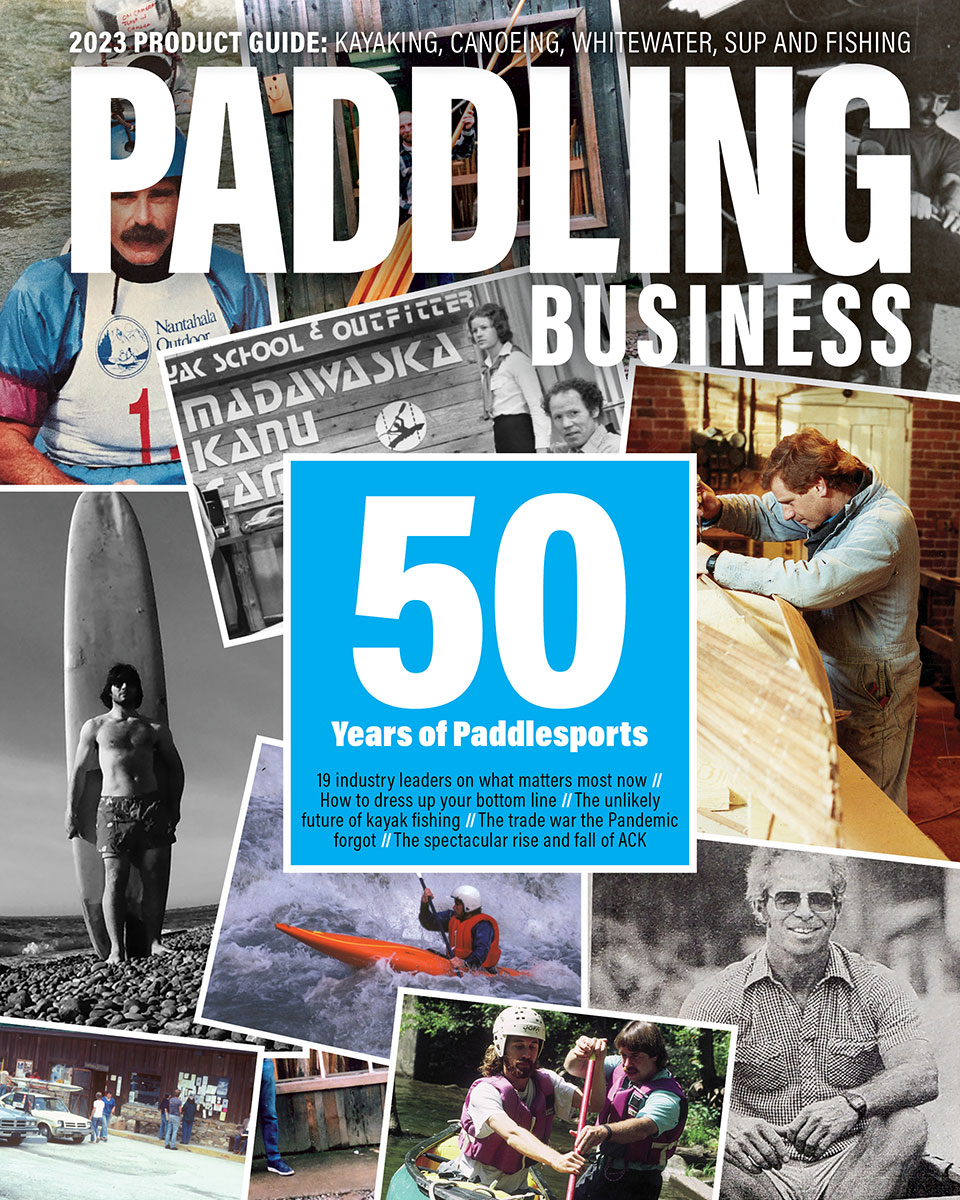 This article was first published in the 2023 issue of Paddling Business. Inside you’ll find the year’s hottest gear for canoeing, kayaking, whitewater and paddleboarding. Plus: Industry leaders on the post-pandemic landscape, 50 years of paddlesports, the rise and fall of ACK and more.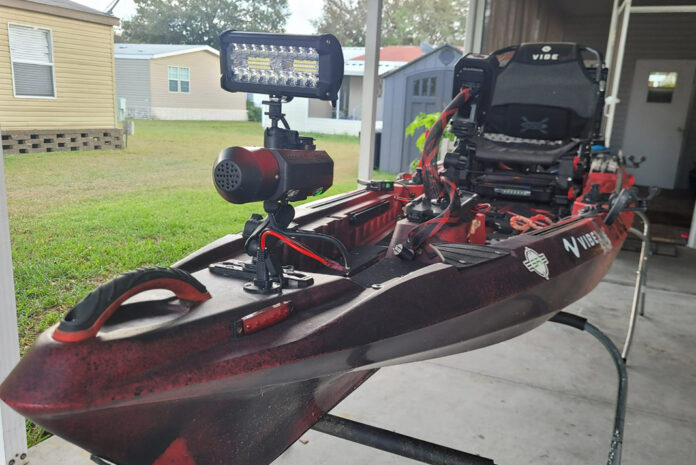


 This article originally appeared in Rapid’s Summer/Fall 2009 issue.



