Home Blog Page 80

Three Waters: Father-Daughter Tandem Expedition Crosses Lake Huron

a canoe stops at Bigsby Island in Lake Huron during a father-daughter tandem expedition
Respite on Bigsby Island, Georgian Bay. | Feature photo: Scott Parent

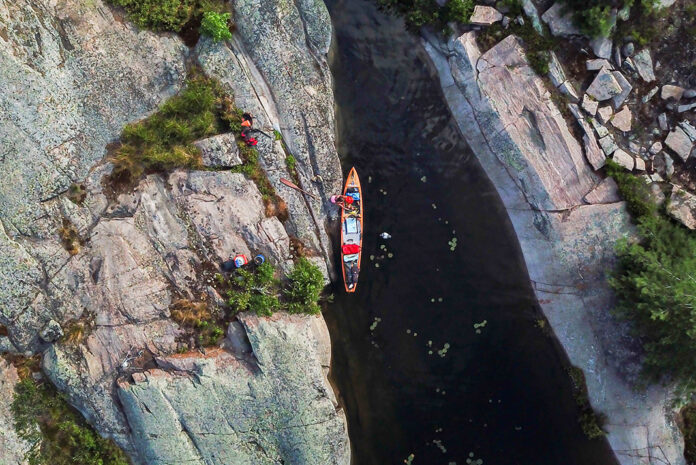
This lunch stop on Bigsby Island in Lake Huron was a special moment. My daughter and I were 22 days into a 32-day tandem expedition across the great lake, starting from Bootaagani-Minis (Drummond Island) in Michigan, with the goal of reaching Penetanguishene in Ontario, Canada. We traveled on a 14-foot-long Blu Wave SUP Catalina.

Early in the expedition, we both contended with concerns over the challenges ahead and our precious cargo on board. For me, that meant my nine-year-old daughter. For my daughter, Acadia, it meant the glass vials containing water samples we were collecting along the journey and the equipment for microplastics sampling.
Father-daughter tandem expedition explores Lake Huron

The expedition started as an idea to trace the 1828 migration of my Metis ancestors across Lake Huron, from Drummond Island to Penetanguishene. It was Acadia’s idea to turn the trip into an environmental journey and take water samples for microplastics research, something she learned about through the Lake Huron Coastal Centre for Conservation. We carried with us a deep-water sampler and collected some of the first deep water data for Lake Huron, so we could learn more about the threat of plastic pollution.

We experienced the full monty of weather, wind and waves as we traveled the coastlines of Lake Huron’s three bodies of water—the North Channel, Lake Huron proper and Georgian Bay. The lake’s long shorelines present unique challenges to navigate. Along the eastern shoreline of Manitoulin Island, the largest freshwater island in the world, the winds turned with us, and we journeyed consecutive three-leg days, paddling in the morning, afternoon and evening. Along the north shore of Georgian Bay, we had strong winds and half-meter chop hitting us broadside but were able to bounce forward using the inlets and islands as handrails.
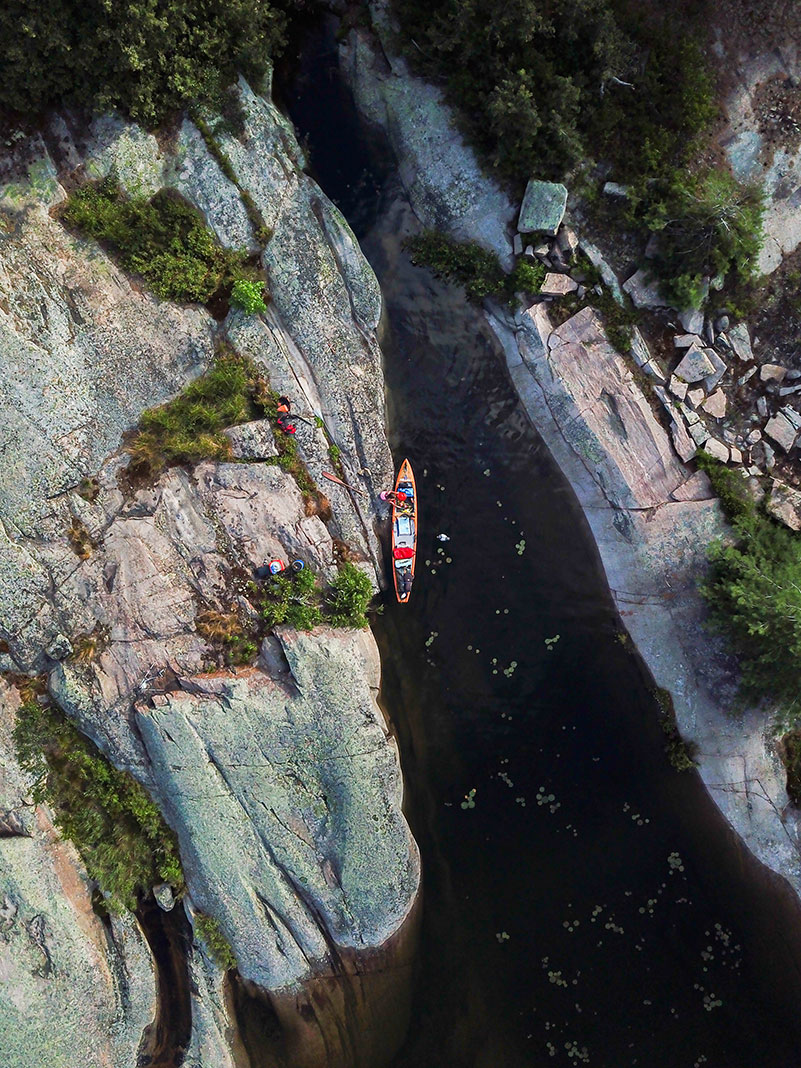
a canoe stops at Bigsby Island in Lake Huron during a father-daughter tandem expedition
Respite on Bigsby Island, Georgian Bay. | Feature photo: Scott Parent

A welcome break at Bigsby Island

Here at Bigsby, we had reached the archipelagic eastern shoreline of Georgian Bay. And with approximately 300 kilometers of our journey behind us and a little more than 150 kilometers ahead, we were paddling into the labyrinthine Thirty Thousand Islands region. The day had been piping hot. Having paddled 15 kilometers that morning, we opted to relax for the afternoon and resume paddling later that evening. We took a water sample and cast a line. We caught a smallmouth bass and shared a shore lunch and a swim.

[ Plan your next Great Lakes adventure with the Paddling Trip Guide ]

In this photo, Poly, the polypropylene waterfowl—a duck decoy we’d been trolling behind us since finding it washed up on Greene Island—watches over Acadia as she loads the water sampling gear on the SUP. The block of blue foam, small plastic bucket and oil can on board were removed from islands along the way. We found plastic garbage at every campsite, lunch spot and pee break we made. We hauled out what we could.

As for the water samples? Microplastics were present in 42 of the 44 samples analyzed, mainly in the form of fibers. Those deep-water samples proved the presence of microplastics at depths of 50 feet in some channels.

Everything is interconnected

Since this transformative journey in July 2019, I’ve seen how prevalent microplastic pollution is across Lake Huron and how it has permeated the habitats of all wild creatures across the region. The journey also underscored the interconnectedness of all things—Acadia recognizes the water we swim in at home is affected because it’s all the same system. Through our documentary, Three Waters, we hope to bring the same realization to everyone connected to the Great Lakes region.

The Three Waters documentary about this expedition premiered in April 2022. Find screenings near you via writer Scott Parent’s Instagram @scottparentphoto.
Cover of Paddling Magazine Issue 67This article was first published in the Summer 2022 issue of Paddling Magazine. Subscribe to Paddling Magazine’s print and digital editions, or browse the archives.


Respite on Bigsby Island, Georgian Bay. | Feature photo: Scott Parent

 

The Big Gear Show Announces New Event For 2023

View of convention centre in Denver
Photo: Scott Dressel-Martin // VisitDenver

Denver, CO: The Big Gear Show announced today that it will hold its next show June 8-11, 2023, in Denver, Colorado, at the Colorado Convention Center. The show will co-locate with its sister e-bike show: (e)revolution. The Big Gear Show and (e)revolution represent a new era of industry events called B2B2C, or “business to business to consumer,” and will consist of two industry days and two consumer days.

Since its inception, The Big Gear Show has redefined what outdoor industry events should look like. Building on its unique multi-category format, the show is expanding to a more inclusive platform welcoming consumers into the mix. In addition to showcasing outdoor, cycling, climbing, paddlesports and camping gear, The Big Gear Show will add relevant categories like overland, trail running, and gear that you wear, like functional and technical footwear and apparel.

“Our ethos has always been to embrace both retailers and consumers and we feel like now is the time to bring our industry to where the people are,” said Kenji Haroutunian, show director, adding, “When we first announced The Big Gear Show in 2020, we envisioned it taking place inside an accessible center city location, designed to incorporate product demonstrations as well as consumer engagement. Now our original vision is realized.”

In welcoming The Big Gear Show, Governor Jared Polis said, “Colorado’s outdoor recreation opportunities are not only a lot of fun, but the outdoor industry is a big part of our thriving economy, creating good-paying jobs, supporting our small businesses across the state, and connecting people to our world-class outdoors. As a business person, I am excited about the opportunity that The Big Gear Show presents for our entrepreneurs and for our state to expand and showcase our inclusive and booming outdoor recreation industry and products.”

The show’s move to Denver provides exhibitors with access to over three million people and one of the most active outdoor populations in the country. By co-locating with (e)revolution, The Big Gear Show will attract new and more diverse participants to learn about the innovative gear promoting active outdoor recreation. Moreover, 80 percent of Colorado’s population lives within 100 miles of downtown Denver, creating a hive of activity all focused on healthy and responsible recreation outdoors.

View of convention centre in Denver
Photo: Scott Dressel-Martin // VisitDenver

Haroutunian noted, “We recognize early June is a busy time for the industry. But we feel there is no better time than June to gather the industry and kick off the outdoor industry’s summer recreation season.”

The Big Gear Show continues its promise of discovery in an exciting new format, providing opportunities for retail buyers in finding new resources with the added benefit of the show occurring at the start of the peak summer buying season. The show remains committed to being retailer-centric with first-look opportunities at next year’s gear, continuation of the retailer travel subsidy program, and retailer-focused education programming. Zones dedicated to product demonstration and testing are integrated into the show itself, letting attendees get hands-on experience with new products.

(e)revolution Show Director Lance Camisasca stated, “E-bikes are the fastest-growing segment in the entire active outdoor lifestyle industry. With the surging popularity in e-bikes and the increase in cross-merchandising of e-bikes in more traditional outdoor stores, the co-location of The Big Gear Show with (e)revolution makes all the sense in the world. It exponentially increases the potential for discovery by retailers, the media and consumers.”

Additionally, Camisasca noted, “The Big Gear Show will remain popular for all bike and accessory brands that wish to show their products to the growing number of outdoor retail stores with strong interests in cycling and crossover products”

“Colorado is excited to host The Big Gear Show and its forward-looking concept of an inclusive industry gathering of consumers and retailers,” said Outdoor Recreation Industry Office Director Conor Hall. “Events like The Big Gear Show and (e)revolution are important components in our push to ensure Colorado is a national leader in outdoor recreation and remains the gathering place of the industry where brands, retailers and consumers come together to learn, network and celebrate the great outdoors.”

Exhibitors can begin booking exhibit space starting now, with early bird pricing available through December 15, 2022. Retailers and media registration will also be available, with consumer registration open in early 2023.

Visit thebiggearshow.com for details on The Big Gear Show.

For more information contact:
Dave Petri
Lost Paddle Events
336-429-6860 | dave@lostpaddle.com

About The Big Gear Show

The Big Gear Show is redefining what an outdoor industry trade show should be. By embracing a wide range of outdoor recreation activities, this new B2B2C experiential model prioritizes meeting the needs of specialty retailers and their customers. The Big Gear Show features the gear that gets people outdoors, amplifying the stories of innovation and access for a new outdoor consumer base. Now in its third year, the event will not only gather professionals from the top outdoor recreation specialty retailers, brands and media, but will also be the first of its kind to invite consumers to attend.

About (e)revolution

(e)revolution is the world’s first B2B2C e-bike expo focused solely on the needs of e-bike brands, dealers, suppliers and consumers. A four-day event that provides brands and suppliers opportunities to engage directly with e-bike retailers and cyclists, providing education, demonstrations, and industry networking and social events. The show takes place in Denver, Colorado at the Colorado Convention Center in June 2023.

About Lost Paddle Events

Lost Paddle Events is the leader in retailer and consumer-focused trade shows. Led by a team of industry trade show experts across multiple outdoor recreation categories, Lost Paddle Events produces outdoor-focused events across a range of outdoor recreation categories. Its events include the premiere multi-category trade show, The Big Gear Show; the first of its kind e-bike trade show, (e)revolution; and consumer-centric sports shows, including the Saltwater Fishing Expo, Chicagoland Fishing Travel & Outdoor Expo, and World Fishing & Outdoor Expo.

###

Reader’s Digest Publishes Paddling Safety Article Written For Water Sports Foundation Program

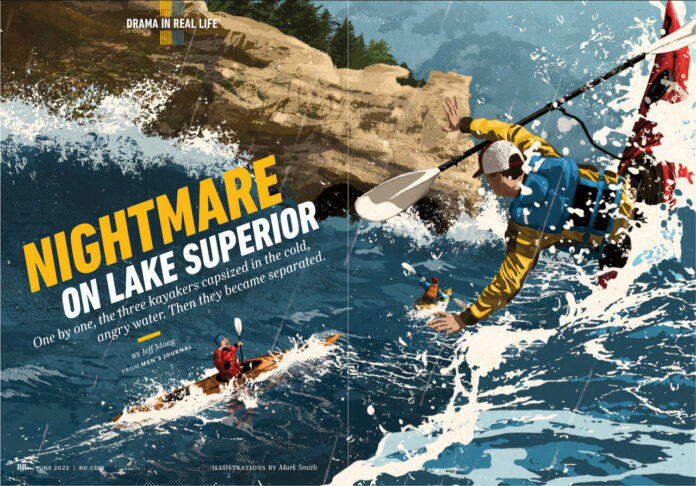
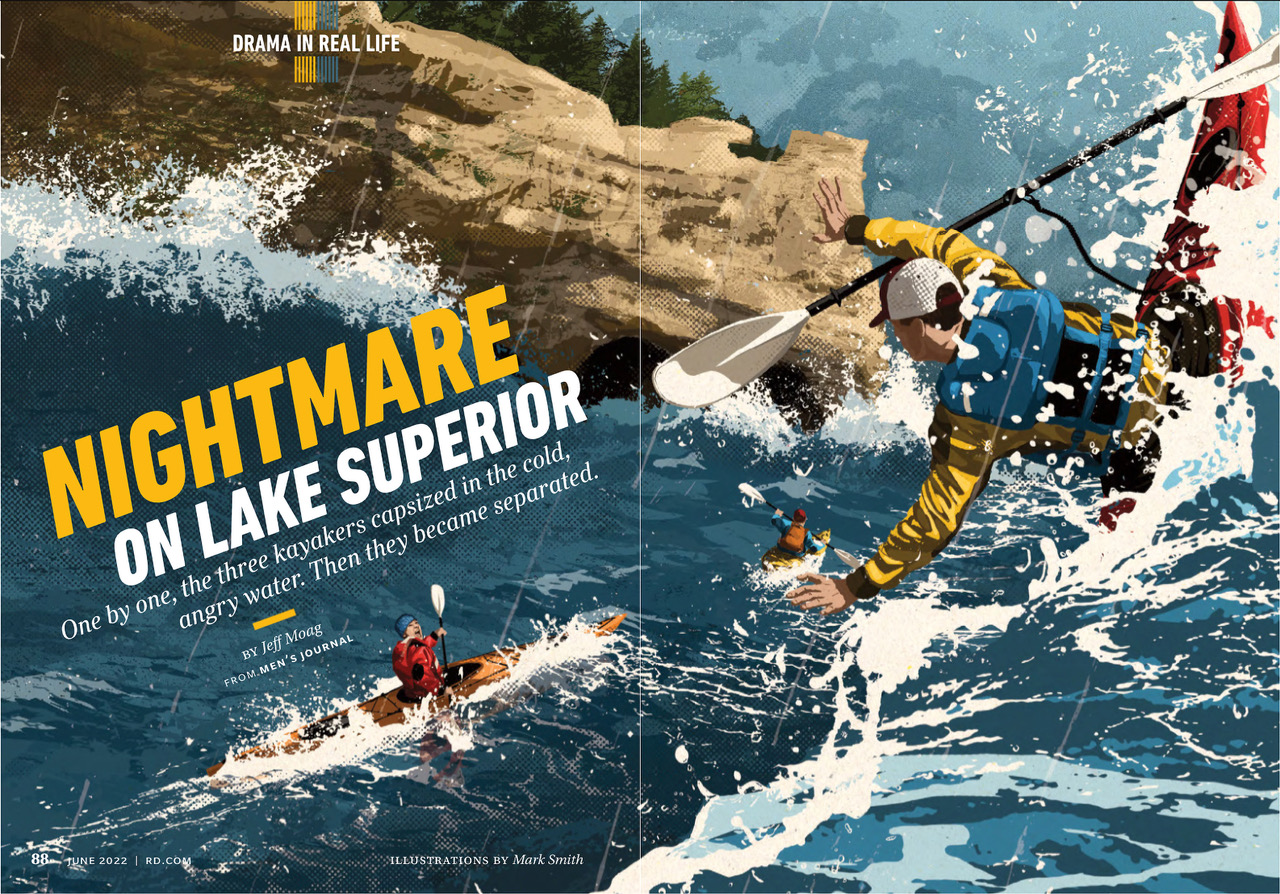
Magazine spread featuring illustration showing sea kayaks caught in a storm.
The opening page illustration that Reader’s Digest commissioned Mark Smith to develop for the Nightmare on Lake Superior story.

October 25, 2022, ORLANDO, Fla – The world’s largest paid-circulation magazine, Reader’s Digest, recently published a paddling safety story written as part of the Water Sports Foundation program Lessons for Life: Accidents As Learning Experiences. The WSF Content Director Jeff Moag wrote the article, Nightmare On Lake Superior, which was first published in Men’s Journal and Paddling Magazine.

Lessons For Life uses stories and videos about true-life incidents to promote boating and paddling safety. The story Reader’s Digest published was about three friends whose paddling adventure on Lake Superior turned into a life-threatening ordeal when a sudden storm caught them off-guard. All three men capsized and became separated in the squall. Moag’s story describes each paddler’s harrowing experience, describing both how they got into the potentially deadly situation and how they managed to survive.

Reader’s Digest Global Rights Manager Thomas Dombrowolski said, “Each month, Reader’s Digest publishes a Drama In Real Life column. It is one of our longest-running features and a reader favorite. We typically commission these features ourselves, but when we came across the Lake Superior story, we thought it was perfect the way it is.”

The story was republished in the June 2022 Reader’s Digest, reaching more than 40 million subscribers in 70 countries.

Magazine spread of illustration of sea kayakers caught in a storm
The opening page illustration that Reader’s Digest commissioned Mark Smith to develop for the Nightmare On Lake Superior story.

“It’s an honor to have my work picked up by the world’s largest subscription magazine, especially since it validates the premise of our Lessons For Life program,” Moag said. “At the WSF, we believe good storytelling is the best and most memorable way to share lifesaving safety advice.”

Since 2017, the WSF has published 22 Lessons For Life narratives and 15 videos, in cooperation with 13 major enthusiast titles such as Boating, Men’s Journal, Cruising World, Saltwater Sportsman, Paddling Magazine, Kayak Angler, BassFan, In-Fisherman, Florida Sportsman and Paddling.com. The goal is to engage readers in the story and use the narrative to show the audience how to stay safe and incident-free in their own boating and paddling adventures.

Other WSF Lessons For Life stories have also gone viral, including Heroic Rescue at Destin Pass, about a family whose boat capsized in strong currents. The four-minute video has been viewed more than 2.5 million times on various platforms. All the Lessons For Life stories and videos are archived on the WSF website: WaterSportsFoundation.com.

The Water Sports Foundation is the non-profit educational arm of the Water Sports Industry Association which represents more than 500 corporate members. Since 2011, the Water Sports Foundation has been a U.S. Coast Guard non-profit grant recipient. The Lessons For Life: Accidents As Learning Experiences project contracted Moag to produce real-life stories distributed to boaters as educational material. The project has been highly successful capped by the recent honors bestowed by Reader’s Digest.

The Water Sports Foundation is a U.S. Coast Guard recreational boating safety outreach partner and is currently managing seven outreach grant projects each promoting safer boating and paddling to specific U.S. targeted audiences.

About the Water Sports Foundation

Headquartered in Orlando, Florida, the WSF has successfully managed dozens of boating safety outreach projects since 2011 as a U.S. Coast Guard non-profit grant recipient. The Sport Fish Restoration and Boating Trust Fund administered through Congressional action provides funding for the U.S. Coast Guard’s recreational boating safety non-profit grants program. For more information, contact Jim Emmons, WSF executive director, at info@WaterSportsFoundation.com.

5 Classic Whitewater Of The Sea Videos

If there is one thing groups like the Neptune Rangers have shown us, it’s that the image of sea kayaking isn’t just paddling bays in your ball cap watching birds and marine mammals. The Neptune Rangers, born of the lineage of sea kayak rock gardening groups such as the Tsunami Rangers, have spent a solid decade posting their exploits to YouTube.

The result, is a classic treasure trove of timelessly gnarly videos serving as inspiration for the kind of playground the whitewater of the sea can be. Not to mention plenty of cringe-inducing beatdowns.

Here are five classics from the Neptune Rangers:

1. Insane Fun in Mendocino

The Northern California coast of Mendocino is a rock gardening heaven. In Bill Vonnegut’s summary he mentions he wasn’t planning to bring the camera this day. Fortunately for us he did. Insane Fun In Mendocino features one of the biggest coastal drops we’ve seen.

2. Trapped Inside at Devil’s Slide

When the swell period increases from 12 to 21 seconds, the Neptune Rangers are in for some serious swell. Half Moon Bay is home to the notorious big wave surfing break Mavericks, so there is plenty of power to the ocean in these parts. The Neptune Rangers get a slice of unpredicted outside sets in Trapped Inside at Devil’s Slide.

[ Find your boat to play the ocean in the Paddling Buyer’s Guide ]

3. Om Mani Padme OMG!

A compilation of slot moves, drops, and carnage. Om Mani Padme OMG! is a compilation of greatest hits from the goods off Mendocino and Big Sur.

4. Bad Reputation

What does a typical day of riding with the Neptune Rangers look like? Bad Reputation captures the disorderly fun of the paddling crew.

5. IDH – Rocking The Ages

Plenty of action, and a bit of ecology studies thrown in the mix. The only question is whether the disturbance is happening at an intermediate or frequent rate in the Neptune Ranger’s IDH- Rocking The Ages.


Expert Tips To Deal With The Great Tick Invasion

stock photo of a tick climbing in dewy grass
“Hey, man—can I catch a ride?” A tick reaches out its front legs, questing for its next blood meal. | Feature photo: iStock

I discovered a tick embedded in my crotch. Where? I was on day five of a 10-day canoe trip across Quetico Provincial Park. Ticks love to attach themselves to dark, moist places where the tissue is soft and thin. Think armpits, behind ears and knees, and, you guessed it, the vulnerable groin.

Of course, I panicked and gave it a yank instead of gingerly removing it with tweezers. My hastiness left half the tick under my skin. Yuck.

Worried about infection and catching potentially debilitating Lyme disease, I asked my long-suffering canoe buddy, Andy, to have a look at the wound. He politely refused. I used the mirror on my forestry compass to dig out the remainder of the arachnid.

For the rest of the trip, I suffered from phantom tick syndrome. You know what I mean. My skin crawled as I imagined ticks creeping silently on their eight tiny legs across my body. Every itch and tickle was heightened, making me yank up my shirt and pantlegs to inspect my unblemished skin underneath.

Expert tips to deal with the great tick invasion

Most backcountry paddlers can manage ravenous mosquitos and blackflies, no problem. But ticks are freaky. And over the last few years, I’ve heard more complaints from canoeists about ticks invading their favorite paddling paradises—ticks thriving where there were no ticks before.

That’s because the range of several species of ticks has increased dramatically throughout North America. Fortunately, of the 200 species of ticks in America, only a handful spread bacterial or viral pathogens. They vary by region. The mid-West has Rocky Mountain spotted fever spread by dog ticks. The Heartland virus, spread by Lone Star ticks, made headlines this spring in the southeastern states. In the northeastern states and parts of Canada, Lyme disease spread by blacklegged ticks has everyone talking. The U.S. Center for Disease Control and Prevention estimates nearly half a million Americans get Lyme disease each year.

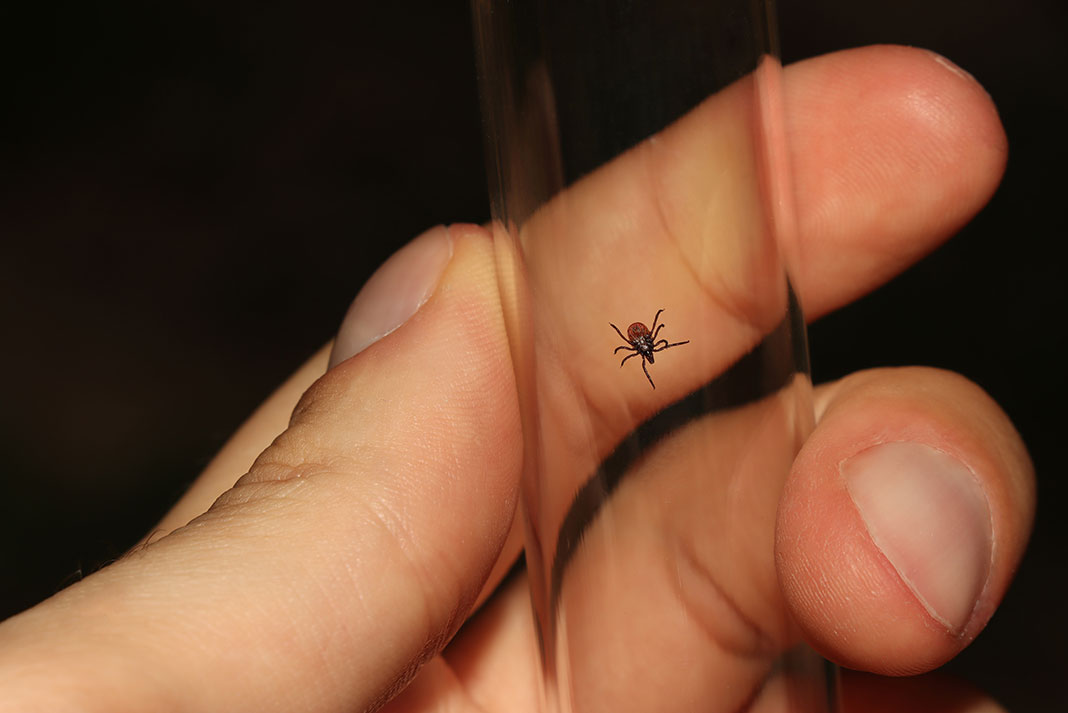
person holds up a tick in a glass beaker
Dont get ticked off. | Photo: Marino Linic/Unsplash

It wasn’t always this way. In the past two decades, the number of U.S. counties with an established blacklegged tick population has more than doubled. In addition, the blacklegged tick’s range expands north at a rate of 25 to 50 miles a year. In the ‘70s, there was just one known colony of blacklegged ticks in Canada, located on the north shore of Lake Erie. However, by the 2000s, blacklegged ticks were found all over southern Ontario, Quebec, Manitoba, and the Atlantic provinces, and huge swaths of those provinces are now considered Lyme disease risk areas. According to scientists, the increase of ticks and their expanding range is partly due to milder winters.

How to handle ticks on trip

The good news, if there is any, is that even with the expansion of the ticks’ ranges, the methods to prevent a bite remain the same. Long, light-colored pants with socks tucked in and long sleeves will help protect paddlers, as will applying bug juice with DEET around the ankles. Some paddlers prefer clothing impregnated with the pesticide permethrin.

[ Browse the widest selection of boats and gear in the Paddling Buyer’s Guide ]

Even with those precautions, I still recommend performing tick checks every night in camp. It’s crucial in heavily tick-infested areas. It’s best to use the buddy system. Just make sure to choose a paddling partner who has your, erm, backside.

Cover of Paddling Magazine Issue 67This article was first published in the Summer 2022 issue of Paddling Magazine. Subscribe to Paddling Magazine’s print and digital editions, or browse the archives.


“Hey, man—can I catch a ride?” A tick reaches out its front legs, questing for its next blood meal. | Feature photo: iStock


How Accessories Can Add Up To Big Profits For Retailers

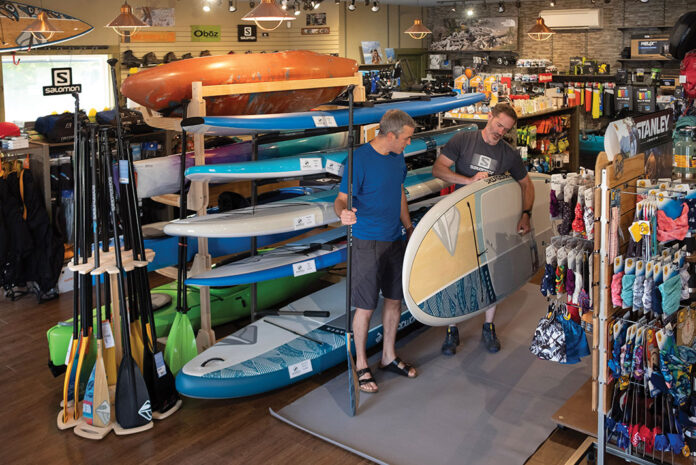
two people look at paddleboards in a paddle shop
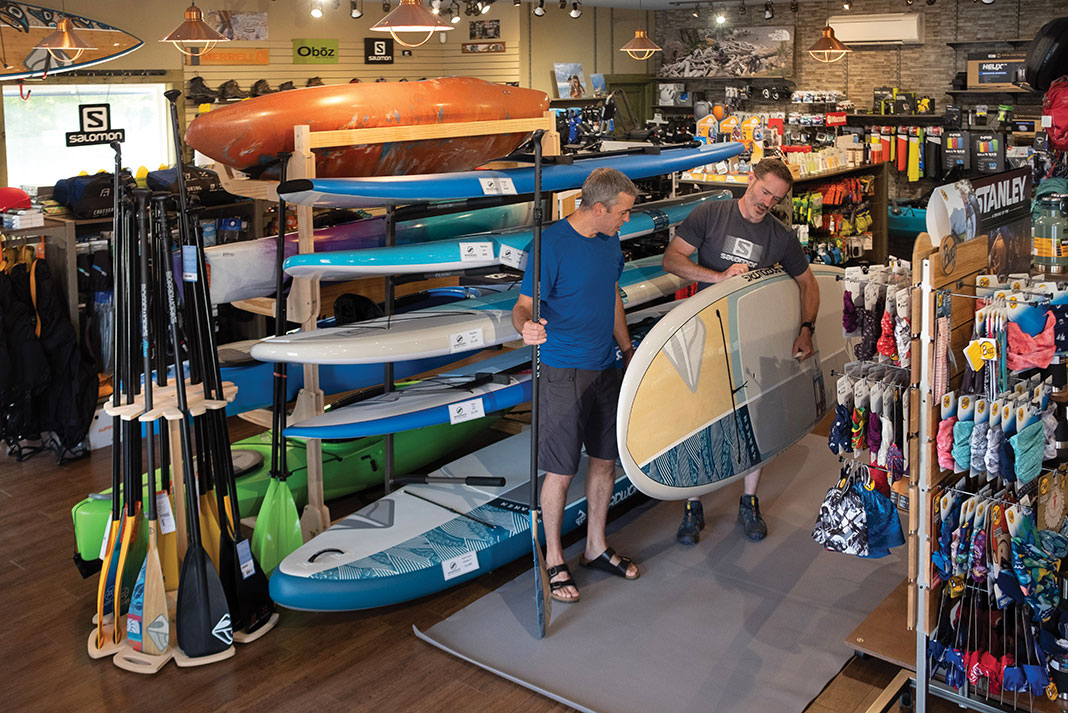
Accessories give the edge to specialty stores with sales staff who know the sport. | Feature photo: Mark Hemmings

There’s a mantra in sports that says you don’t become a champion overnight. The idea has gained a lot of press thanks to British cycling coach Dave Brailsford, who coined the term marginal gains for the process of incremental improvement he used to guide the British cycling team to 16 gold medals over two Olympics and seven Tour de France wins in eight years.

Brailsford famously had his team’s shop floor painted white so no errant speck of dust would find its way into an athlete’s bike. While some critics have suggested his famous attention to detail paid even bigger dividends in the field of pharmaceutical enhancement, the point is Brailsford didn’t try to grab the golden ring with one all-in, high-stakes gamble.

It’s the same in retail.

The difference between red ink and black often comes down to the margins. And nothing returns margins like accessories, says YakAttack Marketing Manager John Hipsher.

“A kayak has maybe 30 points of margin after—or sometimes even before—shipping costs,” Hipsher says. “I offer retailers a base margin of 40. That’s even before any preseason discounts, so you can get most accessories with free shipping and closer to 50 percent margin.”

two people look at paddleboards in a paddle shop
Accessories give the edge to specialty stores with sales staff who know the sport. | Feature photo: Mark Hemmings

Don’t Sell Naked

When Sawyer Paddles and Oars opened its retail store, Member/Manager Zac Kauffman recognized the company’s signature products are, in essence, high-end accessories. Sawyer Station does a brisk business in rafts, kayaks and standup paddleboards, as well as the paddles and oars the 40-year-old parent company makes just up the road. But those big ticket items are only the start, Kauffman says.

“We pretty much approach our whole concept as, ’Let’s get something out the door that we can accessorize,’” he says. “If we’re going to sell someone a river SUP paddle, let’s also sell them a board and everything else to go with it: The leash, the life jacket, the helmet, the shoes. We don’t sell anything naked.”

Leverage Your Knowledge

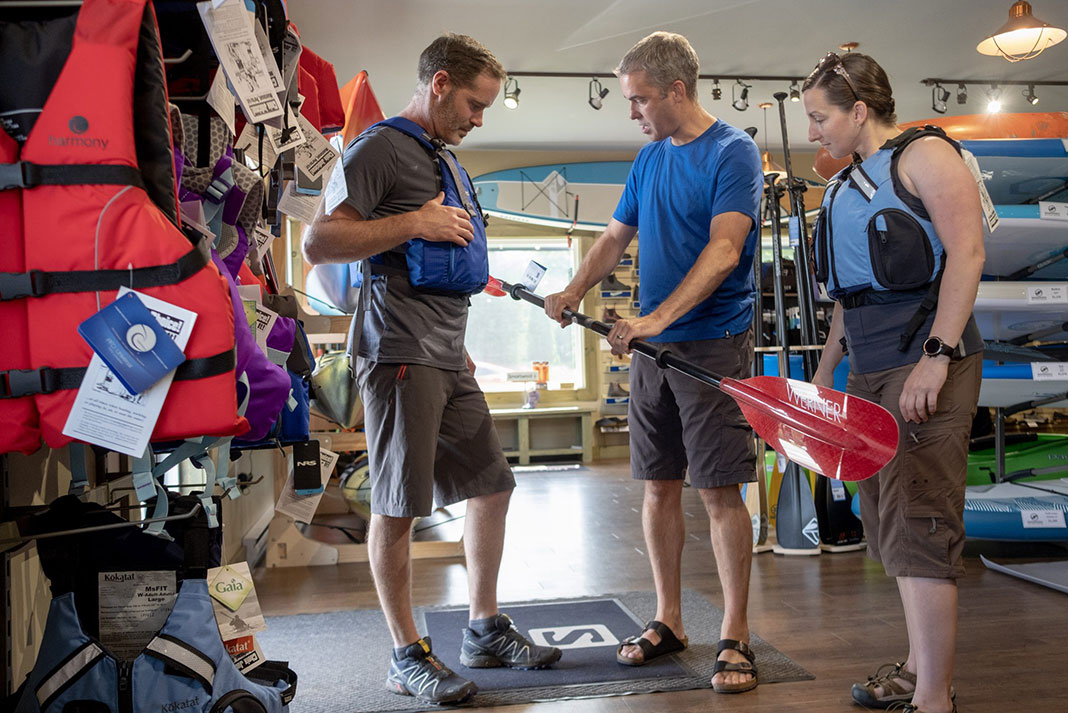
Accessory sales offer an edge to specialty stores whose staff can articulate the need for particular items. If a shop caters to a variety of paddlesports customers, it can try to bring in staff with expertise in each area.

“Back in my retail days, I’d hear my climbing guy or my trail running guy try to sell an East Tennessee bubba fisherman a Jackson Big Rig, and it just didn’t work,” Hipsher says. “They don’t speak the same language.”

Equally important is keeping the door open to all customers even if they make their big purchase elsewhere, says John Warta, owner of Paddler’s Cove in Washington, New Jersey. That’s true even if the customer made a bad purchase, such as the plus-sized gent who stopped by Warta’s store after buying a box store kayak that wasn’t even rated to hold his weight.

“I don’t ever say, ‘Hey, you got the wrong one.’ Instead, I try to show them the differences and see if I can turn on a light bulb,” Warta says. “He may go back and pick up the next bigger kayak, and that’s okay. We’ll get some business from him later, or we’ll get his neighbor’s business.”

Some Assembly Required

Hipsher is the first to say kayak fishing is a different retail environment. “I wouldn’t say touring kayakers and canoeists aren’t gear minded, but fishing guys are on a whole different level,” he says. “They’re total gear whores.”

Modern fishing kayaks are frequently equipped with sophisticated fish finding electronics. Still, not everyone is comfortable running electrical wires in their kayaks, let alone grabbing a drill and augering holes in the deck. That’s where installation has become both a source of revenue and a powerful sales tool, Hipsher says.

At the Dugout Bait and Tackle in Marietta, Georgia, the average out-the-door cost for a fully equipped Hobie or Jackson is nearly double the base kayak price, Hipsher says.

While touring boats present less opportunity for dealer accessory sales and wrenching, there is still a market for kayak rudder installations, canoe spraydecks and other custom modifications better performed by experts.

Know Where to Stop

The term accessory is as broad as you want it to be. A life jacket is a paddling accessory, albeit a mandatory one. So is a roof rack. Sunglasses? Sure, if you say so. It all comes down to floor space.

“We don’t have a huge sales floor, so we basically draw the line at clothing,” says Kauffman, noting plenty of nearby stores specialize in outdoor apparel. “We identify as hard goods and hard good accessories—all the essentials you need to have with you for paddling and safety.”

Paddling Business cover mockupThis article was first published in the 2023 issue of Paddling Business. Inside you’ll find the year’s hottest gear for canoeing, kayaking, whitewater and paddleboarding. Plus: Industry leaders on the post-pandemic landscape, 50 years of paddlesports, the rise and fall of ACK and more. READ IT NOW »
Accessories give the edge to specialty stores with sales staff who know the sport. | Feature photo: Mark Hemmings


Stakeout: The Big Wave Progression Of Kayaking (Video)

Each spring, a flock of whitewater athletes migrate to the rivers of Eastern Canada, in pursuit of the massive water flooding Ontario and Quebec as snow and ice thaw. What started as an unofficial gathering, has morphed into an annual expectation known as the Stakeout.

A decade ago it may have seemed every Canadian wave rideable by kayak had been found. Every freestyle maneuver revealed. But in the years since, the athletes of the Stakeout continue to discover monstrous big waves and push the progression of whitewater kayaking.

Dane Jackson’s short film is an ode to what the world’s elite whitewater athletes await in anticipation the moment the first snowflakes hit the ground in fall.


Inflatable SUP Review: BOTE Rackham Aero 12’4”

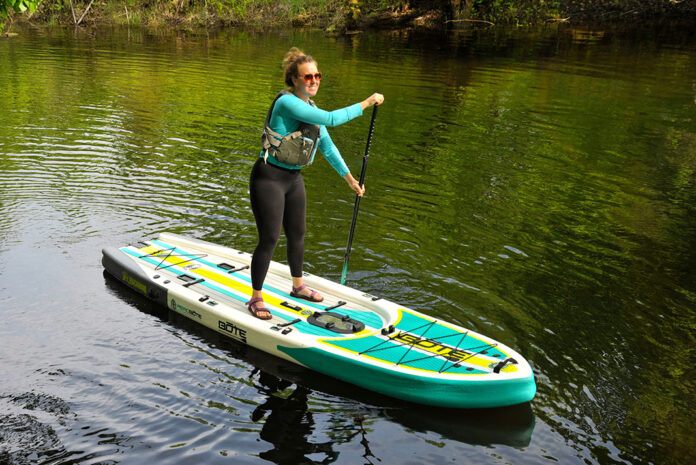
woman stands and paddles the Bote Rackham Aero 12'4" inflatable SUP
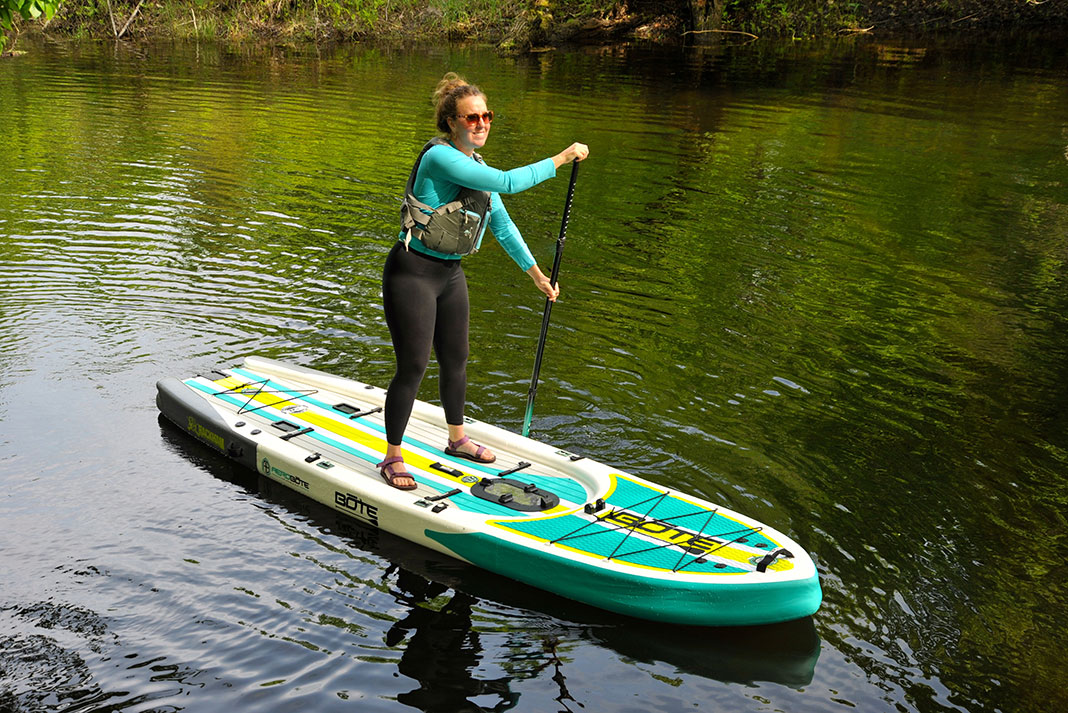
The Rackham Aero 12’4” features a puncture-resistant, military-grade PVC skin and composite drop stitch construction, plus three fins aid tracking and directional control. | Feature photo: Virginia Marshall

BOTE describes their redesigned Rackham Aero 12’4” as an even more versatile and capable evolution of their go-to inflatable board for adventurous paddlers. Great news for fans of the original Rackham Aero 12’4”, among them anglers, families, dog owners and expedition paddlers who prized its 400-pound carrying capacity and superb stability.

Stand, sit, pedal or paddle the redesigned BOTE Rackham Aero 12’4”

BOTE Rackham Aero 12’4” Specs
Length: 12’4”
Width: 38”
Height: 6”
Weight: 50 lbs
Capacity: 400 lbs
MSRP: $1,549 USD
www.boteboard.com

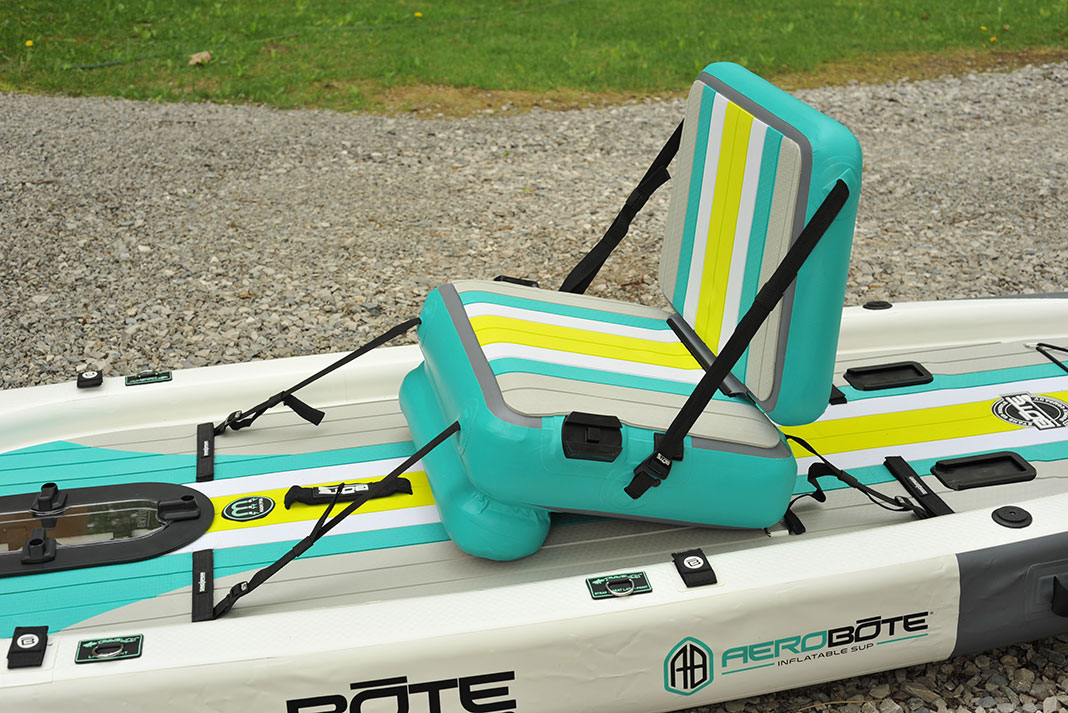
How did BOTE boost the capability of their highest capacity, most heavy-duty inflatable paddleboard? The longtime paddleboard manufacturer borrowed from their emerging line of inflatable kayaks and added two significant upgrades to the Rackham Aero 12’4”: the addition of APEX Pedal Drive compatibility and the inclusion of a removable Aero SUP Paddle Seat. The result is an inflatable standup paddleboard that can transform into a sit-down, paddle- or pedal-driven watercraft in just a couple of minutes.

In other words, it’s perfect for paddlers seeking the stand-or-sit versatility of a hybrid SUP-kayak, along with the portability of an inflatable and the hands-free efficiency of a pedal drive. Whew, that’s a lot of options.

Design and outfitting

Our demo Rackham Aero 12’4” arrived by courier on a sunny spring morning in what I can best describe as a formidably large and heavy box. Inside, the board came neatly stowed away in its rolling travel bag. Once I manage to heft it free of its cardboard embrace, comfortable handles and sturdy wheels make it easy to roll the bag across smooth terrain. Lifting and transporting over uneven ground is another story. At nearly 80 pounds and with no shoulder straps, the fully loaded bag is not something you’ll be slinging across your back for a jaunt to the beach.

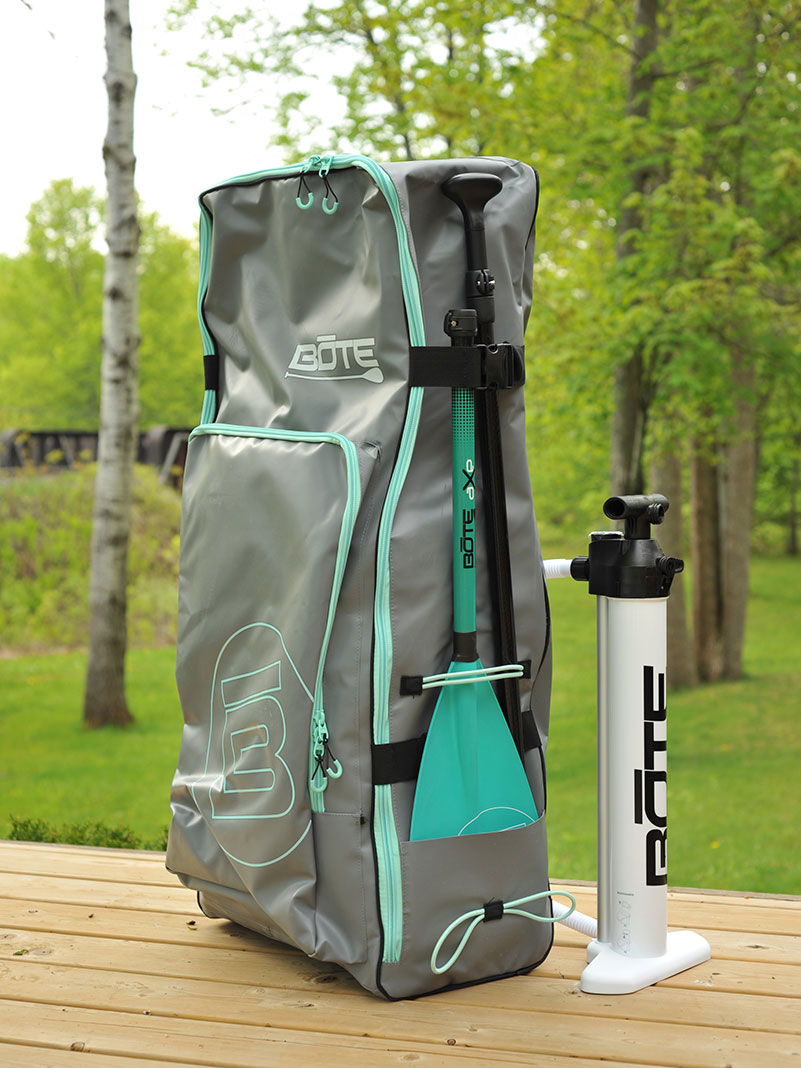
The BOTE Rackham Aero 12'4" inflatable SUP packed in its travel bag with pump
Everything packs up neat and tidy in BOTE’s sturdy rolling bag for hassle-free transport or airline travel. | Photo: Virginia Marshall

For anglers and other users accustomed to hauling around hard-shell pedal drive kayaks, transporting the Rackham Aero 12’4” is a breeze. Out of the bag and ready to paddle, our demo board tips the scales at 50 pounds. Add the seven-pound seat and 20-pound pedal drive, and the Rackham still feels nimble on the water compared to the average fishing pedal craft.

BOTE sells all of its inflatable boards in ready-to-ride packages, which is especially great for new paddlers. Inside the bag, you’ll find the Rackham Aero 12’4”, three-piece adjustable SUP paddle, Aero paddle seat, center fin, removable pedal port, repair kit and dual-action hand pump. Depending on which of the four available Rackham color schemes you choose, you’ll receive matching accessories for a snazzy, coordinating look. What else do you need? Just a matchy-matchy life jacket, of course.

BOTE has the accessories game dialed in. A quick glance at the topside of the Rackham Aero 12’4” reveals a constellation of accessory and gear mounts for easy add-ons and custom deck layouts. A paddle sheath, stakeout pole sheath and a pair of slide-in Aero Rac receivers ship with the board. Anglers can invest in one (or more) of BOTE’s nifty, easy-to-install racks—the standing height Tackle Rac or Power Rac, codeveloped with Yak-Power, or the low-profile Bucket Rac, which holds a five-gallon bucket and has four vertical rod holders.

Of course, if you buy the Bucket Rac, why not pick up one of BOTE’s matching KULA five-gallon bucket coolers? The padded lid makes a comfortable seat, and the cooler doubles as a baitwell or equipment storage, keeps ice for days, and is incredibly tough. In fact, the KULA is certified alligator-proof, which could come in handy if you paddle in BOTE’s home state of Florida.

Rackham Aero setup

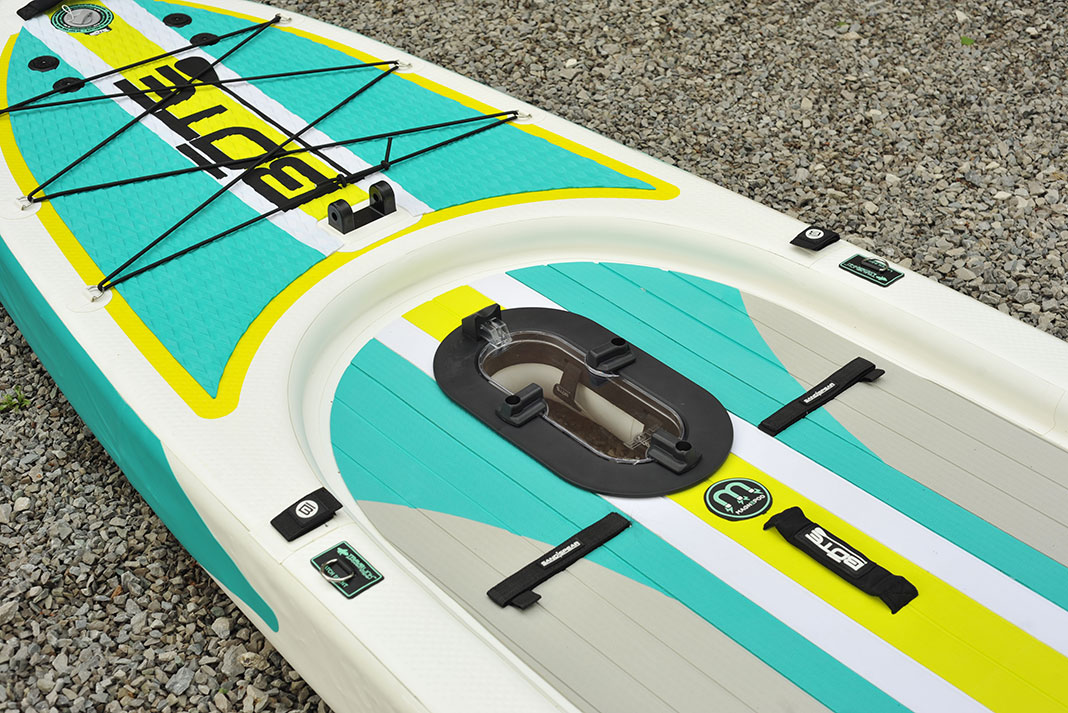
Back to the Rackham Aero 12’4” paddleboard. First, the set up. Using the supplied hand pump, it took me just seven minutes to inflate the dual chambers to the recommended inflation pressure of 10 to 15 psi. One valve inflates the nose and rails, while the second valve inflates the floor. The result is a high-capacity, rigid-feeling board with a recessed deck for a lower center of gravity. This is an important design feature, given the Rackham’s generous rails and seven-inch thickness. Recessing the standing and sitting area keeps it supremely stable without compromising the board’s expedition-ready capacity.

Partway through inflation, the see-through pedal port is nested in the corresponding hole just ahead of the paddler. If you’re using BOTE’s APEX Pedal Drive (sold separately for an additional $899), this porthole becomes the interface between the pedal mechanism and the propeller.

Regrettably, I didn’t have the opportunity to test-drive the Rackham Aero 12’4” with the APEX PD installed. Having seen it in action, however, I was impressed by the ease with which the user can switch between paddling and pedaling. In shallow water or approaching shore, the whole mechanism can be pivoted out of the water and tucked on the deck under the forward bungees. The propeller features a 10:1 gear ratio for smooth and efficient pedaling, and intuitive forward and reverse. Steering is accomplished via a spring-loaded, kick-up rudder installed on the board’s tail and operated by a simple hand control that can be mounted on either side of the seat.

Given the added expense and complexity, not every Rackham Aero 12’4” owner will invest in the APEX Pedal Drive. Or at least, not straight away. The obvious target market is dedicated anglers who want to keep their hands free for fishing and cover ground more quickly with less effort. But recreational and fitness users will also enjoy the versatility and full-body workout a pedal drive adds to the paddling experience.

woman stands and paddles the Bote Rackham Aero 12'4" inflatable SUP
The Rackham Aero 12’4” features a puncture-resistant, military-grade PVC skin and composite drop stitch construction, plus three fins aid tracking and directional control. | Feature photo: Virginia Marshall

On-water performance

Paddling my local waters, I start first on my feet. At 38 inches wide, the Rackham Aero 12’4” is a rock-solid platform for standing, moving around and even sharing the wide-open deck with a large-breed, four-legged friend. The board also tracks well, aided by the removable center fin and two built-in side fins.

Converting to kayaking mode is a simple matter of clipping the Aero seat’s four webbing straps to the corresponding loops on the Rackham’s deck. Voila! Now I’m ensconced in the comfort of an inflatable throne, resting my dogs and dipping a double blade.

BOTE’s Rackham Aero is a do-it-all inflatable

If you are a purist paddleboarder, or you’re looking for a lightweight inflatable to haul into remote waters, the Rackham Aero 12’4” is probably not the board for you. Minimalist, this board is not. Instead, it’s an adaptable, feature-rich, fish-all-day heavy hitter with stand, sit or pedal functionality. Or, as one fan put it, “It’s a workhorse without the work.

The Rackham Aero 12’4” features a puncture-resistant, military-grade PVC skin and composite drop stitch construction, plus  Three fins aid tracking and directional control. | Feature photo: Virginia Marshall


3 Badass Female Paddling Crews You Need To Follow

a female whitewater kayaker runs a waterfall while her paddling crew watches from below
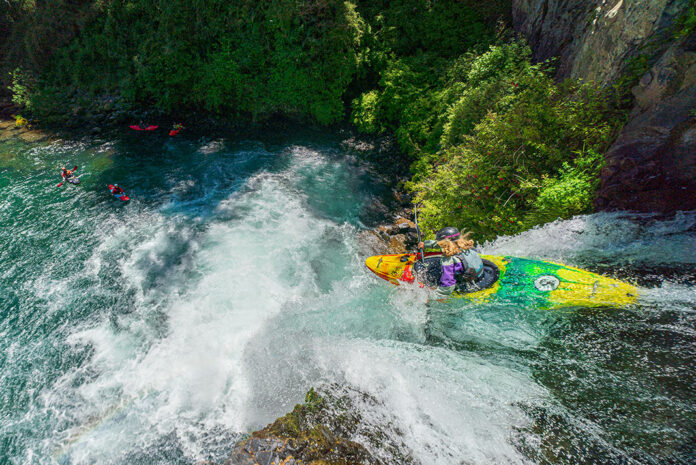
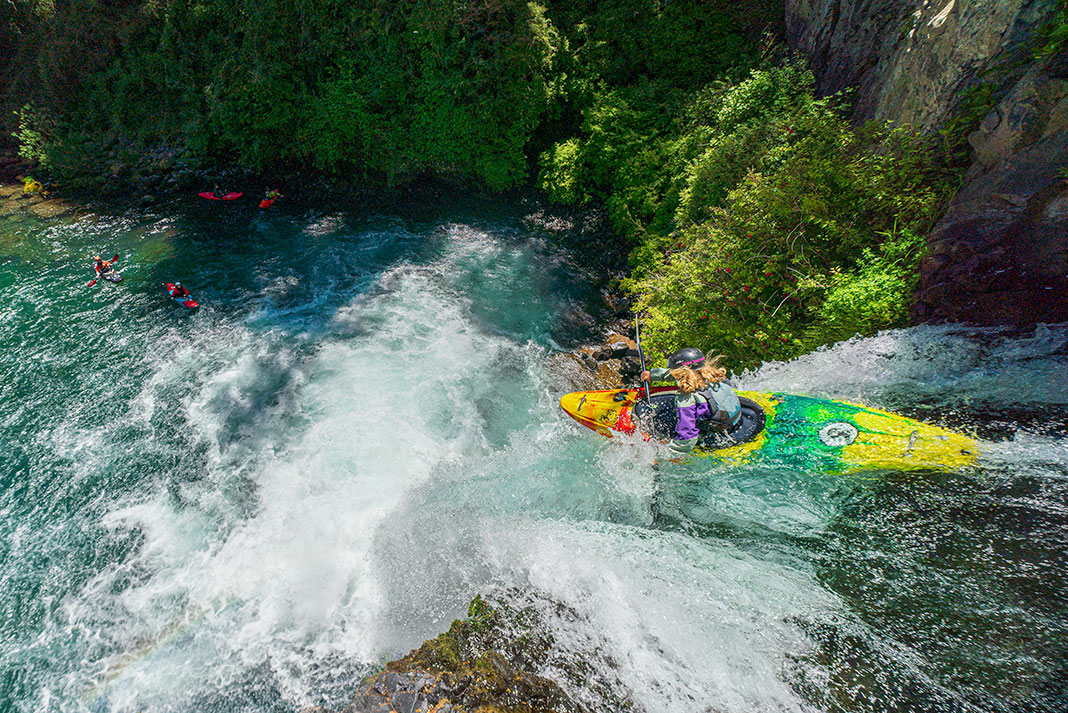
According to the Oxford Dictionary, moxie means a force of character, determination or nerve. Nia Burtchael-Norman drops Salto Blanco Sur in Chile. | Feature photo: Kalob Grady

In 2022, it feels good to paddle like a girl. Over the past year, we’ve seen an uptick in female participation at major whitewater races, enjoyed the release of the first woman-centered whitewater feature film, Wild Waters, and witnessed the re-emergence of all-girl paddling crews.

It’s been a journey to get here. Whitewater’s male-dominated participation has always shone through in its media. Successful feature-length films like Steve Fisher’s Halo Effect (2012) and Grand Inga Project (2013), as well as River Roots’ River Runner (2021) reached huge audiences outside of paddlesports. Still, you’d be lucky to catch a glimpse of a woman running a challenging rapid.

There have been attempts to buck the trend. At the 2012 Green Race, extreme racer Katrina Van Wijk—up to her nipples in water above the infamous class V Gorilla rapid—yelled, “This is TITS DEEP!” The catchy slogan evolved into a symbol of female empowerment.

Back then, Van Wijk was told, “there’s certain whitewater girls just don’t run.” A decade later, this notion is being proven wrong, yet female participation in whitewater remains stagnant. According to the Outdoor Foundation’s 2019 Special Report on Paddlesports, women make up just 36 percent of whitewater paddlers. And that percentage is even lower at the extreme end of the sport.

A new generation of female shredders is picking up where Van Wijk left off. Here are three of our favorite crews leading the charge.


a female whitewater kayaker runs a waterfall while her paddling crew watches from below
According to the Oxford Dictionary, moxie means a force of character, determination or nerve. Nia Burtchael-Norman drops Salto Blanco Sur in Chile. | Feature photo: Kalob Grady

3 badass female paddling crews to follow

1 Team Moxie

Team Moxie is the brainchild of a sendy group of high school teens. The crew, consisting of Hanna Gazzard, Maddie Kimmel, Sophie Gilfillan, Nia Burtchaell-Norman, Victoria Levi and Anya Sachs met through World Class Academy, a traveling school for students who earn credits while paddling around the world.

The mission, says 17-year-old Kimmel, is to close whitewater kayaking’s gender gap and improve its representation of women. Kimmel has already made her mark in the whitewater community by winning the Potomac River’s Great Falls Race in 2020, being the first female to land a cobra flip, and taking the title of Female Grom Of The Year at the recent Whitewater Awards. Team Moxie aims to prove “ladies are just as steezy in a boat as anyone else.”


2 Team Tittiez

The goal for Team Tittiez is simple: have fun every day. After meeting while working at a paddlesports outfitter in Jackson Hole, Wyoming, the girls—Laura Macchiavello, Sarina Chalmers, Greta Durbin and Carli Beisel—created a space where they could crush stereotypes like they do boofs. “Growing up, we didn’t see many female kayaking videos or teams that embodied feminine strength and style, so we created Team Tittiez to change that,” they said.

At World Class Academy, Biesel coaches youth on some of the world’s most technical whitewater. Fellow teammate, Chalmers, hucks herself off waterfall giants like 55-foot Lower Mesa Falls and the stacked South Fork of Silver Creek, California.


3 Babes In Boats

Babes In Boats started as a group chat by Montana-based Madison Dapcevich to bring women paddlers together. Four others–Tenneson Lewis, Ellian Kiselica, Caitlin Sutton and Abby Volkmann–make up the core crew.

The mission, Dapcevich said, is “to empower babes worldwide to get on the water.” The group has raised money to support Crux Adventures, a kids kayak club, and covered the competition entrance fees for a Missoula-based female paddler to compete in the Gallatin Whitewater Festival. Dapcevich says the goal is to register as a nonprofit to support womxn on the water and help remove barriers to entry.

Cover of Paddling Magazine Issue 67This article was first published in the Summer 2022 issue of Paddling Magazine. Subscribe to Paddling Magazine’s print and digital editions, or browse the archives.


According to the Oxford Dictionary, moxie means a force of character, determination or nerve. Nia Burtchael-Norman drops Salto Blanco Sur in Chile. | Feature photo: Kalob Grady


All Together: A View From Inside The Canoe At The Queen Lili‘uokalani Outrigger Canoe Race

Paddlers in the 2022 Queen Lili‘uokalani Outrigger Canoe Race
Feature Image: Charla Thompson Photography

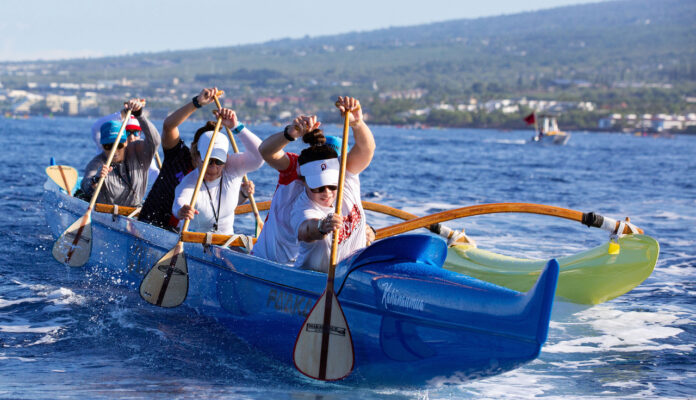
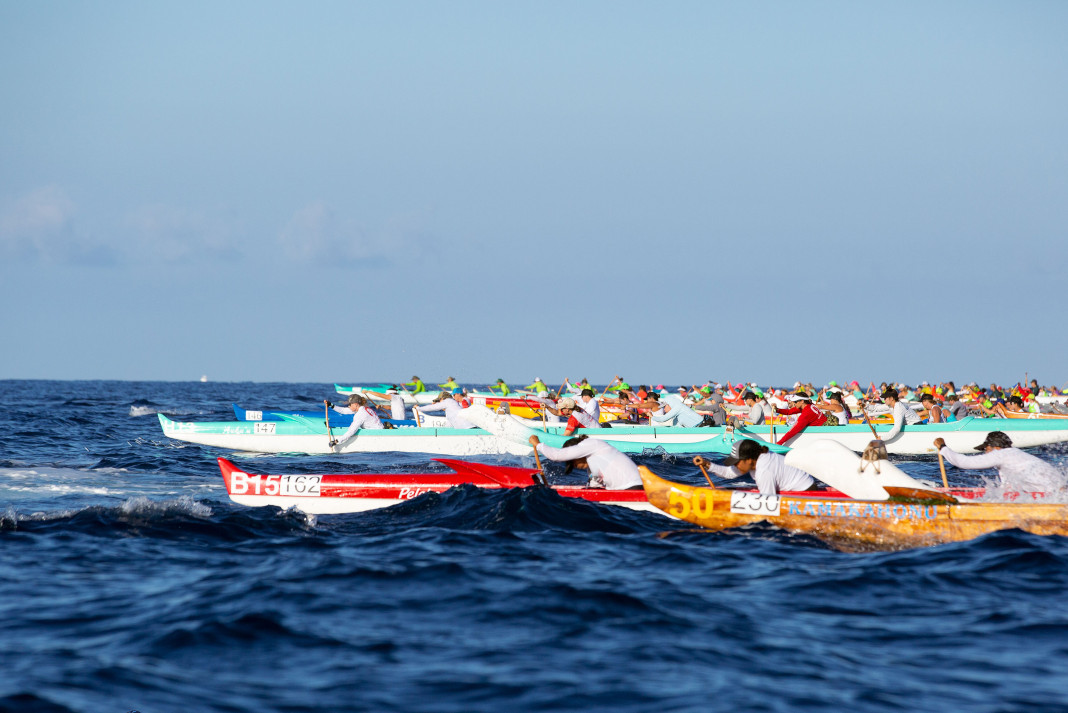
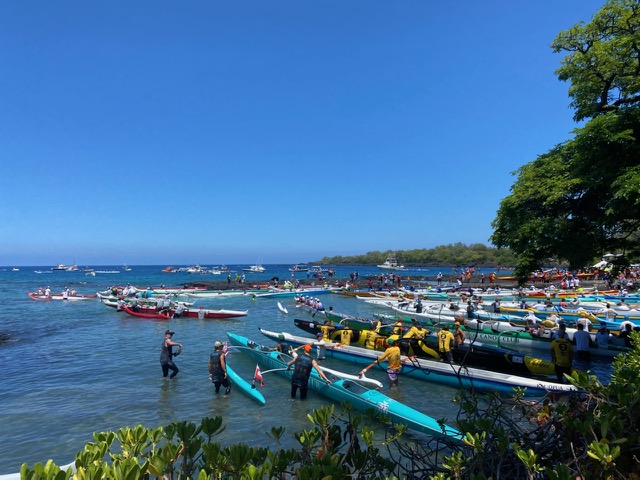
Get ready,” I tell the girls. It’s 7:29 a.m. My eyes are fixed on the official boat, where a flag will signal the race start any second, sending us on an 18-mile trek down the Kona coast. Birds fly overhead, probably curious about the 128 forty-foot-long canoes lined up like colorful matchsticks on the brilliant, aquamarine sea. The clock changes to 7:30, but the personal watercrafts in front of us continue to zip back and forth, drawing a whitewater boundary with their wake.

My crew of six has three first-timers, and I can sense their nervousness as we wait. “This is the hardest part,” I call out, only half-kidding.

Start line of outrigger canoe race
Image: Charla Thompson Photography

The excitement started building long ago, group texts fluttering as we booked flights and organized practice on O‘ahu’s north shore, home to our canoe club Manu O Ke Kai. We arrived the day before to 1,500 paddlers rigging their canoes on the grounds of the King Kamehameha Hotel. At sunrise, we became part of the mix of teams in matching jerseys duct-taping water systems and power gels to their canoes, tying on bailers and spare paddles, and posing for pre-race selfies.

Muscle and endurance being equal, the crew that can paddle together most efficiently in the Queen Lili‘uokalani Canoe Race—the world’s largest long-distance outrigger canoe race—will prevail.

Lining Up At The Start of the Queen Lili‘uokalani Outrigger Canoe Race

We’re floating right beside Outrigger Canoe Club’s indomitable first crew. “Good luck, ladies!” I holler, and they echo our goodwill. Their energy, our energy, and the energy from the women in all 128 canoes is about to collide with the primal energy of Hawai‘i Island, where the volcanoes Kilauea and Kama‘ehuakanaloa are actively producing new earth above ground and undersea.

The yellow flag goes up, and then the green. The air horn blasts, and the race is on. The paddles hit the water simultaneously on alternating sides. The boats sprint forward.

Individual Tasks For A Common Goal

As the steerswoman in seat six, my job is part navigator, part cheerleader. Whether you’re paddling a traditional koa canoe, a fiberglass “spec” boat, or an ultra-light (a little over 200 pounds) “unlimited” canoe, each person has a job.

Every twelve or so strokes, Michele Sales in seat two calls, “Hut!” That’s the cue to switch the paddle to the other side. After a few minutes, we hit our stride. Some boats—including Outrigger—pull ahead as we battle with a red-and-yellow canoe from Kihei, Maui.

Paddlers in the 2022 Queen Lili‘uokalani Outrigger Canoe Race
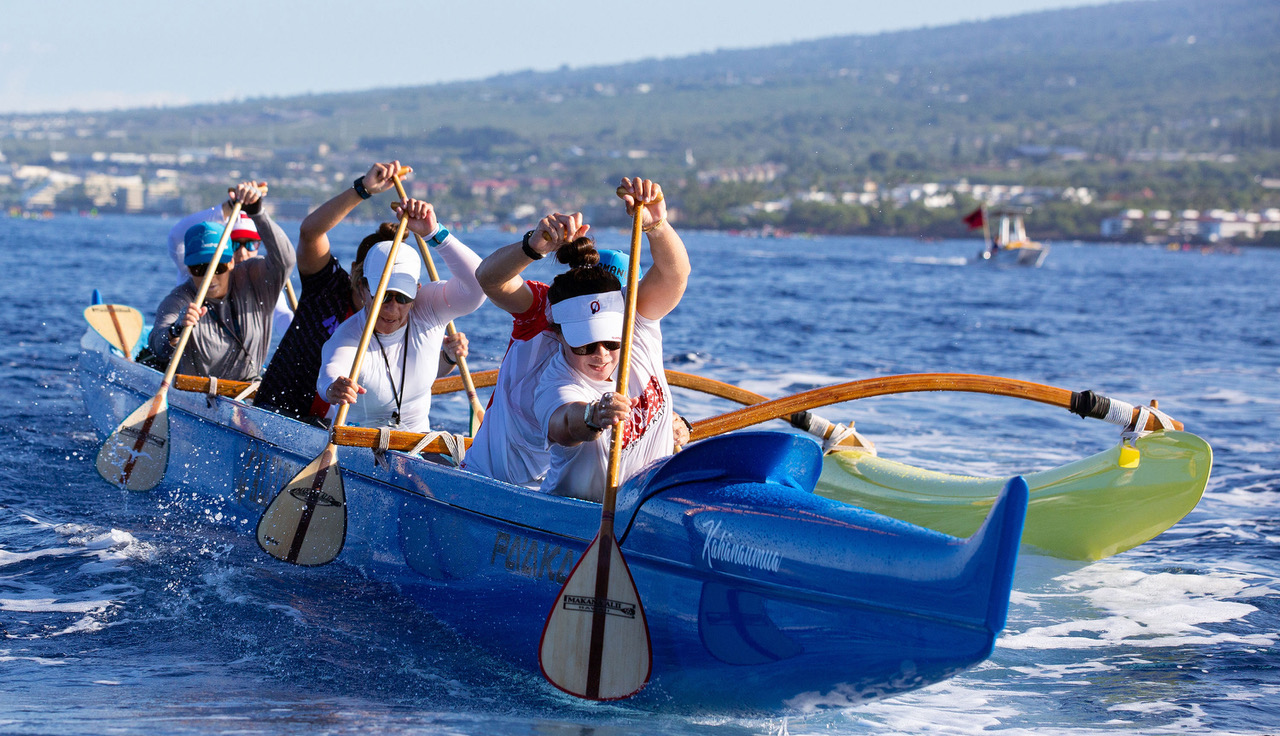
The Outrigger Canoe Club. The winning women’s team of the 2022 Queen Lili‘uokalani Canoe Race. Feature Image: Charla Thompson Photography

“While we paddled, I focused on keeping a consistent cadence of stroke and feeling how the canoe reacted,” our stroker and pace-setter Jennifer Ignacio shares. “I thought about how far we’d gone and how much more was in front of us.”

“Timing. Timing. Technique.” These mantras were fused in the mind of Bree Thuston, our seat four. Seats three and four are known as the “pit,” the canoe’s engine. Jackie Reiser, a powerhouse in seat three, adds, “I thought about so much but also nothing. It was almost meditative. When my mind wandered, I’d bring it back to the present.”

“Hut!” yells Michele, a veteran whose consistency in matching the stroker is invaluable. She concentrates on taking advantage of every little swell in this typically hot, flat race, timing her “huts” after bursts of acceleration so we don’t disturb the glide. We paddle, we hydrate, we paddle. Inevitably, the going starts to get tough.

Honoring Hawai‘i And Queen Lili‘uokalani

Image: Catharine Lo Griffin

We pass many significant cultural sites on our journey to Hōnaunau. Kona was once the center of the Hawaiian kingdom, and this race honors Queen Lili‘uokalani, Hawai‘i’s last reigning monarch. The race centers around her birthday, September 2. As we approach Kuamo‘o, the battleground where the defenders of the Hawaiian religion fell, I suggest, “None of us are here without someone else’s sacrifice. Paddle for someone you love.”

“Hut!” calls Michele. I feel the canoe lift. The miles start to merge, like hours on a road trip. I marvel at the diversity of crews, hailing from the U.S. mainland, Tahiti, Australia, New Zealand, Canada, and Great Britain.

As we round Kealakekua Bay, where Captain Cook met his fateful end, I spot the volcanic outcropping where we’ll turn into the finish. “This is it,” I tell the crew.

“On cue, we dug into whatever we had left in our tanks, and our boat took off. We walked past the boat we’d been gunning for,” says Molly O’Keefe in seat five, who can help steer the canoe in rough water. “It was incredible to feel the strength we shared.”

Image: Catharine Lo Griffin

The orange triangle buoy—the finish line—comes into view and our boat soon enters the sacred refuge of Pu‘uhonua o Hōnaunau. Our 18-mile competitive voyage honoring Queen Lili’uokalani is complete with a ninth-place finish in 2 hours, 39 minutes, and 3 seconds.

We maneuver to the lava rock shoreline and carefully climb out of our canoe, another challenging task on this Hawai‘i coastline. “I managed to not step on wana (spiny sea urchins), and somehow find my family in the crowd,” said Bree. Her daughter congratulated each of us with an orchid lei.

“The coastline is still wide open and in this natural state,” race director Mike Atwood said, describing Pu‘uhonua o Hōnaunau. “From the shore looking out, and from the ocean looking in, you can visualize what canoes were doing a hundred years ago. It’s still being perpetuated. It’s being carried on.”

After two years of pandemic pause, the race committee was thrilled to bring everyone back—and is already preparing for next year, the 50th annual Queen Lili’uokalani Race in 2023. None of us say it out loud, but we already know we will be there.

Learn more about the Queen Liliuokalani Race.