Home Blog Page 86

9 Reasons You Need To Paddle The Nahanni River

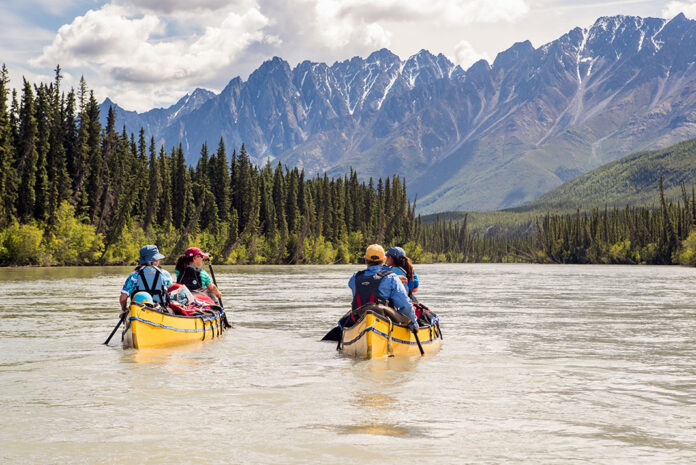
two yellow canoes paddle along the Nahanni River
Feature photo: Colin Field

The Nahʔą Dehé or South Nahanni River is so storied within canoeing lore—staking out its rightful claim on many paddler’s wish lists—that it almost needs no introduction.

For those not already familiar with this northern river, it flows for 580 kilometers through Canada’s Northwest Territories, cutting between mountains and canyons and dropping dramatically at a waterfall that puts Niagara Falls to shame. As it charts its course southwest from the Yukon’s border through the traditional territories of the Deh Cho and Sahtu First Nations, it passes caves and hot springs, before joining the Liard River.

Part of the lure of the South Nahanni River is its remote location—but it also draws in adventure enthusiasts of all skill levels thanks to its whitewater and epic scenery.

Here are nine more reasons a Nahanni River canoe trip is a must-have experience, plus some tips on how to make one happen.
[ View all paddling adventures in the Northwest Territories in the Paddling Trip Guide ]
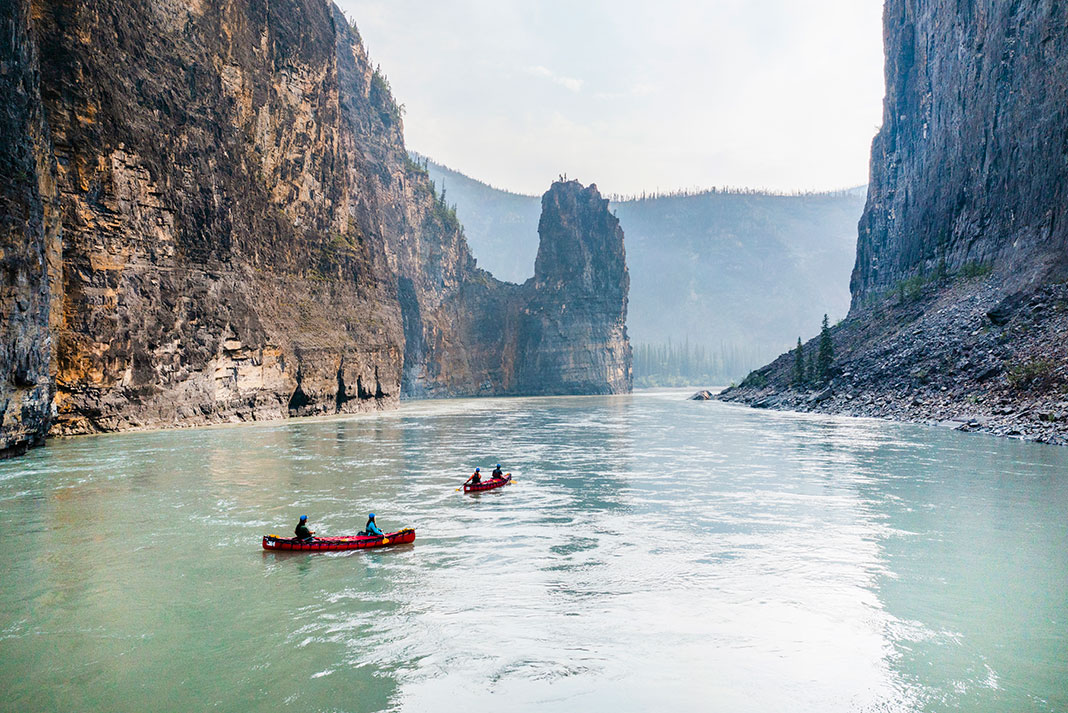
Two red canoes on the Nahanni River in front of dramatic rock walls and columns
Experience the magic of the Nahanni for yourself. | Photo: Angela Gzowski

You’ll see scenery and geological formations unlike anywhere else in Canada

The landscape the South Nahanni River flows through is home to mountain ranges, towering canyons, deep gorges and alpine tundra. It’s no surprise that Nahanni National Park Reserve was the first site in the world to be granted UNESCO World Heritage Status in 1978.

But beauty alone doesn’t get you onto that list—unique geology does. In addition to four separate canyons up to 1,200 meters deep, the region’s noteworthy sites include the largest tufa mound in Canada, estimated to be 10,000 years old. The hardened calcium carbonate formed by thermal springs can be reached by barefoot hike up to its 30-meter-high summit.
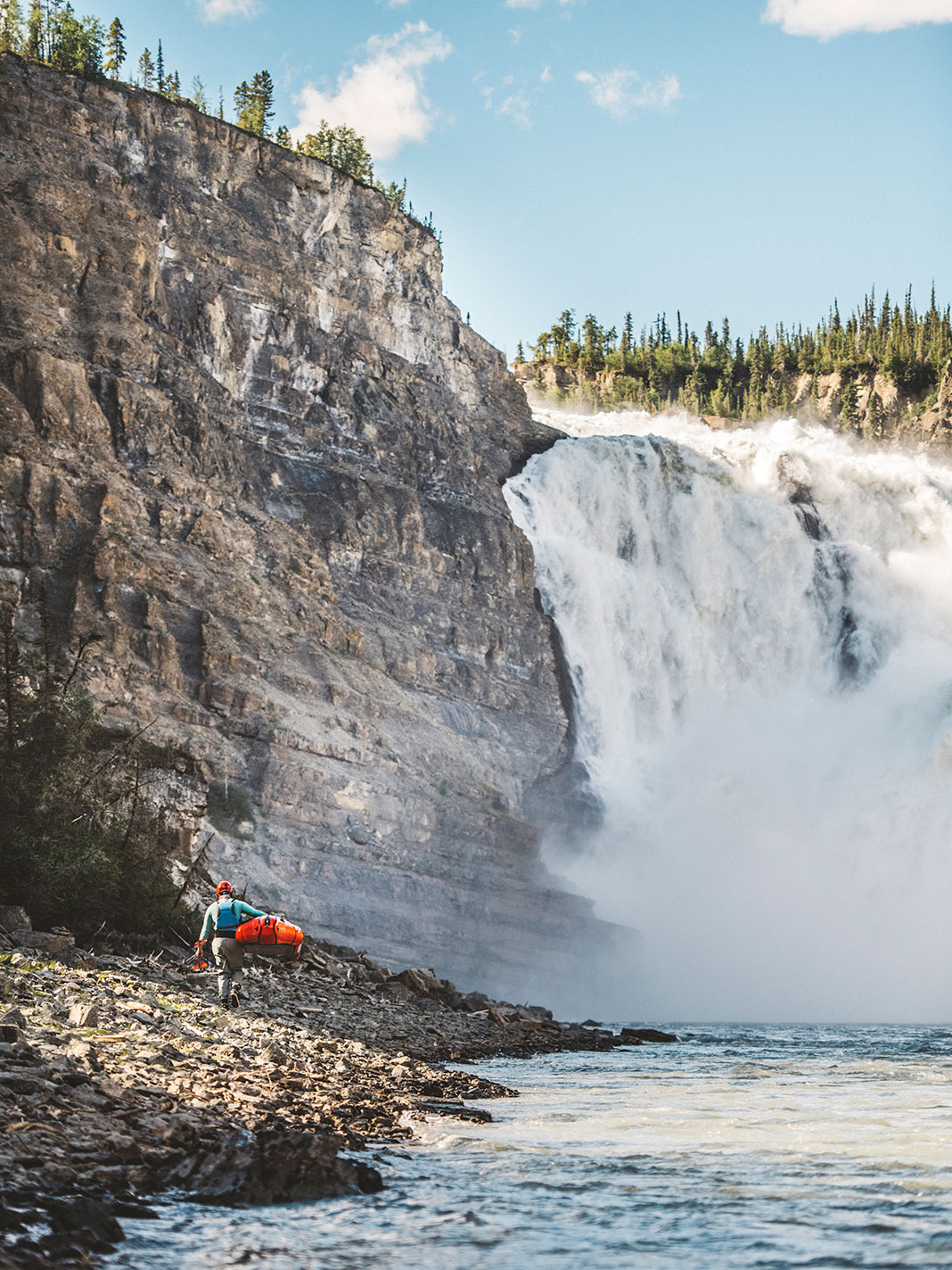
person carries a whitewater kayak back toward a very large waterfall on the Nahanni River
Enter the wild. | Photo: Angela Gzowski

You’ll be rewarded with riverside hot springs after long days of paddling on the Nahanni River

While the ecologically sensitive tufa mound is off-limits for bathing, there are other hot springs made for weary bones, including Kraus Hot Spring. You’ll find this natural spa riverside after a 30-km paddle through First Canyon, where its sulphuric cue will let you know you’ve arrived. It may be smelly, but chances are you are too by this point. There’s no judgment here; just a place to rest your sore shoulders and arms.

You’ll witness the power of a waterfall taller than Niagara Falls

Virginia Falls or Náįlįcho is consistently described as “the continent’s most spectacular undeveloped waterfall.” And spectacular really is the word of choice for this drop in the Nahanni River. The waterfall is twice the height of Niagara Falls and responsible for the class II and III rapids directly downstream.

Needless to say, a 2-km mandatory portage around the falls is necessary for both rafters and kayakers. It’s a long haul with conveniently placed canoe stands along the way. If you want to break up the portage even further, you can opt to camp at the Parks Canada site here for up to two nights. Worthwhile excursions from the campsite include the 8-km hike to Sunblood Mountain and a chance to swim in the river.
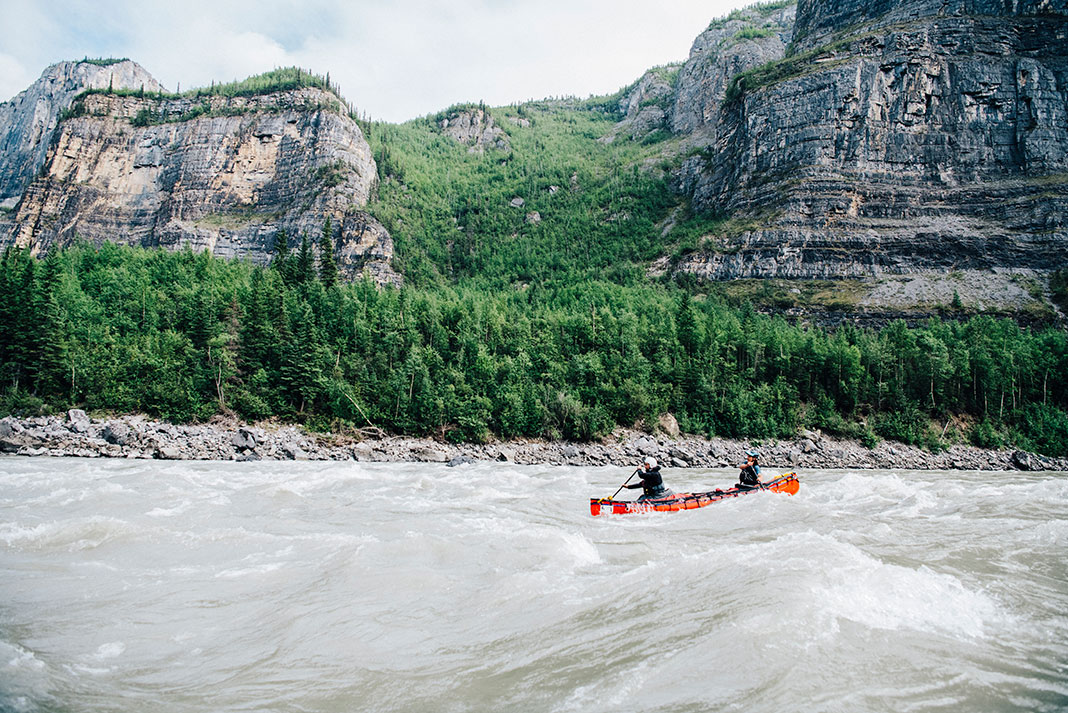
two people paddle a red canoes on the Nahanni River
Go with a guide for an even better experience. | Photo: Angela Gzowski

You’ll get to paddle with world-class outfitters and expert Nahanni River guides

Experienced whitewater paddlers with remote camping skills can safely navigate the river on their own between the months of June and September. But even if you fit into that category, signing up for a tour with one of the experienced Nahanni River outfitters will only enhance your experience.

After all, paddling here is as much about the river’s cultural heritage as it is about the scenery. For at least 10,000 years, this has been the traditional hunting grounds for the Dene people, who still use it for this purpose today. Nahanni River tours are led by knowledgeable guides, who will be able to share some of the stories and traditions that demonstrate how the Dene’s connection to the river runs deep.

Local outfitter Black Feather, for example, runs a cultural rafting tour alongside its classic Nahanni River expeditions by canoe. Likewise, Nahanni River Adventures and Canoe North Adventures offer Nahanni River guided canoe trips and rafting trips, with options for all skill levels.

Of course, if self-guided is more your style, Jackpine Paddle offers custom canoe training, food packing, canoe and gear rentals, and shuttles to get you to your adventure.
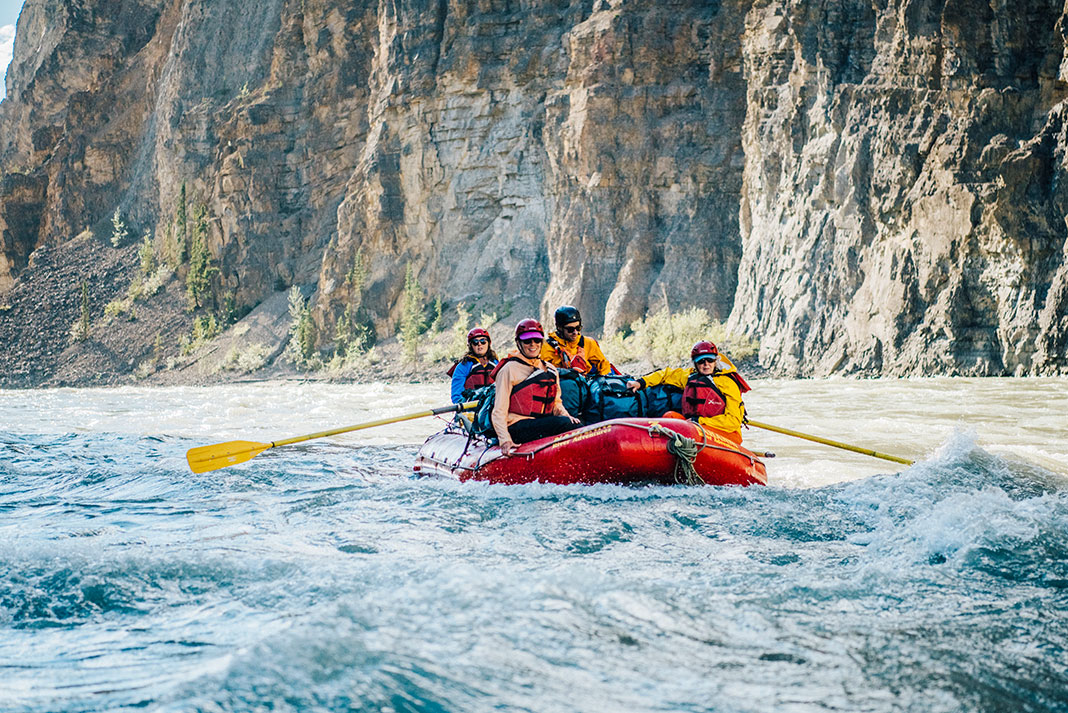
people paddle a red inflatable whitewater raft on the Nahanni River
Rafting trips are also an option. | Photo: Angela Gzowski

You’ll have an exclusive and brag-worthy experience

Despite being Canada’s most well-known northern park, only between 800 and 1,300 visitors manage to make their way to Nahanni National Park Reserve annually, many of which are day-trippers. In fact, only about 600 people paddle down the river every year, meaning you’re not only unlikely to encounter other people—you’ll also be among the few who are able to say they’ve done the trip.

A word of advice: Despite low visitor numbers, the park is popular relative to the number of people able to be accommodated. Visitation on the river is limited by the infrastructure at the Náįlįcho campsite, which can accommodate a maximum of 54 people nightly. Parks Canada reservations are required for trips down the river and must be made well in advance.
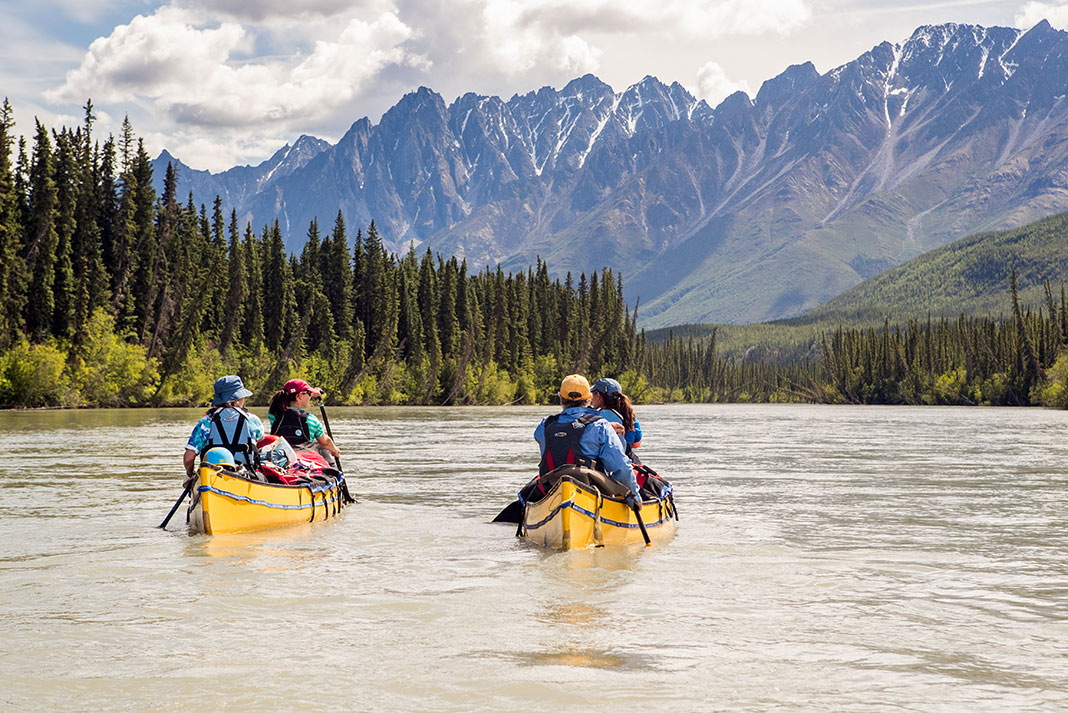
two yellow canoes paddle along the Nahanni River
Be one of the few to experience this river. | Feature photo: Colin Field

You’ll get a bonus sightseeing tour by plane

Since there are no roads leading into the park, you’ll need to access the Nahanni by bush plane, typically departing from nearby Fort Simpson and Yellowknife. In other words, every canoe trip here comes with a bonus—albeit mandatory—sightseeing tour by air.

The area’s floatplane operators—including Air Tindi and Simpson Air—are experts at transporting canoes, with the most popular put-in spots of Virginia Falls, Rabbitkettle Lake and Island Lakes being designated aircraft landing sites. For Nahanni River rafting, you’ll have no problem coordinating with a local outfitter, while kayakers might find they have to pay extra fees since kayaks are more difficult to strap to the outside of a float plane.
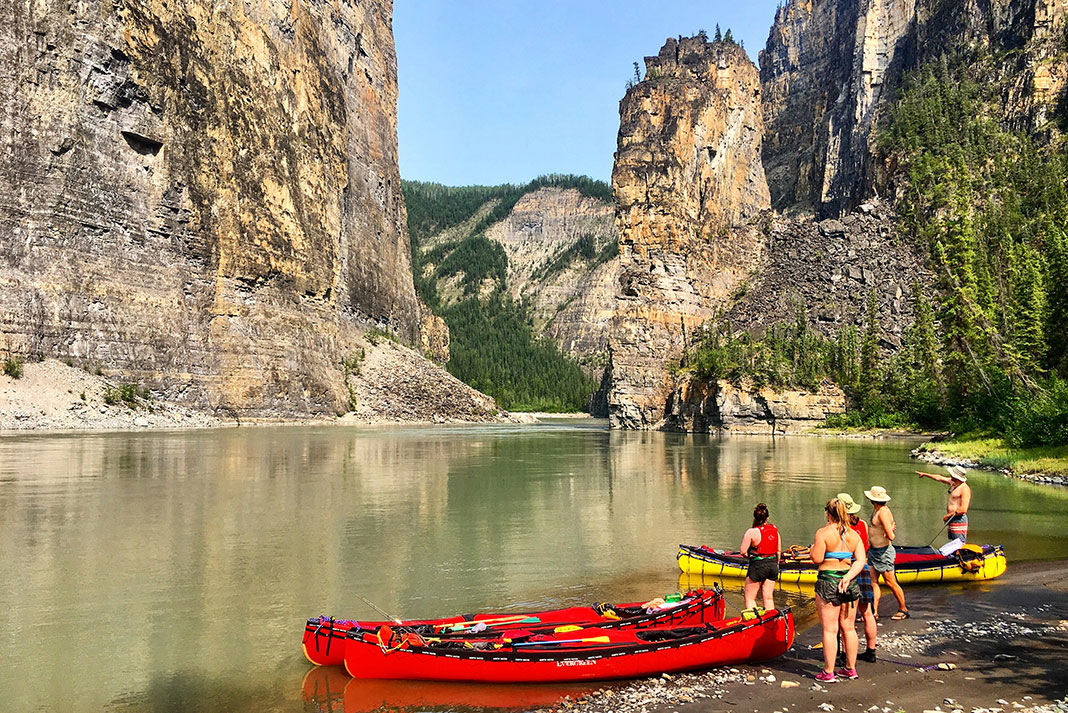
a group of expedition canoeists stop and scout the Nahanni River
Paddle through canyons. | Photo: Lindsay Vician

You’ll feel like you’re on a Canadian safari

Despite its relatively high latitude, Nahanni National Park Reserve’s wildlife is surprisingly diverse. Along the banks of the Nahanni River, you may spot grizzlies, black bears, moose, Dall’s sheep, white tailed deer, beavers, otters, red fox and some 180 species of birds, including rare trumpeter swans. And, although they’re more elusive, the park is also home to lynx, wolverines and a year-round population of woodland caribou.

Nahanni River fishing is also possible, with arctic grayling, lake trout, whitefish and northern pike able to be caught with a fishing permit. But the water here tends to be silty, so if you’re looking to lighten your load, leave the rod at home.

You’ll have a chance to watch the northern lights dance

While many people associate the aurora borealis’ colorful nighttime displays with sub-zero temperatures, the truth is that solar storms happen year-round. Its location under the auroral oval means the Northwest Territories is one of the best places in the world to watch them.

Although the midnight sun makes them nearly impossible to see between mid-April and late July, if you’re paddling on the Nahanni in August or the shoulder season of September, you could be in for a show. Historically, the greatest levels of solar activity occur around the autumn equinox; this is also when the skies are most likely to be clear of clouds. Some operators—including Indigenous-owned NARWAL—even offer dedicated nighttime aurora tours by voyageur canoe up the Yellowknife River in August and September.
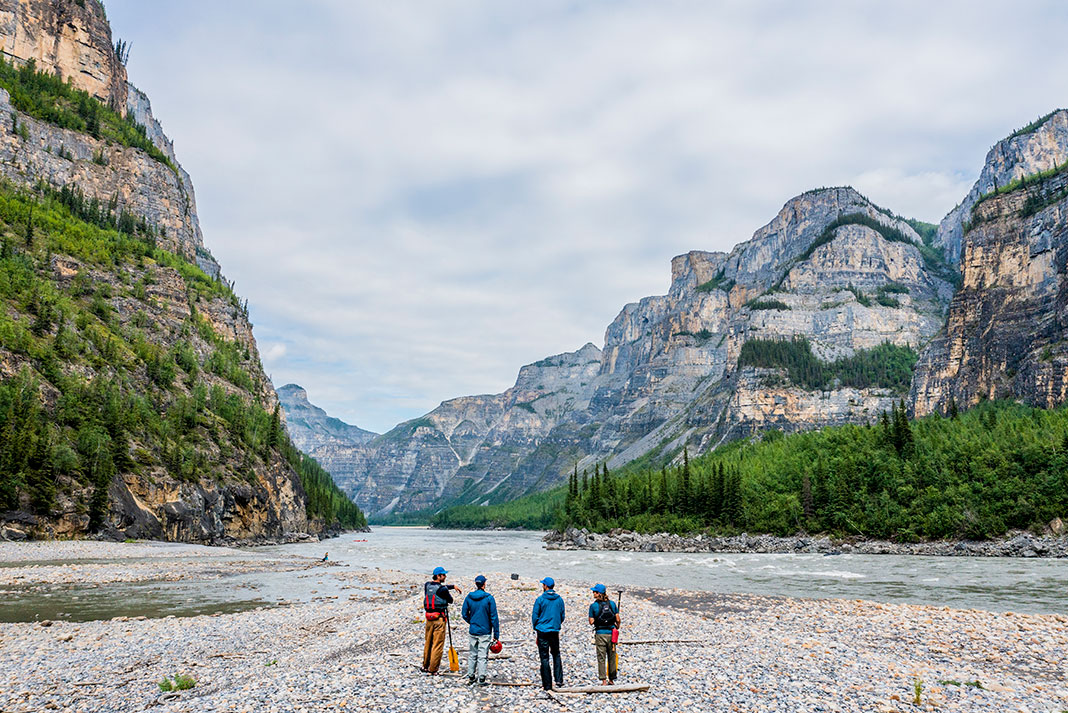
four people stand on the Nahanni River bank and look at surrounding mountains
Sometimes it’s nice to feel small. | Photo: Angela Gzowski

You’ll bond in a next-level way with your trip mates—and leave with memories that will last a lifetime

One of the most common complaints from outdoor enthusiasts is their trip wasn’t nearly long enough to truly disconnect. Trips down the Nahanni River, however, aren’t for the faint of heart or for the short of time: From Virginia Falls, it will take you between seven and 10 days to paddle the 212 km to Nahanni Butte. Starting from Rabbitkettle Lake is an additional 118 km, which will take you up to 14 days.

In other words, you’ll have plenty of time to disconnect, reconnect with your loved ones and form lasting new friendships.
 

6 Reasons Why It Pays To Buy Better Paddling Gear

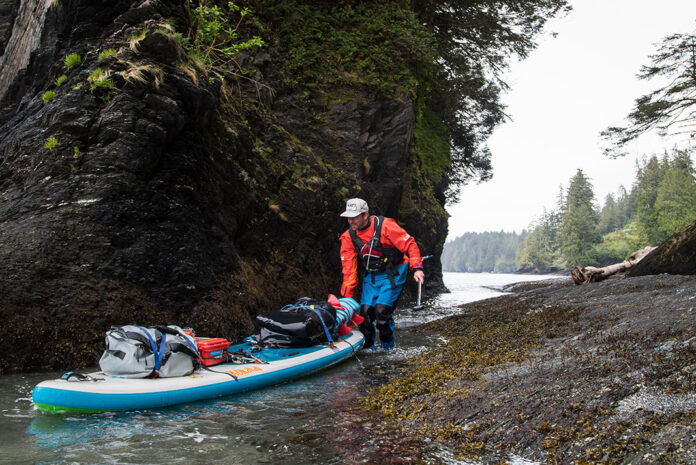
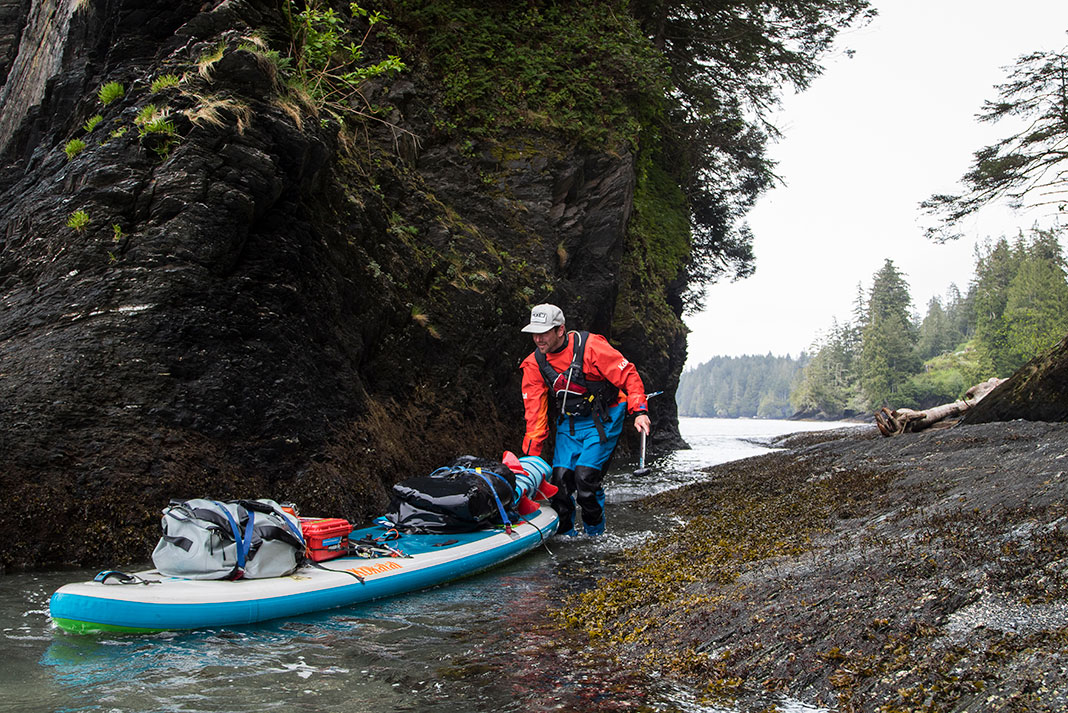
man pushes a paddleboard loaded down with backcountry paddling gear
Buy the best and you’ll only cry once. | Feature photo: Ben Haggar

I admit it. I’m a gearhead. I’ve spent the last 30 years working in the outdoor industry selling paddlesports clothing and equipment. I have a basement full of tried and tested gear and a long list of things that would be nice to have as soon as my budget will allow.

I’m enough of a nerd about this stuff that a few years back, I went through my closet and set to work devising a universal system of outdoor clothing for all environments and wrote a long series of articles about it.

Yeah, I’m that guy.

So, when it comes to the question of whether quality equipment is worth the price, I say yes. I’ve been at this long enough and seen enough junk wear out along the way to know it pays to buy the good stuff. While it may cost more out of the gate, you’ll likely have more fun and save money in the long run. Here are my top six reasons why.


man pushes a paddleboard loaded down with backcountry paddling gear
Buy the best and you’ll only cry once. | Feature photo: Ben Haggar

6 reasons why it pays to buy better gear

1 Higher performance

Good gear works better. Quality equipment outperforms budget alternatives almost every time. Consider the breathable fabrics waterproof paddling clothing is made from. Premium waterproof/breathable fabrics breath better over low-cost alternatives. It’s a difference you can actually feel. The same is true of an ultralight carbon paddle or a quality composite board. Premium construction, design and material in outdoor equipment give you an enhanced experience on the water. Good gear is more fun.

2 More value

Attaching a price tag to the peace of mind synonymous with higher quality gear might be hard to quantify but cost per use is not. You might not feel like you’re saving money at the register, but since well-made products generally last longer, cost savings can be substantial. Especially with items you use frequently. Not having to replace the product means you’re getting a better return on your investment. And, since you’re more likely to get on the water even more often with gear that performs better, you may get an even higher return than expected.

3 Fresh features

It costs money to add features to equipment. A kayak without bulkheads is less expensive than one with them, but harder to rescue if you dump. Quality outfitting is expensive but lets you easily customize your fit in your gear. Skip the relief zip in a drysuit and you’ll save some serious green. But some features pay for themselves the first time you need them.

4 Better fit

Good gear fits better. And I’m not just talking about clothing. You’re far more likely to find a boat or board that fits you just right at the top end of the quality spectrum. This is partly because of premium outfitting options and also the cost of development and demand for performance. It’s expensive to develop a new product, and the safest bet is to aim it at the largest number of potential customers. This means big paddlers and small paddlers may be left out in the cold. The extra cost of premium gear gives manufacturers more leeway to develop products fitting at the tails of the curve, rather than the average paddler.

5 Increased support

The best gear comes with great customer support. Quality gear is sold through specialty dealers who know their stuff and can help connect you with exactly the right equipment. Premium brands partner with retailers who offer test paddling, so you’ll know you’re purchasing the right ride. Top-tier manufacturers offer warranty support and repair services for lengthier periods as part of their customer care—some even offer lifetime warranties. Often you can get them on the phone or an online chat to answer questions about maintenance and use of your equipment. If you’re serious about getting out on the water, you’ll appreciate the support accompanying quality equipment.

6 Niche specialty products

Last, but not least, is one for all you other gearheads out there. The super tweaky stuff. Whitewater SUPs, specialized tow systems, drybags that fit in the corners of your boat, saddles, thigh straps, rescue PFDs with big pockets and strong swimmer harnesses, featherlight graphite racing paddles, bombproof water boots, and more. All the niche stuff performing just right on the river or the sea. These products don’t exist outside of the top tier. They’re either made by specialized small companies or by premium manufacturers who have a large enough range of products to support specialty items that wouldn’t otherwise be profitable. If you love to get out on the water, chances are there’s a piece of specialized gear with your name on it. And you won’t find it in a big box store.

This article was first published in the Early Summer 2022 issue of Paddling Magazine. Subscribe to Paddling Magazine’s print and digital editions, or browse the archives.


Buy the best and you’ll only cry once. | Feature photo: Ben Haggar


Recreational Kayak Review: Perception Swifty Deluxe 9.5

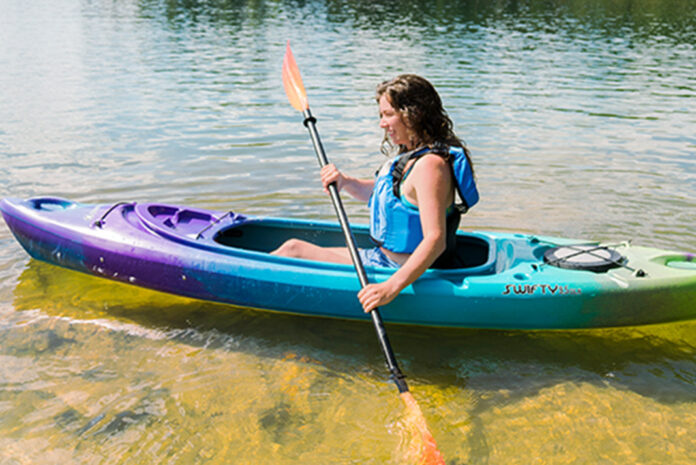
Woman paddling sit-inside green, blue and purple kayak
Photo: Courtesy Perception

The Perception Swifty Deluxe 9.5 kayak is a budget- and user-friendly option for anyone looking to enter the world of kayaking. Making the most of hot, still summer days is easy in this beginner-friendly recreational sit-inside kayak.

With its stable hull design, comfortable seating and spacious cockpit, the Perception Swifty Deluxe 9.5 kayak is ideal for day tripping on small lakes, ponds and meandering rivers. This kayak is perfect for anyone who wants to get out for a relaxing afternoon on sheltered waters without worrying about tipping over. Paddling the Swifty Deluxe 9.5 kayak is intuitive even for total newbies. The short length makes it responsive and lightweight, but means the Swifty Deluxe 9.5 isn’t as fast as longer rec touring boats.

Built-in rod holders add to the Perception Swifty Deluxe 9.5 kayak’s versatility as an entry-level kayak fishing rig. The simple design and durable rotomolded plastic hull also ensure this kayak is nearly maintenance free, maximizing the time you spend on the water.

Wear A Life Jacket
  • Everyone, even strong swimmers, needs to wear a life jacket at all times when on the water. It is extremely difficult to put a life jacket on once you fall into the water. Even a light wind can blow any paddlecraft away from you, faster than you can swim.
  • Always wear a USCG-approved Level 70 or Type III life jacket designed for paddling.

If you are looking at this versatile recreational kayak, you may also encounter a sister version of the Swifty Deluxe 9.5, known as the Perception Drift 9.5. The specs of this model are nearly identical to the Swifty Deluxe 9.5, with the main difference being that the Swifty is available exclusively from Dick’s Sporting Goods, while the Drift 9.5 can be purchased from Perception dealers across North America.

For the purpose of this article, we will focus on the Perception Swifty Deluxe 9.5. If you’re looking for a Drift 9.5 review, this article will answer all your questions regarding that boat’s performance and handling on the water.

On the water with the Swifty Deluxe 9.5

Perception Swifty Deluxe 9.5 Specs
Length: 9’6’ / 2.9 m
Width: 28.5” / 57.15 cm
Weight: 44 lbs / 20 kg
Capacity: 325 lbs / 147.4 kg
MRSP: $399.99 USD

Performance

The Perception Swifty Deluxe 9.5 offers comparable performance to similar recreational kayaks like the Pelican Mustang 100x or Wilderness Systems Aspire 105. Remember, if you’re paddling any of these shorter kayaks, you are out to enjoy the day, not win any races. Look to the longer waterline of the Swifty Deluxe 11.5 for faster glide and cruising speed.

Generally, shorter boats turn more readily than longer ones; while longer kayaks offer better tracking, or the ability to travel in a straight line. The 9.5-foot Perception Swifty Deluxe offers the best of both worlds in a compact package, combining quick turning and easy maneuverability with decent tracking on calm waters.

Excellent stability means new paddlers will immediately feel confident in the Perception Swifty Deluxe 9.5. The low paddling position of the sit-inside design keeps the paddler’s center of gravity close to the water for reassuring side-to-side stability. Compared to a sit-on-top, this style also provides additional control over the boat by enabling the paddler to engage their legs against the sides of the kayak.

Market and demographics

The Perception Swifty Deluxe 9.5 is an excellent first kayak for exploring slow-moving rivers or sheltered lakes, with value- and comfort-focused outfitting and enough performance to advance your skills. It fits nicely into the entry-level recreational kayak category, landing at a reasonable price without sacrificing important features like a supportive back rest and adjustable foot pegs. The generously sized cockpit is designed to fit a range of body types well.

The Perception Swifty Deluxe 9.5 is not a dedicated fishing kayak, but the built-in rod holders make it a versatile choice for aspiring kayak anglers. At just 44 pounds, it’s also a good option for paddlers looking for a lightweight kayak that’s easy to car-top and carry to the launch.

Comfort

It’s clear that the designers of the Perception Swifty Deluxe 9.5 were thinking a lot about comfort when they designed this boat. Recreational kayaks are comfort-oriented for one very good reason: it’s hard to have fun if you are feeling cramped or stiff. That’s why attention to details like back support and padded seats are so important. These are the spots where your body connects with the kayak; getting that connection just right means reducing fatigue, increasing performance and maximizing enjoyment.

Know The Local Hazards
  • Check navigation charts before you launch.
  • Check with those who have local knowledge of man-made and natural hazards, e.g. low-head dams; sweepers, strainers and undercuts; tides and currents; and rocks and shoals.

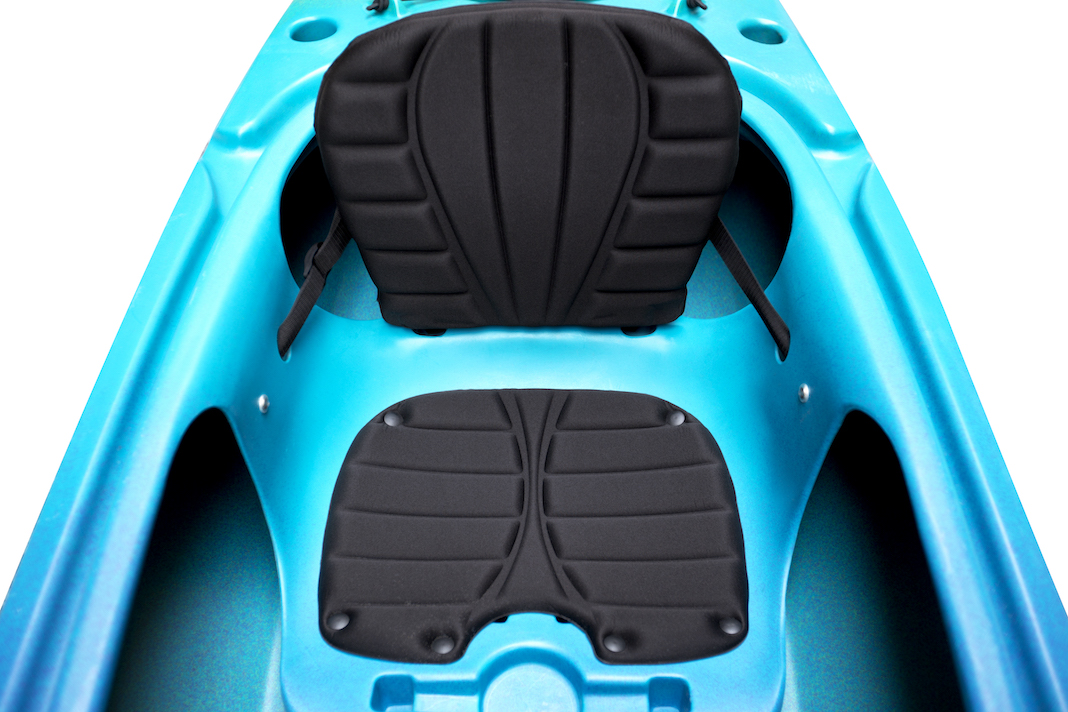
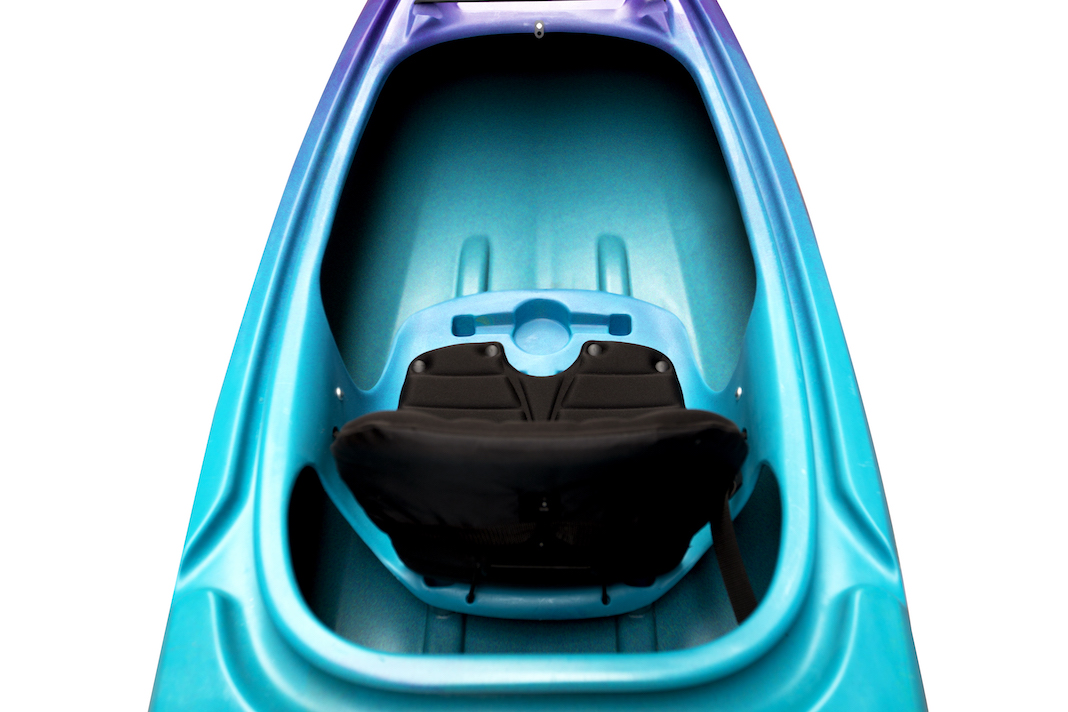
The seat design is the shining star of the Perception Swifty Deluxe 9.5. The high back pad provides superior comfort and critical lower back support—often an area of discomfort in less refined box store kayaks. Adjustable straps along the sides move the back rest forward and back, allowing each paddler to tailor the fit.

Foot braces are an important feature of any kayak, as they enable the paddler to make a solid connection to the boat and use the body’s larger muscle groups—including the core and legs—for stronger paddling over longer distances. The Perception Swifty Deluxe 9.5 is outfitted with foot braces on adjustable sliders to fit a wide range of leg lengths and paddler heights, although users over 6’4” (192 cm) may feel cramped.

About Perception’s Swifty Deluxe 9.5

Design

Design features and details

The Perception Swifty Deluxe 9.5 kayak is stable and easy to maneuver, making it a good choice for first-time paddlers. Key design features include a 28.5-inch-wide hull with a flat bottom for excellent stability on calm waters; a relatively short 9.5-foot length for nimble turning; and light weight for easy handling on and off the water. The Swifty Deluxe 9.5 has a maximum capacity of 325lbs (147.4 kg), which is about average for recreational kayaks of this size.

When choosing a kayak, consider how easy it is to enter and exit. A good indicator of this for a sit-inside kayak like the Perception Swifty Deluxe is cockpit size. The longer and wider a cockpit is, the easier it will be to climb in and out of. The tradeoff is fit and support—larger cockpits offer less contact points along the hips, thighs and knees for the paddler to create a solid connection to the kayak.

A good connection is a critical foundation for efficient paddling and more refined boat control. The Perception Swifty Deluxe 9.5 kayak cockpit size measures a spacious 42.25 × 22 inches (107 × 56 cm)—privileging easy entry and exit, without being too oversized for most paddlers.

Paddlers will appreciate the convenience of a 10-inch hatch in the stern of the Perception Swifty Deluxe 9.5, which provides access to ample storage room inside the kayak. It’s important to note that the storage hatch on the Swifty Deluxe does not have a bulkhead like those found on touring kayaks and even some recreational kayaks. In other words, the hatch on the Perception Swifty Deluxe does not contain a watertight compartment—an imperative feature on kayaks designed for open and exposed waters. This means that if the kayak fills with water, it will not have an airtight space to stay afloat. For safety, the Swifty Deluxe 9.5 does come with foam to add flotation.

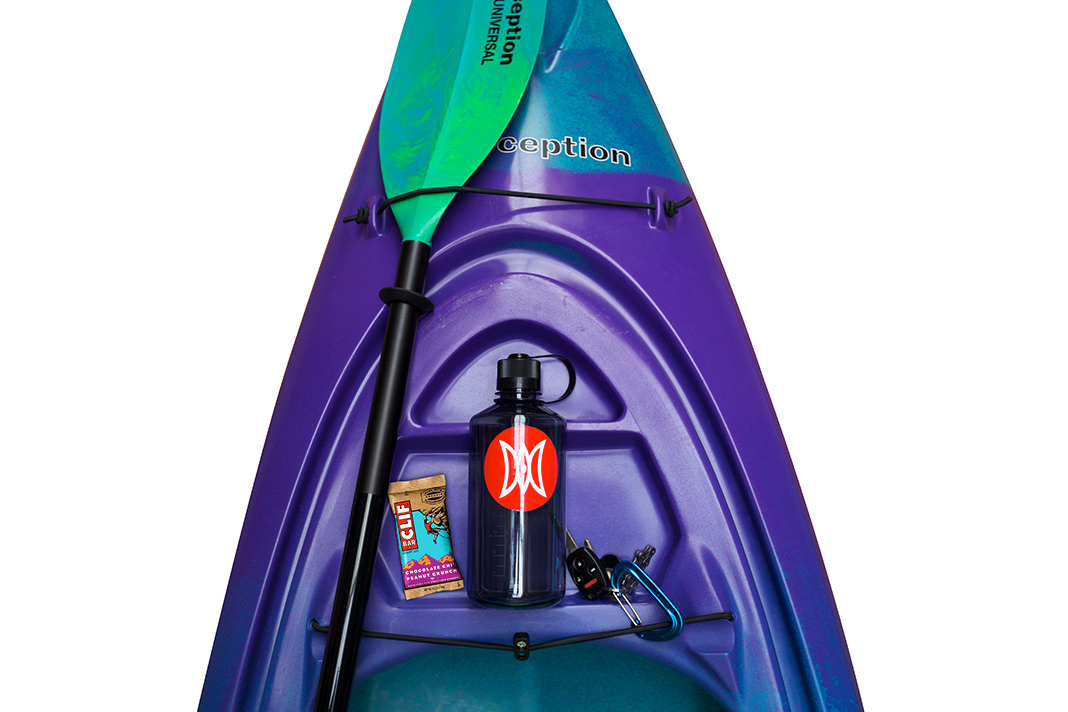
Other handy design features include a drain plug to empty any water inside the kayak, and a molded-in “dashboard” integrated into the bow deck. This recessed area just in front of the cockpit is a welcome addition; it’s an ideal catch-all for sunscreen, snacks or anything else you want to be able to grab quickly.

Material and construction

The Perception Swifty Deluxe 9.5 kayak is constructed from robust rotomolded polyethylene plastic. Rotomolded kayaks are made from casting plastic pellets into a mold, which is slowly rotated while heated. Rotomolded polyethylene is a tried-and-true material for recreational, light touring and even whitewater kayaks designed to withstand years of abuse and hard impacts on rocky rivers.

In addition to being long-lasting and nearly indestructible, this plastic is also inexpensive to make, reflected by the Perception Swifty Deluxe 9.5’s budget-friendly $399.99 price.

As with any material, there is always a tradeoff. The disadvantage of rotomolded polyethylene is that it’s heavier than space-age composites or mid-range thermoformed plastic. The Perception Swifty Deluxe 9.5 weighs 44 pounds (20 kg); for comparison, a 10-foot carbon fiber kayak would weigh just 22 pounds but cost over $3,000!

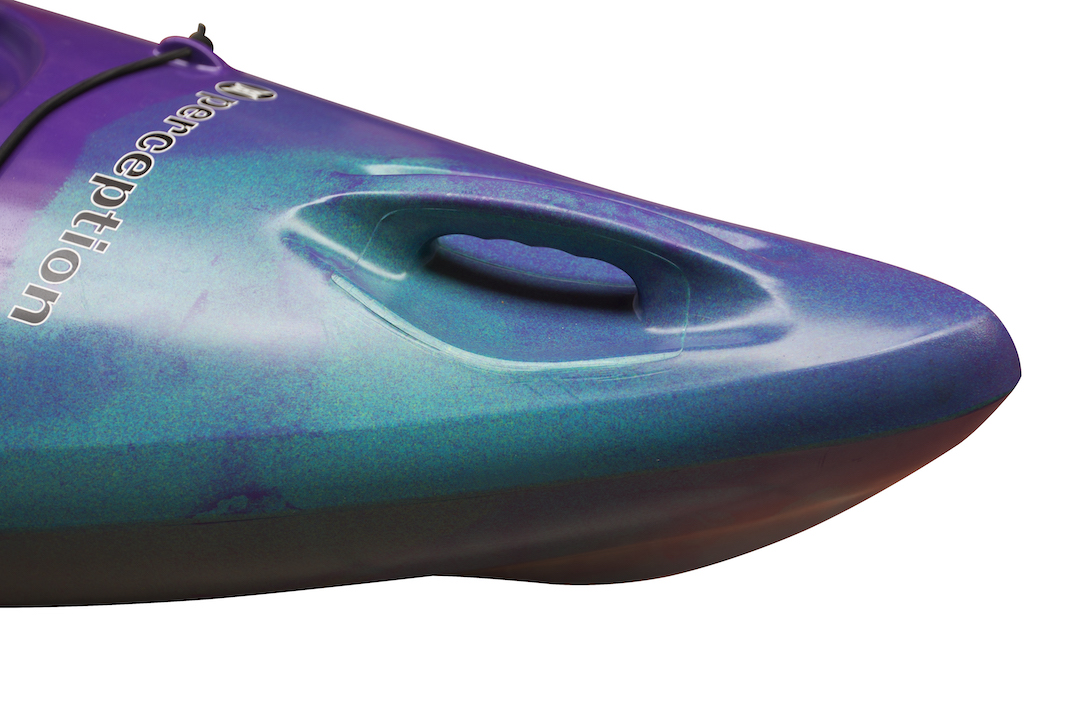
Most Perception Swifty buyers are happy with the price to weight ratio, and at 44 pounds it is still manageable to carry on your shoulder from parking lot to put-in. Better yet, the integrated handles on the bow and stern make for effortless carrying with a friend.

Perception Swifty Deluxe 9.5 kayak outfitting and accessories

The outfitting on the Perception Swifty Deluxe 9.5 is thoughtfully designed to maximize comfort on the water. The padded seat features a high back rest that is easily adjustable forward and back, allowing each paddler to fine-tune the fit. Adjustable foot braces offer good support for paddlers of varying heights, improving posture and paddling efficiency.

Bungees on the stern deck are handy for stashing your paddling jacket within easy reach, while a bungee “paddle park” on the bow is useful for tucking your paddle under when you need your hands free for fishing, snacking or photography.

Paddle Sober And Smart
  • Never mix alcohol and paddling. Coast Guard and state BUI (boating under the influence) laws apply to all vessels. This includes canoes, kayaks, SUPs and rafts.

Casual kayak anglers will appreciate the two rod holders molded in on either side of the Perception Swifty Deluxe cockpit. For more dedicated kayak fishing, add Perception’s Rod X Pro accessory, which slips into the existing rod holder and has a bungee to secure the reel when paddling.

Also handy is a molded-in “dashboard” just in front of the cockpit. This recessed area is an ideal catch-all for tackle, snacks or anything else you want to be able to grab quickly.

The Perception Swifty Deluxe 9.5 is compatible with Perception’s TrueFit Sun Shield, a thin nylon sprayskirt which stretches over the cockpit while paddling to keep splashes and paddle drips out of the kayak and provide protection from the elements. Pick up Perception’s TrueFit cockpit cover to keep creepy crawlies out of your kayak when it’s in storage.

Opportunity for modifications

Like any kayak, there are countless ways you can personalize the fit and function of a Perception Swifty Deluxe 9.5. Glue a thin layer of foam under the cockpit where your knees make contact with the boat, or beneath your heels to keep your feet comfortable. Closed-cell foam, like the type used for old-school sleeping pads, makes good padding that can be trimmed to shape.

Anglers can add a paddle park beside the cockpit, and improve the existing rod holders with Perception’s Rod X Pro accessory for more secure rod storage.

Warranty

The Perception Swifty Deluxe 9.5 comes with a five-year manufacturer’s warranty for the hull and deck and a one-year limited warranty on accessories, outfitting and parts.

How it compares

The Perception Swifty Deluxe 9.5 is available exclusively at Dick’s Sporting Goods; however a nearly identical model called the Drift 9.5 is widely available across North America. These twin kayaks fall within Perception’s line of recreational sit-inside kayaks.

The Swifty 9.5 / Drift 9.5 is slightly sportier than Perception’s square-sterned Sound 9.5. The tapered stern makes for more agile turning in the Swifty 9.5, whereas the Sound 9.5’s square stern gives dedicated kayak anglers the option to add a trolling motor.

The Perception Swifty 9.5 is slightly more stable than the faster and pricier JoyRide 10.0, but the latter offers more premium features. Choose the JoyRide if you’re looking to invest a bit more in on-water comfort and convenience, like upgraded seating and a larger, easy-open stern hatch.

There are many similar kayaks from competing brands in the recreational market for paddlers who wish to enter the sport on calm, slow-moving waters. Field and Stream’s Blade 97 Elite is a comparable model, with more features directed to the avid fisherman.

  • Perception Swifty Deluxe 9.5 Kayak vs Pelican Mustang 100x Kayak

    Pelican’s Mustang 100x is another popular sit-inside kayak option, and prospective paddlers may find themselves deciding between the two kayaks. The Mustang 100x comes in at a slightly higher price point, but includes a front hatch and large, open tank well in the stern. Along with dual rod holders, this makes the Mustang 100x a better choice for dedicated kayak fishing.

    Material-wise, both kayaks are constructed from durable rotomolded polyethylene plastic. Pelican’s Mustang 100x is slightly lighter at 39 lbs, versus the Perception Swifty’s 44 lbs. If you’re torn between the two, test paddle both and see if one fits or performs better for your needs.

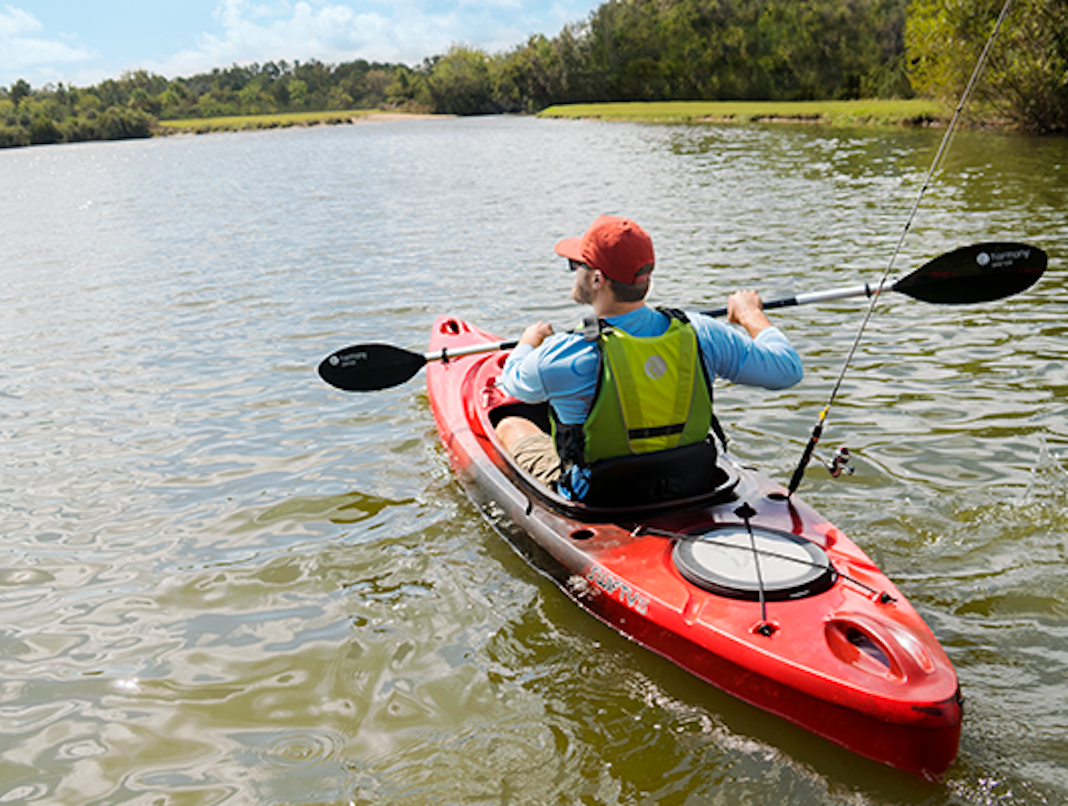
Man paddling red sit-inside kayak
Photo: Courtesy Perception

Where to buy the Swifty Deluxe 9.5

The Perception Swifty Deluxe 9.5 is available exclusively at Dick’s Sporting Goods. Outside of Dick’s, look for the Perception Drift 9.5—the Swifty’s nearly identical twin, sharing the same design, construction and intended use. Find the Drift 9.5 at paddlesports retailers across North America, or use Perception’s dealer locator.

Pros and cons

Pros

  • Intuitive, stable and responsive design is perfect for beginner and intermediate kayakers looking to explore calm waters
  • Competitive price point
  • Sturdy, rotomolded polyethylene construction with 5-year warranty
  • Relatively lightweight for easy carrying to the water and loading onto a vehicle
  • Comfortable seat with high back rest for lumbar support
  • Large, open cockpit for easy entry and exit

Cons

  • Taller paddlers may feel cramped in a 9.5-foot kayak; opt instead for a boat longer than 10 feet
  • No padding where knees meet the cockpit
  • No bulkhead/watertight chamber for flotation—a critical safety feature if paddling on more exposed waters

Related articles

Perception kayak reviews

Sit-inside recreational kayak reviews

SEE ALL KAYAK REVIEWS


SUP Leashes: Explaining The Most Controversial Piece of River Gear

man swims in whitewater beside a paddleboard connected to him with a SUP leash
To leash or not to leash? Either way, river paddleboarders also need to wear all the essentials of whitewater paddling, including helmet and inherently buoyant PFD. | Feature photo: Ashley Voykin

ASUP leash is a plastic cord connecting paddleboard to paddler. It’s an essential piece of safety equipment for flatwater paddling and ocean surfing, ensuring the paddler doesn’t become separated from their board in an upset. However, using a leash in the river environment is a contentious topic.

That’s because any line in moving water is an entrapment hazard. If a leash catches on a rock or strainer, even a relatively minimal current can anchor a paddler underwater. American Whitewater’s accident database reports seven board-related fatalities on moving water in the U.S. within the past five years. Of those, four involved leashes. Anecdotally, there are many more near misses.

[ Find a swiftwater rescue course near you in the Paddling Trip Guide ]

SUP leashes on the river—yea or nay?

“Avoiding entrapment is a key concept for whitewater paddling, and a long, dangling rope carries that risk, even when on a quick-release,” cautions Danny Peled, director of Boreal River Rescue. “There are a lot of times where river paddleboarders shouldn’t be wearing leashes, but they saw other people doing it, or it seems acceptable. There’s no other situation where whitewater paddlers would have a long, dangly thing hanging. In many cases, the risks outweigh the benefits.”

The ACA also takes a conservative approach to leash use in moving water. It recommends leashes might be appropriate on large-volume rivers with deep rapids and swift currents free of obstructions. A swiftwater safety course is the best way to get educated to judge the appropriateness of using a leash based on the river in question and its current conditions.

man swims in whitewater beside a paddleboard connected to him with a SUP leash
To leash or not to leash? Either way, river paddleboarders also need to wear all the essentials of whitewater paddling, including helmet and inherently buoyant PFD. | Feature photo: Ashley Voykin

Those who use leashes on the river argue they’re potentially a lifeline, keeping a paddler connected to their gear and board—which is an additional flotation device—and that a leash allows the paddler to swim without worrying about board management. In some high flow situations or on remote trips, the risk of losing a board may also outweigh the risk of entrapment.

“I always wear a leash. I see value in using it, and I respect it and am aware of its dangers,” says Melanie Seiler, a SUP instructor, former state director for the American Canoe Association (ACA), and current executive director of Active Southern West Virginia. Seiler grew up on Appalachian whitewater and views leashes as essential gear allowing paddlers to quickly get back on their boards where they’re safest.

[ Paddling Buyer’s Guide: See all SUP leashes ]

River versus flatwater SUP leash usage

When using a leash on the river, it should never be attached to the ankle or leg, as is typical in flatwater SUP. This is because it may be impossible for the paddler to bend against the current and reach upstream to release the leash in an entrapment scenario. A leash used in moving water must instead be attached at or above the waist, reachable by both hands, and on a quick-release system. Coiled leashes are preferred for river use to keep the leash out of the water and prevent snagging.

Seiler encourages regular practice with the quick-release system for extreme situations. “There has to become some muscle memory to make it happen in a situation it’s designed for: You’re in rushing water and pinned. Your eyes are closed, and your hand is finding the release mechanism and feeling how hard you have to pull it and in what direction to get it to come loose. All at a time you’d be freaking out.”

There are also a few circumstances where Seiler doesn’t promote leashes, such as when she teaches beginner classes on flat rivers, or when the leash poses a significant risk of entanglement with others, as at mass start races.

Auto-fail points can save you in a pinch

Standup paddleboarding isn’t the only board sport making its way from the coast to interior whitewater over the past decade. River surfing continues to gain popularity, especially as stationary waves take shape in outdoor towns globally. The risks of leashes are also discussed in the fledgling river surf community, according to Neil Egsgard, president of the Alberta River Surfing Association and founder of the Calgary-based stationary wave design firm, Surf Anywhere.

At the waves Surf Anywhere has designed, Egsgard’s company places signage reading: “Danger. All leashes can drown river surfers. Current will not let go. Surfer cannot release. Do not wear a leash or do have a leash auto-fail point at the body.”

“A common misconception is [quick-release] leashes are always releasable,” says Egsgard. “Taking a whitewater safety course with professionals quickly reveals releasing leashes under tension can be very challenging.”

Egsgard argues manual quick-release systems can fail and recommends river surfers and paddleboarders wear leashes that also have an auto-fail point. This component, such as a low-strength cord or a plastic strap, is manufactured to break under tension. If a paddler becomes trapped and cannot activate their quick release, this component will break and the paddler will float free.

To leash or not to leash?

Ultimately, there’s no one correct answer to the question of leashes on the river. Safety equipment needs to be tailored to the specific river environment and it’s each paddler’s responsibility to get the education to make informed decisions about where a leash is appropriate.

This article was first published in the Early Summer 2022 issue of Paddling Magazine. Subscribe to Paddling Magazine’s print and digital editions, or browse the archives.


To leash or not to leash? Either way, river paddleboarders also need to wear all the essentials of whitewater paddling, including helmet and inherently buoyant PFD. | Feature photo: Ashley Voykin


Beginner’s Luck: Why It’s Good To Be Bad

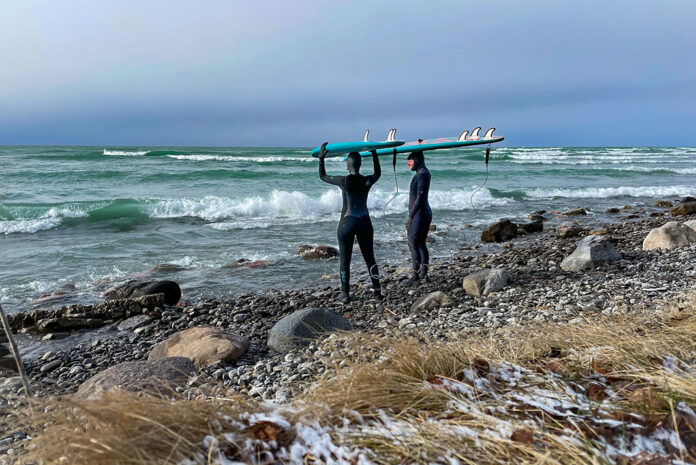
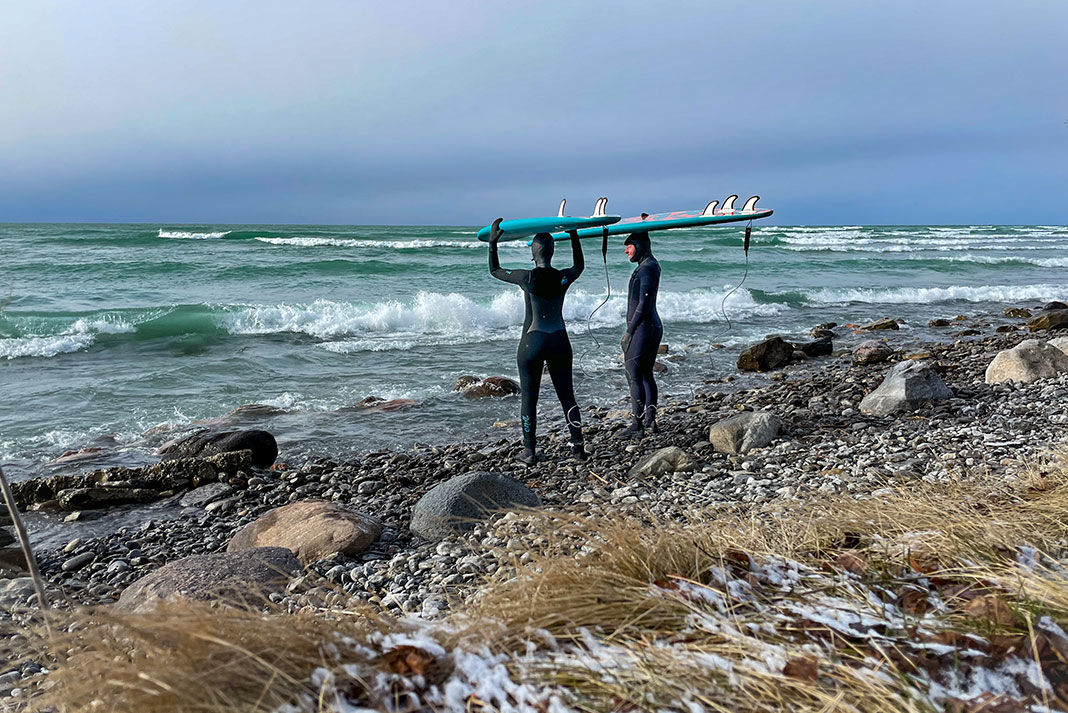
a man and woman in wetsuits stand on a rocky, wave-strewn shore balancing surboards on their heads
George Bernard Shaw once wrote, “Man resolutely progresses in all things by making a fool of himself.” So do canoeists. | Feature photo: Geoff Whitlock

My goal last winter was to become a half-decent Great Lakes surfer. That was my first mistake. Forget that I’d only ever taken one surf lesson. I don’t do any other board sports. And the frigid lake isn’t the most conducive learning environment. I was undeterred, counting on beginner’s luck to make up my gap in experience. What could go wrong?


Beginner’s Luck: Why It’s Good To Be Bad

This is how I found myself bobbing around in Lake Ontario on a frigid December morning, squinting against the sleet pelting my cheeks, clad in six millimeters of neoprene. After 90 minutes of trying and failing to catch the short swells rolling past me, my hands and feet were aching with cold—time to go in.

I paddled closer to shore to time my exit.

“You goin’ in?” one surfer called over. The icicles in his beard hid his smile.

“Oh yeah,” I told him, misunderstanding his question completely.

“Cool,” he said, turning away and paddling hard to catch the big wave I was also—unexpectedly—cresting.

I lost my balance, fell off my board and resurfaced. I turtle rolled to miss the next crashing wave… came back up… got smashed in the face with one wave, two waves… lost grip on my board… got dragged feet-first by my leash towards shore. I tried to get my footing and grab my board before the same receding wave pulled it past me and yanked me off my feet again. Fail.

a man and woman in wetsuits stand on a rocky, wave-strewn shore balancing surboards on their heads
George Bernard Shaw once wrote, “Man resolutely progresses in all things by making a fool of himself.” So do canoeists. | Feature photo: Geoff Whitlock

Four waves toppled me before I staggered out and stumbled back to my snow-covered car. Inside I sat shivering, heat jacked, wet neoprene dripping onto the seats, my fingertips jammed into the air vents waiting for the feeling in my hands to return enough to wrestle out of the wetsuit.

Man, I thought, being a beginner sucks.

But the difficulty of awkward beginnings is worth the trouble, according to Tom Vanderbilt, the author of Beginners: The Joy and Transformative Power of Lifelong Learning. The book highlights his yearlong experience tackling five new skills: chess, singing, drawing, juggling and surfing.

Vanderbilt begins his journey after noticing how many parents spend the duration of their kids’ extracurricular lessons on their phones. Desperate to shake up his “mid-career competence,” Vanderbilt joins his daughter in chess lessons and takes on learning as a sport.

Never too old to be a beginner

I read Beginners shortly after being chundered in the surf; around the same time, I wondered if I’d missed the window to learn this skill.

Vanderbilt disagrees.

Yes, learning at a young age is easier. That’s partly due to the sponge-like brains of youth. Sure, kids also have more free time. And they have less fear of injury—both to body and ego. Nevertheless, regardless of age or how busy you are, introducing a new skill is one of the most life-enhancing things you can do, Vanderbilt argues. Learning something new and challenging, particularly with a group, has proven benefits for the brain.

“A study that had adults aged 58 to 86 simultaneously take multiple classes—ranging from Spanish to music composition to painting—found that after just a few months, the learners had improved not only at Spanish or painting, but on a battery of cognitive tests. They’d rolled back the odometers in their brains by some 30 years. They’d changed in other ways, too: they felt more confident, they were pleasantly surprised by their work, and they kept getting together after the study ended,” writes Vanderbilt about the findings of neuroscientists.

It scarcely seems to matter what new skills are learned—think surfing, bird watching, astrophotography, Greenland-style kayak rolling, knot tying, juggling, whatever.

“Learning new skills changes the way you see the world,” writes Vanderbilt. “Learning to sing changes the way you listen to music, while learning to draw is a tutorial on the human visual system. Learning to weld is a crash course in physics and metallurgy.”

Buoyed by the encouragement, I kept paddling out. I spent my canoeing off-season captivated by storm systems, water quality data reports and the hydrodynamics of waves, while also connecting with a new community of water lovers.

Learning is a process, and its not linear

Vanderbilt’s advice is not to get hung up on goals. My first mistake, remember?

“Focus on the process, not some endpoint of mastery. Make learning itself the goal,” he says. “And remember: Mistakes are okay. Mistakes are where the learning is happening.”

[ Paddling Buyer’s Guide: See all surfing paddleboards ]

It’s okay to be bad; we’ll get better—and hey, there are benefits even if we don’t.

Kaydi Pyette is the managing editor of Paddling Magazine. In mid-January, with the air temperature -7°C and water temperature 2°C, she caught her first wave.

This article was first published in the Early Summer 2022 issue of Paddling Magazine. Subscribe to Paddling Magazine’s print and digital editions, or browse the archives.


George Bernard Shaw once wrote, “Man resolutely progresses in all things by making a fool of himself.” So do canoeists. | Feature photo: Geoff Whitlock


Break Bad Habits And Get Back On The Water

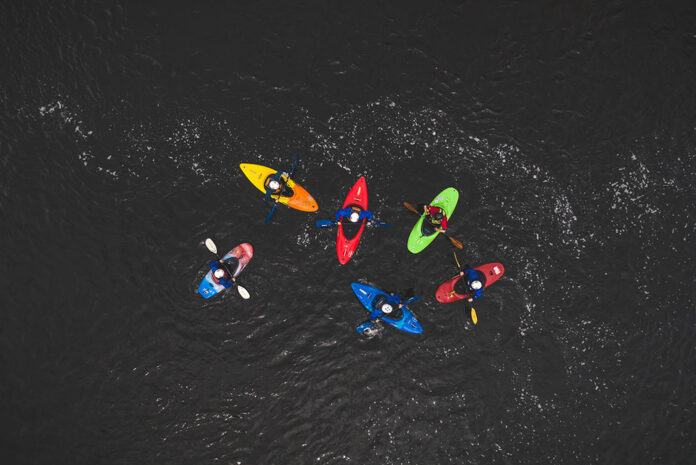
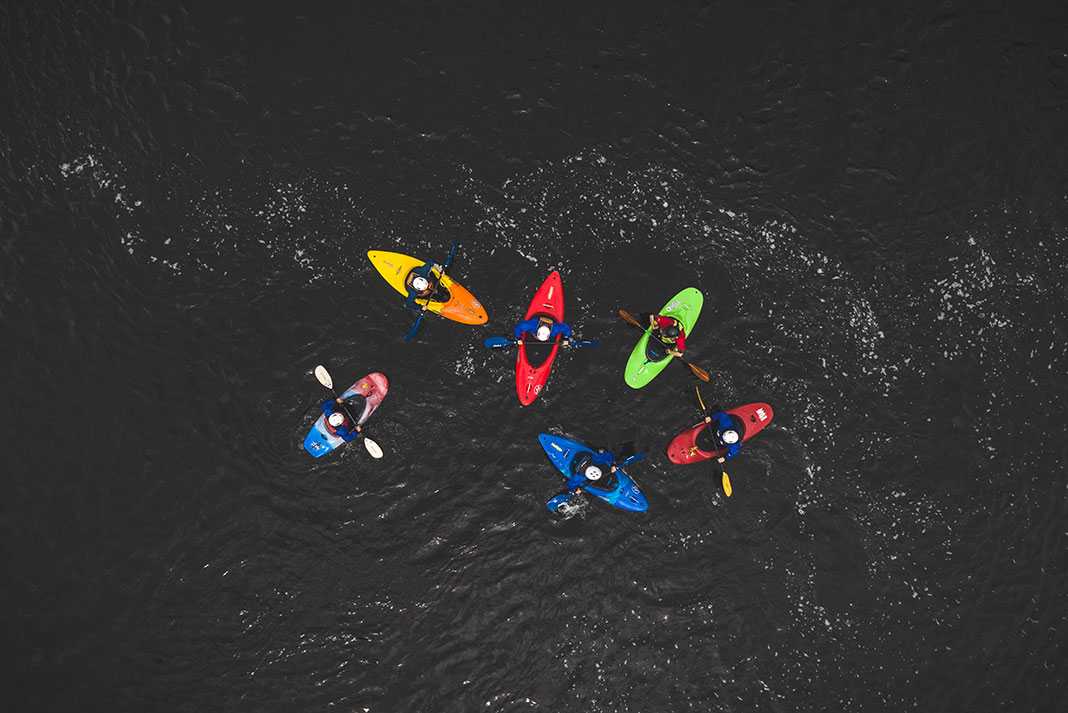
overhead photo of a group of colorful whitewater kayakers on black water
Feature photo: Yan Kaczynski

No one knew it at the time, but October 16, 2019, would be the last time for more than two years that members of the Revelstoke Paddlesport Association would officially meet for the Wednesday night paddle. No doubt it was raining. It starts raining here in October. And no doubt it was in the public parking lot at the corner of First and Orton. It’s where they’ve always met.

Every Wednesday at 5:30 p.m., cars and trucks arrive with kayaks strapped to them. There are handshakes and high fives. Water levels are discussed. Then boats are untied and stacked on fewer cars heading toward rivers best matching the skills of whoever showed up. Newer paddlers are mentored. Nobody I know remembers who started the Wednesday night paddle. All they know is that it used to be on Tuesdays, but it got moved for some reason no one remembers.

overhead photo of a group of colorful whitewater kayakers on black water
Two years is a long time. Long enough to forget fun. But it’s time to get back on the water, find new routines—and rediscover old ones. | Feature photo: Yan Kaczynski

The Corona virus surged around the globe before the snow in the mountains began to drip into our river valleys. Even after the backcountry ban was officially lifted, nobody was shuttling together. Put-ins and launches were busy with small bubble groups. No paddling organization wanted to be caught sanctioning anything social, even an event as loosey-goosey as the weekly Wednesday night paddle.

How to break out of a rut

Lisa Firestone is a clinical psychologist and author. In Psychology Today, she wrote about why it’s important to break routines. Her self-help advice is about breaking bad habits. Like, say, scrolling endlessly through social media or stopping for a bag of Doritos at the corner store. But her advice works both ways.

Firestone suggests first making a list of routines we’re willing to switch up. Only then can we start to take action. The secret, she suggests, is baby steps. Nothing monumental at first. Just mix things up a little, like trying a new restaurant or taking a different route to work. Eventually, we may explore what it would mean to break out of a fixed identity or a role we impose upon ourselves.

Okay, sure. But what if our Wednesday paddle drop-in dirtbag crew is part of our fixed identity and self-imposed role in life? What if we like it? And what if a global pandemic causes the world to lockdown, almost overnight? No baby steps. Cold turkey.

Canoeists, kayakers and paddleboaders everywhere were tossed out of their routines. Most of us struggled to find new things to fill our weekly club paddling nights.

Finding new routines—and rediscovering old ones

Two years is a long time. Long enough to forget fun. Regulars left town, board members retired, and minute books were lost. I bought a television. Annual events and races were mothballed. For two years, if anyone paddled it was with family or those whose Instagram handles we already knew. Small bubbles. I hope we never use the word bubble again. On my first club night this spring, I realized I hadn’t paddled with anyone new in two summers.

Despite a 30 percent growth in paddlesport participation and sales during pandemic lockdowns, gatherings have been slow to recover. Paddling events across the country are coming back online but with lower registrations than before. Wednesday nights in Revelstoke are quieter. There are fewer boats on fewer cars. There’s now more online chatter throughout the day about what rivers. Who’s going? What levels? Who’s driving?

Who cares, I say.

We’re stuck in these new hand-wringing routines of concern, guilt and indecision developed during Covid. Firestone says it’s important to check in with ourselves and see how these new routines make us feel.

The old way was better.

Wednesday nights were a sure thing. You could plan your life around it. Rain or shine. You knew at least one other person would show up. It didn’t matter who. And that was enough. There was no need for Facebook groups. That’s what tailgates are for. “What do y’all wanna paddle tonight?”

Maybe it will take another two years to get back to where we once were. I hope someday soon we feel less anxious about everything. I hope we reconnect with each other and who we really are. I hope we will remember what we enjoy, what matters most to us, and what makes us come alive. When you’re ready, head down to the corner of First and Orton on any given Wednesday. You can figure out the rest from there.

This article was first published in the Early Summer 2022 issue of Paddling Magazine. Subscribe to Paddling Magazine’s print and digital editions, or browse the archives.


Two years is a long time. Long enough to forget fun. But it’s time to get back on the water, find new routines—and rediscover old ones. | Feature photo: Yan Kaczynski


Sublime Encounters With Orcas In Norway

kayakers paddle near orcas at dawn in front of a snowy mountain landscape
Feature photo: Tommy Simonsen

At the edge of twilight, a lone paddleboarder glides among giant orcas on the coast of Norway. Above her, snowy mountains bathed in warm light pierce a pink and violet sky.

Images like this don’t happen by chance in the fjords of Arctic Norway. Capturing elusive orcas amid spellbinding scenery and magical, fleeting light at the top of the world is Tommy Simonsen’s specialty. For the Norwegian landscape, wildlife and documentary photographer, the Arctic’s capricious weather and fickle light hold the key to its enduring appeal.

Sublime encounters with orcas in Norway

“Much of November, December and January, the sun simply doesn’t appear above the horizon,” Simonsen explains. “But for a brief time just before the sun disappears in November and after it returns in January, the Arctic light is a gift of pastel colors.” During this time of the year, sunrise and sunset linger for as long as two hours.

kayakers paddle near orcas at dawn in front of a snowy mountain landscape
Images like this—of a sublime orca encounter—don’t happen by chance in the fjords of Arctic Norway. | Feature photo: Tommy Simonsen

Factor in roaming killer whale pods and marauding winter storms, however, and chasing ephemeral cotton candy skies at 70 degrees north is no simple task.

Around 3,000 orcas live in the Norwegian and Barents seas, spending most of the year in offshore waters. Then, from mid-October through January, they enter the narrow coastal fjords of Arctic Norway, following shoals of herring. The whales move around the fjords, so finding them takes experience and more than a little luck.

Simonsen describes a typical day during a January photoshoot: board a small, open boat in the island fishing village of Skjervøy; depart the harbor around 6 a.m. and speed through the Arctic winter darkness, swaddled in a survival suit and insulating layers of wool and down. Wait for the two-and-a-half-hour window around midday when diffuse, soft-hued daylight illuminates snow-covered mountains and—hopefully—the slick, black backs and towering dorsal fins of an orca pod. Watch, compose and shoot as the sky glows intense yellow and pastel pink. By early afternoon, the sun will dip back below the horizon and darkness will reclaim the fjord.

[ Plan your next Norway paddling adventure with the Paddling Trip Guide ]

Whether he’s traveling by boat, dogsled or skis, Simonsen relies on a network of talented expedition partners for support and safety. Human subjects also lend a more intimate scale to otherwise austere images of vast, frozen landscapes. Many have become close friends—like standup paddleboarder and Schibevaag Adventure founder, Kari Schibevaag, who leads paddling and snorkeling excursions to experience Norway’s orca whales.

Treating whales with caution and respect

Paddling in such close proximity to 26-foot-long, five-ton marine mammals demands respect and an understanding of their behavior.

“When we see a gathering of whale-watching boats in the fjord, we try to go somewhere else to minimize our impact,” Simonsen explains. “Most of the time, we get lucky and the pods pop up around us. They are often curious about Kari in a peaceful way.”

Making images like these, says Simonsen, is all about patience. Including plenty of extra time in any travel plans is essential. During the winter months, Arctic low pressure systems march across the North Atlantic in quick succession, bringing snow, rain and high winds making it impossible to venture out into the fjords. Simonsen’s advice for aspiring photographers and paddlers: be prepared to wait—for the weather, the whales, the sun or, simply, the right moment.

This article was first published in the Early Summer 2022 issue of Paddling Magazine. Subscribe to Paddling Magazine’s print and digital editions, or browse the archives.


Images like this—of a sublime orca encounter—don’t happen by chance in the fjords of Arctic Norway. | Feature photo: Tommy Simonsen


Paddler Risks All To Save Kayaker From Freezing Lake

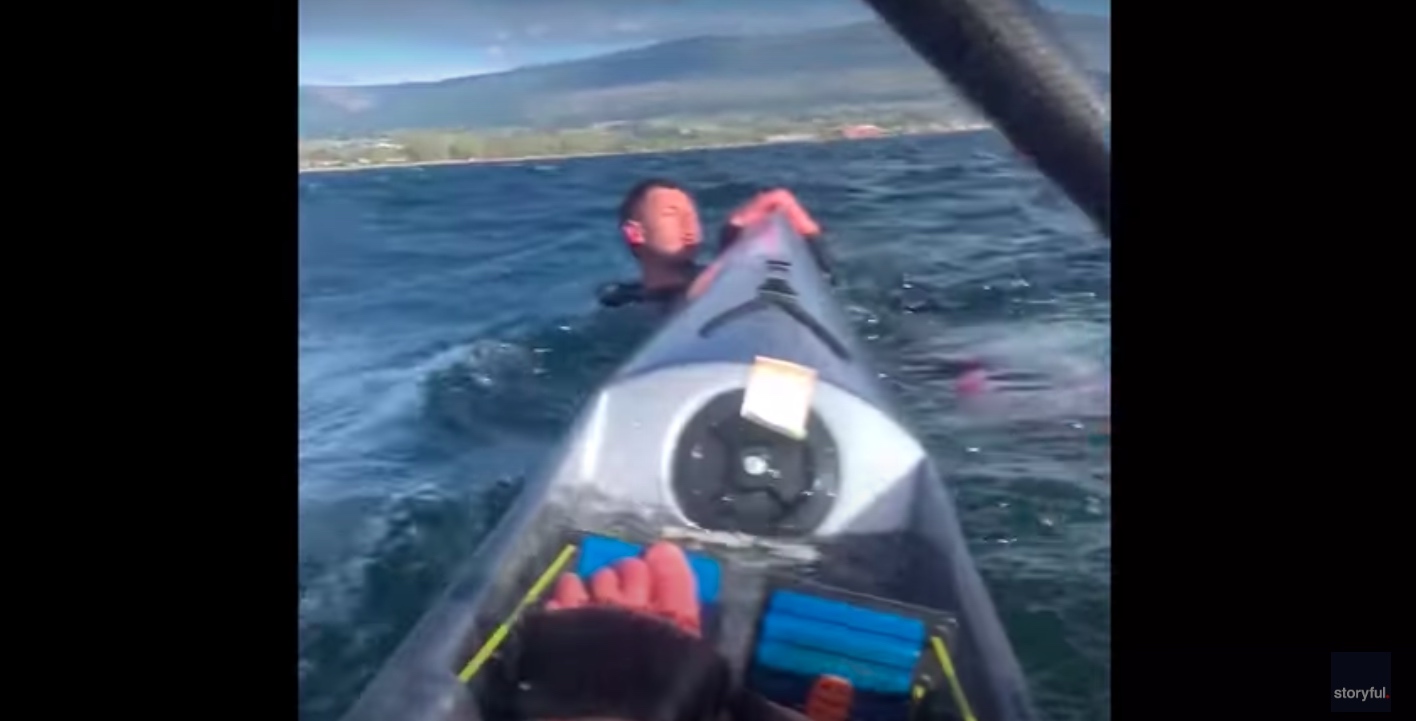
A frame grab from Sally Wallick’s video camera captures the scene as she saves the capsized kayaker from freezing. | Feature photo: Sally Wallick via Storyfull

Anyone who has helped a fellow paddler recover from a swim in deep water knows how difficult it can be, whether the craft you’re working from is a canoe, a sea kayak or whitewater boat. Now imagine handling such a rescue alone, trying to save a fellow kayaker from freezing—and you’re on a surfski.


Paddler Risks All to Save Kayaker from Freezing Lake

Surfskis are some of the tippiest paddlecraft made—carbon-fiber needles that, in skilled hands, can fly downwind and surf ocean swells. But in unskilled hands? That usually ends in a swim.

Sally Wallick falls squarely into the skilled category. She’s an experienced racer well aware of the hazards of cold water and changing weather conditions. Wallick was out for a training paddle on Okanagan Lake B.C. in late April 2021 when the balmy spring day turned blustery. On her way back to the put-in she spotted something unusual farther offshore.

Coming closer, she realized it was a man clinging to a half-sunken kayak. What happened next was captured on Wallick’s chest-mounted video camera, and has been viewed more than 13,000 times on YouTube.

[ Paddling Buyer’s Guide: See all rescue kits ]

As Wallick paddled toward the man, she could see right away that his lips were turning blue, and his eyelids appeared heavy. Both are classic signs of hypothermia. Wallick is a middle school teacher. She knows how to use her voice and demeanor to take charge of a situation.

“In a little bit of trouble?” she called out as she approached. “How long have you been out here for?”

It took the swimmer a beat to respond, and when he did his words were slurred.

“Quite a while,” he said finally. The answer wasn’t specific, but it told Sally what she needed to know. There was no time to lose.

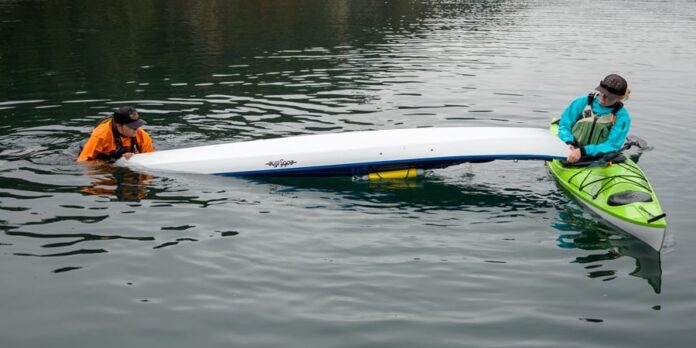
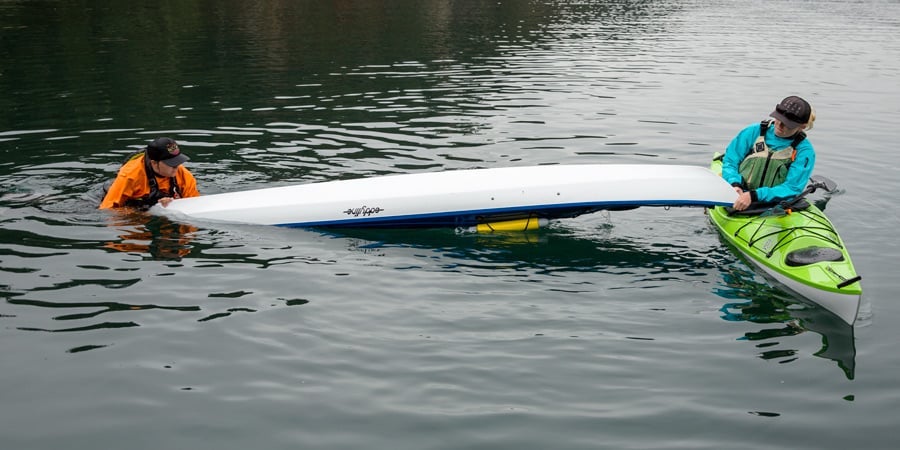
The kayak T-rescue is an effective recovery technique if both swimmer and rescuer know the drill. | Photo: Courtesy REI
A frame grab from Sally Wallick’s video camera captures the scene as she saves the capsized kayaker from freezing. | Feature photo: Sally Wallick via Storyful

The water was 52 degress, and the man was wearing only a rash guard and shorts. Wallick later estimated he had been in the water for about 45 minutes. Fortunately, he was wearing his life jacket, and had a phone in a waterproof case. Wallick used it to call for help on shore, then took control.

“Grab onto my boat,” she says in the video. “We’re just going to leave your kayak.”

“Will we find it?” the man asks.

“Yes we will,” she answers, now in full schoolteacher mode. “Right now we need to get you to shore.”

Her voice projected confidence, but she knew how desperate the situation had become. “I tried to keep it light, but inside I was like, ‘Oh no, this guy needs help right away,’” she said later.

Wallick was alone, trying to help a man with unmistakable signs of cold incapacitation. The go-to recovery technique for a swamped kayak in deep water is the T-rescue, in which the rescuer drags the victim’s kayak across her own, drains the water, and then helps the swimmer climb back into his kayak.

The maneuver takes knowledge and active participation from the swimmer, and it’s designed to work with kayaks that have flooded cockpits, with watertight compartments in the bow and stern protected by bulkheads. But the man’s kayak didn’t have bulkheads, meaning the entire boat was full of water. Under those circumstances, pulling off a successful T-rescue would be almost impossible, says Kenny Howell, a sea kayak instructor and surfski racer who helped write the American Canoe Association’s surfski safety protocols.

Wallick initially told the man to climb onto the back of her surfski—“This boat is really tippy,” she warned nervously—then reconsidered, telling him instead to grab hold of the her surfski’s bow. Good call, says Howell, because a back deck carry would probably be too unstable, especially with a hypothermic victim. “It’s easier just to push the swimmer in front of you,” he says. “You can’t go very fast, but you can see them.”

[ Plan your next rescue training with the Paddling Trip Guide ]

Wallick told the man to hold tight to the bow of her surfski, then paddled for shore with everything she had, talking as she went. “Good job…Keep going,” she said, “remember to breathe.” Wallick’s own breathing was labored as she struggled to keep her ski upright and pointed toward shore. “You’re doing great…Can you keep your eyes open for me?”

A frame grab from Sally Wallick’s video camera captures her rescue of a struggling and hypothermic kayaker. | Photo: Credit: Sally Wallick via Storyfull
The kayak T-rescue is an effective recovery technique if both swimmer and rescuer know the drill. | Photo: Courtesy REI

Watching the man’s eyelids droop, Wallick thought he was about to let go. It was time for a change of plan.

“We’re going to try something new,” she said, slipping into the water. She told the man to drape his body over her surfski, a position that would get a portion of his torso out of the water and increase his chances of holding on—but also required her to be in the water with him.

With both of them now in the water the clock was counting down, but fortunately Wallick was able to flag down a nearby pontoon boat. Good Samaritans on the motorboat pulled the man aboard and transported him to shore.

Wallick remounted her surfski and paddled back to land, not knowing whether the man had survived. She later learned that he made a full recovery, thanks to her heroic efforts and no small share of luck. “I’m just grateful that it all worked out,” Wallick said. “I do kind of think about what would have happened maybe if the pontoon boat didn’t come.”

Many comments left on the YouTube video question her decision to leave the man’s kayak. They note that by entering the water she was playing fast and loose with the cardinal rule of rescue—not to become a victim herself.

“That’s what they train professionals not to do, and they still do it sometimes,” Howell says. “It’s not for us to say whether that was the wrong decision, but what can we do? We can talk about it and learn from it.”


5 Takeaways from Sally Wallick’s Rescue

1 Cold Kills

As the video makes clear, immersion in cold water can quickly degrade a person’s cognitive abilities and motor skills. Your body loses heat much faster when immersed in cold water than it does when dry. The water in Okanagan Lake was about 52 degrees Fahrenheit that day. According to U.S. Coast Guard research, a person immersed in 50 to 60 degree water without protective clothing can lose consciousness in as little as one hour.

2 Dress for Water Temperature, not Air Temperature

The high temperature in Kelowna B.C. touched 71 degrees the day of the rescue, April 30, 2021. Such balmy spring weather brings people outside in droves, and they’re understandably eager to soak in the sun after a long winter. But while air temperatures were enjoying a spring fling, water temps were still close to winter lows—about 52 degrees in Lake Okanagan that day. The man Wallick rescued was wearing only shorts and a rash guard. A simple neoprene wetsuit top would have increased his survival window considerably, while a full wetsuit or drysuit would likely have turned his near-death experience into a mere inconvenience.

3 Don’t Paddle Alone

Because the man was alone when he capsized, no one was there to assist or call for help when he first got in trouble. As a result, he waited in the frigid water for about 40 minutes before Wallick spotted him—and that was only by happenstance. And because Wallick was paddling alone, her ability to help was limited. If she had been with one or more other paddlers, the options for a successful rescue would have improved substantially and the risk she took to help would have been far less.

4 Practice, Practice, Practice

There are a variety of techniques to recover from a capsize in deep water, such as the T-Rescue and paddle float self-rescue. They’re not particularly difficult, but they require some practice (and equipment, such as the paddle float and a handheld bilge pump). If you’re familiar with these techniques, get out there and practice them. If you’re not, consider taking a paddling safety course from the American Canoe Association (ACA), your local paddling shop or outfitter, or other reputable source.

5 Carry The Means To Call For Help

In coastal waters, the surest way to summon help is a handheld VHF marine radio tuned to Channel 16. If you make a distress call on Channel 16 everyone will hear it—including the Coast Guard and other boaters. A cell phone in a waterproof pouch or case is good for backup, and may be your best bet in inland urban waterways. If you’re going offshore, it’s always a good idea to have a registered Personal Locator Beacon (PLB) with you. It’s a satellite device that will call help anywhere in the world with the push of a button. They run about $300 but you’re not going to care about that when you need it.

Watch Wallick’s full rescue video here.

A frame grab from Sally Wallick’s video camera captures the scene as she saves the capsized kayaker from freezing. | Feature photo: Sally Wallick via Storyfull


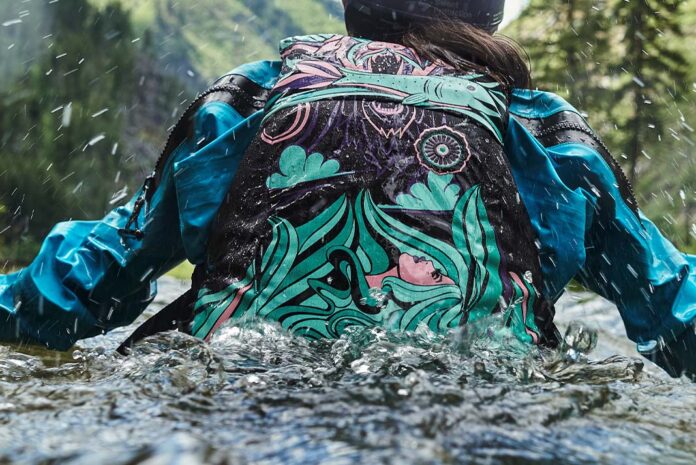
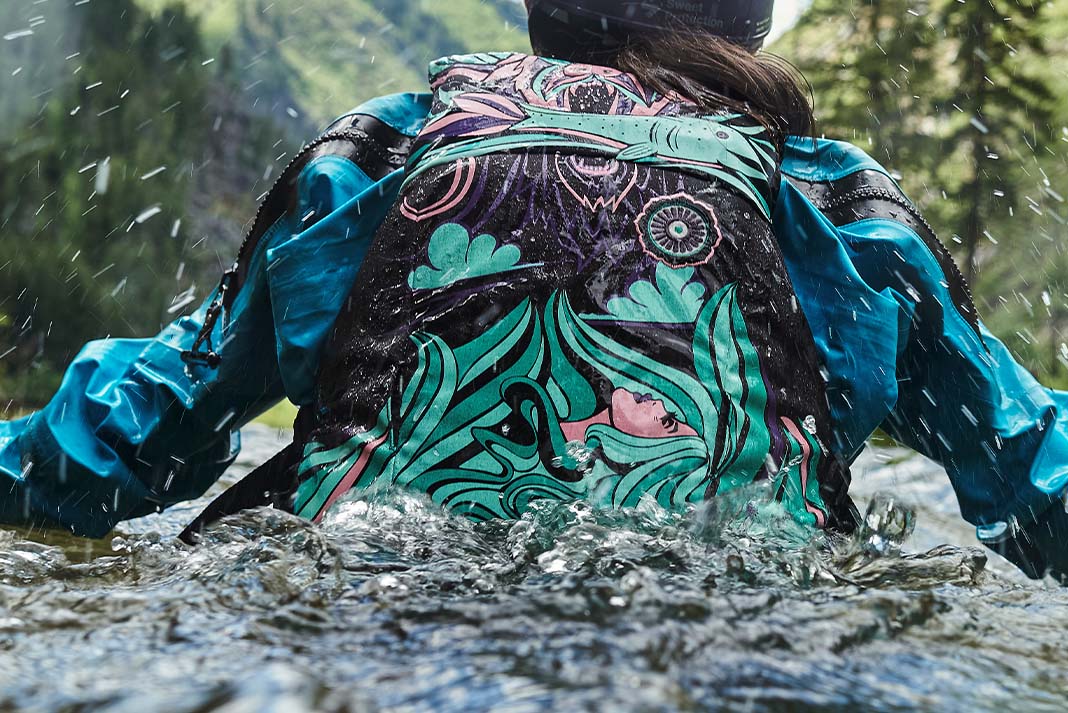
Astral Releases Limited Edition PFD

Photo Courtesy of Astral

August 2, 2022 – Asheville, NC – Astral celebrates the accomplishments, craftsmanship, and dedication of its athletes and employees with the debut of a limited edition PFD. Whitewater enthusiasts, Nicole Mansfield, Kate Shea, and Ollie Smithers came together to design the limited edition version of the iconic Layla PFD (Layla LE) that depicts a unique and playful visual representation of the river showcasing the spirit and design team’s love of the water while boasting the same safety and fit features beloved by the whitewater community. The design team also hand-selected two charity beneficiaries to receive a portion of all Layla LE sales.

[ Paddling Buyer’s Guide: See all PFDs ]

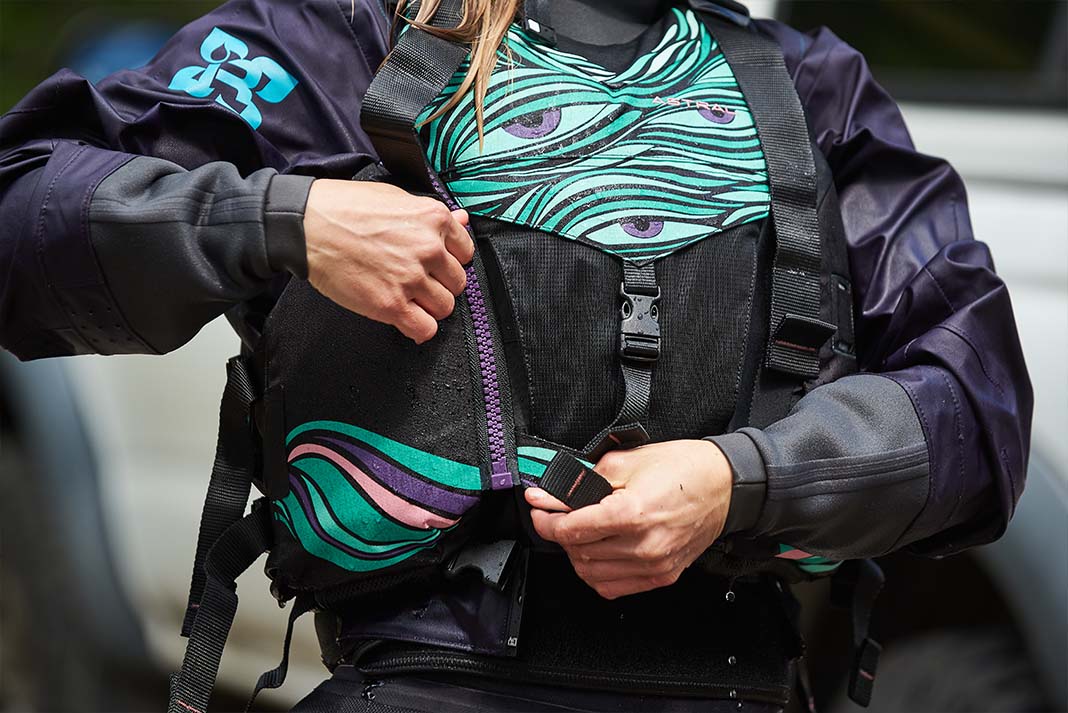
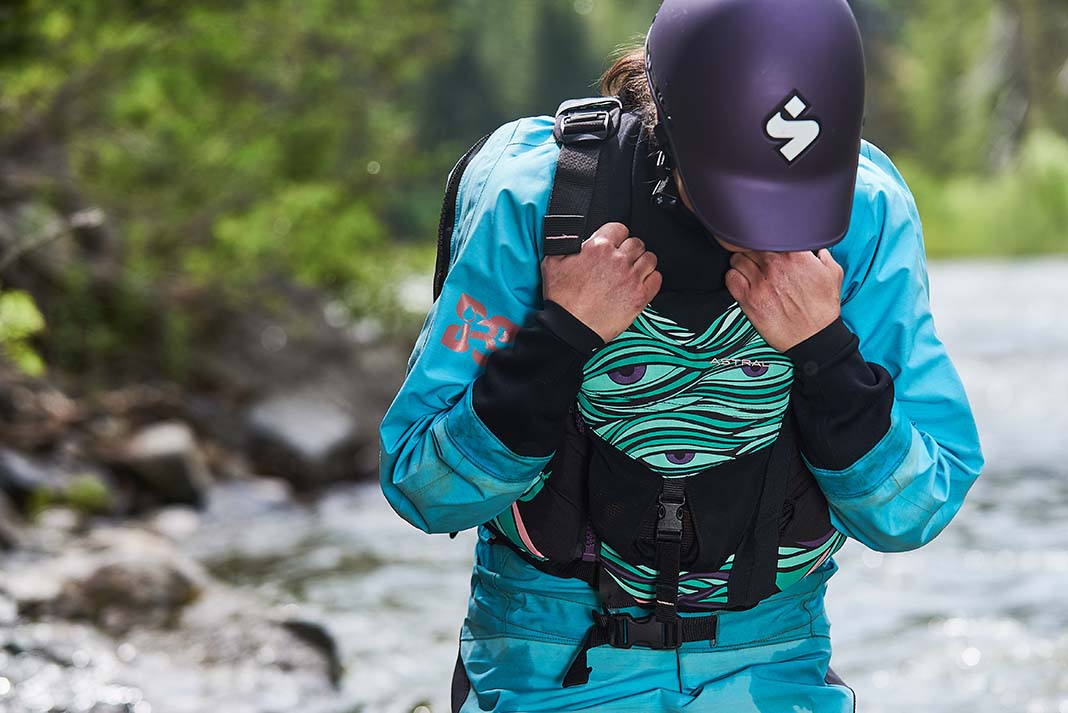
Over 27 years ago, Astral CEO and founder, Philip Curry, along with the assistance of Shirley Shepherd, introduced the Lola as the first PFD designed for women sitting in kayaks. Later, he updated the Lola to safely and comfortably conform to a curvy body with its soft, organic kapok fill, renaming it the Layla. The PFD features hinged seams, sculpted chest support, a side entry zipper, and the ability to add a quick release belt. “The Layla PFD is an optimal choice for all levels of watersports enthusiasts. The craftsmanship, fit, and versatility of this PFD is phenomenal, making it the ideal canvas to work from,” shared Ollie Smithers, Astral Sourcing Manager, and kayaker.

Photo Courtesy of Astral
Photo Courtesy of Regina Nicolardi
Mansfield and Shea teamed up with Smithers to bring to light the first limited edition run of the iconic Layla PFD, which was selected as one of the best life jackets for female paddlers by Paddling Magazine’s editors. “This two-year project celebrates athletes of all levels and interests in the water, especially as they work through challenges,” said Smithers. The team selected two organizations to commemorate the Layla LE project that empower women in paddlesports to receive 10% of Layla LE sale proceeds. Those organizations include the Lulu Love Tour and Columbia Gorge Junior Kayak Club.

Astral Athlete and whitewater kayaker, Nicole Mansfield, brought her passion for kayaking and desire for functional gear with a flair to the forefront of this project. “I enjoy seeing creativity manifest itself in so many different ways- whether it be through visual or literary mediums, a unique line through a rapid, styling a trick, or finding a new first descent, “ explained Mansfield. “When on the river or in the mountains, I want my gear to be functional, but not boring. Having the opportunity to collaborate on a project where art interfaces with function was a lot of fun.”

Photo Courtesy of Astral
Photo Courtesy of Regina Nicolardi

Illustrative, graffiti-style artist and dedicated member of the whitewater community, Kate Shea, was commissioned to bring to life the essence of how water connects Astral to its community. Shea took inspiration from her own journey to create the design. “The artwork represents the peace and inspiration I get from being amongst the Ottawa River and everything and everyone that comes with it. Nature, the community, love, and the loss. I think this project is important and will be well-received by the river community because it is something for the everyday paddler and not just aimed toward the class V boater.”

The Layla LE can be found at astraldesigns.com and at select retailers beginning August 2 and will retail for $185. For more inspiration, follow the team on Instagram: Astral at @astralfootwear, Mansfield at @queenbeater, and Shea at @katesheadesign.

To learn more about Astral’s Layla LE, please contact info@astraldesigns.com. For more information on Astral please visitwww.astraldesigns.com or contact Mindy Smith at mindy@darbycommunications.com.

Photo Courtesy of Astral
Photo Courtesy of Regina Nicolardi

About Astral

Established in 2002, Astral builds high performance wilderness equipment, created in the least toxic, lowest impact ways. Built on decades of experience and innovation, Astral has assembled athletes, artists, and craftspeople to build and use the cleanest, most beautiful, and highest performing products you can buy on the market. Most notably, Astral has significantly reduced toxic PVC foam from the PFD industry, invented breathable life jackets, won awards for paradigm changing footwear designs, and they’ve developed the stickiest rubber ever worn on wet rock.

Visit www.astraldesigns.com for more information.


Photo Courtesy of Regina Nicolardi

Best Sevylor Kayaks For 2026

man paddles a Sevylor inflatable kayak
Feature photo: Florencia Galan/Unsplash

Sevylor was founded in France in 1948 and emerged as a pioneer in the construction of PVC inflatables; its boats and beach toys arrived in North America in 1959. The company was a product of World War II innovation, especially advances in polymer plastics—which trickled down into recreational watercraft and other inflatable products ranging from sleeping mattresses for camping to beach balls.

Sevylor’s products were popular for their portability and durability, and remain so today. The brand merged with the Zodiac label of inflatable powerboats in 1981 and finally joined forces with American outdoor giant Coleman/Stearns in the early 2000s. The company still has a large paddling presence in Europe, with North American Sevylor inflatable canoes and kayaks limited to big box stores such as Walmart and online at Amazon.

Given its cheap price-point and distribution in big box department stores and online retailers, Sevylor kayaks primarily appeal to beginners, casual paddlers and those with both limited storage space and budget. The best Sevylor inflatable kayaks are geared for general recreation, rather than serious paddling. They’re great for family use at the beach or cottage but not meant for open water or exposed conditions.

Paddle Sober And Smart
  • Never mix alcohol and paddling. Coast Guard and state BUI (boating under the influence) laws apply to all vessels. This includes canoes, kayaks, SUPs and rafts.

It’s important to remember that when it comes to performance in a kayak, you get what you pay for: Sevylor kayaks offer a cheap introduction to kayaking. Sevylor kayaks won’t break the bank and they don’t require a garage or fancy roof rack for transportation, but as a rule they’re slow and sluggish on the water.

Consider buying a Sevylor inflatable kayak if you’re an occasional paddler looking for a fun, stable toy to take to the beach or cottage on sunny summer days.

Shopping for a used Sevylor kayak?

You may come across a used Sevylor kayak on buy-and-sell websites like Craigslist, Kijiji and Facebook Marketplace. Sevylor inflatable kayaks are a good choice as a beginner kayak for family fun and kayak fishing. They don’t require a large space for storage and are easy to transport, even in a small car (or crowded minivan).

Several options are available to choose from. Your first step in making a good investment is to research the specific attributes of the Sevylor kayak model you are considering. Once you’ve found a contender, consider the following advice to make a good used purchase:

  • Sevylor kayaks are cheap, and therefore more impacted by wear and tear compared to more expensive and well-built kayaks—especially in areas like the inflation valves and hull. Start by examining the overall condition of the Sevylor kayak. Open up the package and inflate it. In the process, listen for air leaks in the valves and tubes and watch for any stains and mold, which may reveal the kayak was stored wet.Is there any fading in the Sevylor kayak’s deck (top) or hull (bottom)? Fading reveals UV damage, which may compromise durability. Make sure there are no missing parts; check for seat(s) and seat back(s), deck rigging such as grab lines, skeg (a removable fin that slides into the hull) and pump, if included.
  • Most Sevylor kayaks feature minimal outfitting. Take a close look at comfort features like the seat (is it supportive for your body type? Does it hold air?). Foot rests are critical to give you purchase on the kayak to paddle efficiently and are often absent in cheap Sevylor kayaks; if they’re present, make sure they’re functional and appropriate for your leg length.
  • Outfitting is the critical interface between the paddler and kayak, including the seat, back support, thigh rests and foot rests. Often these features lack refinement in budget-priced Sevylor kayaks. They’re also usually air-filled, so be sure to check for leaks. Examine these parts individually and consider how well they work together as a whole—the easiest way to achieve this is by sitting in the boat (and ideally paddling it) to make sure it feels comfortable. Think about how long you’ll be sitting in the kayak. If it’s uncomfortable in a quick test, how will it feel after an hour? Outfitting often comes down to personal preference; there’s no one-size-fits-all. One of the drawbacks of cheaper Sevylor kayaks is substandard outfitting. Take a close look and consider investing in a more expensive kayak if you plan on more serious paddling.
  • The only way to fully appreciate the comfort and performance of a kayak is to try it before committing to a purchase. Arrange a meeting place with the seller that allows you to take a few moments on the water. Bring your usual paddle and dress in what you plan to wear while paddling. Be sure to assess how easy the boat is to enter and exit.
  • In general (that is, before Covid-19 put a premium on outdoor equipment) the typical starting point for a used Sevylor kayak in moderate condition was about half its retail price. All that’s changed in the wake of boat shortages brought on by the pandemic, but you can use it as a starting point in haggling a fair price.
  • If you’re offered a PFD as part of a used kayak sale make sure it’s in good shape, fits properly and is Coast Guard approved for the location you’ll be paddling.

For more tips on what to look for when selecting a used kayak, read our article How To Buy A Used Kayak.

Sevylor kayak buying guide

Sevylor kayaks are available across North America at box stores and online outlets. A large variety of Sevylor inflatable kayaks are available, many of which are good choices if you’re low on storage space and looking for a casual kayak for recreational paddling on calm, sheltered water without breaking the bank. Sevylor kayaks are available for a range of needs, including recreational paddling and fishing, single and tandem, for paddlers of all sizes.

Education: Get Some!
  • Take a paddling safety course from the American Canoe Association (ACA), your local paddling shop or outfitter, or other reputable source.
  • Take a boating safety course from the U.S. Coast Guard Auxiliary, U.S. Power Squadrons® or your own state’s boating agency.
  • Take on-the-water skills training.

Sevylor kayaks are meant for recreational paddling, such as getting out on the water at the cottage, spending an afternoon at the beach or fishing on a lazy river or calm pond. Sevylor kayaks are categorized by activity and user. Activity, or type of paddling, includes recreational (short and stable kayaks meant for casual use); and fishing (“souped up” recreational kayaks with add-ons specific to anglers, such as rod holders and tackle storage areas).

Sevylor kayaks are available as single (one-person) kayaks; tandem (two-person) kayaks; and three-person kayaks meant for two adults and a child. Here’s a rundown of some of Sevylor’s most popular models:

Sevylor Colorado

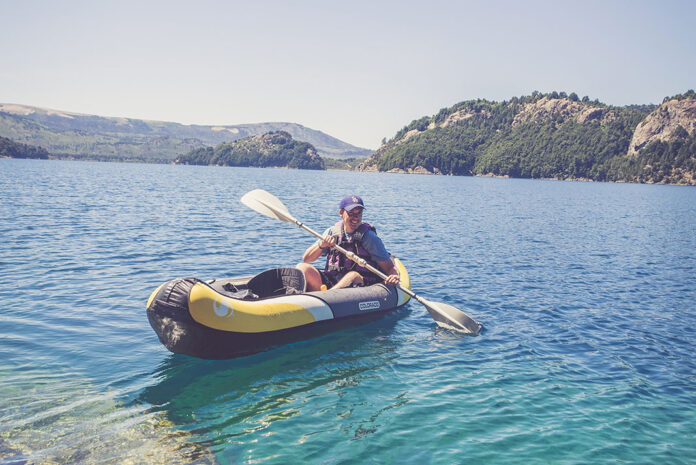
The Sevylor Colorado is a good entry-level, two-person kayak that’s the best Sevylor inflatable for those looking for a general purpose kayak at a cheap price, widely available at Walmart stores. A fishing option is also available as the Sevylor Coleman Colorado. The Sevylor Colorado and the Sevylor Sirocco are the same kayak, marketed in North America and Europe, respectively.

Sevylor Madison

The Sevylor Madison boasts similar specs to the Sevylor Colorado. The difference is in the outfitting, with the Madison featuring Sevylor’s clever Seatography system, which allows you to tweak the position of the seats in the kayak to adjust for different paddler weights—perfect if you plan to paddle with a youngster.

Sevylor Waterton

The Sevylor Waterton is very similar to the Colorado, but with Sevylor’s comfortable HighRest seats and integrated bow and stern spraydecks for enhanced seaworthiness. The maximum capacity of this two-person inflatable kayak is less than the Colorado, at 363 pounds (compared to 440 pounds).

Sevylor Yukon

The Sevylor Yukon is a larger two-person inflatable kayak that’s a bit faster and, with partial spraydecks in the bow and stern, a drier and more seaworthy ride than the Sevylor Colorado. Foot pegs and a larger cockpit area add greater paddling efficiency and space for overnight trips. The Yukon is also better suited to paddling in moderate whitewater (with experienced paddlers).

Better paddling performance comes with a somewhat heftier price tag, but it’s worth the investment if you want a boat that’s faster, more capable and easier to paddle.

Sevylor Tahiti

The Sevylor Tahiti is significantly narrower than the Colorado and features kayak-style, integrated bow and stern decks, making it the best Sevylor kayak for river paddling. The Tahiti’s carrying capacity is somewhat less than the Sevylor Colorado.

Length and paddling performance are similar, with outstanding maneuverability and limited speed. The 10’7” Tahiti tips the scales at a feather-light 25 pounds.

Sevylor Hudson

The Sevylor Hudson is a larger kayak than the Sevylor Colorado and comes standard with a third seat, providing more paddling options. It’s a good choice for two parents with a child, or three youths (the cockpit of the Hudson is a little too cramped and the 465-pound capacity too limited for three adults).

The Hudson can also be paddled solo or tandem, making it a versatile choice. Being longer, it also glides better than the more compact Colorado.

Sevylor Adventure

Take a look at the Sevylor Adventure if you want an ultralight, easy-to-assemble inflatable kayak for casual use. The Adventure is slightly shorter than the Sevylor Colorado and a full seven pounds lighter. Want something bigger? The 12-foot Sevylor Adventure Plus can be arranged as a single, double or triple kayak.

Use this as a start, and remember that online research will only get you so far. The best advice we can offer is to always test paddle before buying any boat. Of course, that’s a challenge at most of the big box and online outlets where Sevylor kayaks are sold. Try to borrow a Sevylor kayak from a friend for a test paddle in real-world conditions. The more time you can spend on the water in a similar style of kayak, the better the purchasing decision you will make.

Wear A Life Jacket
  • Everyone, even strong swimmers, needs to wear a life jacket at all times when on the water. It is extremely difficult to put a life jacket on once you fall into the water. Even a light wind can blow any paddlecraft away from you, faster than you can swim.
  • Always wear a USCG-approved Level 70 or Type III life jacket designed for paddling.

Here are answers to some of the most common online questions about Sevylor kayaks.

  • Are Sevylor kayaks any good?

    Sevylor makes budget-friendly recreational kayaks for casual paddlers. Is Sevylor a good kayak brand? That depends on your kayaking aspirations. Sevylor is a good choice if you’re looking for a cheap inflatable boat to use at the cottage, campground, beach or other sheltered water locations.

    Sevylor inflatable kayaks are also a great choice for those with limited storage space. Sevylor kayaks are stable and easy to paddle, but don’t expect high performance, safety in exposed conditions or great comfort for long days on the water.

  • What are Sevylor inflatables made of?

    Sevylor inflatable kayaks are made of PVC plastic with welded seams. This is a durable, time-tested plastic for inflatable boats. PVC boats resist impact and abrasion. Multiple air tubes ensure that the kayak will remain floating even if one chamber is punctured. The primary point of failure is often the kayak inflation valve system, so be sure to treat these parts carefully.

  • Is Sevylor still in business?

    Yes, Sevylor kayaks remain in business. This is a common question, however, because Sevylor kayaks have limited distribution in North America. Sales are generally restricted to Walmart locations and online retailers such as Amazon, as well as a few specialty retailers.

  • Where are Sevylor kayaks made?

    Sevylor is a brand based in Europe, with modest distribution in North America. Its inflatable kayaks are manufactured in China.

  • Where to buy Sevylor kayaks

    If you live in North America, you’ll find the best selection of Sevylor kayaks at Walmart and on Amazon.

Compare Sevylor kayaks

  • Intex vs Sevylor inflatable kayaks

    Both Intex and Sevylor produce similar discount-priced inflatable kayaks for casual paddlers. The two brands cater to similar demographics: namely, beginners looking for a cheap kayak that they can store in a closet and transport in their trunk, without the need of investing in a pricey roof rack. On the whole, Sevylor has a broader range of inflatable kayaks than Intex—especially if you’re looking for a unique two- or three-person kayak.

    However, Sevylor’s North American sales are limited. If you want a greater selection of inflatable kayaks, you will benefit from Intex’s broader network of North American distributors. Both brands offer similar performance characteristics and both are meant for use in sheltered, calm water and on gentle rivers with class II whitewater or less.

Sevylor kayak reviews

If you’re unable to paddle a Sevylor kayak before you make your purchase, reading a range of reviews is your next best option. The expert reviews below will give you the rundown on the boat’s performance, comfort and features, as well as where its best paddled and who it’s best paddled by.