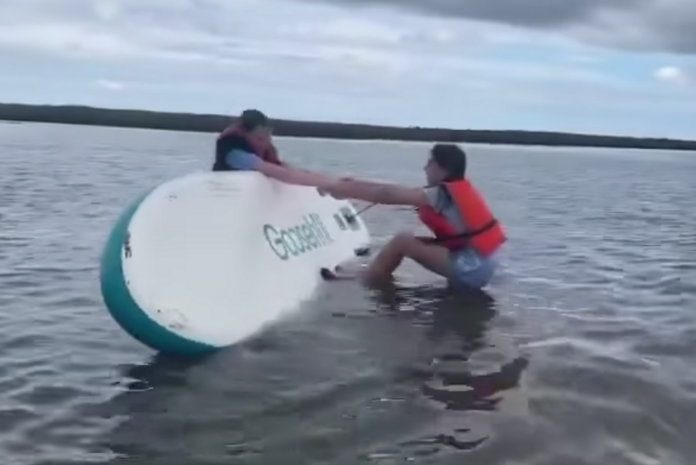
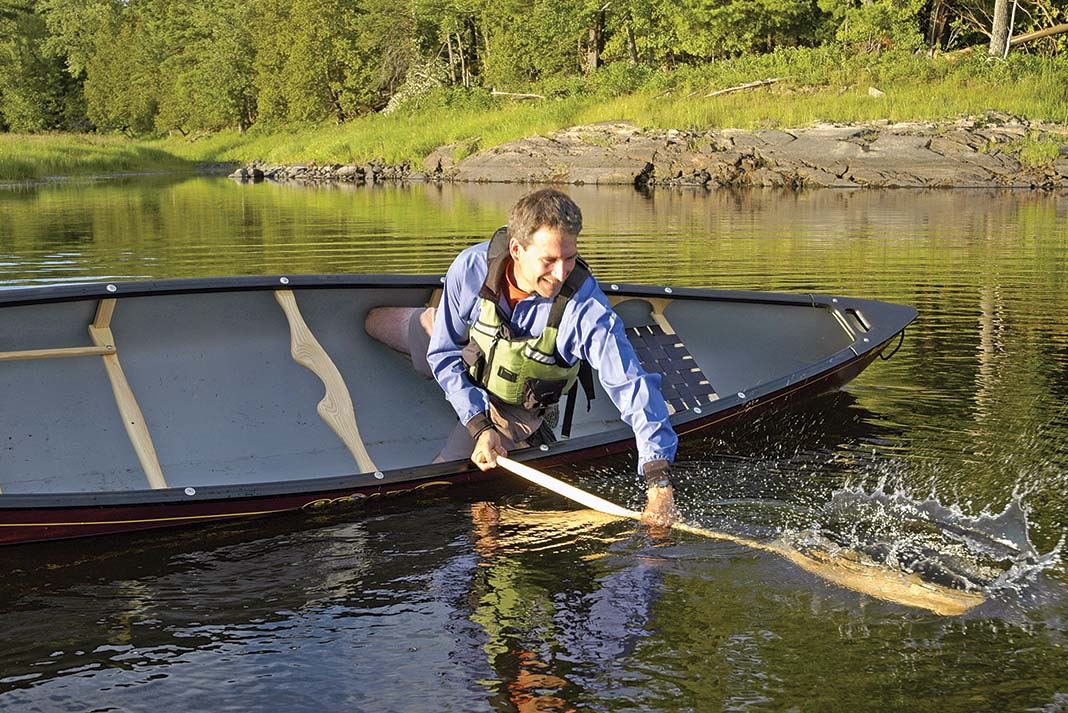
Have you ever found yourself, or your paddling partner, too exhausted to climb back on the paddleboard after a flip? Just like the name implies, the “flip rescue” technique could be an ingenious way to actively assist a paddler in need of support.
Start with the board upside down, get the arms of the swimmer over the rails so their armpits are on the rails of the board. The rescuer will then stand or kneel on the board, holding both the swimmer’s wrists firmly. The rescuer should then apply body weight to the opposite side of the board by falling backward and pulling on the victim’s wrists.
[ View all Paddleboards in the Paddling Buyer’s Guide ]
The board should flip and the swimmer should end up on the right side of the board, with the rescuer now in the water. Get the swimmer on their back and prone paddle them to shore, if able.
Markings: White band around eyes caused by wearing wrap-around sunglasses all day.
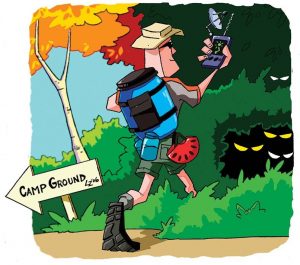
Behavior: Travels in small groups of high-intensity trippers in impact-resistant acrylonitrile-butadiene-styrene canoes. Relies heavily on technology to conquer outdoors. May be found wandering off a trail in search of a GPS signal. Spends the off-season cruising downtown gear stores in search of social interaction.
Life span: Medium. Ends when gear budget is redirected to mortgage payments.
Subspecies: Backpackis familiaris
Vernacular: “Pack rat”
Subspecies: Backpackis familiaris | Illustrations: Lorenzo Del Bianco
Defining feature: Carries food in canvas backpacks waterproofed with black garbage bags. Slowly evolving toward use of waterproof nylon packs.
Markings: Brightly-colored tie-dyed shirt advertising rock and roll band that broke up before she was born. Often displays a wet posterior from the insidious dripping of invariably wet packs.
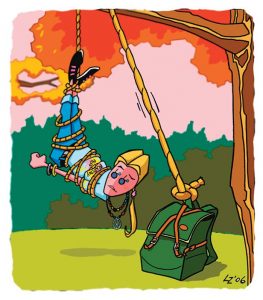
Behavior: Travels in large groups in slowly leaking Grummans. Struggles on longer portages as thin leather pack straps cause painful bisection of collarbone from shoulder blade. Protects food from wildlife by constructing elaborate systems to suspend packs from overhanging trees, but only for the first night.
Life span: Short. Ends soon after parents stop paying for camp.
Subspecies: Wannigana archaos
Vernacular: “Wanniganer”
Wanniganer | Illustration: Lorenzo Del-Bianco
Defining feature: Carries food in a decaying wooden box known as a wannigan.
Markings: Discolored bruise on forehead caused by leather tump strap.
Behavior: Travels in small groups, often alone. Constantly seeking an authentic outdoor experience. Paddles cedar strip Prospectors, usually red. Knows the burn rate of all indigenous trees and plants. May recite the first third of Robert Service poems around campfires. Unaffected by insects. Smells of salami and woodsmoke.
Life span: Long. Continues to plan expeditions well into senility.
This article originally appeared in Paddling Magazine Issue 65. Subscribe to Paddling Magazine’s print and digital editions here, or download the Paddling Magazine app and browse the digital archives here.
With 1,700 miles of continuous coastline on three Great Lakes, plus 4,300 inland lakes and countless cascading rivers and streams nestled in its thickly forested interior, Michigan’s Upper Peninsula is a paddler’s paradise. Whether you enjoy kayaking, canoeing or paddleboarding, quiet bays or dancing waves, the U.P. delights with an astonishing variety of paddling experiences.
This ruggedly beautiful region is home to off-the-beaten-track canoe routes and exhilarating whitewater rivers, picture-perfect waterfalls and some of the world’s finest sweetwater sea kayaking on the freshwater seas of Lake Superior, Lake Huron and Lake Michigan. Whatever your appetite, you’ll find amenities and outfitters to support overnight trips or any kind of day trip you can imagine.
From spectacular sea caves and century-old shipwrecks to wildlife-filled wilderness islands, here are nine incredible paddling experiences to have on Michigan’s Upper Peninsula.
[ View all Michigan paddling adventures in the Paddling Trip Guide ]
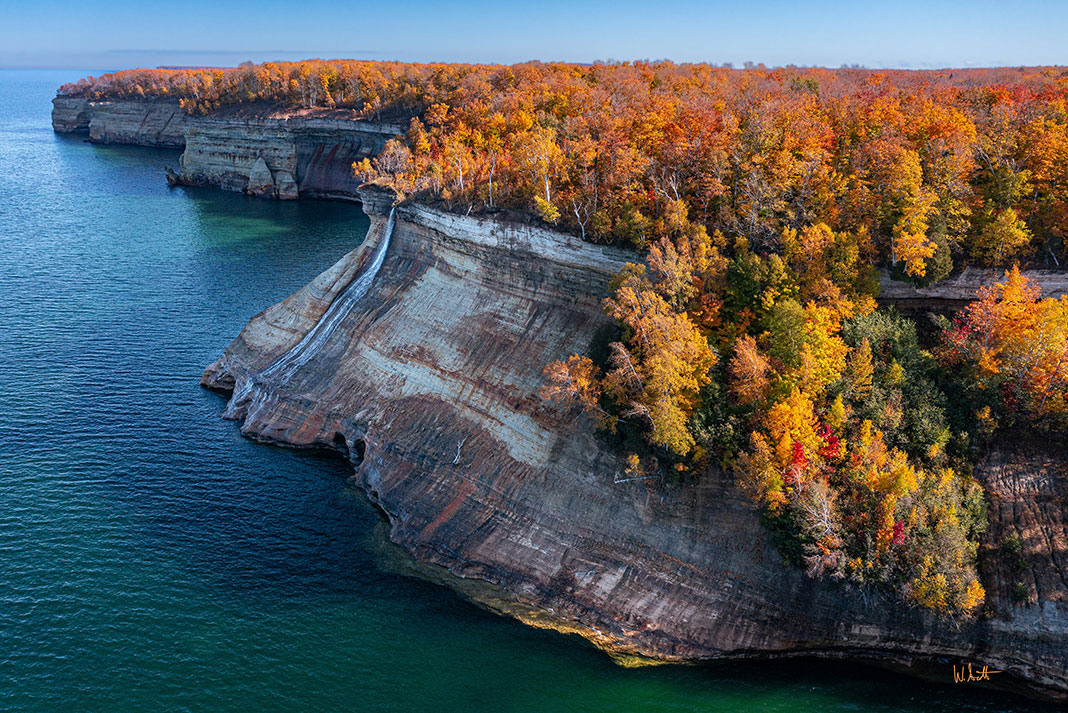
Bridalveil Falls is just one of the magical places to visit by kayak on Lake Superior. | Photo: Scott Matteson // @winfieldscottcreative
1 Visit waterfalls
Tumbling through shady valleys and spilling over sandstone cliffs, there are hundreds of waterfalls to choose from on the Upper Peninsula. Spring is the best time to view these majestic torrents of falling water; plan your paddling trip for early May to see the falls at peak flows. Many falls are also beautiful all summer long, when kayakers and paddleboarders can beat the heat by paddling right under the cool, cascading waters.
In a region roaring with waterfalls, Pictured Rocks National Lakeshore is an absolute must for paddlers. Its crown jewels are 140-foot Bridalveil Falls and Spray Falls, a 70-foot-high column of white, misting water that drops right into Lake Superior.
See Pictured Rocks Waterfalls on a guided kayak day trip with Paddling Michigan, Pictured Rocks Kayaking or Northern Waters Adventures.
Visit Tahquamenon Falls State Park, a 48,000-acre wilderness area home to majestic Upper Tahquamenon Falls, Michigan’s largest waterfall at 200 feet wide and 40 feet high. Canoe and kayak day trips on the Tahquamenon River descend from the picturesque Lower Falls to the river mouth at Lake Superior. Rentals and shuttles are available from The Woods Canoe & Kayak Rental.
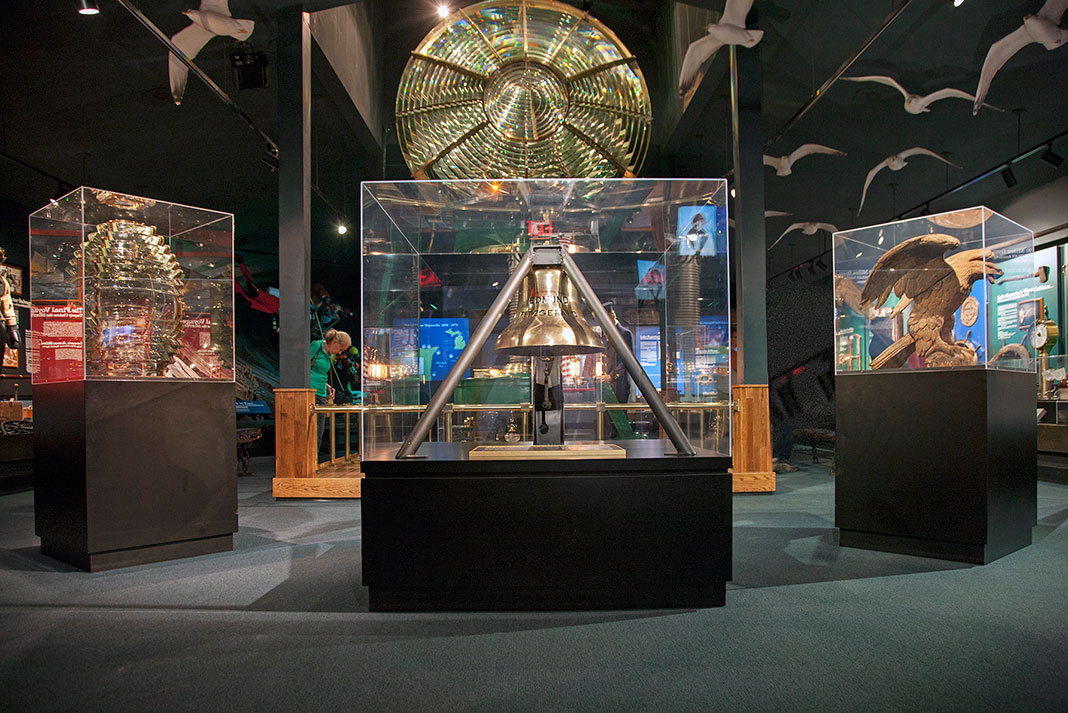
Visit the Great Lakes Shipwreck Museum to learn more about the area’s many shipwrecks. | Photo: Courtesy Great Lakes Shipwreck Museum
2 Paddle over shipwrecks
Hundreds of miles of treacherous coastal cliffs and centuries of maritime history mean Michigan’s Upper Peninsula has the highest concentration of shipwrecks of any waters from coast to coast. From commercial fishing boats to passenger steamships, and logging tugs to giant ore freighters, these wrecks are protected by a network of state preserves and the clear, cold waters of the Great Lakes, drawing divers, paddlers and even glass-bottom boat tours.
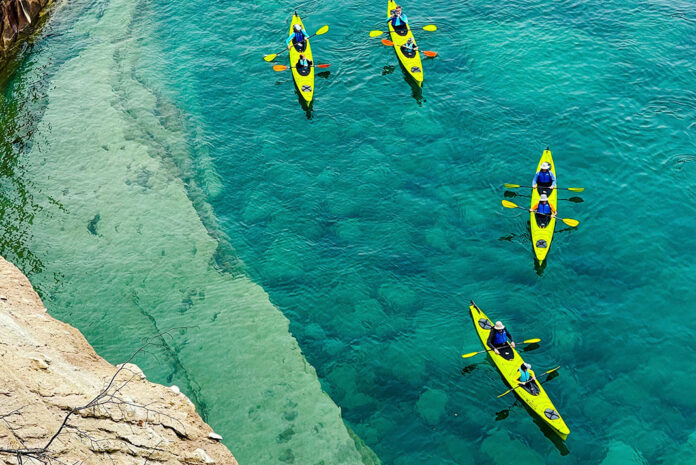
Grand Island National Recreation Area lies offshore from Munising, with two wonderfully intact, 19th-century wooden shipwrecks resting just beneath the surface. Lake Superior’s crystal clarity provides paddlers with up to 45 feet of underwater visibility, and the above-water scenery is just as spectacular with colorful sandstone cliffs, historic lighthouses and bald eagles soaring overhead. Stay and play with Paddling Michigan’s Grand Island Vacation Package.
Drummond Island is at the center of a limestone archipelago whose many shoals and narrow passages have made it a notorious shipwreck coast. Paddling the aquamarine waters of Lake Huron, you can view century-old steamers and tugs just five to 15 feet beneath your hull. Pick up a shipwreck map from the Drummond Island Tourism Association, or join a guided kayak day trip with Woods & Waters.
Don’t miss a visit to the Great Lakes Shipwreck Museum at Whitefish Point, where world-class exhibits tell the story of the haunting world of Lake Superior shipwrecks.
Find magic along the Pictured Rocks National Lakeshore. | Photo: Courtesy Upper Peninsula Travel & Recreation Association
3 Kayak through sea caves
Sea caves are natural tunnels, arches and caverns that most often form in soft, easily eroded rocks like sandstone and limestone. Crashing waves wash away the rock grain by grain and water that seeps into cracks in the winter freezes and expands, prying larger pieces free from the surrounding cliffs.
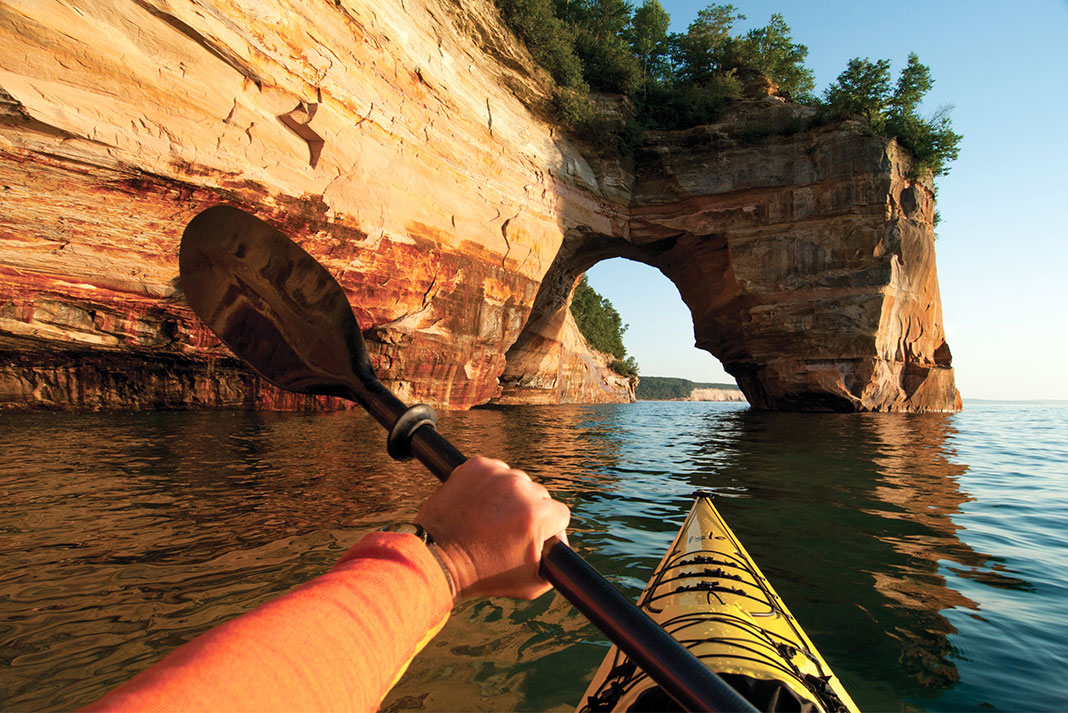
For fantastic sea cave paddling, few places can rival the sandstone shoreline of Lake Michigan on the Upper Peninsula, with hot spots like the Pictured Rocks and Grand Island luring visitors from around the world.
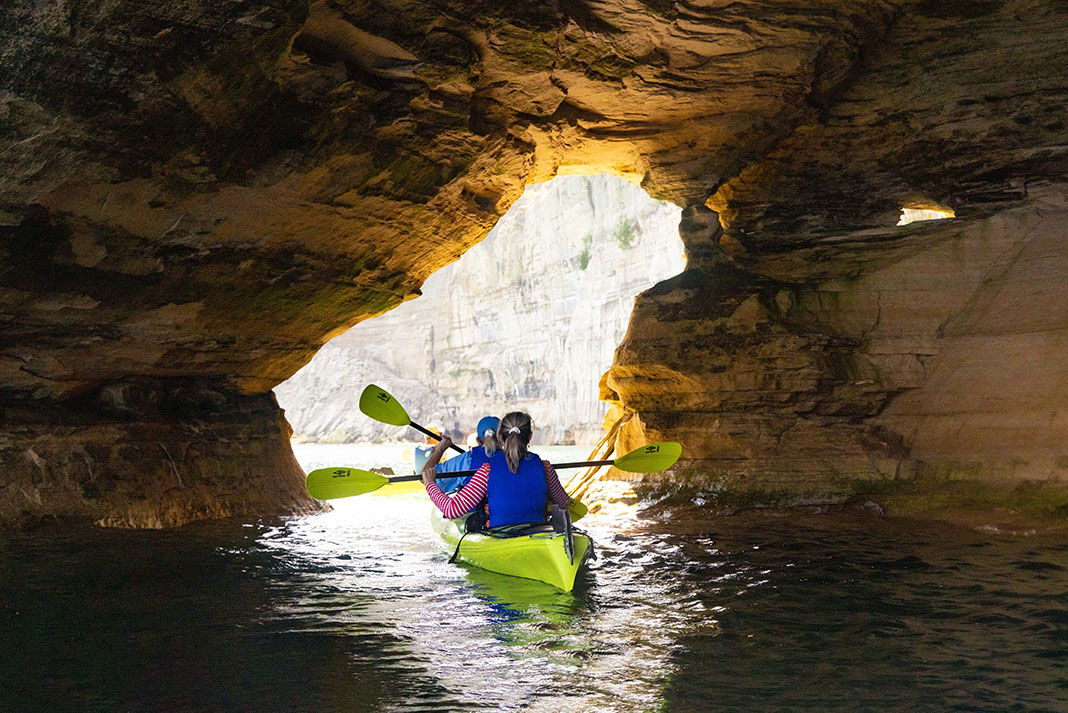
Join a Guided Kayak Tour with Paddling Michigan, Pictured Rocks Kayaking or Northern Waters Adventures for a full- or half-day of unforgettable sea cave exploration, including paddle-in caverns and skyscraping, paddle-through arches at the iconic Pictured Rocks.
Try Kayak-and-Snorkel or SUP-and-Snorkel at Mackinac Island with Great Turtle Kayak Tours. This guided day trip combines a paddling tour to view Arch Rock, perched high above Lake Huron, with snorkeling the Rock Maze, an underwater limestone cave formation.
Visit the Keweenaw Peninsula to paddle past some of the oldest exposed rock in the world, dating back 1.1 billion years. Sea caves and stacks, 600-foot bedrock cliffs, a remote waterfall and rugged isolation await on a guided day trip kayaking in Upper Peninsula Michigan with Copper Harbor’s Keweenaw Adventure Company.
Paddle through rock arches along the Pictured Rocks National Lakeshore. | Photo: Courtesy Upper Peninsula Travel & Recreation Association
4 Paddle beside rainbow-colored cliffs
Pictured Rocks National Lakeshore takes its name from a colorful, 15-mile stretch of mineral-stained sandstone cliffs that tower 50 to 200 feet above Lake Superior. Natural erosion has sculpted the cliffs into an astounding array of caves, arches, turrets, flowerpots and other unlikely formations that are best viewed from water level.
Paddling trips ranging from two hours to a full day are available, with popular launch points including Miners Beach and Sand Point.
Paddle the Pictured Rocks Cliffs on a guided kayak day trip with Paddling Michigan, Pictured Rocks Kayaking or Northern Waters Adventures.
Grand Island shares the same geology as Pictured Rocks, with wave-cut sandstone cliffs reaching heights of 300 feet above the restless lake. Sea caves, arches and gorgeous beaches also abound.
All level of thrills can be found on Michigan’s Upper Peninsula. | Photo: Courtesy Upper Peninsula Travel & Recreation Association
5 Descend whitewater rivers
From gentle swifts suitable for family floats to the exhilarating class IV rapids and falls of Piers Gorge on the Menominee River, the Upper Peninsula is home to whitewater thrills for every skill level. Whether you are an expert whitewater paddler or just starting out, let these experienced outfitters guide you to the best rivers in the region.
Paddle the Ontonagon River, a designated National Wild & Scenic River that flows through the backcountry of the Ottawa National Forest. Outstanding scenery includes exposed sandstone cliffs and waterfalls, with sections of river ranging from calm floats to challenging rapids. Contact Sylvania Outfitters for canoe and kayak rentals as well as trip suggestions on the Middle Branch.
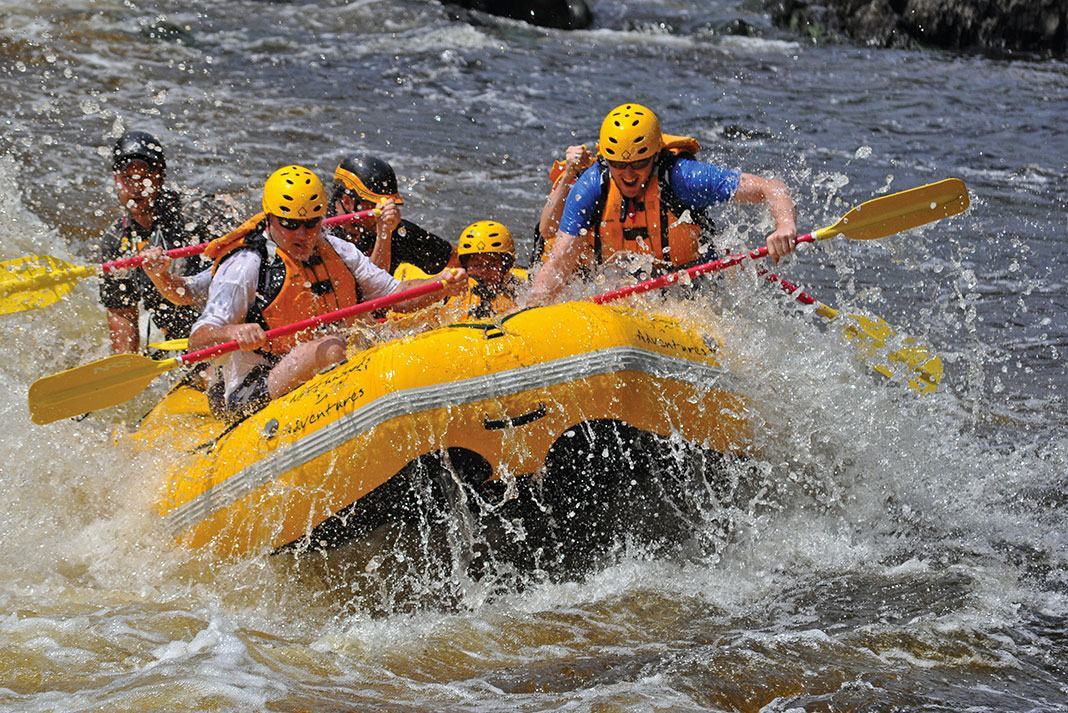
Raft or Kayak the Menominee River, one of the highest flowing rivers in the Midwest with rapids and hydraulics similar to western rivers. Careening through class III to IV rapids and past 200-foot cliffs, a descent of the Menominee culminates with a 10-foot waterfall in the legendary Piers Gorge. For those who prefer a more gentle river descent, the lower section offers miles of broad, free-flowing paddling through the wild and undeveloped Menominee River State Recreation Area. True North Outpost offers guided whitewater rafting and kayaking trips ranging from two hours to an overnight mini-expedition with island camping.
Enjoy the peace and quiet on Pretty Lake. | Photo: Ronan Moynihan // @radioronan
6 Canoe peaceful wilderness lakes
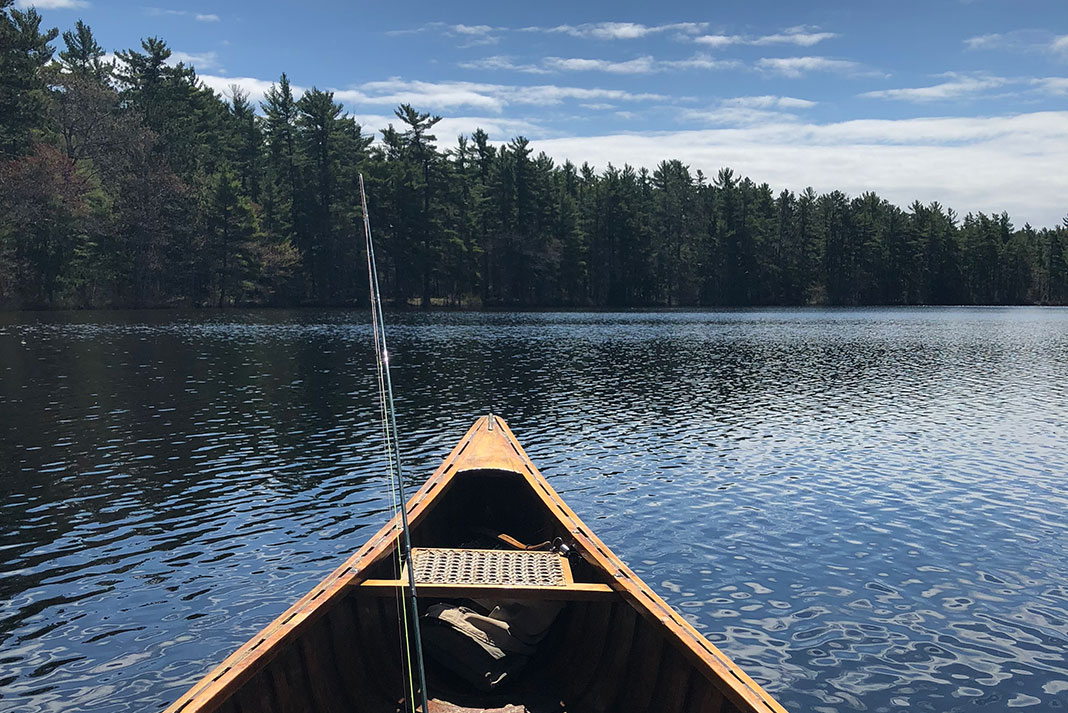
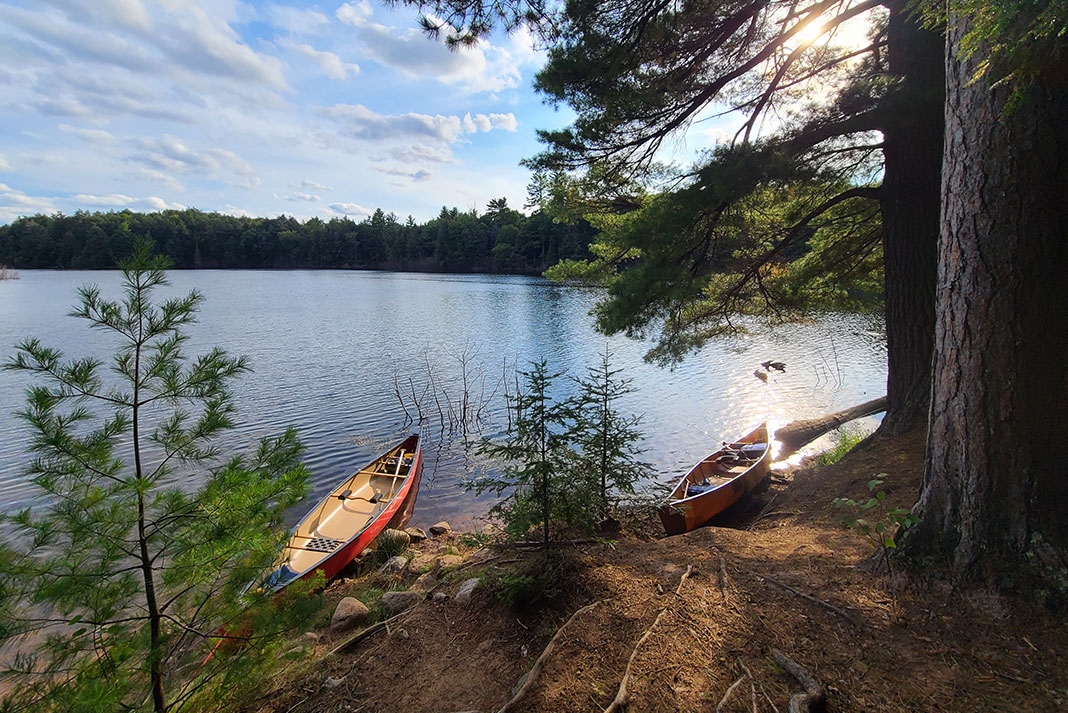
Canoe trips in Upper Peninsula Michigan aren’t limited to rivers and open coastlines. Canoe trippers will also find thousands of sparkling lakes scattered like jewels throughout the Upper Peninsula’s vast tracts of designated wilderness, state and national forest. Whether you are looking to escape for a few hours or a few days of canoeing in Upper Michigan, these pristine lakes get top marks for untouched beauty and solitude.
Explore the Sylvania Wilderness and surrounding Ottawa National Forest with equipment rentals and canoe trip planning assistance from Sylvania Outfitters. With four decades of experience, they’ll help you discover everything this beautiful area of interconnected wilderness lakes and portages has to offer.
Pretty Lake Quiet Area offers a chain of six small, crystal-clear lakes connected by short portage trails. Each lake has its own character and holds different species of fish, and all are designated for non-motorized use only. A rustic state forest campground and backcountry campsites allow canoe campers to linger longer. The Woods Canoe & Kayak Rental offers rentals and delivery service for canoeing in Michigan Upper Peninsula.
Lake of the Clouds is one of Michigan’s most iconic lakes, nestled in the 60,000-acre Porcupine Mountains Wilderness State Park. Surrounded by towering bluffs and lush groves of the Midwest’s largest remaining old-growth forest, the lake is an unforgettable paddle for the adventurous. To get here, it’s best to bring your own lightweight watercraft—the lake is only accessible via a ¾-mile hike.
Thousands of miles of streams and rivers bisect the verdant forests of Michigan’s Upper Peninsula, making this rugged and lightly populated landscape a haven for wildlife. A relaxing family float trip down one of these beautiful and tranquil rivers offers one of the most fulfilling ways to encounter moose, deer, river otters, beaver, turtles, swans, sandhill cranes, great blue herons and bald eagles, along with a host of other inhabitants. Anglers will also be rewarded with outstanding walleye, trout, perch and bass fishing, as well as spring steelhead and fall runs of Chinook salmon.
Float the Manistique River through the Seney National Wildlife Refuge for an incredible 11-mile journey immersed in the sounds and sights of deep nature. Stay riverside at Northland Outfitters or Big Cedar Campground; both offer camping and self-guided canoe and kayak trips, including equipment rental and shuttles.
Paddle the AuTrain River as it twists and turns for 10 miles through the Hiawatha National Forest from AuTrain Lake to Lake Superior. Once a logging run to Lake Superior, today the AuTrain is a quiet, relaxing outing with wildlife-filled sloughs tucked in its many meanders. AuTrain River Canoe and Kayak provides rentals and shuttle service.
Journey Down the Two-Hearted River to Lake Superior; the sandy shorelines of this slow-moving river and surrounding forest reserve are home to a diversity of wildlife. End your trip with fantastic fishing and rockhounding at the Mouth of the Two Hearted River State Forest Campground. The Woods Canoe & Kayak Rental offers rentals and delivery service.
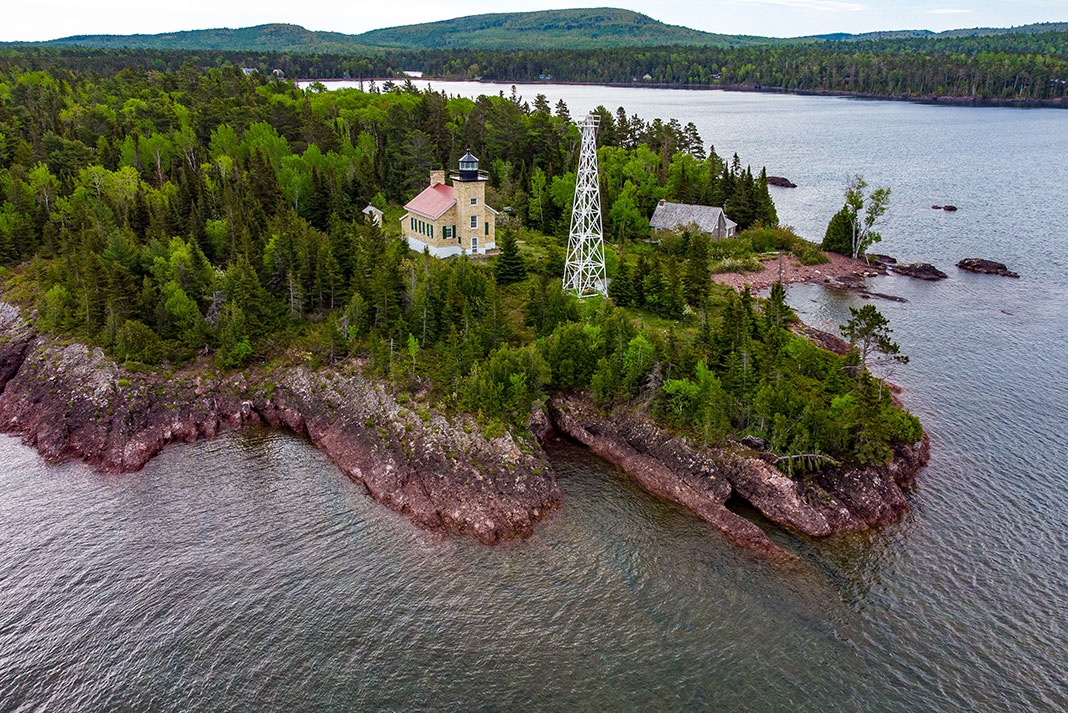
The Copper Harbor Lighthouse is one of many sentries on Lake Superior. | Photo: Matt Spangler // @superior_one_matt
8 Visit historic lighthouses
Fans of maritime history can experience many of the Great Lakes’ most scenic lighthouses while kayaking Upper Michigan. Dating back to the mid-1800s, these rugged outposts were constructed to support the burgeoning iron and copper trade as well as growing passenger travel and commercial fishing on lakes Superior, Huron and Michigan. Frequent fog and fall storms meant these beacons of light were often the difference between reaching safe harbor and shipwrecking in the treacherous waters.
Tour a lighthouse and step into the life of a lightkeeper at one of the U.P.’s fascinating maritime museums, then experience the sight of an iconic red-and-white tower from the seat of your kayak.
Copper Harbor and Eagle Harbor on the Keweenaw Peninsula are two of the oldest and most picturesque lighthouses on Lake Superior. See both on an exciting guided kayak day trip with Keweenaw Adventure Company.
Enjoy Tranquil Paddling on the Keweenaw Waterway, which cuts 25 miles across the Keweenaw Peninsula and is marked at both ends by historic lighthouses. Consisting of river, lake and canal, the waterway is prized for its excellent fishing and camping, as well as the scenic backdrop of its twin lights. Kayak and SUP rentals and delivery are available in Houghton at Portage Paddle Sports.
Round Island Lighthouse and Mackinac Island Lighthouse have guided ships through the less-than-half-mile-wide Straits of Mackinac for over a century. View these celebrated landmarks—and experience the historic charm of Mackinac Island—on a guided kayak or paddleboard trip with Great Turtle Kayak Tours.
Peninsula Point Lighthouse perches on the tip of the Stonington Peninsula at Lake Michigan’s Little Bay de Noc. Enjoy a paddle around this undeveloped area, and then head ashore to climb the 40-foot light tower and hunt for 500-million-year-old fossils on the rocky limestone shoreline. If you’re here in the fall, you can even witness thousands of monarch butterflies resting before migrating across Green Bay. Don’t miss a visit to the fully restored Sand Point Lighthouse and maritime museum in nearby Escanaba.
Discover true solitude when exploring Isle Royale. | Photo: Michael Ciolino // @michaelciolino
9 Circle wildlife-filled islands
Complete a paddle around one of the Upper Peninsula’s beautiful islands and you’ll be rewarded with some of the region’s finest wildlife viewing opportunities. Every season brings something special: the U.P.’s islands and peninsulas serve as natural flyways for thousands of migrating birds in spring and fall; in summer, resident songbirds fill the boreal forest with their melodies.
Remote islands—such as the incomparable Isle Royale—offer critical wilderness habitat for iconic species, including wolves and moose.
Explore Les Cheneaux Islands, an archipelago of 36 islands with miles of Lake Huron shoreline and bird-filled nature preserves. Enjoy these sheltered waters on a day of guided Upper Peninsula Michigan kayaking with Woods & Waters in Hessel. They also offer an overnight kayak trip with camping among the cedars of Government Island, plus kayak, canoe and paddleboard rentals for self-guided paddlers.
Grand Island National Recreation Area lies just off Munising and the Pictured Rocks, sharing that coastline’s spectacular sandstone geology. Paddling around the island (30 miles) rewards experienced sea kayakers with fantastic cliffs, camping and pristine sandy beaches, as well as the chance to spot osprey, bald eagles, white-tailed deer and even black bears.
Circle Drummond Island on the Drummond Island Heritage Water Trail, a 60-mile loop connecting quiet bays, stone-studded shorelines and dozens of untouched islets, including Harbor Island National Wildlife Refuge. Plan at least four days to paddle the entire trail, or join Woods & Waters for a guided kayak day trip exploring Potagannissing Bay.
Visit Isle Royale To feel really out there, paddle around Isle Royale National Park. The park is composed of a 50-mile island surrounded by 450 barrier islands and was designated an International Biosphere Reserve in 1980. This is true wilderness, accessible only by ferry or seaplane, surrounded and shaped by the largest freshwater lake in the world. Navigate past lush forest and fjord-like bays by day, and listen for the bellow of moose and the howl of wolves after dark. Keweenaw Adventure Company offers kayak rentals and outfitting, located next to the ferry dock in Copper Harbor. They also offer four-, five- and six-day guided kayak tours
Circumnavigate the Keweenaw Peninsula—also known as “Copper Island”—on a hundred-mile-plus journey along the Keweenaw Water Trail. With its remote coastline and small population, the Keweenaw rewards experienced, self-guided sea kayakers with abundant wildlife and rugged scenery. Get trip planning assistance, complete sea kayak outfitting, rentals and shuttles from the Keweenaw Adventure Company.
From the wilderness coastlines of the Keweenaw Peninsula and Isle Royale in the west, to the spectacular sandstone cliffs and limestone islands of the central and eastern regions, canoeing and kayaking in Upper Peninsula Michigan is truly unforgettable. Even better, the U.P.’s friendly outfitters make world-class kayaking and canoeing experiences accessible to any skill level so it’s easy to discover this outstanding destination for yourself.
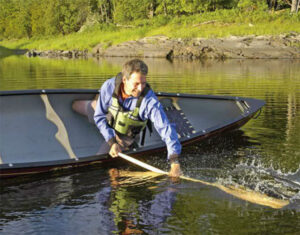
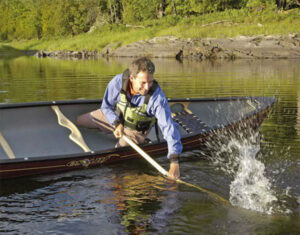
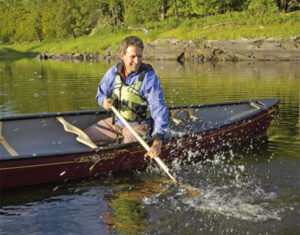
The low brace is incredibly effective at preventing you from capsizing to your onside in a canoe. It allows you to reposition your body so that you can regain a stable posture with your head over your tailbone, which itself is centred above the keel line of the canoe.
In the video above, Stef McArdle from the Madawaska Kanu Centre shares expert advice to help you master the low brace technique. Or, for written instructions, read on to learn the low brace in four easy steps.
Do the low brace in your canoe and never dump to your onside again. | Photos: Andrew Westwood
Learn how to do a low brace in a canoe
The low brace can arrest your fall and provide the necessary time to level the canoe with your knees. Getting your head low is the secret to regaining your balance every time.
1 Extend your paddle
Extend your paddle out at a 90-degree angle from your canoe, with your top (grip) hand in front of your stomach.
[ Paddling Buyer’s Guide: View all canoes ]
2 Smack the water
Smack the water with the backside of the blade. Your knuckles should be pointing down toward the water.
3 Level the canoe
Drop your head toward your paddle shaft while you use your knees to level the canoe.
This article originally appeared in Paddling Magazine Issue 65. Subscribe to Paddling Magazine’s print and digital editions here, or download the Paddling Magazine app and browse the digital archives here.
Do the low brace in your canoe and never dump to your onside again. | Feature photo: Andrew Westwood
Our planet’s waterways form the foundation for our core passion in life: paddling. It goes without saying that we owe it to ourselves, our home, and future generations to protect and preserve these beautiful, unique, and wild spaces to the best of our abilities.
Earth Day takes place annually on April 22. It is a globally recognized event that promotes the protection and conservation of our planet. These conservation efforts present themselves in many ways, from physical initiatives to awareness and educational campaigns.
For this year’s Paddling Film Festival 2022 roster of films, we’ve made a conscious decision to include films that promote sustainable choices and highlight the persistent pollution problems that plague our oceans. We’ve hand-picked our favorite award-winning paddling films to share with you and celebrate this Earth Day–check them out below.
Earth Day Spotlight Films
Voice Above Water
This is the story of a 90-year-old Balinese fisherman, Wayan, who is no longer able to fish due to the vast amount of plastic pollution in the ocean. Wayan instead uses his fishing boat and net to collect trash from the ocean in hopes of one day being able to fish again. The story is a glimpse into how one human uses his resources to make a difference and a reminder that if we all play our part, we can accomplish something much greater than ourselves.
Thinking of ditching the carbon emissions and trying a greener–and wetter–mode of transport? Following two rivers, one drain, one sea, and one creek, it turns out that paddling to work—which ends up being mostly a drag over four full days—is bloody hard work. The Commute provides an intimate insight into the good and bad of humanity. Told with award-winning filmmaker Beau Miles’ trademark mix of humor and philosophy, what started as a stunt turns out to be the hardest, most insightful four days of travel he’s ever done.
Here’s how to find a way within your means to make the most of your paddling budget. | Feature photo: Courtesy Dagger Kayaks
What does the future hold for your paddling budget? “Only three in 10 Canadians believe younger people will be better off than their parents,” or so says a research study produced for the federal government. I doubt we’d find a higher level of optimism from our American readers.
Still, there’s no question that when it comes to whitewater boating, this generation is more richly endowed than mom and dad. We enjoy planing hulls, Gore-Tex drysuits and carbon fiber, foam-injected paddles. Rivers that were off-limits when our folks were watching Melrose Place are now accessible. The key is to find a way within your means to make the most of these opportunities.
Whether you’re saving up for a trip or your next boat, Paddling Magazine has got you covered with 99 tested scrimping strategies for dirtbags during hard times.
Here’s how to find a way within your means to make the most of your paddling budget. | Feature photo: Courtesy Dagger Kayaks
99 ways to stretch your paddling budget
Return your empties
Use pool noodles for roof racks
Paddle closer to home
Drink Lucky Lager
Sell your paddling photos to Paddling Magazine
Carpool
Put money in the drop box (karma, man)
Don’t golf (as if you needed another reason)
Buy king-size Snickers bars
Cancel your streaming services
Grow your own
Fast food can’t compete with a lunch you make yourself. | Photo: Anthony Shkraba/Pexels
Pack a lunch
Don’t buy insurance
Snare rabbits
Sell old gear
Donate your old boat to charity
Cut your own hair. Instructions: Place helmet on head. Cut around.
Check out the special effects on this one! | Photo: Sebastian Voortman/Pexels
Watch sunsets, not movies
Drop out of college—use tuition for gas
Get a promotion
Never swim (swimmers buy beer)
Build your own furniture
Live where you work
Eat canned food. Dented cans? Ask for a discount.
Food store samples
Couch surf
Wash your car at home
Try these 99 time-tested scrimping strategies for dirtbags. | Photo: Karolina Grabowska/Pexels
“Siren sale” at Giant Tiger
Cancel your gym membership. Develop “prison workout”
Reuse everything—almost everything
Practice visualization
Use grocery store bags as booties
Subscribe to Paddling Magazine for more great deals and money-saving strategies
This article first appeared in the Early Summer 2009 issue of Rapid Magazine and in Paddling Magazine Issue 65. Subscribe to Paddling Magazine’s print and digital editions here, or download the Paddling Magazine app and browse the digital archives here.
Here’s how to find a way within your means to make the most of your paddling budget. | Feature photo: Courtesy Dagger Kayaks
This video is for those of you wondering what the heck is the appeal of the Greenland Paddle—A.K.A. the skinny stick.
With the majority of modern sea kayaking paddles adopting a spoon-bladed design, it may seem odd to revert to a paddle with substantially less surface area for water catch (typically we’re looking at a 2.5-3.5 inch width at the tip of the Greenland blade). But according to Brian Shultz from Cape Falcon Kayak, size doesn’t necessarily matter.
The difference actually comes in the ergonomics of how you’re driving your forward stroke. With the Greenland paddle, you can adopt a lighter grip than its Euro counterpart, releasing tension on your forearms and shoulders.
Shultz recommends adopting a “push” approach with the exposed paddle blade, rather than relying entirely on the pull of your submerged blade. This technique naturally will promote better torso rotation and a more effective forward stroke.
For paddlers thinking about making the transition in paddle types, Shultz provides a solid summary of the basic advantages in ergonomics, maneuvering, rolling, sculling, and stabilizing your kayak with a Greenland paddle.
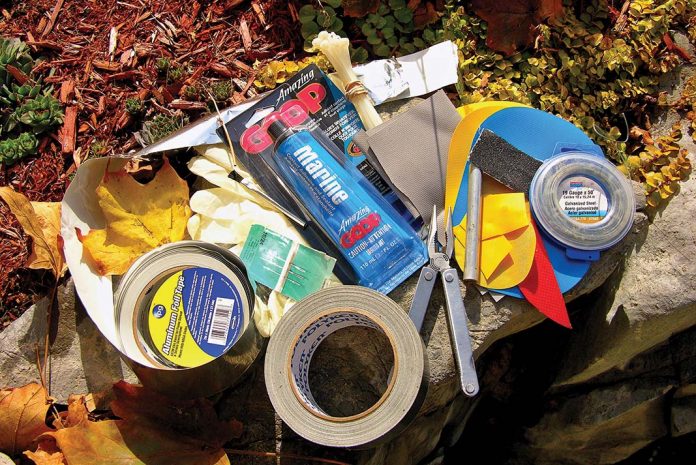
Nothing causes panic on a remote river trip like serious damage to your canoe. However, with a black bag of essential items and the skill of a drunken surgeon you can repair even large, gaping gashes in whitewater hulls. Try these backcountry canoe repair techniques next time you’re in a pinch, and make sure you’re properly prepared with our ultimate canoe repair kit.
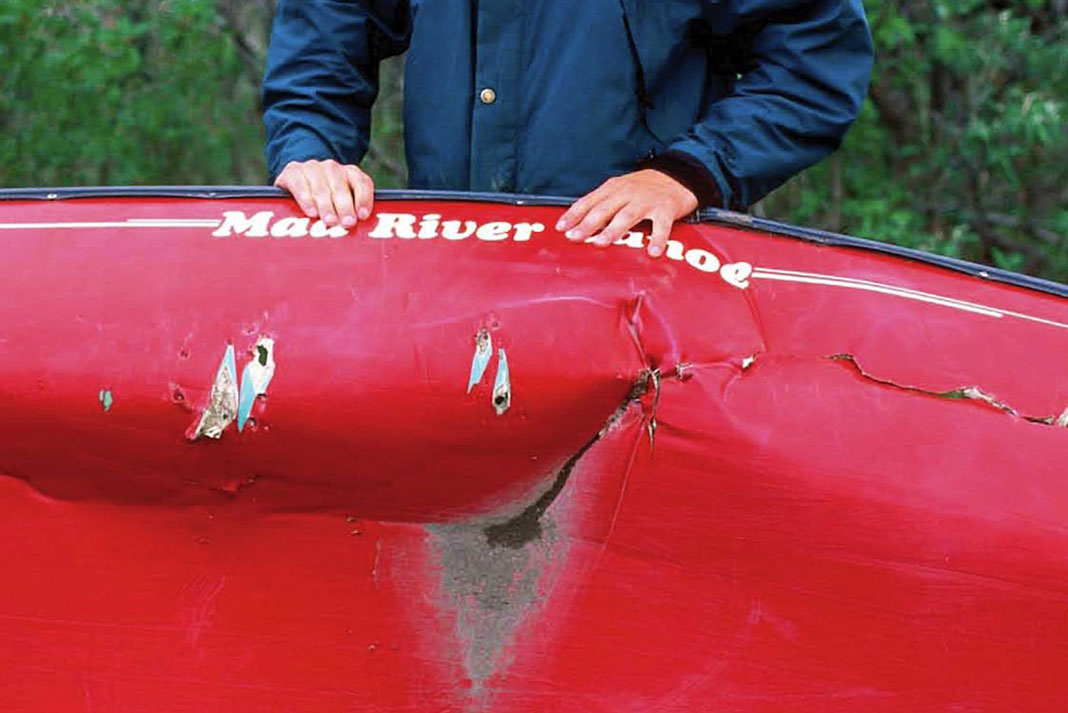
Even though Royalex canoes have a toughness approaching elephant hide, they can rip if a loaded or water-filled boat meets just the right knife-edged rock.
To patch a small tear you need heavy-duty duct tape, which means at least 13-mils-thick with a tensile strength of 45 pounds (look for Polyken by Covalence Adhesives). Normal duct tape is weak, barely adhesive and readily delaminates.
With a black bag of just five items and the skill of a drunken surgeon you can repair even large, gaping gashes in whitewater hulls. | Photo: Peter Mather
Clean the torn area inside the hull and flip the canoe over so you can slide your camp stove under the canoe below the tear. Apply the duct tape to the inside once the damaged area is clean, dry and very warm. Applying the tape to the outside of the hull or to the inside if the hull isn’t warm is just a waste of great tape.
If your ABS canoe wraps on a rock in fast current your hull will likely only become hideously creased, but it is possible that the hull will rip in an even more dramatic way.
Assuming you can drag the carcass off the rock, the repair requires a spool of 19-gauge stainless steel wire (from most hardware stores) and a four-inch nail. Kick out the hull to its normal shape the best you can. Heat the nail and melt holes on either side of the tear, then stitch the boat together with the wire. Cover the fine stitching with proper duct tape on the inside after first warming the hull. With this unbraided stainless wire you can fix any number of things: seats, broken hanger bolts, thwarts, paddle shafts. Don’t leave it at home.
For chemists, there is a way to actually plug the hole left by a tear or puncture. Black ABS plumbing pipe will initially dissolve in acetone before setting to become hardened plastic once again. Before the trip, reduce a section of pipe to shavings with a rasp and pack a small amount of acetone in a can or padded glass jar. If you need to plug a hole on the trip, mix acetone and ABS shavings until they reach the consistency of gravy. Fill deep gashes with a few consecutive layers, allowing the acetone to evaporate and the ABS to harden between coats.
This gunk is about the only material you can use on the outside of ABS boats. Make your job easier by first backing it up with a warm application of duct tape on the inside.
With this tear kit you can float your way out of situations that would otherwise end your trip.
With this canoe repair kit you can float your way out of situations that would otherwise end your trip. | Feature photo: Brian Shields
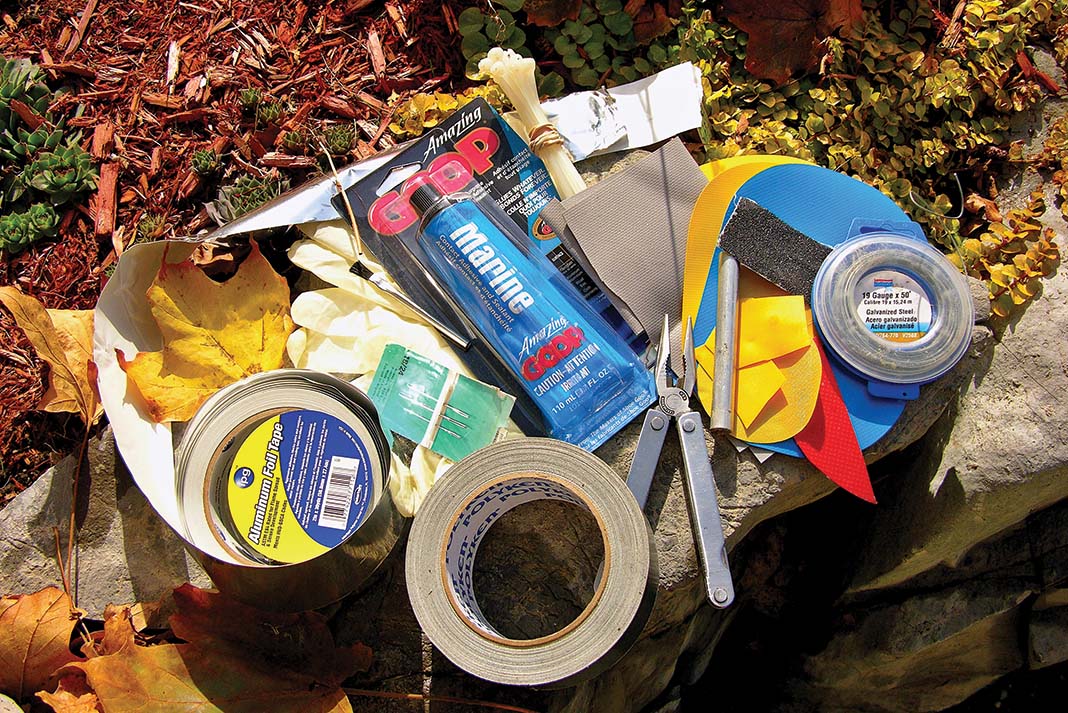
12 Items for the Ultimate Canoe Repair Kit
1 Multi-tool with pliers
A multi-tool is invaluable for undoing various nuts on a canoe, pulling stainless steel thread, boring holes and tightening screws.
2 Nylon zip ties
Take an assortment of lengths of nylon zip ties. Repairs broken seats, thwarts and gunwales.
3 Stainless steel wire
Bring 19-gauge stainless steel wire on a flat card spool. A great substitute for bolts of any size.
4 Square of 80-grit sandpaper
For roughening surfaces to be glued.
5 Vinyl patches
Cut up old water toys for these pieces. Repairs almost any equipment with holes, from drybags to spraydecks.
6 GOOP
A tube of GOOP glue—that works as both an adhesive and a patch—will repair almost anything from tent flies to hiking boots. Include latex gloves for working with glue.
7 Aluminum tape
Aluminum tape is a very aggressive water resistant adhesive that sticks to anything and never comes off. Use for quick repairs on torn equipment, from hulls to rain gear.
8 Tent pole sleeve
A tent pole sleeve or splint slides over a broken pole, turning a tragedy into a non-event.
Heated over a fire or stove, this tiny tool will easily burn holes in a canoe hull. Thread your stainless steel wire through the holes and you can lace a severely damaged canoe hull.
10 Duct tape
Polyken by Covalence Adhesives has a tensile strength of 45 pounds. Pack no other.
11 Two-inch needle with large eye
For repairs on torn materials, from quick-dry pants to canvas Duluth packs. Bring thread.
This article originally appeared in Paddling Magazine Issue 65. Subscribe to Paddling Magazine’s print and digital editions here, or download the Paddling Magazine app and browse the digital archives here.
With this canoe repair kit you can float your way out of situations that would otherwise end your trip. | Feature photo: Brian Shields
A record 37.9 million participants engaged in paddlesports like kayaking, stand up paddleboarding, canoeing and more during the pandemic in 2020 according to the Outdoor Foundation. Kayakers and stand-up paddleboarders, like those seen here, represent the largest group and fastest growing group, respectively, of paddlesports participants. | Feature photo: Courtesy American Canoe Association
ORLANDO, Fla. – April 12, 2022 – A record 37.9 million participants engaged in paddlesports like kayaking, canoeing and stand-up paddleboarding during the pandemic according to the latest data (2020) from the Outdoor Foundation. This pandemic surge brought an estimated 2.5 million new paddlers to American waterways. However, it increased accidents to 331 and fatalities to 202—also a record—accounting for more than 26% of all boating fatalities that same year.
Water Sports Foundation (WSF) Executive Director Jim Emmons said boating in general is still one of the safest forms of recreation, but data from 2020, the most recent year for which complete data is available, indicates most paddlesports deaths occurred due to lack of safety training and experience.
“We know from analyzing U.S. Coast Guard data that in 2020, nearly three-quarters (74.6 percent) of people who died in paddling accidents had less than 100 hours experience in the activity,” Emmons said, “And over one-third (38.8 percent) had less than 10 hours experience.”
“People are drawn to paddlesports,” said Robin Pope, Ph.D., PA-C, Fellow, Academy of Wilderness Medicine and chairman of the board of directors of the American Canoe Association. “And why not? It’s fun, accessible and inexpensive. It’s easy to get your craft to the water, no license required, no marina fees, no fuel to buy and plenty of great exercise.”
While Pope supports greater participation, he’s also concerned that many newcomers to the sport simply don’t recognize the hazards.
“Data tells us most accidents happen in flatwater due to falling overboard or capsizing,” said Pope. “Untrained paddlers usually don’t know how to get back in once they’ve fallen out, aren’t wearing a life jacket and aren’t prepared for cold water exposure. It’s imperative that we help more paddlecraft purchasers take advantage of the many free and inexpensive safety education resources available to them.”
Emmons and Pope say sales associates rarely provide guidance or safety training, especially at stores selling entry-level paddle craft. And most states do not require the purchaser to take a boating safety course, as some states do for motorized vessels.
Walt Taylor, the Recreational Boating Specialist for the U.S. Coast Guard’s First District headquartered in Boston, believes a change in mindset would boost safety training while decreasing incidents and deaths.
A record 37.9 million participants engaged in paddlesports like kayaking, stand up paddleboarding, canoeing and more during the pandemic in 2020 according to the Outdoor Foundation. Kayakers and stand-up paddleboarders, like those seen here, represent the largest group and fastest growing group, respectively, of paddlesports participants. | Feature photo: Courtesy American Canoe Association
“Many paddlers do not consider themselves ‘boaters’ and therefore don’t realize they are required by law to obey navigation rules and carry the required safety equipment for their size and type of vessel,” said Taylor. “By taking a recognized paddle safety course, paddlers will learn the basics about navigation rules, aids to navigation, risk management, and required and recommended safety gear.”
Taylor said that in 2016, paddle craft fatalities in the First Coast Guard District, which includes Northern New Jersey, Eastern New York, Connecticut, Rhode Island, Massachusetts, New Hampshire, Vermont and Maine, jumped to 29, or 53% of the district’s recreational boating fatalities for the year. Drowning after falling overboard or capsizing accounted for 27 of the 29 deaths, and 24 drowning victims were recovered not wearing a life jacket.
In response, Taylor said the First Coast Guard District intensified its focus on paddle craft safety through public safety outreach, paddling education courses and vessel safety checks, along with greater enforcement of federal requirements on paddle craft. These efforts contributed to a 34% decrease in paddle craft fatalities from 2016 to 2017 (19 paddling fatalities, down from 29), demonstrating the life-saving importance of paddling instruction.
Emmons recommended the following safety tips to help paddlers reduce risks:
1 Seek safety training
See the following free or inexpensive safety resources:
U.S. Coast Guard data shows 85 percent of all paddlesports drowning victims were not wearing a life jacket.
3 Be prepared to get wet
Dress appropriately for the conditions including the possibility of cold water exposure. Compared to other types of boating, in paddlesports you’re far more likely to end up in the water. Or as paddlers say, “We’re all between swims.”
4 Check conditions and weather forecast
Always check current weather conditions and the forecast before each paddle trip. Avoid conditions that exceed your experience and skill level. Water current and local winds could make it easy to get out and difficult to get back in.
5 File a float plan
Share a simple float plan with friends and family that includes your anticipated departure and return times and locations. Ask them to alert authorities if you are not back on time.
6 Always paddle sober
U.S. Coast Guard data shows alcohol has long been the leading known contributing factor in fatal boating accidents. Safe paddling requires clear thinking and good decision-making. Don’t drink and paddle.
About the Water Sports Foundation
Headquartered in Orlando, Florida, the Water Sports Foundation is the non-profit educational arm of the Water Sports Industry Association (WSIA.net). Since 2011, the WSF has received U.S. Coast Guard boating and paddling safety outreach funding through their non-profit grant program. The Sport Fish Restoration and Boating Trust Fund administered through Congressional action provides funding for the U.S. Coast Guard’s recreational boating safety initiatives. For more information contact the WSF at 407-719-8062 or visit: www.watersportsfoundation.com
When you’re nervous, anxious, or fearful, you don’t perform at your best. But you already knew that. When we start to envision the worst-case scenario, our bodies stiffen up and we lose sight of our well-ingrained knowledge of proper skill and technique. Our negative energy is almost magnetic, too. When visualizing failure over success, failure often follows.
[ View all Sea Kayaks in the Paddling Buyer’s Guide ]
Water is inherently scary–you also knew that. Coupled with the many ocean variables–capsizing in shallow water, navigating rock gardens, paddling through unpredictable waves, surges, and hydraulics–it’s easy to feel overwhelmed with fear while sea kayaking.
Advanced paddler Kayak Hipster offers up his advice for dealing with–and overcoming–fear on the water in a number of different scenarios.
A confident and skilled instructor can help put you at ease. You’ll be encouraged to push your boundaries and try things that make you uncomfortable, with the knowledge that you’re learning in a safer, supervised environment.
Pace Yourself
Pacing will look different for every paddler. Kayak Hipster opts to play around in smaller waves to get comfortable in the boat before approaching larger sets of waves. He spends time holding his spot, sitting sideways to the wave and back surfing on small waves.
It’s not about having the perfect conditions every time. It’s important to get out and practice at every opportunity. Some low-tide activities include rolling, forward strokes, racing, and other basic strokes. The more time spent in your kayak, the more comfortable you will be when trickier situations arise.
Use Appropriate Safety Gear
Wearing the appropriate gear helps you overcome most all things the ocean can throw at you. It’s a great idea to sport a helmet for activities like rock gardening and always wear a drysuit and appropriate thermal layering to suit the conditions you’re in. The correct safety equipment is one variable you can completely control.
Visualize Your Next Move
Visualize what might happen in every scenario you enter. This means thinking ahead of time about what you might do if something happens to you. For example, if you’re going to get hit by a wave, visualize what it’ll be like being upside down and imagine how you’ll roll-up. Or, envision the steps you need to follow to make a wet exit from your boat should your roll fail you.