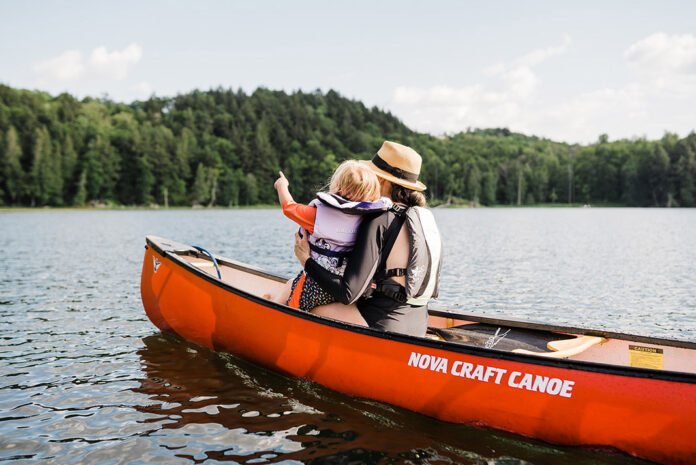
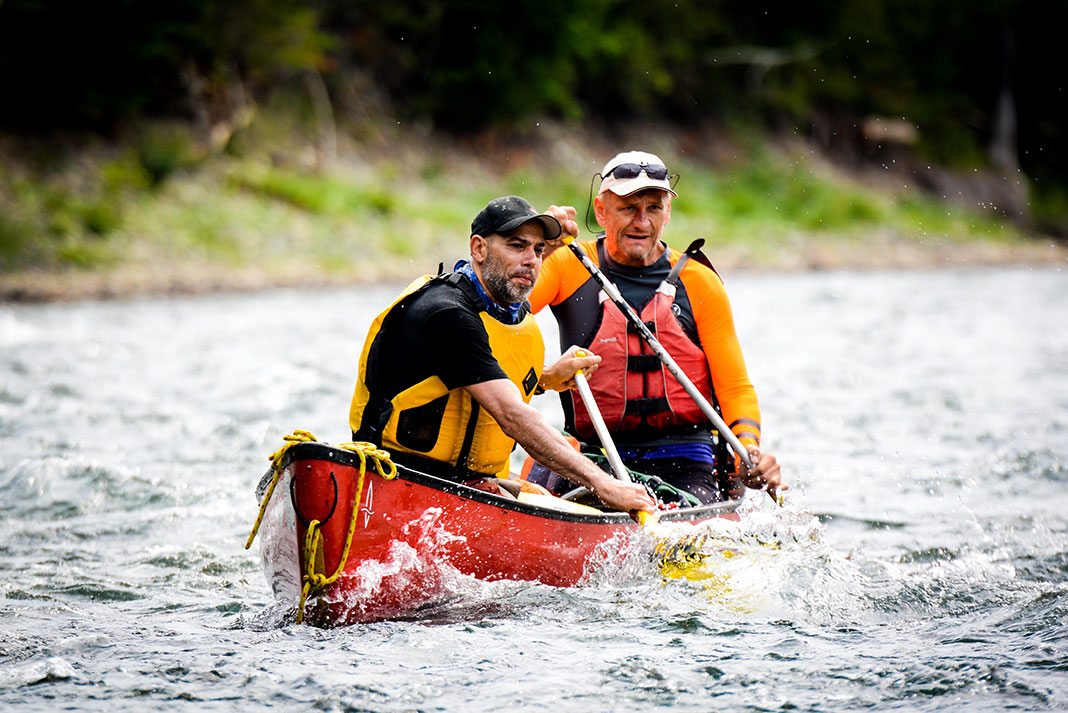
Some folks just can’t imagine a summer without time spent in a canoe. For them, nothing compares to the experience of gliding across the water in a canoe. One of the beautiful things about canoeing is how many ways that experience can unfold. It’s a lifetime activity that changes as you get older. You might take a canoe out for an afternoon outing with toddlers or on a weeklong retirement backcountry camping trip.
And just as there are many ways to paddle, there are many types to choose from. There are recreational canoes designed to be stable while fishing or speedy ones to take you across big lakes. You can find plastic canoes that are indestructible or lightweight canoes that portage with ease.
Some people’s canoe experience started before they could walk. Maybe that’s you, or perhaps you’re just beginning now. Either way, that’s okay—there’s a canoe for you.
Whether you’re looking to upgrade, go lighter, or just begin, you can find a canoe to match your needs. Finding the best canoe is a combination of knowing what’s out there and knowing what you want. We’ll help you do both here. We have links to various canoes, sorted by type, size, material and more. In our “Canoe Buying Guide,” we outline the steps to buying a canoe and answer many questions that may arise during your search.
Best canoes
Aren’t sure what type of canoe is best for you? Learn more about what different types, materials, sizes and brands of canoes have to offer by following the links below. Each will take you to our articles about these more specific kinds of canoes, which include buying advice and top models to make it easier to narrow down your options.
Best canoes by type
Best canoes by material
Best canoes by number of paddlers
Coming soon
Best canoes by brand
Shopping for a used canoe?
Buying a used canoe is a great way to score a deal. With the money saved, you can buy a canoe that would be too expensive if purchased new. If you are new to the paddling world, you’ve likely realized how high the initial costs of paddling are. The great thing is that once you’ve got the gear, the expenses are minimal—just travel costs and maybe access fees.
Once you have a complete kit, you can slowly add or upgrade items, including the canoe. With the prevalence of online classifieds like Kijiji, Facebook Marketplace or Craigslist, canoe shopping has gotten much easier. Much of the new boat-buying advice applies even to pre-loved hulls. Still, there are some things unique to used canoes worth considering.
Use the following advice when looking to buy a used canoe:
1 Decide what type of canoeing you’ll most often do
This is a big one. While advice from your friends and others is helpful, really think about how you want to use the canoe. Doing this will help guide the rest of your search. Are you looking for some solitude on small ponds? Maybe a solo pack boat is for you. Or is this a boat to take out fishing at the cottage? Look towards recreational canoes. Do you want to travel through lake country? Consider a versatile Prospector shape.
2 Figure out what material you want
Your answer to the above will dictate the ideal canoe material for you. If you plan to carry the canoe along portages or need to load the canoe on your car by yourself, the weight will be a big factor. Look for Kevlar canoes to save your shoulders.
If weight isn’t an issue, look toward plastic canoes. These are also ideal for whitewater paddling as they handle impact and abrasions better. Bonus: they cost less too.
Aluminum canoes were once ubiquitous, and many paddlers grew up with their first memories seared on the hot aluminum of a Grumman. Plastic and composites like fiberglass or Kevlar have replaced aluminum, offering better performance, weight and all-around performance. Used aluminum ones may still be floating around. After all, they are no-nonsense canoes that will last forever (until wrapped around a rock in a river).
If you’re looking for a project, consider restoring a wood-canvas canoe. Many wooden canoes find their way to the classified pages after sitting in backyards exposed to the elements. They may need lots of love, but if that’s your thing, then wood is good.
3 Pick between solo or tandem
Who will you be paddling with the most? Do you have a committed paddling partner, or do you mostly go solo? If you want a bit of both, 16-foot Prospector-style canoes can be paddled tandem, but they become solo boats by sitting backward in the bow seat. The symmetrical hull of most canoes makes this possible.
4 Know your budget
If you have a set amount you’re prepared to spend, stick with that price. Leave some cash for other gear like paddles and well-fitting PFDs.
Have a look online, but set price filters when you’re checking classified websites. Pro tip: utilize the “minimum price” option as well as the maximum. This will clear away ads that are selling canoes you aren’t interested in.
5 Find a place to buy
Look everywhere when shopping for a used canoe. Most canoes are for sale—for the right price. If your neighbor has a canoe that hasn’t come off the rack in years, ask them if they’d part with it. They may even appreciate someone clearing it out of the yard for them.
Outfitters often sell some canoes from their rental fleets at the end of each season. Renting one of the canoes is an excellent way to test the canoe out. If you like it, you may even be able to reserve it on the spot. Another good place to look for a canoe is at a trade show. Floor models or demo boats are sold at a markdown, and as the name implies, you can demo it out. Do you see a theme here? Try before you buy.
6 Ask the right questions
One piece of fantastic buying advice is to watch how the current owner handles the canoe. If they are rough with it in front of you, they were probably rough with it on the trail. Also be sure to ask how the owner stored the canoe. UV rays are harsh on canoes, and if the canoe was always stored outside, it would have been exposed to the elements.
You can also get a good sense of the canoe’s capabilities by asking the current owner the type of paddling they did with it. This is essentially a product review, a handy tool to gauge if the canoe is a good match for you.
7 Take it for a test paddle
Ultimately, you won’t know if it’s the boat for you unless you get it on the water. There are small things that may go unnoticed otherwise.
Don’t just paddle the canoe, be sure that you can carry it! See how it feels to lift, whether that’s onto a car or over a portage trail; if it’s uncomfortable to carry, you’ll be less inclined to use it.
If you cannot try out the specific canoe you’re looking at, extra time spent reading reviews or paddling similar canoes will help.
8 Inspect for damage
Carefully check the hull of the canoe for scratches and cracks. Most canoes will have some scratching from sliding up onto the shore or a bump in the shallows. These are superficial and nothing to worry about. If it’s deep enough to see the cloth or base, you may need to make minor repairs.
Kevlar and fiberglass canoes often have “float tanks”, airtight compartments at the bow and stern to prevent the canoe from sinking. Lift the canoe and listen for any water sloshing around. This might mean that there is a breach in the float tank.
Wooden gunwales may show signs of warping and cracking. Aluminum gunwales are durable, but under intense pressure, they can crimp or fold. Plastic ones are incredibly resilient, but if they are cracked, they will need to be replaced. Don’t let damaged gunwales discourage you from buying a canoe; knock a few dollars off of your offer and get them replaced for relatively cheap.
For more tips on looking for a used canoe, read our article How To Buy A Used Canoe.
Canoe buying guide
Read the following advice if you’re new to buying canoes or if it’s been a while since you last bought one. Deciding what type of canoe to buy depends on more than just your budget. Different canoe designs match specific paddling styles, so it’s important to think about the type of canoeing you want to do.
There are also materials, sizes and brands to consider. Below, you can find some advice that will detail how to pick a canoe. We also have answers to questions that you may already have about canoe-buying.
1 Assess your needs
The “perfect canoe” depends on who you are, where you paddle, and what you expect from a canoe. Some people want a canoe for whitewater, others want one for fishing, and others are looking for something to relax in while at the cottage.
There are so many options out there, so which canoe is for you? Determine what type of canoe is going to best suit your paddling style. Before wandering into your local outdoor retailer or canoe manufacturer, take time to determine what type of canoeing you would like to do.
2 Choose a canoe type
Can you picture yourself taking your grandchildren fishing at the cottage? Recreational canoes will be right up your alley. Have you dreamed about making an independent voyage into the Boundary Waters? A solo canoe will help you make it happen. Do you like the idea of traveling with your family to La Vérendrye on a weekend vacation? Stuff a lakewater and touring canoe full of barrels and fun.
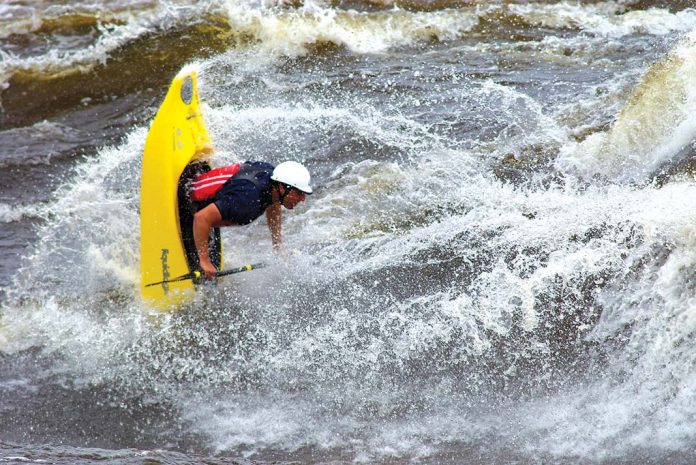
Whitewater canoes are for the adventurer looking to get a little wet and wild. Each activity requires a very different canoe, so it’s important to know what you want.
3 Set your budget
You can spend almost anything on a canoe. It’s tricky with canoes; price isn’t everything but it does make a difference. Refer to Step 1: Assess Your Needs. The most expensive canoe isn’t automatically the best—if you want a rugged canoe for river-running, a mid-range plastic canoe is better than the top-of-the-line carbon fiber cruiser.
That being said, a canoe is a purchase you only make every few years. If it’s only a few hundred dollars between a canoe you like and a canoe you love, you’ll regret not spending the extra money down the road.
4 Choose your canoe material
There are lots of different options for canoe materials. Each has its own strengths and weaknesses. For an in-depth review of the materials, check out The Best Canoe Material. Here’s a quick overview of some of the common ones you’ll find.
Composites are probably the most common types of canoes sold now. These range from low-end fiberglass to ultralight Kevlar/Aramid. They vary greatly in performance and price, but typically are lighter than plastic though not as durable.
Plastic canoes cost less than composites but weigh more. If weight isn’t an issue, or price is, then a cheap plastic boat that can get knocked around is a good option.
Aluminum canoes are another “beater” canoe choice; these can handle anything you hurl at them. Popular before the rise of plastics, new aluminum canoes nowadays are not as easy to find. They are heavy, noisy and cold or hot to touch, but will last forever.
Wooden canoes come as DIY projects in build-your-own kits or are assembled by master woodworkers. Paddling them is like floating in a piece of art. These masterpieces require infrequent but periodic maintenance and are heavier than space-age composites.
5 What are the must-have features?
Look at the options available. Some trim options, such as molded, adjustable seats and sculpted yokes, affect the performance and handling of the boat. Others, such as wooden gunwales, wicker seats, and cherry deck plates, serve the same function as aluminum or vinyl but make the craft more elegant.
6 Consider the brand
There are many canoe brands out there, with some more common in certain places than others. Swift canoes, for example, are all tested in Ontario’s Algonquin Park. It’s no surprise that they are popular there, since they excel on flatwater portaging trips.
If a brand is popular in an area, specifically if the outfitters choose to use them, the canoes will be well-suited for travel there. What does this mean for you? Well, if you know that you want to canoe exclusively in a particular place, see what the locals use.
If you’re the type of person to go against the grain or want something unique, browse the different brands in our Paddling Buyers Guide. There’s a good chance you’ll find some you’ve never heard of in there.
7 Find a canoe to buy
There are lots of different places to look for canoes now, even Amazon. Big-box stores like Costco and Walmart also carry select recreational models. Look to national outdoor chains like MEC or REI to have a range of canoes, or they may be able to order one in. If you see an intriguing canoe online, look up the nearest dealer. Many canoe brands have online catalogs and a “Dealer locator” option.
There’s something to be said about supporting your local canoe shop. These are run by experts, who will be able to provide a level of service that you can’t get by clicking “add to cart”. If you aren’t sure of some features, the staff here have the knowledge to answer questions and quell concerns.
8 Get out and enjoy it
Try it out! If you have a chance, take advantage of an opportunity to paddle the canoe before you buy it. It’s good if you can do that at a dealer before purchase, but if not, see if they have a return option if you don’t feel comfortable in the boat for whatever reason.
9 Bonus step: Get the gear
The canoe is just the start. Don’t forget to get the other stuff as well. Depending on where you live, there will be items you legally need to have in your canoe like a floating rope, bailer and PFD. A properly-sized paddle will maximize your efficiency on the water too. If you’re going to be canoe tripping, look into proper packing gear like canoe barrels or drybags.
Have more questions? Find our answers to common queries below.
-
Canoe meaning
According to Etymology Online, the word “canoe” is adapted from the Spanish canoa, derived from the Arawakan canaoua. The indigenous people of the Caribbean spoke Arawakan languages, and the Spanish colonizers adopted the word in the 1550s. Now, canoe extends beyond dugout canoes to all the different types of open hulled, paddle-powered craft.
-
What is a canoe used for?
In the simplest sense, a canoe is used for travel on water. Most of the time, it is powered by paddling, but some canoes can have motors equipped. Canoes are great for accessing places where water is too shallow to take a boat. The other fantastic thing about canoes is that they are relatively easy to carry, and accessing remote lakes is suddenly possible.
-
What makes a good canoe?
Craftsmanship, high-quality materials and design are all aspects of a good canoe. Canoe brands that outfitters commonly use are ones that they know are reliable and require little maintenance. Canoes that are made in dedicated factories will also have rigorous quality control measures in place. Look for ones from companies that have a history of building canoes.
-
What is the difference between a kayak and a canoe?
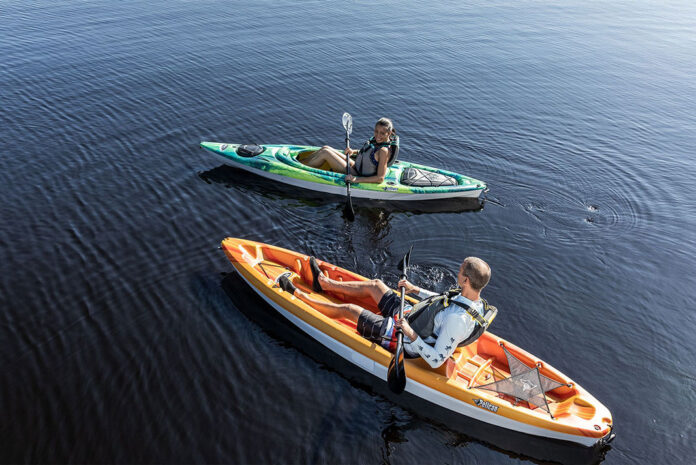
The main difference between a kayak and a canoe is the closed deck of a kayak compared to the open deck of a canoe. Kayaks are always paddled seated, while canoeists can sit or kneel. Similarly, kayaks are always paddled with a double-bladed paddle, but canoes can use either a single or double blade.
Both kayaks and canoes are excellent ways to travel across the water, but what one is best for you?
Read Kayak vs Canoe and find out.
-
Canoe or jon boat?
Jon boats are another popular boat for cruising small, shallow waterways. These boats are characterized by their boxy shape, low sides, and stable, flat bottom. Traditionally made of wood, the term now includes aluminum boats with the same relative shape. They’re favored by fishermen or waterfowl hunters who want a boat they can guide through marshes.
Jon boats were typically rowed but new ones can be equipped with a motor. With their wide bottoms, jon boats do not move through the water as efficiently as a canoe. They are more stable, however. Canoes are easier to carry on portages, and some square-sterned canoes can accept a motor.
If you are deciding between a canoe and a jon boat, think about the areas you’ll be traveling through. If you plan to stay on one lake, and want the extra floor space, opt for a jon boat. If you plan to portage, a canoe is much easier to carry. If you’ll be using paddle power, a canoe is much more efficient, and you’ll be able to cover more distance than you would while rowing a jon boat.
-
Paddleboard vs canoe
Paddleboards and canoes are both excellent ways to get on the water, but they are very different. The only thing they share with canoes is they both use a single-bladed paddle. On a paddleboard, the user stands rather than sits or kneels. They are not as efficient but they give a full-body workout. Paddleboards don’t require re-entry techniques; simply just get back on if you fall off the board. Paddlers can use paddleboards for different activities like surfing and yoga.
Canoes are better for traveling longer distances than paddleboards. They are more efficient, and the sitting/kneeling position is more sustainable for long periods. Sitting inside the boat also keeps the paddler drier than they would be on a paddleboard. The carrying yoke makes portaging a canoe much easier. Multiple people can paddle canoes, and they have lots of capacity for gear.
-
Pack boat vs canoe
Pack boats are short and light solo boats, easy enough to “pack” around. They are paddled with a double-bladed kayak paddle. The paddler sits in the center of the boat, low to the floor. Canoes are generally paddled with a single-bladed paddle from a sitting or kneeling position. They are longer and a bit heavier than a pack boat, offering more storage space for an extra paddler or gear for multi-day trips.
-
Difference between canoe and rowboat
Rowboats are another common human-powered boat. Unlike a canoe, rowboats are rowed facing backward, using two oars simultaneously. Recreational rowboats are spacious, often at least three feet wide. Canoes are a bit narrower, and each paddler uses one single-bladed paddle.
-
Canoe material
Different canoe materials meet different needs. Ultralight materials are excellent if you want to easily carry your canoe, while plastics offer the durability to withstand heavy impacts. There are many other options like wood, aluminum or folding canoes.
Visit The Best Canoe Material for an in-depth review of canoe materials.
-
How much does a canoe cost?
Canoe prices range from $1,200 to beyond $4,000. The brand, material and shape all affect the cost. If you’re asking yourself, how much does a canoe cost, consider the price to weight ratio. This is a general rule on how much canoes cost relative to their weight. The higher the canoe price, the lower the weight. At the lowest end of the price spectrum is the heaviest material, plastic. At the high end are ultralight composites like carbon fiber.
-
Parts of a canoe
Canoes follow boat terminology with their names. Instead of the front, it’s called the bow. The back is the stern. Straight bars run from side to side, which help hold the shape. These are the thwarts, and the one in the center is the yoke. The yoke is for carrying (portaging) the canoe. Running around the perimeter are the gunwales (pronounced gun-nels). If you’re new to canoeing, don’t worry if these terms seem confusing.
Read Parts Of A Canoe to learn more.
-
What type of canoe to buy
The canoeing you will do will dictate the type of canoe to buy. You have lots of options, with canoes available for a range of needs and budgets. Follow the steps outlined above in “Canoe Buying Guide” to help narrow down your search.
-
Canoe sizes
Canoes come in different sizes, each meeting different needs. Length affects the performance of a canoe. Generally, the longer a canoe is, the better it will move straight (known as tracking). Shorter canoes tend to turn more easily, making them ideal for rivers or paddling styles where maneuverability is essential.
-
How big a canoe do I need?
Sizing a canoe depends on the type of paddling you will do and the number of people you’ll be paddling it with. Solo canoes tend to be no longer than 16 feet, while most tandem canoes are at least 14. Three-person canoes are closer to 18 feet, to allow for sufficient space between the paddlers.
In a tripping context, a 16-foot canoe can hold two weeks’ worth of well-packed gear. 17-foot canoes give you the extra space for another two weeks of food. For trips longer than a month, you’ll be most comfortable in an 18-foot canoe.
Whatever size of canoe you choose, make sure you can store and transport it easily. If it’s not easy to get the canoe on your car, chances are you won’t use it as much as you initially hoped to.
-
Where to buy a canoe
There are lots of places to buy a canoe. Big box stores like Costco and Walmart carry recreational models. National outdoor chains like REI or MEC also carry many different styles of canoes.
Outfitters and local paddling shops can get you in a canoe that will meet your needs, and the staff know their stuff—they can answer any questions you may have about canoe models. This also gives you the chance to try a canoe out before you buy, something you can’t do inside a Costco.
-
Bench or bucket seats
The two main styles of canoe seats both have their merits. Ultimately, it comes down to personal choice when deciding whether to opt for a bench or bucket seat. Bench seats are more versatile and give paddlers the option to kneel or sit, while buckets are exclusively for sitting. They provide a bit more support to the lower back and have more form than a flat bench. There is some fascinating history behind the evolution of the bucket seat, and maybe even some implications for speed.
Check out the debate in Bench Vs Bucket Seats: Which Is Better On A Canoe?
-
Canoe weight limit
The weight limit for a canoe will be different depending on each model. Check the manufacturer’s specifications to be sure. There are some indicators of how much weight a canoe can carry, for example, examining the amount of freeboard the canoe has when it is loaded in the water. This refers to the amount of the boat that is riding out of the water, or how high above the water the gunwales are. Wider and longer canoes will have higher weight limits.
-
Canoe weight
Canoe weight depends largely on the material and size of the canoe. Size is straightforward; the longer/bigger the canoe, the more it will weigh. For continuity, let’s consider a 16-foot canoe. Ultralight composite materials like Kevlar or Aramid will make this 16-foot canoe 38-45 pounds, depending on the shape and brand.
Reinforced composite layups like Novacraft’s TuffStuff weigh a bit more, 50-65 pounds. Fiberglass is the heaviest composite available; a 16-foot canoe will weigh 65-75 pounds. Plastic and aluminum canoes are heavier than this, weighing up to 95 pounds.
-
How long is a canoe?
Canoes range in length, from short whitewater boats of less than 10 feet to 36-foot voyageur canoes. Most of the canoes that you see on the water will be 14-18 feet. Tandem flatwater canoes are generally at least 15 feet.
-
How many people can fit in a canoe?
Looking at the number of seats may help answer the question “How many people does a canoe fit?” but it is not always the case. Some tandem canoes can have an extra third seat added in, or small kids can sit on bags in the middle. It depends on the specific canoe, but it is important that everyone is comfortable and the canoe feels stable on the water.
-
How to measure a canoe
Canoes are measured in different units. Length refers to the distance from the furthest points of the bow (front) to the stern (back). The width is the distance at the widest point. Volume refers to how much space is inside the canoe.
Canoe reviews
Begin reading reviews of some popular canoe models. This is an excellent way to understand what options are there and possibly narrow down your search. Canoes aren’t like cars because they don’t change a lot from year to year. This means that older reviews are still relevant for most new boats.


 Sea to Summit
 MSR
MSR Kelty
Kelty