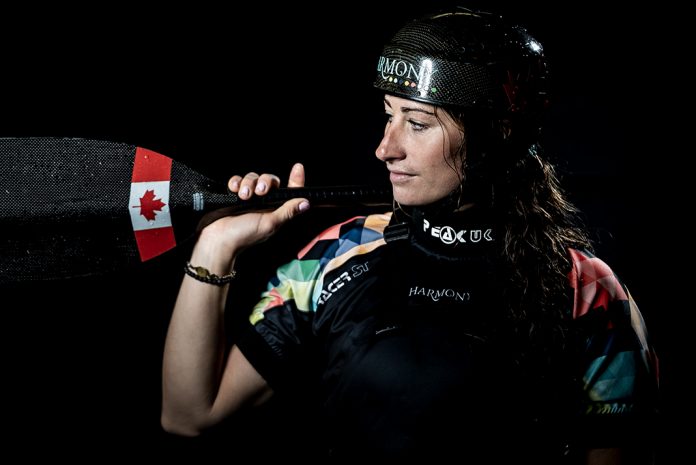
Haley Daniels has spent half of her life training for one race. A race that, up until this year, didn’t exist.
The 30-year-old Canadian athlete has been competing in the national canoe slalom circuit for the past 13 years, fueled by a dream of someday stepping onto the Olympic podium. Seven world championships and multiple podium placements later, and with the 2021 Tokyo Olympics just around the corner, Haley’s dream is finally tangible.
With almost no funding, no access to female-specific boats and—most importantly—no category in the Olympics for women in canoe slalom, Haley’s journey has been painstakingly real. Working part-time jobs, writing sponsorship proposals and organizing fundraiser events have all been part of a roster of extracurricular activities integral to funding her journey. Balanced alongside over 40 hours of training per week, of course.
Her efforts have not gone unrewarded. At the 2021 Olympic Games this July, she and her dad, Kimberly Daniels, are set to make history: Haley as part of a pioneering cohort of female canoeists in the Olympics, and her dad as the first recorded transgender official on the Olympic judging panel.
Haley’s philosophy is: If you’re not turning heads, you’re not making a difference. “It was a catchy story when I first started advocating for women’s C1 more than half a decade ago. A few news outlets picked it up,” she said. “I had no access to funding, no athlete resources I could apply for. I was paying for it out of pocket.” It was up to the International Canoe Federation (ICF) to identify women’s canoe slalom as an Olympic sport before government funding could begin.
Men’s Canoe Slalom was first introduced into the Olympic Games back in 1972. Alongside men’s C1, there were categories for men’s C2 (tandem canoeing), and men’s and women’s K1 (kayaking). Now, almost five decades later, the women’s canoeing event will finally make its Olympic debut.
Why did it take so long? Each sport in the Olympics is awarded a quota of medals. For women’s C1 to have its own category, it needed to take the place of another. So, in a bid to reach the International Olympic Committee’s (IOC) gender equity criteria, men’s C2 was dropped from the lineup.
For Haley, the decision should have come sooner. “It wasn’t a case of not being ready. We were ready for London [2012]. We were ready for Rio [2016]. The International Canoe Federation wasn’t ready for us.” More funding for women in C1 will encourage and facilitate a larger cohort of Olympic-level female competitors, she said. But it was up to the ICF to take the first step.
“big organizations are resistant to change. Introducing a sport to the Olympics takes time, money and work. They weren’t willing to make that change or speed up the process.”
– Haley Daniels
Some of the former Olympic title holders in the C2 category have since spoken out about the ICF’s decision to remove their category. Peter Skantar, a former gold medalist from Slovakia, publicly commented that the decision from the ICF was, “like a bad joke.” For him, the exchange of C2 for women’s C1 doesn’t bring any “new spirit” to the sport.
Haley believes there’s still a long way to go when it comes to unearthing the deep-rooted stigma associated with women in canoe slalom. “People were literally laughing at us at the training courses when we first got on the water,” she recalled. Without enough female representation in the field, women are viewed as unusual and unworthy competitors by some.
Making waves in the slalom scene
Haley’s impact on the slalom scene is having a ripple effect. Her dad, Kimberly Daniels (formerly Duncan Daniels), is part of the International Olympic Committee and will blaze a trail as the first openly transgender judge on the Olympic judging panel at the Tokyo games.
After coming out to her family, Kimberly initially decided to stay as “Duncan” for the course of the Tokyo Olympics. “We didn’t want that to be the focus of my journey or put any added pressure on me,” Haley recalled. But the pandemic delayed the Tokyo Olympics and altered their timelines. Waiting another year was not in the cards.
So, last year, Duncan became Kimberly full-time. “I told my dad, ‘Dad, I want to scream this off the rooftops with you. Let’s do this together, proudly.’ During Pride Week 2020, we came out,” Haley said.
The announcement was met with little resistance from the slalom community. “It helped knowing we had 100 percent support from Canadian Olympic Committee. It was no longer a secret we had to hide. I know there’s stigma against trans people, so I wanted to be as public about this as possible.” As for her peers, she believes most are okay with it but, “they don’t want to talk about it.” It’s these uncomfortable silences that urged Haley to spark more conversation.
Going for gold: leaving a legacy
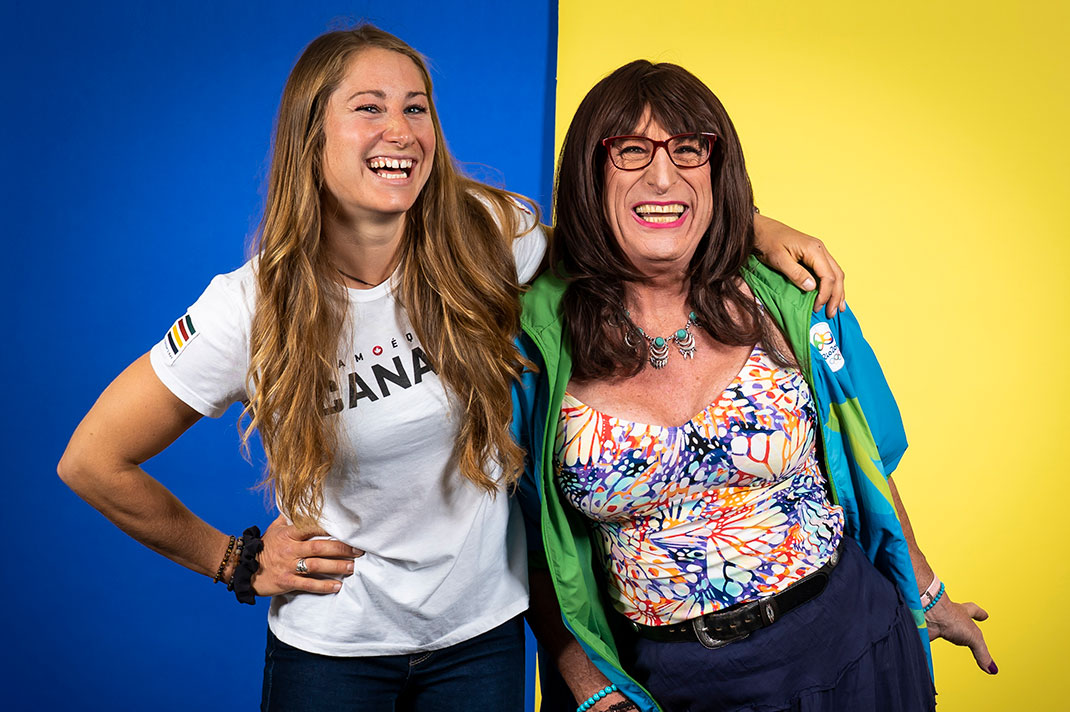
Kimberly (right) and Haley (left) are connected by water, just as they are by blood. The two spent most weekends open boating and camping while Haley was growing up. Naturally, Haley’s dad has supported her every step along the way, both on and off the water. | Photo: Dave Holland
Haley’s journey doesn’t end with competing, nor does it end at the podium. Her purpose has shifted. Her social media platforms have become a space where she advocates for trans rights and awareness—specifically in sport.
“It’s a no-brainer for me; I’m happy to advocate. There’s a lack of education on how to respect people in the trans community, even when talking about pronoun usage. We need to create tools and places where people can educate themselves,” she said.
“Sometimes, the biggest impact comes from the smallest conversations,” she added. “If you see something you know is not okay, say something. Don’t let it slide. It’s not a fight. It’s about returning to those uncomfortable situations and standing up for what you believe in.”
It’s this attitude that has made her an Olympic contender in a category that hasn’t existed until now. “We have equal opportunity, but we also have a past that needs to be rectified. There’s a legacy that’s still being written for women in sport. And for trans people in sport.”
On May 29, 2021, Haley Daniels confirmed her spot on Team Canada and will be part of the first cohort of women canoeists to compete in the games.
Haley Daniels Tokyo-bound. | Photo: Dave Holland
This article was first published in Paddling Magazine Issue 64. Subscribe to Paddling Magazine’s print and digital editions here, or download the Paddling Magazine app and browse the digital archives here.
If you’re anything like us, animal rescue videos make you feel extra warm and fuzzy inside. This koala rescue in Southeastern Australia is no different.
A group of La Trobe University students stumbled across the stranded koala on a tree while canoeing down Victoria’s Murray River. Kirra Coventry, one of the Outdoor & Environmental Studies students, was able to film the rescue on her phone.
“It almost looked as though he was sussing out if he could jump into the canoe,” she told The Age. “So, we decided to have a closer look at him and to our surprise when we took the canoe closer he jumped right in.”
The rescue wasn’t the grand endeavor they were expecting. In fact, the koala seemed to be more than happy to climb down from its awkward perch and into the safe hull of the canoe. The whole process took less than 5 minutes.
“He didn’t seem distressed at the time but he did seem very happy to see us… he just jumped into the front seat and cruised back to the bank,” Coventry commented.
[ Shop for Canoes in the Paddling Buyer’s Guide ]
The students believe that the thirsty animal may have been stuck up there for days near Ulupna Island, roughly 60 km west of Yarrawonga.
“He was drinking a lot [of water], we think he’d been up there for a couple of days,” Coventry said.
There are a number of reasons you may be looking to buy a used kayak. Perhaps you are new to the sport and don’t want to spend money on a new boat until you are sure you like kayaking. Maybe you already own a few kayaks and want to try out a new style for cheap.
Whatever your reason, make sure you are a discerning buyer when looking for a used kayak. Just because you aren’t paying money for a new kayak doesn’t mean you shouldn’t approach the search well informed and ready to analyze what is for sale. Follow our guide on what to look for in a used kayak and start your search for the right boat with confidence.
Not all kayaks are alike. Design, materials, shape and weight will vary based on the kind of kayaking the boat is intended for. In our Paddling Buyer’s Guide, we group kayaks into recreational, racing and training, and touring categories.
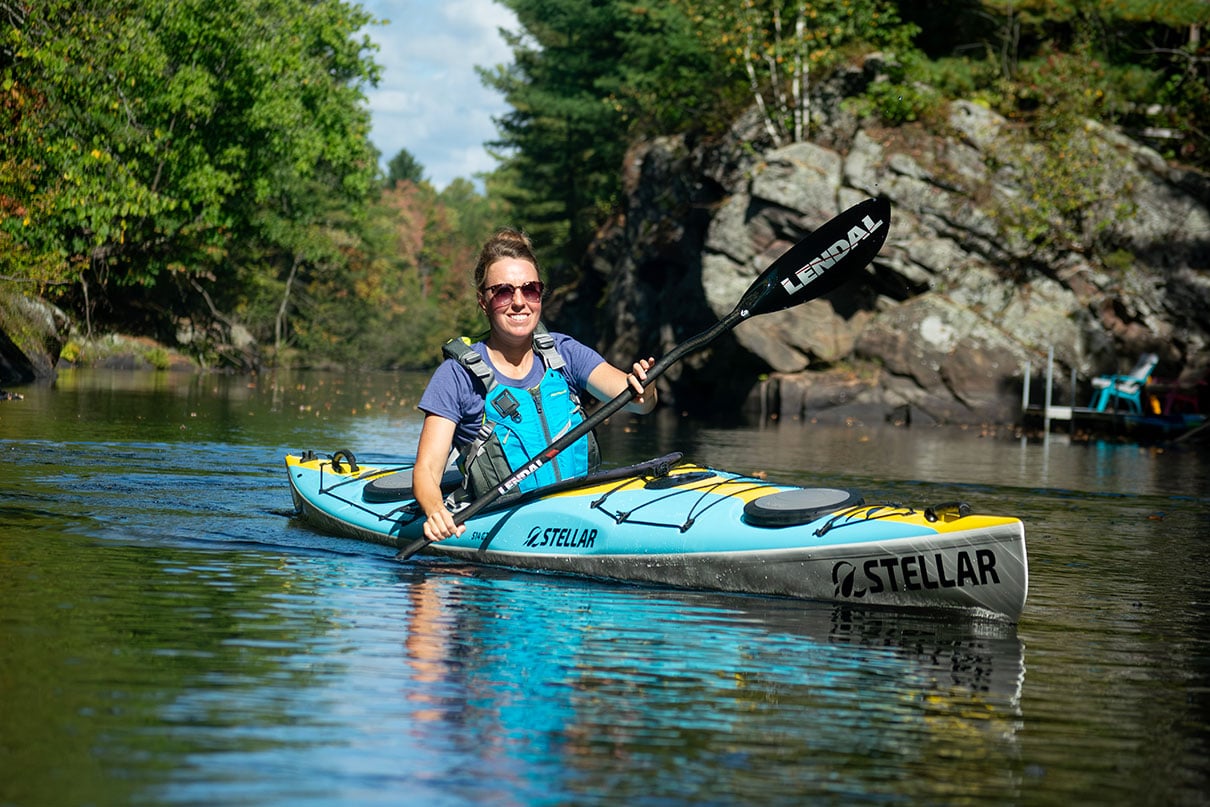
Recreational kayaks are wide, stable and great for beginners, children and those nervous about being on the water. While many have a sunken cockpit with outfitting, some recreational kayaks have open cockpits. These are referred to as sit-on-top kayaks. Recreational kayaks are great for flatwater paddling and short trips.
Touring kayaks are longer, narrower and have more storage than recreational kayaks. They are designed for longer trips and come equipped with storage for food and equipment, and hatches with lids that can be removed. Most likely, your touring kayak will be a sit-inside design. They are designed to track well in the water and some will have a skeg or a rudder.
VIEW ALL TOURING KAYAKS
Racing and training
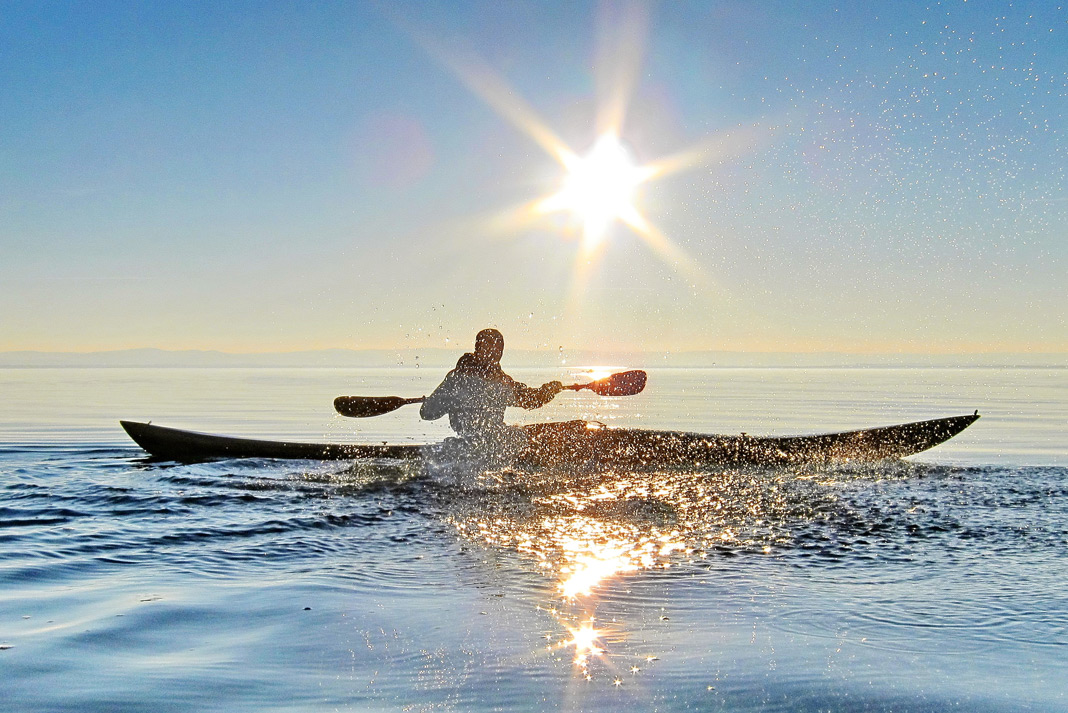
Racing and training kayaks are usually even narrower than touring kayaks and many are made of ultra-light materials like carbon. They are designed for speed and performance; the tradeoff is much less stability than recreational kayaks and less storage than touring kayaks.
Jack Elliott of White Squall Paddling Centre in Southern Ontario says the first glance you take at a used kayak will tell whether the boat has been looked after. Take special note of frayed ropes, how clean the kayak looks and any indications it has been stored outside.
It’s usually a good sign if the seller handles the boat with care off the water. Neal Ross-Ross, who saw hundreds of boats come and go when he was the manager of Ontario’s Boatwerks kayak shop, says, “If [the seller is] careful with the boat around you while selling it, that’s a good indication they have treated it well.”
After the first glance at a used kayak, make sure to give the kayak a thorough physical once-over. Run your hands over the sides, hull, and decks to check for deformities, dents or weak spots. Keep an eye out for cracks and gouges. Sit in the seat and see if the cockpit outfitting works properly. If the kayak has ratchet straps, crank and loosen them.
Use a flashlight to take a look inside the kayak. Take hatches on and off and see if they seal. Flip the kayak hull-up and see if there is any warping in the hull. Make sure the bulkheads are sound. The shape of a hull affects how the kayak moves in the water. If there is any hull deformity, it means the kayak will not perform the way it was designed to.
There is a difference between a well-used boat, and an abused boat. Sometimes these differences can be hard to spot or read. “What I’m looking for is…the condition of the outfitting, or are there any cracks,” explains Ross-Ross. “Determining what is actually broken versus what is just roughed up.”
The next item of business is determining how the boat has been stored. Improper storage can affect the value and functionality of the kayak.
Ideally, the seller has stored the kayak off the ground and out of the sun. The hull of a kayak is very vulnerable to deformity, especially on plastic boats. If a kayak is stored on its hull it means the performance-dependent part of the boat takes the full weight. A kayak suspended with webbing, standing up against a wall, cockpit down and supported on a rack or leaning on its side will be less susceptible to storage-related damage.
If the kayak has been stored outside, it is possible water has gotten inside the cockpit if a cover wasn’t used. Also, be wary of a kayak sitting outside for months covered directly with a tarp; the tarp can trap moisture and cause mildew. Tarps should be hung or suspended above the kayak, but not directly touching it to allow for airflow.
Paddle forever. | Photo: Ines Hegedus-Garcia
Take the kayak for a test paddle
Perhaps the best piece of advice for buying a used kayak is to take it for a paddle. You wouldn’t want to purchase a car without driving it, and the same should be true for your kayak.
While obvious impediments to a kayak’s seaworthiness like major gouges or holes will be clear from the once-over, a test paddle can indicate other problems and give you an idea of how the kayak feels for you. If a seller refuses to let you take the kayak for a paddle, you may want to consider why.
Once on the water, ask yourself:
Is the seating comfortable? Would it continue to be comfortable if you were kayaking all day?
Are your legs falling asleep? Do your hips and knees feel comfortable with the amount of space you have?
How well does the kayak track?
Are you noticing any leaks while paddling?
Are the skeg and rudder cables working well? Do the pedals connected to each work? Does the skeg get jammed?
Is the kayak stable enough for you?
Can you maneuver the kayak to your needs? Is it fast or do you feel it’s holding you back?
Potential damage on different kinds of used kayaks
Damage on a used kayak doesn’t necessarily need to be a deal-breaker. What is important is that you are aware of it, understand it may reduce the value and factor it into discussions about price with the seller.
Many issues can be fixed at home with a little bit of time and research and can lengthen the life of a kayak. For instance, if you find a kayak that is structurally in good shape but has a broken backband, you can buy a replacement for about $100 and increase the value.
Polyethylene kayaks
Polyethylene kayaks are cheap, high impact and heavy. These kayaks are the most vulnerable to deformity and hull warping. Surface scratches are common on these kayaks and are not a big deal, but major gouges and holes can affect the function of the kayak on the water. The vulnerability of plastic kayaks to hull deformity can lead to decreased performance on the water and flex of the boat while paddling.
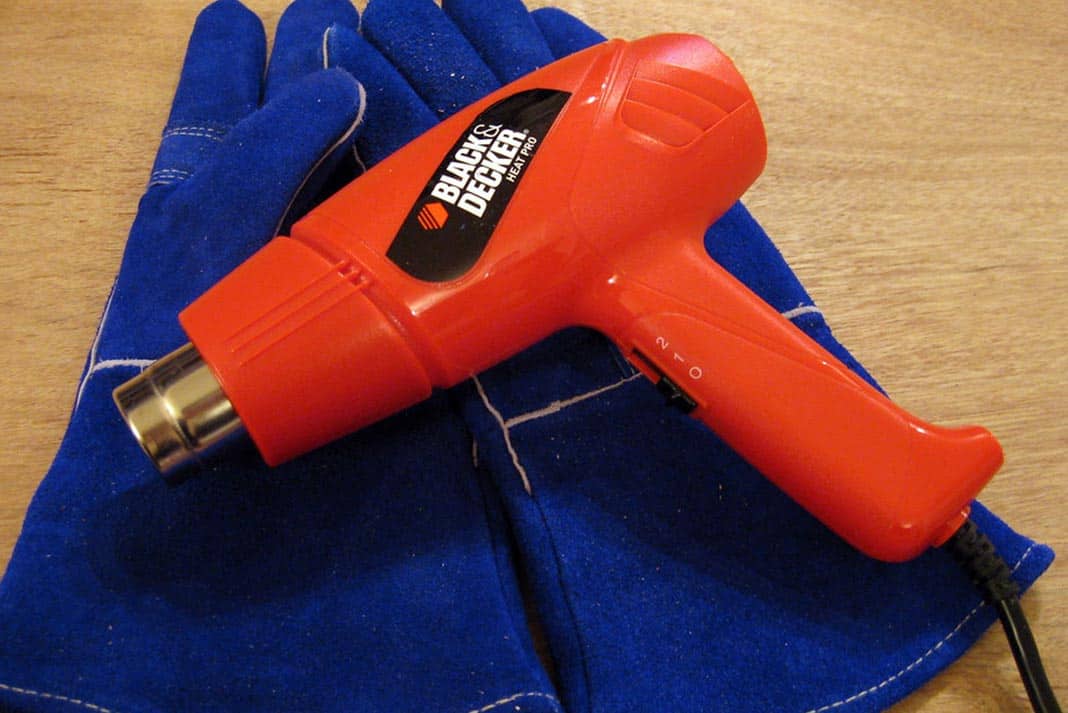
At Ontario’s Frontenac Outfitters, sales and marketing coordinator Cory Davis and owner Larry Showler agree that polyethylene will show more wear than other kayak materials because it has less rigidity. In terms of repair, they say you can use something heated to blend out gouges and suggest razorblades to take off fuzzy bits of plastic.
Composite kayaks are made from fiberglass, aramid and carbon. They are stiffer, lighter and more expensive than their polyethylene counterparts. In terms of weight, fiberglass composite kayaks are typically the heaviest, aramid is middle of the pack and carbon fiber kayaks are the lightest. Depending on the manufacturer of the composite kayak, however, this can be subject to variation.
They can also be easier to damage than polyethylene kayaks. Potential damage can include chipping of the gel coat, delamination and cracking. Remember that cracking and scratches are different. Cracking will be deeper while scratches are superficial and will not allow water to seep into the inside layers of the composite or even into the interior of the boat. You can sand, polish and add more gel-coat to your composite kayak to get rid of scratches.
VIEW ALL COMPOSITE KAYAKS
Thermoform kayaks
Thermoform kayaks are heavier and not as expensive as composites. They are more impact-resistant than polyethylene kayaks, but less so than composites. People who like thermoformed kayaks enjoy that they are usually more inexpensive than composite boats but are lighter than polyethylene. They also have better glide and are stiffer.
Similar to the above two construction materials, scratches are normal, and holes or gouges and other obvious signs of damage can affect seaworthiness. The ABS on these kayaks can become brittle over time, especially if left out in the sun frequently.
VIEW ALL THERMOFORM KAYAKS
Wooden kayaks
Wooden kayaks make up just a tiny portion of the used kayak market, but many who own them enjoy the process of taking care of and maintaining them. Similar to wooden canoes, wooden kayaks are susceptible to rot. This is where determining how the kayak was stored is key.
Be wary of a wooden kayak stored outside on the ground all winter. Wood rot isn’t always obvious. While it can sometimes be identified by spotting or discolored wood, it is also possible rot is inside the wood and the glossy exterior you see looks fine. Chips, cracks or gouges should also be noted.
VIEW ALL WOODEN KAYAKS
Condition of the used kayak’s accessories and parts
There are many accessories and add-ons to a kayak. When buying, a used kayak may come with or without the following. Consider that when deciding if the price is appropriate.
Rudder
A rudder is attached to the stern of a kayak and has cables the paddler can control with foot pedals from inside the cockpit. Rudders control direction. Check to see if the rudder is in good condition by getting in the kayak on the water and using foot pedals to move it side to side. If it is stiff, it takes a lot of effort to move the rudder or it doesn’t move at all, it needs some work.
VIEW ALL KAYAKS WITH RUDDERS
Skeg
A skeg is a blade that comes down from a compartment near the kayak’s stern and aids tracking and trimming in the wind. The depth is often controlled by a cable the paddler can adjust from inside the cockpit.
Make sure when you test paddle the kayak that you test the cables function properly, and inspect the skeg itself for cracks or damage.
VIEW ALL KAYAKS WITH SKEGS
Deck rigging
Deck lines and rigging refers to the ropes or cords that crisscross the kayak deck. The function of deck rigging ranges from providing grab holds to allowing a spot for paddlers to attach water bottles, map bags and paddles to enabling the use of rudders and skegs. Lines and ropes that are frayed or falling apart may indicate the kayak hasn’t been taken care of.
Hatches
Elliott from White Squall Paddling Centre explains hatches made from rubber can degrade quickly, especially if left out in the sun. Some hatches can be replaced, but some companies will not sell the right replacements for older models.
Elliott has a kayak he really likes, but the rear hatch replacement he needs is unavailable, rendering the kayak essentially useless. If you are seriously considering a used kayak and there is a problem with the hatch—or any other part—make sure the boat maker still manufactures replacements.
How much does a used kayak cost?
The feel of a kayak and how well it fits your needs should be the priority when buying a used kayak, not the price. Showler and Davis feel used kayak shoppers should avoid beginning their search with a price in mind. They say it is key to find the right boat and make enjoyment and fit the most important factor.
Kayaks tend to hold their value quite well and stand up against rapid depreciation if they are taken care of. When considering and negotiating price, find the exact model of the kayak in question (you can check our Paddling Buyer’s Guide) and find out what it costs new.
Elliot says that while the price of a used kayak is always changing, they depreciate about 50% five years after being bought new.
Factor in the age of the used kayak you are looking at and consider the damage or issues you have identified. Lastly, make sure you prioritize the comfort and suitability of the kayak to your paddling needs. $200 over your budget will feel insignificant when you are the owner of a perfectly fitted kayak that performs exactly how you want it to for years to come.
Places to buy used kayaks
There’s no one best place to find used kayaks. Local paddling shops will often sell off rental boats at the end of the season—this can be a great option for finding (and testing) a used kayak. Then of course there are garage sales, Classified ads, and talking to local paddlers.
The internet greatly widens your search radius and allows you to comb through many listings in short order. Check Facebook Marketplace, community buy and sell Facebook pages, Kijiji, Craigslist and Ebay to buy used kayaks online.
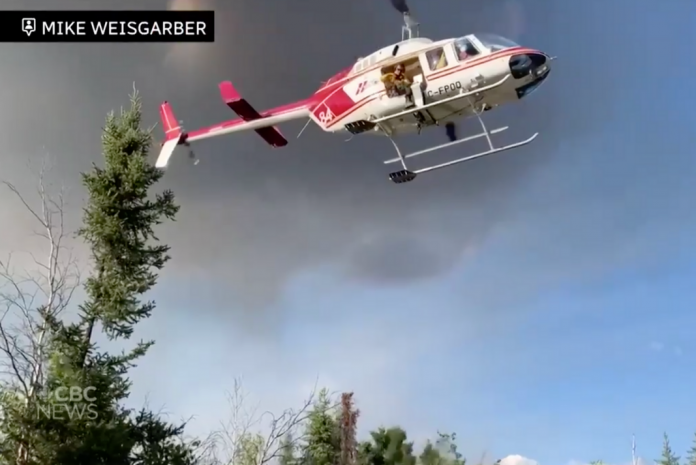
Eight canoeists were airlifted from a campsite on the edge of Lake Rendezvous in Northwestern Saskatchewan, after finding themselves dangerously close to an active forest fire.
The group had set off on the famous Meythe Portage route from Clearwater River to Lake Rendezvous and were initially unaware of wildfire potential in the area.
“We pulled our canoes on carts and climbed up quite a steep set of hills,” said Kelly Kohlert in the video. “We noticed the smoke in the background.”
The background smoke soon became a real threat as the forest fire began to grow, with no signs of slowing down. The group continued on toward the lake and were able to successfully paddle across to their campsite. Once settled, they called for rescue and began to film the incident on their phones.
In the video, Helicopters can be seen flying through the plumes of smoke and toward the group. The rescue took place approximately four hours after they had finished their portage.
“You don’t have to travel around the world to find adventure,” says explorer Mario Rigby, who encourages sustainable, human-powered forms of exploration. | Photo: Mario Rigby
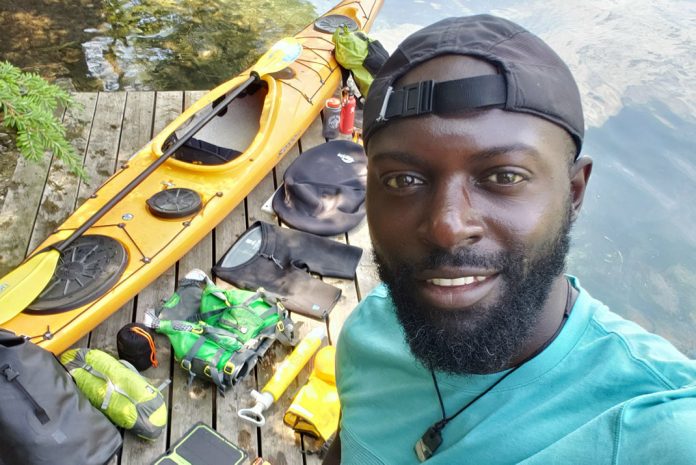
Last summer, Mario Rigby set out to kayak the length of one of the Great Lakes. A member of the prestigious Explorer’s Club and a fellow at the Royal Canadian Geographic Society, Rigby is a full-time explorer. He’s previously cycled across Canada and completed a solo, two-year walk across Africa, 7,500 miles from Cape Town, South Africa, to Cairo, Egypt. But during the pandemic he set out on a new kind of journey.
5 questions for Mario Rigby on paddling Lake Ontario
Rigby had never been in a sit-inside kayak until he set out from the Hamilton harbor on Lake Ontario last June. His impromptu trip aimed to promote local travel in a year where regional restrictions were the norm, advocate for diversity in outdoor adventure, and raise money for MyStand, a charity for at-risk youth. During the 220-mile, 20-day paddle, he camped on shorelines and weathered a half-dozen capsizes and treacherous storms. Far more important than the miles paddled were the perceptions he challenged along the way.
I was supposed to go to Baffin Island in 2020 and do an expedition around how climate change is affecting local communities, and we were going to make a short film about it. But, you know—COVID. So, I decided to do a local expedition. I didn’t know how to paddle a kayak. I do large expeditions once every three years; between those I try to do mini expeditions.
[ Find an adventure close to home in the Paddling Trip Guide ]
Q2 What has the outdoor community’s response been?
Finding sponsors in 2015 for my African expedition was pretty much impossible. I reached out to hundreds of people, magazines, organizations and companies. I didn’t look like a quintessential explorer, and my message was different—I’m not trying to be the first or the best or the fastest.
I feel like this is a very Western perspective of what is successful; you have to be the ultimate at everything. I don’t think that’s true. The definition of an explorer needs some revision. The response to this trip has been intense. I have a team just for inbound requests.
Q3 Who belongs outdoors?
Everyone. The first challenge of being Black in the outdoor community is not being taken seriously. Some people take things seriously because of a certain voice or look. They’ll say, “Oh, you’re not saying these acronyms properly.” There’s elitism and it’s evident in just the way people speak.
We judge people when they don’t know the full names for certain things or when they’re not paying high prices for outdoor gear. That bothers me because I come from a background where I couldn’t afford gear like that; it was completely out of reach. When I look at the price tags of jackets, I’m like, are you kidding me? Every single human being belongs in the outdoor space, but attitudes and cost can be barriers.
If you have more inclusion and diversity in the outdoors, more people are interested in helping the environment. To me, it’s the biggest conundrum. Organizations and companies focus their marketing on a small group of individuals. But all those eco or green messages are only going to reach a small percentage of the population. Why not reach out to the masses?
The only way to do that is to understand other cultures and bring them on board. If people can’t experience what nature has to offer, of course, they’re not going to be interested in protecting it.
Q5 Where is your next expedition?
I’m planning future expeditions. One is to retrace the West African slave trade. I’ll find out where my DNA comes from by starting in Africa and retracing the route to America. It’ll be solo and human- or wind-powered.
This article was first published in Issue 63 of Paddling Magazine. Subscribe to Paddling Magazine’s print and digital editions, or browse the archives.
“You don’t have to travel around the world to find adventure,” says explorer Mario Rigby, who encourages sustainable, human-powered forms of exploration. | Feature photo: Mario Rigby
Kentucky paddler Kevin O’Brien was sitting in an eddy above a low-head dam when, up ahead, he noticed another kayaker drop over the horizon line.
A low-head hydro dam (or “weir”) is a barrier across the width of the river that alters both the flow and the characteristics of the water. These weirs—defined as being less than 5 meters in height—are used as a means of controlling the flow of water for outlets of lakes, ponds, and reservoirs.
For kayakers, they are generally bad news. At the base of these dams, there is often a strong recirculating current that is near impossible to escape. For those who find themselves at the mercy of the powerful hydraulic, it can often mean fatal or near-fatal consequences.
For the unnamed paddler up in front, things were about to get ugly.
[ See all Safety & Rescue equipment in the Paddling Buyer’s Guide ]
Kevin and another nearby paddler sprung into action upon noticing things hadn’t gone to plan. Kevin was able to jump out of his kayak and quickly throw the distressed swimmer a throw bag. Thankfully, after a bit of verbal coaching and clear instruction to “grab it”, the swimmer was able to grab the bag the first time around and was pulled out of the hydraulic.
We exhale a sigh of relief as we see the paddler return safely to the side of the river.
It doesn’t take much imagination to envision this situation playing out differently. This kayaker was saved through the quick action from nearby trained paddlers and having the appropriate safety equipment available. A PFD and a throw bag were paramount to his rescue.
Even with the correct equipment at hand, some aren’t as lucky. The best way to avoid the dangerous hydraulics of hydro-dams is to steer clear of them to begin with. If you plan on paddling a river with a low-head dam, be sure to check water levels before you set out, know your portage routes and take out, and take all the necessary precautions.
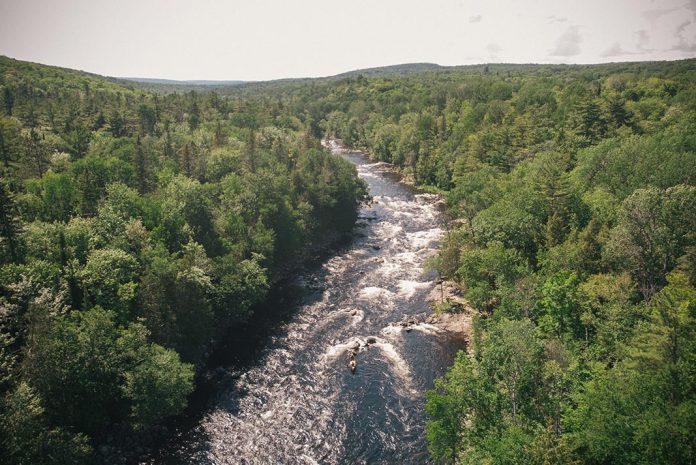
The Madawaska River is the best teacher. | Photo courtesy of: Ontario's Highlands Tourism Organization
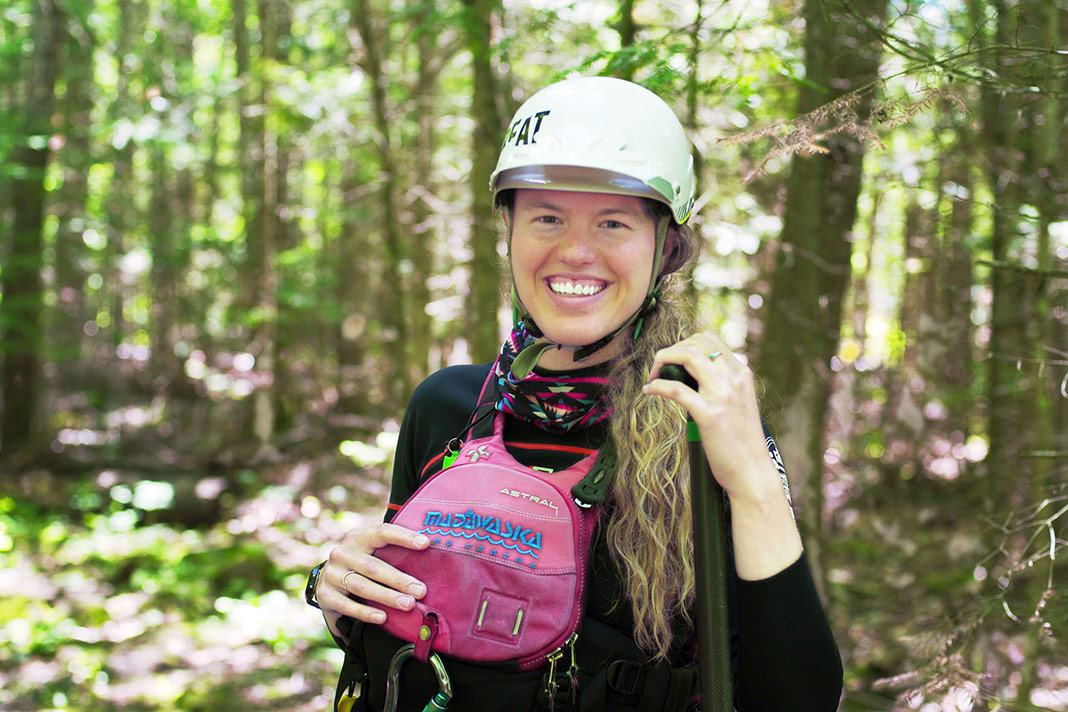
It’s no exaggeration to say water is in the blood for whitewater paddler, instructor and paddle school manager, Stefi Van Wijk. Most days Stefi looks like she’s come straight off a paddling trip which, in all likelihood she is, complete with the calm that comes from spending the day on the water and pushing yourself to do your very best, and then doing it.
Stefi is so passionate about paddling that it’s hard to imagine a time when a life on the water wasn’t a given, particularly in light of her family background. Stefi’s grandparents founded the renowned paddling school, Madawaska Kanu Centre (MKC), nearly 50 years ago. Stefi’s grandfather, Hermann, and mother, Claudia, were the first to descend the Ottawa River, where they ultimately founded the world-renowned rafting resort, OWL Rafting.
Stefi Van Wijk, avid paddler and manager of MKC. | Photo courtesy of: Ontario’s Highlands Tourism Organization
A life spent on the water
Needless to say, paddling played a big role in Stefi’s family growing up. In fact, Stefi’s sister was known as the best female whitewater kayaker in the world for a number of years, and paddling and the water continue to be a passion for Stefi’s parents, Claudia and Dirk Van Wijk, one they have encouraged in their daughters.
“I grew up on the water in a canoe or kayak,” Stefi said. “My earliest memories are of being in the bow of my dad’s canoe, or my mom’s tandem kayak.”
Stefi’s childhood years were spent transitioning seasonally between winters in Ottawa and summers on the water in a canoe or kayak at OWL or MKC, or on family paddling trips. This lifestyle meant Stefi’s relationship to both areas wasn’t given a chance to deepen, as she was always moving from one community to another.
There were many simple things she wasn’t able to experience as a result. For example, she had “never seen all four seasons of a single tree in my whole life…so that was a really big deal for me.” Now settled in the Ottawa Valley’s community of Barry’s Bay, Stefi has finally found a place to call her own.
Stefi getting ready for a day on the water at MKC.
When water is in your blood.
Stefi and her mother, Claudia, on the river.
Paddling the Madawaska River
While she is drawn to all waterways, for Stefi, the Madawaska River has been the one constant in a life spent transitioning between the Ottawa Valley in the summer months and Ottawa, where she attended school, during the rest of the year. Every summer, she and her family would make the drive to OWL or MKC, traveling the familiar roads that returned her to her water girl roots.
“The river is where I’m my best self. It doesn’t care who I’m pretending to be.” -Stefi Van Wijk
At 230 kilometers long, the Madawaska River has plenty to offer all levels of paddlers. It’s divided into four paddling sections as it makes its journey from Source Lake in Algonquin Provincial Park to the Ottawa River—the Upper Madawaska, Middle Madawaska, Palmer Rapids and Lower Madawaska.
The Mad is known for its park and play rapids as well as longer stretches of whitewater. Those looking for flatwater will find that too, either on the river itself or the lakes it flows through.
Spend an afternoon, entire day or weekend on the Mad. | Photo courtesy of: Ontario’s Highlands Tourism Organization
Paddlers can take their pick from ample Madawaska River canoe routes, each of which provides a different experience in a beautiful setting. With opportunities for camping, it’s easy to accomplish a Madawaska River canoe trip, spending the night at the river’s edge.
Madawaska River camping can be had in both front-country and backcountry experiences—the latter within the non-operating Lower Madawaska River Provincial Park. In need of a boat? Madawaska River canoe rentals, as well as kayak rentals, are available from various establishments along the river, depending where paddlers are starting or ending their trip.
And don’t forget that getting to the put-in is itself an experience.
“It’s being on the hilly roads around the Madawaska Valley and the familiarity there…it brings me home,” Stefi said.
The Madawaska River is the best teacher. | Photo courtesy of: Ontario’s Highlands Tourism Organization
Finding her own way
When you come from a family of passionate, avid and competitive whitewater kayakers, one would think it would be easy to embrace paddling. For Stefi, finding her way to the water was a route that wasn’t always clear. The competitive nature of her family’s passion didn’t resonate with her, and for many years she struggled to carve her own path.
“I had to explore my personal reasons or values for connecting to the river. My reasons are different than my mom and dad’s,” Stefi said. “My parents presented the way they connected with the river, and my sister loved that connection. I always kind of felt like the black sheep, but I just needed to explore and create my own unique way of connecting with it. In the end, that way is almost valued more because it’s different.”
The chance to work as a young apprentice canoe guide at the age of 16 gave Stefi the opportunity she needed to strike out on her own and establish her own connection with the water in a way that wasn’t based on competition, the way paddling had been presented to her.
When she injured both shoulders guiding, Stefi was forced to take a temporary hiatus and turned her attention to the administrative side of the family’s companies. This was the beginning of her journey facilitating other people’s introduction to and experiences on the water.
Enjoy peaceful flatwater.
Or the thrill of whitewater.
Managing the Madawaska Kanu Centre
These days, Stefi’s role is to help others learn to love the river as much as she does and bring more paddlers into the paddling community. “Putting bums in boats,” as Stefi’s mom Claudia likes to say. There are still expectations that come along with being manager of MKC, but Stefi isn’t shy about embracing the challenges the role brings.
[ Paddling Trip Guide: View all courses and trips at the Madawaska Kanu Centre ]
“I run a paddling school, so there’s a bit of an expected identity that comes with that, and I can put pressure on myself to live that way,” said Stefi. “I try really hard as an instructor, as a teacher and as a leader to be authentic in my insecurities and my weaknesses so I can inspire others to hopefully show up and be who they are.”
MKC offers a range of paddling courses, from beginner to advanced instruction in the form of day- to week-long programming. In addition, the paddling school provides professional certification in first aid, river rescue and instructing. On top of that, MKC runs whitewater rafting trips.
Even after more than two decades of experience on the water, the river never stops teaching Stefi.
“Every time you’re on the water you learn what you need to learn. It teaches you, if you pay attention. Every lesson I’ve learned in life started on the water.”
Two tandem ocean kayakers are lucky to be alive after a huge humpback whale breached in front of them and appears to come crashing down right beside them, clipping and capsizing their kayak.
The pair had little time to react when a whale unexpectedly surfaced from under the water with such force that it capsized their kayak and launched them into the water.
The incident took place while the kayakers were on a whale tour just outside the harbor in Moss Landing, California.
“We stopped to see a large aggregation of humpbacks feeding and carrying on with random acts of hijinks. There were also a lot of kayakers right in the middle of it all,” said a Sanctuary Cruises spokesperson.
“Humpbacks were coming up next to and in the middle of many kayakers. It was amusing. It’s all fun and games until someone gets jumped on.”
[ Start planning your next sea kayaking adventure with the Paddling Trip Guide ]
Luckily, the kayakers came away from the incident unharmed. Whale watching regulations require boaters/kayakers to keep minimum 200 meters away from killer whales and 100 meters away from all other whales at all times. Responsible paddlers endeavor to follow these rules, and rare exceptional encounters do not represent a typical paddling experience.
PARK CITY, UT (7/2/21) – The Big Gear Show, a premier bike, camp, climb, hike, overland and paddle industry gear event for summer 2021, is pleased to announce an extensive range of retailer education opportunities during the August 3-5 show, held in Park City, Utah. The 3-day event will feature educational presentations, panels, and small group discussions covering a wide range of topics. Industry leaders and professionals can expect training and talks that are relevant to all categories of business.
Photo: Verde Brand Communications
The bike-focused presentations will span universal topics on inclusion and customer retention, and narrow to exploring still-new categories, like eBike. Kent McNeill, the CEO of IMBA and Steve Matous, the president of NICA will help give ideas to keep new cyclists engaged, put more kids on bikes, increase diversity, and break down barriers of entry for all types of new cyclists. Bosch will lead sessions focusing on how finance options and eBike rental can increase revenue, while Greg Robidoux of the Serotta International Cycling Institute will help retailers see the potential of bike fitting in today’s market. The NBDA will host a State of the Industry Panel on Tuesday with Scott King, who is one of SRAM’s co-founders, Tobie De Pauw from People for Bikes, and Larry Pizzi, of Alta Cycling. The NBDA will also present Bicycle Retailer’s Excellence Awards at the show on Wednesday, August 4th.
Photo: Verde Brand Communications
Outdoor specialty and paddlesports retailers will be able to benefit from presentations by Rich Hill, President of Grassroots Outdoor Alliance, on point of sale retail data and how to use it; Teddy Schiavoni of Locally.com, on how to connect with local markets and showing your stock online in local searches; and a panel hosted by Yoon Kim of Outdoor ECom looks at the importance of content marketing to increase your online clout at any stage of retail business. There will also be numerous paddlesports-centric sessions, with an emphasis on supply chain issues, how to convert new participants into enthusiasts, and shipping and logistics. These sessions will feature panelists like Darren Bush, owner of Rutabaga Paddlesports and co-founder of The Big Gear Show, and other leading paddle shops like Alder Creek, Appomattox Paddle Shop, Outdoorplay, and The Trail Head. There will also be a “State of the Paddlesports Industry” roundtable discussion.
Inclusivity is among the must address topics across all outdoor, bike and watersport industries. Camber Outdoors will moderate a panel on the effects of REI‘s recent vendor requirements around Diversity, Equity and Inclusion, revealing opportunities for all retailers to expand their audience.
Photo: Verde Brand Communications
Throughout these structured seminars, panel discussions and talks, attendees will have the opportunity to join smaller breakout sessions, roundtables, and other more intimate opportunities with Grassroots Outdoor Alliance, SmartEtailing, Ascent360, Locally.com, Bosch, and other outdoor recreation, business and diversity experts. Throughout The Big Gear Show, attendees will find unparalleled access to network with top industry thought leaders.
“The goal of these educational presentations is to bring people from multiple facets of the outdoor industry—bike, outdoor and paddlesports—together for the first time in over a year and learn,” said Sutton Bacon, founder and co-owner of The Big Gear Show. “Much has changed in the industry—and the world—over the past year, and the Big Gear Show is the perfect place for us to collectively learn from all of these trials we’ve just been tested by.”
“The importance of planning has proved fruitful over the past 15 months, with the most profitable retailers benefiting by staying informed and pivoting with the trends and times,” said Heather Mason, president of the National Bicycle Dealers Association. “Dynamic content, focused specifically on 2022 planning entwined with daily peer-to-peer learning sessions makes The Big Gear Show the best opportunity to learn from our current moment while planning for future success. All retailers in attendance, both bike and outdoor, will find these topics engaging.”
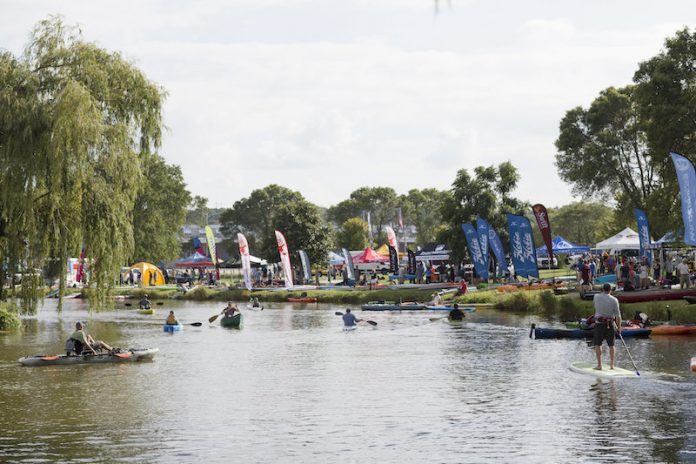
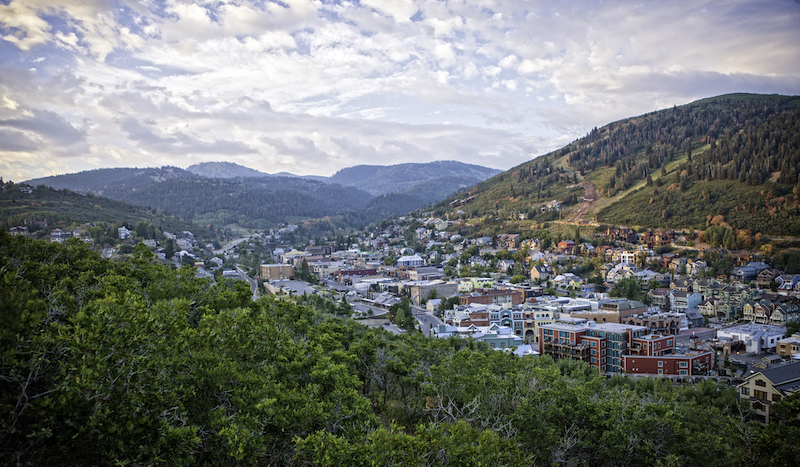
The Big Gear Show is scheduled for August 3-5, at Deer Valley Resort in Park City, Utah. The event is an invitation-only, multi-category trade event for the bike, camp, climb, hike, outdoor, overland and paddle markets. The show targets an invite-only group of hand-selected retailers and brands across these industries, as well as associated national media.
Photo: Verde Brand Communications
Getting out in beautiful environments is the foundation of the outdoor industry, so attendees will use Deer Valley Resort to test gear and gain a new perspective of their own industry over the course of the 3-day event.
The Big Gear Show is North America’s first open-air trade show taking place in Park City, Utah, August 3-5, 2021. The show is built by and for retailers and offers an integrated, best-in-class demo-driven buying experience serving a curated group of 500 hand-selected retailers and hundreds of brands across the outdoor, cycling and paddle communities. The Big Gear Show is endorsed and co-presented by the Grassroots Outdoor Alliance, National Bicycle DealersAssociation and People For Bikes. There is simply no better place to discover new brands and products and drive your specialty business forward.
British pro kayaker and member of the “Senders” crew, Bren Orton, got more than he had bargained for on a recent trip to the Austrian Alps.
In the video, Bren talks us through the troubles that he and his group had experienced with the fluctuating temperatures and unpredictable water levels. So, when the water levels began to consistently rise for a solid week, creating technical, big water rapids—the experienced whitewater enthusiasts were more than ready to jump in their kayaks and hit the river.
The incident occurred on a challenging and continuous section of the Oetz River. At 3:00, Bren turned a corner and—we can only imagine—was filled with the same sense of impending dread as we are. He spotted the river-wide log just meters away from him. In the fast-moving current typical of snowmelt rivers, there is little opportunity to make any stops.
Bren hit the log and his kayak flipped backward underneath it. He experienced a second or two of downtime before resurfacing on the downstream side. It appears that he narrowly made it under without getting stuck.
[ See all Safety & Rescue Equipment in the Paddling Buyer’s Guide ]
Moments later, he glanced upstream, only to see his paddling partner undergo the same terrifying ordeal.
Both kayakers were lucky to escape from this ordeal unharmed. Bren’s incident reinforces the importance of scouting rapids, bringing appropriate safety and rescue equipment on the water, and ensuring that the group’s skill level is a good match for the section of water in question.






 This article was first published in Issue 63 of Paddling Magazine.