Home Blog Page 143

Boat Review: Nigel Dennis Pilgrim Expedition Kayak

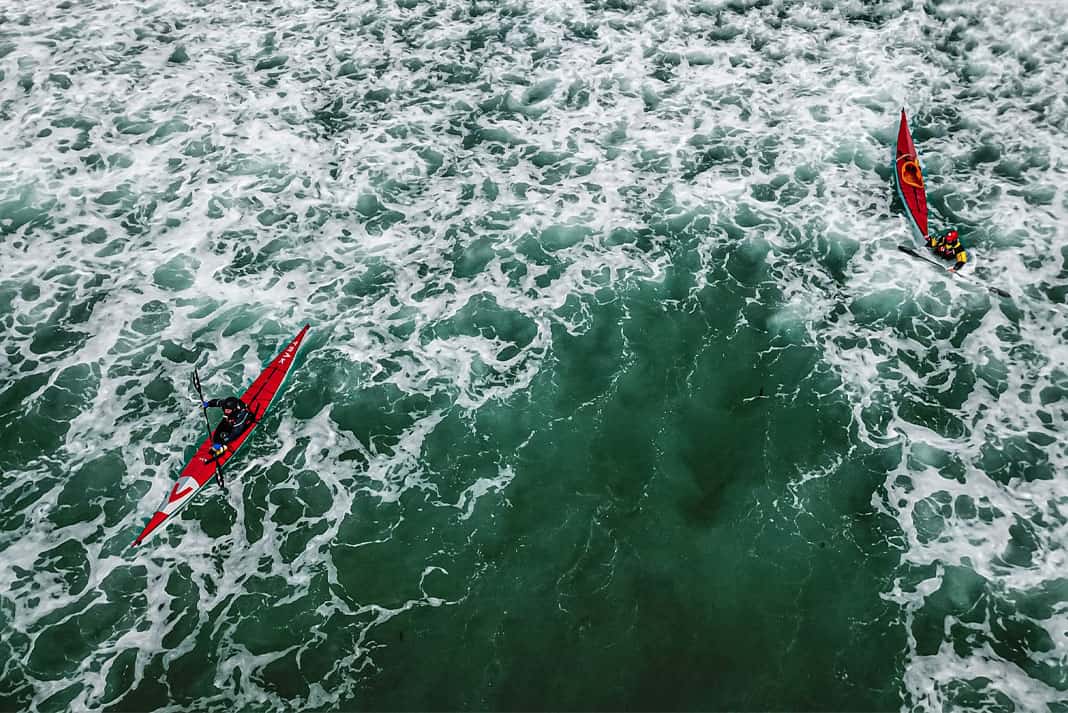
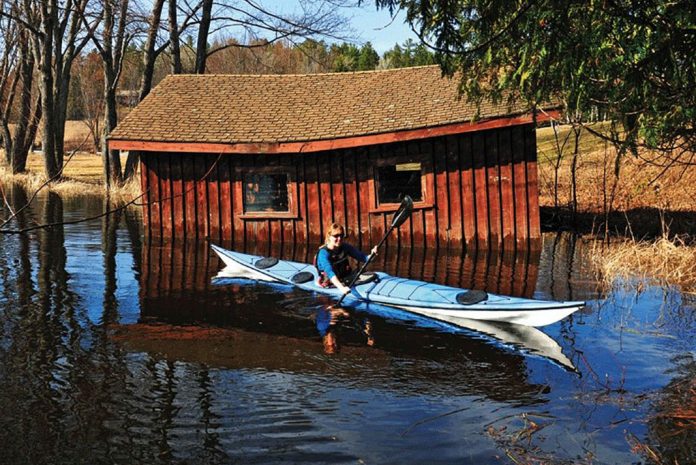
Woman paddles a Nigel Dennis Pilgrim Expedition kayak
Feature Photo: Vince Paquot

When it comes to classic British sea kayaks, few designs are more familiar than the NDK Explorer and Romany. In 2010, Nigel Dennis Kayaks released the Pilgrim Expedition, along with a smaller sister named Pilgrim, that promises to be just as popular. Built for the petite paddler looking for a capable cruiser with a playful streak, the Pilgrim Expedition already holds the female record for paddling around Ireland and Anglesey.

Nigel Dennis Pilgrim Expedition Specs
Length: 17’
Width: 19.7”
Weight: 58 lbs
Dry Storage Volume: 40.4 U.S. gal
MSRP: $3,906 USD
www.seakayakinguk.com
[ Paddling Buyer’s Guide: See the Nigel Dennis Kayaks Pilgrim Expedition ]

NDK’s Pilgrim Expedition is sized for smaller paddlers

NDK founder and designer Nigel Dennis says the Pilgrims allow lighter paddlers to “keep the full waterline engaged for expedition speeds even while day paddling.” To this end, both Pilgrims feature a slim 20-inch beam and 12-inch foredeck depth, with the Pilgrim Expedition adding 15 inches in length for increased carrying capacity.

While the Pilgrims’ long, slender lines are certainly eye-catching, the most distinctive feature is the knee bumps. Low decks reduce weathercocking and eliminate unnecessary volume around the paddler’s legs, but they also create comfort and fit limitations. NDK solved this problem by molding whitewater kayak-inspired knee pockets into the deck.

Your knees will thank you

At 5’6”, I found the knee bumps on the Pilgrim Expedition perfectly situated. Combined with the low deck and small keyhole cockpit they provide locked-in responsiveness for edging, bracing and rolling that’s akin to form-fitting Greenland-style kayaks. Getting knocked about after a capsize in rough water, I felt none of the dreaded knee slip all too common for smaller paddlers.

Paddling through breaking waves and strong currents, the Pilgrim Expedition inspires confidence. The hull is a very shallow V, resulting in surprisingly high initial stability for its narrow beam. Secondary stability is even better—you can bury the coaming without needing so much as a low brace.

Heading into a heavy wind chop, the Pilgrim Expedition is mercifully dry and carries speed well whether empty or loaded to travel. The upswept bow’s fine entry flares voluptuously into the hull, adeptly piercing waves and then deflecting them away from the paddler’s face. The flush-mounted skeg slider is robust and easy to deploy, though superior tracking means you’ll seldom need to.
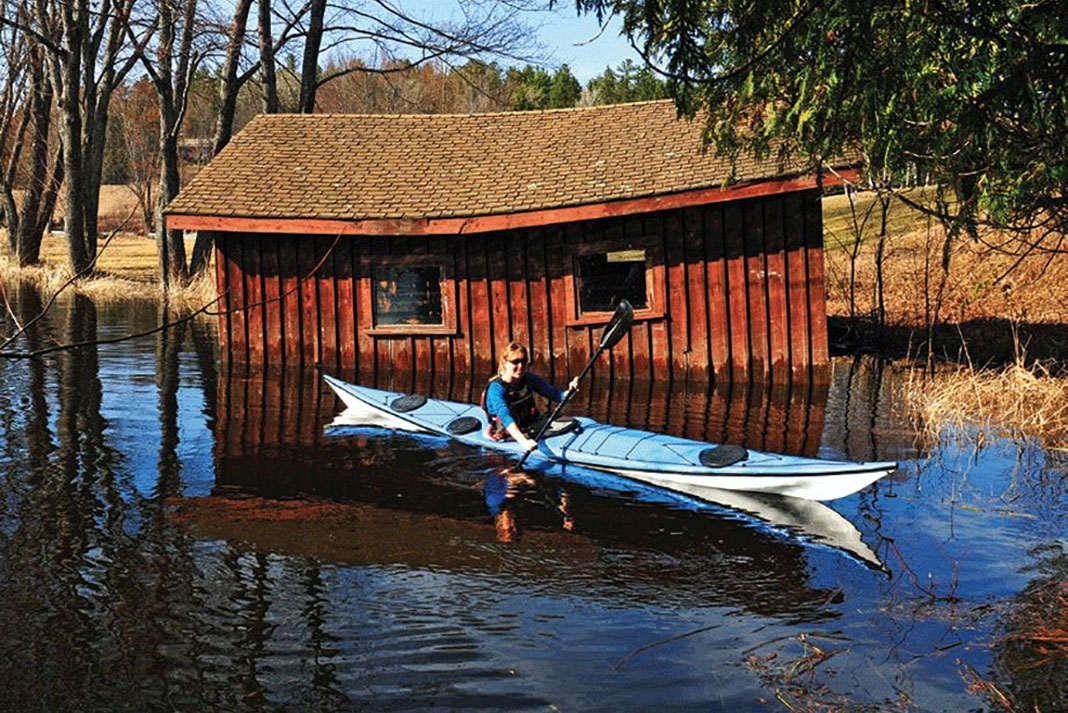
Woman paddles a Nigel Dennis Pilgrim Expedition kayak
Feature Photo: Vince Paquot

Pivoting around for a downwind run is a bit more work—blame the long, distance-chewing waterline—but edging aggressively will quickly bring it about. Running with the sea, the Pilgrim Expedition catches waves easily and the bow stays at the surface while surfing.

[ Plan your next kayak expedition with the Paddling Trip Guide ]

The Expedition is strong and robust

Outfitting is traditional British minimalist, but it’s a formula that works. The fiberglass seat pan is comfortable and available in three sizes, while the low profile backband won’t interfere with rescues and can be removed altogether for easier laid-back rolling. Two eight-inch round rubber hatches and a smaller day hatch ensure bone-dry storage compartments but necessitate careful gear selection and packing.

The build quality is equally impressive. The fiberglass lay-up feels like it could go bow to rocks and come out on top. NDK says “it is ideal for the kayaker who really wants a durable kayak and is not too fussy about weight.” Smaller paddlers may find solo carrying difficult.

[ Paddling Buyer’s Guide: See the all Nigel Dennis kayaks ]

Wander far and wide with the Nigel Dennis Pilgrim Expedition

Continuing the NDK lineage with a winning blend of tried-and-true and intelligent innovation, the Pilgrim Expedition is a perfectly proportioned tripping kayak for both small and taller, slim paddlers with incurable water wanderlust.

This article was first published in the Summer/Fall 2012 issue of Adventure Kayak Magazine. Subscribe to Paddling Magazine’s print and digital editions, or browse the archives.


Video review of the NDK Pilgrim Expedition sea kayak”
 

Finding The Balance Between Safety and Independence

recreational kayak accident
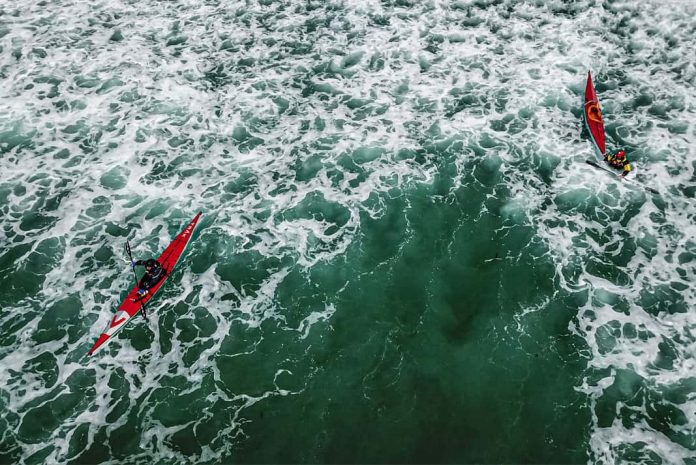
Skills and rescue training is the best way to prevent an on-water accident. At a TRAK Kayak Surf Camp weekend in Ucluelet, British Columbia, paddlers learn to read the swell and recognize safe zones, which allows them to "enjoy and play in this area of the coast," says photographer Jaime Sharp. | Photo: Jamie Sharp

On May 6, 2016, Bryan Orrio and Kelley McCallum bought two Old Town Trip 10 recreational kayaks from Dick’s Sporting Goods in Salem, Oregon. They headed for the Mehama run on the nearby North Santiam River, a stretch I know well.

Lots went wrong.

Orrio and McCallum claim the salesperson removed flotation foam from the bows, believing it was packing material. The two rec boats were on a class II whitewater run. The paddlers were inexperienced enough to refer to their paddles as “oars.”

Claiming injury from capsizing and wrestling the boats to shore, the pair sued Dick’s Sporting Goods for $455,000. Regardless of the outcome, the aquatic and legal kerfuffle is a warning about a possible future of kayaking. As paddling becomes increasing popular and mainstream, there will be more novices. Kayaks will be more readily available. But the water won’t get any more beginner or rec-boat friendly than it is now. The risks are apparent, and they raise old questions anew. What are the responsibilities of outfitters, paddlers and groups? What’s the right balance of safety and independence? When should we own it and admit we’re doofuses who got in over our heads?

When I descended the Grand Canyon, we asked the outfitter what skill level they required for renting their rafts. The answer? “A valid credit card.” They just rented equipment, and if we got into trouble or wrecked our gear, that was on us.

On the other hand, one local kayak shop I know won’t rent kayaks until the people have taken a basic class. I once arranged an out-of-town rental and was quizzed relentlessly about the rescue hierarchy. My local paddling clubs each have different takes on responsibility. One says that it’s the organizer’s job to get people to the put-in, but the participant’s responsibility to get down the river. Another asks the organizer to vet participants, assess conditions, skills and equipment, which can keep people from wanting to lead trips. Everyone has waivers. Nobody reads them.

[Paddling Buyer’s Guide: View All Safety And Rescue Gear]

Increasingly, kayaks are sold at big box retailers like Dick’s. Once the domain of specialist outfitters with in-depth knowledge of technique and waterways, buying a kayak can now be like buying a cordless drill at Home Depot or a car at the local dealership. It’s up to you not to put a hole in your thumb or drive into a tree.

But driving and drills are regulated. We test for driving licenses. Car safety is set by the National Highway Traffic Safety Administration and Transport Canada. There’s no test for the cordless drill, but novice craftspeople intuitively know not to put the drill against their hands. Novice paddlers don’t know to edge down current, or to edge at all. On that Mehama run, I’ve bailed out plenty of drunk summer floaters in inflatable pool toys and retrieved many a yard-sale beer cooler.

Nobody goes kayaking for the safety talks or regulations. We go to relish the freedom, self-reliance, and shared competence of navigating water that doesn’t care a whit about whether it’s safe for us or not. And when the same people who sell kayaks also sell softball bats, lacrosse sticks and soccer cleats, we’ll inevitably have salespeople who don’t know what kayaks are appropriate for class II or why there’s foam in the bow.

If folks are going to progress deeper into paddling, self-reliance and good judgment will help far more than rules and regulations.

These are the growing pains of kayaking’s success. If drills were only sold at a few boutique hardware stores in each city, we’d have a lot fewer people making cool stuff in their garages. We’re headed for a paddling community that is larger, and largely clueless. We could limit who can sell, buy, rent or paddle kayaks. We could ban boats without fore and aft bulkheads or float bags. We could up our game to educate everyone involved. We could do all three. Or we could accept capsizes as part of the learning process, a rite of passage like a kid’s scraped knees from the first bicycle crash without training wheels. Of course, when the kids in question are middle-aged and one’s the former County Deputy District Attorney—Orrio in this lawsuit—chances are we’ll have some lawsuits as well as stories at the pub afterward.

recreational kayak accident
Skills and rescue training is the best way to prevent an on-water accident. At a TRAK Kayak Surf Camp weekend in Ucluelet, British Columbia, paddlers learn to read the swell and recognize safe zones, which allows them to “enjoy and play in this area of the coast,” says photographer Jaime Sharp. | Photo: Jamie Sharp

My bow points firmly toward education and self-reliance. Paddling is one of the last bastions of nature following its own rules. It’s survived like this from Inuit seal hunters, the advent of guided trips, helicopter parenting, and the Facebook era’s free-for-all social media groups. Climbing has the rock gym, skiing has lifts, grooming, and out-of-bounds rules. Kayaking, a few whitewater parks aside, is still just humans and the elements with no intermediaries. If folks are going to progress deeper into paddling, self-reliance and good judgment will help far more than rules and regulations. Yes, retailers should know the basics, like what flotation foam is for, and whether a recreational boat belongs on whitewater. And so should any buyer with a web browser.

Edward Abbey, one of my childhood heroes, wrote that the right to get lost, sunburnt, stranded or eaten by bears is the right and privilege of any free American. I haven’t been eaten by bears (yet), but my favorite childhood memories are paddling a canoe with just me and my sister or a childhood friend in the boat at the age of eight. And when things go downhill? As that venerable BCU five-star Jedi named Yoda once told a struggling two-star candidate named Luke Skywalker, “The greatest teacher, failure is.”

Or, as my friend Karl, who’s taller and doesn’t live on a swamp planet, says, “The environment is often the best teacher.” More drysuits, fewer lawsuits.


Neil Schulman loves the North Santiam River, especially the stretch from Packsaddle to Mill City, just a bit above the run in question. As of this writing, the lawsuit is awaiting discovery and a dispute resolution report.

Skills and rescue training is the best way to prevent an on-water accident. At a TRAK Kayak Surf Camp weekend in Ucluelet, British Columbia, paddlers learn to read the swell and recognize safe zones, which allows them to “enjoy and play in this area of the coast,” says photographer Jaime Sharp.
| Photo: Jamie Sharp

Ed Gillet’s 63-Day Solo Kayak Odyssey

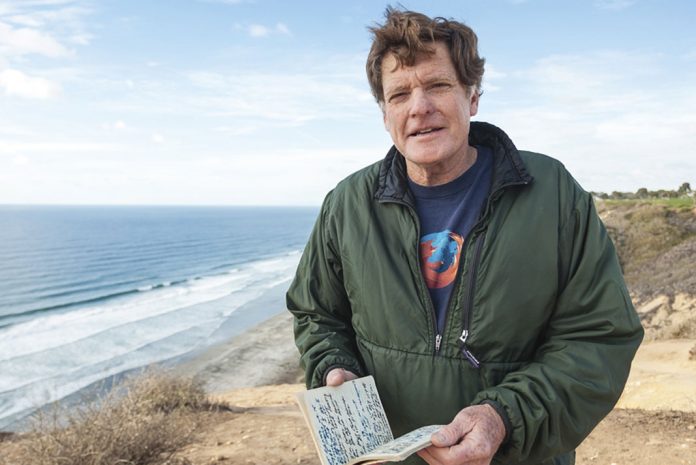
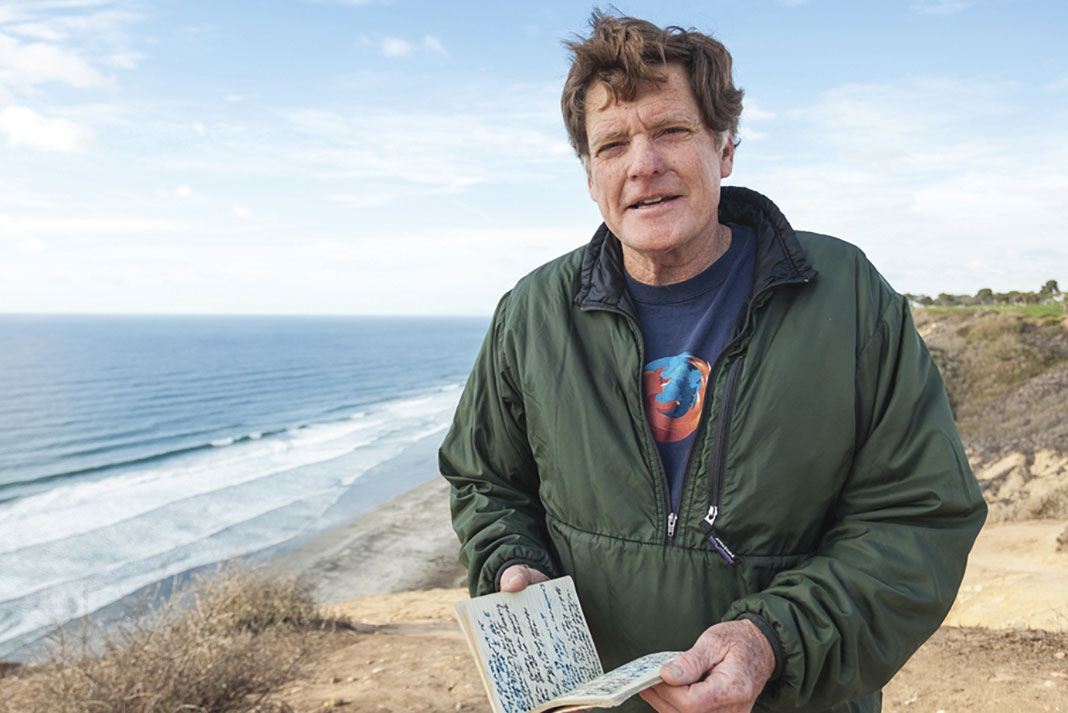
Ed Gillet reading his journal from his 63 day trip
Ed Gillet reads journal entries from his 63-day crossing. | Feature Photo: Robert Zaleski


In 1987, Ed Gillet undertook a harrowing solo paddle to Hawaii that has only grown more famous in retrospect. That same year Michael Jackson released Bad and babies were being born who would become today’s millennials. This was a time before corporate sponsorships and Internet updates. When his bow finally cut a furrow into the sand on Maui, the only person there to greet him was a local drunk staggering along the beach. It was the same fanfare he received when he’d left San Diego 63 days and 2,200 miles earlier: none.

Ed Gillet’s ocean crossing was the best and worst of times

There were beautiful days when blue and gold mahi-mahi frolicked around his kayak like puppies, when the sea was a perfect royal blue and trade winds surfed him to 80-mile days. Other times Gillet popped painkillers to dull the pain of saltwater sores on his hands so he could hold his paddle. He ran out of food and began eating toothpaste. Waves crashing into the cockpit made it impossible to sleep. When Mauna Kea finally appeared in the viewfinder of his sextant—yes, he used a sextant—he was so addled he cursed it for obstructing the horizon he needed to fix his position.

Gillet didn’t use the sextant out of nautical nostalgia: Loran and Omega, the navigation systems of the time, wouldn’t survive a kayak trip. He used an off-the-shelf yellow Necky Tofino—a 20-foot tandem sea kayak that carried more than 600 pounds of essentials to keep Gillet alive. His progress was slower than planned—he envisioned 40 days, ran out of food on day 60 and landed on day 64. People thought he’d most certainly died. Relatives contacted the United States Coast Guard, the Commandant of the U.S. Navy and even current President at the time, Ronald Reagan, to try and find him in the vast Pacific.

Gillet pioneered the modern ocean crossing by kayak

Ed Gillet’s California-to-Hawaii journey was the first of the modern kayak megacrossings. It was a fundamentally different type of paddling than even the most rugged coastal expeditions or island circumnavigations. It was a journey far harder for most sea kayakers to understand. Only a handful of paddlers would know: Gillet, R.W. Hand, who tried twice and failed to repeat Gillet’s journey, Aleksander Doba on the Atlantic in 2014, Sarah Outen on her worldwide journey, Scott Donaldson, James Castrission, Justin Jones and the late Andrew McAuley on the Tasman Sea.

It’s easy to dream of paddling the Inside Passage to Alaska, around Sardinia, Iceland, or any other coastline or island chain in the world, because those trips are expansions in time, distance and difficulty from what we do on weekends. When I’m on a two-week trip I can easily imagine how fun it would be to just keep going; I’d bring more food, train more, and see what’s around the next point and the next and the next. But crossing a featureless void? Perhaps not.

Camping out on the ocean waves

Gillet described nights as campsites even though they were just wherever in the Pacific he inflated pontoons, dropped sea anchors and squiggled into his cockpit in a salty-wet sleeping bag.

“Each night’s campsite had a different feel—I tried to memorize the look of each place so I could recognize them again. On the ocean the markers are subtler but they are there nonetheless,” he told Dave Shively in 2003. Sounds strange to me, but I suspect ocean sailors know the feeling well.

Ed Gillet reads journal entries from his 63-day crossing. | Feature Photo: Robert Zaleski

Like an astronaut, Ed Gillet returns to land

Gillet’s paddle from California to Hawaii is to coastal kayaking what Space flight is to air travel. Regular people fly all the time, just like regular people kayak coastlines, climb mountains and run rivers. We fully expect to land safely and we make plans for dinner after we land at some airport, or some beach. Space flight, on the other hand, is the province of a select few whose journeys bring both danger and a unique view of our planet.

Gillet kayaked into a rarefied and isolated world, dependent on the only life support system he brought along. When he finally landed and stepped out on the beach in Maui, his legs crumpled under him. Ed Gillet was an astronaut returning to earth after a long time without gravity.


Ed Gillet reads journal entries from his 63-day crossing. | Feature Photo: Robert Zaleski


Unleashing The Dreamer

And all the night’s magic seems to whisper and hush—Van Morrison. | Photo: Ismail Atiev

Next time you’re out on a clear, moonless night, look up. In the darkest skies of wilderness areas across North America, Yale University astronomers estimate you might be able to see up to 4,548 stars with the naked eye.

Is that all? When presented with the glittering night sky it seems like so many more. It’s almost easier to imagine all hundred billion of the stars in our galaxy are there for us to behold.

It takes a vivid imagination (and some mind-bending math) to visualize what’s really out there: an estimated hundred billion galaxies in the universe, each with a hundred billion stars and most of those with planetary systems of their own. We’re spinning on a infinitesimally tiny (comparatively, anyways) blue and green orb in the Orion arm of the Milky Way, in the Virgo cluster, on the outskirts of the Laniakea super cluster, somewhere in the agoraphobia-inducing known Universe.

Cool, right?

Stargazing is one of my favorite wilderness activities. Give me a clear night sky and a flat rock and I’m a happy camper. When asked by TIME magazine what the most astounding fact about the universe was, astrophysicist-turned-pop-culture icon Neil deGrasse Tyson said: “The atoms of our bodies are traceable to stars that manufactured them in their cores and exploded these enriched ingredients across our galaxy, billions of years ago. For this reason, we are biologically connected to every other living thing in the world. We are chemically connected to all molecules on Earth. And we are atomically connected to all atoms in the universe. We are not figuratively, but literally stardust.”

[ Discover the best paddling gear of the year in the online Paddling Buyer’s Guide ] 

Imagine that. It’s the philosophical stuff contemplative dawn patrols by J-stroke are made of.

unleashing the dreamer
And all the night’s magic seems to whisper and hush—Van Morrison. | Photo: Ismail Atiev

There are 65 recognized dark sky preserves around the world, protected areas where the night sky is purposely kept free of light pollution. When atmospheric visibility and constellations align, there are places the Milky Way is so bright it seems to cast a shadow. That’s where I dream of paddling next. What do you dream of?

I ask because I know most canoeists to be dreamers. From winter evenings tucked away by the fireplace, dog-eared maps and guidebooks strewn across the kitchen table to fantasizing with friends over brews about the next trip—big or small—there’s always another adventure on the horizon.

There are two kinds of dreams: the one where you find yourself eating pickles while wearing a birchbark hat and talking to Uranus, and the reverie-type typically enjoyed while sitting in traffic or gazing out the window of your office. I’d also argue there are two types of dreamers: the ones who just dream and the ones who dream and do.

“I’m so busy,” is the mantra du jour, but no excuse. Write down your dream list—you won’t know what to work towards until you do. Open a calendar. Find out when you’re not next busy—six weeks from now? Six months from now? Align a trip with a date. Book time off work. Tell everyone. Recruit a friend. Don’t let anything get in the way of making it happen. Have the time of your life. Repeat as necessary.

Don’t put it off until next year or the year after or the year after that. Don’t procrastinate on your dreams.

Like every issue, this magazine is filled with dreamers. What pie-in-the-sky paddling plans will you make come true next?

They might say you’re a dreamer, but you’re not the only one.


This article originally appeared in the Canoeroots
Summer/Fall 2016 issue.
Subscribe to Paddling Magazine and get 25 years of digital magazine archives including our legacy titles: Rapid, Adventure Kayak and Canoeroots.

10 Compact Essentials For Filming Your Wilderness Adventures

The cost of fame is an extra 15 pounds portaged on multiple six-mile height-of-land crossings. | Photo: Alex Traynor

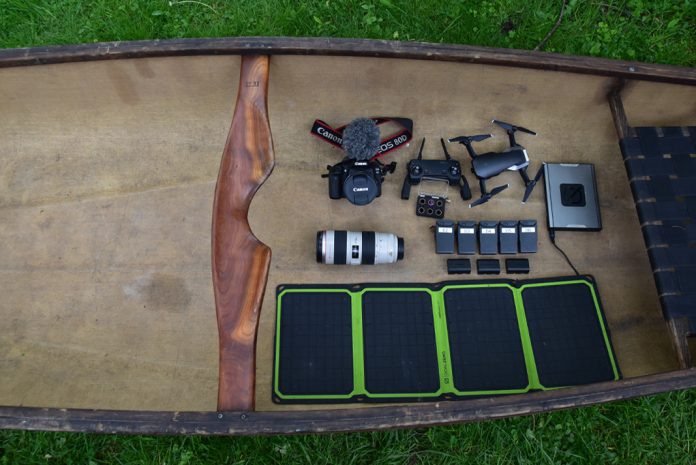
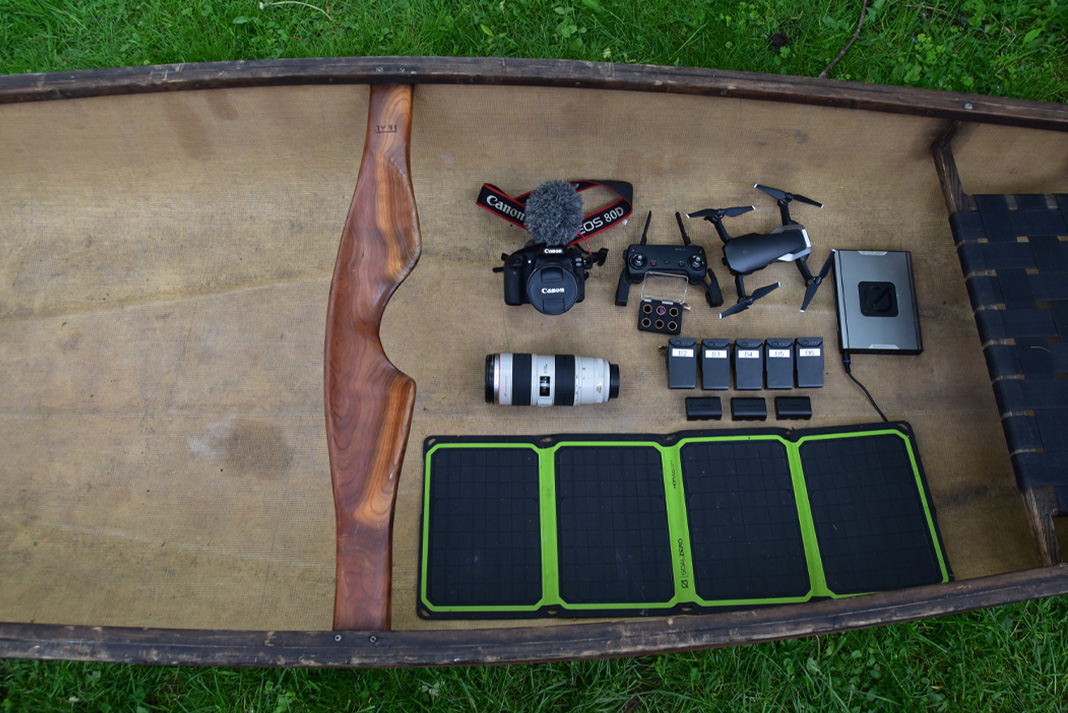
To capture a 35-day crossing of Labrador last summer, I knew I needed a film kit up to the challenge of the province’s rugged terrain and temperamental weather. These items weigh just 15 pounds combined and fit into a Pelican 1500 waterproof case (excluding the solar kit).

adventure film gear
The cost of fame is an extra 15 pounds portaged on multiple six-mile height-of-land crossings. | Photo: Alex Traynor

Canon 80D

I have paddled more than 1,000 miles with my 80D and still love shooting with it. Having a 24-megapixel sensor and shooting up to 1080/60p, this camera offers a good balance of photo and video quality, and left me with money to still go on trips. The only things it’s missing are the ability to shoot in 4K and an option to capture 120fps. These features exist on other models but are double the price.

$899 | canon.com

BUY ON AMAZON

Canon EF 16-35mm f2.8 | Canon EF 70-200mm f2.8

Spending more money on lenses makes a significant difference in image quality. Filming in close quarters to capture campsite and in-canoe shots means a wide-angle lens is essential. Ninety percent of the time, I use the Canon 16-35mm f2.8 USM lens. The other 10 percent, I use my 70-200mm telephoto lens, perfect for capturing wildlife as well as getting b-roll shots, like fish rising out of the water or capturing emotion on someone’s face.

$1,999/ $1,799 | canon.com

BUY ON AMAZON

Rode VideoMicro

I’ve learned the hard way not to shoot without a microphone. It can be tempting to skip this step when in a rush, but wind noise will leave some shots unusable. Opt for a mic with a furry wind shield like the Rode VideoMicro, perfect for its compact size, sound quality and price. Larger Rode products refer to the fluffy wind shield as a deadcat, but I’m fairly confident this is just a name and not a true material description.

$79 | rode.com

BUY ON AMAZON

DJI Mavic Air

A drone adds an undeniably impressive perspective. I shoot with DJI’s Mavic Air because it practically fits in my pocket. While the image quality isn’t quite as high as the Mavic Pro 2, it still shoots in 4K, will reach the Canadian legal height of 120 meters, and shoots excellent slow-mo aerial footage. After our film was released, the drone footage of massive waterfalls and mountainous barrenlands received the most compliments.

$599 | dji.com

BUY ON AMAZON

Canon LP-E6N | Mavic Air Intelligent Flight Battery

The Canon batteries hold their charge for an impressive amount of time, sometimes lasting up to two days while filming. I packed 10 of these batteries and also brought along a solar panel for recharging. The Intelligent Flight Battery for the Mavic Air caused me the most stress. Each battery only allows a maximum flight time of 15 minutes, and once the battery is below 30 percent, the drone won’t take off. I packed six batteries and planned out each shot before takeoff.

Canon $80 | DJI Mavic Air $79

PolarPro Cinema Series Mavic Air (6 Pack)

Neutral Density filters (ND filters) are essential to capture your image with the optimal exposures. Since the Mavic Air has a fixed aperture, carrying an ND filter gives you more control over your lighting, allowing you to lower your shutter speed.

$149 | polarprofilters.com

BUY ON AMAZON

Goal Zero Nomad 28 & Sherpa 100

Carrying a solar kit and battery bank was worth the extra 4.5 pounds. In perfect sunny conditions, the Goal Zero Nomad 28 solar panels could fully charge the Sherpa 100 battery bank in eight to 10 hours on the canoe deck. Even though it rained for 28 of the 35 days, we managed to top up a charge by up to 20 percent on overcast days. The Sherpa 100 has USB ports to charge GPS, satellite phones and smartphones used to control the drone. Each used about 20 percent of the battery bank to charge. The Sherpa also has an AC outlet to charge Canon batteries, which used about 20 percent, and the Mavic Air batteries used closer to 40 percent. The Mavic Air charger is technically not compatible with the Sherpa 100, and it would sometimes cause the battery bank to overheat.

Nomad 28: $249 / Sherpa 100: $299 | goalzero.com

BUY ON AMAZON

In 2019, Paddling Magazine staffer Alex Traynor was part of a four-person team paddling a 415-mile route across Labrador. Watch the 50-minute documentary Boreal to Barrenlands – Crossing Labrador on Vimeo or the in-depth video series at Youtube.com/northernscavenger.

This article was first published in Paddling Magazine Issue 62. Subscribe to Paddling Magazine’s print and digital editions here , or browse the archives here.


The cost of fame is an extra 15 pounds portaged on multiple six-mile height-of-land crossings. | Photo: Alex Traynor

8 Things You Didn’t Know About Depth

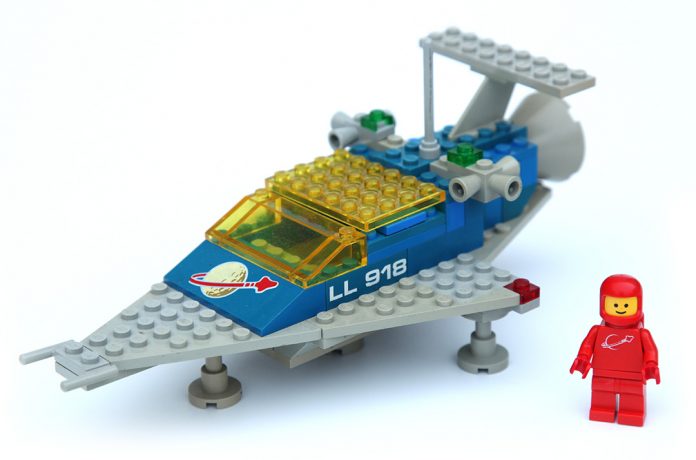
one of the very first Classic Space LEGO sets, The 918 Space Transport was released in 1978. | Photo: desdemona72 - stock.adobe.com
  1. A canoe’s depth is measured from its gunwales to the bottom of the boat. Depth is measured in three places—the bow, stern and center. Adding depth to the hull adds capacity and adding depth to the bow and stern helps fend off waves. All other features being equal, the trade-off for a deeper boat is more weight and vulnerability to the wind.
  2. Lego’s “Classic” Space theme lasted from 1978 to1988. Its mostly monochromatic rockets and spacecraft were focused on deep space exploration. One of the minifigures from this era was popularized in 2014’s The Lego Movie. Vintage astronaut Benny had a cracked part in his helmet said to cause an oxygen leak, but not even hypoxia could quell his enthusiasm for building spaceships.
  3. In May 2019, American undersea explorer Victor Vescovo dove a titanium-hulled submersible into Challenger Deep in the Mariana Trench, the deepest part of the ocean, located in the southern end of the Pacific. He holds the record for deepest dive at 35,853 feet (10,927 meters). The pressure is 1.25 metric tons per square centimeter at the bottom of Challenger Deep.
  4. Q: Is this pool safe for diving? A: It deep ends.
  5. Deep-fried soda is a frozen Coca-Cola-flavored batter that is deep-fried and then topped with Coca-Cola syrup, whipped cream, cinnamon sugar and a cherry. Inventor Abel Gonzales Jr. introduced it at the 2006 State Fair of Texas, where he sold 10,000 cups in two weeks. It has 830 calories per cup.
  6. A boat’s hull shape and depth affect freeboard, which is the amount of canoe between waterline and gunwale. The industry’s capacity rating standard is the maximum weight a canoe can hold while maintaining six inches of freeboard. However, this is often several times higher than a canoe’s optimal weight range for best performance.
  7. Georgia’s Veryovkina Cave is the deepest known cave on Earth. It took more than 50 years and 30 expeditions for Russian explorers to reach its depth of 7,257 feet (2,212 meters). It’s a three-day expedition to descend and another three days to ascend. And speleologists—cave geeks—believe there is still more to be discovered.
  8. Depth perception jokes are always near misses. Many evolutionary biologists believe most predators have both eyes looking forwards, to allow for binocular depth perception and judging distances when they pounce on their prey. Most plains herbivores have their eyes on the sides of the head, providing an almost 360-degree view of the horizon, enabling them to notice the approach of predators from nearly any direction.

This article was first published in Paddling Magazine Issue 62. Subscribe to Paddling Magazine’s print and digital editions here , or browse the archives here.


One of the very first Classic Space LEGO sets, The 918 Space Transport was released in 1978. | Photo: desdemona72 – stock.adobe.com

The History Of Grumman And The Aluminum Canoe

grumman canoe history: a group of aluminum canoes
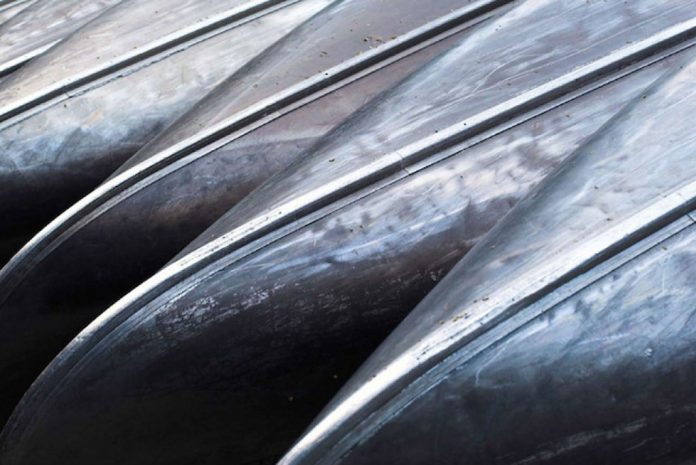
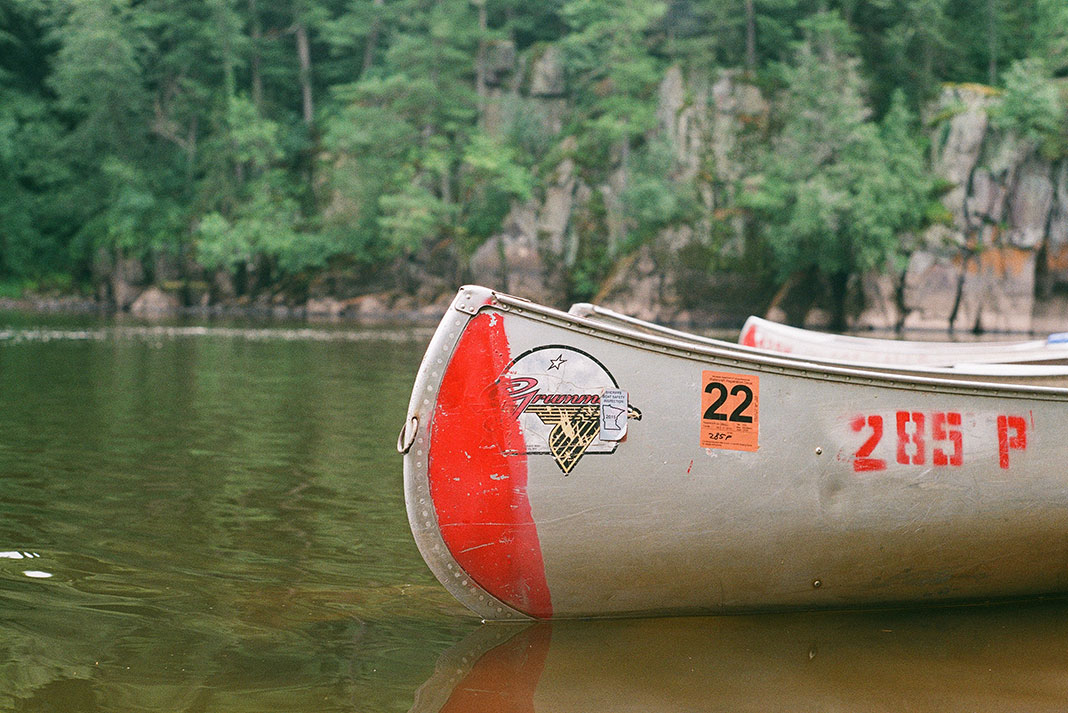
The Grumman canoe may not be glamorous, but it’s maintenance-free, stable, user-friendly, relatively cheap and nearly indestructible. | Feature photo: iStock

At the Canadian Canoe Museum, author and executive director James Raffan has little use for unrefined aluminum canoes. “Canoe trippers love to malign aluminum canoes,” he says. Yet, if you put aesthetics aside the humble Grumman aluminum canoe was a trailblazer in canoeing history, opening up new horizons for adventurers and recreational paddlers alike.

Why aluminum canoes aren’t so easy to love

As Raffan guides visitors around the museum, slides of his perennial-filled Grumman planter and the ice-flattened “aluminum hulk” he found washed up on the shores of the Coppermine River elicit chuckles and guffaws. “The photo of the planter always gets a laugh when I say this is the best use I’ve found so far for a Grumman canoe,” says Raffan.

grumman canoe history: a group of aluminum canoes
The Grumman canoe may not be glamorous, but it’s maintenance-free, stable, user-friendly, relatively cheap and nearly indestructible. | Feature Photo: iStock

The aluminum canoe’s lack of refinement makes it an ideal target for verbal abuse. Aluminum canoes are obnoxiously noisy, numbingly cold and leave hands and paddle shaft coated with a metallic tinge of aluminum oxide. Despite its pitfalls, it can be argued that the hapless, American-made aluminum canoe did far more for the popularity of recreational canoeing around the world than stuffy museum-worthy specimens of cedar and canvas.

[ See the widest selection of canoes in the Paddling Buyer’s Guide ]

How the Grumman canoe found its niche

The Grumman was the first true recreational canoe. It’s maintenance-free, stable, user-friendly and relatively cheap. Its lifespan is virtually unlimited, and it can be stored on sawhorses behind the garage or on the ground beneath a snowdrift.

It typically takes only brute force and liquid solder to return it to a reasonable likeness of its original form.

Should a Grumman get damaged—either pinned by a mid-rapid boulder or crushed by a fallen tree—it typically takes only brute force and liquid solder to return it to a reasonable likeness of its original form. As much as many canoeists would hate to admit it, “truth is that aluminum canoes float just as well as any other, they are seriously durable and, in the case of Grummans, have quite elegant lines,” concedes Raffan.

From fighter planes to aluminum canoes

In the beginning, canoe building was a novelty sideline for the Grumman Aircraft Engineering Corporation, which was the world’s largest producer of World War II aircraft carrier-based fighter planes.

In 1944, Grumman vice president William Hoffman came up with the idea of a lightweight, stretch-formed aluminum canoe—after lugging a waterlogged wood-canvas canoe across one too many portages on a fishing trip in New York’s Adirondack Mountains. A year later, Grumman’s Long Island aircraft plant produced its first canoe: A 13-footer said to weigh 30 per cent less than a comparable wooden canoe.

“Grumman learned to bend and rivet flat sheets of aluminum into elegant, complex curves as a result of making aircraft wings and fuselages,” explains Raffan. The process of using panels of hand-riveted, stretchformed aluminum alloy translated ideally to canoe construction.

Shortly after Hoffman’s personal canoe was built, there came lines of 13-, 15-, 17-, 18-, 19- and 20-foot canoes. Grumman quickly captured market share based on their durability, reasonable weight and no-fuss maintenance.

Grummans were once the boat to beat

In the 1970s, former Grumman employee and veteran marathon canoeist Dale Fox says the company employed 200 canoe builders and turned out 50 canoes per day. Fox, who now crafts FoxWorx canoe and kayak paddles in Bainbridge, New York, had only been in a canoe once before he took the job of turning gossamer sheets of stretched aluminum skin into canoes with a drill press, rivets and hammer. He picked up marathon canoe racing shortly thereafter, and remembers a time when 18-foot Grumman Lightweights were the boat to beat in New York’s General Clinton Canoe Regatta—a 70-mile race in Bainbridge.

Aluminum canoes were equally capable wilderness trippers. Eric Morse, known to history as the first to popularize the notion of long-distance canoe tripping in the Canadian arctic in the 1960s, paddled a 17-foot Grumman on many of his explorations of the Far North. Bill Mason, the famed canoeist and filmmaker most noted for his rapt love for traditional wood and canvas Chestnut canoes, called the aesthetics of aluminum canoes “the pits,” their handling “sluggish [and] noisy.” Still, he chose a Grumman nicknamed the Queen Mary for family trips on the French River, Georgian Bay and Lake Superior, and paddled aluminum on his first trip down the Northwest Territories’ South Nahanni River.

Similarly, Raffan remembers guiding Black Feather trips in the 1970s on Arctic rivers in aluminum canoes and went on to outfit the outdoor education program at Queen’s University with a fleet of Grummans. Fox says most canoeists still have a Grumman in their backyards, which serve as indestructible memories of their paddling past.

Grumman has an undeniable place in canoe history

This is perhaps the aluminum canoe’s ultimate legacy: Long after the last cedar-ribbed Prospector rots to pulp, aluminum canoes will still be going strong. Archeologists will unearth Raffan’s aluminum planter, pry, lever and patch his river-worn wreck back into shape, and future generations will enjoy the wonders of canoeing.

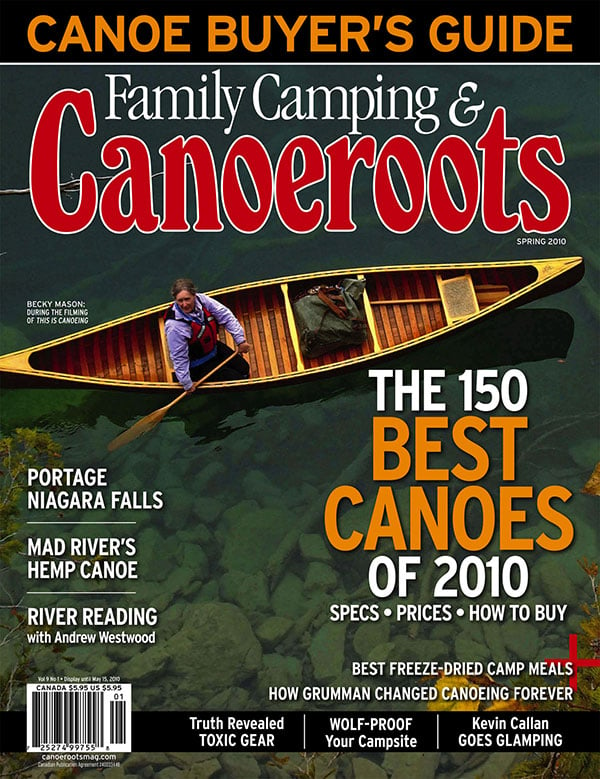
Cover of the Spring 2010 issue of Canoeroots MagazineThis article was first published in the Spring 2010 issue of Canoeroots Magazine. Subscribe to Paddling Magazine’s print and digital editions, or browse the archives.


The Grumman canoe may not be glamorous, but it’s maintenance-free, stable, user-friendly, relatively cheap and nearly indestructible. | Feature Photo: iStock


Boat Review: Blackfly Option Whitewater Canoe

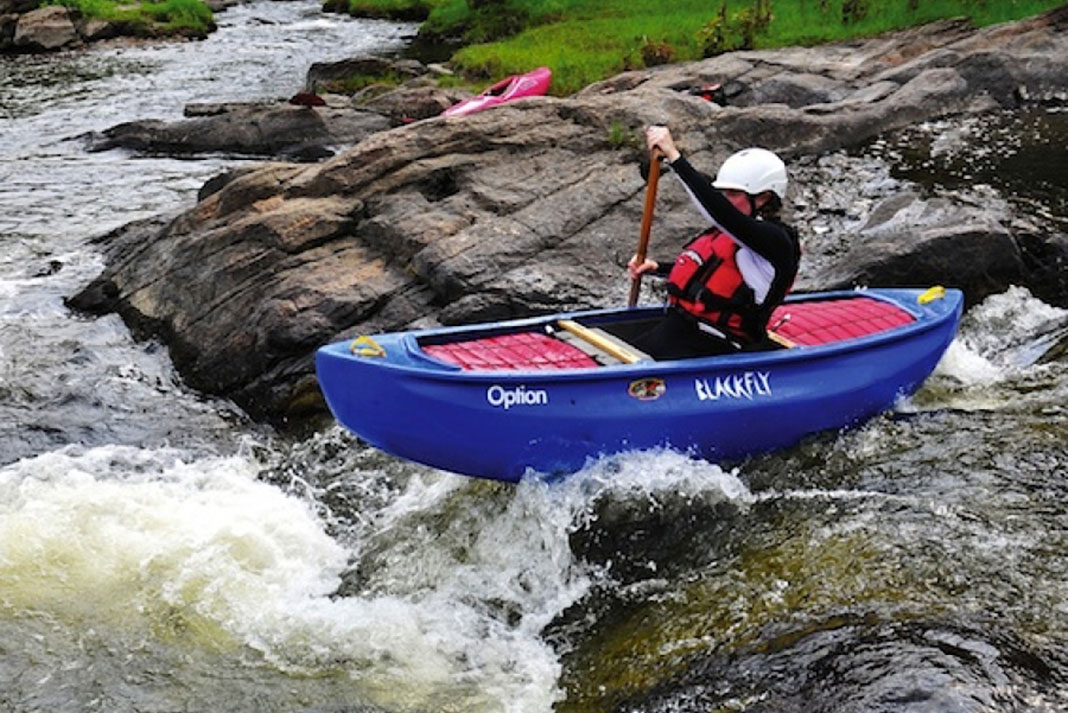
Person paddles the Blackfly Option canoe through a set of rapids
Feature Photo: Virginia Marshall

 When Jeremy Laucks landed a spot on the U.S. Freestyle Team to compete in OC-1 at the 2007 World Championships, there was just one problem. The pro kayaker and C-1 paddler couldn’t find an open boat that felt quite right, so he designed his own prototype Blackfly boat. Now, three years after successfully bringing his first prototype to market, Laucks returns with the Blackfly Option canoe.

Blackfly Option Specs
Length: 8’8”
Width: 28”
Depth: 15.75”
Weight: 56 lbs
Material: Polyethylene
MSRP: $1,450
www.blackflycanoes.com
[ Paddling Buyer’s Guide: see all whitewater canoes ]

The Blackfly Option is a designed to move

Armed with some modest shaping and moulding experience gained from dabbling with composites in grad school, Jeremy Laucks built a prototype based on a shortened Spanish Fly, named it the Blackfly and paddled it to a bronze finish at the Worlds. Two years later, Laucks and his refined prototype took the gold medal, and long-neglected OC freestylers took notice.

Production was a logical, if risky, next step. “With the small market for these boats, the cost of an aluminum mould was prohibitive,” says Laucks, who used his skills working with composites to produce a short-run fiberglass mould. He built the first Blackflys in his garage in the New Hampshire foothills. Nearly three years on, the canoes are moulded at a shop in Pennsylvania, but Laucks still finishes each one in his 800-square-foot, backyard barn-cum-boat factory.

Comparing the Blackfly Option to its peers

In 2011, Laucks introduced a new design to the growing Blackfly Canoes line-up, the Option. At 8’8”, this poly creek boat is positioned as an obvious rival to the popular Esquif L’Edge.

The Blackfly Option is just six inches shorter than the L’Edge and, according to the spec sheets, weighs the same 56 lbs, but the overall impression is of a much smaller and lighter boat. It accelerates faster than the L’Edge and glides amazingly well given its length. There’s no need to drive it forward on every stroke, and it doesn’t stall or spin out like many shorter boats. This makes it a great option (pun intended) for paddlers looking for a creek boat that can do double-duty as a river runner.

The Option loves to be paddled from the front, but won’t punish you if you lay down a less-than-perfect forward stroke. The short waterline lets you snap it into micro eddies, surf small waves, slide over rocks and boof almost anything with ease. Driving it down boulder inclines and over drops on the Tellico Ledges, the predictable stability took the focus off keeping the boat upright and put it where it should be, on hitting the line.

Person paddles the Blackfly Option canoe through a set of rapids
Feature Photo: Virginia Marshall

Inspired by kayak creek boats

Thank the Blackfly Option’s unique double chines for its blend of continuous, confidence-building stability and must-make-eddy maneuverability. Inspired by kayak creek boat design, these stepped transitions strike a balance that’s somewhere between boxy boats like the Nova Craft Ocoee and L’Edge and rounded hulls like the Rival.

At nearly two inches wider and a hair deeper, Esquif’s creeker edges (zing!) out the Option slightly on stability and dryness, but only slightly. Laucks suggests a dynamic paddling style to match the Option’s inclination toward snappy performance over Pampers dryness, “It’s responsive to leaning forward or backward to adjust the trim and keep the bow up through waves and when punching holes.”

[ Plan your next whitewater canoe adventure with the Paddling Trip Guide ]

The Blackfly Option comes completely outfitted with airbags and a foam bulkhead. If you’re a fan of the more precise fit of thigh straps, the bulkhead takes some getting used to, but it’s a mandatory compromise when paddling a plastic hull. Glue-on patch anchors simply won’t stick to polyethylene. Additional foam on the inside sidewalls helps snug up the fit.

The finish on the Option is not as polished as more mass-produced boats, which are manufactured in a metal mould. Laucks responds matter-of-factly to criticism of the fiberglass-moulded Option’s aesthetics, “There’s a reason my boats are cheaper. But I’m learning a lot very quickly and getting things figured out.”

Get a boutique boat with the Blackfly Option

Given the enthusiasm of Blackfly Option paddlers for their boats and the continuing growth of Blackfly Canoes despite an increasingly anemic OC whitewater market, larger volume production—and an aluminum mould—could be in Laucks’ future. Until then, for sporty, rough-and-ready creeking and river running performance without the weight and expense, there’s no better Option.

This article was first published in the Fall 2012 issue of Rapid Magazine. Subscribe to Paddling Magazine’s print and digital editions, or browse the archives.


Video review of the Blackfly Option Whitewater Canoe:


Boat Review: Pakboats PakCanoe 170

PAKBOATS PAKCANOE 170 | Feature Photo: Gary McGuffin

Good things come in medium-sized packages. Isn’t that the old adage? It’s certainly true of the PakCanoe 170 by Pakboats. Rolled up, this 58-pound folding canoe measures about the size of a large camping cooler, but it’s a gateway to untold miles of adventure.

Pakboats PakCanoe 170 Specs
Length: 17’
Width: 38”
Depth: 14”
Weight: 56 lbs
Capacity: 910 lbs
Material: PVC skin
MSRP: $2,310
[ Paddling Buyer’s Guide: See the Pakboats PakCanoe 170 ]

The PakCanoe 170 is still going strong

Celebrating its 20th anniversary this year, the PakCanoe 170 has a rich and proud history on northern rivers in Canada and Europe, and has become a go-to model for paddlers who want bombproof reliability on fly-in adventures.

Pakboats claims that with practice you can set up their canoes in 30 minutes. However, in our experience, you should factor in double the time. Thirty minutes to set up the canoe and 30 more to field the questions of gawkers who invariably wander over to ask what it’s made of, how long it takes to build and if they can touch it. If you’re using the PakCanoe 170 solely to fly into isolated northern rivers, you’ll find your set-up time much improved.

[ Plan your next canoe expedition to Canada’s North with the Paddling Trip Guide ]

PakCanoe finds strength in flexibility

Constructed out of an ultra-tough PVC fabric skin paired with aluminum ribs and shock-cord poles to create gunwales and chines, the PakCanoe’s soft shell is a boon in rough conditions, riding up and over rapids and swells instead of barreling through. “The skin actually makes the boats more seaworthy,” says Pakboats founder and designer Alv Elvestad. “Paddlers who have these boats and use them on heavy whitewater and in stormy water tell me they feel more comfortable, and that they’ll go out in the PakCanoe when they’d rather not be out in a hard shell canoe.”

In our experience, this flexibility in the hull translates to a small loss of glide efficiency on the flats, however we’ve never had trouble keeping pace with our trip mates. While smaller models like the PakCanoe 160 are favored amongst trippers, weekend warriors and city dwellers alike, most 170s are taken home by serious expedition paddlers. And it’s no wonder—there’s more than 900 pounds of carrying capacity in its voluminous depths, room for weeks worth of gear and food. Factor in the cost savings of flying in and out a folding boat compared to strapping a hard shell canoe to a float and it’s possible the PakCanoe 170 could pay for itself on its maiden voyage.

At home in the most extreme settings

Whether running technical whitewater, navigating large swells or being attacked by hungry wolves the PakCanoe 170 thrives in tough conditions.

PAKBOATS PAKCANOE 170 | Feature Photo: Gary McGuffin

While Elvestad says there are many standout expeditions that have used the 170, one that still resonates with him years later is Jim and Ted Baird’s 220-mile Kuujjua River trip through Arctic Canada’s Victoria Island. It was a grueling trip that involved dragging the partially loaded canoe for 25 kilometers, navigating whitewater and surviving 10-foot ocean swell. Though equipment broke down the brothers fixed it on route, and successfully finished the trip ahead of schedule.

[ Paddling Buyer’s Guide: See all Pakboats folding canoes ]

Blaze your own trail with the Pakboats PakCanoe 170

When Elvestad started manufacturing folding boats two decades ago there was a fair bit of skepticism regarding durability but, he says, much of that has since disappeared. As for the remaining dubious few, he says they just need to look at the evidence. “We have boats out there that are 20 years old still in use, they’ve proven over time that they can take a beating,” Elvestad says. “If you look at the track record it’s impossible to argue that these are anything but incredible boats for an expedition.”


This article originally appeared in the Canoeroots
Summer/Fall 2016 issue.
Subscribe to Paddling Magazine and get 25 years of digital magazine archives including our legacy titles: Rapid, Adventure Kayak and Canoeroots.

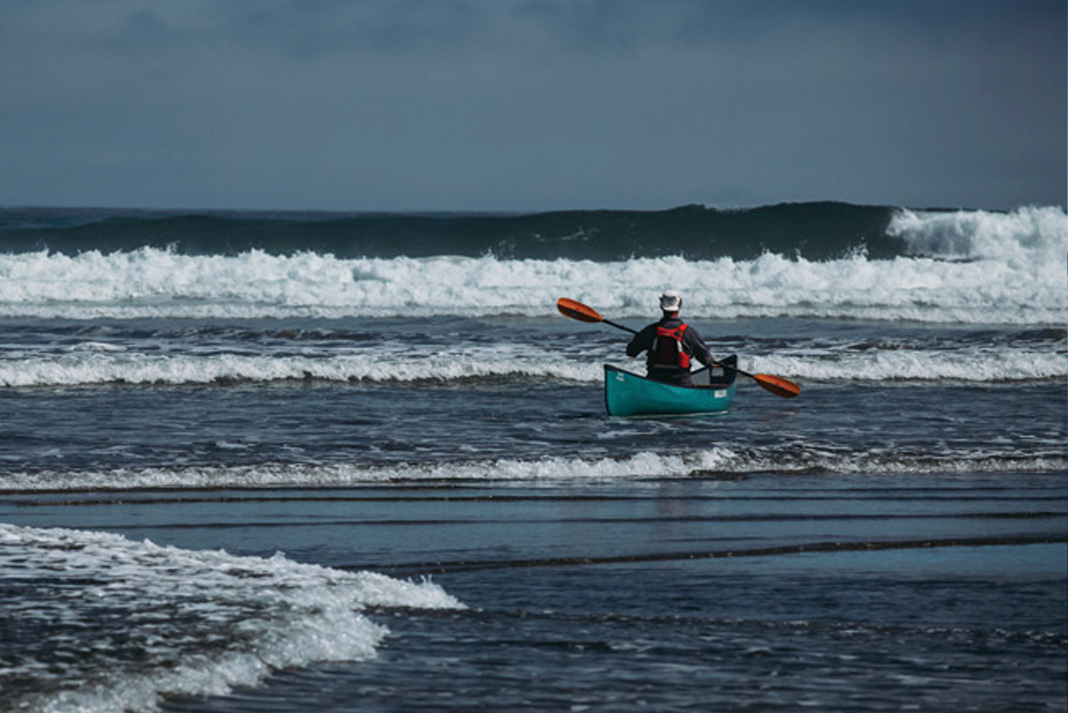
How To Launch And Land A Canoe In Rough Water

Man demonstrates how to launch a canoe in rough water
Surf’s up! | Feature photo: Jen Gardiner

It is possible to launch or land a canoe in waves and rough seas, however it’s best to avoid these conditions altogether by getting off the water before waves build to a dangerous point. Even in perfectly calm weather, canoeists should be constantly assessing the shore for landing points, protection and campsites. Yet sometimes, rough-water launches and landings will still be necessary. Follow these tips to launch and your canoe safely in rough water.

How to launch a canoe in rough water

A few words of warning

If caught out in the open when conditions change, it may make more sense to keep your canoe in the water even amid small swells rather than risk navigating large breaking waves to reach land—it’s up to each paddler how to weigh these risks. Launching and landing in breaking waves can be an exhilarating challenge, but waves much larger than two feet tall give canoeists a very low chance of success. In most cases, this is considered an emergency situation on a canoe expedition—don’t paddle out in these conditions.

SURF’S UP. | PHOTO: JEN GARDINER
Surf’s up! | Feature photo: Jen Gardiner

If the waves are spilling onto a low-angled shore, it is much easier to launch or land a canoe, as the height and steepness of the waves will not be outrageous and the run-out onshore will be long. If the waves are dumping on a steeply angled shore or onto underwater features, however, swamped boats will probably result.

[ See the widest selection of canoes in the Paddling Buyer’s Guide ]

One at a time, and no surfing

The ideal beach for learning how to launch and land a canoe is low-angled and sandy. If the waves are moving along the shore or at an angle, it will be fairly straightforward; waves moving perpendicularly in to shore will be more challenging but potentially more predictable. The key is for each boat to stay in control by not surfing, moving slower than the waves, keeping the boat perpendicular to the waves, and ideally paddling through breakers during a lull.

One boat should move through the hazard at a time. Helmets are a good idea in this situation. Avoid being in the path of a loaded canoe, whether or not it is under control or swamped. Try to choose campsites with multiple facets or undulating shoreline when possible, as no matter which way the wind shifts there will be areas of protection.

How to handle a capsized canoe

In the event of a capsized canoe, one strong team of paddlers should land, pull their boat well onshore then help the swimmers out of the water. The swamped canoe may be allowed to drift in, or a throw bag attached to it can be thrown to shore and the boat then pulled in. As boats come in, they should be quickly unloaded or suitcase carried out of danger.

Cover of the Summer/Fall 2016 issue of Canoeroots MagazineThis article was first published in the Summer/Fall 2016 issue of Canoeroots Magazine. Subscribe to Paddling Magazine’s print and digital editions, or browse the archives.


Surf’s up! | Feature photo: Jen Gardiner