Home Blog Page 153

Canoeing Lake Superior: Discover A Canoeist’s Paradise

two people canoeing on Lake Superior
The deepest point in Lake Superior is 1,300 feet, and the average underwater visibility is 27 feet. | Feature Photo: David Jackson

As canoeists lust after Canada’s furthest latitudes they often bypass canoeing Lake Superior, one of the finest wilderness lakes on our planet. Lake Superior is North America’s largest freshwater lake and represents one of the greatest untainted wonders of our natural world.

[ Plan your next Great Lakes canoe adventure with the Paddling Trip Guide ]

Beauty glides by while canoeing Lake Superior

Travelling by canoe along Canada’s north shore of the big lake, traditionally known to the Ojibwe as Gichigami (Gich-ii-goo-me), offers nearly 1,000 kilometers of portage-free paddling.

From ragged cliffs to island chains where the water appears a tropical azure, this section of Lake Superior reads like a paddler’s love story.

Sea caves and steep headlands are punctuated by intermittent roadside access. From Wawa to Pic River stretches the most romanticized, roadless length of shoreline.

Bill Mason spent many nights exploring Denison Falls in Nimoosh Provincial Park, just east of the pristine, battered beauty of Pukaskwa National Park. The myriad of coves, ancient pits and crystal-clear water seem too surreal to exist naturally.

The stretch from Pic River through to Rossport is highlighted not only by the beaches of Neys Provincial Park, but also the shifting geography of the Lake Superior Marine Conservation Area.

From Rossport all the way to the toes of the Sleeping Giant, one might drop a line for dinner, visit a secret sauna and forget they are on Lake Superior as the immediate shoreline becomes a maze of mossy islands and narrow channels.
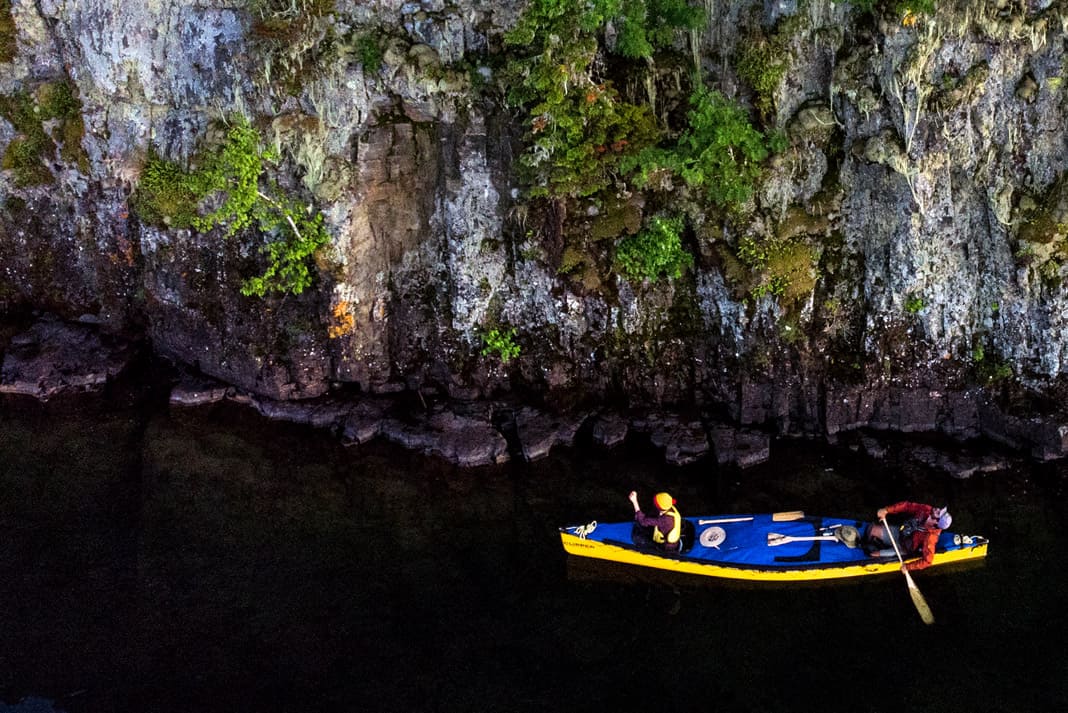
two people canoeing on Lake Superior
The deepest point in Lake Superior is 1,300 feet, and the average underwater visibility is 27 feet. | Feature Photo: David Jackson
Exposure

From any direction, wind and waves can be deadly. Watch your shoreline and consider the forecast. Plan to be windbound one day for every three to four on the water.

Weather

While mid-summer heat might be forecasted, a wind from the ice water mansion will chill you to the bone. Dress in layers. The water averages just 4°C.

When to go

Superior’s relative mid-summer slumber of good weather typically stretches between mid-June to early August.

Essentials

A marine radio is a must to receive wind and wave forecasts. A spraydeck provides peace of mind and additional safety if you are caught out in rougher weather.

Exit strategies

Consider access roads and towns should you get windbound and have to limit travel. There may be limited options to evacuate.

What to explore when canoeing Lake Superior

Be it Group of Seven paintings or red ochre pictographs, Edmund Fitzgerald historians or fur trade dreamers, canoeing Lake Superior still brings to mind echoes of creaking bark boats and the tales of generations gone.

If you have a day:

Head to Sinclair Cove and explore the small bay and surrounding islands. If conditions are calm, venture east around the point and visit the Agawa Pictographs. Get a sense of Lake Superior’s enormity without venturing far from safety. If conditions are poor, hike above the cove to a beautiful lookout.

If you have a weekend:

Launching at Silver Islet, paddle west towards Thunder Bay and Sleeping Giant Provincial Park. Reserve a campsite at either Tee Harbour or the scenic Lehtinen’s Bay and hike up the Giant for a spectacular view of Superior. If the weather turns foul and time is precious, hike back to your vehicle on the trails.

If you have a week:

Canoeing Lake Superior from Agawa Bay to Old Woman Bay is an unforgettable trip with varied shorelines to experience a multitude of Lake Superior’s wonder. Sprawling beaches, sea caves, and sections of intimidating cliffs offer a true feel of the lake. In poor wind conditions, Gargantua is an optional exit point.

[ Paddling Buyer’s Guide: See all lakewater & touring canoes ]

If you have a month:

For the hearty tripper, Montreal River Harbour to Silver Islet is a classic trip. It encompasses all the elements of extensive route planning, wilderness travel, weather considerations, open water crossings, and passes through all the most beautiful points of Lake Superior. The highlight of this east to west trip are the saunas in the Lake Superior Marine Conservation Area.

This article was first published in Issue 57 of Paddling Magazine. Subscribe to Paddling Magazine’s print and digital editions, or browse the archives.
 

9 Myths From Expert Kayakers About Rolling A Kayak

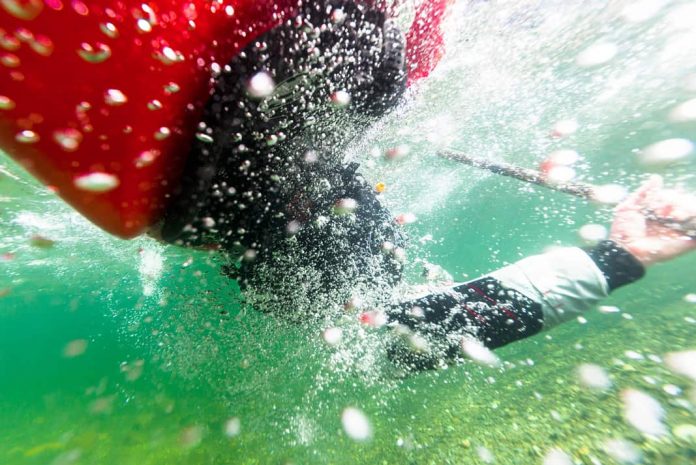
kayaker underwater while rolling a kayak

Whether you are highly experienced or an occasional weekend warrior, rolling a kayak is an essential skill. We asked 9 expert kayakers to share their most important myths about rolling a kayak, and none of them could quite agree.

9 myths about rolling a kayak

Myth #1: Muscle memory will save you

“Some say it’s like riding a bike—once you’ve learned it, you can just jump back into it at any time. If you’ve been away from kayaking for some time, chances are muscle memory isn’t as strong and you can find yourself swimming.”

— Andy Hill, C1 world champion

Myth #2: Flexibility required

“I have taught classes where the women in the class learn how to roll much faster than the men. The men sometimes get a hurt ego, and play it off as the women being more flexible. Are you flexible enough to lift your arms above your head?

Then you are flexible enough to roll a kayak. You don’t have to be flexible in order to roll. I have seen a stiff 76-year-old man learn to roll, he just needed to find a different technique to do it.”

— Brooke Hess, U.S. National Freestyle Kayak Team

Myth #3: It takes great strength

“People think rolling a kayak is hard. It’s not about strength, it’s more about technique and finesse than anything else.”

— Katie Kowalski, Canoe Kayak Canada National Freestyle Team

Myth #4: Forward or back is better

“The myth is it’s easier and safer to roll up staying forward, or that it is easier to roll up finishing back. Even if the argument is that your face may be exposed, it is safest to be upright. How you get back upright the quickest is the safest.”

— Nick Troutman, pro kayaker

Myth #5: Your roll can disappear

“The myth of the disappearing roll. Sometimes in turbulence, beginners and intermediates find their rolls disappear. They flail and cannot get up. This is because they have practiced their rolls in a certain way, from one starting position, but turbulence forces the boat, their body, and their paddle out of position.

The roll is there, but you must practice doing it with power from any starting point. That’s what is meant by a combat roll.  And the myth of the hip snap—people tell beginners to snap their hips during the roll, which is confusing and false. The only place where you exert force on the boat to turn it upright is through the knee pushing in the direction of the roll. You don’t need a hip snap—your hip will follow your knee.”

— Doug Ammons, explorer

Myth #6: Rolling is elementary

“Rolling a kayak is like riding a bike. Truth: Rolling a kayak is only like riding a bike if the bike is upside down and underwater with rocks and trees flying by. Too many times we downplay how difficult a reliable roll is to master or maintain. The secret to the roll is long-time boaters must practice, and beginner kayakers must have patience.”

— Ben Stookesberry, explorer

Myth #7: Some boats are better

“A myth about rolling a kayak is some boats are harder to roll than others. Here’s a fact about rolling—anyone with a good hip snap can roll any appropriately sized kayak. Truth.”

— Stephen Wright, pro kayaker and coach

Myth #8: Pros are perfect

“The myth about rolling is that pro kayakers don’t swim.”

— Rafa Ortiz, pro kayaker

…and Myth #9:

“That it’s hard.”

—Bren Orton, Send co-founder

This article was first published in Issue 57 of Paddling Magazine. Subscribe to Paddling Magazine’s print and digital editions, or browse the archives.
 

Instagram Vs. Reality When We Go Canoe Tripping

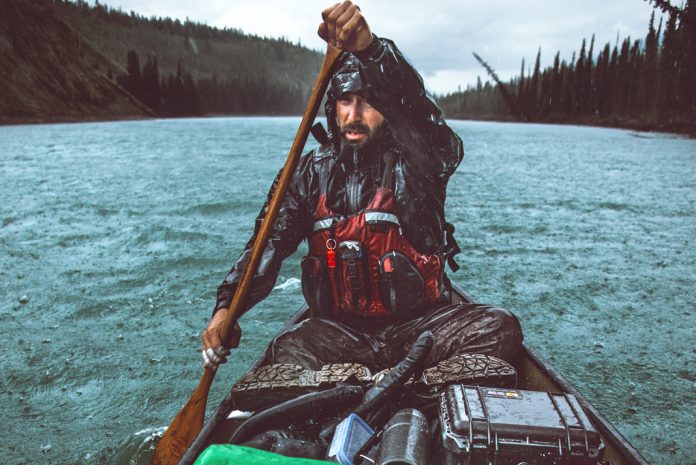
Man paddling canoe in the pouring rain.
Your most favorite photo of all time. You already know why. | Photo: Jay Kolsch

Imagine this scene: It’s sunset. A striped Hudson Bay Company point blanket is spread out near the fire. A matching hand-painted wood-canvas canoe sits on shore center-left, with a mossy green canvas pack resting against its bow. A fire crackles, curls of smoke rising, and a bottle of Irish whisky rests next to an enamel mug stamped with a John Muir quote—maybe it reads, “The mountains are calling.” Sounds perfect, right? The answer is a question of Instagram vs. reality.

[ Paddling Buyer’s Guide: See all lakewater & touring canoes ]

Instagram peddles perfection

A shot like the one described above has 45,000 likes on Instagram. Bonus points if you can work in a ukulele, antique hurricane lantern and string of fairy lights. I’ve seen so many variations inspired by the original, each one trying to one-up the rest with the next best fabricated presentation of perfection.

Instagram users are pressing the like button 3.1 billion times a day.

Followers don’t see the hours of tediousness invested into capturing this one outrageously perfect moment. We don’t see the work it takes to align the gear, sunlight, smoke signals and hang those twee tinkle lights just so.

If we had only social media to inform us of what canoe tripping looks like, we’d have completely unrealistic expectations about the backcountry.

[ Plan your next canoe tripping adventure with the Paddling Trip Guide ]

In reality it’s not that easy

What Instagram so rarely shows is the side of canoe tripping not so splendidly picture perfect. There are bugs. Sometimes, long and steep portages. And when real people get sweaty it’s rarely in an attractive and dewy morning-glow sort of way. Instead, think wet, red, swollen, haggard faces.

When things are hard—someone is cold and tired or battling a ferocious headwind—it usually doesn’t feel like a cool Kodak moment. And without the crack-of-dawn lighting, oversaturated filter presets and Adobe Photoshop, our campsites, landmarks and routes look a little different. They look real. See a celebrities-without-makeup spread in People magazine, it’s kind of the same thing.

Instagram users are pressing the like button 3.1 billion times a day. From our own Paddling Magazine feed we know the most popular paddling shots are typically the ones featuring moody lighting, beautiful vistas and unidentifiable paddlers. Many theories abound why this is, but we believe it’s because viewers imagine themselves in the landscape and live vicariously through the photo. Who doesn’t want to insert themselves along a gorgeous shoreline, in a handcrafted canoe under a blue bird sky?

Yet those picture-perfect, serene moments we love to double-tap don’t match what we actually share of memorable canoe tripping moments.

Instagram is valued at upwards of $50 billion and boasts 800 million active monthly users sharing 95 million photos and videos a day.

Canoe tripping isn’t always picture perfect

Memories aren’t made of perfectly lit campsites and staged fireside whisky ads. My best memories are of gritty, hard moments—fighting exhaustion during the second sleepless night of the 715-kilometer Yukon River Quest—and the joyous ones—carving into an eddy after a whitewater run I was sure we would swim.

According to the Australian University of Queensland’s Brain Institute, I’m not alone. Strong emotions build robust memories. You probably remember your first kiss, or where you were when you found out planes flew into the Twin Towers. This happens because the amygdala, which is activated by emotional events, boosts memory encoding by enhancing attention and perception.

Social media is a big business. Instagram is valued at upwards of $50 billion and boasts 800 million active monthly users sharing 95 million photos and videos a day. In deciding the question of Instagram vs. reality, authentic emotion might be the only thing Instagram is lacking. Close to 70 percent of top performing posts feature a product. You can be sure the majority of the most popular posts are curated. It’s one big smoke show.

Reality beats Instagram every time

The beautiful moments we cherish—success through a trick stretch of rapids, belly laughing to tears with friends or racing for shelter under a threatening sky—are imperfect.

At those times, we’re caught up in the moment. Reaching for a camera doesn’t occur to us, and the question of Instagram vs. reality is decided. Despite not being photographed, the moment still happened. We liked it. And we shared it with friends. Sound familiar?

This article was first published in Issue 54 of Paddling Magazine. Subscribe to Paddling Magazine’s print and digital editions, or browse the archives.

Kaydi Pyette is the managing editor of Paddling Magazine. Most of her Instagram posts are about her new puppy. Who doesn’t like puppies? 

Kayaking Saved My Life After A Spinal Cord Injury

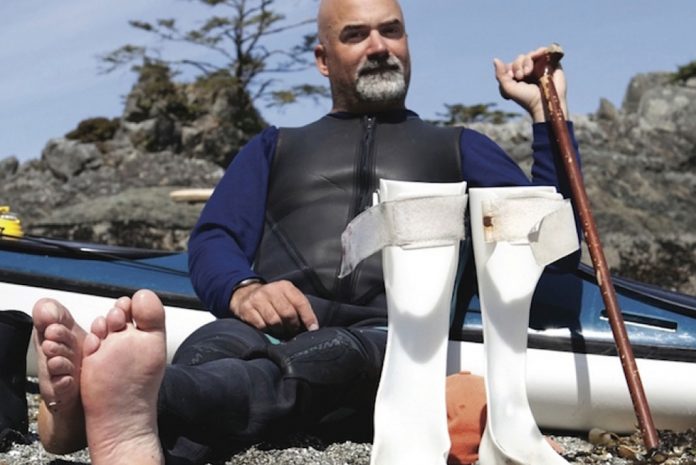
Man with a spinal cord injury sits on the beach after kayaking
Feature Photo: Alex Matthews

Dave Aharonian and I are paddling into the Broken Group archipelago off of Vancouver Island’s West Coast. We’ve only travelled about 10 miles to reach our campsite and we’ve covered the distance quickly. But as Dave climbs out of his kayak and grabs his cane, I reflect on how very far he’s come to be here. After suffering a spinal cord injury it’s no stretch to say that kayaking saved his life.

[ Plan your next B.C. kayak adventure with the Paddling Trip Guide ]

A moment of misfortune

Back on June 1, 1986, Dave was 19 years old, working hard as a tree planter in the northern Ontario bush. After a day off in town, he and two others were on their way back to camp when the driver lost control and went off the road. Their crew-cab pickup rolled down a hill and all three of them were thrown from the vehicle. None were wearing seatbelts.

The driver got away with only cuts and bruises. Michelle, a young woman riding in the front seat, died at the scene. Dave, who had been in the back seat, fractured his spinal cord in his lower back at the T12 and L1 vertebrae.

In the initial “decompression” surgery doctors removed bone fragments and inserted a metal rod to stabilize Dave’s spinal column. Eleven days later, in a second operation, they fixed two more stainless steel rods on either side of his spine in a procedure called spinal fusion.

Coming to terms with a spinal cord injury

The accident left him with no feeling in his feet, the backs of his legs, or his backside, and no use of the muscles below his knees. He was in hospital for six months and spent another six months in outpatient rehab relearning how to walk.

“When I first stood up at the parallel bars during rehab, not feeling any weight on the bottom of my feet—not feeling my feet at all was just plain weird,” Dave recalls. “My occupational therapist kept trying to persuade me to buy a wheelchair. She was just doing her job. But eventually I lost it and yelled, ‘Stop talking to me about buying a fucking wheelchair’.”

A year after the crash, Dave was able to walk with the aid of a cane and two ankle orthoses (foot braces), yet his reduced mobility left a big hole in his life. He was living in Toronto at the time. “I’d spent a ton of time in Pukaskwa National Park on the northeast shore of Lake Superior. I took four months hiking in the Rockies, the last two on my own. A few times I achieved a certain connection with that wilderness experience that was very profound for me. It was a bit of an epiphany. Six months after that, I was lying in hospital with a fractured spinal cord. Having that intense experience in the outdoors again was a huge motivation. And it was very important that I do it independently. I couldn’t hike or ride a bike again. I couldn’t carry a canoe alone. But one day a couple of friends found me an old kayak.”

Learning to kayak after the injury

Just 13 months after his accident Dave was back in Pukaskwa National Park, on his own, and in a kayak. “I had very limited experience with kayaking, and I know that I gave my mum more than a few grey hairs. But she understood how important it was to me that I be able to do that trip.”

Over the years Dave developed his paddling skills and expanded the scope of his trips. He moved to Victoria, B.C., and started doing multi-day solo trips on the ocean. Using his cane for balance, he can solo carry his 60-pound Valley Nordkapp and load it on the roof of his car alone, so he has the freedom to head out whenever he wants to. Dave is a professional photographer with a passion for wild landscapes, and his kayak is an indispensable photographic tool to access wild places.

In 2002 he and Adventure Kayak editor Tim Shuff paddled from Prince Rupert to Victoria over three months. “Roughly one week into that trip, paddling down Principe Channel, I had a bit of a moment. Tim was a little ahead. It was a beautiful day with a light wind at our backs. A bunch of ducks flew over, and I could hear their wing beats. In that moment I felt, this is what is real. I actually stopped and teared up a bit. If I hadn’t discovered kayaking, I don’t know how I would ever have achieved that sort of moment again.”

Kayaking with a spinal cord injury presents unique challenges

Long trips present additional challenges, as I learned when Dave and I paddled the north end of Vancouver Island last summer, rounding Cape Scott and the Brooks Peninsula. Because he can’t feel his backside, minor chaffing from the constant rotation of paddling can quickly develop into nasty sores. In typical fashion, upon discovering a raw hole worn at his tailbone he quipped, “Wow, that must really hurt!”

Dave also has to use catheters, which need to be sterilized every day and put him at constant risk of urinary tract infections. “Initially I didn’t know if I could boil them in saltwater. And there wasn’t anybody to ask. Turns out that saltwater works great.” Trip mates quickly learn what’s in the pot when Dave says he’s “boiling spaghetti.”

Dave is a strong paddler, but when he climbs out of his boat, pulls out his cane and limps up the beach, he sometimes draws stares. Other kayakers are curious, but don’t feel comfortable asking questions. Dave is incredibly good at putting these folks at ease, volunteering information and explaining his medical history. Only after seeing Dave perform this trick several times did I begin to appreciate the profound grace that he was exhibiting.

His view is pragmatic: “If I can inspire anyone else to enjoy the outdoors, even if they have to deal with some challenges, then that makes me really happy. The more they understand, the better.”

Fringe benefits of kayaking after injury

Back on the beach, we each grab an end of a kayak, ready to haul it up beyond the high tide line. I wince at the shock of the cold water on my feet. “It’s freezing,” I stammer. Dave gives me a cheesy grin. “Really?” he says. He’s in no hurry. One fringe benefit of kayaking after a spinal cord injury is that he can’t feel a thing.

This article was first published in the Summer/Fall 2019 issue of Adventure Kayak Magazine. Subscribe to Paddling Magazine’s print and digital editions, or browse the archives.


How To Plan A Safe Kayak Trip

In partnership with the U.S. Coast Guard and the Water Sports Foundation, instructors Paul and Kate Kuthe of the American Canoeing Association explain how to plan a kayak trip in our Safer Paddling Series: Episode 5.

There are certain things you must always take into account when planning a kayaking trip. Read on for our tips on what to consider and which measures to take to ensure the safety and enjoyment of everyone in your group.

How to plan a safe kayak trip

Accurately estimate the length of your trip

First, consider how long your trip will be. Most beginner kayakers can cover about eight kilometres in half a day—assuming favourable conditions and protected water.

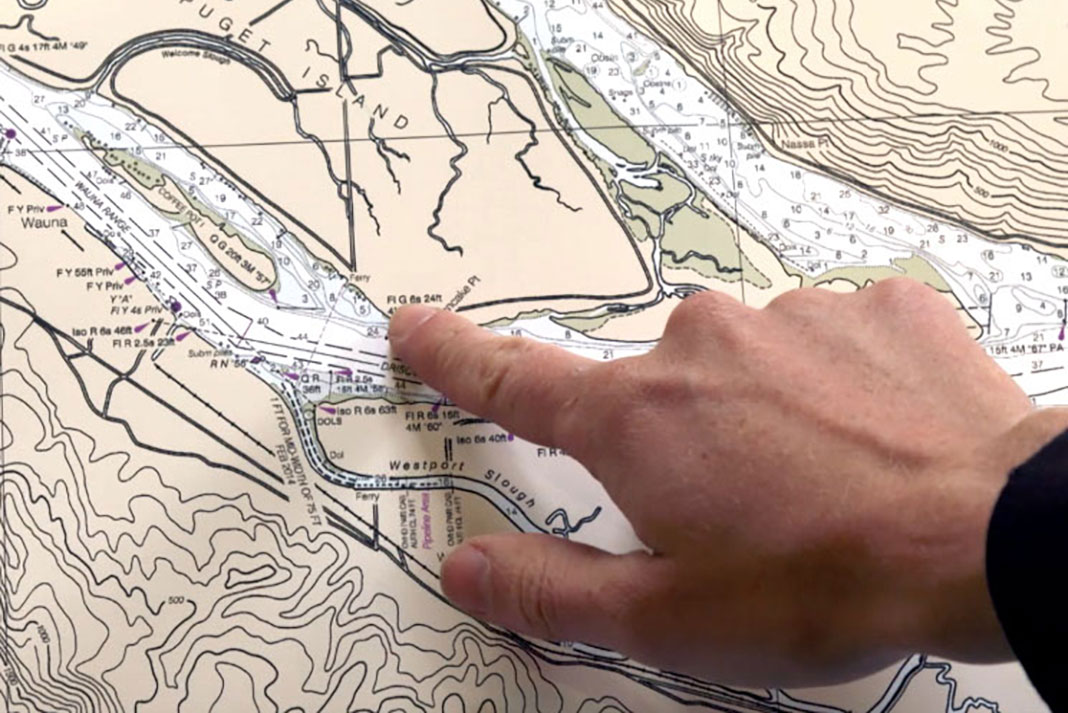
plan your kayak trip carefully ahead of time using maps and other resources
Be safe out there and plan your trip before heading out.

Research your options and listen to the experts

It’s important to do your research when planning your route. Use maps or a guidebook to plan your trajectory, and ask about good trips for beginner kayakers at your local paddling shop.

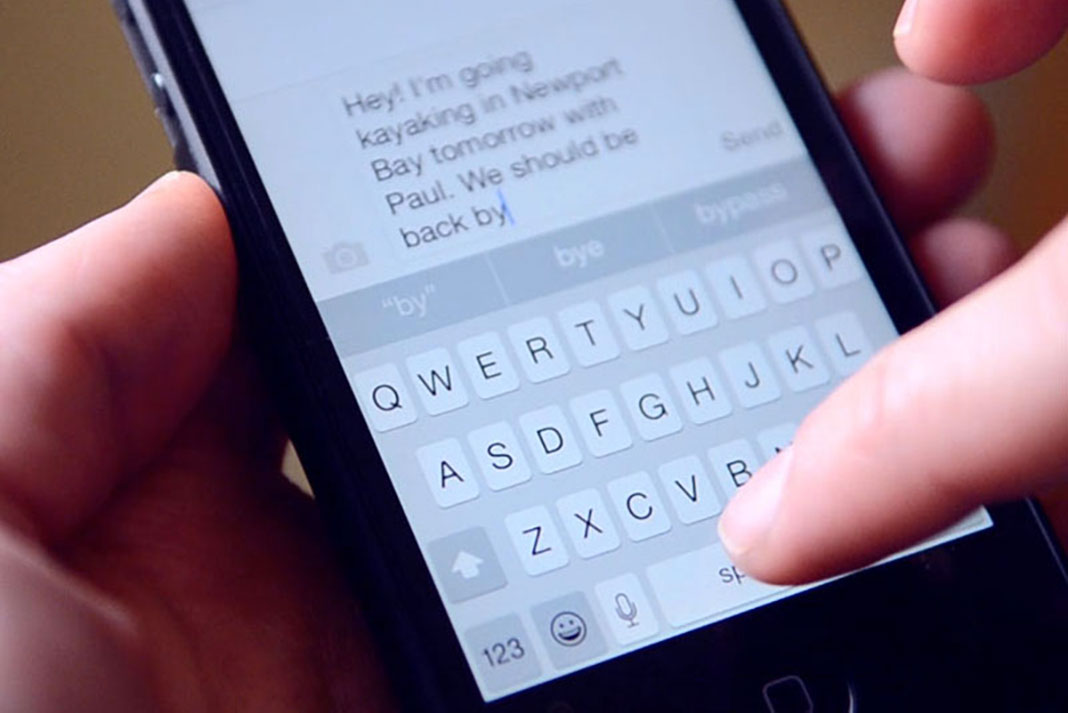
Texting a friend prior to embarking on a kayak trip
Give information about your trip to a trusted friend.

Tell the details to a friend

Before taking off, be sure to share your trip details with a trusted friend. Give them the four W’s:

  1. WHO you’re going with
  2. WHERE you’re going
  3. WHEN you’ll return
  4. WHAT to do if you don’t return
[ Plan your next kayaking adventure with the Paddling Trip Guide ]

Local conditions are key

Don’t forget about the wind—remember that conditions are often calmest in the morning. Remember to take into account when the sun will set, so you can assure you have enough daylight to make it home.

See the sights safely on your kayak trip

Kayak tripping is a great way to see the sights and stay active, but kayaking also has an inordinately high rate of accidents and deaths compared to other activities like power boating. Our goal in explaining how to plan a kayak trip is to raise your awareness of safer paddling practices.

Follow these guidelines to enjoy your trip and keep yourself and your paddling partners safe. With the proper planning we can reduce the chances that paddlers everywhere will come to harm.

Be smart. Be safe. Have fun.

[ Read more: 14 Ways To Plan Your Greatest Kayaking Adventure Ever ]

As a United Stated Coast Guard nonprofit grant recipient, the Water Sports Foundation produces paddling safety outreach materials and distributes them through boating and paddling media providers.


The Valley Nordkapp Førti Kayak Marks 40th Anniversary

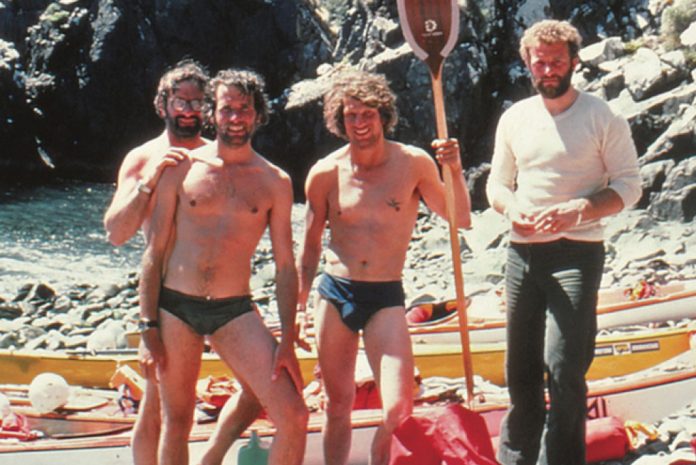
Four men stand in front of a group of Nordkapp kayaks, one holding a paddle
The Nordkapp: Lordy, Lordy, Look Who's Forty | Feature Photo: Courtesy of Nigel Matthews

In 1975 Margaret Thatcher became the first woman to lead a British political party. The Edmund Fitzgerald sank in Lake Superior. Peter Gabriel left Genesis. And the modern sea kayak—in the form of the Valley Nordkapp—was born. in 2015, the release of the Valley Nordkapp Førti marked the 40th anniversary of this very auspicious event.

[ Paddling Buyer’s Guide: See all sea kayaks ]

Paddling to the Nordkapp

British adventurers Colin Mortlock, Sam Cook, Colin Litton, John Anderson, Nigel Matthews and Peter Davis were planning to paddle 500 miles up the Norwegian coast to the Nordkapp, or North Cape, and they felt none of the few available kayaks were up to the job. Frank Goodman, founder of fledgling English kayak builder Valley Canoe Products, designed them a kayak for the trip, also called the Nordkapp.

The Nordkapp was built to carry heavy loads in rough seas and sustain the wear and tear of a long expedition. After a shakedown circumnavigation of Scotland’s Isle of Skye, Mortlock insisted that the Nordkapp include a new concept: bulkheads and hatches for storing gear. After 228 miles of fickle Scandanavian winds, the group stopped in Tromsø to fit strap-on skegs, adding the final element of sea kayaks as we know them today. The expedition’s 62-page trip report, hammered out on a typewriter, reads like the journal of a 19th-century explorer: Food is “rations”, and they seek “a worthwhile objective, difficulties and dangers.”

More expeditions followed, all done in Nordkapps. Goodman and Matthews, along with Jim Hargreaves and Barry Smith, rounded Cape Horn two years later. Paul Caffyn took a Nordkapp around New Zealand in 1978-9, Great Britain in 1980 and circumnavigated Australia in 1981-82.

What’s old is new in the Valley Nordkapp Førti

As sea kayaking became mainstream, the Nordkapp was often too much boat for weeklong trips, lighter loads and less advanced paddlers. It went through a dizzying series of redesigns—adjusting fit, tracking, stability and trim—and eventually ceded its place as the standard for rough-water expeditions to the Nigel Dennis Kayaks Explorer.

For the 40th anniversary of the Nordkapp, and of sea kayaking’s modern rebirth, Valley re-redesigned the Nordkapp yet again. With the original blueprints and mould lost, the new Nordkapp Førti is modelled from an old first-run specimen that Valley bought back from a private collector. What’s old is new again: Valley discovered that the original was more like contemporary expedition kayaks than later versions, which had been tweaked so many times that the design seemed a mere caricature of that elegant first cast.

The Valley Nordkapp Førti may be the original 17’10” hull, but sea kayaking itself has changed. In an era of tighter schedules, aging populations and hyper-connectedness, long expeditions are rare. Valley’s newest design, the Gemini, is aimed at playful weekend boating, its shortened waterline matching shorter vacations. Other manufacturers, like P&H Kayaks, Jackson and Dagger, blend sea kayaks with whitewater boats for park-and-play surfing and rock-gardening. A kayak designed to go 500 miles with multi-week loads seems nostalgic and even eccentric, as if it should come with rations of pemmican and hardtack.

One paddle planted in history

The Nordkapp’s 40th is an indication of how simultaneously young and old sea kayaking is. The sport is young enough that Valley can track down and reverse-engineer an original boat. People who were part of the early days are still on the scene now: Caffyn and Nigel Dennis remain regular faces—albeit with more grey hairs—at symposiums and events.

This ruby anniversary also highlights kayaking’s storied and still-relevant history. Few outdoor companies re-issue the skis, external frame backpacks or climbing gear used decades ago. The Valley Nordkapp Førti has one paddle blade planted in history and the other in modern sea kayaking. This places it—like every 40-year-old—firmly in middle age. Both the past and the future beckon.

Longtime contributor Neil Schulman celebrates kayaking’s diverse heritage in Reflections. In 1975, he was still a pint-sized passenger in a Grumman canoe. For a thorough Nordkapp chronology, check out Mike Buckley’s detailed research at ukseakayakguidebook.co.uk.


Screen_Shot_2015-06-15_at_3.44.39_PM.pngThis article first appeared in the Early Summer 2015 issue of Adventure Kayak magazine. 

Subscribe to Paddling Magazine and get 25 years of digital magazine archives including our legacy titles: Rapid, Adventure Kayak and Canoeroots.

Boat Review: Jackson Zen Kayak

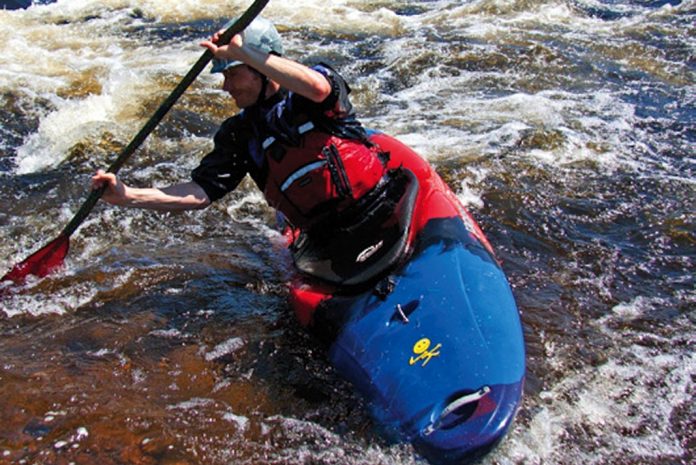
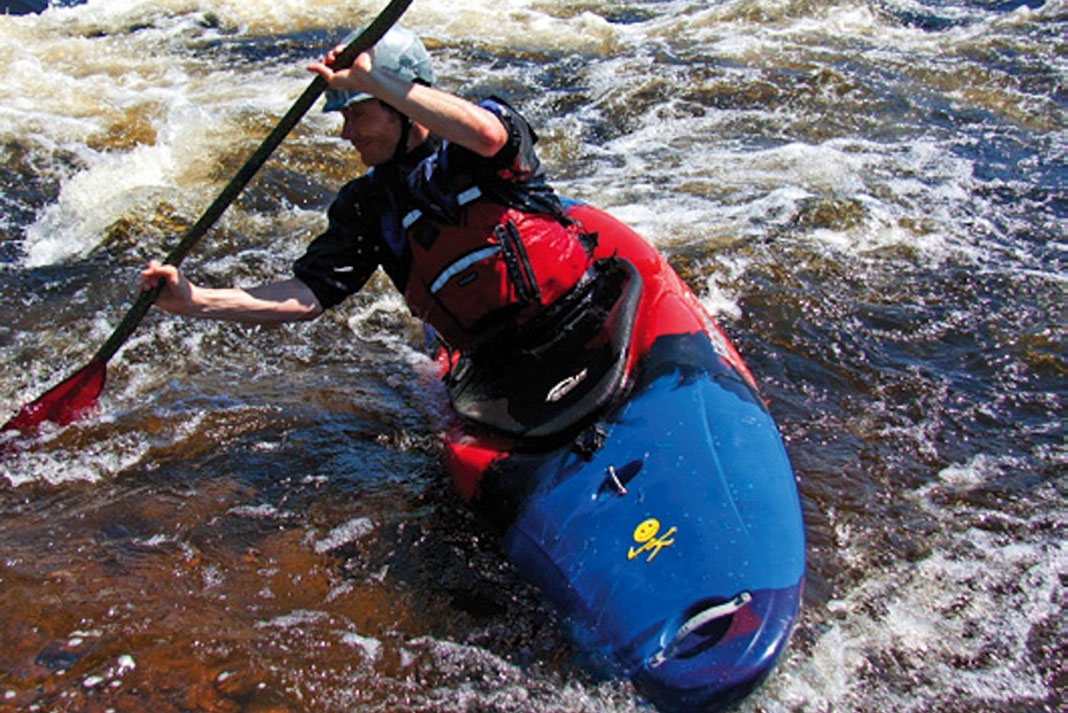
Man kayaking down a river in a Jackson Zen kayak
Don’t let the calm and relaxed name fool you, the Jackson Zen kayak is a racing machine. | Feature Photo: Michael Mechan

building on the successes of the past nine years, in 2012 Jackson Kayak released “a pure river runner,” the Zen. Jackson wanted a design that brought back the old school spirit of river running using modern ideas. The Jackson Zen kayak comes equipped with new features including updated grab handles, a newly designed welded hull support track and a snazzy water bottle holder. Are they just dressing it up or does its beauty come from within?

[ Paddling Buyer’s Guide: See the Jackson Zen 3.0 M kayak ]

Jackson’s Zen kayak is easy to like

This was an easy boat to hop in and get comfortable. The nice, high back­band and quick-to-adjust, piton absorbing bulkhead were instant turn-ons. One tester did have a slight mishap when a cord on the Jackson Sure-Lock backband system came untied on the water. Luckily the outfitting is simple and quick to fix.

The Zen has a moderate rocker, sits quite low in the water and feels nar­row. All this adds up to, as one tester put it, “a racing machine.” Setting a ferry angle, you zip speedily across the current and attainments take less effort. It gets up to speed within two strokes and holds a line with laser-like precision.

The Jackson Zen’s speed also makes it easy to catch even the smallest green waves. A huge bonus if there are lots of catch-on-the-fly waves on your favorite river.

Throwing the Zen on edge, the rails bite hard and won’t let go until you tell them to. Coupled with its impressive speed, it rips deep into eddies and flies across funky currents in a hurry.

Man kayaking down a river in a Jackson Zen kayak
Don’t let the calm and relaxed name fool you, the Jackson Zen kayak is a racing machine. | Feature Photo: Michael Mechan

Make sure you try the Zen on for size

Our lighter testers were able to spin and change direction mid-rapid with ease, while testers near the upper limit of the weight range found that, with the edges riding lower in the water, more muscle was required to change course. If you like a boat that is highly maneuver­able, choose the size that places your weight on the low end of the recom­mended range.

The moderate rocker doesn’t lend well to riding up and over waves and holes, especially steeper ones. That wasn’t much of a worry, though, since the Jackson Zen’s speed and the shape of the bow allow it to knife through features with authority. Just don’t expect a dry ride.

[ Plan your next river running kayak adventure with the Paddling Trip Guide ]

Go for thrills with the Jackson Zen kayak

Searching for a ride with easy-to-adjust outfitting, supersonic speed and hard carving, hole plugging, catch-waves-on-the-fly ability? Then be at one with the Jackson Zen kayak and live happily ever after.

This article was first published in the Summer/Fall 2012 issue of Rapid Magazine. Subscribe to Paddling Magazine’s print and digital editions, or browse the archives.


Why You Should Always Wear A PFD

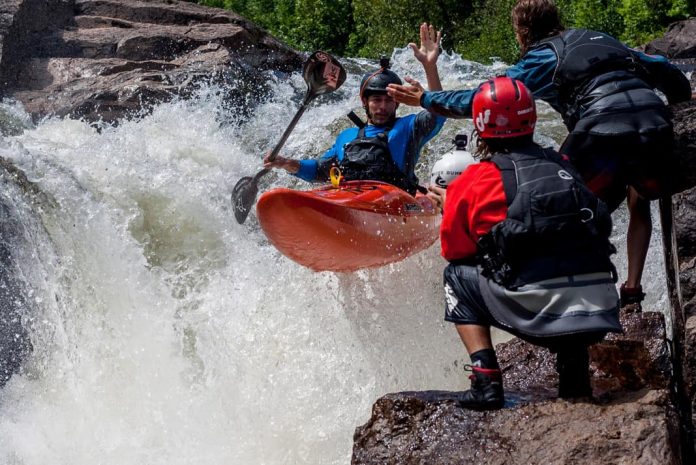
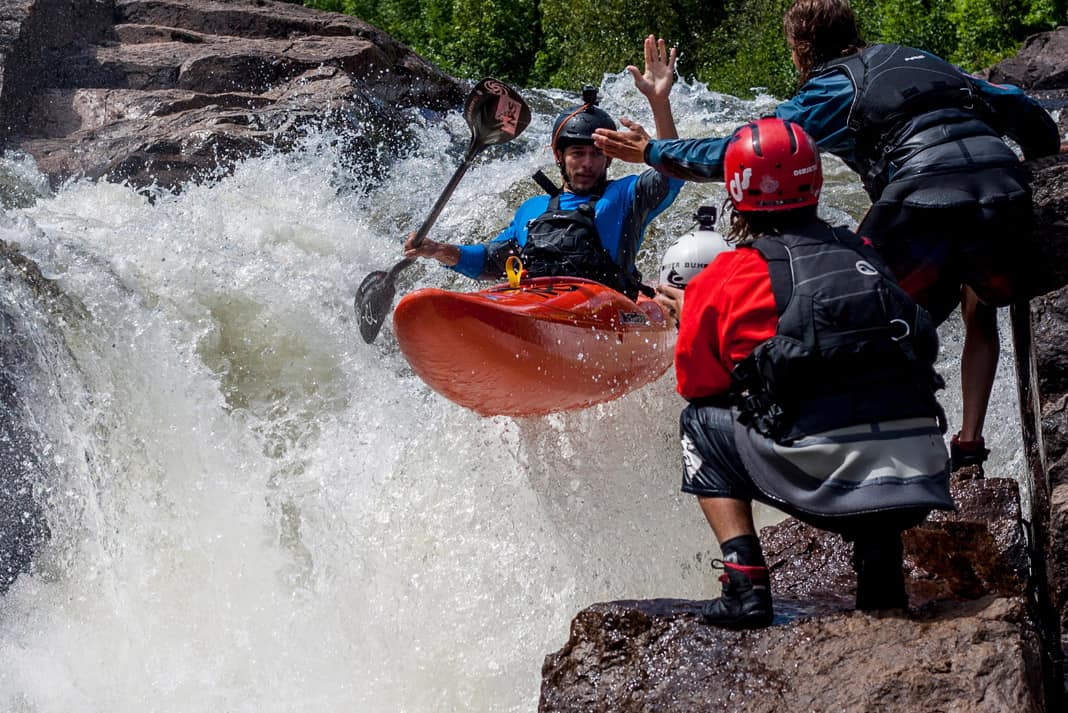
kayaker giving a high five to a friend on shore, all wearing PFDs

It’s what I’ve found myself thinking about these days: My PFD. Or, Personal Flotation Device. Which is strange to me. Typically, wearing a PFD is not something I think about at all.

PFD. Or, Personal Floatation Device

I spend the majority of the warmer seasons wearing one. I slip it on in the morning and do it up without conscious thought, like throwing a backpack over my shoulder or tying my shoes. It’s the same for all but the greenest whitewater people who’ve yet to burn the zipper and buckle combo into muscle memory.

[ Paddling Buyer’s Guide: See all PFDs ]

Wearing a PFD should not be controversial

So why have PFDs been floating around my subconscious? As regular readers know, I’m involved in outdoor tourism risk management and find myself involved in safety related policy issues. It turns out a few paddlers don’t wear PFDs, even when they know they should.

This is not your father’s PFD

PFDs and life jackets—the U.S. and Canadian coast guards would like us to switch back to calling them life jackets—have been around since the mid-1800s. Historically, ships were made of wood. If a ship went down, there was no shortage of floating bits of broken boat to cling to. After the adoption of iron-hulled ships, when a ship went down, it was going down to the bottom of the sea—nothing for sailors to cling to.

According to Christopher Brooks, the author of Designed for Life: Life Jackets Through the Ages, the two major drivers of life jacket innovation were dramatic catastrophes, such as the sinking of the Titanic in 1913—and the subsequent international convention requiring lifejackets available on all ships—and World War II.

Early life jacket models were chunky vests containing buoyant balsa wood. I can’t imagine them being very comfortable. Sometime later balsa wood was replaced by cork. By the 1940’s, hard cork was replaced by kapok, a naturally buoyant and water-resistant cotton fiber from a Central American tree.

[ Plan your next Central American adventure with the Paddling Trip Guide ]

Issued to soldiers and sailors, kapok vests were lighter and more pliant but nothing you’d consider supple. Kapok was fragile, and often life jackets unstuffed from storage bins were already damaged and ineffective. Modern PFDs are filled with synthetic closed-cell foam, and have passed rigid testing for durability, flotation and UV resistance.

kayaker giving a high five to a friend on shore, all wearing PFDs

Wearing a PFD is part of running whitewater

I love my own vest, with its body-hugging fit.

The feel of my PFD is part of the feel of running whitewater. It feels wrong without it, like driving without a seatbelt. Which brings us to the mini drama contrasted against significant tragedy. The PFD, or lack of, tying both stories together.

Mini drama first. You may have caught the Instagram buzz in March surrounding Pat Keller’s viral video post appropriately hashtagged #wearafuckinglifejacket. In the post, Keller—the unassuming reigning king of creaking and class V racing—gives a thorough tongue-lashing to a younger paddler putting onto his local run, the Cheoah, without a PFD. The younger paddler is actually wearing the fabric shell of the PFD, but he’d removed all the floaty parts inside. No matter, you probably get his point.

The paddler didn’t seem to be buying the wisdom Keller was selling. According to assorted commentary surrounding the post, he was highly skilled, knew the run well, and did not want to be inhibited by a PFD. Mini drama.

And then the tragic story. Last summer, 900-plus miles to the north, 15-year-old Jeremiah Perry drowned while on a high school canoe trip. He, like many of his classmates, could not swim, yet he was swimming at his campsite without a PFD. The loss of life was shocking but the ripple effects are still being felt in the outdoor education community. Scheduled canoe trips were cancelled. Hundreds, maybe even thousands, of kids denied their chance to explore the backcountry by canoe or kayak.

No one wears a PFD fly fishing

Every summer, a few fly fishermen wading in class II rivers get swept from their feet and drown.

Don’t doubt it can happen to whitewater people too. Rewind the clock to the 1999 World Freestyle Championships in New Zealand. Twenty-four-year-old Irish team member Niamh Tomkins jumped into the Waikato River’s Full James to swim across. She wasn’t wearing her PFD. She drowned in the boils in front of her peers and hundreds of spectators, just after the last of the semi-final heats.

Drowning is still a significant risk in society

There are 4,500 drownings every year in North America. Seventy-five percent of those deaths are in rivers, lakes and oceans, not swimming pools and bathtubs.

In 2016, in the United States, there were 167 deaths involving canoeing, kayaking and standup paddling, and of those, 130 were drownings. Of these paddling-related drownings, only 11 were whitewater paddlers. Why? Because we usually wear our life jackets, and most of us have the floaty bits still inside.

All of this is somewhat surprising and sad, given that for 30 summers I’ve just dropped my PFD over my head and climbed into my boat. We don’t need to overthink this. It’s just part of what I wear kayaking. Not thinking about this issue at all is the way to go. Wear a PFD. Just put it on.

#wearafuckinglifejacket

This article was first published in Issue 54 of Paddling Magazine. Subscribe to Paddling Magazine’s print and digital editions, or browse the archives.

Jeff Jackson is a professor at Algonquin College near the Ottawa River, and he consults on safety and risk management.

Why You Should Take Your Dog On A Canoe Trip

A dog on a canoe trip while a person paddles in the background
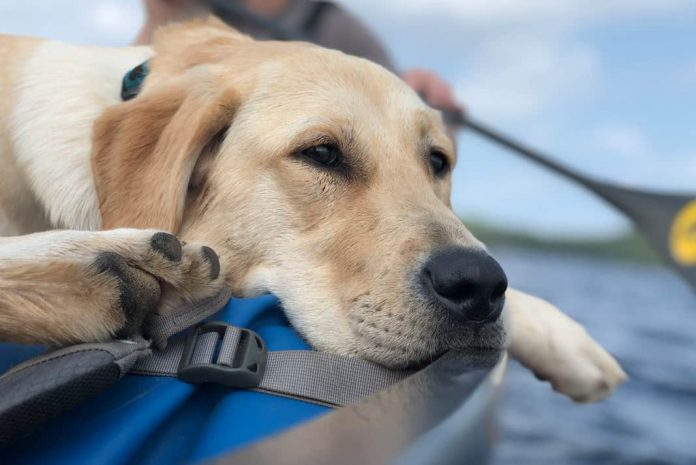
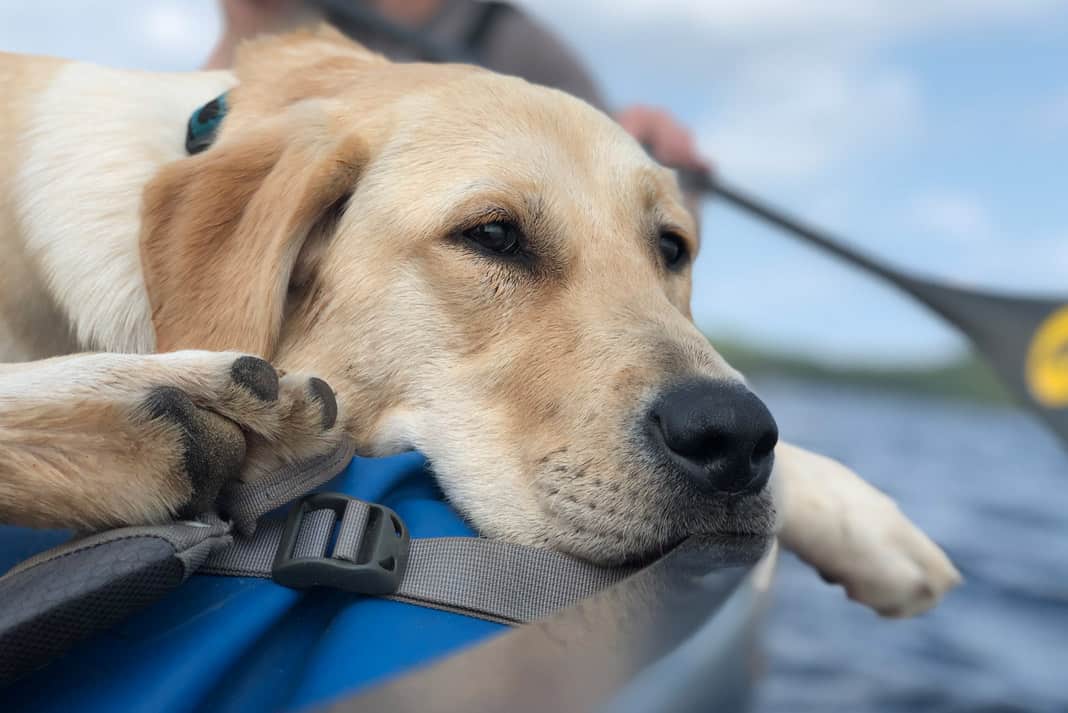
Love is a four-legged word. Aspen on Big Trout Lake during a weeklong trip in Algonquin Provincial Park. | Feature photo: Kaydi Pyette

Of the many embarrassing stories my grandma likes to tell, her favorite is of the years I sometimes liked to pretend I was a dog. Around the age of 4, there are multiple incidents of barking at strangers in grocery stores, eating sandwiches only if they were cut into the shape of Milk Bones, and biting the odd ankle or two. In this guise I would not have made a good canoe-tripping companion, but taking an actual dog on a canoe trip is a much more enjoyable experience.

The search for a paddling pooch

Fortunately, I grew out of my dog impersonation phase before I started marking my territory, but throughout childhood I retained an astoundingly single-minded fixation on my four-legged friends. At age 8, I was volunteering in shelters, handling the family’s neurotic shepherd rescue at obedience classes, and reading 400-page academic tomes on canine behavior. But as an adult I never had a dog of my own.

A change of heart

For many years as an adult, I dismissed dog ownership as too much responsibility. I was often on the road and I couldn’t fathom bringing a misbehaving mutt along on river trips and long-distance hikes. Last year, I found the perfect trial run. A long-term—but still temporary—gig as a puppy raiser for a future service dog.

Volunteers foster these puppies with a purpose for a year, beginning when they’re tiny seven-week-olds. Over the next 12 months, we help prepare them for professional training with basic obedience and socialization, ensuring the puppy is comfortable in environments it might encounter as a working dog. Think public transit, escalators, busy malls, classroom lectures and sporting events. And maybe, I thought, I should take this aspiring service dog on a canoe trip (or a dozen) for good measure.

A dog on a canoe trip while a person paddles in the background
Love is a four-legged word. Aspen on Big Trout Lake during a weeklong trip in Algonquin Provincial Park. | Feature Photo: Kaydi Pyette

The best canoe tripping partner

I needn’t have worried—Aspen was a perfect tripping companion. She was joyful regardless of the hour or weather, offered infectious enthusiasm for every portage, was agreeable on menu and mileage, and she never complained about the bugs. True, she didn’t help much with the paddling, but she was sunshine dozing in the bow of every trip.

For her, the wilderness must be intoxicating. With 300 million scent receptors, her sense of smell is 10,000 times better than mine. “If you make the analogy to vision, what you and I can see at a third of a mile, a dog could see more than 3,000 miles away and still see as well,” says the Institute for Sensory Research’s James Walker in a NOVA documentary. I can’t even imagine the complexity of the smells she smells. Away from the hum of city life, a dog can even hear an ant crawling out of its hill. I’ll never complain about the hungry drone of mosquitos outside my tent again.

These superhero senses were useful for detecting predators and prey. When dogs came to the fire 28,000 years ago, evolution researchers believe it was a transactional relationship—food and protection exchanged on both sides. What the average dog offers in modern society is much more intangible. Unconditional love, many say. Companionship. For some, a service dog is a lifeline.

Why these four-legged companions become family

Thirty-six percent of American households own a dog, each spending an average of $1,641 a year per dog, according to the American Pet Products Association. Increasingly, dogs are just part of the family—or surrogate children for 30-somethings with commitment issues. A survey by Poochperks.com found 38 percent of dog owners claim to love their dogs more than their spouses. A study from Northeastern University in Boston shows dogs in distress elicit the same level of sympathy as infants in distress.

Some might dismiss all this puppy love as anthropomorphizing, but research published in science journal Nature found feel-good hormone oxytocin spikes in both human and canine brains when a dog gazes at its owner. The same spike occurs when a human infant gazes at its parents.

It’s a dog’s life for canoe-tripping canines

Of the many benefits dogs offer their humans—reduced stress and loneliness, improved cardiovascular fitness and more time outside—perhaps their greatest gift is showing us how to live in the moment. I’m often guilty of immersing my thoughts in the future, focused on deadlines and always the next adventure.

[ Plan your next canoe tripping adventure with the Paddling Trip Guide ]

Stretched out in the sun in the canoe, I know all Aspen is doing is experiencing the sense of warmth spanning her body. This dog on a canoe trip could teach a lesson to many humans. If the art of life is to live in the present, she’s got it figured out.

Maybe my 4-year-old self was onto something after all.

This article was first published in Issue 57 of Paddling Magazine. Subscribe to Paddling Magazine’s print and digital editions, or browse the archives.

At 14 months old, Aspen was recalled into training for the Seizure Response program at Dog Guides Canada. At the time of printing, Paddling Magazine editor Kaydi Pyette had just picked up eight-week-old Wendy, her second puppy with a purpose.

Love is a four-legged word. Aspen on Big Trout Lake during a weeklong trip in Algonquin Provincial Park. | Feature photo: Kaydi Pyette

Paddleboarding Expedition at Isle Royale National Park

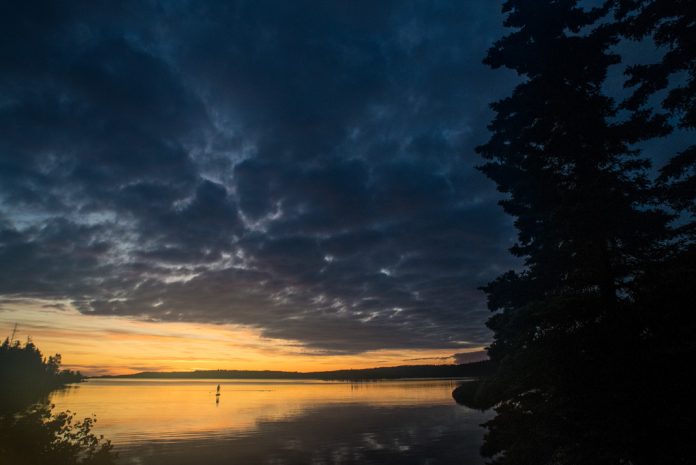
A single person paddleboards Lake Superior at Sunset
Andrew Koch paddles at sunrise near Belle Isle on Isle Royale in Lake Superior, Michigan. | Photo: Aaron Black-Schmidt

Isle Royale National Park is home to the longest-running study of any predator-prey system in the world––a dynamic between wolves and moose. Yet, as we finally reached Belle Isle––a serene campsite nestled in a picturesque cove––it wasn’t the wolves I worried about.

Onshore, a weathered fisherman held his faded blue and white VHF radio to the sky as our group huddled together, straining to hear a crackling voice deliver unwelcome news. Wind gusts were forecast to reach 30 knots the following afternoon, swells topping eight feet.

The old man could only shake his head.

“When that east wind comes whipping right into this bay, that’s not good.” He told us his name was Dave, and he would know—he had been coming on fishing trips to Isle Royale for three decades.

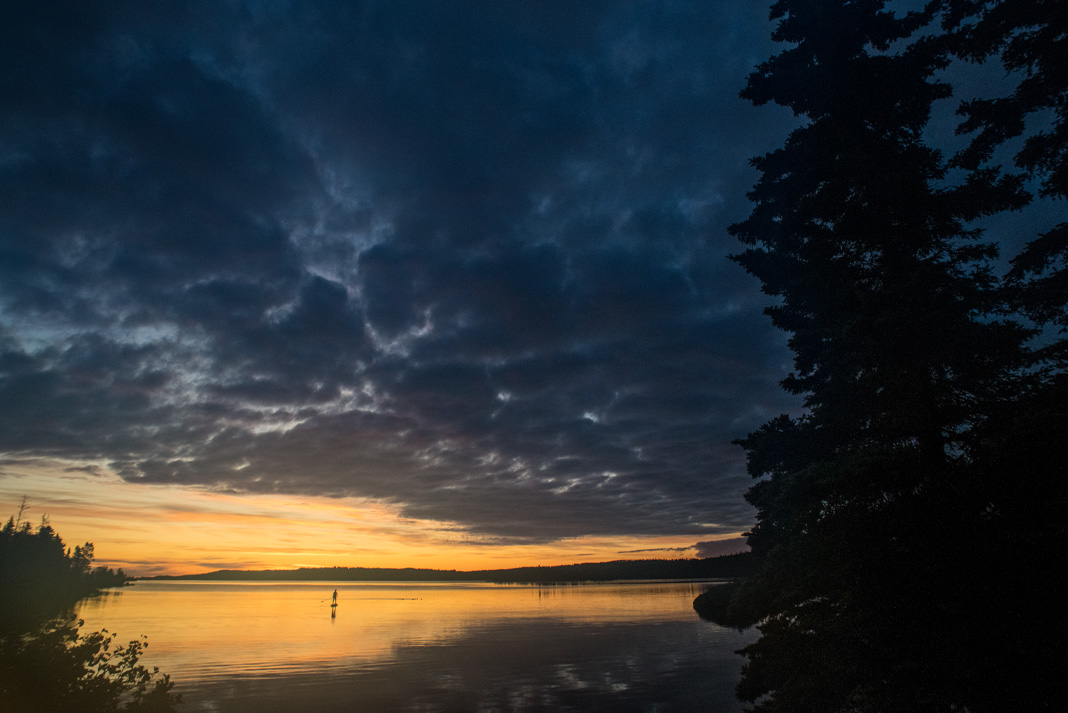
A single paddleboards crosses Lake Superior at sunset
Andrew Koch paddles at sunrise near Belle Isle on Isle Royale in Lake Superior, Michigan. | Photo: Aaron Black-Schmidt

I looked around at the concerned faces of our team. Photographer Aaron Black-Schmidt and I were joined by North Carolina-based paddlers Andrew Koch and Olivia Harrell. Our squad was on day five of a week-long SUP expedition, but eight-foot swells were not part of the itinerary.

When Aaron first proposed taking 14-foot inflatable standup paddleboards to Isle Royale, it seemed like a no-brainer. Exploring a remote island in the middle of the world’s largest lake would be the ultimate adventure.

“When I saw you guys come around the point, I almost fell over,” said Dave. “I never thought I’d see paddleboards out here. But I thought the same thing 20 years ago when I saw kayaks for the first time.”

Located in northern Lake Superior, Isle Royale features more than 200 square miles of lush forest, pristine lakes and majestic shoreline. Made up of more than 450 smaller islands, this freshwater archipelago holds the unique distinction of being the least visited but most revisited national park in the continental United States.

A group of paddleboarders paddle near the shoreline on Lake Superior
Andrew, Olivia and Jack paddle past one of the small islands dotting Tobin Harbor on their way to Rock Harbor. | Photo: Aaron Black-Schmidt

Dave first came to Isle Royale in 1989 for a fishing trip. He’s only missed one summer since that maiden voyage. Listening to him talk of the island, we got a sense of what this place meant to him. It was his escape.

“I put everything I do into this log right here,” said Dave. “You guys are in here.”

He wasn’t the only one to journal about his experience on the island. A dusty old notebook in the corner of a rain shelter at our Belle Isle campsite revealed hand-written stories from fellow paddlers. Thumbing through the tales, there was one line that I kept coming back to.

“I’ve forgotten how loud silence is, stress doesn’t exist out here.”

With cell service non-existent, the constant barrage of push notifications, emails and text messages was replaced by conversation, reflection and appreciation for Isle Royale’s confounding beauty. We could plan our lives based on the light in the sky, not a number on the clock.

Only 24 hours prior, our crew had been paddling deep into Duncan Bay––a secluded, paddle-in-only campsite with fellow humans nowhere in sight.

“You want the lake view or the enchanted forest?” Andrew asked Olivia after surveying the lodging situation at Duncan. Andrew’s question wasn’t hyperbole. I looked up at the wall of my wooden rain shelter––the lake view option––and noticed three words carved into the weathered wood: Too Much Happiness. Later that night, I drifted off to the psychedelic sound of loon calls echoing through Duncan Bay.

Today began with a magnificent paddle from Duncan Bay to Belle Isle. With the wind at our backs, we enjoyed a downwind run through a spectacular open channel. Craggy coastline with yellow and orange fissures loomed to our left, primitive and untouched forest towered to our right and a bald eagle soared overhead.

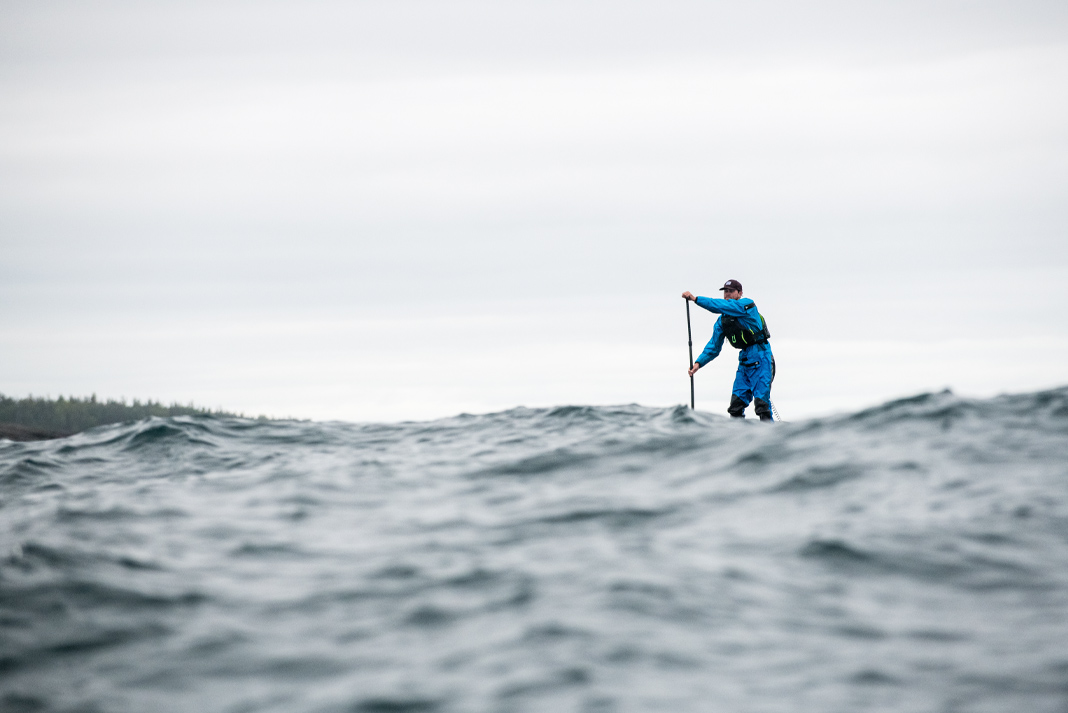
A single paddleboarder paddles on an open lake.
Jack paddles around Scoville Point in rough water, heading back towards Rock Harbor. | Photo: Aaron Black-Schmidt

After setting up camp in Belle Isle and making a plan for the following day, we tossed logs into an old stone fireplace once enjoyed by guests of the Belle Isle Resort. Before becoming a national park in 1931, Isle Royale had a long history of commercial fishing, mining and resorts dating back to the early 1800s. Belle Isle Resort opened in 1912 and featured a lodge, 28 cottages, a nine-hole golf course, a tennis court and shuffleboard courts.

Now the fireplace is all that remains; nature has reclaimed the entire island.

As conversation and golden embers began to dwindle, I looked out at the calm bay illuminated by brilliant moonlight. Would the next day bring howling winds and overhead swell like the weather forecast predicted? It was a perfectly still night, but the concern on Dave’s face from earlier that afternoon was unsettling.

The next morning, I opened my eyes to brilliant streaks of amber and red across a bay of glass. The sun was yet to crest above the tree line but Olivia and Andrew were already paddling, relishing the opportunity to witness nature’s masterpiece from the water. I grabbed my board and paddled out to a tiny island at the mouth of the cove, the silence broken only by the faint sound of my board gliding across the golden water.

A group of paddleboarders pose in their gear and the boat launch.
Andrew Koch, Olivia Harrell, Aaron Black-Schmidt and Jack Haworth assemble for a post-trip photo after seven days of paddling Isle Royale. | Photo: Aaron Black-Schmidt

Back on shore, Dave was unfazed by one of the most magnificent sunrises we had ever seen. No doubt, it was one of many he’s had the fortune of witnessing out here.

“Those east winds can come up quick,” he warned again, while haphazardly throwing piles of camping and fishing gear into his small motorboat. “I’ll be back in Rock Harbor in 40 minutes.”

Leaving Belle Isle wasn’t easy. Despite the pristine morning conditions, we chose to heed the warning of a man who’d been coming out here for 30 years. It was only a few strokes before we got one final taste of Belle Isle magic.

“There’s a beaver at your six o’clock,” said Aaron.

Bidding farewell to the beaver, Belle Isle and life on the edge, we began our journey back to Rock Harbor––the main hub of civilization on the east end of the Isle Royale and the beginning and end of most trips.

Despite running low on energy, this was a race against the weather we had to win. With winds picking up, we used a draft train to cross Duncan Bay and reach our final challenge, the Greenstone Ridge portage. The narrow trail features grueling climbs, treacherous downhills and hairpin turns, not the ideal combination when carrying a 14-foot paddleboard with nearly 100 pounds of drybags strapped to chests and backs.

We arrived back in Rock Harbor in mid-afternoon, with the storm still brewing out on Lake Superior. We all sat on our boards and took a few minutes to appreciate the moment.

Maps, photos and videos may entice people to visit Isle Royale, but it’s the sacred solitude and deafening silence bringing them back.

By dusk, I wondered whether we made the right call to leave the extraordinary beauty of Belle Isle. Spotting Dave’s small boat back in the harbor, I noticed the trees had begun to whistle. Within an hour, our three-walled shelter was assaulted by heavy rain and wind. And above the din of the storm, we could hear the swell crashing against the rocky shoreline.

Dave was right; those east winds do come up quickly.

This article was first published inPaddling MagazineIssue 62. Subscribe toPaddling Magazine’s print and digital editions here , or browse the archives here.


Jack Haworth is an avid paddleboarder and social media editor at Men’s Journal.