Home Blog Page 159

Boat Review: Jackson 2 Fun Kayak 2015

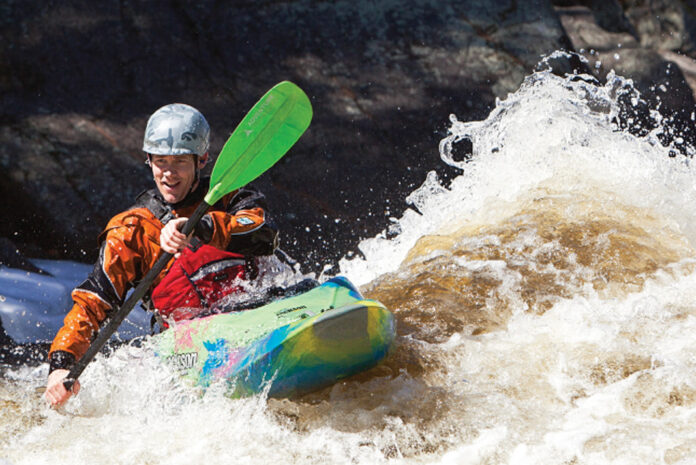
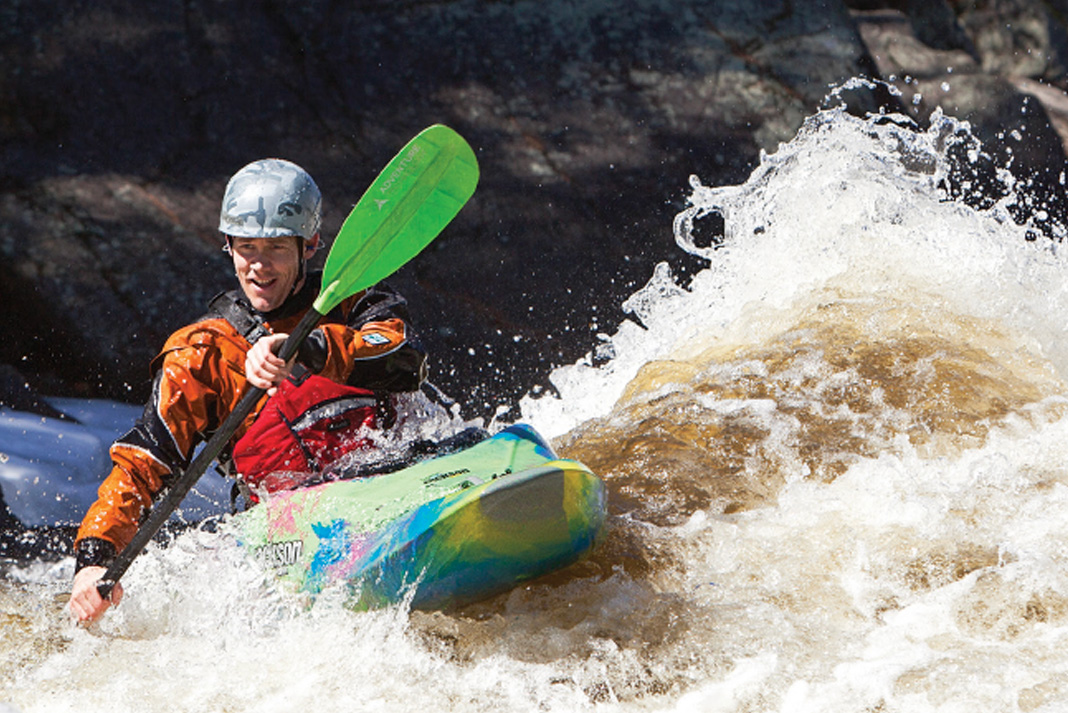
“F IS FOR FRIENDS WHO DO STUFF TOGETHER. U IS FOR YOU AND ME. N IS FOR ANYWHERE AND ANYTIME AT ALL.” —SPONGEBOB SQUAREPANTS | PHOTO: KAYDI PYETTE

The first whitewater kayak to sport the Jackson logo was a Fun. Fast forward more than a decade and you’ll find an impressive lineup of boats from creekers to Worlds-winning freestyle machines—but the Jackson 2 Fun, Fun, and 4 Fun still remain.

Jackson 2 Fun / Fun / 4 Fun Specs
Length: 6’7” / 6’10” / 7’2”
Width: 24.5” / 25.5” / 26.5”
Volume: 51 / 59 / 67 gal
Weight: 28 / 29 / 35 lbs
Paddler Weight: 110-155 / 145-180 / 165-230 lbs
MSRP: $1,199
www.jacksonkayak.com
[ Paddling Buyer’s Guide: See all Jackson Kayaks ]

2 Fun, new Fun

Originally designed in 2004, the Fun was built to be a comfortable, easy-rolling river running playboat. Subsequent generations of the Fun integrated more play-friendly features, and when Jackson’s dedicated freestyle kayak was introduced in 2012, the Fun was left in awkward adolescence—not as playful as the new Rockstar but too twitchy to be a favored river runner.

The redesigned 2015 version throws back to the Fun series’ riverplay roots. A new hull brings back the comfort and tracking ability that made the original Fun great for all-day river running. It also holds onto just enough of what it learned from its foray into freestyle to make the new generation perfect for full days of playing your way downstream.

[ Plan your next adventure with the Paddling Trip Guide ]

Putting you in control

Slipping onto the water I immediately notice that the Fun feels very stable.

Keeping it flat or tilting it on edge it is predictable and easy to control. This makes it easy to stay upright when running rapids, and hold on edge to get in and out of eddies. The hard rails grab the water to make long, gliding ferries a breeze.

It shoots across waves in a smooth, controlled manner—a refreshing change from high performance playboats that are so responsive they feel like they’re in control of you. Compared to shorter, twitchy, full-on freestyle boats, the 2015 Fun is also much more forgiving on eddy lines and boils. The stern deck sheds water quickly keeping it from getting forced under and sending you upside down, and the amount of stern rocker allows a good mix of tracking and maneuverability. Find a good eddyline or hole and you can still get the Fun vertical to enjoy nice balanced ends.

At 6’7” long, the 2 Fun has enough speed for smaller paddlers to zip around the river and catch waves and features on the fly.

The bow rocker keeps me bobbing up and over most waves and is great for when I want to skip over small, grabby holes.
“F IS FOR FRIENDS WHO DO STUFF
TOGETHER. U IS FOR YOU AND ME. N IS
FOR ANYWHERE AND ANYTIME AT ALL.”
—SPONGEBOB SQUAREPANTS | PHOTO: KAYDI PYETTE

Fun provides comfort

In order for me to enjoy a day on the river I need to be comfortable and the Fun takes care of that. The wide, high-riding backband stays in place with Jackson’s Sure-Lock cord and cleat system that’s easy to adjust while on the water. There’s enough foot room for me to wear actual paddling shoes and still have wiggle room for my feet. With the integrated GoPro mount on the bow, it’s easy to catch all the action.

Play all day in the Jackson 2 Fun

If you’re in the market for a big wave aerial machine or a hard-charging creeker, you’ll find the Fun to be somewhere between the two—it’s not a boat that specializes in either category. If you want to paddle all day without your legs going numb, catch more eddies than your friends and grab surfs along the way, then it sounds like you’re looking for Fun.
 

Boat Review: Wilderness Systems Focus 150

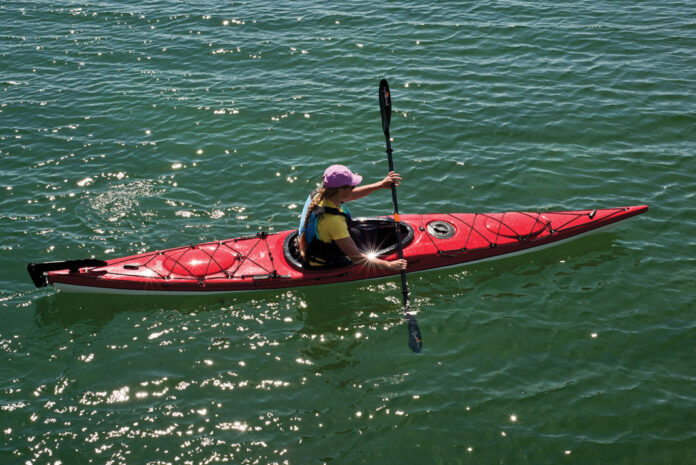
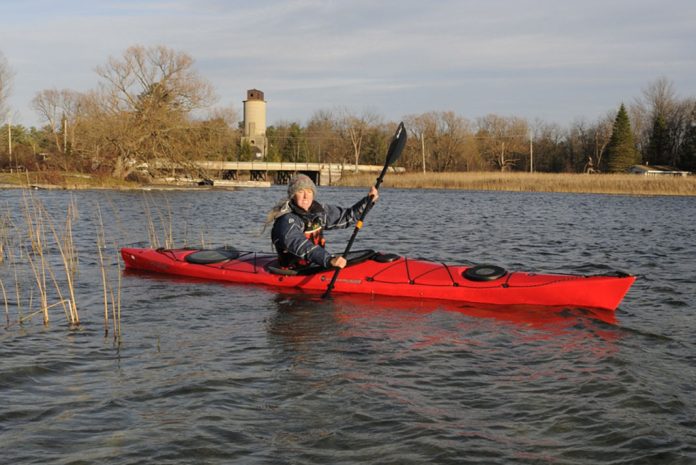
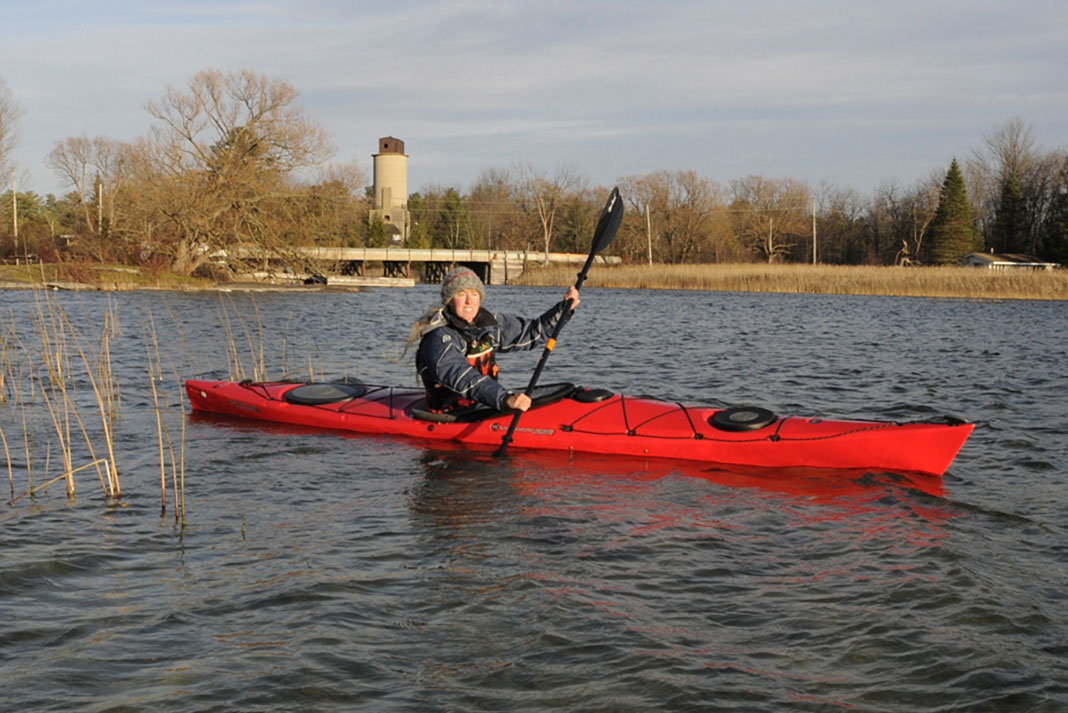
Woman paddling in the Wilderness Systems Focus 150 kayak
THE FOCUS 150 By Wilderness Systems | Feature Photo: Po Marshall

For the last decade, most of the Wilderness Systems boats you’d find crowding the racks at outfitters and clubs across the country would belong to Wildy’s versatile, and still wildly popular, Tsunami line. But that might be about to change. Released in late 2013, the Wilderness Systems Focus series tempts beginner-mediate paddlers with the promise of improved tracking and faster cruising speed, not to mention sleeker lines, in a sub-16-foot package.

Wilderness Systems Focus 150 Specs
Length: 15’
Width: 23”
Weight: 52 lbs
Max Capacity: 325 lbs
MSRP: $1,419 ($1,639 with rudder)
www.wildernesssystems.com
[ Paddling Buyer’s Guide: See all Wilderness Systems kayaks ]

Bring your priorities into Focus

Wilderness Systems says the Focus blends the beloved stability and predictability of the Tsunami with the enviable speed and efficiency of their performance skeg boat, the Tempest. A welcome compromise, no doubt, for Tsunami paddlers who find a grain of truth in disparaging “Salami” references. But comparisons—whether they are to cured meats or design bloodlines—seldom tell the whole story. With its symmetrical shallow V hull, soft chines, almost-nil rocker and pronounced keel, the Wilderness Systems Focus reveals a riot of influences, not merely a combination of two popular designs.

Cruise with confidence

On the water, that long waterline and surfski-inspired bow and stern result in very strong tracking. So well does the Focus hold course that, particularly in windy conditions, some paddlers will find the optional rudder helpful to assist with turning. We found acceleration and cruising speed quicker than a comparably sized Tsunami, but the real efficiency comes from all those minute course corrections you save thanks to the Focus’ affinity for straight-line paddling.

Combine the aforementioned hull characteristics with predictable stability and a low, unobtrusive deck profile, and the Wilderness Systems Focus shines as an affordable, entry-level option for aspiring fitness paddlers. Those planning longer day tours and weekend trips will find plenty of storage space in the three hatches, as well as ample wet storage behind the seat.

[ Plan your next adventure with the Paddling Trip Guide ]

The Focus holds its own in rough water, with fine secondary stability and increased maneuverability on edge. But even in lumpy conditions, that near-zero rocker waterline makes for better A-to-B cruising than playful wave hopping.

Woman paddling in the Wilderness Systems Focus 150 kayak
THE FOCUS 150 By Wilderness Systems | Feature Photo: Po Marshall

Adjustability? In spades

Wilderness Systems is an industry leader in comfortable, functional cockpit outfitting. Slide yourself into the Focus’ Phase 3 AirPro XP seating system, and all discussion of waterline efficiency or rough water performance may start to seem like frivolous fluff.

Tweak the hip pads, foam thigh braces, back support and leg lifters to create a custom fit. La-Z-Boy would be envious of the padded, generous length seat and thigh support, both of which are especially welcome for those who suffer from numb bum or sciatica issues. And there’s room to perform a solid leg drive off the SlideLock foot braces while forward paddling, without sacrificing the contact and support required for bracing and rolling.

Set your sights on the Wilderness Systems Focus

The Focus is available in three sizes to suit paddlers of every description. From light touring to fitness training, for beginner mediates who want a kayak that combines efficient design, user-friendly handling and supremely comfortable outfitting, Wilderness Systems brings your priorities into Focus.

Rudder Ready

A molded rudder pin and ready-to-use cable routings accept Wilderness Systems’ optional BTS rudder system, which uses the classic pedal- on-sliding-rails foot control. Look for an improved gas pedal-style rudder system from Wildy in 2015.

Back Gain

The Focus’ padded back-band provides low-profile support for fitness paddlers, but can be easily replaced with an optional high back-rest for recreational users.

MyPod

In addition to bow and stern storage compartments, a deck pod in the cockpit puts small essentials within easy reach.


AKv14i1 cover300This article first appeared in the Adventure Kayak, Spring 2014 issue. Subscribe to Paddling Magazine and get 25 years of digital magazine archives including our legacy titles: Rapid, Adventure Kayak and Canoeroots.
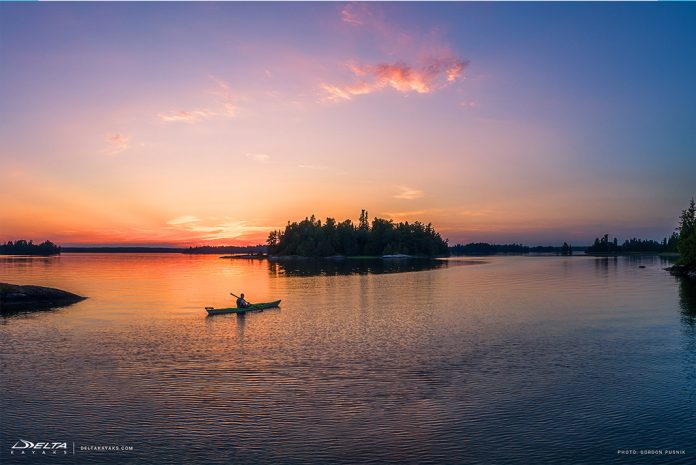
Delta Kayaks Is The Latest Manufacturer to Get Ripped-Off By Overseas Copycat Counterfeiters

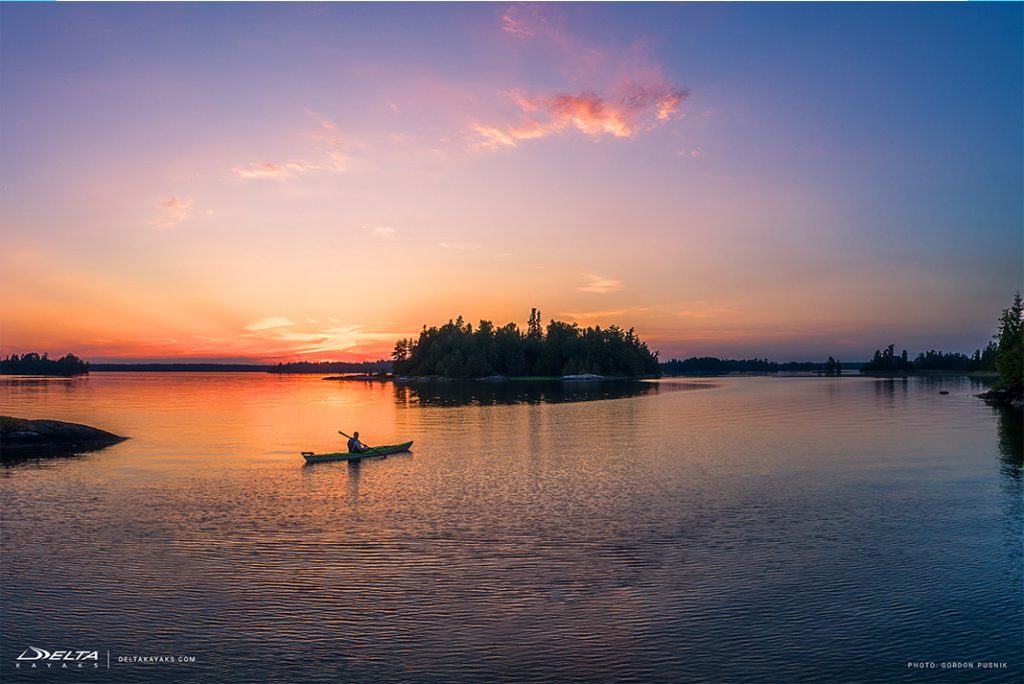
A kayaker paddles towards and island at sunset
When Delta learned of the counterfeiting effort in November 2019, they sent a cease and desist letter, but there’s not much else a manufacturer can do. | Photo: Gordon Pusnik

Overseas knockoffs are nothing new in the paddling business, but it hits a little harder when it’s your baby they’re ripping off.

Last year, Chinese company, Hangzhou Kudo Outdoors Inc., sent drawings of their Delta Kayaks knockoff to a handful of specialty retailers that Delta has been doing business with for years. It didn’t take long for the plans to find their way back to Delta’s sales and marketing manager, Michael Squarek, who said the dimensions on the drawings matched the company’s top-selling Delta 14 exactly. In case the resemblance wasn’t clear enough, the computer file was labeled “Delta 14.”

Only the hatches and rudder were different, which Squarek believes was to match Kudo’s existing tooling. The Chinese company has a long track record as a supplier of kayak components and paddles to North American companies—including Delta and some of its biggest specialty retailers.

Relationship status update: It’s complicated.

When Delta learned of the counterfeiting effort in November 2019, they sent a cease and desist letter to Kudo Outdoors, which denied any wrongdoing. Soon after that the knockoff Delta 14 popped up on Alibaba under a new company, Ningbo Real Young Kayak Co., Ltd. Ningbo is about 100 miles down the road from Kudo’s headquarters in Hangzhou. A seemingly identical boat has since appeared on the website of yet another company, Ningbo Ridgeside Outdoors Co., Ltd.

Delta kayak paddling towards an island at sunset
When Delta learned of the counterfeiting effort in November 2019, they sent a cease and desist letter, but there’s not much else a manufacturer can do. | Photo: Gordon Pusnik

According to the Real Young Kayak Alibaba listing, the knockoffs can be had for $480 apiece, or $450 in quantities of 60 or more.

Reached by email, a Ridgeside Outdoors sales representative, Ellen Tang, said the company’s Thermoforming 14 kayaks are currently in production. “Our kayak is similar to the Delta 14 thermoformed kayak, but we also have many differences,” she wrote. “If you know Delta kayak, you must take a few of our kayak for try and test, we have confidence with our kayak we have better design and price.”

It’s a familiar pitch. If you’ve spent any time at all in retail paddlesports you’ve received those too-good-to-be-true offers from overseas manufacturers and middlemen. And on the manufacturing side, having your design stolen is almost a rite of passage.

Shane Benedict, head of design at Liquidlogic and Native Watercraft, has lost count of how many of his boats have been copied over the last 15 years—everything from the Space Cadet whitewater playboat the company’s flagship fishing kayaks. Recently, Native has seen almost exact copies of its top-selling Slayer Propel series of pedal-drive fishing kayaks. “They even copied some of the hull features that I put in by hand trying to address simple fit issues for things they didn’t use in the boat,” Benedict said. “Just straight up copies.”

The copycats also make liberal use of original companies’ photos and catalog copy, often with hilariously inept results. A description of the Ridgeside website starts with tightly wrought ad copy lifted word-for-word from Delta’s online catalogue, followed by a Google translate meltdown: “The Rideside 14’Kayak is made of high impacted ABS cover with UV resistant Acrylic, shining strong and durable.”

Companies that can’t be bothered to spell their own name correctly or understand the purpose of hull features they’re copying will naturally have some quality control issues. That’s been the saving grace for North American companies so far.

“The quality gap is still large enough that the choice is still very obvious,” Benedict said. “If you want a smoothly functioning and durable product, go with the tried and true. If price is the main concern you get what you pay for.”

While many western companies are happy with the quality of boats and accessories they source from Chinese manufacturers, the copycats are playing in a different league. In fact, they’re playing another game altogether, focusing on volume and churn over long-term relationships.

“I can’t imagine a specialty dealer in North America carrying a boat if they knew it was a copy,” said Eddyline kayak’s president Scott Holley, who took over when founders Tom and Lisa Derrer retired. Eddyline’s designs have not been ripped off—not yet. “We keep looking for a ‘Freddyline’ kayak to pop up somewhere,” Holley said.

Ryan Bayes, owner of Western Canoe Kayak and Clipper Canoes in Abbotsford, B.C., said quality is the ultimate backstop. “You can cut the price all you want, but if I have to refund somebody three months later because it split in half, I’m still not ahead of the game.” Those Alibaba prices aren’t always what they seem either. By the time you add shipping and import duties, “That $500 becomes $900 real quick.”

Western is one of the retailers that tipped Squarek to the pirated Delta 14 drawings last year, and while Bayes still deals with Kudo Outdoors he draws the line at copycat products. “They just sent us 20 paddles and they were such a blatant knockoff of Aqua-Bound and Werner that we just straight up told them no—we’re not going to do that,” he said.

Call it a social contract. For many people who came up in the paddlesports business, refusing to sell a carbon-copy kayak is no different than chasing gear after somebody swims. It’s just what you do.

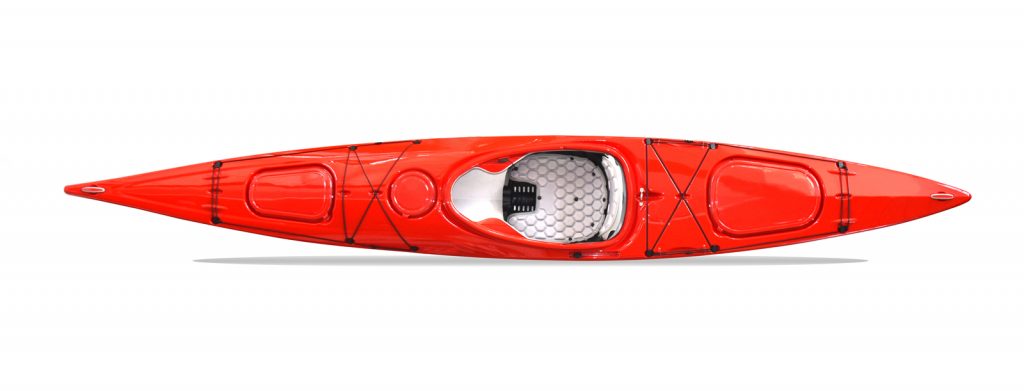
Knockoff Delta Kayak Made by Overseas Manufactures
The “Ridgeside 14’Kayak” is seemingly identical to the Delta 14, right down to the marketing copy. | Photo: Sourced from Ridgeside Paddlesports

“I’m not worried about the specialty retailers,” Squarek said. “I’m worried about the Dick’s Sporting Goods and Walmarts, where the buyers would never know it’s a copy of anything and just go on price.” If they do, there’s not much a manufacturer like Delta can do to stop them. Cease and desist orders are toothless. Patents are expensive, and they put your best technology into a database that’s searchable from anywhere in the world. It’s possible to block imports if you can prove to Canadian and U.S. customs agencies that they’re exact copies—a task likely to require a great deal of time and a herd of lawyers.

“That’s hundreds of thousands of dollars,” Squarek said, and that money is better spent on innovation. “Our focus will be that we’ll just make a better product. It’ll just kick us in the pants to do what we do better.”

If Found: The Simple Safety Feature Saving Lives And Dollars

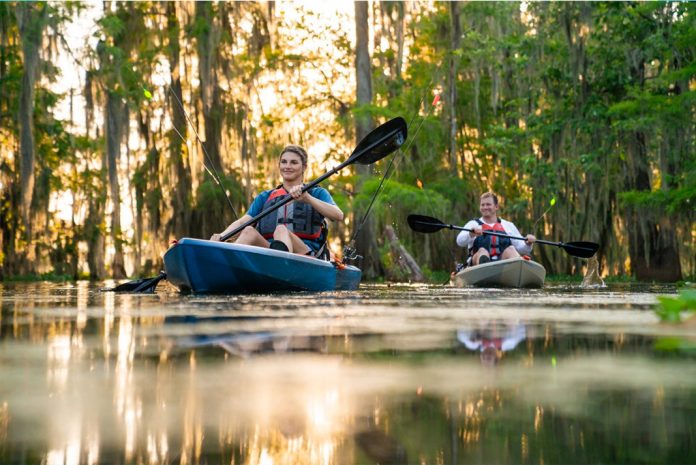
A male a female kayaker paddle through a green swampy river
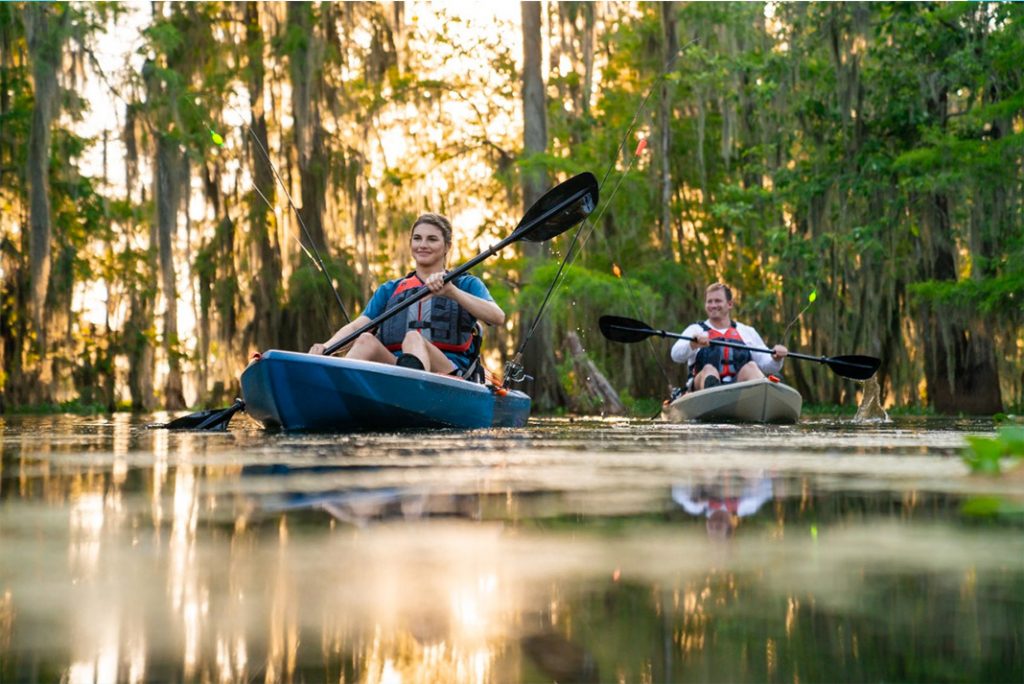
Lifetime Products Inc., which manufactures kayaks under their own and Emotion brand labels, is the latest to embed contact information plates into their plastic boat hulls. | Photo: Courtesy Lifetime Products Inc

An empty, drifting kayak is an eerie sight, and it raises some difficult questions for the finder: Who does the kayak belong to? Where is the paddler? Are they in danger? It can be tough to track down the answers without a great deal of time and expense, leaving first responders unsure what measures to take. So, how can paddlers help out their potential rescuers? Affixing an “If Found” sticker or badge offers a straightforward solution.


The simple safety feature saving lives and dollars

Reports of unmanned paddlecraft immediately trigger a search and rescue response from the U.S. Coast Guard, which says each hour of searching costs upwards of $113,000 USD. While it’s comforting to know help is on the way for paddlers in distress, time and money spent searching for people in the water when no rescue is needed is a massive waste and takes resources away from other emergencies. And it’s entirely preventable.

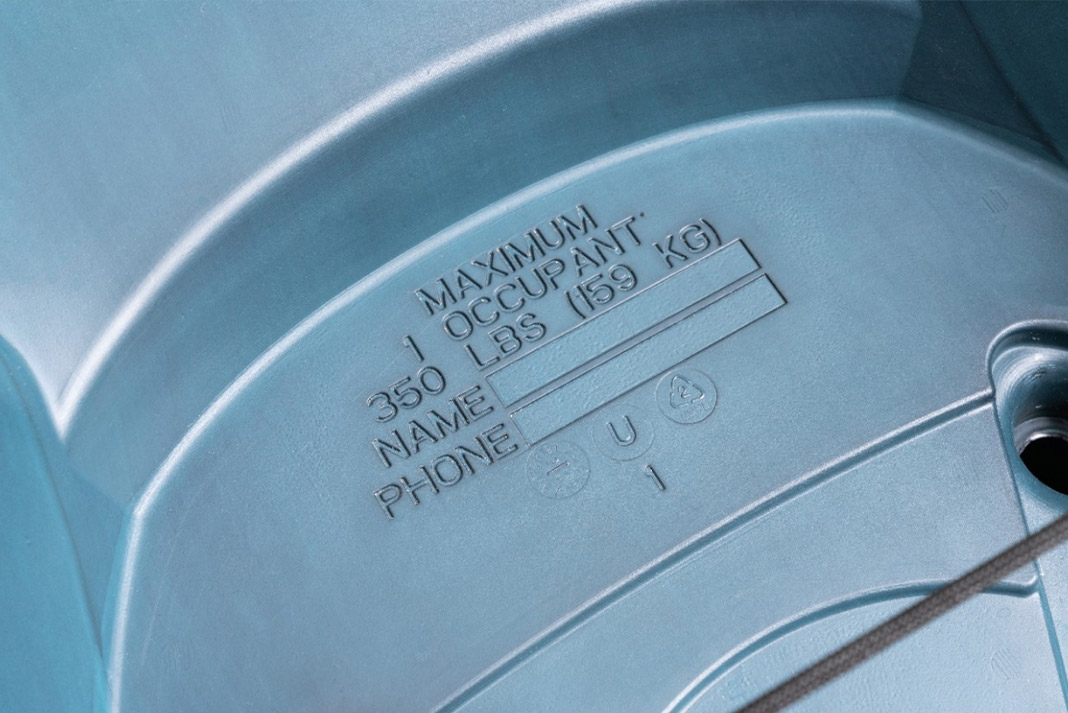
Lifetime Products Inc., which manufactures kayaks under their own and Emotion brand labels, is the latest to embed contact information plates into their plastic boat hulls. | Photo: Courtesy Lifetime Products Inc
Lifetime Products Inc., which manufactures kayaks under their own and Emotion brand labels, is one of the latest to embed contact information plates into their plastic boat hulls. | Feature photo: Courtesy Lifetime Products Inc

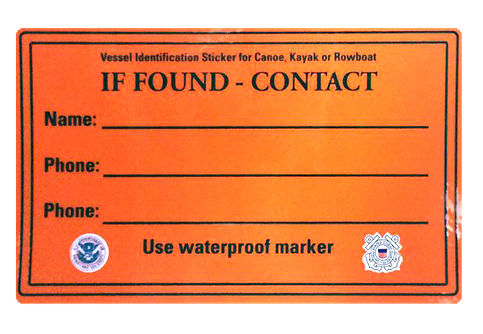
For years, the U.S. Coast Guard and Paddle Canada have been providing free “If Found” stickers to recreational paddlers. The stickers are brightly colored, waterproof and have space to write a name and two phone numbers. If a kayak or canoe is found with no paddler present, SAR teams can call to confirm whether or not a rescue mission is required. But is the sticker campaign working?

The Canadian Coast Guard says it doesn’t keep statistics on SAR cases originating from empty personal watercraft, but USCG Northeast reported spending over $400,000 USD over just one holiday weekend in 2019 for paddlers that weren’t actually missing. With increasing numbers of new recreational paddlers who may not be aware of the importance of labeling their boats—or, perhaps, how to properly secure boats on shore—kayak manufacturers are taking the matter into their own hands to save money and direct rescue efforts towards those who are truly in need.

[ Paddling Buyer’s Guide: View all Advanced Elements kayaks ]

Boat manufacturers get on board

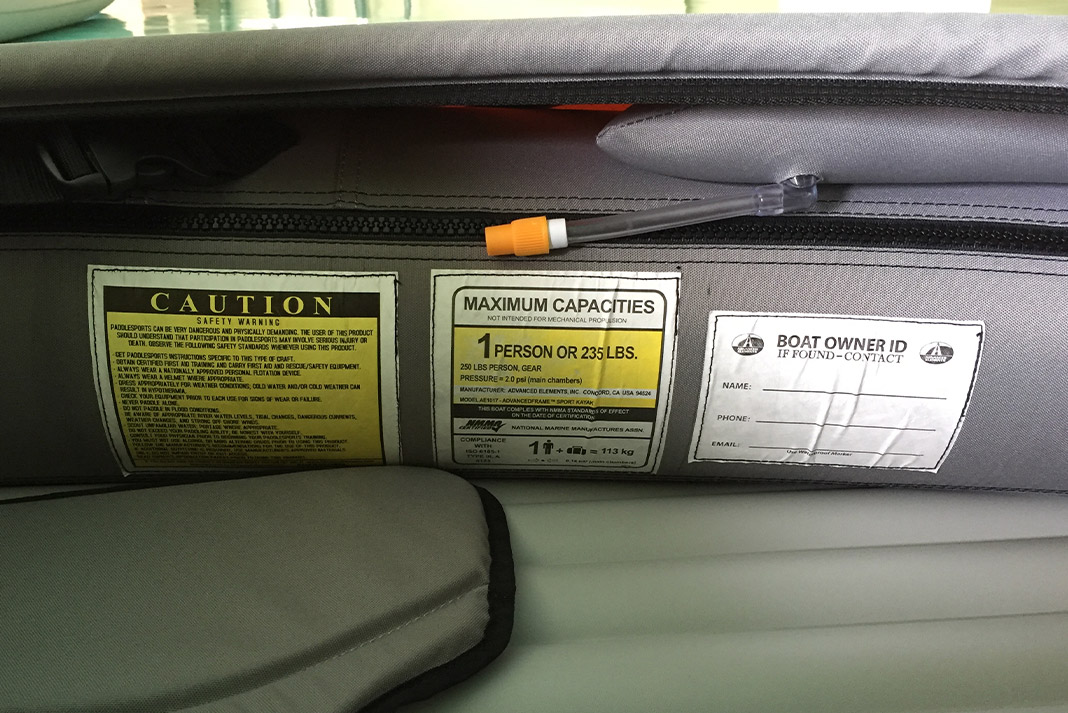
Inflatable kayak and SUP manufacturer Advanced Elements has been incorporating “If Found” badges into their products for years.

“It’s such a no-brainer thing to do,” said President Clay Haller. “We just add [the badge] next to the capacity plate.”

Lifetime Products Inc., which manufactures kayaks under their own and Emotion brand labels, began embedding contact information plates into their plastic boats in late 2019.

“We’ve only been doing this for the past 12 months,” said Steve Olsen, Lifetime’s water sport Product Marketing Manager. “I actually read a short piece in Paddling Magazine’s 2019 Buyer’s Guide about how much money the Coast Guard spends on searches for calls about unmanned kayaks and figured we could do something to help.”

Both manufacturers say adding contact labels costs very little. Haller estimated Advanced Elements spends less than $0.20 per boat for a badge.

Educating entry-level paddlers

Recreational canoe and kayak sales are booming, in part due to physical distancing measures and closed indoor spaces in response to the COVID-19 pandemic. Suppliers and retailers have struggled to keep up with demand. According to Olsen, the decision to add contact labels came at the perfect time.

“We’ve seen an explosion in our business because of the pandemic, and we cater to the entry-level paddler who may not be aware of how to be safe on the water,” Olsen said. In addition to the contact labels, Lifetime and Advanced Elements also both include safe boating pamphlets with their owner manuals. While rules and regulations vary from state to state and from province to province, Haller says the basics always apply.

One simple boating safety feature that is saving money and lives
A United States Coast Guard “If Found” sticker. | Photo: Courtesy USCG

“A PFD is obvious,” Haller said. “But people getting into it may not understand the importance of certain safety measures. Manufacturers are somewhat responsible. You’re putting a product out there, and keeping people safe is also about making sure they have a good experience,” Haller said. “One bad experience and it’s ‘that’s the last time I’m doing that!’ but it’s pretty easy to give people the basics.”

Olsen echoed this statement.

“We want people to have a good time and keep getting out there,” Olsen said. “Including safety information is a big deal for us.”

A simple boating safety feature can help families find their boats.
“It’s such a no-brainer thing to do,” said Advanced Elements President Clay Haller. “We just add [the badge] next to the capacity plate.” | Photo: Courtesy Advanced Elements

There’s lots of reasons to label your boat

A lost boat marked with contact information can save time, money and even a life, whether the reason is catastrophic mishap or common mistake. It’s as easy as grabbing a Sharpie and scrawling some numbers inside the hull. By providing customers a space to do so, Lifetime and Advanced Elements are eliminating a lesson most paddlers might only learn through unfortunate circumstance. And saving the Coast Guard money and valuable time in the process.

Lifetime Products Inc., which manufactures kayaks under their own and Emotion brand labels, is one of the latest to embed contact information plates into their plastic boat hulls. | Feature photo: Courtesy Lifetime Products Inc


5 Of The Funniest Canoe And Kayak Fails On YouTube

screenshot from video of canoe fail on youtube
Feature Photo: Josh Duggan, YouTube

The Internet is a wonderful thing. We scoured YouTube for the top-watched canoe and kayak fails and our office staff can’t stop laughing.

What’s your favorite canoe or kayak fail? Ours is definitely the kayak deadlift in the top video at 2:04 but the “Funniest Kayak Fails 2016” video is a total classic and the “Kayak Fail” video is also hilarious! Let us know your favorite in the comments below.

Disclaimer: Language in some videos could use a bleep sensor.


Funny Canoe Videos

2 Morons Canoe Fail

2:03 mins | Josh Duggan

Was this duo the inspiration for Dumb and Dumber?

Bad Friend Canoe Fail

1:43 mins | River Funsies

Rio Vista Falls in San Marcos TX. A cowardly display of friendship on the river.

As they say in the video, if people are yelling for you to “Go for it” and filming at the same time… think about it first.

Canoe Slalom Fails

1:45 mins | Canoe Sport

This video proves that even the best of the best sometimes get in over their heads.


Funny Kayak Videos

Best Fails Compilation – Stupid People on Kayaks – 2018

5:36 mins | Best 100 Vines

These people (and one pooch) have a lot to learn!

Funniest Kayak Fails 2016

3:51 mins | 8Fails

Just stop. Enough.


That’s it. That’s all, folks. (Although if you really want more, check out this SUP Fails Video.) Don’t try any of these stupid stunts at home—and always wear your life jacket!

[ Plan your next adventure with the Paddling Trip Guide ]

Did we miss a funny video? Share it with us in the comments below.

Boat Review: WaveSport Diesel 65 Kayak

Whitewater paddling in a WaveSport Diesel 65 kayak
Feature Photo: Rob Faubert

With very little fanfare or hype the WaveSport Diesel 65 and 75 river runners have been launched. Even on WaveSport’s own website, all you get is a couple of profiles, specs and your choice of two new colours: ice and citrus. Having paddled the Diesel, we realize this may be some sly strategy to only let a select few know about it. Well WaveSport, your little charade is a bust—the Diesel rips!

WaveSport Diesel 65 / 75 Specs
Length: 7’6” / 8’0”
Width: 25” / 25.5”
Depth: 12.5” / 12.75”
Volume: 65 / 75 U.S. gal
Weight: 36 / 37 lbs
Paddler Weight: 100-200 / 140‑240 lbs
MSRP: $999 USD / $1,399 CAD
[ Paddling Buyer’s Guide: See all river running kayaks ]

Debuting the Diesel 65

The WaveSport Diesel comes in two sizes, 65 and 75, telling you the volume in U.S. gallons. Have a look at the specs and you’ll see for the two models the weight ranges are huge, 100-200 and 140-240 pounds. Almost anyone will fit in the smaller 65, but if you’re 165 pounds and up, go for a light, nimble, bouncy and stable ride in the cushy 75. Sizing is key, especially when you add the weight of your gear.

The Diesel is up to the occasion

After a couple of days on the Kipawa River, a mid-sized but pushy river, we deemed the Diesels to be a perfect match of boat to conditions. In aerated wash and boils below the dam, the Diesel is super stable. The multi chine hull offers wicked secondary stability, it can be laid on edge with no fear; it feels like you can paddle it there all day. Initial stability is comfortable, but not like current freestyle boats—the planing surface is not nearly as wide. Want to teach people to roll? Put them in Diesels.

On the Kipawa, and less technical runs, the Diesels are great. You have lots of time for a few strokes to get the boat to an impressive cruising speed. You also have room to carve into an eddy. For technical creeking, some folks are going to find the Diesels’ waterline too long for quick pivots and they don’t snap to top speed like a CFS or Micro. Life is a compromise; and these boat do a great job of sitting on the fence waiting to fall into whatever headwaters you choose.

Surfer’s paradise

Not only can the Diesel run rivers and creeks, it’s a blast to surf. Tumbling Dice on the Kipawa is once again worth stopping for. The combination of hull speed, rockered bow and crazy stability had us ripping long waves like the good old days. And, you can even bounce and blunt the Diesel; try that in an RPM!

We normally write about outfitting first, but we forgot about it—a true compliment to good outfitting is not having to think about it. The F.A.T. system including seat, thigh braces and hip pads, and new back band (with ratchets, finally) are superb. With plenty of foot room WaveSport went back to a bulkhead rail system. The Diesels ship with two different sized bulkheads; ensure (we didn’t) you fit it properly so your feet can’t slide overtop (ours did). The boat feels tough with no flex in the cockpit rim. It’s the best outfitted-to-task boat going. Now, if only they could make a large volume, solid boat without the portage weight.

[ Plan your next adventure with the Paddling Trip Guide ]

The Diesel 65 is your sport utility boat

Why WaveSport hasn’t pumped the Diesel is beyond us. Perhaps the models are in short supply, or maybe their marketing department is just too busy “field testing” them on the river. Come to think of it, I have seen one advertisement for the Diesel, the tag line read, “the SUV of kayaks.” Nuff said.

Follow us on Instagram @paddlingmagazine and get hyped on our posts.


Boat Review: Riot Edge 14.5 Thermo

THE EDGE 14.5 THERMO By Riot Kayaks
KAYAK RACECAR. BEST PALINDROME EVER. | PHOTO: PO MOFFAT

Porsche’s bestseller is a four-door sedan. Dodge’s new Charger SRT Hellcat seats the whole family and hides 704 horsepower under the hood. Carmakers know most drivers want a vehicle that’s comfortable and practical, as well as high-performance. It’s a trend that kayak manufacturers like Riot have noticed as well, leading them to launch the Riot Edge 14.5 Thermo.

Riot Edge 14.5 Specs
Length: 14’4”
Width: 22”
Weight: 51 lbs
Max Capacity: 325 lbs
MSRP: $1,800
www.riotkayaks.com
[ Paddling Buyer’s Guide: See all day touring kayaks ]

Introducing the Edge 14.5 touring kayak

With sleek, muscular lines and our demo’s flawless, Ferrari red finish, Riot’s Edge 14.5 thermoformed plastic kayak looks like an expensive composite boat, or a sports car. And it’s just as much fun to drive—er, paddle. Where Porsche and Dodge lured soccer moms and hockey dads with traction control and spacious seating, Riot’s directional control and cockpit outfitting also speak to a more recreational everyday consumer.

On the Edge of your seat

First, there’s the seat. Grippy, moulded-in thigh braces and a padded seat pair with a substantial back rest that adjusts from extra-high to skyscraper. While it’s certainly supportive, that comfort comes at the expense of paddler mobility and spraydeck fit.

Then there’s Riot’s rudder system. Sliding foot pegs are familiar and intuitive for many rec paddlers, but offer less stability than the toe pedal systems found on many premium sea kayaks. The rudder itself is new this year from Riot and features an innovative, scalloped leading edge for improved hydrodynamics.

“It is bio-inspired from a humpback whale flipper,” explains designer Felix Martin, “they have the shortest turning radius for whales.” The plastic rudder tapers in thickness and is shaped to reduce drag in the water.

THE EDGE 14.5 THERMO By Riot Kayaks
KAYAK RACECAR. BEST PALINDROME EVER. | PHOTO: PO MOFFAT

Indeed, we noticed very little resistance with the rudder deployed, and a push of the pedals swerves the boat around like a 458 in the Corkscrew at Laguna Seca Raceway. On the straightaways, the Edge is equally well behaved, tracking obligingly with rudder up and crosswind gusting.

Color-matching thermoform lids and neoprene hatch covers bow and stern. Screw-top front deck pod is a bit of a reach for shorter paddlers. Be wary of cross-threading and sand—we closed it once and never got it open again.

Paddle float self-rescue straps and a low-profile back deck behind the cockpit aid re-entries. Just watch for snagging on the skyscraper seat back.

Learners’ permit or ticket to ride

Besides coloring, our demo Riot Edge 14.5 shares a few other traits with the Italian stallion. The lightweight hull accelerates quickly, cruises effortlessly and is wonderfully maneuverable. Like its name suggests, the Edge’s moderate V hull and hard chines make for dynamic yet stable edging. This is a kayak in which developing paddlers will love cutting their first carved turns.

With those crisp hull lines, it’s no surprise the Edge handles rough water like a champ—powering across currents, sculpting S-turns amid the rocks, and slicing through haystack waves.

[ Plan your next adventure with the Paddling Trip Guide ]

Riot’s Edge 14.5 will rev your engines

When automotive aficionados say a car “has good bones,” they’re referring to the vehicle’s structure, its essence—not trivial details like trim and upholstery. The Riot Edge 14.5 is a novice-friendly day tourer with the bones of a supercar.


Screen_Shot_2015-07-07_at_3.08.23_PM.pngThis article first appeared in the Fall 2015 issue of Adventure Kayak magazine.
Subscribe to Paddling Magazine and get 25 years of digital magazine archives including our legacy titles: Rapid, Adventure Kayak and Canoeroots.

Boat Review: Necky Eliza Composite Kayak

Paddling the Necky Eliza composite kayak for women
Feature Photo: Tim Shuff

The guiding principle of the Necky Eliza is that smaller paddlers can go faster in a smaller boat, because they will have to push less water with the hull to get the boat moving. As Necky puts it, “Weaker paddlers may find a kayak with less wetted surface is quicker for them.”

Necky Eliza Composite Specs
Length: 15’3”
Width: 21”
Cockpit Size: 28.5” × 15”
Weight: 47 lbs
MSRP: $2,599 USD
[ Paddling Buyer’s Guide: See all women’s sea kayaks ]

The Necky Eliza breaks the mold

The fastest boat is one that fits

This notion of “fitting the boat to the paddler” is a rather sophisticated idea when for so long we’ve been taught that the longer and narrower the boat, the faster it will be. Period. In this enlightened age Necky is telling us that the fastest boat for you is one that a) fits properly, and b) has the least possible drag at the speed you normally paddle. Hence Necky’s advent of a specific design for female paddlers up to 160 pounds.

Necky tested these waters a few years ago with the introduction of the Eliza in polyethylene. That model was hugely successful and Necky released the composite version on its tail. This model has the slightly more performance-oriented features the buyers of a top-end kayak are likely to want, like a narrower hull and those British touches (rubber hatches and skeg) that cool rough-water paddlers consider de rigueur.

With its narrow profile, low deck and short cockpit, the Eliza fits smaller paddlers just right—while the cockpit and hip stays are carefully kept wide for women’s hips.

Necky’s Eliza turns heads

Understandably, the 15-foot Eliza with its dry, buoyant ends is better suited to hot on-water performance and playful paddling than long-distance touring. With even the slightest hint of a tilt, she cranks a mean turn and sticks to it (wave carving, anyone?), unless you insist otherwise. Straight-ahead paddling keeps you alert unless you dampen her spirit by dropping the skeg.

While the 16- by 9-inch hatch openings are generous, the volume of the rear hatch is very low and the volume isn’t allocated as efficiently as trippers might like. The several inches of space behind the seat would be better put behind the bulkhead (followed by moving the rear hatch opening forward, as ours was partially obstructed by the skeg cable housing entering the skeg box).

Comfort at play

Curved bulkheads increase dry storage in the hatches and give taller types a couple of alcoves to stretch their tippy toes into up front. Advanced Composite layup is a techy-looking honeycomb material.

The Necky Eliza’s firm foam seat is simple and comfortable. The low deck and low-profile backband are a high-performance combo that let you lay way back to roll or balance brace. The seat-stays bend out wide for generous hip room.

Though technically a shallow V, the hull looks almost flat like the planing hull of a surf kayak, with a semi-hard chine for good secondary stability and carving on edge.

[ Plan your next adventure with the Paddling Trip Guide ]

Eliza is at home in rough waters

Highfalutin efficiency arguments aside, the Necky Eliza is more of a dancer than a cruiser at heart and promises women will be able to hold their own in the rough stuff. You’ll want to save the talk about wetted surface area and coefficients of drag for pub conversation when the surf dies down. This girl just wants to have fun.

This article was first published in the Summer 2009 issue of Adventure Kayak Magazine. Subscribe to Paddling Magazine’s print and digital editions, or browse the archives.


Boat Review: Valley Nordkapp RM Sea Kayak

Man paddles in the Valley Nordkapp RM sea kayak
Feature Photo: Conor Mihell

The father of British-style sea kayaking in North America once scoffed at plastic boats, but times have changed and minds have changed along with them. Now one of the most influential sea kayaks of all time is available in rotomolded plastic with release of the Valley Nordkapp RM.

Valley Nordkapp RM Specs
Length: 17’9”
Width: 21”
Depth: 13”
Cockpit Size: 29.5” × 16”
Weight: 56 lbs
MSRP: $1,775 USD

The Nordkapp has evolved

In the early 1980s, Stan Chladek brought Valley Canoe Products and the holier-than-thou attitude of the British Canoe Union to a small paddling shop just outside of Detroit, Michigan. Chladek’s mindset was that if a sea kayak wasn’t made of layer upon layer of fiberglass and coated with scads of gel coat, it wasn’t worth paddling; rotomolded polyethylene boats were nothing but “coffins.” Isn’t it ironic that Chladek’s beloved Nordkapp is now available in plastic?

The Valley Nordkapp is among the longest running sea kayak designs, created in 1975 by Briton frank Goodman. Somehow, Valley has managed to maintain the same sleek and sexy lines while morphing the Nordkapp from a tippy, expert-only missile to an intermediate-friendly—yet still expedition-ready—cruiser. Along the way, it’s been paddled to the ends of the earth, from Norway to Cape Horn and everywhere in between in swell, surf and piss-on-a-platter calm.

Ready for the swell

The Valley Nordkapp RM mirrors the dimensions of the latest composite version. It sports large oval hatches fore and aft, a retractable skeg and moderate stability, which all told make it easier to pack and more manoeuvrable and stable than earlier models. Yet as its pedigree implies, the RM is still nimble in rough seas and handles better as the load becomes heavier.

Paddled empty, the Nordkapp RM feels bigger and more secure than its narrow beam and shallow depth imply. It’s dry in choppy waves due to its flared, voluminous bow and catches waves predictably in a following sea. Like most British boats, course corrections are best made with hip-initiated turns; the RM is quite manoeuvrable when paddled on edge and will complete a 360-degree turn in half-a-dozen well-executed strokes. It becomes bomber stable right to the capsize point and cruises easily at seven or eight kilometres per hour when loaded down for a long trip.

[ Plan your next adventure with the Paddling Trip Guide ]

Screen_Shot_2015-06-26_at_9.52.39_AM.png

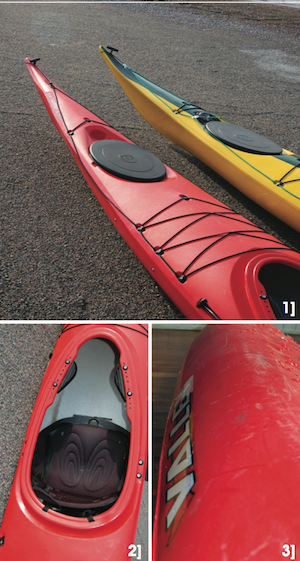
1) Sister Ship

Only the crisper lines of fiberglass are missing from the Nordkapp RM when compared to its composite brother. The boat shares the same peaked foredeck, functional deck layout and compass recess.

2) Shoot from the Hip

Valley’s new seating system has more bells and whistles than their former, fiberglass design. Thigh supports are adjustable to offer a comfortable, performance-oriented fit for paddlers of all sizes. Time will tell how well the plastic seat and customizable, padded hip pillars will stand up to heavy use.

3) Stiff Lower Lip

The Nordkapp RM’s hull nearly matches the rigidity of composite boats due to Valley’s unique tri-layer laminated plastic. Bulkheads are welded in place and contoured slightly to make them extra strong and watertight yet flexible enough to protect the hull from stress damage upon blunt impact.

[ Paddling Buyer’s Guide: See all rotomolded plastic sea kayaks ]

The Valley Nordkapp RM is a welcome addition

Plastic prejudices aside, the construction of Valley’s plastic sea kayaks is impressive. The Nordkapp RM’s hull is rigid and tough, yet noticeably lighter than its counterparts—even lighter than many composite Nordkapps. Performance-wise, even scrupulous Chladek would agree, the Nordkapp RM will never be left for dead in the water.

This article was first published in the Summer 2008 issue of Adventure Kayak Magazine. Subscribe to Paddling Magazine’s print and digital editions, or browse the archives.


Paddle Through History: Canoeing The River Wye

Scenic view of rolling mountains and fields surrounding the River Wye
The Wye Valley has been declared an Area of Natural Outstanding Beauty and is an internationally protected landscape. | Feature Photo: visitwales.com

For canoe-trippers there’s always been something special about a border river. Take canoeing the River Wye for example. As you trace the border between England and Wales, ancient neighbors and one-time foes, the Wye serves up stunning scenes of natural beauty with a frisson of historical intrigue. Won’t you come along?

[ Plan your next adventure with the Paddling Trip Guide ]

Why canoe the River Wye?

A unique gem of a river

Born in the Cambrian Mountains of Wales, the Wye flows for some 135 miles, meandering into England before reaching the Severn Estuary near the Welsh town of Chepstow. The upper reaches are fast, narrow and lumpy, but from just above Hay-on-Wye, the river slows and widens, and for the next 112 miles is a gem for the canoeist.

The Wye is one of the few rivers in England and Wales available to a canoeist, but even without such distinction, this river is very special. The Wye’s Latin name is vaga, an adjective meaning “wandering.” True to its name, the River Wye winds through some of the prettiest countryside in either land, following a route that abounds with wildlife and wildflowers.

Weather
Expect all four seasons in any one day. These are British seasons though, so nothing a waterproof coat, a woolly jumper and a good sun hat can’t cope with.
Shuttle
Assistance with shuttles and canoe hire abounds—simply Google Wye and canoe and sort through the many options.
Don’t Miss
If you make it as far as the tidal reaches below Bigsweir Bridge, take the chance to visit the breathtaking medieval remains of Tintern Abbey, forcibly closed by Henry VIII in the 1530s.
Diversions
If you enjoy a good read, Hay-on-Wye can’t fail to please. Home to the Hay Literary Festival, and more than 20 second-hand book shops, it’s the National Book town of Wales.
Learn More
Wye Canoe? Canoeists’ Guide to the River Wye is available online at fisheries.or.uk. Mark Rainsley’s book River Wye Canoe and Kayak Guide is published by Pesda Press.

The Wye’s smooth flow glides through unspoiled farmland and woods, dotted with swans and broken by the odd leaping salmon. Below Bigsweir Bridge, about 14 miles from the sea, the river becomes tidal and demands respect.

In spring the banks glow with bluebells and primroses. In summer, and benefiting from the famous U.K. mix of rain and sun, the valley shines with a range and depth of sparkling greens only these islands can provide. Fall offers a bounty of color.

Camping on the River Wye

For the touring canoeist, there are plenty of formal campsites along the way with sites catering specifically to paddlers. Most importantly, there are quite a few good pubs on route.

What to do while canoeing the River Wye

If You Have A Half-Day

With only 5.5 miles between Glasbury and Hay-on-Wye, a journey along this popular section should take about two hours. Launch from the beach on the river left bank above the bridge at Glasbury, landing at Hay. In low water you may need to wade a few shallow sections. In agreement with local anglers, access is restricted to between 10 a.m. and 4 p.m.

If You Have A Day

With a paddle of between six and eight hours, set out early to enjoy the 18 miles between Hereford and Hoarwithy. Launch from the right bank below the old road bridge in Hereford, landing at steps on the right just below the bridge at Hoarwithy.

If You Have A Weekend

After paddling from Hereford, spend the night at the Hoarwithy campsite, enjoying an evening at The New Harp Inn, the local pub, before continuing the next morning to Ross-on Wye. The Italianate church at Hoarwithy is also worth a visit. In total, the journey from Hereford to Ross is about 29 miles, and the second day takes four to five hours. Land at the steps on the left bank below The Hope and Anchor—yes, another pub awaits.

If You Have A Week

Paddle the whole river, or at least, unless you feel confident in dealing with a tidal river, as far as Monmouth or Tintern Abbey. Most of those traveling the whole river will launch from Hay, or the beach at Glasbury. Confident and experienced paddlers with a tide timetable can exit at Chepstow, landing on a slipway close to a pub called The Boat Inn.

This article was first published in Issue 55 of Paddling Magazine. Subscribe to Paddling Magazine’s print and digital editions, or browse the archives.


The Wye Valley has been declared an Area of Natural Outstanding Beauty and is an internationally protected landscape. | Feature Photo: visitwales.com