On September 11, 2024 Kyle Parker set the new record for the Fastest Known Time (FKT) for solo canoeing the Wisconsin River, paddling the 430-mile river in five days, 19 hours and 57 minutes. While Parker was in a solo canoe, he was quick to share that the record in many ways was a team effort.
The Wisconsin River is the longest river in the state, running from its border in Michigan in the northeast to where it joins with the Mississippi. Parker had long been interested in paddling the Wisconsin River, and decided to go for an FKT attempt when he struggled to find the time in his schedule to paddle the entire river.
“It’s kind of in my backyard.” Parker shared. “I have a full time job, so while trying to balance how much vacation time I can take off, and when will be the best time, I started looking into how fast it could actually be done.”
Training for the Wisconsin River FKT
In summer 2024, Parker reached out to the previous FKT holder, Dr. Joe Spenneta, whose own FKT came out to around six days and three hours, to learn more about paddling the Wisconsin River for speed, and Spenneta encouraged Parker to go for the record and offered guidance on everything from gear needed to river beta.
While Parker had a fair amount of experience canoeing having worked summers at an outfitter in the Boundary Waters Canoe Area Wilderness, endurance paddling was new to him, but Spenetta coached him through it.
In order to secure the record, Parker would need to average 73 miles a day. Factor in time needed to eat, sleep and portage— 73 miles a day is no easy task. Over the next three months, training came down to getting on the water as much as possible.
“After work I would go out for an hour or two, sometimes three or four times a week,” Parker explained. He would tackle longer paddles on weekends, with his first long paddle beginning at 20 miles.
“Starting out at 20 miles on that very first long paddle… I was like actually this is really hard. I don’t know if I can do this,” Parker said.
Kyle Parker sets new FKT for the Wisconsin River in a solo canoe. Feature image courtesy Dylan Durst.
As the weeks went by Parker added 10 miles a week, modeling his training after how runners train for marathons. Three weeks before his attempt he did his longest training paddle at 63 miles on the Wisconsin River. It took him over 36 hours.
“I was way behind on what I actually needed to do, but during that time I also had some more gear on me… a tarp, a sleeping bag, so about ten pounds of gear, self-supported. That was another eye-opener.”
Two weeks before his record attempt Parker tapered his training form 130 miles per week all the way down to zero miles in the five days before the river.
Support team, including previous record holder, plays key role in success
Parker met Dylan Durst while working at an outfitter in the Boundary Waters Canoe Area Wilderness. It was here that both Parker and Durst began to take canoeing more seriously, spending days off challenging each other and coworkers to see how many lakes they could paddle in a day. Durst went on to become one of Parker’s regular paddling buddies, and was the main support person on his Wisconsin River FKT.
Support from Durst included essentially everything off the water, including all the food and water drops, finding a place to spend the night and helping film so that the only thing Parker had to worry about was getting to the next portage or checkpoint.
“That’s honestly the biggest factor to my success,” said Parker.
For the five days and 19 hours of Parker’s paddle, Durst would drive ahead and walk the portage beforehand to scout to make sure the land portion of Parker’s journey went as smoothly as possible.
Around the Wisconsin Dells, Parker was warned by another paddler that there was construction ahead and he likely wouldn’t be able to use the portage. Rather than paddle back upstream, Parker opted to keep paddling and risk it.
“I get to the portage and there’s an excavator and a barge, and a bunch of guys there, and then I see Dylan,” Parker shared. “He’s just like, sitting up there talking to the construction workers.”
In scouting ahead for Parker, Durst already had eyes on the construction and simply explained that his friend was going for the FKT on the Wisconsin River in a solo canoe. He asked if they would be willing to hold off work for a little bit to let Parker through.
“They just stopped their work for like a half an hour and waited for me,” Parker said. “Without that I could’ve had to paddle back upstream.”
Durst also helped with cooking food, setting up the tent, helping Parker pace, and any logistics along the way, including communicating with previous record holder Spenneta for beta on the river ahead.
Spenneta not only gave Parker guidance the entire way through training but walked Parker and Durst through all the routes as they encountered them, tracking Parker’s route live along the way.
“It was almost like Joe was our eyes in the sky… Joe would text Dylan to say okay, the next section is going to be really fast and then it’s gonna slow down and then there’s trees on this side,” Parker explained. “Everything he said was spot on. He’s done the river about a dozen times in his life.”
On September 11, 2024 after five days, 19 hours and 57 minutes of paddling over the course of 430-miles on the Wisconsin River, Parker achieved the time. Later that day, he heard from Spenetta, who congratulated him on the record.
“He said training starts today. You’re in trouble. I’m gonna beat it next year,” Parker shared, laughing. “We’ve got a little friendly rivalry going on. We’ll see what happens next year.”
May the increasingly long odds be ever in your favor. | Feature photo: Caleb Roberts
Permits for the United States’ most iconic river trips are difficult to secure, and it’s no surprise why. Data from the U.S. Forest Service reveals more than 58,000 applications were submitted in 2023 for permits to four of the West’s top rivers: the Middle Fork of the Salmon, the Main Salmon, the Selway and the Snake River’s Hells Canyon section. However, only 1,069 permits were available.
May the increasingly long odds be ever in your favor. | Feature photo: Caleb Roberts
Applications have nearly tripled since 2010 for those four rivers, according to reporting in The Colorado Sun, leaving boaters with increasingly long odds of securing a permit. The most competitive permits were for the Middle Fork of the Salmon River and the Selway River. More than 21,000 boaters applied for 373 permits to float the Middle Fork in 2023. Odds were bleaker on the Selway River, where 10,294 boaters applied for just 62 permits.
It’s competitive outside Idaho, too. In 2023, almost 12,000 boaters applied for 423 permits on the San Juan River in New Mexico and Utah; 11,209 boaters put in for 377 permits on the Green River in Utah; and 18,508 boaters applied for 293 permits on the Yampa River in Colorado.
Permit systems were adopted in the 1970s due to the increasing number of boaters on America’s wild rivers. According to U.S. Forest Service representatives on the River Radius Podcast, 625 private trips ran the Middle Fork in 1962. By 1971, the number rose to 3,250. In the 50 years since, applications have increased by almost 600 percent, while the number of permits issued has stayed comparatively static. Part of the challenge of meeting increased demand is the finite and fragile resources—regulating permits helps keep the rivers wild. Increasing the number of people on the rivers would mean carving out more campsites, as well as increased trash, noise and evidence of use. Increasingly, descending these rivers is truly a once-in-a-lifetime adventure.
Survey says paddlers want a new approach
However, rampant dissatisfaction with the current lottery system led American Whitewater (AW) to survey 1,300 boaters in December 2022. The non-profit’s findings, published in the October 2023 issue of American Whitewater Journal, showed 71 percent of respondents considered their odds of obtaining a permit to be unacceptable, and 60 percent had not secured a permit in the past two years.
Only 10 percent of respondents preferred the current most widely used method for securing permits—equal-odds lottery. Fifty-six percent of respondents favored a new approach: awarding permits in a lottery weighted by number of failed attempts.
The weighted lottery concept isn’t new—it’s simply a lottery system that adjusts an individual’s odds of winning to create a fairer result. After waitlists for floating the Grand Canyon reached 20 years long, a weighted river permit lottery was established in 2006. In the Grand Canyon lottery, a person’s chance of winning a permit is decreased if he or she descended the river in the last five years.
[ Plan your next Western river trip with the Paddling Trip Guide ]
“This survey respondent preference level [for weighted lottery] is a potential opportunity for future discussions of change,” writes AW staffer Kelsey Phillips in the report. “Additionally, these results indicate that respondents were less dissatisfied in the capacity-setting component of river permitting systems, and more concerned with the rationing techniques utilized within them.”
Your best bet to pull a permit
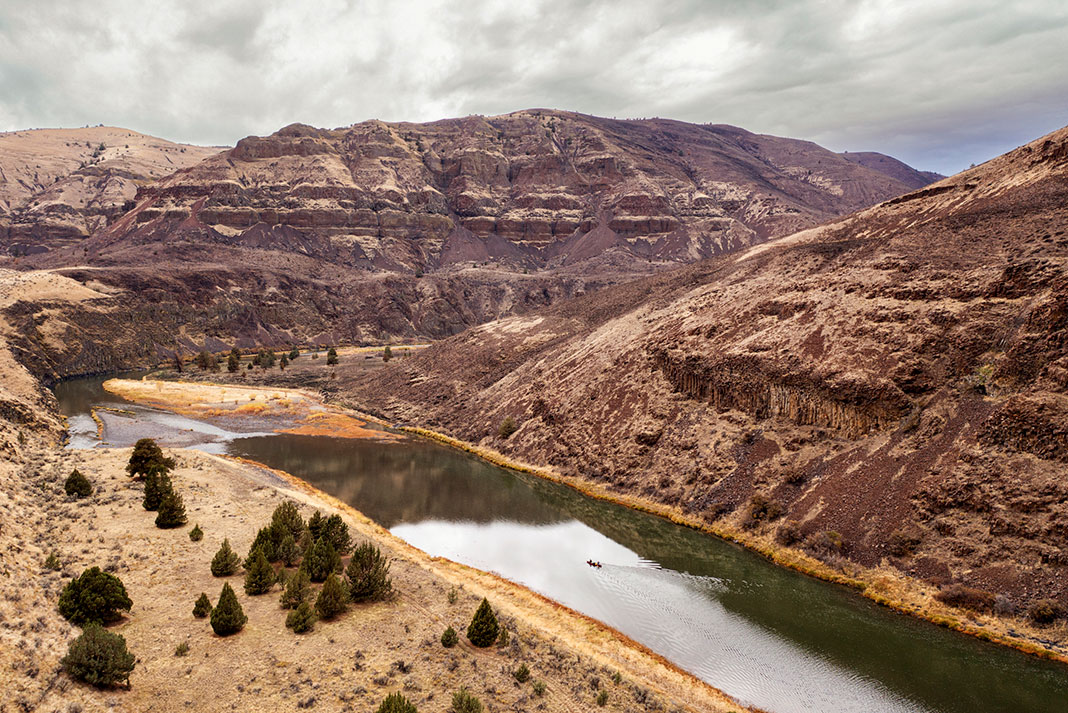
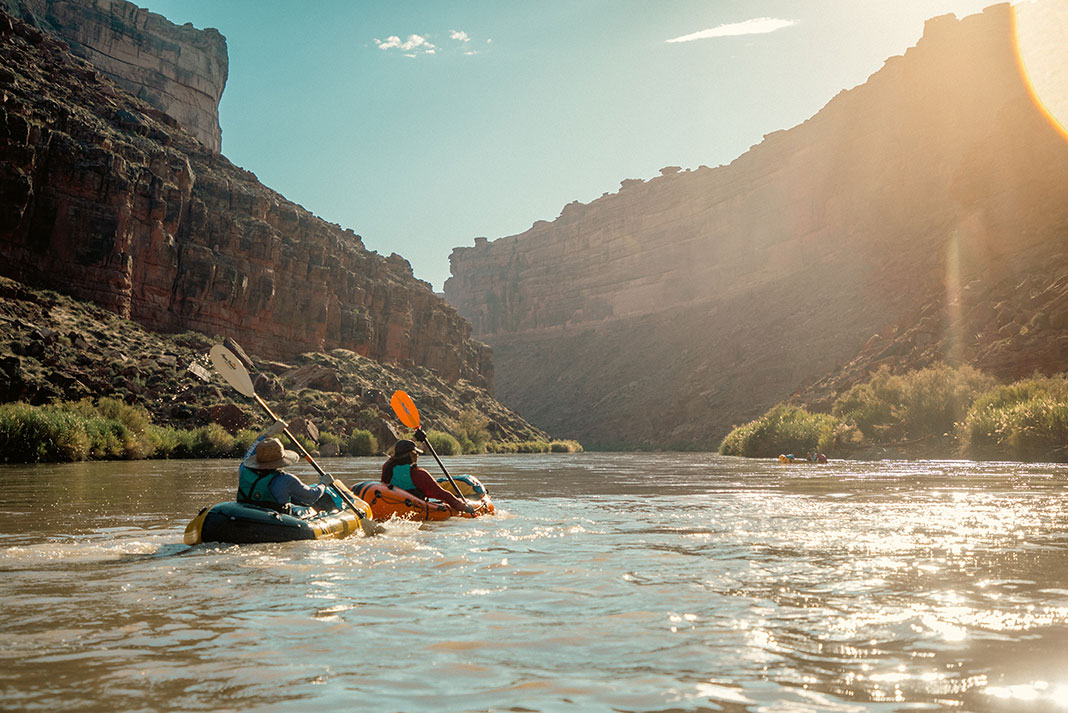
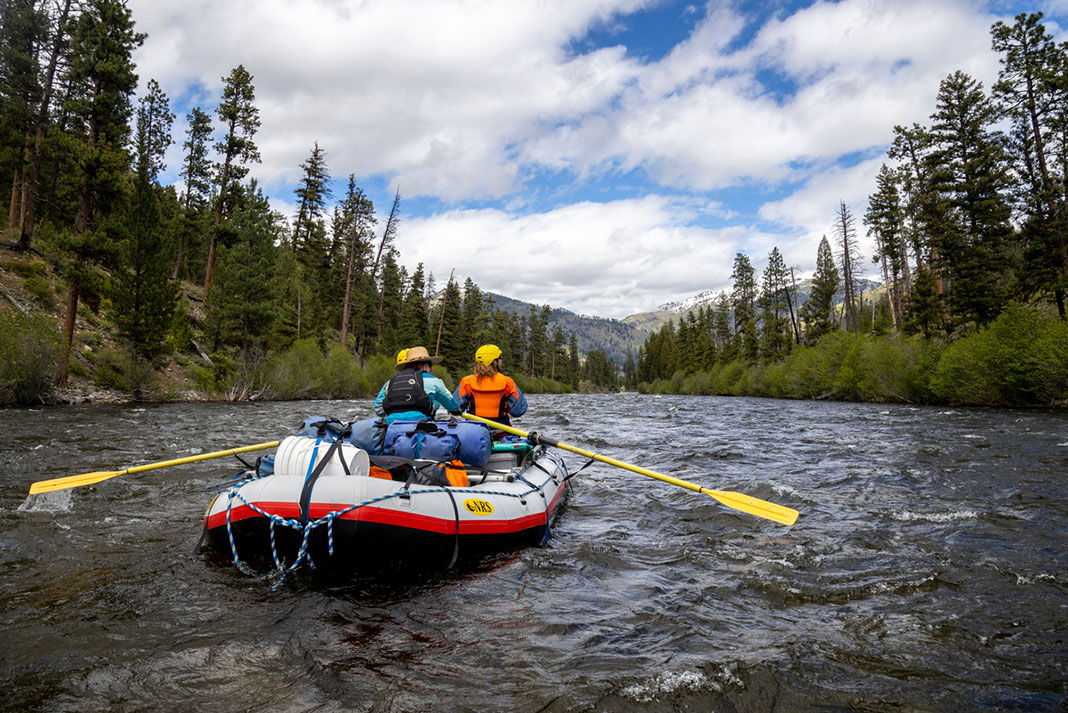
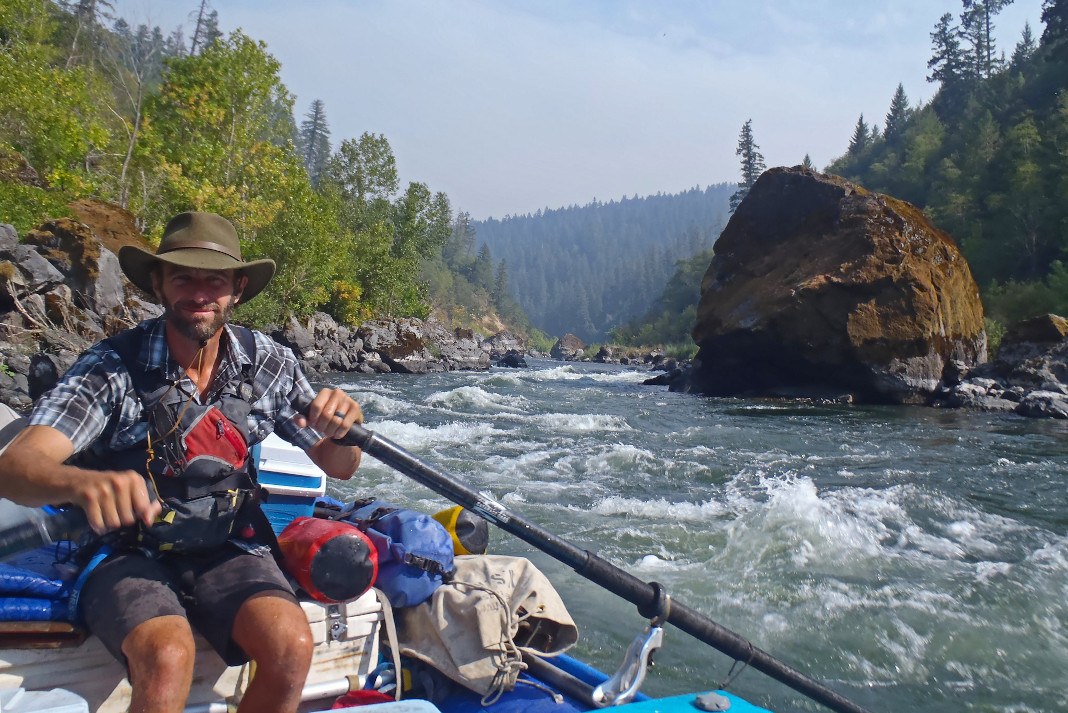
See Paddling Magazine’s guides to the John Day, San Juan, Rogue and Middle Fork of the Salmon rivers and find out what you can do to increase your chances of pulling a permit under the current lottery system.
This article was first published in Issue 71 of Paddling Magazine. Subscribe to Paddling Magazine’s print and digital editions, or browse the archives.
May the increasingly long odds be ever in your favor. | Feature photo: Caleb Roberts
Not the right team. Your team is only as strong as the weakest link in the group. —Mariann Saether | Feature photo: Daniel Stewart
Even the pros know that not every whitewater expedition goes as planned. From overlooked prep to unpredictable weather and challenging team dynamics, a lot can go wrong on the river. We talked to expert paddlers about the most common reasons trips fail and how to avoid them.
“First, weather conditions. And two, being a bit slack in your preparation.”
—Nouria Newman
“The key to pulling off hard, dangerous, long and arduous missions is patience. When the conditions aren’t right, wait until they are adequate. When you or someone in your team gets hungry, thirsty, tired or injured, take a break and solve the problem. If you can’t come up with a safe way downstream, work back upstream or simply wait for more light and time tomorrow. The key to waiting and patience is carrying extra snacks and gear and always planning for the unplanned overnight. Of course, at the put-in, we must always keep the option open to wait for another day.”
—Ben Stookesberry
Not the right team. Your team is only as strong as the weakest link in the group. —Mariann Saether | Feature photo: Daniel Stewart
“Team dynamic failure.”
—Corran Addison
“They never get planned because we get too busy with urgent things in life.”
—Natalie Anderson
“I challenge the word fail. If it’s to complete something from top to bottom, it can fail for any variety of reasons, and if you look at failed expeditions, they are all incomplete for various reasons. But, for anyone who takes the time to challenge a river or terrain, I hope they see success in their efforts because taking the initial step to explore is the most inspirational part in my mind.”
—Emily Jackson
“Failure is a matter of definition. If your expedition doesn’t proceed from the put-in to the take-out, does that make it a failure? Maybe you just need to explore what your real goals are and see whether you met them. I’d bet a lot of failed expeditions were still a lot of fun—type two fun included.”
—Leif Anderson
“Bad water levels. This is not always the expedition’s fault either. Weather, especially in really wet climates, can be hard to predict. Low water is much better than high water when you don’t know where to go.”
“Going on an expedition is first about making sure you have done the prep, and everyone knows what they’re getting into. From there, it’s going through the kit and making sure there’s enough of the right stuff, a good plan B, and comms are tight. Then it’s simply getting on and working as a team to get everyone to the bottom in good spirits. It’s about making good decisions for everyone in the group.”
—Mike Dawson
“Piss poor planning.”
—Adriene Levknecht
“When you don’t surround yourself with people you work well with or trust to make the best decisions, no matter what type of situation or whitewater you are on.”
—Dane Jackson
This article was first published in Issue 72 of Paddling Magazine. Subscribe to Paddling Magazine’s print and digital editions, or browse the archives.
Not the right team. Your team is only as strong as the weakest link in the group. —Mariann Saether | Feature photo: Daniel Stewart
On August 12, 2024 45-year old Ryan Borgwardt left home with a kayak; he did not return. Months after his disappearance and the costly search and recovery effort, Borgwardt has come forward to share with police that he is alive and well, living in an apartment somewhere in Eastern Europe.
“The great news is we know that he’s alive. The bad news is we don’t know where Ryan exactly is,” shared Sheriff Mark Podoll in a press conference.
Kayaker presumed drowned faked his death and is now living in Eastern Europe
Borgwardt’s disappearance on Green Lake, WI in August was considered a likely drowning. Search and recovery efforts included dive teams and sonar and spanned several months. In those months Borgwardt’s wife and three children mourned the loss of their husband and father.
Search teams scoured the lake every day through August, September, and October, finding Borgwardt’s kayak, his phone and wallet, a floating PFD and his fishing gear, but no sign of Borgwardt himself. By mid-October, Sheriff Podoll suggested it was time to consider that perhaps Borgwardt wasn’t in the lake at all.
Shortly thereafter, police found records showing Borgwardt’s passport was checked by Canadian authorities. On his laptop they found questions about moving funds to foreign banks, a life insurance policy for $370,000 purchased in January, and communications with a woman in Uzbekistan.
November 11, the Green Lake County Sheriff’s Office made contact with Borgwardt through a Russian-speaking woman.
According to Sheriff Podoll, the primary concern was that Borgwardt was safe and well. They asked Borgwardt a number of questions about his family and life to confirm his identity, then asked for a video.
Borgwardt supplied a video, in which he shares his new apartment in Eastern Europe and says “I am safe, secure, no problem.”
Police do not know what country he may be in, and Sheriff Podoll was unable to comment on the identity or information regarding the Russian speaking woman.
How Ryan Borgwardt faked his death via kayak accident
The morning of August 12 Ryan Borgwardt came prepared. He had researched the deepest lake in Wisconsin, and planned his fishing trip accordingly.
Borgwardt stashed an e-bike near the boat launch. Then, he hopped in an inflatable, child-sized boat and paddled with his own kayak in tow to the deepest part of Green Lake. He overturned the kayak and threw his phone and wallet into the water. Borgwardt then paddled his inflatable boat to shore, got on the e-bike and rode through the night over 70-miles to Madison, Wisconsin where he then boarded a bus to Detroit.
Borgwardt crossed the border into Canada and caught a flight to Eastern Europe.
Presently, Borgwardt has no plans to return to his wife and children in Wisconsin.
Authorities continue to be in communication with Borgwardt, and are stressing the importance to Borgwardt of his return home to “clean up the mess he created.” No warrants have been issued yet and Sheriff Podoll stated that no warrants may be needed if Borgwardt cooperates and returns home soon.
Reportedly Borgwardt’s biggest concern is how the community is going to react to him should he choose to return home. In addition, Sheriff Podoll also shared that Borgwardt didn’t expect authorities to go more than two weeks searching for him on the deepest lake in Wisconsin.
Borgwardt shared his reasons for faking his own death and fleeing the country with the police.
“He just had personal matters going on and felt this was the right thing to do,” said Sheriff Podoll. “There was talk about the insurance plan he took out. It wasn’t for him, it was for his family.”
According to Sheriff Podoll, Borgwardt has expressed remorse for what he has put his family through, as well as for the amount of hours and resources put in by the community for the search and recovery effort.
“We keep pulling at his heartstrings,” said Sheriff Podoll. “We’re not going to give up. We’re going to continue because he needs to come home to his kids.”
On Friday Nov 22, 2024 a rafting adventure turned into a nightmare scenario when a Lithuanian paddler in his sixties fell and became entrapped and partially submerged in a crevasse on the river.
The paddler had over five decades of rafting experience and was pack rafting in Franklin-Gordon Wild Rivers National Park as part of an 11-member adventure rafting trip around the globe; Tasmania was the last stop of the trip. The paddlers were on a remote stretch of the Franklin River on their multi-day rafting trip when the Lithuanian paddler slipped and fell while walking alongside rapids scouting around 2:30 pm on November 22.
Harrowing rescue on Tasmania’s Franklin River
Emergency services were alerted by the man’s smartwatch and dispatched rescue units and paramedics.
Rescue efforts were complicated by the remote nature of the Franklin River, with this section accessible only by paddle-in or helicopter, as well as a language barrier.
While scouting rapids on the Franklin River in Tasmania, Lithuanian paddler slipped and became trapped in a sieve. ABC News (Australia) | YouTube
The rescue attempt began with first ropes and pulleys, and eventually pivoted to using airbags and hydraulic tools to attempt to shift the submerged rocks entrapping his legs. According to Ace Petrie, a swift water rescue technician with Surf Life Saving Tasmania, even with the jaws-of-life hydraulic equipment and airbags capable of moving 50 tons, the rocks wouldn’t move.
Throughout the rescue, the entrapped paddler’s friends worked to keep his spirits up and provide hot food.
Efforts to free the trapped Lithuanian paddler continued throughout the night. On Saturday morning, after nearly 20 hours wedged in a crevasse and partially submerged the Lithuanian paddler’s condition began to deteriorate and hypothermia became an increased concern. The rescuers along with the Lithuanian paddler made the decision to amputate the leg in order to save the paddler’s life.
After 20 hours of rescue attempts, rescuers made the difficult decision to amputate trapped paddlers leg
A friend and fellow paddler who works as a doctor in Lithuania helped translate to the best of his ability what was happening for the trapped paddler.
“We did our best to convey the realities of his entrapment as a life versus limb discussion,” shared Mitch Parkinson, an intensive care flight paramedic on the scene. “The decision was only made at the end of every conceivable and exhaustive attempt at his rescue.”
According to Parkinson, surgical amputation of the leg above the knee is something they routinely train for, but it was complicated by being underwater, but the Lithuanian paddler’s hypothermic condition helped to reduce bleeding.
In 20 hours of being trapped in a cold rushing river, Parkinson also shared that the Lithuanian paddler was extremely resilient and calm given the circumstances and was cared for by his friends throughout the ordeal and maintained an “upbeat spirit”.
“I would describe him as probably the most incredible show of strength that I have seen,” said Parkinson on The Project.
“The resilience of the man… was just amazing,” said Ace Petrie, swift water rescue technician. “If I was to write a book I’d call it the will to live.”
The entrapped paddler was then transported to Royal Hobart Hospital where he remains in critical condition.
The outdoor industryis flexing. At a time of historic gridlock in the U.S. Congress, the unanimous passage of the Expanding Public Lands Outdoor Recreation Experiences (EXPLORE) Act in April 2024 signaled the snowballing economic clout of outdoor businesses, which according to the U.S. Commerce Department’s Bureau of Economic Analysis pumped $1.2 trillion into the U.S. economy in 2023. On November 13, 2024, more than 300 outdoor recreation organizations and businesses signed a letter to members of Congress asking them to make sure EXPLORE is passed by the end of the year.
The bill is loaded with high-profile provisions to study potential long-distance bike trails and paths, allow for new rock climbing routes on public land and support much-needed infrastructure improvements for federal lands and gateway communities. Of greatest interest to the paddlesports industry, however, is the section titled Simplifying Outdoor Access for Recreation (SOAR). The regulatory relief package isn’t new—it was first introduced in 2019—but didn’t receive a floor vote until it was folded into the EXPLORE Act this spring.
SOAR addresses one of the most frustrating issues outfitters operating on public lands face—paperwork. If enacted, the legislation would shorten the wait time in the permit application process and create a pilot program for multijurisdictional permits. SOAR would direct agencies to use existing environmental assessments in permit evaluations and issue special recreation permits in most areas without a separate needs assessment. It would allow outfitters to provide activities similar to those they already offer without requiring new permits. Finally, it would create a low-friction process for small groups and event permits. SOAR is the lifeline paddling outfitters have long been waiting for.
Feature photo: Courtesy Wildwater Rafting
As many see it, the glacial pace of special recreational use permit applications is not the result of cautious management of public spaces. Rather, it’s due to inefficient permitting processes at land-use agencies starved for resources.
“The biggest challenge is just trying to get a permitting process to happen,” says Aaron Bannon, executive director of the America Outdoors Association. “Budgets are constrained, and federal land managers have to focus on other processes that make money, such as timber and oil and gas. Recreation falls lower on the list.”
The long wait for approval
That may explain why South Carolina-based Wildwater Rafting has been waiting 15 years for a response—any response—to an application to add guided hiking excursions to the company’s raft trips. “It creates an inability for a business to be innovative and adapt to the economic environment and the interests of our customers,” says Wildwater CEO Jack Wise.
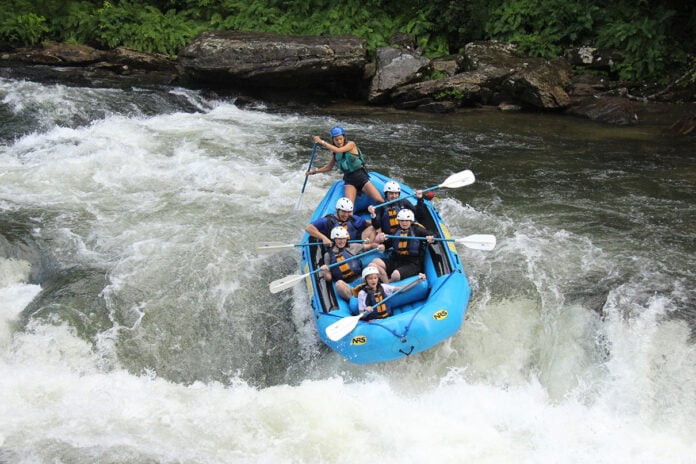
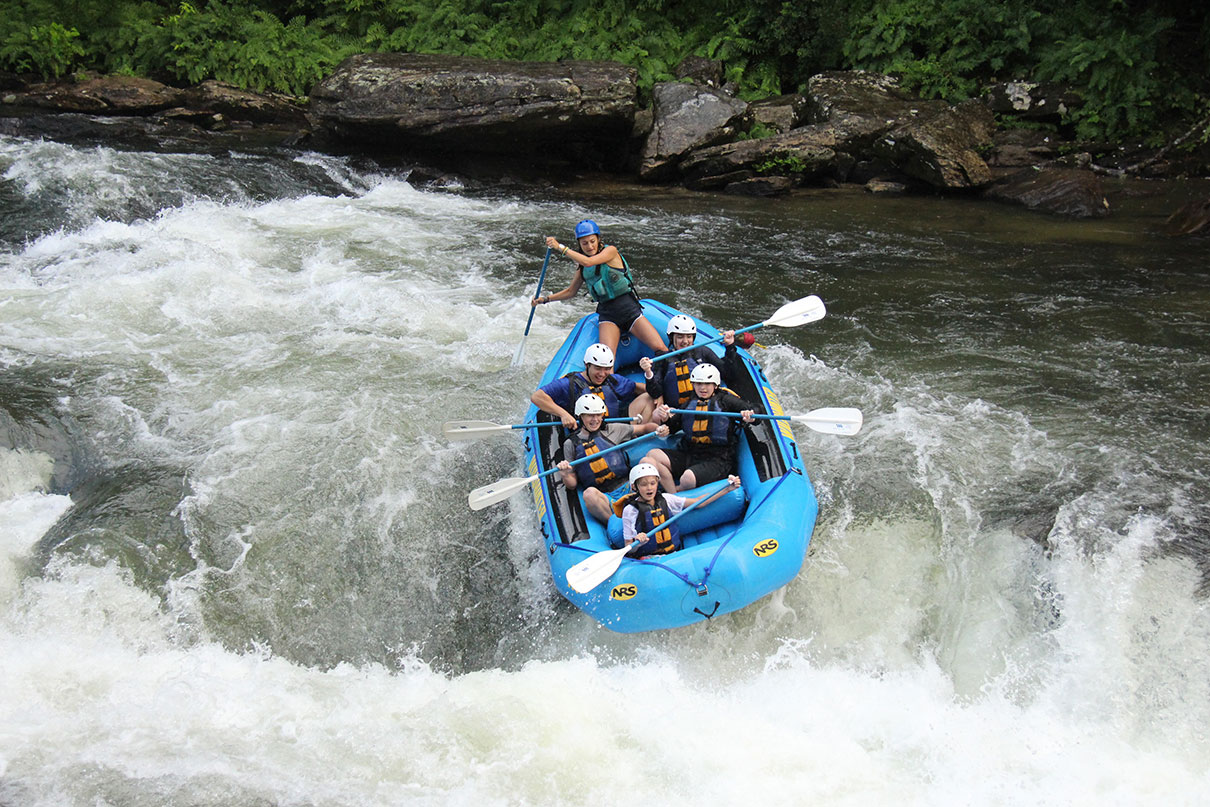
Wildwater’s bread-and-butter rafting trips on the Chattooga and Nantahala have also fallen into limbo at times, even though the company has been operating within national forests for more than 50 years. The Forest Service hasn’t always had the bandwidth to process the renewal paperwork, and in those cases issues temporary extensions. This creates a sense of instability that makes it hard for Wise to sleep at night, let alone plan for the future.
It’s the same story outside of Portland, Oregon, where Sam Drevo opened eNRG Kayaking and Rafting on the doorstep of the Mt. Hood and Willamette national forests nearly a quarter-century ago.
“We located ourselves around so many rivers that we are locked out of—locked into an old system,” Drevo says. His kayaking programs serve 5,000 youth students each summer, but once they graduate beyond the mild whitewater of the Lower Clackamas, Drevo says it’s easier to take the kids to Costa Rica than continue progressing in their own backyard. “It keeps our students from being able to experience the diversity of whitewater within two hours of where we live,” he says.
Drevo spent 19 years on a Forest Service waiting list for a permit to run rafting trips on the Upper Clackamas, a popular class III to IV river close to the city. When an opportunity finally opened in 2019, COVID sapped what resources the agency had. He is running his first Upper Clackamas river trips this year.
New tools and timeframes
As Wise and Drevo will attest, one of the most frustrating aspects of the permitting process is the radio silence from understaffed agencies. SOAR would address this by requiring officials to acknowledge receipt of an application within 60 days and provide a date by which they will issue a decision. The act also allows agencies to provide temporary permits for up to two years, giving land managers time to assess the impacts of an activity before issuing long-term permits.
Anyone who follows Congress will notice the EXPLORE Act looks a lot like the America Outdoors Recreation Act, which has been kicking around the Senate since 2022. The two bills are nearly identical, and while the Senate version has yet to see a floor vote, it enjoys strong bipartisan support in the upper chamber.
The next step is for House and Senate lawmakers to agree on a harmonized version of the bill that can pass both houses before Congress calls it quits for the year. If they miss this chance, Bannon says getting the landmark bill across the finish line will become incrementally harder. For his part, Wise is confident the outdoor industry wields more political leverage than in the past. Americans of all political stripes enjoy the outdoors, but the real difference-maker in the halls of Congress is the outdoor industry crossing the trillion-dollar threshold.
“We have had similar bills in the last 10 to 20 years,” Wise says. “But the recent surge of recreation and studies showing the outdoor industry is an economic driver to communities has mounted an undeniable pressure.”
This article was first published in the 2024 issue of Paddling Business. Subscribe to Paddling Magazine’s print and digital editions, or browse the archives.
Google celebrates Native American History Month with qajaq doodle by Natashia Allakariallak. Google | Natashia Allakariallak
In celebration of Native American Heritage Month, Google released a doodle on November 15, 2025 celebrating the history of the kayak illustrated by Inuit Nunangat artist Natashia Allakariallak.
Celebrating Native American Heritage Month with the history of the qajaq
The doodle depicts a traditional Indigenous Arctic qajaq, used for thousands of years for hunting, fishing, and transportation. The qajaq serves as the early prototype for the modern kayaks we see widely available for recreational use today. The first developers of the predecessor to the kayak include Northern trines such as the Inuit, Aleut, Inupiat, and Yup’ik.
Rather than the fiberglass and gel coat of the modern sea kayak, the traditional qajaq was made using skin on frame— often dried seal skin stretched over a frame of whalebone or driftwood. Rather than for recreation, the traditional qajaq was designed for Indigenous Arctic hunters to harvest seals or whales from the water and each boat was customized to the individual paddler. The word qajaq comes from the phrases ‘man’s boat’ or ‘hunters boat’ in Inuktut dialects.
Google celebrates Native American Heritage Month with qajaq doodle by Natashia Allakariallak. Google | Natashia Allakariallak
“The qajaq, which has been created by Inuit, has now been adopted and used by the entire world,” shared qajaq doodle artist Natashia Allakariallak in a Q&A with Google. “It is an item from our culture that has allowed us to thrive for thousands of years and is still used today.”
What traditional qajaqs look like in Greenland today
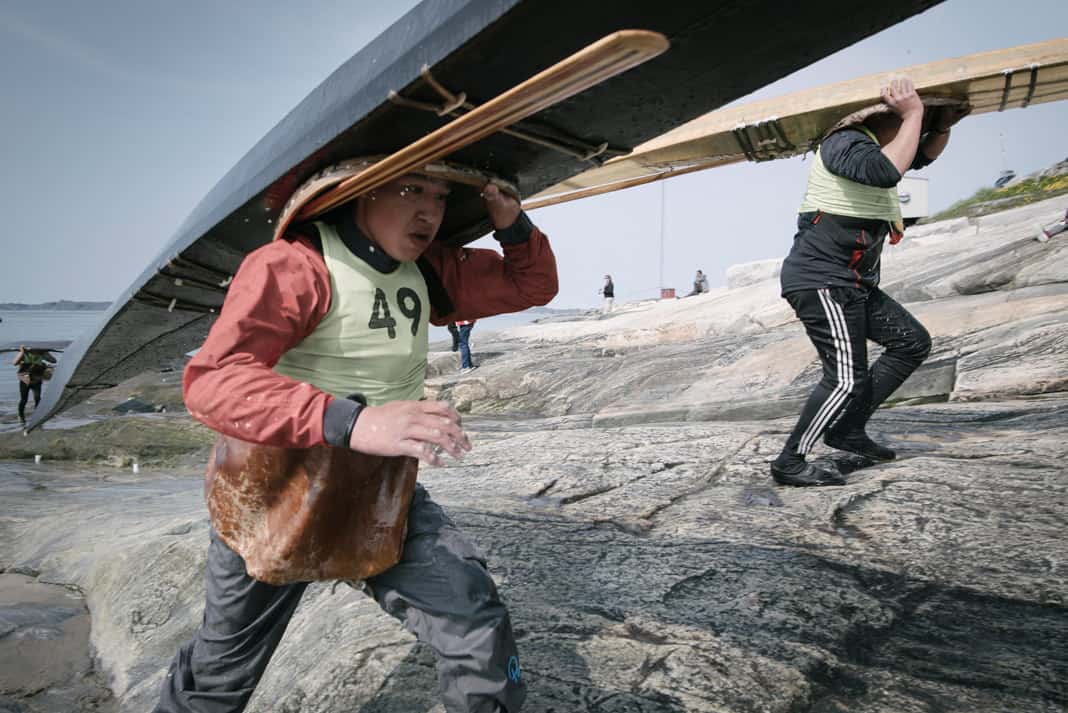
Today in Greenland, traditional qajaq paddlers still gather to practice traditional Greenland rolling, which includes 35 different rolls. Once a pivotal means of self-rescue for the traditional Arctic qajaq hunters, today paddlers from all over travel to compete in the National Qajaq Championships.
Rather than a neoprene spray skirt or PFD like paddlers wear today, traditional qajaq paddlers wore a tuilik; a fitted, waterproof jacket made of seal skins or large mammal intestines that sealed around the face, wrist and qajaq cockpit. The tuilik also served as additional buoyancy in the event of capsize; plenty of trapped air inside aided in rolling, or righting a capsized kayak without exiting. Today, a neoprene version of the tuilik for traditional Greenland rolling practice.
“It is important that people know where the qajaq originates from,” Allakariallak added. “I would like for people to honour the original design(s) and give credit where it is due. Inuit are an incredibly resourceful people and have adapted to many waves of colonial pressures, yet, we continue to strive for success and we celebrate the beauty of our culture.”
If this looks like fun, you own a waterproof-breathable drysuit. | Feature photo: John Webster
Few feats of industrial wizardry have had a greater impact on paddlesports than waterproof-breathable dry wear. These revolutionary garments made year-round paddling a pleasure for the masses rather than a test for the masochistic few, thanks in large part to the extraordinary properties of per- and polyfluoroalkyl substances, or PFAS, a class of synthetic chemicals found in thousands of consumer products and linked to a long list of negative health effects.
Soon this magic ingredient will be banned from outdoor apparel in California, Washington, New York and more than a dozen other states. As the bans approach—the California law takes effect in January 2025 for outerwear, while extreme use garments including drysuits and drytops will have until 2027—paddlesports brands and their suppliers are working diligently to find suitable replacements.
First out of the gate was Level Six, which introduced its PFAS-free Loki drysuit last September. After years of testing and development, Level Six CEO Stig Larsson is proud of the result. “People couldn’t believe that we had done it,” he says. “We ended up getting certifications along the entire process to prove that we actually are PFAS-free.”
Producing PFAS-free versions of products made with Gore-Tex and its many clones has been more challenging, because the fabric’s original formulation includes a Teflon mid-layer that’s not easily substituted. Gore had planned to transition its entire portfolio away from what it calls “PFCs of environmental concern” by late 2023 but has since pushed the target to the end of 2025 citing product development and scaling challenges.
Changing a decades-long industry standard is no easy task, says Danny Mongno, NRS product and field marketing manager, especially for paddlers who have come to expect a lot from their drysuits and drytops. “It’s far easier to replace the technology in a rain jacket, for example, but it’s a completely different and more challenging process to develop technology capable of withstanding more rugged and extensive full immersion.”
If this looks like fun, you own a waterproof-breathable drysuit. | Feature photo: John Webster
That’s precisely the argument Kokatat’s then-CEO Jeff Turner and the California Outdoor Recreation Partnership brought to the legislative sponsor of the California ban last year. The coalition of outdoor companies made clear that they supported the bill’s overall goal but would need more time to bring out PFAS-free gear that was equal to the most demanding conditions. As a result of the lobbying effort, California’s ban on PFAS in extreme use garments including drywear was pushed back to January 2027.
A full list of current and pending PFAS legislation is beyond the scope of this article, but it’s likely that the patchwork of state prohibitions will effectively become a blanket ban everywhere in North America. Even if manufacturers had a perfect understanding of the regulatory environment, it simply wouldn’t make sense to maintain multiple supply chains. That effort is better spent creating viable alternatives.
“Paddling gear is probably some of the most abused equipment in the world.”
—Stig Larsson, Level Six
“To be able to seamlessly transition product lines away from using PFAS while also ensuring customers have the product available when they want it, at a competitive price will be a tricky rapid to navigate, but we’re more than up for the challenge,” says Jordan Jones, Kokatat director of plant operations.
Breaking the chain
PFAS are integral to two components of most waterproof-breathable outerwear. One is the membrane within the fabric itself. The other is in the durable water repellent (DWR) applied to the garment. These two elements plus the characteristics of the woven fabric work together to keep paddlers dry and comfortable on the water.
Until 2016 the gold-standard DWR was C8, so named for its eight-link fluorocarbon chain. The industry has since moved to less-harmful C6 and C4 treatments, as well as so-called C0 DWRs that contain no fluorocarbon chemistry.
Managing the transition to C0 is something of a balancing act. NRS says it is moving to a C0 PFAS-free treatment on appropriate products while sticking with C6 treatments where needed to meet performance requirements. Kokatat has taken a similar approach. Immersion Research President John Weld says his company has gone to a C0 DWR this year and its fabrics are also fluorocarbon-free according to the supplier. Weld hasn’t paid for testing. “What company in our realm has the ability to identify where PFAS exists?” he says. “None of us could ever guarantee.”
Certification adds one more layer of difficulty to the PFAS-free transition, but the biggest challenge remains the demands of the sport. “Paddling gear is probably some of the most abused equipment in the world,” Larsson says. “Think about paddling on a salty ocean or paddling the canyon with a lot of sediment. That sediment gets into the fabric and breaks down the protective layer that causes water to bead up and not saturate the outer fabric.”
The solution to this problem is not another high-tech miracle fabric. It’s regular care and more frequent re-treatment with a PFAS-free DWR such as McNett ReviveX. For retailers and brands, the coming bans are an opportunity to educate customers on the nuances of technical paddling gear in a PFAS-free era, as well as the care and maintenance needed to keep it performing at its best.
In the meantime, manufacturers will do everything they can to deliver the performance customers have come to expect. “We know what our customers want. I have to sell a drysuit that meets our current standard,” Weld says. “For the amount of money we charge for these things, I can’t do anything less.”
This article was first published in the 2024 issue of Paddling Business. Subscribe to Paddling Magazine’s print and digital editions, or browse the archives.
If this looks like fun, you own a waterproof-breathable drysuit. | Feature photo: John Webster
From basic strokes to easy entry and exit, we go over everything you need to know. | Photo: Eddyline
It’s been more than 30 years since I learned how to kayak. The first boat I sat in was an Aquaterra Spectrum, on loan from friends at the local outdoor store. I remember watching them catch and ride small waves in their sleek fiberglass kayaks as I struggled to keep pace, yet I knew I was hooked. It wasn’t long before I had my own kayak and was working on developing the skills that would take me near and far. I traveled to the U.K. to paddle tide races in the Irish Sea and even spent a month living out of a kayak in the Aleutian Islands. It’s now been three decades of such adventures.
I still remember though what it was like starting out. Slowly learning how to keep the kayak tracking straight. Learning how to handle rougher and rougher conditions. In many ways, kayaking is easy. But it can also be challenging. The good news is that we all start somewhere and, no matter what your skill level is, there is fun and adventure to be had.
The following is a starting point for the basic skills that will help you enjoy your time on the water.
Essential Kayak Gear
There are a few pieces of gear you need to go kayaking:
Before you get started paddling, you’ll need to get comfortable sitting in your kayak.
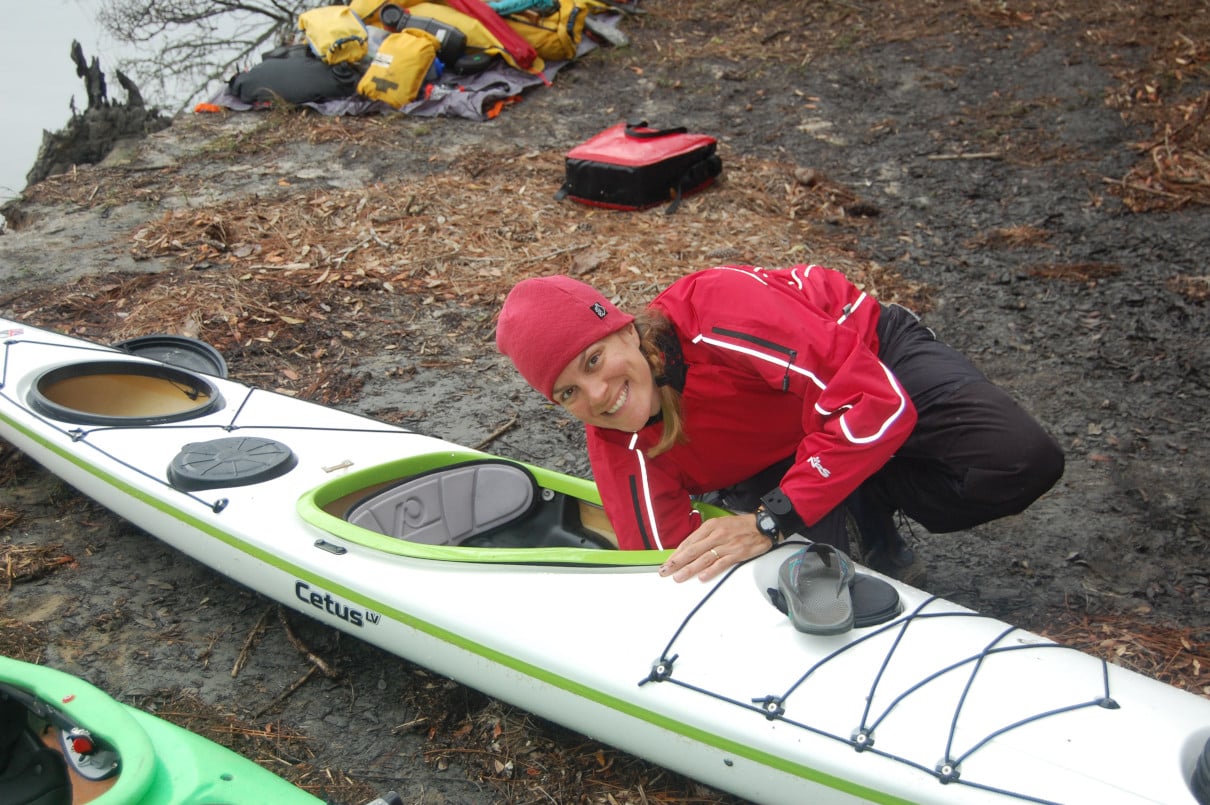
Adjust the foot braces in your kayak so you can sit upright without leaning back. There are several ways foot rests adjust. Some have a trigger behind the foot brace pedal that you squeeze to move the pedal. Others have a long stick that is either lifted or twisted to free the pedal so it can be moved. And the most basic are molded-in incremental plastic steps.
You’ll want your foot braces set to have your knees comfortably bent. And your foot should be in a neutral position. Imagine your foot and ankle forming the letter “L” when you press on the foot brace. If you have to point your toes, the pedals are too far away.
You also want to adjust your backrest so that it provides support and helps you sit upright.
If your kayak has thigh braces, your thighs should be able to gently contact these when your feet are on the foot rests. If your kayak has a large, open cockpit, you can rest the outside of your thighs against the inside edge of the cockpit opening while being able to sit upright.
Adjusting the fit of your footbraces and backrest before launching will make for a more enjoyable day. | Photo: Brian Day
How to launch a kayak
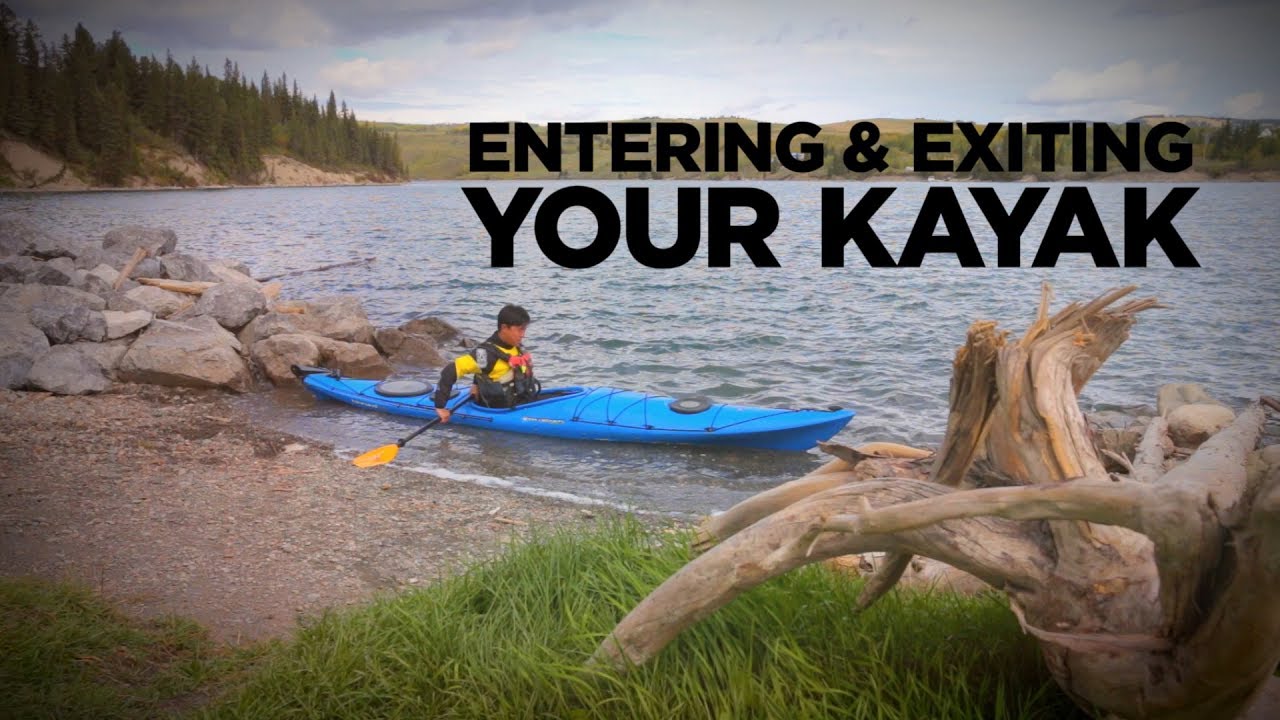
There are three basic ways to get into a kayak: straddling, with support and sidesaddle. It’s usually best to get your kayak completely floating before you enter it using one of the techniques mentioned below.
Sidesaddle Method
The sidesaddle method is an one of the easiest ways to launch a sit-on-top kayak:
Walk the kayak out into knee-deep water.
Position yourself near the seat and sit down on the kayak, leaving your legs in the water.
Once you are seated on the kayak you can swing your legs onto the boat and get situated.
This technique doesn’t work well with decked kayaks because the kayak will tip too much and may start to fill with water.
Straddling Method
To use the straddling method:
Stand with your feet on either side of the cockpit and your body above the seat.
Lower yourself into a squat position and hold onto the cockpit coaming of the kayak for support and balance.
Next, lower yourself into the seat and allow your legs to hang over the sides of the kayak.
Once you are seated, pull your legs into the boat one at a time.
Straddling seems a bit awkward but has the advantage of putting your weight onto the seat of the kayak as quickly as possible. This helps balance, especially in a narrower kayak. Straddling isn’t the ideal approach for those with strength or balance issues. For these paddlers, some support might be helpful.
Support Method
The support method for launching your kayak can come from lots of places. It can be someone holding the boat as you settle into the seat, or it could be holding onto a solid object as you lower yourself into the cockpit. Some paddlers like to use their paddle as a brace by holding one end behind the cockpit and resting the other end on the shore or bottom. This is tough on your paddle but can be effective. Don’t try this with an expensive kayak paddle, you might break it!
While using support, many people prefer to sit first on the back deck of their kayak just behind the cockpit before swinging their feet into the boat. This motion is less strenuous than lowering yourself into the cockpit from a standing position. Avoid stepping into the boat with your feet first if you can. Better first to sit and then to move your feet into the kayak.
Getting out of a kayak is simpler than it may seem: just reverse the process you used to launch. If you used the straddle technique, swing your legs over the side and push yourself into a standing position using your arms and legs. If you used your paddle for support, position your kayak where you can deploy your paddle “kickstand” and stabilize yourself before lifting yourself off the seat and onto the back deck. To exit from a dock you’ll have to return to the position of support you used to get into the kayak before pushing yourself up and onto the dock with your legs. It goes without saying that this is one of the trickiest and most strenuous ways to get out of a kayak.
If you flip your kayak, it is very easy to get out. Put your hands near your hips at the cockpit coaming. Tuck forward and push with your hands. Your life jacket will float you towards the surface and you’ll be out of the kayak in an instant.
Basic Kayaking Strokes
How to hold a kayak paddle
Well, we’re on the water. Before you can start paddling though you’ll need to get a grip on your paddle.
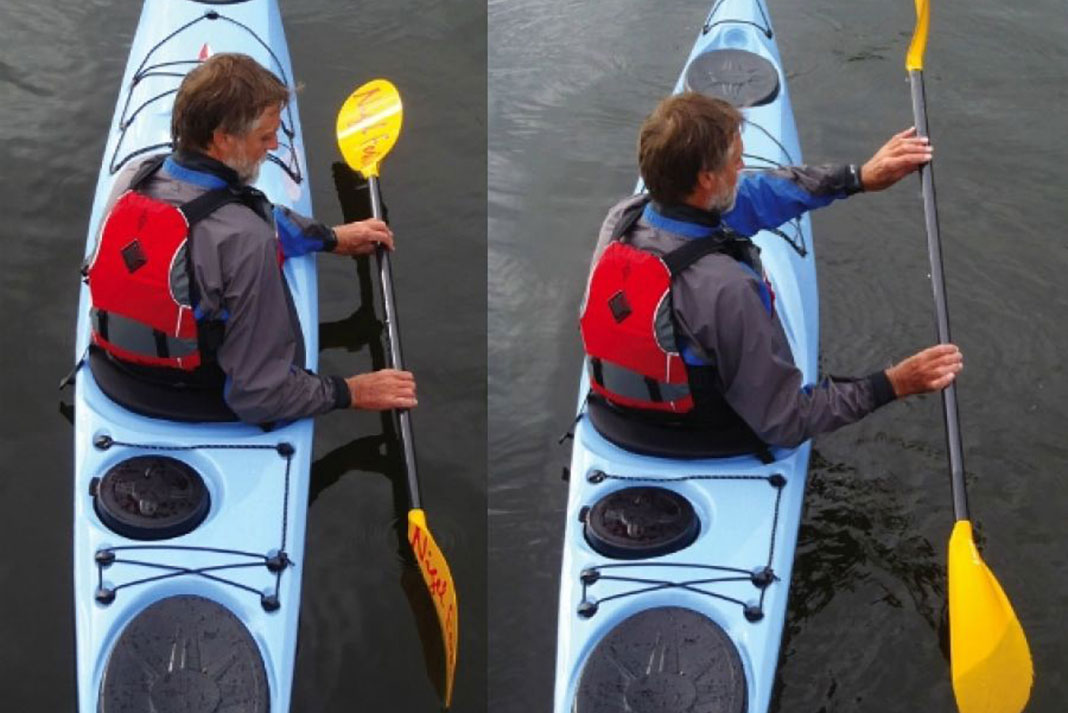
If you’re just getting started, try or adjust to an unfeathered, also called a 0-degree offset, paddle which will have both blades set at the same angle to the shaft.
If your paddle blades have a curved spoon shape, the concave side that would “scoop the soup” faces toward the paddler (this is called the power face). If one edge of the paddle blade is longer than the other, the long edge goes on top.
Hold your paddle with your knuckles lined up with the top edge of the paddle.
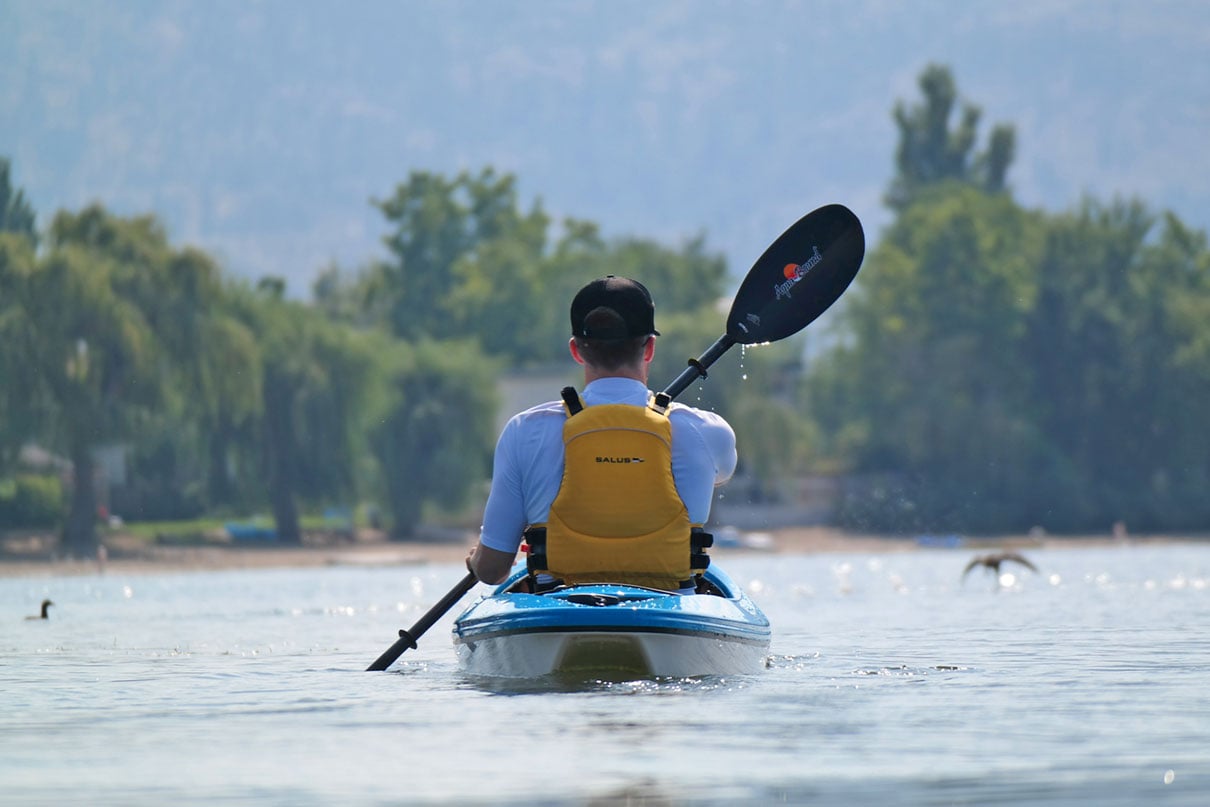
Your hands should spaced on the paddle shaft a little bit wider than shoulder width so if you were to hold the paddle up on your head, your elbows would be bent at a right angle.
How to paddle a kayak forward
The forward stroke is how to propel your kayak forward. This will be the stroke you use most of the time and practicing a good forward stroke will lead to a more enjoyable day of kayaking.
On one side of your kayak, reach forward toward your toes and submerge the blade fully in the water.
Now, using a rotating motion with your torso, pull your kayak past the paddle. Push with your top hand at the same time.
When the blade reaches your hip, slice the blade out of the water.
You should now be in a position to repeat on the other side.
Alternate forward strokes on the right and left side to move your kayak forward through the water. It’s okay if you need to say take two strokes on the same side once in awhile.
Forward stroke tips: Think “feet to seat.” Your blade goes in at your feet and comes out at your seat. Punch forward with your top hand as you pull on the paddle. Don’t lean forward. If you need a little more reach, twist at the waist. Pull straight alongside your kayak to go straight. Try pushing with your foot for more power. Push on the paddle side.
How to paddle a kayak backward
We paddle a kayak backward using a reverse stroke. The back side of the paddle is used for this stroke. You do not want to spin the blades around.
Twist at the waist so you can look back over your shoulder behind the boat.
Put the back side of the blade flat on the water.
Push down first and then toward the bow of the boat.
The blade of the paddle will come out of the water near your feet.
Reverse stroke tips: Make sure to look over your shoulder so you see where you are going. Pull a little with the top hand as you are pushing with the bottom hand. Alternate quick reverse strokes on either side of the kayak to stop moving forward.
How to steer a kayak
Kayakers use sweep strokes to steer their kayaks. Use a forward sweep when paddling forward and a reverse sweep when going backward. You can alternate a forward sweep on one side with a reverse sweep on the other to turn around in a circle while standing still.
A forward sweep stroke is one of the best methods to turn your kayak when you are moving forward. A forward sweep is a lot like the regular forward paddling stroke, just more exaggerated.
Put the paddle in the water close to the bow of the boat so the power face is pointed away from the hull.
Pull the blade through the water in a wide arc.
Follow the blade with your eyes and take it all the way to the stern of the boat.
When the blade nears the stern, lower your top hand to pull the blade free of the water.
Forward Sweep Tips: The paddle shaft is held low during the whole stroke. If you are moving forward, the last part of this stroke turns the kayak the most. If you are standing still, the middle part of this stroke has a big turning effect.
The reverse sweep stroke
A reverse sweep is the opposite of the forward sweep and turns your kayak by stopping the boat’s momentum on one side.
Twist at the waist so you can put the paddle in the water near the stern.
Using the back face of the paddle for the stroke, sweep the blade in a wide arc away from the boat using a pushing motion.
Follow the blade with your eyes until it is close to the bow of the boat.
Slice the blade out of the water before it touches the hull.
Reverse sweep tips: The paddle shaft is held low during the stroke. If you are moving forward, a reverse sweep with turn the boat sharply, but will slow your boat dramatically.
Pick out a point in the distance and continue to keep your bow pointed toward it to go straight. | Photo: Brian Day
Now that you know a few kayak strokes you’re probably trying to figure out how to go straight. Different types of kayak hull designs play a role in how easily they track straight. Especially shorter kayaks will start to veer if you stop paddling or your are paddling better on one side or the other. Regardless, by practicing good forward strokes that travel directly alongside the kayak and exit at your hip, and by using a couple of tips here, you’ll be able to cover ground without spinning in circles.
One trick to going straight is to pick a spot on the horizon that lines up with your direction of travel. Aim and maintain the bow of the kayak to that point.
It’s also better to make small corrections than large ones. If your bow starts to veer you can bring it back on course with just one sweep stroke if you notice it early. If it starts to veer off to the right, use a forward sweep on the right to bring it back on target.
How to move your kayak sideways
Sometimes you need to move your kayak sideways. Maybe you need to move closer to your friend’s kayak, or to a dock. Whatever the reason, to move sideways you’ll use a draw stroke as follows.
Twist at the waist so that you’re facing the direction you want the kayak to go.
Reach out with your bottom hand and put the paddle in the water roughly perpendicular to the cockpit.
Pull the kayak toward the paddle.
When the blade nears the hull, drop your top hand toward the bow of the boat to slice the paddle out of the water.
Draw Stroke Tips: Be careful as you practice the draw. If you keep pulling on the paddle you might pull your boat right over the top of it and flip. Make sure you slice the paddle out of the water when it gets close to the kayak.
Advanced kayaking strokes
There are all kinds of advanced strokes you can dive into as you improve your paddling skills. There are different techniques for draw strokes, dynamic turning strokes, braces and support strokes to help keep you upright in rough water and, of course, the kayak roll. You don’t need these advanced strokes to have fun on quiet water, but they become essential as you venture out into the rough stuff.
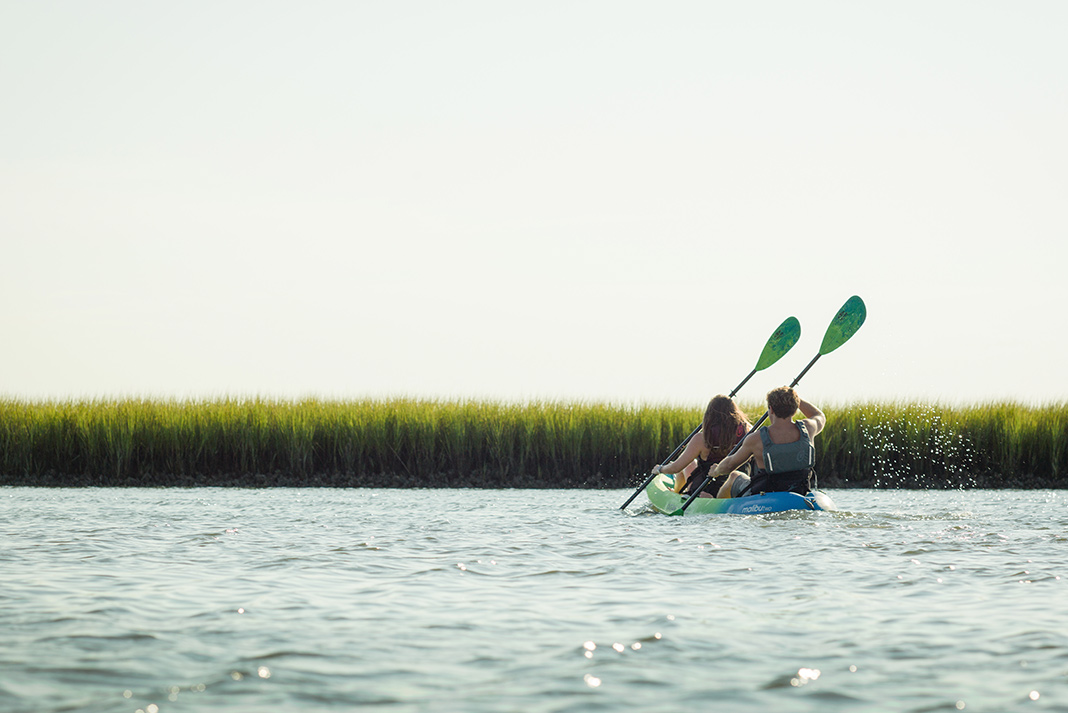
When paddling a tandem kayak, try to synchronize your strokes so your paddles don’t hit. | Photo: Old Town
How to paddle a tandem kayak
Paddling a tandem kayak is a lot like paddling a solo kayak. The biggest difference is that it works best for the bow paddler to focus on forward strokes and the stern paddler to take care of steering. Since the stern paddler is closer to the rear of the boat than he or she would be in a solo kayak, the sweep strokes change a little bit. Skip the part of the sweep near the bow and start or end the stroke at the centre of the kayak, near the stern paddler’s feet.
One more trick has to do with forward paddling. In a smaller tandem kayak, the seats may be close enough together that the paddles will bang into one another if they’re not in sync. Try putting the paddles in the water at the same time on the same side. To do this, it’s easiest if the stern paddler follows the bow paddler’s pace.
What do you do if your kayak flips over? It depends on what kind of kayak it is and how much you’ve practiced your self-rescue skills.
Most recreational kayaks don’t have enough buoyancy to float high in the water if swamped. In the event of a flip, the kayaker should swim their kayak to shore and empty it while standing in shallow water or on land.
Sit-on-top kayaks can be flipped back upright in deep water without swamping. Then the paddler can simply climb back onto the boat on his stomach. Climbing back on your kayak is something many beginner kayakers want to learn to do and can be accomplished in a few steps.
If the kayak is upside down, you can reach across and pull it back over, or push the closest side straight up into the air to flip it upright.
Now, at the side of the kayak, reach across and pull your chest and hips onto the boat. Keep your paddle between or hold it in your far-reaching hand to not lose it. Stay as low as you pull yourself across.
Once you have your chest and hips in the kayak, swing your legs around to the foot braces and sit upright.
This simplicity of self-rescues makes sit-on-tops a good choice if you need a recreational kayak that can be paddled farther from shore.
Touring kayaks have bulkheads for more floatation. This means they can be re-entered in deep water and paddled to safety. There are several rescue techniques that will help a kayaker get back into her boat in the event of a flip. The rescues done with a partner are fastest and end up with the least amount of water left in the boat. Solo rescues are more time consuming and require the cockpit to be pumped out once the paddler is back in the kayak. In cold water this is a big disadvantage.
The most common group rescue is the T or X rescue, in which the swamped kayak is emptied over the deck of a companion’s boat. The most common solo rescue is the paddlefloat self-rescue. In this case a float is attached to one end of the paddle while the other end is secured to the deck of the kayak, creating an outrigger. With the kayak stabilized, it is possible for the paddler to re-enter the cockpit and pump out the water.
Rescues are serious safety skills and it makes sense to practice them until you can do them quickly and skillfully. If you’re new to kayaking, don’t venture far from shore until you’ve had a chance to develop these skills.
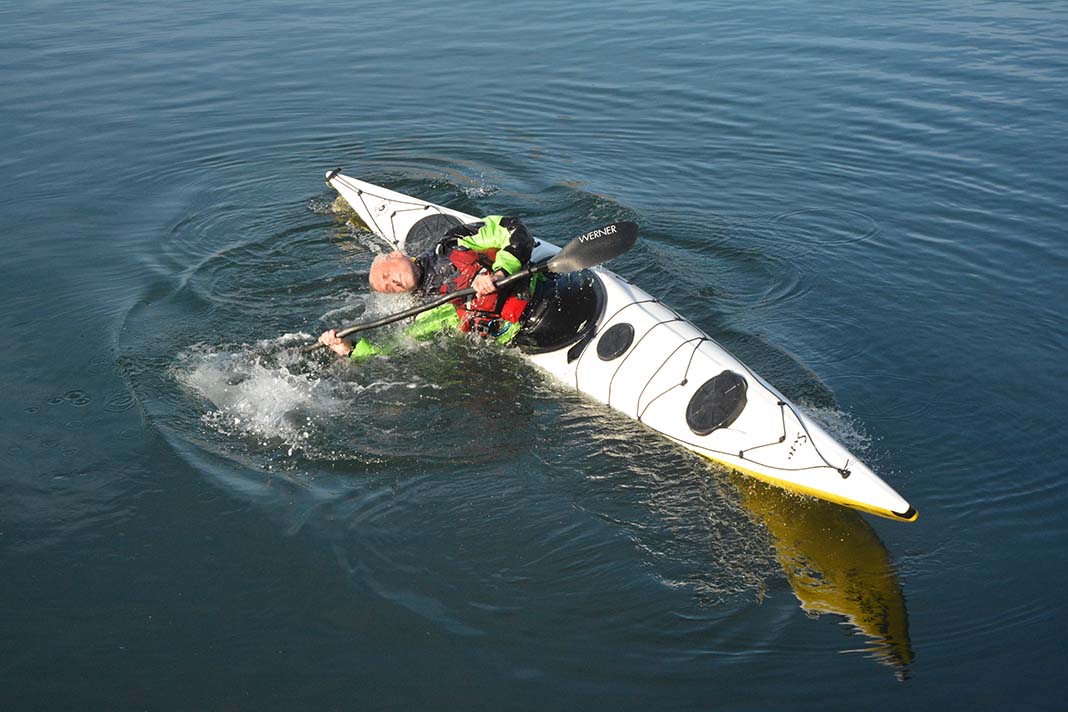
The kayak roll is the ultimate self-rescue technique. If you have a closed deck touring or whitewater kayak and have a reliable roll, the chances that you’ll need to swim out of your kayak if you flip are much lower. Whitewater kayakers, surf kayakers or sea kayakers who paddle in challenging conditions will all benefit from learning to roll. What’s more is that once you know how to roll, you’ll find it easier to develop the advanced skills that help keep you upright.
On the face of it, the roll is a simple maneuver. In the upside down position, the paddle is swept outward away from the kayak. This lifts the paddler’s body toward the surface of the water. The paddler then uses knee pressure to flip the kayak upright and brings her body back into balance over the hull. Presto!
Easy as it sounds, the roll can be very challenging to learn. It is a complex skill that requires muscle memory to execute. There are many motions that need to be done in quick succession without thinking about them. This means most people have to methodically drill the different segments of the roll before they can begin to tie them together into a complete technique.
The complex nature of the roll makes it a skill that is best learned with an experienced friend or instructor in a controlled environment like a swimming pool. Watch specific tips and trick on how to roll a kayak for a detailed walkthrough of the skill.
Reading water means looking at how the water is moving and making a guess about what’s under the surface. As water moves past rocks or other obstructions it makes an eddy of calm water behind the object. This can be a resting place for your kayak in swift moving water. In whitewater, waves, holes and other features are caused by water rushing over the top of rocks.
Reading moving water and whitewater takes practice. If you’re paddling rivers with whitewater, it makes sense to take a class or go out with an experience paddling partner who can teach you the ropes.
In moving water, eddys of quieter water will form behind rocks and other obstructions.
Look for V’s of water around submerged rocks. V’s that point upstream have a rock at their point. V’s that point downstream show a clear path.
Keep away from features that let water through but would trap your kayak. Logs, downed trees, bridge pilings and anchored boats can all be very dangerous. Give them a wide berth.
Stay away from dams of all kinds. They are extremely dangerous.
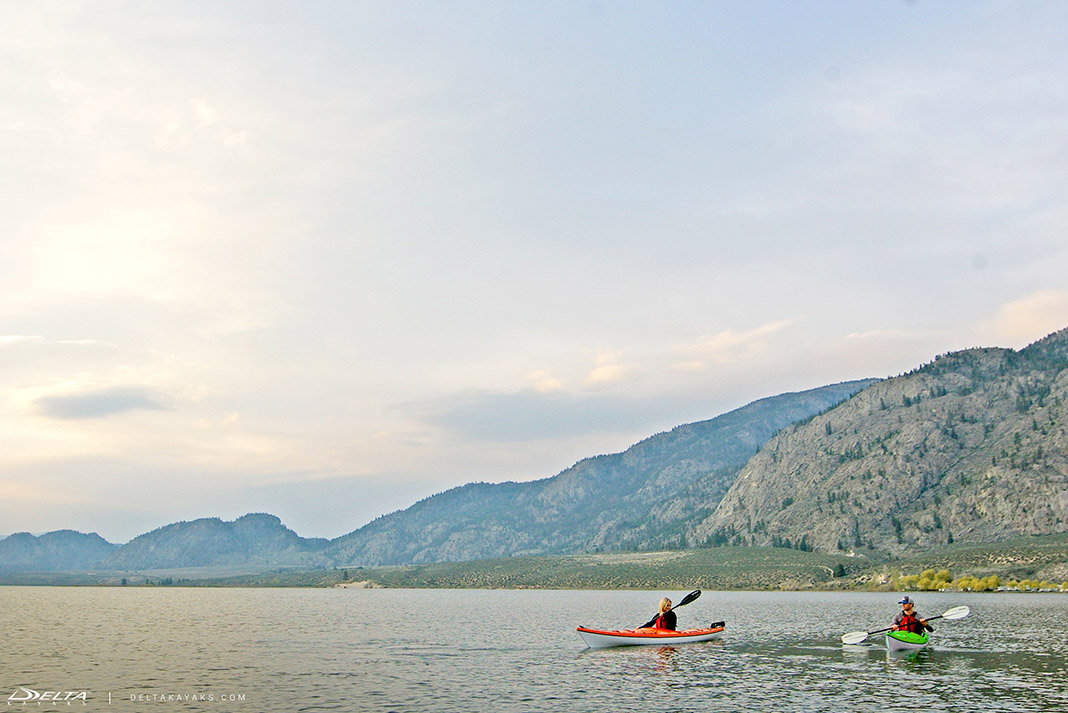
If paddling a sit-inside kayak, it’s best to stay close to shore until you learn proper rescue techniques. | Photo: Delta Kayaks
How to kayak a river
The easiest way to kayak a river is to go downstream. This means you’ll need to set a shuttle so there is a vehicle at the end of your river trip that you can use to get back to the put-in. If you don’t have a second car you may be able to run your shuttle with a bicycle, or, in many towns with rivers there are shuttle services.
Of course, on some rivers you can paddle upstream against the current. This is a great way to get a workout and eliminates the need for a shuttle.
What else to consider for your first kayak trip
Start with smaller, calmer bodies of water, like sheltered lakes and bays or slow-moving rivers.
Wait for weather and water conditions that match your ability level. Check weather and marine forecasts or river levels to have an idea what you’ll encounter.
Keep your first trips short and focus on having fun. People often underestimate how strenuous and committing kayaking can be.
Paddle with a buddy.
Share your plan with friends or family. Always let someone know where and when you are going kayaking.
Learn further safety tips so you’ll be well-prepared and have safe and enjoyable days kayaking.
During the ACA annual meeting on Sunday, November 24, the incredible and very deserving recipients of the 2024 ACA Annual Awards were announced. This series of prestigious international awards are presented to individuals and organizations who have illustrated exemplary leadership, service, and dedication to various aspects of paddlesports.
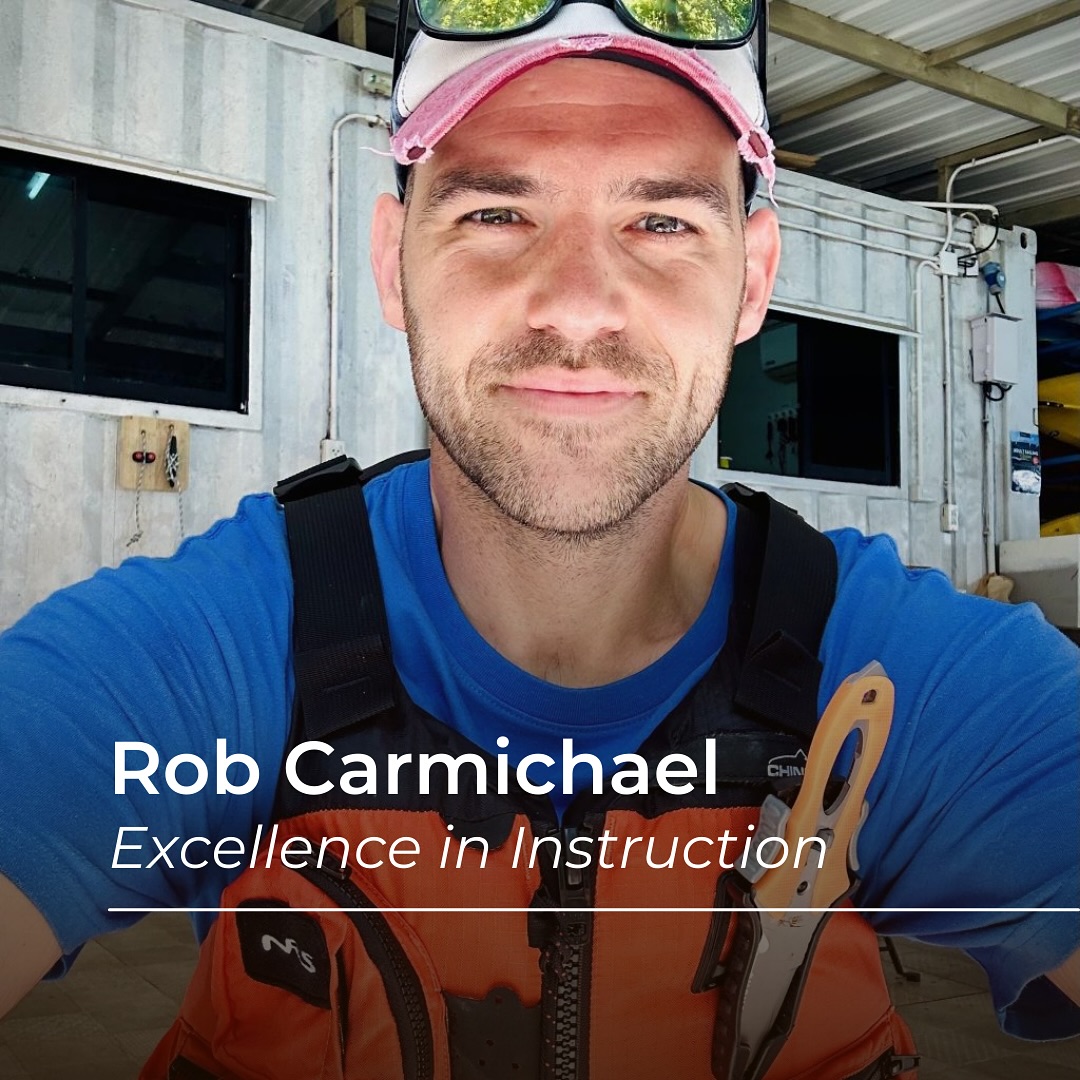
The prestigious Excellence in Instruction Award is presented to an ACA member for his or her outstanding contribution to paddlesports education and instruction. Oftentimes referred to as the “Instructor of the Year Award,” the recipients of this award have continuously set the example not only in teaching ability and technical skill, but in professionalism, connectivity, and service to students of every background. It is our honor to present the 2024 Excellence in Instructor Award to Rob Carmichael, the Director of Outdoor Experiential Education at UWC Thailand International School in Phuket, Thailand.
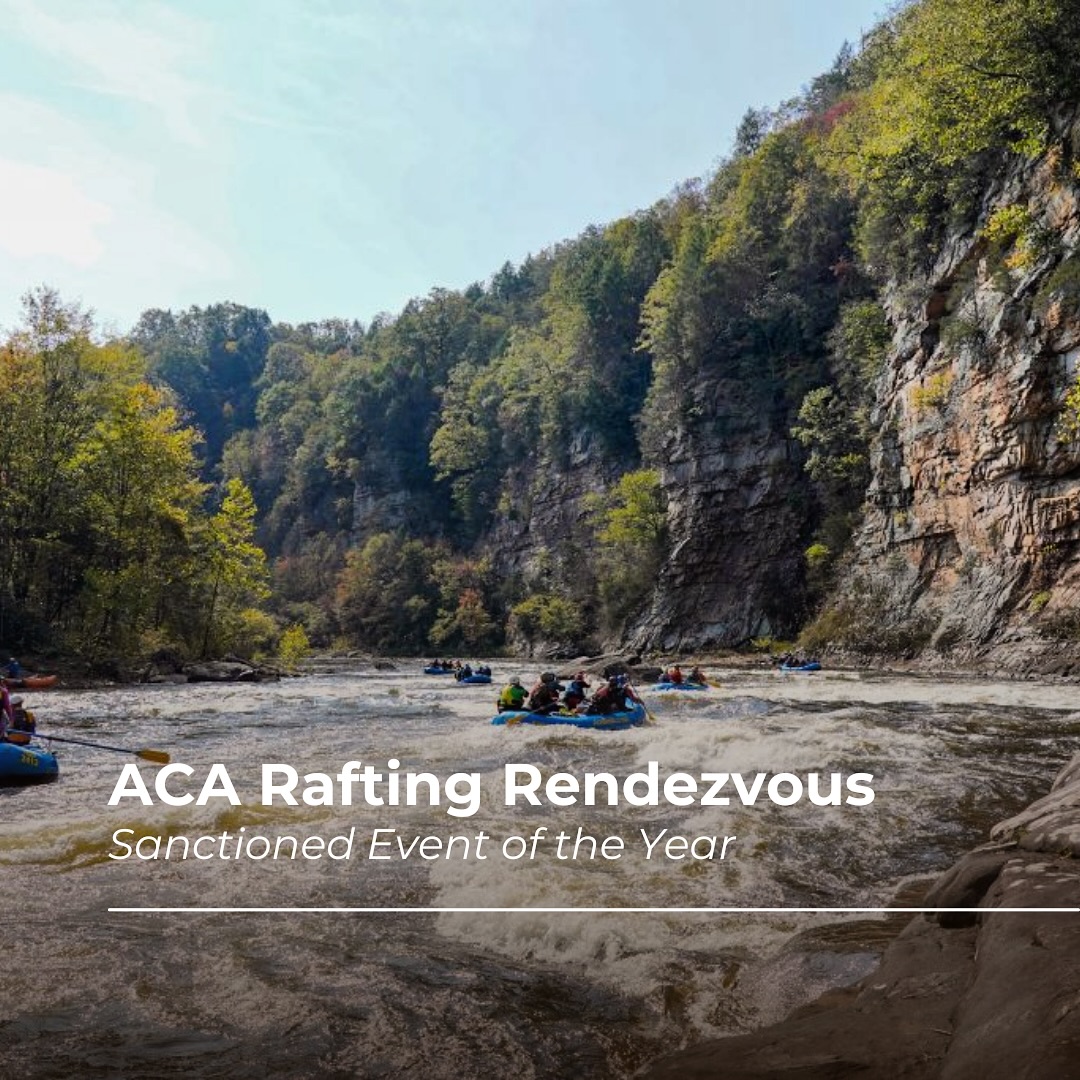
The Sanctioned Event of the Year Award is presented to the top ACA sanctioned event as nominated by the overarching ACA membership.We are pleased to announce the ACA Rafting Rendezvous as the 2024 Sanctioned Event of the Year! There are a multitude of reasons why this event was so impactful—and one of those was simply the leadership, professionalism, and organizational excellence that was illustrated by the SEIC Rafting Committee. Each member of this committee played a critical role in the development of the event program, the venue selection, forging relationships with event sponsors, and the roll out of a new ACA curriculum that promotes unity, safety, and fun across the rafting industry that plays a huge role in the outdoor recreation market in the United States and abroad.
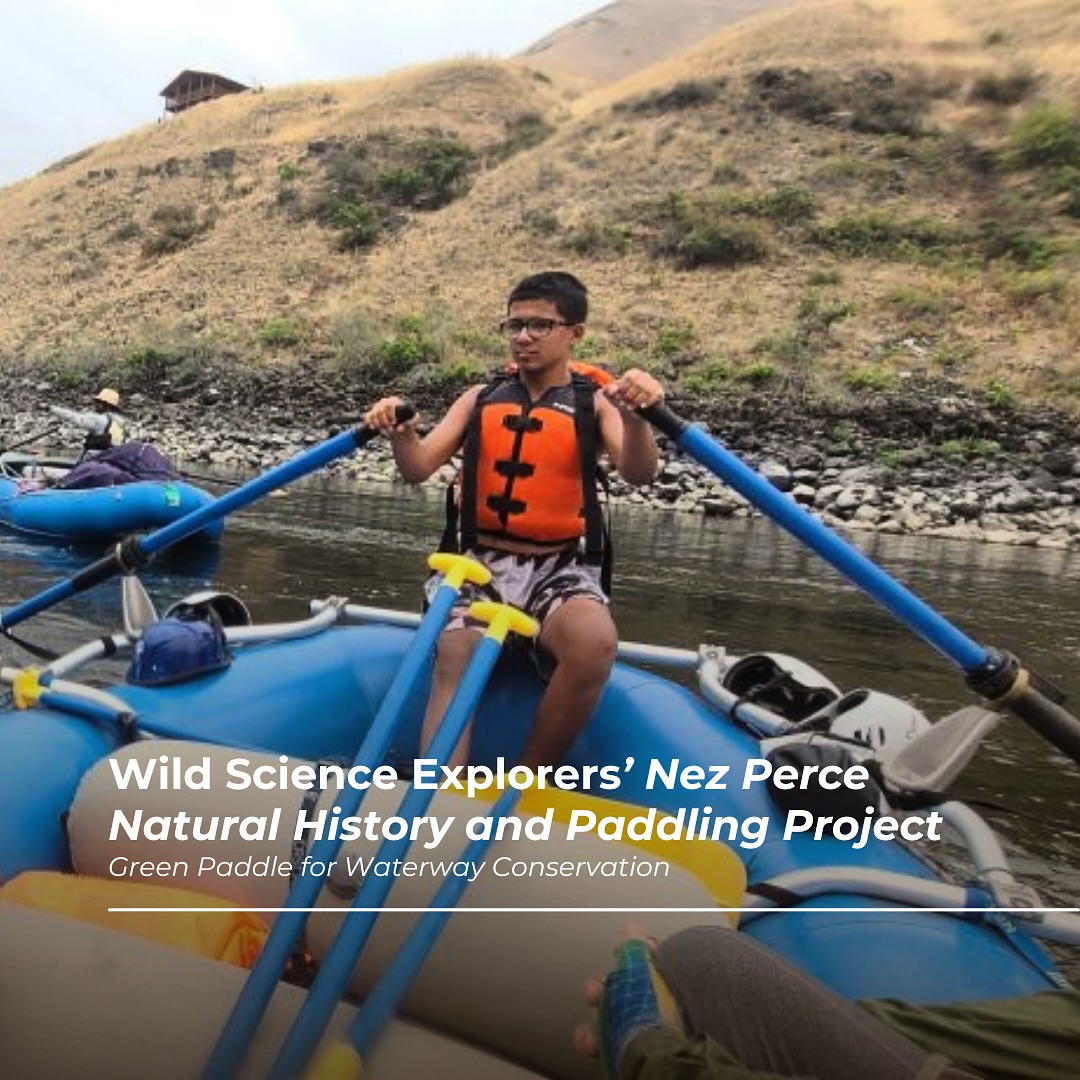
We are pleased to honor Wild Science Explorers’ Nez Perce Natural History and Paddling Project as the recipient of this year’s Green Paddle for Waterway Conservation award. Based in McCall, Idaho, this program engaged low-income Nez Perce Native American teenage tribal members in a 5-day science and stewardship rafting education trip down the Lower Salmon River. This trip was conducted in part to develop awareness of Nez Perce natural history and apply that to present day environmental issues in the Lower Salmon River corridor which has been traditionally used by the Nez Perce for hundreds of years.
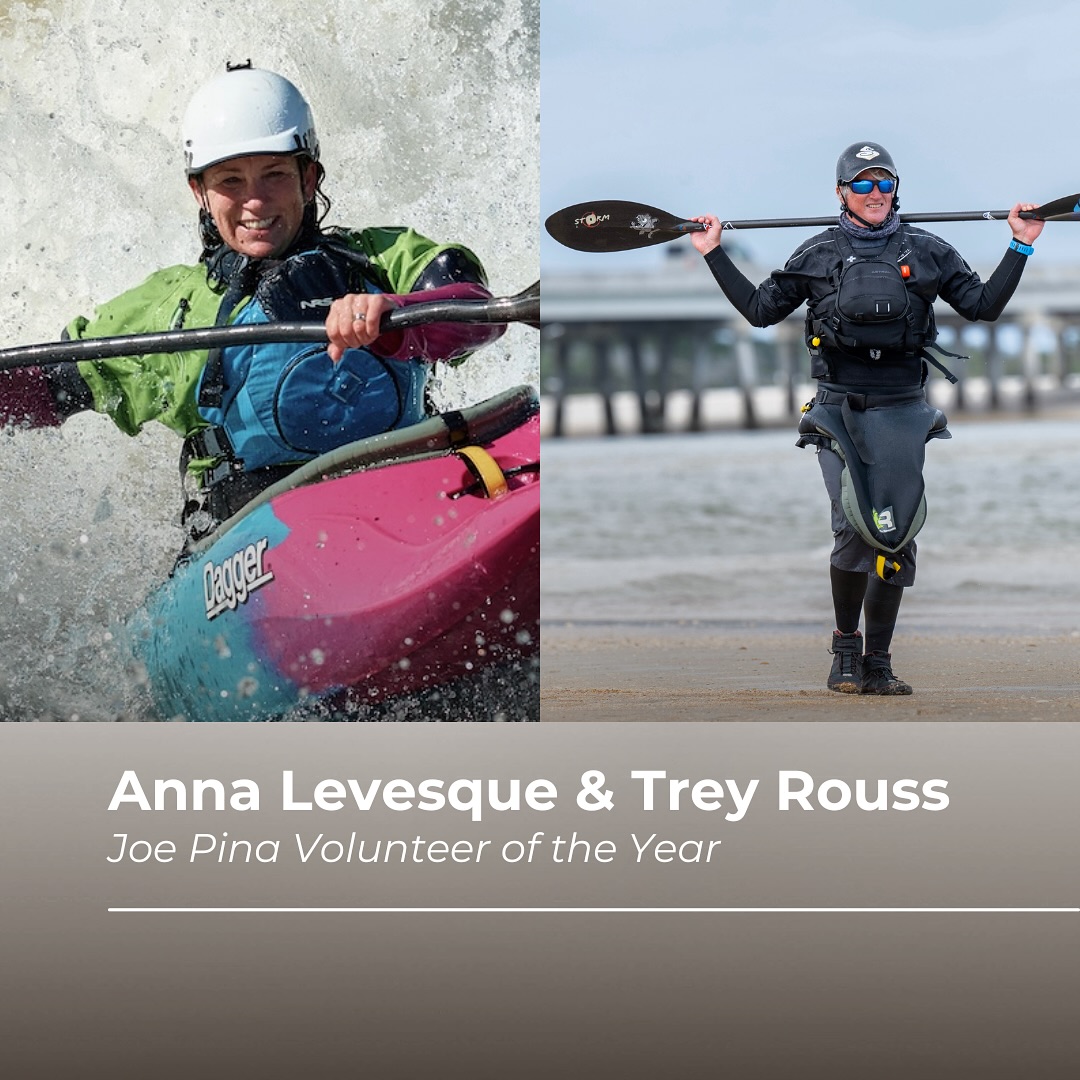
The Joe Pina Volunteer of the Year Award is presented to one or more volunteers each year for extraordinary service at the local, regional, or national level. We cannot even begin to detail or describe the depth of commitment of this year’s Volunteer of the Year Award recipients, Anna Levesque and Trey Rouss. As Chair and Vice Chair of the SEIC, they have paved the way and set the example for inclusive, student-centered, and holistic education and instructional programming that bridges the gap between paddling and learning through life’s many other dynamic environments. Anna and Trey were instrumental in the success of ACA’s LEAD programs this year, the Level 1-2 Regional Instructor Updates, the soon-to-be-launched leadership pathways program, the growth of the Instructor, Trainer, and Educator cadre, and overall connectivity that threads through students, instructors, committees, staff, and the ACA board of directors.
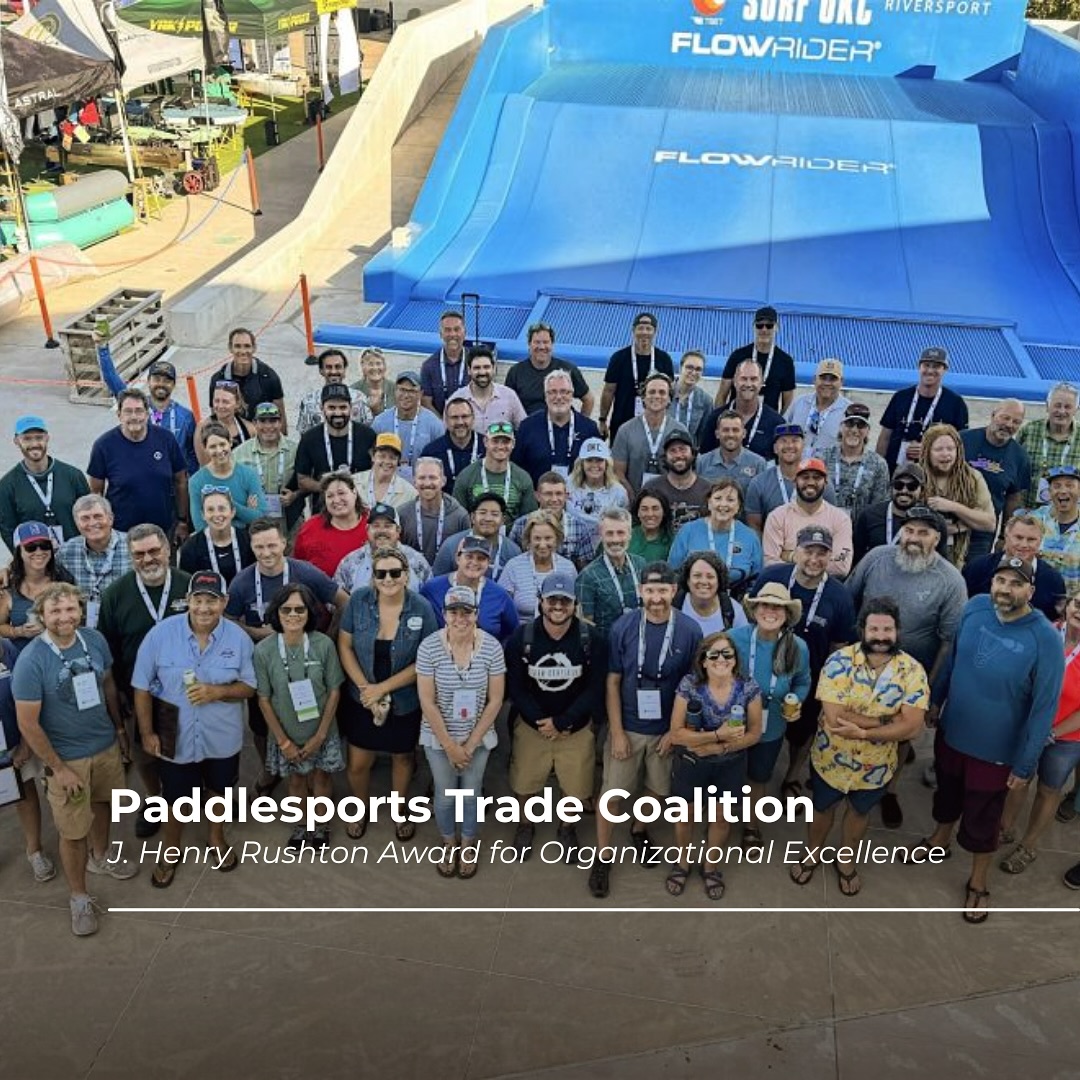
J. Henry Rushton Award for Organizational Excellence is presented annually to an organization or other group for outstanding achievements in advancing paddlesports and the mission of the ACA. With this award we would like to recognize the Paddlesports Trade Coalition—whose member organizations are dedicated to advocating for and promoting the strength of the paddlesports industry in North America and supporting commerce and inclusive access in coordinated efforts to expand a vibrant community of participants in all human and sustainably-powered boating activities. The leaders and members of the PTC are collaborative, authentic, and passionate teams of brands, retailers, outfitters, and sales representatives who influence, advocate, and foster growth and development within the paddlesports market segment.
The Havens Leadership Award recognizes individuals whose practices and behaviors best serve the interests and success of USA paddlesports athletes. This year, we are pleased to honor Risa Shimoda; everywhere you look in the paddlesports world, you find Risa Shimoda connected to making things happen. This year, in the sphere of competitive paddling alone, Risa helped organize the 69th Annual CCA Downriver Race, attended the premier of the remastered classic film Fast and Clean, assisted in freestyle events around the country and still competes in Squirt boat. Risa is everywhere! Under Risa’s leadership this year, the Competition Council has been reactivated and reinvigorated as representatives from discipline committees have been meeting on a regular basis to communicate what each discipline is doing, share ideas about best practices, help committees organize and become more structured, develop a coaches education resource, and more. The bottom line is Risa is a paddler. She truly embodies a multidiscipline, collaborative approach to paddlesports promotion and thanks to Risa’s efforts, the future of paddlesports competition is bright.
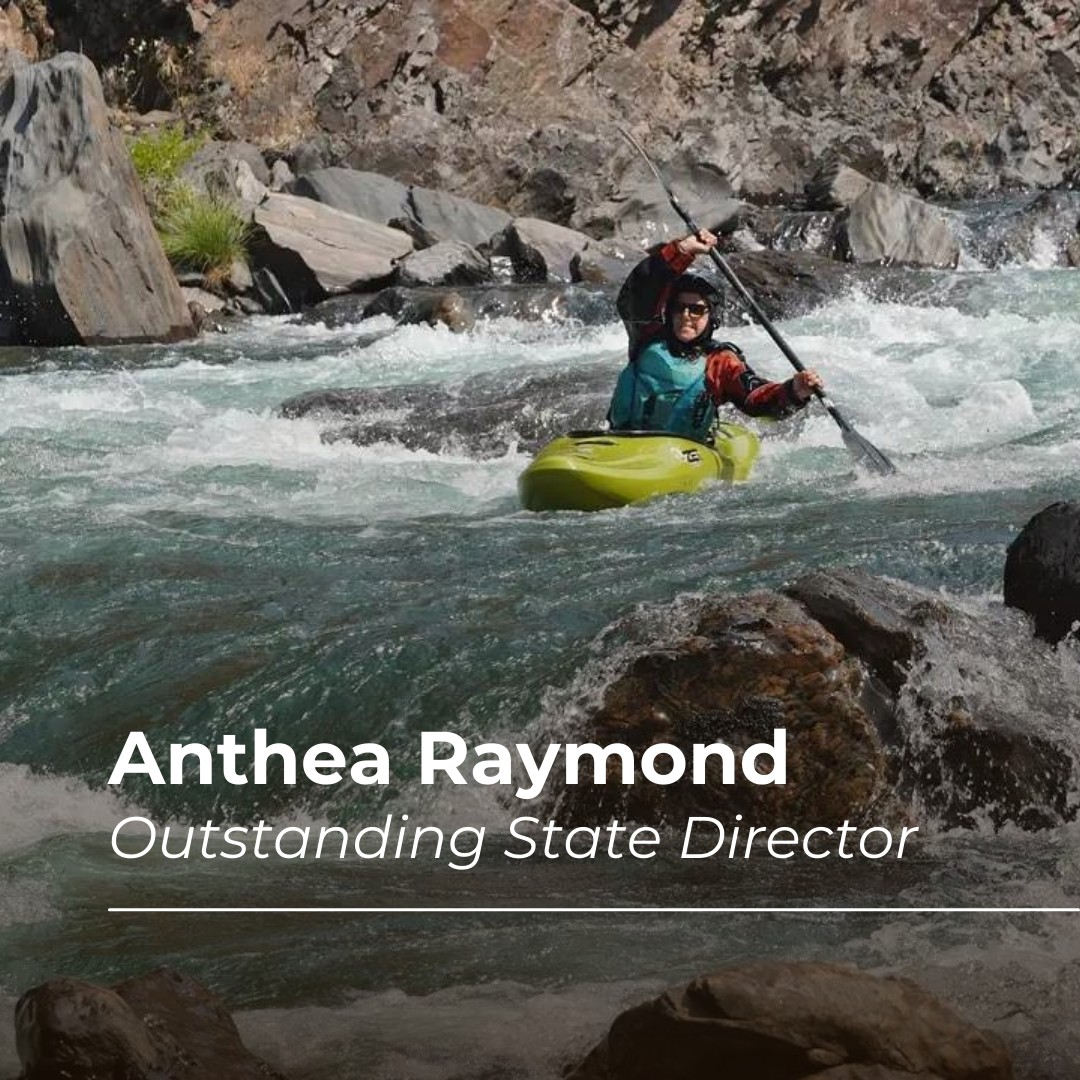
The Outstanding State Director Award is presented to one or more State Directors each year for their contributions to enhancing paddlesports in their state. It is our honor to announce the recipient of this year’s Outstanding State Director Award—Anthea Raymond! Anthea currently serves as ACA California State Director and has served in many other ACA leadership positions in the past. Her continuous support of the ACA and enthusiasm for promoting the safe, fun growth of the paddlesports community is evident in her dedication, passion, and volunteerism. She has spearheaded many projects, including the “California Paddle Hero” awards, she built a renewed excitement for kayak surfing via the Surf Kayak Revival Event, and helped bring the Level 1-2 Regional Instructor Update event to California. The state of California has a stronger paddling community, not just because she helps make these things happen, but also because she consistently promotes paddling opportunities to make sure the word gets out and the entire community is invited.
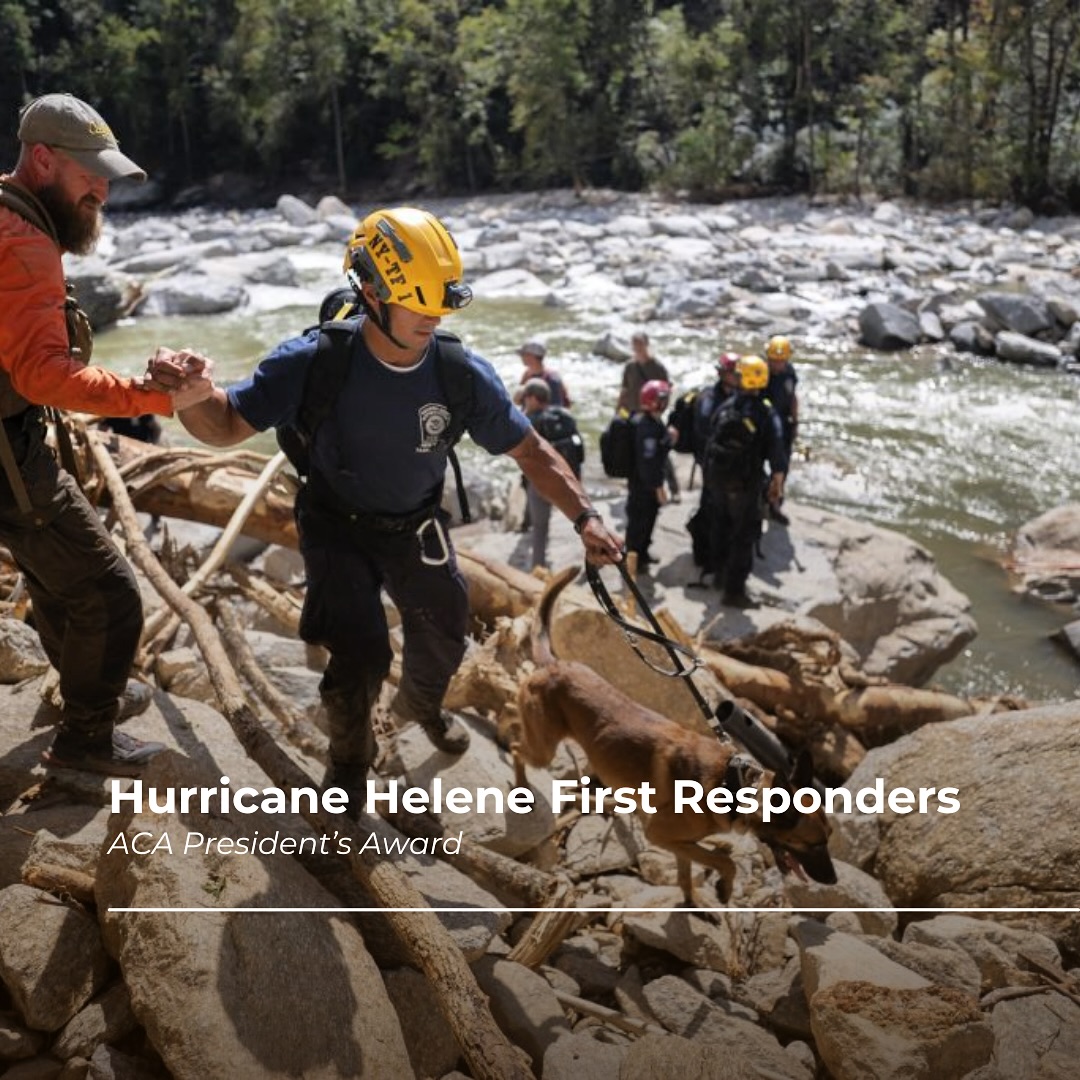
The ACA President’s Award is given by the President of the Board of Directors to individuals for outstanding service to the ACA on a national level. In September 2024, Hurricane Helene carved a 500-mile path of destruction throughout the Southeastern United States. In some communities, Helene served as a geological resurfacing event that swept award roads, bridges, and towns in its path. It will require months, if not years, to rebuild. In other areas, flood waters, winds and tornadoes contributed to significant loss of property, power, and water infrastructure and many lives were affected. In devastating moments like this, we acknowledge and recognize the people who step up to make a difference, and several ACA leaders stepped up to help their communities recover in the immediate aftermath of this disaster. The ACA President’s Award is intended to recognize all the members of the community who volunteered, donated, and served in any role to help those affected by the hurricane – whether in a capacity to clean up, rebuild, bring supplies, or through serving in a rescue and recovery role. We are heartened to say that the number of members of the ACA community who stepped into one of these roles to help their neighbors are too numerous to count. We would like to acknowledge the contributions of the following individuals as a representation of all the paddlers who responded to the call to help those in need.
Chris Wing, ACA Instructor Trainer
Trey Moore, ACA Instructor Trainer
John Grace, Green River Conservation Project
Erica Shanks, Green Riverkeeper
Cooper Leist, Lance Buskey, and Sam Iatarola, of Helene Rebuild Cooperative
French Broad River Academy’s Salamander Fund
Dane Jackson
Mason Hargrove
Sarah Beth Neal of Outdoor Adventure Rafting
Caleb Parchman of River Folk Rescue
Leaders from USA Raft, Nolichucky Outdoor Learning Institute, Appalachian Paddling Enthusiasts, Osprey Whitewater, Blue Ridge Paddling, and Mountain True
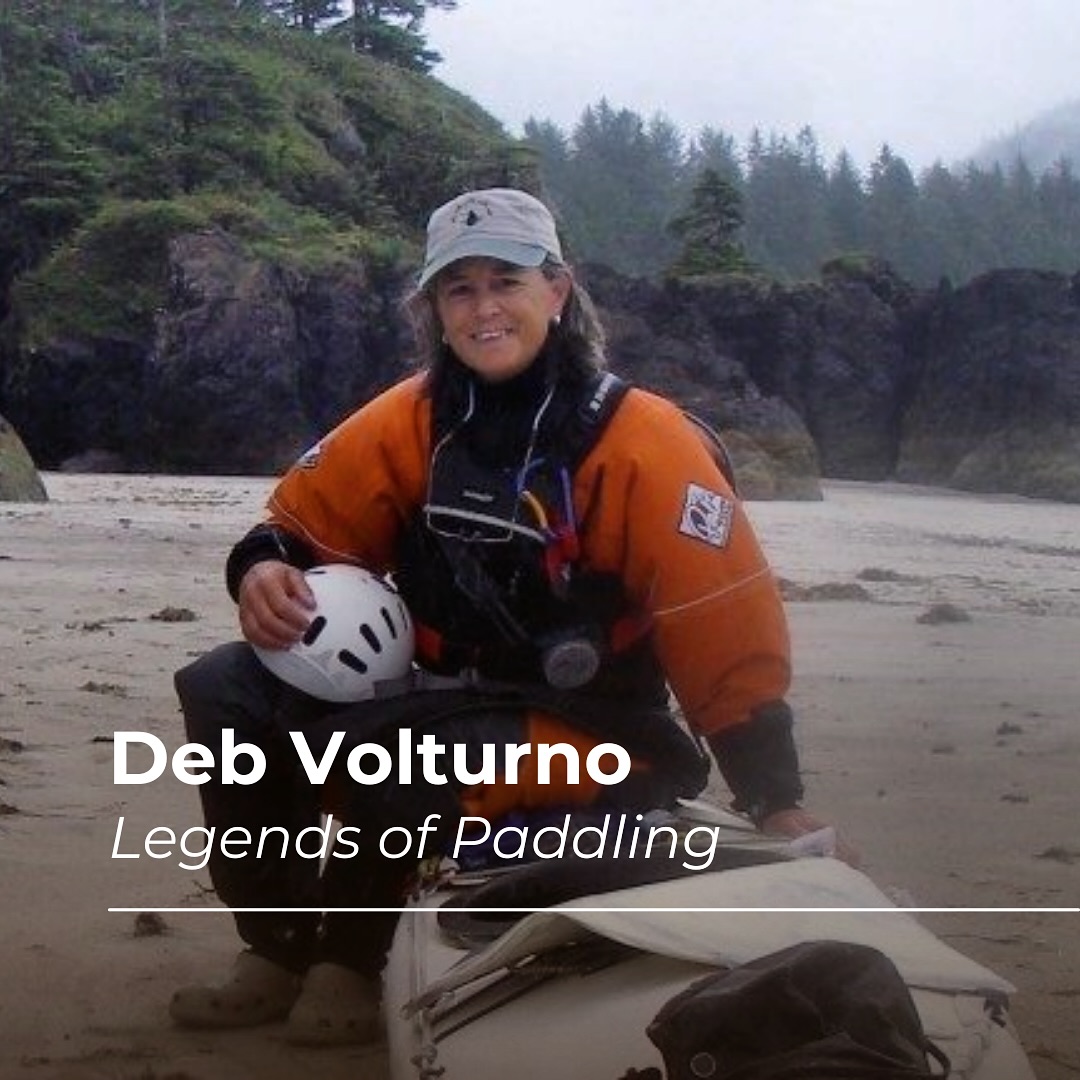
The Legends of Paddling Award is presented to one or more individuals each year for their legendary contributions to paddlesports. Recipients of this prestigious award are inducted into the ACA Hall of Fame. We are excited to welcome Deb Volturno into the ACA Hall of Fame and honor her with the Legends of Paddling Award. Deb’s status as a legend is not just made up of her significant accomplishments but is also formed by her impact on the sea kayaking community. Deb is an American Canoe Association Level 5: Advanced Open Water Coastal Kayaking Instructor Trainer Educator and Level 4: Performance Surf Kayaking Instructor Trainer Educator. Many, or even most, of the instructors in the Pacific Northwest region have received training, assessment, and/or mentoring in their journeys from Deb. Deb is a key player in this critical time for the surf kayaking discipline and its current revival within the ACA. Deb has been a part of surf kayaking from the earliest days when there was just one class of surf kayaking, and she was a fixture in the Bay Area/Santa Cruz kayaking scene for a long time, participating in competitions and running the California Canoe & Kayak outpost in Half Moon Bay with future fellow Tsunami Ranger John Lull. Deb currently holds the rank of Captain of the Tsunami Rangers, an ocean adventure kayaking team that originated near San Francisco. A sea kayak surf champion, Deb was also a member of the US Surf Kayak Team, which she represented in numerous competitions put on by the World Surf Kayak Association across the world. Much like her impact across the Pacific Northwest, Deb is a common thread in the influence of technical and teaching skills in the region, but more than that, she has influenced a collective endeavor to make sea kayaking more accessible, inclusive, and representative.
About the ACA:
The American Canoe Association was founded in 1880 and is a national 501(c)(3) nonprofit organization that serves the broader paddling public by providing educational programs, supporting stewardship initiatives that affect paddlers, and offering competition opportunities to athletes of all abilities. The ACA has over 15,000 members and 300 paddling clubs and affiliated organizations. The ACA provides insurance for hundreds of events and races every year. The ACA education program has an estimated reach of over 800,000 people per year. ACA members reside in all 50 states and over 35 countries worldwide. Since 2017 the ACA has served as the National Governing Body for paddlesports (Sprint, Slalom and Paracanoe) for the United States Olympic & Paralympic Committee and as the U.S. National Federation to the International Canoe Federation.
The heart of the ACA is the people who paddle, cherish and protect the rivers, lakes, streams, bays and oceans of the United States and beyond. For more information, please visit https://americancanoe.org.


 This article was first published in Issue 71 of Paddling Magazine.
 This article was first published in Issue 72 of Paddling Magazine.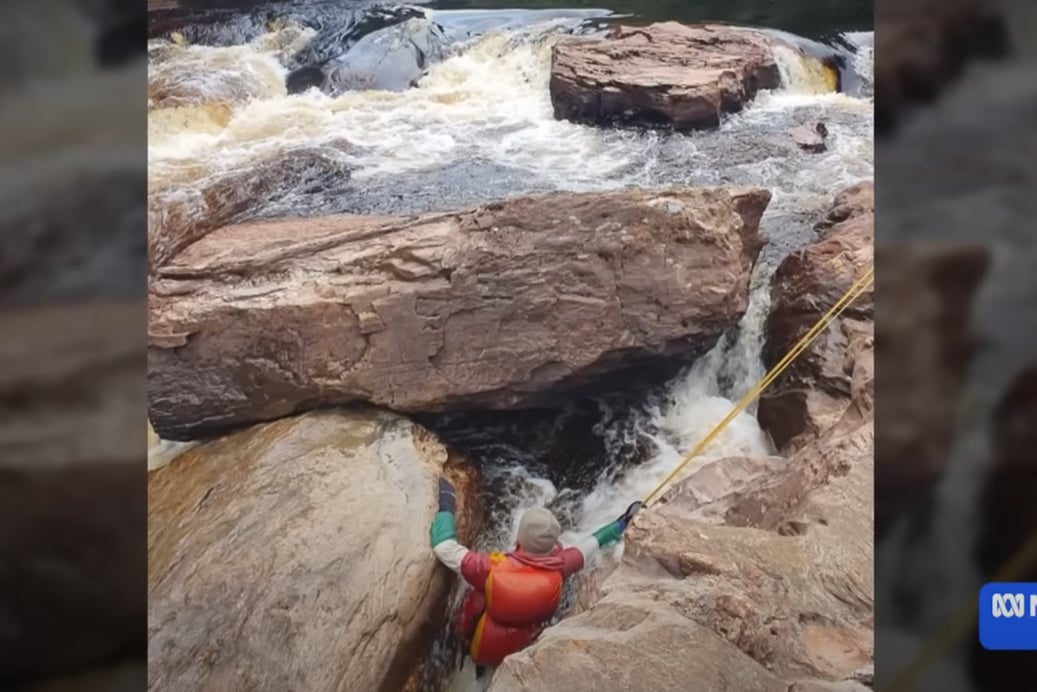
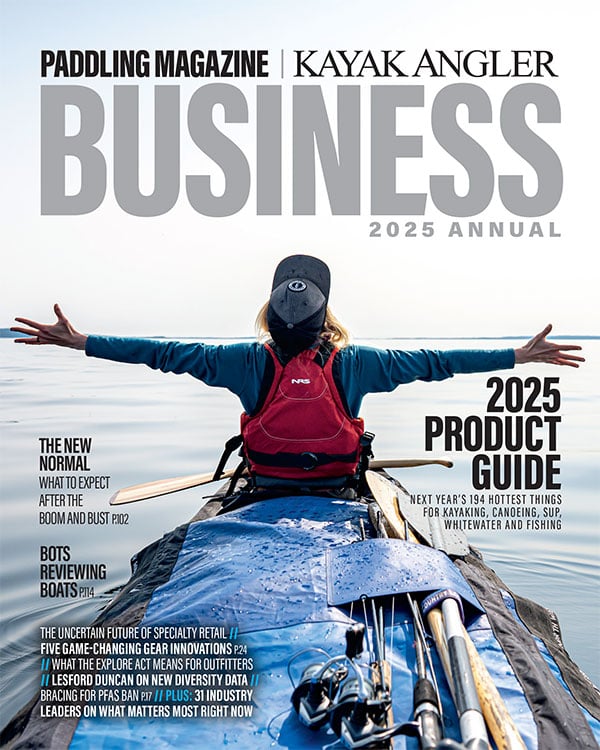 This article was first published in the 2024 issue of Paddling Business.