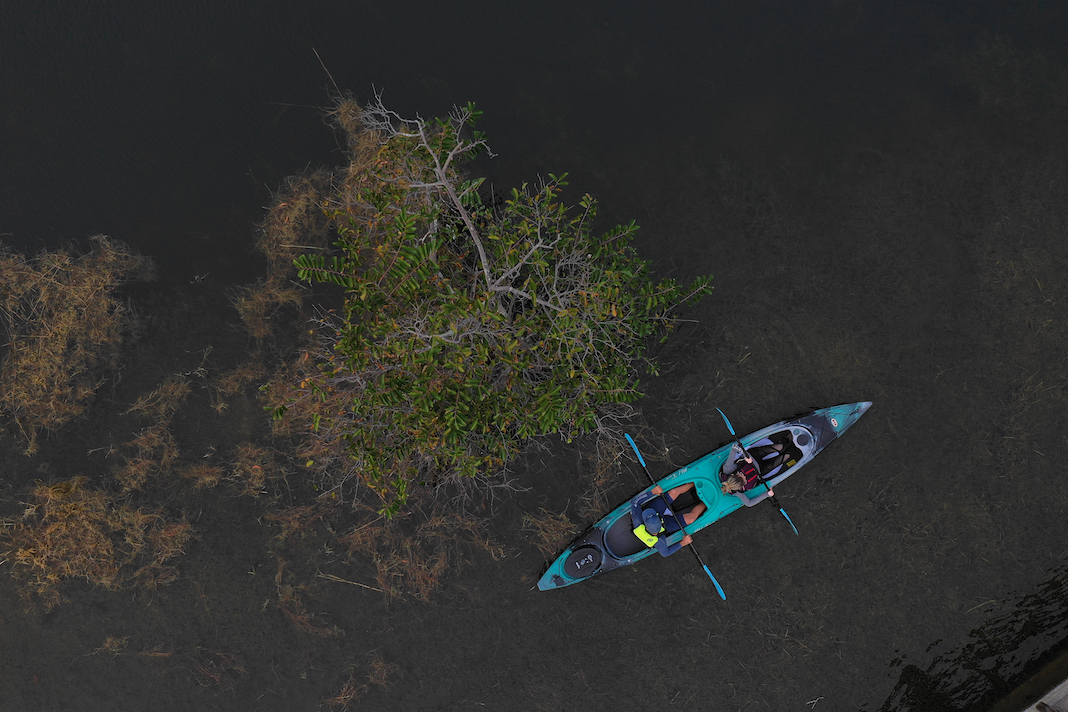
It comes as no surprise that the latest Send edit is jam-packed with adventure and nail-biting moments. Dane Jackson, Bren Orton, Adrian Mattern and the rest of the crew recently journeyed to Western Kenya to go kayaking on some of the country’s most beautiful and technical whitewater rivers.
Paired with Bren’s first-hand narration of the trip, we catch glimpses of narrow creeks winding through thick jungle, chocolate milk-colored waterfalls, and Kenyan locals looking to give kayaking a try.
But that’s not to say there weren’t any hairy moments along the way. Watch the team deal with a hippo encounter, a river-wide sieve, a nasty tree-pin and more. Catch the video here.
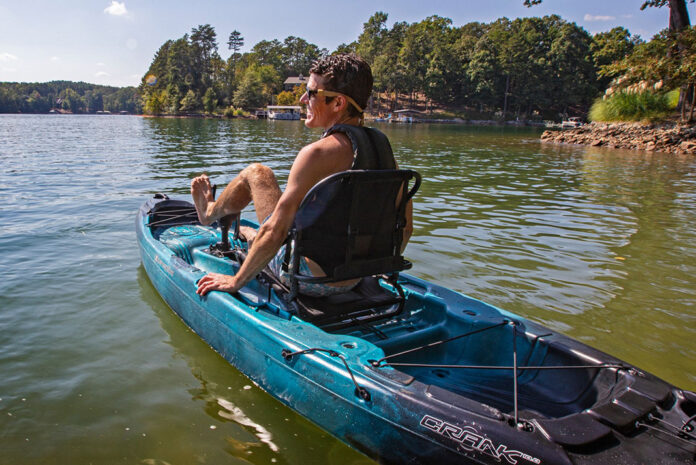
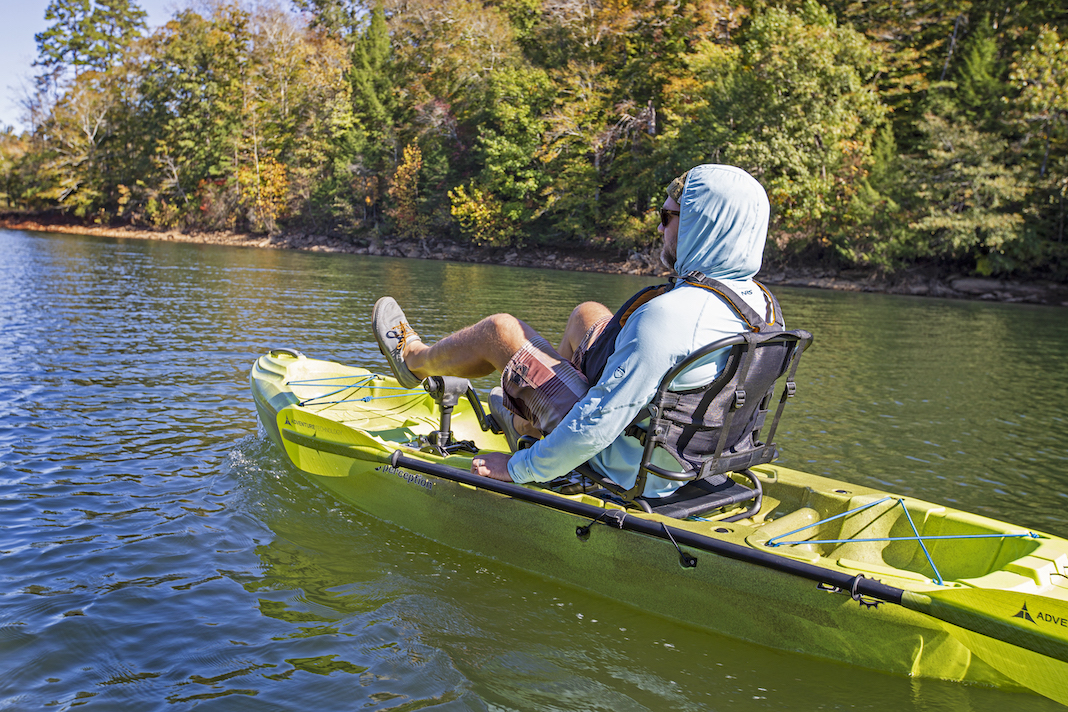
First of all, why a pedal kayak? If you are new to kayaking, or even (perhaps especially) if you are a long-time paddler, you may be asking yourself this question. Pedal-drive kayaks offer some unique advantages over more traditional paddle kayaks, like hands-free kayaking, increased range and stability, and the ability to enjoy both leg propulsion and paddle power from the same kayak.
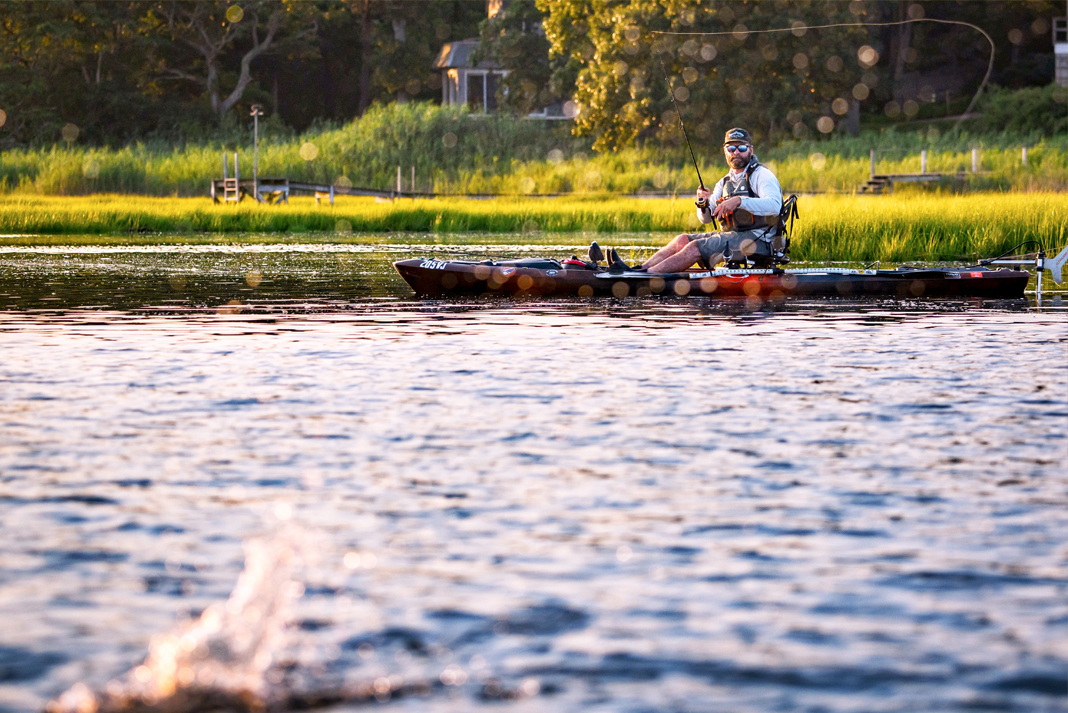
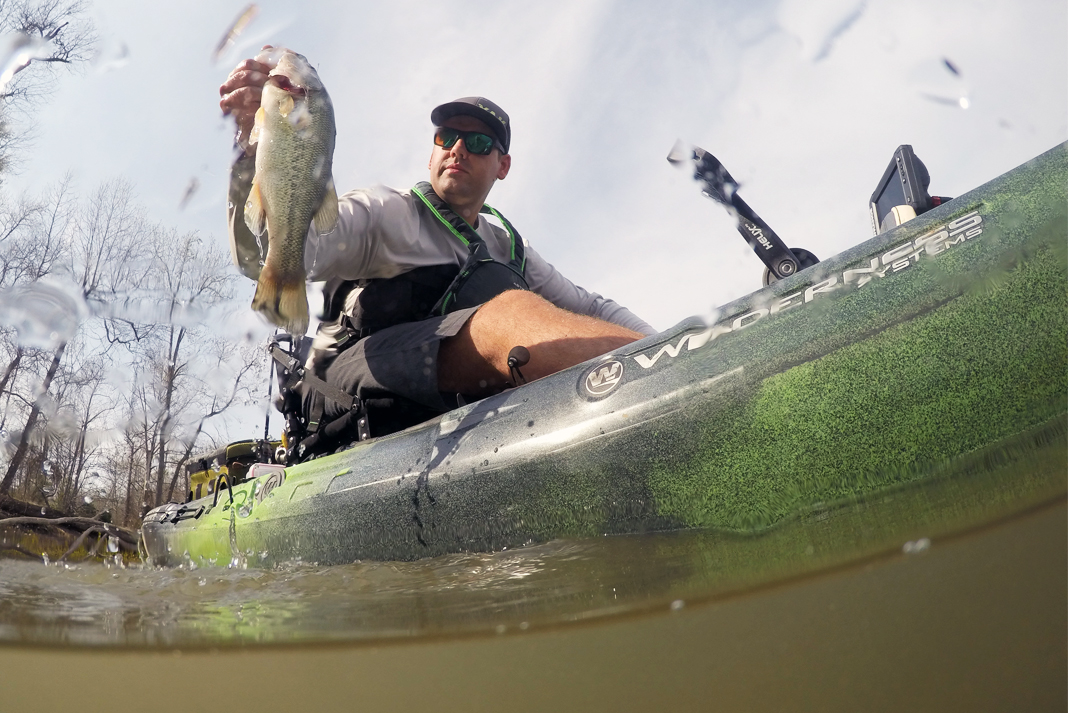
Pedal drive kayaks have exploded in popularity, particularly among kayak anglers. Being able to control the movement of a kayak without a paddle allows anglers to focus on casting and fighting fish. Some pedal drives allow a kayaker to move forward, turn, reverse, hold position and even travel sideways or diagonally—all without touching a paddle.
The increased efficiency of leg propulsion has also allowed manufacturers to build larger, more stable kayaks for stand-up fishing. These boats are much heavier than basic paddle kayaks, but the pedal drives make them easy to propel despite the added weight. And the appeal of a spacious, stable kayak extends beyond fishing to include families and recreational kayakers who want a kayak that doesn’t feel wobbly in the water.
When buying a pedal-powered kayak, there are some things to keep top of mind. One consideration is price: the complexity of the pedal drive mechanism and the specialized hull designs mean that you should expect to pay more for a foot pedal kayak than a conventional paddle kayak. Read on for our advice for choosing the best pedal kayak for you, whether you are shopping for a new boat or exploring the used market.
Since Hobie permanently revolutionized kayaking with the invention of the original MirageDrive pedal kayak in 1997, pedal powered kayaks have been in a state of constant evolution. New and improved pedal drive systems emerge every few years, with the latest innovations offering more power, lighter weight, better reliability and groundbreaking advancements like the ability to pedal not just forward and reverse, but to also maneuver sideways and diagonally.
Despite ever-changing technology, pedal drive kayaks can last for many years if they are properly cared for. With 25 years of history, there are a lot of options for those interested in a used pedal kayak. You may be able to find earlier versions of the best pedal kayaks of 2022 on the used market. These earlier models can offer great value for anyone just starting out or on a budget while shopping for a high-quality pedal kayak.
With any used kayak purchase, think about what type of kayaking you are planning to do most of the time. Will you be using the pedal kayak for casual exploration and fitness, or more as a dedicated fishing platform? If so, will you fish in shallow water, rivers or offshore waters? The previous owner may tell you what they used the kayak for and how it performed, and you can compare this with your own kayaking goals.
Finding a good foot-pedal kayak on the used market could be as simple as approaching your local outfitters and asking if they have any boats from their rental fleet available for purchase. Another option is to start with an online search, like “pedal kayak Craigslist” or “pedal kayak eBay”. Along with Facebook Marketplace and other online classifieds, you can also reach out to specialized interest groups, such as a local kayak angling club, to help you find fishing-ready, pedal-powered kayaks.
When shopping for a used pedal kayak, be sure to thoroughly inspect the boat, paying particular attention to the pedal drive and outfitting.
Pedal drive
Pedal drive mechanisms are designed to be robust, but it’s still important to check a used pedal drive for any wear or damage that could affect its operation. Check to see that the pedals, prop or fins move as they should, and that there’s no binding or unusual sounds. The mechanism should move smoothly without resistance or grinding noises—if the propulsion unit sounds like it’s packed with sand, it probably is.
Also check to see that the pedal drive raises or retracts as designed. Nothing beats an on-water test drive, but if you can’t get the boat in the water, elevate it off the ground so that you can complete a full inspection of the pedal drive in action. Keep in mind that a replacement pedal drive can run upwards of $700, so you want to be very sure that this critical component is working as it should!
Outfitting
As technology has changed, pedal kayak manufacturers have updated features and outfitting to reflect the newest trends. Newer models may have more comfortable seating, better gear tracks and more rod holders. Keep in mind that if the used boat you are considering doesn’t have all the features you want, you can always add or update them later. Aftermarket seats, rigging and accessories are widely available.
For more tips on what to look for when selecting a used kayak, read our article How To Buy A Used Kayak.
Pedal kayak buying guide
Even after you’ve read a few articles and spoken with kayakers who love their pedal drives, you may be wondering, Should I buy a pedal kayak? And, if so, what type or brand of pedal kayak? Chat with more experienced kayakers who use pedal drive kayaks in the environments you wish to explore. This will help you better understand which boats are best- suited to these waters, trip lengths and activities.
If you are passionate about fishing, speak with kayak anglers from both paddle and pedal camps to get a sense of which may work best for you. This list will also answer many of the questions you may have when it comes to buying and using pedal kayaks.
What is a pedal kayak?
A pedal kayak is any kayak that uses foot propulsion—by means of a pedal drive that turns a propeller or moves fins under the hull—to power the boat. Most pedal-powered kayaks can also be propelled with a paddle, although these boats tend to be wider and heavier than standard paddle kayaks, making them less efficient and harder to move with upper body muscles.
Some pedal-drive kayaks also have mounts for using a trolling motor or a sail, adding even more versatility to their propulsion options.
How does a pedal kayak work?
A pedal kayak uses an innovative through-hull mechanism that translates the energy from spinning or pushing the pedals to a propeller or pair of fins beneath the hull. Pedal kayak fins are an ingenious example of biomimicry—that is, nature-inspired innovation that copies forms or designs found in the natural world.
In the case of pedal kayaks, the movement and shape of the fins emulate the incredible efficiency of a penguin’s wings as it “flies” underwater.
Can you paddle a pedal kayak?
While it is technically possible to paddle any kayak, including a pedal kayak, the enjoyment you take from paddling (and the efficiency) will have much to do with the width, weight and shape of the kayak. The wider and heavier a kayak is, the more difficult (and slower) it will be to paddle.
For this reason, the largest pedal kayaks designed with standup use in mind are not well-suited to paddling. Look for a lighter, narrower pedal kayak if you’re hoping to enjoy both pedaling and paddling.
Types of pedal kayaks
There is truly a pedal kayak for everyone, with designs ranging from ultimate fishing platforms that cater to the diehard kayak angler, to more generalist models for fitness and recreation. On both ends of the spectrum, users can also choose the material that best suits their needs—whether that’s a durable rotomolded plastic construction, lighter thermoformed plastic layup, or an inflatable design that can be packed into a duffle for storage and transportation.
There are also two types of pedal drives: push pedal and rotational pedal. The push pedal mechanism utilizes pedals that are pushed and pulled in an alternating motion to transfer energy to fins mounted beneath the kayak. A rotational pedal drive is more like a bicycle where the force is applied in constant rotation to turn a propeller. Fins and propellers have different advantages—with passionate fans on both sides—so choosing a system may simply come down to deciding which you most enjoy using.
Pedal vs paddle kayak
Pedal kayaks and paddle kayaks each have their different strengths and environments where they excel. Choose a pedal power kayak if hands-free and/or standup use is important to you, or if you are looking for a stable, efficient sit-on-top kayak for covering longer distances on open water.
If you are looking for a simple, lighter weight, inexpensive kayak with the option to sit on top or sit inside, then a paddle kayak may be perfect for you. Paddle kayaks are also better suited to rivers, shallows and weed-choked lakes.
Pedal boat vs pedal kayak
A pedal kayak is designed for efficient and enjoyable day trips on a wide variety of waterways. Pedal kayaks are available in one-person models, or tandem models where one person sits directly behind the other, allowing for a faster hull shape with greater maneuverability.
A traditional pedal boat, on the other hand, is like a dock with pedals—slow, heavy, awkward to maneuver and best suited to leisurely excursions where speed and distance are not important. Pedal boats are propelled by two people sitting side-by-side, making them nearly as wide as they are long.
Pedal kayak vs trolling motor
Can’t decide between a pedal kayak and a motorized kayak? A growing number of pedal kayaks can also easily accommodate an electric trolling motor. Adding a trolling motor to your pedal kayak is a great option if you are looking to spend longer on the water, extend your range or increase the versatility of your ultimate fishing kayak.
Are pedal kayaks worth it?
Hands-free kayaking, ease of use and greater versatility are just some of the reasons for pedal kayaks’ booming popularity. Pedal kayaks also offer tremendous advantages for anglers, since they allow casting and reeling on the move, and sometimes standup fishing.
When considering whether these boats are worth the added expense, keep in mind that many pedal kayaks also have specialized features that increase their value, such as sophisticated seating, rod holders and other accessories.
Fastest pedal kayak
Some of the fastest pedal kayaks tested include the Hobie Mirage Lynx with Turbofins, the Old Town Predator PDL and the Ocean Kayak Malibu Pedal.
Lightest pedal kayak
Hobie makes two of the lightest pedal kayaks: the Hobie Mirage Lynx is an 11-foot pedal kayak that weighs just 63 lbs fully rigged (47 lbs without the drive unit). Hobie’s inflatable hybrid is even lighter—the Mirage iTrek 9 Ultralight has a fully rigged weight of 37 lbs.
For anglers, the Slayer Propel 10 from Native Watercraft is the lightest 10-foot pedal drive fishing kayak on the market, weighing in at 62 pounds (without the drive unit).
Most stable pedal kayak
Most pedal drive kayaks are inherently stable as their hulls are wider and heavier than traditional kayak designs. The pedal drive itself also adds stability to the kayak, as it acts something like a daggerboard on a sailboat to steady the kayak in the water. Among the most stable pedal fishing kayaks are the super-sized Hobie Pro Angler 14 and sturdy Old Town Predator PDL.
How fast can a pedal kayak go?
Pedal kayak top speeds will vary depending on the kayak’s length, hull shape, weight and type of pedal drive. For an average pedal kayaker, expect your sustained speed to be about 3-4 mph (5-6.5 kph) with a sprint speed of 7-8 mph (11-13 kph).
Are pedal kayaks faster?
It is a commonly held belief that pedal kayaks are faster than paddle kayaks. In fact, most head-to-head tests have shown that pedal and paddle are similar in terms of average speed. A paddle kayak may actually sprint faster, while a pedal kayak has greater torque for propelling heavier loads faster.
Of course, each kayak’s top speed will depend on the length, weight and shape of the hull, and the proficiency and endurance of the kayaker. For novice kayakers, pedaling is more intuitive and less reliant on technique—therefore, pedal kayaks can be faster than paddle kayaks for beginners.
Are pedal kayaks easier?
For many novice kayakers, pedaling comes more naturally than paddling. It takes practice and instruction to develop good paddling technique and the stamina to paddle longer distances without tiring. Pedaling, on the other hand, uses the larger and more powerful muscles of your legs, so you can go farther, faster.
Additionally, pedal mechanisms also make you more stable. Coupled with a wider hull, this can make pedal kayaks feel less prone to flipping over when you’re still finding your balance.
How far can you pedal a kayak?
How far you can pedal a kayak will depend on many factors, including your fitness, the weather and water conditions, the design of the kayak and more. Start with shorter trips, and increase your distance as you gain fitness and experience.
Pedal-powered kayak price
Pedal kayak prices range widely, from about $900 for a budget pedal kayak to nearly $4,000 for a premium pedal fishing kayak. Specialized pedal sailing kayaks can cost even more, up to $5,300 for a one-person kayak and $8,300 for a two-person kayak.
Why are pedal kayaks so expensive?
Pedal kayaks are more expensive than basic paddle kayaks because of the complexity of the pedal-drive mechanism, and the specialization of the pedal kayak itself. Keep in mind that more innovation, materials and accessories are required to produce a pedal kayak compared to the average recreational paddle kayak.
Pedal kayak brands
Well-known pedal kayak brands with great track records include Hobie, Native Watercraft, Old Town, Ocean Kayak, Wilderness Systems, NuCanoe, Jackson Kayak, Brooklyn Kayak Company (BKC), Propel, Perception Kayaks, Viking Kayaks, Vibe Kayaks, Bonafide, Eddyline Kayaks and Pelican International.
Where to buy a pedal kayak
The best place to buy a new pedal kayak is from your local kayak shop. Check kayak manufacturers’ websites to find your nearest dealer. Entry-level, budget pedal kayaks are also available from many major retailers, including Dick’s Sporting Goods, Amazon, Costco and Walmart.
Pedal kayak reviews
Browse these reviews of the top pedal kayaks through the lens of your own interests. Do you relate to the writer? Do their experiences match what you are looking to do? The best pedal kayaks are well designed and comfortable, but they may be aimed at generalist kayakers or a more specialized market.
These reviews will help you find the best pedal kayak to suit your needs.
Perception has been making kayaks for over 40 years. Throughout the decades, their boat designs constantly evolved, playing with hull shapes, volume and materials to build better performing kayaks. In 1977, Perception introduced some of the first rotomolded plastic kayaks, a revolutionary innovation that paved the way for kayaking’s explosive growth in the 1990s and early 2000s. Until that point, kayakers had been limited to hand-made composite craft.
Durable, affordable and—most importantly—easily manufactured, plastic kayaks allowed for mass production and distribution. Throughout the ‘80s and ‘90s, Perception Kayaks brought the sport to the general public with industry-leading recreational, touring and whitewater designs. Their experimentation with kayak design led to many of the modern shapes we see today.
Today, Perception Kayaks is owned by the Confluence Outdoor group, which also includes five other paddling companies, among them Wilderness Systems and Dagger Kayaks. In more recent years, Perception’s focus has shifted towards recreational sit-inside and sit-on-top kayaks, fishing kayaks and day touring boats. These kayaks continue to be made with durable rotomolded polyethylene plastic, keeping the prices low.
Perception kayaks are great starter kayaks for families, recreational paddlers and kayak anglers with limited budgets. With a Perception kayak, paddlers will get solid performance and some features that are found on more expensive models. As most of these are recreational kayaks, they are best suited for casual paddlers exploring calm waters on shorter outings.
If this sounds like your paddling goals, read on to learn more about the best Perception kayaks. This guide includes links to specific models and reviews, advice for buying new and used Perception kayaks, and answers to common questions.
If you can find a used Perception kayak, you’ll spend less and get more value out of your dollars. Perception kayaks have been around for over 40 years, and they are distributed across North America. There’s a good chance you will be able to find both current and classic models on the used market. Keep these pointers in mind when shopping for a used Perception kayak.
Knowing where to look is the first step. To find used Perception kayaks, check online classifieds like eBay, Kijiji, Craigslist or Facebook Marketplace. Browsing these websites or searching, for example, “eBay Perception kayak” may yield models that are now discontinued. Even though these kayaks are no longer being produced, they are still great designs.
Some models were discontinued to avoid competition or redundancy with Dagger, another brand in the Confluence Outdoor family, and others may have just gone out of style. If they are in good condition, these older models may be a perfect fit for your needs.
Keep in mind that it may be difficult to source replacement parts for discontinued models. Seats, foot pegs, buckles and bungees are all parts that may need to be replaced on an older, used kayak. If some of these parts are missing or damaged, it may not be a deal-breaker. Contact Perception and see if they have any compatible replacement parts. If you are handy, you may also be able to improvise a repair with parts from your local hardware store.
Some of the used Perception kayaks you find may be whitewater kayaks. When whitewater kayaking entered the mainstream in the late ‘80s and early ‘90s, durable plastic kayaks like the Perception Mirage and Dancer were at the forefront of innovation. While the outfitting may be rudimentary compared to modern whitewater kayaks, these early boats are just as fun to paddle today as when they were introduced decades ago.
If you are looking to get into whitewater paddling, grabbing a cheap, older kayak is a great way to enter the sport while saving money for whitewater courses and instruction. Closely inspect a used whitewater kayak, checking for any cracking along the hull resulting from hard impacts.
For more tips on what to look for when selecting a used kayak, read our article How To Buy A Used Kayak.
Photo: Courtesy Perception Kayaks
Perception kayak buying guide
Understanding the different types of Perception kayaks will help you find the most suitable kayak for your needs. Their current lineup includes six different categories: sit-on-top recreational, sit-inside recreational, sit-inside day touring, fishing, tandem and kids kayaks. Let’s take a closer look at these categories, along with some of the models within them, to help you find the best Perception kayak for your paddling aspirations.
Sit-on-top kayaks
Sit-on-top kayaks are the easiest kayaks to use. These kayaks have open decks and wide hulls that are extremely stable. Unlike sit-inside kayaks, on a sit-on-top, the paddler’s legs do not slide inside the kayak. Because you don’t need to lower yourself into the kayak, a sit-on-top is easier to enter and exit. If you capsize or fall off in the water, you can just clamber back aboard. Sit-inside kayaks require more technique to re-enter and the closed cockpits can make some new paddlers feel confined or claustrophobic.
Sit-on-top kayaks’ high stability and open design makes them great for casual recreational paddlers on sheltered waters and slow-moving rivers. Many have molded-in foot rests so that multiple people can share the same kayak without needing to adjust anything. Because there are few moving pieces on sit-on-top kayaks, fewer things can break.
Perception offers a wide selection of sit-on-top recreational designs, from the simple, budget-priced Rambler and Access to the more feature-rich Pescador and pedal drive-equipped Pescador Pilot and Crank, which allow you to propel the kayak with your legs. The Perception Hi Life is a hybrid sit-on-top/paddleboard that is so stable that you can stand up on it.
The candy-colored Hi Five is a sit-on-top kayak sized and designed specifically for kids. Many anglers also prefer sit-on-tops, and most of Perception’s fishing kayaks are made in this style (more on those below).
Sit-inside kayaks
Perception’s sit-inside kayaks range from the short Drift 9.5 recreational kayak and kid-friendly Prodigy XS to the sleek Carolina 14 touring kayak. Sitting inside the kayak gives a bit more control than sit-on-top kayaks as the paddler’s legs engage with the sides of the cockpit.
They also provide some protection from sun, rain and splashing waves on your legs as you paddle. If you plan on graduating to a longer sea kayak, or you want a bit more control, choose a sit-inside. These are great starter boats to help you grow your skills.
Consider length when you are looking at sit-inside kayaks. Generally, longer kayaks—like those in Perception’s day touring lineup, including the Expression, Conduit and Carolina models—are quicker and track (travel in a straight line) better. Shorter, wider kayaks like the Drift 9.5 and JoyRide are much more stable and turn more readily. They are also easier to store and transport. If you plan on paddling with your friends, look at their boat lengths. You should try to get something similar so that you are not struggling to keep up.
Remember that most of these kayaks, with the exception of the Carolina 14—do not have bulkheads (interior walls within the hull of the kayak). Without bulkheads, a sit-inside kayak won’t float well if it capsizes. For this reason, sit-inside kayaks without bulkheads should only be used in sheltered waters on calm days. If you plan to paddle offshore (further than you could swim), it’s imperative that your kayak has bulkheads.
Fishing kayaks
Fishing kayaks use similar hull designs to recreational kayaks, but include fishing-specific outfitting and accessories. Rod holders, tank wells and tackle storage areas are standard. Another common feature is a frame seat that is more supportive and allows you to sit higher on the water for easier casting, stalking and fighting fish.
Perception’s most stable fishing kayak, the Outlaw 11.5, features an open deck with grip pads so you can stand up for an even better perspective. Perception’s current lineup includes four sit-on-top fishing kayaks and one sit-inside, the Sound. Their popular Pescador series offers three models, including the pedal-powered Pescador Pilot, which allows anglers to keep their hands free for fishing on the move.
Photo: Courtesy Perception Kayaks
Tandem kayaks
Tandem kayaks have two seats and are meant to be paddled by two people. Tandems have higher weight capacities and more stability than solo kayaks. They’re a great option to get on the water with a less experienced kayaker or a child. Perception sells three recreational tandem models: the sit-on-top Rambler 13.5 and Tribe 13.5, and the sit-inside Cove 14.5.
Use this as a start, and remember that online research will only get you so far. The best advice we can offer is to always test paddle before buying any boat. Of course, that’s a challenge at most of the big box stores where Perception kayaks are sold. Try to borrow a Perception kayak from a friend for a test paddle in real-world conditions. The more time you can spend on the water in a similar style of kayak, the better the purchasing decision you will make.
Here are answers to some of the most common questions about Perception kayaks.
Are Perception kayaks good?
Perception Kayaks makes good quality recreational and fishing kayaks priced in the low- to mid-range. They have a variety of models, including tandem and kids kayaks, all made with durable plastic materials. Read the rest of the Perception Kayaks Buying Guide for more details.
Types of Perception kayaks
Types of Perception kayaks include fishing kayaks, pedal-powered kayaks, sit-inside and sit-on-top recreational kayaks, day touring kayaks, as well as tandem (two-person) kayaks and kids kayaks. Perception fishing kayaks are exceptionally stable and have rod holders and accessories for more efficient angling.
Perception Kayaks began making whitewater kayaks in the 1970s, and some Perception whitewater kayaks are still available on the used market.
Perception kayak models
Perception Kayaks’ current lineup includes over 25 different kayak models. These range in length from the 6-foot Hi Five kids kayak up to the 14.5-foot Cove tandem kayak. Perception makes sit-inside and sit-on-top kayaks for recreational paddling, day touring and fishing.
Discontinued Perception kayaks
With over 40 years of boat-building history, there have been a great many now-discontinued Perception kayaks through the decades. In the 1980s through early 2000s, Perception Kayaks was a key player and industry leader in whitewater kayaking and made river runners, playboats and slalom kayaks.
While Perception no longer makes whitewater kayaks, you’ll still find plenty of Perception whitewater kayaks—as well as discontinued touring and recreational kayaks—on used classifieds pages.
What is the lightest Perception kayak?
The lightest Perception kayak in their current lineup is the Prodigy XS, for kids and petite paddlers. It weighs just 26 lbs. For other paddlers, the Drift 9.5 weighs 40 lbs.
Perception kayak weight
Perception kayaks are average in weight compared to other recreational kayaks, ranging from 26-pound kids kayaks to 85-pound fishing kayaks. Like most other recreational and fishing kayak manufacturers, Perception Kayaks makes their boats from rotomolded plastic.
Thermoformed kayaks, such as those made by brands like Delta or Eddyline, will be lighter than similar-sized rotomolded kayaks. Composite kayaks, like Swift’s carbon fiber recreational boats, are even lighter (but much more expensive).
Perception kayak weight limit
Except for their youth kayaks, the weight limit of Perception kayaks is at least 300 lbs. Sit-on-top kayaks have a higher weight capacity, with tandem kayaks having the highest weight limits, generally sufficient for two adult paddlers. This is average compared to similar recreational kayak brands.
Perception kayak dimensions
When viewing kayaks, many companies, including Perception, have a number in the kayak’s name (for example the Carolina 12.0). The number indicates the length of the kayak in feet. Perception kayaks range from 6-foot kids kayaks to 14.5-foot tandems.
Other dimensions like the width and volume are found in the product specifications. The width refers to the kayak at the widest point. The cockpit size (for sit-inside kayaks) is another dimension worth looking at, but it’s best to try a kayak in person to truly know if it is going to be comfortable for you.
What are Perception kayaks made of?
Perception kayaks are made of high-density polyethylene. This strong and inexpensive plastic is great for kayaks; it bends and flexes instead of breaking. Although it isn’t the lightest kayak material, it is quite durable.
How are Perception kayaks made?
Perception kayaks are made by rotomolding high-density polyethylene (HDPE). This process is commonly used for making kayaks. It involves pouring plastic pellets into a shaped mold. The mold is then heated and rotated so the plastic melts into the shape of the kayak.
Where are Perception kayaks made?
Perception Kayaks are made in their Greenville, South Carolina, factory.
Who makes Perception kayaks?
Perception Kayaks’ expert molders and craftspeople make their kayaks in a facility in Greenville, South Carolina, alongside sister brands in the Confluence Outdoor group (including Wilderness Systems, Dagger, Mad River, Adventure Technology and Boardworks).
Who owns Perception kayaks?
Perception Kayaks is owned by Confluence Outdoor, a group of six paddlesports brands that also includes Wilderness Systems, Dagger, Mad River, Adventure Technology and Boardworks. All of the company’s products are made in the USA in Greenville, South Carolina.
Where can I buy a Perception kayak?
Perception kayaks are distributed through outdoor retailers like Dick’s Sporting Goods or Dunham’s Sports, as well as many independent paddle shops. Use their dealer locator tool to find the one nearest to you.
When will Perception kayaks be back in stock?
Like many outdoor gear companies during the pandemic, Perception Kayaks experienced a boom in sales coupled with delays in the supply chain, decimating their stock. They are working to fill orders, and the company’s recommendation is to contact local Perception dealers for the most up-to-date information.
What happened to Perception kayaks?
Perception kayaks have moved away from whitewater kayaking and touring, instead focusing on recreational and fishing kayaks. Current models are widely available across North America, and are still being produced in their South Carolina manufacturing facility.
Perception kayak warranty
Perception kayaks come with a 5-year limited warranty for the hull and deck of their kayaks. Parts and outfitting like foot pegs, bungees and seats have a 1-year limited warranty. You must register your kayak within 30 days of purchase to be eligible for the warranty.
Compare Perception kayaks
Wilderness Systems vs Perception kayaks
Both Perception and Wilderness Systems kayaks are owned by Confluence Outdoor and produced in Greenville, South Carolina. Perception kayaks are more entry-level, with less refined outfitting and a lower sticker price. Wilderness Systems kayaks are targeted to a mid-high price range, reflected by the construction and outfitting options.
They also make longer touring kayaks like the Tempest and Tsunami, as well as top-of-the-line fishing kayaks. If you are looking for a touring kayak that can handle rougher conditions, or you’re an avid kayak angler looking for all the bells and whistles, opt for Wilderness Systems. If you want to save some money and still get a quality recreational or fishing kayak, choose one of Perception’s boats.
Perception vs Hobie kayaks
Hobie exclusively makes pedal-driven sit-on-top kayaks for recreation and fishing. If you are looking for a pedal drive kayak, Hobie has many more options to choose from than Perception Kayaks, including a line of Mirage Inflatable pedal kayaks. In addition to inflatables, Hobie also makes thermoform pedal kayaks, which are lighter than rotomolded ones, and sailing kayaks with pedal drives.
Hobie’s Mirage system is one of the best on the market, making pedaling easy and efficient. If you’re willing to spend more on a pedal drive kayak, look at Hobie kayaks. If you have a limited budget, Perception’s two pedal drive models—the Crank and Pescador Pilot—are durable and cost less.
Sun Dolphin vs Perception kayaks
Sun Dolphin kayaks are another recreational kayak brand. Their kayaks are entry-level in terms of pricing and performance. If budget is the sole motivator in your kayak purchase, Sun Dolphin offers cheaper kayaks. Perception’s kayaks cost a bit more but have more refined seating systems, storage compartments and their longer kayaks are faster than Sun Dolphin’s.
If you’re looking for a kayak that can cover a bit more distance, or is outfitted better, opt for a Perception.
Perception kayak vs Lifetime
Lifetime brand makes low-end recreational kayaks for casual paddlers. They are sold through big-box stores and online retailers like Walmart and Amazon. These cheap kayaks are adequate for someone who doesn’t want to make much of a financial commitment to kayaking, or just wants a boat to use for short outings.
For a bit more money, Perception kayaks have more refined outfitting and designs for improved comfort and performance. With over 25 models, including tandem, kids and fishing kayaks, there are more options to choose from with Perception. Bottom line: Lifetime kayaks will perform well enough for an hour or so on calm water.
If you are looking for something more than that, choose Perception.
Vibe vs Perception kayak
Vibe makes premium sit-on-top fishing kayaks. This small company focuses exclusively on kayaks for fishing. They are mid-range in terms of price but have lots of different customization options. If you’re a dedicated kayak angler, you would be hard-pressed to find a kayak with more versatility than Vibe’s Shearwater 125.
This kayak has jet propulsion as well as pedal-drive and paddle-power options. Vibe kayaks come at a higher price than Perception’s fishing kayaks, so if you just want something simple or are more of a casual angler, choose Perception. For the serious kayak fisherman, Vibe kayaks are a great option.
Dagger vs Perception kayak
Both Perception and Dagger kayak brands are owned by the Confluence Outdoor group. While Perception offers recreational and fishing kayaks—most of them sit-on-top designs—Dagger focuses on whitewater and performance day touring kayaks. These kayaks are for paddlers who want to push the limits a bit more, playing in the surf or current.
Dagger kayaks are made of burlier plastic than Perception kayaks to handle heavier impacts. Most Dagger kayaks are sit-inside designs with tighter-fitting cockpits to allow more control of the boat, compared to the spacious cockpits or sit-on-top designs of Perception kayaks.
Look at Dagger kayaks if you plan to do any sort of rough-water or whitewater paddling. If you’re content to stick to calm waters, Perception’s kayaks better suit your needs.
Ocean Kayak vs Perception
Ocean Kayak makes sit-on-top kayaks exclusively, with more sit-on-top options than Perception. Some of the sit-on-tops are comparable between these two companies, especially the lower-priced ones. However, Ocean Kayak also makes sit-on-top kayaks designed for more open water touring, like the Tetra 12, which is longer and faster than any of Perception’s one-person sit-on-tops.
If you’re set on a sit-on-top, take a look at the Ocean Kayak lineup; if you are looking for a sit-inside kayak, Perception is the obvious choice.
Pelican kayak vs Perception kayak
Pelican makes a vast selection of recreational kayaks, many of which are extremely similar to Perception in price and design. Pelican’s kayaks are made with RAM-X, a high molecular weight polyethylene. This material results in a slightly lighter kayak than Perception’s high-density polyethylene boats. Like Perception, there are lots of different Pelican kayaks to choose from.
If you are trying to decide between these brands, it’s best to compare individual models of kayaks. Where they do differ is in some of the more specialized boats. Perception’s Carolina day touring kayak is unparalleled by any of the boats Pelican makes.
If you are looking for a day touring kayak that acts much like a small sea kayak, look at Perception’s longer sit-inside models.
Ascend vs Perception kayak
Ascend is Bass Pro Shop’s in-house kayak brand. They have a small selection of sit-inside and sit-on-top kayaks mostly focused on fishing. These kayaks are very stable, with higher-than-average weight capacities. They are marginally cheaper than Perception kayaks.
Choose an Ascend kayak if you’re looking for a more simple kayak with lots of stability. Perception kayaks are a bit quicker on the water because of their tapered shape, and they have more options for pedal-driven kayaks or day touring.
Old Town vs Perception kayak
Both Perception and Old Town are well-established kayak brands with a reputation for making quality products. Like Perception, Old Town’s kayaks are also made with durable and inexpensive rotomolded plastic. Perception has more kayaks under $800 USD, so if you’re on a tight budget, choose Perception.
Old Town makes sit-on-top recreational kayaks as well as longer, sit-inside touring kayaks like the Looksha 17 (formerly the Necky Looksha). For kayaks longer than 13 feet, you will find more options from Old Town, making them a solid choice for those who enjoy longer tours.
Photo: Courtesy Perception Kayaks
Perception kayak reviews
Reviews are helpful tools to understand the kayak beyond the information given by the manufacturer. Reading reviews from other kayak users is helpful in deciding which boat will be best for you. As you read the reviews, consider where you plan to kayak, and the kind of conditions you’d like to paddle in. See if it matches what the reviewer describes.
The Sun Dolphin Journey 12 SS is a sit-on-top fishing kayak popular with anglers who want to get on the water without the price tag attached to many of today’s more elaborate fishing kayaks. The low cost and ease of use of the Sun Dolphin Journey 12 help this beginner-friendly fishing kayak make sport fishing accessible to everyone.
Sun Dolphin is a Michigan-based kayak brand manufactured in the United States. It is the largest kayak manufacturer in the world by production volume. Sun Dolphin kayaks are so widely available across North America, you’d be hard pressed to find a big-box department store, hardware store or outdoor chain that doesn’t carry these boats. From Walmart to Tractor Supply Company, the availability and attractively low price of the Sun Dolphin Journey 12 SS are two major reasons for the widespread popularity of this fishing kayak.
Sit-on-top kayaks like the Sun Dolphin Journey 12 SS are the most common style of fishing kayaks. A traditional sit-inside kayak has a hollow hull and a cockpit opening in which the paddler sits, legs extended under the deck. A sit-on-top design has more of a flat deck, on which there is a fixed seat or molded seating area. With a sit-on-top, the paddler is not enclosed within the kayak, but rather sits on top of the open deck enjoying more freedom of movement and access to gear, but less protection from the elements or waves.
Wear A Life Jacket
Everyone, even strong swimmers, needs to wear a life jacket at all times when on the water. It is extremely difficult to put a life jacket on once you fall into the water. Even a light wind can blow any paddlecraft away from you, faster than you can swim.
Always wear a USCG-approved Level 70 or Type III life jacket designed for paddling.
Anglers value the open deck of a sit-on-top since it provides more accessible storage and mounting options for rods, tackle, fishing crates and other accessories. A sit-on-top kayak also allows anglers mobility on their craft. They can reach gear, cast, throw a leg over the side and, on the most stable sit-on-top models, even stand. A sit-on-top like the Sun Dolphin Journey 12 ft fishing kayak is also easier to climb on and off compared to sliding into a sit-inside kayak.
The Sun Dolphin Journey 12 SS fishing kayak’s user-friendly design, along with its low price point and widespread availability at major retailers across North America, have given this boat a large following within the angling community. Read on for a full Journey 12 SS review to learn more about this popular fishing kayak.
One of the most valued characteristics of any fishing kayak is stability. After all, anglers need to be able to concentrate on landing fish without worrying that they’re the one who’s going to be released into the water. Some users of the Sun Dolphin Journey 12 ft fishing kayak report a “tippy” feel to the boat.
Think of a kayak as having two types of stability: how it feels when sitting flat on the water (known as “initial stability”), and how the kayak feels when tilted side-to-side (known as “secondary stability”). Secondary stability is most important in rough water, allowing a kayak to rock with waves passing underneath rather than capsizing.
Kayaks with a wide, flat hull generally have good initial stability, but are less balanced when tilted on edge.
Kayak’s with a rounded or V-shaped hull and rounded transition from the bottom of the kayak to the sidewall generally have better secondary stability, but may feel tippy when sitting flat on calm water.
With its rounded hull profile, the Sun Dolphin Journey 12 favors good secondary stability rather than rock-solid initial stability. At 30.75 inches wide, it’s also a bit narrow compared to other fishing kayaks in its class, which may explain why users initially feel the kayak is “tippy.”
The sensation of a kayak tending to tip toward a side feels odd at first. If you find the Sun Dolphin Journey 12 SS feels unstable, try relaxing your lower body and letting the kayak sit how it wants to in the water. After a few outings, if you still feel uncomfortable, you may want to try a fishing kayak with a wider and flatter hull.
What a narrower, sleeker kayak like the Sun Dolphin Journey 12 SS trades off in stability, it makes up for in speed. A basic rule for kayak speed is that longer and narrower hulls are faster than shorter or wider hulls. At 12 feet long and just over 30 inches wide, the Journey 12 SS is quicker than many recreational fishing kayaks in its class.
Market and demographics
The Sun Dolphin Journey 12 SS is an entry-level sit-on-top kayak and falls within the category of recreational fishing kayaks.
What makes the Sun Dolphin Journey 12 an entry-level kayak? The price point for one. The Journey 12 retails for $499 USD, this is at the very low end of the fishing kayak price scale. Sun Dolphin achieves this low price by keeping outfitting and features bare-bones, another reason this kayak rates as entry-level in a feature-hungry fishing market.
Recreational kayaks like the Sun Dolphin Journey 12 are best suited for paddling and fishing sheltered lakes and bays, as well as slow-moving rivers.
About the Sun Dolphin Journey 12 SS
Design
Design features and details
As mentioned earlier, the Sun Dolphin Journey 12 SS is a sit-on-top kayak. This means the seating area and gear storage areas are molded into the deck of the kayak. This is in contrast to a sit-inside kayak design, where you slide your lower body into the enclosed or partially-enclosed cockpit of the kayak. The sit-on-top design allows more freedom of movement, easier entry and exit and better access to gear, but less protection from the elements or splashing waves.
The Sun Dolphin Journey 12 has a pronounced V-shaped bow—like a sailboat or ship—that helps it cut through waves and deflect spray in choppy conditions. Combined with its high sides, this makes the Journey 12 a fairly dry ride on the sheltered waterways where it’s intended to be used.
A word of caution, however: Sun Dolphin doesn’t include scuppers on the Journey 12 SS. What’s a scupper, you ask? Scuppers are the drain holes commonly found under your legs and seat within the cockpit and tankwell of sit-on-top kayaks. Any water splashing into the kayak drains out through the holes. Some water can also enter through the holes. In calm conditions, water lapping up the scuppers can be unwanted. To avoid this, paddlers often use scupper plugs until water needs to be drained.
Without scuppers, the inevitable reality is that splashing waves, boat wakes, rain or paddle drips will enter the cockpit and have no means to escape. Because the seat is the lowest point within the Sun Dolphin Journey 12 SS, you can expect to find yourself sitting in a puddle.
A large kayak sponge is the easiest way to remove small amounts of water. But, should a large wave or hauling in a trophy lunker swamp the cockpit with water, a kayak bilge pump is useful to have handy. Fortunately, water in the boat is more of an inconvenience than a safety concern; unlike many sit-inside recreational kayaks, the Sun Dolphin Journey 12 sit-on-top will remain floating and able to paddle even if swamped.
Carry A Waterproof VHF Radio, Use Your Phone Only As A Backup
A handheld VHF marine band radio allows you to communicate with the Coast Guard and other boat traffic. Use Channel 16 only for hailing and emergencies. The radio should be waterproof, because it is virtually certain to get wet.
A cell phone, even if in a waterproof case or sealable bag, might not work, so don’t rely on it as the primary means of emergency communication.
Material and construction
Sun Dolphin kayaks are built using high density polyethylene. This type of polyethylene, also referred to as HDPE, is a common material used in manufacturing recreational kayaks because it is an inexpensive yet durable plastic. HDPE is susceptible to damage from long-term UV exposure, so Sun Dolphin uses a UV-stabilized polyethylene that slows the degradation process. It’s also recommended that you store your Journey 12 fishing kayak indoors or away from direct sunlight to ensure the best performance over time.
Sun Dolphin Journey 12 SS fishing kayak accessories and outfitting
Remember, the Sun Dolphin Journey 12 SS is an inexpensive kayak stripped of many bells and whistles to keep the price down. However, from bow to stern, the Sun Dolphin manages to squeeze in a number of useful, angler-specific outfitting features and accessories.
Near the bow of the Sun Dolphin Journey 12 ft fishing kayak is a forward tankwell for storage. This tankwell is recessed into the deck of the kayak, and has bungee cord rigging over it to secure your gear. A small, screw-top hatch in the tankwell accesses below-deck storage for stashing items you don’t need to keep as handy. Do not assume this hatch is watertight. Any items that need to stay dry should be in a dry bag.
An appreciated outfitting feature within the cockpit are the adjustable foot braces. These sliding foot braces provide the ability to fine tune your leg position, with a greater range of adjustability than simple molded-in foot rests. Foot braces are critical to providing good support for efficient paddle strokes and paddler comfort.
The seat of the Sun Dolphin Journey 12 is basic and bare-bones compared to the luxurious frame seats available on more expensive fishing kayaks. Some users complain that the thin seat pad and simple backband on the Journey 12 bucket seat do not provide adequate cushioning or support.
Another common remark is that the low positioning of the seat limits paddler reach, making it awkward for shorter paddlers to take comfortable strokes. Keep in mind that seat outfitting is generally easily modified with a few pieces of closed-cell foam and adhesive. This may be all you need to improve comfort and fit.
The Sun Dolphin Journey 12 includes three rod holders. Two rod holders are flush-mounted into the kayak directly behind the cockpit. The third is a swiveling rod holder installed toward the front of the cockpit, between the paddler’s knees.
Most Journey owners find the forward rod holder is far enough forward it won’t cause an issue with paddle strokes.The swiveling capability can be useful to troll a line on a reverse drift along an undercut bank, or to have a rod ready for action at the first sight of tailing redfish.
Next to the cockpit is a bungee paddle holder. This is useful to stow your paddle while fishing.
The most unique feature on the Sun Dolphin Journey 12 SS is the removable storage pod that fits snugly in the kayak’s rear tankwell. The pod, which Sun Dolphin refers to as the P.A.C. (Portable Accessory Carrier), provides dry storage and can be easily removed if you prefer to use the open tankwell. You can even tow the P.A.C. behind the kayak if you need extra storage space.
The triangular shape of the Sun Dolphin Journey 12 SS front and rear tankwells accommodate smaller bags and boxes but do not fit the much-loved milk crates so many kayak anglers have come to adopt for ease of organization and transportation of tackle.
Besides the bungee paddle park, P.A.C., stern drain plug and forward rod holder, there aren’t many other Sun Dolphin Journey 12 SS parts to consider. The lack of scupper holes means scupper plugs are not in any way needed.
Sun Dolphin Journey 12 SS mods
The Sun Dolphin Journey 12 provides a simple, bare-bones platform that kayak anglers can modify to suit their needs and preferences. Paddlers of the Journey 12 often upgrade the seat, install accessory mounts and even trolling motors.
Sun Dolphin itself doesn’t offer much in the way of custom accessories, so any modifications are the work of paddler innovation. Fortunately, the popularity of the Journey 12 means there is a large community of anglers using this kayak and documenting their DIY modifications on YouTube and elsewhere.
A seat upgrade is one of the most common user improvements. Anglers may opt to simply replace the thin seat with thicker foam, or install an elevated folding frame seat. Premium fishing kayaks often feature an elevated, lawnchair-style frame seat for enhanced comfort and a better view into the water. Some DIY modifiers create an elevated seat in the Sun Dolphin Journey 12 by installing a thick piece of foam paired with a folding seat, such as the Cascade Mountain Tech stadium seat or the GCI Sit Backer canoe seat. Keep in mind that the higher position of a frame seat may be more comfortable, but also reduces stability. Test any DIY mods out on calm waters near shore before paddling off to more remote fishing holes.
Know The Local Hazards
Check navigation charts before you launch.
Check with those who have local knowledge of man-made and natural hazards, e.g. low-head dams; sweepers, strainers and undercuts; tides and currents; and rocks and shoals.
Another simple Sun Dolphin Journey 12 modification anglers can make is the addition of accessory tracks, such as these low profile tracks from Scotty. Accessory tracks screwed to the deck provide a place to mount removable rod holders as well as add electronics such as a fish finder, GPS or action camera. Kayak anglers can purchase mounts for different uses through brands like Scotty and RAM.
How it compares
Within the Sun Dolphin fishing kayak lineup, the Journey 12 SS is their mid-range sit-on-top. The Journey 10 is a shorter kayak with a similar design, while the Boss 12 SS is Sun Dolphin’s premium fishing kayak with a catamaran-style, stand-up fishing capable hull and higher end features like a frame seat. Sun Dolphin also produces two sit-inside fishing kayaks, the basic Excursion 10 and the larger, more deluxe Excursion 12 SS.
Sun Dolphin Journey 10 vs 12
If you are deciding between the Sun Dolphin Journey 12 SS and Journey 10 SS, the main differences between these two popular sit-on-top fishing kayaks are dimensions and capacity. These differences result in some subtle, and some not-so-subtle, changes to performance and who is going to enjoy these boats.
At 9’6”, the Journey 10 is over two feet shorter than the 12-foot Journey 12. A general rule for kayaks is the longer the kayak, the faster it will be. This means the Journey 10 is significantly slower with less glide than the Journey 12.
The dimensions of a kayak are also factor into its volume, which affects its buoyancy and weight capacity. The Journey 10 has a maximum capacity of 250 pounds, compared to the Journey 12’s capacity of 395 pounds. This 145-pound difference could be an important consideration for larger paddlers.
So if the Journey 10 is slower and can carry less weight, is there any reason paddlers should choose it? For one, storage and transport. The Journey 10’s shorter length makes the kayak easier to balance and swing around when carrying. Not to mention a sub-10-foot kayak can even fit in some vans, SUVs and apartments.
Length is also an important factor in the waterways you paddle. A longer kayak is harder to turn, a shorter kayak quicker to maneuver. If you are paddling tight waterways, the Journey 10 will provide more maneuverability.
For most kayak anglers the Journey 12 provides a more versatile craft, but the Journey 10 is a sound option for skinny-water anglers and smaller paddlers.
Sun Dolphin Journey 12 vs Boss 12
In comparison to the Boss 12, the Sun Dolphin Journey 12 is lighter, more maneuverable and lower cost. The Journey 12 is geared to the kayak angler seeking a basic kayak to enter the sport at a low cost.
The Boss 12 SS has a wide, super-stable catamaran-style hull and a flat open area on the deck providing a standing platform for casting. The Boss 12 SS also features an elevated frame seat, larger tankwells that can fit fishing crates, twice as many rod holders as the Journey 12 and more options for mounting accessories. On the other hand, the Boss 12 SS also weighs 78 pounds, nearly twice as much as the Journey 12.
All around, the Boss 12 is a more comprehensive fishing kayak. If you want a stand-up capable fishing kayak, the Boss 12 SS is the obvious choice. Go with the Journey 12 SS if you want a lightweight, portable kayak that’s just as fun for recreational paddling as it is for fishing.
Sun Dolphin Journey 12 vs Perception Pescador 12
The market for comparable fishing kayaks to the Sun Dolphin Journey 12 is huge, and while shopping for a fishing kayak in this class it’s always a good idea to weigh your options. Another popular, well-reviewed fishing kayak worth checking out is the Perception Pescador 12.
Like the Journey 12, the Pescador 12 is a 12-foot sit-on-top fishing kayak. Compared to the Journey, the Pescador has a wider, flatter hull that feels reassuringly stable in both waves and on flatwater. Other features that make the Pescador a good choice are a rear tankwell large enough to fit a fishing crate and scupper holes that keep the Pescador cockpit dry and comfortable.
The Pescador 12 is modestly more expensive at $800 USD compared to $500 USD for the Journey 12. But with a proven track record, strong user reviews and more fishing-ready features, the Perception Pescador 12 is a great choice if you can afford the upgrade.
Where to buy
The popularity of Sun Dolphin kayaks is due in no small part to their widespread availability at most major North American retailers. You can check Sun Dolphin Journey 12 SS Walmart availability as well as Tractor Supply. Other retailers who carry Sun Dolphin products include Dick’s Sporting Goods, Canadian Tire and online at Amazon.
Pros and cons
Pros
Low cost
Lightweight
Adequate fishing features for casual anglers
Good speed for a recreational fishing kayak
Widely available
Large community of fellow users to share knowledge and mods
Cons
Lack of stability (may feel “tippy” for some users)
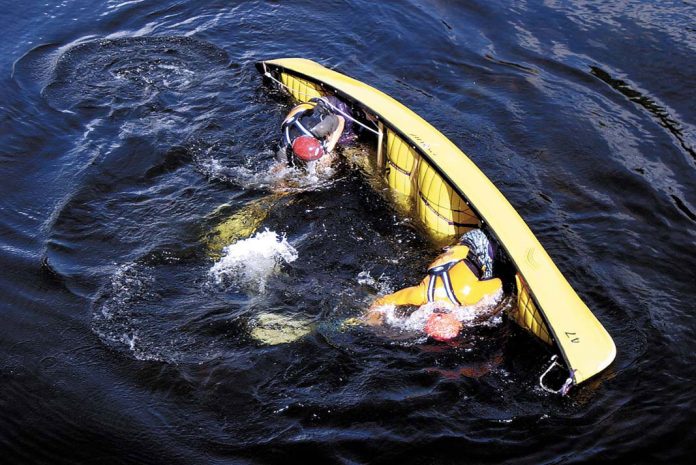
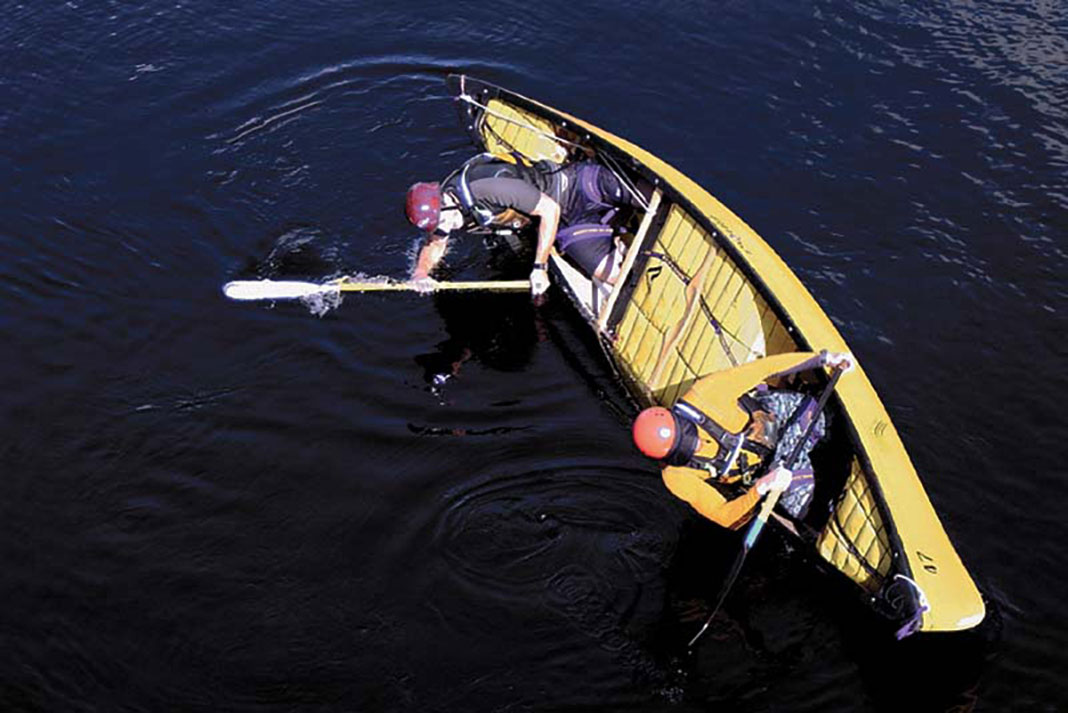
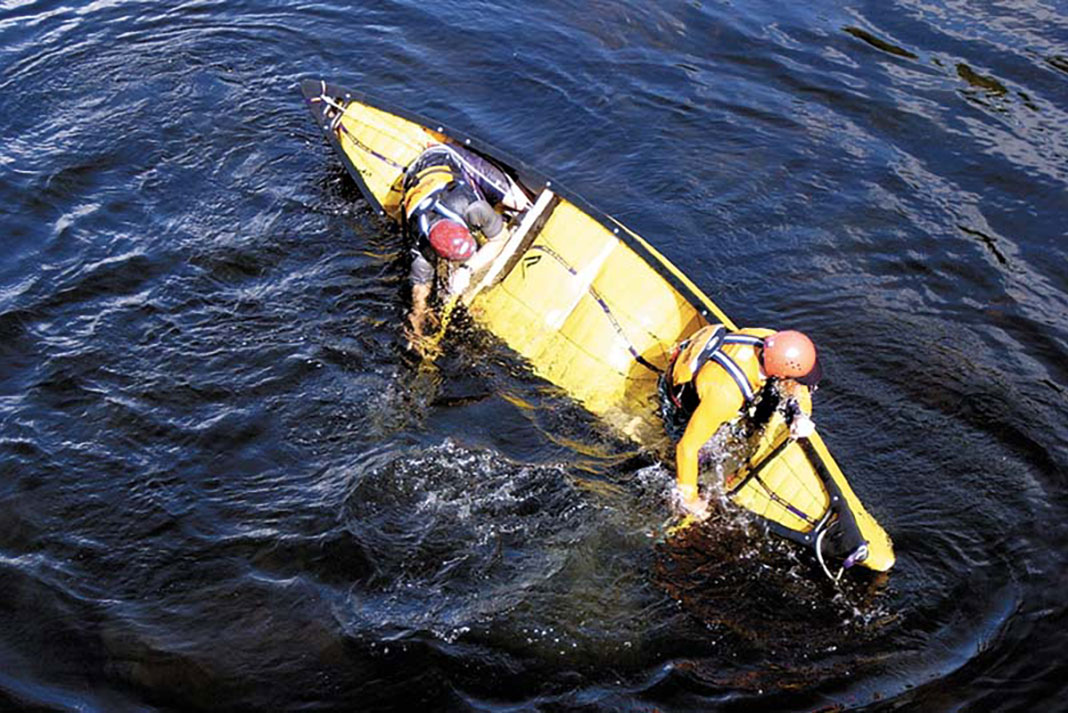
For a fully outfitted tandem canoe with end and center air bags, rolling is the most efficient form of self-rescue and an invaluable skill in big water. The roll requires the correct technique, proper outfitting and that magical synergy of communication and cooperation to ensure smooth timing and success.
VIEW ALL TANDEM CANOES
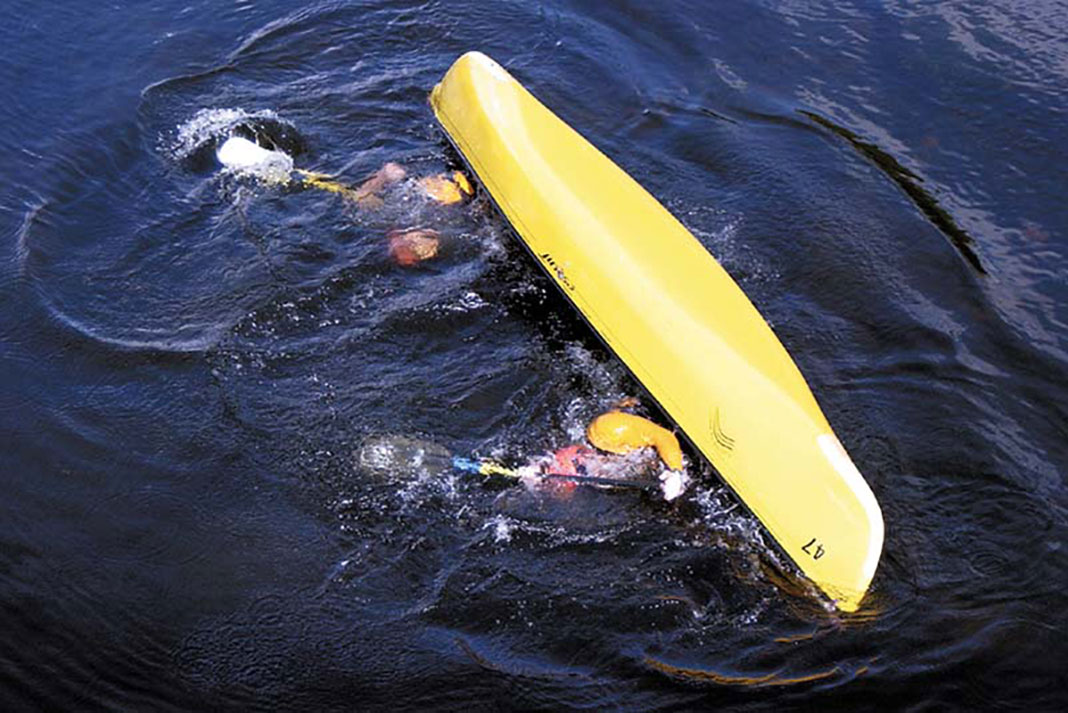
5 Steps to Perform the Tandem Canoe Roll
1Flip the Boat
Ensure your tandem boat is properly outfitted with center and end air bags as well as thigh straps. A tight fit allows the boat to become an extension of your body.
Start the roll with both paddlers set up in the low-brace position on the same side of the boat. | Photo: Rob Faubert
When practicing the tandem canoe roll, it will be easier to start the roll with both paddlers set up in the low-brace position on the same side of the boat. Flip toward your now-shared paddling side. Relax and look around when you get underwater.
[ Paddling Buyer’s Guide: See the North Water Airbag Tie Down Kit ]
2Position Your Paddle and Roll
Swing your paddles and torsos out until they are perpendicular to the boat and rotate your shoulders so they are at—and parallel to—the surface, facing down. You will have to have worked out your timing so you are rolling at the same time. In one popular method, the stronger roller counts to five while setting up and then initiates the roll.
Swing your paddles and torsos out until they are perpendicular to the boat, then roll in unison. | Photo: Rob Faubert
Meanwhile the weaker roller switches hands on his paddle if he has not already done so, sets up on the rolling side and then waits for the stronger paddler to initiate the roll.
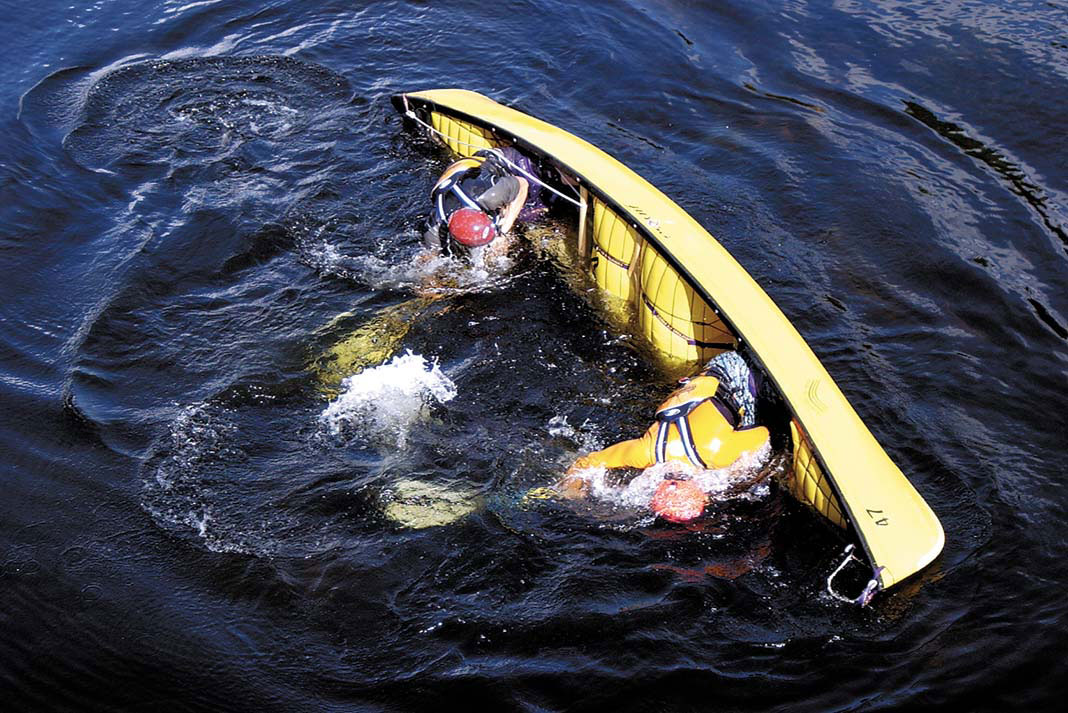
3Get on Edge
With your bodies and paddle blades as close to the surface as possible, and with very little pressure on your paddles, push away with your legs on the non-paddling side and pull up with the opposite knees, rolling the boat on edge.
Roll the boat on edge with your bodies and paddle blades as close to the surface as possible. | Photo: Rob Faubert
Think about your lower bodies rolling the canoe and then your arms and paddles getting you both into the boat in the next step.
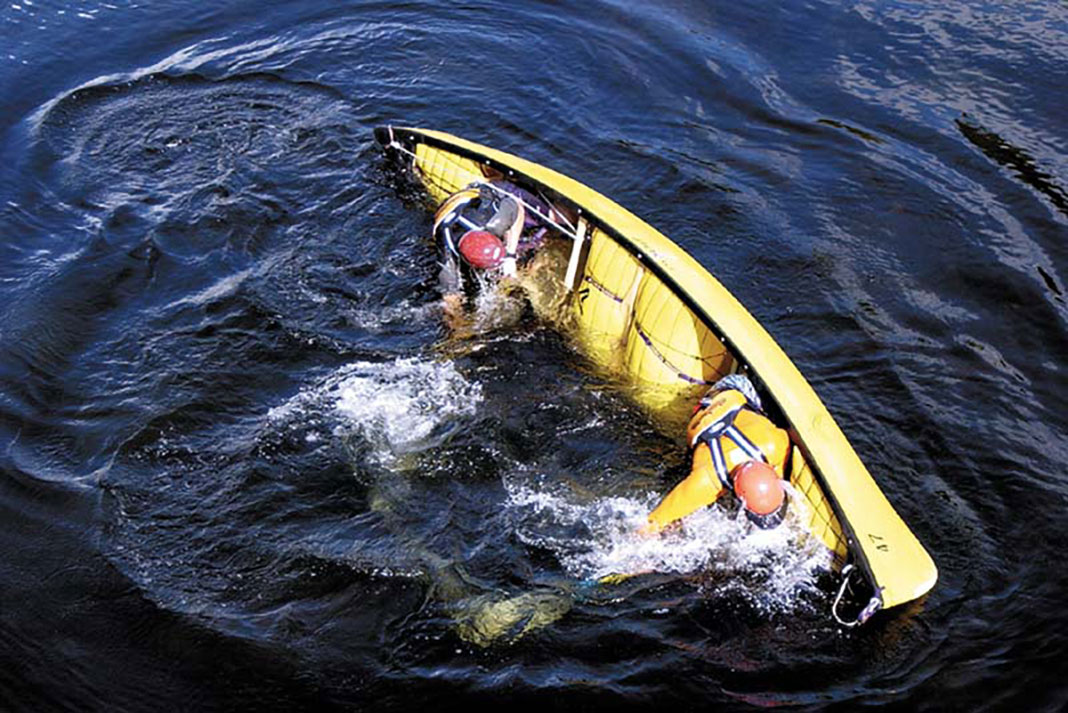
Now that you have the boat up on edge, it’s time to get into it. You will find yourselves in the low-brace position, bodies and paddle blades at the surface, faces in the water looking straight down.
Finish the roll by bringing both bodies smoothly into the boat at the same time. | Photo: Rob Faubert
It is important for both paddlers to finish the roll by bringing their bodies into the boat at the same time. Be smooth and don’t rush it. Tandem canoes don’t snap upright.
5 Regain Stability
Finish the roll by keeping your heads low as you bring them across the boat to center the weight. Don’t sit up until your heads have reached the far gunwale and the canoe is level. Then one paddler starts paddling to build momentum and gain stability while the other quickly switches back to his paddling side.
Finish the roll by keeping your heads low as you bring them across the boat to center the weight. | Photo: Rob Faubert
It is possible to do a tandem roll even if one paddler cannot roll on his own. Tandem rolling is a great way to teach the feel of rolling to someone just learning.
Although tandem boats haven’t changed all that much in recent years, attitudes about rolling have—more solo paddlers are rolling than ever before. Tandem canoes aren’t harder to roll, they’re just slower. The principals for rolling a tandem are the same: Get the boat up; then get in it.
Most confident solo rollers can actually roll a tandem canoe. So let’s put that person in the stern and focus on the bow paddler.
Really strong rollers can get a small bow person to tuck and just wait to be rolled up—a strategy used by many husband and wife teams. Effective maybe, but this isn’t the teamwork that makes tandem paddling so much fun.
Here are two ways the bow paddler can help get himself back in the boat. Both work, I’d argue one is just more contemporary.
The bow paddler switches hands underwater. Count, “One steamboat, two steamboat, three steamboat,” then the duo rolls up together on the same side. I don’t like this for two reasons: You risk losing your paddle switching hands underwater, and when you roll up your paddle is on the wrong side. Besides, I’m a canoeist and only have one good side—I can’t paddle, let alone roll on my left.
New Tandem Canoe Roll Technique
Let’s let the strong stern paddler roll the boat up. Meanwhile, the bow paddler sets up for an offside high brace roll or an offside low brace roll. What? Yup, these feel as awkward as they sound. I figured out the motion on my living room floor with a broom for a paddle. Both are quick to set up and offer enough momentary resistance to get your torso back in the boat. With an offside brace roll you don’t waste time changing paddle hands, plus you roll up in an aggressive cross forward position ready to paddle your swamped pig to the nearest eddy.
This article originally appeared in Rapid, Spring 2012 and also appeared in Paddling Magazine Issue 65. Subscribe to Paddling Magazine’s print and digital editions here, or download the Paddling Magazine app and browse the digital archives here.
The tandem canoe roll is an open boater’s most efficient self-rescue, if you know the secret. | Feature photo: Rob Faubert
The 10-foot Sun Dolphin Bali 10 SS is a beginner-friendly kayak designed for recreational paddling on calm lakes and rivers. This lightweight, compact and easy-to-transport kayak features an open, sit-on-top cockpit, making it a breeze to climb on board and enjoy time on the water.
This Sun Dolphin Bali 10 SS review highlights this kayak’s simple yet practical design and budget-friendly price. Be sure to check out the Bali 10 SS if you’re looking for a general-purpose kayak for family paddling at the cottage or the beach.
Recreational sit-on-top kayaks are noted for their solid stability and maneuverability, and the Sun Dolphin Bali 10 SS is no exception. The 29.5” width makes the Bali 10 SS feel secure on the water, even for beginners—yet remains narrow enough for most paddlers to be able to comfortably reach the water with their paddle blades.
The Sun Dolphin Bali 10 SS won’t win any races, but the upshot to its short length is easy handling and maneuverability. The kayak has a maximum capacity of 250 pounds and enough legroom for paddlers taller than six feet tall.
Market and demographics
The Sun Dolphin Bali 10 SS kayak is a great choice for those looking for a kayak to use at the cottage or the beach. It includes a nice array of comfort features and comes at a budget-friendly price. The kayak is meant for use on calm, sheltered water, including inland lakes and quiet rivers. It has an open, sit-on-top cockpit, which makes it easy to climb on board and perfect for paddling in warm climates. The Bali 10 SS has just enough space for you to bring your canine companion along for the ride, just bear in mind the boat’s maximum capacity of 250 pounds.
Finally, fishing is another popular application for the Sun Dolphin Bali 10 SS, especially for those looking to try kayak angling without investing in a pricier design. The Bali 10 SS would make a fine fishing kayak for an angler with the do-it-yourself skills to make upgrades or a paddler who wants to only dabble a bit of fishing on occasion. Dedicated anglers who want a ready-made boat are advised to look at the Sun Dolphin Journey 10 SS fishing kayak instead.
Comfort
For the price, the Sun Dolphin Bali 10 SS kayak offers a great deal of comfort. It features adjustable footrests like many higher-end sit-on-top and touring kayaks, which provide a secure platform for efficient paddling. The seat is large enough to fit a range of variously sized paddlers and includes a large, supportive backband to keep them sitting upright.
On the other hand, a discount-priced kayak like the Sun Dolphin Bali 10 SS lacks the refinement of more expensive kayaks; for example, it lacks a padded seat cushion and there’s limited adjustability in the back support.
About the Sun Dolphin Bali 10 SS
Design
Design features and details
The Sun Dolphin Bali 10 SS kayak features a flat bottom and hard edges, making it extremely stable on the water. A pronounced keel line makes for steady tracking so that the kayak will travel easily in a straight line, even in moderate winds. The V-shaped keel narrows into a slender entry point at the bow to cut through waves.
A sharp rail separates the deck from the hull of the kayak and provides a bit of protection from moderate chop, but with an open, sit-on-top deck you should be prepared to take on some spray. Like other sit-on-top kayaks, the Sun Dolphin Bali 10 SS kayak is self-bailing via scupper holes to quickly drain away any water that comes over the deck.
Material and construction
The Sun Dolphin Bali 10 SS kayak is manufactured and assembled in the United States from high-density polyethylene. This plastic resists UV damage and is ultra durable, promising years of worry-free use. It’s impressive that Sun Dolphin has managed to produce such a tough kayak at a reasonable weight of 44 pounds.
Sun Dolphin Bali 10 SS accessories and outfitting
The Sun Dolphin Bali 10 SS kayak comes equipped with a solid array of standard outfitting features for its budget price. The basic, molded-in, Sun Dolphin Bali 10 SS seat has drain holes to keep the sitting area dry, and a standard back band offers ample lumbar support.
The plastic footrests adjust to length quickly and easily with levers on the backsides. This is an especially nice touch for a discount-priced sit-on-top kayak; most competitors feature molded footrests which offer far less comfort and adjustability. Other convenient aspects of the Sun Dolphin Bali 10 SS kayak include a paddle holder and thigh pads. A unique Portable Access Carrier fits in the stern storage well or can be towed behind the kayak, providing dry storage for gear. Look for a Bali 10 SS at big box retailers.
Dress For Immersion, Not Air Temperature
Your body loses heat much faster when immersed in cold water than it does when dry.
Avoid cotton clothing like t-shirts and jeans; they retain water and accelerate cooling when wet. Synthetic fabrics, or wool, are generally a better choice. If the water is very cold (60° fahrenheit or less), you should wear a wetsuit or drysuit.
Sun Dolphin Bali 10 SS mods
One of the best modifications you can make to improve paddling comfort is a Sun Dolphin Bali 10 SS seat upgrade. Many users have identified the kayak’s hard molded seat as a weaker point in the design. Upgrading is easy, simply by inserting a stadium-style folding seat for additional cushioning. Other DIY modifications include outriggers for more stability (especially if you wish to use your Sun Dolphin Bali 10 SS for dogs).
Kayak anglers have conceived many upgrades for fishing in the Sun Dolphin Bali 10 SS, ranging from simple mods like rod holders and fish finder platforms to more elaborate systems for organizing tackle. The similar Sun Dolphin Journey 10 SS comes standard with many fishing-specific features.
How it compares
The Bali 10 SS is the shortest of three Sun Dolphin Bali models, a range that includes a 13.5-foot tandem. The Bali lineup represents Sun Dolphin’s most advanced sit-on-top kayaks for recreational kayaking.
Sun Dolphin Journey 10 SS vs Bali 10
The Sun Dolphin Journey 10 SS is the kayak-fishing specific version of the Bali 10 SS. It comes with two flush-mounted rod holders and one swivel rod holder, recessed tackle holders, as well as a camouflage hull pattern. Paddling performance, capacity and stability are identical to the Bali 10 SS. If you’re a competent DIYer you could likely make the same upgrades to a standard Bali 10 SS.
Where to buy Sun Dolphin Bali 10 SS
Using search terms like Sun Dolphin Bali 10 SS Walmart and Sun Dolphin Bali 10 SS Academy will turn up a few good places to purchase your new kayak. Special package deals include a Sun Dolphin Bali 10 SS with paddle—just be sure to purchase a Coast Guard approved PFD (life jacket) as well.
Wear A Life Jacket
Everyone, even strong swimmers, needs to wear a life jacket at all times when on the water. It is extremely difficult to put a life jacket on once you fall into the water. Even a light wind can blow any paddlecraft away from you, faster than you can swim.
Always wear a USCG-approved Level 70 or Type III life jacket designed for paddling.
In Canada you can find the similar Sun Dolphin Journey 10 SS at Canadian Tire. The Bali 10 SS is a wildly popular recreational sit-on-top kayak; you may have good luck finding a used one on Craigslist, Kijiji or Facebook Marketplace.
Pros and cons
Pros
Good recreational kayak for a bargain price
Handles like other sit-on-top kayaks and works well in calm water
Cons
Seat is not as comfortable as those available in higher-end recreational kayaks
Costco has a good reputation as a place to buy everything, including kayaks. The kayaks sold at Costco are all meant for beginners and include open deck, sit-on-top models that are safe and easy to enter and exit, as well as fishing kayaks with features specific for anglers. Costco also sells inflatable kayaks that are perfect for those who want to experience recreational kayaking but lack storage space.
The makes and models of Costco kayaks vary based on your location, with different offerings in Canada and the United States. In general, if you want to buy a kayak at Costco you’ll find less variety than at sporting good stores and other large box stores, such as Walmart. Costco kayaks are cheaper than those found in dedicated paddling stores and are usually meant for beginner conditions only: flatwater with minimal exposure to wind and waves. If you’re planning to buy a kayak at Costco it’s important that you recognize this limitation.
Check The Weather
Plan for changing weather conditions. Prepare for the worst case.
Don’t forget to check tide, currents, or river levels.
Like other inexpensive kayaks, Costco kayaks are a tradeoff between a great price and paddling performance and comfort. Don’t expect to get a refined paddling experience in terms of the kayak’s paddling speed, maneuverability, handling and safety features, as well as comfort elements like seating, from kayaks sold at Costco. At the same time, don’t expect any expertise in Costco sales associates when it comes to answering questions and providing guidance on a kayak purchase.
If you want to invest in paddling, shop somewhere else. But if you’re looking for a casual-use kayak that is easy on the wallet, Costco is a great choice. Our review of Costco kayaks will provide you with the essential knowledge to find the best kayak for your paddling needs.
Depending on your location, you’ll find a limited selection of kayaks sold at Costco—especially compared to the offerings at other box store retailers, such as Walmart. On the plus side, this makes your decision far easier. You’ll be less overwhelmed by choices of recreational kayaks—all of which generally do the same thing.
The general categories of kayaks sold at Costco include inflatable kayaks (which deflate to allow storage in small spaces); tandem kayaks to enjoy with your partner, child or friend; and fishing kayaks, which include angler-specific features like rod holders and tackle storage areas.
Shopping for a used Costco kayak?
Are you searching websites like Craigslist, Kijiji and Facebook Marketplace for a pre-owned kayak? You may come across a used kayak sold at Costco. Your first step in making a good investment is to research the specific attributes of the make and model Costco kayak you’re considering. If it looks like you’ve found a contender, consider the following advice to make a good purchase:
Overall condition
Examine the overall condition of the Costco kayak, taking note of fading due to excessive sun exposure. Apply firm pressure to all parts of the kayak to test for stiffness (it shouldn’t feel spongy). Examine the deck (top) and hull (bottom) of the kayak for damage including deep gouges (more than 3 mm or 1/8th of an inch deep); obvious abrasion (especially if the worn areas are a different color from the rest of the kayak); and deformities (which will make the kayak paddle less efficiently). Costco kayaks are made of durable plastic that’s meant to withstand plenty of abuse; some damage is fine, so long as the shape of the kayak remains intact.
For inflatable kayaks sold at Costco take a close look at the condition of the valves to make sure they function as they should and hold air. Examine the fabric skin of the kayak for any worn spots, feeling and listening for air leaks.
Outfitting
Consider the kayak’s outfitting, including comfort features like the seat—is it padded and supportive for your body type? Outfitting is the critical interface between the paddler and kayak. It includes the seat, back support, thigh rests and foot rests. Examine each of these parts individually—do they function as designed, are they jammed with grit or sand? Then consider how well the outfitting works together as a whole. The easiest way to achieve this is by sitting in the boat (and ideally paddling it) to make sure it feels comfortable. A good fit is not only more comfortable, it also enables you to paddle more efficiently.
Outfitting often comes down to personal preference; there’s no one-size-fits-all. One of the drawbacks of cheaper, mass-produced Costco kayaks is substandard outfitting. Take a close look and consider investing in a more expensive kayak if you plan on more serious paddling. If you’re handy, outfitting is easily modified with some glue, foam and DIY time; consider any upgrades you could make to save a few bucks and get a custom fit.
On the water
The only way to fully appreciate the comfort and performance of a kayak is to try it before committing to a purchase. Arrange a meeting place with the seller that allows you to take a few moments on the water. Bring your usual paddle and dress in what you plan to wear while paddling. With a sit-inside kayak be sure to assess how easy the boat is to enter and exit.
Carry A Waterproof VHF Radio, Use Your Phone Only As A Backup
A handheld VHF marine band radio allows you to communicate with the Coast Guard and other boat traffic. Use Channel 16 only for hailing and emergencies. The radio should be waterproof, because it is virtually certain to get wet.
A cell phone, even if in a waterproof case or sealable bag, might not work, so don’t rely on it as the primary means of emergency communication.
Make a deal
In general (that is, before Covid-19 put a premium on outdoor equipment) the typical starting point for a used Costco kayak in moderate condition was about half its retail price. All that’s changed in the wake of boat shortages brought on by the pandemic, but you can use it as a starting point in haggling a fair price.
Add some accessories
Specialized accessories are key elements of fishing kayaks; if you want to do some kayak angling make sure you examine features like rod holders and live wells.
If you’re offered a PFD with your used kayak purchase, make sure it’s in good shape, fits properly and is Coast Guard-approved for the location you’ll be paddling.
For more tips on what to look for when selecting a used kayak, read our article on How To Buy A Used Kayak.
Costco kayak buying guide
The best advice we can offer to any prospective kayak buyers is to try before you buy. Unfortunately, this advice is difficult to apply if you’re shopping for a Costco kayak, since these massive stores are typically located in urban areas, far from the water. Instead, ask your friends if they have any Costco kayaks you could take for a spin. Not only will this give you a sense of what’s available, on-the-water experience will allow you to appreciate how different kayak design elements fit your body and perform.
The important thing to remember when you buy a kayak at Costco is that you’re not going to find any high-end, performance kayaks at this store—and that may be perfectly in line with your recreational paddling and kayak fishing needs. Costco kayaks can make a lot of sense for occasional paddlers looking for an economical choice. However, box store sales associates at places like Costco will never offer the same expertise as the informed professionals at a dedicated paddlesports retailer.
If you’re serious about paddling and want to develop your skills, you will be better off avoiding Costco in favor of a smaller paddling or outdoor shop, and making a more substantial investment in a specialized day touring or sea kayak. Still have questions? Here are expert answers to some of the most common questions about Costco kayaks.
Are Costco kayaks any good?
Costco kayaks are good for entry level paddlers who want a cheap kayak for occasional use in calm, sheltered water conditions. Like any cheap kayak, Costco kayaks are limited in their performance and can be hazardous to use in open water conditions on large lakes or exposed coastlines.
However, Costco kayaks are great if you’re looking for a new toy for the cottage or you want to try paddling with your family at the beach. Costco offers a limited selection of kayaks, most with similar paddling, handling and comfort characteristics, which makes your choice a bit less overwhelming than at some other box stores.
Kayak prices Costco
If you’re in the market for a recreational kayak, you’re probably wondering how much are kayaks at Costco. In the U.S. Costco stores sell a variety of kayaks—including inflatable kayaks, fishing kayaks and sit-on-top hybrid SUP kayaks, for single and tandem use—ranging in price from $219.99 to $579.99. Costco stores in Canada have a more limited selection of kayaks, with prices ranging from $259.99 to $759.99.
When do kayaks go on sale at Costco?
Costco brands itself as a wholesaler, meaning that its products rarely go on sale. Don’t expect to find kayaks on sale at Costco; however, you may get lucky and find overstock kayaks at discounted prices, especially as paddling season winds down in late summer and early autumn and Costco warehouses start replacing kayaks with other seasonal items. Our suggestion is don’t wait for a sale; buy a Costco kayak when it’s available and get paddling as soon as you can.
Wear A Life Jacket
Everyone, even strong swimmers, needs to wear a life jacket at all times when on the water. It is extremely difficult to put a life jacket on once you fall into the water. Even a light wind can blow any paddlecraft away from you, faster than you can swim.
Always wear a USCG-approved Level 70 or Type III life jacket designed for paddling.
Costco kayak reviews
Unable to find a Costco kayak you can paddle before you venture to the store to make your purchase? Your next best bet is to read reviews of these kayaks to figure out which one suits your planned paddling pursuits. You’ll find our expert reviews below.
The size of a kayak plays a huge role in determining its performance characteristics, and whether it’s the right kayak for you. If you’re wondering, “What size kayak do I need?”, you’re definitely on the right track in finding the perfect boat. Kayak shapes and sizes come in many varieties; the two main variables are length (which determines the overall speed of a kayak, longer is faster) and width (which determines the stability of a kayak, wider is more stable).
Analyzing kayaks from the perspective of these simple values is the goal in choosing the right size kayak for your body type and paddling aspirations. This kayak size guide article provides all you need to know for how to buy the right size kayak.
Many first-time paddlers wonder, Do kayaks come in different sizes? And if so, how do I know what size kayak I need? Kayak shapes and sizes are the best way to distinguish between individual boats—and broader categories of kayak styles based on the type of paddling you wish to do. Here is a kayak size guide for the boats most commonly purchased by beginner and novice paddlers.
Recreational kayaks are distinguished by short and wide dimensions, which meet the needs of beginner and casual paddlers in sheltered water conditions. The average kayak size in this popular category of kayaks is 10 feet long by 28 inches wide. These specifications contribute to the stable feel and easy handling of a recreational kayak; while these boats won’t win any races, they’re meant to be maneuverable for beginners with minimal paddling skills.
The smallest kayak size in the recreational kayak category is about six feet; several manufacturers offer cheap sit-on-top models at this length which are meant for children under 12 years of age.
Day touring kayaks
Day touring kayaks are somewhat longer and narrower than recreational kayaks, with an average kayak size of 12 to 14 feet long and 24 to 28 inches wide. If you’re looking for a boat that’s faster and glides more efficiently through the water, as well as feeling somewhat sportier and less like a bathtub, a day touring kayak might be the right size of kayak for you.
Not only do these dimensions create a more efficient boat to paddle, they’re more responsive and better for paddlers who want to develop their skills and progress to more challenging water conditions, or use their kayak for day trips and overnighters.
Touring kayaks, also known as sea kayaks, are best described as long and narrow—the nearest match to the original Inuit kayaks of the Arctic. The average size of a sea kayak is 16 to 17 feet long and 22 to 24 inches wide. Sea kayaks are extremely fast and efficient compared to recreational and day touring kayaks. However, they’re also tippier and require some paddling skills to handle safely.
If you’re a smaller person consider the smallest kayak size in this category, which would be about 15 feet by 22 or 23 inches wide, for most efficient paddling. As their name implies, touring kayaks are meant for multi-day trips in more exposed water conditions, including use on the ocean. Investing in a touring kayak should also mean taking certified training to learn efficient paddling and rescue techniques.
Kayak length
Before you ask the question “What length kayak do I need?” you should consider your goals in paddling. Kayak length is directly proportional to speed and handling: A long kayak will be faster and travel straighter than a short kayak; that’s the first thing to remember in choosing kayak length. So, if you’re a novice kayaker wishing to paddle short distances, a short kayak will be easier to handle. But if you want to progress your skills and travel long distances, a longer kayak will be better for you.
Paddling location also matters: smaller bodies of water, especially twisty rivers, demand shorter, more maneuverable kayaks. On the other hand, you will paddle more efficiently over longer shorelines in a longer kayak. A kayak length guide wouldn’t be complete without considering the size of the paddler. Obviously, taller paddlers should choose a longer boat, regardless of the type of kayak, for comfort. Meanwhile, shorter paddlers should choose below-average kayak length to improve fit and comfort in the boat as well as making it easier to handle.
Kayak width
Just like length, the average width of a kayak varies depending on the style of kayak. The width of a kayak is also a good measure of its stability: in general, the wider the kayak, the more stable it will be. So if you’re a first-time kayaker, you will benefit from a wider kayak. However, as your skills progress you may find a wide kayak is cumbersome and less efficient to paddle.
Extremely wide kayaks are actually harder to paddle because it’s more difficult to reach the water with your paddle blades. So choose kayak width carefully, with a mind for your goals in paddling. A wide, stable kayak may be all you need if your aspiration is to paddle casually around the cottage or sheltered bay. However, a narrow kayak will feel sportier as your skills progress if you wish to take the sport more seriously.
Kayak weight limit
The common question, “How much weight can a kayak hold?” is relevant in many ways. To take a step backwards, the weight limit of a kayak is determined by its volume. The larger the volume in the kayak, the greater the weight capacity. Width is a critical dimension in determining weight capacity. Typical weight limits range from 250 to 350 pounds for most average sized kayaks in all categories. While the upper weight limit is obviously important for larger paddlers, it’s also relevant to smaller people.
If you’re small, consider buying a kayak with a lower weight limit; less volume means the kayak will be more efficient to paddle and feel more comfortable for you on the water. Similarly, it’s important to think about whether or not you plan to carry gear for a day trip or overnight trip when considering the weight limit of a kayak.
Kayak weight
Kayak weight is important for two reasons: a heavy kayak feels less nimble on the water and is slower to accelerate and harder to keep moving at a steady pace; and a heavy kayak is harder to lift and carry. The second point is especially relevant to paddlers who want to car-top their kayak or anyone who faces a longer distance from where the kayak is stored to the launch site. The task of lugging a heavy kayak could be an annoyance or an injury waiting to happen.
Like any outdoor equipment, everything else being equal a light kayak costs far more than a heavy one. The average weight of a kayak ranges from 30 to 70 pounds, depending on the style and construction. Recreational kayaks are commonly made of tough—and heavy—rotomolded plastic; this style of kayak frequently has an average weight of 50 to 60 pounds (a light recreational kayak would fall in the 40-pound range).
Similarly, a plastic sea kayak will weigh slightly more, say 60 to 70 pounds for the average length. If you want to get the lightest boat possible consider composite (fiberglass or Kevlar) construction; a day touring kayak of this style would have an average weight of 35 to 40 pounds, whereas a longer composite sea kayak tips the scales between 40 and 50 pounds.
Composite recreational kayaks are harder to find, but one lightweight option is Oru Kayak, which manufactures folding (think origami) kayaks in lengths of 10, 12 and 16 feet from ultralight corrugated plastic.
What size kayak for my height?
Though the vast majority of kayaks will fit a wide range of users, if you’re particularly small (say, below 5’2”) or really tall (above 6’3”) you must be careful in choosing the right kayak size for your height. Obviously, a tall person requires more space in a kayak for their legs and feet. Since a tall person also (likely) has long arms, they will have more control with the paddle and find it easier to use a wider kayak than someone with a shorter torso and arms.
Similarly, a shorter person will benefit from a shorter kayak—something that’s scaled more appropriately to their body dimensions. Higher performance sea kayaks often come in several sizes per model; consider a “low volume” version if you are short.
What size kayak do I need for my weight?
Adding weight to the calculation of kayak size further confounds selection, especially if you’re short but heavy or tall and light. This is where volume (and weight capacity) comes into play. Choose a kayak that fits your body and has a maximum weight capacity that reflects slightly more than your typical payload.
Kayak deck sizes
Kayak deck sizes range from open-deck sit-on-top to partially decked recreational kayaks to fully enclosed sea kayaks. Decks provide shelter from the environment (waves, spray, precipitation and hot sun) but can make a kayak more difficult to enter and exit. Often, your style of paddling will determine the best type of deck to choose. Are you looking for casual paddles in warm water on sunny days? An open-deck sit-on-top kayak is probably best for you. This style of recreational kayak is also preferred for fishing since it gives an angler easy access to their tackle and gear.
A partially decked recreational kayak offers some protection but remains easy to enter and exit. Meanwhile, sea kayaks feature full decks and smaller cockpit openings, which offer the best protection from waves and wind but require some skill to enter and exit. Since this style of kayak is meant for paddling open water, a deck is a critical safety feature in exposed conditions.
Kayak cockpit size guide
Kayak cockpit size varies based on the type of kayak. If you’re wondering how to measure kayak cockpit size, the basic rule considers length and width. A small cockpit would measure about 24 inches long and 18 inches wide (typical of an old-school sea kayak). Nowadays, most modern sea kayaks have more ergonomic, keyhole-shaped cockpits measuring about 30 inches long by 18 to 20 inches wide. Meanwhile, a very large cockpit—the norm on most recreational kayaks—measures 50 or so inches long by 22 to 23 inches wide.
Kayak cockpit size influences two things: how easy it is to enter and exit the kayak; and how much water can come into the boat from waves and spray. Of course, a larger cockpit will be easier to enter and exit; such a feature may be necessary for those who are larger or less flexible.
But on the other hand, that large cockpit will also allow more spray to enter the kayak—or it will require a larger sprayskirt to seal. (A sprayskirt is a nylon or neoprene “apron” that forms a connection between the paddler and the kayak cockpit and keeps waves and spray out of the boat). The smaller the sprayskirt necessary, the better the seal between paddler and kayak.
Every new paddler asks the same question, “What size kayak should I get?” Beginners will feel most comfortable in wider kayaks, which are more stable, with widths of about 26 to 32 inches in recreational kayaks or 24 to 26 inches in day touring kayaks.
A shorter length (say 10 feet for a recreational kayak or 13 to 14 feet for a day touring kayak) will be the easiest to handle for those with limited paddling skills. However, if you plan to develop your skills beyond the beginner level you may want a narrower kayak and to make a more significant investment in a day touring kayak.
Best size kayak for a 6 ft person
A person of average height, say 5’8” to six feet, will find they fit properly in most average sized kayaks. It’s hard to pinpoint an exact kayak size for this size of person. The typical average length kayaks—8 to 12 feet for a recreational kayak or 12 to 14 feet for a day touring kayak—will work well for a 6-foot-tall person.
The decision ultimately comes down to personal preference so try out as many options as you can—in the conditions you’re mostly likely to be paddling in—to find what’s right for you.
Wondering how to choose a kayak size for fishing? The best size of fishing kayak is often determined by the environment in which you wish to fish. For example, big water locations, where waves are more likely, require a larger kayak. Shallow water or twisty-turny rivers demand a shorter, more maneuverable kayak.
Choose something in between, say 9 to 10 feet in length with a 28-inch width, if you’re looking for a general purpose fishing kayak.
Best size kayak for rivers
Maneuverability is often the main characteristic of a good kayak for rivers, so choose a model with length in mind. Shorter is better when it comes to easy handling and maneuverability. Specialized whitewater kayaks, for example, often measure seven feet or less in length. For a more general-purpose recreational kayak look for something in the eight- to 10-foot range for rivers.
Best size kayak for lakes
Because lakes vary in size, from small inland bodies of water to the massive Great Lakes, it’s hard to narrow down a specific “best size kayak for lakes.” However, a good rule of thumb is the smaller the body of water, the smaller the kayak. Or, more appropriately, recreational kayaks are best for small, sheltered lakes; and longer sea kayaks are best for large, exposed bodies of water, such as the Great Lakes.
With appropriate training, day touring kayaks are a versatile option for lakes both small and large, provided they’re used in modest conditions with light winds and small waves.
What size kayak for ocean
By definition, a sea kayak is most appropriate for the ocean. These kayaks range from 15 to 18 feet in length and are defined by advanced safety features, such as watertight bulkheads and smaller cockpits to shelter the paddler from adverse weather conditions and wind and waves.
However, a smaller, beginner-friendly recreational kayak may also be suitable for the ocean—provided that the location is sheltered from wind and waves and offers easy access to safe landing sites.
What size kayak for child
A six-foot kid’s kayak is a great option for introducing your child to kayaking. However, as your child grows they will require something larger. Often, smaller adult-sized recreational kayaks are perfect for larger children and youth. Consider your child’s weight and choose a kayak according to its weight capacity.
For example, popular six-foot kid’s kayaks have an upper weight limit of just over 100 pounds. If your child is larger (or you want something that your kid can grow into), consider a recreational kayak with modest dimensions, such as 8 feet long and 26 inches wide.
Kayak length for kids is tricky because it all depends on the size of the child. Several kayak manufacturers produce cheap, six-foot-long kids kayaks that work great for children under 5 feet tall and less than 100 pounds in weight.
What size kayak for 11-year-old kid
If your 11-year-old is taller than 5’4”, they may be able to handle a smaller adult kayak. However, if they’re smaller and lighter they may still prefer the easy handling of a six-foot-long youth kayak.
Learn how to surf kayak and you can really catch a wave. | Feature photo: Image Ontario
Being able to kayak surf can change even the simplest of rivers into a new playground, even one that you may have run many times before. Front surfing is something that most paddlers can do quite quickly, thanks in large part to great boat designs. In particular, short boat lengths and considerable rocker let you surf on any part of all but the steepest waves without having to worry about your upstream end pearling. But the design characteristics of your boat will only get you so far. Then you need to develop sound surfing skills that allow you take advantage of the steeper and trickier waves.
VIEW ALL SURF KAYAKS
Learn the basics of surf kayaking
First of all, most of your surf time should be spent on the face of a wave—where you can move about and set up other play moves. On mellow waves, you can often surf on the face without any effort whatsoever. In these cases, all you need to do is maintain control of your boat with rudders. On steeper, or breaking waves, you need to get more aggressive with your surfing in order to stay on the face. This involves carving back and forth from one ferry angle to the next. The steeper the wave is, the more aggressively you have to carve.
When it comes to learning how to kayak surf, the first step is learning the terminology. From there we’ll move onto the skills you’ll need to work on.
When it comes to surf kayaking, the first step is learning the terminology. | Illustration: Paul Mason
Anatomy of the surf zone
Shoulder
The edges of a breaking wave will often stay green and glassy longer than the top-heavy middle section, making longer, smoother rides possible.
Spilling surf
The safest place to learn to surf is off of a gently sloping beach where the swells release their energy gradually.
Dumping surf
Swells break explosively at the edge of a sharp drop-off like a shoal or a steep beach, or at a river mouth. Dumping surf offers the potential for tube rides, but it’s also the most challenging.
Soup
A quiet field of foamy water forms at the end of the surf zone.
Rip current
Wave energy can reflect off of the beach and create a strong offshore current, which can be used to your advantage when launching but creates a hazard for swimmers. To escape a rip current, swim perpendicular to the current to reach waves that will wash you ashore.
First and foremost, you need to keep your weight centred as much as possible when you’re surfing. Sitting upright puts you in the most stable position and affords you the most control over your boat. This doesn’t mean you can’t lean back if you need to. Feel free to be active with your forward and backward leans. Just return to a centred body position as quickly as possible.
Paddle position
Your paddle should be acting as a rudder at all possible times, because it’s the steering wheel for your kayak. You’ll use it to hold your ferry angle as you carve across the face of the wave and then you’ll pry with it to cut back and ferry in the other direction.
The ideal rudder gets planted with your paddle parallel to your kayak, and with your elbows down and your front hand held between shoulder and eye level. Keeping this front hand high buries your active blade deeply in the water. Having your paddle parallel to the kayak ensures that your rudder is not acting as a brake pulling you off the wave. Your upper body should also be rotated to face your paddle when it’s in this position, because it gives your rudder the most power and helps keep your shoulders safe.
Your boat will be in one of two positions when front surfing. It will either face directly upstream, or it will be on a ferry angle to one side or the other. When pointed to 12 o’clock, your kayak will want to shoot down into the trough of a wave, so unless you’re on a fairly flat wave, you’re going to want to be alternating from one ferry angle to the other.
Learn how to surf kayak and you can really catch a wave. | Feature photo: Image Ontario
Essential surf zone skills
1 Paddling out
You don’t have the option of duck-diving in a kayak, so choose your exit route carefully. Scout the beach beforehand, looking for deep-water channels where breaking waves are less common. If you must punch through a breaking wave, paddle like hell, knife your paddle through the wave and reach for the green water on the other side. Keep your deck free of gear.
2 Catching a wave
Position yourself beyond the line of breakers. Faster boats such as sea kayaks can catch non-breaking swells offshore or on the shoulder of the surf zone—far less intimidating places to start out. Look over your shoulder as you paddle with the waves. When you see a wave you want to catch, sit upright and paddle forward aggressively with powerful, rapid-fire strokes as the wave lifts your stern. If your timing is right, your kayak will accelerate as it slides down the face of the wave. If you don’t quite have the speed, you might find yourself perched on the crest. Throw your weight forward and be prepared for a thrilling ride.
As you rocket down the wave’s face, lean back slightly and perform a stern rudder with your paddle to slow down and wait for the crest of the wave to catch up. Shorter, more rockered sea kayaks and surf kayaks can carve turns on the face of a wave just like board surfers. Steer with your hips and your paddle: Edge your boat into the wave while performing a stern rudder on the down-wave (opposite) side.
Shorter, more rockered sea kayaks and surf kayaks can carve turns on the face of a wave just like board surfers. When it comes to edging your kayak, most paddlers’ instincts tell them they should tilt their boats into each turn when they plant their rudders. On flatter, smooth waves this works quite well, and you can carve some great turns like this, just like board surfers. However, on steeper waves that are breaking, it is more important to keep your kayak tilted downstream to prevent your upstream edge from getting caught. In these cases you’ll hold a downstream tilt on your boat as you pry your bow around from one ferry angle to the next. As your boat passes 12 o’clock, you’ll need to tilt your boat onto its other edge and switch the side on which you’re ruddering.
4 Broaching and side-surfing
Broaching occurs when your kayak’s bow digs into the trough and gets the stern pushed broadside by the wave’s breaking crest. The longer the kayak, the more prone it is to broaching. If you catch it early, it’s possible to avoid a broach by leaning back to unbury the bow and aggressively edging and ruddering with your paddle blade tocarve back on course. Failing that, lean hard into the wave, tuck your elbows in close to your ribcage and side-surf with your paddle braced into the foam pile, using a low brace or high brace depending on wave height.
5 Spins
To spin out of a broach, tilt into the wave and turn your brace into a forward sweep. Don’t expect to spin more than 90 degrees in a sea kayak, just enough to regain your front surf; you may need to coax your boat into the spin by leaning back to free the bow. Flat-hulled whitewater and surf kayaks spin more easily—even on the green face of a wave. Alternate between forward and reverse sweeps, remembering to shift your weight from edge to edge, keeping the boat tilted into the wave.
Big, steep waves can toss sea kayaks end over end. To perform a loop, sit perpendicular on the crest of a wave and throw your weight forward, burying the bow in the trough. If the wave is big enough, your stern will be thrown skyward, leaving you standing on the foot pegs, well above the whitewater. From here, it’s possible to pirouette by planting a sweep stroke in the wave crest; otherwise, get ready for a high-speed crash landing. Hold your breath, wait for the wave to pass, and roll up.
This article originally appeared in Paddling Magazine Issue 65. Subscribe to Paddling Magazine’s print and digital editions here, or download the Paddling Magazine app and browse the digital archives here.
Learn how to surf kayak and you can really catch a wave. | Feature photo: Image Ontario
The Old Town Canoe Company began building wood-canvas canoes in 1898, making Old Town one of America’s original canoe and kayak manufacturers. Their factory in Old Town, Maine, has shipped tens of thousands of boats out of its doors. Today, you’ll find Old Town paddle craft across the country.
Old Town introduced its first kayaks in 1995 and continues to make a range of durable and affordable rotomolded polyethylene kayaks, with both sit-on-top and sit-inside styles available. In 2004, Old Town was acquired by Johnson Outdoors, which also owns Ocean Kayak (along with other popular outdoor brands like Eureka and JetBoil).
New paddlers appreciate the ease and comfort of Old Town’s 10- and 12-foot recreational kayaks. These shorter boats are stable and easy to handle, ideal for casual outings on calm waters. Avid paddlers planning longer tours can also choose from sleeker 13- and 14-foot kayaks made for light touring, and one tandem sea kayak, the Looksha.
Old Town kayak’s angler-specific sit-on-top and sit-inside models have all the features to make kayak fishing fun and accessible, and their pedal-drive option frees your hands for even more fishing action.
All Old Town kayaks are made from high-density polyethylene (HDPE), keeping costs, maintenance and the likelihood of damage low. Many models are offered in a variety of dimensions to suit paddlers of all different sizes. If you are looking for a reasonably-priced kayak for recreation, light touring or fishing, Old Town has a match for you.
This article will help you decide on the best Old Town kayak for your needs. Here, we’ll give an overview of the types of Old Town kayaks available, as well as some tips for buying new and used. Along the way, you’ll find links to specific models with detailed information and user reviews. Read on to learn more.
Recently, the most challenging part of shopping for a kayak is often finding one. Supply chain issues and increased demand for recreation equipment have emptied shop floors of new models. If you choose to buy a used Old Town kayak, you’ll save some money that can go towards purchasing quality paddling equipment like a comfortable PFD and lightweight paddle.
Once you do find a promising-looking boat, you’ll want to give the kayak a thorough once-over (and ideally a test paddle) before committing to buying it.
Where can you find used boats?
If you’re looking for a used Old Town kayak, Craigslist, Kijiji or other online classifieds are good starting points. You’ll need to be diligent as boats often sell a few days after they’re posted. Cast a broad net when you search, as sellers may not name the specific model. Set up an email alert for the keywords “Old Town Kayak” or even just “Plastic Kayak” to ensure you don’t miss any postings.
If any outfitters near you use Old Town kayaks in their rental fleet, they may periodically sell off older boats to upgrade. Politely inquire about this, and see if you can arrange to buy one at the end of the season. Renting the kayak is an excellent way to test its comfort, fit and performance before you commit to buying it.
What should you look for?
Old Town kayaks are made with single- or triple-layer polyethylene. This resilient material can withstand repeated scrapes and bumps. You may see scratches on the hull (bottom) of the kayak, but as long as they don’t penetrate the hull, these are just superficial. One of the benefits of high-density polyethylene is that you can make minor repairs by welding new material to it. You can buy polyethylene repair kits from Old Town for touch-ups.
Photo: Courtesy Old Town Canoes & Kayaks
The most common damage to polyethylene kayaks happens from improper storage. Plastic kayaks warp over time if they are stored in a way that doesn’t support their weight equally. This can occur if they are stored upright on the ground or hanging from their handles. If a kayak is left exposed to direct sunlight for long periods, UV rays from the sun can soften the plastic further.
Improper transport can also damage kayaks. In particular, using ratchet straps tempts the kayak owner to overtighten the straps—listening for their satisfying click, click, clicking—until the plastic hull has bent. Commonly called “oil-canning,” significant dents in a hull will result in reduced efficiency and performance. Check the hull for substantial deformities that are likely caused by this.
Older models
Old Town has been building kayaks for nearly 30 years, and some of the boats you find on the used market may have been discontinued. Don’t shy away from these “legacy” kayaks just because they are no longer made. Models are often discontinued to reflect changes in overall demand or market trends. It doesn’t mean that the kayak in question is not a good one.
Johnson Outdoors, Old Town’s parent company, also acquired Necky Kayaks. When the Necky brand was discontinued, their popular Looksha model continued production under the Old Town name. If you find a used Necky Looksha for sale, many parts are compatible with today’s Old Town kayaks.
The main disadvantage to older models is they may have less refined outfitting (seats, seat backs, thigh braces and foot pegs) than the latest models. If you’re handy, you can replace old, uncomfortable or damaged outfitting with new replacement parts from Old Town. You can also shape and glue closed-cell foam to enhance the padding and comfort of an old kayak. You can source the necessary equipment and supplies for other repairs like resealing bulkheads or replacing bungees at a hardware store.
Old Town’s current range focuses mainly on recreational kayaks and fishing kayaks shorter than 12 feet, with a few longer light touring models also available. Models in the Old Town lineup encompass recreational kayaks, fishing kayaks, day touring and touring kayaks. Kayaks in each of these categories have different dimensions and designs to excel in specific environments. To find the best fit for your needs, match these categories to the type of paddling you do most of the time.
Recreational kayaks
Recreational kayaks make up the majority of Old Town kayaks. They are designed for stability and maneuverability, making them ideal for beginners or casual paddlers. Most Old Town recreational kayaks are “sit-in” style, where the deck covers the paddler’s legs. The wide cockpits are easy to enter and exit, but are somewhat more confining than a sit-on-top style.
Recreational kayaks are 12.5 feet or less; their shorter length allows them to turn easily without the need for a rudder (foot-controlled steering aid). With wide, flat bottoms, these boats are very stable in calm waters. They are perfect for exploring sheltered waterways like cottage lakes and slow-moving rivers. Unlike the cheaper recreational kayaks you’ll find at discount box stores, many Old Town rec boats feature a rear bulkhead for added safety.
Bulkheads are sealed compartments at the ends of the kayak (a rear bulkhead only is common in shorter kayaks), which prevent the kayak from sinking if the cockpit fills with water. Without bulkheads, it’s inadvisable to kayak in cold waters or further from shore than you can swim.
Old Town makes six different recreational kayaks models, which are available in various lengths to suit different-sized paddlers. The Heron and Vapor models are the least expensive; they appear quite similar with one important difference—the Herons have a rear bulkhead while the Vapors do not. The ‘XT’ versions of these kayaks also have a back hatch. Choose these kayaks if you only intend to paddle casually and want a boat at a low price. They are made from single-layer polyethylene, which is durable but less so than other models.
Three-layer polyethylene is used on the premium Dirigo and Loon models. This three-layer material is more resilient to abrasions and sun damage. It costs a bit more and is a few pounds heavier, but will last longer. These kayaks also have cushier seats and more adjustable outfitting. The innovative Loon even includes a removable cockpit workdeck, supplying space for cameras, gear, water and dry storage, with a USB port to keep your gadgets charged.
Old Town’s crossover Sorrento model mimics a touring kayak with a drop-down skeg. This is essentially a retractable keel that helps the kayak keep on a straight course.
If you’re looking to partner up, check out the two-person Twin Heron or Dirigo Tandem Plus. A tandem is a 2-for-1 deal, but you will always need two paddlers to control the boat. This is a great option for couples or parents of children who want to kayak but aren’t big enough to paddle their own boat yet. For youths ready to captain their own vessel, the Heron Junior is a scaled-down rec kayak for pint-sized paddlers.
If you prefer the unrestricted open deck of a sit-on-top kayak, check out the simple and affordable Twister, or look at Old Town’s extensive line of sit-on-top fishing kayaks (see below). These are basically souped-up recreational kayaks with fishing-specific features.
Deciding which length of recreational kayak to choose should be dictated by your paddling goals rather than your budget. Shorter kayaks cost less as there isn’t as much material used, but the length affects performance. If you compare the same kayak model in two different sizes, the longer kayak will be faster. It will also have a higher weight capacity. If you’re buying a kayak to paddle with friends, see what lengths their boats are. You’ll want to choose one that’s a similar size so you aren’t falling behind on the water.
Photos: Courtesy Old Town Canoes & Kayaks
Fishing kayaks
Old Town’s fishing kayaks are a mix of sit-inside and sit-on-top style kayaks. The sit-in kayaks are “Angler” versions of their recreational Vapor and Loon models. Like the rec boats, the Vapor Angler is single-layer polyethylene, and the Loon Angler is three-layer. Fishing-specific features include molded-in rod holders and an anchor trolley system, which allows the user to adjust the anchor length when it is deployed.
Old Town offers a wider selection of sit-on-top style fishing kayaks. The wide, pontoon hull design of these boats gives them lots of stability and a higher weight capacity for bringing along extra gear. The different sit-on-top models available are the Topwater, Predator and Sportsman, but there are many different options to choose from beyond the model.
Entry-level Topwater and Sportsman models are nearly identical, with minimal outfitting to keep the prices low. They still feature the basics needed to enjoy a day of fishing, like rod holders, frame seats and enough stability to stand and cast.
The award-winning Old Town Sportsman series of kayaks are the most diverse, mainly because of the different drive options. Anglers can opt for paddle, pedal propulsion or motor power. Pedal propulsion with Old Town’s PDL system uses a cycling motion connected to a prop under the hull.
The PDL drive allows you to move forwards and backward by pedaling, freeing your hands to fish or take photos. The Sportsman 106 Powered by Minn Kota has a standard electric 12V trolling motor. The high-end Sportsman AutoPilot uses Bluetooth to control the motor and has a “Spot-Lock” feature which keeps the boat set in a specific position, accounting for current and drift.
Old Town makes 10.5-, 12- and 13-foot fishing kayaks. Aside from the higher price of a longer kayak, also think about the area you’ll be fishing. The 13-foot kayaks are more suited to open water, as they move more efficiently and can handle swells easily. Shorter 10.5-foot kayaks perform well in sheltered waters where maneuverability is a priority. Finally, 12-foot kayaks are a compromise between the two.
Touring kayaks
The Old Town Castine and Looksha series touring kayaks have sealed bow and stern bulkheads. These watertight compartments prevent the kayak from sinking if the cockpit fills with water in a capsize. This essential safety feature makes these kayaks suitable for exploring coastal and offshore waters. Paired with deck hatches, bulkheads also function as dry storage compartments for gear. If you want to take overnight or multi-day trips, this style is the type of kayak you need.
The Castine is made in three different sizes, 135 (13’ 5”), 140 (14’) and 145 (14’5”). The design is the same across each kayak. Larger paddlers will have more leg space and a roomier cockpit in the longer boats. That isn’t to say that these are small-medium-large sizes. With the optional rudder, petite paddlers will still find it easy to control the longer kayak. The added volume increases storage capacity, and these kayaks are suitable for short one- or two-night trips. Read an in-depth review of the Castine 140.
For longer expedition-style paddling, the Looksha 17 is the best option from Old Town. This is a reiteration of a classic kayak produced by the now discontinued Necky brand. The Looksha is stable for a sea kayak and has a high volume to store ample camping gear and food. The rotomolded polyethylene construction is strong enough to handle rough landings on cobble beaches. If you’re looking to take that long trip with a trusted partner, consider the tandem Looksha T, another legacy Necky design reborn under the Old Town label.
Still wondering if Old Town kayaks are right for you? Here are answers to some of the most common online questions about Old Town kayaks.
Are Old Town kayaks good?
Old Town kayaks are good quality kayaks at reasonable prices. Old Town recreational kayaks are stable, durable and affordable; while their pedal-drive and motorized fishing kayaks use cutting-edge technology to navigate waterways.
All Old Town kayaks are made with single- or triple-layer polyethylene. This material is very durable and inexpensive. If lightweight kayaks are a priority, you may want to look at companies that build their kayaks with thermoformed plastics or composites like fiberglass and Kevlar.
Old Town kayak models
Old Town has a range of different kayak models for recreational paddling, fishing and touring. Within these categories, there are various models, which come in at different price points. See “Buying Advice” for a breakdown of each category.
Most stable Old Town kayak
The most stable Old Town kayaks are fishing models like the Sportsman and Topwater. These sit-on-tops feature pontoon-hull designs, making them steady enough to stand up on. Another good metric for determining stability is to look at the weight capacity of each kayak; generally those with higher capacities are more stable.
Old Town kayak weight limit
Weight limit varies by model. Check the manufacturer’s specifications to determine a specific Old Town kayak weight capacity. The usable weight capacity accounts for the weight that can be added after all the options are included.
This mainly applies to fishing kayaks that have heavy add-ons like pedal-drive systems or electric motors. The usable weight capacity includes paddler(s), gear, dogs, or anything else that you might want to carry.
How much does an Old Town kayak weigh?
Old Town kayaks’ weight depends on their length and outfitting. All Old Town kayaks are made with polyethylene. Some are single-layer, while others have a heavier duty triple-layer build. The advantage of triple-layer polyethylene is that it’s more durable and resistant to wear.
Among other polyethylene kayaks, Old Town boats are of average weight. Expect them to be anywhere from 50 to 90 pounds. Fishing kayaks with pedal drives or electric motors weigh over 90 pounds when fully outfitted.
Old Town kayak material
Old Town kayaks use high-density polyethylene (HDPE) to make their kayaks. This plastic is shaped using rotational molding (rotomolding), where plastic pellets are poured into a mold that is heated and rotated to evenly distribute the material, producing a durable, inexpensive kayak.
Some Old Town kayaks are made with single-layer polyethylene, while others have a heavier duty triple-layer build. The advantage of triple-layer polyethylene is that it’s more durable and resistant to wear (but marginally heavier).
Why did Old Town stop using Royalex?
Royalex material was discontinued by the producer in 2013. It was the premier material for bombproof whitewater canoes of nearly every brand. Old Town and other canoe builders who used this resilient plastic had to look for (or develop) alternatives materials when Royalex production ceased. Old Town now makes its canoes with three-layer polyethylene.
What plastic are Old Town kayaks made from?
Old Town kayaks are made from high-density polyethylene (HDPE). This is a commonly used plastic for kayaks. HDPE is durable and inexpensive. It can withstand abrasions and impacts quite well as it bends rather than breaks under all but the most extreme conditions.
Some Old Town kayaks are made with single-layer polyethylene, while others have a heavier duty triple-layer build. The advantage of triple-layer polyethylene is that it’s more durable and resistant to wear (but marginally heavier).
Old Town kayak prices
How much does an Old Town kayak cost? It depends on the model and outfitting. Old Town kayaks range from under $600 for their basic recreational models to over $4,000 for their motorized angler kayaks.
Old Town kayak warranty
A limited lifetime warranty covers Old Town kayak hulls. The pedal (PDL) drive systems are covered under a limited five-year warranty. You’ll need to keep your proof of purchase to qualify for the warranty.
Old Town kayak dealers
Old Town kayaks are distributed through online retailers or traditional brick-and-mortar paddle shops. If there’s a shop near you that sells Old Town kayaks, but they don’t have the one you want, you may be able to order it through them.
Another resource if you’re wondering who sells Old Town kayaks is the dealer locator on the brand’s website.
Where are Old Town kayaks made?
Old Town kayaks are made in a facility beside the Penobscot River in Old Town, Maine.
Is Ocean Kayak made by Old Town?
Ocean Kayak and Old Town are part of the Johnson Outdoors brand family. Kayaks for both of these brands are made in the same Old Town, Maine, factory.
Compare Old Town kayaks
Old Town kayak vs Hobie
Hobie recreational and fishing kayaks are all sit-on-top models available exclusively with their Mirage pedal-drive system. Old Town makes both sit-inside and sit-on-top kayaks, with a variety of paddle-propelled recreational and touring kayaks. If you are looking for an inexpensive starter kayak, or a sit-inside and/or non-pedal-driven kayak, Old Town is a great brand to choose.
If you are keen on a pedal drive kayak, both brands offer solid choices. Old Town pedal kayaks focus on kayak fishing, while Hobie also has options for recreational paddling and even sailing. Some Old Town pedal fishing kayaks also feature advanced electric motor options.
On the other hand, Old Town presently does not make inflatables, and if storage space is tight, look at Hobie’s inflatable iTrek line.
Old Town vs Jackson Kayak
Both Old Town and Jackson make beginner-friendly recreational kayaks and tricked-out fishing kayaks at comparable prices. Like Old Town, some Jackson fishing kayaks have pedal drives or the option to use an electric motor. Jackson’s FlexDrive pedal system has a convenient feature where the propeller retracts on impact with underwater obstacles. This protects the FlexDrive and gives some peace of mind when exploring shallow waters.
Also like Old Town, Jackson’s recreational line has some basic sit-on-top kayaks that you can purchase for under $900. Additionally, Jackson’s whitewater-specific kayaks are some of the best on the market. If you’re shopping for a fishing kayak, choose Old Town for a great selection of high-end flatwater fishing rigs; look at Jackson’s line for more challenging open-water conditions.
The choice between each company’s sit-inside recreational kayaks comes down to personal preference or availability. If you need a whitewater kayak, Jackson is the de facto choice.
Old Town vs Wilderness Systems kayak
Wilderness Systems is another popular U.S.-based brand that is comparable to Old Town. Like Old Town, they also offer recreational, fishing and touring kayaks made of polyethylene. Wilderness Systems sit-inside kayaks are slightly more expensive, starting at around $1,000 USD. Their recreational kayaks have stern hatches and bulkheads and roomy cockpits like Old Town’s rec boats.
The Wilderness Systems Pungo is an immensely popular recreational kayak, loved for its stability and comfort. Also like Old Town, some Wilderness Systems fishing kayaks are compatible with pedal and power drives, but the drive systems need to be purchased separately. Old Town’s prepackaged Sportsman kayaks are the better choice if you are an angler looking for a one-stop shop.
Touring kayakers should look at Wilderness Systems for a greater variety of designs, including two full-size sea kayaks, the Tsunami and the sporty Tempest.
Old Town vs Perception kayaks
Perception Kayaks are part of the Confluence Outdoors brand family, along with Wilderness Systems. They make a variety of entry-level recreational kayaks, similar to Old Town’s single-layer polyethylene models. The Perception Drift 9.5 is a good kayak for less than $500.
Perception also makes more sit-on-tops than Old Town, who leave that category to their sister company, Ocean Kayak. Perception’s Conduit and Old Town’s Castine are both good day-touring options for paddlers transitioning from recreational kayaks to longer touring boats.
If you’re looking for a kayak under $1,000, both Old Town and Perception offer reasonable choices. Decide between the two by trying them out, or choosing whichever is available.
Old Town vs Pelican kayaks
Recreational kayak giant Pelican produces kayaks that are found on cottage lakes, campgrounds and waterfronts across North America. They are distributed through large retailers like Costco, Canadian Tire and Walmart. Pelican makes sit-in and sit-on-top kayaks for casual users, as well as fishing kayaks that, like Old Town, can be rigged with pedal and motor power.
Pelican’s stubby, flat-bottomed rec kayaks are extremely stable, and many are priced under $600, cheaper than most Old Town kayaks. If you’re looking for a boat on a budget, these are good options. Most of their mid-range kayaks are lighter than Old Town thanks to Pelican’s proprietary RAM-X polyethylene material. If you only plan to paddle for an hour or two at a time, a Pelican kayak is fine.
For spending more time on the water, especially for longer tours, Old Town kayaks offer more efficient designs and more comfortable outfitting.
Ascend vs Old Town kayak
Ascend is Bass Pro Shops/Cabela’s in-house brand. They offer a small selection of sit-in and sit-on-top recreational fishing kayaks. For more committed anglers, Old Town’s line of fishing kayaks is much more appropriate. Only Old Town offers pedal drive kayaks, favored by anglers because they leave your hands free for casting and catching fish.
Subtle features also make a difference, like Old Town’s anchor trolley system. For a reasonable price, an Ascend can get you casting a line on the water. You won’t get the same degree of thoughtful features or propulsion options, but you will have an inexpensive, durable kayak.
Choose an Old Town if you’re willing to spend more money for a more versatile fishing kayak, or if you have your heart set on a pedal drive kayak.
Photo: Courtesy Old Town Canoes & Kayaks
Old Town kayak reviews
Reviews are helpful tools to understand the kayak beyond the information given by the manufacturer. Our expert reviews will help you decide whether this is a kayak worth considering, or if you should move on to other options. If there are any criticisms of the kayak, consider whether they would be deal-breakers for you or not.