Home Blog Page 151

10 Expert Tips From The Creeker’s Handbook

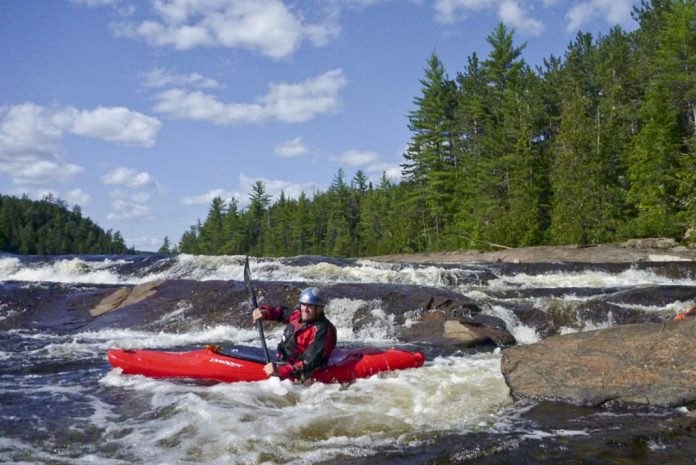
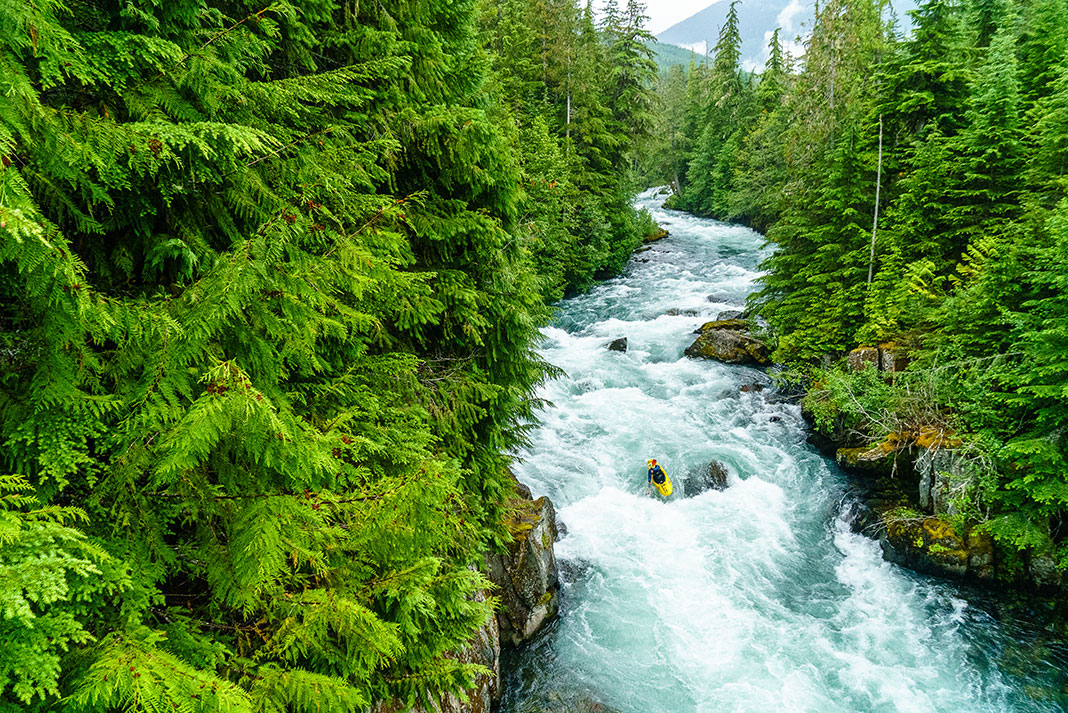
person whitewater kayaking down a raging creek
Creek boating offers a chance to get down and dirty with challenging terrain and water flows. | Feature photo: Wonita or Troy Janzen/Pixabay

Creek boating offers experienced whitewater paddlers a chance to get down and dirty with steep, rocky terrain and lower water flows. The resulting ride can be an awesome adrenaline rush, but creekers must keep a cautious eye and a confident hand right from the put-in. If you’re an aspiring creeker, follow these 10 tips to help ensure a fun ride.
10 expert tips from the Creeker’s Handbook

1 Get aggressive with boil lines

Boil lines form at the base of waterfalls, along eddylines and other places with the right combination of features and currents. Boil lines are constantly changing and, if you are in the wrong place at the wrong time, have the potential to work you hard. The water is aerated and unpredictable, making it difficult to roll and easy to catch an edge and flip. Use aggressive paddle strokes to cross boil lines, and stay relaxed and in the front seat if one takes you for a ride.

[ Paddling Buyer’s Guide: View all creekboats ]

2 Beware undercuts and caves

Water should pillow up against rocks. If it doesn’t, there might be an undercut, cave or boulder sieve. The danger with these features is that the water flows into, beneath or through the rock and takes you inside. Careful river reading, solid boat control and starting your moves early are essential to avoiding these.
a creek with various warning signs along it
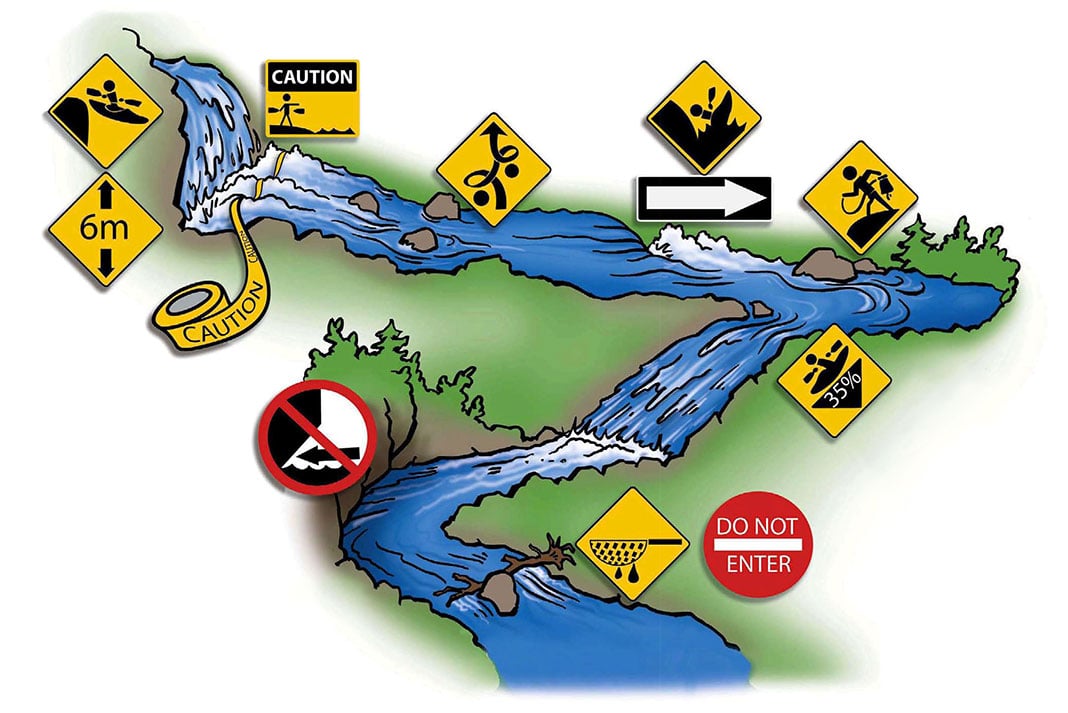
Understand the rules of the river. | Illustration: Paul Mason

3 Watch for wood strainers and sieves

Wood strainers act like rock sieves or noodle colanders, letting water pass through but trapping larger objects like kayaks and their occupants. Clues that indicate wood might be present include brittle banks with overhanging topsoil and many fallen trees in the forest. Wood in the water is not always obvious, so be cautious even if all you see is a branch. The safest way to manage this risk is to run the creek as if there is wood around every blind corner.

4 Size it up for yourself

At the put-in, judge whether the levels are high or low. Ask yourself if there is reason to think something downstream might have changed. Understanding flows and visual gauges and treating each creek like a first descent are fundamental to creeking. The critical element to a successful run is the confidence of individuals at the put-in. Don’t be afraid to walk away if it doesn’t feel right. If you decide to put on, make sure the group has well established signals and a plan to communicate once you’re in the thick of it. Nothing is more unnerving than working down a steep creek with someone frantically waving at you in a game of indecipherable, high-stakes charades.

5 Use care when you go chasing waterfalls

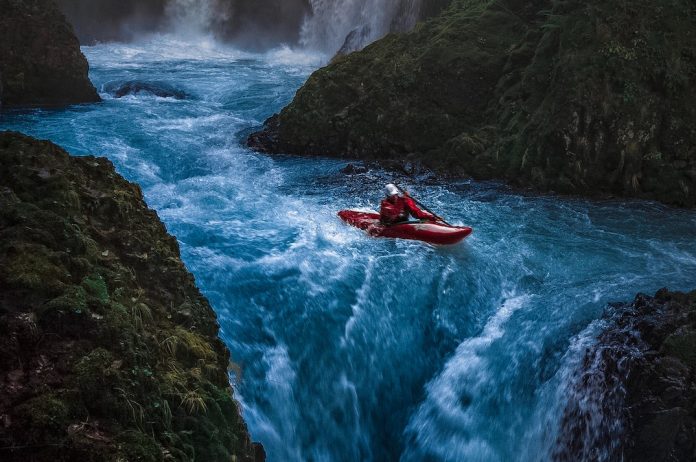
Waterfalls lure many boaters to try creeking. Sticking the line on a burly waterfall is amazing, but there are lots of things to consider in this environment. First, figure out if there is a clean, achievable line. Break the drop down into the approach, the lip, the base of the falls and a safe eddy below. If you can see a line through these four zones, the next steps are organizing safety, determining hazards and, most importantly, figuring out methods for good communication. Before anyone runs a waterfall there should be a clear plan for how everyone will safely reach the eddy below.
6 Practise your boofing

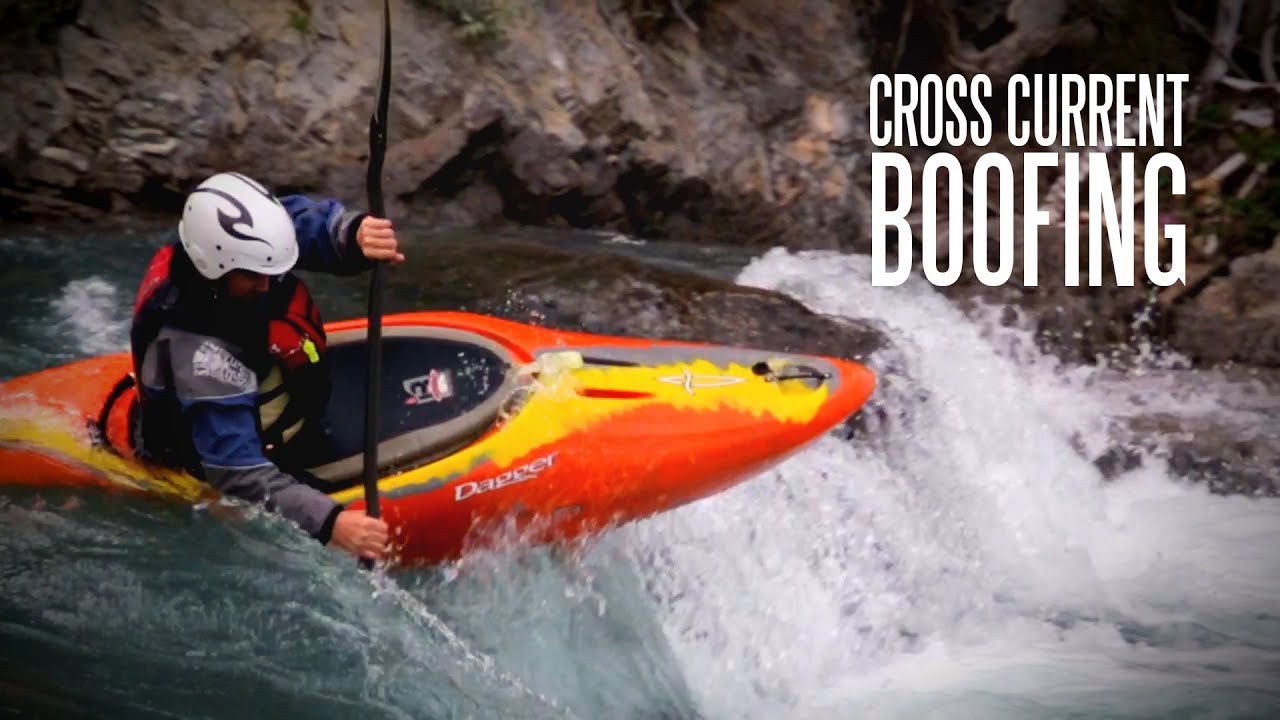
Boofing is as essential to creeking as ollying is to skateboarding. The goal of boofing is to get your boat over something you’d rather avoid, like a nasty hole. Practice on small pourovers with enough water for your boat but not so much that it forms a sticky hole. Square up to the feature, plant a vertical paddle in the water, wait until your bow has passed the edge of the feature and then, with an explosive pull on the blade in the water, lift your knees and shove your shoulders forward simultaneously to make the boat jump forward.

7 Hop from eddy to eddy

Eddies are the brakes of a creek boat and the best way to deal with line-of-sight issues on steep creeks. Creeking safely depends on your ability to break down rapids with lots of stops and to never go downstream of the last eddy. Precision and confidence are very important: Creeking often violates the kayaking rule of thumb that you should always have a back-up eddy below. Sometimes the micro eddy above the lip of a drop is the only out. The secret to becoming an eddy-hopping expert is to treat every eddy on a creek as do or die.

[ Plan your next whitewater kayak adventure with the Paddling Trip Guide ]

8 Hole escapes and avoidance

Playboating skills translate well to dealing with holes on creeks. The main difference is trying to cartwheel or loop an 80-gallon creek boat out of a hole. Creek boats have volume, which means they stick in holes. The other challenge is that holes on creeks may look benign at first glance but are often very retentive. Your best bet is to avoid holes altogether, or else punch them with the clear intention of driving right through. Look for water moving downstream when scouting a line through a hole and integrate the timing and power of your boof stroke to propel your boat through the sticky zone.
9 When in doubt, scout

Never underestimate how important it is to move slowly into a rapid that needs scouting. This limits the risk of being swept downstream and gives you as many options as possible for scouting, portaging or ferrying into a line. Scouting from the outside of a bend offers the farthest view downstream but makes it harder to get to the opposite bank if needed. The first person down probes the run and sends any important feedback up to the group.

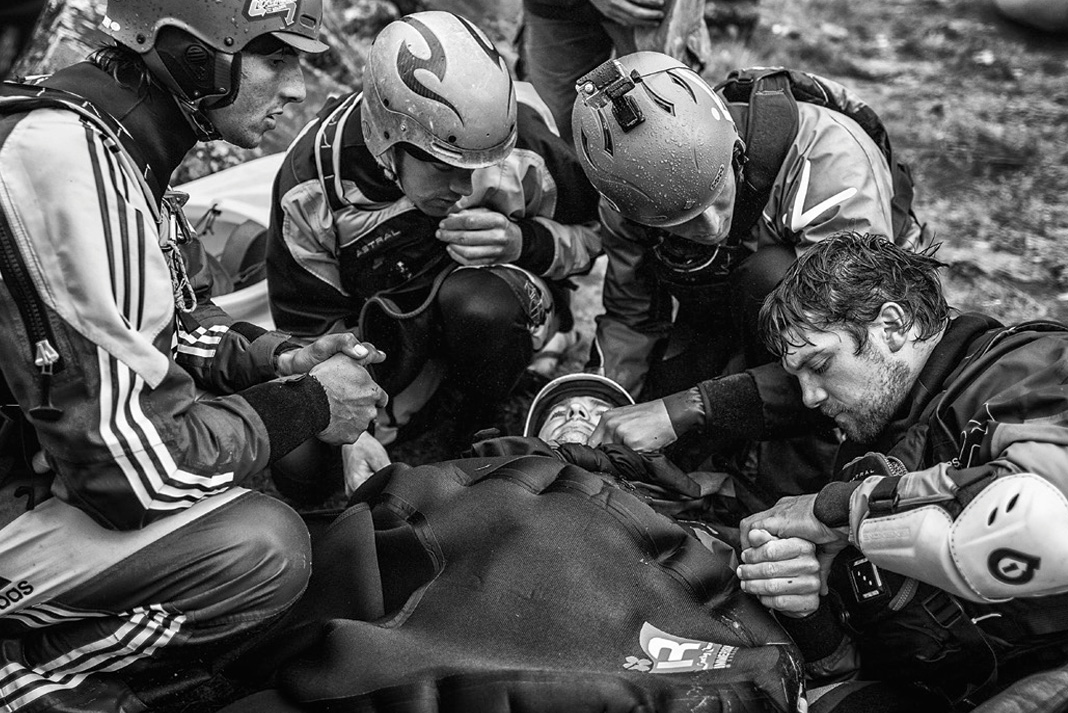
If the rapid is big enough to warrant a scout, then setting safety is usually a good idea as well. How to set safety is hugely situation dependent and should be learned by proper instruction. A couple key principles to keep in mind are that you must have a safe zone downstream that you plan to pendulum the swimmer into, and never commit yourself or the rest of the group to a worse situation in a panicked effort to save a swimmer.
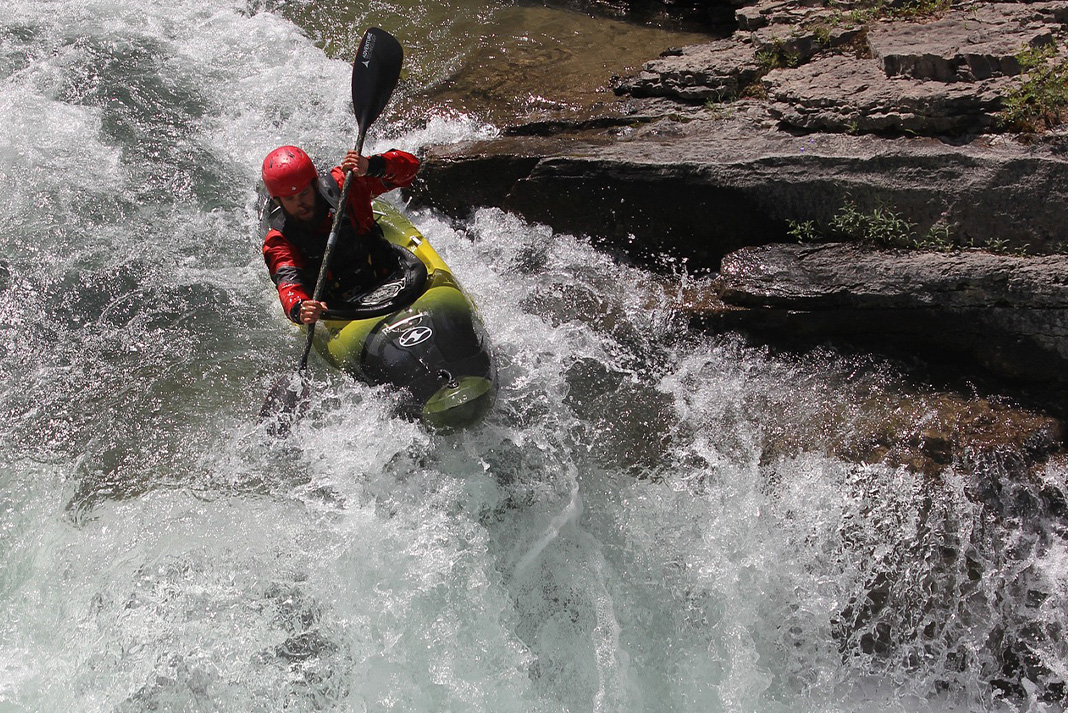
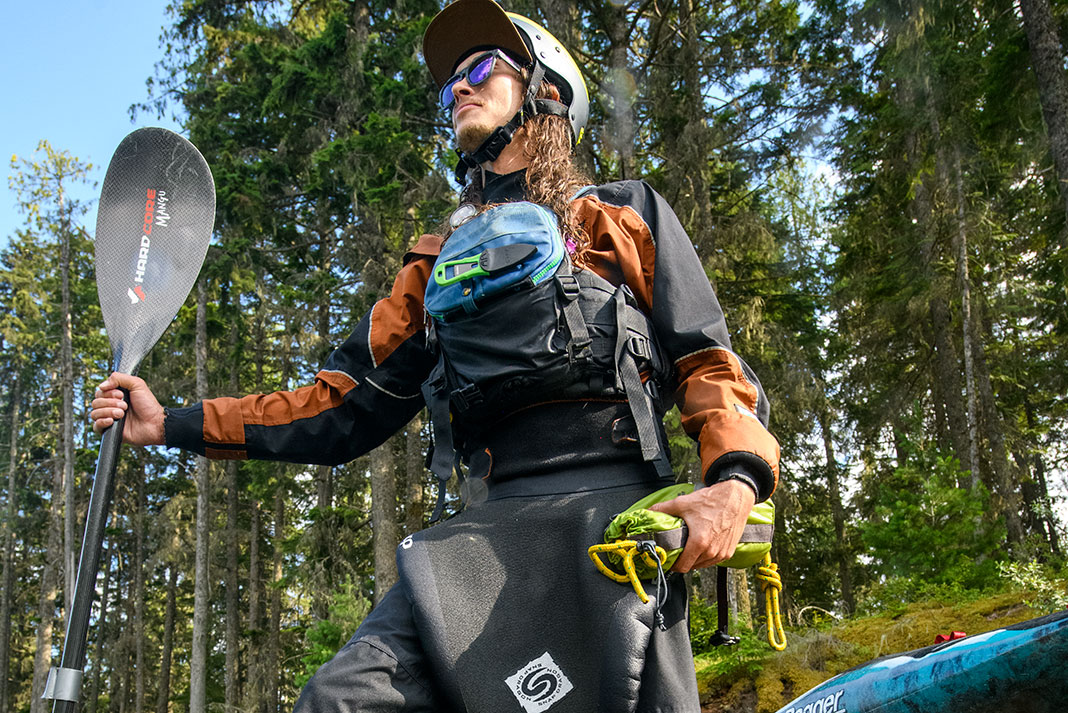
person whitewater kayaking down a raging creek
Creek boating offers a chance to get down and dirty with challenging terrain and water flows. | Feature photo: Wonita or Troy Janzen/Pixabay

10 Take slides in stride

Slides are creek boating’s joy rides. The skill set is similar to that used in running waterfalls—finding a clean line from approach to exit is the recipe for success. Good forward posture and a readiness to brace at any moment will help keep you on line. Like waterfalls, when you can see your landing zone from start to finish, your ability to stay on line and upright greatly improves. Staying upright in this shallow, cheese-grater environment is your foremost goal.
Cover of the Early Summer 2010 issue of Rapid MagazineThis article was first published in the Early Summer 2010 issue of Rapid Magazine. Subscribe to Paddling Magazine’s print and digital editions, or browse the archives.


Creek boating offers a chance to get down and dirty with challenging terrain and water flows. | Feature photo: Wonita or Troy Janzen/Pixabay
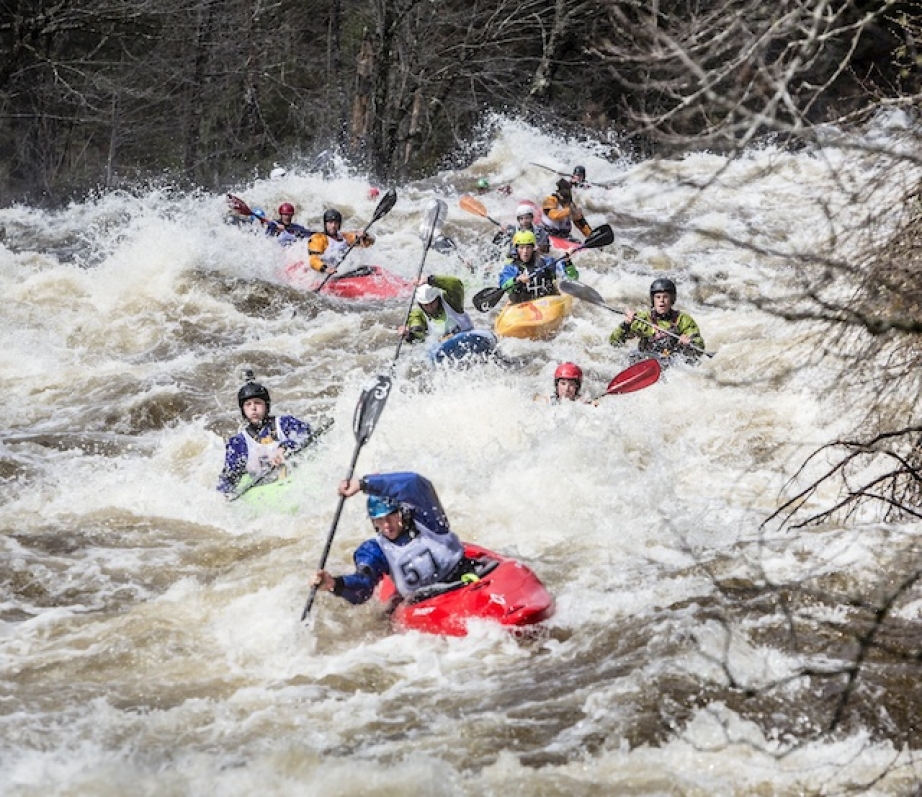
 

Capturing Organized Chaos At The Neilson Race

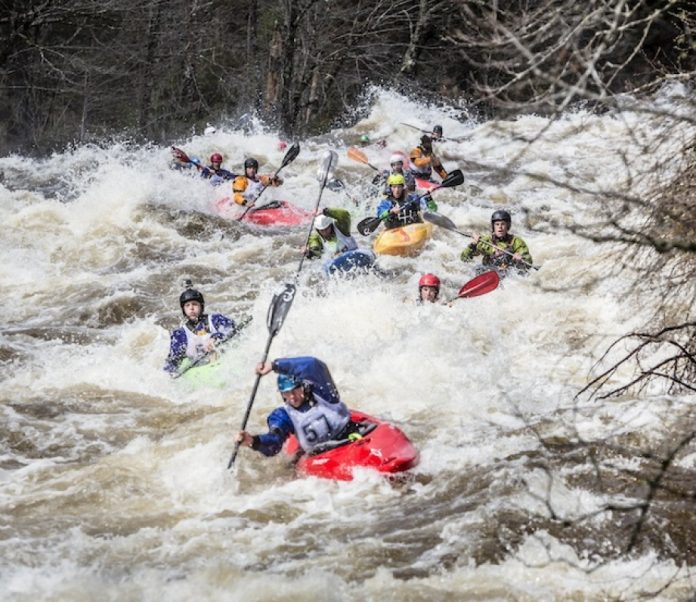
A group of kayak racers compete in the Neilson Race
Feature Photo: Dylan Page

Twenty-four boats charging class IV and V rapids at the same time as quickly as possible is a recipe for disaster—the exact kind of pandemonium most people try to avoid on the river. Not at the Neilson Race. Chaos is the norm for the notorious boater cross events in whitewater’s blossoming race scene.

Running—and photographing—the Neilson Race isn’t easy

In the days before the second annual Neilson Race, organizers faced a predictable dilemma: would the water level cooperate? The makeshift gauge, a painted rock at the takeout, showed lower than ideal conditions.

On race day, the gauge was nowhere to be seen.

Unprecedented rainfall the night before had filled the river to the brim and then some. A nearby town was on flood alert. No one had seen the river so high.

[ Plan your next kayak racing & training adventure with the Paddling Trip Guide ]

The Neilson Race changes course

“There was no way they were going to race down the section that now had holes big enough to send 30-foot long logs into a cartwheel,” says paddling photographer Dylan Page.

A new location was scouted at the last minute and Page, who’d arrived to capture the event, was dealing with a challenge of his own: with the river spilling over its banks and raging through thick forest, where would he position himself to shoot?

Scouting out the perfect spot

“I walked up and down the course and managed to spot one tree that was overhanging the river,” he says. “I threw on my PFD, just in case, and climbed the tree.”

Knowing he’d have a tiny window of time to shoot, he readied his camera and waited for the racers.

A group of whitewater kayak racers paddle through whitewater in Quebec's Neilson Race
Feature Photo: Dylan Page

“When the paddlers came around the corner, everything was in motion,” Page recalls. “Water going in every direction, the tree I was perched in swaying, kayakers going forward, backwards and maybe a couple upside down. Ten seconds later they were gone.”

Neilson Race photo is a winner

The resulting photo captures exactly what Page had set out to do.

“I wanted to show the chaos that is 24 kayakers barreling down a swollen river,” says Page. “I chose to frame everyone in one shot and to exaggerate the proximity of the kayakers by compressing the perspective using a telephoto lens.”

This article was first published in the Early Summer 2015 issue of Rapid Magazine. Subscribe to Paddling Magazine’s print and digital editions, or browse the archives.


10 Things Only Whitewater Kayakers Understand

A whitewater kayaker at the base of a rapid in a red creek boat.
Feature Photo: Jeff Moore/Flickr

Whitewater kayaking is ideally suited to building both muscle and camaraderie, but the sport also comes with its own set of quirks and lessons that drill themselves deeper into our brains with each passing trip. Read on to see if these takeaways from whitewater kayakers might sound familiar to you.

Whitewater kayakers understand…

1. Feeling like someone you spent one day kayaking with is a close friend

Sometimes friends you spent a single day paddling with become close buddies in your mind. We’re not sure why exactly, but we think it has something to do with the instant trust you place in the hands of your paddling partners and the enthusiasm for a shared experience. Whatever it is, whitewater kayakers know that we make friends way faster on the river than at the bar (but we like the bar too).

2. Feeling terrified and ecstatic in the same five minutes

Whitewater kayaking is so full of different features and conditions that your emotions can ride the full spectrum over the course of a day on the river. Every paddler knows the feeling of scouting a technical drop or a rapid bigger than they are used to and feeling the familiar rustle of butterflies in the stomach. Once you successfully tackle the feature in question, the satisfaction and stoke you have for yourself happily creeps in.

3. Aspiring to live in your car for months

Many people dream of owning a beautiful home and filling it with expensive and stylish furniture. Whitewater kayakers find their dreams often take a slight detour—think no home, a sweet van, a kayak for every discipline and no schedule. The idea of living in your vehicle and paddling a new stretch of river everyday and never checking your inbox is the real American Dream for paddlers.

4. Forming a single dreadlock every summer

Constant wet hair inside a helmet, beanies and the curious lack of a comb at take-outs all season long can lead to the inevitable uni-lock. Once it gets going, it’s hard to tackle. Bonus points if your uni-lock is part of a mullet. See #5.

5. Going for a quick paddle and coming home twelve hours later

When you have a commitment in the evening but want to squeeze in a session on your local play wave or explore a new section of river, it’s easy to tell yourself (and your friends) it will be just a few hours. This is seldom true. A host of events can stretch a kayak session hours longer than expected, including lost keys, shuttle problems, a bad swim, forgetting your watch or just having a really, really awesome time on the water.

6. Getting excited when your new friend is a whitewater kayaker too

Not everyone you meet understands the thrill of spending days paddling remote rivers or how it feels to get your flat spin the first time. When you find out someone likes this incredibly specific sport just as much as you do, it’s a bit like being a kid on Christmas morning.

7. Conceiving of the mullet as an acceptable hairstyle

Short and serious on top and long and free-spirited in the back? Sign us up. Most paddlers can count multiple friends who have sported mullets. Liquidlogic even released a whitewater kayak called The Mullet. There is nothing as spectacular as taking off your helmet at the end of a long day of river running and shaking out a mullet straight out of the 1970s.

8. Risking an indecent exposure charge every time you go paddling

Few other sports include so many 30-second nudists. When the change room for whitewater kayakers is the forest, parking lot or just a section of riverbank, a few moments of nudity at the takeout and put in is par for the course.

9. Owning a $500 car and a $2,000 kayak

Whitewater kayakers understand that money is best spent on amazing experiences, not material items. You just need a car that will get you to the river and the fry truck after paddling. But a gorgeous carbon kayak or that new creek boat you’ve been eyeing? Those items are worth spending money on, every time.

10. Sleeping literally anywhere except a bed

Whitewater kayakers are well versed in the concept that anything you can get horizontal on is an appropriate sleeping spot. Think dirt patches, pallets, ditches, trunks, roofs, farmer’s fields and stranger’s couches. Real dirtbags know some minor discomfort (like having rocks as pillows) is a small price to pay for keeping costs low and staying close to the river at all times.

How To Edit Paddlesports Videos In 5 Easy Steps

Nick Troutman explains how to edit paddlesports videos
That’s a wrap. | Feature Photo: Nick Troutman

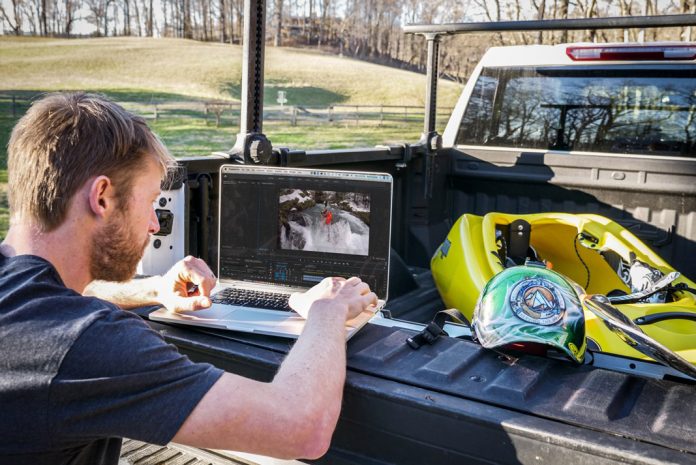
Want to capture your best moments on the water, then come home and create a video that your friends, family and the entire world of social media will actually want to watch? Videographer Nick Troutman is here to help you learn how to edit paddlesports videos. Use this quick and dirty guide to get started.

How to edit paddlesports videos

Step 1: The Gear

A good kayak video is about showing heart and story. Unless you’re trying to get the attention of National Geographic, you don’t need top-of-the-line equipment to make a good video. Instead, use the best gear you have available.

There are four essentials to any kit. Your camera could be anything from a single GoPro to a production-quality RED camera—though if you’re using a RED camera, you’re definitely reading the wrong guide.

Today’s budget cameras produce image quality filmmakers would have killed for just a decade ago, so use what’s in your budget. You’ll also need a tripod. Cheap or expensive, this is an investment in capturing hands-free and shake-free angles.

I love drones. The new DJI Mavic Mini costs just $399, or you can drop thousands on high-end gear. Either way, a drone clip pulls together a story and a few big-picture perspectives guarantee a wow from the audience. Don’t forget a drybag or case, an essential for any paddlesports filming so you don’t lose your entire investment with a single splash.

Step 2: The Story

The key to an excellent kayak video and cohesive storyline is planning out your film before you start shooting. Create a shot list, so you know what you want to capture in advance and what you want to say.

This will help piece together the edit later. Skipping this step is the biggest mistake I sometimes still make—I think I can press record and put it all together in the editing room.

I always regret this decision. Not sure where to start? Go back to your favorite kayaking videos—what made them so good, and what shots and narration did they include?

Shoot for the platform you’re posting on—if creating a video for Instagram stories, you are better off filming vertically with short audio bits. If you’re shooting a 15-minute documentary for Vimeo, then you are probably filming a 16:9 ratio.

Step 3: The Shots

It doesn’t matter how great your camera is if all your footage is shaky or your GoPro has water drops all over the lens. To shoot the best footage you can, use a camera mount or a tripod to minimize shaky shots. I like to keep a microfiber cloth handy, but if all else fails, you can lick your lens to clean off your GoPro and keep it water-droplet free. Endless POV footage gets old, so change up your perspective. Poor sound quality is distracting, and the river’s edge can be noisy—move to a quiet location if you’re recording interviews or narrating.

Step 4: Editing Software

There are many editing platforms available. Some are quick and intuitive, and others more complex and capable. The right software depends on how deep you want to go down the editing rabbit hole.

Adobe Premiere ($240 yearly subscription) is my top pick, and it’s the benchmark pro video editor of creative pros. However, this versatile software has a learning curve, and the price is out of range for many paddlers, especially if you’re only making a video just for friends and family.

Final Cut Pro ($300) is a capable and more middle-of-the-river software for user-friendliness and price.

If you are looking for quick and easy, forget iMovie (free)—by far, the best is the GoPro app (free), which allows you to drop some clips into the software and it will pop out a rad edit for you. I use the GoPro app if I am trying to edit while waiting for a shuttle and want to get something online ASAP.

Step 5: Export & Upload

The final step is to export and upload. Many editing programs will allow the user to select the platform the video is destined for and augment the dimensions to suit. I run most of my exports through user-friendly Adobe Media Encoder, which compresses the edit into a smaller size without losing much quality.

This article was first published in Issue 60 of Paddling Magazine. Subscribe to Paddling Magazine’s print and digital editions, or browse the archives.


Professional kayaker Nick Troutman is stoked to check out your edits. Find him on Instagram at @nicktroutmankayak.

That’s a wrap. | Feature photo: Nick Troutman


River Rescue Essentials: Build Your Own Super Compact Rescue Kit

River Rescue essentials

It is important to be rescue ready. Any river run or surf session may include time out of your boat scouting, setting safety or, inevitably, swimming. Rescue ready means having your personal rescue equipment available at all times.

Heeding that premise, the goal of assembling my paddling rescue kit is to make it wearable. Equipment size and weight matters. My frame—a 29-inch waist and 130 pounds soaking wet—means I need a compact and light, yet fully functional, rescue set-up.

The ubiquitous rescue phrase used by paddlers and organizations is 4:3:2:1-1. The mnemonic, coined by Jim Coffey, is the minimum equipment for a safe and simple 3:1 mechanical advantage finishing with a change in direction. The ratio details four locking carabiners, three pulleys, two prusiks, one piece of webbing and one static throw rope.

River rescue essentials: Build your own super compact rescue kit

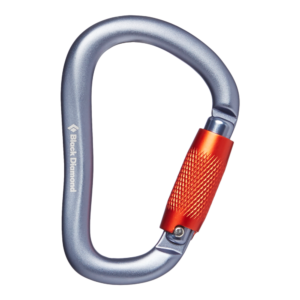
Black Diamond RockLock carabiner.
Black Diamond RockLock locking carabiner. | Image: Black Diamond

What you need to know about carabiners

Carry four carabiners. Nearly all rescue lifejackets come with a quick-release (QR) pigtail harness. If the carabiner is not locking, swap it out for a locking carabiner. If you are already wearing a webbing loop, ensure it features a locking carabiner. I carry the remaining third and fourth locking carabiners in my lifejacket. The carabiners should be large enough to accommodate a multiple of hardware, for instance, an anchor and progress capture device/prusik loop. Furthermore, larger pear-shaped carabiners facilitate belay hitches or passing a knot through when joining two lines together.

My largest carabiner is on the end of my QR harness. When rescuing a paddle from a decked boat, I can clip around the paddle shaft. I carry two Rollclip Zs by Petzl because they serve dual purpose—locking carabiner and pulley. Find locking carabiners that work for you. Remember: Cold decreases your dexterity and sand or silt may hinder locking mechanisms. Auto-locking carabiners are safest.

Buy Black Diamond RockLock from:

BLACK DIAMOND AMAZON REI SCHEELS

Buy Petzl Rollclip Z from:

AMAZON CAMPSAVER

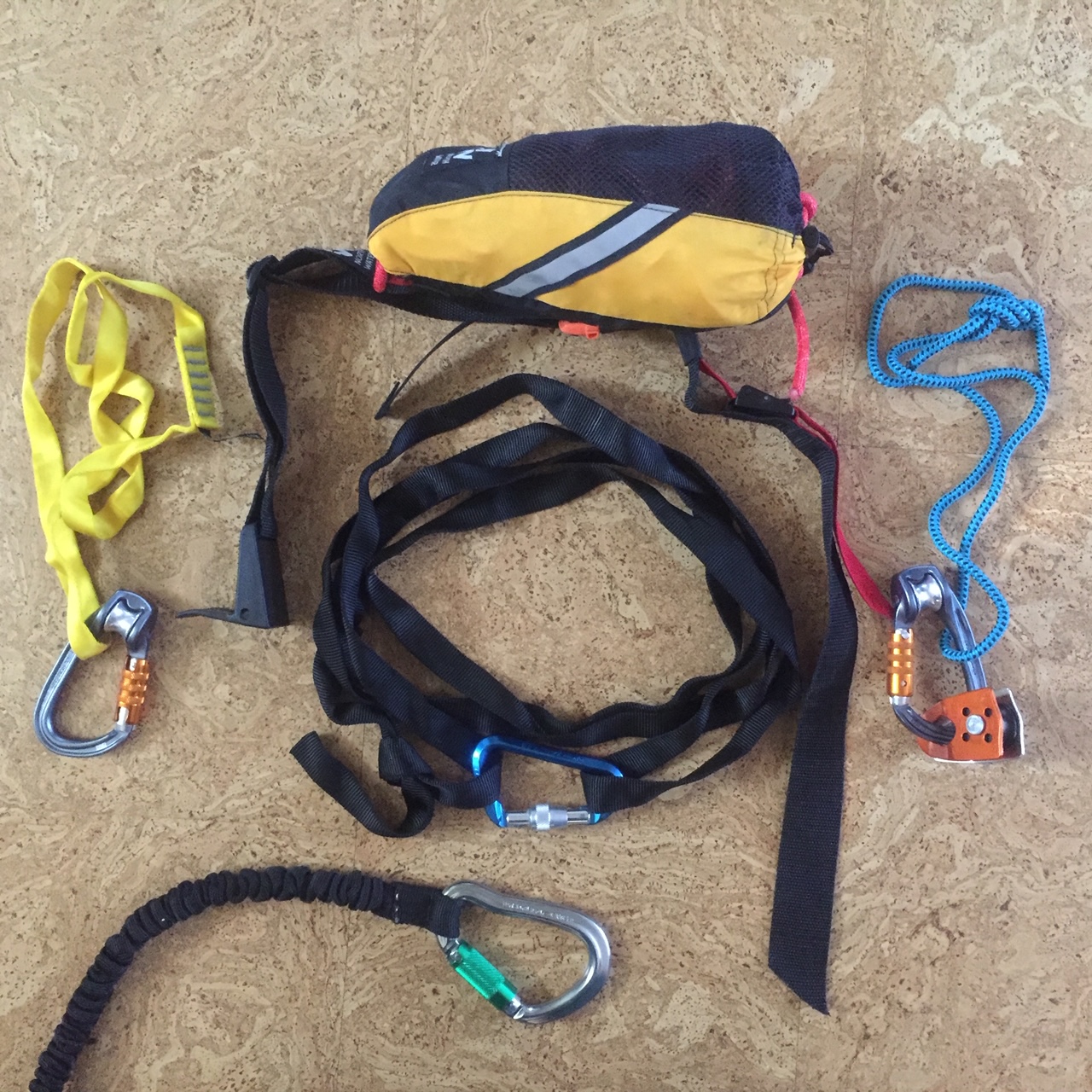
compact rescue kit
Updating and downsizing your river rescue kit means there’s no excuse not to have it on hand. | Photo: Brian Johnston
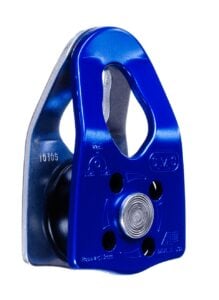
SMC Crevasse Pulley.
Image: Seattle Manufacturing Company

What you need to know about pulleys

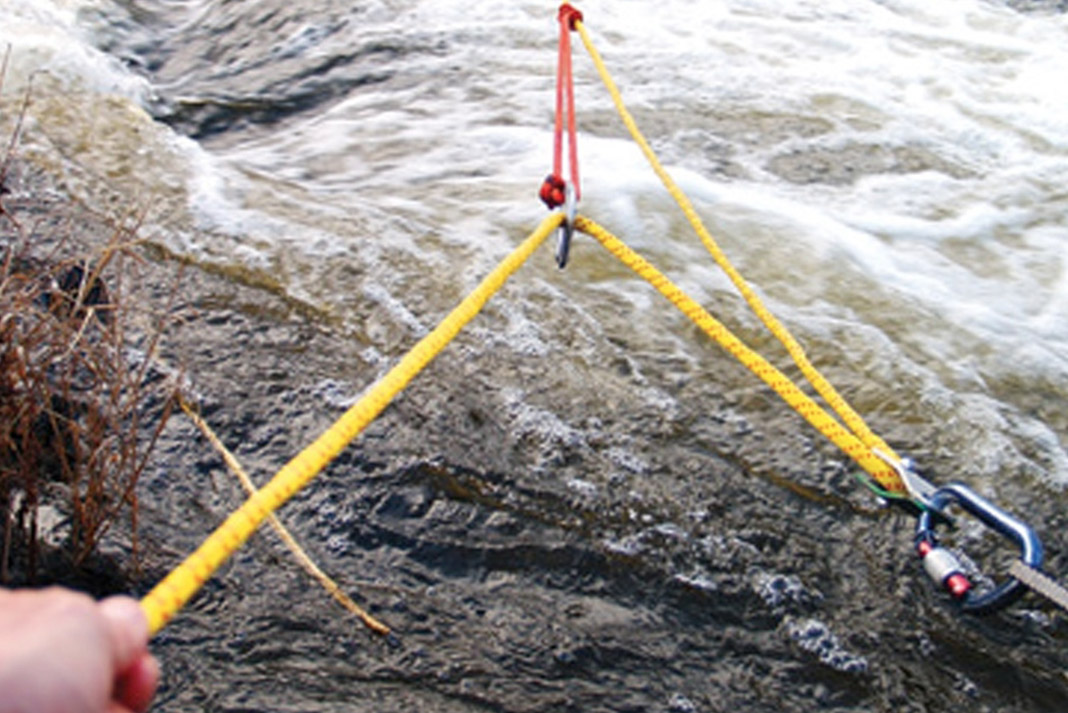
Having three pulleys is standard and safe, while two pulleys is the minimalist approach. Two pulleys allow for a 3:1 mechanical advantage and the third pulley is for changing the direction, which is proactive for paddlers because it gets rescuers out of the impact zone.

In my lifejacket, I stow the two previously mentioned Rollclips locking carabiners that feature built-in pulleys. Rollclips are useful on the load and haul line and for the change in direction, as they are not prusik minding. They perform two-fold duty thus reducing bulk, weight and the number of devices. With two Rollclips serving as two carabiners and two pulleys, my third pulley is prusik minding to use with a progress capture device. The smallest such device easily sourced is the SMC Mini CRx Prusik Pulley. The three-pulley standard is achievable while minimizing weight and bulk.

Buy SMC Crevasse Pulley from:

AMAZON REI

BlueWater 6.5 mm prusik
BlueWater 6.5 mm prusik. | Image: BlueWater

What you need to know about prusiks

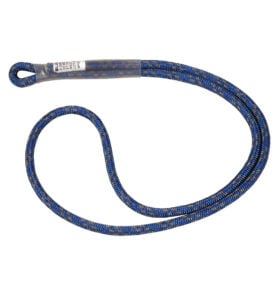
Two prusiks are easy to stuff into a life jacket pocket. The simple approach is carrying a couple of prusik cords. I decided on one prusik cord and one sewn sling. The sewn webbing sling has advantages over having a second prusik cord. A webbing friction knot grabs easier and more reliably to a range of rope diameters. The sling is not as affected by the difference in diameters of haul rope to prusik cord nor the construction of the ropes or cords. Benefits to prusik cords are that they have more testing and they slip at a known tensile strength. This acts as a fuse in the system for safety. I prefer brightly colored prusiks because they are harder to misplace.

Buy prusik cord from:

AMAZON BACKCOUNTRY REI WALMART

one inch tubular webbing.
one-inch tubular webbing. | Image: BlueWater

What you need to know about webbing

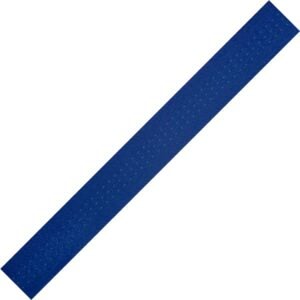
Wrapped around and around my waist is one piece of webbing. The tradition of wearing a webbing loop around your waist has generated recent discussion in many paddling and rescue circles. Anything you wear needs to be snug to avoid accidental snagging on objects, including all exposed carabiners attached to your body. Positioning your webbing loop with locking carabiner around your waist but tucked under your drysuit tunnel protects it from catching on objects, while keeping it accessible. Also, at my waist is a long high-tensile floating throw rope kept at the ready on a QR waist belt.

My 4:3:2:1-1 paddling rescue kit is not the most minimal. For example, I could have opted for a bare-bones throw bag. But it is fully functional while being small and light. By opting for wearing equipment on my waist and in my lifejacket, when I get out of a boat, I am always rescue ready without having to remember to grab gear. The products and dimensions mentioned are not as critical as having the equipment readily available and the training to use it.

Buy Bluewater one-inch tubular webbing from:

AMAZON BACKCOUNTRY REI

Brian Johnston a Paddle Canada volunteer and instructor, symposium presenter and paddler who prefers a single blade, wilderness and whitewater. He also orienteers, trail runs, adventure races, hikes and Nordic skis.


Feature photo: Jacob Colvin/Pexels


6 Essential Rules for Kayaking Near Whales

Man has close encounter with whale while kayak whale watching
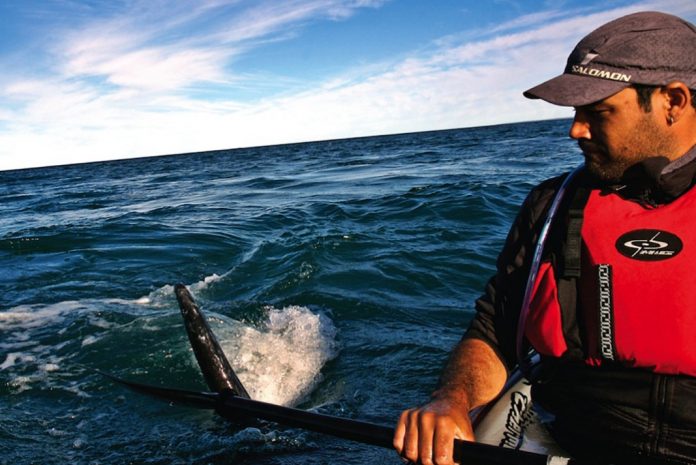
Feature Photo: Dave Quinn

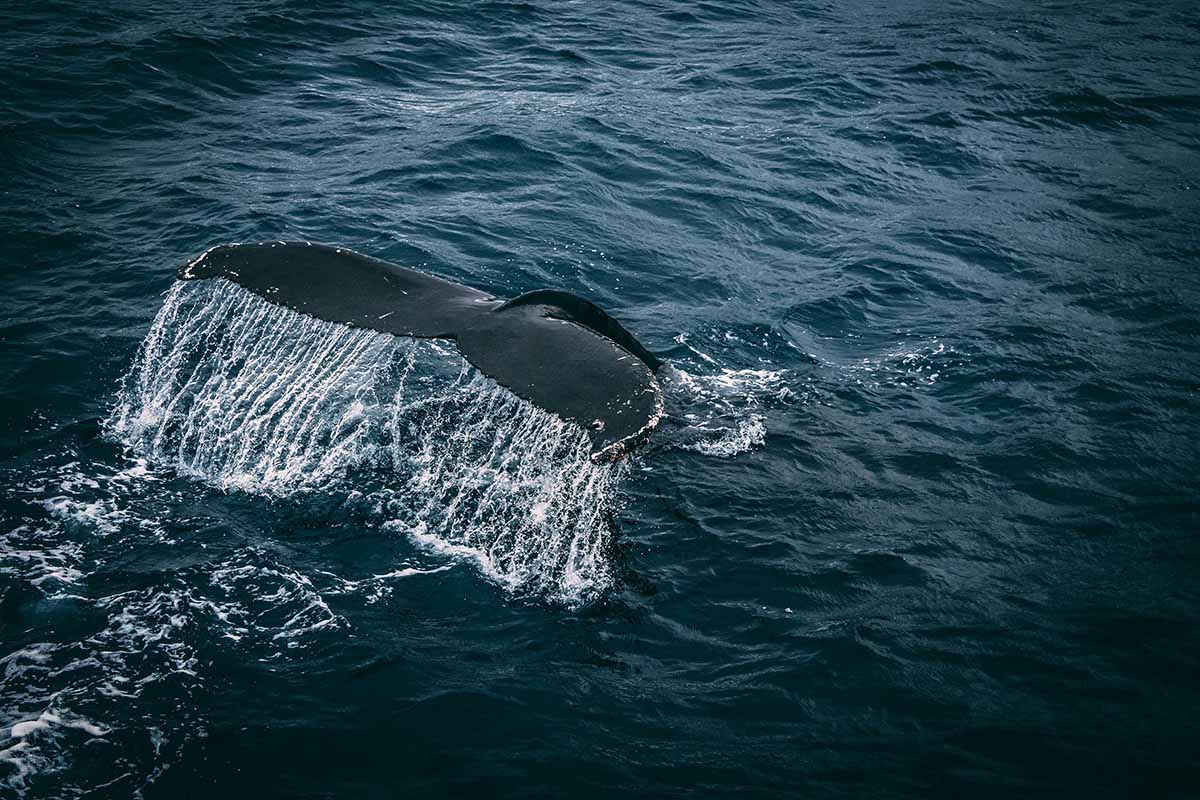
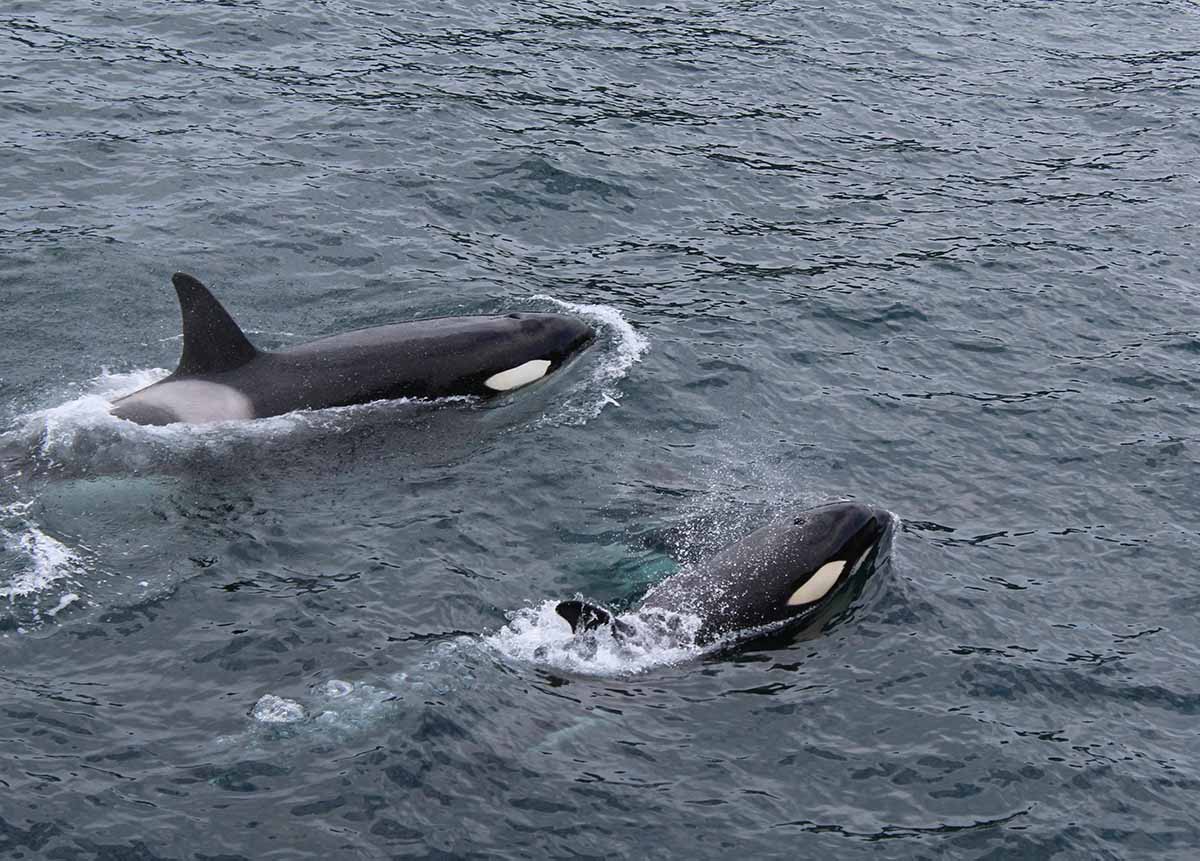
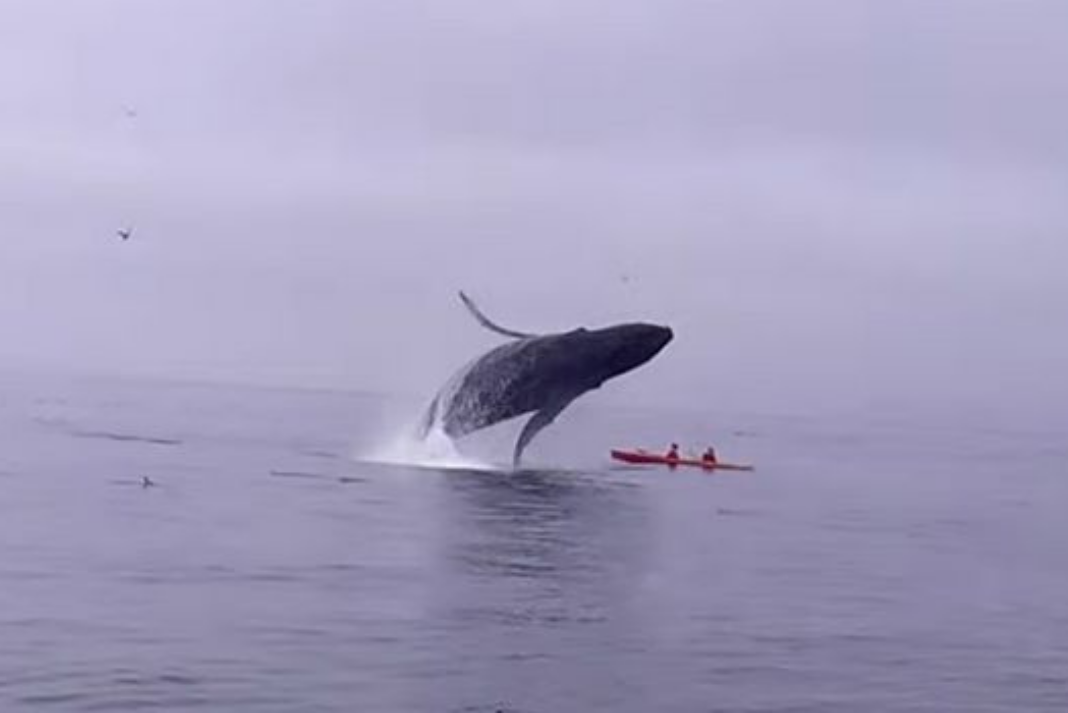
Close encounters with whales can give you moments of lifelong inspiration, but kayak whale watching is not without risk to both parties. One flick of a three-meter fluke can capsize a kayaker before you can say, “Blowhole!” And pressure from curious kayakers can push shy whales from critical habitats.

With these hazards in mind, experienced whale watchers and seasoned kayak guides have developed some agreed-upon kayak whale watching guidelines. Follow these rules when approaching any species—from greys and orcas on our West Coast to Tongan humpbacks.

Photo by Rudy Kirchner

Kayak Whale Watching Guidelines

1) Take an indirect approach

Never paddle directly towards whales, especially from behind or nose-on. Always approach slowly at a tangent that will keep at least 100 metres between you and the whales. Remember to factor in wind and currents.

2) Stay out of the nursery

Avoid mothers with calves when kayak whale watching. Think 40-tonne angry mamma bear.

Photo by Dianne Maddox

3) Beware rowdy kids

Be wary of juveniles, identifiable by their shorter length and smaller fin size. Like any young, curious animal, they’re tempted to touch everything, including whale watchers!

4) Announce your presence

Don’t surprise whales. Tap gently on the deck of your kayak to let them know you’re there.

5) Mind the shore

Unless whales are near shore, try to keep your whale watching group between them and the shore so they don’t feel trapped. However, when whales are close to shore they’re likely using it for shelter or feeding, so move off  shore to allow them a wide passage.

6) Allow an exit

Never block a whale’s escape. You don’t ever want the only way out to be through you!


View this post on Instagram


A post shared by Xavier (@angalalluarina)

Remember these rules for kayak whale watching

Remember that whales have had enough stress from humans. Not only did we nearly wipe out these gentle giants through overhunting; we overfish and pollute their habitat, pressure them with boat traffic and trap them in abandoned fishing gear. So when kayak whale watching, remember the golden rule: if any wild animal changes its behavior due to your presence, you are too close.

Two additional resources helpful to paddling in whale waters are NOAA’s guidelines to viewing marine life and the Kayak Educational Leadership Program from Be Whale Wise.


How To Shoot An Epic Whitewater Kayaking Movie

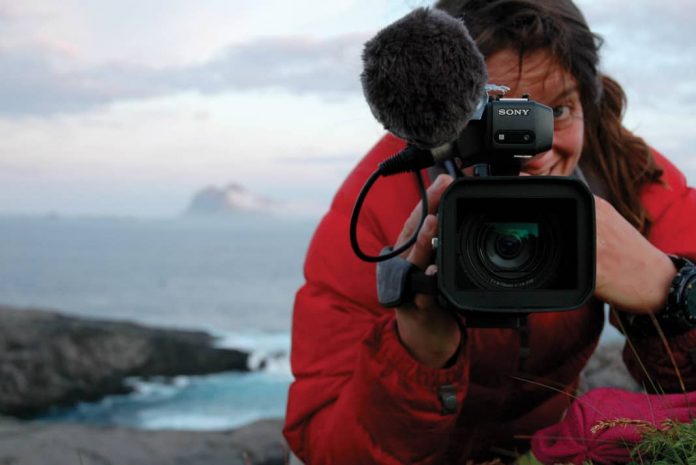
Justine Curgenven filming a whitewater kayaking movie
Paparazzi in gore-tex. | Feature Photo: Justine Curgenven

High-quality video cameras are cheaper than a kayak paddle these days, and everyone is filming their own adventures. Unfortunately, few paddlers ever wade through the hours of monotonous footage to create a film anyone other than their mothers would enjoy. Multi-award winning filmmaker Justine Curgenven shares these simple tips on how to shoot a whitewater kayaking movie that will have your friends looking over your shoulder.

Create a great whitewater kayaking movie

1) Study up on your paddling adventure

Before you leave the house know what you want to shoot. Watch lots of kayaking films—shorts, feature-length films, amateur attempts, and professional jobs. What do you like about those films, and what just drags on? Create a shot list and storyboard so you have a solid plan when you actually get on the water.

2) Tell a story

Gorgeous scenery is lovely but a human element will connect viewers with your film. Tell the story of what you are doing to the camera. Film yourself and others describing where you are, what you are doing and how you feel.

People love to see emotions on film—especially nerves, stress, and excitement. Unless someone is doing a front loop on the beach, you can film the action or scenery afterward.

3) Manage your filming kit

Nothing is more frustrating than missing a fantastic shot because of a dead battery or a full SD card. Double-check everything is ready to go before you arrive at the action.

On every expedition, I take four spare batteries for each camera. If I will be away from power for two weeks or more then I take a solar panel to charge batteries. Beware of water on your lens—it will ruin your shot. Use a lens cloth to wipe off any drops before shooting.

4) Get different angles

POV footage from a camera mounted on your kayak is great but only in doses of 10 to 20 seconds. Your shot list should include a variety of angles and perspectives to hold interest longer. Get shots of people paddling towards you, side on and away.

Film a mix of wide shots, which show the surrounding landscape, close-ups of action and mid-shots in between. Climb a hill, put your camera on the beach and get low in the water for interesting perspectives. A tripod will go a long way to making your whitewater kayaking movie look pro.

5) Hold the shot

Compose a shot where the action happens within the frame, hit record and hold the camera still for 10 seconds. Cut too soon and you’ll create a headache for yourself in the editing suite. If you analyze film and television, you’ll be amazed at how many static shots there are. Mix in some stable, slow panning for good measure.

6) Get quality sound

Poor sound is an instant turn-off. Get close to the person talking and choose a quiet location. Even small waves on a beach are very, very loud on a camera.

Put your back to the wind and get as far away as possible from the sea. Use earphones to hear what you are recording. Best yet: Buy a cheap microphone that plugs into the camera and will improve your sound immensely.

7) Be brutal when editing

When it comes to editing, remember that longer isn’t better. In fact, the average attention span on YouTube lasts just seconds. For my most recent film, Kayaking the Aleutians, I pared 50 hours of footage into a 55-minute film. That’s 95 percent left on the cutting room floor. If the clip isn’t crucial to your whitewater kayaking movie—or if you’ve asked yourself, “Will people be interested in this?”—there’s no doubt. Cut it.

Justine Curgenven has been awarded top prizes at the Reel Paddling Film Festival multiple times. Find her online at www.cackletv.com.


Paparazzi in Gore-Tex. | Feature Photo: Justine Curgenven


Modern Greenland Kayaking: How Traditional Became Trendy

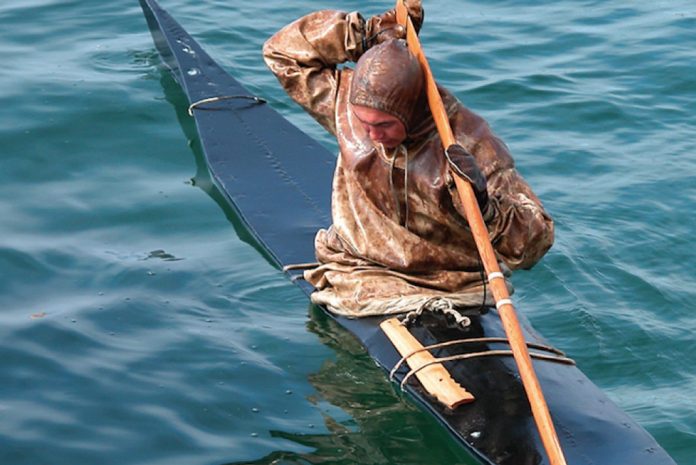
Man demonstrates modern Greenland kayaking
Feature Photo: Becky and Mark Molina

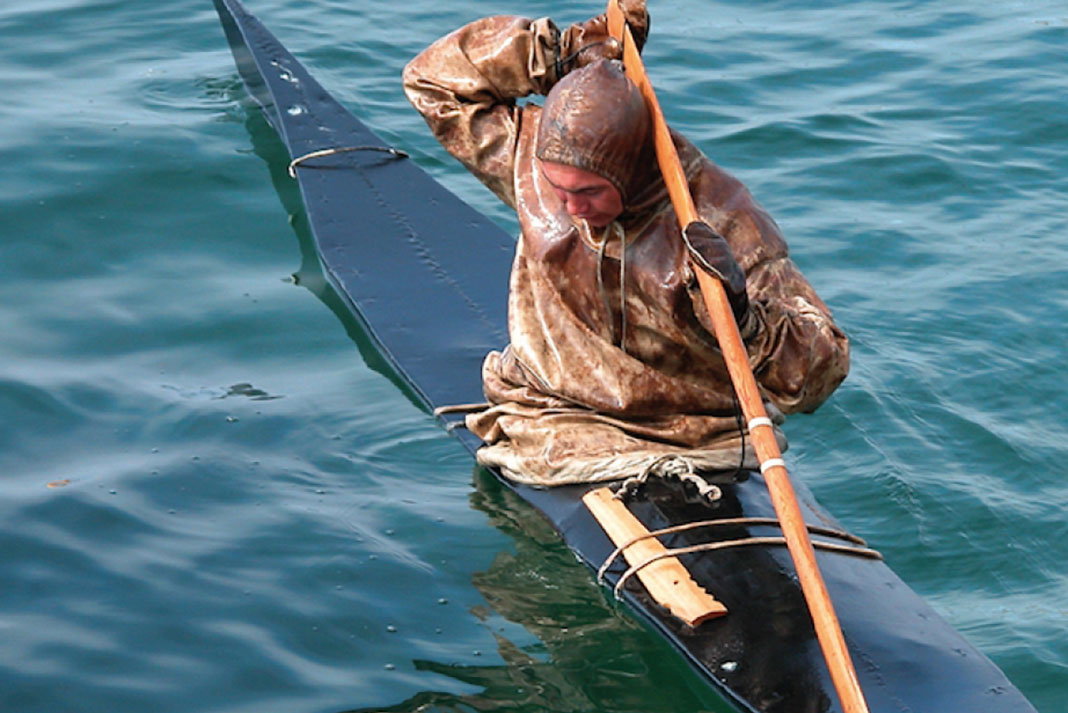
The origins of Greenland-style paddling are lost in the folds of oral history, sepia-toned photographs and the minds of modern-day theorists, but the renaissance of modern Greenland kayaking is as tangible as the thousands of toothpick-wielding paddlers churning north American waters today.

Greenland-style kayaking has grown remarkably in recent years. Every major kayak symposium now includes a Greenland rolling demonstration or paddling workshop. This February, Florida’s Sweetwater Kayaks organized its first Greenland-only symposium, while Qajaq USA’s training camp, held in Michigan every August since 2002, puts names on a waiting list a month in advance.

Greenland-style is time-tested

A Texan is responsible for popularizing Greenland-style paddling in North America. John Heath began his mission to reaffirm the design attributes of traditional Arctic kayaks in the 1950s. He travelled from Siberia to Greenland, interviewing the last kayak-hunters and measuring their boats. Until he passed away in 2003, Heath argued for the merits of the Inuit designs, figuring that in a time when the price of poor kayak performance was drowning or starvation, the boats had to be well thought-out.

The launch of modern Greenland kayaking

In 1998, Heath brought Maligiaq Padilla, a 16-year-old Greenland national kayaking champion, to the United States for a year-long circuit of symposiums. For Mark Molina, an American paddler who has competed twice and won multiple gold medals in the Greenland National Kayaking Championships, it was Padilla’s demonstrations of traditional paddling techniques that kindled the Greenland-style renaissance.

“I never liked anything about kayaking until I saw what Maligiaq could do,” Molina says.

Padilla’s visit brought what was then a small but dedicated community of Greenland-style paddlers into the mainstream.

Man demonstrates modern Greenland kayaking
Feature Photo: Becky and Mark Molina

Greg Stamer, who began using a Greenland paddle in the early 1990s, founded Qajaq USA, the American chapter of the Greenland Kayaking Association, shortly thereafter. And in the Great Lakes, veteran skinny-bladed roller Doug Van Doren’s demonstrations became less of a symposium freak show and more of an inspiration for other modern Greenland-style kayakers.

A cult-like group of prodigies flourished in number and skill. Since the Greenland National Kayaking Championships first allowed non-Greenlanders to participate in 2000, an increasing number of North Americans like Molina—no doubt inspired by tales and gossip on Stamer’s qajaqusa.org website—have attended, and won.

“I never liked anything about kayaking until I saw what Maligiaq could do.”

Industry jumps on board

Sea kayak manufacturers have climbed on board, flooding the market with “Greenland-style” boats. British manufacturers—who’ve claimed to be riding the Greenland wave all along—saw a spike in sales of classic models like Valley Canoe Products’ Anas Acuta and up-start designs like Nigel Dennis’ Greenlander. In North America, modern Greenland kayaks include the Caribou by Current Designs, the Ellesmere by Boréal Design, and a composite version of Jay Babina’s Outer Island design produced by Impex.

Even as skin-on-frame boats and wooden Greenland paddles get made over in contemporary materials, modern Greenland kayaking remains compelling as an antidote to carbon fiber, Kevlar and polymer plastic. The sport is cheap and easy to pick up. A Greenland-style paddle costs 20 bucks and a weekend of labour; a new boat, $500 and a couple weeks in the shop. Traditional paddling techniques can be developed over the course of a summer on the water or a winter in the pool.

Perhaps the greatest attraction of the Greenland style is that its vast repertoire of braces and rolls promises kayakers complete mastery of their medium.

Greenland-style kayaking has undeniable appeal

The neophyte—like Mark Molina watching Maligiaq Padilla for the first time in 1998—sees the Greenland-style guru perform an oxygen-defying dance along the edge of danger, rolling in contorted poses with and without a paddle. It has the snake-charmer’s appeal of taking every beginning kayaker’s biggest fear—flipping over—and literally turning it on its head.

Who wouldn’t be captivated by the possibilities of modern Greenland kayaking?


Boat Review: Mad River Caption Canoe

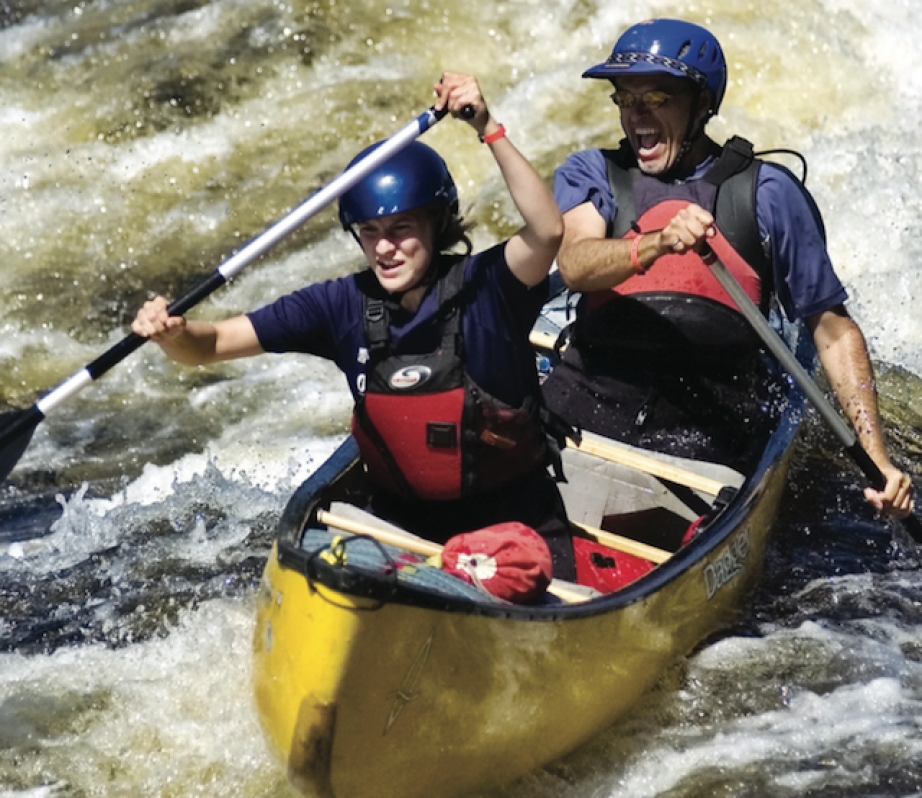
Two people paddle through whitewater in a Mad River Caption canoe
Feature Photo: Robert Faubert

In the very earliest years of this century Dagger abandoned its canoe business. And with that decision the mould for their Caption went to rest with the pigeons in a dusty storage warehouse. Open boaters with Caption dreams were left to sift and sort through the private market. Mad River Canoe changes all that with their release of the updated Mad River Caption canoe.

Mad River Caption Specs
Length: 14’
Width: 32”
Depth: 15.5”
Weight: 58 lbs
Gunwale System: IQ2 / ash
Capacity: 850 lbs
MSRP:
$1,200 USD or $1,299 CAD (with vinyl)
$1,350 USD or $1,449 (with ash)
[ Paddling Buyer’s Guide: See all Mad River canoes ]

Whitewater canoeing for you and ME

Back in 1993 when Dagger released this sporty, Steve Scarborough–designed tandem boat, paddlers embraced this versatile hull that did so many things so well. But it was not as if the design for the Caption fell from heaven onto Scarborough’s drafting table. Its precursor was the Millbrook Boat by John Berry known simply as the ME. The ME has the distinction of being the first mass-produced Royalex tandem boat that you could race in, and it was manufactured under license by Mad River.

All the cognoscenti paddled that now-ancient rockered tandem and the ME itself had its origins in a slew of composite slalom race boats. It could be argued now with the benefit of hindsight that the Caption was either a revolution or a giant evolutionary step in popularizing the growing sport of whitewater canoeing.

[ Plan your next whitewater canoe adventure with the Paddling Trip Guide ]

The Caption had a fine balance of stability, speed and manoeuvrability with its soft chines and aggressive rocker. And best of all, a Caption paddled by good boaters was dry, or at least a great measure drier than the old ME. It was a very competitive slalom tandem that was tough to beat, as well as a solo big-water boat for the larger and stronger paddlers, and a solo whitewater tripper that you could fill with gear.

Man and woman paddle through whitewater in a Mad River Caption canoe
Feature Photo: Robert Faubert

The Caption comes to Mad River

When Mad River Canoe announced a year ago that it was depriving the pigeons of their perch and resuming Caption production, the orders started rolling in.

Production problems with the quality of the Royalex sheets held up deliveries until late last summer. But the Mad River version of the Caption is now available, in brilliant cherry red, with vinyl or ash gunwales.

The reincarnation is several inches wider and more stable than the original Dagger version; you can shorten both thwarts to bring it back to the old Dagger specs if you wish.

IQ system is great but for weight

The vinyl trim option is Mad River’s IQ gunwale system, and to call it robust would be an understatement. The IQ system has a slot on the in-wale, which allows the attachment of accessories like spray covers, removable yoke, and gunwale bags.

Weighing in at 14 pounds, the IQ gunwales are often unscrewed and replaced with ash for a weight saving of eight pounds. If you do upgrade to wood, you’ll have to part with Mad River’s hilarious sliding plant pot cup holder—the most useless whitewater accessory imaginable. Someone at the Mad River factory in South Carolina has a great sense of humour.

An outfitted Mad River Caption canoe with wood trim only weighs 57 pounds and is effortlessly manoeuvrable when the seats are placed as far apart as the thwart positions will allow. For very aggressive paddling and racing, highly skilled paddlers can set the seats closer together for an even drier ride.

Get back into a Mad River Caption

It should be mentioned that the Caption’s tight-carving turns are hard to break out of (not to mention wildly addictive), but otherwise the Mad River Caption can be enjoyed by paddlers of almost any skill level. Don’t let its performance on the racecourse scare you: this is a really fun boat that is sure to take your paddling up a notch.

This article was first published in the Summer 2008 issue of Rapid Magazine. Subscribe to Paddling Magazine’s print and digital editions, or browse the archives.


Boat Review: Pyranha S6F Kayak

man paddles in Pyranha S6F freestyle kayak
Feature Photo: Rapid Staff

The Pyranha S6F kayak is one of the new generation of high-performance, easy-to-paddle freestyle boats.  It delivers high performance features and the ability to progress your freestyle paddling past your current boundaries, all in a fun Pyranha package.

Pyranha S6F Specs
(191 / 192 / 193)
Length: 6’2” / 6’3” / 6’4”
Width: 25.2” / 26.4” / 26.4”
Volume: 40.9 / 51.5 / 57.1 U.S. gal
Weight: 31.9 / 33 / 35.2 lbs
Weight Range: 88-154 / 132-198 / 180-270 lbs
MSRP: $1,099 USD or $1,610 CAD
[ Paddling Buyer’s Guide: See all Pyranha kayaks ]

S6F stands for Freestyle

Pyranha has been tweaking their S6 for a couple years, offering the classic S6, tricked out S6X and the S6F, “F” being freestyle.

Pyranha’s cockpit layout is top shelf, but carry a toolbox if you want to do on-river tweaks. It’s the thigh braces that offer the most tweaking—sliding, pivoting angle, and arcing over. Super custom, but even the American Chopper dudes (without the use of their blowtorch) couldn’t find tall testers any more knee and foot room.

Keep your boat tilting

The S6F is perhaps the most under-hyped freestyle boat. Everyone was blown away by how unbelievably fast you surfed around.

On steep, bouncy waves the speed was almost overwhelming and perhaps wasted, but on two-to three-foot slower waves the speed is the difference between fun carves, spins and blunts and flushing bye-bye. On small features, the wide, full stern (compared to say the Big Wheel) stayed on the surface of the pile, keeping your boat tilting and surfing down the face.

man paddles in Pyranha S6F freestyle kayak
Feature Photo: Rapid Staff

The S6F has a one-track mind

The great thing about the V-stern is that it keeps bringing you back straight into a frontsurf. The very same thing can be its downfall, however, as the boat keeps wanting to bring you back straight into a frontsurf.

The S6F is a great pour-over boat: short, slicey, with lots of midship pop volume. The concave bow and stern do lock in your loops.

Pros and cons of the Pyranha S6F

Pro: Super fast, greasy loose. Fun on all features big and small.

Con: Limited knee and especially foot room. Trippy stern. Price.