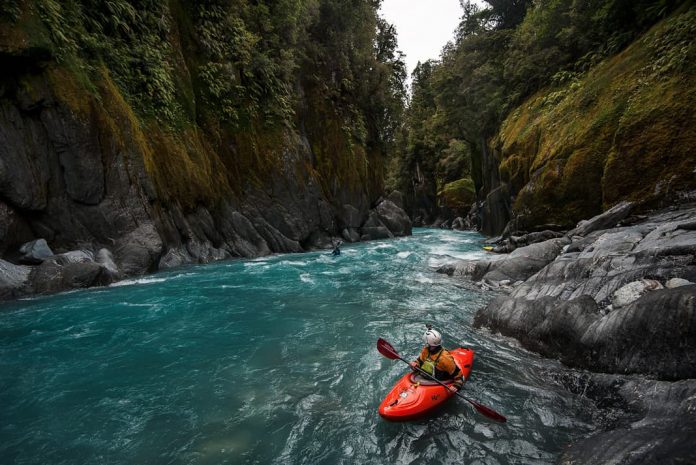
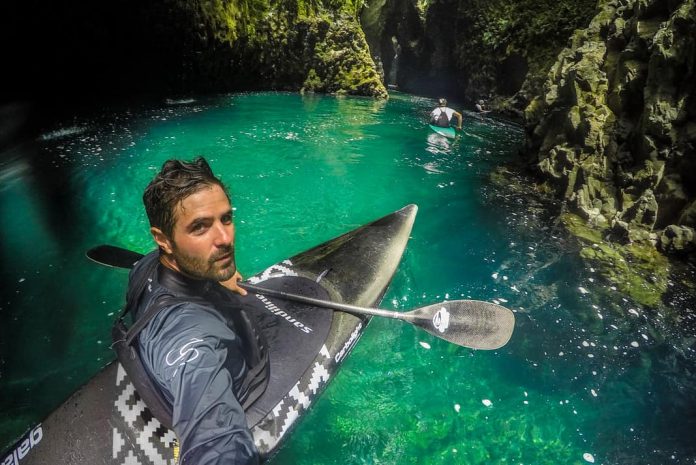
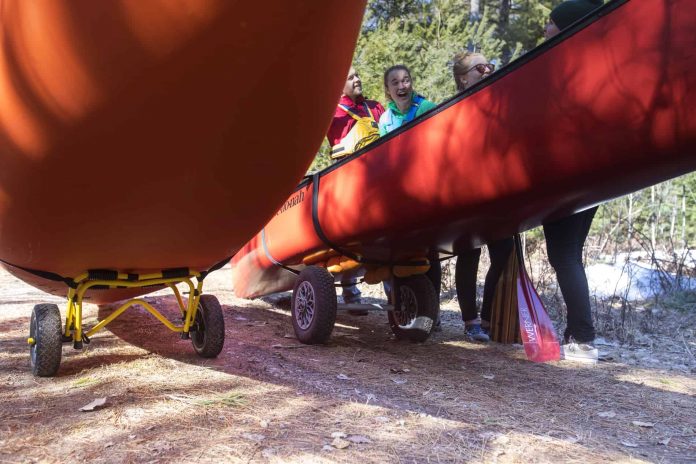
We open Antonio’s van and a mountain of gear disgorges itself. Stinky sprayskirts, leftover food, sandy tents, water bags and kitchen gear from 11 people for 10 days on the west coast of Mexico’s Baja Peninsula. We throw it in a pile and eat dinner.
The next day a small army descends on the patio. Carlos leads a systematic washing, drying and re-sorting of every pump, cockpit cover and drybag. Isabel sorts and stows leftover food and kitchen gear. Idalia cleans kayaks, carefully noting every gelcoat ding to be repaired later. Rapid-fire Spanish flies across the patio. Marcos uses gestures to show the sole gringo—that’s me—his system for washing, drying and storing gear. The people flitting about the Loreto-based shared house and kayaking nerve center all have jobs guiding, coaching, managing equipment, tracking rentals and keeping the website and social media of this small locally owned and operated business running.
Only one of the employees is the classic itinerant young sea kayak guide hopping between seasonal stints in Baja, Alaska and the Pacific Northwest. The other 13 are locals with deep ties here.
This means their money—and their love of place—sticks around.
If you want to preserve wild coasts to paddle, follow those paychecks
We didn’t see any other kayaks in Magdalena Bay on our 10-day trip. It’s dominated by a deepwater port and commercial fishing, with a few whale watching tours thrown in. We saw commercial fishermen in pangas and monstrous fishing hulks with onboard helicopters. What should have been ideal beach camps were awash in discarded fishing gear and crab traps, as well as the odd sea turtle skeleton.
Marcos hopes kayaking will one day bring more environmental stewardship to this area where he grew up.
Outdoor lovers and environmentalists have long seen ecotourism as a way to reframe the tired zero-sum debate between preserving wild places and generating jobs. If a community can sustain itself through paddling, surfing or climbing—instead of logging or mining—governments are more likely to see value in those wild places and safeguard them. Costa Rica is an often trotted example. Moab, Utah is another success story—a uranium-mining town in the ’80s and now the outdoorsy capital of Utah red rock.
The economic impact of outdoor recreation is enormous, but decentralized. Despite outdoor recreation consumers contributing $887 billion to the American economy in 2016, it’s hard to convince policymakers and locals alike of the economic magnitude of many tiny transactions, like a tank of gas and a meal on the way to the put-in. However slowly, the tide is turning in our favor.
Oregon just created a statewide Office of Outdoor Recreation. The Outdoor Retailer trade show moved from Utah to Colorado in protest over Utah’s environmental policies, taking $45 million with it.
The 11 kayaks plying Baja’s Magdalena Bay is a long way from there, but it paid for Antonio to shuttle us over the Sierra Giganta and back, and for hotels and meals in San Carlos, and a support panga.
Hopefully, our trip sent out a few ripples toward preserving Magdalena Bay too
As I cleaned gear, a story from a conservation colleague in Portland came to mind. In a committee hearing about clean water regulations, employees from nurseries growing native plants for restoring natural areas showed up. They could have talked about how they cherished wild places and clean water but they didn’t.
Instead, they said they had good jobs restoring the environment, and clean water regulations were essential to keeping these jobs. Politicians—who had heard the old environmental debates a million times—suddenly perked up. When Marcos, Carlos and Isabel describe what they do and why, they can talk the same way. When Deep Throat said to follow the money, he was right.
Neil Schulman has followed the money—figuratively, if not literally—during two decades of conservation work in the Pacific Northwest.
I get by with a little help from my friends. | Photo: Lior + Lone
Last year an acquaintance of an acquaintance, named Robert, emailed me to ask if he could borrow our three-seater family canoe. I’m ashamed to admit I balked.
I’ve had too many uncomfortable experiences sharing and borrowing stuff. I’m pretty lackadaisical with looking after my own equipment—it’s made to be used, right?
But I’m always worried about what will happen when I loan gear or borrow it from others. I’ve too often received things back damaged, or felt tormented about the wear and tear I inflict on the gear of others.
If I found 100 other people and we pooled our money we’d have an annual gear budget of $300,000.
I once borrowed a new sledgehammer and scuffed the handle with a missed swing, but then felt awkward when I returned the tool with a bottle of wine worth more than the tool itself. Another time I borrowed a friend’s cheap indoor bike trainer and wore it out training for an Ironman. I paid them full price for it and then threw it in the garbage, wishing I’d just bought myself a good one in the first place.
I think sharing expensive outdoor equipment is a great idea in principle – but what happens when high-value items are lost or damaged?
“An outfitter would probably not charge as much for replacement as it would cost me, so there is a greater financial risk to both of us in a private rental,” I replied to Robert.
In hindsight I’m ashamed for being so uptight. I feel like a hypocrite because I know the outdoor recreation community could do a much better job of sharing. The fact outdoor enthusiasts collectively spend $120 billion a year on gear, which sits unused most of the time, is both colossally inefficient and bad for the planet.
Wouldn’t it be smart to have a communal gear garage where all this equipment exists and is owned collectively?
Thanks to a new competitive paddleboarding habit, I easily spend $3,000 a year on paddling gear. If I found 100 other people and we pooled our money we’d have an annual gear budget of $300,000.
It exists in other competitive sports. Why is there no equivalent equipment sharing model for sea kayaking, canoeing or paddleboarding?
This sort of sharing is already being done by organizations. When I was studying outdoor recreation at university, there was a gear library where students could sign out equipment for personal trips. During a month housesitting in Eugene, Oregon, I joined the University of Oregon outdoor club and dropped in on a multi-day rafting trip down the Rogue River—no personal gear required.
Competitive sports like rowing and canoe racing have membership structures providing access to a fleets of club boats. Why is there no equivalent equipment sharing model for sea kayaking, canoeing or paddleboarding?
With the sharing economy taking off, why not develop a web platform to mediate gear sharing, like an Airbnb for kayaks and canoes? This was the plan of the Boston-based entrepreneurs Mike Brown and James Rogers, who launched GearCommons.com in 2013 to help outdoor enthusiasts rent gear to each other. The fledgling company got lots of media traction—everyone thought it was a great idea. The entrepreneurs signed up users with a collective $1 million of outdoor gear available for rent.
The problem was, nobody ever used it.
After two years, the pair abandoned the failed start-up noting a lack of equipment is only the second biggest problem keeping people from getting outdoors. Number one is lack of time.
In a postmortem chronicle of the company’s rise and demise, Brown concludes, “The two-sided marketplace model was high friction and required large amounts of time from both sides; renter and owner—request, approval, emails, texts, pickup, return, etc.” In other words, their solution to the gear problem made the time crunch even worse.
There’s another option out there for sharing called the Library of Things, which is essentially a non-profit rental business centred around the values of community and sustainability. There are examples all over the world, including near my home. What started as the Toronto Tool Library has successfully expanded into SharingDepot.ca, a downtown storefront lending out camping gear, including tents, tarps, stoves and coolers for a nominal membership or borrowing fee.
The idea has potential but most of the gear is suited to first-time or occasional users, not outdoor aficionados, and not likely readers of this magazine.
I want to suggest we all jump on board this idea, set up a library of things for outdoor gear in our communities.
The thing is, I really like owning my own gear.
[ View the largest selection of boats and gear in the Paddling Buyer’s Guide ]
Maybe it’s because wilderness-based recreation has always been partly about getting outside the sandbox of organized sports; for me, having gear to call my own is part of the libertarian appeal. It means I can go when I want with the gear I want.
There’s really nothing wrong with buying the gear you love and use most often. As financial planning guru Gordo Byrn blogged recently, “The best deals I’ve done are where I’ve traded money for time.” And as the GearCommons founders learned the hard way, there’s nothing more time-efficient than owning your own gear.
I think the best way to share gear is to let it happen organically.
Just as we’ve learned the perils of relying on Silicon Valley to mediate our face-to-face friendships, our gear sharing conundrum will not be solved by some tech-savvy millennials and their venture capital backers in a downtown loft, but the system that’s already in place, and always has been.
Another paddler in my neighbourhood recently invited me to demo two expensive new race paddleboards he’d borrowed from the local shop. We were joined by another friend, so between our own boards and the demos we had a quiver of five boards to test ride, no waivers or small print user agreements required.
After paddling for a few hours I had a whole different feeling than the physical buzz I get from paddling alone.
It was a warm glow of connection, of not being the only crazy person this side of Nebraska who is out dodging ice floes on the Great Lakes in February. I also learned about board design and picked up a few paddling tips. This just goes to show how quickly and easily you can expand your gear closet and combat social isolation at the same time.
I propose we build on our existing strengths as an outdoor community and go completely analog, building the million-dollar gear shed the traditional way, through good old fashioned face-to-face relationships.
As for my interaction with Robert, he responded to my reflexive paranoia with true class. After his trip he sent me a picture of his whole family paddling in the canoe he rented. He also invited me to come out paddling and try his surf kayak. I may not be posting my own gear for rent on the internet anytime soon, but the next time Robert asks to borrow my canoe, I’ll say yes.
Tim Shuff is the former editor of Adventure Kayak magazine and works as a firefighter and ice rescue instructor in Toronto. See the Pyranha Octane he borrowed from Paddling Magazine.
O ld age is slowing creeping up on me. I don’t necessarily consider 50 to be old, but I think I’m long enough in the tooth to be making a list of things to do before I kick the bucket. Or maybe better put, adding things to the bucket list I started many years ago.
In high school, I added wilder things to the bucket, like…
Playing the drums
Seeing KISS in concert
Skinny dipping
Getting past first base
Canoeing down a wild river
[ Browse the widest selection of boats and gear in the Paddling Buyer’s Guide ]
Portage
As a young man, I wanted to…
Work a job where I was outdoors more than indoors
I wanted to save wilderness
Get past third base
Canoe down an even wilder river. (Wild, I learned along the way, is a sliding scale.)
[ Plan your next canoeing adventure with the Paddling Trip Guide ]
The thing about buckets is you put a whole bunch of things in them and then forget about it for a while. If you’re lucky, as you go you cross off a bunch of stuff. I’ve done most of those early things and even more in the hustle-bustle of everyday life, I didn’t take the time to include.
I’ve portaged across the front lawn at Parliament Hill and was forced off by the RCMP due to having a “vessel of too much magnitude.”
I’ve chatted with great musicians Gordon Downie of The Tragically Hip, Jim Cuddy of Blue Rodeo, Grapes of Wrath’s Kevin Kane and Jann Arden about the simplicity of canoe trips.
I’ve chewed the fat with legendary scribblers like Farley Mowat, James Raffan, Margaret Atwood, Pierre Burton and Red Green.
The dream was to write a book. Nobody puts 17 books on a bucket list.
Add a regular column in Paddling Magazine and life looks well lived.
The best part, however, is I’ve paddled more than 60 days a year for over 30 years.
Writing this piece, I realized how fulfilling my life seems, even to me. And it is. But my imagination is again filling the bucket before reaching my Golden Girls era.
I’m Not Talking About The Typical Bucket List Places To Paddle, Like The Nahanni.
[ Plan your next canoe tripping adventure with the Paddling Trip Guide ]
My dreams aren’t necessarily places I’ve never paddled before. Sure, I’d add to the list bodies of water such as….
The Florida Everglades
Great Slave Lake
Winisk River
Moisie Rver
But my priority is to revisit lifelong favorites in my province of Ontario.
I’d like to return to Woodland Caribou’s Artery Lake
the upper stretch of Missinaibi River
Killarney’s Great Mountain Lake
the northern shore of Lake Nipigeon
….and, believe it or not, Algonquin Provincial Park’s Meanest Link route, an excruciating 385-kilometer circular route connecting the four Algonquin Park stores and named after the notoriously gruff founder, Bill Swift Sr.
Kevin Callan on the Meanest Link in Algonquin Provincial Park
I’d also like to build a canoe
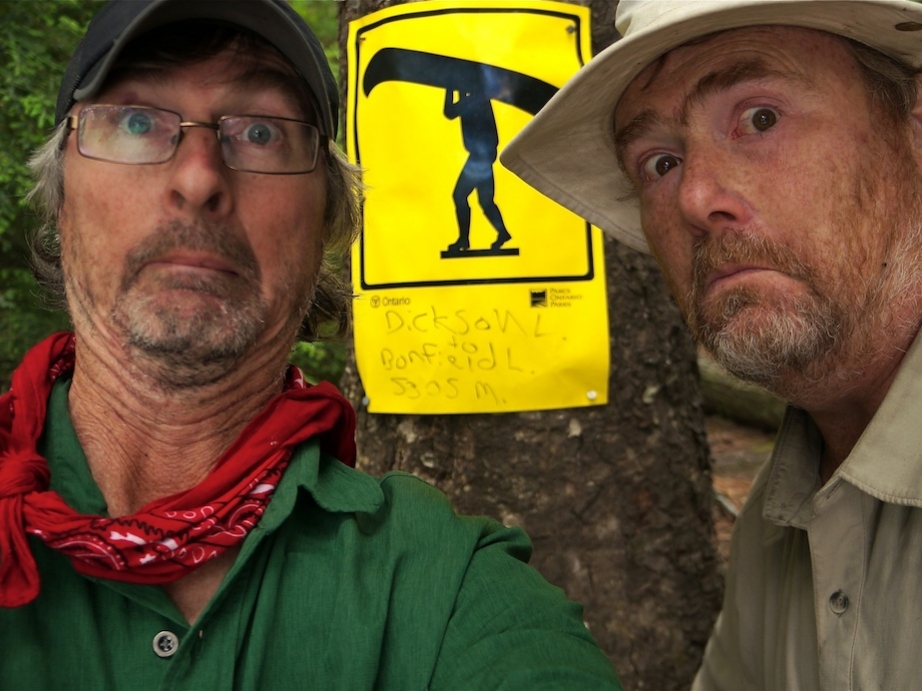
Ink a portage sign on my chest, forearm or maybe my buttock.
Have a cup of tea with the highest-ranked First Nations elder to thank him or her for sharing the best mode of transport into these wild areas.
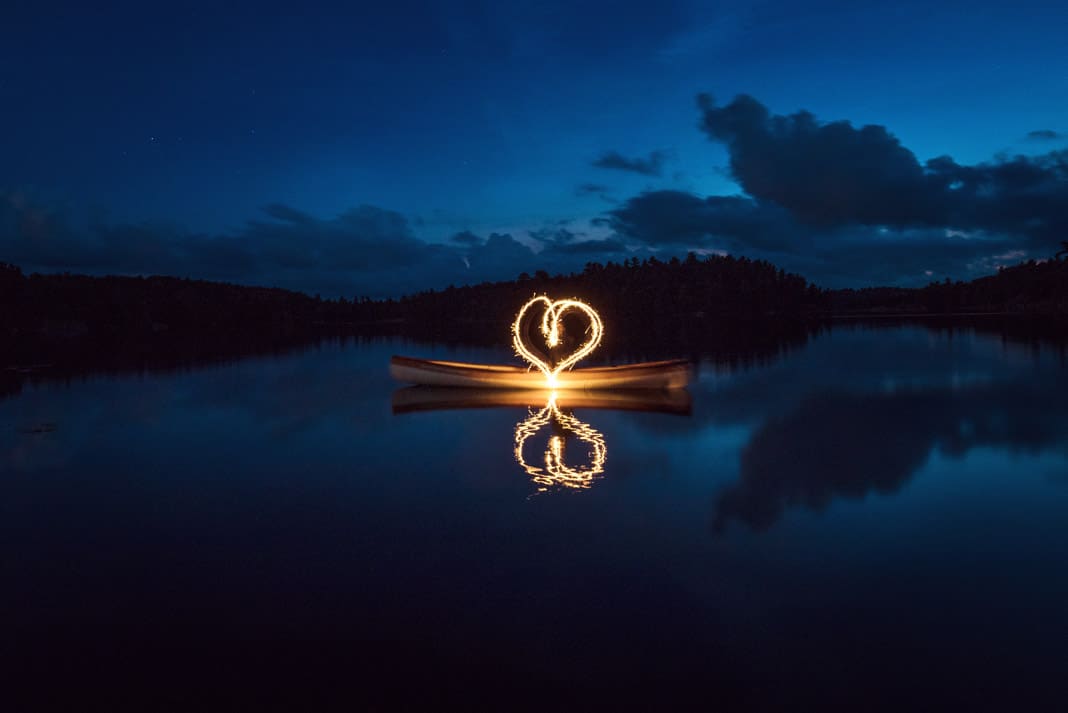
Last, but not least—I’ll have you know I did make it past first base a time or two—I regret never yet making love in a canoe. While I can’t imagine the actual physical act being all that comfortable, the celebration of being a true Canadian, according to author Pierre Burton, makes sense on a bucket list. Doin’ it in a volumous jacuzzi in central Ontario’s posh cottage country would be interesting, a hay field in the middle of prairie Saskatchewan would be noteworthy, and on a king-size bed at the Chateau Frontenac in old Quebec City may be impressive. But none of them are as stately Canadian or as high on my new bucket list as making love in a canoe.
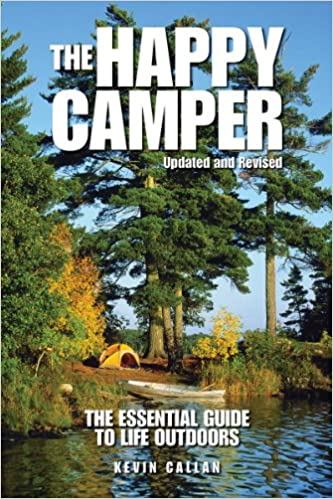
Kevin Callan is the author of 17 books, including the bestselling The Happy Camper. Butt End first appeared in Canoeroots magazine 16 years ago. | Photo: TrustIn Timber
1. In Boat Design Terms, Rocker Refers To The Curvature Of The Hull At The Bow And Stern. Generally, a canoe with lots of rocker is more maneuverable and better able to ride up and over waves, so expect more rocker on river running designs. All other aspects being equal, the trade-off for more rocker is less tracking and speed.
2. For Most People, Rocker Is Synonymous With A Fan Of Rock Music. According to Forbes, three of the 10 highest-paid musicians in 2017 were extreme rockers Guns N’ Roses ($84 million), Bruce Springsteen ($75 million) and Metallica ($66.5 million). It’s proof good rock will never die.
3. The World’s Largest Rocking Chair Is A Towering 56.5 Feet Tall And Located In Casey, Illinois. It’s across the street from the world’s largest wind chimes (42 feet) and down the street from the world’s largest pencil (76 feet). #podunk
4. Asymmetrical Rocker. Usually more rocker in the bow than the stern—is popular in many touring and race designs and offers the benefits of a rockered bow with increased forward speed and tracking. Asymmetrical rocker hair is a hairstyle where one side is much shorter than the other.
5. The “Rock On” Hand Gesture—Index and pinky fingers raised and thumb clasped against the two middle fingers—was popularized by singer Ronnie James Dio, who joined Black Sabbath after Ozzy Osbourne’s departure in 1979. Also called devil’s horns, the gesture caused panic amongst Christian parents who believed rock music was the work of the devil.
6. Nineteenth-century gold miners used troughs called rocker boxes which could be rocked back and forth to separate soil from gold. These were popular with prospectors because they were portable but held more earth than a traditional pan.
7. The Phrase “Off Your Rocker” Refers To Someone Mentally Unsound Or Extremely Foolish. In 2012, now 96-year-old pop culture icon Betty White released a hit hidden camera TV show by the same name, featuring seniors playing pranks on young people.
8. Dwayne Johnson, More Commonly Known By His Wrestling Name, The Rock, Is The Ninth Most Popular User On Instagram With 103 Million Followers. He was named Forbes’ highest paid actor of 2016, making $65.5 million the year prior. Not bad for a guy who got his start as a fanny-pack-wearing Sunshine Boy in the Calgary Sun newspaper.
The late 1960s was a tumultuous time. The Vietnam War was lurching toward an uncertain conclusion. Robert F. Kennedy and Martin Luther King Jr. were gunned down. There were racial protests at the Olympics in Mexico City and riots at the Democratic Convention in Chicago. Yet, through all this angst, a photograph came back from the Apollo spacecraft program crystallizing a new environmental sensibility throughout the western world.
Earthrise, a snapshot of Spaceship Earth coming into view over the lunar horizon, was taken on Christmas Eve in 1968 by astronaut Bill Anders. The photograph is widely considered the most influential environmental photograph ever taken.
The Creation Of The American Wild and Scenic Rivers Act
Among All The Actions taken by individuals, organizations, communities and governments in the ‘60s to curb growth and protect the beauty and fragility of the natural world was the creation of the American Wild and Scenic Rivers Act. President Lyndon B. Johnson signed it into law on October 2, 1968.
The Act reads
“It is hereby declared to be the policy of the United States that certain selected rivers of the Nation which, with their immediate environments, possess outstandingly remarkable scenic, recreational, geologic, fish and wildlife, historic, cultural or other similar values, shall be preserved in free-flowing condition, and that they and their immediate environments shall be protected for the benefit and enjoyment of present and future generations. The Congress declares that the established national policy of dams and other construction at appropriate sections of the rivers of the United States needs to be complemented by a policy that would preserve other selected rivers or sections thereof in their free-flowing condition to protect the water quality of such rivers and to fulfill other vital national conservation purposes.”
How The Wild and Scenic Rivers Act Is Doing Now
Five decades and nine presidents on, how is the Wild and Scenic Rivers Act bearing up? In the original act, eight rivers—Clearwater, Eleven Point, Feather, Rio Grande, Rogue, St. Croix, Salmon and Wolf—were designated and throughout the next 50 years the number has grown to more than 300 major rivers and tributaries.
More than 12,000 miles of rivers has been classified under this important legislation for their outstanding scenic, recreational, geological, natural, historic or cultural values.
While 12,000 miles sounds impressive, one must keep in mind for every mile of protected river there are 50 miles of American rivers altered and impounded by 75,000 dams throughout the country. Nearly 20 percent of all rivers in America are affected by dams, to say nothing of poor water quality. The Wild and Scenic Rivers Act protects roughly a quarter of one percent of America’s river resources.
Still, Potomac Riverkeeper, Dean Naujoks calls the Wild and Scenic Rivers program “amazing” for what it has done to preserve and protect from development the very best of America’s wild rivers.
Considered in concert with a wave of environmental legislation, including the Clean Air Act (1963), the Wilderness Act (1964), the Clean Water Act (1972), which began as an amendment of the 1948 Water Pollution Control Act, the Wild and Scenic Rivers Act has made a real difference,” Naujoks tells me. “If I want to take my daughter on a multi-day rafting trip any time in the future, I know the Rogue River is there, and it’s just one of many where this kind of activity is possible.
In Canada, the situation is equally hopeful and hopeless. In the same post-Apollo push to do better environmentally, governments at all levels became more informed, aware and statutorily proactive about human impact and environmental degradation. Outdoor and environmental education centers popped up all over the country. And the Canadian Wild Rivers Survey (1971-1973) led to the genesis of the Canadian Heritage Rivers System, which was finally established in 1984.
The Canadian Heritage Rivers System now includes parts of 40 rivers in all territories and provinces, except Quebec. However, in a nation of rivers from coast to coast to coast, involving hundreds of thousands of miles of waterways, the Canadian Heritage Rivers System stewards a scant 7,500 miles.
Whether or not we might consider these statistics evidence of success in literal terms, the nomination and designation process of both the Wild and Scenic Rivers program in the United States and the Heritage River System in Canada have compelled water managers and the public in all of these jurisdictions to come together to talk, to negotiate, to work collaboratively on workable management plans.
The two programs have lead to the identification and protection of what many have referred to as the world’s ultimate commons—our rivers.
And, in doing so, even with narrow corridors of protection and concern, the advocates who have participated in these processes over the last 50 years have moved rivers closer to the heart of human environmental consciousness.
In 1968, the concept of global warming was nowhere near the public agenda. Anthropogenic climate change would take another three or four decades to work its way into political consciousness. As planners, lawmakers and ordinary citizens contemplate all of the consequences and complications of a world inextricably altered by progress, it is rivers, the nourishing blue lines on Spaceship Earth, which are the point of tangible connection to the non-human world.
Fifty years on, the creation of the Wild and Scenic Rivers Act can be seen, however incidental and seemingly insignificant when weighed against the millions of tons of concrete poured by the U.S. Army Corp of Engineers, as a sovereignly worthy start.
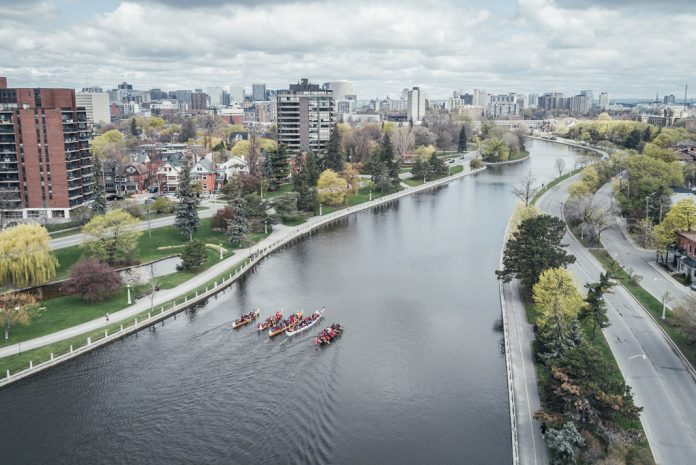
James Raffan is an explorer, recovering academic and former executive director of the Canadian Canoe Museum. The Ottawa River received designation as a Canadian Heritage River in 2016. Twelve more American rivers are currently under review for inclusion in the Wild and Scenic Rivers Act.
Last year, Dale Sanders hiked the entire 2,190-mile Appalachian Trail. Two years prior, he paddled the Mississippi River from source to sea in 80 days. Others have done both trips faster, but they weren’t in their ninth decade, like the now-83-year-old Sanders.
As an aged adventurer, Sanders has more and more company. Last year, Aleksander Doba of Poland completed his third paddle across the Atlantic Ocean at the age of 73 and 80-year-old New Zealander Helen Thayer walked the length of California’s Death Valley solo and unsupported. At press time, polar explorer Will Steger, 73, was nearing completion of a 1,000-mile solo trek across Canada’s barren lands, dragging behind him a North Star canoe on skis filled with 200 pounds of kit.
Impressive feats, no doubt, but these headline-grabbing excursions hint at a more widespread trend of 70- and 80-year-old outdoor lovers refusing to hang up their paddles and packs because of the number of candles on the cake. Still enjoying the outdoors, they are putting a less euphemistic and more literal spin on the term sunset years.
Neil Hartling has run Nahanni River Adventures since the mid-1980s, during which time the average age of his clients has risen by one year annually. He says his trips have changed a lot since the 1980s, partly in response to the number of older clients that were rarely part of his groups in the early days.
“We take seven-centimeter thick inflatable sleeping mattresses and stools and chairs now,” says Hartling. “So many of our guests have some sort of chronic disorder. If we keep them comfortable, those issues are less likely to flare up.”
With the extra gear and improved food, comes the need for extra guides. There is now one guide for every four guests, which allows for more interpretation, something Hartling says his more mature guests are hungry for.
“In the 1980s, our guests wanted physical instruction, to learn new strokes. Now they come to the rivers having researched them, and they want to be exposed to the cultural history, the geology, the wildlife.” Says Hartling, adding many of the guests have been tripping for as long as his guides have been breathing.
Improved communication technology has no doubt encouraged some older trippers to commit to extended trips in remote locations, but Hartling credits more mundane gear innovations—lighter and more comfort-minded items—with encouraging backcountry trips among those in an age group in which bodies are becoming frail.
“When we began, people had the same ambitions, but we didn’t have suitable clothing and equipment. It was work boots and windbreakers, ponchos in place of wetsuits,” he says.
One of Hartling’s regular guests is 81-year-old Jo Ann Creore of Edmonton, Alberta. She has been on eight northern rivers since 2007, when she took up river raft trips to replace mountaineering. “They provide me a way to get into true wilderness, something I can’t do on foot any longer,” she says.
Creore doesn’t like to dwell on her river resume. “People always ask me what I’ve done,” she complains, “but they never ask me what my goals are.”
[ Discover the best paddling gear of the year in the online Paddling Buyer’s Guide ]
The goal for this summer is the Coppermine River, 135 river miles in Nunavut and the Northwest Territories. It’s a rafting trip offering superb hiking, which Creore acknowledges she might not be able to take full advantage of.
“I don’t do nearly as much hiking as I used to. But I shed no tears over things I no longer can do. When something is over and done with, I find things to replace it.” So she’s taken up the study of wildflowers to replace hiking.
“I tried birds [identification] but they didn’t sit still for long enough,” she says.
Creore says she’s no more inclined to sit still than those birds are. My mother lived until she was 102. That’s 21 years away. I don’t plan on sitting around to wait for it. As long as I can put my tent up and crawl in and out of it, I’ll keep on river tripping.
For his attention-grabbing trips down the Appalachian Trail and the Mississippi River, Kentucky-born Dale Sanders says taking the kind of trips he’s been doing for many decades now takes more preparation.
“It started to get harder when I was in my late 70s, so now I have to train my body ahead of time,” he says, adding when he trains by doing things like paddling a canoe or kayak against the shore of his pond he needs a few days to recover afterward.
And he knows in the same way his body takes longer to recover from exertion, it would take longer to heal from an injury.
He counts this as wisdom, something he’s grateful for the experience of age to have provided him. “When you are out there at my age, you have to be aware of physical capabilities.” He says during his season on the Appalachian Trail he was careful and never fell badly— “when I was young, I would have broken bones.”
It’s more than a sense of caution Sanders appreciates about tripping at his age. He says he’s more mentally committed to doing these things now than he would have been when he was younger and “pulled in all different directions.”
“Motivation for me is much easier now,” he says. “I’m more mentally ready to do these things. I’m just so happy to be healthy in old age.” And, perhaps most importantly of all, that motivation is paying greater dividends now than it ever did before.
“As I get older, the process of reflection and appreciating the things around me only gets more intense. When I go to bed at night, sleeping on the ground or in a tent, I reflect back on the things I saw that day, the goals I met. Then I have a peaceful night,” says Sanders. “When I was younger, I didn’t appreciate nature, the beauty of things. The whole experience is getting better. I wish I knew then what I know now.”
Dale Sanders is planning his next grand adventure for 2019. One option he’s considering is to canoe the Missouri River—3,800 miles from Brower’s Spring in Montana to the Gulf of Mexico. Follow his adventures at greybeardadventurer.com.
Can CPR restart a heart? Where is the safest place in a lightning storm? Should you always play dead during a bear attack? These are just a few of the questions our editors regularly hear debated and pontificated about around the campfire. Here’s the lowdown on 21 quintessential skills, tips, tricks and facts any aquaphile with a single blade should know, but probably doesn’t.
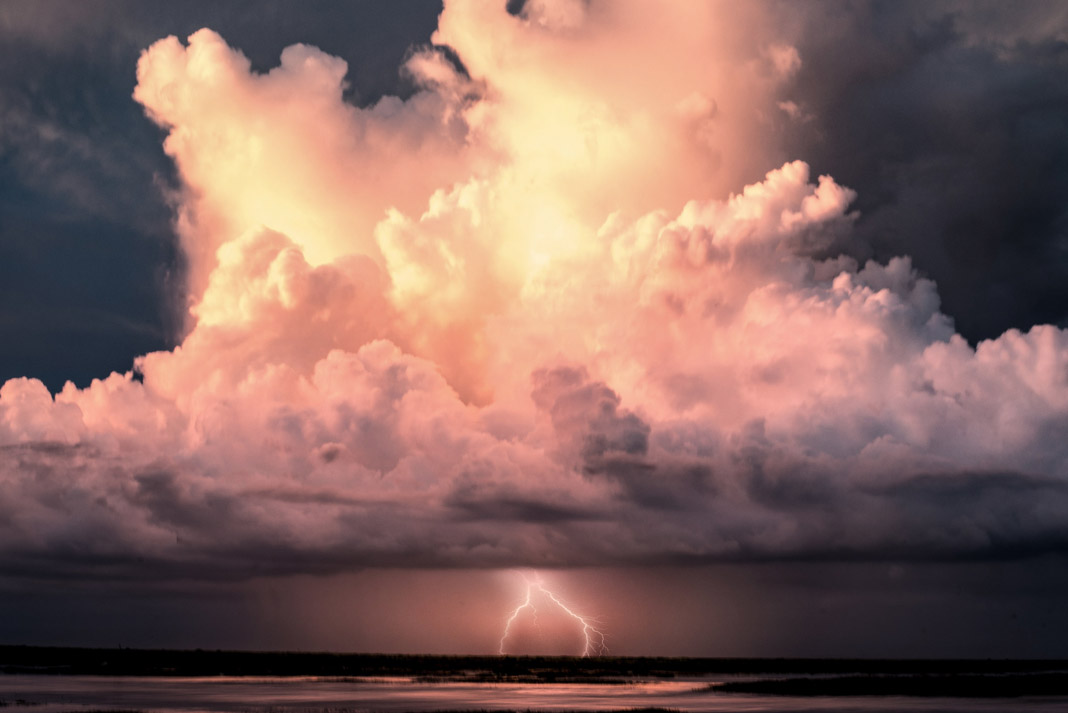
A lightning strike can heat the surrounding air to 50,000°F, five times hotter than the surface of the sun. this rapid heating causes the air to expand and vibrate, creating thunder claps. | Photo: Cath Simard
1 What to do in a lightning storm
Lightning is essentially a huge spark, balancing the electrical charges between sky and Earth. Everyone knows not to take shelter under a single tall tree or on a high peak, but to stay safe you’ll also want to get off the water, away from shorelines and avoid meadows.
Most people aren’t struck directly by lightning. In fact, direct strikes only account for between three and five percent of lightning related fatalities. Between 50 to 55 percent of fatalities are from ground current, according to the National Oceanic and Atmospheric Administration. This happens when the bolt hits a nearby object, and current passes through the ground.
[ Discover the best gear of the year in the Paddling Buyer’s Guide ]
Canoeists aren’t safe on the water either
Lightning can strike water, and water is an excellent conductor of electricity. Think hair dryer in a bathtub. And contrary to what some people think, the hull of your plastic canoe won’t protect you.
The bottom line is there’s no completely safe spot in a lightning storm. It’s best to seek shelter when you hear thunder. If you are caught out in a storm, “You definitely don’t want to be lying down on the ground, spread out, which could maximize the current going through your body,” according to John Gookin, research manager at the National Outdoor Leadership School (NOLS). If lightning is striking nearby, get into lightning position—crouch on your sleeping mat with your feet together to minimize your exposure to ground current.
The 80-hour wilderness first responder course, seen here, is one of the most comprehensive wilderness First Aid courses offered. | Photo: Gabriel Rivett-Carnac
2 New standard for CPR
In 2015, the American Heart Association (AHA) updated its guidelines for performing cardiopulmonary resuscitation (CPR). The updated recommendations call for 100 to 120 chest compressions per minute, with the rescuer depressing the chest by at least two inches, but no more than 2.4 inches.
Sound familiar? It is. The old rules recommended at least 100 compressions per minute and at least two inches of depth. The refinements were based on data suggesting excessive compression rate and depth decreased effectiveness.
The standard procedure—to begin with two rescue breaths followed by 30 compressions and repeat until help arrives—remains unchanged. According to the AHA, 326,000 people experience cardiac arrest outside of a hospital each year, and approximately 90 percent die. Bystanders often don’t know how to perform CPR and are afraid to make matters worse by getting involved. However, immediate CPR can double a person’s chances of survival, according to the AHA. CPR helps circulate oxygen through the body during cardiac arrest until an effective cardiac rhythm can be reestablished, often only through the use of a defibrillator, which shocks the heart back into a working rhythm.
[ Find a Wilderness First Aid course in the Paddling Trip Guide ]
Despite a handful of news reports detailing herculean CPR sessions lasting for more than three hours with positive outcomes, the rate of success varies from just two to 18 percent, according to the American Journal of Emergency Medicine.
For a little extra, they’ll make sure your kids eat their greens too. | Photo: Colin Field
3 Tip your guide
Though tipping 15 percent at a restaurant is customary, the question of how much to tip a wilderness guide mystifies many. While some guides are paid a living wage others may depend on tips. Too often it’s left up to the hapless client to suss out who is who without asking too many awkward questions.
The industry standard for tipping on day trips is typically 10 to 20 percent of the total cost of the trip. When it comes to big-money northern wilderness tips, “Consider $150 per person per guide—$300 per couple per guide—as a starting point,” says Neil Hartling of Nahanni River Adventures. While no client should ever feel compelled to tip, Hartling says guides work harder than the best staff in the finest restaurant and it’s a 24/7 job.
“To compare, salmon or steelhead fishing guides may be tipped $1,000 per client for a week of fishing,” adds Hartling. “These businesses are a labor of love for all involved and the guides are highly skilled leaders who could be earning more in many things they are qualified for—why not share the love?”
Tipping standards on international trip varies, so save yourself the worry of wondering what’s appropriate by simply asking when you book your trip. Most remote outposts lack a bank or ATM and we guarantee your guide would prefer to receive a tip in cash, so plan ahead and have some Benjamins on hand.
4 Safest place in a forest fire
Approximately 100,000 wildfires burn each year in the United States, decimating an average of 7,500 square miles. Sadly, 90 percent of wildland fires are caused by humans, often the result of negligence, like a campfire left unattended or improperly discarded cigarette butts.
A wildfire can move at speeds up to 14 miles an hour and burn at 700°C to 1,000°C. The first sign of a forest fire an unsuspecting camper might notice is ash in the air. If you catch a whiff of an approaching fire, beat a hasty retreat. Flames lick upward and so it’s best to head downhill and avoid tinderbox areas—grasses, pine needles and blowdowns go up quickly.
Water sources create a natural barrier against forest fires, but a canoe doesn’t equal safety. Embers can drift as much as a mile and light up far shores, and flames may be forced to leap across water by super-heated winds. Last August, more than 250 canoeists were evacuated from the 116-kilometer Bowron Lakes circuit when wildfires in British Columbia’s interior roared within a mile of the canoe route. According to a local operator who helped evacuate paddlers via motorboat, it was “three days of chaos.”
5 Real rules for hypothermia
Research from the University of Manitoba’s Dr. Gordon Giesbrecht shows 50 percent of people believe the average person would become hypothermic if immersed for just five minutes in zero degree water.
In fact, it takes much longer. The actual time it takes for a paddler’s internal body temperature to drop dangerously low depends on a variety of factors, including water temperature and body fat. However, on average, it takes roughly 30 minutes for adults to become hypothermic in icy water, which means their body temperatures have dropped below 95°F. This knowledge is important because it may help people panic less in those critical first few minutes after a capsize, according to Dr. Giesbrecht.
Remember cold water immersion rules with the handy 1-10-1 principle. The average person will experience one minute of cold shock response upon immersion, which is characterized by involuntary gasping and hyperventilation. This is dangerous—every year, there are cold water drownings when paddlers and recreational boaters capsize without wearing PFDs and drown due to this involuntary gasp reflex. In the cold shock response stage, it’s important to focus on calm breathing and maintaining a clear airway.
This stage is followed by 10 minutes of meaningful movement, when a paddler has the best chance of getting themselves to safety. After 10 minutes in icy water most people won’t be able to swim effectively.
Even after swim failure, if the swimmer is able to maintain a clear airway—perhaps by wearing a Type 1 life jacket—the average person may stay conscious for an hour or more. So long as a clear airway is maintained, Giesbrecht’s research estimates lean men and women might survive for two hours in freezing water, while overweight men and women might survive for four hours before dropping core body temperature eventually leads to heart failure and death.
But here’s the bottom line: The vast majority of cold water deaths do not occur from severe hypothermia and heart failure, but from drowning. The best way to protect yourself is to always wear a PFD and dress for the water temperature.
6 River signals
The roar of rapids makes hand signals crucial for communicating on the river. These six signals are widely understood in the paddling community and endorsed by the International Rafting Federation. Stop: Paddle held horizontally above the head; Go: Paddle held up vertically; Eddy out: Circling a single raised finger and pointing to the eddy; I’m okay: Thumb and index finger joined in an O and tapped on the top of helmet. Any kind of X formed with arms or paddles means first aid required. And remember to always point in the direction you want a paddler to go, never point toward danger.
Now free to work on self-actualization. | Photo: Colin Field
7 The real hierarchy of needs
In a survival situation, there’s only one pyramid that matters. The SAS Survival Handbook places shelter as the most fundamental need, then water, then food. Without shelter, people can die of exposure even at relatively mild temperatures. Hypothermia can occur in temperatures as warm as 60°F—all it takes is getting lost in the woods on a cool, damp or windy night.
In more extreme temperatures, exposure can lead to death within hours. Mountaineers use the rule of three to order their priorities—humans can survive three hours without shelter, three days without water and three weeks without food. Paddlers in remote areas should keep a small survival kit on them at all times, in case they’re ever separated from their boats and gear.
The colors of the aurora are determined by the type of particle-oxygen molecules produce green and yellow light, and nitrogen produces blue light. | Photo: Henry Liu
8 Where to see the northern lights
The best chance of viewing the awe-inspiring northern lights is during the long nights of winter. Unfortunately, winter in the north doesn’t come with much liquid water for paddling.
Not to fear, the northern lights may be seen at any time of year providing the skies are dark enough. Wilderness trips in Canada’s North, northern Scandinavia, Iceland and Alaska offer good chances of aurora viewing during late summer and fall trips. Outfitters tout classic canoeing and rafting rivers like the Nahanni, Alsek, Mountain and Thelon rivers as some of the top contenders for spotting the aurora borealis.
[ Discover once-in-a-lifetime northern river trips in the Paddling Trip Guide ]
The dancing lights of the aurora are the result of electrically charged particles from the sun colliding with the Earth’s atmosphere. Aurora displays correlate with an 11-year solar cycle, and 2018 and 2019 correspond with a minimum in solar activity. The next maximum in will happen around 2023. Less predictable solar storms, which can sometimes lead to aurora visible as far south as Ohio and Indiana, can be tracked at Aurora Watch.
9 Syphon gasoline
Knowing how to syphon gas is a valuable skill for overlanders, preppers and wilderness canoeists. Despite what Hollywood heists would have you believe, syphoning gas mouth-to-hose is actually pretty dangerous. Inhaling gas fumes can cause unconsciousness and swallowing gasoline requires immediate medical attention—problematic if you’re far from civilization, which was the reason you needed to syphon gas in the first place. So forget about this method.
Instead, prepare for a fuel emergency on long, remote road trips by carrying a coiled six- to 10-foot piece of clear rubber tubing. If you find yourself driving on empty, here’s what to do next.
Cut a third of the hose off. Take the longer piece and put one end in the fuller gas tank of an accompanying vehicle. Put the other end in a fuel-safe container on the ground below the level of the vehicle’s fuel tank.
Next, put one end of the shorter piece of hose in the gas tank and keep hold of the tail. Seal the fuel filling area with a rag. This will keep pressure from escaping.
Now blow air into the end of the shorter hose. Do not inhale. The pressure will push the gas out of the tank and into the long hose. Once the fuel is flowing, no further pressure is needed and the flow will continue until the tube is removed.
The single best way to increase the longevity of your tent is to camp in the shade, protecting it from harmful UV rays. | Photo: Graeme Owsianski
10 Three ways to make your tent last longer
When your gear stands the test of time it not only saves money, it conserves resources and minimizes your carbon footprint. Tents take a beating while sheltering us from the elements and providing a home away from home. Increase your tent’s longevity by camping in the shade. UV rays won’t do much harm on a handful of weekend trips a year, but a full summer under the sun will fry a tent’s fabric.
Remember to dry out your tent after every trip. Every. Single. Trip. Mold is a big culprit contributing to damaged waterproofing. Plus, mold smells. Set up the tent outside to fully dry or hang in the living room and only repack when it’s dry and clean. And to repack, roll or stuff the tent instead of folding it. Over time, folding a tent the same way can create creases that affect the waterproofing.
11Paddling Magazine’s top 7 uses for duct tape
The miracle material was invented by Johnson & Johnson during WWII. The military needed a waterproof tape to keep moisture out of ammunition cases. Since then, we’ve discovered 100 more uses—and counting—but here are the ones canoeists will find most helpful.
Mending holes in everything from puffy jackets to tent walls.
Mending zippers on the same.
First aid uses, including stabilizing a splint, making a sling, wrapping a sprain and taping down moleskin.
Rope for non-weight bearing activities. Just twist a length of tape around itself, or braid several lengths together for a more durable version. Ideal for non-load bearing uses, like a tent guy line or a clothesline.
Reseal food packages to keep chips fresh.
Seal a crack in a water bottle or cup—maybe even a hull if you’re really unlucky.
Fix a paddle, broken tent pole, fishing rod or eyeglasses.
12 Best tarp knot
A taut-line hitch lets you adjust the tension on a rope, making it a perfect knot for taut guy lines on tarps and tents.
Start by passing one end of your rope around an anchor object and then crossing it over the long part of the rope. Leave a long tail.
Bring the tail of the rope up through the loop from behind.
Bring the tail of the rope up through the loop a second time, from the same direction.
Bring the tail alongside the long part of your rope and cross it underneath, creating a new loop.
Bring the tail around the long part of your rope and pass it down through your new loop.
Pull your hitch tight. The knot should slide easily up and down the rope until its under tension when it should grip the rope and stay tight.
If it hasn’t rolled over, it’s not safe to drink. | Photo: Graeme Owsianski
13 Give fish eyes some fish eye
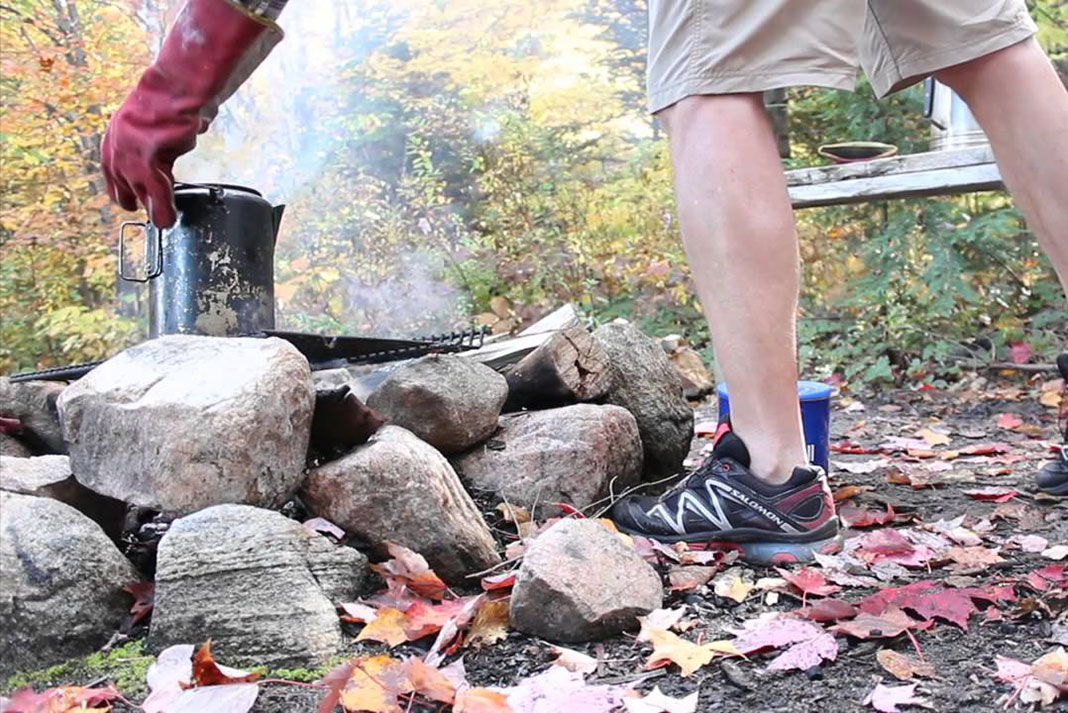
When heating up water, tiny bubbles will form at the bottom of a pot before the water begins to boil. These bubbles are often called fish eyes and some campers think fish eyes mean the water is hot enough to kill off any harmful bacteria and is safe to drink. Not so.
Fish eyes can form in water as cool as 104°F, which isn’t even close to the recommended 185°F needed to treat H2O. While there’s been many dissenting opinions on the subject over the years, nowadays most organizations, including the Center for Disease Control and the National Outdoor Leadership School, recommend a rolling boil for at least a minute to kill off harmful waterborne bacteria like giardia and cryptosporidium. Boil water for three minutes at elevations higher than 2,000 meters.
14 When to pop it
There’s a common misconception all blisters should be left intact and never popped. According to the NOLS Wilderness Medicine handbook, if a blister is larger than a nickel, firm and in an area likely to experience friction—like on your foot, for example—it’s likely going to pop anyway. Better to pop it using a sterile tool, clean it and dress it well. This makes for better wound care than allowing the blister to pop inside a boot.
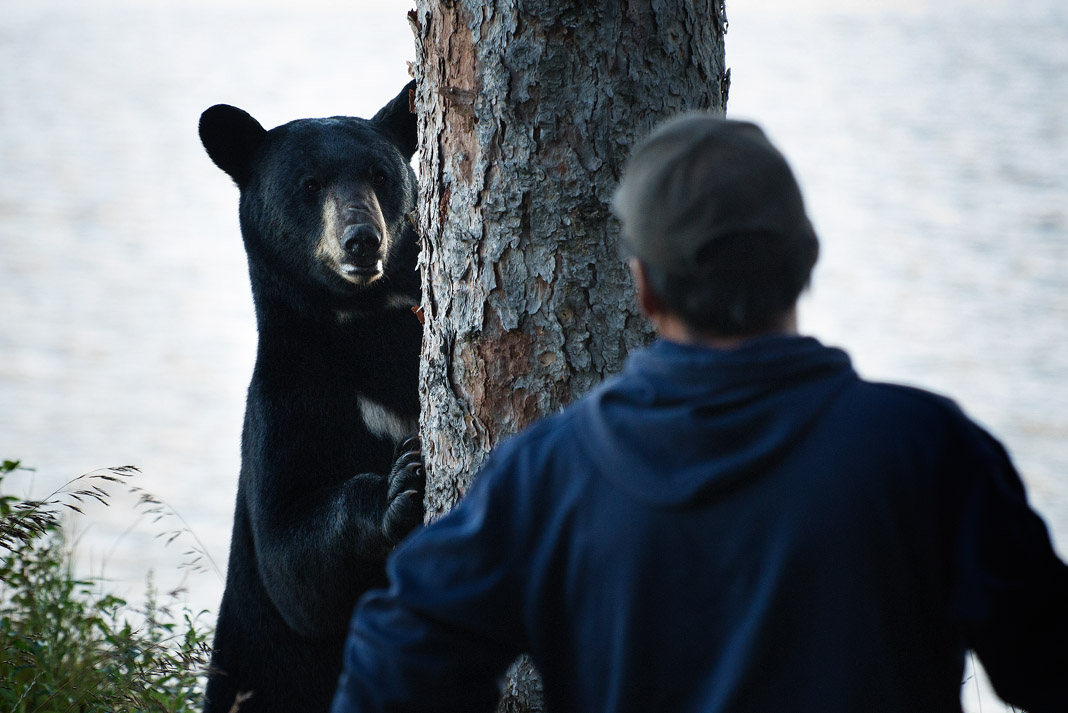
“Hello! Sorry to have surprised you. I’m here for the picnic.” | Photo: Francois Leger-Savard
15 Don’t play dead
Playing dead is good advice only if you’re the victim of a defensive bear attack. However, 88 percent of North Americans killed by black bears during the last century were the victims of predacious attacks. That sobering stat is the finding of University of Calgary professor Stephen Herrero and it means paddlers can’t simply lay down.
“If predation is the motive for an attack, people who act passively or play dead are simply inviting the bear to continue the attack,” Herrero writes in his book, Bear Attacks: Their Causes and Avoidance. The book is recommended reading for anyone paddling in bear country—though it may kill your appetite.
In a predatory attack, a bear is often silent as it stalks its prey. It won’t exhibit defensive behaviors, like huffing or slapping the ground. When a predacious bear attacks it is to eat, and the victim must fight back.
Healthy black bears rarely attack defensively, according to Herrero’s research. Instead, they prefer to retreat or intimidate by bluff charging. Grizzly bears are more likely to attack defensively to protect their cubs, a food source, or when they’ve been surprised. In a defensive attack, playing dead can be an effective strategy—lay on your stomach, legs together, with hands clasped behind your neck.
In either case, bear spray is the only effective protection against an attack. The Journal of Wildlife Management reports bear deterrent spray is effective 92 percent of the time in brown bears attacks, and 90 percent of the time in black bear attacks. Herrero’s research backs this up, confirming people who defended themselves with pepper spray escaped injury most of the time, and those who were injured experienced shorter duration attacks and less severe injuries.
16 Remove a barbed fish hook
Oops, you’ve accidentally hooked up with your paddling buddy. Once he’s stopped cursing you, Kayak Angler editor Ric Burnley offers these instructions to set him free as painlessly as possible.
Attach a foot-long piece of fishing line to the curve of the hook.
Push down on the eye of the hook to disengage the barb. Continue the pressure while simultaneously sharply tugging the string—be sure the string is in line with the shank of the hook. The hook should come out easily.
Wear glasses to protect your own eyes from a flying hook. If this method doesn’t work or if the barb is right below the skin, you may have to push the point of the barb up through the skin. Gross. Once the barb is out, you can snip it off and back the hook out. Clean, dress and elevate the wound, and monitor for signs of infection.
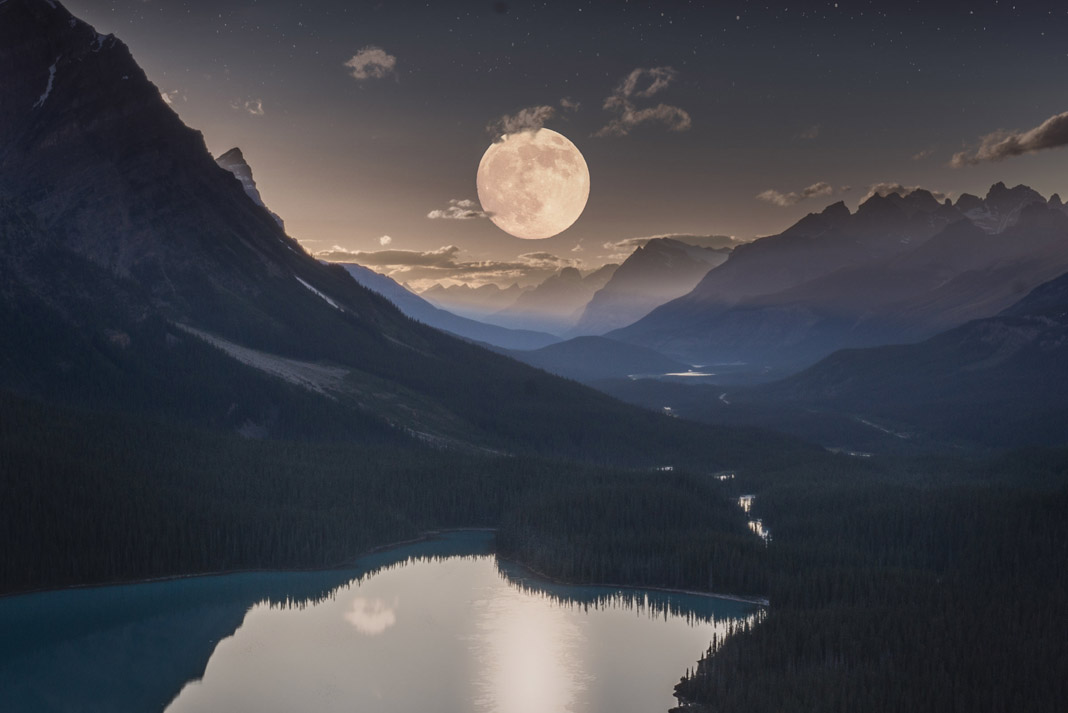
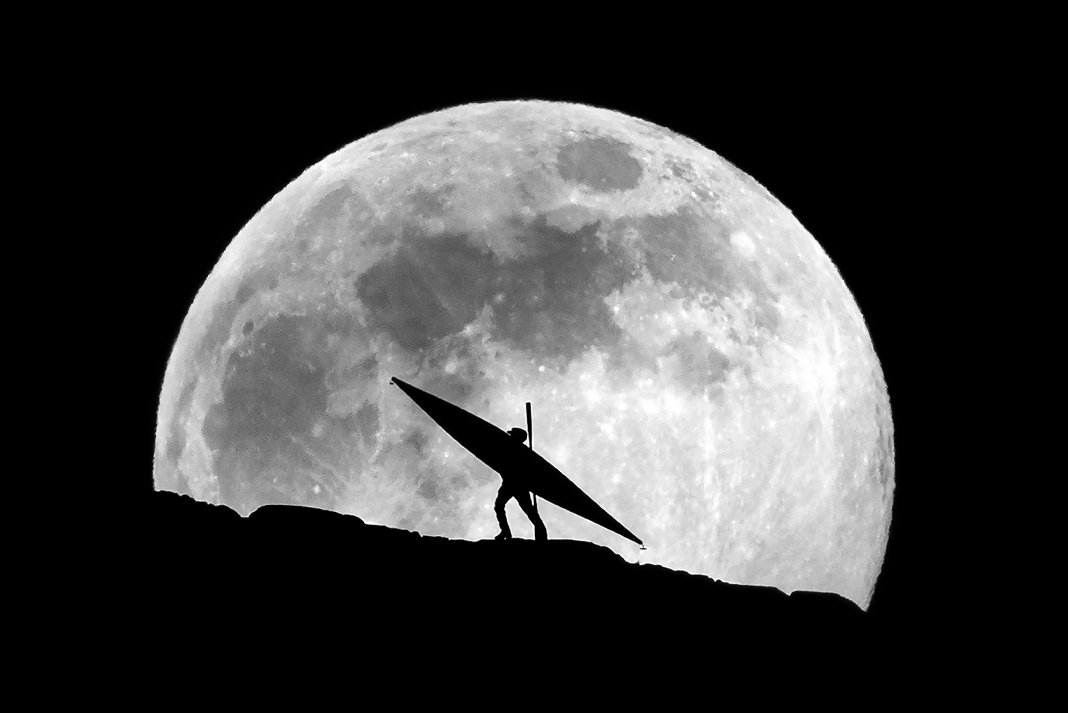
Moon illusions is an optical illusion causing the moon to look bigger near the horizon. | Photo: Cath Simard
17 Moon phases 101
As the moon orbits Earth, one half of the moon is always illuminated by the sun. From Earth, the portion of illumination we see changes. The fractions of illumination have names and are called the phases of the moon—full, new, first quarter and last quarter.
A new moon is when the sun and the moon are on the same side of the Earth, so we can’t see any illumination on the moon at all. A full moon is when the moon and sun are on opposite sides of Earth, so we can see the moon lit up. It takes 29 days for the moon to complete one orbit of Earth, and due a combination of the speed of Earth’s rotation and the moon’s orbit, the moon rises approximately 50 minutes later each day.
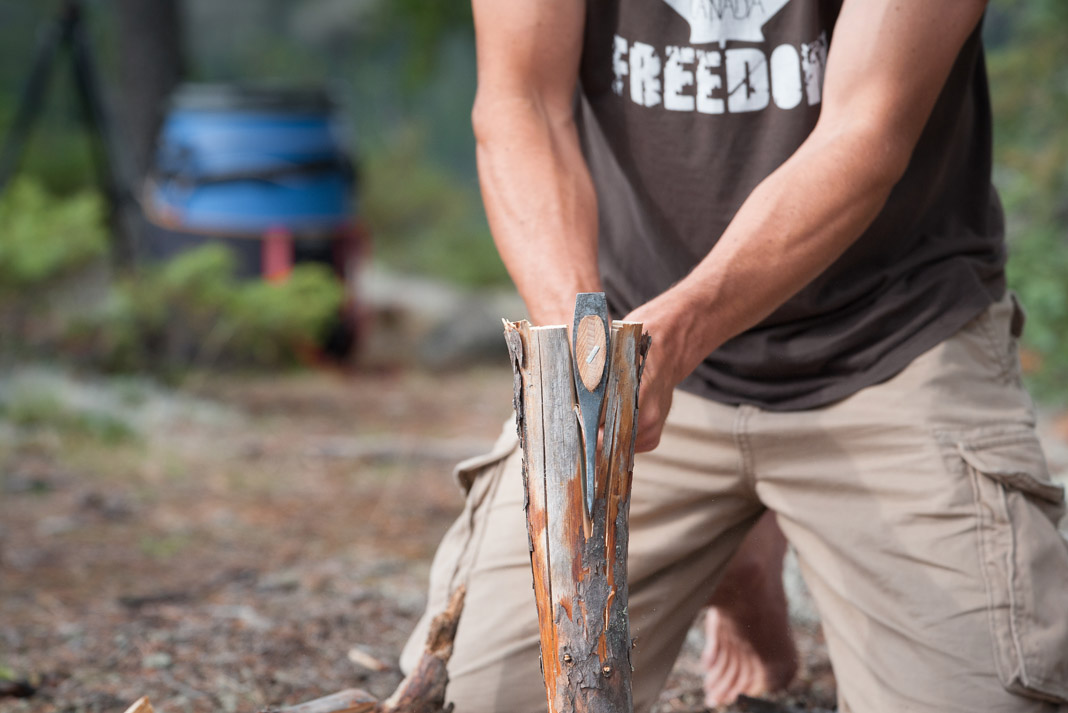
We’ve got an axe to grind with people who chop wood in bare feet. | Photo: Mike Monaghan
18 Safest way to split wood
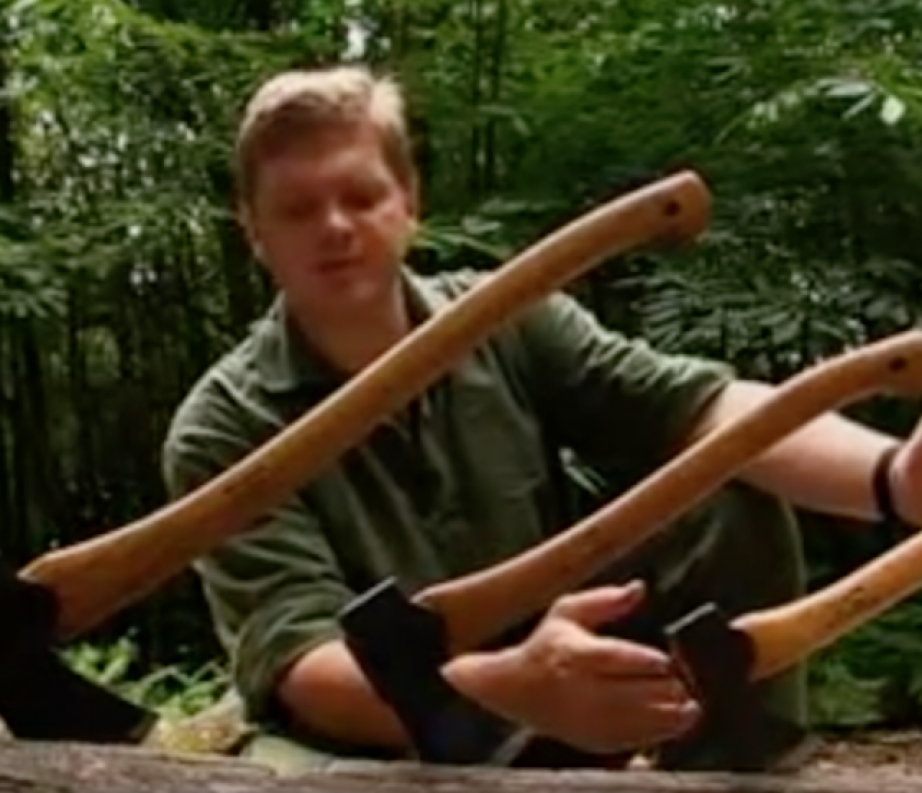
Kneeling is the safest position to split wood from, according to bushcraft expert Ray Mears. When kneeling, a missed swing will hit the ground instead of burying its head deep into your kneecap.
You will lose some of the power to your swing when kneeling instead of standing, so opt to split logs about the diameter of an adult’s calf, an ideal size for low-impact campfires. First, find a fallen log to us as a block. To split a piece of wood for firewood, place the axe onto the firewood log, then bring both axe and log down onto the block simultaneously. One or two blows and the wood will split. This is the safest way to use an axe in the backcountry.
This fluffy backwoods treat is the best thing since before sliced bread. Mix the ingredients before you leave home and package in a Ziploc bag. For a fireside breakfast, mix the dry ingredients with a half cup of water and roll out the dough into a half-inch thick length, then wrap it around a stick. Rotisserie your dough over hot coals. Remember, the key to baking is consistent heat. You’ll know it’s done when the dough easily slides off the stick—usually about 10 minutes. Slather in butter and jelly.
[ Paddling Buyer’s Guide: View all camp kitchen gear ]
Ingredients:
1 cup flour
1 tsp baking powder
1/4 tsp salt
1/4 cup dry milk powder
1 tbsp shortening
A 21-day guided trip on the Northwest Territories’ Nahanni river costs roughly $6,500 USD or $8,700 CAD. Better return those empties. | Photo: Colin Field
20 Save money for your dream trip
Whether it’s a $2,000 Ontario fly-in fishing trip or $8,000 northern river adventure, dreams don’t come cheap. Fortunately, you don’t need to be rich to take the trip of a lifetime, you just need to be creative and scrupulous with savings. We asked expert vagabond Matt Karsten, who’s been traveling the world full-time for eight years, for his savings advice.
First of all, start tracking your spending, says Karsten. “Put aside a day this weekend and go through all your accounts to find out exactly what your finances look like, down to the dollar.” You need to find out where all your money is going before you can hope to stem the leak.
Once you have a clear idea of everything you’re spending, start budgeting. To start, find out how much your trip is going to cost you. “You’ve got 12 months before you leave? Your monthly savings goal is 1/12th of that total,” says Karsten.
Some items on your budget will be inflexible—rent, insurance and saving for your trip. Other expenses are flexible, like the money you spend on food every month, or socializing. The goal is to figure out how much money you have left after taking care of your inflexible expenses, and then not exceeding the set amount.
As a final exercise, Karsten recommends listing all of the items you spend money on under two columns: wants and needs. Be honest about which is which. Netflix is a want, not a need. So are Friday beers with buddies. Then put dollar values next to each item under the wants column. “Now, total them up. That’s how much extra you would save this month if you cut them out,” says Karsten.
21 Cotton thrills, occasionally kills
Though the drama of “cotton kills” is catchy, it’s not always true. Typically, paddlers and campers avoid the cotton boogeyman because once the hydrophilic fabric gets wet it stays wet, making its wearer work harder to stay warm. Bad news in cool and damp environments. But, in summer—prime paddling season, remember—a light, loose and long sleeved cotton shirt provides sun protection and breathability. And if you start to overheat, wet cotton cloth on the skin does wonders to cool off.
This article was first published in the Early Summer 2018 issue of Paddling Magazine. Subscribe to Paddling Magazine’s print and digital editions, or browse the archives.
Bonus tip: Always tie down your canoe. | Feature photo: Graeme Owsianski
As a professional conservationist and kayaker, I often hear paddlers of my generation lamenting the transition of river runners from 1960s-era counterculture conservationists to smartphone-toting river consumers. It happened for a simple reason—we won.
The Paddlers Who Popularized River Running In The 1960s And ‘70s Didn’t Just Notch First Descents. They also chalked up major conservation victories. They stopped dams in the Grand Canyon and Dinosaur National Monument and maneuvered environmental legislation through Congress. River runners, climbers, and backpackers whose names you know—Martin Litton, David Brower, Ansel Adams, Roderick Nash, and Tim Palmer to name a few—led many of these fights.
The laws passed thanks to those victories—the Clean Water Act, Endangered Species Act, National Environmental Policy Act, Wild, and Scenic Rivers Act, and National Forest Management Act—rely on science and administrative procedure. The Byzantine laws controlling government agencies now inform decisions.
The United Rallying Cry Of Paddlers And Conservationists Can Stop Big Dams
The challenge now is more complicated, like enforcing the TMDL (total maximum daily load) under the NPDES (National Pollution Discharge Elimination System) of section 303(d) of the Clean Water Act. It’s complicated and full of jargon, and the average person’s eyes glaze over just trying to comprehend my last sentence.
I can spout acronyms with the best—and worst—of them. Most people who do conservation work nowadays have advanced degrees in ecology, law or policy. Few volunteers have the time and attention span to endure the long technical meetings, policy discussions, and back-and-forth revisions, a process which can drag on for years.
Developing a municipal cleanup plan for a polluted stretch of my backyard river took 16 years. And salmon protection has been in court since 1994, back when I was still paddling my New Wave Cruise Control.
The True Challenge Is To Make Paddlers Who Care About Rivers Feel Like More Than Mere Foot Soldiers In These Battles. Professional conservationists monitor the legislative and agency processes and send email blasts with speaking points—please email Senator X or forest service planner Y. There are experts on one side, with followers and clicktivists on the other. It’s necessary to work, but it’s not an inspiring way to build a movement.
So, in addition to paper pushing, I also do what all kayakers do. Seek mentors who know the local runs. Watch those with the best lines through tough water and mimic what they do.
Over the years, I’ve interviewed paddlers who took the plunge to become effective river conservationists without making it their full-time jobs. Not unlike learning to paddle whitewater, their stories have a common thread—intimidation at first, then great rewards.
“The secret to conservation is easy. Mostly it’s showing up and using skills you already have,” one told me.
Easy floats are sharing articles, news and petitions on Facebook, contributing $5 every month to the Friends of Your Favorite River, and volunteering to plant trees or remove invasive species. When you’re ready for class II and III, you’ll be emailing lawmakers and showing up with your pals at a hearing or two, or collecting plant and critter data.
Ready to run the big stuff? Practice for the lines of a policy campaign to get stream buffers into the land use code. If you want to huck yourself off waterfalls, strap on the elbow pads and run for office so paddlers can lobby you.
Yes, Conservation Is Intimidating. It’s much easier to just go boating. But fighting for rivers is as addictive as paddling them. Nobody listens to experts without people who share their passion. Wilderness, as Edward Abbey wrote, doesn’t need a stronger defense. It just needs more defenders.
Neil Schulman paddles and does conservation work in Portland, Oregon. He grew up loving rivers and not environmental impact statements but he now loves both.
If you’re going to commit, make sure you go all the way. This could be Ciarán Heurteau’s maxim, evidenced by the 31-year-old’s rapid transition from competitive slalom racer to expedition creekboater and photographer to award-winning filmmaker.
Growing Up In Paris With French And Irish Parents, Heurteau Joined France’s Oldest Kayak Club At Age Seven. “I was immediately hooked,” says Heurteau, who currently resides in the French Alps. Looking back, the club’s slalom focus was “a way of developing the technical skills to get from point A to point B,” he adds. “It’s how I learned to paddle.”
Heurteau raced for 15 years, representing Ireland on the World Cup slalom circuit, twice cracking the top 10 world rankings. He last raced in 2016.
“My heart wasn’t in it anymore,” he admits. The opportunity to paddle on the world stage was “secondary to the people I met…and all the time on the water spent chasing the best way to go fast.”
Ciaran Heurteau decided he wanted to become a kayaking photographer
In the winter of 2010, Heurteau was training in New Zealand with Kiwi boater Mike Dawson when “things just kind of happened” and he found himself in a helicopter, bound for the South Island’s Kokatahi River.
Heurteau calls it his best and worst trip. He recalls the camaraderie of descending a wild river with friends and employing technical skills he had been practicing all his life in slalom. But unlike a World Cup race, creeking was refreshingly noncompetitive. Simply exploring the river was a revelation for Heurteau.
“It reminded me why I loved kayaking in the first place.”
However, his inaugural river trip ended with an injury. “I went straight into one of the hardest rivers of the South Island,” says Heurteau, who suffered a dislocated shoulder while stuck in a hole. After the incident, Dawson and another boater continued downriver for assistance while Heurteau waited on the river with Johann Roozenburg, in what turned into “a very long and painful 12-hour night.” Recovering from shoulder surgery, Heurteau took stock of his life.
Heurteau Knew He Wanted To Do More Creekboating And Pursue His Passion For Photography. He started a production company called Twelve Productions—in reference to how the number seemed to follow him around in slalom bib numbers and race results. At first, he photographed slalom athletes. A big break came when he was invited to shoot some of the world’s best freestyle and downriver kayakers at the 2012 Whitewater Grand Prix in Chile.
Fast forward to 2016, when Heurteau, Dawson and Spanish paddler Aniol Serrasoles talked about an expedition to Pakistan’s Indus River, to run the Rondu Gorge, an infamous section of one of Asia’s largest rivers. The region’s political instability was just as intimidating as the class V gorge; no one had paddled the Rondu in the last eight years.
The trip came together at the last minute: Heurteau secured his travel visa on a Monday, and the team arrived in Pakistan the following weekend. Heurteau had a general idea of what he wanted to capture in his first documentary film: “The whole Pakistan experience, on and off the water—something raw and beautiful.”
Ciaran Heurteau’s first creekboating experience was in New Zealand
Like His First Experience Creekboating In New Zealand, The Indus Served As A Crash Course. “The whitewater was absolutely insane. Each rapid was the biggest I had ever run,” says Heurteau. “Before dropping in, I would be completely focused on filming and I would miss the conversation with Mike and Aniol while scouting. So after I filmed them running the rapids, I figured out the line by myself and psyched myself up alone at the top.”
Back at home, it took Heurteau a month to edit the raw footage. He says he drew on local Pakistani music to adopt a cinematic style reminiscent of French filmmaker Yann Arthus Bertrand’s theatrical movie, Human. Heurteau’s 26-minute Into the Indus earned Best Whitewater Film honors in the 2018 Paddling Film Festival.
Heurteau hasn’t paddled whitewater since suffering a knee injury in early 2017 and he isn’t certain where the future will take him. But he knows it will take the shape of a river.
“Always follow the path of least resistance,” he says, “and embrace obstacles on your way. No matter how chaotic things might seem, there is always a line.”
If I were going to choose two wheels as a method for transportation, derailleurs, disk brakes and a drop-post would make up some of the parts list. It would be very inefficient to include a canoe by itself in that scenario.
Enter Two Wheels That Will Make Your Canoe Trips More Enjoyable, Easier On The Lumbar And Open Access To More Wilderness Areas
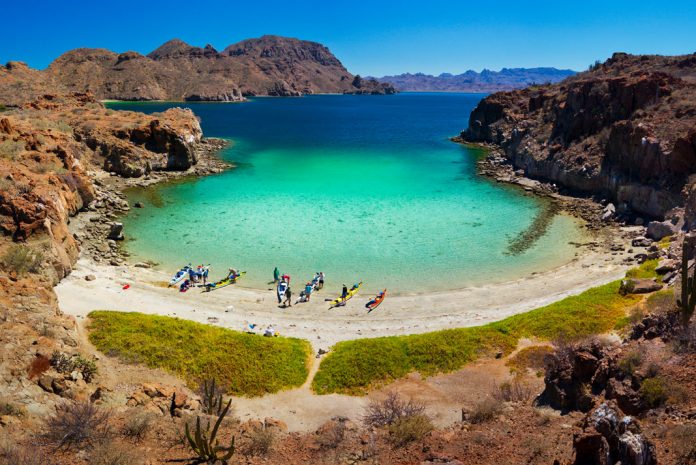
If you want to go fast and light or take time over rough terrain, here are two canoe carts for a solo or tandem adventure. The bike and canoes are not included.
1. Heavy Weight
Expedition Canoe Cart
The Expedition Canoe Cart from Western Canoeing Manufacturing is built to turn heads for reasons other than its looks. The burly appeal of this cart accurately represents the fact that it’s in it to endure abuse time and time again. The fat bike-worthy four-inch-wide tires are 16 inches in diameter providing almost eight inches of ground clearance. Reduce the tire pressure in soft terrain and a smoother ride. These tube-style tires will not slip off the rims.
The UV resistant orange bubble foam encompasses the tubular, stainless steel frame to cradle your canoe. Solo loading is manageable as the foam grips the hull to prevent a slide when securing. Tandem loading? It’s a breeze. The strap system is simple and intuitive. Drape over the gunwales, thread through the buckle and tighten. The narrow wheelbase is advertised for low-speed travel only. So if you decide to pair the Expedition Canoe Cart with a bike shuttle— and we know you will—keep in mind it’s a bit tippy. Note, you’ve been warned. With a 350-pound load capacity, rest assured the Expedition Cart will easily follow you well off the beaten track.
Price:
$289
Weight:
21 lbs
Capacity:
350 lbs
Wheel Size:
16″x 4″
www.westerncanoekayak.com
2. Light Weight
Suspendz Smart Airless DLX Cart
What’s yellow, black and will never give you a flat tire? The Smart Airless DLX Cart from Suspendz features solid wheels so you can leave the flat-tire worries at home. Set up and breakdown can be done the second time around with your eyes closed. Simply pull the pins to remove wheels and it folds into itself.
The cradling platform is 13 inches by 18 inches and packs down into the included mesh bag for convenient at-home and on-trip storage. The arched axle provides generous leeway for moderately smooth portages.
Ideal for kayaks or pack canoes, the Airless DLX features a strap system some may find cumbersome. I had to incorporate a couple extra strap lengths to securely fasten the cart to the center of the hull.The kickstand comes in handy for solo use but is not suited for canoes more than 15 feet in length. Superbly light and compact, the 150-pound weight capacity would be more than sufficient for an extended solo adventure or a couple’s weekend trip.




 This article was first published in the Early Summer 2018 issue of Paddling Magazine.