Home Blog Page 26

Canada’s Largest Canoe Camping Reserve Is Hidden in Plain Sight—And It’s Not Algonquin

La Vérendrye Canoe Camping

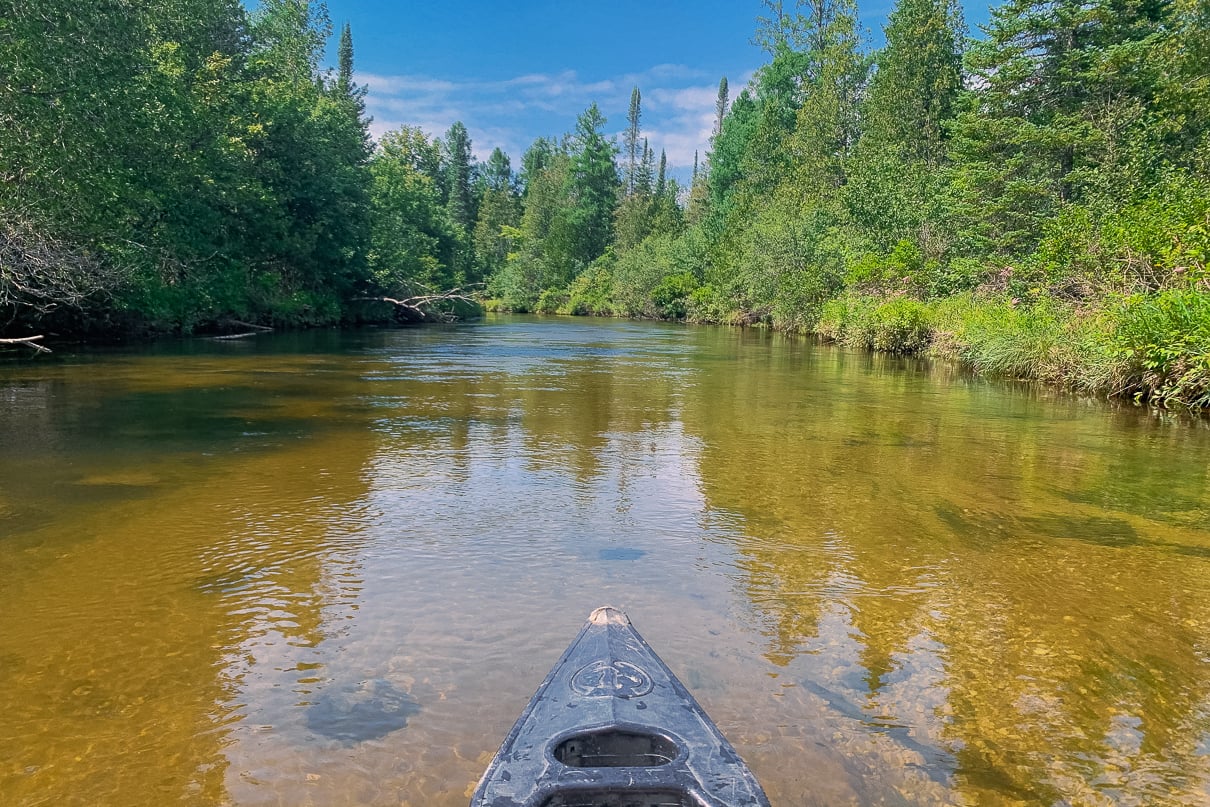
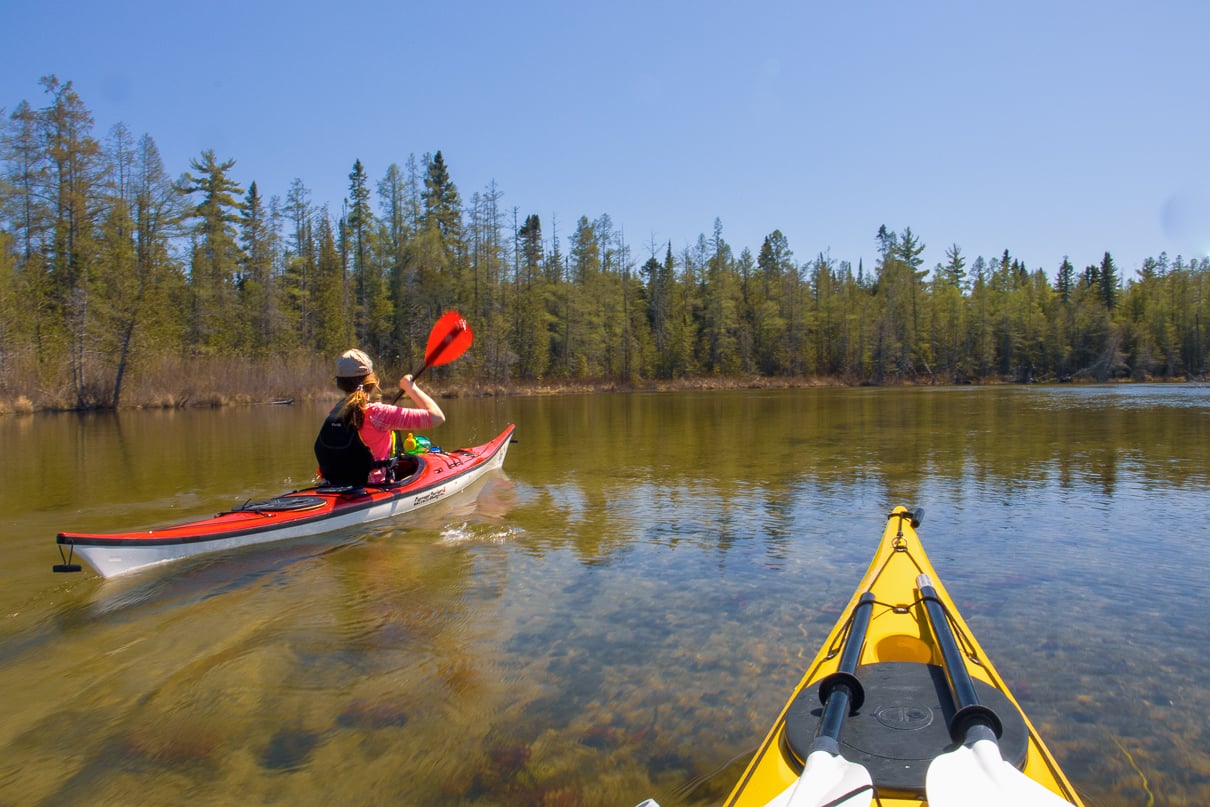
Boasting more than 800 kilometers of maintained routes traversing rivers, reservoirs and some 4,000 scenic lakes, Réserve faunique La Vérendrye is one of North America’s most expansive—and least crowded—canoe camping destinations. Paddlers can choose from 500 backcountry campsites and 20 established canoe camping circuits, ranging from easy two- or three-day loops to challenging routes of 10 days or more.
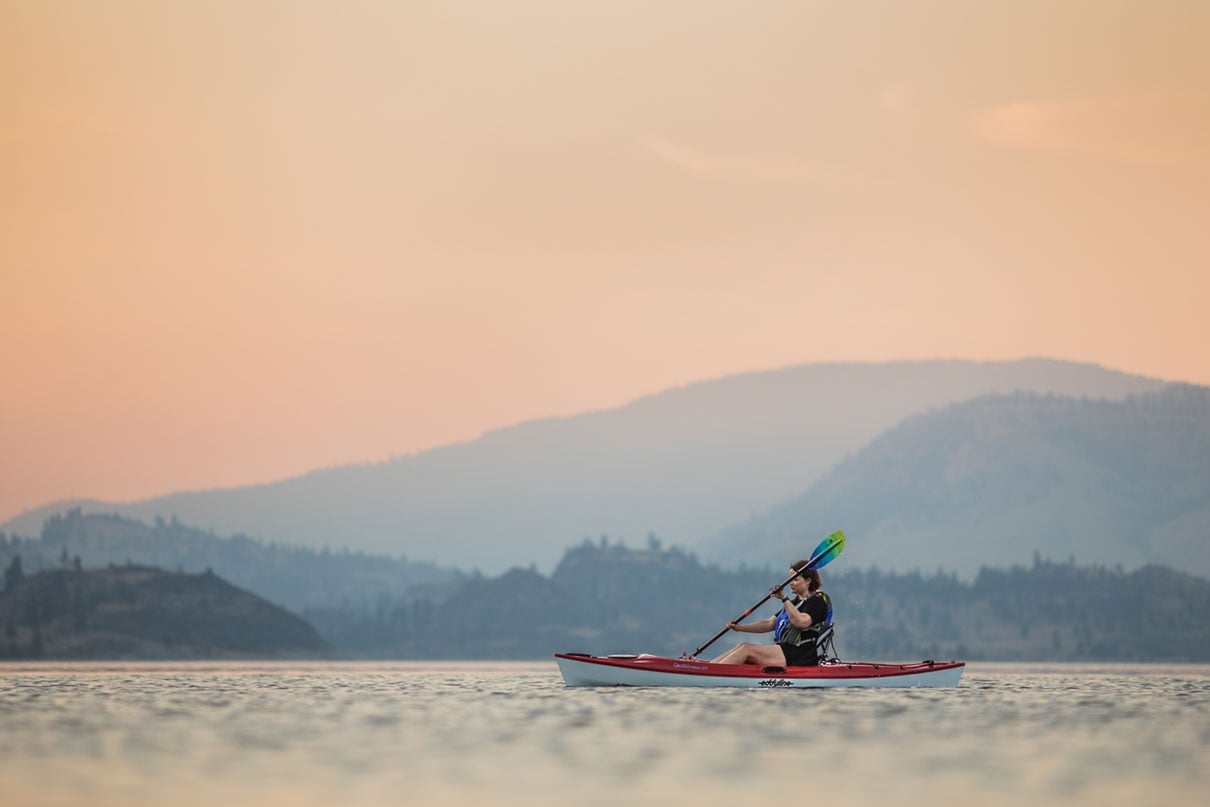
For backcountry travellers weary of the crowded portage trails and booked-out campsites in popular destinations like Algonquin Park, canoe camping La Vérendrye offers a blissfully quiet alternative in the beautiful boreal forest landscape. At over 12,500 square kilometers, this Quebec reserve is nearly twice the size of Algonquin Park. Whether you enjoy portage-free paddling, intimate lake-to-lake journeys or navigating rapids on a thrilling wilderness river, La Vérendrye’s diverse canoe routes offer something for every paddler.

To get started planning your canoe camping La Vérendrye adventure—known locally as canot camping La Vérendrye, from the French “canot” for canoe—here is everything you need to know about paddling in this spectacular wildlife reserve.

Where Is Réserve faunique La Vérendrye?

Réserve faunique La Vérendrye is in western Quebec, near the border with Ontario, straddling the Outaouais and Abitibi-Témiscamingue regions. The wildlife reserve’s southern entrance is a two-hour drive from Ottawa and less than three hours from Montreal. From Toronto, the southern entrance is a seven-hour drive.

Quebec Route 117—which serves as the Trans-Canada Highway northern route in the province—bisects the reserve for nearly 200 kilometers from north to south, with the towns of Val d’Or and Mont Laurier serving as gateway communities. More than 30 canoe camping access points are accessible from Route 117 with registration centers at the northern (km 453) and southern (km 275) entrances, Le Domaine (km 329) and Lac Rapide (Rapid Lake, km 358).
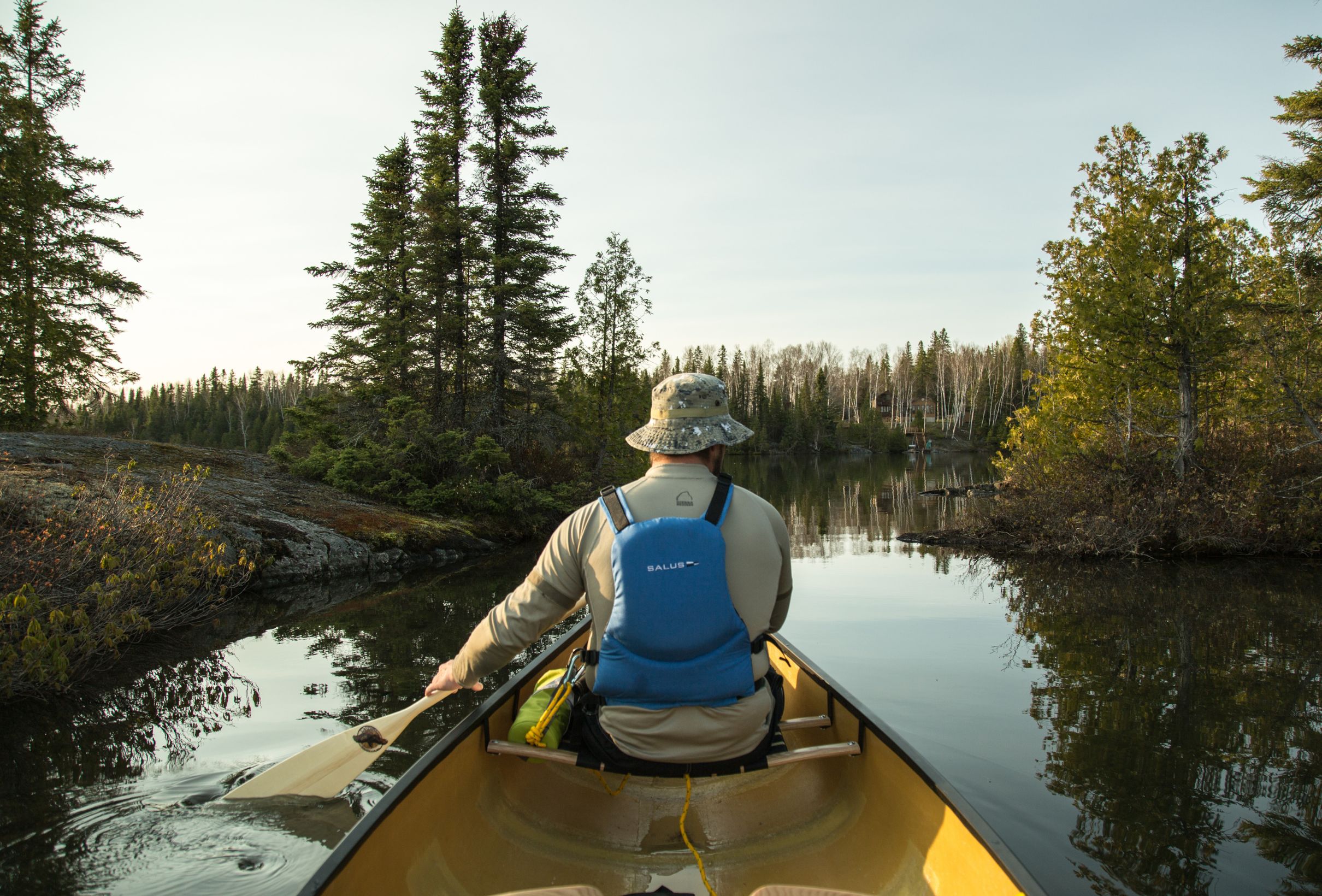
La Verendrye Backcountry Canoeing
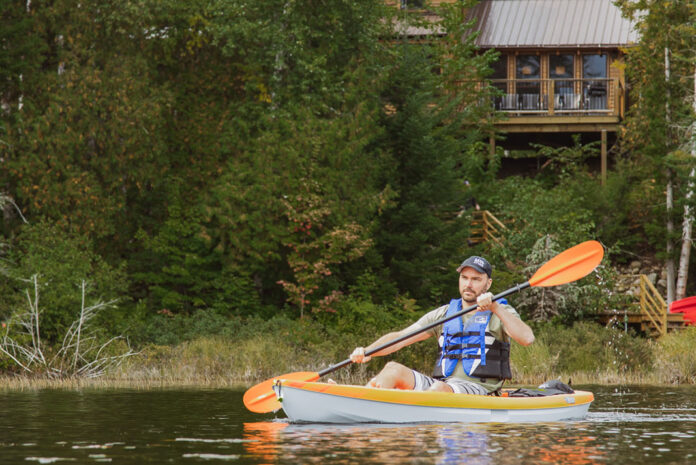
Enjoy the solitude of the La Verendrye backcountry. | Photo: Martin Poitras

Best La Vérendrye Canoe Camping Routes

La Vérendrye canoe routes include lake and river travel as well as portage-free touring on two massive reservoirs, with route distances varying from 23 km to 240 km. The wildlife reserve offers 20 designated routes, or circuits, overseen by Sépaq and identified by name and route number.

The first step to planning your La Vérendrye canoe camping experience is deciding how many days you want to spend paddling and camping. Then, review the route options for that length of trip on Sépaq’s canoe-camping La Vérendrye web portal. Or choose from the suggested routes below:

Réservoir Cabonga (#25

Duration: 2 to 15 days
Difficulty: Beginner
Portages: None

Why paddle it: Studded with countless islands and rimmed by beautiful sandy shores, sprawling Réservoir Cabonga offers endless no-portage canoeing and sea kayaking. Choose from nearly 50 campsites with options for linear or loop routes. Access to the central reservoir is from Lac-Rapide visitor centre or launch just a few kilometers from Le Domaine to explore the southern end of the lake. Be prepared for treacherous waves on windy days.

Portage-Larouche (#34)

Duration: 3 days/2 nights
Difficulty: Beginner
Portages: 6 (735 meters total)

Why paddle it: This charming 44-kilometer loop begins near the Lac-Rapide visitor centre and makes a scenic circuit of mid-sized lakes connected by peaceful streams and narrow meanders. Few motorboats along most of this route add to its tranquillity. Be sure to make camp at one of the stunning rock slab sites near the outlet of Lac Nizard.

Lac Gaotanaga (#70)

Duration: 3 days/2 nights
Difficulty: Intermediate
Portages: 3 (385 meters total)

Why paddle it: Suitable for more experienced canoe campers, this 47-kilometer route in the northwest corner of the wildlife reserve combines open-water paddling on scenic Grand Lac Victoria with swift-flowing sections of the Ottawa River. A highlight of the loop is spectacular Big Chute, where you can score a rocky campsite overlooking this hypnotic cascade. For a longer intermediate trip in the same area, try the Lac Granet – Ouatouais (#73) loop, which begins at lovely Lac Granet and explores the upper reaches of the Ottawa River (115 km, 7 days).

La Perche-Chartier (#78)

Duration: 4 days/3 nights
Difficulty: Advanced
Portages: 6 (1,680 meters total)

Why paddle it: Another fine option for more advanced canoe trippers, this 62-kilometer lollipop loop begins at Baie-Barker in the Wanaki biodiversity zone and encompasses three large lakes with beautiful scenery and clear water for exceptional swimming. Watch for the glacially formed esker on Lac Graham.

Rivière Chochocouane (#60)

Duration: 6 days/5 nights
Difficulty: Advanced/expert
Portages: 12 (1,465 meters total)

Why paddle it: The unspoiled Rivière Chochocouane is one of La Vérendrye’s premier whitewater paddling rivers. This 60-kilometer route offers numerous class I-III rapids for experienced paddlers to run, along with well-maintained portages and options to extend your trip by one or two days. A shuttle service is offered for downriver trips. Alternatively, allow 10 days for a 138-kilometer loop—the Grand Boucle Chochocouane (#63)—combining a descent of the river with upstream paddling on the Rivière Canimiti and a diverse mix of large and small lakes and streams. Expect 17 portages (3.5 km total) on this challenging circuit in the northeast reaches of the reserve.

La Vérendrye Canoe Camping
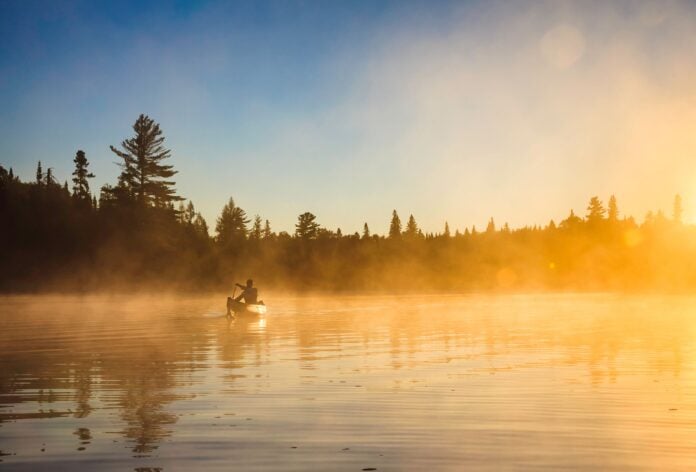
La Vérendrye promises a wilderness paradise for paddlers, without crowds at the put-ins or on portage trails. | Photo: Martin Poitras

How to Plan Canoe Camping in La Vérendrye

Whether you’re a beginner or expert canoe tripper, planning a backcountry adventure exploring La Vérendrye canoe routes is simple. Choose a river or lake circuit that suits your interests and aspirations, reserve the required number of campsites and arrange equipment rentals or shuttles if needed from Sepaq. Canoes and kayaks are available to rent on-site, and a shuttle service simplifies logistics for one-way journeys.

Permits and reservations

Canoe camping circuits in La Vérendrye must be reserved before your arrival at the park registration center. Backcountry canoe camping reservations cannot be booked online and must be made over the phone by calling Sépaq at 1-800-665-6527, or Canot-Camping La Vérendrye at 1-844-897-4980. Reservations open at the end of February for the upcoming paddling season. Registration centers are open daily from mid-May to the end of September.

Campsite reservations at Réserve faunique La Vérendrye work a bit differently than the site- or lake-specific reservations you may be familiar with from other canoe tripping destinations. Canoe campsites at La Vérendrye are reserved by circuit, or route, with limits on the number of parties on a circuit at any given time. This means you choose one of the 20 established canoe circuits based on how many nights you wish to camp, then within this route you have the freedom to sleep on any site you want.

Canoe camping sites can accommodate up to 10 people. Most sites have a pit toilet and firepit. La Vérendrye canoe camping fees are $16.25/adult/night (children under 17 are free of charge).

La Vérendrye canoe route maps

La Vérendrye canoe route maps are available to download from the Sépaq website in both printable PDF and GPX (GPS) file formats. You’ll find detailed map downloads for each of the reserve’s 20 canoe camping circuits. Each map set includes the paddling route, distances, campsites, portages and any rapids, as well as a QR code to download the map for offline use with your smartphone. Note these La Vérendrye canoe route maps are available in French only.

For general planning purposes, you can also view and download an overview map (1:225,000, French only) displaying all of the canoe camping circuits in Réserve faunique La Vérendrye here.

When to go

The best time to plan your La Vérendrye canoe camping experience is from mid-May to late September. Plan an early-season trip in May or June to witness spring wildflowers and vivid greens blooming across the lakeshores. Even better, this is prime time for viewing iconic wildlife like moose, beaver and black bear, and you’ll likely have much of the park to yourself (just be prepared for biting bugs).

If you prefer warm waters for swimming, the peak summer months of July and August are your best bet and the berry picking is superb. Late summer is also a great time if you’re looking to avoid blackfly and mosquito season. Alternatively, plan an autumn trip to catch the hardwood canopy ablaze with fall colors. The cooler days and crisp nights of September reward with bluebird skies and bug-free campsites.

Gear and canoe rentals

For visitors looking to rent equipment, lakewater and whitewater canoes and tripping barrels are available to rent from the La Vérendrye canoe camping registration centre at Le Domaine (Route 117, km 329). Canoe rental includes paddles, PFDs and safety gear; rates start at $40.50/day. Booking in advance is recommended and can be done at the same time as your camping reservation, by phone at 1-844-897-4980.

You can also book a shuttle service to drop off and pick up from the canoe camping registration center to the different routes. Shuttle bookings should be made at least four weeks before your visit, call 819-438-2017 for details or e-mail laverendryecanot@sepaq.com.

Fishing in La Vérendrye

In addition to holding a valid fishing license and following local fishing regulations, canoe campers who wish to fish during their trip must pay a daily right-of-access fee ($20/person/day). The main species in the reserve’s lakes are walleye and pike. There are also fishing and lodging packages available for folks who want to explore La Vérendrye but aren’t interested in backcountry camping.
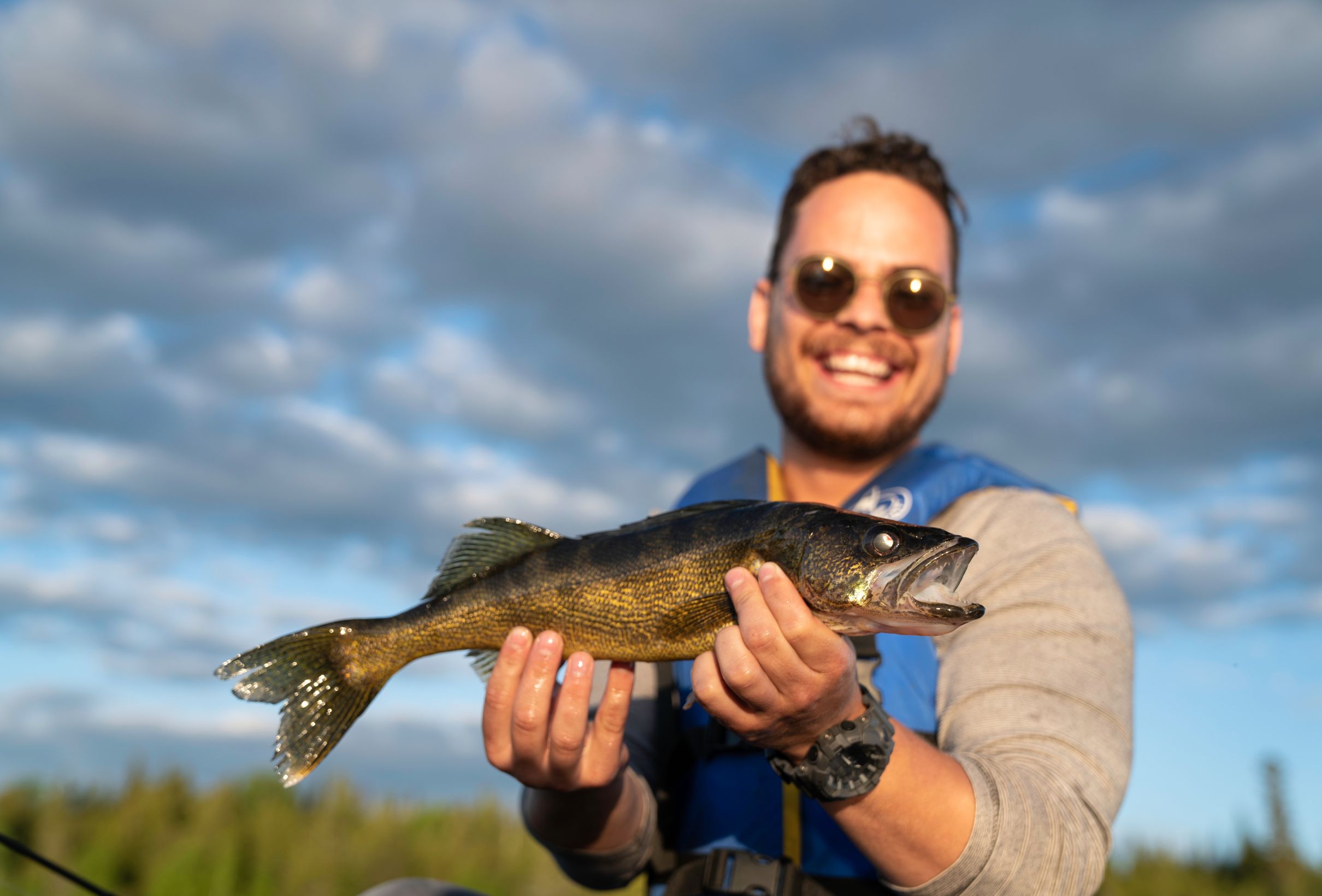
La Vérendrye Canoe Fishing
Say hello to spectacular fishing in La Verendrye. | Photo: Martin Poitras

More Amazing Places to Paddle in Abitibi-Témiscamingue

Looking for even more incredible paddling opportunities? La Vérendrye may be one of the world’s largest canoe camping destinations, but two other parks in the Abitibi-Témiscamingue region of Quebec are equally enticing. Discover outstanding canoeing and kayaking routes at Parc national d’Opémican and Parc national d’Aiguebelle.

Parc national d’Opémican

Stretching from the pine-clad cliffs of Lac Témiscamingue (Lake Temiskaming) on the Ottawa River to the vast watery labyrinth of Lac Kipawa (Lake Kipawa), Parc national d’Opémican is a hidden treasure just five hours north of Toronto or a one-hour drive from North Bay. The Laurentian Mountains provide a beautiful backdrop to a plethora of paddling possibilities, all accessible from the small village of Laniel.

Don’t worry about the details with the park’s canoe camping package, which starts at $109 a day for campsite rental and paddling gear.

Discover the region’s rich cultural history while canoeing or kayaking to peaceful backcountry campsites. Explore the islands of Lac Kipawa, follow along the spectacular cliffs of Lac Témiscamingue, or admire the magnificent scenery of Baie d’Opémican on waterways travelled by the Anishinaabeg since time immemorial.

Ideal for novice canoe campers, the park’s White Lake sector provides access to several small, interior lakes for a tranquil paddle-and-portage journey ending at Russell Bay on Lac Kipawa. In the Île-aux-Fraises sector, the challenging waters of mighty Lac Kipawa entice more experienced canoe and kayak campers to explore its deep water bays and the islands of the Opémican Archipelago. Finally, whitewater paddlers enjoy the wild and thrilling waters of the Rivière-Kipawa (Kipawa River)—the day run from Lac Kipawa to Lac Témiscamingue covers 16 kilometers with 18 rapids and a 30-meter waterfall.

Canoe, kayak and paddleboard rentals available on-site; view a map of paddling routes (French only) in Parc national d’Opémican here.
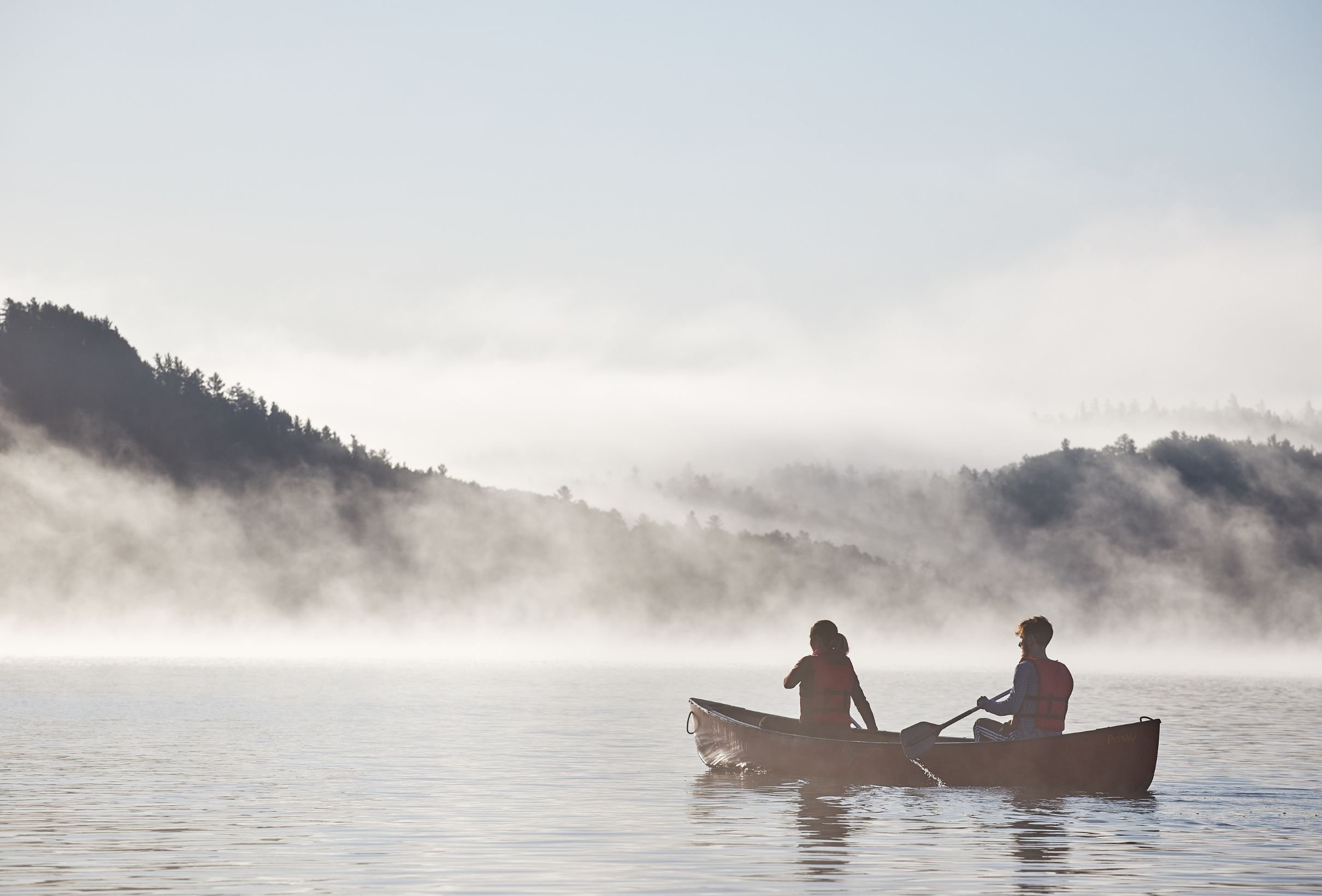
Parc National D'Opemican
Enjoy world-class canoeing in nearby Parc National D’Opemican. | Photo: Louis Jalbert

Parc national d’Aiguebelle

Nestled among the dramatic granite outcrops and verdant boreal forest of the Canadian Shield, Parc national d’Aiguebelle offers spectacular scenery and sublime canoe camping just a day’s drive from Ottawa or Toronto. Whether you are discovering canoe camping for the first time or have lost count of your nights in the backcountry, this compact park rewards paddlers with diverse wildlife, 2.7-bilion-year-old rock walls and breathtaking fault lakes set among the rugged Abijévis hills.

Canoe camping packages, including campsite and paddling gear rental, start at $108 a day.

Explore fascinating geology and dramatic cliffs on the La Haie and Sault fault lakes, which straddle the divide between the St. Lawrence and James Bay watersheds. At just eight kilometers roundtrip, these twin lakes can be explored in a day or book La Guêpe rustic hut at the head of Lac La Haie for an overnight excursion. Combine paddling with hiking the spellbinding trails that climb to the clifftops and cross the lake on a 22-meter-high suspension bridge!

From Taschereau Visitors Centre in the park’s northern sector, navigate the many islands and bays of lovely Lac Loïs. Perfect for beginner canoe and kayak campers, nine comfortably appointed campsites just three to four kilometers from your departure point are ideal places to spend a peaceful night under the stars. Canoe, kayak and paddleboard rentals and camping packages available on-site.


Still dreaming of more exploring? Learn more about the best paddling routes in the Abitibi-Témiscamingue region.

 

Best Rivers To Kayak In Michigan

kayaking over the Grass River in Michigan
Keep your eyes open for river otter on the Grass River! Image: Maddy Marquardt

Michigan is home to crystal-clear blue waters, sandy beaches and wild rivers making it the perfect place to kayak for everything from a casual float to overnight wilderness trips. Whether you’re looking for a long-haul kayaking adventure on a river or a scenic day trip, here are some of the best rivers to kayak and canoe in Michigan.

Michigan rivers are on the traditional and ancestral homelands of the Potowatami, Ottawa, and Chippewa tribes of the Algonquin Nation.
Best rivers to kayak and canoe in Michigan

To access many put-ins on state land, you’ll need a Michigan Recreation Passport, which can be purchased when you renew your license plate in Michigan, in person at a state park, or at a self-registration pipe located at many put-ons.

Crystal River

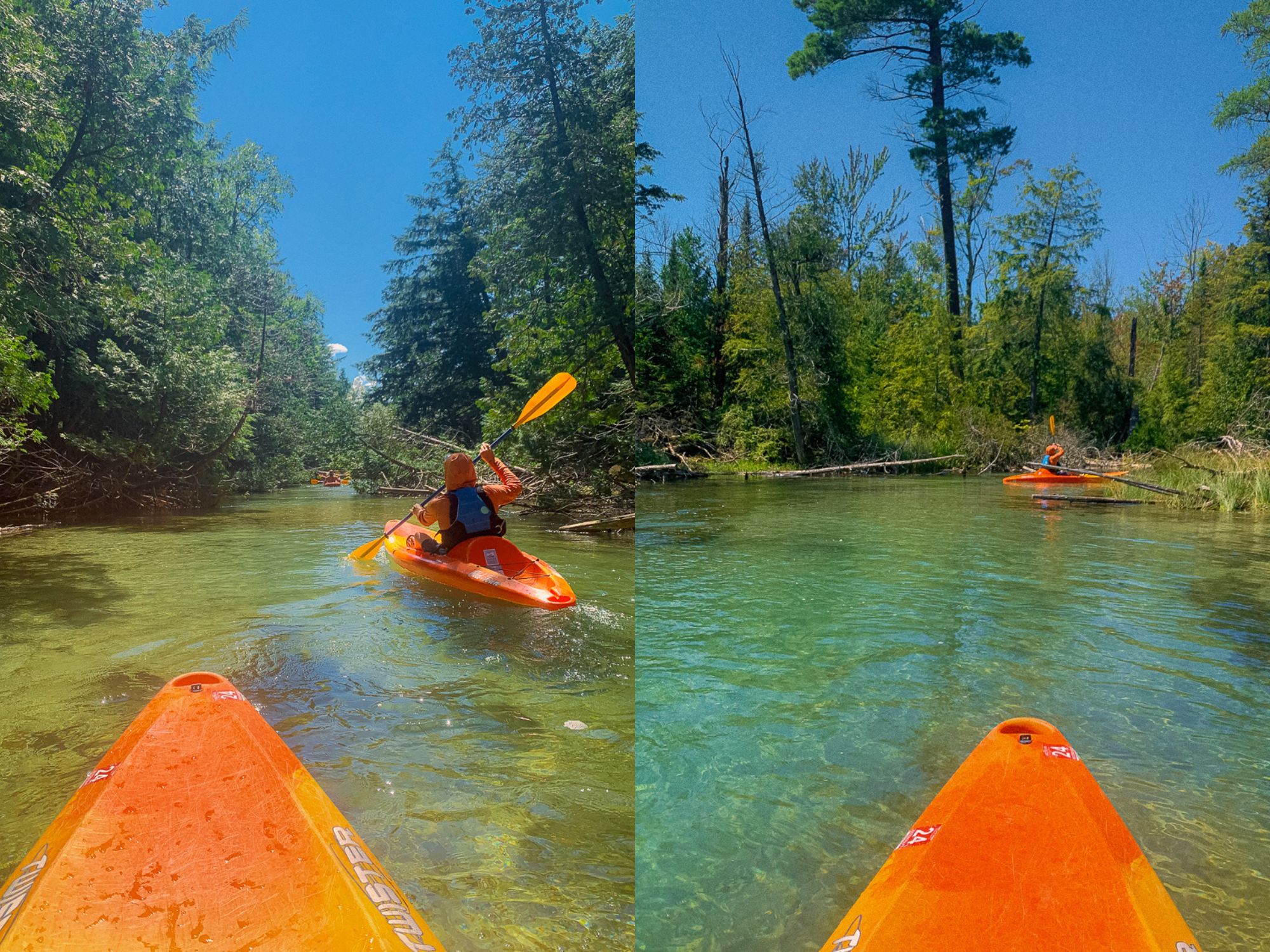
The Crystal River near is one of the prettiest rivers you can find to kayak in Michigan, located near Glen Arbor in the northwestern Lower Peninsula. Here, expect to paddle teal blue waters on a sandy-bottomed route through a lush forest with seasonal wildflowers along the river banks. The Crystal River is a great paddle trip to see wildlife including herons and river otters, and a fun place to kayak with kids!

Image of an orange kayak on the blue water of the Crystal river in michigna
Kayaking the Crystal River it becomes quickly clear where it got its name! Image: Maddy Marquardt

In the early fall, the Crystal River is the ideal place to paddle over the Lake Michigan salmon run. Salmon were stocked in the Crystal River in the 1970s to combat the invasive alewife; today, salmon still return to the Crystal River every autumn to spawn by the hundreds.

While you can bring your own kayak or canoe to paddle the Crystal River, shuttles and rentals are available from Crystal River Outfitters. Expect to complete two to three short portages, or places where you will have to carry your kayak, along this route. Portages around dams and road underpasses are well-marked. The Crystal River is just six miles long in its entirety; most routes are a half-day trip.

The Crystal River is part of the Sleeping Bear Dunes National Lakeshore, and an America The Beautiful National Parks Pass or Sleeping Bear Dunes day pass is required.

Au Sable River

The Au Sable River begins its journey near Grayling, Michigan, winding nearly 140-miles to Lake Huron. This river is well-known as a wonderful river for canoeing, but it also makes for a great kayaking trip. In addition to being home to the 120-mile Au Sable Canoe Marathon – a popular nonstop canoe race – the Au Sable River is an excellent river for overnight kayak and canoe tripping.
The Au Sable is known for brown trout flyfishing in addition to being often regarded as the best river to canoe in Michigan. Find a guide to put-in and take-out options on the Au Sable river from Carlisle Canoe Livery, and rent canoes and/or kayaks from Carlisle Canoe Livery or Borcher Canoe & Kayak both based in Grayling, Michigan.
Jordan River

Designated Michigan’s first “wild and scenic” river in 1972 under the State of Michigan’s Natural Rivers Act, the Jordan River winds through the Mackinaw State Forest near East Jordan, Michigan. Spring fed, sandy-bottomed and crystal clear, the Jordan River is a beautiful river for kayaking and fishing. The Jordan River is nearly 25 miles long and flows into the South Arm of Lake Charlevoix.

A canoe floats down the sandy-bottomed Jordan River in Michigan
The Jordan River is cold, clear, and fast moving! Image: Maddy Marquardt

Personally, the Jordan River is my favorite river to kayak in Michigan, taking paddlers through green and dense forest and wildflower beds. The Graves Crossing put-in allows for a three-hour paddle on swift water, small rapids and riffles depending on the water levels and some technical sections in the narrow, faster moving sections of the river. A more beginner-friendly put-in option can be found at the Webster’s Bridge put-in.

Kayak rentals and shuttles can be found at Jordan Valley Outfitters.

Manistee River

The nearly 200-mile long Manistee River flows from its headwaters between Gaylord, Michigan out to Lake Michigan. The Manistee is a popular Michigan river for kayaking and canoeing, including overnight multi-day trips, with numerous developed and rustic campgrounds along its length.

Flowing through a valley shaped by glaciers, the Manistee River is one Michigan’s formally-designated Wild and Scenic Rivers. Like many of the Northern Michigan rivers, the Manistee is an excellent trout fishery. The section of the Manistee above the Tippy Dam tends to have a faster moving current and more obstacles, while the lower section of the Manistee is wider and slower in current.

Find float times, maps and canoe and kayak rentals for the Lower Manistee River at the Pine River Paddlesports Center. For the Upper Manistee River, find canoe and kayak rentals at Chippewa Landing.

Two-Hearted River

The Upper Peninsula of Michigan’s Two-Hearted River is not only a popular Michigan river for canoeing, but the setting of Ernest Hemingway’s Big Two-Hearted River, a two-part short story. The river is also the namesake of the Michigan Bell’s Two-Hearted IPA, a popular local beer.

The Two-Hearted River is a secluded wilderness paddle, including the especially scenic and sandy lower portion of the river as it approaches Lake Superior.

The Green and Reed Campground makes for a good put-in point or camping option, while the Mouth of Two Hearted River State Forest Campground offers another rustic place to camp with river access.

Boardman River

Michigan’s Boardman River runs through Kalkaska County to flow into the Grand Traverse Bay. On the Lower Boardman there are several spots with fast-moving water including riffles and small rapids, including rapids at Old Keystone and Beitner Park to the tune of class I and class II with one class III site.

Inexperienced paddlers will need to portage or avoid this section of the river, while whitewater kayakers may find it to be one of the best whitewater sites in the Lower Peninsula of Michigan.

The Boardman River before and after these rapids is flatwater, if a little swift moving with some obstacles. Canoe and kayak rentals can be found at The River Outfitters in Traverse City.

Torch River

The Torch River runs between Torch Lake and Lake Skegemog and is known for its remarkable Caribbean-like blue water color. This is a short kayaking day trip, best done in the mornings before motorized traffic in this popular section of river picks up. Paddle out to the popular and scenic Torch Lake Sandbar, down the Torch River past boathouses intermingled with wildlife, and eventually out to the wilder Lake Skegemog where you’re likely to spot beaver and mink.

A kayaker floats on crystal clear torch lake at the mouth of the Torch River in Michigan
Tropical-like waters at the mouth of the Torch River. Image : Maddy Marquardt

Paddlers can put-in at the Torch River Bridge access site or the DNR Launch Ramp off Aarwood Trail NW.

The Torch River is part of the Chain of Lakes Water Trail, an over 100-mile water trail that includes 12 lakes and rivers, connecting Ellsworth, Michigan and to the Grand Traverse Bay and Lake Michigan.

Huron River

Michigan’s Huron River is home to the Huron River Water Trail which winds 104-miles from Proud Lake near Novi-Wixom to Lake Erie. Along the Huron River a paddler can find class II rapids at Delhi and Dexter or Mill Creek, and a series of small man-made drops at Argo Cascades; portage options are available around rapids.

While the Huron River makes for an especially great day trip, it is also possible to kayak the entire length of the river camping in a few spots along the way. Be advised that there are several dams to portage, and a few longer sections of the river without campsites.

Grass River

Michigan’s Grass River near Bellaire, Michigan is a unique opportunity to paddle a nature reserve with sedge meadows, northern fens and cedar wetlands. The Grass River is clear and sandy bottomed, flowing between Lake Bellaire and Clam Lake on the Chain Of Lakes Water Trail.

kayaking over the Grass River in Michigan
Keep your eyes open for river otter on the Grass River! Image: Maddy Marquardt

The area around the Grass River is home to over 500 species of plants, 147 species of birds, 35 species of fish, and 33 reptiles and amphibians according to the local Grass River Natural Area, making it one of the best places to kayak in Michigan for wildlife.

The Grass River is 2.5 miles long with a mild current and flat water, making it perfect for an out and back day trip. Put in at Willow Day Park on Lake Bellaire to begin your paddle with the current first and paddle back against it, or put in at Arrowhead Park on Clam Lake to paddle upriver first and float back down with the current on your return.

Rentals including pick up and delivery can be found at Paddles & Pedals in Bellaire, Michigan.

Delia’s Run and Big Island Lakes

Looking for the ultimate kayaking or canoeing wilderness experience and one of the best places to paddle in Michigan’s Upper Peninsula? Head up to Big Island Lakes Wilderness to paddle a chain of 23 interconnected lakes and rivers.

Kayaking the Big Island Lakes Wilderness in the Upper Peninsula at Sunset
Sunset in Big Island Lakes Wilderness. Image: Maddy Marquardt

Big Island Lakes Wilderness is lightly-trafficked and excellent for overnight camping. A few short portages may be necessary to access some of the interior campsites.

Overall, Big Island Lakes Wilderness is an excellent place to kayak or canoe immersed in wildlife and appreciate the dark skies of Michigan’s Upper Peninsula.

What We Know About The Canoeist Killed By Alligator In Florida (Video)

Florida woman Cynthia Diekema, 61, was killed by an alligator on a canoe trip on Lake Kissimmee on May 6, 2025. While out canoeing near Tiger Creek with her husband, the couple drifted over an alligator.

Paddling in about 2.5 feet of water the couple likely startled the large alligator who then capsized the canoe, sending both paddlers into the water. An eyewitness account states that Diemekma landed on top of the alligator; Diekema’s husband attempted, unsuccessfully, to fight it off.

Woman killed by alligator while canoeing on Lake Kissimmee

“This is a devastating loss and our hearts go out to everyone affected by this tragedy,” shared Roger Young, Executive Director of the Florida Fish and Wildlife Conservation Commission (FWC) in a press conference.

The FWC has launched an investigation into the incident, working with wildlife specialists and biologists as well as the sheriff’s office to understand what happened.

“While alligator attacks resulting in fatality are extremely rare, this tragedy serves as a somber reminder of the powerful wildlife that share our natural spaces,” said Young.

According to FWC public information officer Bradley Johnson the attack was not believed to be predatory in nature, adding that the FWC always encourages the public to keep their distance from wildlife.

“It’s premature to speculate exactly what happened,” shared Young, adding that they do have an eyewitness account of the incident, and that evidence is present to connect the individual alligator to the injuries.

Two alligators including an 11-foot four-inch alligator and an alligator between ten and eleven feet were recovered from Lake Kissimmee by the Statewide Nuisance Alligator Program (SNAP).

Alligator incidents in Florida

This is the second attack of an alligator on a paddler on Tiger Creek in Lake Kissimmee since March, when a woman was bitten by an alligator while kayaking. Generally alligator attacks on paddlers are extremely uncommon in all seasons, however according to Florida Today mating season for alligators in the area runs through June, and alligators are typically more aggressive April through September.

The FWC recommends the following to minimize chances of incidents with alligators:

  • People with concerns about an alligator should call FWCs toll-free nuisance alligator hotline at 866-392-4286.
  • Keep a safe distance if you seen an alligator
  • Keep pets on a leash and away from the water’s edge
  • Swim only in designated swimming areas
  • Never feed an alligator

Alligators, no swimming. Feature Image: Fox 35 Orlando | YouTube

The Hurricane Santee 116 Sport: Why This Enduring Kayak Remains A Recreational Favorite

What makes for a best-selling recreational kayak? To answer the question, consider the Santee 116 Sport from Hurricane Kayaks. This kayak is a perennial favorite among paddlers seeking a boat for day trips on their local waterways and road trip destinations. It is lightweight, comfortable, and has a stable shape, yet it glides through the water with ease.

Hurricane has recognized the continual love for the Santee, and rather than changing a shape that already works, they’ve continued to find ways to improve upon it with upgrades to the outfitting and paddler experience through the years.

These features make the Santee 116 Sport an enduring favorite

One of the most unique aspects of the Santee 116 Sport is it is a recreational kayak hull that cuts effortlessly through the water while still providing the stability paddlers on smaller lakes and bays prioritize. This is accomplished on the 11-foot, 7-inch long kayak with what is known as a Swede-form hull, a tapered bow, and a v-hull.

A Swede-form hull design places the widest point of the kayak just behind the paddler. This allows the kayak to maintain a slender profile through the front half, from the bow to the paddler. This tapered front shape cuts through and glides on the water. Meanwhile, the width of the Santee 116 Sport behind the paddler, combined with the soft chines and v-hull provide the paddler the stability.

The lightweight of the Santee is another reason it has become a popular kayak. The boat tips the scales at a mere 39 pounds. This makes the Santee 116 an easy kayak to load on the car and transport to and from the water.

The big reason why is the boat is constructed of thermoformed plastic, which, according to Steve Jordan of Hurricane Kayaks, cuts the weight of the boat down by about 15 percent compared to a rotomolded kayak of the same size and category.

The 55-inch-by-24-inch cockpit also provides some weight savings by being so wide open and cutting down on the amount of plastic on the deck. What really stands out about this large cockpit though is it makes it much easier to get in and out of the kayak.

Outfitting of the Santee 116 Sport

This brings us to the Santee 116 Sport’s outfitting once you are sitting inside. The kayak has what they call the Strongside Seat with Airestream Seatback. It’s a plush foam seat, and the backrest has an adjustable height to decide where you’d like back support. The seat also adjusts in height/tilt under the thighs, similar to newer vehicle driver seats. Having spent time in poorly outfitted boats with my feet falling asleep, I can attest adjustablitiy in thigh support is an underrated feature all recreational kayaks should have in order to spend hours comfortable on the water.

The kayak also has an easy to access rear hatch, thanks to the flip switch and hinge on the deck plate. There is a bungee behind the paddler for deck storage, and a clip to place a paddle when not in use.

The Santee 116 Sport is available now at retailers and you can learn more at Hurricane Kayaks.


Feature Image: Brenna Kelly

Polar Bears Train For Arrival of 2025 Arctic Paddlers (Video)

Polar bear plays with plastic kayak
"Hmm do you think this will float me?" Featured Image Peak Wildlife Park | Instagram

At Peak Wildlife Park in the United Kingdom, two polar bears brushed up on their kayak-crushing skills, presumably in solidarity with their Arctic-resident cousins training for the arrival of the 2025 class of Arctic paddlers.

In the viral video, the bears tested the kayak’s performance in categories such as tossibility, surfability, and of course resistance to repeated bouncing upon through the classic CPR-like approach.

Polar bears to be denied chance to munch on Frank Wolf’s boat in summer 2025

Every summer as intrepid paddlers venture north, polar bears are top of mind. Whether smashing kayaks or gnawing on canoes, these furry friends putting a hole in your primary means of transport is about the last thing an expedition paddler wants.

 Frank Wolf in particular has had his fair share of hairy encounters with polar bears, from a bear intent on using his canoe as a chew toy on the Seal River in Manitoba to accompanying Justine Curgenven while she fended off polar bears in Torngat with a camp chair.

Lucky for Wolf who has a rapport with polar bears, he’ll be paddling Prince of Wales (Taan) Island summer 2025, and he and his delicious looking kayak will be well south of the range of wandering white jaws.

Featured Image Peak Wildlife Park | Instagram

Kayak Buying Guide: How To Find The Right Boat For You

People sitting on grass beside kayaks
So many kayaks, so little time. | Feature photo: Courtesy of Ontario Tourism

What kayak should I buy? It’s the first question a kayaker asks, and often the hardest to answer. You have to choose the best kayak for you, but that’s the trick—finding the boat perfectly suited to your specific needs.

With dozens of companies producing hundreds of different models, there’s a kayak for every style of paddling and every type of paddler. If you can’t decide, buy two. There is no better way to grow as a kayaker than taking a friend.

This kayak buying guide will take you through everything you’ll need to consider before making a purchase, from finding the right size boat to deciding whether you need a skeg to picking a place to buy from. The first step, though, involves doing a bit of self-reflection into what type of kayaking you enjoy doing, and even what type of kayaking you’d like to do in the future.

“Start with the 5 Ws: who, what, when, where and how,” suggests Chris McDermott of Ontario-based outfitter Muskoka Paddle Shack. Once you answer the basic questions you can start narrowing the selection based on budget and boat fit.

Where and why do you kayak?

Figuring out where you want to paddle and what kinds of activities you want to do in your kayak will help determine what type of boat you should get.

For example, if you paddle open water and big seas, look at touring kayaks, which tend to be longer and narrower with smaller keyhole cockpits. If you paddle protected lakes and quiet rivers, check out shorter, more maneuverable recreational models.

Photographers, anglers and birdwatchers will appreciate the stability of a wider hull and the easy access of a larger cockpit or sit-on-top design. Rough open water playboaters will want an ocean-play kayak with plenty of rocker. Touring and camping aficionados will benefit from a longer waterline, higher volume and two, three or even four hatches for storing gear.

What if you have disparate paddling interests? Sometimes there isn’t a satisfactory solution to this other than buying two kayaks.

“What kind of water will you be in 80 percent of the time?” Kelly McDowell, the owner of Toronto-based outfitter The Complete Paddler, asks customers. “No single boat does everything well. Get something that’s suitable most of the time, and rent for the other 20 percent.”

So what exactly is a touring kayak and a recreational kayak? Next, we’ll provide explanations for the different types of kayaks you’re most likely to find online or in store.

People sitting on grass beside kayaks
So many kayaks, so little time. | Feature photo: Courtesy Ontario Tourism

Types of kayaks

There are many different types of kayaks designed for specific water conditions, trip lengths and activities. There are also variations within some of these categories you’ll need to consider. For example, do you want a kayak for two people? Is a sit-inside or sit-on-top kayak better for your pursuits? Should you go with a hard-shell vessel or inflatable?

Let’s learn a little more about each of these types of kayaks.

Recreational kayaks

12AR recreational kayak from Delta Kayaks
12AR recreational kayak from Delta Kayaks.

Recreational kayaks are ideal for paddlers who spend most of their time on lakes and slow-moving rivers. They typically have a flatter hull and are wider than most touring kayaks, giving them greater stability. However, the extra width also means they will drag more in the water and wind, making them a little slower than some other types of kayaks. Recreational kayaks are usually 10 to 12 feet in length, which may translate into improved maneuverability and worse tracking and efficiency than a longer design.

Touring and sea kayaks

Touring and sea kayaks are typically 14 to 18 feet in length, making them longer than most other types of kayaks. The long waterline of these boats lends itself to superior tracking; however, the drawback is they are more difficult to turn. Their length also allows for ample storage space for overnight or multi-day trips. Touring kayaks also tend to be narrower and sit lower in the water, these features allowing for greater speed and efficiency as the kayak cuts easily through wind and water.

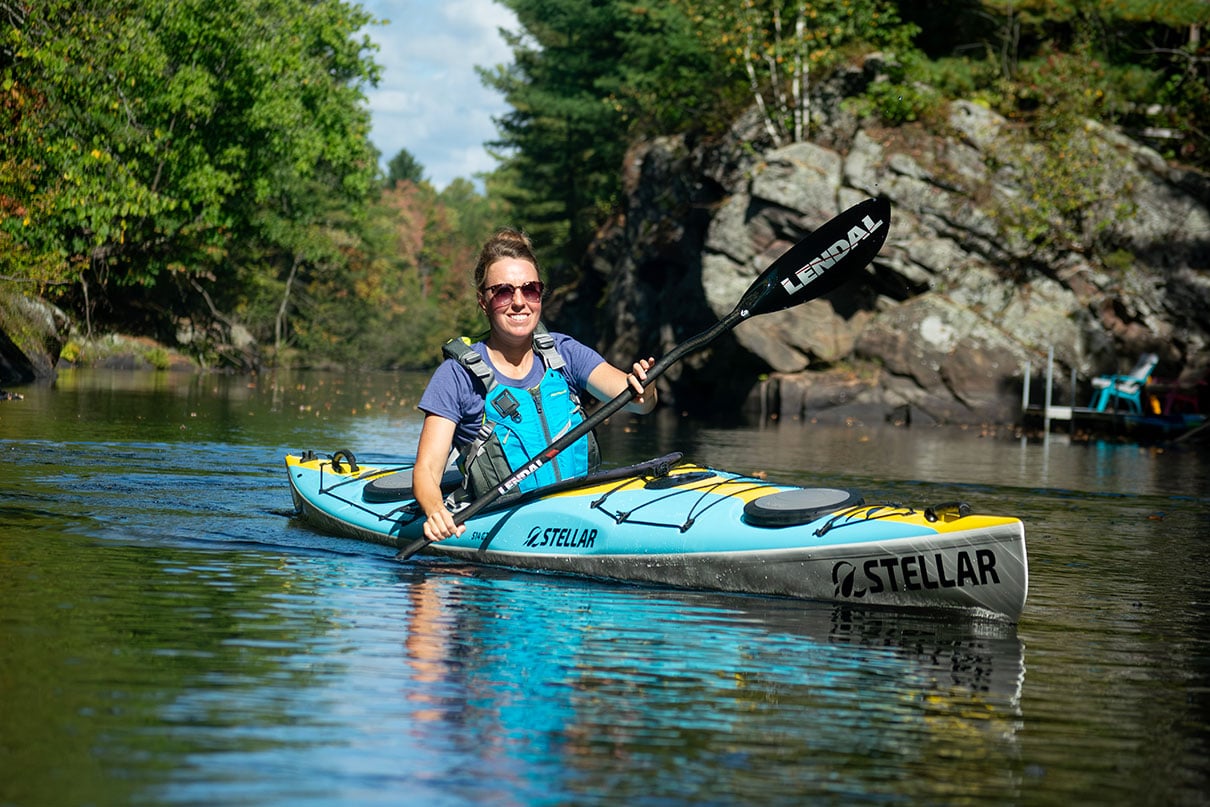
S16 touring kayak from Stellar Kayaks
S16 touring kayak from Stellar Kayaks.

If you’re on the fence between buying a recreational or touring model, decide how far from shore you want to paddle. For those headed further from the safety of land, “you need two bulkheads to be able to do a self-rescue,” says McDowell. “So you might need a touring kayak even though you’re a recreational paddler.” For added safety, also look for perimeter lines and grab handles on the bow and stern.

“If you’re starting out in lakes and harbors, and then in a few years you’ll be wanting week-long expeditions, buy a boat suitable for your end use,” advises Daniel Collins, retail manager at Ocean River Sports on Vancouver Island. “You can always use a touring boat on lakes, but a small recreational boat won’t suffice on multi-day trips.”

Fishing kayaks

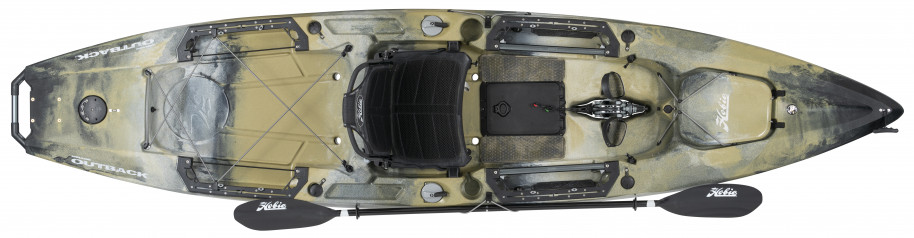
Hobie Mirage Outback fishing kayak
Mirage Outback fishing kayak from Hobie.

Fishing kayaks are built for stability and durability, and usually not speed. They generally have lots of storage space for fishing tackle and gear, in addition to specialized features such as rod holders, mounting brackets, bottle holders and anchor lines, among others. Some have pedal-drive systems or trolling motor mounts so anglers can reach the fishing grounds faster.

Whitewater kayaks

Dagger Phantom whitewater kayak
Phantom whitewater kayak from Dagger.

Whitewater kayaks are typically four to 10 feet in length. They have lots of rocker (the curve of the hull from bow to stern), which allows for greater maneuverability. Most whitewater kayaks don’t offer a lot of storage space. They also don’t track very well on flatwater and are not efficient enough to paddle long distances. Whitewater kayaks are designed to do one thing really well—paddle on whitewater. The new crossover category in whitewater kayaks offers more versatility in one design.

Solo kayaks

Perception Expression 11.5 solo kayak
Expression 11.5 solo kayak from Perception Kayaks.

Solo kayaks are designed to hold one paddler at a time. There are solo kayaks for a variety of purposes, from whitewater to recreation to fishing.

Tandem kayaks

Old Town Looksha T tandem kayak
Looksha T tandem kayak from Old Town Canoes and Kayaks.

Tandem kayaks are designed to hold two paddlers at a time. Some kayaks, like the AdvancedFrame Convertible Elite from Advanced Elements, have modifiable seat positions that allow for solo or tandem paddling. You can find specialized tandem kayaks for everything from fishing to touring to whitewater.

Pedal kayaks

Native Watercraft Slayer Propel 10 pedal drive kayak
Slayer Propel 10 pedal drive kayak from Native Watercraft.

Being able to have your hands free on the water can be of great benefit whether you are fishing or taking photos. With a pedal drive kayak you use your feet to push on pedals that move fins or a propeller attached to the bottom of the kayak. There is also a rudder to steer the vessel. Pedal kayaks do have reduced clearance, meaning you won’t be able to get into shallow water the same way you could in a paddle kayak. However they are faster and conceivably require less work as they make use of our strongest muscle group (the legs rather than shoulders).

Sit-inside kayaks

A classic sit-inside kayak offers the best protection from the weather and water, especially important in colder climates and on exposed coastlines. They also tend to be lighter and offer more interior dry storage than other kayak types.

Venture Islay Cruiser sit-inside kayak
Islay Cruiser sit-inside kayak from Venture Kayaks.

Like kayaks themselves, cockpits come in all shapes and sizes—smaller equals dryer, larger offers easier entry and exit.

Sit-on-top kayaks

Sit-on-top kayaks are self-draining and easy to scramble back aboard after a capsize or upset. The open deck makes it simple to hop on or off, and these designs are also usually more stable than their sit-inside counterparts.

Pelican Catch PWR 100 sit-on-top kayak
Catch PWR 100 sit-on-top kayak from Pelican.

For a more detailed breakdown of the pros and cons, see our article on Sit-on-Top versus Sit-Inside Kayaks.

Inflatable and folding kayaks

Folding and inflatable kayaks come in a huge variety of styles, suited to everything from tame pond paddles to extreme expeditions. These boats are lightweight and easy to store and transport.

Aire Expedition inflatable kayak
Expedition inflatable kayak from AIRE.

Check out our Inflatable Kayak Buyers Guide if you are interested in purchasing this type of boat.

Hard-shell or rigid kayaks

Eddyline Sandpiper 130 hard-shell kayak
Sandpiper 130 hard-shell kayak from Eddyline Kayaks.

If performance is what you’re after, hard-shell (rigid) kayaks are a better choice than their inflatable counterparts. They tend to be faster in the water and readily cut through windy and wavy conditions as they sit lower in the water.

Skegs and rudders

“Skeg boats are usually higher performance than rudder boats,” notes Kelly McDowell of The Complete Paddler. “The skeg and rudder themselves have nothing to do with it: it’s the manufacturers who have decided that rudders go on lower performing boats and skegs go on high performance boats.”

A skeg assists with tracking in crosswinds or currents and pairs with fixed footrests for optimum stroke efficiency. Most rough water boats feature skegs, since the fin’s placement closer to the cockpit keeps it in the water more than a stern-mounted rudder when the waves are standing up.

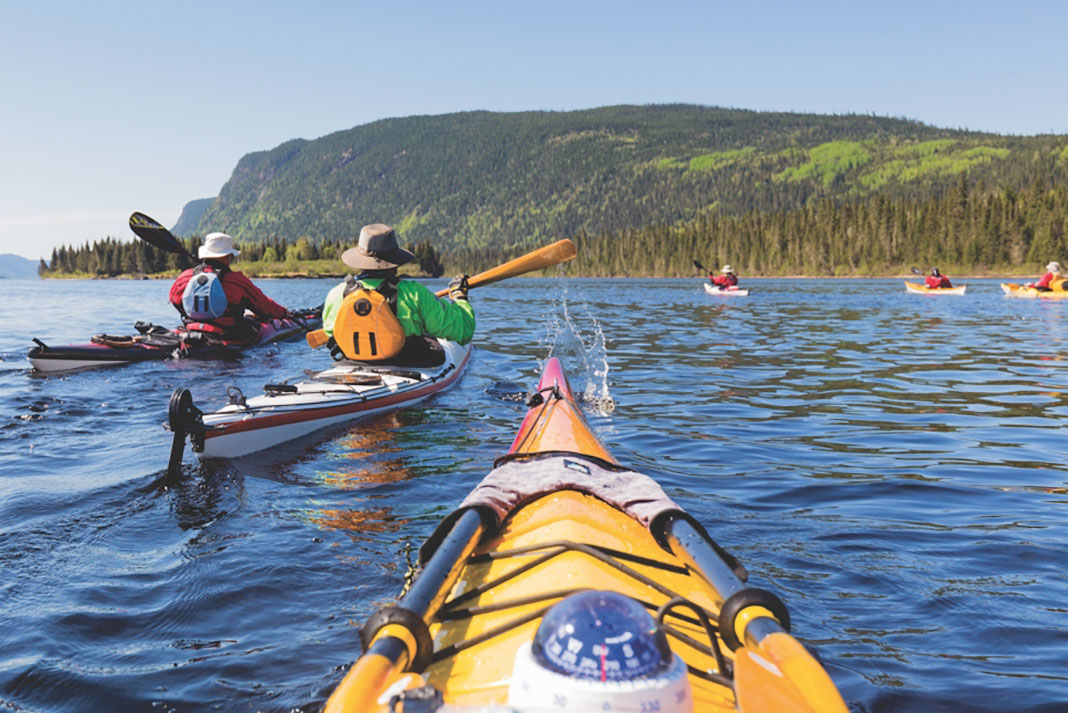
A group of sea kayakers paddle on a large body of water
Are these sea kayakers better off using a skeg or a rudder? | Photo: Francis Lepine

Rudders aid tracking and turning, making them ideal for kayak fishing, sailing and longer boats like tandems and race kayaks.

Many recreational kayaks sport neither. “If you go paddling only on nice days, you’re not paddling in wind, or your boat is shorter than 14 feet, you don’t really need a skeg or rudder,” says McDowell.

How to buy the right size kayak

“A boat is like a pair of shoes. If you want to run, you need proper fitting running shoes,” says McDowell. “Your slippers are comfy around the house but a little sloppy for sprinting. A loose-fitting boat is like a pair of slippers. The tighter the fit, the higher the performance.”

Therefore, when it comes to buying the right size kayak, the best thing you can do is actually sit in the boat.

“You can do all the research and find the perfect boat, then come into the store and sit in it and it doesn’t fit,” says Ocean River Sports staffer Julien Huard. Make sure the seat, backband or backrest and outfitting are comfortable and adjustable.

“Test paddle the boat loaded,” suggests Darren Bush, owner of Wisconsin-based paddle shop Rutabaga. It may handle well empty, but if you plan on tripping with the hatches full, “it can feel like a totally different boat.”

Here are some other guidelines for finding the right size boat.

Length and width

Choosing the best kayak for you requires sorting out the different sizes. In terms of length, longer boats are faster, track better and are able to carry more gear, whereas kayaks under 12 feet in length will provide you with better maneuverability in tight waters.

Wider hulls are more stable and roomy, but take more oomph to get going. Narrow hulls are faster and easier to roll and brace.

Still, when it comes to buying a fast boat, there’s theory and then there’s reality. “The fastest boat may not be the skinniest boat,” cautions Bush. “It’s not just boat design, it’s also you. If it’s too narrow, you may waste energy on keeping it upright that you could have used to paddle faster.”

It all comes back to the need to try a kayak out before buying. A certain kayak could look great on paper, but be a poor fit in reality. It’s not just about the length and width of the kayak—the length and width of the cockpit also matters. You should be able to comfortably get into the kayak without having to wiggle and without scraping your knees on the front of the cockpit opening.

The volume of the kayak can also be a fickle indicator of whether a boat is the right size for you. The volume will tell you how much space is in the kayak, but since every body is shaped differently and has weight distributed differently, this can greatly affect how different volume kayaks will fit.

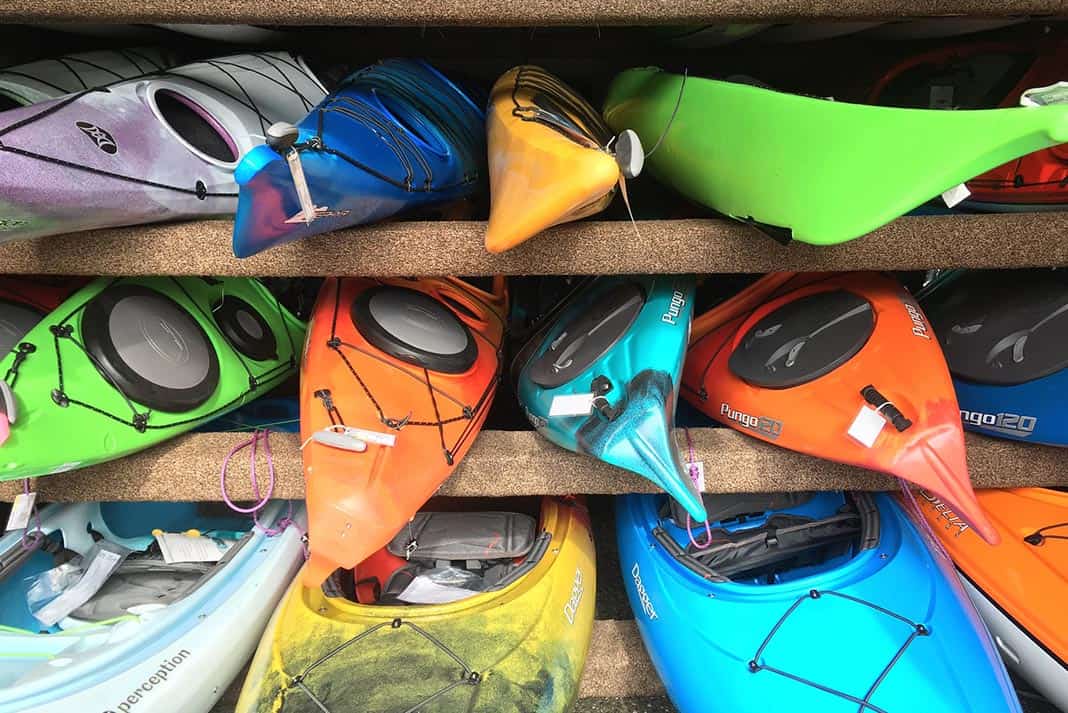
Three rows of kayaks sitting on shelves
Kayaks come in all different shapes and sizes. | Photo: Pixabay

Hull Shape

Along with width, the shape of the bottom and chines (where the sides of the kayak meet the bottom) determine primary and secondary stability. A flat-bottomed boat with excellent primary stability is initially very stable, but if it is leaned too far, it quickly capsizes.

Kayaks with shallow V and shallow arch hulls prioritize secondary stability, offering better performance and stability on edge, useful for open- and rough-water paddling. Chines can be rounded, hard or multi, and will affect how the boat feels when edging and how aggressively it carves turns.

“The most stable boats quickly become the most boring,” warns Ocean River Sports staffer Julien Huard. “Many people, especially new paddlers, pick the boat that feels most stable, not the one that suits them best for the long-term.”

A final factor—rocker—describes the upward curve of the bow and stern and determines maneuverability. Heavily rockered boats turn very easily and are ideal for playing in rough water. Kayaks with minimal rocker track well and are suitable for fitness paddling and long-distance touring.

Kayak materials

“Buy the lightest boat you can afford,” advises Bush. “If you can’t lift it, you won’t paddle it. You’re better off writing yourself a check and stapling it to your garage.”

“Learn the pros and cons of each material before buying,” suggests McDowell. Modern construction materials include rotomolded plastic (durable and affordable), thermoformed polyethylene (lighter and attractive shiny finish) and composites like fiberglass, carbon or Kevlar (stiffer, lighter still and the priciest option).

Paddlers with an eye for traditional aesthetics and feel may prefer a boat made from ultralight wood composite panels.

To summarize what we’ve talked about so far in regard to size and materials, check out this video from the Toronto Outdoor Adventure Show featuring James Roberts from the Ontario Sea Kayak Centre giving his best advice on buying a kayak.

Kayak features

Does the kayak have a place for everything you want to carry, inside or on the deck? Kayak accessories are key. If you’re planning to take overnight trips or paddle open water, make sure your boat has waterproof storage hatches and bulkheads.

For safety and convenience, look for safety lines, deck rigging and grab or carry handles on bow and stern. You’ll be spending a lot of time on your backside, so make sure the seat, back-band or backrest and outfitting are comfortable and adjustable.

Kayak brands

There are an overwhelming number of brands to choose from when kayak shopping. For a detailed breakdown, including which companies specialize in which types of kayaks, check out our Guide To The Best Kayak Brands For Fishing, Sea Kayaking, Touring & More.

Where to buy a kayak

REI

While REI has a more limited selection of kayaks, they still supply over 75 models from 20+ brands. The handy star-rating system will help you identify which kayaks are the favorites among customers based on on-site reviews. You can also read customer reviews for more detailed insight into each boat.

Have questions? REI offers a Live Chat feature on their website allowing you to pick the brain of a sales representative online. Once you’ve made up your mind you can ship the kayak of your choice to any REI store for free and then pick it up.

Amazon

When it comes to convenience, it’s a no-brainer to shop on Amazon—yes, even for kayaks. Besides fast shipping, the other advantage to Amazon is the hundreds of reviews, allowing you to feel more confident about the purchase you make.

You’ll be able to find a variety of kayaks from inflatable to sit-on-top to tandem. However, you do need to be careful not to be drawn in by Amazon’s “Under $300” category. A kayak should be an investment in both quality and safety, two things you are not going to get when buying a kayak for less than $300. Amazon does sell kayaks from reputable brands such as Perception, Old Town and Vibe, however, so if you are being a little more selective when shopping for a kayak on Amazon you can still find a great deal on a high-quality boat.

The other drawback to shopping on Amazon is you won’t be able to get the advice of a knowledgeable sales associate. Many paddlesport retailers at least have a live chat option on their website, allowing you to message back and forth with a sales rep before you make a purchase. This isn’t something Amazon offers, though, meaning you’ll have to turn to reviews for more information about a product. However, you also have to be wary of reviews themselves, as research has shown some products have inflated ratings. Once again, Amazon can be a great place to find a good price on a kayak—but make sure you do plenty of research on the kayak you’re looking at before making a purchase.

Walmart

While you can still find higher quality kayaks from top brands like 3 Water Kayaks and Pelican at Walmart, it’s a good idea to avoid buying a kayak from Walmart altogether. One of the issues is Walmart employees are not going to be as knowledgeable about kayaking as employees at an outdoors store or paddling retailer. For this reason, even if you are shopping for higher-quality boats, you might end up with something ill-suited to your skill level and pursuits out on the water.

Another issue is the quality of many of the boats. The lower price tag on kayaks at Walmart indicates cheap materials and poor design. These kayaks are made of thin plastic that can easily be scratched, dented or even punctured. These plastic materials are also heavier, making it more difficult for you to get your kayak to the water. And if the weight of your kayak doesn’t deter you from getting out on the water, the discomfort you experience when paddling will. The poor design of many of these kayaks can make them frustrating to paddle, not to mention the lack of padded seats or even foot pegs making for an uncomfortable experience.

As a generalization, kayaks at Walmart are not a great investment. If you want to have an enjoyable time on the water and, more importantly, maximize safety, save up until you can afford a higher quality kayak.

Local Retailers

Walmart may not be the best place to shop for a kayak, but that doesn’t mean there are no benefits to purchasing a kayak from a physical establishment. A local paddlesports retailer has expert staff who will be able to match your skill level and preferences to the correct kayak, ensuring you make an informed purchase.

“A knowledgeable salesperson can help navigate to your needs and simplify all the technical terminology for you,” says Daniel Collins, retail manager at Ocean River Sports.

Many retailers also let you try the kayak before you buy. As we mentioned earlier, actually getting in the kayak and going for a paddle is the best way to know whether you are going to love a boat. Buy from a shop that offers on-water test paddling and try as many models as you can before settling on the kayak of your dreams.

Best time to buy a kayak

So when is the best time of year to buy a kayak? It depends on your priorities. If you want the best selection of kayak models and colors, shop at the beginning of the season when dealers have lots of stock and companies have released their latest models. You can start your search in the spring and into the beginning of the summer.

Vibe Shearwater kayak on a lake in autumn
The autumn months are a great time to save on your kayak purchase. | Photo: Courtesy of Vibe Kayaks

If you want to save money, purchase a kayak at the end of the season. You might find some great deals at the end of August and into September as dealers will want to clear out their stock to make room for next year’s inventory. The trade-off is you may have fewer choices as models and colors sell out. Looking out for sales around Black Friday and Boxing Day can also yield great savings on kayaks.

Whether you’re looking to get a great deal or get the latest model, the absolute best time to buy a kayak is when you have a considerable budget saved up. While it may be tempting to buy the kayak you can afford right now, you don’t want to cheap out on a boat you won’t enjoy paddling or that is unsafe. If you can’t afford the right kayak quite yet, hold out until you’ve saved up enough. It’ll be worth it for both the enjoyment you’ll get out of the boat and safety you’ll experience on the water. Make sure to factor in the accessories you will need to purchase alongside your boat such as a PFD and paddle too.

How much should you spend on a kayak?

This is a highly individualized question that depends on what you need your kayak to be able to do. The cost of a kayak will vary greatly depending on the materials used, size and features. For example, hard-shell kayaks tend to be more expensive than inflatables. Among hard-shell kayaks, those made with carbon are more expensive than those made with polyethylene. Fishing kayaks with an integrated motor will be pricier than a regular paddle-powered boat.

Expect to pay $400 and up for a decent quality, bare bones recreational design and $1,000 and up for a more performance-oriented design. On average, whitewater kayaks tend to be around $1,000 and touring kayaks around $2,000.


So many kayaks, so little time. | Feature photo: Courtesy Ontario Tourism


How This Alberta Whitewater Festival Became Kid-Friendly

A kid in the front of a tandem kayak at the 3 Rivers Rendezvous
A whitewater festival fun for all ages! Feature Image courtesy 3 Rivers Rendezvous.

When Chuck Lee’s ten-year-old son told him whitewater kayaking is for old people, Lee set out to find small boats and equipment to bring more kids into the sport, starting close to home in PincherCreek, Alberta. From a no-show first year to now entering its 25th year, today Lee’s 3 Rivers Rendezvous remains a family-friendly event at heart.

From zero to 300: behind the scenes of the 3 Rivers Rendezvous

When Lee moved to the Pincher Creek area in 1993 he began paddling with his kids. It wasn’t long into paddling the area when Lee started to dream of inviting other paddlers to Pincher Creek and organizing a paddling weekend. Lee and his family of four set to picking dates, organizing camping and food for a weekend – and no one showed up at all – just Lee, his wife and his son and daughter attended the earliest iteration of the 3 Rivers Rendezvous.

“It was so disappointing that nobody came. Everybody said, well, just don’t do it. Nobody will show up,” shared Lee. “Well, the next year we had 12 people show up and I insisted, we’re going to put this on. We’re going to have burgers and we’re going to have a fun weekend.”

From the initial group of 12, the 3 Rivers Rendezvous expanded with friends inviting friends until numbers swelled to nearly 300 attendees. In 2025, the event celebrates its 25th anniversary having taken two years off in the wake of the pandemic.

So how do you get kids into whitewater anyway?

Lee knows firsthand how hard it can be to get kids into paddling.

“My son, after a weekend of kayaking with some of my friends, he looked at me and said, dad, I hope you don’t take it this the wrong way, but this sport is really about old people. None of my friends do this sport. It’s no fun for me because I don’t have any friends that do this,” said Lee.

Rather than embrace that whitewater kayaking is for adults, Lee took a different approach and looked for ways to involve his son’s friends in the sport and to help his son meet other young paddlers both through clubs and meetups.

A kid in the front of a tandem kayak at the 3 Rivers Rendezvous
A whitewater festival fun for all ages! Feature Image courtesy 3 Rivers Rendezvous.

As for getting sometimes nervous kids into whitewater, Lee explained that kids are willing to take on a bit of risk if it is introduced in a progressive manner.

Lee suggests starting in warm water in the summer when possible, and focusing on finding the right sized boat and equipment. Local clubs can be a good place to start, or events like the 3 Rivers Rendezvous where equipment is available to borrow or rent. Lee also added that framing the kayak as a swimming tool can be helpful for getting kids used to the different aspects of the kayak.

When it comes to the 3 Rivers Rendezvous itself, Lee shared that the family-friendly aspect came naturally as paddlers in the area had families and sought ways to find time on the water with their kids.

“You start off with having lots of kids around, and the more kids you get, the more fun they have,” Lee shared, adding that by the age of five or six, kids are starting to paddle with their parents in a tandem or raft, experiencing whitewater for the first time. By age seven and eight, they’re on the lake and in the pool and before long, kids are able to run the river alongside their parents.

“It was always more of a family event as opposed to a hardcore competition,” Lee added. “It has never been about the competition. It’s always been about bringing people together and exploring the region.”

This year’s 3 Rivers Rendezvous will take place May 16-19, 2025 for their 25th anniversary. Find registration information here.

Editor’s Note:

Having only been to the 3 Rivers Rendezvous once as a whitewater instructor trainer, I am excited to go back in more of a participant role this year with my children aged seven and four. I could see the stoke, the camaraderie and the endless options of river runs to join in on for all ability levels.


View this post on Instagram


A post shared by Paddling Magazine (@paddlingmagazine)

Currently, my children are motivated by food and I also remember this being a memorable piece of the festival with five meals included over the weekend. You are going to get your money’s worth even if you decide not to paddle – what? Not paddle? Who said that…

Stay tuned.

– Brenna

Best Kayaks for Kids & Youth For 2026

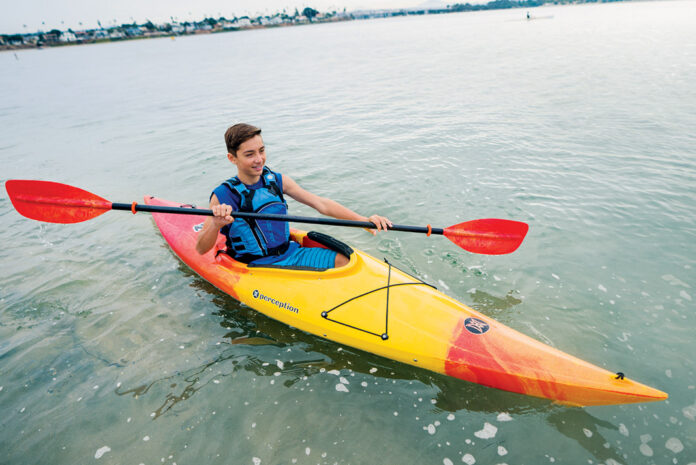
Young boy paddling orange and yellow kayak
Photo courtesy: Perception Kayaks

There may be no feeling more fulfilling for a paddler than the opportunity to get kids into paddling. Tandem kayaks are a great solution for getting young children on the water, but once they’re old enough, most kids will want to pilot their own kayak.

Ensuring kids have a positive experience means getting them a kayak (and paddle) that fits their smaller bodies and is lighter and easier to maneuver. Even small adult kayaks are too wide and deep for most kids to easily reach the water with their paddle. If you want children to have a safe and enjoyable paddling experience, youth kayaks and paddles offer dimensions and designs suitable for kids.

The first question parents often ask is, how old does a child need to be to paddle solo?

The answer depends on what you hope to accomplish on the water. If you’re out for a fun float with the family and don’t have to make miles, younger children (ages 5 and up) will have a blast piloting their own kids kayak. From ages 5 to 12, kids can easily paddle short distances on calm waters in their own child-sized kayak. If you’re on a family kayak tour that will cover more distance, little ones won’t be able to keep up. For ambitious trips, small children are best paired with adults in tandem kayaks.

Education: Get Some!
  • Take a paddling safety course from the American Canoe Association (ACA), your local paddling shop or outfitter, or other reputable source.
  • Take a boating safety course from the U.S. Coast Guard Auxiliary, U.S. Power Squadrons® or your own state’s boating agency.
  • Take on-the-water skills training.

A good way to think about kids paddling their own kayak is to compare it to bicycling. You can put a very young child on a strider bike and she’ll have fun riding to the end of the block and back. If you think the same child would enjoy a 5-mile road ride, forget it. The only real way to know what your children are capable of is to get them out on the water with the appropriate gear. With experience, you’ll know what they can handle.

Once children are ready to paddle a kayak on their own, it’s time to find the best kids kayak for their age and paddling goals. Read on to find advice on buying a new or used youth kayak, as well as resources to help narrow your search.

Top picks: Best kids kayaks

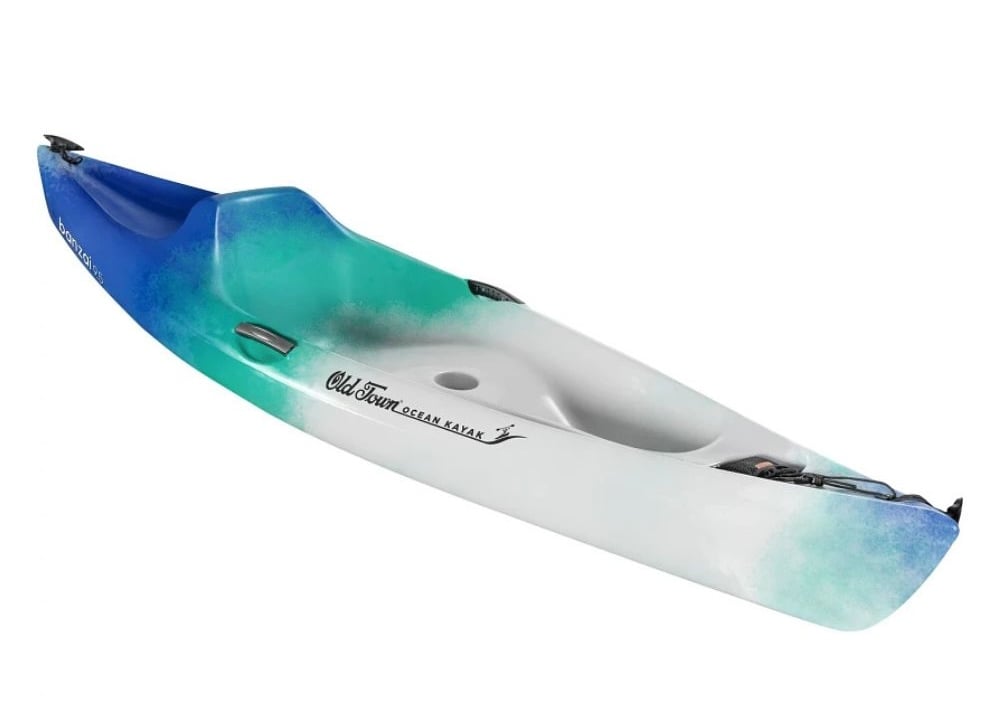
Ocean Kayak Banzai 9.5

Ocean Kayak Banzai 9.5 Specs
Length: 9’6″
Width: 28.5″
Weight: 36 lbs
Capacity: 194 lbs
MSRP: $499.99 USD

Ocean Kayak Banzai

Buy from:

OLD TOWN
The Banzai recreational kayak is designed specifically for kids with a low-profile and kid-friendly seating that allows for easy movement and mobility. The Banzai’s Tag Along system lets paddlers tow their kids when they’re too tired to paddle, an essential for parents. This playful and maneuverable kayak is ideal for kids of all ages.


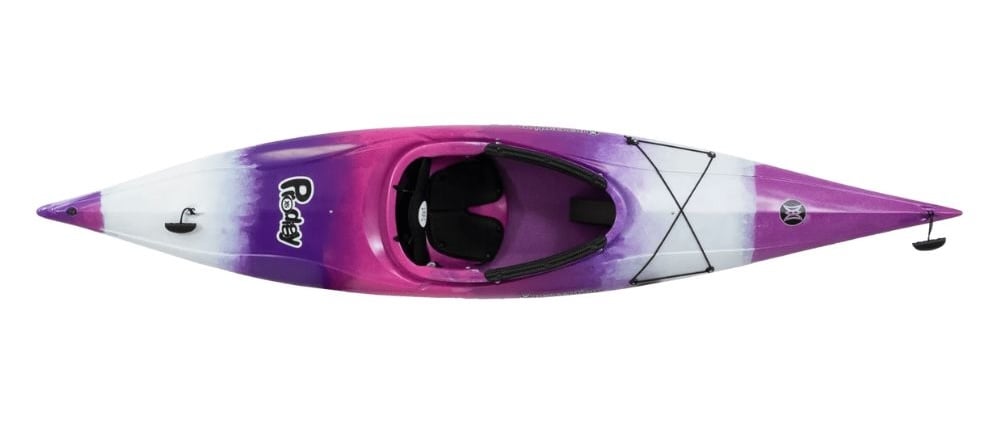
Perception Prodigy XS

Perception Prodigy XS Specs
Length: 10′
Width: 23″
Weight: 26 lbs
Capacity: 150 lbs
MSRP: $549 USD

Perception Prodigy

Buy from:

AMAZON PERCEPTION
Unleash the confidence in the little adventurer with the Prodigy XS, a blend of stability, comfort and safety for kids and smaller-framed adults. The Prodigy XS kayak offers confidence-building stability, comfort and performance in a day touring design. The sit-in design protects the paddler from the elements and further lowers the paddler’s center of gravity to enhance stability. Kids will stay on the water longer in the Prodigy XS because it is fitted with premium outfitting not usually found on youth kayaks.


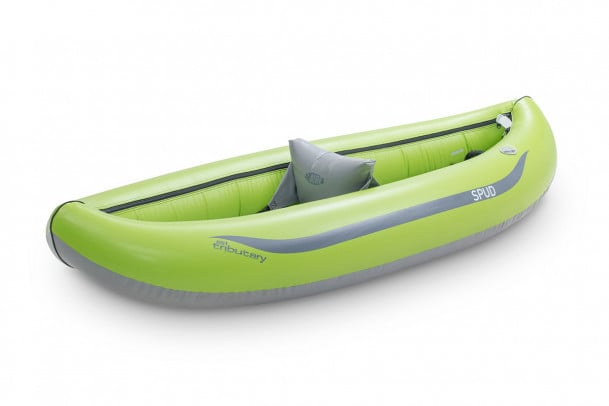
AIRE Spud

AIRE Spud Specs
Length: 7’2″
Width: 35.5″
Weight: 21.5 lbs
Capacity: 220 lbs
MSRP: $600 USD

Aire Spud

Buy from:

AMAZON AIRE
The Tributary Spud is a great choice for paddlers of all ages and skill levels. Its compact size and inflatable design makes it easy for mini shredders and smaller-framed paddlers to handle and store, all while staying budget-friendly. Ideal for introducing newcomers to whitewater sports, the Spud also excels as a dynamic and playful boat for more experienced paddlers.


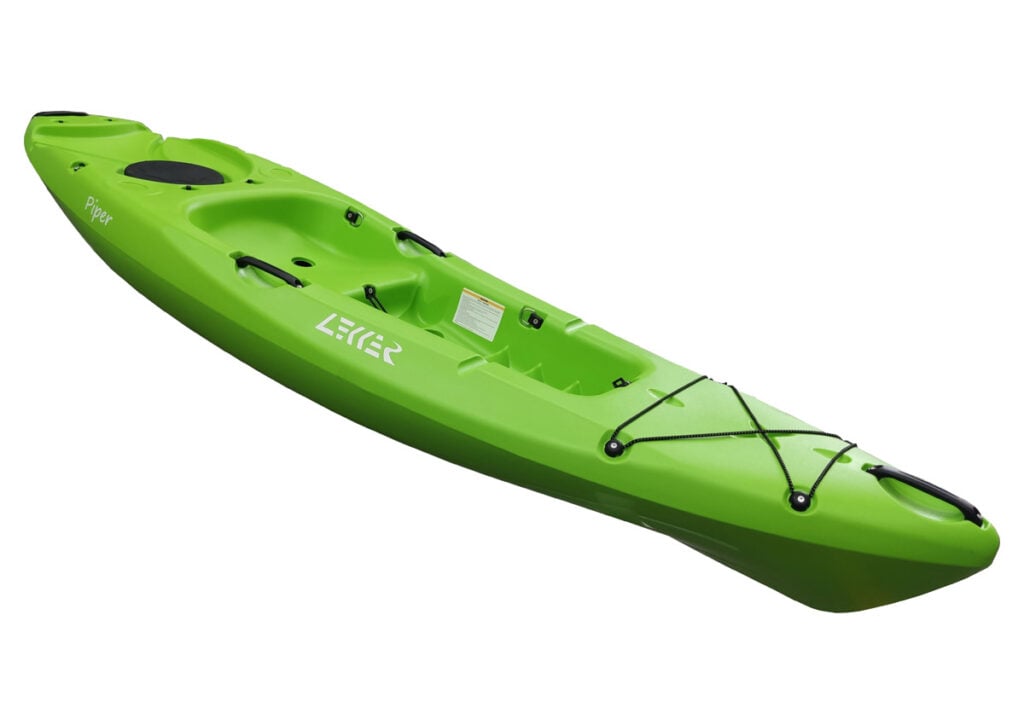
Lekker Kayaks Piper

Lekker Kayaks Piper Specs
Length: 8′
Width: 11.5″
Weight: 26 lbs
Capacity: 120 lbs
MSRP: $390.00 USD

Lekker Kayaks Piper

Buy from:

LEKKER
Lekker is a newer brand, however its founder Celliers Kruger has been designing kayaks for decades. Built to be stable and comfortable while also allowing for growth as a young paddler, the Lekker Piper sit-on-top kid’s kayak is a far cry from your average kid’s kayak. The Piper, designed for kids aged 5-12 and up to 130 pounds, is stable but streamlined with a long waterline to preserve speed so that a kid can more easily keep up with adults on the water. Like a touring kayak, it can be edged and turned.

The philosophy behind the design of the Piper is that kids need a boat that inspires confidence and allows for growth as a paddler early on.


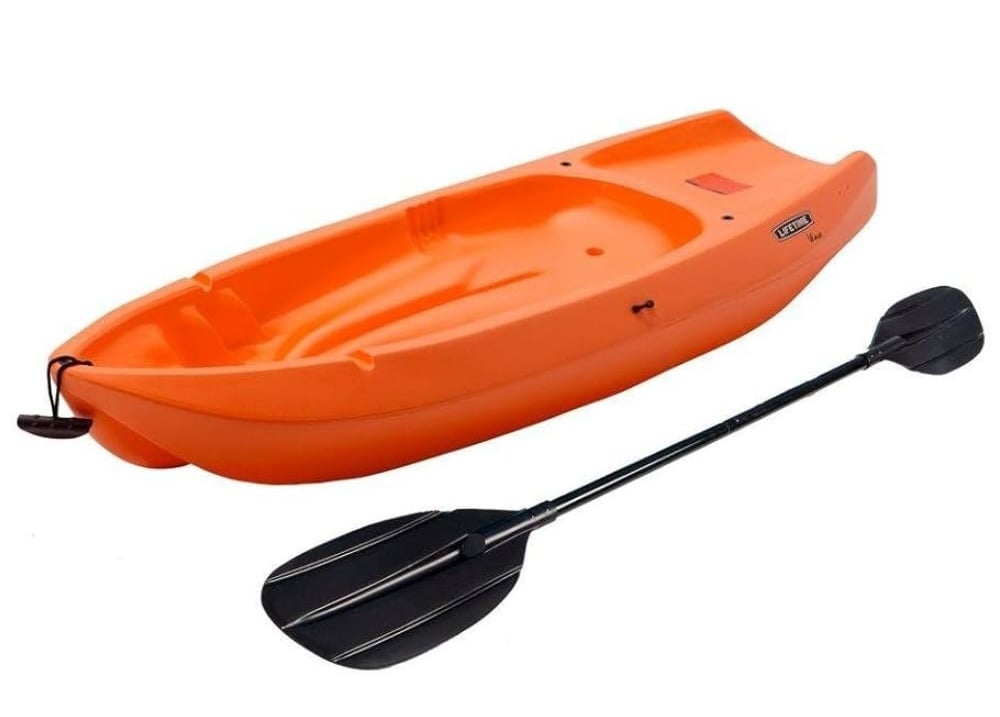
Lifetime Wave Youth Kayak

Lifetime Wave Youth Kayak Specs
Length: 6′
Width: 24″
Weight: 19 lbs
Capacity: 130 lbs
MSRP: $235 USD

Lifetime Wave Kids Kayak

Buy from:

AMAZON LIFETIME
Just looking to splash around at the beach? The six-foot Lifetime Wave recreational kayak is designed for kids ages 5 and up and up to 130 pounds. The 24-inch width provides a stable paddling platform to keep kids safely in the kayak. Its sloped stern and swim-up step allows the paddler to easily re-enter the kayak from the water. With scupper holes, multiple footrest positions and great stability, the Wave is ideal for kids wanting to play. Read Paddling Mag’s indepth Lifetime Wave youth kayak review to see if it’s the right fit.


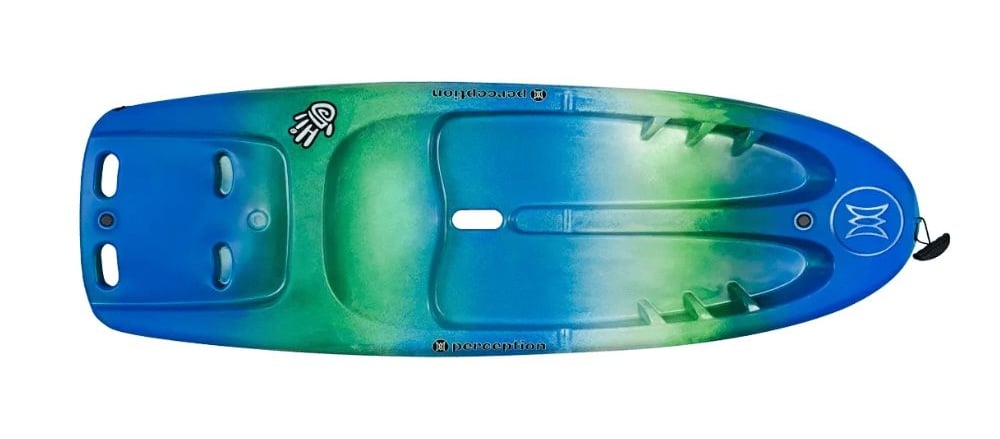
Perception Hi Five 6.5

Perception Hi Five 6.5 Specs
Length: 6′
Width: 24″
Weight: 26.5 lbs
Capacity: 120 lbs
MSRP: $299 USD

Perception Hi Five

Buy from:

AMAZON PERCEPTION
Drawing on the award-winning, patented Hi Life 11.0 design, the Hi Five packs all of its predecessor’s best features into a size perfect for kids. It offers an unbeatable watercraft experience with features such as a swim-up deck, ample standing surface, paddle rest, easy-to-carry handles and two solo mount accessory recesses that allow for hours of fun in lakes, ponds and calm coastal regions. The Hi Five will accommodate kids even as they grow older. Additionally, it comes with a kids’ kayak paddle.


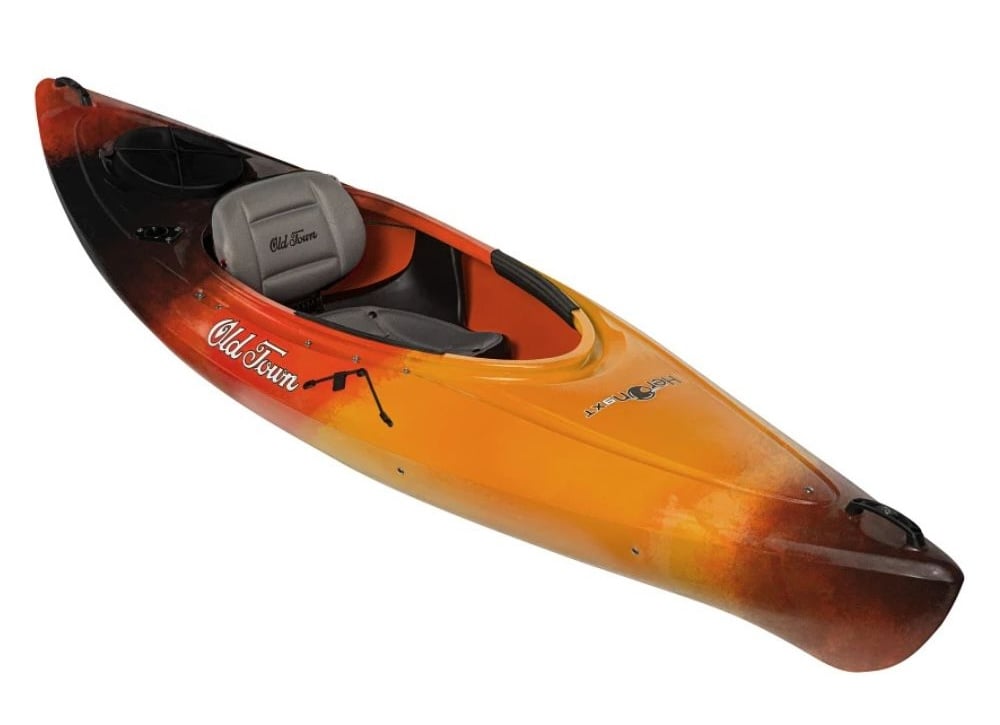
Old Town Heron 9XT

Old Town Heron 9XT Specs
Length: 9’6″
Width: 28.5″
Weight: 40 lbs
Capacity: 260 lbs
MSRP: $699.99 USD

Old Town Heron 9XT

Buy from:

OLD TOWN
The Old Town Heron 9XT combines comfort and features at an affordable price. This is a favorite kayak for bigger kids and youth paddlers who are gaining their independence and enjoying some day touring. It’s also popular amongst young anglers. Featuring a padded Comfort Flex seat, Quick Seal hatch with bulkhead, two rod holders, a cup holder, and adjustable foot braces, the Heron 9XT is perfect for beginning and recreational paddlers who may want a few extra bells and whistles.


Shopping for a used youth kayak?

One of the biggest challenges most paddling families face when looking for kayaks is affordability. There are lots of low-price recreational kayaks available, but the majority of these are too wide for small children to paddle effectively. Other discount kayak options are little more than beach toys—short, lightweight boats are fine for horsing around but not for paddling from here to there. If you’re on a tight budget, consider scouring the used market for a quality used youth kayak rather than heading to the discount store.

As children outgrow their kayaks, secondhand kids’ kayaks find new life on the used market. Set up alerts for search terms like “kids kayak” and “youth kayak” on Facebook Marketplace, and keep these tips in mind when you find a match.

Know what type of kayak is being listed, and what kayak style is most suitable for your child. “Kids kayak” is a fairly broad term that covers a range of sizes, materials and styles of kayak. For example, a 6-foot kids kayak might be most suitable for 5- to 8-year-olds, while children ages 8 to 12 may benefit from the increased capacity of an 8-foot youth kayak. Be sure you have all the details, and ask the seller where and how they used the kayak.

Know The Local Hazards
  • Check navigation charts before you launch.
  • Check with those who have local knowledge of man-made and natural hazards, e.g. low-head dams; sweepers, strainers and undercuts; tides and currents; and rocks and shoals.

If feasible, bring your kid along to scope out the kayak. Have them sit in the kayak and see how it fits. This is also a great way to bring them an immediate sense of ownership and responsibility for their kayak.

Inspect the kayak for damage before committing to a purchase. Kid kayaks are durable, but cracks or dents in the plastic hull are possible if the kayak was improperly stored. If you are at the seller’s property, pay attention to how the kayak was stored. Has it been left out in the sun and heavily faded? UV deteriorates plastic, which can lead to cracking or warping down the road.

Ask the seller to meet at a location where you can take the kayak for a test paddle. Bring a paddle, appropriate clothing and PFD or lifejacket for your child if they are going to try the kayak, and supervise their test paddle. This is the best way to see whether the youth kayak is comfortable and sized appropriately for your child.

For more tips on what to look for when selecting a used kayak, read our article How To Buy A Used Kayak.

Kids kayak buying guide

Once children are ready to start paddling their own kayak, your first question will likely be, “What should I look for in a kids kayak?” Read on for tips on choosing the right kids kayak to meet the needs of your paddling family.

Return on investment

Kayak companies know it’s good for the paddlesports industry to encourage parents to get their whole family out on the water, but the cost of producing good small kayaks isn’t much less than building bigger boats. One way around this challenge is to simplify the features in the kayaks. Children’s designs frequently have simple layouts and lack the bulkheads and hatches common in adult kayaks. Fewer options keep both cost and weight down, which makes it easier for kids to carry and control their own boats.

Of course, there are some kids kayaks nearly as full-featured as their grown-up equivalents. Children’s touring kayaks are built with all the safety features of full-sized boats, and this means you should expect the price of these kayaks to be higher. The bottom line is the closer a youth kayak is to a full-sized kayak, the closer the price will be to an adult kayak.

Performance matters

The other big challenge with children’s kayaks is performance. If you want your children to have a good time out on the water with you, they need to be in boats matched to their size and strength. It might be tempting to put kids in cheap recreational kayaks, but most of these boats are way too big for small paddlers to handle.

Small recreational boats may be short, but they are also wide. A nine-foot rec kayak will float a full-sized adult weighing 200 pounds or more. Kayaks like this are often 30 inches wide. Put a 60-pound child into this same kayak and she’ll hardly be able to reach the water with her paddle. When it comes to kids’ fun on the water, big person rec kayaks are out.

Children’s kayaks need to be matched to the paddler’s size every bit as much as adult kayaks do. This typically means being narrower than 25 inches, sometimes as narrow as 20 inches. Children under 100 pounds find such kayaks plenty stable and much easier to control.

Width is a significant factor in kayak performance, but length comes into play too. Longer kayaks are faster, but they have more drag in the water. Children don’t have the strength to power a big boat effectively. This means kid kayaks are typically much shorter than similar models geared toward adults. Almost all children’s kayaks are under 12 feet long, and many are shorter than 10 feet. The shorter length of children’s kayaks combined with less powerful paddlers means adults will need to back off a bit during a family day on the water. No kayak designed for children will keep pace with longer adult boats.

Pick the best fit

Recreational kayaks for children come in both sit-on-top and sit-inside models. These kayaks are narrower versions of adult recreational kayaks that are easier for kids to control. The benefits of sit-on-top versus sit-inside kayaks are that they can’t be swamped and are easy to climb back onto if you’re playing in the water. Sit-inside kayaks will keep children drier and warmer if the water or air temps are a little cooler. Recreational kayaks are ideal for splashing around at the beach or cottage and exploring small lakes and gentle rivers.

Kids touring kayaks are longer and narrower than recreational kayaks. They are sit-in designs with smaller cockpits. Some designs have bulkheads (interior walls within the kayak hull that ensure flotation) and storage hatches like adult kayaks. Others skip these features to keep weight and cost down. The narrower width and increased length of these boats help children to develop paddling skills and keep pace with full-sized kayaks on longer tours.

Whitewater kayaks for kids can be either sit-on-top or sit-in style. Sit-on-top designs are the best choice for casual river paddles,  combining small rapids and swimming breaks. For kids who are stoked on whitewater and want to learn the more technical aspects of whitewater paddling, a child-sized sit-inside whitewater kayak is the way to go.

Once children hit about 100 pounds, you’ll have a few more options. Kayaks aimed at smaller adults are a good choice for bigger kids. These kayaks don’t come at a child’s price but they are scaled to fit a growing youngster. Small adult kayaks are a great choice as an upgrade from a child’s touring or whitewater kayak, especially if your family is getting more ambitious about spending time together on the water.

The little things

Kid-sized accessories are every bit as important as finding the right kayak. Avoid the temptation to buy inexpensive adult paddles for your children to use. These paddles are much too heavy and will almost guarantee a frustrating experience. Instead, find paddles that are lightweight and sized just for kids.

Likewise, look for child or youth PFDs or life jackets that fit well and are comfortable enough your children won’t complain about wearing them. All quality life jacket manufacturers produce good kid vests. Avoid the temptation to size up so your child can grow into it. Proper PFD fit is critical to safe and comfortable paddling.

When it comes to what to wear kayaking, you’ll want to dress kids in weather-appropriate layers, similar to how adults dress but focusing on keeping kids warm and protected from the sun and elements.

Wear A Life Jacket
  • Everyone, even strong swimmers, needs to wear a life jacket at all times when on the water. It is extremely difficult to put a life jacket on once you fall into the water. Even a light wind can blow any paddlecraft away from you, faster than you can swim.
  • Always wear a USCG-approved Level 70 or Type III life jacket designed for paddling.

Finally, make sure you have a tow system so you can give kids a power assist if they start to get tired and fall behind.

Where to buy kids kayaks

Many major kayak manufacturers produce at least one model aimed at children. River play whitewater designs from Jackson Kayak and Pyranha should be easy to find. Perception makes an affordable touring kayak and Current Designs produces a premium composite kayak for small paddlers. Old Town makes a scaled-down sit-inside recreational kayak.

Basic sit-on-top recreational kayaks for kids are also widely available at sporting goods and discount box stores; check out Pelican, Perception, Lifetime and Sun Dolphin. This list is by no means exhaustive. New models are introduced every few years and used boats and discontinued models are widely available.

If you’re asking yourself where to buy a kayak, the best place to track down a youth kayak is at your nearest specialty paddlesports store. Shops like these may have kids kayaks in stock, and if they don’t, they’ll know where to get them. If you’re lucky, you can arrange a test paddle so your children can try on the boats for size.

Still have questions? Here are answers to some of the most common questions about kids kayaks.

  • Kids kayak weight

    Kids kayaks are significantly lighter than adult kayaks, and typically range between 20 and 30 pounds. Check the manufacturer’s specifications to find the exact weight of various kids kayaks.

  • Kids kayak weight limit

    A youth kayak has smaller dimensions than an adult kayak, which means less volume and a lower weight limit than kayaks intended for adults. In general, expect a weight limit of 100 to 120 pounds for most kids kayaks. Check the manufacturer’s specifications to find the exact weight limit of various kids kayaks.

  • Can an adult use a youth kayak?

    Kayaks are designed for the size and weight of a paddler more so than their age. If an adult paddler falls within the recommended weight range or maximum weight capacity of a youth kayak—and they find it a comfortable fit—then an adult may be able to use a youth kayak. Keep in mind that most youth kayaks have a weight limit of 100–120 lbs.

  • What size kayak is good for kids?

    The best size kayak for kids is one that is advertised as a kid-specific model. Recreational kayaks suitable for children are typically six to nine feet long and less than 25 inches wide. Kids kayaks have scaled-down seats, width and depth to allow developing paddlers to easily reach the water.

    Combined with the shorter length, this creates a lighter kayak that kids can maneuver on and off the water.

  • Kids kayak reviews

Looking for detailed reviews of other popular youth kayak models? Check out the expert reviews written by the Paddling Magazine team below.


The Lekker Kayaks Piper: A Real Kayak For Kids (Video)

In a world where the average kid’s kayak is a glorified pool toy, Celliers Kruger has a different idea of what kayaking for kids could look like. Built to be stable and comfortable while also allowing for growth as a young paddler, the Piper sit-on-top kid’s kayak is a far cry from your average kid’s kayak.

We caught up with Kruger at Canoecopia 2025 to hear all about the design choices behind the Piper.

The inside scoop on the Lekker Kayaks Piper

The Piper, designed for kids aged 5-12 and up to 130 pounds, is stable but streamlined with a long waterline to preserve speed so that a kid can more easily keep up with adults on the water. Like a touring kayak, it can be edged and turned. The Piper is a touch more narrow than the average kid’s kayak, but not necessarily less stable.

The philosophy behind the design of the Piper is that kids need a boat that inspires confidence and allows for growth as a paddler early on, so that by the time they’re ready for their first performance boat they’ve built foundational paddling skills.

Key in the Piper’s design is a higher-volume bow to inspire confidence while paddling in waves, a slightly higher midsection around the cockpit of the boat to keep a small paddler drier and secure, and a downward sloping stern deck to reduce wind interference. D-rings for thigh straps make it possible to take the Piper down small rapids, and Kruger himself took his own kids out on small rapids in earlier iterations of the Piper.

“I believe that the vast majority of kids should start out paddling with sit-on-tops,” Kruger writes about the Piper on its product page. “It is the safest option by far, and also the most enjoyable if the boat is designed right. Unfortunately the bulk of kids sit-on-tops on the market are really just toys, not kayaks.”

Check out the Lekker Kayaks Piper here.

Best Pelican Ram-X Kayaks For 2026

man paddles Pelican kayak constructed of Ram-X material
Feature photo: Courtesy Pelican

Pelican’s Ram-X is a time-tested, ultra-durable material used in the construction of recreational kayaks and canoes. This reinforced polyethylene plastic is used exclusively in Pelican boats, including the popular Pelican Sentinel kayak and Pelican 15.5 canoe.

This Pelican Ram-X review provides an overview of why the material is an outstanding choice for paddlers looking for a bombproof, no-maintenance kayak or canoe for many applications.

Wear A Life Jacket
  • Everyone, even strong swimmers, needs to wear a life jacket at all times when on the water. It is extremely difficult to put a life jacket on once you fall into the water. Even a light wind can blow any paddlecraft away from you, faster than you can swim.
  • Always wear a USCG-approved Level 70 or Type III life jacket designed for paddling.

Best Pelican Ram-X kayaks

Pelican Sentinel 100X

Boat Specs
Length: 10′ 0″
Width: 30″
Weight: 40 lb
Capacity: 300 lb
MSRP: $349 USD
confluenceoutdoor.com

Pelican Sentinel 100x

Buy from:

PELICAN AMAZON

The Sentinel 100X recreational kayak features an open cockpit and weighs only 43 lb, perfect for the regular paddler who likes to enjoy various surrounding waterways. Easy to carry, this sit-on-top kayak includes basic features designed to make your experience enjoyable like molded footrests and an adjustable Ergoform padded backrest with seat cushion.


Pelican Argo 100EXO

Boat Specs
Length: 10′ 0″
Width: 28″
Weight: 37 lb
Capacity: 275 lb
MSRP: $349 USD
confluenceoutdoor.com

Pelican Argo 100

Buy from:

PELICAN AMAZON

The Argo 100X EXO recreational kayak is versatile, fun and ideal for paddlers looking for a stable and relaxing experience on lakes, slow-moving rivers and calm waters. The twin-arched multi chine hull offers excellent stability giving you a secure and steady ride. It also makes it incredibly easy to get in and out of the kayak. Added floating blocks on each side of the kayak ensures you safety and peace of mind during your ride. Holds a maximum capacity of 275 lb.


Pelican Argo 100XP Angler

Boat Specs
Length: 10′ 0″
Width: 29″
Weight: 41 lb
Capacity: 300 lb
MSRP: $469 USD
confluenceoutdoor.com

Pelican Argo 100XP Angler

The Argo 100XP Angler is specifically tailored to the paddler looking to regularly use their kayak fishing or on recreational expeditions. It is also great for a family of kayaking enthusiasts, each with their own preference on how to spend their time on the water. With ergonomic carrying handles and at only 41 lb., you will be able to easily carry the Argo 100XP Angler to wherever you decide to go.


Pelican River Gorge 130XP

Boat Specs
Length: 12′ 11″
Width: 34″
Weight: 73 lb
Capacity: 500 lb
MSRP: $949 USD
confluenceoutdoor.com

Pelican Gorge 130

Buy from:

PELICAN AMAZON

The River Gorge 130XP tandem kayak includes a quick-lock box and a storage platform with bungee cords. It also features molded footrests, two bottle holders, and four accessory eyelets for added convenience. With its light weight of 73 lb and its Ergofit G2 adjustable seat, this tandem kayak will undoubtedly offer you beautiful moments as a duo on the water!


Pelican 15.5 Canoe

Boat Specs
Length: 15′ 6″
Width: 37.5″
Weight: 81 lb
Capacity: 800 lb
MSRP: $469 USD
confluenceoutdoor.com

Pelican 15.5 Canoe

Buy from:

PELICAN

The Pelican 15.5 canoe is the ideal compromise between tracking and maneuverability. Shorter than an expedition canoe, it is perfect for solo or tandem rides. This canoe features three molded bench seats, vertical rod holders, drink holder and carrying handles. Made of RAM-X, it is built to last. The aluminum beartail canoe paddles are must have accessories to fully enjoy your Pelican 15.5 and create memorable exploration stories worth sharing with everyone.

Carry A Waterproof VHF Radio, Use Your Phone Only As A Backup
  • A handheld VHF marine band radio allows you to communicate with the Coast Guard and other boat traffic. Use Channel 16 only for hailing and emergencies. The radio should be waterproof, because it is virtually certain to get wet.
  • A cell phone, even if in a waterproof case or sealable bag, might not work, so don’t rely on it as the primary means of emergency communication.

What is Ram-X?

Technically, Pelican Ram-X is defined as “crosslink thermoformed high-density polyethylene.” That mouthful of jargon essentially means Ram-X is a heat-molded plastic that gains strength and rigidity from its multiple layers. The material was engineered by the Coleman company for use in its Ram-X canoes in the 1980s; early testing involved deliberately wrapping Ram-X canoes around boulders in whitewater rapids and bombarding the material with repeated impacts from 69-pound rocks (the same impact crushed and dented fiberglass and aluminum canoes). Ram-X was revolutionary for its supreme toughness and cheap price.

Today, this proprietary material is exclusively used by Pelican Sport in recreational kayaks and canoes. Pelican Ram-X is noted for its outstanding durability and long lifespan. Its stiffer crosslink construction makes it more rigid (and therefore more efficient to paddle) than many other polyethylene plastics and a UV-resistant outer layer allows it to tolerate outdoor storage.

Pelican Ram-X attributes and applications

Ram-X is designed for recreational paddlers looking for ultimate durability in a budget-friendly kayak or canoe. Its primary attributes are impact-resistance and the ability to rapidly regain its original shape after being deformed. Ram-X bounces back from impact, whether it’s been run over by a pickup truck or tacoed around a mid-river rock.

Although you may never desire to paddle a whitewater river, these bombproof characteristics translate to worry-free use: A Pelican Ram-X kayak easily withstands repeated rough use, such as being dragged over shoreline rocks. With good UV-resistance it’s also fine to store your Ram-X kayak or canoe where it is exposed to the elements. What’s more, most Ram-X boats retail for less than $1,000.

Such great impact resistance comes with certain drawbacks, both of which are most often secondary considerations for recreational paddlers. First, Pelican Ram-X (like all other polyethylene plastics used in recreational kayaks and canoes) is flexible compared to more expensive composite laminates. This means that the hull tends to flex a little while paddling, making the boat less efficient in the water. However, Pelican has made solid efforts to overcome this drawback by installing a hull-stiffening aluminum rod along the keel of its Ram-X canoes and adopting more rigid hull shapes in its kayaks.

Second, all polyethylene boats involve a trade-off between extreme durability and weight. Like other plastic kayaks and canoes, Pelican Ram-X can only be described as heavy compared to more advanced (and more expensive) materials.

Because of these characteristics Pelican Ram-X boats are perfect for families, cottage paddlers, kayak anglers and river canoeists. If you don’t mind a heftier load and want a recreational kayak or canoe that lives up to the label of being “virtually indestructible,” then a Ram-X boat is for you.

Ram-X pros and cons

Pros

  •  Super tough, able to withstand pretty much anything a recreational paddler can throw at it
  •  Only slightly more expensive than comparable (and often less durable) entry-level boats
  •  Hull shapes on boats made with Ram-X have complex arches and ridges to maximize rigidity for paddling performance while also retaining toughness

Cons

  •  Modest weight penalty, but weights are comparable with other plastic recreational boats

Pelican Ram-X kayak accessories and outfitting

Most Pelican Ram-X kayaks are available in two categories of outfitting, akin to a base model and luxury edition in cars. For example, the Pelican Sentinel 100X features a more basic seat and fewer outfitting features than the Pelican Sentinel 100X EXO model (which includes a removable waterproof storage pod for the stern and an upgraded seat). The various lineups of Ram-X fishing kayaks and Ram-X tandem kayaks have distinguishing features between similar models, allowing buyers to match comfort features with their budget while still retaining paddling performance and Ram-X durability.

Pelican Ram-X kayak covers (also known as kayak cockpit drapes) are designed to keep moisture and creepy-crawlies out of your kayak. They are great add-on accessories, available from retailers, particularly if you plan to store your kayak outdoors. Other popular Pelican Ram-X kayak parts include replacement Pelican Ram-X kayak drain plugs (a cheap accessory that’s essential to keep your kayak watertight) and upgraded Pelican Ram-X kayak seats. Seats include fishing-specific models and others that can be removed for use outside of the kayak—a great way to add comfort and versatility.

Pelican Ram-X kayak specs

The specs for Pelican kayaks made with Ram-X are comparable to other recreational kayaks, with sit-on-top models typically under 10 feet in length and the decked, sit-in models residing in the 8- to 10-foot range. These compact shapes help keep the weight of Ram-X kayaks relatively low and maximize stiffness in the hull to improve your paddling experience.

Weights for single Ram-X kayaks are generally under 50 pounds, with tandems tipping the scales at less than 70. Ram-X fishing kayaks weigh roughly the same, depending on accessories.

Pelican Ram-X kayaks strike a good balance between durability, function and price. Pelican Ram-X kayak prices are typically under $1,000, with the most basic, budget-friendly single-paddler models like the Pelican Argo 100X (sit-inside) and Pelican Sentinel 100X (sit-on-top) priced at $465 and $495, respectively. Prices for angler models range from $320 to $1,890, with many options in the $600 to $750 range.

Regardless of your body shape and size, you’ll easily find a Ram-X kayak that fits. Pelican Ram-X weight limits are typically around 275 pounds, with some larger single paddler models featuring maximum capacities of 300 pounds. The weight limit on tandem kayaks is approximately 500 pounds.

Where to buy

Pelican Ram-X boats are widely available through big-box retailers and large outdoor stores all across North America, including Costco. The great durability and longevity of Ram-X boats means you can often find great deals on used recreational canoes and kayaks on platforms such as Craigslist and Kijiji.


Feature photo: Courtesy Pelican